EP1496017A1 - Method of wastewater treatment and wastewater treatment apparatus - Google Patents
Method of wastewater treatment and wastewater treatment apparatus Download PDFInfo
- Publication number
- EP1496017A1 EP1496017A1 EP03719108A EP03719108A EP1496017A1 EP 1496017 A1 EP1496017 A1 EP 1496017A1 EP 03719108 A EP03719108 A EP 03719108A EP 03719108 A EP03719108 A EP 03719108A EP 1496017 A1 EP1496017 A1 EP 1496017A1
- Authority
- EP
- European Patent Office
- Prior art keywords
- electrode
- wastewater
- treatment
- conductor
- electrochemical technique
- Prior art date
- Legal status (The legal status is an assumption and is not a legal conclusion. Google has not performed a legal analysis and makes no representation as to the accuracy of the status listed.)
- Withdrawn
Links
- 238000000034 method Methods 0.000 title claims abstract description 178
- 238000004065 wastewater treatment Methods 0.000 title 2
- 239000002351 wastewater Substances 0.000 claims abstract description 452
- 239000004020 conductor Substances 0.000 claims abstract description 234
- 229910017464 nitrogen compound Inorganic materials 0.000 claims abstract description 76
- 150000002830 nitrogen compounds Chemical class 0.000 claims abstract description 76
- 239000000463 material Substances 0.000 claims abstract description 61
- 230000000737 periodic effect Effects 0.000 claims abstract description 21
- -1 ammonium ions Chemical class 0.000 claims description 171
- QGZKDVFQNNGYKY-UHFFFAOYSA-N Ammonia Chemical compound N QGZKDVFQNNGYKY-UHFFFAOYSA-N 0.000 claims description 162
- 229910021529 ammonia Inorganic materials 0.000 claims description 78
- XEEYBQQBJWHFJM-UHFFFAOYSA-N Iron Chemical compound [Fe] XEEYBQQBJWHFJM-UHFFFAOYSA-N 0.000 claims description 73
- 239000002253 acid Substances 0.000 claims description 72
- CBENFWSGALASAD-UHFFFAOYSA-N Ozone Chemical compound [O-][O+]=O CBENFWSGALASAD-UHFFFAOYSA-N 0.000 claims description 67
- QVGXLLKOCUKJST-UHFFFAOYSA-N atomic oxygen Chemical compound [O] QVGXLLKOCUKJST-UHFFFAOYSA-N 0.000 claims description 66
- 239000001301 oxygen Substances 0.000 claims description 66
- 229910052760 oxygen Inorganic materials 0.000 claims description 66
- 150000003018 phosphorus compounds Chemical class 0.000 claims description 51
- 239000010935 stainless steel Substances 0.000 claims description 35
- 229910001220 stainless steel Inorganic materials 0.000 claims description 35
- 229910052742 iron Inorganic materials 0.000 claims description 34
- XKMRRTOUMJRJIA-UHFFFAOYSA-N ammonia nh3 Chemical compound N.N XKMRRTOUMJRJIA-UHFFFAOYSA-N 0.000 claims description 29
- 229910000510 noble metal Inorganic materials 0.000 claims description 29
- 239000000919 ceramic Substances 0.000 claims description 28
- OKTJSMMVPCPJKN-UHFFFAOYSA-N Carbon Chemical compound [C] OKTJSMMVPCPJKN-UHFFFAOYSA-N 0.000 claims description 23
- 229910052799 carbon Inorganic materials 0.000 claims description 23
- 239000012528 membrane Substances 0.000 claims description 15
- OAICVXFJPJFONN-UHFFFAOYSA-N Phosphorus Chemical compound [P] OAICVXFJPJFONN-UHFFFAOYSA-N 0.000 claims description 14
- 238000005341 cation exchange Methods 0.000 claims description 14
- 229910052698 phosphorus Inorganic materials 0.000 claims description 14
- 239000011574 phosphorus Substances 0.000 claims description 14
- 238000012546 transfer Methods 0.000 claims description 13
- 229910000859 α-Fe Inorganic materials 0.000 claims description 12
- 238000000638 solvent extraction Methods 0.000 claims description 2
- IJGRMHOSHXDMSA-UHFFFAOYSA-N Atomic nitrogen Chemical compound N#N IJGRMHOSHXDMSA-UHFFFAOYSA-N 0.000 description 95
- 238000006243 chemical reaction Methods 0.000 description 87
- MMDJDBSEMBIJBB-UHFFFAOYSA-N [O-][N+]([O-])=O.[O-][N+]([O-])=O.[O-][N+]([O-])=O.[NH6+3] Chemical compound [O-][N+]([O-])=O.[O-][N+]([O-])=O.[O-][N+]([O-])=O.[NH6+3] MMDJDBSEMBIJBB-UHFFFAOYSA-N 0.000 description 67
- BASFCYQUMIYNBI-UHFFFAOYSA-N platinum Chemical compound [Pt] BASFCYQUMIYNBI-UHFFFAOYSA-N 0.000 description 66
- 229910017604 nitric acid Inorganic materials 0.000 description 44
- 229910052757 nitrogen Inorganic materials 0.000 description 40
- 238000006722 reduction reaction Methods 0.000 description 31
- QWPPOHNGKGFGJK-UHFFFAOYSA-N hypochlorous acid Chemical compound ClO QWPPOHNGKGFGJK-UHFFFAOYSA-N 0.000 description 28
- 229910052697 platinum Inorganic materials 0.000 description 28
- NBIIXXVUZAFLBC-UHFFFAOYSA-N Phosphoric acid Chemical compound OP(O)(O)=O NBIIXXVUZAFLBC-UHFFFAOYSA-N 0.000 description 25
- 229910000147 aluminium phosphate Inorganic materials 0.000 description 24
- 230000002829 reductive effect Effects 0.000 description 23
- 238000007254 oxidation reaction Methods 0.000 description 21
- JVMRPSJZNHXORP-UHFFFAOYSA-N ON=O.ON=O.ON=O.N Chemical compound ON=O.ON=O.ON=O.N JVMRPSJZNHXORP-UHFFFAOYSA-N 0.000 description 20
- 229910052741 iridium Inorganic materials 0.000 description 19
- GKOZUEZYRPOHIO-UHFFFAOYSA-N iridium atom Chemical compound [Ir] GKOZUEZYRPOHIO-UHFFFAOYSA-N 0.000 description 19
- WBJZTOZJJYAKHQ-UHFFFAOYSA-K iron(3+) phosphate Chemical compound [Fe+3].[O-]P([O-])([O-])=O WBJZTOZJJYAKHQ-UHFFFAOYSA-K 0.000 description 19
- CWYNVVGOOAEACU-UHFFFAOYSA-N iron (II) ion Substances [Fe+2] CWYNVVGOOAEACU-UHFFFAOYSA-N 0.000 description 18
- 229910000398 iron phosphate Inorganic materials 0.000 description 17
- FAPWRFPIFSIZLT-UHFFFAOYSA-M Sodium chloride Chemical compound [Na+].[Cl-] FAPWRFPIFSIZLT-UHFFFAOYSA-M 0.000 description 16
- XLYOFNOQVPJJNP-UHFFFAOYSA-N water Substances O XLYOFNOQVPJJNP-UHFFFAOYSA-N 0.000 description 16
- VEXZGXHMUGYJMC-UHFFFAOYSA-M Chloride anion Chemical compound [Cl-] VEXZGXHMUGYJMC-UHFFFAOYSA-M 0.000 description 15
- 229910001873 dinitrogen Inorganic materials 0.000 description 15
- 230000000694 effects Effects 0.000 description 15
- 239000000126 substance Substances 0.000 description 14
- 238000005868 electrolysis reaction Methods 0.000 description 13
- ZAMOUSCENKQFHK-UHFFFAOYSA-N Chlorine atom Chemical compound [Cl] ZAMOUSCENKQFHK-UHFFFAOYSA-N 0.000 description 12
- 229910002651 NO3 Inorganic materials 0.000 description 12
- 239000000460 chlorine Substances 0.000 description 12
- 229910052801 chlorine Inorganic materials 0.000 description 12
- WCUXLLCKKVVCTQ-UHFFFAOYSA-M Potassium chloride Chemical compound [Cl-].[K+] WCUXLLCKKVVCTQ-UHFFFAOYSA-M 0.000 description 10
- 238000002474 experimental method Methods 0.000 description 10
- 239000002436 steel type Substances 0.000 description 10
- 150000002500 ions Chemical class 0.000 description 9
- PXHVJJICTQNCMI-UHFFFAOYSA-N Nickel Chemical compound [Ni] PXHVJJICTQNCMI-UHFFFAOYSA-N 0.000 description 8
- NHNBFGGVMKEFGY-UHFFFAOYSA-N Nitrate Chemical compound [O-][N+]([O-])=O NHNBFGGVMKEFGY-UHFFFAOYSA-N 0.000 description 8
- 238000005516 engineering process Methods 0.000 description 8
- 230000003647 oxidation Effects 0.000 description 8
- 239000011780 sodium chloride Substances 0.000 description 8
- RYGMFSIKBFXOCR-UHFFFAOYSA-N Copper Chemical compound [Cu] RYGMFSIKBFXOCR-UHFFFAOYSA-N 0.000 description 7
- 239000010949 copper Substances 0.000 description 7
- 239000000203 mixture Substances 0.000 description 7
- 241000894006 Bacteria Species 0.000 description 6
- QDHHCQZDFGDHMP-UHFFFAOYSA-N Chloramine Chemical compound ClN QDHHCQZDFGDHMP-UHFFFAOYSA-N 0.000 description 6
- 229910052802 copper Inorganic materials 0.000 description 6
- 238000001514 detection method Methods 0.000 description 6
- 238000010828 elution Methods 0.000 description 6
- QGZKDVFQNNGYKY-UHFFFAOYSA-O Ammonium Chemical compound [NH4+] QGZKDVFQNNGYKY-UHFFFAOYSA-O 0.000 description 5
- 229910001369 Brass Inorganic materials 0.000 description 5
- IPQVRLSXWJPESU-UHFFFAOYSA-N [N].ON=O Chemical compound [N].ON=O IPQVRLSXWJPESU-UHFFFAOYSA-N 0.000 description 5
- 239000010951 brass Substances 0.000 description 5
- 239000001103 potassium chloride Substances 0.000 description 5
- 235000011164 potassium chloride Nutrition 0.000 description 5
- VTYYLEPIZMXCLO-UHFFFAOYSA-L Calcium carbonate Chemical compound [Ca+2].[O-]C([O-])=O VTYYLEPIZMXCLO-UHFFFAOYSA-L 0.000 description 4
- KZBUYRJDOAKODT-UHFFFAOYSA-N Chlorine Chemical compound ClCl KZBUYRJDOAKODT-UHFFFAOYSA-N 0.000 description 4
- 229910019142 PO4 Inorganic materials 0.000 description 4
- KDLHZDBZIXYQEI-UHFFFAOYSA-N Palladium Chemical compound [Pd] KDLHZDBZIXYQEI-UHFFFAOYSA-N 0.000 description 4
- 238000013019 agitation Methods 0.000 description 4
- 229910001566 austenite Inorganic materials 0.000 description 4
- JSYGRUBHOCKMGQ-UHFFFAOYSA-N dichloramine Chemical compound ClNCl JSYGRUBHOCKMGQ-UHFFFAOYSA-N 0.000 description 4
- 238000012423 maintenance Methods 0.000 description 4
- 229910000069 nitrogen hydride Inorganic materials 0.000 description 4
- 231100000419 toxicity Toxicity 0.000 description 4
- 230000001988 toxicity Effects 0.000 description 4
- CPELXLSAUQHCOX-UHFFFAOYSA-M Bromide Chemical compound [Br-] CPELXLSAUQHCOX-UHFFFAOYSA-M 0.000 description 3
- JPVYNHNXODAKFH-UHFFFAOYSA-N Cu2+ Chemical compound [Cu+2] JPVYNHNXODAKFH-UHFFFAOYSA-N 0.000 description 3
- 229910045601 alloy Inorganic materials 0.000 description 3
- 239000000956 alloy Substances 0.000 description 3
- 238000010276 construction Methods 0.000 description 3
- 229910001431 copper ion Inorganic materials 0.000 description 3
- 238000003487 electrochemical reaction Methods 0.000 description 3
- 238000009434 installation Methods 0.000 description 3
- 229910052759 nickel Inorganic materials 0.000 description 3
- 238000001556 precipitation Methods 0.000 description 3
- 238000002360 preparation method Methods 0.000 description 3
- 238000004904 shortening Methods 0.000 description 3
- 239000010802 sludge Substances 0.000 description 3
- 229910000881 Cu alloy Inorganic materials 0.000 description 2
- VTLYFUHAOXGGBS-UHFFFAOYSA-N Fe3+ Chemical compound [Fe+3] VTLYFUHAOXGGBS-UHFFFAOYSA-N 0.000 description 2
- 229910000760 Hardened steel Inorganic materials 0.000 description 2
- 229910001297 Zn alloy Inorganic materials 0.000 description 2
- 229910000019 calcium carbonate Inorganic materials 0.000 description 2
- 229910017052 cobalt Inorganic materials 0.000 description 2
- 239000010941 cobalt Substances 0.000 description 2
- GUTLYIVDDKVIGB-UHFFFAOYSA-N cobalt atom Chemical compound [Co] GUTLYIVDDKVIGB-UHFFFAOYSA-N 0.000 description 2
- 150000001875 compounds Chemical class 0.000 description 2
- 230000007797 corrosion Effects 0.000 description 2
- 238000005260 corrosion Methods 0.000 description 2
- 238000011161 development Methods 0.000 description 2
- 229940079593 drug Drugs 0.000 description 2
- 239000003814 drug Substances 0.000 description 2
- CUILPNURFADTPE-UHFFFAOYSA-N hypobromous acid Chemical compound BrO CUILPNURFADTPE-UHFFFAOYSA-N 0.000 description 2
- AQYSYJUIMQTRMV-UHFFFAOYSA-N hypofluorous acid Chemical compound FO AQYSYJUIMQTRMV-UHFFFAOYSA-N 0.000 description 2
- 239000010842 industrial wastewater Substances 0.000 description 2
- JEIPFZHSYJVQDO-UHFFFAOYSA-N iron(III) oxide Inorganic materials O=[Fe]O[Fe]=O JEIPFZHSYJVQDO-UHFFFAOYSA-N 0.000 description 2
- 229910000399 iron(III) phosphate Inorganic materials 0.000 description 2
- VTHJTEIRLNZDEV-UHFFFAOYSA-L magnesium dihydroxide Chemical compound [OH-].[OH-].[Mg+2] VTHJTEIRLNZDEV-UHFFFAOYSA-L 0.000 description 2
- 239000000347 magnesium hydroxide Substances 0.000 description 2
- 229910001862 magnesium hydroxide Inorganic materials 0.000 description 2
- 238000004519 manufacturing process Methods 0.000 description 2
- 229910000734 martensite Inorganic materials 0.000 description 2
- 230000001546 nitrifying effect Effects 0.000 description 2
- 229910052763 palladium Inorganic materials 0.000 description 2
- 238000005192 partition Methods 0.000 description 2
- FGIUAXJPYTZDNR-UHFFFAOYSA-N potassium nitrate Chemical compound [K+].[O-][N+]([O-])=O FGIUAXJPYTZDNR-UHFFFAOYSA-N 0.000 description 2
- 239000002699 waste material Substances 0.000 description 2
- HCHKCACWOHOZIP-UHFFFAOYSA-N Zinc Chemical compound [Zn] HCHKCACWOHOZIP-UHFFFAOYSA-N 0.000 description 1
- 238000013459 approach Methods 0.000 description 1
- 230000004888 barrier function Effects 0.000 description 1
- 238000009792 diffusion process Methods 0.000 description 1
- 238000012851 eutrophication Methods 0.000 description 1
- 239000007789 gas Substances 0.000 description 1
- 239000007769 metal material Substances 0.000 description 1
- 239000011259 mixed solution Substances 0.000 description 1
- 150000004767 nitrides Chemical class 0.000 description 1
- 125000001477 organic nitrogen group Chemical group 0.000 description 1
- NBIIXXVUZAFLBC-UHFFFAOYSA-K phosphate Chemical compound [O-]P([O-])([O-])=O NBIIXXVUZAFLBC-UHFFFAOYSA-K 0.000 description 1
- HWLDNSXPUQTBOD-UHFFFAOYSA-N platinum-iridium alloy Chemical compound [Ir].[Pt] HWLDNSXPUQTBOD-UHFFFAOYSA-N 0.000 description 1
- 238000012545 processing Methods 0.000 description 1
- 239000000243 solution Substances 0.000 description 1
- 230000002195 synergetic effect Effects 0.000 description 1
- 230000035922 thirst Effects 0.000 description 1
- 231100000331 toxic Toxicity 0.000 description 1
- 230000002588 toxic effect Effects 0.000 description 1
- 239000011701 zinc Substances 0.000 description 1
Images




Classifications
-
- C—CHEMISTRY; METALLURGY
- C02—TREATMENT OF WATER, WASTE WATER, SEWAGE, OR SLUDGE
- C02F—TREATMENT OF WATER, WASTE WATER, SEWAGE, OR SLUDGE
- C02F1/00—Treatment of water, waste water, or sewage
- C02F1/46—Treatment of water, waste water, or sewage by electrochemical methods
- C02F1/461—Treatment of water, waste water, or sewage by electrochemical methods by electrolysis
- C02F1/467—Treatment of water, waste water, or sewage by electrochemical methods by electrolysis by electrochemical disinfection; by electrooxydation or by electroreduction
-
- C—CHEMISTRY; METALLURGY
- C02—TREATMENT OF WATER, WASTE WATER, SEWAGE, OR SLUDGE
- C02F—TREATMENT OF WATER, WASTE WATER, SEWAGE, OR SLUDGE
- C02F1/00—Treatment of water, waste water, or sewage
- C02F1/46—Treatment of water, waste water, or sewage by electrochemical methods
- C02F1/461—Treatment of water, waste water, or sewage by electrochemical methods by electrolysis
-
- C—CHEMISTRY; METALLURGY
- C02—TREATMENT OF WATER, WASTE WATER, SEWAGE, OR SLUDGE
- C02F—TREATMENT OF WATER, WASTE WATER, SEWAGE, OR SLUDGE
- C02F1/00—Treatment of water, waste water, or sewage
- C02F1/46—Treatment of water, waste water, or sewage by electrochemical methods
-
- C—CHEMISTRY; METALLURGY
- C02—TREATMENT OF WATER, WASTE WATER, SEWAGE, OR SLUDGE
- C02F—TREATMENT OF WATER, WASTE WATER, SEWAGE, OR SLUDGE
- C02F1/00—Treatment of water, waste water, or sewage
- C02F1/46—Treatment of water, waste water, or sewage by electrochemical methods
- C02F1/461—Treatment of water, waste water, or sewage by electrochemical methods by electrolysis
- C02F1/46104—Devices therefor; Their operating or servicing
- C02F1/46109—Electrodes
-
- C—CHEMISTRY; METALLURGY
- C02—TREATMENT OF WATER, WASTE WATER, SEWAGE, OR SLUDGE
- C02F—TREATMENT OF WATER, WASTE WATER, SEWAGE, OR SLUDGE
- C02F9/00—Multistage treatment of water, waste water or sewage
-
- C—CHEMISTRY; METALLURGY
- C02—TREATMENT OF WATER, WASTE WATER, SEWAGE, OR SLUDGE
- C02F—TREATMENT OF WATER, WASTE WATER, SEWAGE, OR SLUDGE
- C02F1/00—Treatment of water, waste water, or sewage
- C02F1/46—Treatment of water, waste water, or sewage by electrochemical methods
- C02F1/461—Treatment of water, waste water, or sewage by electrochemical methods by electrolysis
- C02F1/467—Treatment of water, waste water, or sewage by electrochemical methods by electrolysis by electrochemical disinfection; by electrooxydation or by electroreduction
- C02F1/4672—Treatment of water, waste water, or sewage by electrochemical methods by electrolysis by electrochemical disinfection; by electrooxydation or by electroreduction by electrooxydation
-
- C—CHEMISTRY; METALLURGY
- C02—TREATMENT OF WATER, WASTE WATER, SEWAGE, OR SLUDGE
- C02F—TREATMENT OF WATER, WASTE WATER, SEWAGE, OR SLUDGE
- C02F1/00—Treatment of water, waste water, or sewage
- C02F1/46—Treatment of water, waste water, or sewage by electrochemical methods
- C02F1/461—Treatment of water, waste water, or sewage by electrochemical methods by electrolysis
- C02F1/467—Treatment of water, waste water, or sewage by electrochemical methods by electrolysis by electrochemical disinfection; by electrooxydation or by electroreduction
- C02F1/4676—Treatment of water, waste water, or sewage by electrochemical methods by electrolysis by electrochemical disinfection; by electrooxydation or by electroreduction by electroreduction
-
- C—CHEMISTRY; METALLURGY
- C02—TREATMENT OF WATER, WASTE WATER, SEWAGE, OR SLUDGE
- C02F—TREATMENT OF WATER, WASTE WATER, SEWAGE, OR SLUDGE
- C02F1/00—Treatment of water, waste water, or sewage
- C02F1/46—Treatment of water, waste water, or sewage by electrochemical methods
- C02F1/461—Treatment of water, waste water, or sewage by electrochemical methods by electrolysis
- C02F1/46104—Devices therefor; Their operating or servicing
- C02F1/46109—Electrodes
- C02F2001/46133—Electrodes characterised by the material
-
- C—CHEMISTRY; METALLURGY
- C02—TREATMENT OF WATER, WASTE WATER, SEWAGE, OR SLUDGE
- C02F—TREATMENT OF WATER, WASTE WATER, SEWAGE, OR SLUDGE
- C02F1/00—Treatment of water, waste water, or sewage
- C02F1/46—Treatment of water, waste water, or sewage by electrochemical methods
- C02F1/461—Treatment of water, waste water, or sewage by electrochemical methods by electrolysis
- C02F1/46104—Devices therefor; Their operating or servicing
- C02F1/46109—Electrodes
- C02F2001/46133—Electrodes characterised by the material
- C02F2001/46138—Electrodes comprising a substrate and a coating
-
- C—CHEMISTRY; METALLURGY
- C02—TREATMENT OF WATER, WASTE WATER, SEWAGE, OR SLUDGE
- C02F—TREATMENT OF WATER, WASTE WATER, SEWAGE, OR SLUDGE
- C02F2101/00—Nature of the contaminant
- C02F2101/10—Inorganic compounds
- C02F2101/105—Phosphorus compounds
-
- C—CHEMISTRY; METALLURGY
- C02—TREATMENT OF WATER, WASTE WATER, SEWAGE, OR SLUDGE
- C02F—TREATMENT OF WATER, WASTE WATER, SEWAGE, OR SLUDGE
- C02F2101/00—Nature of the contaminant
- C02F2101/10—Inorganic compounds
- C02F2101/16—Nitrogen compounds, e.g. ammonia
-
- C—CHEMISTRY; METALLURGY
- C02—TREATMENT OF WATER, WASTE WATER, SEWAGE, OR SLUDGE
- C02F—TREATMENT OF WATER, WASTE WATER, SEWAGE, OR SLUDGE
- C02F2101/00—Nature of the contaminant
- C02F2101/10—Inorganic compounds
- C02F2101/16—Nitrogen compounds, e.g. ammonia
- C02F2101/163—Nitrates
-
- C—CHEMISTRY; METALLURGY
- C02—TREATMENT OF WATER, WASTE WATER, SEWAGE, OR SLUDGE
- C02F—TREATMENT OF WATER, WASTE WATER, SEWAGE, OR SLUDGE
- C02F2201/00—Apparatus for treatment of water, waste water or sewage
- C02F2201/46—Apparatus for electrochemical processes
- C02F2201/461—Electrolysis apparatus
- C02F2201/46105—Details relating to the electrolytic devices
- C02F2201/46115—Electrolytic cell with membranes or diaphragms
-
- C—CHEMISTRY; METALLURGY
- C02—TREATMENT OF WATER, WASTE WATER, SEWAGE, OR SLUDGE
- C02F—TREATMENT OF WATER, WASTE WATER, SEWAGE, OR SLUDGE
- C02F2201/00—Apparatus for treatment of water, waste water or sewage
- C02F2201/46—Apparatus for electrochemical processes
- C02F2201/461—Electrolysis apparatus
- C02F2201/46105—Details relating to the electrolytic devices
- C02F2201/4612—Controlling or monitoring
- C02F2201/46125—Electrical variables
- C02F2201/4613—Inversing polarity
Definitions
- the present invention relates to a method and an apparatus for treating a wastewater containing nitrogen compounds such as organic nitrogen, nitrite nitrogen, nitrate nitrogen and ammonia nitrogen, and phosphorus compounds such as phosphoric acid and phosphate ions (hereinafter, "a wastewater to be treated” will be referred to as “a for-treatment wastewater”).
- nitrogen compounds such as organic nitrogen, nitrite nitrogen, nitrate nitrogen and ammonia nitrogen
- phosphorus compounds such as phosphoric acid and phosphate ions
- the existence of nitrogen compounds is one of causes of eutrophication of rivers and lakes.
- the nitrogen compounds much exist in domestic life wastewater or industrial wastewater, but it is difficult to purify them and there are no effective countermeasures up to date.
- a biological treatment has been implemented.
- the biological treatment comprises two processes, i.e., a nitrification process for converting ammonia nitrogen to nitrate nitrogen, and a denitrification process for converting nitrate nitrogen to a nitrogen gas. Accordingly, there has been a problem that two different reaction vessels are required. There has been a further problem that because a time required for the treatment is long, the treatment efficiency is low.
- nitrifying bacteria and the denitrifying bacteria are largely influenced by ambient temperature environment, components contained in the for-treatment wastewater, and the like, and in particular, during the winter season when the temperature is low, their activities are lowered to deteriorate the denitrifying action, resulting in an unstable processing efficiency.
- a current is fed to the for-treatment wastewater to decompose ammonia, nitrite nitrogen and nitrate nitrogen through oxidation or reduction into a nitrogen gas.
- a noble metal such as platinum, iridium or palladium is used as an anode.
- the nitrogen compounds in the for-treatment wastewater are treated by use of iron dissolved in the for-treatment wastewater. Therefore, it is necessary to dissolve a great deal of iron in the for-treatment wastewater, which causes a problem of durability.
- the iron ions dissolved in the for-treatment wastewater brings about a precipitation reaction together with phosphorus compounds present in the for-treatment wastewater, and at this time, they are precipitated in the form of iron phosphate and the like. In this case, a sludge is produced in large quantities from iron phosphate and the like, which causes a problem of its disposal.
- the present applicant has already suggested a method in which an alloy of copper and zinc, copper and nickel, or the like is used as a cathode, and a noble metal material such as platinum, iridium or palladium is used as an anode to electrolyze a for-treatment wastewater.
- a reductive reaction of nitrate nitrogen in the for-treatment wastewater into nitrite nitrogen and ammonia is accelerated at the cathode, and ammonia produced at the cathode can bring about a denitrification reaction together with hypochlorous acid produced at the anode.
- the thus obtainable synergistic effect enables shortening a time taken for the reductive reaction, and treating nitrate ions even at a low concentration.
- a surface area of a portion of an electrode constituting the anode which is immersed in the for-treatment wastewater is substantially equal to that of a portion of an electrode constituting the cathode which is immersed in the for-treatment wastewater.
- a reductive reaction of nitrate nitrogen, i.e., nitrate ions into nitrite ions at the cathode is inhibited by an oxidation reaction of nitrite ions into nitrate ions at the anode, whereby a treatment ability of removing the nitrogen compounds inconveniently deteriorates.
- the present invention has been developed to solve the above conventional technical problems, and an object of the present invention is to provide a wastewater treating method and a wastewater treating apparatus by which nitrogen compounds are effectively removed without any production of harmful substances, and miniaturization of the apparatus and decrease in costs can be achieved.
- a first aspect of the present invention is directed to a wastewater treating method for treating nitrogen compounds in a for-treatment wastewater by an electrochemical technique, wherein at least portions of a pair of electrodes are immersed in the for-treatment wastewater, a material of one of the electrodes constituting an anode is an insoluble conductor, and a material of the other electrode constituting a cathode is an element in the group VIII of the periodic table, a conductor containing the element in the group VIII, or a conductor covered with the element in the same group or the conductor containing the element in the same group.
- a second aspect of the present invention is directed to the above wastewater treating method, wherein the for-treatment wastewater is partitioned into a region of the one electrode constituting the anode and a region of the other electrode constituting the cathode by a cation-exchange membrane.
- a third aspect of the present invention is directed to the above wastewater treating method, further comprising an ammonia removal treatment step of removing ammonia nitrogen produced in the for-treatment wastewater from the for-treatment wastewater by the above treatment, and a phosphorus removal treatment step of switching polarities of the electrodes to treat phosphorus compounds in the for-treatment wastewater by an electrochemical technique.
- a fourth aspect of the present invention is directed to the above wastewater treating method, wherein hypohalogenous acid is added to the for-treatment wastewater in the ammonia removal treatment step.
- a fifth aspect of the present invention is directed to the wastewater treating method, wherein the material of the one electrode constituting the anode is a conductor capable of generating hypohalogenous acid, ozone or active oxygen by an electrochemical technique.
- a sixth aspect of the present invention is directed to the wastewater treating method, wherein after completion of the above treatment, polarities of the electrodes are switched, and phosphorus compounds in the for-treatment wastewater are treated by an electrochemical technique.
- a seventh aspect of the present invention is directed to a wastewater treating method for treating nitrogen compounds in a for-treatment wastewater, wherein the for-treatment wastewater is partitioned into one region and the other region by a cation-exchange membrane, the method comprising a first treatment step in which at least a portion of a first electrode is immersed in the one region; at least a portion of a second electrode is immersed in the other region; the first electrode constituting an anode is a conductor; a material of the second electrode constituting a cathode is an element in the group VIII of the periodic table, a conductor containing the element in the group VIII, or a conductor covered with the element in the same group or the conductor containing the element in the same group; and the for-treatment wastewater is treated by an electrochemical technique, and a second treatment step in which at least a portion of a third electrode is immersed in the other region; a material of the third electrode is a conductor capable of generating hypohalogenous acid, ozone or active oxygen by an
- An eighth aspect of the present invention is directed to the above wastewater treating method, further comprising a third treatment step in which after completion of the second treatment step, the second electrode is used as the anode; the first electrode is used as the cathode; and phosphorus compounds in the for-treatment wastewater are treated by the electrochemical technique.
- a ninth aspect of the present invention is directed to the above wastewater treating method, wherein the conductor capable of generating hypohalogenous acid, ozone or active oxygen by the electrochemical technique is a noble metal, a conductor covered with the noble metal, a ceramic conductor, a carbon-based conductor or a stainless steel.
- a tenth aspect of the present invention is directed to the above wastewater treating method, wherein the ceramic conductor is a ferrite.
- An eleventh aspect of the present invention is directed to a wastewater treating apparatus for treating nitrogen compounds in a for-treatment wastewater, comprising a pair of electrodes which is at least partially immersed in the for-treatment wastewater, wherein a material of one of the electrodes is an insoluble conductor; a material of the other electrode is an element in the group VIII of the periodic table, a conductor containing the element in the group VIII, or a conductor covered with the element in the same group or the conductor containing the element in the same group; and the one electrode is used as an anode; the other electrode is used as a cathode; and the for-treatment wastewater is treated by an electrochemical technique.
- a twelfth aspect of the present invention is directed to the above wastewater treating apparatus, wherein the material of the one electrode is a conductor capable of generating hypohalogenous acid, ozone or active oxygen by an electrochemical technique.
- a thirteenth aspect of the present invention is directed to the above wastewater treating apparatus, further comprising means for switching polarities of the electrodes to treat phosphorus compounds in the for-treatment wastewater by an electrochemical technique.
- a fourteenth aspect of the present invention is directed to a wastewater treating apparatus for treating nitrogen compounds in a for-treatment wastewater, comprising a cation-exchange membrane for partitioning the for-treatment wastewater into one region and the other region, a first electrode which is at least partially immersed in the one region, and a second electrode and a third electrode which are at least partially immersed in the other region, wherein a material of the first electrode is a conductor; a material of the second electrode is an element in the group VIII of the periodic table, a conductor containing the element in the group VIII, or a conductor covered with the element in the same group or the conductor containing the element in the same group; and a material of the third electrode is a conductor capable of generating hypohalogenous acid, ozone or active oxygen by an electrochemical technique; the apparatus being adapted to perform a first treatment step in which the first electrode is used as an anode; the second electrode is used as a cathode; and the for-treatment wastewater are treated by the electrochemical technique, and
- a fifteenth aspect of the present invention is directed to the above wastewater treating apparatus, which is adapted to perform a third treatment step in which after completion of the second treatment step, the second electrode is used as the anode; the first electrode is used as the cathode; and phosphorus compounds in the for-treatment wastewater are treated by the electrochemical technique.
- a sixteenth aspect of the present invention is directed to the above wastewater treating apparatus, wherein the conductor capable of generating hypohalogenous acid, ozone or active oxygen by the electrochemical technique is a noble metal, a conductor covered with the noble metal, a ceramic conductor, a carbon-based conductor or a stainless steel.
- a seventeenth aspect of the present invention is directed to the above wastewater treating apparatus, wherein the ceramic conductor is a ferrite.
- An eighteenth aspect of the present invention is directed to a wastewater treating method for treating nitrogen compounds in a for-treatment wastewater, wherein at least portions of a pair of electrodes are immersed in the for-treatment wastewater, a material of one electrode constituting an anode is a conductor capable of generating hypohalogenous acid, ozone or active oxygen by an electrochemical technique, a material of the other electrode constituting a cathode is a conductor containing iron, and a surface area of a portion of the other electrode which is at least immersed in the for-treatment wastewater is set to be larger than a surface area of a portion of the one electrode which is at least immersed in the for-treatment wastewater; and the for-treatment wastewater is treated by the electrochemical technique.
- a nineteenth aspect of the present invention is directed to the above wastewater treating method, wherein after completion of the above treatment, polarities of the electrodes are switched; and phosphorus compounds in the for-treatment wastewater are treated by an electrochemical technique.
- a twentieth aspect of the present invention is directed to a wastewater treating method for treating nitrogen compounds in a for-treatment wastewater, comprising a first treatment step in which at least portions of first and second electrodes are immersed in the for-treatment wastewater; a material of the first electrode constituting an anode is a conductor; a material of the second electrode constituting a cathode is a conductor containing iron; a surface area of a portion of the second electrode which is at least immersed in the for-treatment wastewater is set to be larger than a surface area of a portion of the first electrode which is at least immersed in the for-treatment wastewater; and the for-treatment wastewater is treated by the electrochemical technique; a second treatment step in which at least a portion of a third electrode is immersed in the for-treatment wastewater; a material of the third electrode is a conductor capable of generating hypohalogenous acid, ozone or active oxygen by an electrochemical technique, when the third electrode is used as an anode; a surface area of a portion of the third electrode which is
- a twenty-first aspect of the present invention is directed to the above wastewater treating method, wherein an operation transfers from the first treatment step to the second treatment step, when ammonia and ammonium ions in the for-treatment wastewater have reached predetermined concentrations.
- a twenty-second aspect of the present invention is directed to the above wastewater treating method, further comprising a third treatment step in which after completion of the second treatment step, the third electrode is used as the cathode; the second electrode is used as the anode; and phosphorus compounds in the for-treatment wastewater are treated by the electrochemical technique.
- a twenty-third aspect of the present invention is directed to the above wastewater treating method, wherein a stainless steel is used as the material of the other electrode or the second electrode.
- a twenty-fourth aspect of the present invention is directed to the above wastewater treating method, wherein as the conductor capable of generating hypohalogenous acid, ozone or active oxygen by the electrochemical technique, there is used a noble metal or a conductor covered with the noble metal.
- a twenty-fifth aspect of the present invention is directed to the above wastewater treating method, wherein as the conductor capable of generating hypohalogenous acid, ozone or active oxygen by the electrochemical technique, there is used a ceramic conductor or a conductor covered with the ceramic conductor.
- a twenty-sixth aspect of the present invention is directed to the above wastewater treating method, wherein as the conductor capable of generating hypohalogenous acid, ozone or active oxygen by the electrochemical technique, there is used a carbon-based conductor or a conductor covered with the carbon-based conductor.
- a twenty-seventh aspect of the present invention is directed to the above wastewater treating method, wherein as the conductor capable of generating hypohalogenous acid, ozone or active oxygen by the electrochemical technique, there is used a stainless steel or a conductor covered with the stainless steel.
- a twenty-eighth aspect of the present invention is directed to a wastewater treating apparatus for treating nitrogen compounds in a for-treatment wastewater, comprising a pair of electrodes which is at least partially immersed in the for-treatment wastewater, wherein a material of one of the electrodes is a conductor capable of generating hypohalogenous acid, ozone or active oxygen by an electrochemical technique; a material of the other electrode is a conductor containing iron; and a surface area of a portion of the other electrode which is at least immersed in the for-treatment wastewater is set to be larger than a surface area of a portion of the one electrode which is at least immersed in the for-treatment wastewater, and the one electrode is used as an anode; the other electrode is used as a cathode; and the for-treatment wastewater is treated by the electrochemical technique.
- a twenty-ninth aspect of the present invention is directed to the above wastewater treating apparatus, further comprising means for switching polarities of the electrodes to treat phosphorus compounds in theater-treatment wastewater by an electrochemical technique.
- a thirtieth aspect of the present invention is directed to a wastewater treating apparatus for treating nitrogen compounds in a for-treatment wastewater, comprising first, second and third electrodes which are at least partially immersed in the for-treatment wastewater, wherein the first electrode is a conductor; a material of the second electrode is a conductor containing iron; a material of the third electrode is a conductor capable of generating hypohalogenous acid, ozone or active oxygen by an electrochemical technique when the third electrode is used as an anode; and a surface area of portions of the second and third electrodes which are at least immersed in the for-treatment wastewater is set to be larger than a surface area of a portion of the first electrode which is at least immersed in the for-treatment wastewater, the apparatus being adapted to perform a first treatment step in which the first electrode is used as an anode; the second electrode is used as a cathode; and the for-treatment wastewater is treated by the electrochemical technique; and a second treatment step in which after completion of the first treatment step, the third electrode is
- a thirty-first aspect of the present invention is directed to the above wastewater treating apparatus, further comprising means for detecting ammonia and ammonium ions in the for-treatment wastewater, wherein when ammonia and ammonium ions in the for-treatment wastewater have reached predetermined concentrations, an operation transfers from the first treatment step to the second treatment step.
- a thirty-second aspect of the present invention is directed to the above wastewater treating apparatus, which is adapted to perform a third treatment step in which after completion of the second treatment step, the third electrode is used as the cathode; the second electrode is used as the anode; and phosphorus compounds in the for-treatment wastewater are treated by the electrochemical technique.
- a thirty-third aspect of the present invention is directed to the above wastewater treating apparatus, wherein a material of the other electrode or the second electrode is a stainless steel.
- a thirty-fourth aspect of the present invention is directed to the above wastewater treating apparatus, wherein the conductor capable of generating hypohalogenous acid, ozone or active oxygen by the electrochemical technique is a noble metal or a conductor covered with the noble metal.
- a thirty-fifth aspect of the present invention is directed to the above wastewater treating apparatus, wherein the conductor capable of generating hypohalogenous acid, ozone or active oxygen by the electrochemical technique is a ceramic conductor or a conductor covered with the ceramic conductor.
- a thirty-sixth aspect of the present invention is directed to the above wastewater treating apparatus, wherein the conductor capable of generating hypohalogenous acid, ozone or active oxygen by the electrochemical technique is a carbon-based conductor or a conductor covered with the carbon-based conductor.
- a thirty-seventh aspect of the present invention is directed to the above wastewater treating apparatus, wherein the conductor capable of generating hypohalogenous acid, ozone or active oxygen by the electrochemical technique is a stainless steel or a conductor covered with the stainless steel.
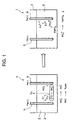
- FIG. 1 is an explanatory view showing an outline of a wastewater treating apparatus 1 for realizing the wastewater treating method of the first embodiment of the present invention.
- the wastewater treating apparatus 1 of the embodiment comprises a treating vessel 2 which constitutes a treating chamber 4 having an inlet and an outlet (not shown) of a wastewater, a pair of electrodes 5, 6 oppositely arranged to be partially immersed in the for-treatment wastewater of the treating chamber 4, a power supply (not shown) to energize the electrodes 5, 6, a controller to control the power supply, etc.
- Agitation means may be disposed in the treating vessel 2 to agitate the contents therein.
- the electrode 6 is made of, for example, iron (Fe) or a conductor covered with the iron as an element in the group VIII of a periodic table, or a conductor containing the element in the group VIII, or a conductor covered with the element in the same group or a conductor containing the element in the same group.
- the electrode 5 is, for example, a noble metal electrode made of platinum (Pt) or a mixture of platinum and iridium (Ir), or made of an insoluble conductor covered with such en element.
- the iron (Fe) is used as the element in the group VIII of the periodic table, or the conductor containing the element in the group VIII, or the conductor covered with the element in the same group or the conductor containing the element in the same group.
- cobalt (Co), nickel (Ni) or the like may be used as long as it is a conductor containing the element in the group VIII.
- the electrode 5 is the noble metal electrode, or made of the insoluble conductor covered with such an element.
- a ceramic-based conductor such as a ferrite, a carbon-based conductor, a stainless steel or the like may be used.
- the mixture of platinum and iridium platinum/iridium is used .
- the for-treatment wastewater which contains nitric acid ions as nitrate nitrogen and phosphoric acid ions as phosphorus compounds is reserved in the treating chamber 4 of the treating vessel 2.
- the power supply is turned ON by the controller to apply a positive potential to the electrode 5 and a negative potential to the electrode 6 (nitrogen treatment step, left side of FIG. 1). Accordingly, the electrode 5 becomes an anode while the electrode 6 becomes a cathode.
- reaction A electrons generated on the electrode 5 side constituting the anode are fed to the electrode 6 side constituting the cathode, and the nitric acid ions contained as the nitrate nitrogen in the for-treatment wastewater are reduced to nitrous acid ions (reaction A). Further, electrons are fed to the electrode 6 side constituting the cathode to reduce the nitrate nitrogen reduced to the nitrous acid ions to ammonia (ammonium ions) (reaction B).
- the reactions A and B are shown below. Reaction A NO 3 - + H 2 O + 2e - ⁇ NO 2 - + 2OH - Reaction B NO 2 - + 5H 2 O + 6e - ⁇ NH 3 (aq) + 7OH -
- chloride ions as halide ions contained in the for-treatment wastewater emit electrons to generate chlorine.
- the chlorine is dissolved in the water to generate hypochlorous acid simultaneously, ozone or active oxygen is generated.
- the chloride ions are contained in the for-treatment wastewater to generate the hypochlorous acid.
- other halide ions are contained in the for-treatment wastewater, similar effects can be obtained even when other hypohalogeneous acid such as hypofluorous acid and hypobromous acid are generated.
- halide ions such as chloride ions, iodide ions or bromide ions, or compounds containing such halide ions, e.g., a sodium chloride or a potassium chloride
- the chloride ions of the sodium chloride in the for-treatment wastewater are set to 10 ppm or higher to 40000 ppm or lower.
- reaction C The chloride ions originally contained in the for-treatment wastewater or the sodium chloride added as described above is oxidized on the electrode 5 constituting the anode to generate chlorine (reaction C, shown in the case of the sodium chloride).
- the generated chlorine reacts with water in the for-treatment wastewater to generate hypochlorous acid (reaction D).
- the generated hypochlorous acid reacts with the ammonia (ammonium ions) generated in the for-treatment wastewater in the reaction B to make a plurality of chemical changes, and then converted into nitrogen gas (reaction E).
- the reactions C to E are shown below.
- reaction F The ammonia (ammonium ions) in the for-treatment wastewater reacts with the ozone or active oxygen generated on the electrode 5 side constituting the anode as shown in a reaction F to be denitrified to nitrogen gas.
- the nitrogen compounds of nitrate nitrogen, nitrite nitrogen and ammonia nitrogen in the for-treatment wastewater can be treated in the same treating vessel 2.
- the result of an experiment of FIG. 2 shows the concentration of nitrate nitrogen in the for-treatment wastewater when a platinum, iridium-based electrode is used for the electrode 5 constituting the anode while the electrode 6 constituting the cathode is made of iron or brass (alloy of zinc and copper).
- constant-current electrolysis was carried out by filling the beaker of 500 ml at KC 1500 ml of 100 mM, and supplying 0.5 A between the electrodes 5, 6 for five hours.
- a white circle indicates the result of measuring the concentration of nitrate nitrogen (NO3-) for every one hour when brass is used as a cathode
- a black square indicates the same when iron is used as a cathode.
- the controller switches the polarities of potentials applied to the electrodes 5, 6 (right side of FIG. 1, phosphorus treatment step, the nitrogen treatment reaction continues in the for-treatment wastewater even after the switching of the polarities).
- the electrode 5 constitutes a cathode while the electrode 6 constitutes an anode. Therefore, since the for-treatment wastewater is subjected to electrolysis as an electrochemical technique, and the electrode 6 constituting the anode is made of the conductor as described above, iron (II) ions are eluted from the electrode 6 into the for-treatment wastewater to be oxidized to iron (III) ions therein.
- reaction G Fe 3+ + PO 4 3- ⁇ FePO 4 ⁇
- the phosphoric acid ions as phosphorus compounds contained in the for-treatment wastewater can be flocculated to settle as iron phosphate.
- the technology for electrolyzing the for-treatment wastewater containing the iron (II) ions to reduce the nitric acid ions contained in the for-treatment wastewater to the ammonium ions is disclosed in the "Development of Inorganic Nitrogen Compound Treating Technology Using Electrochemical Reaction" of annual meeting lecture papers of Japan Society on Water Environment distributed at the 33rd meeting of Japan Society on Water Environment held from March 16 to 18 in 1999.
- the electrode 5 is the noble metal electrode made of platinum (Pt) or the mixture or platinum and iridium, or an insoluble conductor covered with such an element.
- the electrode 5 may be made of a ceramic-based conductor such as a ferrite, a carbon-based conductor or a stainless steel.
- the electrode 5 may be an electrode in which no hypohalogenous acid, ozone or active oxygen is generated, or the amount of generation is small by the electrochemical technology. This case will be described by referring to FIG. 5.
- FIG. 5 is an explanatory view showing an outline of the wastewater treating apparatus 1 of the other example of the first embodiment.
- reference numerals similar to those of FIG. 1 denote identical or similar operations. That is, the for-treatment wastewater which contains nitric acid ions as nitrate nitrogen and phosphoric acid ions as phosphorus compounds is reserved in the treating chamber 4 of the treating vessel 2.
- the power supply is turned ON by the controller to apply a positive potential to the electrode 5 and a negative potential to the electrode 6 (nitrogen treatment step, left side of FIG. 5). Accordingly, the electrode 5 becomes an anode while the electrode 6 becomes a cathode.
- reaction A electrons generated on the electrode 5 side constituting the anode are fed to the electrode 6 side constituting the cathode, and the nitric acid ions contained as the nitrate nitrogen in the for-treatment wastewater are reduced to nitrous acid ions. Further, electrons are fed to the electrode 6 side constituting the cathode to reduce the nitrate nitrogen reduced to the nitrous acid ions to ammonia (ammonium ions) (reaction B).
- the electrode 5 constituting'the anode is an electrode in which it is difficult to generate hypohalogeneous acid, ozone or active oxygen by the electrochemical reaction technology as described above, as means for turning OFF the power supply by the controller to remove ammonia nitrogen (ammonia or ammonium ions) from the for-treatment wastewater when the nitric acid ions as the nitrate nitrogen and the nitrous acid ions as nitrite nitrogen in the for-treatment wastewater are nearly reduced to the ammonia nitrogen (ammonia or ammonium ions), for example, a substance which has the effect of removing nitrogen such as drug hypohalogeneous acid, electrolytic hypohalogeneous acid, ozone or the like is added (ammonia removal treatment step, upper center of FIG. 5).
- ammonia nitrogen ammonia or ammonium ions
- the ammonia nitrogen generated or left in the for-treatment wastewater is converted into nitrogen gas by the hypohalogeneous acid or the ozone (the reactions E and F).
- the nitrogen compounds of nitrate nitrogen, nitrite nitrogen, ammonia nitrogen etc. in the for-treatment wastewater can be treated in the same treating vessel 2.
- the controller After the end of the removal treatment of the ammonia nitrogen from the for-treatment wastewater (ammonia removal treatment step), the controller applies a positive potential to the electrode 6 and a negative potential to the electrode 6 (upper right side of FIG. 5, phosphorus treatment step, the nitrogen and ammonia treatment reaction continues in the for-treatment wastewater even after the application of the potentials).
- the electrode 5 constitutes a cathode while the electrode 6 constitutes an anode. Therefore, since the for-treatment wastewater is subjected to electrolysis as an electrochemical technique, and the electrode 6 constituting the anode is made of the conductor as described above, iron (II) ions are eluted from the electrode 6 into the for-treatment wastewater to be oxidized to iron (III) ions therein.
- the generated iron (III) ions are flocculated to settle with the phosphoric acid ions in the for-treatment wastewater by a dephosphorization reaction (the reaction G), whereby iron phosphate which has exsolution in water is generated.
- the phosphoric acid ions as phosphorus compounds contained in the for-treatment wastewater can be flocculated to settle as iron phosphate.
- a portion of the ion (III) ions eluted in the state of the iron (II) ions in the for-treatment wastewater to supply electrons, and oxidized on the electrode or in the for-treatment wastewater receive electrons again on the electrode 5 side constituting the cathode in this case to be reduced to iron (II) ions, and oxidized again on the electrode 6 side constituting the anode or in the for-treatment wastewater.
- the treatment (ammonia removal treatment step) of removing the ammonia nitrogen generated in the nitrogen treatment step is carried out, and then the treatment (phosphorus treatment step) of the phosphorus compounds in the for-treatment wastewater is carried out.
- the polarities of the electrodes 5, 6 may be switched to treat the phosphorus compounds (phosphorus treatment step) after the end of the nitrogen treatment step, and then the ammonia nitrogen present in the for-treatment wastewater may be removed (ammonia removal treatment step). Effects similar to those of the above case can be obtained.
- the substance which has the effect of removing nitrogen such as the drug hypohalogeneous acid, the electrolytic hypohalogeneous acid, the ozone or the like is added to remove the ammonia nitrogen.
- a so-called ammonia stripping technology known as a method for removing ammonia nitrogen from a solution may be employed to remove the ammonia nitrogen in the for-treatment wastewater.
- the electrode 5 is made of the insoluble conductor, the elution of the electrode 5 itself can be prevented to improve the durability of the electrode 5. Additionally, since the great amount of sludge is not generated by the great amount of iron eluted in the for-treatment wastewater different from the conventional case, the workability of waste disposal maintenance and adaptability to the environment can be improved.
- the electrode of high oxygen generation efficiency and low hypohalogeneous acid generation efficiency can be used for the electrode 5 constituting the anode, and the increase of pH in the for-treatment wastewater which occurs during the reduction of the nitrate nitrogen can be suppressed. As a result, it is possible to greatly suppress a reduction in the reduction ability of the nitrate nitrogen.
- a later-described cation-exchange membrane (described with reference to a second embodiment) may be used.
- nitrous acid ions generated on the electrode 6 constituting the cathode transfer to the electrode 5 side constituting the anode to be oxidized.
- the efficiency of the reduction reaction of the nitrate nitrogen in the for-treatment wastewater to the nitrite nitrogen and the ammonia can be further increased.
- FIG. 3 is an explanatory view showing an outline of a wastewater treating apparatus 1 for realizing the wastewater treating method of the second embodiment of the present invention.
- reference numerals similar to those of FIGS. 1 and 2 denote identical or similar operations.
- the wastewater treating apparatus 1 of the embodiment comprises a treating vessel 2 which constitutes a treating chamber 4 having an inlet and an outlet (not shown) for the wastewater therein, a pair of electrodes 5 (first electrode), 6 (second electrode) oppositely arranged to be partially immersed in the for-treatment wastewater of the treating chamber 4, a cation-exchange membrane (barrier membrane: National (product name) by DUPONT) 8 disposed between the electrodes 5, 6 to partition the inside of the treating chamber 4 into one region 4A in which the electrode 5 is present and the other region 4B in which the electrode 6 is present, an electrode 7 (third electrode) arranged to be immersed at least partially in the for-treatment wastewater of the other region 4B of the cation-exchange membrane 8, an unshown power supply to energize the electrodes 5, 6, 7, a controller to control the power supply, etc.
- Agitation means may be disposed in the treating vessel 2 to agitate the contents therein.
- the electrode 6 is made of, for example, iron (Fe) or a conductor covered with the iron as an element in the group VIII of a periodic table, or a conductor containing the element in the group VIII, or a conductor covered with the element in the same group or a conductor containing the element in the same group.
- Each of the electrodes 5 and 7 is, for example, a noble metal electrode made of platinum (Pt) or a mixture of platinum and iridium (Ir), or made of an insoluble conductor covered with such an element.
- the iron (Fe) is used as the element in the group VIII of the periodic table.
- cobalt (Co), nickel (Ni) or the like may be used as long as it is a conductor containing the element in the group VIII.
- the electrode 5 is the noble metal electrode, or made of the insoluble conductor covered with such an element.
- a ceramic-based conductor such as a ferrite, a carbon-based conductor, a stainless steel or the like may be used.
- the mixture of platinum and iridium platinum/iridium
- the for-treatment wastewater which contains nitric acid ions as nitrate nitrogen and phosphoric acid ions as phosphorus compounds is reserved in the treating chamber 4 of the treating vessel 2.
- the power supply is turned ON by the controller to first apply a positive potential to the electrode 5 and a negative potential to the electrode 6 (first treatment step, left side of FIG. 3). At this time, no potential is applied to the electrode 7. Accordingly, the electrode 5 becomes an anode while the electrode 6 becomes a cathode.
- reaction H if the nitrous acid ions generated by reducing the nitric acid ions on the electrode 6 side (other region 4B) constituting the cathode transfer to the one region 4A, an oxidation reaction occurs on the electrode 5 side constituting the anode to oxidize the nitrous acid ions to nitric acid ions (reaction H).
- the oxidation reaction of the nitrous acid ions occurs on the electrode 5 with respect to the reduction reaction of the nitric acid ions on the electrode 6 to lower nitrogen treatment efficiency.
- the cation-exchange membrane 8 is present between the electrode 5 and the electrode 6, the transfer of the nitrous acid ions to the one region 4a is prevented to inhibit the reaction H.
- the nitrogen treatment ability to reduce the nitric acid ions to the ammonia (ammonium ions) can be improved.
- the controller After the end of the first treatment step, the controller applies a negative potential to the electrode 5 and a positive electrode to the electrode 7 (second treatment step, center of FIG. 3). At this time, no potential is applied to the electrode 6, or a very small negative potential is applied to prevent iron corrosion. Accordingly, the electrode 7 becomes an anode while the electrode 5 becomes a cathode.
- chloride ions as halide ions contained in the for-treatment wastewater emit electrons to generate chlorine.
- the chlorine is dissolved in the water to generate hypochlorous acid (the reactions C to D).
- hypochlorous acid the reactions C to D.
- ozone or active oxygen is generated.
- the chloride ions are contained in the for-treatment wastewater to generate the hypochlorous acid.
- other halide ions are contained in the for-treatment wastewater, similar effects can be obtained even when other hypohalogeneous acid such as hypofluorous acid and hypobromous acid are generated.
- the generated hypochlorous acid reacts with the ammonia (ammonium ions) generated in the for-treatment wastewater in the reaction B of the first treatment step to make a plurality of chemical changes, and then converted into nitrogen gas (reaction E).
- the ammonia (ammonium ions) in the for-treatment wastewater reacts with the ozone or active oxygen generated on the electrode 7 side constituting the anode as shown in the reaction F to be denitrified to nitrogen gas.
- the nitrogen compounds of nitrate nitrogen, nitrite nitrogen and ammonia nitrogen in the for-treatment wastewater can be treated in the same treating vessel 2.
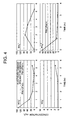
- the results of experiments of the left upper side, the left lower side and the right upper side of FIG. 4 show the concentrations of nitric acid ions (NO 3 - ), nitrous acid ions (NO 2 - ) and ammonium ions (NH 4 + ) in the for-treatment wastewater when platinum, iridium-based electrodes are used for the electrodes 5, 7 while the electrode 6 is made of iron.
- FIG. 4 shows the result of measuring a concentration for every one hour. It is apparent that even if the ion electrode is used as the cathode, the concentration of nitric acid ions is lowered to 50 ppm or lower one hour after the start of the experiment. So it can be understood that the nitrogen treatment is done more efficiently than aforementioned embodiment. Since there is no elution of copper ions as in the aforementioned case, a problem caused by toxicity can be solved while a high nitrogen compound treating ability is maintained.
- the lowered concentration of the ammonium ions is seen before the start of the second treatment step about two hours or thereafter from the start of the experiment. This occurs because since the cation-exchange membrane 8 is present, pH becomes high in the other region 4B to cause stripping (diffusion into gas).
- the controller After the end of the nitrogen compound treatment (first and second nitrogen treatment steps), the controller applies a negative potential to the electrode 5 and a positive potential to the electrode 6. At this time, no potential is applied to the electrode 7. Alternatively, a very small potential is applied to prevent iron corrosion (right side of FIG. 3, third treatment step; the nitrogen treatment reaction continues in the for-treatment wastewater even after the switching to the potential application to the electrode 6).
- the electrode 5 constitutes a cathode while the electrode 6 constitutes an anode.
- the for-treatment wastewater is subjected to electrolysis as an electrochemical technique, and the electrode 6 constituting the anode is made of the conductor containing iron as the conductor containing the element in the group VIII of the periodic table as described above, iron (II) ions are eluted from the electrode 6 into the for-treatment wastewater to be oxidized to iron (III) ions therein.
- the generated iron (III) ions are flocculated to settle with the phosphoric acid ions in the for-treatment wastewater by a dephosphorization reaction as shown in the reaction G, whereby iron phosphate which has exsolution in water is generated.
- the phosphoric acid ions as phosphorus compounds contained in the for-treatment wastewater can be flocculated to settle as iron phosphate.
- the result of the experiment of the right lower side of FIG. 4 shows the concentration of phosphoric acid ions (PO 4 3- ) in the for-treatment wastewater when a platinum, iridium-based electrode is used for the electrode 5 while the electrode 6 is made of iron.
- This experiment shows the result of carrying out electrolysis for four hours by setting the electrode 5 as a cathode and the electrode 6 as an anode and supplying a current after the end of the second treatment step.
- reaction A electrons generated on the electrode 6 side constituting the anode are fed to the electrode 5 side constituting the cathode, and the nitric acid ions contained as the nitrate nitrogen in the for-treatment wastewater are reduced to nitrous acid ions. Further, electrons are fed to the electrode 5 side constituting the cathode to reduce the nitrate nitrogen reduced to the nitrous acid ions to ammonia (ammonium ions) (reaction B).
- the electrode 6 may be made of a stainless steel.
- the stainless steel there are available an austenite-based steel type (SUS304), an austenite/ferrite-based steel type (SUS329J1), a ferrite-based steel type (SUS444), a martensite-based steel type (SUS410), a precipitation hardened steel type (SUS631) etc.
- SUS304 an austenite-based steel type
- SUS329J1 austenite/ferrite-based steel type
- SUS444 ferrite-based steel type
- SUS410 martensite-based steel type
- SUS631 precipitation hardened steel type
- the nitrogen compounds and the phosphorus compounds in the for-treatment wastewater can be effectively treated by the electrochemical technique.
- the nitrogen compounds and the phosphorus compounds in the for-treatment wastewater can be treated in the same treating vessel to eliminate the conventional necessity of installing a large biological treating vessel, and it is possible to prevent increases in facility construction cost and apparatus installation area.
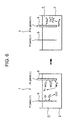
- FIG. 6 is an explanatory view showing an outline of a wastewater treating apparatus 1 for realizing the wastewater treating method of the third embodiment of the present invention.
- the wastewater treating apparatus 1 of the embodiment comprises a treating vessel 2 which constitutes a treating chamber 4 having an inlet and an outlet (not shown) for the wastewater therein, a pair of electrodes 5, 6 oppositely arranged to be partially immersed in the for-treatment wastewater of the treating chamber 4, an unshown power supply to energize the electrodes 5, 6, a controller to control the power supply, etc.
- Agitation means may be disposed in the treating vessel 2 to agitate the contents therein.
- the electrode 6 is made of, for example, iron (Fe) or a conductor covered with the iron (conductor containing iron).
- the electrode 5 is, for example, a noble metal electrode made of platinum (Pt) or a mixture of platinum and iridium (Ir), or made of an insoluble conductor covered with such en element as a conductor capable of generating hypohalogeneous acid such as hypochlorous acid, ozone, or active oxygen.
- the conductor capable of generating hypohalogeneous acid such as hypochlorous acid, ozone or active oxygen for example, a ceramic-based conductor, a stainless steel, an insoluble conductor covered with the stainless steel, a carbon-based conductor, or an insoluble conductor covered with the carbon-based conductor may be used.
- the conductor can be constructed at low cost.
- durability can be improved when the ceramic-based conductor or the conductor such as a stainless steel is used.
- platinum is used.
- the electrode 6 is made of a plate member while the electrode 5 is made of a linear member such as a wire so that a surface area of at least a portion of the electrode 6 immersed in the for-treatment wastewater can be larger than that of at least a portion of the electrode 5 immersed in the for-treatment wastewater.
- the for-treatment wastewater which contains nitric acid ions as nitrate nitrogen and phosphoric acid ions as phosphorus compounds is reserved in the treating chamber 4 of the treating vessel 2.
- the power supply is turned ON by the controller to apply a positive potential to the electrode 5 and a negative potential to the electrode 6 (nitrogen treatment step, left side of FIG. 6). Accordingly, the electrode 5 becomes an anode while the electrode 6 becomes a cathode.
- reaction I electrons generated on the electrode 5 side constituting the anode are fed to the electrode 6 side constituting the cathode, and the nitric acid ions contained as the nitrate nitrogen in the for-treatment wastewater are reduced to nitrous acid ions.
- reaction J electrons are fed to the electrode 6 side constituting the cathode to reduce the nitrate nitrogen reduced to the nitrous acid ions to ammonia (ammonium ions) (reaction J).
- the reactions I and J are shown below. Reaction I NO 3 - + H 2 O + 2e - ⁇ NO 2 - + 2OH - Reaction J NO 2 - + 5H 2 O + 6e - ⁇ NH 3 (aq) + 7OH -
- reaction K when nitrous acid ions generated by reducing the nitric acid ions on the electrode 6 constituting the cathode transfer to the electrode 5 side constituting the anode, an oxidation reaction occurs on the electrode 5 constituting the anode to oxidize the nitrous acid ions to nitric acid ions (reaction K).
- reaction K NO 2 - + H 2 O ⁇ NO 3 - + 2H + + 2e -
- the reaction K is suppressed because the surface area of at least the portion of the electrode 6 constituting the cathode immersed in the for-treatment wastewater is larger than that of at least the portion of the electrode 5 constituting the anode immersed in the for-treatment wastewater.
- a nitrogen treatment ability to reduce the nitric acid ions to ammonia (ammonium ions) is improved.
- chloride ions as halide ions contained in the for-treatment wastewater emit electrons to generate chlorine.
- the chlorine is dissolved in the water to generate hypochlorous acid simultaneously, ozone or active oxygen is generated.
- halide ions such as chloride ions, iodide ions or bromide ions, or compounds containing such halide ions, e.g., a sodium chloride or a potassium chloride
- the chloride ions of the sodium chloride in the for-treatment wastewater are set to 10 ppm or higher to 40000 ppm or lower.
- the chloride ions originally contained in the for-treatment wastewater or the sodium chloride added as described above is oxidized on the electrode 5 constituting the anode to generate chlorine (reaction L, shown in the case of the potassium chloride).
- the generated chlorine reacts with water in the for-treatment wastewater to generate hypochlorous acid (reaction M).
- the generated hypochlorous acid reacts with the ammonia (ammonium ions) generated in the for-treatment wastewater in the reaction J to make a plurality of chemical changes, and then converted into nitrogen gas (reaction N).
- the reactions L to N are shown below.
- reaction O The ammonia (ammonium ions) in the for-treatment wastewater reacts with the ozone or active oxygen generated on the electrode 5 side constituting the anode as shown in a reaction O to be denitrified to nitrogen gas.
- the nitrogen compounds of nitrate nitrogen, nitrite nitrogen and ammonia nitrogen in the for-treatment wastewater can be treated in the same treating vessel 2.
- the result of an experiment of FIG. 7 shows the concentration of nitrate nitrogen in the for-treatment wastewater when a plate iron electrode of a surface area 35 cm 2 is used for the electrode 6 constituting the cathode while a platinum wire of a surface area 0.5 cm 2 is used for the electrode 5 constituting the anode.
- constant-current electrolysis was carried out in a mixed solution as the for-treatment wastewater of KCl of 100 mM and KNO 3 of 10 mM by supplying 0.5 A between the electrodes 5, 6 for five hours.
- a white circle indicates the result of measuring the concentration of nitrate nitrogen (NO 3 - ) for every one hour when a platinum wire is used as an anode
- a black circle indicates the same when a platinum-iridium-based plate electrode is used as an anode.
- the concentration of the nitrate nitrogen becomes equal to/lower than 100 ppm of a wastewater quality standard after the passage of one hour. After the passage of five hours, the concentration of the nitrate nitrogen becomes equal to/lower than 20 ppm.
- the concentration of the nitrate nitrogen becomes equal to/lower than 80 ppm after the passage of three hours. After the passage of five hours, however, the treatment progresses only to the concentration of the nitrate nitrogen which is slightly lower than 70 ppm.
- the surface area of the portion of the electrode 6 constituting the cathode immersed in the for-treatment wastewater is larger than that of the portion of the electrode 5 constituting the anode immersed in the for-treatment wastewater, the reduction reaction of the nitrate nitrogen in the for-treatment wastewater to the nitride nitrogen and the ammonia is promoted on the electrode 6 constituting the cathode, whereby the time of the reduction reaction can be shortened. Additionally, low-concentration nitric acid ions can be treated.
- the controller switches the polarities of potentials applied to the electrodes 5, 6 (right side of FIG. 6, phosphorus treatment step, the nitrogen treatment reaction continues in the for-treatment wastewater even after the switching of the polarities).
- the electrode 5 constitutes a cathode while the electrode 6 constitutes an anode. Therefore, since the for-treatment wastewater is subjected to electrolysis as an electrochemical technique, and the electrode 6 constituting the anode is made of the conductor containing the iron as described above, iron (II) ions are eluted from the electrode 6 into the for-treatment wastewater to be oxidized to iron (III) ions therein.
- reaction P Fe 3+ + PO 4 3- ⁇ FePO 4 ⁇
- the phosphoric acid ions as phosphorus compounds contained in the for-treatment wastewater can be flocculated to settle as iron phosphate.
- the technology for electrolyzing the for-treatment wastewater containing the iron (II) ions to reduce the nitric acid ions contained in the for-treatment wastewater to the ammonium ions is disclosed in the "Development of Inorganic Nitrogen Compound Treating Technology Using Electrochemical Reaction" of the annual meeting lecture papers of Japan Society on Water Environment.
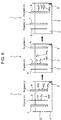
- FIG. 8 is an explanatory view showing an outline of a wastewater treating apparatus 1 for realizing the wastewater treating method of the fourth embodiment of the present invention.
- reference numerals similar to those of FIG. 6 denote identical or similar operations.
- the wastewater treating apparatus 1 of the embodiment comprises a treating vessel 2 which constitutes a treating chamber 4 having an inlet and an outlet (not shown) for the wastewater therein, a pair of electrodes 5 (first electrode), 6 (second electrode) oppositely arranged to be partially immersed in the for-treatment wastewater of the treating chamber 4, an electrode 7 (third electrode) arranged to be immersed at least partially in the for-treatment wastewater, an unshown power supply to energize the electrodes 5, 6, 7, a controller to control the power supply, an ammonia concentration detection sensor 8 for detecting ammonia and ammonium ion concentrations in the for-treatment wastewater, etc.
- Agitation means may be disposed in the treating vessel 2 to agitate the contents therein.
- the electrode 6 is made of, for example, iron (Fe) or a conductor covered with the iron.
- Each of the electrodes 5 and 7 is, for example, a noble metal electrode made of platinum (Pt) or a mixture of platinum and iridium (Ir), or made of an insoluble conductor covered with such an element.
- a conductor capable of generating hypohalogeneous acid such as hypochlorous acid, ozone or active oxygen
- a ceramic-based conductor an insoluble conductor covered with the ceramic-based conductor, a stainless steel, an insoluble conductor covered with the stainless, a carbon-based conductor, or an insoluble conductor covered with the carbon-based conductor may be used.
- the conductor can be prepared at low cost. Especially, durability can be improved when the ceramic-based conductor or the conductor such as a stainless steel is used.
- the electrode 6 is made of a plate member while the electrode 5 is made of a linear member such as a wire so that a surface area of at least a portion of the electrode 6 immersed in the for-treatment wastewater can be larger than that of at least a portion of the electrode 5 immersed in the for-treatment wastewater.
- the electrode 7 is also made of a plate member so that at least a portion of the electrode 7 immersed in the treatment water can be larger than that of at least the portion of the electrode immersed in the for-treatment wastewater.
- platinum is used for both of the electrodes 5 and 7.
- the for-treatment wastewater which contains nitric acid ions as nitrate nitrogen and phosphoric acid ions as phosphorus compounds is reserved in the treating chamber 4 of the treating vessel 2.
- the power supply is turned ON by the controller to apply a positive potential to the electrode 5 and a negative potential to the electrode 6 (first treatment step, left side of FIG. 8). At this time, no potential is applied to the electrode 7. Accordingly, the electrode 5 becomes an anode while the electrode 6 becomes a cathode.
- the reaction K is suppressed because the surface area of at least the portion of the electrode 6 constituting the cathode immersed in the for-treatment wastewater is larger than that of at least the portion of the electrode 5 constituting the anode immersed in the for-treatment wastewater.
- a nitrogen treatment ability to reduce the nitric acid ions to ammonia (ammonium ions) is improved.
- the ammonia concentration detector sensor 8 detects ammonia or ammonium ion concentrations in the for-treatment wastewater. When the ammonia and ammonium ion concentrations in the for-treatment wastewater reach predetermined values, the first treatment step is finished.
- a nitric acid ion concentration detection sensor (not shown) may be disposed in the wastewater treating apparatus 1 to detect concentrations of nitric acid ions in the for-treatment wastewater.
- the ammonia and ammonium ion concentrations in the for-treatment wastewater may be detected by the ammonia concentration detection sensor 8, and the first treatment step may be finished when the ammonia and ammonium ion concentrations in the for-treatment wastewater are equal to/higher than the predetermined values.
- the controller After the end of the first treatment step, the controller applies a negative potential to the electrode 6 and a positive electrode to the electrode 7 (second treatment step, center of FIG. 8). At this time, no potential is applied to the electrode 5. Accordingly, the electrode 7 becomes an anode while the electrode 6 becomes a cathode.
- chloride ions contained in the for-treatment wastewater emit electrons to generate chlorine.
- the chlorine is dissolved in the water to generate hypochlorous acid (the reactions L to M). Simultaneously, ozone or active oxygen is generated.
- the generated hypochlorous acid reacts with the ammonia (ammonium ions) generated in the for-treatment wastewater in the reaction J of the first treatment step to make a plurality of chemical changes, and then converted into nitrogen gas (the reaction N).
- the ammonia (ammonium ions) in the for-treatment wastewater reacts with the ozone or active oxygen generated on the electrode 5 side constituting the anode as shown in the reaction O to be denitrified to nitrogen gas.
- the negative potential is applied to the electrode 6 while the positive potential is applied to the electrode 7.
- similar effects can be obtained by applying a negative potential to the electrode 6 and positive potentials to the electrodes 7 and 5.
- the nitrogen compounds of nitrate nitrogen, nitrite nitrogen and ammonia nitrogen in the for-treatment wastewater can be treated in the same treating vessel 2.
- the first treatment step is switched to the second treatment step by the detection of the ammonia concentration detector sensor 8
- an oxidation reaction from nitrous acid ions to nitric acid ions can be suppressed.
- the ammonia and ammonium ions cannot be completely removed on the electrode 5 as the first electrode, by switching to the electrode 7 as the third electrode, the ammonia and the ammonium ions in the for-treatment wastewater can be quickly converted into nitrogen gas.
- the controller After the end of such treatment of the nitrogen compounds (first and second treatment steps), the controller applies a negative potential to the electrode 7 and a positive potential to the electrode 6. At this time, no potential is applied to the electrode 5 (right side of FIG. 8, third treatment step, the nitrogen treatment continues in the for-treatment wastewater even after the switching of potential application).
- the electrode 7 constitutes a cathode while the electrode 6 constitutes an anode. Therefore, since the for-treatment wastewater is subjected to electrolysis as an electrochemical technique, and the electrode 6 constituting the anode is made of the conductor containing the iron as described above, iron (II) ions are eluted from the electrode 6 into the for-treatment wastewater to be oxidized to iron (III) ions therein.
- the generated iron (III) ions are flocculated to settle with the phosphoric acid ions in the for-treatment wastewater by a dephosphorization reaction as shown in the reaction P, whereby iron phosphate which has exsolution in water is generated.
- the phosphoric acid ions as phosphorus compounds contained in the for-treatment wastewater can be flocculated to settle as iron phosphate.
- the negative potential is applied to the electrode 7 while the positive potential is applied to the electrode 6.
- similar effects can obtained when negative potentials are applied to the electrodes 7 and 5, and a positive potential is applied to the electrode 6.
- the electrode 6 may be made of a stainless steel.
- the stainless steel there are available an austenite-based steel type (SUS304), an austenite/ferrite-based steel type (SUS329J1), a ferrite-based steel type (SUS444), a martensite-based steel type (SUS410), a precipitation hardened steel type (SUS631) etc.
- SUS304 an austenite-based steel type
- SUS329J1 austenite/ferrite-based steel type
- SUS444 ferrite-based steel type
- SUS410 martensite-based steel type
- SUS631 precipitation hardened steel type
- the nitrogen compounds and the phosphorus compounds in the for-treatment wastewater can be effectively treated by the electrochemical technique.
- the nitrogen compounds and the phosphorus compounds in the for-treatment wastewater can be treated in the same treating vessel to eliminate the conventional necessity of installing a large biological treating vessel, and it is possible to prevent increases in facility construction cost and apparatus installation area.
- the halide ions contained in the for-treatment wastewater are chloride ions to generate hypochlorous acid.
- similar effects can be obtained even when other hypohalogeneous acid is generated by fluoride ions, bromide ions or the like.
- the material of one of the electrodes constituting the anode is an insoluble conductor
- the material of the other electrode constituting the cathode is an element in the group VIII of the periodic table
- the for-treatment wastewater is treated by the electrochemical technique.
- the material of the one electrode constituting the anode is the insoluble conductor, elution from the electrode itself can be prevented to improve the durability of the electrode. Moreover, since there is no great amount of sludge generated by the great amount of iron eluted into the for-treatment wastewater different from the conventional case, the workability of waste disposal maintenance and adaptability to the environment can be improved.
- the other electrode constituting the cathode is made of the material which is the element in the group VIII of the periodic table, the conductor containing the element in the group VIII, the conductor covered with the element in the same group or the conductor containing the element in the same group, and an alloy containing copper is not used, the problem of toxicity caused by the elution of copper in the for-treatment wastewater can be solved.
- the nitrogen compounds in the for-treatment wastewater can be efficiently treated.
- the for-treatment wastewater is partitioned into the region of the one electrode constituting the anode and the region of the other electrode constituting the cathode by the cation-exchange membrane.
- the nitrous acid ions generated on the other electrode constituting the cathode transfer to the one electrode side constituting the anode to present the inconvenience of oxidation thereof.
- the efficiency of the reduction reaction of the nitrate nitrogen in the for-treatment wastewater to the nitrous acid nitrogen and ammonia can be further improved.
- the ammonia removal treatment step of removing ammonia nitrogen generated in the for-treatment wastewater from the for-treatment wastewater by the aforementioned treatment, and the phosphorus removal treatment step of switching the polarities of the electrodes to treat the phosphorus compounds in the for-treatment wastewater by an electrochemical technique are carried out.
- the ammonia nitrogen generated in the aforementioned treatment can be efficiently treated in the ammonia removal treatment step.
- iron (II) ions in the group VIII of the periodic table are eluted in the for-treatment wastewater by the other electrode constituting the anode, the iron (III) ions generated by oxidation in the for-treatment wastewater are chemically reacted with the phosphoric acid ions as the phosphorus compounds in the for-treatment wastewater, and flocculated to settle as iron phosphate.
- the material of the one electrode constituting the anode is a conductor capable of generating hypohalogenous acid, ozone or active oxygen by the electrochemical technique.
- the reduction reaction of the nitrate nitrogen in the for-treatment wastewater to the nitrous acid nitrogen or ammonia is promoted.
- the time of the reduction reaction can be shortened, and low-concentration nitric acid ions can be treated.
- the ammonia generated on the other electrode constituting the cathode is subjected to denitrification reaction with the substance such as hypochlorous acid as hypohalogeneous acid generated on the one electrode constituting the anode, it is possible to effectively remove the nitrate nitrogen, the ammonia nitrogen and the nitrogen components such as nitrogen compounds by a synergy effect.
- the nitrogen compounds can be efficiently removed from the for-treatment wastewater which contains the nitrogen compounds discharged from general households, factories or the like to improve the nitrogen compound treating ability.
- the polarities of the electrodes are switched, and the phosphorus compounds in the for-treatment wastewater are treated by the electrochemical technique.
- iron (II) ions as the element in the group VIII of the periodic table are eluted into the for-treatment wastewater from the other electrode constituting the anode, the iron (III) ions generated by oxidation in the for-treatment wastewater are chemically reacted with the phosphoric acid ions as the phosphorus compounds in the for-treatment wastewater, and flocculated to settle as iron phosphate.
- the phosphorus compounds in the for-treatment wastewater can be treated.
- the for-treatment wastewater is partitioned into one region and the other region by the cation-exchange membrane, and the first treatment step is carried out in which at least a portion of the first electrode is immersed in the one region; at least a portion of the second electrode is immersed in the other region; the first electrode constituting an anode is a conductor; a material of the second electrode constituting a cathode is an element in the group VIII of the periodic table, a conductor containing the element in the group VIII, or a conductor covered with the element in the same group or the conductor containing the element in the same group; and the for-treatment wastewater is treated by an electrochemical technique.
- the reduction reaction of the nitrate nitrogen in the for-treatment wastewater to the nitrite nitrogen or ammonia is promoted.
- the time of reduction reaction can be shortened, and low-concentration nitric acid ions can be treated.
- the for-treatment wastewater is partitioned into the region in which the first electrode constituting the anode is immersed and the region in which the second electrode constituting the cathode is immersed by the cation-exchange membrane.
- the nitrous acid ions generated on the second electrode constituting the cathode transfer to the first electrode side constituting the anode to prevent the inconvenience of oxidation thereof.
- the efficiency of the reduction reaction of the nitrate nitrogen in the for-treatment wastewater to the nitrous acid nitrogen and ammonia can be further improved.
- the second treatment step is carried out in which at least a portion of the third electrode is immersed in the other region; a material of the third electrode is a conductor capable of generating hypohalogenous acid, ozone or active oxygen by an electrochemical technique; the third electrode is used as the anode; the first electrode is used as the cathode; and the for-treatment wastewater treated by the first treatment step is treated by the electrochemical technique.
- the ammonia generated on the second electrode constituting the cathode in the first treatment step is subjected to denitrification reaction with the substance such as hypochlorous acid as hypohalogeneous acid generated on the third electrode constituting the anode in the second treatment step, it is possible to effectively remove the nitrate nitrogen, the ammonia nitrogen and the nitrogen components such as nitrogen compounds by a synergy effect.
- the nitrogen compounds can be efficiently removed from the for-treatment wastewater which contains the nitrogen compounds discharged from general households, factories or the like to improve the nitrogen compound treating ability.
- the second electrode constituting the cathode is made of the material which is the element in the group VIII of the periodic table, the conductor containing the element in the group VIII, the conductor covered with the element in the same group or the conductor containing the element in the same group, and an alloy containing copper is not used, the problem of toxicity caused by the elution of copper in the for-treatment wastewater can be solved.
- the third treatment step is carried out in which the phosphorus compounds in the for-treatment wastewater are treated by the electrochemical technique while the first electrode is set as the cathode.
- iron (II) ions as the element in the group VIII of the periodic table are eluted into the for-treatment wastewater from the second electrode constituting the anode in the third treatment step, the iron (III) ions generated by oxidation in the for-treatment wastewater are chemically reacted with the phosphoric acid ions as the phosphorus compounds in the for-treatment wastewater, and flocculated to settle as iron phosphate.
- the phosphorus compounds in the for-treatment wastewater can be treated.
- the conductor capable of generating hypohalogenous acid, ozone or active oxygen by the electrochemical technique is a noble metal, a conductor covered with the noble metal, a ceramic conductor, a ferrite, a carbon-based conductor or a stainless steel.
- the hypohalogeneous acid, the ozone or the active oxygen can be easily generated in the for-treatment wastewater, and the denitrification treatment of the ammonia or the ammonium ions can be effectively carried out.
- the material of one of the electrodes constituting the anode is a conductor capable of generating hypohalogeneous acid, ozone or active oxygen by the electrochemical technology
- the material of the other electrode constituting the cathode is a conductor containing iron
- the for-treatment wastewater is treated by the electrochemical technique.
- the surface area of at least the portion of the other electrode constituting the cathode immersed in the for-treatment wastewater is set to be larger than that of the portion of the one electrode constituting the anode immersed in the for-treatment wastewater, and the for-treatment wastewater is treated by the electrochemical technique.
- the oxidation reaction of the nitrogen compounds generated on the one electrode constituting the anode especially from the nitrite nitrogen to the nitrate nitrogen, reduced, and accordingly the reduction reaction from the nitrate nitrogen to the nitrite nitrogen on the other electrode constituting the cathode is promoted.
- the reduction reaction from the nitrate nitrogen to the nitrite nitrogen or the ammonia is promoted much more to enable the shortening of the time of the reduction reaction, and the treatment of low-concentration nitric acid ions.
- the ammonia generated on the other electrode constituting the cathode is subjected to denitrification reaction with the substance such as hypochlorous acid as hypohalogeneous acid generated on the one electrode constituting the anode, it is possible to effectively remove the nitrate nitrogen, the ammonia nitrogen and the nitrogen components such as nitrogen compounds by a synergy effect.
- the nitrogen compounds can be efficiently removed from the for-treatment wastewater which contains the nitrogen compounds discharged from general households, factories or the like to improve the nitrogen compound treating ability.
- the polarities of the electrodes are switched, and the phosphorus compounds in the for-treatment wastewater are treated by the electrochemical technique.
- iron (II) ions are eluted into the for-treatment wastewater from the other electrode constituting the anode, the iron (III) ions generated by oxidation in the for-treatment wastewater are chemically reacted with the phosphoric acid ions as the phosphorus compounds in the for-treatment wastewater, and flocculated to settle as iron phosphate.
- the phosphorus compounds in the for-treatment wastewater can be treated.
- the wastewater treating method for treating nitrogen compounds in the for-treatment wastewater comprises: the first treatment step in which at least portions of the first and second electrodes are immersed in the for-treatment wastewater; the material of the first electrode constituting an anode is a conductor; the material of the second electrode constituting a cathode is a conductor containing iron; the surface area of the portion of the second electrode which is at least immersed in the for-treatment wastewater is set to be larger than that of the portion of the first electrode which is at least immersed in the for-treatment wastewater; and the for-treatment wastewater is treated by the electrochemical technique; and the second treatment step in which at least a portion of the third electrode is immersed in the for-treatment wastewater; the material of the third electrode is a conductor capable of generating hypohalogenous acid, ozone or active oxygen by the electrochemical technique, when the third electrode is used as an anode; the surface area of the portion of the third electrode which is at least immersed in the for-treatment wastewater is set to be larger than that of the
- the reduction reaction of the nitrate nitrogen in the for-treatment wastewater to the nitrite nitrogen or ammonia is promoted.
- the time of reduction reaction can be shortened, and low-concentration nitric acid ions can be treated.
- the surface area of at least the portion of the second electrode constituting the cathode immersed in the for-treatment wastewater is set to be larger than that of the portion of the first electrode constituting the anode immersed in the for-treatment wastewater, and the for-treatment wastewater is treated by the electrochemical technique.
- the oxidation reaction of the nitrogen compounds generated on the first electrode constituting the anode, especially from the nitrite nitrogen to the nitrate nitrogen is reduced, and accordingly the reduction reaction from the nitrate nitrogen to the nitrite nitrogen on the second electrode constituting the cathode can be promoted.
- the reduction reaction from the nitrate nitrogen to the nitrite nitrogen or the ammonia is promoted much more to enable the shortening of the time of the reduction reaction, and the treatment of low-concentration nitric acid ions.
- the second treatment step is carried out in which at least a portion of the third electrode is immersed in the other region;
- the material of the third electrode is a conductor capable of generating hypohalogenous acid, ozone or active oxygen by the electrochemical technique;
- the surface of at least the portion of the third electrode immersed in the for-treatment wastewater is set to be larger than that of at least the portion of the first electrode immersed in the for-treatment wastewater;
- the third electrode is used as the anode;
- the second electrode is used as the cathode; and the for-treatment wastewater after the completion of the first treatment step is treated by the electrochemical technique.
- the ammonia generated on the second electrode constituting the cathode in the first treatment step is subjected to denitrification reaction with the substance such as hypochlorous acid as hypohalogeneous acid generated on the third electrode constituting the anode in the second treatment step, it is possible to effectively remove the nitrate nitrogen, the ammonia nitrogen and the nitrogen components such as nitrogen compounds by a synergy effect.
- the nitrogen compounds can be efficiently removed from the for-treatment wastewater which contains the nitrogen compounds discharged from general households, factories or the like to improve the nitrogen compound treating ability.
- the surface area of at least the portion of the third electrode constituting the anode immersed in the for-treatment wastewater is set to be larger than that of at least the portion of the thirst electrode immersed in the for-treatment wastewater in the second treatment step, the generation of a substance such as hypohalogeneous acid generated on the third electrode constituting the anode in the second treatment step can be promoted.
- the denitrification reaction with the ammonia nitrogen in the for-treatment wastewater can be promoted.
- the operation transfers from the first treatment step to the second treatment step, when ammonia and ammonium ions in the for-treatment wastewater reach the predetermined concentrations.
- the operation can transfer to the second treatment step.
- ammonia denitrification reaction can be carried out by a substance such as hypohalogeneous ions generated on the third electrode constituting the anode. As a result, it is possible to more effectively remove the nitrate nitrogen, the ammonia nitrogen and the nitrogen components such as nitrogen compounds.
- the third treatment step is carried out in which after the completion of the second treatment step, the third electrode is used as the cathode; the second electrode is used as the anode; and the phosphorus compounds in the for-treatment wastewater are treated by the electrochemical technique.
- iron (II) ions can be eluted into the for-treatment wastewater from the second electrode constituting the anode, the iron (III) ions generated by oxidation in the for-treatment wastewater can be chemically reacted with the phosphoric acid ions as the phosphorus compounds in the for-treatment wastewater, and flocculated to settle as iron phosphate.
- the phosphorus compounds in the for-treatment wastewater can be treated.
- a stainless steel is used as the material of the other electrode or the second electrode.
- the conductor capable of generating hypohalogenous acid, ozone or active oxygen by the electrochemical technique is a noble metal or a conductor covered with the noble metal.
- hypohalogeneous acid, ozone or active oxygen can be easily generated in the for-treatment wastewater, and the denitification reaction of ammonia or ammonium ions can be effectively carried out.
- the conductor capable of generating hypohalogenous acid, ozone or active oxygen by the electrochemical technique is a ceramic-based conductor or a conductor covered with the ceramic-based conductor.
- hypohalogeneous acid, ozone or active oxygen can be easily generated in the for-treatment wastewater, and the denitrification reaction of ammonia or ammonium ions can be effectively carried out.
- the use of the ceramic-based conductor enables preparation of a durable conductor at low cost.
- the conductor capable of generating hypohalogenous acid, ozone or active oxygen by the electrochemical technique is a carbon-based conductor or a conductor covered with the carbon-based conductor.
- hypohalogeneous acid, ozone or active oxygen can be easily generated in the for-treatment wastewater, and the denitrification reaction of ammonia or ammonium ions can be effectively carried out.
- the use of the carbon-based conductor enables preparation of a conductor at low cost.
- the conductor capable of generating hypohalogenous acid, ozone or active oxygen by the electrochemical technique is a stainless steel or a conductor covered with the stainless steel.
- hypohalogeneous acid, ozone or active oxygen can be easily generated in the for-treatment wastewater, and the denitrification reaction of ammonia or ammonium ions can be effectively carried out.
- the use of the stainless steel enables preparation of a durable conductor at low cost.
Landscapes
- Chemical & Material Sciences (AREA)
- Life Sciences & Earth Sciences (AREA)
- Hydrology & Water Resources (AREA)
- Engineering & Computer Science (AREA)
- Environmental & Geological Engineering (AREA)
- Water Supply & Treatment (AREA)
- Organic Chemistry (AREA)
- Chemical Kinetics & Catalysis (AREA)
- Electrochemistry (AREA)
- General Chemical & Material Sciences (AREA)
- Water Treatment By Electricity Or Magnetism (AREA)
Abstract
There is here disclosed a wastewater treating
technique for treating nitrogen compounds in a for-treatment
wastewater by an electrochemical technique, wherein at least
portions of a pair of electrodes is immersed in the for-treatment
wastewater; a material of one electrode
constituting an anode is an insoluble conductor; and a
material of the other electrode constituting a cathode is an
element in the group VIII of the periodic table, a conductor
containing the element in the group VIII, or a conductor
covered with the element in the same group or the conductor
containing the element in the same group.
Description
The present invention relates to a method and an
apparatus for treating a wastewater containing nitrogen
compounds such as organic nitrogen, nitrite nitrogen, nitrate
nitrogen and ammonia nitrogen, and phosphorus compounds such
as phosphoric acid and phosphate ions (hereinafter, "a
wastewater to be treated" will be referred to as "a for-treatment
wastewater").
It is already well known that the existence of
nitrogen compounds is one of causes of eutrophication of
rivers and lakes. The nitrogen compounds much exist in
domestic life wastewater or industrial wastewater, but it is
difficult to purify them and there are no effective
countermeasures up to date. In general, a biological
treatment has been implemented. However, the biological
treatment comprises two processes, i.e., a nitrification
process for converting ammonia nitrogen to nitrate nitrogen,
and a denitrification process for converting nitrate nitrogen
to a nitrogen gas. Accordingly, there has been a problem
that two different reaction vessels are required. There has
been a further problem that because a time required for the
treatment is long, the treatment efficiency is low.
Further, in this biological treatment, there has
been another problem that a large-capacity anaerobic vessel
is necessary for keeping nitrifying bacteria and denitrifying
bacteria, thereby to induce the increase in equipment
construction cost and apparatus installation area. There has
been a further problem that the nitrifying bacteria and the
denitrifying bacteria are largely influenced by ambient
temperature environment, components contained in the for-treatment
wastewater, and the like, and in particular, during
the winter season when the temperature is low, their
activities are lowered to deteriorate the denitrifying action,
resulting in an unstable processing efficiency.
Accordingly, there has been proposed a method for
solving the foregoing technical problems, wherein a current
is fed to the for-treatment wastewater to decompose ammonia,
nitrite nitrogen and nitrate nitrogen through oxidation or
reduction into a nitrogen gas. In such a conventional
electrolytic process for the for-treatment wastewater, a
noble metal such as platinum, iridium or palladium is used as
an anode.
In this process, a current is allowed to flow
through the for-treatment wastewater, so that ammonia
nitrogen is oxidized with active oxygen or hypochlorous acid
at the anode, and nitrogen compounds are converted into a
nitrogen gas, whereby the treatment of the nitrogen compounds
is accomplished.
In addition to the above process, there is another
process in which iron is used for electrodes constituting an
anode and a cathode, and a current is allowed to flow through
the for-treatment wastewater, so that ammonia, nitrite
nitrogen and nitrate nitrogen are oxidized or reduced to
decompose the for-treatment wastewater into a nitrogen gas.
However, in the conventional nitrogen compounds
treating method based on the electrolysis, a removal
treatment ability of the nitrogen compounds is poor, and
hence, it is difficult to treat the nitrogen compounds in the
actual treatment of the life wastewater or the industrial
wastewater. In addition, nitrate nitrogen scarcely becomes
the nitrogen gas, and the removal of nitrate ions at a low
concentration is difficult. Consequently, there is also a
problem that they remain as a nitrogen component in the
wastewater and they cannot be removed.
Furthermore, in the nitrogen treating method by the
electrolysis in which the iron electrodes are used, the
nitrogen compounds in the for-treatment wastewater are
treated by use of iron dissolved in the for-treatment
wastewater. Therefore, it is necessary to dissolve a great
deal of iron in the for-treatment wastewater, which causes a
problem of durability. Moreover, the iron ions dissolved in
the for-treatment wastewater brings about a precipitation
reaction together with phosphorus compounds present in the
for-treatment wastewater, and at this time, they are
precipitated in the form of iron phosphate and the like. In
this case, a sludge is produced in large quantities from iron
phosphate and the like, which causes a problem of its
disposal.
Accordingly, the present applicant has already
suggested a method in which an alloy of copper and zinc,
copper and nickel, or the like is used as a cathode, and a
noble metal material such as platinum, iridium or palladium
is used as an anode to electrolyze a for-treatment wastewater.
According to this treatment method, a reductive reaction of
nitrate nitrogen in the for-treatment wastewater into nitrite
nitrogen and ammonia is accelerated at the cathode, and
ammonia produced at the cathode can bring about a
denitrification reaction together with hypochlorous acid
produced at the anode. The thus obtainable synergistic
effect enables shortening a time taken for the reductive
reaction, and treating nitrate ions even at a low
concentration.
However, in a case where an alloy containing copper
in the cathode is used, harmful copper ions dissolved in the
for-treatment wastewater inevitably cause a problem.
Therefore, it has been desired to develop a treatment method
of the nitrogen compounds without any production of harmful
substances.
Furthermore, in the conventional treatment method of
the nitrogen compounds by the electrolysis, a surface area of
a portion of an electrode constituting the anode which is
immersed in the for-treatment wastewater is substantially
equal to that of a portion of an electrode constituting the
cathode which is immersed in the for-treatment wastewater.
In consequence, a reductive reaction of nitrate nitrogen,
i.e., nitrate ions into nitrite ions at the cathode is
inhibited by an oxidation reaction of nitrite ions into
nitrate ions at the anode, whereby a treatment ability of
removing the nitrogen compounds inconveniently deteriorates.
The present invention has been developed to solve
the above conventional technical problems, and an object of
the present invention is to provide a wastewater treating
method and a wastewater treating apparatus by which nitrogen
compounds are effectively removed without any production of
harmful substances, and miniaturization of the apparatus and
decrease in costs can be achieved.
A first aspect of the present invention is directed
to a wastewater treating method for treating nitrogen
compounds in a for-treatment wastewater by an electrochemical
technique, wherein at least portions of a pair of electrodes
are immersed in the for-treatment wastewater, a material of
one of the electrodes constituting an anode is an insoluble
conductor, and a material of the other electrode constituting
a cathode is an element in the group VIII of the periodic
table, a conductor containing the element in the group VIII,
or a conductor covered with the element in the same group or
the conductor containing the element in the same group.
A second aspect of the present invention is directed
to the above wastewater treating method, wherein the for-treatment
wastewater is partitioned into a region of the one
electrode constituting the anode and a region of the other
electrode constituting the cathode by a cation-exchange
membrane.
A third aspect of the present invention is directed
to the above wastewater treating method, further comprising
an ammonia removal treatment step of removing ammonia
nitrogen produced in the for-treatment wastewater from the
for-treatment wastewater by the above treatment, and a
phosphorus removal treatment step of switching polarities of
the electrodes to treat phosphorus compounds in the for-treatment
wastewater by an electrochemical technique.
A fourth aspect of the present invention is directed
to the above wastewater treating method, wherein
hypohalogenous acid is added to the for-treatment wastewater
in the ammonia removal treatment step.
A fifth aspect of the present invention is directed
to the wastewater treating method, wherein the material of
the one electrode constituting the anode is a conductor
capable of generating hypohalogenous acid, ozone or active
oxygen by an electrochemical technique.
A sixth aspect of the present invention is directed
to the wastewater treating method, wherein after completion
of the above treatment, polarities of the electrodes are
switched, and phosphorus compounds in the for-treatment
wastewater are treated by an electrochemical technique.
A seventh aspect of the present invention is
directed to a wastewater treating method for treating
nitrogen compounds in a for-treatment wastewater, wherein the
for-treatment wastewater is partitioned into one region and
the other region by a cation-exchange membrane, the method
comprising a first treatment step in which at least a portion
of a first electrode is immersed in the one region; at least
a portion of a second electrode is immersed in the other
region; the first electrode constituting an anode is a
conductor; a material of the second electrode constituting a
cathode is an element in the group VIII of the periodic table,
a conductor containing the element in the group VIII, or a
conductor covered with the element in the same group or the
conductor containing the element in the same group; and the
for-treatment wastewater is treated by an electrochemical
technique, and a second treatment step in which at least a
portion of a third electrode is immersed in the other region;
a material of the third electrode is a conductor capable of
generating hypohalogenous acid, ozone or active oxygen by an
electrochemical technique; the third electrode is used as the
anode; the first electrode is used as the cathode; and the
for-treatment wastewater treated by the first treatment step
is treated by the electrochemical technique.
An eighth aspect of the present invention is
directed to the above wastewater treating method, further
comprising a third treatment step in which after completion
of the second treatment step, the second electrode is used as
the anode; the first electrode is used as the cathode; and
phosphorus compounds in the for-treatment wastewater are
treated by the electrochemical technique.
A ninth aspect of the present invention is directed
to the above wastewater treating method, wherein the
conductor capable of generating hypohalogenous acid, ozone or
active oxygen by the electrochemical technique is a noble
metal, a conductor covered with the noble metal, a ceramic
conductor, a carbon-based conductor or a stainless steel.
A tenth aspect of the present invention is directed
to the above wastewater treating method, wherein the ceramic
conductor is a ferrite.
An eleventh aspect of the present invention is
directed to a wastewater treating apparatus for treating
nitrogen compounds in a for-treatment wastewater, comprising
a pair of electrodes which is at least partially immersed in
the for-treatment wastewater, wherein a material of one of
the electrodes is an insoluble conductor; a material of the
other electrode is an element in the group VIII of the
periodic table, a conductor containing the element in the
group VIII, or a conductor covered with the element in the
same group or the conductor containing the element in the
same group; and the one electrode is used as an anode; the
other electrode is used as a cathode; and the for-treatment
wastewater is treated by an electrochemical technique.
A twelfth aspect of the present invention is
directed to the above wastewater treating apparatus, wherein
the material of the one electrode is a conductor capable of
generating hypohalogenous acid, ozone or active oxygen by an
electrochemical technique.
A thirteenth aspect of the present invention is
directed to the above wastewater treating apparatus, further
comprising means for switching polarities of the electrodes
to treat phosphorus compounds in the for-treatment wastewater
by an electrochemical technique.
A fourteenth aspect of the present invention is
directed to a wastewater treating apparatus for treating
nitrogen compounds in a for-treatment wastewater, comprising
a cation-exchange membrane for partitioning the for-treatment
wastewater into one region and the other region, a first
electrode which is at least partially immersed in the one
region, and a second electrode and a third electrode which
are at least partially immersed in the other region, wherein
a material of the first electrode is a conductor; a material
of the second electrode is an element in the group VIII of
the periodic table, a conductor containing the element in the
group VIII, or a conductor covered with the element in the
same group or the conductor containing the element in the
same group; and a material of the third electrode is a
conductor capable of generating hypohalogenous acid, ozone or
active oxygen by an electrochemical technique; the apparatus
being adapted to perform a first treatment step in which the
first electrode is used as an anode; the second electrode is
used as a cathode; and the for-treatment wastewater are
treated by the electrochemical technique, and a second
treatment step in which after completion of the first
treatment step, the third electrode is used as the anode; the
first electrode is used as the cathode; and the for-treatment
wastewater is treated by the electrochemical technique.
A fifteenth aspect of the present invention is
directed to the above wastewater treating apparatus, which is
adapted to perform a third treatment step in which after
completion of the second treatment step, the second electrode
is used as the anode; the first electrode is used as the
cathode; and phosphorus compounds in the for-treatment
wastewater are treated by the electrochemical technique.
A sixteenth aspect of the present invention is
directed to the above wastewater treating apparatus, wherein
the conductor capable of generating hypohalogenous acid,
ozone or active oxygen by the electrochemical technique is a
noble metal, a conductor covered with the noble metal, a
ceramic conductor, a carbon-based conductor or a stainless
steel.
A seventeenth aspect of the present invention is
directed to the above wastewater treating apparatus, wherein
the ceramic conductor is a ferrite.
An eighteenth aspect of the present invention is
directed to a wastewater treating method for treating
nitrogen compounds in a for-treatment wastewater, wherein at
least portions of a pair of electrodes are immersed in the
for-treatment wastewater, a material of one electrode
constituting an anode is a conductor capable of generating
hypohalogenous acid, ozone or active oxygen by an
electrochemical technique, a material of the other electrode
constituting a cathode is a conductor containing iron, and a
surface area of a portion of the other electrode which is at
least immersed in the for-treatment wastewater is set to be
larger than a surface area of a portion of the one electrode
which is at least immersed in the for-treatment wastewater;
and the for-treatment wastewater is treated by the
electrochemical technique.
A nineteenth aspect of the present invention is
directed to the above wastewater treating method, wherein
after completion of the above treatment, polarities of the
electrodes are switched; and phosphorus compounds in the for-treatment
wastewater are treated by an electrochemical
technique.
A twentieth aspect of the present invention is
directed to a wastewater treating method for treating
nitrogen compounds in a for-treatment wastewater, comprising
a first treatment step in which at least portions of first
and second electrodes are immersed in the for-treatment
wastewater; a material of the first electrode constituting an
anode is a conductor; a material of the second electrode
constituting a cathode is a conductor containing iron; a
surface area of a portion of the second electrode which is at
least immersed in the for-treatment wastewater is set to be
larger than a surface area of a portion of the first
electrode which is at least immersed in the for-treatment
wastewater; and the for-treatment wastewater is treated by
the electrochemical technique; a second treatment step in
which at least a portion of a third electrode is immersed in
the for-treatment wastewater; a material of the third
electrode is a conductor capable of generating hypohalogenous
acid, ozone or active oxygen by an electrochemical technique,
when the third electrode is used as an anode; a surface area
of a portion of the third electrode which is at least
immersed in the for-treatment wastewater is set to be larger
than a surface area of a portion of the first electrode which
is at least immersed in the for-treatment wastewater; and
after completion of the first treatment step, the third
electrode is used as the anode; the second electrode is used
as the cathode; and the for-treatment wastewater are treated
by the electrochemical technique.
A twenty-first aspect of the present invention is
directed to the above wastewater treating method, wherein an
operation transfers from the first treatment step to the
second treatment step, when ammonia and ammonium ions in the
for-treatment wastewater have reached predetermined
concentrations.
A twenty-second aspect of the present invention is
directed to the above wastewater treating method, further
comprising a third treatment step in which after completion
of the second treatment step, the third electrode is used as
the cathode; the second electrode is used as the anode; and
phosphorus compounds in the for-treatment wastewater are
treated by the electrochemical technique.
A twenty-third aspect of the present invention is
directed to the above wastewater treating method, wherein a
stainless steel is used as the material of the other
electrode or the second electrode.
A twenty-fourth aspect of the present invention is
directed to the above wastewater treating method, wherein as
the conductor capable of generating hypohalogenous acid,
ozone or active oxygen by the electrochemical technique,
there is used a noble metal or a conductor covered with the
noble metal.
A twenty-fifth aspect of the present invention is
directed to the above wastewater treating method, wherein as
the conductor capable of generating hypohalogenous acid,
ozone or active oxygen by the electrochemical technique,
there is used a ceramic conductor or a conductor covered with
the ceramic conductor.
A twenty-sixth aspect of the present invention is
directed to the above wastewater treating method, wherein as
the conductor capable of generating hypohalogenous acid,
ozone or active oxygen by the electrochemical technique,
there is used a carbon-based conductor or a conductor covered
with the carbon-based conductor.
A twenty-seventh aspect of the present invention is
directed to the above wastewater treating method, wherein as
the conductor capable of generating hypohalogenous acid,
ozone or active oxygen by the electrochemical technique,
there is used a stainless steel or a conductor covered with
the stainless steel.
A twenty-eighth aspect of the present invention is
directed to a wastewater treating apparatus for treating
nitrogen compounds in a for-treatment wastewater, comprising
a pair of electrodes which is at least partially immersed in
the for-treatment wastewater, wherein a material of one of
the electrodes is a conductor capable of generating
hypohalogenous acid, ozone or active oxygen by an
electrochemical technique; a material of the other electrode
is a conductor containing iron; and a surface area of a
portion of the other electrode which is at least immersed in
the for-treatment wastewater is set to be larger than a
surface area of a portion of the one electrode which is at
least immersed in the for-treatment wastewater, and the one
electrode is used as an anode; the other electrode is used as
a cathode; and the for-treatment wastewater is treated by the
electrochemical technique.
A twenty-ninth aspect of the present invention is
directed to the above wastewater treating apparatus, further
comprising means for switching polarities of the electrodes
to treat phosphorus compounds in theater-treatment wastewater
by an electrochemical technique.
A thirtieth aspect of the present invention is
directed to a wastewater treating apparatus for treating
nitrogen compounds in a for-treatment wastewater, comprising
first, second and third electrodes which are at least
partially immersed in the for-treatment wastewater, wherein
the first electrode is a conductor; a material of the second
electrode is a conductor containing iron; a material of the
third electrode is a conductor capable of generating
hypohalogenous acid, ozone or active oxygen by an
electrochemical technique when the third electrode is used as
an anode; and a surface area of portions of the second and
third electrodes which are at least immersed in the for-treatment
wastewater is set to be larger than a surface area
of a portion of the first electrode which is at least
immersed in the for-treatment wastewater, the apparatus being
adapted to perform a first treatment step in which the first
electrode is used as an anode; the second electrode is used
as a cathode; and the for-treatment wastewater is treated by
the electrochemical technique; and a second treatment step in
which after completion of the first treatment step, the third
electrode is used as the anode; the second electrode is used
as the cathode; and the for-treatment wastewater is treated
by the electrochemical technique.
A thirty-first aspect of the present invention is
directed to the above wastewater treating apparatus, further
comprising means for detecting ammonia and ammonium ions in
the for-treatment wastewater, wherein when ammonia and
ammonium ions in the for-treatment wastewater have reached
predetermined concentrations, an operation transfers from the
first treatment step to the second treatment step.
A thirty-second aspect of the present invention is
directed to the above wastewater treating apparatus, which is
adapted to perform a third treatment step in which after
completion of the second treatment step, the third electrode
is used as the cathode; the second electrode is used as the
anode; and phosphorus compounds in the for-treatment
wastewater are treated by the electrochemical technique.
A thirty-third aspect of the present invention is
directed to the above wastewater treating apparatus, wherein
a material of the other electrode or the second electrode is
a stainless steel.
A thirty-fourth aspect of the present invention is
directed to the above wastewater treating apparatus, wherein
the conductor capable of generating hypohalogenous acid,
ozone or active oxygen by the electrochemical technique is a
noble metal or a conductor covered with the noble metal.
A thirty-fifth aspect of the present invention is
directed to the above wastewater treating apparatus, wherein
the conductor capable of generating hypohalogenous acid,
ozone or active oxygen by the electrochemical technique is a
ceramic conductor or a conductor covered with the ceramic
conductor.
A thirty-sixth aspect of the present invention is
directed to the above wastewater treating apparatus, wherein
the conductor capable of generating hypohalogenous acid,
ozone or active oxygen by the electrochemical technique is a
carbon-based conductor or a conductor covered with the
carbon-based conductor.
A thirty-seventh aspect of the present invention is
directed to the above wastewater treating apparatus, wherein
the conductor capable of generating hypohalogenous acid,
ozone or active oxygen by the electrochemical technique is a
stainless steel or a conductor covered with the stainless
steel.
Next, preferred embodiments of the present invention
will be described with reference to the accompanying drawings.
First, an embodiment of the present invention will
be described by referring to FIGS. 1 and 2. FIG. 1 is an
explanatory view showing an outline of a wastewater treating
apparatus 1 for realizing the wastewater treating method of
the first embodiment of the present invention. The
wastewater treating apparatus 1 of the embodiment comprises a
treating vessel 2 which constitutes a treating chamber 4
having an inlet and an outlet (not shown) of a wastewater, a
pair of electrodes 5, 6 oppositely arranged to be partially
immersed in the for-treatment wastewater of the treating
chamber 4, a power supply (not shown) to energize the
electrodes 5, 6, a controller to control the power supply,
etc. Agitation means may be disposed in the treating vessel
2 to agitate the contents therein.
The electrode 6 is made of, for example, iron (Fe)
or a conductor covered with the iron as an element in the
group VIII of a periodic table, or a conductor containing the
element in the group VIII, or a conductor covered with the
element in the same group or a conductor containing the
element in the same group. The electrode 5 is, for example,
a noble metal electrode made of platinum (Pt) or a mixture of
platinum and iridium (Ir), or made of an insoluble conductor
covered with such en element. According to the embodiment,
the iron (Fe) is used as the element in the group VIII of the
periodic table, or the conductor containing the element in
the group VIII, or the conductor covered with the element in
the same group or the conductor containing the element in the
same group. In addition, cobalt (Co), nickel (Ni) or the
like may be used as long as it is a conductor containing the
element in the group VIII. The electrode 5 is the noble
metal electrode, or made of the insoluble conductor covered
with such an element. In addition, a ceramic-based conductor
such as a ferrite, a carbon-based conductor, a stainless
steel or the like may be used. According to the embodiment,
the mixture of platinum and iridium (platinum/iridium) is
used .
Thus, the for-treatment wastewater which contains
nitric acid ions as nitrate nitrogen and phosphoric acid ions
as phosphorus compounds is reserved in the treating chamber 4
of the treating vessel 2. The power supply is turned ON by
the controller to apply a positive potential to the electrode
5 and a negative potential to the electrode 6 (nitrogen
treatment step, left side of FIG. 1). Accordingly, the
electrode 5 becomes an anode while the electrode 6 becomes a
cathode.
As a result of the application of the potentials,
electrons generated on the electrode 5 side constituting the
anode are fed to the electrode 6 side constituting the
cathode, and the nitric acid ions contained as the nitrate
nitrogen in the for-treatment wastewater are reduced to
nitrous acid ions (reaction A). Further, electrons are fed
to the electrode 6 side constituting the cathode to reduce
the nitrate nitrogen reduced to the nitrous acid ions to
ammonia (ammonium ions) (reaction B). The reactions A and B
are shown below.
Reaction A NO3 - + H2O + 2e- → NO2 - + 2OH-
Reaction B NO2 - + 5H2O + 6e- → NH3 (aq) + 7OH-
On the other hand, on the platinum/iridium electrode
5 constituting the anode, chloride ions as halide ions
contained in the for-treatment wastewater emit electrons to
generate chlorine. The chlorine is dissolved in the water to
generate hypochlorous acid simultaneously, ozone or active
oxygen is generated. According to the embodiment, the
chloride ions are contained in the for-treatment wastewater
to generate the hypochlorous acid. In addition, if other
halide ions are contained in the for-treatment wastewater,
similar effects can be obtained even when other
hypohalogeneous acid such as hypofluorous acid and
hypobromous acid are generated.
In the case of the low concentrations of chloride
ions contained in the for-treatment wastewater, for example,
halide ions such as chloride ions, iodide ions or bromide
ions, or compounds containing such halide ions, e.g., a
sodium chloride or a potassium chloride, may be added to the
for-treatment wastewater. That is, the chloride ions of the
sodium chloride in the for-treatment wastewater are set to 10
ppm or higher to 40000 ppm or lower.
The chloride ions originally contained in the for-treatment
wastewater or the sodium chloride added as
described above is oxidized on the electrode 5 constituting
the anode to generate chlorine (reaction C, shown in the case
of the sodium chloride). The generated chlorine reacts with
water in the for-treatment wastewater to generate
hypochlorous acid (reaction D). Then, the generated
hypochlorous acid reacts with the ammonia (ammonium ions)
generated in the for-treatment wastewater in the reaction B
to make a plurality of chemical changes, and then converted
into nitrogen gas (reaction E).
The reactions C to E are shown below.Reaction C NaCl → Na+ + Cl-
2Cl- → Cl2 + 2e-
Reaction D Cl2 + H2O → HClO + HCl
Reaction E NH3 + HClO → NH2Cl + H2O
NH2Cl + HClO → NHCl2 + H2O
NH2Cl + NHCl2 → N2↑ + 3HCl
The reactions C to E are shown below.
2Cl- → Cl2 + 2e-
NH2Cl + HClO → NHCl2 + H2O
NH2Cl + NHCl2 → N2↑ + 3HCl
The ammonia (ammonium ions) in the for-treatment
wastewater reacts with the ozone or active oxygen generated
on the electrode 5 side constituting the anode as shown in a
reaction F to be denitrified to nitrogen gas.
Reaction F 2NH3 (aq) + 3 (O) → N2↑ + 3H2O
Accordingly, the nitrogen compounds of nitrate
nitrogen, nitrite nitrogen and ammonia nitrogen in the for-treatment
wastewater can be treated in the same treating
vessel 2.
The result of an experiment of FIG. 2 shows the
concentration of nitrate nitrogen in the for-treatment
wastewater when a platinum, iridium-based electrode is used
for the electrode 5 constituting the anode while the
electrode 6 constituting the cathode is made of iron or brass
(alloy of zinc and copper). In the experiment, constant-current
electrolysis was carried out by filling the beaker of
500 ml at KC 1500 ml of 100 mM, and supplying 0.5 A between
the electrodes 5, 6 for five hours.
In FIG. 2, a white circle indicates the result of
measuring the concentration of nitrate nitrogen (NO3-) for
every one hour when brass is used as a cathode, and a black
square indicates the same when iron is used as a cathode. It
is apparent from the drawing that the use of the ion
electrode as the cathode exhibits treatment characteristics
similar to those in the case of the brass (iron is better at
a low concentration), and the concentration of the nitrate
nitrogen becomes equal to/lower than 100 ppm of a wastewater
quality standard after the passage of one hour. Here, the
elution of toxic copper ions becomes a problem when the brass
is used for the cathode. However, according to the present
invention, since the iron is used for the cathode, the
problem caused by toxicity can be solved while an efficient
nitrogen compound treating ability roughly similar to that in
the case of the brass is maintained.
After the end of the nitrogen compound treatment
(nitrogen treatment step), the controller switches the
polarities of potentials applied to the electrodes 5, 6
(right side of FIG. 1, phosphorus treatment step, the
nitrogen treatment reaction continues in the for-treatment
wastewater even after the switching of the polarities). Thus,
the electrode 5 constitutes a cathode while the electrode 6
constitutes an anode. Therefore, since the for-treatment
wastewater is subjected to electrolysis as an electrochemical
technique, and the electrode 6 constituting the anode is made
of the conductor as described above, iron (II) ions are
eluted from the electrode 6 into the for-treatment wastewater
to be oxidized to iron (III) ions therein.
The generated iron (III) ions are flocculated to
settle with the phosphoric acid ions in the for-treatment
wastewater by a dephosphorization reaction as shown in a
reaction G, whereby iron phosphate which has exsolution in
water is generated.
Reaction G Fe3+ + PO4 3- → FePO4↓
Thus, the phosphoric acid ions as phosphorus
compounds contained in the for-treatment wastewater can be
flocculated to settle as iron phosphate.
A portion of the ion (III) ions eluted in the state
of the iron (II) ions in the for-treatment wastewater to
supply electrons, and oxidized on the electrode or in the
for-treatment wastewater receive electrons again on the
electrode 5 side constituting the cathode in this case to be
reduced to iron (II) ions, and oxidized again on the
electrode 6 side constituting the anode or in the for-treatment
wastewater.
The technology for electrolyzing the for-treatment
wastewater containing the iron (II) ions to reduce the nitric
acid ions contained in the for-treatment wastewater to the
ammonium ions is disclosed in the "Development of Inorganic
Nitrogen Compound Treating Technology Using Electrochemical
Reaction" of annual meeting lecture papers of Japan Society
on Water Environment distributed at the 33rd meeting of Japan
Society on Water Environment held from March 16 to 18 in 1999.
Scales (CaCO3, Mg(OH)2 etc.) grown on the surface of
the electrode 6 constituting the cathode in the nitrogen
treatment step are cleaned off from the surface when the
electrode 6 becomes an anode in the phosphorus treatment step.
Accordingly, the electrolytic performance of the electrode 6
can be maintained high.
According to the embodiment, the electrode 5 is the
noble metal electrode made of platinum (Pt) or the mixture or
platinum and iridium, or an insoluble conductor covered with
such an element. In addition, however, the electrode 5 may
be made of a ceramic-based conductor such as a ferrite, a
carbon-based conductor or a stainless steel. Further, as
long as an insoluble conductor is used, the electrode 5 may
be an electrode in which no hypohalogenous acid, ozone or
active oxygen is generated, or the amount of generation is
small by the electrochemical technology. This case will be
described by referring to FIG. 5.
FIG. 5 is an explanatory view showing an outline of
the wastewater treating apparatus 1 of the other example of
the first embodiment. In FIG. 5, reference numerals similar
to those of FIG. 1 denote identical or similar operations.
That is, the for-treatment wastewater which contains nitric
acid ions as nitrate nitrogen and phosphoric acid ions as
phosphorus compounds is reserved in the treating chamber 4 of
the treating vessel 2. The power supply is turned ON by the
controller to apply a positive potential to the electrode 5
and a negative potential to the electrode 6 (nitrogen
treatment step, left side of FIG. 5). Accordingly, the
electrode 5 becomes an anode while the electrode 6 becomes a
cathode.
As a result of the application of the potentials,
electrons generated on the electrode 5 side constituting the
anode are fed to the electrode 6 side constituting the
cathode, and the nitric acid ions contained as the nitrate
nitrogen in the for-treatment wastewater are reduced to
nitrous acid ions (reaction A). Further, electrons are fed
to the electrode 6 side constituting the cathode to reduce
the nitrate nitrogen reduced to the nitrous acid ions to
ammonia (ammonium ions) (reaction B).
In this case, if the electrode 5 constituting'the
anode is an electrode in which it is difficult to generate
hypohalogeneous acid, ozone or active oxygen by the
electrochemical reaction technology as described above, as
means for turning OFF the power supply by the controller to
remove ammonia nitrogen (ammonia or ammonium ions) from the
for-treatment wastewater when the nitric acid ions as the
nitrate nitrogen and the nitrous acid ions as nitrite
nitrogen in the for-treatment wastewater are nearly reduced
to the ammonia nitrogen (ammonia or ammonium ions), for
example, a substance which has the effect of removing
nitrogen such as drug hypohalogeneous acid, electrolytic
hypohalogeneous acid, ozone or the like is added (ammonia
removal treatment step, upper center of FIG. 5).
Accordingly, the ammonia nitrogen generated or left
in the for-treatment wastewater is converted into nitrogen
gas by the hypohalogeneous acid or the ozone (the reactions E
and F).
Thus, the nitrogen compounds of nitrate nitrogen,
nitrite nitrogen, ammonia nitrogen etc. in the for-treatment
wastewater can be treated in the same treating vessel 2.
After the end of the removal treatment of the
ammonia nitrogen from the for-treatment wastewater (ammonia
removal treatment step), the controller applies a positive
potential to the electrode 6 and a negative potential to the
electrode 6 (upper right side of FIG. 5, phosphorus treatment
step, the nitrogen and ammonia treatment reaction continues
in the for-treatment wastewater even after the application of
the potentials). Thus, the electrode 5 constitutes a cathode
while the electrode 6 constitutes an anode. Therefore, since
the for-treatment wastewater is subjected to electrolysis as
an electrochemical technique, and the electrode 6
constituting the anode is made of the conductor as described
above, iron (II) ions are eluted from the electrode 6 into
the for-treatment wastewater to be oxidized to iron (III)
ions therein.
The generated iron (III) ions are flocculated to
settle with the phosphoric acid ions in the for-treatment
wastewater by a dephosphorization reaction (the reaction G),
whereby iron phosphate which has exsolution in water is
generated. Thus, the phosphoric acid ions as phosphorus
compounds contained in the for-treatment wastewater can be
flocculated to settle as iron phosphate.
In this case, a portion of the ion (III) ions eluted
in the state of the iron (II) ions in the for-treatment
wastewater to supply electrons, and oxidized on the electrode
or in the for-treatment wastewater receive electrons again on
the electrode 5 side constituting the cathode in this case to
be reduced to iron (II) ions, and oxidized again on the
electrode 6 side constituting the anode or in the for-treatment
wastewater.
According to the embodiment, after the treatment
(nitrogen treatment step) of the nitrogen compounds in the
for-treatment wastewater, the treatment (ammonia removal
treatment step) of removing the ammonia nitrogen generated in
the nitrogen treatment step is carried out, and then the
treatment (phosphorus treatment step) of the phosphorus
compounds in the for-treatment wastewater is carried out. In
addition, however, as shown in the lower side of FIG. 5, the
polarities of the electrodes 5, 6 may be switched to treat
the phosphorus compounds (phosphorus treatment step) after
the end of the nitrogen treatment step, and then the ammonia
nitrogen present in the for-treatment wastewater may be
removed (ammonia removal treatment step). Effects similar to
those of the above case can be obtained.
Furthermore, according to the embodiment, in the
ammonia removal treatment step, the substance which has the
effect of removing nitrogen such as the drug hypohalogeneous
acid, the electrolytic hypohalogeneous acid, the ozone or the
like is added to remove the ammonia nitrogen. In addition,
however, a so-called ammonia stripping technology known as a
method for removing ammonia nitrogen from a solution may be
employed to remove the ammonia nitrogen in the for-treatment
wastewater.
Thus, according to the embodiment, since the
electrode 5 is made of the insoluble conductor, the elution
of the electrode 5 itself can be prevented to improve the
durability of the electrode 5. Additionally, since the great
amount of sludge is not generated by the great amount of iron
eluted in the for-treatment wastewater different from the
conventional case, the workability of waste disposal
maintenance and adaptability to the environment can be
improved.
According to the embodiment, in the nitrogen
treatment step, the electrode of high oxygen generation
efficiency and low hypohalogeneous acid generation efficiency
can be used for the electrode 5 constituting the anode, and
the increase of pH in the for-treatment wastewater which
occurs during the reduction of the nitrate nitrogen can be
suppressed. As a result, it is possible to greatly suppress
a reduction in the reduction ability of the nitrate nitrogen.
For the partition of the electrodes 5, 6 of the
embodiment, specifically, a later-described cation-exchange
membrane (described with reference to a second embodiment)
may be used. Thus, it is possible to prevent an
inconvenience that nitrous acid ions generated on the
electrode 6 constituting the cathode transfer to the
electrode 5 side constituting the anode to be oxidized. As a
result, the efficiency of the reduction reaction of the
nitrate nitrogen in the for-treatment wastewater to the
nitrite nitrogen and the ammonia can be further increased.
Next, another embodiment of the present invention
will be described by referring to FIGS. 3 and 4. FIG. 3 is
an explanatory view showing an outline of a wastewater
treating apparatus 1 for realizing the wastewater treating
method of the second embodiment of the present invention. In
the drawings, reference numerals similar to those of FIGS. 1
and 2 denote identical or similar operations.
The wastewater treating apparatus 1 of the
embodiment comprises a treating vessel 2 which constitutes a
treating chamber 4 having an inlet and an outlet (not shown)
for the wastewater therein, a pair of electrodes 5 (first
electrode), 6 (second electrode) oppositely arranged to be
partially immersed in the for-treatment wastewater of the
treating chamber 4, a cation-exchange membrane (barrier
membrane: Nation (product name) by DUPONT) 8 disposed between
the electrodes 5, 6 to partition the inside of the treating
chamber 4 into one region 4A in which the electrode 5 is
present and the other region 4B in which the electrode 6 is
present, an electrode 7 (third electrode) arranged to be
immersed at least partially in the for-treatment wastewater
of the other region 4B of the cation-exchange membrane 8, an
unshown power supply to energize the electrodes 5, 6, 7, a
controller to control the power supply, etc. Agitation means
may be disposed in the treating vessel 2 to agitate the
contents therein.
The electrode 6 is made of, for example, iron (Fe)
or a conductor covered with the iron as an element in the
group VIII of a periodic table, or a conductor containing the
element in the group VIII, or a conductor covered with the
element in the same group or a conductor containing the
element in the same group. Each of the electrodes 5 and 7 is,
for example, a noble metal electrode made of platinum (Pt) or
a mixture of platinum and iridium (Ir), or made of an
insoluble conductor covered with such an element. According
to the embodiment, the iron (Fe) is used as the element in
the group VIII of the periodic table. In addition, cobalt
(Co), nickel (Ni) or the like may be used as long as it is a
conductor containing the element in the group VIII. The
electrode 5 is the noble metal electrode, or made of the
insoluble conductor covered with such an element. In
addition, a ceramic-based conductor such as a ferrite, a
carbon-based conductor, a stainless steel or the like may be
used. According to the embodiment, the mixture of platinum
and iridium (platinum/iridium) is used.
Thus, the for-treatment wastewater which contains
nitric acid ions as nitrate nitrogen and phosphoric acid ions
as phosphorus compounds is reserved in the treating chamber 4
of the treating vessel 2. The power supply is turned ON by
the controller to first apply a positive potential to the
electrode 5 and a negative potential to the electrode 6
(first treatment step, left side of FIG. 3). At this time,
no potential is applied to the electrode 7. Accordingly, the
electrode 5 becomes an anode while the electrode 6 becomes a
cathode.
As a result of the application of the potentials,
electrons generated on the electrode 5 side constituting the
anode are fed to the electrode 6 side constituting the
cathode, and the nitric acid ions contained as the nitrate
nitrogen in the for-treatment wastewater are reduced to
nitrous acid ions (the reaction A). Further, electrons are
fed to the electrode 6 side constituting the cathode to
reduce the nitrate nitrogen reduced to the nitrous acid ions
to ammonia (ammonium ions) (the reaction B).
In this case, if the nitrous acid ions generated by
reducing the nitric acid ions on the electrode 6 side (other
region 4B) constituting the cathode transfer to the one
region 4A, an oxidation reaction occurs on the electrode 5
side constituting the anode to oxidize the nitrous acid ions
to nitric acid ions (reaction H).
Reaction H NO2 - + H2O → NO3 - + 2H+ + 2e-
If such an oxidation reaction occurs, the oxidation
reaction of the nitrous acid ions occurs on the electrode 5
with respect to the reduction reaction of the nitric acid
ions on the electrode 6 to lower nitrogen treatment
efficiency. According to the embodiment, however, since the
cation-exchange membrane 8 is present between the electrode 5
and the electrode 6, the transfer of the nitrous acid ions to
the one region 4a is prevented to inhibit the reaction H. As
a result, the nitrogen treatment ability to reduce the nitric
acid ions to the ammonia (ammonium ions) can be improved.
After the end of the first treatment step, the
controller applies a negative potential to the electrode 5
and a positive electrode to the electrode 7 (second treatment
step, center of FIG. 3). At this time, no potential is
applied to the electrode 6, or a very small negative
potential is applied to prevent iron corrosion. Accordingly,
the electrode 7 becomes an anode while the electrode 5
becomes a cathode.
In this case, on the platinum/iridium electrode 7
side constituting the anode, chloride ions as halide ions
contained in the for-treatment wastewater emit electrons to
generate chlorine. The chlorine is dissolved in the water to
generate hypochlorous acid (the reactions C to D).
Simultaneously, ozone or active oxygen is generated.
According to the embodiment, the chloride ions are contained
in the for-treatment wastewater to generate the hypochlorous
acid. In addition, if other halide ions are contained in the
for-treatment wastewater, similar effects can be obtained
even when other hypohalogeneous acid such as hypofluorous
acid and hypobromous acid are generated.
The generated hypochlorous acid reacts with the
ammonia (ammonium ions) generated in the for-treatment
wastewater in the reaction B of the first treatment step to
make a plurality of chemical changes, and then converted into
nitrogen gas (reaction E). The ammonia (ammonium ions) in
the for-treatment wastewater reacts with the ozone or active
oxygen generated on the electrode 7 side constituting the
anode as shown in the reaction F to be denitrified to
nitrogen gas.
Accordingly, the nitrogen compounds of nitrate
nitrogen, nitrite nitrogen and ammonia nitrogen in the for-treatment
wastewater can be treated in the same treating
vessel 2.
The results of experiments of the left upper side,
the left lower side and the right upper side of FIG. 4 show
the concentrations of nitric acid ions (NO3 -), nitrous acid
ions (NO2 -) and ammonium ions (NH4 +) in the for-treatment
wastewater when platinum, iridium-based electrodes are used
for the electrodes 5, 7 while the electrode 6 is made of iron.
In the experiment, constant-current electrolysis was carried
out by filling the beaker of 500 ml at KC 1500 ml of 100 mM,
and supplying 0.5 A between the electrode 5 (anode) and the
electrode 6 (cathode) for 4.3 hours, and subsequently
electrolysis was carried out by supplying a current between
the electrode 5 (cathode) and the electrode 7 (anode) for 1
hour.
Each of FIG. 4 shows the result of measuring a
concentration for every one hour. It is apparent that even
if the ion electrode is used as the cathode, the
concentration of nitric acid ions is lowered to 50 ppm or
lower one hour after the start of the experiment. So it can
be understood that the nitrogen treatment is done more
efficiently than aforementioned embodiment. Since there is no
elution of copper ions as in the aforementioned case, a
problem caused by toxicity can be solved while a high
nitrogen compound treating ability is maintained.
On the right upper side of FIG. 4, the lowered
concentration of the ammonium ions is seen before the start
of the second treatment step about two hours or thereafter
from the start of the experiment. This occurs because since
the cation-exchange membrane 8 is present, pH becomes high in
the other region 4B to cause stripping (diffusion into gas).
After the end of the nitrogen compound treatment
(first and second nitrogen treatment steps), the controller
applies a negative potential to the electrode 5 and a
positive potential to the electrode 6. At this time, no
potential is applied to the electrode 7. Alternatively, a
very small potential is applied to prevent iron corrosion
(right side of FIG. 3, third treatment step; the nitrogen
treatment reaction continues in the for-treatment wastewater
even after the switching to the potential application to the
electrode 6). Thus, the electrode 5 constitutes a cathode
while the electrode 6 constitutes an anode. Therefore, since
the for-treatment wastewater is subjected to electrolysis as
an electrochemical technique, and the electrode 6
constituting the anode is made of the conductor containing
iron as the conductor containing the element in the group
VIII of the periodic table as described above, iron (II) ions
are eluted from the electrode 6 into the for-treatment
wastewater to be oxidized to iron (III) ions therein.
The generated iron (III) ions are flocculated to
settle with the phosphoric acid ions in the for-treatment
wastewater by a dephosphorization reaction as shown in the
reaction G, whereby iron phosphate which has exsolution in
water is generated. Thus, the phosphoric acid ions as
phosphorus compounds contained in the for-treatment
wastewater can be flocculated to settle as iron phosphate.
The result of the experiment of the right lower side
of FIG. 4 shows the concentration of phosphoric acid ions
(PO4 3-) in the for-treatment wastewater when a platinum,
iridium-based electrode is used for the electrode 5 while the
electrode 6 is made of iron. This experiment shows the
result of carrying out electrolysis for four hours by setting
the electrode 5 as a cathode and the electrode 6 as an anode
and supplying a current after the end of the second treatment
step.
This case shows the result of measuring the
concentration for every one hour. It is apparent that the
concentration of phosphoric acid ions which is initially 60
ppm is lowered by 10% or lower to about 5 ppm after the
passage of about one hour, and then it is gradually lowered
to roughly approach zero after four hours. This situation is
similar to that in the phosphorus treatment step of the first
embodiment.
Thus, in the third treatment step, as in the
previous case, electrons generated on the electrode 6 side
constituting the anode are fed to the electrode 5 side
constituting the cathode, and the nitric acid ions contained
as the nitrate nitrogen in the for-treatment wastewater are
reduced to nitrous acid ions (reaction A). Further,
electrons are fed to the electrode 5 side constituting the
cathode to reduce the nitrate nitrogen reduced to the nitrous
acid ions to ammonia (ammonium ions) (reaction B).
If only the nitrogen treatment step is carried out
in the first embodiment while only the first and second
treatment steps are carried out in the second embodiment, the
electrode 6 may be made of a stainless steel. In this case,
as the stainless steel, there are available an austenite-based
steel type (SUS304), an austenite/ferrite-based steel
type (SUS329J1), a ferrite-based steel type (SUS444), a
martensite-based steel type (SUS410), a precipitation
hardened steel type (SUS631) etc. The aforementioned effects
of the nitrogen compound treatment can be expected when such
a stainless steel is used. In this case, especially,
durability can be improved by preventing the generation of
rust on the electrodes.
According to each of the foregoing embodiments,
apparently, the nitrogen compounds and the phosphorus
compounds in the for-treatment wastewater can be effectively
treated by the electrochemical technique. Thus, the nitrogen
compounds and the phosphorus compounds in the for-treatment
wastewater can be treated in the same treating vessel to
eliminate the conventional necessity of installing a large
biological treating vessel, and it is possible to prevent
increases in facility construction cost and apparatus
installation area.
Furthermore, it is possible to eliminate the
necessity of complex maintenance work of denitrification
bacteria which is necessary in the biological treatment, and
to provide stable and high nitrogen and phosphorus treating
efficiency.
Next, another embodiment of the present invention
will be described by referring to FIGS. 6 and 7. FIG. 6 is
an explanatory view showing an outline of a wastewater
treating apparatus 1 for realizing the wastewater treating
method of the third embodiment of the present invention. The
wastewater treating apparatus 1 of the embodiment comprises a
treating vessel 2 which constitutes a treating chamber 4
having an inlet and an outlet (not shown) for the wastewater
therein, a pair of electrodes 5, 6 oppositely arranged to be
partially immersed in the for-treatment wastewater of the
treating chamber 4, an unshown power supply to energize the
electrodes 5, 6, a controller to control the power supply,
etc. Agitation means may be disposed in the treating vessel
2 to agitate the contents therein.
The electrode 6 is made of, for example, iron (Fe)
or a conductor covered with the iron (conductor containing
iron). When it constitutes an anode, the electrode 5 is, for
example, a noble metal electrode made of platinum (Pt) or a
mixture of platinum and iridium (Ir), or made of an insoluble
conductor covered with such en element as a conductor capable
of generating hypohalogeneous acid such as hypochlorous acid,
ozone, or active oxygen. In addition, as the conductor
capable of generating hypohalogeneous acid such as
hypochlorous acid, ozone or active oxygen, for example, a
ceramic-based conductor, a stainless steel, an insoluble
conductor covered with the stainless steel, a carbon-based
conductor, or an insoluble conductor covered with the carbon-based
conductor may be used. In this case, the conductor can
be constructed at low cost. Especially, durability can be
improved when the ceramic-based conductor or the conductor
such as a stainless steel is used. According to the
embodiment, platinum is used.
According to the embodiment, the electrode 6 is made
of a plate member while the electrode 5 is made of a linear
member such as a wire so that a surface area of at least a
portion of the electrode 6 immersed in the for-treatment
wastewater can be larger than that of at least a portion of
the electrode 5 immersed in the for-treatment wastewater.
Thus, the for-treatment wastewater which contains
nitric acid ions as nitrate nitrogen and phosphoric acid ions
as phosphorus compounds is reserved in the treating chamber 4
of the treating vessel 2. The power supply is turned ON by
the controller to apply a positive potential to the electrode
5 and a negative potential to the electrode 6 (nitrogen
treatment step, left side of FIG. 6). Accordingly, the
electrode 5 becomes an anode while the electrode 6 becomes a
cathode.
As a result of the application of the potentials,
electrons generated on the electrode 5 side constituting the
anode are fed to the electrode 6 side constituting the
cathode, and the nitric acid ions contained as the nitrate
nitrogen in the for-treatment wastewater are reduced to
nitrous acid ions (reaction I). Further, electrons are fed
to the electrode 6 side constituting the cathode to reduce
the nitrate nitrogen reduced to the nitrous acid ions to
ammonia (ammonium ions) (reaction J). The reactions I and J
are shown below.
Reaction I NO3 - + H2O + 2e- → NO2 - + 2OH-
Reaction J NO2 - + 5H2O + 6e- → NH3 (aq) + 7OH-
In this case, when nitrous acid ions generated by
reducing the nitric acid ions on the electrode 6 constituting
the cathode transfer to the electrode 5 side constituting the
anode, an oxidation reaction occurs on the electrode 5
constituting the anode to oxidize the nitrous acid ions to
nitric acid ions (reaction K).
Reaction K NO2 - + H2O → NO3 - + 2H+ + 2e-
When such an oxidation reaction occurs, an oxidation
reaction occurs in the nitrous acid ions on the electrode 5
with respect to the reduction reaction of the nitric acid
ions on the electrode 6 to cause a reduction in nitrogen
treatment efficiency. According to the embodiment, however,
the reaction K is suppressed because the surface area of at
least the portion of the electrode 6 constituting the cathode
immersed in the for-treatment wastewater is larger than that
of at least the portion of the electrode 5 constituting the
anode immersed in the for-treatment wastewater. Thus, a
nitrogen treatment ability to reduce the nitric acid ions to
ammonia (ammonium ions) is improved.
On the other hand, on the platinum electrode 5 side
constituting the anode, chloride ions as halide ions
contained in the for-treatment wastewater emit electrons to
generate chlorine. The chlorine is dissolved in the water to
generate hypochlorous acid simultaneously, ozone or active
oxygen is generated.
In the case of the low concentrations of chloride
ions contained in the for-treatment wastewater, for example,
halide ions such as chloride ions, iodide ions or bromide
ions, or compounds containing such halide ions, e.g., a
sodium chloride or a potassium chloride, may be added to the
for-treatment wastewater. That is, the chloride ions of the
sodium chloride in the for-treatment wastewater are set to 10
ppm or higher to 40000 ppm or lower.
The chloride ions originally contained in the for-treatment
wastewater or the sodium chloride added as
described above is oxidized on the electrode 5 constituting
the anode to generate chlorine (reaction L, shown in the case
of the potassium chloride). The generated chlorine reacts
with water in the for-treatment wastewater to generate
hypochlorous acid (reaction M). Then, the generated
hypochlorous acid reacts with the ammonia (ammonium ions)
generated in the for-treatment wastewater in the reaction J
to make a plurality of chemical changes, and then converted
into nitrogen gas (reaction N).
The reactions L to N are shown below.Reaction L KCl → K+ + Cl-
2Cl- → Cl2 + 2e-
Reaction M Cl2 + H2O → HClO + HCl
Reaction N NH3 + HClO → NH2Cl + H2O
NH2Cl + HClO → NHCl2 + H2O
NH2Cl + NHCl2 → N2↑ + 3HCl
The reactions L to N are shown below.
2Cl- → Cl2 + 2e-
NH2Cl + HClO → NHCl2 + H2O
NH2Cl + NHCl2 → N2↑ + 3HCl
The ammonia (ammonium ions) in the for-treatment
wastewater reacts with the ozone or active oxygen generated
on the electrode 5 side constituting the anode as shown in a
reaction O to be denitrified to nitrogen gas.
Reaction O 2NH3 (aq) + 3 (O) → N2↑ + 3H2O
Accordingly, the nitrogen compounds of nitrate
nitrogen, nitrite nitrogen and ammonia nitrogen in the for-treatment
wastewater can be treated in the same treating
vessel 2.
The result of an experiment of FIG. 7 shows the
concentration of nitrate nitrogen in the for-treatment
wastewater when a plate iron electrode of a surface area 35
cm2 is used for the electrode 6 constituting the cathode
while a platinum wire of a surface area 0.5 cm2 is used for
the electrode 5 constituting the anode. In the experiment,
constant-current electrolysis was carried out in a mixed
solution as the for-treatment wastewater of KCl of 100 mM and
KNO3 of 10 mM by supplying 0.5 A between the electrodes 5, 6
for five hours.
In FIG. 7, a white circle indicates the result of
measuring the concentration of nitrate nitrogen (NO3 -) for
every one hour when a platinum wire is used as an anode, and
a black circle indicates the same when a platinum-iridium-based
plate electrode is used as an anode. It is apparent
from the drawing that treatment characteristics are exhibited
even if any one of the plate platinum/iridium-based electrode
and the platinum wire electrode is used as the anode.
However, there is a large difference in treatment
characteristics between the case of using the platinum wire
electrode as the anode and the case of using the
platinum/iridium-based plate electrode as the anode. That is,
in the case of using the platinum wire electrode as the anode,
the concentration of the nitrate nitrogen becomes equal
to/lower than 100 ppm of a wastewater quality standard after
the passage of one hour. After the passage of five hours,
the concentration of the nitrate nitrogen becomes equal
to/lower than 20 ppm. On the other hand, in the case of
using the plate platinum/iridium-based electrode as the anode,
the concentration of the nitrate nitrogen becomes equal
to/lower than 80 ppm after the passage of three hours. After
the passage of five hours, however, the treatment progresses
only to the concentration of the nitrate nitrogen which is
slightly lower than 70 ppm.
Accordingly, it can be understood that high
treatment characteristics of the nitrate nitrogen in the for-treatment
wastewater can be exhibited by setting the surface
area of the portion of the electrode 5 constituting the anode
immersed in the for-treatment wastewater to be smaller than
that of the portion of the electrode 6 constituting the
cathode immersed in the for-treatment wastewater.
Thus, by setting the surface area of the portion of
the electrode 6 constituting the cathode immersed in the for-treatment
wastewater to be larger than that of the portion of
the electrode 5 constituting the anode immersed in the for-treatment
wastewater, the reduction reaction of the nitrate
nitrogen in the for-treatment wastewater to the nitride
nitrogen and the ammonia is promoted on the electrode 6
constituting the cathode, whereby the time of the reduction
reaction can be shortened. Additionally, low-concentration
nitric acid ions can be treated.
After the end of the nitrogen compound treatment
(nitrogen treatment step), the controller switches the
polarities of potentials applied to the electrodes 5, 6
(right side of FIG. 6, phosphorus treatment step, the
nitrogen treatment reaction continues in the for-treatment
wastewater even after the switching of the polarities). Thus,
the electrode 5 constitutes a cathode while the electrode 6
constitutes an anode. Therefore, since the for-treatment
wastewater is subjected to electrolysis as an electrochemical
technique, and the electrode 6 constituting the anode is made
of the conductor containing the iron as described above, iron
(II) ions are eluted from the electrode 6 into the for-treatment
wastewater to be oxidized to iron (III) ions
therein.
The generated iron (III) ions are flocculated to
settle with the phosphoric acid ions in the for-treatment
wastewater by a dephosphorization reaction as shown in a
reaction P, whereby iron phosphate which has exsolution in
water is generated.
Reaction P Fe3+ + PO4 3- → FePO4↓
Thus, the phosphoric acid ions as phosphorus
compounds contained in the for-treatment wastewater can be
flocculated to settle as iron phosphate.
A portion of the ion (III) ions eluted in the state
of the iron (II) ions in the for-treatment wastewater to
supply electrons, and oxidized on the electrode or in the
for-treatment wastewater receives electrons again on the
electrode 5 side constituting the cathode in this case to be
reduced to iron (II) ions, and oxidized again on the
electrode 6 side constituting the anode or in the for-treatment
wastewater.
The technology for electrolyzing the for-treatment
wastewater containing the iron (II) ions to reduce the nitric
acid ions contained in the for-treatment wastewater to the
ammonium ions is disclosed in the "Development of Inorganic
Nitrogen Compound Treating Technology Using Electrochemical
Reaction" of the annual meeting lecture papers of Japan
Society on Water Environment.
Scales (CaCO3, Mg(OH)2 etc.) grown on the surface of
the electrode 6 constituting the cathode in the nitrogen
treatment step are cleaned off from the surface when the
electrode 6 becomes an anode in the phosphorus treatment step.
Accordingly, the electrolytic performance of the electrode 6
can be maintained high.
Next, another embodiment of the present invention
will be described by referring to FIG. 8. FIG. 8 is an
explanatory view showing an outline of a wastewater treating
apparatus 1 for realizing the wastewater treating method of
the fourth embodiment of the present invention. In the
drawings, reference numerals similar to those of FIG. 6
denote identical or similar operations.
The wastewater treating apparatus 1 of the
embodiment comprises a treating vessel 2 which constitutes a
treating chamber 4 having an inlet and an outlet (not shown)
for the wastewater therein, a pair of electrodes 5 (first
electrode), 6 (second electrode) oppositely arranged to be
partially immersed in the for-treatment wastewater of the
treating chamber 4, an electrode 7 (third electrode) arranged
to be immersed at least partially in the for-treatment
wastewater, an unshown power supply to energize the
electrodes 5, 6, 7, a controller to control the power supply,
an ammonia concentration detection sensor 8 for detecting
ammonia and ammonium ion concentrations in the for-treatment
wastewater, etc. Agitation means may be disposed in the
treating vessel 2 to agitate the contents therein.
The electrode 6 is made of, for example, iron (Fe)
or a conductor covered with the iron. Each of the electrodes
5 and 7 is, for example, a noble metal electrode made of
platinum (Pt) or a mixture of platinum and iridium (Ir), or
made of an insoluble conductor covered with such an element.
In addition, as a conductor capable of generating
hypohalogeneous acid such as hypochlorous acid, ozone or
active oxygen, for example, a ceramic-based conductor, an
insoluble conductor covered with the ceramic-based conductor,
a stainless steel, an insoluble conductor covered with the
stainless, a carbon-based conductor, or an insoluble
conductor covered with the carbon-based conductor may be used.
In this case, the conductor can be prepared at low cost.
Especially, durability can be improved when the ceramic-based
conductor or the conductor such as a stainless steel is used.
According to the embodiment, the electrode 6 is made
of a plate member while the electrode 5 is made of a linear
member such as a wire so that a surface area of at least a
portion of the electrode 6 immersed in the for-treatment
wastewater can be larger than that of at least a portion of
the electrode 5 immersed in the for-treatment wastewater.
According to the embodiment, the electrode 7 is also made of
a plate member so that at least a portion of the electrode 7
immersed in the treatment water can be larger than that of at
least the portion of the electrode immersed in the for-treatment
wastewater. According to the embodiment, platinum
is used for both of the electrodes 5 and 7.
Thus, the for-treatment wastewater which contains
nitric acid ions as nitrate nitrogen and phosphoric acid ions
as phosphorus compounds is reserved in the treating chamber 4
of the treating vessel 2. The power supply is turned ON by
the controller to apply a positive potential to the electrode
5 and a negative potential to the electrode 6 (first
treatment step, left side of FIG. 8). At this time, no
potential is applied to the electrode 7. Accordingly, the
electrode 5 becomes an anode while the electrode 6 becomes a
cathode.
As a result of the application of the potentials,
electrons generated on the electrode 5 side constituting the
anode are fed to the electrode 6 side constituting the
cathode, and the nitric acid ions contained as the nitrate
nitrogen in the for-treatment wastewater are reduced to
nitrous acid ions (the reaction I). Further, electrons are
fed to the electrode 6 side constituting the cathode to
reduce the nitrate nitrogen reduced to the nitrous acid ions
to ammonia (ammonium ions) (the reaction J).
In this case, when nitrous acid ions generated by
reducing the nitric acid ions on the electrode 6 constituting
the cathode transfer to the electrode 5 side constituting the
anode, an oxidation reaction occurs on the electrode 5
constituting the anode to oxidize the nitrous acid ions to
nitric acid ions (the reaction K).
When such an oxidation reaction occurs, an oxidation
reaction occurs in the nitrous acid ions on the electrode 5
with respect to the reduction reaction of the nitric acid
ions on the electrode 6 to cause a reduction in nitrogen
treatment efficiency. According to the embodiment, however,
the reaction K is suppressed because the surface area of at
least the portion of the electrode 6 constituting the cathode
immersed in the for-treatment wastewater is larger than that
of at least the portion of the electrode 5 constituting the
anode immersed in the for-treatment wastewater. Thus, a
nitrogen treatment ability to reduce the nitric acid ions to
ammonia (ammonium ions) is improved.
The ammonia concentration detector sensor 8 detects
ammonia or ammonium ion concentrations in the for-treatment
wastewater. When the ammonia and ammonium ion concentrations
in the for-treatment wastewater reach predetermined values,
the first treatment step is finished.
In addition to the ammonia concentration detection
sensor 8, a nitric acid ion concentration detection sensor
(not shown) may be disposed in the wastewater treating
apparatus 1 to detect concentrations of nitric acid ions in
the for-treatment wastewater. In a state in which the nitric
acid ion concentration detection sensor detects that the
nitric acid ions have almost been removed from the for-treatment
wastewater, the ammonia and ammonium ion
concentrations in the for-treatment wastewater may be
detected by the ammonia concentration detection sensor 8, and
the first treatment step may be finished when the ammonia and
ammonium ion concentrations in the for-treatment wastewater
are equal to/higher than the predetermined values.
After the end of the first treatment step, the
controller applies a negative potential to the electrode 6
and a positive electrode to the electrode 7 (second treatment
step, center of FIG. 8). At this time, no potential is
applied to the electrode 5. Accordingly, the electrode 7
becomes an anode while the electrode 6 becomes a cathode.
In this case, on the platinum electrode 7
constituting the anode, chloride ions contained in the for-treatment
wastewater emit electrons to generate chlorine.
The chlorine is dissolved in the water to generate
hypochlorous acid (the reactions L to M). Simultaneously,
ozone or active oxygen is generated.
The generated hypochlorous acid reacts with the
ammonia (ammonium ions) generated in the for-treatment
wastewater in the reaction J of the first treatment step to
make a plurality of chemical changes, and then converted into
nitrogen gas (the reaction N). In the first treatment step,
the ammonia (ammonium ions) in the for-treatment wastewater
reacts with the ozone or active oxygen generated on the
electrode 5 side constituting the anode as shown in the
reaction O to be denitrified to nitrogen gas.
According to the embodiment, in the second treatment
step, the negative potential is applied to the electrode 6
while the positive potential is applied to the electrode 7.
However, similar effects can be obtained by applying a
negative potential to the electrode 6 and positive potentials
to the electrodes 7 and 5.
Accordingly, the nitrogen compounds of nitrate
nitrogen, nitrite nitrogen and ammonia nitrogen in the for-treatment
wastewater can be treated in the same treating
vessel 2.
Thus, since the first treatment step is switched to
the second treatment step by the detection of the ammonia
concentration detector sensor 8, an oxidation reaction from
nitrous acid ions to nitric acid ions can be suppressed.
Moreover, while the ammonia and ammonium ions cannot be
completely removed on the electrode 5 as the first electrode,
by switching to the electrode 7 as the third electrode, the
ammonia and the ammonium ions in the for-treatment wastewater
can be quickly converted into nitrogen gas.
After the end of such treatment of the nitrogen
compounds (first and second treatment steps), the controller
applies a negative potential to the electrode 7 and a
positive potential to the electrode 6. At this time, no
potential is applied to the electrode 5 (right side of FIG. 8,
third treatment step, the nitrogen treatment continues in the
for-treatment wastewater even after the switching of
potential application). Thus, the electrode 7 constitutes a
cathode while the electrode 6 constitutes an anode.
Therefore, since the for-treatment wastewater is subjected to
electrolysis as an electrochemical technique, and the
electrode 6 constituting the anode is made of the conductor
containing the iron as described above, iron (II) ions are
eluted from the electrode 6 into the for-treatment wastewater
to be oxidized to iron (III) ions therein.
The generated iron (III) ions are flocculated to
settle with the phosphoric acid ions in the for-treatment
wastewater by a dephosphorization reaction as shown in the
reaction P, whereby iron phosphate which has exsolution in
water is generated. Thus, the phosphoric acid ions as
phosphorus compounds contained in the for-treatment
wastewater can be flocculated to settle as iron phosphate.
According to the embodiment, in the third treatment
step, the negative potential is applied to the electrode 7
while the positive potential is applied to the electrode 6.
In addition, similar effects can obtained when negative
potentials are applied to the electrodes 7 and 5, and a
positive potential is applied to the electrode 6.
If only the nitrogen treatment step is carried out
in the third embodiment, or only the first and second
treatment steps are carried out in the fourth embodiment, the
electrode 6 may be made of a stainless steel. In this case,
as the stainless steel, there are available an austenite-based
steel type (SUS304), an austenite/ferrite-based steel
type (SUS329J1), a ferrite-based steel type (SUS444), a
martensite-based steel type (SUS410), a precipitation
hardened steel type (SUS631) etc. The aforementioned effects
of the nitrogen compound treatment can be expected when such
a stainless steel is used. In this case, especially,
durability can be improved by preventing the generation of
rust on the electrodes.
According to each of the foregoing embodiments, the
nitrogen compounds and the phosphorus compounds in the for-treatment
wastewater can be effectively treated by the
electrochemical technique. Thus, the nitrogen compounds and
the phosphorus compounds in the for-treatment wastewater can
be treated in the same treating vessel to eliminate the
conventional necessity of installing a large biological
treating vessel, and it is possible to prevent increases in
facility construction cost and apparatus installation area.
Furthermore, it is possible to eliminate the
necessity of complex maintenance work of denitrification
bacteria which is necessary in the biological treatment, and
to provide stable and high nitrogen and phosphorus treating
efficiency.
According to each of the embodiments, the halide
ions contained in the for-treatment wastewater are chloride
ions to generate hypochlorous acid. In addition, similar
effects can be obtained even when other hypohalogeneous acid
is generated by fluoride ions, bromide ions or the like.
As described above, according to the present
invention, when the nitrogen compounds in the for-treatment
wastewater are treated, at least portions of the pair of
electrodes are immersed in the for-treatment wastewater, the
material of one of the electrodes constituting the anode is
an insoluble conductor, the material of the other electrode
constituting the cathode is an element in the group VIII of
the periodic table, a conductor containing the element in the
group VIII, or a conductor covered with the element in the
same group or the conductor containing the element in the
same group, and the for-treatment wastewater is treated by
the electrochemical technique. Thus, on the electrode
constituting the cathode, the reduction reaction of the
nitrate nitrogen in the for-treatment wastewater to the
nitrous acid nitrogen or ammonia is promoted. As a result,
the time of reduction reaction can be shortened, and low-concentration
nitric acid ions can be treated.
In this case, since the material of the one
electrode constituting the anode is the insoluble conductor,
elution from the electrode itself can be prevented to improve
the durability of the electrode. Moreover, since there is no
great amount of sludge generated by the great amount of iron
eluted into the for-treatment wastewater different from the
conventional case, the workability of waste disposal
maintenance and adaptability to the environment can be
improved.
Especially, in this case, since the other electrode
constituting the cathode is made of the material which is the
element in the group VIII of the periodic table, the
conductor containing the element in the group VIII, the
conductor covered with the element in the same group or the
conductor containing the element in the same group, and an
alloy containing copper is not used, the problem of toxicity
caused by the elution of copper in the for-treatment
wastewater can be solved.
According to the present invention, by removing the
ammonia nitrogen generated in the for-treatment wastewater,
the nitrogen compounds in the for-treatment wastewater can be
efficiently treated.
According to the present invention, the for-treatment
wastewater is partitioned into the region of the
one electrode constituting the anode and the region of the
other electrode constituting the cathode by the cation-exchange
membrane. Thus, the nitrous acid ions generated on
the other electrode constituting the cathode transfer to the
one electrode side constituting the anode to present the
inconvenience of oxidation thereof. As a result, the
efficiency of the reduction reaction of the nitrate nitrogen
in the for-treatment wastewater to the nitrous acid nitrogen
and ammonia can be further improved.
According to the present invention, the ammonia
removal treatment step of removing ammonia nitrogen generated
in the for-treatment wastewater from the for-treatment
wastewater by the aforementioned treatment, and the
phosphorus removal treatment step of switching the polarities
of the electrodes to treat the phosphorus compounds in the
for-treatment wastewater by an electrochemical technique are
carried out. Thus, the ammonia nitrogen generated in the
aforementioned treatment can be efficiently treated in the
ammonia removal treatment step.
By carrying out the phosphorus removal step of
switching the polarities of the electrodes to treat the
phosphorus compounds in the for-treatment wastewater by the
electrochemical technique, for example, iron (II) ions in the
group VIII of the periodic table are eluted in the for-treatment
wastewater by the other electrode constituting the
anode, the iron (III) ions generated by oxidation in the for-treatment
wastewater are chemically reacted with the
phosphoric acid ions as the phosphorus compounds in the for-treatment
wastewater, and flocculated to settle as iron
phosphate.
According to the present invention, in addition, the
material of the one electrode constituting the anode is a
conductor capable of generating hypohalogenous acid, ozone or
active oxygen by the electrochemical technique. Thus, on the
other electrode constituting the cathode, the reduction
reaction of the nitrate nitrogen in the for-treatment
wastewater to the nitrous acid nitrogen or ammonia is
promoted. As a result, the time of the reduction reaction
can be shortened, and low-concentration nitric acid ions can
be treated.
Since the ammonia generated on the other electrode
constituting the cathode is subjected to denitrification
reaction with the substance such as hypochlorous acid as
hypohalogeneous acid generated on the one electrode
constituting the anode, it is possible to effectively remove
the nitrate nitrogen, the ammonia nitrogen and the nitrogen
components such as nitrogen compounds by a synergy effect.
Thus, the nitrogen compounds can be efficiently removed from
the for-treatment wastewater which contains the nitrogen
compounds discharged from general households, factories or
the like to improve the nitrogen compound treating ability.
According to the present invention, after the
completion of the aforementioned treatment, the polarities of
the electrodes are switched, and the phosphorus compounds in
the for-treatment wastewater are treated by the
electrochemical technique. Thus, for example, iron (II) ions
as the element in the group VIII of the periodic table are
eluted into the for-treatment wastewater from the other
electrode constituting the anode, the iron (III) ions
generated by oxidation in the for-treatment wastewater are
chemically reacted with the phosphoric acid ions as the
phosphorus compounds in the for-treatment wastewater, and
flocculated to settle as iron phosphate.
Thus, the phosphorus compounds in the for-treatment
wastewater can be treated.
According to the present invention, when the
nitrogen compounds in the for-treatment wastewater are
treated, the for-treatment wastewater is partitioned into one
region and the other region by the cation-exchange membrane,
and the first treatment step is carried out in which at least
a portion of the first electrode is immersed in the one
region; at least a portion of the second electrode is
immersed in the other region; the first electrode
constituting an anode is a conductor; a material of the
second electrode constituting a cathode is an element in the
group VIII of the periodic table, a conductor containing the
element in the group VIII, or a conductor covered with the
element in the same group or the conductor containing the
element in the same group; and the for-treatment wastewater
is treated by an electrochemical technique. Thus, on the
second electrode constituting the cathode, the reduction
reaction of the nitrate nitrogen in the for-treatment
wastewater to the nitrite nitrogen or ammonia is promoted.
As a result, the time of reduction reaction can be shortened,
and low-concentration nitric acid ions can be treated.
In this case, the for-treatment wastewater is
partitioned into the region in which the first electrode
constituting the anode is immersed and the region in which
the second electrode constituting the cathode is immersed by
the cation-exchange membrane. Thus, the nitrous acid ions
generated on the second electrode constituting the cathode
transfer to the first electrode side constituting the anode
to prevent the inconvenience of oxidation thereof. As a
result, the efficiency of the reduction reaction of the
nitrate nitrogen in the for-treatment wastewater to the
nitrous acid nitrogen and ammonia can be further improved.
Additionally, the second treatment step is carried
out in which at least a portion of the third electrode is
immersed in the other region; a material of the third
electrode is a conductor capable of generating hypohalogenous
acid, ozone or active oxygen by an electrochemical technique;
the third electrode is used as the anode; the first electrode
is used as the cathode; and the for-treatment wastewater
treated by the first treatment step is treated by the
electrochemical technique. Accordingly, since the ammonia
generated on the second electrode constituting the cathode in
the first treatment step is subjected to denitrification
reaction with the substance such as hypochlorous acid as
hypohalogeneous acid generated on the third electrode
constituting the anode in the second treatment step, it is
possible to effectively remove the nitrate nitrogen, the
ammonia nitrogen and the nitrogen components such as nitrogen
compounds by a synergy effect. Thus, the nitrogen compounds
can be efficiently removed from the for-treatment wastewater
which contains the nitrogen compounds discharged from general
households, factories or the like to improve the nitrogen
compound treating ability.
Especially, in this case, since the second electrode
constituting the cathode is made of the material which is the
element in the group VIII of the periodic table, the
conductor containing the element in the group VIII, the
conductor covered with the element in the same group or the
conductor containing the element in the same group, and an
alloy containing copper is not used, the problem of toxicity
caused by the elution of copper in the for-treatment
wastewater can be solved.
According to the present invention, after the
completion of the second treatment, the third treatment step
is carried out in which the phosphorus compounds in the for-treatment
wastewater are treated by the electrochemical
technique while the first electrode is set as the cathode.
Thus, for example, iron (II) ions as the element in the group
VIII of the periodic table are eluted into the for-treatment
wastewater from the second electrode constituting the anode
in the third treatment step, the iron (III) ions generated by
oxidation in the for-treatment wastewater are chemically
reacted with the phosphoric acid ions as the phosphorus
compounds in the for-treatment wastewater, and flocculated to
settle as iron phosphate.
Thus, the phosphorus compounds in the for-treatment
wastewater can be treated.
According to the present invention, the conductor
capable of generating hypohalogenous acid, ozone or active
oxygen by the electrochemical technique is a noble metal, a
conductor covered with the noble metal, a ceramic conductor,
a ferrite, a carbon-based conductor or a stainless steel.
Thus, the hypohalogeneous acid, the ozone or the active
oxygen can be easily generated in the for-treatment
wastewater, and the denitrification treatment of the ammonia
or the ammonium ions can be effectively carried out.
According to the present invention, when the
nitrogen compounds in the for-treatment wastewater are
treated, at least portions of the pair of electrodes are
immersed in the for-treatment wastewater, the material of one
of the electrodes constituting the anode is a conductor
capable of generating hypohalogeneous acid, ozone or active
oxygen by the electrochemical technology, the material of the
other electrode constituting the cathode is a conductor
containing iron, and the for-treatment wastewater is treated
by the electrochemical technique. Thus, on the other
electrode constituting the cathode, the reduction reaction of
the nitrate nitrogen in the for-treatment wastewater to the
nitrite nitrogen or ammonia is promoted. As a result, the
time of reduction reaction can be shortened, and low-concentration
nitric acid ions can be treated.
The surface area of at least the portion of the
other electrode constituting the cathode immersed in the for-treatment
wastewater is set to be larger than that of the
portion of the one electrode constituting the anode immersed
in the for-treatment wastewater, and the for-treatment
wastewater is treated by the electrochemical technique. Thus,
the oxidation reaction of the nitrogen compounds generated on
the one electrode constituting the anode, especially from the
nitrite nitrogen to the nitrate nitrogen, reduced, and
accordingly the reduction reaction from the nitrate nitrogen
to the nitrite nitrogen on the other electrode constituting
the cathode is promoted. Thus, the reduction reaction from
the nitrate nitrogen to the nitrite nitrogen or the ammonia
is promoted much more to enable the shortening of the time of
the reduction reaction, and the treatment of low-concentration
nitric acid ions.
Since the ammonia generated on the other electrode
constituting the cathode is subjected to denitrification
reaction with the substance such as hypochlorous acid as
hypohalogeneous acid generated on the one electrode
constituting the anode, it is possible to effectively remove
the nitrate nitrogen, the ammonia nitrogen and the nitrogen
components such as nitrogen compounds by a synergy effect.
Thus, the nitrogen compounds can be efficiently removed from
the for-treatment wastewater which contains the nitrogen
compounds discharged from general households, factories or
the like to improve the nitrogen compound treating ability.
According to the present invention, after the
completion of the aforementioned treatment, the polarities of
the electrodes are switched, and the phosphorus compounds in
the for-treatment wastewater are treated by the
electrochemical technique. Thus, iron (II) ions are eluted
into the for-treatment wastewater from the other electrode
constituting the anode, the iron (III) ions generated by
oxidation in the for-treatment wastewater are chemically
reacted with the phosphoric acid ions as the phosphorus
compounds in the for-treatment wastewater, and flocculated to
settle as iron phosphate.
Thus, the phosphorus compounds in the for-treatment
wastewater can be treated.
According to the present invention, the wastewater
treating method for treating nitrogen compounds in the for-treatment
wastewater, comprises: the first treatment step in
which at least portions of the first and second electrodes
are immersed in the for-treatment wastewater; the material of
the first electrode constituting an anode is a conductor; the
material of the second electrode constituting a cathode is a
conductor containing iron; the surface area of the portion of
the second electrode which is at least immersed in the for-treatment
wastewater is set to be larger than that of the
portion of the first electrode which is at least immersed in
the for-treatment wastewater; and the for-treatment
wastewater is treated by the electrochemical technique; and
the second treatment step in which at least a portion of the
third electrode is immersed in the for-treatment wastewater;
the material of the third electrode is a conductor capable of
generating hypohalogenous acid, ozone or active oxygen by the
electrochemical technique, when the third electrode is used
as an anode; the surface area of the portion of the third
electrode which is at least immersed in the for-treatment
wastewater is set to be larger than that of the portion of
the first electrode which is at least immersed in the for-treatment
wastewater; and after completion of the first
treatment step, the third electrode is used as the anode; the
second electrode is used as the cathode; and the for-treatment
wastewater are treated by the electrochemical
technique. Thus, on the second electrode constituting the
cathode, the reduction reaction of the nitrate nitrogen in
the for-treatment wastewater to the nitrite nitrogen or
ammonia is promoted. As a result, the time of reduction
reaction can be shortened, and low-concentration nitric acid
ions can be treated.
The surface area of at least the portion of the
second electrode constituting the cathode immersed in the
for-treatment wastewater is set to be larger than that of the
portion of the first electrode constituting the anode
immersed in the for-treatment wastewater, and the for-treatment
wastewater is treated by the electrochemical
technique. Thus, the oxidation reaction of the nitrogen
compounds generated on the first electrode constituting the
anode, especially from the nitrite nitrogen to the nitrate
nitrogen, is reduced, and accordingly the reduction reaction
from the nitrate nitrogen to the nitrite nitrogen on the
second electrode constituting the cathode can be promoted.
Thus, the reduction reaction from the nitrate nitrogen to the
nitrite nitrogen or the ammonia is promoted much more to
enable the shortening of the time of the reduction reaction,
and the treatment of low-concentration nitric acid ions.
Additionally, the second treatment step is carried
out in which at least a portion of the third electrode is
immersed in the other region; the material of the third
electrode is a conductor capable of generating hypohalogenous
acid, ozone or active oxygen by the electrochemical
technique; the surface of at least the portion of the third
electrode immersed in the for-treatment wastewater is set to
be larger than that of at least the portion of the first
electrode immersed in the for-treatment wastewater; the third
electrode is used as the anode; the second electrode is used
as the cathode; and the for-treatment wastewater after the
completion of the first treatment step is treated by the
electrochemical technique. Accordingly, since the ammonia
generated on the second electrode constituting the cathode in
the first treatment step is subjected to denitrification
reaction with the substance such as hypochlorous acid as
hypohalogeneous acid generated on the third electrode
constituting the anode in the second treatment step, it is
possible to effectively remove the nitrate nitrogen, the
ammonia nitrogen and the nitrogen components such as nitrogen
compounds by a synergy effect. Thus, the nitrogen compounds
can be efficiently removed from the for-treatment wastewater
which contains the nitrogen compounds discharged from general
households, factories or the like to improve the nitrogen
compound treating ability.
Especially, in this case, since the surface area of
at least the portion of the third electrode constituting the
anode immersed in the for-treatment wastewater is set to be
larger than that of at least the portion of the thirst
electrode immersed in the for-treatment wastewater in the
second treatment step, the generation of a substance such as
hypohalogeneous acid generated on the third electrode
constituting the anode in the second treatment step can be
promoted. Thus, the denitrification reaction with the
ammonia nitrogen in the for-treatment wastewater can be
promoted. As a result, it is possible to more effectively
remove the nitrate nitrogen, the ammonia nitrogen and the
nitrogen components such as nitrogen compounds.
According to the present invention, the operation
transfers from the first treatment step to the second
treatment step, when ammonia and ammonium ions in the for-treatment
wastewater reach the predetermined concentrations.
Thus, after the nitrate nitrogen and the nitrous acid
nitrogen in the for-treatment wastewater are subjected to
reduction reaction on the second electrode constituting the
cathode to reduce the nitrate nitrogen in the for-treatment
wastewater to the ammonia and ammonium ions in the first
treatment step, the operation can transfer to the second
treatment step.
Thus, after the nitrate nitrogen and the
hypohalogeneous nitrogen in the for-treatment wastewater have
been sufficiently reduced to the ammonia and ammonium ions,
in the second treatment step, ammonia denitrification
reaction can be carried out by a substance such as
hypohalogeneous ions generated on the third electrode
constituting the anode. As a result, it is possible to more
effectively remove the nitrate nitrogen, the ammonia nitrogen
and the nitrogen components such as nitrogen compounds.
According to the present invention, the third
treatment step is carried out in which after the completion
of the second treatment step, the third electrode is used as
the cathode; the second electrode is used as the anode; and
the phosphorus compounds in the for-treatment wastewater are
treated by the electrochemical technique. Thus, in the third
treatment step, iron (II) ions can be eluted into the for-treatment
wastewater from the second electrode constituting
the anode, the iron (III) ions generated by oxidation in the
for-treatment wastewater can be chemically reacted with the
phosphoric acid ions as the phosphorus compounds in the for-treatment
wastewater, and flocculated to settle as iron
phosphate.
Thus, the phosphorus compounds in the for-treatment
wastewater can be treated.
According to the present invention, in each of the
foregoing inventions, a stainless steel is used as the
material of the other electrode or the second electrode.
Thus, it is possible to improve the durability of the other
electrode or the second electrode in the treatment of the
nitrogen compounds in the for-treatment water.
According to the present invention, the conductor
capable of generating hypohalogenous acid, ozone or active
oxygen by the electrochemical technique is a noble metal or a
conductor covered with the noble metal. Thus,
hypohalogeneous acid, ozone or active oxygen can be easily
generated in the for-treatment wastewater, and the
denitification reaction of ammonia or ammonium ions can be
effectively carried out.
According to the present invention, the conductor
capable of generating hypohalogenous acid, ozone or active
oxygen by the electrochemical technique is a ceramic-based
conductor or a conductor covered with the ceramic-based
conductor. Thus, hypohalogeneous acid, ozone or active
oxygen can be easily generated in the for-treatment
wastewater, and the denitrification reaction of ammonia or
ammonium ions can be effectively carried out.
Additionally, the use of the ceramic-based conductor
enables preparation of a durable conductor at low cost.
According to the present invention, the conductor
capable of generating hypohalogenous acid, ozone or active
oxygen by the electrochemical technique is a carbon-based
conductor or a conductor covered with the carbon-based
conductor. Thus, hypohalogeneous acid, ozone or active
oxygen can be easily generated in the for-treatment
wastewater, and the denitrification reaction of ammonia or
ammonium ions can be effectively carried out.
Additionally, the use of the carbon-based conductor
enables preparation of a conductor at low cost.
According to the present invention, the conductor
capable of generating hypohalogenous acid, ozone or active
oxygen by the electrochemical technique is a stainless steel
or a conductor covered with the stainless steel. Thus,
hypohalogeneous acid, ozone or active oxygen can be easily
generated in the for-treatment wastewater, and the
denitrification reaction of ammonia or ammonium ions can be
effectively carried out.
Additionally, the use of the stainless steel enables
preparation of a durable conductor at low cost.
Claims (37)
- A wastewater treating method for treating nitrogen compounds in a for-treatment wastewater by an electrochemical technique, wherein
at least portions of a pair of electrodes are immersed in the for-treatment wastewater,
a material of one of the electrodes constituting an anode is an insoluble conductor, and
a material of the other electrode constituting a cathode is an element in the group VIII of the periodic table, a conductor containing the element in the group VIII, or a conductor covered with the element in the same group or the conductor containing the element in the same group. - The wastewater treating method according to claim 1, wherein the for-treatment wastewater is partitioned into a region of the one electrode constituting the anode and a region of the other electrode constituting the cathode by a cation-exchange membrane.
- The wastewater treating method according to claim 1 or 2, further comprising:an ammonia removal treatment step of removing ammonia nitrogen produced in the for-treatment wastewater from the for-treatment wastewater by the treatment according to claim 1, anda phosphorus removal treatment step of switching polarities of the electrodes to treat phosphorus compounds in the for-treatment wastewater by an electrochemical technique.
- The wastewater treating method according to claim 3, wherein hypohalogenous acid is added to the for-treatment wastewater in the ammonia removal treatment step.
- The wastewater treating method according to claim 1 or 2, wherein the material of the one electrode constituting the anode is a conductor capable of generating hypohalogenous acid, ozone or active oxygen by an electrochemical technique.
- The wastewater treating method according to claim 5, wherein after completion of the treatment according to claim 1, polarities of the electrodes are switched, and phosphorus compounds in the for-treatment wastewater are treated by an electrochemical technique.
- A wastewater treating method for treating nitrogen compounds in a for-treatment wastewater, wherein the for-treatment wastewater is partitioned into one region and the other region by a cation-exchange membrane, the method comprising:a first treatment step in which at least a portion of a first electrode is immersed in the one region; at least a portion of a second electrode is immersed in the other region; the first electrode constituting an anode is a conductor; a material of the second electrode constituting a cathode is an element in the group VIII of the periodic table, a conductor containing the element in the group VIII, or a conductor covered with the element in the same group or the conductor containing the element in the same group; and the for-treatment wastewater is treated by an electrochemical technique, anda second treatment step in which at least a portion of a third electrode is immersed in the other region; a material of the third electrode is a conductor capable of generating hypohalogenous acid, ozone or active oxygen by an electrochemical technique; the third electrode is used as the anode; the first electrode is used as the cathode; and the for-treatment wastewater treated by the first treatment step is treated by the electrochemical technique.
- The wastewater treating method according to claim 7, further comprising a third treatment step in which after completion of the second treatment step, the second electrode is used as the anode; the first electrode is used as the cathode; and phosphorus compounds in the for-treatment wastewater are treated by the electrochemical technique.
- The wastewater treating method according to claim 5, 6, 7 or 8, wherein the conductor capable of generating hypohalogenous acid, ozone or active oxygen by the electrochemical technique is a noble metal, a conductor covered with the noble metal, a ceramic conductor, a carbon-based conductor or a stainless steel.
- The wastewater treating method according to claim 9, wherein the ceramic conductor is a ferrite.
- A wastewater treating apparatus for treating nitrogen compounds in a for-treatment wastewater, comprising a pair of electrodes which is at least partially immersed in the for-treatment wastewater,
wherein a material of one of the electrodes is an insoluble conductor; a material of the other electrode is an element in the group VIII of the periodic table, a conductor containing the element in the group VIII, or a conductor covered with the element in the same group or the conductor containing the element in the same group; and
the one electrode is used as an anode; the other electrode is used as a cathode; and the for-treatment wastewater is treated by an electrochemical technique. - The wastewater treating apparatus according,to claim 11, wherein the material of the one electrode is a conductor capable of generating hypohalogenous acid, ozone or active oxygen by an electrochemical technique.
- The wastewater treating apparatus according to claim 12, further comprising means for switching polarities of the electrodes to treat phosphorus compounds in the for-treatment wastewater by an electrochemical technique.
- A wastewater treating apparatus for treating nitrogen compounds in a for-treatment wastewater, comprising:wherein a material of the first electrode is a conductor; a material of the second electrode is an element in the group VIII of the periodic table, a conductor containing the element in the group VIII, or a conductor covered with the element in the same group or the conductor containing the element in the same group; and a material of the third electrode is a conductor capable of generating hypohalogenous acid, ozone or active oxygen by an electrochemical technique;a cation-exchange membrane for partitioning the for-treatment wastewater into one region and the other region,a first electrode which is at least partially immersed in the one region, anda second electrode and a third electrode which are at least partially immersed in the other region,
the apparatus being adapted to perform a first treatment step in which the first electrode is used as an anode; the second electrode is used as a cathode; and the for-treatment wastewater are treated by the electrochemical technique, and
a second treatment step in which after completion of the first treatment step, the third electrode is used as the anode; the first electrode is used as the cathode; and the for-treatment wastewater is treated by the electrochemical technique. - The wastewater treating apparatus according to claim 14, which is adapted to perform a third treatment step in which after completion of the second treatment step, the second electrode is used as the anode; the first electrode is used as the cathode; and phosphorus compounds in the for-treatment wastewater are treated by the electrochemical technique.
- The wastewater treating apparatus according to claim 12, 13, 14 or 15, wherein the conductor capable of generating hypohalogenous acid, ozone or active oxygen by the electrochemical technique is a noble metal, a conductor covered with the noble metal, a ceramic conductor, a carbon-based conductor or a stainless steel.
- The wastewater treating apparatus according to claim 16, wherein the ceramic conductor is a ferrite.
- A wastewater treating method for treating nitrogen compounds in a for-treatment wastewater, wherein
at least portions of a pair of electrodes are immersed in the for-treatment wastewater,
a material of one electrode constituting an anode is a conductor capable of generating hypohalogenous acid, ozone or active oxygen by an electrochemical technique,
a material of the other electrode constituting a cathode is a conductor containing iron, and
a surface area of a portion of the other electrode which is at least immersed in the for-treatment wastewater is set to be larger than a surface area of a portion of the one electrode which is at least immersed in the for-treatment wastewater; and the for-treatment wastewater is treated by the electrochemical technique. - The wastewater treating method according to claim 18, wherein after completion of the treatment according to claim 18, polarities of the electrodes are switched; and phosphorus compounds in the for-treatment wastewater are treated by an electrochemical technique.
- A wastewater treating method for treating nitrogen compounds in a for-treatment wastewater, comprising:a first treatment step in which at least portions of first and second electrodes are immersed in the for-treatment wastewater; a material of the first electrode constituting an anode is a conductor; a material of the second electrode constituting a cathode is a conductor containing iron; a surface area of a portion of the second electrode which is at least immersed in the for-treatment wastewater is set to be larger than a surface area of a portion of the first electrode which is at least immersed in the for-treatment wastewater; and the for-treatment wastewater is treated by the electrochemical technique;a second treatment step in which at least a portion of a third electrode is immersed in the for-treatment wastewater; a material of the third electrode is a conductor capable of generating hypohalogenous acid, ozone or active oxygen by an electrochemical technique, when the third electrode is used as an anode; a surface area of a portion of the third electrode which is at least immersed in the for-treatment wastewater is set to be larger than a surface area of a portion of the first electrode which is at least immersed in the for-treatment wastewater; and after completion of the first treatment step, the third electrode is used as the anode; the second electrode is used as the cathode; and the for-treatment wastewater are treated by the electrochemical technique.
- The wastewater treating method according to claim 20, wherein an operation transfers from the first treatment step to the second treatment step, when ammonia and ammonium ions in the for-treatment wastewater have reached predetermined concentrations.
- The wastewater treating method according to claim 20 or 21, further comprising a third treatment step in which after completion of the second treatment step, the third electrode is used as the cathode; the second electrode is used as the anode; and phosphorus compounds in the for-treatment wastewater are treated by the electrochemical technique.
- The wastewater treating method according to claim 18, 19, 20, 21 or 22, wherein a stainless steel is used as the material of the other electrode or the second electrode.
- The wastewater treating method according to claim 18, 19, 20, 21, 22 or 23, wherein as the conductor capable of generating hypohalogenous acid, ozone or active oxygen by the electrochemical technique, there is used a noble metal or a conductor covered with the noble metal.
- The wastewater treating method according to claim 18, 19, 20, 21, 22 or 23, wherein as the conductor capable of generating hypohalogenous acid, ozone or active oxygen by the electrochemical technique, there is used a ceramic conductor or a conductor covered with the ceramic conductor.
- The wastewater treating method according to claim 18, 19, 20, 21, 22 or 23, wherein as the conductor capable of generating hypohalogenous acid, ozone or active oxygen by the electrochemical technique, there is used a carbon-based conductor or a conductor covered with the carbon-based conductor.
- The wastewater treating method according to claim 18, 19, 20, 21, 22 or 23, wherein as the conductor capable of generating hypohalogenous acid, ozone or active oxygen by the electrochemical technique, there is used a stainless steel or a conductor covered with the stainless steel.
- A wastewater treating apparatus for treating nitrogen compounds in a for-treatment wastewater, comprising a pair of electrodes which is at least partially immersed in the for-treatment wastewater,
wherein a material of one of the electrodes is a conductor capable of generating hypohalogenous acid, ozone or active oxygen by an electrochemical technique; a material of the other electrode is a conductor containing iron; and a surface area of a portion of the other electrode which is at least immersed in the for-treatment wastewater is set to be larger than a surface area of a portion of the one electrode which is at least immersed in the for-treatment wastewater, and
the one electrode is used as an anode; the other electrode is used as a cathode; and the for-treatment wastewater is treated by the electrochemical technique. - The wastewater treating apparatus according to claim 28, further comprising means for switching polarities of the electrodes to treat phosphorus compounds in the for-treatment wastewater by an electrochemical technique.
- A wastewater treating apparatus for treating nitrogen compounds in a for-treatment wastewater, comprising first, second and third electrodes which are at least partially immersed in the for-treatment wastewater,
wherein the first electrode is a conductor; a material of the second electrode is a conductor containing iron; a material of the third electrode is a conductor capable of generating hypohalogenous acid, ozone or active oxygen by an electrochemical technique when the third electrode is used as an anode; and a surface area of portions of the second and third electrodes which are at least immersed in the for-treatment wastewater is set to be larger than a surface area of a portion of the first electrode which is at least immersed in the for-treatment wastewater,
the apparatus being adapted to perform a first treatment step in which the first electrode is used as an anode; the second electrode is used as a cathode; and the for-treatment wastewater is treated by the electrochemical technique; and
a second treatment step in which after completion of the first treatment step, the third electrode is used as the anode; the second electrode is used as the cathode; and the for-treatment wastewater is treated by the electrochemical technique. - The wastewater treating apparatus according to claim 30, further comprising means for detecting ammonia and ammonium ions in the for-treatment wastewater, wherein when ammonia and ammonium ions in the for-treatment wastewater have reached predetermined concentrations, an operation transfers from the first treatment step to the second treatment step.
- The wastewater treating apparatus according to claim 30 or 31, which is adapted to perform a third treatment step in which after completion of the second treatment step, the third electrode is used as the cathode; the second electrode is used as the anode; and phosphorus compounds in the for-treatment wastewater are treated by the electrochemical technique.
- The wastewater treating apparatus according to claim 28, 29, 30, 31 or 32, wherein a material of the other electrode or the second electrode is a stainless steel.
- The wastewater treating apparatus according to claim 28, 29, 30, 31, 32 or 33, wherein the conductor capable of generating hypohalogenous acid, ozone or active oxygen by the electrochemical technique is a noble metal or a conductor covered with the noble metal.
- The wastewater treating apparatus according to claim 28, 29, 30, 31, 32 or 33, wherein the conductor capable of generating hypohalogenous acid, ozone or active oxygen by the electrochemical technique is a ceramic conductor or a conductor covered with the ceramic conductor.
- The wastewater treating apparatus according to claim 28, 29, 30, 31, 32 or 33, wherein the conductor capable of generating hypohalogenous acid, ozone or active oxygen by the electrochemical technique is a carbon-based conductor or a conductor covered with the carbon-based conductor.
- The wastewater treating apparatus according to claim 28, 29, 30, 31, 32 or 33, wherein the conductor capable of generating hypohalogenous acid, ozone or active oxygen by the electrochemical technique is a stainless steel or a conductor covered with the stainless steel.
Applications Claiming Priority (9)
| Application Number | Priority Date | Filing Date | Title |
|---|---|---|---|
| JP2002116094 | 2002-04-18 | ||
| JP2002116094 | 2002-04-18 | ||
| JP2002172836 | 2002-06-13 | ||
| JP2002172836A JP2004016868A (en) | 2002-06-13 | 2002-06-13 | Drainage treatment method and drainage treatment apparatus |
| JP2002189934 | 2002-06-28 | ||
| JP2002189934 | 2002-06-28 | ||
| JP2002263841 | 2002-09-10 | ||
| JP2002263841A JP2004082080A (en) | 2002-04-18 | 2002-09-10 | Wastewater treatment method and wastewater treatment apparatus |
| PCT/JP2003/004741 WO2003086980A1 (en) | 2002-04-18 | 2003-04-15 | Method of wastewater treatment and wastewater treatment apparatus |
Publications (1)
| Publication Number | Publication Date |
|---|---|
| EP1496017A1 true EP1496017A1 (en) | 2005-01-12 |
Family
ID=29255485
Family Applications (1)
| Application Number | Title | Priority Date | Filing Date |
|---|---|---|---|
| EP03719108A Withdrawn EP1496017A1 (en) | 2002-04-18 | 2003-04-15 | Method of wastewater treatment and wastewater treatment apparatus |
Country Status (5)
| Country | Link |
|---|---|
| US (1) | US7300591B2 (en) |
| EP (1) | EP1496017A1 (en) |
| KR (1) | KR100611688B1 (en) |
| CN (1) | CN1516679A (en) |
| WO (1) | WO2003086980A1 (en) |
Cited By (2)
| Publication number | Priority date | Publication date | Assignee | Title |
|---|---|---|---|---|
| EP1706358A4 (en) * | 2004-01-09 | 2010-06-23 | Applied Intellectual Capital L | Electrochemical nitrate destruction |
| EP4634123A4 (en) * | 2022-12-15 | 2026-04-15 | Wisconsin Alumni Res Found | Electrochemical cells for the removal and recovery of phosphate |
Families Citing this family (24)
| Publication number | Priority date | Publication date | Assignee | Title |
|---|---|---|---|---|
| KR100687095B1 (en) * | 2005-06-14 | 2007-02-26 | 한국전력기술 주식회사 | Reverse Electrodialysis-electrochemical Wastewater Treatment Process of Nitrogen Compounds |
| JP2010060489A (en) * | 2008-09-05 | 2010-03-18 | Seiko Epson Corp | Satellite orbital modeling propriety determination method, long term prediction orbital data supply method, and satellite orbital modeling propriety determination device |
| WO2012066554A2 (en) | 2010-11-17 | 2012-05-24 | Ori Lahav | A physico-chemical process for removal of nitrogen species from recirculated aquaculture systems |
| CN102910708B (en) * | 2012-10-31 | 2014-11-05 | 武汉玻尔科技股份有限公司 | Electrochemical combined anode treatment method for industrial waste water |
| US9963362B2 (en) | 2013-03-15 | 2018-05-08 | Southern Methodist University | Method for electrochemical bromide and/or chloride removal |
| KR101360374B1 (en) | 2013-05-28 | 2014-02-10 | 주식회사 미래지앤씨 | Reactor for electrocoagulation and autotrophic denitrification |
| TWI547444B (en) | 2013-12-19 | 2016-09-01 | 財團法人工業技術研究院 | Electrode for electrochemical removal of phosphorus and apparatus, and method using the electrode |
| US10301199B2 (en) | 2013-12-19 | 2019-05-28 | Industrial Technology Research Institute | Method for selective electrochemical removal of ions in water/wastewater |
| CN114853229A (en) | 2016-03-08 | 2022-08-05 | 技术研究及发展基金有限公司 | Disinfection and removal of nitrogen species from saltwater aquaculture systems |
| CN106044964A (en) * | 2016-08-03 | 2016-10-26 | 江苏商达水务有限公司 | Electrolytic reaction tank for improving nitrogen and phosphorus removal effect of bio-filter system and method for nitrogen and phosphorus removal |
| US20180141836A1 (en) * | 2016-11-16 | 2018-05-24 | Bo Hu | Electrochemical removal of sulfide species and phosphorus species |
| US12351492B2 (en) | 2019-06-12 | 2025-07-08 | Nuquatic, Llc | Removal of materials from water |
| WO2020252242A1 (en) * | 2019-06-12 | 2020-12-17 | Phosphorus Free Water Solutions, Llc | Removal of materials from water |
| WO2021007487A1 (en) | 2019-07-11 | 2021-01-14 | Praxis Precision Medicines, Inc. | Formulations of t-type calcium channel modulators and methods of use thereof |
| CN111167513B (en) * | 2019-12-25 | 2021-02-19 | 同济大学 | A flexible electrocatalytic membrane for removing nitrate in water and its preparation method and application |
| CN113121058B (en) * | 2019-12-31 | 2022-11-11 | 中国石油化工股份有限公司 | Process method for removing nitrate nitrogen in high-salinity wastewater |
| US11401181B1 (en) | 2021-03-02 | 2022-08-02 | Phosphorus Free Water Solutions, Llc | Galvanic process for treating aqueous compositions |
| KR20220124512A (en) * | 2021-03-03 | 2022-09-14 | 한국과학기술원 | Apparatus and method for recovering ammonia present in wastewater |
| CA3248056A1 (en) * | 2022-04-22 | 2023-10-26 | Nuquatic, Llc | Electrolytic removal of nitrogen from water |
| WO2024211729A1 (en) | 2023-04-05 | 2024-10-10 | Nuquatic, Llc | Removal of fluoro alkyl compounds from water using galvanic cell |
| WO2024211748A2 (en) | 2023-04-05 | 2024-10-10 | Nuquatic, Llc | Treatment of aqueous composition with metal component |
| US12545601B2 (en) | 2023-07-14 | 2026-02-10 | Claros Technologies Inc. | Methods and systems of photosensitizer recovery for improved PFAS destruction |
| JP2026525425A (en) * | 2023-07-14 | 2026-07-30 | クラロス テクノロジーズ インコーポレイテッド | Method and system for capturing iodine from aqueous solution |
| US12534390B2 (en) | 2023-07-14 | 2026-01-27 | Claros Technologies Inc. | Methods and systems of nitrate removal in aqueous systems for improved PFAS destruction |
Family Cites Families (9)
| Publication number | Priority date | Publication date | Assignee | Title |
|---|---|---|---|---|
| JPS54120947A (en) | 1978-03-13 | 1979-09-19 | Riyouichi Endou | Electrolytic disposal method of waste water |
| PL302435A1 (en) | 1992-06-30 | 1994-07-25 | Johann Schwabegger | Method of reducint phosphorus content in waste waters and process for treating waste waters containing nitrogen compounds |
| DE4344613C2 (en) | 1993-12-24 | 1997-07-17 | Hahnewald Gmbh | Process for the catalytic-electrochemical reduction of nitrate-containing solutions and use of the treated aqueous solutions as regeneration agents for ion exchangers |
| JPH1190448A (en) * | 1997-09-19 | 1999-04-06 | Bunri Gakuen | Sewage electrolytic treatment method |
| JP2000117259A (en) | 1998-10-20 | 2000-04-25 | Nkk Corp | Method for removing nitrogen and phosphorus from water to be treated using iron |
| JP2001252667A (en) | 2000-03-13 | 2001-09-18 | Nkk Corp | Method and apparatus for treating water containing oxidized nitrogen |
| JP2001300538A (en) * | 2000-04-27 | 2001-10-30 | Fujikasui Engineering Co Ltd | Method for decomposing wastewater containing ammonium salt or ammonia |
| US6645366B2 (en) * | 2000-11-01 | 2003-11-11 | Sanyo Electric Co., Ltd. | Waste water treatment device |
| KR20020089533A (en) * | 2001-02-28 | 2002-11-29 | 산요 덴키 가부시키가이샤 | Drain treating method, drain treating device and drain treating system |
-
2003
- 2003-04-15 US US10/481,129 patent/US7300591B2/en not_active Expired - Fee Related
- 2003-04-15 KR KR1020037016511A patent/KR100611688B1/en not_active Expired - Fee Related
- 2003-04-15 CN CNA038004690A patent/CN1516679A/en active Pending
- 2003-04-15 EP EP03719108A patent/EP1496017A1/en not_active Withdrawn
- 2003-04-15 WO PCT/JP2003/004741 patent/WO2003086980A1/en not_active Ceased
Non-Patent Citations (1)
| Title |
|---|
| See references of WO03086980A1 * |
Cited By (2)
| Publication number | Priority date | Publication date | Assignee | Title |
|---|---|---|---|---|
| EP1706358A4 (en) * | 2004-01-09 | 2010-06-23 | Applied Intellectual Capital L | Electrochemical nitrate destruction |
| EP4634123A4 (en) * | 2022-12-15 | 2026-04-15 | Wisconsin Alumni Res Found | Electrochemical cells for the removal and recovery of phosphate |
Also Published As
| Publication number | Publication date |
|---|---|
| KR20040089458A (en) | 2004-10-21 |
| US7300591B2 (en) | 2007-11-27 |
| US20040251212A1 (en) | 2004-12-16 |
| CN1516679A (en) | 2004-07-28 |
| WO2003086980A1 (en) | 2003-10-23 |
| KR100611688B1 (en) | 2006-08-14 |
Similar Documents
| Publication | Publication Date | Title |
|---|---|---|
| US7300591B2 (en) | Wastewater treating method and wastewater treating apparatus | |
| KR100472884B1 (en) | Waste Water Treating Method and Waste Water Treating Apparatus | |
| Lacasa et al. | Electrochemical denitrificacion with chlorides using DSA and BDD anodes | |
| JP4040028B2 (en) | Method and system for treating water to be treated containing organic matter and nitrogen compound | |
| US6875362B2 (en) | Waste water treating method, waste water treating apparatus, and waste water treating system | |
| JP3530511B2 (en) | Nitrogen treatment method and nitrogen treatment system | |
| KR100918555B1 (en) | Nitrogen treatment method and nitrogen treatment device | |
| KR20170099616A (en) | Electrodialysis coupled with electrochemical nitrogen removal Process for contaminated groundwater treatment, and Apparatus therefor | |
| JP2008080236A (en) | Ammonia nitrogen-containing wastewater treatment method and treatment equipment | |
| JP2004016868A (en) | Drainage treatment method and drainage treatment apparatus | |
| KR20170099615A (en) | Electrochemical Process for high concentration of nitrate containing wastewater treatment, and Apparatus therefor | |
| JP2004097950A (en) | Wastewater treatment apparatus and wastewater treatment system | |
| JP3668234B2 (en) | Waste water treatment method and waste water treatment equipment | |
| JP4036794B2 (en) | Nitrogen treatment method and apparatus | |
| KR20060046358A (en) | Electrochemical Wastewater Treatment Using Boron Doped Diamond Electrode | |
| JP4024087B2 (en) | Organic wastewater treatment method | |
| JP2001300538A (en) | Method for decomposing wastewater containing ammonium salt or ammonia | |
| JP3723530B2 (en) | Wastewater treatment method | |
| JP3524894B2 (en) | Wastewater treatment method and additive for wastewater treatment | |
| JP2008105012A (en) | Method and apparatus for treatment of wastewater containing ammonia nitrogen | |
| JP2002248474A (en) | Nitrogen treatment method and nitrogen treatment system | |
| JP4233502B2 (en) | Urine processing method | |
| JP2005185946A (en) | Water treatment method and water treatment apparatus | |
| JP3738187B2 (en) | Waste water treatment method and waste water treatment system | |
| JP2004097949A (en) | Wastewater treatment system |
Legal Events
| Date | Code | Title | Description |
|---|---|---|---|
| PUAI | Public reference made under article 153(3) epc to a published international application that has entered the european phase |
Free format text: ORIGINAL CODE: 0009012 |
|
| 17P | Request for examination filed |
Effective date: 20040405 |
|
| AK | Designated contracting states |
Kind code of ref document: A1 Designated state(s): AT BE BG CH CY CZ DE DK EE ES FI FR GB GR HU IE IT LI LU MC NL PT RO SE SI SK TR |
|
| STAA | Information on the status of an ep patent application or granted ep patent |
Free format text: STATUS: THE APPLICATION HAS BEEN WITHDRAWN |
|
| 18W | Application withdrawn |
Effective date: 20080812 |