EP1493437A1 - Compositions for diabetes - Google Patents
Compositions for diabetes Download PDFInfo
- Publication number
- EP1493437A1 EP1493437A1 EP03712784A EP03712784A EP1493437A1 EP 1493437 A1 EP1493437 A1 EP 1493437A1 EP 03712784 A EP03712784 A EP 03712784A EP 03712784 A EP03712784 A EP 03712784A EP 1493437 A1 EP1493437 A1 EP 1493437A1
- Authority
- EP
- European Patent Office
- Prior art keywords
- coenzyme
- composition
- diabetes
- treating diabetes
- reduced coenzyme
- Prior art date
- Legal status (The legal status is an assumption and is not a legal conclusion. Google has not performed a legal analysis and makes no representation as to the accuracy of the status listed.)
- Withdrawn
Links
Images

Classifications
-
- A—HUMAN NECESSITIES
- A61—MEDICAL OR VETERINARY SCIENCE; HYGIENE
- A61K—PREPARATIONS FOR MEDICAL, DENTAL OR TOILETRY PURPOSES
- A61K31/00—Medicinal preparations containing organic active ingredients
- A61K31/075—Ethers or acetals
- A61K31/085—Ethers or acetals having an ether linkage to aromatic ring nuclear carbon
- A61K31/09—Ethers or acetals having an ether linkage to aromatic ring nuclear carbon having two or more such linkages
-
- A—HUMAN NECESSITIES
- A23—FOODS OR FOODSTUFFS; TREATMENT THEREOF, NOT COVERED BY OTHER CLASSES
- A23K—FODDER
- A23K20/00—Accessory food factors for animal feeding-stuffs
- A23K20/10—Organic substances
- A23K20/111—Aromatic compounds
-
- A—HUMAN NECESSITIES
- A23—FOODS OR FOODSTUFFS; TREATMENT THEREOF, NOT COVERED BY OTHER CLASSES
- A23L—FOODS, FOODSTUFFS OR NON-ALCOHOLIC BEVERAGES, NOT OTHERWISE PROVIDED FOR; PREPARATION OR TREATMENT THEREOF
- A23L33/00—Modifying nutritive qualities of foods; Dietetic products; Preparation or treatment thereof
- A23L33/10—Modifying nutritive qualities of foods; Dietetic products; Preparation or treatment thereof using additives
-
- A—HUMAN NECESSITIES
- A23—FOODS OR FOODSTUFFS; TREATMENT THEREOF, NOT COVERED BY OTHER CLASSES
- A23L—FOODS, FOODSTUFFS OR NON-ALCOHOLIC BEVERAGES, NOT OTHERWISE PROVIDED FOR; PREPARATION OR TREATMENT THEREOF
- A23L33/00—Modifying nutritive qualities of foods; Dietetic products; Preparation or treatment thereof
- A23L33/40—Complete food formulations for specific consumer groups or specific purposes, e.g. infant formula
-
- A—HUMAN NECESSITIES
- A61—MEDICAL OR VETERINARY SCIENCE; HYGIENE
- A61K—PREPARATIONS FOR MEDICAL, DENTAL OR TOILETRY PURPOSES
- A61K31/00—Medicinal preparations containing organic active ingredients
- A61K31/12—Ketones
- A61K31/122—Ketones having the oxygen directly attached to a ring, e.g. quinones, vitamin K1, anthralin
-
- A—HUMAN NECESSITIES
- A61—MEDICAL OR VETERINARY SCIENCE; HYGIENE
- A61P—SPECIFIC THERAPEUTIC ACTIVITY OF CHEMICAL COMPOUNDS OR MEDICINAL PREPARATIONS
- A61P3/00—Drugs for disorders of the metabolism
- A61P3/08—Drugs for disorders of the metabolism for glucose homeostasis
- A61P3/10—Drugs for disorders of the metabolism for glucose homeostasis for hyperglycaemia, e.g. antidiabetics
-
- A—HUMAN NECESSITIES
- A61—MEDICAL OR VETERINARY SCIENCE; HYGIENE
- A61P—SPECIFIC THERAPEUTIC ACTIVITY OF CHEMICAL COMPOUNDS OR MEDICINAL PREPARATIONS
- A61P43/00—Drugs for specific purposes, not provided for in groups A61P1/00-A61P41/00
-
- A—HUMAN NECESSITIES
- A23—FOODS OR FOODSTUFFS; TREATMENT THEREOF, NOT COVERED BY OTHER CLASSES
- A23V—INDEXING SCHEME RELATING TO FOODS, FOODSTUFFS OR NON-ALCOHOLIC BEVERAGES AND LACTIC OR PROPIONIC ACID BACTERIA USED IN FOODSTUFFS OR FOOD PREPARATION
- A23V2002/00—Food compositions, function of food ingredients or processes for food or foodstuffs
Definitions
- the present invention relates to a composition for treating diabetes containing coenzyme Q.
- Diabetes is one of the most common yet serious lifestyle-related diseases. More than one million patients suffer from diabetes worldwide. Furthermore, the number of people that have pre-diabetes, i.e., a relatively high blood glucose level, far exceeds the number of diabetes patients. Diabetes is a serious disease on a worldwide scale.
- Type I diabetes caused by insulin hyposecretion (insulin-dependent diabetes) and Type II diabetes caused by a lowered response to insulin (non-insulin-dependent diabetes).
- Type II diabetes caused by a lowered response to insulin
- Most of the diabetes patients have Type II diabetes, which is frequently caused by an inappropriate lifestyle, such as overeating.
- diabetes One problem of diabetes is the lack of symptoms indicating hyperglycemia.
- the blood glucose level frequently remains uncontrolled over a long term, thereby leading to complications (such as retinopathy, nephropathy, and arteriosclerosis).
- complications such as retinopathy, nephropathy, and arteriosclerosis.
- diabetic retinopathy the most common cause of adult visual impairment in Japan is diabetic retinopathy.
- diabetic nephropathy The second most common cause of chronic renal failure leading to artificial dialysis in Japan is diabetic nephropathy. Due to the seriousness of these complications, the primary objective of diabetes treatment is to maintain stringent blood glucose control.
- Type II diabetes patients can be highly effectively controlled by insulin injection since insulin hyposecretion is the cause of Type I diabetes.
- insulin injection is not so effective for Type II diabetes patients since Type II diabetes patients have a low response to insulin.
- Treatments for Type II diabetes patients include diet restriction, in which the intake of excess dietary calories is restricted, combined with kinesitherapy to promote the consumption of calories inside the body.
- diet restriction is difficult to continue in many cases.
- drugs for diabetes sulfonylurea agents, biguanide agents, and the like
- Sulfonylurea agents which have a long history of administration and the second-generation agent of which has been available since the 1970s, are known to cause hypoglycemia resulting from an excessive reduction of the blood glucose level. Moreover, the SU agents produce strong feeling of hunger and thus tend to cause the diet restriction to fail. This often leads to failure in controlling the blood glucose and promotes obesity. Thus, the administration of SU agents having these problems must be tightly controlled by physicians. Biguanide agents (BG agents) have also been used since the 1970s. However, since soon after the release of the biguanide agents, many cases of a side effect, i.e., lactic acidosis, have been reported. Although the administration method and the effectiveness of the BG agents have recently been reassessed, the administration of the BG agent also needs tight control under physicians.
- Coenzyme Q is an essential ingredient found in a wide diversity of living organisms from bacteria to mammals and is known to function as a constituent of the electron transfer system of mitochondria in the cells of living organisms. Coenzyme Q not only serves as a transfer agent of the electron transfer system by repeating oxidation and reduction in the mitochondria but also has an antioxidative effect.
- the primary component of the coenzyme Q of human beings is coenzyme Q 10 , which is a coenzyme Q having a side chain consisting of 10 repeating units.
- the important feature of the coenzyme Q 10 is high safety.
- a chronic toxicity test conducted at a daily dose of 1,200 mg/Kg for 52 weeks in rats reported no toxic effects (K. D. Williams et al., J. Agric. Food Chem., 47 , 3756-3763, 1999).
- oxidized coenzyme Q 10 is widely used as a drug for congestive heart failure in Japan and as a health food in Europe and the United States. Although there is a report that suggests the effectiveness of the oxidized coenzyme Q 10 on diabetes (Shimomura, Y. et al., 1981, Rinsho to Kenkyu, 58 , 1349-1352), the effectiveness of the oxidized coenzyme Q 10 on diabetes patients is not actually known.
- the reduced coenzyme Q 10 is an active form of an oxidized coenzyme Q 10 and is readily converted into an oxidized coenzyme Q 10 in air by oxidation. Thus, the reduced coenzyme Q 10 has not been used in products.
- An object of the present invention is to provide a highly safe oral composition that can satisfactorily control the blood glucose level of diabetes patients.
- the present inventors have conducted extensive investigations and found that a composition effective for diabetes can be obtained by using a highly safe coenzyme Q, in particular, a reduced coenzyme Q.
- the present invention relates to a composition for treating diabetes, comprising a reduced coenzyme Q represented by formula (1) as an effective component: (wherein n represents an integer between 1 and 12).
- the present invention also relates to a composition for treating diabetes, comprising the reduced coenzyme Q described above and an oxidized coenzyme Q represented by formula (2) as effective components: (wherein n represents an integer between 1 and 12).
- the present invention also relates to the above-described compositions in which the coenzyme Q is a coenzyme Q 10 ; to the above-described compositions further containing a therapeutic drug for diabetes; and to the above-described compositions in which the therapeutic drug for diabetes is a sulfonylurea agent, a sulfonamide agent, a biguanide agent, an ⁇ -glucosidase inhibitor, an insulin sensitizer, or insulin.
- the present invention also relates to a drug, a functional food, and animal feedstuff containing the above-described composition for treating diabetes.
- the present invention also relates to a method for controlling the blood glucose level and a method for preventing diabetic complications using the above-described compositions for treating diabetes.
- a coenzyme Q is represented by either formula (1): (wherein n represents an integer between 1 and 12), or formula (2): (wherein n represents an integer between 1 and 12).
- the coenzyme Q represented by formula (1) is a reduced coenzyme Q and the coenzyme Q represented by formula (2) is an oxidized coenzyme Q.
- the process for obtaining the oxidized coenzyme Q and the reduced coenzyme Q is not particularly limited.
- An example of such a process includes the steps of preparing a coenzyme Q by a conventional method, such as synthesis, fermentation, or extraction from natural materials, and condensing an oxidized coenzyme Q fraction or a reduced coenzyme Q fraction of the eluate obtained by chromatography.
- the oxidized coenzyme Q can be prepared by a conventional process.
- the reduced coenzyme Q may be prepared by adding a common reductant, such as sodium borohydride or sodium dithionite (sodium hydrosulfite), to the coenzyme Q obtained as above, reducing the coenzyme Q by a conventional method to prepare a reduced coenzyme Q, and condensing the resulting reduced coenzyme Q by chromatography.
- a common reductant such as sodium borohydride or sodium dithionite (sodium hydrosulfite)
- the reduced coenzyme Q can be prepared by interaction of the above-described reductant with a commonly available high-purity coenzyme Q.
- the coenzyme Q used in the present invention has a side chain having one to twelve repeating units ("n" in the formulae).
- a coenzyme Q having a side chain having ten repeating units, i.e., a coenzyme Q 10 is particularly preferred.
- composition for treating diabetes according to the present invention contains either the above-described reduced coenzyme Q as an effective component or the above-described reduced coenzyme Q and the above-described oxidized coenzyme Q as effective components.
- the process for obtaining the composition for treating diabetes is not particularly limited.
- either the reduced coenzyme Q prepared as above or the reduced coenzyme Q and the oxidized coenzyme Q prepared as above may be dissolved in an appropriate common solvent, such as isopropyl alcohol, acetone, or ether, so as to obtain a composition containing a predetermined amount of the reduced coenzyme Q.
- the reduced coenzyme Q in solid form may be used.
- the reduced coenzyme Q in solid form may simply be mixed with the oxidized coenzyme Q in solid form.
- a mixture of the oxidized coenzyme Q and the reduced coenzyme Q obtained in the process for producing the coenzyme Q described above can be directly used.
- the composition of the present invention can be directly prepared by controlling the duration of the reduction of the above-described commonly available high-purity coenzyme Q, the type of the reductant, or the amount of the reductant.
- the composition for treating diabetes according to the present invention preferably contains 0.001 to 20 percent by weight, and more preferably 0.01 to 10 percent by weight of the coenzyme Q to the total amount of the composition.
- the reduced coenzyme Q content is preferably at least 60 percent by weight, and more preferably at least 80 percent by weight of the total amount of the coenzyme Q to achieve higher efficacy.
- the composition for treating diabetes according to the present invention may contain a drug for treating diabetes in addition.
- the drug for treating diabetes include sulfonylurea agents, sulfonamide agents, biguanide agents, ⁇ -glucosidase inhibitors, insulin sensitizers, and insulin.
- the content of the drug for treating diabetes is not particularly limited and may be appropriately determined according to the usage, such as drugs, functional foods, and animal feedstuffs.
- composition for treating diabetes improves glucose tolerance and facilitates the control of blood glucose levels, for example.
- the composition for treating diabetes is effective for preventing the onset of diabetes, treating diabetes, and preventing diabetic complications.
- composition for treating diabetes of the present invention can also be used in methods for controlling the blood glucose level and methods for preventing diabetic complications.
- the above composition for treating diabetes of the present invention can be used in, for example, drugs for diabetes, functional foods and food materials for diabetes, and feedstuffs for diabetic animals.
- functional foods refers to products that are not drugs but can be taken orally to maintain or improve health.
- the functional foods include oral supplements, foods for specified health use, health foods, and dietary supplements.
- composition for treating diabetes can be used in any applications that involve oral administration of the coenzyme Q or oral administration of the coenzyme Q and the drug.
- the dosage form is not particularly limited.
- the composition for treating diabetes may be used as a powdered agent, a granular agent prepared by mixing a binder, a coated powder agent prepared by coating powder particles with a coating agent, or a capsule containing the powdered agent, the granular agent, or the coated powder agent.
- the composition for treating diabetes may be blended with natural oil, oily higher fatty acids, higher fatty acid monoglycerides, a surfactant, or a mixture of these to prepare a soft capsule containing the resulting oily mixture.
- a material mainly composed of gelatin or other water-soluble polymer may also be used.
- the term "capsule" includes microcapsules.
- the coenzyme Q may be incorporated into conventional foods for diabetes.
- the composition for treating diabetes preferably contains an antioxidant for preventing oxidation of the reduced coenzyme Q.
- the antioxidant may not be necessary depending on the form of dosage.
- the antioxidant include citric acid and derivatives thereof, vitamin C and derivatives thereof, lycopene, vitamin A, carotenoids, vitamin B and derivatives thereof, flavonoids, polyphenols, glutathione, selenium, sodium thiosulfate, vitamin E and derivatives thereof, superoxide dismutase (SOD), glutathione peroxidase, glutathione-S-transferase, glutathione reductase, catalase, ascorbate peroxidase, and combinations of these.
- SOD superoxide dismutase
- a chelating agent may be used to also prevent oxidation.
- the chelating agent include ethylenediaminetetraacetic acid and salts thereof, ethylenediaminediacetic acid and salts thereof, hydroxyiminodiacetic acid and salts thereof, hydroxyethylethylenediaminetetraacetic acid and salts thereof, diethylenetriaminepentaacetic acid and salts thereof, nitrilotriacetic acid and salts thereof, triethylenetetraaminehexaacetic acid and salts thereof, dicarboxymethyl glutamic acid tetrasodium salt, dihydroxymethylglycine, 1,3-propanediaminetetraacetic acid and salts thereof, 1,3-diamino-2-hydroxypropanetetraacetic acid and salts thereof, gluconic acid sodium salt, hydroxyethylidenediphosphonic acid, nitrilotris, phosphonobutanetricarboxylic acid, and mixtures thereof.
- antioxidants may be used in combination with the chelating agents.
- composition for treating diabetes of the present invention may contain adequate amounts of pharmaceutically acceptable and food-hygiene-acceptable materials in addition to the above-described reduced coenzyme Q according to conventional processes.
- pharmaceutically acceptable and food-hygiene-acceptable materials include, but are not limited to, excipients, disintegrants, lubricants, binders, coating agents, coloring agents, coagulation inhibitors, absorption promoters, solubilizing agents, stabilizing agents, health food materials, dietary supplement materials, and vitamins.
- excipient examples include, but are not limited to, sucrose, lactose, glucose, cornstarch, mannitol, crystalline cellulose, calcium phosphate, and calcium sulfate.
- disintegrants examples include, but are not limited to, starch, agar, calcium citrate, calcium carbonate, sodium hydrogencarbonate, dextrin, crystalline cellulose, carboxymethylcellulose, and tragacanth.
- lubricants examples include, but are not limited to, talc, magnesium stearate, polyethylene glycol, silica, and hydrogenated vegetable oil.
- binders examples include, but are not limited to, ethyl cellulose, methyl cellulose, hydroxypropylmethyl cellulose, tragacanth, shellac, gelatin, gum arabic, polyvinyl pyrrolidone, polyvinyl alcohol, polyacrylic acid, polymethacrylic acid, and sorbitol.
- coating agents include, but are not limited to, gum arabic, opadry, prunella, castor wax, carboxyvinyl polymer, carmellose, hydrous silicon dioxide, magnesium silicate, vinyl acetate resin, stearic acid, cetanol, and hydroxypropylmethyl cellulose.
- coloring agents include, but are not limited to, those which are permitted to be added to drugs and foods.
- coagulation inhibitors examples include, but are not limited to, stearic acid, talc, light silicic anhydride, and hydrous silicon dioxide.
- absorption promoters examples include, but are not limited to, surfactants such as higher alcohols, higher fatty acids, and glycerin fatty acid esters.
- solubilizing agents include, but are not limited to, organic acids such as fumaric acid, succinic acid, and malic acid.
- stabilizing agents include, but are not limited to, benzoic acid, sodium benzoate, and ethyl parahydroxybenzoate.
- Examples of the health food materials include, but are not limited to, Chinese herb medicines (e.g., irei-to, unkei-to, unsei-in, ogi-kenchu-to, oren-gedoku-to, oren-to, ka-kkon-to, kami-kihi-to, kami-syoyo-san, kam-baku-taiso-to, kikyou-to, kihi-to, kumi-binro-to, keigai-rengyo-to, keihika-syakuyakudaiou-to, keihi-ka-syakuyaku-to, keihi-karyukotsu-borei-to, keishi-to, keishi-ninjin-to, keishi-bukuryo-gan, keihi-to, koso-san, goko-to, goshaku-san
- dietary supplement materials include, but are not limited to, amino acids, metal ions, proteins, saccharides, fatty acids, yeast extracts, vegetable extracts, fish extracts, fruits, and fruit extracts.
- vitamins A, B, C, D, and E examples include, but are not limited to, vitamins A, B, C, D, and E.
- the content, dosage form, preservation method, and preservation form of the reduced coenzyme Q during the production of the composition containing the reduced coenzyme Q for treating diabetes according to the present invention may be adequately selected according to applications, such as drugs, health food, food, animal drugs, or animal feedstuff.
- the improvement effects of the reduced coenzyme Q 10 and the oxidized coenzyme Q 10 on the glucose tolerance were examined using model GK rats (5 weeks old, male) having Type II diabetes.
- the rats were fed ad libitum with a powdered feedstuff containing 0.1 percent by weight of the reduced coenzyme Q 10 (containing 2 percent by weight of the oxidized coenzyme Q 10 ) or a feedstuff containing 0.1 percent by weight of the oxidized coenzyme Q 10 .
- the feedstuff was completely replaced with a new one every two days.
- the control group was fed with a powdered feedstuff free of coenzyme Q 10 .
- a 50% glucose solution was orally administered at a dose of 4 ml/kg, and the blood glucose level was measured before the administration and 30 minutes, 60 minutes, 90 minutes, and 120 minutes after the administration.
- the blood glucose level in blood collected from the tail vein was determined with a simple blood glucose meter. The results are shown in Figs. 1 and 2.
- Fig. 1 shows the results of the glucose tolerance test after four weeks of administration.
- the increase in blood glucose level in the group fed with the oxidized coenzyme Q 10 30 minutes after the glucose load was significantly inhibited in comparison with the control group. This fact shows that the glucose tolerance was improved.
- the blood glucose level in the group fed with the reduced coenzyme Q 10 sharply decreased in comparison with the oxidized coenzyme Q 10 group at all measurement times beginning with 30 minutes after the glucose load. This fact shows that the glucose tolerance was further improved.
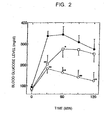
- Fig. 2 shows the results after six weeks of administration.
- the glucose tolerance in the group fed with the oxidized coenzyme Q 10 showed further improvements in comparison with that in after four weeks.
- the increase in the blood glucose level after the glucose load was inhibited in comparison with the oxidized coenzyme Q 10 .
- the increase in blood glucose level in the group fed with the reduced coenzyme Q 10 was strongly inhibited at all measurement times.
- the blood glucose level was 200 mg/dl or less at all measurement points. This fact shows that the glucose tolerance was improved to a greater extent in comparison with that after four weeks of administration.
- the blood glycosylated hemoglobin (hemoglobin A1c) level of GK rats fed for 12 weeks was measured as in EXAMPLE 1. The results are shown in Table 1.
- the hemoglobin A1c level in the group fed with the reduced coenzyme Q 10 showed a significant decrease, i.e., about 78% of the blood hemoglobin A1c level of the control group.
- the hemoglobin A1c level in the group fed with the oxidized coenzyme Q 10 showed a decrease, i.e., 92% of that of the control group, the decrease was not significant and was smaller than the decrease achieved by the group fed with the reduced coenzyme Q 10 .
- Glycosylated hemoglobin levels are clinically important parameters for controlling blood glucose levels.
- the present invention can provide a useful composition for maintaining satisfactory blood glucose level control in diabetes patients and persons having pre-diabetes, i.e., abnormal glucose tolerance.
- the composition for treating diabetes of the present invention containing coenzyme Q as the main component, which is highly safe, can be administered over a long term and is highly useful.
- the present invention can provide a composition useful for treating diabetes of not only human beings but also pet animals.
Landscapes
- Health & Medical Sciences (AREA)
- Life Sciences & Earth Sciences (AREA)
- Chemical & Material Sciences (AREA)
- Animal Behavior & Ethology (AREA)
- Polymers & Plastics (AREA)
- Public Health (AREA)
- General Health & Medical Sciences (AREA)
- Veterinary Medicine (AREA)
- Engineering & Computer Science (AREA)
- Pharmacology & Pharmacy (AREA)
- Medicinal Chemistry (AREA)
- Food Science & Technology (AREA)
- Epidemiology (AREA)
- Nutrition Science (AREA)
- Mycology (AREA)
- Diabetes (AREA)
- Chemical Kinetics & Catalysis (AREA)
- Organic Chemistry (AREA)
- Pediatric Medicine (AREA)
- Bioinformatics & Cheminformatics (AREA)
- General Chemical & Material Sciences (AREA)
- Zoology (AREA)
- Nuclear Medicine, Radiotherapy & Molecular Imaging (AREA)
- Animal Husbandry (AREA)
- Hematology (AREA)
- Emergency Medicine (AREA)
- Endocrinology (AREA)
- Obesity (AREA)
- Acyclic And Carbocyclic Compounds In Medicinal Compositions (AREA)
- Coloring Foods And Improving Nutritive Qualities (AREA)
- Medicines That Contain Protein Lipid Enzymes And Other Medicines (AREA)
- Pharmaceuticals Containing Other Organic And Inorganic Compounds (AREA)
Abstract
The present invention provides a composition for
improving glucose tolerance to patients having diabetic
hyperglycemia and people having pre-diabetes, i.e., abnormal
glucose tolerance. The composition helps control the blood
glucose level, prevents diabetic complications, and can be
administered over a long term due to its high safety.
The composition containing a coenzyme Q, in particular,
a reduced coenzyme Q10, as the main component improves the
impaired glucose tolerance of diabetes patients,
satisfactorily controls the blood glucose level, and
decreases the blood glycosylated hemoglobin level.
Description
The present invention relates to a composition for
treating diabetes containing coenzyme Q.
Diabetes is one of the most common yet serious
lifestyle-related diseases. More than one million patients
suffer from diabetes worldwide. Furthermore, the number of
people that have pre-diabetes, i.e., a relatively high blood
glucose level, far exceeds the number of diabetes patients.
Diabetes is a serious disease on a worldwide scale.
There are two types of diabetes known: Type I diabetes
caused by insulin hyposecretion (insulin-dependent diabetes)
and Type II diabetes caused by a lowered response to insulin
(non-insulin-dependent diabetes). Most of the diabetes
patients have Type II diabetes, which is frequently caused
by an inappropriate lifestyle, such as overeating.
One problem of diabetes is the lack of symptoms
indicating hyperglycemia. Thus, the blood glucose level
frequently remains uncontrolled over a long term, thereby
leading to complications (such as retinopathy, nephropathy,
and arteriosclerosis). For example, the most common cause
of adult visual impairment in Japan is diabetic retinopathy.
The second most common cause of chronic renal failure
leading to artificial dialysis in Japan is diabetic
nephropathy. Due to the seriousness of these complications,
the primary objective of diabetes treatment is to maintain
stringent blood glucose control.
The blood glucose of Type I diabetes patients can be
highly effectively controlled by insulin injection since
insulin hyposecretion is the cause of Type I diabetes.
However, insulin injection is not so effective for Type II
diabetes patients since Type II diabetes patients have a low
response to insulin. Treatments for Type II diabetes
patients include diet restriction, in which the intake of
excess dietary calories is restricted, combined with
kinesitherapy to promote the consumption of calories inside
the body. However, diet restriction is difficult to
continue in many cases. For those patients who do not show
significant progress despite the diet restriction and
kinesitherapy, treatment through the administration of drugs
for diabetes (sulfonylurea agents, biguanide agents, and the
like) is attempted. However, these drugs have the following
serious problems. Sulfonylurea agents (SU agents), which
have a long history of administration and the second-generation
agent of which has been available since the 1970s,
are known to cause hypoglycemia resulting from an excessive
reduction of the blood glucose level. Moreover, the SU
agents produce strong feeling of hunger and thus tend to
cause the diet restriction to fail. This often leads to
failure in controlling the blood glucose and promotes
obesity. Thus, the administration of SU agents having these
problems must be tightly controlled by physicians.
Biguanide agents (BG agents) have also been used since the
1970s. However, since soon after the release of the
biguanide agents, many cases of a side effect, i.e., lactic
acidosis, have been reported. Although the administration
method and the effectiveness of the BG agents have recently
been reassessed, the administration of the BG agent also
needs tight control under physicians.
Under these circumstances, the development of new oral
agents for diabetes has been attempted, and, for example, α-glucosidase
inhibitors and insulin sensitizers have been
developed. However, these drugs have a short history, and
whether these drugs can be recognized as highly safe and
effective agents must await further investigations. In fact,
the development of an insulin sensitizer, troglitazone, has
been discontinued due to a side effect of hepatopathy.
As is described above, highly safe oral agents for
diabetes have been rarely available to diabetes patients.
The primary treatment for diabetes is still diet
restriction; however, stringent diet restriction is
difficult in many actual cases. Although many low-calorie
meals for diabetes patients have been developed, they
contribute only partially to the treatment of diabetes.
Furthermore, since no therapeutic drugs to treat
complications characteristic of diabetes are available,
prevention of complications is currently done through
stringent control of the blood glucose level. Accordingly,
treatments of diabetes await highly safe and effective drugs,
effective food that can be safely administered during diet
restriction, and the like.
Coenzyme Q is an essential ingredient found in a wide
diversity of living organisms from bacteria to mammals and
is known to function as a constituent of the electron
transfer system of mitochondria in the cells of living
organisms. Coenzyme Q not only serves as a transfer agent
of the electron transfer system by repeating oxidation and
reduction in the mitochondria but also has an antioxidative
effect. The primary component of the coenzyme Q of human
beings is coenzyme Q10, which is a coenzyme Q having a side
chain consisting of 10 repeating units.
The important feature of the coenzyme Q10 is high safety.
A chronic toxicity test conducted at a daily dose of 1,200
mg/Kg for 52 weeks in rats reported no toxic effects (K. D.
Williams et al., J. Agric. Food Chem., 47, 3756-3763, 1999).
With respect to coenzyme Q10, oxidized coenzyme Q10 is
widely used as a drug for congestive heart failure in Japan
and as a health food in Europe and the United States.
Although there is a report that suggests the effectiveness
of the oxidized coenzyme Q10 on diabetes (Shimomura, Y. et
al., 1981, Rinsho to Kenkyu, 58, 1349-1352), the
effectiveness of the oxidized coenzyme Q10 on diabetes
patients is not actually known. The reduced coenzyme Q10 is
an active form of an oxidized coenzyme Q10 and is readily
converted into an oxidized coenzyme Q10 in air by oxidation.
Thus, the reduced coenzyme Q10 has not been used in products.
We have found before that the oral absorbability of the
total coenzyme Q10 can be increased by mixing the reduced
coenzyme Q10 with the oxidized coenzyme Q10 compared to when
the oxidized coenzyme Q10 is used alone (Japanese Unexamined
Patent Application Publication No. 10-109933). However,
whether the reduced coenzyme Q10 exhibits a higher effect
than the oxidized coenzyme Q10 on diseases such as diabetes
has not been clear.
An object of the present invention is to provide a
highly safe oral composition that can satisfactorily control
the blood glucose level of diabetes patients.
The present inventors have conducted extensive
investigations and found that a composition effective for
diabetes can be obtained by using a highly safe coenzyme Q,
in particular, a reduced coenzyme Q.
The present invention relates to a composition for
treating diabetes, comprising a reduced coenzyme Q
represented by formula (1) as an effective component:
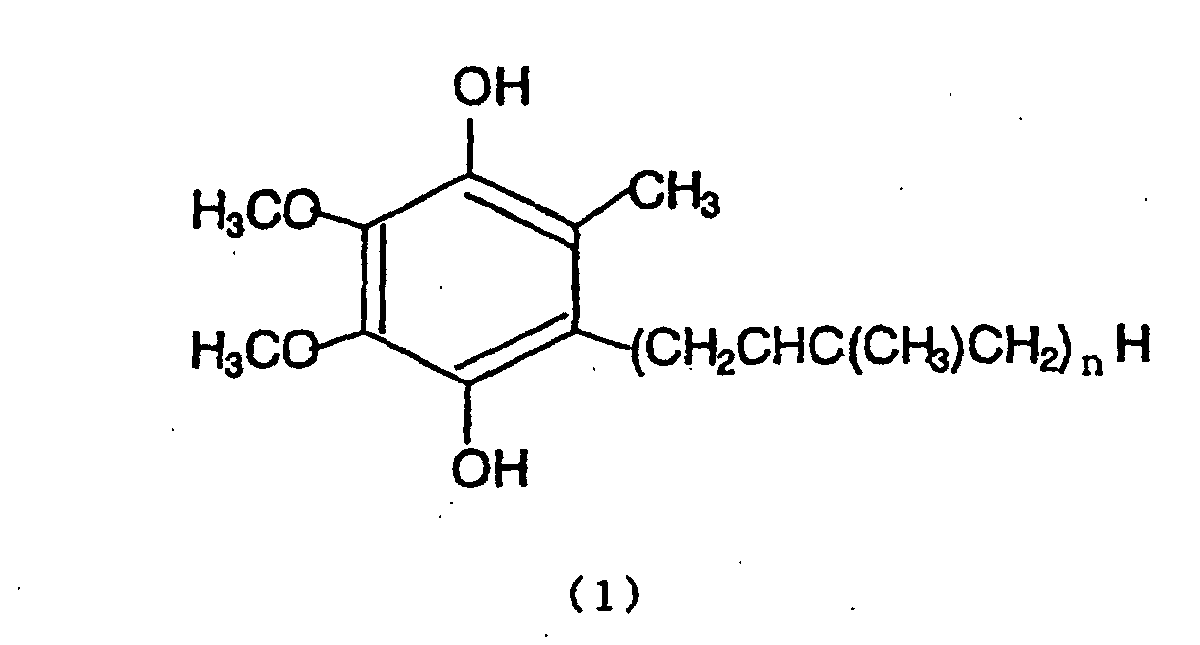 (wherein n represents an integer between 1 and 12).
The present invention also relates to a composition for
treating diabetes, comprising the reduced coenzyme Q
described above and an oxidized coenzyme Q represented by
formula (2) as effective components:
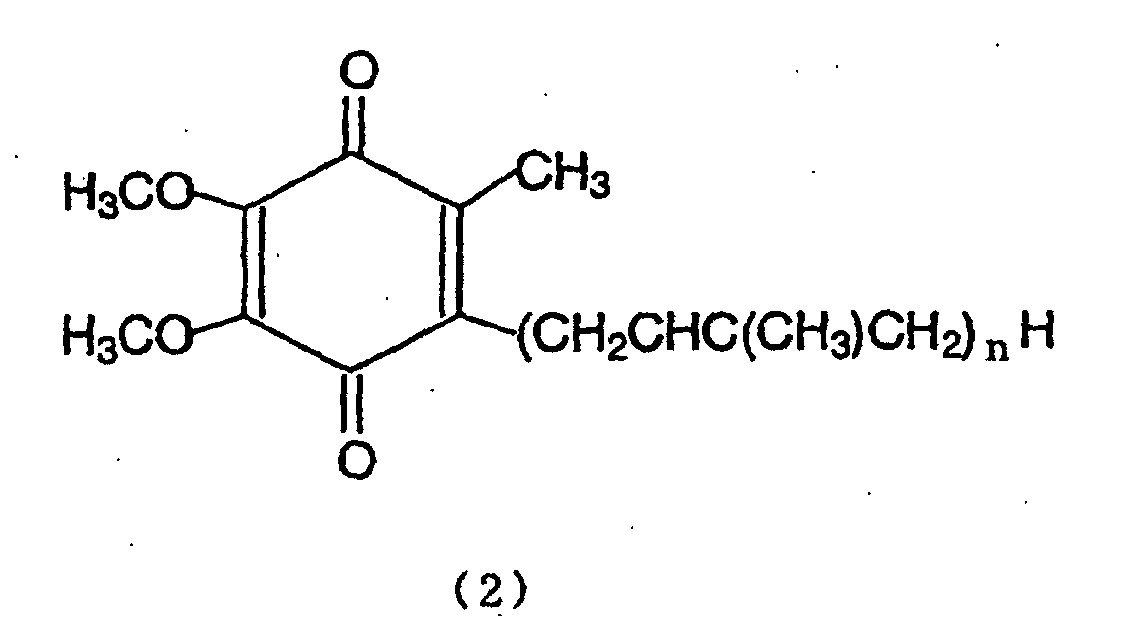 (wherein n represents an integer between 1 and 12).
The present invention also relates to the above-described
compositions in which the coenzyme Q is a coenzyme
Q10; to the above-described compositions further containing a
therapeutic drug for diabetes; and to the above-described
compositions in which the therapeutic drug for diabetes is a
sulfonylurea agent, a sulfonamide agent, a biguanide agent,
an α-glucosidase inhibitor, an insulin sensitizer, or
insulin.
The present invention also relates to a drug, a
functional food, and animal feedstuff containing the above-described
composition for treating diabetes.
The present invention also relates to a method for
controlling the blood glucose level and a method for
preventing diabetic complications using the above-described
compositions for treating diabetes.
The present invention will now be described in detail.
A coenzyme Q is represented by either formula (1):
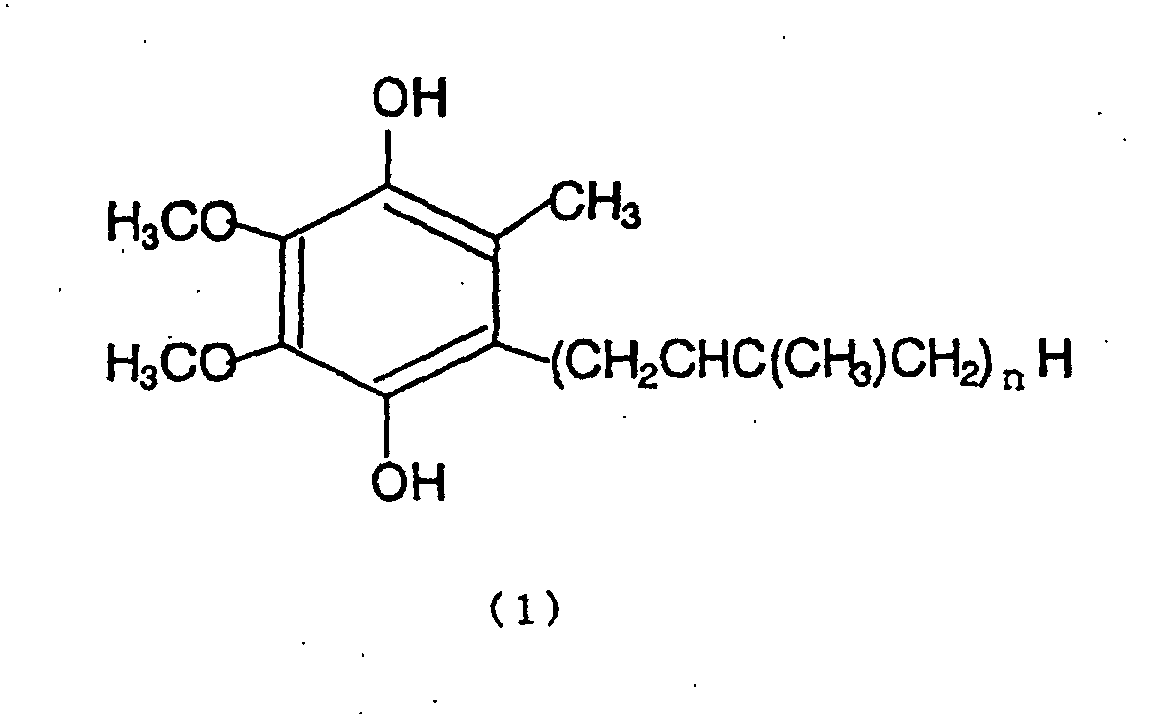 (wherein n represents an integer between 1 and 12), or
formula (2):
(wherein n represents an integer between 1 and 12), or
formula (2):
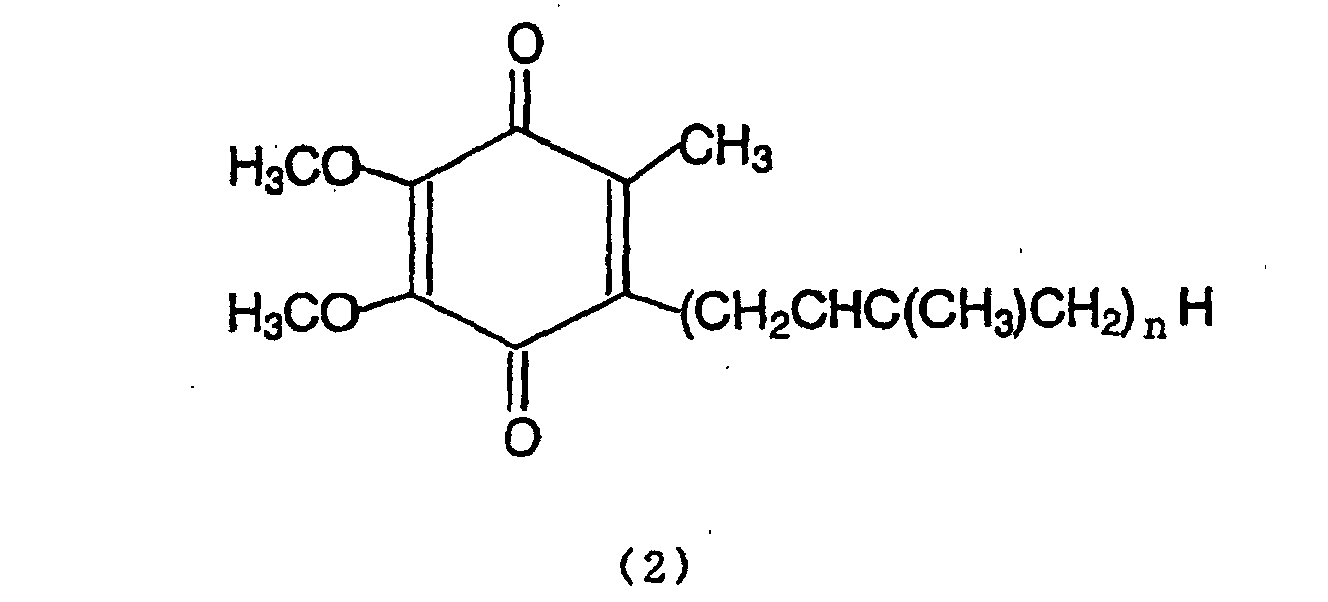 (wherein n represents an integer between 1 and 12). The
coenzyme Q represented by formula (1) is a reduced coenzyme
Q and the coenzyme Q represented by formula (2) is an
oxidized coenzyme Q.
(wherein n represents an integer between 1 and 12). The
coenzyme Q represented by formula (1) is a reduced coenzyme
Q and the coenzyme Q represented by formula (2) is an
oxidized coenzyme Q.
The process for obtaining the oxidized coenzyme Q and
the reduced coenzyme Q is not particularly limited. An
example of such a process includes the steps of preparing a
coenzyme Q by a conventional method, such as synthesis,
fermentation, or extraction from natural materials, and
condensing an oxidized coenzyme Q fraction or a reduced
coenzyme Q fraction of the eluate obtained by chromatography.
The oxidized coenzyme Q can be prepared by a conventional
process. The reduced coenzyme Q may be prepared by adding a
common reductant, such as sodium borohydride or sodium
dithionite (sodium hydrosulfite), to the coenzyme Q obtained
as above, reducing the coenzyme Q by a conventional method
to prepare a reduced coenzyme Q, and condensing the
resulting reduced coenzyme Q by chromatography. The reduced
coenzyme Q can be prepared by interaction of the above-described
reductant with a commonly available high-purity
coenzyme Q.
As shown in formulae (1) and (2), the coenzyme Q used
in the present invention has a side chain having one to
twelve repeating units ("n" in the formulae). A coenzyme Q
having a side chain having ten repeating units, i.e., a
coenzyme Q10, is particularly preferred.
The composition for treating diabetes according to the
present invention contains either the above-described
reduced coenzyme Q as an effective component or the above-described
reduced coenzyme Q and the above-described
oxidized coenzyme Q as effective components.
The process for obtaining the composition for treating
diabetes is not particularly limited. For example, either
the reduced coenzyme Q prepared as above or the reduced
coenzyme Q and the oxidized coenzyme Q prepared as above may
be dissolved in an appropriate common solvent, such as
isopropyl alcohol, acetone, or ether, so as to obtain a
composition containing a predetermined amount of the reduced
coenzyme Q. Alternatively, the reduced coenzyme Q in solid
form may be used. Alternatively, the reduced coenzyme Q in
solid form may simply be mixed with the oxidized coenzyme Q
in solid form. Alternatively, a mixture of the oxidized
coenzyme Q and the reduced coenzyme Q obtained in the
process for producing the coenzyme Q described above can be
directly used. The composition of the present invention can
be directly prepared by controlling the duration of the
reduction of the above-described commonly available high-purity
coenzyme Q, the type of the reductant, or the amount
of the reductant.
In view of effectiveness, costs, and the like, the
composition for treating diabetes according to the present
invention preferably contains 0.001 to 20 percent by weight,
and more preferably 0.01 to 10 percent by weight of the
coenzyme Q to the total amount of the composition.
The reduced coenzyme Q content is preferably at least
60 percent by weight, and more preferably at least 80
percent by weight of the total amount of the coenzyme Q to
achieve higher efficacy.
The composition for treating diabetes according to the
present invention may contain a drug for treating diabetes
in addition. Examples of the drug for treating diabetes
include sulfonylurea agents, sulfonamide agents, biguanide
agents, α-glucosidase inhibitors, insulin sensitizers, and
insulin.
The content of the drug for treating diabetes is not
particularly limited and may be appropriately determined
according to the usage, such as drugs, functional foods, and
animal feedstuffs.
The composition for treating diabetes according to the
present invention improves glucose tolerance and facilitates
the control of blood glucose levels, for example. Thus, the
composition for treating diabetes is effective for
preventing the onset of diabetes, treating diabetes, and
preventing diabetic complications.
The composition for treating diabetes of the present
invention can also be used in methods for controlling the
blood glucose level and methods for preventing diabetic
complications.
The above composition for treating diabetes of the
present invention can be used in, for example, drugs for
diabetes, functional foods and food materials for diabetes,
and feedstuffs for diabetic animals. Here, the term
"functional foods" refers to products that are not drugs but
can be taken orally to maintain or improve health. Examples
of the functional foods include oral supplements, foods for
specified health use, health foods, and dietary supplements.
The composition for treating diabetes can be used in
any applications that involve oral administration of the
coenzyme Q or oral administration of the coenzyme Q and the
drug.
When the composition for treating diabetes of the
present invention is used as drugs, functional foods, animal
feedstuffs, or the like, the dosage form is not particularly
limited. For example, the composition for treating diabetes
may be used as a powdered agent, a granular agent prepared
by mixing a binder, a coated powder agent prepared by
coating powder particles with a coating agent, or a capsule
containing the powdered agent, the granular agent, or the
coated powder agent. The composition for treating diabetes
may be blended with natural oil, oily higher fatty acids,
higher fatty acid monoglycerides, a surfactant, or a mixture
of these to prepare a soft capsule containing the resulting
oily mixture. Here, a material mainly composed of gelatin
or other water-soluble polymer may also be used. Moreover,
the term "capsule" includes microcapsules.
In particular, for functional food applications, the
coenzyme Q may be incorporated into conventional foods for
diabetes.
The composition for treating diabetes preferably
contains an antioxidant for preventing oxidation of the
reduced coenzyme Q. However, the antioxidant may not be
necessary depending on the form of dosage. Examples of the
antioxidant include citric acid and derivatives thereof,
vitamin C and derivatives thereof, lycopene, vitamin A,
carotenoids, vitamin B and derivatives thereof, flavonoids,
polyphenols, glutathione, selenium, sodium thiosulfate,
vitamin E and derivatives thereof, superoxide dismutase
(SOD), glutathione peroxidase, glutathione-S-transferase,
glutathione reductase, catalase, ascorbate peroxidase, and
combinations of these.
A chelating agent may be used to also prevent oxidation.
Examples of the chelating agent include
ethylenediaminetetraacetic acid and salts thereof,
ethylenediaminediacetic acid and salts thereof,
hydroxyiminodiacetic acid and salts thereof,
hydroxyethylethylenediaminetetraacetic acid and salts
thereof, diethylenetriaminepentaacetic acid and salts
thereof, nitrilotriacetic acid and salts thereof,
triethylenetetraaminehexaacetic acid and salts thereof,
dicarboxymethyl glutamic acid tetrasodium salt,
dihydroxymethylglycine, 1,3-propanediaminetetraacetic acid
and salts thereof, 1,3-diamino-2-hydroxypropanetetraacetic
acid and salts thereof, gluconic acid sodium salt,
hydroxyethylidenediphosphonic acid, nitrilotris,
phosphonobutanetricarboxylic acid, and mixtures thereof.
Furthermore, the above-described antioxidants may be
used in combination with the chelating agents.
The composition for treating diabetes of the present
invention may contain adequate amounts of pharmaceutically
acceptable and food-hygiene-acceptable materials in addition
to the above-described reduced coenzyme Q according to
conventional processes. Examples of the pharmaceutically
acceptable and food-hygiene-acceptable materials include,
but are not limited to, excipients, disintegrants,
lubricants, binders, coating agents, coloring agents,
coagulation inhibitors, absorption promoters, solubilizing
agents, stabilizing agents, health food materials, dietary
supplement materials, and vitamins.
Examples of the excipient include, but are not limited
to, sucrose, lactose, glucose, cornstarch, mannitol,
crystalline cellulose, calcium phosphate, and calcium
sulfate.
Examples of the disintegrants include, but are not
limited to, starch, agar, calcium citrate, calcium carbonate,
sodium hydrogencarbonate, dextrin, crystalline cellulose,
carboxymethylcellulose, and tragacanth.
Examples of the lubricants include, but are not limited
to, talc, magnesium stearate, polyethylene glycol, silica,
and hydrogenated vegetable oil.
Examples of the binders include, but are not limited to,
ethyl cellulose, methyl cellulose, hydroxypropylmethyl
cellulose, tragacanth, shellac, gelatin, gum arabic,
polyvinyl pyrrolidone, polyvinyl alcohol, polyacrylic acid,
polymethacrylic acid, and sorbitol.
Examples of the coating agents include, but are not
limited to, gum arabic, opadry, prunella, castor wax,
carboxyvinyl polymer, carmellose, hydrous silicon dioxide,
magnesium silicate, vinyl acetate resin, stearic acid,
cetanol, and hydroxypropylmethyl cellulose.
Examples of the coloring agents include, but are not
limited to, those which are permitted to be added to drugs
and foods.
Examples of the coagulation inhibitors include, but are
not limited to, stearic acid, talc, light silicic anhydride,
and hydrous silicon dioxide.
Examples of the absorption promoters include, but are
not limited to, surfactants such as higher alcohols, higher
fatty acids, and glycerin fatty acid esters.
Examples of the solubilizing agents include, but are
not limited to, organic acids such as fumaric acid, succinic
acid, and malic acid.
Examples of the stabilizing agents include, but are not
limited to, benzoic acid, sodium benzoate, and ethyl
parahydroxybenzoate.
Examples of the health food materials include, but are
not limited to, Chinese herb medicines (e.g., irei-to,
unkei-to, unsei-in, ogi-kenchu-to, oren-gedoku-to, oren-to,
ka-kkon-to, kami-kihi-to, kami-syoyo-san, kam-baku-taiso-to,
kikyou-to, kihi-to, kumi-binro-to, keigai-rengyo-to, keihika-syakuyakudaiou-to,
keihi-ka-syakuyaku-to, keihi-karyukotsu-borei-to,
keishi-to, keishi-ninjin-to, keishi-bukuryo-gan,
keihi-to, koso-san, goko-to, goshaku-san,
gosha-jinki-gan, gorin-san, saikan-to, saiko-ka-ryukotsuborei-to,
saiko-keihi-kankyo-to, saiko-keishi-to, saiko-seikan-to,
saiboku-to, sairei-to, sansonin-to, jiin-koka-to,
shigyaku-san, shikunshi-to, shimotsu-to, sha-kanzo-to,
shakuyaku-kanzo-to, juzen-daiho-to, jumi-haidoku-to, sho-kenchu-to,
sho-saiko-to, sho-seiryu-to, shofu-san, shin'iseihai-to,
shimpi-to, shimbu-to, seijo-bufu-to, seisho-ekkito,
seishin-renshi-in, seihai-to, sokei-kakketsu-to, daio-kanzo-to,
daio-botampi-to, dai-kenchu-to, dai-saiko-to, dai-saiko-to-kyo-daiou,
dai-jouki-to, dai-bofu-to, ji-daboku-ippo,
choi-joki-to, choto-san, choyo-to, chorei-to, chorei-to-go-shimotsu-to,
tsu-do-san, tokaku-joki-to, toki-inshi,
toki-kenchu-to, toki-shakuyaku-san, toki-to, nichin-to,
nyoshin-san, ninjin-to, ninjin-yoei-to, haiao-san-kyu-to,
bakumondo-to, hachimi-jio-gan, hange-koboku-to, hange-shashin-to,
byakko-ka-ninjin-to, bukuryo-in, bukuryo-in-go-hange-koboku-to,
heii-san, boi-ogi-to, bofu-tsusho-san,
hochu-ekki-to, mao-to, mao-bushi-saishin-to, makyo-kan-seki-to,
mashinin-gan, moku-boi-to, yoku-kan-san, yokukan-san-kachimpi-hange,
rikkushi-to, rikko-san, ryutan-shakan-to, ryokan-kyo-mi-shin-ge-nin-to,
and rokumi-gan); teas (e.g.,
green tea, brown rice tea, powdered green tea, natural leaf
tea, roasted tea, roasted tea, jasmine tea, oolong tea, red
tea, black tea, floral tea, blue tea, and white tea); herbs
(e.g., Italian parsley, elecampane, olive, oregano, cardoon,
chamomiles, curry plant, catnip, caraway, christmas rose,
crimson clover, cornflower, common mallow, salad burnet,
santolina, cinnamon, jasmine, stevia, sage, linden, scented
geranium, St. John's wort, soapwort, Solomon's seal, thyme,
tansy, chervil, chive, nasturtium, jujube, basil,
honeysuckle, hyssop, flax, fennel, foxglove, black hollyhock,
French marigold, betony, heliotrope, bergamot, hemp agrimony,
rue, pot marigold, borage, white horehound, myrtle, mullein,
marjoram, mint, yarrow, lavender, lady's bedstraw,
lemongrass, lemon verbena, lemon balm, rose, rosemary,
rocket, wild strawberry, wild pansy, and forgetmenot);
propolis; gingko leaves; green juice; and extracts thereof.
Examples of the dietary supplement materials include,
but are not limited to, amino acids, metal ions, proteins,
saccharides, fatty acids, yeast extracts, vegetable extracts,
fish extracts, fruits, and fruit extracts.
Examples of the vitamins include, but are not limited
to, vitamins A, B, C, D, and E.
The content, dosage form, preservation method, and
preservation form of the reduced coenzyme Q during the
production of the composition containing the reduced
coenzyme Q for treating diabetes according to the present
invention may be adequately selected according to
applications, such as drugs, health food, food, animal drugs,
or animal feedstuff.
The present invention will now be described in detail
by way of nonlimiting examples.
The improvement effects of the reduced coenzyme Q10 and
the oxidized coenzyme Q10 on the glucose tolerance were
examined using model GK rats (5 weeks old, male) having Type
II diabetes. The rats were fed ad libitum with a powdered
feedstuff containing 0.1 percent by weight of the reduced
coenzyme Q10 (containing 2 percent by weight of the oxidized
coenzyme Q10) or a feedstuff containing 0.1 percent by weight
of the oxidized coenzyme Q10. In order to avoid the reduced
coenzyme Q10 in the feedstuff mixture from decreasing due to
oxidation, the feedstuff was completely replaced with a new
one every two days. The control group was fed with a
powdered feedstuff free of coenzyme Q10. The glucose
tolerance test was conducted four weeks and six weeks after
the feeding of the feedstuff mixture was started (n = 4 in
each group). In the glucose tolerance test, a 50% glucose
solution was orally administered at a dose of 4 ml/kg, and
the blood glucose level was measured before the
administration and 30 minutes, 60 minutes, 90 minutes, and
120 minutes after the administration. The blood glucose
level in blood collected from the tail vein was determined
with a simple blood glucose meter. The results are shown in
Figs. 1 and 2.
Fig. 1 shows the results of the glucose tolerance test
after four weeks of administration. The increase in blood
glucose level in the group fed with the oxidized coenzyme Q10
30 minutes after the glucose load was significantly
inhibited in comparison with the control group. This fact
shows that the glucose tolerance was improved. The blood
glucose level in the group fed with the reduced coenzyme Q10
sharply decreased in comparison with the oxidized coenzyme
Q10 group at all measurement times beginning with 30 minutes
after the glucose load. This fact shows that the glucose
tolerance was further improved.
Fig. 2 shows the results after six weeks of
administration. The glucose tolerance in the group fed with
the oxidized coenzyme Q10 showed further improvements in
comparison with that in after four weeks. The increase in
the blood glucose level after the glucose load was inhibited
in comparison with the oxidized coenzyme Q10. The increase
in blood glucose level in the group fed with the reduced
coenzyme Q10 was strongly inhibited at all measurement times.
The blood glucose level was 200 mg/dl or less at all
measurement points. This fact shows that the glucose
tolerance was improved to a greater extent in comparison
with that after four weeks of administration.
These results show that the glucose tolerance of GK
rats can be improved by the administration of the oxidized
coenzyme Q10. Furthermore, the test results also show that
the glucose tolerance of GK rats can be further improved by
the administration of the reduced coenzyme Q10 in comparison
with the administration of the oxidized form. Interestingly,
the improvement patterns of the glucose tolerance in the
group fed with the oxidized coenzyme Q10 after four weeks and
six weeks of administration were the same. In particular,
the increase in blood glucose level 30 minutes after the
glucose load was inhibited; however, the blood glucose level
kept increasing until about an hour after the glucose load
and subsequently became almost steady, during which no large
difference was observed in comparison with the control group.
In contrast, the glucose tolerance improvement patterns in
the group fed with the reduced coenzyme Q10 after four weeks
and six weeks of administration peaked 30 minutes after the
load and decreased with time. The blood glucose level in
the group fed with the reduced coenzyme Q10 30 minutes after
the peak was significantly lower than that of the control
group. This fact shows that the glucose tolerance was
clearly improved. It was a surprise to find that the
pattern of improvements on the glucose tolerance achieved by
the reduced coenzyme Q10 was different from that achieved by
the oxidized coenzyme Q10. In the previous investigations,
we discovered that the oral absorbability of the reduced
coenzyme Q10 is different from that of the oxidized coenzyme
Q10 (Japanese Unexamined Patent Application Publication No.
10-109933). This time we discovered that the improvement
pattern of the glucose tolerance in GK rats was different
between the oxidized form and the reduced form. The
difference in absorbability alone cannot account for such
differences. Thus, it can be presumed that the reduced
coenzyme Q10 has different effects from those of the oxidized
coenzyme Q10 in vivo.
The blood glycosylated hemoglobin (hemoglobin A1c)
level of GK rats fed for 12 weeks was measured as in EXAMPLE
1. The results are shown in Table 1. The hemoglobin A1c
level in the group fed with the reduced coenzyme Q10 showed a
significant decrease, i.e., about 78% of the blood
hemoglobin A1c level of the control group. In contrast,
although the hemoglobin A1c level in the group fed with the
oxidized coenzyme Q10 showed a decrease, i.e., 92% of that of
the control group, the decrease was not significant and was
smaller than the decrease achieved by the group fed with the
reduced coenzyme Q10. Glycosylated hemoglobin levels are
clinically important parameters for controlling blood
glucose levels. The fact that the group fed with the
reduced coenzyme Q10 showed a significantly low level-indicates
that the blood glucose level of GK rats was
satisfactorily controlled by the administration of this
substance. The group fed with the oxidized coenzyme Q10 only
showed a slight decrease, which was not as significant as
that achieved by the group fed with the reduced coenzyme Q10.
This result concerning the glycosylated hemoglobin level is
presumably attributable to the insufficient improvements in
glucose tolerance shown in EXAMPLE 1.
| Blood hemoglobin A1c level in GK rats | |
| Group | Hemoglobin A1c level (%) |
| Control group | 5.33±0.48 |
| (100) | |
| Group fed with reduced coenzyme Q10 | 4.17±0.15 |
| (78) | |
| Group fed with oxidized coenzyme Q10 | 4.93±0.42 |
| (92) |
The present invention can provide a useful composition
for maintaining satisfactory blood glucose level control in
diabetes patients and persons having pre-diabetes, i.e.,
abnormal glucose tolerance. The composition for treating
diabetes of the present invention containing coenzyme Q as
the main component, which is highly safe, can be
administered over a long term and is highly useful.
Furthermore, the present invention can provide a composition
useful for treating diabetes of not only human beings but
also pet animals.
Claims (10)
- A composition for treating diabetes, comprising a reduced coenzyme Q represented by formula (1) as an effective component:(wherein n represents an integer between 1 and 12).

- A composition for treating diabetes, comprising a reduced coenzyme Q and an oxidized coenzyme Q represented by formula (2) as effective components:(wherein n represents an integer between 1 and 12).

- The composition for treating diabetes according to claim 1 or 2, wherein the coenzyme Q is a coenzyme Q10.
- The composition for treating diabetes according to one of claims 1 to 3, further comprising a therapeutic drug for diabetes.
- The composition for treating diabetes according to claim 4, wherein the therapeutic drug for diabetes is a sulfonylurea agent, a sulfonamide agent, a biguanide agent, an α-glucosidase inhibitor, an insulin sensitizer, or insulin.
- A drug for treating diabetes, comprising the composition for treating diabetes according one of claims 1 to 5.
- A functional food for treating diabetes, comprising the composition for treating diabetes according one of claims 1 to 5.
- An animal feedstuff for treating diabetes, comprising the composition for treating diabetes according one of claims 1 to 5.
- A method for controlling a blood glucose level, comprising using the composition for treating diabetes according one of claims 1 to 5.
- A method for preventing a diabetic complication, comprising using the composition for treating diabetes according one of claims 1 to 5.
Applications Claiming Priority (3)
| Application Number | Priority Date | Filing Date | Title |
|---|---|---|---|
| JP2002077909 | 2002-03-20 | ||
| JP2002077909 | 2002-03-20 | ||
| PCT/JP2003/003389 WO2003077895A1 (en) | 2002-03-20 | 2003-03-20 | Compositions for diabetes |
Publications (2)
| Publication Number | Publication Date |
|---|---|
| EP1493437A1 true EP1493437A1 (en) | 2005-01-05 |
| EP1493437A4 EP1493437A4 (en) | 2010-08-11 |
Family
ID=28035546
Family Applications (1)
| Application Number | Title | Priority Date | Filing Date |
|---|---|---|---|
| EP03712784A Withdrawn EP1493437A4 (en) | 2002-03-20 | 2003-03-20 | Compositions for diabetes |
Country Status (9)
| Country | Link |
|---|---|
| US (1) | US20050113459A1 (en) |
| EP (1) | EP1493437A4 (en) |
| JP (1) | JP4653400B2 (en) |
| KR (1) | KR100591045B1 (en) |
| CN (1) | CN100381119C (en) |
| AU (1) | AU2003221136B2 (en) |
| CA (1) | CA2476906A1 (en) |
| TW (1) | TW200304372A (en) |
| WO (1) | WO2003077895A1 (en) |
Cited By (7)
| Publication number | Priority date | Publication date | Assignee | Title |
|---|---|---|---|---|
| EP2429512A4 (en) * | 2009-05-11 | 2013-07-31 | Berg Pharma Llc | METHODS FOR TREATING METABOLIC DISORDERS USING EPIMETABOLIC DECALS, MULTIDIMENSIONAL INTRACELLULAR MOLECULES OR ENVIRONMENTAL INFLUENCERS |
| US9901542B2 (en) | 2013-09-04 | 2018-02-27 | Berg Llc | Methods of treatment of cancer by continuous infusion of coenzyme Q10 |
| US10376477B2 (en) | 2011-04-04 | 2019-08-13 | Berg Llc | Method of treating or preventing tumors of the central nervous system |
| US10933032B2 (en) | 2013-04-08 | 2021-03-02 | Berg Llc | Methods for the treatment of cancer using coenzyme Q10 combination therapies |
| US10973763B2 (en) | 2011-06-17 | 2021-04-13 | Berg Llc | Inhalable pharmaceutical compositions |
| US11400058B2 (en) | 2010-03-12 | 2022-08-02 | Berg Llc | Intravenous formulations of coenzyme Q10 (CoQ10) and methods of use thereof |
| US12303471B2 (en) | 2015-11-16 | 2025-05-20 | Bpgbio, Inc. | Methods of treatment of temozolomide-resistant glioma using coenzyme Q10 |
Families Citing this family (19)
| Publication number | Priority date | Publication date | Assignee | Title |
|---|---|---|---|---|
| US20070259908A1 (en) * | 2004-08-30 | 2007-11-08 | Kaneka Corporation | Mitochondria Activators |
| CN101087598B (en) * | 2004-12-24 | 2010-12-08 | 株式会社钟化 | Solid preparation containing reduced coenzyme Q10 and its production method |
| JP2007028997A (en) * | 2005-07-27 | 2007-02-08 | Kanebo Seiyaku Kk | Liquid food with herbal extract and use thereof |
| JPWO2007034852A1 (en) * | 2005-09-22 | 2009-03-26 | 株式会社カネカ | Life prolonging composition and method for extending life |
| WO2007086480A1 (en) | 2006-01-25 | 2007-08-02 | Kaneka Corporation | Composition for normalizing blood pressure |
| US20080075792A1 (en) * | 2006-09-21 | 2008-03-27 | Naturalendo Tech Co., Ltd. | Method for inhibiting the activity of DPP-IV and lowering blood glucose level |
| KR100899889B1 (en) * | 2007-07-15 | 2009-06-01 | 전현철 | Method for preparing leaching tea and liquid extract tea containing lemon and lemon balm and leaching tea and liquid extract tea prepared therefrom |
| KR100899890B1 (en) * | 2007-07-16 | 2009-06-01 | 전현철 | Method for preparing leaching tea and liquid extract tea containing lemon and lemon verbena, and leaching tea and liquid extract tea prepared therefrom |
| US20090098228A1 (en) * | 2007-10-10 | 2009-04-16 | Tsumura & Co. | Agent and method for improvement of impairment of learning and memory |
| NZ704268A (en) * | 2012-07-16 | 2017-11-24 | Univ Clemson Res Foundation | Food and feed antioxidants and preservatives based on antioxidant enzymes extracted from animal blood |
| US9897565B1 (en) | 2012-09-11 | 2018-02-20 | Aseko, Inc. | System and method for optimizing insulin dosages for diabetic subjects |
| US9171343B1 (en) | 2012-09-11 | 2015-10-27 | Aseko, Inc. | Means and method for improved glycemic control for diabetic patients |
| WO2014138922A1 (en) * | 2013-03-15 | 2014-09-18 | Indanio Bioscience Inc. | Uses for idebenone and related benzoouinones in ppar-related diseases and conditions |
| US9486580B2 (en) | 2014-01-31 | 2016-11-08 | Aseko, Inc. | Insulin management |
| US9233204B2 (en) | 2014-01-31 | 2016-01-12 | Aseko, Inc. | Insulin management |
| JP6989262B2 (en) | 2014-10-27 | 2022-01-05 | アセコー インコーポレイテッド | Subcutaneous outpatient management |
| US11081226B2 (en) | 2014-10-27 | 2021-08-03 | Aseko, Inc. | Method and controller for administering recommended insulin dosages to a patient |
| CA2993275C (en) | 2015-08-20 | 2022-06-21 | Aseko, Inc. | Diabetes management therapy advisor |
| CN111938042A (en) * | 2020-08-26 | 2020-11-17 | 珠海海龙生物科技有限公司 | Compound feed for improving sugar tolerance of micropterus salmoides and preparation method and application thereof |
Family Cites Families (20)
| Publication number | Priority date | Publication date | Assignee | Title |
|---|---|---|---|---|
| JPS4910665B1 (en) * | 1969-07-24 | 1974-03-12 | ||
| US3849344A (en) * | 1972-03-31 | 1974-11-19 | Carborundum Co | Solid diffusion sources containing phosphorus and silicon |
| JPS5489036A (en) * | 1977-12-27 | 1979-07-14 | Eisai Co Ltd | Remedy and preventive for hypersensitivity to light |
| US4959212A (en) * | 1988-06-22 | 1990-09-25 | Alexandra Stancesco | Oxidizing-energizing composition and method for the treatment of diabetes |
| JPH02249492A (en) * | 1989-03-20 | 1990-10-05 | Lion Corp | Production of ubiquinone 9 |
| DE69333575T2 (en) * | 1992-05-28 | 2005-08-25 | Centre For Molecular Biology And Medicine, Richmond | QUINONE DERIVATIVES FOR IMPROVING CELLULAR BIOENERGY |
| IT1284873B1 (en) * | 1996-07-26 | 1998-05-22 | Idi Farmaceutici Spa | STABLE DERIVATIVES OF UBIQUINOL PROCEDURES FOR THEIR PRODUCTION AND PHARMACEUTICAL USE |
| JP3889481B2 (en) * | 1996-08-16 | 2007-03-07 | 株式会社カネカ | Pharmaceutical composition |
| WO1998035660A1 (en) * | 1997-02-11 | 1998-08-20 | Mse Pharmazeutika Gmbh | Transdermal, oral and intravenous preparations of 2,3-dimethoxy-5-methyl-6-decaprenyl-1,4-benzoquinone |
| IT1291113B1 (en) * | 1997-03-20 | 1998-12-29 | Sigma Tau Ind Farmaceuti | NUTRITIONAL THERAPEUTIC COMPOSITION FOR SUBJECTS WITH DIABETES MELLITUS |
| JP3926888B2 (en) * | 1997-05-27 | 2007-06-06 | 株式会社カネカ | Cholesterol lowering agent |
| US8753675B1 (en) * | 2000-01-20 | 2014-06-17 | Raj K. Chopra | Reduced form of Coenzyme Q in high bioavailability stable dosage forms and related applications |
| US6441050B1 (en) * | 2000-08-29 | 2002-08-27 | Raj K. Chopra | Palatable oral coenzyme Q liquid |
| JP3742602B2 (en) * | 2001-05-09 | 2006-02-08 | 株式会社カネカ | Stable solution of reduced coenzyme Q |
| JP2003026567A (en) * | 2001-05-10 | 2003-01-29 | Kanegafuchi Chem Ind Co Ltd | Composition for mucosal administration containing coenzyme Q as active ingredient |
| AU2002309038B2 (en) * | 2001-05-10 | 2007-05-17 | Kaneka Corporation | Compositions for transmucosal administration containing coenzyme Q as the active ingredient |
| US6506915B1 (en) * | 2001-06-14 | 2003-01-14 | Daniel David West | Synthesis of coenzyme Q10 ubiquinone |
| JP3822479B2 (en) * | 2001-10-10 | 2006-09-20 | 株式会社カネカ | Stabilized composition of reduced coenzyme Q aqueous solution |
| TWI329513B (en) * | 2001-10-12 | 2010-09-01 | Kaneka Corp | Use of reduced coenzyme q for lessening oxidative stress |
| JP2003135022A (en) * | 2001-10-31 | 2003-05-13 | Crescendo Corporation | Coenzyme Q10 |
-
2003
- 2003-03-19 TW TW092105985A patent/TW200304372A/en unknown
- 2003-03-20 AU AU2003221136A patent/AU2003221136B2/en not_active Ceased
- 2003-03-20 US US10/505,523 patent/US20050113459A1/en not_active Abandoned
- 2003-03-20 KR KR1020047013560A patent/KR100591045B1/en not_active Expired - Fee Related
- 2003-03-20 CN CNB038047926A patent/CN100381119C/en not_active Expired - Lifetime
- 2003-03-20 JP JP2003575948A patent/JP4653400B2/en not_active Expired - Fee Related
- 2003-03-20 CA CA002476906A patent/CA2476906A1/en not_active Abandoned
- 2003-03-20 WO PCT/JP2003/003389 patent/WO2003077895A1/en not_active Ceased
- 2003-03-20 EP EP03712784A patent/EP1493437A4/en not_active Withdrawn
Cited By (16)
| Publication number | Priority date | Publication date | Assignee | Title |
|---|---|---|---|---|
| EP2429511A4 (en) * | 2009-05-11 | 2013-08-28 | Berg Pharma Llc | METHODS OF TREATING ONCOLOGICAL DISEASES USING EPIMETABOLIC DECALS, INTRACELLULAR MULTIDIMENSIONAL MOLECULES OR ENVIRONMENTAL INFLUENCERS |
| AU2010247750B2 (en) * | 2009-05-11 | 2016-09-22 | Berg Llc | Methods for treatment of metabolic disorders using epimetabolic shifters, multidimensional intracellular molecules, or environmental influencers |
| US9896731B2 (en) | 2009-05-11 | 2018-02-20 | Berg Llc | Methods for treatment of oncological disorders using an epimetabolic shifter (coenzyme Q10) |
| US12209285B2 (en) | 2009-05-11 | 2025-01-28 | Bpgbio, Inc. | Methods for treatment of oncological disorders using an epimetabolic shifter (coenzyme Q10) |
| US10351915B2 (en) | 2009-05-11 | 2019-07-16 | Berg Llc | Methods for treatment of oncological disorders using an epimetabolic shifter (Coenzyme Q10) |
| US10519504B2 (en) | 2009-05-11 | 2019-12-31 | Berg Llc | Methods for treatment of oncological disorders using epimetabolic shifters, multidimensional intracellular molecules, or environmental influencers |
| EP2429512A4 (en) * | 2009-05-11 | 2013-07-31 | Berg Pharma Llc | METHODS FOR TREATING METABOLIC DISORDERS USING EPIMETABOLIC DECALS, MULTIDIMENSIONAL INTRACELLULAR MOLECULES OR ENVIRONMENTAL INFLUENCERS |
| US11028446B2 (en) | 2009-05-11 | 2021-06-08 | Berg Llc | Methods for treatment of oncological disorders using an epimetabolic shifter (coenzyme Q10) |
| US11400058B2 (en) | 2010-03-12 | 2022-08-02 | Berg Llc | Intravenous formulations of coenzyme Q10 (CoQ10) and methods of use thereof |
| US10376477B2 (en) | 2011-04-04 | 2019-08-13 | Berg Llc | Method of treating or preventing tumors of the central nervous system |
| US11452699B2 (en) | 2011-04-04 | 2022-09-27 | Berg Llc | Method of treating or preventing tumors of the central nervous system |
| US10973763B2 (en) | 2011-06-17 | 2021-04-13 | Berg Llc | Inhalable pharmaceutical compositions |
| US10933032B2 (en) | 2013-04-08 | 2021-03-02 | Berg Llc | Methods for the treatment of cancer using coenzyme Q10 combination therapies |
| US11298313B2 (en) | 2013-09-04 | 2022-04-12 | Berg Llc | Methods of treatment of cancer by continuous infusion of coenzyme Q10 |
| US9901542B2 (en) | 2013-09-04 | 2018-02-27 | Berg Llc | Methods of treatment of cancer by continuous infusion of coenzyme Q10 |
| US12303471B2 (en) | 2015-11-16 | 2025-05-20 | Bpgbio, Inc. | Methods of treatment of temozolomide-resistant glioma using coenzyme Q10 |
Also Published As
| Publication number | Publication date |
|---|---|
| CN100381119C (en) | 2008-04-16 |
| US20050113459A1 (en) | 2005-05-26 |
| KR20040091082A (en) | 2004-10-27 |
| CA2476906A1 (en) | 2003-09-25 |
| KR100591045B1 (en) | 2006-06-19 |
| EP1493437A4 (en) | 2010-08-11 |
| WO2003077895A1 (en) | 2003-09-25 |
| JPWO2003077895A1 (en) | 2005-07-14 |
| AU2003221136B2 (en) | 2008-05-22 |
| AU2003221136A2 (en) | 2003-09-29 |
| AU2003221136A1 (en) | 2003-09-29 |
| TW200304372A (en) | 2003-10-01 |
| CN1691939A (en) | 2005-11-02 |
| JP4653400B2 (en) | 2011-03-16 |
Similar Documents
| Publication | Publication Date | Title |
|---|---|---|
| AU2003221136B2 (en) | Compositions for diabetes | |
| US8173711B2 (en) | Agent for relief or prevention of xerostomia | |
| JP5352235B2 (en) | Superabsorbent oral composition containing oxidized coenzyme Q10 | |
| WO1991018593A1 (en) | Formula and method for the prevention and treatment of hypercholesterolemia and cellular hyperproliferative disorders | |
| EP1937232B1 (en) | Nutraceutical composition for the treatment of muscle wasting | |
| CN101180062A (en) | Compound Preparations for Prevention and Treatment of Diabetes | |
| JPWO2008069276A1 (en) | Cancer therapeutic agent and carcinogenesis inhibitor | |
| US20250090546A1 (en) | Chlorophyll composition | |
| EP1662906A1 (en) | Compositions for the treatment and prevention of diabetes mellitus | |
| EP1690533A1 (en) | Composition having liver function protective effect | |
| US20100150894A1 (en) | Composition for prevention of cancer | |
| JPH11116475A (en) | Preventive and/or curing agent for inflammatory bowel disease | |
| US20090246185A1 (en) | Cardiac dysfunction-ameliorating agent or cardiac function-maintaining agent | |
| JP2007517761A (en) | Anti-aging composition | |
| JPWO2008093764A1 (en) | Composition for preventing or treating diabetes | |
| KR20220056612A (en) | Compositions for the prevention or treatment of obesity or diabetes mellitus and method for producing the same | |
| US9937220B2 (en) | Anti-diabetic nutraceutical composition from palm leaf extract | |
| JP2017057144A (en) | Xerostomia alleviating or preventive agent, prevention products and treatment methods | |
| JPWO2007034852A1 (en) | Life prolonging composition and method for extending life |
Legal Events
| Date | Code | Title | Description |
|---|---|---|---|
| PUAI | Public reference made under article 153(3) epc to a published international application that has entered the european phase |
Free format text: ORIGINAL CODE: 0009012 |
|
| 17P | Request for examination filed |
Effective date: 20040913 |
|
| AK | Designated contracting states |
Kind code of ref document: A1 Designated state(s): AT BE BG CH CY CZ DE DK EE ES FI FR GB GR HU IE IT LI LU MC NL PT RO SE SI SK TR |
|
| A4 | Supplementary search report drawn up and despatched |
Effective date: 20100708 |
|
| STAA | Information on the status of an ep patent application or granted ep patent |
Free format text: STATUS: THE APPLICATION HAS BEEN WITHDRAWN |
|
| 18W | Application withdrawn |
Effective date: 20100916 |