EP1490504B1 - Verfahren und vorrichtung zur überwachung eines fermentationsprozesses - Google Patents
Verfahren und vorrichtung zur überwachung eines fermentationsprozesses Download PDFInfo
- Publication number
- EP1490504B1 EP1490504B1 EP03744312A EP03744312A EP1490504B1 EP 1490504 B1 EP1490504 B1 EP 1490504B1 EP 03744312 A EP03744312 A EP 03744312A EP 03744312 A EP03744312 A EP 03744312A EP 1490504 B1 EP1490504 B1 EP 1490504B1
- Authority
- EP
- European Patent Office
- Prior art keywords
- amount
- fruit juice
- microbial organism
- malic acid
- compound
- Prior art date
- Legal status (The legal status is an assumption and is not a legal conclusion. Google has not performed a legal analysis and makes no representation as to the accuracy of the status listed.)
- Expired - Lifetime
Links
- 238000000034 method Methods 0.000 title claims abstract description 91
- 230000004151 fermentation Effects 0.000 title claims abstract description 86
- 238000000855 fermentation Methods 0.000 title claims abstract description 86
- 238000012544 monitoring process Methods 0.000 title description 3
- 239000007788 liquid Substances 0.000 claims abstract description 98
- 230000000813 microbial effect Effects 0.000 claims abstract description 94
- 239000003112 inhibitor Substances 0.000 claims abstract description 26
- 238000004519 manufacturing process Methods 0.000 claims abstract description 14
- 239000008247 solid mixture Substances 0.000 claims abstract description 5
- 239000000203 mixture Substances 0.000 claims description 139
- BJEPYKJPYRNKOW-REOHCLBHSA-N (S)-malic acid Chemical compound OC(=O)[C@@H](O)CC(O)=O BJEPYKJPYRNKOW-REOHCLBHSA-N 0.000 claims description 51
- BJEPYKJPYRNKOW-UHFFFAOYSA-N alpha-hydroxysuccinic acid Natural products OC(=O)C(O)CC(O)=O BJEPYKJPYRNKOW-UHFFFAOYSA-N 0.000 claims description 50
- 235000011090 malic acid Nutrition 0.000 claims description 50
- 239000001630 malic acid Substances 0.000 claims description 49
- 235000015203 fruit juice Nutrition 0.000 claims description 29
- 241000894006 Bacteria Species 0.000 claims description 28
- 235000019674 grape juice Nutrition 0.000 claims description 25
- 238000002347 injection Methods 0.000 claims description 22
- 239000007924 injection Substances 0.000 claims description 22
- JVTAAEKCZFNVCJ-UHFFFAOYSA-N lactic acid Chemical compound CC(O)C(O)=O JVTAAEKCZFNVCJ-UHFFFAOYSA-N 0.000 claims description 20
- 238000011534 incubation Methods 0.000 claims description 17
- 239000007787 solid Substances 0.000 claims description 15
- 239000004310 lactic acid Substances 0.000 claims description 10
- 235000014655 lactic acid Nutrition 0.000 claims description 10
- 230000034659 glycolysis Effects 0.000 claims description 5
- 241000186660 Lactobacillus Species 0.000 claims description 3
- 241000202223 Oenococcus Species 0.000 claims description 3
- 229940039696 lactobacillus Drugs 0.000 claims description 3
- 150000001875 compounds Chemical class 0.000 abstract description 142
- 235000014101 wine Nutrition 0.000 abstract description 57
- 239000000872 buffer Substances 0.000 abstract description 40
- 235000013405 beer Nutrition 0.000 abstract description 8
- 230000008901 benefit Effects 0.000 abstract description 2
- 230000002503 metabolic effect Effects 0.000 abstract 1
- 240000004808 Saccharomyces cerevisiae Species 0.000 description 44
- 235000000346 sugar Nutrition 0.000 description 44
- 235000014680 Saccharomyces cerevisiae Nutrition 0.000 description 43
- 239000000047 product Substances 0.000 description 41
- 229940099690 malic acid Drugs 0.000 description 35
- CURLTUGMZLYLDI-UHFFFAOYSA-N Carbon dioxide Chemical compound O=C=O CURLTUGMZLYLDI-UHFFFAOYSA-N 0.000 description 34
- 229910002092 carbon dioxide Inorganic materials 0.000 description 33
- LFQSCWFLJHTTHZ-UHFFFAOYSA-N Ethanol Chemical compound CCO LFQSCWFLJHTTHZ-UHFFFAOYSA-N 0.000 description 25
- WQZGKKKJIJFFOK-GASJEMHNSA-N Glucose Natural products OC[C@H]1OC(O)[C@H](O)[C@@H](O)[C@@H]1O WQZGKKKJIJFFOK-GASJEMHNSA-N 0.000 description 18
- 239000008103 glucose Substances 0.000 description 18
- 229930091371 Fructose Natural products 0.000 description 17
- 239000005715 Fructose Substances 0.000 description 17
- RFSUNEUAIZKAJO-ARQDHWQXSA-N Fructose Chemical compound OC[C@H]1O[C@](O)(CO)[C@@H](O)[C@@H]1O RFSUNEUAIZKAJO-ARQDHWQXSA-N 0.000 description 16
- 230000037353 metabolic pathway Effects 0.000 description 14
- 239000011521 glass Substances 0.000 description 13
- 230000004060 metabolic process Effects 0.000 description 12
- 230000002401 inhibitory effect Effects 0.000 description 11
- WQZGKKKJIJFFOK-VFUOTHLCSA-N beta-D-glucose Chemical compound OC[C@H]1O[C@@H](O)[C@H](O)[C@@H](O)[C@@H]1O WQZGKKKJIJFFOK-VFUOTHLCSA-N 0.000 description 10
- 230000037358 bacterial metabolism Effects 0.000 description 9
- KRKNYBCHXYNGOX-UHFFFAOYSA-N citric acid Chemical compound OC(=O)CC(O)(C(O)=O)CC(O)=O KRKNYBCHXYNGOX-UHFFFAOYSA-N 0.000 description 8
- 235000013361 beverage Nutrition 0.000 description 7
- 229960005091 chloramphenicol Drugs 0.000 description 7
- WIIZWVCIJKGZOK-RKDXNWHRSA-N chloramphenicol Chemical compound ClC(Cl)C(=O)N[C@H](CO)[C@H](O)C1=CC=C([N+]([O-])=O)C=C1 WIIZWVCIJKGZOK-RKDXNWHRSA-N 0.000 description 7
- 239000002609 medium Substances 0.000 description 7
- XLYOFNOQVPJJNP-UHFFFAOYSA-N water Substances O XLYOFNOQVPJJNP-UHFFFAOYSA-N 0.000 description 7
- GXCLVBGFBYZDAG-UHFFFAOYSA-N N-[2-(1H-indol-3-yl)ethyl]-N-methylprop-2-en-1-amine Chemical compound CN(CCC1=CNC2=C1C=CC=C2)CC=C GXCLVBGFBYZDAG-UHFFFAOYSA-N 0.000 description 6
- CZMRCDWAGMRECN-UGDNZRGBSA-N Sucrose Chemical compound O[C@H]1[C@H](O)[C@@H](CO)O[C@@]1(CO)O[C@@H]1[C@H](O)[C@@H](O)[C@H](O)[C@@H](CO)O1 CZMRCDWAGMRECN-UGDNZRGBSA-N 0.000 description 6
- 229930006000 Sucrose Natural products 0.000 description 6
- 230000003115 biocidal effect Effects 0.000 description 6
- 230000003139 buffering effect Effects 0.000 description 6
- ZPWVASYFFYYZEW-UHFFFAOYSA-L dipotassium hydrogen phosphate Chemical compound [K+].[K+].OP([O-])([O-])=O ZPWVASYFFYYZEW-UHFFFAOYSA-L 0.000 description 6
- 229910000396 dipotassium phosphate Inorganic materials 0.000 description 6
- 239000005720 sucrose Substances 0.000 description 6
- 239000000243 solution Substances 0.000 description 5
- OWEGMIWEEQEYGQ-UHFFFAOYSA-N 100676-05-9 Natural products OC1C(O)C(O)C(CO)OC1OCC1C(O)C(O)C(O)C(OC2C(OC(O)C(O)C2O)CO)O1 OWEGMIWEEQEYGQ-UHFFFAOYSA-N 0.000 description 4
- 240000006024 Lactobacillus plantarum Species 0.000 description 4
- 235000013965 Lactobacillus plantarum Nutrition 0.000 description 4
- GUBGYTABKSRVRQ-PICCSMPSSA-N Maltose Natural products O[C@@H]1[C@@H](O)[C@H](O)[C@@H](CO)O[C@@H]1O[C@@H]1[C@@H](CO)OC(O)[C@H](O)[C@H]1O GUBGYTABKSRVRQ-PICCSMPSSA-N 0.000 description 4
- 239000002253 acid Substances 0.000 description 4
- 239000007979 citrate buffer Substances 0.000 description 4
- 230000001276 controlling effect Effects 0.000 description 4
- 230000002596 correlated effect Effects 0.000 description 4
- 239000007789 gas Substances 0.000 description 4
- 229940072205 lactobacillus plantarum Drugs 0.000 description 4
- 235000020095 red wine Nutrition 0.000 description 4
- 238000007789 sealing Methods 0.000 description 4
- 239000000725 suspension Substances 0.000 description 4
- 241000192134 Oenococcus oeni Species 0.000 description 3
- HEMHJVSKTPXQMS-UHFFFAOYSA-M Sodium hydroxide Chemical compound [OH-].[Na+] HEMHJVSKTPXQMS-UHFFFAOYSA-M 0.000 description 3
- NINIDFKCEFEMDL-UHFFFAOYSA-N Sulfur Chemical compound [S] NINIDFKCEFEMDL-UHFFFAOYSA-N 0.000 description 3
- 239000005864 Sulphur Substances 0.000 description 3
- 239000012736 aqueous medium Substances 0.000 description 3
- 238000003556 assay Methods 0.000 description 3
- 230000001580 bacterial effect Effects 0.000 description 3
- 230000008859 change Effects 0.000 description 3
- 238000003795 desorption Methods 0.000 description 3
- 230000007774 longterm Effects 0.000 description 3
- 239000008363 phosphate buffer Substances 0.000 description 3
- 230000008569 process Effects 0.000 description 3
- 240000005979 Hordeum vulgare Species 0.000 description 2
- 235000007340 Hordeum vulgare Nutrition 0.000 description 2
- GLUUGHFHXGJENI-UHFFFAOYSA-N Piperazine Chemical compound C1CNCCN1 GLUUGHFHXGJENI-UHFFFAOYSA-N 0.000 description 2
- UIIMBOGNXHQVGW-UHFFFAOYSA-M Sodium bicarbonate Chemical compound [Na+].OC([O-])=O UIIMBOGNXHQVGW-UHFFFAOYSA-M 0.000 description 2
- 238000010521 absorption reaction Methods 0.000 description 2
- 150000007513 acids Chemical class 0.000 description 2
- 239000003242 anti bacterial agent Substances 0.000 description 2
- 229940088710 antibiotic agent Drugs 0.000 description 2
- GUBGYTABKSRVRQ-QUYVBRFLSA-N beta-maltose Chemical compound OC[C@H]1O[C@H](O[C@H]2[C@H](O)[C@@H](O)[C@H](O)O[C@@H]2CO)[C@H](O)[C@@H](O)[C@@H]1O GUBGYTABKSRVRQ-QUYVBRFLSA-N 0.000 description 2
- 238000006243 chemical reaction Methods 0.000 description 2
- 239000000796 flavoring agent Substances 0.000 description 2
- 235000019634 flavors Nutrition 0.000 description 2
- 229940116298 l- malic acid Drugs 0.000 description 2
- 238000012417 linear regression Methods 0.000 description 2
- 238000005259 measurement Methods 0.000 description 2
- 229960003255 natamycin Drugs 0.000 description 2
- 239000004311 natamycin Substances 0.000 description 2
- 235000010298 natamycin Nutrition 0.000 description 2
- NCXMLFZGDNKEPB-FFPOYIOWSA-N natamycin Chemical group O[C@H]1[C@@H](N)[C@H](O)[C@@H](C)O[C@H]1O[C@H]1/C=C/C=C/C=C/C=C/C[C@@H](C)OC(=O)/C=C/[C@H]2O[C@@H]2C[C@H](O)C[C@](O)(C[C@H](O)[C@H]2C(O)=O)O[C@H]2C1 NCXMLFZGDNKEPB-FFPOYIOWSA-N 0.000 description 2
- 239000002243 precursor Substances 0.000 description 2
- 150000008163 sugars Chemical class 0.000 description 2
- BTUDGPVTCYNYLK-UHFFFAOYSA-N 2,2-dimethylglutaric acid Chemical compound OC(=O)C(C)(C)CCC(O)=O BTUDGPVTCYNYLK-UHFFFAOYSA-N 0.000 description 1
- QTBSBXVTEAMEQO-UHFFFAOYSA-M Acetate Chemical compound CC([O-])=O QTBSBXVTEAMEQO-UHFFFAOYSA-M 0.000 description 1
- 108010001478 Bacitracin Proteins 0.000 description 1
- BVKZGUZCCUSVTD-UHFFFAOYSA-M Bicarbonate Chemical compound OC([O-])=O BVKZGUZCCUSVTD-UHFFFAOYSA-M 0.000 description 1
- 241000208199 Buxus sempervirens Species 0.000 description 1
- KRKNYBCHXYNGOX-UHFFFAOYSA-K Citrate Chemical compound [O-]C(=O)CC(O)(CC([O-])=O)C([O-])=O KRKNYBCHXYNGOX-UHFFFAOYSA-K 0.000 description 1
- 241000233866 Fungi Species 0.000 description 1
- 235000008694 Humulus lupulus Nutrition 0.000 description 1
- 239000007836 KH2PO4 Substances 0.000 description 1
- 229910019142 PO4 Inorganic materials 0.000 description 1
- 229930182555 Penicillin Natural products 0.000 description 1
- JGSARLDLIJGVTE-MBNYWOFBSA-N Penicillin G Chemical compound N([C@H]1[C@H]2SC([C@@H](N2C1=O)C(O)=O)(C)C)C(=O)CC1=CC=CC=C1 JGSARLDLIJGVTE-MBNYWOFBSA-N 0.000 description 1
- 241000235070 Saccharomyces Species 0.000 description 1
- 241000235072 Saccharomyces bayanus Species 0.000 description 1
- 241000209140 Triticum Species 0.000 description 1
- 235000021307 Triticum Nutrition 0.000 description 1
- 108010067973 Valinomycin Proteins 0.000 description 1
- 229910021536 Zeolite Inorganic materials 0.000 description 1
- 230000002378 acidificating effect Effects 0.000 description 1
- 238000007605 air drying Methods 0.000 description 1
- 235000013334 alcoholic beverage Nutrition 0.000 description 1
- 230000001476 alcoholic effect Effects 0.000 description 1
- 238000004458 analytical method Methods 0.000 description 1
- 239000007900 aqueous suspension Substances 0.000 description 1
- QVGXLLKOCUKJST-UHFFFAOYSA-N atomic oxygen Chemical compound [O] QVGXLLKOCUKJST-UHFFFAOYSA-N 0.000 description 1
- 229960003071 bacitracin Drugs 0.000 description 1
- 229930184125 bacitracin Natural products 0.000 description 1
- CLKOFPXJLQSYAH-ABRJDSQDSA-N bacitracin A Chemical compound C1SC([C@@H](N)[C@@H](C)CC)=N[C@@H]1C(=O)N[C@@H](CC(C)C)C(=O)N[C@H](CCC(O)=O)C(=O)N[C@@H]([C@@H](C)CC)C(=O)N[C@@H]1C(=O)N[C@H](CCCN)C(=O)N[C@@H]([C@@H](C)CC)C(=O)N[C@H](CC=2C=CC=CC=2)C(=O)N[C@@H](CC=2N=CNC=2)C(=O)N[C@H](CC(O)=O)C(=O)N[C@@H](CC(N)=O)C(=O)NCCCC1 CLKOFPXJLQSYAH-ABRJDSQDSA-N 0.000 description 1
- 238000013124 brewing process Methods 0.000 description 1
- 239000001569 carbon dioxide Substances 0.000 description 1
- 230000015556 catabolic process Effects 0.000 description 1
- 239000007795 chemical reaction product Substances 0.000 description 1
- FCFNRCROJUBPLU-UHFFFAOYSA-N compound M126 Natural products CC(C)C1NC(=O)C(C)OC(=O)C(C(C)C)NC(=O)C(C(C)C)OC(=O)C(C(C)C)NC(=O)C(C)OC(=O)C(C(C)C)NC(=O)C(C(C)C)OC(=O)C(C(C)C)NC(=O)C(C)OC(=O)C(C(C)C)NC(=O)C(C(C)C)OC1=O FCFNRCROJUBPLU-UHFFFAOYSA-N 0.000 description 1
- 235000009508 confectionery Nutrition 0.000 description 1
- 230000001419 dependent effect Effects 0.000 description 1
- HNPSIPDUKPIQMN-UHFFFAOYSA-N dioxosilane;oxo(oxoalumanyloxy)alumane Chemical compound O=[Si]=O.O=[Al]O[Al]=O HNPSIPDUKPIQMN-UHFFFAOYSA-N 0.000 description 1
- BNIILDVGGAEEIG-UHFFFAOYSA-L disodium hydrogen phosphate Chemical compound [Na+].[Na+].OP([O-])([O-])=O BNIILDVGGAEEIG-UHFFFAOYSA-L 0.000 description 1
- 229910000397 disodium phosphate Inorganic materials 0.000 description 1
- 239000012153 distilled water Substances 0.000 description 1
- 238000002036 drum drying Methods 0.000 description 1
- 238000001035 drying Methods 0.000 description 1
- 230000000694 effects Effects 0.000 description 1
- 235000013305 food Nutrition 0.000 description 1
- 238000004108 freeze drying Methods 0.000 description 1
- BJHIKXHVCXFQLS-UYFOZJQFSA-N fructose group Chemical group OCC(=O)[C@@H](O)[C@H](O)[C@H](O)CO BJHIKXHVCXFQLS-UYFOZJQFSA-N 0.000 description 1
- 125000002791 glucosyl group Chemical group C1([C@H](O)[C@@H](O)[C@H](O)[C@H](O1)CO)* 0.000 description 1
- 239000004615 ingredient Substances 0.000 description 1
- 230000005764 inhibitory process Effects 0.000 description 1
- 239000006193 liquid solution Substances 0.000 description 1
- 239000002075 main ingredient Substances 0.000 description 1
- 239000000463 material Substances 0.000 description 1
- 239000012528 membrane Substances 0.000 description 1
- 239000002184 metal Substances 0.000 description 1
- 229910000402 monopotassium phosphate Inorganic materials 0.000 description 1
- DILRJUIACXKSQE-UHFFFAOYSA-N n',n'-dimethylethane-1,2-diamine Chemical compound CN(C)CCN DILRJUIACXKSQE-UHFFFAOYSA-N 0.000 description 1
- DIHKMUNUGQVFES-UHFFFAOYSA-N n,n,n',n'-tetraethylethane-1,2-diamine Chemical compound CCN(CC)CCN(CC)CC DIHKMUNUGQVFES-UHFFFAOYSA-N 0.000 description 1
- 230000003647 oxidation Effects 0.000 description 1
- 238000007254 oxidation reaction Methods 0.000 description 1
- 229910052760 oxygen Inorganic materials 0.000 description 1
- 239000001301 oxygen Substances 0.000 description 1
- 229940049954 penicillin Drugs 0.000 description 1
- 239000007981 phosphate-citrate buffer Substances 0.000 description 1
- 239000004033 plastic Substances 0.000 description 1
- GNSKLFRGEWLPPA-UHFFFAOYSA-M potassium dihydrogen phosphate Chemical compound [K+].OP(O)([O-])=O GNSKLFRGEWLPPA-UHFFFAOYSA-M 0.000 description 1
- 239000000843 powder Substances 0.000 description 1
- 229910000030 sodium bicarbonate Inorganic materials 0.000 description 1
- 235000015040 sparkling wine Nutrition 0.000 description 1
- 239000007921 spray Substances 0.000 description 1
- 238000001694 spray drying Methods 0.000 description 1
- 239000008223 sterile water Substances 0.000 description 1
- 238000003756 stirring Methods 0.000 description 1
- 239000008399 tap water Substances 0.000 description 1
- 235000020679 tap water Nutrition 0.000 description 1
- POSZUTFLHGNLHX-KSBRXOFISA-N tris maleate Chemical compound OCC(N)(CO)CO.OCC(N)(CO)CO.OC(=O)\C=C/C(O)=O POSZUTFLHGNLHX-KSBRXOFISA-N 0.000 description 1
- FCFNRCROJUBPLU-DNDCDFAISA-N valinomycin Chemical compound CC(C)[C@@H]1NC(=O)[C@H](C)OC(=O)[C@@H](C(C)C)NC(=O)[C@@H](C(C)C)OC(=O)[C@H](C(C)C)NC(=O)[C@H](C)OC(=O)[C@@H](C(C)C)NC(=O)[C@@H](C(C)C)OC(=O)[C@H](C(C)C)NC(=O)[C@H](C)OC(=O)[C@@H](C(C)C)NC(=O)[C@@H](C(C)C)OC1=O FCFNRCROJUBPLU-DNDCDFAISA-N 0.000 description 1
- 230000035899 viability Effects 0.000 description 1
- 239000010457 zeolite Substances 0.000 description 1
Images


Classifications
-
- C—CHEMISTRY; METALLURGY
- C12—BIOCHEMISTRY; BEER; SPIRITS; WINE; VINEGAR; MICROBIOLOGY; ENZYMOLOGY; MUTATION OR GENETIC ENGINEERING
- C12M—APPARATUS FOR ENZYMOLOGY OR MICROBIOLOGY; APPARATUS FOR CULTURING MICROORGANISMS FOR PRODUCING BIOMASS, FOR GROWING CELLS OR FOR OBTAINING FERMENTATION OR METABOLIC PRODUCTS, i.e. BIOREACTORS OR FERMENTERS
- C12M41/00—Means for regulation, monitoring, measurement or control, e.g. flow regulation
- C12M41/30—Means for regulation, monitoring, measurement or control, e.g. flow regulation of concentration
- C12M41/32—Means for regulation, monitoring, measurement or control, e.g. flow regulation of concentration of substances in solution
-
- C—CHEMISTRY; METALLURGY
- C12—BIOCHEMISTRY; BEER; SPIRITS; WINE; VINEGAR; MICROBIOLOGY; ENZYMOLOGY; MUTATION OR GENETIC ENGINEERING
- C12M—APPARATUS FOR ENZYMOLOGY OR MICROBIOLOGY; APPARATUS FOR CULTURING MICROORGANISMS FOR PRODUCING BIOMASS, FOR GROWING CELLS OR FOR OBTAINING FERMENTATION OR METABOLIC PRODUCTS, i.e. BIOREACTORS OR FERMENTERS
- C12M41/00—Means for regulation, monitoring, measurement or control, e.g. flow regulation
- C12M41/30—Means for regulation, monitoring, measurement or control, e.g. flow regulation of concentration
- C12M41/34—Means for regulation, monitoring, measurement or control, e.g. flow regulation of concentration of gas
-
- C—CHEMISTRY; METALLURGY
- C12—BIOCHEMISTRY; BEER; SPIRITS; WINE; VINEGAR; MICROBIOLOGY; ENZYMOLOGY; MUTATION OR GENETIC ENGINEERING
- C12Q—MEASURING OR TESTING PROCESSES INVOLVING ENZYMES, NUCLEIC ACIDS OR MICROORGANISMS; COMPOSITIONS OR TEST PAPERS THEREFOR; PROCESSES OF PREPARING SUCH COMPOSITIONS; CONDITION-RESPONSIVE CONTROL IN MICROBIOLOGICAL OR ENZYMOLOGICAL PROCESSES
- C12Q1/00—Measuring or testing processes involving enzymes, nucleic acids or microorganisms; Compositions therefor; Processes of preparing such compositions
- C12Q1/02—Measuring or testing processes involving enzymes, nucleic acids or microorganisms; Compositions therefor; Processes of preparing such compositions involving viable microorganisms
-
- G—PHYSICS
- G01—MEASURING; TESTING
- G01N—INVESTIGATING OR ANALYSING MATERIALS BY DETERMINING THEIR CHEMICAL OR PHYSICAL PROPERTIES
- G01N33/00—Investigating or analysing materials by specific methods not covered by groups G01N1/00 - G01N31/00
- G01N33/02—Food
- G01N33/14—Beverages
- G01N33/146—Beverages containing alcohol
-
- G—PHYSICS
- G01—MEASURING; TESTING
- G01N—INVESTIGATING OR ANALYSING MATERIALS BY DETERMINING THEIR CHEMICAL OR PHYSICAL PROPERTIES
- G01N7/00—Analysing materials by measuring the pressure or volume of a gas or vapour
- G01N7/14—Analysing materials by measuring the pressure or volume of a gas or vapour by allowing the material to emit a gas or vapour, e.g. water vapour, and measuring a pressure or volume difference
- G01N7/18—Analysing materials by measuring the pressure or volume of a gas or vapour by allowing the material to emit a gas or vapour, e.g. water vapour, and measuring a pressure or volume difference by allowing the material to react
- G01N7/20—Analysing materials by measuring the pressure or volume of a gas or vapour by allowing the material to emit a gas or vapour, e.g. water vapour, and measuring a pressure or volume difference by allowing the material to react the reaction being fermentation
Definitions
- the present invention relates to methods of determining the amount of a fermentable compound in a liquid, such as for example the amount of sugar or malic acid. Furthermore the invention relates to apparatuses and compositions useful in said methods.
- Fermentation processes are employed to produce a number of different foods and beverages, for example alcohol containing beverages such as beer and wine.
- Wine production usually comprises at least two fermentation steps, alcohol fermentation wherein sugar is fermented to produce ethanol and CO 2 and the malolactic fermentation wherein malic acid is fermented to lactic acid and CO 2 .
- the yeast Saccharomyces cerevisiae converts the sugar in grape juice to alcohol.
- the first part of said fermentation is rapid, whereas the last part of the fermentation when around 1 to 20 g of sugar/l wine is left is a slow process.
- This process is often monitored by the wine producer by determining the amount of residual sugar in the wine. It is often desirable for the wine producer to let the wine ferment completely leaving essentially no residual sugar, partly to achieve the desired flavour and partly to avoid later yeast growth in the finished product.
- a second important step in wine production is the malolactic fermentation. This fermentation process is undertaken by lactic acid bacteria and takes place just after alcohol fermentation. During the malolactic fermentation, lactic acid bacteria convert malic acid to lactic acid and CO 2 . The conversion reduces the acidity of the wine and confers a more complete flavour.
- the most common method to monitor the malolactic fermentation is by measuring the concentration of malic acid in the wine. Normally the starting concentration of malic acid is 2-8 g/l. When the malic acid content is 0-0.3 g/l the fermentation is considered complete and the wine producer may treat the wine with sulphur.
- Beer is made by fermentation of sugars extracted from malted barley, mainly maltose by yeast.
- the amount of maltose left in the beer is a useful parameter for monitoring the brewing process.
- the present invention describes novel methods for determining the amount of fermentable compounds in liquid.
- the methods are fast and easy to handle, allowing even non-technically trained personal to perform them.
- the methods take advantage of use of microbial organisms to convert fermentable compounds to gaseous products, the amount of which may be determined by for example manometric methods.
- the invention describes apparatus and compositions for use in said methods.
- the methods of the present invention may be employed for controlling a fermentation process, said fermentation process comprising the steps of
- the methods according to the present invention may furthermore comprise determining the amount of at least one fermentable second compound comprising the steps
- a fermentable compound according to the present invention is any compound capable of being fermented, i.e. broken down by an energy-generating process that does not require oxygen.
- fermentation designates the conversion of a sugar to alcohol and carbon dioxide.
- fermentation may also be energy-generating breakdown of other organic molecules for example acids.
- the present invention allows determining the amount of more than one fermentable compound, such as 2, for example 3, such as 4, for example 5, such as more than 5 fermentable compounds. Accordingly the amount of at least one first fermentable compound and the amount of at least one second fermentable compound and the amount of any further fermentable compounds may be determined according to the present methods.
- the first fermentable compound, the second fermentable compound and any further fermentable compounds may individually be selected from the group consisting of sugars and acids.
- the sugar may be selected from the group consisting of glucose, fructose, sucrose and maltose and the acid may for example be malic acid.
- the at least one fermentable first compound is a sugar, preferably a sugar selected from the group consisting of glucose, fructose, sucrose and maltose and the fermentable second compound is malic acid.
- a gaseous product according to the present invention is any product which is in the form of a gas at amble temperature and pressure.
- the gaseous product is a gas at a temperature in the range from 0°C to 100°C, such as from 0°C to 50°C, such as from 5°C to 25°C, for example around room temperature, and at a pressure of 0,5 to 1,5 atm, preferably around 1 atm.
- gaseous products include, but are not limited to CO 2 , CO, O 2 , NO and NO 2 .
- the gaseous product is CO 2 .
- the gaseous product according to the invention is preferably an assayable gaseous product, i.e. the amount of said gaseous product may be determined by an assay.
- the assay may be any assay, for example, the amount of gaseous product may be determined by determining pressure (see herein below).
- a microbial organism according to the present invention may be any microbial organism, such as for example bacteria, yeast or fungi.
- the microbial organism to be employed with the present methods should be selected according to the nature of the fermentable compound desirable to determine, i.e. the microbial organism should be capable of fermenting the fermentable compound.
- the microbial organism is preferably capable of fermenting sugar and thereby producing CO 2 .
- the microbial organism is a yeast, in particular when the fermentable compound is a sugar the microbial organism is preferably yeast.
- the yeast may for example belong to the Saccharomyces family.
- the yeast may be selected from the group consisting of Saccharomyces cerevisiae and Saccharomyces bayanus.
- yeast examples include “Lalvin V1116” produced by Lallemand, Montreal, Canada and “Malteser T ⁇ rg ⁇ r” from “De danske Spritfabrikker”, Grenaa, Denmark.
- the microbial organism is preferably capable of fermenting malic acid to lactic acid and thereby producing CO 2 .
- the microbial organism may be a bacteria, in particular when the fermentable compound is an acid, then preferably the microbial organisms are bacteria.
- the bacteria may for example be lactic acid bacteria, such as bacteria selected from the group of bacteria belonging to the Oenococcus family and the Lactobacillus family.
- the bacteria are selected from the group consisting of Oenococcus oeni and Lactobacillus plantarum.
- Examples of commercially available bacteria useful with the present methods include Viniflora oenos and Viniflora LP, both available from Chr. Hansen, H ⁇ rsholm, Denmark as well as EQ54 from Lallemand, Quebec, Canada.
- the microbial organisms are provided in a dried form in order to facilitate handling.
- the microbial organisms may be dried by any conventional drying method, which allows the microbial organism to resume metabolism and/or growth once the microbial organism is replaced in a aqueous environment.
- the microbial organism may be dried by air drying, spray drying, freeze drying, drum drying or dried using a tray drier, ring-dryer, fluid-bed dryer or vacuum-band dryer.
- the microbial organism may be freeze dried or the microbial organism may be spray dried.
- the amount of microbial organism to be used with the methods according to the present invention depends on the amount of liquid composition, the nature of the liquid composition, the fermentable compound and the microbial organism to be used.
- the microbial organism is yeast, for example Saccharomyces cerevisiae
- yeast for example Saccharomyces cerevisiae
- liquid composition for example fermented grape juice
- the microbial organism is bacteria, for example Oenococcus oeni or Lactobacillus plantarum
- the microbial organism is bacteria, for example Oenococcus oeni or Lactobacillus plantarum
- 5 mg to 1000 mg such as 10 mg to 800 mg, for example 15 mg to 600 mg, such as 20 mg to 500 mg, for example 25 mg to 400 mg, such as 30 mg to 300 mg, for example 35 mg to 250 mg, such as 40 mg to 200 mg, for example 50 mg to 150 mg, such as 60 mg to 100 mg, for example 70 mg to 90 mg, such as from 75 mg to 85 mg, for example around 80 mg dry bacteria is used per ml of liquid composition (for example fermented grape juice).
- liquid composition for example fermented grape juice
- the present methods may be employed to measure fermentable compounds in any liquid composition. It is often desirable to determine the amount of fermentable compounds during the production of alcohol containing beverages and accordingly the liquid compositions may be any liquid, which is used in the production of alcohol containing beverages.
- the liquid composition may comprise fruit juice, partly fermented fruit juice or fermented fruit juice. It is also possible that the liquid composition essentially consists of or consists of fruit juice, partly fermented fruit juice or fermented fruit juice.
- the liquid composition may comprise or essentially consist of grape juice, partially fermented grape juice or fermented grape juice.
- the liquid composition may be wine or precursor of wine.
- the liquid composition comprises malt.
- Malt is the main ingredient in beer production and accordingly, the liquid may be beer or a precursor of beer. Beer may also comprise other ingredients than malt, for example the liquid may furthermore comprise hops.
- Malt according to the invention may be any kind of malt, such as malt produced from barley or wheat.
- a buffer is added to the liquid composition.
- the composition comprising the microbial organism may comprise a buffer (see herein below).
- a buffer may be added when the method comprises use of yeast to determine the amount of sugar in an acidic liquid.
- the pH of wine or partially fermented grape juice is around 3.0 to 3.8. Yeast metabolism is reduced at such low pH. Accordingly, it is preferred to add a buffer to a wine sample in order to improve yeast metabolism. This is of course true for any liquid composition to be used with the present invention, which has a pH lower than 4.5, preferably lower than 4.0.
- the methods furthermore comprise adding a predetermined amount of a buffer with the test microbial organism.
- the buffer may be any buffer capable of buffering a solution to a pH of more than 4,0.
- the buffer is any buffer capable of buffering sample of wine or partially fermented grape juice to a pH of more than 4,0.
- CO 2 has a pKa value around 6.
- CO 2 may be dissolved as bicarbonate in liquids with a pH higher than 6. If the gaseous product is CO 2 , then it must be taken into consideration that a part of the CO 2 may be dissolved into a liquid composition with a pH of more than 6. Accordingly, it is preferred that the pH of the liquid solution is less than 6, when the gaseous compound is CO 2 . However, it is possible to measure the amount of CO 2 even if the pH of the liquid is higher than 6. Then however the exact amount of CO 2 must be calculated taking into consideration the amount of dissolved CO 2 .
- the buffer is capable of buffering a solution, for example a sample of wine or partially fermented grape juice to a pH in the range of from 4,0 to 8,0, for example from 4,0 to 7,5, such as from 4,0 to 7,0, for example from 4,0 to 6,5, such as from 4,0 to 6,0, for example from 4,5 to 6,0.
- a solution for example a sample of wine or partially fermented grape juice to a pH in the range of from 4,0 to 8,0, for example from 4,0 to 7,5, such as from 4,0 to 7,0, for example from 4,0 to 6,5, such as from 4,0 to 6,0, for example from 4,5 to 6,0.
- the buffer may be any buffer which has a pKa value in the range from 4,0 to 8,0, such as from 4,0 to 7,5, for example from 4,0 to 7,0, such as from 4,0 to 6,5, for example from 4,0 to 6,0, such as from 4,0 to 5,5, for example from 4,5 to 5,5.
- buffers useful with the present invention includes, but are not limited to phosphate buffers, citrate buffers, K biphthalate, acetate, dimethylglutaric acid, piperazine, tetraethylethylenediamine, tris maleate and dimethylaminoethylamine.
- the buffer may be preferably selected from the group consisting of phosphate buffer and citrate buffer, more preferably the buffer is a citrate buffer.
- Phosphate buffers may for example be K 2 HPO 4 , Na 2 HPO 4 and/or KH 2 PO 4 .
- Citrate buffer may for example be citrate dibasic sesquihydrate, Na 2 Citrate or any other useful citrate buffer.
- the buffer is provided as solid matter, such as a dry powder. This allows long term storage of the buffer as well as long term storage of a composition comprising buffer mixed with a microbial organism, such as a dried microbial organism.
- the predetermined amount of buffer which should be used with the present invention, must be selected according to the amount and content of the liquid composition, in which the fermentable compound should be determined. Furthermore, the predetermined amount of buffer must be selected according to the nature of the buffer.
- the predetermined amount of buffer should be in range of 1 to 500 mg dry buffer per ml liquid composition.
- the predetermined amount of buffer may be in range of 2 to 450 mg, such as from 5 to 400 mg, for example from 5 to 350 mg, such as from 5 to 300 mg, for example from 5 to 250 mg, such as from 5 to 200 mg, for example from 5 to 150 mg, such as from 5 to 100 mg, for example from 5 to 75, such as from 5 to 50 mg dry buffer per ml liquid composition.
- the predetermined amount of buffer is preferably in range of 2 to 450 mg, such as from 5 to 400 mg, for example from 5 to 350 mg, such as from 5 to 300 mg, for example from 5 to 250 mg, such as from 5 to 200 mg, for example from 5 to 150 mg, such as from 5 to 100 mg, for example from 5 to 75, such as from 5 to 50 mg, for example 5 to 25 mg dry buffer per ml wine or partially fermented grape juice.
- the buffer is Na 2 Citrate or K 2 HPO 4
- 1 to 400 mg for example from 2 to 350 mg, such as from 3 to 300 mg, for example from 4 to 250 mg, such as from 5 to 200 mg, for example from 5 to 150 mg, such as from 5 to 100 mg, for example from 5 to 75, such as from 5 to 50 mg, for example 5 to 25 mg, such as from 7 to 20, for example from 10 to 15 mg dry buffer per ml liquid composition is used.
- liquid composition is a wine sample or a sample of partially fermented grape juice and the buffer is Na 2 Citrate or K 2 HPO 4
- the buffer is Na 2 Citrate or K 2 HPO 4
- 1 to 400 mg such as from 3 to 300 mg, for example from 4 to 250 mg, such as from 5 to 200 mg, for example from 5 to 150 mg, such as from 5 to 100 mg, for example from 5 to 75, such as from 5 to 50 mg, for example 5 to 25 mg, such as from 7 to 20, for example from 10 to 15 mg, such as around 12 mg dry buffer per ml liquid composition is used.
- an inhibitor of a metabolic pathway is added to the liquid composition.
- the composition comprising the microbial organism may comprise an inhibitor of a metabolic pathway (see herein below).
- the composition comprising the microbial organism may comprise a compound capable of specifically inhibiting yeast metabolism, but not bacterial metabolism (see herein below).
- the method comprises use of lactic acid bacteria to determine the amount of malic acid in a liquid composition
- an inhibitor of a metabolic pathway and/or a compound capable of specifically inhibiting yeast metabolism, but not bacterial metabolism may be added.
- liquid compositions comprise sugar, for example a wine sample or a sample of partially fermented grape juice may comprise residual sugar.
- a large number of microbial organisms are capable of fermenting sugar to produce i.a. CO 2 .
- a wine sample or a sample of partially fermented grape juice may comprise yeast, which is capable of fermenting sugar.
- the result may be misleading due to the presence of CO 2 produced as a result of sugar fermentation.
- Analogous problems may be encountered due to the presence of other residual fermentable compounds in the liquid composition.
- the present invention provides use of inhibitors of selected metabolic pathways.
- the inhibitors may be a direct inhibitor of the selected metabolic pathway or it may only indirectly inhibit the metabolic pathway.
- the fermentable compound is not a sugar
- compositions according to the present invention may furthermore comprise an inhibitor of a metabolic pathway.
- the metabolic pathway may for example be glycolysis.
- inhibitor of glycolysis is NaF, however any other inhibitor of glycolysis may be used with the present invention.
- Yeast as well as a number of bacteria are capable of fermenting sugar.
- certain bacteria for example Lactobacillus plantarum do not produce CO 2 from sugar.
- the method may comprise adding a compound capable of specifically inhibiting yeast metabolism, but not bacterial metabolism.
- natamycin available from Delvoid from Gist-brocades, Delft, Holland.
- any other compound capable of specifically inhibiting yeast metabolism, but not bacterial metabolism may also be used with the present invention.
- the amount of gaseous product produced during fermentation of the fermentable compound according to the present invention may be determined by any suitable method. The method should be selected according to the nature of the gaseous product.
- the determination of the amount of gaseous product is based on measuring change in pressure. Because the volume of a gas is significantly larger than the volume of a liquid, production of a gas in a closed container will lead to a significant increase in pressure.
- determining the produced amount of assayable gaseous product involves the steps of
- the first pressure will often be normal atmospheric pressure, i.e. from 0,5 til 1,5 atm, preferably around 1 atm.
- the liquid composition will be placed in a sealable container.
- the container may or may not be allowed to incubate with the liquid composition for example under shaking. Subsequently the microbial organism may be added and the container sealed in an airtight manner.
- the first pressure will be equal to that of the surroundings, normally around 1 atm.
- the second pressure may be determined.
- the pressure may for example be determined by a manometer. Any conventional manometer known to the person skilled in the art may be used.
- the manometer is mounted with means so it can be inserted into the airtight container.
- the manometer has an injection needle mounted, which enables it to be inserted into an airtight container through a rubber sealing or the like. Accordingly, if the container is sealed with a rubber sealing or the like, the manometer preferably is mounted with an injection needle.
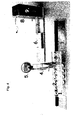
- Figure 1 depicts an example of an apparatus to be used with the present invention, which comprises a manometer mounted with a needle.
- the apparatus for measuring the pressure may include a manometer as well as other components.
- determining the produced amount of assayable gaseous product may involve the use of an apparatus as described herein below.
- the pressure is determined by manometer comprising an injection needle and wherein said injection needle is injected into the container.
- the second pressure may be determined by said manometer.
- the predetermined amount of time for incubation of the liquid composition with the microbial organism should be selected according to the specific need. However, preferably, the predetermined amount of time is selected in order to allow complete fermentation of the fermentable compound to be assayed.
- the predetermined amount of time should be selected according to the amount of fermentable compound present and the amount of microbial organism present. Because the amount of fermentable compound usually is unknown, the predetermined amount of time may be selected based on the amount of liquid composition and the amount of microbial organism.
- the predetermined period of time is in the range of 1 min to 24 hours, such as from 2 min to 12 hours, for example from 5 min to 8 hours, such as from 5 min to 5 hours, such as from 10 min to 4 hours, for example from 30 min to 3 hours, such as from 30 min to 2 hours.
- the predetermined amount of time is preferably around 60 min.
- the predetermined amount of time is preferably in the range of 5 min to 5 hours, more preferably, from 10 min to 4 hours, even more preferably from 20 min to 3 hours, yet more preferably from 30 min to 2 hours, most preferably around 1 hour.
- the predetermined amount of time is preferably in the range of 5 min to 5 hours, more preferably, from 10 min to 4 hours, even more preferably from 20 min to 3 hours, yet more preferably from 30 min to 2 hours, most preferably around 1 hour.
- test sample container should be selected so that it is suitable for the methods used for determining the amount of gaseous product (see herein above).
- the container is preferably an airtight container.
- the container is preferably air tight, pressure stable and penetrable by a needle.
- the container may for example comprise a part, such as a lid, which is manufactured of rubber or the like.
- the container may be sealed with a crimp cap with septa.
- the container may be prepared of any suitable material, for example glass, plastic or metal, preferably however, the container is prepared of glass.
- test sample container is a glass vial closed with a penetratable sealing cap.
- the present invention provides methods of monitoring a fermentation process involving defining a predetermined fermentation parameter and subsequently comparing the amount of fermentable compound to the predetermined fermentation parameter.
- the predetermined fermentation parameter should be selected according to the fermentable compound and the desired outcome of the fermentation process. For example it may for some purposes be desirable that essentially no fermentable compound is left in the liquid composition after the fermentation process, and for other purposes it may be desirable that there is a specific amount of fermentable compound left in the liquid composition after the fermentation.
- wine production for example it may be desirable to produce a dry wine with essentially no residual sugar or it may be desirable to produce a sweet wine which contains residual sugar.
- the predetermined parameter is in the range of 0 to 100 g/l, such as 0 to 80 g/l, for example 0 to 60 g/l, such as 0 to 40 g/l, for example 0 to 20 g/l, such as 0 to 15 g/l, for example 0 to 10 g/l, such as 0 to 8 g/l, for example 0 to 6 g/l, such as 0 to 4 g/l, for example 0 to 3 g/l, such as 0 to 2 g/l, for example 0 to 1 g/l, such as 0 to 0.75 g/l, for example 0 to 0.5 g/l, such as 0 to 0.4 g/l, for example 0 to 0.3 g/l, such as 0 to 0.2 g/l, for example 0 to 0.1 g/l, such as around 0 g/l.
- the predetermined parameter when the desired outcome of the fermentation process is a dry wine the predetermined parameter may be as mentioned above. Furthermore, if the fermentable compound is selected from the group consisting of glucose, fructose, sucrose and malic acid the predetermined parameter may be as mentioned above.
- the amount of fermentable compound may be determined as described herein. The amount of fermentable compound may then be compared with the predetermined fermentation parameter.
- the fermentation process may be controlled.
- the fermentation process may be allowed to proceed, if the amount of fermentable compound is higher than the predetermined fermentation parameter.
- the method may be repeated and the newly determined amount of fermentable compound may be compared with the predetermined fermentation parameter. Again the fermentation process may be allowed to proceed, if the amount of fermentable compound is higher than the predetermined fermentation parameter.
- the fermentation process may be terminated or the next step in the fermentation process may be initiated.
- the fermentation process may be terminated by any conventional means, for example by treatment with sulphur.
- the subsequent fermentation step may be initiated for example by addition of a microbial organism different to the microbial organism used in the first fermentation step.
- the present invention provides methods for controlling a fermentation process, wherein a liquid composition is incubated with a microbial organism for a predetermined time of incubation, after which a test sample is acquired from said liquid composition and the amount of at least one first fermentable compound in said test sample is determined.
- the predetermined time of incubation should be selected according to the liquid composition, the desired end product of the fermentation process and the fermentable compound to be determined.
- the predetermined amount of time is in the range of 1 to 2 days, such as 2 to 4 days, for example 4 to 7 days, such as 1 to 2 weeks, for example 2 to 5 weeks, such as 1 to 2 months, for example 2 to 3 months, such as 3 to 5 months, for example 5 to 12 months, such as 1 to 2 years, for example more than 1 year.
- the fermentation process is wine production
- the predetermined amount of time for measuring the amount of sugar is shorter than the predetermined amount of time for measuring malic acid.
- the amount of malic acid is determined approximately 0 to 50 weeks, such as 0 to 25 weeks, for example 0 to 20 weeks, such as 0 to 16 weeks, for example 0 to 1 weeks after the fermentation of sugar has finished.
- the predetermined time of incubation when the amount of malic acid should be determined is in the range of 0 to 50 weeks, such as in the range of 1 to 30 weeks, for example in the range of 1 to 16 weeks.
- the present invention describes methods for determining the amount of a fermentable compound in a liquid composition.
- the methods involve contacting the liquid composition with a microbial organism capable of fermenting said fermentable compound and thereby producing an assayable gaseous product.
- the liquid composition and the microbial organism should be incubated under conditions allowing the microbial organism to ferment essentially all of the fermentable compound. Subsequently, the amount of gaseous product may be determined and correlated to the amount of fermentable compound.
- one of the dry compositions comprising a microbial organism described herein below is added directly to the liquid composition.
- 0.05 to 5 g such as in the range of 0.1 to 3 g
- 0.2 to 1 g such as in the range from 0.3 to 0.7 g dry composition may be added per 5 ml. liquid composition.
- the microbial organism may be resuspended in a liquid medium, such as an aqueous suspension, prior to contacting the liquid composition.
- a liquid medium such as an aqueous suspension
- any of the dry compositions mentioned herein below may be resuspended in a liquid medium and the suspension is added to the liquid composition.
- the liquid medium may be any suitable liquid medium, however preferably the liquid medium is water, such as tap water, distilled water or sterile water.
- the dry composition may be resuspended in the liquid medium in any useful relationship.
- dry composition may be added to 40 ml liquid medium, such as water.
- the suspension may be stored at 4°C for at least 1 day, such as 2 days, for example 3 days, such as a week, for example 2 weeks and still be employed with the methods according to the invention.
- the microbial organism is a bacteria
- around 12.5 g dry composition may be added to around 40 ml water.
- the microbial organism is yeast around 11 g dry composition may be added to around 40 ml water. From said suspensions in range of 100 ⁇ l to 10 ml, such as 0.5 to 7 ml, for example 1 to 5 ml, such as 1,5 to 3 ml, for example around 2 ml may be added per 5 ml of liquid composition.
- essentially all of the fermentable compound within the context of the present invention means all or nearly all of the fermentable product, for example at least 80%, such as at least 85%, for example at least 90%, such as at least 95%, for example at least 98%, such as at least 99%, for example at least 99.5%, such as at least 99.9%, for example around 100% of the fermentable compound.
- "essentially all of the fermentable compound” means all detectable fermentable compound.
- the conditions allowing the microbial organism to ferment essentially all of the fermentable compound should be selected according to the liquid composition and the nature of the microbial organism.
- Conditions may include incubation for a predetermined period of time. Preferred predetermined period of time is discussed herein above. Furthermore, condition may include incubation at a specific temperature. For most purposes the temperature is room temperature i.e. a temperature in the range of 10°C to 30°C, such as in the range from 15°C to 25°C.
- conditions may comprise shaking, stirring or the like. Shaking may be done using any conventional means therefore, for example the liquid composition and the microbial organism mixture may be incubated in a container fixed to a shaking table.
- the mixture may be submitted to shaking during the entire incubation period or the shaking may be applied only during certain intervals of the incubation period.
- the mixture may be submitted to shaking for 1 to 2 min., such as from 2 to 5 min, for example from 5 to 10 min, such as from 10 to 20 min., for example from 20 to 30 min, such as from 30 to 45 min, for example from 45 to 60 min., such as for more than 60 min.
- the mixture may be submitted to shaking once, such as twice, for example 3 to 5 times, such as 5 to 10 times, for example 10 to 20 times during incubation.
- the amount of gaseous product produced may be determined by any available method, for example any of the methods described herein above.
- the amount of gaseous product is determined either directly or indirectly, this may be correlated to the amount of fermentable compound that was present in the liquid composition. Correlation may for example be done by the aid of a standard curve.
- the amount of gaseous product is determined by determining change in pressure, said change in pressure may directly be correlated to the amount of fermentable compound.
- the first pressure is the normal pressure of the surroundings, i.e. around 1 atm and hence relatively constant.
- the second pressure may then be directly correlated to the amount of fermentable compound.
- correlation may be done using a standard curve.
- the second pressure is linearly correlatable with the amount of fermentable compound over the range of interest.
- the range of interest depends on the fermentable compound, but is for example 0 to 200 g, such as 0 to 100 g, for example 0 to 75 g, such as 0 to 50 g, for example 0 to 25 g, such as 0 to 14 g, for example 0 to 10 g, such as 0 to 7 g fermentable compound per litre liquid composition.
- the standard curve is preferably prepared by determining the second pressure using various known predetermined amounts of fermentable compound within the range of interest. It is preferred that the second pressure is determined for at least 2, such as at least 3, for example at least 4, such as at least 5, such as at least 6, for example at least 7, such as at least 8 different known predetermined amounts of fermentable compound. Hence, the second pressure may be determined for in the range of 2 to 50, such as 3 to 40, for example 4 to 30, such as 5 to 25, for example 6 to 20, such as 7 to 15 different known predetermined amounts of fermentable compound.
- the second pressure is independently determined at least once, such as twice, for example 3 times, such as 4 times, for example 5 times, such as more than 5 times for each known predetermined amount of fermentable compound.
- a standard curve may be prepared.
- the standard curve is prepared using linear regression, wherein the second pressure may be indicated as a function of the amount of fermentable compound.
- R-square (R 2 ) is larger than 0.8, such as larger than 0.85, for example larger than 0.9, such as larger than 0.95, for example larger than 0.96, such as larger than 0.97, for example larger than 0.98, such as larger than 0.99, for example in the range of 0.99 to 1.
- Figure 2 and figure 3 depicts examples of standard curves that may be used with the present invention, wherein the second pressure is directly correlatable with the amount of either glucose, fructose or malic acid in a wine sample. Said standard curves may be used when the methods are performed as described in example 1 or 2.
- the second pressure is determined by use of a manometer, which has been calibrated to directly measure the amount of fermentable compound. Accordingly, in such an embodiment of the invention the amount of fermentable compound, may be directly displayed on the manometer.
- the method of determining the amount of a fermentable compound in a liquid composition may be repeated as often as desirable.
- the methods are used to monitor a fermentation process.
- the method may comprise the steps outlined herein above.
- the methods may be performed regularly at timely intervals during a fermentation process to determine when the desired amount of fermentable compound is present in the liquid composition, i.e. when the liquid composition comprises a predetermined fermentation parameter (see herein above).
- samples may be withdrawn at timely intervals and the methods may be performed on said samples.
- the methods may be performed once, such as twice, for example 3 to 5 times, such as 5 to 10 times, for example 10 to 20 times, such as 20 to 30 times, for example 30 to 50 times, such as 50 to 100 times, such as more than 100 times.
- the samples may be withdrawn at regular timely intervals or they may be withdrawn with varying timely intervals.
- the timely intervals may individually be in the range of 1 to 60 min, such as 1 to 24 hours, for example 1 to 5 days, such as 5 to 10 days, for example 10 to 20 days, such as 20 to 50 days, such as 50 to 100 days, for example more than 100 days.
- the methods may be repeated to measure the amount of one fermentable compound or they may be repeated to measure the amount of different fermentable compounds.
- samples may be withdrawn to determine the amount of a first fermentable compound according to the methods described herein; and/or samples may be withdrawn to determine the amount of a second fermentable compound; and/or samples may be withdrawn to determine the amount of a third fermentable compound; and/or samples may be withdrawn to determine the amount of a fourth fermentable compound; and/or samples may be withdrawn to determine the amount of a fifth fermentable compound; and/or samples may be withdrawn to determine the amount of further fermentable compounds.
- the methods as described herein involves the use of any of the compositions described herein below comprising a microbial organism.
- the present invention also relates to an apparatus, which may be used in the methods described herein above. Accordingly, in one aspect the invention relates to an apparatus for determining the amount of at least one fermentable first compound in a liquid composition, wherein said apparatus comprises
- the manometer per se may be any conventional manometer upon which an injection needle can be mounted.
- the injection needle should be mounted in a manner so that pressure is measured through the injection needle. Accordingly, the injection needle may be stuck into an airtight container and thereby the pressure inside the airtight container may be measured.
- the manometer should preferably be calibrated to measure the amount of at least one fermentable compound and comprise a display, which directly displays the amount of said at least one fermentable compound.
- the manometer may be calibrated by aid of a standard curve as described herein above.
- the manometer is calibrated to measure more than one different fermentable compounds.
- the manometer may comprise a display capable of displaying the amount of more than one fermentable compound.
- the display may be any conventional display capable of displaying numeric values, for example any analogue or digital display. Accordingly, the apparatus may further comprise an output unit displaying the amount of said at least one fermentable first compound.
- the air tight, test sample container may be any of the test sample containers described herein above.
- the container is pressure stable and penetrable by an injection needle, more preferably, the container is a glass vial closed with a penetrable sealing cap.
- the apparatus may apart from the above mentioned parts comprise further parts.
- the apparatus furthermore comprises a shaker.
- the shaker may be any conventional shaker known to the person skilled in the art, for example a shaking table.
- the shaker may or may not comprise a timer, that controls period of shaking.
- the apparatus may comprise a movable sledge, i.e. a sledge which can move back and forward.
- a movable sledge i.e. a sledge which can move back and forward.
- a solid support capable of fixation of at least one test sample container upon said sledge. Accordingly, it is possible to shake a test sample container on said sledge, by moving it back and forward.
- the sledge may be moved by a motor, for example an electromotor. Said motor may or may not be controlled by a timer.
- the apparatus comprises a solid support capable of fixation of at least one test sample container.
- Any solid support capable of fixation of at least one test sample container may be used with the present invention, such as for example a rack. Accordingly, the solid support should be selected according to the shape of the test sample container.
- the solid support may be capable of fixating more than one test sample container, such as from 1 to 1000, for example from 1 to 500, such as from 1 to 100, for example from1 to 75, such as from 1 to 50, for example from 2 to 40, for example from 5 to 30, such as from 10 to 25, for example from 15 to 25, such as around 20.
- 1 to 1000 for example from 1 to 500, such as from 1 to 100, for example from1 to 75, such as from 1 to 50, for example from 2 to 40, for example from 5 to 30, such as from 10 to 25, for example from 15 to 25, such as around 20.
- the solid support is mounted on the shaker.
- FIG. 1 Examples of apparatuses according to the present invention are depicted in figure 1 and figure 4, respectively.
- compositions comprising a dried microbial organism capable of fermenting said fermentable compound.
- Said compositions are preferably dry compositions, which allows long term storage of the compositions without major loss of viability of the microbial organisms.
- the dry compositions are preferably stored at a temperature in the range of -80°C to 40°C, such as from -40 °C to 40 °C, for example from -25°C to -10°C, such as from -10°C to 0°C, for example from 0°C to 40°C, such as from 0°C to 30°C, for example 0°C to 20°C, such as 0°C to 10°C. More preferably, the dry compositions may be stored at a temperature at for example around 4°C, such as around -20°C or for example around -40°C.
- the buffer may be any of the buffers as described herein above, preferably a buffer capable of buffering a solution, such as grape juice, partially fermented grape juice or wine to a pH in the range of from 4,0 to 8,0.
- the inhibitor of at least one metabolic pathway may be any inhibitor described herein above, preferably the inhibitor is a solid inhibitor of at least one metabolic pathway producing a gaseous product.
- the inhibitor may be NaF.
- the compound capable of specifically inhibiting yeast metabolism, but not bacterial metabolism may be any of the compounds described herein above.
- the compound is provided as a solid compound, for example natamycin.
- the composition comprises a microbial organism and a dry buffer.
- the composition comprises in range from 1 g to 2000 g, such as 10 g to 1000 g, for example 20 g to 1500 g, such as 30 g to 1000 g, for example 50 g to 800 g, such as 75 g to 700 g, for example 100 g to 600 g, such as 150 g to 500 g, for example 200 g to 400 g, such as 250 g to 350 g dry bufffer per 1000 g dry microbial organism.
- the composition preferably comprises 10 g to 1000 g, for example 20 g to 1500 g, such as 30 g to 1200 g, for example 50 g to 1000 g, such as 75 g to 900 g, for example 100 g to 800 g, such as 150 g to 700 g, for example 200 g to 600 g, such as 300 g to 600 g, for example 400 g to 600 g, such as around 500 g Na 2 Citrate or K 2 HPO 4 per 1000 g dried Saccharomyces cerevisiae.
- the composition comprises around 500 g Na 2 Citrate or K 2 HPO 4 pr. 1000 g yeast.
- compositions according to the present invention may furthermore comprise one or more antibiotics.
- the compositions may comprise one or more antibiotics.
- the compositions according to the invention may be placed under conditions wherein microbial growth is possible or even promoted, and it may therefore be advantageous to inhibit bacterial growth.
- the composition may be resuspended in an aqueous medium. In order to prolong the stability of a composition comprising yeast in an aqueous environment bacterial growth is preferably inhibited.
- antibiotics available to the person skilled in the art may be used with the invention, for example penicillin, bacitracin, chloramphenicol or valinomycin.
- the antibiotic is chloramphenicol.
- the antibiotic should be added to the compositions in amounts sufficient to inhibit bacterial growth.
- the composition comprises in the range from 0.01 g to 100 g, such as 0.05 g to 50 g, for example 0.1 g to 10 g, such as 0.2 g to 5 g, for example 0.3 g to 2 g, such as 0.4 g to 1 g, for example 0.5 g to 0,8 g, such as 0.6 g to 0,7 g dry antibiotic per 1000 g dry microbial organism.
- the composition may comprise in the range from 0.01 g to 100 g, such as 0.05 g to 50 g, for example 0.1 g to 10 g, such as 0.2 g to 5 g, for example 0.3 g to 2 g, such as 0.4 g to 1 g, for example 0.5 g to 0,8 g, such as 0.6 g to 0,7 g dry chloramphenicol per 1000 g dry Saccharomyces cerevisiae.
- the composition comprises around 0.68 g dry chloramphenicol per 1000 g dry Saccharomyces cerevisiae.
- the compostions are intended for resuspension in an aqueous medium prior to contacting a liquid comprising a fermentable compound with said composition. It is then preferred that the aqueous medium wherein the composition is resuspended comprises in the range of 0.001 % to 1%, more preferably in the range from 0.002% to 0.5%, even more preferably in the range from 0,005% to 0.1%, yet more preferably in the range from 0.007% to 0.05%, even more preferably around 0.01% antibiotic, for example chloramphenicol.
- the composition comprises a microbial organism and an inhibitor of a metabolic pathway.
- the composition comprises in range from 0.1 g to 1000 g, such as 0.2 g to 500 g, for example 0.3 g to 300 g, such as 0.4 g to 200 g, for example 0.5 g to 100 g, such as 0.6 g to 50 g, for example 0.7 g to 25 g, such as 0.8 g to 20 g, for example 0.9 g to 15 g, such as 1 g to 10 g dry inhibitor per 1000 g dry microbial organism.
- the composition preferably comprises in range from 0.1 g to 200 g, for example 0.5 g to 100 g, such as 0.6 g to 50 g, for example 0.7 g to 25 g, such as 0.8 g to 20 g, for example 0.9 g to 15 g, such as 1 g to 10 g, for example 1.5 g to 5 g, such as 2 g to 4 g, for example 2 g to 3 g, such as around 2.5 g dry NaF per 1000 g dry bacteria.
- the composition comprises around 2,5 g NaF pr. 1000 g bacteria.
- the method involves the use of an apparatus as depicted in figure 4.
- a composition consisting of 500 g Na 2 Citrate and 1000 g dried yeast (either “Lalvin V1116” produced by Lallemand, Montreal, Canada or “Malteser T ⁇ rg ⁇ r” from “De Danske Spritfabrikker”, Grenaa, Denmark) is prepared.
- First two standard curves are prepared. 0 g/l, 2 g/l, 4 g/l, 6 g/l, 8 g/l. 10 g/l, 12 g/l or 14 g/l glucose or fructose is added to a 5 ml completely fermented wine sample.
- the wine sample is red wine produced from Biotta grape juice, which has completed alcohol fermentation.
- Wine data 12% ethanol (v/v), pH 3.5, 0 g glucose/L, 0 g fructose/L.
- the measurement is repeated 4 times for each glucose concentration and 4 times for each fructose concentration.
- the values indicated below are average values for the 4 individual determinations.
- the samples are added to 20 ml glass bottles.
- the bottles are shaken for 2 minutes in order to remove CO 2 within the sample.
- 0.6 g of the yeast composition is added to the bottles and the bottles are shaken for additional 2 minutes.
- the bottles are closed with airtight crimp caps with septa and incubated at room temperature for 60 minutes.
- the bottles are shaken for 4 minutes and the pressure within the bottles is determined by sticking the injection needle of the manometer into the bottles and measuring the pressure.
- the manometer is calibrated so display the amount of either glucose or fructose in a sample using the standard curves.
- the glucose or fructose content of wine samples are then determined.
- 5 ml wine samples are added to 20 ml glass bottles (one sample per bottle).
- the bottles are shaken for 2 minutes in order to remove CO 2 within the sample.
- 0.6 g of the yeast composition is added to the bottles and the bottles are shaken for additional 2 minutes.
- the bottles are closed with airtight crimp caps with septa and incubated at room temperature for 60 minutes.
- the bottles are shaken for 4 minutes and the amount or glucose or fructose within the bottles is determined by sticking the injection needle of the manometer into the bottles and reading the display.
- the method involves the use of an apparatus as depicted in figure 4.
- a composition consisting of 2.5 g NaF and 1000 g dried bacteria (either Viniflora oenos or Viniflora LP, both available from Chr. Hansen, H ⁇ rsholm, Denmark) is prepared.
- First a standard curve is prepared. 0 g/l, 1 g/l, 2 g/l, 3 g/l, 4 g/l, 5 g/l, 6 g/l or 7 g/l malic acid is added to a 5 ml wine sample devoid of malic acid (all malic acid has previously been fermented to lactic acid).
- the wine sample is red wine produced from Biotta grape juice, which has completed malolactic fermentation.
- Wine data 12% ethanol (v/v), pH 3.5, 0 g malic acid/L.
- the measurement is repeated 4 times for each malic acid concentration.
- the values indicated below are average values for the 4 individual determinations.
- the samples are added to 20 ml glass bottles.
- the bottles are shaken for 2 minutes in order to remove CO 2 within the sample.
- 0.4 g of the bacteria composition is added to the bottles and the bottles are shaken for additional 2 minutes.
- the bottles are closed with airtight crimp caps with septa and incubated at room temperature for 60 minutes.
- the bottles are shaken for 4 minutes and the pressure within the bottles is determined by sticking the injection needle of the manometer into the bottles and measuring the pressure.
- a standard curve is prepared for pressure as a function of malic acid content (figure 3).
- Malic acid (g/L) Pressure (PSI) 0 0 1 1,2 2 2,325 3 3,45 4 4,525 5 5,675 6 6,825 7 7,933
- the manometer is calibrated to display the amount of malic acid in a sample using the standard curve.
- the malic acid content of wine samples is then determined. 5 ml wine samples are added to 20 ml glass bottles (one sample per bottle). The bottles are shaken for 2 minutes in order to remove CO 2 within the sample. 0.4 g of the yeast composition is added to the bottles and the bottles are shaken for additional 2 minutes. Subsequently, the bottles are closed with airtight crimp caps with septa and incubated at room temperature for 60 minutes. The bottles are shaken for 4 minutes and the amount of malic acid within the bottles is determined by sticking the injection needle of the manometer into the bottles and reading the display.
- a composition consisting of 500 g Na 2 Citrate and 1000 g dried yeast (either “Lalvin V1116” produced by Lallemand, Quebec, Canada or “Malteser T ⁇ rg ⁇ r” from “De Danske Spritfabrikker”, Grenaa, Denmark) is prepared.
- chloramphenicol (Fluka Chemie GmbH, Industriestrasse 25, CH-9471 Buchs, Switzerland.) is added and the composition is then resuspended in 40 ml. H 2 O.
Landscapes
- Chemical & Material Sciences (AREA)
- Life Sciences & Earth Sciences (AREA)
- Health & Medical Sciences (AREA)
- Engineering & Computer Science (AREA)
- Organic Chemistry (AREA)
- Zoology (AREA)
- Wood Science & Technology (AREA)
- Analytical Chemistry (AREA)
- Bioinformatics & Cheminformatics (AREA)
- General Health & Medical Sciences (AREA)
- Biochemistry (AREA)
- Biotechnology (AREA)
- Physics & Mathematics (AREA)
- General Engineering & Computer Science (AREA)
- Microbiology (AREA)
- Genetics & Genomics (AREA)
- Immunology (AREA)
- Biomedical Technology (AREA)
- Proteomics, Peptides & Aminoacids (AREA)
- Sustainable Development (AREA)
- General Physics & Mathematics (AREA)
- Pathology (AREA)
- Food Science & Technology (AREA)
- Biophysics (AREA)
- Molecular Biology (AREA)
- Chemical Kinetics & Catalysis (AREA)
- Medicinal Chemistry (AREA)
- Apparatus Associated With Microorganisms And Enzymes (AREA)
- Measuring Or Testing Involving Enzymes Or Micro-Organisms (AREA)
- Micro-Organisms Or Cultivation Processes Thereof (AREA)
Claims (17)
- Verfahren zur Bestimmung der Menge an Maleinsäure in einem Fruchtsaft oder einem fermentierten Fruchtsaft, wobei das Verfahren die Schritte umfasst:i) Bereitstellen eines Fruchtsaftes oder eines fermentierten Fruchtsaftes,ii) Bereitstellen eines Test-Mikroorganismusses, welcher Maleinsäure zu Milchsäure fermentieren kann und dabei CO2 produziert,iii) Inkontaktbringen des Fruchtsaftes oder des fermentierten Fruchtsaftes mit dem Test - Mikroorganismus,iv) Zugeben eines Inhibitors der Glykolyse,v) Fermentieren von im wesentlichen der gesamten Maleinsäure, wobei die Fermentation zur Herstellung von CO2 in einer Menge führt, welche direkt mit der Menge von in dem Fruchtsaft oder dem fermentierten Fruchtsaft vorhandenen Maleinsäure korreliert werden kann,vi) Bestimmen der hergestellten Menge an CO2,vii) Korrelieren der hergestellten Menge an CO2 mit der Menge an Maleinsäure, und dadurch Bestimmen der Menge an Maleinsäure.
- Verfahren nach Anspruch 1, wobei der Schritt der Bestimmung der hergestellten Menge an CO2 beinhaltet,a) Inkontaktbringen des Test-Mikroorganismusses und des Fruchtsaftes oder des fermentierten Fruchtsaftes in einem begrenzten Raum eines Luftdichten Behälters mit einem ersten Druck,b) Inkubieren des Test- Mikroorganismus und des Fruchtsaftes oder des fermentierten Fruchtsaftes für eine bestimmte Zeitspanne,c) Bestimmen eines zweiten Druckes in dem begrenzten Raum nach der Inkubation, undd) Korrelieren des zweiten Drucks mit dem in dem Fruchtsaft oder in dem fermentierten Fruchtsaft vorhanden Ausgangsgehalt an Maleinsäure, und dadurch Bestimmen der hergestellten Menge an CO2.
- Verfahren nach Anspruch 1, wobei das Verfahren zur Steuerung eines Fermentations-prozesses eingesetzt wird, wobei der Fermentationsprozess die Schritte umfaßt:i) Bereitstellen eines Fruchtsaftes oder eines fermentierten Fruchtsaftes,ii) Bereitstellen eines Mikroorganismusses, welche Maleinsäure fermentieren kann,iii) Definieren eines bestimmen Fermentation - Parameters,iv) Inkubieren des Fruchtsaftes oder fermentierten Fruchtsaftes mit dem Mikroorganismus unter Bedingungen, bei denen der Mikroorganismus mindestens einen Teil der Maleinsäure fermentieren kann,v) Erhalten einer Testprobe aus der flüssigen Zusammensetzung nach einer bestimmten Zeitspanne der Inkubation,vi) Bestimmen der Menge an Maleinsäure gemäß dem Verfahren nach einen der Ansprüche 1 und 2, undvii) Vergleichen der Menge an Maleinsäure mit dem bestimmen Fermentations-Parameter, undviii) Steuern des Fermentations-Prozesses basierend auf dem Vergleich der Menge an Maleinsäure mit dem bestimmten Fermentations-Parameter.
- Verfahren nach einem der Ansprüche 1-3, wobei der Fruchtsaft oder der fermentierte Fruchtsaft Traubensaft oder fermentierter Traubensaft ist.
- Verfahren nach einem der Ansprüche 1-3, wobei der Inhibitor NaF ist.
- Verfahren nach einem der Ansprüche 1-3, wobei der Mikroorganismus ausgewählt ist aus der Gruppe von Bakterien, welche zu der Oenococcus-Familie und der Lactobacillus-Familie gehört.
- Verfahren nach einem der Ansprüche 1-3, wobei der Test-Mikroorganismus in trockener Form vorliegt.
- Verfahren nach einem der Ansprüche 2-3, wobei der Behälter luftdicht, druckstabil und mit einer Nadel durchdringbar ist.
- Verfahren nach einem der Ansprüche 2-3, wobei der Druck durch ein Manometer bestimmt wird, welches eine Injektionsnadel umfaßt, und wobei die Injektionsnadel in den Behälter eingebracht wird.
- Verfahren nach Anspruch 2, wobei die bestimmte Zeitspanne im Bereich von 5 Min. bis 5 Std. liegt.
- Verfahren nach Anspruch 1, wobei der Test- Mikroorganismus vor dem Inkontaktbringen mit der flüssigen Zusammensetzung in einem flüssigen Medium resuspendiert wird.
- Feste Zusammensetzung zur Bestimmung der Menge an Maleinsäure in einem Fruchtsaft oder fermentierten Fruchtsaft, worin die feste Zusammensetzung umfaßt, einen getrockneten Mikroorganismus, welcher Maleinsäure zu Milchsäure fermentieren kann und dabei CO2 produziert, und einen festen Inhibitor der Glykolyse.
- Zusammensetzung nach Anspruch 12, worin das Bakterium ausgewählt ist aus der Gruppe von Bakterien, welche zu der Oenococcus-Familie und der Lactobacillus-Familie gehört.
- Zusammensetzung nach Anspruch 12, worin der Inhibitor NaF ist.
- Zusammensetzung nach Anspruch 12, worin der Mikroorganismus gefriergetrocknete Bakterien und der Inhibitor NaF ist.
- Zusammensetzung nach Anspruch 15, worin die Zusammensetzung etwa 2,5 g NaF pro 1000 g Bakterien umfasst.
- Verfahren nach einer der Ansprüche 1-11, wobei das Verfahren die Verwendung einer Zusammensetzung nach einer der Ansprüche 12-16 umfasst.
Applications Claiming Priority (3)
| Application Number | Priority Date | Filing Date | Title |
|---|---|---|---|
| DK200200421 | 2002-03-18 | ||
| DKPA200200421 | 2002-03-18 | ||
| PCT/DK2003/000153 WO2003078653A1 (en) | 2002-03-18 | 2003-03-12 | Method and apparatus for monitoring a fermentation process |
Publications (2)
| Publication Number | Publication Date |
|---|---|
| EP1490504A1 EP1490504A1 (de) | 2004-12-29 |
| EP1490504B1 true EP1490504B1 (de) | 2006-12-27 |
Family
ID=27837989
Family Applications (1)
| Application Number | Title | Priority Date | Filing Date |
|---|---|---|---|
| EP03744312A Expired - Lifetime EP1490504B1 (de) | 2002-03-18 | 2003-03-12 | Verfahren und vorrichtung zur überwachung eines fermentationsprozesses |
Country Status (5)
| Country | Link |
|---|---|
| EP (1) | EP1490504B1 (de) |
| AT (1) | ATE349549T1 (de) |
| AU (1) | AU2003215521A1 (de) |
| DE (1) | DE60310698D1 (de) |
| WO (1) | WO2003078653A1 (de) |
Families Citing this family (1)
| Publication number | Priority date | Publication date | Assignee | Title |
|---|---|---|---|---|
| US8329426B2 (en) | 2008-10-01 | 2012-12-11 | Pioneer Hi-Bred International, Inc. | High throughput method for measuring total fermentables in small amount of plant part |
Family Cites Families (3)
| Publication number | Priority date | Publication date | Assignee | Title |
|---|---|---|---|---|
| SU418798A1 (de) * | 1971-12-09 | 1974-03-05 | ||
| DE2744769B1 (de) * | 1977-10-05 | 1978-10-26 | Siegfried Dipl-Br- Rischbieter | Steuerung eines Gaerprozesses bei der Herstellung von durch Gaerung entstehenden Getraenken |
| FR2606514B1 (fr) * | 1986-11-12 | 1990-04-20 | Agronomique Inst Nat Rech | Procede de prevision et de controle en ligne des fermentations alcooliques et dispositif pour sa mise en oeuvre |
-
2003
- 2003-03-12 EP EP03744312A patent/EP1490504B1/de not_active Expired - Lifetime
- 2003-03-12 DE DE60310698T patent/DE60310698D1/de not_active Expired - Lifetime
- 2003-03-12 AT AT03744312T patent/ATE349549T1/de not_active IP Right Cessation
- 2003-03-12 WO PCT/DK2003/000153 patent/WO2003078653A1/en not_active Ceased
- 2003-03-12 AU AU2003215521A patent/AU2003215521A1/en not_active Abandoned
Also Published As
| Publication number | Publication date |
|---|---|
| EP1490504A1 (de) | 2004-12-29 |
| AU2003215521A1 (en) | 2003-09-29 |
| WO2003078653A1 (en) | 2003-09-25 |
| ATE349549T1 (de) | 2007-01-15 |
| DE60310698D1 (de) | 2007-02-08 |
Similar Documents
| Publication | Publication Date | Title |
|---|---|---|
| Coote et al. | The content of some organic acids in beer and other fermented media | |
| Esteve-Zarzoso et al. | Selection and molecular characterization of wine yeasts isolated from the ‘El Penedes’ area (Spain) | |
| Chatonnet et al. | Influence of polyphenolic components of red wines on the microbial synthesis of volatile phenols | |
| Zironi et al. | Volatile metabolites produced in wine by mixed and sequential cultures of Hanseniaspora guilliermondii or Kloeckera apiculata and Saccharomyces cerevisiae | |
| Kirsop | Oxygen in brewery fermentation | |
| Kucharczyk et al. | The effect of wort aeration on fermentation, maturation and volatile components of beer produced on an industrial scale | |
| Miller et al. | Yeast strain and nitrogen supplementation: Dynamics of volatile ester production in Chardonnay juice fermentations | |
| Velazquez et al. | Using Torulaspora delbrueckii killer yeasts in the elaboration of base wine and traditional sparkling wine | |
| Erten | Relations between elevated temperatures and fermentation behaviour of Kloeckera apiculata and Saccharomyces cerevisiae associated with winemaking in mixed cultures | |
| JP2004532646A (ja) | 組み合わせ連続/バッチ発酵プロセス | |
| Ciani et al. | Growth and fermentation behaviour of Brettanomyces/Dekkera yeasts under different conditions of aerobiosis | |
| FR2606514A1 (fr) | Procede de prevision et de controle en ligne des fermentations alcooliques et dispositif pour sa mise en oeuvre | |
| Perpetuini et al. | Promoting Candida zemplinina adhesion on oak chips: A strategy to enhance esters and glycerol content of Montepulciano d’Abruzzo organic wines | |
| JPH06178697A (ja) | 生物活性因子を検出するための培地 | |
| Boulton | Red wines | |
| EP1490504A1 (de) | Verfahren und vorrichtung zur überwachung eines fermentationsprozesses | |
| Zhao et al. | Evaluation of microtiter plate as a high-throughput screening platform for beer fermentation | |
| Yang et al. | Higher alcohols, diacetyl, acetoin and 2, 3-butanediol biosynthesis in grapes undergoing carbonic maceration | |
| CN120118761A (zh) | 一种葡萄园有孢汉逊酵母hv-26及其在葡萄酒酿造中的应用 | |
| Sigler et al. | Factors affecting the outcome of the acidification power test of yeast quality: critical reappraisal | |
| Cavazza et al. | Restart of fermentation of simulated stuck wines by direct inoculation of active dry yeasts | |
| Finn et al. | Lactic Acid Fermentation Rate-Effect of Continuously Controlled pH | |
| Sergeeva et al. | Evaluation of breadmaking potential of the yeasts Wickerhamomyces anomalus (CBS S605T) and Torulaspora delbrueckii (YIT3) | |
| US6942962B1 (en) | Computer monitoring and control of fermentation | |
| Ough | Acetaldehyde Formation in Submerged Cultures on Non-film-forming Species of Saccharomyces |
Legal Events
| Date | Code | Title | Description |
|---|---|---|---|
| PUAI | Public reference made under article 153(3) epc to a published international application that has entered the european phase |
Free format text: ORIGINAL CODE: 0009012 |
|
| 17P | Request for examination filed |
Effective date: 20041018 |
|
| AK | Designated contracting states |
Kind code of ref document: A1 Designated state(s): AT BE BG CH CY CZ DE DK EE ES FI FR GB GR HU IE IT LI LU MC NL PT RO SE SI SK TR |
|
| AX | Request for extension of the european patent |
Extension state: AL LT LV MK |
|
| GRAP | Despatch of communication of intention to grant a patent |
Free format text: ORIGINAL CODE: EPIDOSNIGR1 |
|
| RIC1 | Information provided on ipc code assigned before grant |
Ipc: G01N 7/00 20060101ALI20060615BHEP Ipc: C12Q 1/00 20060101AFI20060615BHEP Ipc: C12M 1/00 20060101ALI20060615BHEP |
|
| GRAS | Grant fee paid |
Free format text: ORIGINAL CODE: EPIDOSNIGR3 |
|
| GRAA | (expected) grant |
Free format text: ORIGINAL CODE: 0009210 |
|
| AK | Designated contracting states |
Kind code of ref document: B1 Designated state(s): AT BE BG CH CY CZ DE DK EE ES FI FR GB GR HU IE IT LI LU MC NL PT RO SE SI SK TR |
|
| PG25 | Lapsed in a contracting state [announced via postgrant information from national office to epo] |
Ref country code: IT Free format text: LAPSE BECAUSE OF FAILURE TO SUBMIT A TRANSLATION OF THE DESCRIPTION OR TO PAY THE FEE WITHIN THE PRESCRIBED TIME-LIMIT;WARNING: LAPSES OF ITALIAN PATENTS WITH EFFECTIVE DATE BEFORE 2007 MAY HAVE OCCURRED AT ANY TIME BEFORE 2007. THE CORRECT EFFECTIVE DATE MAY BE DIFFERENT FROM THE ONE RECORDED. Effective date: 20061227 Ref country code: CH Free format text: LAPSE BECAUSE OF FAILURE TO SUBMIT A TRANSLATION OF THE DESCRIPTION OR TO PAY THE FEE WITHIN THE PRESCRIBED TIME-LIMIT Effective date: 20061227 Ref country code: BE Free format text: LAPSE BECAUSE OF FAILURE TO SUBMIT A TRANSLATION OF THE DESCRIPTION OR TO PAY THE FEE WITHIN THE PRESCRIBED TIME-LIMIT Effective date: 20061227 Ref country code: FI Free format text: LAPSE BECAUSE OF FAILURE TO SUBMIT A TRANSLATION OF THE DESCRIPTION OR TO PAY THE FEE WITHIN THE PRESCRIBED TIME-LIMIT Effective date: 20061227 Ref country code: RO Free format text: LAPSE BECAUSE OF FAILURE TO SUBMIT A TRANSLATION OF THE DESCRIPTION OR TO PAY THE FEE WITHIN THE PRESCRIBED TIME-LIMIT Effective date: 20061227 Ref country code: SI Free format text: LAPSE BECAUSE OF FAILURE TO SUBMIT A TRANSLATION OF THE DESCRIPTION OR TO PAY THE FEE WITHIN THE PRESCRIBED TIME-LIMIT Effective date: 20061227 Ref country code: NL Free format text: LAPSE BECAUSE OF FAILURE TO SUBMIT A TRANSLATION OF THE DESCRIPTION OR TO PAY THE FEE WITHIN THE PRESCRIBED TIME-LIMIT Effective date: 20061227 Ref country code: AT Free format text: LAPSE BECAUSE OF FAILURE TO SUBMIT A TRANSLATION OF THE DESCRIPTION OR TO PAY THE FEE WITHIN THE PRESCRIBED TIME-LIMIT Effective date: 20061227 Ref country code: SK Free format text: LAPSE BECAUSE OF FAILURE TO SUBMIT A TRANSLATION OF THE DESCRIPTION OR TO PAY THE FEE WITHIN THE PRESCRIBED TIME-LIMIT Effective date: 20061227 Ref country code: LI Free format text: LAPSE BECAUSE OF FAILURE TO SUBMIT A TRANSLATION OF THE DESCRIPTION OR TO PAY THE FEE WITHIN THE PRESCRIBED TIME-LIMIT Effective date: 20061227 Ref country code: CZ Free format text: LAPSE BECAUSE OF FAILURE TO SUBMIT A TRANSLATION OF THE DESCRIPTION OR TO PAY THE FEE WITHIN THE PRESCRIBED TIME-LIMIT Effective date: 20061227 Ref country code: DK Free format text: LAPSE BECAUSE OF FAILURE TO SUBMIT A TRANSLATION OF THE DESCRIPTION OR TO PAY THE FEE WITHIN THE PRESCRIBED TIME-LIMIT Effective date: 20061227 |
|
| REG | Reference to a national code |
Ref country code: GB Ref legal event code: FG4D |
|
| REG | Reference to a national code |
Ref country code: IE Ref legal event code: FG4D |
|
| REF | Corresponds to: |
Ref document number: 60310698 Country of ref document: DE Date of ref document: 20070208 Kind code of ref document: P |
|
| PG25 | Lapsed in a contracting state [announced via postgrant information from national office to epo] |
Ref country code: BG Free format text: LAPSE BECAUSE OF FAILURE TO SUBMIT A TRANSLATION OF THE DESCRIPTION OR TO PAY THE FEE WITHIN THE PRESCRIBED TIME-LIMIT Effective date: 20070327 Ref country code: SE Free format text: LAPSE BECAUSE OF FAILURE TO SUBMIT A TRANSLATION OF THE DESCRIPTION OR TO PAY THE FEE WITHIN THE PRESCRIBED TIME-LIMIT Effective date: 20070327 |
|
| PG25 | Lapsed in a contracting state [announced via postgrant information from national office to epo] |
Ref country code: DE Free format text: LAPSE BECAUSE OF FAILURE TO SUBMIT A TRANSLATION OF THE DESCRIPTION OR TO PAY THE FEE WITHIN THE PRESCRIBED TIME-LIMIT Effective date: 20070328 |
|
| PG25 | Lapsed in a contracting state [announced via postgrant information from national office to epo] |
Ref country code: ES Free format text: LAPSE BECAUSE OF FAILURE TO SUBMIT A TRANSLATION OF THE DESCRIPTION OR TO PAY THE FEE WITHIN THE PRESCRIBED TIME-LIMIT Effective date: 20070407 |
|
| PG25 | Lapsed in a contracting state [announced via postgrant information from national office to epo] |
Ref country code: PT Free format text: LAPSE BECAUSE OF FAILURE TO SUBMIT A TRANSLATION OF THE DESCRIPTION OR TO PAY THE FEE WITHIN THE PRESCRIBED TIME-LIMIT Effective date: 20070528 |
|
| NLV1 | Nl: lapsed or annulled due to failure to fulfill the requirements of art. 29p and 29m of the patents act | ||
| REG | Reference to a national code |
Ref country code: CH Ref legal event code: PL |
|
| EN | Fr: translation not filed | ||
| PLBE | No opposition filed within time limit |
Free format text: ORIGINAL CODE: 0009261 |
|
| STAA | Information on the status of an ep patent application or granted ep patent |
Free format text: STATUS: NO OPPOSITION FILED WITHIN TIME LIMIT |
|
| GBPC | Gb: european patent ceased through non-payment of renewal fee |
Effective date: 20070327 |
|
| 26N | No opposition filed |
Effective date: 20070928 |
|
| PG25 | Lapsed in a contracting state [announced via postgrant information from national office to epo] |
Ref country code: IE Free format text: LAPSE BECAUSE OF NON-PAYMENT OF DUE FEES Effective date: 20070312 Ref country code: MC Free format text: LAPSE BECAUSE OF NON-PAYMENT OF DUE FEES Effective date: 20070331 |
|
| PG25 | Lapsed in a contracting state [announced via postgrant information from national office to epo] |
Ref country code: GR Free format text: LAPSE BECAUSE OF FAILURE TO SUBMIT A TRANSLATION OF THE DESCRIPTION OR TO PAY THE FEE WITHIN THE PRESCRIBED TIME-LIMIT Effective date: 20070328 Ref country code: FR Free format text: LAPSE BECAUSE OF FAILURE TO SUBMIT A TRANSLATION OF THE DESCRIPTION OR TO PAY THE FEE WITHIN THE PRESCRIBED TIME-LIMIT Effective date: 20070817 Ref country code: GB Free format text: LAPSE BECAUSE OF NON-PAYMENT OF DUE FEES Effective date: 20070327 |
|
| PG25 | Lapsed in a contracting state [announced via postgrant information from national office to epo] |
Ref country code: FR Free format text: LAPSE BECAUSE OF FAILURE TO SUBMIT A TRANSLATION OF THE DESCRIPTION OR TO PAY THE FEE WITHIN THE PRESCRIBED TIME-LIMIT Effective date: 20061227 |
|
| PG25 | Lapsed in a contracting state [announced via postgrant information from national office to epo] |
Ref country code: EE Free format text: LAPSE BECAUSE OF FAILURE TO SUBMIT A TRANSLATION OF THE DESCRIPTION OR TO PAY THE FEE WITHIN THE PRESCRIBED TIME-LIMIT Effective date: 20061227 |
|
| PG25 | Lapsed in a contracting state [announced via postgrant information from national office to epo] |
Ref country code: LU Free format text: LAPSE BECAUSE OF NON-PAYMENT OF DUE FEES Effective date: 20070312 Ref country code: CY Free format text: LAPSE BECAUSE OF FAILURE TO SUBMIT A TRANSLATION OF THE DESCRIPTION OR TO PAY THE FEE WITHIN THE PRESCRIBED TIME-LIMIT Effective date: 20061227 |
|
| PG25 | Lapsed in a contracting state [announced via postgrant information from national office to epo] |
Ref country code: HU Free format text: LAPSE BECAUSE OF FAILURE TO SUBMIT A TRANSLATION OF THE DESCRIPTION OR TO PAY THE FEE WITHIN THE PRESCRIBED TIME-LIMIT Effective date: 20070628 Ref country code: TR Free format text: LAPSE BECAUSE OF FAILURE TO SUBMIT A TRANSLATION OF THE DESCRIPTION OR TO PAY THE FEE WITHIN THE PRESCRIBED TIME-LIMIT Effective date: 20061227 |