EP1487807B1 - Cyano-pyrrolidines as DPP-IV inhibitors - Google Patents
Cyano-pyrrolidines as DPP-IV inhibitors Download PDFInfo
- Publication number
- EP1487807B1 EP1487807B1 EP03743452A EP03743452A EP1487807B1 EP 1487807 B1 EP1487807 B1 EP 1487807B1 EP 03743452 A EP03743452 A EP 03743452A EP 03743452 A EP03743452 A EP 03743452A EP 1487807 B1 EP1487807 B1 EP 1487807B1
- Authority
- EP
- European Patent Office
- Prior art keywords
- group
- stands
- general formula
- formula
- compounds
- Prior art date
- Legal status (The legal status is an assumption and is not a legal conclusion. Google has not performed a legal analysis and makes no representation as to the accuracy of the status listed.)
- Expired - Lifetime
Links
- 0 CC(*1)=Sc2c1cccc2 Chemical compound CC(*1)=Sc2c1cccc2 0.000 description 8
- DQSHFKPKFISSNM-UHFFFAOYSA-N Cc1nc2ccccc2[o]1 Chemical compound Cc1nc2ccccc2[o]1 DQSHFKPKFISSNM-UHFFFAOYSA-N 0.000 description 4
- XIYPXOFSURQTTJ-NSCUHMNNSA-N CC(/C=C/c(cc1)cc2c1OCO2)=O Chemical compound CC(/C=C/c(cc1)cc2c1OCO2)=O XIYPXOFSURQTTJ-NSCUHMNNSA-N 0.000 description 1
- JYYNAJVZFGKDEQ-UHFFFAOYSA-N Cc1ccnc(C)c1 Chemical compound Cc1ccnc(C)c1 JYYNAJVZFGKDEQ-UHFFFAOYSA-N 0.000 description 1
- UCERVHYBSTYCQS-UHFFFAOYSA-N Cc1ccnc(SC)n1 Chemical compound Cc1ccnc(SC)n1 UCERVHYBSTYCQS-UHFFFAOYSA-N 0.000 description 1
- JEAVIRYCMBDJIU-UHFFFAOYSA-N Cc1nc(O)ccc1 Chemical compound Cc1nc(O)ccc1 JEAVIRYCMBDJIU-UHFFFAOYSA-N 0.000 description 1
- LNJMHEJAYSYZKK-UHFFFAOYSA-N Cc1ncccn1 Chemical compound Cc1ncccn1 LNJMHEJAYSYZKK-UHFFFAOYSA-N 0.000 description 1
- MVAXKFAQKTWRAH-UHFFFAOYSA-N Cc1ncnc(Cl)c1 Chemical compound Cc1ncnc(Cl)c1 MVAXKFAQKTWRAH-UHFFFAOYSA-N 0.000 description 1
Images


Classifications
-
- C—CHEMISTRY; METALLURGY
- C07—ORGANIC CHEMISTRY
- C07D—HETEROCYCLIC COMPOUNDS
- C07D451/00—Heterocyclic compounds containing 8-azabicyclo [3.2.1] octane, 9-azabicyclo [3.3.1] nonane, or 3-oxa-9-azatricyclo [3.3.1.0<2,4>] nonane ring systems, e.g. tropane or granatane alkaloids, scopolamine; Cyclic acetals thereof
- C07D451/02—Heterocyclic compounds containing 8-azabicyclo [3.2.1] octane, 9-azabicyclo [3.3.1] nonane, or 3-oxa-9-azatricyclo [3.3.1.0<2,4>] nonane ring systems, e.g. tropane or granatane alkaloids, scopolamine; Cyclic acetals thereof containing not further condensed 8-azabicyclo [3.2.1] octane or 3-oxa-9-azatricyclo [3.3.1.0<2,4>] nonane ring systems, e.g. tropane; Cyclic acetals thereof
- C07D451/04—Heterocyclic compounds containing 8-azabicyclo [3.2.1] octane, 9-azabicyclo [3.3.1] nonane, or 3-oxa-9-azatricyclo [3.3.1.0<2,4>] nonane ring systems, e.g. tropane or granatane alkaloids, scopolamine; Cyclic acetals thereof containing not further condensed 8-azabicyclo [3.2.1] octane or 3-oxa-9-azatricyclo [3.3.1.0<2,4>] nonane ring systems, e.g. tropane; Cyclic acetals thereof with hetero atoms directly attached in position 3 of the 8-azabicyclo [3.2.1] octane or in position 7 of the 3-oxa-9-azatricyclo [3.3.1.0<2,4>] nonane ring system
-
- A—HUMAN NECESSITIES
- A61—MEDICAL OR VETERINARY SCIENCE; HYGIENE
- A61P—SPECIFIC THERAPEUTIC ACTIVITY OF CHEMICAL COMPOUNDS OR MEDICINAL PREPARATIONS
- A61P1/00—Drugs for disorders of the alimentary tract or the digestive system
-
- A—HUMAN NECESSITIES
- A61—MEDICAL OR VETERINARY SCIENCE; HYGIENE
- A61P—SPECIFIC THERAPEUTIC ACTIVITY OF CHEMICAL COMPOUNDS OR MEDICINAL PREPARATIONS
- A61P13/00—Drugs for disorders of the urinary system
- A61P13/12—Drugs for disorders of the urinary system of the kidneys
-
- A—HUMAN NECESSITIES
- A61—MEDICAL OR VETERINARY SCIENCE; HYGIENE
- A61P—SPECIFIC THERAPEUTIC ACTIVITY OF CHEMICAL COMPOUNDS OR MEDICINAL PREPARATIONS
- A61P17/00—Drugs for dermatological disorders
-
- A—HUMAN NECESSITIES
- A61—MEDICAL OR VETERINARY SCIENCE; HYGIENE
- A61P—SPECIFIC THERAPEUTIC ACTIVITY OF CHEMICAL COMPOUNDS OR MEDICINAL PREPARATIONS
- A61P17/00—Drugs for dermatological disorders
- A61P17/06—Antipsoriatics
-
- A—HUMAN NECESSITIES
- A61—MEDICAL OR VETERINARY SCIENCE; HYGIENE
- A61P—SPECIFIC THERAPEUTIC ACTIVITY OF CHEMICAL COMPOUNDS OR MEDICINAL PREPARATIONS
- A61P19/00—Drugs for skeletal disorders
- A61P19/02—Drugs for skeletal disorders for joint disorders, e.g. arthritis, arthrosis
-
- A—HUMAN NECESSITIES
- A61—MEDICAL OR VETERINARY SCIENCE; HYGIENE
- A61P—SPECIFIC THERAPEUTIC ACTIVITY OF CHEMICAL COMPOUNDS OR MEDICINAL PREPARATIONS
- A61P25/00—Drugs for disorders of the nervous system
- A61P25/04—Centrally acting analgesics, e.g. opioids
-
- A—HUMAN NECESSITIES
- A61—MEDICAL OR VETERINARY SCIENCE; HYGIENE
- A61P—SPECIFIC THERAPEUTIC ACTIVITY OF CHEMICAL COMPOUNDS OR MEDICINAL PREPARATIONS
- A61P25/00—Drugs for disorders of the nervous system
- A61P25/08—Antiepileptics; Anticonvulsants
-
- A—HUMAN NECESSITIES
- A61—MEDICAL OR VETERINARY SCIENCE; HYGIENE
- A61P—SPECIFIC THERAPEUTIC ACTIVITY OF CHEMICAL COMPOUNDS OR MEDICINAL PREPARATIONS
- A61P25/00—Drugs for disorders of the nervous system
- A61P25/18—Antipsychotics, i.e. neuroleptics; Drugs for mania or schizophrenia
-
- A—HUMAN NECESSITIES
- A61—MEDICAL OR VETERINARY SCIENCE; HYGIENE
- A61P—SPECIFIC THERAPEUTIC ACTIVITY OF CHEMICAL COMPOUNDS OR MEDICINAL PREPARATIONS
- A61P25/00—Drugs for disorders of the nervous system
- A61P25/20—Hypnotics; Sedatives
-
- A—HUMAN NECESSITIES
- A61—MEDICAL OR VETERINARY SCIENCE; HYGIENE
- A61P—SPECIFIC THERAPEUTIC ACTIVITY OF CHEMICAL COMPOUNDS OR MEDICINAL PREPARATIONS
- A61P25/00—Drugs for disorders of the nervous system
- A61P25/22—Anxiolytics
-
- A—HUMAN NECESSITIES
- A61—MEDICAL OR VETERINARY SCIENCE; HYGIENE
- A61P—SPECIFIC THERAPEUTIC ACTIVITY OF CHEMICAL COMPOUNDS OR MEDICINAL PREPARATIONS
- A61P25/00—Drugs for disorders of the nervous system
- A61P25/24—Antidepressants
-
- A—HUMAN NECESSITIES
- A61—MEDICAL OR VETERINARY SCIENCE; HYGIENE
- A61P—SPECIFIC THERAPEUTIC ACTIVITY OF CHEMICAL COMPOUNDS OR MEDICINAL PREPARATIONS
- A61P29/00—Non-central analgesic, antipyretic or antiinflammatory agents, e.g. antirheumatic agents; Non-steroidal antiinflammatory drugs [NSAID]
-
- A—HUMAN NECESSITIES
- A61—MEDICAL OR VETERINARY SCIENCE; HYGIENE
- A61P—SPECIFIC THERAPEUTIC ACTIVITY OF CHEMICAL COMPOUNDS OR MEDICINAL PREPARATIONS
- A61P3/00—Drugs for disorders of the metabolism
- A61P3/04—Anorexiants; Antiobesity agents
-
- A—HUMAN NECESSITIES
- A61—MEDICAL OR VETERINARY SCIENCE; HYGIENE
- A61P—SPECIFIC THERAPEUTIC ACTIVITY OF CHEMICAL COMPOUNDS OR MEDICINAL PREPARATIONS
- A61P3/00—Drugs for disorders of the metabolism
- A61P3/06—Antihyperlipidemics
-
- A—HUMAN NECESSITIES
- A61—MEDICAL OR VETERINARY SCIENCE; HYGIENE
- A61P—SPECIFIC THERAPEUTIC ACTIVITY OF CHEMICAL COMPOUNDS OR MEDICINAL PREPARATIONS
- A61P3/00—Drugs for disorders of the metabolism
- A61P3/08—Drugs for disorders of the metabolism for glucose homeostasis
- A61P3/10—Drugs for disorders of the metabolism for glucose homeostasis for hyperglycaemia, e.g. antidiabetics
-
- A—HUMAN NECESSITIES
- A61—MEDICAL OR VETERINARY SCIENCE; HYGIENE
- A61P—SPECIFIC THERAPEUTIC ACTIVITY OF CHEMICAL COMPOUNDS OR MEDICINAL PREPARATIONS
- A61P31/00—Antiinfectives, i.e. antibiotics, antiseptics, chemotherapeutics
- A61P31/12—Antivirals
- A61P31/14—Antivirals for RNA viruses
- A61P31/18—Antivirals for RNA viruses for HIV
-
- A—HUMAN NECESSITIES
- A61—MEDICAL OR VETERINARY SCIENCE; HYGIENE
- A61P—SPECIFIC THERAPEUTIC ACTIVITY OF CHEMICAL COMPOUNDS OR MEDICINAL PREPARATIONS
- A61P35/00—Antineoplastic agents
-
- A—HUMAN NECESSITIES
- A61—MEDICAL OR VETERINARY SCIENCE; HYGIENE
- A61P—SPECIFIC THERAPEUTIC ACTIVITY OF CHEMICAL COMPOUNDS OR MEDICINAL PREPARATIONS
- A61P37/00—Drugs for immunological or allergic disorders
-
- A—HUMAN NECESSITIES
- A61—MEDICAL OR VETERINARY SCIENCE; HYGIENE
- A61P—SPECIFIC THERAPEUTIC ACTIVITY OF CHEMICAL COMPOUNDS OR MEDICINAL PREPARATIONS
- A61P37/00—Drugs for immunological or allergic disorders
- A61P37/08—Antiallergic agents
-
- A—HUMAN NECESSITIES
- A61—MEDICAL OR VETERINARY SCIENCE; HYGIENE
- A61P—SPECIFIC THERAPEUTIC ACTIVITY OF CHEMICAL COMPOUNDS OR MEDICINAL PREPARATIONS
- A61P43/00—Drugs for specific purposes, not provided for in groups A61P1/00-A61P41/00
-
- A—HUMAN NECESSITIES
- A61—MEDICAL OR VETERINARY SCIENCE; HYGIENE
- A61P—SPECIFIC THERAPEUTIC ACTIVITY OF CHEMICAL COMPOUNDS OR MEDICINAL PREPARATIONS
- A61P9/00—Drugs for disorders of the cardiovascular system
- A61P9/12—Antihypertensives
-
- C—CHEMISTRY; METALLURGY
- C07—ORGANIC CHEMISTRY
- C07D—HETEROCYCLIC COMPOUNDS
- C07D207/00—Heterocyclic compounds containing five-membered rings not condensed with other rings, with one nitrogen atom as the only ring hetero atom
- C07D207/02—Heterocyclic compounds containing five-membered rings not condensed with other rings, with one nitrogen atom as the only ring hetero atom with only hydrogen or carbon atoms directly attached to the ring nitrogen atom
- C07D207/04—Heterocyclic compounds containing five-membered rings not condensed with other rings, with one nitrogen atom as the only ring hetero atom with only hydrogen or carbon atoms directly attached to the ring nitrogen atom having no double bonds between ring members or between ring members and non-ring members
- C07D207/10—Heterocyclic compounds containing five-membered rings not condensed with other rings, with one nitrogen atom as the only ring hetero atom with only hydrogen or carbon atoms directly attached to the ring nitrogen atom having no double bonds between ring members or between ring members and non-ring members with hetero atoms or with carbon atoms having three bonds to hetero atoms with at the most one bond to halogen, e.g. ester or nitrile radicals, directly attached to ring carbon atoms
- C07D207/16—Carbon atoms having three bonds to hetero atoms with at the most one bond to halogen, e.g. ester or nitrile radicals
-
- C—CHEMISTRY; METALLURGY
- C07—ORGANIC CHEMISTRY
- C07D—HETEROCYCLIC COMPOUNDS
- C07D211/00—Heterocyclic compounds containing hydrogenated pyridine rings, not condensed with other rings
- C07D211/04—Heterocyclic compounds containing hydrogenated pyridine rings, not condensed with other rings with only hydrogen or carbon atoms directly attached to the ring nitrogen atom
- C07D211/06—Heterocyclic compounds containing hydrogenated pyridine rings, not condensed with other rings with only hydrogen or carbon atoms directly attached to the ring nitrogen atom having no double bonds between ring members or between ring members and non-ring members
- C07D211/36—Heterocyclic compounds containing hydrogenated pyridine rings, not condensed with other rings with only hydrogen or carbon atoms directly attached to the ring nitrogen atom having no double bonds between ring members or between ring members and non-ring members with hetero atoms or with carbon atoms having three bonds to hetero atoms with at the most one bond to halogen, e.g. ester or nitrile radicals, directly attached to ring carbon atoms
- C07D211/56—Nitrogen atoms
- C07D211/58—Nitrogen atoms attached in position 4
-
- C—CHEMISTRY; METALLURGY
- C07—ORGANIC CHEMISTRY
- C07D—HETEROCYCLIC COMPOUNDS
- C07D401/00—Heterocyclic compounds containing two or more hetero rings, having nitrogen atoms as the only ring hetero atoms, at least one ring being a six-membered ring with only one nitrogen atom
- C07D401/02—Heterocyclic compounds containing two or more hetero rings, having nitrogen atoms as the only ring hetero atoms, at least one ring being a six-membered ring with only one nitrogen atom containing two hetero rings
- C07D401/04—Heterocyclic compounds containing two or more hetero rings, having nitrogen atoms as the only ring hetero atoms, at least one ring being a six-membered ring with only one nitrogen atom containing two hetero rings directly linked by a ring-member-to-ring-member bond
-
- C—CHEMISTRY; METALLURGY
- C07—ORGANIC CHEMISTRY
- C07D—HETEROCYCLIC COMPOUNDS
- C07D401/00—Heterocyclic compounds containing two or more hetero rings, having nitrogen atoms as the only ring hetero atoms, at least one ring being a six-membered ring with only one nitrogen atom
- C07D401/14—Heterocyclic compounds containing two or more hetero rings, having nitrogen atoms as the only ring hetero atoms, at least one ring being a six-membered ring with only one nitrogen atom containing three or more hetero rings
-
- C—CHEMISTRY; METALLURGY
- C07—ORGANIC CHEMISTRY
- C07D—HETEROCYCLIC COMPOUNDS
- C07D403/00—Heterocyclic compounds containing two or more hetero rings, having nitrogen atoms as the only ring hetero atoms, not provided for by group C07D401/00
- C07D403/14—Heterocyclic compounds containing two or more hetero rings, having nitrogen atoms as the only ring hetero atoms, not provided for by group C07D401/00 containing three or more hetero rings
-
- C—CHEMISTRY; METALLURGY
- C07—ORGANIC CHEMISTRY
- C07D—HETEROCYCLIC COMPOUNDS
- C07D405/00—Heterocyclic compounds containing both one or more hetero rings having oxygen atoms as the only ring hetero atoms, and one or more rings having nitrogen as the only ring hetero atom
- C07D405/02—Heterocyclic compounds containing both one or more hetero rings having oxygen atoms as the only ring hetero atoms, and one or more rings having nitrogen as the only ring hetero atom containing two hetero rings
- C07D405/06—Heterocyclic compounds containing both one or more hetero rings having oxygen atoms as the only ring hetero atoms, and one or more rings having nitrogen as the only ring hetero atom containing two hetero rings linked by a carbon chain containing only aliphatic carbon atoms
-
- C—CHEMISTRY; METALLURGY
- C07—ORGANIC CHEMISTRY
- C07D—HETEROCYCLIC COMPOUNDS
- C07D413/00—Heterocyclic compounds containing two or more hetero rings, at least one ring having nitrogen and oxygen atoms as the only ring hetero atoms
- C07D413/02—Heterocyclic compounds containing two or more hetero rings, at least one ring having nitrogen and oxygen atoms as the only ring hetero atoms containing two hetero rings
- C07D413/04—Heterocyclic compounds containing two or more hetero rings, at least one ring having nitrogen and oxygen atoms as the only ring hetero atoms containing two hetero rings directly linked by a ring-member-to-ring-member bond
-
- C—CHEMISTRY; METALLURGY
- C07—ORGANIC CHEMISTRY
- C07D—HETEROCYCLIC COMPOUNDS
- C07D413/00—Heterocyclic compounds containing two or more hetero rings, at least one ring having nitrogen and oxygen atoms as the only ring hetero atoms
- C07D413/14—Heterocyclic compounds containing two or more hetero rings, at least one ring having nitrogen and oxygen atoms as the only ring hetero atoms containing three or more hetero rings
-
- C—CHEMISTRY; METALLURGY
- C07—ORGANIC CHEMISTRY
- C07D—HETEROCYCLIC COMPOUNDS
- C07D417/00—Heterocyclic compounds containing two or more hetero rings, at least one ring having nitrogen and sulfur atoms as the only ring hetero atoms, not provided for by group C07D415/00
- C07D417/02—Heterocyclic compounds containing two or more hetero rings, at least one ring having nitrogen and sulfur atoms as the only ring hetero atoms, not provided for by group C07D415/00 containing two hetero rings
- C07D417/04—Heterocyclic compounds containing two or more hetero rings, at least one ring having nitrogen and sulfur atoms as the only ring hetero atoms, not provided for by group C07D415/00 containing two hetero rings directly linked by a ring-member-to-ring-member bond
-
- C—CHEMISTRY; METALLURGY
- C07—ORGANIC CHEMISTRY
- C07D—HETEROCYCLIC COMPOUNDS
- C07D417/00—Heterocyclic compounds containing two or more hetero rings, at least one ring having nitrogen and sulfur atoms as the only ring hetero atoms, not provided for by group C07D415/00
- C07D417/14—Heterocyclic compounds containing two or more hetero rings, at least one ring having nitrogen and sulfur atoms as the only ring hetero atoms, not provided for by group C07D415/00 containing three or more hetero rings
-
- C—CHEMISTRY; METALLURGY
- C07—ORGANIC CHEMISTRY
- C07D—HETEROCYCLIC COMPOUNDS
- C07D451/00—Heterocyclic compounds containing 8-azabicyclo [3.2.1] octane, 9-azabicyclo [3.3.1] nonane, or 3-oxa-9-azatricyclo [3.3.1.0<2,4>] nonane ring systems, e.g. tropane or granatane alkaloids, scopolamine; Cyclic acetals thereof
- C07D451/14—Heterocyclic compounds containing 8-azabicyclo [3.2.1] octane, 9-azabicyclo [3.3.1] nonane, or 3-oxa-9-azatricyclo [3.3.1.0<2,4>] nonane ring systems, e.g. tropane or granatane alkaloids, scopolamine; Cyclic acetals thereof containing 9-azabicyclo [3.3.1] nonane ring systems, e.g. granatane, 2-aza-adamantane; Cyclic acetals thereof
Definitions
- the present invention relates to the novel compound of the general formula (I) possessing dipeptidyl-peptidase-IV enzyme inhibitory activity, as well as their salts, solvates, to the therapeutic application of the compounds of the general formula (I), to the pharmaceutical compositions containing the compounds of the general formula (I), to the process for their preparation and to the new intermediates of the general formulae (II) and (V).
- the enzyme dipeptidyl-peptidase-IV (DPP-IV), which is identical with the lymphocyte surface glycoprotein CD26, a polypeptide with the molar mass of 110 k Dalton, is formed in the tissues and organs of mammals. This enzyme can be found, among others, in the liver, in the Langerhans islets, in the renal cortex, in the lungs, and in certain tissues of the prostate and small intestine. Significant DPP-IV activity can be observed furthermore in the body fluids (as for instance in the plasma, serum and urine).
- DPP-IV is a serine protease type enzyme, which has the unique specificity to cleave dipeptides from the N-terminals of peptides where the penultimate amino acid is primarily proline, alanine or hydroxy proline.
- DPP-IV enzyme is responsible for the decomposition of the glucagon-like peptides, peptide-1 (GLP-1) and peptide-2 (GLP-2) in the body.
- the enzyme GLP-1 strongly stimulates the insulin production of the pancreas, thus it has a direct, favourable effect on the glucose homeostasis, therefore DPP-IV inhibitors are suitable for the treatment and prevention of non-insulin dependent diabetes mellitus (NIDDM) and other diseases related with the DPP-IV enzyme activity including but not limited to diabetes, obesity, hyperlipidemia, dermatological or mucous membrane disorders, poriasis, intestinal distress, constipation, autoimmune disorders such as enchephalomyelitis, complement mediated disorders such as glomerulonepritis, lipodystrophy, and tissue damage, psychosomatic, depressive, and neurophsychiatric disease such as anxiety, depression, insomnia, schizophrenia, epilepsy, spasm, and chronic pain, HIV infection, allergies, inflammation, arthritis, transplant rejection,
- DPP-IV inhibitors with different chemical structures are described in WO-01/96295A , WO-98/019998A , Eur. J. of Med. Chem. Vol 32 No 1997, pages 301-39 , before the priority date of our present patent application.
- R 1 means a nitrogen-containing aromatic moiety consisting of one or two aromatic rings, preferably a pyridyl, pyridazinyl, pyrimidinyl, pyrazinyl, imidazolyl, pirazolyl, thiazolyl, isothiazolyl, oxazolyl, isoxazolyl, oxadiazolyl, quinolinyl, isoquinolinyl, cinnolinyl, phthalazinyl, quinazolinyl, quinoxalinyl, benzimidazolyl, indazolyl, benzothiazolyl, benzisothiazolyl, benzoxazolyl or benzisoxazolyl ring; which is, in a given case, independently from each other mono- or disubstituted by one or two of the following groups: C1-4 alkyl groups, C1-4 alkoxy
- R 1 means a nitrogen-containing aromatic moiety consisting of one or two aromatic rings, preferably a pyridyl, pyridazinyl, pyrimidinyl, pyrazinyl, imidazolyl, pirazolyl, thiazolyl, isothiazolyl, oxazolyl, isoxazolyl, oxadiazolyl, quinolinyl, isoquinolinyl, cinnolinyl, phthalazinyl, quinazolinyl, quinoxalinyl, benzimidazolyl, indazolyl, benzothiazolyl, benzisothiazolyl, benzoxazolyl or benzisoxazolyl ring; which is, in a given case, independently from each other mono- or disubstituted by one or two of the following groups: C1-4 alkyl groups, C1-4 alkoxy
- R 1 means a nitrogen-containing aromatic moiety consisting of one or two aromatic rings, preferably a pyridyl, pyridazinyl, pyrimidinyl, pyrazinyl, imidazolyl, pirazolyl, thiazolyl, isothiazolyl, oxazolyl, isoxazolyl, oxadiazolyl, quinolinyl, isoquinolinyl, cinnolinyl, phthalazinyl, quinazolinyl, quinoxalinyl, benzimidazolyl, indazolyl, benzothiazolyl, benzisothiazolyl, benzoxazolyl or benzisoxazolyl ring; which is, in a given case, independently from each other mono- or disubstituted by one or two of the following groups: C1-4 alkyl groups, C1-4 alkoxy
- R 1 means a nitrogen-containing aromatic moiety consisting of one or two aromatic rings, preferably a pyridyl, pyridazinyl, pyrimidinyl, pyrazinyl, imidazolyl, pirazolyl, thiazolyl, isothiazolyl, oxazolyl, isoxazolyl, oxadiazolyl, quinolinyl, isoquinolinyl, cinnolinyl, phthalazinyl, quinazolinyl, quinoxalinyl, benzimidazolyl, indazolyl, benzothiazolyl, benzisothiazolyl, benzoxazolyl or benzisoxazolyl ring; which is, in a given case, independently mono- or disubstituted by one or two of the following groups: C1-4 alkyl groups, C1-4 alkoxy groups,
- R1, B or R2 and R3 are those groups which are listed in Tables 1 to 3 including any combinations thereof, for example (2S)-4,4-difluoro-1-(2- ⁇ [8-(2-pyrimidinyl)-8-azabicyclo[3.2.1]oct-3-yl] exo -amino ⁇ acetyl)-2-pyrrolidine carbonitrile; (2 S ,4 S )-4-fluoro-1-(2- ⁇ [8-(2-pyrazinyl)-8-azabicyclo-[3.2.1]-oct-3-yl] exo -amino ⁇ acetyl)-2-pyrrolidinecarbonitrile; (2 S )-4,4-Difluoro-1-(2- ⁇ [1-(2-pyrazinyl)piperidin-4-yl]amino ⁇ acetyl)-2-pyrrolidine carbonitrile; (2 S )-4,4-Difluoro-1-(2- ⁇ [1-(2-pyrazinyl)piperidin
- halogen atom means fluorine, chlorine, bromine, or iodine atom.
- C1-4 alkyl group and “C1-4 alkoxy group” mean linear or branched chain aliphatic hydrocarbon groups containing 1-4 carbon atoms.
- the compounds of the general formula (I) according to our invention can be prepared by the alkylation of the primary amines of the general formula (II) - wherein the meanings of R 1 and B are the same as given above - with the chloroacetyl derivative of the general formula (III) - wherein the meanings of R 2 and R 3 are as given above- and, if desired, by transforming the resulting compounds into one of their salts or solvates (Scheme 1).
- the chloroacetyl derivatives of the general formula (III) are applied in excess, and the resulting hydrogen chloride is bound by various acid binding agents, preferably by a base, such as for instance triethylamine, potassium carbonate, 1,8-diazabicyclo[5.4.0]undec-7-ene (DBU) or 2- terc -butylimino-2-diethylamino-1,3-dimethyl-perhydro-1,3,2-diazaphosphorine - bound to a resin (PBEMP) -, which is known as super base.
- a base such as for instance triethylamine, potassium carbonate, 1,8-diazabicyclo[5.4.0]undec-7-ene (DBU) or 2- terc -butylimino-2-diethylamino-1,3-dimethyl-perhydro-1,3,2-diazaphosphorine - bound to a resin (PBEMP) -, which is known as super base.
- DBU
- the primary amines of the general formula (II) are prepared in a two-step synthesis (Scheme 2).
- the starting cyclic secondary amine of the general formula (IV) wherein the meaning of Y is hydrogen atom, acetyl, or tert -butoxycarbonyl group- are arylated, preferably with the aryl halogenides of the general formula (X), wherein the meaning of R 1 is the same as given above and X stands for halogen atom.
- the arylation reaction can be carried out in polar, protic or aprotic solvents, between 25 and 150 °C, preferably in alcohols (ethanol, n -butanol, n -pentanol), or without solvent in microwave oven, using an acid binder, for instance the excess of the amine, or DBU.
- polar, protic or aprotic solvents between 25 and 150 °C, preferably in alcohols (ethanol, n -butanol, n -pentanol), or without solvent in microwave oven, using an acid binder, for instance the excess of the amine, or DBU.
- reaction is carried out in aqueous hydrochloric acid or in ethanolic hydrogen chloride solution at a temperature between 25 and 78°C to yield the aliphatic or cyclic primary amines of the general formula (II) - wherein the meanings of R 1 and B are the same as defined above.
- R 1 stands for an acyl group of formula R 1a -CO
- the compounds of the general formula (IV) -wherein the meaning of Y is tert -butoxycarbonyl group- are reacted with the acid derivatives of the general formula R 1a -COZ -wherein the meaning of Z is a leaving group, preferably a chloro atom- advantageously at a temperature around 0°C, by using an inorganic or organic base, preferably triethylamine as acid binding agent.
- the protecting group Y is cleaved under acidic conditions, preferably by use of trifluoroacetic acid in dichloromethane solution, at 0 - 30°C, to obtain the the amines of the general formula (II), wherein the meaning of R 1 is the group of formula R 1a -CO.
- the starting compounds are the fluoroproline derivatives, preferably L-fluoroproline derivatives- wherein the meanings of R 2 and R 3 are the same as defined above- with a nitrogen protected with tert -butoxycarbonyl group.
- These compounds can be prepared by methods written in the literature ( Tetrahedron Lett. 1998, 39, 1169 ).
- a mixed anhydride is prepared with pivaloyl chloride or chloroformic acid ethyl ester, then the carbamoyl derivatives of the general formula (VII) - wherein the meanings of R 2 and R 3 are the same as defined above- are formed.
- the reaction is preferably carried out in a halogenated solvent (CHCl 3 , CH 2 Cl 2 ), at 0 - 25 °C.
- a halogenated solvent CHCl 3 , CH 2 Cl 2
- the tert -butoxycarbonyl group is cleaved in ethanolic hydrogen chloride solution.
- the hydrolysis takes place at 0 - 25°C and the hydrochlorides of the carboxamides of the general formula (VIII) - wherein the meanings of R 2 and R 3 are the same as defined above- are obtained.
- the fluoropyrrolidinecarboxamides of the general formula (VIII) thus obtained are in the third step acylated with chloroacetyl chloride, preferably at 0°C, in a halogenated solvent (CHCl 3 , CH 2 Cl 2 ).
- a halogenated solvent CHCl 3 , CH 2 Cl 2
- the chloroacetylcarbamoyl derivatives of the general formula (IX) - wherein the meanings of R 2 and R 3 are the same as defined above- are formed.
- the chloroacetylcarbamoyl derivatives of the general formula (IX) are dehydrated to yield the chloroacetylcyano derivatives of the general formula (III) - wherein the meanings of R 2 and R 3 are the same as defined above.
- Dehydration is preferably carried out with phosphorous oxychloride in dichloromethane at the boiling point of the reaction mixture.
- Some representatives of intermediates of the general formula (II) were described before the priority date of our present patent application in WO-01/96295A , WO-98/019998A , J. Heterocycl. Chem. Vol. 19, 1982, pages 485-488 , Arch. Pharm. Vol. 332 No 11 1999, pages 389-398 , Tetrahedron Letters vol. 39, No 20, 1998, pages 3121-3124 , Chem. Ber. Vol 74, 1991, page 1661 , J. Med. Chem.
- DPP-IV enzyme inhibitory activities of the compounds with the general formula (I) were determined by the following method:
- Standard curve of AMC is linear up to 31.25 ⁇ M concentration, that is why we used the relative fluorescence unit (RFU) of the AMC formed. It is detected by using 360 nm excitation and 465 emission filters (30 ⁇ s integration time, Gain 25, No. of Flashes 50) by Tecan Spectrofluor Plus plate reader. Under these conditions enzyme reaction is linear for at least 30 min, and the enzyme dependence is linear up to 2.5 ⁇ g protein (up to 700 RFU).
- the assay is designed to detect the active inhibitors as efficiently as possible, using a 60 min preincubation time at 37°C.
- reaction is started by the addition of 25 ⁇ l 1mM H-Gly-Pro-AMC substrate solution (250 ⁇ M final concentration).
- the final test volume is 100 ⁇ l and the test solution contains 1% DMSO coming from the test compounds solution.
- the fluorescence (RFU) of AMC formed is detected using 360 nm excitation and 465 emission filters in Tecan spectrofluor Plus plate reader (30 ⁇ s integration time, Gain 25 No. of Flashes 50). Inhibition % are calculated using the RFU of control and RFU of blank.
- IC 50 values characteristic for the enzyme inhibitory effect of the compounds of the general formula (I) according to the invention are smaller than 100 nM.
- the compounds of the general formula (I) and their salts and solvates can be formulated to orally or parenterally applicable pharmaceutical compositions by methods known per se, by mixing them with one or more pharmaceutically accepted excipients and can be administered as a unitary dosage form.
- the appropriate unitary dosage form comprise the oral forms, such as tablets, hard or soft gelatin capsules, powders, granules and oral solutions or suspensions, the sublingual, buccal, intratracheal, intraocular, intranasal forms, by inhalation, the topical, transdermal, sub-cutaneous, intramuscular or intra-venous forms, the rectal forms and the implants.
- the compounds of the invention may be used as creams, gels, ointments of lotions.
- a unitary dosage form for a compound according to the invention in the form of a tablet, can comprise the following ingredients:
- a compound of the general formula (I) 50.0 mg Mannitol 223.75 mg Croscarmellose sodium 6.0 mg Maize starch 15.0 mg Hydroxypropyl methylcellulose 2.25 mg Magnesium stearate 3.0 mg
- R 1 is 2-pyrimidinyl group
- B means a group of formula (4)
- R 2 and R 3 mean fluorine atom in general formula (I).
- R 1 means 2-pyrazinyl-group
- B means a group of formula (4)
- R 2 means hydrogen atom
- R 3 means fluorine atom.
- R 2 means hydrogen atom and R 3 means fluorine atom.
- R 2 means hydrogen atom and R 3 means fluorine atom.
- R 2 means hydrogen atom and R 3 means fluorine atom.
- R 1 is 2-pyrazinyl group
- B means a group of formula (1)
- R 2 and R 3 mean fluorine atom in general formula (I).
- R 1 is 5-cyano-pyridin-2-yl group
- B means a group of formula (1)
- R 2 and R 3 mean fluorine atom in general formula (I).
- Example R 1 B (Formula) R 2 R 3 Melting point, composition, physical appearance 5. (4) F F 133-141 °C, dihydrochloride, off-white crystals 6. (4) F F 238-240 °C, dihydrochloride, yellow crystals 7. (4) F F 237-239 °C, dihydrochloride white crystals 8. (4) F F 160-162 °C, yellow crystals 9. (4) F F 119-121 °C, dihydrochloride, white crystals 10. (4) F F 221-225 °C, trihydrochloride, white crystals 11.
- Example R 1 B (Formula) R 2 R 3 Melting point, composition, physical appearance 38.
- F F 102-105 °C, dihydrochloride, white crystals 50 (1) F F F 63-65 °C, white crystals 51.
- Example R 1 B (Formula) R 2 R 3 Melting point, composition, physical appearance 67.
- Example R 1 B (Formula) Characterisation (M.p. or aromatic protons by 1 H-NMR [DMSO-d 6 ] 5.1. (2) 154-156°C 5.2. (5) 134-135°C 5.3. (5) 159-161°C 5.4. (6) 7.82 (d, 1H), 8.11 (d, 1H), 8.35 (s, 1H) 5.5. (6) 6.93 (d, 1H), 7.91 (d, 1H), 8.54 (s, 1H) 5.6.
Landscapes
- Organic Chemistry (AREA)
- Chemical & Material Sciences (AREA)
- Health & Medical Sciences (AREA)
- Life Sciences & Earth Sciences (AREA)
- Medicinal Chemistry (AREA)
- Public Health (AREA)
- Chemical Kinetics & Catalysis (AREA)
- Pharmacology & Pharmacy (AREA)
- General Chemical & Material Sciences (AREA)
- Animal Behavior & Ethology (AREA)
- General Health & Medical Sciences (AREA)
- Nuclear Medicine, Radiotherapy & Molecular Imaging (AREA)
- Veterinary Medicine (AREA)
- Engineering & Computer Science (AREA)
- Bioinformatics & Cheminformatics (AREA)
- Neurosurgery (AREA)
- Neurology (AREA)
- Biomedical Technology (AREA)
- Diabetes (AREA)
- Pain & Pain Management (AREA)
- Immunology (AREA)
- Hematology (AREA)
- Obesity (AREA)
- Dermatology (AREA)
- Rheumatology (AREA)
- Psychiatry (AREA)
- Virology (AREA)
- AIDS & HIV (AREA)
- Communicable Diseases (AREA)
- Cardiology (AREA)
- Heart & Thoracic Surgery (AREA)
- Molecular Biology (AREA)
- Tropical Medicine & Parasitology (AREA)
- Oncology (AREA)
- Emergency Medicine (AREA)
- Child & Adolescent Psychology (AREA)
- Anesthesiology (AREA)
- Pulmonology (AREA)
- Endocrinology (AREA)
- Orthopedic Medicine & Surgery (AREA)
Abstract
Description
- The present invention relates to the novel compound of the general formula (I) possessing dipeptidyl-peptidase-IV enzyme inhibitory activity, as well as their salts, solvates, to the therapeutic application of the compounds of the general formula (I), to the pharmaceutical compositions containing the compounds of the general formula (I), to the process for their preparation and to the new intermediates of the general formulae (II) and (V).
- The enzyme dipeptidyl-peptidase-IV (DPP-IV), which is identical with the lymphocyte surface glycoprotein CD26, a polypeptide with the molar mass of 110 k Dalton, is formed in the tissues and organs of mammals. This enzyme can be found, among others, in the liver, in the Langerhans islets, in the renal cortex, in the lungs, and in certain tissues of the prostate and small intestine. Significant DPP-IV activity can be observed furthermore in the body fluids (as for instance in the plasma, serum and urine).
- DPP-IV is a serine protease type enzyme, which has the unique specificity to cleave dipeptides from the N-terminals of peptides where the penultimate amino acid is primarily proline, alanine or hydroxy proline.
- DPP-IV enzyme is responsible for the decomposition of the glucagon-like peptides, peptide-1 (GLP-1) and peptide-2 (GLP-2) in the body. The enzyme GLP-1 strongly stimulates the insulin production of the pancreas, thus it has a direct, favourable effect on the glucose homeostasis, therefore DPP-IV inhibitors are suitable for the treatment and prevention of non-insulin dependent diabetes mellitus (NIDDM) and other diseases related with the DPP-IV enzyme activity including but not limited to diabetes, obesity, hyperlipidemia, dermatological or mucous membrane disorders, poriasis, intestinal distress, constipation, autoimmune disorders such as enchephalomyelitis, complement mediated disorders such as glomerulonepritis, lipodystrophy, and tissue damage, psychosomatic, depressive, and neurophsychiatric disease such as anxiety, depression, insomnia, schizophrenia, epilepsy, spasm, and chronic pain, HIV infection, allergies, inflammation, arthritis, transplant rejection, high blood pressure, congestive heart failure, tumors, and stress-induced abortions.
- DPP-IV inhibitors with different chemical structures are described in
WO-01/96295A WO-98/019998A - Our aim was to prepare new, effective, stable and safe DPP-IV inhibitors.
- We have found that the compounds of the general formula (I) wherein R1 stands for:
- a nitrogen-containing aromatic moiety consisting of one or two aromatic rings, preferably pyridyl, pyridazinyl, pyrimidinyl, pyrazinyl, imidazolyl, pirazolyl, thiazolyl, isothiazolyl, oxazolyl, isoxazolyl, oxadiazolyl, quinolinyl, isoquinolinyl, cinnolinyl, phthalazinyl, quinazolinyl, quinoxalinyl, benzimidazolyl, indazolyl, benzothiazolyl, benzisothiazolyl, benzoxazolyl, benzisoxazolyl, tetrazolyl or triazinyl rings; which are, optionally, mono- or disubstituted independently from each other by one or two of the following groups: C1-4 alkyl groups, C1-4 alkoxy groups, halogen atom, trihalogenomethyl group, methylthio group, nitro group, cyano group, amino group or phenyl group; or
- thienyl or furyl or benzyl group; or
- p-toluenesulfonyl group; or
- the acyl group of formula R1a-CO, wherein R1a means C1-4 alkyl group, phenyl group; phenyl, pyridyl or phenylethenyl group substituted with one or more C1-4 alkyl- and/or C1-4 alkoxy- or nitro-group or halogen atom; phenylethenyl group, or a phenylethyl group substituted with alkylene-dioxy group; piperidin-1-yl, 4-methyl-piperazin-1-yl, or pyrrolidin-1-yl group;
- One embodiment of the present invention includes compounds of the general formula (I) - wherein R1 means a nitrogen-containing aromatic moiety consisting of one or two aromatic rings, preferably a pyridyl, pyridazinyl, pyrimidinyl, pyrazinyl, imidazolyl, pirazolyl, thiazolyl, isothiazolyl, oxazolyl, isoxazolyl, oxadiazolyl, quinolinyl, isoquinolinyl, cinnolinyl, phthalazinyl, quinazolinyl, quinoxalinyl, benzimidazolyl, indazolyl, benzothiazolyl, benzisothiazolyl, benzoxazolyl or benzisoxazolyl ring; which is, in a given case, independently from each other mono- or disubstituted by one or two of the following groups: C1-4 alkyl groups, C1-4 alkoxy groups, halogen atom, trihalogenomethyl group, methylthio group, nitro group, cyano group; or
- thienyl or furyl group; or
- p-toluenesulfonyl group; or
- acyl group of formula R1a-CO, wherein R1a means C1-4 alkyl group, phenyl group; phenyl, pyridyl or phenylethenyl group substituted with one or more alkyl- and/or alkoxy- or nitro-group or halogen atom; phenylethenyl or phenylethyl group substituted with alkylene-dioxy group; piperidin-1-yl, 4-methylpiperazin-1-yl, pyrrolidin-1-yl group,
B stands for - a group of formula (1) or (2) or (3) or (4) or (5) or (6) or (7);
- Another embodiment of the present invention includes compounds of the general formula (I) - wherein R1 means a nitrogen-containing aromatic moiety consisting of one or two aromatic rings, preferably a pyridyl, pyridazinyl, pyrimidinyl, pyrazinyl, imidazolyl, pirazolyl, thiazolyl, isothiazolyl, oxazolyl, isoxazolyl, oxadiazolyl, quinolinyl, isoquinolinyl, cinnolinyl, phthalazinyl, quinazolinyl, quinoxalinyl, benzimidazolyl, indazolyl, benzothiazolyl, benzisothiazolyl, benzoxazolyl or benzisoxazolyl ring; which is, in a given case, independently from each other mono- or disubstituted by one or two of the following groups: C1-4 alkyl groups, C1-4 alkoxy groups, halogen atom, trihalogenomethyl group, methylthio group, nitro group, cyano group; or
a thienyl or furyl group; or
a p-toluenesulfonyl group; or
an acyl group of formula R1a-CO, wherein R1a means C1-4 alkyl group, phenyl group; phenyl, pyridyl or phenylethenyl group substituted with one or more alkyl- and/or alkoxy- or nitro-group or halogen atom; phenylethenyl or phenylethyl group substituted with alkylene-dioxy group; piperidin-1-yl, 4-methylpiperazin-1-yl, pyrrolidin-1-yl group,
B stands for - a group of formula (1);
- a group of formula (2);
- Another embodiment of the present invention includes compounds of the general formula (I) - wherein R1 means a nitrogen-containing aromatic moiety consisting of one or two aromatic rings, preferably a pyridyl, pyridazinyl, pyrimidinyl, pyrazinyl, imidazolyl, pirazolyl, thiazolyl, isothiazolyl, oxazolyl, isoxazolyl, oxadiazolyl, quinolinyl, isoquinolinyl, cinnolinyl, phthalazinyl, quinazolinyl, quinoxalinyl, benzimidazolyl, indazolyl, benzothiazolyl, benzisothiazolyl, benzoxazolyl or benzisoxazolyl ring; which is, in a given case, independently from each other mono- or disubstituted by one or two of the following groups: C1-4 alkyl groups, C1-4 alkoxy groups, halogen atom, trihalogenomethyl group, methylthio group, nitro group, cyano group; or
a thienyl or furyl group; or
a p-toluenesulfonyl group; or
an acyl group of formula R1a-CO, wherein R1a means C1-4 alkyl group, phenyl group; phenyl, pyridyl or phenylethenyl group substituted with one or more alkyl- and/or alkoxy- or nitro-group or halogen atom; phenylethenyl or phenylethyl group substituted with alkylene-dioxy group; piperidin-1-yl, 4-methylpiperazin-1-yl, pyrrolidin-1-yl group,
B stands for - a group of formula (3);
- Another embodiment of the present invention includes compounds of the general formula (I) - wherein R1 means a nitrogen-containing aromatic moiety consisting of one or two aromatic rings, preferably a pyridyl, pyridazinyl, pyrimidinyl, pyrazinyl, imidazolyl, pirazolyl, thiazolyl, isothiazolyl, oxazolyl, isoxazolyl, oxadiazolyl, quinolinyl, isoquinolinyl, cinnolinyl, phthalazinyl, quinazolinyl, quinoxalinyl, benzimidazolyl, indazolyl, benzothiazolyl, benzisothiazolyl, benzoxazolyl or benzisoxazolyl ring; which is, in a given case, independently mono- or disubstituted by one or two of the following groups: C1-4 alkyl groups, C1-4 alkoxy groups, halogen atom, trihalogenomethyl group, methylthio group, nitro group, cyano group; or
a thienyl or furyl group; or
a p-toluenesulfonyl group; or
an acyl group of formula R1a-CO, wherein R1a means C1-4 alkyl group, phenyl group; phenyl, pyridyl or phenylethenyl group substituted with one or more alkyl- and/or alkoxy- or nitro-group or halogen atom; phenylethenyl or phenylethyl group substituted with alkylene-dioxy group; piperidin-1-yl, 4-methylpiperazin-1-yl, pyrrolidin-1-yl group,
B stands for - a group of formula (4) or (5);
- a group of formula (6) or (7);
- Preferred compound of the general formula (I) are wherein R1, B or R2 and R3 are those groups which are listed in Tables 1 to 3 including any combinations thereof, for example (2S)-4,4-difluoro-1-(2-{[8-(2-pyrimidinyl)-8-azabicyclo[3.2.1]oct-3-yl] exo-amino}acetyl)-2-pyrrolidine carbonitrile; (2S,4S)-4-fluoro-1-(2-{[8-(2-pyrazinyl)-8-azabicyclo-[3.2.1]-oct-3-yl] exo-amino}acetyl)-2-pyrrolidinecarbonitrile; (2S)-4,4-Difluoro-1-(2-{[1-(2-pyrazinyl)piperidin-4-yl]amino}acetyl)-2-pyrrolidine carbonitrile; (2S)-4,4-Difluoro-1-(2-{[1-(5-cyanopyridin-2-yl)piperidin-4-yl]amino} acetyl)-2-pyrrolidine carbonitrile; (2S)-4,4-Difluoro-1-(2-{[1-(6-chloropyridazin-3-yl)piperidin-4-yl] amino}acetyl)-2-pyrrolidine carbonitrile; (2S)-4,4-Difluoro-1-(2-{[1-(6-cyanopyridazin-3-yl)piperidin-4-yl] amino}acetyl)-2-pyrrolidine carbonitrile;
- Term "nitrogen containing aromatic moiety consisting of one or two aromatic rings" includes all such ring systems known at the priority date of our present patent application.
- Term "halogen atom" means fluorine, chlorine, bromine, or iodine atom. "C1-4 alkyl group" and "C1-4 alkoxy group" mean linear or branched chain aliphatic hydrocarbon groups containing 1-4 carbon atoms.
- The compounds of the general formula (I) according to our invention can be prepared by the alkylation of the primary amines of the general formula (II) - wherein the meanings of R1 and B are the same as given above - with the chloroacetyl derivative of the general formula (III) - wherein the meanings of R2 and R3 are as given above- and, if desired, by transforming the resulting compounds into one of their salts or solvates (Scheme 1).
- In the course of the alkylation the chloroacetyl derivatives of the general formula (III) are applied in excess, and the resulting hydrogen chloride is bound by various acid binding agents, preferably by a base, such as for instance triethylamine, potassium carbonate, 1,8-diazabicyclo[5.4.0]undec-7-ene (DBU) or 2-terc-butylimino-2-diethylamino-1,3-dimethyl-perhydro-1,3,2-diazaphosphorine - bound to a resin (PBEMP) -, which is known as super base. The reaction is preferably performed at a temperature between 25 and 70 °C.
- The primary amines of the general formula (II) are prepared in a two-step synthesis (Scheme 2). In the first step the starting cyclic secondary amine of the general formula (IV) -wherein the meaning of Y is hydrogen atom, acetyl, or tert-butoxycarbonyl group- are arylated, preferably with the aryl halogenides of the general formula (X), wherein the meaning of R1 is the same as given above and X stands for halogen atom. Depending on the meaning of R1 the arylation reaction can be carried out in polar, protic or aprotic solvents, between 25 and 150 °C, preferably in alcohols (ethanol, n-butanol, n-pentanol), or without solvent in microwave oven, using an acid binder, for instance the excess of the amine, or DBU.
- For starting material the free amines or protected secondary amines of the general formula (IV) -known from the literature- are used, thus 4-acetaminopiperidine (B = formula (1), Y = COCH3) (
US-3225037 );
4-tert-butoxycarbonylaminopiperidine (B = formula (1), Y = COOC(CH3)3) (J. Med. Chem. 1999, 42, 2706); 3-(S)-tert-butoxycarbonylaminopiperidine (B = formula (2)) and 3-(S)-tert-butoxycarbonylaminopyaolidine (B = formula (3)) (Synth. Comm. 1998, 28, 3919) in the last two cases Y = COOC(CH3)3; tert-butyl 8-azabicyclo[3.2.1]-oct-3-yl-exo-carbamate (B=formula (4), tert-butyl 8-azabicyclo[3.2.1]-oct-3-yl-endo-carbamate (B=formula (5)) (J. Med. Chem 1991, 34, 656), tert-butyl 9-azabicyclo[3.3.1]-non-3-yl exo-carbamate (B=formula (6)) and tert-butyl 9-azabicyclo-[3.3.1]-non-3-yl-endo-carbamate (B=formula (7)), (J. Med. Chem 1993, 36, 3720)) (Y=COOC(CH3)3).
In the second step the protecting group Y is removed from the arylated amine of the general formula (V)- wherein the meanings of R1 and B are the same as defined above- by acidic hydrolysis. The reaction is carried out in aqueous hydrochloric acid or in ethanolic hydrogen chloride solution at a temperature between 25 and 78°C to yield the aliphatic or cyclic primary amines of the general formula (II) - wherein the meanings of R1 and B are the same as defined above.
If R1 stands for an acyl group of formula R1a-CO, the compounds of the general formula (IV) -wherein the meaning of Y is tert-butoxycarbonyl group- are reacted with the acid derivatives of the general formula R1a-COZ -wherein the meaning of Z is a leaving group, preferably a chloro atom- advantageously at a temperature around 0°C, by using an inorganic or organic base, preferably triethylamine as acid binding agent. From the compounds of the general formula (V) the protecting group Y is cleaved under acidic conditions, preferably by use of trifluoroacetic acid in dichloromethane solution, at 0 - 30°C, to obtain the the amines of the general formula (II), wherein the meaning of R1 is the group of formula R1a-CO. - The 1-(2-chloroacetyl)-2-pyrrolidinecarbonitriles of the general formula (III) - wherein the meanings of R2 and R3 are the same as defined above- are prepared in a four-step synthesis (Scheme 3).
- The starting compounds are the fluoroproline derivatives, preferably L-fluoroproline derivatives- wherein the meanings of R2 and R3 are the same as defined above- with a nitrogen protected with tert-butoxycarbonyl group. These compounds can be prepared by methods written in the literature (Tetrahedron Lett. 1998, 39, 1169). In the first step a mixed anhydride is prepared with pivaloyl chloride or chloroformic acid ethyl ester, then the carbamoyl derivatives of the general formula (VII) - wherein the meanings of R2 and R3 are the same as defined above- are formed.
- The reaction is preferably carried out in a halogenated solvent (CHCl3, CH2Cl2), at 0 - 25 °C.
- In the second step the tert-butoxycarbonyl group is cleaved in ethanolic hydrogen chloride solution. The hydrolysis takes place at 0 - 25°C and the hydrochlorides of the carboxamides of the general formula (VIII) - wherein the meanings of R2 and R3 are the same as defined above- are obtained.
- The fluoropyrrolidinecarboxamides of the general formula (VIII) thus obtained are in the third step acylated with chloroacetyl chloride, preferably at 0°C, in a halogenated solvent (CHCl3, CH2Cl2). Thus the chloroacetylcarbamoyl derivatives of the general formula (IX) - wherein the meanings of R2 and R3 are the same as defined above- are formed.
In the fourth step the chloroacetylcarbamoyl derivatives of the general formula (IX) are dehydrated to yield the chloroacetylcyano derivatives of the general formula (III) - wherein the meanings of R2 and R3 are the same as defined above. Dehydration is preferably carried out with phosphorous oxychloride in dichloromethane at the boiling point of the reaction mixture.
Some representatives of intermediates of the general formula (II) were described before the priority date of our present patent application inWO-01/96295A WO-98/019998A EP0156433A ,WO-99/65895A WO-02/30890A WO-02/051836A
Representatives of intermediates of the general formula (V) were described inUS-4001422A , J. Med. Chem. Vol. 36, No 23, 1993, pages 3707-3720, J. Med. Chem. Vol. 34, No 2, 1991, pages 656-663, J. Med. Chem. vol. 17, 1974, page 739, J. Chem. Soc. Perkin Trans. 1, 1976 page 938, Tetrahedron Letters vol. 40, No 37, 1999, pages 6745-6748, Yakugaku Zasshi vol. 71, 1951, pages 1053-1057 and inWO-99/65895A 

- DPP-IV enzyme inhibitory activities of the compounds with the general formula (I) were determined by the following method:
-
DPP-IV. source: solubilized crude extractum from CaCo/Tc-7 cells content: 0.8-1µg/assay Substrate: H-Gly-Pro-AMC (Bachem) Reaction: 1 hour preincubation with samples at 37 °C , 30 min reaction time at 37 C° Stop solution: 1M Na-acetate buffer (pH=4.2) Reaction mixture: 10 µl enzyme solution 10µl test compound or assay buffer 55µl assay buffer 25µl substrate 300µl stop solution Measurement: spectrofluorometric determination by Tecan plate reader (Ex: 360nm Em: 465nm) - The reaction of the DPP-IV enzyme and the H-Gly-Pro-AMC substrate is recorded by the liberation of AMC (7-amino-4-methylcoumarin) at 37 °C in 100 mM Tris-HCl, pH=7.5 (assay buffer). Standard curve of AMC is linear up to 31.25 µM concentration, that is why we used the relative fluorescence unit (RFU) of the AMC formed. It is detected by using 360 nm excitation and 465 emission filters (30 µs integration time, Gain 25, No. of Flashes 50) by Tecan Spectrofluor Plus plate reader. Under these conditions enzyme reaction is linear for at least 30 min, and the enzyme dependence is linear up to 2.5 µg protein (up to 700 RFU). Using 1-0.8 µg of extracted protein Km for H-Gly-Pro-AMC is 50 µM.
Substrate concentrations higher than 500 µM caused fluorescency detection problems (inner filter effect) that can be solved by dilution of the samples.
The assay is designed to detect the active inhibitors as efficiently as possible, using a 60 min preincubation time at 37°C. The assay is conducted by adding 0.8-1 µg protein extract in 10 µl enzyme solution (using assay buffer: 100 mM Tris-HCl, pH=7.5) to the wells containing the test compounds in 10 µl volume and the 55 µl assay buffer (65µl assay buffer in the case of controls ). After the preincubation period, the reaction is started by the addition of 25 µl 1mM H-Gly-Pro-AMC substrate solution (250 µM final concentration). The final test volume is 100 µl and the test solution contains 1% DMSO coming from the test compounds solution. Reaction time is 30 min at 37 °C, and the reaction is stopped by adding 300 µl 1M Na-acetate buffer, pH= 4.2. The fluorescence (RFU) of AMC formed is detected using 360 nm excitation and 465 emission filters in Tecan spectrofluor Plus plate reader (30 µs integration time, Gain 25 No. of Flashes 50).
Inhibition % are calculated using the RFU of control and RFU of blank. - IC50 values characteristic for the enzyme inhibitory effect of the compounds of the general formula (I) according to the invention are smaller than 100 nM.
- The compounds of the general formula (I) and their salts and solvates can be formulated to orally or parenterally applicable pharmaceutical compositions by methods known per se, by mixing them with one or more pharmaceutically accepted excipients and can be administered as a unitary dosage form.
The appropriate unitary dosage form comprise the oral forms, such as tablets, hard or soft gelatin capsules, powders, granules and oral solutions or suspensions, the sublingual, buccal, intratracheal, intraocular, intranasal forms, by inhalation, the topical, transdermal, sub-cutaneous, intramuscular or intra-venous forms, the rectal forms and the implants. For the topical application, the compounds of the invention may be used as creams, gels, ointments of lotions. - As as example, a unitary dosage form for a compound according to the invention, in the form of a tablet, can comprise the following ingredients:
A compound of the general formula (I) 50.0 mg Mannitol 223.75 mg Croscarmellose sodium 6.0 mg Maize starch 15.0 mg Hydroxypropyl methylcellulose 2.25 mg Magnesium stearate 3.0 mg - Daily dose of the compounds of the general formula (I) may depend on several factors, thus the nature and seriousness of the disease of the patient, the mode of application and on the compound itself.
Further details of the invention are demonstrated by the examples below, without limiting the claims to the examples. -
Figure 1 shows compounds of the general formula (I), -
Figure 2 shows compounds of the general formula (II), -
Figure 3 shows compounds of the general formula (III), -
Figure 4 shows compounds of the general formula (IV), -
Figure 5 shows compounds of the general formula (V), -
Figure 6 shows compounds of the general formula (VI), -
Figure 7 shows compounds of the general formula (VII), -
Figure 8 shows compunds of the general formula (VIII), -
Figure 9 shows compounds of the general formula (IX), -
Figure 10 shows compounds of the general formula (X), -
Figure 11 shows formula (1), -
Figure 12 shows formula (2), -
Figure 13 shows formula (3), -
Figure 14 shows formula (4), -
Figure 15 shows formula (5), -
Figure 16 shows formula (6), -
Figure 17 shows formula (7). - The meaning of R1 is 2-pyrimidinyl group, B means a group of formula (4), R2 and R3 mean fluorine atom in general formula (I).
- 14,7 g of tert-butyl 8-azabicyclo[3.2.1]oct-3-yl-exo-carbamate (65 mmol) (J. Med. Chem. 1991, 34, 656) and 8,93 g of 2-chloropyrimidine (78 mmol) and 12,7 ml of 1,8-diazabicyclo[5.4.0]undec-7-ene (DBU) (85 mmol) are dissolved in 230 ml of 1-pentanol and heated under reflux for 4 hours. The solvents are evapotared and the residue is dissolved in 250 ml of chloroform and washed with 2x300 ml of water, dried over Na2SO4, and purified by column chromatography using n-hexane-ethyl acetate-chloroform (1:1:1) as eluent to result in white crystals which are triturated with n-hexane. Yield: 13,25 g (67%). M.p.: 113-115°C. 1H-NMR (400 MHz, CDCl3): δ1.34 (s, 9H), 1.49 (t, 2H), 1.66-1.97 (m, 6H), 3.89 (br, 1H), 4.61 (d, 2H), 6.60 (t+br, 1+1H), 8.34 (d, 2H).
- 13 g of tert-butyl 8-(2-pyrimidinyl)-8-azabicyclo[3.2.1]oct-3-yl-exo-carbamate (43 mmol) are dissolved in a mixture of 120 ml of trifluoroacetic acid and 120 ml of dichloromethane. The solution is stirred for 30 minutes and evapotared. The residue is dissolved in 50 ml of dichloromethane and evaporated. This method is repetead three times and the last organic solution is extracted with 100 ml of saturated aq. sodium carbonate solution. The layers are separated and the aqueous phase is washed with 4x50 ml of dichloromethane. The combined organic layers are dried over Na2SO4 and evaporated to result in a white powder which is triturated with n-hexane. Yield: 6,7 g (77%). M.p.: 56-59°C. 1H-NMR (400 MHz, DMSO-d6): δ 1.29 (t, 2H), 1.64-1.98 (m, 6H), 3.19 (m, 1H), 4.58 (dd, 2H), 6.57 (t, 1H), 8,33 (d,2H).
- 5.7 g (22.7 mmol) of tert-butyl (2S)-1-(tert-butoxycarbonyl)-4,4-difluoro-2-pyrrolidinecarboxylic acid (Tetrahedron Lett. 1998, 39, 1169) are dissolved in 57 ml of dichloromethane and to the solution 3.8 ml (27.2 mmol) of triethylamine are added. To the resulting mixture dropwise, at -15°C 3 ml (25 mmol) of pivaloyl chloride are added and the mixture is stirred at that temperature for 1 hour, then 7 ml of 25 % aqueous ammonia solution are added drop wise and the mixture is stirred for 1 hour. The reaction mixture is washed with water, 1 N NaOH solution, then with water, dried over sodium sulphate and evaporated. On addition of diethyl ether 3.94 g (69%) of the above product crystallize. M.p.: 136-138°C. 1H-NMR (400 MHz, CDCl3): δ 1.48 (s, 9H); 2.3-2.9 (m, 3-CH2), 3.69 (br, minor) + 3.86 (m, major)(5-CH2), 4.53 (br, 2-CH). 6.0 (br, major) + 6.81 (br, minor)(NH2).
- 3.93 g (15.7 mmol) of tert-butyl (2S)-2-(aminocarbonyl)-4,4-difluoro-1-pyrrolidinecarboxylate are dissolved in 75 ml of 25% ethanolic hydrogen chloride solution and stirred at room temperature for 4 hours. To the resulting suspension 150 ml of diethyl ether are added, the resulting white crystalline material is filtered off. 2.55 g (87 %) of the above product are obtained.
M.p.: 232-233°C. 1H-NMR (400 MHz, DMSO-d6): δ 2.43-2.51 (m, minor) and 2.81-3.05 (m, major)(3-CH2), 3.71 (t, 2H, 5-CH2), 4.46 (t, 1H, 2-CH), 7.81 (s, 1H,) + 8.12 (s, 1H)(NH2), 10.12 (br, 2H, NH2 +). - 2.54 g (13.6 mmol) of (2S)-4,4-difluoro-2-pyrrolidinecarboxamide hydrochloride are suspended in 25 ml of dichloromethane and to the suspension 4.1 ml (29.3 mmol) of triethylamine are added. To the resulting mixture drop wise, below -10°C 1.2 ml (15 mmol) of chloroacetyl chloride in 20 ml of dichloromethane are added. After 1 hour of stirring the suspension is poured into 450 ml of ethyl acetate, the precipitated triethylamine hydrochloride is filtered off, the filtrate is evaporated and purified by chromatography using chloroform - methanol 4:1 mixture eluent. 3.0 g (97%) of the above product are obtained in the form of colourless oil.
1H-NMR (400 MHz, DMSO-d6): δ 2.34-2.52 (m, 1H) + 2.66-2.83(m, 1H)(3-CH2), 4.07-4.29 (m, 2H, 5-CH2), 4.40(qv, 2H, CH2Cl), 4.71 (m, 1H, 2-CH), 7.17 (br, 1H,) + 7.42 (d, 1H)(NH2). - 10.4 g (46 mmol) of (2S)-1-(2-chloroacetyl)-4,4-difluoro-2-pyrrolidine-carboxamide are dissolved in 230 ml of dichloromethane and 13 ml (140 mmol) of phosphorus oxychloride are added thereto. The mixture is heated for 24 hours (if there is remaining starting material then it is refluxed further). During the refluxing the solution will become pale yellow and sticky solid material is precipitated. The solution is poured into another pot and 50 g of potassium carbonate are added thereto. After stirring for an hour the solid salts are filtered out and the solution is evaporated. Pale yellow oil is received which is triturated with n-hexane. The received yellow crystals are collected and 70 ml of diethyl-ether are added. Thus impurities are dissolved and pure white solid crystalline product is obtained. Yield: 6.0 g (56%). M.p.: 86-87°C.
1H-NMR (400 MHz, CDCl3): δ 2.76-2.98 (m, 2H, 3-CH2), 3.92-4.26 (m, 2H, 5-CH2), 4.46 (qv, 2H, CH2Cl), 5.11 (m, 1H, 2-CH). - 6,13 g of 8-(2-pyrimidinyl)-8-azabicyclo[3.2.1]oct-3-yl-exo-amine (30 mmol) and 5,74 g of (2S)-1-(2-chloroacetyl)-4,4-difluoro-2-pyrrolidinecarbonitrile (27,5 mmol) and 12,5 ml of triethylamine (90 mmol) are dissolved in 250 ml of dry acetonitrile and stirred at 70°C for 3 hours and then at room temperature overnight. Then the mixture was evaporated to give a brownish thick oil which is purified by column chromatography using chloroform-methanol (6:1) as the eluent to result in a solid product which is crystallized from abs. ethanol. Yield: 5,7 g (77%). M.p.: 162-163°C.
1H-NMR (400 MHz, DMSO-d6): δ1.32 (td, 2H), 1.6-2.0 (m, 7H), 2.6-2.9 (m, 2H), 2.85 (tt, 1H), 3.0-3.5 (m, 2H), 3.97 (ddd, 1H), 4.13 (ddd, 1H), 4.61 (m,2H), 5.05 (dd, 1H), 6.60 (t, 1H), 8.35 (m, 2H). - In the general formula (I) R1 means 2-pyrazinyl-group, B means a group of formula (4), R2 means hydrogen atom and R3 means fluorine atom.
- 0,54 ml of chloropyrazine (6 mmol) and 1,13 g of tert-butyl 8-azabicyclo[3.2.1]oct-3-yl-exo-carbamate (6 mmol) 0,97 ml of 1,8-diazabicyclo [5.4.0]undec-7-ene (DBU) (6,5 mmol) are dissolved in 40 ml of 1-pentanol and heated under reflux for 50 hours. The solvents are evapotared, the residue is dissolved in 50 ml of chloroform, washed with 4x30 ml of water, dried over Na2SO4 and purified by column chromatography using n-hexane-ethyl acetate-chloroform (3:1:1) as eluent to result in white crystals which are triturated with n-hexane. Yield: 0,55 g (36 %). M.p.: 122-123 °C.
1H-NMR (200 MHz, DMSO-d6): δ 1.34 (s, 9H); 1.44-1.66 (m; 2H), 1.67-1.99 (m, 6H), 3.88 (m, 1H), 4.56 (bs, 2H), 6.59 (d, 1H), 7.77 (d, 1H), 8.07 (dd, 1H), 8.17 (d, 1H). - 3,85 mg of tert-butyl 8-(2-pyrimidinyl)-8-azabicyclo[3.2.1]oct-3-yl-exo-carbamate (1,26 mmol) are dissolved in 20 ml of 12% ethanolic hydrochloric acid and the solution is stirred for 7 hours. 20 ml water is added to the formed suspension and the pH is made to 11 with aqueous potassium hydroxide. The layers are separated, the organic phase are dried, evaporated and purified by column chromatography using ethyl acetate - methanol - 25 % aqueous NH3 solution (17:3:1) as eluent to result in a pale yellow oil. Yield is 167 mg (65%). 1H-NMR (200 MHz, DMSO-d6): δ 1.29 (t, 2H), 1.62-1.83 (m, 4H), 1.84-2.00 (m, 2H), 3.12 (sp, 1H), 4.57 (dd, 2H), 7.74 (d, 1H), 8.05 (dd, 1H), 8.15 (d, 1H).
- 1.63 g (7 mmol) of (2S,4S)-1-(tert-butoxycarbonyl)-4-fluoro-2-pyrrolidinecarboxylic acid (Tetraheron Lett. 1998, 39, 1169) are dissolved in 25 ml of dichloromethane and 1.2 ml (8.4 mmol) of triethylamine are added. 0.86 ml (7 mmol) of pivaloyl chloride are added dropwise to the mixture at -15°C and it is stirred for 1 hour and 2 ml 25% of aqueous ammonium-hydroxide solution are added thereto. After one hour of stirring the reaction mixture is washed with water, 1N sodium hydroxide solution and with water again, it is dried on sodium sulfate and evaporated. 0.88 g (54%) of the title compound is crystallized from diethylether. Melting point is 173-175°C.
1H-NMR (400 MHz, DMSO-d6): δ 1.38 (s, 9H); 2.07-2.25 (m, 2H, 3-CH2), 3.49-3.67 (m, 2H, 5-CH2), 4.13 (d, 1H, 2-CH), 5.07 and 5.35 (br, 1H, 4-H), 6.91 + 7.17 (br, 2H, NH2). - 4 g (17.2 mmol) of tert-butyl (2S,4S)-2-(aminocarbonyl)-4-fluoro-1-pyrrolidinecarboxylate are dissolved in 75 ml of 25% ethanolic hydrogen chloride solution and it is stirred for 4 hours at room temperature. The obtained white crystalline substance is filtered off, washed with ether and dried. Thus 2.56 g (88%) of above product are obtained. M.p.: 250-251°C.
1H-NMR (400 MHz, DMSO-d6): δ 2.31 (t, 1H), 2.49-2.65 (m, 1H), 3.46 (m, 1H), 4.30 (dd, 1H), 5.37 (d, 1H), 7.71 (s, 1H,) and 8.09 (s, 1H)(NH2), 9.7 (br, 2H, NH2 +). - 2.54 g (15 mmol) of (2S,4S)-4-fluoro-2-pyrrolidinecarboxamide hydrochloride are suspended in 60 ml of dichloromethane and 4.6 ml (33 mmol) of triethylamine are added thereto. To the obtained mixture, 1.27 ml (16 mmol) of chloroacetyl chloride dissolved in 15 ml of dichloromethane are added dropwise below -10°C. The reaction mixture is stirred for an hour and the suspension is poured into 500 ml of ethylacetate, the precipitated triethylamine hydrochloride is filtered off, the filtrate is concentrated and purified by chromatography using a chloroform-methanol 4:1 mixture.
Thus 3.0 g (97%) of title compound are obtained as a colourless oil which crystallizes during standing. Its melting point is 95-96°C.
1H-NMR (400 MHz, DMSO-d6): δ 2.22-2.50 (m, 2H, 3-CH2), 3.57-4.04 (m, 2H, 5-CH2), 4.36 (qv, 2H, CH2Cl), 5.22 (d, 0,5H) and 5.39 (d, 0,5H)(4-CH), 7.03 (s, 0,74H ) and 7,22 (s, 1H) and 7.56 (s, 0,26H)(NH2). - 1.73 g (46 mmol) of (2S,4S)-1-(2-chloroacetyl)-4-fluoro-2-pyrrolidinecarboxamide are dissolved in a mixture of 20 ml of dry acetonitrile and 30 ml of dry dichloromethane and 32 ml (25 mmol) of phosphorous oxychloride are added thereto. The mixture is refluxed for 24 hours. The solution is poured into another flask and 50 g of potassium carbonate are added and the mixture is stirred for an hour. Solid salts are filtered off and after evaporation of the filtrate a pale yellow oil is obtained which is purified by chromatography using a 9:1 mixture of chloroform and methanol. The pure above product is 0.6 g (43%) white crystalline solid. M.p.: 134-136°C.
1H-NMR (400 MHz, CDCl3): δ 2.23-2.62 (m, 2H, 3-CH2), 3.59-4.06 (m, 2H, 5-CH2), 4.46 (qv, 2H, CH2Cl), 4.99 (m, 1H, 2-CH), 5.36(m, 0,5H) and 5.64 (m, 0,5H)(4-H). - 243 mg (1.2 mmol) of 8-(2-pyrazinyl)-8-azabicyclo[3.2.1]oct-3-yl-exo-amine reacted with 191 mg (1 mmol) of (2S,4S)-1-(2-chloroacetyl)-4-fluoro-2-pyrrolidine carbonitrile as it is described in Example 1/g.). The product is purified by chromatography using a 4:1 mixture of chloroform and methanol and its dihydrochloride is prepared. Thus 125 mg (29%) of title compound are obtained in the form of white crystals. M.p.: 201-202°C. 1H-NMR (400 MHz, DMSO-d6): δ 1.76-1.80 (m, 4H), 1.94-2.01 (m, 4H), 2.47-2.51 (m, 2H), 3.64-3.80 (m, 1H), 3.79-4.03(m, 2H), 4.15 (m, 1H), 4.67 (m,2H), 5.03 (m, 1H), 5.52 (d, 1H), 7.86 (s, 1H), 8.15 (dd, 1H), 8.28 (d, 2H), 8.90 and 9.00 (s, 2H).
- The meaning of R1 is 2-pyrazinyl group, B means a group of formula (1), R2 and R3 mean fluorine atom in general formula (I).
- 0,45 ml of chloropyrazine (5 mmol) and 1,6 g of 4-acetaminopyperidine (10 mmol) are dissolved in 15 ml of 1-pentanol and heated under reflux for 14 hours. The solvent are evaporated and the residue is purified by column chromatography using ethyl acetate - methanol - 25 % aqueous NH3 solution (17:3:1) as eluent to result 0,81 g (76 %) of the above crystalline product. M.p.: 158-160°C. 1H-NMR (200 MHz, DMSO-d6): δ 1.34 (dq, 2H), 1.78 (m, 5H), 3.03 (dt, 2H), 3.74-3.89 (m,1H), 4.21 (td, 2H), 7.77 (d, 1H, 3'-H), 7.80 (s, 1H, NH), 8.05 (dd, 1H, 5'-H), 8.31 (d, 1H, 6'-H).
- 697 mg of 1-(2-Pyrazinyl)-4-acetamino-piperidine (3,2 mmol) are dissolved in 15 ml of 2 N hydrochloric acid and the solution is heated under reflux for 8 hours. After cooling the mixture is treated with 20 % sodium hydroxide and the aqueous solution washed with 4 x 20 ml dichloromethane. The combined organic layers are dried over Na2SO4 and evaporated to afford 292 mg (52 %) of the above product as yellow crystals. M.p.: 113-115°C.
1H-NMR (200 MHz, DMSO-d6-CDCl3): δ 1.09-1.36 (m, 2H), 1.78 (d, 2H), 2.78-3.31 (m, 4H), 3.54 (m, 1H), 7.76 (d, 1H, 3'-H), 8.03 (dd, 1H, 5'-H), 8.29 (d, 1H, 6'-H). - 63 mg of 1-(2-pyrazinyl)-4-amino-piperidine (0,32 mmol) and 62 mg (2S)-1-(2-chloroacetyl)-4,4-difluoro-2-pyrrolidine carbonitrile (0,32 mmol) and 285 mg of polymer-bound 2-tert-butylimino-2-diethylamino-1,3-dimethyl-perhydro-1,3,2-diazaphosphorine (PBEMP) (0,73 mmol) are dissolved in 20 ml dry acetonitrile and stirred at 55 °C for 8 hours. The resin is removed by filtration, the filtrate is concentrated by vacuum and the residue is purified by column chromatography using chloroform - methanol (9:1) as eluent to result an oil, which is treated with hydrochloric acid in diethylether result in 83 mg (60 %) of title compound, as white crystals. M.p.: 158-160°C. 1H-NMR (400 MHz, DMSO-d6): δ 1.54 (m, 2H), 2.15 (m, 2H), 2.80-2.95 (m, 4H), 4.20-4.25 (m, 4H), 4.55 (d, 2H,), 5.20 (t, 1H), 7.00 (d, 1H), 7.87 (dd, 1H), 8.50 (d, 1H); 9.38 (br, 2H).
- The meaning of R1 is 5-cyano-pyridin-2-yl group, B means a group of formula (1), R2 and R3 mean fluorine atom in general formula (I).
- Following procedures outlined for examples 3a), the above crystalline product is isolated. Melting point is 246-251°C. 1H-NMR (200 MHz, DMSO-d6):δ 1.19-1.39 (m, 2H), 1.82 (m, 5H), 3.04-3.18 (m, 2H), 3.85 (m, 1H), 4.29 (dd, 2H), 6.94 (d, 1H), 7.82 (dd, 1H), 8.46 (d, 1H).
- Following procedures. outlined for examples 3b), the above crystalline product is isolated. M.p.: 65-68°C. 1H-NMR (200 MHz, CDCl3-DMSO-d6): δ1.16-1.38 (m, 2H), 1.83-1.92 (m, 2H), 2.89-3.06 (m, 2H), 4.26 (dd, 2H), 6.54 (d, 1H), 7.50 (dd, 1H), 8.29 (d, 1H).
- Following procedures outlined for examples 3c), the above crystalline product is isolated. M.p.: 146-147°C. 1H-NMR (DMSO-d6): δ 1.56 (m, 2H), 2.15 (d, 2H), 2.92 (m, 4H), 4.20 (m, 4H), 4.55 (d, 2H), 5.20 (t, 2H), 7.01 (d, 1H), 7.88 (d, 1H), 8.49 (dd, 1H), 9.38 (d, 2H).
- Following procedures, outlined for Examples 1-2, the compounds listed in the Table 1 were prepared as a free base or as a salt.
Table 1. 
Example R1 B (Formula) R2 R3 Melting point, composition, physical appearance 5. 
(4) F F 133-141 °C, dihydrochloride, off-white crystals 6. 
(4) F F 238-240 °C, dihydrochloride, yellow crystals 7. 
(4) F F 237-239 °C, dihydrochloride white crystals 8. 
(4) F F 160-162 °C, yellow crystals 9. 
(4) F F 119-121 °C, dihydrochloride, white crystals 10. 
(4) F F 221-225 °C, trihydrochloride, white crystals 11. 
(4) F F 200-201 °C, dihydrochloride, white crystals 12. 
(4) F F 185-189 °C, dihydrochloride, white crystals 13. 
(4) F F 108-110 °C, white crystals 14. 
(4) F F >340 °C, dihydrochloride, off-white crystals 15. 
(4) F F 300-305 °C, dihydrochloride white crystals 16. 
(4) F F 185-186 °C, dihydrochloride, yellow crystals 17. 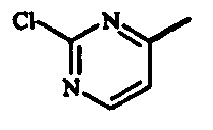
(4) F F 293-296 °C, dihydrochloride, white crystals 18. 
(4) F F 148-167 °C, dihydrochloride, white solid 19. 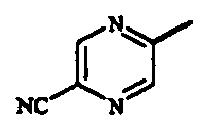
(4) F F >350 °C, 1,5 HCl, white crystals 20. 
(4) F F 240-243 °C, dihydrochloride, white crystals 21. 
(4) F F 102-104 °C, white crystals 22. 
(4) F F 236-241 °C, trihydrochloride, white crystals 23. 
(4) F F 201-202 °C, dihydrochloride, white crystals 24. 
(4) F F 256-259 °C, dihydrochloride, white crystals 25. 
(4) F F 119-120 °C, yellow crystals 26. 
(4) F F 114-117 °C, white solid 27. 
(4) F F 94-97 °C, white solid 28. 
(2) F F 66-70 °C, white foam 29. 
(3) F F 216-218 °C, dihydrochloride, white crystals 30. 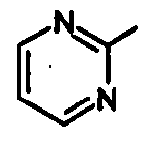
(5) F F 182-185 °C, white solid 31. 
(5) F F 241-243 °C, trihydrochloride, yellow crystals 32. 
(6) F F 276-278 °C, dihydrochloride, yellow crystals 33. 
(6) F F 240-243 °C, dihydrochloride, yellow crystals 34. 
(6) F F 82-85 °C, hydrochlorid, off-white crytals 35. 
(7) F F 141-144 °C, white crystals 36. 
(7) F F 281-284 °C, dihydrochloride, yellow crystals 37. 
(7) F F 271-272 °C, dihydrochloride, off-white crytals - Following procedures, outlined for Examples 3-4, the compounds listed in the Table 2 were prepared as a free base or as a salt.
Table 2. 
Example R1 B (Formula) R2 R3 Melting point, composition, physical appearance 38. 
(1) F F 219-228 °C, dihydrochloride, white crystals 39. 
(1) F F 198-200 °C, dihydrochloride, white crystals 40. 
(1) F F 224-229 °C, trihydrochloride, off white crystals 41. 
(1) H F 157-158 °C, pale yellow crystals 42. 
(1) F F 2,5 HCl, amorphous white solid 43. 
(1) F F 292-295 °C, dihydrochloride, white crystals 44. 
(1) F F 210-212 °C, dihydrochloride, white crystals 45. 
(1) F F 284-288 °C, dihydrochloride, white crystals 46. 
(1) F F 282-285 °C, dihydrochloride, off white crystals 47. 
(1) F F 170-173 °C, dihydrochloride, yellow crystals 48. 
(1) H F 122-124 °C, white crystals 49. 
(1) F F 102-105 °C, dihydrochloride, white crystals 50 
(1) F F 63-65 °C, white crystals 51. 
(1) F F >350 °C, dihydrochloride, white crystals 52. 
(1) F F 168-171 °C, dihydrochloride, white crystals 53. 
(1) F F 173-175 °C, dihydrochloride, yellow crystals 54. 
(1) F F 162-163 °C, dihydrochloride, white crystals 55. 
(1) F F Dihydrochloride, amorphous off-white solid 56. 
(1) F F 51-53°C, light yellow foam 57. 
(1) F F 228-230 °C, dihydrochloride, white crystals 58. 
(1) F F 281-284 °C, dihydrochloride, yellow crystals 59. 
(1) F F 116-120 °C, dihydrochloride, yellow crystals 60. 
(1) F F 178-185 °C, salt formed with 2.5 molecules of HCl, white crystals 61. 
(1) F F Dihydrochloride, amorphous off-white solid 62. 
(1) F F 226-235 °C, dihydrochloride, white crystals 63. 
(1) F F 278-283 °C, dihydrochloride, off-white crystals 64. 
(1) F F 2,5 HCl, amorphous yellow solid 65. 
(1) F F 318-320 °C, dihydrochloride, white crystals 66. 
(1) F F 157-160 °C, white crystals - Following procedures, outlined for Examples 1-4, the compounds of the general formula (I) listed in the Table 3 were prepared as a free base or as a salt.
Table 3. 
Example R1 B (Formula) R2 R3 Melting point, composition, physical appearance 67. 
(1) F F 216-228 °C, trihydrochloride, off white crystals 68. 
(1) F F 163-167 °C, cream-coloured solid 69. 
(1) F F dihydrochloride, amorphous off-white solid 70. 
(1) F F 275-277 °C, dihydrochloride, white solid 71. 
(1) F F 148-152 °C, dihydrochloride, pale yellow crystals 72. 
(1) F F 229-231 °C, trihydrochloride, white crystals - Following procedures outlined for Examples 1a) and 2a) the intermediate compounds of the general formula (V) listed in the Table 4 were prepared.
Table 4. 
Example R1 Characterisation (M.p., LC/MS or aromatic protons by 1H-NMR [DMSO-d6] 4.1. 
6.93 (m, 1H), 7.35 (m, 1H), 7.98 (m, 1H), 8.04 (d, 1H) 4.2. 
141-143°C 4.3. 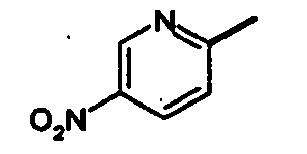
212-215°C 4.4. 
6.58 (d, 1H), 6.65 (d, 1H), 7.51 (t, 1H) 4.5. 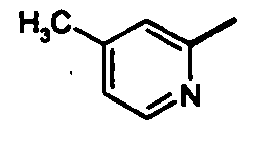
2.37 (s, 3H), 6.75 (1H, d), 7.15 (1H, dd), 7,81 (1H, d) 4.6. 
6.75 (d, 1H), 7.60 (d, 1H), 8.12 (s, 1H) 4.7. 
6.65 (d, 1H), 7.84 (d, 1H) 4.8. 
227-230°C 4.9. 
7.30 (d, 1H), 7.51 (d, 1H) 4.10. 
6.71 (d, 1H), 8.31 (d, 1H) 4.11. 
161-162°C 4.12. 
6.72 (d, 1H), 8.04 (d, 1H) 4.13. 
187-188°C 4.14. 
[MH]+ = 330 4.15. 
172-174°C 4.16. 
6.80 (d, 1H), 7.19 (d, 1H) 4.17. 
6.87 (d, 1H), 7.20 (td, 1H), 7.61 (m, 1H), 7,57 (m, 2H), 7.86 (d, 1H) 4.18. 
7.38 (td, 1H), 7.57 (td, 1H), 7.74 (dd, 1H), 7,88 (dd, 1H), 8,45 (s, 1H) 4.19. 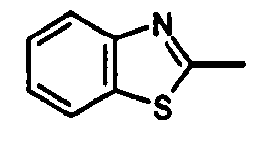
7.16 (t, 1H), 7.35 (t, 1H), 7.53 (d, 1H), 7.86 (d, 1H) 4.20. 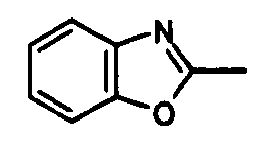
163-165°C 4.21. 
166-169°C 4.22. 
153-156°C 4.23. 
7,51 (m, 5H) - Following procedures outlined for Examples 1a) and 2a) the intermediate compounds of the general formula (V) listed in the Table 5 were prepared.
Table 5. 
Example R1 B (Formula) Characterisation (M.p. or aromatic protons by 1H-NMR [DMSO-d6] 5.1. 
(2) 154-156°C 5.2. 
(5) 134-135°C 5.3. 
(5) 159-161°C 5.4. 
(6) 7.82 (d, 1H), 8.11 (d, 1H), 8.35 (s, 1H) 5.5. 
(6) 6.93 (d, 1H), 7.91 (d, 1H), 8.54 (s, 1H) 5.6. 
(6) 6,99 (t, 1H), 7.13 (t, 1H), 7.26 (d, 1H), 7.36 (d, 1H) 5.7. 
(7) 6.50 (t, 1H), 8.33 (m, 2H) 5.8. 
(7) 6.90 (d, 1H), 7.80 (d, 1H), 8.44 (s, 1H) 5.9. 
(7) 6.98 (t, 1H), 7.12 (t, 1H), 7.29 (d, 1H), 7.39 (d, 1H) 5.10. 
(7) 176-176°C - Following procedures outlined for Examples 3a) and -4a) the intermediate compounds of the general formula (V) listed in the Table 6. were prepared (Y = Ac(acetyl) or Boc = tert butyloxy-carbonyl).

Example R1 Y Characterisation (M.p., LC/MS or aromatic protons by 1H-NMR [DMSO-d6]) 6.1. 
Ac 6.60 (dd, 1H), 6.67 (d, 1H), 7.48 (td, 1H), 8.17 (dd, 1H) 6.2. 
Boc 127-129°C, 6.3. 
Boc 138-140°C 6.4. 
Ac 2.12 (s, 3H), 6.74 (d, 1H), 7.33 (dd, 1H), 7.76 (d, 1H) 6.5. 
Ac 166-164°C 6.6. 
Boc 6.58 (d, 1H), 6.65 (d, 1H), 7.51 (t, 1H) 6.7. 
Ac 6.65 (d, 1H), 7.45 (dd, 1H), 8.10 (d, 1H) 6.8. 
Ac 6.72 (d, 1H), 7.60 (d, 1H), 8.13 (s, 1H) 6.9. 
Ac 223-226°C 6.10. 
Boc 139-140°C 6.11. 
Ac 126-128°C 6.12. 
Boc 6.95 (d, 1H), 7.22 (d, 1H) 6.13. 
Boc 169-171°C 6.14. 
Boc 144-146°C 6.15. 
Boc 172-174°C 6.16. 
Boc 149-152°C 6.17. 
Boc [MH]+ = 304 6.18. 
Ac 196-200°C 6.19. 
Ac 6.80 (d, 1H), 7.12 (d, 1H) 6.20. 
Ac 234-236°C 6.21. 
Ac 163-166°C 6.22. 
Boc 7.59 (m, 3H), 8.10 (m, 1H), 8.29 (d, 1H) 6.23. 
Boc 129-133°C 6.24. 
Boc 7.49 (d, 1H), 7.72 (td, 1H), 7.85 (td, 1H), 7.90 (t, 1H), 7.98 (d, 1H), 8.13 (d, 1H) 6.25. 
Boc 7.38 (td, 1H), 7.57 (td, 1H), 7.74 (dd, 1H), 7.88 (dd, 1H), 8.45 (s, 1H) 6.26. 
Ac 7.01 (t, 1H), 7.27 (t, 1H), 7.42 (d, 1H), 7.73 (d, 1H) 6.27. 
Boc 165-166°C 6.28. 
Boc 206-211°C 6.29. 
Boc 7,5 (m, 5H) 6.30. 
Boc 159-160°C - Following procedures outlined for Examples 1b) and 2b) the intermediate compounds of the general formula (II) listed in the Table 7. were prepared.
Table 7 
Example R1 Characterisation (M.p. or aromatic protons by 1H-NMR [DMSO-d6]) 7.1. 
6.96 (m, 1H), 7.34 (m, 1H), 8.02 (m, 1H), 8.08 (d, 1H) 7.2. 
123-125°C 7.3. 
175-178°C 7.4. 
6.55 (d, 1H), 6.63 (d, 1H), 7.49 (t, 1H) 7.5. 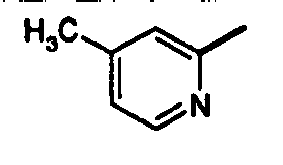
2,40 (s, 3H), 6,82 (dd, 1H,), 7,20 (d, 1H), 7,89 (d, 1H) 7.6. 
6.40 (d, 1H), 7.60 (d, 1H), 8.14 (s, 1H) 7.7. 
2.35(s, 3H), 6.62 (d, 1H), 7.81 (d, 1H) 7.8. 
120-123°C 7.9 
7.32 (d, 1H), 7.58 (d, 1H), 7.10. 
6.68 (d, 1H), 8.29 (d, 1H) 7.11. 
7.77 (s, 1H), 8.13 (s, 1H) 7.12. 
6.69 (d, 1 H), 8.02 (d, 1H) 7.13. 
194-198°C 7.14. 
115-117°C 7.15. 
2.40 (s, 3H), 6.40 (d, 1H), 7.87 (d, 1H) 7.16. 
6.79 (d, 1H), 7.12 (d, 1H) 7.17 
6.86 (d, 1H), 7.19 (td, 1H), 7.52 (m, 2H), 7,69 (dd, 1H), 7.84 (d, 1H) 7.18 
7.35 (m, 1H), 7.58 (m, 1H,), 7.80 (dd, 1H), 8,66 (s, 1H) 7.19 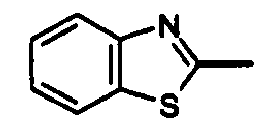
126-127°C 7.20. 
127-129°C 7.21. 
90-93 °C 7.22 
107-107 °C 7.23. 
227-228°C as dihydrochloride - Following procedures outlined for Examples 1b) and 2b) the intermediate compounds of the general formula (II) listed in the Table 8 were prepared.
Table 8. R1-B-NH2 (II) Example R1 B (Formula) Characterisation (M.p. or aromatic protons by 1H-NMR [DMSO-d6]) 8.1. 
(2) 6.49 (d, 1H), 7.76 (dd, 1H), 8.43 (d, 1H) 8.2. 
(5) 85-89°C 8.3. 
(5) 7.74 (d, 1H), 8.04 (d, 1H), 8.15 (s, 1H) 8.4. 
(6) 7.80 (d, 1H), 8.12 (d, 1H), 8.37 (s, 1H) 8.5. 
(6) 6.95 (d, 1H), 7.89 (d, 1H), 8.51 (s, 1H) 8.6. 
(6) 7.00 (t, 1H), 7.14 (t, 1H), 7.26 (d, 1H), 7.37 (d, 1H) 8.7. 
(7) 6.50 (t, 1H), 8.29 (d, 1H), 8,31 (d, 1H) 8.8. 
(7) 6.90 (d, 1H), 7.80 (d, 1H), 8.47 (s, 1H) 8.9. 
(7) 6.95 (t, 1H), 7.14 (t, 1H), 7.26 (d, 1H), 7.37 (d, 1H) 8.10. 
(7) 3,83 (s, 2H), 7,21-7,40 (,m, 5H) - Following procedures outlined for Examples 3b) and 4b) the intermediate compounds of the general formula (II) listed in the Table 9. were prepared.
9. Table 
Example R1 Characterisation (M.p., LC/MS or aromatic protons by 1H-NMR [DMSO-d6]) 9.1. 
6.55 (dd, 1H), 6.79 (d, 1H,), 7.48 (td, 1H), 8.07 (dd, 1H) 9.2. 
104-106°C 9.3. 
234-236°C as dihydrochloride 9.4. 
2.12 (s, 3H), 6.72 (d, 1H), 7.33 (dd, 1H), 7.92 (d, 1H) 9.5. 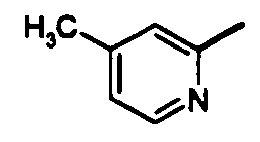
2.26 (s, 3H), 6.47 (m, 2H), 8.03 (d, 1H) 9.6. 
238-240°C as dihydrochloride 9.7. 
6.84 (d, 1H), 7.52 (dd, 1H), 8.05 (d, 1H) 9.8. 
6.75 (d, 1H), 7.60 (d, 1H), 8.12 (s, 1H) 9.9. 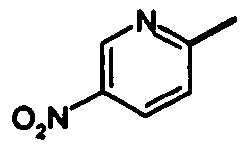
86-89°C 9.10. 
2.37 (s, 3H), 6.72 (d, 1H), 7.87 (d, 1H) 9.11. 
117-119°C 9.12. 
135-139°C 9.13. 
6.65 (d, 1H), 8,27 (d, 1H) 9.14. 
7.78 (s, 1H), 8.26 (s, 1H) 9.15. 
6.80 (d, 1H), 8,00 (d, 1H) 9.16. 
296-303°C as dihydrochloride 9.17. 
[MH]+ = 204 9.18. 
2.33 (s, 3H), 6.51 (d, 1H), 7.96 (d, 1H) 9.19. 
112-114°C 9.20. 
167-170°C 9.21. 
67-68°C 9.22. 
7.60 (m, 2H), 7.72 (d, 1H), 8.15 (m, 1H), 8.32 (1H, d), 9.23. 
260-262°C as dihydrochloride 9.24. 
253-256°C as dihydrochloride 9.25. 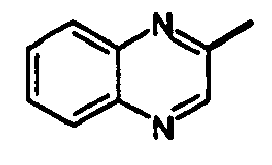
7.34 (m, 1H), 7.58 (m, 2H), 7.79 (dd, 1H), 8.81 (s, 1H) 9.26. 
7.03 (t, 1H), 7.26 (t, 1H), 7.42 (d, 1H), 7.74 (d, 1H) 9.27. 
274-275°C as dihydrochloride 9.28. 
113-115°C 9.29. 
216-223°C as dihydrochloride 9.30. 
3.70 (s, 6H)
R2 stands for hydrogen atom or fluoro atom;
R3 stands for fluoro atom -
as well as the salts and solvates of these compounds have significant advantages as regards their activity, duration of action, stability and toxicity in comparison with the state of the art.
In agreement with the accepted terminology, the configuration of carbon atom in position 2 of the fluoropyrrolidine group is favourably S, whereas that of carbon atom in position 4 is S or R.
R3 stands for fluorine atom -
and salts, tautomers solvates and hydrates thereof.
R3 stands for fluorine atom -
and salts, tautomers solvates and hydrates thereof.
Another embodiment of the present invention includes compounds of the general formula (I) - wherein R1 means a nitrogen-containing aromatic moiety consisting of one or two aromatic rings, preferably a pyridyl, pyridazinyl, pyrimidinyl, pyrazinyl, imidazolyl, pirazolyl, thiazolyl, isothiazolyl, oxazolyl, isoxazolyl, oxadiazolyl, quinolinyl, isoquinolinyl, cinnolinyl, phthalazinyl, quinazolinyl, quinoxalinyl, benzimidazolyl, indazolyl, benzothiazolyl, benzisothiazolyl, benzoxazolyl or benzisoxazolyl ring; which is, in a given case, independently from each other mono- or disubstituted by one or two of the following groups: C1-4 alkyl groups, C1-4 alkoxy groups, halogen atom, trihalogenomethyl group, methylthio group, nitro group, cyano group; or
a thienyl or furyl group; or
a p-toluenesulfonyl group; or
an acyl group of formula R1a-CO, wherein R1a means C1-4 alkyl group, phenyl group; phenyl, pyridyl or phenylethenyl group substituted with one or more alkyl- and/or alkoxy- or nitro-group or halogen atom; phenylethenyl or phenylethyl group substituted with alkylene-dioxy group; piperidin-1-yl, 4-methylpiperazin-1-yl, pyrrolidin-1-yl group,
B stands for
R3 stands for fluorine atom -
and salts, tautomers solvates and hydrates thereof.
R3 stands for fluorine atom -
and salts, tautomers solvates and hydrates thereof.
R3 stands for fluorine atom -
and salts, tautomers solvates and hydrates thereof.
Another embodiment of the present invention includes compounds of the general formula (I) - wherein R1 means a nitrogen-containing aromatic moiety consisting of one or two aromatic rings, preferably a pyridyl, pyridazinyl, pyrimidinyl, pyrazinyl, imidazolyl, pirazolyl, thiazolyl, isothiazolyl, oxazolyl, isoxazolyl, oxadiazolyl, quinolinyl, isoquinolinyl, cinnolinyl, phthalazinyl, quinazolinyl, quinoxalinyl, benzimidazolyl, indazolyl, benzothiazolyl, benzisothiazolyl, benzoxazolyl or benzisoxazolyl ring; which is, in a given case, independently mono- or disubstituted by one or two of the following groups: C1-4 alkyl groups, C1-4 alkoxy groups, halogen atom, trihalogenomethyl group, methylthio group, nitro group, cyano group; or
a thienyl or furyl group; or
a p-toluenesulfonyl group; or
an acyl group of formula R1a-CO, wherein R1a means C1-4 alkyl group, phenyl group; phenyl, pyridyl or phenylethenyl group substituted with one or more alkyl- and/or alkoxy- or nitro-group or halogen atom; phenylethenyl or phenylethyl group substituted with alkylene-dioxy group; piperidin-1-yl, 4-methylpiperazin-1-yl, pyrrolidin-1-yl group,
B stands for
R3 stands for fluorine atom -
and salts, tautomers, solvates and hydrates thereof.
Claims (24)
- Compounds of the general formula (I)
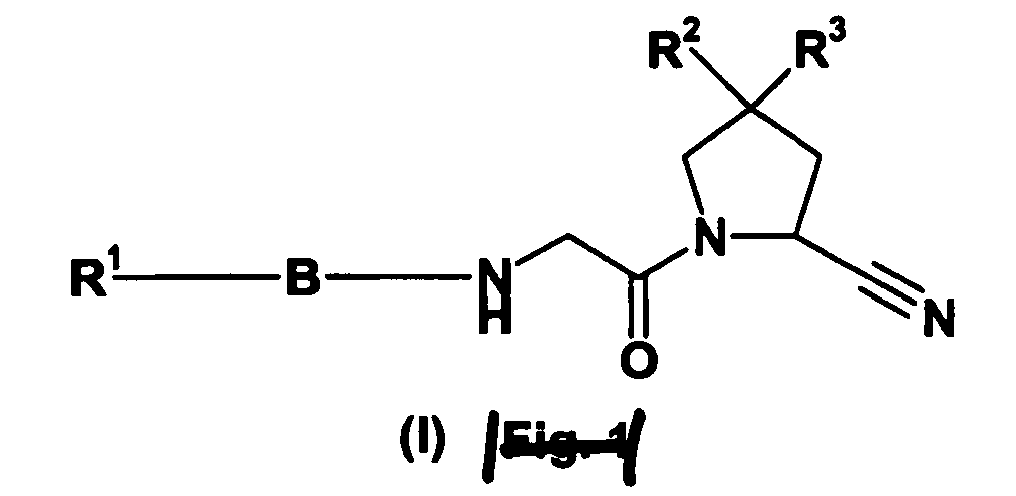 - whereinR1 means a nitrogen-containing aromatic moiety consisting of one or two aromatic rings, preferably a pyridyl, pyridazinyl, pyrimidinyl, pyrazinyl, imidazolyl, pyrazolyl, thiazolyl, isothiazolyl, oxazolyl, isoxazolyl, oxadiazolyl, quinolinyl, isoquinolinyl, cinnolinyl, phthalazinyl, quinazolinyl, quinoxalinyl, benzimidazolyl, indazolyl, benzothiazolyl, benzisothiazolyl, benzoxazolyl or benzisoxazolyl, tetrazolyl, triazinyl ring; which is, in a given case, independently from each other mono- or disubstituted by one or two of the following groups: C1-4 alkyl groups, C1-4 alkoxy groups, halogen atom, trihalogenomethyl group, methylthio group, nitro group, cyano group, amino group or phenyl group; or- thienyl, furyl or benzyl group; or- p-toluenesulfonyl group; or- acyl group of formula R1a-CO, wherein R1a means C1-4 alkyl group, phenyl group; phenyl, pyridyl or phenylethenyl group substituted with one or more alkyl- and/or alkoxy- or nitro-group or halogen atom; phenylethenyl or phenylethyl group substituted with alkylene-dioxy group; piperidin-1-yl, 4-methylpiperazin-1-yl, pyrrolidin-1-yl group,B stands for- a group of formula (1) or (2) or (3) or (4) or (5) or (6) or (7);


R3 stands for fluorine atom -
and salts, tautomers, solvates and hydrates thereof. - Compounds of claim 1 of the general formula (I) - wherein
R1 means a nitrogen-containing aromatic moiety consisting of one or two aromatic rings, preferably a pyridyl, pyridazinyl, pyrimidinyl, pyrazinyl, imidazolyl, pyrazolyl, thiazolyl, isothiazolyl, oxazolyl, isoxazolyl, oxadiazolyl, quinolinyl, isoquinolinyl, cinnolinyl, phthalazinyl, quinazolinyl, quinoxalinyl, benzimidazolyl, indazolyl, benzothiazolyl, benzisothiazolyl, benzoxazolyl or benzisoxazolyl ring; which is, in a given case, independently from each other mono- or disubstituted by one or two of the following groups: C1-4 alkyl groups, C1-4 alkoxy groups, halogen atom, trihalogenomethyl group, methylthio group, nitro group, cyano group; or- thienyl or furyl group; or- p-toluenesulfonyl group; or- acyl group of formula R1a-CO, wherein R1a means C1-4 alkyl group, phenyl group; phenyl, pyridyl or phenylethenyl group substituted with one or more alkyl- and/or alkoxy- or nitro-group or halogen atom; phenylethenyl or phenylethyl group substituted with alkylene-dioxy group; piperidin-1-yl, 4-methylpiperazin-1-yl, pyrrolidin-1-yl group,B stands for- a group of formula (1) or (2) or (3) or (4) or (5) or (6) or (7);R2 stands for hydrogen atom or fluorine atom;
R3 stands for fluorine atom -
and salts, tautomers, solvates and hydrates thereof. - Compounds of claim 2 of the general formula (I) - wherein
R1 has the same meanings as in claim 2;
B stands for- a group of formula (1);R2 stands for hydrogen atom or fluorine atom;
R3 stands for fluorine atom -
and salts, tautomers, solvates and hydrates thereof. - Compounds of claim 2 of the general formula (I) - wherein
R1 has the same meanings as in claim 2;
B stands for- a group of formula (2);R2 stands for hydrogen atom or fluorine atom;
R3 stands for fluorine atom -
and salts, tautomers, solvates and hydrates thereof. - Compounds of claim 2 of the general formula (I) - wherein
R1 has the same meanings as in claim 2;
B stands for- a group of formula (3);R2 stands for hydrogen atom or fluorine atom;
R3 stands for fluorine atom -
and salts, tautomers, solvates and hydrates thereof. - Compounds of claim 2 of the general formula (I) wherein
R1 has the same meanings as in claim 2;
B stands for- a group of formula (4) or (5);R2 stands for hydrogen atom or fluorine atom;
R3 stands for fluorine atom -
and salts, tautomers, solvates and hydrates thereof. - Compounds of claim 2 of the general formula (I) - wherein
R1 has the same meanings as in claim 2;
B stands for- a group of formula (6) or (7);R2 stands for hydrogen atom or fluorine atom;
R3 stands for fluorine atom -
and salts, tautomers, solvates and hydrates thereof. - Compounds of claims 2 and 3 of the general formula (I) - wherein
R1 means 2-pyrimidinyl, 2-pyrazinyl, chloro- and cyano-substituted pyridazinyl, cyano-substituted 2-pyridinyl; B stands for a group of formula (1); R2 and R3 stand for fluorine atom. - Compounds of claims 2 and 4 of the general formula (I) - wherein
R1 means 2-pyrimidinyl, 2-pyrazinyl, chloro- and cyano-substituted pyridazinyl, cyano-substituted 2-pyridinyl; B stands for a group of formula (2); R2 and R3 stand for fluorine atom. - Compounds of claims 2 and 5 of the general formula (I) - wherein
R1 means 2-pyrimidinyl, 2-pyrazinyl, chloro- and cyano-substituted pyridazinyl, cyano-substituted 2-pyridinyl; B stands for a group of formula (3); R2 and R3 stand for fluorine atom. - Compounds of claims 2 and 6 of the general formula (I) - wherein
R1 means 2-pyrimidinyl, 2-pyrazinyl, chloro- and cyano-substituted pyridazinyl, cyano-substituted 2-pyridinyl; B stands for a group of formula (4) or (5); R2 and R3 stand for fluorine atom. - Compounds of claims 2 and 7 of the general formula (I) - wherein
R' means 2-pyrimidinyl, 2-pyrazinyl, chloro- and cyano-substituted pyridazinyl, cyano-substituted 2-pyridinyl; B stands for a group of formula (6) or (7); R2 and R3 stand for fluorine atom. - Compound according to claim 1, which is (2S)-4,4-difluoro-1-(2-{[8-(2-pyrimidinyl)-8-azabicyclo[3.2.1]oct-3-yl] exo-amino}acetyl)-2-pyrrolidine carbonitrile;
- Compound according to claim 1, which is (2S,4S)-4-fluoro-1-(2-{[8-(2-pyrazinyl)-8-azabicyclo-[3.2.1]-oct-3-yl] exo-amino} acetyl)-2-pyrrolidinecarbonitrile;
- Compound according to claim 1, which is (2S)-4,4-Difluoro-1-(2-{[1-(2-pyrazinyl)piperidin-4-yl]amino}acetyl)-2-pyrrolidine carbonitrile;
- Compound according to claim 1, which is (2S)-4,4-Difluoro-1-(2-{[1-(5-cyanopyridin-2-yl)piperidin-4-yl]amino} acetyl)-2-pyrrolidine carbonitrile;
- Compound according to claim 1, which is (2S)-4,4-Difluoro-1-(2-{[1-(6-chloropyridazin-3-yl)piperidin-4-yl] amino}acetyl)-2-pyrrolidine carbonitrile;
- Compound according to claim 1, which is (2S)-4,4-Difluoro-1-(2-{[1-(6-cyanopyridazin-3-yl)piperidin-4-yl] amino}acetyl)-2-pyrrolidine carbonitrile;
- Pharmaceutical formulation comprising a compound of the general formula (I) according to claims 1 to 18 or salts, tautomers, solvates, hydrates thereof.
- Process for the preparation of the compounds of the general formula (I) - wherein the meanings of R1, B, R2 and R3 are the same as defined in Claims 1 to 12 - characterised in that, a compound of the general formula (II) - wherein the meanings of R1 and B are as defined above - is reacted with a compound of the general formula (III) - wherein the meanings of R2 and R3 are as defined above - and the resulting compound of the general formula (I) or its salt is isolated from the reaction mixture.
- Use of a compound of the general formula (I) -wherein the meanings of R1, B, R2 and R3 are the same as defined in Claims 1 to 12 - for the preparation of a pharmaceutical formulation which are suitable to inhibit the activity of DPP-IV enzyme, and intended for the treatment and the prevention of diseases related with the DPP-IV enzyme activity.
- Use of a compound of the general formula (I) -wherein the meanings of R1, B, R2 and R3 are the same as defined in Claims 1 to 12 - for the preparation of a pharmaceutical formulation which are suitable to inhibit the activity of DPP-IV enzyme, and intended for the treatment and the prevention of diabetes.
- Compounds of the general formula (V)
 - wherein the meaninds of R1 and B are as defined in claims 1 to 12, Y stands for acetyl or tert-butoxycarbonyl group - with the proviso that if B means a group of the formula (1) then R1 is different from benzyl group or acetyl gorup and Y is different from acetyl group, or with the proviso that if B means a group of the formula (2) then R1 is different from benzyl and Y is different from acetyl group, or with the proviso that if B means a group of the formula (3) then R1 is different from benzoyl group and Y is different from acetyl group, or if B means a group of formula (1) then R1 is different from 5-cyano-2-pyridin-2-yl-group and Y is different from tert-butoxy-carbonyl group, or B means a group of formula (4), (6) or (7) then R1 is different from benzyl group and Y is different from tert-butoxycarbonyl group - and their salts.
 - Use of compounds of the general formula (V) according to claim 23 for the preparation of compounds of the general formula (I) defined in claims 1 to 18.
Applications Claiming Priority (3)
| Application Number | Priority Date | Filing Date | Title |
|---|---|---|---|
| HU0200849A HUP0200849A2 (en) | 2002-03-06 | 2002-03-06 | N-aminoacetyl-pyrrolidine-2-carbonitrile derivatives, pharmaceutical compositions containing them and process for producing them |
| HU0200849 | 2002-03-06 | ||
| PCT/HU2003/000017 WO2003074500A2 (en) | 2002-03-06 | 2003-03-04 | N-aminoacetyl-pyrrolidine-2-carbonitriles and their use as ddp-iv inhibitors |
Publications (2)
| Publication Number | Publication Date |
|---|---|
| EP1487807A2 EP1487807A2 (en) | 2004-12-22 |
| EP1487807B1 true EP1487807B1 (en) | 2009-09-16 |
Family
ID=90001540
Family Applications (1)
| Application Number | Title | Priority Date | Filing Date |
|---|---|---|---|
| EP03743452A Expired - Lifetime EP1487807B1 (en) | 2002-03-06 | 2003-03-04 | Cyano-pyrrolidines as DPP-IV inhibitors |
Country Status (28)
| Country | Link |
|---|---|
| US (3) | US7348327B2 (en) |
| EP (1) | EP1487807B1 (en) |
| JP (1) | JP4559737B2 (en) |
| KR (1) | KR100977898B1 (en) |
| CN (2) | CN1639159A (en) |
| AR (1) | AR038868A1 (en) |
| AT (1) | ATE443054T1 (en) |
| AU (1) | AU2003209514B2 (en) |
| BR (1) | BR0307960A (en) |
| CA (1) | CA2475312C (en) |
| DE (1) | DE60329282D1 (en) |
| EA (1) | EA007410B1 (en) |
| EC (1) | ECSP045274A (en) |
| HR (1) | HRP20040910A2 (en) |
| HU (1) | HUP0200849A2 (en) |
| IL (2) | IL163286A (en) |
| IS (1) | IS7434A (en) |
| MA (1) | MA27105A1 (en) |
| MX (1) | MXPA04008613A (en) |
| NO (1) | NO20044221L (en) |
| NZ (1) | NZ535662A (en) |
| PL (1) | PL371099A1 (en) |
| RS (1) | RS79004A (en) |
| TN (1) | TNSN04141A1 (en) |
| TW (1) | TWI250978B (en) |
| UA (1) | UA78291C2 (en) |
| WO (1) | WO2003074500A2 (en) |
| ZA (1) | ZA200406467B (en) |
Families Citing this family (129)
| Publication number | Priority date | Publication date | Assignee | Title |
|---|---|---|---|---|
| ATE370943T1 (en) * | 2001-06-27 | 2007-09-15 | Smithkline Beecham Corp | FLUOROPYRROLIDINE AS DIPEPTIDYL-PEPTIDASE INHIBITORS |
| HUP0202001A2 (en) * | 2002-06-14 | 2005-08-29 | Sanofi-Aventis | Azabicyclo-octane and nonane derivatives with ddp-iv inhibiting activity |
| TW200401635A (en) * | 2002-07-23 | 2004-02-01 | Yamanouchi Pharma Co Ltd | 2-Cyano-4-fluoropyrrolidine derivative or salt thereof |
| US7407955B2 (en) | 2002-08-21 | 2008-08-05 | Boehringer Ingelheim Pharma Gmbh & Co., Kg | 8-[3-amino-piperidin-1-yl]-xanthines, the preparation thereof and their use as pharmaceutical compositions |
| CA2518465A1 (en) | 2003-03-25 | 2004-10-14 | Takeda San Diego, Inc. | Dipeptidyl peptidase inhibitors |
| JP4806628B2 (en) | 2003-05-05 | 2011-11-02 | プロビオドルグ エージー | Glutaminyl cyclase inhibitor |
| US7638638B2 (en) | 2003-05-14 | 2009-12-29 | Takeda San Diego, Inc. | Dipeptidyl peptidase inhibitors |
| KR20060041309A (en) | 2003-08-13 | 2006-05-11 | 다케다 야쿠힌 고교 가부시키가이샤 | 4-pyrimidone derivatives and their use as peptidyl peptidase inhibitors |
| HU227684B1 (en) * | 2003-08-29 | 2011-11-28 | Sanofi Aventis | Adamantane and azabicyclo-octane and nonane derivatives and their use as dpp-iv inhibitors |
| WO2005049027A2 (en) | 2003-11-03 | 2005-06-02 | Probiodrug Ag | Combinations useful for the treatment of neuronal disorders |
| KR20150132601A (en) * | 2003-11-17 | 2015-11-25 | 노파르티스 아게 | Use of dipeptidyl peptidase iv inhibitors |
| RU2385723C2 (en) * | 2003-11-17 | 2010-04-10 | Новартис Аг | Application of dipeptidylpeptidase iv inhibitors |
| EP3366283B1 (en) | 2004-01-20 | 2021-09-01 | Novartis AG | Direct compression formulation and process |
| KR101099206B1 (en) | 2004-02-05 | 2011-12-27 | 프로비오드룩 아게 | Novel Inhibitors of Glutaminyl Cyclase |
| ATE537141T1 (en) | 2004-02-05 | 2011-12-15 | Kyorin Seiyaku Kk | BICYCLOESTER DERIVATIVE |
| FR2870538B1 (en) | 2004-05-19 | 2006-07-14 | Servier Lab | NOVEL DERIVATIVES OF PYRROLIDINES AND THIAZOLIDINES, PROCESS FOR THEIR PREPARATION AND PHARMACEUTICAL COMPOSITIONS CONTAINING THEM |
| EP1799639B1 (en) | 2004-10-12 | 2013-09-04 | Glenmark Pharmaceuticals S.A. | Novel dipeptidyl peptidase iv inhibitors, pharmaceutical compositions containing them, and process for their preparation |
| DE102004054054A1 (en) | 2004-11-05 | 2006-05-11 | Boehringer Ingelheim Pharma Gmbh & Co. Kg | Process for preparing chiral 8- (3-amino-piperidin-1-yl) -xanthines |
| DOP2006000008A (en) * | 2005-01-10 | 2006-08-31 | Arena Pharm Inc | COMBINED THERAPY FOR THE TREATMENT OF DIABETES AND RELATED AFFECTIONS AND FOR THE TREATMENT OF AFFECTIONS THAT IMPROVE THROUGH AN INCREASE IN THE BLOOD CONCENTRATION OF GLP-1 |
| JP2008024592A (en) * | 2005-01-28 | 2008-02-07 | Taisho Pharmaceut Co Ltd | Cyanopyrrolidine derivative-containing composition for solid preparation, solid preparation containing the same, and method for producing the same |
| CN101277949A (en) | 2005-04-22 | 2008-10-01 | 阿兰托斯制药控股公司 | Dipeptidyl peptidase-iv inhibitors |
| WO2007017423A2 (en) * | 2005-08-11 | 2007-02-15 | F. Hoffmann-La Roche Ag | Pharmaceutical composition comprising a dpp-iv inhibitor |
| AU2006290205B2 (en) | 2005-09-14 | 2012-12-13 | Takeda Pharmaceutical Company Limited | Dipeptidyl peptidase inhibitors for treating diabetes |
| CA2622642C (en) | 2005-09-16 | 2013-12-31 | Takeda Pharmaceutical Company Limited | Dipeptidyl peptidase inhibitors |
| GB0526291D0 (en) | 2005-12-23 | 2006-02-01 | Prosidion Ltd | Therapeutic method |
| US20090156465A1 (en) | 2005-12-30 | 2009-06-18 | Sattigeri Jitendra A | Derivatives of beta-amino acid as dipeptidyl peptidase-iv inhibitors |
| AU2007224066B2 (en) | 2006-03-08 | 2011-10-27 | Kyorin Pharmaceutical Co., Ltd. | Method for producing aminoacetylpyrrolidinecarbonitrile derivative and production intermediate thereof |
| CN101050194B (en) * | 2006-04-05 | 2013-08-21 | 上海恒瑞医药有限公司 | Derivative of bicyclo-octanes class, preparation method, and application of medicine |
| PE20071221A1 (en) * | 2006-04-11 | 2007-12-14 | Arena Pharm Inc | GPR119 RECEPTOR AGONISTS IN METHODS TO INCREASE BONE MASS AND TO TREAT OSTEOPOROSIS AND OTHER CONDITIONS CHARACTERIZED BY LOW BONE MASS, AND COMBINED THERAPY RELATED TO THESE AGONISTS |
| ES2354390T3 (en) * | 2006-04-11 | 2011-03-14 | Arena Pharmaceuticals, Inc. | PROCEDURES FOR USE OF THE GPR119 RECEIVER TO IDENTIFY USEFUL COMPOUNDS TO INCREASE BONE MASS IN AN INDIVIDUAL. |
| CN102838599A (en) | 2006-05-04 | 2012-12-26 | 贝林格尔.英格海姆国际有限公司 | Polymorphs |
| PE20080251A1 (en) | 2006-05-04 | 2008-04-25 | Boehringer Ingelheim Int | USES OF DPP IV INHIBITORS |
| EP1852108A1 (en) | 2006-05-04 | 2007-11-07 | Boehringer Ingelheim Pharma GmbH & Co.KG | DPP IV inhibitor formulations |
| BRPI0715160A2 (en) | 2006-08-08 | 2013-06-11 | Sanofi Aventis | arylamimoaryl-alkyl-substituted imidazolidine-2,4-diones, process for preparing them, drugs comprising these compounds, and their use |
| US8324383B2 (en) | 2006-09-13 | 2012-12-04 | Takeda Pharmaceutical Company Limited | Methods of making polymorphs of benzoate salt of 2-[[6-[(3R)-3-amino-1-piperidinyl]-3,4-dihydro-3-methyl-2,4-dioxo-1(2H)-pyrimidinyl]methyl]-benzonitrile |
| US8278345B2 (en) | 2006-11-09 | 2012-10-02 | Probiodrug Ag | Inhibitors of glutaminyl cyclase |
| TW200838536A (en) | 2006-11-29 | 2008-10-01 | Takeda Pharmaceutical | Polymorphs of succinate salt of 2-[6-(3-amino-piperidin-1-yl)-3-methyl-2,4-dioxo-3,4-dihydro-2H-pyrimidin-1-ylmethy]-4-fluor-benzonitrile and methods of use therefor |
| JP5523107B2 (en) | 2006-11-30 | 2014-06-18 | プロビオドルグ エージー | Novel inhibitors of glutaminyl cyclase |
| CN101230058A (en) | 2007-01-23 | 2008-07-30 | 上海恒瑞医药有限公司 | Bicycle aza alkyl derivative, preparation method and use in medicine thereof |
| CN101230059B (en) * | 2007-01-23 | 2011-08-17 | 上海恒瑞医药有限公司 | Bicyclic aza-alkane derivatives, their preparation method and their use in medicine |
| DE102007005045B4 (en) | 2007-01-26 | 2008-12-18 | Sanofi-Aventis | Phenothiazine derivatives, process for their preparation and their use as medicines |
| US8093236B2 (en) | 2007-03-13 | 2012-01-10 | Takeda Pharmaceuticals Company Limited | Weekly administration of dipeptidyl peptidase inhibitors |
| ATE550319T1 (en) | 2007-03-22 | 2012-04-15 | Kyorin Seiyaku Kk | METHOD FOR PRODUCING AN AMINOACETYLPYRROLIDINE CARBONITRILE DERIVATIVE |
| WO2008128985A1 (en) | 2007-04-18 | 2008-10-30 | Probiodrug Ag | Thiourea derivatives as glutaminyl cyclase inhibitors |
| WO2008145681A2 (en) | 2007-05-31 | 2008-12-04 | Boehringer Ingelheim International Gmbh | Ccr2 receptor antagonists and uses thereof |
| GB0713602D0 (en) * | 2007-07-12 | 2007-08-22 | Syngenta Participations Ag | Chemical compounds |
| EP2025674A1 (en) | 2007-08-15 | 2009-02-18 | sanofi-aventis | Substituted tetra hydro naphthalines, method for their manufacture and their use as drugs |
| US8338450B2 (en) * | 2007-09-21 | 2012-12-25 | Lupin Limited | Compounds as dipeptidyl peptidase IV (DPP IV) inhibitors |
| US8304411B2 (en) | 2008-01-23 | 2012-11-06 | Jiangsu Hansoh Pharmaceutical Co., Ltd. | Dicycloazaalkane derivates, preparation processes and medical uses thereof |
| PE20091730A1 (en) | 2008-04-03 | 2009-12-10 | Boehringer Ingelheim Int | FORMULATIONS INVOLVING A DPP4 INHIBITOR |
| EP2146210A1 (en) | 2008-04-07 | 2010-01-20 | Arena Pharmaceuticals, Inc. | Methods of using A G protein-coupled receptor to identify peptide YY (PYY) secretagogues and compounds useful in the treatment of conditions modulated by PYY |
| WO2010003624A2 (en) | 2008-07-09 | 2010-01-14 | Sanofi-Aventis | Heterocyclic compounds, processes for their preparation, medicaments comprising these compounds, and the use thereof |
| KR20200118243A (en) | 2008-08-06 | 2020-10-14 | 베링거 인겔하임 인터내셔날 게엠베하 | Treatment for diabetes in patients inappropriate for metformin therapy |
| CN102119139A (en) | 2008-08-07 | 2011-07-06 | 杏林制药株式会社 | Process for production of bicyclo[2.2.2]octylamine derivative |
| EP2327406A4 (en) * | 2008-08-14 | 2014-04-09 | Kyorin Seiyaku Kk | STABILIZED PHARMACEUTICAL COMPOSITION |
| US20200155558A1 (en) | 2018-11-20 | 2020-05-21 | Boehringer Ingelheim International Gmbh | Treatment for diabetes in patients with insufficient glycemic control despite therapy with an oral antidiabetic drug |
| WO2010054183A2 (en) * | 2008-11-07 | 2010-05-14 | President And Fellows Of Harvard College | Dyes, compositions and related methods of use |
| WO2010068601A1 (en) | 2008-12-08 | 2010-06-17 | Sanofi-Aventis | A crystalline heteroaromatic fluoroglycoside hydrate, processes for making, methods of use and pharmaceutical compositions thereof |
| DK2379525T3 (en) | 2008-12-19 | 2015-10-19 | Boehringer Ingelheim Int | Cyclic pyrimidin-4-carboxamides, as CCR2 receptor antagonists for the treatment of inflammation, asthma and COPD |
| US8748457B2 (en) | 2009-06-18 | 2014-06-10 | Lupin Limited | 2-amino-2- [8-(dimethyl carbamoyl)- 8-aza- bicyclo [3.2.1] oct-3-yl]-exo- ethanoyl derivatives as potent DPP-IV inhibitors |
| AR077642A1 (en) | 2009-07-09 | 2011-09-14 | Arena Pharm Inc | METABOLISM MODULATORS AND THE TREATMENT OF DISORDERS RELATED TO THE SAME |
| DK2470552T3 (en) | 2009-08-26 | 2014-02-17 | Sanofi Sa | NOVEL, CRYSTALLINE, heteroaromatic FLUORGLYCOSIDHYDRATER, MEDICINES COVERING THESE COMPOUNDS AND THEIR USE |
| MX2012002993A (en) | 2009-09-11 | 2012-04-19 | Probiodrug Ag | Heterocylcic derivatives as inhibitors of glutaminyl cyclase. |
| NZ599298A (en) | 2009-11-27 | 2014-11-28 | Boehringer Ingelheim Int | Treatment of genotyped diabetic patients with dpp-iv inhibitors such as linagliptin |
| WO2011073154A1 (en) | 2009-12-17 | 2011-06-23 | Boehringer Ingelheim International Gmbh | New ccr2 receptor antagonists and uses thereof |
| JP6026284B2 (en) | 2010-03-03 | 2016-11-16 | プロビオドルグ エージー | Inhibitors of glutaminyl cyclase |
| WO2011107494A1 (en) | 2010-03-03 | 2011-09-09 | Sanofi | Novel aromatic glycoside derivatives, medicaments containing said compounds, and the use thereof |
| US8269019B2 (en) | 2010-03-10 | 2012-09-18 | Probiodrug Ag | Inhibitors |
| MX2012011631A (en) | 2010-04-06 | 2013-01-18 | Arena Pharm Inc | Modulators of the gpr119 receptor and the treatment of disorders related thereto. |
| WO2011131748A2 (en) | 2010-04-21 | 2011-10-27 | Probiodrug Ag | Novel inhibitors |
| WO2011138421A1 (en) | 2010-05-05 | 2011-11-10 | Boehringer Ingelheim International Gmbh | Combination therapy |
| EP2569295B1 (en) | 2010-05-12 | 2014-11-19 | Boehringer Ingelheim International GmbH | New ccr2 receptor antagonists, method for producing the same, and use thereof as medicaments |
| US8877745B2 (en) | 2010-05-12 | 2014-11-04 | Boehringer Ingelheim International Gmbh | CCR2 receptor antagonists, method for producing the same, and use thereof as medicaments |
| US8841313B2 (en) | 2010-05-17 | 2014-09-23 | Boehringer Ingelheim International Gmbh | CCR2 antagonists and uses thereof |
| US9018212B2 (en) | 2010-05-25 | 2015-04-28 | Boehringer Ingelheim International Gmbh | Pyridazine carboxamides as CCR2 receptor antagonists |
| EP2576538B1 (en) | 2010-06-01 | 2015-10-28 | Boehringer Ingelheim International GmbH | New CCR2 antagonists |
| US8933024B2 (en) | 2010-06-18 | 2015-01-13 | Sanofi | Azolopyridin-3-one derivatives as inhibitors of lipases and phospholipases |
| US8530413B2 (en) | 2010-06-21 | 2013-09-10 | Sanofi | Heterocyclically substituted methoxyphenyl derivatives with an oxo group, processes for preparation thereof and use thereof as medicaments |
| TW201215388A (en) | 2010-07-05 | 2012-04-16 | Sanofi Sa | (2-aryloxyacetylamino)phenylpropionic acid derivatives, processes for preparation thereof and use thereof as medicaments |
| TW201215387A (en) | 2010-07-05 | 2012-04-16 | Sanofi Aventis | Spirocyclically substituted 1,3-propane dioxide derivatives, processes for preparation thereof and use thereof as a medicament |
| TW201221505A (en) | 2010-07-05 | 2012-06-01 | Sanofi Sa | Aryloxyalkylene-substituted hydroxyphenylhexynoic acids, process for preparation thereof and use thereof as a medicament |
| MX2013003184A (en) | 2010-09-22 | 2013-06-07 | Arena Pharm Inc | Modulators of the gpr119 receptor and the treatment of disorders related thereto. |
| AR083878A1 (en) | 2010-11-15 | 2013-03-27 | Boehringer Ingelheim Int | VASOPROTECTORA AND CARDIOPROTECTORA ANTIDIABETIC THERAPY, LINAGLIPTINA, TREATMENT METHOD |
| WO2012120056A1 (en) | 2011-03-08 | 2012-09-13 | Sanofi | Tetrasubstituted oxathiazine derivatives, method for producing them, their use as medicine and drug containing said derivatives and the use thereof |
| WO2012120050A1 (en) | 2011-03-08 | 2012-09-13 | Sanofi | Novel substituted phenyl-oxathiazine derivatives, method for producing them, drugs containing said compounds and the use thereof |
| WO2012120054A1 (en) | 2011-03-08 | 2012-09-13 | Sanofi | Di- and tri-substituted oxathiazine derivates, method for the production thereof, use thereof as medicine and drug containing said derivatives and use thereof |
| EP2683704B1 (en) | 2011-03-08 | 2014-12-17 | Sanofi | Branched oxathiazine derivatives, method for the production thereof, use thereof as medicine and drug containing said derivatives and use thereof |
| WO2012120058A1 (en) | 2011-03-08 | 2012-09-13 | Sanofi | Oxathiazine derivatives which are substituted with benzyl or heteromethylene groups, method for producing them, their use as medicine and drug containing said derivatives and the use thereof |
| EP2766349B1 (en) | 2011-03-08 | 2016-06-01 | Sanofi | Oxathiazine derivatives substituted with carbocycles or heterocycles, method for producing same, drugs containing said compounds, and use thereof |
| EP2683703B1 (en) | 2011-03-08 | 2015-05-27 | Sanofi | Novel substituted phenyl-oxathiazine derivatives, method for producing them, drugs containing said compounds and the use thereof |
| US8809325B2 (en) | 2011-03-08 | 2014-08-19 | Sanofi | Benzyl-oxathiazine derivatives substituted with adamantane and noradamantane, medicaments containing said compounds and use thereof |
| US8710050B2 (en) | 2011-03-08 | 2014-04-29 | Sanofi | Di and tri- substituted oxathiazine derivatives, method for the production, method for the production thereof, use thereof as medicine and drug containing said derivatives and use thereof |
| ES2570167T3 (en) | 2011-03-16 | 2016-05-17 | Probiodrug Ag | Benzimidazole derivatives as glutaminyl cyclase inhibitors |
| WO2012135570A1 (en) | 2011-04-01 | 2012-10-04 | Arena Pharmaceuticals, Inc. | Modulators of the gpr119 receptor and the treatment of disorders related thereto |
| WO2012145361A1 (en) | 2011-04-19 | 2012-10-26 | Arena Pharmaceuticals, Inc. | Modulators of the gpr119 receptor and the treatment of disorders related thereto |
| US20140051714A1 (en) | 2011-04-22 | 2014-02-20 | Arena Pharmaceuticals, Inc. | Modulators Of The GPR119 Receptor And The Treatment Of Disorders Related Thereto |
| US20140038889A1 (en) | 2011-04-22 | 2014-02-06 | Arena Pharmaceuticals, Inc. | Modulators Of The GPR119 Receptor And The Treatment Of Disorders Related Thereto |
| WO2012170702A1 (en) | 2011-06-08 | 2012-12-13 | Arena Pharmaceuticals, Inc. | Modulators of the gpr119 receptor and the treatment of disorders related thereto |
| JP5786258B2 (en) | 2011-07-15 | 2015-09-30 | ベーリンガー インゲルハイム インターナショナル ゲゼルシャフト ミット ベシュレンクテル ハフツング | Novel and selective CCR2 antagonist |
| EP2567959B1 (en) | 2011-09-12 | 2014-04-16 | Sanofi | 6-(4-hydroxy-phenyl)-3-styryl-1h-pyrazolo[3,4-b]pyridine-4-carboxylic acid amide derivatives as kinase inhibitors |
| WO2013037390A1 (en) | 2011-09-12 | 2013-03-21 | Sanofi | 6-(4-hydroxy-phenyl)-3-styryl-1h-pyrazolo[3,4-b]pyridine-4-carboxylic acid amide derivatives as kinase inhibitors |
| WO2013045413A1 (en) | 2011-09-27 | 2013-04-04 | Sanofi | 6-(4-hydroxy-phenyl)-3-alkyl-1h-pyrazolo[3,4-b]pyridine-4-carboxylic acid amide derivatives as kinase inhibitors |
| WO2013055910A1 (en) | 2011-10-12 | 2013-04-18 | Arena Pharmaceuticals, Inc. | Modulators of the gpr119 receptor and the treatment of disorders related thereto |
| US9555001B2 (en) | 2012-03-07 | 2017-01-31 | Boehringer Ingelheim International Gmbh | Pharmaceutical composition and uses thereof |
| AR091023A1 (en) * | 2012-05-11 | 2014-12-30 | Abbvie Inc | NAMPT INHIBITORS |
| US20130303554A1 (en) | 2012-05-14 | 2013-11-14 | Boehringer Ingelheim International Gmbh | Use of a dpp-4 inhibitor in sirs and/or sepsis |
| EP3685839A1 (en) | 2012-05-14 | 2020-07-29 | Boehringer Ingelheim International GmbH | Linagliptin for use in the treatment of albuminuria and kidney related diseases |
| WO2013174767A1 (en) | 2012-05-24 | 2013-11-28 | Boehringer Ingelheim International Gmbh | A xanthine derivative as dpp -4 inhibitor for use in modifying food intake and regulating food preference |
| US9567300B2 (en) | 2012-06-25 | 2017-02-14 | Sunshine Lake Pharma Co., Ltd. | Hexahydropentaleno derivatives, preparation method and use in medicine thereof |
| TWI500613B (en) | 2012-10-17 | 2015-09-21 | Cadila Healthcare Ltd | Novel heterocyclic compounds |
| WO2014064215A1 (en) | 2012-10-24 | 2014-05-01 | INSERM (Institut National de la Santé et de la Recherche Médicale) | TPL2 KINASE INHIBITORS FOR PREVENTING OR TREATING DIABETES AND FOR PROMOTING β-CELL SURVIVAL |
| WO2014074668A1 (en) | 2012-11-08 | 2014-05-15 | Arena Pharmaceuticals, Inc. | Modulators of gpr119 and the treatment of disorders related thereto |
| JP6535007B2 (en) | 2013-12-20 | 2019-06-26 | インスティテュート オブ ファーマコロジー アンド トキシコロジー アカデミー オブ ミリタリー メディカル サイエンシズ ピー.エル.エー.チャイナ | Novel piperidine carboxamide compounds, process for their preparation and use |
| ES2950384T3 (en) | 2014-02-28 | 2023-10-09 | Boehringer Ingelheim Int | Medical use of a DPP-4 inhibitor |
| CN104529856A (en) * | 2015-01-13 | 2015-04-22 | 佛山市赛维斯医药科技有限公司 | Nitro adamantine amide derivative and preparing method and application thereof |
| CN104529858A (en) * | 2015-01-13 | 2015-04-22 | 佛山市赛维斯医药科技有限公司 | Derivative with halogeneated and amides and preparation method and application thereof |
| EP3053577A1 (en) * | 2015-02-09 | 2016-08-10 | F. Hoffmann-La Roche AG | Compounds for the treatment of cancer |
| WO2016128343A1 (en) * | 2015-02-09 | 2016-08-18 | F. Hoffmann-La Roche Ag | Compounds for the treatment of cancer |
| US9579288B2 (en) | 2015-03-03 | 2017-02-28 | Saniona A/S | Tesofensine and beta blocker combination formulations |
| HK1249847A1 (en) | 2015-03-09 | 2018-11-16 | Intekrin Therapeutics, Inc. | Methods for the treatment of nonalcoholic fatty liver disease and/or lipodystrophy |
| WO2016151018A1 (en) | 2015-03-24 | 2016-09-29 | INSERM (Institut National de la Santé et de la Recherche Médicale) | Method and pharmaceutical composition for use in the treatment of diabetes |
| WO2017004537A1 (en) | 2015-07-02 | 2017-01-05 | Centrexion Therapeutics Corporation | (4-((3r,4r)-3-methoxytetrahydro-pyran-4-ylamino)piperidin-1-yl)(5-methyl-6-(((2r,6s)-6-(p-tolyl)tetrahydro-2h-pyran-2-yl)methylamino)pyrimidin-4yl)methanone citrate |
| WO2017211979A1 (en) | 2016-06-10 | 2017-12-14 | Boehringer Ingelheim International Gmbh | Combinations of linagliptin and metformin |
| WO2018162722A1 (en) | 2017-03-09 | 2018-09-13 | Deutsches Institut Für Ernährungsforschung Potsdam-Rehbrücke | Dpp-4 inhibitors for use in treating bone fractures |
| KR20200036808A (en) | 2017-04-03 | 2020-04-07 | 코히러스 바이오사이언시스, 인크. | PPARγ agonist for the treatment of advanced nuclear paralysis |
| PL3461819T3 (en) | 2017-09-29 | 2020-11-30 | Probiodrug Ag | Inhibitors of glutaminyl cyclase |
| IL275333B2 (en) | 2017-12-15 | 2023-09-01 | Praxis Biotech LLC | Inhibitors of fibroblast activation protein |
| AU2019318209B2 (en) | 2018-08-10 | 2025-09-25 | Diapin Therapeutics, Llc | Tri-peptides and treatment of metabolic, cardiovascular and inflammatory disorders |
| CN118955353A (en) * | 2024-10-14 | 2024-11-15 | 南京恒远科技开发有限公司 | A method for synthesizing (S)-4,4-difluoro-1-glycylpyrrolidine-2-cyano |
Family Cites Families (25)
| Publication number | Priority date | Publication date | Assignee | Title |
|---|---|---|---|---|
| US2005A (en) * | 1841-03-16 | Improvement in the manner of constructing molds for casting butt-hinges | ||
| US2004A (en) * | 1841-03-12 | Improvement in the manner of constructing and propelling steam-vessels | ||
| US3225037A (en) | 1959-03-30 | 1965-12-21 | Sterling Drug Inc | 10-[(amino- and acylamino-1-piperidyl) lower-alkyl]-phenothiazines |
| GB1460389A (en) * | 1974-07-25 | 1977-01-06 | Pfizer Ltd | 4-substituted quinazoline cardiac stimulants |
| US4302455A (en) * | 1980-04-14 | 1981-11-24 | Merck & Co., Inc. | 2-(4-Aminopiperidino)pyrazines |
| US5001125A (en) * | 1984-03-26 | 1991-03-19 | Janssen Pharmaceutica N.V. | Anti-virally active pyridazinamines |
| JP2869561B2 (en) * | 1989-05-22 | 1999-03-10 | 大塚製薬株式会社 | Platelet adhesion inhibitor |
| CA2106840A1 (en) * | 1992-09-25 | 1994-03-26 | Marco Baroni | Heteroarylazetidines and -pyrrolidines, process for their preparation and pharmaceutical compositions containing them |
| ES2079323B1 (en) * | 1994-06-21 | 1996-10-16 | Vita Invest Sa | DERIVATIVES OF INDOL USEFUL FOR THE TREATMENT OF THE MIGRAINE, COMPOSITION AND CORRESPONDING USE. |
| UA51716C2 (en) * | 1996-07-08 | 2002-12-16 | Авентіс Фармасьютікалз Продактс Інк. | combinations possessing hypotensive, cardioprotective, anti-ishemic, and antilipolytic agents, a pharmaceutical composition and METHOD OF TREATMENT |
| TW492957B (en) * | 1996-11-07 | 2002-07-01 | Novartis Ag | N-substituted 2-cyanopyrrolidnes |
| FR2780057B1 (en) * | 1998-06-18 | 2002-09-13 | Sanofi Sa | PHENOXYPROPANOLAMINES, PROCESS FOR THEIR PREPARATION AND PHARMACEUTICAL COMPOSITIONS CONTAINING THEM |
| JP2003500402A (en) * | 1999-05-21 | 2003-01-07 | アボット・ラボラトリーズ | Aminoaza ring heterocycles useful as central nervous system drugs |
| TW583185B (en) | 2000-06-13 | 2004-04-11 | Novartis Ag | N-(substituted glycyl)-2-cyanopyrrolidines and pharmaceutical composition for inhibiting dipeptidyl peptidase-IV (DPP-IV) or for the prevention or treatment of diseases or conditions associated with elevated levels of DPP-IV comprising the same |
| DK1308439T3 (en) | 2000-08-10 | 2009-01-12 | Mitsubishi Tanabe Pharma Corp | Proline derivatives and their use as drugs |
| ATE407924T1 (en) * | 2000-10-06 | 2008-09-15 | Mitsubishi Tanabe Pharma Corp | NITROGEN CONTAINING FIVE-MEMBED RING COMPOUNDS |
| TWI243162B (en) * | 2000-11-10 | 2005-11-11 | Taisho Pharmaceutical Co Ltd | Cyanopyrrolidine derivatives |
| JP2002264450A (en) * | 2000-12-21 | 2002-09-18 | Ricoh Co Ltd | Image processing unit, image forming apparatus, image forming method, and image processing system |
| JPWO2002051836A1 (en) | 2000-12-27 | 2004-04-22 | 協和醗酵工業株式会社 | Dipeptidyl peptidase-IV inhibitor |
| GB0115517D0 (en) * | 2001-06-25 | 2001-08-15 | Ferring Bv | Novel antidiabetic agents |
| CN1723196A (en) * | 2001-06-27 | 2006-01-18 | 史密丝克莱恩比彻姆公司 | Fluoropyrrolidines as dipeptidyl peptidase inhibitors |
| ATE370943T1 (en) * | 2001-06-27 | 2007-09-15 | Smithkline Beecham Corp | FLUOROPYRROLIDINE AS DIPEPTIDYL-PEPTIDASE INHIBITORS |
| RU2005101236A (en) | 2002-06-20 | 2005-06-27 | Акцо Нобель Н.В. (NL) | (STABILIZED) PEROXIDE COMPOSITIONS, FLEGMATIZED BY A SPECIFIC UNSATURATED FLEGMATIZING AGENT |
| TW200401635A (en) * | 2002-07-23 | 2004-02-01 | Yamanouchi Pharma Co Ltd | 2-Cyano-4-fluoropyrrolidine derivative or salt thereof |
| CN1706726A (en) * | 2004-02-17 | 2005-12-14 | 梅加特雷德国际公司 | Container with luminescent features |
-
2002
- 2002-03-06 HU HU0200849A patent/HUP0200849A2/en unknown
-
2003
- 2003-03-04 US US10/507,005 patent/US7348327B2/en not_active Expired - Fee Related
- 2003-03-04 CN CNA038052636A patent/CN1639159A/en active Pending
- 2003-03-04 MX MXPA04008613A patent/MXPA04008613A/en active IP Right Grant
- 2003-03-04 HR HR20040910A patent/HRP20040910A2/en not_active Application Discontinuation
- 2003-03-04 AU AU2003209514A patent/AU2003209514B2/en not_active Ceased
- 2003-03-04 KR KR1020047013870A patent/KR100977898B1/en not_active Expired - Fee Related
- 2003-03-04 NZ NZ535662A patent/NZ535662A/en unknown
- 2003-03-04 CN CNA2006101640208A patent/CN1990486A/en active Pending
- 2003-03-04 RS YU79004A patent/RS79004A/en unknown
- 2003-03-04 BR BR0307960-0A patent/BR0307960A/en not_active IP Right Cessation
- 2003-03-04 JP JP2003572969A patent/JP4559737B2/en not_active Expired - Fee Related
- 2003-03-04 CA CA2475312A patent/CA2475312C/en not_active Expired - Fee Related
- 2003-03-04 EP EP03743452A patent/EP1487807B1/en not_active Expired - Lifetime
- 2003-03-04 DE DE60329282T patent/DE60329282D1/en not_active Expired - Lifetime
- 2003-03-04 EA EA200401157A patent/EA007410B1/en not_active IP Right Cessation
- 2003-03-04 WO PCT/HU2003/000017 patent/WO2003074500A2/en not_active Ceased
- 2003-03-04 AT AT03743452T patent/ATE443054T1/en not_active IP Right Cessation
- 2003-03-04 PL PL03371099A patent/PL371099A1/en not_active Application Discontinuation
- 2003-03-05 AR ARP030100723A patent/AR038868A1/en unknown
- 2003-03-06 TW TW092104743A patent/TWI250978B/en not_active IP Right Cessation
- 2003-04-03 UA UA20041008080A patent/UA78291C2/en unknown
-
2004
- 2004-07-29 TN TNP2004000141A patent/TNSN04141A1/en unknown
- 2004-07-29 MA MA27806A patent/MA27105A1/en unknown
- 2004-07-29 IL IL163286A patent/IL163286A/en not_active IP Right Cessation
- 2004-08-13 ZA ZA200406467A patent/ZA200406467B/en unknown
- 2004-09-02 IS IS7434A patent/IS7434A/en unknown
- 2004-09-03 EC EC2004005274A patent/ECSP045274A/en unknown
- 2004-10-05 NO NO20044221A patent/NO20044221L/en not_active Application Discontinuation
-
2006
- 2006-09-07 IL IL177933A patent/IL177933A0/en unknown
-
2008
- 2008-03-05 US US12/042,595 patent/US7655663B2/en not_active Expired - Fee Related
-
2010
- 2010-02-01 US US12/697,762 patent/US8063045B2/en not_active Expired - Fee Related
Also Published As
Similar Documents
| Publication | Publication Date | Title |
|---|---|---|
| US7348327B2 (en) | Compounds | |
| EP1517907B1 (en) | Azabicyclo-octane and nonane derivatives with ddp-iv inhibiting activity | |
| US7652021B2 (en) | Compounds useful for DPP-IV enzyme inhibition |
Legal Events
| Date | Code | Title | Description |
|---|---|---|---|
| PUAI | Public reference made under article 153(3) epc to a published international application that has entered the european phase |
Free format text: ORIGINAL CODE: 0009012 |
|
| 17P | Request for examination filed |
Effective date: 20040915 |
|
| AK | Designated contracting states |
Kind code of ref document: A2 Designated state(s): AT BE BG CH CY CZ DE DK EE ES FI FR GB GR HU IE IT LI LU MC NL PT RO SE SI SK TR |
|
| AX | Request for extension of the european patent |
Extension state: AL LT LV MK |
|
| REG | Reference to a national code |
Ref country code: HK Ref legal event code: DE Ref document number: 1071888 Country of ref document: HK |
|
| 17Q | First examination report despatched |
Effective date: 20060406 |
|
| GRAP | Despatch of communication of intention to grant a patent |
Free format text: ORIGINAL CODE: EPIDOSNIGR1 |
|
| RTI1 | Title (correction) |
Free format text: CYANO-PYRROLIDINES AS DPP-IV INHIBITORS |
|
| GRAS | Grant fee paid |
Free format text: ORIGINAL CODE: EPIDOSNIGR3 |
|
| GRAA | (expected) grant |
Free format text: ORIGINAL CODE: 0009210 |
|
| AK | Designated contracting states |
Kind code of ref document: B1 Designated state(s): AT BE BG CH CY CZ DE DK EE ES FI FR GB GR HU IE IT LI LU MC NL PT RO SE SI SK TR |
|
| AX | Request for extension of the european patent |
Extension state: AL LT LV MK |
|
| REG | Reference to a national code |
Ref country code: GB Ref legal event code: FG4D |
|
| REG | Reference to a national code |
Ref country code: CH Ref legal event code: EP |
|
| REG | Reference to a national code |
Ref country code: IE Ref legal event code: FG4D |
|
| REF | Corresponds to: |
Ref document number: 60329282 Country of ref document: DE Date of ref document: 20091029 Kind code of ref document: P |
|
| PG25 | Lapsed in a contracting state [announced via postgrant information from national office to epo] |
Ref country code: FI Free format text: LAPSE BECAUSE OF FAILURE TO SUBMIT A TRANSLATION OF THE DESCRIPTION OR TO PAY THE FEE WITHIN THE PRESCRIBED TIME-LIMIT Effective date: 20090916 Ref country code: SE Free format text: LAPSE BECAUSE OF FAILURE TO SUBMIT A TRANSLATION OF THE DESCRIPTION OR TO PAY THE FEE WITHIN THE PRESCRIBED TIME-LIMIT Effective date: 20090916 |
|
| LTIE | Lt: invalidation of european patent or patent extension |
Effective date: 20090916 |
|
| PG25 | Lapsed in a contracting state [announced via postgrant information from national office to epo] |
Ref country code: NL Free format text: LAPSE BECAUSE OF FAILURE TO SUBMIT A TRANSLATION OF THE DESCRIPTION OR TO PAY THE FEE WITHIN THE PRESCRIBED TIME-LIMIT Effective date: 20090916 Ref country code: SI Free format text: LAPSE BECAUSE OF FAILURE TO SUBMIT A TRANSLATION OF THE DESCRIPTION OR TO PAY THE FEE WITHIN THE PRESCRIBED TIME-LIMIT Effective date: 20090916 |
|
| NLV1 | Nl: lapsed or annulled due to failure to fulfill the requirements of art. 29p and 29m of the patents act | ||
| PG25 | Lapsed in a contracting state [announced via postgrant information from national office to epo] |
Ref country code: CY Free format text: LAPSE BECAUSE OF FAILURE TO SUBMIT A TRANSLATION OF THE DESCRIPTION OR TO PAY THE FEE WITHIN THE PRESCRIBED TIME-LIMIT Effective date: 20090916 |
|
| PG25 | Lapsed in a contracting state [announced via postgrant information from national office to epo] |
Ref country code: EE Free format text: LAPSE BECAUSE OF FAILURE TO SUBMIT A TRANSLATION OF THE DESCRIPTION OR TO PAY THE FEE WITHIN THE PRESCRIBED TIME-LIMIT Effective date: 20090916 Ref country code: RO Free format text: LAPSE BECAUSE OF FAILURE TO SUBMIT A TRANSLATION OF THE DESCRIPTION OR TO PAY THE FEE WITHIN THE PRESCRIBED TIME-LIMIT Effective date: 20090916 Ref country code: CZ Free format text: LAPSE BECAUSE OF FAILURE TO SUBMIT A TRANSLATION OF THE DESCRIPTION OR TO PAY THE FEE WITHIN THE PRESCRIBED TIME-LIMIT Effective date: 20090916 Ref country code: PT Free format text: LAPSE BECAUSE OF FAILURE TO SUBMIT A TRANSLATION OF THE DESCRIPTION OR TO PAY THE FEE WITHIN THE PRESCRIBED TIME-LIMIT Effective date: 20100118 Ref country code: ES Free format text: LAPSE BECAUSE OF FAILURE TO SUBMIT A TRANSLATION OF THE DESCRIPTION OR TO PAY THE FEE WITHIN THE PRESCRIBED TIME-LIMIT Effective date: 20091227 |
|
| PG25 | Lapsed in a contracting state [announced via postgrant information from national office to epo] |
Ref country code: SK Free format text: LAPSE BECAUSE OF FAILURE TO SUBMIT A TRANSLATION OF THE DESCRIPTION OR TO PAY THE FEE WITHIN THE PRESCRIBED TIME-LIMIT Effective date: 20090916 |
|
| PG25 | Lapsed in a contracting state [announced via postgrant information from national office to epo] |
Ref country code: BE Free format text: LAPSE BECAUSE OF FAILURE TO SUBMIT A TRANSLATION OF THE DESCRIPTION OR TO PAY THE FEE WITHIN THE PRESCRIBED TIME-LIMIT Effective date: 20090916 Ref country code: AT Free format text: LAPSE BECAUSE OF FAILURE TO SUBMIT A TRANSLATION OF THE DESCRIPTION OR TO PAY THE FEE WITHIN THE PRESCRIBED TIME-LIMIT Effective date: 20090916 |
|
| PLBE | No opposition filed within time limit |
Free format text: ORIGINAL CODE: 0009261 |
|
| STAA | Information on the status of an ep patent application or granted ep patent |
Free format text: STATUS: NO OPPOSITION FILED WITHIN TIME LIMIT |
|
| PG25 | Lapsed in a contracting state [announced via postgrant information from national office to epo] |
Ref country code: DK Free format text: LAPSE BECAUSE OF FAILURE TO SUBMIT A TRANSLATION OF THE DESCRIPTION OR TO PAY THE FEE WITHIN THE PRESCRIBED TIME-LIMIT Effective date: 20090916 |
|
| 26N | No opposition filed |
Effective date: 20100617 |
|
| PG25 | Lapsed in a contracting state [announced via postgrant information from national office to epo] |
Ref country code: MC Free format text: LAPSE BECAUSE OF NON-PAYMENT OF DUE FEES Effective date: 20100331 Ref country code: GR Free format text: LAPSE BECAUSE OF FAILURE TO SUBMIT A TRANSLATION OF THE DESCRIPTION OR TO PAY THE FEE WITHIN THE PRESCRIBED TIME-LIMIT Effective date: 20091217 |
|
| REG | Reference to a national code |
Ref country code: CH Ref legal event code: PL |
|
| PG25 | Lapsed in a contracting state [announced via postgrant information from national office to epo] |
Ref country code: IE Free format text: LAPSE BECAUSE OF NON-PAYMENT OF DUE FEES Effective date: 20100304 |
|
| PG25 | Lapsed in a contracting state [announced via postgrant information from national office to epo] |
Ref country code: CH Free format text: LAPSE BECAUSE OF NON-PAYMENT OF DUE FEES Effective date: 20100331 Ref country code: LI Free format text: LAPSE BECAUSE OF NON-PAYMENT OF DUE FEES Effective date: 20100331 |
|
| PG25 | Lapsed in a contracting state [announced via postgrant information from national office to epo] |
Ref country code: IT Free format text: LAPSE BECAUSE OF FAILURE TO SUBMIT A TRANSLATION OF THE DESCRIPTION OR TO PAY THE FEE WITHIN THE PRESCRIBED TIME-LIMIT Effective date: 20090916 |
|
| PGFP | Annual fee paid to national office [announced via postgrant information from national office to epo] |
Ref country code: FR Payment date: 20110317 Year of fee payment: 9 |
|
| PGFP | Annual fee paid to national office [announced via postgrant information from national office to epo] |
Ref country code: DE Payment date: 20110302 Year of fee payment: 9 Ref country code: GB Payment date: 20110302 Year of fee payment: 9 |
|
| REG | Reference to a national code |
Ref country code: HK Ref legal event code: WD Ref document number: 1071888 Country of ref document: HK |
|
| PG25 | Lapsed in a contracting state [announced via postgrant information from national office to epo] |
Ref country code: LU Free format text: LAPSE BECAUSE OF NON-PAYMENT OF DUE FEES Effective date: 20100304 Ref country code: HU Free format text: LAPSE BECAUSE OF FAILURE TO SUBMIT A TRANSLATION OF THE DESCRIPTION OR TO PAY THE FEE WITHIN THE PRESCRIBED TIME-LIMIT Effective date: 20100317 Ref country code: BG Free format text: LAPSE BECAUSE OF FAILURE TO SUBMIT A TRANSLATION OF THE DESCRIPTION OR TO PAY THE FEE WITHIN THE PRESCRIBED TIME-LIMIT Effective date: 20090916 |
|
| PG25 | Lapsed in a contracting state [announced via postgrant information from national office to epo] |
Ref country code: TR Free format text: LAPSE BECAUSE OF FAILURE TO SUBMIT A TRANSLATION OF THE DESCRIPTION OR TO PAY THE FEE WITHIN THE PRESCRIBED TIME-LIMIT Effective date: 20090916 |
|
| GBPC | Gb: european patent ceased through non-payment of renewal fee |
Effective date: 20120304 |
|
| REG | Reference to a national code |
Ref country code: FR Ref legal event code: ST Effective date: 20121130 |
|
| PG25 | Lapsed in a contracting state [announced via postgrant information from national office to epo] |
Ref country code: FR Free format text: LAPSE BECAUSE OF NON-PAYMENT OF DUE FEES Effective date: 20120402 Ref country code: GB Free format text: LAPSE BECAUSE OF NON-PAYMENT OF DUE FEES Effective date: 20120304 |
|
| REG | Reference to a national code |
Ref country code: DE Ref legal event code: R119 Ref document number: 60329282 Country of ref document: DE Effective date: 20121002 |
|
| PG25 | Lapsed in a contracting state [announced via postgrant information from national office to epo] |
Ref country code: DE Free format text: LAPSE BECAUSE OF NON-PAYMENT OF DUE FEES Effective date: 20121002 |