EP1487261B1 - Verfahren und zusammensetzungen für die pharmakologische und toxikologische auswertung von testsubstanzen - Google Patents
Verfahren und zusammensetzungen für die pharmakologische und toxikologische auswertung von testsubstanzen Download PDFInfo
- Publication number
- EP1487261B1 EP1487261B1 EP03744148A EP03744148A EP1487261B1 EP 1487261 B1 EP1487261 B1 EP 1487261B1 EP 03744148 A EP03744148 A EP 03744148A EP 03744148 A EP03744148 A EP 03744148A EP 1487261 B1 EP1487261 B1 EP 1487261B1
- Authority
- EP
- European Patent Office
- Prior art keywords
- strains
- collection
- rats
- inbred
- offspring
- Prior art date
- Legal status (The legal status is an assumption and is not a legal conclusion. Google has not performed a legal analysis and makes no representation as to the accuracy of the status listed.)
- Expired - Lifetime
Links
Images


Classifications
-
- C—CHEMISTRY; METALLURGY
- C12—BIOCHEMISTRY; BEER; SPIRITS; WINE; VINEGAR; MICROBIOLOGY; ENZYMOLOGY; MUTATION OR GENETIC ENGINEERING
- C12Q—MEASURING OR TESTING PROCESSES INVOLVING ENZYMES, NUCLEIC ACIDS OR MICROORGANISMS; COMPOSITIONS OR TEST PAPERS THEREFOR; PROCESSES OF PREPARING SUCH COMPOSITIONS; CONDITION-RESPONSIVE CONTROL IN MICROBIOLOGICAL OR ENZYMOLOGICAL PROCESSES
- C12Q1/00—Measuring or testing processes involving enzymes, nucleic acids or microorganisms; Compositions therefor; Processes of preparing such compositions
- C12Q1/68—Measuring or testing processes involving enzymes, nucleic acids or microorganisms; Compositions therefor; Processes of preparing such compositions involving nucleic acids
- C12Q1/6876—Nucleic acid products used in the analysis of nucleic acids, e.g. primers or probes
- C12Q1/6883—Nucleic acid products used in the analysis of nucleic acids, e.g. primers or probes for diseases caused by alterations of genetic material
-
- C—CHEMISTRY; METALLURGY
- C12—BIOCHEMISTRY; BEER; SPIRITS; WINE; VINEGAR; MICROBIOLOGY; ENZYMOLOGY; MUTATION OR GENETIC ENGINEERING
- C12Q—MEASURING OR TESTING PROCESSES INVOLVING ENZYMES, NUCLEIC ACIDS OR MICROORGANISMS; COMPOSITIONS OR TEST PAPERS THEREFOR; PROCESSES OF PREPARING SUCH COMPOSITIONS; CONDITION-RESPONSIVE CONTROL IN MICROBIOLOGICAL OR ENZYMOLOGICAL PROCESSES
- C12Q2600/00—Oligonucleotides characterized by their use
- C12Q2600/142—Toxicological screening, e.g. expression profiles which identify toxicity
-
- C—CHEMISTRY; METALLURGY
- C12—BIOCHEMISTRY; BEER; SPIRITS; WINE; VINEGAR; MICROBIOLOGY; ENZYMOLOGY; MUTATION OR GENETIC ENGINEERING
- C12Q—MEASURING OR TESTING PROCESSES INVOLVING ENZYMES, NUCLEIC ACIDS OR MICROORGANISMS; COMPOSITIONS OR TEST PAPERS THEREFOR; PROCESSES OF PREPARING SUCH COMPOSITIONS; CONDITION-RESPONSIVE CONTROL IN MICROBIOLOGICAL OR ENZYMOLOGICAL PROCESSES
- C12Q2600/00—Oligonucleotides characterized by their use
- C12Q2600/156—Polymorphic or mutational markers
-
- C—CHEMISTRY; METALLURGY
- C12—BIOCHEMISTRY; BEER; SPIRITS; WINE; VINEGAR; MICROBIOLOGY; ENZYMOLOGY; MUTATION OR GENETIC ENGINEERING
- C12Q—MEASURING OR TESTING PROCESSES INVOLVING ENZYMES, NUCLEIC ACIDS OR MICROORGANISMS; COMPOSITIONS OR TEST PAPERS THEREFOR; PROCESSES OF PREPARING SUCH COMPOSITIONS; CONDITION-RESPONSIVE CONTROL IN MICROBIOLOGICAL OR ENZYMOLOGICAL PROCESSES
- C12Q2600/00—Oligonucleotides characterized by their use
- C12Q2600/158—Expression markers
Definitions
- early-stage evaluation of candidate therapeutic agents typically involves testing non-human subjects without considering whether a subject's genotype or the genotype of the model system might have an effect on therapeutic efficacy or adverse side effects.
- Late-stage clinical studies typically involve testing ten to twenty-fold more subjects than early-stage trials.
- Once-promising candidate therapeutic agents can fail in late-stage clinical studies due to the increased likelihood that one of the subjects has a genotype that responds poorly or exhibits adverse side effects. Genetic heterogeneity is highly likely among the numerous patients that might receive a therapeutic agent, and an agent that adversely affects even a rare genotype can represent an unacceptable risk of harm, perhaps resulting in discontinued development or withdrawal from the market of an already approved drug.
- the invention relates to methods and materials useful for evaluating test agents.
- the invention pertains to collections of rats and their use to evaluate effects of test agents in different genotypes.
- the invention is based, in part, on the combinatorial mating of inbred rats to yield collections of offspring that exhibit genetic diversity (e.g., in particular metabolic enzymes and pathways).
- the invention features collections of combinatorially bred animals useful for evaluating effects of test agents, including candidate therapeutic molecules and putative allergens, toxins, chemicals or food products in different genotypes.
- the present invention provides a collection of rats comprising combinatorially bred offspring of at least four genetically different inbred rat strains, the inbred strains having been mated in each different pair-wise combination to produce the collection, where the inbred strains comprise the Fischer 344, Brown Norway, Lewis, and Wistar Kyoto strains and said offspring comprising six or more F 1 individuals from each different mating of said inbred strains.
- the disclosed methods for evaluating effects of test agents in different genotypes can save considerable time and money in the development of new therapeutic molecules, and can improve the accuracy of product, food and environmental safety determinations.
- the present invention also provides a collection of cDNA molecules made by reverse transcription of RNA isolated from each member of a collection of rats of the invention.
- the invention also features the use of microarrays that have nucleic acids, preferably cDNAs, derived from all the genes expressed in each rat of a collection of rats of the invention attached to a solid support.
- the invention further provides therefore a cDNA microarray comprising a collection of labeled cDNA molecules made by reverse transcription of RNA isolated from each member of a collection of rats of the invention, wherein said cDNA molecules are hybridized to gene specific DNA, cDNA, or oligonucleotide targets attached to a single solid substrate in a non-random manner.
- RNAs are isolated from two individuals from the collection or pooled from two different strains of the combinatorial mating labeled with two different color fluorescent dyes and hybridized together with the nucleic acid on the microarray to find those genes that are differentially expressed between the strains. This approach allows one to use the combinatorially bred offspring to identify individual genes contributing to the differential response to a toxin or compound.
- the invention features collections of rats including combinatorially bred offspring of at least 4 genetically different inbred rat strains.
- the collection includes combinatorially offspring of at least six or at least eight or at least 10 genetically different inbred rat strains.
- the offspring include 6 or more F 1 individuals, or 8 or more F 1 , individuals from each different mating of the inbred strains.
- the offspring include 12 or more F 1 individuals from each different mating of the inbred strains.
- the inbred rodent strains are inbred strain F344.
- the inbred strains collectively include at least 2 alleles for a preselected genetic locus (e.g., a locus that encodes a cytochrome P-450 enzyme). In some embodiments, the inbred strains are selected to maximize the number of alleles at one or more preselected genetic loci (e.g., genetic loci that encode members of a class of toxicologically relevant enzymes, such as cytochrome P-450 enzymes).
- a preselected genetic locus e.g., a locus that encodes a cytochrome P-450 enzyme.
- the invention features nucleic acid, preferably RNA isolated from each member of the above-described collection of rats.
- the RNA from pairs of rats from the above described collection or pooled samples representative of the strains from each combination is hybridized to cDNA microarrays.
- the collection of rats includes combinatorially bred offspring of at least 4 genetically different inbred rats strains, and the offspring include 6 or more F 1 individuals from each different mating of the inbred strains.
- Also referred to is a method for making a collection of rats.
- the method involves combinatorially mating at least 4 genetically different inbred rat strains, and pooling 6 or more F 1 , individuals from each different mating of the inbred strains.
- the inbred rat strains collectively exhibit maximal genetic heterogeneity across the genome.
- the inbred rat strains collectively exhibit maximal genetic heterogeneity across one or more chromosomes.
- the inbred rat strains collectively exhibit maximal genetic heterogeneity at one or more genetic loci (e.g., genetic loci that encode a class of toxicologically relevant enzymes, such as the cytochrome P-450 class).
- the inbred rat model is selected to exhibit maximal diversity in response to a drug or toxic agent or in susceptibility and resistance to develop particularly symptoms of disease, cancer, heart disease, diabetes or stroke.
- the model is selected to minimize diversity at a selected set of genes and maximize remaining overall background genomic diversity.
- the invention features a method for evaluating a test agent, said method comprising administering said test agent to each member of a collection of rats of the invention and measuring an effect of said test agent on said rats.
- measuring the effect of a test agent involves preparing cDNA from RNA isolated from the rats and hybridizing the cDNA from RNA isolated from the rats and hybridizing the cDNA to a nucleic acid microarray.
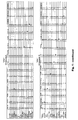
- Fig. 1 is a set of tables showing the percentage of genetic similarity on a particular chromosomes between pairs of rodent strains.
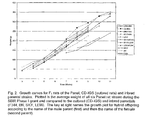
- Fig 2 is a set of growth curves for all rats in the Phase I studies. Plotted is the average weight of all six Panel rat strains compared to the outbred (CD-IGS) and inbred parentals (F344, BN, SKY, LEW). The key at right names the growth plot for hybrid offspring according to the name of the male parent (first) and then the name of the female (second parent).
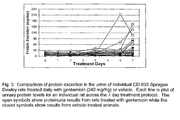
- Fig. 3 compares protein excretion in urine of individual Sprague Dawley rats treated daily with gentamicin (240 mg/Kg) or vehicle. Each line is a plot of urinary protein levels for an individual rat across the 7 day treatment protocol. The open symbols show proteinuria results from rats treated with gentamicin while the closed symbols show results from vehicle treated animals.
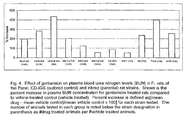
- Fig. 4 demonstrates the effect of gentamicin on plasma blood urea nitrogen (BUN) levels in Panel, CD-IGS (outbred control) and inbred (parental) rat strains. Shown is the percent increase in plasma BUN concentration for gentamicin treated rats compared to vehicle-treated control (vehicle treated). Percent increase is defined as[(mean drug- mean vehicle control)/mean vehicle control x 100] for each strain tested. The number of animals tested in each group is noted below the strain designation in parenthesis as #drug treated animals per#vehicle treated animals.
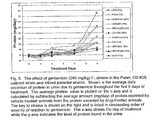
- Fig. 5 illustrates the effect of gentamicin (240 mg/kg) for all strains in Phase I studies. Shown is the average daily excretion of protein in urine due to gentamicin throughout the first 6 days of treatment. The average protein value is plotted on the x-axis and is calculated by subtracting the average amount (mg/day) of protein excreted by vehicle-treated animals from the protein excreted by drug-treated animals. The key to strains is shown on the right and is listed in descending order of severity of reaction to gentamicin. The x-axis shows the day of treatment while the y-axis indicates the level of protein found in the urine.
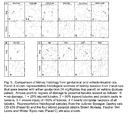
- Fig. 6 illustrates comparison of kidney histology from gentamicin and vehicle-treated rats.
- Fig. 7 illustrates functional effect of clofibrate to lower triglyceride levels in the F 1 strains of the Panel, outbred Sprague Dawley (CD-ICS) and parental strains, Brown Norway, Fischer 344, Lewis and Wistar Kyoto rats.
- 11 strains (6 Panel, 4 parental, 1 outbred) were either treated with six oral injections of 250 mg/Kg clofibrate or HPMC as vehicle. Triglyceride levels in plasma were measured following euthanasia on day 7. Plotted are the percent differences in triglyceride values in a particular drug treatment group. The numbers of animals tested in each group is noted below the strain designation in parenthesis as #drug treated animals/#vehicle treated animals. [(mean drug- mean vehicle control)/mean vehicle control x 100] for each strain tested.
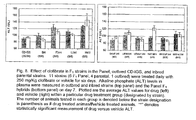
- Fig. 8 illustrates the functional effect of clofibrate on the F 1 strains in the Panel, outbred and parental strains, Brown Norway, Fischer 344, Lewis and Wistar Kyoto rats.
- 11 strains (6 Panel, 4 parental, 1 outbred) were either treated with six oral injections of 250 mg/Kg clofibrate or HPMC has vehicle.
- Alanine transferase (ALT) levels in plasma an index of liver damage were measured in outbred and inbred strains (top panel) and the Panel F 1 hybrids (bottom panel) following euthanasia on day 7.
- Plotted are the average ALT values for drug (left) and vehicle (right) within a particular drug treatment group (designated by strain). The number of animals tested in each group is denoted below the strain designation in parenthesis as # drug treated animas/#vehicle treated animals. "*" denotes statistically significant measurement of drug versus vehicle ALT.
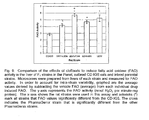
- Fig. 9 is a comparison of the effects of clofibrate to induce fatty acid oxidase (FAO) activity in the liver of outbred Sprague Dawley rats, inbred parental strains (Lewis) and F 1 strains of the Panel. Peroxisomal fractions from livers of each strain were measured for FAO activity. In order to account for intra-strain variability, graphed are the average values derived by subtracting the vehicle FAO (average) from each individual drug induced FAO. The y-axis represents the FAO activity (nmol H 2 O 2 per minute-mg peroximal protein). The x-axis shows the rat strains were used in this assay and asterisks (*) mark all strains that FAO values significantly different from the CD-IGS. The cross indicates the Panel strain that is significantly different from the other Panel strains.
- FAO fatty acid oxidase
- Fig. 10 compared the power of parental strains versus use of the F 1 Panel to detect strain differences in drug responses measured in the present study.
- the Panel strains (F 1 ) strains give substantially more power (significantly smaller p-values for most of the traits measured), than the cumulative data from the parental inbred strains.
- the x-axis is a numbering of the following measured traits GLU, AST, ALT, ALP, TBILI, CHOL, TP, ALB, GLOB, BUN, CREAT, PHOS, CA, NA, K, CL, BICARB, ANION, GAP, GGT, TRIG, respectively.
- the general shape of the two curves for the parentals and F 1 s are similar as would be expected as there are common genomic elements between the different panels. However, the increase in power of the study design using F 1 hybrid rats dramatic.
- the invention relates to the combinatorial mating of inbred rats to yield a collection of offspring that exhibits genetic diversity (e.g., in a metabolic enzyme or pathway).
- a collection of combinatorially bred offspring can be used to evaluate differences in biologic responses to test agents based on different genotypes.
- Test agents can include candidate therapeutic molecules, putative allergens or toxins, foods and other consumer products (e.g., cosmetics, hygiene products, and textiles) and environmental chemicals.
- the invention provides a rat collection (i.e., a number of rats that make up and are considered as a unit).
- a rat collection i.e., a number of rats that make up and are considered as a unit.
- Such a collection includes 6 or more F 1 offspring from each possible combinatorial mating of at least 4 genetically different inbred strains.
- the collection includes combinatorially offspring of at least six or at least eight or at least 10 genetically different inbred rat strains.
- Such a collection is made by mating the parental strains in each different pair-wise combination.
- the different pair-wise matings are: AxB, AxC, AxD, BxC, BxD and CxD.
- the F 1 offspring from each mating are pooled to make the collection of combinatorially bred offspring. Offspring from each different pair-wise mating can be obtained from one or more litters, and can be obtained from litters produced by the same or different individual parents.
- the offspring can be pooled by, for example, placing 6 or more F 1 offspring from each mating of two particular inbred strains in the same rat containment facility.
- the genetic diversity of parent strains, and thereby the offspring produced by their combinatorial mating, can be optimized by analyzing genetic markers in candidate parental strains.
- genetic marker analyses those skilled in the art can identify parent strains that, considered collectively, have: 1) a certain degree of genetic identity or heterogeneity throughout the genome; 2) a certain degree of genetic identity or heterogeneity on one or more particular chromosomes; or 3) a certain number of alleles at one or more preselected genetic loci.
- Such a collection can be particularly useful for evaluating tests agents for which no genetic target is known or suspected.
- chromosomes e.g., X or autosomal chromosomes
- Genetic loci targeted for diversification can include, for example, a genetic locus that encodes a member of a class of enzymes important in the metabolism of drugs and toxins.
- Classes of enzymes important in drug metabolism include, for example, the cytochrome P-450 class, the cytochrome P-450 reductase class, the flavin-containing monooxygenase class, the peroxidase class, the epoxide hydrolase class, the arylesterase class, the carboxylesterase class, the acetylesterase class, the cholinesterase class, the amidase class, the alcohol dehydrogenase class, the aldehyde reductase class, the ketone reductase class, the aldehyde dehydrogenase class, the aldehyde oxidase class, the glucuronosyltransferase class, the aryl sulfotransferase class, the hydroxysteroid sulfotransfer
- a genetic locus targeted for diversification encodes a disease-related enzyme, e.g., an enzyme which, when abnormal or abnormally expressed, causes or predisposes an individual to a disease state.
- Disease-related enzymes can represent potential targets for therapeutic agents.
- Exemplary disease-related enzymes include angiotensin converting enzyme (associated with hypertension), human leukocyte antigens (associated with e.g., autoimmune diseases such as insulin dependent (type I) or independent (type II) diabetes and multiple sclerosis; cancers such as Hodgkin disease; and infectious diseases, such as tuberculosis and AIDS), P53 (associated with various carcinomas), BRCA1 and BRCA2 (associated with breast cancers), and APP (associated with Alzheimer's disease).
- angiotensin converting enzyme associated with hypertension
- human leukocyte antigens associated with e.g., autoimmune diseases such as insulin dependent (type I) or independent (type II) diabetes and multiple sclerosis
- cancers such as Hodgkin disease
- Parental strains can be selected, for example, by using nuclear magnetic resonance, mass spectroscopic analysis and other proteomic approaches to identify small molecule or protein biomarkers in urine and plasma samples that predict strain differences in the toxicity or efficacy of various test agents, or by analyzing polymorphic genetic markers ("markers").
- useful genetic markers include RFLP (Restriction Fragment Length Polymorphisms), SNP (Single Nucleotide Polymorphisms), RAPD (Random Amplified Polymorphic DNA), AFLP (Amplified Fragment Length Polymorphisms), and microsatellite repeats or any other means to determine a sequence variant-which is the basis of all genetic markers.
- SSLP Simple Sequence Length Polymorphism markers are particularly useful genetic markers for analyzing candidate parent strains. For optimizing diversity at a particular genetic locus, markers that are more closely linked (physically or genetically) to the locus of interest are preferable to markers that are less closely linked to the locus.
- SSLP markers reportedly are highly mutable, while the flanking DNA is much less mutable. Thus, SSLP allele sizes can be useful to infer whether particular regions of different genomes are the same or different. Individual SSLP markers provide a limited amount of information, but a series of SSLP markers exhibiting identity between different genomes is suggestive that the region of the genome inclusive of the conserved markers is also identical in sequence.
- SSLP allele sizes of more than 4,300 of the 5,200 known SSLP markers in the rat genome have been analyzed in 48 commonly studied inbred rat strains.
- SSLP alleles differing in length by at least 2 base pairs' occur at a rate of 46%.
- SSLP loci exhibit between 2 and 13 alleles, 6 on average.
- Closely related strains derived from the same progenitor have multiple long haplotypes (i.e., >10 SSLP markers having the same allele size). The greater the number of polymorphisms between two strains, the fewer the number of haplotypes ( ⁇ 3 SSLP markers having same allele size) in common.
- linkage disequilibrium can be used to study inbred strains and the degree of genetic diversity between strains.
- Computer software can be used to discern patterns based on SSLP polymorphisms found within specific regions of a genome.
- the ACP Haplotyper computer program can be used to compare SSLP allele sizes across inbred strains (e.g., the 48 strains characterized in the rat Allele Characterization Project) with each other, and with a hypothetical "ancestor strain" having the most common allele size at each locus.
- ACP Haplotyper can order alleles according to a variety of genetic and physical maps, allowing an investigator to visualize regions of conservation between strains and enabling inter-strain comparisons, evolutionary inferences and other practical benefits such as map placement evaluation.
- ACP Haplotyper is web-based and uses a Perl (Practical Extraction and Report Language) CGI (Common Gateway Interface) with an Oracle 8i (Oracle Corp.) database to handle the storage of the allele and marker data.
- CGI Concept Extraction and Report Language
- Oracle 8i Oracle Corp.
- the ACP Haplotyper computer program is available from the Department of Physiology and the Human and Molecular Genetics Center via the Rat Genome Database, Medical College of Wisconsin, Milwaukee, WI, USA.
- the pathophysiology of diseases such as hyperglycemia, hypertension, and hyperlipidemia may affect therapeutic efficacy and toxicity of, for example, candidate drugs intended to lower plasma cholesterol levels or reduce blood pressure.
- a test agent may be more toxic to animals having diabetes or preexisting heart or vascular disease than to normal animals.
- parental strains can be selected that have inbred disease conditions such as hypertension, hyperlipemia, diabetes, and renal disease.
- Suitable strains of rats include, for example, Dahl S rats (hypertension, hyperlipidemia, and insulin resistance), Fawn Hooded hypertension rats (hypertension, pulmonary hypertension, and renal disease), Spontaneously hypertensive rats (hypertension), Stroke prone hypertensive rats (stroke), Zucker obese rats (obesity, hypertension, hyperlipidemia and insulin resistance) and GK rats (type two diabetes and renal disease).
- Parental strains are selected to achieve the desired level of genetic diversity, while maintaining the chosen disease condition.
- the invention also provides cell lines, tissue banks and other materials (e.g., RNA and proteins extracted from various organs and cell types for proteonomics, nuclear magnetic resonance analysis for small molecule identification (metabonomics), and mRNA expression arrays derived from a collection of rats described above.
- Cell lines can include immortalized cell lines.
- Tissue banks can include any type of tissue (e.g., kidney, liver, lung, lymphatic, stomach, pancreas, brain, prostate, testis, mammary and ovary). Methods for making cell lines and tissue banks are well known, as are methods for extracting RNA or proteins and for making cDNA and protein libraries.
- Expression profiling using nucleic acid microarrays can be used to identify genes that are differentially expressed under particular conditions between individuals or F 1 strains in combinatorially bred Panels.
- microarrays can be used to identify genes that are differentially expressed in combinatorially bred animals and thereby identify those genotypes that exhibit differences in the potency, efficacy and / or toxicity in response to a particular test agent.
- the microarrays can consist of collection of cDNA, genomic DNA, or oligonucleotide targets.
- protein arrays that include polypeptides, polypeptide fragments or antibodies attached to a solid support can be used. Protein arrays can be used, for example, to examine strain differences in the expression of proteins or phosphorylated signaling proteins. Differences in the profiles of expressed proteins between strains also can be evaluated using mass spectroscopic techniques such as LC/MS, particularly when combined with differentially labeling derivatization techniques to quantitate levels of different classes of proteins.
- Each sample to be tested in a microarray can be a sample of tissue from an individual animal.
- each sample to be tested in a microarray can be pooled from a plurality of animals, e.g., RNA, DNA or protein extracted from equal amounts of liver tissue of six combinatorially bred rats that have been exposed to a test agent.
- Test agents include, for example, candidate therapeutic molecules and putative allergens or toxins in products, food or environmental samples. Evaluating a test agent involves contacting a collection of combinatorially bred animals with a test agent. The method by which a test agent is administered to a combinatorially bred animal depends on the nature of the test agent to be evaluated. Test agents can be administered to a test animal by, for example, topical application, injection, inhalation delivery, oral delivery, nasal delivery, and dietary supplementation. The dose regimen also depends on the nature of the test agent to be evaluated, and can involve a single administration or repetitive administrations of the test agent. Physiological, biochemical, and genetic effects of test agents can be determined by techniques appropriate for the test agent to be evaluated.
- outbred strains such as Sprague Dawley (SD) or Wistar (Wist) rats
- SD Sprague Dawley
- Wist Wistar
- outbred strains may often be obtained from closed colonies having limited genetic diversity by virtue of allele fixation, which occurs because the number of progenitors establishing a foundation colony is often small and the number of alleles available to transmit to the next generations is limited, See, Festing, M.F., Environ. Health Perspect. 103:44-52, 1995 .
- outbred strains typically are not as genetically diverse as desired and are not suitable models to represent the scope of human genetic diversity.
- outbred rats also comes at the expense of variability in results when evaluating test agents, the inability to replicate experiments between and within laboratories using different groups of rats from the same colony, and difficult authentication and quality control. For example, outbred strains propagated by different suppliers will have different genotypes and often respond differently to various test agents. This phenomenon can leads to unacceptable variability in biochemical and molecular evaluations of test agents.
- genetic marker analyses of SD rats indicates an average of only 2 alleles per marker. If this allele frequency is true for each of the 30,000 or so rat genes and a toxic response of a test agent requires the appropriate combination of 2 genotypes, evaluating a test agent in a typical 50-anima! protocol may not reveal this potential effect.
- Inbred strains typically are created after at least 20 serial brother-sister crosses.
- the animals that comprise an inbred strain are considered isogenic (i.e., each individual is considered genetically identical). Inbreeding often has been used to create special strains that mimic particular human disease phenotypes. Inbred animals often have been used for evaluating test agents because effects in different individuals within a strain are expected to be similar, with the environment providing the primary variable.
- the United States National Toxicity Program (NTP) uses Fischer-344 inbred rats and 1360171 hybrid mice to evaluate the safety of test agents.
- inbred strains can improve reproducibility in evaluating test agents, but at the expense that the selected strain will not have a appropriate genotype to reveal an adverse effect. Unless there is prior knowledge about the ability of a particular strain to reveal effects of a test agent, selecting a single strain limits the potential to detect effects of test agents, and can lead to misleading conclusions.
- An additional drawback of using inbred strains is that such animals generally are unhealthy, and can exhibit traits that affect drug responses and toxicity. Inbred strains typically produce smaller litters and exhibit many phenotypic abnormalities as a consequence of being genetically homozygous at all loci.
- a collection of rats made according to the invention is genetically heterogeneous, and using such a collection rather than one or more inbred strains increases the ability to detect all possible effects of test agents.
- F 1 animals derived from the combinatorial mating of inbred parents are generally healthier than inbred animals.
- Another advantage of using such a collection of animals to evaluate test agents in that linkage disequilibrium mapping can be used to identify genomic loci associated with differences in the effectiveness or toxicity of the test agents between strains.
- cDNA and protein microarrays can also be used to identify differential expressed genes contributing to differential responses to test agents between strains in the Panel.
- the lack of reproducibility associated with the use of outbred stains to evaluate test agents can be avoided because F 1 animals derived from the combinatorial mating can be reproducibly reconstructed by crossing individuals of the appropriate inbred parent strains.
- the collection of rodents is made by combinatorially breeding the rat strains described below in the Examples. Specifically, these strains are Wistar Kyoto, Lewis, Fischer 344 and Brown Norway rats. We envision that this specific collection of rodents and collection of cDNA, RNA and proteins derived from these rodents would be useful and suitable in the present invention.
- strain we mean to include all sub-strains of the preferred strain. For example, by “Brown Norway” we mean to include the sub-strains BN mcwi, BNss, BNhsd.
- Example 1 Selection and combinatorial mating of inbred rats having specific genetic diversity .
- This Example describes the selection and combinatorial mating of 4 genetically different inbred parental strains to make a collection of F 1 offspring that exhibit genetic diversity among SSLP markers linked to genes encoding cytochrome P-450 enzymes.
- the software program ACP Haplotyper was used to facilitate comparative genetic marker analysis of candidate parent strains.
- strains in the 15-strain subset were chosen on the basis of the following criteria: 1) commercial availability and maintenance in appropriate isolators for breeding; 2) separation by at least 10 to 15 steps on the rat phylogenetic tree of Canzian, et al., Genome Res. 7:262-267, 1997 ; 3) frequent usage by the pharmaceutical industry for toxicological studies; 4) historical use in toxicological studies; and 5) susceptibility or resistance to particular classes of test agents.
- Suitable commercial resources in inbred rats include Charles River Laboratories (Wilmington, MA), Harlan (Indianapolis, IN), Taconic (Germantown, NY), and academic institutions such as the Jackson Laboratory (Bar Harbor, ME).
- Rat strains often used in the pharmaceutical industry include F344, LEW, WKY, DA, BN, WAG, PVG, BUF and WF. LEW is more susceptible to peroxisomal proliferation than SD, and F344 more susceptible to the nephrotoxic effects of gentamicin than SD.
- the four strains selected for combinatorial mating were F344, BN, LEW and WKY. These parental strains were selected so as to maximize diversity at polymorphic markers in genetic proximity to the following cytochrome P-450 enzymes: Cyp1A1, Cyp1A2, Cyp2 family, Cyp3A3, Cyp4A1 and Cyp4A11. SSLP markers in genetic proximity to Cyp loci were identified in Rat Genome Database (Medical College of Wisconsin, Milwaukee, WI), Locus Link (National enter for Biotechnology Information, Bethesda, MD), and in the scientific literature.
- ACP Haplotyper visual comparisons of markers linked to the coding sequence loci for Cyp1A1, Cyp1A2, Cyp2 family, Cyp3A3, Cyp4A1 and Cyp4A2 were generated. Heterozygous SSLP marker loci are ignored when ACP Haplotyper is used to compare inbred strains. However, the number of heterozygous SSLP marker loci is low in the four selected strains (74085 for BN; 5/4185 for LEW; 3/4224 for F344; and 6/4096 for WKY).
- Table 2 shows the number of SSLP markers identified for each group of Cyp loci. By iteratively comparing pairs of strains, the number of different alleles at each Cyp-linked SSLP marker was maximized. Table 2 also shows the number of different alleles in the four selected parent strains for each Cyp locus. In addition, 11 to 19 steps on the rat phylogenetic tree of Conzian, et al . separate each of the selected parent strains from the other three selected strains. Table 2 Cytochrome P450 Loci (CYP) 1A1/A2 4A1 2B2/2A3A 2C 4A2 3A3 No. SSLP Markers Evaluated 2 3 5 1 2 1 Theoretical Maximum No.
- F344, BN, LEW and WKY were obtained from Charles River Laboratories and mated in each possible pair-wise combination (i.e., F344xBN, F344xLEW, F344xWKY, BNxLEW, BNxWKY and LEWxWKY).
- Example 2 Identification of inbred rats having general genetic diversity.
- This example describes a comparison of the degree of genetic similarity on a particular chromosome between pairs of rodent strains. Allele sizes for 5,214 SSLP loci were determined for the 15 inbred rat strains described in Example 1. Pairwise comparisons were carried out among the strains, and the percentage of loci that had an identical allele in each pair was calculated for each chromosome. The results for chromosome 1, 5, 8 and 12 are shown in Tables 3-6, respectively, in Fig. 1 . Similar comparisons were carried out for the remaining chromosomes. Percent Genetic diversity is calculated from the data by subtracting percent similarity from 100%.
- the 4 strains selected for combinatorial mating were F344 (Fischer 344), BN (Brown Norway), LEW (Lewis) and WKY (Wistar Kyoto).
- the BN was selected because it is the strain that has been sequenced by the Rat Genome Sequencing Consortium, it is one of the most genetically distinct rats ( Canzian, F., Genome Res. 7(3):262-267, 1997 ).
- the F344 strain was chosen because it is the predominant rat model used in protocols by the NTP and several pharmaceutical firms and therefore provides a reference point so that strain comparisons can be made to the existing toxicology database.
- the remaining two parental strains were selected with the notion to maximize genetic diversity at specific regions (cytochrome P-450s) as well as across the entire genome based on genetic markers and that 11 to 19 steps on the rat phylogenetic tree separate each of the selected parental strains from the other three selected strains.
- the Panel comprises on average 42% of the known rat diversity, using 6 as the average number of alleles per locus. While we did not reach our initial goal of capturing 50% of the genetic diversity in the rat genome, we may have done as well as possible considering the stringent selection criteria that we established prior to the study, most notably: 1) maximal diversity at the cytochrome P-450s; 2) inclusion of the F344 (used by NTP) and BN (this rat strain is being sequenced) strains; and 3) commercial availability.
- Table 7 shows the strain-to-strain comparison at 4 different chromosomes, that collectively represent ⁇ 33% of the genome. These data shows that there is a high level of variation (on average 66-72%) between each parental strain in genetic markers at the chromosomal level. Given that the average polymorphism rate between any two strains is approximately 50% ( Steen, R.G., et al., Genome Res. 9(6):AP1-8, 1999 , insert), having an average polymorphism rate of 71 % is probably close to the maximum that can be attained with any 4 strains. Table 7: Percent chromosomal variation found in Panel rats Hybrid Chr 1 Chr 2 Chr 3 Chr X Average BN vs.
- Baseline clinical chemistries The baseline clinical chemistry profiles of the six F 1 strains in the Panel, the outbred CD-IGS, and inbred parental strains used to generate the Panel are summarized in Table 8. They were derived by averaging the measured 8-10 animals in each strain (8-10 weeks of age). Table 8 shows the 20 clinical measures for each strain and we also report the test values for the parental rats and Panel rats as averages of all animals within those groups. If the Panel was similar to the outbred CD-IGS phenotypically, then we would have predicted that the baseline clinical chemistries would not be different.
- Example 4 Selection and evaluation of the control strain. Since the CD-IGS (Caesarean-Derived International Genetic Standard) from CRL appears to the dominant outbred strain used in Pharma, we included this strain in all experiments as a second reference point. This strain originated in 1925 by Robert W. Dawley from a hybrid hooded male and a female Wistar rat. This strain was obtained by CRL in 1950 from Sprague-Dawley, Inc. and caesarean re-derived in 1955 from original Charles River Sprague-Dawley (SD) colonies.
- CD-IGS Cosmetic Research Laboratory Standard
- CD-IGS showed only a 50% increase in plasma BUN levels, an index of renal damage, following exposure to gentamicin.
- LEWxF344, BN, F344, LEW and LEWxBn strains showed 2-3-fold increase in BUN when treated with gentamicin.
- Example 5 The Panel is effective at detecting adverse effects of nephrotoxins .
- Gentamicin is the first drug that was tested using the Panel. Gentamicin is still commonly used for the treatment of severe gram-negative bacterial infections (like sepsis or pneumonia) in man when the bacteria is likely resistant to other antibiotics.
- gentamicin is also known to be a nephrotoxin that affects proximal tubules and in some individuals can result in deafness and irreversible vestibular toxicity.
- the first dose (120 mg/kg) was similar to published dosing regimens (typically 80 mg/kg) that elicit nephrotoxic responses in rats, but this did not produce a robust set of phenotypes, except in LEW rats (not shown).
- gentamicin 240 mg/kg was delivered for 6 consecutive days as an intraperitoneal injection in animals with weights ranging from 225-275g (about 7-10 weeks of age depending on the particular strain).
- Table 9 summarizes P values for differences in clinical chemistry data between gentamicin and vehicle-treated with strains of rats.
- the display of the data in this way enables one to quickly identify which clinical chemistry values were influenced by gentamicin in the 6 F 1 Panel strains, 4 parental strains and outbred strain screened in this study.
- all of the strains (except WKY) studied showed a statistically significant increase in either plasma BUN or creatinine concentration (indices of renal damage) when treated with gentamicin (240 mg/Kg/day).
- Table 9 also shows that gentamicin (240 mg/Kg/day) also caused significant changes in many other clinical chemistry values. Some of these may not seem relevant at this time, but may be worthwhile exploring in future studies that consider the influence of mixing genetic backgrounds. For example, we found significant changes in 3 indices of liver function, AST (BNxF344), TP (WKYxLEW) and cholesterol (LEW) concentrations in rats treated with the high dose of gentamicin treatment.
- Fig. 4 displays the percentage increase in plasma BUN concentration for all of the strains tested in Phase I studies.
- the CD-IGS appears to be resistant to the nephrotoxic effects of gentamicin relative to the other strain studied.
- Decoding the combinatorial pattern for the F 1 hybrids suggests that LEW and F344 are the most sensitive strains while WKY is the most resistant. We believe this to be so because in combination with other genotypic backgrounds, WKY is able to either lower (WKYxBN, WKYxLEW) or virtually eliminate (WKYxF344) the susceptibility of BN and LEW genetic backgrounds to the nephrotoxic effects of gentamicin.
- Fig. 5 compares the protein excretion for all 11 strains during the first 6 days of treatment with gentamicin. These data are consistent with the BUN and creatinine levels found in the plasma of these same animals and correlates well with histological examination of kidneys for the degree of renal damage in each strain ( Fig. 6 ). For example, the kidneys from LEWxF344 F 1 rats were the most damaged (nearly complete necrosis of all proximal tubules) and they exhibited the largest increase in plasma concentrations of BUN and creatinine. All kidneys from gentamicin-treated parental strains had greater than 50% of tubules damaged, except the WKY.
- Gentamicin had virtually no effect on the kidney of WKY rats (both vehicle and gentamicin treated animals had kidneys with 25% injured tubules) and gentamicin had the least effect on plasma concentrations of BUN and creatinine and protein excretion in this strain. Histological examination of the kidneys of F 1 hybrids exhibited 50% or more damage to proximal tubules, except in the WKYxBN F 1 strain which exhibited little renal damage and minimal changes in plasma BUN, creatinine concentrations or protein excretion.
- Example 6 The Panel can detect differences in the function and tonicity of a hepatotoxin.
- Clofibrate is a third drug that we have compared clinical chemistry and histopathology responses using the Panel, the parental strains and an outbred strain.
- Clofibrate is an antilipidemic drug that has been commonly used in Europe, however, it has also been reported to be a hepatotoxin and produce liver cancer in some patients.
- gavage 250 mg/Kg in hydroxyproply methyl cellulose
- BN rats did not exhibit any antilipidemic response to clofibrate and "patients" with BN-like genotypes may be expected to fail to respond therapeutically to this class of compounds. This strongly suggests that researchers can use the Panel to uncover genetic differences in drug responses and the differences in genetic background of the F 1 rats can be exploited to identify the genes involved determining individual response to the therapeutic and toxic effects of various classes of compounds.
- AST levels (a predictor of liver toxicity) were not significantly affected in any of the strains (data not shown). However, one strain (the WKY ⁇ BN F 1 s) did exhibit a significant increase in ALT levels ( Fig. 8 ), demonstrating at least one combination of genotypes in the Panel could detect the known toxicity of this compound.
- alkaline phosphatase levels (ALP) another index of liver damage was significant for 5 out of the 6 F 1 hybrid strains, but not altered in the CD-IGS (data not shown).
- the assay was done by using a fluorometric assay for rat liver peroxisomal fatty-acyl CoA oxidase activity (FAO).
- FEO fluorometric assay for rat liver peroxisomal fatty-acyl CoA oxidase activity
- the first step of this assay uses a palmitoyl-CoA dependent NAD+ reducing system to oxidize FAO and produce H 2 O 2 .
- the H 2 O 2 is then coupled in a peroxidase catalyzed reaction to the oxidation of scopoletin, a naturally fluorescent compound.
- a fall in fluorescence of the sample indicates an increase in FAO activity which subsequently reflects the increase in the fatty acid oxidase in the liver.
- the LEWxF344 hybrid (noted by the cross symbol) was the most sensitive to clofibrate treatment and also shows a significant difference in FAO activity from the two other related hybrid strains (LEW ⁇ BN, WKY ⁇ LEW). Like the studies with gentamicin, this data reveals that we are better able to detect genetic differences in the response to clofibrate using an F 1 Panel than when using outbred CD-IGS rats or inbred strains alone.
- This example describes the preparation of the cDNA microarray used with the Panel to identify differentially expressed genes that contribute to the genetic differences in drug responses among the strains.
- a total of 8448 rat UniGenes are obtained from Research Genetics, Huntsville, AL, USA.
- the UniGene set contains 1928 known genes and 6520 unknown expressed sequence tags.
- Each nucleic acid in the UniGene set is amplified by PCR with a primer set including T7/T3 promoter: 5' - TTACGAATTTAATACGACTCACTATA-3'/5'-AAGCTAAAATTAACCCT CACTAAAGGG-3'.
- PCR reactions are carried out in 384-well plates with reaction volume of 10 ul using a Pelletier Thermal Cycler PTC-225 (MJ Research, Watertown, AM): 1 ul 10x PCR buffer, 0.5 U Taq DNA polymerase purified by Centri-Sep Column (Princeton Separation, Adelphia, NJ), 250 nM each primer, 200 uM each dNTP, and 0.4 ul liquid culture of each cDNA clone-harboring Escherichia coli.
- Pelletier Thermal Cycler PTC-225 MJ Research, Watertown, AM
- PCR cycles are as follows: first cycle, at 95°C for 11 min, at 55°C for 1 minute, and at 72°C for 1.5 minutes; 2 nd -36 th cycles, at 95°C for 1 minute, at 55°C for 1 minute, and at 72°C for 1.5 minutes; and final extension at 72°C for 7 minutes. After the reaction, 7 ul of water and 17 ul DMSO are added to the reaction mixtures. PCR reactions are electrophoresed on 2% agarose gel and are visualized with an EAGLE EYE II (Strategene).
- Microarrays were produced on poly-L-lysine coated slides with a space of 180 um in an area of 18 x 36 mm using a four-pin arraying robot, (Genomic Solution, Ann Arbor, MI). Each gene / EST was stamped from the 384-well plates directly without purification of PCR products. Each gene/EST is stamped in duplicate on the slide, once in a 96 x 96 array on the top and once in a 96 x 96 array on the bottom of the slide. Printed arrays are incubated in a humidity chamber (Sigma, St. Louis, MO) to allow rehydration with lx SSC for 2 hours and heated on hot plates at 85°C for 2 hours.
- a humidity chamber Sigma, St. Louis, MO
- the arrays are UV-crosslinked at 65 mJ with a Stratalinker (Stratagene, La Jolla, CA), stabilized in 10% formalin for 1 min, and rinsed with distilled water twice.
- the arrays are immersed in 5.5 g succinic anhydride in 325 ml of 1-methyl-2-pyrrolidinone and 25 ml of 1 M sodium borate (pH 8.0) for 20 minutes, then submerged in distilled water for 2 minutes at 95°C, and quickly transferred into 95% EtOH.
- the arrays are dried by centrifugation and stored in the dark at room temperature.
- This example describes the use of DNA microarrays to generate tissue-specific, drug-induced gene expression profiles in combinatorially bred F 1 rats that can be used to identify genes that are differentially expressed and contribute to the differences in drug responses between the strains.
- Cy3- or Cy5-dUTP (Amersham, Piscataway, NJ) is incorporated into cDNA created from 4 ug mRNA in a 90 ul reaction volume: 9 ul of 10x PCR buffer, 10 mM DTT, 2.5 mM MgC1 2 , 4 ug oligo(dT)12-18 primer, 1800 U SuperScriptII (Invitrogen, Carlsbad, CA), 500 uM each dATP, dCTP and dGTP, 40 uM dTTP, 40 uM Cy3- or Cy5-dUTP at 39°C for 2 minutes.
- RNAase H 16 U RNAase H (Gibco Invitrogen, Carlsbad, CA) is added, and the reaction mixture is incubated for 30 minutes at 37°C. Cy3- and Cy5-labelled samples are mixed and sequentially purified with a Centri-Sep Column, PCR purification Kit (Qiagen) and concentrated with a Microcon YM-30 (Millipore, Bedford, MA) after the addition of 30 ug of mouse Cotl DNA (Gibco Invitrogen).
- a nucleic acid microarray To the concentrated probe, 20 ug poly-dA (Sigma) and 40 ug yeast total RNA (Gibco Invitrogen) is added, and 21 ul of the hybridization solution including 3.5x SSC and 0.35% SDS is applied to a nucleic acid microarray.
- the microarray is prepared according to Example 3 and hybridization is carried out under a 22 x 40 mm cover slip for 1 7 hours at 65°C.
- the slide is rinsed in 2x SSC/0.1 % SDS for 2 minutes, 0.2x SSC for 2 minutes and then 0. 5x SSC for 2 minutes at room temperature, and finally scanned with a ScanArray 3000 (General Scanning, Watertown, MA) to detect the two-color fluorescence hybridization signals.
- Microarray Number Sample 1-3 AxB F 1 treated VS. SD treated 4-6 AxD F 1 treated VS. SD treated 7-9 AxB F 1 treated VS. BxC F 1 treated 10-12 AxD F 1 treated VS. CxD F 1 treated 13-15 SD treated VS. SD control
- one chip is reverse-labeled with the other fluorescent probe to rule out differences in gene expression due to labeling artifacts.
- slide 1 has A/B treated cDNA labeled with Cy3 and SD treated labeled with Cy5.
- Slide 1 is stripped and probed using the same cross-labeled RNA.
- Slide 2 has SD treated cDNA labeled with Cy3 and A/B treated c DNA labeled with Cy5. This design controls for labeling efficiency and. hybridization efficiency.
- One or both drug treatments are evaluated for differential effects (e.g., 2-fold or greater change) on the expression of particular genes represented in the microarray. Observed differences in the gene expression profiles in kidney and liver specimens taken from one treated F1 line relative to other F1 lines and SD rats indicate that within the treated groups, different genotypes within a combinatorially bred collection of F 1 rats can differentiate drug effects.
- RNA extracted from various tissues of drug and vehicle treated combinatorially bred hybrid F 1 rats By comparing the gene expression profiles of RNA extracted from various tissues of drug and vehicle treated combinatorially bred hybrid F 1 rats, the genes responsible for drug effects within strains and differences in therapeutic or toxic effects of drugs between strains can be determined.
Landscapes
- Chemical & Material Sciences (AREA)
- Life Sciences & Earth Sciences (AREA)
- Health & Medical Sciences (AREA)
- Proteomics, Peptides & Aminoacids (AREA)
- Organic Chemistry (AREA)
- Genetics & Genomics (AREA)
- Zoology (AREA)
- Analytical Chemistry (AREA)
- Wood Science & Technology (AREA)
- Engineering & Computer Science (AREA)
- Microbiology (AREA)
- Biochemistry (AREA)
- Biotechnology (AREA)
- Molecular Biology (AREA)
- Biophysics (AREA)
- Physics & Mathematics (AREA)
- Pathology (AREA)
- Immunology (AREA)
- Bioinformatics & Cheminformatics (AREA)
- General Engineering & Computer Science (AREA)
- General Health & Medical Sciences (AREA)
- Measuring Or Testing Involving Enzymes Or Micro-Organisms (AREA)
- Investigating Or Analysing Biological Materials (AREA)
- Medicines Containing Antibodies Or Antigens For Use As Internal Diagnostic Agents (AREA)
- Medicines Containing Plant Substances (AREA)
- Medicinal Preparation (AREA)
Claims (17)
- Sammlung von Ratten, umfassend kombinatorisch gezüchtete Nachkommen von wenigstens vier genetisch verschiedenen Ratteninzuchtstämmen, wobei die Inzuchtstämme in jeder verschiedenen paarweisen Kombination gekreuzt wurden, um die Sammlung zu erzeugen, wobei die Inzuchtstämme die Stämme Fischer 344, Brown Norway, Lewis und Wistar Kyoto umfassen und die Nachkommenschaft sechs oder mehr F1-Individuen aus jeder verschiedenen Kreuzung dieser Inzuchtstämme umfasst.
- Sammlung nach Anspruch 1, wobei die Ratten kombinatorisch gezüchtete Nachkommen von wenigstens sechs genetisch verschiedenen Ratteninzuchtstämmen umfassen.
- Sammlung nach Anspruch 2, wobei die Sammlung von Ratten kombinatorisch gezüchtete Nachkommen von wenigstens acht genetisch verschiedenen Ratteninzuchtstämmen umfasst.
- Sammlung nach Anspruch 3, wobei die Ratten kombinatorisch gezüchtete Nachkommen von wenigstens zehn genetisch verschiedenen Ratteninzuchtstämmen umfassen.
- Sammlung nach einem der vorstehenden Ansprüche, die wenigstens sieben oder mehr F1-Individuen aus jeder verschiedenen Kreuzung umfasst.
- Sammlung nach einem der vorstehenden Ansprüche, wobei die Nachkommenschaft 12 oder mehr F1-Individuen aus jeder verschiedenen Kreuzung der Inzuchtstämme umfasst.
- Sammlung nach einem der vorstehenden Ansprüche, wobei die Sammlung kombinatorisch gezüchtete Nachkommen von wenigstens 6 genetisch verschiedenen Inzuchtstämmen umfasst, und wobei die Nachkommenschaft 8 oder mehr F1-Individuen aus jeder verschiedenen Kreuzung der Inzuchtstämme umfasst.
- Sammlung nach einem der vorstehenden Ansprüche, wobei die Inzuchtstämme als Gesamtheit wenigstens zwei Allele für einen vorab ausgewählten genetischen Locus beinhalten.
- Sammlung nach Anspruch 8, wobei der genetische Locus ein Cytochrom P-450-Enzym codiert.
- Sammlung nach einem der vorstehenden Ansprüche, wobei die Inzuchtstämme ausgewählt werden, um die Anzahl an Allelen an einem oder mehreren vorab ausgewählten genetischen Loci zu maximieren.
- Sammlung nach Anspruch 10, wobei der eine oder die mehreren vorab ausgewählten genetischen Loci Mitglieder einer Klasse toxikologisch relevanter Enzyme codieren.
- Sammlung nach Anspruch 11, wobei die Enzyme Cytochrom P-450-Enzyme sind.
- Sammlung nach einem der vorstehenden Ansprüche, wobei wenigstens einer der Inzuchtstämme ein spezielles Krankheitsmerkmal zeigt.
- Sammlung von cDNA-Molekülen, hergestellt durch reverse Transkription von RNA, die aus Mitgliedern einer Sammlung von Ratten isoliert wurde, wobei die Sammlung von Ratten so ist, wie in einem der vorstehenden Ansprüche definiert, und wobei die cDNA-Moleküle aus jedem Mitglied der Sammlung von Ratten hergestellt werden.
- cDNA-Mikroarray, umfassend eine Sammlung markierter cDNA-Moleküle, die durch die reverse Transkription von RNA, isoliert aus jedem Mitglied einer Sammlung von Ratten, wie definiert in einem der Ansprüche 1 bis 13, hergestellt wurden, wobei die cDNA-Moleküle an genspezifische DNA-, cDNA- oder Oligonukleotid-Targets, die in einer nicht-zufälligen Weise an ein einzelnes festes Trägermaterial angeheftet sind, hybridisiert werden.
- Verfahren zur Bewertung eines Testmittels, wobei das Verfahren die Verabreichung des Testmittels an jedes Mitglied einer Sammlung von Ratten, wie definiert in einem der Ansprüche 1 bis 13, und das Messen einer Wirkung des Testmittels auf die Ratten umfasst.
- Verfahren nach Anspruch 16, wobei das Messen die Herstellung von cDNA aus RNA, die aus den Ratten isoliert wurde, und das Hybridisieren der cDNA an einen Nukleinsäure-Mikroarray beinhaltet.
Applications Claiming Priority (3)
| Application Number | Priority Date | Filing Date | Title |
|---|---|---|---|
| US36189002P | 2002-03-05 | 2002-03-05 | |
| US361890P | 2002-03-05 | ||
| PCT/US2003/006421 WO2003075838A2 (en) | 2002-03-05 | 2003-03-04 | Methods and compositions for pharmacological and toxicological evaluation of test agents |
Publications (3)
| Publication Number | Publication Date |
|---|---|
| EP1487261A2 EP1487261A2 (de) | 2004-12-22 |
| EP1487261A4 EP1487261A4 (de) | 2005-04-13 |
| EP1487261B1 true EP1487261B1 (de) | 2008-08-27 |
Family
ID=27805091
Family Applications (1)
| Application Number | Title | Priority Date | Filing Date |
|---|---|---|---|
| EP03744148A Expired - Lifetime EP1487261B1 (de) | 2002-03-05 | 2003-03-04 | Verfahren und zusammensetzungen für die pharmakologische und toxikologische auswertung von testsubstanzen |
Country Status (8)
| Country | Link |
|---|---|
| US (1) | US20030237103A1 (de) |
| EP (1) | EP1487261B1 (de) |
| JP (1) | JP2005520503A (de) |
| AT (1) | ATE406093T1 (de) |
| AU (1) | AU2003216489A1 (de) |
| DE (1) | DE60323214D1 (de) |
| DK (1) | DK1487261T3 (de) |
| WO (1) | WO2003075838A2 (de) |
Families Citing this family (7)
| Publication number | Priority date | Publication date | Assignee | Title |
|---|---|---|---|---|
| EP1546162B1 (de) * | 2002-09-20 | 2011-06-22 | Promega Corporation | Auf lumineszenz basierende verfahren und sonden zur messung der cytochrom-p450-aktivität |
| EP2277872B1 (de) * | 2005-05-31 | 2016-03-23 | Promega Corporation | Luminogene und Fluorogene Verbindungen uind Verfahren für den Nachweis von Molekülen oder Leiden |
| US8612176B2 (en) * | 2007-01-26 | 2013-12-17 | Auburn University | Nominal population metric: clustering of nominal application attributes |
| US20080228700A1 (en) | 2007-03-16 | 2008-09-18 | Expanse Networks, Inc. | Attribute Combination Discovery |
| JP5597200B2 (ja) * | 2008-08-18 | 2014-10-01 | プロメガ コーポレイション | ルミネッセンスを生じる化合物およびチトクロムp4503a酵素を検出するための方法 |
| EP3276526B8 (de) | 2008-12-31 | 2025-01-15 | 23andMe, Inc. | Suche nach verwandten in einer datenbank |
| EP3099683B1 (de) | 2014-01-29 | 2020-08-05 | Promega Corporation | Chinonmaskierte sonden als markierungsreagenzien für zellaufnahmemessungen |
Family Cites Families (5)
| Publication number | Priority date | Publication date | Assignee | Title |
|---|---|---|---|---|
| WO1992007095A1 (en) * | 1990-10-15 | 1992-04-30 | Stratagene | Arbitrarily primed polymerase chain reaction method for fingerprinting genomes |
| US5580728A (en) * | 1994-06-17 | 1996-12-03 | Perlin; Mark W. | Method and system for genotyping |
| JP4388694B2 (ja) * | 1998-02-04 | 2009-12-24 | アプライド バイオシステムズ, エルエルシー | 複数のアレル部位における増幅産物のゲノム型決定 |
| US6534574B1 (en) * | 2001-03-24 | 2003-03-18 | Milliken & Company | Highly nucleated thermoplastic articles |
| US6465551B1 (en) * | 2001-03-24 | 2002-10-15 | Milliken & Company | Bicyclo[2.2.1]heptane dicarboxylate salts as polyolefin nucleators |
-
2003
- 2003-03-04 EP EP03744148A patent/EP1487261B1/de not_active Expired - Lifetime
- 2003-03-04 US US10/379,217 patent/US20030237103A1/en not_active Abandoned
- 2003-03-04 WO PCT/US2003/006421 patent/WO2003075838A2/en not_active Ceased
- 2003-03-04 DE DE60323214T patent/DE60323214D1/de not_active Expired - Fee Related
- 2003-03-04 JP JP2003574114A patent/JP2005520503A/ja not_active Ceased
- 2003-03-04 AT AT03744148T patent/ATE406093T1/de not_active IP Right Cessation
- 2003-03-04 DK DK03744148T patent/DK1487261T3/da active
- 2003-03-04 AU AU2003216489A patent/AU2003216489A1/en not_active Abandoned
Also Published As
| Publication number | Publication date |
|---|---|
| EP1487261A4 (de) | 2005-04-13 |
| DK1487261T3 (da) | 2008-11-24 |
| AU2003216489A8 (en) | 2003-09-22 |
| WO2003075838A3 (en) | 2003-12-04 |
| JP2005520503A (ja) | 2005-07-14 |
| DE60323214D1 (de) | 2008-10-09 |
| AU2003216489A1 (en) | 2003-09-22 |
| WO2003075838A2 (en) | 2003-09-18 |
| ATE406093T1 (de) | 2008-09-15 |
| US20030237103A1 (en) | 2003-12-25 |
| EP1487261A2 (de) | 2004-12-22 |
Similar Documents
| Publication | Publication Date | Title |
|---|---|---|
| US20140272951A1 (en) | Methods of identifying mutations in nucleic acid | |
| Hitzemann et al. | A strategy for the integration of QTL, gene expression, and sequence analyses | |
| Jarrar et al. | Sequence analysis of the N-acetyltransferase 2 gene (NAT2) among Jordanian volunteers | |
| Mandal et al. | Sequencing arrays for screening multiple genes associated with early-onset human retinal degenerations on a high-throughput platform | |
| US20040005584A1 (en) | Biallelic markers for use in constructing a high density disequilibrium map of the human genome | |
| JP5687721B2 (ja) | シトクロムP2D6遺伝子の遺伝型分析のためのhtSNPs、及びそれを用いた遺伝子多重分析法 | |
| Boorman et al. | Toxicogenomics, drug discovery, and the pathologist | |
| Mosedale et al. | Human-relevant mechanisms and risk factors for TAK-875-Induced liver injury identified via a gene pathway-based approach in Collaborative Cross mice | |
| EP1487261B1 (de) | Verfahren und zusammensetzungen für die pharmakologische und toxikologische auswertung von testsubstanzen | |
| EP1232260B1 (de) | Polymorphismus im humanen mdr-1 gen und dessen verwendung | |
| AU2002360452A1 (en) | Single nucleotide polymorphisms and combinations thereof predictive for paclitaxel responsiveness | |
| KR101712454B1 (ko) | 항악성 종양제 대사효소와 수송체 관련 유전자 snp 지노타이핑 시약, 이를 포함하는 키트 및 유전자형 분석방법 | |
| WO1999054500A9 (en) | Biallelic markers for use in constructing a high density disequilibrium map of the human genome | |
| US20080032305A1 (en) | Methods and compositions for analysis of UGT1A1 alleles | |
| Pericak‐Vance | Overview of linkage analysis in complex traits | |
| EP1218537B1 (de) | Biallelische Marker die im zusammenhang stehen mit Medikamentenmetabolismus beteiligten Genen | |
| Kassam et al. | Single nucleotide polymorphisms (SNPs): history, biotechnological outlook and practical applications | |
| EP2584039A1 (de) | Snp zur vorhersage der sensitivität gegenüber einer therapeutischen antikrebsformulierung | |
| Giuffrida et al. | Low-frequency variants in genes involved in glutamic acid metabolism and γ-glutamyl cycle and risk of coronary artery disease in type 2 diabetes | |
| CN118638938B (zh) | 一种与奶牛产奶性状相关基因m-saa3.2的snp分子标记及其应用 | |
| JP2005515757A5 (de) | ||
| JP2005515757A (ja) | ミトコンドリア生物学発現アレイ | |
| EP1829979A1 (de) | Verfahren zur identifizierung eines gens mit variabler expression | |
| Nye et al. | Genetics of Complex Diseases | |
| Nasedkina et al. | Determination of phenotypic characteristics of an individual on the basis of analysis of genetic markers using biological microchips |
Legal Events
| Date | Code | Title | Description |
|---|---|---|---|
| PUAI | Public reference made under article 153(3) epc to a published international application that has entered the european phase |
Free format text: ORIGINAL CODE: 0009012 |
|
| 17P | Request for examination filed |
Effective date: 20041004 |
|
| AK | Designated contracting states |
Kind code of ref document: A2 Designated state(s): AT BE BG CH CY CZ DE DK EE ES FI FR GB GR HU IE IT LI LU MC NL PT RO SE SI SK TR |
|
| AX | Request for extension of the european patent |
Extension state: AL LT LV MK |
|
| A4 | Supplementary search report drawn up and despatched |
Effective date: 20050228 |
|
| 17Q | First examination report despatched |
Effective date: 20050510 |
|
| 17Q | First examination report despatched |
Effective date: 20050510 |
|
| RAP1 | Party data changed (applicant data changed or rights of an application transferred) |
Owner name: PHYSIOGENIX, INC. |
|
| GRAP | Despatch of communication of intention to grant a patent |
Free format text: ORIGINAL CODE: EPIDOSNIGR1 |
|
| GRAS | Grant fee paid |
Free format text: ORIGINAL CODE: EPIDOSNIGR3 |
|
| RAP1 | Party data changed (applicant data changed or rights of an application transferred) |
Owner name: MCW RESEARCH FOUNDATION, INCORPORATED Owner name: PHYSIOGENIX, INC. |
|
| GRAA | (expected) grant |
Free format text: ORIGINAL CODE: 0009210 |
|
| AK | Designated contracting states |
Kind code of ref document: B1 Designated state(s): AT BE BG CH CY CZ DE DK EE ES FI FR GB GR HU IE IT LI LU MC NL PT RO SE SI SK TR |
|
| REG | Reference to a national code |
Ref country code: GB Ref legal event code: FG4D |
|
| REG | Reference to a national code |
Ref country code: CH Ref legal event code: EP |
|
| REG | Reference to a national code |
Ref country code: IE Ref legal event code: FG4D |
|
| REF | Corresponds to: |
Ref document number: 60323214 Country of ref document: DE Date of ref document: 20081009 Kind code of ref document: P |
|
| REG | Reference to a national code |
Ref country code: SE Ref legal event code: TRGR |
|
| REG | Reference to a national code |
Ref country code: CH Ref legal event code: NV Representative=s name: R. A. EGLI & CO. PATENTANWAELTE |
|
| REG | Reference to a national code |
Ref country code: DK Ref legal event code: T3 |
|
| PG25 | Lapsed in a contracting state [announced via postgrant information from national office to epo] |
Ref country code: ES Free format text: LAPSE BECAUSE OF FAILURE TO SUBMIT A TRANSLATION OF THE DESCRIPTION OR TO PAY THE FEE WITHIN THE PRESCRIBED TIME-LIMIT Effective date: 20081208 |
|
| PG25 | Lapsed in a contracting state [announced via postgrant information from national office to epo] |
Ref country code: FI Free format text: LAPSE BECAUSE OF FAILURE TO SUBMIT A TRANSLATION OF THE DESCRIPTION OR TO PAY THE FEE WITHIN THE PRESCRIBED TIME-LIMIT Effective date: 20080827 Ref country code: SI Free format text: LAPSE BECAUSE OF FAILURE TO SUBMIT A TRANSLATION OF THE DESCRIPTION OR TO PAY THE FEE WITHIN THE PRESCRIBED TIME-LIMIT Effective date: 20080827 Ref country code: AT Free format text: LAPSE BECAUSE OF FAILURE TO SUBMIT A TRANSLATION OF THE DESCRIPTION OR TO PAY THE FEE WITHIN THE PRESCRIBED TIME-LIMIT Effective date: 20080827 |
|
| PG25 | Lapsed in a contracting state [announced via postgrant information from national office to epo] |
Ref country code: BE Free format text: LAPSE BECAUSE OF FAILURE TO SUBMIT A TRANSLATION OF THE DESCRIPTION OR TO PAY THE FEE WITHIN THE PRESCRIBED TIME-LIMIT Effective date: 20080827 |
|
| PG25 | Lapsed in a contracting state [announced via postgrant information from national office to epo] |
Ref country code: BG Free format text: LAPSE BECAUSE OF FAILURE TO SUBMIT A TRANSLATION OF THE DESCRIPTION OR TO PAY THE FEE WITHIN THE PRESCRIBED TIME-LIMIT Effective date: 20081127 |
|
| PGFP | Annual fee paid to national office [announced via postgrant information from national office to epo] |
Ref country code: DK Payment date: 20090330 Year of fee payment: 7 |
|
| PG25 | Lapsed in a contracting state [announced via postgrant information from national office to epo] |
Ref country code: PT Free format text: LAPSE BECAUSE OF FAILURE TO SUBMIT A TRANSLATION OF THE DESCRIPTION OR TO PAY THE FEE WITHIN THE PRESCRIBED TIME-LIMIT Effective date: 20090127 Ref country code: CZ Free format text: LAPSE BECAUSE OF FAILURE TO SUBMIT A TRANSLATION OF THE DESCRIPTION OR TO PAY THE FEE WITHIN THE PRESCRIBED TIME-LIMIT Effective date: 20080827 Ref country code: SK Free format text: LAPSE BECAUSE OF FAILURE TO SUBMIT A TRANSLATION OF THE DESCRIPTION OR TO PAY THE FEE WITHIN THE PRESCRIBED TIME-LIMIT Effective date: 20080827 Ref country code: RO Free format text: LAPSE BECAUSE OF FAILURE TO SUBMIT A TRANSLATION OF THE DESCRIPTION OR TO PAY THE FEE WITHIN THE PRESCRIBED TIME-LIMIT Effective date: 20080827 |
|
| PGFP | Annual fee paid to national office [announced via postgrant information from national office to epo] |
Ref country code: NL Payment date: 20090331 Year of fee payment: 7 |
|
| PLBE | No opposition filed within time limit |
Free format text: ORIGINAL CODE: 0009261 |
|
| STAA | Information on the status of an ep patent application or granted ep patent |
Free format text: STATUS: NO OPPOSITION FILED WITHIN TIME LIMIT |
|
| PG25 | Lapsed in a contracting state [announced via postgrant information from national office to epo] |
Ref country code: EE Free format text: LAPSE BECAUSE OF FAILURE TO SUBMIT A TRANSLATION OF THE DESCRIPTION OR TO PAY THE FEE WITHIN THE PRESCRIBED TIME-LIMIT Effective date: 20080827 |
|
| PGFP | Annual fee paid to national office [announced via postgrant information from national office to epo] |
Ref country code: IE Payment date: 20090420 Year of fee payment: 7 |
|
| 26N | No opposition filed |
Effective date: 20090528 |
|
| PGFP | Annual fee paid to national office [announced via postgrant information from national office to epo] |
Ref country code: DE Payment date: 20090402 Year of fee payment: 7 Ref country code: FR Payment date: 20090331 Year of fee payment: 7 Ref country code: SE Payment date: 20090330 Year of fee payment: 7 |
|
| PG25 | Lapsed in a contracting state [announced via postgrant information from national office to epo] |
Ref country code: MC Free format text: LAPSE BECAUSE OF NON-PAYMENT OF DUE FEES Effective date: 20090331 |
|
| PGFP | Annual fee paid to national office [announced via postgrant information from national office to epo] |
Ref country code: CH Payment date: 20090416 Year of fee payment: 7 |
|
| PGFP | Annual fee paid to national office [announced via postgrant information from national office to epo] |
Ref country code: GB Payment date: 20090401 Year of fee payment: 7 |
|
| REG | Reference to a national code |
Ref country code: NL Ref legal event code: V1 Effective date: 20101001 |
|
| PG25 | Lapsed in a contracting state [announced via postgrant information from national office to epo] |
Ref country code: GR Free format text: LAPSE BECAUSE OF FAILURE TO SUBMIT A TRANSLATION OF THE DESCRIPTION OR TO PAY THE FEE WITHIN THE PRESCRIBED TIME-LIMIT Effective date: 20081128 |
|
| REG | Reference to a national code |
Ref country code: CH Ref legal event code: PL |
|
| EUG | Se: european patent has lapsed | ||
| REG | Reference to a national code |
Ref country code: DK Ref legal event code: EBP |
|
| GBPC | Gb: european patent ceased through non-payment of renewal fee |
Effective date: 20100304 |
|
| REG | Reference to a national code |
Ref country code: FR Ref legal event code: ST Effective date: 20101130 |
|
| PG25 | Lapsed in a contracting state [announced via postgrant information from national office to epo] |
Ref country code: IE Free format text: LAPSE BECAUSE OF NON-PAYMENT OF DUE FEES Effective date: 20100304 Ref country code: FR Free format text: LAPSE BECAUSE OF NON-PAYMENT OF DUE FEES Effective date: 20100331 Ref country code: NL Free format text: LAPSE BECAUSE OF NON-PAYMENT OF DUE FEES Effective date: 20101001 |
|
| PG25 | Lapsed in a contracting state [announced via postgrant information from national office to epo] |
Ref country code: CH Free format text: LAPSE BECAUSE OF NON-PAYMENT OF DUE FEES Effective date: 20100331 Ref country code: LI Free format text: LAPSE BECAUSE OF NON-PAYMENT OF DUE FEES Effective date: 20100331 Ref country code: DE Free format text: LAPSE BECAUSE OF NON-PAYMENT OF DUE FEES Effective date: 20101001 |
|
| PG25 | Lapsed in a contracting state [announced via postgrant information from national office to epo] |
Ref country code: GB Free format text: LAPSE BECAUSE OF NON-PAYMENT OF DUE FEES Effective date: 20100304 Ref country code: IT Free format text: LAPSE BECAUSE OF NON-PAYMENT OF DUE FEES Effective date: 20090304 |
|
| PG25 | Lapsed in a contracting state [announced via postgrant information from national office to epo] |
Ref country code: DK Free format text: LAPSE BECAUSE OF NON-PAYMENT OF DUE FEES Effective date: 20100331 Ref country code: LU Free format text: LAPSE BECAUSE OF NON-PAYMENT OF DUE FEES Effective date: 20090304 |
|
| PG25 | Lapsed in a contracting state [announced via postgrant information from national office to epo] |
Ref country code: HU Free format text: LAPSE BECAUSE OF FAILURE TO SUBMIT A TRANSLATION OF THE DESCRIPTION OR TO PAY THE FEE WITHIN THE PRESCRIBED TIME-LIMIT Effective date: 20090228 |
|
| PGFP | Annual fee paid to national office [announced via postgrant information from national office to epo] |
Ref country code: IT Payment date: 20090331 Year of fee payment: 7 |
|
| PGRI | Patent reinstated in contracting state [announced from national office to epo] |
Ref country code: IT Effective date: 20110616 |
|
| PG25 | Lapsed in a contracting state [announced via postgrant information from national office to epo] |
Ref country code: TR Free format text: LAPSE BECAUSE OF FAILURE TO SUBMIT A TRANSLATION OF THE DESCRIPTION OR TO PAY THE FEE WITHIN THE PRESCRIBED TIME-LIMIT Effective date: 20080827 |
|
| PG25 | Lapsed in a contracting state [announced via postgrant information from national office to epo] |
Ref country code: CY Free format text: LAPSE BECAUSE OF FAILURE TO SUBMIT A TRANSLATION OF THE DESCRIPTION OR TO PAY THE FEE WITHIN THE PRESCRIBED TIME-LIMIT Effective date: 20080827 |
|
| PG25 | Lapsed in a contracting state [announced via postgrant information from national office to epo] |
Ref country code: SE Free format text: LAPSE BECAUSE OF NON-PAYMENT OF DUE FEES Effective date: 20100305 |
|
| PGRI | Patent reinstated in contracting state [announced from national office to epo] |
Ref country code: IT Effective date: 20110616 |