EP1484809A1 - Redox active reversible electrode and novel cell using it - Google Patents
Redox active reversible electrode and novel cell using it Download PDFInfo
- Publication number
- EP1484809A1 EP1484809A1 EP02758811A EP02758811A EP1484809A1 EP 1484809 A1 EP1484809 A1 EP 1484809A1 EP 02758811 A EP02758811 A EP 02758811A EP 02758811 A EP02758811 A EP 02758811A EP 1484809 A1 EP1484809 A1 EP 1484809A1
- Authority
- EP
- European Patent Office
- Prior art keywords
- electrode
- redox active
- compound
- positive electrode
- lithium
- Prior art date
- Legal status (The legal status is an assumption and is not a legal conclusion. Google has not performed a legal analysis and makes no representation as to the accuracy of the status listed.)
- Withdrawn
Links
Images


Classifications
-
- H—ELECTRICITY
- H01—ELECTRIC ELEMENTS
- H01M—PROCESSES OR MEANS, e.g. BATTERIES, FOR THE DIRECT CONVERSION OF CHEMICAL ENERGY INTO ELECTRICAL ENERGY
- H01M4/00—Electrodes
- H01M4/02—Electrodes composed of, or comprising, active material
- H01M4/13—Electrodes for accumulators with non-aqueous electrolyte, e.g. for lithium-accumulators; Processes of manufacture thereof
- H01M4/137—Electrodes based on electro-active polymers
-
- H—ELECTRICITY
- H01—ELECTRIC ELEMENTS
- H01M—PROCESSES OR MEANS, e.g. BATTERIES, FOR THE DIRECT CONVERSION OF CHEMICAL ENERGY INTO ELECTRICAL ENERGY
- H01M10/00—Secondary cells; Manufacture thereof
- H01M10/05—Accumulators with non-aqueous electrolyte
- H01M10/052—Li-accumulators
-
- H—ELECTRICITY
- H01—ELECTRIC ELEMENTS
- H01G—CAPACITORS; CAPACITORS, RECTIFIERS, DETECTORS, SWITCHING DEVICES, LIGHT-SENSITIVE OR TEMPERATURE-SENSITIVE DEVICES OF THE ELECTROLYTIC TYPE
- H01G11/00—Hybrid capacitors, i.e. capacitors having different positive and negative electrodes; Electric double-layer [EDL] capacitors; Processes for the manufacture thereof or of parts thereof
- H01G11/02—Hybrid capacitors, i.e. capacitors having different positive and negative electrodes; Electric double-layer [EDL] capacitors; Processes for the manufacture thereof or of parts thereof using combined reduction-oxidation reactions, e.g. redox arrangement or solion
-
- H—ELECTRICITY
- H01—ELECTRIC ELEMENTS
- H01G—CAPACITORS; CAPACITORS, RECTIFIERS, DETECTORS, SWITCHING DEVICES, LIGHT-SENSITIVE OR TEMPERATURE-SENSITIVE DEVICES OF THE ELECTROLYTIC TYPE
- H01G11/00—Hybrid capacitors, i.e. capacitors having different positive and negative electrodes; Electric double-layer [EDL] capacitors; Processes for the manufacture thereof or of parts thereof
- H01G11/22—Electrodes
- H01G11/30—Electrodes characterised by their material
- H01G11/32—Carbon-based
- H01G11/42—Powders or particles, e.g. composition thereof
-
- H—ELECTRICITY
- H01—ELECTRIC ELEMENTS
- H01G—CAPACITORS; CAPACITORS, RECTIFIERS, DETECTORS, SWITCHING DEVICES, LIGHT-SENSITIVE OR TEMPERATURE-SENSITIVE DEVICES OF THE ELECTROLYTIC TYPE
- H01G11/00—Hybrid capacitors, i.e. capacitors having different positive and negative electrodes; Electric double-layer [EDL] capacitors; Processes for the manufacture thereof or of parts thereof
- H01G11/22—Electrodes
- H01G11/30—Electrodes characterised by their material
- H01G11/48—Conductive polymers
-
- H—ELECTRICITY
- H01—ELECTRIC ELEMENTS
- H01G—CAPACITORS; CAPACITORS, RECTIFIERS, DETECTORS, SWITCHING DEVICES, LIGHT-SENSITIVE OR TEMPERATURE-SENSITIVE DEVICES OF THE ELECTROLYTIC TYPE
- H01G9/00—Electrolytic capacitors, rectifiers, detectors, switching devices, light-sensitive or temperature-sensitive devices; Processes of their manufacture
- H01G9/004—Details
- H01G9/04—Electrodes or formation of dielectric layers thereon
- H01G9/042—Electrodes or formation of dielectric layers thereon characterised by the material
-
- H—ELECTRICITY
- H01—ELECTRIC ELEMENTS
- H01G—CAPACITORS; CAPACITORS, RECTIFIERS, DETECTORS, SWITCHING DEVICES, LIGHT-SENSITIVE OR TEMPERATURE-SENSITIVE DEVICES OF THE ELECTROLYTIC TYPE
- H01G9/00—Electrolytic capacitors, rectifiers, detectors, switching devices, light-sensitive or temperature-sensitive devices; Processes of their manufacture
- H01G9/22—Devices using combined reduction and oxidation, e.g. redox arrangement or solion
-
- H—ELECTRICITY
- H01—ELECTRIC ELEMENTS
- H01M—PROCESSES OR MEANS, e.g. BATTERIES, FOR THE DIRECT CONVERSION OF CHEMICAL ENERGY INTO ELECTRICAL ENERGY
- H01M4/00—Electrodes
- H01M4/02—Electrodes composed of, or comprising, active material
- H01M4/36—Selection of substances as active materials, active masses, active liquids
- H01M4/58—Selection of substances as active materials, active masses, active liquids of inorganic compounds other than oxides or hydroxides, e.g. sulfides, selenides, tellurides, halogenides or LiCoFy; of polyanionic structures, e.g. phosphates, silicates or borates
- H01M4/581—Chalcogenides or intercalation compounds thereof
- H01M4/5815—Sulfides
-
- H—ELECTRICITY
- H01—ELECTRIC ELEMENTS
- H01M—PROCESSES OR MEANS, e.g. BATTERIES, FOR THE DIRECT CONVERSION OF CHEMICAL ENERGY INTO ELECTRICAL ENERGY
- H01M4/00—Electrodes
- H01M4/02—Electrodes composed of, or comprising, active material
- H01M4/36—Selection of substances as active materials, active masses, active liquids
- H01M4/60—Selection of substances as active materials, active masses, active liquids of organic compounds
-
- H—ELECTRICITY
- H01—ELECTRIC ELEMENTS
- H01M—PROCESSES OR MEANS, e.g. BATTERIES, FOR THE DIRECT CONVERSION OF CHEMICAL ENERGY INTO ELECTRICAL ENERGY
- H01M4/00—Electrodes
- H01M4/02—Electrodes composed of, or comprising, active material
- H01M4/36—Selection of substances as active materials, active masses, active liquids
- H01M4/60—Selection of substances as active materials, active masses, active liquids of organic compounds
- H01M4/602—Polymers
- H01M4/606—Polymers containing aromatic main chain polymers
-
- Y—GENERAL TAGGING OF NEW TECHNOLOGICAL DEVELOPMENTS; GENERAL TAGGING OF CROSS-SECTIONAL TECHNOLOGIES SPANNING OVER SEVERAL SECTIONS OF THE IPC; TECHNICAL SUBJECTS COVERED BY FORMER USPC CROSS-REFERENCE ART COLLECTIONS [XRACs] AND DIGESTS
- Y02—TECHNOLOGIES OR APPLICATIONS FOR MITIGATION OR ADAPTATION AGAINST CLIMATE CHANGE
- Y02E—REDUCTION OF GREENHOUSE GAS [GHG] EMISSIONS, RELATED TO ENERGY GENERATION, TRANSMISSION OR DISTRIBUTION
- Y02E60/00—Enabling technologies; Technologies with a potential or indirect contribution to GHG emissions mitigation
- Y02E60/10—Energy storage using batteries
-
- Y—GENERAL TAGGING OF NEW TECHNOLOGICAL DEVELOPMENTS; GENERAL TAGGING OF CROSS-SECTIONAL TECHNOLOGIES SPANNING OVER SEVERAL SECTIONS OF THE IPC; TECHNICAL SUBJECTS COVERED BY FORMER USPC CROSS-REFERENCE ART COLLECTIONS [XRACs] AND DIGESTS
- Y02—TECHNOLOGIES OR APPLICATIONS FOR MITIGATION OR ADAPTATION AGAINST CLIMATE CHANGE
- Y02E—REDUCTION OF GREENHOUSE GAS [GHG] EMISSIONS, RELATED TO ENERGY GENERATION, TRANSMISSION OR DISTRIBUTION
- Y02E60/00—Enabling technologies; Technologies with a potential or indirect contribution to GHG emissions mitigation
- Y02E60/13—Energy storage using capacitors
-
- Y—GENERAL TAGGING OF NEW TECHNOLOGICAL DEVELOPMENTS; GENERAL TAGGING OF CROSS-SECTIONAL TECHNOLOGIES SPANNING OVER SEVERAL SECTIONS OF THE IPC; TECHNICAL SUBJECTS COVERED BY FORMER USPC CROSS-REFERENCE ART COLLECTIONS [XRACs] AND DIGESTS
- Y02—TECHNOLOGIES OR APPLICATIONS FOR MITIGATION OR ADAPTATION AGAINST CLIMATE CHANGE
- Y02T—CLIMATE CHANGE MITIGATION TECHNOLOGIES RELATED TO TRANSPORTATION
- Y02T10/00—Road transport of goods or passengers
- Y02T10/60—Other road transportation technologies with climate change mitigation effect
- Y02T10/70—Energy storage systems for electromobility, e.g. batteries
Definitions
- the present invention relates to a redox active (oxidation-reduction active) reversible electrode employed in an electrochemical device such as a battery or a capacitor, and more specifically to a redox active electrode having a redox active film capable of a rapid electron and charge transfer reaction, formed on an electrically conductive substrate. Further, the present invention relates to a lithium secondary battery, a pseudo capacitor and a pseudo secondary battery (to be called as redox secondary battery herein), which employ such a redox active electrode. In particular, the present invention relates to a positive electrode employed in a lithium secondary battery suitable as a power source for a mobile phone or an electric automobile, which requires a high energy density. The lithium secondary battery and redox secondary battery of the present invention can also exhibit capacitor properties.
- lithium secondary batteries employ, as their positive electrodes, a lithium inorganic metal oxide such as lithium cobaltate (LiCoO 2 ), lithium nickel oxide (LiNiO 2 ) or lithium manganate (LiMn 2 O 4 ), and a carbon-based material as their negative electrodes. It is known that these positive electrode materials have a theoretical capacity of the energy density of 100 to 150 Ah/kg, whereas that of the negative electrode material has a value three times or more of that of the positive electrode (370 to 800 Ah/kg in the case of a carbon material).
- a lithium inorganic metal oxide such as lithium cobaltate (LiCoO 2 ), lithium nickel oxide (LiNiO 2 ) or lithium manganate (LiMn 2 O 4 )
- LiMn 2 O 4 lithium manganate
- a material for a positive electrode which is made of a composite material of 2,5-dimercapto-1,3,4-thiadiazol (DMcT) with polyaniline (N. Oyama, et al., Nature, Vol. 373, 598-600 (1995)).
- the positive electrode material comprising this composite exhibits a high electron transfer reaction rate at room temperature. It is considered that this is because polyaniline, which is a conductive polymer, serves to accelerate the oxidation-reduction reaction of the organic sulfur compound.
- the conventional capacitors are categorized into the following three types: (1) one that utilizes an electric double layer created at an interface between an activated carbon polarizable electrode and the electrolyte, (2) one that utilizes p-type and n-type doping of an electrically conductive polymer, and (3) one that uses a metal oxide, in which charges are accumulated by adsorption of ion species on the surface of the electrode as well as the oxidation-reduction of the metal electrode.
- These capacitors can provide a high power output instantaneously as compared to the case of lithium ion batteries, but each of them has a low energy density (10 to 100 Wh/kg) and is not long-persisting its output. Further, they have low output potentials per unit capacitor cell (1.0 to 2.5V) and exhibit such behaviors that the output potential decreases in proportion to the discharged charge amount.
- the organic sulfur compound exhibits such properties of having a high energy density, but a battery that uses the organic sulfur compound and polyaniline does not easily increase in its current that can be passed per unit weight.
- the main causes for this are, for example, as follows.
- the organic sulfur compound has no or low electrical conductivity, and therefore it cannot function as an electrode unless the compound material is formed into a thin film having a thickness of several ⁇ m to several tens of ⁇ m.
- Polyaniline turns into a reduced form at a relatively high potential, losing its conductivity. Protons are involved in the oxidation-reduction response, making it complicated.
- the ability of the sulfur compound as a catalyst to the oxidation-reduction reaction greatly depends upon the acidity of the electrolyte, that is, the proton concentration, and therefore it is difficult to select the optimal conditions for the reaction.
- an object of the present invention is to provide a positive electrode material, and in particular a positive electrode for a lithium secondary battery that can efficiently utilize the high energy density that a sulfur compound inherently possesses, overcoming the drawbacks of the prior art.
- Another object of the present invention is to provide a positive electrode for a non-lithium redox secondary battery from which a large current can be passed relatively instantaneously by using it in combination with a negative electrode of a non-lithium material.
- Still another object of the present invention is to provide a redox device that employs such an electrode.
- a sulfur compound (sulfide compound) as an active material for a positive electrode of a lithium secondary battery
- an electrically conductive polymer of a ⁇ conjugated compound which has an oxidation-reduction reactivity so as to pass a current with a high energy density that the sulfur compound inherently possesses, a high electron conductivity in a wide potential range and a high electron transfer promotion effect on the oxidation reduction reaction of a thiol group and a sulfide group, be made to coexist with the sulfur compound or composited with the sulfur compound.
- the material to be made coexist or composited with the sulfur compound is an electrically conductive polymer of a ⁇ conjugated system, and especially, polypyrrole and polythiophene are selected as candidates.
- the polymer material is chemically stable in a wide potential region, especially, even at a high potential (for example, 4V (vs. Li/Li + ) in the presence of an organic solvent that constitutes the electrolyte.
- the polymer material is chemically stable in a wide temperature region, especially even at a high temperature.
- an electrode coated with a thin film of poly(3,4-ethylenedioxythiophene also known as polymer of 2, 3-dihydroxythieno(3, 4-b)(1,4)dioxin-5,7-diyl
- PEDOT poly(3,4-ethylenedioxythiophene
- a polymer thin film doped with anions exhibits a high electron conductivity of 200 S/cm or higher (See C. Kvarnstrom et al., vol. 44, 2739-2750 (1999)).
- a PEDOT exhibits excellent properties as a solid electrolyte for a capacitor, but a large current cannot be continuously passed at a constant output potential such as in the case of a secondary battery.
- a polythiophene derivative such as PEDOT has such a property that it starts doping of anions at a relatively low potential of, for example, +2.6V (vs. Li/Li + ). Furthermore, in the case of such a polythiophene thin film under its oxidation state controlled at this potential, the most of the electrochemically active site seems to be in a reduced state.
- the open circuit equilibrium potential value is 3.1V (vs. Li/Li + ).
- the electrode reduces the water impurity that is present in a small amount in the electrolyte, whereas the electrode itself turns into its oxidized state. In other words, this thin film exhibits such properties of a strong reducing power.
- a polythiophene derivative polymer such as PEDOT has the following characteristics and properties.
- a sulfur compound has an oxidation-reduction reactivity, exhibits a large faradaic current response and has a capability of accumulating energy at a high density; however its electron transfer reaction is slow and a thin film made of this material has no electron conductivity.
- many of the sulfur compounds are in a negatively charged state while in the reduced form, and therefore it is easy to carry out p-type doping on them.
- some of the sulfur compounds have a thermodynamic equilibrium oxidation-reduction potential close to 3.0 ⁇ 0.5V (vs. Li/Li + ) and there is a possibility that the electron transfer reaction can be promoted thermodynamically with polythiophene.
- the present invention is based on the above-described findings.
- a redox active reversible electrode comprising an electrically conductive substrate and a redox active film formed on at least one surface of the substrate, wherein the redox active film comprises a sulfur compound and an electrically conductive polymer of a ⁇ electron conjugated compound having p-type doping characteristics.
- the redox active film can be made by doping the electrically conductive polymer material of ⁇ electron conjugated compound with the sulfur compound to form a composite.
- the redox active film can be made by mixing the electrically conductive polymer material and the sulfur compound together and then dispersing electrically conductive particles in the mixture.
- a lithium secondary battery or a quasi-secondary batter comprising a positive electrode, a lithium negative electrode or a non-lithium negative electrode and an electrolyte layer interposed between the positive electrode and the negative electrode, wherein the positive electrode is provided by the redox active reversible electrode according to the present invention.
- a lithium device comprising a positive electrode, a lithium negative electrode and an electrolyte layer interposed between the positive electrode and the negative electrode, the positive electrode being provided by the redox active reversible electrode according to the present invention, wherein the lithium device is capable of also exhibiting capacitor properties by controlling an applied potential and/or cut-off potential during charging.
- the negative electrode is made of a material that absorbs/releases lithium ions or a non-lithium material that can absorb (n-type doping)/release alkylammonium cations, which will be later explained in detail.
- the redox active reversible electrode of the present invention has a redox active film on a surface of an electrically conductive substrate.
- the redox active film of the present invention comprises a redox active sulfur compound and an electrically conductive polymeric material (polymer) of a ⁇ electron conjugated system having p-type doping characteristics.
- polythiophene compounds a polymer compounds having repeating units containing a thiophene skeleton (thiophene or its derivative) are preferred.
- Such polythiophene compounds include a polythiophene compound containing a repeating unit represented by the following formula (I):
- R 1 and R 2 are independently a hydrogen or an alkyl groups having 1 to 4 carbon atoms, or may bond to each other to form an alkylene group having 1 to 4 carbon atoms, 1,2-cyclohexene group or o-xylylene group, which may be substituted.
- PEDOT is particularly preferable.
- These polythiophene compounds can be obtained by oxidative polymerization of a thiophene compound represented by the following formula (II):
- R 1 and R 2 have the same meanings as those of R 1 and R 2 in the formula (I), respectively.
- a particularly preferable example of the thiophene compound represented by the formula (II) is 3,4-ethylenedioxythiophene (EDOT).
- examples of the substituent group on the alkylene group are a C 1 to C 14 alkyl group, a phenyl group, a hydroxymethyl group, -CH 2 O-(CH 2 CH 2 ) 3 -TTF group (where TTF is a monovalent group derived from a tetrathiafulvalene compound; the same applies to the following cases), -CH 2 O-(CH 2 CH 2 O) 5 -CH 2 CH 2 -TTF group, -CH 2 O-(CH 2 CH 2 ) 3 -S-TTF group, -CH 2 O-(CH 2 CH 2 O) 5 -CH 2 CH 2 -S-TFT group, and -CH 2 O(CH 2 ) 3 SO 3 -Na + group.
- the polythiophene compound includes a polymer compound containing a repeting unit represented by the following formula (III):
- R 0 represents -(CH 2 ) 2 -, -CH 2 CH(CH 3 )-, -CH 2 CH(C 6 H 13 )-, -CH 2 CH(C 10 H 21 )-, -CH 2 CH(C 14 H 29 )-, -CH 2 CH(phenyl)-, -(CH 2 ) 3 -, -CH 2 CH(CH 3 )CH 2 -, -(CH 2 ) 4 -, o-xylene, -CH 2 CH(OH)-, -CH 2 CH(CH 2 O-(CH 2 CH 2 ) 3 -S-trimethylthiotetrathiafulvalene)-, -CH 2 CH(CH 2 O-(CH 2 CH 2 O) 5 -CH 2 CH 2 -S-trimethylthiotetrathiafulvalene)-,
- the electrically conductive polymer of the ⁇ electron conjugated material used in the present invention use may also be made of polymers derived from the oxidative polymerization of: (E)-1,2-bis(2-(3,4-ethylenedioxy)thienyl)vinylene, 1,4-bis(2-(3,4-ethylenedioxy)thienyl)benzene, 4,4'-bis(2-(3,4-ethylenedioxy)thienyl)biphenyl, 2,5-bis(2-(3,4-ethylenedioxy)thienyl)furan, 2,5-bis(2-(3,4-ethylenedioxy)thienyl)thiophene, or 2,2':5',2"-ter(3,4-ethylenedioxy)thiophene.
- These polymer compounds are described together with their preparation methods in documents (for example, Chem. Mater., vol. 8, 882-889 (1996)).
- the polythiophene compound used in the present invention can be obtained in the form of a thin film or powder by a chemical oxidative polymerization method using a chemical oxidizer or an electro-oxidative polymerization method.
- the chemical polymerization method is described in detail in Japanese Patent No. 3040113 mentioned above. That is, a thiophene compound such as dialkoxythiophene represented by the formula (II) and a chemical oxidizer are provided, preferably in the form of solutions, one after another, or preferably altogether, on a surface of a carbon thin film or a metal foil, which is used as a current collector (electrically conductive substrate). Then, the coating is heated if necessary depending on the activity of the oxidizer used to complete the oxididative polymerization. In this manner, the compound is formed directly on the current collector (electrically conductive substrate) as a thin film.
- the thiophene compound used as the positive electrode active material can be polymerized by a chemical oxidative polymerization using various oxidizers from a corresponding monomer or dimmer as a starting material.
- This chemical oxidative polymerization is preferably carried out especially with use of potassium permanganate or potassium dichromate in a mixed solvent of methanol and water.
- a dialkoxythiophene represented by the formula (II) such as 3,4-ethylenedioxythiophene (EDOT) is dissolved in a water-methanol mixed solvent, and to the resultant solution, a methanol solution of potassium permanganate (KMnO 4 ) is added dropwise.
- the mixture is reacted for about an hour at at a low temperature (for example, 0 to -5°C). Then, perchloric acid is added, and the mixture is further reacted. Thus, a dark blue product can be obtained.
- the thus obtained reaction mixture is separated by centrifugal separation. Then, water is added to the separated product and the centrifugal separation is repeated. The separation is repeated until excessive acid is removed from the reaction mixture solution, and thus dark blue powder of PEDOT can be obtained.
- a thiophene compound can be polymerized using xerogel (VX) of vanadium pentoxide (V 2 O 5 ) in an aqueous solution, and the resultant polymer is obtained in the form of powder.
- VX vanadium pentoxide
- V 2 O 5 vanadium pentoxide
- an aqueous solution of vanadium pentoxide xerogel and a thiophene compound represented by the formula (II), such as dialkoxythiophene are mixed together and the resultant solution is stirred to polymerize the thiophene compound between VXs, and the mixture is filtrated. Since VX is dissolved into an alkaline solution, an alkaline solution is added to thus obtained filtration residue to dissolve VX, and thus the polythiophene compound can be isolated.
- a thiophene compound (monomer) represented by the formula (II) such as a dialkoxythiophene is dissolved into an electrolyte solution consisting of, for example, a nitrile solvent such as acetonitrile (AN), benzonitrile or butyronitrile, or a propylenecarbonate (PC) solvent, containing 0.1M to 1.0M of a lithium salt as a supporting electrolyte salt, and the resultant solution can be used as the polymerizing solution.
- a nitrile solvent such as acetonitrile (AN), benzonitrile or butyronitrile
- PC propylenecarbonate
- a carbon electrode or a metal foil electrode as a current collector (conductive substrate) used as a working electrode, and a platinum wire used as a counter electrode and a silver/silver ion electrode or a lithium metal foil used as a reference electrode
- a constant potential or a potential sweeping is applied to the working electrode to induce a polymerization reaction on the surface of the working electrode, thereby forming a thin film.
- a desired polymer can be obtained by a respective method described in the documents listed above.
- the redox active sulfur compound used in the present invention may be an inorganic sulfur compound or an organic sulfur compound.
- a sulfur compound use may be made of a carbon disulfide compound represented by (S) x m- (where x is 1 to 8 and m is 0 to 2) or (SCS) n (where n is 1 to 10), 2-mercaptoethylether, 2-mercaptroethylsulfide, 1,2-ethanediole, tetrathioethylenediamine, N,N'-dithio-N,N'-dimethylethylenediamine, trithiocyanuric acid, 2,4-dithiopyridine, 4,5-diamino-2,6-dimethylmercaptopyridine, N,N'-dimercaptopiperazine, 2,5-dimercapto-1,3,4-thiadiazole (DMcT), etc.
- those compounds represented by the following formulas (1) to (5) can be used as such a
- These sulfur compounds can be used as such or in the form of an oligomer. Further, as the sulfur compound, dodecylbenzenesulfonate or tosylate can be used as well. In the case where the redox active reversible electrode formed using 2,5-dimethylcapto-1,3,4-thiadiazole (DMcT) among these sulfur compounds is incorporated in a lithium secondary battery, particularly excellent charge-discharge characteristics can be obtained.
- DcT 2,5-dimethylcapto-1,3,4-thiadiazole
- the polythiophene compound formed on the conductive electrode substrate by the above-described method can be doped with the sulfur compound to form a composite, thereby providing a reversible thin film electrode having a redox activity.
- the doping with the sulfur compound can be easily performed by immersing a conductive substrate (electrode) coated with the polythiophene into an electrolyte solution in which the sulfur compound is dissolved, and an appropriate potential is applied to this electrode as a working electrode at a constant value or by potential sweeping.
- the composite film obtained after the doping with the sulfur compound exhibits an oxidation-reduction wave corresponding to the reversible redox response of the sulfur compound.
- the redox active thin film of the present invention can also be prepared in the following manner. That is, a sulfur compound, especially, that represented by the formulas (1) to (5), is mixed, in the form of liquid or solid powder, with powder of the polythiophene derivative, and then appropriate amounts of electrically conductive fine particles and a binder are further mixed thereinto. The resultant mixture is coated onto the current collector substrate and then subjected to pressure molding. With the thus prepared electrode, it is possible to pass a practically applicable large current as, for example, 0.1 to 3 mA/cm 2 , from an initial stage of charging-discharging even at a room temperature.
- the conductive fine particles are made of a material having an electron conductivity.
- the electron conductive material are metals such as copper, iron, silver, nickel, palladium, gold, platinum, indium and tungsten, conductive metal oxides such as indium oxide and tin oxide, and carbon.
- These conductive fine particles is preferably made of silver, palladium, nickel, gold or copper, and a mixture of different type conductive fine particles can be used as well. It is preferable that the conductive fine particles have an average diameter size of 0.2 nm to 100 nm, and more preferably, an average diameter size of 2 to 20 nm.
- the average size of the conductive ultra-fine particles can be measured by a laser Doppler-type particle diameter measuring method. It is preferable that the conductive ultra-fine particles are contained in an amount of 1 to 15% by weight in the redox active thin film.
- the substrate (current collector) that supports the redox active film of the present invention is an electrically conductive substrate that exhibits an electrical conductivity on at least a surface that is brought into contact with the redox active film.
- This substrate can be made of an electrically conductive material such as a metal, an electrically conductive metal oxide or carbon, and it is preferably made of copper, carbon, gold, aluminum or an alloy of any of these.
- the conductive substrate may have an unevenness of the surfaces or may be of a net-like structure.
- the redox active sulfur compound is desirably contained in an amount of 30 to 80% of the total weight of the conductive polymer of the ⁇ electron conjugated compound and the redox active sulfur compound.
- a fast electron transfer reaction can be achieved within the redox active thin film and at the interface between the redox active thin film and the current collector due to the electron transfer promotion effect for the redox reaction of the sulfide compound.
- This is due to the enhancement of the electron conductivity in the film, the promoting effect on the reaction forming the dithioether bond (-S-S-) by the oxidation reaction of the thiol group and on the reductive dissociation reaction of the dithioether bond, and the increase in its reaction surface area (surface area of the collector).
- the increase in the surface area of the collector promotes apparent electron transfer reaction (electrode reaction) near the electrode interface.
- the redox active thin film have a thickness of 10 to 120 ⁇ m.
- the conductive substrate preferably has a thickness of 1 to 40 ⁇ m.
- the particle diameter size of each of these powders is preferably smaller than the thickness of the redox active thin film.
- the redox active reversible electrode of the present invention is used as a positive electrode of a lithium secondary battery in particular.
- a lithium secondary battery includes a positive electrode and a lithium negative electrode, and an electrolyte layer is interposed between them.
- the positive electrode is provided a redox active reversible electrode according to the present invention.
- the lithium negative electrode can be made of a lithium-based metallic material such as metal lithium or a lithium alloy (for example, Li-Ai alloy), or a lithium intercalation carbon material. It is preferable that the lithium-based metal material is used in the form of foil in order to reduce the weight of the battery.
- the lithium-based negative electrode preferably has a thickness of 5 ⁇ m to 200 ⁇ m.
- a conductive substrate (preferably having a thickness of 1 ⁇ m to 40 ⁇ m) serving as a current collector is connected to the lithium-based negative electrode.
- the electrolyte layer interposed between the positive electrode and negative electrode is made of a polymer gel containing an electrolyte solution (polymer gel electrolyte).
- electrolyte contained in the above-described polymer electrolyte lithium salts such as CF 3 SO 3 Li, C 4 F 9 SO 8 Li, (CF 3 SO 2 ) 2 NLi, (CF 3 SO 2 ) 3 CLi, LiBF 4 , LiPF 6 and LiClO 4 may be used.
- the solvent which dissolves these electrolytes is a non-aqueous solvent.
- Such a non-aqueous solvent includes a chain carbonate, a cyclic carbonate, a cyclic ester, a nitrile compound, an acid anhydrate, an amide compound, a phosphate compound and an amine compound.
- Specific examples of the non-aqueous solvent are propylene carbonate, dimethoxyethane, ⁇ -butyrolactone, N-methyl-2-pyrrolidinone, N,N'-dimethylacetamide, a mixture of propylenecarbonate and dimethoxyethane and a mixture of sulfolane and tetrahydrofuran.
- the polymer gel it is preferable that a copolymer of acrylonitrile with methyl acrylate or methacrylate is used.
- the polymer gel electrolyte can be obtained by immersing the polymer in the electrolyte solution or polymerizing the structural component (monomer/compound) of the polymer in the presence of the electrolyte solution.
- a novel polyolefin-based gel which has been proposed by one of the present inventors, Oyama and others, can be suitably used (See Oyama et al., Jpn. Pat. Appln. No.
- the polymer that constitutes this polyolefin-based gel is a non-crosslinked polymer in which a compound comprising an oligomer of polyethylene oxide such as polyethylene glycol is grafted to the polyethylene in an amount of about 10% by mole of the polyethylene.
- This polymer has an entirely different property from that of a non-grafted polyethylene and it absorbs a large amount of an organic electrolyte solution to be formed into a gel, which has a capability of holding the absorbed solution.
- a gel electrolyte can be obtained.
- the redox active reversible electrode of the present invention can be used not only as a positive electrode of a lithium secondary battery, but also as a positive electrode of a non-lithium battery (redox secondary battery) that includes a negative electrode made of a conductive polymer material or a carbon material such as an activated carbon material, which can be reversibly doped or dedoped with non-lithium ions.
- a non-lithium battery that includes a negative electrode made of a conductive polymer material or a carbon material such as an activated carbon material, which can be reversibly doped or dedoped with non-lithium ions.
- This redox secondary battery includes a positive electrode and a non-lithium negative electrode, and an electrolyte layer is introduced between them.
- the non-lithium electrode is made of a carbon material that can be reversibly doped or dedoped with alkylammonium ions.
- the negative electrode material use may be preferably made of a polyacene, a polythiophene derivative, a high-purity activated carbon and a carbon nanotube, which can smoothly undergo n-type doping. It is preferable that the negative electrode material has a thickness of 5 ⁇ m to 200 ⁇ m, and usually, it can be formed on an electrically conductive substrate (preferably having a thickness of 1 ⁇ m to 40 ⁇ m) that functions as a current collector such as a nickel foil or a copper foil.
- the electrolyte layer interposed between the positive electrode and the negative electrode is preferably made of a polymer gel containing an electrolyte solution (polymer gel electrolyte).
- the electrolyte contained in the polymer electrolyte use may be made of BF 4 - salts, PF6- salts, dodecylbenzenesulfonate salts and tolcylate salts of a quaternary alkylammonium such as tetraethylammonium tetrafluoroborate or triethylmethylammonium tetrafluoroborate.
- the solvent that dissolves these electrolytes is a non-aqueous solvent.
- the non-aqueous solvent use may be made of the nitrile compound, the carbonate compound, and the like, as well as a mixture of these, which as been described for the lithium secondary battery.
- the polymer gel electrolyte the materials mentioned above in connection with the lithium secondary battery can be used.
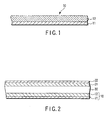
- FIG. 1 is a cross-sectional view schematically showing the basic structure of a redox active reversible electrode according to an embodiment of the present invention.
- a redox active reversible electrode 10 shown in FIG. 1 includes an electrically conductive substrate 11.
- a redox active thin film 12 according to the present invention is formed on at least one surface of the conductive substrate 11.
- the conductive substrate 11 is as has been described above in detail, and it can take such a form of, for example, a rectangular or circular thin flat plate having two opposed main surfaces.
- the redox active thin film 12 is as has been described above in detail. Usually, the redox active thin film 12 can be formed on at least one of the main surfaces of the conductive substrate 11.
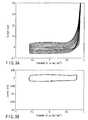
- FIG. 2 is a cross-sectional view schematically showing the basic structure of a redox device such as a lithium secondary battery or a redox secondary battery according to an embodiment of the present invention.
- the redox device shown in FIG. 2 includes a positive electrode 10, which is provided by the redox active reversible electrode shown in FIG. 1, and a negative electrode 21 arranged opposed to and spaced apart from the positive electrode 10.
- An electrolyte layer 30 is interposed between the positive electrode 10 and the negative electrode 21.
- the electrolyte layer 30 and the positive electrode 10 are as have been described above in detail.
- the positive electrode 10 is provided so that the redox active thin film 12 is brought into contact with the electrolyte layer 30.
- the current collector 22 such as of a nickel foil or a copper foil is provided on the negative electrode. The current collector 22 is as has been described above in detail.
- the negative electrode 21 is provided by the lithium-based negative electrode described above.
- the negative electrode 21 is provided by the non-lithium negative electrode described above.
- the redox device of the present invention is capable of exhibiting capacitor properties in addition to the characteristics as a secondary battery, by controlling the applied potential and/or cutoff potential during charging.
- a composite thin film made of PEDOT and DMcT exhibits properties of the new positive electrode material of the lithium secondary battery.
- the positive electrode material of the present invention is capable of exhibiting the function of the capacitor properties that PEDOT has. It will be furthermore demonstrated that the positive electrode material of the present invention, when it is combined with the non-lithium negative electrode, exhibits the characteristics of the positive electrode material of the redox secondary battery.
- acetonitrile (AN) solution solution for electrolytic polymerization containing 20 mM of EDOT monomer among the thiophene compounds represented by the formula (II) and 0.1M of lithium perchlorate (LiClO 4 ) as a supporting electrolyte was prepared.
- a PEDOT coated electrode was prepared in the following manner. Using a 3-electrode type cell, with a glassy carbon disk electrode having a diameter of 3 mm used as a working electrode, a coil platinum wire used as a counter electrode and a silver ion electrode used as a reference electrode, an electrolytic oxidative polymerization was carried out in the solution for electrolytic polymerization described above, thereby preparing a PEDOT coated electrode.
- the silver ion electrode was prepared by dissolving 0.5M silver perchlorate into the solvent (AN) used, and employing a commercially available holder with the solvent used as an inner solution.
- the glassy carbon disk electrode was used after polishing it with polishing alumina on a polishing cloth wetted with pure water, and then washing it with pure water and acetone, followed by drying.
- the electrochemical experiment was carried out using a potentiostat and a X-Y recorder.
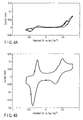
- FIGS. 3A and 3B each are a cyclic voltammogram, wherein FIG. 3A is a cyclic voltammogram (to be abbreviated as CV hereinafter) showing electrolytic polymerization of PEDOT.
- FIG. 3A is a cyclic voltammogram (to be abbreviated as CV hereinafter) showing electrolytic polymerization of PEDOT.
- CV cyclic voltammogram
- FIG. 3B shows a CV of the PEDOT thin film in the AN solvent.
- DMcT 2,5-dimercapto-1,3,4-thiadiazole
- 1.0M LiBF 4 was dissolved into an AN solution of 1.0M LiClO 4 , an N-methyl-2-pyrrolidinone (NMP) solution of 1.0M LiClO 4 , and a solution obtained by mixing propylenecarbonate (PC) and ethylenecarbonate (EC) at a weight ratio of 1:1, each containing 5 mM of DMcT, to prepare an electrolytic solution.
- PC propylenecarbonate
- EC ethylenecarbonate
- the glassy carbon electrode as the working electrode coated with the PEDOT film was prepared by the same method as the method of Example 1, using the electrolytic solutions prepared above. Then, the CV measurement was carried out.
- FIGS. 4A and 4B are CVs of DMcT, which were measured using a PEDOT uncoated electrode and the PEDOT coated electrode, respectively, in the AN electrolyte solution. The measurements were carried out while changing the potential sweeping range. The CVs obtained by performing potential sweeping in a range of from -0.6V to +0.8V are shown in FIGS. 4A and 4B, respectively.
- the PEDOT coated electrode was used, two new waves, which indicate reversible oxidation-reduction responses, were observed at -0.30V (an average value of the potential indicating an oxidation peak current and the potential indicating a reduction peak current) and at +0.4V.
- FIG. 4A shows the CV response of DMcT, which was measured using the electrode that was not coated with PEDOT.
- DMcT which is anion
- the reduction reaction to the reduced form was promoted at substantially near -0.30V by the thin film.
- the oxidation-reduction reaction of DMcT was promoted near -0.3V due to the presence of the PEDOT thin film, and it exhibited a faradaic reversible current response.
- DMcT can be used as an energy conversion material.
- a solution used for measurement was prepared by adding DMcT to an NMP containing 0.1M LiClO 4 to make 2 mM DMcT solution.
- a glassy carbon disk electrode (having a diameter of 3 mm) for the hydrodynamic voltammetry was used.
- a PEDOT coated electrode was prepared. Using a coil platinum wire as the counter electrode and a silver ion electrode as the reference electrode, the measurements were carried out.
- FIG. 5 shows current-potential curves for the oxidation reaction of from a monomer to a dimmer of DMct obtained from a rotation speed of 400 rpm (number of rotation/min) at the PEDOT thin film and the uncoated electrode.
- the graph (a) in FIG. 5 is a current-potential curve obtained with use of the uncoated electrode. An increase in limiting current was observed as the rotation speed increased. Further, as the rotation speed increased, the half wave potential was shifted to the positive electrode side.
- the graph (b) in FIG. 5 is a current-potential curve obtained with use of the PEDOT coated electrode. As in the case of the graph (a), an increase in limiting current was observed as the rotation speed increased. A main difference between voltammograms (a) and (b) in FIG.
- a composite film electrode was prepared, in which the PEDOT film exhibiting the characteristics shown in FIG. 4B was doped with the oxidized form of DMcT.
- this electrode was immersed in an AN electrolyte solution of DMcT, which contained a supporting salt (0.1M LiClO 4 ) or an AN electrolyte solution containing only the supporting salt, and it was evaluated by chronopotentiometry with use of the same 3-electrode electrolytic cell as that used in Example 2 (FIG. 6).
- the charging was performed at a constant current mode of 1 mA/cm 2 for 3 minutes (region A in FIG. 6).
- a non-faradaic discharge current that was generated from the PEDOT thin film was obtained, thus exhibiting the characteristics of a capacitor.
- a faradaic discharge current was obtained, which indicated characteristics based on the redox reaction caused by DMcT.
- a non-faradaic discharge current which is similar to that of the region B, was obtained.
- the electrode material prepared here could exhibit the characteristics of both of a capacitor and a secondary battery (faradaic characteristics) by controlling the cut-off potential during charging and changing doping rate of DMcT to the PEDOT. Further, it was found that the ratio of the exhibited characteristics between them could be controlled.
- a curve (b) indicates a charge-discharge curve obtained when a constant current discharge mode of 1 mA/cm 2 was used at 25°C. As in the case of the curve (a), a flat output potential was obtained here. The charge-discharge efficiency was substantially 100%. From these results, it was confirmed that the composite electrode prepared here exhibits electrode characteristics of a high energy density and high power.
- Activated carbon fibers having a specific surface are of 2000 m 2 /g were applied on a surface of an aluminum foil to have a thickness of 250 g/m 2 , which was employed as an electrode substrate for the composite material of the present invention.
- a PEDOT/DMcT composite thin film was formed by the same method as that of Example 2 on the activated carbon fiber layer of the electrode substrate, thereby obtaining a positive electrode.
- an electrolyte gel film of polyacrylonitrile (impregnated with 1.0M LiPF 6 , PC + EC (weight ratio of 1:1) at a weight ratio of 75% with respect to the total weight), which had a thickness of 200 ⁇ m, was set on a metal lithium foil having a square shape of 3 ⁇ 3 cm and a thickness of 100 ⁇ m.
- the positive electrode of the present invention was placed thereon to prepare an assembly. 2-mm-thick glass plates in which nickel foils are inserted for electrical connection were placed on both surfaces of the assembly, and the glass plates were fixed with clips, thereby preparing a cell for evaluation. It should be noted that the cell for evaluation was assembled in a glove box of an argon atmosphere.
- BS-2500 from Keisoku Giken Co., Ltd. was used.
- a charge-discharge test was carried out at 20°C.
- the charging was carried out in a CC mode while setting the cut-off potential to 4.5V at a current density of 2.0 mA/4cm 2
- the discharging was carried out while setting the cut-off potential to 2.7V at a current density of 2.0 mA/4cm 2 .
- the results exhibited the characteristics of a reversible battery having a high Coulomb efficiency of 90% or more at a high operating potential of 2.8 to 4.0V.
- the cell exhibited the characteristics of a lithium secondary battery that had a flat output potential of 3.3V, and therefore the positive electrode material of the present invention was excellent as a material for a high-performance lithium secondary battery.
- the results further indicated that the cell, even after charging and discharging were repeated 20 times or more, maintained 90% or more of the initial properties.
- the EDOT monomer can be oxidative-polymerized by using a relatively strong oxidizing agent having an oxidation-reduction potential of 1.2V (vs. hydrogen reference electrode) or higher.
- a relatively strong oxidizing agent having an oxidation-reduction potential of 1.2V (vs. hydrogen reference electrode) or higher.
- examples of such an oxidizing agent are potassium permanganate and potassium dichromate.
- the supernatant liquid was discarded.
- 50 mL of pure water was added to the solid material, and ultrasonic wave was applied onto the solid material using an ultrasonic cleaner to disperse it.
- the centrifugal separation was carried out in a similar manner to that described above. Such an operation was repeated 6 times. From the fourth operation on, the pH value of the supernatant solution showed neutral. In this manner, an EDOT polymer was obtained.
- the amount of the EDOT polymer was about 0.2g and the yield was 60%.
- the EDOT polymer was dried overnight in a vacuum at 60°C, and used in the following test.
- the EDOT polymer obtained above was added to an N-methyl-2-pyrrolidinone solvent and the mixture was stirred well to dissolve the polymer, thus preparing a coating solution.
- 1 to 10 ⁇ L of this coating solution was applied on a surface of a glassy carbon disk electrode having a diameter of 3 mm, and dried, thus preparing an electrode coated with an EDOT polymer film.
- electrode for evaluation was evaluated in terms of its electrochemical properties using a three-electrode cell by a cyclic voltammetry method (to be abbreviated as CV hereinafter).
- the evaluation was carried out with a coil platinum wire used as the counter electrode and a silver/silver ion reference electrode used as the reference electrode.
- As the internal reference solution in the silver/silver ion reference electrode a 0.05M acetonitrile solution of silver perchlorate was used.
- the CV measurement was carried out in an acetonitrile solution containing 0.1M of NaClO 4 as the supporting electrolyte. It was found from the results of the measurement that the electrode exhibited substantially the same properties as those of Example 1 in which the measurement was carried out with use of the PEDOT electrode prepared by the electrolytic polymerization. In the current-potential response curve obtained when the linear potential sweeping was repeated in a range of -0.8 to +0.6V, a large and flat charge-discharge current whose main component was the capacitor component was observed. From this fact, it is expected that the EDOT polymer thin film has a high electron conductivity in this potential range.
- Example 2 the redox response with DMcT was examined.
- the results of the evaluation by the CV measurement indicated that the electrode had substantially the same response as that of Example 2.
- the ratio between the first and second waves in size was different from that of Example 2, and there was such a tendency that the first wave was larger in this example that used the chemical oxidizing agent. This is considered to be due to the structure of the EDOT polymer.
- the EDOT polymer synthesized with use of the chemical oxidizing agent had substantially the same electrochemical activity as that of the EDOT polymer synthesized by the electrolytic polymerization method.
- V 2 O 5 xerogel is an intercalation compound that has appropriate intercalation spacing, it is possible to insert monomers between the layers. Further, V 2 O 5 has a high oxidation-reduction potential and therefore has a high oxidizing ability. For these reasons, the inventors considered that it would be possible to synthesize a highly structurally regulated polymer can be synthesized by oxidatively polymerizing the EDOT monomers intercalated between the layers of the V 2 O 5 xerogel. Based on this hypothesis, the following synthesis was carried out for trial, and as a result, it was found that PEDOT could be synthesized. It should be noted here that the said polymer exhibits an electrical conductivity and redox activity.
- the infrared absorption spectrum of the EDOT polymer thus synthesized was measured, and it was found that it had exactly the same absorption peak as that prepared by the electrolytic polymerization method. Therefore, it was concluded that these EDOT polymers had the same chemical structure.
- the powder of thus generated EDOT polymer was subjected to a gel chromatography measurement, and the results indicated that the molecular weight thereof was 2000 to 2400. Synthesizing conditions such as temperature, monomer concentration, mixting ratio and reaction time were changed, and the synthesis was carried out under various conditions for trials. The results of the GCP were substantially the same. It was imagined that the polymerization reaction of EDOT progressed between the layers. Therefore, the EDOT polymer thus obtained is expected to have a high electrical conductivity and a high redox response function.
- an electrode coated with a film of the EDOT polymer was prepared, and the electrochemical properties was evaluated.
- the electrode for evaluation was prepared in the following manner.
- An N-methyl-2-pyrrolidinone (NMP) solution of the EDOT polymer was prepared with an NMP solution to have an appropriate concentration, and 1 to 2 ⁇ L of the prepared solution was dripped onto a surface of a glassy carbon disk electrode having a diameter of 3 mm with use of a micro-syringe. After that, it was dried using a vacuum oven, and thus the electrode for evaluation was obtained.
- NMP N-methyl-2-pyrrolidinone
- the electrochemical properties of the respective electrode were evaluated from the CV method.
- the evaluation was carried out in a 3-electrode cell with a coil platinum wire used as the counter electrode and a silver/silver ion reference electrode used as the reference electrode.
- a 0.05M acetonitrile solution of silver perchlorate was used as the internal reference solution in the silver/silver ion reference electrode.
- the CV measurement was carried out in an acetonitrile solution containing 0.1M of NaClO 4 as the supporting electrolyte. It was found from the results of the measurement that the electrode exhibited exactly the same properties as those of Example 1 in which the measurement was carried out with use of the PEDOT electrode prepared by the electrolytic polymerization. In the current-potential response curve obtained when the linear potential sweeping was repeated in a range of -0.8 to +0.6V, a large and flat charge-discharge current whose main component was the capacitor component was observed. From this fact, it is expected that the EDOT polymer thin film has a high electron conductivity in this potential range.
- Example 2 the redox response with DMcT was examined.
- 3-phenylthiophene (3PT) was added to an acetonitrile electrolyte solution containing 0.2M tetraethylammonium tetrafluoroborate ((C 2 H 5 ) 4 NBF 4 ) as the supporting electrolyte to reach the 3PT monomer concentration of 20 mM.
- 0.2M tetraethylammonium tetrafluoroborate ((C 2 H 5 ) 4 NBF 4 ) as the supporting electrolyte to reach the 3PT monomer concentration of 20 mM.
- a platinum electrode coated with a film of a polymer (PPT) of 3-phenylthiophene was prepared.
- the potential sweeping was carried out between +0.2 to +1.05V in a 3-electrode cell.
- the sweeping speed was 20 mV/sec and the sweeping was repeatedly carried out.
- the electrolysis was carried out so as to have a current electricity amount of 0.32C.
- the above-described polymer film was prepared on a platinum foil having a square shape of 3 ⁇ 3 cm, and thus an electrode having a film thickness of about 1 ⁇ m was prepared.
- a cell for evaluation was prepared as in a similar manner to that of Example 5 except that this PPT coated platinum electrode was used in place of the metal lithium foil negative electrode, and a similar test was carried out.
- the acetonitrile solution containing 0.2M of (C 2 H 5 ) 4 NBF 4 as the supporting electrolyte was used as the electrolyte solution.
- a separator was interposed between the negative electrode and the positive electrode.
- the constant current electrolysis (CC mode) was carried out and it was found that the obtained cell exhibited battery properties having a flat output potential of 1.6 to 1.7V.
- the positive electrode of the present invention when combined with a non-lithium negative electrode, exhibits redox secondary battery properties capable of excellent charging and discharging.
- a redox active reversible electrode that can discharge a practically applicable large current from an initial stage of charging-discharging even at a room temperature.
- the lithium secondary battery and redox secondary battery which employ the redox active reversible electrode of the present application exhibit charging-discharging characteristics of a high energy density at low and high temperatures, and also capacitor characteristics as well.
Landscapes
- Engineering & Computer Science (AREA)
- Chemical & Material Sciences (AREA)
- Power Engineering (AREA)
- Chemical Kinetics & Catalysis (AREA)
- Electrochemistry (AREA)
- General Chemical & Material Sciences (AREA)
- Microelectronics & Electronic Packaging (AREA)
- Materials Engineering (AREA)
- Manufacturing & Machinery (AREA)
- Inorganic Chemistry (AREA)
- Battery Electrode And Active Subsutance (AREA)
- Secondary Cells (AREA)
- Electric Double-Layer Capacitors Or The Like (AREA)
Abstract
A redox active reversible electrode includes
a conductive substrate and a redox active film formed
on at least one surface of the conductive substrate.
The redox active film contains a redox active sulfur
compound and an electrically conductive polymer of a π
electron conjugated compound having p-type doping
characteristics.
Description
The present invention relates to a redox active
(oxidation-reduction active) reversible electrode
employed in an electrochemical device such as a battery
or a capacitor, and more specifically to a redox active
electrode having a redox active film capable of a rapid
electron and charge transfer reaction, formed on
an electrically conductive substrate. Further, the
present invention relates to a lithium secondary
battery, a pseudo capacitor and a pseudo secondary
battery (to be called as redox secondary battery
herein), which employ such a redox active electrode.
In particular, the present invention relates to a
positive electrode employed in a lithium secondary
battery suitable as a power source for a mobile phone
or an electric automobile, which requires a high energy
density. The lithium secondary battery and redox
secondary battery of the present invention can also
exhibit capacitor properties.
Conventional lithium secondary batteries employ,
as their positive electrodes, a lithium inorganic metal
oxide such as lithium cobaltate (LiCoO2), lithium
nickel oxide (LiNiO2) or lithium manganate (LiMn2O4),
and a carbon-based material as their negative
electrodes. It is known that these positive electrode
materials have a theoretical capacity of the energy
density of 100 to 150 Ah/kg, whereas that of the
negative electrode material has a value three times or
more of that of the positive electrode (370 to
800 Ah/kg in the case of a carbon material).
Thus, in order to make a high-performance lithium
secondary battery, it is a pressing need to develop
a new material for a positive electrode capable of
having a high energy density. On the other hand, as
a way of raising the level of safety of the lithium
secondary battery, it is becoming a focus of attention
to use a sulfur compound in place of the lithium-based
metal oxide as the positive material. In general,
sulfur compounds exhibit an oxidation-reduction
reaction activity, and have a high energy accumulating
capability at a high energy density. This is because
the oxidation state of the sulfur atom as the redox
center is able to take a value from -2 to +6, and
therefore a high energy accumulation can be achieved
by utilizing a multiple electron transfer reaction.
However, the electron transfer reaction of a sulfur
compound is slow at room temperature, and therefore it
is conventionally difficult to use the material as it
is as a material for a positive electrode.
Recently, Oyama, one of the inventors of the
present invention, has reported as an example of the
solution to the just-described drawback a material for
a positive electrode, which is made of a composite
material of 2,5-dimercapto-1,3,4-thiadiazol (DMcT)
with polyaniline (N. Oyama, et al., Nature, Vol. 373,
598-600 (1995)). The positive electrode material
comprising this composite exhibits a high electron
transfer reaction rate at room temperature. It is
considered that this is because polyaniline, which is a
conductive polymer, serves to accelerate the oxidation-reduction
reaction of the organic sulfur compound.
In the meantime, the conventional capacitors are
categorized into the following three types: (1) one
that utilizes an electric double layer created at
an interface between an activated carbon polarizable
electrode and the electrolyte, (2) one that utilizes
p-type and n-type doping of an electrically conductive
polymer, and (3) one that uses a metal oxide, in which
charges are accumulated by adsorption of ion species on
the surface of the electrode as well as the oxidation-reduction
of the metal electrode. These capacitors can
provide a high power output instantaneously as compared
to the case of lithium ion batteries, but each of them
has a low energy density (10 to 100 Wh/kg) and is not
long-persisting its output. Further, they have low
output potentials per unit capacitor cell (1.0 to 2.5V)
and exhibit such behaviors that the output potential
decreases in proportion to the discharged charge
amount.
Therefore, in the development of a new capacitor,
there is a demand for an electrode material that
exhibits such a high capacity density equivalent to
that of the lithium secondary battery to appear.
On the other hand, in terms of the lithium secondary
battery, there is a demand for an electrode material
from which a large current can be passed relatively
instantaneously.
It has been found that the organic sulfur compound
exhibits such properties of having a high energy
density, but a battery that uses the organic sulfur
compound and polyaniline does not easily increase
in its current that can be passed per unit weight.
The main causes for this are, for example, as follows.
The organic sulfur compound has no or low electrical
conductivity, and therefore it cannot function as an
electrode unless the compound material is formed into a
thin film having a thickness of several µm to several
tens of µm. Polyaniline turns into a reduced form at
a relatively high potential, losing its conductivity.
Protons are involved in the oxidation-reduction
response, making it complicated. The ability of
the sulfur compound as a catalyst to the oxidation-reduction
reaction greatly depends upon the acidity
of the electrolyte, that is, the proton concentration,
and therefore it is difficult to select the optimal
conditions for the reaction.
Accordingly, an object of the present invention
is to provide a positive electrode material, and in
particular a positive electrode for a lithium secondary
battery that can efficiently utilize the high energy
density that a sulfur compound inherently possesses,
overcoming the drawbacks of the prior art.
Another object of the present invention is to
provide a positive electrode for a non-lithium redox
secondary battery from which a large current can be
passed relatively instantaneously by using it in
combination with a negative electrode of a non-lithium
material.
Still another object of the present invention is
to provide a redox device that employs such an
electrode.
In order to use a sulfur compound (sulfide
compound) as an active material for a positive
electrode of a lithium secondary battery, it is
necessary that an electrically conductive polymer of
a π conjugated compound, which has an oxidation-reduction
reactivity so as to pass a current with a
high energy density that the sulfur compound inherently
possesses, a high electron conductivity in a wide
potential range and a high electron transfer promotion
effect on the oxidation reduction reaction of a thiol
group and a sulfide group, be made to coexist with the
sulfur compound or composited with the sulfur compound.
The material to be made coexist or composited with
the sulfur compound is an electrically conductive
polymer of a π conjugated system, and especially,
polypyrrole and polythiophene are selected as
candidates. Here, it is preferable that the polymer
material is chemically stable in a wide potential
region, especially, even at a high potential (for
example, 4V (vs. Li/Li+) in the presence of an organic
solvent that constitutes the electrolyte. Further, it
is preferable that the polymer material is chemically
stable in a wide temperature region, especially even at
a high temperature. As such a stable polymer material,
a compound in which two electron-donating oxygen
atoms are coupled to a thiophene ring has been proposed
as the material used for an electrolytic capacitor
(See Japanese Patent No. 304011). In particular,
an electrode coated with a thin film of
poly(3,4-ethylenedioxythiophene (also known as polymer
of 2, 3-dihydroxythieno(3, 4-b)(1,4)dioxin-5,7-diyl)
(abbreviated as: PEDOT) exhibits a flat and stable
response to the charging current in a potential region
of 2.0 to 4.9V (vs. Li/Li+) in an acetonitrile solution
containing 1.0M LiClO4. Further, it is known that
a polymer thin film doped with anions exhibits a high
electron conductivity of 200 S/cm or higher (See C.
Kvarnstrom et al., vol. 44, 2739-2750 (1999)).
However, these materials entail such a drawback
that a definite faradaic current response based on the
redox reaction cannot be obtained at a certain constant
potential. In other words, a PEDOT exhibits excellent
properties as a solid electrolyte for a capacitor,
but a large current cannot be continuously passed at
a constant output potential such as in the case of a
secondary battery. Further, a polythiophene derivative
such as PEDOT has such a property that it starts doping
of anions at a relatively low potential of, for
example, +2.6V (vs. Li/Li+). Furthermore, in the case
of such a polythiophene thin film under its oxidation
state controlled at this potential, the most of the
electrochemically active site seems to be in a reduced
state. If the electrode coated with this thin film
is immersed in an organic solvent-based electrolyte,
the open circuit equilibrium potential value is 3.1V
(vs. Li/Li+). Here, the electrode reduces the water
impurity that is present in a small amount in the
electrolyte, whereas the electrode itself turns into
its oxidized state. In other words, this thin film
exhibits such properties of a strong reducing power.
As described above, a polythiophene derivative polymer
such as PEDOT has the following characteristics and
properties. For example, (a) it is chemically stable
in a wide potential range and temperature region; (b)
it exhibits a high electron conductivity, (c) it does
not clearly exhibit a faradaic oxidation-reduction
response, (d) p-type doping can be started at a low
potential, and (e) it has a strong oxidation-reduction
catalytic activity.
On the other hand, a sulfur compound has
an oxidation-reduction reactivity, exhibits a large
faradaic current response and has a capability of
accumulating energy at a high density; however its
electron transfer reaction is slow and a thin film
made of this material has no electron conductivity.
However, many of the sulfur compounds are in a
negatively charged state while in the reduced form,
and therefore it is easy to carry out p-type doping on
them. Further, some of the sulfur compounds have a
thermodynamic equilibrium oxidation-reduction potential
close to 3.0±0.5V (vs. Li/Li+) and there is a
possibility that the electron transfer reaction can
be promoted thermodynamically with polythiophene.
The present invention is based on the above-described
findings.
Thus, according to the present invention, there is
provided a redox active reversible electrode comprising
an electrically conductive substrate and a redox active
film formed on at least one surface of the substrate,
wherein the redox active film comprises a sulfur
compound and an electrically conductive polymer of a π
electron conjugated compound having p-type doping
characteristics.
In the present invention, the redox active film
can be made by doping the electrically conductive
polymer material of π electron conjugated compound
with the sulfur compound to form a composite.
Alternatively, the redox active film can be made by
mixing the electrically conductive polymer material
and the sulfur compound together and then dispersing
electrically conductive particles in the mixture.
Further, according to the present invention, there
is provided a lithium secondary battery or a quasi-secondary
batter (redox secondary battery) comprising
a positive electrode, a lithium negative electrode or
a non-lithium negative electrode and an electrolyte
layer interposed between the positive electrode and
the negative electrode, wherein the positive electrode
is provided by the redox active reversible electrode
according to the present invention.
Furthermore, according to the present invention,
there is provided a lithium device comprising a
positive electrode, a lithium negative electrode and
an electrolyte layer interposed between the positive
electrode and the negative electrode, the positive
electrode being provided by the redox active reversible
electrode according to the present invention, wherein
the lithium device is capable of also exhibiting
capacitor properties by controlling an applied
potential and/or cut-off potential during charging.
In the lithium secondary battery and non-lithium
redox secondary battery of the present invention, it
is preferable that the negative electrode is made of
a material that absorbs/releases lithium ions or a
non-lithium material that can absorb (n-type doping)/release
alkylammonium cations, which will be later
explained in detail.
The present invention will now be described in
more detail.
The redox active reversible electrode of the
present invention has a redox active film on a surface
of an electrically conductive substrate. The redox
active film of the present invention comprises a redox
active sulfur compound and an electrically conductive
polymeric material (polymer) of a π electron
conjugated system having p-type doping characteristics.
As the electrically conductive polymer of a π
electron conjugated compound having p-type doping
characteristics used in the present invention,
polythiophene compounds (a polymer compounds having
repeating units containing a thiophene skeleton
(thiophene or its derivative)) are preferred.
Such polythiophene compounds include a
polythiophene compound containing a repeating unit
represented by the following formula (I):

In the formula (I), R1 and R2 are independently
a hydrogen or an alkyl groups having 1 to 4 carbon
atoms, or may bond to each other to form an alkylene
group having 1 to 4 carbon atoms, 1,2-cyclohexene
group or o-xylylene group, which may be substituted.
Of these polythiophene compounds, PEDOT is particularly
preferable. These polythiophene compounds can be
obtained by oxidative polymerization of a thiophene
compound represented by the following formula (II):

In the formula (II), R1 and R2 have the same
meanings as those of R1 and R2 in the formula (I),
respectively. A particularly preferable example of the
thiophene compound represented by the formula (II) is
3,4-ethylenedioxythiophene (EDOT).
In the formula (I), where R1 and R2 bond to each
other to form an alkylene group having 1 to 4 carbon
atoms, examples of the substituent group on the
alkylene group are a C1 to C14 alkyl group, a phenyl
group, a hydroxymethyl group, -CH2O-(CH2CH2)3-TTF group
(where TTF is a monovalent group derived from a
tetrathiafulvalene compound; the same applies to the
following cases), -CH2O-(CH2CH2O)5-CH2CH2-TTF group,
-CH2O-(CH2CH2)3-S-TTF group,
-CH2O-(CH2CH2O)5-CH2CH2-S-TFT group, and -CH2O(CH2)3SO3-Na+ group. More specifically, the polythiophene compound includes a polymer compound containing a repeting unit represented by the following formula (III): In the formula (III), R0 represents -(CH2)2-,
-CH2CH(CH3)-, -CH2CH(C6H13)-, -CH2CH(C10H21)-,
-CH2CH(C14H29)-, -CH2CH(phenyl)-, -(CH2)3-,
-CH2CH(CH3)CH2-, -(CH2)4-, o-xylene, -CH2CH(OH)-,
-CH2CH(CH2O-(CH2CH2)3-S-trimethylthiotetrathiafulvalene)-,
-CH2CH(CH2O-(CH2CH2O)5-CH2CH2-S-trimethylthiotetrathiafulvalene)-,
or -CH2CH(CH2O(CH2)3SO3-Na+)-. These polymer compounds
are described together with their preparation methods
in documents (for example, Synthetic Metals, vol. 118,
105-109 (2001); Chem. Mater., vol. 10, 896-902 (1998);
Adv. Mater., vol. 13, 1249-1252 (2001); Synthetic
Metals, vol. 125, 441-444 (2002); and Macromolecules,
vol. 29, 7629-7630 (1996)).
In the formula (III), R0 represents -(CH2)2-,
-CH2CH(CH3)-, -CH2CH(C6H13)-, -CH2CH(C10H21)-,
-CH2CH(C14H29)-, -CH2CH(phenyl)-, -(CH2)3-,
-CH2CH(CH3)CH2-, -(CH2)4-, o-xylene, -CH2CH(OH)-,
-CH2CH(CH2O-(CH2CH2)3-S-trimethylthiotetrathiafulvalene)-,
-CH2CH(CH2O-(CH2CH2O)5-CH2CH2-S-trimethylthiotetrathiafulvalene)-,
or -CH2CH(CH2O(CH2)3SO3-Na+)-. These polymer compounds
are described together with their preparation methods
in documents (for example, Synthetic Metals, vol. 118,
105-109 (2001); Chem. Mater., vol. 10, 896-902 (1998);
Adv. Mater., vol. 13, 1249-1252 (2001); Synthetic
Metals, vol. 125, 441-444 (2002); and Macromolecules,
vol. 29, 7629-7630 (1996)).
-CH2O-(CH2CH2)3-S-TTF group,
-CH2O-(CH2CH2O)5-CH2CH2-S-TFT group, and -CH2O(CH2)3SO3-Na+ group. More specifically, the polythiophene compound includes a polymer compound containing a repeting unit represented by the following formula (III):
As the electrically conductive polymer of the π
electron conjugated material used in the present
invention, use may also be made of polymers
derived from the oxidative polymerization of:
(E)-1,2-bis(2-(3,4-ethylenedioxy)thienyl)vinylene,
1,4-bis(2-(3,4-ethylenedioxy)thienyl)benzene,
4,4'-bis(2-(3,4-ethylenedioxy)thienyl)biphenyl,
2,5-bis(2-(3,4-ethylenedioxy)thienyl)furan,
2,5-bis(2-(3,4-ethylenedioxy)thienyl)thiophene,
or 2,2':5',2"-ter(3,4-ethylenedioxy)thiophene.
These polymer compounds are described together with
their preparation methods in documents (for example,
Chem. Mater., vol. 8, 882-889 (1996)).
In general, the polythiophene compound used in the
present invention can be obtained in the form of a thin
film or powder by a chemical oxidative polymerization
method using a chemical oxidizer or an electro-oxidative
polymerization method. The chemical
polymerization method is described in detail in
Japanese Patent No. 3040113 mentioned above. That is,
a thiophene compound such as dialkoxythiophene
represented by the formula (II) and a chemical oxidizer
are provided, preferably in the form of solutions, one
after another, or preferably altogether, on a surface
of a carbon thin film or a metal foil, which is used
as a current collector (electrically conductive
substrate). Then, the coating is heated if necessary
depending on the activity of the oxidizer used to
complete the oxididative polymerization. In this
manner, the compound is formed directly on the current
collector (electrically conductive substrate) as a thin
film.
As described above, the thiophene compound used
as the positive electrode active material can be
polymerized by a chemical oxidative polymerization
using various oxidizers from a corresponding monomer or
dimmer as a starting material. This chemical oxidative
polymerization is preferably carried out especially
with use of potassium permanganate or potassium
dichromate in a mixed solvent of methanol and water.
For example, a dialkoxythiophene represented by the
formula (II), such as 3,4-ethylenedioxythiophene (EDOT)
is dissolved in a water-methanol mixed solvent, and
to the resultant solution, a methanol solution of
potassium permanganate (KMnO4) is added dropwise.
The mixture is reacted for about an hour at at a low
temperature (for example, 0 to -5°C). Then, perchloric
acid is added, and the mixture is further reacted.
Thus, a dark blue product can be obtained. The thus
obtained reaction mixture is separated by centrifugal
separation. Then, water is added to the separated
product and the centrifugal separation is repeated.
The separation is repeated until excessive acid is
removed from the reaction mixture solution, and thus
dark blue powder of PEDOT can be obtained.
Alternatively, a thiophene compound can be
polymerized using xerogel (VX) of vanadium pentoxide
(V2O5) in an aqueous solution, and the resultant
polymer is obtained in the form of powder. In this
case, an aqueous solution of vanadium pentoxide xerogel
and a thiophene compound represented by the formula
(II), such as dialkoxythiophene are mixed together and
the resultant solution is stirred to polymerize the
thiophene compound between VXs, and the mixture is
filtrated. Since VX is dissolved into an alkaline
solution, an alkaline solution is added to thus
obtained filtration residue to dissolve VX, and
thus the polythiophene compound can be isolated.
In the electro-oxidative polymerization method,
a thiophene compound (monomer) represented by the
formula (II) such as a dialkoxythiophene is dissolved
into an electrolyte solution consisting of, for
example, a nitrile solvent such as acetonitrile (AN),
benzonitrile or butyronitrile, or a propylenecarbonate
(PC) solvent, containing 0.1M to 1.0M of a lithium salt
as a supporting electrolyte salt, and the resultant
solution can be used as the polymerizing solution.
With a carbon electrode or a metal foil electrode as
a current collector (conductive substrate) used as
a working electrode, and a platinum wire used as
a counter electrode and a silver/silver ion electrode
or a lithium metal foil used as a reference electrode,
a constant potential or a potential sweeping is applied
to the working electrode to induce a polymerization
reaction on the surface of the working electrode,
thereby forming a thin film. Alternatively, a desired
polymer can be obtained by a respective method
described in the documents listed above.
The redox active sulfur compound used in the
present invention may be an inorganic sulfur compound
or an organic sulfur compound. As such a sulfur
compound, use may be made of a carbon disulfide
compound represented by (S)x m- (where x is 1 to 8 and
m is 0 to 2) or (SCS)n (where n is 1 to 10),
2-mercaptoethylether, 2-mercaptroethylsulfide,
1,2-ethanediole, tetrathioethylenediamine,
N,N'-dithio-N,N'-dimethylethylenediamine,
trithiocyanuric acid, 2,4-dithiopyridine,
4,5-diamino-2,6-dimethylmercaptopyridine,
N,N'-dimercaptopiperazine, 2,5-dimercapto-1,3,4-thiadiazole
(DMcT), etc. Further, those compounds
represented by the following formulas (1) to (5) can be
used as such a sulfur compound:


These sulfur compounds can be used as such or
in the form of an oligomer. Further, as the sulfur
compound, dodecylbenzenesulfonate or tosylate can be
used as well. In the case where the redox active
reversible electrode formed using 2,5-dimethylcapto-1,3,4-thiadiazole
(DMcT) among these sulfur compounds
is incorporated in a lithium secondary battery,
particularly excellent charge-discharge characteristics
can be obtained.
The polythiophene compound formed on the
conductive electrode substrate by the above-described
method can be doped with the sulfur compound to form
a composite, thereby providing a reversible thin film
electrode having a redox activity. Here, the doping
with the sulfur compound can be easily performed by
immersing a conductive substrate (electrode) coated
with the polythiophene into an electrolyte solution
in which the sulfur compound is dissolved, and
an appropriate potential is applied to this electrode
as a working electrode at a constant value or by
potential sweeping. The composite film obtained
after the doping with the sulfur compound exhibits
an oxidation-reduction wave corresponding to the
reversible redox response of the sulfur compound.
The redox active thin film of the present
invention can also be prepared in the following manner.
That is, a sulfur compound, especially, that
represented by the formulas (1) to (5), is mixed, in
the form of liquid or solid powder, with powder of the
polythiophene derivative, and then appropriate amounts
of electrically conductive fine particles and a binder
are further mixed thereinto. The resultant mixture is
coated onto the current collector substrate and then
subjected to pressure molding. With the thus prepared
electrode, it is possible to pass a practically
applicable large current as, for example, 0.1 to
3 mA/cm2, from an initial stage of charging-discharging
even at a room temperature.
The conductive fine particles are made of a
material having an electron conductivity. Examples
of the electron conductive material are metals such
as copper, iron, silver, nickel, palladium, gold,
platinum, indium and tungsten, conductive metal oxides
such as indium oxide and tin oxide, and carbon. These
conductive fine particles is preferably made of silver,
palladium, nickel, gold or copper, and a mixture of
different type conductive fine particles can be used as
well. It is preferable that the conductive fine
particles have an average diameter size of 0.2 nm to
100 nm, and more preferably, an average diameter size
of 2 to 20 nm. The average size of the conductive
ultra-fine particles can be measured by a laser
Doppler-type particle diameter measuring method. It is
preferable that the conductive ultra-fine particles are
contained in an amount of 1 to 15% by weight in the
redox active thin film.
The substrate (current collector) that supports
the redox active film of the present invention is
an electrically conductive substrate that exhibits
an electrical conductivity on at least a surface that
is brought into contact with the redox active film.
This substrate can be made of an electrically
conductive material such as a metal, an electrically
conductive metal oxide or carbon, and it is preferably
made of copper, carbon, gold, aluminum or an alloy of
any of these. Alternatively, it is possible to provide
an electrically conductive substrate by coating the
substrate body made of the other material with the
electrically conductive material. Further, the
conductive substrate may have an unevenness of the
surfaces or may be of a net-like structure.
In either case of the doping and mixing, the
redox active sulfur compound is desirably contained
in an amount of 30 to 80% of the total weight of the
conductive polymer of the π electron conjugated
compound and the redox active sulfur compound.
In a redox active thin film made of a composite
prepared by doping a polythiophene derivative of the π
electron conjugated conductive polymer with a redox
active sulfur compound, a fast electron transfer
reaction can be achieved within the redox active thin
film and at the interface between the redox active thin
film and the current collector due to the electron
transfer promotion effect for the redox reaction of the
sulfide compound. This is due to the enhancement of
the electron conductivity in the film, the promoting
effect on the reaction forming the dithioether bond
(-S-S-) by the oxidation reaction of the thiol group
and on the reductive dissociation reaction of the
dithioether bond, and the increase in its reaction
surface area (surface area of the collector).
The increase in the surface area of the collector
promotes apparent electron transfer reaction (electrode
reaction) near the electrode interface.
In the present invention, it is preferable that
the redox active thin film have a thickness of 10 to
120 µm. Further, the conductive substrate preferably
has a thickness of 1 to 40 µm. In the case where the
sulfur compound or electrically conductive polymer is
used in the form of powder, the particle diameter size
of each of these powders is preferably smaller than the
thickness of the redox active thin film.
It is preferable that the redox active reversible
electrode of the present invention is used as a
positive electrode of a lithium secondary battery in
particular. A lithium secondary battery includes a
positive electrode and a lithium negative electrode,
and an electrolyte layer is interposed between them.
In the lithium secondary battery of the present
invention, the positive electrode is provided a redox
active reversible electrode according to the present
invention. The lithium negative electrode can be made
of a lithium-based metallic material such as metal
lithium or a lithium alloy (for example, Li-Ai alloy),
or a lithium intercalation carbon material. It is
preferable that the lithium-based metal material is
used in the form of foil in order to reduce the weight
of the battery. The lithium-based negative electrode
preferably has a thickness of 5 µm to 200 µm.
It should be noted that usually, a conductive substrate
(preferably having a thickness of 1 µm to 40 µm)
serving as a current collector is connected to the
lithium-based negative electrode. The electrolyte
layer interposed between the positive electrode and
negative electrode is made of a polymer gel containing
an electrolyte solution (polymer gel electrolyte).
As the electrolyte contained in the above-described
polymer electrolyte, lithium salts such as CF3SO3Li,
C4F9SO8Li, (CF3SO2)2NLi, (CF3SO2)3CLi, LiBF4, LiPF6 and
LiClO4 may be used. It is preferable that the solvent
which dissolves these electrolytes is a non-aqueous
solvent. Such a non-aqueous solvent includes a chain
carbonate, a cyclic carbonate, a cyclic ester,
a nitrile compound, an acid anhydrate, an amide
compound, a phosphate compound and an amine compound.
Specific examples of the non-aqueous solvent are
propylene carbonate, dimethoxyethane, γ-butyrolactone,
N-methyl-2-pyrrolidinone, N,N'-dimethylacetamide,
a mixture of propylenecarbonate and dimethoxyethane and
a mixture of sulfolane and tetrahydrofuran.
As the polymer gel, it is preferable that
a copolymer of acrylonitrile with methyl acrylate or
methacrylate is used. The polymer gel electrolyte can
be obtained by immersing the polymer in the electrolyte
solution or polymerizing the structural component
(monomer/compound) of the polymer in the presence of
the electrolyte solution. Alternatively, a novel
polyolefin-based gel, which has been proposed by one
of the present inventors, Oyama and others, can be
suitably used (See Oyama et al., Jpn. Pat. Appln.
No. 2001-320319.) The polymer that constitutes this
polyolefin-based gel is a non-crosslinked polymer in
which a compound comprising an oligomer of polyethylene
oxide such as polyethylene glycol is grafted to the
polyethylene in an amount of about 10% by mole of the
polyethylene. This polymer has an entirely different
property from that of a non-grafted polyethylene and it
absorbs a large amount of an organic electrolyte
solution to be formed into a gel, which has a
capability of holding the absorbed solution. Thus, by
immersing the polymer into the electrolyte solution,
a gel electrolyte can be obtained.
The redox active reversible electrode of the
present invention can be used not only as a positive
electrode of a lithium secondary battery, but also as
a positive electrode of a non-lithium battery (redox
secondary battery) that includes a negative electrode
made of a conductive polymer material or a carbon
material such as an activated carbon material, which
can be reversibly doped or dedoped with non-lithium
ions. This redox secondary battery includes a positive
electrode and a non-lithium negative electrode, and
an electrolyte layer is introduced between them.
The non-lithium electrode is made of a carbon material
that can be reversibly doped or dedoped with
alkylammonium ions. As the negative electrode
material, use may be preferably made of a polyacene,
a polythiophene derivative, a high-purity activated
carbon and a carbon nanotube, which can smoothly
undergo n-type doping. It is preferable that the
negative electrode material has a thickness of 5 µm
to 200 µm, and usually, it can be formed on an
electrically conductive substrate (preferably having
a thickness of 1 µm to 40 µm) that functions as
a current collector such as a nickel foil or a copper
foil. The electrolyte layer interposed between the
positive electrode and the negative electrode is
preferably made of a polymer gel containing an
electrolyte solution (polymer gel electrolyte).
The electrolyte contained in the polymer electrolyte,
use may be made of BF4 - salts, PF6- salts,
dodecylbenzenesulfonate salts and tolcylate salts of
a quaternary alkylammonium such as tetraethylammonium
tetrafluoroborate or triethylmethylammonium
tetrafluoroborate. It is preferable that the solvent
that dissolves these electrolytes is a non-aqueous
solvent. As the non-aqueous solvent, use may be made
of the nitrile compound, the carbonate compound, and
the like, as well as a mixture of these, which as been
described for the lithium secondary battery. As the
polymer gel electrolyte, the materials mentioned above
in connection with the lithium secondary battery can be
used.
FIG. 1 is a cross-sectional view schematically
showing the basic structure of a redox active
reversible electrode according to an embodiment of the
present invention. A redox active reversible electrode
10 shown in FIG. 1 includes an electrically conductive
substrate 11. A redox active thin film 12 according to
the present invention is formed on at least one surface
of the conductive substrate 11. The conductive
substrate 11 is as has been described above in detail,
and it can take such a form of, for example, a
rectangular or circular thin flat plate having two
opposed main surfaces. The redox active thin film 12
is as has been described above in detail. Usually, the
redox active thin film 12 can be formed on at least one
of the main surfaces of the conductive substrate 11.
FIG. 2 is a cross-sectional view schematically
showing the basic structure of a redox device such as a
lithium secondary battery or a redox secondary battery
according to an embodiment of the present invention.
The redox device shown in FIG. 2 includes a positive
electrode 10, which is provided by the redox active
reversible electrode shown in FIG. 1, and a negative
electrode 21 arranged opposed to and spaced apart from
the positive electrode 10. An electrolyte layer 30 is
interposed between the positive electrode 10 and the
negative electrode 21. The electrolyte layer 30 and
the positive electrode 10 are as have been described
above in detail. The positive electrode 10 is provided
so that the redox active thin film 12 is brought into
contact with the electrolyte layer 30. The current
collector 22 such as of a nickel foil or a copper foil
is provided on the negative electrode. The current
collector 22 is as has been described above in detail.
In the case where the redox device shown in FIG. 2
is a lithium-based redox device such as a lithium
secondary battery, the negative electrode 21 is
provided by the lithium-based negative electrode
described above.
In the case where the redox device shown in FIG. 2
is a non-lithium redox device such as a redox secondary
battery, the negative electrode 21 is provided by the
non-lithium negative electrode described above.
As described above, the redox device of the
present invention is capable of exhibiting capacitor
properties in addition to the characteristics as a
secondary battery, by controlling the applied potential
and/or cutoff potential during charging.
The present invention will now be described with
reference to examples; however the invention should not
be limited to these examples.
First, preparation examples of an electrode coated
with a thin film of PEDOT which is a polythiophene,
prepared with an electrolytic polymerization method,
and the characteristics of the redox response thereof
will be described. Next, it will be demonstrated with
a cyclic voltammetry that the PEDOT thin film electrode
has an electron transfer promoting effect on the redox
reaction, i.e., both of the oxidation reaction and
reduction reaction, of an organic sulfur compound,
especially, DMcT. Further, it will be demonstrated
with a convection voltammetry that a heterogenous
electron transfer reaction occurs substantially
reversibly (a rate constant of 10-4 cm/s or higher)
between the surface of the PEDOT thin film and DMcT
molecules. Lastly, it will be demonstrated that a
composite thin film made of PEDOT and DMcT exhibits
properties of the new positive electrode material of
the lithium secondary battery. Further, it will be
demonstrated that the positive electrode material of
the present invention is capable of exhibiting the
function of the capacitor properties that PEDOT has.
It will be furthermore demonstrated that the positive
electrode material of the present invention, when it
is combined with the non-lithium negative electrode,
exhibits the characteristics of the positive electrode
material of the redox secondary battery.
An acetonitrile (AN) solution (solution for
electrolytic polymerization) containing 20 mM of EDOT
monomer among the thiophene compounds represented by
the formula (II) and 0.1M of lithium perchlorate
(LiClO4) as a supporting electrolyte was prepared.
A PEDOT coated electrode was prepared in the
following manner. Using a 3-electrode type cell, with
a glassy carbon disk electrode having a diameter of
3 mm used as a working electrode, a coil platinum wire
used as a counter electrode and a silver ion electrode
used as a reference electrode, an electrolytic
oxidative polymerization was carried out in the
solution for electrolytic polymerization described
above, thereby preparing a PEDOT coated electrode.
The silver ion electrode was prepared by dissolving
0.5M silver perchlorate into the solvent (AN) used, and
employing a commercially available holder with the
solvent used as an inner solution. The glassy carbon
disk electrode was used after polishing it with
polishing alumina on a polishing cloth wetted with pure
water, and then washing it with pure water and acetone,
followed by drying. The electrochemical experiment was
carried out using a potentiostat and a X-Y recorder.
FIGS. 3A and 3B each are a cyclic voltammogram,
wherein FIG. 3A is a cyclic voltammogram (to be
abbreviated as CV hereinafter) showing electrolytic
polymerization of PEDOT. It can be seen that in the
first potential sweeping, an increase in oxidation
current is observed at near +0.8V (vs. Ag / Ag+), which
indicates that the EDOT monomer is oxidized on the
glassy carbon electrode. It can be further seen that
as the potential sweeping is repeated, an increase in
the current is observed in a wide potential region,
which indicates that a PEDOT thin film is generated
by the oxidative polymerization. The quantity of
electricity during the polymerization was set at 9 mC.
The PEDOT thin film electrode prepared as above was
immersed in an AN solution containing 0.1M LiClO4, and
its CV response was examined. FIG. 3B shows a CV of
the PEDOT thin film in the AN solvent. When sweeping
was conducted in a potential range of from -0.6V to
+0.8V, a large and smooth charge current was observed,
which indicates that the thin film has a high electron
conductivity in this potential range.
As a typical example of the organic sulfur
compound, 2,5-dimercapto-1,3,4-thiadiazole (DMcT) was
selected. 1.0M LiBF4 was dissolved into an AN solution
of 1.0M LiClO4, an N-methyl-2-pyrrolidinone (NMP)
solution of 1.0M LiClO4, and a solution obtained by
mixing propylenecarbonate (PC) and ethylenecarbonate
(EC) at a weight ratio of 1:1, each containing 5 mM
of DMcT, to prepare an electrolytic solution.
Subsequently, the glassy carbon electrode as the
working electrode coated with the PEDOT film was
prepared by the same method as the method of Example 1,
using the electrolytic solutions prepared above.
Then, the CV measurement was carried out.
FIGS. 4A and 4B are CVs of DMcT, which were
measured using a PEDOT uncoated electrode and the PEDOT
coated electrode, respectively, in the AN electrolyte
solution. The measurements were carried out while
changing the potential sweeping range. The CVs
obtained by performing potential sweeping in a range of
from -0.6V to +0.8V are shown in FIGS. 4A and 4B,
respectively. In the case where the PEDOT coated
electrode was used, two new waves, which indicate
reversible oxidation-reduction responses, were observed
at -0.30V (an average value of the potential indicating
an oxidation peak current and the potential indicating
a reduction peak current) and at +0.4V. When the
applied potential was held on a positive side from +0.8
to 1.2V for 3 minutes, the response of the new wave at
-0.3V was remarkably increased. It is considered that
the increase in the current response observed at
a potential near -0.30V as shown in FIG. 4B was due to
an oxidation of DMcT and a polymer thereof that were
generated near the electrode. Depending on the time
period of holding the applied potential and the value
of potential, the response varies, which suggest that
there are the optimal potential value, optimal hold
time and the optimal concentration of dissolved DMcT
with respect to the thickness of the PEDOT thin film,
at which the current response increases at the maximum.
By contrast, FIG. 4A shows the CV response of
DMcT, which was measured using the electrode that was
not coated with PEDOT. Near -0.30V, a wave based on
a reversible oxidation-reduction response was not
observed. Further, even if the applied potential
was held for 3 minutes at +0.8V of the positive
potential, such a large reversible wave response
observed at -0.30V as described above was not observed.
The results of these observations indicate that
near -0.3V, DMcT, which is anion, was doped into the
PEDOT thin film, where DMcT was concentrated and fixed.
The PEDOT film promotes the oxidation reaction of DMcT
near -0.30V. Further, for the generated oxidation
product, the reduction reaction to the reduced form was
promoted at substantially near -0.30V by the thin film.
In other words, the oxidation-reduction reaction of
DMcT was promoted near -0.3V due to the presence of the
PEDOT thin film, and it exhibited a faradaic reversible
current response. Thus, DMcT can be used as an energy
conversion material.
In place of the 1.0M LiClO4 AN solution used in
the preparation of the electrolyte solution in this
example, other nitrile compound solutions of 1.0M
LiClO4, that is, benzonitrile and butyronitrile
solutions, were used to perform the same experiment.
The promoting effect of the PEDOT thin film on the
redox response of DMcT was observed in each of these
solvents. In particular, the activity obtained when
using butylonitrile was at the same level as that of
the case where AN was used. Thus, in the case where
solvents other than acetonitrile were used, the
promoting effect of the PEDOT thin film on the redox
response of DMcT was observed.
A solution used for measurement was prepared by
adding DMcT to an NMP containing 0.1M LiClO4 to make
2 mM DMcT solution. As the working electrode, a glassy
carbon disk electrode (having a diameter of 3 mm) for
the hydrodynamic voltammetry was used. In the same
manner as that of Example 2, a PEDOT coated electrode
was prepared. Using a coil platinum wire as the
counter electrode and a silver ion electrode as the
reference electrode, the measurements were carried out.
FIG. 5 shows current-potential curves for the oxidation
reaction of from a monomer to a dimmer of DMct
obtained from a rotation speed of 400 rpm (number of
rotation/min) at the PEDOT thin film and the uncoated
electrode. The graph (a) in FIG. 5 is a current-potential
curve obtained with use of the uncoated
electrode. An increase in limiting current was
observed as the rotation speed increased. Further, as
the rotation speed increased, the half wave potential
was shifted to the positive electrode side. The graph
(b) in FIG. 5 is a current-potential curve obtained
with use of the PEDOT coated electrode. As in the case
of the graph (a), an increase in limiting current was
observed as the rotation speed increased. A main
difference between voltammograms (a) and (b) in FIG. 5
was that the half-wave value of potential obtained
based on the oxidation reaction of DMcT in the uncoated
electrode was +0.05V, whereas that of DMcT in the PEDOT
coated thin film electrode was -0.30V, indicating that
the potential was shifted by about 0.35V to the
positive side. In other words, it can be seen that the
oxidation reaction of DMcT was significantly promoted
by the PEDOT thin film. Meanwhile, a log plot in which
log[i/(ilim - i)] calculated from the current-potential
curve was plotted against the potential, where ilim
represents a limiting current value of a hydrodynamic
voltammogram and i represents a current value flowing
at a potential E, was performed. The results of the
plot indicated that the slope of the log plot of the
voltammogram obtained with the PEDOT coated electrode
was 58 mV, and substantially the same slope was
obtained even if the rotation speed of the electrode
was varied. From the results, it was found that the
oxidation reaction at -0.30V has a higher value than
10-4 cm/s for the rate constant of the standard
heterogeneous electron transfer reaction (standard
electrode reaction), and the electrode reaction can be
called a reversible reaction system.
By the technique described in Example 2 above,
a composite film electrode was prepared, in which the
PEDOT film exhibiting the characteristics shown in
FIG. 4B was doped with the oxidized form of DMcT.
In order to examine the basic characteristics of the
energy storing capability of thus prepared electrode,
this electrode was immersed in an AN electrolyte
solution of DMcT, which contained a supporting salt
(0.1M LiClO4) or an AN electrolyte solution containing
only the supporting salt, and it was evaluated by
chronopotentiometry with use of the same 3-electrode
electrolytic cell as that used in Example 2 (FIG. 6).
The charging was performed at a constant current mode
of 1 mA/cm2 for 3 minutes (region A in FIG. 6). Here,
a potential of +1.3V was set as the cut-off potential.
The discharging was performed at constant current
densities of 0.2 and 1.0 mA/cm2. A curve (a) that was
obtained when discharged at 0.50 mA/cm2 is described
next. First, the output potential attenuated
substantially linearly from +0.45V (which will be
called region (B)). Next, in a range from near -0.30V
to -0.35V (region (C)), the curve became substantially
flattened and attenuated extremely moderately. On a
negative side with respect to -0.35V, the output
potential again attenuated linearly (region (D)).
Then, on a further negative side with respect to -1.0V,
the output potential dropped abruptly. In the region
B, a non-faradaic discharge current that was generated
from the PEDOT thin film was obtained, thus exhibiting
the characteristics of a capacitor. In the region C,
a faradaic discharge current was obtained, which
indicated characteristics based on the redox reaction
caused by DMcT. Further, in the region (D), a
non-faradaic discharge current, which is similar to
that of the region B, was obtained. To summarize,
it was confirmed that the electrode material prepared
here could exhibit the characteristics of both of
a capacitor and a secondary battery (faradaic
characteristics) by controlling the cut-off potential
during charging and changing doping rate of DMcT to
the PEDOT. Further, it was found that the ratio of
the exhibited characteristics between them could be
controlled. A curve (b) indicates a charge-discharge
curve obtained when a constant current discharge mode
of 1 mA/cm2 was used at 25°C. As in the case of the
curve (a), a flat output potential was obtained here.
The charge-discharge efficiency was substantially 100%.
From these results, it was confirmed that the composite
electrode prepared here exhibits electrode characteristics
of a high energy density and high power.
Activated carbon fibers having a specific surface
are of 2000 m2/g were applied on a surface of
an aluminum foil to have a thickness of 250 g/m2,
which was employed as an electrode substrate for
the composite material of the present invention.
A PEDOT/DMcT composite thin film was formed by the same
method as that of Example 2 on the activated carbon
fiber layer of the electrode substrate, thereby
obtaining a positive electrode. Then, an electrolyte
gel film of polyacrylonitrile (impregnated with 1.0M
LiPF6, PC + EC (weight ratio of 1:1) at a weight ratio
of 75% with respect to the total weight), which had
a thickness of 200 µm, was set on a metal lithium foil
having a square shape of 3 × 3 cm and a thickness of
100 µm. Then, the positive electrode of the present
invention was placed thereon to prepare an assembly.
2-mm-thick glass plates in which nickel foils are
inserted for electrical connection were placed on both
surfaces of the assembly, and the glass plates were
fixed with clips, thereby preparing a cell for
evaluation. It should be noted that the cell for
evaluation was assembled in a glove box of an argon
atmosphere. As the measurement device, BS-2500 from
Keisoku Giken Co., Ltd. was used.
With use of the test cell prepared as above,
a charge-discharge test was carried out at 20°C.
In the test, the charging was carried out in a CC mode
while setting the cut-off potential to 4.5V at a
current density of 2.0 mA/4cm2, and the discharging was
carried out while setting the cut-off potential to 2.7V
at a current density of 2.0 mA/4cm2. The results
exhibited the characteristics of a reversible battery
having a high Coulomb efficiency of 90% or more at
a high operating potential of 2.8 to 4.0V. Further, it
was found that the cell exhibited the characteristics
of a lithium secondary battery that had a flat output
potential of 3.3V, and therefore the positive electrode
material of the present invention was excellent as
a material for a high-performance lithium secondary
battery. The results further indicated that the cell,
even after charging and discharging were repeated
20 times or more, maintained 90% or more of the initial
properties.
From the results of the electrolytic oxidation
in the acetonitrile solution of EDOT monomer, it is
understood that the EDOT monomer can be oxidative-polymerized
by using a relatively strong oxidizing
agent having an oxidation-reduction potential of 1.2V
(vs. hydrogen reference electrode) or higher. Examples
of such an oxidizing agent are potassium permanganate
and potassium dichromate. However, merely by oxidation
with these oxidizing agents, only a polymer having
a low conductivity and a low redox activity could be
obtained. It was found that when the oxidative
polymerization reaction of EDOT was allowed to occur at
a low temperature, the polymerization reaction could be
regulated at a higher degree.
First, 0.3g of EDOT was dissolved into 100 mL of a
water-methanol mixed solvent (volume ratio of 155: 15).
To this solution, total of 15 mL of a 0.17 N methanol
solution of potassium permanganate was added dropwise,
and the mixture was reacted at 0 to -5°C for one hour.
Further, 0.4 mL of a commercially available
concentrated perchloric acid (60% by volume) was added
dropwise and the mixture was reacted at 0 to -5°C for
one hour while strongly stirring the mixture. As a
result, a floating dark blue solid material was
generated in the solution. The solution containing
thus generated solid material was transferred to
a centrifugal separation tube, and separated into
the solvent and solid material using a centrifugal
separator. Then, the supernatant liquid was discarded.
50 mL of pure water was added to the solid material,
and ultrasonic wave was applied onto the solid material
using an ultrasonic cleaner to disperse it. After
that, the centrifugal separation was carried out in
a similar manner to that described above. Such an
operation was repeated 6 times. From the fourth
operation on, the pH value of the supernatant solution
showed neutral. In this manner, an EDOT polymer was
obtained. The amount of the EDOT polymer was about
0.2g and the yield was 60%. The EDOT polymer was
dried overnight in a vacuum at 60°C, and used in the
following test. The infrared absorption spectrum of
the EDOT polymer thus chemically synthesized was
measured, and it was found that it had the same
absorption peak as that prepared by the electrolytic
polymerization method. Therefore, it was concluded
that these EDOT polymers had basically the same
chemical structure.
The EDOT polymer obtained above was added to an
N-methyl-2-pyrrolidinone solvent and the mixture was
stirred well to dissolve the polymer, thus preparing
a coating solution. Next, 1 to 10 µL of this coating
solution was applied on a surface of a glassy carbon
disk electrode having a diameter of 3 mm, and dried,
thus preparing an electrode coated with an EDOT polymer
film.
Thus obtained electrode for evaluation was
evaluated in terms of its electrochemical properties
using a three-electrode cell by a cyclic voltammetry
method (to be abbreviated as CV hereinafter). The
evaluation was carried out with a coil platinum wire
used as the counter electrode and a silver/silver ion
reference electrode used as the reference electrode.
As the internal reference solution in the silver/silver
ion reference electrode, a 0.05M acetonitrile solution
of silver perchlorate was used.
The CV measurement was carried out in an
acetonitrile solution containing 0.1M of NaClO4 as the
supporting electrolyte. It was found from the results
of the measurement that the electrode exhibited
substantially the same properties as those of Example 1
in which the measurement was carried out with use of
the PEDOT electrode prepared by the electrolytic
polymerization. In the current-potential response
curve obtained when the linear potential sweeping was
repeated in a range of -0.8 to +0.6V, a large and flat
charge-discharge current whose main component was the
capacitor component was observed. From this fact,
it is expected that the EDOT polymer thin film has
a high electron conductivity in this potential range.
Next, in a similar manner to that of Example 2,
the redox response with DMcT was examined. The results
of the evaluation by the CV measurement indicated that
the electrode had substantially the same response as
that of Example 2. However, the ratio between the
first and second waves in size was different from that
of Example 2, and there was such a tendency that the
first wave was larger in this example that used the
chemical oxidizing agent. This is considered to be due
to the structure of the EDOT polymer. However, from
the results of the evaluation described above, it was
imagined that the EDOT polymer synthesized with use of
the chemical oxidizing agent had substantially the same
electrochemical activity as that of the EDOT polymer
synthesized by the electrolytic polymerization method.
Since V2O5 xerogel is an intercalation compound
that has appropriate intercalation spacing, it is
possible to insert monomers between the layers.
Further, V2O5 has a high oxidation-reduction potential
and therefore has a high oxidizing ability. For these
reasons, the inventors considered that it would be
possible to synthesize a highly structurally regulated
polymer can be synthesized by oxidatively polymerizing
the EDOT monomers intercalated between the layers of
the V2O5 xerogel. Based on this hypothesis, the
following synthesis was carried out for trial, and as
a result, it was found that PEDOT could be synthesized.
It should be noted here that the said polymer exhibits
an electrical conductivity and redox activity.
First, 6g of methavanadic acid (NaVO3) was well
dissolved into 500 mL of distilled water and then the
solution was allowed to pass through an ion exchange
resin column, thereby preparing an aqueous solution of
methavanadic acid HVO3. The HVO3 aqueous solution was
allowed to react slowly under atmospheric pressure over
5 days, and thus an aqueous solution in which gel
materials was obtained. Next, the aqueous solution was
dripped on a glass plate to vaporize the water for
drying, thereby obtaining V2O5 xerogel as a solid
compound. The water content of the V2O5 xerogel was
about 15% by weight.
Next, the above-described synthesized material,
V2O5 xerogel, and EDOT monomer were added to pure water
and well mixed together by stirring, and the mixture
was slowly reacted over 3 hours to 7 days. As a
result, it was confirmed that the polymer of EDOT was
prepared in the V2O5 xerogel. The EDOT polymer in the
V2O5 xerogel was, after the V2O5 xerogel containing the
product of the EDOT polymer was filtrated out, added to
a 2% by weight NaOH aqueous solution and reacted for
about 20 hours while stirring. Powder of the EDOT
polymer could be obtained by eluting the V2O5 xerogel
into the solution and filtration. The infrared
absorption spectrum of the EDOT polymer thus
synthesized was measured, and it was found that it
had exactly the same absorption peak as that
prepared by the electrolytic polymerization method.
Therefore, it was concluded that these EDOT polymers
had the same chemical structure. The powder of thus
generated EDOT polymer was subjected to a gel
chromatography measurement, and the results indicated
that the molecular weight thereof was 2000 to 2400.
Synthesizing conditions such as temperature, monomer
concentration, mixting ratio and reaction time were
changed, and the synthesis was carried out under
various conditions for trials. The results of the GCP
were substantially the same. It was imagined that the
polymerization reaction of EDOT progressed between the
layers. Therefore, the EDOT polymer thus obtained is
expected to have a high electrical conductivity and
a high redox response function.
Next, an electrode coated with a film of the
EDOT polymer was prepared, and the electrochemical
properties was evaluated. The electrode for evaluation
was prepared in the following manner. An N-methyl-2-pyrrolidinone
(NMP) solution of the EDOT polymer was
prepared with an NMP solution to have an appropriate
concentration, and 1 to 2 µL of the prepared solution
was dripped onto a surface of a glassy carbon disk
electrode having a diameter of 3 mm with use of
a micro-syringe. After that, it was dried using
a vacuum oven, and thus the electrode for evaluation
was obtained.
The electrochemical properties of the respective
electrode were evaluated from the CV method. The
evaluation was carried out in a 3-electrode cell with
a coil platinum wire used as the counter electrode
and a silver/silver ion reference electrode used as
the reference electrode. As the internal reference
solution in the silver/silver ion reference electrode,
a 0.05M acetonitrile solution of silver perchlorate was
used.
The CV measurement was carried out in an
acetonitrile solution containing 0.1M of NaClO4 as the
supporting electrolyte. It was found from the results
of the measurement that the electrode exhibited exactly
the same properties as those of Example 1 in which the
measurement was carried out with use of the PEDOT
electrode prepared by the electrolytic polymerization.
In the current-potential response curve obtained when
the linear potential sweeping was repeated in a range
of -0.8 to +0.6V, a large and flat charge-discharge
current whose main component was the capacitor
component was observed. From this fact, it is expected
that the EDOT polymer thin film has a high electron
conductivity in this potential range.
Next, in a similar manner to that of Example 2,
the redox response with DMcT was examined. The results
of the evaluation by the CV measurement indicated that
the electrode had exactly the same response as that of
Example 2.
From the results of the evaluation described
above, it was judged that PEDOT synthesized with use
of the V2O5 xerogel had substantially the same
electrochemical activity as that of the PEDOT polymer
synthesized by the electrolytic polymerization method.
3-phenylthiophene (3PT) was added to an
acetonitrile electrolyte solution containing 0.2M
tetraethylammonium tetrafluoroborate ((C2H5)4NBF4) as
the supporting electrolyte to reach the 3PT monomer
concentration of 20 mM. Thus obtained solution was
used as a solution for electrolytic polymerization.
By electrolytic oxidation, a platinum electrode coated
with a film of a polymer (PPT) of 3-phenylthiophene
was prepared. With use of a platinum disk electrode
having a diameter of 1.6 mm as the working electrode,
a silver/silver ion electrode as the reference
electrode and a platinum coil as the counter electrode,
the potential sweeping was carried out between +0.2 to
+1.05V in a 3-electrode cell. The sweeping speed was
20 mV/sec and the sweeping was repeatedly carried out.
The electrolysis was carried out so as to have
a current electricity amount of 0.32C.
The properties of thus prepared PPT coated
platinum electrode was evaluated by the CV measurement
using an acetonitrile solution containing 0.2M
of (C2H5)4NBF4 as the supporting electrolyte.
The voltammogram obtained exhibited well reversible
oxidation-reduction waves at +0.68V and -2.05V.
According to a report by Onoda et al. (Synthetic
Metals, vol. 275, 55 to 57 (1993)), the wave at +0.68V
indicates a redox reaction that involves anion mass-transfer,
whereas the wave at -2.05V indicates a redox
reaction that involves cation mass-transfer. These
redox responses are reversible and good repeatable
results were obtained.
Therefore, the above-described polymer film was
prepared on a platinum foil having a square shape of 3
× 3 cm, and thus an electrode having a film thickness
of about 1 µm was prepared. A cell for evaluation was
prepared as in a similar manner to that of Example 5
except that this PPT coated platinum electrode was used
in place of the metal lithium foil negative electrode,
and a similar test was carried out. In this example,
the acetonitrile solution containing 0.2M of
(C2H5)4NBF4 as the supporting electrolyte was used as
the electrolyte solution. A separator was interposed
between the negative electrode and the positive
electrode.
The constant current electrolysis (CC mode) was
carried out and it was found that the obtained cell
exhibited battery properties having a flat output
potential of 1.6 to 1.7V.
Thus, it has been found that the positive
electrode of the present invention, when combined
with a non-lithium negative electrode, exhibits redox
secondary battery properties capable of excellent
charging and discharging.
Further, even when a polyacene coated electrode
was used as the negative electrode in place of the PPT
film coated electrode (see Yata et al., Synthetic
Metals, vol. 18, 645, (1987)), similar properties to
those obtained with use of the PPT film coated
electrode were obtained. The output potential was 1.8
to 2.0V.
As described above, according to the present
invention, there is provided a redox active reversible
electrode that can discharge a practically applicable
large current from an initial stage of charging-discharging
even at a room temperature. The lithium
secondary battery and redox secondary battery which
employ the redox active reversible electrode of the
present application exhibit charging-discharging
characteristics of a high energy density at low and
high temperatures, and also capacitor characteristics
as well.
Claims (14)
- A redox active reversible electrode comprising an electrically conductive substrate and a redox active film formed on at least one surface of the conductive substrate, wherein the redox active film comprises a redox active sulfur compound and an electrically conductive polymer of a π electron conjugated compound having p-type doping characteristics.
- The electrode according to claim 1, characterized in that the sulfur compound is an inorganic sulfur compound or an organic sulfur compound.
- The electrode according to claim 2, wherein the sulfur compound is at least one selected from the group consisting of a carbon disulfide compound represented by (S)x m- (where x is 1 to 8 and m is 0 to 2) or (SCS)n (where n is 1 to 10), 2-mercaptoethylether, 2-mercaptroethylsulfide, 1,2-ethanediole, tetrathioethylenediamine, N,N'-dithio-N,N'-dimethylethylenediamine, trithiocyanuric acid, 2,4-dithiopyridine, 4,5-diamino-2,6-dimethylmercapto-1,3,4-thiadiazole, the compounds represented by the following formulas (1) to (5) :
 and polymers thereof.
- The electrode according to claim 1, wherein the conductive polymer comprises a polythiophene compound.
- The electrode according to claim 4, wherein the polythiophene compound has a repeating unit represented by the following formula (I):where R1 and R2 are independently hydrogen or an alkyl group containing 1 to 4 carbons, or may bond to each other to form an alkylene group having 1 to 4 carbons, which may be substituted, 1,2-cyclohexene group or o-xylylene group.

- The electrode according to claim 4, wherein the polythiophene compound is obtained by oxidative polymerization of a thiophene compound represented by the following formula (II):where R1 and R2 are independently hydrogen or an alkyl group containing 1 to 4 carbons, or may bond to each other to form an alkylene group having 1 to 4 carbons, which may be substituted, 1,2-cyclohexene group or o-xylylene group.

- The electrode according to claim 4, characterized in that the polythiophene compound has a repeating unit represented by the following formula (III):where R0 represents -(CH2)2-, -CH2CH(CH3)-, -CH2CH(C6H13)-, -CH2CH(C10H21)-, -CH2CH(C14H29)-, -CH2CH(phenyl)-, -(CH2)3-, -CH2CH(CH3)CH2-, -(CH2)4-, o-xylene, -CH2CH(OH)-, -CH2CH(CH2O-(CH2CH2)3-S-trimethylthiotetrathiafulvalene)-,

-CH2CH(CH2O-(CH2CH2O)5-CH2CH2-S-trimethylthiotetrathiafulvalene)-, or
-CH2CH(CH2O(CH2)3SO3-Na+). - The electrode according to claim 4,
wherein the polythiophene compound is derived from the oxidative polymerization of: (E)-1,2-bis(2-(3,4-ethylenedioxy)thienyl)vinylene, 1,4-bis(2-(3,4-ethylenedioxy)thienyl)benzene, 4,4'-bis(2-(3,4-ethylenedioxy)thienyl)biphenyl, 2, 5-bis (2- (3, 4-ethylenedioxy) thienyl) furan, 2,5-bis(2-(3,4-ethylenedioxy)thienyl)thiophene, or 2,2':5',2"-ter(3,4-ethylenedioxy)thiophene. - The electrode according to claim 1, characterized in that the redox active thin film contains conductive particles in an amount of 1 to 15% by weight.
- The electrode according to claim 9, characterized in that the redox active thin film contains the conductive particles dispersed in a mixture of the conductive polymer material and sulfur compound.
- A lithium secondary battery comprising a positive electrode, a lithium negative electrode and an electrolyte layer interposed between the positive electrode and the negative electrode, wherein the positive electrode is provided by the redox active reversible electrode according to claim 1.
- A lithium-based device comprising a positive electrode, a lithium negative electrode and an electrolyte layer interposed between the positive electrode and the negative electrode, wherein the positive electrode is provided by the redox active reversible electrode according to claim 1, and the lithium-based device can exhibit capacitor properties by controlling an application potential and/or cut-off potential while charging.
- A lithium secondary battery comprising a positive electrode, a non-lithium redox active negative electrode and an electrolyte layer interposed between the positive electrode and the negative electrode, wherein the positive electrode is provided by the redox active reversible electrode according to claim 1.
- A redox device comprising a positive electrode, a non-lithium redox active negative electrode and an electrolyte layer interposed between the positive electrode and the negative electrode, wherein the positive electrode is provided by the redox active reversible electrode according to claim 1, and the redox device can exhibit capacitor properties by controlling an application potential and/or cut-off potential while charging.
Applications Claiming Priority (3)
| Application Number | Priority Date | Filing Date | Title |
|---|---|---|---|
| JP2002031472 | 2002-02-07 | ||
| JP2002031472 | 2002-02-07 | ||
| PCT/JP2002/008122 WO2003067687A1 (en) | 2002-02-07 | 2002-08-08 | Redox active reversible electrode and novel cell using it |
Publications (2)
| Publication Number | Publication Date |
|---|---|
| EP1484809A1 true EP1484809A1 (en) | 2004-12-08 |
| EP1484809A4 EP1484809A4 (en) | 2008-08-13 |
Family
ID=27677935
Family Applications (1)
| Application Number | Title | Priority Date | Filing Date |
|---|---|---|---|
| EP02758811A Withdrawn EP1484809A4 (en) | 2002-02-07 | 2002-08-08 | REVERSIBLE ACTIVE REDOX ELECTRODE AND NOVEL CELL USING THE SAME |
Country Status (14)
| Country | Link |
|---|---|
| US (1) | US20050008934A1 (en) |
| EP (1) | EP1484809A4 (en) |
| JP (1) | JPWO2003067687A1 (en) |
| KR (1) | KR20040081186A (en) |
| CN (1) | CN1618137A (en) |
| AU (1) | AU2002325514A1 (en) |
| BR (1) | BR0215594A (en) |
| CA (1) | CA2475588A1 (en) |
| CZ (1) | CZ2004928A3 (en) |
| HU (1) | HUP0500083A2 (en) |
| MX (1) | MXPA04007623A (en) |
| PL (1) | PL370509A1 (en) |
| TW (1) | TW558850B (en) |
| WO (1) | WO2003067687A1 (en) |
Cited By (3)
| Publication number | Priority date | Publication date | Assignee | Title |
|---|---|---|---|---|
| EP2642567A1 (en) * | 2012-03-22 | 2013-09-25 | The Boeing Company | Redox polymer energy storage system |
| WO2015076911A3 (en) * | 2013-09-09 | 2015-07-16 | Board Of Regents, The University Of Texas System | Functional conducting polymers for redox mediated separations of f-elements |
| WO2016087575A1 (en) * | 2014-12-03 | 2016-06-09 | General Electric Company | High capacity redox electrodes and their use in cell lysis |
Families Citing this family (37)
| Publication number | Priority date | Publication date | Assignee | Title |
|---|---|---|---|---|
| JP4640915B2 (en) * | 2004-01-28 | 2011-03-02 | 日本曹達株式会社 | Electrode and electrode manufacturing method |
| JP4892174B2 (en) * | 2004-03-26 | 2012-03-07 | 富士重工業株式会社 | Organic / inorganic hybrid electrode and secondary battery using the same |
| JP4733359B2 (en) * | 2004-03-26 | 2011-07-27 | 富士重工業株式会社 | Method for producing composite reversible electrode for secondary battery |
| JP2008547157A (en) * | 2005-06-01 | 2008-12-25 | ボード・オブ・リージエンツ,ザ・ユニバーシテイ・オブ・テキサス・システム | Rechargeable cathode for lithium-ion batteries |
| US20090251849A1 (en) * | 2005-10-10 | 2009-10-08 | Hideo Yamagishi | Energy Storage Device Having Novel Energy Storage Means |
| US7919573B2 (en) * | 2005-11-16 | 2011-04-05 | Xerox Corporation | Polymer having thieno[3,2-b] thiophene moieties |
| JP4932243B2 (en) * | 2005-12-13 | 2012-05-16 | 富士重工業株式会社 | Positive electrode for lithium battery and secondary battery using the same |
| EP1843426A1 (en) * | 2006-04-07 | 2007-10-10 | High Power Lithium S.A. | Lithium rechargeable electrochemical cell |
| CA2552282A1 (en) * | 2006-07-18 | 2008-01-18 | Hydro Quebec | Multi-layered live lithium-based material, preparation processes and applications in electrochemical generators |
| CN101388447B (en) | 2007-09-14 | 2011-08-24 | 清华大学 | Negative pole for lithium ionic cell and preparing method thereof |
| CN101409337B (en) | 2007-10-10 | 2011-07-27 | 清华大学 | Lithium ion battery cathode, preparation method thereof and lithium ion battery applying the same |
| CN101409338A (en) * | 2007-10-10 | 2009-04-15 | 清华大学 | Lithium ion battery cathode, preparation method thereof and lithium ion battery applying cathode |
| TWI414100B (en) * | 2007-09-28 | 2013-11-01 | Hon Hai Prec Ind Co Ltd | Cathode of lithium-ion battery and method for making same |
| CN101420021B (en) | 2007-10-26 | 2011-07-27 | 清华大学 | Positive pole of lithium ion cell and preparation method thereof |
| TW200941792A (en) * | 2008-03-18 | 2009-10-01 | chang-kai Li | Lead-acid battery recovery circuit and method thereof |
| TWI473130B (en) * | 2008-09-23 | 2015-02-11 | Ind Tech Res Inst | Energy storage devices |
| US9406985B2 (en) * | 2009-01-13 | 2016-08-02 | Nokia Technologies Oy | High efficiency energy conversion and storage systems using carbon nanostructured materials |
| US20100216023A1 (en) * | 2009-01-13 | 2010-08-26 | Di Wei | Process for producing carbon nanostructure on a flexible substrate, and energy storage devices comprising flexible carbon nanostructure electrodes |
| US20100178568A1 (en) * | 2009-01-13 | 2010-07-15 | Nokia Corporation | Process for producing carbon nanostructure on a flexible substrate, and energy storage devices comprising flexible carbon nanostructure electrodes |
| EP2228855B1 (en) * | 2009-03-12 | 2014-02-26 | Belenos Clean Power Holding AG | Open porous electrically conductive nanocomposite material |
| EP2237346B1 (en) * | 2009-04-01 | 2017-08-09 | The Swatch Group Research and Development Ltd. | Electrically conductive nanocomposite material comprising sacrificial nanoparticles and open porous nanocomposites produced thereof |
| JP5389946B2 (en) * | 2009-12-24 | 2014-01-15 | パナソニック株式会社 | Electrode and electricity storage device |
| JP5383913B2 (en) * | 2010-07-01 | 2014-01-08 | パナソニック株式会社 | Nonaqueous electrolyte secondary battery |
| CN102250324B (en) * | 2011-05-20 | 2012-09-12 | 中国科学院理化技术研究所 | Preparation method of composite material of poly (3, 4-dioxyethyl) thiophene coated carbon nanotube |
| JP5420017B2 (en) * | 2012-05-14 | 2014-02-19 | パナソニック株式会社 | Power storage device |
| JP5856946B2 (en) * | 2012-12-21 | 2016-02-10 | 太陽誘電株式会社 | Electrochemical devices |
| KR101620617B1 (en) * | 2013-07-04 | 2016-05-12 | 주식회사 엘지화학 | Cathode material improved conductivity, cathode and electrochemical device including the same |
| CN105153883B (en) * | 2015-09-17 | 2017-10-27 | 中国科学院理化技术研究所 | Appearance-influenced polythiophene composite metal anticorrosive paint, and preparation method and application thereof |
| WO2018075469A1 (en) * | 2016-10-17 | 2018-04-26 | Massachusetts Institute Of Technology | Dual electron-ion conductive polymer composite |
| KR20180082183A (en) * | 2017-01-10 | 2018-07-18 | 한양대학교 산학협력단 | Conductive electrode, quantum dot solar cell including the same, water electrolysis hydrogen generating device, and method of fabricating the same |
| CN106653135A (en) * | 2017-02-04 | 2017-05-10 | 陈柏瑞 | Pi electron orbital semiconductor type quantum battery |
| CN109309208B (en) * | 2017-07-28 | 2021-07-13 | 宁德时代新能源科技股份有限公司 | Positive electrode slurry, positive electrode sheet and electrochemical energy storage device |
| WO2019221156A1 (en) * | 2018-05-15 | 2019-11-21 | 国立研究開発法人産業技術総合研究所 | Electrochemical oxygen reduction catalyst |
| CN109817979B (en) * | 2019-02-01 | 2021-06-29 | 华北水利水电大学 | A kind of lithium battery cathode active material thiophene-1,1-dioxane polymer, preparation method and application thereof |
| CN115692694A (en) * | 2021-07-28 | 2023-02-03 | 北京大学深圳研究生院 | Organic sulfide electrode and preparation method and lithium-sulfur battery |
| CN114736373B (en) * | 2022-04-28 | 2023-09-19 | 武汉纺织大学 | Ladder polyphenylene sulfide and its preparation method and application |
| CN116864654B (en) * | 2023-08-17 | 2024-06-04 | 广东工业大学 | A mesoporous carbon-confined ether organic positive electrode active material for aqueous zinc batteries and its preparation method and application |
Family Cites Families (9)
| Publication number | Priority date | Publication date | Assignee | Title |
|---|---|---|---|---|
| US5324599A (en) * | 1991-01-29 | 1994-06-28 | Matsushita Electric Industrial Co., Ltd. | Reversible electrode material |
| JPH04264363A (en) * | 1991-02-19 | 1992-09-21 | Matsushita Electric Ind Co Ltd | Reversible composite electrode |
| JPH05314979A (en) * | 1992-05-07 | 1993-11-26 | Matsushita Electric Ind Co Ltd | Reversible electrode |
| JP2936097B2 (en) * | 1997-04-22 | 1999-08-23 | 錦湖石油化學 株式會▲社▼ | Composite electrode and secondary battery obtained therefrom |
| JPH10321233A (en) * | 1997-05-15 | 1998-12-04 | Fujikura Ltd | Electrode composition |
| JPH10321232A (en) * | 1997-05-15 | 1998-12-04 | Fujikura Ltd | Electrode composition |
| WO2000045451A1 (en) * | 1999-02-01 | 2000-08-03 | Blue Sky Batteries, Inc. | Single component sulfur-based cathodes for lithium and lithium-ion batteries |
| JP2001266885A (en) * | 2000-03-23 | 2001-09-28 | Matsushita Electric Ind Co Ltd | Composite electrode composition, method for producing the same, and lithium battery |
| KR100487069B1 (en) * | 2000-04-12 | 2005-05-03 | 일진나노텍 주식회사 | Supercapacitor using electrode of new material and manufacturing method the same |
-
2002
- 2002-08-08 PL PL02370509A patent/PL370509A1/en not_active Application Discontinuation
- 2002-08-08 KR KR10-2004-7012156A patent/KR20040081186A/en not_active Ceased
- 2002-08-08 AU AU2002325514A patent/AU2002325514A1/en not_active Abandoned
- 2002-08-08 MX MXPA04007623A patent/MXPA04007623A/en unknown
- 2002-08-08 WO PCT/JP2002/008122 patent/WO2003067687A1/en not_active Ceased
- 2002-08-08 CZ CZ2004928A patent/CZ2004928A3/en unknown
- 2002-08-08 CN CNA028279158A patent/CN1618137A/en active Pending
- 2002-08-08 EP EP02758811A patent/EP1484809A4/en not_active Withdrawn
- 2002-08-08 HU HU0500083A patent/HUP0500083A2/en unknown
- 2002-08-08 BR BR0215594-0A patent/BR0215594A/en not_active IP Right Cessation
- 2002-08-08 JP JP2003566924A patent/JPWO2003067687A1/en active Pending
- 2002-08-08 CA CA002475588A patent/CA2475588A1/en not_active Abandoned
- 2002-08-12 TW TW91118108A patent/TW558850B/en not_active IP Right Cessation
-
2004
- 2004-08-06 US US10/913,620 patent/US20050008934A1/en not_active Abandoned
Cited By (6)
| Publication number | Priority date | Publication date | Assignee | Title |
|---|---|---|---|---|
| EP2642567A1 (en) * | 2012-03-22 | 2013-09-25 | The Boeing Company | Redox polymer energy storage system |
| US9325041B2 (en) | 2012-03-22 | 2016-04-26 | The Boeing Company | Redox polymer energy storage system |
| US9728346B2 (en) | 2012-03-22 | 2017-08-08 | The Boeing Company | Redox polymer energy storage system |
| WO2015076911A3 (en) * | 2013-09-09 | 2015-07-16 | Board Of Regents, The University Of Texas System | Functional conducting polymers for redox mediated separations of f-elements |
| WO2016087575A1 (en) * | 2014-12-03 | 2016-06-09 | General Electric Company | High capacity redox electrodes and their use in cell lysis |
| US11402349B2 (en) | 2014-12-03 | 2022-08-02 | Global Life Sciences Solutions Operations UK Ltd | High capacity redox electrodes and their use in cell lysis |
Also Published As
| Publication number | Publication date |
|---|---|
| CA2475588A1 (en) | 2003-08-14 |
| WO2003067687A1 (en) | 2003-08-14 |
| JPWO2003067687A1 (en) | 2005-06-02 |
| AU2002325514A1 (en) | 2003-09-02 |
| HUP0500083A2 (en) | 2005-12-28 |
| CZ2004928A3 (en) | 2004-12-15 |
| MXPA04007623A (en) | 2004-12-07 |
| EP1484809A4 (en) | 2008-08-13 |
| BR0215594A (en) | 2004-12-21 |
| TW558850B (en) | 2003-10-21 |
| PL370509A1 (en) | 2005-05-30 |
| CN1618137A (en) | 2005-05-18 |
| US20050008934A1 (en) | 2005-01-13 |
| KR20040081186A (en) | 2004-09-20 |
Similar Documents
| Publication | Publication Date | Title |
|---|---|---|
| EP1484809A1 (en) | Redox active reversible electrode and novel cell using it | |
| CN103534849B (en) | Storage device | |
| JP5549516B2 (en) | Secondary battery and electrolyte and membrane used therefor | |
| JP4633864B2 (en) | Storage material and storage device | |
| JP5625151B2 (en) | Compound having a radical, polymer, and electricity storage device using the polymer | |
| JP4117470B2 (en) | Electricity storage device | |
| EP1881544A1 (en) | Positive electrode material for lithium secondary cell | |
| TW201639224A (en) | Positive electrode sheet for nonaqueous electrolyte secondary battery | |
| JP4558835B2 (en) | Polymer, semiconductor film, electrode, electrode active material, electrochemical element, and electricity storage device | |
| JP2011028948A (en) | Power storage device, and manufacturing method for electrode active material | |
| JP2005340165A (en) | Positive electrode material for lithium secondary battery | |
| KR100854837B1 (en) | Redox active reversible electrode and secondary battery using same | |
| JP5110625B2 (en) | Electricity storage device | |
| JP2007281107A (en) | Electricity storage device | |
| KR100606170B1 (en) | Secondary battery | |
| CN115298858A (en) | Electrode active material, electrode, and secondary battery | |
| JP4752217B2 (en) | Active materials, batteries and polymers | |
| JP2009238492A (en) | Complex electrode | |
| JPH09259865A (en) | Electrode containing organic disulfide compound, and manufacture thereof |
Legal Events
| Date | Code | Title | Description |
|---|---|---|---|
| PUAI | Public reference made under article 153(3) epc to a published international application that has entered the european phase |
Free format text: ORIGINAL CODE: 0009012 |
|
| 17P | Request for examination filed |
Effective date: 20040806 |
|
| AK | Designated contracting states |
Kind code of ref document: A1 Designated state(s): AT BE BG CH CY CZ DE DK EE ES FI FR GB GR IE IT LI LU MC NL PT SE SK TR |
|
| AX | Request for extension of the european patent |
Extension state: AL LT LV MK RO SI |
|
| A4 | Supplementary search report drawn up and despatched |
Effective date: 20080715 |
|
| STAA | Information on the status of an ep patent application or granted ep patent |
Free format text: STATUS: THE APPLICATION HAS BEEN WITHDRAWN |
|
| 18W | Application withdrawn |
Effective date: 20080930 |