EP1471700B1 - Verfahren und Vorrichtung zur Prioritätenszuweisung zu Datenpaketewarteschlangen - Google Patents
Verfahren und Vorrichtung zur Prioritätenszuweisung zu Datenpaketewarteschlangen Download PDFInfo
- Publication number
- EP1471700B1 EP1471700B1 EP04300231.0A EP04300231A EP1471700B1 EP 1471700 B1 EP1471700 B1 EP 1471700B1 EP 04300231 A EP04300231 A EP 04300231A EP 1471700 B1 EP1471700 B1 EP 1471700B1
- Authority
- EP
- European Patent Office
- Prior art keywords
- queue
- queues
- virtual output
- scheduling process
- voq
- Prior art date
- Legal status (The legal status is an assumption and is not a legal conclusion. Google has not performed a legal analysis and makes no representation as to the accuracy of the status listed.)
- Expired - Lifetime
Links
- 238000000034 method Methods 0.000 title claims description 124
- 241001522296 Erithacus rubecula Species 0.000 claims description 28
- 238000004590 computer program Methods 0.000 claims description 2
- 238000010586 diagram Methods 0.000 description 14
- 238000005259 measurement Methods 0.000 description 2
- 230000003287 optical effect Effects 0.000 description 2
- 238000013459 approach Methods 0.000 description 1
- 230000005540 biological transmission Effects 0.000 description 1
- 238000004891 communication Methods 0.000 description 1
- RGNPBRKPHBKNKX-UHFFFAOYSA-N hexaflumuron Chemical compound C1=C(Cl)C(OC(F)(F)C(F)F)=C(Cl)C=C1NC(=O)NC(=O)C1=C(F)C=CC=C1F RGNPBRKPHBKNKX-UHFFFAOYSA-N 0.000 description 1
- 238000012986 modification Methods 0.000 description 1
- 230000004048 modification Effects 0.000 description 1
- 230000006855 networking Effects 0.000 description 1
- 238000007493 shaping process Methods 0.000 description 1
- 239000004557 technical material Substances 0.000 description 1
Images


Classifications
-
- H—ELECTRICITY
- H04—ELECTRIC COMMUNICATION TECHNIQUE
- H04L—TRANSMISSION OF DIGITAL INFORMATION, e.g. TELEGRAPHIC COMMUNICATION
- H04L49/00—Packet switching elements
- H04L49/30—Peripheral units, e.g. input or output ports
- H04L49/3045—Virtual queuing
-
- H—ELECTRICITY
- H04—ELECTRIC COMMUNICATION TECHNIQUE
- H04L—TRANSMISSION OF DIGITAL INFORMATION, e.g. TELEGRAPHIC COMMUNICATION
- H04L47/00—Traffic control in data switching networks
- H04L47/10—Flow control; Congestion control
-
- H—ELECTRICITY
- H04—ELECTRIC COMMUNICATION TECHNIQUE
- H04L—TRANSMISSION OF DIGITAL INFORMATION, e.g. TELEGRAPHIC COMMUNICATION
- H04L47/00—Traffic control in data switching networks
- H04L47/10—Flow control; Congestion control
- H04L47/20—Traffic policing
-
- H—ELECTRICITY
- H04—ELECTRIC COMMUNICATION TECHNIQUE
- H04L—TRANSMISSION OF DIGITAL INFORMATION, e.g. TELEGRAPHIC COMMUNICATION
- H04L47/00—Traffic control in data switching networks
- H04L47/10—Flow control; Congestion control
- H04L47/21—Flow control; Congestion control using leaky-bucket
-
- H—ELECTRICITY
- H04—ELECTRIC COMMUNICATION TECHNIQUE
- H04L—TRANSMISSION OF DIGITAL INFORMATION, e.g. TELEGRAPHIC COMMUNICATION
- H04L47/00—Traffic control in data switching networks
- H04L47/10—Flow control; Congestion control
- H04L47/24—Traffic characterised by specific attributes, e.g. priority or QoS
- H04L47/2425—Traffic characterised by specific attributes, e.g. priority or QoS for supporting services specification, e.g. SLA
- H04L47/2433—Allocation of priorities to traffic types
-
- H—ELECTRICITY
- H04—ELECTRIC COMMUNICATION TECHNIQUE
- H04L—TRANSMISSION OF DIGITAL INFORMATION, e.g. TELEGRAPHIC COMMUNICATION
- H04L47/00—Traffic control in data switching networks
- H04L47/10—Flow control; Congestion control
- H04L47/24—Traffic characterised by specific attributes, e.g. priority or QoS
- H04L47/2458—Modification of priorities while in transit
-
- H—ELECTRICITY
- H04—ELECTRIC COMMUNICATION TECHNIQUE
- H04L—TRANSMISSION OF DIGITAL INFORMATION, e.g. TELEGRAPHIC COMMUNICATION
- H04L47/00—Traffic control in data switching networks
- H04L47/50—Queue scheduling
Definitions
- the present invention relates generally to network switching. More specifically, a method for setting packet queue priority is disclosed.
- Network switching devices typically flow all data traffic through. However, in the case when a particular class of traffic exceeds a prescribed rate or threshold, e.g., as defined by a quality of service guarantee, the network switches typically discard or stop traffic in excess of the prescribed rate. This approach to controlling network traffic flow is sometimes referred to as "policing" the packet flow.
- network service providers should offer customers different quality of service levels for network traffic including a commitment to allowing traffic up to a peak rate and/or committing to a specific rate without ever dropping traffic. In order to achieve these types of different quality of service levels, traffic flows must be properly prioritized through a network switching device.
- Document GB-A- 2 377 117 describes a technique for allocating bandwidth within an ATM network comprising assigning users in a class to one or the other of two subclasses, depending on whether their committed information rate is being met, and enabling each user to which bandwidth has been allocated to transmit data on that channel, when its turn comes, up to the allocated amount of data (bandwidth). According to this method, allocation of bandwidth is thus made prior to transmission of time, and does not enable assigning relative priorities to packets that have already been transmitted.
- the document with title "Providing QoS Guarantees in Packet Switches" by Chiussi and Francini discloses a distributed scheduling architecture to provide differentiated QoS to individual flows in a switch (XP001016969).
- the invention also concerns a device for setting packet queue priority according to the features of claim 6.
- the invention can be implemented in numerous ways, including as a process, an apparatus, a system, a composition of matter, a computer readable medium such as a computer readable storage medium or a computer network wherein program instructions are sent over optical or electronic communication links.
- these implementations, or any other form that the invention may take, may be referred to as techniques.
- the order of the steps of disclosed processes may be altered within the scope of the invention.
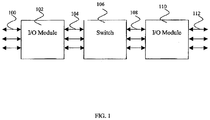
- FIG. 1 is a block diagram illustrating a network switch.
- the switch includes I/O modules 102 and 110 and switch module 106.
- Packet traffic enters the switch along connections 100 into I/O module 102.
- I/O module 102 processes and queues the packets for switch module 106.
- switch module 106 When ready the packets are sent across connections 104 to switch module 106, which directs the packet to its proper output I/O module (for example, I/O module 110).
- the output I/O module may be the same as the input I/O module; but the input and output I/O modules are shown separately in Figure 1 for clarity.
- Output I/O module 110 processes and queues each packet for output along the appropriate output connection 112.
- connections 104 and 108 are implemented as backplane connections comprising a chassis into which the I/O modules 102 and 110 and switch module 106 have been inserted.
- the I/O modules 102 and 110 comprising line cards, and the connections 100 and 112 comprise jacks or other connectors to which lines may be inserted to connect external networking and/or other equipment may be connected to the switch.
- FIG. 2 is a block diagram illustrating the blocks within an I/O module used in some embodiments.
- Packet traffic enters the I/O module from outside the network switch via connections 100 and media interface module 206.
- Media interface module 206 supports different types of physical and logical network connections such as electrical and optical connections and Ethernet and SONET protocols.
- media interface module 206 process packets into a format suitable for being processed by the remaining elements of the I/O module 102. While I/O module 102 is shown in Figure 2 as comprising one media interface, 206, in other embodiments two or more such modules may be included. Packets then proceed to traffic manager 202.
- Packets are processed in processor 200 in order to prepare them for their output destination as well as to assign a classification that indicates how they are to be queued for output. Packets are queued in virtual output queues such as VOQ 0 204. Priorities are assigned to packets in the respective virtual output queues by an inter-VOQ scheduling priority process 208. In one embodiment, inter-VOQ scheduling priority process 208 is a round robin process. Packets are sent based on their respective assigned priorities to the switch via switch interface 210 and connections 104.
- Outbound packets enter the I/O module from the switch through connections 104 and switch interface 210. Packets then proceed to traffic manager 212. Packets are processed in processor 214 in order to prepare them to be sent to their output destination as well as to determine how they are to be queued for output. Packets are queued in virtual output queues (not shown) and a priority is assigned based on a scheduling priority process. In one embodiment, the scheduling priority process is a round robin. Packets are then sent based on their assigned priority to their destination via media interface 206 and connections 100.
- Figure 3 is a block diagram illustrating a virtual output queue (VOQ) as implemented in some embodiments.
- Figure 3 is a schematic representation of the processes by which the relative priority of one or more queues associated with the VOQ is determined, as opposed to showing the actual flow of packets from the queues to, e.g., the switch interface (e.g., 210 of Figure 2 ) in the case of an ingress traffic manager or the media interface (e.g., 206 of Figure 2 ) in the case of an egress traffic manager.
- One or more packet queues 0 through M are assigned to the VOQ 204, as represented by queues 302 and 312 and arrows 300 and 310.
- Each queue assigned to the VOQ has associated with it a meter 1 through M (e.g., 304 and 314) configured to measure a packet flow rate associated with the queue.
- the rate that is measured is the packet egress rate, i.e., the rate at which packets are taken out of the queue.
- the rate that is measured is the packet ingress rate, i.e., the rate at which packets are added to the queue.
- the meters measure the extent to which the actual packet flow rate compares with one or more metries, as described more fully below.
- the meter is implemented as a leaky bucket.
- the queue is assigned a priority relative to other queues associated with the VOQ and, ultimately, relative to queues assigned to other VOQs.
- the packets are either held in the queue (e.g., to ensure that flow does not exceed a peak information rate associated with the queue), assigned a priority as part of a high priority scheduling process such as "conform" round robin process 306 (e.g., to ensure that a committed information rate (CIR) is satisfied), or assigned a priority as part of a low priority scheduling process such as "exceed" round robin process 316 (e.g., to give lower priority to queues for which the actual information rate is greater than or equal to a CIR associated with the queue).
- Strict priority scheduling process 308 ensures that any queue that is not currently satisfying its CIR (and has a packet in the queue), i.e., a queue assigned to the "conform" round robin process, is assigned a higher priority than any queue for which the CIR is being met or exceeded, i.e., any queue assigned to the "exceed” round robin process.
- scheduling process 306 and “exceed” scheduling process 316 are shown in Figure 3 and described above as comprising round robin processes in some embodiments, in other embodiments, other algorithms or processes may be used, e.g., weighted round robin.
- scheduling process 308 is described above as comprising a strict priority process in some embodiments, in other embodiments, other scheduling/selection algorithms may be used.
- the VOQ 204 provides as output 318 the priorities as determined by the strict priority scheduling process 308.
- the embodiment shown in Figure 3 comprises a higher priority "conform" scheduling process 306 and a lower priority “exceed” scheduling process 316
- three or more different scheduling processes each associated with a different priority may be used.
- the measured packet flow rate is compared to a plurality of metrics associate with each queue, each metric being associated with at least one of the plurality of scheduling processes.
- the queue is associated with the highest priority scheduling process associated with a metric that is not being satisfied. For example, in an embodiment comprising four scheduling processes having priorities 1 through 4, respectively, with 1 being the highest priority scheduling process and 4 being the lowest, there may be three metrics to which the measured flow rate would be compared, e.g., metrics 1 through 3 corresponding to scheduling processes 1 through 3, respectively.
- the lowest priority scheduling process (the priority 4 process) is used. If, for example, metric 1 was being satisfied but metrics 2 and 3 were not, the queue would be associated with the priority 2 scheduling process (i.e., the process associated with metric 2), as being the highest priority scheduling process associated with a metric that is not being satisfied as indicated by the measured packet flow rate.
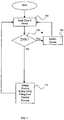
- FIG 4 is a flow diagram illustrating a process used in some embodiments to assign a priority to a packet/queue.
- step 400 the meter for a given queue is checked.
- step 402 the actual packet flow rate (as read from the meter) is compared to the peak information rate (PIR) allowed for that queue. If the packet flow is greater than or equal to the PIR, then, in step 404, the queue is inhibited and, in step 400, the meter is checked again. If the packet flow is less than the PIR, then in step 408 the actual packet flow rate is compared to the committed information rate (CIR) guaranteed for that queue (if any and if different than the PIR, otherwise step 408 may be omitted as shown in Figures 6 and 7 ).
- CIR committed information rate
- the queue is assigned priority within the VOQ using a high priority scheduling process.
- the high priority scheduling process may comprise the "conform" round robin process 306 of Figure 3 .
- the process then returns to step 400, in which the meter is checked again and the process repeats. If it is determined in step 408 that the packet flow rate for the queue is not less than the CIR, i.e., the CIR is being met or exceeded, then in step 410 the queue is assigned priority within VOQ using a low priority process.
- the low priority scheduling process may comprise the "exceed" round robin process 316 of Figure 3 . The process then returns to step 400, in which the meter is checked again and the process repeats.
- FIG. 5 is a block diagram illustrating an embodiment of a virtual output queue.
- Three different types of queue are assigned to virtual output queue 526, as indicated by arrows 518, 520, and 522.
- virtual output queue 526 has assigned to it one or more type 1 queues 1 through J (500), one or more type 2 queues 1 through K (508), and one or more type 3 queues 1 through L (510).
- Each type 1 queue has associated with it a type 1 meter 502, which measure the packet flow associated with a given queue.
- each type 2 queue has associated with it a type 2 meter 514
- each type 3 queue has associated with it a type 3 meter 512.
- each meter comprises a leaky bucket meter.
- type 1, 2, and 3 queue meters may the same and the actual flow rate read by the respective meters used differently, depending on the queue type.
- type 1 queues have a committed information rate (CIR) that is equal to the peak information rate (PIR) for the queue.
- CIR committed information rate
- PIR peak information rate
- the CIR is less than the PIR, and for any given type 2 queue at any given time the queue is either blocked (e.g., to ensure that flow does not exceed the PIR for the queue), assigned a priority as part of a high priority scheduling process such as "conform" round robin process 504 (e.g., to ensure that the CIR for the queue is satisfied, if the actual flow rate is less than the CIR), or assigned a priority as part of a low priority scheduling process such as "exceed" round robin process 516 (e.g., to give lower priority to queues for which the actual information rate is greater than or equal to a CIR associated with the queue).
- a high priority scheduling process such as "conform" round robin process 504 (e.g., to ensure that the CIR for the queue is satisfied, if the actual flow rate is less than the CIR)
- “exceed" round robin process 516 e.g., to give lower priority to queues for which the actual information rate is greater than or
- type 2 queues in this example are the same as the queues shown in Figure 3 .
- a type 3 queue may either be blocked (e.g., if its actual flow rate meets or exceeds its PIR) or assigned a priority as part of a low priority scheduling process such as "exceed" round robin process 516.
- the results of the "conform" round robin process 504 and "exceed” round robin process 516 are provided as inputs into a strict priority scheduling process 506.
- Strict priority scheduling process 506 ensures that any queue that is not currently satisfying its CIR (and has a packet in the queue), i.e., a queue assigned to the "conform" round robin process, is assigned a higher priority than any queue for which the CIR (if any) is already being met or exceeded, i.e., any queue assigned to the "exceed" round robin process.
- the VOQ 526 provides as output 524 the priorities as determined by the strict priority scheduling process 506.
- CIR type 1 queues shown in Figure 5
- the meter for a given queue is checked.
- the packet flow is compared to the PIR allowed for that queue.
- the CIR is equal to the PIR. If the packet flow is greater than or equal to the PIR, then, in step 604, the queue is inhibited and, in step 600, the type 1 meter is checked again.
- step 606 the queue is assigned priority within the VOQ using a high priority process, such as the "conform" round robin 504 of Figure 5 .
- step 600 the meter is then checked again and the process repeats.
- the process shown in Figure 4 is used to assign a priority to a type 2 queue (i.e., CIR ⁇ PIR).
- the type 3 meter for a given queue is checked.
- the actual packet flow rate is compared to the PIR allowed for that queue. In type 3 queues, the CIR is equal to 0. If the actual packet flow rate is greater than or equal to the PIR, then, in step 704, the queue is inhibited and, in step 700, the meter is checked again. If the packet flow is less than the PIR, then in step 710, the packet is assigned a priority within the VOQ using a low priority process, such as "exceed" round robin 516 of Figure 5 . In step 700, the meter is checked and the process repeats.
- While the example shown in Figures 5-7 includes three different types of queue, other or different types of queue may also be defined and used. Also, the process for assigning priority as between VOQs may comprise a single level of scheduling (e.g., round robin) or may instead include multiple levels.
- the strict priority schedule processes shown in Figures 3 and 5 may be omitted and replaced by a first round robin process for assigning priority based on the results of the respective high priority scheduling process of each respective VOQ and a second round robin process for assigning priority based on the results of the respective low priority scheduling process of each respective VOQ, with a strict (or other) priority scheduling process being used to assign priorities as between the first round robin and the second round robin.
- the scheme used to assign priorities to ingress packets may be the same or different than the scheme used to assign priorities to egress packets.
- network packet flow shaping may be implemented on every queue to ensure that for each queue the PIR is not exceeded and the CIR, if any, is met.
Landscapes
- Engineering & Computer Science (AREA)
- Computer Networks & Wireless Communication (AREA)
- Signal Processing (AREA)
- Data Exchanges In Wide-Area Networks (AREA)
Claims (7)
- Verfahren zum Einstellen einer Paketwarteschlangenpriorität, umfassend:Messen (400, 600) einer Rate für eine Warteschlange (302, 312, 500, 508, 510),Vergleichen (402, 408, 602) der Rate mit einer Dienstgütemetrik, die mit der Warteschlange (302, 312, 500, 508, 510) verbunden ist,Verbinden (406, 606) der Warteschlange (302, 312, 500, 508, 510) mit einem Planungsprozess hoher Priorität (306, 504), wenn die gemessene Rate als zu gering bestimmt wird auf Grundlage des Vergleichs mit der Dienstgotemetrik, undVerbinden (410) der Warteschlange (500, 508, 510) mit einem Planungsprozess niedriger Priorität (316, 516), wenn die gemessene Rate als zufriedenstellend bestimmt wird auf Grundlage des Vergleichs mit der Dienstgütemetrik,wobei die Warteschlange (302, 312, 500, 508, 510) eine einer Vielzahl von Warteschlangen (302, 312, 500, 508, 510) ist, die mit einer virtuellen Ausgangswarteschlange (204, 516) verbunden ist;wobei die Vielzahl von Wartesahlangan (302, 312, 500, 508, 510) eine oder mehrere Warteschlangen eines ersten Typs (Typ1) einschließt, die eine damit verbundene erste Dienstgütemetrik aufweisen, und eine oder mehrere Wartenschlangen eines zweiten Typs (Typ2) einschließt. der eine damit verbundene zweite Dienstütemetrik aufweist;wobei der Planungsprozess hoher Priorität (306, 504) konfiguriert ist zum Zuweisen entsprechender Paketprioritäten zu Paketen, die mit einem ersten Untersatz von Null oder mehr Warteschlangen verbunden sind, die in der Vielzahl von Warteschlangen (302, 312, 500, 508, 510) eingeschlossen sind,wobei der erste Untersatz Warteschlangen umfasst, die mit dem Planungsprozess hoher Priorität (306, 504) innerhalb der virtuellen Ausgangswarteschfange (204, 526) verbunden worden sind; undwobei der Planungsprozess niedriger Priorität (316, 516) konfiguriert ist zum Zuweisen entsprechender Paketprioritäten zu Paketen in einem zweiten Untersatz von Null oder mehr Warteschlangen, die in der Vielzahl von Warteschlangen (302, 312, 500, 508, 510) eingeschlossen sind,wobei der zweite Untersatz Warteschlangen umfasst, die mit dem Planungsprozess niedriger Priorität (316, 516) innerhalb der virtuellen Ausgangswarteschlange (204, 526) verbunden worden sind; undwobei die virtuelle Ausgangswarteschlange (204, 526) einen mit sich verbundenen strikten virtuellen Ausgangswarteschlangen-Planungsprozess (308, 506) aufweist, die Prioritäten empfängt, die jeweils von dem Planungsprozess hoher Priorität (306, 504) und dem Planungsprozess niedriger Priorität (316, 516) zugewiesen werden, undjedem Paket, das mit dem Planungsprozess hoher Priorität (306, 504) verbunden ist innerhalb der virtuellen Ausgangswarteschlange (204, 526), eine finale intra-virtuelle Ausgangswarteschlangenprlorltät zuweist, die höher ist als die eines jeden anderen Pakets, das mit dem Planungsprozess niedriger Priorität (316, 516) der virtuellen Ausgangswarteschlange (204, 526) verbunden ist; undwobei die virtuelle Ausgangswarteschlange (204, 526) eine einer Vielzahl virtueller Ausgangswarteschiangon (VOQ 0, ... , VOQ N) ist, wobei das Verfahren dadurch gekennzeichnet ist, dass:innerhalb jedes des mindestens einen Untersatzes der Vielzahl virtueller Ausgangswarteschlagen (VOQ 0, ..., VOQ N) iritra-virtuelle Ausgangswarteschlangenprioritäten den Paketen Innerhalb dieser virtuellen Ausgangswarteschlange (VOQ 0, ..., VOQ N) zugewiesen werden für Warleschlangen des ersten Typs (Typ1) und Warteschlangen des zweiten Typs (Typ2), unabgängig von einer oder mehreren virtuellen Ausgangswarteschlangen (VOQ 0, ..., VOQ N), undPrioritäten zugewiesen werden wie zwischen den virtuellen Ausgangswarteschlangen (VOQ , ..., VOQ N) durch einen inter-virtuellen Round-Robin-Ausgangswarteschlangen-Planungsprozess (208).
- Verfahren zum Einstellen einer Paketwarteschlangenpriorität nach Anspruch 1, wobei der Planungsprozess hoher Priorität (306, 504) und der Plangunsprozess niedriger Priorität (316, 516) Mitglieder einer Vielzahl von Planungsprozessen sind, wobei jeder mit einer entsprechenden Priorität verbunden ist, die Dienstgütemetrik eine einer Vielzahl vorn Metriken ist, die mit der Warteschlange verbunden sind, wobei jede Metrik mit mindestens einem besagter Vielzahl von Planungsprozessen verbunden ist und das Verfahren weiterhin umfasst das Verwinden der Warteachlsnge mit dem Planungsprozess höchster Priorität, der mit einer Metrik verbunden ist, die nicht erfüllt ist wie angegeben wird durch die gemessene Rate.
- Verfahren zum Einstellen einer Paketwarteschlangenpriorität nach Anspruch 1, wobei das Messen einer Rate für die Warteschlange den Gebrauch eines Leaky-Bucket zum Messen der Rate umfasst.
- Verfahren zum Einsteigen einer Paketwarteschlangenpriorität nach Anspruch 1, wobei die C7ienstgütemetrik eine garantierte Informationsrate umfasst.
- Verfahren zum Einstellen einer Paketwarteschlangenpriorität nach Anspruch 1, wobei die Dienstgütemetrik eine garantierte Informationsrate und eine Spitzeninformationsrate umfasst.
- Vorrichtung Einstellen einer Paketwarteschlangenpriorität, umfassend:ein Messgerät (304, 314, 502, 512), das konfiguriert ist zum Messen einer mit einer Paketwarteschlange (302, 312, 500, 508, 510) verbundenen Rate; und eine Prioritätszuweisungsmaschine, die konfiguriert ist zum:Vergleichen (402, 408, 602) der Rate und einer Diehstgütemetrik,Verbinden (406, 606) der Warteschlange (302, 312, 500, 508, 510) mit einem Planungsprozess hoher Priorität (306, 504), wenn die gemessene Rate als zu niedrig bestimmt wird auf Grundlage des Vergleichs mit der Dienstgütemetrik; undVerbinden (410) der Warteschlange (302, 312, 500, 508, 510) mit einem Planungsprozess niedriger Priorität (316, 516), wenn die gemessene Rate als zufriedenstellend bestimmt wird auf Grundlage des Vergleichs mit der Dienstgütemetrik,wobei die Warteschlänge (302, 312, 500, 508, 510) eine einer Vielzahl von Warteschlangen (302, 312, 500, 508, 510) ist, die mit einer virtuellen Ausgangswarteschlange (204, 526) verbunden ist;wobei die Vielzahl von Warteschlangen (302, 312, 500, 508, 510) eine oder mehrere Warteschlangen eines ersten Typs (Typ1) einschließt, die eine damit verbundene erste Dienstgütemetrik aufweist, und eine oder mehrere Warteschlangen eines zweiten Typs (Typ2) einschließt, der eine damit verbunden zweite Dienstgütemetrik aufweist;wobei der Planungsprozess hoher Priorität (306, 504) konfiguriert ist zum Zuweisen entsprechender Paketprioritäten zu Paketen, die mit einem ersten Untersatz von Null oder mehr Warteschlangen verbunden sind, die in der Vielzahl von Warteschlangen (302, 312, 500, 508, 510) eingeschossen sind, wobei der erste Untersatz Warteschlangen umfasst, die mit dem Planungsprozess hoher Priorität (306) innerhalb der virtuellen Ausgangswarteschlange (204) verbunden worden sind;und wobei der Planungsprozess niedriger Priorität (316, 516) konfiguriert ist zum Zuweisen entsprechender Paketprioritäten zu Paketen in einem zweiten Untersatz von Null oder mehr Warteschlangen, die in der Vielzahl von Warteschlangen (302, 312, 500, 508, 510) eingeschossen sind, wobei der Zweite Untersatz Warteschlangen umfasst, die mit dem Planungsprozess niedriger Priorität (316, 516) innerhalb der virtuellen Ausgangswarteschlange (204, 526) verbunden worden sind;und wobei die virtuelle Ausgangswarteschlange (204, 526) einen mit sich verbundenen strikten virtuellen Ausgangswarteschlangen-Planungsprozess (308, 506) aufweist, der Prioritäten empfängt, die jeweils von dem Planungsprozess hoher Priorität (306, 504) und dem Planungsprozess niedriger Priorität (316, 516) zugewiesen werden und jedem Paket, das mit dem Planungsprozess hoher Priorität (306, 504) verbunden ist innerhalb der virtuellen Ausgangswarteschlange (204, 526), eine finale intra-virtuelle Ausgangswarteschlangenpriorltät zuweist, die höher ist als die eines jeden anderen Pakets, das mit dem Planungsprozess niedrige Priorität (316, 516) der virtuellen Ausgangswarteschlange (204, 626) verbunden Ist; undwobei die virtuelle Ausgangswarteschlange (204, 526) eine einer Vielzahl virtueller Ausgangswarteschlangen (VOQ 0, ..., VOQ N) ist, wobeidas Verfahren dadurch gekennzeichnet Ist, dass:innerhalb jedes des mindestens einen Untersatzes der Vielzahl virtueller Ausgangswarteschlangen (VOQ 0, ..., VOQ N) intra-virtuelle Ausgangswarteschlangenprioritäten den Paketen innerhalb dieser virtuellen Ausgangswarteschlange (VQQ 0, ..., VOQ N) zugewiesen werden für Warteschlangen des ersten Typs (Typ1) und Warteschlangen des zweiten Typs (Typ2), unabhängig von einer oder mehreren virtuellen Ausgangswarteschlangen (VOQ 0, ..., VOQ N), undPrioritäten zugewiesen werden wie zwischen den virtuellen Ausgangswarteschlangen (VOQ 0, ..., VOQ N) durch einen inter-virtuellen Round-Robin-Ausgangswarteschlangen-Planungsprozess (208).
- Computerprogramm-Produkt zum Einstellen von Paketwarteschlangenprioritäten, wobei das Computerprogramm-Produkt in einem computerlosbaren Medium enthalten ist und computerlesbare Befehle umfasst, sodass bei Ausführen auf einem Computer bewirkt wird, dass der Computer das Verfahren nach einem beliebigen der Ansprüche 1 bis 5 durchführt.
Applications Claiming Priority (4)
| Application Number | Priority Date | Filing Date | Title |
|---|---|---|---|
| 2003-03-28 | |||
| US46552503P | 2003-04-25 | 2003-04-25 | |
| US465525P | 2003-04-25 | ||
| US10/831,721 US7522523B2 (en) | 2003-04-25 | 2004-04-23 | Assigning packet queue priority |
Publications (3)
| Publication Number | Publication Date |
|---|---|
| EP1471700A2 EP1471700A2 (de) | 2004-10-27 |
| EP1471700A3 EP1471700A3 (de) | 2008-06-25 |
| EP1471700B1 true EP1471700B1 (de) | 2017-10-04 |
Family
ID=33303254
Family Applications (1)
| Application Number | Title | Priority Date | Filing Date |
|---|---|---|---|
| EP04300231.0A Expired - Lifetime EP1471700B1 (de) | 2003-04-25 | 2004-04-26 | Verfahren und Vorrichtung zur Prioritätenszuweisung zu Datenpaketewarteschlangen |
Country Status (2)
| Country | Link |
|---|---|
| US (1) | US7522523B2 (de) |
| EP (1) | EP1471700B1 (de) |
Families Citing this family (86)
| Publication number | Priority date | Publication date | Assignee | Title |
|---|---|---|---|---|
| US7509322B2 (en) | 2001-01-11 | 2009-03-24 | F5 Networks, Inc. | Aggregated lock management for locking aggregated files in a switched file system |
| US7852865B2 (en) * | 2002-11-26 | 2010-12-14 | Broadcom Corporation | System and method for preferred service flow of high priority messages |
| US7792118B2 (en) * | 2003-06-19 | 2010-09-07 | Polytechnic University | Switch module memory structure and per-destination queue flow control for use in a switch |
| US7852829B2 (en) * | 2003-06-19 | 2010-12-14 | Polytechnic University | Packet reassembly and deadlock avoidance for use in a packet switch |
| US7894343B2 (en) * | 2003-06-19 | 2011-02-22 | Polytechnic University | Packet sequence maintenance with load balancing, and head-of-line blocking avoidance in a switch |
| US7724738B2 (en) * | 2003-06-19 | 2010-05-25 | Hung-Hsiang Jonathan Chao | Packet-level multicasting |
| US20050135397A1 (en) * | 2003-12-18 | 2005-06-23 | Hoban Adrian C. | Buffer replenishing |
| US8243744B2 (en) * | 2004-03-01 | 2012-08-14 | Futurewei Technologies, Inc. | Priority sorting |
| US8320240B2 (en) * | 2004-11-30 | 2012-11-27 | Broadcom Corporation | Rate limiting and minimum and maximum shaping in a network device |
| US7885970B2 (en) | 2005-01-20 | 2011-02-08 | F5 Networks, Inc. | Scalable system for partitioning and accessing metadata over multiple servers |
| US7870265B2 (en) * | 2005-06-30 | 2011-01-11 | Oracle International Corporation | System and method for managing communications sessions in a network |
| CN101346634B (zh) * | 2005-11-04 | 2012-10-24 | 甲骨文国际公司 | 用于通信网络中的网守的系统和方法 |
| GB0606367D0 (en) * | 2006-03-30 | 2006-05-10 | Vodafone Plc | Telecommunications networks |
| US8417746B1 (en) | 2006-04-03 | 2013-04-09 | F5 Networks, Inc. | File system management with enhanced searchability |
| US8001250B2 (en) * | 2006-05-16 | 2011-08-16 | Oracle International Corporation | SIP and HTTP convergence in network computing environments |
| US8112525B2 (en) * | 2006-05-16 | 2012-02-07 | Oracle International Corporation | Engine near cache for reducing latency in a telecommunications environment |
| US8171466B2 (en) | 2006-05-16 | 2012-05-01 | Oracle International Corporation | Hitless application upgrade for SIP server architecture |
| US8219697B2 (en) | 2006-05-17 | 2012-07-10 | Oracle International Corporation | Diameter protocol and SH interface support for SIP server architecture |
| US7948882B2 (en) * | 2006-10-09 | 2011-05-24 | Agere Systems Inc. | Dual leaky bucket flow control method and system |
| US7668177B1 (en) * | 2006-12-28 | 2010-02-23 | Qlogic, Corporation | Method and system for quality of service in host bus adapters |
| WO2008147973A2 (en) | 2007-05-25 | 2008-12-04 | Attune Systems, Inc. | Remote file virtualization in a switched file system |
| US8121117B1 (en) | 2007-10-01 | 2012-02-21 | F5 Networks, Inc. | Application layer network traffic prioritization |
| US8548953B2 (en) | 2007-11-12 | 2013-10-01 | F5 Networks, Inc. | File deduplication using storage tiers |
| US8521901B2 (en) * | 2007-12-28 | 2013-08-27 | Citrix Systems, Inc. | TCP burst avoidance |
| KR20090085906A (ko) * | 2008-02-05 | 2009-08-10 | 삼성전자주식회사 | 로지컬 인터페이스의 우선순위에 따른 라우팅 처리 시스템및 그 제어방법 |
| US7895353B2 (en) * | 2008-02-29 | 2011-02-22 | Oracle International Corporation | System and method for providing throttling, prioritization and traffic shaping during request processing via a budget service |
| US8549582B1 (en) | 2008-07-11 | 2013-10-01 | F5 Networks, Inc. | Methods for handling a multi-protocol content name and systems thereof |
| US8526452B1 (en) * | 2009-07-13 | 2013-09-03 | Viasat, Inc. | Quality of service packet scheduler design |
| US10721269B1 (en) | 2009-11-06 | 2020-07-21 | F5 Networks, Inc. | Methods and system for returning requests with javascript for clients before passing a request to a server |
| US8806056B1 (en) | 2009-11-20 | 2014-08-12 | F5 Networks, Inc. | Method for optimizing remote file saves in a failsafe way |
| US9195500B1 (en) | 2010-02-09 | 2015-11-24 | F5 Networks, Inc. | Methods for seamless storage importing and devices thereof |
| US9420049B1 (en) | 2010-06-30 | 2016-08-16 | F5 Networks, Inc. | Client side human user indicator |
| US9503375B1 (en) | 2010-06-30 | 2016-11-22 | F5 Networks, Inc. | Methods for managing traffic in a multi-service environment and devices thereof |
| US8347100B1 (en) | 2010-07-14 | 2013-01-01 | F5 Networks, Inc. | Methods for DNSSEC proxying and deployment amelioration and systems thereof |
| US9286298B1 (en) | 2010-10-14 | 2016-03-15 | F5 Networks, Inc. | Methods for enhancing management of backup data sets and devices thereof |
| WO2012158854A1 (en) | 2011-05-16 | 2012-11-22 | F5 Networks, Inc. | A method for load balancing of requests' processing of diameter servers |
| US8396836B1 (en) | 2011-06-30 | 2013-03-12 | F5 Networks, Inc. | System for mitigating file virtualization storage import latency |
| WO2012109880A1 (zh) * | 2011-08-04 | 2012-08-23 | 华为技术有限公司 | 队列调度方法和装置 |
| US8463850B1 (en) | 2011-10-26 | 2013-06-11 | F5 Networks, Inc. | System and method of algorithmically generating a server side transaction identifier |
| US10230566B1 (en) | 2012-02-17 | 2019-03-12 | F5 Networks, Inc. | Methods for dynamically constructing a service principal name and devices thereof |
| US9244843B1 (en) | 2012-02-20 | 2016-01-26 | F5 Networks, Inc. | Methods for improving flow cache bandwidth utilization and devices thereof |
| US9020912B1 (en) | 2012-02-20 | 2015-04-28 | F5 Networks, Inc. | Methods for accessing data in a compressed file system and devices thereof |
| US8953449B2 (en) * | 2012-03-22 | 2015-02-10 | Fujitsu Limited | Virtual subport data traffic management |
| WO2013163648A2 (en) | 2012-04-27 | 2013-10-31 | F5 Networks, Inc. | Methods for optimizing service of content requests and devices thereof |
| US10033837B1 (en) | 2012-09-29 | 2018-07-24 | F5 Networks, Inc. | System and method for utilizing a data reducing module for dictionary compression of encoded data |
| US9519501B1 (en) | 2012-09-30 | 2016-12-13 | F5 Networks, Inc. | Hardware assisted flow acceleration and L2 SMAC management in a heterogeneous distributed multi-tenant virtualized clustered system |
| US9578090B1 (en) | 2012-11-07 | 2017-02-21 | F5 Networks, Inc. | Methods for provisioning application delivery service and devices thereof |
| US10375155B1 (en) | 2013-02-19 | 2019-08-06 | F5 Networks, Inc. | System and method for achieving hardware acceleration for asymmetric flow connections |
| US9497614B1 (en) | 2013-02-28 | 2016-11-15 | F5 Networks, Inc. | National traffic steering device for a better control of a specific wireless/LTE network |
| US9554418B1 (en) | 2013-02-28 | 2017-01-24 | F5 Networks, Inc. | Device for topology hiding of a visited network |
| US9225848B2 (en) * | 2013-08-06 | 2015-12-29 | Alcatel Lucent | Method of operating a network using differentiated pricing and a network configured to operate using differentiated pricing |
| US9336006B2 (en) * | 2013-09-16 | 2016-05-10 | Futurewei Technologies, Inc. | High-performance parallel traffic management for multi-core platforms |
| US10187317B1 (en) | 2013-11-15 | 2019-01-22 | F5 Networks, Inc. | Methods for traffic rate control and devices thereof |
| US11838851B1 (en) | 2014-07-15 | 2023-12-05 | F5, Inc. | Methods for managing L7 traffic classification and devices thereof |
| US10182013B1 (en) | 2014-12-01 | 2019-01-15 | F5 Networks, Inc. | Methods for managing progressive image delivery and devices thereof |
| US10015048B2 (en) | 2014-12-27 | 2018-07-03 | Intel Corporation | Programmable protocol parser for NIC classification and queue assignments |
| US11895138B1 (en) | 2015-02-02 | 2024-02-06 | F5, Inc. | Methods for improving web scanner accuracy and devices thereof |
| US10834065B1 (en) | 2015-03-31 | 2020-11-10 | F5 Networks, Inc. | Methods for SSL protected NTLM re-authentication and devices thereof |
| US10505818B1 (en) | 2015-05-05 | 2019-12-10 | F5 Networks. Inc. | Methods for analyzing and load balancing based on server health and devices thereof |
| US11350254B1 (en) | 2015-05-05 | 2022-05-31 | F5, Inc. | Methods for enforcing compliance policies and devices thereof |
| US9825862B2 (en) | 2015-08-26 | 2017-11-21 | Barefoot Networks, Inc. | Packet header field extraction |
| US9826071B2 (en) | 2015-08-26 | 2017-11-21 | Barefoot Networks, Inc. | Configuring a switch for extracting packet header fields |
| US9912774B2 (en) | 2015-12-22 | 2018-03-06 | Intel Corporation | Accelerated network packet processing |
| US11757946B1 (en) | 2015-12-22 | 2023-09-12 | F5, Inc. | Methods for analyzing network traffic and enforcing network policies and devices thereof |
| US10404698B1 (en) | 2016-01-15 | 2019-09-03 | F5 Networks, Inc. | Methods for adaptive organization of web application access points in webtops and devices thereof |
| US11178150B1 (en) | 2016-01-20 | 2021-11-16 | F5 Networks, Inc. | Methods for enforcing access control list based on managed application and devices thereof |
| US10797888B1 (en) | 2016-01-20 | 2020-10-06 | F5 Networks, Inc. | Methods for secured SCEP enrollment for client devices and devices thereof |
| US12464021B1 (en) | 2016-01-20 | 2025-11-04 | F5, Inc. | Methods for providing secure access using preemptive measures and devices thereof |
| US10063407B1 (en) | 2016-02-08 | 2018-08-28 | Barefoot Networks, Inc. | Identifying and marking failed egress links in data plane |
| US10218632B2 (en) * | 2016-03-04 | 2019-02-26 | International Communications Corp. | Intelligent control and management matrix, apparatus, system, and a method thereof |
| US10382356B2 (en) | 2016-10-13 | 2019-08-13 | Nokia Of America Corporation | Scheduling transmissions of adaptive bitrate streaming flows |
| US10412198B1 (en) | 2016-10-27 | 2019-09-10 | F5 Networks, Inc. | Methods for improved transmission control protocol (TCP) performance visibility and devices thereof |
| US11063758B1 (en) | 2016-11-01 | 2021-07-13 | F5 Networks, Inc. | Methods for facilitating cipher selection and devices thereof |
| US10505792B1 (en) | 2016-11-02 | 2019-12-10 | F5 Networks, Inc. | Methods for facilitating network traffic analytics and devices thereof |
| US11223520B1 (en) | 2017-01-31 | 2022-01-11 | Intel Corporation | Remote control plane directing data plane configurator |
| US10812266B1 (en) | 2017-03-17 | 2020-10-20 | F5 Networks, Inc. | Methods for managing security tokens based on security violations and devices thereof |
| US10686735B1 (en) | 2017-04-23 | 2020-06-16 | Barefoot Networks, Inc. | Packet reconstruction at deparser |
| US10567492B1 (en) | 2017-05-11 | 2020-02-18 | F5 Networks, Inc. | Methods for load balancing in a federated identity environment and devices thereof |
| US11343237B1 (en) | 2017-05-12 | 2022-05-24 | F5, Inc. | Methods for managing a federated identity environment using security and access control data and devices thereof |
| US11122042B1 (en) | 2017-05-12 | 2021-09-14 | F5 Networks, Inc. | Methods for dynamically managing user access control and devices thereof |
| US10601732B1 (en) | 2017-07-23 | 2020-03-24 | Barefoot Networks, Inc. | Configurable packet processing pipeline for handling non-packet data |
| US10594630B1 (en) | 2017-09-28 | 2020-03-17 | Barefoot Networks, Inc. | Expansion of packet data within processing pipeline |
| US11223689B1 (en) | 2018-01-05 | 2022-01-11 | F5 Networks, Inc. | Methods for multipath transmission control protocol (MPTCP) based session migration and devices thereof |
| US10833943B1 (en) | 2018-03-01 | 2020-11-10 | F5 Networks, Inc. | Methods for service chaining and devices thereof |
| US12003422B1 (en) | 2018-09-28 | 2024-06-04 | F5, Inc. | Methods for switching network packets based on packet data and devices |
| US11558775B2 (en) * | 2021-02-16 | 2023-01-17 | Juniper Networks, Inc. | Determining rate differential weighted fair output queue scheduling for a network device |
Family Cites Families (5)
| Publication number | Priority date | Publication date | Assignee | Title |
|---|---|---|---|---|
| US6795865B1 (en) | 1999-10-08 | 2004-09-21 | Microsoft Corporation | Adaptively changing weights for fair scheduling in broadcast environments |
| DE60031284T2 (de) | 2000-12-14 | 2007-10-11 | Lucent Technologies Inc. | Ablauffolgesteuerung für Paketvermittlungen und passive optischen Netzwerke |
| US7027393B1 (en) * | 2001-03-02 | 2006-04-11 | Cisco Technology, Inc. | TCP optimized single rate policer |
| JP4356261B2 (ja) * | 2001-03-30 | 2009-11-04 | 沖電気工業株式会社 | 優先度設定方法及び装置 |
| GB2377117B (en) | 2001-06-27 | 2004-08-18 | Cambridge Broadband Ltd | Method and apparatus for providing communications bandwidth |
-
2004
- 2004-04-23 US US10/831,721 patent/US7522523B2/en active Active
- 2004-04-26 EP EP04300231.0A patent/EP1471700B1/de not_active Expired - Lifetime
Non-Patent Citations (1)
| Title |
|---|
| CHIUSSI F M ET AL: "PROVIDING QOS GUARANTEES IN PACKET SWITCHES", 1999 IEEE GLOBAL TELECOMMUNICATIONS CONFERENCE. GLOBECOM'99. SEAMLESS INTERCONNECTION FOR UNIVERSAL SERVICES. RIO DE JANEIRO, BRAZIL, DEC. 5-9, 1999; [IEEE GLOBAL TELECOMMUNICATIONS CONFERENCE], NEW YORK, NY : IEEE, US, 5 December 1999 (1999-12-05), pages 1582 - 1590, XP001016969, ISBN: 978-0-7803-5797-6, DOI: 10.1109/GLOCOM.1999.830047 * |
Also Published As
| Publication number | Publication date |
|---|---|
| EP1471700A3 (de) | 2008-06-25 |
| EP1471700A2 (de) | 2004-10-27 |
| US20040213156A1 (en) | 2004-10-28 |
| US7522523B2 (en) | 2009-04-21 |
Similar Documents
| Publication | Publication Date | Title |
|---|---|---|
| US7522523B2 (en) | Assigning packet queue priority | |
| US7596086B2 (en) | Method of and apparatus for variable length data packet transmission with configurable adaptive output scheduling enabling transmission on the same transmission link(s) of differentiated services for various traffic types | |
| US5831971A (en) | Method for leaky bucket traffic shaping using fair queueing collision arbitration | |
| US7099275B2 (en) | Programmable multi-service queue scheduler | |
| US6950396B2 (en) | Traffic control method and system | |
| US9722942B2 (en) | Communication device and packet scheduling method | |
| US6396843B1 (en) | Method and apparatus for guaranteeing data transfer rates and delays in data packet networks using logarithmic calendar queues | |
| US6795870B1 (en) | Method and system for network processor scheduler | |
| KR100463697B1 (ko) | 네트워크 프로세서가 흐름 큐의 연결 해제/재연결을 통해출력을 스케줄링하는 방법 및 시스템 | |
| US20070237074A1 (en) | Configuration of congestion thresholds for a network traffic management system | |
| EP1705851A1 (de) | Vorrichtung und Verfahren für die Überwachung von Kommunikationsverkehr | |
| US20110019572A1 (en) | Method and apparatus for shared shaping | |
| JP4163044B2 (ja) | 帯域制御方法およびその帯域制御装置 | |
| US6952424B1 (en) | Method and system for network processor scheduling outputs using queueing | |
| US7848239B2 (en) | Network system capable of dynamically controlling data flow and its method | |
| US20230246944A1 (en) | Shaping outgoing traffic of network packets in a network management system | |
| US7894347B1 (en) | Method and apparatus for packet scheduling | |
| US20140050094A1 (en) | Efficient Urgency-Aware Rate Control Scheme for Mulitple Bounded Flows | |
| EP1526686B1 (de) | Schalteinheit mit skalierbarer und "QOS"-berücksichtigender Datenflusssteuerung | |
| EP1489795B1 (de) | Netzwerkvermittlung mit einer Konfiguration zum Datenverkehrsgewicht | |
| CN105577563A (zh) | 流量管理的方法 | |
| EP1817878B1 (de) | Airtimegerechte übertragungsregulierung ohne explizite verkehrsspezifikationen für drahtlose netzwerke | |
| EP1271856B1 (de) | Strömungs- und Verstopfungsregelung in einem geschalteten Netzwerk | |
| Asaduzzaman et al. | The eight class of service model-an improvement over the five classes of service | |
| CN109391558A (zh) | 一种队列的控制方法及控制装置 |
Legal Events
| Date | Code | Title | Description |
|---|---|---|---|
| PUAI | Public reference made under article 153(3) epc to a published international application that has entered the european phase |
Free format text: ORIGINAL CODE: 0009012 |
|
| AK | Designated contracting states |
Kind code of ref document: A2 Designated state(s): AT BE BG CH CY CZ DE DK EE ES FI FR GB GR HU IE IT LI LU MC NL PL PT RO SE SI SK TR |
|
| AX | Request for extension of the european patent |
Extension state: AL HR LT LV MK |
|
| PUAL | Search report despatched |
Free format text: ORIGINAL CODE: 0009013 |
|
| AK | Designated contracting states |
Kind code of ref document: A3 Designated state(s): AT BE BG CH CY CZ DE DK EE ES FI FR GB GR HU IE IT LI LU MC NL PL PT RO SE SI SK TR |
|
| AX | Request for extension of the european patent |
Extension state: AL HR LT LV MK |
|
| 17P | Request for examination filed |
Effective date: 20081229 |
|
| AKX | Designation fees paid |
Designated state(s): DE ES FR GB IT |
|
| 17Q | First examination report despatched |
Effective date: 20090310 |
|
| RAP1 | Party data changed (applicant data changed or rights of an application transferred) |
Owner name: ALCATEL-LUCENT USA INC. |
|
| 111Z | Information provided on other rights and legal means of execution |
Free format text: DE ES FR GB IT Effective date: 20130517 |
|
| D11X | Information provided on other rights and legal means of execution (deleted) | ||
| REG | Reference to a national code |
Ref country code: DE Ref legal event code: R079 Ref document number: 602004051869 Country of ref document: DE Free format text: PREVIOUS MAIN CLASS: H04L0012560000 Ipc: H04L0012863000 |
|
| RIC1 | Information provided on ipc code assigned before grant |
Ipc: H04L 12/833 20130101ALI20170331BHEP Ipc: H04L 12/851 20130101ALI20170331BHEP Ipc: H04L 12/801 20130101AFI20170331BHEP Ipc: H04L 12/819 20130101ALI20170331BHEP Ipc: H04L 12/813 20130101ALI20170331BHEP |
|
| RIC1 | Information provided on ipc code assigned before grant |
Ipc: H04L 12/833 20130101ALI20170413BHEP Ipc: H04L 12/935 20130101ALI20170413BHEP Ipc: H04L 12/863 20130101AFI20170413BHEP Ipc: H04L 12/813 20130101ALI20170413BHEP Ipc: H04L 12/851 20130101ALI20170413BHEP Ipc: H04L 12/801 20130101ALI20170413BHEP Ipc: H04L 12/819 20130101ALI20170413BHEP |
|
| GRAP | Despatch of communication of intention to grant a patent |
Free format text: ORIGINAL CODE: EPIDOSNIGR1 |
|
| STAA | Information on the status of an ep patent application or granted ep patent |
Free format text: STATUS: GRANT OF PATENT IS INTENDED |
|
| RIC1 | Information provided on ipc code assigned before grant |
Ipc: H04L 12/819 20130101ALI20170420BHEP Ipc: H04L 12/851 20130101ALI20170420BHEP Ipc: H04L 12/833 20130101ALI20170420BHEP Ipc: H04L 12/863 20130101AFI20170420BHEP Ipc: H04L 12/813 20130101ALI20170420BHEP Ipc: H04L 12/801 20130101ALI20170420BHEP Ipc: H04L 12/935 20130101ALI20170420BHEP |
|
| RIC1 | Information provided on ipc code assigned before grant |
Ipc: H04L 12/819 20130101ALI20170502BHEP Ipc: H04L 12/935 20130101ALI20170502BHEP Ipc: H04L 12/54 20130101ALI20170502BHEP Ipc: H04L 12/833 20130101ALI20170502BHEP Ipc: H04L 12/801 20130101ALI20170502BHEP Ipc: H04L 12/851 20130101ALI20170502BHEP Ipc: H04L 12/863 20130101AFI20170502BHEP Ipc: H04L 12/813 20130101ALI20170502BHEP |
|
| INTG | Intention to grant announced |
Effective date: 20170519 |
|
| GRAA | (expected) grant |
Free format text: ORIGINAL CODE: 0009210 |
|
| GRAS | Grant fee paid |
Free format text: ORIGINAL CODE: EPIDOSNIGR3 |
|
| STAA | Information on the status of an ep patent application or granted ep patent |
Free format text: STATUS: THE PATENT HAS BEEN GRANTED |
|
| AK | Designated contracting states |
Kind code of ref document: B1 Designated state(s): DE ES FR GB IT |
|
| REG | Reference to a national code |
Ref country code: GB Ref legal event code: FG4D |
|
| REG | Reference to a national code |
Ref country code: DE Ref legal event code: R096 Ref document number: 602004051869 Country of ref document: DE |
|
| REG | Reference to a national code |
Ref country code: FR Ref legal event code: PLFP Year of fee payment: 15 |
|
| PG25 | Lapsed in a contracting state [announced via postgrant information from national office to epo] |
Ref country code: ES Free format text: LAPSE BECAUSE OF FAILURE TO SUBMIT A TRANSLATION OF THE DESCRIPTION OR TO PAY THE FEE WITHIN THE PRESCRIBED TIME-LIMIT Effective date: 20171004 |
|
| REG | Reference to a national code |
Ref country code: DE Ref legal event code: R097 Ref document number: 602004051869 Country of ref document: DE |
|
| PLBE | No opposition filed within time limit |
Free format text: ORIGINAL CODE: 0009261 |
|
| STAA | Information on the status of an ep patent application or granted ep patent |
Free format text: STATUS: NO OPPOSITION FILED WITHIN TIME LIMIT |
|
| PG25 | Lapsed in a contracting state [announced via postgrant information from national office to epo] |
Ref country code: IT Free format text: LAPSE BECAUSE OF FAILURE TO SUBMIT A TRANSLATION OF THE DESCRIPTION OR TO PAY THE FEE WITHIN THE PRESCRIBED TIME-LIMIT Effective date: 20171004 |
|
| 26N | No opposition filed |
Effective date: 20180705 |
|
| PGFP | Annual fee paid to national office [announced via postgrant information from national office to epo] |
Ref country code: FR Payment date: 20200312 Year of fee payment: 17 |
|
| REG | Reference to a national code |
Ref country code: DE Ref legal event code: R079 Ref document number: 602004051869 Country of ref document: DE Free format text: PREVIOUS MAIN CLASS: H04L0012863000 Ipc: H04L0047500000 |
|
| PG25 | Lapsed in a contracting state [announced via postgrant information from national office to epo] |
Ref country code: FR Free format text: LAPSE BECAUSE OF NON-PAYMENT OF DUE FEES Effective date: 20210430 |
|
| PGFP | Annual fee paid to national office [announced via postgrant information from national office to epo] |
Ref country code: GB Payment date: 20220303 Year of fee payment: 19 |
|
| PGFP | Annual fee paid to national office [announced via postgrant information from national office to epo] |
Ref country code: DE Payment date: 20220302 Year of fee payment: 19 |
|
| P01 | Opt-out of the competence of the unified patent court (upc) registered |
Effective date: 20230527 |
|
| REG | Reference to a national code |
Ref country code: DE Ref legal event code: R119 Ref document number: 602004051869 Country of ref document: DE |
|
| GBPC | Gb: european patent ceased through non-payment of renewal fee |
Effective date: 20230426 |
|
| PG25 | Lapsed in a contracting state [announced via postgrant information from national office to epo] |
Ref country code: GB Free format text: LAPSE BECAUSE OF NON-PAYMENT OF DUE FEES Effective date: 20230426 |
|
| PG25 | Lapsed in a contracting state [announced via postgrant information from national office to epo] |
Ref country code: GB Free format text: LAPSE BECAUSE OF NON-PAYMENT OF DUE FEES Effective date: 20230426 Ref country code: DE Free format text: LAPSE BECAUSE OF NON-PAYMENT OF DUE FEES Effective date: 20231103 |