EP1469018A1 - Acrylic rubber, process for its production, and rubber compositions, oil- and weather-resistant rubber compositions, and oil- and weather-resistant rubbers, containing the same - Google Patents
Acrylic rubber, process for its production, and rubber compositions, oil- and weather-resistant rubber compositions, and oil- and weather-resistant rubbers, containing the same Download PDFInfo
- Publication number
- EP1469018A1 EP1469018A1 EP02791996A EP02791996A EP1469018A1 EP 1469018 A1 EP1469018 A1 EP 1469018A1 EP 02791996 A EP02791996 A EP 02791996A EP 02791996 A EP02791996 A EP 02791996A EP 1469018 A1 EP1469018 A1 EP 1469018A1
- Authority
- EP
- European Patent Office
- Prior art keywords
- mass
- group
- hydrogen atom
- resistant
- rubber
- Prior art date
- Legal status (The legal status is an assumption and is not a legal conclusion. Google has not performed a legal analysis and makes no representation as to the accuracy of the status listed.)
- Granted
Links
- 229920001971 elastomer Polymers 0.000 title claims abstract description 200
- 239000005060 rubber Substances 0.000 title claims abstract description 199
- 239000000203 mixture Substances 0.000 title claims abstract description 68
- 238000000034 method Methods 0.000 title claims abstract description 17
- 229920000800 acrylic rubber Polymers 0.000 title description 6
- 229920000058 polyacrylate Polymers 0.000 title description 6
- 238000004519 manufacturing process Methods 0.000 title description 4
- -1 acrylic ester Chemical class 0.000 claims abstract description 123
- 239000000178 monomer Substances 0.000 claims abstract description 104
- 229920001577 copolymer Polymers 0.000 claims abstract description 96
- 150000002825 nitriles Chemical class 0.000 claims abstract description 31
- 150000001875 compounds Chemical class 0.000 claims abstract description 29
- NIXOWILDQLNWCW-UHFFFAOYSA-N 2-Propenoic acid Natural products OC(=O)C=C NIXOWILDQLNWCW-UHFFFAOYSA-N 0.000 claims abstract description 26
- NINIDFKCEFEMDL-UHFFFAOYSA-N Sulfur Chemical compound [S] NINIDFKCEFEMDL-UHFFFAOYSA-N 0.000 claims abstract description 22
- 229910052717 sulfur Inorganic materials 0.000 claims abstract description 21
- 239000011593 sulfur Substances 0.000 claims abstract description 21
- 150000001451 organic peroxides Chemical class 0.000 claims abstract description 15
- 125000004435 hydrogen atom Chemical group [H]* 0.000 claims description 55
- 125000004432 carbon atom Chemical group C* 0.000 claims description 52
- 238000004132 cross linking Methods 0.000 claims description 24
- 229910052799 carbon Inorganic materials 0.000 claims description 23
- 125000002496 methyl group Chemical group [H]C([H])([H])* 0.000 claims description 20
- 125000000962 organic group Chemical group 0.000 claims description 18
- JIGUQPWFLRLWPJ-UHFFFAOYSA-N Ethyl acrylate Chemical compound CCOC(=O)C=C JIGUQPWFLRLWPJ-UHFFFAOYSA-N 0.000 claims description 15
- PNJWIWWMYCMZRO-UHFFFAOYSA-N pent‐4‐en‐2‐one Natural products CC(=O)CC=C PNJWIWWMYCMZRO-UHFFFAOYSA-N 0.000 claims description 15
- 125000000217 alkyl group Chemical group 0.000 claims description 12
- 125000003700 epoxy group Chemical group 0.000 claims description 12
- 125000004183 alkoxy alkyl group Chemical group 0.000 claims description 9
- 239000007870 radical polymerization initiator Substances 0.000 claims description 8
- BWGNESOTFCXPMA-UHFFFAOYSA-N Dihydrogen disulfide Chemical compound SS BWGNESOTFCXPMA-UHFFFAOYSA-N 0.000 claims description 7
- HFCUBKYHMMPGBY-UHFFFAOYSA-N 2-methoxyethyl prop-2-enoate Chemical compound COCCOC(=O)C=C HFCUBKYHMMPGBY-UHFFFAOYSA-N 0.000 claims description 6
- CQEYYJKEWSMYFG-UHFFFAOYSA-N butyl acrylate Chemical compound CCCCOC(=O)C=C CQEYYJKEWSMYFG-UHFFFAOYSA-N 0.000 claims description 6
- 239000003921 oil Substances 0.000 abstract description 63
- 239000000295 fuel oil Substances 0.000 abstract description 22
- 235000019198 oils Nutrition 0.000 description 61
- NIXOWILDQLNWCW-UHFFFAOYSA-M Acrylate Chemical compound [O-]C(=O)C=C NIXOWILDQLNWCW-UHFFFAOYSA-M 0.000 description 43
- 239000000047 product Substances 0.000 description 32
- XLOMVQKBTHCTTD-UHFFFAOYSA-N Zinc monoxide Chemical compound [Zn]=O XLOMVQKBTHCTTD-UHFFFAOYSA-N 0.000 description 18
- 230000000052 comparative effect Effects 0.000 description 17
- 239000006229 carbon black Substances 0.000 description 16
- NLHHRLWOUZZQLW-UHFFFAOYSA-N Acrylonitrile Chemical compound C=CC#N NLHHRLWOUZZQLW-UHFFFAOYSA-N 0.000 description 14
- 229920000459 Nitrile rubber Polymers 0.000 description 14
- 239000003431 cross linking reagent Substances 0.000 description 12
- CBENFWSGALASAD-UHFFFAOYSA-N Ozone Chemical compound [O-][O+]=O CBENFWSGALASAD-UHFFFAOYSA-N 0.000 description 11
- 238000006116 polymerization reaction Methods 0.000 description 11
- 239000000126 substance Substances 0.000 description 11
- 239000004636 vulcanized rubber Substances 0.000 description 11
- KAKZBPTYRLMSJV-UHFFFAOYSA-N Butadiene Chemical compound C=CC=C KAKZBPTYRLMSJV-UHFFFAOYSA-N 0.000 description 10
- 150000001721 carbon Chemical group 0.000 description 10
- 238000007906 compression Methods 0.000 description 10
- 230000006835 compression Effects 0.000 description 10
- 150000001993 dienes Chemical class 0.000 description 10
- 238000004073 vulcanization Methods 0.000 description 10
- 239000004902 Softening Agent Substances 0.000 description 9
- 239000011787 zinc oxide Substances 0.000 description 9
- PPBRXRYQALVLMV-UHFFFAOYSA-N Styrene Chemical compound C=CC1=CC=CC=C1 PPBRXRYQALVLMV-UHFFFAOYSA-N 0.000 description 8
- VTYYLEPIZMXCLO-UHFFFAOYSA-L Calcium carbonate Chemical compound [Ca+2].[O-]C([O-])=O VTYYLEPIZMXCLO-UHFFFAOYSA-L 0.000 description 7
- 239000004014 plasticizer Substances 0.000 description 7
- 150000002148 esters Chemical class 0.000 description 6
- CPLXHLVBOLITMK-UHFFFAOYSA-N magnesium oxide Inorganic materials [Mg]=O CPLXHLVBOLITMK-UHFFFAOYSA-N 0.000 description 6
- 238000012360 testing method Methods 0.000 description 6
- 229920002554 vinyl polymer Polymers 0.000 description 6
- 125000003277 amino group Chemical group 0.000 description 5
- 238000006243 chemical reaction Methods 0.000 description 5
- 239000000470 constituent Substances 0.000 description 5
- 230000003247 decreasing effect Effects 0.000 description 5
- 239000000446 fuel Substances 0.000 description 5
- 125000002887 hydroxy group Chemical group [H]O* 0.000 description 5
- 239000000395 magnesium oxide Substances 0.000 description 5
- OJOWICOBYCXEKR-APPZFPTMSA-N (1S,4R)-5-ethylidenebicyclo[2.2.1]hept-2-ene Chemical compound CC=C1C[C@@H]2C[C@@H]1C=C2 OJOWICOBYCXEKR-APPZFPTMSA-N 0.000 description 4
- YXIWHUQXZSMYRE-UHFFFAOYSA-N 1,3-benzothiazole-2-thiol Chemical compound C1=CC=C2SC(S)=NC2=C1 YXIWHUQXZSMYRE-UHFFFAOYSA-N 0.000 description 4
- XMNIXWIUMCBBBL-UHFFFAOYSA-N 2-(2-phenylpropan-2-ylperoxy)propan-2-ylbenzene Chemical compound C=1C=CC=CC=1C(C)(C)OOC(C)(C)C1=CC=CC=C1 XMNIXWIUMCBBBL-UHFFFAOYSA-N 0.000 description 4
- LFQSCWFLJHTTHZ-UHFFFAOYSA-N Ethanol Chemical compound CCO LFQSCWFLJHTTHZ-UHFFFAOYSA-N 0.000 description 4
- CERQOIWHTDAKMF-UHFFFAOYSA-M Methacrylate Chemical compound CC(=C)C([O-])=O CERQOIWHTDAKMF-UHFFFAOYSA-M 0.000 description 4
- VYPSYNLAJGMNEJ-UHFFFAOYSA-N Silicium dioxide Chemical compound O=[Si]=O VYPSYNLAJGMNEJ-UHFFFAOYSA-N 0.000 description 4
- 235000021355 Stearic acid Nutrition 0.000 description 4
- WNLRTRBMVRJNCN-UHFFFAOYSA-N adipic acid Chemical compound OC(=O)CCCCC(O)=O WNLRTRBMVRJNCN-UHFFFAOYSA-N 0.000 description 4
- AXCZMVOFGPJBDE-UHFFFAOYSA-L calcium dihydroxide Chemical compound [OH-].[OH-].[Ca+2] AXCZMVOFGPJBDE-UHFFFAOYSA-L 0.000 description 4
- 150000001732 carboxylic acid derivatives Chemical class 0.000 description 4
- 239000004927 clay Substances 0.000 description 4
- 238000007334 copolymerization reaction Methods 0.000 description 4
- AUZONCFQVSMFAP-UHFFFAOYSA-N disulfiram Chemical compound CCN(CC)C(=S)SSC(=S)N(CC)CC AUZONCFQVSMFAP-UHFFFAOYSA-N 0.000 description 4
- POULHZVOKOAJMA-UHFFFAOYSA-N dodecanoic acid Chemical compound CCCCCCCCCCCC(O)=O POULHZVOKOAJMA-UHFFFAOYSA-N 0.000 description 4
- AXZKOIWUVFPNLO-UHFFFAOYSA-N magnesium;oxygen(2-) Chemical compound [O-2].[Mg+2] AXZKOIWUVFPNLO-UHFFFAOYSA-N 0.000 description 4
- QIQXTHQIDYTFRH-UHFFFAOYSA-N octadecanoic acid Chemical compound CCCCCCCCCCCCCCCCCC(O)=O QIQXTHQIDYTFRH-UHFFFAOYSA-N 0.000 description 4
- OQCDKBAXFALNLD-UHFFFAOYSA-N octadecanoic acid Natural products CCCCCCCC(C)CCCCCCCCC(O)=O OQCDKBAXFALNLD-UHFFFAOYSA-N 0.000 description 4
- 239000008117 stearic acid Substances 0.000 description 4
- XLYOFNOQVPJJNP-UHFFFAOYSA-N water Substances O XLYOFNOQVPJJNP-UHFFFAOYSA-N 0.000 description 4
- STMDPCBYJCIZOD-UHFFFAOYSA-N 2-(2,4-dinitroanilino)-4-methylpentanoic acid Chemical compound CC(C)CC(C(O)=O)NC1=CC=C([N+]([O-])=O)C=C1[N+]([O-])=O STMDPCBYJCIZOD-UHFFFAOYSA-N 0.000 description 3
- UHOVQNZJYSORNB-UHFFFAOYSA-N Benzene Chemical compound C1=CC=CC=C1 UHOVQNZJYSORNB-UHFFFAOYSA-N 0.000 description 3
- OKTJSMMVPCPJKN-UHFFFAOYSA-N Carbon Chemical compound [C] OKTJSMMVPCPJKN-UHFFFAOYSA-N 0.000 description 3
- 239000002253 acid Substances 0.000 description 3
- 125000005396 acrylic acid ester group Chemical group 0.000 description 3
- 229920006243 acrylic copolymer Polymers 0.000 description 3
- 239000000654 additive Substances 0.000 description 3
- 239000001361 adipic acid Substances 0.000 description 3
- 235000011037 adipic acid Nutrition 0.000 description 3
- 239000003963 antioxidant agent Substances 0.000 description 3
- BJQHLKABXJIVAM-UHFFFAOYSA-N bis(2-ethylhexyl) phthalate Chemical compound CCCCC(CC)COC(=O)C1=CC=CC=C1C(=O)OCC(CC)CCCC BJQHLKABXJIVAM-UHFFFAOYSA-N 0.000 description 3
- 229910000019 calcium carbonate Inorganic materials 0.000 description 3
- 239000000920 calcium hydroxide Substances 0.000 description 3
- 229910001861 calcium hydroxide Inorganic materials 0.000 description 3
- 239000012986 chain transfer agent Substances 0.000 description 3
- 239000007795 chemical reaction product Substances 0.000 description 3
- LSXWFXONGKSEMY-UHFFFAOYSA-N di-tert-butyl peroxide Chemical compound CC(C)(C)OOC(C)(C)C LSXWFXONGKSEMY-UHFFFAOYSA-N 0.000 description 3
- MTHSVFCYNBDYFN-UHFFFAOYSA-N diethylene glycol Chemical compound OCCOCCO MTHSVFCYNBDYFN-UHFFFAOYSA-N 0.000 description 3
- 238000007598 dipping method Methods 0.000 description 3
- 239000003995 emulsifying agent Substances 0.000 description 3
- 238000007720 emulsion polymerization reaction Methods 0.000 description 3
- STVZJERGLQHEKB-UHFFFAOYSA-N ethylene glycol dimethacrylate Chemical compound CC(=C)C(=O)OCCOC(=O)C(C)=C STVZJERGLQHEKB-UHFFFAOYSA-N 0.000 description 3
- 238000011156 evaluation Methods 0.000 description 3
- 239000000945 filler Substances 0.000 description 3
- VOZRXNHHFUQHIL-UHFFFAOYSA-N glycidyl methacrylate Chemical compound CC(=C)C(=O)OCC1CO1 VOZRXNHHFUQHIL-UHFFFAOYSA-N 0.000 description 3
- 229910052736 halogen Inorganic materials 0.000 description 3
- 150000002367 halogens Chemical class 0.000 description 3
- 238000010438 heat treatment Methods 0.000 description 3
- RAXXELZNTBOGNW-UHFFFAOYSA-N imidazole Natural products C1=CNC=N1 RAXXELZNTBOGNW-UHFFFAOYSA-N 0.000 description 3
- 239000000463 material Substances 0.000 description 3
- 238000002156 mixing Methods 0.000 description 3
- 238000012856 packing Methods 0.000 description 3
- 150000002978 peroxides Chemical class 0.000 description 3
- 239000012744 reinforcing agent Substances 0.000 description 3
- 150000003839 salts Chemical class 0.000 description 3
- CIHOLLKRGTVIJN-UHFFFAOYSA-N tert‐butyl hydroperoxide Chemical compound CC(C)(C)OO CIHOLLKRGTVIJN-UHFFFAOYSA-N 0.000 description 3
- KUAZQDVKQLNFPE-UHFFFAOYSA-N thiram Chemical compound CN(C)C(=S)SSC(=S)N(C)C KUAZQDVKQLNFPE-UHFFFAOYSA-N 0.000 description 3
- 229960002447 thiram Drugs 0.000 description 3
- WRIDQFICGBMAFQ-UHFFFAOYSA-N (E)-8-Octadecenoic acid Natural products CCCCCCCCCC=CCCCCCCC(O)=O WRIDQFICGBMAFQ-UHFFFAOYSA-N 0.000 description 2
- MYRTYDVEIRVNKP-UHFFFAOYSA-N 1,2-Divinylbenzene Chemical compound C=CC1=CC=CC=C1C=C MYRTYDVEIRVNKP-UHFFFAOYSA-N 0.000 description 2
- SDJHPPZKZZWAKF-UHFFFAOYSA-N 2,3-dimethylbuta-1,3-diene Chemical compound CC(=C)C(C)=C SDJHPPZKZZWAKF-UHFFFAOYSA-N 0.000 description 2
- OZAIFHULBGXAKX-UHFFFAOYSA-N 2-(2-cyanopropan-2-yldiazenyl)-2-methylpropanenitrile Chemical compound N#CC(C)(C)N=NC(C)(C)C#N OZAIFHULBGXAKX-UHFFFAOYSA-N 0.000 description 2
- JESXATFQYMPTNL-UHFFFAOYSA-N 2-ethenylphenol Chemical compound OC1=CC=CC=C1C=C JESXATFQYMPTNL-UHFFFAOYSA-N 0.000 description 2
- 125000000954 2-hydroxyethyl group Chemical group [H]C([*])([H])C([H])([H])O[H] 0.000 description 2
- LQJBNNIYVWPHFW-UHFFFAOYSA-N 20:1omega9c fatty acid Natural products CCCCCCCCCCC=CCCCCCCCC(O)=O LQJBNNIYVWPHFW-UHFFFAOYSA-N 0.000 description 2
- DBCAQXHNJOFNGC-UHFFFAOYSA-N 4-bromo-1,1,1-trifluorobutane Chemical compound FC(F)(F)CCCBr DBCAQXHNJOFNGC-UHFFFAOYSA-N 0.000 description 2
- INYHZQLKOKTDAI-UHFFFAOYSA-N 5-ethenylbicyclo[2.2.1]hept-2-ene Chemical compound C1C2C(C=C)CC1C=C2 INYHZQLKOKTDAI-UHFFFAOYSA-N 0.000 description 2
- QSBYPNXLFMSGKH-UHFFFAOYSA-N 9-Heptadecensaeure Natural products CCCCCCCC=CCCCCCCCC(O)=O QSBYPNXLFMSGKH-UHFFFAOYSA-N 0.000 description 2
- 239000005995 Aluminium silicate Substances 0.000 description 2
- 239000004342 Benzoyl peroxide Substances 0.000 description 2
- OMPJBNCRMGITSC-UHFFFAOYSA-N Benzoylperoxide Chemical compound C=1C=CC=CC=1C(=O)OOC(=O)C1=CC=CC=C1 OMPJBNCRMGITSC-UHFFFAOYSA-N 0.000 description 2
- UXVMQQNJUSDDNG-UHFFFAOYSA-L Calcium chloride Chemical compound [Cl-].[Cl-].[Ca+2] UXVMQQNJUSDDNG-UHFFFAOYSA-L 0.000 description 2
- ZAMOUSCENKQFHK-UHFFFAOYSA-N Chlorine atom Chemical compound [Cl] ZAMOUSCENKQFHK-UHFFFAOYSA-N 0.000 description 2
- NIQCNGHVCWTJSM-UHFFFAOYSA-N Dimethyl phthalate Chemical compound COC(=O)C1=CC=CC=C1C(=O)OC NIQCNGHVCWTJSM-UHFFFAOYSA-N 0.000 description 2
- 229920002943 EPDM rubber Polymers 0.000 description 2
- VZCYOOQTPOCHFL-OWOJBTEDSA-N Fumaric acid Chemical compound OC(=O)\C=C\C(O)=O VZCYOOQTPOCHFL-OWOJBTEDSA-N 0.000 description 2
- RRHGJUQNOFWUDK-UHFFFAOYSA-N Isoprene Natural products CC(=C)C=C RRHGJUQNOFWUDK-UHFFFAOYSA-N 0.000 description 2
- 239000005639 Lauric acid Substances 0.000 description 2
- CERQOIWHTDAKMF-UHFFFAOYSA-N Methacrylic acid Chemical compound CC(=C)C(O)=O CERQOIWHTDAKMF-UHFFFAOYSA-N 0.000 description 2
- BAPJBEWLBFYGME-UHFFFAOYSA-N Methyl acrylate Chemical compound COC(=O)C=C BAPJBEWLBFYGME-UHFFFAOYSA-N 0.000 description 2
- HXKCUQDTMDYZJD-UHFFFAOYSA-N Methyl selenac Chemical compound CN(C)C(=S)S[Se](SC(=S)N(C)C)(SC(=S)N(C)C)SC(=S)N(C)C HXKCUQDTMDYZJD-UHFFFAOYSA-N 0.000 description 2
- GYCMBHHDWRMZGG-UHFFFAOYSA-N Methylacrylonitrile Chemical compound CC(=C)C#N GYCMBHHDWRMZGG-UHFFFAOYSA-N 0.000 description 2
- 239000006057 Non-nutritive feed additive Substances 0.000 description 2
- 239000005642 Oleic acid Substances 0.000 description 2
- ZQPPMHVWECSIRJ-UHFFFAOYSA-N Oleic acid Natural products CCCCCCCCC=CCCCCCCCC(O)=O ZQPPMHVWECSIRJ-UHFFFAOYSA-N 0.000 description 2
- ISWSIDIOOBJBQZ-UHFFFAOYSA-N Phenol Chemical compound OC1=CC=CC=C1 ISWSIDIOOBJBQZ-UHFFFAOYSA-N 0.000 description 2
- NBIIXXVUZAFLBC-UHFFFAOYSA-N Phosphoric acid Chemical compound OP(O)(O)=O NBIIXXVUZAFLBC-UHFFFAOYSA-N 0.000 description 2
- 239000002202 Polyethylene glycol Substances 0.000 description 2
- 239000004721 Polyphenylene oxide Substances 0.000 description 2
- SMWDFEZZVXVKRB-UHFFFAOYSA-N Quinoline Chemical compound N1=CC=CC2=CC=CC=C21 SMWDFEZZVXVKRB-UHFFFAOYSA-N 0.000 description 2
- FAPWRFPIFSIZLT-UHFFFAOYSA-M Sodium chloride Chemical compound [Na+].[Cl-] FAPWRFPIFSIZLT-UHFFFAOYSA-M 0.000 description 2
- MOYAFQVGZZPNRA-UHFFFAOYSA-N Terpinolene Chemical compound CC(C)=C1CCC(C)=CC1 MOYAFQVGZZPNRA-UHFFFAOYSA-N 0.000 description 2
- 239000000956 alloy Substances 0.000 description 2
- 229910045601 alloy Inorganic materials 0.000 description 2
- XYLMUPLGERFSHI-UHFFFAOYSA-N alpha-Methylstyrene Chemical compound CC(=C)C1=CC=CC=C1 XYLMUPLGERFSHI-UHFFFAOYSA-N 0.000 description 2
- 235000012211 aluminium silicate Nutrition 0.000 description 2
- 239000003945 anionic surfactant Substances 0.000 description 2
- 230000003078 antioxidant effect Effects 0.000 description 2
- 239000007864 aqueous solution Substances 0.000 description 2
- TZCXTZWJZNENPQ-UHFFFAOYSA-L barium sulfate Chemical compound [Ba+2].[O-]S([O-])(=O)=O TZCXTZWJZNENPQ-UHFFFAOYSA-L 0.000 description 2
- IOJUPLGTWVMSFF-UHFFFAOYSA-N benzothiazole Chemical compound C1=CC=C2SC=NC2=C1 IOJUPLGTWVMSFF-UHFFFAOYSA-N 0.000 description 2
- 235000019400 benzoyl peroxide Nutrition 0.000 description 2
- VTEKOFXDMRILGB-UHFFFAOYSA-N bis(2-ethylhexyl)carbamothioylsulfanyl n,n-bis(2-ethylhexyl)carbamodithioate Chemical compound CCCCC(CC)CN(CC(CC)CCCC)C(=S)SSC(=S)N(CC(CC)CCCC)CC(CC)CCCC VTEKOFXDMRILGB-UHFFFAOYSA-N 0.000 description 2
- 239000001110 calcium chloride Substances 0.000 description 2
- 229910001628 calcium chloride Inorganic materials 0.000 description 2
- OSGAYBCDTDRGGQ-UHFFFAOYSA-L calcium sulfate Chemical compound [Ca+2].[O-]S([O-])(=O)=O OSGAYBCDTDRGGQ-UHFFFAOYSA-L 0.000 description 2
- 125000003178 carboxy group Chemical group [H]OC(*)=O 0.000 description 2
- 150000001733 carboxylic acid esters Chemical class 0.000 description 2
- 239000000460 chlorine Substances 0.000 description 2
- 229910052801 chlorine Inorganic materials 0.000 description 2
- YACLQRRMGMJLJV-UHFFFAOYSA-N chloroprene Chemical compound ClC(=C)C=C YACLQRRMGMJLJV-UHFFFAOYSA-N 0.000 description 2
- 239000011248 coating agent Substances 0.000 description 2
- 238000000576 coating method Methods 0.000 description 2
- 239000002131 composite material Substances 0.000 description 2
- GHVNFZFCNZKVNT-UHFFFAOYSA-N decanoic acid Chemical compound CCCCCCCCCC(O)=O GHVNFZFCNZKVNT-UHFFFAOYSA-N 0.000 description 2
- DOIRQSBPFJWKBE-UHFFFAOYSA-N dibutyl phthalate Chemical compound CCCCOC(=O)C1=CC=CC=C1C(=O)OCCCC DOIRQSBPFJWKBE-UHFFFAOYSA-N 0.000 description 2
- FLKPEMZONWLCSK-UHFFFAOYSA-N diethyl phthalate Chemical compound CCOC(=O)C1=CC=CC=C1C(=O)OCC FLKPEMZONWLCSK-UHFFFAOYSA-N 0.000 description 2
- MGWAVDBGNNKXQV-UHFFFAOYSA-N diisobutyl phthalate Chemical compound CC(C)COC(=O)C1=CC=CC=C1C(=O)OCC(C)C MGWAVDBGNNKXQV-UHFFFAOYSA-N 0.000 description 2
- HKOUMIFWHSIIBQ-UHFFFAOYSA-N dioctylcarbamothioylsulfanyl n,n-dioctylcarbamodithioate Chemical compound CCCCCCCCN(CCCCCCCC)C(=S)SSC(=S)N(CCCCCCCC)CCCCCCCC HKOUMIFWHSIIBQ-UHFFFAOYSA-N 0.000 description 2
- DMBHHRLKUKUOEG-UHFFFAOYSA-N diphenylamine Chemical compound C=1C=CC=CC=1NC1=CC=CC=C1 DMBHHRLKUKUOEG-UHFFFAOYSA-N 0.000 description 2
- 230000000694 effects Effects 0.000 description 2
- FFYWKOUKJFCBAM-UHFFFAOYSA-N ethenyl 2-methylprop-2-enoate Chemical compound CC(=C)C(=O)OC=C FFYWKOUKJFCBAM-UHFFFAOYSA-N 0.000 description 2
- BLCTWBJQROOONQ-UHFFFAOYSA-N ethenyl prop-2-enoate Chemical compound C=COC(=O)C=C BLCTWBJQROOONQ-UHFFFAOYSA-N 0.000 description 2
- RTZKZFJDLAIYFH-UHFFFAOYSA-N ether Substances CCOCC RTZKZFJDLAIYFH-UHFFFAOYSA-N 0.000 description 2
- 229920001973 fluoroelastomer Polymers 0.000 description 2
- 238000009472 formulation Methods 0.000 description 2
- 125000000524 functional group Chemical group 0.000 description 2
- 238000005227 gel permeation chromatography Methods 0.000 description 2
- IPCSVZSSVZVIGE-UHFFFAOYSA-N hexadecanoic acid Chemical compound CCCCCCCCCCCCCCCC(O)=O IPCSVZSSVZVIGE-UHFFFAOYSA-N 0.000 description 2
- VKYKSIONXSXAKP-UHFFFAOYSA-N hexamethylenetetramine Chemical compound C1N(C2)CN3CN1CN2C3 VKYKSIONXSXAKP-UHFFFAOYSA-N 0.000 description 2
- 230000001771 impaired effect Effects 0.000 description 2
- 238000009413 insulation Methods 0.000 description 2
- QXJSBBXBKPUZAA-UHFFFAOYSA-N isooleic acid Natural products CCCCCCCC=CCCCCCCCCC(O)=O QXJSBBXBKPUZAA-UHFFFAOYSA-N 0.000 description 2
- 125000001449 isopropyl group Chemical group [H]C([H])([H])C([H])(*)C([H])([H])[H] 0.000 description 2
- NLYAJNPCOHFWQQ-UHFFFAOYSA-N kaolin Chemical compound O.O.O=[Al]O[Si](=O)O[Si](=O)O[Al]=O NLYAJNPCOHFWQQ-UHFFFAOYSA-N 0.000 description 2
- ZLNQQNXFFQJAID-UHFFFAOYSA-L magnesium carbonate Chemical compound [Mg+2].[O-]C([O-])=O ZLNQQNXFFQJAID-UHFFFAOYSA-L 0.000 description 2
- 239000001095 magnesium carbonate Substances 0.000 description 2
- 229910000021 magnesium carbonate Inorganic materials 0.000 description 2
- 230000000873 masking effect Effects 0.000 description 2
- 229910044991 metal oxide Inorganic materials 0.000 description 2
- 150000004706 metal oxides Chemical class 0.000 description 2
- DEQZTKGFXNUBJL-UHFFFAOYSA-N n-(1,3-benzothiazol-2-ylsulfanyl)cyclohexanamine Chemical compound C1CCCCC1NSC1=NC2=CC=CC=C2S1 DEQZTKGFXNUBJL-UHFFFAOYSA-N 0.000 description 2
- DZCCLNYLUGNUKQ-UHFFFAOYSA-N n-(4-nitrosophenyl)hydroxylamine Chemical compound ONC1=CC=C(N=O)C=C1 DZCCLNYLUGNUKQ-UHFFFAOYSA-N 0.000 description 2
- ZQPPMHVWECSIRJ-KTKRTIGZSA-N oleic acid Chemical compound CCCCCCCC\C=C/CCCCCCCC(O)=O ZQPPMHVWECSIRJ-KTKRTIGZSA-N 0.000 description 2
- 235000021313 oleic acid Nutrition 0.000 description 2
- YEXPOXQUZXUXJW-UHFFFAOYSA-N oxolead Chemical compound [Pb]=O YEXPOXQUZXUXJW-UHFFFAOYSA-N 0.000 description 2
- 239000003208 petroleum Substances 0.000 description 2
- XNGIFLGASWRNHJ-UHFFFAOYSA-N phthalic acid Chemical compound OC(=O)C1=CC=CC=C1C(O)=O XNGIFLGASWRNHJ-UHFFFAOYSA-N 0.000 description 2
- 229920000570 polyether Polymers 0.000 description 2
- 229920001223 polyethylene glycol Polymers 0.000 description 2
- 229920000642 polymer Polymers 0.000 description 2
- 229920000915 polyvinyl chloride Polymers 0.000 description 2
- 239000004800 polyvinyl chloride Substances 0.000 description 2
- USHAGKDGDHPEEY-UHFFFAOYSA-L potassium persulfate Chemical compound [K+].[K+].[O-]S(=O)(=O)OOS([O-])(=O)=O USHAGKDGDHPEEY-UHFFFAOYSA-L 0.000 description 2
- 229940114930 potassium stearate Drugs 0.000 description 2
- ANBFRLKBEIFNQU-UHFFFAOYSA-M potassium;octadecanoate Chemical compound [K+].CCCCCCCCCCCCCCCCCC([O-])=O ANBFRLKBEIFNQU-UHFFFAOYSA-M 0.000 description 2
- 238000002360 preparation method Methods 0.000 description 2
- 239000000377 silicon dioxide Substances 0.000 description 2
- RYYKJJJTJZKILX-UHFFFAOYSA-M sodium octadecanoate Chemical compound [Na+].CCCCCCCCCCCCCCCCCC([O-])=O RYYKJJJTJZKILX-UHFFFAOYSA-M 0.000 description 2
- 239000003549 soybean oil Substances 0.000 description 2
- 235000012424 soybean oil Nutrition 0.000 description 2
- KDYFGRWQOYBRFD-UHFFFAOYSA-N succinic acid Chemical compound OC(=O)CCC(O)=O KDYFGRWQOYBRFD-UHFFFAOYSA-N 0.000 description 2
- 239000000454 talc Substances 0.000 description 2
- 229910052623 talc Inorganic materials 0.000 description 2
- VZGDMQKNWNREIO-UHFFFAOYSA-N tetrachloromethane Chemical compound ClC(Cl)(Cl)Cl VZGDMQKNWNREIO-UHFFFAOYSA-N 0.000 description 2
- VZCYOOQTPOCHFL-UHFFFAOYSA-N trans-butenedioic acid Natural products OC(=O)C=CC(O)=O VZCYOOQTPOCHFL-UHFFFAOYSA-N 0.000 description 2
- YKFLAYDHMOASIY-UHFFFAOYSA-N γ-terpinene Chemical compound CC(C)C1=CCC(C)=CC1 YKFLAYDHMOASIY-UHFFFAOYSA-N 0.000 description 2
- DNZZPKYSGRTNGK-PQZOIKATSA-N (1z,4z)-cycloocta-1,4-diene Chemical compound C1C\C=C/C\C=C/C1 DNZZPKYSGRTNGK-PQZOIKATSA-N 0.000 description 1
- CLECMSNCZUMKLM-UHFFFAOYSA-N (4-ethenylphenyl)methanol Chemical compound OCC1=CC=C(C=C)C=C1 CLECMSNCZUMKLM-UHFFFAOYSA-N 0.000 description 1
- RIPYNJLMMFGZSX-UHFFFAOYSA-N (5-benzoylperoxy-2,5-dimethylhexan-2-yl) benzenecarboperoxoate Chemical compound C=1C=CC=CC=1C(=O)OOC(C)(C)CCC(C)(C)OOC(=O)C1=CC=CC=C1 RIPYNJLMMFGZSX-UHFFFAOYSA-N 0.000 description 1
- PMJHHCWVYXUKFD-SNAWJCMRSA-N (E)-1,3-pentadiene Chemical compound C\C=C\C=C PMJHHCWVYXUKFD-SNAWJCMRSA-N 0.000 description 1
- JAEZSIYNWDWMMN-UHFFFAOYSA-N 1,1,3-trimethylthiourea Chemical compound CNC(=S)N(C)C JAEZSIYNWDWMMN-UHFFFAOYSA-N 0.000 description 1
- OPNUROKCUBTKLF-UHFFFAOYSA-N 1,2-bis(2-methylphenyl)guanidine Chemical compound CC1=CC=CC=C1N\C(N)=N\C1=CC=CC=C1C OPNUROKCUBTKLF-UHFFFAOYSA-N 0.000 description 1
- JSCFNQDWXBNVBP-UHFFFAOYSA-N 1,2-diphenylguanidine;phthalic acid Chemical compound OC(=O)C1=CC=CC=C1C(O)=O.C=1C=CC=CC=1N=C(N)NC1=CC=CC=C1 JSCFNQDWXBNVBP-UHFFFAOYSA-N 0.000 description 1
- OWRCNXZUPFZXOS-UHFFFAOYSA-N 1,3-diphenylguanidine Chemical compound C=1C=CC=CC=1NC(=N)NC1=CC=CC=C1 OWRCNXZUPFZXOS-UHFFFAOYSA-N 0.000 description 1
- 150000005208 1,4-dihydroxybenzenes Chemical class 0.000 description 1
- CBCKQZAAMUWICA-UHFFFAOYSA-N 1,4-phenylenediamine Chemical compound NC1=CC=C(N)C=C1 CBCKQZAAMUWICA-UHFFFAOYSA-N 0.000 description 1
- XSZYESUNPWGWFQ-UHFFFAOYSA-N 1-(2-hydroperoxypropan-2-yl)-4-methylcyclohexane Chemical compound CC1CCC(C(C)(C)OO)CC1 XSZYESUNPWGWFQ-UHFFFAOYSA-N 0.000 description 1
- IDVJRWCOCGHKJC-UHFFFAOYSA-N 1-(4-ethenyl-4-ethoxycyclohexa-1,5-dien-1-yl)oxy-n,n-dimethylmethanamine Chemical compound CCOC1(C=C)CC=C(OCN(C)C)C=C1 IDVJRWCOCGHKJC-UHFFFAOYSA-N 0.000 description 1
- XQBHAZDVLGNSOJ-UHFFFAOYSA-N 1-(4-ethenylphenyl)-n,n-dimethylmethanamine Chemical compound CN(C)CC1=CC=C(C=C)C=C1 XQBHAZDVLGNSOJ-UHFFFAOYSA-N 0.000 description 1
- JYZGBRTVSSAOLD-UHFFFAOYSA-N 1-[(4-ethenylphenyl)methoxy]-n,n-dimethylmethanamine Chemical compound CN(C)COCC1=CC=C(C=C)C=C1 JYZGBRTVSSAOLD-UHFFFAOYSA-N 0.000 description 1
- OUSXYCTXXLYBGJ-UHFFFAOYSA-N 1-ethenyl-2,4-di(propan-2-yl)benzene Chemical compound CC(C)C1=CC=C(C=C)C(C(C)C)=C1 OUSXYCTXXLYBGJ-UHFFFAOYSA-N 0.000 description 1
- OEVVKKAVYQFQNV-UHFFFAOYSA-N 1-ethenyl-2,4-dimethylbenzene Chemical compound CC1=CC=C(C=C)C(C)=C1 OEVVKKAVYQFQNV-UHFFFAOYSA-N 0.000 description 1
- NVZWEEGUWXZOKI-UHFFFAOYSA-N 1-ethenyl-2-methylbenzene Chemical compound CC1=CC=CC=C1C=C NVZWEEGUWXZOKI-UHFFFAOYSA-N 0.000 description 1
- JZHGRUMIRATHIU-UHFFFAOYSA-N 1-ethenyl-3-methylbenzene Chemical compound CC1=CC=CC(C=C)=C1 JZHGRUMIRATHIU-UHFFFAOYSA-N 0.000 description 1
- RUFPHBVGCFYCNW-UHFFFAOYSA-N 1-naphthylamine Chemical compound C1=CC=C2C(N)=CC=CC2=C1 RUFPHBVGCFYCNW-UHFFFAOYSA-N 0.000 description 1
- GXLAGXVZJLSMDU-UHFFFAOYSA-N 1-phenylethenyl 2-methylprop-2-enoate Chemical compound CC(=C)C(=O)OC(=C)C1=CC=CC=C1 GXLAGXVZJLSMDU-UHFFFAOYSA-N 0.000 description 1
- WRXSKZLMXDDCEJ-UHFFFAOYSA-N 1-phenylethenyl prop-2-enoate Chemical compound C=CC(=O)OC(=C)C1=CC=CC=C1 WRXSKZLMXDDCEJ-UHFFFAOYSA-N 0.000 description 1
- QEDJMOONZLUIMC-UHFFFAOYSA-N 1-tert-butyl-4-ethenylbenzene Chemical compound CC(C)(C)C1=CC=C(C=C)C=C1 QEDJMOONZLUIMC-UHFFFAOYSA-N 0.000 description 1
- NOSXUFXBUISMPR-UHFFFAOYSA-N 1-tert-butylperoxyhexane Chemical compound CCCCCCOOC(C)(C)C NOSXUFXBUISMPR-UHFFFAOYSA-N 0.000 description 1
- IGGDKDTUCAWDAN-UHFFFAOYSA-N 1-vinylnaphthalene Chemical compound C1=CC=C2C(C=C)=CC=CC2=C1 IGGDKDTUCAWDAN-UHFFFAOYSA-N 0.000 description 1
- HECLRDQVFMWTQS-RGOKHQFPSA-N 1755-01-7 Chemical compound C1[C@H]2[C@@H]3CC=C[C@@H]3[C@@H]1C=C2 HECLRDQVFMWTQS-RGOKHQFPSA-N 0.000 description 1
- RNFJDJUURJAICM-UHFFFAOYSA-N 2,2,4,4,6,6-hexaphenoxy-1,3,5-triaza-2$l^{5},4$l^{5},6$l^{5}-triphosphacyclohexa-1,3,5-triene Chemical compound N=1P(OC=2C=CC=CC=2)(OC=2C=CC=CC=2)=NP(OC=2C=CC=CC=2)(OC=2C=CC=CC=2)=NP=1(OC=1C=CC=CC=1)OC1=CC=CC=C1 RNFJDJUURJAICM-UHFFFAOYSA-N 0.000 description 1
- YAJYJWXEWKRTPO-UHFFFAOYSA-N 2,3,3,4,4,5-hexamethylhexane-2-thiol Chemical compound CC(C)C(C)(C)C(C)(C)C(C)(C)S YAJYJWXEWKRTPO-UHFFFAOYSA-N 0.000 description 1
- HDIFHQMREAYYJW-FMIVXFBMSA-N 2,3-dihydroxypropyl (e)-12-hydroxyoctadec-9-enoate Chemical compound CCCCCCC(O)C\C=C\CCCCCCCC(=O)OCC(O)CO HDIFHQMREAYYJW-FMIVXFBMSA-N 0.000 description 1
- BJELTSYBAHKXRW-UHFFFAOYSA-N 2,4,6-triallyloxy-1,3,5-triazine Chemical compound C=CCOC1=NC(OCC=C)=NC(OCC=C)=N1 BJELTSYBAHKXRW-UHFFFAOYSA-N 0.000 description 1
- GSFSVEDCYBDIGW-UHFFFAOYSA-N 2-(1,3-benzothiazol-2-yl)-6-chlorophenol Chemical compound OC1=C(Cl)C=CC=C1C1=NC2=CC=CC=C2S1 GSFSVEDCYBDIGW-UHFFFAOYSA-N 0.000 description 1
- RCPUUVXIUIWMEE-UHFFFAOYSA-N 2-(2,4-dinitrophenyl)sulfanyl-1,3-benzothiazole Chemical compound [O-][N+](=O)C1=CC([N+](=O)[O-])=CC=C1SC1=NC2=CC=CC=C2S1 RCPUUVXIUIWMEE-UHFFFAOYSA-N 0.000 description 1
- SMZOUWXMTYCWNB-UHFFFAOYSA-N 2-(2-methoxy-5-methylphenyl)ethanamine Chemical compound COC1=CC=C(C)C=C1CCN SMZOUWXMTYCWNB-UHFFFAOYSA-N 0.000 description 1
- JAHNSTQSQJOJLO-UHFFFAOYSA-N 2-(3-fluorophenyl)-1h-imidazole Chemical compound FC1=CC=CC(C=2NC=CN=2)=C1 JAHNSTQSQJOJLO-UHFFFAOYSA-N 0.000 description 1
- OEPOKWHJYJXUGD-UHFFFAOYSA-N 2-(3-phenylmethoxyphenyl)-1,3-thiazole-4-carbaldehyde Chemical compound O=CC1=CSC(C=2C=C(OCC=3C=CC=CC=3)C=CC=2)=N1 OEPOKWHJYJXUGD-UHFFFAOYSA-N 0.000 description 1
- QJQFSQVQWNMDIB-UHFFFAOYSA-N 2-(4-ethenyl-4-ethoxycyclohexa-1,5-dien-1-yl)oxy-n,n-diethylethanamine Chemical compound CCOC1(C=C)CC=C(OCCN(CC)CC)C=C1 QJQFSQVQWNMDIB-UHFFFAOYSA-N 0.000 description 1
- SXMGLYWBJATTCI-UHFFFAOYSA-N 2-(4-ethenyl-4-ethoxycyclohexa-1,5-dien-1-yl)oxy-n,n-dimethylethanamine Chemical compound CCOC1(C=C)CC=C(OCCN(C)C)C=C1 SXMGLYWBJATTCI-UHFFFAOYSA-N 0.000 description 1
- JJRUAPNVLBABCN-UHFFFAOYSA-N 2-(ethenoxymethyl)oxirane Chemical compound C=COCC1CO1 JJRUAPNVLBABCN-UHFFFAOYSA-N 0.000 description 1
- GOXQRTZXKQZDDN-UHFFFAOYSA-N 2-Ethylhexyl acrylate Chemical compound CCCCC(CC)COC(=O)C=C GOXQRTZXKQZDDN-UHFFFAOYSA-N 0.000 description 1
- FXRQXYSJYZPGJZ-UHFFFAOYSA-N 2-[(2-methylpropan-2-yl)oxy]ethenylbenzene Chemical compound CC(C)(C)OC=CC1=CC=CC=C1 FXRQXYSJYZPGJZ-UHFFFAOYSA-N 0.000 description 1
- HURCSHDBMZUHBF-UHFFFAOYSA-N 2-[(4-ethenylphenyl)methoxy]-n,n-diethylethanamine Chemical compound CCN(CC)CCOCC1=CC=C(C=C)C=C1 HURCSHDBMZUHBF-UHFFFAOYSA-N 0.000 description 1
- TYENDWOHUUAIJH-UHFFFAOYSA-N 2-[(4-ethenylphenyl)methoxy]-n,n-dimethylethanamine Chemical compound CN(C)CCOCC1=CC=C(C=C)C=C1 TYENDWOHUUAIJH-UHFFFAOYSA-N 0.000 description 1
- PTJDGKYFJYEAOK-UHFFFAOYSA-N 2-butoxyethyl prop-2-enoate Chemical compound CCCCOCCOC(=O)C=C PTJDGKYFJYEAOK-UHFFFAOYSA-N 0.000 description 1
- OYUNTGBISCIYPW-UHFFFAOYSA-N 2-chloroprop-2-enenitrile Chemical compound ClC(=C)C#N OYUNTGBISCIYPW-UHFFFAOYSA-N 0.000 description 1
- 125000003006 2-dimethylaminoethyl group Chemical group [H]C([H])([H])N(C([H])([H])[H])C([H])([H])C([H])([H])* 0.000 description 1
- FWWXYLGCHHIKNY-UHFFFAOYSA-N 2-ethoxyethyl prop-2-enoate Chemical compound CCOCCOC(=O)C=C FWWXYLGCHHIKNY-UHFFFAOYSA-N 0.000 description 1
- DDXZFLFMKZXQOT-UHFFFAOYSA-N 2-fluoroprop-2-enenitrile Chemical compound FC(=C)C#N DDXZFLFMKZXQOT-UHFFFAOYSA-N 0.000 description 1
- TVONJMOVBKMLOM-UHFFFAOYSA-N 2-methylidenebutanenitrile Chemical compound CCC(=C)C#N TVONJMOVBKMLOM-UHFFFAOYSA-N 0.000 description 1
- CFVWNXQPGQOHRJ-UHFFFAOYSA-N 2-methylpropyl prop-2-enoate Chemical compound CC(C)COC(=O)C=C CFVWNXQPGQOHRJ-UHFFFAOYSA-N 0.000 description 1
- CWZWBNXFJNGGRL-UHFFFAOYSA-N 2-phenylethenyl 2-methylprop-2-enoate Chemical compound CC(=C)C(=O)OC=CC1=CC=CC=C1 CWZWBNXFJNGGRL-UHFFFAOYSA-N 0.000 description 1
- LUDSLRVDTMIOHA-UHFFFAOYSA-N 2-phenylethenyl prop-2-enoate Chemical compound C=CC(=O)OC=CC1=CC=CC=C1 LUDSLRVDTMIOHA-UHFFFAOYSA-N 0.000 description 1
- WUQYBSRMWWRFQH-UHFFFAOYSA-N 2-prop-1-en-2-ylphenol Chemical compound CC(=C)C1=CC=CC=C1O WUQYBSRMWWRFQH-UHFFFAOYSA-N 0.000 description 1
- 125000003903 2-propenyl group Chemical group [H]C([*])([H])C([H])=C([H])[H] 0.000 description 1
- BIISIZOQPWZPPS-UHFFFAOYSA-N 2-tert-butylperoxypropan-2-ylbenzene Chemical compound CC(C)(C)OOC(C)(C)C1=CC=CC=C1 BIISIZOQPWZPPS-UHFFFAOYSA-N 0.000 description 1
- KGIGUEBEKRSTEW-UHFFFAOYSA-N 2-vinylpyridine Chemical compound C=CC1=CC=CC=N1 KGIGUEBEKRSTEW-UHFFFAOYSA-N 0.000 description 1
- RKQZNGVURPRBKT-UHFFFAOYSA-N 3,3-dimethylbut-1-enyl 2-methylprop-2-enoate Chemical compound CC(=C)C(=O)OC=CC(C)(C)C RKQZNGVURPRBKT-UHFFFAOYSA-N 0.000 description 1
- MXTBGEVVUCLNMR-UHFFFAOYSA-N 3,3-dimethylbut-1-enyl prop-2-enoate Chemical compound CC(C)(C)C=COC(=O)C=C MXTBGEVVUCLNMR-UHFFFAOYSA-N 0.000 description 1
- ALKCLFLTXBBMMP-UHFFFAOYSA-N 3,7-dimethylocta-1,6-dien-3-yl hexanoate Chemical compound CCCCCC(=O)OC(C)(C=C)CCC=C(C)C ALKCLFLTXBBMMP-UHFFFAOYSA-N 0.000 description 1
- FRIBMENBGGCKPD-UHFFFAOYSA-N 3-(2,3-dimethoxyphenyl)prop-2-enal Chemical compound COC1=CC=CC(C=CC=O)=C1OC FRIBMENBGGCKPD-UHFFFAOYSA-N 0.000 description 1
- SCWZILVWVUUEFA-UHFFFAOYSA-N 3-(5,5-dimethylhexa-1,3-dien-3-yloxy)-5,5-dimethylhexa-1,3-diene Chemical compound CC(C)(C)C=C(C=C)OC(C=C)=CC(C)(C)C SCWZILVWVUUEFA-UHFFFAOYSA-N 0.000 description 1
- CPGFMWPQXUXQRX-UHFFFAOYSA-N 3-amino-3-(4-fluorophenyl)propanoic acid Chemical compound OC(=O)CC(N)C1=CC=C(F)C=C1 CPGFMWPQXUXQRX-UHFFFAOYSA-N 0.000 description 1
- BUZICZZQJDLXJN-UHFFFAOYSA-N 3-azaniumyl-4-hydroxybutanoate Chemical compound OCC(N)CC(O)=O BUZICZZQJDLXJN-UHFFFAOYSA-N 0.000 description 1
- NUCFNMOPTGEHQA-UHFFFAOYSA-N 3-bromo-2h-pyrazolo[4,3-c]pyridine Chemical compound C1=NC=C2C(Br)=NNC2=C1 NUCFNMOPTGEHQA-UHFFFAOYSA-N 0.000 description 1
- YNGIFMKMDRDNBQ-UHFFFAOYSA-N 3-ethenylphenol Chemical compound OC1=CC=CC(C=C)=C1 YNGIFMKMDRDNBQ-UHFFFAOYSA-N 0.000 description 1
- DPZYLEIWHTWHCU-UHFFFAOYSA-N 3-ethenylpyridine Chemical compound C=CC1=CC=CN=C1 DPZYLEIWHTWHCU-UHFFFAOYSA-N 0.000 description 1
- UACBZRBYLSMNGV-UHFFFAOYSA-N 3-ethoxypropyl prop-2-enoate Chemical compound CCOCCCOC(=O)C=C UACBZRBYLSMNGV-UHFFFAOYSA-N 0.000 description 1
- QOXOZONBQWIKDA-UHFFFAOYSA-N 3-hydroxypropyl Chemical group [CH2]CCO QOXOZONBQWIKDA-UHFFFAOYSA-N 0.000 description 1
- LHEKBWMWMVRJMO-UHFFFAOYSA-N 3-methoxypropyl prop-2-enoate Chemical compound COCCCOC(=O)C=C LHEKBWMWMVRJMO-UHFFFAOYSA-N 0.000 description 1
- YGSVYYNVQBBUIO-UHFFFAOYSA-N 3-methylbut-2-en-2-yl 2-methylprop-2-enoate Chemical compound CC(C)=C(C)OC(=O)C(C)=C YGSVYYNVQBBUIO-UHFFFAOYSA-N 0.000 description 1
- FSSHYFQNFSZAMW-UHFFFAOYSA-N 3-methylbut-2-en-2-yl prop-2-enoate Chemical compound CC(C)=C(C)OC(=O)C=C FSSHYFQNFSZAMW-UHFFFAOYSA-N 0.000 description 1
- REWLXMVGEZMKSG-UHFFFAOYSA-N 3-prop-1-en-2-ylphenol Chemical compound CC(=C)C1=CC=CC(O)=C1 REWLXMVGEZMKSG-UHFFFAOYSA-N 0.000 description 1
- VWGKEVWFBOUAND-UHFFFAOYSA-N 4,4'-thiodiphenol Chemical compound C1=CC(O)=CC=C1SC1=CC=C(O)C=C1 VWGKEVWFBOUAND-UHFFFAOYSA-N 0.000 description 1
- SIXWIUJQBBANGK-UHFFFAOYSA-N 4-(4-fluorophenyl)-1h-pyrazol-5-amine Chemical compound N1N=CC(C=2C=CC(F)=CC=2)=C1N SIXWIUJQBBANGK-UHFFFAOYSA-N 0.000 description 1
- HLBZWYXLQJQBKU-UHFFFAOYSA-N 4-(morpholin-4-yldisulfanyl)morpholine Chemical compound C1COCCN1SSN1CCOCC1 HLBZWYXLQJQBKU-UHFFFAOYSA-N 0.000 description 1
- JLBJTVDPSNHSKJ-UHFFFAOYSA-N 4-Methylstyrene Chemical compound CC1=CC=C(C=C)C=C1 JLBJTVDPSNHSKJ-UHFFFAOYSA-N 0.000 description 1
- QWRJORYGVJMDEY-UHFFFAOYSA-N 4-ethenyl-4-ethoxy-n,n-diethylcyclohexa-1,5-dien-1-amine Chemical compound CCOC1(C=C)CC=C(N(CC)CC)C=C1 QWRJORYGVJMDEY-UHFFFAOYSA-N 0.000 description 1
- IFDOYHGUAXSAJR-UHFFFAOYSA-N 4-ethenyl-4-ethoxy-n,n-dimethylcyclohexa-1,5-dien-1-amine Chemical compound CCOC1(C=C)CC=C(N(C)C)C=C1 IFDOYHGUAXSAJR-UHFFFAOYSA-N 0.000 description 1
- CBZMQWPBAUBAPO-UHFFFAOYSA-N 4-ethenyl-n,n-diethylaniline Chemical compound CCN(CC)C1=CC=C(C=C)C=C1 CBZMQWPBAUBAPO-UHFFFAOYSA-N 0.000 description 1
- GQWAOUOHRMHSHL-UHFFFAOYSA-N 4-ethenyl-n,n-dimethylaniline Chemical compound CN(C)C1=CC=C(C=C)C=C1 GQWAOUOHRMHSHL-UHFFFAOYSA-N 0.000 description 1
- KFDVPJUYSDEJTH-UHFFFAOYSA-N 4-ethenylpyridine Chemical compound C=CC1=CC=NC=C1 KFDVPJUYSDEJTH-UHFFFAOYSA-N 0.000 description 1
- SXIFAEWFOJETOA-UHFFFAOYSA-N 4-hydroxy-butyl Chemical group [CH2]CCCO SXIFAEWFOJETOA-UHFFFAOYSA-N 0.000 description 1
- FUGYGGDSWSUORM-UHFFFAOYSA-N 4-hydroxystyrene Chemical compound OC1=CC=C(C=C)C=C1 FUGYGGDSWSUORM-UHFFFAOYSA-N 0.000 description 1
- JAGRUUPXPPLSRX-UHFFFAOYSA-N 4-prop-1-en-2-ylphenol Chemical compound CC(=C)C1=CC=C(O)C=C1 JAGRUUPXPPLSRX-UHFFFAOYSA-N 0.000 description 1
- YYSBVWMOWVYMRX-UHFFFAOYSA-N 5-(2,3-dimethylbut-3-enyl)bicyclo[2.2.1]hept-2-ene Chemical compound C1C2C(CC(C)C(C)=C)CC1C=C2 YYSBVWMOWVYMRX-UHFFFAOYSA-N 0.000 description 1
- OCFDACCJDUYRMR-UHFFFAOYSA-N 5-(2-ethylbut-3-enyl)bicyclo[2.2.1]hept-2-ene Chemical compound C1C2C(CC(CC)C=C)CC1C=C2 OCFDACCJDUYRMR-UHFFFAOYSA-N 0.000 description 1
- WRVJQVKXFLBRPY-UHFFFAOYSA-N 5-(2-methylhept-6-enyl)bicyclo[2.2.1]hept-2-ene Chemical compound C1C2C(CC(CCCC=C)C)CC1C=C2 WRVJQVKXFLBRPY-UHFFFAOYSA-N 0.000 description 1
- VEZQXJBGVXZEJH-UHFFFAOYSA-N 5-(3,4-dimethylhex-5-en-2-yl)bicyclo[2.2.1]hept-2-ene Chemical compound C1C2C(C(C)C(C)C(C=C)C)CC1C=C2 VEZQXJBGVXZEJH-UHFFFAOYSA-N 0.000 description 1
- SCWOXHBWHDFMMG-UHFFFAOYSA-N 5-(3,4-dimethylpent-4-enyl)bicyclo[2.2.1]hept-2-ene Chemical compound C1C2C(CCC(C)C(C)=C)CC1C=C2 SCWOXHBWHDFMMG-UHFFFAOYSA-N 0.000 description 1
- RUVDFZMTESODJO-UHFFFAOYSA-N 5-(3-methylhept-6-en-2-yl)bicyclo[2.2.1]hept-2-ene Chemical compound C1C2C(C(C)C(CCC=C)C)CC1C=C2 RUVDFZMTESODJO-UHFFFAOYSA-N 0.000 description 1
- RTFOUXNGEUMPMP-UHFFFAOYSA-N 5-(3-methylhex-5-enyl)bicyclo[2.2.1]hept-2-ene Chemical compound C1C2C(CCC(C)CC=C)CC1C=C2 RTFOUXNGEUMPMP-UHFFFAOYSA-N 0.000 description 1
- BIARJMIFDPYGNN-UHFFFAOYSA-N 5-(5-methylideneheptyl)bicyclo[2.2.1]hept-2-ene Chemical compound C1C2C(CCCCC(=C)CC)CC1C=C2 BIARJMIFDPYGNN-UHFFFAOYSA-N 0.000 description 1
- CBNXGQUIJRGZRX-UHFFFAOYSA-N 5-[4-fluoro-3-(trifluoromethyl)phenyl]furan-2-carbaldehyde Chemical compound C1=C(C(F)(F)F)C(F)=CC=C1C1=CC=C(C=O)O1 CBNXGQUIJRGZRX-UHFFFAOYSA-N 0.000 description 1
- QZBBDNPZYHGGDG-UHFFFAOYSA-N 5-but-3-en-2-ylbicyclo[2.2.1]hept-2-ene Chemical compound C1C2C(C(C=C)C)CC1C=C2 QZBBDNPZYHGGDG-UHFFFAOYSA-N 0.000 description 1
- ZVQPLXXHYUUJRX-UHFFFAOYSA-N 5-but-3-enylbicyclo[2.2.1]hept-2-ene Chemical compound C1C2C(CCC=C)CC1C=C2 ZVQPLXXHYUUJRX-UHFFFAOYSA-N 0.000 description 1
- MQDNYFXEIACBQP-UHFFFAOYSA-N 5-hept-6-enylbicyclo[2.2.1]hept-2-ene Chemical compound C1C2C(CCCCCC=C)CC1C=C2 MQDNYFXEIACBQP-UHFFFAOYSA-N 0.000 description 1
- XDVONPLUPLWNIG-UHFFFAOYSA-N 5-hex-5-en-2-ylbicyclo[2.2.1]hept-2-ene Chemical compound C1C2C(C(CCC=C)C)CC1C=C2 XDVONPLUPLWNIG-UHFFFAOYSA-N 0.000 description 1
- UWAQOKCAUJGLQO-UHFFFAOYSA-N 5-hex-5-enylbicyclo[2.2.1]hept-2-ene Chemical compound C1C2C(CCCCC=C)CC1C=C2 UWAQOKCAUJGLQO-UHFFFAOYSA-N 0.000 description 1
- XRTMIAKOQLVIRY-UHFFFAOYSA-N 5-methyl-4-(2-methylhexa-2,5-dien-3-yloxy)hexa-1,4-diene Chemical compound C=CCC(=C(C)C)OC(CC=C)=C(C)C XRTMIAKOQLVIRY-UHFFFAOYSA-N 0.000 description 1
- WTQBISBWKRKLIJ-UHFFFAOYSA-N 5-methylidenebicyclo[2.2.1]hept-2-ene Chemical compound C1C2C(=C)CC1C=C2 WTQBISBWKRKLIJ-UHFFFAOYSA-N 0.000 description 1
- DMIMWGHYIPFAIF-UHFFFAOYSA-N 5-nitro-2-piperidin-1-ylaniline Chemical compound NC1=CC([N+]([O-])=O)=CC=C1N1CCCCC1 DMIMWGHYIPFAIF-UHFFFAOYSA-N 0.000 description 1
- XHBNZTYPSQZAIY-UHFFFAOYSA-N 5-oct-7-enylbicyclo[2.2.1]hept-2-ene Chemical compound C1C2C(CCCCCCC=C)CC1C=C2 XHBNZTYPSQZAIY-UHFFFAOYSA-N 0.000 description 1
- JDLAYXIQBORRED-UHFFFAOYSA-N 5-pent-4-en-2-ylbicyclo[2.2.1]hept-2-ene Chemical compound C1C2C(C(CC=C)C)CC1C=C2 JDLAYXIQBORRED-UHFFFAOYSA-N 0.000 description 1
- RZTQYTKFARGVKP-UHFFFAOYSA-N 5-pent-4-enylbicyclo[2.2.1]hept-2-ene Chemical compound C1C2C(CCCC=C)CC1C=C2 RZTQYTKFARGVKP-UHFFFAOYSA-N 0.000 description 1
- UAKPCRIFCXQISY-UHFFFAOYSA-N 5-prop-2-enylbicyclo[2.2.1]hept-2-ene Chemical compound C1C2C(CC=C)CC1C=C2 UAKPCRIFCXQISY-UHFFFAOYSA-N 0.000 description 1
- WKWWISMSTOFOGJ-UHFFFAOYSA-N 5-propylidenebicyclo[2.2.1]hept-2-ene Chemical compound C1C2C(=CCC)CC1C=C2 WKWWISMSTOFOGJ-UHFFFAOYSA-N 0.000 description 1
- NWSGBTCJMJADLE-UHFFFAOYSA-N 6-o-decyl 1-o-octyl hexanedioate Chemical compound CCCCCCCCCCOC(=O)CCCCC(=O)OCCCCCCCC NWSGBTCJMJADLE-UHFFFAOYSA-N 0.000 description 1
- HRPVXLWXLXDGHG-UHFFFAOYSA-N Acrylamide Chemical compound NC(=O)C=C HRPVXLWXLXDGHG-UHFFFAOYSA-N 0.000 description 1
- WVDDGKGOMKODPV-UHFFFAOYSA-N Benzyl alcohol Chemical compound OCC1=CC=CC=C1 WVDDGKGOMKODPV-UHFFFAOYSA-N 0.000 description 1
- XNCOSPRUTUOJCJ-UHFFFAOYSA-N Biguanide Chemical compound NC(N)=NC(N)=N XNCOSPRUTUOJCJ-UHFFFAOYSA-N 0.000 description 1
- 229940123208 Biguanide Drugs 0.000 description 1
- 229930185605 Bisphenol Natural products 0.000 description 1
- KJQMOGOKAYDMOR-UHFFFAOYSA-N CC(=C)C=C.CC(=C)C=C Chemical compound CC(=C)C=C.CC(=C)C=C KJQMOGOKAYDMOR-UHFFFAOYSA-N 0.000 description 1
- 239000005632 Capric acid (CAS 334-48-5) Substances 0.000 description 1
- 239000004709 Chlorinated polyethylene Substances 0.000 description 1
- MQIUGAXCHLFZKX-UHFFFAOYSA-N Di-n-octyl phthalate Natural products CCCCCCCCOC(=O)C1=CC=CC=C1C(=O)OCCCCCCCC MQIUGAXCHLFZKX-UHFFFAOYSA-N 0.000 description 1
- 239000004641 Diallyl-phthalate Substances 0.000 description 1
- PYGXAGIECVVIOZ-UHFFFAOYSA-N Dibutyl decanedioate Chemical compound CCCCOC(=O)CCCCCCCCC(=O)OCCCC PYGXAGIECVVIOZ-UHFFFAOYSA-N 0.000 description 1
- 229920001174 Diethylhydroxylamine Polymers 0.000 description 1
- RDOFJDLLWVCMRU-UHFFFAOYSA-N Diisobutyl adipate Chemical compound CC(C)COC(=O)CCCCC(=O)OCC(C)C RDOFJDLLWVCMRU-UHFFFAOYSA-N 0.000 description 1
- ZVFDTKUVRCTHQE-UHFFFAOYSA-N Diisodecyl phthalate Chemical compound CC(C)CCCCCCCOC(=O)C1=CC=CC=C1C(=O)OCCCCCCCC(C)C ZVFDTKUVRCTHQE-UHFFFAOYSA-N 0.000 description 1
- UDSFAEKRVUSQDD-UHFFFAOYSA-N Dimethyl adipate Chemical compound COC(=O)CCCCC(=O)OC UDSFAEKRVUSQDD-UHFFFAOYSA-N 0.000 description 1
- VGGSQFUCUMXWEO-UHFFFAOYSA-N Ethene Chemical compound C=C VGGSQFUCUMXWEO-UHFFFAOYSA-N 0.000 description 1
- 239000005977 Ethylene Substances 0.000 description 1
- PDQAZBWRQCGBEV-UHFFFAOYSA-N Ethylenethiourea Chemical compound S=C1NCCN1 PDQAZBWRQCGBEV-UHFFFAOYSA-N 0.000 description 1
- YCKRFDGAMUMZLT-UHFFFAOYSA-N Fluorine atom Chemical compound [F] YCKRFDGAMUMZLT-UHFFFAOYSA-N 0.000 description 1
- 244000043261 Hevea brasiliensis Species 0.000 description 1
- 239000006237 Intermediate SAF Substances 0.000 description 1
- YIVJZNGAASQVEM-UHFFFAOYSA-N Lauroyl peroxide Chemical compound CCCCCCCCCCCC(=O)OOC(=O)CCCCCCCCCCC YIVJZNGAASQVEM-UHFFFAOYSA-N 0.000 description 1
- PEEHTFAAVSWFBL-UHFFFAOYSA-N Maleimide Chemical compound O=C1NC(=O)C=C1 PEEHTFAAVSWFBL-UHFFFAOYSA-N 0.000 description 1
- KFFQABQEJATQAT-UHFFFAOYSA-N N,N'-dibutylthiourea Chemical compound CCCCNC(=S)NCCCC KFFQABQEJATQAT-UHFFFAOYSA-N 0.000 description 1
- FLVIGYVXZHLUHP-UHFFFAOYSA-N N,N'-diethylthiourea Chemical compound CCNC(=S)NCC FLVIGYVXZHLUHP-UHFFFAOYSA-N 0.000 description 1
- FCSHMCFRCYZTRQ-UHFFFAOYSA-N N,N'-diphenylthiourea Chemical compound C=1C=CC=CC=1NC(=S)NC1=CC=CC=C1 FCSHMCFRCYZTRQ-UHFFFAOYSA-N 0.000 description 1
- CNCOEDDPFOAUMB-UHFFFAOYSA-N N-Methylolacrylamide Chemical compound OCNC(=O)C=C CNCOEDDPFOAUMB-UHFFFAOYSA-N 0.000 description 1
- CHJJGSNFBQVOTG-UHFFFAOYSA-N N-methyl-guanidine Natural products CNC(N)=N CHJJGSNFBQVOTG-UHFFFAOYSA-N 0.000 description 1
- REYJJPSVUYRZGE-UHFFFAOYSA-N Octadecylamine Chemical compound CCCCCCCCCCCCCCCCCCN REYJJPSVUYRZGE-UHFFFAOYSA-N 0.000 description 1
- 235000019482 Palm oil Nutrition 0.000 description 1
- 235000021314 Palmitic acid Nutrition 0.000 description 1
- 235000019483 Peanut oil Nutrition 0.000 description 1
- MURWRBWZIMXKGC-UHFFFAOYSA-N Phthalsaeure-butylester-octylester Natural products CCCCCCCCOC(=O)C1=CC=CC=C1C(=O)OCCCC MURWRBWZIMXKGC-UHFFFAOYSA-N 0.000 description 1
- 239000005062 Polybutadiene Substances 0.000 description 1
- 239000004698 Polyethylene Substances 0.000 description 1
- 239000004743 Polypropylene Substances 0.000 description 1
- 239000004793 Polystyrene Substances 0.000 description 1
- OFOBLEOULBTSOW-UHFFFAOYSA-N Propanedioic acid Natural products OC(=O)CC(O)=O OFOBLEOULBTSOW-UHFFFAOYSA-N 0.000 description 1
- 235000019484 Rapeseed oil Nutrition 0.000 description 1
- 239000004113 Sepiolite Substances 0.000 description 1
- BLRPTPMANUNPDV-UHFFFAOYSA-N Silane Chemical compound [SiH4] BLRPTPMANUNPDV-UHFFFAOYSA-N 0.000 description 1
- DBMJMQXJHONAFJ-UHFFFAOYSA-M Sodium laurylsulphate Chemical compound [Na+].CCCCCCCCCCCCOS([O-])(=O)=O DBMJMQXJHONAFJ-UHFFFAOYSA-M 0.000 description 1
- GTVWRXDRKAHEAD-UHFFFAOYSA-N Tris(2-ethylhexyl) phosphate Chemical compound CCCCC(CC)COP(=O)(OCC(CC)CCCC)OCC(CC)CCCC GTVWRXDRKAHEAD-UHFFFAOYSA-N 0.000 description 1
- XSQUKJJJFZCRTK-UHFFFAOYSA-N Urea Natural products NC(N)=O XSQUKJJJFZCRTK-UHFFFAOYSA-N 0.000 description 1
- XTXRWKRVRITETP-UHFFFAOYSA-N Vinyl acetate Chemical compound CC(=O)OC=C XTXRWKRVRITETP-UHFFFAOYSA-N 0.000 description 1
- BZHJMEDXRYGGRV-UHFFFAOYSA-N Vinyl chloride Chemical compound ClC=C BZHJMEDXRYGGRV-UHFFFAOYSA-N 0.000 description 1
- 229910000004 White lead Inorganic materials 0.000 description 1
- 235000010724 Wisteria floribunda Nutrition 0.000 description 1
- 229910021536 Zeolite Inorganic materials 0.000 description 1
- HCHKCACWOHOZIP-UHFFFAOYSA-N Zinc Chemical compound [Zn] HCHKCACWOHOZIP-UHFFFAOYSA-N 0.000 description 1
- FMRLDPWIRHBCCC-UHFFFAOYSA-L Zinc carbonate Chemical compound [Zn+2].[O-]C([O-])=O FMRLDPWIRHBCCC-UHFFFAOYSA-L 0.000 description 1
- MZVQCMJNVPIDEA-UHFFFAOYSA-N [CH2]CN(CC)CC Chemical group [CH2]CN(CC)CC MZVQCMJNVPIDEA-UHFFFAOYSA-N 0.000 description 1
- YKTSYUJCYHOUJP-UHFFFAOYSA-N [O--].[Al+3].[Al+3].[O-][Si]([O-])([O-])[O-] Chemical compound [O--].[Al+3].[Al+3].[O-][Si]([O-])([O-])[O-] YKTSYUJCYHOUJP-UHFFFAOYSA-N 0.000 description 1
- PVMNBWXRCLEDCL-UHFFFAOYSA-N acetaldehyde;aniline Chemical compound CC=O.NC1=CC=CC=C1 PVMNBWXRCLEDCL-UHFFFAOYSA-N 0.000 description 1
- 150000001298 alcohols Chemical class 0.000 description 1
- 125000002723 alicyclic group Chemical group 0.000 description 1
- 125000001931 aliphatic group Chemical group 0.000 description 1
- WNROFYMDJYEPJX-UHFFFAOYSA-K aluminium hydroxide Chemical compound [OH-].[OH-].[OH-].[Al+3] WNROFYMDJYEPJX-UHFFFAOYSA-K 0.000 description 1
- PNEYBMLMFCGWSK-UHFFFAOYSA-N aluminium oxide Inorganic materials [O-2].[O-2].[O-2].[Al+3].[Al+3] PNEYBMLMFCGWSK-UHFFFAOYSA-N 0.000 description 1
- 229910000147 aluminium phosphate Inorganic materials 0.000 description 1
- DIZPMCHEQGEION-UHFFFAOYSA-H aluminium sulfate (anhydrous) Chemical compound [Al+3].[Al+3].[O-]S([O-])(=O)=O.[O-]S([O-])(=O)=O.[O-]S([O-])(=O)=O DIZPMCHEQGEION-UHFFFAOYSA-H 0.000 description 1
- UMGDCJDMYOKAJW-UHFFFAOYSA-N aminothiocarboxamide Natural products NC(N)=S UMGDCJDMYOKAJW-UHFFFAOYSA-N 0.000 description 1
- ZRALSGWEFCBTJO-UHFFFAOYSA-N anhydrous guanidine Natural products NC(N)=N ZRALSGWEFCBTJO-UHFFFAOYSA-N 0.000 description 1
- ARCGXLSVLAOJQL-UHFFFAOYSA-N anhydrous trimellitic acid Natural products OC(=O)C1=CC=C(C(O)=O)C(C(O)=O)=C1 ARCGXLSVLAOJQL-UHFFFAOYSA-N 0.000 description 1
- 150000001491 aromatic compounds Chemical class 0.000 description 1
- 125000003118 aryl group Chemical group 0.000 description 1
- 239000010425 asbestos Substances 0.000 description 1
- GCTPMLUUWLLESL-UHFFFAOYSA-N benzyl prop-2-enoate Chemical compound C=CC(=O)OCC1=CC=CC=C1 GCTPMLUUWLLESL-UHFFFAOYSA-N 0.000 description 1
- ROPXFXOUUANXRR-BUHFOSPRSA-N bis(2-ethylhexyl) (e)-but-2-enedioate Chemical compound CCCCC(CC)COC(=O)\C=C\C(=O)OCC(CC)CCCC ROPXFXOUUANXRR-BUHFOSPRSA-N 0.000 description 1
- SAOKZLXYCUGLFA-UHFFFAOYSA-N bis(2-ethylhexyl) adipate Chemical compound CCCCC(CC)COC(=O)CCCCC(=O)OCC(CC)CCCC SAOKZLXYCUGLFA-UHFFFAOYSA-N 0.000 description 1
- ZDWGXBPVPXVXMQ-UHFFFAOYSA-N bis(2-ethylhexyl) nonanedioate Chemical compound CCCCC(CC)COC(=O)CCCCCCCC(=O)OCC(CC)CCCC ZDWGXBPVPXVXMQ-UHFFFAOYSA-N 0.000 description 1
- KEVDDQOYWPSMFD-UHFFFAOYSA-N bis(2-methylpropyl) nonanedioate Chemical compound CC(C)COC(=O)CCCCCCCC(=O)OCC(C)C KEVDDQOYWPSMFD-UHFFFAOYSA-N 0.000 description 1
- ZWYAVGUHWPLBGT-UHFFFAOYSA-N bis(6-methylheptyl) decanedioate Chemical compound CC(C)CCCCCOC(=O)CCCCCCCCC(=O)OCCCCCC(C)C ZWYAVGUHWPLBGT-UHFFFAOYSA-N 0.000 description 1
- CJFLBOQMPJCWLR-UHFFFAOYSA-N bis(6-methylheptyl) hexanedioate Chemical compound CC(C)CCCCCOC(=O)CCCCC(=O)OCCCCCC(C)C CJFLBOQMPJCWLR-UHFFFAOYSA-N 0.000 description 1
- ORZGJQJXBLFGRP-AATRIKPKSA-N bis(ethenyl) (e)-but-2-enedioate Chemical compound C=COC(=O)\C=C\C(=O)OC=C ORZGJQJXBLFGRP-AATRIKPKSA-N 0.000 description 1
- ORZGJQJXBLFGRP-WAYWQWQTSA-N bis(ethenyl) (z)-but-2-enedioate Chemical compound C=COC(=O)\C=C/C(=O)OC=C ORZGJQJXBLFGRP-WAYWQWQTSA-N 0.000 description 1
- PVESJTCZIRKKLC-UHFFFAOYSA-N bis(ethenyl) 2-methylidenebutanedioate Chemical compound C=COC(=O)CC(=C)C(=O)OC=C PVESJTCZIRKKLC-UHFFFAOYSA-N 0.000 description 1
- QUDWYFHPNIMBFC-UHFFFAOYSA-N bis(prop-2-enyl) benzene-1,2-dicarboxylate Chemical compound C=CCOC(=O)C1=CC=CC=C1C(=O)OCC=C QUDWYFHPNIMBFC-UHFFFAOYSA-N 0.000 description 1
- IISBACLAFKSPIT-UHFFFAOYSA-N bisphenol A Chemical compound C=1C=C(O)C=CC=1C(C)(C)C1=CC=C(O)C=C1 IISBACLAFKSPIT-UHFFFAOYSA-N 0.000 description 1
- 238000012662 bulk polymerization Methods 0.000 description 1
- 229920005549 butyl rubber Polymers 0.000 description 1
- 239000000378 calcium silicate Substances 0.000 description 1
- 229910052918 calcium silicate Inorganic materials 0.000 description 1
- CJZGTCYPCWQAJB-UHFFFAOYSA-L calcium stearate Chemical compound [Ca+2].CCCCCCCCCCCCCCCCCC([O-])=O.CCCCCCCCCCCCCCCCCC([O-])=O CJZGTCYPCWQAJB-UHFFFAOYSA-L 0.000 description 1
- 235000013539 calcium stearate Nutrition 0.000 description 1
- 239000008116 calcium stearate Substances 0.000 description 1
- UGGQKDBXXFIWJD-UHFFFAOYSA-N calcium;dihydroxy(oxo)silane;hydrate Chemical compound O.[Ca].O[Si](O)=O UGGQKDBXXFIWJD-UHFFFAOYSA-N 0.000 description 1
- OYACROKNLOSFPA-UHFFFAOYSA-N calcium;dioxido(oxo)silane Chemical compound [Ca+2].[O-][Si]([O-])=O OYACROKNLOSFPA-UHFFFAOYSA-N 0.000 description 1
- 239000004359 castor oil Substances 0.000 description 1
- 235000019438 castor oil Nutrition 0.000 description 1
- 239000003054 catalyst Substances 0.000 description 1
- 239000003093 cationic surfactant Substances 0.000 description 1
- 239000003240 coconut oil Substances 0.000 description 1
- 235000019864 coconut oil Nutrition 0.000 description 1
- 238000002485 combustion reaction Methods 0.000 description 1
- 238000005260 corrosion Methods 0.000 description 1
- 230000007797 corrosion Effects 0.000 description 1
- 235000012343 cottonseed oil Nutrition 0.000 description 1
- 239000002385 cottonseed oil Substances 0.000 description 1
- 239000011243 crosslinked material Substances 0.000 description 1
- UVJHQYIOXKWHFD-UHFFFAOYSA-N cyclohexa-1,4-diene Chemical compound C1C=CCC=C1 UVJHQYIOXKWHFD-UHFFFAOYSA-N 0.000 description 1
- 125000000113 cyclohexyl group Chemical group [H]C1([H])C([H])([H])C([H])([H])C([H])(*)C([H])([H])C1([H])[H] 0.000 description 1
- KBLWLMPSVYBVDK-UHFFFAOYSA-N cyclohexyl prop-2-enoate Chemical compound C=CC(=O)OC1CCCCC1 KBLWLMPSVYBVDK-UHFFFAOYSA-N 0.000 description 1
- FWLDHHJLVGRRHD-UHFFFAOYSA-N decyl prop-2-enoate Chemical compound CCCCCCCCCCOC(=O)C=C FWLDHHJLVGRRHD-UHFFFAOYSA-N 0.000 description 1
- 238000011161 development Methods 0.000 description 1
- 230000018109 developmental process Effects 0.000 description 1
- GDVKFRBCXAPAQJ-UHFFFAOYSA-A dialuminum;hexamagnesium;carbonate;hexadecahydroxide Chemical compound [OH-].[OH-].[OH-].[OH-].[OH-].[OH-].[OH-].[OH-].[OH-].[OH-].[OH-].[OH-].[OH-].[OH-].[OH-].[OH-].[Mg+2].[Mg+2].[Mg+2].[Mg+2].[Mg+2].[Mg+2].[Al+3].[Al+3].[O-]C([O-])=O GDVKFRBCXAPAQJ-UHFFFAOYSA-A 0.000 description 1
- AFZSMODLJJCVPP-UHFFFAOYSA-N dibenzothiazol-2-yl disulfide Chemical compound C1=CC=C2SC(SSC=3SC4=CC=CC=C4N=3)=NC2=C1 AFZSMODLJJCVPP-UHFFFAOYSA-N 0.000 description 1
- PGAXJQVAHDTGBB-UHFFFAOYSA-N dibutylcarbamothioylsulfanyl n,n-dibutylcarbamodithioate Chemical compound CCCCN(CCCC)C(=S)SSC(=S)N(CCCC)CCCC PGAXJQVAHDTGBB-UHFFFAOYSA-N 0.000 description 1
- 125000006264 diethylaminomethyl group Chemical group [H]C([H])([H])C([H])([H])N(C([H])([H])*)C([H])([H])C([H])([H])[H] 0.000 description 1
- FVCOIAYSJZGECG-UHFFFAOYSA-N diethylhydroxylamine Chemical compound CCN(O)CC FVCOIAYSJZGECG-UHFFFAOYSA-N 0.000 description 1
- ISRJTGUYHVPAOR-UHFFFAOYSA-N dihydrodicyclopentadienyl acrylate Chemical compound C1CC2C3C(OC(=O)C=C)C=CC3C1C2 ISRJTGUYHVPAOR-UHFFFAOYSA-N 0.000 description 1
- 229940031769 diisobutyl adipate Drugs 0.000 description 1
- FBSAITBEAPNWJG-UHFFFAOYSA-N dimethyl phthalate Natural products CC(=O)OC1=CC=CC=C1OC(C)=O FBSAITBEAPNWJG-UHFFFAOYSA-N 0.000 description 1
- SWSQBOPZIKWTGO-UHFFFAOYSA-N dimethylaminoamidine Natural products CN(C)C(N)=N SWSQBOPZIKWTGO-UHFFFAOYSA-N 0.000 description 1
- 125000006222 dimethylaminomethyl group Chemical group [H]C([H])([H])N(C([H])([H])[H])C([H])([H])* 0.000 description 1
- MZGNSEAPZQGJRB-UHFFFAOYSA-N dimethyldithiocarbamic acid Chemical compound CN(C)C(S)=S MZGNSEAPZQGJRB-UHFFFAOYSA-N 0.000 description 1
- 229960001826 dimethylphthalate Drugs 0.000 description 1
- VJHINFRRDQUWOJ-UHFFFAOYSA-N dioctyl sebacate Chemical compound CCCCC(CC)COC(=O)CCCCCCCCC(=O)OCC(CC)CCCC VJHINFRRDQUWOJ-UHFFFAOYSA-N 0.000 description 1
- HNPSIPDUKPIQMN-UHFFFAOYSA-N dioxosilane;oxo(oxoalumanyloxy)alumane Chemical compound O=[Si]=O.O=[Al]O[Al]=O HNPSIPDUKPIQMN-UHFFFAOYSA-N 0.000 description 1
- NJLLQSBAHIKGKF-UHFFFAOYSA-N dipotassium dioxido(oxo)titanium Chemical compound [K+].[K+].[O-][Ti]([O-])=O NJLLQSBAHIKGKF-UHFFFAOYSA-N 0.000 description 1
- 125000004119 disulfanediyl group Chemical group *SS* 0.000 description 1
- 229930004069 diterpene Natural products 0.000 description 1
- 150000004141 diterpene derivatives Chemical class 0.000 description 1
- WNAHIZMDSQCWRP-UHFFFAOYSA-N dodecane-1-thiol Chemical compound CCCCCCCCCCCCS WNAHIZMDSQCWRP-UHFFFAOYSA-N 0.000 description 1
- 238000001035 drying Methods 0.000 description 1
- 239000000806 elastomer Substances 0.000 description 1
- 229910000181 ellestadite Inorganic materials 0.000 description 1
- 239000000839 emulsion Substances 0.000 description 1
- 238000005886 esterification reaction Methods 0.000 description 1
- XJELOQYISYPGDX-UHFFFAOYSA-N ethenyl 2-chloroacetate Chemical compound ClCC(=O)OC=C XJELOQYISYPGDX-UHFFFAOYSA-N 0.000 description 1
- ZOOODBUHSVUZEM-UHFFFAOYSA-N ethoxymethanedithioic acid Chemical compound CCOC(S)=S ZOOODBUHSVUZEM-UHFFFAOYSA-N 0.000 description 1
- SZPUDSQPVUIVKC-UHFFFAOYSA-N ethoxymethyl prop-2-enoate Chemical compound CCOCOC(=O)C=C SZPUDSQPVUIVKC-UHFFFAOYSA-N 0.000 description 1
- 125000001495 ethyl group Chemical group [H]C([H])([H])C([H])([H])* 0.000 description 1
- 239000011790 ferrous sulphate Substances 0.000 description 1
- 235000003891 ferrous sulphate Nutrition 0.000 description 1
- 239000000835 fiber Substances 0.000 description 1
- 239000003063 flame retardant Substances 0.000 description 1
- 229910052731 fluorine Inorganic materials 0.000 description 1
- 239000011737 fluorine Substances 0.000 description 1
- 238000010528 free radical solution polymerization reaction Methods 0.000 description 1
- 239000001530 fumaric acid Substances 0.000 description 1
- 239000011521 glass Substances 0.000 description 1
- 230000009477 glass transition Effects 0.000 description 1
- ZEMPKEQAKRGZGQ-XOQCFJPHSA-N glycerol triricinoleate Natural products CCCCCC[C@@H](O)CC=CCCCCCCCC(=O)OC[C@@H](COC(=O)CCCCCCCC=CC[C@@H](O)CCCCCC)OC(=O)CCCCCCCC=CC[C@H](O)CCCCCC ZEMPKEQAKRGZGQ-XOQCFJPHSA-N 0.000 description 1
- 125000003055 glycidyl group Chemical group C(C1CO1)* 0.000 description 1
- 239000010440 gypsum Substances 0.000 description 1
- 229910052602 gypsum Inorganic materials 0.000 description 1
- SCFQUKBBGYTJNC-UHFFFAOYSA-N heptyl prop-2-enoate Chemical compound CCCCCCCOC(=O)C=C SCFQUKBBGYTJNC-UHFFFAOYSA-N 0.000 description 1
- 239000004312 hexamethylene tetramine Substances 0.000 description 1
- 235000010299 hexamethylene tetramine Nutrition 0.000 description 1
- LNMQRPPRQDGUDR-UHFFFAOYSA-N hexyl prop-2-enoate Chemical compound CCCCCCOC(=O)C=C LNMQRPPRQDGUDR-UHFFFAOYSA-N 0.000 description 1
- 229920001519 homopolymer Polymers 0.000 description 1
- 229910001701 hydrotalcite Inorganic materials 0.000 description 1
- 229960001545 hydrotalcite Drugs 0.000 description 1
- 125000002768 hydroxyalkyl group Chemical group 0.000 description 1
- 239000003999 initiator Substances 0.000 description 1
- 229910017053 inorganic salt Inorganic materials 0.000 description 1
- 238000011835 investigation Methods 0.000 description 1
- 239000002563 ionic surfactant Substances 0.000 description 1
- BAUYGSIQEAFULO-UHFFFAOYSA-L iron(2+) sulfate (anhydrous) Chemical compound [Fe+2].[O-]S([O-])(=O)=O BAUYGSIQEAFULO-UHFFFAOYSA-L 0.000 description 1
- 229910000359 iron(II) sulfate Inorganic materials 0.000 description 1
- 229920003049 isoprene rubber Polymers 0.000 description 1
- 239000012182 japan wax Substances 0.000 description 1
- 238000004898 kneading Methods 0.000 description 1
- 239000004816 latex Substances 0.000 description 1
- 229920000126 latex Polymers 0.000 description 1
- XMFOQHDPRMAJNU-UHFFFAOYSA-N lead(ii,iv) oxide Chemical compound O1[Pb]O[Pb]11O[Pb]O1 XMFOQHDPRMAJNU-UHFFFAOYSA-N 0.000 description 1
- 239000000944 linseed oil Substances 0.000 description 1
- 235000021388 linseed oil Nutrition 0.000 description 1
- XCOBTUNSZUJCDH-UHFFFAOYSA-B lithium magnesium sodium silicate Chemical compound [Li+].[Li+].[OH-].[OH-].[OH-].[OH-].[OH-].[OH-].[OH-].[OH-].[OH-].[OH-].[OH-].[OH-].[Na+].[Na+].[Mg+2].[Mg+2].[Mg+2].[Mg+2].[Mg+2].[Mg+2].[Mg+2].[Mg+2].[Mg+2].[Mg+2].[Mg+2].[Mg+2].[Mg+2].[Mg+2].[Mg+2].[Mg+2].O1[Si](O2)([O-])O[Si]3([O-])O[Si]1([O-])O[Si]2([O-])O3.O1[Si](O2)([O-])O[Si]3([O-])O[Si]1([O-])O[Si]2([O-])O3.O1[Si](O2)([O-])O[Si]3([O-])O[Si]1([O-])O[Si]2([O-])O3.O1[Si](O2)([O-])O[Si]3([O-])O[Si]1([O-])O[Si]2([O-])O3.O1[Si](O2)([O-])O[Si]3([O-])O[Si]1([O-])O[Si]2([O-])O3.O1[Si](O2)([O-])O[Si]3([O-])O[Si]1([O-])O[Si]2([O-])O3 XCOBTUNSZUJCDH-UHFFFAOYSA-B 0.000 description 1
- VTHJTEIRLNZDEV-UHFFFAOYSA-L magnesium dihydroxide Chemical compound [OH-].[OH-].[Mg+2] VTHJTEIRLNZDEV-UHFFFAOYSA-L 0.000 description 1
- 239000000347 magnesium hydroxide Substances 0.000 description 1
- 229910001862 magnesium hydroxide Inorganic materials 0.000 description 1
- VZCYOOQTPOCHFL-UPHRSURJSA-N maleic acid Chemical compound OC(=O)\C=C/C(O)=O VZCYOOQTPOCHFL-UPHRSURJSA-N 0.000 description 1
- 239000011976 maleic acid Substances 0.000 description 1
- 229910052751 metal Inorganic materials 0.000 description 1
- 239000002184 metal Substances 0.000 description 1
- VNWKTOKETHGBQD-UHFFFAOYSA-N methane Natural products C VNWKTOKETHGBQD-UHFFFAOYSA-N 0.000 description 1
- SINFYWWJOCXYFD-UHFFFAOYSA-N methoxymethyl prop-2-enoate Chemical compound COCOC(=O)C=C SINFYWWJOCXYFD-UHFFFAOYSA-N 0.000 description 1
- LVHBHZANLOWSRM-UHFFFAOYSA-N methylenebutanedioic acid Natural products OC(=O)CC(=C)C(O)=O LVHBHZANLOWSRM-UHFFFAOYSA-N 0.000 description 1
- 239000002557 mineral fiber Substances 0.000 description 1
- 239000012778 molding material Substances 0.000 description 1
- CWQXQMHSOZUFJS-UHFFFAOYSA-N molybdenum disulfide Chemical compound S=[Mo]=S CWQXQMHSOZUFJS-UHFFFAOYSA-N 0.000 description 1
- 229910052982 molybdenum disulfide Inorganic materials 0.000 description 1
- GQWNEBHACPGBIG-UHFFFAOYSA-N n-(1,3-benzothiazol-2-ylsulfanyl)-2-[2-(1,3-benzothiazol-2-ylsulfanylamino)ethoxy]ethanamine Chemical compound C1=CC=C2SC(SNCCOCCNSC=3SC4=CC=CC=C4N=3)=NC2=C1 GQWNEBHACPGBIG-UHFFFAOYSA-N 0.000 description 1
- ILSQBBRAYMWZLQ-UHFFFAOYSA-N n-(1,3-benzothiazol-2-ylsulfanyl)-n-propan-2-ylpropan-2-amine Chemical compound C1=CC=C2SC(SN(C(C)C)C(C)C)=NC2=C1 ILSQBBRAYMWZLQ-UHFFFAOYSA-N 0.000 description 1
- GFSJJVJWCAMZEV-UHFFFAOYSA-N n-(4-anilinophenyl)-2-methylprop-2-enamide Chemical compound C1=CC(NC(=O)C(=C)C)=CC=C1NC1=CC=CC=C1 GFSJJVJWCAMZEV-UHFFFAOYSA-N 0.000 description 1
- HKLPOBRVSAUJSG-UHFFFAOYSA-N n-(4-anilinophenyl)prop-2-enamide Chemical compound C1=CC(NC(=O)C=C)=CC=C1NC1=CC=CC=C1 HKLPOBRVSAUJSG-UHFFFAOYSA-N 0.000 description 1
- WQEPLUUGTLDZJY-UHFFFAOYSA-N n-Pentadecanoic acid Natural products CCCCCCCCCCCCCCC(O)=O WQEPLUUGTLDZJY-UHFFFAOYSA-N 0.000 description 1
- HFZWOKSTMZXSPI-UHFFFAOYSA-N n-[(4-ethenyl-4-ethoxycyclohexa-1,5-dien-1-yl)oxymethyl]-n-ethylethanamine Chemical compound CCOC1(C=C)CC=C(OCN(CC)CC)C=C1 HFZWOKSTMZXSPI-UHFFFAOYSA-N 0.000 description 1
- YJUPUAISSAPJKK-UHFFFAOYSA-N n-[(4-ethenylphenyl)methoxymethyl]-n-ethylethanamine Chemical compound CCN(CC)COCC1=CC=C(C=C)C=C1 YJUPUAISSAPJKK-UHFFFAOYSA-N 0.000 description 1
- XESULCZVWZVTFC-UHFFFAOYSA-N n-[(4-ethenylphenyl)methyl]-n-ethylethanamine Chemical compound CCN(CC)CC1=CC=C(C=C)C=C1 XESULCZVWZVTFC-UHFFFAOYSA-N 0.000 description 1
- 125000004108 n-butyl group Chemical group [H]C([H])([H])C([H])([H])C([H])([H])C([H])([H])* 0.000 description 1
- 125000001280 n-hexyl group Chemical group C(CCCCC)* 0.000 description 1
- 125000004123 n-propyl group Chemical group [H]C([H])([H])C([H])([H])C([H])([H])* 0.000 description 1
- 229920003052 natural elastomer Polymers 0.000 description 1
- 229920001194 natural rubber Polymers 0.000 description 1
- BQHTWZRFOSRCCH-UHFFFAOYSA-L nickel(2+);dicarbamodithioate Chemical compound [Ni+2].NC([S-])=S.NC([S-])=S BQHTWZRFOSRCCH-UHFFFAOYSA-L 0.000 description 1
- 150000002826 nitrites Chemical class 0.000 description 1
- 239000002736 nonionic surfactant Substances 0.000 description 1
- MDYPDLBFDATSCF-UHFFFAOYSA-N nonyl prop-2-enoate Chemical compound CCCCCCCCCOC(=O)C=C MDYPDLBFDATSCF-UHFFFAOYSA-N 0.000 description 1
- SJYNFBVQFBRSIB-UHFFFAOYSA-N norbornadiene Chemical compound C1=CC2C=CC1C2 SJYNFBVQFBRSIB-UHFFFAOYSA-N 0.000 description 1
- 229940065472 octyl acrylate Drugs 0.000 description 1
- ANISOHQJBAQUQP-UHFFFAOYSA-N octyl prop-2-enoate Chemical compound CCCCCCCCOC(=O)C=C ANISOHQJBAQUQP-UHFFFAOYSA-N 0.000 description 1
- RPQRDASANLAFCM-UHFFFAOYSA-N oxiran-2-ylmethyl prop-2-enoate Chemical compound C=CC(=O)OCC1CO1 RPQRDASANLAFCM-UHFFFAOYSA-N 0.000 description 1
- 239000002540 palm oil Substances 0.000 description 1
- 239000000312 peanut oil Substances 0.000 description 1
- ULDDEWDFUNBUCM-UHFFFAOYSA-N pentyl prop-2-enoate Chemical compound CCCCCOC(=O)C=C ULDDEWDFUNBUCM-UHFFFAOYSA-N 0.000 description 1
- XNGIFLGASWRNHJ-UHFFFAOYSA-L phthalate(2-) Chemical compound [O-]C(=O)C1=CC=CC=C1C([O-])=O XNGIFLGASWRNHJ-UHFFFAOYSA-L 0.000 description 1
- 229920001084 poly(chloroprene) Polymers 0.000 description 1
- 229920001515 polyalkylene glycol Polymers 0.000 description 1
- 229920002857 polybutadiene Polymers 0.000 description 1
- 229920000573 polyethylene Polymers 0.000 description 1
- 150000008442 polyphenolic compounds Chemical class 0.000 description 1
- 235000013824 polyphenols Nutrition 0.000 description 1
- 229920001155 polypropylene Polymers 0.000 description 1
- 229920001451 polypropylene glycol Polymers 0.000 description 1
- 229920002223 polystyrene Polymers 0.000 description 1
- XAEFZNCEHLXOMS-UHFFFAOYSA-M potassium benzoate Chemical compound [K+].[O-]C(=O)C1=CC=CC=C1 XAEFZNCEHLXOMS-UHFFFAOYSA-M 0.000 description 1
- HJWLCRVIBGQPNF-UHFFFAOYSA-N prop-2-enylbenzene Chemical compound C=CCC1=CC=CC=C1 HJWLCRVIBGQPNF-UHFFFAOYSA-N 0.000 description 1
- LYBIZMNPXTXVMV-UHFFFAOYSA-N propan-2-yl prop-2-enoate Chemical compound CC(C)OC(=O)C=C LYBIZMNPXTXVMV-UHFFFAOYSA-N 0.000 description 1
- PNXMTCDJUBJHQJ-UHFFFAOYSA-N propyl prop-2-enoate Chemical compound CCCOC(=O)C=C PNXMTCDJUBJHQJ-UHFFFAOYSA-N 0.000 description 1
- 229910052903 pyrophyllite Inorganic materials 0.000 description 1
- 229920005604 random copolymer Polymers 0.000 description 1
- 230000035484 reaction time Effects 0.000 description 1
- 239000011347 resin Substances 0.000 description 1
- 229920005989 resin Polymers 0.000 description 1
- 229910052895 riebeckite Inorganic materials 0.000 description 1
- 229910052624 sepiolite Inorganic materials 0.000 description 1
- 235000019355 sepiolite Nutrition 0.000 description 1
- 229910000077 silane Inorganic materials 0.000 description 1
- 239000011780 sodium chloride Substances 0.000 description 1
- 235000019333 sodium laurylsulphate Nutrition 0.000 description 1
- 159000000000 sodium salts Chemical class 0.000 description 1
- 239000010935 stainless steel Substances 0.000 description 1
- 229910001220 stainless steel Inorganic materials 0.000 description 1
- 239000007858 starting material Substances 0.000 description 1
- 238000003756 stirring Methods 0.000 description 1
- 150000003440 styrenes Chemical class 0.000 description 1
- 239000001384 succinic acid Substances 0.000 description 1
- 229940124530 sulfonamide Drugs 0.000 description 1
- 150000003456 sulfonamides Chemical class 0.000 description 1
- 150000003464 sulfur compounds Chemical class 0.000 description 1
- 229940052367 sulfur,colloidal Drugs 0.000 description 1
- 239000004094 surface-active agent Substances 0.000 description 1
- 238000010557 suspension polymerization reaction Methods 0.000 description 1
- 229910052714 tellurium Inorganic materials 0.000 description 1
- PORWMNRCUJJQNO-UHFFFAOYSA-N tellurium atom Chemical compound [Te] PORWMNRCUJJQNO-UHFFFAOYSA-N 0.000 description 1
- 125000001302 tertiary amino group Chemical group 0.000 description 1
- TUNFSRHWOTWDNC-HKGQFRNVSA-N tetradecanoic acid Chemical compound CCCCCCCCCCCCC[14C](O)=O TUNFSRHWOTWDNC-HKGQFRNVSA-N 0.000 description 1
- 238000003878 thermal aging Methods 0.000 description 1
- 239000002341 toxic gas Substances 0.000 description 1
- OHRVKCZTBPSUIK-UHFFFAOYSA-N tridodecyl phosphate Chemical compound CCCCCCCCCCCCOP(=O)(OCCCCCCCCCCCC)OCCCCCCCCCCCC OHRVKCZTBPSUIK-UHFFFAOYSA-N 0.000 description 1
- FDGZUBKNYGBWHI-UHFFFAOYSA-N trioctadecyl phosphate Chemical compound CCCCCCCCCCCCCCCCCCOP(=O)(OCCCCCCCCCCCCCCCCCC)OCCCCCCCCCCCCCCCCCC FDGZUBKNYGBWHI-UHFFFAOYSA-N 0.000 description 1
- 239000006097 ultraviolet radiation absorber Substances 0.000 description 1
- 235000015112 vegetable and seed oil Nutrition 0.000 description 1
- 239000008158 vegetable oil Substances 0.000 description 1
- 235000013311 vegetables Nutrition 0.000 description 1
- 125000000391 vinyl group Chemical group [H]C([*])=C([H])[H] 0.000 description 1
- 238000005406 washing Methods 0.000 description 1
- 239000010456 wollastonite Substances 0.000 description 1
- 229910052882 wollastonite Inorganic materials 0.000 description 1
- 239000012991 xanthate Substances 0.000 description 1
- 239000010457 zeolite Substances 0.000 description 1
- 239000011701 zinc Substances 0.000 description 1
- 229910052725 zinc Inorganic materials 0.000 description 1
- 239000011667 zinc carbonate Substances 0.000 description 1
- 229910000010 zinc carbonate Inorganic materials 0.000 description 1
- 235000004416 zinc carbonate Nutrition 0.000 description 1
- BOXSVZNGTQTENJ-UHFFFAOYSA-L zinc dibutyldithiocarbamate Chemical compound [Zn+2].CCCCN(C([S-])=S)CCCC.CCCCN(C([S-])=S)CCCC BOXSVZNGTQTENJ-UHFFFAOYSA-L 0.000 description 1
- RKQOSDAEEGPRER-UHFFFAOYSA-L zinc diethyldithiocarbamate Chemical compound [Zn+2].CCN(CC)C([S-])=S.CCN(CC)C([S-])=S RKQOSDAEEGPRER-UHFFFAOYSA-L 0.000 description 1
- XOOUIPVCVHRTMJ-UHFFFAOYSA-L zinc stearate Chemical compound [Zn+2].CCCCCCCCCCCCCCCCCC([O-])=O.CCCCCCCCCCCCCCCCCC([O-])=O XOOUIPVCVHRTMJ-UHFFFAOYSA-L 0.000 description 1
- LAGTXXPOZSLGSF-UHFFFAOYSA-L zinc;n-butyl-n-phenylcarbamodithioate Chemical compound [Zn+2].CCCCN(C([S-])=S)C1=CC=CC=C1.CCCCN(C([S-])=S)C1=CC=CC=C1 LAGTXXPOZSLGSF-UHFFFAOYSA-L 0.000 description 1
- KMNUDJAXRXUZQS-UHFFFAOYSA-L zinc;n-ethyl-n-phenylcarbamodithioate Chemical compound [Zn+2].CCN(C([S-])=S)C1=CC=CC=C1.CCN(C([S-])=S)C1=CC=CC=C1 KMNUDJAXRXUZQS-UHFFFAOYSA-L 0.000 description 1
- DUBNHZYBDBBJHD-UHFFFAOYSA-L ziram Chemical compound [Zn+2].CN(C)C([S-])=S.CN(C)C([S-])=S DUBNHZYBDBBJHD-UHFFFAOYSA-L 0.000 description 1
- 239000004711 α-olefin Substances 0.000 description 1
- DGVVWUTYPXICAM-UHFFFAOYSA-N β‐Mercaptoethanol Chemical compound OCCS DGVVWUTYPXICAM-UHFFFAOYSA-N 0.000 description 1
Classifications
-
- C—CHEMISTRY; METALLURGY
- C08—ORGANIC MACROMOLECULAR COMPOUNDS; THEIR PREPARATION OR CHEMICAL WORKING-UP; COMPOSITIONS BASED THEREON
- C08L—COMPOSITIONS OF MACROMOLECULAR COMPOUNDS
- C08L9/00—Compositions of homopolymers or copolymers of conjugated diene hydrocarbons
- C08L9/02—Copolymers with acrylonitrile
-
- C—CHEMISTRY; METALLURGY
- C08—ORGANIC MACROMOLECULAR COMPOUNDS; THEIR PREPARATION OR CHEMICAL WORKING-UP; COMPOSITIONS BASED THEREON
- C08F—MACROMOLECULAR COMPOUNDS OBTAINED BY REACTIONS ONLY INVOLVING CARBON-TO-CARBON UNSATURATED BONDS
- C08F220/00—Copolymers of compounds having one or more unsaturated aliphatic radicals, each having only one carbon-to-carbon double bond, and only one being terminated by only one carboxyl radical or a salt, anhydride ester, amide, imide or nitrile thereof
- C08F220/02—Monocarboxylic acids having less than ten carbon atoms; Derivatives thereof
- C08F220/10—Esters
- C08F220/12—Esters of monohydric alcohols or phenols
-
- C—CHEMISTRY; METALLURGY
- C08—ORGANIC MACROMOLECULAR COMPOUNDS; THEIR PREPARATION OR CHEMICAL WORKING-UP; COMPOSITIONS BASED THEREON
- C08F—MACROMOLECULAR COMPOUNDS OBTAINED BY REACTIONS ONLY INVOLVING CARBON-TO-CARBON UNSATURATED BONDS
- C08F220/00—Copolymers of compounds having one or more unsaturated aliphatic radicals, each having only one carbon-to-carbon double bond, and only one being terminated by only one carboxyl radical or a salt, anhydride ester, amide, imide or nitrile thereof
- C08F220/02—Monocarboxylic acids having less than ten carbon atoms; Derivatives thereof
- C08F220/10—Esters
- C08F220/26—Esters containing oxygen in addition to the carboxy oxygen
- C08F220/28—Esters containing oxygen in addition to the carboxy oxygen containing no aromatic rings in the alcohol moiety
- C08F220/281—Esters containing oxygen in addition to the carboxy oxygen containing no aromatic rings in the alcohol moiety and containing only one oxygen, e.g. furfuryl (meth)acrylate or 2-methoxyethyl (meth)acrylate
-
- C—CHEMISTRY; METALLURGY
- C08—ORGANIC MACROMOLECULAR COMPOUNDS; THEIR PREPARATION OR CHEMICAL WORKING-UP; COMPOSITIONS BASED THEREON
- C08L—COMPOSITIONS OF MACROMOLECULAR COMPOUNDS
- C08L33/00—Compositions of homopolymers or copolymers of compounds having one or more unsaturated aliphatic radicals, each having only one carbon-to-carbon double bond, and only one being terminated by only one carboxyl radical, or of salts, anhydrides, esters, amides, imides or nitriles thereof; Compositions of derivatives of such polymers
- C08L33/04—Homopolymers or copolymers of esters
- C08L33/06—Homopolymers or copolymers of esters of esters containing only carbon, hydrogen and oxygen, which oxygen atoms are present only as part of the carboxyl radical
- C08L33/062—Copolymers with monomers not covered by C08L33/06
Definitions
- the present invention relates to an acrylic ester-based copolymer rubber and a process for producing the same; and a rubber composition, an oil-resistant and weather-resistant rubber composition, and an oil-resistant and weather-resistant rubber product. More specifically, it relates to an acrylic ester-based copolymer rubber which provides a rubber product excellent in fuel oil resistance and tensile strength and which is crosslinkable with sulfur and/or an organic peroxide and to a process for producing the same, as well as a rubber composition, an oil-resistant and weather-resistant rubber composition, and an oil-resistant and weather-resistant rubber product.
- An unsaturated nitrile ⁇ conjugated diene-based rubber has been so far known as a rubber excellent in oil resistance, however, using only of this rubber had an inferior in weather resistance, especially in ozone resistance because a main chain has a double bond.
- a rubber comprising an unsaturated nitrile-conjugated diene-based rubber and polyvinyl chloride (disclosed in JP-A-50-94063 and the like), a rubber comprising an unsaturated nitrile-conjugated diene-based rubber and a chlorinated polyethylene (disclosed in JP-A-57-119943 and the like) and a blend comprising an acrylic rubber and an ethylene ⁇ -olefin-based copolymer (disclosed in JP-A-62-280244, JP-A-62-59650, JP-A-53-23342 and the like) have been known.
- blending of an elastomer has provided new characteristics or has improved various characteristics
- a vulcanized rubber composition blended with an ⁇ , ⁇ -unsaturated nitrile-conjugated diene-based copolymer and an acrylate-based copolymer has been known (disclosed in JP-A-55-104332, JP-A-57-25342, JP-A-1-297451 and the like).
- this rubber composition has a good balance to be excellent in oil resistance, fuel oil resistance, weather resistance and mechanical properties.
- An acrylic rubber is a copolymer of an acrylic acid ester as a main component and a monomer to form a crosslinking point. It has generally been known as a rubber that provides a rubber product excellent in thermal resistance, oil resistance and ozone resistance, and has been used as a molding material of an oil seal, an O-ring, a packing and the like. In recent years, accompanying with a higher performance of automobiles, required properties cannot be satisfied with ordinary levels of thermal resistance, oil resistance and cold resistance of rubber materials, and a development of a rubber having higher properties has been in demand. For example, since rubber parts are used at higher temperatures, a fuel oil-resistant rubber material excellent in thermal resistance has been required.
- a crosslinkable acrylic rubber includes a rubber using a monomer having active chlorine as a constituent or a rubber using a monomer having an epoxy group as a constituent to form a crosslinking point, however, a rubber by a monomer having active chlorine leads to a crosslinked material problematic in compression set, metal corrosion resistance and the like.
- a rubber by a monomer having an epoxy group had a low crosslinking rate, being problematic.
- Various crosslinkable monomers other than these monomers have been studied, however, when a conjugated diene monomer such as butadiene and pentadiene are used, a crosslinking reaction occurs during polymerization and no good polymer is obtained.
- An acrylic rubber from an acrylic acid alkyl ester as a main constituent is quite inferior in fuel oil resistance to a nitrile rubber, a fluororubber, a hydrin rubber, a hydrogenated nitrile rubber and the like, and it could not be used in a portion in contact with fuel oil.
- the objective of the present invention is to provide a novel acrylic copolymer rubber containing no halogens and being able to lead to a rubber product which has oil resistance and thermal resistance, is excellent in fuel oil resistance and mechanical strengths and is low in compression set and to provide a process for producing the same, as well as a rubber composition, an oil-resistant and weather-resistant rubber composition, and an oil-resistant and weather-resistant rubber product.
- the present inventors have assiduously conducted investigations to achieve the objective, and have consequently found that a use of a monomer to form a specific crosslinking point and an unsaturated nitrile monomer as constituent monomer components provides a resulting vulcanized rubber composition having excellent properties. This finding has led to the completion of the invention.
- the present invention provides the following acrylic ester-based copolymer rubber and a process for producing the same, as well as a rubber composition, an oil-resistant and weather-resistant rubber composition, and an oil-resistant and weather-resistant rubber product.
- the acrylic ester-based copolymer rubber of the present invention is characterized by comprising:
- acrylic acid alkyl ester indicating as monomer (a) examples include methyl acrylate, ethyl acrylate, n-propyl acrylate, isopropyl acrylate, n-butyl acrylate, isobutyl acrylate, pentyl acrylate, hexyl acrylate, heptyl acrylate, 2-ethylhexyl acrylate, octyl acrylate, nonyl acrylate, decyl acrylate and the like. These may be used alone or in combination of two or more. Among these, ethyl acrylate and n-butyl acrylate are especially preferable in view of oil resistance and flexibility of a rubber product.
- Examples of an acrylic acid alkoxyalkyl ester as monomer (a) include methoxymethyl acrylate, methoxyethyl acrylate, methoxypropyl acrylate, ethoxymethyl acrylate, ethoxyethyl acrylate, ethoxypropyl acrylate, butoxyethyl acrylate and the like. These may be used alone or in combination of two or more. Among these, methoxyethyl acrylate is especially preferable in view of cold resistance.
- a content of the structural unit (A) [i.e., copolymerization amount of the monomer (a)] constituting the acrylic ester-based copolymer rubber of the present invention is in the range from 40 to 91.9% by mass, preferably from 55 to 89% by mass when the total content of all structural units is defined as 100% by mass.
- the content is less than 40% by mass, the hardness of the resulting rubber product is too high, so that no appropriate elastic state tends to be provided. Meanwhile, when the content exceeds 91.9% by mass, the resulting rubber product tends to be inferior in oil resistance.
- Examples of the unsaturated nitrile monomer (b) include acrylonitrile, methacrylonitrile. ethacrylonitrile, ⁇ -chloroacrylonitrile, ⁇ -fluoroacrylonitrile and the like. These may be used alone or in combination of two or more. Among these, acrylonitrile is especially preferable in view of fuel oil resistance.
- a content of the structural unit (B) [i.e., copolymerization amount of the monomer (b)] constituting the acrylic ester-based copolymer rubber of the present invention is in the range from 8 to 40% by mass, preferably from 10 to 35% by mass.
- the content is less than 8% by mass, the fuel oil resistance of the resulting rubber product is not enough. Meanwhile, when the content exceeds 40% by mass, the hardness of the resulting rubber product tends to be higher.
- a monomer forming the structural unit (C) after copolymerization is a non-conjugated cyclic polyene and compounds represented by general formulas (1) and (2). These may be used alone or in combination of two or more.
- non-conjugated cyclic polyene examples include 5-ethylidene-2-norbornene, dicyclopentadiene, 5-propylidene-2-norbornene, 5-vinyl-2-norbornene, 2,5-norbornadiene, 1,4-cyclohexadiene, 1,4-cyclooctadiene, 1,5-cycloootadiene, 5-methylene-2-norbornene, 5-vinyl-2-norbornene, 5-(2-propenyl)-2-norbornene, 5-(3-butenyl)-2-norbornene, 5-(1-methyl-2-propenyl)-2-norbornene, 5-(4-pentenyl)-2-norbornene, 5-(1-methyl-3-butenyl)-2-norbornene, 5-(5-hexenyl)-2-norbornene, 5-(1-methyl-4-pentenyl)-2-nor
- the compound represented by the general formula (1) is an unsaturated carboxylic acid ester having a dihydrodicyclopentadienyloxyethyl group.
- X 1 represents a hydrogen atom or a methyl group
- n is an integer from 0 to 10, preferably 1 or 2.
- the unsaturated carboxylic acid ester having a dihydrodicyclopentadienyloxyethyl group as represented by the general formula (1) is synthesized, for example, by an esterification reaction of dihydrodicyclopentadienyloxyethylene or the like with an unsaturated carboxylic acid such as acrylic acid and methacrylic acid.
- ester examples include dihydrodicyclopentadienyl acrylate, dihydrodicyclopentadienyl methacrylate, dihydrodicyclopentadienyloxyethyl acrylate, dihydrodicyclopentadienyloxyethyl methacrylate, dihydrodicyclopentadienyloxyoxydiethyl acrylate, dihydrodicyclopentadienyloxydiethyl methacrylate and the like. These may be used alone or in combination of two or more. Among these, dihydrodicyclopentadienyloxyethyl acrylate is especially preferable in view of processability and strength characteristics.
- Examples of the compound represented by the general formula (2) include vinyl acrylate, vinyl methacrylate, 1,1-dimethylpropenyl acrylate, 1,1-dimethylpropenyl methacrylate, 3,3-dimethylbutenyl acrylate, 3,3-dimethylbutenyl methacrylate, divinyl itaconate, divinyl maleate, divinyl fumarate, vinyl-1,1-dimethylpropenyl ether, vinyl-3,3-dimethylbutenyl ether, 1-acryloyloxy-1-phenylethene, 1-acryloyloxy-2-phenylethene, 1-methacryloyloxy-1-phenylethene, 1-methacryloyloxy-2-phenylethene and the like. These may be used alone or in combination of two or more. Among these, vinyl acrylate and vinyl methacrylate are especially preferable.
- a content of the structural unit (C) constituting the acrylic ester-based copolymer rubber of the present invention is in the range from 0.1 to 20% by mass, preferably from 1 to 10% by mass when the total amount of all structural units is defined as 100% by mass.
- the content is less than 0.1% by mass or exceeds 20% by mass, the resulting crosslinked product of the copolymer rubber tends to be inferior in tensile strength and tensile breaking elongation, and the hardness also tends to be worsened.
- the acrylic ester-based copolymer rubber of the present invention further comprises (D) a structural unit derived from an unsaturated monomer having an epoxy group.
- unsaturated monomer having an epoxy group include glycidyl acrylate, glycidyl methacrylate, vinyl glycidyl ether, allyl glycidyl ether, methacrylglycidyl ether and the like. These may be used alone or in combination of two or more. Among these, glycidyl methacrylate is especially preferable.
- a content of the structural unit (D) is preferably in the range from 0.1 to 20 parts by mass, more preferably from 0.5 to 10 parts by mass and further preferably from 1 to 5 parts by mass, when the total amount of all structural units is defined as 100 parts by mass. This range can improve an ozone resistance of the resulting rubber product.
- the acrylic ester-based copolymer rubber of the present invention can comprise, as required, a structural unit derived from an aromatic compound such as styrene, vinyl toluene, ⁇ -methylstyrene, vinylnaphthalene and halogenated styrene; an amide compound such as acrylamide, N-methylolacrylamide, N-(4-anilinophenyl)acrylamide and N-(4-anilinophenyl)methacrylamide; vinyl acetate; vinyl chloride; vinylidene chloride; an acrylic acid ester of an alicyclic alcohol such as cyclohexyl acrylate; acrylic acid ester of an aromatic alcohol such as benzyl acrylate; and an ester of an unsaturated carboxylic acid such as methacrylic acid, itaconic acid, fumaric acid and maleic acid and a lower saturated alcohol, unless the properties of the acrylic ester-based copolymer rubber of the present invention are impaired.
- the present acrylic ester-based copolymer rubber can comprise a structural unit derived from an amino group-containing ester of an unsaturated carboxylic acid such as dimethylaminoethyl (meth)acrylate and diethylaminoethyl (meth)acrylate.
- the Mooney viscosity [ML 1+4 (100°C)] of the acrylic ester-based copolymer rubber of the present invention is in the range from 10 to 200, preferably from 20 to 100.
- the weight average molecular weight of the acrylic ester-based copolymer rubber of the present invention measured by GPC (gel permeation chromatography) in terms of polystyrene is preferably 10,000 or more, especially preferably from 100,000 to 80,000,000. Within this range, the processability of the rubber composition is satisfactory, and the resulting rubber product is excellent in strength.
- the acrylic ester-based copolymer rubber of the present invention can be crosslinked by a known method similarly to acrylic rubbers generally known.
- the process for producing an acrylic ester-based copolymer rubber of the present invention is subjected to copolymerize the unsaturated monomer having an epoxy group and the like as required.
- the copolymer rubber is synthesized by copolymerizing a mixture containing the above monomers in the presence of a radical polymerization initiator such as an inorganic peroxide, an organic peroxide, an azo compound and a redox-based initiator.
- a radical polymerization initiator such as an inorganic peroxide, an organic peroxide, an azo compound and a redox-based initiator.
- An amount of the radical polymerization initiator to be used is usually in the range from 0.001 to 2 parts by mass when the total amount of the monomers is defined as 100 parts by mass.
- a polymerization method a known method such as bulk polymerization, solution polymerization, suspension polymerization and emulsion polymerization is available. Emulsion polymerization is especially preferable.
- an emulsifying agent used in emulsion polymerization examples include an anionic surfactant, a nonionic surfactant, a cationic surfactant and an ampholytic surfactant.
- a fluorine-based surfactant is also available.
- These emulsifying agents may be used alone or in combination of two or more.
- an anionic surfactant is often used.
- long-chain fatty acid salts having 10 or more carbon atoms and rosic acid salts are used. Specific examples thereof include a potassium salt and a sodium salt of capric acid, lauric acid, myristic acid, palmitic acid, oleic acid and stearic acid.
- radical polymerization initiator an organic peroxide such as benzoyl peroxide, lauroyl peroxide, tert-butyl hydroperoxide, cumene hydroperoxide, p-menthane hydroperoxide, di-tert-butyl peroxide and dicumyl peroxide can be available.
- an azo compound such as azobisisobutyronitrile
- an inorganic peroxide such as potassium persulfate
- a redox-based catalyst such as a combination of any of these peroxides with ferrous sulfate, and the like can be also available.
- These radical polymerization initiators may be used alone or in combination of two or more.
- a chain transfer agent may be used for adjusting the molecular weight of the copolymer rubber.
- an alkyl mercaptan such as tert-dodecyl mercaptan and n-dodecyl mercaptan, carbon tetrachloride, thioglycol, diterpene, terpinolene, ⁇ -terpinene and the like can be available.
- the acrylic ester-based copolymer rubber of the present invention may be produced by charging the respective monomers, an emulsifying agent, a radical polymerization initiator, a chain transfer agent and the like in a reactor completely at a time to start the polymerization, or by adding the same continuously or intermittently during the reaction.
- This polymerization can be performed in the range from 0 to 100°C using an oxygen-free reactor. It is preferably performed at a polymerization temperature in the range from 0 to 80°C.
- production conditions such as a temperature, stirring and the like can be changed as required.
- the polymerization may be conducted either continuously or batchwise.
- the polymerization time is usually from 0.01 to 30 hours.
- the desired copolymer rubber is obtained by, after completion of the polymerization, charging the emulsion into an aqueous solution of an inorganic salt such as sodium chloride or calcium chloride to coagulate a copolymer rubber, washing the resulting rubber with water and drying it.
- an inorganic salt such as sodium chloride or calcium chloride
- the Mooney viscosity [ML 1+4 (100°C)] of the above-obtained copolymer rubber is preferably in the range from 10 to 200, more preferably from 20 to 100.
- the rubber composition of the present invention is characterized by comprising the above acrylic ester-based copolymer rubber and sulfur and/or an organic peroxide.
- the rubber composition may further contain a plasticizer, a filler, a reinforcing agent such as carbon black, a metal oxide, a softening agent, an antioxidant, a processing aid, a flame retardant, an ultraviolet absorber and the like in appropriate amounts.
- Sulfur and/or the organic peroxide is used as a crosslinking agent.
- sulfur examples include powdered sulfur, precipitated sulfur, colloidal sulfur, surface-treated sulfur, insoluble sulfur and the like.
- a sulfur compound that releases active sulfur at a crosslinking temperature to crosslink such as morpholine disulfide, an alkylphenol disulfide having from 1 to 18 carbon atoms, a tetraalkylthiuram disulfide having from 1 to 18 carbon atoms, dipentamethylenethiuram tetrasulfide and selenium dimethyldithiocarbamate may be used as a vulcanization accelerator.
- a tetraalkylthiuram disulfide having from 2 to 18 carbon atoms is preferable.
- organic peroxide examples include dicumyl peroxide, di-t-butyl peroxide, di-t-butylperoxy-3,3,5-trimethylcyclohexane, t-butyl hydroperoxide, t-butylcumyl peroxide, benzoyl peroxide, 2,5-dimethyl-2,5-di(t-butylperoxine)hexyne-3,2,5-dimethyl-2,5-di(benzoylperoxy)hexane, 2,5-dimethyl-2,5-mono(t-butylperoxy)-hexane, ⁇ , ⁇ '-bis(t-butylperoxy-m-isopropyl)benzene and the like.
- dicumyl peroxide, di-t-butyl peroxide and di-t-butylperoxy-3,3,5-trimethylcyclohexane are preferable.
- These organic peroxides may be used alone or in combination of two or more.
- crosslinking agent sulfur and the organic peroxide may be used in combination.
- the amount of the crosslinking agent to be used is usually in the range from 0.1 to 10 parts by mass, especially preferably from 1 to 6 parts by mass when the total amount of rubber components is defined as 100 parts by mass.
- crosslinking agent when used, a crosslinking accelerator, a crosslinking aid and the like may be used.
- the crosslinking accelerator include a sulfonamide-based compound such as N-cyclohexyl-2-benzothiazolyl sulfenamide, N-oxydiethylene-2-benzothiazolyl sulfenamide and N,N-diisopropyl-2-benzothiazolyl sulfenamide; a thiazole compound such as 2-mercaptobenzothiazole, 2-(2',4'-dinitrophenyl)mercaptobenzothiazole, 2-(4'-morpholinodithio)benzothiazole and dibenzothiazyl disulfide; a guanidine compound such as diphenylguanidine, diorthotolylguanidine, diorthonitrileguanidine, orthonitrile biguanide and diphenylguanidine phthalate;
- crosslinking aid examples include a quinone dioxime-based compound such as p-quinone dioxime; a methacrylate-based compound such as polyethylene glycol dimethacrylate; an allyl-based compound such as diallyl phthalate and triallyl cyanurate; a maleimide-based compound; divinyl benzene; and the like.
- plasticizer examples include a phthalate such as dimethyl phthalate, diethyl phthalate, dibutyl phthalate, diisobutyl phthalate, dioctyl phthalate, butyloctyl phthalate, di-(2-ethylhexyl) phthalate, diisooctyl phthalate and diisodecyl phthalate; an aliphatic acid ester such as dimethyl adipate, diisobutyl adipate, di-(2-ethylhexyl) adipate, diisooctyl adipate, diisodecyl adipate, octyldecyl adipate, di-(2-ethylhexyl) azelate, diisooctyl azelate, diisobutyl azelate, dibutyl sebacate, di-(2-ethylhexyl) se
- the filler examples include silica, ground calcium carbonate, chalk, light calcium carbonate, microfine activated calcium carbonate, special calcium carbonate, basic magnesium carbonate, kaolin clay, calcined clay, pyrophyllite clay, silane-treated clay, synthetic calcium silicate, synthetic magnesium silicate, synthetic aluminum silicate, magnesium carbonate, aluminum hydroxide, magnesium hydroxide, magnesium oxide, kaolin, sericite, talc, pulverized talc, wollastonite, zeolite, xonotlite, asbestos, PMF (Processed Mineral Fiber), sepiolite, potassium titanate, ellestadite, gypsum fiber, glass balloon, silica balloon, hydrotalcite, fry ash balloon, shirasu balloon, carbon balloon, alumina, barium sulfate, aluminum sulfate, calcium sulfate, molybdenum disulfide and the like. These may be used alone or in combination of two or more.
- carbon black examples include SAF carbon black, ISAF carbon black, HAF carbon black, FEF carbon black, GPF carbon black.
- metal oxide examples include zinc oxide, active zinc oxide, surface-treated zinc oxide, zinc carbonate, composite zinc oxide, composite active zinc oxide, surface-treated magnesium oxide, magnesium oxide, calcium hydroxide, microfine calcium hydroxide, lead monoxide, red lead oxide, white lead and the like. These may be used alone or in combination of two or more.
- softening agent examples include a petroleum softening agent, a vegetable oil softening agent, a factice and the like. These may be used alone or in combination of two or more.
- Examples of the petroleum softening agent include aromatic-based, naphthenic-based and paraffinic-based softening agents.
- Examples of the vegetable softening agent include castor oil, cottonseed oil, linseed oil, rapeseed oil, soybean oil, palm oil, coconut oil, peanut oil, Japan wax and the like.
- Examples of the factice include a brown factice, a white factice, a semitranslucent factice and the like.
- antioxidants examples include naphthylamine-based, diphenylamine-based, p-phenylenediamine-based, quinoline-based, hydroquinone derivative-based, monophenol-based, bisphenol-based, trisphenol-based, polyphenol-based, thiobisphenol-based, hindered phenol-based, phosphorous ester-based, imidazole-based, nickel dithiocarbamate-based, phosphoric acid-based antioxidants and the like. These may be used alone or in combination of two or more.
- processing aid examples include stearic acid, oleic acid, lauric acid, zinc stearate, calcium stearate, potassium stearate, sodium stearate, stearylamine and the like. These may be used alone or in combination of two or more.
- the rubber composition of the present invention may contain other rubber as a rubber component.
- Other rubber is not particularly limited.
- An acrylic ester-based copolymer rubber other than that of the invention, a styrene ⁇ butadiene copolymer rubber, a butadiene rubber, an isoprene rubber, a butadiene ⁇ isoprene copolymer rubber, a butadiene ⁇ styrene ⁇ isoprene copolymer rubber, an acrylonitrile ⁇ butadiene copolymer rubber, a butyl rubber, a natural rubber, a chloroprene rubber and the like are available.
- an olefinic resin such as polyethylene and polypropylene may be used in combination.
- Crosslinking of the rubber composition of the present invention with sulfur and/or the organic peroxide leads to a crosslinked rubber composition which has oil resistance and thermal resistance and which is excellent in fuel oil resistance and tensile strength.
- component (X) acrylic ester-based copolymer rubber
- component (Y) unsaturated nitrile ⁇ conjugated diene copolymer
- the component (Y) is not particularly limited so long as it is a polymer comprising a structural unit derived from an unsaturated nitrile monomer and a structural unit derived from a conjugated diene monomer.
- Examples of the unsaturated nitrile monomer include acrylonitrile, methacrylonitrile and the like. Among these, acrylonitrile is preferable. These may be used alone or in combination of two or more.
- conjugated diene monomer examples include 1,3-butadiene, isoprene (2-methyl-1,3-butadiene), 2,3-dimethyl-1,3-butadiene, chloroprene (2-chloro-1,3-butadiene) and the like. These may be used alone or in combination of two or more.
- the content of the structural unit (P) is less than 30% by mass, the oil resistance and the like tend to be decreased. Meanwhile, when the content exceeds 70% by mass, the productivity might be decreased, and the resulting rubber product might be hardened.
- the component (Y) may be a product obtained by copolymerizing the other monomer with the unsaturated nitrile monomer and the conjugated diene monomer.
- Examples of the other monomer include an aromatic vinyl-based monomer, an (meth)acrylic acid alkyl ester and the like. These may be used alone or in combination of two or more.
- aromatic vinyl-based monomer examples include styrene, 2-methylstyrene, 3-methylstyrene, 4-methylstyrene, ⁇ -methylstyrene, 2,4-dimethylstyrene, 2,4-diisopropylstyrene, 4-tert-butylstyrene, tert-butoxystyrene and the like. These monomers may be used alone or in combination of two or more.
- the aromatic vinyl-based monomer may be a compound having a functional group such as an amino group and a hydroxyl group.
- aromatic vinyl-based monomer having an amino group examples include a compound having a tertiary amino group such as N,N-dimethyl-p-aminostyrene, N,N-diethyl-p-aminostyrene, dimethyl(p-vinylbenzyl)amine, diethyl(p-vinylbenzyl)amine, dimethyl(p-vinylphenetyl)amine, diethyl(p-vinylphenetyl)amine, dimethyl(p-vinylbenzyloxymethyl)amine, dimethyl[2-(p-vinylbenzyloxy)ethyl]amine, diethyl(p-vinylbenzyloxymethyl)amine, diethyl[2-(p-vinylbenzyloxy)ethyl]amine, dimethyl(p-vinylphenetyloxymethyl)amine, dimethyl[2-(p-vinylphenetyloxymethyl)amine, diethyl(
- aromatic vinyl-based monomer having a hydroxyl group examples include o-hydroxystyrene, m-hydroxystyrene, p-hydroxystyrene. o-hydroxy- ⁇ -methylstyrene, m-hydroxy- ⁇ -methylstyrene, p-hydroxy- ⁇ -methylstyrene, p-vinylbenzyl alcohol and the like. These monomers may be used alone or in combination of two or more.
- Examples of the (meth)acrylic acid alkyl ester include methyl (meth)acrylate, ethyl (meth)acrylate, n-propyl (meth)acrylate, isopropyl (meth)acrylate, n-butyl (meth)acrylate, n-amyl (meth)acrylate, n-hexyl (meth)acrylate, 2-ethylhexyl (meth)acrylate, cyclohexyl (meth)acrylate and the like. These monomers may be used alone or in combination of two or more.
- the (meth)acrylic acid alkyl ester may be a compound having a functional group such as an amino group, a hydroxyl group, an epoxy group and a carboxyl group.
- Examples of the (meth)acrylic acid alkyl ester having an amino group include dimethylaminomethyl (meth)acrylate, diethylaminomethyl (meth)acrylate, 2-dimethylaminoethyl (meth)acrylate, 2-diethylaminoethyl (meth)acrylate, 2-(di-n-propylamino)ethyl (meth)acrylate, 2-dimethylaminopropyl (meth)acrylate, 2-diethylaminopropyl (meth)acrylate, 2-(di-n-propylamino)propyl (meth)acrylate, 3-dimethylaminopropyl (meth)acrylate, 3-diethylaminopropyl (meth)acrylate, 3-(di-n-propylamino)propyl (meth)acrylate and the like. These monomers may be used alone or in combination of two or more.
- Examples of the (meth)acrylic acid alkyl ester having a hydroxyl group include a hydroxyalkyl (meth)acrylate such as 2-hydroxyethyl (meth)acrylate, 2-hydroxypropyl (meth)acrylate, 3-hydroxypropyl(meth)acrylate, 2-hydroxybutyl (meth)acrylate, 3-hydroxybutyl (meth)acrylate and 4-hydroxybutyl (meth)acrylate; a mono(meth)acrylate of a polyalkylene glycol (the number of alkylene glycol units is, for example, from 2 to 23) such as polyethylene glycol and polypropylene glycol, and the like. These monomers may be used alone or in combination of two or more.
- a hydroxyalkyl (meth)acrylate such as 2-hydroxyethyl (meth)acrylate, 2-hydroxypropyl (meth)acrylate, 3-hydroxypropyl(meth)acrylate, 2-hydroxybutyl (meth)acrylate, 3-hydroxybutyl (
- Examples of the (meth)acrylic acid alkyl ester having an epoxy group include glycidyl (meth)acrylate, 3,4-oxycyclohexyl (meth)acrylate, and the like. These monomers may be used alone or in combination of two or more.
- Examples of the (meth)acrylic acid alkyl ester having a carboxyl group include a monoester of a non-polymerizable polybasic carboxylic acid such as phthalic acid, succinic acid and adipic acid and an unsaturated compound having a hydroxyl group such as 2-hydroxyethyl (meth)acrylate, salts thereof, and the like. These monomers may be used alone or in combination of two or more.
- the other monomer can be copolymerized unless the characteristics of the resulting unsaturated nitrile-conjugated diene copolymer are impaired.
- the amount in the case of using the other monomer is preferably 20 parts by mass or less, especially preferably 10 parts by mass or less when the total amount of the unsaturated nitrile monomer and the conjugated diene monomer is defined as 100 parts by mass.
- the Mooney viscosity [ML 1+4 (100°C)] of the component (Y) is preferably in the range from 30 to 150, more preferably from 50 to 100. When the Mooney viscosity is less than 30, the tensile strength tends to be decreased. Meanwhile, when it exceeds 150, the processability tends to be decreased.
- the contents (X)/(Y) of the component (X) and the component (Y) constituting the oil-resistant and weather-resistant rubber composition of the present invention are 10 to 50% by mass / 90 to 50% by mass, preferably 20 to 40% by mass / 80 to 60% by mass when the total amount thereof is defined as 100% by mass.
- the content of the component (X) is too much, the tensile strength tends to be decreased.
- the oil-resistant and weather-resistant rubber composition of the present invention may contain the various additives listed above.
- the rubber product using the rubber composition and the oil-resistant and weather-resistant rubber composition of the present invention can be produced, for example, in the following manner.
- the acrylic ester-based copolymer rubber of the present invention, a filler, a reinforcing agent such as carbon black, a softening agent and the other additives except the crosslinking agent are kneaded at a temperature in the range from 70 to 180°C using a kneading machine such as Banbury mixer. Subsequently, the kneaded product is cooled, further mixed with a crosslinking agent such as sulfur, a crosslinking accelerator and the like using a Banbury mixer, a mixing roll or the like, and molded into a predetermined shape. The resulting product is then crosslinked at a temperature in the range from 130 to 200°C to provide a desired crosslinked rubber composition, namely a rubber product.
- a crosslinking agent such as sulfur, a crosslinking accelerator and the like
- the oil-resistant and weather-resistant rubber product of the present invention is produced by crosslinking the oil-resistant and weather-resistant rubber composition, and it is characterized in that the above components (X) and (Y) are co-crosslinked.
- a composition which is used to obtain the oil-resistant and weather-resistant rubber product contains additives such as a crosslinking agent selected from sulfur and/or the organic peroxide, and the like. Since this composition contains the above components (x) and (Y) having an unsaturated bond, the co-crosslinking can be conducted by the "crosslinking" step via the unsaturated bond.
- additives such as a crosslinking agent selected from sulfur and/or the organic peroxide, and the like. Since this composition contains the above components (x) and (Y) having an unsaturated bond, the co-crosslinking can be conducted by the "crosslinking" step via the unsaturated bond.
- sulfur is preferably used as the crosslinking agent, and it is more preferable to use a tetraalkylthiuram disulfide having from 2 to 18 carbon atoms in combination.
- a process for producing the oil-resistant and weather-resistant rubber product is not particularly limited, and it is the same as described on the production of the rubber product.
- the oil-resistant and weather-resistant rubber product of the present invention has oil resistance and thermal resistance and is excellent in fuel oil resistance and tensile strength. Upon making use of these effects, it can advantageously be used in various a hose member such as an oil cooler hose, an air duct hose, a power steering hose, a control hose, an intercooler hose, a tor-con hose, an oil return hose and a heat-resistant hose, a fuel hose member, a seal member such as a bearing seal, a valve stem seal, various oil seals, an O-ring, a packing and a gasket, various diaphragms, a rubber plate, a belt, an oil level gauge, a coating member such as a hose masking and a piping insulation member, a roll and the like.
- a hose member such as an oil cooler hose, an air duct hose, a power steering hose, a control hose, an intercooler hose, a tor-con
- part(s) and % are on the mass basis unless otherwise instructed.
- a monomer mixture comprising 83 parts of ethyl acrylate, 12 parts of acrylonitrile and 5 parts of dihydrodicyclopentadienyloxyethyl acrylate (DCPOEA); 4 parts of sodium lauryl sulfate, 200 parts of water and 0.2 part of potassium persulfate were charged into a nitrogen-purged stainless steel reactor to conduct polymerization at 50°C. When a polymerization conversion rate reached nearly 100%, 0.5 part of N,N-diethylhydroxylamine was added to the reaction system to stop the copolymerization reaction (reaction time 15 hours).
- DCPOEA dihydrodicyclopentadienyloxyethyl acrylate
- reaction product (latex) was withdrawn, and a calcium chloride aqueous solution (0.25%) was added to the reaction product to coagulate a copolymer rubber.
- This coagulated product was thoroughly washed with water, and then dried at approximately 90°C for 3 hours to obtain the copolymer rubber R-1 whose Mooney viscosity [ML 1+4 (100°C)] is 72 (refer to Table 1).
- Copolymer rubbers R-2 to R-12 were obtained as in Example 1 except that polymerization was conducted using predetermined amounts of monomers shown in Table 1.
- the evaluation of the vulcanized rubber compositions was performed by the following methods.
- Examples 10 to 18 using the compositions containing acrylic ester-based copolymer rubbers R-1 to R-5 are excellent in mechanical strength, compression set and fuel oil resistance, and especially excellent in alcohol-containing fuel oil resistance.
- Comparative Example 4 using the composition containing acrylic ester-based copolymer rubber R-10 was inferior in fuel oil resistance and mechanical strength because it did not contain the structural unit derived from the unsaturated nitrile monomer.
- Comparative Example 5 using the composition containing acrylic ester-based copolymer rubber R-11 was inferior in fuel oil resistance and mechanical strength because the content of the structural unit derived from the unsaturated nitrile monomer was low.
- Comparative Example 6 using the composition containing acrylic ester-based copolymer rubber R-12 had an increased hardness because the content of the structural unit derived from the unsaturated nitrile monomer was too much and it is found to be inferior in flexibility.
- acrylic ester-based copolymer rubbers and the like were used, mixed at ratios shown in Tables 4 to 8, and kneaded by a Banbury mixer and a roll to prepare oil-resistant and weather-resistant rubber compositions. These compositions were preformed, and then press-vulcanized at 170°C for 10 minutes to produce vulcanized rubber sheets.
- the starting materials used are as follows.
- the rubber compositions and the vulcanized rubber compositions were evaluated by the following methods. The results are shown in Tables 4 to 8.
- Comparative Example 7 is an example using the NBR/EPDM alloy only as a rubber component, and the volume change of the vulcanized rubber composition owing to the fuel oil resistance was as high as 101%.
- Comparative Examples 8 and 9 are examples using NBRs different in acrylonitrile content and Mooney viscosity, and both of them were inferior in ozone resistance.
- Comparative Example 13 in Table 7 is a vulcanized rubber composition made of the rubber composition similar to Comparative Example 9, and also showed the similar properties.
- Comparative Examples 10 to 12 are examples using the rubber components outside the range of the present invention, and were slightly higher in volume change of the vulcanized rubber composition owing to fuel oil resistance. In Comparative Example 12, the tensile breaking strength did not reach 10 MPa.
- Comparative Example 14 is an example in which acrylic ester-based copolymer rubber (R-18) with the structural unit formulation outside the range of the present invention is used and the contents of the two rubber components are outside the range of the present invention, and the tensile breaking strength was inferior.
- Comparative Example 17 in which acrylic ester-based copolymer rubber (R-18) with the structural unit formulation outside the range of the present invention is used and the contents of the two rubber components are within the range of the present invention, the tensile breaking strength was slightly recovered, but the volume change of the vulcanized rubber composition owing to fuel oil resistance was slightly high. Comparative Example 18 also showed the similar properties as Comparative Example 17.
- Examples 19 to 24 are excellent because the two rubber components according to the invention were fully co-crosslinked, the tensile breaking strengths were as high as 13.2 to 19.2 MPa and the tensile breaking elongations were 400% or more.
- the volume changes were relatively low, the oil resistances were excellent, and the balance of various properties such as the low-temperature impact property, compression set and ozone resistance were excellent.
- Crosslinking of the acrylic ester-based copolymer rubber of the present invention leads to a vulcanized rubber product having oil resistance and thermal resistance, excellent in fuel oil resistance and mechanical strength and low in compression set.
- an acrylic ester-based copolymer rubber comprising a structural unit derived from a monomer selected from an acrylic acid alkyl ester and an acrylic acid alkoxyalkyl ester, a structural unit derived from an unsaturated nitrile monomer, and a structural unit derived from a monomer selected from a non-conjugated cyclic polyene and compounds represented by the above general formulas (1) and (2)
- an acrylic ester-based copolymer rubber further comprising a structural unit derived from an epoxy group-containing unsaturated monomer can improve ozone resistance and tensile strength.
- the acrylic copolymer rubber can easily be produced.
- Crosslinking of the rubber composition of the present invention with sulfur and/or an organic peroxide leads to a crosslinked rubber composition having oil resistance and thermal resistance and excellent in fuel oil resistance and tensile strength.
- the oil-resistant and weather-resistant rubber composition of the present invention can provide a crosslinked rubber composition excellent in ozone resistance, oil resistance, heat resistance and processability and also in tensile strength, tensile breaking elongation and hardness.
- the oil-resistant and weather-resistant rubber product of the present invention is excellent in ozone resistance, oil resistance, heat resistance and workability because the acrylic ester-based copolymer rubber and the unsaturated nitrite ⁇ conjugated diene copolymer are co-crosslinked, and it is also excellent in tensile strength, tensile breaking elongation and hardness with quite a good balance of the properties.
- the invention is useful as various hose members such as an oil cooler hose, an air duct hose, a power steering hose, a control hose, an intercooler hose, a tor-con hose, an oil return hose and a heat-resistant hose, a fuel hose member, a seal member such as a bearing seal, a bulk stem seal, various oil seals, an O-ring, a packing and a gasket, various diaphragms, a rubber plate, a belt, an oil level gauge, a coating member such as a hose masking and a piping insulation member, a roll and the like.
Landscapes
- Chemical & Material Sciences (AREA)
- Health & Medical Sciences (AREA)
- Chemical Kinetics & Catalysis (AREA)
- Medicinal Chemistry (AREA)
- Polymers & Plastics (AREA)
- Organic Chemistry (AREA)
- Addition Polymer Or Copolymer, Post-Treatments, Or Chemical Modifications (AREA)
- Compositions Of Macromolecular Compounds (AREA)
Abstract
Description
- The present invention relates to an acrylic ester-based copolymer rubber and a process for producing the same; and a rubber composition, an oil-resistant and weather-resistant rubber composition, and an oil-resistant and weather-resistant rubber product. More specifically, it relates to an acrylic ester-based copolymer rubber which provides a rubber product excellent in fuel oil resistance and tensile strength and which is crosslinkable with sulfur and/or an organic peroxide and to a process for producing the same, as well as a rubber composition, an oil-resistant and weather-resistant rubber composition, and an oil-resistant and weather-resistant rubber product.
- An unsaturated nitrile·conjugated diene-based rubber has been so far known as a rubber excellent in oil resistance, however, using only of this rubber had an inferior in weather resistance, especially in ozone resistance because a main chain has a double bond.
- In order to improve the weather resistance, a rubber comprising an unsaturated nitrile-conjugated diene-based rubber and polyvinyl chloride (disclosed in JP-A-50-94063 and the like), a rubber comprising an unsaturated nitrile-conjugated diene-based rubber and a chlorinated polyethylene (disclosed in JP-A-57-119943 and the like) and a blend comprising an acrylic rubber and an ethylene·α-olefin-based copolymer (disclosed in JP-A-62-280244, JP-A-62-59650, JP-A-53-23342 and the like) have been known.
- When the former rubber is used, oil resistance and weather resistance are excellent, however, containing a halogen causes to a releasing of a toxic gas by combustion, the use of a halogen has been restrained in recent years. Therefore, a halogen-free rubber excellent in oil resistance and weather resistance has been in demand.
- In addition, when the latter rubber is used, weather resistance, particularly ozone resistance is excellent, but inferior in oil resistance. Thus, it can not be said that the latter rubber has a good balance to be excellent in oil resistance, weather resistance and mechanical properties.
- Moreover, blending of an elastomer has provided new characteristics or has improved various characteristics, and a vulcanized rubber composition blended with an α,β-unsaturated nitrile-conjugated diene-based copolymer and an acrylate-based copolymer has been known (disclosed in JP-A-55-104332, JP-A-57-25342, JP-A-1-297451 and the like). However, it can not be also said that this rubber composition has a good balance to be excellent in oil resistance, fuel oil resistance, weather resistance and mechanical properties.
- Accordingly, a halogen-free rubber product excellent in weather resistance, oil resistance and strengths with a good balance and a rubber composition that provides the same has been required.
- An acrylic rubber is a copolymer of an acrylic acid ester as a main component and a monomer to form a crosslinking point. It has generally been known as a rubber that provides a rubber product excellent in thermal resistance, oil resistance and ozone resistance, and has been used as a molding material of an oil seal, an O-ring, a packing and the like. In recent years, accompanying with a higher performance of automobiles, required properties cannot be satisfied with ordinary levels of thermal resistance, oil resistance and cold resistance of rubber materials, and a development of a rubber having higher properties has been in demand. For example, since rubber parts are used at higher temperatures, a fuel oil-resistant rubber material excellent in thermal resistance has been required. Moreover, with respect to a seal material, it has been strongly required to improve thermal resistance, compression set and water resistance. Generally, a crosslinkable acrylic rubber includes a rubber using a monomer having active chlorine as a constituent or a rubber using a monomer having an epoxy group as a constituent to form a crosslinking point, however, a rubber by a monomer having active chlorine leads to a crosslinked material problematic in compression set, metal corrosion resistance and the like. A rubber by a monomer having an epoxy group had a low crosslinking rate, being problematic. Various crosslinkable monomers other than these monomers have been studied, however, when a conjugated diene monomer such as butadiene and pentadiene are used, a crosslinking reaction occurs during polymerization and no good polymer is obtained.
- An acrylic rubber from an acrylic acid alkyl ester as a main constituent is quite inferior in fuel oil resistance to a nitrile rubber, a fluororubber, a hydrin rubber, a hydrogenated nitrile rubber and the like, and it could not be used in a portion in contact with fuel oil.
- The objective of the present invention is to provide a novel acrylic copolymer rubber containing no halogens and being able to lead to a rubber product which has oil resistance and thermal resistance, is excellent in fuel oil resistance and mechanical strengths and is low in compression set and to provide a process for producing the same, as well as a rubber composition, an oil-resistant and weather-resistant rubber composition, and an oil-resistant and weather-resistant rubber product.
- The present inventors have assiduously conducted investigations to achieve the objective, and have consequently found that a use of a monomer to form a specific crosslinking point and an unsaturated nitrile monomer as constituent monomer components provides a resulting vulcanized rubber composition having excellent properties. This finding has led to the completion of the invention.
- That is, the present invention provides the following acrylic ester-based copolymer rubber and a process for producing the same, as well as a rubber composition, an oil-resistant and weather-resistant rubber composition, and an oil-resistant and weather-resistant rubber product.
- 1. An acrylic ester-based copolymer rubber characterized by
comprising:
- (A) a structural unit derived from at least one monomer selected from the group consisting of an acrylic acid alkyl ester and an acrylic acid alkoxyalkyl ester in an amount from 40 to 91-9% by mass,
- (B) a structural unit derived from an unsaturated nitrile monomer in an amount from 8 to 40% by mass, and
- (C) a structural unit derived from at least one monomer selected from the group consisting of a non-conjugated cyclic polyene and compounds represented by the following general formulas (1) and (2) in an amount from 0.1 to 20% by mass (provided (A)+(B)+(C)=100% by mass), wherein the Mooney viscosity [ML1+4(100°C)] is in the range from 10 to 200,
- 2. The acrylic ester-based copolymer rubber according to Claim 1, wherein a monomer forming the structural unit (A) is at least one selected from the group consisting of ethyl acrylate, n-butyl acrylate and methoxyethyl acrylate.
- 3. The acrylic ester-based copolymer rubber according to Claim 1, further comprising (D) a structural unit derived from an unsaturated monomer having an epoxy group in an amount from 0.1 to 20 parts by mass when the total of the structural units (A), (B) and (C) is defined as 100 parts by mass.
- 4. A process for producing an acrylic ester-based copolymer
rubber characterized by copolymerizing monomers comprising
- (a) at least one kind of monomer selected from an acrylic acid alkyl ester and an acrylic acid alkoxyalkyl ester in an amount from 40 to 91.9% by mass,
- (b) an unsaturated nitrile monomer in an amount from 8 to 40% by mass, and
- (c) at least one kind of monomer selected from the group
consisting of a non-conjugated cyclic polyene and compounds
represented by the following general formulas (1) and (2) in an
amount from 0.1 to 20% by mass (provided (a)+(b)+(c)=100% by mass) in
the presence of a radical polymerization initiator,
 wherein X1 represents a hydrogen atom or a methyl group, and n
is an integer from 0 to 10,
wherein X1 represents a hydrogen atom or a methyl group, and n
is an integer from 0 to 10,
- 5. A rubber composition characterized by comprising an acrylic
ester-based copolymer rubber, sulfur and/or an organic peroxide,
wherein the acrylic ester-based copolymer rubber is comprised of: - (A) a structural unit derived from at least one monomer selected from the group consisting of an acrylic acid alkyl ester and an acrylic acid alkoxyalkyl ester in an amount from 40 to 91.9% by mass,
- (B) a structural unit derived from an unsaturated nitrile monomer in an amount from 8 to 40% by mass, and
- (C) a structural unit derived from at least one monomer selected from the group consisting of a non-conjugated cyclic polyene and compounds represented by the following general formulas (1) and (2) in an amount from 0.1 to 20% by mass (provided (A)+(B)+(C)=100% by mass), wherein the Mooney viscosity [ML1+4(100°C)] of the acrylic ester-based copolymer rubber is in the range from 10 to 200,
- 6. An oil-resistant and weather-resistant rubber
composition characterized by comprising (X) an acrylic ester-based
copolymer rubber in an amount from 10 to 50% by mass and (Y) α,β-unsaturated
nitrile-conjugated diene copolymer in an amount from 90
to 50% by mass (provided (X)+(Y)=100% by mass),
wherein the acrylic ester-based copolymer rubber is comprised of: - (A) a structural unit derived from at least one monomer selected from the group consisting of an acrylic acid alkyl ester and an acrylic acid alkoxyalkyl ester in an amount from 40 to 91.9% by mass,
- (B) a structural unit derived from an unsaturated nitrile monomer in an amount from 8 to 40% by mass, and
- (C) a structural unit derived from at least one monomer selected from the group consisting of a non-conjugated cyclic polyene and compounds represented by the following general formulas (1) and (2) in an amount from 0.1 to 20% by mass (provided (A)+(B)+(C)=100% by mass), wherein the Mooney viscosity [ML1+4(100°C)] of the acrylic ester-based copolymer rubber is in the range from 10 to 200,
- 7. The oil-resistant and weather-resistant rubber composition according to Claim 6, wherein a monomer forming the structural unit (A) is at least one selected from the group consisting of ethyl acrylate, n-butyl acrylate and methoxyethyl acrylate.
- 8. The oil-resistant and weather-resistant rubber composition according to Claim 6, wherein the acrylic ester-based copolymer rubber further comprises (D) a structural unit derived from an unsaturated monomer having an epoxy group in an amount from 0.1 to 20 parts by mass when the total of the structural units (A), (B) and (C) is defined as 100 parts by mass.
- 9. An oil-resistant and weather-resistant rubber product which is obtained by crosslinking the oil-resistant and weather-resistant rubber composition according to Claim 6, characterized in that the acrylic ester-based copolymer rubber (X) and the α,β-unsaturated nitrile·conjugated diene copolymer (Y) are co-crosslinked.
- 10. The oil-resistant and weather-resistant rubber product according to Claim 9, wherein the co-crosslinking is conducted with a tetraalkylthiuram disulfide having an alkyl group having from 2 to 18 carbon atoms.
-
- The acrylic ester-based copolymer rubber of the present invention is characterized by comprising:
- (A) a structural unit derived from at least one monomer selected from the group consisting of an acrylic acid alkyl ester and an acrylic acid alkoxyalkyl ester in an amount from 40 to 91.9% by mass,
- (B) a structural unit derived from an unsaturated nitrile monomer in an amount from 8 to 40% by mass, and
- (C) a structural unit derived from at least one monomer selected from the group consisting of a non-conjugated cyclic polyene and compounds represented by the following general formulas (1) and (2) in an amount from 0.1 to 20% by mass (provided (A)+(B)+(C)=100% by mass), wherein the Mooney viscosity [ML1+4(100°C)] is in the range from 10 to 200,
-
- The respective constituents are described more specifically below.
- Examples of the acrylic acid alkyl ester indicating as monomer (a) include methyl acrylate, ethyl acrylate, n-propyl acrylate, isopropyl acrylate, n-butyl acrylate, isobutyl acrylate, pentyl acrylate, hexyl acrylate, heptyl acrylate, 2-ethylhexyl acrylate, octyl acrylate, nonyl acrylate, decyl acrylate and the like. These may be used alone or in combination of two or more. Among these, ethyl acrylate and n-butyl acrylate are especially preferable in view of oil resistance and flexibility of a rubber product.
- Examples of an acrylic acid alkoxyalkyl ester as monomer (a) include methoxymethyl acrylate, methoxyethyl acrylate, methoxypropyl acrylate, ethoxymethyl acrylate, ethoxyethyl acrylate, ethoxypropyl acrylate, butoxyethyl acrylate and the like. These may be used alone or in combination of two or more. Among these, methoxyethyl acrylate is especially preferable in view of cold resistance.
- A content of the structural unit (A) [i.e., copolymerization amount of the monomer (a)] constituting the acrylic ester-based copolymer rubber of the present invention is in the range from 40 to 91.9% by mass, preferably from 55 to 89% by mass when the total content of all structural units is defined as 100% by mass. When the content is less than 40% by mass, the hardness of the resulting rubber product is too high, so that no appropriate elastic state tends to be provided. Meanwhile, when the content exceeds 91.9% by mass, the resulting rubber product tends to be inferior in oil resistance.
- Examples of the unsaturated nitrile monomer (b) include acrylonitrile, methacrylonitrile. ethacrylonitrile, α-chloroacrylonitrile, α-fluoroacrylonitrile and the like. These may be used alone or in combination of two or more. Among these, acrylonitrile is especially preferable in view of fuel oil resistance.
- A content of the structural unit (B) [i.e., copolymerization amount of the monomer (b)] constituting the acrylic ester-based copolymer rubber of the present invention is in the range from 8 to 40% by mass, preferably from 10 to 35% by mass. When the content is less than 8% by mass, the fuel oil resistance of the resulting rubber product is not enough. Meanwhile, when the content exceeds 40% by mass, the hardness of the resulting rubber product tends to be higher.
- For the purpose of introducing crosslinking points, a monomer forming the structural unit (C) after copolymerization is a non-conjugated cyclic polyene and compounds represented by general formulas (1) and (2). These may be used alone or in combination of two or more.
- Examples of the non-conjugated cyclic polyene include 5-ethylidene-2-norbornene, dicyclopentadiene, 5-propylidene-2-norbornene, 5-vinyl-2-norbornene, 2,5-norbornadiene, 1,4-cyclohexadiene, 1,4-cyclooctadiene, 1,5-cycloootadiene, 5-methylene-2-norbornene, 5-vinyl-2-norbornene, 5-(2-propenyl)-2-norbornene, 5-(3-butenyl)-2-norbornene, 5-(1-methyl-2-propenyl)-2-norbornene, 5-(4-pentenyl)-2-norbornene, 5-(1-methyl-3-butenyl)-2-norbornene, 5-(5-hexenyl)-2-norbornene, 5-(1-methyl-4-pentenyl)-2-norbornene, 5-(2,3-dimethyl-3-butenyl)-2-norbornene, 5-(2-ethyl-3-butenyl)-2-norbornene, 5-(6-heptenyl)-2-norbornene, 5-(3-methyl-5-hexenyl)-2-norbornene, 5-(3,4-dimethyl-4-pentenyl)-2-norbornene, 5-(3-ethyl-4-pentenyl), 5-(7-octenyl)-2-norbornene, 5-(2-methyl-6-heptenyl)-2-norbornene, 5-(1,2-dimethyl-5-hexenyl)-2-norbornene, 5-(5-ethyl-5-hexenyl)-2-norbornene, 5-(1,2,3-trimethyl-4-pentenyl)-2-norbornene and the like. These may be used alone or in combination of two or more. Among these, 5-ethylidene-2-norbornene is especially preferable.
- The compound represented by the general formula (1) is an unsaturated carboxylic acid ester having a dihydrodicyclopentadienyloxyethyl group.

- In the general formula (1), X1 represents a hydrogen atom or a methyl group, and n is an integer from 0 to 10, preferably 1 or 2.
- The unsaturated carboxylic acid ester having a dihydrodicyclopentadienyloxyethyl group as represented by the general formula (1) is synthesized, for example, by an esterification reaction of dihydrodicyclopentadienyloxyethylene or the like with an unsaturated carboxylic acid such as acrylic acid and methacrylic acid. Examples the ester include dihydrodicyclopentadienyl acrylate, dihydrodicyclopentadienyl methacrylate, dihydrodicyclopentadienyloxyethyl acrylate, dihydrodicyclopentadienyloxyethyl methacrylate, dihydrodicyclopentadienyloxyoxydiethyl acrylate, dihydrodicyclopentadienyloxydiethyl methacrylate and the like. These may be used alone or in combination of two or more. Among these, dihydrodicyclopentadienyloxyethyl acrylate is especially preferable in view of processability and strength characteristics.
- Examples of the compound represented by the general formula (2) include vinyl acrylate, vinyl methacrylate, 1,1-dimethylpropenyl acrylate, 1,1-dimethylpropenyl methacrylate, 3,3-dimethylbutenyl acrylate, 3,3-dimethylbutenyl methacrylate, divinyl itaconate, divinyl maleate, divinyl fumarate, vinyl-1,1-dimethylpropenyl ether, vinyl-3,3-dimethylbutenyl ether, 1-acryloyloxy-1-phenylethene, 1-acryloyloxy-2-phenylethene, 1-methacryloyloxy-1-phenylethene, 1-methacryloyloxy-2-phenylethene and the like. These may be used alone or in combination of two or more. Among these, vinyl acrylate and vinyl methacrylate are especially preferable.
- A content of the structural unit (C) constituting the acrylic ester-based copolymer rubber of the present invention is in the range from 0.1 to 20% by mass, preferably from 1 to 10% by mass when the total amount of all structural units is defined as 100% by mass. When the content is less than 0.1% by mass or exceeds 20% by mass, the resulting crosslinked product of the copolymer rubber tends to be inferior in tensile strength and tensile breaking elongation, and the hardness also tends to be worsened.
- The proportions of the above structural units (A), (B) and (C) are, i.e., (A)/(B)/(C) = 40 to 91.9% by mass / 8 to 40% by mass / 0.1 to 20% by mass, and preferably 55 to 89.7% by mass / 10 to 35% by mass / 0.3 to 10% by mass when the total amount of all structural units is defined as 100% by mass.
- It is preferable that the acrylic ester-based copolymer rubber of the present invention further comprises (D) a structural unit derived from an unsaturated monomer having an epoxy group. Examples of the unsaturated monomer having an epoxy group include glycidyl acrylate, glycidyl methacrylate, vinyl glycidyl ether, allyl glycidyl ether, methacrylglycidyl ether and the like. These may be used alone or in combination of two or more. Among these, glycidyl methacrylate is especially preferable.
- A content of the structural unit (D) is preferably in the range from 0.1 to 20 parts by mass, more preferably from 0.5 to 10 parts by mass and further preferably from 1 to 5 parts by mass, when the total amount of all structural units is defined as 100 parts by mass. This range can improve an ozone resistance of the resulting rubber product.
- The acrylic ester-based copolymer rubber of the present invention can comprise, as required, a structural unit derived from an aromatic compound such as styrene, vinyl toluene, α-methylstyrene, vinylnaphthalene and halogenated styrene; an amide compound such as acrylamide, N-methylolacrylamide, N-(4-anilinophenyl)acrylamide and N-(4-anilinophenyl)methacrylamide; vinyl acetate; vinyl chloride; vinylidene chloride; an acrylic acid ester of an alicyclic alcohol such as cyclohexyl acrylate; acrylic acid ester of an aromatic alcohol such as benzyl acrylate; and an ester of an unsaturated carboxylic acid such as methacrylic acid, itaconic acid, fumaric acid and maleic acid and a lower saturated alcohol, unless the properties of the acrylic ester-based copolymer rubber of the present invention are impaired.
- Further, the present acrylic ester-based copolymer rubber can comprise a structural unit derived from an amino group-containing ester of an unsaturated carboxylic acid such as dimethylaminoethyl (meth)acrylate and diethylaminoethyl (meth)acrylate.
- The Mooney viscosity [ML1+4(100°C)] of the acrylic ester-based copolymer rubber of the present invention is in the range from 10 to 200, preferably from 20 to 100.
- The weight average molecular weight of the acrylic ester-based copolymer rubber of the present invention measured by GPC (gel permeation chromatography) in terms of polystyrene is preferably 10,000 or more, especially preferably from 100,000 to 80,000,000. Within this range, the processability of the rubber composition is satisfactory, and the resulting rubber product is excellent in strength.
- The acrylic ester-based copolymer rubber of the present invention can be crosslinked by a known method similarly to acrylic rubbers generally known.
- The process for producing an acrylic ester-based copolymer rubber of the present invention is to copolymerize monomers comprising the above monomer (a) in an amount from 40 to 91.9% by mass, the above monomer (b) in an amount from 8 to 40% by mass and the monomer (c) selected from the group consisting of a non-conjugated cyclic polyene and the compounds represented by general formulas (1) and (2) in an amount from 0.1 to 20% by mass (provided (a)+(b)+(c)=100% by mass) in the presence of a radical polymerization initiator. The process for producing an acrylic ester-based copolymer rubber of the present invention is subjected to copolymerize the unsaturated monomer having an epoxy group and the like as required.
- Specifically, the copolymer rubber is synthesized by copolymerizing a mixture containing the above monomers in the presence of a radical polymerization initiator such as an inorganic peroxide, an organic peroxide, an azo compound and a redox-based initiator. An amount of the radical polymerization initiator to be used is usually in the range from 0.001 to 2 parts by mass when the total amount of the monomers is defined as 100 parts by mass. As a polymerization method, a known method such as bulk polymerization, solution polymerization, suspension polymerization and emulsion polymerization is available. Emulsion polymerization is especially preferable.
- Examples of an emulsifying agent used in emulsion polymerization include an anionic surfactant, a nonionic surfactant, a cationic surfactant and an ampholytic surfactant. In addition, a fluorine-based surfactant is also available. These emulsifying agents may be used alone or in combination of two or more. Usually, an anionic surfactant is often used. For example, long-chain fatty acid salts having 10 or more carbon atoms and rosic acid salts are used. Specific examples thereof include a potassium salt and a sodium salt of capric acid, lauric acid, myristic acid, palmitic acid, oleic acid and stearic acid.
- As the radical polymerization initiator, an organic peroxide such as benzoyl peroxide, lauroyl peroxide, tert-butyl hydroperoxide, cumene hydroperoxide, p-menthane hydroperoxide, di-tert-butyl peroxide and dicumyl peroxide can be available. In addition, an azo compound such as azobisisobutyronitrile, an inorganic peroxide such as potassium persulfate, a redox-based catalyst such as a combination of any of these peroxides with ferrous sulfate, and the like can be also available. These radical polymerization initiators may be used alone or in combination of two or more.
- A chain transfer agent may be used for adjusting the molecular weight of the copolymer rubber. As this chain transfer agent, an alkyl mercaptan such as tert-dodecyl mercaptan and n-dodecyl mercaptan, carbon tetrachloride, thioglycol, diterpene, terpinolene, γ-terpinene and the like can be available.
- The acrylic ester-based copolymer rubber of the present invention may be produced by charging the respective monomers, an emulsifying agent, a radical polymerization initiator, a chain transfer agent and the like in a reactor completely at a time to start the polymerization, or by adding the same continuously or intermittently during the reaction. This polymerization can be performed in the range from 0 to 100°C using an oxygen-free reactor. It is preferably performed at a polymerization temperature in the range from 0 to 80°C. During the reaction, production conditions such as a temperature, stirring and the like can be changed as required. The polymerization may be conducted either continuously or batchwise.
- The polymerization time is usually from 0.01 to 30 hours. The desired copolymer rubber is obtained by, after completion of the polymerization, charging the emulsion into an aqueous solution of an inorganic salt such as sodium chloride or calcium chloride to coagulate a copolymer rubber, washing the resulting rubber with water and drying it.
- The Mooney viscosity [ML1+4(100°C)] of the above-obtained copolymer rubber is preferably in the range from 10 to 200, more preferably from 20 to 100.
- The rubber composition of the present invention is characterized by comprising the above acrylic ester-based copolymer rubber and sulfur and/or an organic peroxide. Usually, the rubber composition may further contain a plasticizer, a filler, a reinforcing agent such as carbon black, a metal oxide, a softening agent, an antioxidant, a processing aid, a flame retardant, an ultraviolet absorber and the like in appropriate amounts.
- Sulfur and/or the organic peroxide is used as a crosslinking agent.
- Examples of sulfur include powdered sulfur, precipitated sulfur, colloidal sulfur, surface-treated sulfur, insoluble sulfur and the like.
- A sulfur compound that releases active sulfur at a crosslinking temperature to crosslink, such as morpholine disulfide, an alkylphenol disulfide having from 1 to 18 carbon atoms, a tetraalkylthiuram disulfide having from 1 to 18 carbon atoms, dipentamethylenethiuram tetrasulfide and selenium dimethyldithiocarbamate may be used as a vulcanization accelerator. Among these, a tetraalkylthiuram disulfide having from 2 to 18 carbon atoms is preferable.
- Examples of the organic peroxide include dicumyl peroxide, di-t-butyl peroxide, di-t-butylperoxy-3,3,5-trimethylcyclohexane, t-butyl hydroperoxide, t-butylcumyl peroxide, benzoyl peroxide, 2,5-dimethyl-2,5-di(t-butylperoxine)hexyne-3,2,5-dimethyl-2,5-di(benzoylperoxy)hexane, 2,5-dimethyl-2,5-mono(t-butylperoxy)-hexane, α,α'-bis(t-butylperoxy-m-isopropyl)benzene and the like. Among these, dicumyl peroxide, di-t-butyl peroxide and di-t-butylperoxy-3,3,5-trimethylcyclohexane are preferable. These organic peroxides may be used alone or in combination of two or more.
- As the crosslinking agent, sulfur and the organic peroxide may be used in combination. The amount of the crosslinking agent to be used is usually in the range from 0.1 to 10 parts by mass, especially preferably from 1 to 6 parts by mass when the total amount of rubber components is defined as 100 parts by mass.
- In addition, when the crosslinking agent is used, a crosslinking accelerator, a crosslinking aid and the like may be used. Examples of the crosslinking accelerator include a sulfonamide-based compound such as N-cyclohexyl-2-benzothiazolyl sulfenamide, N-oxydiethylene-2-benzothiazolyl sulfenamide and N,N-diisopropyl-2-benzothiazolyl sulfenamide; a thiazole compound such as 2-mercaptobenzothiazole, 2-(2',4'-dinitrophenyl)mercaptobenzothiazole, 2-(4'-morpholinodithio)benzothiazole and dibenzothiazyl disulfide; a guanidine compound such as diphenylguanidine, diorthotolylguanidine, diorthonitrileguanidine, orthonitrile biguanide and diphenylguanidine phthalate; an aldehydeamine-based compound or an aldehyde-ammonia compound such as an acetaldehyde-aniline reaction product, a butylaldehyde-aniline condensate, hexamethylenetetramine and acetaldehyde ammonia; an imidazoline compound such as 2-mercaptoimidazoline; a thiourea compound such as thiocarbanilide, diethylthiourea, dibutylthiourea, trimethylthiourea and diorthotolylthiourea; a thiuram-based compound such as tetramethylthiuram monosulfide, tetramethylthiuram disulfide, tetraethylthiuram disulfide, tetrabutylthiuram disulfide, tetraoctylthiuram disulfide and pentamethylenethiuram tetrasulfide; a dithio acid salt-based compound such as zinc dimethyldithiocarbamate, zinc diethyldithiocarbamate, zinc di-n-butyldithiocarbamate, zinc ethylphenyldithiocarbamate, zinc butylphenyldithiocarbamate, sodium dimethyldithiocarbamate, selenium dimethyldithiocarbamate and tellurium dimethyldithiocarbamate; a xanthate-based compound such as zinc dibutylxanthogenate; and a compound such as zinc oxide.
- Examples of the crosslinking aid include a quinone dioxime-based compound such as p-quinone dioxime; a methacrylate-based compound such as polyethylene glycol dimethacrylate; an allyl-based compound such as diallyl phthalate and triallyl cyanurate; a maleimide-based compound; divinyl benzene; and the like.
- Examples of the plasticizer include a phthalate such as dimethyl phthalate, diethyl phthalate, dibutyl phthalate, diisobutyl phthalate, dioctyl phthalate, butyloctyl phthalate, di-(2-ethylhexyl) phthalate, diisooctyl phthalate and diisodecyl phthalate; an aliphatic acid ester such as dimethyl adipate, diisobutyl adipate, di-(2-ethylhexyl) adipate, diisooctyl adipate, diisodecyl adipate, octyldecyl adipate, di-(2-ethylhexyl) azelate, diisooctyl azelate, diisobutyl azelate, dibutyl sebacate, di-(2-ethylhexyl) sebacate and diisooctyl sebacate; a trimellitic acid ester such as isodecyl trimellitate, octyl trimellitate, n-octyl trimellitate and isononyl trimellitate; di-(2-ethylhexyl) fumarate, diethylene glycol monoolate, glyceryl monoricinoleate, trilauryl phosphate, tristearyl phosphate, tri-(2-ethylhexyl) phosphate, epoxidized soybean oil, polyether esters and the like. These may be used alone or in combination of two or more.
- Examples of the filler include silica, ground calcium carbonate, chalk, light calcium carbonate, microfine activated calcium carbonate, special calcium carbonate, basic magnesium carbonate, kaolin clay, calcined clay, pyrophyllite clay, silane-treated clay, synthetic calcium silicate, synthetic magnesium silicate, synthetic aluminum silicate, magnesium carbonate, aluminum hydroxide, magnesium hydroxide, magnesium oxide, kaolin, sericite, talc, pulverized talc, wollastonite, zeolite, xonotlite, asbestos, PMF (Processed Mineral Fiber), sepiolite, potassium titanate, ellestadite, gypsum fiber, glass balloon, silica balloon, hydrotalcite, fry ash balloon, shirasu balloon, carbon balloon, alumina, barium sulfate, aluminum sulfate, calcium sulfate, molybdenum disulfide and the like. These may be used alone or in combination of two or more.
- Examples of carbon black as an example of the reinforcing agent include SAF carbon black, ISAF carbon black, HAF carbon black, FEF carbon black, GPF carbon black. SRF carbon black, FT carbon black, MT carbon black, acetylene carbon black, Ketjen carbon black and the like. These may be used alone or in combination of two or more.
- Examples of the metal oxide include zinc oxide, active zinc oxide, surface-treated zinc oxide, zinc carbonate, composite zinc oxide, composite active zinc oxide, surface-treated magnesium oxide, magnesium oxide, calcium hydroxide, microfine calcium hydroxide, lead monoxide, red lead oxide, white lead and the like. These may be used alone or in combination of two or more.
- Examples of the softening agent include a petroleum softening agent, a vegetable oil softening agent, a factice and the like. These may be used alone or in combination of two or more.
- Examples of the petroleum softening agent include aromatic-based, naphthenic-based and paraffinic-based softening agents. Examples of the vegetable softening agent include castor oil, cottonseed oil, linseed oil, rapeseed oil, soybean oil, palm oil, coconut oil, peanut oil, Japan wax and the like. Examples of the factice include a brown factice, a white factice, a semitranslucent factice and the like.
- Examples of the antioxidant include naphthylamine-based, diphenylamine-based, p-phenylenediamine-based, quinoline-based, hydroquinone derivative-based, monophenol-based, bisphenol-based, trisphenol-based, polyphenol-based, thiobisphenol-based, hindered phenol-based, phosphorous ester-based, imidazole-based, nickel dithiocarbamate-based, phosphoric acid-based antioxidants and the like. These may be used alone or in combination of two or more.
- Examples of the processing aid include stearic acid, oleic acid, lauric acid, zinc stearate, calcium stearate, potassium stearate, sodium stearate, stearylamine and the like. These may be used alone or in combination of two or more.
- The rubber composition of the present invention may contain other rubber as a rubber component. Other rubber is not particularly limited. An acrylic ester-based copolymer rubber other than that of the invention, a styrene·butadiene copolymer rubber, a butadiene rubber, an isoprene rubber, a butadiene·isoprene copolymer rubber, a butadiene·styrene·isoprene copolymer rubber, an acrylonitrile·butadiene copolymer rubber, a butyl rubber, a natural rubber, a chloroprene rubber and the like are available. In addition, an olefinic resin such as polyethylene and polypropylene may be used in combination.
- Crosslinking of the rubber composition of the present invention with sulfur and/or the organic peroxide leads to a crosslinked rubber composition which has oil resistance and thermal resistance and which is excellent in fuel oil resistance and tensile strength.
- The oil-resistant and weather-resistant rubber composition of the present invention is characterized by comprising the above acrylic ester-based copolymer rubber (hereinafter also referred to as "component (X)") in an amount from 10 to 50% by mass and an unsaturated nitrile·conjugated diene copolymer (hereinafter also referred to as "component (Y)") in an amount from 90 to 50% by mass (provided (X)+(Y)=100% by mass).
- The component (Y) is not particularly limited so long as it is a polymer comprising a structural unit derived from an unsaturated nitrile monomer and a structural unit derived from a conjugated diene monomer.
- Examples of the unsaturated nitrile monomer include acrylonitrile, methacrylonitrile and the like. Among these, acrylonitrile is preferable. These may be used alone or in combination of two or more.
- Examples of the conjugated diene monomer include 1,3-butadiene, isoprene (2-methyl-1,3-butadiene), 2,3-dimethyl-1,3-butadiene, chloroprene (2-chloro-1,3-butadiene) and the like. These may be used alone or in combination of two or more.
- The proportions of the above structural unit (P) derived from the unsaturated nitrile monomer and the above structural unit (Q) derived from the conjugated diene monomer are, i.e., (P)/(Q) = 30 to 70 % by mass / 70 to 30% by mass preferably, and it is more preferably 40 to 60 % by mass / 60 to 40% by mass when the total amount of all structural units is defined as 100% by mass. When the content of the structural unit (P) is less than 30% by mass, the oil resistance and the like tend to be decreased. Meanwhile, when the content exceeds 70% by mass, the productivity might be decreased, and the resulting rubber product might be hardened.
- The component (Y) may be a product obtained by copolymerizing the other monomer with the unsaturated nitrile monomer and the conjugated diene monomer.
- Examples of the other monomer include an aromatic vinyl-based monomer, an (meth)acrylic acid alkyl ester and the like. These may be used alone or in combination of two or more.
- Examples of the aromatic vinyl-based monomer include styrene, 2-methylstyrene, 3-methylstyrene, 4-methylstyrene, α-methylstyrene, 2,4-dimethylstyrene, 2,4-diisopropylstyrene, 4-tert-butylstyrene, tert-butoxystyrene and the like. These monomers may be used alone or in combination of two or more.
- The aromatic vinyl-based monomer may be a compound having a functional group such as an amino group and a hydroxyl group.
- Examples of the aromatic vinyl-based monomer having an amino group include a compound having a tertiary amino group such as N,N-dimethyl-p-aminostyrene, N,N-diethyl-p-aminostyrene, dimethyl(p-vinylbenzyl)amine, diethyl(p-vinylbenzyl)amine, dimethyl(p-vinylphenetyl)amine, diethyl(p-vinylphenetyl)amine, dimethyl(p-vinylbenzyloxymethyl)amine, dimethyl[2-(p-vinylbenzyloxy)ethyl]amine, diethyl(p-vinylbenzyloxymethyl)amine, diethyl[2-(p-vinylbenzyloxy)ethyl]amine, dimethyl(p-vinylphenetyloxymethyl)amine, dimethyl[2-(p-vinylphenetyloxy)ethyl]amine, diethyl(p-vinylphenetyloxymethyl)amine, diethyl[2-(p-vinylphenetyloxy)ethyl]amine, 2-vinylpyridine, 3-vinylpyridine, 4-vinylpyridine and the like. These monomers may be used alone or in combination of two or more.
- Examples of the aromatic vinyl-based monomer having a hydroxyl group include o-hydroxystyrene, m-hydroxystyrene, p-hydroxystyrene. o-hydroxy-α-methylstyrene, m-hydroxy-α-methylstyrene, p-hydroxy-α-methylstyrene, p-vinylbenzyl alcohol and the like. These monomers may be used alone or in combination of two or more.
- Examples of the (meth)acrylic acid alkyl ester include methyl (meth)acrylate, ethyl (meth)acrylate, n-propyl (meth)acrylate, isopropyl (meth)acrylate, n-butyl (meth)acrylate, n-amyl (meth)acrylate, n-hexyl (meth)acrylate, 2-ethylhexyl (meth)acrylate, cyclohexyl (meth)acrylate and the like. These monomers may be used alone or in combination of two or more.
- The (meth)acrylic acid alkyl ester may be a compound having a functional group such as an amino group, a hydroxyl group, an epoxy group and a carboxyl group.
- Examples of the (meth)acrylic acid alkyl ester having an amino group include dimethylaminomethyl (meth)acrylate, diethylaminomethyl (meth)acrylate, 2-dimethylaminoethyl (meth)acrylate, 2-diethylaminoethyl (meth)acrylate, 2-(di-n-propylamino)ethyl (meth)acrylate, 2-dimethylaminopropyl (meth)acrylate, 2-diethylaminopropyl (meth)acrylate, 2-(di-n-propylamino)propyl (meth)acrylate, 3-dimethylaminopropyl (meth)acrylate, 3-diethylaminopropyl (meth)acrylate, 3-(di-n-propylamino)propyl (meth)acrylate and the like. These monomers may be used alone or in combination of two or more.
- Examples of the (meth)acrylic acid alkyl ester having a hydroxyl group include a hydroxyalkyl (meth)acrylate such as 2-hydroxyethyl (meth)acrylate, 2-hydroxypropyl (meth)acrylate, 3-hydroxypropyl(meth)acrylate, 2-hydroxybutyl (meth)acrylate, 3-hydroxybutyl (meth)acrylate and 4-hydroxybutyl (meth)acrylate; a mono(meth)acrylate of a polyalkylene glycol (the number of alkylene glycol units is, for example, from 2 to 23) such as polyethylene glycol and polypropylene glycol, and the like. These monomers may be used alone or in combination of two or more.
- Examples of the (meth)acrylic acid alkyl ester having an epoxy group include glycidyl (meth)acrylate, 3,4-oxycyclohexyl (meth)acrylate, and the like. These monomers may be used alone or in combination of two or more.
- Examples of the (meth)acrylic acid alkyl ester having a carboxyl group include a monoester of a non-polymerizable polybasic carboxylic acid such as phthalic acid, succinic acid and adipic acid and an unsaturated compound having a hydroxyl group such as 2-hydroxyethyl (meth)acrylate, salts thereof, and the like. These monomers may be used alone or in combination of two or more.
- The other monomer can be copolymerized unless the characteristics of the resulting unsaturated nitrile-conjugated diene copolymer are impaired. The amount in the case of using the other monomer is preferably 20 parts by mass or less, especially preferably 10 parts by mass or less when the total amount of the unsaturated nitrile monomer and the conjugated diene monomer is defined as 100 parts by mass.
- The Mooney viscosity [ML1+4(100°C)] of the component (Y) is preferably in the range from 30 to 150, more preferably from 50 to 100. When the Mooney viscosity is less than 30, the tensile strength tends to be decreased. Meanwhile, when it exceeds 150, the processability tends to be decreased.
- The contents (X)/(Y) of the component (X) and the component (Y) constituting the oil-resistant and weather-resistant rubber composition of the present invention are 10 to 50% by mass / 90 to 50% by mass, preferably 20 to 40% by mass / 80 to 60% by mass when the total amount thereof is defined as 100% by mass. When the content of the component (X) is too much, the tensile strength tends to be decreased.
- The oil-resistant and weather-resistant rubber composition of the present invention may contain the various additives listed above.
- The rubber product using the rubber composition and the oil-resistant and weather-resistant rubber composition of the present invention can be produced, for example, in the following manner.
- First, the acrylic ester-based copolymer rubber of the present invention, a filler, a reinforcing agent such as carbon black, a softening agent and the other additives except the crosslinking agent are kneaded at a temperature in the range from 70 to 180°C using a kneading machine such as Banbury mixer. Subsequently, the kneaded product is cooled, further mixed with a crosslinking agent such as sulfur, a crosslinking accelerator and the like using a Banbury mixer, a mixing roll or the like, and molded into a predetermined shape. The resulting product is then crosslinked at a temperature in the range from 130 to 200°C to provide a desired crosslinked rubber composition, namely a rubber product.
- The oil-resistant and weather-resistant rubber product of the present invention is produced by crosslinking the oil-resistant and weather-resistant rubber composition, and it is characterized in that the above components (X) and (Y) are co-crosslinked.
- A composition which is used to obtain the oil-resistant and weather-resistant rubber product contains additives such as a crosslinking agent selected from sulfur and/or the organic peroxide, and the like. Since this composition contains the above components (x) and (Y) having an unsaturated bond, the co-crosslinking can be conducted by the "crosslinking" step via the unsaturated bond.
- In the co-crosslinking, sulfur is preferably used as the crosslinking agent, and it is more preferable to use a tetraalkylthiuram disulfide having from 2 to 18 carbon atoms in combination.
- A process for producing the oil-resistant and weather-resistant rubber product is not particularly limited, and it is the same as described on the production of the rubber product.
- The oil-resistant and weather-resistant rubber product of the present invention has oil resistance and thermal resistance and is excellent in fuel oil resistance and tensile strength. Upon making use of these effects, it can advantageously be used in various a hose member such as an oil cooler hose, an air duct hose, a power steering hose, a control hose, an intercooler hose, a tor-con hose, an oil return hose and a heat-resistant hose, a fuel hose member, a seal member such as a bearing seal, a valve stem seal, various oil seals, an O-ring, a packing and a gasket, various diaphragms, a rubber plate, a belt, an oil level gauge, a coating member such as a hose masking and a piping insulation member, a roll and the like.
- The invention is illustrated more specifically below by referring to Examples. However, the invention is not limited at all by these Examples.
- In Examples and Comparative Examples, part(s) and % are on the mass basis unless otherwise instructed.
- A monomer mixture comprising 83 parts of ethyl acrylate, 12 parts of acrylonitrile and 5 parts of dihydrodicyclopentadienyloxyethyl acrylate (DCPOEA); 4 parts of sodium lauryl sulfate, 200 parts of water and 0.2 part of potassium persulfate were charged into a nitrogen-purged stainless steel reactor to conduct polymerization at 50°C. When a polymerization conversion rate reached nearly 100%, 0.5 part of N,N-diethylhydroxylamine was added to the reaction system to stop the copolymerization reaction (reaction time 15 hours). Subsequently, the reaction product (latex) was withdrawn, and a calcium chloride aqueous solution (0.25%) was added to the reaction product to coagulate a copolymer rubber. This coagulated product was thoroughly washed with water, and then dried at approximately 90°C for 3 hours to obtain the copolymer rubber R-1 whose Mooney viscosity [ML1+4(100°C)] is 72 (refer to Table 1).
- Copolymer rubbers R-2 to R-12 were obtained as in Example 1 except that polymerization was conducted using predetermined amounts of monomers shown in Table 1.
- All of the copolymer rubbers were measured with a scanning differential calorimeter (DSC). Single glass transition points different from those of homopolymers of the monomers constituting the copolymer rubbers were observed, and the resulting copolymer rubbers were confirmed to be random copolymers.
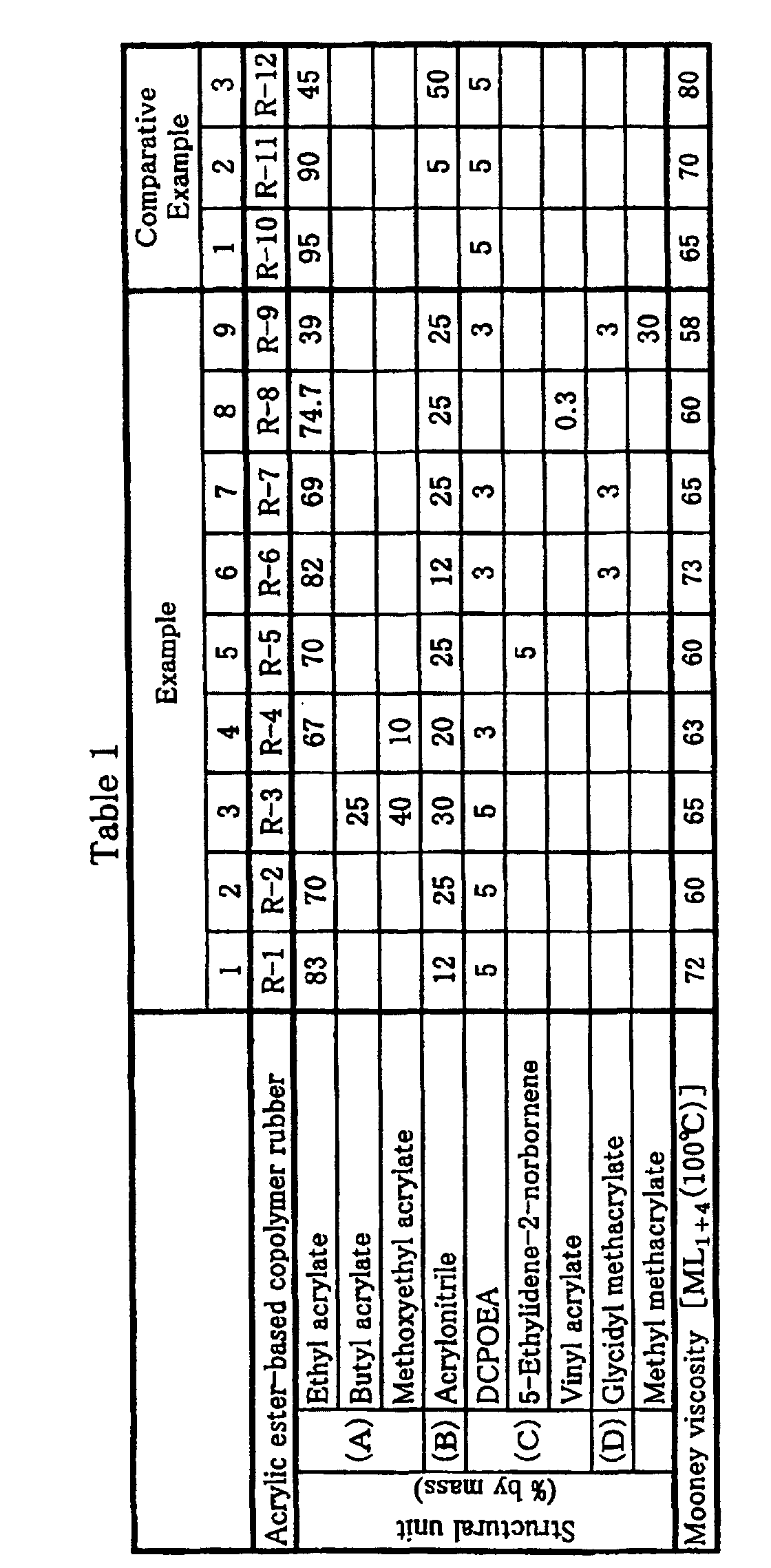
- 100 parts of each of copolymer rubbers R-1 to R-12 obtained above, 1.0 part of stearic acid (manufactured by KAO CORPORATION), 50 parts of carbon black (Trade name: "Seast 116", manufactured by TOKAI CARBON CO., LTD.), 5.0 parts of zinc oxide, 15 parts of an adipic acid ether ester-based plasticizer (Trade name: "RS107", manufactured by ASAHIDENKA CO., LTD.), 2.0 parts of sulfur (manufactured by TSURUMI CHEMICAL CO., LTD.), 2.0 parts of tetraoctylthiuram disulfide (Trade name: "NOCCELER TOT-N", manufactured by OUCHISHINKO CHEMICAL INDUSTRIAL CO., LTD.) as a vulcanization accelerator (I), 1.0 part of N-cyclohexyl-2-benzothiazolylsulfenamide (Trade name: "NOCCELER CZ", manufactured by OUCHISHINKO CHEMICAL INDUSTRIAL CO., LTD.) as a vulcanization accelerator (II) and 0.5 part of 2-mercaptobenzothiazole (Trade name: "NOCCELER M", manufactured by OUCHISHINKO CHEMICAL INDUSTRIAL CO., LTD.) as a vulcanization accelerator (III) were kneaded by a roll to prepare a composition. Press vulcanization was conducted at 170°C for 20 minutes to produce a vulcanized rubber sheet, and properties thereof were evaluated. The results are shown in Tables 2 and 3.
- The evaluation of the vulcanized rubber compositions was performed by the following methods.
- (a) Tensile breaking strength TB and tensile breaking elongation EB: Measured according to JIS K 6251.
- (b) Hardness HA: Measured according to JIS K 6253 (Type A durometer hardness test).
- (c) Compression Set CS: According to JIS K 6262, heat treatment was conducted at 100°C for 22 hours, and a value after 25% compression was measured.
- (d) Fuel oil resistance: According to JIS K 6258, a volume change (ΔV) was obtained by a dipping test at 40°C for 48 hours using Fuel C test oil and ethanol-containing Fuel C test oil.
-
- According to the results in Table 2, it is found that Examples 10 to 18 using the compositions containing acrylic ester-based copolymer rubbers R-1 to R-5 are excellent in mechanical strength, compression set and fuel oil resistance, and especially excellent in alcohol-containing fuel oil resistance. Meanwhile, Comparative Example 4 using the composition containing acrylic ester-based copolymer rubber R-10 was inferior in fuel oil resistance and mechanical strength because it did not contain the structural unit derived from the unsaturated nitrile monomer. Comparative Example 5 using the composition containing acrylic ester-based copolymer rubber R-11 was inferior in fuel oil resistance and mechanical strength because the content of the structural unit derived from the unsaturated nitrile monomer was low. Comparative Example 6 using the composition containing acrylic ester-based copolymer rubber R-12 had an increased hardness because the content of the structural unit derived from the unsaturated nitrile monomer was too much and it is found to be inferior in flexibility.
- The following acrylic ester-based copolymer rubbers and the like were used, mixed at ratios shown in Tables 4 to 8, and kneaded by a Banbury mixer and a roll to prepare oil-resistant and weather-resistant rubber compositions. These compositions were preformed, and then press-vulcanized at 170°C for 10 minutes to produce vulcanized rubber sheets.
- The starting materials used are as follows.
- "R-13"; acrylic ester-based copolymer rubber using 87% by mass of ethyl acrylate, 10% by mass of acrylonitrile and 3% by mass of 5-ethylidene-2-norbornene.
- "R-14"; acrylic ester-based copolymer rubber using 72% by mass of ethyl acrylate, 25% by mass of acrylonitrile and 3% by mass of dicyclopentadienyloxyethyl acrylate.
- "R-15"; acrylic ester-based copolymer rubber using 71% by mass of ethyl acrylate, 25% by mass of acrylonitrile, 1% by mass of ethylene glycol dimethacrylate and 3% by mass of 5-ethylidene-2-norbornene.
- "R-16"; acrylic ester-based copolymer rubber using 84% by mass of ethyl acrylate, 10% by mass of acrylonitrile, 3% by mass of dicyclopentadienyloxyethyl acrylate and 3% by mass of allylglycidyl ether.
- "R-17"; acrylic ester-based copolymer rubber using 69% by mass of ethyl acrylate, 25% by mass of acrylonitrile, 3% by mass of dicyclopentadienyloxyethyl acrylate and 3% by mass of allylglycidyl ether.
- "R-18"; acrylic ester-based copolymer rubber using 97% by mass of ethyl acrylate and 3% by mass of dicyclopentadienyloxyethyl acrylate.
- "R-19"; acrylic ester-based copolymer rubber using 95% by mass of ethyl acrylate, 3% by mass of dicyclopentadienyloxyethyl acrylate and 2% by mass of ethylene glycol dimethacrylate.
- "N217SH"; NBR (Trade name: "N217SH", manufactured by JSR CORPORATION), acrylonitrile content is 47% by mass and Mooney viscosity [ML1+4(100°C)] is approximately 70.
- "NE61''; NBR/EPDM alloy (Trade name: "NE61'', manufactured by JSR CORPORATION).
- "N230S": NBR (Trade name: "N230S", manufactured by JSR CORPORATION), acrylonitrile content is 35% by mass and Mooney viscosity [ML1+4(100°C)] is 56.
- "NV72"; NBR (Trade name: "NV72", manufactured by JSR CORPORATION), medium high AN, Mooney viscosity [ML1+4(100°C)] is 75.
- "Super high AN-NV"; rubber component obtained by mixing the above "N217SH", NBR (Trade name: "N280", manufactured by JSR CORPORATION) and polyvinyl chloride (Trade name: "PVC3000H'', manufactured by Taiyo Vinyl Corporation) at a weight ratio of 65:5:30.
- "AREX117"; chlorinated acrylic ester-based copolymer rubber using 99% by mass of ethyl acrylate and 1% by mass of vinyl chloroacetate.
- "TN80"; fluororubber (Trade name: "TECHNOFLON TN80", manufactured by Montedison S.p.A.)
- "carbon black (I)"; MAF carbon (Trade name: "Seast 116", manufactured by TOKAI CARBON CO., LTD.)
- "carbon black (II)"; FT carbon black (Trade name: "ASAHI THERMAL", manufactured by ASAHI CARBON CO., LTD.)
- "plasticizer (I)"; adipic acid ether ester-based plasticizer (Trade name: "RS107", manufactured by ASAHIDENKA CO., LTD.)
- "plasticizer (II)"; polyether ester plasticizer (Trade name: "RS735", manufactured by ASAHIDENKA CO., LTD.)
- "stearic acid"; (manufactured by KAO CORPORATION)
- "zinc oxide"; (Trade name: "ZnO #2", manufactured by SAKAI CHEMICAL INDUSTRY CO., LTD.)
- "magnesium oxide"; (Trade name: "MgO #150", manufactured by KYOWA CHEMICAL INDUSTRY CO., LTD.)
- "calcium hydroxide"; (Trade name: "Calvit", manufactured by OHMI CHEMICAL INDUSTRY CO., LTD.)
- "softening agent"; naphthenic oil (Trade name: "Fukkol Flex 2050N", manufactured by FUJI KOSAN CO., LTD.)
- "sulfur (I)"; (manufactured by TSURUMI CHEMICAL CO., LTD.)
- "sulfur (II)"; sulfur (Trade name:"Sulfax", manufactured by TSURUMI CHEMICAL CO., LTD.)
- "organic peroxide"; dicumyl peroxide (Trade name:"DCP40", manufactured by NOF CORPORATION)
- "vulcanization accelerator (I)"; (Trade name: "NOCCELER TOT-N", manufactured by OUCHISHINKO CHEMICAL INDUSTRIAL CO., LTD.)
- "vulcanization accelerator (II)"; (Trade name: "NOCCELER CZ", manufactured by OUCHISHINKO CHEMICAL INDUSTRIAL CO., LTD.)
- "vulcanization accelerator (III)"; (Trade name: "NOCCELER M", manufactured by OUCHISHINKO CHEMICAL INDUSTRIAL CO., LTD.)
- "vulcanization accelerator (IV)"; tetraethylthiuram disulfide (Trade name: "NOCCELER TET", manufactured by OUCHISHINKO CHEMICAL INDUSTRIAL CO., LTD.)
- "vulcanization accelerator (V)"; tetramethylthiuram disulfide (Trade name: "NOCCELER TT", manufactured by OUCHISHINKO CHEMICAL INDUSTRIAL CO., LTD.)
- "crosslinking agent (I)"; FKM crosslinking agent ("TECHNOFLON M1", manufactured by Montedison S.p.A.)
- "crosslinking agent (II)"; FKM crosslinking agent ("TECHNOFLON M2", manufactured by Montedison S.p.A.)
- "sodium stearate"; (manufactured by YCHEM CO., LTD.)
- "potassium stearate"; (manufactured by NOF CORPORATION).
-
- The rubber compositions and the vulcanized rubber compositions were evaluated by the following methods. The results are shown in Tables 4 to 8.
- (a) Mooney viscosity: Measured at a temperature of 100°C according to JIS K 6300.
- (b) Mechanical properties: Tensile breaking strength TB and tensile breaking elongation EB were measured according to JIS K 6251, and hardness HA according to JIS K 6253.
- (c) Thermal aging test: According to JIS K 6257, heat treatment was conducted at 100°C for 70 hours, and tensile breaking strength, tensile breaking elongation and hardness were measured.
- (d) Oil resistance: According to JIS K 6258, dipping in IRM903 oil of 100°C was conducted for 70 hours, and tensile breaking strength, tensile breaking elongation, hardness and volume change were then measured.
- (e) Fuel oil resistance: According to JIS K 6258, dipping in Fuel C of 40°C was conducted for 48 hours, and tensile breaking strength, tensile breaking elongation, hardness and volume change were then measured.
- (f) Low-temperature impact brittle test: Measured according to JIS K 6261.
- (g) Compression Set Cs: According to JIS K 6262, heat treatment was conducted at 100°C for 22 hours, and a value after 25% compression was measured.
- (h): Ozone resistance: Measured according to JIS K 6259. A sample was extended by 20%, and exposed to air atmosphere of 40°C at an ozone concentration of 50 pphm. Crack was visually estimated.
-
- According to the results in Table 6, Comparative Example 7 is an example using the NBR/EPDM alloy only as a rubber component, and the volume change of the vulcanized rubber composition owing to the fuel oil resistance was as high as 101%. Comparative Examples 8 and 9 are examples using NBRs different in acrylonitrile content and Mooney viscosity, and both of them were inferior in ozone resistance. Comparative Example 13 in Table 7 is a vulcanized rubber composition made of the rubber composition similar to Comparative Example 9, and also showed the similar properties. Comparative Examples 10 to 12 are examples using the rubber components outside the range of the present invention, and were slightly higher in volume change of the vulcanized rubber composition owing to fuel oil resistance. In Comparative Example 12, the tensile breaking strength did not reach 10 MPa.
- Comparative Example 14 is an example in which acrylic ester-based copolymer rubber (R-18) with the structural unit formulation outside the range of the present invention is used and the contents of the two rubber components are outside the range of the present invention, and the tensile breaking strength was inferior. In Comparative Example 17 in which acrylic ester-based copolymer rubber (R-18) with the structural unit formulation outside the range of the present invention is used and the contents of the two rubber components are within the range of the present invention, the tensile breaking strength was slightly recovered, but the volume change of the vulcanized rubber composition owing to fuel oil resistance was slightly high. Comparative Example 18 also showed the similar properties as Comparative Example 17.
- Meanwhile, according to the results in Tables 4 and 5 it is shown that Examples 19 to 24 are excellent because the two rubber components according to the invention were fully co-crosslinked, the tensile breaking strengths were as high as 13.2 to 19.2 MPa and the tensile breaking elongations were 400% or more. The volume changes were relatively low, the oil resistances were excellent, and the balance of various properties such as the low-temperature impact property, compression set and ozone resistance were excellent.
- Crosslinking of the acrylic ester-based copolymer rubber of the present invention leads to a vulcanized rubber product having oil resistance and thermal resistance, excellent in fuel oil resistance and mechanical strength and low in compression set. Not only an acrylic ester-based copolymer rubber comprising a structural unit derived from a monomer selected from an acrylic acid alkyl ester and an acrylic acid alkoxyalkyl ester, a structural unit derived from an unsaturated nitrile monomer, and a structural unit derived from a monomer selected from a non-conjugated cyclic polyene and compounds represented by the above general formulas (1) and (2), but also an acrylic ester-based copolymer rubber further comprising a structural unit derived from an epoxy group-containing unsaturated monomer can improve ozone resistance and tensile strength.
- In addition, according to the process for producing an acrylic copolymer rubber of the present invention, the acrylic copolymer rubber can easily be produced.
- Crosslinking of the rubber composition of the present invention with sulfur and/or an organic peroxide leads to a crosslinked rubber composition having oil resistance and thermal resistance and excellent in fuel oil resistance and tensile strength.
- Moreover, the oil-resistant and weather-resistant rubber composition of the present invention can provide a crosslinked rubber composition excellent in ozone resistance, oil resistance, heat resistance and processability and also in tensile strength, tensile breaking elongation and hardness. The oil-resistant and weather-resistant rubber product of the present invention is excellent in ozone resistance, oil resistance, heat resistance and workability because the acrylic ester-based copolymer rubber and the unsaturated nitrite·conjugated diene copolymer are co-crosslinked, and it is also excellent in tensile strength, tensile breaking elongation and hardness with quite a good balance of the properties. Especially, in the case of crosslinking by use of a tetraalkylthiuram disulfide containing an alkyl group having from 2 to 18 carbon atoms, quite a high-performance crosslinked rubber composition can be obtained. Upon making use of these effects, the invention is useful as various hose members such as an oil cooler hose, an air duct hose, a power steering hose, a control hose, an intercooler hose, a tor-con hose, an oil return hose and a heat-resistant hose, a fuel hose member, a seal member such as a bearing seal, a bulk stem seal, various oil seals, an O-ring, a packing and a gasket, various diaphragms, a rubber plate, a belt, an oil level gauge, a coating member such as a hose masking and a piping insulation member, a roll and the like.



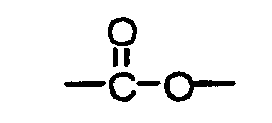






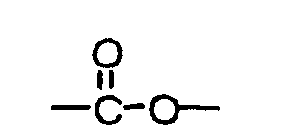








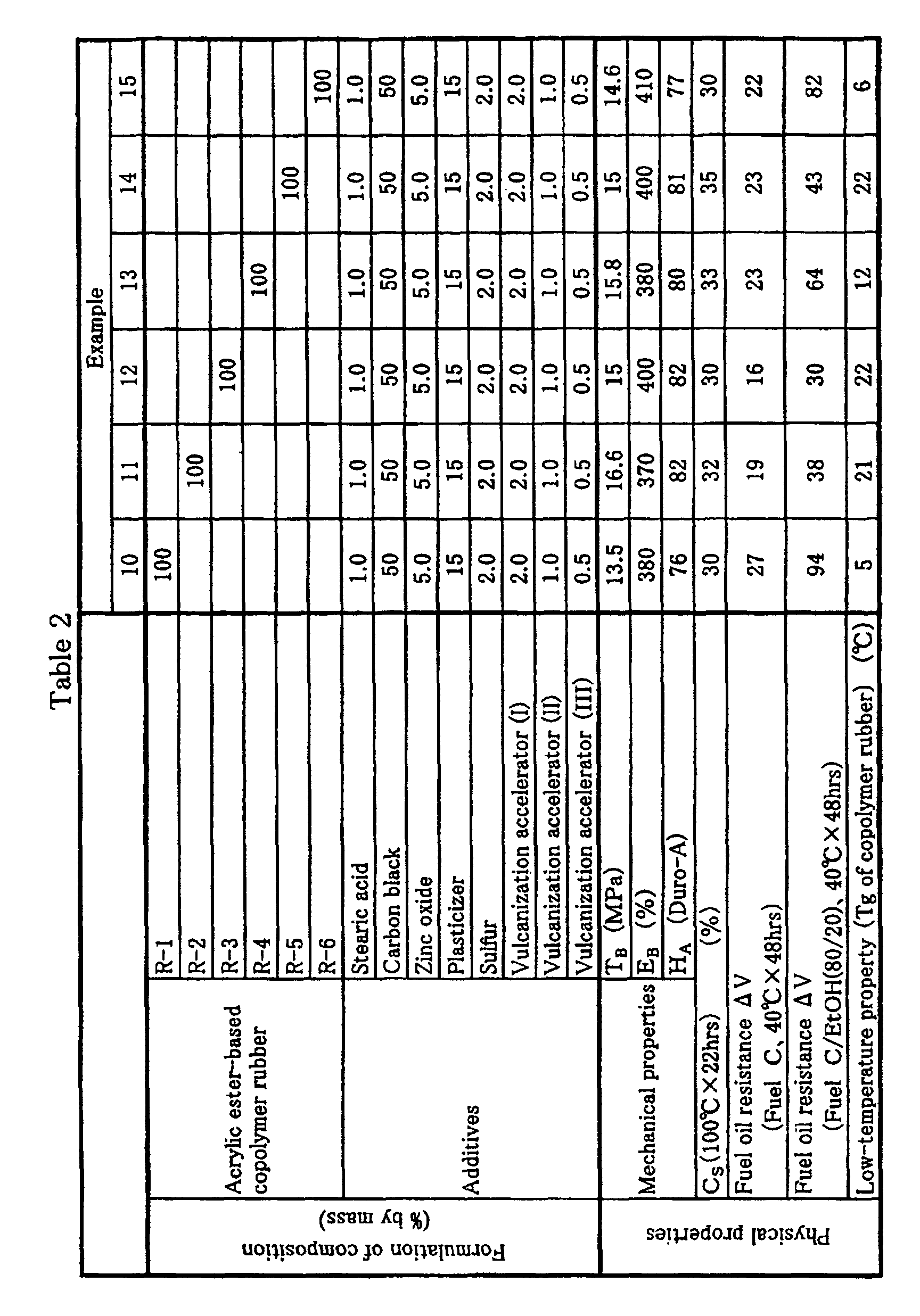
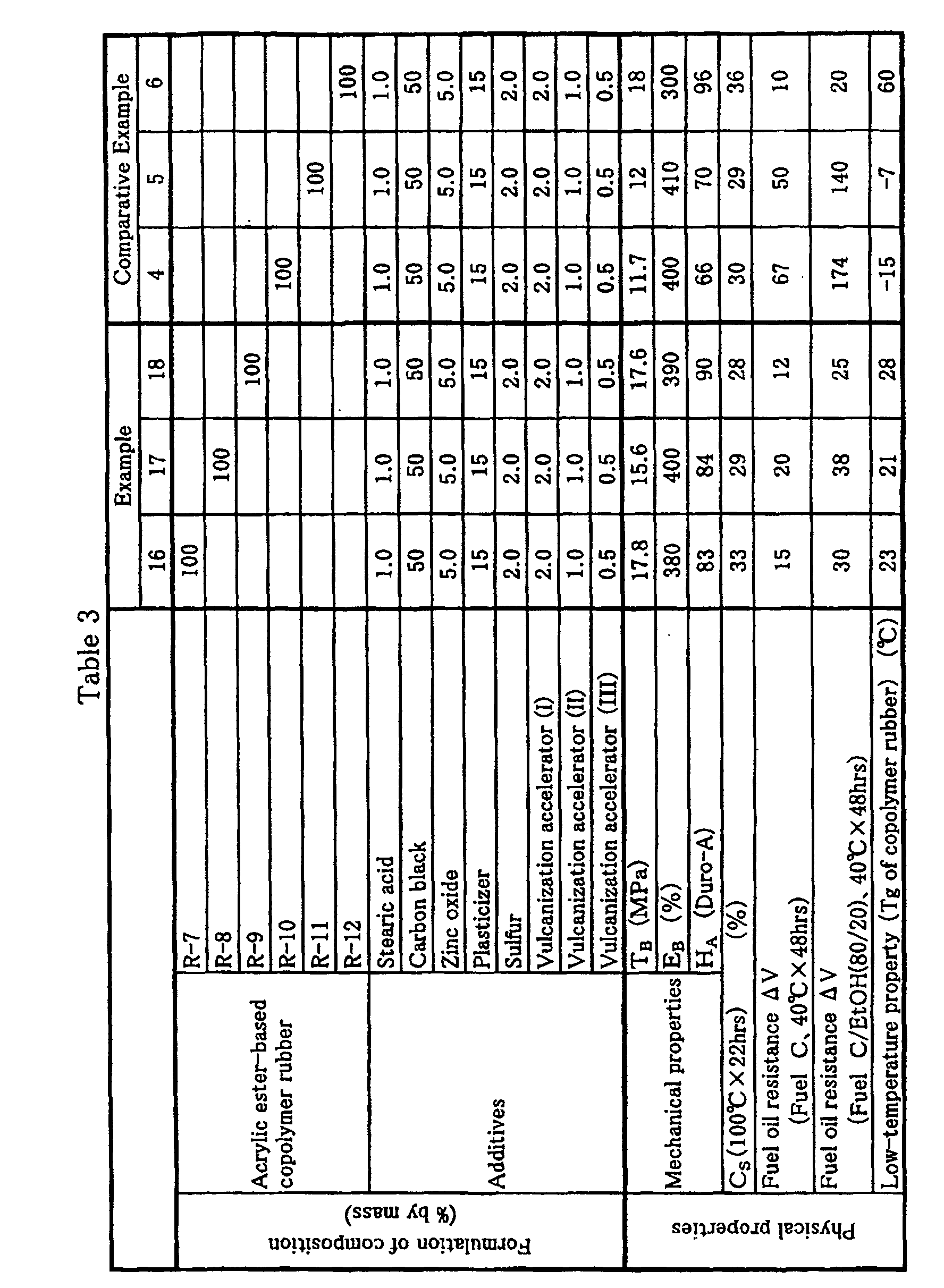
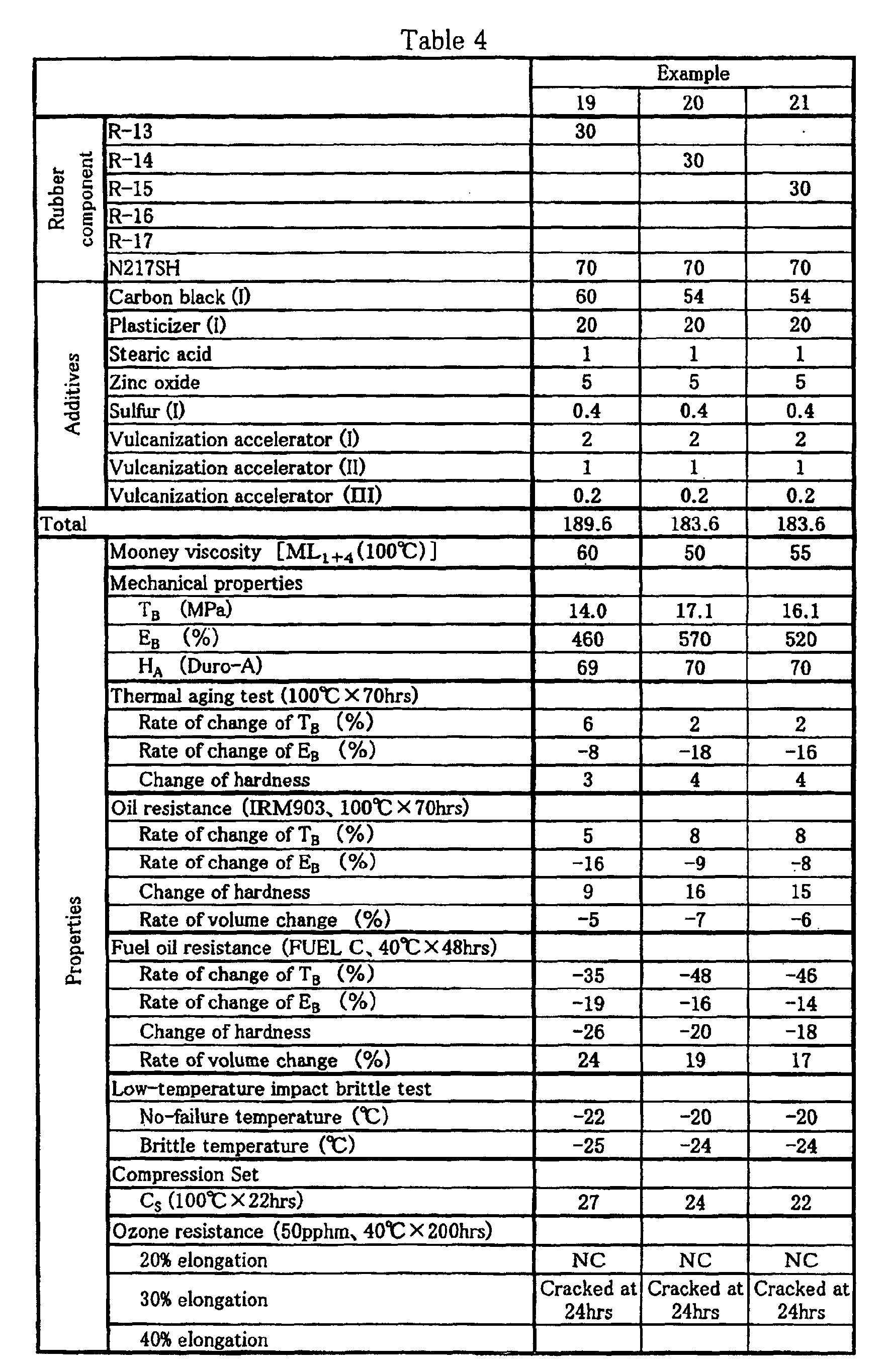


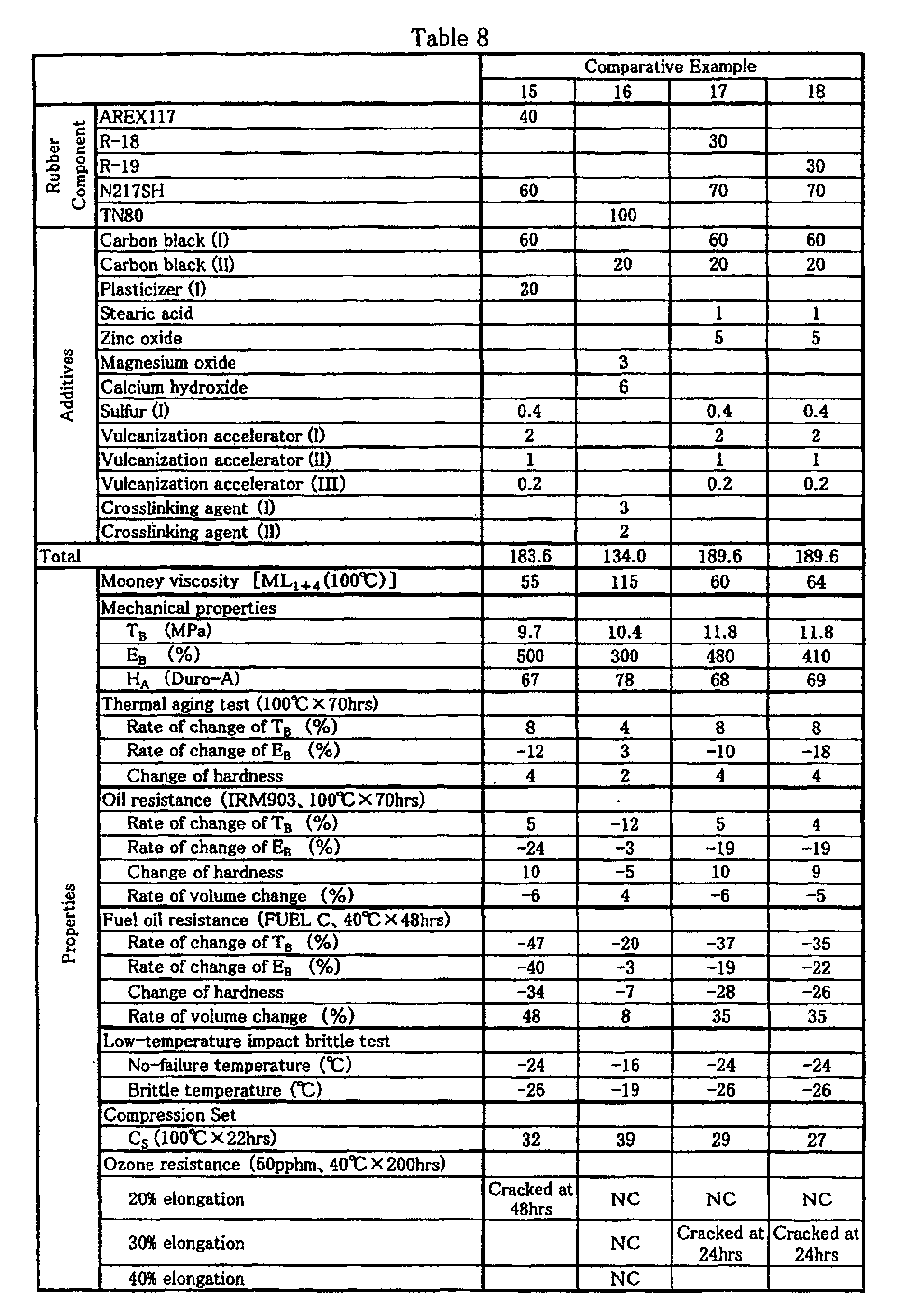
Claims (10)
- An acrylic ester-based copolymer rubber characterized by comprising:wherein the Mooney viscosity [ML1+4(100°C)] is in the range from 10 to 200,(A) a structural unit derived from at least one monomer selected from the group consisting of an acrylic acid alkyl ester and an acrylic acid alkoxyalkyl ester in an amount from 40 to 91.9% by mass,(B) a structural unit derived from an unsaturated nitrile monomer in an amount from 8 to 40% by mass, and(C) a structural unit derived from at least one monomer selected from the group consisting of a non-conjugated cyclic polyene and compounds represented by the following general formulas (1) and (2) in an amount from 0.1 to 20% by mass (provided (A)+(B)+(C)=100% by mass),wherein X1 represents a hydrogen atom or a methyl group, and n is an integer from 0 to 10,
 wherein R1 represents a hydrogen atom or a methyl group, R2, R3 and R4 each represent a hydrogen atom or an organic group having from 1 to 10 carbon atoms where hydrogen atom is not bonded to carbon atom adjacent to a double bond, R5 represents an organic group having from 1 to 10 carbon atoms where hydrogen atom is not bonded to carbon atom adjacent to a double bond, X2 represents a hydrogen atom, -COOR6 wherein R6 represents an alkyl group having from 1 to 10 carbon atoms or an alkoxyalkyl group having from 2 to 14 carbon atoms, or a group represented by following formula (3),
 wherein Y represents
 or -O-, and n is 1 or 0.
- The acrylic ester-based copolymer rubber according to Claim 1, wherein a monomer forming said structural unit (A) is at least one selected from the group consisting of ethyl acrylate, n-butyl acrylate and methoxyethyl acrylate.
- The acrylic ester-based copolymer rubber according to Claim 1, further comprising (D) a structural unit derived from an unsaturated monomer having an epoxy group in an amount from 0.1 to 20 parts by mass when the total of said structural units (A), (B) and (C) is defined as 100 parts by mass.
- A process for producing an acrylic ester-based copolymer rubber characterized by copolymerizing monomers comprisingwherein X1 represents a hydrogen atom or a methyl group, and n is an integer from 0 to 10,(a) at least one kind of monomer selected from an acrylic acid alkyl ester and an acrylic acid alkoxyalkyl ester in an amount from 40 to 91.9% by mass,(b) an unsaturated nitrile monomer in an amount from 8 to 40% by mass, and(c) at least one kind of monomer selected from the group consisting of a non-conjugated cyclic polyene and compounds represented by the following general formulas (1) and (2) in an amount from 0.1 to 20% by mass (provided (a)+(b)+(c)=100% by mass) in the presence of a radical polymerization initiator,
 wherein R1 represents a hydrogen atom or a methyl group, R2, R3 and R4 each represent a hydrogen atom or an organic group having from 1 to 10 carbon atoms where hydrogen atom is not bonded to carbon atom adjacent to a double bond, R5 represents an organic group having from 1 to 10 carbon atoms where hydrogen atom is not bonded to carbon atom adjacent to a double bond, X2 represents a hydrogen atom, -COOR6 wherein R6 represents an alkyl group having from 1 to 10 carbon atoms or an alkoxyalkyl group having from 2 to 14 carbon atoms, or a group represented by following formula (3),
 wherein Y represents
 or -O-, and n is 1 or 0.
- A rubber composition characterized by comprising an acrylic ester-based copolymer rubber, sulfur and/or an organic peroxide,
wherein said acrylic ester-based copolymer rubber is comprised of:wherein the Mooney viscosity [ML1+4(100°C)] of said acrylic ester-based copolymer rubber is in the range from 10 to 200,(A) a structural unit derived from at least one monomer selected from the group consisting of an acrylic acid alkyl ester and an acrylic acid alkoxyalkyl ester in an amount from 40 to 91.9% by mass,(B) a structural unit derived from an unsaturated nitrile monomer in an amount from 8 to 40% by mass, and(C) a structural unit derived from at least one monomer selected from the group consisting of a non-conjugated cyclic polyene and compounds represented by the following general formulas (1) and (2) in an amount from 0.1 to 20% by mass (provided (A)+(B)+(C)=100% by mass),wherein X1 represents a hydrogen atom or a methyl group, and n is an integer from 0 to 10, wherein R1 represents a hydrogen atom or a methyl group, R2, R3 and R4 each represent a hydrogen atom or an organic group having from 1 to 10 carbon atoms where hydrogen atom is not bonded to carbon atom adjacent to a double bond, R5 represents an organic group having from 1 to 10 carbon atoms where hydrogen atom is not bonded to carbon atom adjacent to a double bond, X2 represents a hydrogen atom, -COOR6 wherein R6 represents an alkyl group having from 1 to 10 carbon atoms or an alkoxyalkyl group having from 2 to 14 carbon atoms, or a group represented by following formula (3),
 wherein Y represents
 or -O-, and n is 1 or 0.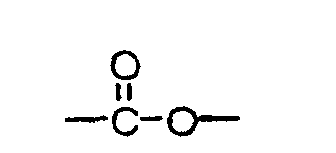
- An oil-resistant and weather-resistant rubber composition characterized by comprising (X) an acrylic ester-based copolymer rubber in an amount from 10 to 50% by mass and (Y) α,β-unsaturated nitrile-conjugated diene copolymer in an amount from 90 to 50% by mass (provided (X)+(Y)=100% by mass),
wherein said acrylic ester-based copolymer rubber is comprised of:wherein the Mooney viscosity [ML1+4(100°C)] of said acrylic ester-based copolymer rubber is in the range from 10 to 200,(A) a structural unit derived from at least one monomer selected from the group consisting of an acrylic acid alkyl ester and an acrylic acid alkoxyalkyl ester in an amount from 40 to 91.9% by mass,(B) a structural unit derived from an unsaturated nitrile monomer in an amount from 8 to 40% by mass, and(C) a structural unit derived from at least one monomer selected from the group consisting of a non-conjugated cyclic polyene and compounds represented by the following general formulas (1) and (2) in an amount from 0.1 to 20% by mass (provided (A)+(B)+(C)=100% by mass),wherein X1 represents a hydrogen atom or a methyl group, and n is an integer from 0 to 10, wherein R1 represents a hydrogen atom or a methyl group, R2, R3 and R4 each represent a hydrogen atom or an organic group having from 1 to 10 carbon atoms where hydrogen atom is not bonded to carbon atom adjacent to a double bond, R5 represents an organic group having from 1 to 10 carbon atoms where hydrogen atom is not bonded to carbon atom adjacent to a double bond, X2 represents a hydrogen atom, -COOR6 wherein R6 represents an alkyl group having from 1 to 10 carbon atoms or an alkoxyalkyl group having from 2 to 14 carbon atoms, or a group represented by following formula (3),
 wherein Y represents
 or -O-, and n is 1 or 0.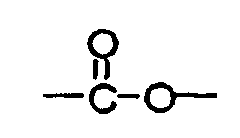
- The oil-resistant and weather-resistant rubber composition according to Claim 6, wherein a monomer forming said structural unit (A) is at least one selected from the group consisting of ethyl acrylate, n-butyl acrylate and methoxyethyl acrylate.
- The oil-resistant and weather-resistant rubber composition according to Claim 6, wherein said acrylic ester-based copolymer rubber further comprises (D) a structural unit derived from an unsaturated monomer having an epoxy group in an amount from 0.1 to 20 parts by mass when the total of said structural units (A), (B) and (C) is defined as 100 parts by mass.
- An oil-resistant and weather-resistant rubber product which is obtained by crosslinking said oil-resistant and weather-resistant rubber composition according to Claim 6, characterized in that said acrylic ester-based copolymer rubber (X) and said α,β-unsaturated nitrile-conjugated diene copolymer (Y) are co-crosslinked.
- The oil-resistant and weather-resistant rubber product according to Claim 9, wherein said co-crosslinking is conducted with a tetraalkylthiuram disulfide having an alkyl group having from 2 to 18 carbon atoms.
Applications Claiming Priority (3)
| Application Number | Priority Date | Filing Date | Title |
|---|---|---|---|
| JP2001392811 | 2001-12-25 | ||
| JP2001392811 | 2001-12-25 | ||
| PCT/JP2002/013551 WO2003055925A1 (en) | 2001-12-25 | 2002-12-25 | Acrylic rubber, process for its production, and rubber compositions, oil- and weather-resistant rubber compositions, and oil- and weather-resistant rubbers, containing the same |
Publications (3)
| Publication Number | Publication Date |
|---|---|
| EP1469018A1 true EP1469018A1 (en) | 2004-10-20 |
| EP1469018A4 EP1469018A4 (en) | 2006-03-29 |
| EP1469018B1 EP1469018B1 (en) | 2009-06-10 |
Family
ID=19188692
Family Applications (1)
| Application Number | Title | Priority Date | Filing Date |
|---|---|---|---|
| EP02791996A Expired - Lifetime EP1469018B1 (en) | 2001-12-25 | 2002-12-25 | Acrylic rubber, process for its production, and rubber compositions, oil- and weather-resistant rubber compositions, and oil- and weather-resistant rubbers, containing the same |
Country Status (6)
| Country | Link |
|---|---|
| US (1) | US7550536B2 (en) |
| EP (1) | EP1469018B1 (en) |
| CN (1) | CN1281642C (en) |
| AU (1) | AU2002361094A1 (en) |
| DE (1) | DE60232607D1 (en) |
| WO (1) | WO2003055925A1 (en) |
Cited By (1)
| Publication number | Priority date | Publication date | Assignee | Title |
|---|---|---|---|---|
| EP1535960A1 (en) * | 2003-11-28 | 2005-06-01 | JSR Corporation | Oil resistant and weather resistant rubber composition and molded product using the same |
Families Citing this family (18)
| Publication number | Priority date | Publication date | Assignee | Title |
|---|---|---|---|---|
| KR101514854B1 (en) * | 2007-05-22 | 2015-04-23 | 덴끼 가가꾸 고교 가부시키가이샤 | Acrylic rubber composition vulcanized rubber therefrom and use thereof |
| TWI400293B (en) * | 2008-12-24 | 2013-07-01 | Ind Tech Res Inst | Thermoplastic vulcanizate |
| CN102268147A (en) * | 2010-06-03 | 2011-12-07 | 漯河市利通橡胶有限公司 | Hot oil and high pressure oil resistant rubber and production method thereof |
| FR2961286B1 (en) * | 2010-06-14 | 2015-01-02 | Hutchinson | PIPE FOR MOTOR VEHICLE MOTOR AIR INTAKE CIRCUIT, AND CIRCUIT INCORPORATING IT |
| KR101837950B1 (en) * | 2011-03-30 | 2018-04-26 | 금호석유화학 주식회사 | Copolymer for resist comprising novel acryl based monomer and resin composition for resist comprising the same |
| DE102012200166A1 (en) * | 2012-01-06 | 2013-07-11 | Evonik Industries Ag | rubber compounds |
| CN103613895A (en) * | 2013-11-12 | 2014-03-05 | 铜陵市肆得科技有限责任公司 | Rubber sealing pad material and preparation method thereof |
| WO2015177838A1 (en) * | 2014-05-19 | 2015-11-26 | 横浜ゴム株式会社 | Rubber composition, rubber composition metal laminate, and vulcanized rubber product |
| CN104072920A (en) * | 2014-07-14 | 2014-10-01 | 柳州市颖航汽配有限公司 | Car radiator hose |
| CN105566883B (en) * | 2014-10-30 | 2019-12-17 | 株式会社捷太格特 | sealing material |
| CN104530619A (en) * | 2014-12-31 | 2015-04-22 | 舟山华意汽车配件制造有限公司 | Transmission belt material and manufacturing method thereof |
| CN108517098A (en) * | 2018-04-12 | 2018-09-11 | 中广核三角洲集团(苏州)特威塑胶有限公司 | A kind of long-term thermoplastic dynamic vulcanized elastomer of high temperature resistant oil resistant and preparation method thereof |
| KR102379238B1 (en) | 2019-01-07 | 2022-03-24 | 주식회사 엘지화학 | Acrylic based copolymer composition, method for preparing the same and acrylic based rubber composition |
| JP7014934B2 (en) * | 2019-06-13 | 2022-02-01 | ユニマテック株式会社 | Acrylic rubber and its crosslinkable composition |
| US12583960B2 (en) * | 2020-09-02 | 2026-03-24 | Unimatec Co., Ltd. | Acrylic elastomer copolymer and crosslinkable composition thereof |
| JP7159508B1 (en) | 2021-03-10 | 2022-10-24 | バンドー化学株式会社 | Rubber composition and rubber product |
| JP7490899B2 (en) * | 2021-08-18 | 2024-05-27 | ユニマテック株式会社 | Crosslinkable acrylic rubber composition |
| CN116640538A (en) * | 2023-06-28 | 2023-08-25 | 南京赛弗尼电气有限公司 | Self-adhesive low-smoke halogen-free fireproof plugging and sealing material and its preparation method and application |
Family Cites Families (18)
| Publication number | Priority date | Publication date | Assignee | Title |
|---|---|---|---|---|
| JPS5644100B2 (en) | 1973-12-18 | 1981-10-17 | ||
| JPS5933140B2 (en) | 1976-08-17 | 1984-08-14 | エヌオーケー株式会社 | Elastomer composition |
| JPS55104332A (en) | 1979-02-02 | 1980-08-09 | Mitsuboshi Belting Ltd | Rubber composition |
| JPS5725342A (en) | 1980-07-22 | 1982-02-10 | Japan Synthetic Rubber Co Ltd | Rubber composition |
| JPS57119943A (en) | 1981-01-19 | 1982-07-26 | Osaka Soda Co Ltd | Preparation of oil-resistant rubber composition |
| JPS6144909A (en) | 1984-08-09 | 1986-03-04 | Japan Synthetic Rubber Co Ltd | Production of rubbery acrylate copolymer |
| JPS61225243A (en) * | 1985-03-29 | 1986-10-07 | Japan Synthetic Rubber Co Ltd | Acrylic rubber composition |
| JPH0680129B2 (en) | 1985-09-11 | 1994-10-12 | 三井石油化学工業株式会社 | Vulcanizable acrylic rubber composition |
| JPS6268842A (en) * | 1985-09-20 | 1987-03-28 | Japan Synthetic Rubber Co Ltd | Acrylic rubber composition |
| JPH0725956B2 (en) | 1986-05-29 | 1995-03-22 | 日本合成ゴム株式会社 | Oil and weather resistant rubber composition |
| JPH0713116B2 (en) * | 1986-09-11 | 1995-02-15 | 日本合成ゴム株式会社 | Method for producing acrylic ester elastomer |
| CA1294727C (en) * | 1987-03-27 | 1992-01-21 | Toshio Ohhara | Acrylic rubber, acrylic rubber composition and cured rubber article thereof |
| JPH07107088B2 (en) * | 1987-03-27 | 1995-11-15 | 日本合成ゴム株式会社 | Acrylic rubber, acrylic composition and rubber products |
| JP2536592B2 (en) * | 1988-05-25 | 1996-09-18 | 日本合成ゴム株式会社 | Acrylic rubber composition |
| JP3617120B2 (en) * | 1994-05-27 | 2005-02-02 | Jsr株式会社 | Acrylic rubber composition |
| JP3543388B2 (en) | 1994-09-30 | 2004-07-14 | 日本ゼオン株式会社 | Vulcanizable acrylic rubber composition |
| DE19837854A1 (en) * | 1998-08-20 | 2000-02-24 | Basf Ag | Thermoplastic molding compositions for making coextruded mat moldings contain thermoplastic styrene-acrylonitrile polymer with specified viscosity and fine multiphase, crosslinked graft rubber particles |
| US6054531A (en) * | 1998-11-23 | 2000-04-25 | General Electric Company | Emulsion polymerized polyacrylate rubber, impact modifiers and blends obtained therefrom, and method for making |
-
2002
- 2002-12-25 WO PCT/JP2002/013551 patent/WO2003055925A1/en not_active Ceased
- 2002-12-25 DE DE60232607T patent/DE60232607D1/en not_active Expired - Lifetime
- 2002-12-25 US US10/498,972 patent/US7550536B2/en not_active Expired - Lifetime
- 2002-12-25 CN CNB028261895A patent/CN1281642C/en not_active Expired - Lifetime
- 2002-12-25 EP EP02791996A patent/EP1469018B1/en not_active Expired - Lifetime
- 2002-12-25 AU AU2002361094A patent/AU2002361094A1/en not_active Abandoned
Non-Patent Citations (2)
| Title |
|---|
| No further relevant documents disclosed * |
| See also references of WO03055925A1 * |
Cited By (1)
| Publication number | Priority date | Publication date | Assignee | Title |
|---|---|---|---|---|
| EP1535960A1 (en) * | 2003-11-28 | 2005-06-01 | JSR Corporation | Oil resistant and weather resistant rubber composition and molded product using the same |
Also Published As
| Publication number | Publication date |
|---|---|
| DE60232607D1 (en) | 2009-07-23 |
| US7550536B2 (en) | 2009-06-23 |
| CN1608085A (en) | 2005-04-20 |
| US20050165191A1 (en) | 2005-07-28 |
| AU2002361094A1 (en) | 2003-07-15 |
| EP1469018B1 (en) | 2009-06-10 |
| EP1469018A4 (en) | 2006-03-29 |
| CN1281642C (en) | 2006-10-25 |
| WO2003055925A1 (en) | 2003-07-10 |
Similar Documents
| Publication | Publication Date | Title |
|---|---|---|
| EP1469018B1 (en) | Acrylic rubber, process for its production, and rubber compositions, oil- and weather-resistant rubber compositions, and oil- and weather-resistant rubbers, containing the same | |
| EP1535960B1 (en) | Oil resistant and weather resistant rubber composition and molded product using the same | |
| CN105705569B (en) | High saturated copolymer rubber composition and rubber cross thing containing itrile group | |
| JP5509597B2 (en) | Oil and weather resistant rubber composition and rubber molded body | |
| JP4894172B2 (en) | Oil resistant and weather resistant rubber composition and molded article thereof | |
| JP4075610B2 (en) | Acrylic ester copolymer rubber, method for producing the same, rubber composition containing the same, oil resistant weather resistant rubber composition and oil resistant weather resistant rubber | |
| US20060111504A1 (en) | Flame retardant rubber composition, rubber articles and wire covering materials | |
| JP4461932B2 (en) | Fuel oil resistant rubber composition and vulcanized rubber | |
| WO2001074940A1 (en) | Nitrile rubber composition and vulcanized rubber article | |
| JP2006335784A (en) | Oil- and weather-resistant rubber composition and molded product thereof | |
| JP4487610B2 (en) | Rubber composition and vulcanized product obtained by vulcanizing the same | |
| WO2005000550A2 (en) | Polymer alloy, crosslinked object, and fuel hose | |
| JP2008231256A (en) | Oil resistant and weather resistant rubber composition and molded article thereof | |
| JP4281130B2 (en) | Rubber composition | |
| JP2008088241A (en) | Oil resistant and weather resistant rubber composition and molded article thereof | |
| JP2007002149A (en) | Oil and weather resistant rubber composition and molded product thereof | |
| JP2015017226A (en) | Thermoplastic elastomer | |
| JP6036514B2 (en) | Thermoplastic elastomer | |
| JP7200569B2 (en) | Rubber mixture, nitrile group-containing copolymer rubber composition, crosslinkable rubber composition and crosslinked rubber | |
| JP2013224381A (en) | Modified acrylic rubber | |
| JPS61225243A (en) | Acrylic rubber composition | |
| JP2009242554A (en) | Composition for rubber products, and rubber product | |
| JP2009203369A (en) | Composition for high-hardness rubber products, and high-hardness rubber product | |
| JPWO2004106429A1 (en) | Rubber composition and cross-linked molded product thereof | |
| JP2007099844A (en) | Crosslinkable rubber composition and cross-linked product |
Legal Events
| Date | Code | Title | Description |
|---|---|---|---|
| PUAI | Public reference made under article 153(3) epc to a published international application that has entered the european phase |
Free format text: ORIGINAL CODE: 0009012 |
|
| 17P | Request for examination filed |
Effective date: 20040624 |
|
| AK | Designated contracting states |
Kind code of ref document: A1 Designated state(s): AT BE BG CH CY CZ DE DK EE ES FI FR GB GR IE IT LI LU MC NL PT SE SI SK TR |
|
| AX | Request for extension of the european patent |
Extension state: AL LT LV MK RO |
|
| A4 | Supplementary search report drawn up and despatched |
Effective date: 20060214 |
|
| 17Q | First examination report despatched |
Effective date: 20060809 |
|
| GRAP | Despatch of communication of intention to grant a patent |
Free format text: ORIGINAL CODE: EPIDOSNIGR1 |
|
| GRAS | Grant fee paid |
Free format text: ORIGINAL CODE: EPIDOSNIGR3 |
|
| GRAA | (expected) grant |
Free format text: ORIGINAL CODE: 0009210 |
|
| AK | Designated contracting states |
Kind code of ref document: B1 Designated state(s): DE FR GB IT |
|
| REG | Reference to a national code |
Ref country code: GB Ref legal event code: FG4D |
|
| REF | Corresponds to: |
Ref document number: 60232607 Country of ref document: DE Date of ref document: 20090723 Kind code of ref document: P |
|
| PLBE | No opposition filed within time limit |
Free format text: ORIGINAL CODE: 0009261 |
|
| STAA | Information on the status of an ep patent application or granted ep patent |
Free format text: STATUS: NO OPPOSITION FILED WITHIN TIME LIMIT |
|
| 26N | No opposition filed |
Effective date: 20100311 |
|
| PG25 | Lapsed in a contracting state [announced via postgrant information from national office to epo] |
Ref country code: IT Free format text: LAPSE BECAUSE OF FAILURE TO SUBMIT A TRANSLATION OF THE DESCRIPTION OR TO PAY THE FEE WITHIN THE PRESCRIBED TIME-LIMIT Effective date: 20090610 |
|
| REG | Reference to a national code |
Ref country code: FR Ref legal event code: PLFP Year of fee payment: 14 |
|
| REG | Reference to a national code |
Ref country code: FR Ref legal event code: PLFP Year of fee payment: 15 |
|
| REG | Reference to a national code |
Ref country code: FR Ref legal event code: PLFP Year of fee payment: 16 |
|
| PGFP | Annual fee paid to national office [announced via postgrant information from national office to epo] |
Ref country code: FR Payment date: 20211224 Year of fee payment: 20 Ref country code: GB Payment date: 20211221 Year of fee payment: 20 Ref country code: DE Payment date: 20211210 Year of fee payment: 20 |
|
| REG | Reference to a national code |
Ref country code: DE Ref legal event code: R071 Ref document number: 60232607 Country of ref document: DE |
|
| REG | Reference to a national code |
Ref country code: GB Ref legal event code: PE20 Expiry date: 20221224 |
|
| PG25 | Lapsed in a contracting state [announced via postgrant information from national office to epo] |
Ref country code: GB Free format text: LAPSE BECAUSE OF EXPIRATION OF PROTECTION Effective date: 20221224 |
|
| REG | Reference to a national code |
Ref country code: GB Ref legal event code: 732E Free format text: REGISTERED BETWEEN 20230209 AND 20230215 |