EP1465382B1 - Netzwerkzonen - Google Patents
Netzwerkzonen Download PDFInfo
- Publication number
- EP1465382B1 EP1465382B1 EP04006602A EP04006602A EP1465382B1 EP 1465382 B1 EP1465382 B1 EP 1465382B1 EP 04006602 A EP04006602 A EP 04006602A EP 04006602 A EP04006602 A EP 04006602A EP 1465382 B1 EP1465382 B1 EP 1465382B1
- Authority
- EP
- European Patent Office
- Prior art keywords
- network
- zone
- application program
- recited
- preferred
- Prior art date
- Legal status (The legal status is an assumption and is not a legal conclusion. Google has not performed a legal analysis and makes no representation as to the accuracy of the status listed.)
- Expired - Lifetime
Links
- 238000004891 communication Methods 0.000 claims description 41
- 238000000034 method Methods 0.000 claims description 36
- 230000015654 memory Effects 0.000 claims description 29
- 238000009434 installation Methods 0.000 claims description 6
- 230000000977 initiatory effect Effects 0.000 claims description 4
- 230000003287 optical effect Effects 0.000 description 9
- 238000010586 diagram Methods 0.000 description 7
- 230000002093 peripheral effect Effects 0.000 description 6
- 230000003068 static effect Effects 0.000 description 6
- 230000006870 function Effects 0.000 description 4
- 238000012545 processing Methods 0.000 description 4
- 238000012546 transfer Methods 0.000 description 4
- 230000005540 biological transmission Effects 0.000 description 3
- 230000006855 networking Effects 0.000 description 3
- 230000008901 benefit Effects 0.000 description 2
- 230000007246 mechanism Effects 0.000 description 2
- 230000008569 process Effects 0.000 description 2
- 238000003490 calendering Methods 0.000 description 1
- 230000001413 cellular effect Effects 0.000 description 1
- 238000004883 computer application Methods 0.000 description 1
- 238000011960 computer-aided design Methods 0.000 description 1
- 230000001419 dependent effect Effects 0.000 description 1
- 238000005516 engineering process Methods 0.000 description 1
- 238000001914 filtration Methods 0.000 description 1
- 238000007726 management method Methods 0.000 description 1
- 230000005055 memory storage Effects 0.000 description 1
- 239000013307 optical fiber Substances 0.000 description 1
- 230000008520 organization Effects 0.000 description 1
- 230000035755 proliferation Effects 0.000 description 1
- 239000004065 semiconductor Substances 0.000 description 1
- 238000000926 separation method Methods 0.000 description 1
- 238000013519 translation Methods 0.000 description 1
- 230000014616 translation Effects 0.000 description 1
- 230000007723 transport mechanism Effects 0.000 description 1
Images
Classifications
-
- H—ELECTRICITY
- H04—ELECTRIC COMMUNICATION TECHNIQUE
- H04L—TRANSMISSION OF DIGITAL INFORMATION, e.g. TELEGRAPHIC COMMUNICATION
- H04L9/00—Cryptographic mechanisms or cryptographic arrangements for secret or secure communications; Network security protocols
-
- H—ELECTRICITY
- H04—ELECTRIC COMMUNICATION TECHNIQUE
- H04L—TRANSMISSION OF DIGITAL INFORMATION, e.g. TELEGRAPHIC COMMUNICATION
- H04L63/00—Network architectures or network communication protocols for network security
- H04L63/02—Network architectures or network communication protocols for network security for separating internal from external traffic, e.g. firewalls
- H04L63/0227—Filtering policies
-
- H—ELECTRICITY
- H04—ELECTRIC COMMUNICATION TECHNIQUE
- H04L—TRANSMISSION OF DIGITAL INFORMATION, e.g. TELEGRAPHIC COMMUNICATION
- H04L41/00—Arrangements for maintenance, administration or management of data switching networks, e.g. of packet switching networks
- H04L41/08—Configuration management of networks or network elements
- H04L41/0894—Policy-based network configuration management
-
- H—ELECTRICITY
- H04—ELECTRIC COMMUNICATION TECHNIQUE
- H04L—TRANSMISSION OF DIGITAL INFORMATION, e.g. TELEGRAPHIC COMMUNICATION
- H04L63/00—Network architectures or network communication protocols for network security
- H04L63/10—Network architectures or network communication protocols for network security for controlling access to devices or network resources
- H04L63/102—Entity profiles
-
- H—ELECTRICITY
- H04—ELECTRIC COMMUNICATION TECHNIQUE
- H04L—TRANSMISSION OF DIGITAL INFORMATION, e.g. TELEGRAPHIC COMMUNICATION
- H04L41/00—Arrangements for maintenance, administration or management of data switching networks, e.g. of packet switching networks
- H04L41/08—Configuration management of networks or network elements
- H04L41/0893—Assignment of logical groups to network elements
-
- H—ELECTRICITY
- H04—ELECTRIC COMMUNICATION TECHNIQUE
- H04L—TRANSMISSION OF DIGITAL INFORMATION, e.g. TELEGRAPHIC COMMUNICATION
- H04L47/00—Traffic control in data switching networks
- H04L47/70—Admission control; Resource allocation
- H04L47/80—Actions related to the user profile or the type of traffic
- H04L47/803—Application aware
Definitions
- the present disclosure generally relates to computer security, and more particularly, to controlling the exposure of computer applications and data to networks of varying properties by using predefined network zones.
- a computing device may be attached to several networks of varying properties over the course of a day.
- a businessman may use a laptop computer on a home network in the morning before going to work, and then use the same laptop computer later in the morning at work while connected to a corporate network.
- the same laptop computer might then be taken on a business trip later that afternoon where it could be connected to the Internet through a public Wi-Fi (short for "wireless fidelity") network, for example, at the airport.
- Wi-Fi short for "wireless fidelity”
- Exposure to certain network environments can pose particular risks for mobile computing devices when such devices are initially configured to operate in a particular, static network environment that is known to be safe (e.g., a home network environment protected by an Internet firewall).
- a particular, static network environment that is known to be safe (e.g., a home network environment protected by an Internet firewall).
- the ease of connecting mobile computer devices to various networks with differing properties increases the risk that such devices will encounter undesirable contacts in a hostile network environment.
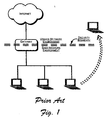
- FIG. 1 illustrates a typical network environment in which a safe network environment (e.g., a home network) is separated from an unsafe network environment (e.g., the Internet) by a security boundary.
- the security boundary represents a firewall running on a gateway computer.
- the firewall may be configured to enforce particular policies designed to protect computers on the home network (i.e., safe network environment) from undesirable contact with devices on the Internet.
- computers on the home network may be configured to share files freely, the firewall may be configured to refuse any external requests (i.e., from the Internet) for file sharing. This configuration can work well to protect computers in a static network environment where the firewall is properly configured.
- security policies enforced by the firewall on the home network in the safe environment do not travel with a mobile computer when the mobile computer is removed from the home network environment and connected to the Internet, for example, through a public Wi-Fi network.
- the mobile computer is therefore subject to external file requests or attacks (e.g., file erasing) by other devices on the Internet unless the specific file sharing policies for the computer are manually adjusted each time the mobile computer is taken out of the home network environment.
- the effectiveness of current methods for administering network security for such mobile computers is optimized only when the computers remain connected to the static network configured to provide a safe environment.
- US 2002/165949 A1 relates to high speed discrimination of a policy in a packet filtering type firewall system.
- the data received at a receiving party are analyzed at high speed to select a transmission path.
- a packet is transmitted to an opposing terminal unit based on data of the receiving party attached to data of PCP/IP packet data.
- data are read out to search a policy inclusive of such data. If a corresponding policy exists, a process is performed according to the corresponding policy in such a manner that blocks the corresponding packet when the policy gives a reject instruction and it passes the corresponding packet when the policy gives an allowance instruction. If there is no corresponding policy, a process according to an instruction of a basic policy is performed.
- a firewall is used to achieve network separation within a computing system having a plurality of network interfaces.
- a plurality of regions is defined within the firewall and a set of policies is configured for each of the plurality of regions.
- the firewall restricts communication to and from each of the plurality of network interfaces in accordance with the set of policies configured for the one of the plurality of regions to which the one of the plurality of network interfaces has been assigned.
- a system and methods are disclosed for controlling access to network connections according to network zones.
- an application program provides a preference that indicates a preferred network zone or zones.
- a connection is permitted between the application program and a network that is associated with the preferred network zone or zones. Connections between the application program and networks that are not associated with the preferred network zone or zones are prevented.
- a computer assigns a network to a network zone based on predefined properties for the zone and the properties of the network.
- a computer assigns networks to network zones based on predefined properties for each zone and/or the properties of the networks.
- An application program installed on the computer provides the computer with preference information that indicates a network zone whose network policies or properties are best suited for the application program. Thereafter, when executing the application program, the computer limits network contact for the application program to the network(s) assigned to the network zone(s) identified as a preferred network zone(s), or identified by a preferred network property or properties, by the preference information from the application program.
- Benefits of the disclosed systems and methods include increased protection from potentially harmful network communication for a mobile computing device that connects to several different networks of varying properties throughout a period of time or at the same time.
- the need to configure security settings on such a mobile computer is reduced because the computer continually enforces the network zone(s) to which various applications and services have subscribed, regardless of the network or networks to which the computer is connected.
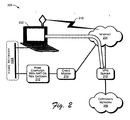
- Fig. 2 shows an exemplary system environment 200 suitable for implementing one or more embodiments of a mobile computing device capable of controlling network communications through the employment and enforcement of network zones.
- the environment 200 typically includes a mobile computing device 202 (mobile computer) and one or more networks having varying properties such as, for example, the Internet 204, a corporate/enterprise network 206, and a home/residential network 208.
- Mobile computer 202 may be implemented as various computing devices capable of being connected to various networks such as the Internet 204, a corporate network 206, and a home network 208.
- mobile computer 202 is typically a computing device that is physically mobile such as, for example, a laptop computer, a PDA (personal digital assistant), a cell phone and the like.
- PC's personal computers
- Certain implementations of mobile computer 202 typically perform common computing functions, such as email, calendaring, task organization, word processing, Web browsing, and so on.
- mobile computer 202 runs an open platform operating system, such as the Windows ® brand operating systems from Microsoft ® .
- One exemplary implementation of mobile computer 202 is described in more detail below with reference to Fig. 7.
- Mobile computer 202 may employ various modes for connecting to one or more networks either at different times or at the same time.
- the exemplary system environment 200 of Fig. 2 is intended to illustrate examples of some of the ways in which a mobile computer 202 might connect to one or more networks.
- the environment 200 of Fig. 2 is not intended to indicate that the illustrated network connections are all necessary, nor is the environment 200 of Fig. 2 intended to indicate that mobile computer 202 is limited to the illustrated network connections.
- mobile computer 202 is illustrated in the exemplary system environment 200 of Fig. 2 as being directly connected to the Internet 204 through a wireless connection 210 such as GPRS (General Packet Radio Service), UMTS (Universal Mobile Telecommunications System), WAP (Wireless Application Protocol), PCS (personal communications services) and the like.
- Mobile computer 202 is also illustrated as being indirectly connected to the Internet through home network 208, which may include a home computer 212 implementing NAT (Network Address Translator) or a dedicated Residential Gateway device.
- NAT Network Address Translator
- NAT Network Address Translator
- Cable modem 214 acts as the NAT host or gateway to home computer 212 and other clients such as mobile computer 202.
- mobile computer 202 is illustrated as being directly connected to home network 208.
- home network 208 might also be a wireless local area network (WLAN), or Wi-Fi (short for "wireless fidelity") network, to which mobile computer 202 is connected through a wireless (radio) connection.
- Wi-Fi wireless local area network
- mobile computer 202 may connect indirectly to the Internet not only through a home Wi-Fi network such as home network 208, but also through any Wi-Fi network encountered in various common and public locations including, for example, a coffee shop, an international airport, and so on.
- Wi-Fi is specified in the 802.11b specification from the Institute of Electrical and Electronics Engineers (IEEE) and is part of a series of wireless specifications.
- home network 208 typically includes a home computer 212 with ICS and an Internet connection technology such as cable modem 214.
- Mobile computer 202 is also shown in Fig. 2 as being indirectly connected to corporate network 206 through a VPN (virtual private network) server 216.
- VPNs are typically created using the Internet 204 as the medium for transporting data.
- various ways of connecting to the Internet such as those discussed above, also apply to VPNs.
- VPN systems use encryption and other security mechanisms to ensure that authorized users access the network and that data cannot be intercepted.
- the home network 208, corporate network 206, and Internet 204 illustrated in Fig. 2 are included as example networks in an exemplary system environment 200, and are generally well-known to those skilled in the art. These networks are also used as exemplary networks in the embodiments described herein below. There is no intent, however, to limit the number or configuration of other networks that may also be applicable to environment 200 and the exemplary embodiments discussed below.
- Home network 208 typically includes two or more computers (e.g., home computer(s) 212, mobile computer 202) interconnected to form a local area network (LAN) within a home.
- a home network 208 allows computer owners to interconnect multiple computers so that each can share files, programs, printers, other peripheral devices, and Internet access (e.g., through a residential gateway) with other computers, reducing the need for redundant equipment. For example, an older computer without a CD-ROM drive can access a newer computer's CD-ROM, which may eliminate the need to purchase a CD-ROM for the older computer. Sharing files across a home network 208 is also easier than transferring files to various home computers using a portable storage medium such as a floppy disc.
- a corporate or enterprise network 206 is generally distinguishable from a home network 208 by its more general purpose, the types of devices that are interconnected, the use of communication protocols, and so on.
- a home network might interconnect personal computers and peripheral devices (e.g., a printer, a scanner) to form a LAN, and use a peer-to-peer communications protocol
- a corporate network 206 might form a LAN through the interconnection of personal computers, work stations, servers, and peripheral devices while using a client/server architecture for communication.
- a corporate network 206 typically includes connections through one or more gateway computers to the outside Internet 204.
- corporate networks 206 may utilize both wired connections and wireless connections such as, for example, direct cable connections, traditional Ethernet, a phoneline network and an RF (radio frequency) network.
- the Internet 204 is a worldwide system of computer networks in which users at any first computer can get information from any second computer if the first computer has appropriate permission or if the second computer is not properly secure.
- the Internet 204 may be distinguished in general through its use of TCP/IP (Transmission Control Protocol/Internet Protocol) as its basic communication language or protocol.
- TCP/IP facilitates information sharing through the use of, for example, the World Wide Web which uses HTTP (Hypertext Transfer Protocol), e-mail which relies on SMTP (Simple Mail Transfer Protocol), Usenet news groups, instant messaging and FTP (File Transfer Protocol). These and other protocols are often packaged together with TCP/IP as a "suite".
- exemplary embodiments of the Fig. 2 environment 200 implement a mobile computer 202 configured to control communications and/or contacts between applications and services on mobile computer 202 and various networks (e.g., home network 208, corporate network 206, Internet 204) through the employment and enforcement of network zones.
- controlling network communications in this manner protects mobile computer 202 and its various applications and data from potentially harmful contact initiated from an unknown and/or unsafe network environment such as the Internet 204.
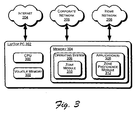
- Fig. 3 is a block diagram representation of an exemplary embodiment of a mobile computer 202 configured to control communications between different networks having varying properties (e.g., Internet 204, corporate network 206, home network 208) and various application programs and data on a mobile computer 202. In general, the control of network contacts/communications is achieved through the employment and enforcement of network zones.
- Mobile computer 202 is implemented in the exemplary embodiment of Fig. 3 as a laptop PC (personal computer) 202.
- Laptop PC 202 includes a processor 300, a volatile memory 302 (i.e., RAM), and a nonvolatile memory 304 (e.g., ROM, hard disk, floppy disk, CD-ROM, etc.).
- volatile memory 302 i.e., RAM
- nonvolatile memory 304 e.g., ROM, hard disk, floppy disk, CD-ROM, etc.
- Nonvolatile memory 304 generally provides storage of computer/processor-readable instructions, data structures, program modules and other data for PC 202.
- a laptop PC 202 is described in more detail below with reference to Fig. 7.
- Laptop PC 202 implements an operating system (OS) 306 on processor 300 from volatile memory 302.
- the OS 306 is stored in memory 304 and initially loaded from memory 304 into volatile memory 302 by a boot program (not shown).
- the OS 306 is generally configured to manage other application programs 308 that are also stored in memory 304 and executable on processor 300 from volatile memory 302.
- the OS 306 honors requests for services made by application programs 308 through predefined application program interfaces (APIs). More specifically, the OS 306 typically determines the order in which multiple applications 308 execute on processor 300 and the execution time allotted for each application 308, manages the sharing of memory 302 among multiple applications 308, handles input and output to and from attached hardware devices (e.g., hard disks, printers, dial-up ports), and so on.
- users can typically interact directly with the OS 306 through a user interface such as a command language or graphical user interface.
- Laptop PC 202 typically implements various application programs 308 stored in memory 304 and executable on processor 300.
- applications 308 might include software programs implementing, for example, word processors, spread sheets, browsers, file share programs, database management systems (DBMS), peer-to-peer applications, multimedia players, computer-aided design tools and the like.
- DBMS database management systems
- the OS 306 on laptop PC 202 is illustrated as including a zone module 310, while application(s) 308 are illustrated as including a zone preference module 312.
- Zone module 310 is configured to support and/or define a number of network zones, each of which incorporates a set of network properties and policies that are consistent with particular networks to which the mobile laptop PC 202 might be connected.
- the particular networks include the Internet 204, a corporate network 206, and a home network 208.
- the illustrated networks are not meant to limit the extent of any network that may be applicable to this and other embodiments.
- Zone module 310 comprises a plurality of network zones that are distinguished from one another according to certain network properties and enforcement policies that each zone incorporates.
- zone module 310 determines the properties of the network and assigns the network to a particular network zone whose own incorporated properties correspond with the network properties. For example, when the laptop PC 202 is connected to a home network 208, the home network 208 will be assigned to a network zone that incorporates or embodies the properties of the home network 208.
- the network properties might typically be associated with a network zone having more liberal securities polices, such as policies that would permit file sharing without the need for a password, for example.
- each network zone being supported by zone module 310 has a single network associated with it or assigned to it.
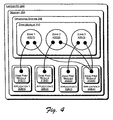
- the zone module 310 In addition to determining network properties for networks connected to laptop PC 202 and assigning networks to appropriate network zones according to the network properties, the zone module 310 also assigns applications 308 to particular network zones according to zone preferences that are indicated by the applications 308. Therefore, as shown in Fig. 4, an application 308 is assigned to a particular network zone 400 based on a network zone preference provided to the zone module 310 by the application 308.
- Fig. 4 demonstrates the concept of assigning an application 308 to a network zone 400 by showing how four different applications 308(1-4) on PC 202 are assigned to three different network zones 400 (i.e., zone 1, 400(1); zone 2, 400(2); zone 3, 400(3)) being supported by zone module 310.
- Fig. 4 is intended, in part, to illustrate how an application 308 can be assignee to a single network zone 400 or to numerous network zones 400 simultaneously.
- application 1 (308(1)), application 2 (308(2)), and application 3 (308(3) are assigned to zone 1 (400(1)), zone 2 (400(2)), and zone 3 (400(3)), respectively
- application 4 (308(4)) is assigned to all three zones 400(1,2,3) simultaneously. It is noted that, while Fig. 4 and Fig.
- zone module 310 that supports three zones 400 (i.e., zone 1, 400(1); zone 2, 400(2); zone 3, 400(3)), there is no intent to limit the number of zones 400 to three zones.
- zone module 310 may support additional zones 400, with each zone 400 being associated with a particular network that is connected or connectable to laptop PC 202.
- Zone preference module 312 is typically embedded or programmed with the zone preference information at the time the application 308 is designed. Thus, upon installation of an application 308 onto laptop PC 202, the zone preference module 312 can communicate the zone preference information to the zone module 310 of OS 306. However, the zone preference module 312 might also enable a user to indicate a zone preference. Under such a scenario, during the installation of an application 308 onto laptop PC 202 a zone preference module 312 may generate a user interface (e.g., a graphical user interface or command line interface) on the PC 202 through which a user can specify one or more network zone preferences for the application 308. The zone preference(s) are then communicated to the zone module 310 of OS 306.
- a user interface e.g., a graphical user interface or command line interface
- the zone module 310 Once the zone module 310 has assigned an application 308 to a network zone 400 according to the network zone preference received from the application 308, the zone module 310 thereafter enforces the policies of the zone 400 with respect to that application 308.
- the zone module 310 limits network contact for an application 308 to only that network (or networks) associated with the network zone (or zones) that the application 308 has specified as a preferred network zone (or zones).
- the laptop PC 202 may be connected to various networks at the same time, and yet, an application 308 running on the PC 202 is only allowed to "see", or communicate with, those networks associated with the application's 308 preferred network zones 400.
- an application 308 can communicate a custom network connection policy through zone preference module 312.
- the zone preference module 312 is embedded/programmed with specific communication instructions that define the network connections for the application 308.
- the instructions may include, for example, specific locations on the Internet with which the application 308 can communicate.
- the zone preference module 312 communicates the instructions to the zone module 310 of OS 306.
- the zone module 310 uses the instructions to effectively define a custom zone, and then assigns the application 308 to that zone. Thereafter, the zone module 310 enforces the policies of the custom zone according to the specific instructions received from the application 308. Enforcement typically includes limiting network contact for the application 308 to the network locations expressed in the instructions received from the application 308. Therefore, although the laptop PC 202 may be connected to various networks at the same time and access various network locations, the application 308 is only allowed to "see", or communicate with, those network locations expressed in the instructions received from the application 308.
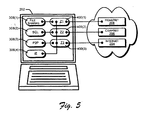
- Fig. 5 illustrates a more specific example of how network zones 400 implemented in an embodiment such as that described above may be used to control communications between applications 308 running on a mobile laptop PC 202 and various networks connected to the PC 202.
- the illustration of Fig. 5 is intended to indicate that the laptop PC 202 is connected to three networks of varying properties at the same time.
- the networks to which the PC 202 is connected are a home network 208, a corporate network 206, and the Internet 204.
- Each network has been assigned (i.e., through the zone module 310) to, or associated with, a particular network zone 400 based on the network's properties.
- home network 208 has been assigned to zone 1 (400(1))
- corporate network 206 has been assigned to zone 2 (400(2))
- the Internet 204 has been assigned to zone 3 (400(3)).
- Applications 308 that specify a particular zone 400 as a preferred zone will be subject to the policies of that particular zone 400.
- the applications 308 represented on laptop PC 202 in Fig. 5 include a file sharing application 308(1), a SQL server application 308(2), a peer-to-peer (P2P) application 308(3), and a browser (e.g., Internet Explorer) application 308(4).
- Each application 308 has provided (e.g., during installation onto PC 202) the zone module 310 (Figs. 3 and 4) with preference information indicating to which zone (or zones) 400 the application 308 should be assigned.
- the file sharing application 308(1) is assigned to zone 1 (400(1))
- the SQL server application 308(2) is assigned to zone 2 (400(2))
- the P2P application 308(3) is assigned to zone 3 (400(3))
- the browser application 308(4) is assigned to zones 1, 2, and 3.
- An application 308 specifies particular network zones 400 as preferred zones based on the particular functionality of the application 308.
- a file sharing application 308(1) typically allows a number of people on a network to use the same file or files through some combination of being able to read or view the file(s), write to or modify the file(s), copy the file(s), or print the file(s).
- a user on a first computer chooses to share files, then a user on a second computer can access the shared files.
- the operation of such file sharing applications 308(1) generally presumes that there is no hostile intent posed by various computers that want to share files.
- such file sharing applications 308(1) typically specify a network zone 400 that is consistent with this presumption.
- zone 1 (400(1)) provides a network environment (i.e., home network 208) whose properties are consistent with the intended functionality of file sharing application 308(1). Regardless of any other network connections to laptop PC 202, the zone module 310 on laptop PC 202 enforces the network zone 1 (400(1)) such that file sharing application 308(1) "sees" only the connection to the home network 208. Enforcement of zone 1 (400(1)) by zone module 310 essentially blocks any communication between file sharing application 308(1) and any network connected to PC 202 that is not a home network 208.
- a SQL server application 308(2) is an application that is designed to function in a corporate/enterprise environment, and therefore it typically specifies a network zone 400 consistent with its functional purpose. Accordingly, the SQL server application 308(2) illustrated in Fig. 5 has indicated zone 2 (400(2)) as its preferred zone, and the zone module 310 on laptop PC 202 enforces zone 2 (400(2)) such that the SQL application 308(2) "sees" only the connection to the corporate network 206, regardless of what other network connections might exist on laptop PC 202.
- a P2P application 308(3) is designed to function in an Internet only environment, and therefore typically specifies a network zone 400 consistent with this functional purpose. Accordingly, the P2P application 308(3) of Fig. 5 has indicated zone 3 (400(3)) as its preferred zone because zone 3 supports and enforces the Internet as its only network connection. Thus, the zone module 310 on laptop PC 202 ensures that the P2P application 308(3) will "see” only the connection to the Internet 204, regardless of what other network connections might exist on laptop PC 202.
- the browser application 308(4) has likewise, specified particular network zones 400 as preferred zones based on the particular functionality of a browser application 308(4).
- Browsers are applications that are generally designed to function in all network environments, and they provide their own set of security settings. Accordingly, the browser application 308(4) of Fig. 5 has specified all three network zones 400 (1-3) as preferred zones.
- the zone module 310 on laptop PC 202 ensures that the browser application 308(4) is able to "see" all the network connections to the laptop PC 202.
- Example methods for implementing one or more embodiments of a mobile computer 202 configured to control communications between different networks having varying properties and various application programs and data on the computer 202 will now be described with primary reference to the flow diagram of Figs. 6.
- the methods apply generally to the exemplary embodiments discussed above with respect to Figs. 3-5.
- the elements of the described methods may be performed by any appropriate means including, for example, by the execution of processor-readable instructions defined on a processor-readable medium.
- a "processor-readable medium” as used herein, can be any means that can contain, store, communicate, propagate, or transport instructions for use by or execution by a processor.
- a processor-readable medium can be, without limitation, an electronic, magnetic, optical, electromagnetic, infrared, or semiconductor system, apparatus, device, or propagation medium. More specific examples of a processor-readable medium include, among others, an electrical connection having one or more wires, a portable computer diskette, a random access memory (RAM), a read-only memory (ROM), an erasable programmable-read-only memory (EPROM or Flash memory), an optical fiber, and a portable compact disc read-only memory (CDROM).
- RAM random access memory
- ROM read-only memory
- EPROM or Flash memory erasable programmable-read-only memory
- CDROM portable compact disc read-only memory
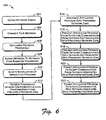
- Fig. 6 shows an exemplary method 600 for implementing an embodiment of a mobile computer 202 configured to control communications between networks having varying properties and application programs and data on the mobile computer 202.
- network zones are defined.
- a mobile computer 202 defines a plurality of network zones based on network properties and network communication/connection policies. Custom zones, whose properties and/or policies will be determined based on instructions from an application program 308, may also be included as network zones.
- the computer 202 connects to a network.
- the network may be any sort of network including, for example, a home network 208, a corporate network 206, and the Internet 204.
- the computer 202 determines the properties of the network, and at block 608, it assigns the network to a network zone according to the network properties.
- the network is assigned to a network zone whose properties are consistent with the properties determined for the network.
- the computer 202 initiates the installation of an application program 308.
- the computer 202 receives preference information from the application 308 being installed that indicates a preferred network zone for the application.
- the preference information may include communication instructions that define the properties and connection policies for a custom zone. In another embodiment, the preference information may simply include one or more properties preferred by the application 308.
- the computer 202 associates/assigns the application 308 to a network zone based on the preference information from the application 308.
- the network zone may be a network zone specified as the application's preferred network zone, it may be a custom zone defined by the preference information, or it may be a network zone that includes one or more networks which possess one or properties included in the preference information from the application 308.
- the computer 202 enforces the network zone with which the application is associated in several ways.
- the computer 202 prevents the application program 308 from seeing and/or accepting communication from a network that is not associated with the preferred network zone. For custom zones, this may include preventing the application program 308 from accepting communication from network locations not specified in the custom zone.
- the computer 202 prevents the application program 308 from seeing and/or initiating communication with a network not associated with the preferred network zone. For custom zones, this may include preventing the application program 308 from initiating communication with any network location not specified in the custom zone.
- the computer 202 permits the application program to accept communication from the network associated with the preferred network zone. For custom zones, this may include permitting the application program 308 to accept communication from network locations specified in the custom zone.
- the computer 202 permits the application program to initiate communication with the network associated with preferred network zone. For custom zones, this may include permitting the application program to initiate communication with network locations specified in the custom zone.
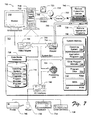
- Fig. 7 illustrates an example of a suitable computing environment 700 that may be used to implement a mobile computer 202. Although one specific configuration is shown, computer 202 may be implemented in other computing configurations.
- the computing environment 700 includes a general-purpose computing system in the form of a computer 702.
- the components of computer 702 can include, but are not limited to, one or more processors or processing units 704, a system memory 706, and a system bus 708 that couples various system components including the processor 704 to the system memory 706.
- the system bus 708 represents one or more of any of several types of bus structures, including a memory bus or memory controller, a peripheral bus, an accelerated graphics port, and a processor or local bus using any of a variety of bus architectures.
- An example of a system bus 708 would be a Peripheral Component Interconnects (PCI) bus, also known as a Mezzanine bus.
- PCI Peripheral Component Interconnects
- Computer 702 typically includes a variety of computer readable media. Such media can be any available media that is accessible by computer 702 and includes both volatile and non-volatile media, removable and non-removable media.
- the system memory 706 includes computer readable media in the form of volatile memory, such as random access memory (RAM) 710, and/or non-volatile memory, such as read only memory (ROM) 712.
- RAM 710 typically contains data and/or program modules that are immediately accessible to and/or presently operated on by the processing unit 704.
- Computer 702 can also include other removable/non-removable, volatile/non-volatile computer storage media.
- Fig. 7 illustrates a hard disk drive 716 for reading from and writing to a non-removable, non-volatile magnetic media (not shown), a magnetic disk drive 718 for reading from and writing to a removable, non-volatile magnetic disk 720 (e.g., a "floppy disk"), and an optical disk drive 722 for reading from and/or writing to a removable, non-volatile optical disk 724 such as a CD-ROM, DVD-ROM, or other optical media.
- a hard disk drive 716 for reading from and writing to a non-removable, non-volatile magnetic media (not shown)
- a magnetic disk drive 718 for reading from and writing to a removable, non-volatile magnetic disk 720 (e.g., a "floppy disk")
- an optical disk drive 722 for reading from and/or writing to a removable, non-volatile optical
- the hard disk drive 716, magnetic disk drive 718, and optical disk drive 722 are each connected to the system bus 708 by one or more data media interfaces 726.
- the hard disk drive 716, magnetic disk drive 718, and optical disk drive 722 can be connected to the system bus 708 by a SCSI interface (not shown).
- the disk drives and their associated computer-readable media provide non-volatile storage of computer readable instructions, data structures, program modules, and other data for computer 702.
- a hard disk 716 a removable magnetic disk 720, and a removable optical disk 724
- other types of computer readable media which can store data that is accessible by a computer, such as magnetic cassettes or other magnetic storage devices, flash memory cards, CD-ROM, digital versatile disks (DVD) or other optical storage, random access memories (RAM), read only memories (ROM), electrically erasable programmable read-only memory (EEPROM), and the like, can also be utilized to implement the exemplary computing system and environment.
- RAM random access memories
- ROM read only memories
- EEPROM electrically erasable programmable read-only memory
- Any number of program modules can be stored on the hard disk 716, magnetic disk 720, optical disk 724, ROM 712, and/or RAM 710, including by way of example, an operating system 726, one or more application programs 728, other program modules 730, and program data 732.
- an operating system 726 may include an embodiment of a caching scheme for user network access information.
- Computer 702 can include a variety of computer/processor readable media identified as communication media.
- Communication media typically embodies computer readable instructions, data structures, program modules, or other data in a modulated data signal such as a carrier wave or other transport mechanism and includes any information delivery media.
- modulated data signal'' means a signal that has one or more of its characteristics set or changed in such a manner as to encode information in the signal.
- communication media includes wired media such as a wired network or direct-wired connection, and wireless media such as acoustic, RF, infrared, and other wireless media. Combinations of any of the above are also included within the scope of computer readable media.
- a user can enter commands and information into computer system 702 via input devices such as a keyboard 734 and a pointing device 736 (e.g., a "mouse").
- Other input devices 738 may include a microphone, joystick, game pad, satellite dish, serial port, scanner, and/or the like.
- input/output interfaces 740 are coupled to the system bus 708, but may be connected by other interface and bus structures, such as a parallel port, game port, or a universal serial bus (USB).
- a monitor 742 or other type of display device can also be connected to the system bus 708 via an interface, such as a video adapter 744.
- other output peripheral devices can include components such as speakers (not shown) and a printer 746 which can be connected to computer 702 via the input/output interfaces 740.
- Computer 702 can operate in a networked environment using logical connections to one or more remote computers, such as a remote computing device 748.
- the remote computing device 748 can be a personal computer, portable computer, a server, a router, a network computer, a peer device or other common network node, and the like.
- the remote computing device 748 is illustrated as a portable computer that can include many or all of the elements and features described herein relative to computer system 702.
- Logical connections between computer 702 and the remote computer 748 are depicted as a local area network (LAN) 750 and a general wide area network (WAN) 752.
- LAN local area network
- WAN wide area network
- Such networking environments are commonplace in offices, enterprise-wide computer networks, intranets, and the Internet.
- the computer 702 When implemented in a LAN networking environment, the computer 702 is connected to a local network 750 via a network interface or adapter 754.
- the computer 702 When implemented in a WAN networking environment, the computer 702 typically includes a modem 756 or other means for establishing communications over the wide network 752.
- the modem 756, which can be internal or external to computer 702 can be connected to the system bus 708 via the input/output interfaces 740 or other appropriate mechanisms. It is to be appreciated that the illustrated network connections are exemplary and that other means of establishing communication link(s) between the computers 702 and 748 can be employed.
- remote application programs 758 reside on a memory device of remote computer 748.
- application programs and other executable program components such as the operating system, are illustrated herein as discrete blocks, although it is recognized that such programs and components reside at various times in different storage components of the computer system 702, and are executed by the data processor(s) of the computer.
Landscapes
- Engineering & Computer Science (AREA)
- Computer Networks & Wireless Communication (AREA)
- Signal Processing (AREA)
- Computer Security & Cryptography (AREA)
- Computer Hardware Design (AREA)
- Computing Systems (AREA)
- General Engineering & Computer Science (AREA)
- Mobile Radio Communication Systems (AREA)
- Data Exchanges In Wide-Area Networks (AREA)
- Computer And Data Communications (AREA)
- Eye Examination Apparatus (AREA)
- Exchange Systems With Centralized Control (AREA)
- Information Transfer Between Computers (AREA)
- Acyclic And Carbocyclic Compounds In Medicinal Compositions (AREA)
- Communication Control (AREA)
- Two-Way Televisions, Distribution Of Moving Picture Or The Like (AREA)
Claims (27)
- Verfahren (600) umfassend:Definieren (602-608) einer Vielzahl von Netzwerkzonen (400(1) - 400(3)), so dass jede Netzwerkzone einer unterschiedlichen Netzwerkverbindungsrichtlinie entspricht;Empfangen (610, 612) einer Netzwerkzonenpräferenz von einem Anwendungsprogramm (308, 308(1) - 308(4), 728, 758), die eine bevorzugte Netzwerkverbindungsrichtlinie für das Anwendungsprogramm angibt; undDurchsetzen (616 - 622) der bevorzugten Netzwerkverbindungsrichtlinie gemäß der Netzwerkzonenpräferenz während der Ausführung des Anwendungsprogramms.
- Verfahren nach Anspruch 1, wobei die bevorzugte Netzwerkverbindungsrichtlinie eine benutzerspezifische Netzwerkverbindungsrichtlinie ist, wobei das Verfahren des Weiteren umfasst:Empfangen (610, 612) von Instruktionen von dem Anwendungsprogramm, die die benutzerspezifische Netzwerkverbindungsrichtlinie definiert;Durchsetzen (616, 622) der benutzerspezifischen Netzwerkverbindungsrichtlinie gemäß der Instruktionen während der Ausführung des Anwendungsprogramms.
- Verfahren nach Anspruch 1 oder 2, wobei:das Empfangen einer Netzwerkzonenpräferenz von einem Anwendungsprogramm das Empfangen einer Präferenz, die eine bevorzugte Netzwerkzone spezifiziert, von dem Anwendungsprogramm umfasst; unddas Durchsetzen der bevorzugten Netzwerkverbindungsrichtlinie umfasst:Zulassen (620, 622) einer Verbindung zwischen dem Anwendungsprogramm und einem Netzwerk (204, 206, 208, 750, 752), das mit der bevorzugten Netzwerkzone assoziiert ist; undUnterbinden (616, 618) einer Verbindung zwischen dem Anwendungsprogramm und einem Netzwerk (204, 206, 208, 750, 752), das nicht mit der bevorzugten Netzwerkzone assoziiert ist.
- Verfahren nach Anspruch 3, das des Weiteren umfasst:Assoziieren (614) des Netzwerks mit der bevorzugten Netzwerkzone.
- Verfahren nach Anspruch 4, wobei das Definieren des Weiteren das Assoziieren (604-608) von Netzwerkeigenschaften mit jeder Netzwerkzone umfasst.
- Verfahren nach Anspruch 5, wobei das Assoziieren des Weiteren umfasst:Verbinden (604) mit dem Netzwerk;Ermitteln (606) von Netzwerkeigenschaften des Netzwerks; undZuweisen (608) des Netzwerks zu der Netzwerkzone basierend auf den Netzwerkeigenschaften.
- Verfahren nach einem der Ansprüche 3 bis 6, das des Weiteren das Assoziieren (614) des Anwendungsprogramms mit der bevorzugten Netzwerkzone umfasst.
- Verfahren nach einem der Ansprüche 3 bis 7, wobei das Empfangen des Weiteren das Initiieren (610) einer Installation des Anwendungsprogramms umfasst.
- Verfahren nach einem der Ansprüche 3 bis 8, wobei das Zulassen einer Verbindung des Weiteren umfasst:dem Anwendungsprogramm gewähren (620), eine Datenübertragung von dem Netzwerk, das mit der bevorzugten Netzwerkzone assoziiert ist, zu akzeptieren; unddem Anwendungsprogramm gewähren (622), eine Datenübertragung zu dem Netzwerk, das mit der bevorzugten Netzwerkzone assoziiert ist, zu initiieren.
- Verfahren nach einem der Ansprüche 3 bis 9, wobei das Unterbinden einer Verbindung des Weiteren umfasst:das Anwendungsprogramm davon abhalten (616), eine Datenübertragung von dem Netzwerk, das nicht mit der bevorzugten Netzwerkzone assoziiert ist, zu akzeptieren; unddas Anwendungsprogramm davon abhalten (618), eine Datenübertragung zu dem Netzwerk, das nicht mit der bevorzugten Netzwerkzone assoziiert ist, zu initiieren.
- Verfahren nach einem der Ansprüche 3 bis 10, wobei die Präferenz ein Merkmal für ein bevorzugtes Netzwerk umfasst, das verwendet wird, um die bevorzugte Netzwerkzone basierend auf einem Netzwerk, das das Merkmal für ein bevorzugtes Netzwerk besitzt, zu identifizieren.
- Verfahren nach einem der Ansprüche 3 bis 11, wobei die Präferenz Merkmale und Verbindungsrichtlinien umfasst, die die bevorzugte Netzwerkzone als eine benutzerspezifische Zone definieren.
- Verfahren nach Anspruch 1 oder 2, das des Weiteren umfasst:Erkennen einer Verbindung (210) zu einem ersten Netzwerk (204, 206, 208, 750, 752);Assoziieren (604-608) des ersten Netzwerks mit einer ersten Netzwerkzone (400(1)-400(3));dem Anwendungsprogramm das Zugreifen auf das erste Netzwerk genehmigen (620, 622), wenn die bevorzugte Netzwerkverbindungsrichtlinie die erste Netzwerkzone als eine bevorzugte Netzwerkzone spezifiziert; undUnterbinden (616, 618) des Zugriffs auf das erste Netzwerk für das Anwendungsprogramm, wenn die bevorzugte Netzwerkverbindungsrichtlinie eine zweite Netzwerkzone als eine bevorzugte Netzwerkzone spezifiziert.
- Verfahren nach Anspruch 13, wobei das Assoziieren des Weiteren umfasst:Ermitteln (606) von Netzwerkeigenschaften des ersten Netzwerks; undZuweisen (608) des ersten Netzwerks zu der ersten Netzwerkzone basierend auf den Netzwerkeigenschaften.
- Verfahren nach Anspruch 13 oder 14, das des Weiteren umfasst:Erkennen einer Verbindung (710) zu einem zweiten Netzwerk (204, 206, 208, 750, 752);Assoziieren (604-608) des zweiten Netzwerks mit der zweiten Netzwerkzone;dem Anwendungsprogramm das Zugreifen auf das zweite Netzwerk genehmigen (620, 622), wenn die bevorzugte Netzwerkverbindungsrichtlinie die zweite Netzwerkzone als eine bevorzugte Netzwerkzone spezifiziert; undUnterbinden (616, 618) des Zugriffs auf das zweite Netzwerk für das Anwendungsprogramm, wenn die bevorzugte Netzwerkverbindungsrichtlinie die erste Netzwerkzone als eine bevorzugte Netzwerkzone spezifiziert.
- Verfahren nach Anspruch 15, das des Weiteren umfasst:dem Anwendungsprogramm das Zugreifen auf das erste Netzwerk und das zweite Netzwerk genehmigen (620, 622), wenn die bevorzugte Netzwerkverbindungsrichtlinie die erste Netzwerkzone und die zweite Netzwerkzone als bevorzugte Netzwerkzonen spezifiziert.
- Prozessor-lesbarer Datenträger (302, 304, 706, 716, 720, 724, 748), der Prozessor-ausführbare Instruktionen umfasst, die, wenn sie ausgeführt werden, die folgenden Verfahrensschritte durchführen:Definieren (602-608) einer Vielzahl von Netzwerkzonen, so dass jede Netzwerkzone einer unterschiedlichen Netzwerkverbindungsrichtlinie entspricht;Empfangen (610, 612) einer Netzwerkzonenpräferenz von einem Anwendungsprogramm, die eine bevorzugte Netzwerkverbindungsrichtlinie für das Anwendungsprogramm angibt; undDurchsetzen (616 - 622) der bevorzugten Netzwerkverbindungsrichtlinie gemäß der Netzwerkzonenpräferenz während der Ausführung des Anwendungsprogramms.
- Prozessor-lesbarer Datenträger nach Anspruch 17, der des Weiteren Prozessorausführbare Instruktionen umfasst, die so gestaltet sind, dass sie jeden der Schritte der Verfahren nach einem der Ansprüche 2 bis 16 durchführen.
- Computer (202, 700) umfassend:einen Prozessor (300, 704);einen Speicher (304, 706, 716);ein Zonenmodul (310), das in dem Speicher gespeichert und auf dem Prozessor ausführbar ist;wobei das Zonenmodul ausgestaltet ist zum Definieren und Unterstützen einer Netzwerkzone (400(1) - 400(3)) und zum Empfangen einer Netzwerkzonenpräferenz von einer Anwendung (308, 308(1) - 308(4), 728, 758), und Durchsetzen (616 - 622) der Netzwerkzone für die Anwendung gemäß der Netzwerkzonenpräferenz, und wobei jede Netzwerkzone einer unterschiedlichen Netzwerkverbindungsrichtlinie entspricht.
- Computer nach Anspruch 19, wobei die Netzwerkzone eine benutzerspezifische Zone ist, und wobei die Netzwerkzonenpräferenz Instruktionen einschließt, die Eigenschaften für die benutzerspezifische Zone definiert.
- Computer nach Anspruch 19 oder 20, der des Weiteren umfasst:die Netzwerkzonenpräferenz, die durch das Zonenmodul empfangen wurde; undeine bevorzugte Netzwerkzone (400(1)-400(3)), die durch die Netzwerkzonenpräferenz spezifiziert ist;wobei das Zonenmodul ausgestaltet ist zum Unterbinden (616, 618) einer Datenübertragung zwischen einem Anwendungsprogramm und irgendeinem Netzwerk (204, 206, 208, 750, 752), das nicht der bevorzugten Netzwerkzone zugewiesen ist.
- Computer nach Anspruch 21, der des Weiteren umfasst:eine Vielzahl von Netzwerkzonen (400(1)-400(3)), die durch das Zonenmodul definiert wurden; undeine Vielzahl von Netzwerkverbindungen (210), wobei jede Netzwerkverbindung durch das Zonenmodul einer eindeutigen Netzwerkzone zugewiesen wird.
- Computer nach Anspruch 22, wobei jede Netzwerkzone ein unterschiedliches Netzwerk (204, 206, 208, 750, 752) darstellt.
- Computer nach Anspruch 22 oder 23, wobei jede Netzwerkzone ein Netzwerk (204, 206, 208, 750, 752)darstellt, das aus der folgenden Gruppe ausgewählt ist:ein Heimnetzwerk (208, 750);ein Firmennetzwerk (206, 750); unddas Internet (204, 752).
- Computer nach einem der Ansprüche 22 bis 24, wobei die bevorzugte Netzwerkzone eine benutzerspezifische Zone ist, und wobei die Netzwerkzonenpräferenz Instruktionen einschließt, die Datenübertragungsrichtlinien für das Anwendungsprogramm definiert.
- Computer nach einem der Ansprüche 22 bis 25, wobei die Netzwerkverbindungen aus der folgenden Gruppe ausgewählt sind:eine Heimnetzwerkverbindung;eine Firmennetzwerkverbindung; undeine Intemetverbindung (210).
- Computer nach einem der Ansprüche 19 bis 26, der des Weiteren Mittel zum Durchführen jedes der Schritte von dem Verfahren nach einem der Ansprüche 1 bis 16 umfasst.
Applications Claiming Priority (2)
| Application Number | Priority Date | Filing Date | Title |
|---|---|---|---|
| US10/405,972 US9003048B2 (en) | 2003-04-01 | 2003-04-01 | Network zones |
| US405972 | 2003-04-01 |
Publications (3)
| Publication Number | Publication Date |
|---|---|
| EP1465382A2 EP1465382A2 (de) | 2004-10-06 |
| EP1465382A3 EP1465382A3 (de) | 2005-05-25 |
| EP1465382B1 true EP1465382B1 (de) | 2007-10-10 |
Family
ID=32850632
Family Applications (1)
| Application Number | Title | Priority Date | Filing Date |
|---|---|---|---|
| EP04006602A Expired - Lifetime EP1465382B1 (de) | 2003-04-01 | 2004-03-18 | Netzwerkzonen |
Country Status (16)
| Country | Link |
|---|---|
| US (1) | US9003048B2 (de) |
| EP (1) | EP1465382B1 (de) |
| JP (1) | JP4575696B2 (de) |
| KR (1) | KR101046096B1 (de) |
| CN (1) | CN1534938B (de) |
| AT (1) | ATE375672T1 (de) |
| AU (1) | AU2004200909B2 (de) |
| BR (1) | BRPI0401091B1 (de) |
| CA (1) | CA2458771C (de) |
| DE (1) | DE602004009357T2 (de) |
| MX (1) | MXPA04002415A (de) |
| MY (1) | MY138304A (de) |
| PL (1) | PL366534A1 (de) |
| RU (1) | RU2363041C2 (de) |
| TW (1) | TWI348847B (de) |
| ZA (1) | ZA200401585B (de) |
Cited By (4)
| Publication number | Priority date | Publication date | Assignee | Title |
|---|---|---|---|---|
| US8272043B2 (en) | 2007-06-21 | 2012-09-18 | International Business Machines Corporation | Firewall control system |
| US8272041B2 (en) | 2007-06-21 | 2012-09-18 | International Business Machines Corporation | Firewall control via process interrogation |
| US8327430B2 (en) | 2007-06-19 | 2012-12-04 | International Business Machines Corporation | Firewall control via remote system information |
| US8726347B2 (en) | 2007-04-27 | 2014-05-13 | International Business Machines Corporation | Authentication based on previous authentications |
Families Citing this family (16)
| Publication number | Priority date | Publication date | Assignee | Title |
|---|---|---|---|---|
| US9003048B2 (en) | 2003-04-01 | 2015-04-07 | Microsoft Technology Licensing, Llc | Network zones |
| US7761923B2 (en) * | 2004-03-01 | 2010-07-20 | Invensys Systems, Inc. | Process control methods and apparatus for intrusion detection, protection and network hardening |
| DE102004024869A1 (de) * | 2004-05-19 | 2006-01-19 | Siemens Ag | Verfahren zur Priorisierung von Telekommunikations-Netzwerken in einem Telekommunikations-Endgerät |
| KR100742317B1 (ko) | 2004-11-25 | 2007-07-26 | 노키아 코포레이션 | 통신 관리 네트워크 시스템 및 통신 네트워크를 관리하는방법 |
| JP2008084117A (ja) * | 2006-09-28 | 2008-04-10 | Fujitsu Ltd | リクエスト送信制御プログラム,装置,および方法 |
| US20080098478A1 (en) * | 2006-10-20 | 2008-04-24 | Redcannon, Inc. | System, Method and Computer Program Product for Administering Trust Dependent Functional Control over a Portable Endpoint Security Device |
| GB0724758D0 (en) * | 2007-12-19 | 2008-01-30 | Eads Defence And Security Syst | Improved computer network security |
| US7689700B2 (en) * | 2008-01-08 | 2010-03-30 | Microsoft Corporation | Configuration of a peer group |
| US8479257B1 (en) * | 2008-08-08 | 2013-07-02 | Redseal Networks, Inc. | Method and apparatus for assessing policy compliance of as-built data networks |
| CN101631056A (zh) * | 2009-08-18 | 2010-01-20 | 腾讯科技(深圳)有限公司 | 一种点对点应用中种子群的构建方法及装置 |
| US9104672B2 (en) * | 2011-02-25 | 2015-08-11 | International Business Machines Corporation | Virtual security zones for data processing environments |
| JP5602124B2 (ja) * | 2011-12-29 | 2014-10-08 | 株式会社大和総研ビジネス・イノベーション | スマートフォンを利用したネットワークシステム |
| US9600441B2 (en) * | 2013-03-11 | 2017-03-21 | Samsung Electronics Co., Ltd. | Apparatus and method for controlling network access for applications on mobile terminals |
| CN110602806B (zh) | 2016-05-27 | 2021-04-09 | 华为技术有限公司 | 一种接入wifi网络的方法及装置 |
| CN109673001A (zh) * | 2019-02-12 | 2019-04-23 | Oppo广东移动通信有限公司 | 数据传输控制方法及相关产品 |
| JP7559835B2 (ja) * | 2020-12-02 | 2024-10-02 | 日本電気株式会社 | ネットワーク制御装置、ネットワークシステム、ネットワーク制御方法及びプログラム |
Family Cites Families (61)
| Publication number | Priority date | Publication date | Assignee | Title |
|---|---|---|---|---|
| US6418324B1 (en) * | 1995-06-01 | 2002-07-09 | Padcom, Incorporated | Apparatus and method for transparent wireless communication between a remote device and host system |
| US5706331A (en) * | 1995-08-22 | 1998-01-06 | Motorola, Inc. | System and method for selecting a subsystem for message traffic in an integrated communication network |
| US6088451A (en) * | 1996-06-28 | 2000-07-11 | Mci Communications Corporation | Security system and method for network element access |
| US6408336B1 (en) * | 1997-03-10 | 2002-06-18 | David S. Schneider | Distributed administration of access to information |
| US6260111B1 (en) * | 1997-08-15 | 2001-07-10 | International Business Machines Corporation | System and method for network power management incorporating user identity and preferences via a power managed smart card |
| US7143438B1 (en) * | 1997-09-12 | 2006-11-28 | Lucent Technologies Inc. | Methods and apparatus for a computer network firewall with multiple domain support |
| JP3409686B2 (ja) * | 1998-03-17 | 2003-05-26 | ヤマハ株式会社 | 複数音源ドライバの制御方法、および、複数音源ドライバの制御用プログラムが記録された記録媒体、ならびに、複数生成プログラムの制御方法 |
| EP1062785A2 (de) | 1998-03-18 | 2000-12-27 | Secure Computing Corporation | System und verfahren zur steuerung von wechselwirkungen zwischen netzwerken |
| US6366912B1 (en) * | 1998-04-06 | 2002-04-02 | Microsoft Corporation | Network security zones |
| US6182142B1 (en) * | 1998-07-10 | 2001-01-30 | Encommerce, Inc. | Distributed access management of information resources |
| US6321334B1 (en) | 1998-07-15 | 2001-11-20 | Microsoft Corporation | Administering permissions associated with a security zone in a computer system security model |
| US6473800B1 (en) | 1998-07-15 | 2002-10-29 | Microsoft Corporation | Declarative permission requests in a computer system |
| US6385724B1 (en) | 1998-11-30 | 2002-05-07 | Microsoft Corporation | Automatic object caller chain with declarative impersonation and transitive trust |
| US6487665B1 (en) | 1998-11-30 | 2002-11-26 | Microsoft Corporation | Object security boundaries |
| US6301613B1 (en) * | 1998-12-03 | 2001-10-09 | Cisco Technology, Inc. | Verifying that a network management policy used by a computer system can be satisfied and is feasible for use |
| RU2169437C1 (ru) | 1998-12-29 | 2001-06-20 | Свисском Мобиле Аг | Способ предоставления пользователям телекоммуникационной сети доступа к объектам |
| ATE303690T1 (de) * | 1999-06-10 | 2005-09-15 | Alcatel Internetworking Inc | System und verfahren zur regelbasierten netzverwaltung von virtuellen privaten netzen |
| US7032022B1 (en) * | 1999-06-10 | 2006-04-18 | Alcatel | Statistics aggregation for policy-based network |
| US6539425B1 (en) * | 1999-07-07 | 2003-03-25 | Avaya Technology Corp. | Policy-enabled communications networks |
| US6799202B1 (en) * | 1999-12-16 | 2004-09-28 | Hachiro Kawaii | Federated operating system for a server |
| US7190687B1 (en) | 2000-01-04 | 2007-03-13 | Qualcomm Incorporated | Method and apparatus for requesting point-to-point protocol (PPP) instances from a packet data services network |
| US7047313B1 (en) | 2000-01-05 | 2006-05-16 | Thomas Licensing | Method for redirecting packetized data associated with a destination address in a communication protocol layer to a different destination address in a different protocol layer |
| US6982962B1 (en) * | 2000-04-10 | 2006-01-03 | 3Com Corporation | System and method for selecting a network access provider using a portable information device |
| US6763375B1 (en) | 2000-04-11 | 2004-07-13 | International Business Machines Corporation | Method for defining and controlling the overall behavior of a network processor device |
| US6697806B1 (en) * | 2000-04-24 | 2004-02-24 | Sprint Communications Company, L.P. | Access network authorization |
| US6792466B1 (en) * | 2000-05-09 | 2004-09-14 | Sun Microsystems, Inc. | Trusted construction of message endpoints in a distributed computing environment |
| US6850979B1 (en) * | 2000-05-09 | 2005-02-01 | Sun Microsystems, Inc. | Message gates in a distributed computing environment |
| TW502514B (en) | 2000-05-19 | 2002-09-11 | Digitalsecu Co Ltd | Apparatus for and method of storing log data in communication network |
| US6725048B2 (en) * | 2000-09-22 | 2004-04-20 | Ericsson Inc. | Traffic congestion management when providing realtime information to service providers |
| JP2002108729A (ja) | 2000-09-29 | 2002-04-12 | Toshiba Corp | ネットワーク接続装置及び同装置に適用されるファイアウォール制御プログラムを記憶したコンピュータ読み取り可能な記憶媒体 |
| US7346347B2 (en) * | 2001-01-19 | 2008-03-18 | Raze Technologies, Inc. | Apparatus, and an associated method, for providing WLAN service in a fixed wireless access communication system |
| US6766165B2 (en) * | 2000-12-05 | 2004-07-20 | Nortel Networks Limited | Method and system for remote and local mobile network management |
| US7039027B2 (en) * | 2000-12-28 | 2006-05-02 | Symbol Technologies, Inc. | Automatic and seamless vertical roaming between wireless local area network (WLAN) and wireless wide area network (WWAN) while maintaining an active voice or streaming data connection: systems, methods and program products |
| GB0102515D0 (en) * | 2001-01-31 | 2001-03-21 | Hewlett Packard Co | Network adapter management |
| US8126982B2 (en) * | 2001-02-16 | 2012-02-28 | International Business Machines Corporation | Method, network device and computer program product for performing service discovery in a pervasive network |
| JP2003085059A (ja) | 2001-03-16 | 2003-03-20 | Matsushita Electric Ind Co Ltd | ファイアウォール設定方法およびその装置 |
| US20020136226A1 (en) * | 2001-03-26 | 2002-09-26 | Bluesocket, Inc. | Methods and systems for enabling seamless roaming of mobile devices among wireless networks |
| US6957258B2 (en) * | 2001-03-28 | 2005-10-18 | Netrake Corporation | Policy gateway |
| KR100398281B1 (ko) * | 2001-04-17 | 2003-09-19 | 시큐아이닷컴 주식회사 | 패킷 차단방식 방화벽 시스템에서의 고속 정책 판별 방법 |
| US7089586B2 (en) * | 2001-05-02 | 2006-08-08 | Ipr Licensing, Inc. | Firewall protection for wireless users |
| US7546629B2 (en) * | 2002-03-06 | 2009-06-09 | Check Point Software Technologies, Inc. | System and methodology for security policy arbitration |
| US7039037B2 (en) * | 2001-08-20 | 2006-05-02 | Wang Jiwei R | Method and apparatus for providing service selection, redirection and managing of subscriber access to multiple WAP (Wireless Application Protocol) gateways simultaneously |
| US20030065816A1 (en) * | 2001-09-28 | 2003-04-03 | Intel Corporation | User-preferred network interface switching using route table manipulation |
| US20030126255A1 (en) * | 2001-11-26 | 2003-07-03 | Rice Daniel J. | Network performance parameterizing |
| US6947724B2 (en) * | 2002-01-04 | 2005-09-20 | Telefonaktiebolaget Lm Ericsson (Publ) | System and method of billing based on the reported traffic load in a telecommunications network |
| US7508799B2 (en) * | 2002-01-29 | 2009-03-24 | Arch Wireless Operating Company, Inc. | Managing wireless network data |
| US20040052232A1 (en) * | 2002-09-13 | 2004-03-18 | Kumar Ramaswamy | Method and apparatus for detecting the presence of a wireless local area network using a position location system |
| US20030204748A1 (en) * | 2002-04-30 | 2003-10-30 | Tom Chiu | Auto-detection of wireless network accessibility |
| US7086089B2 (en) * | 2002-05-20 | 2006-08-01 | Airdefense, Inc. | Systems and methods for network security |
| US7058796B2 (en) * | 2002-05-20 | 2006-06-06 | Airdefense, Inc. | Method and system for actively defending a wireless LAN against attacks |
| US7116970B2 (en) * | 2002-05-31 | 2006-10-03 | Lucent Technologies Inc. | Selection of networks between WLAN and 2G/3G networks based on user and provider preferences |
| US8266239B2 (en) * | 2002-06-27 | 2012-09-11 | Oracle International Corporation | Remote services system relocatable mid level manager |
| US6678828B1 (en) * | 2002-07-22 | 2004-01-13 | Vormetric, Inc. | Secure network file access control system |
| US6931530B2 (en) * | 2002-07-22 | 2005-08-16 | Vormetric, Inc. | Secure network file access controller implementing access control and auditing |
| JP4786116B2 (ja) * | 2002-09-06 | 2011-10-05 | ソニー株式会社 | 情報処理装置および方法、並びにプログラム |
| US7257105B2 (en) * | 2002-10-03 | 2007-08-14 | Cisco Technology, Inc. | L2 method for a wireless station to locate and associate with a wireless network in communication with a Mobile IP agent |
| US7054646B2 (en) * | 2002-10-17 | 2006-05-30 | Nokia Corporation | Transmission method in a communication system |
| US8108455B2 (en) * | 2002-10-31 | 2012-01-31 | Oracle America, Inc. | Mobile agents in peer-to-peer networks |
| US7308703B2 (en) * | 2002-12-18 | 2007-12-11 | Novell, Inc. | Protection of data accessible by a mobile device |
| US7590708B2 (en) * | 2003-02-24 | 2009-09-15 | Qualcomm, Incorporated | Wireless local access network system detection and selection |
| US9003048B2 (en) | 2003-04-01 | 2015-04-07 | Microsoft Technology Licensing, Llc | Network zones |
-
2003
- 2003-04-01 US US10/405,972 patent/US9003048B2/en not_active Expired - Lifetime
-
2004
- 2004-02-23 CA CA2458771A patent/CA2458771C/en not_active Expired - Fee Related
- 2004-02-26 ZA ZA200401585A patent/ZA200401585B/xx unknown
- 2004-02-27 MY MYPI20040652A patent/MY138304A/en unknown
- 2004-03-02 AU AU2004200909A patent/AU2004200909B2/en not_active Ceased
- 2004-03-03 TW TW093105609A patent/TWI348847B/zh not_active IP Right Cessation
- 2004-03-12 MX MXPA04002415A patent/MXPA04002415A/es active IP Right Grant
- 2004-03-18 DE DE602004009357T patent/DE602004009357T2/de not_active Expired - Lifetime
- 2004-03-18 EP EP04006602A patent/EP1465382B1/de not_active Expired - Lifetime
- 2004-03-18 AT AT04006602T patent/ATE375672T1/de not_active IP Right Cessation
- 2004-03-23 PL PL36653404A patent/PL366534A1/xx not_active Application Discontinuation
- 2004-03-26 BR BRPI0401091-4A patent/BRPI0401091B1/pt not_active IP Right Cessation
- 2004-03-31 RU RU2004109906/09A patent/RU2363041C2/ru not_active IP Right Cessation
- 2004-03-31 KR KR1020040022172A patent/KR101046096B1/ko not_active Expired - Lifetime
- 2004-04-01 JP JP2004109418A patent/JP4575696B2/ja not_active Expired - Fee Related
- 2004-04-01 CN CN200410032356XA patent/CN1534938B/zh not_active Expired - Fee Related
Cited By (4)
| Publication number | Priority date | Publication date | Assignee | Title |
|---|---|---|---|---|
| US8726347B2 (en) | 2007-04-27 | 2014-05-13 | International Business Machines Corporation | Authentication based on previous authentications |
| US8327430B2 (en) | 2007-06-19 | 2012-12-04 | International Business Machines Corporation | Firewall control via remote system information |
| US8272043B2 (en) | 2007-06-21 | 2012-09-18 | International Business Machines Corporation | Firewall control system |
| US8272041B2 (en) | 2007-06-21 | 2012-09-18 | International Business Machines Corporation | Firewall control via process interrogation |
Also Published As
| Publication number | Publication date |
|---|---|
| ZA200401585B (en) | 2004-08-31 |
| ATE375672T1 (de) | 2007-10-15 |
| CN1534938B (zh) | 2010-09-29 |
| HK1069039A1 (en) | 2005-05-06 |
| MXPA04002415A (es) | 2004-12-02 |
| TW200423628A (en) | 2004-11-01 |
| US9003048B2 (en) | 2015-04-07 |
| JP4575696B2 (ja) | 2010-11-04 |
| MY138304A (en) | 2009-05-29 |
| PL366534A1 (en) | 2004-10-04 |
| KR101046096B1 (ko) | 2011-07-01 |
| CA2458771A1 (en) | 2004-10-01 |
| EP1465382A2 (de) | 2004-10-06 |
| DE602004009357D1 (de) | 2007-11-22 |
| RU2004109906A (ru) | 2005-09-10 |
| US20040199648A1 (en) | 2004-10-07 |
| CN1534938A (zh) | 2004-10-06 |
| RU2363041C2 (ru) | 2009-07-27 |
| BRPI0401091A (pt) | 2005-01-11 |
| AU2004200909B2 (en) | 2009-09-10 |
| CA2458771C (en) | 2012-05-01 |
| DE602004009357T2 (de) | 2008-07-10 |
| KR20040088369A (ko) | 2004-10-16 |
| TWI348847B (en) | 2011-09-11 |
| EP1465382A3 (de) | 2005-05-25 |
| BRPI0401091B1 (pt) | 2017-12-19 |
| JP2004310774A (ja) | 2004-11-04 |
| AU2004200909A1 (en) | 2004-10-21 |
Similar Documents
| Publication | Publication Date | Title |
|---|---|---|
| EP1465382B1 (de) | Netzwerkzonen | |
| US11757941B2 (en) | System and method for providing network and computer firewall protection with dynamic address isolation to a device | |
| US11652829B2 (en) | System and method for providing data and device security between external and host devices | |
| US7827590B2 (en) | Controlling access to a set of resources in a network | |
| EP2132643B1 (de) | System und verfahren zur ermöglichung von daten- und gerätesicherheit zwischen externen und host-vorrichtungen | |
| US20040123150A1 (en) | Protection of data accessible by a mobile device | |
| KR101076683B1 (ko) | 호스트 기반의 망분리 장치 및 방법 | |
| HK1069039B (en) | Network zones |
Legal Events
| Date | Code | Title | Description |
|---|---|---|---|
| PUAI | Public reference made under article 153(3) epc to a published international application that has entered the european phase |
Free format text: ORIGINAL CODE: 0009012 |
|
| AK | Designated contracting states |
Kind code of ref document: A2 Designated state(s): AT BE BG CH CY CZ DE DK EE ES FI FR GB GR HU IE IT LI LU MC NL PL PT RO SE SI SK TR |
|
| AX | Request for extension of the european patent |
Extension state: AL LT LV MK |
|
| RIC1 | Information provided on ipc code assigned before grant |
Ipc: 7H 04L 12/28 B Ipc: 7H 04L 29/06 A |
|
| PUAL | Search report despatched |
Free format text: ORIGINAL CODE: 0009013 |
|
| REG | Reference to a national code |
Ref country code: HK Ref legal event code: DE Ref document number: 1069039 Country of ref document: HK |
|
| AK | Designated contracting states |
Kind code of ref document: A3 Designated state(s): AT BE BG CH CY CZ DE DK EE ES FI FR GB GR HU IE IT LI LU MC NL PL PT RO SE SI SK TR |
|
| AX | Request for extension of the european patent |
Extension state: AL LT LV MK |
|
| 17P | Request for examination filed |
Effective date: 20050923 |
|
| AKX | Designation fees paid |
Designated state(s): AT BE BG CH CY CZ DE DK EE ES FI FR GB GR HU IE IT LI LU MC NL PL PT RO SE SI SK TR |
|
| GRAP | Despatch of communication of intention to grant a patent |
Free format text: ORIGINAL CODE: EPIDOSNIGR1 |
|
| GRAS | Grant fee paid |
Free format text: ORIGINAL CODE: EPIDOSNIGR3 |
|
| GRAA | (expected) grant |
Free format text: ORIGINAL CODE: 0009210 |
|
| AK | Designated contracting states |
Kind code of ref document: B1 Designated state(s): AT BE BG CH CY CZ DE DK EE ES FI FR GB GR HU IE IT LI LU MC NL PL PT RO SE SI SK TR |
|
| REG | Reference to a national code |
Ref country code: GB Ref legal event code: FG4D |
|
| REG | Reference to a national code |
Ref country code: CH Ref legal event code: EP |
|
| REG | Reference to a national code |
Ref country code: IE Ref legal event code: FG4D |
|
| REF | Corresponds to: |
Ref document number: 602004009357 Country of ref document: DE Date of ref document: 20071122 Kind code of ref document: P |
|
| NLV1 | Nl: lapsed or annulled due to failure to fulfill the requirements of art. 29p and 29m of the patents act | ||
| REG | Reference to a national code |
Ref country code: HK Ref legal event code: GR Ref document number: 1069039 Country of ref document: HK |
|
| PG25 | Lapsed in a contracting state [announced via postgrant information from national office to epo] |
Ref country code: NL Free format text: LAPSE BECAUSE OF FAILURE TO SUBMIT A TRANSLATION OF THE DESCRIPTION OR TO PAY THE FEE WITHIN THE PRESCRIBED TIME-LIMIT Effective date: 20071010 Ref country code: ES Free format text: LAPSE BECAUSE OF FAILURE TO SUBMIT A TRANSLATION OF THE DESCRIPTION OR TO PAY THE FEE WITHIN THE PRESCRIBED TIME-LIMIT Effective date: 20080121 Ref country code: SE Free format text: LAPSE BECAUSE OF FAILURE TO SUBMIT A TRANSLATION OF THE DESCRIPTION OR TO PAY THE FEE WITHIN THE PRESCRIBED TIME-LIMIT Effective date: 20080110 Ref country code: LI Free format text: LAPSE BECAUSE OF FAILURE TO SUBMIT A TRANSLATION OF THE DESCRIPTION OR TO PAY THE FEE WITHIN THE PRESCRIBED TIME-LIMIT Effective date: 20071010 Ref country code: CH Free format text: LAPSE BECAUSE OF FAILURE TO SUBMIT A TRANSLATION OF THE DESCRIPTION OR TO PAY THE FEE WITHIN THE PRESCRIBED TIME-LIMIT Effective date: 20071010 |
|
| REG | Reference to a national code |
Ref country code: CH Ref legal event code: PL |
|
| PG25 | Lapsed in a contracting state [announced via postgrant information from national office to epo] |
Ref country code: PL Free format text: LAPSE BECAUSE OF FAILURE TO SUBMIT A TRANSLATION OF THE DESCRIPTION OR TO PAY THE FEE WITHIN THE PRESCRIBED TIME-LIMIT Effective date: 20071010 Ref country code: PT Free format text: LAPSE BECAUSE OF FAILURE TO SUBMIT A TRANSLATION OF THE DESCRIPTION OR TO PAY THE FEE WITHIN THE PRESCRIBED TIME-LIMIT Effective date: 20080310 Ref country code: BG Free format text: LAPSE BECAUSE OF FAILURE TO SUBMIT A TRANSLATION OF THE DESCRIPTION OR TO PAY THE FEE WITHIN THE PRESCRIBED TIME-LIMIT Effective date: 20080110 |
|
| PGFP | Annual fee paid to national office [announced via postgrant information from national office to epo] |
Ref country code: IE Payment date: 20080313 Year of fee payment: 5 Ref country code: LU Payment date: 20080328 Year of fee payment: 5 Ref country code: MC Payment date: 20080228 Year of fee payment: 5 |
|
| ET | Fr: translation filed | ||
| PG25 | Lapsed in a contracting state [announced via postgrant information from national office to epo] |
Ref country code: AT Free format text: LAPSE BECAUSE OF FAILURE TO SUBMIT A TRANSLATION OF THE DESCRIPTION OR TO PAY THE FEE WITHIN THE PRESCRIBED TIME-LIMIT Effective date: 20071010 |
|
| PG25 | Lapsed in a contracting state [announced via postgrant information from national office to epo] |
Ref country code: CZ Free format text: LAPSE BECAUSE OF FAILURE TO SUBMIT A TRANSLATION OF THE DESCRIPTION OR TO PAY THE FEE WITHIN THE PRESCRIBED TIME-LIMIT Effective date: 20071010 Ref country code: DK Free format text: LAPSE BECAUSE OF FAILURE TO SUBMIT A TRANSLATION OF THE DESCRIPTION OR TO PAY THE FEE WITHIN THE PRESCRIBED TIME-LIMIT Effective date: 20071010 |
|
| PLBE | No opposition filed within time limit |
Free format text: ORIGINAL CODE: 0009261 |
|
| STAA | Information on the status of an ep patent application or granted ep patent |
Free format text: STATUS: NO OPPOSITION FILED WITHIN TIME LIMIT |
|
| PG25 | Lapsed in a contracting state [announced via postgrant information from national office to epo] |
Ref country code: SK Free format text: LAPSE BECAUSE OF FAILURE TO SUBMIT A TRANSLATION OF THE DESCRIPTION OR TO PAY THE FEE WITHIN THE PRESCRIBED TIME-LIMIT Effective date: 20071010 Ref country code: BE Free format text: LAPSE BECAUSE OF FAILURE TO SUBMIT A TRANSLATION OF THE DESCRIPTION OR TO PAY THE FEE WITHIN THE PRESCRIBED TIME-LIMIT Effective date: 20071010 Ref country code: RO Free format text: LAPSE BECAUSE OF FAILURE TO SUBMIT A TRANSLATION OF THE DESCRIPTION OR TO PAY THE FEE WITHIN THE PRESCRIBED TIME-LIMIT Effective date: 20071010 |
|
| 26N | No opposition filed |
Effective date: 20080711 |
|
| PG25 | Lapsed in a contracting state [announced via postgrant information from national office to epo] |
Ref country code: GR Free format text: LAPSE BECAUSE OF FAILURE TO SUBMIT A TRANSLATION OF THE DESCRIPTION OR TO PAY THE FEE WITHIN THE PRESCRIBED TIME-LIMIT Effective date: 20080111 Ref country code: EE Free format text: LAPSE BECAUSE OF FAILURE TO SUBMIT A TRANSLATION OF THE DESCRIPTION OR TO PAY THE FEE WITHIN THE PRESCRIBED TIME-LIMIT Effective date: 20071010 |
|
| PG25 | Lapsed in a contracting state [announced via postgrant information from national office to epo] |
Ref country code: FI Free format text: LAPSE BECAUSE OF FAILURE TO SUBMIT A TRANSLATION OF THE DESCRIPTION OR TO PAY THE FEE WITHIN THE PRESCRIBED TIME-LIMIT Effective date: 20071010 |
|
| PG25 | Lapsed in a contracting state [announced via postgrant information from national office to epo] |
Ref country code: SI Free format text: LAPSE BECAUSE OF FAILURE TO SUBMIT A TRANSLATION OF THE DESCRIPTION OR TO PAY THE FEE WITHIN THE PRESCRIBED TIME-LIMIT Effective date: 20071010 |
|
| PG25 | Lapsed in a contracting state [announced via postgrant information from national office to epo] |
Ref country code: CY Free format text: LAPSE BECAUSE OF FAILURE TO SUBMIT A TRANSLATION OF THE DESCRIPTION OR TO PAY THE FEE WITHIN THE PRESCRIBED TIME-LIMIT Effective date: 20071010 |
|
| PG25 | Lapsed in a contracting state [announced via postgrant information from national office to epo] |
Ref country code: MC Free format text: LAPSE BECAUSE OF NON-PAYMENT OF DUE FEES Effective date: 20090331 |
|
| PG25 | Lapsed in a contracting state [announced via postgrant information from national office to epo] |
Ref country code: IE Free format text: LAPSE BECAUSE OF NON-PAYMENT OF DUE FEES Effective date: 20090318 |
|
| PG25 | Lapsed in a contracting state [announced via postgrant information from national office to epo] |
Ref country code: HU Free format text: LAPSE BECAUSE OF FAILURE TO SUBMIT A TRANSLATION OF THE DESCRIPTION OR TO PAY THE FEE WITHIN THE PRESCRIBED TIME-LIMIT Effective date: 20080411 |
|
| PG25 | Lapsed in a contracting state [announced via postgrant information from national office to epo] |
Ref country code: TR Free format text: LAPSE BECAUSE OF FAILURE TO SUBMIT A TRANSLATION OF THE DESCRIPTION OR TO PAY THE FEE WITHIN THE PRESCRIBED TIME-LIMIT Effective date: 20071010 |
|
| PG25 | Lapsed in a contracting state [announced via postgrant information from national office to epo] |
Ref country code: LU Free format text: LAPSE BECAUSE OF NON-PAYMENT OF DUE FEES Effective date: 20090318 |
|
| REG | Reference to a national code |
Ref country code: DE Ref legal event code: R082 Ref document number: 602004009357 Country of ref document: DE Representative=s name: GRUENECKER, KINKELDEY, STOCKMAIR & SCHWANHAEUS, DE |
|
| REG | Reference to a national code |
Ref country code: GB Ref legal event code: 732E Free format text: REGISTERED BETWEEN 20150115 AND 20150121 |
|
| REG | Reference to a national code |
Ref country code: DE Ref legal event code: R082 Ref document number: 602004009357 Country of ref document: DE Representative=s name: GRUENECKER PATENT- UND RECHTSANWAELTE PARTG MB, DE Effective date: 20150126 Ref country code: DE Ref legal event code: R081 Ref document number: 602004009357 Country of ref document: DE Owner name: MICROSOFT TECHNOLOGY LICENSING, LLC, REDMOND, US Free format text: FORMER OWNER: MICROSOFT CORP., REDMOND, WASH., US Effective date: 20150126 |
|
| REG | Reference to a national code |
Ref country code: FR Ref legal event code: TP Owner name: MICROSOFT TECHNOLOGY LICENSING, LLC, US Effective date: 20150724 |
|
| REG | Reference to a national code |
Ref country code: FR Ref legal event code: PLFP Year of fee payment: 13 |
|
| REG | Reference to a national code |
Ref country code: FR Ref legal event code: PLFP Year of fee payment: 14 |
|
| REG | Reference to a national code |
Ref country code: FR Ref legal event code: PLFP Year of fee payment: 15 |
|
| PGFP | Annual fee paid to national office [announced via postgrant information from national office to epo] |
Ref country code: IT Payment date: 20190326 Year of fee payment: 16 |
|
| PG25 | Lapsed in a contracting state [announced via postgrant information from national office to epo] |
Ref country code: IT Free format text: LAPSE BECAUSE OF NON-PAYMENT OF DUE FEES Effective date: 20200318 |
|
| REG | Reference to a national code |
Ref country code: DE Ref legal event code: R079 Ref document number: 602004009357 Country of ref document: DE Free format text: PREVIOUS MAIN CLASS: H04L0029060000 Ipc: H04L0065000000 |
|
| PGFP | Annual fee paid to national office [announced via postgrant information from national office to epo] |
Ref country code: GB Payment date: 20220203 Year of fee payment: 19 Ref country code: DE Payment date: 20220203 Year of fee payment: 19 |
|
| PGFP | Annual fee paid to national office [announced via postgrant information from national office to epo] |
Ref country code: FR Payment date: 20220208 Year of fee payment: 19 |
|
| P01 | Opt-out of the competence of the unified patent court (upc) registered |
Effective date: 20230505 |
|
| REG | Reference to a national code |
Ref country code: DE Ref legal event code: R119 Ref document number: 602004009357 Country of ref document: DE |
|
| GBPC | Gb: european patent ceased through non-payment of renewal fee |
Effective date: 20230318 |
|
| PG25 | Lapsed in a contracting state [announced via postgrant information from national office to epo] |
Ref country code: GB Free format text: LAPSE BECAUSE OF NON-PAYMENT OF DUE FEES Effective date: 20230318 |
|
| PG25 | Lapsed in a contracting state [announced via postgrant information from national office to epo] |
Ref country code: GB Free format text: LAPSE BECAUSE OF NON-PAYMENT OF DUE FEES Effective date: 20230318 Ref country code: FR Free format text: LAPSE BECAUSE OF NON-PAYMENT OF DUE FEES Effective date: 20230331 Ref country code: DE Free format text: LAPSE BECAUSE OF NON-PAYMENT OF DUE FEES Effective date: 20231003 |