TECHNICAL FIELD
The present invention relates to a process for
producing (meth)acrolein or (meth)acrylic acid.
BACKGROUND ARTS
There is known the process for producing (meth)acrolein
or (meth)acrylic acid, which comprises the steps of feeding
a raw material of the (meth)acrolein or (meth)acrylic acid,
and a molecular oxygen-containing gas mixed with a diluting
gas and compressed by a compressor, to a oxidation reactor
to conduct a catalytic gas-phase oxidation reaction
therebetween; feeding the obtained reaction gas to an
absorption column to contact with water; recovering an
aqueous solution of the (meth)acrolein or (meth)acrylic acid
from a bottom of the absorption column and an exhaust gas
from a top of the absorption column; and recycling a part or
whole of the thus recovered exhaust gas to reuse as the
diluting gas (for example, Japanese Patent Application Laid-open
(KOKAI) No. 2001-220362).
In the above conventional process, the diluting gas has
been used to prevent the composition of raw gas obtained by
mixing the raw material of (meth)acrolein or (meth)acrylic
acid with the molecular oxygen-containing gas from falling
within a range of explosion thereof.
The exhaust gas recovered from a top of the absorption
column contains aldehydes, acetic acid, terephthalic acid as
a sublimatable substance, etc., which are by-produced by the
catalytic gas-phase oxidation reaction, as well as a
considerable amount of the (meth)acrolein or (meth)acrylic
acid and water. Therefore, low-boiling components such as
aldehydes contained in the exhaust gas tend to be condensed
and solidified by polycondensation reaction thereof. The
thus produced solids tend to be deposited in conduits of the
reactor, finally resulting in clogging thereof.
To solve these problems, the above Japanese Patent
Application (KOKAI) has proposed the method of heating the
exhaust gas used as the diluting gas to a temperature not
less than the same temperature as that of a top gas of the
absorption column.
The above method can be effective to prevent clogging
in conduits, etc., disposed on an upstream side of the
position where the exhaust gas and the molecular oxygen-containing
gas are mixed with each other. However, since
the molecular oxygen-containing gas is usually used in a
relatively large amount as compared to the exhaust gas, the
temperature of the exhaust gas decreases subsequent to
mixing with the molecular oxygen-containing gas, thereby
failing to sufficiently prevent the conduits, etc., from
clogging. In particular, the compressor tends to suffer
from problems such as clogging or damage.
Accordingly, an object of the present invention is to
provide a process for producing (meth)acrolein or
(meth)acrylic acid, which comprises the steps of feeding a
raw material of the (meth)acrolein or (meth)acrylic acid,
and a molecular oxygen-containing gas mixed with a diluting
gas and compressed by a compressor, to a oxidation reactor
to conduct a catalytic gas-phase oxidation reaction
therebetween; feeding the obtained reaction gas to an
absorption column to contact with water; recovering an
aqueous solution of the (meth)acrolein or (meth)acrylic acid
from a bottom of the absorption column and an exhaust gas
from a top of the absorption column; and recycling a part or
whole of the thus recovered exhaust gas to use as the
diluting gas, which process is capable of preventing the
compressor from suffering from clogging or damage.
BRIEF DESCRIPTION OF DRAWING
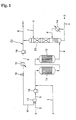
Fig. 1 is a flow sheet showing an example of the
process according to the present invention.
DISCLOSURE OF THE INVENTION
As a result of the present inventors' earnest studies
for solving the above problems, it has been found that by
controlling the temperature of the mixed gas at a suction
inlet of the compressor to a temperature higher than a dew
point thereof, the mixed gas can be inhibited from suffering
from formation of mists therein even in the case where a
relatively large amount of the molecular oxygen-containing
gas is mixed with the exhaust gas.
The present invention has been attained on the basis of
the above finding. In an aspect of the present invention,
there is provided a process for producing (meth)acrolein or
(meth)acrylic acid, wherein in the above-mentioned process,
the temperature of the mixed gas composed of the molecular
oxygen-containing gas and the diluting gas at a suction
inlet of the compressor is controlled to a temperature
higher than a dew point thereof.
The process of the present invention is described in
detail below with reference to the accompanying drawing.
First, in the process of the present invention, the
catalytic gas-phase oxidation reaction is performed. That
is, a raw material (A), and a molecular oxygen-containing
gas (B) mixed with a diluting gas and compressed by a
compressor (18) are fed to an oxidation reactor (11), (12).
As the raw material (A), there may be used the
following compounds. Namely, there may be used propylene
for production of acrolein, and isobutylene or t-butanol for
production of methacrolein. Meanwhile, since (meth)acrolein
is an intermediate for production of (meth)acrylic acid, the
acrylic acid may be produced from raw propylene via acrolein,
and methacrylic acid may be produced from raw isobutylene or
t-butanol via methacrolein. Also, as the molecular oxygen-containing
gas (B), there may be usually used air (the
"molecular oxygen-containing gas" is hereinafter referred to
merely as "air"). The details of the diluting gas will be
described later.
The oxidation reactor includes a front-stage reactor
(11) and a rear-stage reactor (12). As the respective
reactors, there may be used a multipipe-type reactor
equipped with a large number of reaction tubes filled with
an oxidation catalyst. Also, there may be used an oxidation
reactor of such a type in which the front-stage and rear-stage
reactors are integrally combined. The front-stage and
rear-stage reactors (11) and (12) are filled with different
oxidation catalysts. The respective temperatures of the
oxidation catalysts are controlled to an optimum reaction
temperature by circulating a heating medium (not shown) on
an outside of the reaction tubes.
The front-stage oxidation reactor (11) is filled with a
catalyst for production of (meth)acrolein, and the rear-stage
oxidation reactor (12) is filled with a catalyst for
production of (meth)acrylic acid. As the former catalyst
filled in the front-stage reactor, there may be used, for
example, Mo-Bi-based composite oxide catalysts having a
composition of Mo-Bi-Fe-Co-Ni-B-Na-Si-O, and as the latter
catalyst filled in the rear-stage reactor, there may be used,
for example, Mo-V-based composite oxide catalysts having a
composition of Mo-V-Sb-Ni-Cu-Si-O. The heterogeneous
catalyst gas-phase oxidation reaction may be conducted under
known conditions suitable for the respective catalysts.
Alternatively, acrylic acid may also be produced by such a
gas-phase catalytic oxidation process using propane as a raw
material as well as Mo-Bi-Te-based composite oxide catalysts,
Mo-Bi-Sb-based composite oxide catalysts, etc.
In the present invention, the concentration of
combustible gasses in the raw gas composed of the raw
material, the diluting gas and air (B) may be controlled to
the range of usually 5 to 8% by volume. More specifically,
the composition of the raw gas is preferably controlled such
that a volume percentage of air is 40 to 70% (of which 21%
by volume is occupied by oxygen), a volume percentage of
water is 5 to 12%, and a volume percentage of an inert gas
such as nitrogen and carbon dioxide gas except for nitrogen
contained in air mixed is 16 to 48%.
Meanwhile, in the flow sheet shown in Fig. 1, a whole
amount of the reaction gas generated from the front-stage
oxidation reactor (11) is fed to the rear-stage oxidation
reactor (12) for producing (meth)acrylic acid. On the other
hand, in the case where the reaction gas is directly fed
from the front-stage oxidation reactor (11) to an absorption
column (13) described in detail later, (meth)acrolein can be
produced. Accordingly, for convenience, only the process
for producing (meth)acrylic acid is explained below.
Next, in the process of the present invention, an
aqueous solution of (meth)acrylic acid is recovered. More
specifically, the reaction gas generated at the rear-stage
oxidation reactor (12) is fed to the absorption column (13)
to contact with water. As the absorption column (13), there
may be used such a column having trays at a lower portion
thereof and a mist separator at a top thereof as shown in
Fig. 1.
In the present invention, the oxidation reaction gas
may be cooled to a temperature of 120 to 170°C by a
condenser (not shown), and then fed to a lower portion of
the absorption column (13) through a line (4) to contact
with water (C) supplied to an upper portion of the
absorption column (13) through a line (7). At this time, it
is preferred that a part of a bottom liquid of the
absorption column is removed therefrom, cooled by a heat
exchanger (14) and then circulated to an intermediate
portion of the absorption column (13) through a line (6).
An aqueous solution (D) of (meth)acrylic acid is
recovered from the bottom of the absorption column through a
line (5) and then fed to a (meth)acrylic acid purification
step (not shown). Whereas, the exhaust gas is recovered
from the top of the absorption column through a line (9) and
then used as the above diluting gas.
As the water (C), there may be used a waste water
recovered from the (meth)acrylic acid purification step.
When the amount of water (C) required is higher than that of
the waste water recovered from the purification step, pure
water, condensed water obtained from steam, low-concentration
waste water discharged from a vacuum system of
the (meth)acrylic acid purification step, etc., may be
further added to the waste water from the purification step.
The amount of water (C) fed to the absorption column
(13) is usually 0.05 to 0.5 kg/m3, preferably 0.1 to 0.2
kg/m3 base on the amount of the exhaust gas recovered from
the top of the absorption column. The temperature of water
(C) is usually 30 to 80°C, preferably 35 to 45°C. When the
temperature of water (C) is too high, the absorption
efficiency for (meth)acrylic acid tends to be deteriorated,
so that the amount of (meth)acrylic acid mixed in the
exhaust gas tends to be increased, resulting in deteriorated
yield of (meth)acrylic acid. The temperature at the top of
the absorption column (13) is adjusted to a dew point of the
exhaust gas depending upon amount and temperature of water
(C) fed thereto.
When the temperature of the exhaust gas recovered from
the top of the absorption column (13) exceeds the dew point,
(meth)acrylic acid, etc., tend to be mixed in the exhaust
gas similarly to the above case, resulting in deterioration
in yield of the (meth)acrylic acid. The temperature of the
exhaust gas is usually 40 to 80°C, and the concentration of
water in the exhaust gas is usually 5 to 40% by volume. The
temperature of the exhaust gas can be raised by not only
increasing the amount of water (C) fed to the absorption
column (13) through the line (7) but also raising the
temperature of the circulated liquid by control of the heat
exchanger (14).
The amount of the exhaust gas (E2) (i.e., the exhaust
gas used as the diluting gas) recovered through the line (9)
is usually not less than 20% by volume, preferably 20 to 60%
by volume based on the whole exhaust gas generated.
Meanwhile, in the present invention, the whole exhaust gas
may be used as the diluting gas.
In the process of the present invention, the exhaust
gas (E2) is heated by the heat exchanger (15) and fed
through a flow control valve (16) to a line (10). Whereas,
air (B) is fed to the line (2), and then mixed with the
exhaust gas. The thus obtained mixed gas is fed to the
compressor (18). Meanwhile, in the case where it is
required to pressurize the exhaust gas (E2) for circulation
thereof, a compressor (19) may be disposed. Also, a part of
the gas (E1) discharged from the top of the absorption
column (13) may be fed through a line (8) to any suitable
purification device (not shown) for converting the top gas
into a harmless gas, and then discharged into atmospheric
air.
In the present invention, both the gases fed to the
compressor (18) are preferably previously mixed with each
other by the mixer (17). More specifically, when the high-temperature
exhaust gas (E2) containing water is mixed with
the low-temperature air (B), the high-temperature gas tends
to be cooled at a boundary surface between both the gases,
resulting in condensation of water contained therein. In
order to minimize the region where such a condensation of
water occurs, the mixer (17) is preferably used as a means
for rapidly mixing the two kinds of gases.
Although the mixer is not particularly restricted,
there are preferably used mixers having a less pressure loss.
Examples of the mixer usable in the present invention may
include in-line type mixers having conduits fitted with
spiral-shaped, cross-shaped, grid-shaped or orifice plate,
etc., tank-type mixers into which two kinds of gases can be
introduced in different directions to form a turbulent flow
therein, or which are provided therein with a dispersing
device such as a sparger or a porous plate, venturi-type
mixers, or the like.
As the diluting gas, there may be used the exhaust gas
discharged from the top of the absorption column (13) and/or
a gas obtained by subjecting the exhaust gas to combustion
treatment, etc., to convert the gas into a harmless one. A
whole amount of water required in the oxidation reaction may
be supplied by water contained in the exhaust gas (E2).
When the amount of water supplied from the exhaust gas (E2)
is insufficient to cover the amount of water required for
the oxidation reaction, steam may be added to the exhaust
gas (E2) or to the mixed gas obtained after mixing air (B)
with the exhaust gas (E2). The temperature of the steam
added is preferably not less than 100°C.
On the other hand, the temperature of air (B) is
usually 0 to 30°C. Therefore, the temperature of the mixed
gas tends to be influenced by that of air (B) (outside air).
When the exhaust gas (E2) is contacted with the low-temperature
air, the temperature of the resultant mixed gas
is decreased to not more than the dew point thereof, so that
water contained therein tends to be condensed into fine
water droplets. In particular, in the winter season, this
problem tends to become more remarkable owing to lower
temperature of the outside air. Meanwhile, the dew point of
the mixed gas which may be calculated from water
concentration and pressure thereof, is usually 30 to 55°C.
In the production process of the present invention, the
temperature of the mixed gas at the suction inlet of the
compressor (18) is raised to not less than the dew point
thereof. Namely, the temperature of the mixed gas at the
suction inlet of the compressor (18) is usually higher by 5
to 20°C than the dew point thereof. More specifically, the
temperature of the mixed gas at the suction inlet of the
compressor is in the range of usually 35 to 70°C, preferably
40 to 60°C. When the temperature of the mixed gas at the
suction inlet of the compressor is too high, the volume of
the gas sucked into the compressor (18) tends to become
large, resulting in increase in power consumption of the
compressor (18) and, therefore, uneconomical procedure.
In the present invention, in order to raise the
temperature of the mixed gas at the suction inlet of the
compressor (18) to not less than the dew point, the diluting
gas is preferably heated to a temperature of 40 to 160°C
when mixed with air (B) (outside air). For example, in the
winter season in which the outside air temperature is
lowered up to 0°C, the temperature of the exhaust gas (E2)
is usually adjusted to 60 to 160°C, and when the outside air
temperature is 30°C, the temperature of the exhaust gas (E2)
is usually adjusted to 40 to 120°C.
In the present invention, the diluting gas is
preferably heated before mixing with air (B). In addition,
the heating of the exhaust gas (E2) may be performed using
the heat exchanger (15) or a means for mixing with steam.
The type of the heat exchanger (15) used herein is not
particularly restricted, and there may be used those heat
exchangers whose inside can be cleaned, since the exhaust
gas (E2) tends to contain (meth)acrylic acid, low-molecular
aldehydes, sublimatable substances, etc.
When the flow amount of air (B) is larger than that of
the exhaust gas (E2) mixed therewith, the air may be
previously heated before mixing. The temperature of air (B)
upon mixing with the diluting gas is usually 30 to 70°C,
preferably 30 to 55°C. When the temperature of air (B) is
maintained in the above-specified range, the compressor (18)
can be advantageously prevented from being adversely
affected by change in temperature of atmospheric air. The
heating of the exhaust gas (E2) may be used in combination
with the heating of air (B).
Even though the two kinds of gases are rapidly mixed
together using the mixer (17), it may be difficult to
inhibit occurrence of partial water condensation which will
be caused by partially cooling the high-temperature exhaust
gas (E2) at a boundary surface therebetween, as well as
formation of fine water droplets. However, it is considered
that since the amount of fine water droplets is extremely
small, the fine water droplets are evaporated until the
mixed gas reaches and enters the compressor (18). In order
to ensure such an evaporation of the water droplets, the
residence time of the mixed gas from the mixing of the
diluting gas with air (B) to the introduction of the mixed
gas into the compressor (18), is preferably adjusted to 0.3
to 1.5 seconds.
When the residence time is less than 0.3 second, it is
required to more rapidly mix these gases with each other,
resulting in occurrence of large pressure loss in the mixer.
As a result, the power required for operating the compressor
(18) tends to be considerably increased. On the other hand,
when the residence time exceeds 1.5 seconds, a length of the
conduit extending from the mixing step to the compressor
(18) is too large, so that the mixed gas flowing through the
conduit tends to be cooled by outside air to a temperature
lower than the dew point.
When the exhaust gas (E2) and the air (B) are mixed
together on the suction side of the compressor (18), any
pressure drop is not caused. However, when the mixer (17)
is disposed on an upstream side of the compressor, the
pressure loss caused at the mixer tends to occasionally
produce a slight negative pressure on the suction side of
the compressor (18). The slight negative pressure on the
suction side of the compressor is preferred because this
leads to the effect of reducing the dew point which is
useful for preventing the condensation of water in the mixed
gas. However, when the negative pressure produced on the
suction side of the compressor is too large, the power
required for operating the compressor (18) is considerably
increased. The pressure of the mixed gas (3) at the suction
inlet of the compressor (18) is preferably in the range of
from atmospheric pressure to the pressure lower by 10% than
the atmospheric pressure.
When the mixing volume ratio of the air to the exhaust
gas (E2) in the mixer is adjusted to 0.7:1 to 3.6:1, the
composition of the mixed gas at the suction inlet of the
compressor (18) is preferably controlled such that the
volume ratio (%) of air: water: inert gas is 40 to 76%:5 to
13%:10 to 50% (the volume of the inert gas excludes that of
nitrogen gas contained in air mixed).
PREFERRED EMBODIMENT OF THE PRESENT INVENTION
The present invention is described in more detail by
Examples, but the Examples are only illustrative and not
intended to limit the scope of the present invention.
Example 1:
In the process for production of acrylic acid as shown
in Fig. 1, exhaust gas (E2) was discharged from a top of
absorption column (13) and fed through line (9) to finned
tube-type heat exchanger (15) where the gas was heated to
115°C. The exhaust gas was then fed through flow control
valve (16) and line (10) to in-line type mixer (17) provided
therein with a spiral member. Simultaneously, air (B)
maintained at 15°C was fed through line (2) to the mixer and
mixed therein with exhaust gas (E2). A mixing ratio of
exhaust gas (E2) to air (B) was 0.61:1.
The temperature and pressure of the resultant mixed gas
at a suction inlet of compressor (18) were 53°C and 100 kPa,
respectively, and a residence time of the mixed gas from
mixer (17) to the suction inlet of compressor (18) was 0.5
second. Also, the measured dew point of the mixed gas at
the suction inlet of compressor (18) was 43°C. Further, it
was confirmed that the mixed gas had such a composition that
a volume ratio (%) of air: water: inert gas was 61.3:8.7:30.
After pressurizing the mixed gas by compressor (18),
propylene was added thereto so as to obtain a raw gas having
a composition composed of 7% by volume of propylene, 57% by
volume of air, 8% by volume of water and 28% by volume of
inert gas (excluding nitrogen gas contained in air mixed).
100 Nm3 of the thus obtained raw gas was fed to front-stage
oxidation reactor (11) and successively to rear-stage
oxidation reactor (12).
The reaction gas having a temperature of 260°C which
was obtained from rear-stage oxidation reactor (12) was
cooled to 170°C by a heat exchanger and then fed through
line (4) to absorption column (13) having an inner diameter
of 200 mm which was provided at a lower portion thereof with
five-stage trays and was filled with a 2 m-height layer
composed of "CASCADE MINIRING 2P" produced by Dodwel Inc.,
at an upper portion thereof. A part of an aqueous acrylic
acid solution removed from a bottom of the absorption column
was cooled to 55°C by heat exchanger (14) and circulated
through line (6) to an intermediate portion of the
absorption column to rapidly cool and condense the reaction
gas. Aqueous solution (C) containing 200 ppm of
hydroquinone was supplied from a top of absorption column
(13) at a feed rate of 15.5 l/hr.
The exhaust gas (E2) had a composition composed of
0.04% by volume of acrylic acid, 20.5% by volume of water
and 78.5% by volume of inert gas when the top temperature of
the absorption column was 62.5°C. Further, a 56 wt. %
aqueous acrylic acid solution (D) was obtained from the
bottom of the absorption column through line (5). It was
confirmed that the yield of acrylic acid from propylene was
88%.
The process for production of acrylic acid was
continued for 6 months while monitoring the amount of water
by analyzing the raw gas fed to the oxidation reactor. As a
result, at the days at which the temperature of outside air
was below 15°C, there was observed such a tendency that the
amount of water was insufficient, and, therefore, 120°C
steam was added to the circulating exhaust gas (E2) to
control the water concentration of the raw gas at the inlet
of the reactor to not less than 8% by volume. The
compressor (18) was operated without any failure even after
6 months. As a result of overhaul and inspection after
stopping the operation, it was confirmed that an inner wall
surface of the mixer, etc., were free from water droplets
adhered thereto.
Comparative Example 1:
The same procedure as defined in Example 1 was
conducted except that the exhaust gas (E2) was heated to
80°C by the heat exchanger (15), thereby producing acrylic
acid. Although the temperature of outside air of not lower
than 20°C caused no problem, the temperature of the mixed
gas was reduced to 40°C when the temperature of outside air
was decreased to 15°C. When the temperature of the mixed gas
reached 36°C owing to further decrease in temperature of
outside air, the raw gas showed a tendency of reduction in
water concentration thereof. Therefore, the oxidation
reaction was immediately terminated to overhaul and inspect
the mixer (17). As a result, it was confirmed that there
were observed traces of water droplets adhered to the inner
wall surface of the mixer. In addition, the compressor (18)
showed traces of water droplets adhered to an inner wall
surface of a suction portion thereof, and an impeller
thereof also suffered from flaws that might be caused by
formation of mists.
Examples 2 to 6:
The same procedure as defined in Example 1 was
conducted except that production conditions were changed
variously, thereby producing acrylic acid from propylene.
The results are shown in Tables 1 to 3. In Example 6, the
temperature of the mixed gas was controlled to 54°C which
was higher than a dew point thereof, i.e., 40°C, by heating
the air to be mixed with the exhaust gas (E2). The water
concentration in exhaust gas (E2) was controlled by
adjusting a flow amount of absorption water and a top
pressure of the absorption column. The amount of water fed
to the oxidation reactor was measured by a water content
meter disposed at an inlet thereof. In any of these
Examples, the compressor (18) was free from problems.
| | Composition at inlet of oxidation reactor |
| | Propylene (vol. %) | Air (vol. %) | Water (vol. %) | Inert gas (vol. %) |
| Example 2 | 5 | 45 | 5 | 45 |
| Example 3 | 6 | 48 | 6 | 40 |
| Example 4 | 6 | 48 | 9 | 37 |
| Example 5 | 8 | 64 | 12 | 16 |
| Example 6 | 7 | 70 | 7 | 16 |
| | Amount of absorbed water in absorption column (Kg/hr) | Top temperature of absorption column (°C) | Temperature of exhaust gas (E2) (°C) |
| Example 2 | 9.6 | 43 | 45 |
| Example 3 | 11.5 | 51 | 75 |
| Example 4 | 13.9 | 59 | 95 |
| Example 5 | 27 | 76 | 160 |
| Example 6 | 20 | 67 | 67 |
Exhaust gas (E2) was discharged from a top of
absorption column (13) and fed through line (9) to finned
tube-type heat exchanger (15) where the exhaust gas was
heated to 100°C. The exhaust gas was then fed through flow
control valve (16) and line (10) to a sparger provided
inside of mixer (17). Simultaneously, air maintained at 15°C
was fed from a bottom of the mixer. As the mixer, there was
used a mixer (17) including a tank having an inner diameter
of 15.5 cm and a length of 50 cm in an upper portion of
which three porous plates having apertures of 20 mm in
diameter and an aperture area percentage of 25% were
disposed at intervals of 10 cm. The residence time of the
mixed gas from the sparger of mixer to a suction inlet of
compressor (18) was 0.3 second. Also, the temperature of
the gas at the suction inlet of compressor (18) was 42°C,
and the dew point thereof was 40°C. Further, it was
confirmed that the mixed gas had a composition that a volume
ratio (%) of air: water: inert gas was 67.7:7.6:24.7.
After pressurizing the mixed gas by compressor (18),
propylene was added thereto to prepare a raw gas composed of
7% by volume of propylene, 63% by volume of air, 7% by
volume of water and 23% by volume of inert gas (excluding
nitrogen gas contained in air mixed). 100 Nm3 of the thus
obtained raw gas was fed to front-stage oxidation reactor
(11) and successively to rear-stage oxidation reactor (12).
The reaction gas having a temperature of 255°C, which
was obtained from rear-stage oxidation reactor (12) was
cooled to 160°C by a heat exchanger and then introduced
through line (4) into absorption column (13) of the same
type as used in Example 1. A part of an aqueous acrylic
acid solution removed from a bottom of the absorption column
was cooled to 60°C by heat exchanger (14) and circulated
through line (6) to an intermediate portion of the
absorption column to rapidly cool and condense the oxidation
reaction gas. An aqueous solution (C) containing 200 ppm of
hydroquinone was supplied from the top of absorption column
(13) at a feed rate of 13.4 l/hr through line (7). When the
top temperature of absorption column (13) was 63°C, the
exhaust gas (E2) discharged from the top thereof was
composed of 0.03% by volume of acrylic acid, 21.5% by volume
of water and 78.4% by volume of inert gas.
Further, a 55 wt. % aqueous acrylic acid solution was
obtained from the bottom of the absorption column through
line (5). The yield of acrylic acid from propylene was 89%.
It was confirmed that the compressor (18) was continuously
operated without any particular problems for 6 months.
Comparative Example 2:
The same procedure as defined in Example 7 was
conducted except that no mixer was used therein, thereby
producing acrylic acid. More specifically, the feed conduit
(10) for exhaust gas (E2) and air feed conduit (2) were
directly connected to suction conduit (3) of compressor (18).
The suction conduit (3) had an inner diameter of 41 mm and a
length of 2.5 m, and the temperature of the gas within the
suction conduit was 39°C. After 24 hours, the operation of
compressor (18) was terminated to overhaul and inspect the
suction conduit. As a result, it was confirmed that an
inner wall surface of compressor (18) was wetted, and water
droplets were adhered thereto. Although the compressor (18)
was free from failure since it was operated only for a short
period of time, it was expected that if the operation of
compressor (18) was continued, an impeller thereof suffered
from abrasion due to formation of mists.
INDUSTRIAL APPLICABILITY
In the process for producing (meth)acrylic acid
according to the present invention, after separating and
recovering the (meth)acrylic acid, a mixed gas composed of
at least a part of exhaust gas (E2) and a molecular oxygen-containing
gas is fed to a compressor at a temperature
higher than a dew point thereof, and then introduced into an
oxidation reactor. The process of the present invention can
be continuously performed for a long period of time without
damage to the compressor.