EP1453050A2 - Zugriffsgenehmigung basierend auf einer optisch lesbaren Markierung auf einer optischen Platte - Google Patents
Zugriffsgenehmigung basierend auf einer optisch lesbaren Markierung auf einer optischen Platte Download PDFInfo
- Publication number
- EP1453050A2 EP1453050A2 EP04250422A EP04250422A EP1453050A2 EP 1453050 A2 EP1453050 A2 EP 1453050A2 EP 04250422 A EP04250422 A EP 04250422A EP 04250422 A EP04250422 A EP 04250422A EP 1453050 A2 EP1453050 A2 EP 1453050A2
- Authority
- EP
- European Patent Office
- Prior art keywords
- marking
- optical disc
- access
- region
- information
- Prior art date
- Legal status (The legal status is an assumption and is not a legal conclusion. Google has not performed a legal analysis and makes no representation as to the accuracy of the status listed.)
- Withdrawn
Links
- 230000003287 optical effect Effects 0.000 title claims abstract description 110
- 238000000034 method Methods 0.000 claims abstract description 24
- 238000004590 computer program Methods 0.000 description 8
- 238000010586 diagram Methods 0.000 description 5
- 238000002372 labelling Methods 0.000 description 4
- 230000003247 decreasing effect Effects 0.000 description 2
- 238000004519 manufacturing process Methods 0.000 description 2
- 230000004048 modification Effects 0.000 description 2
- 238000012986 modification Methods 0.000 description 2
- 206010016275 Fear Diseases 0.000 description 1
- 230000006978 adaptation Effects 0.000 description 1
- 238000011161 development Methods 0.000 description 1
- 230000018109 developmental process Effects 0.000 description 1
- 230000000694 effects Effects 0.000 description 1
- 239000003550 marker Substances 0.000 description 1
- 230000002093 peripheral effect Effects 0.000 description 1
- 238000007639 printing Methods 0.000 description 1
- 238000007650 screen-printing Methods 0.000 description 1
Images


Classifications
-
- G—PHYSICS
- G02—OPTICS
- G02C—SPECTACLES; SUNGLASSES OR GOGGLES INSOFAR AS THEY HAVE THE SAME FEATURES AS SPECTACLES; CONTACT LENSES
- G02C5/00—Constructions of non-optical parts
- G02C5/008—Spectacles frames characterized by their material, material structure and material properties
-
- G—PHYSICS
- G11—INFORMATION STORAGE
- G11B—INFORMATION STORAGE BASED ON RELATIVE MOVEMENT BETWEEN RECORD CARRIER AND TRANSDUCER
- G11B23/00—Record carriers not specific to the method of recording or reproducing; Accessories, e.g. containers, specially adapted for co-operation with the recording or reproducing apparatus ; Intermediate mediums; Apparatus or processes specially adapted for their manufacture
- G11B23/28—Indicating or preventing prior or unauthorised use, e.g. cassettes with sealing or locking means, write-protect devices for discs
- G11B23/283—Security features, e.g. digital codes
- G11B23/284—Security features, e.g. digital codes on the record carrier
-
- B—PERFORMING OPERATIONS; TRANSPORTING
- B44—DECORATIVE ARTS
- B44C—PRODUCING DECORATIVE EFFECTS; MOSAICS; TARSIA WORK; PAPERHANGING
- B44C5/00—Processes for producing special ornamental bodies
- B44C5/06—Natural ornaments; Imitations thereof
-
- G—PHYSICS
- G02—OPTICS
- G02C—SPECTACLES; SUNGLASSES OR GOGGLES INSOFAR AS THEY HAVE THE SAME FEATURES AS SPECTACLES; CONTACT LENSES
- G02C5/00—Constructions of non-optical parts
- G02C5/14—Side-members
- G02C5/146—Side-members having special front end
-
- G—PHYSICS
- G11—INFORMATION STORAGE
- G11B—INFORMATION STORAGE BASED ON RELATIVE MOVEMENT BETWEEN RECORD CARRIER AND TRANSDUCER
- G11B20/00—Signal processing not specific to the method of recording or reproducing; Circuits therefor
- G11B20/00086—Circuits for prevention of unauthorised reproduction or copying, e.g. piracy
-
- G—PHYSICS
- G11—INFORMATION STORAGE
- G11B—INFORMATION STORAGE BASED ON RELATIVE MOVEMENT BETWEEN RECORD CARRIER AND TRANSDUCER
- G11B23/00—Record carriers not specific to the method of recording or reproducing; Accessories, e.g. containers, specially adapted for co-operation with the recording or reproducing apparatus ; Intermediate mediums; Apparatus or processes specially adapted for their manufacture
- G11B23/0014—Record carriers not specific to the method of recording or reproducing; Accessories, e.g. containers, specially adapted for co-operation with the recording or reproducing apparatus ; Intermediate mediums; Apparatus or processes specially adapted for their manufacture record carriers not specifically of filamentary or web form
- G11B23/0021—Record carriers not specific to the method of recording or reproducing; Accessories, e.g. containers, specially adapted for co-operation with the recording or reproducing apparatus ; Intermediate mediums; Apparatus or processes specially adapted for their manufacture record carriers not specifically of filamentary or web form discs
- G11B23/0028—Details
- G11B23/0035—Details means incorporated in the disc, e.g. hub, to enable its guiding, loading or driving
- G11B23/0042—Details means incorporated in the disc, e.g. hub, to enable its guiding, loading or driving with provision for auxiliary features
-
- G—PHYSICS
- G11—INFORMATION STORAGE
- G11B—INFORMATION STORAGE BASED ON RELATIVE MOVEMENT BETWEEN RECORD CARRIER AND TRANSDUCER
- G11B7/00—Recording or reproducing by optical means, e.g. recording using a thermal beam of optical radiation by modifying optical properties or the physical structure, reproducing using an optical beam at lower power by sensing optical properties; Record carriers therefor
- G11B7/002—Recording, reproducing or erasing systems characterised by the shape or form of the carrier
- G11B7/0037—Recording, reproducing or erasing systems characterised by the shape or form of the carrier with discs
-
- G—PHYSICS
- G02—OPTICS
- G02C—SPECTACLES; SUNGLASSES OR GOGGLES INSOFAR AS THEY HAVE THE SAME FEATURES AS SPECTACLES; CONTACT LENSES
- G02C2200/00—Generic mechanical aspects applicable to one or more of the groups G02C1/00 - G02C5/00 and G02C9/00 - G02C13/00 and their subgroups
- G02C2200/14—Laminated frame or frame portions
Definitions
- the present invention relates to a method of and system for permitting access to stored data.
- the present invention seeks to provide more secure data. According to an aspect of the present invention, there is provided a method as specified in claim 1.
- a method of one embodiment of the invention optically reads a marking on a label region of an optical disc, to determine access to information stored on a data region of the optical disc. Access to the information stored on the data region of the optical disc is then permitted based on the marking on the label region of the optical disc that has been optically read.
- an optical disc comprising a data region having information stored thereon; and a label region having a marking optically written thereon to govern access to the information stored on the data region.
- an optical disc comprising an optically writable label region; and means on the optically writable label region for governing access to information.
- a method comprising storing information on a data region of an optical disc; conveying the optical disc to a user; and optically writing a marking on a label region of the optical disc that governs access to the information by the user.
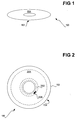
- FIG. 1 shows an optical disc 100 according to an embodiment of the invention.
- the optical disc 100 includes a data side 102, which is the bottom of the disc 100 as shown in FIG. 1, and a label side 104, which is the top of the disc 100 as shown in FIG. 1.
- Information is digitally storable on the data side 102.
- the disc 100 may be a CD, a CD-ROM, a CD-R, a CD-RW, a DVD, a DVD-ROM, a DVD-R, a DVD-RW, a DVD+RW, a DVD-R/W, or another type of optical disc that allows for the storing of information on the data side 102 of the disc 100.
- Information is digitally stored on the data side 102 in a machine-readable manner that is typically not human readable.
- the information may include multimedia content, such as music, videos, movies, and so on, data, computer programs, and/or other types of information.
- the label side 104 of the optical disc 100 is not typically used for storing information digitally, but rather may be used for affixing a label thereon, writing thereon with a marker or other writing implement, screen printing thereon with a specialized image-forming device or other device, or otherwise labeling the disc 100.
- the term labeling as used herein encompasses all of these and other manners by which the disc 100 can be labeled. Users are thus easily able to determine the information stored on the data side 102 of the disc 100, without having to insert the disc 100 into an optical disc drive communicatively coupled to a computing device, or into another type of computing device peripheral.
- the label side 104 may be pre-labeled, where the manufacturer or retailer labels the disc 100 before user purchase and utilization, or the label side 104 may be labeled by the user him or herself.
- the data side 102 of the optical disc 100, the label side 104 of the optical disc 100, or both the data side 102 and the label side 104 of the optical disc 100 can include a marking surface on which a marking may be optically writable in a human-readable and/or machine-readable manner.
- a marking may be optically writable in a human-readable and/or machine-readable manner.
- Such optical writing may be accomplished as described in the commonly assigned US patent application entitled “Integrated CD/DVD Recording and Label", filed on October 11, 2001, and assigned serial number 09/976,877.
- the optical writing may be rewritable, overwritable, and/or erasable.
- the optical writing may be rewritable in that once such a marking is written on the marking surface, another marking may be written on the same area of the marking surface without any vestiges of the earlier marking remaining.
- the writing may be overwritable in that once such a marking is written on the marking surface, another marking may be written over the earlier marking, where vestiges of the earlier marking may remain.
- the writing may finally be erasable in that once such a marking is written on the marking surface, it may be erased, at least substantially eliminating any vestiges of the marking.
- the optical writing on the marking surface may be distinguished from the digitally stored information on the data side 102 in that the writing is typically, but not necessarily, human readable, and optionally may also be machine readable.
- the optical writing on the marking surface may be distinguished from labeling on the label side 104 in that it is accomplished by a laser that integrally changes the make-up of the disc 100 itself, as opposed to only applying a label on the label side 104, writing on the label side 104, printing on the label side 104, and so on.
- Other distinctions between the optical writing and the digitally stored information on the data side 102 and/or the labeling on the label side 104, in lieu of or in addition to the distinctions described herein, may also be encompassed by embodiments of the invention.
- the label side 104 of the optical disc 100 is more generally a label region of the disc 100
- the data side 102 of the optical disc 100 is more generally a data region of the disc 100.
- the label and data regions may, therefore, coexist on the same side of the optical disc 100.
- the optical disc 100 may have the label side 104 and the data side 102, where the data side 102 further includes a portion on which a marking may be optically written. That is, the label region of the optical disc 100 may include the label side 104, and a portion of the other side of the optical disc 100 that may be optically written.
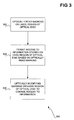
- FIG. 2 shows an example of the optical disc 100 in which there is a label region 202 and a data region 204, on the side 102 of the optical disc 100, according to an embodiment of the invention.
- the label region 202 is depicted in FIG. 2 as being on the inside diameter of the optical disc 100.
- the label region 202 may have optically writable markings thereon for label purposes, whereas the data region 204 may have optically writable information stored thereon.
- the label region 202 may be on the other side 104 of the optical disc 100, opposite to the side 102.
- the label region 202 specifically includes an optically writable marking 208, which may be a bar code, or another type of optically writable marking. Alternatively, the optically writable marking 208 may be less explicitly discernible.
- the marking 208 may be interleaved into an image on the label region 202, such that the marking 208 is effectively a digital watermark hidden within the image.
- the marking 208 specifically governs access to the information stored on the data region 204.
- a device such as a computer, an audio/video (AV) component, and so on, does not permit access to the information stored on the data region 204 until it has retrieved the marking 208 to determine the access to the information that is permitted. If the user does not have the optical disc 100 having the label region 202 on which the marking 208 is optically written, then the user will not be able to access the information.
- the marking 208 is read by the computer or other device before permitting access to the information stored on the data region 204, such as before playing the information, where the information is music or a movie, for instance, or before installing the information, where the information is a computer program, for instance.
- the marking 208 may represent an encryption key for the information stored on the data region 204.
- a computer For a computer to be able to decrypt the information retrieved from the data region 204, it optically detects and decodes the encryption key from the label region 202, and uses encryption key to decrypt the information.
- the user will not be able to decrypt and hence will not be able to utilize the information.
- Having the encryption key optically written on the label region 202 as the marking 208 eliminates the need for the user to have to manually enter the encryption key.
- the user is unable to simply provide the encryption key to other users.
- the user may not be able to discern the actual key that the marking 208 represents, where the marking 208 is a bar code or other type of indicia.
- the actual key is optically written in an easily human-understood manner, such as via alphanumeric characters, the user may still not be able to provide the encryption key for use by other users. This is because the encryption key may only be enterable by being optically read with an optical disc device, and not physically entered on a keyboard or other input device by the user, such that physical access to the disc 100 is needed.
- the encryption key may expire after a length of time, such that the user may have to periodically retrieve a new key to be optically written on the label region 202, such as by paying for and downloading the new key over the Internet.
- the user may have to receive a new optical disc 100 that has the new key written thereon as the optically writable marking 208.
- Such an embodiment of the invention provides for enhanced security. Even where the encryption key is successfully cracked by hackers, the cracked key is of limited value, because it expires and a new key required at some point in the future.
- the optically writable marking 208 on the label region 202 may also represent the number of times the information stored on the data region 204 is accessible by the user. For instance, the user may be able to play the multimedia content recorded on the data region 204 only one or two times. After each time the content is played, the marking 208 may be modified or partially erased to decrement the number of times the user may further access the information. As a simple example, if the information on the data region 204 is accessible twice, half of the marking 208 may be erased the first time the information is accessed, and the other half of the marking 208 may be erased the second time the information is accessed. Once the marking 208 has been completely erased, access to the information on the data region 204 may no longer be allowed. The marking 208 in this embodiment thus allows the user to purchase access to the information on a pay-per-use basis.
- the marking 208 may represent a codification of the number of times the user is able to access the information stored on the data region 204. Each time the user accesses the information, the marking 208 may be modified, such as overwritten, erased and then rewritten, and so on, to change the remaining number of times the user is able to access the information. Alternatively, the absence of the marking 208 may indicate that the user is able to access the information. Once the information has been accessed one time, the marking 208 is then optically written to indicate that the user is not able to access the information further.
- the optically writable marking 208 on the label region 202 may also indicate an expiration date after which the information stored on the data region 204 is no longer accessible, and/or a length or period of time during which the information stored on the data region 204 is accessible.
- a user may be able to access the information for only two or three days, for instance, or access to the information may expire after a set length of time after the user has paid for access to the information. This in effect allows the user to rent the information stored on the data region 204, without having to return the optical disc 100 after the rental period.
- the optically writable marking 208 on the label region 202 may also represent which parts of the information stored on the data region 204 is accessible by the user.
- the information stored on the data region 204 may be a complete album of songs.
- the user may receive the optical disc 100 for free, or after paying a nominal amount of money.
- the optically writable marking 208 may enable the user to only access and listen to one or two of the songs stored on the data region 204. After paying an additional sum of money, the user may be able to modify the marking 208, such as by receiving a computer program or an updated marking over the Internet, which enables the user to access the remaining songs stored on the data region 204.
- the information stored on the data region 204 may be a complete office suite of application programs, including a word processor, a spreadsheet program, a personal information manager (PIM), a database program, and so on.
- the user may initially have paid for, and thus have received access to, only the word processor, such that the optically writable marking 208 correspondingly permits such access. If the user later subsequently decides to also purchase the spreadsheet program, he or she only has to pay for and download a small computer program or an updated marking over the Internet, rather than having to download the entire spreadsheet program.
- the user is thus able to pay for and access only those parts of the information stored on the data region 204 that he or she wants, and is able to pay for and access other parts of the information on an as-needed basis.
- FIG. 3 shows a method of use 300, according to an embodiment of the invention.
- the method 300 is preferably performed by a device, such as a computer or an audio/video (AV) component, which includes or is connected to an optical disc device.
- the optical disc device is at least able to optically read markings optically written on the label regions of optical discs, and preferably is also able to optically write such markings.
- Optical writing can include first-time optical writing of such markings, subsequent optical rewriting of such markings, erasure of such markings, and so on.
- the method 300 may be implemented as computer-executable instructions, such as one or more computer programs, stored on a computer-readable medium.
- the medium may be a volatile or a non-volatile medium, a magnetic, optical, and/or solid-state medium, a fixed or a removable medium, and so on.
- optically written marking on the label region of an optical disc is optically read to determine access to information stored on the data region of the optical disc (302).
- the optically written marking may be a human-discernible or human-indiscernible marking.
- the marking may be a bar code, or another type of marking.
- the marking may be integrated within an image on the label region in a hidden manner.
- reading the optically written marking is inclusive of determining whether the marking is in fact present on the label region of the optical disc, such that access to the information stored on the data region is permitted or denied when the marking is absent.
- the marking can govern access to the information stored on the data region of the optical disc in a number of different ways.
- the marking may represent an encryption key used to decrypt the information stored on the data region of the optical disc.
- the marking may represent the number of times the information stored on the data region can be accessed.
- the marking may represent an expiration date after which the information no longer can be accessed, or a length of time during which the information can be accessed.
- the marking may also represent the portion of information stored on the data region that can be accessed.
- Access to the information stored on the data region is then permitted, based on the marking on the label region of the optical disc that has been optically read (304).
- the user may be requested to turn the disk over if the label region of the optical disc is on a different side than the data region of the optical disc.
- the marking on the label region of the optical disc is preferably optically modified, to change or modify the permitted access to the information (306).
- Such optical modification includes writing a marking where there was no marking before.
- Optical modification also includes adding an additional part to the marking to result in a modified version thereof, overwriting the marking, rewriting the marking without prior erasure, rewriting the marking after erasure, and so on. Effective erasure of the marking may be accomplished by optically overwriting the marking, such that optically rewriting a modified version of the marking can be subsequently accomplished.
- the marking may be periodically updated if the expiration key expires.
- the marking may be modified to reflect the fact that the user has used up one of his or her accesses, such that the number of times the user can access the information is decreased by one time.
- the marking represents the parts of the information stored on the data region that the user is able to access, the marking may be updated to change which parts of the information are accessible.
- a marking may be added to indicate that the user is no longer able to access the information.
- the marking may be removed to indicate that the user is no longer able to access the information.
- the marking may be modified also to maintain user access to the information.
- FIG. 4 shows a method 400 of manufacture and of business, according to an embodiment of the invention. At least some parts of the method 400 is preferably performed by a content owner or distributor that wishes to have users pay and/or register for access to information that is storable on the data regions of optical discs. Furthermore, the order of the parts of the method 400 depicted in FIG. 4 can be varied. As a specific example, 410, optically writing a marking on the label region of the optical disc, may be performed before 404, conveying the optical disc to the user. That is, 410 may be performed between 402 and 404, between 406 and 408, or between 412 and 414 in an embodiment of the invention, rather than between 408 and 412 as specifically depicted in FIG. 4.
- Information is initially stored on the data region of an optical disc (402).
- the information may be multimedia information, such as music, videos, movies, and so on.
- the information may also be computer programs, or other types of information.
- the optical disc is conveyed to the user (404). The user may receive the optical disc for free, after paying a nominal amount of money, and so on. If 410 has not yet been performed, then preferably the information is not accessible by the user until a marking has been optically written to the label region of the optical disc. Alternatively, 410 may be performed prior to conveyance of the disc to the user, so that an initial level of access to the information by the user has been established.
- the user may be requested to pay for and/or register to obtain access to the information (406).
- the user may be able to obtain a marking representing partial access to the information, such as access to only part of the information, access for one time, or access for a limited period of time, and so on, in exchange for providing his or her registration information.
- the user may be able to receive access to the disc that is commensurate with the extent to which registration information is provided. For example, more or better access may be provided to the information where the user has provided more information on him or herself. Thus, different users may have different initial levels of access to the information.
- the user may be able to receive more or better access to the information depending on the amount of money paid for the access. Paying a higher price may yield the user with access to more of the information, and/or with longer access to the information, and so on.
- the user is provided a marking that represents this level of information (408).
- the user may be provided the marking through a download over the Internet.
- the user may take the optical disc to a retailer that has the marking.
- the marking is optically written on the label region, where the marking governs access to the information by the user (410).
- the user uses his or her optical disc device to optically write the marking on the label region of the optical disc.
- the retailer's optical disc device is used to optically write the marking on the label region of the disc.
- the user is then able to access the information stored on the optical disc based on the level of access afforded by the marking.
- the marking on the label region of the disc may vary based on the level of access that it provides to the information stored on the data region of the disc.
- the user may be required to pay and/or register to modify the marking to change the level of access to the information (412). For example, the user may have only been able to access the information one or two times, or may have only been able to access a portion of the information. This is likely to be the case especially where the marking was optically written to the label region of the optical disc prior to the optical disc being conveyed to the user, and the user receives the optical disc free of charge, or for a nominal amount of money. The user may subsequently have to register and/or pay additional money in order to obtain more or better access to the information.
- the user is provided with the ability to modify the marking to change the level of access afforded to the information (414).
- the user may be able to download a new marking to be optically written on the label region of the optical disc.
- the user may also be able to download instructions and/or a small computer program for optically modifying the existing marking on the label region, to change the permitted access to the information.
- the user may have to send in the optical disc to the manufacturer or distributor, or take the optical disc to a local retailer, for the marking to be optically modified.
- FIG. 5 shows a system 500 in accordance with which embodiments of the invention may be implemented.
- the system 500 includes a mechanism 504 having a seat 506 in which the optical disc 100 can rotatably rest.
- the mechanism 504 is generally receptive to the optical disc 100, and may include motors and other components not shown in FIG. 5.
- the mechanism 504 is depicted in FIG. 5 as a tray, but may also be such that the optical disc 100 is fed or inserted directly thereinto, instead of being placed on a tray.
- the system 500 also includes a laser 508.
- the laser 508 emits signals 510 and senses signals 512 reflected by the optical disc 100 as the disc rotates in the mechanism 504.
- the laser 508 thus is for helically, or by raster, reading information from and/or helically, or by raster, writing information to the optical disc 100.
- the laser 508, or another laser may also be for helically, or by raster, reading markings and/or helically, or by raster, writing markings to the optical disc 100.
- the system 500 further includes a controller 514.
- the controller 514 may be software, hardware, or a combination of software and hardware.
- the controller 514 controls the laser 508.
- the system 500 may be part of a computer, such as a desktop or laptop computer.
- the system 500 may also be encased in an enclosure internally or externally connectable to a computer.
- FIG. 6 shows a system 600 according to an embodiment of the invention that includes a desktop tower computer 602 in which the system 500 is encased in an enclosure that has been internally connected to the computer 602.
- FIG. 7 shows a system 700 according to an embodiment of the invention that includes a laptop computer 702 in which the system 500 is enclosed in an enclosure that has been externally connected to the computer 702.
- the computer 702 is depicted in FIG. 7 as a laptop computer, it may also be a desktop computer, or another type of computer. 5 10 15
Landscapes
- Engineering & Computer Science (AREA)
- Computer Security & Cryptography (AREA)
- Physics & Mathematics (AREA)
- Signal Processing (AREA)
- Health & Medical Sciences (AREA)
- General Physics & Mathematics (AREA)
- Ophthalmology & Optometry (AREA)
- Optics & Photonics (AREA)
- Optical Recording Or Reproduction (AREA)
- Signal Processing For Digital Recording And Reproducing (AREA)
- Optical Record Carriers And Manufacture Thereof (AREA)
Applications Claiming Priority (2)
| Application Number | Priority Date | Filing Date | Title |
|---|---|---|---|
| US375988 | 1995-01-20 | ||
| US10/375,988 US20040172548A1 (en) | 2003-03-01 | 2003-03-01 | Access permission based on optically readable marking on optical disc label region |
Publications (2)
| Publication Number | Publication Date |
|---|---|
| EP1453050A2 true EP1453050A2 (de) | 2004-09-01 |
| EP1453050A3 EP1453050A3 (de) | 2006-01-25 |
Family
ID=32771483
Family Applications (1)
| Application Number | Title | Priority Date | Filing Date |
|---|---|---|---|
| EP04250422A Withdrawn EP1453050A3 (de) | 2003-03-01 | 2004-01-27 | Zugriffsgenehmigung basierend auf einer optisch lesbaren Markierung auf einer optischen Platte |
Country Status (3)
| Country | Link |
|---|---|
| US (1) | US20040172548A1 (de) |
| EP (1) | EP1453050A3 (de) |
| KR (1) | KR20040078059A (de) |
Cited By (1)
| Publication number | Priority date | Publication date | Assignee | Title |
|---|---|---|---|---|
| CN109067790A (zh) * | 2018-09-25 | 2018-12-21 | 北京京航计算通讯研究所 | 数据传输方法及装置 |
Families Citing this family (2)
| Publication number | Priority date | Publication date | Assignee | Title |
|---|---|---|---|---|
| TWI228376B (en) * | 2003-12-23 | 2005-02-21 | Ind Tech Res Inst | Watermark encoding method and recording medium thereof |
| US7756400B2 (en) * | 2004-07-25 | 2010-07-13 | Hewlett-Packard Development Company, L.P. | Optically writing image data files and thumbnail images corresponding thereto to optical disc |
Family Cites Families (26)
| Publication number | Priority date | Publication date | Assignee | Title |
|---|---|---|---|---|
| DE69227175T2 (de) * | 1991-12-20 | 1999-04-29 | Eastman Kodak Co., Rochester, N.Y. | Aufzeichnungsträger für ein optisches Informationssystem mit eingebettetem Identifikationskode |
| US5460374B1 (en) * | 1993-03-31 | 1999-08-03 | Sega Enterprises Kk | Game device |
| CN1064165C (zh) * | 1993-07-28 | 2001-04-04 | 世嘉企业股份有限公司 | 信息记录媒体以及利用它的电子装置 |
| EP0643391B1 (de) * | 1993-09-07 | 2000-02-02 | Hitachi, Ltd. | Informationsaufzeichnungsträger, optische Platten und Wiedergabesystem |
| US5607188A (en) * | 1994-06-24 | 1997-03-04 | Imation Corp. | Marking of optical disc for customized identification |
| JPH08147704A (ja) * | 1994-11-18 | 1996-06-07 | Sony Corp | ディスク状記録媒体、ディスク再生方法及び再生装置 |
| DE69614823T2 (de) * | 1995-10-09 | 2002-04-11 | Matsushita Electric Industrial Co., Ltd. | Aufzeichnungsgerät für optische platten |
| DE69610861T2 (de) * | 1995-10-09 | 2001-03-15 | Matsushita Electric Industrial Co., Ltd. | Optische Scheibe und optisches Wiedergabegerät |
| US5959280A (en) * | 1997-01-16 | 1999-09-28 | Laser Dynamics, Inc. | Multi-standard optical disk reading apparatus and method of reading using same |
| EP0901282B1 (de) * | 1997-09-03 | 2006-06-28 | Hitachi, Ltd. | Verfahren zur Aufnahme und Wiedergabe von Information über elektronische Wasserzeichen |
| JP3597689B2 (ja) * | 1998-01-21 | 2004-12-08 | 株式会社東芝 | 情報記録媒体及び情報記録媒体処理装置 |
| EP0997899B1 (de) * | 1998-09-22 | 2005-05-04 | Matsushita Electric Industrial Co., Ltd. | Optische Platte, Verfahren zur Wiedergabe zusätzlicher Daten aus einer optischer Platte, Wiedergabegerät für optische Platte, sowie Aufzeichnungs- und Wiedergabegerät für optische Platte |
| CN100358034C (zh) * | 1999-04-28 | 2007-12-26 | 松下电器产业株式会社 | 光盘记录和再现装置以及光盘记录和再现方法 |
| IL129725A (en) * | 1999-05-02 | 2011-06-30 | Nds Ltd | Watermark system |
| ES2548717T3 (es) * | 2000-02-23 | 2015-10-20 | Koninklijke Philips N.V. | Medio de almacenamiento de datos regrabable |
| JP4395998B2 (ja) * | 2000-06-07 | 2010-01-13 | ソニー株式会社 | 光ディスク装置、光ディスクの記録方法及び光ディスク |
| WO2002002301A1 (en) * | 2000-06-30 | 2002-01-10 | Verification Technologies Inc. | Copy-protected optical media and method of manufacture thereof |
| US20020172116A1 (en) * | 2000-09-20 | 2002-11-21 | Aprea Javier Francisco | Distribution of content |
| JP2002150675A (ja) * | 2000-11-06 | 2002-05-24 | Sony Corp | 記録装置及び方法、再生装置及び方法、並びに記憶媒体 |
| JP2002271756A (ja) * | 2001-03-08 | 2002-09-20 | Sony Corp | データ処理装置、およびデータ処理方法、並びにプログラム |
| US7248715B2 (en) * | 2001-04-06 | 2007-07-24 | Digimarc Corporation | Digitally watermarking physical media |
| JP3577005B2 (ja) * | 2001-06-27 | 2004-10-13 | 株式会社日立製作所 | 図形書き込み方法 |
| US7127066B2 (en) * | 2001-10-03 | 2006-10-24 | Now Showing Entertainment, Inc. | Limited use DVD-video disc |
| US20030149885A1 (en) * | 2002-02-05 | 2003-08-07 | Ko-Cheng Fang | Transfer and copy prevention digital recording media protection and master disk manufacturing method |
| US7106676B2 (en) * | 2002-02-21 | 2006-09-12 | Matos Jose R | Disc player system |
| US7394738B2 (en) * | 2002-03-20 | 2008-07-01 | Hewlett-Packard Development Company, L.P. | Identifying optical disc properties from information read from label side of optical disc |
-
2003
- 2003-03-01 US US10/375,988 patent/US20040172548A1/en not_active Abandoned
-
2004
- 2004-01-27 EP EP04250422A patent/EP1453050A3/de not_active Withdrawn
- 2004-02-27 KR KR1020040013483A patent/KR20040078059A/ko not_active Withdrawn
Cited By (1)
| Publication number | Priority date | Publication date | Assignee | Title |
|---|---|---|---|---|
| CN109067790A (zh) * | 2018-09-25 | 2018-12-21 | 北京京航计算通讯研究所 | 数据传输方法及装置 |
Also Published As
| Publication number | Publication date |
|---|---|
| EP1453050A3 (de) | 2006-01-25 |
| US20040172548A1 (en) | 2004-09-02 |
| KR20040078059A (ko) | 2004-09-08 |
Similar Documents
| Publication | Publication Date | Title |
|---|---|---|
| US7685636B2 (en) | System, service, and method for enabling authorized use of distributed content on a protected media | |
| US6631359B1 (en) | Writeable medium access control using a medium writeable area | |
| US7702592B2 (en) | Secure transfer of content to writable media | |
| EP1368811B1 (de) | Verfahren und vorrichtung zur wiedergabe eines aufzeichnungsmediums mit beispieldaten | |
| JP5739925B2 (ja) | 記録担体 | |
| EP1426953A1 (de) | Aufzeichnungsmedium-wiedergabeverfahren und wiedergabevorrichtung und aufzeichnungsmedium-aufzeichnungsverfahren und aufzeichnungsvorrichtung | |
| JP2009054276A (ja) | 更新可能記憶メディアにおけるコンテンツライセンスシステム及び方法 | |
| US20080162359A1 (en) | Method of recording and reproducing sample data to/from a recording medium and sample data containing recording medium | |
| Hugenholtz et al. | The future of levies in a digital environment | |
| US20050018574A1 (en) | Hybrid optical storage media and methods of use | |
| EP1451821A2 (de) | Digitale berechtigungsverwaltung | |
| US20100115026A1 (en) | Content distribution system and method, and server device, and client device | |
| WO2008057295A2 (en) | System and method for controlling access to license protected assets using rfid technology | |
| US20090157553A1 (en) | Purchase of electronic content after a trial or rental period of using content without access to an internet connection | |
| JP2005353196A (ja) | ライセンス管理システム及びライセンス管理方法 | |
| EP1453050A2 (de) | Zugriffsgenehmigung basierend auf einer optisch lesbaren Markierung auf einer optischen Platte | |
| WO2009138874A2 (en) | Copy-protected optical storage media and method for producing the same | |
| US9430761B2 (en) | Electronic system for the protection and control of license transactions associated with the alteration of replicated read only media and its bound licensed content | |
| JP2005100447A (ja) | コンテンツの配信方法、コンテンツの記録に利用する商品、およびシステム | |
| EP2048593A2 (de) | System zur Bereitstellung von Inhalten, Verfahren zur Bereitstellung von Inhalten und optische Platte | |
| KR100710478B1 (ko) | 컨텐츠 불법복제 방지방법 | |
| US20090046544A1 (en) | Contents management method and contents distribution method | |
| KR20060015675A (ko) | 컨텐츠 불법복제 방지방법 | |
| WO2004031965A1 (ja) | コンテンツ記録方法、そのコンテンツの配信方法、コンテンツの記録に利用する商品、コンテンツを記録媒体に書き込むための装置、およびシステム | |
| KR20040095444A (ko) | 컨텐츠 저장매체의 불법복제 방지방법 |
Legal Events
| Date | Code | Title | Description |
|---|---|---|---|
| PUAI | Public reference made under article 153(3) epc to a published international application that has entered the european phase |
Free format text: ORIGINAL CODE: 0009012 |
|
| AK | Designated contracting states |
Kind code of ref document: A2 Designated state(s): AT BE BG CH CY CZ DE DK EE ES FI FR GB GR HU IE IT LI LU MC NL PT RO SE SI SK TR |
|
| AX | Request for extension of the european patent |
Extension state: AL LT LV MK |
|
| PUAL | Search report despatched |
Free format text: ORIGINAL CODE: 0009013 |
|
| AK | Designated contracting states |
Kind code of ref document: A3 Designated state(s): AT BE BG CH CY CZ DE DK EE ES FI FR GB GR HU IE IT LI LU MC NL PT RO SE SI SK TR |
|
| AX | Request for extension of the european patent |
Extension state: AL LT LV MK |
|
| 17P | Request for examination filed |
Effective date: 20060626 |
|
| AKX | Designation fees paid |
Designated state(s): DE FR GB NL |
|
| STAA | Information on the status of an ep patent application or granted ep patent |
Free format text: STATUS: THE APPLICATION HAS BEEN WITHDRAWN |
|
| 18W | Application withdrawn |
Effective date: 20061020 |