Technical Field
-
The present invention relates to a novel indole compound
having an HLGPa (Human Liver Glycogen Phosphorylase a)
inhibitory activity and use thereof as a pharmaceutical agent.
More particularly, the present invention relates to a
therapeutic agent for diabetes, which comprises an indole
compound, a pharmaceutically acceptable salt thereof or a
hydrate thereof.
Background Art
-
Diabetes is a chronic disease caused by abnormal
metabolism of sugar, lipid and amino acid due to shortage of
insulin action. When maintained without treatment, it shows
hyperglycemia and urine sugar. Diabetes is divided into
insulin-dependent type and non-insulin-dependent type, and
about 90% of diabetic patients suffer from non-insulin-dependent
diabetes mellitus.
-
In insulin dependent diabetes, since insulin secretory
capacity has disappeared, ketonemia and acidosis easily occur,
and when left as is, diabetic coma follows. Food restriction
and oral hypoglycemic agent provide no therapeutic effect but
only insulin does.
-
On the other hand, non-insulin-dependent diabetes
mellitus (NIDDM) shows an insulin action lower than normal,
but shows little propensity toward ketonemia and acidosis, and
its treatment does not always require insulin.
-
Hypoglycemic agents currently in use for correcting
hyperglycemia include insulin preparations, sulfonylurea
agents (e.g., glibenclamide, torbutamide), biguanides (e.g.,
metformin), insulin sensitizers (e.g., troglitazone) and α-glucosidase
inhibitors (e.g., acarbose).
-
Insulin preparations are pharmaceutical agents used for
insulin dependent diabetes, which certainly decrease blood
glucose but require administration by injection and are
associated with the risk of causing hypoglycemia.
-
Sulfonylurea agents stimulate beta cell of pancreas and
accelerate endogenous insulin secretion. However, the timing
and amount of insulin secretion have nothing to do with blood
glucose level, and vary depending on the timing and dose of
drug administration. As side effects, therefore, hypoglycemia
due to the duration of action of pharmaceutical agent often
occurs. In addition, symptoms in digestive organs such as
anorexia and the like are developed. They are prohibited to
patients with severe ketosis or liver or renal dysfunction.
-
Biguanides are free of stimulation of beta cell of
pancreas, their single administration does not cause
hypoglycemia in healthy individuals and diabetes patients.
Predictable action mechanism includes increase in the use of
sugar due to anaerobic glycolysis action, suppression of
gluconeogenesis, suppression of absorption of sugar from
intestinal tract and the like. As a side effect, they easily
develop comparatively severe lactic acidic acidosis.
-
As insulin sensitizers, thiazolidine derivatives can be
mentioned. The thiazolidine derivatives do not have an insulin
secretion promoting action, enhance insulin action, and show
an insulin receptor kinase activation, peripheral tissue
glucose uptake promoting action, improvement of liver glucose
production promotion and the like. As side effects, symptoms
of digestive organs, edema and the like are developed, and
decrease of red count, hematocrit and hemoglobin as well as
increase in LDH are known to occur.
-
While α-glucosidase inhibitors delay digestion and
absorption of carbohydrate from the gastrointestinal tract and
suppress postprandial elevation of glycemia, they pose
problems of side effects such as abdominal distension,
borborygmus, diarrhea and the like (JOSLIN'S DIABETES MELLITUS
13Th Edition 521-522).
-
As mentioned above, the use of these pharmaceutical
agents is limited due to the presence of side effects and
ineffective patients, and a hypoglycemic agent based on a new
action mechanism has been desired.
-
It has been reported in recent years that NIDDM patients
.show increased amounts of glucose released from the liver
during fasting as compared to healthy individuals. This sugar
release from the liver suggests possibility as a treatment
target of pharmaceutical agent for NIDDM.
-
The supply source of sugar in sugar release from the
liver is glucose produced by gluconeogenesis and
glycogenolysis. It has been reported that, in diabetic
patients, the glycogenolysis is deeply involved in the glucose
release from the liver, and glycogenolysis rate increases by
75% during fasted state as compared to healthy individuals. In
NIDDM patients, glucose release from the liver transitionally
increases after glucose loading, and involvement of
glycogenolysis in this increase has been suggested. In type IV
glycogenosis (liver glycogen phosphorylase deficiency),
moreover, it is known that hypoglycemia is developed during
fasted state.
-
These reports suggest that glycogenolysis plays a major
role in glucose release from the liver.
-
It is known that the glycogen decomposition is catalyzed
by HLGPa, and glucose 1-phosphoric acid (G1-P) and glycogen
(glucose units in the number of n-1) are produced by the
glycogenolysis (glucose units in the number of n) by
superphosphoric acid.
-
Therefore, a therapeutic agent for diabetes having an
HLGPa inhibitory action deeply involved in this glycogen
decomposition, which is based on a new mechanism has been.
developed. As the situation stands, however, no agent having
satisfactory activity has been found.
-
Incidentally, as compounds having a similar structure as
that of the present invention, the following compounds are
known.
-
For example, JP-A-5-39253 discloses the following
compounds useful as harmful animal repellents:
-
In this publication, no indole compound as in the present
application is disclosed and use thereof is also completely
different.
-
Tetrahedron Letter, vol. 23, pp. 2333-2335 (1972)
discloses the following indole compound:
-
However, this reference does not disclose at all that an
indole compound as in the present application has an HLGPa
inhibitory activity and that the compound is effective as a
therapeutic agent for diabetes.
-
Yaoxue Xuebao, 19(10), 737-741 (1984) discloses
-
However, this reference does not disclose at all that an
indole compound as in the present application has an HLGPa
inhibitory activity and that the compound is effective as a
therapeutic agent for diabetes.
-
In addition, WO96/39384 (JP-T-10-511687) discloses, as a
compound having an indole structure and a glycogen
phosphorylase suppressive activity similar to the action of
the present invention, the following formula:
wherein R
4a is a phenylalkyl group etc., R
5a is a hydrogen atom
etc., R
6a is an alkoxycarbonyl group etc., R
2a is a hydrogen
atom, R
1a, R
10a and R
11a are each independently a hydrogen atom,
a halogen atom etc., R
3a is a hydrogen atom etc. and A is -N=
etc. As a specific example, the following compound has been
disclosed:
-
However, the compound of our invention is characterized
in that it has an indole ring and a hydrazine and that the
hydrazine is further bonded to a ring, but this compound does
not essentially require a hydrazide structure.
-
While the development of a therapeutic agent for diabetes,
which is based on inhibition of HLGPa is currently ongoing, a
therapeutic agent having satisfactory activity has not been
found as yet. Accordingly, there is a strong demand for the
development of a superior HLGPa inhibitor having a stronger
activity and free of side effects as compared to conventional
therapeutic agents for diabetes.
Disclosure of the Invention
-
In view of the above-mentioned problems, the present
inventors have conducted intensive studies in an attempt to
provide a therapeutic agent for diabetes having a useful HLGPa
inhibitory activity and found that an indole compound
represented by the following formula (1) has a stronger and
remarkable HLGPa inhibitory activity as compared to
conventional therapeutic agents for diabetes, which resulted
in the completion of the present invention.
-
Accordingly, the present invention provides the
following.
- 1. An indole compound represented by the formula (1)
wherein
- R1 is a hydrogen atom, a C1-6 alkyl group or an acyl group;
- R2 is a hydrogen atom or a halogen atom;
- R3 is a halogen atom, a C1-6 alkyl group, a C1-6 alkoxy group, a
nitro group, an amino group, a hydroxyl group, a cyano group,
an acyl group, an aralkyloxy group or a thiazolyl group
wherein the thiazolyl group is optionally substituted by a C1-6
alkyl group or an amino group; - R4 is a hydrogen atom or a C1-6 alkyl group;
- R5 is a hydrogen atom, a C1-6 alkyl group or a C2-7-
alkoxycarbonyl group;
- R6 is a hydrogen atom, a C1-6 alkyl group or an aralkyl group
wherein the aralkyl group is optionally substituted by a
halogen atom; - R7 is
wherein X is =O, =S or =NH;
- A is -N(R8)- wherein R8 is a hydrogen atom, a C1-6 alkyl group
or an aryl group optionally having substituents, -C(R9)(R10)-
wherein R9 and R10 are the same or different and each is
independently a hydrogen atom, a hydroxyl group, an amino
group, a C1-6 alkyl group, a C1-6 hydroxyalkyl group, a C2-7
alkoxycarbonylamino group or an acylamino group, or R9 and R10
may form a C3-7 cycloalkyl group together with the adjacent
carbon atom, -(CH2)m-NH- wherein m is an integer of 1 to 4,
-CO-, -S- or a single bond; and
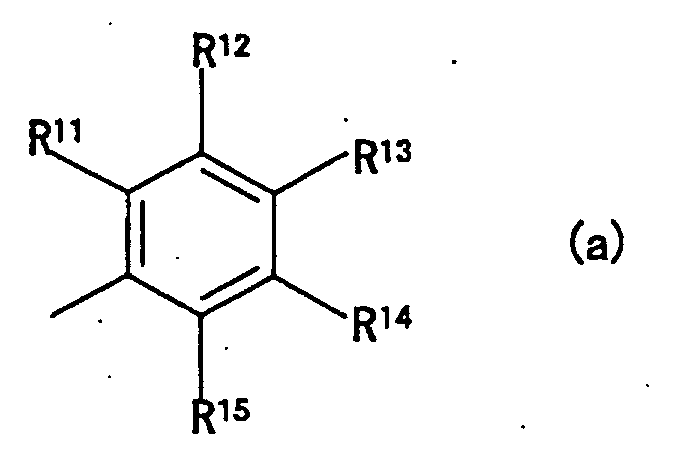
- B is
wherein R11, R12, R13, R14 and R15 are the same or different and
each is independently a hydrogen atom, a halogen atom, a C1-6
alkyl group, a C1-6 alkoxy group, a nitro group, a hydroxyl
group, a cyano group, a haloalkyl group, an aralkyl group, an
aryl group optionally having substituents, an aryloxy group, a
tetrazolyl group, a triazolyl group, -(CH2)p-CO-R19 wherein p is
0 or an integer of 1 to 4 and R19 is an aryl group optionally
having substituents, a hydroxyl group, a C1-6 alkoxy group or
-N(R20)(R21) wherein R20 and R21 are the same or different and
each is independently a hydrogen atom, a C1-6 alkyl group, an
aralkyl group or a C3-13 alkoxycarbonylalkyl group, or R20 and
R21 may form, together with the adjacent nitrogen atom,
wherein q is an integer of 1 to 3 and R22 is a hydrogen atom, a
hydroxyl group, a C1-6 alkoxy group, an amino group, a C2-12
dialkylamino group or a C2-7 alkoxycarbonylamino group, -O-(CH2)r-R23
wherein r is an integer of 1 to 4 and R23 is a
hydroxyl group, an amino group, a C2-7 alkylcarbonyloxy group or
-CO-R24 wherein R24 is a hydroxyl group, a C1-6 alkoxy group or
-N(R25)(R26) wherein R25 and R26 are the same or different and
each is a hydrogen atom, a C1-6 alkyl group or an aralkyl group,
or R25 and R26 may form, together with the adj acent' nitrogen
atom,
or
wherein q' and R22' are as defined for q and R22, respectively,
-O-CO-R27 wherein R27 is a C1-6 alkylamino group or a C2-12
dialkylamino group, or -N(R28)(R29) wherein R28 and R29 are the
same or different and each is a hydrogen atom, a C1-6 alkyl
group, an aryl group optionally having substituents, an acyl
group, -(CH2)p'-COO-R30 wherein p' is as defined for p and R30 is
a hydrogen atom, an aryl group optionally having substituents
or a C1-6 alkyl group wherein the C1-6 alkyl group is optionally
substituted by a hydroxyl group, a trifluoromethyl group, an
aryl group optionally having substituents, a morpholino group
or a carboxyl group, -CON(R31)(R32) wherein R31 and R32 are the
same or different and each is a hydrogen atom, a C1-6 alkyl
group or an aryl group optionally having substituents, -CO-R33
wherein R33 is a C1-6 alkyl group or an aryl group optionally
having substituents or -CO-(CH2)r'-R34 wherein r' is as defined
for r and R39 is a C1-6 alkylamino group, a C2-12 dialkylamino
group, a C1-6 alkoxy group or a C2-7 alkylcarbonyloxy group,
R16b-R16n and R17b-R17n are the same or different and each is a
hydrogen atom, a halogen atom, a C1-6 alkyl group, an amino
group, a hydroxyl group, a C1-6 alkoxy group or -CON(R31')(R32')
wherein R31' and R32' are as defined for R31 and R32,
- R18 is a hydrogen atom or a C2-7 alkoxycarbonyl group,
- Y is -S-, -O- or -N(R35)- wherein R35 is a hydrogen atom or a C1-6
alkyl group, and
- n is 0 or an integer of 1 to 4, or
- R6 and R7 may form, together with the adjacent nitrogen atom,
or
wherein R36 and R37 are the same or different and each is a
hydrogen atom, a halogen atom, a C1-6 alkyl group, a C1-6 alkoxy
group, an amino group, a nitro group, a hydroxyl group, a C2-7
alkoxycarbonyl group, a carboxyl group, a C2-7
haloalkylcarbonylamino group or -O-CO-R41 wherein R41 is a C1-6
alkyl group, a C1-6 alkylamino group or a C2-12 dialkylamino
group;
- Z is -CH2-CH2-, -C(R42)=CH-, -C(R42')=N-, -N=N-, -CO-, -CO-O-,
-CO-CH2-O-, -CH2-CO-NH-, -C(R42'')(R43)-N(R44)- wherein R42, R42',
R42'' and R43 are the same or different and each is a hydrogen
atom, a C1-6 alkyl group or an aryl group optionally having
substituents and R44 is a hydrogen atom, a C2-7 alkoxycarbonyl
group or a C1-6 alkyl group wherein the C1-6 alkyl group is
optionally substituted by a carboxyl group or a C2-7
alkoxycarbonyl group, or -C(U)-N(R44')- wherein U is =O or =S
and R44' is as defined for R44 wherein an atom adjacent to the
nitrogen atom on the fused ring in the formula (i) is
described on the left end of each group;
- R38 is a hydrogen atom, an aryl group optionally having
substituents or a heteroaryl group;
- R39 and R40 are the same or different and each is a hydrogen
atom, a C1-6 alkyl group, a C1-6 alkoxy group or a C2-7
alkoxycarbonyl group, or R39 and R40 may form, together with the
adjacent carbon atom,
or
- W is -CO-, -CS- or -CH2-;
- V1 is -CO-, -CS- or -CH2-;
- V2 is -O-, -CH2- or -N(R45)- wherein R45 is a hydrogen atom, a
C1-6 alkyl group or an aryl group optionally having
substituents; and
- V3 is -CH(R46)- or -N(R46')- wherein R46 and R46' are each a
hydrogen atom, an aralkyl group, a heteroaryl group or an aryl
group optionally having substituents,
a pharmaceutically acceptable salt thereof or a prodrug
thereof (hereinafter sometimes to be abbreviated as the
compound (1) of the present invention. - 2. The indole compound of 1 above,
wherein
- R6 is a hydrogen atom, a C1-6 alkyl group or an aralkyl group
wherein the aralkyl group is optionally substituted by a
halogen atom;
- R7 is
wherein X is =O, =S or =NH;
- A is -N(R8')- wherein R8' is a hydrogen atom, a C1-6 alkyl group
or a phenyl group optionally having substituents, -C(R9')(R10')-
wherein R9' and R10' are the same or different and each is a
hydrogen atom, a hydroxyl group, an amino group, a C1-6 alkyl
group, a C1-6 hydroxyalkyl group, a C2-7 alkoxycarbonylamino
group or an acylamino group, or R9' and R10' may form, together
with the adjacent carbon atom, a C3-7 cycloalkyl group, -(CH2)m-NH-
wherein m is an integer of 1 to 4, -CO-, -S- or a single
bond; and
- B is
wherein R11', R12', R13', R14' and R15' are the same or different
and each is a hydrogen atom, a halogen atom, a C1-6 alkyl group,
a C1-6 alkoxy group, a nitro group, a hydroxyl group, a cyano
group, a haloalkyl group, an aralkyl group, a phenyl group
optionally having substituents, an aryloxy group, a tetrazolyl
group, a triazolyl group, -(CH2)p-CO-R19' wherein p is 0 or an
integer of 1 to 4 and R19' is a phenyl group optionally having
substituents, a hydroxyl group, a C1-6 alkoxy group or
-N(R20)(R21)- wherein R20 and R21 are as defined in the above-mentioned
1, -O-(CH2)r-R23 wherein r and R23 are as defined in
the above-mentioned 1, -O-CO-R27 wherein R27 is as defined in
the above-mentioned 1, or -N(R28')(R29') wherein R28' and R29' are
the same or different and each is a hydrogen atom, a C1-6 alkyl
group, a phenyl group optionally having substituents, an acyl
group, -(CH2)p'-COO-R30' wherein p' is as defined in the above-mentioned
1 and R30' is a hydrogen atom, a phenyl group
optionally having substituents or a C1-6 alkyl group wherein the
C1-6 alkyl group is optionally substituted by a hydroxyl group,
a trifluoromethyl group, a phenyl group optionally having
substituents, a morpholino group or a carboxyl group,
-CON(R31'')(R32'') wherein R31'' and R32'' are the same or different
and each is a hydrogen atom, a C1-6 alkyl group or a phenyl
group optionally having substituents, -CO-R33' wherein R33' is a
C1-6 alkyl group or a phenyl group optionally having
substituents or -CO-(CH2)r'-R34 wherein r' and R34 are as defined
in the above-mentioned 1,
- R16b'-R16n' and R17b'-R17n' are the same or different'and each is a
hydrogen atom, a halogen atom, a C1-6 alkyl group, an amino
group, a hydroxyl group, a C1-6 alkoxy group or
-CON(R31''')(R32''') wherein R31''' and R32''' are as defined for R31''
and R32'', and
- R18, Y and n are as defined in the above-mentioned 1, or
R6 and R7 may form, together with the adjacent nitrogen atom,
wherein R36 and R37 are as defined in the above-mentioned 1;
- Z' is -CH2-CH2-, -C(R42)=CH-, -C(R42')=N-, -N=N-, -CO-, -CO-O-,
-CO-CH2-O-, -CH2-CO-NH-, -C(R42'')(R43)-N(R44)- wherein R42, R42',
R42'' and R43 are the same or different and each is a hydrogen
atom, a C1-6 alkyl group or a phenyl group optionally having
substituents and R44 are as defined in the above-mentioned 1 or
-C(U)-N(R44')- wherein U and R44' are as defined in the above-mentioned
1;
- R38' is a hydrogen atom, a phenyl group optionally substituted
by a halogen atom or a C1-6 alkyl group, or a pyridyl group;
- R39' and R40' are both hydrogen atoms, or R39' and R40' may form,
together with the adjacent carbon atom,
or
- W and V1 are as defined in the above-mentioned 1;
- V2' is -O-, -CH2- or -N(R45)- wherein R45 is a hydrogen atom, a
C1-6 alkyl group, a phenyl group optionally substituted by a
halogen atom; and
- V3' is -CH(R46)- or -N(R46')- wherein R46 and R46' are each a
hydrogen atom, a benzyl group, a thienyl group, or a phenyl
group optionally substituted by a halogen atom, a hydroxy
group or a C1-6 alkoxy group,
a pharmaceutically acceptable salt thereof or a prodrug
thereof. - 3. The indole compound of 1 above,
wherein
- R6 is a hydrogen atom, a C1-6 alkyl group or an aralkyl group
wherein the aralkyl group is optionally substituted by a
halogen atom; - R7 is
wherein X is as defined in the above-mentioned 1;
- A is -N(R8'')- wherein R8'' is a hydrogen atom, a C1-6 alkyl group
or an aryl group optionally having substituents, -C(R9'')(R10'')-
wherein R9'' and R10'' are the same or different and each is a
hydrogen atom, a hydroxyl group, an amino group, a C1-6 alkyl
group, a C1-6 hydroxyalkyl group or a C2-7 alkoxycarbonylamino
group, or R9'' and R10'' may form, together with the adjacent
carbon atom, a C3-7 cycloalkyl group, -(CH2)m-NH- wherein m is
as defined in the above-mentioned 1, -CO- or a single bond;
and
- B is
or
wherein R11'', R12'', R13'', R14'' and R15'' are the same or
different and each is a hydrogen atom, a halogen atom, a C1-6
alkyl group, a C1-6 alkoxy group, a nitro group, a hydroxyl
group, a cyano group, a haloalkyl group; an aralkyl group, an
aryl group optionally having substituents, an aryloxy group, a
tetrazolyl group, a triazolyl group, -(CH2)p-CO-R19 wherein p
and R19 are as defined in the above-mentioned 1, -O-(CH2)r-R23
wherein r and R23 are as defined in the above-mentioned 1, -O-CO-R27
wherein R27 is as defined in the above-mentioned 1 or
-N(R28'')(R29'') wherein R28'' and R29'' are the same or different
and each is a hydrogen atom, a C1-6 alkyl group, an aryl group
optionally having substituents, -(CH2)p'-COO-R30'' wherein p' is
as defined for p and R30'' is a hydrogen atom or a C1-6 alkyl
group wherein the C1-6 alkyl group is optionally substituted by
a hydroxyl group, a trifluoromethyl group or a carboxyl group,
-CON(R31)(R32) wherein R31 and R32 are as defined in the above-mentioned
1, -CO-R33 wherein R33 is as defined in the above-mentioned
1 or -CO-(CH2)r'-R34 wherein r' and R34 are as defined
in the above-mentioned 1,
- R16b-R16n and R17b-R17n are as defined in the above-mentioned 1,
- R18 is as defined in the above-mentioned 1,
- Y'' is -S- or -N(R35)- wherein R35 is as defined in the above-mentioned
1, and
- n is as defined in the above-mentioned 1, or
- R6 and R7 may form, together with the adjacent nitrogen atom,
wherein R36'' and R37'' are the same or different and each is a
hydrogen atom, a halogen atom, a C1-6 alkyl group, a C1-6 alkoxy
group, an amino group, a hydroxyl group or -O-CO-R41 wherein R41
are as defined in the above-mentioned 1;
- Z'' is, -CH2-CH2-, -C(R42)=CH- , -N=N- , -CO- , -CO-O-, -CO-CH2-O-,
-CH2-CO-NH-, -C(R42'')(R43)-N(R44'')- wherein R42, R42'' and R43 are
as defined in the above-mentioned 1 and R44'' is a hydrogen atom,
a C1-6 alkyl group or a C2-7 alkoxycarbonyl group or -C(U)-N(R44''')-
wherein U is =O or =S and R44''' is as defined for
R44'';
- R38'' is a hydrogen atom or an aryl group optionally having
substituents;
- R39'' and R40'' are the same or different and each is a hydrogen
atom, a C1-6 alkyl group or a C2-7 alkoxycarbonyl group, or R39''
and R40'' may form, together with the adjacent carbon atom,
- W'' is -CO- or -CH2-;
- V1 and V2 are as defined in the above-mentioned 1; and
- V3'' is -CH(R46'')- or -N(R46''')- wherein R46'' and R46''' are the
same or different and each is a hydrogen atom or an aryl group
optionally having substituents,
a pharmaceutically acceptable salt thereof or a prodrug
thereof. - 4. The indole compound of 1 above, wherein R1, R2, R4, R5 and R6
are each a hydrogen atom, a pharmaceutically acceptable salt
thereof or a prodrug thereof.
- 5. The indole compound of 4 above, wherein R3 is a halogen atom
or a C1-6 alkyl group, a pharmaceutically acceptable salt
thereof or a prodrug thereof.
- 6. The indole compound of 4 above, wherein X=O, A is a single
bond and B is
a pharmaceutically acceptable salt thereof or a prodrug
thereof.
- 7. The indole compound of 4 above, wherein X=NH, A is a single
bond and B is
a pharmaceutically acceptable salt thereof or a prodrug
thereof.
- 8. The indole compound of 1 above, wherein R6 and R7 may form,
together with the adjacent nitrogen atom,
a pharmaceutically acceptable salt thereof or a prodrug
thereof.
- 9. The indole compound of 1 above, which is selected from the
group consisting of
- benzoic acid 2-(5-chloro-1H-indole-2-carbonyl)hydrazide,
- 2-aminobenzoic acid 2-(5-chloro-1H-indole-2-carbonyl)hydrazide,
- 2-hydroxybenzoic acid 2-(5-chloro-1H-indole-2-carbonyl)hydrazide,
- 3-(2-(2-(5-chloro-1H-indole-2-carbonyl)hydrazinocarbonyl)phenylcarbamoyloxy)-2,2-dimethylpropionic
acid,
- benzoic acid 2-(5-chloro-1H-indole-2-carbonyl)-1-methylhydrazide,
- benzoic acid 2-(1-acetyl-5-chloro-1H-indole-2-carbonyl)hydrazide,
- 5-chloro-1H-indole-2-carboxylic acid 2-(imino-phenyl-methyl)hydrazide,
- 5-aminothiazole-4-carboxylic acid 2-(5-chloro-1H-indole-2-carbonyl)hydrazide,
- benzoic acid 2-(5-fluoro-1H-indole-2-carbonyl)hydrazide,
- cyclohexanecarboxylic acid 2-(5-fluoro-1H-indole-2-carbonyl)hydrazide,
- thiophene-2-carboxylic acid 2-(5-fluoro-1H-indole-2-carbonyl)hydrazide,
- 4-nitrobenzoic acid 2-(5-chloro-1H-indole-2-carbonyl)hydrazide,
- 2-methylbenzoic acid 2-(5-chloro-1H-indole-2-carbonyl)hydrazide,
- 4-methylbenzoic acid 2-(5-chloro-1H-indole-2-carbonyl)hydrazide,
- 2-methoxybenzoic acid 2-(5-chloro-1H-indole-2-carbonyl)hydrazide,
- 3-methoxybenzoic acid 2-(5-chloro-1H-indole-2-carbonyl)hydrazide,
- 4-methoxybenzoic acid 2-(5-chloro-1H-indole-2-carbonyl)hydrazide,
- 3-methylbenzoic acid 2-(5-chloro-1H-indole-2-carbonyl)hydrazide,
- 2-chlorobenzoic acid 2-(5-chloro-1H-indole-2-carbonyl)hydrazide,
- 3-chlorobenzoic acid 2-(5-chloro-1H-indole-2-carbonyl)hydrazide,
- 4-chlorobenzoic acid 2-(5-chloro-1H-indole-2-carbonyl)hydrazide,
- 4-(2-(5-chloro-1H-indole-2-carbonyl)hydrazinocarbonyl)benzoic
acid methyl ester,
- cyclohexanecarboxylic acid 2-(5-chloro-1H-indole-2-carbonyl)hydrazide,
- 2,4-dichlorobenzoic acid 2-(5-chloro-1H-indole-2-carbonyl)hydrazide,
- 2,6-dichlorobenzoic acid 2-(5-chloro-1H-indole-2-carbonyl)hydrazide,
- 2,4-difluorobenzoic acid 2-(5-chloro-1H-indole-2-carbonyl)hydrazide,
- biphenyl-2-carboxylic acid 2-(5-chloro-1H-indole-2-carbonyl)hydrazide,
- 3-fluorobenzoic acid 2-(5-chloro-1H-indole-2-carbonyl)hydrazide,
- 4-fluorobenzoic acid 2-(5-chloro-1H-indole-2-carbonyl)hydrazide,
- 3-trifluoromethylbenzoic acid 2-(5-chloro-1H-indole-2-carbonyl)hydrazide,
- 4-trifluoromethylbenzoic acid 2-(5-chloro-1H-indole-2-carbonyl)hydrazide,
- 2-trifluoromethylbenzoic acid 2-(5-chloro-1H-indole-2-carbonyl)hydrazide,
- benzoic acid 2-(5-methyl-lH-indole-2-carbonyl)hydrazide,
- benzoic acid 2-(5-chloro-3-methyl-1H-indole-2-carbonyl)hydrazide,
- benzoic acid 2-(5,7-dichloro-1H-indole-2-carbonyl)hydrazide,
- 2-aminobenzoic acid 2-(5-isopropyl-1H-indole-2-carbonyl)hydrazide,
- 2-amino-4-fluorobenzoic acid 2-(5-isopropyl-1H-indole-2-carbonyl)hydrazide,
- 2-aminobenzoic acid 2-(5-fluoro-1H-indole-2-carbonyl)hydrazide,
- 2-aminobenzoic acid 2-(6-chloro-1H-indole-2-carbonyl)hydrazide,
- 3-amino-4-(2-(5-chloro-1H-indole-2-carbonyl)hydrazinocarbonyl)benzoic
acid methyl ester,
- 3-aminoisonicotinic acid 2-(5-chloro-1H-indole-2-carbonyl)hydrazide,
- isonicotinic acid 2-(5-chloro-1H-indole-2-carbonyl)hydrazide,
- nicotinic acid 2-(5-chloro-1H-indole-2-carbonyl)hydrazide,
- pyridine-2-carboxylic acid 2-(5-chloro-1H-indole-2-carbonyl)hydrazide,
- 3-(dimethylamino)benzoic acid 2-(5-chloro-1H-indole-2-carbonyl)hydrazide,
- N-(3-(2-(5-chloro-1H-indole-2-carbonyl)hydrazinocarbonyl)phenyl)acetamide,
- N-(2-(2-(5-chloro-1H-indole-2-carbonyl)hydrazinocarbonyl)phenyl)acetamide,
- 4-fluorobenzoic acid 2-(5-chloro-1H-indole-2-carbonyl)-2-methylhydrazide,
- 2-(2-(2-(5-chloro-1H-indole-2-carbonyl)hydrazinocarbonyl)phenoxy)acetic
acid methyl ester,
- 2-(2-(2-(5-chloro-1H-indole-2-carbonyl)hydrazinocarbonyl)phenoxy)acetic
acid,
- 2-(dimethylamino)benzoic acid 2-(5-chloro-1H-indole-2-carbonyl)hydrazide,
- 2-(2-(5-chloro-1H-indole-2-carbonyl)hydrazinocarbonyl)phenoxy-N,N-dimethylacetamide,
- 2-methylaminobenzoic acid 2-(5-chloro-1H-indole-2-carbonyl)hydrazide,
- 2-amino-4-chlorobenzoic acid 2-(5-chloro-1H-indole-2-carbonyl)hydrazide,
- 2-amino-6-chlorobenzoic acid 2-(5-chloro-1H-indole-2-carbonyl)hydrazide,
- 2-amino-3-chlorobenzoic acid 2-(5-chloro-1H-indole-2-carbonyl)hydrazide,
- 2-amino-5-chlorobenzoic acid 2-(5-chloro-1H-indole-2-carbonyl)hydrazide,
- 4-cyanobenzoic acid 2-(5-chloro-1H-indole-2-carbonyl)hydrazide,
- 4-(1H-tetrazol-5-yl)benzoic acid 2-(5-chloro-1H-indole-2-carbonyl)hydrazide,
- 3-(1H-tetrazol-5-yl)benzoic acid 2-(5-chloro-1H-indole-2-carbonyl)hydrazide,
- 2-(2-(2-(5-chloro-1H-indole-2-carbonyl)hydrazinocarbonyl)anilino)acetic
acid,
- 2-aminobenzoic acid 2-(5-methyl-1H-indole-2-carbonyl)hydrazide,
- 2-amino-4-fluorobenzoic acid 2-(5-methyl-1H-indole-2-carbonyl)hydrazide,
- methyl (2-(2-(5-methyl-1H-indole-2-carbonyl)hydrazinocarbonyl)phenyl)carbamate,
- 2-(2-(5-chloro-1H-indole-2-carbonyl)hydrazinocarbonyl)phenyl
dimethylcarbamate,
- 2-aminobenzoic acid 2-(5-ethyl-1H-indole-2-carbonyl)hydrazide,
- 2-amino-4,5-difluorobenzoic acid 2-(5-methyl-1H-indole-2-carbonyl)hydrazide,
- 2-(2-hydroxyethoxy)benzoic acid 2-(5-chloro-1H-indole-2-carbonyl)hydrazide,
- 2-(3-(2-(5-chloro-1H-indole-2-carbonyl)hydrazinocarbonyl)phenoxy)acetic
acid methyl ester,
- 2-(3-(2-(5-chloro-1H-indole-2-carbonyl)hydrazinocarbonyl)phenoxy)acetic
acid,
- 2-(3-(2-(5-chloro-1H-indole-2-carbonyl)hydrazinocarbonyl)phenoxy)-N,N-dimethylacetamide,
- 2-methylthiazole-4-carboxylic acid 2-(5-chloro-1H-indole-2-carbonyl)hydrazide,
- 4-(2H-[1,2,4]triazol-3-yl)benzoic acid 2-(5-chloro-1H-indole-2-carbonyl)
hydrazide,
- 3-(2H-[1,2,4]triazol-3-yl)benzoic acid 2-(5-chloro-1H-indole-2-carbonyl)hydrazide,
- 1,3-dihydroxy-2-propyl (2-(2-(5-chloro-1H-indole-2-carbonyl)hydrazinocarbonyl)phenyl)carbamate,
- 3-((2-(2-(5-chloro-1H-indole-2-carbonyl)hydrazinocarbonyl)phenyl)carbamoyloxy)-2,2-dimethylpropionic
acid,
- thiophene-2-carboxylic acid 2-(5-chloro-1H-indole-2-carbonyl)hydrazide,
- furan-2-carboxylic acid 2-(5-chloro-1H-indole-2-carbonyl)hydrazide,
- 2,6-dichloronicotinic acid 2-(5-chloro-1H-indole-2-carbonyl)hydrazide,
- 1H-pyrrole-2-carboxylic acid 2-(5-chloro-1H-indole-2-carbonyl)hydrazide,
- 1H-imidazole-4-carboxylic acid 2-(5-chloro-1H-indole-2-carbonyl)hydrazide,
- pyrazine-2-carboxylic acid 2-(5-chloro-1H-indole-2-carbonyl)hydrazide,
- thiophene-3-carboxylic acid 2-(5-chloro-1H-indole-2-carbonyl)hydrazide,
- furan-3-carboxylic acid 2-(5-chloro-1H-indole-2-carbonyl)hydrazide,
- 5-chlorothiophene-2-carboxylic acid 2-(5-chloro-1H-indole-2-carbonyl)hydrazide,
- 3-chlorothiophene-2-carboxylic acid 2-(5-chloro-1H-indole-2-carbonyl)hydrazide,
- 1-methyl-1H-pyrrole-2-carboxylic acid 2-(5-chloro-1H-indole-2-carbonyl)hydrazide,
- 5-methylthiophene-2-carboxylic acid 2-(5-chloro-1H-indole-2-carbonyl)hydrazide,
- 3-methylthiophene-2-carboxylic acid 2-(5-chloro-1H-indole-2-carbonyl)hydrazide,
- 2,6-difluorobenzoic acid 2-(5-chloro-1H-indole-2-carbonyl)hydrazide,
- 2,3-difluorobenzoic acid 2-(5-chloro-1H-indole-2-carbonyl)hydrazide,
- 5-chloro-1H-indole-2-carboxylic acid 2-(naphthalene-1-carbonyl)hydrazide,
- 3,4,5-trifluorobenzoic acid 2-(5-chloro-1H-indole-2-carbonyl)hydrazide,
- 2,3,4,5-tetrafluorobenzoic acid 2-(5-chloro-1H-indole-2-carbonyl)hydrazide,
- 2-amino-4-methylbenzoic acid 2-(5-chloro-1H-indole-2-carbonyl)hydrazide,
- 2-amino-4-fluorobenzoic acid 2-(5-chloro-1H-indole-2-carbonyl)hydrazide,
- 2-amino-5-methylbenzoic acid 2-(5-chloro-1H-indole-2-carbonyl)hydrazide,
- 2-amino-6-methylbenzoic acid 2-(5-chloro-1H-indole-2-carbonyl)hydrazide,
- 2-amino-3-methylbenzoic acid 2-(5-chloro-1H-indole-2-carbonyl)hydrazide,
- 2-amino-4,5-difluorobenzoic acid 2-(5-chloro-1H-indole-2-carbonyl)hydrazide,
- 3-aminothiophene-2-carboxylic acid 2-(5-chloro-1H-indole-2-carbonyl)hydrazide,
- 2-aminobenzoic acid 2-(5-bromo-1H-indole-2-carbonyl)hydrazide,
- 2-amino-4-fluorobenzoic acid 2-(5-bromo-1H-indole-2-carbonyl)hydrazide,
- 1H-pyrazole-4-carboxylic acid 2-(5-chloro-1H-indole-2-carbonyl)hydrazide,
- methyl (2-(2-(5-fluoro-1H-indole-2-carbonyl)hydrazinocarbonyl)phenyl)carbamate,
- 1-methyl-1H-pyrrole-2-carboxylic acid 2-(5-methyl-1H-indole-2-carbonyl)hydrazide,
- thiophene-3-carboxylic acid 2-(5-methyl-1H-indole-2-carbonyl)hydrazide,
- 4H-thieno[3,2-b]pyrrole-5-carboxylic acid 2-(5-chloro-1H-indole-2-carbonyl)hydrazide,
- phenyl (2-(2-(5-chloro-1H-indole-2-carbonyl)hydrazinocarbonyl)phenyl)carbamate,
- benzyl (2-(2-(5-chloro-1H-indole-2-carbonyl)hydrazinocarbonyl)phenyl)carbamate,
- 2-hydroxyethyl (2-(2-(5-chloro-1H-indole-2-carbonyl)hydrazinocarbonyl)phenyl)carbamate,
- 3-hydroxypropyl (2-(2-(5-chloro-1H-indole-2-carbonyl)hydrazinocarbonyl)phenyl)carbamate,
- 2-((2-(2-(5-chloro-1H-indole-2-carbonyl)hydrazinocarbonyl)phenyl)carbamoyloxy)acetic
acid,
- 2-((2-(2-(5-chloro-1H-indole-2-carbonyl)hydrazinocarbonyl)phenyl)carbamoyloxymethyl)-2-methylmalonic
acid,
- methyl 2-(2-(5-chloro-1H-indole-2-carbonyl)hydrazinocarbonyl)phenylcarbamate,
- cyclohexanecarboxylic acid 2-(5-chloro-1H-indole-2-carbonyl)-1-methylhydrazide,
- thiophene-2-carboxylic acid 2-(5-chloro-1H-indole-2-carbonyl)-1-methylhydrazide,
- benzoic acid 2-(1H-indole-2-carbonyl)hydrazide,
- benzoic acid 2-(5-chloro-1-methyl-1H-indole-2-carbonyl)hydrazide,
- benzoic acid 2-(5-methoxy-1H-indole-2-carbonyl)hydrazide,
- benzoic acid 2-(5-isopropyl-1H-indole-2-carbonyl)hydrazide,
- benzoic acid 2-(5-nitro-1H-indole-2-carbonyl)hydrazide,
- benzoic acid 2-(5-benzyloxy-1H-indole-2-carbonyl)hydrazide,
- benzoic acid 2-(6-chloro-1H-indole-2-carbonyl)hydrazide,
- 6H-thieno[2,3-b]pyrrole-5-carboxylic acid 2-(5-chloro-1H-indole-2-carbonyl)hydrazide,
- 5-chloro-1H-indole-2-carboxylic acid 2-((2-fluorophenyl)-imino-methyl)hydrazide,
- 5-chloro-1H-indole-2-carboxylic acid 2-((3-fluorophenyl)-imino-methyl)hydrazide,
- 5-chloro-1H-indole-2-carboxylic acid 2-((4-fluorophenyl)-imino-methyl)hydrazide,
- 5-chloro-1H-indole-2-carboxylic acid 2-(imino-(p-tolyl)-methyl)
hydrazide,
- 5-chloro-1H-indole-2-carboxylic acid 2-((4-chlorophenyl)-imino-methyl)hydrazide,
- 5-chloro-1H-indole-2-carboxylic acid 2-((3-chlorophenyl)-imino-methyl)hydrazide,
- 5-chloro-1H-indole-2-carboxylic acid 2-((3-fluorophenyl)-imino-methyl)hydrazide,
- 5-chloro-1H-indole-2-carboxylic acid 2-(imino-(o-tolyl)-methyl)hydrazide,
- 5-chloro-1H-indole-2-carboxylic acid 2-(imino-(m-tolyl)-methyl)hydrazide,
- 5-chloro-1H-indole-2-carboxylic acid 2-(imino-(thiophen-2-yl)-methyl)hydrazide,
- 5-chloro-1H-indole-2-carboxylic acid 2-(imino-(pyridin-2-yl)-methyl)hydrazide,
- 5-chloro-1H-indole-2-carboxylic acid 2-((furan-2-yl)-imino-methyl)hydrazide,
- 5-chloro-1H-indole-2-carboxylic acid 2-((2-chloro-6-fluorophenyl)-imino-methyl)hydrazide,
- 5-chloro-1H-indole-2-carboxylic acid 2-(imino-(2-trifluoromethylphenyl)-methyl)hydrazide,
- 5-chloro-1H-indole-2-carboxylic acid 2-(imino-(pyrazin-2-yl)-methyl)hydrazide,
- 3-aminobenzoic acid 2-(5-chloro-1H-indole-2-carbonyl)hydrazide,
3-methoxybenzoic acid 2-(5-chloro-1H-indole-2-carbonyl)hydrazide,
- 5-amino-2-methylthiazole-4-carboxylic acid 2-(5-chloro-1H-indole-2-carbonyl)hydrazide,
- 5-chloro-1H-indole-2-carboxylic acid (1,2,3,4-tetrahydro-2,4-dioxoquinazolin-3-yl)amide,
- 5-chloro-1H-indole-2-carboxylic acid (2,3-dihydro-2,4-dioxo-4H-benzo[e][1,3]oxazin-3-yl)amide,
- 5-chloro-1H-indole-2-carboxylic acid (1,2,3,4-tetrahydro-4-oxo-2-thioxoquinazolin-3-yl)amide,
- 5-chloro-1H-indole-2-carboxylic acid (3,4-dihydro-2-methyl-4-oxoquinazolin-3-yl)amide,
- 5-chloro-1H-indole-2-carboxylic acid (3,4-dihydro-4-oxoquinazolin-3-yl)amide,
- 5-chloro-1H-indole-2-carboxylic acid (1,2,3,4-tetrahydro-4-oxoquinazolin-3-yl)amide,
- 5-chloro-1H-indole-2-carboxylic acid (1,2,3,4-tetrahydro-2,5-dioxo-5H-benzo[e][1,4]diazepin-4-yl)amide,
- 5-chloro-1H-indole-2-carboxylic acid (2,3,4,5-tetrahydro-3,5-dioxo-benzo[f][1,4]oxazepin-4-yl)amide,
- 5-isopropyl-1H-indole-2-carboxylic acid (1,2,3,4-tetrahydro-2,4-dioxoquinazolin-3-yl)amide,
- 5-isopropyl-1H-indole-2-carboxylic acid (7-fluoro-1,2,3,4-tetrahydro-2,4-dioxoquinazolin-3-yl)amide,
- 5-fluoro-1H-indole-2-carboxylic acid (1,2,3,4-tetrahydro-2,4-dioxoquinazolin-3-yl)amide,
- 6-chloro-1H-indole-2-carboxylic acid (1,2,3,4-tetrahydro-2,4-dioxoquinazolin-3-yl)amide,
- 3-((5-chloro-1H-indole-2-carbonyl)amino)-1,2,3,4-tetrahydro-2,4-dioxoquinazoline-7-carboxylic
acid methyl ester,
- 3-((5-chloro-1H-indole-2-carbonyl)amino)-1,2,3,4-tetrahydro-2,4-dioxoquinazoline-7-carboxylic
acid,
- 5-chloro-1H-indole-2-carboxylic acid (1,2,3,4-tetrahydro-2,4-dioxo-6-(trifluoroacetylamino)quinazolin-3-yl)amide,
- 5-chloro-1H-indole-2-carboxylic acid (6-amino-1,2,3,4-tetrahydro-2,4-dioxoquinazolin-3-yl)amide,
- 5-chloro-1H-indole-2-carboxylic acid (5-chloro-1,2,3,4-tetrahydro-2,4-dioxoquinazolin-3-yl)amide,
- 5-chloro-1H-indole-2-carboxylic acid (6-chloro-1,2,3,4-tetrahydro-2,4-dioxoquinazolin-3-yl)amide,
- 5-chloro-1H-indole-2-carboxylic acid (7-chloro-1,2,3,4-tetrahydro-2,4-dioxoquinazolin-3-yl)amide,
- 5-chloro-1H-indole-2-carboxylic acid (8-chloro-1,2,3,4-tetrahydro-2,4-dioxoquinazolin-3-yl)amide,
- 2-(3-((5-chloro-1H-indole-2-carbonyl)amino)-1,2,3,4-tetrahydro-2,4-dioxoquinazolin-1-yl)acetic
acid,
- 2-(3-((5-chloro-1H-indole-2-carbonyl)amino)-1,2,3,4-tetrahydro-2,4-dioxoquinazolin-1-yl)acetic
acid methyl ester,
- 5-methyl-1H-indole-2-carboxylic acid (1,2,3,4-tetrahydro-2,4-dioxoquinazolin-3-yl)amide,
- 5-methyl-1H-indole-2-carboxylic acid (7-fluoro-1,2,3,4-tetrahydro-2,4-dioxoquinazolin-3-yl)amide,
- 5-ethyl-1H-indole-2-carboxylic acid (1,2,3,4-tetrahydro-2,4-dioxoquinazolin-3-yl)amide,
- 5-methyl-1H-indole-2-carboxylic acid (6,7-difluoro-1,2,3,4-tetrahydro-2,4-dioxoquinazolin-3-yl)amide,
- 5-methyl-1H-indole-2-carboxylic acid (1,2,3,4-tetrahydro-6-methoxy-2,4-dioxoquinazolin-3-yl)amide,
- 5-methyl-1H-indole-2-carboxylic acid (1,2,3,4-tetrahydro-6-hydroxy-2,4-dioxoquinazolin-3-yl)amide,
- acetic acid 3-((5-methyl-1H-indole-2-carbonyl)amino)-1,2,3,4-tetrahydro-2,4-dioxoquinazolin-6-yl
ester,
- 5-chloro-1H-indole-2-carboxylic acid (1,2,3,4-tetrahydro-2,4-dioxo-1-propylquinazolin-3-yl)amide,
- 5-chloro-1H-indole-2-carboxylic acid (1,2,3,4-tetrahydro-1-methyl-2,4-dioxoquinazolin-3-yl)amide,
- N-(1,2,3,4-tetrahydro-7-nitro-2,4-dioxoquinazolin-3-yl)-5-chloro-1H-indole-2-carboxylic
acid amide,
- 5-chloro-1H-indole-2-carboxylic acid (2,4-dioxoperhydropyrimidin-3-yl)amide,
- 5-chloro-1H-indole-2-carboxylic acid (4-oxo-2-thioxoperhydropyrimidin-3-yl)amide,
- 5-chloro-1H-indole-2-carboxylic acid (2,4-dioxo-1-phenylperhydropyrimidin-3-yl)amide,
- 5-chloro-1H-indole-2-carboxylic acid (4-oxo-1-phenylperhydropyrimidin-3-yl)amide,
- 5-chloro-1H-indole-2-carboxylic acid (1-(4-fluorophenyl)-2,4-dioxoperhydropyrimidin-3-yl)amide,
- 5-chloro-1H-indole-2-carboxylic acid (2,4-dioxo-1-(pyridin-2-yl)perhydropyrimidin-3-yl)amide,
- 5-chloro-1H-indole-2-carboxylic acid (1-(3-fluorophenyl)-2,4-dioxoperhydropyrimidin-3-yl)amide,
- 5-chloro-1H-indole-2-carboxylic acid (1-(2-fluorophenyl)-2,4-dioxoperhydropyrimidin-3-yl)amide,
- 5-fluoro-1H-indole-2-carboxylic acid (2,4-dioxo-1-phenyl-perhydropyrimidin-3-yl)amide,
- 5-methyl-1H-indole-2-carboxylic acid (2,4-dioxo-1-phenyl-perhydropyrimidin-3-yl)amide,
- 5-chloro-1H-indole-2-carboxylic acid (1-(3-chlorophenyl)-2,4-dioxoperhydropyrimidin-3-yl)amide,
- 5-chloro-1H-indole-2-carboxylic acid (2,4-dioxo-1-(m-tolyl)perhydropyrimidin-3-yl)amide,
- 5-chloro-1H-indole-2-carboxylic acid (2,4-dioxo-1-(p-tolyl)perhydropyrimidin-3-yl)amide,
- 5-chloro-1H-indole-2-carboxylic acid (1-(4-chlorophenyl)-2,4-dioxoperhydropyrimidin-3-yl)amide,
- 5-chloro-1H-indole-2-carboxylic acid (2,4-dioxo-1-(o-tolyl)perhydropyrimidin-3-yl)amide,
- 5-chloro-1H-indole-2-carboxylic acid ((4S)-2,5-dioxo-4-phenylimidazolidin-1-yl)amide,
- 5-chloro-1H-indole-2-carboxylic acid (2,4-dioxo-1-phenylimidazolidin-3-yl)amide,
- 5-chloro-1H-indole-2-carboxylic acid (4-oxo-1-phenyl-2-thioxoimidazolidin-3-yl)amide,
- 5-chloro-1H-indole-2-carboxylic acid (4-oxo-1-phenylimidazolidin-3-yl)amide,
- 5-chloro-1H-indole-2-carboxylic acid (2-oxo-1-phenylimidazolidin-3-yl)amide,
- 5-chloro-1H-indole-2-carboxylic acid ((4R)-2,5-dioxo-4-phenylimidazolidin-1-yl)amide,
- 5-chloro-1H-indole-2-carboxylic acid ((4S)-1,3-dioxo-perhydropyrrolo[1,2-c]imidazol-2-yl)amide,
- 5-chloro-1H-indole-2-carboxylic acid ((4R)-1,3-dioxo-perhydropyrrolo[1,2-c]imidazol-2-yl)amide,
- 5-chloro-1H-indole-2-carboxylic acid ((4S)-4-benzyl-2,5-dioxoimidazolidin-1-yl)amide,
- 5-chloro-1H-indole-2-carboxylic acid ((4R)-4-benzyl-2,5-dioxoimidazolidin-1-yl)amide,
- 5-chloro-1H-indole-2-carboxylic acid (2,4-dioxoimidazolidin-3-yl)amide,
- 5-chloro-1H-indole-2-carboxylic acid (1-methyl-2,5-dioxo-4-phenylimidazolidin-1-yl)amide,
- 5-chloro-1H-indole-2-carboxylic acid (2,4-dioxo-1-(4-fluorophenyl)imidazolidin-3-yl)amide,
- 5-chloro-1H-indole-2-carboxylic acid (2,5-dioxo-4-(2-fluorophenyl)imidazolidin-1-yl)amide,
- 5-chloro-1H-indole-2-carboxylic acid (2,5-dioxo-4-(2-thienyl)imidazolidin-1-yl)amide,
- 5-chloro-1H-indole-2-carboxylic acid (2,5-dioxo-4-(4-fluorophenyl)imidazolidin-1-yl)amide,
- 5-chloro-1H-indole-2-carboxylic acid (2,5-dioxo-4-(4-chlorophenyl)imidazolidin-1-yl)amide,
- 5-chloro-1H-indole-2-carboxylic acid ((4S)-2,5-dioxo-4-(4-hydroxyphenyl)imidazolidin-1-yl)amide,
- 5-chloro-1H-indole-2-carboxylic acid ((4S)-2,5-dioxo-4-(4-methoxyphenyl)imidazolidin-1-yl)amide,
- 5-chloro-1H-indole-2-carboxylic acid ((4R)-2,5-dioxo-4-(4-methoxyphenyl)imidazolidin-1-yl)amide,
- 5-chloro-1H-indole-2-carboxylic acid 2-(anilinocarbonyl)hydrazide,
- 5-chloro-1H-indole-2-carboxylic acid 2-(phenylthiocarbonyl)hydrazide,
- 5-chloro-1H-indole-2-carboxylic acid 2-(2-phenylacetyl)hydrazide,
- 5-chloro-1H-indole-2-carboxylic acid 2-(2-oxo-2-phenylacetyl)hydrazide,
- 5-chloro-1H-indole-2-carboxylic acid 2-((2-fluorophenyl)aminocarbonyl)hydrazide,
- 5-chloro-1H-indole-2-carboxylic acid 2-((3-fluorophenyl)aminocarbonyl)hydrazide,
- 5-chloro-1H-indole-2-carboxylic acid 2-((4-fluorophenyl)aminocarbonyl)hydrazide,
- 5-chloro-1H-indole-2-carboxylic acid 2-(anilinocarbonyl)-2-methylhydrazide,
- 5-chloro-1H-indole-2-carboxylic acid 2-((2-chloroanilino)carbonyl)hydrazide,
- 5-chloro-1H-indole-2-carboxylic acid 2-((3-chloroanilino)carbonyl)hydrazide,
- 5-chloro-1H-indole-2-carboxylic acid 2-((4-chloroanilino)carbonyl)hydrazide,
- 5-chloro-1H-indole-2-carboxylic acid 2-((1-phenylcyclopropane)carbonyl)hydrazide,
- 5-chloro-1H-indole-2-carboxylic acid 2-((1-phenylcyclopentane)carbonyl)hydrazide,
- 5-chloro-1H-indole-2-carboxylic acid 2-((1-phenylcyclohexane)carbonyl)hydrazide,
- 5-chloro-1H-indole-2-carboxylic acid 2-(2-phenylpropanoyl)hydrazide,
- 5-chloro-1H-indole-2-carboxylic acid 2-(3-hydroxy-2-phenylpropanoyl)hydrazide,
- 5-chloro-1H-indole-2-carboxylic acid 2-(2-methyl-2-phenylpropanoyl)hydrazide,
- 5-chloro-1H-indole-2-carboxylic acid 2-((2S)-2-amino-2-phenylacetyl)hydrazide,
- N-(2-(2-(5-chloro-1H-indole-2-carbonyl)hydrazino)-2-oxo-1-phenylethyl)acetamide,
- 2-morpholinoethyl (2-((2-(5-chloro-1H-indole-2-carbonyl)hydrazino)carbonyl)phenyl)carbamate
p-toluenesulfonate,
- 2-amino-4,5-difluorobenzoic acid 2-(5-methyl-1H-indole-2-carbonyl)hydrazide
benzenesulfonate,
- 2-amino-4-fluorobenzoic acid 2-(5-chloro-1H-indole-2-carbonyl)hydrazide
benzenesulfonate,
- 3-(dimethylamino)benzoic acid 2-(5-chloro-1H-indole-2-carbonyl)hydrazide
methanesulfonate,
- 2-amino-4-fluorobenzoic acid 2-(5-chloro-1H-indole-2-carbonyl)hydrazide
hydrochloride,
- 2-amino-4-fluorobenzoic acid 2-(5-chloro-1H-indole-2-carbonyl)hydrazide
p-toluenesulfonate,
- 2-amino-4-fluorobenzoic acid 2-(5-chloro-1H-indole-2-carbonyl)hydrazide
p-toluenesulfonate,
- 2-amino-4-fluorobenzoic acid 2-(5-chloro-1H-indole-2-carbonyl)hydrazide
p-toluenesulfonate,
- 2-amino-4-fluorobenzoic acid 2-(5-chloro-1H-indole-2-carbonyl)hydrazide
p-toluenesulfonate,
- 2-aminobenzoic acid 2-(5-methyl-1H-indole-2-carbonyl)hydrazide
p-toluenesulfonate,
- 2-aminobenzoic acid 2-(5-methyl-1H-indole-2-carbonyl)hydrazide
benzenesulfonate,
- 2-amino-4-fluorobenzoic acid 2-(5-methyl-1H-indole-2-carbonyl)hydrazide
benzenesulfonate,
- 3-aminobenzoic acid 2-(5-chloro-1H-indole-2-carbonyl)hydrazide
p-toluenesulfonate,
- 5-chloro-1H-indole-2-carboxylic acid 2-((2-chlorophenyl)-imino-methyl)hydrazide
methanesulfonate,
- 5-chloro-1H-indole-2-carboxylic acid 2-((2-chlorophenyl)-imino-methyl)hydrazide
p-toluenesulfonate,
- 5-chloro-1H-indole-2-carboxylic acid 2-((2-chlorophenyl)-imino-methyl)hydrazide
hydrochloride,
- 5-chloro-1H-indole-2-carboxylic acid 2-(imino-phenyl-methyl)hydrazide
methanesulfonate,
- 5-chloro-1H-indole-2-carboxylic acid 2-((2-chlorophenyl)-imino-methyl)hydrazide
butenedioic acid salt,
- 5-chloro-1H-indole-2-carboxylic acid 2-((2-fluorophenyl)-imino-methyl)hydrazide
hydrochloride,
- 5-chloro-1H-indole-2-carboxylic acid 2-((2-fluorophenyl)-imino-methyl)hydrazide
methanesulfonate,
- 5-chloro-1H-indole-2-carboxylic acid 2-((1-imino-2-phenylethyl)hydrazide
methanesulfonate,
- 5-chloro-1H-indole-2-carboxylic acid 2-((3-fluorophenyl)-imino-methyl)hydrazide
hydrochloride,
- 5-chloro-1H-indole-2-carboxylic acid 2-((3,4-difluorophenyl)-imino-methyl)hydrazide
methanesulfonate,
- 5-chloro-1H-indole-2-carboxylic acid 2-(imino-(2-methoxyphenyl)-methyl)hydrazide
methanesulfonate,
- 5-chloro-1H-indole-2-carboxylic acid 2-((2,6-difluorophenyl)-imino-methyl)hydrazide
methanesulfonate,
- 5-chloro-1H-indole-2-carboxylic acid 2-((2,4-difluorophenyl)-imino-methyl)hydrazide
methanesulfonate,
- 5-chloro-1H-indole-2-carboxylic acid 2-((1,2-dimethyl-1H-pyrrol-5-yl)-imino-methyl)hydrazide
methanesulfonate,
- 2-aminobenzoic acid 2-(5-methyl-1H-indole-2-carbonyl)hydrazide
p-toluenesulfonate,
- 2-aminobenzoic acid 2-(5-methyl-1H-indole-2-carbonyl)hydrazide
benzenesulfonate,
- 2-amino-4-fluorobenzoic acid 2-(5-methyl-1H-indole-2-carbonyl)hydrazide
benzenesulfonate,
- 2-(dimethylamino)benzoic acid 2-(5-chloro-1H-indole-2-carbonyl)hydrazide
p-toluenesulfonate,
- 2-amino-4-fluorobenzoic acid 2-(5-chloro-1H-indole-2-carbonyl)hydrazide
methanesulfonate,
- 2-aminobenzoic acid 2-(5-bromo-1H-indole-2-carbonyl)hydrazide
methanesulfonate,
- 2-amino-4-fluorobenzoic acid 2-(5-methyl-1H-indole-2-carbonyl)hydrazide
p-toluenesulfonate, and
- 2-amino-4-fluorobenzoic acid 2-(5-methyl-1H-indole-2-carbonyl)hydrazide
methanesulfonate,
a pharmaceutically acceptable salt thereof or a prodrug
thereof. - 10. The indole compound of 1 above, which is selected from the
group consisting of
- benzoic acid 2-(5-chloro-1H-indole-2-carbonyl)hydrazide,
- 2-aminobenzoic acid 2-(5-chloro-1H-indole-2-carbonyl)hydrazide,
- 2-hydroxybenzoic acid 2-(5-chloro-1H-indole-2-carbonyl)hydrazide,
- 3-(2-(2-(5-chloro-1H-indole-2-carbonyl)hydrazinocarbonyl)phenylcarbamoyloxy)-2,2-dimethylpropionic
acid,
- benzoic acid 2-(5-chloro-1H-indole-2-carbonyl)-1-methylhydrazide,
- benzoic acid 2-(1-acetyl-5-chloro-1H-indole-2-carbonyl)hydrazide,
- 5-chloro-1H-indole-2-carboxylic acid 2-(imino-phenyl-methyl)hydrazide,
- 5-aminothiazole-4-carboxylic acid 2-(5-chloro-1H-indole-2-carbonyl)hydrazide,
- benzoic acid 2-(5-fluoro-1H-indole-2-carbonyl)hydrazide,
- cyclohexanecarboxylic acid 2-(5-fluoro-1H-indole-2-carbonyl)hydrazide,
- thiophene-2-carboxylic acid 2-(5-fluoro-1H-indole-2-carbonyl)hydrazide,
- 4-nitrobenzoic acid 2-(5-chloro-1H-indole-2-carbonyl)hydrazide,
- 2-methylbenzoic acid 2-(5-chloro-1H-indole-2-carbonyl)hydrazide,
- 4-methylbenzoic acid 2-(5-chloro-1H-indole-2-carbonyl)hydrazide,
- 2-methoxybenzoic acid 2-(5-chloro-1H-indole-2-carbonyl)hydrazide,
- 3-methoxybenzoic acid 2-(5-chloro-1H-indole-2-carbonyl)hydrazide,
- 4-methoxybenzoic acid 2-(5-chloro-1H-indole-2-carbonyl)hydrazide,
- 3-methylbenzoic acid 2-(5-chloro-1H-indole-2-carbonyl)hydrazide,
- 2-chlorobenzoic acid 2-(5-chloro-1H-indole-2-carbonyl)hydrazide,
- 3-chlorobenzoic acid 2-(5-chloro-1H-indole-2-carbonyl)hydrazide,
- 4-chlorobenzoic acid 2-(5-chloro-1H-indole-2-carbonyl)hydrazide,
- 4-(2-(5-chloro-1H-indole-2-carbonyl)hydrazinocarbonyl)benzoic
acid methyl ester,
- cyclohexanecarboxylic acid 2-(5-chloro-1H-indole-2-carbonyl)hydrazide,
- 2,4-dichlorobenzoic acid 2-(5-chloro-1H-indole-2-carbonyl)hydrazide,
- 2,6-dichlorobenzoic acid 2-(5-chloro-1H-indole-2-carbonyl)hydrazide,
- 2,4-difluorobenzoic acid 2-(5-chloro-1H-indole-2-carbonyl)hydrazide,
- biphenyl-2-carboxylic acid 2-(5-chloro-1H-indole-2-carbonyl)hydrazide,
- 3-fluorobenzoic acid 2-(5-chloro-1H-indole-2-carbonyl)hydrazide,
- 4-fluorobenzoic acid 2-(5-chloro-1H-indole-2-carbonyl)hydrazide,
- 3-trifluoromethylbenzoic acid 2-(5-chloro-1H-indole-2-carbonyl)hydrazide,
- 4-trifluoromethylbenzoic acid 2-(5-chloro-1H-indole-2-carbonyl)hydrazide,
- 2-trifluoromethylbenzoic acid 2-(5-chloro-1H-indole-2-carbonyl)hydrazide,
- benzoic acid 2-(5-methyl-1H-indole-2-carbonyl)hydrazide,
- benzoic acid 2-(5-chloro-3-methyl-1H-indole-2-carbonyl)hydrazide,
- benzoic acid 2-(5,7-dichloro-1H-indole-2-carbonyl)hydrazide,
- 2-aminobenzoic acid 2-(5-isopropyl-1H-indole-2-carbonyl)hydrazide,
- 2-amino-4-fluorobenzoic acid 2-(5-isopropyl-1H-indole-2-carbonyl)hydrazide,
- 2-aminobenzoic acid 2-(5-fluoro-1H-indole-2-carbonyl)hydrazide,
- 2-aminobenzoic acid 2-(6-chloro-1H-indole-2-carbonyl)hydrazide,
- 3-amino-4-(2-(5-chloro-1H-indole-2-carbonyl)hydrazinocarbonyl)benzoic
acid methyl ester,
- 3-aminoisonicotinic acid 2-(5-chloro-1H-indole-2-carbonyl)hydrazide,
- isonicotinic acid 2-(5-chloro-lH-indole-2-carbonyl)hydrazide,
- nicotinic acid 2-(5-chloro-1H-indole-2-carbonyl)hydrazide,
- pyridine-2-carboxylic acid 2-(5-chloro-1H-indole-2-carbonyl)hydrazide,
- 3-(dimethylamino)benzoic acid 2-(5-chloro-1H-indole-2-carbonyl)hydrazide,
- N-(3-(2-(5-chloro-1H-indole-2-carbonyl)hydrazinocarbonyl)phenyl)acetamide,
- N-(2-(2-(5-chloro-1H-indole-2-carbonyl)hydrazinocarbonyl)phenyl)acetamide,
- 4-fluorobenzoic acid 2-(5-chloro-1H-indole-2-carbonyl)-2-methylhydrazide,
- 2-(2-(2-(5-chloro-1H-indole-2-carbonyl)hydrazinocarbonyl)phenoxy)acetic
acid methyl ester,
- 2-(2-(2-(5-chloro-1H-indole-2-carbonyl)hydrazinocarbonyl)phenoxy)acetic
acid,
- 2-(dimethylamino)benzoic acid 2-(5-chloro-1H-indole-2-carbonyl)hydrazide,
- 2-(2-(5-chloro-1H-indole-2-carbonyl)hydrazinocarbonyl)phenoxy-N,N-dimethylacetamide,
- 2-methylaminobenzoic acid 2-(5-chloro-1H-indole-2-carbonyl)hydrazide,
- 2-amino-4-chlorobenzoic acid 2-(5-chloro-1H-indole-2-carbonyl)hydrazide,
- 2-amino-6-chlorobenzoic acid 2-(5-chloro-1H-indole-2-carbonyl)hydrazide,
- 2-amino-3-chlorobenzoic acid 2-(5-chloro-1H-indole-2-carbonyl)hydrazide,
- 2-amino-5-chlorobenzoic acid 2-(5-chloro-1H-indole-2-carbonyl)hydrazide,
- 4-cyanobenzoic acid 2-(5-chloro-1H-indole-2-carbonyl)hydrazide,
- 4-(1H-tetrazol-5-yl)benzoic acid 2-(5-chloro-1H-indole-2-carbonyl)hydrazide,
- 3-(1H-tetrazol-5-yl)benzoic acid 2-(5-chloro-1H-indole-2-carbohyl)hydrazide,
- 2-(2-(2-(5-chloro-1H-indole-2-carbonyl)hydrazinocarbonyl)anilino)acetic
acid,
- 2-aminobenzoic acid 2-(5-methyl-1H-indole-2-carbonyl)hydrazide,
- 2-amino-4-fluorobenzoic acid 2-(5-methyl-1H-indole-2-carbonyl)hydrazide,
- methyl (2-(2-(5-methyl-1H-indole-2-carbonyl)hydrazinocarbonyl)phenyl)carbamate,
- 2-(2-(5-chloro-1H-indole-2-carbonyl)hydrazinocarbonyl)phenyl
dimethylcarbamate,
- 2-aminobenzoic acid 2-(5-ethyl-1H-indole-2-carbonyl)hydrazide,
- 2-amino-4,5-difluorobenzoic acid 2-(5-methyl-1H-indole-2-carbonyl)hydrazide,
- 2-(2-hydroxyethoxy)benzoic acid 2-(5-chloro-1H-indole-2-carbonyl)hydrazide,
- 2-(3-(2-(5-chloro-1H-indole-2-carbonyl)hydrazinocarbonyl)phenoxy)acetic
acid methyl ester,
- 2-(3-(2-(5-chloro-1H-indole-2-carbonyl)hydrazinocarbonyl)phenoxy)acetic
acid,
- 2-(3-(2-(5-chloro-1H-indole-2-carbonyl)hydrazinocarbonyl)phenoxy)-N,N-dimethylacetamide,
- 2-methylthiazole-4-carboxylic acid 2-(5-chloro-1H-indole-2-carbonyl)hydrazide,
- 4-(2H-[1,2,4]triazol-3-yl)benzoic acid 2-(5-chloro-1H-indole-2-carbonyl)hydrazide,
- 3-(2H-[1,2,4]triazol-3-yl)benzoic acid 2-(5-chloro-1H-indole-2-carbonyl)hydrazide,
- 1,3-dihydroxy-2-propyl (2-(2-(5-chloro-1H-indole-2-carbonyl)hydrazinocarbonyl)phenyl)carbamate,
- 3-((2-(2-(5-chloro-1H-indole-2-carbonyl)hydrazinocarbonyl)phenyl)carbamoyloxy)-2,2-dimethylpropionic
acid,
- thiophene-2-carboxylic acid 2-(5-chloro-1H-indole-2-carbonyl)hydrazide,
- furan-2-carboxylic acid 2-(5-chloro-1H-indole-2-carbonyl)hydrazide,
- 2,6-dichloronicotinic acid 2-(5-chloro-1H-indole-2-carbonyl)hydrazide,
- 1H-pyrrole-2-carboxylic acid 2-(5-chloro-1H-indole-2-carbonyl)hydrazide,
- 1H-imidazole-4-carboxylic acid 2-(5-chloro-1H-indole-2-carbonyl)hydrazide,
- pyrazine-2-carboxylic acid 2-(5-chloro-1H-indole-2-carbonyl)hydrazide,
- thiophene-3-carboxylic acid 2-(5-chloro-1H-indole-2-carbonyl)hydrazide,
- furan-3-carboxylic acid 2-(5-chloro-1H-indole-2-carbonyl)hydrazide,
- 5-chlorothiophene-2-carboxylic acid 2-(5-chloro-1H-indole-2-carbonyl)hydrazide,
- 3-chlorothiophene-2-carboxylic acid 2-(5-chloro-1H-indole-2-carbonyl)hydrazide,
- 1-methyl-1H-pyrrole-2-carboxylic acid 2-(5-chloro-1H-indole-2-carbonyl)hydrazide,
- 5-methylthiophene-2-carboxylic acid 2-(5-chloro-1H-indole-2-carbonyl)hydrazide,
- 3-methylthiophene-2-carboxylic acid 2-(5-chloro-1H-indole-2-carbonyl)hydrazide,
- 2,6-difluorobenzoic acid 2-(5-chloro-1H-indole-2-carbonyl)hydrazide,
- 2,3-difluorobenzoic acid 2-(5-chloro-1H-indole-2-carbonyl)hydrazide,
- 5-chloro-1H-indole-2-carboxylic acid 2-(naphthalene-1-carbonyl)hydrazide,
- 3,4,5-trifluorobenzoic acid 2-(5-chloro-1H-indole-2-carbonyl)hydrazide,
- 2,3,4,5-tetrafluorobenzoic acid 2-(5-chloro-1H-indole-2-carbonyl)hydrazide,
- 2-amino-4-methylbenzoic acid 2-(5-chloro-1H-indole-2-carbonyl)hydrazide,
- 2-amino-4-fluorobenzoic acid 2-(5-chloro-1H-indole-2-carbonyl)hydrazide,
- 2-amino-5-methylbenzoic acid 2-(5-chloro-1H-indole-2-carbonyl)hydrazide,
- 2-amino-6-methylbenzoic acid 2-(5-chloro-1H-indole-2-carbonyl)hydrazide,
- 2-amino-3-methylbenzoic acid 2-(5-chloro-1H-indole-2-carbonyl)hydrazide,
- 2-amino-4,5-difluorobenzoic acid 2-(5-chloro-1H-indole-2-carbonyl)hydrazide,
- 3-aminothiophene-2-carboxylic acid 2-(5-chloro-1H-indole-2-carbonyl)hydrazide,
- 2-aminobenzoic acid 2-(5-bromo-1H-indole-2-carbonyl)hydrazide,
- 2-amino-4-fluorobenzoic acid 2-(5-bromo-1H-indole-2-carbonyl)hydrazide,
- 1H-pyrazole-4-carboxylic acid 2-(5-chloro-1H-indole-2-carbonyl)hydrazide,
- methyl (2-(2-(5-fluoro-1H-indole-2-carbonyl)hydrazinocarbonyl)phenyl)carbamate,
- 1-methyl-1H-pyrrole-2-carboxylic acid 2-(5-methyl-1H-indole-2-carbonyl)hydrazide,
- thiophene-3-carboxylic acid 2-(5-methyl-1H-indole-2-carbonyl)hydrazide,
- 4H-thieno[3,2-b]pyrrole-5-carboxylic acid 2-(5-chloro-1H-indole-2-carbonyl)hydrazide,
- phenyl (2-(2-(5-chloro-1H-indole-2-carbonyl)hydrazinocarbonyl)phenyl)carbamate,
- benzyl (2-(2-(5-chloro-1H-indole-2-carbonyl)hydrazinocarbonyl)phenyl)carbamate,
- 2-hydroxyethyl (2-(2-(5-chloro-1H-indole-2-carbonyl)hydrazinocarbonyl)phenyl)carbamate,
- 3-hydroxypropyl (2-(2-(5-chloro-1H-indole-2-carbonyl)hydrazinocarbonyl)phenyl)carbamate,
- 2-((2-(2-(5-chloro-1H-indole-2-carbonyl)hydrazinocarbonyl)phenyl)carbamoyloxy)acetic
acid,
- 2-((2-(2-(5-chloro-1H-indole-2-carbonyl)hydrazinocarbonyl)phenyl)carbamoyloxymethyl)-2-methylmalonic
acid,
- methyl 2-(2-(5-chloro-1H-indole-2-carbonyl)hydrazinocarbonyl)phenylcarbamate,
- cyclohexanecarboxylic acid 2-(5-chloro-1H-indole-2-carbonyl)-1-methylhydrazide,
- thiophene-2-carboxylic acid 2-(5-chloro-1H-indole-2-carbonyl)-1-methylhydrazide,
- benzoic acid 2-(1H-indole-2-carbonyl)hydrazide,
- benzoic acid 2-(5-chloro-1-methyl-1H-indole-2-carbonyl)
hydrazide,
- benzoic acid 2-(5-methoxy-1H-indole-2-carbonyl)hydrazide,
- benzoic acid 2-(5-isopropyl-1H-indole-2-carbonyl)hydrazide,
- benzoic acid 2-(5-nitro-1H-indole-2-carbonyl)hydrazide,
- benzoic acid 2-(5-benzyloxy-1H-indole-2-carbonyl)hydrazide,
- benzoic acid 2-(6-chloro-1H-indole-2-carbonyl)hydrazide,
- 6H-thieno[2,3-b]pyrrole-5-carboxylic acid 2-(5-chloro-1H-indole-2-carbonyl)hydrazide,
- 5-chloro-1H-indole-2-carboxylic acid 2-((2-fluorophenyl)-imino-methyl)hydrazide,
- 5-chloro-1H-indole-2-carboxylic acid 2-((3-fluorophenyl)-imino-methyl)hydrazide,
- 5-chloro-1H-indole-2-carboxylic acid 2-((4-fluorophenyl)-imino-methyl)hydrazide,
- 5-chloro-1H-indole-2-carboxylic acid 2-(imino-(p-tolyl)-methyl)hydrazide,
- 5-chloro-1H-indole-2-carboxylic acid 2-((4-chlorophenyl)-imino-methyl)hydrazide,
- 5-chloro-1H-indole-2-carboxylic acid 2-((3-chlorophenyl)-imino-methyl)hydrazide,
- 5-chloro-1H-indole-2-carboxylic acid 2-((3-fluorophenyl)-imino-methyl)hydrazide,
- 5-chloro-1H-indole-2-carboxylic acid 2-(imino-(o-tolyl)-methyl)hydrazide,
- 5-chloro-1H-indole-2-carboxylic acid 2-(imino-(m-tolyl)-methyl)hydrazide,
- 5-chloro-1H-indole-2-carboxylic acid 2-(imino-(thiophen-2-yl)-methyl)hydrazide,
- 5-chloro-1H-indole-2-carboxylic acid 2-(imino-(pyridin-2-yl)-methyl)hydrazide,
- 5-chloro-1H-indole-2-carboxylic acid 2-((furan-2-yl)-imino-methyl)hydrazide,
- 5-chloro-1H-indole-2-carboxylic acid 2-((2-chloro-6-fluorophenyl)-imino-methyl)hydrazide,
- 5-chloro-1H-indole-2-carboxylic acid 2-(imino-(2-trifluoromethylphenyl)-methyl)hydrazide,
- 5-chloro-1H-indole-2-carboxylic acid 2-(imino-(pyrazin-2-yl)-methyl)
hydrazide,
- 3-aminobenzoic acid 2-(5-chloro-1H-indole-2-carbonyl)hydrazide,
- 3-methoxybenzoic acid 2-(5-chloro-1H-indole-2-carbonyl)hydrazide,
- 5-amino-2-methylthiazole-4-carboxylic acid 2-(5-chloro-1H-indole-2-carbonyl)hydrazide,
- 2-morpholinoethyl (2-((2-(5-chloro-1H-indole-2-carbonyl)hydrazino)carbonyl)phenyl)carbamate
p-toluenesulfonate,
- 2-amino-4,5-difluorobenzoic acid 2-(5-methyl-1H-indole-2-carbonyl)hydrazide
benzenesulfonate,
- 2-amino-4-fluorobenzoic acid 2-(5-chloro-1H-indole-2-carbonyl)hydrazide
benzenesulfonate,
- 3-(dimethylamino)benzoic acid 2-(5-chloro-1H-indole-2-carbonyl)hydrazide
methanesulfonate,
- 2-amino-4-fluorobenzoic acid 2-(5-chloro-1H-indole-2-carbonyl)hydrazide
hydrochloride,
- 2-amino-4-fluorobenzoic acid 2-(5-chloro-1H-indole-2-carbonyl)hydrazide
p-toluenesulfonate,
- 2-amino-4-fluorobenzoic acid 2-(5-chloro-1H-indole-2-carbonyl)hydrazide
p-toluenesulfonate,
- 2-amino-4-fluorobenzoic acid 2-(5-chloro-1H-indole-2-carbonyl)hydrazide
p-toluenesulfonate,
- 2-amino-4-fluorobenzoic acid 2-(5-chloro-1H-indole-2-carbonyl)hydrazide
p-toluenesulfonate,
- 2-aminobenzoic acid 2-(5-methyl-1H-indole-2-carbonyl)hydrazide
p-toluenesulfonate,
- 2-aminobenzoic acid 2-(5-methyl-1H-indole-2-carbonyl)hydrazide
benzenesulfonate,
- 2-amino-4-fluorobenzoic acid 2-(5-methyl-1H-indole-2-carbonyl)hydrazide
benzenesulfonate,
- 3-aminobenzoic acid 2-(5-chloro-1H-indole-2-carbonyl)hydrazide
p-toluenesulfonate,
- 5-chloro-1H-indole-2-carboxylic acid 2-((2-chlorophenyl)-imino-methyl)hydrazide
methanesulfonate,
- 5-chloro-1H-indole-2-carboxylic acid 2-((2-chlorophenyl)-imino-methyl)hydrazide
p-toluenesulfonate,
- 5-chloro-1H-indole-2-carboxylic acid 2-((2-chlorophenyl)-imino-methyl)hydrazide
hydrochloride,
- 5-chloro-1H-indole-2-carboxylic acid 2-(imino-phenyl-methyl)hydrazide
methanesulfonate,
- 5-chloro-1H-indole-2-carboxylic acid 2-((2-chlorophenyl)-imino-methyl)hydrazide
butenedioic acid salt,
- 5-chloro-1H-indole-2-carboxylic acid 2-((2-fluorophenyl)-imino-methyl)hydrazide
hydrochloride,
- 5-chloro-1H-indole-2-carboxylic acid 2-((2-fluorophenyl)-imino-methyl)hydrazide
methanesulfonate,
- 5-chloro-1H-indole-2-carboxylic acid 2-((1-imino-2-phenylethyl)hydrazide
methanesulfonate,
- 5-chloro-1H-indole-2-carboxylic acid 2-((3-fluorophenyl)-imino-methyl)hydrazide
hydrochloride,
- 5-chloro-1H-indole-2-carboxylic acid 2-((3,4-difluorophenyl)-imino-methyl)hydrazide
methanesulfonate,
- 5-chloro-1H-indole-2-carboxylic acid 2-(imino-(2-methoxyphenyl)-methyl)hydrazide
methanesulfonate,
- 5-chloro-1H-indole-2-carboxylic acid 2-((2,6-difluorophenyl)-imino-methyl)hydrazide
methanesulfonate,
- 5-chloro-1H-indole-2-carboxylic acid 2-((2,4-difluorophenyl)-imino-methyl)hydrazide
methanesulfonate,
- 5-chloro-1H-indole-2-carboxylic acid 2-((1,2-dimethyl-1H-pyrrol-5-yl)-imino-methyl)hydrazide
methanesulfonate,
- 2-aminobenzoic acid 2-(5-methyl-1H-indole-2-carbonyl)hydrazide
p-toluenesulfonate,
- 2-aminobenzoic acid 2-(5-methyl-1H-indole-2-carbonyl)hydrazide
benzenesulfonate,
- 2-amino-4-fluorobenzoic acid 2-(5-methyl-1H-indole-2-carbonyl)hydrazide
benzenesulfonate,
- 2-(dimethylamino)benzoic acid 2-(5-chloro-1H-indole-2-carbonyl)hydrazide
p-toluenesulfonate,
- 2-amino-4-fluorobenzoic acid 2-(5-chloro-1H-indole-2-carbonyl)hydrazide
methanesulfonate,
- 2-aminobenzoic acid 2-(5-bromo-1H-indole-2-carbonyl)hydrazide
methanesulfonate,
- 2-amino-4-fluorobenzoic acid 2-(5-methyl-1H-indole-2-carbonyl)hydrazide
p-toluenesulfonate, and
- 2-amino-4-fluorobenzoic acid 2-(5-methyl-1H-indole-2-carbonyl)hydrazide
methanesulfonate
a pharmaceutically acceptable salt thereof or a prodrug
thereof. - 11. The indole compound of 1 above, which is selected from the
group consisting of
- 2-morpholinoethyl (2-((2-(5-chloro-1H-indole-2-carbonyl)hydrazino)carbonyl)phenyl)carbamate
p-toluenesulfonate,
- 2-amino-4,5-difluorobenzoic acid 2-(5-methyl-1H-indole-2-carbonyl)hydrazide
benzenesulfonate,
- 2-amino-4-fluorobenzoic acid 2-(5-chloro-1H-indole-2-.
carbonyl)hydrazide benzenesulfonate,
- 3-(dimethylamino)benzoic acid 2-(5-chloro-1H-indole-2-carbonyl)hydrazide
methanesulfonate,
- 2-amino-4-fluorobenzoic acid 2-(5-chloro-1H-indole-2-carbonyl)hydrazide
hydrochloride,
- 2-amino-4-fluorobenzoic acid 2-(5-chloro-1H-indole-2-carbonyl)hydrazide
p-toluenesulfonate,
- 2-amino-4-fluorobenzoic acid 2-(5-chloro-1H-indole-2-carbonyl)hydrazide
p-toluenesulfonate,
- 2-amino-4-fluorobenzoic acid 2-(5-chloro-1H-indole-2-carbonyl)hydrazide
p-toluenesulfonate,
- 2-amino-4-fluorobenzoic acid 2-(5-chloro-1H-indole-2-carbonyl)hydrazide
p-toluenesulfonate,
- 2-aminobenzoic acid 2-(5-methyl-1H-indole-2-carbonyl)hydrazide
p-toluenesulfonate,
- 2-aminobenzoic acid 2-(5-methyl-1H-indole-2-carbonyl)hydrazide
benzenesulfonate,
- 2-amino-4-fluorobenzoic acid 2-(5-methyl-1H-indole-2-carbonyl)hydrazide
benzenesulfonate,
- 3-aminobenzoic acid 2-(5-chloro-1H-indole-2-carbonyl)hydrazide
p-toluenesulfonate,
- 5-chloro-1H-indole-2-carboxylic acid 2-((2-chlorophenyl)-imino-methyl)hydrazide
methanesulfonate,
- 5-chloro-1H-indole-2-carboxylic acid 2-((2-chlorophenyl)-imino-methyl)hydrazide
p-toluenesulfonate,
- 5-chloro-1H-indole-2-carboxylic acid 2-((2-chlorophenyl)-imino-methyl)hydrazide
hydrochloride,
- 5-chloro-1H-indole-2-carboxylic acid 2-(imino-phenyl-methyl)hydrazide
methanesulfonate,
- 5-chloro-1H-indole-2-carboxylic acid 2-((2-chlorophenyl)-imino-methyl)hydrazide
butenedioic acid salt ,
- 5-chloro-1H-indole-2-carboxylic acid 2-((2-fluorophenyl)-imino-methyl)hydrazide
hydrochloride,
- 5-chloro-1H-indole-2-carboxylic acid 2-((2-fluorophenyl)-imino-methyl)hydrazide
methanesulfonate,
- 5-chloro-1H-indole-2-carboxylic acid 2-((1-imino-2-phenylethyl)hydrazide
methanesulfonate,
- 5-chloro-1H-indole-2-carboxylic acid 2-((3-fluorophenyl)-imino-methyl)hydrazide
hydrochloride,
- 5-chloro-1H-indole-2-carboxylic acid 2-((3,4-difluorophenyl)-imino-methyl)hydrazide
methanesulfonate,
- 5-chloro-1H-indole-2-carboxylic acid 2-(imino-(2-methoxyphenyl)-methyl)hydrazide
methanesulfonate,
- 5-chloro-1H-indole-2-carboxylic acid 2-((2,6-difluorophenyl)-imino-methyl)hydrazide
methanesulfonate,
- 5-chloro-1H-indole-2-carboxylic acid 2-((2,4-difluorophenyl)-imino-methyl)hydrazide
methanesulfonate,
- 5-chloro-1H-indole-2-carboxylic acid 2-((1,2-dimethyl-1H-pyrrol-5-yl)-imino-methyl)hydrazide
methanesulfonate,
- 2-aminobenzoic acid 2-(5-methyl-1H-indole-2-carbonyl)hydrazide
p-toluenesulfonate,
- 2-aminobenzoic acid 2-(5-methyl-1H-indole-2-carbonyl)hydrazide
benzenesulfonate,
- 2-amino-4-fluorobenzoic acid 2-(5-methyl-1H-indole-2-carbonyl)hydrazide
benzenesulfonate,
- 2-(dimethylamino)benzoic acid 2-(5-chloro-1H-indole-2-carbonyl)hydrazide
p-toluenesulfonate,
- 2-amino-4-fluorobenzoic acid 2-(5-chloro-1H-indole-2-carbonyl)hydrazide
methanesulfonate,
- 2-aminobenzoic acid 2-(5-bromo-1H-indole-2-carbonyl)hydrazide
methanesulfonate,
- 2-amino-4-fluorobenzoic acid 2-(5-methyl-1H-indole-2-carbonyl)hydrazide
p-toluenesulfonate, and
- 2-amino-4-fluorobenzoic acid 2-(5-methyl-1H-indole-2-carbonyl)hydrazide
methanesulfonate
a pharmaceutically acceptable salt thereof or a prodrug
thereof. - 12. A pharmaceutical composition comprising an indole compound
of any of the above-mentioned 1 to 11, a pharmaceutically
acceptable salt thereof or a prodrug thereof, and a
pharmaceutically acceptable carrier.
- 13. An HLGPa inhibitor comprising an indole compound of any of
the above-mentioned 1 to 11, a pharmaceutically acceptable
salt thereof or a prodrug thereof, and a pharmaceutically
acceptable carrier.
- 14. A therapeutic agents for diabetes, which comprises an
indole compound of any of the above-mentioned 1 to 11, a
pharmaceutically acceptable salt thereof or a prodrug thereof,
and a pharmaceutically acceptable carrier.
- 15. The pharmaceutical composition of the above-mentioned 14,
which is used together with a therapeutic agent for
hyperlipidemia.
- 16. The pharmaceutical composition of the above-mentioned 15,
wherein the therapeutic agent for hyperlipidemia is a statin
pharmaceutical agent.
- 17. The pharmaceutical composition of the above-mentioned 16,
wherein the statin pharmaceutical agent is lovastatin,
simvastatin, pravastatin, fluvastatin, atorvastatin or
cerivastatin.
- 18. A pharmaceutical composition for the treatment or
prophylaxis of diabetes, which comprises a therapeutic agent
for diabetes selected from the group consisting of insulin
preparations, sulfonylurea agents, insulin secretagogues,
sulfonamides, biguanides, α-glucosidase inhibitors and insulin
sensitizers, and an HLGPa inhibitor in combination.
- 19. The pharmaceutical composition of claim 18, wherein the
therapeutic agent for diabetes is selected from the group
consisting of insulin, glibenclamide, torbutamide,
glyclopyramide, acetohexamide, glimepiride, tolazamide,
gliclazide, nateglinide, glybuzole, metformin hydrochloride,
buformin hydrochloride, voglibose, acarbose and pioglitazone
hydrochloride.
- 20. The therapeutic agent for diabetes of the above-mentioned
18 or 19, wherein the HLGPa inhibitor is an indole compound of
any of the above-mentioned 1 to 11, a pharmaceutically
acceptable salt thereof or a prodrug thereof.
- 21. A method for treating or preventing diabetes, which
comprises administering an indole compound of any of the
above-mentioned 1 to 11, a pharmaceutically acceptable salt
thereof or a prodrug thereof.
- 22. The method of the above-mentioned 21, which comprises
using a therapeutic agent for hyperlipidemia in combination.
- 23. The method of the above-mentioned 22, wherein the
therapeutic agent for hyperlipidemia is a statin
pharmaceutical agent.
- 24. The method of the above-mentioned 23, wherein the statin
pharmaceutical agent is lovastatin, simvastatin, pravastatin,
fluvastatin, atorvastatin or cerivastatin.
- 25. A method for treating or preventing diabetes, which
comprises administering a pharmaceutical composition for the
treatment or prophylaxis of diabetes comprising a therapeutic
agent for diabetes selected from the group consisting of
insulin preparations, sulfonylurea agents, insulin
secretagogues, sulfonamides, biguanides, α-glucosidase
inhibitors and insulin sensitizers, and an HLGPa inhibitor in
combination.
- 26. The method of the above-mentioned 25, wherein the
therapeutic agent for diabetes is selected from the group
consisting of insulin, glibenclamide, torbutamide,
glyclopyramide, acetohexamide, glimepiride, tolazamide,
gliclazide, nateglinide, glybuzole, metformin hydrochloride,
buformin hydrochloride, voglibose, acarbose and pioglitazone
hydrochloride.
- 27. The method of the above-mentioned 25 or 26, wherein the
HLGPa inhibitor is an indole compound of any of the above-mentioned
1 to 11, a pharmaceutically acceptable salt thereof
or a prodrug thereof.
- 28. Use of an indole compound of any of the above-mentioned 1
to 11, a pharmaceutically acceptable salt thereof or a prodrug
thereof for the production of a therapeutic agent for diabetes.
- 29. The use of the above-mentioned 28, which comprises use of
a therapeutic agent for hyperlipidemia in combination.
- 30. The use of the above-mentioned 29, wherein the therapeutic
agent for hyperlipidemia is a statin pharmaceutical agent.
- 31. The use of the above-mentioned 30, wherein the statin
pharmaceutical agent is lovastatin, simvastatin, pravastatin,
fluvastatin, atorvastatin or cerivastatin.
- 32. Use of a therapeutic agent for diabetes selected from the
group consisting of selected from the group consisting of
insulin preparations, sulfonylurea agents, insulin
secretagogues, sulfonamides, biguanides, α-glucosidase
inhibitors and insulin sensitizers and an HLGPa inhibitor for
the production of a pharmaceutical composition for the
treatment or prophylaxis of diabetes.
- 33. The use of the above-mentioned 32, wherein the therapeutic
agent for diabetes is selected from the group consisting of
insulin, glibenclamide, torbutamide, glyclopyramide,
acetohexamide, glimepiride, tolazamide, gliclazide,
nateglinide, glybuzole, metformin hydrochloride, buformin
hydrochloride, voglibose, acarbose and pioglitazone
hydrochloride.
- 34. The use of the above-mentioned 32 or 33, wherein the HLGPa
inhibitor is an indole compound of any of the above-mentioned
1 to 11, a pharmaceutically acceptable salt thereof or a
prodrug thereof.
-
Embodiment of the Invention
-
The definition of each substituent used in the present
specification is as follows.
-
The "halogen atom" is a chlorine atom, a bromine atom, a
fluorine atom and the like. For R2, it is preferably a
chlorine atom, for R3, it is preferably a chlorine atom, a
bromine atom or a fluorine atom, for R11, R12, R13, R14 or R15, it
is preferably a chlorine atom or a fluorine atom, for R16b-R16n
or R17b-R17n, it is preferably a chlorine atom, and for R36 or R37,
it is preferably a chlorine atom or a fluorine atom.
-
The "C1-6 alkyl group" is a straight chain or branched
chain alkyl group having 1 to 6 carbon atoms, such as methyl
group, ethyl group, propyl group, isopropyl group, butyl group,
isobutyl group, sec-butyl group, tert-butyl group, pentyl
group, isopentyl group, neopentyl group, tert-pentyl group,
hexyl group and the like. Preferred is a straight chain or
branched chain alkyl group having 1 to 4 carbon atoms, and
particularly preferred are methyl group, ethyl group and
isopropyl group. For R1, it is preferably a methyl group, for
R3, it is preferably a methyl group, an ethyl group or an
isopropyl group, for R4, it is preferably a methyl group, for
R5, it is preferably a methyl group, for R6, it is preferably a
methyl group, for R8, it is preferably a methyl group, for R9
or R10, it is preferably a methyl group, for R11, R12, R13, R14 or
R15, it is preferably a methyl group, for R16b-R16n or R17b-R17n,
it is preferably a methyl group, for R20 or R21, it is
preferably a methyl group or an ethyl group, for R25 or R26, it
is preferably a methyl group or an ethyl group, for R28 or R29,
it is preferably a methyl group or an ethyl group, for R30, it
is preferably a methyl group, an ethyl group, a propyl group,
an isopropyl group, a butyl group, an isobutyl group, a sec-butyl
group, a tert-butyl group, a pentyl group, an isopentyl
group, a neopentyl group or a tert-pentyl group, for R31, R31',
R32 or R32', it is preferably a methyl group or an ethyl group,
for R33, it is preferably a methyl group, for R35, it is
preferably a methyl group, for R36 or R37, it is preferably a
methyl group, for R39 or R40, it is preferably a methyl group,
for R41, it is preferably a methyl group, for R42, R42', R42'' or
R43, it is preferably a methyl group, for R44 or R44', it is
preferably a methyl group, an ethyl group, a propyl group or
an isopropyl group, and for R45, it is preferably a methyl
group.
-
The "C1-6 alkyl group" for R30 may be substituted by a
hydroxyl group, a trifluoromethyl group, an aryl group
optionally having substituents (hereinafter as defined for
"aryl group", preferably phenyl group), morpholino group or
carboxyl group, wherein the position of substitution is not
particularly limited as long as substitution is possible. As
the C1-6 alkyl group substituted by hydroxyl group,
trifluoromethyl group, aryl group optionally having
substituents, morpholino group or carboxyl group, for example,
2-hydroxyethyl group, 3-hydroxypropyl group, 4-hydroxybutyl
group, 2,3-dihydroxylpropyl group; 2-carboxypropyl group, 2,2-dicarboxypropyl
group; 2,2,2-trifluoroethyl group; benzyl
group; morpholinomethyl group and the like can be mentioned,
with preference given to 2,3-dihydroxypropyl group and 2,2-dicarboxypropyl
group.
-
The "C1-6 alkyl group" for R44 and R44' may be substituted
by a carboxyl group or a C2-7 alkoxycarbonyl group (as defined
below), wherein the position of substitution is not
particularly limited as long as substitution is possible. The
C1-6 alkyl group substituted by a carboxyl group or a C2-7
alkoxycarbonyl group is preferably a carboxymethyl group or a
methoxycarbonylmethyl group.
-
The "C1-6 alkoxy group" is a straight chain or branched
chain alkoxy group having 1 to 6 carbon atoms, such as methoxy
group, ethoxy group, propoxy group, isopropoxy group, butoxy
group, tert-butoxy group, pentyloxy group, tert-pentyloxy
group and hexyloxy group. Preferred is a straight chain or
branched chain alkoxy group having 1 to 4 carbon atoms, such
as methoxy group, ethoxy group, isopropoxy group, butoxy group,
tert-butoxy group, and particularly preferred are methoxy
group and ethoxy group. For R3, it is preferably a methoxy
group, for R11, R12, R13, R14 or R15, it is preferably a methoxy
group or an ethoxy group, for R16b-R16n or R17b-R17n, it is
preferably a methoxy group, for R19, it is preferably a methoxy
group, for R22 or R22', it is preferably a methoxy group, for R24,
it is preferably a methoxy group, an ethoxy group, a propoxy
group or an isopropoxy group, for R34, it is preferably a
methoxy group, for R36 or R37, it is preferably a methoxy group,
and for R39 or R40, it is preferably a methoxy group.
-
The "C2-7 alkoxycarbonyl group" is a linear or branched
chain alkoxycarbonyl group wherein the alkyl moiety has 1 to 6
(preferably 1 to 4) carbon atoms. Examples thereof include
methoxycarbonyl group, ethoxycarbonyl group, propoxycarbonyl
group, isopropoxycarbonyl group, butoxycarbonyl group,
isobutoxycarbonyl group, tert-butoxycarbonyl group,
pentyloxycarbonyl group, hexyloxycarbonyl group and the like.
Preferred are methoxycarbonyl group, ethoxycarbonyl group and
tert-butoxycarbonyl group. For R5, it is preferably a
methoxycarbonyl group, for R18, it is preferably a
methoxycarbonyl group or a tert-butoxycarbonyl group, for R36
or R37, it is preferably a methoxycarbonyl group, for R39 or R40,
it is preferably a methoxycarbonyl group, and for R44 or R44',
it is preferably a methoxycarbonyl group.
-
The "C2-7 alkoxycarbonylamino group" is a linear or
branched chain alkoxycarbonylamino group wherein the alkyl
moiety has 1 to 6 (preferably 1 to 4) carbon atoms. Examples
thereof include methoxycarbonylamino group,
ethoxycarbonylamino group, propoxycarbonylamino group,
isopropoxycarbonylamino group, butoxycarbonylamino group,
isobutoxycarbonylamino group, tert-butoxycarbonylamino group,
pentyloxycarbonylamino group, hexyloxycarbonylamino and the
like. Preferred are methoxycarbonylamino group,
ethoxycarbonylamino group and tert-butoxycarbonylamino group.
For R9 or R10, it is preferably a methoxycarbonyl group or a
tert-butoxycarbonylamino group, and for R22 or R22', it is
preferably a tert-butoxycarbonylamino group.
-
The "C3-13 alkoxycarbonylalkyl group" is a linear or
branched chain alkoxycarbonylalkyl group wherein the both
alkyl moieties (alkoxy moiety and alkyl moiety) have 1 to 6
(preferably 1 to 4) carbon atoms. Examples thereof include
methoxycarbonylmethyl group, methoxycarbonylethyl group,
ethoxycarbonylmethyl group, ethoxycarbonylethyl group,
propoxycarbonylmethyl group, isopropoxycarbonylmethyl group,
butoxycarbonylmethyl group, isobutoxycarbonylmethyl group,
tert-butoxycarbonylmethyl group, pentyloxycarbonylmethyl group,
hexyloxycarbonylmethyl and the like. Preferred are
methoxycarbonylmethyl group, ethoxycarbonylmethyl group and
tert-butoxycarbonylmethyl group. For R20 and R21, it is
preferably a methoxycarbonylmethyl group.
-
The "C2-7 alkylcarbonyloxy group" is a linear or branched
chain alkylcarbonyloxy group wherein the alkyl moiety has 1 to
6 (preferably 1 to 4) carbon atoms. Examples thereof include
methylcarbonyloxy group, ethylcarbonyloxy group,
propylcarbonyloxy group, isopropylcarbonyloxy group,
butylcarbonyloxy group, isobutylcarbonyloxy group, tert-butylcarbonyloxy
group, pentylcarbonyloxy group,
hexylcarbonyloxy and the like. Preferred are methylcarbonyloxy
group, ethylcarbonyloxy group and tert-butylcarbonyloxy group.
For R23, it is preferably a methylcarbonyloxy group, and for R34,
it is preferably a methylcarbonyloxy group.
-
The "C1-6 hydroxyalkyl group" is a straight chain or
branched chain alkyl group having 1 to 6 (preferably 1 to 4)
carbon atoms, which is substituted by one or more hydroxyl
groups, wherein the position of substitution of the hydroxyl
group is not particularly limited. For example, hydroxymethyl
group; 1- or 2-hydroxyethyl group; 1-, 2- or 3-hydroxypropyl
group; 1-, 2-, 3- or 4-hydroxybutyl group; 1-, 2-, 3-, 4- or
5-hydroxypentyl group; 1-, 2-, 3-, 4-, 5- or 6-hydroxyhexyl
group; 2-hydroxy-2-methylethyl group; 1,2-dihydroxyethyl group
and the like can be mentioned, with preference given to 2-hydroxyethyl
group and 1,2-dihydroxyethyl group. For R9 or R10,
it is preferably a hydroxymethyl group.
-
The "C1-6 haloalkyl group" is a straight chain or branched
chain alkyl group having 1 to 6 (preferably 1 to 4) carbon
atoms, which is substituted by one or more halogen atoms (as
defined above), wherein the position of substitution of the
hydroxyl group is not particularly limited. For example,
trifluoromethyl group, 1- or 2-chloroethyl group, 1- or 2-bromomethyl
group, 1- or 2-fluoroethyl group, 1-, 2- or 3-chloropropyl
group, 1-, 2- or 3-bromopropyl group, 1-, 2- or
3-fluoropropyl group, 1-, 2-, 3- or 4-chlorobutyl group, 1-,
2-, 3- or 4-bromobutyl group, 1-, 2-, 3- or 4-fluorobutyl
group and the like can be mentioned, with preference given to
trifluoromethyl group. For R11, R12, R13, R14 or R15, it is
preferably a trifluoromethyl group.
-
The "C1-6 alkylamino group" is an amino group
monosubstituted by a straight chain or branched chain alkyl
group having 1 to 6 (preferably 1 to 4) carbon atoms, such as
methylamino group, ethylamino group, propylamino group,
butylamino group, pentylamino group, hexylamino group and the
like. Preferred are methylamino group and ethylamino group.
For R27, it is preferably a methylamino group or an ethylamino
group, for R34, it is preferably a methylamino group, and for
R41, it is preferably a methylamino group or an ethylamino
group.
-
The "C2-12 dialkylamino group" is an amino group
disubstituted by straight chain or branched chain alkyl groups
having 1 to 6 (preferably 1 to 4) carbon atoms, wherein the
alkyl moiety may be the same or different. For example,
dimethylamino group, diethylamino group, dipropylamino group,
dibutylamino group, dipentylamino group, dihexylamino group
and the like can be mentioned, with preference given to
dimethylamino group and diethylamino group. For R22 or R22', it
is preferably a dimethylamino group, for R27, it is preferably
a dimethylamino group, for R34, it is preferably a
dimethylamino group, and for R41, it is preferably a
dimethylamino group.
-
The "C3-7 cycloalkyl group" is a cycloalkyl group having 3
to 7 (preferably 3 to 6) carbon atoms. Specific examples
include cyclopropyl group, cyclobutyl group, cyclopentyl group,
cyclohexyl group, cycloheptyl group and the like. Preferred
are cycloalkyl group having 3 to 6 carbon atoms. Specific
examples include cyclopropyl group, cyclobutyl group,
cyclopentyl group and cyclohexyl group. Particularly preferred
are cyclopropyl group and cyclohexyl group. For R9 or R10, it
is preferably a cyclopropyl group, a cyclopentyl group or a
cyclohexyl group.
-
The "acyl group" is an alkylcarbonyl group such as acetyl
group, propionyl group, butyryl group, pivaloyl group and the
like wherein the alkyl moiety preferably has 1 to 6, more
preferably 1 to 4 carbon atoms and is a linear or branched
chain; an arylcarbonyl group such as benzoyl group, naphthoyl
and the like wherein the aryl moiety preferably has 6 to 12,
more preferably 6 to 10 carbon atoms; and the like, with
preference given to acetyl group. For R1, it is preferably an
acetyl group, for R3, it is preferably an acetyl group, and for
R28 or R29, it is preferably an acetyl group.
-
The "aryl group" preferably has 6 to 12, more preferably
6 to 10 carbon atoms, such as phenyl group, naphthyl group and
the like, with preference given to phenyl group. The aryl
group may be substituted by 1 to 6 the same or different
substituents selected from phenyl group, haloalkyl group
(those similar to the above-mentioned "C1-6 haloalkyl group" can
be mentioned), halogen atom (as defined above), C1-6 alkyl group
(as defined above), C1-6 alkoxy group (as defined above), C2-7
alkoxycarbonyl group (as defined above), nitro group, cyano
group, carboxyl group, hydroxyl group, amino group, C1-6
alkylamino group (as defined above) and diC1-6 alkylamino group
(as defined for the above-mentioned "C2-12 dialkylamino group"),
wherein the position of substituent may be any and is not
particularly limited. The phenyl group in the above-mentioned
substituents may be further substituted by 1 to 6 the same or
different substituents selected from the above-mentioned
substituent group except phenyl group. To be concrete, phenyl
group substituted by the following same or different 1 to 3
substituents is preferable. Examples of the substituents:
haloalkyl groups such as trifluoromethyl group etc.; halogen
atoms such as chlorine atom, bromine atom, fluorine atom etc.;
C1-6 alkyl groups such as methyl group, ethyl group, propyl
group, isopropyl group, butyl group, tert-butyl group etc.; C1-6
alkoxy groups such as methoxy group, ethoxy group, propoxy
group, isopropoxy group, butoxy group, isobutoxy group, sec-butoxy
group, tert-butoxy group etc.; C2-7 alkoxycarbonyl groups
such as methoxycarbonyl group, ethoxycarbonyl group,
propoxycarbonyl group etc.; nitro group; cyano group; carboxyl
group; hydroxyl group; amino group; C1-6 alkylamino groups such
as methylamino group, ethylamino group, propylamino group,
butylamino group etc.; di-C1-6 alkylamino groups such as
dimethylamino group, diethylamino group, dipropylamino group
etc.; and the like. For R8, it is preferably a phenyl group,
for R11, R12, R13, R14 or R15, it is preferably a phenyl group,
for R19, it is preferably a phenyl group, for R28 or R29, it is
preferably a phenyl group, for R31, R30, R31', R32 or R32', it is
preferably a phenyl group, for R33, it is preferably a phenyl
group, for R38, it is preferably phenyl group optionally
substituted by a halogen atom or C1-6 alkyl group (particularly,
phenyl group, chlorophenyl group, fluorophenyl group, tolyl
group), for R42, R42', R42'' or R43, it is preferably a phenyl
group, for R45, it is preferably phenyl group optionally
substituted by a halogen atom (particularly, phenyl group,
fluorophenyl group), and for R46 or R46', it is preferably
phenyl group optionally substituted by a halogen atom, a
hydroxy group or C1-6 alkoxy group (particularly, phenyl group,
fluorophenyl group, chlorophenyl group, hydroxyphenyl group,
methoxyphenyl group).
-
The "aryloxy group" preferably has 6 to 12, more
preferably 6 to 10, carbon atoms, such as phenoxy group,
naphthyloxy group and the like. Preferred is phenoxy group.
The aryl group of the aryloxy group may be substituted by 1 to
6 the same or different substituents selected from phenyl
group, haloalkyl group (those similar to the above-mentioned
"C1-6 haloalkyl group" can be mentioned), halogen atom (as
defined above), C1-6 alkyl group (as defined above), C1-6 alkoxy
group (as defined above), C2-7 alkoxycarbonyl group (as defined
above), nitro group, cyano group, carboxyl group, hydroxyl
group, amino group, C1-6 alkylamino group (as defined above) and
diC1-6 alkylamino group (as defined for the above-mentioned "C2-12
dialkylamino group"). The phenyl group in the above-mentioned
substituents may be further substituted by 1 to 6
the same or different substituents selected from the above-mentioned
substituent group except phenyl group. For R11, R12,
R13, R14 or R15, it is preferably a phenoxy group.
-
The "aralkyl group" is an arylalkyl group wherein the
aryl moiety is phenyl group and the alkyl moiety is a straight
chain or branched chain alkyl group having 1 to 6 (preferably
1 to 4) carbon atoms, for example, benzyl group, phenylpropyl
group, phenylbutyl group, phenylhexyl group and the like. The
phenyl group may be further substituted by 1 to 6 the same or
different substituents selected from haloalkyl group (those
similar to the above-mentioned "C1-6 haloalkyl group" can be
mentioned), halogen atom (as defined above), C1-6 alkyl group
(as defined above), C1-6 alkoxy group (as defined above), C2-7
alkoxycarbonyl group (as defined above), nitro group, cyano
group, carboxyl group, hydroxyl group, amino group, C1-6
alkylamino group (as defined above) and di-C1-6 alkylamino group
(as defined for the above-mentioned "C2-12 dialkylamino group").
For R6, it is preferably a benzyl group or a 4-fluorobenzyl
group, for R11, R12, R13, R14 or R15, it is preferably a benzyl
group or a phenylpropyl group, for R20 or R21, it is preferably
a benzyl group, for R25 or R26, it is preferably a benzyl group,
and for R46 or R46', it is preferably a benzyl group.
-
The "aralkyloxy group" is an arylalkoxy group wherein the
aryl moiety is phenyl group and alkoxy moiety is a linear or
branched chain alkoxy group having 1 to 6 (preferably 1 to 4)
carbon atoms, such as benzyloxy group, phenylpropoxy group,
phenylbutoxy group, phenylhexyloxy group and the like. The
phenyl group may be further substituted by 1 to 6 the same or
different substituents selected from haloalkyl group (those
similar to the above-mentioned "C1-6 haloalkyl group" can be
mentioned), halogen atom (as defined above), C1-6 alkyl group
(as defined above), C1-6 alkoxy group (as defined above), C2-7
alkoxycarbonyl group (as defined above), nitro group, cyano
group, carboxyl group, hydroxyl group, amino group, C1-6
alkylamino group (as defined above) and diC1-6 alkylamino group
(as defined for the above-mentioned "C2-12 dialkylamino group").
For R3, it is preferably a benzyloxy group.
-
The "acylamino group" has 2 to 13, preferably 2 to 11,
carbon atoms, and is exemplified by alkylcarbonylamino having
2 to 7 carbon atoms (e.g., acetylamino, propionylamino,
butyrylamino, pivaloylamino and the like) and the like, with
preference given to acetylamino.
-
The "C2-7 haloalkylcarbonylamino group" is a
haloalkylcarbonylamino group having preferably 2 to 5 carbon
atoms, wherein the haloalkyl moiety is as defined for the
above-mentioned "C1-6 haloalkyl group", with preference given to
trifluoromethylcarbonylamino.
-
The "heteroaryl group" is a heteroaryl group having,
besides carbon atom, one or more, preferably 1 to 3,
heteroatoms such as nitrogen atom, sulfur atom, oxygen atom
and the like, which is preferably a 4- to 7-membered ring,
more preferably a 5- or 6-membered ring. Specific examples
include thienyl, furyl, imidazolyl, pyrrolyl, oxazolyl,
isoxazolyl, thiazolyl, isothiazolyl, pyrazolyl, thioxazolyl,
diazolyl, pyridyl, pyridazinyl, pyrimidinyl, pyrazinyl,
pyrrolinyl, pyrrolidinyl, piperidinyl, piperazinyl,
morpholinyl, azepinyloxepinyl and the like. R38 is preferably
pyridyl, and R46 and R46' are preferably thienyl.
-
The thiazolyl group for R3 is optionally substituted by a
C1-6 alkyl group (as defined above) or amino group.
-
The aralkyl group for R6 is optionally substituted by a
halogen atom (as defined above).
-
The triazolyl group encompasses both a 1,2,3-form and a
1,2,4-form.
-
The position of bonding of tetrazolyl group and triazolyl
group is not particularly limited as long as the bonding is
possible.
-
The "pharmaceutically acceptable salt" includes, for
example, various inorganic acid addition salts such as
hydrochloride, hydrobromide, sulfonate, phosphate, nitrate and
the like; various organic acid addition salts such as acetate,
propionate, succinate, glycolate, lactate, malate, oxalate,
tartrate, citrate, maleate, fumarate, methanesulfonate,
benzenesulfonate, p-toluenesulfonate, ascorbate and the like;
salts with various amino acids such as aspartate, glutamate
and the like. Preferred are hydrochloride, methanesulfonate,
benzenesulfonate and p-toluenesulfonate, and particularly
preferred is p-toluenesulfonate. In some cases, it may be a
water-containing salt, a hydrate or a solvate.
-
A preferable embodiment of the compound (1) of the
present invention is, for example, an embodiment wherein
- R6 is a hydrogen atom, a C1-6 alkyl group or an aralkyl group
wherein the aralkyl group is optionally substituted by a
halogen atom;
- R7 is
wherein X is =O, =S or =NH;
- A is -N(R8')- wherein R8' is a hydrogen atom, a C1-6 alkyl group
or a phenyl group optionally having substituents, -C(R9')(R10')-
wherein R9' and R10' are the same or different and each is a
hydrogen atom, a hydroxyl group, an amino group, a C1-6 alkyl
group, a C1-6 hydroxyalkyl group, a C2-7 alkoxycarbonylamino
group or an acylamino group, or R9' and R10' may form, together
with the adjacent carbon atom, a C3-7 cycloalkyl group, -(CH2)m-NH-
wherein m is an integer of 1 to 4), -CO-, -S- or a single
bond; and
- B is
wherein R11', R12', R13', R14' and R15' are the same or different
and each is a hydrogen atom, a halogen atom, a C1-6 alkyl group,
a C1-6 alkoxy group, a nitro group, a hydroxyl group, a cyano
group, a haloalkyl group, an aralkyl group, a phenyl group
optionally having substituents, an aryloxy group, a tetrazolyl
group, a triazolyl group, -(CH2)p-CO-R19' wherein p is 0 or an
integer of 1 to 4 and R19' is a phenyl group optionally having
substituents, a hydroxyl group, a C1-6 alkoxy group or
-N(R20)(R21)- wherein R20 and R21 are as defined in the compound
(1) of the present invention, -O-(CH2)r-R23 wherein r and R23 are
as defined in the compound (1) of the present invention, -O-CO-R27
wherein R27 is as defined in the compound (1) of the
present invention, or -N(R28')(R29') wherein R28' and R29' are the
same or different and each is a hydrogen atom, a C1-6 alkyl
group, a phenyl group optionally having substituents, an acyl
group, -(CH2)p'-COO-R30' wherein p' is as defined in the compound
(1) of the present invention and R30' is a hydrogen atom, a
phenyl group optionally having substituents or a C1-6 alkyl
group wherein the C1-6 alkyl group is optionally substituted by
a hydroxyl group, a trifluoromethyl group, a phenyl group
optionally having substituents, a morpholino group or a
carboxyl group, -CON(R31'')(R32'') wherein R31'' and R32'' are the
same or different and each is a hydrogen atom, a C1-6 alkyl
group or a phenyl group optionally having substituents, -CO-R33'
wherein R33' is a C1-6 alkyl group or a phenyl group optionally
having substituents or -CO-(CH2)r'-R34 wherein r' and R34 are as
defined in the compound (1) of the present invention,
R16b'-R16n' and R17b'-R17n' are the same or different and each is a
hydrogen atom, a halogen atom, a C1-6 alkyl group, an amino
group, a hydroxyl group, a C1-6 alkoxy group or
-CON(R31''')(R32''') wherein R31''' and R32''' are as defined for R31''
and R32'', and
- R18, Y and n are as defined in the compound (1) of the present
invention, or
- R6 and R7 may form, together with the adjacent nitrogen atom,
wherein R36 and R37 are as defined in the compound (1) of the
present invention;
- Z' is -CH2-CH2-, -C(R42)=CH-, -C(R42')=N-, -N=N-, -CO-, -CO-O-,
-CO-CH2-O-, -CH2-CO-NH-, -C(R42'')(R43)-N(R44)- wherein R42, R42',
R42'' and R43 are the same or different and each is a hydrogen
atom, a C1-6 alkyl group or a phenyl group optionally having
substituents and R44 is as defined in the compound (1) of the
present invention or -C(U)-N(R44')- wherein U and R44' are as
defined in the compound (1) of the present invention;
- R38' is a hydrogen atom, a phenyl group optionally substituted
by a halogen atom or a C1-6 alkyl group, or a pyridyl group;
- R39' and R40' are both hydrogen atoms, or R39' and R40' may form,
together with the adjacent carbon atom,
or
- W and V1 are as defined in the compound (1) of the present
invention;
- V2' is -O-, -CH2- or -N(R45)- wherein R45 is a hydrogen atom, a
C1-6 alkyl group or a phenyl group optionally substituted by a
halogen atom; and
- V3' is -CH(R46)- or -N(R46')- wherein R46 and R46' are each a
hydrogen atom, a benzyl group, a thienyl group, or a phenyl
group optionally substituted by a halogen atom, a hydroxy
group or a C1-6 alkoxy group; and
an embodiment wherein - R6 is a hydrogen atom, a C1-6 alkyl group or an aralkyl group
wherein the aralkyl group is optionally substituted by a
halogen atom;
- R7 is
wherein X is as defined in the compound (1) of the present
invention;
- A is -N(R8'')- wherein R8'' is a hydrogen atom, a C1-6 alkyl group
or an aryl group optionally having substituents, -C(R9'')(R10'')-
wherein R9'' and R10'' are the same or different and each is a
hydrogen atom, a hydroxyl group, an amino group, a C1-6 alkyl
group, a C1-6 hydroxyalkyl group or a C2-7 alkoxycarbonylamino
group, or R9'' and R10'' may form, together with the adjacent
carbon atom, a C3-7 cycloalkyl group, -(CH2)m-NH- wherein m are
as defined in the compound (1) of the present invention, -CO-
or a single bond; and
- B is
or
wherein R11'', R12'', R13'', R14'' and R15'' are the same or
different and each is a hydrogen atom, a halogen atom, a C1-6
alkyl group, a C1-6 alkoxy group, a nitro group, a hydroxyl
group, a cyano group, a haloalkyl group, an aralkyl group, an
aryl group optionally having substituents, an aryloxy group, a
tetrazolyl group, a triazolyl group, -(CH2)p-CO-R19 wherein p
and R19 are as defined in the compound (1) of the present
invention, -O-(CH2)r-R23 wherein r and R23 are as defined in the
compound (1) of the present invention, -O-CO-R27 wherein R27 is
as defined in the compound (1) of the present invention or
-N(R28'') (R29'') wherein R28'' and R29'' are the same or different
and each is a hydrogen atom, a C1-6 alkyl group, an aryl group
optionally having substituents, -(CH2)p'-COO-R30'' wherein p' is
as defined for p and R30'' is a hydrogen atom or a C1-6 alkyl
group wherein the C1-6 alkyl group is optionally substituted by
a hydroxyl group, a trifluoromethyl group or a carboxyl group,
-CON(R31)(R32) wherein R31 and R32 are as defined in the compound
(1) of the present invention, -CO-R33 wherein R33 is as defined
in the compound (1) of the present invention or -CO-(CH2)r'-R34
wherein r' and R34 are as defined in the compound (1) of the
present invention,
- R16b-R16n and R17b-R17n are as defined in the compound (1) of the
present invention,
- R18 is as defined in the compound (1) of the present invention,
- Y'' is -S- or -N(R35)- wherein R35 is as defined in the compound
(1) of the present invention, and
- n is as defined in the compound (1) of the present invention,
or
- R6 and R7 may form, together with the adjacent nitrogen atom,
wherein R36'' and R37'' are the same or different and each is a
hydrogen atom, a halogen atom, a C1-6 alkyl group, a C1-6 alkoxy
group, an amino group, a hydroxyl group or -O-CO-R41 wherein R41
is as defined in the compound (1) of the present invention;
- Z'' is -CH2-CH2-, -C(R42)=CH-, -N=N-, -CO-, -CO-O-, -CO-CH2-O-,
-CH2-CO-NH-, -C(R42'')(R43)-N(R44'')- wherein R42, R42'' and R43 are
as defined in the compound (1) of the present invention and
R44'' is a hydrogen atom, a C1-6 alkyl group or a C2-7
alkoxycarbonyl group or -C(U)-N(R44''')- wherein U is =O or =S
and R44''' is as defined for R44'';
- R38'' is a hydrogen atom or an aryl group optionally having
substituents;
- R39'' and R40'' are the same or different and each is a hydrogen
atom, a C1-6 alkyl group or a C2-7 alkoxycarbonyl group, or R39''
and R40'' may form, together with the adjacent carbon atom,
or
- W'' is -CO- or -CH2-;
- V1 and V2 are as defined in the compound (1) of the present
invention; and
- V3'' is -CH(R46'')- or -N(R46''')- wherein R46'' and R46''' are the
same or different and each is a hydrogen atom or an aryl group
optionally having substituents.
-
-
Now, various substituents or positions of substitution
are described in more detail in the following.
-
For R1, it is preferably a hydrogen atom.
-
For R2, it is preferably a hydrogen atom.
-
For R3, it is preferably a C1-6 alkyl group or a halogen
atom, particularly preferably a chlorine atom.
-
For R4, it is preferably a hydrogen atom.
-
For R5, it is preferably a hydrogen atom.
-
For R
7, X is preferably =O or -NH, A is a single bond and
B forms
wherein each symbol is as defined above.
-
For R
6, it is preferably a hydrogen atom, or R
6 and R
7 may
form, together with the adjacent nitrogen atom,
wherein each symbol is as defined above.
-
Preferable specific examples of the compound (1) of the
present invention are shown in the following.
- 1-1. benzoic acid 2-(5-chloro-1H-indole-2-carbonyl)hydrazide,
- 1-2. 2-aminobenzoic acid 2-(5-chloro-1H-indole-2-carbonyl)hydrazide,
- 1-3. 2-hydroxybenzoic acid 2-(5-chloro-1H-indole-2-carbonyl)hydrazide,
- 1-4. 3-(2-(2-(5-chloro-1H-indole-2-carbonyl)hydrazinocarbonyl)phenylcarbamoyloxy)-2,2-dimethylpropionic
acid,
- 1-5. benzoic acid 2-(5-chloro-1H-indole-2-carbonyl)-1-methylhydrazide,
- 1-6. benzoic acid 2-(1-acetyl-5-chloro-1H-indole-2-carbonyl)hydrazide,
- 1-7. 5-chloro-1H-indole-2-carboxylic acid 2-(imino-phenyl-methyl)hydrazide,
- 1-8. 5-aminothiazole-4-carboxylic acid 2-(5-chloro-1H-indole-2-carbonyl)hydrazide,
- 1-9. benzoic acid 2-(5-fluoro-1H-indole-2-carbonyl)hydrazide,
- 1-10.cyclohexanecarboxylic acid 2-(5-fluoro-1H-indole-2-carbonyl)hydrazide,
- 1-11.thiophene-2-carboxylic acid 2-(5-fluoro-1H-indole-2-carbonyl)hydrazide,
- 1-12. 4-nitrobenzoic acid 2-(5-chloro-1H-indole-2-carbonyl)hydrazide,
- 1-13.2-methylbenzoic acid 2-(5-chloro-1H-indole-2-carbonyl)hydrazide,
- 1-14.4-methylbenzoic acid 2-(5-chloro-1H-indole-2-carbonyl)hydrazide,
- 1-15.2-methoxybenzoic acid 2-(5-chloro-1H-indole-2-carbonyl)hydrazide,
- 1-16.3-methoxybenzoic acid 2-(5-chloro-1H-indole-2-carbonyl)hydrazide,
- 1-17.4-methoxybenzoic acid 2-(5-chloro-1H-indole-2-carbonyl)hydrazide,
- 1-18.3-methylbenzoic acid 2-(5-chloro-1H-indole-2-carbonyl)hydrazide,
- 1-19.2-chlorobenzoic acid 2-(5-chloro-1H-indole-2-carbonyl)hydrazide,
- 1-20.3-chlorobenzoic acid 2-(5-chloro-1H-indole-2-carbonyl)hydrazide,
- 1-21.4-chlorobenzoic acid 2-(5-chloro-1H-indole-2-carbonyl)hydrazide,
- 1-22.4-(2-(5-chloro-1H-indole-2-carbonyl)hydrazinocarbonyl)benzoic
acid methyl ester,
- 1-23.cyclohexanecarboxylic acid 2-(5-chloro-1H-indole-2-carbonyl)hydrazide,
- 1-24.2,4-dichlorobenzoic acid 2-(5-chloro-1H-indole-2-carbonyl)hydrazide,
- 1-25.2,6-dichlorobenzoic acid 2-(5-chloro-1H-indole-2-carbonyl)hydrazide,
- 1-26.2,4-difluorobenzoic acid 2-(5-chloro-1H-indole-2-carbonyl)hydrazide,
- 1-27.biphenyl-2-carboxylic acid 2-(5-chloro-1H-indole-2-carbonyl)hydrazide,
- 1-28.3-fluorobenzoic acid 2-(5-chloro-1H-indole-2-carbonyl)hydrazide,
- 1-29.4-fluorobenzoic acid 2-(5-chloro-1H-indole-2-carbonyl)hydrazide,
- 1-30.3-trifluoromethylbenzoic acid 2-(5-chloro-1H-indole-2-carbonyl)hydrazide,
- 1-31.4-trifluoromethylbenzoic acid 2-(5-chloro-1H-indole-2-carbonyl)hydrazide,
- 1-32.2-trifluoromethylbenzoic acid 2-(5-chloro-1H-indole-2-carbonyl)hydrazide,
- 1-33.benzoic acid 2-(5-methyl-1H-indole-2-carbonyl)hydrazide,
- 1-34.benzoic acid 2-(5-chloro-3-methyl-1H-indole-2-carbonyl)hydrazide,
- 1-35.benzoic acid 2-(5,7-dichloro-1H-indole-2-carbonyl)hydrazide,
- 1-36.2-aminobenzoic acid 2-(5-isopropyl-1H-indole-2-carbonyl)hydrazide,
- 1-37.2-amino-4-fluorobenzoic acid 2-(5-isopropyl-1H-indole-2-carbonyl)hydrazide,
- 1-38.2-aminobenzoic acid 2-(5-fluoro-1H-indole-2-carbonyl)hydrazide,
- 1-39.2-aminobenzoic acid 2-(5-chloro-1H-indole-2-carbonyl)hydrazide,
- 1-40.3-amino-4-(2-(5-chloro-1H-indole-2-carbonyl)hydrazinocarbonyl)benzoic
acid methyl ester,
- 1-41.3-aminoisonicotinic acid 2-(5-chloro-1H-indole-2-carbonyl)hydrazide,
- 1-42.isonicotinic acid 2-(5-chloro-1H-indole-2-carbonyl)hydrazide,
- 1-43.nicotinic acid 2-(5-chloro-1H-indole-2-carbonyl)hydrazide,
- 1-44. pyridine-2-carboxylic acid 2-(5-chloro-1H-indole-2-carbonyl)hydrazide,
- 1-45.3-(dimethylamino)benzoic acid 2-(5-chloro-1H-indole-2-carbonyl)hydrazide,
- 1-46.N-(3-(2-(5-chloro-1H-indole-2-carbonyl)hydrazinocarbonyl)phenyl)acetamide,
- 1-47.N-(2-(2-(5-chloro-1H-indole-2-carbonyl)hydrazinocarbonyl)phenyl)acetamide,
- 1-48.4-fluorobenzoic acid 2-(5-chloro-1H-indole-2-carbonyl)-2-methylhydrazide,
- 1-49.2-(2-(2-(5-chloro-1H-indole-2-carbonyl)hydrazinocarbonyl)phenoxy)acetic
acid methyl ester,
- 1-50.2-(2-(2-(5-chloro-1H-indole-2-carbonyl)hydrazinocarbonyl)phenoxy)acetic
acid,
- 1-51.2-(dimethylamino)benzoic acid 2-(5-chloro-1H-indole-2-carbonyl)hydrazide,
- 1-52.2-(2-(5-chloro-1H-indole-2-carbonyl)hydrazinocarbonyl)phenoxy-N,N-dimethylacetamide,
- 1-53.2-methylaminobenzoic acid 2-(5-chloro-1H-indole-2-carbonyl)hydrazide,
- 1-54.2-amino-4-chlorobenzoic acid 2-(5-chloro-1H-indole-2-carbonyl)hydrazide,
- 1-55.2-amino-6-chlorobenzoic acid 2-(5-chloro-1H-indole-2-carbonyl)hydrazide,
- 1-56.2-amino-3-chlorobenzoic acid 2-(5-chloro-1H-indole-2-carbonyl)hydrazide,
- 1-57.2-amino-5-chlorobenzoic acid 2-(5-chloro-1H-indole-2-carbonyl)hydrazide,
- 1-58.4-cyanobenzoic acid 2-(5-chloro-1H-indole-2-carbonyl)hydrazide,
- 1-59.4-(1H-tetrazol-5-yl)benzoic acid 2-(5-chloro-1H-indole-2-carbonyl)hydrazide,
- 1-60.3-(1H-tetrazol-5-yl)benzoic acid 2-(5-chloro-1H-indole-2-carbonyl)hydrazide,
- 1-61.2-(2-(2-(5-chloro-1H-indole-2-carbonyl)hydrazinocarbonyl)anilino)acetic
acid,
- 1-62.2-aminobenzoic acid 2-(5-methyl-1H-indole-2-carbonyl)hydrazide,
- 1-63.2-amino-4-fluorobenzoic acid 2-(5-methyl-1H-indole-2-carbonyl)hydrazide,
- 1-64.methyl (2-(2-(5-methyl-1H-indole-2-carbonyl)hydrazinocarbonyl)phenyl)carbamate,
- 1-65.2-(2-(5-chloro-1H-indole-2-carbonyl)hydrazinocarbonyl)phenyl
dimethylcarbamate,
- 1-66.2-aminobenzoic acid 2-(5-ethyl-1H-indole-2-carbonyl)hydrazide,
- 1-67.2-amino-4,5-difluorobenzoic acid 2-(5-methyl-1H-indole-2-carbonyl)hydrazide,
- 1-68.2-(2-hydroxyethoxy)benzoic acid 2-(5-chloro-1H-indole-2-carbonyl)hydrazide,
- 1-69.2-(3-(2-(5-chloro-1H-indole-2-carbonyl)hydrazinocarbonyl)phenoxy)acetic
acid methyl ester,
- 1-70.2-(3-(2-(5-chloro-1H-indole-2-carbonyl)hydrazinocarbonyl)phenoxy)acetic
acid,
- 1-71.2-(3-(2-(5-chloro-1H-indole-2-carbonyl)hydrazinocarbonyl)phenoxy)-N,N-dimethylacetamide,
- 1-72. 2-methylthiazole-4-carboxylic acid 2-(5-chloro-1H-indole-2-carbonyl)hydrazide,
- 1-73. 4-(2H-[1,2,4]triazol-3-yl)benzoic acid 2-(5-chloro-1H-indole-2-carbonyl)hydrazide,
- 1-74.3-(2H-[1,2,4]triazol-3-yl)benzoic acid 2-(5-chloro-1H-indole-2-carbonyl)hydrazide,
- 1-75.1,3-dihydroxy-2-propyl (2-(2-(5-chloro-1H-indole-2-carbonyl)hydrazinocarbonyl)phenyl)carbamate,
- 1-76.3-((2-(2-(5-chloro-1H-indole-2-carbonyl)hydrazinocarbonyl)phenyl)carbamoyloxy)-2,2-dimethylpropionic
acid,
- 1-77.thiophene-2-carboxylic acid 2-(5-chloro-1H-indole-2-carbonyl)hydrazide,
- 1-78.furan-2-carboxylic acid 2-(5-chloro-1H-indole-2-carbonyl)hydrazide,
- 1-79.2,6-dichloronicotinic acid 2-(5-chloro-1H-indole-2-carbonyl)hydrazide,
- 1-80.1H-pyrrole-2-carboxylic acid 2-(5-chloro-1H-indole-2-carbonyl)hydrazide,
- 1-81.1H-imidazole-4-carboxylic acid 2-(5-chloro-1H-indole-2-carbonyl)hydrazide,
- 1-82.pyrazine-2-carboxylic acid 2-(5-chloro-1H-indole-2-carbonyl)hydrazide,
- 1-83.thiophene-3-carboxylic acid 2-(5-chloro-1H-indole-2-carbonyl)hydrazide,
- 1-84.furan-3-carboxylic acid 2-(5-chloro-1H-indole-2-carbonyl)hydrazide,
- 1-85.5-chlorothiophene-2-carboxylic acid 2-(5-chloro-1H-indole-2-carbonyl)hydrazide,
- 1-86.3-chlorothiophene-2-carboxylic acid 2-(5-chloro-1H-indole-2-carbonyl)hydrazide,
- 1-87.1-methyl-1H-pyrrole-2-carboxylic acid 2-(5-chloro-1H-indole-2-carbonyl)hydrazide,
- 1-88.5-methylthiophene-2-carboxylic acid 2-(5-chloro-1H-indole-2-carbonyl)hydrazide,
- 1-89.3-methylthiophene-2-carboxylic acid 2-(5-chloro-1H-indole-2-carbonyl)hydrazide,
- 1-90.2,6-difluorobenzoic acid 2-(5-chloro-1H-indole-2-carbonyl)hydrazide,
- 1-91.2,3-difluorobenzoic acid 2-(5-chloro-1H-indole-2-carbonyl)hydrazide,
- 1-92.5-chloro-1H-indole-2-carboxylic acid 2-(naphthalene-1-carbonyl)hydrazide,
- 1-93.3,4,5-trifluorobenzoic acid 2-(5-chloro-1H-indole-2-carbonyl)hydrazide,
- 1-94.2,3,4,5-tetrafluorobenzoic acid 2-(5-chloro-1H-indole-2-carbonyl)hydrazide,
- 1-95.2-amino-4-methylbenzoic acid 2-(5-chloro-1H-indole-2-carbonyl)hydrazide,
- 1-96.2-amino-4-fluorobenzoic acid 2-(5-chloro-1H-indole-2-carbonyl)hydrazide,
- 1-97.2-amino-5-methylbenzoic acid 2-(5-chloro-1H-indole-2-carbonyl)hydrazide,
- 1-98.2-amino-6-methylbenzoic acid 2-(5-chloro-1H-indole-2-carbonyl)hydrazide,
- 1-99.2-amino-3-methylbenzoic acid 2-(5-chloro-1H-indole-2-carbonyl)hydrazide,
- 1-100. 2-amino-4,5-difluorobenzoic acid 2-(5-chloro-1H-indole-2-carbonyl)hydrazide,
- 1-101. 3-aminothiophene-2-carboxylic acid 2-(5-chloro-1H-indole-2-carbonyl)hydrazide,
- 1-102. 2-aminobenzoic acid 2-(5-bromo-1H-indole-2-carbonyl)hydrazide,
- 1-103. 2-amino-4-fluorobenzoic acid 2-(5-bromo-1H-indole-2-carbonyl)hydrazide,
- 1-104. 1H-pyrazole-4-carboxylic acid 2-(5-chloro-1H-indole-2-carbonyl)hydrazide,
- 1-105. methyl (2-(2-(5-fluoro-1H-indole-2-carbonyl)hydrazinocarbonyl)phenyl)carbamate,
- 1-106. 1-methyl-1H-pyrrole-2-carboxylic acid 2-(5-methyl-1H-indole-2-carbonyl)hydrazide,
- 1-107. thiophene-3-carboxylic acid 2-(5-methyl-1H-indole-2-carbonyl)hydrazide,
- 1-108. 4H-thieno[3,2-b]pyrrole-5-carboxylic acid 2-(5-chloro-1H-indole-2-carbonyl)hydrazide,
- 1-109. phenyl (2-(2-(5-chloro-1H-indole-2-carbonyl)hydrazinocarbonyl)phenyl)carbamate,
- 1-110. benzyl (2-(2-(5-chloro-1H-indole-2-carbonyl)hydrazinocarbonyl)phenyl)carbamate,
- 1-111. 2-hydroxyethyl (2-(2-(5-chloro-1H-indole-2-carbonyl)hydrazinocarbonyl)phenyl)carbamate,
- 1-112. 3-hydroxypropyl (2-(2-(5-chloro-1H-indole-2-carbonyl)hydrazinocarbonyl)phenyl)carbamate,
- 1-113. 2-((2-(2-(5-chloro-1H-indole-2-carbonyl)hydrazinocarbonyl)phenyl)carbamoyloxy)acetic
acid,
- 1-114. 2-((2-(2-(5-chloro-1H-indole-2-carbonyl)hydrazinocarbonyl)phenyl)carbamoyloxymethyl)-2-methylmalonic
acid,
- 1-115. methyl 2-(2-(5-chloro-1H-indole-2-carbonyl)hydrazinocarbonyl)phenylcarbamate,
- 1-116. cyclohexanecarboxylic acid 2-(5-chloro-1H-indole-2-carbonyl)-1-methylhydrazide,
- 1-117. thiophene-2-carboxylic acid 2-(5-chloro-1H-indole-2-carbonyl)-1-methylhydrazide,
- 1-118. benzoic acid 2-(1H-indole-2-carbonyl)hydrazide,
- 1-119. benzoic acid 2-(5-chloro-1-methyl-1H-indole-2-carbonyl)hydrazide,
- 1-120. benzoic acid 2-(5-methoxy-1H-indole-2-carbonyl)hydrazide,
- 1-121. benzoic acid 2-(5-isopropyl-1H-indole-2-carbonyl)hydrazide,
- 1-122. benzoic acid 2-(5-nitro-1H-indole-2-carbonyl)hydrazide,
- 1-123. benzoic acid 2-(5-benzyloxy-1H-indole-2-carbonyl)hydrazide,
- 1-124. benzoic acid 2-(6-chloro-1H-indole-2-carbonyl)hydrazide,
- 1-125. 6H-thieno[2,3-b]pyrrole-5-carboxylic acid 2-(5-chloro-1H-indole-2-carbonyl)hydrazide,
- 1-126. 5-chloro-1H-indole-2-carboxylic acid 2-((2-fluorophenyl)-imino-methyl)hydrazide,
- 1-127. 5-chloro-1H-indole-2-carboxylic acid 2-((3-fluorophenyl)-imino-methyl)hydrazide,
- 1-128. 5-chloro-1H-indole-2-carboxylic acid 2-((4-fluorophenyl)-imino-methyl)hydrazide,
- 1-129. 5-chloro-1H-indole-2-carboxylic acid 2-(imino-(p-tolyl)-methyl)hydrazide,
- 1-130. 5-chloro-1H-indole-2-carboxylic acid 2-((4-chlorophenyl)-imino-methyl)hydrazide,
- 1-131. 5-chloro-1H-indole-2-carboxylic acid 2-((3-chlorophenyl)-imino-methyl)hydrazide,
- 1-132. 5-chloro-1H-indole-2-carboxylic acid 2-((3-fluorophenyl)-imino-methyl)hydrazide,
- 1-133. 5-chloro-1H-indole-2-carboxylic acid 2-(imino-(o-tolyl)-methyl)hydrazide,
- 1-134. 5-chloro-1H-indole-2-carboxylic acid 2-(imino-(m-tolyl)-methyl)hydrazide,
- 1-135. 5-chloro-1H-indole-2-carboxylic acid 2-(imino-(thiophen-2-yl)-methyl)hydrazide,
- 1-136. 5-chloro-1H-indole-2-carboxylic acid 2-(imino-(pyridin-2-yl)-methyl)hydrazide,
- 1-137. 5-chloro-1H-indole-2-carboxylic acid 2-((furan-2-yl)-imino-methyl)hydrazide,
- 1-138. 5-chloro-1H-indole-2-carboxylic acid 2-((2-chloro-6-fluorophenyl)-imino-methyl)hydrazide,
- 1-139. 5-chloro-1H-indole-2-carboxylic acid 2-(imino-(2-trifluoromethylphenyl)-methyl)hydrazide,
- 1-140. 5-chloro-1H-indole-2-carboxylic acid 2-(imino-(pyrazin-2-yl)-methyl)hydrazide,
- 1-141. 3-aminobenzoic acid 2-(5-chloro-1H-indole-2-carbonyl)hydrazide,
- 1-142. 3-methoxybenzoic acid 2-(5-chloro-lH-indole-2-carbonyl)hydrazide,
- 1-143. 5-amino-2-methylthiazole-4-carboxylic acid 2-(5-chloro-1H-indple-2-carbonyl)hydrazide,
- 2-1. 5-chloro-1H-indole-2-carboxylic acid (1,2,3,4-tetrahydro-2,4-dioxoquinazolin-3-yl)amide,
- 2-2. 5-chloro-1H-indole-2-carboxylic acid (2,3-dihydro-2,4-dioxo-4H-benzo[e][1,3]oxazin-3-yl)amide,
- 2-3. 5-chloro-1H-indole-2-carboxylic acid (1,2,3,4-tetrahydro-4-oxo-2-thioxoquinazolin-3-yl)amide,
- 2-4. 5-chloro-1H-indole-2-carboxylic acid (3,4-dihydro-2-methyl-4-oxoquinazolin-3-yl)amide,
- 2-5. 5-chloro-1H-indole-2-carboxylic acid (3,4-dihydro-4-oxoquinazolin-3-yl)amide,
- 2-6. 5-chloro-1H-indole-2-carboxylic acid (1,2,3,4-tetrahydro-4-oxoquinazolin-3-yl)
amide,
- 2-7. 5-chloro-1H-indole-2-carboxylic acid (1,2,3,4-tetrahydro-2,5-dioxo-5H-benzo[e][1,4]diazepin-4-yl)amide,
- 2-8. 5-chloro-1H-indole-2-carboxylic acid (2,3,4,5-tetrahydro-3,5-dioxo-benzo[f][1,4]oxazepin-4-yl)amide,
- 2-9. 5-isopropyl-1H-indole-2-carboxylic acid (1,2,3,4-tetrahydro-2,4-dioxoquinazolin-3-yl)amide,
- 2-10.5-isopropyl-1H-indole-2-carboxylic acid (7-fluoro-1,2,3,4-tetrahydro-2,4-dioxoquinazolin-3-yl)amide,
- 2-11.5-fluoro-1H-indole-2-carboxylic acid (1,2,3,4-tetrahydro-2,4-dioxoquinazolin-3-yl)amide,
- 2-12.6-chloro-1H-indole-2-carboxylic acid (1,2,3,4-tetrahydro-2,4-dioxoquinazolin-3-yl)amide,
- 2-13.3-((5-chloro-1H-indole-2-carbonyl)amino)-1,2,3,4-tetrahydro-2,4-dioxoquinazoline-7-carboxylic
acid methyl
ester,
- 2-14.3-((5-chloro-1H-indole-2-carbonyl)amino)-1,2,3,4-tetrahydro-2,4-dioxoquinazoline-7-carboxylic
acid,
- 2-15.5-chloro-1H-indole-2-carboxylic acid (1,2,3,4-tetrahydro-2,4-dioxo-6-(trifluoroacetylamino)quinazolin-3-yl)amide,
- 2-16.5-chloro-1H-indole-2-carboxylic acid (6-amino-1,2,3,4-tetrahydro-2,4-dioxoquinazolin-3-yl)amide,
- 2-17.5-chloro-1H-indole-2-carboxylic acid (5-chloro-1,2,3,4-tetrahydro-2,4-dioxoquinazolin-3-yl)amide,
- 2-18.5-chloro-1H-indole-2-carboxylic acid (6-chloro-1,2,3,4-tetrahydro-2,4-dioxoquinazolin-3-yl)amide,
- 2-19.5-chloro-1H-indole-2-carboxylic acid (7-chloro-1,2,3,4-tetrahydro-2,4-dioxoquinazolin-3-yl)amide,
- 2-20.5-chloro-1H-indole-2-carboxylic acid (8-chloro-1,2,3,4-tetrahydro-2,4-dioxoquinazolin-3-yl)amide,
- 2-21.2-(3-((5-chloro-1H-indole-2-carbonyl)ainino)-1,2,3,4-tetrahydro-2,4-dioxoquinazolin-1-yl)acetic
acid,
- 2-22. 2-(3-((5-chloro-1H-indole-2-carbonyl)amino)-1,2,3,4-tetrahydro-2,4-dioxoquinazolin-1-yl)acetic
acid methyl ester,
- 2-23.5-methyl-1H-indole-2-carboxylic acid (1,2,3,4-tetrahydro-2,4-dioxoquinazolin-3-yl)amide,
- 2-24.5-methyl-1H-indole-2-carboxylic acid (7-fluoro-1,2,3,4-tetrahydro-2,4-dioxoquinazolin-3-yl)amide,
- 2-25.5-ethyl-1H-indole-2-carboxylic acid (1,2,3,4-tetrahydro-2,4-dioxoquinazolin-3-yl)amide,
- 2-26.5-methyl-1H-indole-2-carboxylic acid (6,7-difluoro-1,2,3,4-tetrahydro-2,4-dioxoquinazolin-3-yl)amide,
- 2-27.5-methyl-1H-indole-2-carboxylic acid (1,2,3,4-tetrahydro-6-methoxy-2,4-dioxoquinazolin-3-yl)amide,
- 2-28.5-methyl-1H-indole-2-carboxylic acid (1,2,3,4-tetrahydro-6-hydroxy-2,4-dioxoquinazolin-3-yl)amide,
- 2-29.acetic acid 3-((5-methyl-1H-indole-2-carbonyl)amino)-1,2,3,4-tetrahydro-2,4-dioxoquinazolin-6-yl
ester,
- 2-30. 5-chloro-1H-indole-2-carboxylic acid (1,2,3,4-tetrahydro-2,4-dioxo-1-propylquinazolin-3-yl)amide,
- 2-31.5-chloro-1H-indole-2-carboxylic acid (1,2,3,4-tetrahydro-1-methyl-2,4-dioxoquinazolin-3-yl)amide,
- 2-32.N-(1,2,3,4-tetrahydro-7-nitro-2,4-dioxoquinazolin-3-yl)-5-chloro-1H-indole-2-carboxylic
acid amide,
- 3-1. 5-chloro-1H-indole-2-carboxylic acid (2,4-dioxoperhydropyrimidin-3-yl)amide,
- 3-2. 5-chloro-1H-indole-2-carboxylic acid (4-oxo-2-thioxoperhydropyrimidin-3-yl)amide,
- 3-3. 5-chloro-1H-indole-2-carboxylic acid (2,4-dioxo-1-phenylperhydropyrimidin-3-yl)amide,
- 3-4. 5-chloro-1H-indole-2-carboxylic acid (4-oxo-1-phenylperhydropyrimidin-3-yl)amide,
- 3-5. 5-chloro-1H-indole-2-carboxylic acid (1-(4-fluorophenyl)-2,4-dioxoperhydropyrimidin-3-yl)amide,
- 3-6. 5-chloro-1H-indole-2-carboxylic acid (2,4-dioxo-1-(pyridin-2-yl)perhydropyrimidin-3-yl)amide,
- 3-7. 5-chloro-1H-indole-2-carboxylic acid (1-(3-fluorophenyl)-2,4-dioxoperhydropyrimidin-3-yl)amide,
- 3-8. 5-chloro-1H-indole-2-carboxylic acid (1-(2-fluorophenyl)-2,4-dioxoperhydropyrimidin-3-yl)amide,
- 3-9. 5-fluoro-1H-indole-2-carboxylic acid (2,4-dioxo-1-phenyl-perhydropyrimidin-3-yl)amide,
- 3-10.5-methyl-1H-indole-2-carboxylic acid (2,4-dioxo-1-phenyl-perhydropyrimidin-3-yl)amide,
- 3-11.5-chloro-1H-indole-2-carboxylic acid (1-(3-chlorophenyl)-2,4-dioxoperhydropyrimidin-3-yl)amide,
- 3-12. 5-chloro-1H-indole-2-carboxylic acid (2,4-dioxo-1-(m-tolyl)perhydropyrimidin-3-yl)amide,
- 3-13.5-chloro-1H-indole-2-carboxylic acid (2,4-dioxo-1-(p-tolyl)perhydropyrimidin-3-yl)amide,
- 3-14.5-chloro-1H-indole-2-carboxylic acid (1-(4-chlorophenyl)-2,4-dioxoperhydropyrimidin-3-yl)amide,
- 3-15. 5-chloro-1H-indole-2-carboxylic acid (2,4-dioxo-1-(o-tolyl)perhydropyrimidin-3-yl)amide,
- 4-1. 5-chloro-1H-indole-2-carboxylic acid ((4S)-2,5-dioxo-4-phenylimidazolidin-1-yl)
amide,
- 4-2. 5-chloro-1H-indole-2-carboxylic acid (2,4-dioxo-1-phenylimidazolidin-3-yl)
amide,
- 4-3. 5-chloro-1H-indole-2-carboxylic acid (4-oxo-1-phenyl-2-thioxoimidazolidin-3-yl)
amide,
- 4-4. 5-chloro-1H-indole-2-carboxylic acid (4-oxo-1-phenylimidazolidin-3-yl)
amide,
- 4-5. 5-chloro-1H-indole-2-carboxylic acid (2-oxo-1-phenylimidazolidin-3-yl)
amide,
- 4-6. 5-chloro-1H-indole-2-carboxylic acid ((4R)-2,5-dioxo-4-phenylimidazolidin-1-yl)amide,
- 4-7. 5-chloro-1H-indole-2-carboxylic acid ((4S)-1,3-dioxo-perhydropyrrolo[1,2-c]imidazol-2-yl)amide,
- 4-8. 5-chloro-1H-indole-2-carboxylic acid ((4R)-1,3-dioxo-perhydropyrrolo[1,2-c]imidazol-2-yl)amide,
- 4-9. 5-chloro-1H-indole-2-carboxylic acid ((4S)-4-benzyl-2,5-dioxoimidazolidin-1-yl)amide,
- 4-10. 5-chloro-1H-indole-2-carboxylic acid ((4R)-4-benzyl-2,5-dioxoimidazolidin-1-yl)amide,
- 4-11. 5-chloro-1H-indole-2-carboxylic acid (2,4-dioxoimidazolidin-3-yl)amide,
- 4-12. 5-chloro-1H-indole-2-carboxylic acid (1-methyl-2,5-dioxo-4-phenylimidazolidin-1-yl)amide,
- 4-13. 5-chloro-1H-indole-2-carboxylic acid (2,4-dioxo-1-(4-fluorophenyl)imidazolidin-3-yl)amide,
- 4-14. 5-chloro-1H-indole-2-carboxylic acid (2,5-dioxo-4-(2-fluorophenyl)imidazolidin-1-yl)amide,
- 4-15. 5-chloro-1H-indole-2-carboxylic acid (2,5-dioxo-4-(2-thienyl)imidazolidin-1-yl)amide,
- 4-16. 5-chloro-1H-indole-2-carboxylic acid (2,5-dioxo-4-(4-fluorophenyl)imidazolidin-1-yl)amide,
- 4-17. 5-chloro-1H-indole-2-carboxylic acid (2,5-dioxo-4-(4-chlorophenyl)imidazolidin-1-yl)amide,
- 4-18. 5-chloro-1H-indole-2-carboxylic acid ((4S)-2,5-dioxo-4-(4-hydroxyphenyl)imidazolidin-1-yl)amide,
- 4-19. 5-chloro-1H-indole-2-carboxylic acid ((4S)-2,5-dioxo-4-(4-methoxyphenyl)imidazolidin-1-yl)amide,
- 4-20. 5-chloro-1H-indole-2-carboxylic acid ((4R)-2,5-dioxo-4-(4-methoxyphenyl)imidazolidin-1-yl)amide,
- 5-1. 5-chloro-1H-indole-2-carboxylic acid 2-(anilinocarbonyl)hydrazide,
- 5-2. 5-chloro-1H-indole-2-carboxylic acid 2-(phenylthiocarbonyl)hydrazide,
- 5-3. 5-chloro-1H-indole-2-carboxylic acid 2-(2-phenylacetyl)hydrazide,
- 5-4. 5-chloro-1H-indole-2-carboxylic acid 2-(2-oxo-2-phenylacetyl)hydrazide,
- 5-5. 5-chloro-1H-indole-2-carboxylic acid 2-((2-fluorophenyl)aminocarbonyl)hydrazide,
- 5-6. 5-chloro-1H-indble-2-carboxylic acid 2-((3-fluorophenyl)aminocarbonyl)hydrazide,
- 5-7. 5-chloro-1H-indole-2-carboxylic acid 2-((4-fluorophenyl)aminocarbonyl)hydrazide,
- 5-8. 5-chloro-1H-indole-2-carboxylic acid 2-(anilinocarbonyl)-2-methylhydrazide,
- 5-9. 5-chloro-1H-indole-2-carboxylic acid 2-((2-chloroanilino)carbonyl)hydrazide,
- 5-10. 5-chloro-1H-indole-2-carboxylic acid 2-((3-chloroanilino)carbonyl)hydrazide,
- 5-11. 5-chloro-1H-indole-2-carboxylic acid 2-((4-chloroanilino)carbonyl)hydrazide,
- 5-12. 5-chloro-1H-indole-2-carboxylic acid 2-((1-phenylcyclopropane)carbonyl)hydrazide,
- 5-13. 5-chloro-1H-indole-2-carboxylic acid 2-((1-phenylcyclopentane)carbonyl)hydrazide,
- 5-14. 5-chloro-1H-indole-2-carboxylic acid 2-((1-phenylcyclohexane)
carbonyl) hydrazide,
- 5-15. 5-chloro-1H-indole-2-carboxylic acid 2-(2-phenylpropanoyl)hydrazide,
- 5-16. 5-chloro-1H-indole-2-carboxylic acid 2-(3-hydroxy-2-phenylpropanoyl)hydrazide,
- 5-17. 5-chloro-1H-indole-2-carboxylic acid 2-(2-methyl-2-phenylpropanoyl)hydrazide,
- 5-18. 5-chloro-1H-indole-2-carboxylic acid 2-((2S)-2-amino-2-phenylacetyl)hydrazide,
- 5-19. N-(2-(2-(5-chloro-1H-indole-2-carbonyl)hydrazino)-2-oxo-1-phenylethyl)acetamide,
- 6-1. 2-morpholinoethyl (2-((2-(5-chloro-1H-indole-2-carbonyl)hydrazino)carbonyl)phenyl)carbamate
p-toluenesulfonate,
- 6-2. 2-amino-4,5-difluorobenzoic acid 2-(5-methyl-1H-indole-2-carbonyl)hydrazide
benzenesulfonate,
- 6-3. 2-amino-4-fluorobenzoic acid 2-(5-chloro-1H-indole-2-carbonyl)hydrazide
benzenesulfonate,
- 6-4. 3-(dimethylamino)benzoic acid 2-(5-chloro-1H-indole-2-carbonyl)hydrazide
methanesulfonate,
- 6-5. 2-amino-4-fluorobenzoic acid 2-(5-chloro-1H-indole-2-carbonyl)hydrazide
hydrochloride,
- 6-6. 2-amino-4-fluorobenzoic acid 2-(5-chloro-1H-indole-2-carbonyl)hydrazide
p-toluenesulfonate,
- 6-7. 2-amino-4-fluorobenzoic acid 2-(5-chloro-1H-indole-2-carbonyl)hydrazide
p-toluenesulfonate,
- 6-8. 2-amino-4-fluorobenzoic acid 2-(5-chloro-1H-indole-2-carbonyl)hydrazide
p-toluenesulfonate,
- 6-9. 2-amino-4-fluorobenzoic acid 2-(5-chloro-1H-indole-2-carbonyl)hydrazide
p-toluenesulfonate,
- 6-10. 2-aminobenzoic acid 2-(5-methyl-1H-indole-2-carbonyl)hydrazide
p-toluenesulfonate,
- 6-11. 2-aminobenzoic acid 2-(5-methyl-1H-indole-2-carbonyl)hydrazide
benzenesulfonate,
- 6-12. 2-amino-4-fluorobenzoic acid 2-(5-methyl-lH-indole-2-carbonyl)hydrazide
benzenesulfonate,
- 6-13. 3-aminobenzoic acid 2-(5-chloro-1H-indole-2-carbonyl)hydrazide
p-toluenesulfonate,
- 6-14. 5-chloro-1H-indole-2-carboxylic acid 2-((2-chlorophenyl)-imino-methyl)hydrazide
methanesulfonate,
- 6-15. 5-chloro-1H-indole-2-carboxylic acid 2-((2-chlorophenyl)-imino-methyl)hydrazide
p-toluenesulfonate,
- 6-16. 5-chloro-1H-indole-2-carboxylic acid 2-((2-chlorophenyl)-imino-methyl)hydrazide
hydrochloride,
- 6-17. 5-chloro-1H-indole-2-carboxylic acid 2-(imino-phenyl-methyl)hydrazide
methanesulfonate,
- 6-18. 5-chloro-1H-indole-2-carboxylic acid 2-((2-chlorophenyl)-imino-methyl)hydrazide
butenedioic acid salt,
- 6-19. 5-chloro-lH-indole-2-carboxylic acid 2-((2-fluorophenyl)-imino-methyl)hydrazide
hydrochloride,
- 6-20. 5-chloro-1H-indole-2-carboxylic acid 2-((2-fluorophenyl)-imino-methyl)hydrazide
methanesulfonate,
- 6-21. 5-chloro-1H-indole-2-carboxylic acid 2-((1-imino-2-phenylethyl)hydrazide
methanesulfonate,
- 6-22. 5-chloro-1H-indole-2-carboxylic acid 2-((3-fluorophenyl)-imino-methyl)hydrazide
hydrochloride,
- 6-23. 5-chloro-1H-indole-2-carboxylic acid 2-((3,4-difluorophenyl)-imino-methyl)hydrazide
methanesulfonate,
- 6-24. 5-chloro-1H-indole-2-carboxylic acid 2-(imino-(2-methoxyphenyl)-methyl)hydrazide
methanesulfonate,
- 6-25. 5-chloro-1H-indole-2-carboxylic acid 2-((2,6-difluorophenyl)-imino-methyl)hydrazide
methanesulfonate,
- 6-26. 5-chloro-1H-indole-2-carboxylic acid 2-((2,4-difluorophenyl)-imino-methyl)hydrazide
methanesulfonate,
- 6-27. 5-chloro-1H-indole-2-carboxylic acid 2-((1,2-dimethyl-1H-pyrrol-5-yl)-imino-methyl)hydrazide
methanesulfonate,
- 6-28. 2-aminobenzoic acid 2-(5-methyl-1H-indole-2-carbonyl)hydrazide
p-toluenesulfonate,
- 6-29. 2-aminobenzoic acid 2-(5-methyl-1H-indole-2-carbonyl)hydrazide
benzenesulfonate,
- 6-30. 2-amino-4-fluorobenzoic acid 2-(5-methyl-1H-indole-2-carbonyl)hydrazide
benzenesulfonate,
- 6-31. 2-(dimethylamino)benzoic acid 2-(5-chloro-1H-indole-2-carbonyl)hydrazide
p-toluenesulfonate,
- 6-32. 2-amino-4-fluorobenzoic acid 2-(5-chloro-1H-indole-2-carbonyl)hydrazide
methanesulfonate,
- 6-33. 2-aminobenzoic acid 2-(5-bromo-1H-indole-2-carbonyl)hydrazide
methanesulfonate,
- 6-34. 2-amino-4-fluorobenzoic acid 2-(5-methyl-1H-indole-2-carbonyl)hydrazide
p-toluenesulfonate, and
- 6-35. 2-amino-4-fluorobenzoic acid 2-(5-methyl-1H-indole-2-carbonyl)hydrazide
methanesulfonate.
-
-
The number placed on the left end corresponds to Example
No. (1-1, 2-1, 3-1, 4-1, 5-1 and 6-1 correspond to Example 1,
2, 3, 4, 5 and 6, respectively). Of these, preferred are the
compounds of the above-mentioned 1-1 - 1-143 and 6-1 - 6-35,
and more preferred are the compounds of the above-mentioned 6-1
- 6-35.
-
Here, the compound (1) of the present invention may be a
hydrate or a solvate, and encompasses a prodrug thereof and a
metabolite thereof.
-
A "prodrug" of a compound is a derivative of the
compound (1) of the present invention, which has a chemically
or metabolically decomposable group, and is decomposed by
hydrolysis or solvolysis, or under physiological conditions to
show pharmaceutical activity. For example, a compound wherein
a hydroxyl group is substituted by -CO-alkyl, -CO2-alkyl,
-CONH-alkyl, -CO-alkenyl, -CO2-alkenyl, -CONH-alkenyl, -CO-aryl,
-CO2-aryl, -CONH-aryl, -CO-heterocycle, -CO2-heterocycle,
-CONH-heterocycle wherein alkyl, alkenyl, aryl and heterocycle
are optionally substituted by halogen atom, alkyl group,
hydroxyl group, alkoxy group, carboxy group, amino group,
amino acid residue, -PO3H2, -SO3H, -OPO3H2, -OSO3H and the like,
-CO-polyethylene glycol residue, -CO2-polyethylene glycol
residue, -CO-polyethylene glycol monoalkyl ether residue, -CO2-polyethylene
glycol monoalkyl ether residue, -PO3H2 and the
like,
a compound wherein an amino group is substituted by -CO-alkyl,
-CO2-alkyl, -CO-alkenyl, -CO2-alkenyl, -CO2-aryl, -CO-aryl, -CO-heterocycle,
-CO2-heterocycle wherein alkyl, alkenyl, aryl and
heterocycle are optionally substituted by halogen atom, alkyl
group, hydroxyl group, alkoxy group, carboxy group, amino
group, amino acid residue, -PO3H2, -SO3H, -OPO3H2, -OSO3H and the
like, -CO-polyethylene glycol residue, -CO2-polyethylene glycol
residue, -CO-polyethylene glycol monoalkyl ether residue, -CO2-polyethylene
glycol monoalkyl ether residue, -PO3H2 and the
like, and
a compound wherein a carboxy group is substituted by alkoxy
group, aryloxy group wherein alkoxy group and aryloxy group
are optionally substituted by halogen atom, alkyl group,
hydroxyl group, alkoxy group, carboxy group, amino group,
amino acid residue, -PO3H2, -SO3H, -OPO3H2, -OSO3H and the like,
polyethylene glycol residue, polyethylene glycol monoalkyl
ether residue and the like can be mentioned.
-
When the compound of the present invention is to be used
as a therapeutic agent for diabetes, it is administered
systemically or topically, and orally or parenterally. The
dose varies depending on the age, body weight, symptom,
treatment effect and the like, but it is generally
administered in the range of 10 mg to 1 g per dose for an
adult once to several times a day.
-
To give a preparation of a solid composition and liquid
composition for oral administration or injectable solution and
the like for parenteral administration, the compound (1) of
the present invention can be mixed with a suitable diluent,
dispersant, adsorbent, solubilizer and the like.
-
The compound (1) of the present invention can be used
for the treatment or prophylaxis of diabetes in human as well
as animals besides human, such as mammals.
-
The compound (1) of the present invention can be used
together with one or more other pharmaceutical agents by a
conventional method generally used for pharmaceutical agents.
While there are various pharmaceutical agents that can be used
together with the compound (1) of the present invention,
therapeutic agents for hyperlipidemia and therapeutic agents
for diabetes are particularly preferable.
-
As the therapeutic agents for hyperlipidemia that can be
used concurrently, statin agents can be mentioned, which are
specifically lovastatin, simvastatin, pravastatin, fluvastatin,
atorvastatin, cerivastatin and the like.
-
Similarly, as the therapeutic agents for diabetes that
can be used concurrently, insulin preparations, sulfonylurea
agents, insulin secretagogues, sulfonamides, biguanides, α-glucosidase
inhibitors, insulin sensitizers and the like can
be mentioned, which are as follows. As the insulin preparation,
for example, insulin and the like, as the sulfonylurea agent,
glibenclamide, torbutamide, glyclopyramide, acetohexamide,
glimepiride, tolazamide, gliclazide, nateglinide and the like,
as the sulfonamide, glybuzole and the like, as the biguanide,
metformin hydrochloride, buformin hydrochloride and the like,
as the α-glucosidase inhibitor, voglibose, acarbose and the
like, and as the insulin sensitizer, pioglitazone
hydrochloride and the like can be mentioned.
-
The present inventors have also found that a combined
use with an HLGPa inhibitor that has not been used
concurrently with the therapeutic agents for diabetes affords
a synergistic therapeutic or prophylaxis effect on diabetes,
in comparison with a single use of each pharmaceutical agent.
In other words, a combined use of the compound (1) of the
present invention with a therapeutic agent for diabetes is
useful from the aspect of effect.
-
Now, one example of the production method of an indole
compound represented by compound (1) is shown below. However,
the production method of the present invention is not limited
to the example.
-
When the reaction to be mentioned below is conducted,
functional groups other than the concerned moiety may be
previously protected as necessary and deprotected at a
suitable stage.
-
The amount of the solvent to be used for each step is
not particularly limited as long as the reaction mixture can
be stirred.
-
The reagent to be used for each step may be in the form
of a hydrate thereof, a salt thereof and the like, as long as
the objective reaction is not inhibited.
-
The reaction in each step may be carried out by a
conventional method and for isolation and purification,
conventional methods such as crystallization,
recrystallization, column chromatography, preparative HPLC and
the like are appropriately selected, or used in combination.
Production Method 1
-
A production method of a compound represented by the
formula (1) wherein R
7 is -C(=O)-
or -C(=NH)-
wherein
is
a group selected from the groups represented by the formulas
(a)-(s) is exemplarily shown in the following.
Production Method
-
wherein R
1, R
2, R
3, R
4 and R
5 are as defined above, R
6' is a
hydrogen atom, a C
1-6 alkyl group or an aralkyl group (aralkyl
group is optionally substituted by a halogen atom), X
1 is a
halogen atom, X
2 is a halogen atom or a hydroxyl group, and
(or also referred to as "ring D") is a group selected from the
groups represented by the formulas (a)-(s).
Step 1-1
-
A compound represented by the formula (4) can be obtained
by reacting a compound represented by the formula (2) with a
compound represented by the formula (3) in a solvent in the
presence of a base.
-
As the base to be used in the reaction, for example,
alkali metal hydrides such as sodium hydride, potassium
hydride etc.; alkali metal alkoxides such as sodium ethoxide,
sodium methoxide, potassium tert-butoxide etc.; alkyllithiums
such as n-butyllithium, sec-butyllithium etc.; alkali metal
azides such as lithium diisopropylamide, sodium amide, lithium
bistrimethylsilylazide etc.; alkali metal carbonates such as
sodium carbonate, potassium carbonate etc.; alkali metal
hydrogen carbonate such as sodium hydrogen carbonate,
potassium hydrogen carbonate etc.; alkali metal hydroxides
such as lithium hydroxide, sodium hydroxide, potassium
hydroxide etc.; alkali metal carboxylates such as sodium
acetate, potassium acetate etc.; alkali metal phosphates such
as sodium phosphate, potassium phosphate etc.; organic bases
such as triethylamine, pyridine, N-methylmorpholine etc.; can
be mentioned. Preferred is sodium hydride.
-
As the solvent, for example, ether solvents such as
diethyl ether, tetrahydrofuran (THF), dioxane, 1,2-dimethoxyethane,
diglyme etc.; hydrocarbon solvents such as
benzene, toluene, hexane, xylene etc.; halogen solvents such
as dichloromethane, chloroform, carbon tetrachloride, 1,2-dichloroethane
etc.; alcohol solvents such as methanol,
ethanol, isopropyl alcohol, tert-butanol etc.; ester solvents
such as ethyl acetate, methyl acetate, butyl acetate etc.;
polar solvents such as acetone, N,N-dimethylformamide,
dimethyl sulfoxide etc.; and the like can be mentioned. These
may be used alone or in combination. Preferable solvent for
this reaction is N,N-dimethylformamide.
-
The reaction temperature is generally -50°C to 50°C,
preferably -20°C to room temperature.
-
The reaction time is generally 1-10 hr, preferably 1-5 hr,
more preferably 2-5 hr.
Step 1-2
-
A compound represented by the formula (6) can be obtained
by reacting a compound represented by the formula (4) with a
compound represented by the formula (5) in a solvent in the
presence of condensing agent.
-
As the solvent, for example, ether solvents such as
diethyl ether, tetrahydrofuran, dioxane, 1,2-dimethoxyethane,
diglyme etc.; hydrocarbon solvents such as benzene, toluene,
hexane, xylene etc.; halogen solvents such as dichloromethane,
chloroform, carbon tetrachloride, 1,2-dichloroethane etc.;
alcohol solvents such as methanol, ethanol, isopropyl alcohol,
tert-butanol etc.; ester solvents such as ethyl acetate,
methyl acetate, butyl acetate etc.; polar solvent such as
acetone, N,N-dimethylformamide, dimethyl sulfoxide etc.; and
the like can be mentioned, These may be used alone or in
combination. Preferable solvent for this reaction is N,N-dimethylformamide.
-
The condensing agent may be any as long as it is used for
general methods of peptide condensation (e.g., acid chloride
method, mixed acid anhydride method etc.). Of these, a
combination of 1-hydroxybenzotriazole monohydrate and 1-(3-(dimethylamino)propyl)-3-ethylcarbodiimide
hydrochloride is
preferable.
-
The reaction temperature is generally -20°C to 50°C,
preferably 0°C to room temperature.
-
The reaction time is generally 1-48 hr, preferably 2-24
hr.
Step 1-3
-
A compound represented by the formula (1-2), which is one
of the object compounds, can be obtained by reacting a
compound represented by the formula (6) with a compound
represented by the formula (7) in a solvent by using a
condensing agent or a base. For smooth progress of this
reaction, a base can be used. For example, for the formula (7)
when X2 is a hydroxyl group, a condensing agent is used, in
which a base may be used for a smooth reaction. When X2 is a
halogen atom, moreover, the reaction can be carried out
smoothly by the use of base, even if a condensing agent is not
used.
-
As the solvent to be used in the reaction, for example,
ether solvents such as diethyl ether, tetrahydrofuran, dioxane,
1,2-dimethoxyethane, diglyme etc.; hydrocarbon solvents such
as benzene, toluene, hexane, xylene etc.; halogen solvents
such as dichloromethane, chloroform, carbon tetrachloride,
1,2-dichloroethane etc.; alcohol solvents such as methanol,
ethanol, isopropyl alcohol, tert-butanol etc.; ester solvents
such as ethyl acetate, methyl acetate, butyl acetate etc.;
polar solvents such as acetone, N,N-dimethylformamide,
dimethyl sulfoxide etc.; and the like can be mentioned, These
may be used alone or in combination. Preferable solvent for
this reaction is N,N-dimethylformamide and THF.
-
The condensing agent may be any as long as it is used for
general methods of peptide condensation (e.g., acid chloride
method, mixed acid anhydride method etc.). Of these, a
combination of 1-hydroxybenzotriazole monohydrate and 1-(3-(dimethylamino)propyl)-3-ethylcarbodiimide
hydrochloride is
preferable.
-
As the base, for example, organic bases such as
triethylamine, N-methylmorpholine etc. and the like can be
mentioned. Preferred is triethylamine.
-
The reaction temperature is generally -10°C to 60°C,
preferably 0°C to room temperature.
-
The reaction time is generally not less than 10 min.,
preferably 1-24 hr, more preferably 3-15 hr, further
preferably 3-12 hr.
Step 1-4
-
A compound represented by the formula (8) can be obtained
by subjecting a compound represented by the formula (5) to
condensation reaction with a compound represented by the
formula (7) in a solvent using a condensing agent.
-
As the solvent, for example, ether solvents such as
diethyl ether, tetrahydrofuran, dioxane, 1,2-dimethoxyethane,
diglyme etc.; hydrocarbon solvents such as benzene, toluene,
hexane, xylene etc.; halogen solvents such as dichloromethane,
chloroform, carbon tetrachloride, 1,2-dichloroethane etc.;
alcohol solvents such as methanol, ethanol, isopropyl alcohol,
tert-butanol etc.; ester solvents such as ethyl acetate,
methyl acetate, butyl acetate etc.; polar solvents such as
acetone, N,N-dimethylformamide, dimethyl sulfoxide etc.; and
the like can be mentioned, These may be used alone or in
combination. Preferable solvent for this reaction is N,N-dimethylformamide.
-
The condensing agent may be any as long as it is used for
general methods of peptide condensation (e.g., acid chloride
method, mixed acid anhydride method etc.). Of these, a
combination of 1-hydroxybenzotriazole monohydrate and 1-(3-(dimethylamino)propyl)-3-ethylcarbodiimide
hydrochloride is
preferable.
-
The reaction temperature is generally -30°C to 50°C,
preferably -20°C to room temperature.
-
The reaction time is generally 1-48 hr, preferably 12-24
hr.
Step 1-5
-
A compound represented by the formula (1-2), which is one
of the object compounds, can be obtained by subjecting a
compound represented by the formula (8) to condensation
reaction with a compound represented by the formula (4) in a
solvent using a condensing agent.
-
As the solvent, for example, ether solvents such as
diethyl ether, tetrahydrofuran, dioxane, 1,2-dimethoxyethane,
diglyme etc.; hydrocarbon solvents such as benzene, toluene,
hexane, xylene etc.; halogen solvents such as dichloromethane,
chloroform, carbon tetrachloride, 1,2-dichloroethane etc.;
alcohol solvents such as methanol, ethanol, isopropyl alcohol,
tert-butanol etc.; ester solvents such as ethyl acetate,
methyl acetate, butyl acetate etc.; polar solvents such as
acetone, N,N-dimethylformamide, dimethyl sulfoxide etc.; and
the like can be mentioned. These may be used alone or in
combination. Preferable solvent for this reaction is N,N-dimethylformamide.
-
The condensing agent may be any as long as it is used for
general methods of peptide condensation (e.g., acid chloride
method, mixed acid anhydride method etc.). Of these, a
combination of 1-hydroxybenzotriazole monohydrate and 1-(3-(dimethylamino)propyl)-3-ethylcarbodiimide
hydrochloride is
preferable.
-
The reaction temperature is generally -30°C to 50°C,
preferably -20°C to room temperature.
The reaction time is generally 1-48 hr, preferably 1-24 hr.
Step 1-6
-
A compound represented by the formula (1-3), which is one
of the object compounds, can be obtained by reacting a
compound represented by the formula (6) with a compound
represented by the formula (9) or a regent equivalent thereto
(e.g., methyl benzimidate hydrochloride etc.) in a solvent.
-
As the solvent, for example, ether solvents such as
diethyl ether, tetrahydrofuran, dioxane, 1,2-dimethoxyethane,
diglyme etc.; hydrocarbon solvents such as benzene, toluene,
hexane, xylene etc.; halogen solvents such as dichloromethane,
chloroform, carbon tetrachloride, 1,2-dichloroethane etc.;
alcohol solvents such as methanol, ethanol, isopropyl alcohol,
tert-butanol etc.; ester solvents such as ethyl acetate,
methyl acetate, butyl acetate etc.; polar solvents such as
acetone, N,N-dimethylformamide, dimethyl sulfoxide etc.; and
the like can be mentioned, These may be used alone or in
combination. Preferable solvent for this reaction is, methanol.
-
The reaction temperature is generally -30°C to 50°C,
preferably 0°C to room temperature.
The reaction time is generally 3-48 hr, preferably 12-24 hr.
Production method 2
-
A compound represented by the formula (1), wherein R
6 and
R
7 show, together with the nitrogen atom bonded thereto,
wherein Z, R
36 and R
37 are as defined above, is exemplarily
shown in the following.
Production Method 2
-
wherein R
1, R
2, R
3, R
4, R
5, R
44' and ring D are as defined above,
R
6' is a hydrogen atom, a C
1-6 alkyl group or an aralkyl group
(aralkyl group is optionally substituted by a halogen atom),
R
36' and R
37' are each a hydrogen atom, a halogen atom, a C
1-6
alkyl group, a C
1-6 alkoxy group or a hydroxyl group, and R
42a is
a C
1-6 alkyl group).
Step 2-1
-
A compound represented by the formula (1-4), which is one
of the object compounds, can be obtained by reacting a
compound wherein ring D is
wherein R
12a and R
13a are the same or different and each is a
hydrogen atom, a halogen atom, a C
1-6 alkyl group, a C
1-6 alkoxy
group or a hydroxyl group (R
12a and R
13a are as defined for R
36'
and R
37') and R
44 is as defined above, from among the compounds
represented by the formula (1-2) obtained in Steps 1-3 and 1-5,
in a solvent, using a phosgene equivalent (e.g.,
carbodiimidazole, triphosgene etc., preferably triphosgene).
As the reagent, diphosgene, chloroethyl carbonate and the like
can be used, other than the above-mentioned two kinds of
reagents.
-
As the solvent to be used in the reaction, for example,
ether solvents such as diethyl ether, tetrahydrofuran, dioxane,
1,2-dimethoxyethane, diglyme etc.; hydrocarbon solvents such
as benzene, toluene, hexane, xylene etc.; halogen solvents
such as dichloromethane, chloroform, carbon tetrachloride,
1,2-dichloroethane etc.; alcohol solvents such as methanol,
ethanol, isopropyl alcohol, tert-butanol etc.; ester solvents
such as ethyl acetate, methyl acetate, butyl acetate etc.;
polar solvents such as acetone, N,N-dimethylformamide,
dimethylsulfoxide, water etc.; and the like can be mentioned,
These may be used alone or in combination. Preferable solvents
for this reaction are N,N-dimethylformamide, and a mixture of
THF and water.
-
For this reaction, a base is preferably used. As the
usable base, for example, inorganic bases such as sodium
hydroxide, sodium hydrogen carbonate (sodium bicarbonate),
potassium carbonate etc.; organic bases such as triethylamine,
diazabicycloundecene, 1,8-diazabicyclo[5.4.0]undec-7-ene etc.
can be mentioned, with preference given to sodium hydrogen
carbonate.
-
The reaction temperature is generally -10°C to 60°C,
preferably 0°C to room temperature.
-
The reaction time is generally not less than 1hr,
preferably 1-24 hr, more preferably 3-24 hr, preferably 6-12
hr.
Step 2-2
-
A compound represented by the formula (1-5), which is one
of the object compounds, can be obtained by subjecting a
compound wherein ring D is
wherein R
12a and R
13a are as defined above, from among the
compounds represented by the formula (1-2) obtained in Steps
1-3 and 1-5, to the same reaction as in Step 2-1.
Step 2-3
-
A compound represented by the formula (1-6), which is one
of the object compounds, can be obtained by reacting a
compound wherein ring D is
wherein R
12a, R
13a and R
44' are as defined above, from among the
compounds represented by the formula (1-2) obtained in Steps
1-3 and 1-5, with a thiocarbonyl compound in a solvent.
-
As the solvent to be used in the reaction, for example,
ether solvents such as diethyl ether, tetrahydrofuran, dioxane,
1,2-dimethoxyethane, diglyme etc.; hydrocarbon solvents such
as benzene, toluene, hexane, xylene etc.; halogen solvents
such as dichloromethane, chloroform, carbon tetrachloride,
1,2-dichloroethane etc.; alcohol solvents such as methanol,
ethanol, isopropyl alcohol, tert-butanol etc.; ester solvents
such as ethyl acetate, methyl acetate, butyl acetate etc.;
polar solvents such as acetone, N,N-dimethylformamide,
dimethyl sulfoxide, water etc.; and the like can be mentioned,
These may be used alone or in combination. Preferable solvent
for this reaction is tetrahydrofuran.
-
As the thiocarbonyl compound, for example,
thiocarbonyldiimidazole, carbon disulfide, thiophosgene and
the like can be mentioned, with preference given to
thiocarbonyldiimidazole.
-
In this reaction, the use of base may be desired. As the
usable base, for example, inorganic bases such as sodium
hydroxide, sodium hydrogen carbonate, potassium carbonate
etc.; and organic bases such as triethylamine, 1,8-diazabicyclo[5.4.0]undec-7-ene
etc. can be mentioned.
-
The reaction temperature is generally -10°C to 60°C,
preferably 0°C to room temperature.
-
The reaction time is generally 1-12 hr, preferably 2-6 hr.
Step 2-4
-
A compound represented by the formula (1-7), which is one
of the object compounds, can be obtained by reacting a
compound wherein ring D is
wherein R
12a and R
13a are as defined above, from among the
compounds represented by the formula (1-2) obtained in Steps
1-3 and 1-5, with orthoacetic acid ester, or formic acid or a
derivative thereof in a solvent, in the presence of an acid.
-
As the solvent, for example, ether solvents such as
diethyl ether, tetrahydrofuran, dioxane, 1,2-dimethoxyethane,
diglyme etc.; hydrocarbon solvents such as benzene, toluene,
hexane, xylene etc.; halogen solvents such as dichloromethane,
chloroform, carbon tetrachloride, 1,2-dichloroethane etc.;
alcohol solvents such as methanol, ethanol, isopropyl alcohol,
tert-butanol etc.; ester solvents such as ethyl acetate,
methyl acetate, butyl acetate etc.; polar solvents such as
acetone, N,N-dimethylformamide, dimethyl sulfoxide, formic
acid etc.; and the like can be mentioned. These may be used
alone or in combination. Preferable solvent for this reaction
is N,N-dimethylformamide.
-
As the acid to be used in the reaction, for example,
inorganic acids such as hydrochloric acid, sulfuric acid,
nitric acid etc.; organic acids such as trifluoroacetic acid,
trichloroacetic acid, acetic acid, methanesulfonic acid, p-toluenesulfonic
acid etc. can be mentioned, with preference
given to methanesulfonic acid.
-
As the orthoacetic acid ester, methyl orthoacetate is
preferable. As the formic acid and a derivative thereof, for
example, formic acid, ethyl orthoformate and the like can be
mentioned, with preference given to formic acid.
-
The reaction temperature is generally -10°C to 100°C,
preferably 0°C to room temperature.
-
The reaction time is generally 30 min.-12 hr, preferably
30 min.-6 hr, more preferably 1-6 hr.
Step 2-5
-
A compound represented by the formula (1-8), which is one
of the object compounds, can be obtained by reacting, from
among the compounds represented by the formula (1-2) obtained
in Step 1-3 or 1-5, a compound wherein ring D is represented
by
wherein R
12a and R
13a are as defined above, with formic acid
under heating.
-
The reaction temperature is generally 80°C to 300°C,
preferably 100°C to 200°C.
-
The reaction time is generally 4-24 hr, preferably 5-12
hr.
Step 2-6
-
A compound represented by the formula (1-9), can be
obtained by reacting, from among the compounds represented by
the formula (1-2) obtained in Step 1-3 or 1-5, a compound
wherein ring D is represented by
wherein R
12a and R
13a are as defined above (i) with an acetyl
halide compound (e.g., acetyl chloride, acetyl bromide etc.)
in a solvent in the presence of an organic base (e.g.,
pyridine, triethylamine, sodium hydrogen carbonate etc.), and
(ii) by cyclizing the obtained compound without isolation
using a base and sodium iodide and the like.
-
As the solvent in (i) and (ii), for example, ether
solvents such as diethyl ether, tetrahydrofuran, dioxane, 1,2-dimethoxyethane,
diglyme etc.; hydrocarbon solvents such as
benzene, toluene, hexane, xylene etc.; halogen solvents such
as dichloromethane, chloroform, carbon tetrachloride, 1,2-dichloroethane
etc.; alcohol solvents such as methanol,
ethanol, isopropyl alcohol, tert-butanol etc.; ester solvents
such as ethyl acetate, methyl acetate, butyl acetate etc.;
polar solvents such as acetone, N,N-dimethylformamide,
dimethyl sulfoxide etc.; and the like can be mentioned. These
may be used alone or in combination. Preferable solvents for
this reaction are tetrahydrofuran, ethyl acetate, N,N-dimethylformamide,
and a mixed solvent thereof.
-
As the base to be used for the reaction, for example,
alkali metal hydrides such as sodium hydride, potassium
hydride etc.; alkali metal alkoxides such as sodium ethoxide,
sodium methoxide, potassium tert-butoxide and the like;
alkyllithiums such as n-butyllithium, sec-butyllithium etc.;
alkali metal amides such as lithium diisopropylamide, sodium
amide, lithium bistrimethylsilylazide etc.; alkali metal
carbonates such as sodium carbonate, potassium carbonate etc.;
alkali metal hydrogen carbonates such as sodium hydrogen
carbonate, potassium hydrogen carbonate etc.; alkali metal
hydroxides such as lithium hydroxide, sodium hydroxide,
potassium hydroxide etc.; alkali metal carboxylates such as
sodium acetate, potassium acetate etc.; alkali metal
phosphates such as sodium phosphate, potassium phosphate etc.;
and organic bases such as triethylamine, pyridine, N-methylmorpholine,
1,8-diazabicyclo[5.4.0]undec-7-ene etc. can
be mentioned, with preference given to potassium carbonate.
-
The reaction temperature is generally -30°C to 100°C,
preferably 0°C to 80°C, more preferably 0°C to room temperature.
-
The reaction time is generally 1-24 hr, preferably 1-15
hr, more preferably 2-12 hr.
Step 2-7
-
A compound represented by the formula (1-10), which is
one of the object compounds, can be obtained by cyclizing,
from among the compound represented by the formula (1-2)
obtained in Step 1-3 or 1-5, a compound wherein ring D is
wherein R
12a and R
13a are as defined above, in a solvent in the
presence of a condensing agent.
-
As the solvent, for example, ether solvents such as
diethyl ether, tetrahydrofuran, dioxane, 1,2-dimethoxyethane,
diglyme etc.; hydrocarbon solvents such as benzene, toluene,
hexane, xylene etc.; halogen solvents such as dichloromethane,
chloroform, carbon tetrachloride, 1,2-dichloroethane etc.;
alcohol solvents such as methanol, ethanol, isopropyl alcohol,
tert-butanol etc.; ether solvents such as ethyl acetate,
methyl acetate, butyl acetate etc.; polar solvents such as
acetone, N,N-dimethylformamide, dimethyl sulfoxide etc.; and
the like can be mentioned. These may be used alone or in
combination. Preferable solvent for this reaction is N,N-dimethylformamide.
-
As the condensing agent, any condensing agent used for
general peptide condensation method (e.g., acid chloride
method, mixed acid anhydride method etc.). Of these, a
combination of 1-hydroxybenzotriazole monohydrate and 1-(3-(dimethylamino)propyl)-3-ethylcarbodiimide
hydrochloride is
preferable.
-
The reaction temperature is generally -30°C to 60°C,
preferably 0°C to room temperature.
-
The reaction time is generally 5-24 hr, preferably 10-20
hr.
Production Method 3
-
A production method for a compound represented by the
formula (1), wherein R
6 and R
7 form, together with the adjacent
nitrogen atom,
wherein W, R
38, R
39 and R
40 are as defined above, and R
38a is an
aryl group, is exemplarily shown in the following.
Production Method 3
-
wherein R
1, R
2, R
3, R
4, R
5, R
6', R
38, R
38a, R
39 and R
40 are as
defined above and boc is a tert-butoxycarbonyl group.
Step 3-1
-
A compound represented by the formula (11) can be
obtained by subjecting a compound represented by the formula
(6) obtained in Step 1-2 and a compound represented by the
formula (10) to a condensation reaction as in Step 1-3.
Step 3-2
-
A tert-butoxycarbonyl group of a compound represented by
the formula (11) is deprotected with an acid (e.g.,
trifluoroacetic acid, hydrochloric acid, hydrobromic acid, p-toluenesulfonic
acid etc.) and then the obtained amino
compound is cyclized with a phosgene equivalent (e.g.,
carbonyldiimidazole, triphosgene etc.) in the presence of a
base to give a compound represented by the formula (1-11),
which is one of the object compounds.
-
As the solvent to be used in the reaction, for example,
ether solvents such as diethyl ether, tetrahydrofuran, dioxane,
1,2-dimethoxyethane, diglyme, diphenyl ether etc.; hydrocarbon
solvents such as benzene, toluene, hexane, xylene etc.;
halogen solvents such as dichloromethane, chloroform, carbon
tetrachloride, chlorobenzene, 1,2-dichloroethane etc.; alcohol
solvents such as methanol, ethanol, isopropyl alcohol, tert-butanol
etc.; polar solvents such as N,N-dimethylformamide,
dimethyl sulfoxide, water etc.; and the like can be mentioned.
These may be used alone or in combination or the reaction can
be carried out without solvent. Preferable solvent for this
reaction is tetrahydrofuran.
-
As the base to be used for the reaction, for example,
alkali metal hydrides such as sodium hydride, potassium
hydride etc.; alkali metal alkoxides such as sodium ethoxide,
sodium methoxide, potassium tert-butoxide and the like;
alkyllithiums such as n-butyllithium, sec-butyllithium etc.;
alkali metal amides such as lithium diisopropylamide, sodium
amide, lithium bistrimethylsilylamide etc.; alkali metal
carbonates such as sodium carbonate, potassium carbonate etc.;
alkali metal hydrogen carbonates such as sodium hydrogen
carbonate, potassium hydrogen carbonate etc.; alkali metal
hydroxides such as lithium hydroxide, sodium hydroxide,
potassium hydroxide etc.; alkali metal carboxylates such as
sodium acetate, potassium acetate etc.; alkali metal
phosphates such as sodium phosphate, potassium phosphate etc.;
and organic bases such as triethylamine, pyridine, N-methylmorpholine,
1,8-diazabicyclo[5.4.0]undec-7-ene etc. can
be mentioned, with preference given to triethylamine.
-
The reaction temperature is generally 0°C to 100°C,
preferably room temperature to 60°C.
-
The reaction time is generally 1-48 hr, preferably 1-25
hr, more preferably 2-24 hr.
Step 3-3
-
In the same manner as in Step 3-2, a tert-butoxycarbonyl
group of a compound represented by the formula (11) is
deprotected with an acid (e.g., trifluoroacetic acid,
hydrochloric acid etc.) and then the obtained compound is
cyclized in the presence of a base using a thiocarbonylating
reagent (e.g., thiocarbonyldiimidazole, carbon disulfide,
thiophosgene etc.) to give a compound represented by the
formula (1-12), which is one of the object compounds.
Step 3-4
-
A compound represented by the formula (14) can be
obtained by reacting a compound represented by the formula
(12) with a compound represented by the formula (13) in
acetonitrile.
-
The reaction temperature is generally 50°C to 200°C,
preferably 80°C to 100°C.
-
The reaction time is generally 1-10 hr, preferably 2-5 hr.
Step 3-5
-
In the same manner as in Step 1-3, a compound represented
by the formula (15) can be obtained by reacting a compound
represented by the formula (6) with a compound represented by
the formula (14).
Step 3-6
-
A compound represented by the formula (1-13), which is
one of the object compounds can be obtained by cyclizing a
compound represented by the formula (15) with a phosgene
equivalent (e.g., triphosgene, carbonyldiimidazole, diphosgene
etc.) in a solvent in the presence of a base.
-
As the solvent to be used in the reaction, for example,
ether solvents such as diethyl ether, tetrahydrofuran, dioxane,
1,2-dimethoxyethane, diglyme, diphenyl ether etc.; hydrocarbon
solvents such as benzene, toluene, hexane, xylene etc.;
halogen solvents such as dichloromethane, chloroform,
chlorobenzene, carbon tetrachloride, 1,2-dichloroethane etc.;
alcohol solvents such as methanol, ethanol, isopropyl alcohol,
tert-butanol etc.; polar solvents such as N,N-dimethylformamide,
dimethyl sulfoxide, water etc.;
dimethylaniline; and the like can be mentioned. These may be
used alone or in combination or the reaction can be carried
out without solvent. Preferable solvent for this reaction is
tetrahydrofuran.
-
As the base to be used for the reaction, for example,
alkali metal hydrides such as sodium hydride, potassium
hydride etc.; alkali metal alkoxides such as sodium ethoxide,
sodium methoxide, potassium tert-butoxide and the like;
alkyllithiums such as n-butyllithium, sec-butyllithium etc.;
alkali metal azides such as lithium diisopropylazide, sodium
amide, lithium bistrimethylsilylazide etc.; alkali metal
carbonates such as sodium carbonate, potassium carbonate etc.;
alkali metal hydrogen carbonates such as sodium hydrogen
carbonate, potassium hydrogen carbonate etc.; alkali metal
hydroxides such as lithium hydroxide, sodium hydroxide,
potassium hydroxide etc.; alkali metal carboxylates such as
sodium acetate, potassium acetate etc.; alkali metal
phosphates such as sodium phosphate, potassium phosphate etc.;
and organic bases such as triethylamine, pyridine, N-methylmorpholine,
1,8-diazabicyclo-[5.4.0]undec-7-ene etc. can
be mentioned, with preference given to triethylamine.
-
The reaction temperature is generally 0°C to 100°C,
preferably 0°C to room temperature.
-
The reaction time is generally 1-24 hr, preferably 4-10
hr.
Step 3-7
-
A compound represented by the formula (1-14), which is
one of the object compounds, can be obtained by cyclizing a
compound represented by the formula (15) with a formalin
equivalent (e.g., paraformaldehyde, dimethoxymethane,
dibromomethane etc.) in a solvent.
-
As the solvent to be used in the reaction, for example,
ether solvents such as diethyl ether, tetrahydrofuran, dioxane,
1,2-dimethoxyethane, diglyme, diphenyl ether etc.; hydrocarbon
solvents such as benzene, toluene, hexane, xylene etc.;
halogen solvents such as dichloromethane, chloroform,
chlorobenzene, carbon tetrachloride, 1,2-dichloroethane etc.;
alcohol solvents such as methanol, ethanol, isopropyl alcohol,
tert-butanol etc.; polar solvents such as N,N-dimethylformamide,
dimethyl sulfoxide, water etc.;
dimethylaniline and the like can be mentioned. These may be
used alone or in combination or the reaction can be carried
out without solvent. Preferable solvents for this reaction are
methanol and ethanol.
-
This reaction is preferably carried out in the presence
of an acid or a base.
-
The reaction temperature is generally 0°C to 100°C,
preferably 0°C to room temperature.
-
The reaction time is generally 1 hr-10 days, preferably 1
day-10 days, more preferably 1 day -3 days.
-
A compound represented by the formula (1-14) (wherein R
38a
is a hydrogen atom) can be produced by the following method in
addition to the method of the above-mentioned Step 3-7:
a compound represented by
wherein each symbol is as defined above is reduced. The
reduction can be conducted by a conventional method. For
example, a compound represented by the formula (1-14') is
reacted with a reducing agent such as sodium cyanoborohydride
and the like to give a desired compound.
Production Method 4
-
A compound represented by the formula (1), wherein R
6 and
R
7 form, together with the adjacent nitrogen atom,
wherein V
1, V
2 and V
3 are as defined above is exemplarily shown
in the following.
Production Method 4
-
wherein R
1, R
2, R
3, R
4, R
5, R
5', R
6' and R
46 are as defined above
and boc is a tert-butoxycarbonyl group.
Step 4-1
-
In the same manner as in Step 1-3, a compound represented
by the formula (17) can be obtained by reacting a compound
represented by the formula (6) with a compound represented by
the formula (16).
Step 4-2
-
This step is deprotection of an amino-protecting group
generally performed, wherein a compound represented by the
formula (17) is deprotected in a solvent using an acid to give
a compound represented by the formula (18).
-
As the solvent, for example, ether solvents such as
diethyl ether, tetrahydrofuran, dioxane, 1,2-dimethoxyethane,
diglyme etc.; hydrocarbon solvents such as benzene, toluene,
hexane, xylene etc.; halogen solvents such as dichloromethane,
chloroform, carbon tetrachloride, 1,2-dichloroethane etc.;
alcohol solvents such as methanol, ethanol, isopropyl alcohol,
tert-butanol etc.; ether solvents such as ethyl acetate,
methyl acetate, butyl acetate etc.; polar solvents such as
N,N-dimethylformamide, dimethyl sulfoxide etc.; and the like
can be mentioned. These may be used alone or in combination or
the reaction can be carried out without solvent. Preferable
solvents for this reaction are dioxane, dichloroethane and
trifluoroacetic acid.
-
As an acid to be used for the reaction, for example,
inorganic acids such as hydrochloric acid, hydrobromic acid,
sulfuric acid, nitric acid etc.; organic acids such as
trifluoroacetic acid, trichloroacetic acid, acetic acid,
methanesulfonic acid, p-toluenesulfonic acid etc. can be
mentioned, with preference given to trifluoroacetic acid.
-
The reaction temperature is generally -10°C to 60°C,
preferably 0°C to 60°C, more preferably 0°C to room temperature.
-
The reaction time is generally not less than 1 hr,
preferably 1-20 hr, more preferably 1-12 hr, still more
preferably 4-6 hr.
Step 4-3
-
A compound represented by the formula (1-15), which is
one of the object compounds, can be obtained by cyclizing a
compound represented by the formula (18) with a phosgene
equivalent (e.g., carbonyldiimidazole, triphosgene, diphosgene,
ethyl chlorocarbonate etc.) in a solvent.
-
As the solvent, for example, ether solvents such as
diethyl ether, tetrahydrofuran, dioxane, 1,2-dimethoxyethane,
diglyme, diphenyl ether etc.; hydrocarbon solvents such as
benzene, toluene, hexane, xylene etc.; halogen solvents such
as dichloromethane, chloroform, carbon tetrachloride, 1,2-dichloroethane,
chlorobenzene etc.; alcohol solvents such as
methanol, ethanol, isopropyl alcohol, tert-butanol etc.; polar
solvents such as N,N-dimethylformamide, dimethyl sulfoxide,
water etc.; and the like can be mentioned. These may be used
alone or in combination or the reaction can be carried out
without solvent. Preferable solvent for this reaction is
tetrahydrofuran.
-
In this reaction, the reaction may proceed smoothly when
a base is used.
-
The reaction temperature is generally -10°C to 100°C,
preferably 0°C to room temperature.
-
The reaction time is generally 0.5-24 hr, preferably 1-3
hr.
Step 4-4
-
A compound represented by the formula (20) can be
obtained by cyclizing a compound represented by the formula
(6) with a compound represented by the formula (19) in the
same manner as in Step 1-3.
Step 4-5
-
In the same manner as in Step 4-3, a compound represented
by the formula (20) is cyclized with a phosgene equivalent
(e.g., carbonyldiimidazole, triphosgene, diphosgene, ethyl
chlorocarbonate etc.) to give a compound represented by the
formula (1-16), which is one of the object compounds.
Step 4-6
-
A compound represented by the formula (1-17), which is
one of the object compounds, can be obtained by cyclizing a
compound represented by the formula (20) with a
thiocarbonylating reagent (e.g., thiocarbonyldiimidazole,
carbon disulfide, thiophosgene etc.) in the same manner as in
Step 3-3.
Step 4-7
-
A compound represented by the formula (1-18), which is
one of the object compounds, can be obtained by cyclizing a
compound represented by the formula (20) with a formalin
equivalent (e.g., paraformaldehyde, dimethoxymethane,
dibromomethane etc.) in the same manner as in Step 3-7.
Step 4-8
-
In the same manner as in Step 1-3, a compound represented
by the formula (22) can be obtained by reacting a compound
represented by the formula (6) with a compound represented by
the formula (21).
Step 4-9
-
A compound represented by the formula (1-19), which is
one of the object compounds, can be obtained by reacting a
compound represented by the formula (22) with 1,2-dibromoethane
or 1,2-dichloroethane in a solvent in the
presence of a base.
-
One of 1,2-dibromoethane and 1,2-dichloroethane is used
for the reaction.
-
As the solvent, for example, ether solvents such as
diethyl ether, tetrahydrofuran, dioxane, 1,2-dimethoxyethane,
diglyme, diphenyl ether etc.; hydrocarbon solvents such as
'benzene, toluene, hexane, xylene etc.; halogen solvents such
as chlorobenzene etc.; alcohol solvents such as methanol,
ethanol, isopropyl alcohol, tert-butanol etc.; polar solvents
such as N,N-dimethylformamide, dimethyl sulfoxide etc.; and
the like can be mentioned. These may be used alone or in
combination or the reaction can be carried out without solvent.
Preferable solvent for this reaction is N,N-dimethylformamide.
-
As the base to be used for the reaction, for example,
alkali metal hydrides such as sodium hydride, potassium
hydride etc.; alkali metal alkoxides such as sodium ethoxide,
sodium methoxide, potassium tert-butoxide and the like;
alkyllithiums such as n-butyllithium, sec-butyllithium etc.;
alkali metal amides such as lithium diisopropylamide, sodium
amide, lithium bistrimethylsilylazide etc.; alkali metal
carbonates such as sodium carbonate, potassium carbonate etc.;
alkali metal hydrogen carbonates such as sodium hydrogen
carbonate, potassium hydrogen carbonate etc.; alkali metal
hydroxides such as lithium hydroxide, sodium hydroxide,
potassium hydroxide etc.; alkali metal carboxylates such as
sodium acetate, potassium acetate etc.; alkali metal
phosphates such as sodium phosphate, potassium phosphate etc.;
and organic bases such as triethylamine, pyridine, N-methylmorpholine,
1,8-diazabicyclo[5.4.0]undec-7-ene etc. can
be mentioned, with preference given to potassium carbonate.
-
The reaction temperature is generally 0°C to 100°C,
preferably room temperature to 70°C.
-
The reaction time is generally 1-48 hr, preferably 2-24
hr.
Production Method 5
-
A production method of a compound represented by the
formula (1) wherein R
7 is -C(=O)-A'-
wherein A' is -N(R
8)-,
-C(R
9)(R
10)- or -CO- and ring D is as defined above is
exemplarily shown in the following.
Production Method 5
-
wherein R
1, R
2, R
3, R
4, R
5, R
6', R
9, R
10 and ring D are as defined
above.
Step 5-1
-
A compound represented by the formula (1-20) , which is
one of the object compounds, can be obtained by reacting a
compound represented by the formula (6) obtained in Step 1-2
with a compound represented by the formula (23) in a solvent.
-
As the solvent, for example, ether solvents such as
diethyl ether, tetrahydrofuran, dioxane, 1,2-dimethoxyethane,
diglyme, diphenyl ether etc.; hydrocarbon solvents such as
benzene, toluene, hexane, xylene etc.; halogen solvents such
as dichloromethane, chloroform, carbon tetrachloride,
chlorobenzene, 1,2-dichloroethane, etc.; alcohol solvents such
as methanol, ethanol, isopropyl alcohol, tert-butanol etc.;
polar solvents such as N,N-dimethylformamide, dimethyl
sulfoxide, etc.; dimethylaniline; and the like can be
mentioned. These may be used alone or in combination or the
reaction can be carried out without solvent. Preferable
solvent for this reaction is dioxane.
-
The reaction temperature is generally 0°C to 100°C,
preferably room temperature to 80°C.
-
The reaction time is generally 1-12 hr, preferably 1-6 hr,
more preferably 2-6 hr.
Step 5-2
-
A compound represented by the formula (1-21), which is
one of the object compounds, can be obtained by reacting a
compound represented by the formula (6) with a compound
represented by the formula (24) in the same manner as in Step
5-1.
Step 5-3
-
A compound represented by the formula (1-22), which is
one of the object compounds, can be obtained by reacting a
compound represented by the formula (6) with a compound
represented by the formula (25) in a solvent in the presence
of a base.
-
As the solvent, for example, ether solvents such as
diethyl ether, tetrahydrofuran, dioxane, 1,2-dimethoxyethane,
diglyme, diphenyl ether etc.; hydrocarbon solvents such as
benzene, toluene, hexane, xylene etc.; halogen solvents such
as dichloromethane, chloroform, carbon tetrachloride,
chlorobenzene, 1,2-dichloroethane, etc.; alcohol solvents such
as methanol, ethanol, isopropyl alcohol, tert-butanol etc.;
polar solvents such as N,N-dimethylformamide, dimethyl
sulfoxide, etc.; and the like can be mentioned. These may be
used alone or in combination or the reaction can be carried
out without solvent. Preferable solvent for this reaction is
tetrahydrofuran.
-
As the base to be used for the reaction, for example,
alkali metal hydrides such as sodium hydride, potassium
hydride etc.; alkali metal alkoxides such as sodium ethoxide,
sodium methoxide, potassium tert-butoxide and the like;
alkyllithiums such as n-butyllithium, sec-butyllithium etc.;
alkali metal carbonates such as sodium carbonate, potassium
carbonate etc.; alkali metal hydrogen carbonates such as
sodium hydrogen carbonate, potassium hydrogen carbonate etc.;
alkali metal hydroxides such as lithium hydroxide, sodium
hydroxide, potassium hydroxide etc.; alkali metal carboxylates
such as sodium acetate, potassium acetate etc.; alkali metal
phosphates such as sodium phosphate, potassium phosphate etc.;
and organic bases such as triethylamine, pyridine, N-methylmorpholine
etc. can be mentioned, with preference given
to triethylamine.
-
The reaction temperature is generally 0°C to 100°C,
preferably room temperature to 60°C.
-
The reaction time is generally 1-12 hr, preferably 1-6 hr,
more preferably 2-6 hr.
Step 5-4
-
In the same manner as in Step 1-3, a compound represented
by the formula (1-23), which is one of the object compounds,
can be obtained by reacting a compound represented by the
formula (6) with a compound represented by the formula (26).
-
When a salt of the compound (1) of the present invention
is desired, a free compound (1) of the present invention
obtained in the above-mentioned Production Method 1-5 can be
converted to a salt according to conventional methods.
Examples
-
The present invention is explained in detail by
referring to Examples, which are not to be construed as
limitative. In the following formulas, "boc" means tert-butoxycarbonyl.
Example 1
benzoic acid 2-(5-chloro-1H-indole-2-carbonyl)hydrazide
a) 5-chloro-1H-indole-2-carboxylic acid hydrazide
-
5-Chloro-1H-indole-2-carboxylic acid (1.96 g) and 1-hydroxybenzotriazole
monohydrate (HOBt·H2O) (1.58 g) were
dissolved in N,N-dimethylformamide (DMF) (10 ml) and 1-(3-(dimethylamino)propyl)-3-ethylcarhodiimide
hydrochloride
(EDC) (2.58 g) was added. This solution was stirred at room
temperature for 3 hr. This solution was cooled in an ice-bath
and hydrazine hydrate (2.4 ml) was added. This solution was
stirred at room temperature for 11 hr. Water (20ml) was added
slowly to this reaction mixture. The precipitated solid was
collected by filtration and dried in vacuo to give the title
compound (2.24 g) (containing DMF (15%) as a residual solvent).
This sample was boiled in tetrahydrofuran (THF), allowed to
cool and filtered to give a purer sample.
1H-NMR(δ, 300MHz,DMSO-d6).
4.52(2H,brs),7.05(1H,d,J=1.5Hz),7.16(1H,dd,J=8.7Hz,2.1Hz),7.42
(1H,d,J=8.7Hz),7.66(1H,d,J=1.9Hz),9.86(1H,brs),11.84(1H,s).
b) benzoic acid 2-(5-chloro-1H-indole-2-carbonyl)hydrazide
-
5-Chloro-1H-indole-2-carboxylic acid hydrazide (98 mg)
obtained in Example 1 a) was suspended in THF (2 ml) and
triethylamine (73 µl) was added. This mixture was cooled in an
ice-bath and benzoyl chloride (61 µl) was added slowly. The
reaction mixture was stirred at room temperature for 10 min.
Thereto were added ethyl acetate (5 ml), THF (3 ml) and ice
water (10 ml) and the mixture was stirred. The separated
organic layer was washed successively with aqueous sodium
hydroxide solution (0.1N) and water and dried over anhydrous
sodium sulfate. This solution was filtered and concentrated to
allow precipitation of white crystals, which were collected by
filtration and dried in vacuo to give the title compound (29
mg) (see Table 1).
Example 1-2
2-amino-benzoic acid 2-(5-chloro-1H-indole-2-carbonyl)hydrazide
-
5-Chloro-1H-indole-2-carboxylic acid hydrazide obtained
in Example 1 a) (6.00 g), anthranilic acid (3.42 g) and HOBt·
H2O (3.882 g) were suspended in DMF (100 ml) and EDC (4.79 g)
was added. This mixture was stirred at room temperature for
one day. To the reaction mixture were added THF (200 ml) and
half-saturated brine (200 ml). The separated organic layer was
washed successively with aqueous sodium hydroxide solution
(0.1N), aqueous hydrochloric acid (0.5N) and pure water. This
solution was dried over anhydrous sodium sulfate and filtrated.
This solution was concentrated to a small amount and left
standing to allow precipitation of a white powder, which was
collected by filtration and dried in vacuo to give the title
compound (4.35 g, yield 55%) (see Table 1).
Example 1-3
2-hydroxy-benzoic acid 2-(5-chloro-1H-indole-2-carbonyl)hydrazide
-
The title compound was obtained as crystals according to
the same method as Example 1-2 but using salicylic acid
instead of anthranilic acid (see Table 1).
Example 1-4
3-[{2-(2-(5-chloro-1H-indole-2-carbonyl)hydrazinocarbonyl)pheny}carbamoyloxy]-2,2-dimethylpropionic
acid
a) 3-hydroxy-2,2-dimethylpropionic acid benzyl ester
-
Hydroxypivalic acid (5.03 g) was dissolved in DMF (50 ml)
and benzyl bromide (5.50 ml) and potassium carbonate (11.38 g)
were successively added. The mixture was stirred at room
temperature for 12 hr. Water (100 ml) was added to the
reaction mixture and the mixture was extracted with ether
(2×100 ml). The organic layer was washed successively with
water (2×50 ml) and saturated aqueous sodium chloride solution
(50 ml), dried and concentrated under reduced pressure. The
obtained oily substance was purified by column chromatography
to give the title compound (6.54 g) as a colorless oil.
1H-NMR(δ, 300MHz, CDCl3)
1.22(6H,s),2.37(1H,t,J=6.8Hz),3.58(2H,d,J=6.8Hz),5.15(2H,s),7.
30-7.40(5H,m).
b)2-(2-benzyloxycarbonyl-2-methylpropoxycarbonylamino)benzoic
acid
-
tert-Butyl phthalate (5.38 g) was dissolved in toluene
(50 ml). To this solution were successively added
triethylamine (3.7 ml) and diphenylphosphoryl azide (5.7 ml)
and the mixture was heated to 130°C and stirred for 1 hr. The
reaction mixture was allowed to cool to room temperature and
3-hydroxy-2,2-dimethylpropionic acid benzyl ester obtained in
Example 1-4 a) (4.95 g) was added. The mixture was stirred at
room temperature for 17 hr. The reaction mixture was diluted
with ethyl acetate (50 ml), washed successively with water (50
ml) and saturated aqueous sodium chloride solution (5 ml),
dried and concentrated under reduced pressure. The obtained
oily substance was purified by silica gel column
chromatography (n-hexane/ethyl acetate=1:1). The oily
substance (3.28 g) after purification was dissolved in
dichloromethane (30 ml). This solution was cooled to 0°C and
trifluoroacetic acid (30 ml) was added. The mixture was heated
to room temperature and stirred for 3 hr. The reaction mixture
was concentrated under reduced pressure, after which water (50
ml) was added, and the mixture was extracted with ethyl
acetate (150 ml). The organic layer was washed successively
with water (50 ml×3) and saturated aqueous sodium chloride
solution (50 ml), dried and concentrated under reduced
pressure. The obtained oily substance was purified by column
chromatography to give the title compound (2.54 g, yield 89%)
as a colorless oil.
1H-NMR(δ, 300MHz, DMSO-d6)
1.22(6H,s),4.20(2H,s), 5.13(2H,s),7.12(1H,m),7.25-7.34
(5H,m),7.60(1H,m),
7.99(1H,dd,J=1.6,7.9Hz),8.23(1H,d,J=7.9Hz),10.72(1H,s),13.63(1
H,brs).
c) 3-[{2-(2-(5-chloro-1H-indole-2-carbonyl)hydrazinocarbonyl)phenyl}carbamoyloxy]-2,2-dimethylpropionic
acid benzyl ester
-
5-Chloro-1H-indole-2-carboxylic acid hydrazide
(containing 14% DMF) obtained in Example 1 a) (1.59 g), 2-(2-benzyloxycarbonyl-2-methylpropoxycarbonylamino)benzoic
acid
obtained in Example 1-4 b) (2.54 g) and HOBt·H2O (1.23 g) were
dissolved in DMF (25 ml). To this solution was added EDC (1.59
g), and the mixture was stirred at room temperature for 3 hr.
The reaction mixture was diluted with ethyl acetate (150 ml)
and washed with water (50 ml) and saturated aqueous sodium
chloride solution (50 ml). This solution was dried over
anhydrous sodium sulfate and concentrated under reduced
pressure. The obtained solid was washed with ether in a slurry
form to give the title compound (2.58 g, yield 78%) as a
colorless amorphous form.
1H-NMR(σ, 300MHz, DMSO-d6)
1.20(6H,s),4.18(2H,s),5.11.(2H,s),7.14-7.29(8H,m),7.48(1H,d,J=8.8Hz),
7.60(1H,d,J=7.3Hz),7.77(1H,d,J=1.8Hz),7.91(1H,d,J=7.3Hz),8.24(
1H,d,J=8.4Hz),10.62(1H,s),10.72(1H,s),10.82(1H,s),11.97(1H,s).
d) 3-[{2-(2-(5-chloro-2H-indole-2-carbonyl)hydrazinocarbonyl)phenyl}carbamoyloxy]-2,2-dimethylpropionic
acid
-
3-[{2-(2-(5-Chloro-1H-indole-2-carbonyl)hydrazinocarbonyl)phenyl}carbamoyloxy]-2,2-dimethylpropionic
acid benzyl ester obtained in Example 1-4 c)
(1.64 g) was dissolved in THF (50 ml). To this solution was
added 10% palladium-carbon (224 mg) and the mixture was
stirred under a hydrogen atmosphere at room temperature for 6
hr and 30 min. The reaction mixture was filtered through a
glass filter packed with celite and the residue was washed
with THF (25 ml). The filtrate and washings were combined and
concentrated under reduced pressure. The obtained solid was
crystallized from ethanol to give the title compound (831 mg,
yield 60%) as colorless needle crystals (see Table 1).
Example 1-5
benzoic acid 2-(5-chloro-1H-indole-2-carbonyl)-1-methylhydrazide
a)benzoic acid 1-methylhydrazide
-
To a solution (10 ml) of benzoic acid (500 mg) in DMF
were added 1-hydroxybenzotriazole (752 mg) and EDC (942 mg),
and the mixture was stirred at room temperature for 3 hr. Then,
methylhydrazine (2.18 ml) was added to the reaction solution
under ice-cooling. The mixture was stirred at room temperature
for 16 hr, and water was added. This mixture was extracted
with ethyl acetate and the organic layer was washed
successively with saturated aqueous sodium hydrogen carbonate,
water and saturated brine and dried over sodium sulfate. This
solution was filtered, concentrated under reduced pressure and
the residue was purified by silica gel column chromatography
(n-hexane :ethyl acetate=1:2) to give the title compound (213
mg, yield 35%).
1H-NMR (δ, 300MHz,DMSO-d6).
3.16(3H,s),4.77(1H,brs),5.10(1H,brs),7.32-7.52(5H,m).
b) benzoic acid 2-(5-chloro-1H-indole-2-carbonyl)-1-methylhydrazide
-
To a solution (10 ml) of 5-chloro-1H-indole-2-carboxylic
acid (100 mg) and benzoic acid 1-methylhydrazide obtained in
Example 1-5 a) (130 mg) in DMF were added 1-hydroxybenzotriazole
(122 mg) and EDC (153 mg). The mixture
was stirred at room temperature for 16 hr and water was added
to the reaction solution. The precipitated solid was collected
by filtration and washed with water and diethyl ether. The
resulting solid was dried in vacuo to give the title compound
(144 mg, yield 66%) (see Table 1).
Example 1-6
benzoic acid 2-(1-acetyl-5-chloro-1H-indole-2-carbonyl)hydrazide
a)1-acetyl-5-chloro-1H-indole-2-carboxylic acid
-
5-Chloro-1H-indole-2-carboxylic acid (5.50 g) was
dissolved in dry DMF (50 ml) and ice-cooled. Sodium hydride
(60% in oil) (2.35 g) was added to this solution. The mixture
was stirred at room temperature for 20 min. This solution was
cooled again in an ice bath and acetyl chloride (2.3 ml) was
added dropwise. This solution was stirred at room temperature
for 1 hr, and cooled in an ice bath. Acetic acid (4 ml) was
added to this solution, after which ethyl acetate and ice
water (each 200 ml) were added. The separated organic layer
was washed with water and dried over anhydrous sodium sulfate.
The extract solution was filtered and concentrated. The thick
solution was stood to give pale-yellow crystals. The crystals
were collected by filtration and dried in vacuo to give the
title compound (3.12 g, yield 49%).
1H-NMR (δ, 300MHz,DMSO-d6).
2.77 (3H,s) ,7.37 (3H,s) ,7.49 (1H,m),7.82 (1H,m),7.97 (1H,d)
b) benzoic acid 2-(1-acetyl-5-chloro-1H-indole-2-carbonyl)hydrazide
-
In the same manner as in Example 1-5, the title compound
(yield 17%) was obtained by reacting 1-acetyl-5-chloro-1H-indole-2-carboxylic
acid with benzoic acid hydrazide (see
Table 1).
Example 1-7
5-chloro-1H-indole-2-carboxylic acid 2-(imino-phenyl-methyl)hydrazide
a) thiobenzimide acid methyl ester hydroiodic acid salt
-
To a solution (60 ml) of thiobenzamide (10.0 g) in
acetone was added methyl iodide (10.3 g) at room temperature.
This solution was stirred at room temperature for 13 hr. The
precipitated crystals were collected by filtration, washed
with diethyl ether and dried in vacuo to give the title
compound (18.5 g, yield 91%).
b) 5-chloro-1H-indole-2-carboxylic acid 2-(imino-phenyl-methyl)hydrazide
-
To a suspension (700 ml) of 5-chloro-1H-indole-2-carboxylic
acid hydrazide obtained in Example 1 a) (70.0 g) in
methanol (MeOH) was added thiobenzimide acid methyl ester
hydroiodic acid salt obtained in Example 1-7 a) (84.2 g) at
room temperature. This suspension was stirred at room
temperature for 19 hr. To the reaction mixture was added
aqueous sodium hydrogen carbonate to alkalize the mixture. The
precipitated solid was collected by filtration, washed with
water and washed with diethyl ether. The product collected by
filtration was boiled in THF-MeOH and allowed to cool.
Diisopropyl ether was added and the precipitated solid was
collected by filtration and dried to give the title compound
(76.8 g, yield 85%) (see Table 1).
Example 1-8
5-aminothiazole-4-carboxylic acid 2-(5-chloro-1H-indole-2-carbonyl)hydrazide
a) 5-aminothiazole-4-carboxylic acid hydrazine
-
5-Amino-thiazole-4-carboxylic acid ethyl ester (460 mg)
obtained in the same manner as in Chem. Pharm. Bull, 19(1)
119-123 (1971) was dissolved in ethanol (7 ml). Hydrazine
monohydrate (1.3 ml) was added to this solution and the
mixture was refluxed at 100°C for 22 hr. The reaction mixture
was cooled to room temperature and the obtained solid was
collected by filtration and washed with ethanol. This solid
was dried in vacuo to give the title compound (280 mg).
1H-NMR(σ, 300MHz, DMSO-d6)
4.26(2H,s),7.07(2H,s),8.00(1H,s),8.83(1H,s).
b)5-aminothiazole-4-carboxylic acid 2-(5-chloro-1H-indole-2-carbonyl)hydrazide
-
In the same manner as in Example 1-2, 5-chloro-1H-indole-2-carboxylic
acid was reacted with 5-aminothiazole-4-carboxylic
acid hydrazine obtained in Example 1-7 a) to give
the title compound (yield 79%) (see Table 1).
Examples 1-9 to 1-143
-
In the same manner as in Examples 1 to 1-8, the compounds
of Examples 1-9 to 1-143 were obtained. The obtained compounds
are shown in Tables 1-18.
Example 2
N-(1,2,3,4-tetrahydro-2,4-dioxoquinazolin-3-yl)-5-chloro-1H-indole-2-carboxamide
-
2-Aminobenzoic acid 2-(5-chloro-1H-indole-2-carbonyl)hydrazide
obtained in Example 1-2 (329 mg) and sodium
hydrogencarbonate (168 mg) were suspended in a mixed solvent
of THF (10 ml) and water (3 ml) and cooled in an ice bath.
Triphosgene (168 mg) was added in divided portions over 20 min.
This reaction solution was stirred at room temperature for 1
hr. The separated organic layer was washed 3 times with half-saturated
brine and dried over anhydrous sodium sulfate. This
solution was filtered and concentrated to give an oily
substance. Thereto was added chloroform to give the title
compound (317 mg, yield 89%) as crystals (see Table 19).
Example 2-2
N-(1,2,3,4-tetrahydro-2,4-dioxobenzo[e][1,3]oxazin-3-yl)-5-chloro-1H-indole-2-carboxamide
-
In the same manner as in Example 1-2, the title compound
was obtained from 2-hydroxybenzoic acid 2-(5-chloro-1H-indole-2-carbonyl)hydrazide
obtained in Example 1-3 (see Table 19).
Example 2-3
N-(1,2,3,4-tetrahydro-4-oxo-2-thioxoquinazolin-3-yl)-5-chloro-1H-indole-2-carboxamide
-
2-Aminobenzoic acid 2-(5-chloro-1H-indole-2-carbonyl)-hydrazide
obtained in Example 1-2 (1.31 g) was dissolved in
THF (26 ml). Thiocarbonyldiimidazole (867 mg) was.added and
the mixture was stirred at room temperature for 2 hr. The
reaction solvent was evaporated under reduced pressure and the
obtained residue was dissolved in ethyl acetate. This solution
was washed successively with water, aqueous hydrochloric acid
(0.5N), saturated aqueous sodium hydrogen carbonate and water.
This solution was dried over anhydrous sodium sulfate and
filtrated. The filtrate was evaporated under reduced pressure
and the residue was crystallized from ethyl acetate and
diethyl ether to give the title compound (910 mg, yield 61.3%)
as pale-yellow crystals (see Table 19).
Example 2-4
5-chloro-1H-indole-2-carboxylic acid (2-methyl-4-oxo-4H-quinazolin-3-yl)-amide
-
2-Amino-benzoic acid 2-(5-chloro-1H-indole-2-carbonyl)-hydrazide
obtained in Example 1-2 (90 mg) was dissolved in DMF
(1 ml). To this solution were successively added methyl
orthoacetate (3 ml) and methanesulfonic acid (0.05 ml) and the
mixture was stirred at room temperature for 30 min. Water (2
ml) was added to the reaction mixture and extracted with ethyl
acetate-THF (1:1) (50 ml). The organic layer was washed
successively with water (2×20 ml) and saturated aqueous sodium
chloride solution (20 ml), dried and concentrated under
reduced pressure. The obtained solid was washed with ether in
a slurry form to give the title compound (77 mg, yield 80%) as
a colorless solid (see Table 19).
Example 2-5
5-chloro-1H-indole-2-carboxylic acid (4-oxo-4H-quinazolin-3-yl)-amide
-
2-Amino-benzoic acid 2-(5-chloro-1H-indole-2-carbonyl)-hydrazide
obtained in Example 1-2 (87.1 mg) was suspended in
formic acid (3 ml). The mixture was heated to 120°C and
stirred for 6 hr. The reaction mixture was allowed to cool to
room temperature and water (30 ml) was added. The mixture was
extracted with ethyl acetate-THF (1:1) (50 ml). The organic
layer was washed successively with saturated aqueous sodium
hydrogen carbonate solution (30 ml) and saturated aqueous
sodium chloride solution (30 ml), dried and concentrated under
reduced pressure. The obtained solid was washed with MeOH in a
slurry form to give the title compound (65 mg, yield 72%) as a
colorless solid (see Table 19).
Example 2-6
5-chloro-1H-indole-2-carboxylic acid (4-oxo-1,4-dihydro-2H-quinazolin-3-yl)-amide
-
5-Chloro-1H-indole-2-carboxylic acid (4-oxo-4H-quinazolin-3-yl)amide
obtained in Example 2-5 (44 mg) was
dissolved in THF-MeOH (1:1) (16 ml). To this solution were
successively added acetic acid (0.4 ml) and sodium
cyanoborohydride (145 mg) and the mixture was heated to 85°C
and stirred for 42 hr. Water (30 ml) was added to the reaction
mixture and the mixture was extracted with ethyl acetate-THF
(1:1) (80 ml). The organic layer was washed with saturated
aqueous sodium chloride solution (30 ml), dried and
concentrated under reduced pressure. The obtained solid was
washed with ether in a slurry form to give the title compound
(42 mg, yield 94%) as a colorless solid (see Table 19).
Example 2-7
5-chloro-1H-indole-2-carboxylic acid (2,5-dioxo-1,2,3,5-tetrahydro-benzo[e][1,4]diazepin-4-yl)-amide
-
2-Amino-benzoic acid 2-(5-chloro-1H-indole-2-carbonyl)-hydrazide
obtained in Example 1-2 (203 mg) was dissolved in
THF (25 ml). Pyridine (0.28 ml) was added to this solution and
the mixture was cooled to 0°C. Acetyl chloride (0.054 ml) was
added and the reaction mixture was heated to room temperature
and stirred for 12 hr and 30 min. Water (50 ml) was added to
the reaction mixture and the mixture was extracted with THF-ethyl
acetate (1:1) (100 ml). The organic layer was washed
successively with 10% aqueous citric acid solution (30 ml),
water (30 ml) and saturated aqueous sodium chloride solution
(30 ml), dried and concentrated under reduced pressure. The
obtained solid was washed with ether in a slurry form.
-
This solid was dissolved in DMF (7 ml). To this solution
were successively added potassium carbonate (225 mg) and
sodium iodide (catalytic amount) and the mixture was heated to
80°C and stirred for 2 hr. The reaction mixture was allowed to
cool to room temperature and water (30 ml) was added. The
mixture was extracted with THF-ethyl acetate (1:1) (100 ml).
The organic layer was washed with saturated aqueous sodium
chloride solution (30 ml), dried and concentrated under
reduced pressure. The obtained solid was washed with THF in a
slurry form to give the title compound (117 mg, yield 67%) as
a colorless solid (see Table 19).
Example 2-8
5-chloro-1H-indole-2-carboxylic acid (2,5-dioxo-2,3-dihydro-5H-benzo[e][1,4]oxazepin-4-yl)-amide
-
2-(Carboxymethyl)hydroxy-benzoic acid 2-(5-chloro-1H-indole-2-carbonyl)hydrazide
(131 mg) and HOBt·H2O (85 mg) were
dissolved in DMF (2.5 ml) and EDC (85 mg) was added. The
mixture was stirred at room temperature for 16 hr. The
reaction mixture was diluted with THF-ethyl acetate (1:1) (80
ml) and washed successively with water (30 ml), 10% aqueous
citric acid solution (30 ml), water (30 ml) and saturated
aqueous sodium chloride solution (30 ml). This solution was
dried over anhydrous sodium sulfate, filtered and concentrated
under reduced pressure. The obtained solid was washed with
ether in a slurry form to give the title compound (89 mg,
yield 58%) as a colorless solid (see Table 19).
Examples 2-9 to 2-31
-
In the same manner as in Examples 2 to 2-8, the compounds
of Examples 2-9 to 2-31 were obtained. The obtained compounds
are shown in Tables 19-22.
Example 3
N-(2,4-dioxo-perhydropyrimidin-3-yl)-5-chloro-1H-indole-2-carboxamide
a) tert-butyl {3-[2-(5-chloro-1H-indole-2-carbonyl)hydrazino]-3-oxopropyl}carbamate
-
In the same manner as in Example 1-2 and using N-(tert-butoxycarbonyl)-β-alanine
instead of anthranilic acid, the
title compound (yield 48%) was obtained.
1H-NMR (δ, 300MHz,DMSO-d6).
1.39(9H,s),2.37(2H,t,J=7.5Hz),3.19(2H,m),6.81(1H,m),7.19-7.23(2H,m),7.45(1H,d,J=8.7Hz),7.73(1H,m),9.97(1H,brs),11.83(1H
,s).
b)N-(2,4-dioxo-perhydropyrimidin-3-yl)-5-chloro-1H-indole-2-carboxamide
-
tert-Butyl {3-[2-(5-chloro-1H-indole-2-carbonyl)hydrazino]-3-oxopropyl}carbamate
obtained in Example
3 a) (577 mg) was dissolved in trifluoroacetic acid (6 ml)
under ice-cooling. Trifluoroacetic acid was evaporated under
reduced pressure to give a solid residue. This residue was
dissolved in THF (3 ml) and triethylamine (0.31 ml) was added.
To this solution was added carbonyldiimidazole (357 mg) and
the mixture was stirred at room temperature for one day and at
50°C for 1 hr. The reaction solvent was evaporated under
reduced pressure and the obtained residue was dissolved in
ethyl acetate. This solution was washed successively with
water, aqueous hydrochloric acid (0.5N), saturated aqueous
sodium hydrogen carbonate and water. This solution was dried
over anhydrous sodium sulfate and filtrated. The filtrate was
evaporated under reduced pressure and the residue was
crystallized from ethyl acetate, diethyl ether to give the
title compound (80 mg, yield 12%) as white crystals (see Table
23).
Example 3-2
N-(4-oxo-2-thioxo-perhydropyrimidin-3-yl)-5-chloro-1H-indole-2-carboxamide
-
In the same manner as in Example 3 b) but using
thiocarbonyldiimidazole instead of carbonyldiimidazol, the
title compound (yield 74%) was obtained (see Table 23).
Example 3-3
N-(2,4-dioxo-1-phenyl-perhydropyrimidin-3-yl)-5-chloro-1H-indole-2-carboxamide
a) 3-anilinopropionic acid
-
A solution (30 ml) of aniline (5.00 g) in acetonitrile
was heated under reflux and β-propiolactone (3.36 ml) was added
dropwise. The mixture was heated under reflux for 3 hr and the
solvent was evaporated under reduced pressure. The residue was
dissolved in aqueous sodium hydroxide solution. This mixture
was washed with diethyl ether, adjusted to pH 4-5 with
hydrochloric acid and extracted with diethyl ether. The
organic layer was washed with water and saturated brine, dried
over sodium sulfate, filtered and concentrated under reduced
pressure. The residue was purified by silica gel column
chromatography (chloroform:MeOH=9:1) to give 3-anilinopropionic
acid (2.08 g, yield 23%).
b) 5-chloro-1H-indole-2-carboxylic acid 2-(3-anilinopropionyl)hydrazide
-
To a suspension (10 ml) of 5-chloro-1H-indole-2-carboxylic
acid hydrazide obtained in Example 1 a) (419 mg)
and compound 3 obtained in Example 3-3 a) (330 mg) in DMF were
added 1-hydroxybenzotriazole (368 mg) and EDC (460 mg), and
the mixture was stirred at room temperature for 12 hr. Water
was added to the reaction solution and the mixture was
extracted with ethyl acetate. The organic layer was washed
successively with 10% aqueous citric acid solution, saturated
aqueous sodium hydrogen carbonate, water and saturated brine
and dried over sodium sulfate. This solution was filtered and
concentrated under reduced pressure. The residue was
recrystallized from ethyl acetate·n-hexane to give the title
compound (468 mg, yield 66%).
c) N-(2,4-dioxo-1-phenyl-perhydropyrimidin-3-yl)-5-chloro-1H-indole-2-carboxamide
-
To a solution (3 ml) of 5-chloro-1H-indole-2-carboxylic
acid 2-(3-anilinopropionyl)hydrazide obtained in Example 3-3
b) (51.0 mg) in THF were added triethylamine (44 mg) and
triphosgene (15.6 mg). The mixture was stirred at room
temperature for 4 hr and water was added. This mixture was
extracted with ethyl acetate. The organic layer was washed
with 10% aqueous citric acid solution, saturated aqueous
sodium hydrogen carbonate and saturated brine and dried over
sodium sulfate. This was filtered and concentrated under
reduced pressure. The residue was purified by silica gel
column chromatography (n-hexane:ethyl acetate=1:2) to give the
title compound (34 mg, yield 62%) (see Table 23).
Example 3-4
N-(4-oxo-1-phenyl-perhydropyrimidin-3-yl)-5-chloro-1H-indole-2-carboxamide
-
To a suspension of 5-chloro-1H-indole-2-carboxylic acid
2-(3-anilinopropionyl)hydrazide obtained in Example 3-3 b)
(100 mg) in ethanol (5 ml) was added paraformaldehyde (68 mg).
The mixture was stirred at room temperature for 7 days and
water was added. The mixture was extracted with ethyl acetate
and the organic layer was washed with saturated brine and
dried over sodium sulfate. This solution was filtered and
concentrated under reduced pressure. The residue was purified
by silica gel column chromatography (chloroform:MeOH=20:1) to
give the title compound (48 mg) (see Table 23).
Examples 3-5 and 2-15
-
In the same manner as in Examples 3 to 3-4, the compounds
of Examples 3-5 to 3-15 were obtained. The obtained compounds
are shown in Tables 23-24.
Example 4
N-(2,4-dioxo-5-phenylimidazolidin-3-yl)-5-chloro-1H-indole-2-carboxamide
a) tert-butyl 2-[2-(5-chloro-1H-indole-2-carbonyl)hydrazino]-2-oxo-1-phenyl-ethyl)carbamate
-
To a suspension (10 ml) of 5-chloro-1H-indole-2-carboxylic
acid hydrazide obtained in Example 1 a) (420 mg)
and 2-(tert-butoxycarbonylamino)-2-phenylacetic acid (503 mg)
in DMF were added 1-hydroxybenzotriazole monohydrate (368 mg)
and EDC (460 mg). This reaction mixture was stirred at room
temperature for 14 hr and water was added to the reaction
solution. The reaction mixture was extracted with ethyl
acetate. The organic layer was washed successively with 10%
aqueous citric acid solution, saturated aqueous sodium
hydrogen carbonate, water and saturated brine, and dried over
sodium sulfate. This solution was filtered and concentrated
under reduced pressure and the residue was recrystallized from
ethyl acetate·n-hexane to give the title compound (790 mg,
yield 89%).
b) 5-chloro-1H-indole-2-carboxylic acid 2-((a-aminobenzyl)carbonyl)hydrazide
-
To a suspension (5 ml) of tert-butyl 2-[2-(5-chloro-1H-indole-2-carbonyl)hydrazino]-2-oxo-1-phenyl-ethyl}carbamate
obtained in Example 4 a) (500 mg) in dichloromethane was added
trifluoroacetic acid (5 ml) at room temperature. This reaction
mixture was stirred at room temperature for 5 hr and alkalized
with aqueous sodium hydrogen carbonate. This mixture was
extracted with ethyl acetate and the organic layer was washed
with water and saturated brine, and dried over sodium sulfate.
This solution was filtered and concentrated under reduced
pressure. The residue was recrystallized from ethyl acetate·n-hexane
to give the title compound (366 mg, yield 94%).
1H-NMR (s) ppm (300MHz,DMSO-d6)
4.54(1H,s),7.19-7.37(5H,m),7.44(1H,d,J=8.7Hz),7.54(2H,d,J=7.5Hz),7.71(1H,d,J=1
.8Hz),11.91(1H,s).
c) N-(2,4-dioxo-5-phenylimidazolidin-3-yl)-5-chloro-1H-indole-2-carboxamide
-
To a solution (3 ml) of 5-chloro-1H-indole-2-carboxylic
acid 2-((α-aminobenzyl)carbonyl)hydrazide obtained in Example
4 b) (80.0 mg) in THF was added carbonyldiimidazole (45.8 mg)
at room temperature. The mixture was stirred at room
temperature for 16 hr and 10% aqueous citric acid solution was
added. This mixture was extracted with ethyl acetate. The
organic layer was washed with water and saturated brine and
dried over sodium sulfate. This was filtered and concentrated
under reduced pressure. The residue was purified by silica gel
column chromatography (hexane:ethyl acetate=1:2) to give the
title compound (75 mg, yield 87%) (see Table 25).
Example 4-2
N-(2,4-dioxo-1-phenylimidazolidin-3-yl)-5-chloro-1H-indole-2-carboxamide
a) 5-chloro-1H-indole-2-carboxylic acid 2-(anilinoacetyl)hydrazide
-
To a suspension (5 ml) of 5-chloro-1H-indole-2-carboxylic
acid hydrazide obtained in Example 1 a) (210 mg) and
anilinoacetic acid (151 mg) in DMF were added 1-hydroxybenzotriazole
(184 g) and EDC (230 mg). The mixture was
stirred at room temperature for 13 hr and water was added to
the reaction solution. This mixture was extracted with ethyl
acetate. The organic layer was washed successively with 10%
aqueous citric acid solution, saturated aqueous sodium
hydrogen carbonate, water and saturated brine and dried over
sodium sulfate. This solution was filtered and concentrated
under reduced pressure. The residue was recrystallized from
ethyl acetate-n-hexane to give the title compound (321 mg,
yield 94%).
b) N-(2,4-dioxo-1-phenylimidazolidin-3-yl)-5-chloro-1H-indole-2-carboxamide
-
To a solution (10 ml) of 5-chloro-1H-indole-2-carboxylic
acid 2-(anilinoacetyl)hydrazide obtained in Example 4-2 a)
(203 mg) in THF was added carbonyldiimidazole (140 mg). The
mixture was stirred at 60°C for 13 hr, allowed to cool and 10%
aqueous citric acid solution was added. The mixture was
extracted with ethyl acetate ester. The organic layer was
washed with saturated aqueous sodium hydrogen carbonate and
saturated brine and dried over sodium sulfate. This was
filtered and concentrated under reduced pressure. The residue
was purified by silica gel column chromatography (hexane:ethyl
acetate=2:1) to give the title compound (21 mg, yield 10%)
(see Table 25).
Example 4-3
N-(4-oxo-1-phenyl-2-thioxoimidazolidin-3-yl)-5-chloro-1H-indole-2-carboxamide
-
In the same manner as in Example 4-2 b) but using
thiocarbonyldiimidazole instead of carbonyldiimidazole, the
title compound was obtained (see Table 25).
Example 4-4
N-(1-oxo-4-phenylimidazolidin-2-yl)-5-chloro-1H-indole-2-carboxamide
-
To a suspension of 5-chloro-1H-indole-2-carboxylic acid
2-(anilinoacetyl)hydrazide obtained in Example 4-2 a) (103 mg)
in ethanol (3 ml) was added paraformaldehyde (36 mg). The
mixture was stirred at room temperature for 5 days, and water
was added. This mixture was extracted with ethyl acetate. The
organic layer was washed with saturated brine and dried over
sodium sulfate. This solution was filtered and concentrated
under reduced pressure. The residue was purified by silica gel
column chromatography (hexane:ethyl acetate=2:1) to give the
title compound (73 mg, yield 69%) (see Table 25).
Example 4-5
N-(2-oxo-1-phenylimidazolidin-3-yl)-5-chloro-1H-indole-2-carboxamide
a) 1-(5-chloro-1H-indole-2-carbonyl)-4-phenylsemicarbazide
-
To a suspension of 5-chloro-1H-indole-2-carboxylic acid
hydrazide obtained in Example 1 a) (800 mg) in THF (10 ml) was
added phenylisocyanate (477 mg). The mixture was stirred at
room temperature for 2 hr and diethyl ether was added. The
precipitated solid was collected by filtration and dried in
vacuo to give the title compound (1.24 g, yield 99%).
b) N-(2-oxo-1-phenylimidazolidin-3-yl)-5-chloro-1H-indole-2-carboxamide
-
To a solution of 1-(5-chloro-1H-indole-2-carbonyl)-4-phenylsemicarbazide
obtained in Example 4-5 a) (100 mg) in DMF
(5 ml) were added 1,2-dibromoethane (63 mg) and potassium
carbonate (92 mg) and the mixture was stirred at 60°C for 18 hr.
The mixture was allowed to cool and 10% aqueous citric acid
solution was added. The mixture was extracted with ethyl
acetate and the organic layer was washed with saturated
aqueous sodium hydrogen carbonate, water and saturated brine,
and dried over sodium sulfate. This solution was filtered and
concentrated under reduced pressure. The residue was purified
by silica gel column chromatography (hexane:ethyl acetate=2:1)
to give the title compound (45 mg, yield 42%) (see Table 25).
Examples 4-6 to 4-20
-
In the same manner as in Examples 4 to 4-5, the compounds
of Examples 4-6 to 4-20 were obtained. The obtained compounds
are shown in Tables 25-27.
Example 5
1-(5-chloro-1H-indole-2-carbonyl)-4-phenylsemicarbazide
-
5-Chloro-1H-indole-2-carboxylic acid hydrazide obtained
in Example 1 a) (105 mg) and phenylisocyanate (54 µl) were
reacted in dioxane (1 ml) for 1 hr. THF (5 ml) was added to
the reaction mixture and the mixture was heated at 60°C for 1
hr. This reaction solution was concentrated and stood to allow
precipitation of crystals. The crystals were collected by
filtration and dried in vacuo to give the title compound (144
mg, yield 88%) (see Table 28).
Example 5-2
5-chloro-1H-indole-2-carboxylic acid 2-(phenylthio)carbonylhydrazide
-
In the same manner as in Example 5-1 but using phenyl
isothiocyanate instead of phenylisocyanate, the title compound
was obtained (yield 23%) (see Table 28).
Example 5-3
5-chloro-1H-indole-2-carboxylic acid 2-phenylacetylhydrazide
-
5-chloro-1H-indole-2-carboxylic acid hydrazide obtained
in Example 1 a) (91.1 mg) was suspended in THF, and
triethylamine (0.05 ml) and phenylacetylchloride (0.065 ml)
were successively added. The mixture was stirred at room
temperature for 1 hr and 30 min. Water (2 ml) and sodium
hydrogen carbonate (34 mg) were successively added to the
reaction mixture and the mixture was stirred for 1 hr. The
precipitated solid was collected by filtration to give the
title compound (112 mg, yield 79%) as a colorless solid(see
Table 28).
Example 5-4
5-chloro-1H-indole-2-carboxylic acid 2-(benzoylformyl)hydrazide
-
To a suspension (5 ml) of 5-chloro-1H-indole-2-carboxylic
acid hydrazide obtained in Example 1 a) (240 mg) and
benzoylformic acid (150 mg) in DMF were added 1-hydroxybenzotriazole
(184 mg) and EDC (230 mg). The mixture
was stirred at room temperature for 14 hr and water was added
to the reaction solution. This mixture was extracted with
ethyl acetate. The organic layer was washed successively with
10% aqueous citric acid solution, saturated aqueous sodium
hydrogen carbonate, water and saturated brine, and dried over
sodium sulfate. This solution was filtered and concentrated
under reduced pressure. The residue was washed with diethyl
ether to give the title compound (106 mg) (see Table 28).
Examples 5-5 to 5-19
-
In the same manner as in Examples 5 to 5-4, the compounds
of Examples 5-5 to 5-19 were obtained. The obtained compounds
are shown in Tables 28-30.
Example 6
5-chloro-1H-indole-2-carboxylic acid 2-(imino-phenyl-methyl)hydrazide
hydrochloride
-
To a suspension (530 ml) of 5-chloro-1H-indole-2-carboxylic
acid 2-(imino-phenyl-methyl)hydrazide obtained in
Example 1-7 (35.6 g) in MeOH was added dropwise 4N
hydrochloric acid/ethyl acetate solution (34.2 ml) under ice-cooling
and the mixture was stirred at room temperature for 1
hr. To this reaction solution was added isopropyl ether and
the precipitated crystals were collected by filtration and
washed with isopropyl ether. This was dried in vacuo to give
the title compound (30.3 g, yield 76%) (see Table 31).
Example 6-2
2-amino-4,5-difluorobenzoic acid 2-(5-methyl-1H-indole-2-carbonyl)hydrazide
benzenesulfonate
-
2-Amino-4,5-difluorobenzoic acid 2-(5-methyl-1H-indole-2-carbonyl)hydrazide
obtained in Example 1-67 (67.6 mg) and
benzenesulfonic acid monohydrate (51.2 mg) were heated at 60°C
in THF (1.0 ml) to give a solution. This solution was stood at
room temperature for 2 hr to allow precipitation of crystals.
The crystals were separated, washed with THF and dried in
vacuo to give the title compound (83.3 mg, yield 85%) as pale-yellow
needle crystals (see Table 31).
Example 6-3
2-amino-4-fluorobenzoic acid 2-(5-chloro-1H-indole-2-carbonyl)hydrazide
benzenesulfonate
-
2-Amino-4-fluorobenzoic acid 2-(5-chloro-1H-indole-2-carbonyl)hydrazide
(694.0 mg) obtained in the same manner as
in Example 1-97 and benzenesulfonic acid monohydrate (475.0
mg) were heated at 65°C in methanol (70 ml) to give a solution.
This solution was concentrated to about 10 ml to allow
precipitation of crystals. The crystals were separated, washed
with ethanol and dried in vacuo to give the title compound
(900.0 mg, 89%) as colorless needle crystals (see Table 31).
Example 6-4
3-(dimethylamino)benzoic acid 2-(5-chloro-1H-indole-2-carbonyl)hydrazide
methanesulfonate
-
3-(Dimethylamino)benzoic acid 2-(5-chloro-1H-indole-2-carbonyl)hydrazide
obtained in Example 1-45 (68.3 mg) and
methanesulfonic acid (19 µl) were dissolved in methanol (0.7
ml) at room temperature. Diethyl ether (1.0 ml) was added
dropwise to this solution to allow precipitation of needle
crystals. The crystals were separated, washed with diethyl
ether and dried in vacuo to give the title compound (72.8 mg,
84%) as colorless needle crystals (see Table 31).
Example 6-5
2-amino-4-fluorobenzoic acid 2-(5-chloro-1H-indole-2-carbonyl)hydrazide
hydrochloride
-
2-Amino-4-fluorobenzoic acid 2-(5-chloro-1H-indole-2-carbonyl)hydrazide
obtained in Example 1-97 (93 mg) was
suspended in methanol (7.0 ml). A 4N hydrochloric acid-dioxane
solution (0.55 ml) was added to this mixture and the mixture
was heated to 60°C to give a solution. Diethyl ether (5 ml)
was added dropwise to the obtained solution. The obtained
mixture was stood for 1 hr to allow precipitation of white
crystals. The precipitated crystals were collected by
filtration, washed with methanol and dried in vacuo to give
the title compound (670 mg, 87%) as colorless needle crystals
(see Table 31).
Example 6-6
2-amino-4-fluorobenzoic acid 2-(5-chloro-1H-indole-2-carbonyl)hydrazide
p-toluenesulfonate
-
2-Amino-4-fluorobenzoic acid 2-(5-chloro-1H-indole-2-carbonyl)hydrazide
obtained in Example 1-97 (693 mg) and p-toluenesulfonic
acid monohydrate (571 mg) were dissolved in
DMSO (2.5 ml). The obtained solution was added dropwise to
methanol (6 ml) over 3 min with stirring. The precipitated
crystals were collected by filtration, washed with methanol
and dried in vacuo to give the title compound (897 mg, 86%) as
colorless needle crystals (see Table 31).
Example 6-7
2-amino-4-fluorobenzoic acid 2-(5-chloro-1H-indole-2-carbonyl)hydrazide
p-toluenesulfonate
-
2-Amino-4-fluorobenzoic acid 2-(5-chloro-1H-indole-2-carbonyl)hydrazide
obtained in Example 1-97 (1.73 g) was
dissolved in a THF:H2O (10:1) mixed solvent (10 ml). p-Toluenesulfonic
acid monohydrate (1.05 g) was dissolved in THF
(1 ml) and the mixture was heated to 60°C. A solution of 2-amino-4-fluorobenzoic
acid 2-(5-chloro-1H-indole-2-carbonyl)hydrazide
in water-containing THF was added dropwise
to a solution of p-toluenesulfonic acid in THF at 60°C. After
the completion of the dropwise addition, this mixture was
stirred at room temperature for 3 hr. The precipitated
crystals were collected by filtration, washed with THF and
dried in vacuo to give the title compound (1.99 g, 77%) as
colorless needle crystals (see Table 31).
Example 6-8
2-amino-4-fluorobenzoic acid 2-(5-chloro-1H-indole-2-carbonyl)hydrazide
p-toluenesulfonate
-
2-Amino-4-fluorobenzoic acid 2-(5-chloro-1H-indole-2-carbonyl)hydrazide
obtained in Example 1-97 (5.00 g) was
dissolved in a mixture (47.5 ml) of THF:methanol:H2O (70:30:10)
at 60°C. To this solution was added dropwise a mixture (4.1
ml) of p-toluenesulfonic acid (4.11 g) in THF:methanol:H2O
(70:30:10) over 5 min with stirring while maintaining at 60°C.
After the completion of the dropwise addition, this mixture
was stirred at room temperature for 3 hr. The precipitated
crystals were treated in the same manner as in Example 1 to
give the title compound (6.42 g, 86%) as colorless needle
crystals (see Table 31).
Example 6-9
2-amino-4-fluorobenzoic acid 2-(5-chloro-1H-indole-2-carbonyl)hydrazide
p-toluenesulfonate
-
2-Amino-4-fluorobenzoic acid 2-(5-chloro-1H-indole-2-carbonyl)hydrazide
obtained in Example 1-97 (347 mg) and p-toluenesulfonic
acid monohydrate (190 mg) were suspended in n-hexane
(15 ml). This mixture was stirred at room temperature
for one week. The obtained crystals were collected by
filtration, washed with n-hexane and dried in vacuo to give
the title compound (430mg,83%) as a white powder (see Table
32).
Example 6-10
2-aminobenzoic acid 2-(5-methyl-1H-indole-2-carbonyl)
hydrazide p-toluenesulfonate
-
The compound was produced using a compound obtained in
Example 1-62 as a starting material and according to the
method of Example 6-8 (see Table 32).
Example 6-11
2-aminobenzoic acid 2-(5-methyl-1H-indole-2-carbonyl)hydrazide
benzenesulfonate
-
The compound was produced using a compound obtained in
Example 1-62 as a starting material and according to the
method of Example 6-2 (see Table 32).
Example 6-12
2-amino-4-fluorobenzoic acid 2-(5-methyl-1H-indole-2-carbonyl)hydrazide
benzenesulfonate
-
The compound was produced using a compound obtained in
Example 1-63 as a starting material and according to the
method of Example 6-2 (see Table 32).
Example 6-13
3-aminobenzoic acid 2-(5-methyl-1H-indole-2-carbonyl)hydrazide
p-toluenesulfonate
-
The compound was produced using a compound obtained in
Example 1-142 as a starting material and according to the
method of Example 6-8 (see Table 32).
Examples 6-14 to 6-35
-
In the same manner as in Examples 6 to 6-13, the
compounds of Examples 6-14 to 6-35 were obtained. The obtained
compounds are shown in Tables 31-35.
Pharmacological Tests
Experimental Example (1) Measurement method of liver glycogen
phosphorylase activity
-
The measurement of the glycogen phosphorylase activity
was performed by measuring the concentration of phosphoric
acic produced by a reverse reaction, that is, a reaction
wherein the glycogen phosphorylase synthesizes glycogen from
G1-P. A cell lysate of Sf9 cells that forcibly expressed
recombinant human liver glycogen phosphorylase was diluted to
a protein amount of 80 µg/mL with 1 mM imidazole-hydrochloric
acid buffer (pH 7.0, containing 0.2 mM PMSF, 250 mM NaCl,
0.025% BSA) and the dilute cell lysate was used as an enzyme
solution of human liver glycogen phosphorylase. As a substrate
solution, 25 mM Tris-HCl buffer (pH 7.2, containing 250 mM KCl,
6.25 mM MgCl2, 6.25 mM EGTA, 1.25 mM glucose-1-phosphate, 2.5
mg/ml glycogen, 7.5 mM glucose) was used. The test drug was
dissolved in 0.5% dimethyl sulfoxide (DMSO). To a mixture of
the test drug (10 µl) and the substrate solution (20 µl) was
added an enzyme solution (20 µl) to start the enzyme reaction.
As a control, 0.5% DMSO was added instead of the test drug.
One free of addition of enzyme was used as a blank. The
mixture was reacted at room temperature for 60 min, and a
malachite green solution (50 µl) was added. The mixture was
further reacted at room temperature for 20 min and absorbance
at 650 nm was measured. An enzyme solution was added to the
blank simultaneously with the malachite green solution and the
measurement was done in the same manner. The percent
inhibition (%) of the test drug was calculated from ((value of
control - value of the test drug)/(value of control - value of
blank) ) ×100 (%) .
-
The test results of the above-mentioned Experimental
Example are shown in Tables 36-38.
| Ex. No. | Enzyme inhibitory activity against HLGPa IC50 (µM) | Ex. No. | Enzyme inhibitory activity against HLGPa IC50 (µM) | Ex. No. | Enzyme inhibitory activity against HLGPa IC50 (µM) |
| 1 | 0.038 | 1-36 | >0.1 | 1-65 | >0.1 |
| 1-2 | 0.013 | 1-37 | >0.1 | 1-66 | >0.1 |
| 1-3 | 0.037 | 1-38 | >0.1 | 1-67 | 0.054 |
| 1-9 | 0.073 | 1-39 | 0.81 | 1-68 | 0.16 |
| 1-10 | 0.20 | 1-41 | 0.31 | 1-69 | 0.15 |
| 1-11 | 0.072 | 1-42 | 0.26 | 1-70 | 0.15 |
| 1-12 | 0.79 | 1-43 | 0.095 | 1-71 | 0.062 |
| 1-13 | 0.072 | 1-44 | 0.10 | 1-72 | >0.1 |
| 1-14 | 0.13 | 1-46 | 0.29 | 1-73 | 0.076 |
| 1-15 | 0.12 | 1-47 | 0.66 | 1-75 | 0.25 |
| 1-16 | 0.073 | 1-49 | 0.15 | 1-76 | 0.037 |
| 1-18 | 0.099 | 1-50 | 0.027 | 1-78 | 0.018 |
| 1-19 | 0.091 | 1-51 | 0.089 | 1-79 | 0.083 |
| 1-20 | 0.035 | 1-52 | 0.091 | 1-80 | 0.40 |
| 1-21 | 0.049 | 1-53 | 0.23 | 1-81 | 0.028 |
| 1-23 | 0.075 | 1-54 | 0.030 | 1-82 | 0.36 |
| 1-24 | 0.17 | 1-55 | 0.087 | 1-83 | 0.88 |
| 1-25 | 0.14 | 1-57 | 0.030 | 1-84 | 0.02 |
| 1-26 | 0.018 | 1-58 | >0.1 | 1-85 | 0.43 |
| 1-27 | 0.047 | 1-59 | >0.1 | 1-86 | 0.028 |
| 1-28 | 0.049 | 1-60 | >0.1 | 1-87 | 0.056 |
| 1-29 | 0.015 | 1-61 | 0.049 | 1-88 | 0.020 |
| 1-30 | 0.24 | 1-62 | 0.088 | 1-89 | 0.45 |
| 1-32 | 0.35 | 1-63 | 0.028 | 1-91 | 0.056 |
| 1-33 | 0.086 | 1-64 | >0.1 | 1-92 | 0.071 |

| Ex. No. | Enzyme inhibitory activity against HLGPa IC50 (µM) | Ex. No. | Enzyme inhibitory activity against HLGPa IC50 (µM) | Ex. No. | Enzyme inhibitory activity against HLGPa IC50 (µM) |
| 4-3 | >0.1 | 4-20 | 0.17 | 6 | 0.062 |
| 4-4 | >0.1 | 5-5 | 0.079 | 6-14 | 0.015 |
| 4-5 | >0.1 | 5-6 | 0.049 | 6-15 | 0.059 |
| 4-6 | 0.065 | 5-7 | 0.088 | 6-16 | 0.059 |
| 4-7 | >0.1 | 5-8 | >0.1 | 6-17 | 0.080 |
| 4-8 | >0.1 | 5-9 | >0.1 | 6-18 | 0.049 |
| 4-9 | >0.1 | 5-10 | >0.1 | 6-19 | 0.053 |
| 4-10 | >0.1 | 5-11 | >0.1 | 6-20 | 0.11 |
| 4-11 | >0.1 | 5-12 | 0.29 | 6-21 | 0.084 |
| 4-12 | >0.1 | 5-13 | 0.41 | 6-23 | 0.067 |
| 4-13 | >0.1 | 5-14 | 0.30 | 6-24 | 0.16 |
| 4-14 | 0.11 | 5-15 | 0.063 | 6-25 | 0.33 |
| 4-18 | 0.075 | 5-18 | >0.1 | 6-27 | 0.17 |
| 4-19 | 0.096 | 5-19 | 0.36 | 6-28 | 0.25 |
Experimental Example (2) Measurement method of plasma glucose
concentration
-
Using obesity type diabetes model db/db mice, the effect
of the compound (1) of the present invention on glucose
concentration in plasma was examined. The glucose
concentration in the plasma of db/db mice (10-15 weeks of age)
was measured, and the mice were grouped into 5 mice per group
such that the average glucose concentration of plasma is
leveled. After fasting for 4 hr, the test drug or a solvent
(0.5% methyl cellulose) was orally administered to db/db mice,
and plasma glucose concentration at 1 and 3 hr after the
administration was measured. The hypoglycemic effect of the
test drug was evaluated by detecting a significant difference
every hour between the solvent administration group and the
test drug administration group (Dunnett's test).
-
The test results of the above-mentioned Experimental
Example are shown in Table 39.
| Ex. No. | Minimum effective dose db/db mouse (mg/kg, p.o.) | Ex. No. | Minimum effective dose db/db mouse (mg/kg, p.o.) |
| 1-2 | 10 | 4-16 | 10 |
| 1-81 | 10 | 4-19 | 10 |
| 1-88 | 10 | 6 | 3 |
| 1-134 | 10 | 6-15 | 3 |
| 2-17 | 10 | 6-16 | 3 |
| 2-23 | 3 | 6-17 | 3 |
| 2-24 | 3 | 6-18 | 3 |
| 3 | 10 | 6-19 | 3 |
| 4 | 10 | 6-20 | 3 |
| 4-6 | 10 | 6-21 | 10 |
Industrial Applicability
-
As is clear from the above-mentioned tests, the novel
compound and a pharmaceutically acceptable salt thereof of the
present invention strongly suppressed human liver glycogen
phosphorylase. Because of the presence of such action
mechanism, the compound (1) of the present invention is useful
as a therapeutic agent for diabetes.
-
This application is based on a patent application No.
331501/2001 filed in Japan, the contents of which are hereby
incorporated by reference.


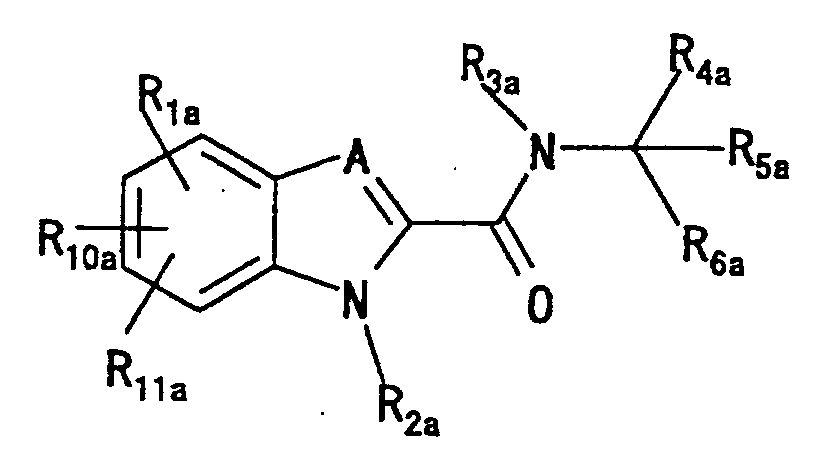
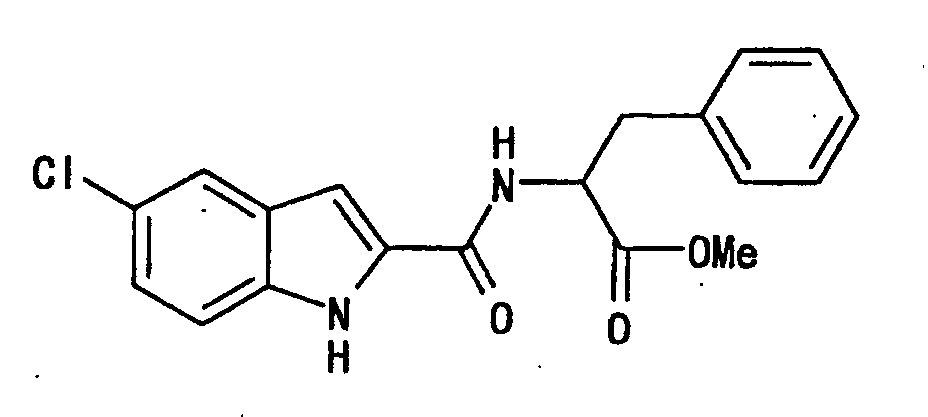


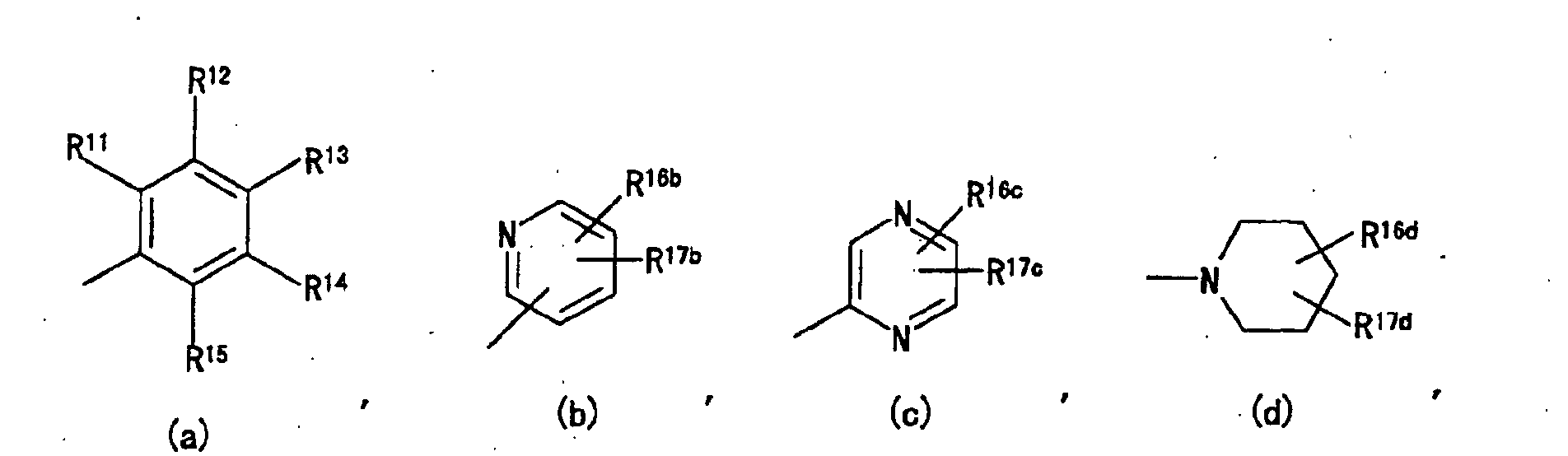

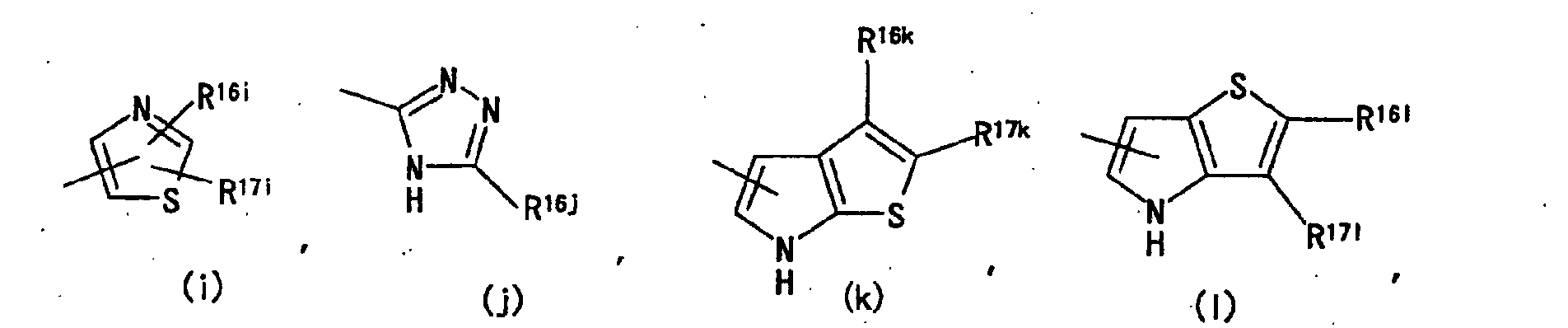
 wherein R11, R12, R13, R14 and R15 are the same or different and each is independently a hydrogen atom, a halogen atom, a C1-6 alkyl group, a C1-6 alkoxy group, a nitro group, a hydroxyl group, a cyano group, a haloalkyl group, an aralkyl group, an aryl group optionally having substituents, an aryloxy group, a tetrazolyl group, a triazolyl group, -(CH2)p-CO-R19 wherein p is 0 or an integer of 1 to 4 and R19 is an aryl group optionally having substituents, a hydroxyl group, a C1-6 alkoxy group or -N(R20)(R21) wherein R20 and R21 are the same or different and each is independently a hydrogen atom, a C1-6 alkyl group, an aralkyl group or a C3-13 alkoxycarbonylalkyl group, or R20 and R21 may form, together with the adjacent nitrogen atom,
 wherein q is an integer of 1 to 3 and R22 is a hydrogen atom, a hydroxyl group, a C1-6 alkoxy group, an amino group, a C2-12 dialkylamino group or a C2-7 alkoxycarbonylamino group, -O-(CH2)r-R23 wherein r is an integer of 1 to 4 and R23 is a hydroxyl group, an amino group, a C2-7 alkylcarbonyloxy group or -CO-R24 wherein R24 is a hydroxyl group, a C1-6 alkoxy group or -N(R25)(R26) wherein R25 and R26 are the same or different and each is a hydrogen atom, a C1-6 alkyl group or an aralkyl group, or R25 and R26 may form, together with the adj acent' nitrogen atom,
 or
or wherein q' and R22' are as defined for q and R22, respectively, -O-CO-R27 wherein R27 is a C1-6 alkylamino group or a C2-12 dialkylamino group, or -N(R28)(R29) wherein R28 and R29 are the same or different and each is a hydrogen atom, a C1-6 alkyl group, an aryl group optionally having substituents, an acyl group, -(CH2)p'-COO-R30 wherein p' is as defined for p and R30 is a hydrogen atom, an aryl group optionally having substituents or a C1-6 alkyl group wherein the C1-6 alkyl group is optionally substituted by a hydroxyl group, a trifluoromethyl group, an aryl group optionally having substituents, a morpholino group or a carboxyl group, -CON(R31)(R32) wherein R31 and R32 are the same or different and each is a hydrogen atom, a C1-6 alkyl group or an aryl group optionally having substituents, -CO-R33 wherein R33 is a C1-6 alkyl group or an aryl group optionally having substituents or -CO-(CH2)r'-R34 wherein r' is as defined for r and R39 is a C1-6 alkylamino group, a C2-12 dialkylamino group, a C1-6 alkoxy group or a C2-7 alkylcarbonyloxy group, R16b-R16n and R17b-R17n are the same or different and each is a hydrogen atom, a halogen atom, a C1-6 alkyl group, an amino group, a hydroxyl group, a C1-6 alkoxy group or -CON(R31')(R32') wherein R31' and R32' are as defined for R31 and R32,
 wherein R36 and R37 are the same or different and each is a hydrogen atom, a halogen atom, a C1-6 alkyl group, a C1-6 alkoxy group, an amino group, a nitro group, a hydroxyl group, a C2-7 alkoxycarbonyl group, a carboxyl group, a C2-7 haloalkylcarbonylamino group or -O-CO-R41 wherein R41 is a C1-6 alkyl group, a C1-6 alkylamino group or a C2-12 dialkylamino group;

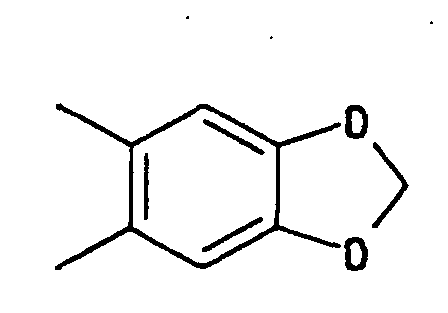
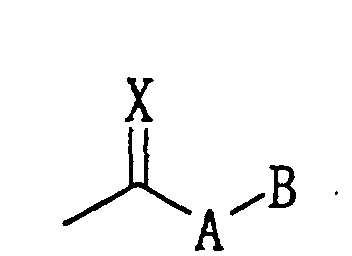
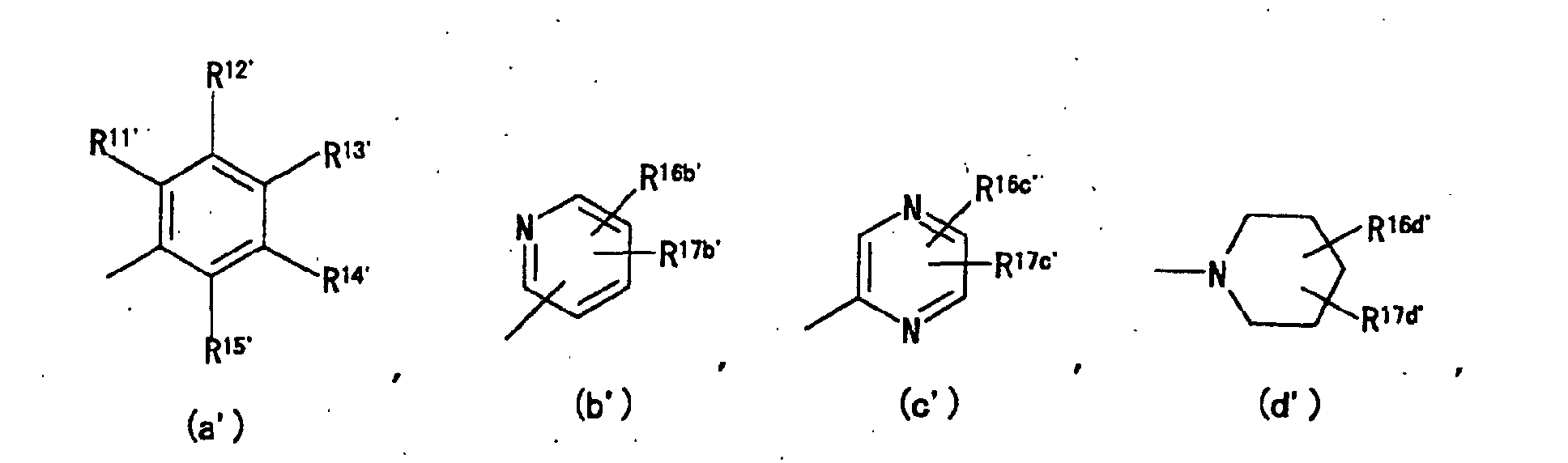

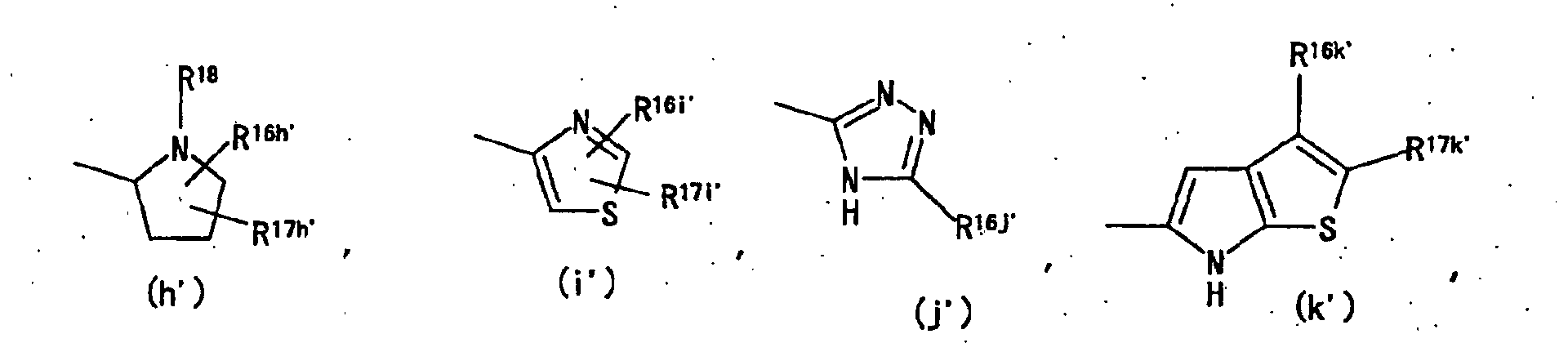
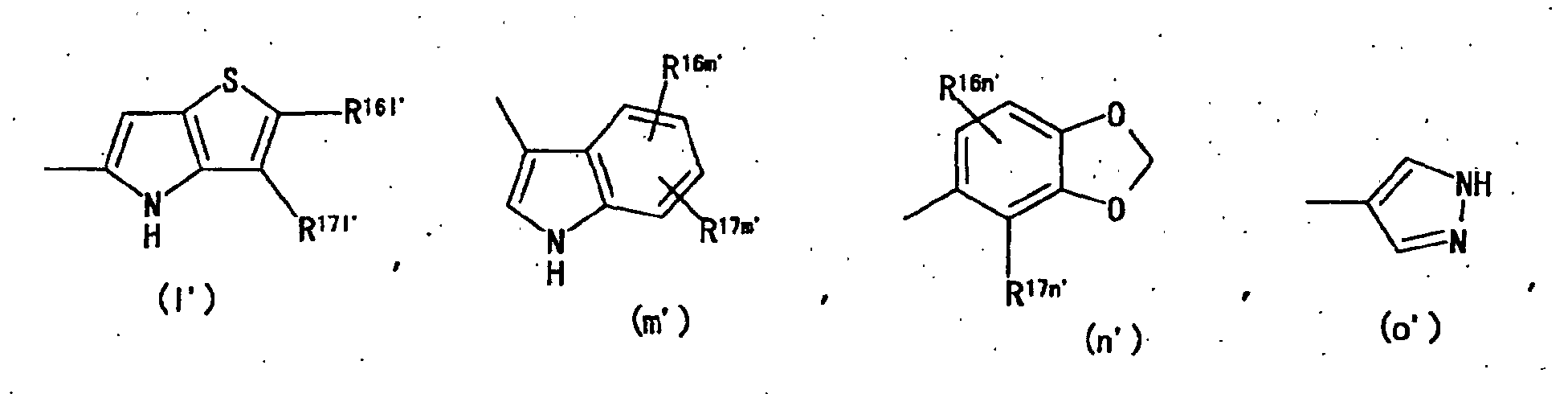 wherein R11', R12', R13', R14' and R15' are the same or different and each is a hydrogen atom, a halogen atom, a C1-6 alkyl group, a C1-6 alkoxy group, a nitro group, a hydroxyl group, a cyano group, a haloalkyl group, an aralkyl group, a phenyl group optionally having substituents, an aryloxy group, a tetrazolyl group, a triazolyl group, -(CH2)p-CO-R19' wherein p is 0 or an integer of 1 to 4 and R19' is a phenyl group optionally having substituents, a hydroxyl group, a C1-6 alkoxy group or -N(R20)(R21)- wherein R20 and R21 are as defined in the above-mentioned 1, -O-(CH2)r-R23 wherein r and R23 are as defined in the above-mentioned 1, -O-CO-R27 wherein R27 is as defined in the above-mentioned 1, or -N(R28')(R29') wherein R28' and R29' are the same or different and each is a hydrogen atom, a C1-6 alkyl group, a phenyl group optionally having substituents, an acyl group, -(CH2)p'-COO-R30' wherein p' is as defined in the above-mentioned 1 and R30' is a hydrogen atom, a phenyl group optionally having substituents or a C1-6 alkyl group wherein the C1-6 alkyl group is optionally substituted by a hydroxyl group, a trifluoromethyl group, a phenyl group optionally having substituents, a morpholino group or a carboxyl group, -CON(R31'')(R32'') wherein R31'' and R32'' are the same or different and each is a hydrogen atom, a C1-6 alkyl group or a phenyl group optionally having substituents, -CO-R33' wherein R33' is a C1-6 alkyl group or a phenyl group optionally having substituents or -CO-(CH2)r'-R34 wherein r' and R34 are as defined in the above-mentioned 1,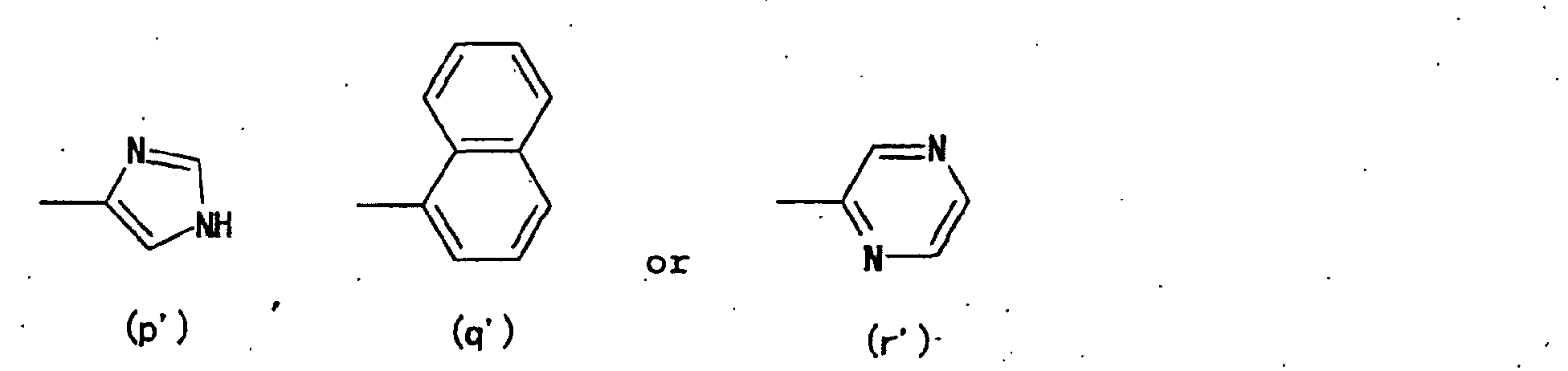


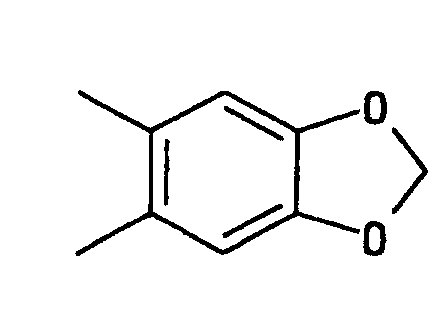
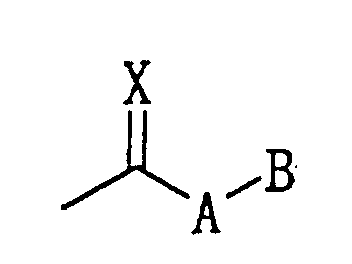
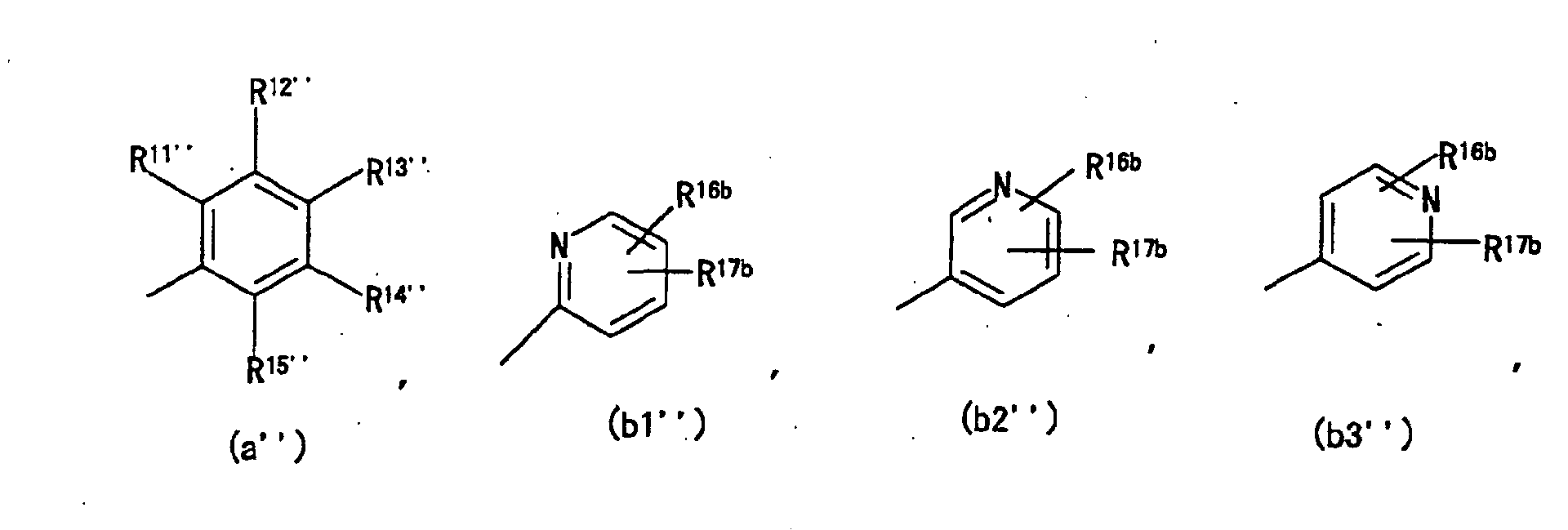


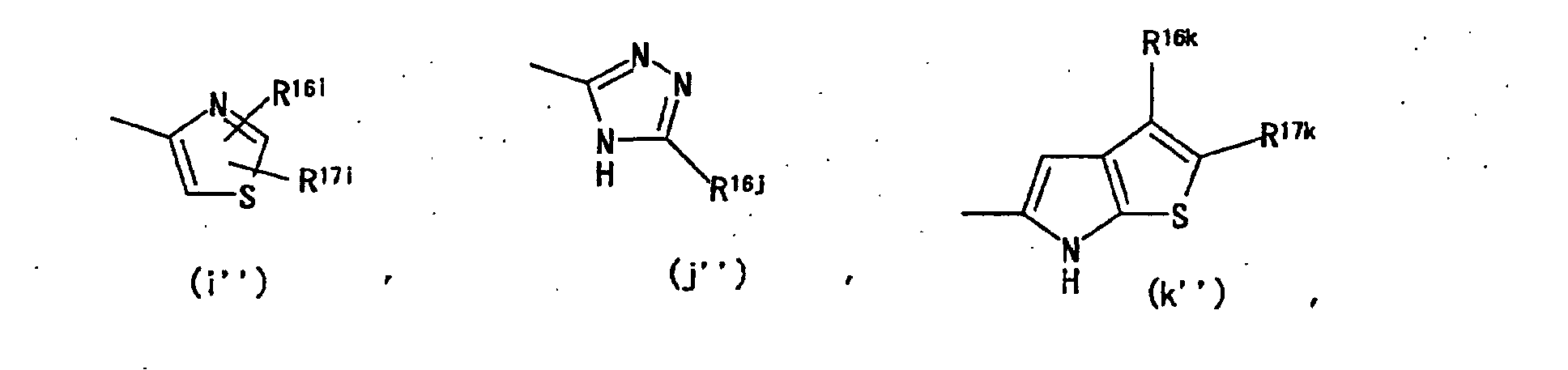 or
or wherein R11'', R12'', R13'', R14'' and R15'' are the same or different and each is a hydrogen atom, a halogen atom, a C1-6 alkyl group, a C1-6 alkoxy group, a nitro group, a hydroxyl group, a cyano group, a haloalkyl group; an aralkyl group, an aryl group optionally having substituents, an aryloxy group, a tetrazolyl group, a triazolyl group, -(CH2)p-CO-R19 wherein p and R19 are as defined in the above-mentioned 1, -O-(CH2)r-R23 wherein r and R23 are as defined in the above-mentioned 1, -O-CO-R27 wherein R27 is as defined in the above-mentioned 1 or -N(R28'')(R29'') wherein R28'' and R29'' are the same or different and each is a hydrogen atom, a C1-6 alkyl group, an aryl group optionally having substituents, -(CH2)p'-COO-R30'' wherein p' is as defined for p and R30'' is a hydrogen atom or a C1-6 alkyl group wherein the C1-6 alkyl group is optionally substituted by a hydroxyl group, a trifluoromethyl group or a carboxyl group, -CON(R31)(R32) wherein R31 and R32 are as defined in the above-mentioned 1, -CO-R33 wherein R33 is as defined in the above-mentioned 1 or -CO-(CH2)r'-R34 wherein r' and R34 are as defined in the above-mentioned 1,


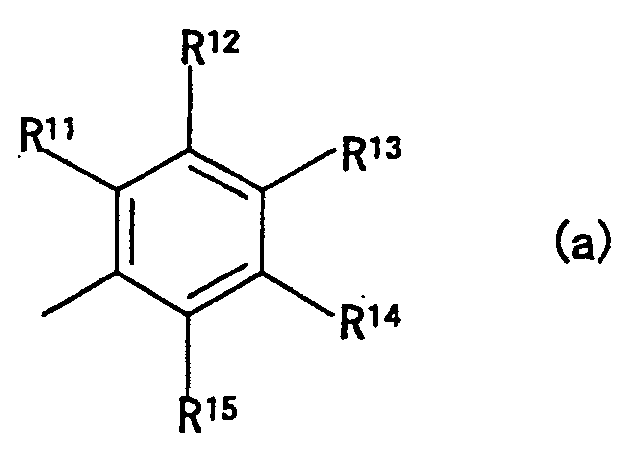
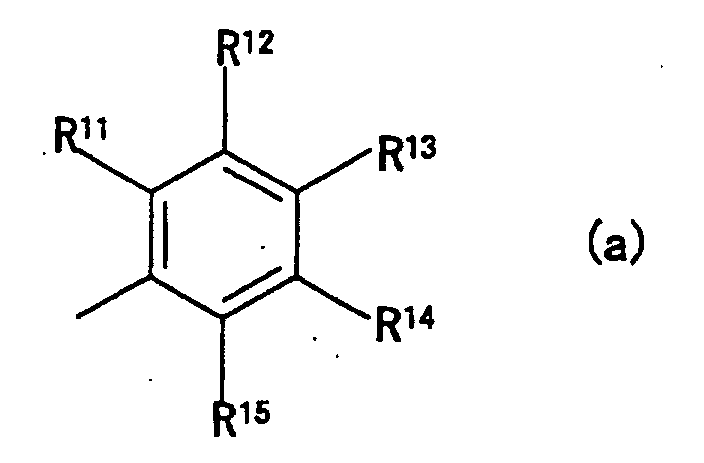

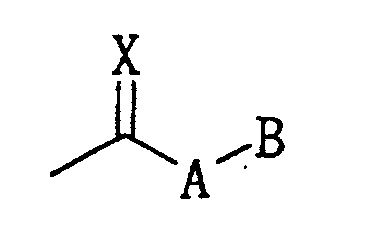
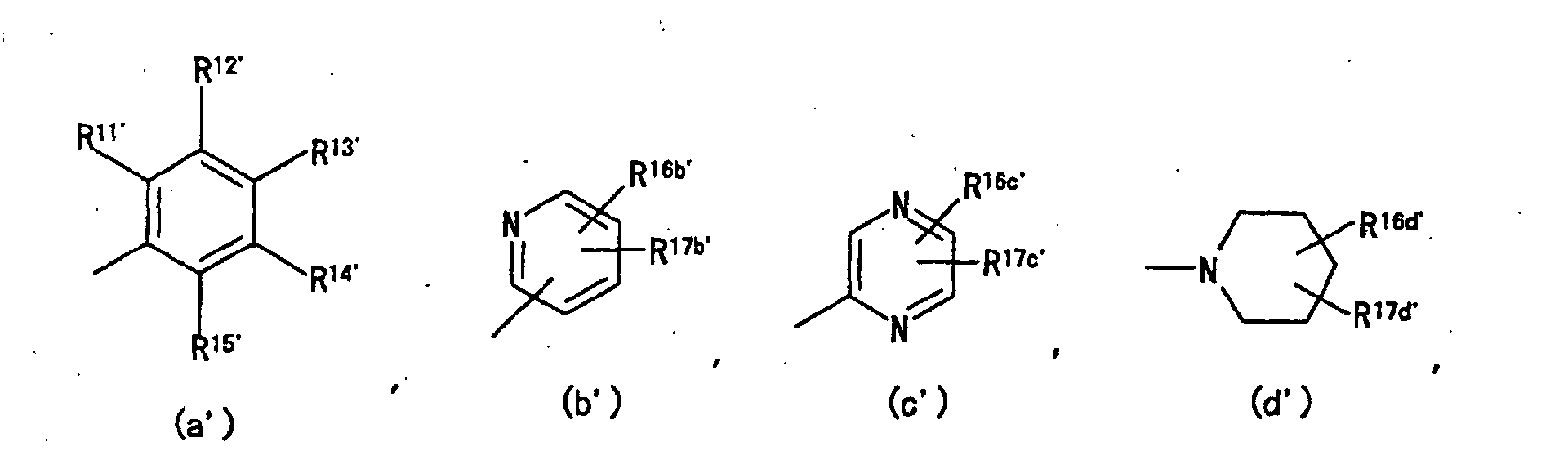


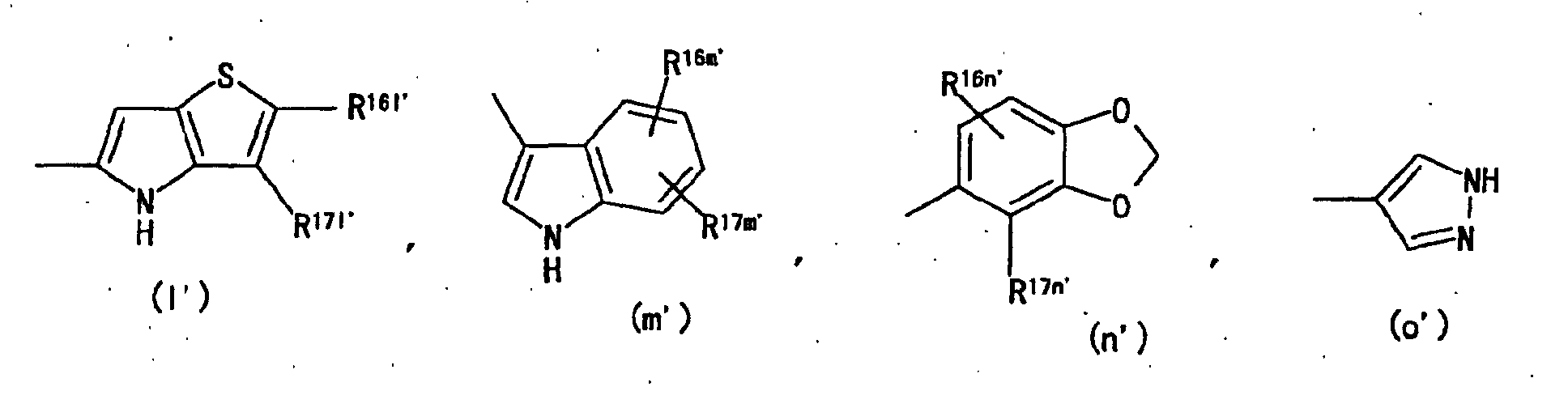 wherein R11', R12', R13', R14' and R15' are the same or different and each is a hydrogen atom, a halogen atom, a C1-6 alkyl group, a C1-6 alkoxy group, a nitro group, a hydroxyl group, a cyano group, a haloalkyl group, an aralkyl group, a phenyl group optionally having substituents, an aryloxy group, a tetrazolyl group, a triazolyl group, -(CH2)p-CO-R19' wherein p is 0 or an integer of 1 to 4 and R19' is a phenyl group optionally having substituents, a hydroxyl group, a C1-6 alkoxy group or -N(R20)(R21)- wherein R20 and R21 are as defined in the compound (1) of the present invention, -O-(CH2)r-R23 wherein r and R23 are as defined in the compound (1) of the present invention, -O-CO-R27 wherein R27 is as defined in the compound (1) of the present invention, or -N(R28')(R29') wherein R28' and R29' are the same or different and each is a hydrogen atom, a C1-6 alkyl group, a phenyl group optionally having substituents, an acyl group, -(CH2)p'-COO-R30' wherein p' is as defined in the compound (1) of the present invention and R30' is a hydrogen atom, a phenyl group optionally having substituents or a C1-6 alkyl group wherein the C1-6 alkyl group is optionally substituted by a hydroxyl group, a trifluoromethyl group, a phenyl group optionally having substituents, a morpholino group or a carboxyl group, -CON(R31'')(R32'') wherein R31'' and R32'' are the same or different and each is a hydrogen atom, a C1-6 alkyl group or a phenyl group optionally having substituents, -CO-R33' wherein R33' is a C1-6 alkyl group or a phenyl group optionally having substituents or -CO-(CH2)r'-R34 wherein r' and R34 are as defined in the compound (1) of the present invention, R16b'-R16n' and R17b'-R17n' are the same or different and each is a hydrogen atom, a halogen atom, a C1-6 alkyl group, an amino group, a hydroxyl group, a C1-6 alkoxy group or -CON(R31''')(R32''') wherein R31''' and R32''' are as defined for R31'' and R32'', and


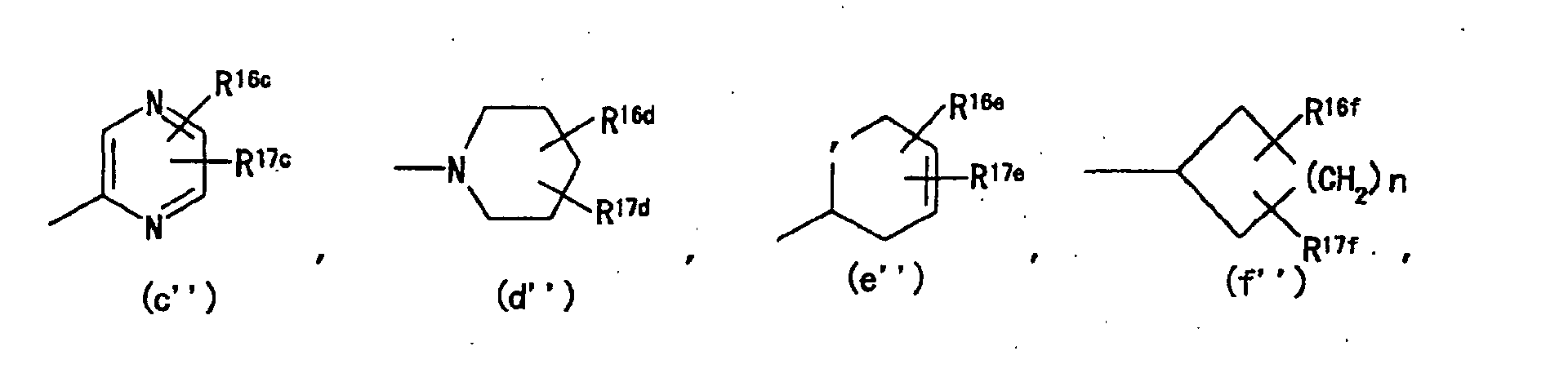

 or
or wherein R11'', R12'', R13'', R14'' and R15'' are the same or different and each is a hydrogen atom, a halogen atom, a C1-6 alkyl group, a C1-6 alkoxy group, a nitro group, a hydroxyl group, a cyano group, a haloalkyl group, an aralkyl group, an aryl group optionally having substituents, an aryloxy group, a tetrazolyl group, a triazolyl group, -(CH2)p-CO-R19 wherein p and R19 are as defined in the compound (1) of the present invention, -O-(CH2)r-R23 wherein r and R23 are as defined in the compound (1) of the present invention, -O-CO-R27 wherein R27 is as defined in the compound (1) of the present invention or -N(R28'') (R29'') wherein R28'' and R29'' are the same or different and each is a hydrogen atom, a C1-6 alkyl group, an aryl group optionally having substituents, -(CH2)p'-COO-R30'' wherein p' is as defined for p and R30'' is a hydrogen atom or a C1-6 alkyl group wherein the C1-6 alkyl group is optionally substituted by a hydroxyl group, a trifluoromethyl group or a carboxyl group, -CON(R31)(R32) wherein R31 and R32 are as defined in the compound (1) of the present invention, -CO-R33 wherein R33 is as defined in the compound (1) of the present invention or -CO-(CH2)r'-R34 wherein r' and R34 are as defined in the compound (1) of the present invention,
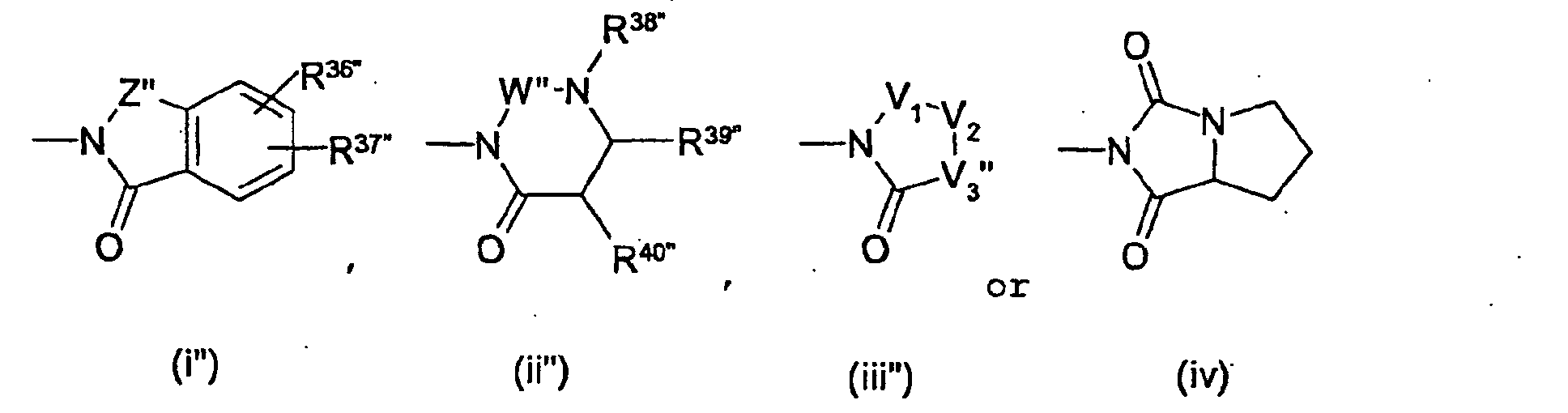


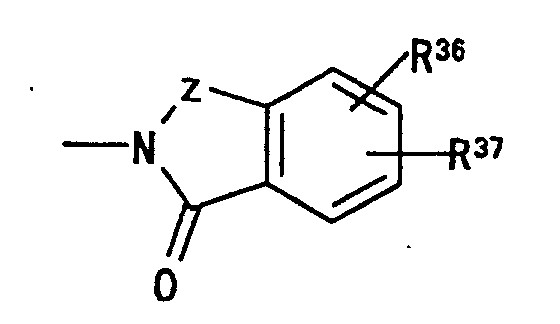
 wherein
 is a group selected from the groups represented by the formulas (a)-(s) is exemplarily shown in the following.
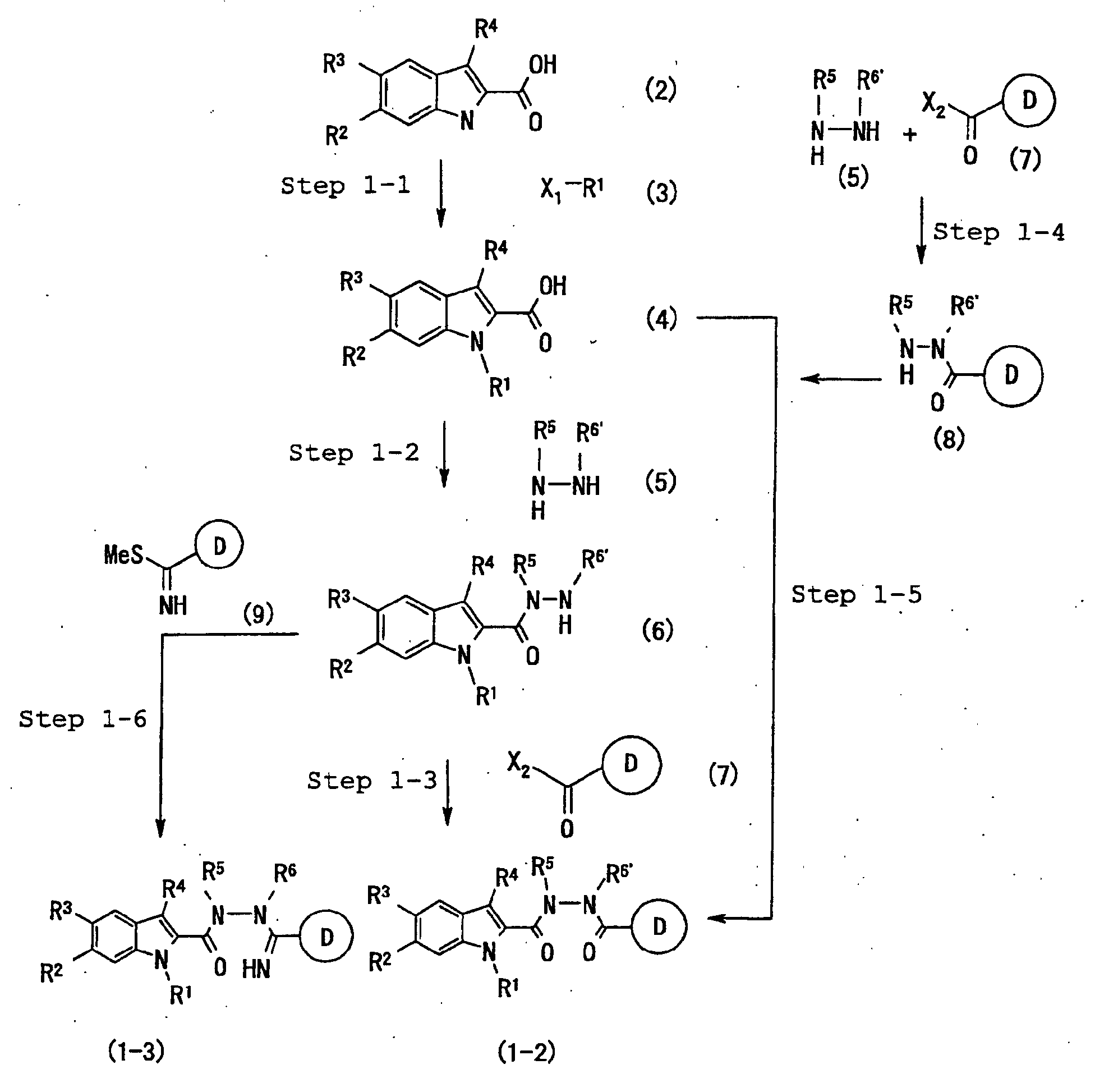 (or also referred to as "ring D") is a group selected from the groups represented by the formulas (a)-(s).


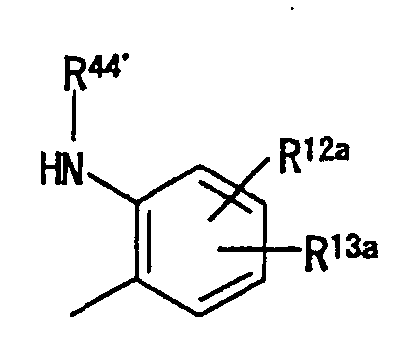
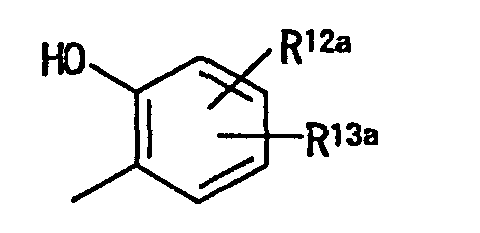
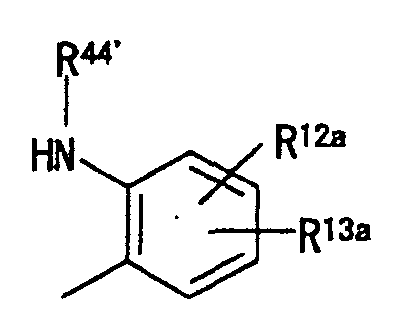


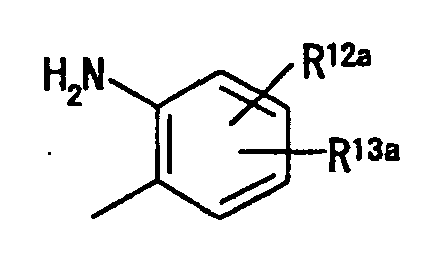
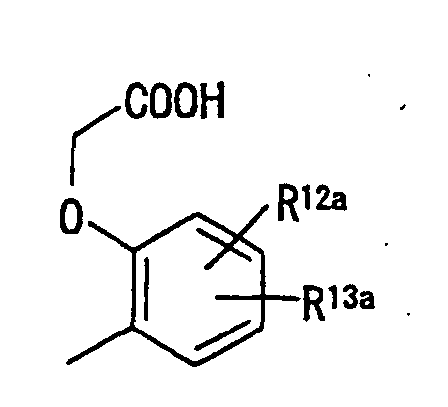


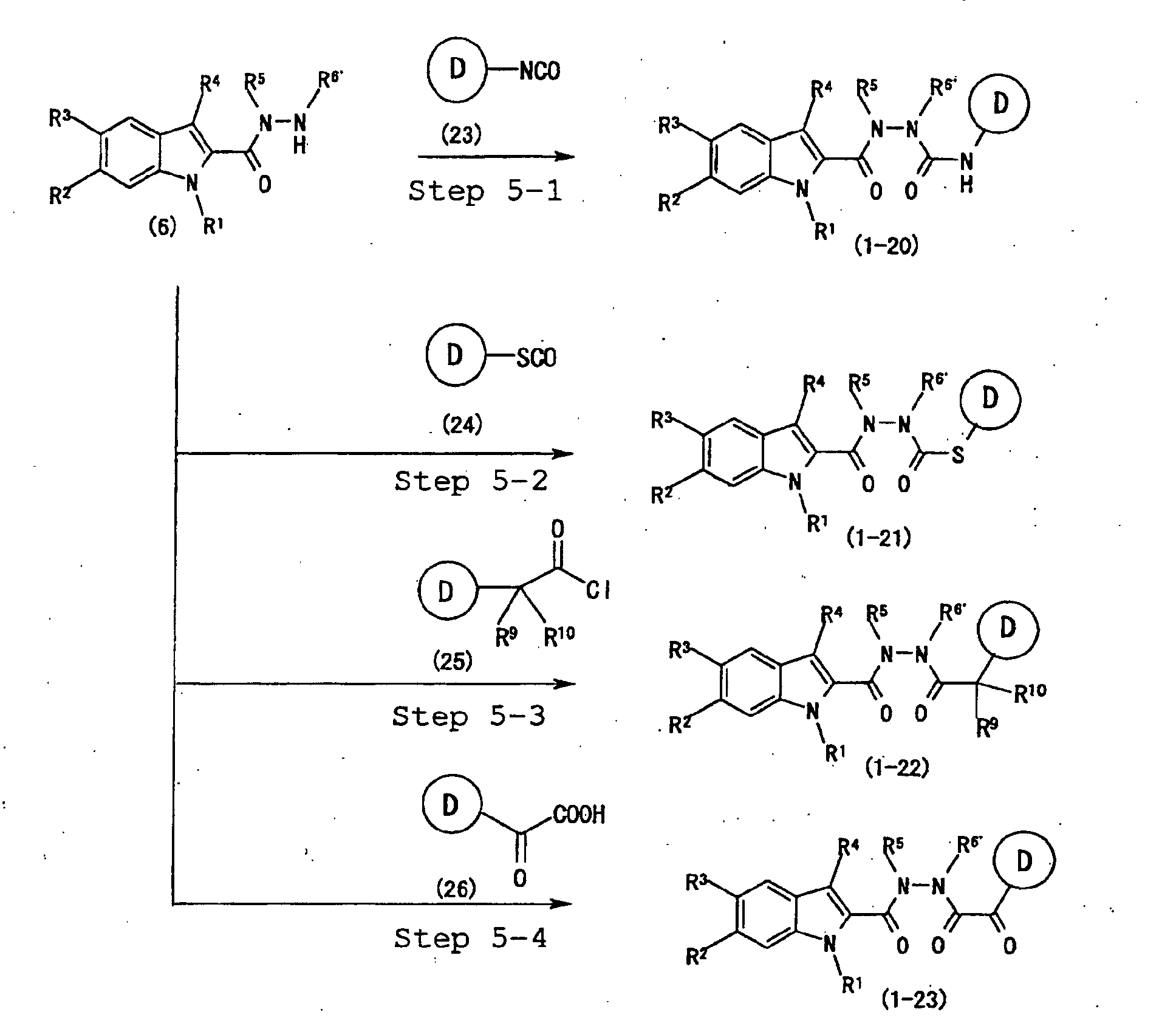
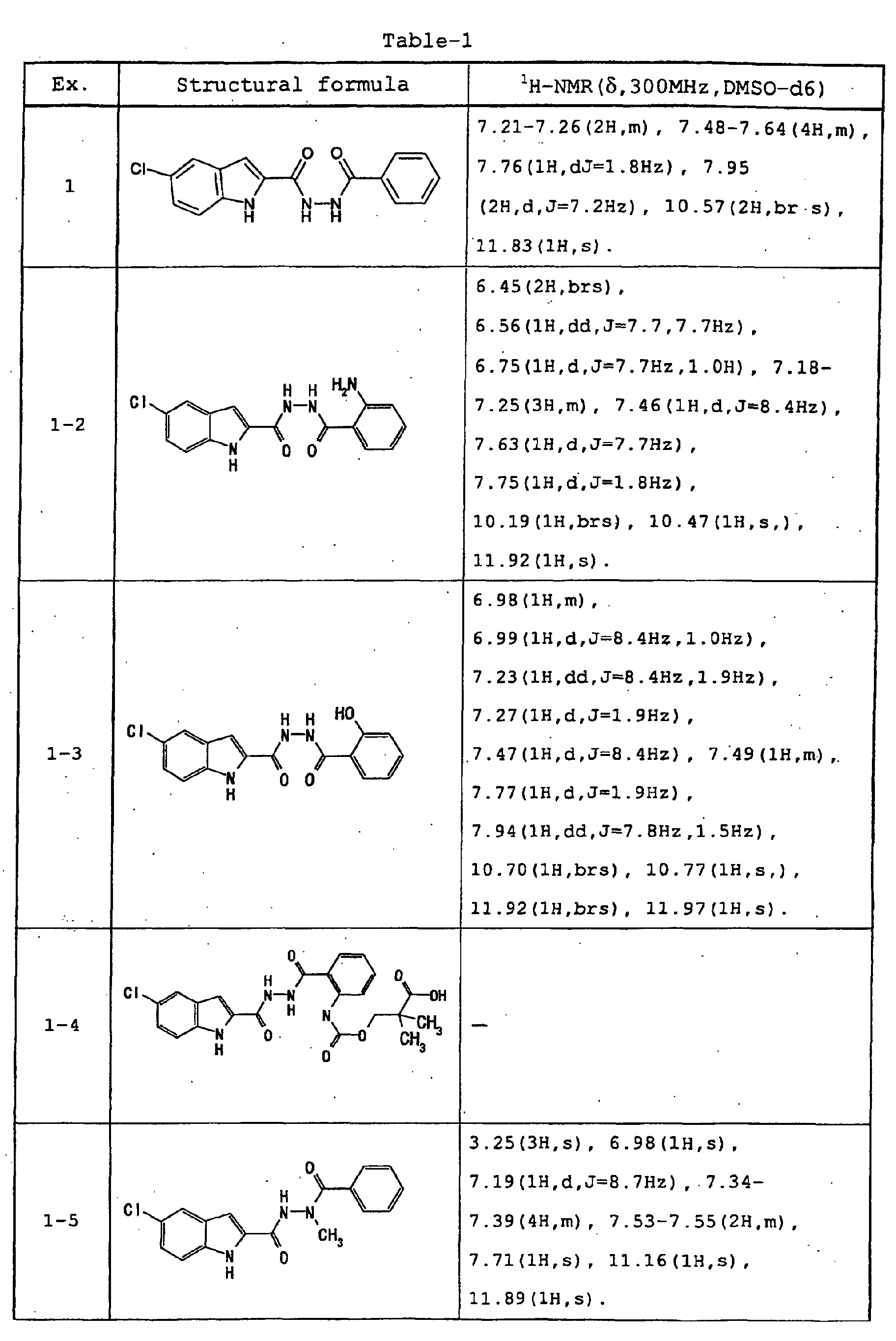

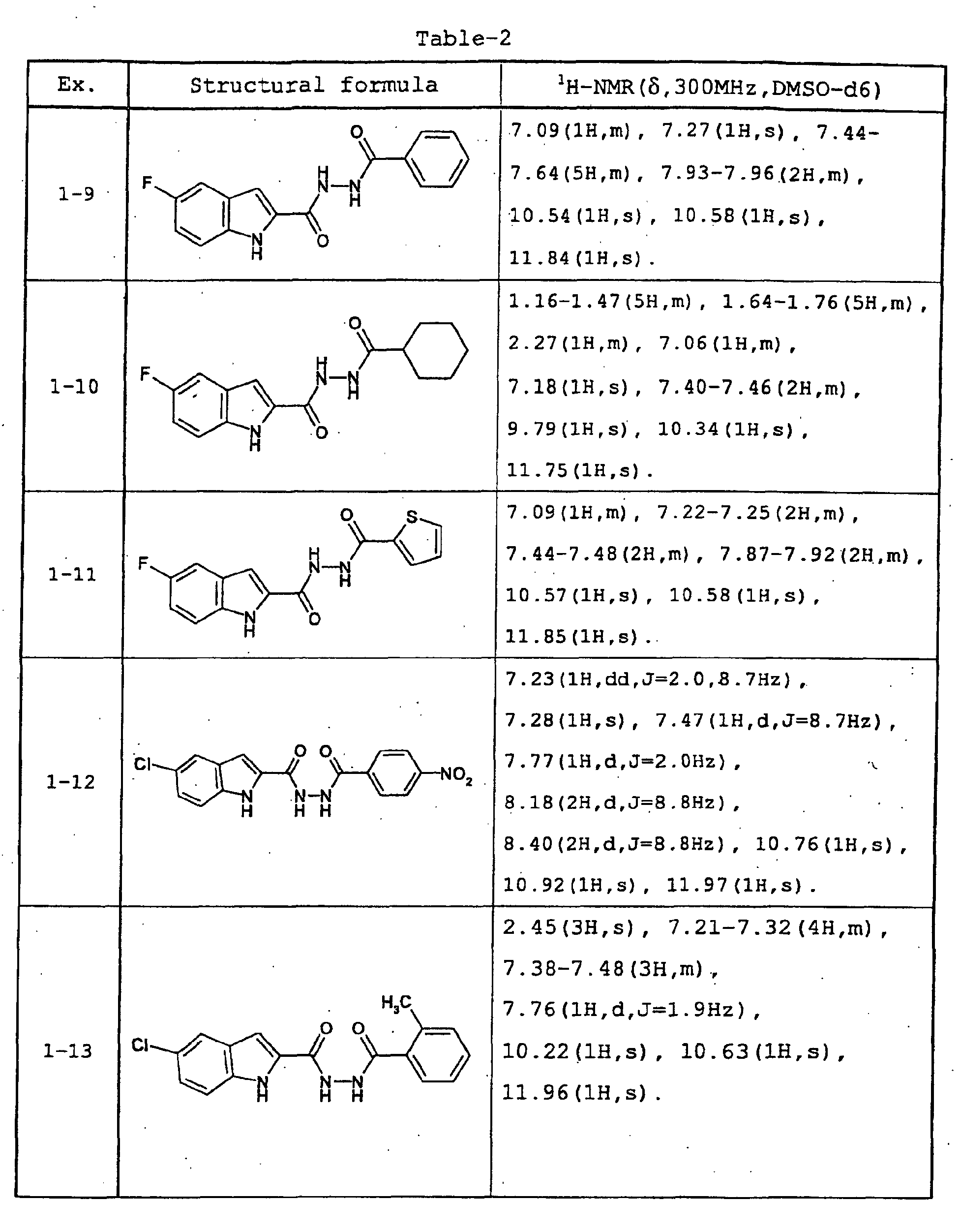


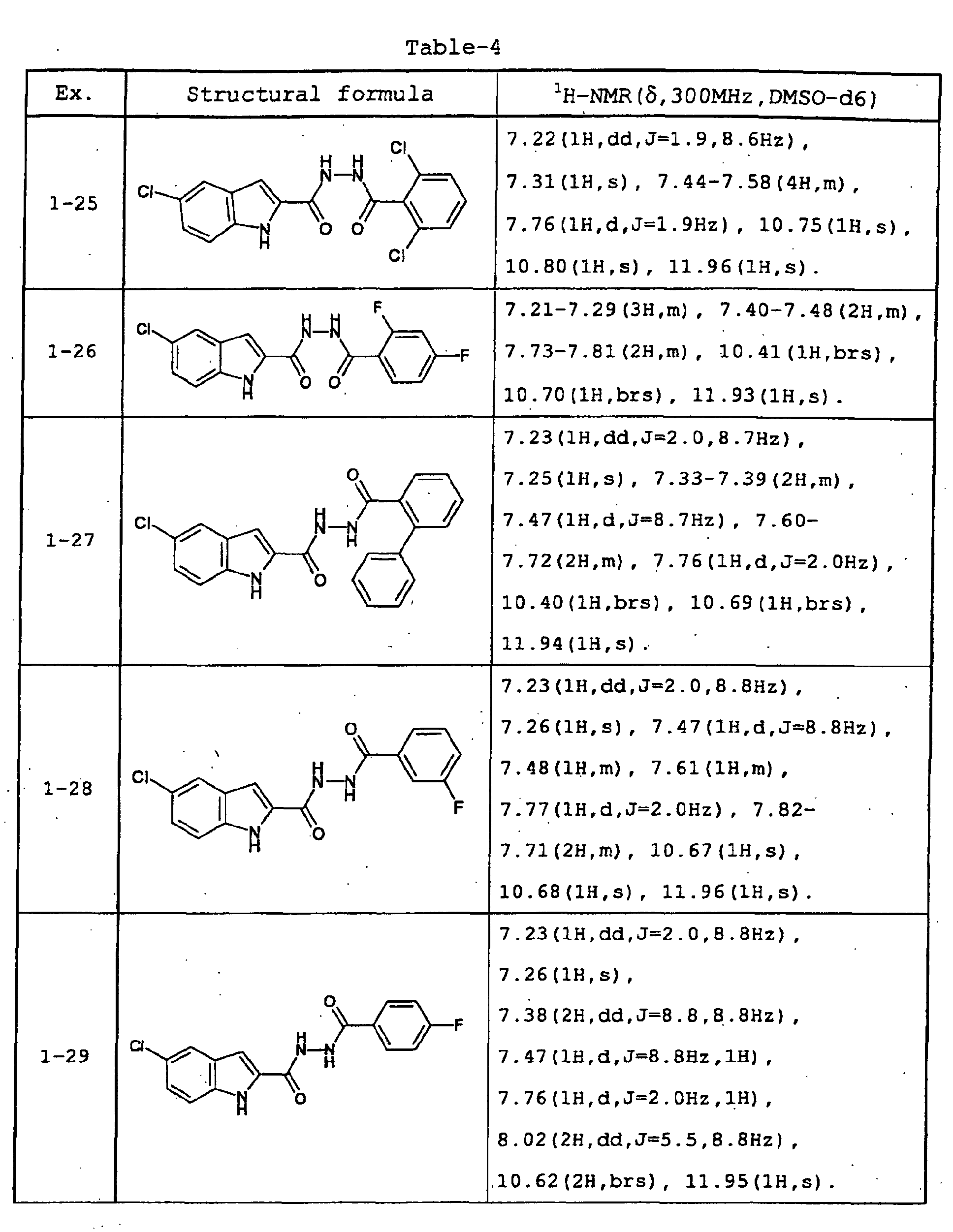


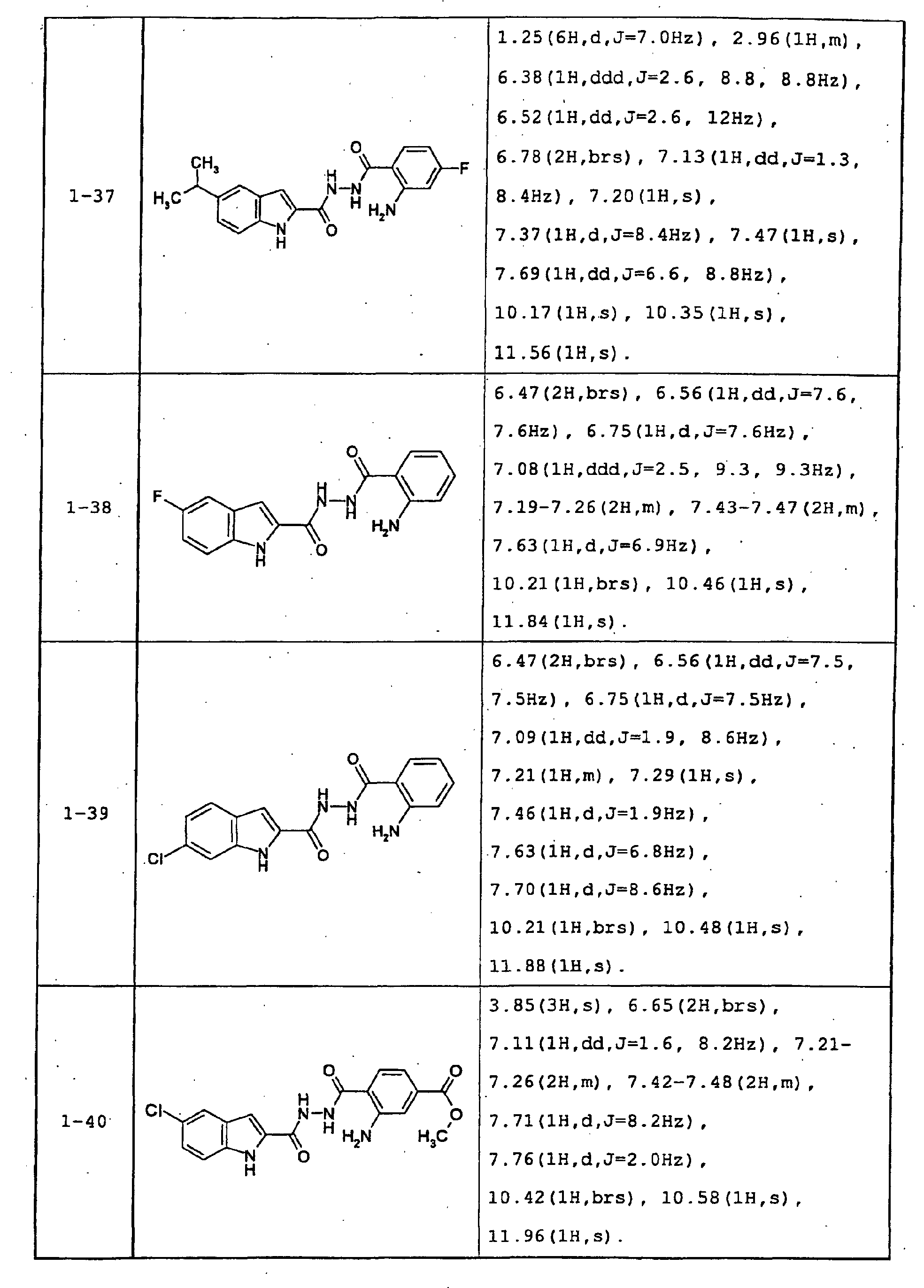
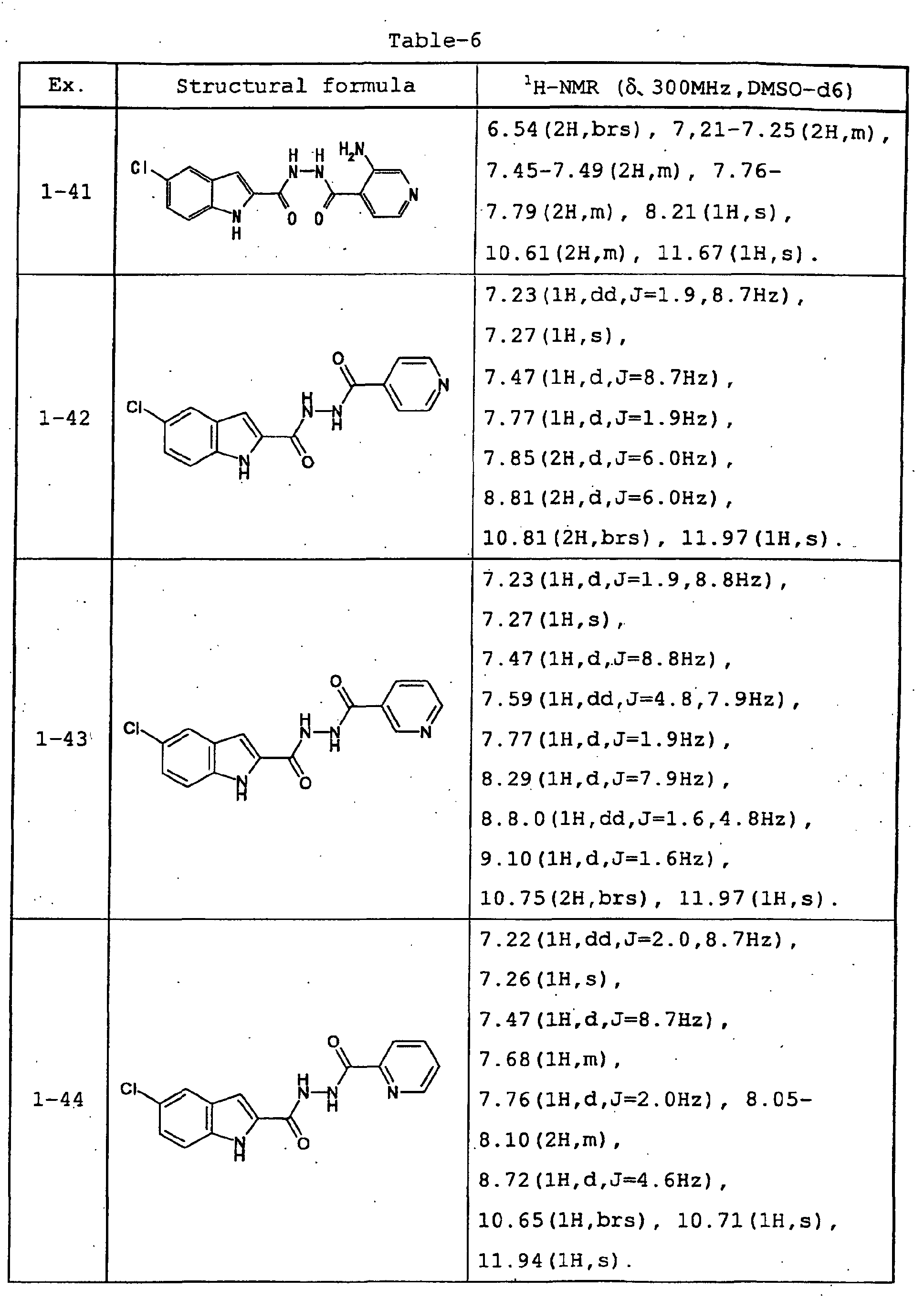

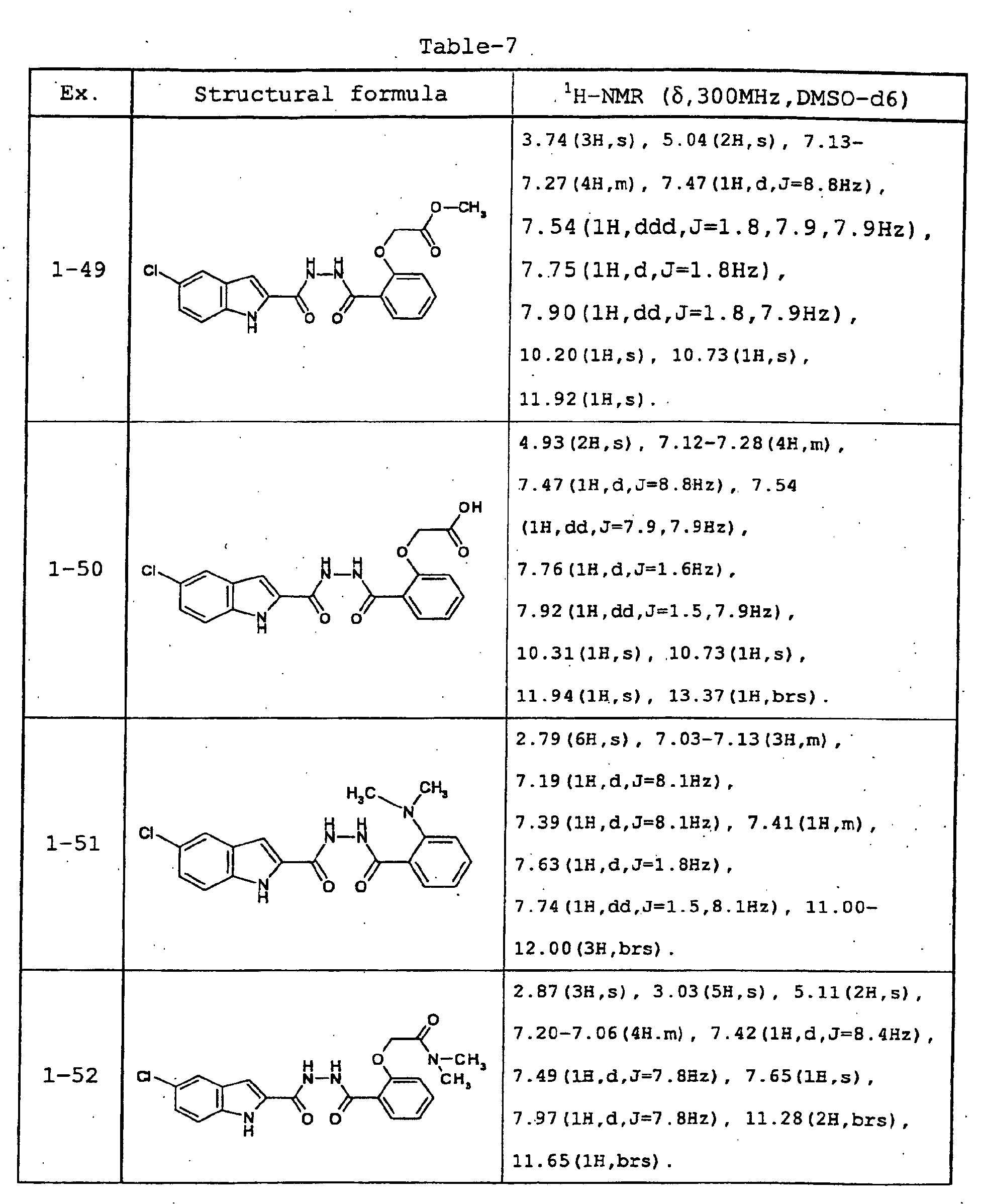
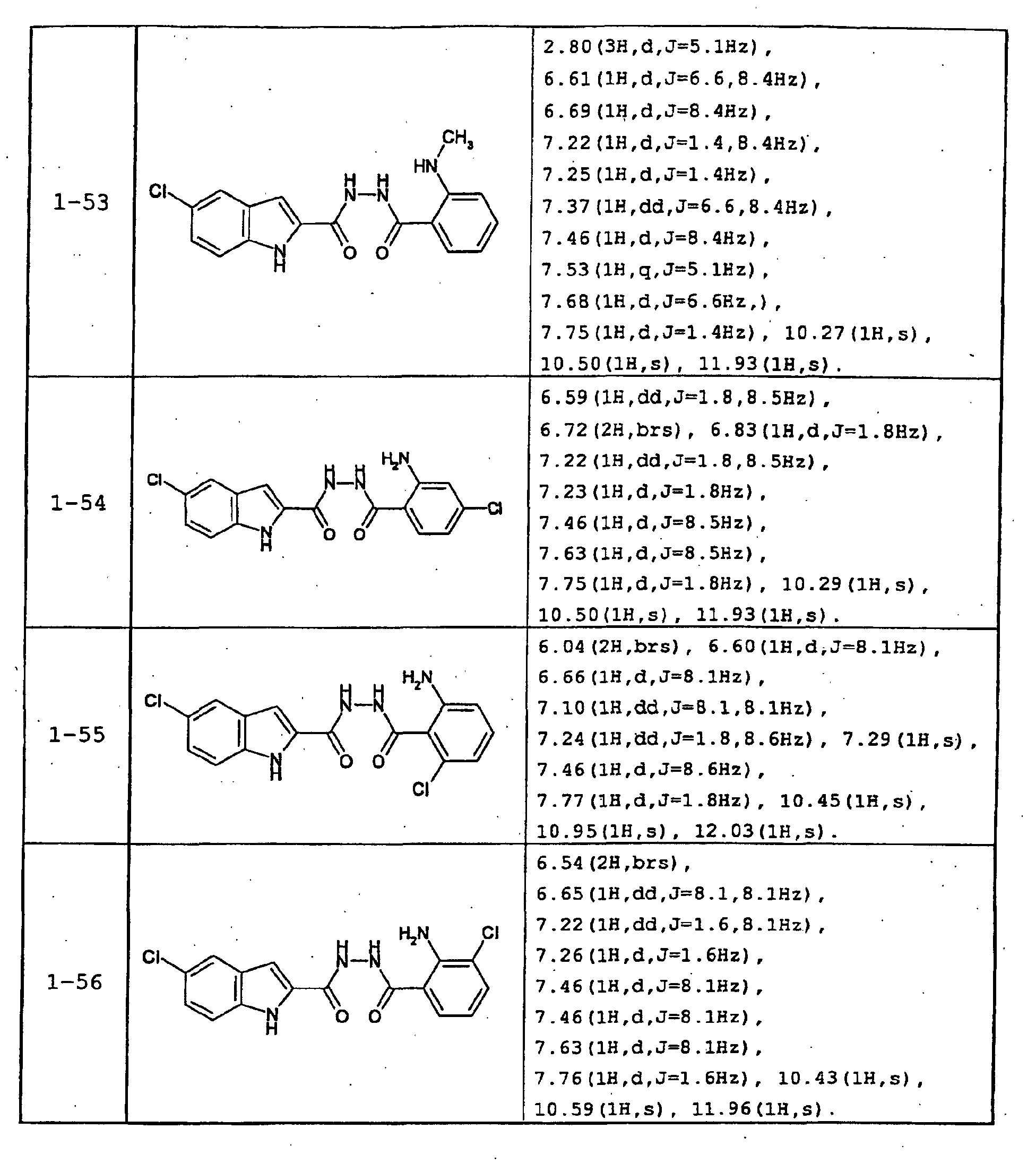
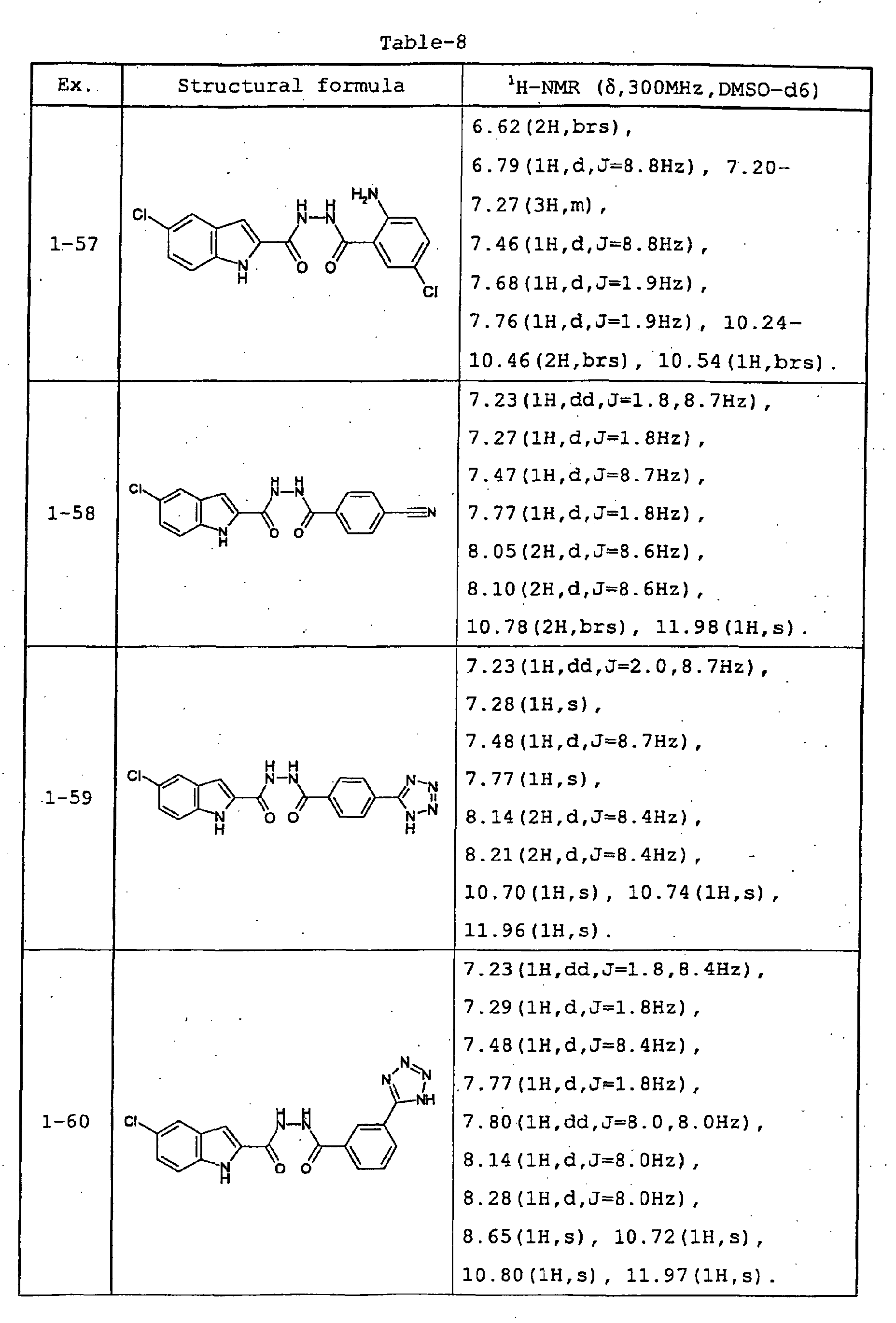

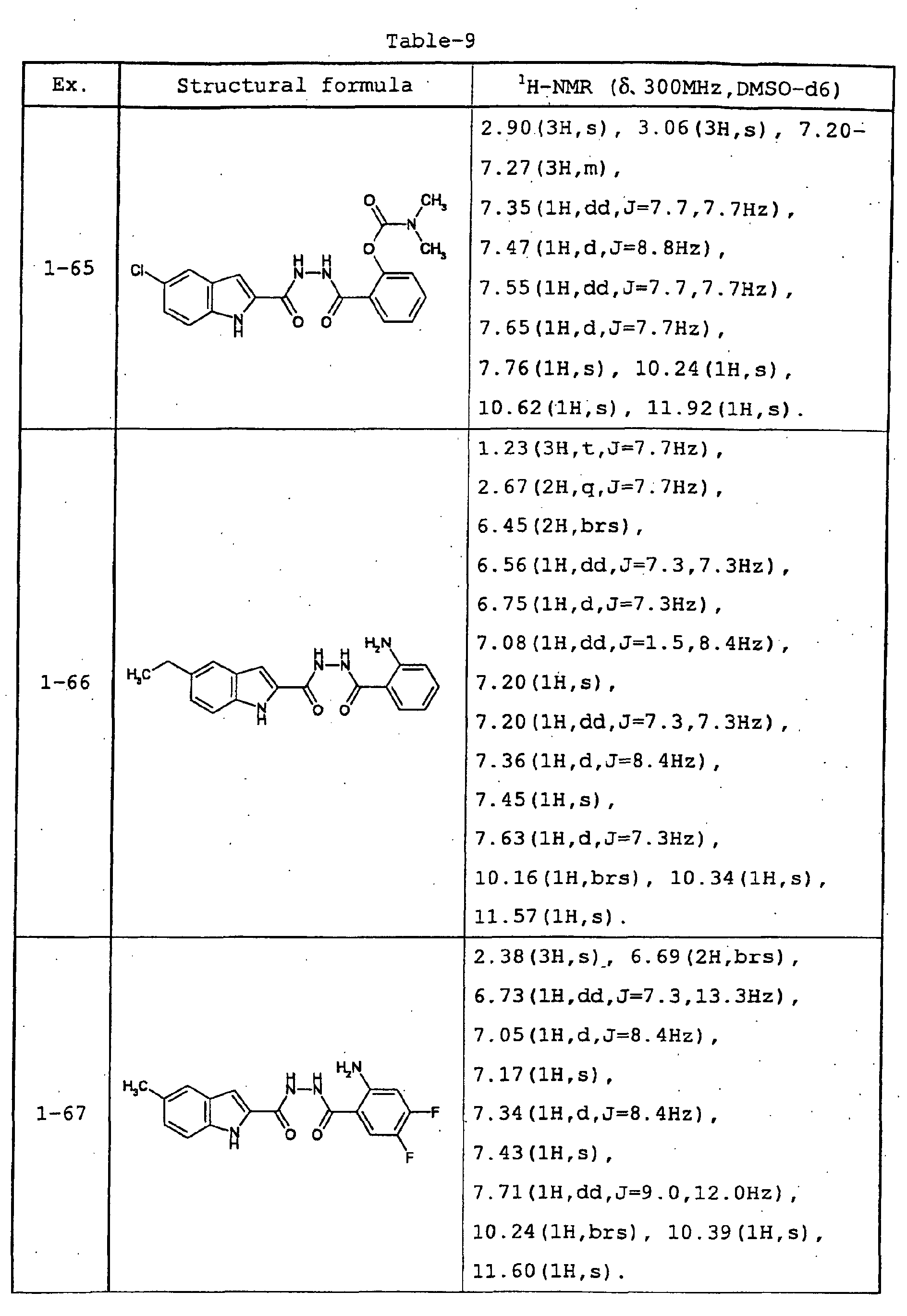
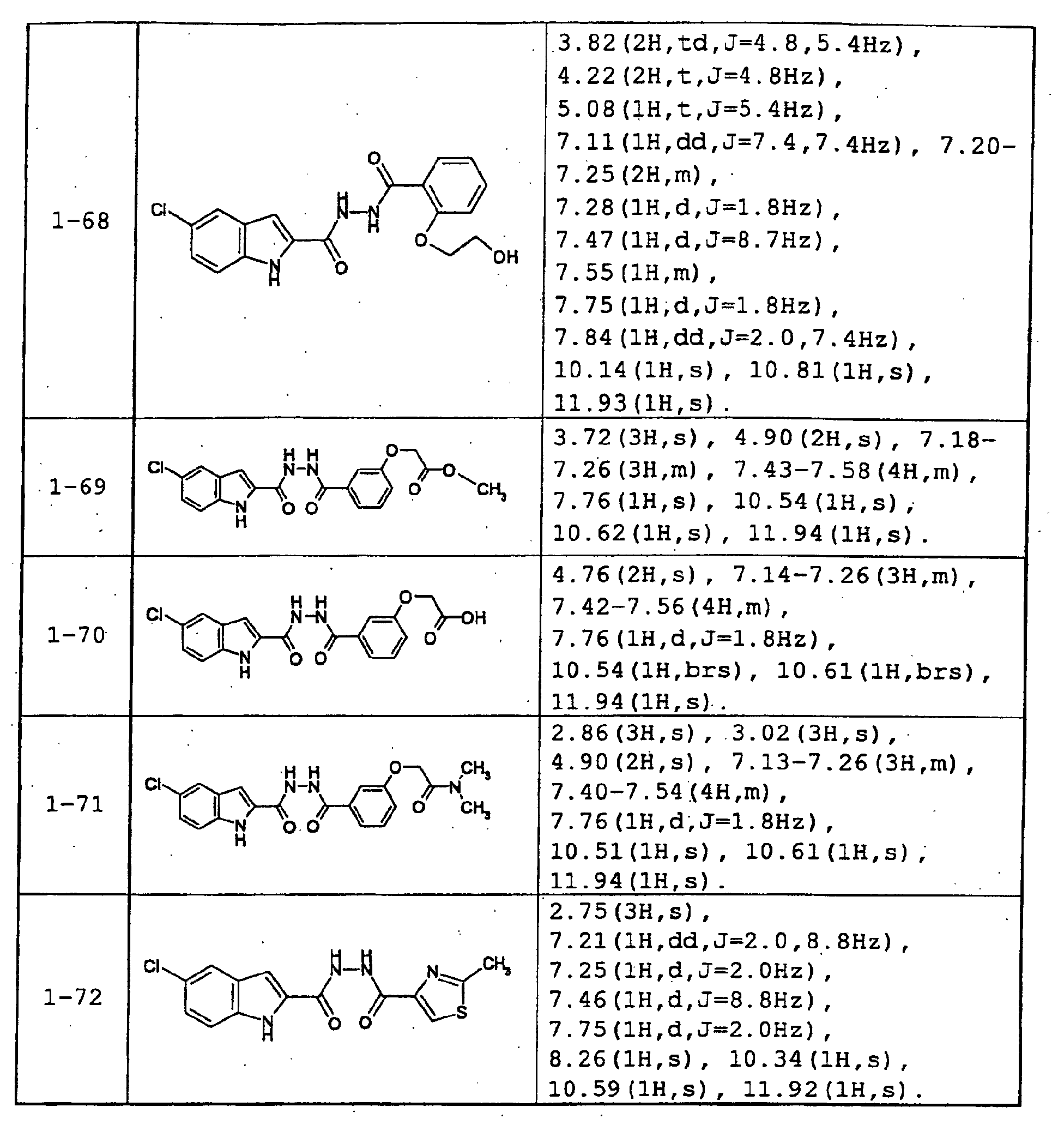
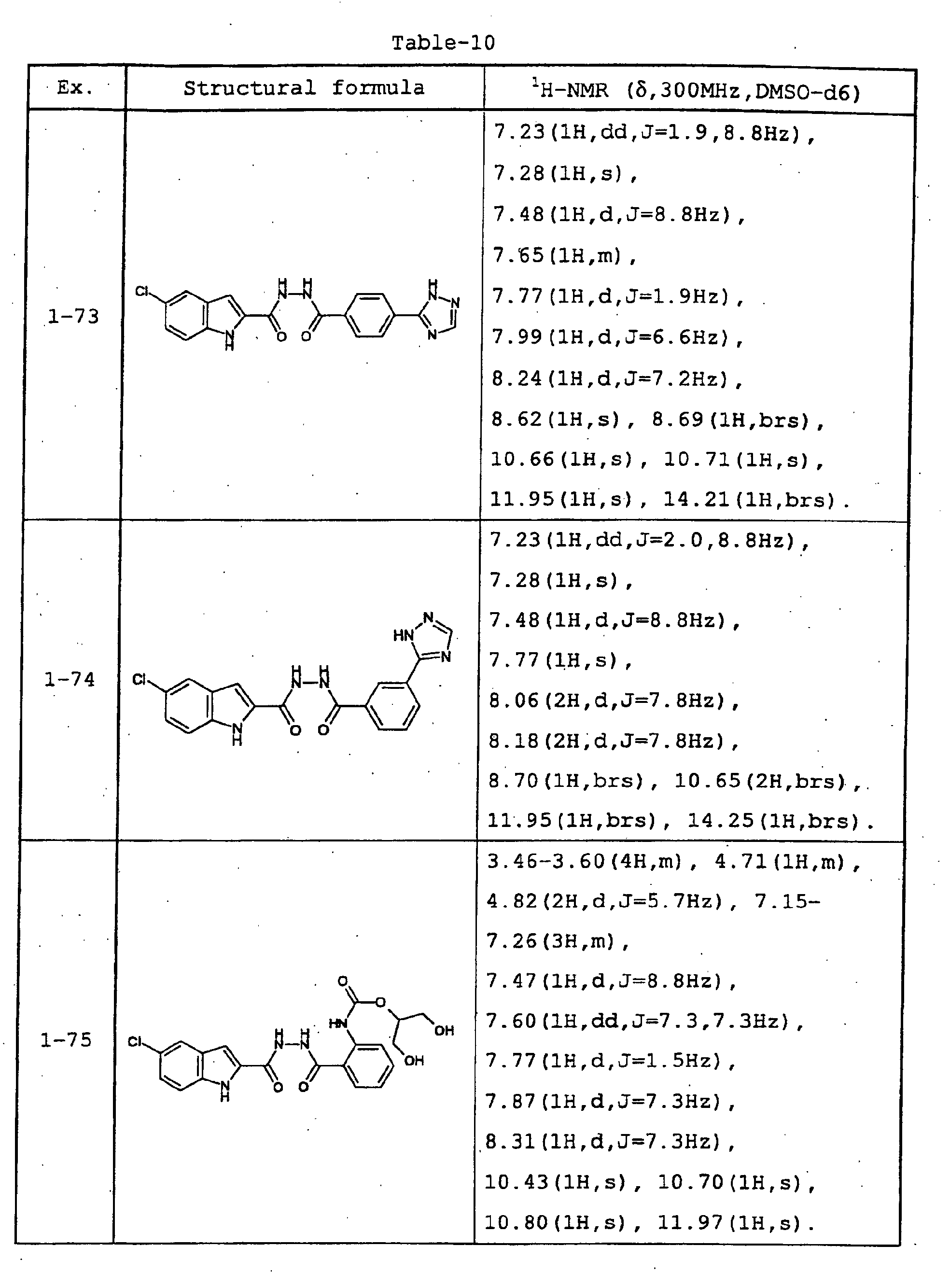
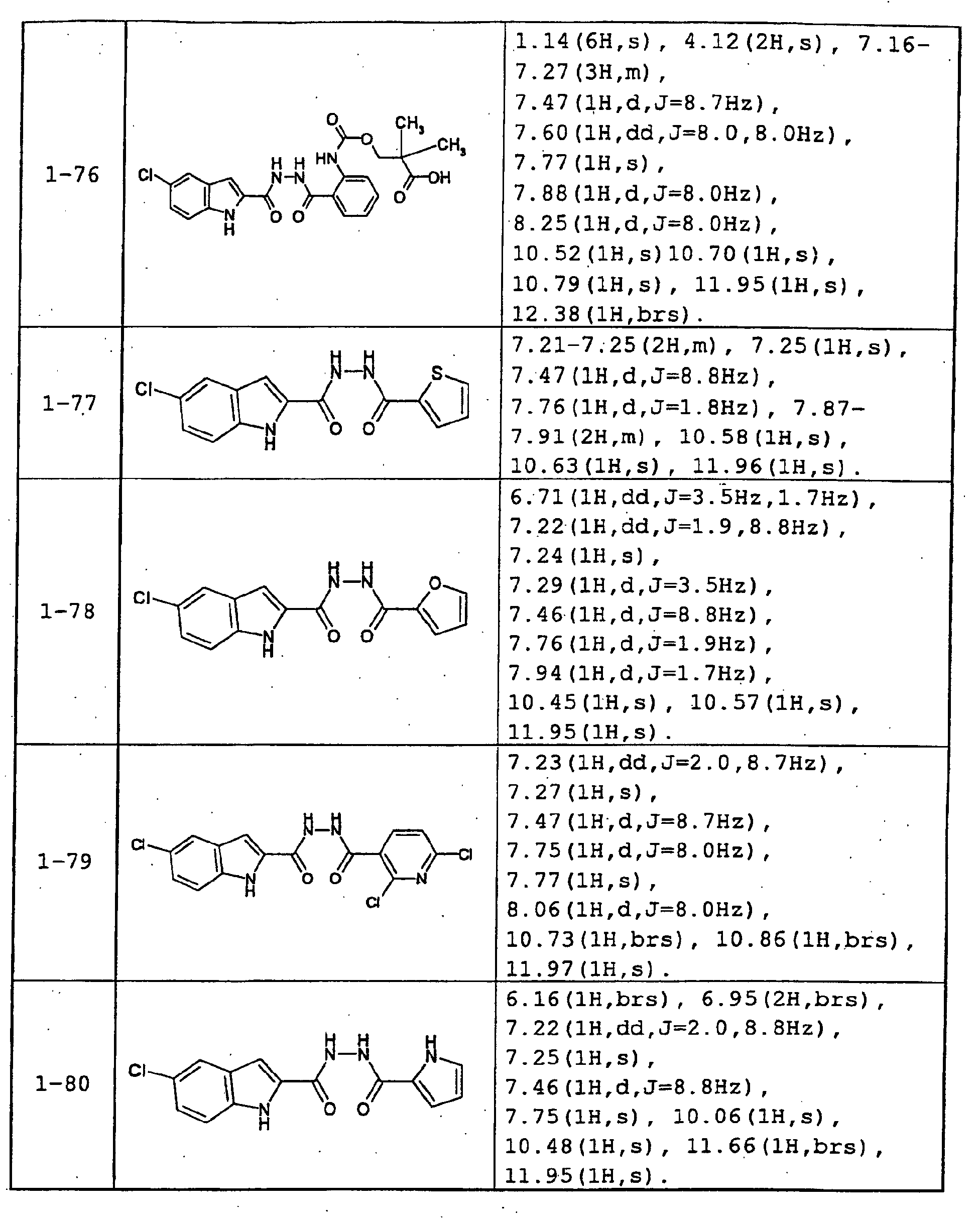
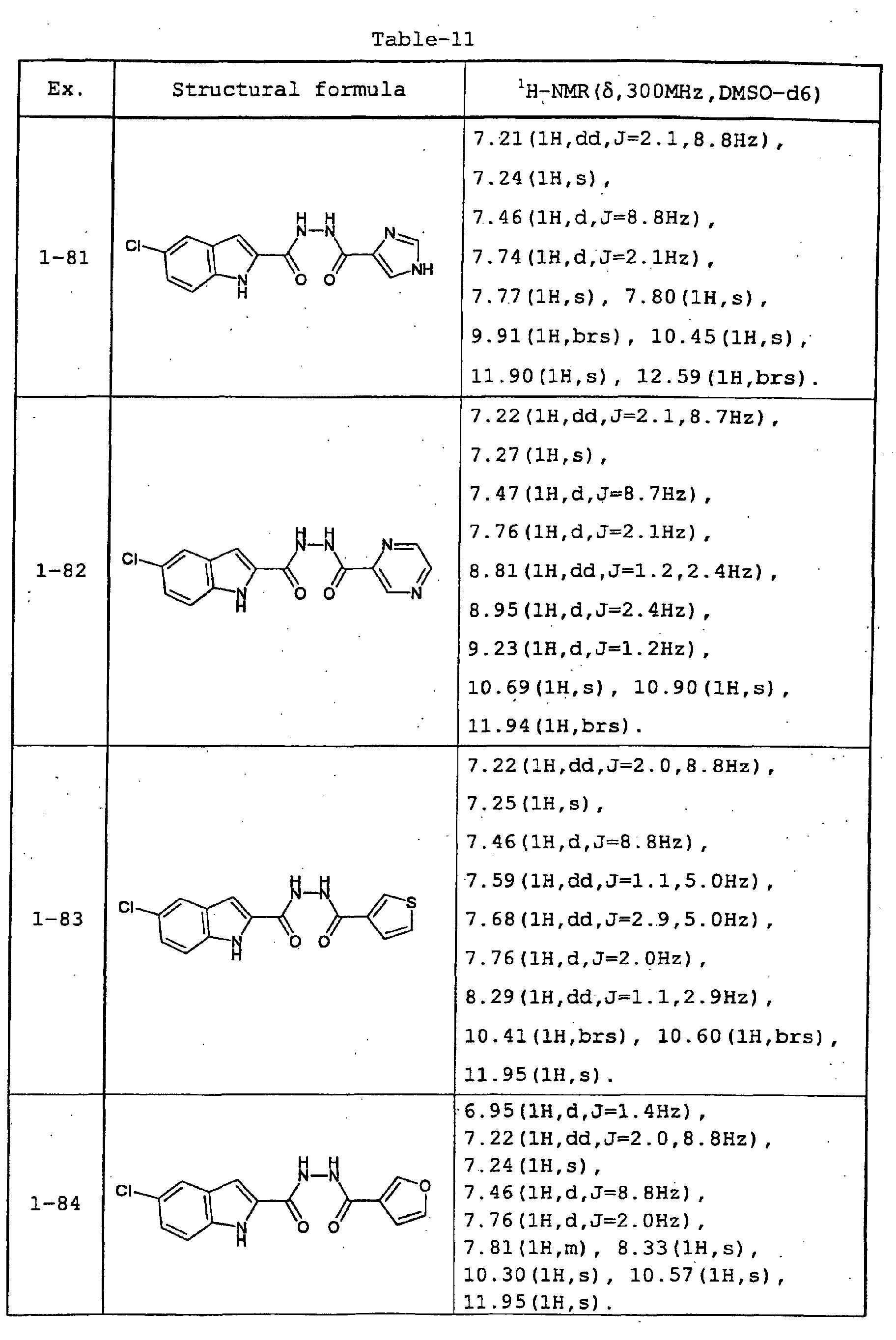

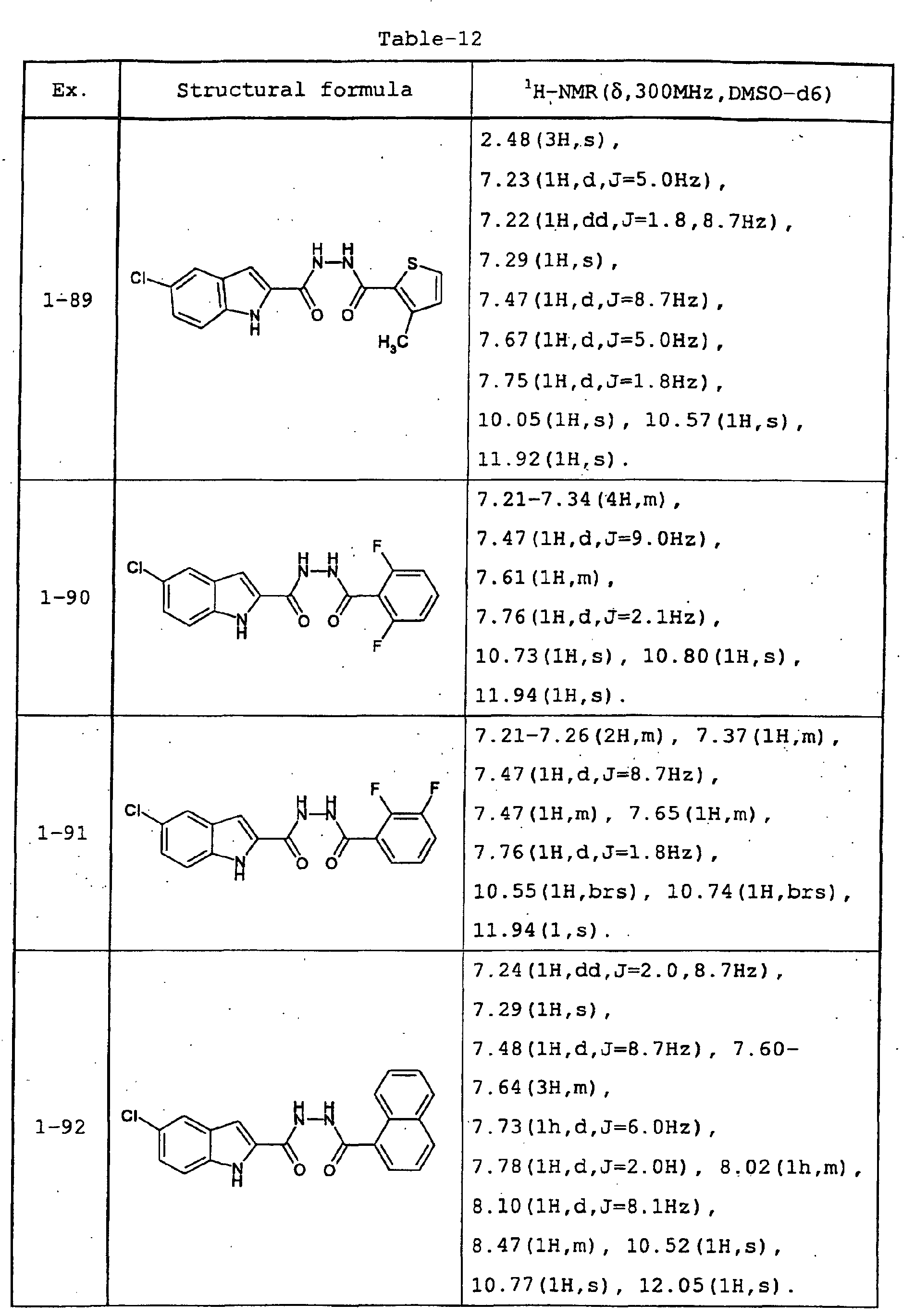


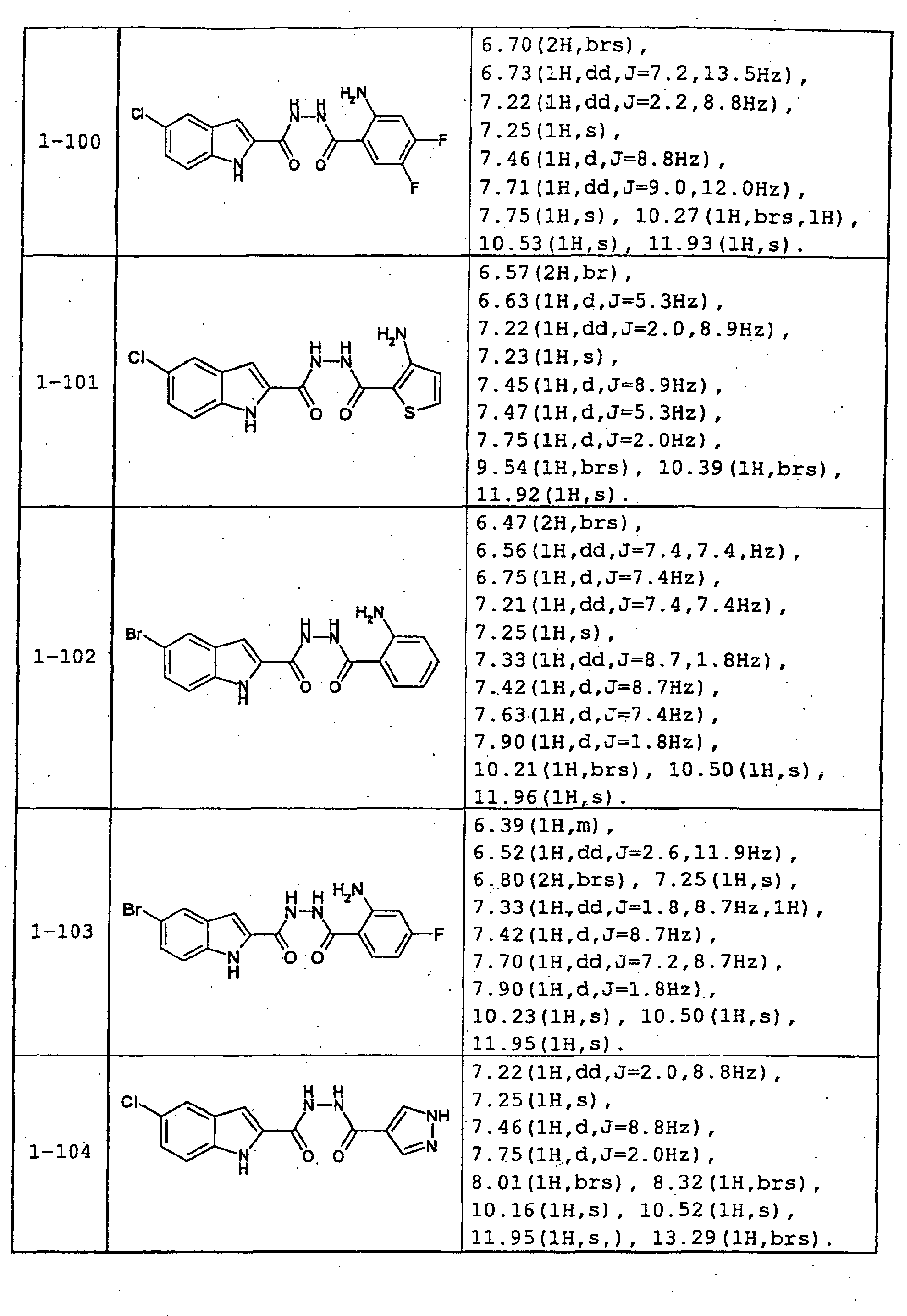

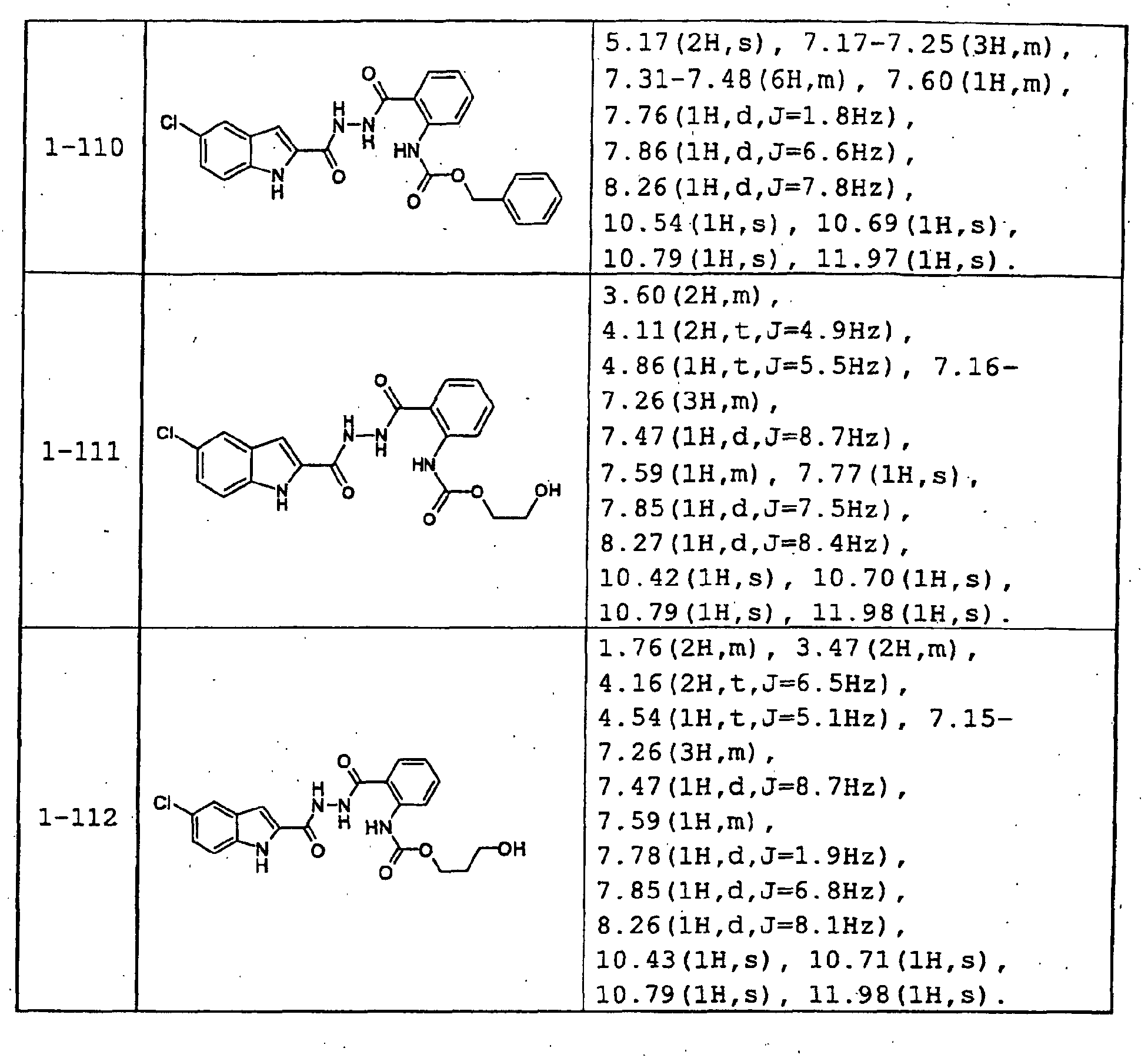

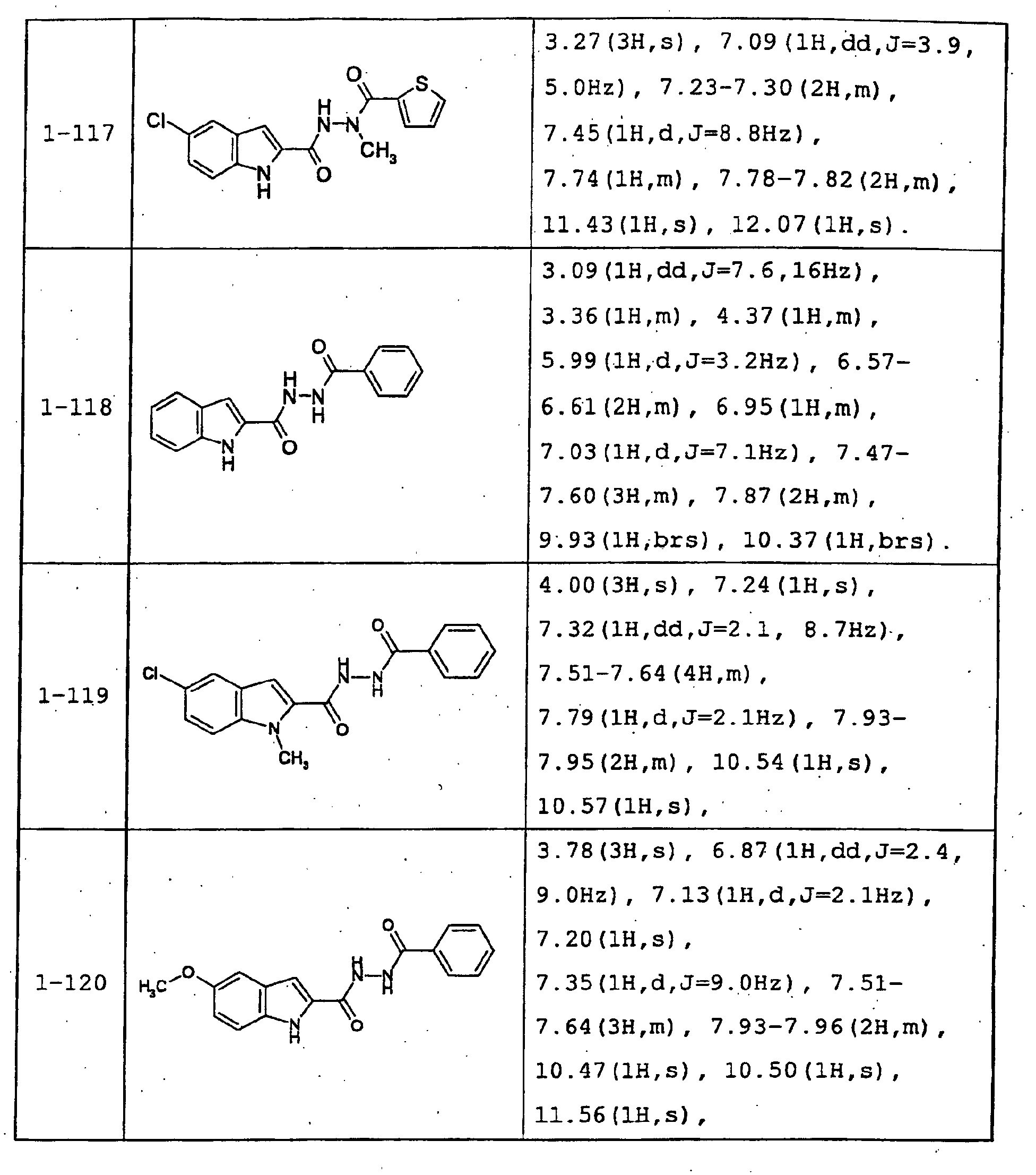


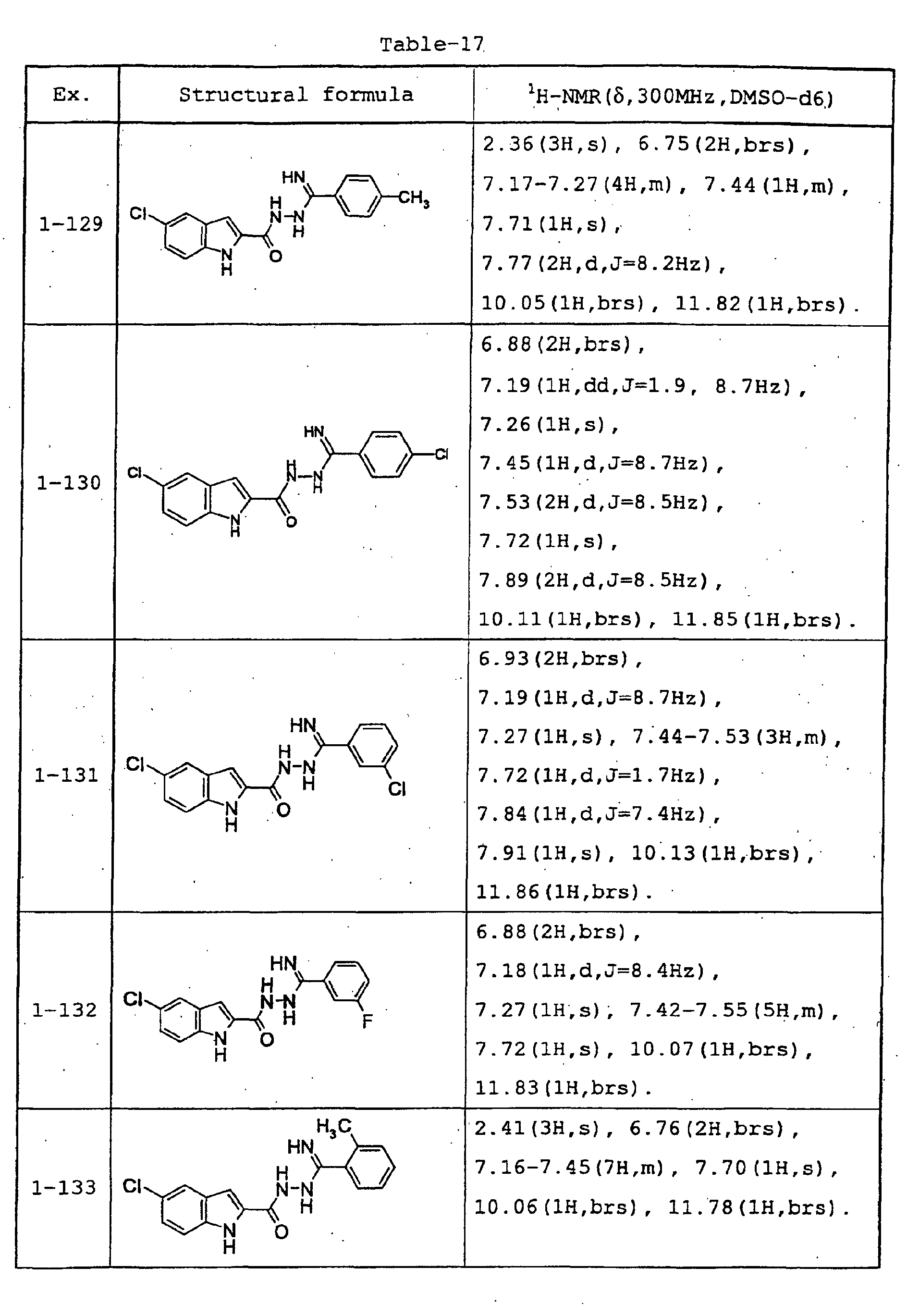

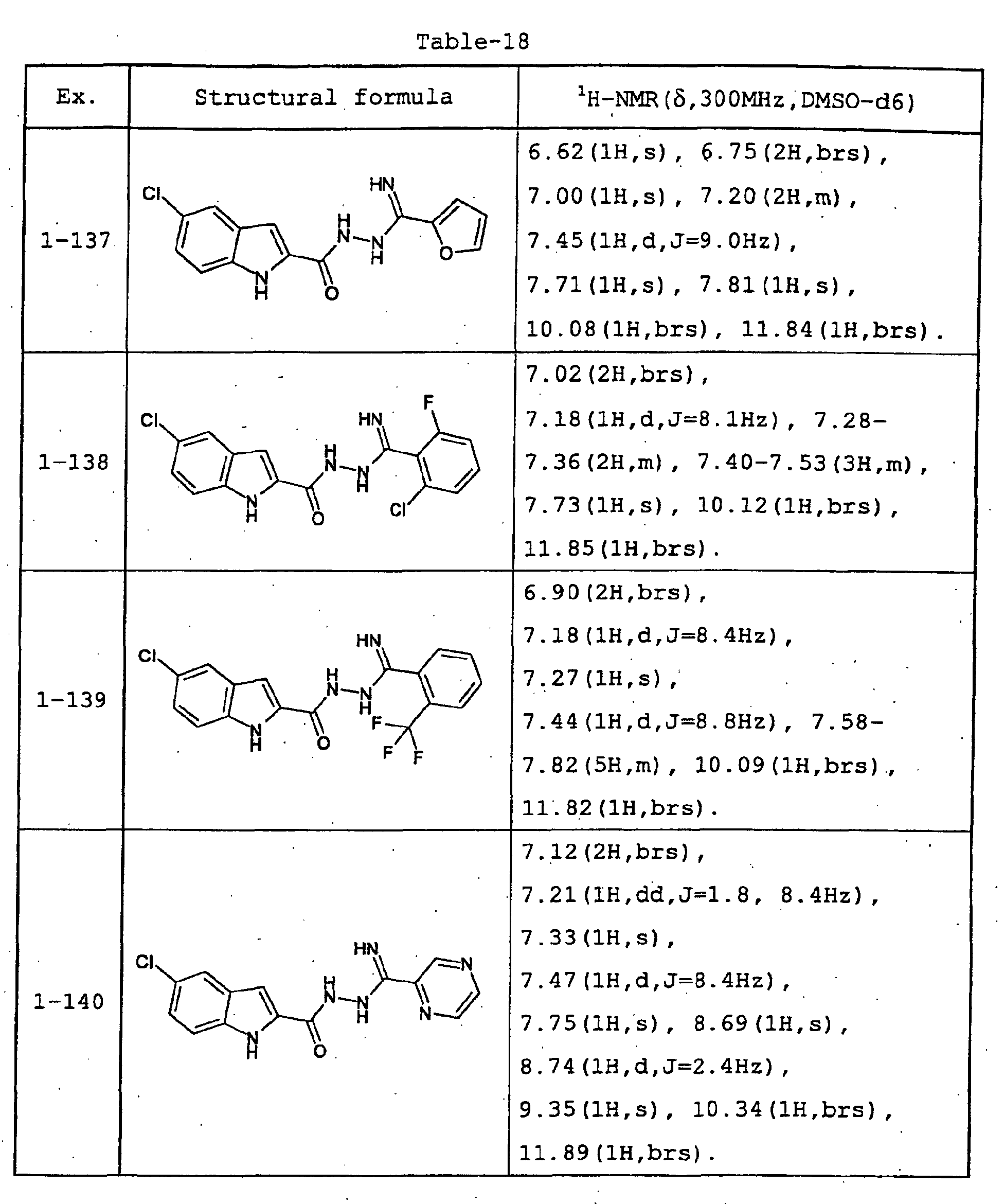


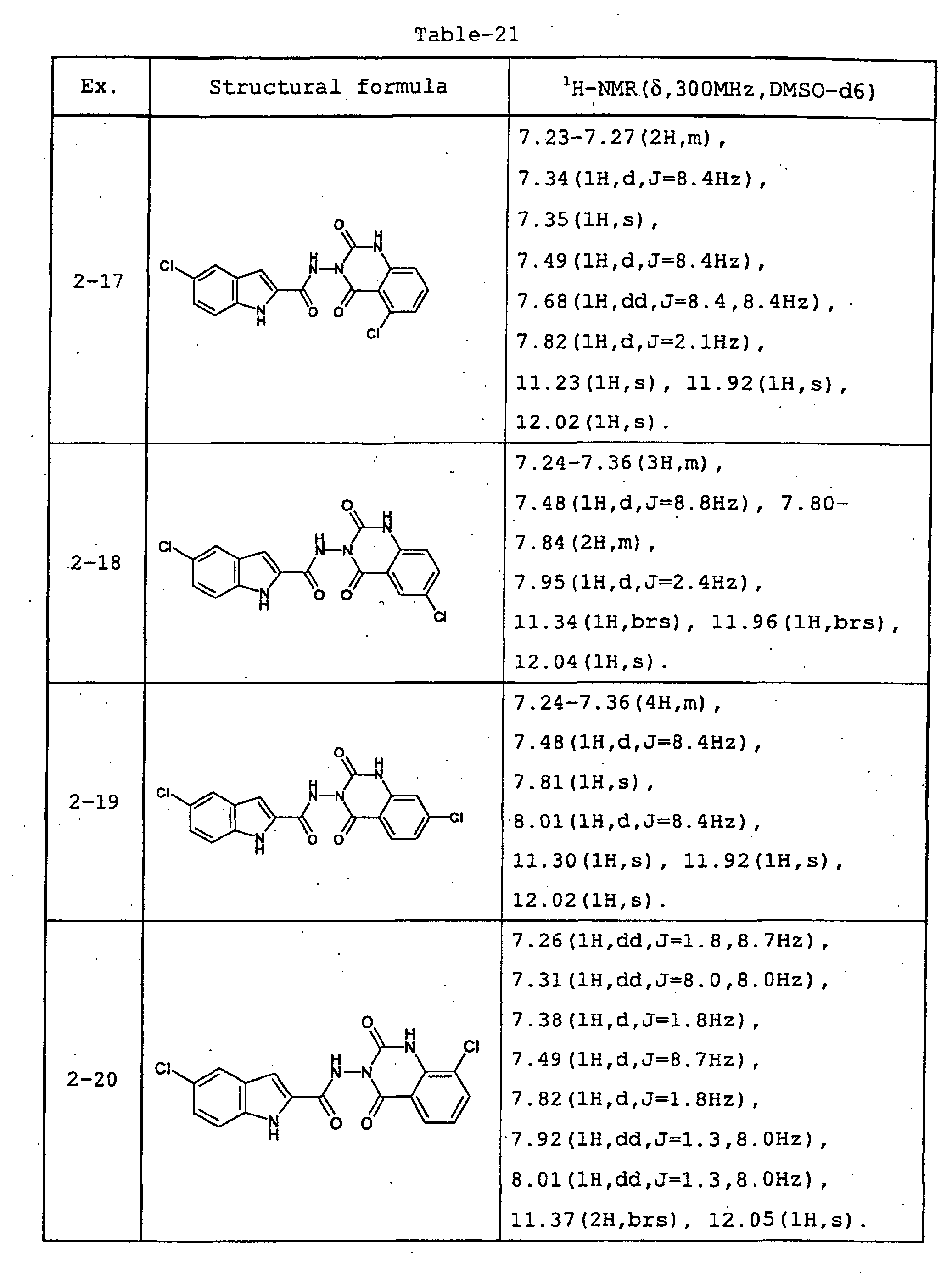


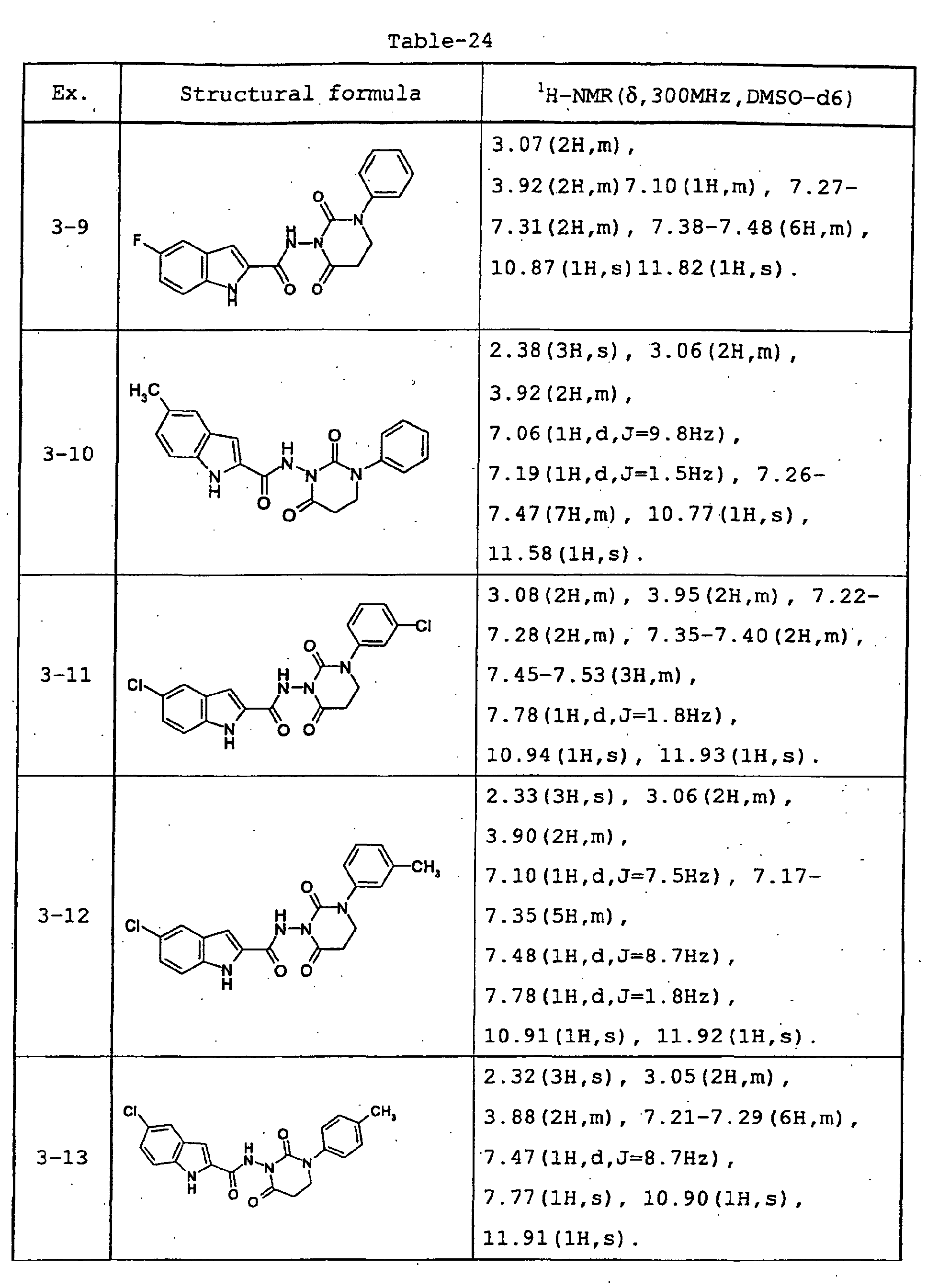
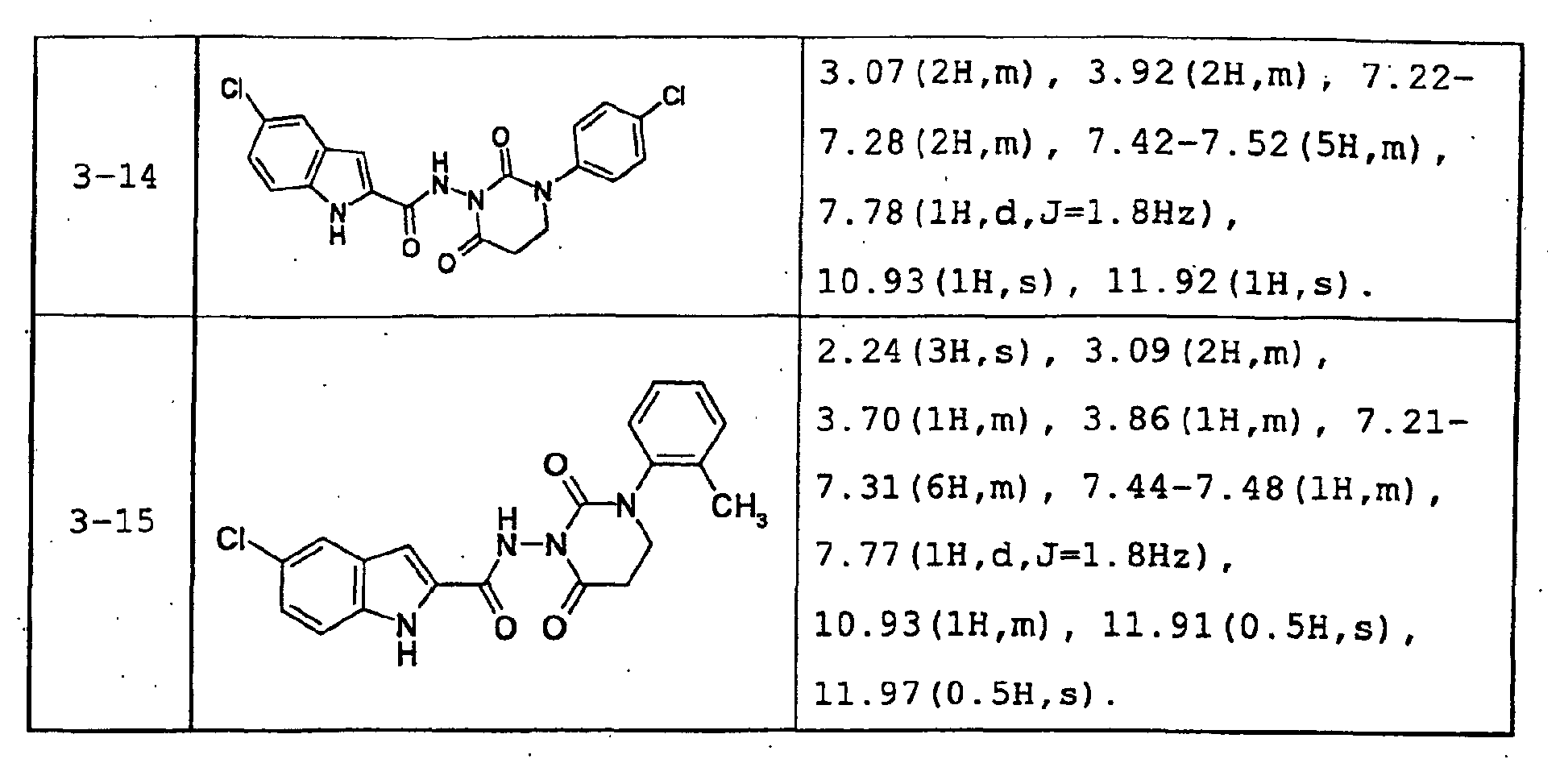
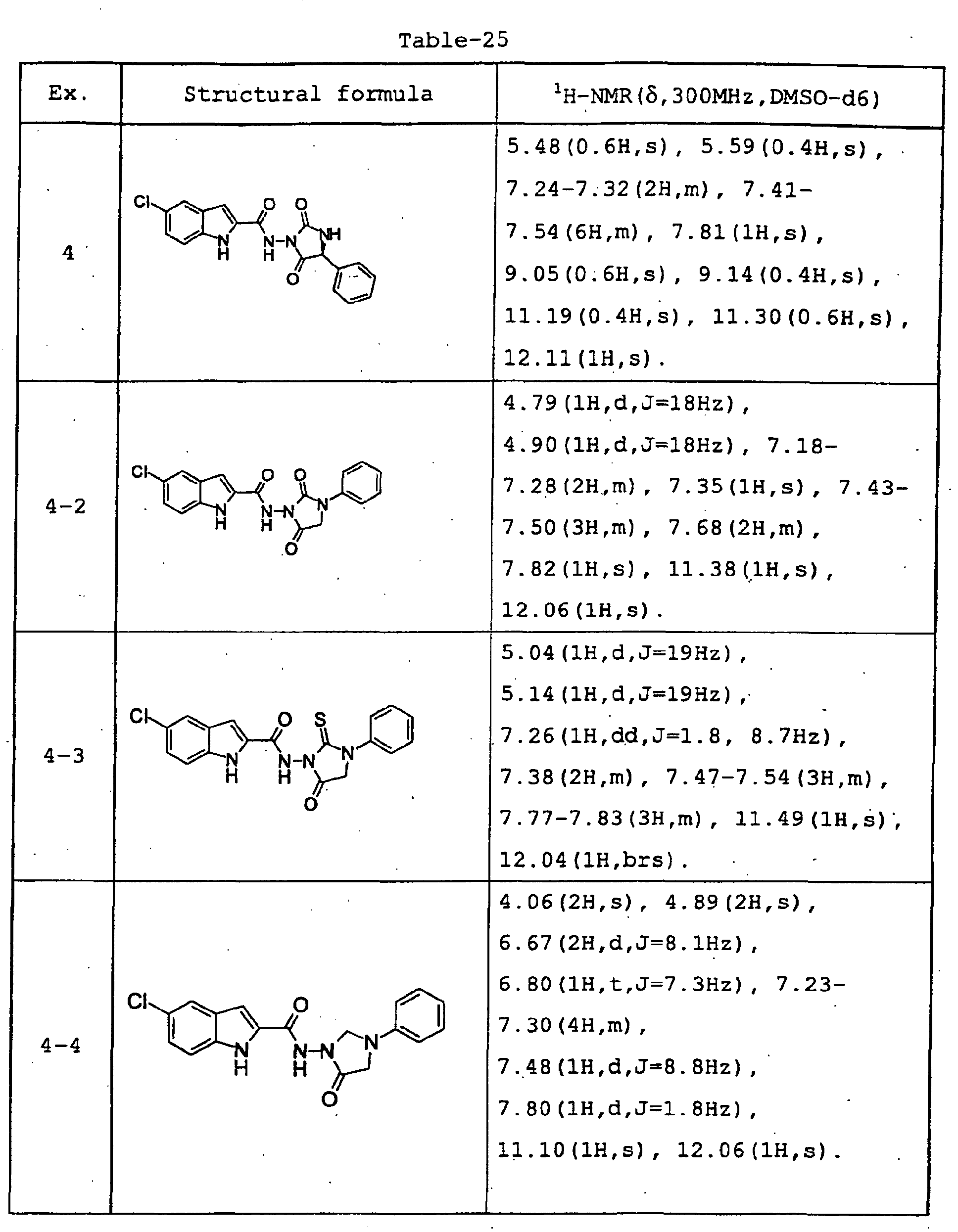
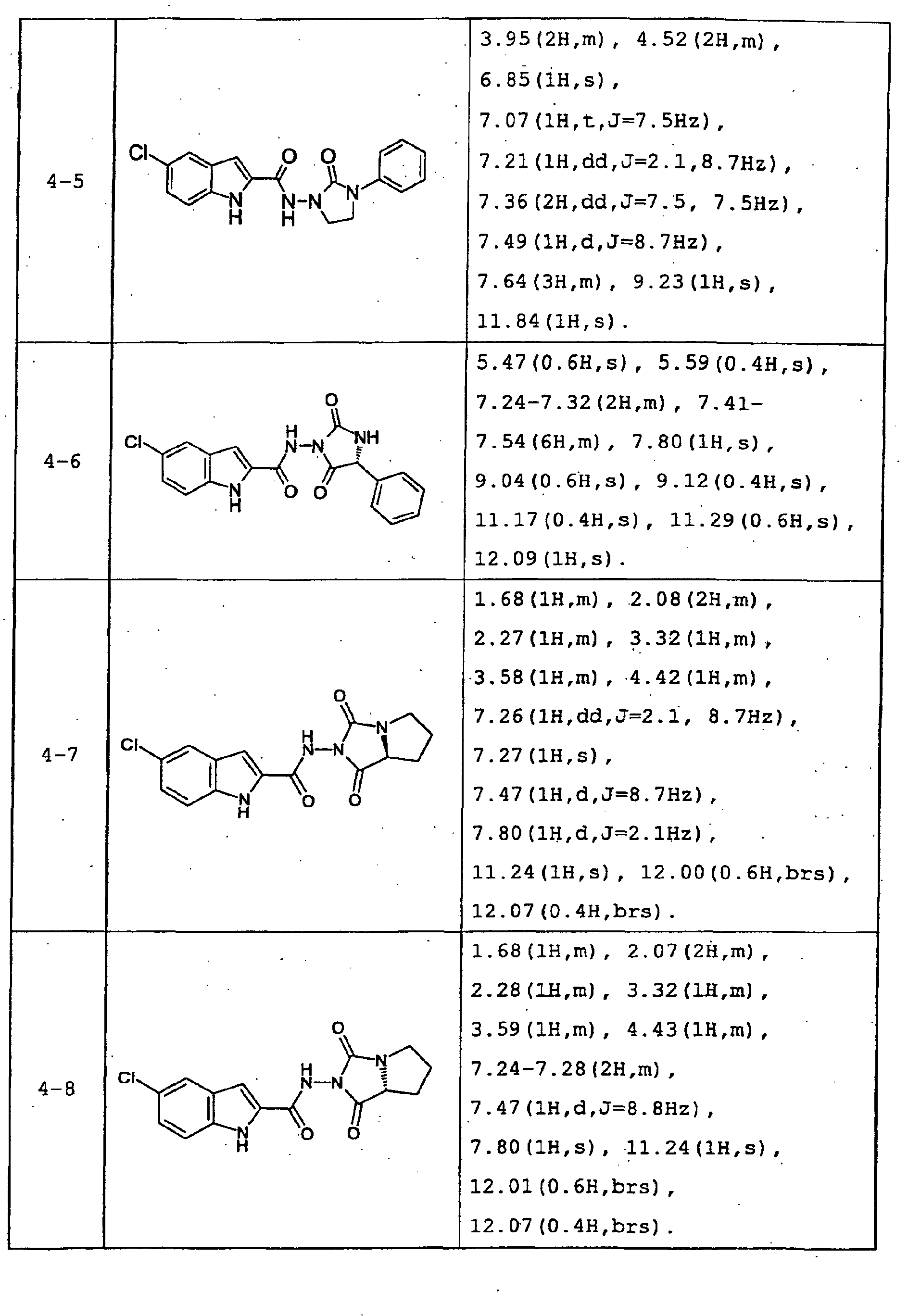
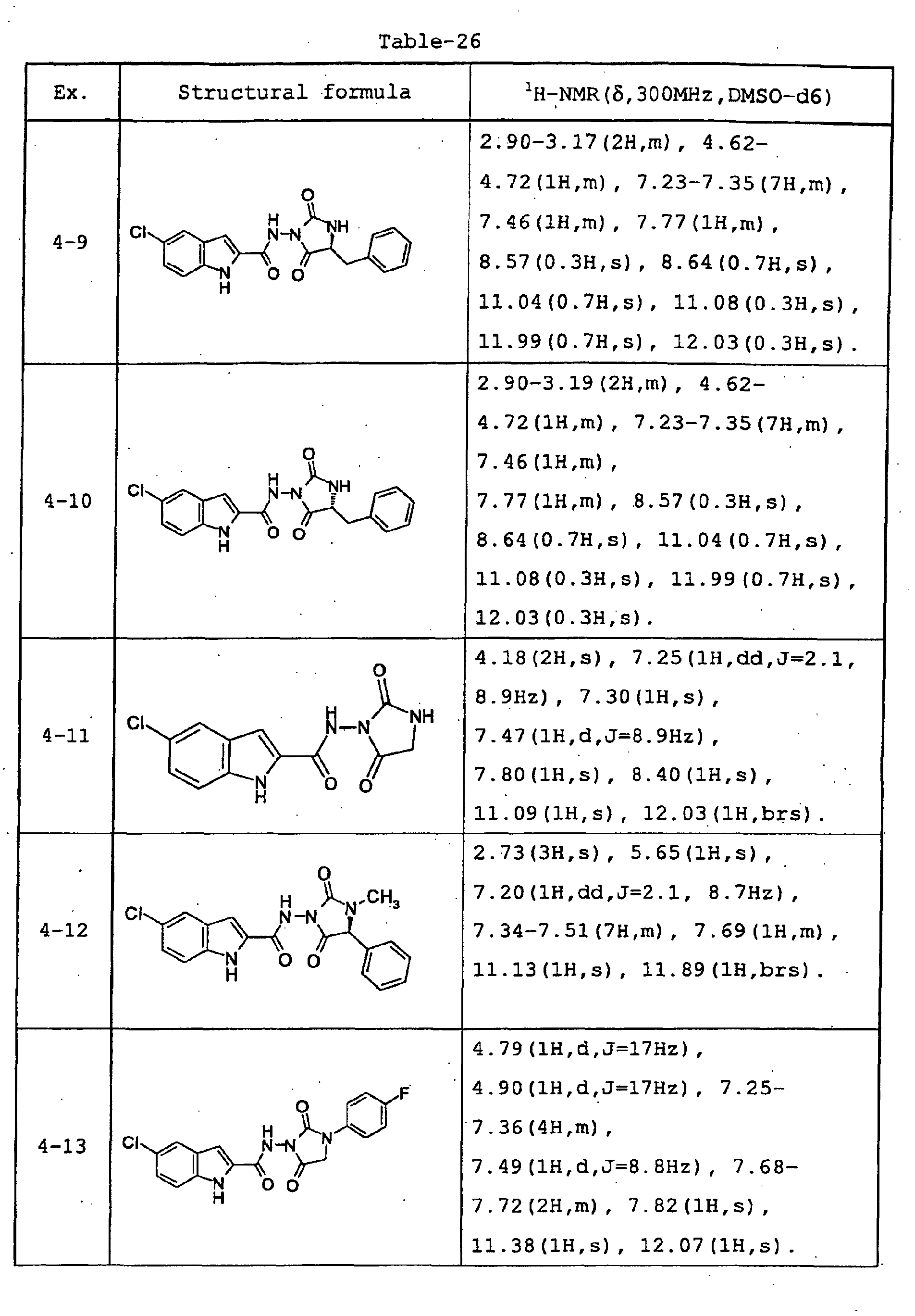


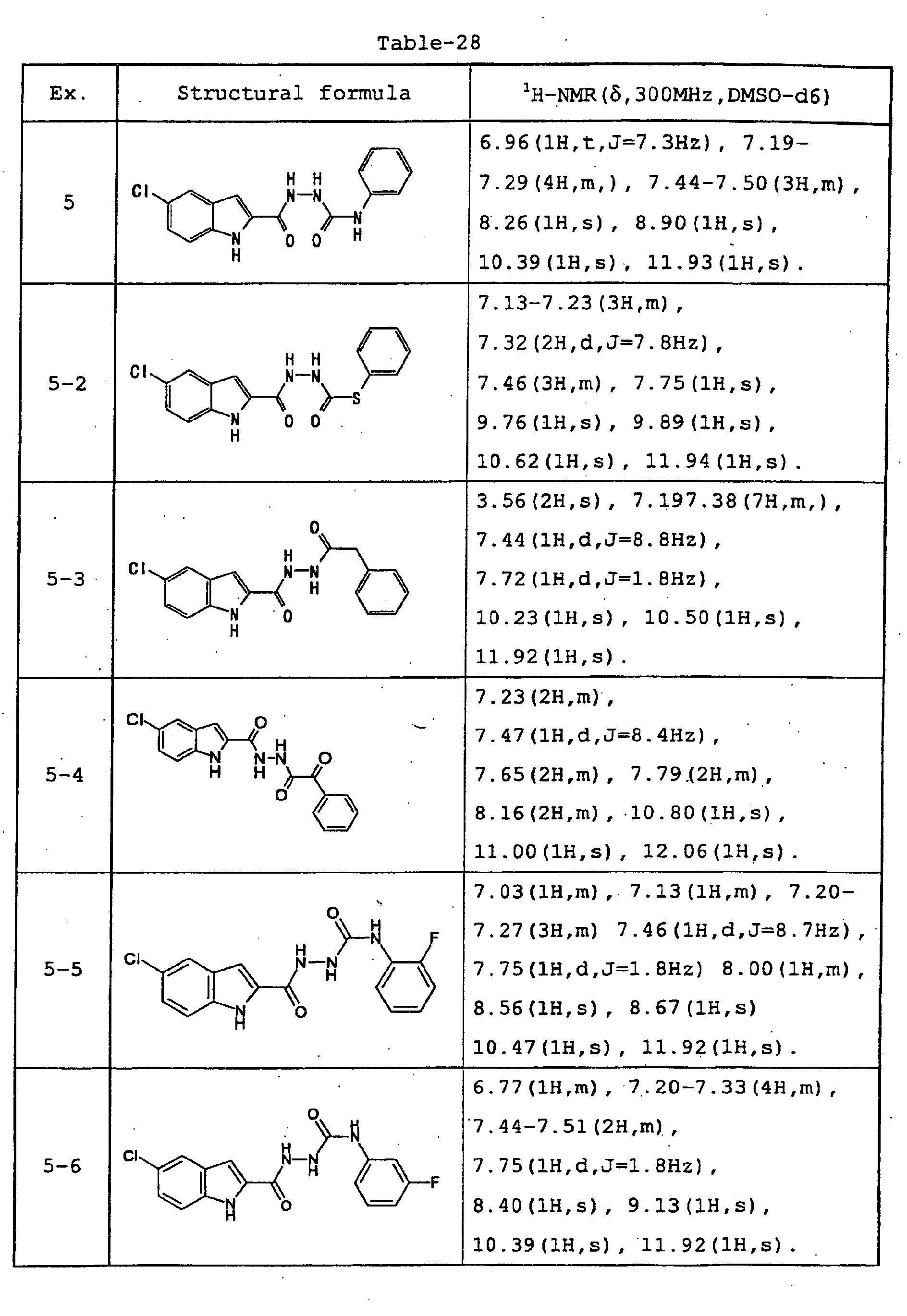
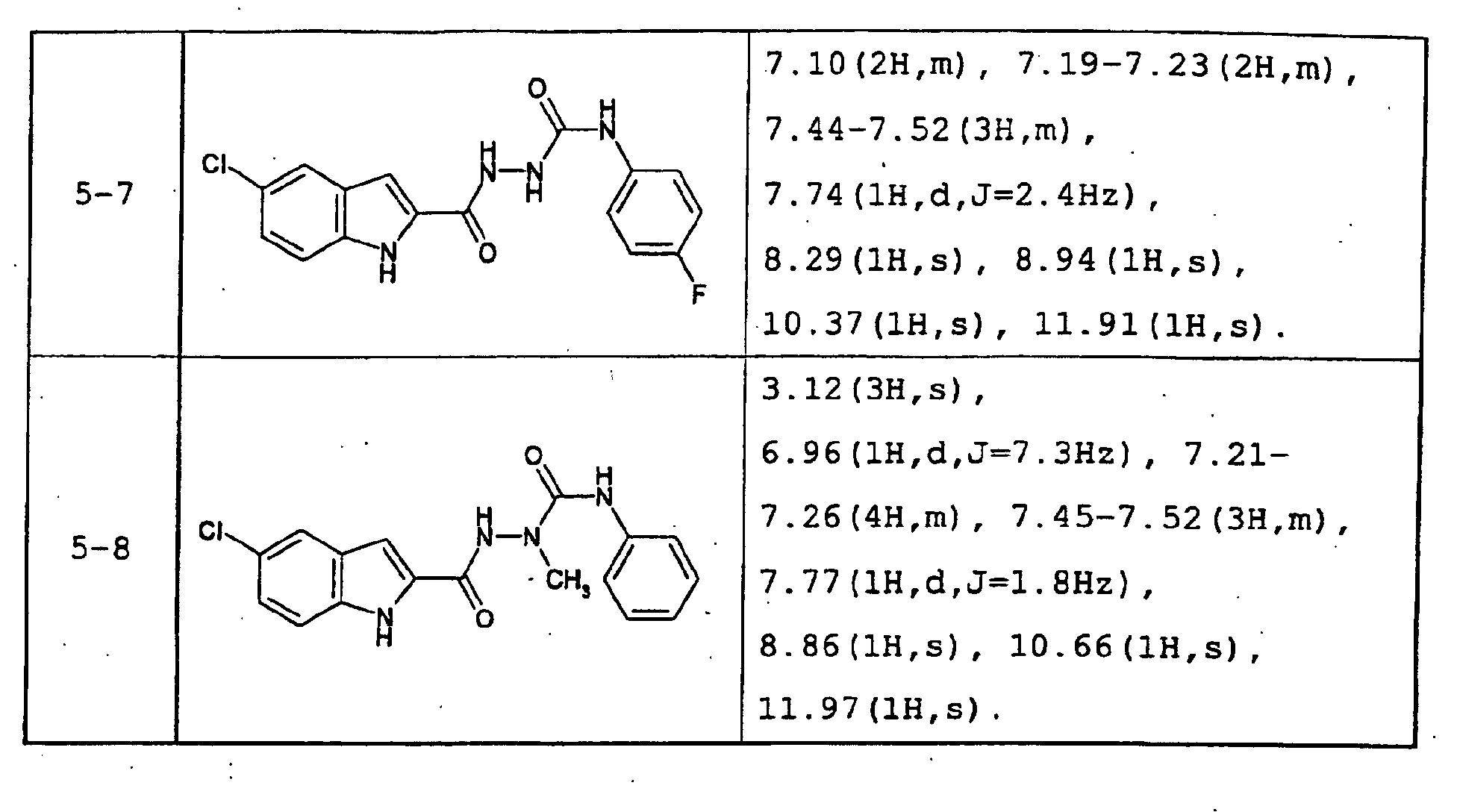
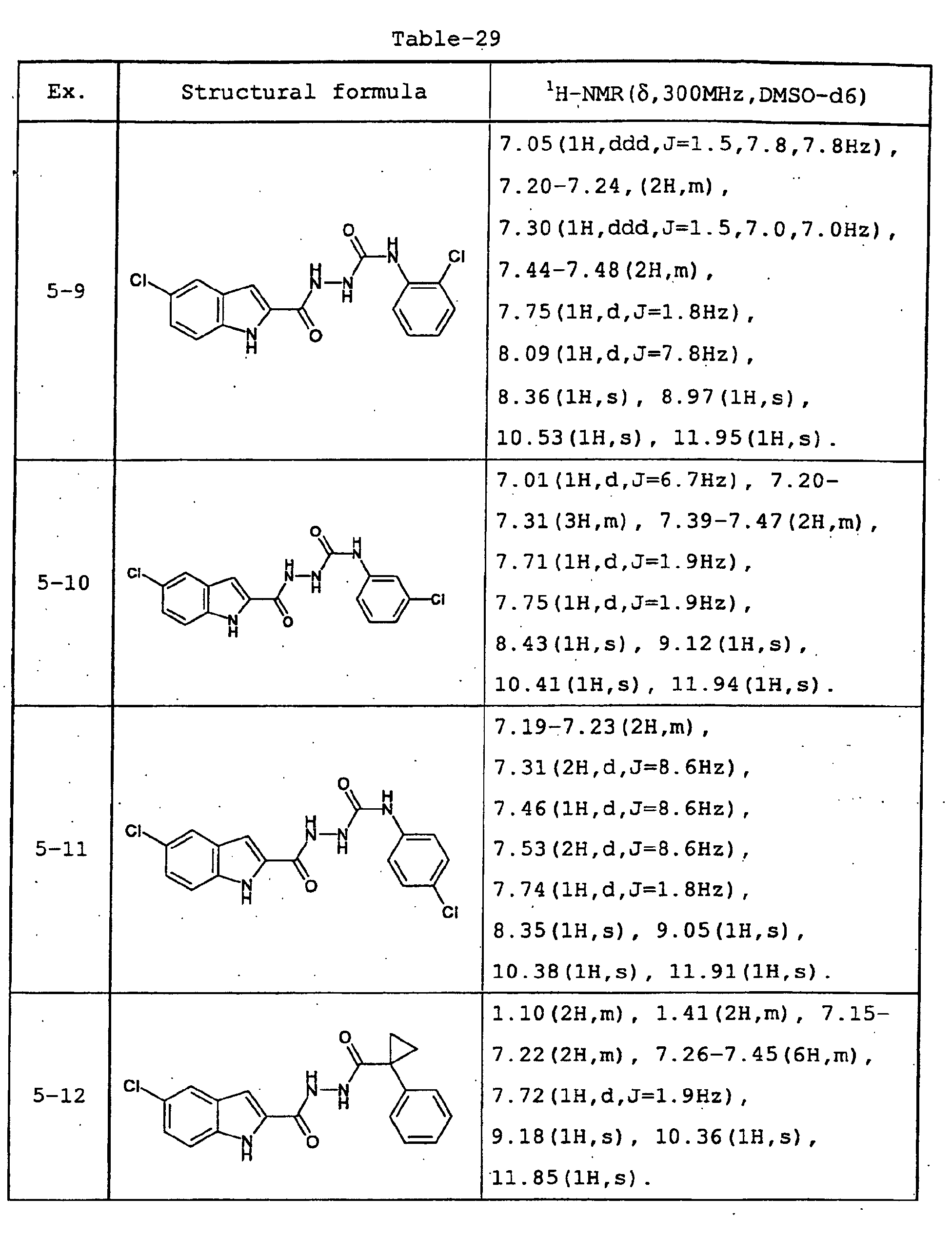
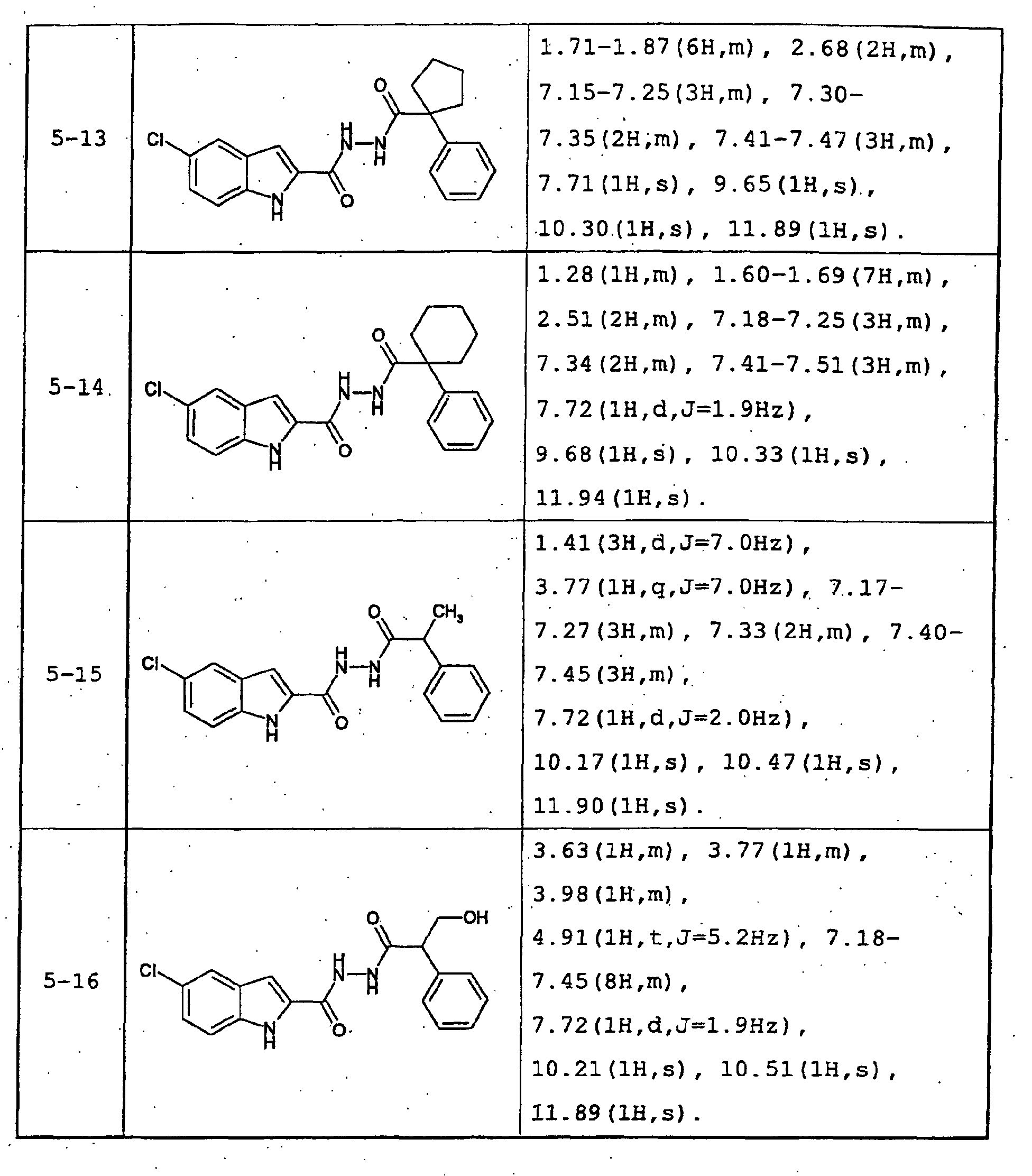
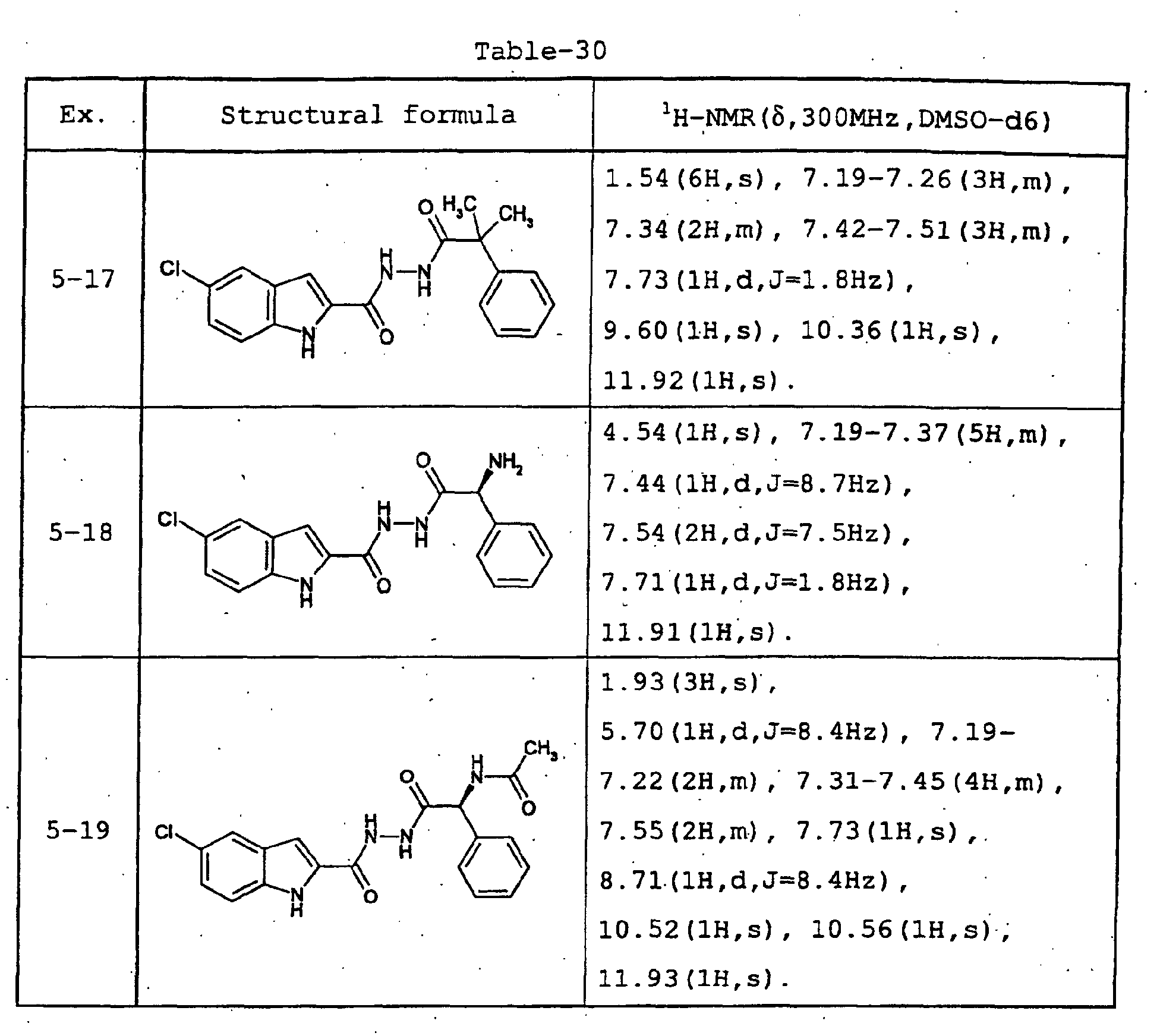
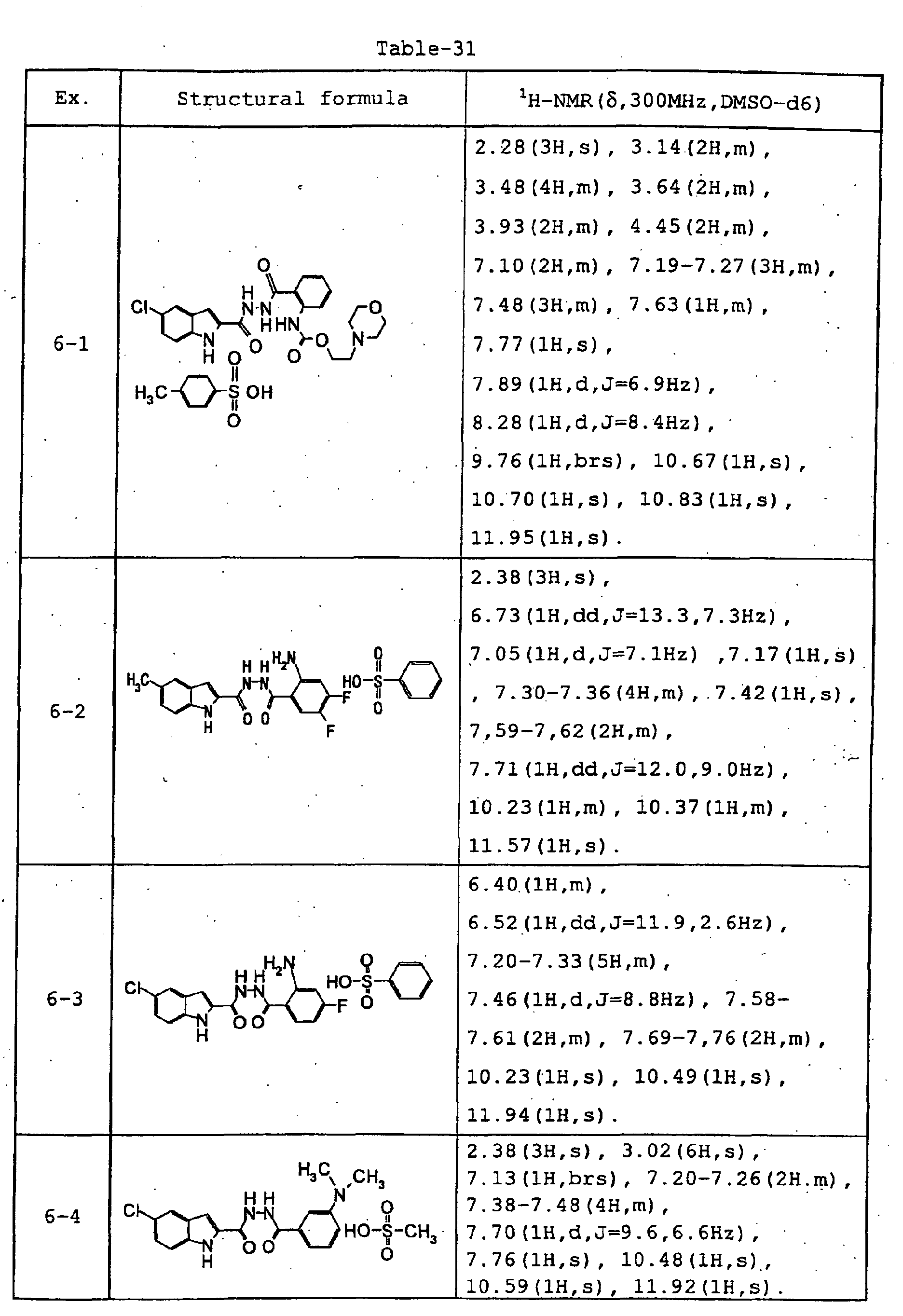

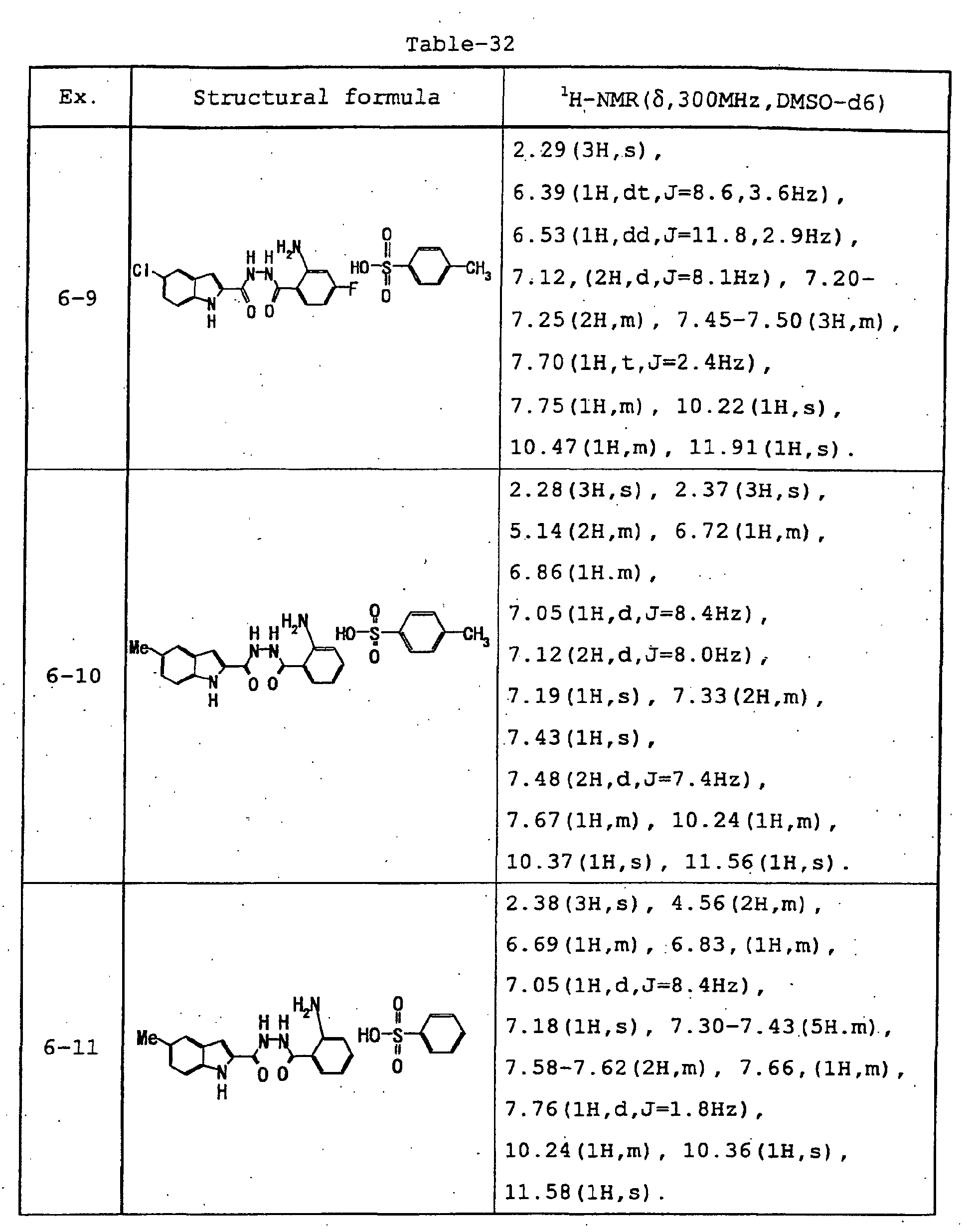


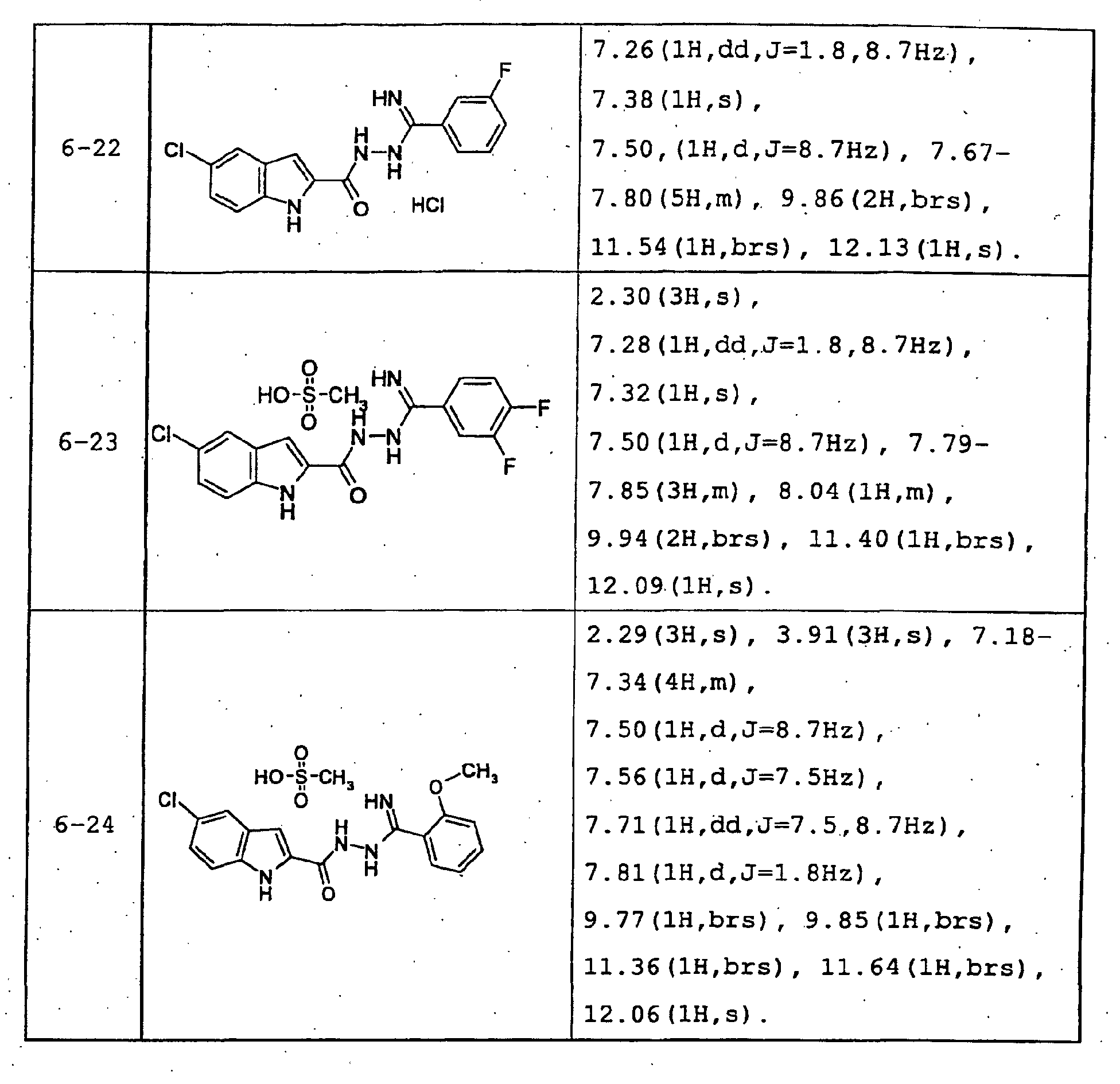
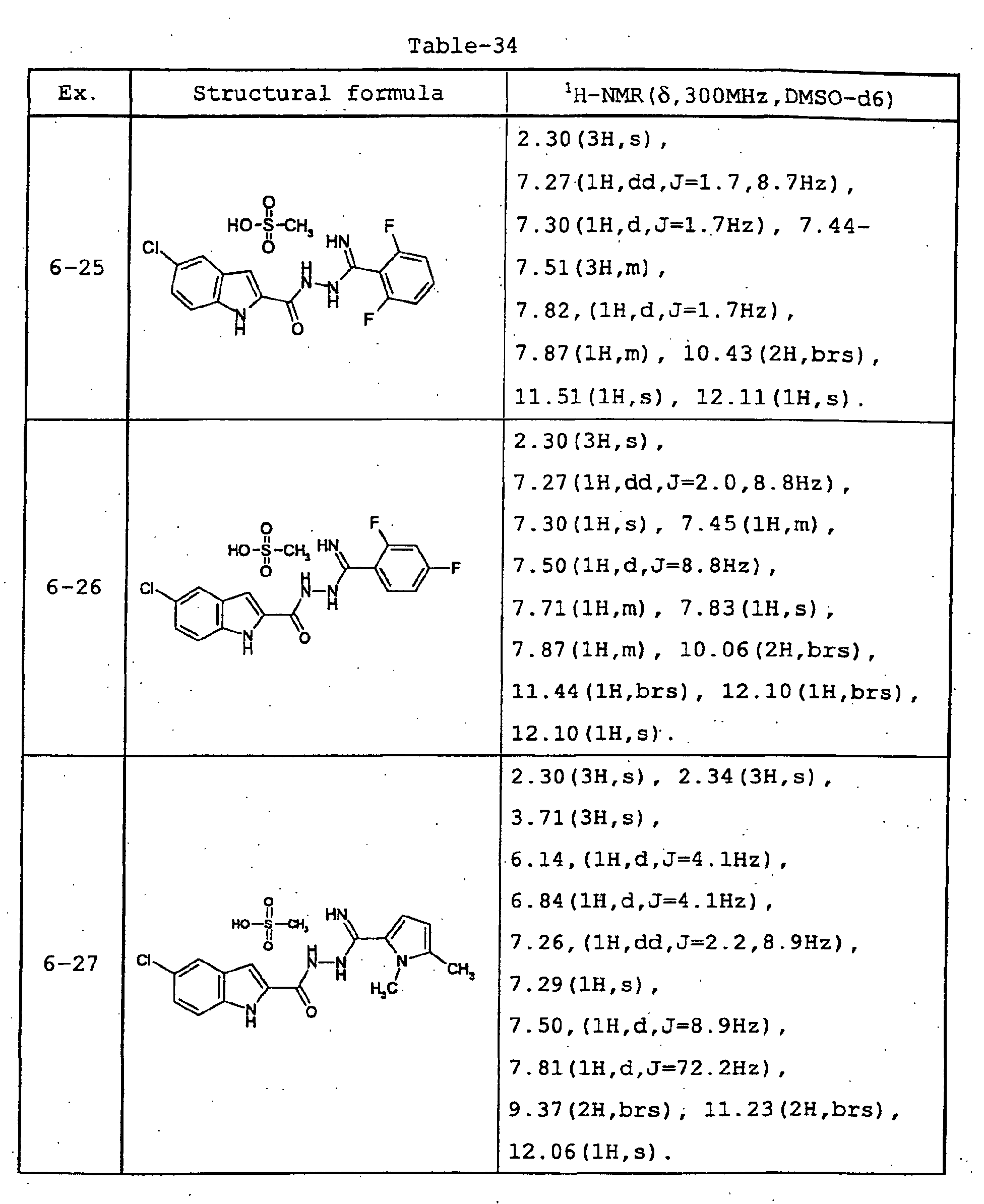


 wherein X is =O, =S or =NH;R1 is a hydrogen atom, a C1-6 alkyl group or an acyl group;R2 is a hydrogen atom or a halogen atom;R3 is a halogen atom, a C1-6 alkyl group, a C1-6 alkoxy group, a nitro group, an amino group, a hydroxyl group, a cyano group, an acyl group, an aralkyloxy group or a thiazolyl group
 a pharmaceutically acceptable salt thereof or a prodrug thereof.A is -N(R8)- wherein R8 is a hydrogen atom, a C1-6 alkyl group or an aryl group optionally having substituents, -C(R9)(R10)- wherein R9 and R10 are the same or different and each is independently a hydrogen atom, a hydroxyl group, an amino group, a C1-6 alkyl group, a C1-6 hydroxyalkyl group, a C2-7 alkoxycarbonylamino group or an acylamino group, or R9 and R10 may form a C3-7 cycloalkyl group together with the adjacent carbon atom, -(CH2)m-NH- wherein m is an integer of 1 to 4, -CO-, -S- or a single bond; andB is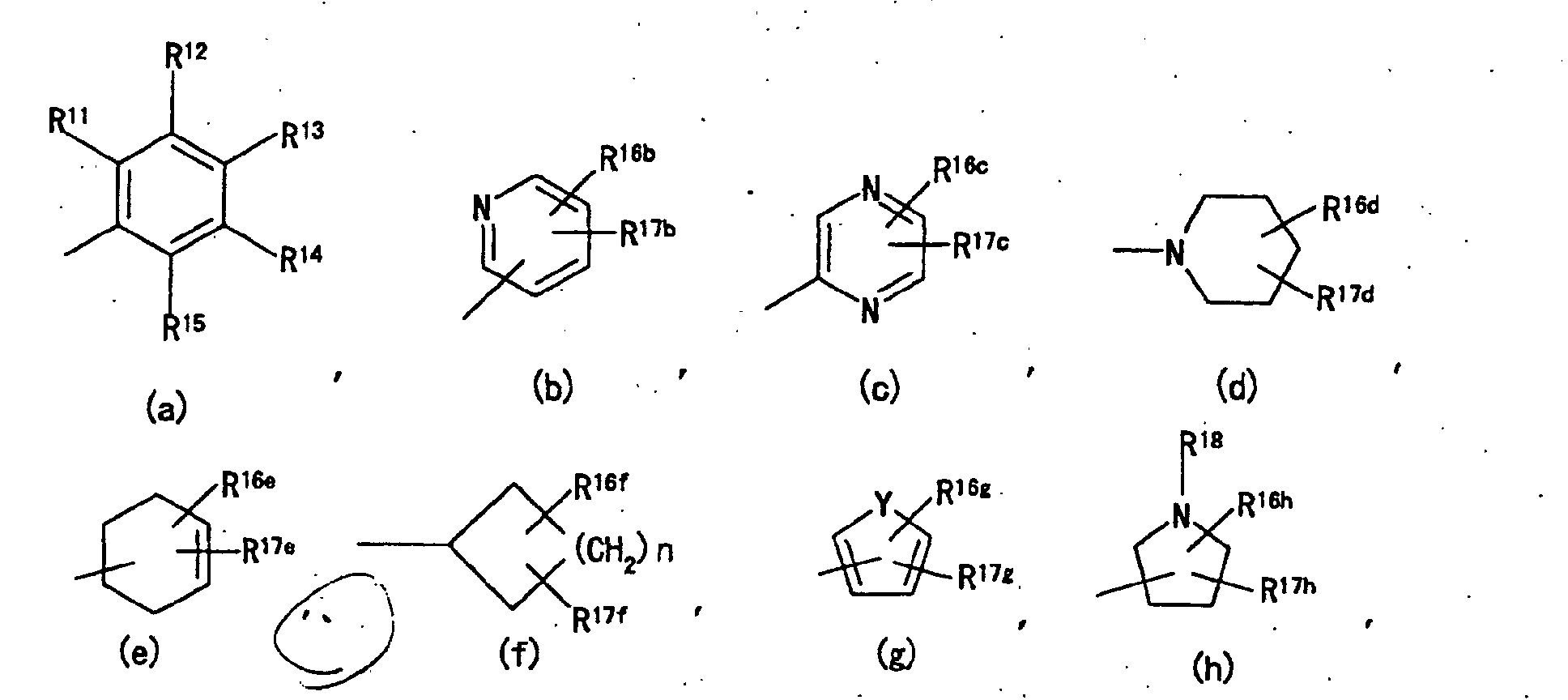
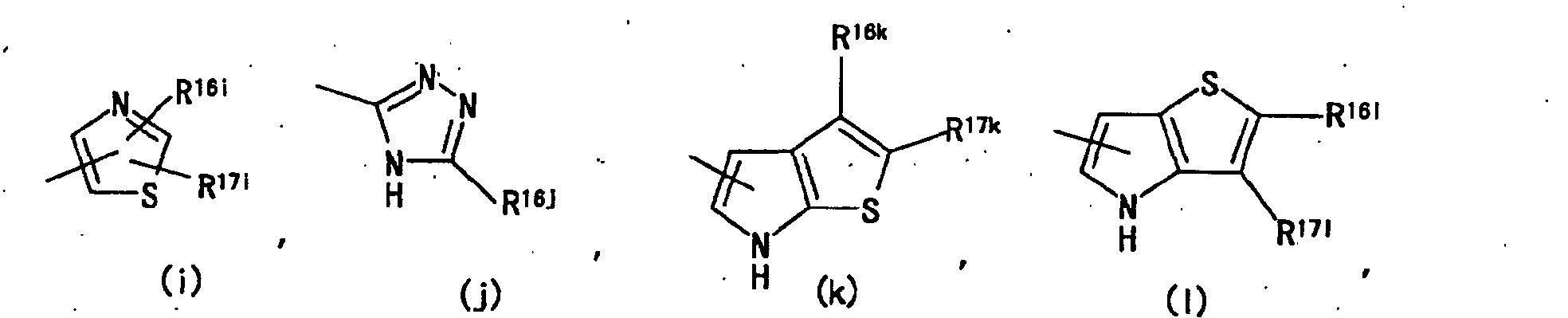
 wherein R11, R12, R13, R14 and R15 are the same or different and each is independently a hydrogen atom, a halogen atom, a C1-6 alkyl group, a C1-6 alkoxy group, a nitro group, a hydroxyl group, a cyano group, a haloalkyl group, an aralkyl group, an aryl group optionally having substituents, an aryloxy group, a tetrazolyl group, a triazolyl group, -(CH2)p-CO-R19 wherein p is 0 or an integer of 1 to 4 and R19 is an aryl group optionally having substituents, a hydroxyl group, a C1-6 alkoxy group or -N(R20)(R21) wherein R20 and R21 are the same or different and each is independently a hydrogen atom, a C1-6 alkyl group, an aralkyl group or a C3-13 alkoxycarbonylalkyl group, or R20 and R21 may form, together with the adjacent nitrogen atom,
 wherein q is an integer of 1 to 3 and R22 is a hydrogen atom, a hydroxyl group, a C1-6 alkoxy group, an amino group, a C2-12 dialkylamino group or a C2-7 alkoxycarbonylamino group, -O-(CH2)r-R23 wherein r is an integer of 1 to 4 and R23 is a hydroxyl group, an amino group, a C2-7 alkylcarbonyloxy group or -CO-R24 wherein R24 is a hydroxyl group, a C1-6 alkoxy group or -N(R25)(R26) wherein R25 and R26 are the same or different and each is a hydrogen atom, a C1-6 alkyl group or an aralkyl group, or R25 and R26 may form, together with the adjacent nitrogen atom,
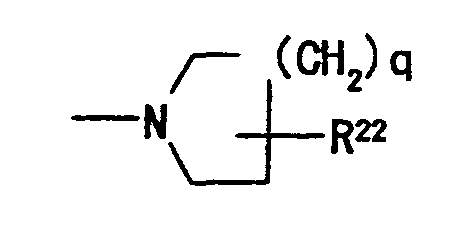 or
or wherein q' and R22' are as defined for q and R22, respectively, -O-CO-R27 wherein R27 is a C1-6 alkylamino group or a C2-12 dialkylamino group, or -N(R28)(R29) wherein R28 and R29 are the same or different and each is a hydrogen atom, a C1-6 alkyl group, an aryl group optionally having substituents, an acyl group, -(CH2)p'-COO-R30 wherein p' is as defined for p and R30 is a hydrogen atom, an aryl group optionally having substituents or a C1-6 alkyl group wherein the C1-6 alkyl group is optionally substituted by a hydroxyl group, a trifluoromethyl group, an aryl group optionally having substituents, a morpholino group or a carboxyl group, -CON(R31)(R32) wherein R31 and R32 are the same or different and each is a hydrogen atom, a C1-6 alkyl group or an aryl group optionally having substituents, -CO-R33 wherein R33 is a C1-6 alkyl group or an aryl group optionally having substituents or -CO-(CH2)r'-R34 wherein r' is as defined for r and R34 is a C1-6 alkylamino group, a C2-12 dialkylamino group, a C1-6 alkoxy group or a C2-7 alkylcarbonyloxy group,
 R16b-R16n and R17b-R17n are the same or different and each is a hydrogen atom, a halogen atom, a C1-6 alkyl group, an amino group, a hydroxyl group, a C1-6 alkoxy group or -CON(R31')(R32') wherein R31' and R32' are as defined for R31 and R32,R18 is a hydrogen atom or a C2-7 alkoxycarbonyl group,Y is -S-, -O- or -N (R35)- wherein R35 is a hydrogen atom or a C1-6 alkyl group, andn is 0 or an integer of 1 to 4, orR6 and R7 may form, together with the adjacent nitrogen atom,wherein R36 and R37 are the same or different and each is a hydrogen atom, a halogen atom, a C1-6 alkyl group, a C1-6 alkoxy group, an amino group, a nitro group, a hydroxyl group, a C2-7 alkoxycarbonyl group, a carboxyl group, a C2-7 haloalkylcarbonylamino group or -O-CO-R41 wherein R41 is a C1-6 alkyl group, a C1-6 alkylamino group or a C2-12 dialkylamino group;
 Z is -CH2-CH2-, -C(R42)=CH-, -C(R42')=N-, -N=N-, -CO-, -CO-O-, -CO-CH2-O-, -CH2-CO-NH-, -C(R42'')(R43)-N(R44)- wherein R42, R42', R42'' and R43 are the same or different and each is a hydrogen atom, a C1-6 alkyl group or an aryl group optionally having substituents and R44 is a hydrogen atom, a C2-7 alkoxycarbonyl group or a C1-6 alkyl group wherein the C1-6 alkyl group is optionally substituted by a carboxyl group or a C2-7 alkoxycarbonyl group, or -C(U)-N(R44')- wherein U is =O or =S and R44' is as defined for R44 wherein an atom adjacent to the nitrogen atom on the fused ring in the formula (i) is described on the left end of each group;R38 is a hydrogen atom, an aryl group optionally having substituents or a heteroaryl group;R39 and R40 are the same or different and each is a hydrogen atom, a C1-6 alkyl group, a C1-6 alkoxy group or a C2-7 alkoxycarbonyl group, or R39 and R40 may form, together with the adjacent carbon atom,or
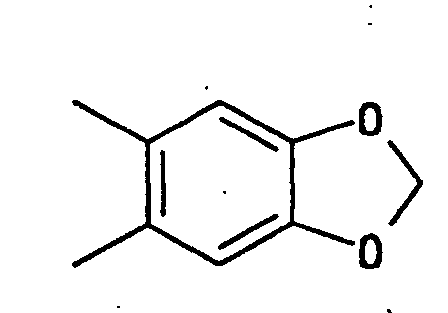 W is -CO-, -CS- or -CH2-;V1 is -CO-, -CS- or -CH2-;V2 is -O-, -CH2- or -N(R45)- wherein R45 is a hydrogen atom, a C1-6 alkyl group or an aryl group optionally having substituents; andV3 is -CH(R46)- or -N(R46')- wherein R46 and R46' are each a hydrogen atom, an aralkyl group, a heteroaryl group or an aryl group optionally having substituents,
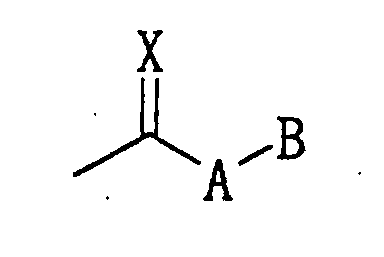 A is -N(R8')- wherein R8' is a hydrogen atom, a C1-6 alkyl group or a phenyl group optionally having substituents, -C(R9')(R10')- wherein R9' and R10' are the same or different and each is a hydrogen atom, a hydroxyl group, an amino group, a C1-6 alkyl group, a C1-6 hydroxyalkyl group, a C2-7 alkoxycarbonylamino group or an acylamino group, or R9' and R10' may form, together with the adjacent carbon atom, a C3-7 cycloalkyl group, -(CH2)m-NH- wherein m is an integer of 1 to 4, -CO-, -S- or a single bond; andB is

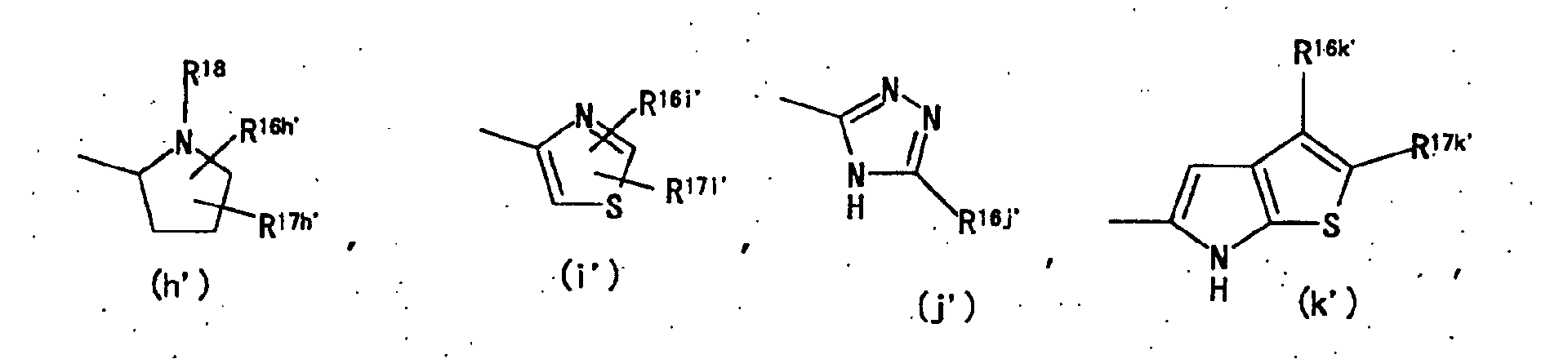
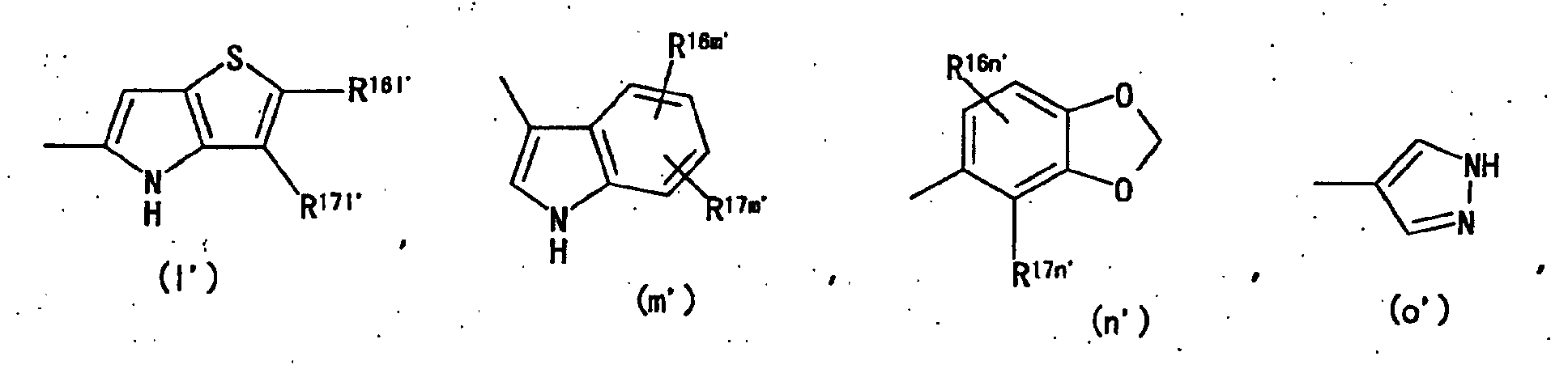 wherein R11', R12', R13', R14' and R15' are the same or different and each is a hydrogen atom, a halogen atom, a C1-6 alkyl group, a C1-6 alkoxy group, a nitro group, a hydroxyl group, a cyano group, a haloalkyl group, an aralkyl group, a phenyl group optionally having substituents, an aryloxy group, a tetrazolyl group, a triazolyl group, -(CH2)p-CO-R19' wherein p is 0 or an integer of 1 to 4 and R19' is a phenyl group optionally having substituents, a hydroxyl group, a C1-6 alkoxy group or -N(R20)(R21)- wherein R20 and R21 are as defined in claim 1, -O-(CH2)r-R23 wherein r and R23 are as defined in claim 1, -O-CO-R27 wherein R27 is as defined in claim 1, or -N(R28')(R29') wherein R28' and R29' are the same or different and each is a hydrogen atom, a C1-6 alkyl group, a phenyl group optionally having substituents, an acyl group, -(CH2)p'-COO-R30' wherein p' is as defined in claim 1 and R30' is a hydrogen atom, a phenyl group optionally having substituents or a C1-6 alkyl group wherein the C1-6 alkyl group is optionally substituted by a hydroxyl group, a trifluoromethyl group, a phenyl group optionally having substituents, a morpholino group or a carboxyl group, -CON(R31'')(R32'') wherein R31'' and R32'' are the same or different and each is a hydrogen atom, a C1-6 alkyl group or a phenyl group optionally having substituents, -CO-R33' wherein R33' is a C1-6 alkyl group or a phenyl group optionally having substituents or -CO-(CH2)r'-R34 wherein r' and R34 are as defined in claim 1,
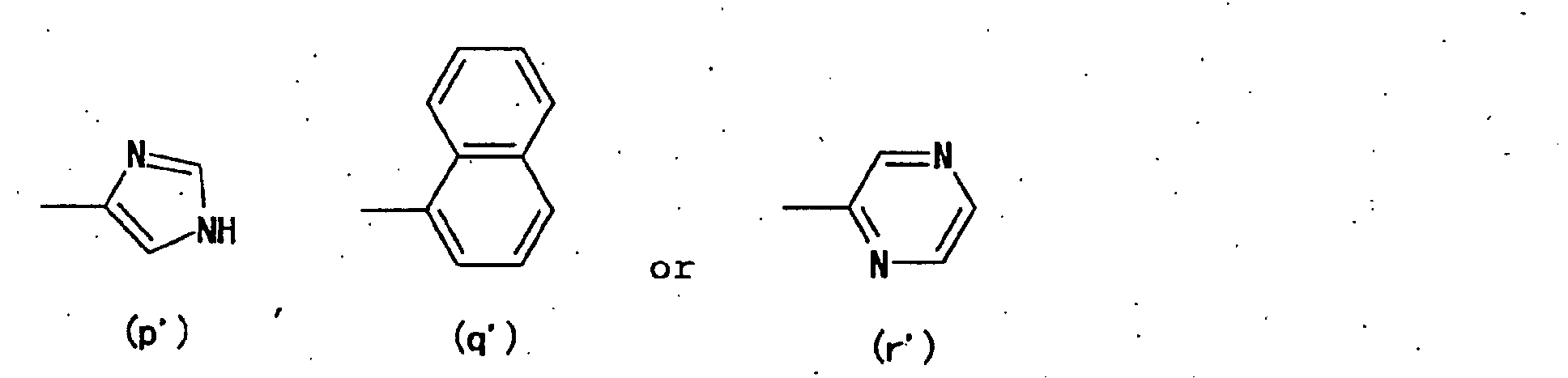 R16b'-R16n' and R17b'-R17n' are the same or different and each is a hydrogen atom, a halogen atom, a C1-6 alkyl group, an amino group, a hydroxyl group, a C1-6 alkoxy group or -CON(R31''')(R32''') wherein R31''' and R32''' are as defined for R31'' and R32'', andR18, Y and n are as defined in claim 1, orR6 and R7 may form, together with the adjacent nitrogen atom,wherein R36 and R37 are as defined in claim 1;
 Z' is -CH2-CH2-, -C(R42)=CH-, -C(R42')=N-, -N=N-, -CO-, -CO-O-, -CO-CH2-O-, -CH2-CO-NH-, -C(R42'')(R43)-N(R44)- wherein R42, R42', R42'' and R43 are the same or different and each is a hydrogen atom, a C1-6 alkyl group or a phenyl group optionally having substituents and R44 are as defined in claim 1 or -C(U)-N(R44')- wherein U and R44' are as defined in claim 1;R38' is a hydrogen atom, a phenyl group optionally substituted by a halogen atom or a C1-6 alkyl group, or a pyridyl group;R39' and R40' are both hydrogen atoms, or R39' and R40' may form, together with the adjacent carbon atom,or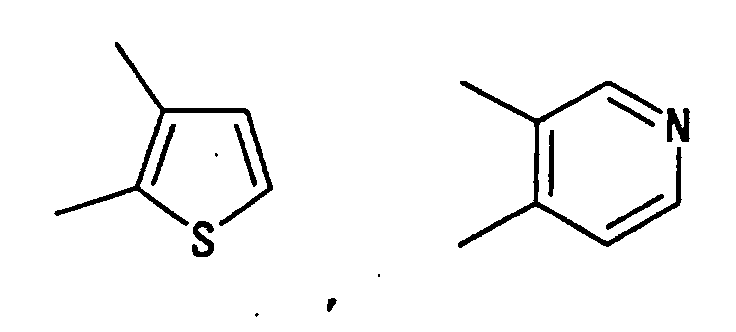
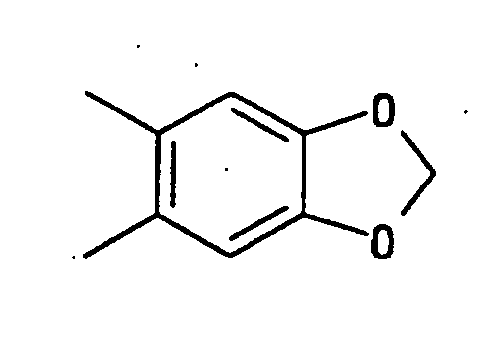 W and V1 are as defined in claim 1;V2' is -O-, -CH2- or -N(R45)- wherein R45 is a hydrogen atom, a C1-6 alkyl group, a phenyl group optionally substituted by a halogen atom; andV3' is -CH(R46)- or -N(R46')- wherein R46 and R46' are each a hydrogen atom, a benzyl group, a thienyl group, or a phenyl group optionally substituted by a halogen atom, a hydroxy group or a C1-6 alkoxy group,
 A is -N(R8'')- wherein R8'' is a hydrogen atom, a C1-6 alkyl group or an aryl group optionally having substituents, -C(R9'')(R10'')- wherein R9'' and R10'' are the same or different and each is a hydrogen atom, a hydroxyl group, an amino group, a C1-6 alkyl group, a C1-6 hydroxyalkyl group or a C2-7 alkoxycarbonylamino group, or R9'' and R10'' may form, together with the adjacent carbon atom, a C3-7 cycloalkyl group, -(CH2)m-NH- wherein m is as defined in claim 1, -CO- or a single bond; andB is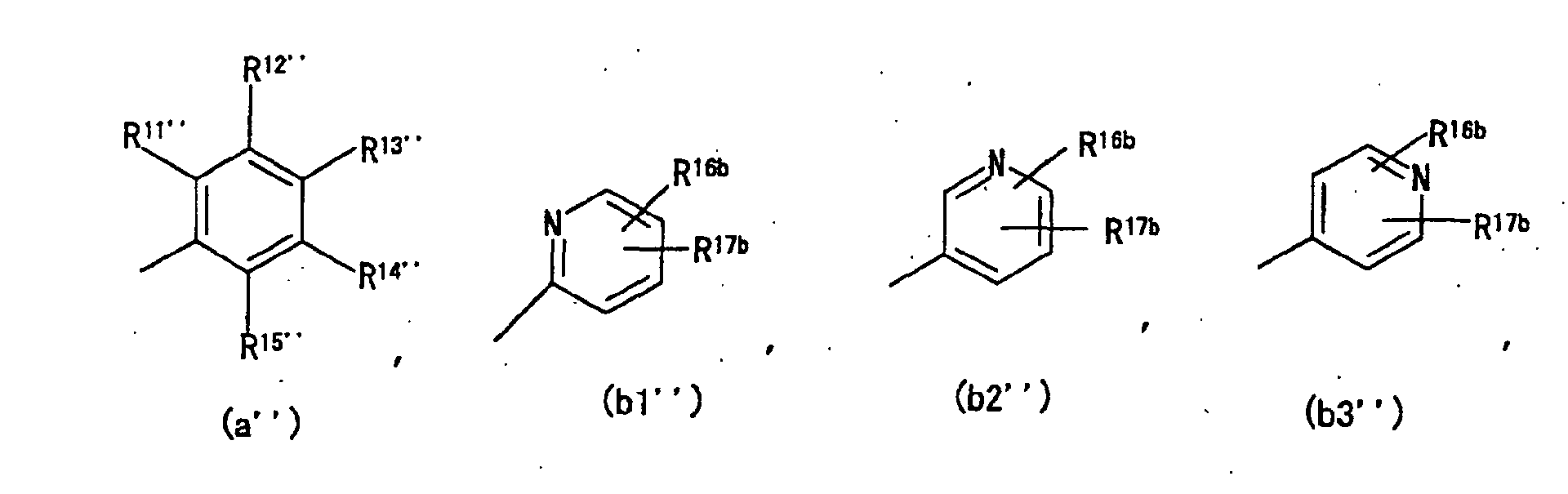
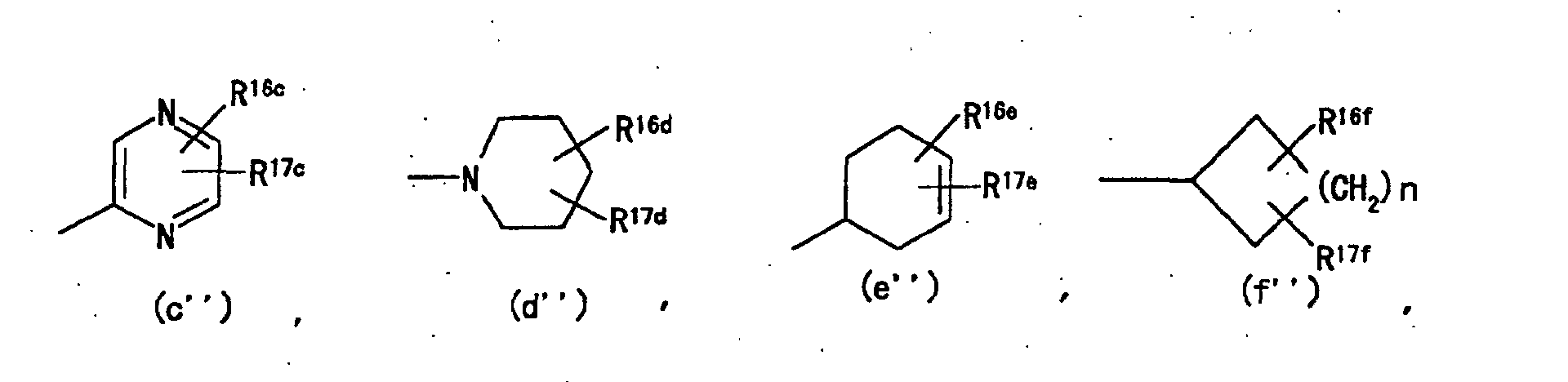

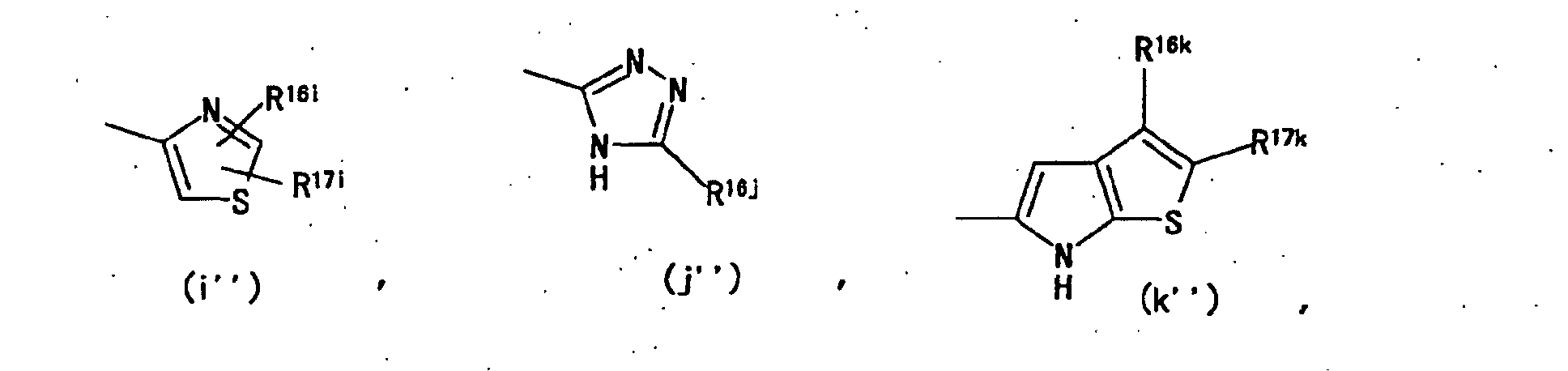 wherein R11'', R12'', R13'', R14'' and R15'' are the same or different and each is a hydrogen atom, a halogen atom, a C1-6 alkyl group, a C1-6 alkoxy group, a nitro group, a hydroxyl group, a cyano group, a haloalkyl group, an aralkyl group, an aryl group optionally having substituents, an aryloxy group, a tetrazolyl group, a triazolyl group, -(CH2)p-CO-R19 wherein p and R19 are as defined in claim 1, -O-(CH2)r-R23 wherein r and R23 are as defined in claim 1, -O-CO-R27 wherein R27 is as defined in claim 1 or -N(R28'')(R29'') wherein R28'' and R29'' are the same or different and each is a hydrogen atom, a C1-6 alkyl group, an aryl group optionally having substituents, -(CH2)p'-COO-R30'' wherein p' is as defined for p and R30'' is a hydrogen atom or a C1-6 alkyl group wherein the C1-6 alkyl group is optionally substituted by a hydroxyl group, a trifluoromethyl group or a carboxyl group, -CON(R31)(R32) wherein R31 and R32 are as defined in claim 1, -CO-R33 wherein R33 is as defined in claim 1 or -CO-(CH2)r'-R34 wherein r' and R34 are as defined in claim 1,
 R16b-R16n and R17b-R17n are as defined in claim 1,R18 is as defined in claim 1,Y'' is -S- or -N(R35)- wherein R35 is as defined in claim 1, andn is as defined in claim 1, orR6 and R7 may form, together with the adjacent nitrogen atom,wherein R36'' and R37'' are the same or different and each is a hydrogen atom, a halogen atom, a C1-6 alkyl group, a C1-6 alkoxy group, an amino group, a hydroxyl group or -O-CO-R41 wherein R41 are as defined in claim 1;
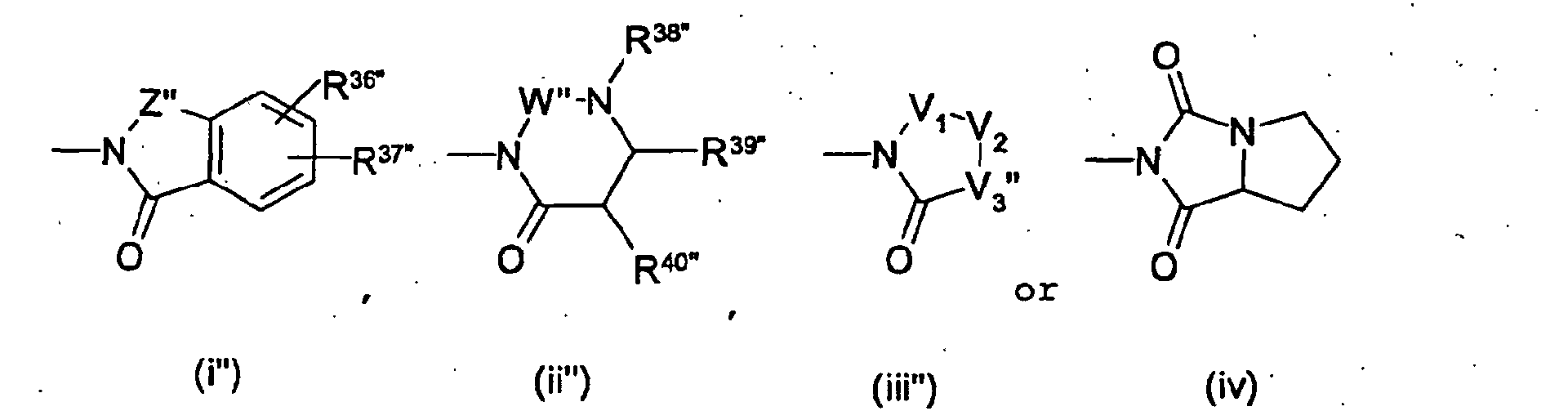 Z'' is, -CH2-CH2-, -C(R42)=CH-, -N=N- , -CO- , -CO-O- , -CO-CH2-O-, -CH2-CO-NH-, -C(R42'')(R43)-N(R44'')- wherein R42, R42'' and R43 are as defined in claim 1 and R44'' is a hydrogen atom, a C1-6 alkyl group or a C2-7 alkoxycarbonyl group or -C(U)-N(R44''')- wherein U is =O or =S and R44''' is as defined for R44'';R38'' is a hydrogen atom or an aryl group optionally having substituents;R39'' and R40'' are the same or different and each is a hydrogen atom, a C1-6 alkyl group or a C2-7 alkoxycarbonyl group, or R39'' and R40" may form, together with the adjacent carbon atom,
 W'' is -CO- or -CH2-;V1 and V2 are as defined in claim 1; andV3'' is -CH(R46'')- or -N(R46''')- wherein R46'' and R46''' are the same or different and each is a hydrogen atom or an aryl group optionally having substituents,