TECHNICAL FIELD
The present invention relates to a connecting structure
between cells for forming a battery module having a required output
voltage by connecting a plurality of cells, a battery module formed
by using that connecting structure, and a battery pack formed by
arranging and electrically connecting a number of such battery
modules and mechanically coupling them.
BACKGROUND ART
As a conventional connecting structure between cells for
forming a battery module that obtains a required output voltage by
connecting a plurality of cells in series, various techniques have
been known, for example, as disclosed in Japanese Laid-Open Patent
Publication Nos. Hei 10-106533, 2001-126703, and 2000-149907
(hereinafter, referred to as the first, second, and third
conventional techniques, respectively).
According to the first conventional technique, as shown in
Fig. 15, a dish-like portion of a connector 3 arranged between two
cells B1 and B2 is connected to a sealing plate 10 on which a metal
cap 1 serving as a positive terminal of one cell B1, and to a cell
case 2 serving as a negative terminal of the other cell B2 by
projection welding. More specifically, the connector 3 includes a
cylindrical portion 4 fitted onto the outer surface of the cell
case 2 and a flat portion 7 that can be in contact with the sealing
plate 10, as well as projections 8 and 9 for projection welding,
that are provided at positions on circles of the same radius at
regular intervals of 90° on the inner surface of the cylindrical
portion 4 and the lower surface of the flat portion 7, respectively.
By performing projection welding via those projections 8 and 9, the
flat portion 7 of the connector 3 is connected to the sealing plate
10 electrically connected to the metal cap 1 of one cell B1 while
the cylindrical portion 4 is connected to the cell case 2 of the
other cell B2. Moreover, an insulation ring 11 prevents short-circuit between the cell case 2 of the cell B1 and the connector 3.
Thus, both the cells B1 and B2 are electrically connected in series
and mechanically coupled.
Fig. 16 illustrates a conventional battery module 5. This
battery module 5 is formed by connecting a required number of cells
B1 to B6 for obtaining a required output voltage (six in the shown
example), in series with the aforementioned connecting structure.
The second conventional technique provides a similar
structure to that provided by the first conventional technique, but
is different from the first conventional technique in that a
central coupling portion (flat portion) and a flange portion
(cylindrical portion) of a dish-like connection member which is
approximately the same connector 3 of the first conventional
technique are provided with pressing convex portions, respectively,
via which the dish-like connector is welded to two cells by laser.
In the third conventional technique, a plurality of cells are
connected directly to each other without using the connector used
in the first and second conventional techniques. More specifically,
a sealing member for closing an opening of the cell case is
provided with a connection-electrode portion that projects toward
the outside along the cell axis. Such a connection-electrode
portion of one of two cells that are adjacent is coupled directly
to the bottom of the case of the other cell, which is opposite to
the opening of the case, by welding via a plurality of projections
provided on the connection-electrode portion. Thus, a plurality of
cells are arranged in line along the axes of the cells and are
connected in series.
A number of battery modules, each formed using any of the
connecting structures between cells of the first, second, and third
conventional techniques, are electrically connected in series to
form a battery pack which can provides a high tension power. The
battery pack for providing such a high tension power is used in a
hybrid electric vehicle that uses a combination of an internal-combustion engine and a battery driving motor for obtaining a
driving force, as a driving power supply for the above motor. As
this type of battery pack, battery packs have been conventionally
known which are disclosed in Japanese Laid-Open Patent Publication
Nos. 10-270006 and 2000-223096 (referred to as the fourth and fifth
conventional technique, respectively), for example.
The battery pack according to the fourth conventional
technique has a structure in which a plurality of battery modules
shown in Fig. 16 are arranged in a multistage arrangement and are
accommodated in a plastic holder case in form of prismatic box
having an opening at its top. The holder case has circular through
holes formed in both end walls, through which the battery modules 5
each having an elongated cylindrical shape are respectively
inserted, the number of the through holes being the same as the
number of the battery modules to be accommodated. The holder case
also includes an intermediate wall for stably holding the battery
modules, between the end walls parallel to them. The intermediate
wall also has as many circular through holes as those provided on
each end wall. The battery modules are inserted into the
corresponding through holes provided in both end walls and the
intermediate wall and are held in position in the holder case
A battery pack according to the fifth conventional technique
includes a holder case for holding a plurality of battery modules
in parallel to each other. The holder case includes cover cases
provided on both sides and an intermediate case provided between
both the cover cases. Moreover, the holder case includes holder
ribs for holding a plurality of battery modules arranged in a
plurality of rows and stages on both faces of the intermediate case
and on the inner faces of the cover cases, so as to project
therefrom. The holder case holds those rows and stages of battery
modules in position by coupling the cover cases on both sides and
the intermediate case and sandwiching those battery modules between
the holder ribs.
However, the battery module 5 formed by using the connecting
structure according to the first conventional technique has an
elongated cylindrical shape obtained by arranging and coupling a
plurality of cells B1-B6 along the cell-axis direction. Therefore,
it is quite difficult to manufacture the entire outer diameter, the
length, and the parallelism with high precision. In addition,
projection welding has to be performed in an unstably posture, i.e.,
a posture in which the projections 8 for welding of the cylindrical
portion 4 of the connector 3 are brought into contact with the
outer surface of the circular cell case 2. This decreases the
yield of the battery module 5. Moreover, the number of the welding
times is large and therefore the productivity is not good. For
example, when two of the cells B1-B6, that are adjacent, are
connected to a single connector 3, welding has to be performed six
times, i.e., welding is performed four times between the cell cases
2 of the connector 3 in series welding and is performed twice
between the connector 3 and the sealing plate 10 in series welding.
Furthermore, a current flowing:between each two adjacent cells of
the cells B1-B6 flows along a path running through the connector 3.
Thus, the current path becomes longer and the electric resistance
also becomes larger by the amount corresponding to the increase of
the current path.
In addition, the connector 3 and the insulation ring 11 are
attached to every connection of each two of the cells B1-B6, that
are adjacent. This increases the cost of parts, and further
reduces the productivity because a mounting process for mounting
the connector 3 and the insulation ring 11 is required. Moreover,
in many cases this battery module may be used in an environment in
which this battery module receives vibration, for example, in a
vehicle or an electric bicycle. However, in the structure of
coupling the cells B1-B6 in the first conventional technique, the
bending strength between the cells B1 and B2 is low and the
mechanical strength at the coupling between the cells B1 and B2 is
not sufficient. Therefore, there is a drawback that the connector
3 is broken and the cells B1 and B2 tend to uncouple when the
coupling between the cells B1 and B2 receives severe vibration.
Moreover, the battery module formed by using the connecting
structure according to the second conventional technique has
substantially the same structure as that of the first conventional
technique. Therefore, it is quite difficult to fabricate the outer
diameter, the length, and the parallelism of the battery module
with high precision. In addition, in the battery module, laser
welding is performed in an unstable posture. Therefore, this
battery module has the same drawbacks as those in the first
conventional techniques as follows; the yield is not high; the
productivity is not high because the number of the welding times is
large; the needs of the connector and the insulation ring increase
the cost of parts, and also increase the number of processes so as
to further decrease the productivity; and the connector is easy to
be broken when it receives severe vibration. Furthermore, in this
battery module, in a case where a thicker connector is used in
order to prevent the connector from being broken when it receives
vibration, a stress is applied to the sealing plate so as to lose
airtightness of the sealing plate.
Moreover, the battery module formed by using the connecting
structure according to the third conventional technique has
advantages that the connector and the insulation ring are not
required and the number of the welding times can be reduced as
compared with the battery modules of the first and second
conventional techniques. This reduces the cost. However, this
battery module is inevitably lower in the mechanical strength and
the bending strength when it receives vibration or shock from the
side, as compared with those of the first and second conventional
techniques, because the cells are welded and coupled directly to
each other. Therefore, in a case where this battery module is used
in an environment where it receives severe vibration, such as an
electric vehicle or electric bicycle, the cells must be held in the
holder case by a quite solid structure, for example. If such a
structure is employed, the cost is increased.
On the other hand, the conventional battery pack is formed by
arranging and connecting a required number of battery modules
according to any of the first to third conventional techniques. In
the battery pack according to the fourth conventional technique
mentioned above, however, a mold of the holder case that has the
through holes on both end walls and the intermediate wall becomes
complicated because it is difficult to remove the mold in a portion
forming the above shape. Therefore, the fabrication of the holder
case takes a lot of efforts, thus increasing the fabrication cost.
Moreover, the outer diameter of the battery module is not constant
in its entire length because the connector 3 and the insulation
ring 11 bulge at the connection between the cells. Therefore, even
if the respective through holes in both the end walls and the
intermediate wall of the holder case are formed with high precision,
it is impossible to insert all the battery modules into the
respective through holes with no gap and thus the battery module
cannot be held stably without being jolted. In addition, work for
inserting the battery module into the small through hole and
attaching thereto takes a lot of trouble and time and therefore
decreases the productivity. Furthermore, when the number of the
battery modules to be accommodated was changed, it is necessary to
fabricate the holder case by using a new mold. This further
increases the cost.
Furthermore, in the battery pack according to the fifth
conventional technique, it is difficult to hold all the battery
modules evenly in a case where any deformation occurred in either
one of the cover cases and the intermediate case that form together
the holder case. Thus, the cover cases and the intermediate case
must be fabricated to prevent any deformation and the shape of the
holder ribs and the dimensions between the holder ribs must be
fabricated with high precision. This increases the cost of
material and the fabrication cost.
The present invention was made in view of the drawbacks of
the aforementioned conventional techniques, and aims to provide a
connecting structure between cells that is formed by easy processes
at a low cost and reduces electric resistance; a battery module
having a solid structure impervious to vibration or shock; and a
battery pack that employs a required structure by easily connecting
a number of battery modules.
DISCLOSURE OF THE INVENTION
In order to achieve the above object, a connecting structure
between cells according to the present invention comprises a
plurality of cells each of which including: a cylindrical cell case
having a bottom serving as one electrode; a sealing plate for
closing an opening of the cell case to be electrically insulated,
the sealing plate serves as the other electrode; and a ring-shaped
connection-electrode portion being formed near an outer
circumference of the sealing plate so as to project outward along a
cell-axis direction, wherein the cells are arranged in parallel
with their cell axes arranged in parallel, and a connection plate
in form of flat plate is bridged between the connection-electrode
portion of one of each two of the cells that are adjacent, and the
bottom of the cell case of the other cell, and is connected to a
portion near the connection-electrode portion and a portion near
the bottom of the cell case by welding.
In this connecting structure between cells, welding is
performed in a stable posture in which the connection plate, that
is a plain flat plate, is bridged at both sides between the ring-shaped
connection-electrode portion of one of two cells arranged
with their cell axis arranged in parallel and the bottom of the
cell case of the other cell so as to be supported. Therefore, a
trouble such as a defective joint, never occurs, thus largely
improving the yield. Moreover, the number of the welding times
required for jointing the connection plate and the connection-electrode
portion and jointing the connection plate and the bottom
of the cell case is two. Therefore, the number of the welding
times is greatly reduced, thus dramatically improving the
productivity. Furthermore, since the cells are arranged in
parallel with their cell axis arranged in parallel, a current path
between the two cells becomes the shortest because it passes
through positions that are close to each other, i.e., the ring-shaped
connection-electrode portion of one cell and the outer
circumferential portion of the bottom of the other cell. Therefore,
the electric resistance can be greatly reduced.
A battery module according to the present invention includes
a holder case, being made of synthetic resin, having a
substantially prismatic shape with a thickness substantially equal
to a length of a cell in a cell-axis direction and includes a
plurality of cell-accommodating portions arranged in one or more
rows, each of the cell-accommodating portions extending through the
holder case along the thickness direction of the holder case and
being a square seen from the front, the square having a side that
is substantially equal in length to the outer diameter of the
cylindrical cell, wherein two adjacent cells of the cells inserted
into the cell-accommodating portions, respectively, are
electrically connected and mechanically coupled by any of the
above-described connecting structures of the present invention;
openings on both sides of the holder case in the thickness
direction are closed with cover members fixed to the openings; and
each of the cover members is provided with radiation holes at
positions corresponding to spaces between the cells and walls of
the cell-accommodating portions and portions corresponding to
spaces between the connection plate and the walls, the shapes of
the radiation holes corresponding to the respective spaces.
In this battery module, the shaping precision of the holder
case made of synthetic resin, uniquely determines the dimensions of
the shape. Therefore, variation in the dimensions never occurs
after the battery module is assembled, thus providing the
precisely-shaped battery module. Moreover, since each cell is held
in a completely electrically insulated state by being accommodated
in the corresponding cell-accommodating portion, the insulation
ring and the outer tube made of resin in the conventional battery
module are not required, reducing the cost of material and
improving the productivity. Furthermore, since each cell is
secured by the cover members while being in contact at four
portions on its outer circumferential surface with four walls
forming the cell-accommodating portion, the cell is held surely
without being jolted even when the battery module receives
vibration or shock. In addition, the spaces formed between each
cell and the walls of the cell-accommodating portion and the spaces
formed between the connection plate and the walls of the cell-accommodating
portion are in communication with the outside of the
holder case via the radiation holes of the cover members on both
sides. Thus, a heat-radiation path is formed that extends from one
face side of the holder case, through a surrounding portion of each
cell to the other face side. Therefore, each cell is cooled highly
effectively by air flowing through the heat-radiation path, and all
of a number of cells are cooled evenly.
A battery pack according to the present invention includes:
the holder case of the battery module of the present invention,
having a positive terminal and a negative terminal, being provided
with coupling members at one end in the thickness direction on both
sides with respect to the arrangement direction and attachment
members at the other end in the thickness direction on both sides
with respect to the arrangement direction, the coupling members and
the attachment members are formed by insert molding; a plurality of
battery module units being provided each of which is formed by
integrating two battery modules with each other by coupling them at
the respective coupling members with fixing members, one of two
battery modules being laid on the other with its orientation in the
thickness direction inverted; a plurality of outer plates
surrounding the plurality of battery module units being arranged in
parallel, the battery module units are integrated with the outer
plates by being fixed at the attachment members with fixing members
to the outer plates; and the positive and negative terminals for
external connection, of the respective battery modules are
electrically connected via a bus bar, so that the cells
incorporated in the respective battery modules are connected in
series.
In this battery pack, the battery module has the shape that
is uniquely determined by the shaping precision of the holder case
and is shaped with high precision, and a relatively large number of
cells are stably accommodated and held in the holder case.
Therefore, the battery module unit is formed by easily coupling the
battery modules to each other by a simple fixing means using the
fixing member such as a setscrew. Moreover, while a plurality of
battery module units are easily integrated with a plurality of
outer plates arranged to surround those battery module units, by a
simple fixing means using the fixing member such as a setscrew, and
a very solid structure can be easily assembled. Thus, this battery
pack is fabricated with extremely high productivity. In addition,
since the battery module employs a block-like form for stably
holding a number of cells, the number of the battery modules is
changed only by changing the shapes of the outer plates each of
which is formed by bending a plate. Thus, this battery pack
accommodates the change of the number of the battery modules at a
very low cost, as compared to the shaping of the holder case using
a new mold in the conventional battery pack. Furthermore, the
heat-radiation paths of the two battery modules of the battery
module unit, one of which is laid on the other, communicate with
each other. Thus, a cooling function for each cell is ensured even
in a case where a number of battery modules are integrated.
Therefore, it is unnecessary to include a cooling mechanism such as
a cooling fin blade that was conventionally used.
BRIEF DESCRIPTION OF THE DRAWINGS
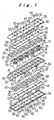
Fig. 1 is an exploded perspective view of a battery module
according to an embodiment of the present invention, showing the
arrangement of components thereof;
Fig. 2 is a perspective view of a lower cover of the above
battery module, while being inverted;
Fig. 3A is a perspective view of a cell that is one component
of the above battery module; and Fig. 3B is a cross-sectional view
thereof, taken along line IIIB-IIIB in Fig. 3A;
Figs. 4A, 4B and 4C illustrate a connecting structure between
cells according to an embodiment of the present invention, which
applied to connection between the cells in the above battery
module; Fig. 4A is a plan view; Fig. 48 is a front view; and Fig.
4C is an enlarged cross-sectional view, taken along line IVC-IVC in
Fig. 4A;
Fig. 5 is a plan view, showing a part of a state in which the
cells inserted in an accommodation space of the holder case are
connected with connection plates during production of the above
battery module;
Fig. 6 is a perspective view showing a state in which the
assembly of the above battery module has been completed;
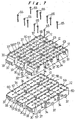
Fig. 7 is a perspective view showing the arrangement of three
battery module units using six battery modules mentioned above
during a fabrication process;
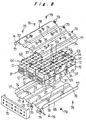
Fig. 8 is a perspective view showing a fabrication process of
a battery pack using the above three battery module units;
Fig. 9 is a vertical cross-sectional view of the battery pack
according to one embodiment of the present invention, formed by the
above three battery module units, taken along a direction
perpendicular to the longitudinal direction;
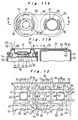
Fig. 10A is a plan view of a pair of connection plates used
in a connecting structure between cells according to another
embodiment of the present invention; and Fig. 10B is a plan view of
the connecting structure according to this embodiment;
Fig. 11A is a plan view of a connecting structure according
to still another embodiment of the present invention; Fig. 11B is
an enlarged cross-sectional view of a main part of the connecting
structure shown in Fig. 11B, taken along line XIB-XIB in Fig. 11A;
Fig. 12 is a plan view of a battery module according to
another embodiment of the present invention during a fabrication
process;
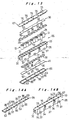
Fig. 13 is an exploded perspective view of a battery module
according to still another embodiment of the present invention;
Fig. 14A is a perspective view of a lower cover of the above
battery module, while being inverted; and Fig. 14B is a perspective
view of that battery module in a state when the assembly of the
battery module has been completed;
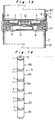
Fig. 15 is a vertical cross-sectional view of a conventional
connecting structure between cells; and
Fig. 16 is a perspective view of a battery module using the
conventional connecting structure.
BEST MODE FOR-CARRYING OUT THE INVENTION
Preferred embodiments of the present invention are described
below, referring to the drawings. Fig. 1 is an exploded
perspective view of a battery module 12 according to an embodiment
of the present invention, showing the arrangement of components of
the battery module 12. In this embodiment, an example is described
in which twenty cylindrical cells 13 of the same type and the same
standard are connected in series. The cell 13 is a nickel metal
hydride battery, for example.
First, the structure of the cell 13 applied to the above
battery module 12 is described. Fig. 3A is a perspective view of
the cell 13 and Fig. 3B is a cross-sectional view thereof, taken
along line IIIB-IIIB in Fig. 3A. A cell case 14 serving as a
negative electrode has a cylindrical shape with a bottom which
includes an opening at one end. In the cell case 14 are
accommodated an electrode set 17 including an positive electrode
plate and a negative electrode plate, that are well-known and are
spirally wound with a separator sandwiched therebetween, and
battery electrolyte (not shown). The opening of the cell case 14
is closed with a sealing member 18 formed by a sealing plate 19, an
insulation gasket 20, a metal cap 21, and a rubber valve 22.
The sealing member 19 is electrically insulated from the cell
case 14 with the insulation gasket 20 at its periphery and is fixed
to the opening of the cell case 14, which is caulked, via the
insulation gasket 20. Thus, the opening of the cell case 14 is
closed. On the sealing plate 19, a ring-shaped connection-electrode portion 28 that projects outward along the cell-axis
direction is formed wear the periphery of the sealing plate 19 to
be concentric with respect to the sealing plate 19. A positive
lead 28 drawn out from the electrode set 17 is connected to the
sealing plate 19. Therefore, the connection-electrode portion 28
formed on the sealing plate 19 serves as a positive terminal. In
addition, a circular concave portion 29 that becomes concave inward
is formed at the center of the bottom of the cell case 14 serving
as a negative electrode, to be concentric with respect to the
bottom of the cell case 14.
The rubber valve 22 is accommodated in a space formed between
an concave part 23 at the center of the sealing plate 19 and the
metal cap 21, thereby sealing a gas-discharge hole 24 formed in the
concave part 23. This rubber valve 22 is elastically deformed by a
gas pressure inside the cell applied via the gas-discharge hole 24
when the gas pressure has abnormally increased and has reached a
valve-opening pressure, thereby opening the gas-discharge hole 24.
Thus, gas inside the cell is discharged to the outside of the cell
through the gas-discharge hole 24 and a gas-emission hole 27 of the
metal cap 21.
The above cell 13 is accommodated within a holder case 30
formed of synthetic resin. The holder case 30 has a substantially
prismatic shape having the same thickness as the length of the cell
13 in the cell-axis direction, and includes cell-accommodating
portions 31 for accommodating the twenty cells 13, respectively,
that are arranged in two rows each containing ten cell-accommodating
portions 31. Each cell-accommodating portion 31 is a
square surrounded by four walls when seen from the front, and
extends in the thickness direction of the holder case 30 through
the holder case 30. Thus, the thickness in the extending direction
of the cell-accommodating portion 31 is set to be the same as the
length of the cell 13 in the cell-axis direction. Moreover, one
side of the square, that is the shape of the cell-accommodating
portion 31 seen from the front, is set to be substantially the same
as the outside diameter of the cell 13.
Referring to Fig. 1, a positive terminal 32 and a negative
terminal 33 for external connection, formed by screw nuts, are
provided by insert molding integrally with the holder case 30 on
the outer surface of the holder case 30 at one end (left end in Fig.
1) in an arrangement direction in which the cell-accommodating
portions 31 are arranged (longitudinal direction). Moreover, on
each of outer faces on both sides of the holder case 30 along the
above arrangement direction, two coupling members 34 are provided
on the upper-face side (upper side in Fig. 1) in the thickness
direction, and three attachment members 37 are provided on the
lower-face side (lower side in Fig. 1) in the thickness direction.
The coupling members 34 and the attachment members 37 are formed by
screwing nuts integrally with the holder case 30 by insertion
molding.
The cells 13 are respectively inserted and held in the
corresponding cell-accommodating portions 31 of the holder case 30
with their cell axes arranged in parallel. In this state, each two
cells 13, that are adjacent, in each of rows of cells are
alternately coupled by connection plates 38 on the upper-face side
and those on the lower-face side sequentially, thus connection of
the cells 13 in series are achieved. Moreover, the cell 13 at the
left end in the back row is connected at the bottom of its cell
case 14 to the positive terminal 32 for external connection by the
connection plate 38, while the cell 13 at the left end in the front
row is connected at its connection-electrode portion 28 to the
negative terminal 33 for external connection by the connection
plate 38. Furthermore, the right-end one of the connection plates
38 on the upper-face side, connects two cells 13, that are
positioned at right ends in the back row and the front row and are
thus adjacent, to each other, as is apparent from the arrangement
of that connection plate 38.
Figs. 4A-4C show a connecting structure between cells
according to an embodiment of the present invention, which connects
each two cells 13 adjacent to each other by the above connection
plate. Fig. 4A is a plan view; Fig. 4B is a front view; and Fig.
4C is an enlarged cross-sectional view taken along line IVC-IVC in
Fig. 4A. The connection plate 38 is an approximately rectangular
flat plate with four corners rounded, as clearly shown in Fig. 4A,
and is formed by three cladding layers of Ni-Cu-Ni. Pores 39 are
provided on both sides in the longitudinal direction of the
rectangular, and slits 40 are provided to extend outward from
opposed sides of the pores 39 in the diameter direction along the
longitudinal direction. The connection plate 38 also has four
projections 42 for welding (nuggets 41 which were formed after
projection welding was performed via the projections 42 are shown
in Fig. 4A) that were formed in advance at positions on the same
circle outside the hole 39 at regular intervals of 90°. Therefore,
the connection plate 38 is symmetrical with respect to the center
in the longitudinal direction. This embodiment illustrates a case
where the connection plate 38 is welded via the projections 42.
In the above connecting structure, when the connection plate
38 is bridged between two adjacent cells 13, four projections 42 on
one side (left side in Fig. 4A) are brought into contact with the
connection-electrode portion 28 of one cell 13 and four projections
42 on the other side (right side in Fig. 4A) are brought into
contact with portions surrounding the concave portion 29 in the
bottom of the other cell 13. In this state, a well-known
projection welding is performed. This projection welding is
performed in a stable posture in which the connection plate 38,
that is a plain flat plate, is bridged between the ring-shaped
connection-electrode portion 28 of one of two cells 13, that are
arranged with their cell axes arranged in parallel, and the bottom
of the cell case 14 of the other cell 13 and is therefore supported
at both ends by them. Therefore, any trouble such as defective
joint caused by welding in an unstable posture as in the above-described
conventional connecting structure cannot occur, thus
largely improving the yield.
In the projection welding, for the left cell 13 in Figs. 4A-4C,
while a positive welding electrode is brought into contact with
a side face of the connection-electrode portion 28 and a negative
welding electrode is brought into contact with portions of the
connection plate 38 that are opposed to the projections 42, a high
voltage is applied across both the welding electrodes by means of
an inverter DC power supply. Thus, a welding current locally flows
between the projections 42 and the connection-electrode portion 28
in a concentrated manner because they have small contact areas and
thus small contact resistance, so that the four projections 42 are
fused by heat generated by that welding current and thus the
connection plate 38 and the connection-electrode portion 28 are
welded to each other at the nugget portions 41 while being in close
contact stably. Therefore, the connection plate 38 and the
connection-electrode portion 28 are tightly jointed via the four
nugget portions 41 by performing projection welding once.
Similarly, for the right cell 13 in Figs. 4A-4C, while a
negative welding electrode is brought into contact with the outer
surface of the cell case 14 and a positive welding electrode is
brought into contact with portions of the connection plate 38 that
are opposed to the projections 42, a high voltage is applied across
both the welding electrodes by means of the inverter DC power
supply. Thus, the connection plate 38 and the bottom of the cell
case 14 are tightly jointed via the four nugget portions 41 by
performing projection welding once.
Thus, each two cells 13 that are adjacent is connected to
each other by performing projection welding twice. Therefore, the
number of the welding times becomes largely reduced as compared to
the conventional connecting structure shown in Fig. 15 where the
welding is performed six times, for example, thus dramatically
improving productivity. Moreover, an ineffective shunt current is
also reduced dramatically by the pore 39 and a pair of slits 40 in
the above projection welding.
Moreover, according to the above connecting structure, the
both ends of the connection plate 38 are welded to positions that
are close to each other, i.e., the ring-shaped connection-electrode.
portion 28 of one cell 13, and the outer circumference of the
portion outside the concave portion 29 of the other cell 13.
Therefore, a distance L of a current path between the two adjacent
cells 13 shown in Fig. 4A becomes the shortest, thereby largely
reducing the electric resistance of that path. On the other hand,
according to the conventional connecting structure shown in Fig. 15,
the flat portion 7 and the cylindrical portion 4 of the dish-line
connector 3, which provide the longest distance therebetween, are
connected to two adjacent cells B1 and B2, respectively. Therefore,
the distance of the current path between the cells B1 and B2
becomes longer and therefore the electric resistance also increases.
In addition, the connection plate 38 of this embodiment is formed
of three cladding layers. In this connection plate 38, while an
intermediate Cu layer ensures excellent conductivity, Ni layers on
both sides are well welded to a nickel-plated steel sheet that is
typical material for the cell case 14. Therefore, the electric
resistance is further reduced. Accordingly, the above connecting
structure suppresses a power loss in the connection plate 38 to be
minimum.
In addition, according to the above connecting structure, the
projection welding is performed, while one welding electrode is in
contact with the outer side face of the ring-shaped connection-electrode portion 28 that projects at a position that is laterally
and upwardly away from the metal cap 21 for holding the rubber
valve 22 and the other welding electrode is in contact with the
portions in the connection plate 38 that are opposed to the
projections 42. Thus, no current flows through the metal cap 21
and therefore deformation of the rubber valve 22 caused by the heat
from the metal cap 22 never occurs. In this manner, a necessary
operation of the rubber valve 22 is always ensured in this
connecting structure. On the other hand, according to the
conventional connecting structure shown in Fig. 15, the projection
welding has to be performed while the welding electrodes are in
contact with the portions of the connector 3 that are opposed to
the projections 9 and the metal cap If respectively. Thus, the
metal cap 1 through which a current flows becomes concave inwardly
by thermal effects, causing the deformation of the rubber valve 22.
Furthermore, according to the above connecting structure, the
provision of the concave portion 29 that becomes concave inwardly
at the bottom of the cell 13 allows a small gap b to be provided
between a negative collector 43 and the bottom of the cell case 14,
as shown in Fig. 4C. Therefore, even if the bottom of the cell
case 14 is deformed to expand inwardly by thermal effects when that
bottom of the cell case 14 and the connection plate 38 are welded
to each other via projections, this deformation will not adversely
affect the negative collector 43 or the electrode set 17. Thus,
the above connecting structure ensures a required capacity and
stable performance of the cell. On the other hand, in the
conventional connecting structure, especially in the structure in
which the cells are connected directly to each other with no
connection member, as described in the third conventional technique,
the negative collector and/or the electrode set was/were deformed
by a pressure applied by the bottom of the cell case that expanded inwardly when the projection welding was performed.
The above connecting structure is formed by connecting each
two of the cells 13 inserted in the respective cell-accommodating
portions 31 of the holder case 30 with the connection plate 38
during the fabrication of the battery module 12, the two being
adjacent to each other. Fig. 5 is a plan view showing a part of a
state in which the cells 13 inserted in the cell-accommodating
portions 31 of the holder case 30 are connected by the connection
plates 38 during the fabrication of the battery module 12. In this
state, each cell 13 is inserted as it is, i.e., with no protrusion
such as a connector or an insulation ring, on its sides, unlike the
conventional structure. In addition, the length of one side of
each cell-accommodating portion 31, that is a square seen from the
front, is set to substantially the same as the outer diameter of
the cell case 14 of the cell 13. Therefore, four positions on the
outer circumference of the case of the cell 13, that are located at
regular intervals of 90°, are brought into contact with four walls
forming the corresponding cell-accommodating portion 31, so that
the cell 13 is surely held without jolting even when receiving
vibration or shock.
Moreover, when the cells 13 inserted in the cell-accommodating
portions 31 are connected with the connection plates
38, a gap 44 having an approximately triangular cross-section is
formed between each cell 13 and the walls of the corresponding
cell-accommodating portion 31 on both the upper and lower face
sides of the holder case 30. An elongated gap 47 is also formed
between the connection plate 38 and the cell-accommodating portion
31 on both the upper and lower face sides of the holder case 30.
These spaces 44 and 47 are shown with parallel lines in Fig. 5.
These gaps 44 and 47 serve as effective heat-radiation spaces for
the cells 13, when the battery module 12 operates.
Next, returning to Fig. 1, the description of the battery
module 12 is further provided. After the cells 13 were inserted in
the cell-accommodating portions 31 and the connection plate 38
connected each two adjacent cells 13 to each other thereby
completing the connecting structure, an upper elastic sheet 48 and
a lower elastic sheet 49, that are formed of elastic material such
as rubber, are placed on the openings on the upper-face side and
the lower-face side of the holder case 30, respectively. Both the
elastic sheets 48 and 49 have substantially the same strip-like
shape. Each elastic sheet 48, 49 has diamond-shaped radiation
holes 50 and elongated rectangular radiation holes 51 that are
formed alternately along the longitudinal direction at the center
in the widthwise direction, as well as radiation notches 52 formed
on all sides. Moreover, the upper elastic sheet 48 includes an
approximately triangular radiation hole 46 provided at right end
thereof in Fig. 1, in addition to the above radiation holes 50 and
51.
The diamond-shaped radiation hole 50 in each of the upper and
lower elastic sheets 48 and 49 has such a shape that accommodates
four gaps 44 formed between the above cells 13 and the cell-accommodating
portions 31; the elongated rectangular radiation hole
51 has such a shape that accommodates four gaps 47 formed between
the above connection plates 38 and the cell-accommodating portions
31; and the radiation notch 52 has such a shape that accommodates
two gaps 44 formed between the above cells 13 and the cell-accommodating
portions 31. Moreover, the triangular radiation hole
46 formed in the upper elastic sheet 48 at right end in Fig. 1
corresponds to a gap (not shown) formed between the connection
plate 38 bridged between the cells 13 in the front and back rows,
and the walls of the cell-accommodating portions 31.
The openings on both the upper-face side and the lower-face
side of the above holder case 30 are sealed by performing
ultrasonic welding of an upper cover 53 and a lower cover 54, that
are formed of synthetic resin, to the peripheral portions of the
openings of the holder case 30, while those upper and lower covers
53 and 54 are placed on the openings on the upper-face and lower-face
sides of the holder case 30 with the above elastic sheets 48
and 49 interposed therebetween, respectively. The upper cover 53
includes radiation holes 57, 58, 59 and 60 that are provided at
positions corresponding to the radiation holes 50, 51, 46 and the
radiation notches 52 of the upper elastic sheet 48 to have
corresponding shapes, respectively, and also includes relief
notches 61 provided on both sides at positions corresponding to the
coupling members 34 of the holder case 30.
On the other hand, the lower cover 54 includes radiation
holes 57, 58 and 60 at positions corresponding to the radiation
holes 50 and 51 and the radiation notches 52 of the lower elastic
sheet 49, as well as relief notches 61 on both sides at positions
corresponding to the coupling members 34 of the holder case 30.
Moreover, the lower cover 54 further includes relief notches 62 on
both sides at positions corresponding to the attachment members 37
of the holder case 30. In addition, ten supporting-leg projections
63 are formed to project, integrally with the lower cover 54 on the
outer side face of the lower cover 54, as shown in Fig. 2 which
illustrates the lower cover 54 while being inverted.
Next, assembly processes of the battery module 12 are
described. While the respective components are arranged in the
state as shown in Fig. 1, the cells 13 are inserted into the
respective cell-accommodating portions 31 of the holder case 30 in
the arrangement shown in Fig. 1. The connection plate 38 is then
bridged between each two adjacent cells 13 and welded thereto on
the upper-face side of the holder case 30, thereby forming the
aforementioned connecting structure and mutually connecting each
two adjacent cells 13. Two cells 13 arranged at the left end in
Fig. 1 are also connected to the positive and negative terminals 32
and 33 for external connection with the connection plates 38,
respectively. Subsequently, the upper elastic sheet 48 is placed
on the welded connection plates 38, and the upper cover 53 is
placed on the upper elastic sheet 48. Then, the opening-peripheral
portion of the upper cover 53 and the peripheral portion of the
holder case 30 are welded to each other by ultrasonic welding, so
that the upper-end opening of the holder case 30 is sealed.
Subsequently, the holder case 30 with its upper-end opening
sealed with the upper cover 53 is inverted, and then the connection
plate 38 is then placed to be bridged between each two adjacent
cells 13 and is finally welded. Thus, the above connecting
structure is formed and each two adjacent cells 13 are mutually
connected. In this manner, twenty cells 13 are secured in the
holder case 30 while being electrically connected to each other in
series and mechanically coupled. Then, the lower elastic sheet 49
is placed on the welded-connection plates 38, and the lower cover
54 is placed on the lower elastic sheet 49. By sealing the lower-end opening of the holder case 30 by ultrasonic welding of the
peripheral portion of the lower cover 54 to the opening-peripheral
portion of the holder case 30, the battery module 12 shown in Fig.
6 is completed.
An attachment means for attaching the upper and lower covers
53 and 54 to the holder case 30 is not limited to ultrasonic
welding described in the above embodiment. For example, setscrews
can be used.
The battery module 12 obtains the advantageous effects
described for the connecting structure, as well as the following
effects. Unlike the unstable structure of the conventional battery
module as shown in Fig. 16 in which a plurality of cells B1-B6 are
arranged in line along the cell axes and are coupled, in this
battery module 12, the cells 13 are accommodated in the cell-accommodating
portions 31 of the holder case 30, respectively, in
the arrangement in which the cells 13 are arranged with their cell
axes arranged in parallel; each cell 13 is held by the contact with
four walls of the cell-accommodating portion 31 without jolting;
shock or vibration applied from the outside of the holder case 30
is absorbed by the elastic sheets 48 and 49 placed on both ends of
the cells 13 in the cell-axis direction and thus has no effect on
the cells 13; and the openings of the holder case 30 on both sides
are completely sealed by being welded to the upper and lower covers
53 and 54. Therefore, although this battery module 12 accommodates
a relatively large number of cells 13, each cell is surely held
stably while being protected and no breakdown occurs, even in a
case where this battery 12 is mounted in an environment where
severe vibration or shock is easy to occur, for example, in an
electric vehicle or an electric tool.
Moreover, the gaps 44 and 47 formed at four corners of the
cell-accommodating portion 31 that is a square seen from the front,
with the cells 13 communicate with the outside on the upper-face
side and the lower-face side of the holder case 30, through the
radiation holes 50, 51 and 46 and the radiation notches 52 of the
upper and lower elastic sheets 48 and 49 and the radiation holes
57-60 of the upper and lower covers 53 and 54. Thus, heat-radiation
paths are formed each running from one face side of the
holder case 30, through the surrounding portion of each cell 13 and
to the other face side. Therefore, an air flowing through the
heat-radiation paths cools each cell 13 significantly effectively
and all of a relatively large number of cells 13 are evenly cooled.
This eliminates the need of the cooling mechanism provided in the
conventional battery pack, such as a cooling fin blade, in a
battery pack formed by a large number of such battery modules 12.
This battery pack is described in more detail later.
Furthermore, in the above battery module 12, each cell 13 is
accommodated while being surrounded by four walls of the
corresponding cell-accommodating portion 31, so that the cells 13
are kept electrically insulated from each other completely. Thus,
the insulation ring 11 used for insulating each of the cells B1-B6
in the conventional battery module and an outer tube, formed of
resin having electric insulation property and thermal shrinking
property, such as polyvinyl chloride, for covering the outer
circumferential surface of each of the cells B1-B6 connected in
series are not required. Therefore, both reduction in the cost of
material and improvement of productivity are achieved.
In addition, it is difficult to fabricate the conventional
battery module of the precise shape, length and parallelism,
because the connection plate 3 and the insulation ring 11 bulges
from the side face of each of the cells B1-B6 connected in series
in the cell-axis direction. On the other hand, according to the
above battery module 12, the shaping precision of the holder case
30 made of synthetic resin uniquely determines the dimensions of
the shape of the battery module 12. Therefore, variation in the
dimensions does not occur after the assembly, and the battery
module 12 precisely shaped is obtained.
Since the above battery module 12 includes a relatively
larger number (twenty in the embodiment) of cells 13 that are
included within the holder case 30 and are held by a solid
structure, as described above, and also includes the coupling
members 34 and the attachment members 37 provided integrally with
the holder case 30 that are formed by screwing nuts on the outer
face of the holder case 30 by insertion molding, it can be used as
a driving power supply for an electric vehicle or an electric tool
as it is, unlike the conventional battery module in which six cells
B1-B6 are simply connected in series in the cell-axis direction.
Especially, the above battery module 12 provides markedly effects
when a larger number of such battery modules 12 are coupled to form
a battery pack in order to be used as a motor driving power supply
for an electric vehicle. Next, the battery pack formed by using
the above battery modules 12 is described.
Fig. 7 is an exploded perspective view of the battery pack,
showing the arrangement of components of the battery pack in which
six battery modules 12 mentioned above are used and thus 120 cells
13 in total are connected in series, during the fabrication. In
this battery pack, three battery modules 12 are arranged in
parallel in such a manner that they are in close contact. On these
three battery modules 12, other three battery modules 12 are placed
in the arrangement in which they are inverted. In this arrangement,
since two battery modules 12, i.e., the upper and lower battery
modules 12 are faced to each other while one of them is inverted
with respect to the other, two coupling members 34 on the side of
each battery module 12, i.e., total four coupling members 34 are
arranged closely and are opposed. Each of these twelve pairs of
coupling members 34, in each of which the coupling members 34 are
opposed to each other, is screwed together by a setscrew (fixing
member) 65. Thus, three battery module units 64 are obtained in
which one of two battery modules 12 is laid on the other and they
are mutually jointed.
Between the two battery modules 12 in each battery module
unit 64, i.e., the upper and lower battery modules 12, the
radiation holes 57-60 of the upper and lower covers 53 and 54 that
are in contact with each other, match, and communicate. Thus,
heat-radiation paths are formed between the two battery modules 12,
i.e., the upper and lower battery modules 12 in each battery module
unit 64, each running through the surrounding portion of each cell
13 from one face side to the other face side. Therefore, the
cooling performance for each cell 13 is ensured even while the
upper and lower battery modules 12 are coupled.
Fig. 8 is a perspective view showing a fabrication process in
which the battery pack is formed by using three battery module
units 64, and Fig. 9 is a vertical cross-sectional view of the
battery pack 100 according to an embodiment of the present
invention, formed by using those three battery module units 64,
taken along a direction perpendicular to the longitudinal direction
(horizontal direction in Fig. 8). This battery pack 100 is formed
by integrating three battery module units 64 by using a pair of
upper and lower outer plates 68; a pair of side-coupling plates 69
(shown in Fig. 9) for coupling both sides (front side and back side
in Fig. 8) of that pair of outer plates 68 to each other; a bus bar
70 (shown in Fig. 8) that is attached to the front ends (left ends
in Fig. 8) of both outer plates 68 and electrically connects the
positive and negative terminals 32 and 33 for external connection
of the respective battery modules 12 mutually, thereby connecting
120 cells 13 in total in series; and a rear-coupling plate 71
(shown in Fig. 9) that can be attached to the rear ends (right ends
in Fig. 8) of both the outer plates 68.
As clearly shown in Fig. 9, each of the pair of outer plates
68 has insertion concave parts 72 provided along the longitudinal
direction of the outer plate 68, which allow total ten supporting-leg
projections 63 extending from the upper and lower surfaces of
the respective three battery module units 64 to be inserted
thereinto. Each outer plate 68 also includes two attachment faces
73 between those insertion concave parts 72, each of which supports
the attachment members 37 of two adjacent battery module units 64.
Furthermore, each outer plate 68 includes two attachment faces 74
near both ends, which support the attachment members 37 of the
battery module units 64 on both sides. Both sides of the outer
plate 68 are bent particularly to the attachment faces 74 so as to
form coupling pieces 77. The attachment faces 73 and 74 and the
coupling pieces 77 have screw holes 78 at predetermined locations.
Next, an assembly procedure of the above battery pack 100 is
described. Three battery module units 64 are positioned so as to
insert the supporting-leg projections 63 each projecting from the
corresponding battery module unit 64 downward into the insertion
concave parts 72 of the outer plate 68 placed under the three
battery module units 64 and to match the screw holes 78 of the
attachment faces 73 and the respective attachment members 37. By
screwing the setscrews 70 and the screw holes 78 and the attachment
members 37 thus matched together, the respective battery module
units 64 are secured to the lower outer plate 68.
Subsequently, the upper outer plate 68 is placed to cover
those three module units 64 at a relative position where the
supporting-leg projections 63 projecting from the respective
battery module unit 64 upward are inserted into the insertion
concave parts 72 of the outer plate 68, and is positioned so as to
match the screw holes 78 of the attachment faces 73 and the
attachment members 37. By screwing the screw holes 78 and the
attachment members 37 thus matched together with the setscrews 79,
the three battery module units 64 are also secured to the upper
outer plate 68.
Moreover, as shown in Fig. 9, the side-coupling plates 69 on
both sides are brought into contact with the corresponding coupling
pieces 77 of the upper and lower outer plates 68 from the outside
to be positioned with respect to the coupling pieces 77. In this
state, setscrews 80 are screwed together with the screw holes 78 of
the coupling pieces 77 via insertion holes (not shown) of the side-coupling
plates 69, thereby the coupling pieces 77 on each side of
the upper and lower outer plates 68 are jointed via the side-coupling
plate 69. Finally, the bus bar 70 and the rear-coupling
plate 71 are attached to both ends of the upper and lower outer
plates 68 by predetermined attachment means (not shown), so that
the battery pack 100 is completed.
According to the above battery pack 100, the battery module
unit 64 is formed by easily coupling the battery modules 12 by a
simple fixing means, i.e., screwing using the setscrews 65.
Moreover, a plurality of battery module units 64 is integrated by
arranging a pair of outer plates 68, the side-coupling plates 69,
the rear-coupling plate 71 and the bus bar 70 to surround those
battery module units 64 and by integrating them with a simple
fixing means, i.e., screwing them with setscrews 79 and 80. Easy
assembly of such a solid structure is allowed because the battery
module 12 is formed to be prismatic with a highly-precise shape
uniquely determined by the shaping precision of the holder case 30
and a relatively larger number of cells 13 are accommodated within
the holder case 30 in a state in which they are not directly
influenced by vibration or shock. Therefore, this battery pack 100
is produced with significantly high productivity.
On the other hand, according to the fourth conventional
technique mentioned before, the battery pack has an unstable
structure in which a plurality of cells are arranged in line along
the cell-axis direction and are simply coupled to each other via
the connector and the insulation ring. Therefore, it takes a lot
of troubles to insert a plurality of such battery modules into the
through holes provided in the end walls and the intermediate wall
of the holder case having the complicated shape and arrange them in
the multistage arrangement including multiple rows of the battery
modules. Moreover, since the battery module in which there are
various protrusions, such as the connection member and the
insulation ring, on the outer circumferential surface of the cells
arranged in line, is inserted into the through holes and held, it
is difficult to hold the battery modules with no gap between them.
The cells may be jolted in the holder case to be broken when
receiving vibration or shock. In addition, according to the fifth
conventional technique mentioned above, a number of battery modules
having the similar structure to that mentioned above are held by
the holder ribs provided on the inner faces of the cover cases and
the intermediate case of the holder case. Therefore, the fifth
conventional technique has the same drawbacks as those mentioned
above. The above battery pack 100 overcomes the various drawbacks
of the aforementioned conventional techniques all at once.
Moreover, the above battery pack 100 includes the battery
module 12 and the battery module units 64 in which the heat-radiation
path is provided to run up and down through the
surrounding portion of each cell 13. The above battery pack 100
also includes heat-radiation paths 82 that are formed between the
respective battery modules 12 and the upper and lower outer plates
68 by inserting the supporting-leg projections 63 into the
insertion concave parts 72, as shown in Fig. 9, to extend in the
horizontal direction in Fig. 9. In addition, the attachment
members 37 of the battery module unit 64 are in contact with those
of the adjacent battery module unit 64 at upper and lower positions
in a portion between those battery module units 64, while those
battery module units 64 are away from each other between the
positions at which the attachment members 37 are in contact. Thus,
a heat-radiation path 83 is provided between the adjacent battery
module units 64. Furthermore, a number of vents 81 in form of slit
are formed in the rear-coupling plate 71. Therefore, in the
battery pack 100, all of a large number of cells 13, 120 cells in
the shown example, are quite effectively cooled and evenly. On the
other hand, in the conventional battery pack, since a temperature
sensor for detecting the temperature of the cell and a blower that
operates based on the temperature detected by this temperature
sensor are provided, the structure becomes larger and the cost also
increases.
Furthermore, according to this battery pack 100, the battery
module 12 has a block-like form in which a number of cells 13 are
stably held. Thus, the number of the battery modules 12 can be
changed only by changing the shapes of the outer plate 68, side-coupling
plate 69, and rear-coupling plate 71. In addition, any of
these plates 68, 69, and 71 is formed by deforming just a plate.
Therefore, it is possible to manufacture these plates 68, 69 and 71
having various shapes at a quite low cost, thereby accommodating
the change of the number of the battery modules 12. On the other
hand, according to the conventional battery pack, the holder case
having the very complicated shape must be changed. It takes a
considerable amount of money to fabricate a new mold for that
changed holder case, thus largely increasing the cost. Also,
according to the above battery pack 100, in a case where the
coupling pieces 77 of each or one of the pair of outer plates 68
are formed to have such a length that couple the outer plates 68 in
series, the need of the side-coupling plates 69 will be eliminated,
thus further reducing the material cost and the assembly cost.
Fig. 10A is a plan view showing a pair of connection plates
84 used in a connecting structure between cells according to
another embodiment of the present invention, and Fig. 10B is a plan
view of that connecting structure. The connection plate 84 has a
length that allows the connection plate 84 to be bridged between
two adjacent cells 13, and includes an approximately semi-circular
notch 87 having substantially the same diameter as the inner
diameter of the ring-shaped connection-electrode portion 28 of the
cell 13, on each side in the longitudinal direction. Near each
notch 87 are formed two projections 88 for projection welding. The
connection plate 84 is formed of three cladding layers of Ni-Cu-Ni
was in the previous embodiment.
The connection plates 84 in the pair mentioned above are
bridged between the two adjacent cells 13 to be opposed with a
predetermined gap a therebetween, as shown in Fig. 10B. By being
welded via the respective projections 88, the connection plates 84
are fixed at nuggets 89 respectively formed by the fused
projections 88, to the connection-electrode portion 28 of one of
the cells 13 and the bottom of the other cell 13. The gap "a"
between the connection plates 84 in the pair is set to be
substantially the same as the width of the slot 40 of the
connection plate 38 of the previous embodiment.
Therefore, this connecting structure requires one pair of
connection plate 84 for connecting two cells 13. However, since
the connection plate 84 is provided with no pore or slit, but has a
simple shape having notches 87 only, it is possible to mass-produce
the connection plates 84 at a low cost. This suppresses the cost
increase as compared with the connecting structure of the previous
embodiment. Moreover, this connecting structure obtains the same
effects as those of the connecting structure of the previous
embodiment, and also has a great advantage that the generation of
the ineffective shunt current when projection welding is performed
is prevented completely because the connection plates 84 as
separate members are combined with a predetermined gap "a"
therebetween.
Fig. 11A is a plan view of a connecting structure between
cells according to still another embodiment of the present
invention, and Fig. 11B is an enlarged cross-sectional view of the
main part thereof, taken along lien-XIB-XIB in Fig. 11A. In this
embodiment, instead of projection welding used in the above
embodiments, a connection plate 90 is connected to two adjacent
cells 13 by laser welding or beam welding. The connection plate 90
is formed by a substantially rectangular flat plate formed of three
cladding layers of Ni-Cu-Ni, with pores 91 bored on both sides of
the flat plate. Each pore 91 has a diameter equal to the inner
diameter of the connection-electrode portion 28 of the cell 13.
Moreover, two thinner diaphragm portions 92 are formed like an arc
of a concentric circle with respect to each pore 91 in such a
manner that the center of each thinner diaphragm portion 92 is
positioned on a line connecting the centers of both the pores 92.
In this connecting structure, while the above connection
plate 90 is bridged between the connection-electrode portion 28 of
one of the cells 13 and the bottom of the other cell 13, the
respective diaphragm thinner portions 92 are irradiated with beams
93 such as laser beams or light beams, so as to be welded to the
connection-electrode portion 28 and the bottom. Thus, both the
cells 13 are connected to each other via the connection plate 90.
The connecting structure greatly reduces the electric
resistance of the current path between the two adjacent cells 13 by
making the distance L of that current path the shortest, as in the
connecting structures of the embodiments mentioned above, and
obtains substantially the same effects as those obtained by the
connecting structures of the embodiments mentioned above. In
addition, since laser welding or beam welding is performed by
irradiating the diaphragm thinner portions 92 with the beams 93, it
is possible to ensure sufficient welding intensity,' thus improving
the reliability of the welding. Moreover, this connecting
structure includes arc-like slits, instead of the diaphragm thinner
portions 92, which are irradiated with the beams 93 to perform
laser welding or beam welding. Furthermore, the connection plate
90 is connected to both the cells 13 by resistance welding.
Fig. 12 is a partial plan view showing a fabrication process
of the battery module 94 according to another embodiment of the
present invention. The only difference between the battery module
94 of this embodiment and the battery module 12 of the previous
embodiment is the shape of the holder case 30. More specifically,
each cell-accommodating portion 31 of the holder case 30 is a
square seen from the front in the previous embodiment, whereas each
cell-accommodating portion 31 is a rectangle seen from the front in
this embodiment and is provided with supporting ribs 95 integrally
with the cell-accommodating portion 31, which project from the
inner surfaces of the opposed walls in the longitudinal direction
of that rectangle. Both the supporting ribs 95 are arranged in
such a manner that the distance between the tips of both the ribs
95 is substantially the same as the outer diameter of the cell case
14 of the cell 13. Thus, the supporting ribs 95 are in contact
with the outer surface of the cell 13 on both sides in the diameter
direction of the cell 13, and support that cell 13.
Thus, this battery module 94 obtains the same effects as
those obtained by the battery module 12 of the previous embodiment,
and increases the gap 44 between the cell 13 and the walls of the
cell-accommodating portion 31 and the gap 47 between the connection
plate 38 and the walls of the cell-accommodating portion 31 by the
volume corresponding to the projected length of the supporting ribs
95. Therefore, the amount of air flowing through the gaps 44 and
47 also increase, thereby cooling the cell 13 more effectively.
Fig. 13 is an exploded perspective view of a battery module
96 according to still another embodiment of the present invention;
Fig. 14 is a perspective view of a lower cover of the above battery
module 96 while being inverted, and Fig. 14B is a perspective view
of the battery module 96 that has been completely assembled. In
the battery module 12 of the embodiment shown in Fig. 1, a case is
described in which two cell rows are arranged in parallel, each of
which includes ten cells 13 arranged in line. On the other hand,
in the battery module 96 of this embodiment, ten cells 13 are
arranged in a single row and are accommodated.
This battery module 96 has substantially the same structure
as that obtained by dividing the battery module 12 of the previous
embodiment into two. Thus, the same reference numerals as those
used in the battery module 12 are used in the battery module 96 and
the redundant description is omitted. Only differences between
this battery module 96 and the above battery module 12 are
described below. The cells 13 are the same as those described in
the respective embodiments described above. A holder case 35
includes ten cell-accommodating portions 31 arranged in line and
also includes the positive and negative terminals 32 and 33 for
external connection provided at both ends; respectively, in
accordance with the arrangement of the cell-accommodating portions
31. The connection plate 38 is the same as that in the first
embodiment. The upper and lower elastic- sheets 36 and 45 include
triangular notches 55 and 56 on both sides in the longitudinal
direction, that correspond to the spaces between the cells 13 and
the cell-accommodating portions 31.
An upper cover 67 is provided with triangular heat-radiation
holes 75 at positions corresponding to the notches 55 of the
elastic sheet 36, as well as relief notches 76 at positions
corresponding to the coupling members 34 of the holder case 35. A
lower cover 85 is provided with triangular heat-radiation holes 86
at positions corresponding to the notches 56 of the elastic sheet
45, as well as relief notches 97 at positions corresponding to the
respective coupling members 34 of the holder case 35. Moreover,
five supporting-leg projections 63 are provided to project, on the
lower surface of the lower cover 85, as shown in Fig. 14A.
The above battery module 96 is assembled into the shape shown
in Fig. 14B, by the assembly procedure similar to that described
for the battery module 12 of the previous embodiment. Since this
battery module 96 has the same structure as the battery module 12
of the previous embodiment except that the output voltage is
reduced to half, the same effects are obtained. As an application,
two battery modules 96 are mutually coupled via the coupling
members 34 to form a battery module unit; a required number of such
battery module units are then coupled; and the coupled battery
module units is used as a driving power supply for an electric
bicycle or an electric tool which requires a lower driving power
than an electric vehicle. In this case, since such battery module
units are impervious to vibration or shock, those are suitable.
INDUSTRIAL APPLICABILITY
As described above, according to a connecting structure of
the present invention, a connection plate, that is a simple flat
plate, is welded at both ends to two cells in a stable posture
without causing a trouble such as a defective joint by performing
welding twice, i.e., once for jointing the connection plate and a
connection-electrode portion and once for jointing the connection
plate and a bottom of a case of the cell. Therefore, this
connecting structure is suitable for largely improving the yield,
largely reducing the number of the welding times and improving the
productivity. In addition, since cells are arranged with their
cell axes arranged in parallel, the distance of the current path
between the two cells is made minimum, i.e., the shortest distance
between the ring-shaped connection-electrode portion of one of the
two cells and the outer circumferential portion of the bottom of
the other cell that are close to each other. Therefore, this
connecting structure is advantageous to large reduction in the
electric resistance.
Moreover, according to a battery module using the connecting
structure of the present invention, the use of a holder case made
of synthetic resin having the uniquely determined dimensions
eliminates the needs of the insulation ring required in the
conventional battery module or the outer tube made of resin, and
also prevents variation in the dimensions from being generated
after the assembly processes so as to provide the precisely-shaped
battery module. Therefore, this battery module is useful to
reduction of the material cost and improvement of the productivity.
In addition, this battery module includes cell-accommodating
portions for steadily holding the respective cells without jolting
the cells, and heat-radiation paths between the respective cells.
Therefore, this battery module is suitable for effectively cooling
all of a relatively large number of cells.
Furthermore, according to a battery pack formed by using the
battery module of the present invention, a plurality of battery
module units is easily coupled by a simple fixing means, and formed
to have a very solid structure while being easily integrated by
using a plurality of outer plates. Therefore, this battery pack is
suitable for production with quite high productivity. In addition,
the number of the battery modules can be changed only by changing
the shapes of the outer plates each of which is formed by bending a
plate. Moreover, when a larger number of battery modules are
integrated, the integrated battery modules do not require a cooling
mechanism for cooling the respective cells, such as a cooling fin
blade, that was required in the conventional technique, because the
battery module has holes and notches. Thus, this battery pack is
suitable for production at a very low cost.