EP1445336A1 - Method for producing metallic iron - Google Patents
Method for producing metallic iron Download PDFInfo
- Publication number
- EP1445336A1 EP1445336A1 EP02770270A EP02770270A EP1445336A1 EP 1445336 A1 EP1445336 A1 EP 1445336A1 EP 02770270 A EP02770270 A EP 02770270A EP 02770270 A EP02770270 A EP 02770270A EP 1445336 A1 EP1445336 A1 EP 1445336A1
- Authority
- EP
- European Patent Office
- Prior art keywords
- carbonaceous material
- resolidificable
- atmosphere control
- carbonaceous
- metallic iron
- Prior art date
- Legal status (The legal status is an assumption and is not a legal conclusion. Google has not performed a legal analysis and makes no representation as to the accuracy of the status listed.)
- Granted
Links
Images


Classifications
-
- C—CHEMISTRY; METALLURGY
- C21—METALLURGY OF IRON
- C21B—MANUFACTURE OF IRON OR STEEL
- C21B13/00—Making spongy iron or liquid steel, by direct processes
- C21B13/10—Making spongy iron or liquid steel, by direct processes in hearth-type furnaces
-
- C—CHEMISTRY; METALLURGY
- C21—METALLURGY OF IRON
- C21B—MANUFACTURE OF IRON OR STEEL
- C21B13/00—Making spongy iron or liquid steel, by direct processes
- C21B13/0066—Preliminary conditioning of the solid carbonaceous reductant
-
- C—CHEMISTRY; METALLURGY
- C21—METALLURGY OF IRON
- C21B—MANUFACTURE OF IRON OR STEEL
- C21B13/00—Making spongy iron or liquid steel, by direct processes
- C21B13/0073—Selection or treatment of the reducing gases
-
- C—CHEMISTRY; METALLURGY
- C21—METALLURGY OF IRON
- C21B—MANUFACTURE OF IRON OR STEEL
- C21B13/00—Making spongy iron or liquid steel, by direct processes
- C21B13/0086—Conditioning, transformation of reduced iron ores
-
- C—CHEMISTRY; METALLURGY
- C21—METALLURGY OF IRON
- C21B—MANUFACTURE OF IRON OR STEEL
- C21B13/00—Making spongy iron or liquid steel, by direct processes
- C21B13/10—Making spongy iron or liquid steel, by direct processes in hearth-type furnaces
- C21B13/105—Rotary hearth-type furnaces
-
- C—CHEMISTRY; METALLURGY
- C21—METALLURGY OF IRON
- C21B—MANUFACTURE OF IRON OR STEEL
- C21B2100/00—Handling of exhaust gases produced during the manufacture of iron or steel
- C21B2100/40—Gas purification of exhaust gases to be recirculated or used in other metallurgical processes
- C21B2100/44—Removing particles, e.g. by scrubbing, dedusting
-
- Y—GENERAL TAGGING OF NEW TECHNOLOGICAL DEVELOPMENTS; GENERAL TAGGING OF CROSS-SECTIONAL TECHNOLOGIES SPANNING OVER SEVERAL SECTIONS OF THE IPC; TECHNICAL SUBJECTS COVERED BY FORMER USPC CROSS-REFERENCE ART COLLECTIONS [XRACs] AND DIGESTS
- Y02—TECHNOLOGIES OR APPLICATIONS FOR MITIGATION OR ADAPTATION AGAINST CLIMATE CHANGE
- Y02P—CLIMATE CHANGE MITIGATION TECHNOLOGIES IN THE PRODUCTION OR PROCESSING OF GOODS
- Y02P10/00—Technologies related to metal processing
- Y02P10/20—Recycling
Definitions
- the present invention relates to a method of producing metallic iron, and particularly to a method improved for permitting a smooth continuous operation by preventing a phenomenon that in producing metallic iron by heat-reducing a mixture of an iron oxide-containing material and a carbonaceous reducing agent on a moving hearth, an atmosphere control carbonaceous material, which is spread on the hearth to increase an atmospheric reduction potential on the hearth for heating reduction, is resolidified into a sheet shape to inhibit operationality.
- Relatively new methods of producing metallic iron by heat-reducing an iron oxide source such as an iron ore or the like include a method of producing metallic iron comprising reducing iron oxide by heating, on a moving hearth, a mixed power containing an iron oxide source such as iron ore and a carbonaceous reducing agent such as a carbonaceous material, or a carbonaceous material-containing raw material agglomerated by pelletizing the mixture.
- a known method in which in order to increase a reduction potential on the hearth for heating-reduction to improve a reduction efficiency, an atmosphere control carbonaceous material is spread on the hearth before the raw material is charged (for example, Japanese Unexamined Patent Application Publication Nos. 11-106816, 11-106816, 11-172312, 11-335712, 2000-45008, etc.).
- the atmosphere control carbonaceous material is confirmed to effectively function to prevent direct contact between a hearth refractory and metallic iron and generated slag, which are produced by heating-reduction, and to suppress corrosion of the hearth refractory.
- the present invention have been achieved in consideration of the above-described situation, and an object of the present invention is to resolve the above various problems due to the rice-cracker-like carbonaceous material produced by re-solidification of a powder and granular carbonaceous material used for controlling an atmosphere. Another object of the present invention is to establish a technique for effectively recycling the used carbonaceous material still having reduction activity as a variable resource, to decrease the consumption of the atmosphere control carbonaceous material.
- a method of producing metallic iron comprises heating, on a moving hearth, a raw material containing an iron oxide-containing material and a carbonaceous reducing agent to reduce iron oxide contained in the raw material, wherein the raw material is supplied after a powder and granular atmosphere control carbonaceous material is spread on the hearth, and a non-resolidificable carbonaceous material is used as the atmosphere control carbonaceous material.
- a preferred carbonaceous material has a grain diameter of substantially 3.35 mm or less, contains 20% by mass or more of grains having a grain diameter in the range of 0.5 to 3.35 mm, and has a maximum fluidity degree of 0 (zero).
- Another preferred example of the atmosphere control carbonaceous material is a non-resolidificable carbonaceous material obtained by heat-treating a resolidificable carbonaceous material at a temperature of about 500°C or more.
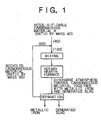
- a recovered carbonaceous material having been heated because of use as the atmosphere control carbonaceous material in a metallic iron producing apparatus loses its resolidificability due to the heat treatment, and is made non-resolidificable. Therefore, the recovered carbonaceous material can also be effectively used as the non-resolidificable carbonaceous material, and a carbonaceous material, which is originally non-resolidificable, maintains its non-resolidificability under the heat treatment, and can thus be recovered and recycled.
- another effective carbonaceous material is a mixed non-resolidificable carbonaceous material containing a resolidificable carbonaceous material and a non-resolidificable carbonaceous material.
- a flesh carbonaceous material can be used as the resolidificable carbonaceous material, and a carbonaceous material heat-treated at a temperature of about 500°C or more can be preferably used as the non-resolidificable carbonaceous material.
- the carbonaceous material having been heated in the metallic iron producing apparatus loses its resolidificability due to the heat treatment, and thus the carbonaceous material having been heated is recovered and recycled to cause the advantage that the consumption of the atmosphere control carbonaceous material can be decreased in cooperation with the effective utilization of waste materials.
- fine-grain metallic iron and generated slag which are mixed in the recovered carbonaceous material, can be recovered by treatment in a next step, and thus the recovery ratio of the metallic iron can be increased.
- the recovery ratio of the slag can also be increased.
- a preferred mixing ratio depends on the resolidification force of the resolidificable carbonaceous material used, but the mixing ratio of the non-resolidificable carbonaceous material is preferably in the range of 50 to 90% by mass relative to 50 to 10% by mass of the resolidificable carbonaceous material.
- a portion of the metallic iron, particularly fine-grain metallic iron, discharged from the moving hearth furnace is preferably returned to the moving hearth furnace, and the carbonaceous material can be efficiently recovered by using static electricity.
- the present invention can be applied to the methods disclosed in, for example, U.S. Patent No. 6,036,744, and Japanese Unexamined Patent Application Publication Nos. 9-256017, 2000-144224 and 11-131119, in which an iron oxide-containing material such as an iron ore is mixed with a carbonaceous reducing agent such as a carbonaceous material, and if required, the resultant mixture is agglomerated or formed into pellets, reduced by heating on a moving hearth, and further heated to melt and aggregate the produced reduced iron and separate the generated slag, to produce granular or lump high-purity metallic iron.
- an iron oxide-containing material such as an iron ore
- a carbonaceous reducing agent such as a carbonaceous material
- the conventional technique causes the above-described various troubles in the operation due to the phenomenon that the carbonaceous material is resolidified in a sheet shape by heat for reduction and melting, depending on the type of the atmospheric control carbonaceous material used.
- the present invention is characterized by using a non-resolidificable carbonaceous material as the atmosphere control carbonaceous material.
- a non-resolidificable carbonaceous material examples include the following.
- the preferred amount of the non-resolidificable carbonaceous material mixed with the resolidificable carbonaceous material depends upon the degree of resolidificability of the resolidificable carbonaceous material used, for example, the value of a maximum fluidity degree.
- the material can be converted to a non-resolidificable material by mixing only a small amount of non-resolidificable carbonaceous material, while with the resolidificable carbonaceous material having a high fluidity degree, a relatively large amount of non-resolidificable carbonaceous material must be mixed.
- the standard amount of the non-resolidificable carbonaceous material mixed for making the resolidificable carbonaceous material non-resolidificable is in the range of 50 to 90% by mass relative to 50 to 10% by mass of the resolidificable carbonaceous material, more generally in the range of 40 to 90% by mass relative to 60 to 10% by mass of the resolidificable carbonaceous material.
- most preferable materials for the present invention include the recovered carbonaceous material modified to non-resolidificable by the heat treatment in the metallic iron producing apparatus, and the mixed carbonaceous material made non-resolidificable by mixing the recovered carbonaceous material with the resolidificable carbonaceous material.
- the atmosphere control carbonaceous material discharged together with metallic iron and generated slag is neither recovered nor recycled, but it is mostly discarded for reclamation together with the generated slag.
- the carbonaceous material used as the atmosphere control carbonaceous material must maintain reduction activity for preventing reoxidation of metallic iron even in the final stage of heating reduction and melting, and thus the discharged carbonaceous material has significant reduction activity, and can be used as a reducing agent.
- the recovered carbonaceous material is converted to the non-resolidificable carbonaceous material by heat for reduction and melting of the iron oxide source. Therefore, by effectively using the recovered non-resolidificable carbonaceous material as a recycled carbonaceous material, resolidification of the carbonaceous material can be securely prevented to further improve operation stability, as compared with the use of a fresh carbonaceous material.
- the recovered carbonaceous material is recycled as described above, a significant amount of fine-grain metallic iron contained in the recovered carbonaceous material is again returned to the metallic iron producing apparatus, thereby contributing to an improvement in the recovery efficiency of the metallic iron.
- the generated slag is also recovered as a valuable resource, the slag mixed as fine grains in the recovered carbonaceous material is also returned to the metallic iron producing apparatus together with the carbonaceous material, thereby contributing to an improvement in the recovery efficiency of the generated slag.
- an apparatus used for carrying out the present invention i.e., a moving hearth-type heating furnace for reduction and melting
- all reduction melting furnaces disclosed in, for example, U.S. Patent No. 6,036,744, and Japanese Unexamined Patent Application Publication Nos. 9-256017, 2000-144224 and 11-131119 can be used.
- a rotary hearth furnace is recommended for continuously efficiently performing an operation comprising heat-reducing a raw material, melting reduced iron and aggregating the molten iron to a granular material, and separating the generated slag.
- the type of the iron oxide-containing material used as the iron source is not limited, and besides a typical iron ore, an iron making waste material and discard such as iron-making and steel-making dust discharged from an iron-making factory, classified and recovered iron scraps, and the like can be used as the raw material.
- iron sources can be used in a combination of a plurality of the sources according to demand.
- the carbonaceous reducing agent necessary for reducing the ion oxide-containing material is not limited, and any material can be used as long as it comprises carbon as a main component and releases reducing carbon monoxide by combustion or pyrolysis.
- any material can be used as long as it can be converted to a non-resolidificable carbonaceous material by modifying or mixing with any one of various types of coal or coke, which are adaptable to the objects of the present invention, according to demand.
- the specified condition for reduction and melting is not particularly specific, and the conditions disclosed in, for example, U.S. Paten No. 6,036,744, and Japanese Unexamined Patent Application Publication Nos. 9-256017, 2000-144244 and 11-131119 may be used.
- a preferred standard condition is satisfied by a two-step heating system in which solid-phase reduction is mainly progressed at a furnace temperature kept at 1200 to 1500°C, preferably in the range of 1200 to 1400°C, and then the furnace temperature is increased to 1400 to 1500°C to reduce the remaining iron oxide, and to melt the produced metallic iron (reduced iron) to aggregate the iron into grains.
- the necessary time is about 8 to 13 minutes. Under this condition, solid-phase reduction of iron oxide, melting and coalescence can be completed within such a short time.
- the atmosphere control carbonaceous material is spread on the hearth for reducing iron oxide to keep the reduction potential on the hearth at a high level, thereby stably securing a high reduction efficiency without reoxidization of the reduced iron, particularly at the final stage of heating reduction or at the time of melting of the reduced iron.
- the carbonaceous material spread on the hearth refractory can also prevent a phenomenon that the molten iron and slag produced by reduction and melting are brought into direct contact with the hearth refractory to deteriorate the refractory, thereby contributing to life lengthening of the hearth refractory.
- the thickness of the atmosphere control carbonaceous material spread on the hearth surface is preferably in the range of 1 to 10 mm.
- the metallic iron, the generated slag, and the atmosphere control carbonaceous material are discharged in a mixed state from the metallic iron producing apparatus.
- the metallic iron can be recovered by magnetic force, or the like.
- a portion of the metallic iron, particularly fine grains, is preferably returned to the moving hearth furnace and re-aggregated therein, thereby preferably increasing the yield of coarse-grain metallic iron which can easily be handled as a product and which causes less oxidative deterioration.
- the generated slag and the atmosphere control carbonaceous material can be substantially separated by a sieving operation, but both materials are preferably separated by using static electricity because grains having substantially the same size or fine grains, which cannot be separated by a sieve, can easily be separated.
- a combination of a separation operation using a sieve or magnetic force and a separation operation using static electricity is effective according to demand.
- Each of carbonaceous materials having the chemical compositions shown in Table 1 below was independently subjected to the heating test described below.
- the grain size of each carbonaceous material was controlled in the range of 0.5 to 1.0 mm.
- Each carbonaceous material was heated at 1000°C for 90 seconds in a nitrogen atmosphere in a tubular electric furnace, cooled and then observed with respect to the appearance to examine the presence of resolidification.
- the maximum fluidity degree of each carbonaceous material was measured.
- the maximum fluidity degree is defined by JIS M8801, and can be determined by using Gieseler Plastometer.
- the maximum fluidity degree is a value represented by log DDPM.
- each of the carbonaceous materials exhibiting resolidificability was mixed with a non-resolidificable material, and the resultant mixture was heated at 1000°C for 90 seconds in a nitrogen atmosphere to examine resolidificability.
- Table 2 indicates that a mixed non-resolidificable carbonaceous material can be obtained by mixing an appropriate amount of non-resolidificable carbonaceous material with a resolidificable carbonaceous material. In this case, it is recognized that with a resolidificable carbonaceous material having a high maximum fluidity degree, the mixing ratio of the non-resolidificable carbonaceous material for removing resolidificability must be increased.
- Main carbonaceous material (resolidificable carbonaceous material)
- Sub-carbonaceous material (non-resolidificable carbonaceous material) Mixing ratio of sub-carbonaceous material for making non-resolidificable (mass%) I K 80 J L 90 I C 80 J C 90 H A 60 H B 60 H C 60 H D 60 H E 60 H F 60 G C 60
- the produced reduced iron and generated slag were cooled together with the atmosphere control carbonaceous material remaining on the hearth, and discharged from the hearth by a scraper device.
- the discharged material was put in a magnetic separator and through a sieve to separate the reduced ion, the generated slag and the remaining carbonaceous material.
- the separated remaining carbonaceous material was recovered, returned as a recycled carbonaceous material to the raw material feed portion, and then again used.
- the operation conditions for reduction and melting were as follows.
- Raw material pellet An iron ore raw material having the composition below was mixed with a carbonaceous material powder at a ratio by mass of 78:22, and a small amount of binder was added to the resultant mixture. The mixture was then granulated and dried to obtain granular pellets having an average gain diameter of 18 mm.
- Composition of iron ore raw material (% by mass): T. Fe; 68.1%, SiO 2 : 1.4%, Al 2 O 3 ; 0.5%
- Heat-reduction zone temperature ... about 1350°C, retention time ... 10 minutes Melting zone; temperature ... about 1450°C, retention time ... 5 minutes
- a continuous operation was performed by this method using a mixture of 40 parts by mass of fresh carbonaceous material and 60 parts by mass of recycled carbonaceous material.
- the mixed carbonaceous material was not resolidified in the reduction melting step, and thus discharge from the hearth furnace by the scraper device and recycling could be smoothly performed, thereby permitting a continuous operation without any problem.
- the atmosphere control carbonaceous material was not resolidified at the discharge position of the cold-solidified product after reduction and melting, thereby permitting smooth discharge of the product by the scraper device.
- the discharged product was put in a magnetic separator and through a sieve to recover the granular metallic iron and to separate the generated slag, obtaining the residual carbonaceous material.
- the recovered residual carbonaceous material (grain diameter: 3 mm or less) could be repeatedly used as the non-resolidificable carbonaceous material without any problem.
- the degree of crushing of carbonaceous material F shown in Table 1 was changed to prepare two types of carbonaceous materials respectively having the grain size patterns shown in Table 3, and each of the two carbonaceous materials was used in the same heating test as Example 1 to compare the presence of resolidification.
- the results are as shown in Table 3.
- Example 2 50 g of carbonaceous material C shown in Table 1 was spread on a refractory tray of an experimental heating furnace, and about 170 g of dry pellets (grain diameter: 9.5 to 13.2 mm) having the same raw material composition as Example 1 was charged in a layer on carbonaceous material C. Then, reduction and melting were performed at a furnace temperature of 1450°C for 20 minutes in a nitrogen atmosphere to produce granular iron and generated slag. The grain size distributions of the produced iron and generated slag were examined (Experiments 1 and 2).
- non-resolidificable carbonaceous material A 40 parts by mass
- recycled carbonaceous material 60 parts by mass
- the thus-prepared mixed carbonaceous material was spread on a hearth of a rotary hearth furnace by the same method as Example 1, and carbonaceous material-containing dry pellets were charged on the mixed carbonaceous material. Then, reduction and melting were performed, and the obtained product was cooled, discharged, and then sieved to recover granular iron and generated slag having a grain diameter of about 3 mm or more suitable for industrial utilization. Consequently, a carbonaceous material of about 3 mm or less containing fine granular iron and slag was recovered. Therefore, the whole amount of the recovered carbonaceous material was cyclically used as a'recycled carbonaceous material, and 40 parts by mass of fresh carbonaceous material was added to the recycled material to balance the production line as a whole, permitting a smooth continuous operation.
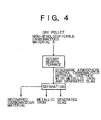
- Reduction and melting were performed by the same method as described above except that dry pellets and non-resolidificable carbonaceous material A were used without a recycle of the carbonaceous material according to the flowchart of Fig. 4.
- the produced granular iron and generated slag and the recovered carbonaceous material were sieved with a grain diameter of about 3 mm.
- about 9% by mass of the whole metallic iron discharged from the furnace was contained as fine grain iron in the recovered carbonaceous material, causing a product loss corresponding to the fine grain iron.
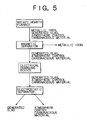
- Example 1 a mixture of the metallic iron and generated slag discharged from the furnace, and the atmosphere control carbonaceous material was subjected to magnetic separation to recover metallic iron as shown in Fig. 5. Then, a mixture of the remaining generated slag and atmosphere control carbonaceous material was triboelectrically charged, and then supplied to an electrostatic separator provided with positive and negative electrodes to separate the generated slag (negatively charged) and the atmosphere control carbonaceous material (positively charged). The separated atmosphere control carbonaceous material can be recycled in the same manner as shown in Figs. 1 and 2.
- electrical charging methods other than the triboelectrical charging method, for example, an electrical charging method using an ion generator, a corona electrical charging method, and the like may be used.
- a raw material containing an iron oxide-containing material and a carbonaceous reducing agent is heated on a moving hearth to reduce iron oxide in the raw material, to produce metallic iron.
- the raw material is supplied after a powder and granular atmosphere control carbonaceous material is spread on the hearth.
- the atmosphere control carbonaceous material When a non-resolidificable carbonaceous material is used as the atmosphere control carbonaceous material, the carbonaceous material can be prevented from being resolidified to a rice-cracker-like shape causing a failure in discharge, thereby permitting a smooth continuous operation and suppressing damage to a hearth refractory to lengthen the life thereof.
- the consumption of the carbonaceous material can be significantly decreased, and metallic iron and generated slag contained in the recovered carbonaceous material, which are conventionally discarded, can be recovered, thereby improving the recovery ratio. Therefore, a kill-two-birds-with-one-stone additional functional effect can be obtained.
Landscapes
- Engineering & Computer Science (AREA)
- Chemical & Material Sciences (AREA)
- Manufacturing & Machinery (AREA)
- Materials Engineering (AREA)
- Metallurgy (AREA)
- Organic Chemistry (AREA)
- Life Sciences & Earth Sciences (AREA)
- Environmental & Geological Engineering (AREA)
- General Life Sciences & Earth Sciences (AREA)
- Geochemistry & Mineralogy (AREA)
- Geology (AREA)
- Manufacture And Refinement Of Metals (AREA)
- Manufacture Of Iron (AREA)
Abstract
Description

| Main carbonaceous material (resolidificable carbonaceous material) | Sub-carbonaceous material (non-resolidificable carbonaceous material) | Mixing ratio of sub-carbonaceous material for making non-resolidificable (mass%) | |
| I | K | 80 | |
| J | L | 90 | |
| I | C | 80 | |
| J | C | 90 | |
| H | A | 60 | |
| H | B | 60 | |
| H | C | 60 | |
| H | D | 60 | |
| H | E | 60 | |
| H | F | 60 | |
| | C | 60 |
Melting zone; temperature ... about 1450°C, retention time ... 5 minutes
| Gain size distribution (mass%) | Result of heating test | ||||
| Over 3.35 mm | 0.5 to 3.35 mm | Less than 0.5 mm | Total | ||
| Carbonaceous material F-1 | 0.0 | 23.6 | 76.4 | 100 | No resolidification |
| Carbonaceous material F-2 | 0.0 | 18.2 | 81.8 | 100 | Low resolidification |
| Experiment No. | 1 | 2 | 3 | 4 |
| Specimen | ||||
| Dry pellet | ||||
| Grain diameter (mm) | 9.5-13.2 | 9.5-13.2 | 9.5-13.2 | 9.5-13.2 |
| Weight (g) | 173 | 170 | 167 | 171 |
| Recycled granular iron | ||||
| Grain diameter (mm) | - | - | 1-3.35 | 1-3.35 |
| Weight (g) | - | - | 20 | 20 |
| Recycled slag | ||||
| Grain diameter (mm) | - | - | 1-3.35 | 1-3.35 |
| Weight (g) | - | - | 1 | 1 |
| Weight of product after test | ||||
| Granular iron | ||||
| 6.7 mm or more (g) | 24.7 | 28.5 | 23.4 | 25.4 |
| 3.35 to 6.7 mm (g) | 34.1 | 27.9 | 39.5 | 38.9 |
| 1 to 3.35 m (g) | 22.2 | 23.5 | 34.3 | 35.0 |
| Sub-total (g) | 81.0 | 79.9 | 97.2 | 99.3 |
| Slag | ||||
| 6.7 mm or more (g) | 0.1 | 0.0 | 0.0 | 0.2 |
| 3.35 to 6.7 mm (g) | 3.2 | 2.9 | 3.3 | 3.6 |
| 1 to 3.35 mm (g) | 0.7 | 0.5 | 1.2 | 1.2 |
| Sub-total (g) | 4.0 | 3.4 | 4.5 | 5.0 |
| Total (g) | 85.0 | 83.3 | 101.7 | 104.3 |
Claims (11)
- A method of producing metallic iron comprising heating a raw material, which contains an iron oxide-containing material and a carbonaceous reducing agent, on a moving hearth to reduce iron oxide in the raw material, wherein the raw material is supplied after a powder and granular atmosphere control carbonaceous material is spread on the hearth, and a non-resolidificable carbonaceous material is used as the atmosphere control carbonaceous material.
- A producing method according to Claim 1, wherein a carbonaceous material having a grain diameter of substantially 3.35 mm or less, containing 20% by mass or more of grains having a grain diameter in the range of 0.5 to 3.35 mm, and having a maximum fluidity degree of 0 (zero) is used as the atmosphere control carbonaceous material.
- A producing method according to Claim 1 or 2, wherein a heat-treated product of a resolidificable carbonaceous material is used as the atmosphere control carbonaceous material.
- A producing method according to any one of Claims 1 to 3, wherein a recovered carbonaceous material having been heated in a metallic iron producing apparatus is used as the atmosphere control carbonaceous material.
- A producing method according to any one of Claims 1 to 4, wherein a mixture of a non-resolidificable carbonaceous material and the recovered carbonaceous material having been heated in the metallic iron producing apparatus is used as the atmosphere control carbonaceous material.
- A producing method according to Claim 1 or 2, wherein a mixed non-resolidificable carbonaceous material formed by mixing a non-resolidificable carbonaceous material with a resolidificable carbonaceous material is used as the atmosphere control carbonaceous material.
- A producing method according to Claim 6, wherein a fresh carbonaceous material is used as the resolidificable carbonaceous material, and a heat-treated carbonaceous material is used as the non-resolidificable carbonaceous material.
- A producing method according to Claim 7, wherein a recovered carbonaceous material having been heated in a metallic iron making apparatus is used as the heat-treated carbonaceous material.
- A producing method according to any one of Claims 5 to 8, wherein the mixing ratio of the non-resolidificable carbonaceous material is 50 to 90% by mass relative to 50 to 10% by mass of the resolidificable carbonaceous material.
- A producing method according to any one of Claims 1 to 9, wherein a portion of the metallic iron discharged from the moving hearth furnace is returned to the moving hearth furnace.
- A producing method according to any one of Claims 4, 5, and 8, wherein the carbonaceous material is recovered by using static electricity.
Applications Claiming Priority (5)
| Application Number | Priority Date | Filing Date | Title |
|---|---|---|---|
| JP2001346675 | 2001-11-12 | ||
| JP2001346675 | 2001-11-12 | ||
| JP2002243385 | 2002-08-23 | ||
| JP2002243385A JP4256645B2 (en) | 2001-11-12 | 2002-08-23 | Metal iron manufacturing method |
| PCT/JP2002/011085 WO2003042415A1 (en) | 2001-11-12 | 2002-10-25 | Method for producing metallic iron |
Publications (3)
| Publication Number | Publication Date |
|---|---|
| EP1445336A1 true EP1445336A1 (en) | 2004-08-11 |
| EP1445336A4 EP1445336A4 (en) | 2004-12-15 |
| EP1445336B1 EP1445336B1 (en) | 2007-12-12 |
Family
ID=26624490
Family Applications (1)
| Application Number | Title | Priority Date | Filing Date |
|---|---|---|---|
| EP02770270A Expired - Lifetime EP1445336B1 (en) | 2001-11-12 | 2002-10-25 | Method for producing metallic iron |
Country Status (13)
| Country | Link |
|---|---|
| US (1) | US7384450B2 (en) |
| EP (1) | EP1445336B1 (en) |
| JP (1) | JP4256645B2 (en) |
| KR (1) | KR100660667B1 (en) |
| CN (1) | CN100491544C (en) |
| AT (1) | ATE380886T1 (en) |
| AU (1) | AU2002336310B2 (en) |
| CA (1) | CA2462669C (en) |
| DE (1) | DE60224080T2 (en) |
| ES (1) | ES2297001T3 (en) |
| RU (1) | RU2278167C2 (en) |
| TW (1) | TW562863B (en) |
| WO (1) | WO2003042415A1 (en) |
Families Citing this family (12)
| Publication number | Priority date | Publication date | Assignee | Title |
|---|---|---|---|---|
| TWI282818B (en) * | 2003-01-16 | 2007-06-21 | Kobe Steel Ltd | A rotary hearth furnace and iron production method thereby |
| JP4214157B2 (en) | 2006-04-25 | 2009-01-28 | 株式会社神戸製鋼所 | Molten iron manufacturing method and molten iron manufacturing apparatus |
| JP4893347B2 (en) * | 2007-02-02 | 2012-03-07 | Jfeスチール株式会社 | Operation method of mobile hearth furnace |
| WO2011001282A2 (en) | 2009-06-29 | 2011-01-06 | Bairong Li | Metal reduction processes, metallurgical processes and products and apparatus |
| JP2011042870A (en) * | 2009-07-21 | 2011-03-03 | Kobe Steel Ltd | Apparatus and method for producing reduced iron using alkali-containing iron-making dust as raw material |
| JP5406803B2 (en) * | 2010-08-09 | 2014-02-05 | 株式会社神戸製鋼所 | Granular metallic iron manufacturing apparatus and granular metallic iron manufacturing method |
| CA2803815A1 (en) * | 2010-08-30 | 2012-03-08 | Kabushiki Kaisha Kobe Seiko Sho (Kobe Steel, Ltd.) | Method for producing granular metallic iron |
| RU2497953C2 (en) * | 2011-12-07 | 2013-11-10 | Владимир Евгеньевич Черных | Method for obtaining granulated metallic iron |
| JP2014167164A (en) * | 2013-02-01 | 2014-09-11 | Kobe Steel Ltd | Method for manufacturing reduced iron |
| JP6623118B2 (en) * | 2016-05-20 | 2019-12-18 | 株式会社神戸製鋼所 | Method for producing reduced iron |
| CN107354257A (en) * | 2017-07-10 | 2017-11-17 | 中冶南方工程技术有限公司 | A kind of production method of metallic iron |
| CN118287467A (en) * | 2024-02-28 | 2024-07-05 | 江苏苏菱铝用阳极有限公司 | Electrode slotting powder recovery device and parameter matching method |
Family Cites Families (46)
| Publication number | Priority date | Publication date | Assignee | Title |
|---|---|---|---|---|
| US3333951A (en) * | 1965-06-14 | 1967-08-01 | Mcdowell Wellman Eng Co | Metallized pellets |
| JPS556463A (en) | 1978-06-28 | 1980-01-17 | Ishikawajima Harima Heavy Ind Co Ltd | Flotation type direct iron making method |
| US4341598A (en) * | 1979-08-14 | 1982-07-27 | Occidental Research Corporation | Fluidized coal pyrolysis apparatus |
| US5186741A (en) * | 1991-04-12 | 1993-02-16 | Zia Patent Company | Direct reduction process in a rotary hearth furnace |
| US5575824A (en) * | 1995-01-03 | 1996-11-19 | Brown; Charles K. | Coal preparation device |
| AUPN461695A0 (en) * | 1995-08-07 | 1995-08-31 | Technological Resources Pty Limited | A process for reducing iron oxides |
| JP3296974B2 (en) | 1996-08-15 | 2002-07-02 | 株式会社神戸製鋼所 | Direct reduction method and rotary bed furnace |
| JPH10195513A (en) | 1996-12-27 | 1998-07-28 | Kobe Steel Ltd | Production of metallic iron |
| US6149709A (en) | 1997-09-01 | 2000-11-21 | Kabushiki Kaisha Kobe Seiko Sho | Method of making iron and steel |
| BR9806224A (en) | 1997-09-30 | 2000-04-18 | Kawasaki Steel Co | Rotary hearth furnace to reduce oxides and its operating method. |
| CA2251339A1 (en) | 1997-10-30 | 1999-04-30 | Hidetoshi Tanaka | Method of producing iron oxide pellets |
| TW495552B (en) | 1997-12-18 | 2002-07-21 | Kobe Steel Ltd | Method of producing reduced iron pellets |
| JP3403091B2 (en) * | 1998-09-30 | 2003-05-06 | 三菱重工業株式会社 | Method for reducing wet pellets by rotary bed type reduction furnace and rotary bed type reduction furnace |
| JP3081581B2 (en) | 1998-03-23 | 2000-08-28 | 株式会社神戸製鋼所 | Method of producing reduced iron agglomerates with high metallization rate |
| EP0952230A1 (en) | 1998-03-24 | 1999-10-27 | KABUSHIKI KAISHA KOBE SEIKO SHO also known as Kobe Steel Ltd. | Method of producing reduced iron agglomerates |
| JP2997459B1 (en) | 1998-11-04 | 2000-01-11 | 株式会社神戸製鋼所 | Method for producing reduced iron agglomerates |
| JP3817969B2 (en) | 1998-05-27 | 2006-09-06 | Jfeスチール株式会社 | Method for producing reduced metal |
| JP4069493B2 (en) | 1998-05-27 | 2008-04-02 | Jfeスチール株式会社 | Method for producing reduced iron |
| ZA995438B (en) | 1998-08-27 | 2000-03-20 | Kobe Steel Ltd | Method for operating moving hearth reducing furnace. |
| US6413295B2 (en) * | 1998-11-12 | 2002-07-02 | Midrex International B.V. Rotterdam, Zurich Branch | Iron production method of operation in a rotary hearth furnace and improved furnace apparatus |
| JP3004265B1 (en) | 1998-11-24 | 2000-01-31 | 株式会社神戸製鋼所 | Carbon material interior pellet and reduced iron production method |
| JP3404309B2 (en) | 1999-01-18 | 2003-05-06 | 株式会社神戸製鋼所 | Method and apparatus for producing reduced iron agglomerates |
| JP3009661B1 (en) | 1999-01-20 | 2000-02-14 | 株式会社神戸製鋼所 | Method for producing reduced iron pellets |
| US6126718A (en) * | 1999-02-03 | 2000-10-03 | Kawasaki Steel Corporation | Method of producing a reduced metal, and traveling hearth furnace for producing same |
| JP2000313910A (en) * | 1999-04-26 | 2000-11-14 | Daido Steel Co Ltd | Material input device for rotary hearth furnace |
| CN1219891C (en) | 1999-05-06 | 2005-09-21 | 株式会社神户制钢所 | Direct reduction method and rotary kiln hearth |
| CN1306045C (en) | 1999-08-30 | 2007-03-21 | 株式会社神户制钢所 | Method and device for supplying granular reduced iron raw material |
| CA2322935A1 (en) | 1999-10-15 | 2001-04-15 | Kabushiki Kaisha Kobe Seiko Sho Also Known As Kobe Steel, Ltd. | Method and apparatus for producing reduced metal |
| JP2001279313A (en) | 2000-03-30 | 2001-10-10 | Midrex Internatl Bv | Method for producing molten metallic iron |
| RU2228365C2 (en) | 2000-03-30 | 2004-05-10 | Мидрекс Интернэшнл Б.В. Цюрих Бранч | Method of production of granulated metallic iron, method of production of liquid steel, method of production of metallic iron and device for loading auxiliary initial material and device for loading initial material |
| JP3844941B2 (en) | 2000-03-30 | 2006-11-15 | 株式会社神戸製鋼所 | Temperature control device and temperature control method for high temperature exhaust gas |
| JP2001288504A (en) | 2000-03-31 | 2001-10-19 | Midrex Internatl Bv | Method for producing molten metallic iron |
| TW562860B (en) | 2000-04-10 | 2003-11-21 | Kobe Steel Ltd | Method for producing reduced iron |
| JP4287572B2 (en) | 2000-04-26 | 2009-07-01 | 株式会社神戸製鋼所 | Rotary hearth furnace |
| TW539829B (en) | 2000-05-19 | 2003-07-01 | Kobe Strrl Ltd | Processing method for high-temperature exhaust gas |
| JP4757982B2 (en) | 2000-06-28 | 2011-08-24 | 株式会社神戸製鋼所 | Method for improving the yield of granular metallic iron |
| JP3866492B2 (en) | 2000-06-29 | 2007-01-10 | 株式会社神戸製鋼所 | Operation method of rotary hearth reduction furnace |
| US6669756B2 (en) | 2000-07-31 | 2003-12-30 | Kabushiki Kaisha Kobe Seiko Sho | Discharge apparatus for movable hearth type heat-treatment furnace, its operation method, and method and apparatus for manufacturing molten iron using the same |
| JP4330257B2 (en) | 2000-08-09 | 2009-09-16 | 株式会社神戸製鋼所 | Metal iron manufacturing method |
| JP3828778B2 (en) | 2000-10-27 | 2006-10-04 | 新日本製鐵株式会社 | Operation method of rotary hearth, method of laying agglomerates on rotary hearth, and raw material supply equipment |
| JP3553873B2 (en) | 2000-12-07 | 2004-08-11 | 株式会社神戸製鋼所 | Rotary hearth furnace for reduced metal production and method for producing reduced metal |
| US6648942B2 (en) * | 2001-01-26 | 2003-11-18 | Midrex International B.V. Rotterdam, Zurich Branch | Method of direct iron-making / steel-making via gas or coal-based direct reduction and apparatus |
| JP4139581B2 (en) | 2001-07-23 | 2008-08-27 | 株式会社神戸製鋼所 | Operation method of reduction furnace |
| JP2003041310A (en) | 2001-07-27 | 2003-02-13 | Kobe Steel Ltd | Method for manufacturing molten metal |
| US6689182B2 (en) | 2001-10-01 | 2004-02-10 | Kobe Steel, Ltd. | Method and device for producing molten iron |
| JP3679084B2 (en) | 2002-10-09 | 2005-08-03 | 株式会社神戸製鋼所 | Method for producing molten metal raw material and method for producing molten metal |
-
2002
- 2002-08-23 JP JP2002243385A patent/JP4256645B2/en not_active Expired - Lifetime
- 2002-10-25 KR KR20047007144A patent/KR100660667B1/en not_active Expired - Fee Related
- 2002-10-25 RU RU2004117890A patent/RU2278167C2/en active
- 2002-10-25 AU AU2002336310A patent/AU2002336310B2/en not_active Ceased
- 2002-10-25 CA CA 2462669 patent/CA2462669C/en not_active Expired - Fee Related
- 2002-10-25 WO PCT/JP2002/011085 patent/WO2003042415A1/en not_active Ceased
- 2002-10-25 ES ES02770270T patent/ES2297001T3/en not_active Expired - Lifetime
- 2002-10-25 AT AT02770270T patent/ATE380886T1/en not_active IP Right Cessation
- 2002-10-25 DE DE2002624080 patent/DE60224080T2/en not_active Expired - Lifetime
- 2002-10-25 US US10/493,313 patent/US7384450B2/en not_active Expired - Lifetime
- 2002-10-25 CN CNB028223055A patent/CN100491544C/en not_active Expired - Lifetime
- 2002-10-25 EP EP02770270A patent/EP1445336B1/en not_active Expired - Lifetime
- 2002-11-01 TW TW91132414A patent/TW562863B/en not_active IP Right Cessation
Also Published As
| Publication number | Publication date |
|---|---|
| ATE380886T1 (en) | 2007-12-15 |
| EP1445336B1 (en) | 2007-12-12 |
| CN100491544C (en) | 2009-05-27 |
| JP2003213312A (en) | 2003-07-30 |
| KR100660667B1 (en) | 2006-12-21 |
| TW200300174A (en) | 2003-05-16 |
| AU2002336310B2 (en) | 2009-04-23 |
| RU2278167C2 (en) | 2006-06-20 |
| CN1585826A (en) | 2005-02-23 |
| DE60224080T2 (en) | 2008-11-27 |
| DE60224080D1 (en) | 2008-01-24 |
| CA2462669C (en) | 2009-08-18 |
| JP4256645B2 (en) | 2009-04-22 |
| US7384450B2 (en) | 2008-06-10 |
| US20050087039A1 (en) | 2005-04-28 |
| ES2297001T3 (en) | 2008-05-01 |
| WO2003042415A1 (en) | 2003-05-22 |
| RU2004117890A (en) | 2005-03-27 |
| EP1445336A4 (en) | 2004-12-15 |
| TW562863B (en) | 2003-11-21 |
| KR20040058274A (en) | 2004-07-03 |
| CA2462669A1 (en) | 2003-05-22 |
Similar Documents
| Publication | Publication Date | Title |
|---|---|---|
| JP4669189B2 (en) | Production of granular metallic iron | |
| EP1307596B1 (en) | Method for producing metallic iron | |
| US7384450B2 (en) | Method for producing metallic iron | |
| EP1616968A1 (en) | Method for producing improved coal for use in metallurgy, and method for producing reduced metal and slag containing oxidized nonferrous metal | |
| US7198658B2 (en) | Method for producing feed material for molten metal production and method for producing molten metal | |
| US20130098202A1 (en) | Process for producing molten steel using granular metallic iron | |
| JP5397021B2 (en) | Reduced iron production method | |
| CA2831461C (en) | Use of bimodal carbon distribution in compacts for producing metallic iron nodules | |
| JP3779009B2 (en) | Method for producing high-quality reduced iron from steelmaking dust | |
| KR20130010029A (en) | Method for manufacturing pig iron | |
| JP2009041107A (en) | Method for manufacturing granular metal | |
| JPH1053820A (en) | Treatment of metal compounds of steel dust, sludge and/ or ore | |
| RU2540285C2 (en) | Device to produce granulated metallic iron and method to produce granulated metallic iron | |
| CA1204943A (en) | Process of producing sponge iron by a direct reduction of iron oxide-containing material | |
| JP5397020B2 (en) | Reduced iron production method | |
| JP5119815B2 (en) | Operation method of mobile hearth furnace | |
| JPH01156433A (en) | Treatment of nickel oxide ore | |
| JPH0365402B2 (en) |
Legal Events
| Date | Code | Title | Description |
|---|---|---|---|
| PUAI | Public reference made under article 153(3) epc to a published international application that has entered the european phase |
Free format text: ORIGINAL CODE: 0009012 |
|
| 17P | Request for examination filed |
Effective date: 20040506 |
|
| AK | Designated contracting states |
Kind code of ref document: A1 Designated state(s): AT BE BG CH CY CZ DE DK EE ES FI FR GB GR IE IT LI LU MC NL PT SE SK TR |
|
| AX | Request for extension of the european patent |
Extension state: AL LT LV MK RO SI |
|
| A4 | Supplementary search report drawn up and despatched |
Effective date: 20041103 |
|
| 17Q | First examination report despatched |
Effective date: 20050121 |
|
| GRAP | Despatch of communication of intention to grant a patent |
Free format text: ORIGINAL CODE: EPIDOSNIGR1 |
|
| GRAS | Grant fee paid |
Free format text: ORIGINAL CODE: EPIDOSNIGR3 |
|
| GRAA | (expected) grant |
Free format text: ORIGINAL CODE: 0009210 |
|
| AK | Designated contracting states |
Kind code of ref document: B1 Designated state(s): AT BE BG CH CY CZ DE DK EE ES FI FR GB GR IE IT LI LU MC NL PT SE SK TR |
|
| REG | Reference to a national code |
Ref country code: GB Ref legal event code: FG4D |
|
| REG | Reference to a national code |
Ref country code: CH Ref legal event code: EP |
|
| REG | Reference to a national code |
Ref country code: IE Ref legal event code: FG4D |
|
| REF | Corresponds to: |
Ref document number: 60224080 Country of ref document: DE Date of ref document: 20080124 Kind code of ref document: P |
|
| REG | Reference to a national code |
Ref country code: SE Ref legal event code: TRGR |
|
| PG25 | Lapsed in a contracting state [announced via postgrant information from national office to epo] |
Ref country code: CH Free format text: LAPSE BECAUSE OF FAILURE TO SUBMIT A TRANSLATION OF THE DESCRIPTION OR TO PAY THE FEE WITHIN THE PRESCRIBED TIME-LIMIT Effective date: 20071212 Ref country code: LI Free format text: LAPSE BECAUSE OF FAILURE TO SUBMIT A TRANSLATION OF THE DESCRIPTION OR TO PAY THE FEE WITHIN THE PRESCRIBED TIME-LIMIT Effective date: 20071212 |
|
| REG | Reference to a national code |
Ref country code: ES Ref legal event code: FG2A Ref document number: 2297001 Country of ref document: ES Kind code of ref document: T3 |
|
| PG25 | Lapsed in a contracting state [announced via postgrant information from national office to epo] |
Ref country code: NL Free format text: LAPSE BECAUSE OF FAILURE TO SUBMIT A TRANSLATION OF THE DESCRIPTION OR TO PAY THE FEE WITHIN THE PRESCRIBED TIME-LIMIT Effective date: 20071212 Ref country code: FI Free format text: LAPSE BECAUSE OF FAILURE TO SUBMIT A TRANSLATION OF THE DESCRIPTION OR TO PAY THE FEE WITHIN THE PRESCRIBED TIME-LIMIT Effective date: 20071212 |
|
| NLV1 | Nl: lapsed or annulled due to failure to fulfill the requirements of art. 29p and 29m of the patents act | ||
| REG | Reference to a national code |
Ref country code: CH Ref legal event code: PL |
|
| PG25 | Lapsed in a contracting state [announced via postgrant information from national office to epo] |
Ref country code: AT Free format text: LAPSE BECAUSE OF FAILURE TO SUBMIT A TRANSLATION OF THE DESCRIPTION OR TO PAY THE FEE WITHIN THE PRESCRIBED TIME-LIMIT Effective date: 20071212 |
|
| ET | Fr: translation filed | ||
| PG25 | Lapsed in a contracting state [announced via postgrant information from national office to epo] |
Ref country code: CZ Free format text: LAPSE BECAUSE OF FAILURE TO SUBMIT A TRANSLATION OF THE DESCRIPTION OR TO PAY THE FEE WITHIN THE PRESCRIBED TIME-LIMIT Effective date: 20071212 |
|
| PG25 | Lapsed in a contracting state [announced via postgrant information from national office to epo] |
Ref country code: SK Free format text: LAPSE BECAUSE OF FAILURE TO SUBMIT A TRANSLATION OF THE DESCRIPTION OR TO PAY THE FEE WITHIN THE PRESCRIBED TIME-LIMIT Effective date: 20071212 Ref country code: BE Free format text: LAPSE BECAUSE OF FAILURE TO SUBMIT A TRANSLATION OF THE DESCRIPTION OR TO PAY THE FEE WITHIN THE PRESCRIBED TIME-LIMIT Effective date: 20071212 |
|
| PG25 | Lapsed in a contracting state [announced via postgrant information from national office to epo] |
Ref country code: PT Free format text: LAPSE BECAUSE OF FAILURE TO SUBMIT A TRANSLATION OF THE DESCRIPTION OR TO PAY THE FEE WITHIN THE PRESCRIBED TIME-LIMIT Effective date: 20080512 |
|
| PLBE | No opposition filed within time limit |
Free format text: ORIGINAL CODE: 0009261 |
|
| STAA | Information on the status of an ep patent application or granted ep patent |
Free format text: STATUS: NO OPPOSITION FILED WITHIN TIME LIMIT |
|
| PG25 | Lapsed in a contracting state [announced via postgrant information from national office to epo] |
Ref country code: DK Free format text: LAPSE BECAUSE OF FAILURE TO SUBMIT A TRANSLATION OF THE DESCRIPTION OR TO PAY THE FEE WITHIN THE PRESCRIBED TIME-LIMIT Effective date: 20071212 |
|
| 26N | No opposition filed |
Effective date: 20080915 |
|
| PG25 | Lapsed in a contracting state [announced via postgrant information from national office to epo] |
Ref country code: GR Free format text: LAPSE BECAUSE OF FAILURE TO SUBMIT A TRANSLATION OF THE DESCRIPTION OR TO PAY THE FEE WITHIN THE PRESCRIBED TIME-LIMIT Effective date: 20080313 |
|
| PGFP | Annual fee paid to national office [announced via postgrant information from national office to epo] |
Ref country code: ES Payment date: 20081121 Year of fee payment: 7 |
|
| PG25 | Lapsed in a contracting state [announced via postgrant information from national office to epo] |
Ref country code: EE Free format text: LAPSE BECAUSE OF FAILURE TO SUBMIT A TRANSLATION OF THE DESCRIPTION OR TO PAY THE FEE WITHIN THE PRESCRIBED TIME-LIMIT Effective date: 20071212 Ref country code: BG Free format text: LAPSE BECAUSE OF FAILURE TO SUBMIT A TRANSLATION OF THE DESCRIPTION OR TO PAY THE FEE WITHIN THE PRESCRIBED TIME-LIMIT Effective date: 20080312 |
|
| PG25 | Lapsed in a contracting state [announced via postgrant information from national office to epo] |
Ref country code: MC Free format text: LAPSE BECAUSE OF NON-PAYMENT OF DUE FEES Effective date: 20081031 |
|
| PG25 | Lapsed in a contracting state [announced via postgrant information from national office to epo] |
Ref country code: CY Free format text: LAPSE BECAUSE OF FAILURE TO SUBMIT A TRANSLATION OF THE DESCRIPTION OR TO PAY THE FEE WITHIN THE PRESCRIBED TIME-LIMIT Effective date: 20071212 |
|
| PG25 | Lapsed in a contracting state [announced via postgrant information from national office to epo] |
Ref country code: IE Free format text: LAPSE BECAUSE OF NON-PAYMENT OF DUE FEES Effective date: 20081027 |
|
| PG25 | Lapsed in a contracting state [announced via postgrant information from national office to epo] |
Ref country code: LU Free format text: LAPSE BECAUSE OF NON-PAYMENT OF DUE FEES Effective date: 20081025 |
|
| REG | Reference to a national code |
Ref country code: ES Ref legal event code: FD2A Effective date: 20110401 |
|
| PG25 | Lapsed in a contracting state [announced via postgrant information from national office to epo] |
Ref country code: ES Free format text: LAPSE BECAUSE OF NON-PAYMENT OF DUE FEES Effective date: 20110322 |
|
| PG25 | Lapsed in a contracting state [announced via postgrant information from national office to epo] |
Ref country code: ES Free format text: LAPSE BECAUSE OF NON-PAYMENT OF DUE FEES Effective date: 20091026 |
|
| PGFP | Annual fee paid to national office [announced via postgrant information from national office to epo] |
Ref country code: TR Payment date: 20130919 Year of fee payment: 12 |
|
| PGFP | Annual fee paid to national office [announced via postgrant information from national office to epo] |
Ref country code: SE Payment date: 20131011 Year of fee payment: 12 Ref country code: DE Payment date: 20131023 Year of fee payment: 12 Ref country code: FR Payment date: 20131009 Year of fee payment: 12 Ref country code: GB Payment date: 20131023 Year of fee payment: 12 |
|
| PGFP | Annual fee paid to national office [announced via postgrant information from national office to epo] |
Ref country code: IT Payment date: 20131028 Year of fee payment: 12 |
|
| REG | Reference to a national code |
Ref country code: DE Ref legal event code: R119 Ref document number: 60224080 Country of ref document: DE |
|
| REG | Reference to a national code |
Ref country code: SE Ref legal event code: EUG |
|
| GBPC | Gb: european patent ceased through non-payment of renewal fee |
Effective date: 20141025 |
|
| PG25 | Lapsed in a contracting state [announced via postgrant information from national office to epo] |
Ref country code: SE Free format text: LAPSE BECAUSE OF NON-PAYMENT OF DUE FEES Effective date: 20141026 Ref country code: GB Free format text: LAPSE BECAUSE OF NON-PAYMENT OF DUE FEES Effective date: 20141025 Ref country code: DE Free format text: LAPSE BECAUSE OF NON-PAYMENT OF DUE FEES Effective date: 20150501 |
|
| REG | Reference to a national code |
Ref country code: FR Ref legal event code: ST Effective date: 20150630 |
|
| PG25 | Lapsed in a contracting state [announced via postgrant information from national office to epo] |
Ref country code: IT Free format text: LAPSE BECAUSE OF NON-PAYMENT OF DUE FEES Effective date: 20141025 Ref country code: FR Free format text: LAPSE BECAUSE OF NON-PAYMENT OF DUE FEES Effective date: 20141031 |
|
| PG25 | Lapsed in a contracting state [announced via postgrant information from national office to epo] |
Ref country code: TR Free format text: LAPSE BECAUSE OF NON-PAYMENT OF DUE FEES Effective date: 20141025 |