EP1441320A1 - INFORMATION PROCESSOR, SENSOR NETWORK SYSTEM, INFORMATION PROCESSING PROGRAM, COMPUTER−READABLE RECORDED MEDIUM ON WHICH INFORMATION PROCESSING PROGRAM IS RECORDED, AND INFORMATION PROCESSING METHOD FOR SENSOR NETWORK SYSTEM - Google Patents
INFORMATION PROCESSOR, SENSOR NETWORK SYSTEM, INFORMATION PROCESSING PROGRAM, COMPUTER−READABLE RECORDED MEDIUM ON WHICH INFORMATION PROCESSING PROGRAM IS RECORDED, AND INFORMATION PROCESSING METHOD FOR SENSOR NETWORK SYSTEM Download PDFInfo
- Publication number
- EP1441320A1 EP1441320A1 EP02772982A EP02772982A EP1441320A1 EP 1441320 A1 EP1441320 A1 EP 1441320A1 EP 02772982 A EP02772982 A EP 02772982A EP 02772982 A EP02772982 A EP 02772982A EP 1441320 A1 EP1441320 A1 EP 1441320A1
- Authority
- EP
- European Patent Office
- Prior art keywords
- information
- data
- section
- sensors
- processing device
- Prior art date
- Legal status (The legal status is an assumption and is not a legal conclusion. Google has not performed a legal analysis and makes no representation as to the accuracy of the status listed.)
- Granted
Links
Images

Classifications
-
- H—ELECTRICITY
- H04—ELECTRIC COMMUNICATION TECHNIQUE
- H04Q—SELECTING
- H04Q9/00—Arrangements in telecontrol or telemetry systems for selectively calling a substation from a main station, in which substation desired apparatus is selected for applying a control signal thereto or for obtaining measured values therefrom
- H04Q9/02—Automatically-operated arrangements
-
- G—PHYSICS
- G05—CONTROLLING; REGULATING
- G05B—CONTROL OR REGULATING SYSTEMS IN GENERAL; FUNCTIONAL ELEMENTS OF SUCH SYSTEMS; MONITORING OR TESTING ARRANGEMENTS FOR SUCH SYSTEMS OR ELEMENTS
- G05B19/00—Program-control systems
- G05B19/02—Program-control systems electric
- G05B19/04—Program control other than numerical control, i.e. in sequence controllers or logic controllers
- G05B19/042—Program control other than numerical control, i.e. in sequence controllers or logic controllers using digital processors
-
- G—PHYSICS
- G05—CONTROLLING; REGULATING
- G05B—CONTROL OR REGULATING SYSTEMS IN GENERAL; FUNCTIONAL ELEMENTS OF SUCH SYSTEMS; MONITORING OR TESTING ARRANGEMENTS FOR SUCH SYSTEMS OR ELEMENTS
- G05B2219/00—Program-control systems
- G05B2219/10—Plc systems
- G05B2219/11—Plc I-O input output
- G05B2219/1133—Sensor actuator, asi, bus, network
-
- G—PHYSICS
- G05—CONTROLLING; REGULATING
- G05B—CONTROL OR REGULATING SYSTEMS IN GENERAL; FUNCTIONAL ELEMENTS OF SUCH SYSTEMS; MONITORING OR TESTING ARRANGEMENTS FOR SUCH SYSTEMS OR ELEMENTS
- G05B2219/00—Program-control systems
- G05B2219/20—Pc systems
- G05B2219/25—Pc structure of the system
- G05B2219/25017—ASI actuator sensor interface, bus, network
-
- G—PHYSICS
- G05—CONTROLLING; REGULATING
- G05B—CONTROL OR REGULATING SYSTEMS IN GENERAL; FUNCTIONAL ELEMENTS OF SUCH SYSTEMS; MONITORING OR TESTING ARRANGEMENTS FOR SUCH SYSTEMS OR ELEMENTS
- G05B2219/00—Program-control systems
- G05B2219/20—Pc systems
- G05B2219/26—Pc applications
- G05B2219/2612—Data acquisition interface
Definitions
- the present invention relates to a sensor network system including a plurality of sensors and an information processing device collecting data of sensing results obtained by the plurality of sensors; the information processing device in the sensor network system; an information processing program; and a computer-readable storage medium containing the information processing program.
- sensors have been used in large numbers in our everyday life for some time. They are specialized for particular purposes including detection of car thefts, house break-ins, and fires. These sensors typically make up sensor networks for individual purposes. We can use information from the sensor networks to fulfill the intended purposes.
- This system functions as an interface between a plurality of applications and a. node manager managing nodes (sensor nodes) on the sensor network and providing information from the nodes.
- node manager managing nodes (sensor nodes) on the sensor network and providing information from the nodes.
- the use of such a system is intended to reduce communications between the applications and the node manager. Further, this system interprets an abstract task from the applications into a more definite message designating a node ID.
- a sensor network is basically configured in accordance with a particular purpose, as described above, and sensors in the sensor network are equipped in order to sense an event in accordance with the purpose of the sensor network.
- the sensor network equipped with a variety of sensors in large numbers can obtain information other than information for the intended purpose by combining information from predetermined sensors in the sensor network. By obtaining information for a purpose different from the intended purpose as described above, it is possible to utilize the sensors effectively.
- the technique disclosed in the paper may be employed to select one of the nodes in accordance with an abstract task and obtain information from the selected node, the abstract task is still a task for designating one of the nodes.
- the application or user is required to have knowledge of the nodes. This causes inconvenience when using the sensor network to obtain information having a purpose different from the intended purpose as described above.
- the present invention has an objective to provide a sensor network system capable of effectively utilizing a plurality of sensors included therein by using sensing results of the plurality of sensors to acquire a wide variety of information; an information processing device in the sensor network system; an information processing program; and a computer-readable storage medium containing the information processing program.
- An information processing device of the present invention in a sensor network system including a plurality of sensors and the information processing device collecting data of sensing results obtained by the plurality of sensors is arranged so as to include a signal receiving section for receiving an information request signal with which information is requested from the information processing device; a converting section for dividing target information which is requested with the information request signal into a combination of information elements which appropriately compose the target information, and converting the information elements into resource specification information which specifies resources that can be information sources of the respective information elements; a data acquiring section for acquiring data of sensing results obtained by one or more of the plurality of sensors that are selected in accordance with the resource specification information; and an output section for outputting information based on the data acquired by the data acquiring section.
- the information request signal is supplied to the signal receiving section of the information processing device.
- the information request signal is used for requesting the information processing device to provide information, and sent from a user terminal device outside the sensor network system, for example.
- the information request signal designates the target information which is requested with the signal.
- the converting section converts the target information into a combination of information elements which appropriately compose the target information, and converts the information elements into resource specification information which specifies resources that can be information sources of the respective information elements.
- resource specification information which specifies resources that can be information sources of the respective information elements.
- the data acquiring section acquires data of sensing results obtained by one or more of the plurality of sensors that are selected in accordance with the resource specification information. Then, the output section outputs information based on the data acquired by the data acquiring section to the user terminal device which is the sender of the information request signal, for example.
- the sender of the information request signal does not know what type(s) of sensors the sensor network system includes, the sender can request the target information by means of a natural language, for example, and obtain either the target information or information close to the target information.
- the converting section divides the target information into information elements which are information that can be acquired from sensing results of the sensors, and the data acquiring section acquires sensing results of one or more of the sensors corresponding to the information elements.
- sensor(s) in the sensor network system are dynamically selected in accordance with the target information.
- An information processing device of the present invention in a sensor network system including a plurality of sensors and the information processing device collecting data of sensing results obtained by the plurality of sensors is arranged so as to include a sensing result receiving section for receiving data of a sensing result obtained by one of the plurality of sensors; a sensing result converting section for converting the data of the sensing result obtained by the one of the plurality of sensors into target information which is associated with the sensing result and which is required in response to the sensing result; a converting section for dividing the target information into a combination of information elements which appropriately compose the target information, and converting the information elements into resource specification information which specifies resources that can be information sources of the respective information elements; a data acquiring section for acquiring data of the information elements in accordance with the resource specification information; and an output section for outputting information based on the data acquired by the data acquiring section.
- the data of a sensing result of the sensor is supplied to the sensing result receiving section of the information processing device.
- the data of the sensing result is converted by the sensing result converting section into the target information which is required in response to the particular sensing result.
- the converting section divides the target information into a combination of information elements which appropriately compose the target information, and converts the information elements into resource specification information which specifies resources that can be information sources of the respective information elements.
- correspondence between likely target information and a combination of information elements for example, may be pre-set and pre-stored as a table.
- the data acquiring section acquires data of sensing results in accordance with the resource specification information, and the output section outputs information based on the acquired data.
- the information processing device in response to a particular sensing result obtained by a sensor, can output and provide either the target information or information close to the target information required in accordance with the sensing result. In other words, it is possible to convert a sensing result of a sensor into another information relating to the sensing result and provide the converted information.
- a sensor network system in accordance with the present embodiment is made up of a sensor network of multiple sensors and a central apparatus managing the sensor network.
- the sensor network is capable of data communications with the central apparatus via a communications network.
- a concrete example of a system including the present sensor network system is shown in Figure 2.
- FIG. 2 is a block diagram illustrating the structure of the system including the sensor network system in accordance with the present embodiment.
- the system includes two sensor network systems 1a and 1b; a communications network 6 connected with central apparatus 2a and 2b and sensor networks 3a through 3d of the sensor network systems 1a and 1b; and a server 7 and a user terminal device 8 which are connected to the communications network 6.
- the sensor network system 1a includes one central apparatus 2a and two sensor networks 3a and 3b.
- the sensor network system 1b includes one central apparatus 2b and two sensor networks 3c and 3d.
- the central apparatus 2a manages the sensor network 3a and 3b
- the central apparatus 2b manages the sensor networks 3c and 3d.
- the sensor network systems 1a and 1b will be collectively referred to as the “sensor network system 1" when it is not necessary to distinguish both the sensor network systems 1a and 1b from each other.
- the sensor networks 3a through 3d will be collectively referred to as the “sensor network 3” when it is not necessary to distinguish the sensor networks 3a through 3d from one another.
- Each sensor network 3 includes a sensor network controller (sensor network gateway) 4 and a plurality of sensors 5 capable of data communications with the sensor network controller 4.
- the sensor network system 1 performs processes in accordance with an information request from the user terminal 8 or detection of a particular state at a sensor 5.
- the user of the user terminal device 8 requests information from a central apparatus 2, i.e., the central apparatus 2a, for example.
- the central apparatus 2a interprets the request from the user terminal device 8, so as to recognize information (target information) requested by the user and recognize information (information elements) composing the target information.
- the central apparatus 2a acquires information elements from the sensor networks 3a and 3b in the sensor network system 1a, the sensor networks 3c and 3d in the other sensor network system 1b, and the external server 7.
- the central apparatus 2a composes the target information from either an obtained information element individually or obtained information elements in combination, and sends the target information to the user terminal device 8. With this, the user obtains from the central apparatus 2a, either the target information or information close to the target information.
- the central apparatus 2a recognizes via the sensor network controller 4 that the sensor 5 sensed the particular state.
- the central apparatus 2a recognizes information (target information) required when the sensor 5 senses the particular state, and a destination to which the target information is to be output, and recognizes information (information elements) composing the target information.
- the central apparatus 2a acquires information elements from the sensor networks 3a and 3b in the sensor network system 1a, the sensor networks 3c and 3d in the other sensor network system 1b, and the external server 7.
- the central apparatus 2a then composes the target information from either an obtained information element individually or obtained information elements in combination, and sends the target information to the destination (user terminal device 8, for example) in a similar manner as described earlier. With this, the target information can be sent to the predetermined destination when the sensor 5 senses a particular state.
- the sensor network controller 4 and sensors 5 are equipped with respective communications devices.
- the communications device in the sensor network controller 4 is the host, whereas the communications devices in the sensors 5 are the terminals.
- the host and terminals communicates data with each other.
- the data communications between the host and terminals may be wired or wireless.
- Some examples for the latter utilize a short-distance wireless system based on weak radio waves as in wireless LAN (Local Area Network) standards and Bluetooth (registered trademark) standards or a specified small power wireless system.
- Others utilize an optical wireless system or short-distance infrared communications system. Wired communications may be based on a LAN or utilize dedicated lines.
- the communications between the host and terminals may be bidirectional or single-directional, depending on the type of the sensors 5.
- the communications are bidirectional if the sensors 5 are controlled by the sensor network controller 4 through control signals. Meanwhile, the communications are terminal-to-host single-directional if the sensors 5 send signals to the sensor network controller 4, with no signals traveling in the opposite direction.
- the interface between a sensor section for sensing and the communications devices (terminals) can be, for example, RS-232C, RS-485, or DeviceNET. It is through this interface that the sensors 5 send sensing data indicating a result of sensing by the sensor sections to the sensor network controller 4.
- the sensor network controller 4 receives sensing data from the sensors 5, subject the sensing data to a process (detailed later), and feeds the central apparatus 2 with information based the processed data.
- the data communications between the sensors 5 and the sensor network controller 4 may be nonprocedural.
- the sensors 5 may send the sensing data to the sensor network controller 4 by means of analog current or voltage.
- the sensor network controller 4 performs sampling, A/D conversion, and other required processes on the sensing data.
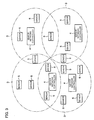
- the sensor network controller 4 typically manages multiple (a maximum of 256) sensors 5 constituting the sensor network 3 (e.g., about ten sensors 5 in a sensor network 3 for security management). Sensor networks 3 may overlap as shown in Figure 3.
- Figure 3 is a conceptual illustration showing an example of overlapping sensor networks 3.
- some sensors 5 belong to two or more sensor networks 3, and two sensor network controllers 4 belong to one sensor network 3.
- the sensor 5 in question can keep operating normally following a breakdown or other failure of one of the sensor network controllers 4, thanks to the other sensor network controller(s) 4. Therefore, it is desirable if those sensors 5 with which a high level of reliability is required are managed by two or more sensor network controllers 4.
- each of the sensors 5 is assigned with a unique sensor ID, and identified by the unique sensor ID.
- the request of the user can be more precisely met if a larger number of sensors 5 are used.
- the sensor ID may be expressed using high bits (for example, 64 bits or greater).
- the sensor ID may be, for example, the IP address under TCP/IP (Transmission Control Protocol/Internet Protocol).
- TCP/IP Transmission Control Protocol/Internet Protocol
- the 128-bit IPv 6 can be used.
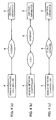
- FIGS 4(a) through 4(c) are conceptual illustrations showing examples of data communications schemes in the sensor network system 1 between the central apparatus 2 and the sensor network controller 4.
- Figure 4(a) shows a case where the Internet is used as the communications network 6.
- the Internet may be relied on entirely for the link between the central apparatus 2 and the sensor network controller 4.
- the sensor network controller 4 may be connected to the Internet by, for example, wireless packet communications used in a packet-based mobile data communications service.
- a further alternative is to connect the central apparatus 2 to the Internet by a telephone or other public network.
- the "telephone network” here includes ISDN (Integrated Services Digital Network), PHS (registered trademark) (Personal Handyphone System) networks, and mobile phone networks.
- Figure 4(b) shows a case where the Internet and a LAN (Local Area Network) connected to the Internet are used as the communications network 6.
- a LAN intervenes between the Internet and the sensor network controller 4.
- the LAN may be, for example, an Ethernet (registered trademark) or wireless LAN.
- a LAN may intervene between the Internet and the central apparatus 2.
- Figure 4(c) shows a case where a public network is used as the communications network 6.
- the public network may be a telephone network (ISDN, PHS (registered trademark) network, mobile phone network, etc.).
- Those detecting a human include photoelectric sensors, beam sensors, ultrasound sensors, and infrared sensors.
- Those detecting a movement or destruction of an object include vibration sensors and acceleration sensors (3D sensors, ball semiconductor sensors).
- Those detecting a sound include microphones, pitch sensors, and acoustic sensors.
- Those detecting video include video cameras.
- Those detecting fires include temperature sensors, smoke sensors, and humidity sensors.
- Those primarily mounted to vehicles include GPS (Global Positioning System) devices, acceleration sensors, wiper ON/OFF sensors, vibration sensors, and tilt sensors.
- Those installed indoors include light ON/OFF sensors and water leak sensors.
- Those installed outdoors include rain gauges, wind gauges, and thermometers.
- the sensors 5 on the sensor network 3 are not limited to devices generally called "sensors.”
- the sensors 5 may be any kind of device which detects an event and for example, converts a sensing result into an electric signal as sensing data for transfer to the sensor network controller 4.
- the sensors 5 on the sensor network 3 may be active sensors.
- the active sensor refers to a device which, like a video camera, has zooming and autofocusing functions and a direction-changing function to change the shooting direction, as well as CCDs (Charge Coupled Devices) as a sensor section for performing sensing, and which automatically operates or is manipulated by the sensor network controller 4 through its control signal.
- CCDs Charge Coupled Devices
- Such active sensors are capable of relatively high precision sensing suitable to the events. For example, an "active" video camera, upon detection of a moving object (smoke, for example) in its shooting range, points itself at the object to shoot it more appropriately.
- the sensors 5 on the sensor network 3 may be autonomous.
- the autonomous sensor here refers to a sensor which notifies the sensor network controller 4 and the central apparatus 2 of information on the sensor itself (sensor information), for example, periodically.
- the sensor information indicates, for example, the type (including its detection target) and layout (position, installation site) of the sensor.
- the sensors are attached to movable objects such as vehicles.
- moving the sensors changes information obtained in accordance with sensing results of the sensors. For example, suppose that temperature sensor is installed on a vehicle to sense the temperature. If the vehicle is moved, namely the sensor is moved, the temperature sensor will obtain a sensing result at a different place. Using an autonomous temperature sensor in such situations makes it possible to continuously keep track of at which place the sensor is sensing temperature.
- the sensor network controller 4 is capable of incorporating autonomous sensors, it is possible to easily add a new autonomous sensor to the sensor network controller 4 in a manner similar to so-called plug-and-play, for example.
- the type of the sensors 5 is typically selected in accordance with a particular purpose including detection of car thefts, house break-ins, and fires, for example, and the sensors 5 are placed at positions suitable for the particular purpose.
- the sensor network 3 is typically configured for a particular purpose, and the processes to achieve the particular purpose, such as monitoring and reporting, are performed by the central apparatus 2, for example, in the sensor networks 3.
- the system of Figure 2 enables the sensors installed for a particular purpose as described above to be used for another purpose.
- the sensors 5 can be divided into three major types as to methods of reporting a sensing result, that is, how they transfer sensing data to the sensor network controller 4: cyclic, event-responsive, and polling.
- a cyclic sensor automatically senses at a predetermined time cycle to convey a sensing result.
- An event-responsive sensor automatically conveys a sensing result when it has detected a predetermined event, for example, when it has detected a physical quantity greater than or equal to a threshold value.
- a polling sensor senses and conveys a sensing result in response to a request for reporting data from the sensor network controller 4.
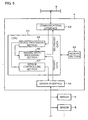
- FIG. 5 is a block diagram illustrating the internal structure of the sensor network controller 4.
- the sensor network controller 4 includes a CPU (Central Processing Unit) 41 executing various processes; a memory section 42 holding various data; a communications interface 43 providing an interface to the communications network 6; a sensor interface 44 providing an interface to the sensors 5.
- CPU Central Processing Unit
- the CPU 41 based on its computing functions, executes various data processing and produces instructions to various control circuits.
- the CPU 41 controls the entire sensor network controller 4.
- the CPU 41 functions as function blocks, that is, a signal processing section 45, a sensing data processing section 46, and a sensor controlling section 47.
- the signal processing section 45 controls a process of the sensing data in the sensing data processing section 46, and a process of controlling the sensors 5 in the sensor controlling section 47.
- the sensing data processing section 46 performs a predetermined process, if necessary, on sensing data (primary data).
- the sensing data is sensing results sent from the sensors 5 via the sensor interface 44.
- the sensing data processing section 46 sends the processed sensing data (secondary data) to the central apparatus 2 via the communications interface 43 and the communications network 6.
- the sensing data processing section 46 may cause the memory section 42 to store the secondary data, and to send the secondary data to the central apparatus 2 in response to a request from the central apparatus 2.
- the type of process the sensing data processing section 46 performs on sensing data is determined by the signal processing section 45. With this, only useful sensing data among sensing data from the sensors 5 is sent to the central apparatus 2, so that data sent to the central apparatus 2 is reduced.
- a video camera as the sensor 5 constantly sends three screens of image data per second as the primary data, each screen containing data of about 20 kilobit to 30 kilobit.
- the sensing data processing section 46 performs a process on the primary data, such as thinning down of images by eliminating images that do not much differ from the other images.
- the sensing data processing section 46 thus creates the secondary data which is reduced and useful.
- the sensor controlling section 47 sends control signals to the sensors 5 via the sensor interface 44 so as to control the sensors 5.
- the control of the sensor 5 includes a control of a transmission cycle of sensing data in a cyclic sensor, a control of a threshold value in an event-responsive sensor, a polling control in a polling sensor, and a motion control of an active sensor. How the sensor controlling section 47 controls the sensor 5 depends on an instruction from the signal processing section 45.
- the memory section 42 stores programs and data to be used in various processes in the CPU 41.
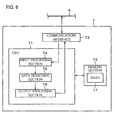
- FIG. 6 is a block diagram illustrating the internal structure of the server 7.
- the server 7 holds various data, and provides requested data in response to access from the outside via the communications network 6.
- the data may be various data such as weather data at various places, map data at various places, and data of products in manufactures, dealers, etc. Note that, two or more servers 7 may be provided to the system of Figure 2.
- the server 7 is provided with a CPU 71 executing various processes, a memory section 72 holding the various data, and an interface 73 to the communications network 6.
- the CPU 71 based on its computing functions, executes various data processing and produces instructions to various control circuits.
- the CPU 41 controls the entire server 7.
- the CPU 71 functions as function blocks, that is, an input processing section 74, a data searching section 75, and an output processing section 76.
- the input processing section 74 performs an input process on a data request signal sent from the outside via the communications network 6 and the communications interface 73. The input processing section 74 then recognizes a content requested by the data request signal and sends the requested content to the data searching section 75.
- the data searching section 75 searches the data held in the memory section 72 and extracts data suitable for the requested content. The data searching section 75 then sends the extracted data as a search result to the output processing section 76. If the data searching section 75 finds no data suitable for the requested content, the data searching section 75 sends this result as the search result to the output processing section 76.
- the output processing section 76 performs a process of sending the search result of the data searching section 75 to a requester, namely the sender of the data request signal, via the communications interface 7 and the communications network 6.
- the memory section 72 stores programs and data to be used in various processes in the CPU 71.
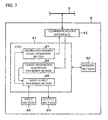
- FIG. 7 is a block diagram illustrating the internal structure of the user terminal device 8.
- the user terminal device 8 requests information from the central apparatus 2, and receives information from the central apparatus 2.
- the user terminal device 8 may be, for example, a personal computer, a cellular phone unit, and a PDA (Personal Digital Assistant) having a communication function.
- PDA Personal Digital Assistant
- the user terminal device 8 is provided with a CPU 81 executing various processes, a memory section 82 holding various data, a communications interface 83 to the communications network 6, an input section 84 for receiving an input from the user, and an output section 85 for presenting information, etc., to the user.
- the CPU 81 based on its computing functions, executes various data processing and produces instructions to various control circuits.
- the CPU 81 controls the entire user terminal device 8.
- the CPU 81 functions as function blocks, that is, an input-output processing section 86, an information request signal generating section 87, and a target information acquisition processing section 88.
- the input-output processing section 86 performs an input process on an input from the user when it receives the input through the input section 84.
- the input-output processing section 86 sends a content of the input to the information request signal generating section 87 if the input is an information request to the central apparatus 2.
- the information request signal generating section 87 generates an information request signal in accordance with the content of the information request sent from the input-output processing section 86.
- the information request signal generating section 87 then sends the generated information request signal to the central apparatus 2 via the communications interface 83 and the communications network 6.
- the information request signal contains the content of the information request as text data in a natural language (such as Japanese) that is input from the user, for example.
- the target information acquisition processing section 88 acquires the target information, performs a process on the target information, if necessary, and sends the information to the input-output processing section 86.
- the input-output processing section 86 causes the output section 85 to output the information from the target information acquisition processing section 88.
- the memory section 72 stores various programs and data to be used in various processes in the CPU 81.
- the input section 84 may be a keyboard or mouse of a personal computer, an operational key of a cellular phone unit and PDA, and the like.
- the output section 85 may be displays such as an LCD (Liquid Crystal Display) and a CRT (Cathode Ray Tube) display, a speaker, and the like.
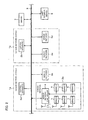
- FIG. 1 is a block diagram illustrating the internal structure of the central apparatus 2.
- the central apparatus 2 performs the above-described processes in accordance with the information request form the user terminal device or detection of a particular state at the sensor 5, and makes up an information processing device of the present invention. Note that, a part of functions explained below may be carried out by the sensor network controller 4.
- the central apparatus 2 is, for example, a computer (e.g., personal computer or large computer) with communication function and includes: a CPU 21 implementing various processes; a memory section 22 in which various data is stored; and a communications interface 23 providing an interface to the communications network 6.
- the central apparatus 2 typically includes an input section (e.g., keyboard and mouse) and a display section (e.g., display device) to allow inputs and updates for the various information in the memory section 22.
- the CPU 21 based on its computing functions, executes various data processing and produces instructions to various control circuits.
- the CPU 21 controls the entire central apparatus 2, the sensor network controller 4, and the sensors 5.
- the CPU 21 functions as function blocks, that is, an input-output processing section 101, a target information recognizing section 102, an information converting section 103, a resource specification information recognizing section 104, a resource selecting section 105, a condition satisfaction judging section 106, a data acquiring section 107, a data modifying section 108, and a target information changing section 109.
- the memory section 22 stores various programs and data to be used in the various processes in the CPU 21. Note that, as the data, the memory section 22 stores a language database 121, a target information table 122, a target information/information element conversion table 123, a resource specification information table 124, a resource information table 125, and past data 126.
- the communications interface 23 functions as an interface to the communications network 6.
- the communications interface 23 allows the sensor network system 1 to communicate data with other sensor network systems 1, the server 7, and the user terminal device 8.
- the central apparatus 2 performs processes in accordance with the information request from the user terminal device 8 or detection of a particular state at the sensor 5.
- the user terminal device 8 sends to the central apparatus 2 via the communications network 6, an information request signal for designating target information which is information requested by the user.
- the sensor 5 sends to the central apparatus 2 via the communications network 6, a sensing signal indicating a sensing result.
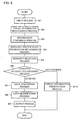
- the information request signal and the sensing signal are received by the communications interface 23, and supplied to the CPU 21 through the input-output processing section 101 (step S1).
- the input-output processing section 101 functions as a signal receiving section for receiving the information request signal for requesting information from the central apparatus 2, and a sensing result receiving section for receiving data of a sensing result obtained by the sensor 5.
- the input-output processing section 101 also functions as a communication processing section for communicating data with the user terminal device 8; a first communication processing section for communicating data with another sensor network system 1; and a second communication processing section for communicating data with the server 7.
- the target information recognizing section 102 performs a target information recognition process (step S2) in accordance with the information request signal or sensing signal received by the input-output processing section 101.
- the information request signal contains, for example, text data in a natural language (such as Japanese) that is input by the user on the user terminal device 8.
- the text data is used to designate the target information.
- the target information recognizing section 102 interprets the natural language, referring to the language database 121 (dictionary file) in which keywords, etc., are registered.
- the target information recognizing section 102 specifies and recognizes one of target information pre-set in the target information table 122 that is closest to the target information designated by the information request signal.
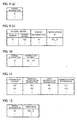
- the target information table 122 stores pre-set target information as shown in Figure 9(a).
- the information request signal may designate the target information using data (such as sound data) other than the text data.
- the target information recognizing section 102 recognizes as a destination ID of the target information, sender data contained in the information request signal.
- the destination ID specifies a destination to which the target information is to be sent via the communications network 6.
- the destination ID may be the IP address under TCP/IP of the user terminal device 8, for example. Note that, the destination may be other than the sender of the information request signal.
- the target information recognizing section 102 may recognize the target information and a parameter of the target information.
- the parameter specifies a place or other factor with respect to a certain state if the target information is information indicating the certain state such as whether or not there is a person, and whether or not it is raining, for example.
- the target information recognizing section 102 can extract the parameter from the text data, referring to the language database 121. If the target information is designated by text data in a natural language, "Is it raining in Kyoto?", for example, the target information is "whether or not it is raining (raining situation)," and the parameter is "Kyoto.”
- the sensing signal includes data indicating a sensing result and a sensor that sensed the sensing result.
- the target information recognizing section 102 (sensing result converting section) specifies and recognizes from the target information table 122, target information and a destination ID (destination information) to which the target information is to be sent.
- the target information and destination ID are pre-set and stored in the target information table 122 (target information table storing section) in association with the sensing result and sensor indicated by the sensing signal.
- the target information table 122 stores pre-set correspondence among a sensing result, a sensor, target information, and a destination ID, as shown in Figure 9(b).
- the target information is information required in response to detection of a corresponding sensing result.
- the destination ID specifies a destination to which the target information is to be sent via the communications network 6.
- the destination ID may be the IP address under TCP/IP of the user terminal device 8, for example, if the destination is the user terminal device 8.
- the information converting section 103 performs an information conversion process (step S3) of converting into a combination of information elements, the target information recognized by the target information recognizing section 102. Each information element is pre-set information appropriate for making up the target information.
- the information converting section 103 performs the information conversion process referring to the target information/information element conversion table 123.
- the target information/ information element conversion table 123 (target information/information element conversion table storing section) stores pre-set correspondence between target information and an information element, as shown in Figure 10.
- the target information is "A.”
- the target information "A” is composed of a combination of information “A1” and “A2”, or if the target information "A” can be divided into information “A1” and “A2", the information elements are "A1” and "A2.”
- the target information is typically composed of a combination of a plurality of information elements, but the target information may be composed of only one information element.
- the process of "converting the target information into a combination of information elements" may refer to the process of converting the target information into one information element.
- the parameter is also added to the information element after the conversion.
- the resource specification information recognizing section 104 performs a resource specification information recognition process (step S4) of recognizing resource specification information with respect to the information element converted by the information converting section 103.
- the resource specification information specifies a resource that can be an information source of the information element.
- the resource includes a sensor 5 of the sensor network system 1, a sensor 5 of another sensor network system 1, and a file and a database record in the server 7 which contain various data.
- the resource specification information is information for specifying a resource.
- the resource specification information may be an IP address (sensor ID) for specifying a sensor 5, an URL (Uniform Resource Locator) for specifying a file, etc., in the server 7, for example.
- the resource specification information for specifying a sensor 5 may be information specifying the type (including its detection target) and layout (position, installation site) of the sensor 5, for example, with which the sensor 5 can be specified or roughly specified.
- the resource specification information for specifying a file, etc., in the server 7 may be a keyword, etc., associated with data contained in the file, etc., with which the file, etc., can be specified or roughly specified. Namely, the resource specification information may specify a resource either directly or indirectly.
- the information indirectly specifying a resource it is possible to specify the resource more flexibly.
- the sensor 5 as the resource is an autonomous sensor capable of moving
- the sensor 5 can be specified in accordance with the position of the sensor 5 at a time point when the data acquiring section 107 acquires the data. With this, it is possible to obtain more suitable data, and utilize the sensors 5 more effectively.
- the resources specification information recognizing section 104 performs the resource specification information recognition process, referring to the resource specification information table 124.
- the resource specification information recognizing section 104 associates an information element with a real-world resource.
- the resource specification information table 124 (resource specification information table storing section) stores pre-set correspondence between an information element and resource specification information, as shown in Figure 11. If a parameter has been added to the information element, the correspondence between (A) a combination of the information element and the parameter and (B) resource specification information is set.
- the resource specification information may further contain information (data modification information) indicating a required process for modifying data from the resource if the data needs to be modified; and information (communication information) about communications for accessing the resource.
- the data modification information may indicate, for example, a process of computing and converting an electric resistance value sent from a sensor 5 into temperature information if the sensor 5 as the resource is for obtaining the electric resistance value correlating a temperature.
- the data processing information may indicate a process using a combination of acquired data.
- the indicated process may be a process of obtaining information about a moving direction from time-series positional information sent from a GPS, and a process of obtaining information about a moving speed from both time-series positional information sent from a GPS and time information from a clock.
- the process of modifying the data is performed by the data modifying section 108 in accordance with the data modification information.
- the communication information may be a communication protocol and the like used for accessing the resource.
- the communication information is used by the data acquiring section 107 to acquire data from the resource.
- the information converting section 103 and the resource specification information recognizing section 104 make up a converting section.
- the converting section divides the target information into a combination of information elements which appropriately compose the target information, and converts the information elements into resource specification information which specifies resources that can be information sources of the respective information elements.
- the resource selecting section 105 performs a resource selection process (step S5) of actually selecting a resource in accordance with the resource specification information recognized by the resource specification information recognizing section 104. For example, the resource selecting section 105 selects one resource if the resource specification information table 124 associates a certain information element with a plurality of resources, for example.
- the resource selecting section 105 refers to the resource information table 125 and converts the resource specification information into the resource specification information (sensor ID) directly specifying the sensor as the resource.
- the resource information table 125 shows correspondence between sensor information and a sensor ID, as shown in Figure 12.
- the sensor information indicates the type (including its detection target) and position of each of the sensors 5.
- searching for the sensor information in the resource information table 125 in accordance with the resource specification information in the resource information table 125 for example, it is possible to specify the sensor 5 and recognize the sensor ID of the specified sensor 5. If the sensor 5 is an autonomous sensor, each piece of sensor information sent from the sensor 5 should update the sensor information in the resource information table 125.
- the condition satisfaction judging section 106 performs a condition satisfaction judgment process (step S6) of judging in accordance with a selection result of the resource selecting section 105, whether or not the condition for acquiring information composing the target information is satisfied, namely, whether or not data can be actually acquired from the resource(s) in accordance with the resource specification information associated with the information element.
- the condition satisfaction judging section 106 passes the judgment by confirming via the input-output section 101, whether or not the resource(s) in accordance with the resource specification information is actually connected, whether or not the resource(s) can be communicated, or other conditions.
- the condition satisfaction judging section 106 may judge that the condition is satisfied if it is possible to acquire data from some of the resources, instead of all of the resources, in accordance with the resource specification information.
- condition satisfaction judgment process may be performed with respect to data after the data is acquired by the data acquiring section 107, or after the data is further modified by the data modifying section 108.
- the data acquiring section 107 performs a data acquisition process (step S7) of actually acquiring data via the input-output processing section 101 from the resource in accordance with the resource specification information. Specifically, the data acquiring section 107 acquires data of a sensing result obtained by a sensor 5 in the sensor network system 1 in question or another sensor network system 1, and data of an information element stored in the server 7.
- the data of a sensing result obtained by a sensor 5 may be data processed by the sensing data processing section 46 of the sensor network controller 4 (see Figure 5), data temporarily held in the memory section 42 of the sensor network controller 4, and data acquired by the data acquiring section 107 and temporarily held as the past data 126 in the memory section 22. Further, the data of an information element stored in the server 7 may be data to be modified into the information element later.
- the data acquiring section 107 acquires the data of a sensing result obtained by a sensor 5 in the sensor network system 1 in question, in the following manner. Namely, the data acquiring section 107 sends a control signal to the sensor network controller 4, so as to request the sensor 5 or the memory section 42 of the sensor network controller 4 to send the data of a sensing result. Note that, if the data of a sensing result is unilaterally sent from the sensor network controller 4 to the central apparatus 2 without the request of the data acquiring section 107, the data acquiring section 107 causes the memory section 22 to hold the data of a sensing result as the past data 126.
- the data acquiring section 107 acquires the data of a sensing result obtained by a sensor 5 in another sensor network system 1 in the following manner. Namely, the data acquiring section 107 sends a data request signal containing the resource specification information to the central apparatus 2 of another sensor network system 1 through the input-output processing section 101. In the central apparatus 2 that received the data request signal, the data request signal is sent to the data acquiring section 107 via the input-output processing section 101. In accordance with the resource specification information in the data request signal, the data acquiring section 107 acquires the data of a sensing result obtained by the sensor 5 in the other sensor network system 1, and sends the acquired data of the sensing result to the central apparatus 2 that originally sent the data request signal. In the central apparatus 2 that originally sent the data request signal, the data acquiring section 107 acquires the data of the sensing result sent through the input-output processing section 101.
- the data acquiring section 107 acquires the data of an information element stored in the server 7 in the following manner. Namely, the data acquiring section 107 sends a data request signal containing the resource specification information to the server 7 via the input-output processing section 101. Then, the data acquiring section 107 acquires via the input-output processing section 101, the data of the information element sent from the server 7.
- the data modifying section 108 performs a data modification process (step S8) on the data acquired by the data acquiring section 107, if necessary, in accordance with the data modification information as described earlier.
- the data modifying section 108 may further generate data that integrates data corresponding to the information elements.
- the input-output processing section 101 performs an output process (step S9).
- the input-output processing section 101 outputs in accordance with the destination ID recognized by the target information recognizing section 102, the data acquired by the data acquiring section 107 and, when needed, modified by the data modifying section 108.
- the input-output processing section 101 functions as an output section.
- the destination is a user terminal device 8 if the target information is requested by the user terminal device 8 as described earlier. If the target information is in response to a sensing result of the sensor 5, the destination is a destination specified by the destination ID associated with the sensing result in the target information table 122 (see Figure 9(b)).
- the data that is output in the output process corresponds to a combination of information elements composing the target information, and either a list of data corresponding to the information elements or an integration of data corresponding to the information elements.
- the output data may be data directly indicating the target information; or data from which the user, etc., can recognize the target information, i.e., data indicating information close to the target information.
- the target information changing section 109 performs a target information presentation process (step S10) if the condition satisfaction judging section 106 judges that the condition is not satisfied, provided that the target information is requested with the information request signal sent from the user terminal device 8.
- the target information changing section 109 changes the requested target information to target information that can be provided under the condition, and sends the changed target information to the user terminal device 8 via the input-output processing section 101. With this, the target information that can be provided is presented to the user of the user terminal device 8.
- the sender can request the target information by means of a natural language, for example, and obtain either the target information or information close to the target information.
- the information converting section 103 divides the target information into information elements which are information that can be acquired from resources, and the data acquiring section 107 acquires data from resources that can be information sources of the respective information elements.
- the central apparatus 2 dynamically selects resources in accordance with the target information.
- the central apparatus 2 can also acquire the information elements from data of a sensing result obtained by a sensor 5 in another sensor network system 1, and from the server 7. This can broaden a range of data that can be acquired as the information elements, thereby configuring the central apparatus 2 that can provide more accurate target information.
- the central apparatus 2 can provide a necessary destination with either the target information or information close to the target information required in accordance with the sensing result. In other words, it is possible to convert a sensing result of a sensor 5 into another information relating to the sensing result, and provide the converted information.
- the target information in the target information table 122 ( Figure 9(a)) and the target information/information element conversion table 123 ( Figure 10) includes "room availability” and "raining situation.”
- the target information recognizing section 102 recognizes the "room availability” as the target information and "conference room” as the parameter in Case 1, and the “raining situation” as the target information and "Kyoto” as the parameter in Case 2.
- the "room availability" in Case 1 is associated with information elements, namely, "presence of a human body,” “room lighting situation,” “room temperature situation,” and “room sound situation,” in the target information/information element conversion table 123. These information elements are associated with resource specification information, namely, an "infrared ray sensor,” a “light ON/OFF sensor,” a “temperature sensor,” and a “microphone,” respectively, in the resource specification information table 124 ( Figure 11).
- the resource selecting section 105 selects the above-described sensors provided in the conference room, and the data acquiring section 107 acquires data of sensing results from the selected sensors.
- the central apparatus 1 can acquire data of a sensing result obtained by the other sensors and presents the acquired data to the user. With this, in accordance with the data on lighting, temperature, and sound, and the like, the user can judge whether or not there is a person in the conference room.
- a sensor 5 it is possible to allow a sensor 5 to be used for a purpose other than the intended purpose.
- a sensing result of a temperature sensor provided for security may be used as information about the occurrence of a fire.
- the "raining situation” in Case 2 is associated with information elements, namely, “rainfall,” and “situation of vehicle wipers,” in the target information/information element conversion table 123.
- the "rainfall” is associated with resource specification information, namely, a "rain gauge” and a “database of the Meteorological Agency,” whereas the "situation of vehicle wipers” is associated with a "wiper ON/OFF sensor.”
- the resource selecting section 105 selects a rain gauge located in Kyoto, a wiper ON/OFF sensor of a vehicle driving in Kyoto, and a record of Kyoto in a database of the Meteorological database. Then, the data acquiring section 107 acquires information from these resources.
- the central apparatus 2 can acquire data of a sensing result obtained by a wiper ON/OFF sensor of a vehicle, and present the acquired data to the user. With this, the user can judge whether or not it is raining in Kyoto.
- a sensing result is supplied to the user terminal device 8 provided to a vehicle, if "a fuel sensor in the vehicle senses a small remaining amount of fuel as the sensing result" (Case 3).
- the target information table 122 ( Figure 9(b)) shows correspondence among the "fuel sensor in the vehicle” as the sensor, a “small remaining amount” as the sensing result, “directions to a nearby gas station” as the target information, and an "ID of the user terminal device provided to the vehicle” as the destination ID.
- the "directions to a nearby gas station” is associated with information elements, namely, "positional information of the vehicle” and "map information indicating the position of a gas station,” in the target information/information element conversion table 123. These information elements are associated with the resource specification information, namely, a "GPS” and a “map database,” respectively, in the resource specification information table 124 ( Figure 11). Further, in the resource specification information table 124, the "map information indicating the position of a gas station" is associated with an "enlargement process of the present position" as the data modification process.
- the resource selecting section 105 selects the resources. From the selected resources, the data acquiring section 107 acquires data, namely the positional information of the vehicle and the map information indicating the position of a gas station. Further, the data modifying section 108 performs the enlargement process on the map information indicating the position of a gas station so as to enlarge an area around the position of the vehicle in accordance with the positional information of the vehicle. Map information indicating the position of a gas station, which is enlarged around the position of the vehicle, is supplied to the user terminal device 8.
- another example may be such that directions to a nearby maintenance shop are provided if a sensor for sensing a defect in mechanical parts, etc., of the vehicle senses a defect. In this case, it is also possible to order a necessary part via the communications network 6, for example.
- the central apparatus 2 in response to a sensing result of a particular sensor 5, the central apparatus 2 composes the target information by combining data from other resources, for example, and outputs the target information to a predetermined destination.
- This can be applied to prevent a false report in abnormality detection by improving the precision of judgment. Namely, when a particular sensor 5 senses an abnormality, the central apparatus 2 virtually patrols the other sensors 5 and the sensor network 3, and collects and integrates local information around the abnormality (such as an image of a site of the abnormality) so as to provide the integrated information. Further, another application is to calculate in combination with map information and traffic information, an optimum route to a site of an abnormality if a particular sensor 5 senses the abnormality.
- each section from the input-output processing section 101 to the target information modifying section 109 as described above may be realized by a program (information processing program) executed by the CPU 21 of the central apparatus 2.
- the information processing program is stored in a computer-readable storage medium such as the memory section 22 of the central apparatus 2.
- the information processing program may be supplied from a program medium other than the memory section 22.
- the program medium is read by a drive device provided as an external memory device to the central apparatus 2, for example.
- the program medium may be a storage medium arranged to be detachable from the main unit.
- the storage medium may be a medium fixedly carrying a program, including a tape type such as a magnetic tape and a cassette tape; a disk type including a magnetic disk such as a floppy (registered trademark) disk and a hard disk, and an optical disk such as CD-ROM, MO, MD, and DVD; a card type such as an IC card (including a memory card) and an optical card; a semiconductor memory such as mask ROM, EPROM, EEPROM, and flash ROM.
- the central apparatus 2 may download the information processing program through a communications network including the Internet.
- a program for downloading may be either pre-stored in the central apparatus 2 or installed from another storage medium.
- the content stored in the storage medium is not limited to a program but may be data.
- an information processing device of the present invention in a sensor network system including a plurality of sensors and the information processing device collecting data of sensing results obtained by the plurality of sensors is arranged so as to include a signal receiving section for receiving an information request signal with which information is requested from the information processing device; a converting section for dividing target information which is requested with the information request signal into a combination of information elements which appropriately compose the target information, and converting the information elements into resource specification information which specifies resources that can be information sources of the respective information elements; a data acquiring section for acquiring data of sensing results obtained by one or more of the plurality of sensors that are selected in accordance with the resource specification information; and an output section for outputting information based on the data acquired by the data acquiring section.
- the information request signal is supplied to the signal receiving section of the information processing device.
- the information request signal is used for requesting the information processing device to provide information, and sent from a user terminal device outside the sensor network system, for example.
- the information request signal designates the target information which is requested with the signal.
- the converting section converts the target information into a combination of information elements which appropriately compose the target information, and converts the information elements into resource specification information which specifies resources that can be information sources of the respective information elements.
- resource specification information which specifies resources that can be information sources of the respective information elements.
- the data acquiring section acquires data of sensing results obtained by one or more of the plurality of sensors that are selected in accordance with the resource specification information. Then, the output section outputs information based on the data acquired by the data acquiring section to the user terminal device which is the sender of the information request signal, for example.
- the sender of the information request signal does not know what type(s) of sensors the sensor network system includes, the sender can request the target information by means of a natural language, for example, and obtain either the target information or information close to the target information.
- the converting section divides the target information into information elements which are information that can be acquired from sensing results of the sensors, and the data acquiring section acquires sensing results of one or more of the sensors corresponding to the information elements.
- sensor(s) in the sensor network system are dynamically selected in accordance with the target information.
- the information processing device of the present invention is preferably arranged so as to further include a first communication processing section for communicating data with another sensor network system capable of data communications with the sensor network system, the data acquiring section further acquiring via the first communication processing section, data of a sensing result obtained by a sensor in the other sensor network system in accordance with the resource specification information.
- data of a sensing result obtained by a sensor on another sensor network system can be also acquired. This can broaden a range of data that can be acquired as the information elements, thereby configuring an information processing device that can provide more accurate target information.
- the information processing device of the present invention is preferably arranged so as to further include a second communication processing section for communicating data with a server capable of data communications with the sensor network system and capable of providing data of the information elements, the data acquiring section further acquiring via the second communication processing section, the data of the information elements from the server in accordance with the resource specification information.
- data of the information elements can be obtained from not only the sensor network system but also the server holding the data. This can broaden a range of data that can be acquired as the information elements, thereby configuring an information processing device that can provide more accurate target information.
- the information processing device of the present invention is preferably arranged so that the resource specification information specifies the one or more of the plurality of sensors by designating a type and position of each of the one or more of the plurality of sensors.
- the resource specification information specifies a sensor as the resource by designating a type and position of the sensor.
- the sensor can be more flexibly specified if the type(s) and layout of the sensors on the sensor network system are comprehended. For example, if the sensor moves, the sensor can be specified in accordance with the position of the sensor at a time point when the data acquiring section acquires the data.
- a sensor network system of the present invention is arranged so as to include the foregoing information processing device and the plurality of sensors. Further, an information processing program of the present invention for causing the foregoing information processing device to operate is arranged so that the program causes a computer to function as the sections. Further, a computer-readable storage medium of the present invention contains the foregoing information processing program. With these arrangements, it is also possible to achieve the effect as explained with respect to the foregoing information processing device.
- An information processing device of the present invention in a sensor network system including a plurality of sensors and the information processing device collecting data of sensing results obtained by the plurality of sensors is arranged so as to include a sensing result receiving section for receiving data of a sensing result obtained by one of the plurality of sensors; a sensing result converting section for converting the data of the sensing result obtained by the one of the plurality of sensors into target information which is associated with the sensing result and which is required in response to the sensing result; a converting section for dividing the target information into a combination of information elements which appropriately compose the target information, and converting the information elements into resource specification information which specifies resources that can be information sources of the respective information elements; a data acquiring section for acquiring data of the information elements in accordance with the resource specification information; and an output section for outputting information based on the data acquired by the data acquiring section.
- the data of a sensing result of the sensor is supplied to the sensing result receiving section of the information processing device.
- the data of the sensing result is converted by the sensing result converting section into the target information which is required in response to the particular sensing result.
- the converting section divides the target information into a combination of information elements which appropriately compose the target information, and converts the information elements into resource specification information which specifies resources that can be information sources of the respective information elements.
- correspondence between likely target information and a combination of information elements for example, may be pre-set and pre-stored as a table.
- the data acquiring section acquires data of sensing results in accordance with the resource specification information, and the output section outputs information based on the acquired data.
- the information processing device in response to a particular sensing result obtained by a sensor, can output and provide either the target information or information close to the target information required in accordance with the sensing result. In other words, it is possible to convert a sensing result of a sensor into another information relating to the sensing result and provide the converted information.
- the information processing device of the present invention may be arranged so that the data acquiring section acquires data of sensing results obtained by one or more of the plurality of sensors that are selected in accordance with the resource specification information.
- the information processing device of the present invention may be arranged so as to further include a first communication processing section for communicating data with another sensor network system capable of data communications with the sensor network system, the data acquiring section acquiring via the first communication processing section, data of a sensing result obtained by a sensor in the other sensor network system in accordance with the resource specification information.
- the information processing device of the present invention may be arranged so as to further include a second communication processing section for communicating data with a server capable of data communications with the sensor network system and capable of providing the data of the information elements, the data acquiring section acquiring via the second communication processing section, the data of the information elements from the server in accordance with the resource specification information.
- data can be acquired from the sensors and servers. This broadens a range of data that can be acquired as the information elements, thereby configuring an information processing device capable of providing accurate target information.
- a sensor network system of the present invention is arranged so as to include the foregoing information processing device and the plurality of sensors. Further, an information processing program of the present invention for causing the foregoing information processing device to operate is arranged so that the program causes a computer to function as the sections. Further, a computer-readable storage medium of the present invention contains the foregoing information processing program. With these arrangements, it is also possible to achieve the effect as explained with respect to the foregoing information processing device.
- the present invention can be applied to a sensor network system including a plurality of sensors and an information processing device collecting data of sensing results obtained by the sensors.
- the present invention is intended to effectively utilize the plurality of sensors in the sensor network system by using sensing results of the plurality of sensors to acquire various types of information.
Landscapes
- Engineering & Computer Science (AREA)
- Computer Networks & Wireless Communication (AREA)
- Physics & Mathematics (AREA)
- General Physics & Mathematics (AREA)
- Automation & Control Theory (AREA)
- Arrangements For Transmission Of Measured Signals (AREA)
- Telephonic Communication Services (AREA)
- Computer And Data Communications (AREA)
- Alarm Systems (AREA)
- Small-Scale Networks (AREA)
Abstract
Description
Claims (22)
- An information processing device in a sensor network system including a plurality of sensors and the information processing device collecting data of sensing results obtained by the plurality of sensors, the information processing device comprising:a signal receiving section for receiving an information request signal with which information is requested from the information processing device;a converting section for dividing target information which is requested with the information request signal into a combination of information elements which appropriately compose the target information, and converting the information elements into resource specification information which specifies resources that can be information sources of the respective information elements;a data acquiring section for acquiring data of sensing results obtained by one or more of the plurality of sensors that are selected in accordance with the resource specification information; andan output section for outputting information based on the data acquired by said data acquiring section.
- The information processing device as set forth in claim 1, further comprising:a first communication processing section for communicating data with another sensor network system capable of data communications with said sensor network system,said data acquiring section further acquiring via said first communication processing section, data of a sensing result obtained by a sensor in the other sensor network system in accordance with the resource specification information.
- The information processing device as set forth in claim 1 or 2, further comprising:a second communication processing section for communicating data with a server capable of data communications with said sensor network system and capable of providing data of the information elements,said data acquiring section further acquiring via said second communication processing section, the data of the information elements from the server in accordance with the resource specification information.
- The information processing device as set forth in any one of claims 1 through 3, wherein:the resource specification information specifies the one or more of the plurality of sensors by designating a type and position of each of the one or more of the plurality of sensors.
- The information processing device as set forth in any one of claims 1 through 4, further comprising:a target information recognizing section for specifying in accordance with the information request signal, the target information among a set of target information pre-set in a target information table.
- The information processing device as set forth in any one of claims 1 through 5, wherein:said converting section divides the target information into the combination of information elements in accordance with correspondence between the target information and the combination of information elements, the correspondence being pre-set as a target information/information element conversion table.
- The information processing device as set forth in any one of claims 1 through 6, wherein:said converting section converts the information elements into the resource specification information in accordance with correspondence between the information elements and the resource specification information, the correspondence being pre-set as a resource specification information table.
- A sensor network system comprising:the information processing device as set forth in any one of claims 1 through 7; andthe plurality of sensors.
- An information processing program for causing the information processing device as set forth in any one of claims 1 through 7 to operate, wherein:said program causes a computer to function as the sections.
- A computer-readable storage medium containing the information processing program as set forth in claim 9.
- An information processing device in a sensor network system including a plurality of sensors and the information processing device collecting data of sensing results obtained by the plurality of sensors, the information processing device comprising:a sensing result receiving section for receiving data of a sensing result obtained by one of the plurality of sensors;a sensing result converting section for converting the data of said sensing result obtained by the one of the plurality of sensors into target information which is associated with said sensing result and which is required in response to said sensing result;a converting section for dividing the target information into a combination of information elements which appropriately compose the target information, and converting the information elements into resource specification information which specifies resources that can be information sources of the respective information elements;a data acquiring section for acquiring data of the information elements in accordance with the resource specification information; andan output section for outputting information based on the data acquired by said data acquiring section.
- The information processing device as set forth in claim 11, wherein:said data acquiring section acquires data of sensing results obtained by one or more of the plurality of sensors that are selected in accordance with the resource specification information.
- The information processing device as set forth in claim 11 or 12, further comprising:a first communication processing section for communicating data with another sensor network system capable of data communications with said sensor network system,said data acquiring section acquiring via said first communication processing section, data of a sensing result obtained by a sensor in the other sensor network system in accordance with the resource specification information.
- The information processing device as set forth in any one of claims 11 through 13, further comprising:a second communication processing section for communicating data with a server capable of data communications with said sensor network system and capable of providing the data of the information elements,said data acquiring section acquiring via said second communication processing section, the data of the information elements from the server in accordance with the resource specification information.
- The information processing device as set forth in any one of claims 11 through 14, wherein:said sensing result converting section converts the data of said sensing result into the target information in accordance with correspondence between (A) said sensing result and the one of the plurality of sensors that obtained said sensing result and (B) the target information, the correspondence being pre-set as a target information table.
- The information processing device as set forth in any one of claims 11 through 15, wherein:said converting section divides the target information into the combination of information elements in accordance with correspondence between the target information and the combination of information elements, the correspondence being pre-set as a target information/ information element conversion table.
- The information processing device as set forth in any one of claims 11 through 16, wherein:said converting section converts the information elements into the resource specification information in accordance with correspondence between the information elements and the resource specification information, the correspondence being pre-set as a resource specification information table.
- A sensor network system comprising:the information processing device as set forth in any one of claims 11 through 17; andthe plurality of sensors.
- An information processing program for causing the information processing device as set forth in any one of claims 11 through 17 to operate, wherein:said program causes a computer to function as the sections.
- A computer-readable storage medium containing the information processing program as set forth in claim 19.
- An information processing method in a sensor network system including a plurality of sensors and a information processing device collecting data of sensing results obtained by the plurality of sensors, the information processing method comprising the steps of:(i) receiving an information request signal with which information is requested from the information processing device;(ii) dividing target information which is requested with the information request signal into a combination of information elements which appropriately compose the target information, and converting the information elements into resource specification information which specifies resources that can be information sources of the respective information elements, said step (ii) being carried out by a converting section of the information processing device;(iii) acquiring data of sensing results obtained by one or more of the plurality of sensors that are selected in accordance with the resource specification information, said step (iii) being carried out by a data acquiring section of the information processing device; and(iv) outputting information based on the data acquired by said data acquiring section, said step (iv) being carried out by an output section of the information processing device.
- An information processing method in a sensor network system including a plurality of sensors and an information processing device collecting data of sensing results obtained by the plurality of sensors, the information processing method comprising the steps of:(i) receiving data of a sensing result obtained by one of the plurality of sensors;(ii) converting the data of said sensing result obtained by the one of the plurality of sensors into target information which is associated with said sensing result and which is required in response to said sensing result, said step (ii) being carried out by a sensing result converting section of the information processing device;(iii) dividing the target information into a combination of information elements which appropriately compose the target information, and converting the information elements into resource specification information which specifies resources that can be information sources of the respective information elements, said step (iii) being carried out by a converting section of the information processing device;(iv) acquiring data of the information elements in accordance with the resource specification information, said step (iv) being carried out by a data acquiring section of the information processing device; and(v) outputting information based on the data acquired by said data acquiring section, said step (v) being carried out by an output section of the information processing device.
Applications Claiming Priority (3)
| Application Number | Priority Date | Filing Date | Title |
|---|---|---|---|
| JP2001315277A JP4194108B2 (en) | 2001-10-12 | 2001-10-12 | Information processing apparatus, sensor network system, information processing program, and computer-readable recording medium on which information processing program is recorded |
| JP2001315277 | 2001-10-12 | ||
| PCT/JP2002/010421 WO2003034367A1 (en) | 2001-10-12 | 2002-10-07 | Information processor, sensor network system, information processing program, computer-readable recorded medium on which information processing program is recorded, and information processing method for sensor network system |
Publications (3)
| Publication Number | Publication Date |
|---|---|
| EP1441320A1 true EP1441320A1 (en) | 2004-07-28 |
| EP1441320A4 EP1441320A4 (en) | 2009-11-04 |
| EP1441320B1 EP1441320B1 (en) | 2012-12-05 |
Family
ID=19133470
Family Applications (1)
| Application Number | Title | Priority Date | Filing Date |
|---|---|---|---|
| EP02772982A Expired - Lifetime EP1441320B1 (en) | 2001-10-12 | 2002-10-07 | Information processing device and information processing method for sensor network system |
Country Status (5)
| Country | Link |
|---|---|
| US (1) | US7536255B2 (en) |
| EP (1) | EP1441320B1 (en) |
| JP (1) | JP4194108B2 (en) |
| CN (1) | CN100464353C (en) |
| WO (1) | WO2003034367A1 (en) |
Cited By (8)
| Publication number | Priority date | Publication date | Assignee | Title |
|---|---|---|---|---|
| WO2005032672A1 (en) * | 2003-10-01 | 2005-04-14 | Claassens Hendrik Jacques Bosh | Information system for golf players |
| WO2007028690A1 (en) * | 2005-09-07 | 2007-03-15 | International Business Machines Corporation | Allocating resources in an autonomic sensor network ecosystem |
| EP1684137A3 (en) * | 2005-01-21 | 2007-10-03 | Agilent Technologies, Inc. | Network based triggering in an instrument system |
| US7769848B2 (en) | 2004-09-22 | 2010-08-03 | International Business Machines Corporation | Method and systems for copying data components between nodes of a wireless sensor network |
| US8041834B2 (en) | 2004-05-28 | 2011-10-18 | International Business Machines Corporation | System and method for enabling a wireless sensor network by mote communication |
| WO2015181144A1 (en) * | 2014-05-26 | 2015-12-03 | Agt International Gmbh | System and method for registering sensors used in monitoring-systems |
| US9552262B2 (en) | 2004-10-25 | 2017-01-24 | International Business Machines Corporation | Method, system and program product for deploying and allocating an autonomic sensor network ecosystem |
| WO2023030659A1 (en) * | 2021-09-06 | 2023-03-09 | Fraba B.V. | Sensor network system |
Families Citing this family (70)
| Publication number | Priority date | Publication date | Assignee | Title |
|---|---|---|---|---|
| JP2005031826A (en) * | 2003-07-09 | 2005-02-03 | Hitachi Ltd | Sensor device and control method thereof |
| JP4492062B2 (en) * | 2003-08-20 | 2010-06-30 | ソニー株式会社 | Monitoring system, information processing apparatus and method, recording medium, and program |
| EP1517115B1 (en) * | 2003-09-19 | 2016-05-11 | Omron Corporation | Multiple sensor system |
| JP4129749B2 (en) * | 2004-03-15 | 2008-08-06 | 横河電機株式会社 | Network monitoring and control system |
| US8275824B2 (en) | 2004-03-31 | 2012-09-25 | The Invention Science Fund I, Llc | Occurrence data detection and storage for mote networks |
| US20050265388A1 (en) * | 2004-05-12 | 2005-12-01 | Searete Llc, A Limited Liability Corporation Of The State Of Delaware | Aggregating mote-associated log data |
| US8200744B2 (en) * | 2004-03-31 | 2012-06-12 | The Invention Science Fund I, Llc | Mote-associated index creation |
| US7725080B2 (en) * | 2004-03-31 | 2010-05-25 | The Invention Science Fund I, Llc | Mote networks having directional antennas |
| US9261383B2 (en) * | 2004-07-30 | 2016-02-16 | Triplay, Inc. | Discovery of occurrence-data |
| US7599696B2 (en) * | 2004-06-25 | 2009-10-06 | Searete, Llc | Frequency reuse techniques in mote-appropriate networks |
| US20060062252A1 (en) * | 2004-06-30 | 2006-03-23 | Jung Edward K | Mote appropriate network power reduction techniques |
| US20050267960A1 (en) * | 2004-05-12 | 2005-12-01 | Searete Llc, A Limited Liability Corporation Of The State Of Delaware | Mote-associated log creation |
| US8161097B2 (en) | 2004-03-31 | 2012-04-17 | The Invention Science Fund I, Llc | Aggregating mote-associated index data |
| WO2005099233A2 (en) * | 2004-03-31 | 2005-10-20 | Searete Llc | Transmission of mote-associated index data |
| US8335814B2 (en) | 2004-03-31 | 2012-12-18 | The Invention Science Fund I, Llc | Transmission of aggregated mote-associated index data |
| US7929914B2 (en) | 2004-03-31 | 2011-04-19 | The Invention Science Fund I, Llc | Mote networks using directional antenna techniques |
| US20060079285A1 (en) * | 2004-03-31 | 2006-04-13 | Jung Edward K Y | Transmission of mote-associated index data |
| US7941188B2 (en) | 2004-03-31 | 2011-05-10 | The Invention Science Fund I, Llc | Occurrence data detection and storage for generalized sensor networks |
| US9062992B2 (en) * | 2004-07-27 | 2015-06-23 | TriPlay Inc. | Using mote-associated indexes |
| US7317898B2 (en) * | 2004-03-31 | 2008-01-08 | Searete Llc | Mote networks using directional antenna techniques |
| US20060004888A1 (en) * | 2004-05-21 | 2006-01-05 | Searete Llc, A Limited Liability Corporation Of The State Delaware | Using mote-associated logs |
| EP1733574A2 (en) * | 2004-03-31 | 2006-12-20 | Searete LLC. | Using federated mote-associated indexes |
| US7389295B2 (en) | 2004-06-25 | 2008-06-17 | Searete Llc | Using federated mote-associated logs |
| US7366544B2 (en) | 2004-03-31 | 2008-04-29 | Searete, Llc | Mote networks having directional antennas |
| US8346846B2 (en) | 2004-05-12 | 2013-01-01 | The Invention Science Fund I, Llc | Transmission of aggregated mote-associated log data |
| US7457834B2 (en) * | 2004-07-30 | 2008-11-25 | Searete, Llc | Aggregation and retrieval of network sensor data |
| US7536388B2 (en) * | 2004-03-31 | 2009-05-19 | Searete, Llc | Data storage for distributed sensor networks |
| US20050268012A1 (en) * | 2004-05-05 | 2005-12-01 | Ralf Schaetzle | Method for automatic configuration of a process control system and corresponding process control system |
| US7410096B2 (en) * | 2004-06-07 | 2008-08-12 | Rf Code, Inc. | Middleware appliance for scalable and reliable automated identification |
| JP4563210B2 (en) * | 2005-02-21 | 2010-10-13 | 株式会社エヌ・ティ・ティ・ドコモ | Communication control method, communication node, and communication system |
| US7904052B2 (en) | 2005-02-23 | 2011-03-08 | Hitachi, Ltd. | Sensor net management method |
| JP4885463B2 (en) * | 2005-03-03 | 2012-02-29 | 株式会社日立製作所 | Sensor network system, sensor data processing method and program |
| JP4596943B2 (en) * | 2005-03-24 | 2010-12-15 | 株式会社日立製作所 | Sensor network system, data transfer method and program |
| JP2007156779A (en) * | 2005-12-05 | 2007-06-21 | Hitachi Ltd | Sensor network system, base station, and sensing data relay method |
| WO2007110968A1 (en) * | 2006-03-28 | 2007-10-04 | Hitachi, Ltd. | Sensor net system, sensor net system data managing method, and sensor net system data managing program |
| US20080016436A1 (en) * | 2006-07-14 | 2008-01-17 | Microsoft Corporation | Spreadsheet Interface For Streaming Sensor Data |
| US20080016440A1 (en) * | 2006-07-14 | 2008-01-17 | Microsoft Corporation | Programming And Managing Sensor Networks |
| KR100749820B1 (en) * | 2006-11-06 | 2007-08-17 | 한국전자통신연구원 | Sensing data processing system from sensor network and its method |
| US9201914B2 (en) * | 2007-06-19 | 2015-12-01 | Alcatel Lucent | Method, system and service for structured data filtering, aggregation, and dissemination |
| TWI361610B (en) * | 2007-12-03 | 2012-04-01 | Ind Tech Res Inst | Key establishing and event processing method and system for dual-mode wireless sensor network |
| JP5179938B2 (en) * | 2008-04-24 | 2013-04-10 | ホーチキ株式会社 | Disaster prevention monitoring system |
| US8576746B2 (en) * | 2008-06-04 | 2013-11-05 | Electronics And Telecommunications Research Institute | Sensor node identification method for hierarchical sensor network, and component therefor |
| JP5098891B2 (en) * | 2008-08-22 | 2012-12-12 | 沖電気工業株式会社 | Sensor data processing device |
| CN101998629B (en) * | 2009-08-28 | 2014-05-21 | 国际商业机器公司 | Method, device and system for searching for virtual resources |
| US9007181B2 (en) * | 2010-01-08 | 2015-04-14 | Tyco Fire & Security Gmbh | Method and system for discovery and transparent status reporting for sensor networks |
| CN102478413A (en) * | 2010-11-26 | 2012-05-30 | 亚旭电脑股份有限公司 | test aids |
| JP5639945B2 (en) * | 2011-04-04 | 2014-12-10 | 株式会社日立製作所 | Network system |
| US20130094403A1 (en) * | 2011-10-18 | 2013-04-18 | Electronics And Telecommunications Research Institute | Method and apparatus for providing sensor network information |
| JP2013196090A (en) * | 2012-03-16 | 2013-09-30 | Mitsubishi Electric Corp | Heavy rain alarm system |
| JP6004391B2 (en) * | 2012-05-14 | 2016-10-05 | 日本電信電話株式会社 | Sink node device, storage server device, data collection system, data collection method, and program |
| JP5593486B2 (en) * | 2012-10-18 | 2014-09-24 | 独立行政法人産業技術総合研究所 | Sensor network system |
| CN105917660B (en) * | 2014-02-05 | 2017-11-14 | 三菱电机株式会社 | Communicator and communication means |
| US10009311B2 (en) * | 2014-03-28 | 2018-06-26 | Alcatel Lucent | Chat-based support of multiple communication interaction types |
| JP2016012191A (en) * | 2014-06-27 | 2016-01-21 | オムロン株式会社 | Information processing device, information processing method, and program |
| JP6249908B2 (en) * | 2014-09-03 | 2017-12-20 | オリンパス株式会社 | Information processing system |
| JP6668055B2 (en) * | 2015-11-27 | 2020-03-18 | 株式会社東芝 | Monitoring system, monitoring station, and monitoring method |
| JP6793408B2 (en) * | 2015-12-06 | 2020-12-02 | アドリッチ,エルエルシー | Inventory management device |
| US10772059B2 (en) * | 2016-02-03 | 2020-09-08 | Cognosos, Inc. | Methods and systems for on demand network MIMO |
| JP6733219B2 (en) * | 2016-03-03 | 2020-07-29 | オムロン株式会社 | Management device, management system, management method, and management program |
| JP6782442B2 (en) * | 2016-08-03 | 2020-11-11 | パナソニックIpマネジメント株式会社 | Measuring equipment, measuring system and computer system |
| JP6652477B2 (en) * | 2016-10-03 | 2020-02-26 | 日立オートモティブシステムズ株式会社 | In-vehicle processing unit |
| JP2018147290A (en) * | 2017-03-07 | 2018-09-20 | オムロン株式会社 | Sensor metadata generation apparatus, sensor metadata generation system, sensor metadata generation method, and sensor meta data generation program |
| JP6813418B2 (en) * | 2017-04-14 | 2021-01-13 | 株式会社東芝 | Monitoring system, monitoring device and monitoring method |
| CN110582759B (en) * | 2017-06-06 | 2024-01-12 | 欧姆龙株式会社 | Score calculation unit, retrieval device, score calculation method and score calculation program |
| JP6897589B2 (en) * | 2018-02-01 | 2021-06-30 | オムロン株式会社 | Input unit |
| JP6489250B1 (en) * | 2018-02-13 | 2019-03-27 | オムロン株式会社 | Candidate extraction apparatus, candidate extraction method and program |
| JP7172071B2 (en) * | 2018-03-15 | 2022-11-16 | 富士フイルムビジネスイノベーション株式会社 | Information gathering device and program |
| JP7148800B2 (en) * | 2019-01-09 | 2022-10-06 | 富士通株式会社 | Data collection program, data collection device and data collection method |
| JP7266288B2 (en) * | 2019-04-11 | 2023-04-28 | 株式会社ティアンドデイ | Environmental measurement system |
| US12426079B2 (en) * | 2023-02-23 | 2025-09-23 | Cisco Technology, Inc. | Prioritizing network traffic for emergency services |
Family Cites Families (40)
| Publication number | Priority date | Publication date | Assignee | Title |
|---|---|---|---|---|
| US6085336A (en) * | 1987-06-02 | 2000-07-04 | Texas Instruments Incorporated | Data processing devices, systems and methods with mode driven stops |
| JP2605828B2 (en) | 1988-09-30 | 1997-04-30 | オムロン株式会社 | Information processing system and fuzzy computer |
| US5412421A (en) * | 1992-04-30 | 1995-05-02 | Westinghouse Electric Corporation | Motion compensated sensor |
| US5365290A (en) * | 1992-08-10 | 1994-11-15 | Olympus Optical Co., Ltd. | Camera capable of recording photographing information and printing apparatus therefor |
| US5636122A (en) * | 1992-10-16 | 1997-06-03 | Mobile Information Systems, Inc. | Method and apparatus for tracking vehicle location and computer aided dispatch |
| JP3312141B2 (en) | 1993-12-07 | 2002-08-05 | オムロン株式会社 | Instruction break-down apparatus and method, and instruction analysis apparatus and method |
| US5451960A (en) * | 1994-06-10 | 1995-09-19 | Unisys Corporation | Method of optimizing the allocation of sensors to targets |
| US5563988A (en) * | 1994-08-01 | 1996-10-08 | Massachusetts Institute Of Technology | Method and system for facilitating wireless, full-body, real-time user interaction with a digitally represented visual environment |
| US5485263A (en) * | 1994-08-18 | 1996-01-16 | United Parcel Service Of America, Inc. | Optical path equalizer |
| US5644386A (en) * | 1995-01-11 | 1997-07-01 | Loral Vought Systems Corp. | Visual recognition system for LADAR sensors |
| US7085637B2 (en) * | 1997-10-22 | 2006-08-01 | Intelligent Technologies International, Inc. | Method and system for controlling a vehicle |
| US6006159A (en) * | 1995-08-14 | 1999-12-21 | Schmier; Kenneth J. | Public transit vehicle arrival information system |
| GB9601101D0 (en) * | 1995-09-08 | 1996-03-20 | Orad Hi Tech Systems Limited | Method and apparatus for automatic electronic replacement of billboards in a video image |
| US5959568A (en) * | 1996-06-26 | 1999-09-28 | Par Goverment Systems Corporation | Measuring distance |
| CN1169032C (en) * | 1996-11-29 | 2004-09-29 | 松下电工株式会社 | Building automation system |
| US5959529A (en) * | 1997-03-07 | 1999-09-28 | Kail, Iv; Karl A. | Reprogrammable remote sensor monitoring system |
| US5810014A (en) * | 1997-03-25 | 1998-09-22 | Davis; Dennis W. | Method and system for detection of physiological conditions |
| JP3353656B2 (en) | 1997-07-09 | 2002-12-03 | トヨタ自動車株式会社 | Information providing system and information processing device used therefor |
| JP3609590B2 (en) | 1997-08-13 | 2005-01-12 | 株式会社日立製作所 | Information providing system, information output method in terminal, mobile information terminal, and information providing apparatus |
| JPH11265400A (en) * | 1998-03-13 | 1999-09-28 | Omron Corp | Information processing apparatus and method, network system, and recording medium |
| JP2000020556A (en) | 1998-07-03 | 2000-01-21 | Isa:Kk | Data acquiring device, data server, and data service system |
| JP4197790B2 (en) | 1999-03-12 | 2008-12-17 | ウェザー・サービス株式会社 | Navigation device, navigation system, and weather information providing server |
| US6181994B1 (en) * | 1999-04-07 | 2001-01-30 | International Business Machines Corporation | Method and system for vehicle initiated delivery of advanced diagnostics based on the determined need by vehicle |
| JP2000295375A (en) * | 1999-04-08 | 2000-10-20 | Hitachi Ltd | Information distribution server, monitoring center server, and maintenance personnel terminal |
| US7020701B1 (en) * | 1999-10-06 | 2006-03-28 | Sensoria Corporation | Method for collecting and processing data using internetworked wireless integrated network sensors (WINS) |
| US6859831B1 (en) * | 1999-10-06 | 2005-02-22 | Sensoria Corporation | Method and apparatus for internetworked wireless integrated network sensor (WINS) nodes |
| US6832251B1 (en) * | 1999-10-06 | 2004-12-14 | Sensoria Corporation | Method and apparatus for distributed signal processing among internetworked wireless integrated network sensors (WINS) |
| US6735630B1 (en) * | 1999-10-06 | 2004-05-11 | Sensoria Corporation | Method for collecting data using compact internetworked wireless integrated network sensors (WINS) |
| US6611755B1 (en) * | 1999-12-19 | 2003-08-26 | Trimble Navigation Ltd. | Vehicle tracking, communication and fleet management system |
| JP2001194161A (en) | 2000-01-11 | 2001-07-19 | Alpine Electronics Inc | Eye movement detection information presentation device |
| JP2001338018A (en) | 2000-05-29 | 2001-12-07 | Iida Sangyo:Kk | Home remote check system |
| JP2003044708A (en) * | 2000-10-02 | 2003-02-14 | Omron Corp | Information mediation system and information mediation method used for it |
| US6600418B2 (en) * | 2000-12-12 | 2003-07-29 | 3M Innovative Properties Company | Object tracking and management system and method using radio-frequency identification tags |
| JP3666400B2 (en) * | 2001-03-07 | 2005-06-29 | オムロン株式会社 | Monitoring device and method, recording medium, and security system |
| JP3636113B2 (en) * | 2001-08-10 | 2005-04-06 | オムロン株式会社 | Portable communication device, monitoring device, monitoring system, control program for portable communication device, control program for monitoring device, recording medium recording control program for portable communication device, and recording medium recording control program for monitoring device |
| JP3603825B2 (en) * | 2001-08-27 | 2004-12-22 | オムロン株式会社 | Surveillance systems, central monitors, and on-board monitors |
| JP4000805B2 (en) * | 2001-10-01 | 2007-10-31 | オムロン株式会社 | Sensor information transmission device, sensor network system, sensor information transmission program, computer readable recording of the sensor information transmission program |
| JP3674569B2 (en) * | 2001-10-04 | 2005-07-20 | オムロン株式会社 | SENSOR MANAGEMENT DEVICE, SENSOR MANAGEMENT DEVICE CONTROL PROGRAM, COMPUTER-READABLE RECORDING MEDIUM CONTAINING THE PROGRAM, AND SENSOR MANAGEMENT DEVICE CONTROL METHOD |
| JP3671891B2 (en) * | 2001-10-04 | 2005-07-13 | オムロン株式会社 | Sensor network system management method, sensor network system management program, recording medium storing sensor network system management program, and sensor network system management apparatus |
| US6662068B1 (en) * | 2001-10-12 | 2003-12-09 | Touraj Ghaffari | Real time total asset visibility system |
-
2001
- 2001-10-12 JP JP2001315277A patent/JP4194108B2/en not_active Expired - Fee Related
-
2002
- 2002-10-07 CN CNB028201620A patent/CN100464353C/en not_active Expired - Fee Related
- 2002-10-07 WO PCT/JP2002/010421 patent/WO2003034367A1/en not_active Ceased
- 2002-10-07 EP EP02772982A patent/EP1441320B1/en not_active Expired - Lifetime
- 2002-10-07 US US10/492,406 patent/US7536255B2/en not_active Expired - Fee Related
Cited By (12)
| Publication number | Priority date | Publication date | Assignee | Title |
|---|---|---|---|---|
| WO2005032672A1 (en) * | 2003-10-01 | 2005-04-14 | Claassens Hendrik Jacques Bosh | Information system for golf players |
| US8041834B2 (en) | 2004-05-28 | 2011-10-18 | International Business Machines Corporation | System and method for enabling a wireless sensor network by mote communication |
| US7769848B2 (en) | 2004-09-22 | 2010-08-03 | International Business Machines Corporation | Method and systems for copying data components between nodes of a wireless sensor network |
| US9552262B2 (en) | 2004-10-25 | 2017-01-24 | International Business Machines Corporation | Method, system and program product for deploying and allocating an autonomic sensor network ecosystem |
| EP1684137A3 (en) * | 2005-01-21 | 2007-10-03 | Agilent Technologies, Inc. | Network based triggering in an instrument system |
| WO2007028690A1 (en) * | 2005-09-07 | 2007-03-15 | International Business Machines Corporation | Allocating resources in an autonomic sensor network ecosystem |
| CN101258530B (en) * | 2005-09-07 | 2010-11-24 | 国际商业机器公司 | Allocating resources in an autonomous sensor network ecosystem |
| US8041772B2 (en) | 2005-09-07 | 2011-10-18 | International Business Machines Corporation | Autonomic sensor network ecosystem |
| TWI398120B (en) * | 2005-09-07 | 2013-06-01 | Ibm | Autonomic sensor network ecosystem |
| WO2015181144A1 (en) * | 2014-05-26 | 2015-12-03 | Agt International Gmbh | System and method for registering sensors used in monitoring-systems |
| US10154321B2 (en) | 2014-05-26 | 2018-12-11 | Agt International Gmbh | System and method for registering sensors used in monitoring-systems |
| WO2023030659A1 (en) * | 2021-09-06 | 2023-03-09 | Fraba B.V. | Sensor network system |
Also Published As
| Publication number | Publication date |
|---|---|
| CN1701347A (en) | 2005-11-23 |
| WO2003034367A1 (en) | 2003-04-24 |
| EP1441320B1 (en) | 2012-12-05 |
| US7536255B2 (en) | 2009-05-19 |
| US20040249563A1 (en) | 2004-12-09 |
| EP1441320A4 (en) | 2009-11-04 |
| CN100464353C (en) | 2009-02-25 |
| JP4194108B2 (en) | 2008-12-10 |
| JP2003122796A (en) | 2003-04-25 |
Similar Documents
| Publication | Publication Date | Title |
|---|---|---|
| US7536255B2 (en) | Sensor or networks with server and information processing system, method and program | |
| JP2003122796A5 (en) | ||
| US7406401B2 (en) | Sensor manager device, computer program for controlling sensor manager device, computer-readable storage medium containing computer program, and method controlling sensor manager device | |
| US12259923B2 (en) | Short-term and long-term memory on an edge device | |
| CN213120575U (en) | Indoor positioning and navigation system and indoor power distribution equipment monitoring and control system | |
| CN111259840A (en) | Land occupation early warning method, device, equipment and storage medium | |
| WO2014050192A1 (en) | Device management apparatus and device search method | |
| KR20130134585A (en) | Apparatus and method for sharing sensing information of portable device | |
| US20240348690A1 (en) | Adaptive tower monitoring and authentication control | |
| JP4298944B2 (en) | Information processing apparatus, sensor network system, information processing program, and computer-readable recording medium recording the information processing program | |
| CN119825481A (en) | Underground safety monitoring system and method based on edge computer and edge computer | |
| CN104050241A (en) | Remote-operating accepting system, remote operating system and program | |
| JP2005100443A (en) | SENSOR MANAGEMENT DEVICE, SENSOR MANAGEMENT DEVICE CONTROL PROGRAM, COMPUTER-READABLE RECORDING MEDIUM CONTAINING THE PROGRAM, AND SENSOR MANAGEMENT DEVICE CONTROL METHOD | |
| JP2003141662A (en) | Sensor management device, sensor network system, information processing program, and computer-readable recording medium recording the program | |
| JP2004170202A (en) | Weather forecast server, portable electronic device and program | |
| KR20180002487A (en) | Server for jointing ownership of sensor data of a device and its service method | |
| WO2019159484A1 (en) | Quality check device, quality check method and program | |
| US20210274133A1 (en) | Pre-generating video event notifications | |
| CN117687546A (en) | A GIS-based Internet of Things application management method | |
| CN118015559A (en) | Object identification method and device, electronic equipment and storage medium | |
| EP2479966A1 (en) | identifying personal context by correlating the output of multiple sensors | |
| US12185133B1 (en) | Systems and methods for detecting events in a mesh network | |
| EP4618041A1 (en) | A method for processing images to identify objects within an environment | |
| KR20200107419A (en) | Fusion positioning method using environmental information fingerprint construction | |
| JP3951670B2 (en) | Central management device, sensor network system, sensor management device, information processing program, and computer-readable recording medium recording the program |
Legal Events
| Date | Code | Title | Description |
|---|---|---|---|
| PUAI | Public reference made under article 153(3) epc to a published international application that has entered the european phase |
Free format text: ORIGINAL CODE: 0009012 |
|
| 17P | Request for examination filed |
Effective date: 20040503 |
|
| AK | Designated contracting states |
Kind code of ref document: A1 Designated state(s): AT BE BG CH CY CZ DE DK EE ES FI FR GB GR IE IT LI LU MC NL PT SE SK TR |
|
| AX | Request for extension of the european patent |
Extension state: AL LT LV MK RO SI |
|
| A4 | Supplementary search report drawn up and despatched |
Effective date: 20091005 |
|
| RIC1 | Information provided on ipc code assigned before grant |
Ipc: G06F 17/40 20060101ALI20090929BHEP Ipc: H04L 12/28 20060101ALI20090929BHEP Ipc: G06F 13/00 20060101ALI20090929BHEP Ipc: H04Q 9/02 20060101ALI20090929BHEP Ipc: G08C 19/00 20060101AFI20030508BHEP |
|
| 17Q | First examination report despatched |
Effective date: 20100908 |
|
| REG | Reference to a national code |
Ref country code: DE Ref legal event code: R079 Ref document number: 60244175 Country of ref document: DE Free format text: PREVIOUS MAIN CLASS: G08C0019000000 Ipc: H04Q0009020000 |
|
| GRAP | Despatch of communication of intention to grant a patent |
Free format text: ORIGINAL CODE: EPIDOSNIGR1 |
|
| RIC1 | Information provided on ipc code assigned before grant |
Ipc: H04Q 9/02 20060101AFI20120618BHEP Ipc: G05B 19/042 20060101ALI20120618BHEP |
|
| GRAS | Grant fee paid |
Free format text: ORIGINAL CODE: EPIDOSNIGR3 |
|
| GRAA | (expected) grant |
Free format text: ORIGINAL CODE: 0009210 |
|
| RAP1 | Party data changed (applicant data changed or rights of an application transferred) |
Owner name: OMRON CORPORATION |
|
| RIN1 | Information on inventor provided before grant (corrected) |
Inventor name: OYAGI, MASAYUKI, C/O OMRON CORPORATION Inventor name: OTA, SHUNJI, C/O OMRON CORPORATION Inventor name: YAMATO, MASAKI, C/O OMRON CORPORATION Inventor name: OTSUKI, YOSHIYUKI, C/O OMRON CORPORATION |
|
| AK | Designated contracting states |
Kind code of ref document: B1 Designated state(s): AT BE BG CH CY CZ DE DK EE ES FI FR GB GR IE IT LI LU MC NL PT SE SK TR |
|
| REG | Reference to a national code |
Ref country code: GB Ref legal event code: FG4D |
|
| REG | Reference to a national code |
Ref country code: CH Ref legal event code: EP |
|
| REG | Reference to a national code |
Ref country code: AT Ref legal event code: REF Ref document number: 587840 Country of ref document: AT Kind code of ref document: T Effective date: 20121215 |
|
| REG | Reference to a national code |
Ref country code: IE Ref legal event code: FG4D |
|
| REG | Reference to a national code |
Ref country code: DE Ref legal event code: R082 Ref document number: 60244175 Country of ref document: DE Representative=s name: KILIAN KILIAN & PARTNER, DE Ref country code: DE Ref legal event code: R082 Ref document number: 60244175 Country of ref document: DE Representative=s name: KILIAN KILIAN & PARTNER MBB PATENTANWAELTE, DE |
|
| REG | Reference to a national code |
Ref country code: DE Ref legal event code: R096 Ref document number: 60244175 Country of ref document: DE Effective date: 20130131 |
|
| REG | Reference to a national code |
Ref country code: AT Ref legal event code: MK05 Ref document number: 587840 Country of ref document: AT Kind code of ref document: T Effective date: 20121205 |
|
| PG25 | Lapsed in a contracting state [announced via postgrant information from national office to epo] |
Ref country code: SE Free format text: LAPSE BECAUSE OF FAILURE TO SUBMIT A TRANSLATION OF THE DESCRIPTION OR TO PAY THE FEE WITHIN THE PRESCRIBED TIME-LIMIT Effective date: 20121205 Ref country code: FI Free format text: LAPSE BECAUSE OF FAILURE TO SUBMIT A TRANSLATION OF THE DESCRIPTION OR TO PAY THE FEE WITHIN THE PRESCRIBED TIME-LIMIT Effective date: 20121205 Ref country code: ES Free format text: LAPSE BECAUSE OF FAILURE TO SUBMIT A TRANSLATION OF THE DESCRIPTION OR TO PAY THE FEE WITHIN THE PRESCRIBED TIME-LIMIT Effective date: 20130316 |
|
| REG | Reference to a national code |
Ref country code: NL Ref legal event code: VDEP Effective date: 20121205 |
|
| PG25 | Lapsed in a contracting state [announced via postgrant information from national office to epo] |
Ref country code: GR Free format text: LAPSE BECAUSE OF FAILURE TO SUBMIT A TRANSLATION OF THE DESCRIPTION OR TO PAY THE FEE WITHIN THE PRESCRIBED TIME-LIMIT Effective date: 20130306 Ref country code: CY Free format text: LAPSE BECAUSE OF FAILURE TO SUBMIT A TRANSLATION OF THE DESCRIPTION OR TO PAY THE FEE WITHIN THE PRESCRIBED TIME-LIMIT Effective date: 20121205 |
|
| PG25 | Lapsed in a contracting state [announced via postgrant information from national office to epo] |
Ref country code: AT Free format text: LAPSE BECAUSE OF FAILURE TO SUBMIT A TRANSLATION OF THE DESCRIPTION OR TO PAY THE FEE WITHIN THE PRESCRIBED TIME-LIMIT Effective date: 20121205 |
|
| PG25 | Lapsed in a contracting state [announced via postgrant information from national office to epo] |
Ref country code: BE Free format text: LAPSE BECAUSE OF FAILURE TO SUBMIT A TRANSLATION OF THE DESCRIPTION OR TO PAY THE FEE WITHIN THE PRESCRIBED TIME-LIMIT Effective date: 20121205 Ref country code: CZ Free format text: LAPSE BECAUSE OF FAILURE TO SUBMIT A TRANSLATION OF THE DESCRIPTION OR TO PAY THE FEE WITHIN THE PRESCRIBED TIME-LIMIT Effective date: 20121205 Ref country code: SK Free format text: LAPSE BECAUSE OF FAILURE TO SUBMIT A TRANSLATION OF THE DESCRIPTION OR TO PAY THE FEE WITHIN THE PRESCRIBED TIME-LIMIT Effective date: 20121205 Ref country code: EE Free format text: LAPSE BECAUSE OF FAILURE TO SUBMIT A TRANSLATION OF THE DESCRIPTION OR TO PAY THE FEE WITHIN THE PRESCRIBED TIME-LIMIT Effective date: 20121205 Ref country code: BG Free format text: LAPSE BECAUSE OF FAILURE TO SUBMIT A TRANSLATION OF THE DESCRIPTION OR TO PAY THE FEE WITHIN THE PRESCRIBED TIME-LIMIT Effective date: 20130305 |
|
| PG25 | Lapsed in a contracting state [announced via postgrant information from national office to epo] |
Ref country code: PT Free format text: LAPSE BECAUSE OF FAILURE TO SUBMIT A TRANSLATION OF THE DESCRIPTION OR TO PAY THE FEE WITHIN THE PRESCRIBED TIME-LIMIT Effective date: 20130405 Ref country code: NL Free format text: LAPSE BECAUSE OF FAILURE TO SUBMIT A TRANSLATION OF THE DESCRIPTION OR TO PAY THE FEE WITHIN THE PRESCRIBED TIME-LIMIT Effective date: 20121205 |
|
| PLBE | No opposition filed within time limit |
Free format text: ORIGINAL CODE: 0009261 |
|
| STAA | Information on the status of an ep patent application or granted ep patent |
Free format text: STATUS: NO OPPOSITION FILED WITHIN TIME LIMIT |
|
| PG25 | Lapsed in a contracting state [announced via postgrant information from national office to epo] |
Ref country code: DK Free format text: LAPSE BECAUSE OF FAILURE TO SUBMIT A TRANSLATION OF THE DESCRIPTION OR TO PAY THE FEE WITHIN THE PRESCRIBED TIME-LIMIT Effective date: 20121205 |
|
| 26N | No opposition filed |
Effective date: 20130906 |
|
| PG25 | Lapsed in a contracting state [announced via postgrant information from national office to epo] |
Ref country code: IT Free format text: LAPSE BECAUSE OF FAILURE TO SUBMIT A TRANSLATION OF THE DESCRIPTION OR TO PAY THE FEE WITHIN THE PRESCRIBED TIME-LIMIT Effective date: 20121205 |
|
| REG | Reference to a national code |
Ref country code: DE Ref legal event code: R097 Ref document number: 60244175 Country of ref document: DE Effective date: 20130906 |
|
| PG25 | Lapsed in a contracting state [announced via postgrant information from national office to epo] |
Ref country code: MC Free format text: LAPSE BECAUSE OF FAILURE TO SUBMIT A TRANSLATION OF THE DESCRIPTION OR TO PAY THE FEE WITHIN THE PRESCRIBED TIME-LIMIT Effective date: 20121205 |
|
| REG | Reference to a national code |
Ref country code: CH Ref legal event code: PL |
|
| REG | Reference to a national code |
Ref country code: IE Ref legal event code: MM4A |
|
| PG25 | Lapsed in a contracting state [announced via postgrant information from national office to epo] |
Ref country code: CH Free format text: LAPSE BECAUSE OF NON-PAYMENT OF DUE FEES Effective date: 20131031 Ref country code: LI Free format text: LAPSE BECAUSE OF NON-PAYMENT OF DUE FEES Effective date: 20131031 |
|
| PG25 | Lapsed in a contracting state [announced via postgrant information from national office to epo] |
Ref country code: IE Free format text: LAPSE BECAUSE OF NON-PAYMENT OF DUE FEES Effective date: 20131007 |
|
| PG25 | Lapsed in a contracting state [announced via postgrant information from national office to epo] |
Ref country code: TR Free format text: LAPSE BECAUSE OF FAILURE TO SUBMIT A TRANSLATION OF THE DESCRIPTION OR TO PAY THE FEE WITHIN THE PRESCRIBED TIME-LIMIT Effective date: 20121205 |
|
| PG25 | Lapsed in a contracting state [announced via postgrant information from national office to epo] |
Ref country code: LU Free format text: LAPSE BECAUSE OF NON-PAYMENT OF DUE FEES Effective date: 20131007 |
|
| REG | Reference to a national code |
Ref country code: FR Ref legal event code: PLFP Year of fee payment: 15 |
|
| REG | Reference to a national code |
Ref country code: FR Ref legal event code: PLFP Year of fee payment: 16 |
|
| REG | Reference to a national code |
Ref country code: FR Ref legal event code: PLFP Year of fee payment: 17 |
|
| PGFP | Annual fee paid to national office [announced via postgrant information from national office to epo] |
Ref country code: FR Payment date: 20190913 Year of fee payment: 18 |
|
| PGFP | Annual fee paid to national office [announced via postgrant information from national office to epo] |
Ref country code: DE Payment date: 20190924 Year of fee payment: 18 |
|
| PGFP | Annual fee paid to national office [announced via postgrant information from national office to epo] |
Ref country code: GB Payment date: 20191003 Year of fee payment: 18 |
|
| REG | Reference to a national code |
Ref country code: DE Ref legal event code: R119 Ref document number: 60244175 Country of ref document: DE |
|
| GBPC | Gb: european patent ceased through non-payment of renewal fee |
Effective date: 20201007 |
|
| PG25 | Lapsed in a contracting state [announced via postgrant information from national office to epo] |
Ref country code: DE Free format text: LAPSE BECAUSE OF NON-PAYMENT OF DUE FEES Effective date: 20210501 Ref country code: FR Free format text: LAPSE BECAUSE OF NON-PAYMENT OF DUE FEES Effective date: 20201031 |
|
| PG25 | Lapsed in a contracting state [announced via postgrant information from national office to epo] |
Ref country code: GB Free format text: LAPSE BECAUSE OF NON-PAYMENT OF DUE FEES Effective date: 20201007 |