Technical Field
The present invention relates to methods of evaluating
phosphatase inhibitors, using phosphatases that inhibit the
transcriptional activity of a transcription factor (cAMP responsive
element binding protein: CREB) that binds to the cyclic AMP (cAMP)
responsive element (CRE). The phosphatase inhibitors obtainable
using these methods increase CREB's transcriptional activity, are
considered to improve memory disorders and neurodegeneration, and
are expected to become pharmaceutical agents for a wide variety of
neural disorders.
Background Art
CREB is a transcription factor that binds to CRE. The Ser 133
of CREB is phosphorylated and then activated by cyclic AMP-dependent
protein kinase. CRE is located in the transcription regulatory sites
of gene clusters whose expression is enhanced by cAMP (somatostatin,
c-fos, etc.) , and is an indispensable component for the cAMP-induced
induction.
CREB whose serine has been phosphorylated binds to
transcription regulatory factors, mainly CREB binding proteins (CBPs),
and has increased binding activity (Shaywitz, A. J. et al., Annu.
Rev. Biochem. 68:821 (1999)). Furthermore, an increase of CREB's
transcriptional activity has been observed on depolarization due to
high K+ concentration (Beitmer-Johnson, D. et al., J. Biol. Chem.
273:19834-19839 (1998)), or synapse stimulation caused by long-term
enhancement (LTP) (Deisseroth, K. et al., Neuron 16:89-101 (1996)).
Moreover, glutamic acid-induced neuronal calcium signals are known
to increase the CREB's transcriptional activity evoked by synaptic
activity (Hardingham, G. E. et al., Nat. Neurosci. 4:261-267 (2001)).
In addition, results of behavioral memory experiments on Sea Hares
(Aplysia) and rats revealed that CREB phosphorylation is important
for memory formation (Silva, A. J. et al., Annu. Rev. Neurosci. 21:127
(1998)). Furthermore, in Alzheimer's dementia, the amount of
phosphorylated CREB in the brain is significantly decreased
(Yamamoto-Sasaki, M. et al., Brain Res. 824:300-303 (1999)). These
findings suggest that increased CREB activity is related to memory
formation.
Recently, increased CREB activity was shown to be linked to the
anti-apoptosis activity of neurons. In pathological models of
cerebral infarction and such, CREB phosphorylated regions were
observed in the penumbra region near the infarct (Tanaka, K. et al.,
Brain Res. 818:520-526 (1999)). The term "penumbra region" refers
to a region around the cerebral infarcted lesion, which has decreased
blood flow but continuous neural activity. In general, when
conditions of insufficient blood flow to the penumbra region continue
for 48 hours or more, neuron death can be observed. This fact has
also been observed in experimental systems on a cellular level. An
increase in CREB's transcriptional activity due to hypoxia
(Beitmer-Johnson, D. et al., supra) and low glucose stimulation (Ricco,
A. et al., Science 286:2358-2361 (1999) ) in cultured neurons has also
been confirmed. Furthermore, a survival effect due to increased CREB
transcription has been confirmed in the case of neuron death caused
by the removal of nutritional factors (Ricco, A. et al., supra).
CBP functions as a co-activator of CREB. CBP is known to bind
to both phosphorylated CREB and to general transcription factor TFIIB,
to promote CREB's transcriptional activity (Shaywitz, A. J. et al.,
supra). Huntingtin, the product of the IT15 gene which causes
Huntington's disease, and atrophin-1, the product of the gene which
causes dentatorubropallidoluysian atrophy, actively bind to CBP and
suppress its function (Nucifora Jr., F. C. et al., Science
291:2423-2428 (2001)). Specifically, huntingtin and atrophin-1 have
been known to suppress CREB's transcriptional activity via CBP, and
to damage neurons by preventing the transcription of target genes
known to be decisive in neuron survival.
In general, various cellular phenomena are known to be regulated
through phosphorylation (or dephosphorylation) by protein kinases
and phosphatases. Already revealed examples of such phenomena are,
mechanisms regulated by phosphorylation, such as contraction,
membrane transport, glycogen metabolism, and cell division. Since
CBP binds to phosphorylated CREB to promote transcriptional activity,
phosphatase-related genes are also thought to be involved in CREB's
transcriptional activity. It is highly probable that
phosphatase-related genes act on the dephosphorylation of CREB to
suppress its transcriptional activity. Therefore, increased CREB's
transcriptional activity is suggested to have an ameliorative effect
on memory and nerve degeneration.
Protein phosphatase-1 (PP-1), a typical Ser/Thr phosphatase,
is known as a major down regulator of CREB activity due to cAMP
stimulation (Hagiwara, M. et al., Cell 70:105-113 (1992)). PP-1
activity was reported to be inhibited by phosphorylated Inhibitor-1
(I-1) (Cohen, P., Annu. Rev. Biochem. 58:453-508 (1989)). This
report suggested that cellular cAMP response may be amplified by
blocking CREB dephosphorylation. However, other than PP-1,
phosphatases that down-regulate CREB activity due to cAMP stimulation
are not presently known.
Disclosure of the Invention
The objective of the present invention is to identify
phosphatases that suppress transcriptional activity of CREB, and to
provide methods of evaluating compounds that regulate phosphatase
activities. Compounds inhibiting the activity of phosphatases which
suppress CREB's transcriptional activity can ameliorate memory
disorders or neurodegeneration by increasing CREB's transcriptional
activity. These compounds can thus be expected to be therapeutically
effective against a wide variety of neural disorders.
A further objective of the present invention is to identify
proteins that enhance cell damage, and to provide methods of
evaluating compounds that regulate the activity of these proteins.
By regulating the activity of enhancing cell damage, various diseases
caused by a variety of cell damages can be treated and prevented.
The present inventors searched various cDNA libraries to
identify phosphatases that inhibit CREB's transcriptional activity,
and selected phosphatase-related genes using bioinformatics. The
effect of inhibiting increased CREB's transcriptional activity using
forskolin was also confirmed in selected candidate genes. As a result,
two genes encoding proteins comprising phosphatase activity were
identified. In addition, the present inventors discovered that
compounds that regulate phosphatase activity can be evaluated using
the proteins encoded by these genes, thus completing this invention.
The present inventors demonstrated that the proteins newly found to
have phosphatase activities enhance cell damage. Furthermore, the
present invention was completed by discovering that the activity of
regulating enhancement of cell damage can be evaluated using these
proteins. Specifically, the present invention relates to the
following methods of evaluation, and to the uses of phosphatase
activity or the activity of enhancing cell damage, which were
discovered by the present inventors.
The present invention concerns methods for detecting the
activity of inhibiting the activity of phosphatases encoded by the
following two genes, or proteins functionally equivalent to these
phosphatases, and methods of evaluation using these detection methods.
Alternatively, the present invention concerns methods of detecting
the activity of regulating the cell-damaging-enhancing effect
comprised by proteins encoded by the following two genes, or proteins
functionally equivalent to these proteins, and methods of screening
using these methods.
| | Nucleotide sequence | Amino acid sequence |
| OVARC1000473 | SEQ ID NO: 1 | SEQ ID NO: 2 |
| NT2RM1000377 | SEQ ID NO: 3 | SEQ ID NO: 4 |
The two genes mentioned above were both discovered from within
a full-length cDNA database (EP1074617) of the Helix Research
Institute. Whilst the full-length cDNA structures of these genes
were known, their phosphatase activity towards CREB was unknown.
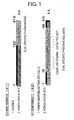
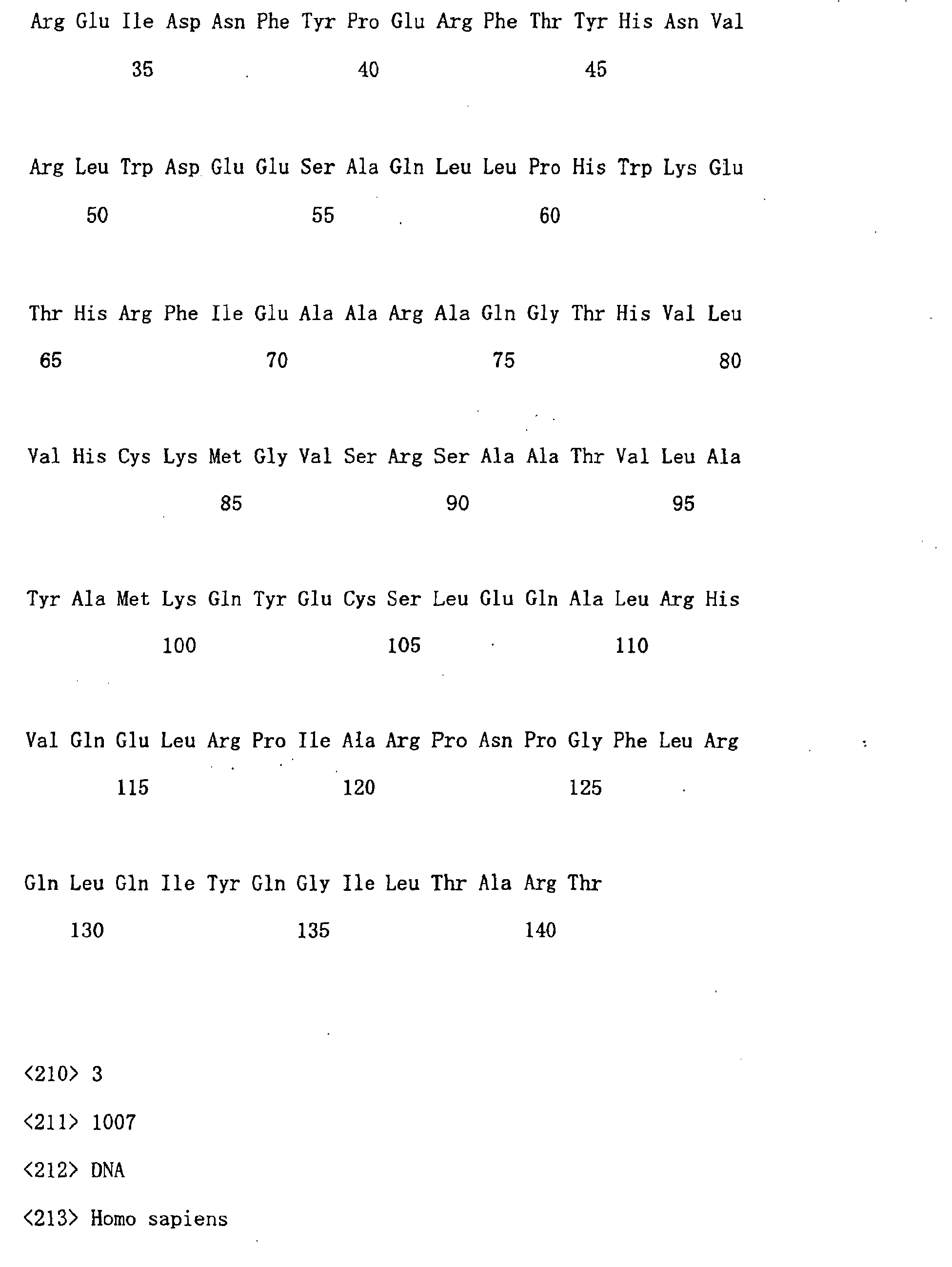
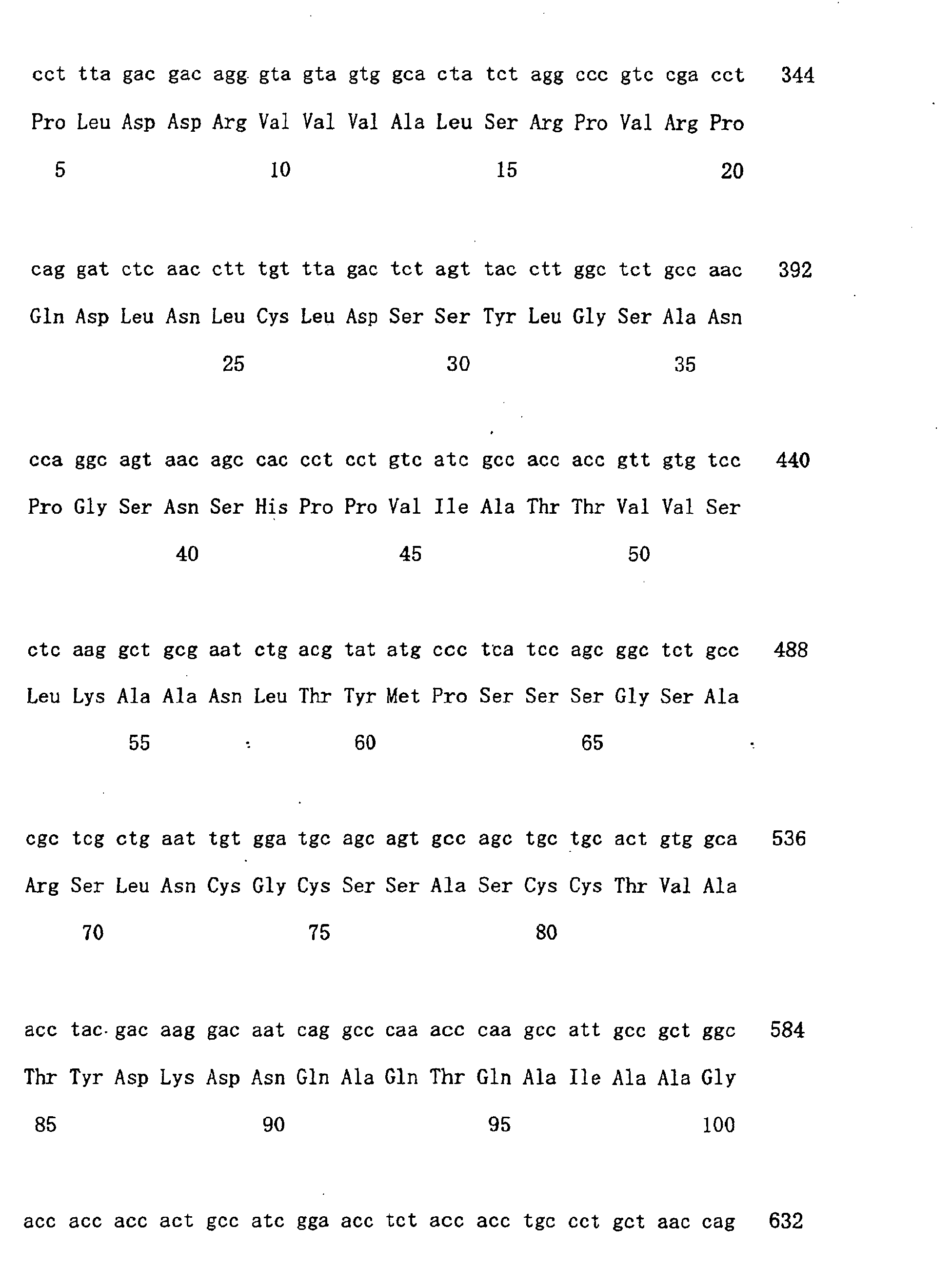
OVARC1000473 (GenBank BC004176) is a gene isolated from the
ovary. Of the total of 218 amino acid residues encoded by this gene,
the C-terminal amino acids (122-218) have 34% homology to a dual
specific phosphatase (Swissplot Q16690) , and a phosphatase catalytic
site has been recognized in the sequence from amino acid numbers 159
to 176 (Keyse S. M., Biochem. Biophys. Acta (1995, Mar 16) 1265
(2-3) :152-60) (Fig. 1, upper panel).
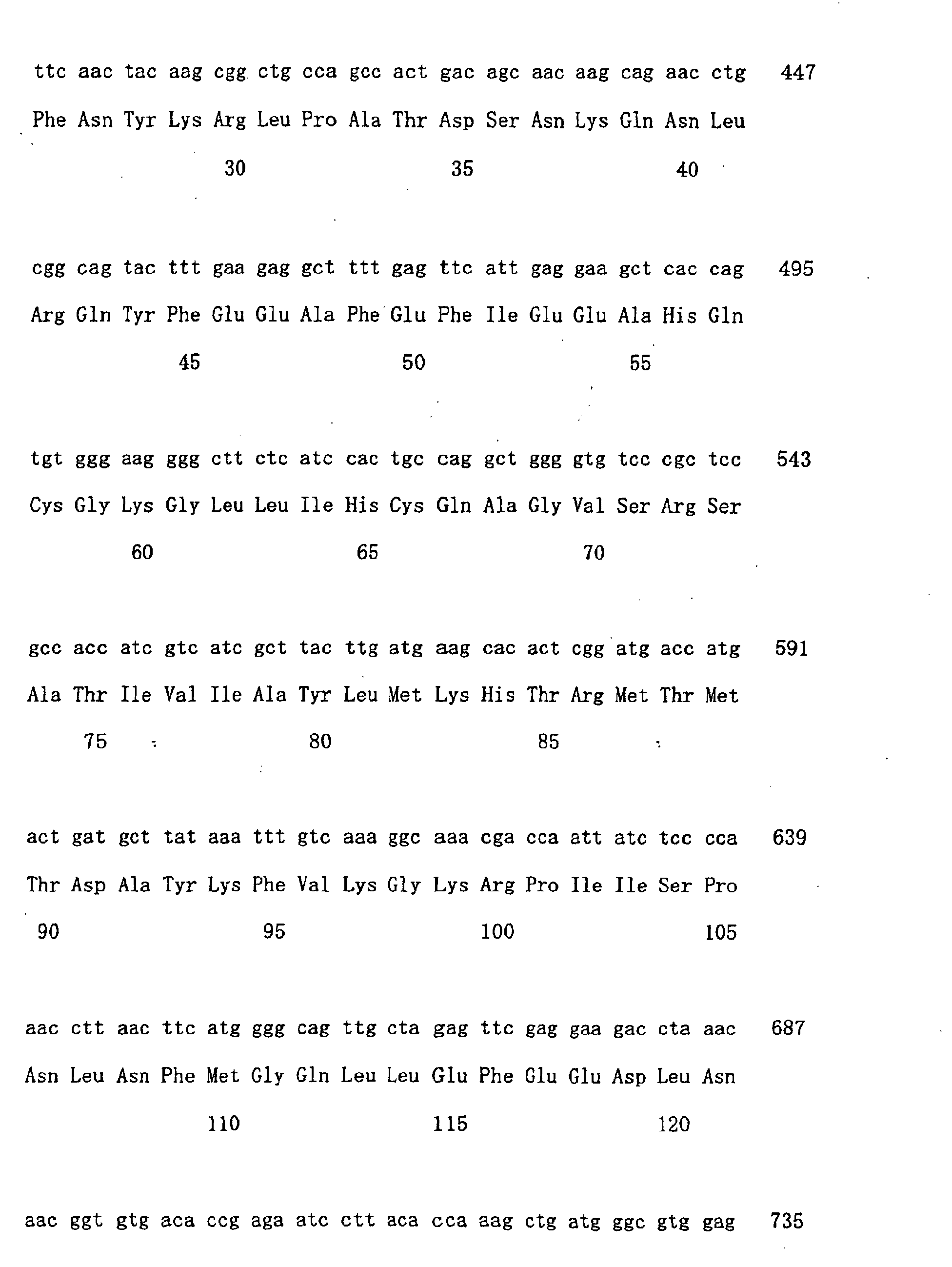
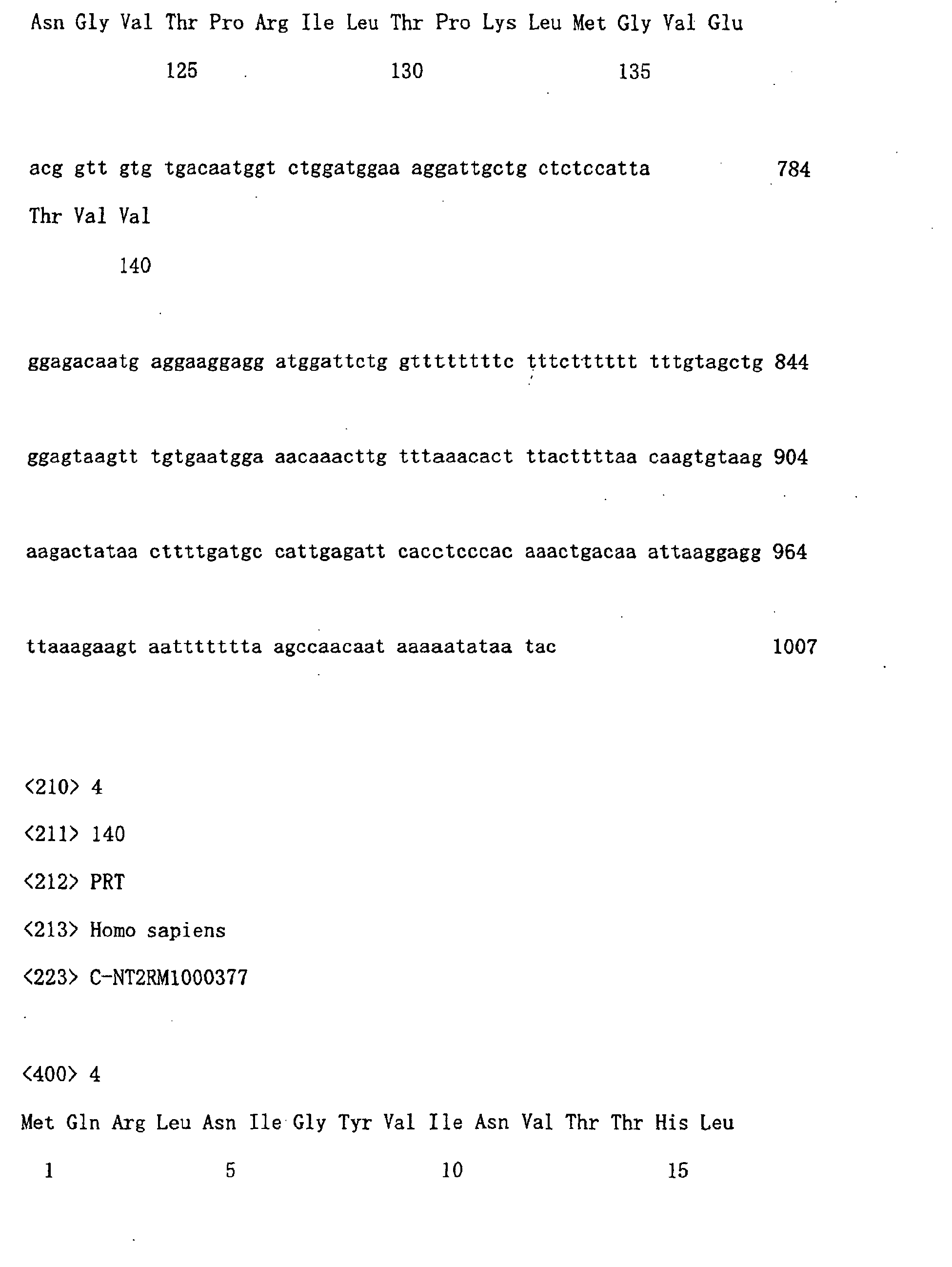
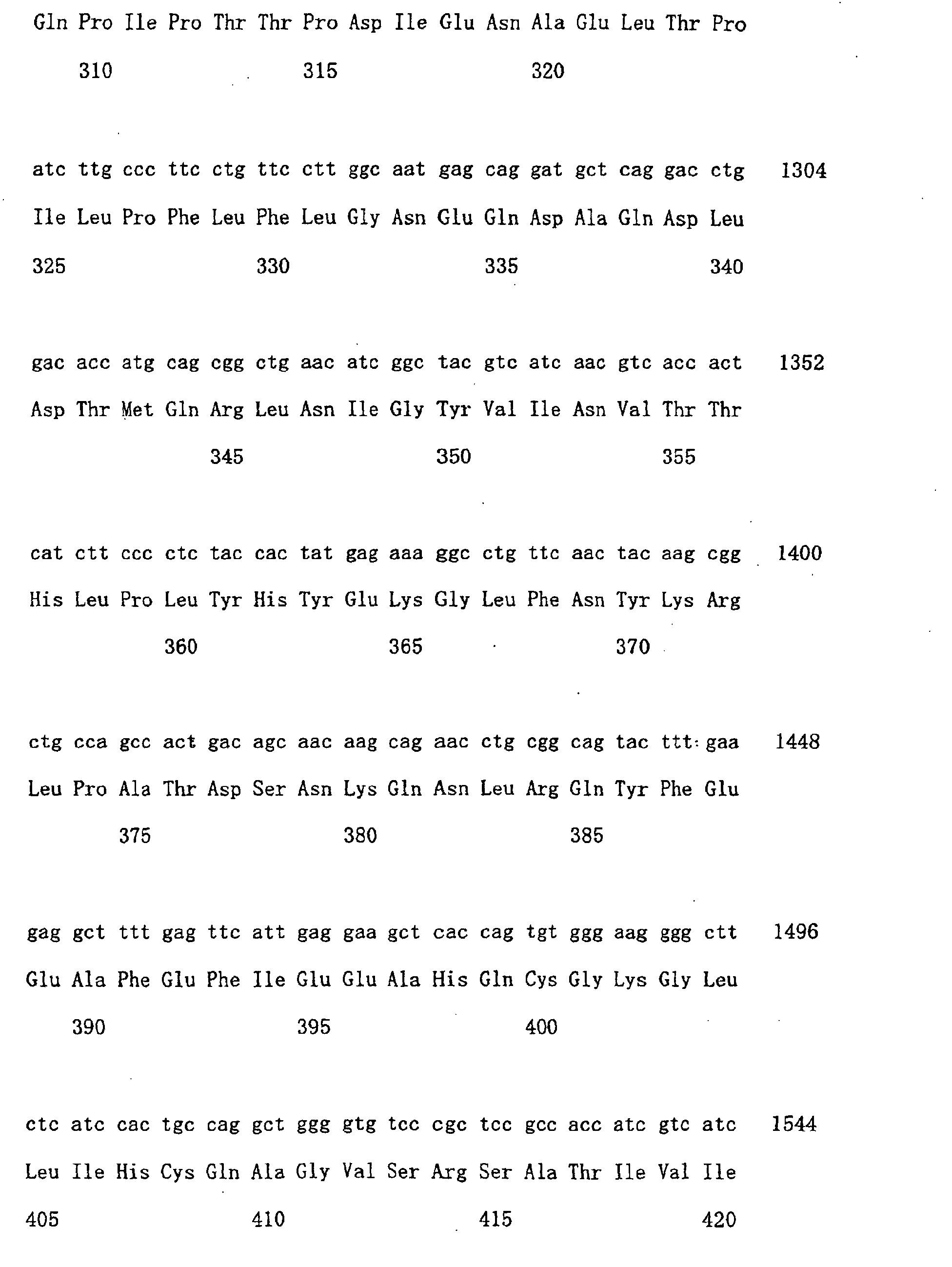
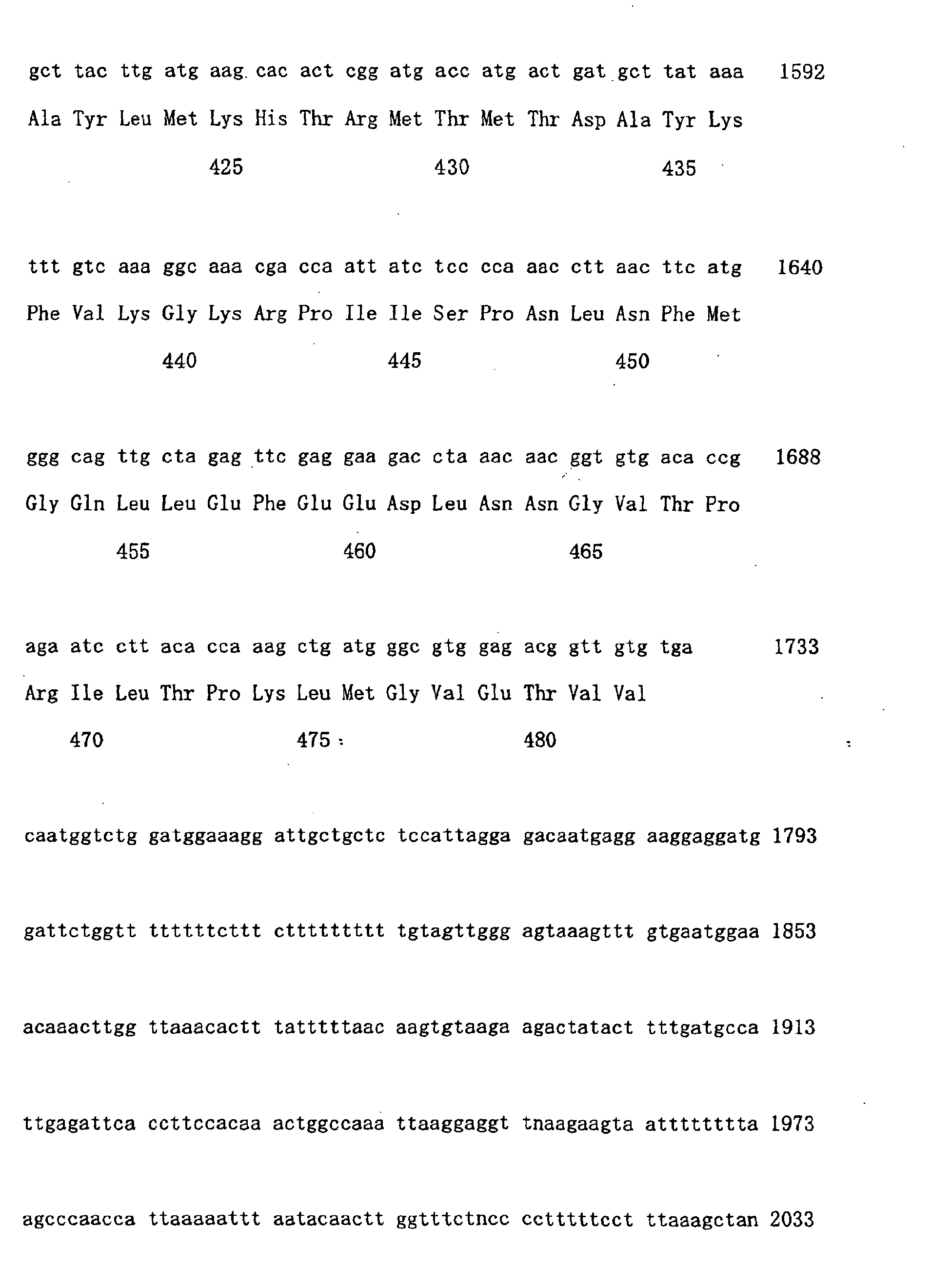
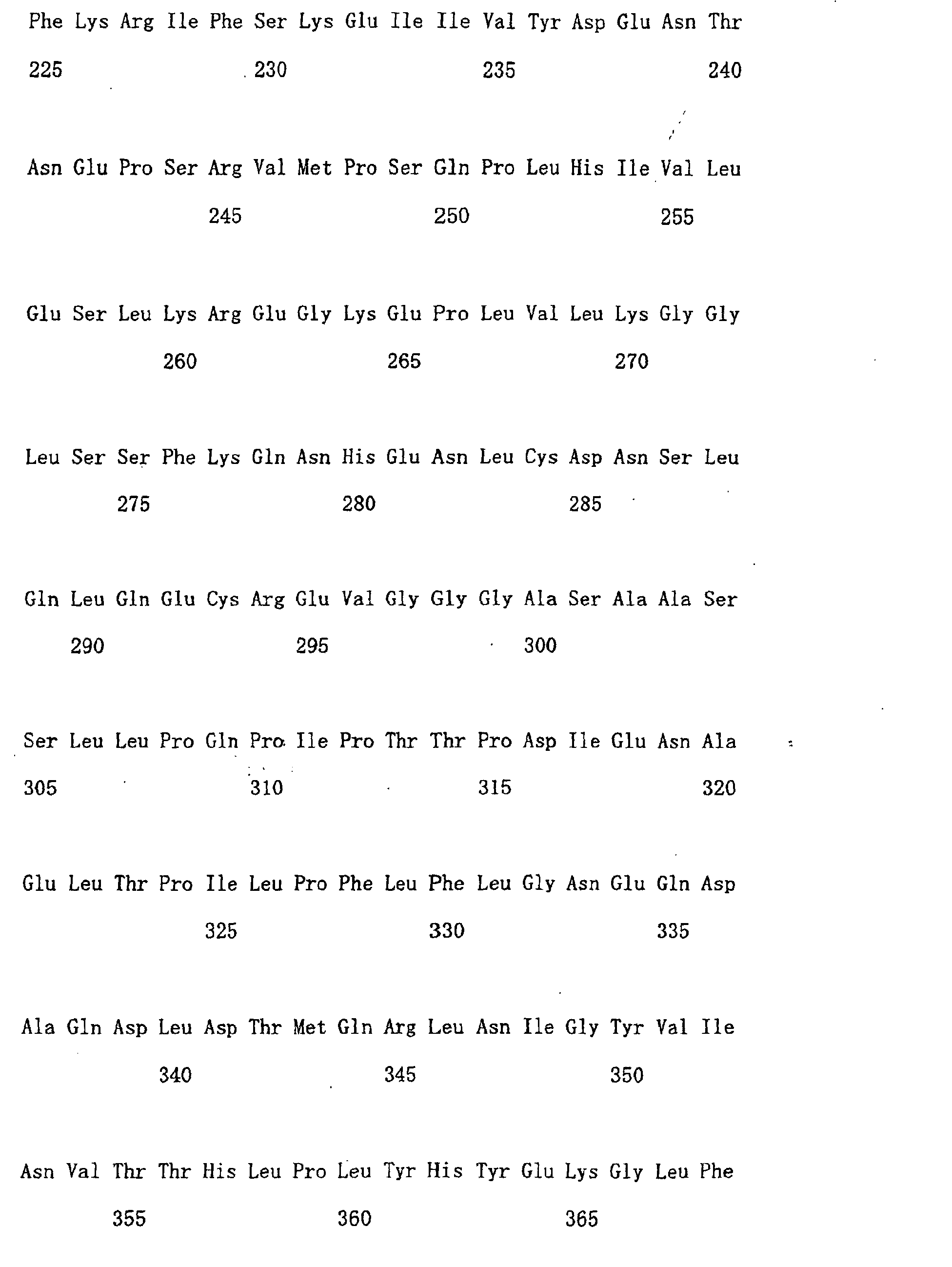
NT2RM1000377 (GeneBank AK022513) is a gene isolated from human
neuroblast NT2 cells. The amino acid sequence encoded on this gene
(140 amino acid residues) matches the C-terminal amino acid residues
343-482 of dual specific protein phosphatase MKP-5 (GenBank AB026436),
and possesses a phosphatase catalytic site at residues 67 to 78 of
the amino acid sequence (Fig. 1, bottom panel). In that amino acid
sequence, a region with high amino acid primary sequence homology
to Cdc25 was found. This region is indicated in Fig. 1 (bottom) as
the Cdc25-like domain. CDC25A (cell division cycle 25A, M-phase
inducer phosphatase 1) is a type of tyrosine protein phosphatase that
takes on a function necessary for cell cycle progression. It is known
to dephosphorylate the CDC2 protein to increase the kinase activity.
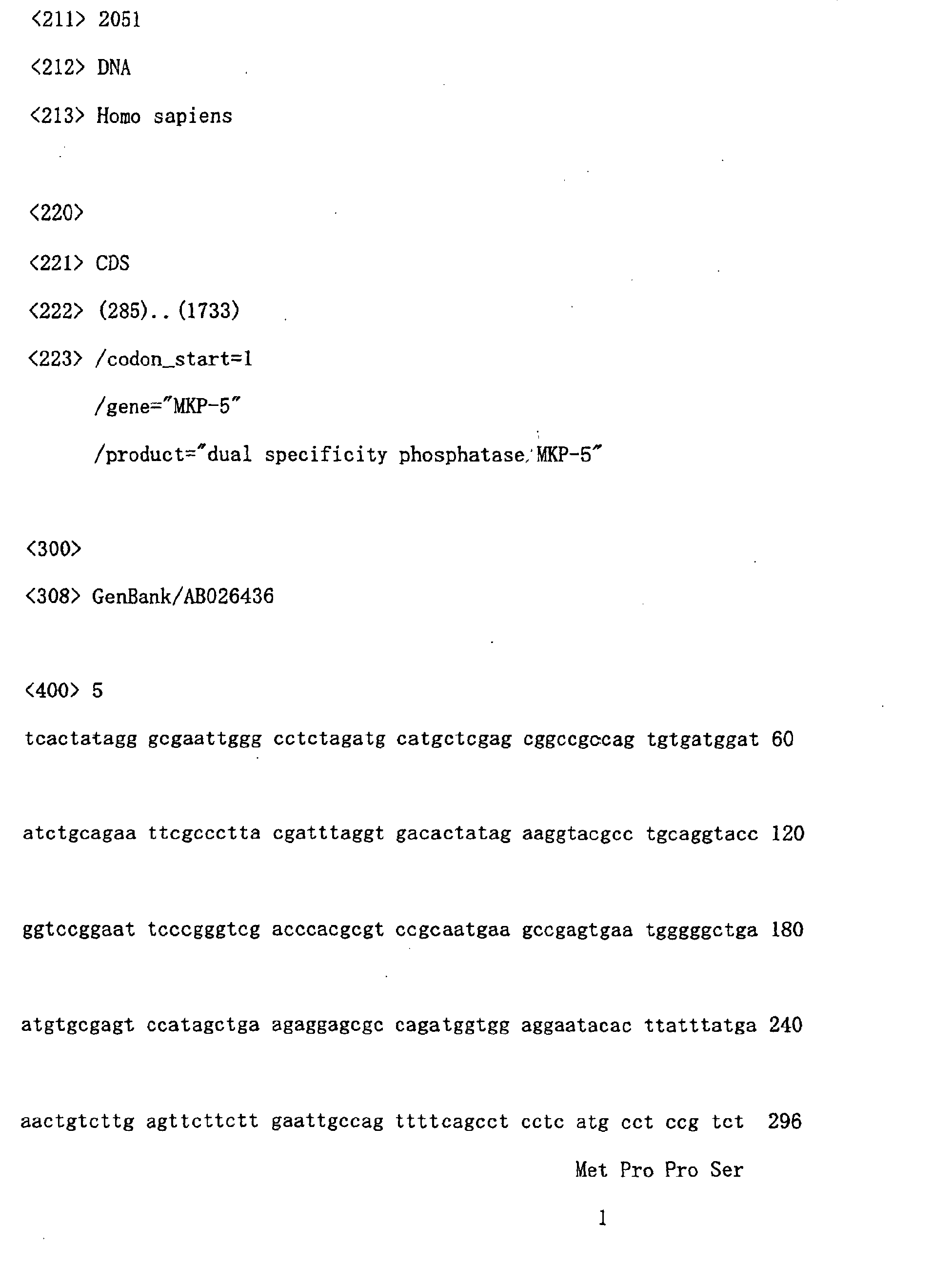
The nucleotide sequence of MKP-5 and the amino acid sequence encoded
by this nucleotide sequence are shown in SEQ ID NO: 5 and SEQ ID NO:
6, respectively. This gene is also registered in the database as dual
specificity phosphatase 10 (DUSP10) (GenBank NM_144729, GenBank
NM_144728).
These genes were identified as follows: First,
phosphatase-related genes were selected from the Helix Research
Institute cDNA database using the BLAST algorithm. Next, the
selected candidate genes were transfected into PC12 cells along with
a CRE reporter gene. Forskolin was applied to these cells to induce
CREB's transcriptional activity. As a result, the two clones
mentioned above were identified as genes comprising the effect of
suppressing increased CREB's transcriptional activity caused by
forskolin.
It was further found that the activity of suppressing CREB
dephosphorylation could be evaluated by using these proteins as target
molecules. More specifically, the present invention relates to
methods of detecting a test compound's activity in inhibiting the
CREB dephosphorylation reaction, where the method comprises the steps
of:
A method of detecting the activity of inhibiting a CREB
dephosphorylation reaction according to this invention is performed
in the following manner, using the aforementioned proteins or proteins
functionally equivalent to the aforementioned proteins. More
specifically, under conditions where CREB phosphorylation is possible,
or in the presence of phosphorylated CREB or a peptide comprising
that phosphorylation site, a test compound is contacted with the
aforementioned proteins or proteins functionally equivalent to the
aforementioned proteins; and the phosphorylation level of CREB and/or
the peptide comprising the phosphorylation site is measured. Such
measurements can be performed in vivo or in vitro.
Phosphatases used in this invention, which suppress CREB's
transcriptional activity, are proteins comprising all or a portion
of a sequence shown in SEQ ID NO: 2 or SEQ ID NO: 4, or proteins that
are functionally equivalent to these proteins.
Herein, "functionally equivalent" means that the proteins of
interest comprise the activity of suppressing the increase of CREB's
transcriptional activity induced by forskolin, or comprise the
activity of dephosphorylating CREB. More specifically, the
"proteins that are functionally equivalent" of this invention include
fragments that may catalyze the dephosphorylation reaction. This
activity can be confirmed by contacting CREB with the proteins under
conditions allowing CREB phosphorylation, and using the decrease of
CREB phosphorylation level as an indicator.
For example, if a protein suppresses expression of the CRE
reporter gene in the presence of CREB and cAMP, that protein can be
referred to as a functionally equivalent protein. More specifically,
the activity of a target protein in suppressing CREB transcriptional
activation can be determined by:
Furthermore, an above-mentioned protein in which phosphatase
activity was discovered in this invention was demonstrated to comprise
not only phosphatase activity, but also the activity of enhancing
cell damage. It was found that by using such a protein as a target
molecule, the activity of regulating enhancement of cell-damaging
effect could be evaluated. More specifically, the present invention
provides methods of detecting the activity of regulating enhancement
of cell-damaging effect, where the methods comprise the steps of:
NT2RM1000377, a phosphatase-related gene elucidated in the
present invention, comprises the activity of enhancing cell-damaging
effect. Therefore, the effect of regulating its activity can be
detected by the method described above. More specifically, when
cell-damaging level is low compared to that of a control, the activity
of suppressing enhancement of cell-damaging effect is detected. On
the other hand, when cell-damaging level is high compared to that
of the control, the activity of stimulating enhancement of
cell-damaging effect is detected.
In the present invention, the term "cell-damaging conditions"
refers to conditions that prevent the growth and survival of cells.
Such conditions can be provided, for example, by inducing cell
apoptosis. Specifically, cell-damaging conditions that can be used
include administering cell-damaging compounds, changing culture
conditions to induce cell apoptosis, and such. Apoptosis-inducing
agents can be used as cell-damaging compounds. Various compounds
that induce cell apoptosis are known. More specifically, fas ligands
and endoplasmic reticulum calcium pump inhibitors comprise the effect
of inducing cell apoptosis. The timing for administrating
cell-injuring compounds is discretionary. More specifically,
cell-damaging compounds can be administered before, during, or after
contacting a test compound with cells.
It is well-known that, by depleting serum, apoptosis can be
induced in cells that require serum or other culture components. The
timing for inducing apoptosis by altering culture conditions is also
arbitrary. More specifically, changes to culture conditions to
induce apoptosis can be carried out before, during or after
administration of the test compound. For example, when apoptosis is
induced before administering a test compound, the therapeutic effect
of that test compound on cell-damaging enhancement can be evaluated.
On the other hand, when apoptosis is induced after administering the
test compound, the preventive effect of predominantly the test
compound on cell-damaging enhancement can be determined.
Cells showing neuron-like characteristics can be designated as
cells that can be used in the methods of this invention. All of the
proteins used as target molecules in this invention are involved with
CREB dephosphorylation. As described above, CREB is strongly related
to memory formation and neuronopathy. Therefore, the use of cells
showing neuron-like characteristics is preferred in evaluating the
effect on these functions. PC12 can be designated as a cell line
showing neuron-like characteristics. PC12 is a cell line established
from Rattus norvegicus-derived adrenal gland pheochromocytoma. It
can be differentiated into neuron-like cells on stimulation by
retinoic acid, NGF, and so on. PC12 (ATCC CRL-1721) is obtainable
from a cell bank.
In the methods of the present invention, cells to which a test
compound is not administered can be used as a control. Furthermore,
an experiment without cell-damaging conditions can also be performed
to more accurately evaluate test compound activity. By combining
these experiments, the influence on cells of the test compound itself
can be evaluated at the same time. More specifically, when cell damage
is observed regardless of the presence or absence of cell-damaging
conditions, the test compound itself is considered to comprise
cell-damaging effect.
Methods of measuring cell-damaging level are well known.
Specifically, cell-damaging level can be determined by using as an
indicator the level of cell growth, the level of cells that have
undergone apoptosis, or the level of destroyed cells.
NT2RM1000377, a phosphatase-related gene elucidated by the
present invention, was confirmed to enhance cell-damaging effect due
to endoplasmic reticulum calcium pump inhibitors. The term
"cell-damaging effect" refers to interference with cell survival.
For example, apoptosis induction is included in cell damage.
Furthermore, the phrase "enhancement of cell damage" refers to an
observed further increase in cell-damaging level due to the addition
of some other factor, compared to cell-damaging level observed with
one factor alone, and where each cell's cell-damaging level is
measured using the above-mentioned method.
Therefore, functionally equivalent proteins of this invention
include proteins comprising the activity of enhancing cell-damaging
effect. Such activity can be confirmed, for example, by the following
method: The above-mentioned activity can be evaluated by contacting
cells under cell-damaging conditions with a protein whose activity
is to be confirmed, and then comparing the cell-damaging level of
these cells with the cell-damaging level when the protein was not
contacted. The following conditions can be indicated as
cell-damaging conditions:
For example, a compound comprising cell-damaging effect can be
contacted with cells. If such conditions are applied to cells in which
a certain protein has been forcibly expressed, and cell-damaging
effect is then enhanced compared to a control, then this protein can
be confirmed to comprise the above-mentioned activity.
Polynucleotides encoding the phosphatases used in the present
invention can be isolated by the hybridization method, PCR method,
and such, by using probes and/or primers produced based on sequence
information according to SEQ ID NO: 1 or SEQ ID NO: 3.
These polynucleotides are not limited to those comprising the
sequence of SEQ ID NO: 1 or SEQ ID NO: 3, as long as the proteins
expressed from the polynucleotides comprise substantially the same
function as the aforementioned phosphatases. More specifically, the
following are included:
Such polynucleotides can be easily obtained by methods such as
site-directed mutagenesis ("Current Protocols in Molecular Biology",
edit. Ausubel
et al. (1987) John Wiley & Sons, Section 8.1-8.5), PCR
method ("Current Protocols in Molecular Biology", edit. Ausubel
et
al. (1987) John Wiley & Sons, Section 6.1-6.4), or conventional
hydridization methods ("Current Protocols in Molecular Biology", edit.
Ausubel
et al. (1987) John Wiley & Sons, Section 6.3-6.4).
One skilled in the art can use a polynucleotide comprising the
sequence of SEQ ID NO: 1 or SEQ ID NO: 3, or a portion thereof, as
a probe, or use oligonucleotides that specifically hybridize to this
polynucleotide as primers, and can thereby isolate polynucleotides
that hybridize with this polynucleotide.
Stringent hybridization conditions for encoding functionally
equivalent proteins refer to washing conditions that are normally
"1x SSC, 37°C" or so. More stringent conditions are "0.5x SSC, 0.1%
SDS, 42°C" or so, and even more stringent conditions are "0.1x SSC,
0.1% SDS, 65°C" or so. As conditions for hybridization become more
stringent, polynucleotides comprising higher homology to the probe
sequence may be isolated. However, the above-mentioned
hybridization conditions are examples, and one skilled in the art
can accomplish stringencies suited to their purpose by appropriately
selecting probe concentration, probe length, reaction time, reaction
temperature, reagent concentration, and so on, depending on
conditions such as the nucleotide sequence to be used and the type
of gene pool.
Proteins encoded by the polynucleotides isolated by methods
such as those described above normally have amino acid sequences
highly homologous to phosphatases comprising the amino acid sequence
of SEQ ID NO: 2 or SEQ ID NO: 4. "High homology" refers to sequence
homology of at least 50% or more, more preferably 70% or more, and
even more preferably 90% or more (for example, 95% or more).
Homology of amino acid sequences and nucleotide sequences can
be determined using the Gapped BLAST algorithm of Altshul et al.
(Nucleic Acids Res. 25:3389-3402 (1997)). Programs such as BLASTN
and BLASTX have been developed based on this algorithm. When a
nucleotide sequence database is the obj ect of BLASTN program analysis,
parameters can be set, for example, at except= 10 and wordlength=
11. Furthermore, when an amino acid sequence database is analyzed
with BLASTX, the parameters can be set, for example, at except= 10
and wordlength= 3. When using the various BLAST programs, the default
parameters for each program may be used. One can refer to the homepage
of the National Center for Biotechnology Information (NCBI)
(http://www.ncbi.nlm.nih.gov) or the like for the specific procedures
for these analysis methods.
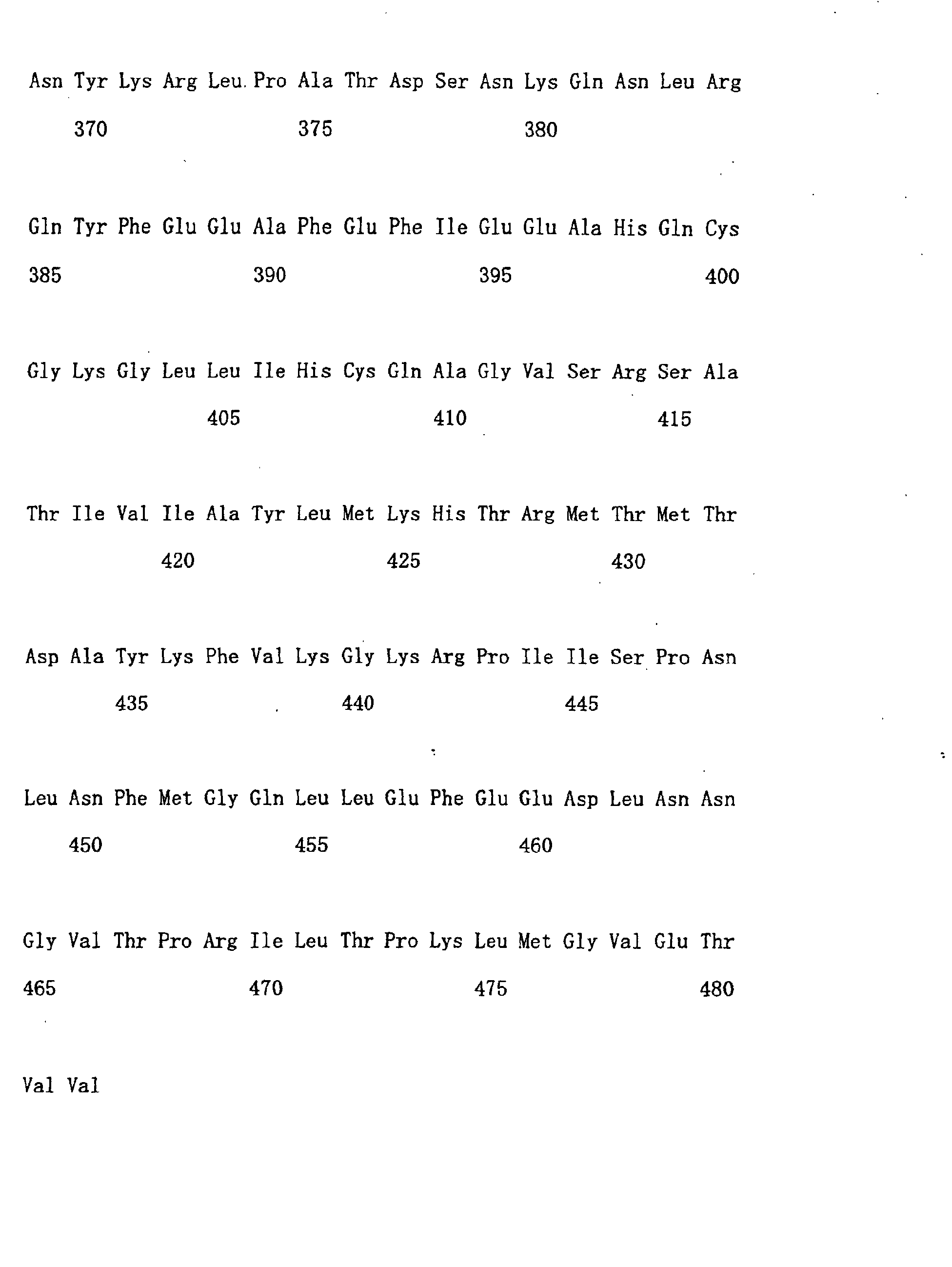
The amino acid sequences of SEQ ID NO: 2 and SEQ ID NO: 4 are
encoded by the nucleotide sequences of SEQ ID NO: 1 and SEQ ID NO:
3, respectively. Proteins comprising these amino acid sequences
comprise the activity of dephosphorylating CREB, and regulate any
increase of CREB's transcriptional activity. Proteins that comprise
activities functionally equivalent to those of these proteins can
be used for the methods of this invention.
Functionally equivalent proteins also include proteins
produced using methods for introducing mutations to protein amino
acid sequences, such as site-directed mutagenesis. The number of
amino acid mutations and mutation sites in the proteins are not
particularly limited as long as their functions are maintained. The
number of mutations is typically 10% of the total amino acids or less,
preferably 5% of the total amino acids or less, and even more
preferably 1% of the total amino acids or less. In terms of
maintaining protein function, the amino acids to be replaced are
preferably amino acids with properties similar to those of the amino
acid prior to replacement. For example, since Ala, Val, Leu, Ile,
Pro, Met, Phe, and Trp are all categorized as non-polar amino acids,
they are considered to possess similar properties. Examples of
uncharged amino acids are Gly, Ser, Thr, Cys, Tyr, Asn, and Gln.
Furthermore, examples of acidic amino acids are Asp and Glu. Examples
of basic amino acids are Lys, Arg, and His.
Genes encoding functionally equivalent proteins can be obtained
from different tissues and animals by using hybridization technology,
PCR method, and such, thus yielding proteins of different origins.
Organisms for use in isolating functionally equivalent proteins are
not particularly limited. Examples include mammals such as humans,
mice, rats, rabbits, monkeys, pigs, and cows.
A protein that, through some process (such as cleavage or
modification), produces a protein which comprises the activity of
suppressing an increase of CREB's transcriptional activity or the
activity of enhancing cell-damaging effect can also be used in the
present invention, even when the target protein itself does not
comprise such activity. Furthermore, since the entire amino acid
structure is not normally essential for a protein's activity, a
partial peptide of the aforementioned protein may also be used. More
specifically, partial peptides that maintain a portion necessary for
displaying an activity functionally equivalent to that of the
aforementioned protein may be used in the present invention. Partial
peptides can be produced by genetic engineering methods, peptide
synthesis methods, or by cleavage using an appropriate enzyme, such
as a peptidase.
Proteins required for the present invention can be obtained,
for example, by expression from a transformant that has been
transformed with an expression vector comprising the sequence of SEQ
ID NO: 1 or SEQ ID NO: 3. The expressed proteins can be purified and
isolated from the culture solution or cell fraction using conventional
methods.
Examples of methods of purification and isolation include the
following methods: First, the cells or supernatant are recovered by
methods such as filtration and centrifugation. When proteins are
expressed in cells, the cell wall and/or cell membrane need to be
disrupted using physical techniques such as ultrasonication or
milling, or by using lysozymes or the like. The protein of interest
can be isolated and purified by treating the thus-obtained solution,
which contains the protein of the present invention, with an
appropriate combination of common techniques such as dialysis, column
chromatography (ion exchange, affinity, etc.), and gel filtration.
When producing a protein using genetic engineering methods, a
sequence encoding a polypeptide with affinity can be added to the
terminus of a gene encoding the target protein, and then expressed.
The affinity of the added polypeptide can be used to purify the target
protein. Polypeptides with affinity towards metal ion chelates,
biotins, streptavidin, antibodies, and such are known. For example,
if basic amino acids, such as histidine, lysine, and arginine, are
added to the target protein, the protein can be easily purified using
affinity towards metal ions.
The purified protein can be used as a CREB dephosphorylation
agent. CREB dephosphorylation agents can be used to evaluate
compounds that regulate the dephosphorylation of CREB. Furthermore,
compounds that comprise the activity of inhibiting dephosphorylation,
and which can be discovered by an evaluation method utilizing a CREB
dephosphorylation agent, can be used as therapeutic or preventive
agents for memory disorders and/or neurodegenerative disorders.
Alternatively, proteins obtained in this manner can be used as
cell-damaging-enhancing agents. Cell-damaging-enhancing agents of
this invention can be used for evaluating the activity of regulating
cell-damaging enhancement. Compounds comprising this activity are
useful for regulating cell-damaging enhancement.
Furthermore, the cell-damaging-enhancing agents of this
invention are useful, for example, for enhancing the effect of
compounds comprising cell-damaging effect, such as antitumor agents.
Specifically, apoptosis-inducing agents can be indicated as compounds
comprising cell-damaging effect. Apoptosis-inducing agents include
endoplasmic reticulum calcium pump inhibitors. For example,
thapsigargin, a sarcoplasmic reticulum calcium pump inhibitor, is
a representative compound comprising cell-damaging effect, and has
been researched with the aim of treating cancer. The
cell-damaging-enhancing agent of this invention can be administered
separately from compounds comprising cell-damaging effect.
Alternatively, the enhancing agent of this invention can be premixed
with compounds comprising cell-damaging effect to produce a
composition in which the effect is enhanced. Furthermore,
polynucleotides encoding the aforementioned protein are included in
the cell-damaging-enhancing agents of this invention. These
polynucleotides can express proteins that enhance cell-damaging
effect in a living body after administration, and can thus accomplish
the intended effect. Techniques for expressing a target protein by
transferring genes into a living body are well known.
Furthermore, NT2RM1000377 of the present invention was found
through analysis to be a type of splicing variant of dual specific
protein phosphatase MKP-5. Therefore, MKP-5 also comprises a
function similar to that of NT2RM1000377, and can be used as a
dephosphorylation agent. Furthermore, in a manner similar to
NT2RM1000377, MKP-5 can be used for methods of detecting the activity
of test compounds that inhibit the CREB dephosphorylation reaction,
methods of evaluating compounds comprising the activity of inhibiting
the CREB dephosphorylation reaction, and methods of CREB
dephosphorylation. Compounds comprising the activity of inhibiting
CREB dephosphorylation, discovered using MKP-5, can be used as
therapeutic or preventive agents against memory disorders and/or
neurodegenerative disorders. The present inventors discovered this
new finding that MKP-5 comprises CREB dephosphorylation effect.
More specifically, the present invention relates to a method
for detecting the activity of a test compound to inhibit a
dephosphorylation reaction of CREB, wherein the method comprises the
steps of:
Furthermore, the present invention relates to a method of
evaluating a compound comprising the activity of inhibiting a
dephosphorylation reaction of CREB, wherein the method comprises the
steps of:
Furthermore, the present invention relates to agents that
inhibit the CREB dephosphorylation reaction, agents that suppress
the enhancement of cell-damaging effect, or therapeutic agents for
memory disorders and/or neurodegenerative disorders, where these
agents comprise a compound selected by these evaluation methods as
an active ingredient. Furthermore, the present invention relates to
methods of treating memory disorders and/or neurodegenerative
disorders, in which the methods comprise the step of administering
a compound selected by these evaluation methods. Alternatively, the
present invention relates to the use of compounds selected by these
evaluation methods for the production of therapeutic agents for memory
disorders and/or neurodegenerative disorders.
Furthermore, the present invention relates to a kit for
detecting the activity of a test compound in inhibiting a
dephosphorylation reaction of CREB, wherein the kit comprises the
following components:
Alternatively, the present invention relates to a kit for
detecting the activity of a test compound in regulating enhancement
of cell-damaging effect, where the kit comprises the following
components:
Additional components can be combined in the kits of this
invention, depending on purpose. For example, compounds clearly
comprising (or not comprising) the activity of interest can be
included as a negative or positive control. Furthermore, a medium
and a culturing vessel for culturing cells can be included in a kit
where cell culture is required. Furthermore, components for
evaluating cell-damaging level can be included in a kit where
evaluation of cell-damaging effect is required. For example, the
cell-damaging level of PC12 neurons can be evaluated by using LDH
in the culture supernatant as an indicator. Therefore, a reagent for
measuring LDH activity can be included in a kit.
Furthermore, the present invention relates to model animals
whose CREB phosphorylation state is regulated, where these animals
are transgenic non-human animals with regulated expression of a
protein of any one of the aforementioned (a) to (d).
In addition, the present invention relates to methods of CREB
dephosphorylation, where the methods comprise the step of contacting
CREB with a protein of any one of (a) to (d). Alternatively, the
present invention relates to CREB dephosphorylation reagents
comprising a protein of any one of (a) to (d) as the main ingredient.
Furthermore, the present invention relates to the use of a protein
of any one of (a) to (d) in the production of a CREB dephosphorylating
agent.
In addition, the present invention relates to:
where the agents comprise:
- a protein comprising the amino acid sequence of SEQ ID NO: 6,
in which one or more amino acids of the sequence have been
substituted, deleted, inserted, and/or added, and where the
protein comprises dominant negative character towards a protein
comprising the amino acid sequence of SEQ ID NO: 6,
- or a gene encoding this protein.
Furthermore, the present invention relates to agents inhibiting
the CREB dephosphorylation reaction, agents suppressing enhancement
of cell-damaging effect, or therapeutic agents for memory disorders
and/or neurodegenerative disorders, where the agents comprise an
antisense nucleotide which comprises a sequence complementary to the
nucleotide sequence of SEQ ID NO: 5, and which inhibits the expression
of a gene comprising the nucleotide sequence of SEQ ID NO: 5. In
addition, the present invention relates to agents that inhibit the
CREB dephosphorylation reaction, agents that suppress enhancement
of cell-damaging effect, or therapeutic agents for memory disorders
and/or neurodegenerative disorders, where the agents comprise an
antibody against a protein of any one of (a) to (d) as the main
ingredient.
When expressing proteins used in this invention using genetic
engineering techniques, an expression vector must be selected
appropriate to the type of host cell to be used. The host cells for
expressing proteins used in this invention are not limited.
Specifically, examples of host cells include prokaryotic cells, such
as Escherichia coil and Bacillus subtilis, as well as eukaryotic cells,
such as yeast, insect cells, and animal cells, such as amphibian cells
and mammalian cells.
Normally, when using prokaryotes, an expression vector
comprising a promoter, an initiation codon, a sequence encoding the
target protein, a stop codon, and a self-replicating unit is used.
When using eukaryotic cells as hosts, it is preferable to use an
expression vector comprising a promoter, an initiation codon, a
sequence encoding the target protein, and a stop codon. As necessary,
an enhancer sequence, 5' and 3' non-coding regions of the target
protein, a polyadenylation site, and a self-replicable unit can be
inserted.
When bacteria are used as hosts, the term "promoter" refers a
promoter-operator region comprising a promoter, an operator, and the
Shine-Dalgarno (SD) sequence. Examples of an appropriate promoter
include lactose operon, PL promoter, and tryptophan promoter. An
example of a promoter when yeast is used as a host is the pho5 promoter.
Examples of promoters that may be used for expression using mammalian
cells include the HTLV-LTR promoter, SV40 early and late promoters,
CMV promoter, and mouse metallothionein promoter. Manipulations
required for DNA cloning, plasmid construction, host transformation,
culturing of that host, collection of protein from the culture, and
such, which are necessary for carrying out the present invention,
can be performed according to methods well known to one skilled in
the art ("Molecular Cloning 2nd. Edition", T. Maniatis et al., Cold
Spring Harbor Laboratory (1989); "Molecular Cloning 3rd. Edition",
T. Maniatis et al., Cold Spring Harbor Laboratory (2001); and "DNA
Cloning", D. M. Glover, IRL Press (1985), etc.).
Expression vectors can be transfected into host cells according
to known methods such as calcium phosphate precipitation, pulse
electroporation (Current Protocols in Molecular Biology, Ausubel et
al. (1987) John Wiley & Sons, Section 9.1-9.9), lipofectamine method
(GIBCO-BRL), and microinjection.
In the present invention, CREB phosphorylation level can be
evaluated, for example, by observing the expression level of the CRE
reporter gene in the presence of CREB, cAMP, and an aforementioned
protein. For example, a gene encoding an aforementioned protein is
inserted into an expression vector, and is transferred into cells
along with the CRE reporter gene. The activity of inhibiting the CREB
dephosphorylation reaction can be detected by, in the presence of
a test compound, inducing cAMP in cells by adding compounds such as
forskolin, and then confirming expression of the CRE reporter gene.
When expressing a gene encoding the aforementioned protein and
the CRE reporter gene in vivo, the following expression vectors may
be used: Animal cells that express CREB, but do not express the gene
encoding the aforementioned protein, or that lack this gene, can be
used as host cells. Examples of such cells include PC12 cells, Jurkat
cells, primary culture neurons, and neuroblastoma (SH-SY5Y, IMR32,
Neuro2a).
Herein, a CRE reporter gene refers to a gene in which the CRE
region and a reporter gene are linked. The CRE region is a portion
essential to induction by cAMP in the transcription regulatory site
of a gene cluster with cAMP-promoted expression. Somatostatin, c-fos,
and such are known as gene clusters whose expressions are
cAMP-promoted. Their nucleotide sequences have a palindromic
structure such as the eight nucleotide structure TGACGTTCA or similar.
Examples of reporter genes include genes encoding luciferase,
catalase, β-galactosidase, Green Fluorescent Protein (GFP), and such.
The activity of the aforementioned protein in inhibiting
dephosphorylation can also be measured in vitro. For example, the
activity can be measured by incubating the aforementioned protein
with phosphorylated CREB in the presence of a test compound, and then
measuring the change in CREB phosphorylation level. Change in CREB
phosphorylation level can be measured, for example, using antibodies
that can distinguish CREB phosphorylation levels.
CREB's amino acid sequence is known (GenBankNo. M27691). Based
on this sequence information, CREB can be readily obtained by those
skilled in the art using conventional methods (for example,
hybridization technology, PCR methods, and genetic engineering
methods such as those illustrated in the method of obtaining proteins
used for this invention). Furthermore, CREB phosphorylation can be
performed according to the following method: Cell supernatant is
removed and then washed with PBS or the like, and the protein is
solubilized using a solubilizing buffer (10 mM Tris-HCl at pH 7.4,
1% Triton X-100, 1% SDS, 0.2 mM sodium vanadate, 10 mM sodium fluoride,
1 mM EDTA, 1 mM PMSF, 2 µg/mL leupeptin, 2 µg/mL aprotinin). Next,
the sample is separated without denaturing by using SDS-PAGE
electrophoresis. After electrophoresis, the electrophoresed sample
is transferred to a PVDF filter, and identified with an
anti-phosphorylation CREB antibody (Beitner-Johnson D. et al. J. Biol.
Chem. (1998, Jul. 31) 273 (31):19834-9).
Methods for producing antibodies that can discern protein
phosphorylation levels are well known. For example, the serine at
position 133 of CREB is phosphorylated. Thus, using phosphorylated
serines, an oligopeptide with an amino acid sequence comprising the
serine 133 is synthesized, and by using this as an immunogen,
antibodies that can differentiate CREB phosphorylation levels can
be obtained. Furthermore, antibodies against phosphorylated CREB
are commercially available. For example, #9191S is an antibody
against phosphorylated CREB available from NEW ENGLAND BIOLAB Inc.
Components necessary to the method of detecting the
aforementioned proteins' activity in inhibiting dephosphorylation
can be pre-combined in kits. More specifically, the present
invention relates to kits for detecting a test compound's activity
in inhibiting a CREB dephosphorylation reaction due to the
aforementioned protein, where the kits comprise the following
components:
CREB and/or a peptide comprising an amino acid sequence
comprising a CREB phosphorylation site can be further combined in
the kits of this invention. The CREB and/or peptide comprising an
amino acid sequence comprising a CREB phosphorylation site, which
are composed into the kits of this invention, are used in the
aforementioned detection methods under pre-phosphorylated
conditions, or conditions where phosphorylation is possible.
Components required to provide conditions where phosphorylation is
possible can also be added to the kits.
Specifically, when expressing CREB in cells, CREB
phosphorylation is accomplished by cAMP's action on cells.
Therefore, CREB-producing cells, media for culturing these cells,
and cAMP can be kit components. Alternatively, a peptide that
comprises phosphorylated CREB or an amino acid sequence comprising
a CREB phosphorylation site may also be a component.
In the kits of this invention, the means for measuring the level
of CREB phosphorylation can be, for example, the aforementioned CRE
reporter gene expression system, and antibodies that can
differentiate CREB phosphorylation levels.
Control samples providing positive or negative results, and
instructions can be combined in the kits of this invention. The kits
of this invention are useful for the following evaluation methods.
When performing the following evaluation methods using the kits of
this invention, the test compounds to be evaluated can also be
combined.
The present invention relates to evaluation methods in which
the above-mentioned detection methods are applied. The evaluation
methods of this invention comprise the steps of:
Examples of test compounds used for evaluation in this invention
include cell extracts, gene library expression products, synthetic
low-molecular weight compounds, synthetic peptides, natural
compounds, and synthetic compounds produced by conventional
combinatorial chemistry techniques. The test compounds further
include high molecular compounds, such as dominant negative forms,
antisense nucleotides, and antibodies. These test compounds are only
examples, and the test compounds are not limited thereto.
Furthermore, compounds comprising the activity of regulating
enhancement of cell-damaging effect can be selected using this
invention's methods. More specifically, the present invention
relates to methods for selecting compounds comprising the activity
of regulating cell-damaging effect, where the methods comprise the
steps of:
The compounds selected by the present invention comprise the
effect of regulating enhancement of cell-damaging effect. The
activity of regulating the enhancement of cell-damaging effect
includes suppression and stimulation of enhancement. Compounds
comprising the activity of suppressing enhancement of cell-damaging
effect suppress the enhancement of the cell-damaging effect of the
proteins encoded by OVARC1000473 (SEQ ID NO: 1) and NT2RM1000377 (SEQ
ID NO: 3).
Compounds, such as those mentioned previously in the methods
for evaluating the activity of regulating phosphatase activity, can
be used as test compounds in the methods of the present invention.
Furthermore, compounds found using the above methods to comprise the
effect of inhibiting the dephosphorylation reaction can be used as
test compounds when carrying out the methods for evaluating the
activity of regulating enhancement of cell damage, based on this
invention. Compounds selected in this manner are compounds that
comprise both the effect of inhibiting dephosphorylation and
suppressing the enhancement of cell damage. Such compounds are
useful for the treatment of disorders, such as neuronopathy, that
are caused by various cell damages.
Enhanced cell-damaging effect forms the pathology of disorders
such as neuronopathy, which are caused by various cell damages.
Therefore, compounds that can suppress the enhancement of
cell-damaging effect are useful for the treatment and prevention of
these disorders.
In the present invention, proteins comprising the amino acid
sequence of SEQ ID NO: 2 or SEQ ID NO: 4 were found to comprise the
effects of CREB dephosphorylation and cell-damaging enhancement.
Therefore, by suppressing the activity or expression of these proteins,
the CREB dephosphorylation reaction or cell-damaging enhancement in
a living body can be regulated. To regulate the activity and
expression of these proteins, for example, dominant negative forms
and antisense nucleotides can be used.
More specifically, the present invention relates to agents that
inhibit a CREB dephosphorylation reaction, agents that suppress
enhancement, or therapeutic agents for memory disorders and/or
neurodegenerative disorders, where the agents comprise a protein
comprising the amino acid sequence of SEQ ID NO: 2 or SEQ ID NO: 4,
in which one or more amino acids of the sequence have been substituted,
deleted, inserted, and/or added, and in which the protein comprises
dominant negative characteristic against a protein comprising the
amino acid sequence of SEQ ID NO: 2 or SEQ ID NO: 4, or a gene encoding
this protein.
Furthermore, the present invention relates to agents that
inhibit a CREB dephosphorylation reaction, agents that suppress
cell-damaging enhancement, or therapeutic agents for memory disorders
and/or neurodegenerative disorders, where the agents comprise an
antisense nucleotide which comprises a sequence complementary to the
nucleotide sequence of SEQ ID NO: 1 or SEQ ID NO: 3, and inhibits
the expression of a gene comprising the nucleotide sequence of SEQ
ID NO: 1 or SEQ ID NO: 3.
Herein, a dominant negative form refers to a protein comprising
dominant negative characteristic against a protein comprising the
amino acid sequence of SEQ ID NO: 2 or SEQ ID NO: 4. Such dominant
negative forms have the function of eliminating or decreasing the
activity of an endogenous wildtype protein originally in cells. For
example, an inactive form, whose CREB dephosphorylation activity
and/or cell-damaging enhancing activity is low or absent, can be
obtained by altering an amino acid sequence in SEQ ID NO: 2 or SEQ
ID NO: 4, wherein the altered amino acid sequence corresponds to a
sequence considered to affect the activity of a protein encoded by
the amino acid sequence of SEQ ID NO: 2 or SEQ ID NO: 4.
CREB dephosphorylation and/or cell-damaging enhancement can be
suppressed using the dominant-negative effect (antagonistic
inhibition of the inactive form) by administering this kind of
dominant-negative form to cells, or by expressing in cells genes which
encode the dominant negative form. Therefore, dominant negative
forms of this invention, or genes encoding a dominant negative form,
can be used as agents for inhibiting a CREB dephosphorylation reaction,
agents for suppressing enhancement of cell-damaging effect, or as
therapeutic or preventive agents for memory disorders and/or
neurodegenerative disorders.
The antisense nucleotides of this invention refer to
polynucleotides that suppress the expression of a protein that
comprises the amino acid sequence of SEQ ID NO: 2 or SEQ ID NO: 4.
Specifically, antisense nucleotides comprising such activity
suppress CREB dephosphorylation and/or cell-damaging enhancement,
and therefore can be used as agents to inhibit a CREB dephosphorylation
reaction, agents to suppress enhancement of cell-damaging effect,
or as therapeutic or preventive agents for memory disorders and/or
neurodegenerative disorders.
Antisense nucleotides may be antisense DNAs or antisense
oligonucleotides. Antisense DNAs preferably have a chain length of
several dozen base pairs or more. The antisense DNAs can be used alone
or by insertion in the antisense direction into appropriate vectors,
such as retrovirus vectors or adenovirus vectors. Antisense
oligonucleotides have a chain length of at least 10 bp or more and
normally 100 bp or less; and preferably 20 bp or more and 50 bp or
less. Antisense oligonucleotides can be prepared, for example, using
the phosphorothioate method (Stein "Physicochemical properties of
phosphorothioate oligodeoxynucleotides." Nucleic Acids Res.
16:3209-3221 (1988)) based on the nucleotide sequence information
of SEQ ID NO: 1 or SEQ ID NO: 3.
The application of such antisense nucleotides to the gene
therapy of disorders caused by proteins comprising the amino acid
sequence of SEQ ID NO: 2 or SEQ ID NO: 4 can also be considered. When
used for gene therapy, administration to patients by ex vivo methods,
in vivo methods, and so on can be performed, for example, using viral
vectors such as retrovirus vectors, adenovirus vectors, and
adeno-associated virus vectors; and non-viral vectors such as
liposomes.
Furthermore, the phosphatase-binding antibodies used in this
invention can be used as agents for inhibiting the CREB
dephosphorylation reaction, agents for suppressing enhancement of
cell-damaging effect, and as preventive and therapeutic agents for
disorders relating to phosphatases, such as memory disorders and/or
neurodegenerative disorders. The antibodies of this invention that
may be used as agents for inhibiting a CREB dephosphorylation reaction,
agents for suppressing enhancement of the cell-damaging effect, or
as preventive or therapeutic agents for memory disorders and/or
neurodegenerative disorders, are antibodies against a protein of any
one of the following (a) to (d):
The type of antibodies used in this invention is not
particularly limited, and includes polyclonal antibodies, monoclonal
antibodies, and fragments thereof which comprise antigen affinity.
In addition, all classes of antibody are included. Furthermore,
specialized antibodies, such as humanized antibodies, are also
included.
Polyclonal antibodies can be obtained by immunizing animals
with a protein of any one of the aforementioned (a) to (d), or with
partial peptides thereof ("Current protocols in Molecular Biology",
edit. Ausubel et al. (1987) Publish. John Wiley & Sons. Sections
11.12-11.13).
On the other hand, monoclonal antibodies can be obtained from
hybridoma cells, which are obtained by immunizing animals using these
proteins or partial peptides, and fusing the antibody-producing cells
with myeloma cells and the like ("Current protocols in Molecular
Biology", edit. Ausubel et al. (1987) Publish. John Wiley & Sons.
Sections 11.4-11.11).
When using antibodies on a patient for preventive or therapeutic
purposes, human antibodies or humanized antibodies are preferred for
their low immunogenicity. Human antibodies can be prepared by
immunizing mice whose immune system has been replaced with that of
a human (e.g. "Functional transplant of megabase human immunoglobulin
loci recapitulates human antibody response in mice", Mendez, M. J.
et al. (1997) Nat. Genet. 15:146-156). Furthermore, humanized
antibodies can be prepared by genetic recombination using the
hypervariable region of a monoclonal antibody (Methods in Enzymology
203:99-121 (1991)).
A protein of any one of the aforementioned (a) to (d) , and
specifically, the phosphatase-binding antibody of this invention,
may be used for purifying phosphatases, and also for testing and
diagnosing expression abnormalities or structural abnormalities in
these phosphatases. Specifically, the presence of expression and
structural abnormalities can be examined and diagnosed, for example,
by extracting proteins from tissues, blood, cells, and such, and then
detecting the aforementioned proteins using methods such as Western
blotting, immunoprecipitation, ELISA, and such.
Compounds isolated based on this invention become candidates
for compounds that promote CREB's transcriptional activity in a living
body. These compounds are useful as pharmaceutical agents for
preventing and treating disorders relating to the aforementioned
proteins. Specifically, compounds useful as pharmaceutical agents,
therapeutic agents, and preventive agents for improving a wide variety
of memory disorders and/or neurodegeneration in which CREB's
transcriptional activity is involved can be evaluated using the
evaluation methods of this invention.
Alternatively, compounds isolated based on this invention
become candidates for compounds that regulate enhancement of cell
damage in vivo. These compounds are useful as pharmaceutical agents
for the prevention and treatment of disorders relating to the
aforementioned proteins. Specifically, compounds useful as
pharmaceutical agents, therapeutic agents, and preventive agents for
improving a wide variety of cell damages in which cell-damaging
enhancing activity is involved can be evaluated using the evaluation
methods of this invention.
The evaluation methods of this invention can be used for methods
of screening for compounds that comprise the activity of interest,
and for characterizing compounds.
Compounds screened based on the above-mentioned evaluation
method are useful as agents for inhibiting the CREB dephosphorylation
reaction, or agents for suppressing enhancement of cell-damaging
effect. Inhibitory agents for a CREB dephosphorylation reaction can
be used for treating and preventing various disorders accompanying
apoptosis caused by CREB activation. Furthermore, agents inhibiting
enhancement of cell-damaging effect are useful for treating and
preventing various disorders caused by enhancement of cell-damaging
effect. Examples of such disorders include the following: myocardial
infarction, myocarditis, viral hepatitis, alcoholic hepatitis, liver
cirrhosis, insulin-dependent diabetes (due to the immunoreactive cell
death of Langerhans cell pancreatic islets), and cerebral infarction.
Compounds screened based on the above-mentioned evaluation
methods are considered to improve memory disorders and/or
neurodegeneration, and to be useful as pharmaceutical agents for the
prevention or treatment of a wide variety of neural disorders.
In the present invention, "memory disorders and/or
neurodegenerative disorders" refers to disorders that are improved
by regulation of CREB activity and by suppression of enhanced cell
damage in neurons. For example, since increased CREB activity is
linked to anti-apoptosis activity in neurons, the inhibitory agents
for the dephosphorylation reaction, obtainable by the methods of
screening of this invention, are useful for treating and preventing
the following disorders: dementia due to cerebrovascular accident,
multiple minimal brain infarction, cerebral thrombosis, cerebral
infarction, cerebral hemorrhage, neurodegenerative disorders
(Alzheimer's and such), Huntington's disease, and
dentatorubropallidoluysian atrophy.
Since all of the above-mentioned disorders are accompanied by
cell damage, compounds selected by this invention that suppress the
enhancement of cell damage can be similarly used for the treatment
and prevention of disorders such as those mentioned above.
In the present invention, when compounds are used as
pharmaceutical agents, the compounds themselves may be used as
pharmaceutical agents, or they may be formulated by known
pharmaceutical methods. For example, they can be formulated by
appropriate combination with pharmaceutically acceptable carriers
or vehicles, and more specifically, with known substances used for
formulation, such as sterilized water, physiological saline,
vegetable oil, emulsifiers, and suspending agents.
Administration to patients can be performed by known methods,
such as intraarterial injection, intravenous injection, and
subcutaneous injection. The dose is variable depending on body
weight, age, and the symptoms of the patient, as well as the method
of administration and such, but one skilled in the art can
appropriately select an adequate dose. Furthermore, if the compound
is encoded by a polynucleotide such as DNA, the polynucleotide
encoding the compound may be used for gene therapy by incorporation
into a gene therapy vector.
In addition, the present invention relates to model animals with
regulated CREB phosphorylation status. These model animals comprise
a transgenic non-human animal with regulated expression of a protein
that catalyzes the aforementioned CREB dephosphorylation reaction.
The present inventors elucidated that the aforementioned proteins
catalyze the CREB dephosphorylation reaction. Based on this finding,
CREB's phosphorylation status can be regulated by regulating the
expression of the aforementioned proteins.
CREB phosphorylation is decreased in the living body of an
animal transferred with a gene encoding a protein catalyzing the
aforementioned dephosphorylation reaction. As a result, it is
expected that the transcriptional activity of CREB is decreased, and
that memory disorders, neurodegeneration, and such will occur.
Compounds that alleviate these conditions may thus be evaluated by
using these animals as models.
Furthermore, the CREB phosphorylation level is enhanced in
animals with impaired expression of proteins that catalyze the
aforementioned CREB dephosphorylation reaction. As a result, a
condition where CREB's transcriptional activity is enhanced can be
created. Such animals are useful as models for discovering molecules
and such which are necessary for maintaining memories and neurons.
In the present invention, animals with impaired expression include
animals in which expression of a protein is repressed (knockout),
animals in which recombination to another gene has been carried out
(knock-in), and animals in which the amino acid sequence of a protein
has been altered to decrease its activity.
Alternatively, the present invention relates to model animals
in which cell-damaging effect has been regulated. The model animals
comprise transgenic non-human animals with regulated expression of
the aforementioned proteins that enhance cell-damaging effect. The
present inventors showed that the aforementioned proteins enhance
cell-damaging effect. Based on this finding, cell-damaging effect
can be regulated by regulating the expression of the aforementioned
proteins.
Cell-damaging effect in a living body is enhanced in animals
to which genes encoding the aforementioned protein that enhances the
cell-damaging effect have been transfected. As a result, memory
disorders, neurodegeneration, and such are expected to occur, since
cells are placed under conditions prone to cell damage. Using such
animals as models, compounds that alleviate those cell damages may
be evaluated.
Furthermore, enhancement of cell damage is suppressed in
animals whose expression of the aforementioned protein that enhances
cell damage has been weakened. Such animals are useful as models for
discovering molecules and such required for maintaining memory and
neurons.
Methods for obtaining transgenic animals in which expression
of the desired gene has been regulated are well known (for example,
see US Patent No. 4,736,866; Nikkei Science, Vol. 25, No. 6: 40-50
(1995)) : specifically, introduction of an exogenous gene, or deletion
of a target gene using techniques such as homologous recombination,
in the early stages of cell differentiation. An individual that
develops from this embryo becomes a chimeric animal comprising
genetically manipulated cells. When an offspring of the chimeric
animal carries a genetic mutation, that individual is a transgenic
animal comprising a heterozygous genetic mutation. By crossing
heterozygous transgenic animals with each other, a transgenic animal
comprising a homozygous mutation can be obtained.
All references of prior art cited herein are incorporated into
this description by reference.
Brief Description of the Drawings
Fig. 1 shows the structures of the proteins encoded by
OVARC1000473 (SEQ ID NO: 1/above) and NT2RM1000377 (SEQ ID NO: 3/
below), which are clones that suppress the increase of transcriptional
activity of CREB. The amino acid sequence from residues 122 to 218
on the N-terminal side of OVARC1000473 is a region comprising homology
(34%) to a dual specific protein phosphatase. The amino acid sequence
from residues 30 to 182 in the central portion of NT2RM1000377 is
a region comprising homology (40%) to a dual specific protein
phosphatase MKP5. A phosphatase catalytic site (67-78) and
Cdc25-like domain are included in this region.
Fig. 2 shows the effect of OVARC1000473 (#1) and NT2RM1000377
(#2) on forskolin-induced increase in CREB's transcriptional activity.
The vertical axis indicates relative CREB's transcriptional activity
(%). Transfer of pRL3-SV40 alone, without forskolin stimulation, is
set to 0%. Transformation performed with pCRE-Luc, pRL3-SV40, and
pBluescript in the presence of forskolin stimulation is set as 100%.
Fig. 3 shows that increase of CREB's transcriptional activity
due to NGF stimulation is significantly suppressed depending on the
amount of pME18DFL3-377 expression vector of NT2RM1000377,
transferred to PC12 cells. The vertical axis indicates relative
CREB's transcriptional activity. The relative activity in the case
of transfection with pRL3-SV40 alone, without NGF stimulation, is
set to 0. The relative activity in the case of transfection with only
pCRE-Luc and pRL3-SV40, without NGF stimulation, is set to 1.
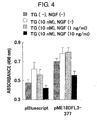
Fig. 4 shows the enhancement of cell damage by thapsigargin in
PC12 cells to which a NT2RM1000377-derived gene expression vector,
pME18DFL3-377, has been transfected.
Best Mode for Carrying Out the Invention
Herein below, the present invention is specifically described
using examples, however, it is not to be construed as being limited
thereto.
[Example 1] Effect of phosphatase-related genes on the increase of
transcriptional activity due to forskolin
(1) Helix clone-derived expression vectors and reporter expression
vectors
From a Helix Research Institute cDNA library, or the like, six
phosphatase-related genes comprising a phosphatase motif were
selected using the BLAST algorithm. Each of the obtained genes was
cloned with fixed cDNA directionality into vector pME18SFL3 (GenBank
AB009864, Expression Vector), which had been cleaved with DraIII,
to yield a phosphatase-related gene expression vector.
pME18DFL3-377 is an expression vector in which a gene derived
from the Helix clone NT2RM1000377 has been ligated downstream of the
CMV IE promoter of pME18SFL3. pME18DFL3-473 is an expression vector
in which a gene derived from the Helix clone OVARC1000473 has been
ligated downstream of the CMV IE promoter.
pCRE-Luc (Stratagene) is a reporter expression vector in which
firefly luciferase reporter gene has been ligated downstream of a
promoter comprising a CRE element. pRL3-SV40 (Promega) is a reporter
expression vector in which Renilla luciferase gene has been ligated
downstream of an SV40 early promoter.
(2) Gene transfer into PC12 cells
10 µg of pCRE-Luc (Stratagene), 0.2 µg of pRL3-SV40, and 10 µg
of phosphatase-related gene expression vector were added to 0.5 mL
of opti-MEM media (invitrogen), and this was left to stand at room
temperature for five minutes. Herein, pME18DFL3-377 and
pME18DFL3-473 were used as Helix clone-related gene expression
vectors. Alternatively, pBluescript was used as a control.
Meanwhile, 0.5 mL of opti-MEM media (invitrogen) and 20 µL of
lipofectamine 2000 (invitrogen) were mixed and left to stand at room
temperature for three minutes. These vector mixture solutions and
the lipofectamine 2000 diluent were mixed, and then incubated at room
temperature for 20 minutes to produce a conjugate of Lipofectamine
2000 and the vector. 1.0x 10⁶ PC12 cells were plated into a culture
flask (25 cm2, Corning) pre-coated with collagen type I, and then
incubated overnight at 37 °C in 3 mL of RPMI1640 media containing 10%
FCS. The above conjugate was added dropwise to these PC12 cells, and
this was further cultured overnight at 37°C.
(3) Measurement of CREB's transcriptional activity
Transgenic cells, obtained by the method of (2) mentioned above,
were plated at 5x 10⁵ cells per well on a 96-well plate coated with
collagen type I (Nippon Meat Packers, Inc.), and then cultured
overnight at 37°C. Thereafter, the cells were washed with RPMI1640
media, forskolin (Sigma) was added at a concentration of 10 µM, and
this was cultured for another eight hours at 37°C. CREB activity was
then measured by the following method. Specifically, the supernatant
was removed by suction, and the cells were dissolved using 20 µL of
lysis buffer (12.5 mM Tris-HCl (pH 7.4), 1% Triton X). To this, 50
µL of firefly luciferase substrate solution and 50 µL of Renilla
luciferase substrate solution (in the Dual luciferase assay kit
(Promega)) were added, and chemiluminescence was measured. Wallac
1420 ARVOsx (Amersham Pharmacia) was used as a measurement instrument.
The ratio of Renilla luciferase activity to firefly luciferase
activity was taken as the CREB's transcriptional activity.
Fig. 2 shows the results of measuring CREB's transcriptional
activity in this manner, and is an average of triplicate experiments.
The vertical axis shows relative CREB's transcriptional activity (%),
where an absence of pCRE-Luc transfection is taken as 0%, and
transformation with pCRE-Luc and pBluescript and subsequent
stimulation with forskolin is taken as 100%. Increase of CREB's
transcriptional activity by forskolin stimulation was found to be
significantly suppressed in PC12 cells transfected with genes derived
from Helix clones OVARC1000473 and NT2RM1000377 respectively. From
this result, and from the structural characteristics of the amino
acid sequence of the expected protein, these two genes were identified
as genes encoding proteins comprising the phosphatase activity of
catalyzing CREB dephosphorylation.
[Example 2] Construction of a drug screening system
10 µg of pCRE-Luc (Stratagene), 2 µg of pRL3-SV40, and 0 µg to
10 µg of pME18DFL3-377 were transfected into PC12 cells using a method
similar to that of Example 1 (2). As a control vector, 0 µg to 10
µg of pME18SFL3 was used, and the total amount was adjusted with
pME18DFL3-377 to 10 µg. These transfected cells were plated at 5x
105 cells per well on a 96-well plate coated with collagen type I
(Nippon Meat Packers, Inc.), and then cultured overnight at 37°C.
Thereafter, the cells were washed with RPMI1640 media, mouse 2.5S
NGF (Promega) was added at a concentration of 10 ng/mL, and this was
cultured for another eight hours at 37°C. CREB activity was then
measured using the following method: Specifically, the supernatant
was removed by suction, and the cells were dissolved using 20 µL of
lysis buffer (12.5 mM Tris-HCl (pH7.4), 1% Triton-X). 50 µL of firefly
luciferase substrate solution and 50 µL of Renilla luciferase
substrate solution (in the Dual luciferase assay kit (Promega) ) were
added to this material, and chemiluminescence was measured. Wallac
1420 ARVOsx (Amersham Pharmacia) was used as a measurement instrument.
The ratio of Renilla luciferase activity to firefly luciferase
activity was taken as the CREB's transcriptional activity.
Fig. 3 shows the results of CREB's transcriptional activity
measured in this manner, and is an average of triplicate experiments.
The vertical axis indicates relative CREB's transcriptional activity.
The relative activity of cells transfected with only pRL3-SV40 alone
in the absence of NGF stimulation is represented as 0. The relative
activity of cells not transfected with pME18DFL3-377 and pME18SFL3,
but transfected with only pCRE-Luc and pRL3-SV40 in the absence of
NGF stimulation is represented as 1. In PC12 cells to which a Helix
clone NT2RM1000377-derived gene has been transfected, the increase
of CREB's transcriptional activity due to NGF addition was found to
be significantly suppressed, depending on the amount of pME18DFL3-377
expression vector used for gene transfection. This fact suggests
that NT2RM1000377-derived gene products operate in a suppressive
manner against CREB's transcriptional activity. Furthermore, in the
above-mentioned assay system, by adding a novel compound along with
NGF, and measuring the effect of that addition as CREB's
transcriptional activity, a system for screening for new
pharmaceutical agents that ameliorate suppression of CREB's
transcriptional activity can be constructed.
[Example 3] Potentiation effect towards cell damage
10 µg of pCRE-Luc (Stratagene), 2 µg of pRL3-SV40, and 10 µg
of pME18DFL3-377 were transfected into PC12 cells using a method
similar to that of Example 1 (2). As a control, 10 µg of pBluescript
was used instead of pME18DFL3-377.
These transgenic cells were plated at 5x 10⁵ cells per well on
a 96-well plate coated with collagen (Nippon Meat Packers, Inc.),
and this was then cultured overnight at 37°C. Thereafter, this was
washed with RPMI1640 media, mouse 2.5S NGF (Promega) was added at
a concentration of 0 ng/mL, 1 ng/mL, or 10 ng/mL, and this was cultured
for another eight hours at 37°C.
The cells were washed once with the media, and then incubated
for 18 hours by adding 10 nM of thapsigargin (Sigma) and nerve growth
factor (NGF) to DMEM media (Sigma) containing 5% Horse serum and 5%
FCS.
PC12 cells are of the strain derived from rat adrenal
pheochromocytoma. Thapsigargin is an inhibitor of sarcoplasmic
reticulum calcium pumps (sarcoplasmic reticulum and endoplasmic
reticulum Ca2+ ATPase pumps). Administration of thapsigargin induces
apoptosis of PC12 cells. Furthermore, NGF differentiates PC12 cells
into neuron-like cells. This differentiation process stimulates
transcriptional activity of CREB. Therefore, by culturing
pME18DFL3-377-transformed PC12 cells in the presence of thapsigargin
and NGF, NT2RM1000377s's apoptosis-inducing effect, and CREB's effect
on transcriptional activity, can be observed.
Cell damage was measured using a Cytotoxicity Detection Kit
(LDH) (Roche)to measure the activity of lactate dehydrogenase (LDH)
released outside of a cell due to cell membrane damage. 75 µL from
the Cytotoxicity Detection Kit was added to 75 µL of cell culture
supernatant after incubation, and this was reacted at room temperature
for 20 minutes. Absorbance at 490 nm was then measured.
Fig. 4 shows the results of CREB's transcriptional activity
measured in this manner. In PC12 cells to which the Helix clone
NT2RM1000377-derived gene has been transfected, cell damage effect
by thapsigargin was shown to be enhanced.
Industrial Applicability
The present invention identified OVARC1000473 (SEQ ID NO: 1)
and NT2RM1000377 (SEQ ID NO: 3) as clones that show suppression against
the activation of CREB by forskolin. Furthermore, this invention
provides evaluation methods that use these genes, and/or proteins
encoded by these genes. The evaluation methods of the present
invention enable the evaluation of compounds that inhibit the effect
of suppressing CREB phosphorylation. Compounds selected by the
evaluation methods of the present invention comprise the effect of
increasing CREB's transcriptional activity. Such compounds, for
example, improve memory disorders and neurodegeneration, and are
useful as pharmaceutical agents against a wide variety of neural
disorders. The protein encoded by the above-mentioned gene,
NT2RM1000377, was confirmed to comprise the effect of enhancing cell
damage. This protein is clearly an important target molecule for
prevention and therapy of disorders accompanying cell damage.
Furthermore, the present invention elucidated that
cell-damaging effect can be regulated by regulating the activity of
the above-mentioned proteins. For example, the progression of neuron
hypofunction can be prevented by suppressing the expression and
activity of the protein encoded by NT2RM1000377. Therefore,
compounds comprising the effect of inhibiting the expression and
activity of NT2RM1000377 improve memory disorders and
neurodegeneration, and are useful as pharmaceutical agents for a wide
variety of neural disorders.
Alternatively, cell-damaging effect can be enhanced by
stimulating the expression and activity of NT2RM1000377. More
specifically, the cell-damaging effect of thapsigargin can be
enhanced by the action of the protein encoded by NT2RM1000377. The
compound thapsigargin is being tested for application in tumor therapy.
Therefore, proteins comprising the effect of strengthening this
action are useful in tumor therapy. More specifically, proteins
comprising such an effect can be used in the treatment of neurocytomas
and such.