EP1438041B1 - Spermicides - Google Patents
Spermicides Download PDFInfo
- Publication number
- EP1438041B1 EP1438041B1 EP02770104A EP02770104A EP1438041B1 EP 1438041 B1 EP1438041 B1 EP 1438041B1 EP 02770104 A EP02770104 A EP 02770104A EP 02770104 A EP02770104 A EP 02770104A EP 1438041 B1 EP1438041 B1 EP 1438041B1
- Authority
- EP
- European Patent Office
- Prior art keywords
- group
- compound
- aryl
- carbon atoms
- formula
- Prior art date
- Legal status (The legal status is an assumption and is not a legal conclusion. Google has not performed a legal analysis and makes no representation as to the accuracy of the status listed.)
- Expired - Lifetime
Links
- 0 ***N(C(C=C1)=O)C1=O Chemical compound ***N(C(C=C1)=O)C1=O 0.000 description 3
- SEEYREPSKCQBBF-UHFFFAOYSA-N CN(C(C=C1)=O)C1=O Chemical compound CN(C(C=C1)=O)C1=O SEEYREPSKCQBBF-UHFFFAOYSA-N 0.000 description 1
- XEDQOYXFCIMXTR-UHFFFAOYSA-N CN(C(C=C1)=O)C1=[O]=C Chemical compound CN(C(C=C1)=O)C1=[O]=C XEDQOYXFCIMXTR-UHFFFAOYSA-N 0.000 description 1
- BZOXKDJEAVQVOO-UHFFFAOYSA-N O=C(CC1)N(CCN(C(C=C2)=O)C2=O)C1=O Chemical compound O=C(CC1)N(CCN(C(C=C2)=O)C2=O)C1=O BZOXKDJEAVQVOO-UHFFFAOYSA-N 0.000 description 1
Classifications
-
- C—CHEMISTRY; METALLURGY
- C07—ORGANIC CHEMISTRY
- C07D—HETEROCYCLIC COMPOUNDS
- C07D207/00—Heterocyclic compounds containing five-membered rings not condensed with other rings, with one nitrogen atom as the only ring hetero atom
- C07D207/02—Heterocyclic compounds containing five-membered rings not condensed with other rings, with one nitrogen atom as the only ring hetero atom with only hydrogen or carbon atoms directly attached to the ring nitrogen atom
- C07D207/44—Heterocyclic compounds containing five-membered rings not condensed with other rings, with one nitrogen atom as the only ring hetero atom with only hydrogen or carbon atoms directly attached to the ring nitrogen atom having three double bonds between ring members or between ring members and non-ring members
- C07D207/444—Heterocyclic compounds containing five-membered rings not condensed with other rings, with one nitrogen atom as the only ring hetero atom with only hydrogen or carbon atoms directly attached to the ring nitrogen atom having three double bonds between ring members or between ring members and non-ring members having two doubly-bound oxygen atoms directly attached in positions 2 and 5
- C07D207/448—Heterocyclic compounds containing five-membered rings not condensed with other rings, with one nitrogen atom as the only ring hetero atom with only hydrogen or carbon atoms directly attached to the ring nitrogen atom having three double bonds between ring members or between ring members and non-ring members having two doubly-bound oxygen atoms directly attached in positions 2 and 5 with only hydrogen atoms or radicals containing only hydrogen and carbon atoms directly attached to other ring carbon atoms, e.g. maleimide
- C07D207/452—Heterocyclic compounds containing five-membered rings not condensed with other rings, with one nitrogen atom as the only ring hetero atom with only hydrogen or carbon atoms directly attached to the ring nitrogen atom having three double bonds between ring members or between ring members and non-ring members having two doubly-bound oxygen atoms directly attached in positions 2 and 5 with only hydrogen atoms or radicals containing only hydrogen and carbon atoms directly attached to other ring carbon atoms, e.g. maleimide with hydrocarbon radicals, substituted by hetero atoms, directly attached to the ring nitrogen atom
-
- A—HUMAN NECESSITIES
- A61—MEDICAL OR VETERINARY SCIENCE; HYGIENE
- A61K—PREPARATIONS FOR MEDICAL, DENTAL OR TOILETRY PURPOSES
- A61K31/00—Medicinal preparations containing organic active ingredients
- A61K31/33—Heterocyclic compounds
- A61K31/395—Heterocyclic compounds having nitrogen as a ring hetero atom, e.g. guanethidine or rifamycins
- A61K31/40—Heterocyclic compounds having nitrogen as a ring hetero atom, e.g. guanethidine or rifamycins having five-membered rings with one nitrogen as the only ring hetero atom, e.g. sulpiride, succinimide, tolmetin, buflomedil
- A61K31/4015—Heterocyclic compounds having nitrogen as a ring hetero atom, e.g. guanethidine or rifamycins having five-membered rings with one nitrogen as the only ring hetero atom, e.g. sulpiride, succinimide, tolmetin, buflomedil having oxo groups directly attached to the heterocyclic ring, e.g. piracetam, ethosuximide
-
- A—HUMAN NECESSITIES
- A61—MEDICAL OR VETERINARY SCIENCE; HYGIENE
- A61P—SPECIFIC THERAPEUTIC ACTIVITY OF CHEMICAL COMPOUNDS OR MEDICINAL PREPARATIONS
- A61P15/00—Drugs for genital or sexual disorders; Contraceptives
- A61P15/16—Masculine contraceptives
Definitions
- the present invention relates to the use of maleimide derivatives as specified in the claims as spermicidal agents.
- it relates to the use of maleimide derivatives as contact spermicides.
- the invention further provides novel compounds and their use in medicine.
- the invention also relates to spermicidal formulations containing maleimide derivatives.
- spermicides are chemical products which inactivate or kill sperm. In use, they are generally applied topically to the vagina prior to sexual intercourse.spermicides are considered to be a convenient form of contraception as they are widely available without prescription and they can be self-administered. In contrast to the contraceptive pill, spermicides do not need to be applied on a regular basis, but only prior to intercourse, their effect is temporary and they have no hormonal side effects. Spermicides may be used alone, but are often used in combination with barrier methods of contraception.
- spermicides include nonoxynol-9, octoxynol-9, menfegol and benzalkonium chloride, which are all classified as detergent spermicides. It has been suggested that the detergent-type spermicides can cause lesions of the vaginal and cervical epithelia.
- Maleimides are a well known class of chemical compounds. Maleimide derivatives are known to have a wide variety of utilities, and find application in the biological and medicinal fields, as well as in general industrial use, for example in the preparation of polymers and inks.
- USP 3,129,225 (United States Vitamin and Pharmaceutical Corporation) describes maleimido betaines said to have antimicrobial and antiparasitic activity as well as pharmacological activity, in particular the reduction of serum cholesterol.
- German ALS 1,140,192 (United States Rubber Company) describes a novel bismaleimide with a CH 2 -O-CH 2 bridge, and its use in vulcanisation, cross-linking of polymers and as fungicide for tomatoes.
- USP 5,552,396 and WO 97/19080 (Eli Lilly) describe classes of N,N-bridged bisindolylmaleimides which are said to be inhibitors of protein kinase C, and to be useful for the treatment of diabetes, ischemia, inflammation, cns disorders, cardiovascular disease, dermatological disease and cancer.
- USP 5,380,764 (Goedecke AG) describes bis-indolemaleinimides,said to be protein kinase C inhibitors useful for treating diseases of heart or blood vessels, inflammatory processes, allergies, cancer and degenerative damage of cns, diseases of the immune system and viral diseases, including diseases caused by retroviruses HTLV -I, -II, -III.
- WO 96/09406 (The Government of the United States of America, represented by the Secretary of the Department of Health and Human Services) describes the use of disulfides, maleimides and a variety of other electron acceptor compounds in inactivating HIV-1 and other retroviruses.
- maleimide derivatives of the present invention reduce human sperm motility.
- the compounds are therefore useful as spermicides.
- results from cell cytotoxicity assays suggest that the compounds do not cause significant damage to the vaginal and cervical epithelium.
- the present invention provides the use of a maleimide compound of the general formula (III) for the preparation of a composition for use in a method of contraception wherein
- an acyclic aliphatic group or moiety may be branched or unbranched alkyl, which alkyl group may be optionally interrupted by one or more oxygen atoms; C 2-20 alkenyl; or C 2-20 alkynyl; any of which may be optionally substituted by one or more substituents selected from the group consisting of halogen, cyano, nitro, -C(O)R 4 , -CO 2 R 4 , -OR 4 , -SR 4 -SOR 4 , -SO 2 R 4 , - NR 4 R 5 , -C(O)NR 4 R 5 ; wherein R 4 and R 5 independently represent hydrogen, C 1-8 alkyl, aryl or arylC 1-8 alkyl.
- alkyl groups may have from 1 or 3 to 20 carbon atoms, preferably from 1 or 3 to 15 carbon atoms, more preferably from 1 or 3 to 10 carbon atoms.
- Alkenyl groups may have from 2 to 20 carbon atoms, preferably from 2 to 15 carbons atoms, more preferably from 2 to 10 carbon atoms.
- Alkynyl groups may have from 2 to 20 carbon atoms, preferably from 2 to 15 carbon atoms, more preferably from 2 to 10 atoms.
- a polyalkyleneglycol group may be a polyethylene glycol (PEG) or a polypropylene glycol which may be represented by the formulae -(OCH 2 CH 2 ) m OH or -(OCH 2 CH 2 CH 2 ) m OH, wherein m is in the range 4 to 20.
- PEG polyethylene glycol
- polypropylene glycol which may be represented by the formulae -(OCH 2 CH 2 ) m OH or -(OCH 2 CH 2 CH 2 ) m OH, wherein m is in the range 4 to 20.
- polyalkylene glycols are generally a mixture of chain lengths and are therefore conventionally described in terms of average molecular weight and average values of m.
- Aryl is phenyl optionally substituted by one or more substituents selected from the group consisting of halogen, cyano, nitro, -C(O)R 6 , -CO 2 R 6 , -OR 6 , -SR 6 -SOR 6 , - SO 2 R 6 , -NR 6 R 7 , -C(O)NR 6 R 7 wherein R 6 and R 7 independently represent hydrogen, or C 1-8 alkyl.
- a cyclic aliphatic group or moiety may be cycloalkyl or cycloalkenyl, either of which may be optionally substituted by one or more substituents selected from the group consisting of halogen, cyano, nitro, -C(O)R 4 , -CO 2 R 4 , -OR 4 , -SR 4 -SOR 4 , - SO 2 R 4 , -NR 4 R 5 , -C(O)NR 4 R 5 ; wherein R 4 and R 5 are as defined above.
- Cycloalkyl groups of the present invention may have from 3 to 20 carbon atoms, preferably from 3 to 10 carbon atoms, more preferably from 3 to 6 carbon atoms.
- Cycloalkenyl groups of the present invention may have from 3 to 20 carbon atoms, preferably from 3 to 10 carbon atoms, more preferably from 3 to 6 carbon atoms.
- Aromatic hydrocarbon groups and moieties include for example optionally substituted unsaturated monocyclic, fused bicyclic or tricyclic rings of up to 18 carbon atoms, such as phenyl and naphthyl, and partially saturated bicyclic or tricyclic rings such as tetrahydro-naphthyl.
- Aromatic groups also include linked aromatic rings, such as a biphenyl group. The aromatic rings may also be linked by heteroatoms, e.g. O, S or NR 4 .
- substituents which may be present on an aromatic group or moiety include one or more of halogen, alkyl, haloalkyl, cyano, nitro, -C(O)R 4 , -CO 2 R 4 , -OR 4 , -SR 4 -SOR 4 , -SO 2 R 4 , -NR 4 R 5 , or - C(O)NR 4 R 5 .
- Substituents on the aromatic ring are preferably in the ortho or para position with respect to the maleimido group.
- An aromatic heterocyclic group or moiety may be unsaturated or partially saturated, for example an optionally substituted 5- or 6-membered heterocyclic aromatic ring which may contain from 1 to 4 heteroatoms selected from O, N and S.
- the heterocyclic ring may optionally be fused to one or more phenyl rings.
- heteroaryl groups thus include furyl, thienyl, pyrrolyl, oxazolyl, oxazinyl, thiazolyl, imidazolyl, oxadiazolyl, thiadiazolyl, pyridyl, triazolyl, triazinyl, pyridazyl, pyrimidinyl, pyrazolyl, indolyl, indazolyl, benzofuranyl, benzothienyl, benzimidazolyl, benzoxazolyl, benzoxazinyl, quinoxalinyl, quinolinyl, quinazolinyl, cinnolinyl, benzothiazolyl, pyridopyrrolyl.
- substituents which may be present on a heterocyclic aromatic group include one or more of halogen, oxo, nitro, cyano, alkyl, haloalkyl, -C(O)R 4 , -CO 2 R 4 , -OR 4 , -SR 4 -SOR 4 , -SO 2 R 4 , - NR 4 R 5 , or -C(O)NR 4 R 5 , wherein R 4 and R 5 are as defined above.
- Partially saturated derivatives of the aforementioned heteroaryl groups include 3-pyrroline and 1,2-dihydroquinoline.
- Non-aromatic heterocyclic groups include pyrrolidinyl, tetrahydrofuryl, tetrahydrothienyl and piperidinyl.
- a preferred class of compounds for use according to the invention is that of bismaleimide derivatives represented by formula (IV): wherein A, A 1 and x are as defined above.
- x preferably represents 0 and A is as defined above.
- R 1 , R 2 , R 3 , n, p and q are preferably selected such that A represents a C 1-8 alkyl group, optionally interrupted by an oxygen atom; a polyalkylene glycol group having an average molecular weight in the range 100 to 1000; or a phenyl group; or n and q are preferably each 1, p represents 0 or 1,R 1 and R 3 preferably each represent phenyl and, when p is 1, R 2 preferably represents a C 1-8 alkyl group, optionally interrupted by an oxygen atom; or a polyalkylene glycol group having an average molecular weight in the range 100 to 1000.
- A represents phenyl
- the maleimido moieties are preferably in the para position relative to each other.
- a represents biphenyl the bonds between the maleimido and phenyl groups and the bond between the two phenyl groups are also preferably in the para positions.
- Maleimide derivatives for use according to the present invention are commercially available or can be prepared according to methods well known in the art.
- a maleimide derivative for use according to the present invention may be administered as the sole active ingredient or may be administered in combination with one or more other maleimide derivatives as defined herein and/or in combination with one or more other therapeutic agents.
- combination' means that the compounds may be administered simultaneously or sequentially, and there may be an interval of time between administration of the two or more compounds.
- Therapeutic agents which may be administered in combination with one or more maleimide derivatives include antibacterial, antifungal, and antiviral agents.
- the maleimide derivatives may be formulated for administration to the reproductive tract using conventional methods known in the art.
- they may be formulated as creams, gels including thermoreversible gels lubricants, pessaries, foaming tablets, aerosol foams, sprays, douches or films.
- the compounds may be incorporated into sustained release formulations, e.g. by micro-encapsulation, formulation with a bio-adhesive material, such as poly-carbophil, or other conventional means. Gels, creams and pessaries may, according to circumstance, be administered via an appropriate applicator.
- formulations in particular gels, creams and pessaries may be packaged with an appropriate applicator to facilitate administration.
- Spermicidal preparations may also be incorporated into contraceptive devices. Thus for example they may be incorporated into vaginal, cervical or uterine devices such as vaginal sponges or rings, and diaphragms or used to lubricate and/or coat condoms.spermicidal preparations used in this manner may be formulated for immediate and/or sustained release of the active compound(s) so as to provide controlled release over a period of time.
- a maleimide derivative may be administered at a dosage in the range 10-1000mg, e.g. 30 to 1000mg.
- a second aspect of the invention provides a compound of formula (V) wherein R 20 is aryl, preferably phenyl; R 21 is -(OCH 2 CH 2 ) n - wherein n is 15; R 22 is a group O-R 23 wherein R 23 is aryl; or R 21 is -(OCH 2 CH 2 ) n - wherein n is 3 to 15, preferably n is one of 4, 5, 6, 7, 8, 9, 10, 11, 12 and 13; R 22 is a group O-R 23 wherein R 23 is C 1-10 alkyl, preferably C 1-4 alkyl, more preferably methyl, wherein the aryl or alkyl group is optionally substituted with
- the second aspect of the invention also relates to salts, esters or amides of the compounds of formula V.
- the compounds of the second aspect can be synthesised according to methods well known in the art.
- PEG of the appropriate chain length is initially converted to the aminoaryl derivative using conventional chemical synthesis.
- One example of such a chemical synthesis includes the coupling of PEG with p-fluoronitrobenzene in the presence of sodium hydride and DMF to produce a nitro-substituted aryl-PEG moiety.
- the nitro-subsituted aryl-PEG moiety is then reduced with a reducing agent such as palladium/carbon to form the required amine compound.
- the amine compound can then be converted into the maleimide compound of formula V by a number of methods known in the art.
- One example of such a method includes reacting the amine with maleic anhydride.
- the third aspect of the invention provides a compound of formula V as defined above for use as a spermicide.
- the number of motile sperm (%) is rapidly determined (within 30s) following exposure to varying concentrations of spermicide using manual microscopy. Using non-linear regression analysis motility data from these screens is used to generate concentration response curves and subsequently an ED 50 value using GraphPad Prism software (San Diego, CA, USA). The ED 50 value is the concentration of spermicide which produces 50% inhibition of sperm motility compared to control
- MTT is a tetrazolium salt which is converted by viable cells to an insoluble tetrazoliym salt. This colour conversion is measured by spectrophotometry. Data is then subjected to non-linear regression analysis to generate concentration response curves and subsequently an EC 50 value curves using GraphPad Prism software (San Diego, CA, USA). The EC 50 value is the concentration of spermicide which produces 50% inhibition of cell viability compared to control.
- Compounds 1 and 5 were obtained from Sigma-Aldrich Corp, compounds 2 and 10 from Tokyo Chemical Industry UK, compounds 3, 6, 7, 8 and 9 from Maybridge plc, compound 4 from Wako Pure Chemicals Industries, Ltd, compound 11 from Sigma-Aldrich library of rare chemicals and compound 12 from Molecular Biosciences.
- ME180 cell viability was determined using the MTT assay. The concentration of each compound required to inhibit ME180 cell viability (EC 50 ) by 50% was calculated from log concentration response curves using non-linear regression analysis. The number of experiments is quoted ⁇ SEM.
- spermicides currently in use typically have therapeutic indices of 1 or less.
Landscapes
- Health & Medical Sciences (AREA)
- Chemical & Material Sciences (AREA)
- Organic Chemistry (AREA)
- Veterinary Medicine (AREA)
- Medicinal Chemistry (AREA)
- Pharmacology & Pharmacy (AREA)
- Life Sciences & Earth Sciences (AREA)
- Animal Behavior & Ethology (AREA)
- General Health & Medical Sciences (AREA)
- Public Health (AREA)
- Epidemiology (AREA)
- Engineering & Computer Science (AREA)
- Bioinformatics & Cheminformatics (AREA)
- Endocrinology (AREA)
- Reproductive Health (AREA)
- Chemical Kinetics & Catalysis (AREA)
- General Chemical & Material Sciences (AREA)
- Nuclear Medicine, Radiotherapy & Molecular Imaging (AREA)
- Pharmaceuticals Containing Other Organic And Inorganic Compounds (AREA)
- Medicinal Preparation (AREA)
- Indole Compounds (AREA)
Abstract
Description
- The present invention relates to the use of maleimide derivatives as specified in the claims as spermicidal agents. In particular it relates to the use of maleimide derivatives as contact spermicides. The invention further provides novel compounds and their use in medicine. The invention also relates to spermicidal formulations containing maleimide derivatives.
- Spermicides are chemical products which inactivate or kill sperm. In use, they are generally applied topically to the vagina prior to sexual intercourse. Spermicides are considered to be a convenient form of contraception as they are widely available without prescription and they can be self-administered. In contrast to the contraceptive pill, spermicides do not need to be applied on a regular basis, but only prior to intercourse, their effect is temporary and they have no hormonal side effects. Spermicides may be used alone, but are often used in combination with barrier methods of contraception.
- Currently available spermicides include nonoxynol-9, octoxynol-9, menfegol and benzalkonium chloride, which are all classified as detergent spermicides. It has been suggested that the detergent-type spermicides can cause lesions of the vaginal and cervical epithelia.
- Maleimides are a well known class of chemical compounds. Maleimide derivatives are known to have a wide variety of utilities, and find application in the biological and medicinal fields, as well as in general industrial use, for example in the preparation of polymers and inks.
- Thus for example,
USP 3,129,225 (United States Vitamin and Pharmaceutical Corporation) describes maleimido betaines said to have antimicrobial and antiparasitic activity as well as pharmacological activity, in particular the reduction of serum cholesterol. - German ALS
1,140,192 (United States Rubber Company) describes a novel bismaleimide with a CH2-O-CH2 bridge, and its use in vulcanisation, cross-linking of polymers and as fungicide for tomatoes. -
USP 4,876,358 (Texaco Inc.) describes novel bismaleimides having a (poly)oxyethylene bridge, for use in preparing polymers. -
USP 5,552,396 andWO 97/19080 -
USP 5,380,764 (Goedecke AG) describes bis-indolemaleinimides,said to be protein kinase C inhibitors useful for treating diseases of heart or blood vessels, inflammatory processes, allergies, cancer and degenerative damage of cns, diseases of the immune system and viral diseases, including diseases caused by retroviruses HTLV -I, -II, -III. -
WO 96/09406 - Igarashi et al., J. Industrial Microbiology, 6 (1990) pp223-225, report that various N-alkylmaleimides show antibacterial and antifungal activity.
- Reyes et al, Archives of Andrology, 7, (1981), pp159-168, discloses the use of N-(4-carboxy-3-hydroxy-phenyl)-maleimide (CPhM) to reduce the fertilising capacity of sperm. Incubation with a 10mM CPhM solution for 10 minutes resulted in the fertilising capacity of sperm being decreased from 80% to 17%. 10 minutes exposure is outside what is considered to be a clinically relevant timescale for a spermicide, that is, between 20 and 40 seconds following the addition of a putative spermicide (Sander FV and Cramer: A practical method for testing the spermicidal action of chemical contraceptives, Hum. Fertil., 1941, 6, 134-153 and Kleinman RL in "IPPF Medical Handbook" 2nd edition, London, 1964, International Planned Parenthood Federation).
- Mammoto et al., Journal of Experimental Zoology, 278 (1997), pp. 178-188 descries the effects of sulfhydryl (SH)-depleting reagents on mouse sperm-egg fusion. SH-depleting reagents studied were N-ethyl-maleimide, Na2S4O6 and 5,5'-dithiobis(2-nitro-benzoic acid).
- Reyes et al., Excerpta Med. Int. Congr. Ser. (1976), 370 (Recent Adv. Hum. Reprod., Proc. Int. Congr. 1st, 1974) pp. 322-324 describes inhibition of capacitation and of the fertilizing capacity of rabbit spermatozoa by blocking membrane sulfhydryl groups, using the reagent N-4-carboxy-3-hydroxyphenylmaleimide (CPhM).
- There is therefore a continuing need for spermicidal compounds which act quickly and efficiently to inactivate or kill sperm.
- We have now surprisingly found that the maleimide derivatives of the present invention reduce human sperm motility. The compounds are therefore useful as spermicides. Furthermore, results from cell cytotoxicity assays suggest that the compounds do not cause significant damage to the vaginal and cervical epithelium.
- In a first aspect therefore the present invention provides the use of a maleimide compound of the general formula (III) for the preparation of a composition for use in a method of contraception

- A is represented by (R1)n-(R2)p-(R3)q, wherein each of R1, R2 and R3 is independently selected from:
- an acyclic aliphatic group having one or from 3-20 carbon atoms;
- a polyalkylene glycol group having an average molecular weight in the range 100 to 1000;
- a cyclic aliphatic group having from 4-20 carbon atoms;
- a monocyclic or polycyclic aromatic hydrocarbon group having from 6-18 ring carbon atoms;
- a non-aromatic heterocyclic group having from 3 to 8 ring atoms, or
- a monocyclic or polycyclic aromatic heterocyclic group having from 5 to 20 ring atoms;
- and n, p and q each represent 0 or 1 such that the sum of n+p+q = 1-3;
- A', which may be the same as or different from A, represents a group (R1)n-(R2)p-(R3)q, wherein R1 , R2 , R3 , n, p and q are as defined above;
- x is 0 or 1 and y is 1-6.
- In the compounds of formula (III) above an acyclic aliphatic group or moiety may be branched or unbranched alkyl, which alkyl group may be optionally interrupted by one or more oxygen atoms; C2-20 alkenyl; or C2-20 alkynyl; any of which may be optionally substituted by one or more substituents selected from the group consisting of halogen, cyano, nitro, -C(O)R4, -CO2R4, -OR4, -SR4-SOR4, -SO2R4, - NR4R5, -C(O)NR4R5; wherein R4 and R5 independently represent hydrogen, C1-8alkyl, aryl or arylC1-8alkyl.
- For the purposes of the present invention, alkyl groups may have from 1 or 3 to 20 carbon atoms, preferably from 1 or 3 to 15 carbon atoms, more preferably from 1 or 3 to 10 carbon atoms. Alkenyl groups may have from 2 to 20 carbon atoms, preferably from 2 to 15 carbons atoms, more preferably from 2 to 10 carbon atoms. Alkynyl groups may have from 2 to 20 carbon atoms, preferably from 2 to 15 carbon atoms, more preferably from 2 to 10 atoms.
- A polyalkyleneglycol group may be a polyethylene glycol (PEG) or a polypropylene glycol which may be represented by the formulae -(OCH2CH2)mOH or -(OCH2CH2CH2)mOH, wherein m is in the range 4 to 20. It will be appreciated that polyalkylene glycols are generally a mixture of chain lengths and are therefore conventionally described in terms of average molecular weight and average values of m. Thus for example PEG 200 has molecular weight in the range 190-210 and an average value of m=4 (The Merck Index, Eleventh edition).
- Aryl is phenyl optionally substituted by one or more substituents selected from the group consisting of halogen, cyano, nitro, -C(O)R6, -CO2R6, -OR6, -SR6-SOR6, - SO2R6, -NR6R7, -C(O)NR6R7 wherein R6 and R7 independently represent hydrogen, or C1-8alkyl.
- A cyclic aliphatic group or moiety may be cycloalkyl or cycloalkenyl, either of which may be optionally substituted by one or more substituents selected from the group consisting of halogen, cyano, nitro, -C(O)R4, -CO2R4, -OR4, -SR4-SOR4, - SO2R4, -NR4R5, -C(O)NR4R5; wherein R4 and R5 are as defined above.
- Cycloalkyl groups of the present invention may have from 3 to 20 carbon atoms, preferably from 3 to 10 carbon atoms, more preferably from 3 to 6 carbon atoms. Cycloalkenyl groups of the present invention may have from 3 to 20 carbon atoms, preferably from 3 to 10 carbon atoms, more preferably from 3 to 6 carbon atoms.
- Aromatic hydrocarbon groups and moieties include for example optionally substituted unsaturated monocyclic, fused bicyclic or tricyclic rings of up to 18 carbon atoms, such as phenyl and naphthyl, and partially saturated bicyclic or tricyclic rings such as tetrahydro-naphthyl. Aromatic groups also include linked aromatic rings, such as a biphenyl group. The aromatic rings may also be linked by heteroatoms, e.g. O, S or NR4. Examples of substituents which may be present on an aromatic group or moiety include one or more of halogen, alkyl, haloalkyl, cyano, nitro, -C(O)R4, -CO2R4, -OR4, -SR4-SOR4, -SO2R4, -NR4R5, or - C(O)NR4R5. Substituents on the aromatic ring are preferably in the ortho or para position with respect to the maleimido group.
- An aromatic heterocyclic group or moiety may be unsaturated or partially saturated, for example an optionally substituted 5- or 6-membered heterocyclic aromatic ring which may contain from 1 to 4 heteroatoms selected from O, N and S. The heterocyclic ring may optionally be fused to one or more phenyl rings. Examples of heteroaryl groups thus include furyl, thienyl, pyrrolyl, oxazolyl, oxazinyl, thiazolyl, imidazolyl, oxadiazolyl, thiadiazolyl, pyridyl, triazolyl, triazinyl, pyridazyl, pyrimidinyl, pyrazolyl, indolyl, indazolyl, benzofuranyl, benzothienyl, benzimidazolyl, benzoxazolyl, benzoxazinyl, quinoxalinyl, quinolinyl, quinazolinyl, cinnolinyl, benzothiazolyl, pyridopyrrolyl. Examples of substituents which may be present on a heterocyclic aromatic group include one or more of halogen, oxo, nitro, cyano, alkyl, haloalkyl, -C(O)R4, -CO2R4, -OR4, -SR4-SOR4, -SO2R4, - NR4R5, or -C(O)NR4R5, wherein R4 and R5 are as defined above. Partially saturated derivatives of the aforementioned heteroaryl groups include 3-pyrroline and 1,2-dihydroquinoline.
- Non-aromatic heterocyclic groups include pyrrolidinyl, tetrahydrofuryl, tetrahydrothienyl and piperidinyl.

- In compounds of formula (III) when x is 1, it is preferred that the total number of atoms in the moieties A and A1 does not exceed 50.
- A preferred class of compounds for use according to the invention is that of bismaleimide derivatives represented by formula (IV):
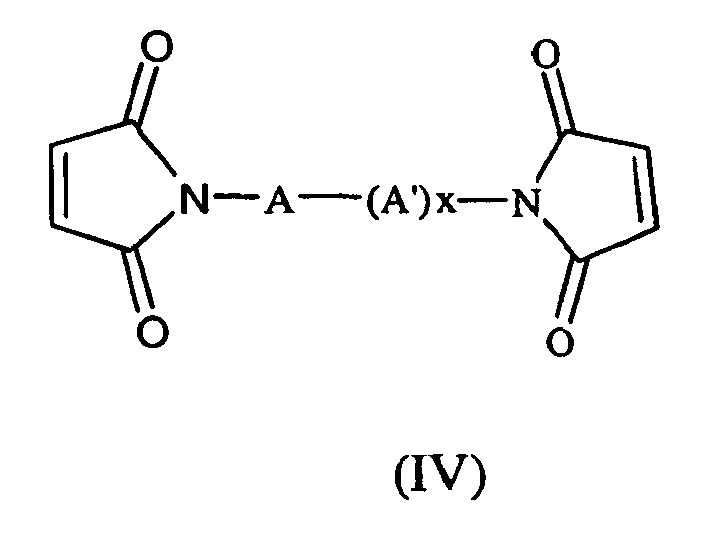
- In the compounds of formula (IV) x preferably represents 0 and A is as defined above.
- In the group A, R1, R2, R3, n, p and q are preferably selected such that A represents a C1-8alkyl group, optionally interrupted by an oxygen atom;
a polyalkylene glycol group having an average molecular weight in the range 100 to 1000; or
a phenyl group; or
n and q are preferably each 1, p represents 0 or 1,R1 and R3 preferably each represent phenyl and, when p is 1, R2 preferably represents a C1-8alkyl group, optionally interrupted by an oxygen atom; or
a polyalkylene glycol group having an average molecular weight in the range 100 to 1000. - When A represents phenyl the maleimido moieties are preferably in the para position relative to each other. When A represents biphenyl the bonds between the maleimido and phenyl groups and the bond between the two phenyl groups are also preferably in the para positions.
- Maleimide derivatives for use according to the present invention are commercially available or can be prepared according to methods well known in the art.
- A maleimide derivative for use according to the present invention may be administered as the sole active ingredient or may be administered in combination with one or more other maleimide derivatives as defined herein and/or in combination with one or more other therapeutic agents. In this context 'in combination' means that the compounds may be administered simultaneously or sequentially, and there may be an interval of time between administration of the two or more compounds. Therapeutic agents which may be administered in combination with one or more maleimide derivatives include antibacterial, antifungal, and antiviral agents.
- For use as spermicides the maleimide derivatives may be formulated for administration to the reproductive tract using conventional methods known in the art. Thus for example they may be formulated as creams, gels including thermoreversible gels lubricants, pessaries, foaming tablets, aerosol foams, sprays, douches or films. The compounds may be incorporated into sustained release formulations, e.g. by micro-encapsulation, formulation with a bio-adhesive material, such as poly-carbophil, or other conventional means. Gels, creams and pessaries may, according to circumstance, be administered via an appropriate applicator.
- The formulations, in particular gels, creams and pessaries may be packaged with an appropriate applicator to facilitate administration.
- Spermicidal preparations may also be incorporated into contraceptive devices. Thus for example they may be incorporated into vaginal, cervical or uterine devices such as vaginal sponges or rings, and diaphragms or used to lubricate and/or coat condoms. Spermicidal preparations used in this manner may be formulated for immediate and/or sustained release of the active compound(s) so as to provide controlled release over a period of time.
- For use as a spermicide according to the present invention, a maleimide derivative may be administered at a dosage in the range 10-1000mg, e.g. 30 to 1000mg.
- A second aspect of the invention provides a compound of formula (V)

R21 is -(OCH2CH2)n- wherein n is 15;
R22 is a group O-R23 wherein R23 is aryl; or
R21 is -(OCH2CH2)n- wherein n is 3 to 15, preferably n is one of 4, 5, 6, 7, 8, 9, 10, 11, 12 and 13;
R22 is a group O-R23 wherein R23 is C1-10 alkyl, preferably C1-4 alkyl, more preferably methyl, wherein the aryl or alkyl group is optionally substituted with
- Preferred compounds for use in medicine are set out in the table below.
Compound number Structure 13 
14 
15 
16 
- The second aspect of the invention also relates to salts, esters or amides of the compounds of formula V.
- The compounds of the second aspect can be synthesised according to methods well known in the art. In particular, PEG of the appropriate chain length is initially converted to the aminoaryl derivative using conventional chemical synthesis. One example of such a chemical synthesis includes the coupling of PEG with p-fluoronitrobenzene in the presence of sodium hydride and DMF to produce a nitro-substituted aryl-PEG moiety. The nitro-subsituted aryl-PEG moiety is then reduced with a reducing agent such as palladium/carbon to form the required amine compound. The amine compound can then be converted into the maleimide compound of formula V by a number of methods known in the art. One example of such a method includes reacting the amine with maleic anhydride.
- The third aspect of the invention provides a compound of formula V as defined above for use as a spermicide.
- All preferred features of different aspects of the invention apply to each other mutatis mutanalis.
- The invention will be further illustrated by the following examples:
- The number of motile sperm (%) is rapidly determined (within 30s) following exposure to varying concentrations of spermicide using manual microscopy. Using non-linear regression analysis motility data from these screens is used to generate concentration response curves and subsequently an ED50 value using GraphPad Prism software (San Diego, CA, USA). The ED50 value is the concentration of spermicide which produces 50% inhibition of sperm motility compared to control
- The effect of compounds on vaginal cell viability is assessed using the MTT assay. MTT is a tetrazolium salt which is converted by viable cells to an insoluble tetrazoliym salt. This colour conversion is measured by spectrophotometry. Data is then subjected to non-linear regression analysis to generate concentration response curves and subsequently an EC50 value curves using GraphPad Prism software (San Diego, CA, USA). The EC50 value is the concentration of spermicide which produces 50% inhibition of cell viability compared to control.
- The therapeutic index is the ratio of cell cytoxicity EC50 datum to the spermicidal efficacy ED50 datum and is calculated using the data obtained in methods 1 and 2 above using the following formula:

- The following compounds of the invention were tested as set out in the above methods.
Compound number Structure 1 
2 
3 
4 
5 
6 
7 
8 
9 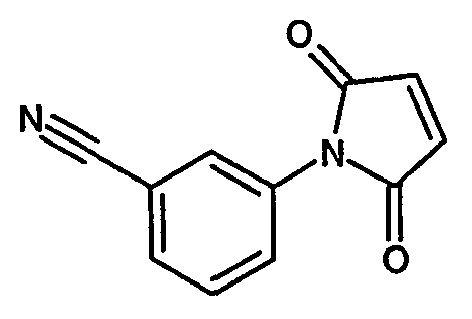
10 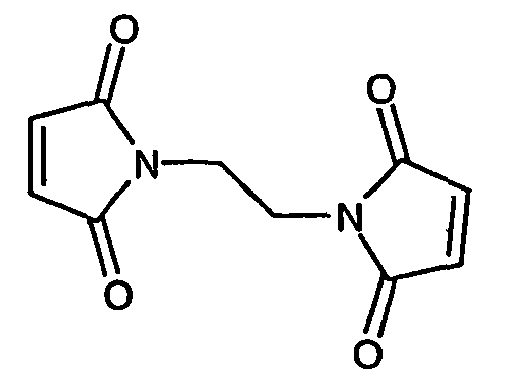
11 
12 
13 
14 
15 
16 
- Compounds 1 and 5 were obtained from Sigma-Aldrich Corp, compounds 2 and 10 from Tokyo Chemical Industry UK, compounds 3, 6, 7, 8 and 9 from Maybridge plc, compound 4 from Wako Pure Chemicals Industries, Ltd, compound 11 from Sigma-Aldrich library of rare chemicals and compound 12 from Molecular Biosciences.
-
Table 1 Compound Inhibition Human Sperm Motility (ED50- µM) 32 1 (±5) n=3 26 2 (±7) n=3 77 3 (±10) n=3 31 4 (±3.5) n=8 294 5 (±24) n=6 26 6 (±1) n=3 43 7 (±3) n=3 79 8 (±16) n=3 56 9 (±7) n=3 4 10 (±0.5) n=3 1.4 11 (±0.5) n=4 10.5 12 (±3.5) n=3 4.6 13 (±1.03) n=4 149 14 (±19) n=4 5 15 n=2 34.4 16 (±7.2) n=3 - Table 1. Effect of Maleimides on Human Sperm Motility. Sperm motility was determined using manual microscopy. The concentration of each compound required to inhibit sperm motility (ED50) by 50% was calculated from log concentration response curves using non-linear regression analysis. The number of experiments is quoted ± SEM.
-
Table 2 Compound Inhibition ME 180 Cell Viability (EC50- µM) 370 1 (±60) n=3 600 2 (±101) n=3 363 3 (±119.5) n=3 268 4 (±126) n=7 114 5 (±41) n=3 88 6 (±28) n=4 410 7 (±85) n=4 858 8 (±142) n=3 143 9 (±25) n=3 516 10 (±106) n=3 >30 11 (±) n=3 333 12 (±146) n=4 125 13 (±23) n=3 285 14 (±75) n=3 153 15 n=2 1890 16 (±1220) n=5 - Table 2. Effect of Maleimides on ME180 Cell Viability. ME180 cell viability was determined using the MTT assay. The concentration of each compound required to inhibit ME180 cell viability (EC50) by 50% was calculated from log concentration response curves using non-linear regression analysis. The number of experiments is quoted ± SEM.
-
Table 3 Compound TI 1 12 2 23 3 5 4 - 5 0.4 6 3 7 10 8 11 9 2.6 10 129 11 >21 12 32 13 27 14 2 15 31 16 55 - Conventional spermicides currently in use typically have therapeutic indices of 1 or less.
Claims (7)
- The use of a maleimide compound of formula (III):
 an acyclic aliphatic group having 1 or from 3-20 carbon atoms;a polyalkylene glycol group having an average molecular weight in the range 100 to 1000;a cyclic aliphatic group having from 4-20 carbon atoms;a monocyclic or polycyclic aromatic hydrocarbon group having from 6-18 ring carbon atoms;a non-aromatic heterocyclic group having from 3 to 8 ring atoms, ora monocyclic or polycyclic aromatic heterocyclic group having from 5 to 20 ring atoms;and n, p and q each represent 0 or 1 such that the sum of n+p+q = 1-3;A1, which may be the same as or different from A, represents a group (R1)n-(R2)p-(R3)q, wherein R1 , R2 , R3 , n, p and q are as defined above;x is 0 or 1 and y is 1-6;for the preparation of a composition for use in a method of contraception.
 - Use according to claim 1 wherein the maleimide is a compound of formula (IV):

- A compound of formula V or a salt, an ester or an amide thereof.

R21 is -(OCH2CH2)n- wherein n is 15;
R22 is a group O-R23 wherein R23 is aryl; or
R21 is -(OCH2CH2)n wherein n is 3 to 15;
R22 is a group O-R23 wherein R23 is C1-10 alkyl,
wherein the aryl or alkyl group is optionally substituted with
- A compound as claimed in claim 3 selected from

- A compound of formula V or a salt, an ester or an amide thereof

R21 is -(OCH2CH2)n- wherein n is 3 tol5;
R22 is a group O-R23 wherein R23 is aryl or C1-10 alkyl,
wherein the aryl or alkyl group is optionally substituted with
- A compound selected fromfor use in medicine.

- A compound as claimed in claim 3 or claim 4 for use as a spermicide.
Applications Claiming Priority (3)
| Application Number | Priority Date | Filing Date | Title |
|---|---|---|---|
| GBGB0125659.3A GB0125659D0 (en) | 2001-10-25 | 2001-10-25 | Spermicides |
| GB0125659 | 2001-10-25 | ||
| PCT/GB2002/004813 WO2003035059A2 (en) | 2001-10-25 | 2002-10-24 | Spermicides |
Publications (2)
| Publication Number | Publication Date |
|---|---|
| EP1438041A2 EP1438041A2 (en) | 2004-07-21 |
| EP1438041B1 true EP1438041B1 (en) | 2007-11-28 |
Family
ID=9924533
Family Applications (1)
| Application Number | Title | Priority Date | Filing Date |
|---|---|---|---|
| EP02770104A Expired - Lifetime EP1438041B1 (en) | 2001-10-25 | 2002-10-24 | Spermicides |
Country Status (6)
| Country | Link |
|---|---|
| US (1) | US20050131238A1 (en) |
| EP (1) | EP1438041B1 (en) |
| DE (1) | DE60223828T2 (en) |
| ES (1) | ES2292810T3 (en) |
| GB (1) | GB0125659D0 (en) |
| WO (1) | WO2003035059A2 (en) |
Families Citing this family (4)
| Publication number | Priority date | Publication date | Assignee | Title |
|---|---|---|---|---|
| US7645899B1 (en) | 1994-09-02 | 2010-01-12 | Henkel Corporation | Vinyl compounds |
| US6852814B2 (en) * | 1994-09-02 | 2005-02-08 | Henkel Corporation | Thermosetting resin compositions containing maleimide and/or vinyl compounds |
| WO2005072826A2 (en) | 2004-01-21 | 2005-08-11 | Emory University | Compositions and use of tyrosine kinase inhibitors to treat pathogenic infection |
| JP7857280B2 (en) * | 2020-08-20 | 2026-05-12 | ベクトン・ディキンソン・アンド・カンパニー | Blood cell lysis agents for isolating bacteria from blood cultures |
Family Cites Families (24)
| Publication number | Priority date | Publication date | Assignee | Title |
|---|---|---|---|---|
| US2989504A (en) * | 1960-05-18 | 1961-06-20 | Us Rubber Co | Vulcanization of polymer with nu, nu'-bismaleimides and compositions thereof |
| US3129225A (en) * | 1961-06-07 | 1964-04-14 | Us Vitamin Pharm Corp | Novel 4-oxy-3-maleimidyl betaines |
| US3579536A (en) * | 1966-02-23 | 1971-05-18 | Us Agriculture | Addition products of methylformamide or succinimide with glyoxal |
| US4066650A (en) * | 1971-02-11 | 1978-01-03 | Egyud Laszlo G | Keto-aldehyde-amine addition products and method of making same |
| US4103021A (en) * | 1977-03-21 | 1978-07-25 | Shell Oil Company | Method of lowering blood lipid levels in mammals |
| CA1247547A (en) * | 1983-06-22 | 1988-12-28 | Paul Hadvary | Leucine derivatives |
| US4650791A (en) * | 1984-01-11 | 1987-03-17 | Takedo Chemical Industries, Ltd. | Certain 3-alkoxy-2-cyclic-imido-propyl-phosphate-ethyl-cyclic ammonium hydroxide inner salts which inhibit activities of platelet activating factor |
| US4745116A (en) * | 1985-06-25 | 1988-05-17 | Syntex (U.S.A.) Inc. | 2-oxy-4H-3,1-benzoxazin-4-ones and related compounds and pharmaceutical use |
| US5601809A (en) * | 1986-09-26 | 1997-02-11 | The Gillette Company | Axillary malodor neutralization |
| US4876358A (en) * | 1987-11-25 | 1989-10-24 | Texaco Inc. | Oxyethylene bismaleimide derivatives |
| US5380746A (en) * | 1989-05-05 | 1995-01-10 | Goedecke Aktiengesellschaft | Bis-(1H-indol-3-YL)-maleinimide derivatives, processes for the preparation thereof and pharmaceutical compositions containing them |
| US5849783A (en) * | 1990-07-03 | 1998-12-15 | Cell Research Corporation | Autobiotics and their use in eliminating nonself cells |
| US5147652A (en) * | 1990-07-03 | 1992-09-15 | Cell Research Corporation | Autobiotics and their use in eliminating nonself cells in vivo |
| TW209231B (en) * | 1990-10-29 | 1993-07-11 | Akzo Nv | |
| EP0562370B1 (en) * | 1992-03-23 | 1997-11-26 | Siemens Aktiengesellschaft | Biosensor |
| JP3351476B2 (en) * | 1993-01-22 | 2002-11-25 | 三菱化学株式会社 | Phospholipid derivatives and liposomes containing the same |
| US5629327A (en) * | 1993-03-01 | 1997-05-13 | Childrens Hospital Medical Center Corp. | Methods and compositions for inhibition of angiogenesis |
| US5359087A (en) * | 1993-06-03 | 1994-10-25 | Regents Of The University Of Minnesota | Bioactive quisqualic acid analogs |
| US5624949A (en) * | 1993-12-07 | 1997-04-29 | Eli Lilly And Company | Protein kinase C inhibitors |
| US6171859B1 (en) * | 1994-03-30 | 2001-01-09 | Mitokor | Method of targeting conjugate molecules to mitochondria |
| US6001555A (en) * | 1994-09-23 | 1999-12-14 | The United States Of America As Represented By The Department Of Health And Human Services | Method for identifying and using compounds that inactivate HIV-1 and other retroviruses by attacking highly conserved zinc fingers in the viral nucleocapsid protein |
| US5578682A (en) * | 1995-05-25 | 1996-11-26 | Exxon Chemical Patents Inc. | Bimodalization of polymer molecular weight distribution |
| JP3329161B2 (en) * | 1995-10-31 | 2002-09-30 | 松下電器産業株式会社 | Non-aqueous electrolyte secondary battery |
| US5844020A (en) * | 1997-03-31 | 1998-12-01 | Xerox Corporation | Phase change ink compositions |
-
2001
- 2001-10-25 GB GBGB0125659.3A patent/GB0125659D0/en not_active Ceased
-
2002
- 2002-10-24 DE DE60223828T patent/DE60223828T2/en not_active Expired - Lifetime
- 2002-10-24 ES ES02770104T patent/ES2292810T3/en not_active Expired - Lifetime
- 2002-10-24 US US10/493,471 patent/US20050131238A1/en not_active Abandoned
- 2002-10-24 EP EP02770104A patent/EP1438041B1/en not_active Expired - Lifetime
- 2002-10-24 WO PCT/GB2002/004813 patent/WO2003035059A2/en not_active Ceased
Also Published As
| Publication number | Publication date |
|---|---|
| WO2003035059A3 (en) | 2003-09-25 |
| WO2003035059A2 (en) | 2003-05-01 |
| DE60223828T2 (en) | 2008-10-30 |
| DE60223828D1 (en) | 2008-01-10 |
| ES2292810T3 (en) | 2008-03-16 |
| US20050131238A1 (en) | 2005-06-16 |
| EP1438041A2 (en) | 2004-07-21 |
| GB0125659D0 (en) | 2001-12-19 |
Similar Documents
| Publication | Publication Date | Title |
|---|---|---|
| ES2293993T3 (en) | TNF-ALFA PRODUCTION INHIBITORS. | |
| US8552064B2 (en) | Suramin and derivatives thereof as topical microbicide and contraceptive | |
| DE3036367A1 (en) | WATER-SOLUBLE DERIVATIVES OF NONSTEROIDAL ANTI-FLAMMABLE AGENTS, AND METHOD FOR PRODUCING SUCH DERIVATIVES, AND THERAPEUTIC PREPARATIONS CONTAINING SUCH DERIVATIVES | |
| CA2640978C (en) | Contraceptive composition | |
| EP1140848B1 (en) | Phenethyl-5-bromopyridylthiourea (pbt) derivatives exhibiting spermicidal activity | |
| US20050131238A1 (en) | Spermicides | |
| US5646189A (en) | Prevention of HIV infection | |
| AU2006303860B2 (en) | Microbicidal dendrimer composition delivery system | |
| AU718837B2 (en) | Antimycotic gel having high active compound release | |
| ES2363364T3 (en) | OLANZAPINE PAMOATE DIHYDRATE. | |
| SK164999A3 (en) | SEMISOLID PHARMACEUTICAL FORMULATION CONTAINING DEXKETOPROFENì (54) TROMETAMOL | |
| US20010036965A1 (en) | Iodo-nonoxynol-9-derivatives and methods for their use | |
| ES2269814T3 (en) | POLYMALEIMIDE COMPOUNDS AND THEIR MEDICAL USE. | |
| JPS63101352A (en) | Ricin salt of 4-diphenylacetic acid, manufacture and drug composition | |
| US6656936B1 (en) | Carnitine analogues as topical, microbicidal spermicides | |
| KR19990022497A (en) | How to minimize bone loss | |
| US6774139B1 (en) | Dual function microbicides | |
| US20030176483A1 (en) | Topical synergistic microbicide | |
| HK1119081B (en) | Microbicidal dendrimer composition delivery system | |
| CS209466B2 (en) | Method of making the alpha-alkylaminopropiophenon derivatives |
Legal Events
| Date | Code | Title | Description |
|---|---|---|---|
| PUAI | Public reference made under article 153(3) epc to a published international application that has entered the european phase |
Free format text: ORIGINAL CODE: 0009012 |
|
| 17P | Request for examination filed |
Effective date: 20040429 |
|
| AK | Designated contracting states |
Kind code of ref document: A2 Designated state(s): AT BE BG CH CY CZ DE DK EE ES FI FR GB GR IE IT LI LU MC NL PT SE SK TR |
|
| AX | Request for extension of the european patent |
Extension state: AL LT LV MK RO SI |
|
| 17Q | First examination report despatched |
Effective date: 20050914 |
|
| GRAP | Despatch of communication of intention to grant a patent |
Free format text: ORIGINAL CODE: EPIDOSNIGR1 |
|
| GRAS | Grant fee paid |
Free format text: ORIGINAL CODE: EPIDOSNIGR3 |
|
| RAP1 | Party data changed (applicant data changed or rights of an application transferred) |
Owner name: LRC PRODUCTS LIMITED |
|
| GRAA | (expected) grant |
Free format text: ORIGINAL CODE: 0009210 |
|
| AK | Designated contracting states |
Kind code of ref document: B1 Designated state(s): AT BE BG CH CY CZ DE DK EE ES FI FR GB GR IE IT LI LU MC NL PT SE SK TR |
|
| REG | Reference to a national code |
Ref country code: GB Ref legal event code: FG4D |
|
| REG | Reference to a national code |
Ref country code: IE Ref legal event code: FG4D |
|
| REG | Reference to a national code |
Ref country code: CH Ref legal event code: EP |
|
| REF | Corresponds to: |
Ref document number: 60223828 Country of ref document: DE Date of ref document: 20080110 Kind code of ref document: P |
|
| REG | Reference to a national code |
Ref country code: ES Ref legal event code: FG2A Ref document number: 2292810 Country of ref document: ES Kind code of ref document: T3 |
|
| PG25 | Lapsed in a contracting state [announced via postgrant information from national office to epo] |
Ref country code: SE Free format text: LAPSE BECAUSE OF FAILURE TO SUBMIT A TRANSLATION OF THE DESCRIPTION OR TO PAY THE FEE WITHIN THE PRESCRIBED TIME-LIMIT Effective date: 20080228 Ref country code: LI Free format text: LAPSE BECAUSE OF FAILURE TO SUBMIT A TRANSLATION OF THE DESCRIPTION OR TO PAY THE FEE WITHIN THE PRESCRIBED TIME-LIMIT Effective date: 20071128 Ref country code: NL Free format text: LAPSE BECAUSE OF FAILURE TO SUBMIT A TRANSLATION OF THE DESCRIPTION OR TO PAY THE FEE WITHIN THE PRESCRIBED TIME-LIMIT Effective date: 20071128 Ref country code: CH Free format text: LAPSE BECAUSE OF FAILURE TO SUBMIT A TRANSLATION OF THE DESCRIPTION OR TO PAY THE FEE WITHIN THE PRESCRIBED TIME-LIMIT Effective date: 20071128 |
|
| NLV1 | Nl: lapsed or annulled due to failure to fulfill the requirements of art. 29p and 29m of the patents act | ||
| PG25 | Lapsed in a contracting state [announced via postgrant information from national office to epo] |
Ref country code: FI Free format text: LAPSE BECAUSE OF FAILURE TO SUBMIT A TRANSLATION OF THE DESCRIPTION OR TO PAY THE FEE WITHIN THE PRESCRIBED TIME-LIMIT Effective date: 20071128 Ref country code: BG Free format text: LAPSE BECAUSE OF FAILURE TO SUBMIT A TRANSLATION OF THE DESCRIPTION OR TO PAY THE FEE WITHIN THE PRESCRIBED TIME-LIMIT Effective date: 20080228 |
|
| REG | Reference to a national code |
Ref country code: CH Ref legal event code: PL |
|
| PG25 | Lapsed in a contracting state [announced via postgrant information from national office to epo] |
Ref country code: AT Free format text: LAPSE BECAUSE OF FAILURE TO SUBMIT A TRANSLATION OF THE DESCRIPTION OR TO PAY THE FEE WITHIN THE PRESCRIBED TIME-LIMIT Effective date: 20071128 |
|
| PG25 | Lapsed in a contracting state [announced via postgrant information from national office to epo] |
Ref country code: CZ Free format text: LAPSE BECAUSE OF FAILURE TO SUBMIT A TRANSLATION OF THE DESCRIPTION OR TO PAY THE FEE WITHIN THE PRESCRIBED TIME-LIMIT Effective date: 20071128 Ref country code: DK Free format text: LAPSE BECAUSE OF FAILURE TO SUBMIT A TRANSLATION OF THE DESCRIPTION OR TO PAY THE FEE WITHIN THE PRESCRIBED TIME-LIMIT Effective date: 20071128 |
|
| ET | Fr: translation filed | ||
| PG25 | Lapsed in a contracting state [announced via postgrant information from national office to epo] |
Ref country code: BE Free format text: LAPSE BECAUSE OF FAILURE TO SUBMIT A TRANSLATION OF THE DESCRIPTION OR TO PAY THE FEE WITHIN THE PRESCRIBED TIME-LIMIT Effective date: 20071128 Ref country code: SK Free format text: LAPSE BECAUSE OF FAILURE TO SUBMIT A TRANSLATION OF THE DESCRIPTION OR TO PAY THE FEE WITHIN THE PRESCRIBED TIME-LIMIT Effective date: 20071128 |
|
| PG25 | Lapsed in a contracting state [announced via postgrant information from national office to epo] |
Ref country code: PT Free format text: LAPSE BECAUSE OF FAILURE TO SUBMIT A TRANSLATION OF THE DESCRIPTION OR TO PAY THE FEE WITHIN THE PRESCRIBED TIME-LIMIT Effective date: 20080428 |
|
| PLBE | No opposition filed within time limit |
Free format text: ORIGINAL CODE: 0009261 |
|
| STAA | Information on the status of an ep patent application or granted ep patent |
Free format text: STATUS: NO OPPOSITION FILED WITHIN TIME LIMIT |
|
| 26N | No opposition filed |
Effective date: 20080829 |
|
| PG25 | Lapsed in a contracting state [announced via postgrant information from national office to epo] |
Ref country code: GR Free format text: LAPSE BECAUSE OF FAILURE TO SUBMIT A TRANSLATION OF THE DESCRIPTION OR TO PAY THE FEE WITHIN THE PRESCRIBED TIME-LIMIT Effective date: 20080229 |
|
| PG25 | Lapsed in a contracting state [announced via postgrant information from national office to epo] |
Ref country code: EE Free format text: LAPSE BECAUSE OF FAILURE TO SUBMIT A TRANSLATION OF THE DESCRIPTION OR TO PAY THE FEE WITHIN THE PRESCRIBED TIME-LIMIT Effective date: 20071128 |
|
| PG25 | Lapsed in a contracting state [announced via postgrant information from national office to epo] |
Ref country code: MC Free format text: LAPSE BECAUSE OF NON-PAYMENT OF DUE FEES Effective date: 20081031 |
|
| PG25 | Lapsed in a contracting state [announced via postgrant information from national office to epo] |
Ref country code: CY Free format text: LAPSE BECAUSE OF FAILURE TO SUBMIT A TRANSLATION OF THE DESCRIPTION OR TO PAY THE FEE WITHIN THE PRESCRIBED TIME-LIMIT Effective date: 20071128 |
|
| PG25 | Lapsed in a contracting state [announced via postgrant information from national office to epo] |
Ref country code: IE Free format text: LAPSE BECAUSE OF NON-PAYMENT OF DUE FEES Effective date: 20081024 |
|
| PG25 | Lapsed in a contracting state [announced via postgrant information from national office to epo] |
Ref country code: LU Free format text: LAPSE BECAUSE OF NON-PAYMENT OF DUE FEES Effective date: 20081024 |
|
| PG25 | Lapsed in a contracting state [announced via postgrant information from national office to epo] |
Ref country code: TR Free format text: LAPSE BECAUSE OF FAILURE TO SUBMIT A TRANSLATION OF THE DESCRIPTION OR TO PAY THE FEE WITHIN THE PRESCRIBED TIME-LIMIT Effective date: 20071128 |
|
| REG | Reference to a national code |
Ref country code: FR Ref legal event code: PLFP Year of fee payment: 14 |
|
| REG | Reference to a national code |
Ref country code: FR Ref legal event code: PLFP Year of fee payment: 15 |
|
| REG | Reference to a national code |
Ref country code: FR Ref legal event code: PLFP Year of fee payment: 16 |
|
| REG | Reference to a national code |
Ref country code: FR Ref legal event code: PLFP Year of fee payment: 17 |
|
| PGFP | Annual fee paid to national office [announced via postgrant information from national office to epo] |
Ref country code: FR Payment date: 20210913 Year of fee payment: 20 Ref country code: IT Payment date: 20210910 Year of fee payment: 20 |
|
| PGFP | Annual fee paid to national office [announced via postgrant information from national office to epo] |
Ref country code: GB Payment date: 20210915 Year of fee payment: 20 |
|
| PGFP | Annual fee paid to national office [announced via postgrant information from national office to epo] |
Ref country code: DE Payment date: 20210914 Year of fee payment: 20 Ref country code: ES Payment date: 20211108 Year of fee payment: 20 |
|
| REG | Reference to a national code |
Ref country code: DE Ref legal event code: R071 Ref document number: 60223828 Country of ref document: DE |
|
| REG | Reference to a national code |
Ref country code: ES Ref legal event code: FD2A Effective date: 20221031 |
|
| REG | Reference to a national code |
Ref country code: GB Ref legal event code: PE20 Expiry date: 20221023 |
|
| PG25 | Lapsed in a contracting state [announced via postgrant information from national office to epo] |
Ref country code: GB Free format text: LAPSE BECAUSE OF EXPIRATION OF PROTECTION Effective date: 20221023 Ref country code: ES Free format text: LAPSE BECAUSE OF EXPIRATION OF PROTECTION Effective date: 20221025 |