EP1435433A2 - Turbo recuperator device - Google Patents

Turbo recuperator device Download PDF

Info

Publication number
EP1435433A2
EP1435433A2 EP03258128A EP03258128A EP1435433A2 EP 1435433 A2 EP1435433 A2 EP 1435433A2 EP 03258128 A EP03258128 A EP 03258128A EP 03258128 A EP03258128 A EP 03258128A EP 1435433 A2 EP1435433 A2 EP 1435433A2
Authority
EP
European Patent Office
Prior art keywords
fluid stream
turbine
coolant fluid
compressor
working fluid
Prior art date
Legal status (The legal status is an assumption and is not a legal conclusion. Google has not performed a legal analysis and makes no representation as to the accuracy of the status listed.)
Granted
Application number
EP03258128A
Other languages
German (de)
French (fr)
Other versions
EP1435433B1 (en
EP1435433A3 (en
Inventor
Ronald Scott Bunker
Chellappa Balan
Current Assignee (The listed assignees may be inaccurate. Google has not performed a legal analysis and makes no representation or warranty as to the accuracy of the list.)
General Electric Co
Original Assignee
General Electric Co
Priority date (The priority date is an assumption and is not a legal conclusion. Google has not performed a legal analysis and makes no representation as to the accuracy of the date listed.)
Filing date
Publication date
Application filed by General Electric Co filed Critical General Electric Co
Publication of EP1435433A2 publication Critical patent/EP1435433A2/en
Publication of EP1435433A3 publication Critical patent/EP1435433A3/en
Application granted granted Critical
Publication of EP1435433B1 publication Critical patent/EP1435433B1/en
Anticipated expiration legal-status Critical
Expired - Lifetime legal-status Critical Current

Links

Images

Classifications

    • FMECHANICAL ENGINEERING; LIGHTING; HEATING; WEAPONS; BLASTING
    • F02COMBUSTION ENGINES; HOT-GAS OR COMBUSTION-PRODUCT ENGINE PLANTS
    • F02CGAS-TURBINE PLANTS; AIR INTAKES FOR JET-PROPULSION PLANTS; CONTROLLING FUEL SUPPLY IN AIR-BREATHING JET-PROPULSION PLANTS
    • F02C6/00Plural gas-turbine plants; Combinations of gas-turbine plants with other apparatus; Adaptations of gas-turbine plants for special use
    • F02C6/04Gas-turbine plants providing heated or pressurised working fluid for other apparatus, e.g. without mechanical power output
    • F02C6/06Gas-turbine plants providing heated or pressurised working fluid for other apparatus, e.g. without mechanical power output providing compressed gas
    • F02C6/08Gas-turbine plants providing heated or pressurised working fluid for other apparatus, e.g. without mechanical power output providing compressed gas the gas being bled from the gas-turbine compressor
    • FMECHANICAL ENGINEERING; LIGHTING; HEATING; WEAPONS; BLASTING
    • F01MACHINES OR ENGINES IN GENERAL; ENGINE PLANTS IN GENERAL; STEAM ENGINES
    • F01DNON-POSITIVE DISPLACEMENT MACHINES OR ENGINES, e.g. STEAM TURBINES
    • F01D13/00Combinations of two or more machines or engines
    • F01D13/02Working-fluid interconnection of machines or engines
    • FMECHANICAL ENGINEERING; LIGHTING; HEATING; WEAPONS; BLASTING
    • F02COMBUSTION ENGINES; HOT-GAS OR COMBUSTION-PRODUCT ENGINE PLANTS
    • F02CGAS-TURBINE PLANTS; AIR INTAKES FOR JET-PROPULSION PLANTS; CONTROLLING FUEL SUPPLY IN AIR-BREATHING JET-PROPULSION PLANTS
    • F02C3/00Gas-turbine plants characterised by the use of combustion products as the working fluid
    • F02C3/04Gas-turbine plants characterised by the use of combustion products as the working fluid having a turbine driving a compressor
    • FMECHANICAL ENGINEERING; LIGHTING; HEATING; WEAPONS; BLASTING
    • F02COMBUSTION ENGINES; HOT-GAS OR COMBUSTION-PRODUCT ENGINE PLANTS
    • F02CGAS-TURBINE PLANTS; AIR INTAKES FOR JET-PROPULSION PLANTS; CONTROLLING FUEL SUPPLY IN AIR-BREATHING JET-PROPULSION PLANTS
    • F02C6/00Plural gas-turbine plants; Combinations of gas-turbine plants with other apparatus; Adaptations of gas-turbine plants for special use
    • F02C6/18Plural gas-turbine plants; Combinations of gas-turbine plants with other apparatus; Adaptations of gas-turbine plants for special use using the waste heat of gas-turbine plants outside the plants themselves, e.g. gas-turbine power heat plants
    • FMECHANICAL ENGINEERING; LIGHTING; HEATING; WEAPONS; BLASTING
    • F02COMBUSTION ENGINES; HOT-GAS OR COMBUSTION-PRODUCT ENGINE PLANTS
    • F02CGAS-TURBINE PLANTS; AIR INTAKES FOR JET-PROPULSION PLANTS; CONTROLLING FUEL SUPPLY IN AIR-BREATHING JET-PROPULSION PLANTS
    • F02C7/00Features, components parts, details or accessories, not provided for in, or of interest apart form groups F02C1/00 - F02C6/00; Air intakes for jet-propulsion plants
    • F02C7/12Cooling of plants
    • FMECHANICAL ENGINEERING; LIGHTING; HEATING; WEAPONS; BLASTING
    • F02COMBUSTION ENGINES; HOT-GAS OR COMBUSTION-PRODUCT ENGINE PLANTS
    • F02CGAS-TURBINE PLANTS; AIR INTAKES FOR JET-PROPULSION PLANTS; CONTROLLING FUEL SUPPLY IN AIR-BREATHING JET-PROPULSION PLANTS
    • F02C7/00Features, components parts, details or accessories, not provided for in, or of interest apart form groups F02C1/00 - F02C6/00; Air intakes for jet-propulsion plants
    • F02C7/12Cooling of plants
    • F02C7/16Cooling of plants characterised by cooling medium
    • F02C7/18Cooling of plants characterised by cooling medium the medium being gaseous, e.g. air
    • FMECHANICAL ENGINEERING; LIGHTING; HEATING; WEAPONS; BLASTING
    • F05INDEXING SCHEMES RELATING TO ENGINES OR PUMPS IN VARIOUS SUBCLASSES OF CLASSES F01-F04
    • F05DINDEXING SCHEME FOR ASPECTS RELATING TO NON-POSITIVE-DISPLACEMENT MACHINES OR ENGINES, GAS-TURBINES OR JET-PROPULSION PLANTS
    • F05D2260/00Function
    • F05D2260/20Heat transfer, e.g. cooling
    • F05D2260/205Cooling fluid recirculation, i.e. after cooling one or more components is the cooling fluid recovered and used elsewhere for other purposes

Definitions

  • a portion of the fluid compressed by the main compressor of the gas turbine engine is extracted from a plenum chamber surrounding the combustor and the coolant fluid stream is accordingly channeled through a cooling circuit in the turbine to cool the turbine components.
  • the coolant fluid stream is further channeled through another off board auxiliary compressor and a heat exchanger disposed adjacent to the turbine. Consequently, the coolant fluid stream is returned to the combustor or combustor plenum chamber after cooling the turbine components.
  • cooling of the turbine components is performed in a closed circuit manner however in practice, some of the coolant fluid stream may mix with the working fluid stream in the working fluid flow path of the turbine.
  • the process 26, 28 downstream of the turbine 14 is a separate system outside the control volume 16 of the gas turbine engine which ideally do not influence operating conditions of the gas turbine engine.
  • the system outside the control volume 16 of the gas turbine engine may influence the operating conditions of the gas turbine engine, such as due to back pressure for example.

Landscapes

  • Engineering & Computer Science (AREA)
  • Chemical & Material Sciences (AREA)
  • Combustion & Propulsion (AREA)
  • Mechanical Engineering (AREA)
  • General Engineering & Computer Science (AREA)
  • Engine Equipment That Uses Special Cycles (AREA)

Abstract

A device and method for recuperating a gas turbine engine comprises a compressor [10] being configured to receive a coolant fluid stream, to compress the coolant fluid stream and to discharge the compressed coolant fluid stream to a turbine [14] in fluid communication with the compressor [10]. The compressed coolant fluid stream undergoing thermal exchange within the turbine [14], exits the turbine [14] thereafter. A source of a working fluid stream [44] is in fluid communication with the turbine [14]. The working fluid stream [44] is fluidly isolated from a portion of the coolant fluid stream and undergoing thermodynamic expansion through the turbine [14] to extract energy therefrom. Where desired, the entire coolant fluid stream is fluidly isolated from the working fluid stream [44]. At least a portion of the coolant fluid stream is channeled downstream of the turbine [14] to supply a preheated process fluid stream (24) to another process (26).

Description

The present invention relates generally to gas turbine engines and more particularly to process integration of the gas turbine engines with other process outside the gas turbine engine.
A gas turbine engine typically comprises in serial-flow relationship, an air intake (or inlet), a compressor, a combustor, a turbine, and a gas outlet (or exhaust nozzle). The compressed air at the compressor discharge is typically utilized by a combustor to generate a hot working fluid. The turbine components such as vanes, blades and static parts for example, which are in thermal contact with the hot working fluid experience a significant temperature rise during operation. It is therefore generally desirable to cool such components during operation to avoid thermal stresses generated by elevated temperatures and thermal gradients.
In conventional approaches, cooling is typically accomplished through bleeding a portion of the compressed air from the compressor and channeling the coolant fluid suitably through various local circuits of the turbine. In a conventional gas turbine engine, the coolant fluid stream typically mixes with the working fluid stream inside the turbine and the exhaust is directed to a stack through an exhaust heat recovery unit. Accordingly, the coolant fluid stream cannot be utilized as a process fluid for another process downstream of the turbine. Additionally, fuel requirement of the combustor to maintain a desired operating temperature at the turbine inlet cannot be optimized so as to maintain a desired operating efficiency range of the gas turbine engine. Although in practice some of the optimization may be performed, in general the system may not be fully optimized.
Currently employed techniques include, utilization of a separate recuperating mechanism, so as to preheat the compressed air,. However, the increased pressure drop due to the recuperating mechanism has an adverse impact in maintaining thermodynamic efficiency of the gas turbine engine within the desired range.
In certain other techniques, a portion of the fluid compressed by the main compressor of the gas turbine engine, is extracted from a plenum chamber surrounding the combustor and the coolant fluid stream is accordingly channeled through a cooling circuit in the turbine to cool the turbine components. The coolant fluid stream is further channeled through another off board auxiliary compressor and a heat exchanger disposed adjacent to the turbine. Consequently, the coolant fluid stream is returned to the combustor or combustor plenum chamber after cooling the turbine components. Although in general, cooling of the turbine components is performed in a closed circuit manner however in practice, some of the coolant fluid stream may mix with the working fluid stream in the working fluid flow path of the turbine.
Certain other closed-circuit cooling techniques for gas turbine engines extract coolant fluid from any suitable stage of the main compressor. The coolant fluid stream is returned to a suitable injection stage of the main compressor having a lower pressure than the extraction stage so as to drive the coolant fluid through the closed circuit in the turbine without mixing with the working fluid stream. Although the techniques described above may reduce aero-thermodynamic losses of the gas turbine engine to a certain extent, either a portion or entire of the preheated coolant fluid stream cannot be utilized as a process fluid stream for an adjacent system typically outside a control volume of the gas turbine engine.
Accordingly, there is a need in the art of gas turbine engines for an improved technique which can utilize at least a portion of the preheated coolant fluid stream as a process fluid stream for another process, while maintaining overall thermodynamic efficiency of the gas turbine engine.
The present invention is designed to respond to such needs. Briefly, in accordance with one embodiment of the present invention, a gas turbine engine comprises a compressor having an inlet and outlet, the compressor being configured to receive a coolant fluid stream to compress the coolant fluid stream and to discharge the compressed coolant fluid stream. A turbine is in fluid communication with the compressor for receiving the compressed coolant fluid stream from the compressor outlet. The compressed coolant fluid stream undergoing thermal exchange within the turbine, exit the turbine thereafter. A source of a working fluid stream is in fluid communication with the turbine. The working fluid stream is fluidly isolated from a portion of the coolant fluid stream and undergoing thermodynamic expansion through the turbine to extract energy therefrom. Where desired, the entire coolant fluid stream is fluidly isolated from the working fluid stream. At least a portion of the coolant fluid stream is channeled downstream of the turbine to supply a preheated process fluid stream to an adjacent system.
A method embodiment for power generation of a gas turbine engine provides compressing a coolant fluid stream in a compressor, transferring the compressed coolant fluid stream from the compressor to a turbine which is in fluid communication with the compressor, transferring heat between the coolant fluid stream and the turbine, receiving a working fluid stream to the turbine from a source of a working fluid stream which is in fluid communication with the turbine, and expanding thermodynamically the working fluid stream extracting energy therefrom. A portion of the extracted energy therefrom driving the compressor thereby. The working fluid stream, which is fluidly isolated from a portion of the coolant fluid stream exit the turbine accordingly. Where desired, the entire coolant fluid stream is fluidly isolated from the working fluid stream.
These and other features, aspects, and advantages of the present invention will become better understood when the following detailed description is read with reference to the accompanying drawings in which like characters represent like parts throughout the drawings, wherein:
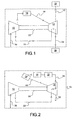
  • Fig. 1 is a diagrammatical view of an exemplary gas turbine engine having a turbine and a compressor in accordance with one aspect of the present technique;
  • Fig. 2 is a similar diagrammatical view of an exemplary gas turbine engine assembly incorporating a combustor in accordance with another aspect of the present technique, illustrating the preheated coolant fluid stream used as the working fluid stream after channeling through the combustor;
  • Fig. 3 is a diagrammatical view of an exemplary gas turbine engine incorporating different compressors for the working fluid stream and the coolant fluid stream in accordance with yet another aspect of the present technique;
  • Fig. 4 is diagrammatical view of an exemplary gas turbine engine illustrating mixing of the coolant fluid stream and the working fluid stream downstream of the turbine; and
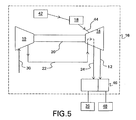
  • Fig. 5 is a diagrammatical view of an exemplary gas turbine engine illustrating thermal exchange of the working fluid stream and the coolant fluid stream in a heat exchanger downstream of the turbine.
  • A gas turbine engine is an energy conversion device used to generate power from aero-thermodynamic expansion of a hot pressurized working fluid. A typical gas turbine includes a compressor for compressing a fluid for combustion which is suitably mixed with a fuel and ignited accordingly to generate combustion gas in a combustor disposed in flow communication with a turbine which extracts energy by aero-thermodynamic expansion of the hot pressurized combustion gas producing output power thereby, such as by driving an electrical generator.
    Accordingly, in an exemplary embodiment of the present technique illustrated in Fig. 1, a gas turbine engine comprises a compressor 10, which receives an inlet fluid stream 30. The inlet fluid stream 30 is compressed typically in various stages in the compressor 10. A portion of the compressed fluid stream is channeled to discharge the compressed coolant fluid stream 22 to the turbine 14 in fluid communication with the compressor 10. Accordingly, balance portion of the compressed coolant fluid stream 22 is channeled to a source 18 of working fluid stream 44, typically a combustor. The turbine 14 receives the working fluid stream 44 from the combustor 18, which is in fluid communication with the turbine 14.
    In accordance with the present technique, the compressed coolant fluid stream 22 undergoes thermal exchange with turbine components, for example the rotor, casing, shrouds and nozzles internal to the turbine 14, while passing through different coolant circuits within the turbine 14. The working fluid stream 44 undergoes thermodynamic expansion, in the turbine 14 to extract energy therefrom. A portion of the extracted energy is utilized to drive the compressor 10 coupled to the turbine 14 through a drive shaft 20.
    As further illustrated in Fig. 1, the coolant fluid stream 22 and the working fluid stream 44 are fluidly isolated from each other within the turbine 14. The isolation of the fluid streams affords several advantages, including maintaining temperature of the working fluid stream at the turbine entry, within a desired range of, for example, between about 900 °C to about 1200 °C. Moreover, maintaining temperature of the working fluid stream 44 at the turbine 14 entry helps in optimizing pressure ratio of entry and exit pressure of the working fluid stream 44 within the turbine 14. Accordingly, optimizing pressure ratio between entry and exit pressure of the working fluid stream 44 within the turbine 14 helps maintain overall thermodynamic efficiency of the gas turbine engine, within a desired range.
    Moreover, in accordance with one aspect of the present technique, a portion of the coolant fluid stream 22 which is preheated by passing through different coolant circuits inside the turbine 14, is channeled downstream of the turbine 14, to supply at least one preheated process fluid stream 24 to an adjacent system for example a system 26 downstream of the turbine 14, as depicted in Fig. 1. Concurrently, as further illustrated in Fig. 1, the working fluid stream 44 after exiting the turbine 14 may be utilized as another process fluid stream 12 to another system 28 downstream of the turbine 14. Accordingly, the present technique provides operating the turbine at a desired efficiency level with an integrated means to recuperate the working fluid stream while utilizing at least a portion of the preheated coolant fluid stream as the process fluid stream 24 to the system 26 typically outside a control volume 16 of the gas turbine engine.
    In one embodiment, shown in Fig. 1 and Fig.3 through Fig.5, the process 26, 28 downstream of the turbine 14 is a separate system outside the control volume 16 of the gas turbine engine which ideally do not influence operating conditions of the gas turbine engine. However, as will be appreciated by those skilled in the art, under certain circumstances, the system outside the control volume 16 of the gas turbine engine may influence the operating conditions of the gas turbine engine, such as due to back pressure for example.
    In other embodiment, illustrated in Fig. 2, the coolant fluid stream 22 cools the turbine 14 after passing through the coolant circuits of the turbine 14, without fluidly communicating with the working fluid stream 44. Accordingly, as further illustrated in Fig. 2 the coolant fluid stream 22 is delivered as the preheated process fluid stream 24 to the source 18 of the working fluid stream 44, typically a combustor. Consequently, the source 18 is configured to deliver the working fluid stream 44 to the turbine 14 undergoing typical thermodynamic expansion to extract energy therefrom and the working fluid stream 44 is exhausted from the turbine 14 thereafter. The preheated process fluid stream 24 being delivered to the combustor 18 via a compressor 32 (if desired) and a heat exchanger 34 (if desired). Therefore, in accordance with the aspect of the present technique depicted in Fig. 2, the preheated process fluid stream 24 is used as the working fluid stream 44 after channeling through the combustor 18.
    In another embodiment shown in Fig. 3, the compressor 10 is used to supply the coolant fluid stream 22 to the turbine 14, while a separate compressor 36 is used to supply the fluid for combustion to the source 18 of the working fluid stream. The coolant fluid, may include, without limitation, air, superheated steam, and a mixture thereof. The compressors 10, 36 comprise at least one of a single stage compressor or a multi stage compressor. In one embodiment, the source 18 of the working fluid 44 comprises a combustor. The combustor may include, without limitation, an annular combustor, a tubular combustor, a silo combustor and a combination thereof. In other embodiment, the source 18 of the working fluid comprises a fuel cell. The fuel cells may include without limitation solid oxide fuel cells, and molten carbonate fuel cells..
    In another embodiment shown in Fig. 4, another system 42, upstream of the source 18 of the working fluid, delivers fluid for combustion to the source 18 of working fluid, typically a combustor. In one embodiment, at least a portion of the working fluid stream 44 mixes with at least a portion of the coolant fluid stream 22 downstream of the turbine 14 to supply the preheated process fluid stream 12, 24 to the system 26 typically outside the control volume 16 of the gas turbine engine. In other embodiment, shown in Fig. 5, the working fluid stream 44 and the coolant fluid stream 22 enters into a heat exchanger 46 downstream of the turbine 14 to undergo thermal exchange and supply a preheated process fluid stream 12, 24 to the system 26, 48 typically outside the control volume 16 of the gas turbine engine.
    A method embodiment in accordance with present technique for generating power from a gas turbine engine comprises compressing a coolant fluid stream in a compressor 10, transferring the compressed coolant fluid stream 22 from the compressor 10 to a turbine 14, transferring heat between the coolant fluid stream 22 and the turbine components, (not shown), for example rotor, casing, shroud, and nozzle, which are in thermal contact with the working fluid stream 44 and receiving a working fluid stream 44 to the turbine 14 from a source 18 of the working fluid stream 44 in fluid communication with the turbine 14. The working fluid stream 44 being fluidly isolated from either a portion or entire of the coolant fluid stream 22, is expanded thermodynamically in the turbine 14 to extract energy therefrom.
    Again, isolating coolant fluid stream 22 and the working fluid stream 44 within the turbine 14 is desirable for aero-thermodynamic reasons such as maintaining temperature of the working fluid stream 44 at the turbine entry, within a desired range for example between about 900 °C to about 1200 °C. Maintaining temperature of the working fluid stream 44 at the turbine 14 entry helps in optimizing pressure ratio of entry and exit pressure of the working fluid stream 44 within the turbine 14. Optimizing pressure ratio between entry and exit pressure of the working fluid stream 44 in the turbine 14, helps maintaining overall thermodynamic efficiency of the gas turbine engine, within a desired range.
    It should be noted that in the embodiments discussed above, a portion of the extracted energy from the working fluid stream 44 is utilized for driving the compressor 10. Moreover, in accordance with aspects of the present technique, heat may be transferred between the working fluid stream 44 and the coolant fluid stream 22 downstream of the turbine 14 undergoing thermal exchange therein, to supply a preheated process fluid stream 12, 24 to an adjacent system for example a system 26 downstream of the turbine 14, as depicted in Fig. 1. In one embodiment shown in Fig.2, the system may include a combustor 18 for the turbine 14, receiving the preheated process fluid stream 24 via a compressor 32 (if desired) and a heat exchanger 34 (if desired). Therefore, in accordance with this aspect of the method embodiment depicted in Fig. 2, the preheated process fluid stream 24 is used as working fluid stream 44 after channeling through the combustor 18.
    In another method embodiment shown in Fig.4, transferring heat between the working fluid stream 44 and the coolant fluid stream 22 downstream of the turbine 14 comprises mixing of the working fluid stream 44 and the coolant fluid stream 22 downstream of the turbine 14 for delivering the preheated process fluid stream 12, 24 to the system 26 typically outside a control volume 16 of the gas turbine engine.
    In other embodiment shown in Fig.5, transferring heat between the working fluid stream 22 and the coolant fluid stream 44 downstream of turbine 14 comprises thermal exchange between the working fluid stream 44 and the coolant fluid stream 22 in a heat exchanger 46 downstream of the turbine 14 for supplying the preheated process fluid stream 12, 24 to the system 26, 48 typically outside the control volume 16 of the gas turbine engine.
    As will be appreciated by those skilled in the art, the present technique thus provides for operating a turbine at a desired efficiency level with integrated recuperation of the working fluid stream, while utilizing at least a portion of a preheated coolant fluid stream as the process fluid stream 12, 24 to another process outside the control volume 16 of the gas turbine engine. The technique also facilitates providing of the coolant fluid stream by utilizing energy produced by the turbine itself to drive a compressor that supplies the coolant fluid stream.
    For completeness, various aspects of the invention are set out in the following numbered clauses:
  • 1. A gas turbine engine comprising:
  • a compressor [10] having an inlet and an outlet, the compressor [10] being configured to receive a coolant fluid stream [30], to compress the coolant fluid stream [22] and to discharge the compressed coolant fluid stream [22];
  • a turbine [14] in fluid communication with the compressor [10] for receiving the compressed coolant fluid stream [22] from the compressor [10] outlet, the compressed coolant fluid stream [22] undergoing thermal exchange with the turbine [14] and exiting the turbine [14] thereafter; and
  • a source [18] of a working fluid stream [44] in fluid communication with the turbine [14], the working fluid stream [44] being fluidly isolated from at least a portion of the coolant fluid stream [22], undergoing thermodynamic expansion through the turbine [14] to extract energy therefrom and exiting the turbine [14] thereafter, a portion of the extracted energy being utilized to drive the compressor [10].
  • 2. The gas turbine engine of clause 1, wherein at least a portion of the coolant fluid stream [22] being preheated in the turbine 14 is channeled downstream of the turbine [14] to supply a preheated process fluid stream [24] to an adjacent system [26].
  • 3. The gas turbine engine of clause 2, wherein at least a portion of the working fluid stream [44] mixes with at least a portion of the coolant fluid stream [22] downstream of the turbine [14] to supply the preheated process fluid stream [24, 12] to the system [26] outside a control volume [16] of the gas turbine engine.
  • 4. The gas turbine engine of clause 2, wherein the system includes a combustor [18] for the turbine [14].
  • 5. The gas turbine engine of clause 4, wherein the system further includes another compressor [32] and a heat exchanger [34].
  • 6. The gas turbine engine of clause 1, wherein the working fluid stream [44] and the coolant fluid stream [22] enter into a heat exchanger [46] downstream of the turbine [14] to undergo thermal exchange and supply a preheated process fluid stream [24, 12] to the system [26, 48] outside a control volume [16] of the gas turbine engine.
  • 7. The gas turbine engine of clause 1, wherein the compressor [10, 32, 36] is selected from the group consisting of a centrifugal compressor, an axial flow compressor, and a combination of centrifugal and axial flow compressor.
  • 8. The gas turbine engine of clause 7, wherein the compressor [10, 32, 36] comprises at least one of a single stage compressor or a multi stage compressor.
  • 9. The gas turbine engine of clause 1, wherein the source [18] of a working fluid [44] comprises at least one of a combustor and a fuel cell.
  • 10. The gas turbine engine of clause 9, wherein the combustor is selected from the group consisting of an annular combustor, a tubular combustor a silo combustor and a combination thereof.
  • 11. The gas turbine engine of clause 9, wherein the fuel cell comprises at least one of a solid oxide fuel cell or a molten carbonate fuel cell.
  • 12. The gas turbine engine of clause 1, wherein the coolant fluid stream [22] is selected from the group consisting of air, superheated steam, and a mixture thereof.
  • 13. A gas turbine engine comprising:
  • a compressor [10] having an inlet and outlet, the compressor [10] being configured to receive a coolant fluid stream [30], to compress the coolant fluid stream and to discharge the compressed coolant fluid stream [22];
  • a turbine [14] in fluid communication with the compressor [10] for receiving the compressed coolant fluid stream [22] from the compressor [10] outlet, the compressed coolant fluid stream [22] undergoing thermal exchange within the turbine [14] and exiting the turbine [14] thereafter; and
  • a source of a working fluid stream [44] in fluid communication with the turbine [14], the working fluid stream [44] being fluidly isolated from a portion of the coolant fluid stream [22] and undergoing thermodynamic expansion through the turbine [14] to extract energy therefrom;
  •    wherein at least a portion of the coolant fluid stream [22] being preheated in the turbine 14 is channeled downstream of the turbine [14] to supply a preheated process fluid stream [24] to an adjacent system [26].
  • 14. The gas turbine engine of clause 13, wherein the working fluid stream [44] and the coolant fluid stream [22] undergoing thermal exchange in a heat exchanger [46] downstream of the turbine [14] to supply a preheated process fluid stream to the system outside the control volume of the gas turbine engine.
  • 15. The gas turbine engine of clause 13, wherein a portion of the energy extracted from the thermodynamic expansion of the working fluid stream [44] being utilized to drive the compressor [10].
  • 16. The gas turbine engine of clause 13, wherein at least a portion of the coolant fluid stream [22] is channeled downstream of the turbine [14] and mixed with the working fluid stream [44] to supply the preheated process fluid stream [24] to the system [26] outside the control volume [16] of the gas turbine engine.
  • 17. A method for power generation of gas turbine engine comprising:
  • compressing a coolant fluid stream [30] in a compressor [10];
  • transferring the compressed coolant fluid stream [22] from the compressor [10] to a turbine [14], the turbine [14] being in fluid communication with the compressor [10];
  • transferring heat between the coolant fluid stream [22] and the turbine [14], the coolant fluid stream [22] exiting the turbine [14] thereafter;
  • receiving a working fluid stream [44] to the turbine [14] from a source [18] of a working fluid stream [44] in fluid communication with the turbine [14], the working fluid stream [44] being fluidly isolated from a portion of the coolant fluid stream [22]; and
  • expanding thermodynamically the working fluid stream [44] extracting energy therefrom, the working fluid stream [44] exiting the turbine [14] thereafter, a portion of the extracted energy driving the compressor [10].
  • 18. The method of clause 17, further comprising:
  • transferring heat between the working fluid stream [44] and the coolant fluid stream [22] downstream of the turbine [14];
  • supplying a preheated process fluid stream [24] to an adjacent system [26].
  • 19. The method of clause 18, wherein supplying the preheated process fluid stream [24] comprises channeling at least a portion of the coolant fluid stream [22] downstream of the turbine [14] for delivering the preheated coolant fluid stream [24] to the system [26] downstream of the turbine [14].
  • 20. The method of clause 18, wherein transferring heat between the working fluid stream [44] and the coolant fluid stream downstream of turbine [14] comprises mixing of the working fluid stream [44] and the coolant fluid stream [22] downstream of the turbine [14] for delivering the preheated process fluid stream [24] to the system [26] outside a control volume [16] of the gas turbine engine.
  • 21. The method of clause 18, wherein transferring heat between the working fluid stream [44] and the coolant fluid stream [22] downstream of turbine [14] comprises thermal exchanging of the working fluid stream [44] and the coolant fluid stream [22] in a heat exchanger [46] downstream of the turbine [14] for delivering the preheated process fluid stream [24, 12] to the system [26, 48] outside a control volume [16] of the gas turbine engine.
  • 22. The method of clause 18, wherein the system includes a combustor [18] for the turbine [14].
  • 23. The method of clause 18, wherein the system [18] further includes another compressor [32] and a heat exchanger [34]..
  • Claims (10)

    1. A gas turbine engine comprising:
      a compressor [10] having an inlet and an outlet, the compressor [10] being configured to receive a coolant fluid stream [30], to compress the coolant fluid stream [22] and to discharge the compressed coolant fluid stream [22];
      a turbine [14] in fluid communication with the compressor [10] for receiving the compressed coolant fluid stream [22] from the compressor [10] outlet, the compressed coolant fluid stream [22] undergoing thermal exchange with the turbine [14] and exiting the turbine [14] thereafter; and
      a source [18] of a working fluid stream [44] in fluid communication with the turbine [14], the working fluid stream [44] being fluidly isolated from at least a portion of the coolant fluid stream [22], undergoing thermodynamic expansion through the turbine [14] to extract energy therefrom and exiting the turbine [14] thereafter, a portion of the extracted energy being utilized to drive the compressor [10].
    2. The gas turbine engine of claim 1, wherein at least a portion of the coolant fluid stream [22] being preheated in the turbine 14 is channeled downstream of the turbine [14] to supply a preheated process fluid stream [24] to an adjacent system [26].
    3. The gas turbine engine of claim 2, wherein at least a portion of the working fluid stream [44] mixes with at least a portion of the coolant fluid stream [22] downstream of the turbine [14] to supply the preheated process fluid stream [24, 12] to the system [26] outside a control volume [16] of the gas turbine engine.
    4. The gas turbine engine of claim 1, wherein the working fluid stream [44] and the coolant fluid stream [22] enter into a heat exchanger [46] downstream of the turbine [14] to undergo thermal exchange and supply a preheated process fluid stream [24, 12] to the system [26, 48] outside a control volume [16] of the gas turbine engine.
    5. A gas turbine engine comprising:
      a compressor [10] having an inlet and outlet, the compressor [10] being configured to receive a coolant fluid stream [30], to compress the coolant fluid stream and to discharge the compressed coolant fluid stream [22];
      a turbine [14] in fluid communication with the compressor [10] for receiving the compressed coolant fluid stream [22] from the compressor [10] outlet, the compressed coolant fluid stream [22] undergoing thermal exchange within the turbine [14] and exiting the turbine [14] thereafter; and
      a source of a working fluid stream [44] in fluid communication with the turbine [14], the working fluid stream [44] being fluidly isolated from a portion of the coolant fluid stream [22] and undergoing thermodynamic expansion through the turbine [14] to extract energy therefrom;
         wherein at least a portion of the coolant fluid stream [22] being preheated in the turbine 14 is channeled downstream of the turbine [14] to supply a preheated process fluid stream [24] to an adjacent system [26].
    6. The gas turbine engine of claim 5, wherein the working fluid stream [44] and the coolant fluid stream [22] undergoing thermal exchange in a heat exchanger [46] downstream of the turbine [14] to supply a preheated process fluid stream to the system outside the control volume of the gas turbine engine.
    7. The gas turbine engine of claim 5, wherein a portion of the energy extracted from the thermodynamic expansion of the working fluid stream [44] being utilized to drive the compressor [10].
    8. The gas turbine engine of claim 5, wherein at least a portion of the coolant fluid stream [22] is channeled downstream of the turbine [14] and mixed with the working fluid stream [44] to supply the preheated process fluid stream [24] to the system [26] outside the control volume [16] of the gas turbine engine.
    9. A method for power generation of gas turbine engine comprising:
      compressing a coolant fluid stream [30] in a compressor [10];
      transferring the compressed coolant fluid stream [22] from the compressor [10] to a turbine [14], the turbine [14] being in fluid communication with the compressor [10];
      transferring heat between the coolant fluid stream [22] and the turbine [14], the coolant fluid stream [22] exiting the turbine [14] thereafter;
      receiving a working fluid stream [44] to the turbine [14] from a source [18] of a working fluid stream [44] in fluid communication with the turbine [14], the working fluid stream [44] being fluidly isolated from a portion of the coolant fluid stream [22]; and
      expanding thermodynamically the working fluid stream [44] extracting energy therefrom, the working fluid stream [44] exiting the turbine [14] thereafter, a portion of the extracted energy driving the compressor [10].
    10. The method of claim 9, further comprising:
      transferring heat between the working fluid stream [44] and the coolant fluid stream [22] downstream of the turbine [14];
      supplying a preheated process fluid stream [24] to an adjacent system [26].
    EP03258128.2A 2002-12-31 2003-12-22 Turbo recuperator device Expired - Lifetime EP1435433B1 (en)

    Applications Claiming Priority (2)

    Application Number Priority Date Filing Date Title
    US10/331,342 US6978621B2 (en) 2002-12-31 2002-12-31 Turbo recuperator device
    US331342 2002-12-31

    Publications (3)

    Publication Number Publication Date
    EP1435433A2 true EP1435433A2 (en) 2004-07-07
    EP1435433A3 EP1435433A3 (en) 2006-10-04
    EP1435433B1 EP1435433B1 (en) 2014-10-01

    Family

    ID=32507357

    Family Applications (1)

    Application Number Title Priority Date Filing Date
    EP03258128.2A Expired - Lifetime EP1435433B1 (en) 2002-12-31 2003-12-22 Turbo recuperator device

    Country Status (4)

    Country Link
    US (1) US6978621B2 (en)
    EP (1) EP1435433B1 (en)
    AU (1) AU2003266435B8 (en)
    CA (1) CA2453634C (en)

    Families Citing this family (11)

    * Cited by examiner, † Cited by third party
    Publication number Priority date Publication date Assignee Title
    US7093446B2 (en) * 2004-09-15 2006-08-22 General Electric Company Gas turbine engine having improved core system
    US7096674B2 (en) * 2004-09-15 2006-08-29 General Electric Company High thrust gas turbine engine with improved core system
    US8015826B2 (en) * 2007-04-05 2011-09-13 Siemens Energy, Inc. Engine brake for part load CO reduction
    US8033116B2 (en) * 2008-05-06 2011-10-11 General Electric Company Turbomachine and a method for enhancing power efficiency in a turbomachine
    US7818969B1 (en) 2009-12-18 2010-10-26 Energyield, Llc Enhanced efficiency turbine
    US8820091B2 (en) * 2012-11-07 2014-09-02 Siemens Aktiengesellschaft External cooling fluid injection system in a gas turbine engine
    US9976448B2 (en) 2015-05-29 2018-05-22 General Electric Company Regenerative thermodynamic power generation cycle systems, and methods for operating thereof
    CN114754024A (en) * 2021-01-12 2022-07-15 海德韦尔(太仓)能源科技有限公司 Compressor, air compressor comprising compressor and fuel cell device
    CN112796886B (en) * 2021-01-29 2023-03-31 哈尔滨工业大学 Reheating type combined cycle system of fuel cell chemical backheating gas turbine
    US12253033B2 (en) 2022-10-04 2025-03-18 General Electric Company Hydrogen fuel leak detection system for a vehicle
    US12540559B2 (en) * 2023-02-09 2026-02-03 Flibe Energy, Inc. sCO2 power conversion system

    Family Cites Families (11)

    * Cited by examiner, † Cited by third party
    Publication number Priority date Publication date Assignee Title
    NL8901348A (en) * 1989-05-29 1990-12-17 Turboconsult Bv METHOD AND APPARATUS FOR GENERATING ELECTRICAL ENERGY
    US5948221A (en) * 1994-08-08 1999-09-07 Ztek Corporation Pressurized, integrated electrochemical converter energy system
    US6105362A (en) * 1995-09-22 2000-08-22 Kabushiki Kaisha Toshiba Combined cycle power plant with gas turbine cooling system
    US5611197A (en) 1995-10-23 1997-03-18 General Electric Company Closed-circuit air cooled turbine
    US6098395A (en) * 1996-04-04 2000-08-08 Siemens Westinghouse Power Corporation Closed-loop air cooling system for a turbine engine
    US5782076A (en) * 1996-05-17 1998-07-21 Westinghouse Electric Corporation Closed loop air cooling system for combustion turbines
    GB2346177B (en) * 1999-02-01 2003-03-19 Alstom Gas Turbines Ltd Gas turbine engine
    US6295803B1 (en) * 1999-10-28 2001-10-02 Siemens Westinghouse Power Corporation Gas turbine cooling system
    US6691519B2 (en) * 2000-02-18 2004-02-17 Siemens Westinghouse Power Corporation Adaptable modular gas turbine power plant
    JP3593488B2 (en) * 2000-02-25 2004-11-24 株式会社日立製作所 gas turbine
    DE10027833A1 (en) * 2000-06-05 2001-12-13 Alstom Power Nv Method for cooling a gas turbine system and gas turbine system for carrying out the method

    Also Published As

    Publication number Publication date
    EP1435433B1 (en) 2014-10-01
    AU2003266435B2 (en) 2009-05-28
    US20040123602A1 (en) 2004-07-01
    US6978621B2 (en) 2005-12-27
    CA2453634A1 (en) 2004-06-30
    EP1435433A3 (en) 2006-10-04
    CA2453634C (en) 2013-02-12
    AU2003266435A1 (en) 2004-07-15
    AU2003266435B8 (en) 2009-06-04

    Similar Documents

    Publication Publication Date Title
    EP1033484B1 (en) Gas turbine cooling system
    US20040088995A1 (en) Method for cooling a gas turbine and gas turbine installation
    CN106715840B (en) Power generation system and method for generating power
    US6389793B1 (en) Combustion turbine cooling media supply system and related method
    US5611197A (en) Closed-circuit air cooled turbine
    US5640840A (en) Recuperative steam cooled gas turbine method and apparatus
    EP0656468A1 (en) Gas turbine vane cooling system
    US20110162386A1 (en) Ejector-OBB Scheme for a Gas Turbine
    EP2426314A2 (en) System and method of cooling turbine airfoils with carbon dioxide
    JPH0396628A (en) Cooling gas turbine engine by steam
    EP3845742B1 (en) Systems and methods for operating a turbocharged gas turbine engine
    EP4517067A1 (en) Partial exhaust condensation intercooling
    EP3683421B1 (en) Work recovery system for a gas turbine engine utilizing a recuperated supercritical co2 cycle driven by cooling air waste heat
    EP1435433B1 (en) Turbo recuperator device
    JPH11200807A (en) Refrigerant recovery type gas turbine and its stationary blade
    EP2570592A2 (en) Method and apparatus for controlling temperature of gas turbine components
    JP2001107748A (en) Gas turbine plant
    CN107429613B (en) Turbine Cooling Blades for Gas Turbine Engines
    US5873233A (en) Method of operating a gas-turbine group
    JPH0988518A (en) Combined power plant

    Legal Events

    Date Code Title Description
    PUAI Public reference made under article 153(3) epc to a published international application that has entered the european phase

    Free format text: ORIGINAL CODE: 0009012

    AK Designated contracting states

    Kind code of ref document: A2

    Designated state(s): AT BE BG CH CY CZ DE DK EE ES FI FR GB GR HU IE IT LI LU MC NL PT RO SE SI SK TR

    AX Request for extension of the european patent

    Extension state: AL LT LV MK

    PUAL Search report despatched

    Free format text: ORIGINAL CODE: 0009013

    AK Designated contracting states

    Kind code of ref document: A3

    Designated state(s): AT BE BG CH CY CZ DE DK EE ES FI FR GB GR HU IE IT LI LU MC NL PT RO SE SI SK TR

    AX Request for extension of the european patent

    Extension state: AL LT LV MK

    17P Request for examination filed

    Effective date: 20070404

    AKX Designation fees paid

    Designated state(s): DE FR GB

    17Q First examination report despatched

    Effective date: 20070627

    REG Reference to a national code

    Ref country code: DE

    Ref legal event code: R079

    Ref document number: 60346815

    Country of ref document: DE

    Free format text: PREVIOUS MAIN CLASS: F01D0013020000

    Ipc: F02C0007180000

    RIC1 Information provided on ipc code assigned before grant

    Ipc: F02C 7/12 20060101ALI20140303BHEP

    Ipc: F01D 13/02 20060101ALI20140303BHEP

    Ipc: F02C 3/04 20060101ALI20140303BHEP

    Ipc: F02C 7/18 20060101AFI20140303BHEP

    Ipc: F02C 6/08 20060101ALI20140303BHEP

    Ipc: F02C 6/18 20060101ALI20140303BHEP

    GRAP Despatch of communication of intention to grant a patent

    Free format text: ORIGINAL CODE: EPIDOSNIGR1

    INTG Intention to grant announced

    Effective date: 20140428

    GRAS Grant fee paid

    Free format text: ORIGINAL CODE: EPIDOSNIGR3

    GRAA (expected) grant

    Free format text: ORIGINAL CODE: 0009210

    AK Designated contracting states

    Kind code of ref document: B1

    Designated state(s): DE FR GB

    REG Reference to a national code

    Ref country code: GB

    Ref legal event code: FG4D

    REG Reference to a national code

    Ref country code: DE

    Ref legal event code: R096

    Ref document number: 60346815

    Country of ref document: DE

    Effective date: 20141113

    REG Reference to a national code

    Ref country code: DE

    Ref legal event code: R097

    Ref document number: 60346815

    Country of ref document: DE

    PLBE No opposition filed within time limit

    Free format text: ORIGINAL CODE: 0009261

    STAA Information on the status of an ep patent application or granted ep patent

    Free format text: STATUS: NO OPPOSITION FILED WITHIN TIME LIMIT

    26N No opposition filed

    Effective date: 20150702

    REG Reference to a national code

    Ref country code: FR

    Ref legal event code: PLFP

    Year of fee payment: 13

    PGFP Annual fee paid to national office [announced via postgrant information from national office to epo]

    Ref country code: GB

    Payment date: 20151229

    Year of fee payment: 13

    PGFP Annual fee paid to national office [announced via postgrant information from national office to epo]

    Ref country code: FR

    Payment date: 20151217

    Year of fee payment: 13

    PGFP Annual fee paid to national office [announced via postgrant information from national office to epo]

    Ref country code: DE

    Payment date: 20151229

    Year of fee payment: 13

    REG Reference to a national code

    Ref country code: DE

    Ref legal event code: R119

    Ref document number: 60346815

    Country of ref document: DE

    GBPC Gb: european patent ceased through non-payment of renewal fee

    Effective date: 20161222

    REG Reference to a national code

    Ref country code: FR

    Ref legal event code: ST

    Effective date: 20170831

    PG25 Lapsed in a contracting state [announced via postgrant information from national office to epo]

    Ref country code: FR

    Free format text: LAPSE BECAUSE OF NON-PAYMENT OF DUE FEES

    Effective date: 20170102

    PG25 Lapsed in a contracting state [announced via postgrant information from national office to epo]

    Ref country code: GB

    Free format text: LAPSE BECAUSE OF NON-PAYMENT OF DUE FEES

    Effective date: 20161222

    Ref country code: DE

    Free format text: LAPSE BECAUSE OF NON-PAYMENT OF DUE FEES

    Effective date: 20170701