EP1434167A1 - Noncontact type IC card with voltage level detector - Google Patents
Noncontact type IC card with voltage level detector Download PDFInfo
- Publication number
- EP1434167A1 EP1434167A1 EP03020890A EP03020890A EP1434167A1 EP 1434167 A1 EP1434167 A1 EP 1434167A1 EP 03020890 A EP03020890 A EP 03020890A EP 03020890 A EP03020890 A EP 03020890A EP 1434167 A1 EP1434167 A1 EP 1434167A1
- Authority
- EP
- European Patent Office
- Prior art keywords
- section
- data
- voltage level
- card
- checking
- Prior art date
- Legal status (The legal status is an assumption and is not a legal conclusion. Google has not performed a legal analysis and makes no representation as to the accuracy of the status listed.)
- Granted
Links
Images


Classifications
-
- G—PHYSICS
- G06—COMPUTING OR CALCULATING; COUNTING
- G06K—GRAPHICAL DATA READING; PRESENTATION OF DATA; RECORD CARRIERS; HANDLING RECORD CARRIERS
- G06K17/00—Methods or arrangements for effecting co-operative working between equipments covered by two or more of main groups G06K1/00 - G06K15/00, e.g. automatic card files incorporating conveying and reading operations
-
- G—PHYSICS
- G06—COMPUTING OR CALCULATING; COUNTING
- G06K—GRAPHICAL DATA READING; PRESENTATION OF DATA; RECORD CARRIERS; HANDLING RECORD CARRIERS
- G06K19/00—Record carriers for use with machines and with at least a part designed to carry digital markings
- G06K19/06—Record carriers for use with machines and with at least a part designed to carry digital markings characterised by the kind of the digital marking, e.g. shape, nature, code
- G06K19/067—Record carriers with conductive marks, printed circuits or semiconductor circuit elements, e.g. credit or identity cards also with resonating or responding marks without active components
- G06K19/07—Record carriers with conductive marks, printed circuits or semiconductor circuit elements, e.g. credit or identity cards also with resonating or responding marks without active components with integrated circuit chips
- G06K19/0701—Record carriers with conductive marks, printed circuits or semiconductor circuit elements, e.g. credit or identity cards also with resonating or responding marks without active components with integrated circuit chips at least one of the integrated circuit chips comprising an arrangement for power management
- G06K19/0712—Record carriers with conductive marks, printed circuits or semiconductor circuit elements, e.g. credit or identity cards also with resonating or responding marks without active components with integrated circuit chips at least one of the integrated circuit chips comprising an arrangement for power management the arrangement being capable of triggering distinct operating modes or functions dependent on the strength of an energy or interrogation field in the proximity of the record carrier
-
- G—PHYSICS
- G06—COMPUTING OR CALCULATING; COUNTING
- G06K—GRAPHICAL DATA READING; PRESENTATION OF DATA; RECORD CARRIERS; HANDLING RECORD CARRIERS
- G06K19/00—Record carriers for use with machines and with at least a part designed to carry digital markings
- G06K19/06—Record carriers for use with machines and with at least a part designed to carry digital markings characterised by the kind of the digital marking, e.g. shape, nature, code
- G06K19/067—Record carriers with conductive marks, printed circuits or semiconductor circuit elements, e.g. credit or identity cards also with resonating or responding marks without active components
- G06K19/07—Record carriers with conductive marks, printed circuits or semiconductor circuit elements, e.g. credit or identity cards also with resonating or responding marks without active components with integrated circuit chips
- G06K19/0701—Record carriers with conductive marks, printed circuits or semiconductor circuit elements, e.g. credit or identity cards also with resonating or responding marks without active components with integrated circuit chips at least one of the integrated circuit chips comprising an arrangement for power management
- G06K19/0707—Record carriers with conductive marks, printed circuits or semiconductor circuit elements, e.g. credit or identity cards also with resonating or responding marks without active components with integrated circuit chips at least one of the integrated circuit chips comprising an arrangement for power management the arrangement being capable of collecting energy from external energy sources, e.g. thermocouples, vibration, electromagnetic radiation
-
- G—PHYSICS
- G06—COMPUTING OR CALCULATING; COUNTING
- G06K—GRAPHICAL DATA READING; PRESENTATION OF DATA; RECORD CARRIERS; HANDLING RECORD CARRIERS
- G06K19/00—Record carriers for use with machines and with at least a part designed to carry digital markings
- G06K19/06—Record carriers for use with machines and with at least a part designed to carry digital markings characterised by the kind of the digital marking, e.g. shape, nature, code
- G06K19/067—Record carriers with conductive marks, printed circuits or semiconductor circuit elements, e.g. credit or identity cards also with resonating or responding marks without active components
- G06K19/07—Record carriers with conductive marks, printed circuits or semiconductor circuit elements, e.g. credit or identity cards also with resonating or responding marks without active components with integrated circuit chips
- G06K19/0723—Record carriers with conductive marks, printed circuits or semiconductor circuit elements, e.g. credit or identity cards also with resonating or responding marks without active components with integrated circuit chips the record carrier comprising an arrangement for non-contact communication, e.g. wireless communication circuits on transponder cards, non-contact smart cards or RFIDs
Definitions
- This invention relates to a noncontact type batteryless IC card which can be used as, for example, a personal identification medium of an entry and exit management device, a resident register card and the like, which performs by receiving a power wave transmitted from a card reader-writer and generating an operating voltage from the received power wave, and which allows data to be written in or read from a rewritable nonvolatile memory by making radio communications with the card reader-writer, and also relates to a system of the noncontact type IC card.
- a noncontact type IC card called a radio card has been used as a personal identification medium of an entry and exit management device.
- the noncontact type IC card storing personal physical characteristic information and the like is distributed to a visitor.
- the card collates the physical characteristic information by making radio communications with a card reader-writer installed at a room entrance and controls opening and closing of an entrance door.
- Such a noncontact type IC card called a radio card is typically in a batteryless type for the purpose of reduction of the battery exchange operation, downsizing, decrease in manufacturing costs, extension of life and the like.
- a recent noncontact type IC card is operated to receive a power wave transmitted from the card reader-writer, generate an operating voltage from the received power wave and supply the operating voltage to each section.
- the object of the present invention is to provide a noncontact IC card wherein if the level of the generated operating voltage is unstable, normal data writing can be always implemented by waiting for data writing to a memory.
- a noncontact type IC card is configured to receive a power wave sent from an external device to generate an operating voltage and perform writing of data to a memory with the generated operating voltage.
- the IC card comprises a voltage detecting section which detects a voltage level of the operating voltage generated from the power wave received from the external device, a write executing section which executes the writing of the data to the memory if the voltage level detected by the voltage detecting section is a level at which normal writing to the memory can be performed; and a control section which detects by the voltage detecting section the voltage level of the operating voltage obtained after the writing of the data to the memory executed by the write executing section is terminated, and which executes again the writing of the data to the memory if the detected voltage level of the operating voltage is not a predetermined voltage level.
- a noncontact type IC card of the present invention is configured to receive a power wave sent from an external device to generate an operating voltage and perform writing of data to a memory with the generated operating voltage.
- the IC card comprises a voltage detecting section which detects a voltage level of the operating voltage generated from the power wave received from the external device, a first checking section which detects the voltage level of the operating voltage by the voltage detecting section and checks whether or not the detected voltage level of the operating voltage is a predetermined voltage level, when the writing of the data to the memory is started, a write executing section which executes the writing of the data to the memory if the first checking section determines that the detected voltage level of the operating voltage is the predetermined voltage level, a second checking section which detects the voltage level of the operating voltage obtained after the writing of the data to the memory is terminated, by the voltage detecting section, and which checks whether or not the detected voltage level is a predetermined voltage level, and a control section which executes again processings of the first checking section, the write executing section and the second
- a noncontact type IC card of the present invention comprises a rewritable nonvolatile memory, an antenna which transmits data to an external device or receives the data therefrom, a power generating section which receives a power wave transmitted from the external device, via the antenna, and generates an operating voltage with the received power wave, a voltage detecting section which detects a voltage level of the operating voltage generated by the power generating section, a first checking section which detects by the voltage detecting section the voltage level of the operating voltage generated by the power generating section and checks whether or not the detected voltage level of the operating voltage is a predetermined voltage level, when a write command of the data from the external device to the nonvolatile memory is received via the antenna, a write executing section which executes the writing of the data to the nonvolatile memory if the first checking section determines that the detected voltage level of the operating voltage is the predetermined voltage level, a second checking section which detects the voltage level of the operating voltage obtained after the writing of the data to the nonvolatile
- a noncontact type IC card system of the present invention comprises an external device which requests writing of data, and a noncontact type IC card which performs writing of the data in response to the request from the external device.
- the external device comprises a sending section which sends a power wave for operations to the IC card, and a transmitting section which transmits a write command to the IC card receiving the power wave for operations sent from the sending section.
- the IC card comprises a voltage detecting section which detects a voltage level of an operating voltage generated from the power wave received from the external device, a first checking section which detects by the voltage detecting section the voltage level of the operating voltage and checks whether or not the detected voltage level of the operating voltage is a predetermined voltage level, when the writing of the data to the memory is started in response to the write command received from the external device, a write executing section which executes the writing of the data to the memory if the first checking section determines that the detected voltage level of the operating voltage is the predetermined voltage level, a second checking section which detects the voltage level of the operating voltage obtained after the writing of the data to the memory is terminated, by the voltage detecting section, and which checks whether or not the detected voltage level is a predetermined voltage level, and a control section which executes again processings of the first checking section, the write executing section and the second checking section after waiting for a predetermined period of time, if the first checking section determines that the voltage level of the operating voltage is not the predetermined voltage level
- a noncontact type IC card system of the present invention comprises an external device which requests writing of data, and a noncontact type IC card which performs writing of the data in response to the request for the writing of data from the external device.
- the external device comprises a sending section which sends a power wave for operations to the IC card, and a transmitting section which transmits a data write command to the IC card receiving the power wave for operations sent from the sending section.
- the IC card comprises a rewritable nonvolatile memory, an antenna which transmits data to an external device or receives the data therefrom, a power generating section which receives a power wave transmitted from the external device, via the antenna, and generates an operating voltage with the received power wave, a voltage detecting section which detects a voltage level of the operating voltage generated by the power generating section, a first checking section which detects by the voltage detecting section the voltage level of the operating voltage generated by the power generating section and checks whether or not the detected voltage level of the operating voltage is a predetermined voltage level, when a write command of the data from the external device to the nonvolatile memory is received via the antenna, a write executing section which executes the writing of the data to the nonvolatile memory if the first checking section determines that the detected voltage level of the operating voltage is the predetermined voltage level, a second checking section which detects the voltage level of the operating voltage obtained after the writing of the data to the nonvolatile memory executed by the write executing section is terminate
- FIG. 1 shows an example of a configuration of a noncontact type IC card system using a noncontact type IC card according to first and second embodiments of the present invention.
- the noncontact type IC card system comprises a noncontact type IC card 11, a card reader-writer 12, a terminal device 13, a keyboard 14, a CRT display section 15, a printer 16 and the like.
- the noncontact type IC card 11 and the card reader-writer 12 make radio communications with each other.
- the terminal device 13 such as a personal computer is connected to the card reader-writer 12.
- the keyboard 14, a CRT display section 15, a printer 16 and the like are connected to the terminal device 13.
- the card reader-writer 12 has a transmitter-receiver section 12a composed of a transmitter-receiver circuit and an antenna to transmit and receive a radio wave for radio communications, and the like.
- the card reader-writer 12 sends a power wave for operations (a radio wave for power supply) to the noncontact type IC card 11 by the transmitter-receiver section 12a, transmits various operation commands such as a write command and the like, and receives data such as a command response and the like from the noncontact type IC card 11.
- FIG. 2 is a block diagram showing a configuration of the noncontact type IC card 11.
- the noncontact type IC card 11 has a transmitting-receiving antenna 101, a modulating-demodulating section 102, a CPU (central processing unit) 103, a program memory 104, a working memory 105, a data memory 106, a power generating section 107, and a voltage detecting section 108.
- the transmitting-receiving antenna 101 is an antenna which transmits data to the card reader-writer 12 or receives data therefrom.
- the modulating-demodulating section 102 modulates the transmitted data or demodulates the received data.
- the CPU 103 performs various data processing and total control.
- the program memory 104 is composed of, for example, a non-rewritable nonvolatile memory such as a mask ROM. Data is written in the program memory 104 when the noncontact type IC card is fabricated or issued. For example, various control programs that are executed by the CPU 103 are stored in the program memory 104.
- the working memory 105 is composed of, for example, a rewritable volatile memory such as a RAM. Data in the working memory 105 is cleared when the power supply is turned off.
- the working memory 105 for example, temporarily stores transmitted and received data, control data for operations, setting data and the like at various processes.
- the data memory 106 is composed of, for example, a nonvolatile memory such as an EEPROM in which memory contents are rewritable.
- the data memory 106 is used to store various data. For example, personal information of a holder of the noncontact type IC card, control data supplied from the card reader-writer 12 or the like is stored in the data memory 106.
- the data in the data memory 106 can be rewritten under control of the CPU 103. For example, if a data write command (a data write instruction) is received from the card reader-writer 12, the data is written in the data memory 106 by the CPU 103.
- the power generating section 107 generates a DC voltage from the power wave from the card reader-writer 12 which is received by the transmitting-receiving antenna 101.
- the voltage generated at the power generating section 107 supplied to each section inside the noncontact type IC card as an operating voltage.
- the power generating section 107 has a rectifier circuit and the like.
- the power generating section 107 also generates a stabilized DC voltage by rectifying and smoothing the power wave received by the transmitting-receiving antenna 101, by the rectifier circuit.
- the voltage detecting section 108 detects levels of the DC voltages generated at the power generating section 107.
- Each of the sections 102 to 108 other than the transmitting-receiving antenna 101 is composed of one IC chip (or a plurality of IC chips), and is embedded in the card body together with the transmitting-receiving antenna 101.
- the first embodiment is an operation example which is applied to the noncontact type IC card 11 shown in FIG. 2.
- the operation example of writing the data to the data memory 106, in the IC card 11, will be explained.
- the IC card 11 performs setting on the basis of various set values which are preliminarily stored in the data memory 106 and executes writing the data to the data memory 106, in response to the data write command from the card reader-writer 12, in the system shown in FIG. 1.
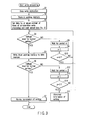
- FIG. 3 is a flowchart for explanation of write processing of data in the data memory 106, as the first embodiment.
- step S1 the card reader-writer 12 and the IC card 11 can make communications with each other.
- the card reader-writer 12 transmits the data write command
- the CPU 103 of the IC card 11 receives the write command via the transmitting-receiving antenna 101, the modulating-demodulating section 102 and the like (step S1).
- the CPU 103 of the IC card 11 When the CPU 103 of the IC card 11 receives the data write command transmitted from the card reader-writer 12 (step S1), the CPU 103 temporarily stores the write data added to the write instruction in the working memory 105 (step S2).
- the CPU 103 sets data (x, y) about number of times of re-executing write processing, responding to the data write instruction, and wait period data (m, n) (step S3).
- the data (x, y) represents a limit of the number of times of re-executing the write processing responding to the data write instruction.
- the data (m, n) represents the wait period when the write processing is re-executed.
- the data (x, y) and data (m, n) is preliminarily stored in the data memory 106. That is, the first embodiment is on the precondition that the data (x, y) and (m, n) is stored in the data memory 106, at least, before the data write processing is started (the data write command is received from the card reader-writer).
- the CPU 103 when the CPU 103 receives the data write instruction, the CPU 103 reads the data (x, y) which is preliminarily stored in the data memory 106 and stores the data in the working memory 105. Thus, the data (x, y) responding to the data write processing is set.
- the CPU 103 when the CPU 103 receives the data write instruction, the CPU 103 reads the data (m, n) which is preliminarily stored in the data memory 106 and stores the data in the working memory 105. Thus, the data (m, n), responding to the data write processing, is set.
- the CPU 103 sets the data (x, y) responding to the data write instruction and the data (m, n)
- the CPU 103 detects the level of the operating voltage which is generated at the power generating section 107, by the voltage detecting section 108.
- the CPU 103 checks whether or not the level of the operating voltage generated at the power generating section 107 is a level at which normal writing to the data memory 106 can be performed (step S4).
- step S4 is a function which can be implemented by the CPU 103 and also is a processing which serves as a first checking section.
- the processing of step S4 is called a pre-writing check in the following explanations.
- step S5 if the level of the operating voltage generated at the power generating section 107 is the level at which normal writing in the data memory 106 can be performed, as a result of the check at step S4, the CPU 103 executes the processing of writing the write data temporarily stored in the working memory 105 to the data memory 106 (step S5).
- the processing of step S5 is a function which can be implemented by the CPU 103 and also is a processing which serves as a write executing section.
- step S5 when the CPU 103 terminates the write processing of step S5, the CPU 103 detects again the level of the operating voltage generated at the power generating section 107 by the voltage detecting section 108. On the basis of the result of the detection of the voltage detecting section 108, the CPU 103 checks whether or not the level of the operating voltage generated at the power generating section 107 is a level at which normal writing to the data memory 106 can be performed (step S6).
- the processing of step S6 is a function which can be implemented by the CPU 103 and also is a processing which serves as a second checking section.
- the processing of step S6 is called a post-writing check in the following explanations.
- step S6 if the level of the operating voltage generated at the power generating section 107 is a level at which normal writing to the data memory 106 can be performed, as a result of the check at step S6, the CPU 103 recognizes that the write processing has been normally terminated and terminates the write processing (step S7).
- the CPU 103 determines as a result of the check at step S4 that the level of the operating voltage generated at the power generating section 107 is not a level at which normal writing to the data memory 106 can be performed, the CPU 103 waits for predetermined period m (step S8). At this time, the CPU 103 sets the number of times x of re-executing the write processing that has been previously set to "-1" (step S9).
- the CPU 103 checks whether or not the number of times x is "0" (step S10). If the CPU 103 determines that the number of times x is not "0", the CPU 103 returns to step S4 and performs the processing again from the pre-writing check. If the CPU 103 determines as a result of checking at step S10 that the number of times x is "0", the CPU 103 recognizes that the write processing could not be normally terminated (step S11) and terminates the processing.
- the CPU 103 determines as a result of checking at step S6 that the level of the operating voltage generated at the power generating section 107 is not a level at which normal writing to the data memory 106 can be performed, the CPU 103 waits for predetermined period n (step S12). At this time, the CPU 103 sets the number of times y of re-executing the write processing that has been previously set to "-1" (step S13).
- the CPU 103 checks whether or not the number of times y is "0" (step S14). If the CPU 103 determines that the number of times y is not "0", the CPU 103 returns to step S4 and performs the processing again from the pre-writing check. If the CPU 103 determines as a result of checking at step S14 that the number of times y is "0", the CPU 103 recognizes that the write processing could not be normally terminated (step S11) and terminates the processing.
- the level of the operating voltage is checked before the data is written to the data memory 106. If the level of the operating voltage is normal, the data is written to the data memory 106. After that, the level of the operating voltage is checked again. If the level of the operating voltage is normal, it is recognized that the write operation also has been normally terminated, and the write processing is terminated.
- the CPU 103 If the check of the operating voltage level before the write operation indicates that the voltage level is low, the CPU 103 returns to the initial write operation after waiting for a certain period (m), and performs again the processing from the pre-writing check.
- the CPU 103 Even if the check of the operating voltage level after the write operation indicates that the voltage level is low, the CPU 103 returns to the initial write operation after waiting for a certain period (n), and performs again the processing from the pre-writing check.
- the data (x, y) and (m, n) is stored in advance in specific areas within the data memory 106, respectively. Therefore, in the first embodiment, the data (x, y) and the data (m, n) can be changed by rewriting the data in the data memory 106.
- the write operation of the actual data into the data memory composed of the nonvolatile memory is not executed until the operating voltage generated from the received power wave reaches a predetermined voltage level.
- the first embodiment it is possible to wait for the actual write operation until the operating voltage generated from the received power wave reaches the voltage level at which the data can be written to the data memory composed of the nonvolatile memory.
- the data can be always written to the data memory at the operating voltage of an appropriate voltage level, and normal writing of the data can be implemented.
- the writing of the data to the data memory composed of the nonvolatile memory is performed with the operating voltage generated by the power wave received from the card reader-writer. If the operating voltage is not at a predetermined voltage level after the writing of the data is terminated. the CPU 103 re-executes the writing of the data after waiting for a predetermined period.
- the writing of the data can be re-executed.
- write error of the data to the data memory can be prevented and the writing of the data thereto can be certainly executed, in the first embodiment.
- the writing can be executed at an opportunity suitable for the writing of data to the nonvolatile memory, by monitoring the voltage level of the operating voltage generated from the received power wave.
- the second embodiment is a first operation example applied to the noncontact type IC card system composed of the card reader-writer 12 and the noncontact type IC card 11 as shown in FIG. 1.
- setting data for the write processing of the data to the data memory 106 is read and set. That is, in the second embodiment, when the IC card receives the power wave for operations from the card reader-writer 12, the IC card performs initialization (start operations) of its own card, reads the setting data used for the write processing of the data to the data memory 106, which is prestored in the data memory 106, and sets the data.
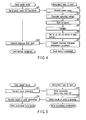
- FIGS. 4 and 5 are flowcharts for explanation of operations of the second embodiment.
- FIG. 4 is a flowchart for explanation of the operations of the second embodiment which sets the data used for the write processing to the data memory 106 when the IC card is started.
- FIG. 5 is a flowchart for explanation of the operations of the IC card started by the operations shown in FIG. 4 and the operations of the card reader-writer 12.
- the IC card 11 is made to approach a predetermined communication position of the card reader-writer 12. Then, a magnetic field is generated between the IC card 11 and the card reader-writer 12, such that the IC card 11 can receive the radio wave from the card reader-writer 12. In this state, the card reader-writer 12 sends the power wave for operations by the transmitter-receiver section 12a composed of a transmitter-receiver circuit and an antenna (step S21).
- the IC card 11 receives the power wave sent from the card reader-writer 12, by the transmitting-receiving antenna 101 (step S22), and generates an operating voltage by the power generating section 107 (step S23).
- the power generating section 107 supplies the generated operating voltage to each section in the IC card 11.
- the power of the IC card 11 is turned on (step S24).
- the CPU 103 When the power of the IC card 11 is turned on, the CPU 103 performs initialization (startup) of the entire body of the IC card on the basis of an initialization program stored in the program memory 104 (step S25).
- the CPU 103 reads the data (x, y) about the number of times of re-executing write processing and the wait period data (m, n), from the data memory 106, as the setting data used for the write processing of the data to the data memory 106, and stores the data into the working memory 105.
- the data (x, y) and (m, n) is set in the IC card 11, as the setting data used for the write processing of the data to the data memory 106 (step S26).
- the setting data used for the write processing such as the data (x, y) and the data (m, n) is preliminarily stored in the data memory 106.
- the CPU 103 transmits a response which indicates completion of the initialization of the IC card 11 to the card reader-writer 12, by the modulating-demodulating section 102 and the transmitting-receiving antenna 101 (step S27).
- the card reader-writer 12 When the card reader-writer 12 receives the response transmitted from the IC card 11 at step S27, the card reader-writer 12 becomes capable of making communications with the IC card 11 (step S28). In this state, the card reader-writer 12 can transmit commands (operation commands) to request various operations to the IC card 11.
- the card reader-writer 12 becomes capable of supplying the write command to request the writing of the data to the data memory 106, to the IC card 11.
- the card reader-writer 12 transmits the data write command to the IC card 11 (step S31).
- the data write command is supplied to the CPU 103 via the transmitting-receiving antenna 101 and the modulating-demodulating section 102 of the IC card 11.
- the CPU 103 executes the write processing of the data to the data memory 106 as explained in the first embodiment (step S32).
- the setting data used for the write processing of the data to the data memory 106 is set when the IC card 11 is started (when the power is turned on). For this reason, in the second embodiment, the write processing of the data to the data memory 106 is executed on the basis of the data which has already been set. That is, the processings other than step S3 (steps S1-S2 and steps S4-S11) shown in FIG. 3 are executed as a processing of step S32.
- the CPU 103 transmits the data indicating a result of the write processing to the card reader-writer 12, as a response to the write command (step S33).
- the CPU 103 transmits the data indicating normal termination if the writing is normally terminated, or the data indicating abnormal termination if the writing is abnormally terminated.
- step S34 When the card reader-writer 12 receives such data indicating a result of the write processing from the IC card 11 (step S34), the write processing of the data in the IC card system is completed.
- the IC card when the IC card starts up by receiving the power wave from the card reader-writer, the IC card sets the data used for the write processing of the data together with the initialization.
- the data used for the write processing of the data is set as one of initializing processings which start up the IC card, in the second embodiment.
- the data used for the write processing of the data does not need to be set until the power is turned off, in the IC card which is once started. For example, if a plurality of data write commands are executed after the startup, setting the data for each of the write commands does not need to be executed. Therefore, the processing time in the IC card system can be reduced.
- the third embodiment is a second operation example applied to the noncontact type IC card system composed of the card reader-writer 12 and the noncontact type IC card 11 as shown in FIG. 1.
- the card reader-writer 12 transmits the setting data used for the write processing of data to the data memory 106 of the IC card, together with the data write command.
- the IC card receives the setting data transmitted from the card reader-writer 12 together with the data write command, and sets the data used for the write processing of data to the data memory 106.
- FIGS. 6 and 7 are flowcharts for explanation of the operations of the third embodiment.
- FIG. 6 is a flowchart for explanation of the operations at the start of the IC card.
- FIG. 7 is a flowchart for explanation of write operations in the third embodiment, made by the IC card 11 started by the operations of FIG. 6 and the card reader-writer 12.
- the IC card 11 and the card reader-writer 12 become capable of making communications with each other.
- the card reader-writer 12 can transmit commands (operation commands) to request various operations such as the data write command to the IC card 11.
- the card reader-writer 12 transmits the data write command to the IC card 11, and the write processing of the noncontact type IC card system as shown in FIG. 7 is started.
- the card reader-writer 12 first sets the setting data used for the write processing of data to the data memory 106 together with the data which should be written in the data memory 106, in the data write command (step S51). For example, the data (x, y) and (m, n) is set in the write command as the setting data.
- the setting data such as the data (x, y) and the data (m, n) is set by the terminal device 13 connected to the card reader-writer 12. That is, the setting data such as the data (x, y) and the data (m, n) which is to be set in the write command can be changed by the terminal device 13 connected to the card reader-writer 12.
- the setting data which is to be set in the write command by the operations using the keyboard 14 or the like (the setting data used for the write processing of the data in the IC card) can easily be changed in the third embodiment.
- the card reader-writer 12 transmits the write command to the IC card 11 by the transmitter-receiver section 12a (step S52).
- the IC card 11 When the data write command including the setting data is transmitted from the card reader-writer 12, the IC card 11 receives the write command by the transmitting-receiving antenna 101 and the modulating-demodulating section 102.
- the CPU 103 of the IC card 11 extracts the setting data (data (x, y) and data (m, n)) included in the write command and stores the extracted data to the working memory 105.
- the data (x, y) and the data (m, n) is set as the setting data used for the write processing of data to the data memory 106, in the IC card 11 (step S53).
- step S53 When the setting of the setting data (data (x, y) and data (m, n)) has been completed at step S53, the CPU 103 executes the write processing of data to the data memory 106 as described in the first embodiment (step S54).
- the setting data used for the write processing of data to the data memory 106 is set when the data write command is received. For this reason, the write processing is executed at step S54, on the basis of the setting data which is set at step S53, in the third embodiment. That is, the processings (steps S1-S2 and steps S4-S11) other than step S3 shown in FIG. 3 are executed as the processing of step S54.
- the CPU 103 transmits the data indicating the result of the write processing to the card reader-writer 12, as a response to the write command (step S55).
- the CPU 103 transmits the data indicating normal termination if the writing is normally terminated or the data indicating abnormal termination if the writing is abnormally terminated.
- step S56 When the card reader-writer 12 receives the data indicating such a write result from the IC card 11 (step S56), the data write processing in the noncontact type IC card system is completed.
- the card reader-writer sets the setting data used for the write processing of data in the IC card, in the data write command, and transmits the data to the IC card.
- the IC card sets the setting data included in the write command of the data received from the card reader-writer and executes the writing of the data to the data memory of the IC card.
- the setting data used for the data write processing does not need to be stored in the IC card.
- the setting data can easily be changed by using the keyboard or the like, on the card reader-writer side, the setting data which is to be set every time the write command is transmitted can easily be changed.
- the setting data does not need to be individually changed for each IC card and flexible operations of the noncontact type IC card system can be implemented in the system having a plurality of noncontact type IC cards.
Landscapes
- Engineering & Computer Science (AREA)
- Physics & Mathematics (AREA)
- Computer Hardware Design (AREA)
- Microelectronics & Electronic Packaging (AREA)
- General Physics & Mathematics (AREA)
- Theoretical Computer Science (AREA)
- Electromagnetism (AREA)
- Computer Networks & Wireless Communication (AREA)
- Credit Cards Or The Like (AREA)
- Near-Field Transmission Systems (AREA)
- Techniques For Improving Reliability Of Storages (AREA)
- Power Sources (AREA)
Abstract
Description
- This invention relates to a noncontact type batteryless IC card which can be used as, for example, a personal identification medium of an entry and exit management device, a resident register card and the like, which performs by receiving a power wave transmitted from a card reader-writer and generating an operating voltage from the received power wave, and which allows data to be written in or read from a rewritable nonvolatile memory by making radio communications with the card reader-writer, and also relates to a system of the noncontact type IC card.
- Recently, for example, a noncontact type IC card called a radio card has been used as a personal identification medium of an entry and exit management device. The noncontact type IC card storing personal physical characteristic information and the like is distributed to a visitor. The card collates the physical characteristic information by making radio communications with a card reader-writer installed at a room entrance and controls opening and closing of an entrance door.
- Such a noncontact type IC card called a radio card is typically in a batteryless type for the purpose of reduction of the battery exchange operation, downsizing, decrease in manufacturing costs, extension of life and the like.
- Thus, a recent noncontact type IC card is operated to receive a power wave transmitted from the card reader-writer, generate an operating voltage from the received power wave and supply the operating voltage to each section.
- Incidentally, in this kind of noncontact type IC card, for example, when data is stored (written) in the nonvolatile memory on the basis of a write instruction transmitted from the card reader-writer, a method of writing the supplied data that should be written in the nonvolatile memory at only one time is employed.
- In the conventional method, data is written in the nonvolatile memory even if the noncontact type IC card is under any conditions. However, power supply in this kind of the noncontact type IC card may be remarkably unstable in accordance with the state of the received wave. If the one-time writing is failed, the data may not be stored.
- The object of the present invention is to provide a noncontact IC card wherein if the level of the generated operating voltage is unstable, normal data writing can be always implemented by waiting for data writing to a memory.
- A noncontact type IC card according to the present invention is configured to receive a power wave sent from an external device to generate an operating voltage and perform writing of data to a memory with the generated operating voltage. The IC card comprises a voltage detecting section which detects a voltage level of the operating voltage generated from the power wave received from the external device, a write executing section which executes the writing of the data to the memory if the voltage level detected by the voltage detecting section is a level at which normal writing to the memory can be performed; and a control section which detects by the voltage detecting section the voltage level of the operating voltage obtained after the writing of the data to the memory executed by the write executing section is terminated, and which executes again the writing of the data to the memory if the detected voltage level of the operating voltage is not a predetermined voltage level.
- In addition, a noncontact type IC card of the present invention is configured to receive a power wave sent from an external device to generate an operating voltage and perform writing of data to a memory with the generated operating voltage. The IC card comprises a voltage detecting section which detects a voltage level of the operating voltage generated from the power wave received from the external device, a first checking section which detects the voltage level of the operating voltage by the voltage detecting section and checks whether or not the detected voltage level of the operating voltage is a predetermined voltage level, when the writing of the data to the memory is started, a write executing section which executes the writing of the data to the memory if the first checking section determines that the detected voltage level of the operating voltage is the predetermined voltage level, a second checking section which detects the voltage level of the operating voltage obtained after the writing of the data to the memory is terminated, by the voltage detecting section, and which checks whether or not the detected voltage level is a predetermined voltage level, and a control section which executes again processings of the first checking section, the write executing section and the second checking section after waiting for a predetermined period of time, if the first checking section determines that the voltage level of the operating voltage is not the predetermined voltage level or if the second checking section determines that the voltage level of the operating voltage is not the predetermined voltage level.
- Moreover, a noncontact type IC card of the present invention comprises a rewritable nonvolatile memory, an antenna which transmits data to an external device or receives the data therefrom, a power generating section which receives a power wave transmitted from the external device, via the antenna, and generates an operating voltage with the received power wave, a voltage detecting section which detects a voltage level of the operating voltage generated by the power generating section, a first checking section which detects by the voltage detecting section the voltage level of the operating voltage generated by the power generating section and checks whether or not the detected voltage level of the operating voltage is a predetermined voltage level, when a write command of the data from the external device to the nonvolatile memory is received via the antenna, a write executing section which executes the writing of the data to the nonvolatile memory if the first checking section determines that the detected voltage level of the operating voltage is the predetermined voltage level, a second checking section which detects the voltage level of the operating voltage obtained after the writing of the data to the nonvolatile memory executed by the write executing section is terminated, by the voltage detecting section, and which checks whether or not the detected voltage level is a predetermined voltage level, and a control section which executes again processings of the first checking section, the write executing section and the second checking section after waiting for a predetermined period of time, if the first checking section determines that the voltage level of the operating voltage is not the predetermined voltage level or if the second checking section determines that the voltage level of the operating voltage is not the predetermined voltage level.
- A noncontact type IC card system of the present invention comprises an external device which requests writing of data, and a noncontact type IC card which performs writing of the data in response to the request from the external device. The external device comprises a sending section which sends a power wave for operations to the IC card, and a transmitting section which transmits a write command to the IC card receiving the power wave for operations sent from the sending section. The IC card comprises a voltage detecting section which detects a voltage level of an operating voltage generated from the power wave received from the external device, a first checking section which detects by the voltage detecting section the voltage level of the operating voltage and checks whether or not the detected voltage level of the operating voltage is a predetermined voltage level, when the writing of the data to the memory is started in response to the write command received from the external device, a write executing section which executes the writing of the data to the memory if the first checking section determines that the detected voltage level of the operating voltage is the predetermined voltage level, a second checking section which detects the voltage level of the operating voltage obtained after the writing of the data to the memory is terminated, by the voltage detecting section, and which checks whether or not the detected voltage level is a predetermined voltage level, and a control section which executes again processings of the first checking section, the write executing section and the second checking section after waiting for a predetermined period of time, if the first checking section determines that the voltage level of the operating voltage is not the predetermined voltage level or if the second checking section determines that the voltage level of the operating voltage is not the predetermined voltage level.
- In addition, a noncontact type IC card system of the present invention comprises an external device which requests writing of data, and a noncontact type IC card which performs writing of the data in response to the request for the writing of data from the external device. The external device comprises a sending section which sends a power wave for operations to the IC card, and a transmitting section which transmits a data write command to the IC card receiving the power wave for operations sent from the sending section. The IC card comprises a rewritable nonvolatile memory, an antenna which transmits data to an external device or receives the data therefrom, a power generating section which receives a power wave transmitted from the external device, via the antenna, and generates an operating voltage with the received power wave, a voltage detecting section which detects a voltage level of the operating voltage generated by the power generating section, a first checking section which detects by the voltage detecting section the voltage level of the operating voltage generated by the power generating section and checks whether or not the detected voltage level of the operating voltage is a predetermined voltage level, when a write command of the data from the external device to the nonvolatile memory is received via the antenna, a write executing section which executes the writing of the data to the nonvolatile memory if the first checking section determines that the detected voltage level of the operating voltage is the predetermined voltage level, a second checking section which detects the voltage level of the operating voltage obtained after the writing of the data to the nonvolatile memory executed by the write executing section is terminated, by the voltage detecting section, and which checks whether or not the detected voltage level is a predetermined voltage level, and a control section which executes again processings of the first checking section, the write executing section and the second checking section after waiting for a predetermined period of time, if the first checking section determines that the voltage level of the operating voltage is not the predetermined voltage level or if the second checking section determines that the voltage level of the operating voltage is not the predetermined voltage level.
- This summary of the invention does not necessarily describe all necessary features so that the invention may also be a sub-combination of these described features.
- The invention can be more fully understood from the following detailed description when taken in conjunction with the accompanying drawings, in which:
- FIG. 1 is a block diagram showing an example of a configuration of a noncontact type IC card system using a noncontact type IC card according to embodiments of the present invention;
- FIG. 2 is a block diagram schematically showing a configuration of the noncontact type IC card according to the embodiments of the present invention;
- FIG. 3 is a flowchart for explanation of write operations of data in a data memory, according to a first embodiment of the present invention;
- FIG. 4 is a flowchart for explanation of operations at the start of a noncontact type IC card according to a second embodiment of the present invention;
- FIG. 5 is a flowchart for explanation of operations at the write processing, according to the second embodiment of the present invention;
- FIG. 6 is a flowchart for explanation of operations at the start of a noncontact type IC card according to a third embodiment of the present invention; and
- FIG. 7 is a flowchart for explanation of operations at the write processing, according to the third embodiment of the present invention.
-
- First and second embodiments of the present invention will be described below with reference to drawings.
- FIG. 1 shows an example of a configuration of a noncontact type IC card system using a noncontact type IC card according to first and second embodiments of the present invention.
- The noncontact type IC card system comprises a noncontact
type IC card 11, a card reader-writer 12, aterminal device 13, akeyboard 14, aCRT display section 15, aprinter 16 and the like. - The noncontact
type IC card 11 and the card reader-writer 12 make radio communications with each other. Theterminal device 13 such as a personal computer is connected to the card reader-writer 12. Thekeyboard 14, aCRT display section 15, aprinter 16 and the like are connected to theterminal device 13. - The card reader-
writer 12 has a transmitter-receiver section 12a composed of a transmitter-receiver circuit and an antenna to transmit and receive a radio wave for radio communications, and the like. For example, the card reader-writer 12 sends a power wave for operations (a radio wave for power supply) to the noncontacttype IC card 11 by the transmitter-receiver section 12a, transmits various operation commands such as a write command and the like, and receives data such as a command response and the like from the noncontacttype IC card 11. - FIG. 2 is a block diagram showing a configuration of the noncontact
type IC card 11. - As shown in FIG. 2, the noncontact
type IC card 11 has a transmitting-receivingantenna 101, a modulating-demodulatingsection 102, a CPU (central processing unit) 103, aprogram memory 104, aworking memory 105, adata memory 106, apower generating section 107, and avoltage detecting section 108. - The transmitting-receiving
antenna 101 is an antenna which transmits data to the card reader-writer 12 or receives data therefrom. - The modulating-demodulating
section 102 modulates the transmitted data or demodulates the received data. - The
CPU 103 performs various data processing and total control. - The
program memory 104 is composed of, for example, a non-rewritable nonvolatile memory such as a mask ROM. Data is written in theprogram memory 104 when the noncontact type IC card is fabricated or issued. For example, various control programs that are executed by theCPU 103 are stored in theprogram memory 104. - The
working memory 105 is composed of, for example, a rewritable volatile memory such as a RAM. Data in theworking memory 105 is cleared when the power supply is turned off. Theworking memory 105, for example, temporarily stores transmitted and received data, control data for operations, setting data and the like at various processes. - The
data memory 106 is composed of, for example, a nonvolatile memory such as an EEPROM in which memory contents are rewritable. Thedata memory 106 is used to store various data. For example, personal information of a holder of the noncontact type IC card, control data supplied from the card reader-writer 12 or the like is stored in thedata memory 106. The data in thedata memory 106 can be rewritten under control of theCPU 103. For example, if a data write command (a data write instruction) is received from the card reader-writer 12, the data is written in thedata memory 106 by theCPU 103. - The
power generating section 107 generates a DC voltage from the power wave from the card reader-writer 12 which is received by the transmitting-receivingantenna 101. The voltage generated at thepower generating section 107 supplied to each section inside the noncontact type IC card as an operating voltage. Thepower generating section 107 has a rectifier circuit and the like. Thepower generating section 107 also generates a stabilized DC voltage by rectifying and smoothing the power wave received by the transmitting-receivingantenna 101, by the rectifier circuit. - The
voltage detecting section 108 detects levels of the DC voltages generated at thepower generating section 107. - Each of the
sections 102 to 108 other than the transmitting-receivingantenna 101 is composed of one IC chip (or a plurality of IC chips), and is embedded in the card body together with the transmitting-receivingantenna 101. - Next, the first embodiment will be explained.
- The first embodiment is an operation example which is applied to the noncontact
type IC card 11 shown in FIG. 2. In the first embodiment, the operation example of writing the data to thedata memory 106, in theIC card 11, will be explained. - In the first embodiment, the
IC card 11 performs setting on the basis of various set values which are preliminarily stored in thedata memory 106 and executes writing the data to thedata memory 106, in response to the data write command from the card reader-writer 12, in the system shown in FIG. 1. - FIG. 3 is a flowchart for explanation of write processing of data in the
data memory 106, as the first embodiment. - First, it is assumed that the card reader-
writer 12 and theIC card 11 can make communications with each other. In this state, if the card reader-writer 12 transmits the data write command, theCPU 103 of theIC card 11 receives the write command via the transmitting-receivingantenna 101, the modulating-demodulating section 102 and the like (step S1). - When the
CPU 103 of theIC card 11 receives the data write command transmitted from the card reader-writer 12 (step S1), theCPU 103 temporarily stores the write data added to the write instruction in the working memory 105 (step S2). - Next, the
CPU 103 sets data (x, y) about number of times of re-executing write processing, responding to the data write instruction, and wait period data (m, n) (step S3). The data (x, y) represents a limit of the number of times of re-executing the write processing responding to the data write instruction. The data (m, n) represents the wait period when the write processing is re-executed. In the first embodiment, the data (x, y) and data (m, n) is preliminarily stored in thedata memory 106. That is, the first embodiment is on the precondition that the data (x, y) and (m, n) is stored in thedata memory 106, at least, before the data write processing is started (the data write command is received from the card reader-writer). - Therefore, in the first embodiment, when the
CPU 103 receives the data write instruction, theCPU 103 reads the data (x, y) which is preliminarily stored in thedata memory 106 and stores the data in the workingmemory 105. Thus, the data (x, y) responding to the data write processing is set. Similarly, in the first embodiment, when theCPU 103 receives the data write instruction, theCPU 103 reads the data (m, n) which is preliminarily stored in thedata memory 106 and stores the data in the workingmemory 105. Thus, the data (m, n), responding to the data write processing, is set. - When the
CPU 103 sets the data (x, y) responding to the data write instruction and the data (m, n), theCPU 103 detects the level of the operating voltage which is generated at thepower generating section 107, by thevoltage detecting section 108. On the basis of a result of the detection of thevoltage detecting section 108, theCPU 103 checks whether or not the level of the operating voltage generated at thepower generating section 107 is a level at which normal writing to thedata memory 106 can be performed (step S4). - The processing of step S4 is a function which can be implemented by the
CPU 103 and also is a processing which serves as a first checking section. The processing of step S4 is called a pre-writing check in the following explanations. - Next, if the level of the operating voltage generated at the
power generating section 107 is the level at which normal writing in thedata memory 106 can be performed, as a result of the check at step S4, theCPU 103 executes the processing of writing the write data temporarily stored in the workingmemory 105 to the data memory 106 (step S5). The processing of step S5 is a function which can be implemented by theCPU 103 and also is a processing which serves as a write executing section. - Next, when the
CPU 103 terminates the write processing of step S5, theCPU 103 detects again the level of the operating voltage generated at thepower generating section 107 by thevoltage detecting section 108. On the basis of the result of the detection of thevoltage detecting section 108, theCPU 103 checks whether or not the level of the operating voltage generated at thepower generating section 107 is a level at which normal writing to thedata memory 106 can be performed (step S6). The processing of step S6 is a function which can be implemented by theCPU 103 and also is a processing which serves as a second checking section. The processing of step S6 is called a post-writing check in the following explanations. - Next, if the level of the operating voltage generated at the
power generating section 107 is a level at which normal writing to thedata memory 106 can be performed, as a result of the check at step S6, theCPU 103 recognizes that the write processing has been normally terminated and terminates the write processing (step S7). - If the
CPU 103 determines as a result of the check at step S4 that the level of the operating voltage generated at thepower generating section 107 is not a level at which normal writing to thedata memory 106 can be performed, theCPU 103 waits for predetermined period m (step S8). At this time, theCPU 103 sets the number of times x of re-executing the write processing that has been previously set to "-1" (step S9). - Next, the
CPU 103 checks whether or not the number of times x is "0" (step S10). If theCPU 103 determines that the number of times x is not "0", theCPU 103 returns to step S4 and performs the processing again from the pre-writing check. If theCPU 103 determines as a result of checking at step S10 that the number of times x is "0", theCPU 103 recognizes that the write processing could not be normally terminated (step S11) and terminates the processing. - If the
CPU 103 determines as a result of checking at step S6 that the level of the operating voltage generated at thepower generating section 107 is not a level at which normal writing to thedata memory 106 can be performed, theCPU 103 waits for predetermined period n (step S12). At this time, theCPU 103 sets the number of times y of re-executing the write processing that has been previously set to "-1" (step S13). - Next, the
CPU 103 checks whether or not the number of times y is "0" (step S14). If theCPU 103 determines that the number of times y is not "0", theCPU 103 returns to step S4 and performs the processing again from the pre-writing check. If theCPU 103 determines as a result of checking at step S14 that the number of times y is "0", theCPU 103 recognizes that the write processing could not be normally terminated (step S11) and terminates the processing. - In the
radio card 11 of the present invention, as described above, the level of the operating voltage is checked before the data is written to thedata memory 106. If the level of the operating voltage is normal, the data is written to thedata memory 106. After that, the level of the operating voltage is checked again. If the level of the operating voltage is normal, it is recognized that the write operation also has been normally terminated, and the write processing is terminated. - If the check of the operating voltage level before the write operation indicates that the voltage level is low, the
CPU 103 returns to the initial write operation after waiting for a certain period (m), and performs again the processing from the pre-writing check. - Even if the check of the operating voltage level after the write operation indicates that the voltage level is low, the
CPU 103 returns to the initial write operation after waiting for a certain period (n), and performs again the processing from the pre-writing check. - In the first embodiment, as described above, the data (x, y) and (m, n) is stored in advance in specific areas within the
data memory 106, respectively. Therefore, in the first embodiment, the data (x, y) and the data (m, n) can be changed by rewriting the data in thedata memory 106. - As explained above, in the noncontact type IC card according to the first embodiment, if the voltage level of the operating voltage generated from the power wave received from the card reader-writer does not become stable, the write operation of the actual data into the data memory composed of the nonvolatile memory is not executed until the operating voltage generated from the received power wave reaches a predetermined voltage level.
- Therefore, in the first embodiment, it is possible to wait for the actual write operation until the operating voltage generated from the received power wave reaches the voltage level at which the data can be written to the data memory composed of the nonvolatile memory. Thus, in the first embodiment, the data can be always written to the data memory at the operating voltage of an appropriate voltage level, and normal writing of the data can be implemented.
- In addition, in the noncontact type IC card according to the first embodiment, the writing of the data to the data memory composed of the nonvolatile memory is performed with the operating voltage generated by the power wave received from the card reader-writer. If the operating voltage is not at a predetermined voltage level after the writing of the data is terminated. the
CPU 103 re-executes the writing of the data after waiting for a predetermined period. - Thus, in the first embodiment, if the voltage level of the operating voltage is not a predetermined voltage level when the writing of the data to the data memory composed of the nonvolatile memory is terminated, the writing of the data can be re-executed. As a result, write error of the data to the data memory can be prevented and the writing of the data thereto can be certainly executed, in the first embodiment.
- Therefore, in the noncontact type IC card of a batteryless type, according to the first embodiment, the writing can be executed at an opportunity suitable for the writing of data to the nonvolatile memory, by monitoring the voltage level of the operating voltage generated from the received power wave.
- Moreover, it is possible to recognize that the write operation of the data to the nonvolatile memory has been normally terminated, by monitoring the voltage level of the operating voltage after the writing of data to the nonvolatile memory.
- In the above-described first embodiment, the operations of the noncontact
type IC card 11 have been explained. In the following second and third embodiments, operations of a noncontact type IC card system composed of the card reader-writer 12 and theIC card 11 will be explained. - First, the second embodiment will be explained.
- The second embodiment is a first operation example applied to the noncontact type IC card system composed of the card reader-
writer 12 and the noncontacttype IC card 11 as shown in FIG. 1. - In the second embodiment, when the
IC card 11 is started (when the power is turned on), setting data for the write processing of the data to thedata memory 106, which is prestored in thedata memory 106, is read and set. That is, in the second embodiment, when the IC card receives the power wave for operations from the card reader-writer 12, the IC card performs initialization (start operations) of its own card, reads the setting data used for the write processing of the data to thedata memory 106, which is prestored in thedata memory 106, and sets the data. - FIGS. 4 and 5 are flowcharts for explanation of operations of the second embodiment.
- FIG. 4 is a flowchart for explanation of the operations of the second embodiment which sets the data used for the write processing to the
data memory 106 when the IC card is started. FIG. 5 is a flowchart for explanation of the operations of the IC card started by the operations shown in FIG. 4 and the operations of the card reader-writer 12. - First, the
IC card 11 is made to approach a predetermined communication position of the card reader-writer 12. Then, a magnetic field is generated between theIC card 11 and the card reader-writer 12, such that theIC card 11 can receive the radio wave from the card reader-writer 12. In this state, the card reader-writer 12 sends the power wave for operations by the transmitter-receiver section 12a composed of a transmitter-receiver circuit and an antenna (step S21). - On the other hand, the
IC card 11 receives the power wave sent from the card reader-writer 12, by the transmitting-receiving antenna 101 (step S22), and generates an operating voltage by the power generating section 107 (step S23). When the operating voltage is generated from the power wave transmitted from the card reader-writer 12, thepower generating section 107 supplies the generated operating voltage to each section in theIC card 11. Thus, the power of theIC card 11 is turned on (step S24). - When the power of the
IC card 11 is turned on, theCPU 103 performs initialization (startup) of the entire body of the IC card on the basis of an initialization program stored in the program memory 104 (step S25). - When the initialization is terminated, the
CPU 103 reads the data (x, y) about the number of times of re-executing write processing and the wait period data (m, n), from thedata memory 106, as the setting data used for the write processing of the data to thedata memory 106, and stores the data into the workingmemory 105. Thus, the data (x, y) and (m, n) is set in theIC card 11, as the setting data used for the write processing of the data to the data memory 106 (step S26). - It is assumed here that the setting data used for the write processing such as the data (x, y) and the data (m, n) is preliminarily stored in the
data memory 106. - When the setting data used for the write processing is set, the
CPU 103 transmits a response which indicates completion of the initialization of theIC card 11 to the card reader-writer 12, by the modulating-demodulating section 102 and the transmitting-receiving antenna 101 (step S27). - When the card reader-
writer 12 receives the response transmitted from theIC card 11 at step S27, the card reader-writer 12 becomes capable of making communications with the IC card 11 (step S28). In this state, the card reader-writer 12 can transmit commands (operation commands) to request various operations to theIC card 11. - That is, when steps S21 to S28 have been completed, the card reader-
writer 12 becomes capable of supplying the write command to request the writing of the data to thedata memory 106, to theIC card 11. - Next, operations in a case where the data write command (data write instruction) is transmitted from the card reader-
writer 12 to theIC card 11 when steps S21 to S28 have been completed, will be explained. - First, as shown in FIG. 5, the card reader-
writer 12 transmits the data write command to the IC card 11 (step S31). The data write command is supplied to theCPU 103 via the transmitting-receivingantenna 101 and the modulating-demodulating section 102 of theIC card 11. Thus, theCPU 103 executes the write processing of the data to thedata memory 106 as explained in the first embodiment (step S32). - In the second embodiment, however, the setting data used for the write processing of the data to the
data memory 106 is set when theIC card 11 is started (when the power is turned on). For this reason, in the second embodiment, the write processing of the data to thedata memory 106 is executed on the basis of the data which has already been set. That is, the processings other than step S3 (steps S1-S2 and steps S4-S11) shown in FIG. 3 are executed as a processing of step S32. - When the write processing as described above has been terminated, the
CPU 103 transmits the data indicating a result of the write processing to the card reader-writer 12, as a response to the write command (step S33). In the write processing of step S32, for example, theCPU 103 transmits the data indicating normal termination if the writing is normally terminated, or the data indicating abnormal termination if the writing is abnormally terminated. - When the card reader-
writer 12 receives such data indicating a result of the write processing from the IC card 11 (step S34), the write processing of the data in the IC card system is completed. - According to the second embodiment, as described above, when the IC card starts up by receiving the power wave from the card reader-writer, the IC card sets the data used for the write processing of the data together with the initialization. In other words, the data used for the write processing of the data is set as one of initializing processings which start up the IC card, in the second embodiment.
- Thus, the data used for the write processing of the data does not need to be set until the power is turned off, in the IC card which is once started. For example, if a plurality of data write commands are executed after the startup, setting the data for each of the write commands does not need to be executed. Therefore, the processing time in the IC card system can be reduced.
- Next, the third embodiment will be explained.
- The third embodiment is a second operation example applied to the noncontact type IC card system composed of the card reader-
writer 12 and the noncontacttype IC card 11 as shown in FIG. 1. - On the basis of the setting data transmitted from the card reader-
writer 12 to the noncontacttype IC card 11 together with the data write command, various data used for the write processing of data to thedata memory 106 of the IC card is set, in the third embodiment. - That is, in the third embodiment, the card reader-
writer 12 transmits the setting data used for the write processing of data to thedata memory 106 of the IC card, together with the data write command. The IC card receives the setting data transmitted from the card reader-writer 12 together with the data write command, and sets the data used for the write processing of data to thedata memory 106. - FIGS. 6 and 7 are flowcharts for explanation of the operations of the third embodiment.
- FIG. 6 is a flowchart for explanation of the operations at the start of the IC card. FIG. 7 is a flowchart for explanation of write operations in the third embodiment, made by the
IC card 11 started by the operations of FIG. 6 and the card reader-writer 12. - In the operations at the start of the
IC card 11 in the third embodiment, as shown in FIG. 6, setting the data is excluded from the operations at the start of theIC card 11, in the second embodiment, as shown in FIG. 4. That is, the operations at the start of theIC card 11 in the third embodiment, as represented at steps S41-S47 of FIG. 6, are the same as those in the second embodiment, as represented at steps S21-S25 and S27-S28 of FIG. 4. Therefore, the detailed descriptions of steps S41-S47 of FIG. 6 will be omitted. - When the processings of steps S41-S47 have been terminated, the
IC card 11 and the card reader-writer 12 become capable of making communications with each other. In this state, the card reader-writer 12 can transmit commands (operation commands) to request various operations such as the data write command to theIC card 11. - The card reader-
writer 12 transmits the data write command to theIC card 11, and the write processing of the noncontact type IC card system as shown in FIG. 7 is started. - That is, the card reader-
writer 12 first sets the setting data used for the write processing of data to thedata memory 106 together with the data which should be written in thedata memory 106, in the data write command (step S51). For example, the data (x, y) and (m, n) is set in the write command as the setting data. - The setting data such as the data (x, y) and the data (m, n) is set by the
terminal device 13 connected to the card reader-writer 12. That is, the setting data such as the data (x, y) and the data (m, n) which is to be set in the write command can be changed by theterminal device 13 connected to the card reader-writer 12. - Thus, the setting data which is to be set in the write command by the operations using the
keyboard 14 or the like (the setting data used for the write processing of the data in the IC card) can easily be changed in the third embodiment. - If the data write command including the setting data is generated at step S51, the card reader-
writer 12 transmits the write command to theIC card 11 by the transmitter-receiver section 12a (step S52). - When the data write command including the setting data is transmitted from the card reader-
writer 12, theIC card 11 receives the write command by the transmitting-receivingantenna 101 and the modulating-demodulating section 102. - When the write command is received, the
CPU 103 of theIC card 11 extracts the setting data (data (x, y) and data (m, n)) included in the write command and stores the extracted data to the workingmemory 105. - Thus, the data (x, y) and the data (m, n) is set as the setting data used for the write processing of data to the
data memory 106, in the IC card 11 (step S53). - When the setting of the setting data (data (x, y) and data (m, n)) has been completed at step S53, the
CPU 103 executes the write processing of data to thedata memory 106 as described in the first embodiment (step S54). - In the third embodiment, however, the setting data used for the write processing of data to the
data memory 106 is set when the data write command is received. For this reason, the write processing is executed at step S54, on the basis of the setting data which is set at step S53, in the third embodiment. That is, the processings (steps S1-S2 and steps S4-S11) other than step S3 shown in FIG. 3 are executed as the processing of step S54. - When the above-described write processing has been terminated, the
CPU 103 transmits the data indicating the result of the write processing to the card reader-writer 12, as a response to the write command (step S55). In the write processing of step S54, for example, theCPU 103 transmits the data indicating normal termination if the writing is normally terminated or the data indicating abnormal termination if the writing is abnormally terminated. - When the card reader-
writer 12 receives the data indicating such a write result from the IC card 11 (step S56), the data write processing in the noncontact type IC card system is completed. - According to the third embodiment, as described above, the card reader-writer sets the setting data used for the write processing of data in the IC card, in the data write command, and transmits the data to the IC card. The IC card sets the setting data included in the write command of the data received from the card reader-writer and executes the writing of the data to the data memory of the IC card.
- Therefore, the setting data used for the data write processing does not need to be stored in the IC card. As the setting data can easily be changed by using the keyboard or the like, on the card reader-writer side, the setting data which is to be set every time the write command is transmitted can easily be changed. Moreover, as the setting data can be changed on the card reader-writer side, the setting data does not need to be individually changed for each IC card and flexible operations of the noncontact type IC card system can be implemented in the system having a plurality of noncontact type IC cards.
- It is explicitly stated that all features disclosed in the description and/or the claims are intended to be disclosed separately and independently from each other for the purpose of original disclosure as well as for the purpose of restricting the claimed invention independent of the compositions of the features in the embodiments and/or the claims. It is explicitly stated that all value ranges or indications of groups of entities disclose every possible intermediate value or intermediate entity for the purpose of original disclosure as well as for the purpose of restricting the claimed invention.
Claims (12)
- A noncontact type IC card (11), receiving a power wave sent from an external device (12) to generate an operating voltage, and writing data to a memory (105) with the generated operating voltage, the IC card characterized by comprising:a voltage detecting section (108) which detects a voltage level of the operating voltage generated from the power wave received from the external device;a write executing section (103) which executes the writing of the data to the memory if the voltage level detected by the voltage detecting section (108) is a level at which normal writing to the memory (105) can be performed; anda control section (103) which detects by the voltage detecting section the voltage level of the operating voltage obtained after the writing of the data to the memory executed by the write executing section (103) is terminated, and which executes again the writing of the data to the memory (105) if the detected voltage level of the operating voltage is not a predetermined voltage level.
- A noncontact type IC card (11), receiving a power wave sent from an external device (12) to generate an operating voltage, and writing data to a memory (105) with the generated operating voltage, the IC card characterized by comprising:a voltage detecting section (108) which detects a voltage level of the operating voltage generated from the power wave received from the external device (12);a first checking section (S4, 103) which detects the voltage level of the operating voltage by the voltage detecting section (108) and checks whether or not the detected voltage level of the operating voltage is a predetermined voltage level, when the writing of the data to the memory (105) is started;a write executing section (S5, 103) which executes the writing of the data to the memory if the first checking section (S4, 103) determines that the detected voltage level of the operating voltage is the predetermined voltage level;a second checking section (S6, 103) which detects the voltage level of the operating voltage obtained after the writing of the data to the memory (105) is terminated, by the voltage detecting section (108), and which checks whether or not the detected voltage level is a predetermined voltage level; anda control section (103) which executes again processings of the first checking section (S4, 103), the write executing section (S5, 103) and the second checking section (S6, 103) after waiting for a predetermined period of time, if the first checking section (S4, 103) determines that the voltage level of the operating voltage is not the predetermined voltage level or if the second checking section (S6, 103) determines that the voltage level of the operating voltage is not the predetermined voltage level.
- A noncontact type IC card (11) characterized by comprising:a rewritable nonvolatile memory (105);an antenna (101) which transmits data to an external device (12) or receives the data therefrom;a power generating section (107) which receives a power wave transmitted from the external device (12), via the antenna (101), and generates an operating voltage with the received power wave;a voltage detecting section (108) which detects a voltage level of the operating voltage generated by the power generating section (107);a first checking section (S4, 103) which detects by the voltage detecting section the voltage level of the operating voltage generated by the power generating section (107) and checks whether or not the detected voltage level of the operating voltage is a predetermined voltage level, when a write command of the data from the external device (12) to the nonvolatile memory (105) is received via the antenna (101);a write executing section (S5, 103) which executes the writing of the data to the nonvolatile memory (105) if the first checking section (S4, 103) determines that the detected voltage level of the operating voltage is the predetermined voltage level;a second checking section (S6, 103) which detects the voltage level of the operating voltage obtained after the writing of the data to the nonvolatile memory (105) executed by the write executing section (S5, 103) is terminated, by the voltage detecting section (107), and which checks whether or not the detected voltage level is a predetermined voltage level; anda control section (S8, S12, 103) which executes again processings of the first checking section (S4, 103), the write executing section (S5, 103) and the second checking section (S6, 103) after waiting for a predetermined period of time, if the first checking section (S4, 103) determines that the voltage level of the operating voltage is not the predetermined voltage level or if the second checking section (S6, 103) determines that the voltage level of the operating voltage is not the predetermined voltage level.
- The IC card (11) according to claim 2 or 3, characterized in that if the control section (S8, S12, 103) executes again the checking of the first checking section (S4, 103) or the second checking section (S6, 103) after waiting for the predetermined period of time and determines that the voltage level of the operating voltage is not the predetermined voltage level, the control section terminates the writing of the data.
- The IC card (11) according to claim 2 or 3, characterized in that the predetermined period of time in which the control section (S8, S12, 103) waits can be arbitrarily changed.
- The IC card (11) according to claim 2 or 3, 4, characterized in that the control section (S9, S10, S13, S14, 103) repeats the processings of the first checking section, the write executing section and the second checking section at a preset number of times.
- A noncontact type IC card system comprising an external device (12) which requests writing of data and a noncontact type IC card (11) which performs the writing of the data in response to the request from the external device (12),
the external device (12) characterized by comprising:a sending section (S21, S41, 12a) which sends a power wave for operations to the IC card (11); anda transmitting section (S31, S52, 12a) which transmits a write command to the IC card receiving the power wave for operations sent from the sending section (S21, S41, 12a),the IC card (11) characterized by comprising:a voltage detecting section (108) which detects a voltage level of an operating voltage generated from the power wave received from the external device (12);a first checking section (S4, 103) which detects by the voltage detecting section (108) the voltage level of the operating voltage and checks whether or not the detected voltage level of the operating voltage is a predetermined voltage level, when the writing of the data to a memory (105) is started in response to the write command received from the external device (12);a write executing section (S5, 103) which executes the writing of the data to the memory (105) if the first checking section (S4, 103) determines that the detected voltage level of the operating voltage is the predetermined voltage level;a second checking section (S6, 103) which detects the voltage level of the operating voltage obtained after the writing of the data to the memory (105) is terminated, by the voltage detecting section (108), and which checks whether or not the detected voltage level is a predetermined voltage level; anda control section (103) which executes again processings of the first checking section (S4, 103), the write executing section (S5, 103) and the second checking section (S5, 103) after waiting for a predetermined period of time, if the first checking section (S4, 103) determines that the voltage level of the operating voltage is not the predetermined voltage level or if the second checking section (S6, 103) determines that the voltage level of the operating voltage is not the predetermined voltage level. - A noncontact type IC card system comprising an external device (12) which requests writing of data and a noncontact type IC card (11) which performs the writing of the data in response to the request for the writing of data from the external device (12),
the external device (12) characterized by comprising:a sending section (S21, S41, 12a) which sends a power wave for operations to the IC card (11); anda transmitting section (S31, S52, 12a) which transmits a data write command to the IC card receiving the power wave for operations sent from the sending section (S21, S41, 12a),the IC card (11) characterized by comprising:a rewritable nonvolatile memory (105);an antenna (101) which transmits data to an external device (11) or receives the data therefrom;a power generating section (107) which receives a power wave transmitted from the external device (12), via the antenna (101), and generates an operating voltage with the received power wave;a voltage detecting section (108) which detects a voltage level of the operating voltage generated by the power generating section (107);a first checking section (S4, 103) which detects by the voltage detecting section (108) the voltage level of the operating voltage generated by the power generating section (107) and checks whether or not the detected voltage level of the operating voltage is a predetermined voltage level, when a write command of the data from the external device (12) to the nonvolatile memory (105) is received via the antenna (101);a write executing section (S5, 103) which executes the writing of the data to the nonvolatile memory (105) if the first checking section (S4, 103) determines that the detected voltage level of the operating voltage is the predetermined voltage level;a second checking section (S6, 103) which detects the voltage level of the operating voltage obtained after the writing of the data to the nonvolatile memory (105) executed by the write executing section is terminated, by the voltage detecting section (108), and which checks whether or not the detected voltage level is a predetermined voltage level; anda control section (S8, S12, 103) which executes again processings of the first checking section (S4, 103), the write executing section (S5, 103) and the second checking section (S6, 103) after waiting for a predetermined period of time, if the first checking section (S4, 103) determines that the voltage level of the operating voltage is not the predetermined voltage level or if the second checking section (S6, 103) determines that the voltage level of the operating voltage is not the predetermined voltage level. - The system according to claim 7 or 8, characterized in that the IC card (11) further comprises a setting section (S26, 103) which sets the predetermined period of time in which the control section (S8, S12, 103) waits, in accordance with data prestored in the memory when the IC card starts by receiving the power wave for operations sent from the sending section (S21, S41, 12a) of the external device (12).
- The system according to claim 7 or 8, characterized in that the transmitting section (S52, 103) of the external device (12) transmits data representing the predetermined period of time in which the control section (S8, S12, 103) of the IC card (11) waits in the processing, together with the data write command, and
the IC card (11) further comprises a setting section (S54, 103) which sets the predetermined period of time in which the control section waits in the processing, in accordance with data transmitted from the transmitting section (S52, 103) of the external device (12) together with the data write command. - The system according to claim 7 or 8, characterized in that the IC card (11) further comprises a setting section (S26, 103) which sets number of times at which the processings of the first checking section (S4, 103), the write executing section (S5, 103) and the second checking section (S6, 103) are repeated in accordance with data prestored in the memory (105) when the IC card starts by receiving the power wave for operations sent from the sending section (S21, S41, 12a) of the external device (12), and
the control section (S9, S10, S13, S14, 103) repeats the processings of the first checking section (S4, 103), the write executing section (S5, 103) and the second checking section (S6, 103) at the number of times which is set by the setting section(S26, 103). - The system according to claim 7 or 8, characterized in that the transmitting section (S52, 103) of the external device (12) transmits data indicating the number of times at which the IC card (11) repeats the processings of the first checking section (S4, 103), the write executing section (S5, 103) and the second checking section (S6, 103), together with the data write command,
the IC card (11) further comprises a setting section (S53, 103) which sets the number of times at which the processings of the first checking section (S4, 103), the write executing section (S5, 103) and the second checking section (S6, 103) are repeated in accordance with the data transmitted from the transmitting section (S52, 103) of the external device (12) together with the data write command, and
the control section (S9, S10, S13, S14, 103) repeats the processings of the first checking section (S4, 103), the write executing section (S5, 103) and the second checking section (S6, 103) at the number of times which is set by the setting section (S53, 103).
Applications Claiming Priority (2)
| Application Number | Priority Date | Filing Date | Title |
|---|---|---|---|
| JP2002374712 | 2002-12-25 | ||
| JP2002374712A JP4202742B2 (en) | 2002-12-25 | 2002-12-25 | Non-contact IC card |
Publications (2)
| Publication Number | Publication Date |
|---|---|
| EP1434167A1 true EP1434167A1 (en) | 2004-06-30 |
| EP1434167B1 EP1434167B1 (en) | 2008-07-23 |
Family
ID=32463544
Family Applications (1)
| Application Number | Title | Priority Date | Filing Date |
|---|---|---|---|
| EP03020890A Expired - Lifetime EP1434167B1 (en) | 2002-12-25 | 2003-09-15 | Noncontact type IC card with voltage level detector |
Country Status (6)
| Country | Link |
|---|---|
| US (2) | US6938822B2 (en) |
| EP (1) | EP1434167B1 (en) |
| JP (1) | JP4202742B2 (en) |
| KR (1) | KR100597979B1 (en) |
| CN (1) | CN1251132C (en) |
| DE (1) | DE60322334D1 (en) |
Cited By (2)
| Publication number | Priority date | Publication date | Assignee | Title |
|---|---|---|---|---|
| WO2006040544A1 (en) * | 2004-10-11 | 2006-04-20 | Innovision Research & Technology Plc | Rfid device |
| EP1965339A1 (en) * | 2007-02-27 | 2008-09-03 | EM Microelectronic-Marin SA | Controller of the energy received by an antenna for preventing corruption of data during a write operation in non-volatile memory of a transponder |
Families Citing this family (15)
| Publication number | Priority date | Publication date | Assignee | Title |
|---|---|---|---|---|
| US8016185B2 (en) * | 2004-07-06 | 2011-09-13 | Visa International Service Association | Money transfer service with authentication |
| JP4873868B2 (en) * | 2005-02-09 | 2012-02-08 | ルネサスエレクトロニクス株式会社 | Passive RFID semiconductor device, IC tag, IC tag control method, and communication method |
| CZ302502B6 (en) * | 2005-09-26 | 2011-06-22 | Microrisc S. R. O. | Device for wireless communication of electric or electronic appliances or systems, method of its control and method of making generic platform for user applications in the area of wireless communication using such a device |
| JP4972994B2 (en) * | 2006-05-17 | 2012-07-11 | ソニー株式会社 | Information processing apparatus, information processing method, and program |
| JP2010503948A (en) * | 2006-09-12 | 2010-02-04 | コーニンクレッカ フィリップス エレクトロニクス エヌ ヴィ | System for selecting and controlling lighting settings |
| JP5088606B2 (en) * | 2007-03-27 | 2012-12-05 | セイコーエプソン株式会社 | Wireless communication system |
| WO2010035626A1 (en) | 2008-09-29 | 2010-04-01 | Semiconductor Energy Laboratory Co., Ltd. | Semiconductor device |
| KR101450066B1 (en) * | 2010-06-10 | 2014-10-15 | 에스티에스반도체통신 주식회사 | USB memory device having functions of wireless signal transmission and wireless power driving and USB system using the same |
| KR101492243B1 (en) * | 2010-06-10 | 2015-02-10 | 에스티에스반도체통신 주식회사 | USB memory device having functions of wireless signal transmission, wireless power driving, and heat dissipation and USB system using the same |
| KR101450064B1 (en) * | 2010-06-10 | 2014-10-15 | 에스티에스반도체통신 주식회사 | USB memory device having functions of optical signal transmission and wireless power driving and USB system using the same |
| KR101450071B1 (en) * | 2010-06-10 | 2014-10-15 | 에스티에스반도체통신 주식회사 | USB memory device having functions of optical signal transmission, wireless power driving, and heat dissipation and USB system using the same |
| CN104950240A (en) * | 2014-03-26 | 2015-09-30 | 北京同方微电子有限公司 | Working voltage segment testing system and testing method for smart card |
| US11461533B2 (en) | 2014-10-15 | 2022-10-04 | International Business Machines Corporation | Generating a document preview |
| CN112119403B (en) * | 2018-05-23 | 2023-11-21 | 京瓷株式会社 | RFID tags and RFID tag systems |
| FR3128801B1 (en) * | 2021-10-28 | 2025-05-23 | St Microelectronics Rousset | Power supply of an electronic device |
Citations (3)
| Publication number | Priority date | Publication date | Assignee | Title |
|---|---|---|---|---|
| US5418358A (en) * | 1992-08-20 | 1995-05-23 | Temic Telefunken Microelectronic Gmbh | Chip card with field strength detector having a switch and load to limit damping to the measurement cycle |
| US5945920A (en) * | 1997-12-10 | 1999-08-31 | Atmel Corporation | Minimum voltage radio frequency indentification |
| US6070804A (en) * | 1997-08-12 | 2000-06-06 | Mitsubishi Denki Kabushiki Kaisha | Non-contact IC card with monitor for source power |
Family Cites Families (1)
| Publication number | Priority date | Publication date | Assignee | Title |
|---|---|---|---|---|
| JP2681691B2 (en) | 1989-06-15 | 1997-11-26 | 株式会社フジクラ | Sealing method for aluminum OF cable connector |
-
2002
- 2002-12-25 JP JP2002374712A patent/JP4202742B2/en not_active Expired - Fee Related
-
2003
- 2003-09-15 DE DE60322334T patent/DE60322334D1/en not_active Expired - Fee Related
- 2003-09-15 EP EP03020890A patent/EP1434167B1/en not_active Expired - Lifetime
- 2003-09-17 US US10/663,913 patent/US6938822B2/en not_active Expired - Fee Related
- 2003-10-24 CN CNB2003101043701A patent/CN1251132C/en not_active Expired - Fee Related
- 2003-12-22 KR KR1020030094404A patent/KR100597979B1/en not_active Expired - Fee Related
-
2005
- 2005-03-04 US US11/071,250 patent/US7000835B2/en not_active Expired - Fee Related
Patent Citations (3)
| Publication number | Priority date | Publication date | Assignee | Title |
|---|---|---|---|---|
| US5418358A (en) * | 1992-08-20 | 1995-05-23 | Temic Telefunken Microelectronic Gmbh | Chip card with field strength detector having a switch and load to limit damping to the measurement cycle |
| US6070804A (en) * | 1997-08-12 | 2000-06-06 | Mitsubishi Denki Kabushiki Kaisha | Non-contact IC card with monitor for source power |
| US5945920A (en) * | 1997-12-10 | 1999-08-31 | Atmel Corporation | Minimum voltage radio frequency indentification |
Cited By (4)
| Publication number | Priority date | Publication date | Assignee | Title |
|---|---|---|---|---|
| WO2006040544A1 (en) * | 2004-10-11 | 2006-04-20 | Innovision Research & Technology Plc | Rfid device |
| EP1965339A1 (en) * | 2007-02-27 | 2008-09-03 | EM Microelectronic-Marin SA | Controller of the energy received by an antenna for preventing corruption of data during a write operation in non-volatile memory of a transponder |
| EP1965340A3 (en) * | 2007-02-27 | 2010-07-07 | EM Microelectronic-Marin SA | Controller of the energy received by an antenna for preventing corruption of data during a write operation in non-volatile memory of a transponder |
| US8328103B2 (en) | 2007-02-27 | 2012-12-11 | Em Microelectronic-Marin S.A. | Device for checking energy received by an antenna for preventing data corruption during a write operation in a non volatile transponder memory |
Also Published As
| Publication number | Publication date |
|---|---|
| US6938822B2 (en) | 2005-09-06 |
| JP2004206408A (en) | 2004-07-22 |
| US7000835B2 (en) | 2006-02-21 |
| KR100597979B1 (en) | 2006-07-13 |
| US20040124249A1 (en) | 2004-07-01 |
| DE60322334D1 (en) | 2008-09-04 |
| JP4202742B2 (en) | 2008-12-24 |
| CN1510638A (en) | 2004-07-07 |
| CN1251132C (en) | 2006-04-12 |
| KR20040057944A (en) | 2004-07-02 |
| EP1434167B1 (en) | 2008-07-23 |
| US20050145702A1 (en) | 2005-07-07 |
Similar Documents
| Publication | Publication Date | Title |
|---|---|---|
| EP1434167B1 (en) | Noncontact type IC card with voltage level detector | |
| US20080184372A1 (en) | Storage device, data processing device, data processing system, and program | |
| US6070804A (en) | Non-contact IC card with monitor for source power | |
| JP5071016B2 (en) | RFID tag response control method, RFID system, RFID tag, response control information generation program, and response control program | |
| US7806332B2 (en) | Passive type RFID semiconductor device, IC tag, and control method | |
| US8330581B2 (en) | IC tag, method of controlling the IC tag, and IC tag system | |
| US8931705B2 (en) | IC card, mobile electronic device and data processing method in IC card | |
| WO1992021104A1 (en) | Non-contact type ic card | |
| US7583180B2 (en) | Semiconductor device for passive RFID, IC tag, and control method thereof | |
| US8112662B2 (en) | Portable electronic apparatus, processing apparatus for portable electronic apparatus, and data processing method in portable electronic apparatus | |
| EP3862924B1 (en) | Agile time-continuous memory operation for a radio frequency identification transponder | |
| US7663486B2 (en) | RFID tag user memory indication | |
| US8266364B2 (en) | Portable electronic device and control method for processing passports | |
| JP3568772B2 (en) | Non-contact data transmission / reception device | |
| JP2003044801A (en) | Portable information processing device provided with a plurality of information transmission means | |
| JP4357327B2 (en) | Non-contact IC card system | |
| JPWO2006018925A1 (en) | Semiconductor integrated device and IC card and portable information terminal using the same | |
| JP4476658B2 (en) | Portable electronic device, electronic processing system, and electronic processing method | |
| CN115204343A (en) | RFID tag IC with standard adaptive counter incrementing and RFID communication system | |
| JP2002203217A (en) | Nonvolatile memory, electronic equipment, and fraud monitoring system | |
| JP2018010484A (en) | Electronic circuit, RFID system, and data acquisition method of RFID system | |
| JP2008276572A (en) | Non-contact IC card | |
| JP2009134740A (en) | Electronics | |
| US20050262315A1 (en) | Mobile electronic device | |
| JP2010218256A (en) | Radio tag with display |
Legal Events
| Date | Code | Title | Description |
|---|---|---|---|
| PUAI | Public reference made under article 153(3) epc to a published international application that has entered the european phase |
Free format text: ORIGINAL CODE: 0009012 |
|
| 17P | Request for examination filed |
Effective date: 20030915 |
|
| AK | Designated contracting states |
Kind code of ref document: A1 Designated state(s): AT BE BG CH CY CZ DE DK EE ES FI FR GB GR HU IE IT LI LU MC NL PT RO SE SI SK TR |
|
| AX | Request for extension of the european patent |
Extension state: AL LT LV MK |
|
| AKX | Designation fees paid |
Designated state(s): DE FR GB |
|
| GRAP | Despatch of communication of intention to grant a patent |
Free format text: ORIGINAL CODE: EPIDOSNIGR1 |
|
| GRAS | Grant fee paid |
Free format text: ORIGINAL CODE: EPIDOSNIGR3 |
|
| GRAA | (expected) grant |
Free format text: ORIGINAL CODE: 0009210 |
|
| AK | Designated contracting states |
Kind code of ref document: B1 Designated state(s): DE FR GB |
|
| REG | Reference to a national code |
Ref country code: GB Ref legal event code: FG4D |
|
| REF | Corresponds to: |
Ref document number: 60322334 Country of ref document: DE Date of ref document: 20080904 Kind code of ref document: P |
|
| PLBE | No opposition filed within time limit |
Free format text: ORIGINAL CODE: 0009261 |
|
| STAA | Information on the status of an ep patent application or granted ep patent |
Free format text: STATUS: NO OPPOSITION FILED WITHIN TIME LIMIT |
|
| GBPC | Gb: european patent ceased through non-payment of renewal fee |
Effective date: 20081023 |
|
| 26N | No opposition filed |
Effective date: 20090424 |
|
| PG25 | Lapsed in a contracting state [announced via postgrant information from national office to epo] |
Ref country code: DE Free format text: LAPSE BECAUSE OF NON-PAYMENT OF DUE FEES Effective date: 20090401 |
|
| PG25 | Lapsed in a contracting state [announced via postgrant information from national office to epo] |
Ref country code: GB Free format text: LAPSE BECAUSE OF NON-PAYMENT OF DUE FEES Effective date: 20081023 |
|
| REG | Reference to a national code |
Ref country code: FR Ref legal event code: PLFP Year of fee payment: 14 |
|
| REG | Reference to a national code |
Ref country code: FR Ref legal event code: PLFP Year of fee payment: 15 |
|
| REG | Reference to a national code |
Ref country code: FR Ref legal event code: PLFP Year of fee payment: 16 |
|
| PGFP | Annual fee paid to national office [announced via postgrant information from national office to epo] |
Ref country code: FR Payment date: 20220709 Year of fee payment: 20 |