EP1423980B1 - Gebührenberechnungssteuerung für drahtlose nachrichtendienste - Google Patents
Gebührenberechnungssteuerung für drahtlose nachrichtendienste Download PDFInfo
- Publication number
- EP1423980B1 EP1423980B1 EP01274474A EP01274474A EP1423980B1 EP 1423980 B1 EP1423980 B1 EP 1423980B1 EP 01274474 A EP01274474 A EP 01274474A EP 01274474 A EP01274474 A EP 01274474A EP 1423980 B1 EP1423980 B1 EP 1423980B1
- Authority
- EP
- European Patent Office
- Prior art keywords
- message
- service center
- mobile station
- confirmation
- msc
- Prior art date
- Legal status (The legal status is an assumption and is not a legal conclusion. Google has not performed a legal analysis and makes no representation as to the accuracy of the status listed.)
- Expired - Lifetime
Links
- 238000012790 confirmation Methods 0.000 claims abstract description 68
- 238000004891 communication Methods 0.000 claims abstract description 56
- 238000000034 method Methods 0.000 claims abstract description 47
- 230000000977 initiatory effect Effects 0.000 claims abstract description 7
- 238000004590 computer program Methods 0.000 claims description 6
- 238000011156 evaluation Methods 0.000 claims description 6
- 238000010586 diagram Methods 0.000 description 3
- 230000011664 signaling Effects 0.000 description 3
- 230000005540 biological transmission Effects 0.000 description 2
- 230000006870 function Effects 0.000 description 2
- 210000004271 bone marrow stromal cell Anatomy 0.000 description 1
- 238000010276 construction Methods 0.000 description 1
- 238000012217 deletion Methods 0.000 description 1
- 230000037430 deletion Effects 0.000 description 1
- 238000010295 mobile communication Methods 0.000 description 1
- 238000012546 transfer Methods 0.000 description 1
Images



Classifications
-
- H—ELECTRICITY
- H04—ELECTRIC COMMUNICATION TECHNIQUE
- H04W—WIRELESS COMMUNICATION NETWORKS
- H04W4/00—Services specially adapted for wireless communication networks; Facilities therefor
- H04W4/12—Messaging; Mailboxes; Announcements
- H04W4/14—Short messaging services, e.g. short message services [SMS] or unstructured supplementary service data [USSD]
-
- H—ELECTRICITY
- H04—ELECTRIC COMMUNICATION TECHNIQUE
- H04M—TELEPHONIC COMMUNICATION
- H04M15/00—Arrangements for metering, time-control or time indication ; Metering, charging or billing arrangements for voice wireline or wireless communications, e.g. VoIP
-
- H—ELECTRICITY
- H04—ELECTRIC COMMUNICATION TECHNIQUE
- H04M—TELEPHONIC COMMUNICATION
- H04M15/00—Arrangements for metering, time-control or time indication ; Metering, charging or billing arrangements for voice wireline or wireless communications, e.g. VoIP
- H04M15/57—Arrangements for metering, time-control or time indication ; Metering, charging or billing arrangements for voice wireline or wireless communications, e.g. VoIP for integrated multimedia messaging subsystem [IMS]
-
- H—ELECTRICITY
- H04—ELECTRIC COMMUNICATION TECHNIQUE
- H04W—WIRELESS COMMUNICATION NETWORKS
- H04W4/00—Services specially adapted for wireless communication networks; Facilities therefor
- H04W4/24—Accounting or billing
-
- H—ELECTRICITY
- H04—ELECTRIC COMMUNICATION TECHNIQUE
- H04M—TELEPHONIC COMMUNICATION
- H04M2215/00—Metering arrangements; Time controlling arrangements; Time indicating arrangements
- H04M2215/20—Technology dependant metering
- H04M2215/2026—Wireless network, e.g. GSM, PCS, TACS
-
- H—ELECTRICITY
- H04—ELECTRIC COMMUNICATION TECHNIQUE
- H04M—TELEPHONIC COMMUNICATION
- H04M2215/00—Metering arrangements; Time controlling arrangements; Time indicating arrangements
- H04M2215/20—Technology dependant metering
- H04M2215/208—IMS, i.e. Integrated Multimedia messaging Subsystem
-
- H—ELECTRICITY
- H04—ELECTRIC COMMUNICATION TECHNIQUE
- H04M—TELEPHONIC COMMUNICATION
- H04M2215/00—Metering arrangements; Time controlling arrangements; Time indicating arrangements
- H04M2215/28—SMS billing
-
- H—ELECTRICITY
- H04—ELECTRIC COMMUNICATION TECHNIQUE
- H04M—TELEPHONIC COMMUNICATION
- H04M2215/00—Metering arrangements; Time controlling arrangements; Time indicating arrangements
- H04M2215/32—Involving wireless systems
-
- H—ELECTRICITY
- H04—ELECTRIC COMMUNICATION TECHNIQUE
- H04W—WIRELESS COMMUNICATION NETWORKS
- H04W88/00—Devices specially adapted for wireless communication networks, e.g. terminals, base stations or access point devices
- H04W88/18—Service support devices; Network management devices
- H04W88/184—Messaging devices, e.g. message centre
Definitions
- the invention relates to the field of charging for services in a wireless communications system and in particular to a method of controlling charging procedures for message services which enable transport of messages from a mobile station to a service center.
- the invention further relates to a network node which implements such a control method and a wireless communications system comprising such a network node.
- Wireless communications systems like the “Global System For Mobile communications” (GSM) not only provide speech services but also data services like “Short Messages Services” (SMS). SMS enables the transmission of alphanumerical short messages of up to 160 ASCII characters.
- GSM Global System For Mobile communications
- SMS Short Messages Services
- GSM distinguishes between the “Mobile Terminating Short Message Service” (SMS-MT), for the reception of short messages, and the “Mobile Originating Short Message Service” (SMS-MO), enabling a GSM user to send such a message for instance to another GSM user, a user of a different telecommunications system, or an electronic mailbox.
- SMS-PP Mobile Terminating Short Message Service
- GSM is in contact with a "Short Message Service Center” (SM-SC or simply service center, SC).
- SC Short Message Service Center
- a single SC may be connected to several GSM networks. In each of these GSM networks, one or several functional entities are in charge of interfacing the SC.
- SMS-GMSC Mobile Services Switching Center
- SMS-IWMSC SMS-Inter Working Mobile Services Switching Center
- a WCS in the form of a GSM network with a SC for the case of SMS-MO is depicted in Fig. 1 .
- the GSM network comprises a mobile station (MS) which communicates with a "Mobile services Switching Center” (MSC).
- MSC Mobile services Switching Center
- a "Visitors Location Register” (VLR) may be linked to one or more MSCs and is in charge of temporarily storing subscription data for all GSM users currently situated in the service area of MSC/VLR.
- the main function of MSC/VLR is to coordinate the setting-up of a connection from MS to the GSM network.
- MSC/VLR communicates with a SMS-IWMSC which provides a fixed GSM gateway for interconnection, or "Inter Working" (IW), with SC.
- IW Inter Working
- Fig. 1 Communication between the individual components depicted in Fig. 1 is performed by using stacks of individual communication protocols.
- the stack of protocols between SMS-Gateways and SC is left open.
- What is specified in the GMS standard is a set of communication protocols for conveying the short messages between MS and SMS-Gateway.
- the transportation of short messages within the GMS network involves essentially two segments: The MS to MSC/VLR segment, and the segment between MSC/VLR and SMS-Gateway.
- the "Short Message Transport Protocol" (SM-TP) specified between MS and SC is an end-to-end protocol including some features of an application protocol.
- SM-TP mobile application part
- MAP/H interconnects with the "Short Message Relay Protocol” (SM-RP), which itself relays on the "Short Message Control Protocol” (SM-CP) for transport between MS and MSC/VLR.
- SM-RP Short Message Relay Protocol
- TS GSM 03.40 The general architecture of protocols for the transport of point-to-point short messages is specified in TS GSM 03.40, where an example of a protocol stack for the connection of an SC to an MSC/VLR can be found.
- TS GSM 04.11 specifies both the SM-RP and the SM-CP protocols, which are used to carry short messages between MS and MSC/VLR.
- the MAP/H protocol is specified in MAP, that is to say by TS GSM 09.02.
- MS sends a SMS to MSC/VLR (CP-DATA Direct Transfer Application Part (DTAP) message).
- MSC/VLR answers to MS and acknowledges receipt of SMS (CP-DATA-ACK DTAP message).
- SMS is routed from MSC/VLR via SMS-IWMSC, i.e. the SMS-Gateway, to SC of terminating MS (ForwardShortMessage/ForwardMOShortMessage MAP messages).
- SMS-IWMSC i.e. the SMS-Gateway
- this acknowledgment may be a confirmation that SMS has actually been received by SC.
- MSC/VLR forwards the acknowledgment received from SC to MS (CP-DATA DATAP message).
- MS acknowledges receipt of the CP-DATA DTAP message symbolized by arrow 5 (CP-DATA-ACK DTAP message).
- MSC/VLR accesses a charging unit CU, as indicated by arrow 7, and initiates charging by writing to a call detail record.
- step 8 symbolized by arrow 8, MSC/VLR clears the transaction (Clear Command DTAP message).
- SMS has been successfully sent to SC, which forwarded SMS for example to a terminating MS.
- charging is generally not initiated before originating MS is informed about the result, i.e. before MSC/VRL signals to MS that SMS was successfully sent to SC (arrow 5) and that this transaction will now be charged.
- MS cannot be informed about the successful sending of a SMS towards SC
- many service providers will not charge the SMS at all to avoid possible overcharging. Consequently, an SMS can be sent free of charge by intentionally or unintentionally making the originating MS not reachable shortly after sending of an SMS.
- a method in a wireless communications system of controlling charging procedures for message services which enable transport of messages from a mobile station to a service center
- the method comprising transporting a message from the mobile station, preferably via a network node like a switching center, to the service center, temporarily storing the message at the service center, sending a first confirmation acknowledging receipt of the message at the service center to the mobile station, and, if the mobile station acknowledges receipt of the first confirmation, routing the message from the service center to a recipient of the message, for example a terminating mobile station or an electronic mailbox (e-mail), and initiating a charging procedure for the message.
- a network node like a switching center
- a message received by the service center is not automatically routed to its recipient but temporarily stored at the service center.
- the service center is subsequently informed or decides itself about the further handling of the temporarily stored message. This further handling depends on whether or not the mobile station can be informed about the successful sending of the message to the service center.
- the message is only forwarded from the service center to a recipient, and the charging procedure for the message is only initiated, if the mobile station can be reached and acknowledges receipt of the first confirmation. Otherwise, i.e. if the mobile station does not acknowledge receipt of the first confirmation for example because it can not be reached, the message temporarily stored at the service center may be deleted.
- the charging procedure is thus rendered more robust since the message is only forwarded to the recipient if it is possible to charge for the delivered message or if it is ensured that with a high likelihood such a charging can be performed.
- the message temporarily stored at the service center is routed to the recipient of the message after expiry of a first time interval only if the service center does not receive any instructions to contrary. For example, if the service center does receive within the first time interval a first type of instruction indicating that the mobile station has not acknowledged receipt of the first confirmation, the message may be deleted. Otherwise, the message may be forwarded to its recipient.
- deletion of the message temporarily stored at the service center occurs in the case the mobile station does not acknowledge for example to the network node receipt of the first confirmation during a second time interval.
- This second time interval which is preferably shorter than the first time interval, may be measured by the network node. If the mobile station does not acknowledge receipt of the first confirmation during the second time interval, the network node may send the first type of instruction to the service center. As has been mentioned above, the first type of instruction indicates that the mobile station has not acknowledged receipt of the first confirmation. Upon receipt of the first instruction at the service center, the temporarily stored message may be deleted.
- this acknowledgement can be performed by sending a second confirmation to the network node or directly to the service center.
- the network node may send a second type of instruction to the service center. This second type of instruction indicates that the mobile station has actually acknowledged receipt of the first confirmation relating to receipt of the message at the service center.
- the service center may route the message to its recipient.
- the network node may also send a third type of instruction to the service center.
- the third type of instruction indicates whether or not the mobile station acknowledged receipt of the first confirmation.
- the control signal for initiating sending of the third type of instruction may, for example, be generated by a timing circuit if the network node cannot reach the mobile station during a predefined period of time. After this predefined period of time monitored by the timing circuit has lapsed, the network node can automatically instruct the service center to delete the message temporarily stored at the service center. In this case no charging for the message is initiated.
- the service center may act in accordance with this instruction, for example by forwarding the message to its recipient or by deleting the message.
- the service center preferably sends a corresponding third confirmation to the network node or directly to the mobile station.
- the third confirmation is sent only if the mobile station has actually acknowledged receipt of the first confirmation and if additionally the message has been forwarded by the service center to the recipient of the message.
- the third confirmation indicates whether the service center has successfully forwarded the message to its recipient or whether the service center has deleted the message.
- the charging procedure may be initiated automatically.
- the above communication between the network node and the service center may be performed by means of one or more newly defined MAP messages.
- a first newly defined MAP message can be defined for an instruction sent from the network node to at least one of the gateway and the service center and a second MAP message may be newly defined for the third confirmation sent from the service center to the network node.
- the message is routed from the service center to the recipient of the message based on an evaluation of statistical data associated with the mobile station from which the message has been sent. For example, it may be evaluated by the service center or the network node if the mobile station from which the message has been sent has been involved in irregularities concerning charging for messages before. Based on such an evaluation the service center or the network node may assess the probability that charging for the current message will be possible. If the probability of fraud is low, the message will be routed to its recipient without waiting for any acknowledgement from the mobile station. Otherwise, i.e., if the probability of fraud is high because fraudulent events have occurred in the past, the message may be forwarded to its recipient only if the mobile station actually acknowledges receipt of the first confirmation.
- the above method can be implemented both as a hardware solution and as a computer program product comprising program code portions for performing the individual steps of the method when the computer program product is run on a computer of the wireless communications system.
- the computer program product may be stored on a computer readable recording medium like a data carrier attached to or removable from the computer.
- the hardware solution is constituted by a network node, e.g. a switching center, in a wireless communications system implementing message services which enable transport of messages from a mobile station to a service center
- the network node comprises a router for routing a message from the mobile station to the service center to be stored at the service center, and for routing a first confirmation acknowledging receipt of the message at the service center to a mobile station, and a controller for determining if the mobile station acknowledges receipt of the first confirmation, and for instructing the service center to route the message to a recipient of the message and initiating a charging procedure for the message, if the mobile station acknowledges receipt of the first confirmation.
- the network node may comprise a first timer for measuring a first time interval, wherein, if the mobile station does not acknowledge receipt of the first confirmation during the first time interval, the controller instructs the service center to delete the message.
- the wireless communications system may comprise a gateway, for example a SMS-IWMSC, which enables communication between the network node and the service center.
- the network node may itself function as such a gateway.
- the wireless communications system may also comprise a charging unit for performing a charging procedure for each message routed from the service center to the recipient of the message.
- the service center can be part of the wireless communications system or separate therefrom. In other words, while the transmission of the message is relayed by the service center, the service center may or may not be part of the wireless communications system.
- the service center may be part of a larger communications network which also comprises the wireless communications system outlined above. Regardless of the actual arrangement of the service center, the service center may comprise a memory for temporarily storing a message originating from a mobile station.
- the communications network may further comprise a second timer, wherein, if the controller does not instruct the service center during a second time interval to delete the message, the message is automatically routed to its recipient.
- the second time interval is longer than the first time interval.
- the communications network comprises a statistics database containing statistical data associated with the mobile station from which the message has been sent.
- the service center or a further component of the communications network may then decide based on an evaluation of the statistical data whether or not to route the message to its recipient without waiting for the mobile station to acknowledge receipt of the first confirmation.
- the present invention can be practiced in any wireless communications system in which message services are implemented.
- the message services are not restricted to such message services which enable transport of a sequence of alphanumerical characters, but may also allow transport of messages comprising for example pictures.
- the invention is exemplarily set forth with respect to a wireless communications system according to the GSM standard and the transport of short messages in accordance with SMS.
- the invention can also be practiced for example in a wireless communications system according to the third generation partnership project (3GPP).
- 3GPP third generation partnership project
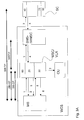
- a communications network according to a first embodiment of the invention is depicted.
- the communications network comprises a WCS operating in accordance with the GSM standard and a short message SC communicating with the WCS.
- the SC is outside the control of GSM network operators and connected to a SMS-IWMSC, which acts as a gateway between the GSM world and SC.
- the WCS of Fig. 2 further comprises a MS, a network node in the form of a MSC/VLR and a CU.
- the communications network shown in Fig. 2 thus comprises similar components like the communications network described above with reference to Fig. 1 .
- MSC/VLR and SC of the communications network of Fig. 2 deviate from the construction of the corresponding components depicted Fig. 1 .
- MSC/VLR comprises a router 20 and a controller 30 and SC comprises a memory 40.
- the router 20 of MSC/VLR serves for forwarding a message from MS to SC to be stored in memory 40 of SC, and for routing a first confirmation, which acknowledges receipt of the message at SC, to MS.
- the controller 30 of MSC/VLR serves for determining if MS acknowledges receipt of the first confirmation, for instructing SC to either delete the message or to route the message from SC to a recipient of the message, and for initiating a charging procedure for the message, if MS acknowledges receipt of the first confirmation, by correspondingly controlling CU.
- step 1 to 6 The first six steps, symbolized by arrows 1 to 6, are essentially identical with the corresponding steps explained above with reference to Fig. 1 . Hence, a more detailed description of these steps will be omitted. It should be noted, however, that during steps 1 to 5 communication takes place via router 20 of MSC/VLR and that starting from step 6 communication takes place via controller 30 of MSC/VLR.
- SMS Upon receipt of SMS at SC (arrow 3), SMS is temporarily stored in memory 40 of SC.
- SC sends a corresponding first confirmation (arrow 4) via SMS-IWMSC back to router 20 of MSC/VLR. This first confirmation is forwarded to MS (arrow 5).
- router 20 reaches MS and informs MS by means of a CP-DATA DTAP message that SMS has successfully been sent to SC.
- MS will acknowledge receipt of the first confirmation by a CP-DATA-ACK DTAP message (second confirmation) to controller 30 of MSC/VLR (arrow 6).
- controller 30 of MSC/VLR instructs SC via SMS-IWMSC to forward the message stored in memory 40 to the recipient of the message.
- This is done by a first new MAP message which is symbolized by arrow 7.
- the first new MAP message informs SC that MS has responded and that SC can send the earlier received SMS further on.
- the first new MAP message thus indicates that MS has acknowledged receipt of the first confirmation.
- router 20 of MSC/VLR is not able to reach MS after receipt of the MAP/H message symbolized by arrow 4.
- controller 30 of MSC/VLR will not receive the CP-DATA-ACK DTAP message symbolized by arrow 6 during a predetermined period of time after receipt of the MAP/H message symbolized by arrow 4.
- controller 30 forwards a second new MAP message via SMS-IWMSC to SC as symbolized by arrow 7.
- This second new MAP message indicates that MS has not acknowledged receipt of the first confirmation.
- SC deletes the message temporarily stored in memory 40.
- SC sends a third confirmation (third new MAP message) via SMS-IWMSC to controller 30 of MSC/VLR.
- the third confirmation indicates that SC has acted upon the respective new MAP message, i.e. either forwarded or deleted the message stored in memory 40 of SC.
- This communication between SC and controller 30 of MSC/VLR is indicated by arrow 8.
- Controller 30 of MSC/VLR initiates (symbolized by arrow 9) a charging procedure for the message only if an SMS was actually sent by SC and only after controller 30 of MSC/VLR has received the third confirmation from SC.
- MSC/VLR clears the transaction with the Clear Command DTAP message as symbolized by arrow 10.
- a communications network according to a second embodiment of the invention is depicted.
- the communications network shown in Figs. 3A , 3B comprises similar components like the communications network described above with reference to Fig. 2 .
- MSC/VLR and SC have extended functionalities.
- MSC/VLR comprises a timer 60 for measuring a first predefined time interval
- SC comprises a timer 50 for measuring a second predefined time interval which is longer than the first predefined time interval.
- SC comprises a statistics database 70.
- timer 60 of MSC/VLR is started to run for the first predefined time interval.
- SC temporarily stores in memory 40 SMS received from MS via MSC/VLR and SMS-IWMSC (arrow 3).
- timer 50 of SC is started to run for the second predefined time interval. SC then monitors during this second predefined time interval whether or not it receives an instruction from MSC/VLR to delete the message stored in memory 40. At this point two different scenarios may occur.
- MS acknowledges receipt of the first confirmation (arrow 6) during the first predefined time interval.
- controller 30 of MSC/VLR will initiate charging procedures for SMS as is known in the art (arrows 7 and 8).
- the controller 30 will not instruct SC while timer 50 is running to delete the message. Therefore, upon expiry of the second predefined time interval monitored by timer 50, SMS stored in memory 40 will automatically be forwarded to its recipient with just a few seconds additional delay corresponding to the second predefined time interval. Since the total delay of an SMS is already in the order of minutes or even hours, such an additional delay will be acceptable to subscribers.
- controller 30 of MSC/VLR does not receive an acknowledgement of MS regarding receipt of the first confirmation (arrow 5) at MS while timer 60 of MSC/VLR is running. This situation is symbolized by the crossed out arrow 6.
- controller 30 of MSC/VLR Upon expiry of the first predefined time interval monitored by timer 60, controller 30 of MSC/VLR sends an instruction in the form of a newly defined MAP message (arrow 7) via SMS-IWMSC to SC.
- the instruction symbolized by arrow 7 indicates that MS has not acknowledged receipt of the first confirmation and instructs SC to delete SMS temporarily stored in memory 40 of SC.
- time interval monitored by timer 60 of MSC/VLR is shorter than the time interval monitored by timer 50 of SC, it can be ensured that SC receives the instruction symbolized by arrow 7 prior to expiry of the time interval monitored by its timer 50. Consequently, SMS stored in memory 40 will be deleted prior to expiry of the time interval monitored by timer 40 of SC. Thus, routing of SMS stored in memory 40 can be prevented. According to the scenario depicted in Fig. 3B , no charging for the deleted SMS will be initiated.
- Statistics database 70 comprises statistical data associated with MS from which SMS has been sent. The statistical data are indicative of the fraud likelihood associated with the subscriber operating MS.
- SC routes SMS to its recipient in dependence on an evaluation of the statistical data available for the MS from which SMS has been sent.
- SC may decide to forward SMS immediately, for example without storing SMS in memory 40 of SC or without waiting for an expiry of the time interval monitored by timer 50 of SC. Otherwise, if the fraud likelihood for MS from which SMS has been received is comparatively high, the inventive steps discussed in context with Fig. 2 or Figs. 3A, 3B may be performed.
- the statistical data enable further decisions also. For example, an additional indicator may be added to the charging records of CU for each SMS which possibly results from a fraudulent operation.
- originating MS can never be sure that SMS really reached its recipient. In other words, charging is always based on successful sending of SMS towards SC and the fact that originating MS has been successfully informed about this successful sending.
- charging could also be initiated prior to receipt of the third confirmation at controller 30 of MSC/VLR, for example between the fourth step indicated by arrow 4 and the fifth step indicated by arrow 5.
- This has the disadvantage that MS does not get the result whether or not SC has actually received SMS from MSC/VLR.
- such an earlier charging may be incorrect since a user of MS my try to send SMS a second time and would consequently be charged twice.
Landscapes
- Engineering & Computer Science (AREA)
- Computer Networks & Wireless Communication (AREA)
- Signal Processing (AREA)
- Multimedia (AREA)
- Business, Economics & Management (AREA)
- Accounting & Taxation (AREA)
- Mobile Radio Communication Systems (AREA)
Claims (27)
- Verfahren in einem drahtlosen Kommunikationssystem (WCS) zur Steuerung von Gebührenverrechnungsprozeduren für Nachrichtendienste, welche den Transport von Nachrichten von einer Mobilstation (MS) zu einer Dienstzentrale (SC) ermöglichen, umfassend:(a) Transportieren einer Nachricht von einer Mobilstation (MS) zur Dienstzentrale (SC);(b) temporäres Speichern der Nachricht an der Dienstzentrale (SC);(c) Senden einer ersten Bestätigung, die den Empfang der Nachricht an der Dienstzentrale (SC) bestätigt, an die Mobilstation (MS);(d) Bestimmen, ob die Mobilstation (MS) den Empfang der ersten Bestätigung bestätigt, und Weiterleiten, wenn die Mobilstation (MS) den Empfang der ersten Bestätigung bestätigt, der Nachricht von der Dienstzentrale (SC) an einen Empfänger der Nachricht und Einleiten einer Gebührenverrechnungsprozedur für die Nachricht.
- Verfahren nach Anspruch 1,
wobei die Nachricht von der Mobilstation (MS) über einen Netzknoten (MSC/VLR) zur Dienstzentrale (SC) transportiert wird. - Verfahren nach Anspruch 1 oder 2,
wobei, wenn die Dienstzentrale (SC) keine gegenteiligen Anweisungen empfängt, die Dienstzentrale (SC) die Nachricht nach Ablauf eines ersten Zeitintervalls an den Empfänger der Nachricht weiterleitet. - Verfahren nach Anspruch 3,
wobei das erste Zeitintervall an mindestens einem von der Dienstzentrale (SC) und dem Netzknoten (MSC/VLR) gemessen wird. - Verfahren nach einem der Ansprüche 1 bis 4,
wobei, wenn die Mobilstation (MS) den Empfang der ersten Bestätigung nicht bestätigt, die Nachricht, die an der Dienstzentrale (SC) temporär gespeichert wird, gelöscht wird. - Verfahren nach Anspruch 5,
wobei die Nachricht, die an der Dienstzentrale (SC) temporär gespeichert wird, automatisch gelöscht wird, wenn die Mobilstation (MS) den Empfang der ersten Bestätigung nicht während eines zweiten Zeitintervalls bestätigt. - Verfahren nach Anspruch 6,
wobei das zweite Zeitintervall kürzer als das erste Zeitintervall ist. - Verfahren nach Anspruch 6 oder 7,
wobei das zweite Zeitintervall am Netzknoten (MSC/VLR) gemessen wird. - Verfahren nach Anspruch 8,
wobei, wenn die Mobilstation (MS) den Empfang der ersten Bestätigung nicht während des zweiten Intervalls bestätigt, der Netzknoten (MSC/VLR) eine Anweisung an die Dienstzentrale (SC) sendet, wobei die Anweisung anzeigt, dass die Mobilstation (MS) den Empfang der ersten Bestätigung nicht bestätigt hat. - Verfahren nach Anspruch 9,
wobei die Dienstzentrale (SC) die temporär gespeicherte Nachricht bei Empfang der Anweisung löscht. - Verfahren nach einem der Ansprüche 1 bis 10,
wobei Schritt (d) ein Senden einer zweiten Bestätigung, die den Empfang der ersten Bestätigung an der Mobilstation (MS) bestätigt, an mindestens eines von dem Netzknoten (MSC/VLR) und der Dienstzentrale (SC) umfasst. - Verfahren nach Anspruch 11,
wobei Schritt (d) ein Senden einer Anweisung vom Netzknoten (MSC/VLR) an die Dienstzentrale (SC) bei Empfang der zweiten Bestätigung umfasst, wobei die Anweisung anzeigt, dass die Mobilstation (MS) den Empfang der ersten Bestätigung bestätigt hat. - Verfahren nach einem der Ansprüche 2 bis 12,
wobei Schritt (d) ein Senden einer Anweisung vom Netzknoten (MSC/VLR) an die Dienstzentrale (SC) umfasst, wobei die Anweisung anzeigt, ob die Mobilstation (MS) den Empfang der ersten Bestätigung bestätigt hat oder nicht. - Verfahren nach einem der Ansprüche 9 bis 13,
ferner umfassend ein Senden einer dritten Bestätigung von der Dienstzentrale (SC) an den Netzknoten (MSC/VLR), wobei die dritte Bestätigung bestätigt, dass die Dienstzentrale (SC) die Anweisung befolgt hat. - Verfahren nach einem der Ansprüche 3 bis 14,
wobei, wenn die Mobilstation (MS) die erste Bestätigung bestätigt hat, die Gebührenverrechnungsgebühr bei Empfang der dritten Bestätigung am Netznoten (MSC/VLR) oder bei Ablauf des ersten Zeitintervalls eingeleitet wird. - Verfahren nach einem der Ansprüche 9 bis 15,
wobei die Anweisung eine neu definierte MAP-Nachricht ist. - Verfahren nach einem der Ansprüche 1 bis 16,
wobei die Nachricht von der Dienstzentrale (SC) in Abhängigkeit von einer Auswertung von statistischen Daten, die mit der Mobilstation (MS), von der die Nachricht gesendet wurde, assoziiert sind, an den Empfänger der Nachricht weiterleitet. - Computerprogrammprodukt, umfassend Programmcodeabschnitte zum Ausführen der Schritte nach einem der Ansprüche 1 bis 17, wenn das Computerprogrammprodukt auf einem Computer des drahtlosen Kommunikationssystems (WCS) ausgeführt wird.
- Computerprogrammprodukt nach Anspruch 18, das auf einem computerlesbaren Aufzeichnungsmedium gespeichert ist.
- Netzknoten (MSC/VLR) in einem drahtlosen Kommunikationssystem (WCS), das Nachrichtendienste implementiert, welche den Transport von Nachrichten von einer Mobilstation (MS) zu einer Dienstzentrale (SC) ermöglichen, wobei der Netzknoten (MSC/VLR) umfasst:- einen Router (20) zum Leiten einer Nachricht von der Mobilstation (MS) an die Dienstzentrale (SC), die an der Dienstzentrale (SC) gespeichert werden soll, und zum Leiten einer ersten Bestätigung, die den Empfang der Nachricht an der Dienstzentrale (SC) bestätigt, an die Mobilstation (MS);- eine Steuerung (30) zum Bestimmen, ob die Mobilstation (MS) den Empfang der ersten Bestätigung bestätigt, und zum Anweisen der Dienstzentrale (SC), die Nachricht an einen Empfänger der Nachricht weiterzuleiten, und zum Einleiten einer Gebührenverrechnungsprozedur für die Nachricht, wenn die Mobilstation (MS) den Empfang der ersten Bestätigung bestätigt.
- Netzknoten (MSC/VLR) nach Anspruch 20,
ferner umfassend einen ersten Zeitgeber (60) zum Messen eines ersten Zeitintervalls, wobei, wenn die Mobilstation den Empfang der ersten Bestätigung nicht während des ersten Zeitintervalls bestätigt hat, die Steuerung (30) die Dienstzentrale (SC) anweist, die Nachricht zu löschen. - Drahtloses Kommunikationssystem, das Nachrichtendienste implementiert, welche den Transport von Nachrichten von einer Mobilstation (MS) zu einer Dienstzentrale (SC) ermöglichen, wobei das drahtlose Kommunikationssystem (WCS) den Netzknoten (MSC/VLR) nach Anspruch 20 oder 21 umfasst.
- Drahtloses Kommunikationssystem nach Anspruch 22,
ferner umfassend ein Gateway (SMS-IWMSC), wobei der Netzknoten (MSC/VLR) über das Gateway (SMS-IWMSC) mit der Dienstzentrale (SC) kommuniziert. - Drahtloses Kommunikationssystem nach Anspruch 22 oder 23, ferner umfassend eine Gebührenverrechnungseinheit (CU) zum Durchführen einer Gebührenverrechnungsprozedur für jede Nachricht, die von der Dienstzentrale (SC) an den Empfänger der Nachricht weitergeleitet wird.
- Kommunikationsnetz, umfassend das drahtlose Kommunikationssystem (WCS) nach einem der Ansprüche 22 bis 24 und eine Dienstzentrale (SC) in Kommunikation mit dem Netzknoten (MSC/VLR) des drahtlosen Kommunikationssystems (WSC), wobei die Dienstzentrale (SC) einen Speicher (40) zum temporären Speichern einer Nachricht aufweist, die von einer Mobilstation (MS) stammt.
- Kommunikationsnetz nach Anspruch 25,
wobei die Dienstzentrale (SC) ferner einen zweiten Zeitgeber (50) zum Messen eines zweiten Zeitintervalls umfasst, wobei, wenn die Steuerung (30) die Dienstzentrale (SC) nicht innerhalb des zweiten Zeitintervalls anweist, die Nachricht zu löschen, die Dienstzentrale (SC) die Nachricht an den Empfänger der Nachricht weiterleitet. - Kommunikationsnetz nach Anspruch 25 oder 26,
ferner umfassend eine Statistik-Datenbank (70), die statistische Daten umfasst, die mit der Mobilstation (MS) assoziiert sind, von der die Nachricht gesendet wurde, wobei die Nachricht in Abhängigkeit von einer Auswertung der statistischen Daten an den Empfänger der Nachricht weitergeleitet wird.
Priority Applications (1)
| Application Number | Priority Date | Filing Date | Title |
|---|---|---|---|
| EP01274474A EP1423980B1 (de) | 2001-09-06 | 2001-10-04 | Gebührenberechnungssteuerung für drahtlose nachrichtendienste |
Applications Claiming Priority (4)
| Application Number | Priority Date | Filing Date | Title |
|---|---|---|---|
| WOPCT/EP01/10289 | 2001-09-06 | ||
| PCT/EP2001/010289 WO2003023978A2 (en) | 2001-09-06 | 2001-09-06 | Controlling charging for wireless message services |
| EP01274474A EP1423980B1 (de) | 2001-09-06 | 2001-10-04 | Gebührenberechnungssteuerung für drahtlose nachrichtendienste |
| PCT/EP2001/011470 WO2003024135A1 (en) | 2001-09-06 | 2001-10-04 | Controlling charging for wireless message services |
Publications (2)
| Publication Number | Publication Date |
|---|---|
| EP1423980A1 EP1423980A1 (de) | 2004-06-02 |
| EP1423980B1 true EP1423980B1 (de) | 2012-08-08 |
Family
ID=8164584
Family Applications (1)
| Application Number | Title | Priority Date | Filing Date |
|---|---|---|---|
| EP01274474A Expired - Lifetime EP1423980B1 (de) | 2001-09-06 | 2001-10-04 | Gebührenberechnungssteuerung für drahtlose nachrichtendienste |
Country Status (3)
| Country | Link |
|---|---|
| US (1) | US7113768B2 (de) |
| EP (1) | EP1423980B1 (de) |
| WO (2) | WO2003023978A2 (de) |
Families Citing this family (11)
| Publication number | Priority date | Publication date | Assignee | Title |
|---|---|---|---|---|
| ITRM20020590A1 (it) * | 2002-11-22 | 2004-05-23 | Telecom Italia Mobile Spa | Tecnica di invio di short message con addebito al destinatario. |
| TWI382714B (zh) * | 2003-05-01 | 2013-01-11 | Interdigital Tech Corp | 在耦合於包含相關於在WLANs上短訊息服務之協定架構及資訊元件之3GPP裝置之微微網及無線LANs(WLANs)上傳遞以資料為基礎/語音服務之方法及裝置 |
| EP1667417B1 (de) * | 2004-12-01 | 2016-07-27 | Optis Wireless Technology, LLC | Verfahren und System zum Belohnen von Benutzern von Diensten in einem Kommunikationssystem |
| US7881735B2 (en) | 2004-12-08 | 2011-02-01 | Markport Limited | Messaging gateway and method |
| US8121626B1 (en) * | 2006-06-05 | 2012-02-21 | Callwave, Inc. | Method and systems for short message forwarding services |
| US8548447B1 (en) | 2006-10-06 | 2013-10-01 | Callwave Communications, Llc | Methods and systems for blocking unwanted telecommunications |
| US8160623B1 (en) * | 2009-04-14 | 2012-04-17 | Sprint Communications Company L.P. | Redirection of SMS messages to satellite radio for delivery |
| EP2915350A1 (de) * | 2012-11-02 | 2015-09-09 | Interdigital Patent Holdings, Inc. | Kurznachrichtendienst in prosa |
| US9635527B1 (en) * | 2014-12-19 | 2017-04-25 | Amazon Technologies, Inc. | SMS delivery to prevent duplicate SMS messages on LTE |
| US9521528B1 (en) | 2014-12-19 | 2016-12-13 | Amazon Technologies, Inc | Non-duplication of message delivery in a short message service |
| US9749821B1 (en) | 2014-12-19 | 2017-08-29 | Amazon Technologies, Inc. | LTE network interactions for non-duplication of SMS |
Family Cites Families (5)
| Publication number | Priority date | Publication date | Assignee | Title |
|---|---|---|---|---|
| US5742905A (en) * | 1994-09-19 | 1998-04-21 | Bell Communications Research, Inc. | Personal communications internetworking |
| KR100251783B1 (ko) * | 1997-10-18 | 2000-06-01 | 윤종용 | 이동무선단말기의단축메시지전송상태정보표시장치및방법 |
| US6263212B1 (en) * | 1998-02-17 | 2001-07-17 | Alcatel Usa Sourcing, L.P. | Short message service center |
| FI106085B (fi) * | 1998-11-10 | 2000-11-15 | Nokia Networks Oy | Lyhytsanomien laskutus |
| FR2809923B1 (fr) * | 2000-05-09 | 2002-12-13 | France Telecom | Systeme d'acquittement de lecture d'un message recu sur un terminal mobile |
-
2001
- 2001-09-06 WO PCT/EP2001/010289 patent/WO2003023978A2/en not_active Ceased
- 2001-10-04 EP EP01274474A patent/EP1423980B1/de not_active Expired - Lifetime
- 2001-10-04 WO PCT/EP2001/011470 patent/WO2003024135A1/en not_active Ceased
- 2001-10-04 US US10/488,513 patent/US7113768B2/en not_active Expired - Lifetime
Also Published As
| Publication number | Publication date |
|---|---|
| US7113768B2 (en) | 2006-09-26 |
| WO2003023978A2 (en) | 2003-03-20 |
| EP1423980A1 (de) | 2004-06-02 |
| WO2003024135A1 (en) | 2003-03-20 |
| US20050181759A1 (en) | 2005-08-18 |
Similar Documents
| Publication | Publication Date | Title |
|---|---|---|
| US8543146B2 (en) | Method and system for efficiently routing messages | |
| US6370390B1 (en) | Delivery of short messages in a packet radio network | |
| JP3738184B2 (ja) | ワイヤレス通信システムにおいて全形式のメッセージに対して同じプロトコルを使用してメッセージを配送する方法 | |
| US20060136560A1 (en) | Scalable message forwarding | |
| EP1423980B1 (de) | Gebührenberechnungssteuerung für drahtlose nachrichtendienste | |
| US7333823B2 (en) | Method and system for checking the attainability status of a mobile terminal device | |
| US20020006797A1 (en) | Service delivery in a mobile communications system supporting two connection types | |
| US20020103929A1 (en) | Message routing in case multiple network subscription | |
| US20050266864A1 (en) | Non-intrusive network architecture for mass mobile messaging | |
| TW200922216A (en) | Wireless communication method and system for establishing a multimedia message service over a WLAN | |
| KR101123973B1 (ko) | 단문 메시지 미도착 알림 서비스 방법 및 그 장치 | |
| CN102461226B (zh) | 文本消息的选择性首先传送尝试(fda)处理 | |
| JP3820108B2 (ja) | メッセージサービスシステム、及びメッセージサービス方法 | |
| HK1108541B (en) | Method and system for improved short message services |
Legal Events
| Date | Code | Title | Description |
|---|---|---|---|
| PUAI | Public reference made under article 153(3) epc to a published international application that has entered the european phase |
Free format text: ORIGINAL CODE: 0009012 |
|
| 17P | Request for examination filed |
Effective date: 20040226 |
|
| AK | Designated contracting states |
Kind code of ref document: A1 Designated state(s): AT BE CH CY DE DK ES FI FR GB GR IE IT LI LU MC NL PT SE TR |
|
| AX | Request for extension of the european patent |
Extension state: AL LT LV MK RO SI |
|
| RIC1 | Information provided on ipc code assigned before grant |
Ipc: H04W 4/14 20090101AFI20090706BHEP |
|
| 17Q | First examination report despatched |
Effective date: 20090717 |
|
| GRAP | Despatch of communication of intention to grant a patent |
Free format text: ORIGINAL CODE: EPIDOSNIGR1 |
|
| RIC1 | Information provided on ipc code assigned before grant |
Ipc: H04M 15/00 20060101ALI20120202BHEP Ipc: H04W 4/24 20090101ALI20120202BHEP Ipc: H04W 4/14 20090101AFI20120202BHEP |
|
| GRAS | Grant fee paid |
Free format text: ORIGINAL CODE: EPIDOSNIGR3 |
|
| GRAA | (expected) grant |
Free format text: ORIGINAL CODE: 0009210 |
|
| AK | Designated contracting states |
Kind code of ref document: B1 Designated state(s): AT BE CH CY DE DK ES FI FR GB GR IE IT LI LU MC NL PT SE TR |
|
| REG | Reference to a national code |
Ref country code: GB Ref legal event code: FG4D |
|
| REG | Reference to a national code |
Ref country code: CH Ref legal event code: EP Ref country code: AT Ref legal event code: REF Ref document number: 570272 Country of ref document: AT Kind code of ref document: T Effective date: 20120815 |
|
| REG | Reference to a national code |
Ref country code: IE Ref legal event code: FG4D |
|
| REG | Reference to a national code |
Ref country code: DE Ref legal event code: R096 Ref document number: 60146942 Country of ref document: DE Effective date: 20121011 |
|
| REG | Reference to a national code |
Ref country code: NL Ref legal event code: VDEP Effective date: 20120808 |
|
| REG | Reference to a national code |
Ref country code: AT Ref legal event code: MK05 Ref document number: 570272 Country of ref document: AT Kind code of ref document: T Effective date: 20120808 |
|
| PG25 | Lapsed in a contracting state [announced via postgrant information from national office to epo] |
Ref country code: CY Free format text: LAPSE BECAUSE OF FAILURE TO SUBMIT A TRANSLATION OF THE DESCRIPTION OR TO PAY THE FEE WITHIN THE PRESCRIBED TIME-LIMIT Effective date: 20120808 Ref country code: AT Free format text: LAPSE BECAUSE OF FAILURE TO SUBMIT A TRANSLATION OF THE DESCRIPTION OR TO PAY THE FEE WITHIN THE PRESCRIBED TIME-LIMIT Effective date: 20120808 Ref country code: FI Free format text: LAPSE BECAUSE OF FAILURE TO SUBMIT A TRANSLATION OF THE DESCRIPTION OR TO PAY THE FEE WITHIN THE PRESCRIBED TIME-LIMIT Effective date: 20120808 |
|
| PG25 | Lapsed in a contracting state [announced via postgrant information from national office to epo] |
Ref country code: BE Free format text: LAPSE BECAUSE OF FAILURE TO SUBMIT A TRANSLATION OF THE DESCRIPTION OR TO PAY THE FEE WITHIN THE PRESCRIBED TIME-LIMIT Effective date: 20120808 Ref country code: PT Free format text: LAPSE BECAUSE OF FAILURE TO SUBMIT A TRANSLATION OF THE DESCRIPTION OR TO PAY THE FEE WITHIN THE PRESCRIBED TIME-LIMIT Effective date: 20121210 Ref country code: SE Free format text: LAPSE BECAUSE OF FAILURE TO SUBMIT A TRANSLATION OF THE DESCRIPTION OR TO PAY THE FEE WITHIN THE PRESCRIBED TIME-LIMIT Effective date: 20120808 Ref country code: GR Free format text: LAPSE BECAUSE OF FAILURE TO SUBMIT A TRANSLATION OF THE DESCRIPTION OR TO PAY THE FEE WITHIN THE PRESCRIBED TIME-LIMIT Effective date: 20121109 |
|
| PG25 | Lapsed in a contracting state [announced via postgrant information from national office to epo] |
Ref country code: NL Free format text: LAPSE BECAUSE OF FAILURE TO SUBMIT A TRANSLATION OF THE DESCRIPTION OR TO PAY THE FEE WITHIN THE PRESCRIBED TIME-LIMIT Effective date: 20120808 |
|
| PG25 | Lapsed in a contracting state [announced via postgrant information from national office to epo] |
Ref country code: ES Free format text: LAPSE BECAUSE OF FAILURE TO SUBMIT A TRANSLATION OF THE DESCRIPTION OR TO PAY THE FEE WITHIN THE PRESCRIBED TIME-LIMIT Effective date: 20121119 Ref country code: DK Free format text: LAPSE BECAUSE OF FAILURE TO SUBMIT A TRANSLATION OF THE DESCRIPTION OR TO PAY THE FEE WITHIN THE PRESCRIBED TIME-LIMIT Effective date: 20120808 |
|
| PG25 | Lapsed in a contracting state [announced via postgrant information from national office to epo] |
Ref country code: MC Free format text: LAPSE BECAUSE OF NON-PAYMENT OF DUE FEES Effective date: 20121031 |
|
| REG | Reference to a national code |
Ref country code: CH Ref legal event code: PL |
|
| PLBE | No opposition filed within time limit |
Free format text: ORIGINAL CODE: 0009261 |
|
| STAA | Information on the status of an ep patent application or granted ep patent |
Free format text: STATUS: NO OPPOSITION FILED WITHIN TIME LIMIT |
|
| 26N | No opposition filed |
Effective date: 20130510 |
|
| REG | Reference to a national code |
Ref country code: IE Ref legal event code: MM4A |
|
| REG | Reference to a national code |
Ref country code: FR Ref legal event code: ST Effective date: 20130628 |
|
| PG25 | Lapsed in a contracting state [announced via postgrant information from national office to epo] |
Ref country code: LI Free format text: LAPSE BECAUSE OF NON-PAYMENT OF DUE FEES Effective date: 20121031 Ref country code: CH Free format text: LAPSE BECAUSE OF NON-PAYMENT OF DUE FEES Effective date: 20121031 Ref country code: IE Free format text: LAPSE BECAUSE OF NON-PAYMENT OF DUE FEES Effective date: 20121004 |
|
| PG25 | Lapsed in a contracting state [announced via postgrant information from national office to epo] |
Ref country code: FR Free format text: LAPSE BECAUSE OF NON-PAYMENT OF DUE FEES Effective date: 20121031 |
|
| REG | Reference to a national code |
Ref country code: DE Ref legal event code: R097 Ref document number: 60146942 Country of ref document: DE Effective date: 20130510 |
|
| PG25 | Lapsed in a contracting state [announced via postgrant information from national office to epo] |
Ref country code: TR Free format text: LAPSE BECAUSE OF FAILURE TO SUBMIT A TRANSLATION OF THE DESCRIPTION OR TO PAY THE FEE WITHIN THE PRESCRIBED TIME-LIMIT Effective date: 20120808 |
|
| PG25 | Lapsed in a contracting state [announced via postgrant information from national office to epo] |
Ref country code: LU Free format text: LAPSE BECAUSE OF NON-PAYMENT OF DUE FEES Effective date: 20121004 |
|
| PGFP | Annual fee paid to national office [announced via postgrant information from national office to epo] |
Ref country code: GB Payment date: 20141027 Year of fee payment: 14 Ref country code: DE Payment date: 20141029 Year of fee payment: 14 |
|
| PGFP | Annual fee paid to national office [announced via postgrant information from national office to epo] |
Ref country code: IT Payment date: 20141027 Year of fee payment: 14 |
|
| REG | Reference to a national code |
Ref country code: DE Ref legal event code: R119 Ref document number: 60146942 Country of ref document: DE |
|
| GBPC | Gb: european patent ceased through non-payment of renewal fee |
Effective date: 20151004 |
|
| PG25 | Lapsed in a contracting state [announced via postgrant information from national office to epo] |
Ref country code: DE Free format text: LAPSE BECAUSE OF NON-PAYMENT OF DUE FEES Effective date: 20160503 Ref country code: IT Free format text: LAPSE BECAUSE OF NON-PAYMENT OF DUE FEES Effective date: 20151004 Ref country code: GB Free format text: LAPSE BECAUSE OF NON-PAYMENT OF DUE FEES Effective date: 20151004 |