EP1420345A1 - Non−volatile storage device and control method thereof - Google Patents
Non−volatile storage device and control method thereof Download PDFInfo
- Publication number
- EP1420345A1 EP1420345A1 EP02762797A EP02762797A EP1420345A1 EP 1420345 A1 EP1420345 A1 EP 1420345A1 EP 02762797 A EP02762797 A EP 02762797A EP 02762797 A EP02762797 A EP 02762797A EP 1420345 A1 EP1420345 A1 EP 1420345A1
- Authority
- EP
- European Patent Office
- Prior art keywords
- physical block
- physical
- data
- generation means
- nonvolatile storage
- Prior art date
- Legal status (The legal status is an assumption and is not a legal conclusion. Google has not performed a legal analysis and makes no representation as to the accuracy of the status listed.)
- Withdrawn
Links
Images







Classifications
-
- G—PHYSICS
- G06—COMPUTING OR CALCULATING; COUNTING
- G06F—ELECTRIC DIGITAL DATA PROCESSING
- G06F12/00—Accessing, addressing or allocating within memory systems or architectures
- G06F12/02—Addressing or allocation; Relocation
-
- G—PHYSICS
- G06—COMPUTING OR CALCULATING; COUNTING
- G06F—ELECTRIC DIGITAL DATA PROCESSING
- G06F12/00—Accessing, addressing or allocating within memory systems or architectures
- G06F12/02—Addressing or allocation; Relocation
- G06F12/0223—User address space allocation, e.g. contiguous or non contiguous base addressing
- G06F12/023—Free address space management
- G06F12/0238—Memory management in non-volatile memory, e.g. resistive RAM or ferroelectric memory
- G06F12/0246—Memory management in non-volatile memory, e.g. resistive RAM or ferroelectric memory in block erasable memory, e.g. flash memory
Definitions
- the present invention relates to a nonvolatile storage device and control method thereof.
- a prior art nonvolatile storage device having four 512-Mbit flash chips of 256 MB capacity will be explained with reference to FIG. 4 to FIG. 10.
- FIG. 4 is a configuration view of the nonvolatile storage device.
- FIG. 4 designates a nonvolatile storage device and 8 designates a data input/output device.
- the nonvolatile storage device 1 has nonvolatile storage mediums 2 (flash memories in a conventional embodiment and embodiments of the present invention) and a control part 3.
- the control part 3 further has a first translation table (an indirect address translation table) 4, a data validity table (a fourth table) 5, an entry table (a third table) 6 and an input/output control part 7.
- the nonvolatile storage device 1 accepts various requests including write request, read request, clear request and so on from the data input/output device 8 through the input/output control part 7.
- the nonvolatile storage device 1 performs processings for the accepted various requests.
- data to be written is transferred from the data input/output device 8 to the nonvolatile storage device 1.
- data to be read out is transferred from the nonvolatile storage device 1 to the data input/output device 8.
- the control part 3 carries out writing, reading or clearing on the nonvolatile storage medium 2.
- the control part 3 also refers to and updates the first translation table 4, the data validity table 5 and the entry table 6.
- FIG. 5 is a configuration view showing the nonvolatile storage medium 2 of the nonvolatile storage device 1.
- 1-1, 1-2, ... 1-2048, 2-1, ... 8-2048 each designate a physical block.
- data is cleared in the unit of physical blocks.
- the physical blocks 1-1, ... 1-2048 are collectively referred to as a first physical block group.
- a single physical block set consists of eight physical blocks selected from each of eight block groups. For example, as shown in the drawing, 1-1, 2-2, 3-3, 4-3, 5-2, 6-2048, 7-1 and 8-3 are collectively referred to as a first physical block set.
- the control part 3 writes eight input data in a physical block set at a time.
- bit width of data becomes eight times greater so that writing speed of the nonvolatile storage device 1 can be improved eight times faster.
- the nonvolatile storage device 1 it is impossible to simultaneously write data in plural physical blocks of one and the same physical block group.
- the technique for simultaneously writing data in plural physical blocks of the nonvolatile memory has become publicly known. For example, data sheet of the nonvolatile memory TC58512FT manufactured by Kabushiki Kaisha Toshiba provides an explanation of multi-block program for simultaneously writing data in plural physical blocks.
- FIG. 6 is a configuration view showing the first physical block set of the nonvolatile storage medium in the nonvolatile storage device.
- the physical block 1-1 consists of eight partial logical blocks including 1-1A, 1-1B, 1-1C, ... 1-1H.
- a single logical block is comprised of partial logical blocks that selected one by one in a sequential order, from all physical blocks included in the physical block set. For example, as shown in the drawing, 1-1A, 2-2A, 3-3A, 4-3A, 5-2A, 6-2048A, 7-1A and 8-3A are collectively referred to as a first logical block.
- One physical block and one logical block are each 32 pages, and one partial logical block is 4 pages.
- FIG. 7 is a detail view showing a redundant area of the physical block of the nonvolatile storage medium in the nonvolatile storage device.
- the partial logical block has a redundant area in addition to data.
- Each partial logical block of the first physical block group has a data validity flag in the redundant area.
- Some partial logical blocks of the first physical block group have a link table and a second translation table in the redundant area.
- the second translation table is a table for translating logical addresses into physical addresses (physical addresses of partial logical blocks) of eight partial logical blocks included in the first physical block group.
- the link table is a table for physical addresses (physical addresses of partial logical blocks) of seven partial logical blocks (other than a partial logical block which is included in the first physical block group and has the link table) included in the second to eighth physical block groups.
- the validity flag is a flag for indicating whether the second translation table of the logical block is valid or invalid.
- the second translation table may lie in the second to eighth physical block groups as well as the first physical block group.
- a leading partial logical block of each physical block has first data capable of determining whether the physical block including the partial logical block has been cleared or not. Supposing that the first data is 8-bit data, when the data value is FFH, the physical block has been cleared, and when it is a value other than FFH, the physical block has not been cleared.
- the first data may be used for any purpose other than that of determining whether the physical block has been cleared or not.
- Writing is performed in the unit of physical block sets and clearance is performed in the unit of physical blocks. Whether written data is valid or invalid can be determined in the unit of partial logical blocks.
- FIG. 9 is a configuration view of the entry table 6.
- numeral 0 or 1 represents the state of each physical block arranged in order of address 0, 1, 2, ...
- Numeral 0 indicates that writing has been completed and numeral 1 indicates that clearance has been completed.
- the entry table is prepared at initialization.
- FIG. 10 is a configuration view of the data validity table 5.
- numeral 0 or 1 represents validity of data written in each partial logical block of the first physical block group arranged in order of address 0, 1, 2, ...
- numeral 0 indicates invalidity and numeral 1 indicates validity.
- the data validity table is prepared at initialization.
- FIG. 8A and 8B are flowcharts of operations of a third table generation means and a fourth table generation means at initialization of the conventional nonvolatile storage device. Part a of FIG. 8A is connected to part a of FIG. 8B.
- the third table generation means initializes all fields of the entry table by the default value 1 (cleared).
- the fourth table generation means initializes all fields of the data validity table by the default value 0 (invalid).
- the control part 3 initializes physical block number j in the physical block group by the default value 1.
- the control part 3 initializes partial logical block number i in the physical block by the default value 1.
- the control part 3 reads out the first partial logical block of the j th physical block in the first physical block group.
- the control part 3 determines whether the physical block is a cleared one or not. In the case of the cleared physical block, the entry table has been already initialized with the default value 1 (cleared) at the step 801 and the data validity table has been already initialized with the default value 0 (invalid) at the step 802. Therefore, the control part 3 completes processing of the j th physical block without doing anything. In the case where it is the written physical block, the operation proceeds to step 807 and the third table generation means writes 0 (written) in the field of the physical block of the entry table.
- the control part 3 determines whether the validity flag in redundant area is valid or not. In the case where the validity flag is invalid, the data validity table has been already initialized with the default value 0 (invalid) at the step 802, and therefore the control part 3 completes processing of the i th partial logical block without doing anything. In the case where the validity flag is valid, the operation proceeds to step 810 and the fourth table generation means writes 1 (valid) in the field of the partial logical block of the data validity table.
- the control part 3 adds 1 to the partial physical block number i in the physical block.
- the control part 3 determines whether the partial logical block is a last one in the physical block or not, that is, i>8 or not. In the case where the partial logical block is not a last one, that is, i ⁇ 8, the operation returns to the step 808 and the control part 3 reads out the i th partial logical block of the j th physical block in the first physical block group and carries out processings at the steps 809 to 812 again. In the case where the partial logical block is a last one, that is, i>8 at the step 812, the control part 3 completes processing of the j th physical block and proceeds to processing of the next physical block.
- the control part 3 adds 1 to the physical block number j in the physical block group to 1.
- the control part 3 determines whether the physical block is a last one in the physical block group or not, that is, j>2048 or not. In the case where the physical block is not a last one, that is, j ⁇ 2048, the operation returns to the step 804 and the control part 3 performs processing of the next physical block. In the case where the physical block is a last one, that is, j>2048, the control part 3 completes processing of the first physical block group and proceeds to processing of the second physical block group.
- control part 3 initializes physical block group number k by the default value 2.
- control part 3 initializes physical block number j in the physical block group by the default value 1.
- the control part 3 reads out the first partial logical block of the j th physical block in the k th physical block group.
- the control part 3 determines whether the physical block is a cleared one or not. In the case of the cleared physical block, the entry table has been already initialized with the default value 1 (cleared) at the step 801 and therefore the control part 3 completes the processing of the j th physical block without doing anything. In the case where it is the written physical block, the operation proceeds to step 819 and the third table generation means writes 0 (written) in the field of the physical block of the entry table.
- the control part 3 adds 1 to the physical block number j in the physical block group.
- the control part 3 determines whether the physical block is a last one in the physical block group or not, that is, j>2048 or not. In the case where the physical block is not a last one, that is, j ⁇ 2048, the operation returns to the step 817 and the control part 3 performs processing of the next physical block. In the case where the physical block is a last one, that is, j>2048, the control part 3 completes processing of the k th physical block group and proceeds to processing of the next physical block group.
- the control part 3 adds 1 to the physical block group number k to 1.
- the control part 3 determines whether the physical block group is a last one or not, that is, k>8 or not. In the case where the physical block group is not a last one, that is, k ⁇ 8, the operation returns to the step 816 and the control part 3 carries out processing of the next physical block group. In the case where the physical block group is a last one, that is, k>8, this flowchart ends.
- the nonvolatile storage device 1 when the nonvolatile storage device is inserted into a main body, the nonvolatile storage device 1 generates an address control table including an address translation table for translating logical address designated by the main body into physical address of the nonvolatile storage device. Accordingly, time required for generating the address control table (hereinafter referred to as initialization time) increases in proportion to capacity of the nonvolatile memory.
- the increase in memory capacity has caused an increase in initialization time. It is impossible to provide an external data access to the nonvolatile storage device having the nonvolatile memory during initialization time.
- the problem is that, after inserting the nonvolatile storage device into the portable device, time required to recognize the nonvolatile storage device by the portable device, that is, time during which the user cannot operate the portable device has increased.
- the present invention solves the above-mentioned conventional problem and intends to provide a nonvolatile storage device and control method thereof which enable to improve convenience of portable devices by shortening initialization time.
- the present invention has a following configuration.
- a nonvolatile storage device from one aspect comprises a plurality of physical blocks; a first table generation means for generating a first translation table to obtain physical addresses from logical addresses; a second table generation means for generating a second translation table to obtain physical addresses from logical addresses; and a third table generation means for generating a third table which indicates whether each of the above-mentioned physical blocks has been cleared or not, wherein the above-mentioned physical block has a data area which stores data therein and first data which indicates whether the above-mentioned physical block has been cleared or not, and the above-mentioned physical block designated by the physical address of the above-mentioned first translation table further has the above-mentioned second translation table, and the above-mentioned third table generation means reads out the above-mentioned first data and the above-mentioned second translation table from the above-mentioned physical block, decides a value of the above-mentioned third table of the above-mentioned physical
- a nonvolatile storage device comprises a plurality of physical blocks; a write means for dividing input data and writing the divided data in a plurality of the above-mentioned physical blocks or divided areas of the above-mentioned physical blocks; a link table generation means for generating a link table which is link information of a plurality of the above-mentioned physical blocks or the above-mentioned areas in which the divided input data is written respectively; and a third table generation means for generating a third table which indicates whether each of the above-mentioned physical blocks has been cleared or not, wherein the above-mentioned physical block has a data area which stores data therein and a first data which indicates whether the above-mentioned physical block has been cleared or not, and at least one above-mentioned physical block or one above-mentioned area among a plurality of the above-mentioned physical blocks or the above-mentioned areas in which divided input data is written respectively further has the above-ment
- a nonvolatile storage device comprises a plurality of physical blocks; a first table generation means for generating a first translation table to obtain physical addresses from logical addresses; a second table generation means for generating a second translation table to obtain physical addresses from logical addresses; and a fourth table generation means for generating a fourth table which indicates whether valid data is written in each of the above-mentioned physical blocks or divided areas of the above-mentioned physical blocks or not, wherein the above-mentioned physical block or the above-mentioned area has a data area which stores data therein, and the above-mentioned physical block or the above-mentioned area designated by the physical address of the above-mentioned first translation table further has the above-mentioned second translation table and a second flag which indicates whether the above-mentioned second translation table is valid or not, and the above-mentioned fourth table generation means reads out the above-mentioned second flag and the above-mentioned second translation table
- the above-mentioned nonvolatile storage device comprises a plurality of bus lines and a plurality of nonvolatile storage elements which have a plurality of the above-mentioned physical blocks and are connected to the above-mentioned bus lines, and the number of the above-mentioned second translation table which is written in the above-mentioned nonvolatile storage elements connected to the above-mentioned bus lines is substantially same for each bus line.
- the above-mentioned nonvolatile storage device comprises a plurality of bus lines and a plurality of nonvolatile storage elements which have a plurality of the above-mentioned physical blocks and are connected to the above-mentioned bus lines, and the number of the above-mentioned link table which is written in the above-mentioned nonvolatile storage elements connected to the above-mentioned bus lines is substantially same for each bus line.
- a control method of a nonvolatile storage device is a control method of a nonvolatile storage device comprising: a plurality of physical blocks; a first table generation means for generating a first translation table to obtain physical addresses from logical addresses; a second table generation means for generating a second translation table to obtain physical addresses from logical addresses; and a third table generation means for generating a third table which indicates whether each of the above-mentioned physical blocks has been cleared or not, wherein the above-mentioned physical block has a data area which stores data therein and first data which indicates whether the above-mentioned physical block has been cleared or not, and the above-mentioned physical block designated by the physical address of the above-mentioned first translation table further has the above-mentioned second translation table, and the method having: a first decision step at which the above-mentioned third table generation means reads out the above-mentioned first data from the above-mentioned physical block and decides
- a control method of a nonvolatile storage device is a control method of a nonvolatile storage device comprising: a plurality of physical blocks; a write means for dividing input data and writing the divided data in a plurality of the above-mentioned physical blocks or divided areas of the above-mentioned physical blocks; a link table generation means for generating a link table which is link information of a plurality of the above-mentioned physical blocks and the above-mentioned areas in which the divided input data is written respectively; and a third table generation means for generating a third table which indicates whether each of the above-mentioned physical blocks has been cleared or not, wherein the above-mentioned physical block has a data area which stores data therein and first data which indicates whether the above-mentioned physical block has been cleared or not, and at least one above-mentioned physical block or one above-mentioned area among a plurality of the above-mentioned physical blocks or the above-
- a control method of a nonvolatile storage device is a control method of a nonvolatile storage device comprising: a plurality of physical blocks; a first table generation means for generating a first translation table to obtain physical addresses from logical addresses; a second table generation means for generating a second translation table to obtain physical addresses from logical addresses; and a fourth table generation means for generating a fourth table which indicates whether valid data is written in each of the above-mentioned physical blocks or divided areas of the above-mentioned physical blocks or not, wherein the above-mentioned physical block or the above-mentioned area has a data area which stores data therein, and the above-mentioned physical block or the above-mentioned area designated by the physical address of the above-mentioned first translation table further has the above-mentioned second translation table and a second flag which indicates whether the above-mentioned second translation table is valid or not, and the method having: a first decision step at which the above
- a nonvolatile storage device of Embodiment 1 according to the present invention has a configuration as shown in FIG. 4.
- a control part 3 of the nonvolatile storage device of Embodiment 1 comprises a first table generation means for generating a first translation table 4, a second table generation means for generating a second translation table in a partial logical block of a nonvolatile storage medium 2, a third table generation means for generating an entry table (a third table) 6 and a fourth table generation means for generating a data validity table (a fourth table) 5 (not shown in FIG. 4).
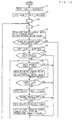
- FIG. 1A and 1B are flowcharts of operations of the third table generation means and the fourth table generation means at initialization of the nonvolatile storage device of Embodiment 1 according to the present invention.
- Part a of FIG. 1A, part b of FIG. 1A, part c of FIG. 1A and part d of FIG. 1A are connected to part a of FIG. 1B, part b of FIG. 1B, part c of FIG. 1B and part d of FIG. 1B, respectively.
- the third table generation means initializes all fields of the entry table by the default value 1 (cleared).
- the fourth table generation means initializes all fields of the data validity table by the default value 0 (invalid).
- the control part 3 initializes physical block number j in the physical block group by the default value 1.
- the control part 3 initializes partial logical block number i in the physical block by the default value 1.
- the control part 3 reads out the first partial logical block of the j th physical block in the first physical block group.
- the control part 3 determines whether the physical block is a cleared one or not. In the case of the cleared physical block, the entry table has been already initialized with the default value 1 (cleared) at the step 101 and the data validity table has been already initialized with the default value 0 (invalid) at the step 102. Therefore, the control part 3 completes processing of the j th physical block without doing anything.
- the operation proceeds to step 107 and the third table generation means writes 0 (written) in the field of the physical block of the entry table.
- the control part 3 determines whether 1 (valid) has been already written in the data validity table or not. In the case where 1 (valid) has been written, the control part 3 completes processing the i th partial logical block. In the case where the default value 0 (invalid) still remains, the operation proceeds to step 111 and the control part 3 determines whether the validity flag in redundant area is valid or not. In the case where the validity flag is invalid, the data validity table has been already initialized with the default value 0 (invalid) at the step 102, and therefore the control part 3 completes processing of the i th partial logical block without doing anything. In the case where the validity flag is valid, the operation proceeds to step 112 and the fourth table generation means writes 1 (valid) in the field of the partial logical block of the data validity table.
- the control part 3 determines whether the partial logical block has the second translation table or not. In the case where it has no second translation table, the control part 3 completes processing of the i th partial logical block. In the case where it has the second translation table, the operation proceeds to step 114 and the control part 3 reads the second translation table.
- the fourth table generation means writes 1 (valid) in the field of the partial logical block stated in the second translation table of the data validity table.
- the control part 3 adds 1 to the partial physical block number i in the physical block.
- the control part 3 determines whether the partial physical block is a last one in the physical block or not, that is, i>8 or not. In the case where the partial logical block is not a last one, that is, i ⁇ 8, the operation returns to the step 109 and the control part 3 determines whether 1 (valid) has been already written in the data validity table or not. In the case where 1 (valid) has been written, the control part 3 completes processing the i th partial logical block.
- step 110 the control part 3 reads out the i th partial logical block of the j th physical block in the first physical block group and carries out processing at the steps 111 to 117 again.
- the control part 3 completes processing of the j th physical block and proceeds to processing of the next physical block.
- the control part 3 adds 1 to the physical block number j in the physical block group.
- the control part 3 determines whether the physical block is a last one in the physical block group or not, that is, j>2048 or not. In the case where the physical block is not a last one, that is, j ⁇ 2048, the operation returns to the step 104 and the control part 3 performs processing of the next physical block. In the case where the physical block is a last one, that is, j>2048, the control part 3 completes processing of the first physical block group and proceeds to processing of the second physical block group.
- control part 3 initializes physical block group number k by the default value 2.
- control part 3 initializes physical block number j in the physical block group by the default value 1.
- the control part 3 reads out the first partial logical block of the j th physical block in the k th physical block group.
- the control part 3 determines whether the physical block is a cleared one or not. In the case of the cleared physical block, the entry table has been already initialized with the default value 1 (cleared) at the step 101 and therefore the control part 3 completes processing of the j th physical block without doing anything. In the case of the written physical block, the operation proceeds to step 124 and the third table generation means writes 0 (written) in the field of the physical block of the entry table.
- the control part 3 adds 1 to the physical block number j in the physical block group.
- the control part 3 determines whether the physical block is a last one in the physical block group or not, that is, j>2048 or not. In the case where the physical block is not a last one, that is, j ⁇ 2048, the operation returns to the step 122 and the control part 3 performs processing of the next physical block. In the case where the physical block is a last one, that is, j>2048, the control part 3 completes processing of the k th physical block group and proceeds to processing of the next physical block group.
- the control part 3 adds 1 to the physical block group number k.
- the control part 3 determines whether the physical block group is a last one or not, that is, k>8 or not. In the case where the physical block group is not a last one, that is, k ⁇ 8, the operation returns to the step 121 and the control part 3 carries out processing of the next physical block group. In the case where the physical block group is a last one, that is, k>8, this flowchart ends.
- the fourth table generation means generates the data validity table by using the second translation table.
- the control part 3 decides not to read out data therefrom. Therefore, the number of partial logical block read out at the step 110 decreases. This enables the fourth table generation means to reduce time for generating the data validity table. That is, the nonvolatile storage device 1 can achieve shortening of initialization time.
- the first table generation means associates physical address with logical address of the partial logical block having the second translation table, and writes them in the first translation table.
- the control part detects a cleared physical block from the entry table and writes the new data in it.
- the second table generation means generates the second translation table in the redundant area of the partial logical block in which the new data is written, associates physical address with logical address of the new data, and writes them in the second translation table.
- control part detects the physical block that all of eight partial logical blocks are invalid by the data validity table and physically erases the physical block.
- a nonvolatile storage device of Embodiment 2 according to the present invention has the same configuration as the nonvolatile storage device of Embodiment 1 (FIG. 4).
- the nonvolatile storage device of Embodiment 2 is similar to the nonvolatile storage device of Embodiment-1 except for the following points.
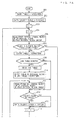
- FIG. 2A and 2B are flowcharts of operations of the third table generation means and the fourth table generation means at initialization of the nonvolatile storage device of Embodiment 2 according to the present invention.
- Part a of FIG. 2A, part b of FIG. 2A, part c of FIG. 2A and part d of FIG. 2A are connected to part a of FIG. 2B, part b of FIG. 2B, part c of FIG. 2B and part d of FIG. 2B, respectively.
- the third table generation means initializes all fields of the entry table by the default value 1 (cleared).
- the fourth table generation means initializes all fields of the data validity table by the default value 0 (invalid).
- the control part 3 initializes physical block number j in the physical block group by the default value 1.
- the control part 3 initializes partial logical block number i in the physical block by the default value 1.
- the control part 3 reads out the first partial logical block of the j th physical block in the first physical block group.
- the control part 3 determines whether the physical block is a cleared one or not. In the case of the cleared physical block, the entry table has been already initialized with the default value 1 (cleared) at the step 201 and the data validity table has been already initialized with the default value 0 (invalid) at the step 202. Therefore, the control part 3 completes processing of the j th physical block without doing anything.
- the operation proceeds to step 207 and the third table generation means writes 0 (written) in the field of the physical block of the entry table.
- the control part 3 determines whether the physical block has a link table or not. In the case where it has no link table, the operation proceeds to step 212. In the case where it has a link table, the operation proceeds to step 209 and the control part 3 reads the link table.
- the third table generation means writes 0 (written) in the field of the physical block including the partial logical block stated in the link table, in the entry table.
- the control part 3 determines whether the validity flag in redundant area is valid or not. In the case where the validity flag is invalid, the data validity table has been already initialized with the default value 0 (invalid) at the step 202, and therefore the control part 3 completes processing of the i th partial logical block without doing anything. In the case where the validity flag is valid, the operation proceeds to step 213 and the fourth table generation means writes 1 (valid) in the field of the partial logical block of the data validity table.
- the control part 3 adds 1 to the partial physical block number i in the physical block.
- the control part 3 determines whether the partial physical block is a last one in the physical block or not, that is, i>8 or not. In the case where the partial logical block is not a last one, that is, i ⁇ 8, the operation returns to the step 211 and the control part 3 reads out the i th partial logical block of the j th physical block in the first physical block group and carries out processing at the steps 212 to 215 again. In the case where the partial logical block is a last one, that is, i>8 at the step 215, the control part 3 completes processing of the j th physical block and proceeds to processing of the next physical block.
- the control part 3 adds 1 to the physical block number j in the physical block group.
- the control part 3 determines whether the physical block is a last one in the physical block group or not, that is, j>2048 or not. In the case where the physical block is not a last one, that is, j ⁇ 2048, the operation returns to the step 204 and the control part 3 performs processing of the next physical block. In the case where the physical block is a last one, that is, j>2048, the control part 3 completes processing of the first physical block group and proceeds to processing of the second physical block group.
- control part 3 initializes physical block group number k by the default value 2.
- control part 3 initializes physical block number j in the physical block group by the default value 1.
- the control part 3 determines whether 0 (written) has been already written in the entry table or not. In the case where 0 (written) has been written, the control part 3 completes processing of the j th physical block. In the case where the default value 1 (cleared) still remains, the control part 3 reads out the first partial logical block of the j th physical block in the k th physical block group at step 221. At step 222, in accordance with the first data of a leading page of the physical block read out, the control part 3 determines whether the physical block is a cleared one or not.
- the entry table has been already initialized with the default value 1 (cleared) at the step 201 and therefore the control part 3 completes the processing of the j th physical block without doing anything.
- the operation proceeds to step 223 and the third table generation means writes 0 (written) in the field of the physical block of the entry table.
- the control part 3 adds 1 to the physical block number j in the physical block group.
- the control part 3 determines whether the physical block is a last one in the physical block group or not, that is, j>2048 or not. In the case where the physical block is not a last one, that is, j ⁇ 2048, the operation returns to the step 220 and the control part 3 performs processing of the next physical block. In the case where the physical block is a last one, that is, j>2048, the control part 3 completes processing of the k th physical block group and proceeds to processing of the next physical block group.
- the control part 3 adds 1 to the physical block group number k.
- the control part 3 determines whether the physical block group is a last one or not, that is, k>8 or not. In the case where the physical block group is not a last one, that is, k ⁇ 8, the operation returns to the step 219 and the control part 3 carries out processing of the next physical block group. In the case where the physical block group is a last one, that is, k>8, this flowchart ends.
- link table may exist in any block group of the first to eighth physical block groups and similar effects can be achieved.
- the third table generation means generates the entry table by using the link table.
- the control part 3 decides not to read out data therefrom. Therefore, the number of partial logical block read out at the step 221 decreases. This enables the third table generation means to reduce time for generating the entry table. That is, similarly in Embodiment 1, the nonvolatile storage device 1 can achieve shortening of initialization time.
- a nonvolatile storage device of Embodiment 3 according to the present invention has the same configuration as the nonvolatile storage device of Embodiment 1 (FIG. 4).
- the nonvolatile storage device of Embodiment 3 is similar to the nonvolatile storage device of Embodiment 1 except for the following points.
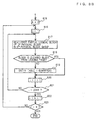
- FIG. 11 is a flowchart of operations of the third table generation means at initialization of the nonvolatile storage device of Embodiment 3 according to the present invention.
- the third table generation means initializes all fields of the entry table by the default value 1 (cleared).
- the control part 3 initializes physical block group number k by the default value 1.
- the control part 3 initializes physical block number j in the physical block group by the default value 1.
- the control part 3 determines whether 0 (written) has been already written in the entry table or not. In the case where 0 (written) has been written, the control part 3 completes processing of the j th physical block. In the case where the default value 1 (cleared) still remains, the control part 3 reads out the first partial logical block of the j th physical block in the k th physical block group at step 1105. At step 1106, in accordance with the first data of a leading page of the physical block read out, the control part 3 determines whether the physical block is a cleared one or not.
- the entry table has been already initialized with the default value 1 (cleared) at the step 1101 and therefore the control part 3 completes the processing of the j th physical block without doing anything.
- the operation proceeds to step 1107 and the third table generation means writes 0 (written) in the field of the physical block of the entry table.
- the control part 3 determines whether the partial logical block has the second translation table or not. In the case where it has no second translation table, the control part 3 completes processing of the j th physical block. In the case where it has the second translation table, the operation proceeds to step 1109 and the control part 3 reads the second translation table.
- the third table generation means writes 0 (written) in the field of the physical block including the partial logical block stated in the second translation table, in the entry table.
- the control part 3 adds 1 to the physical block number j in the physical block group.
- the control part 3 determines whether the physical block is a last one in the physical block group or not, that is, j>2048 or not. In the case where the physical block is not a last one, that is, j ⁇ 2048, the operation returns to the step 1104 and the control part 3 performs processing of the next physical block. In the case where the physical block is a last one, that is, j>2048, the control part 3 completes processing of the k th physical block group and proceeds to processing of the next physical block group.
- the control part 3 adds 1 to the physical block group number k.
- the control part 3 determines whether the physical block group is a last one or not, that is, i>8 or not. In the case where the physical block group is not a last one, that is, i ⁇ 8, the operation returns to the step 1103 and the control part 3 performs processing the next physical block group. In the case where the physical block group is a last one, that is, i>8, this flowchart ends.
- the third table generation means generates the entry table by using the second translation table.
- the control part 3 decides not to read out data therefrom. Therefore, the number of physical block read out at the step 1105 decreases. This enables the third table generation means to reduce time for generating the entry table. That is, similarly in Embodiment 1, the nonvolatile storage device 1 can achieve shortening of initialization time.
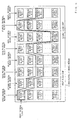
- FIG.3 is a configuration view of a nonvolatile storage device of Embodiment 4 according to the present invention.
- the nonvolatile storage device 31 has a control part 32 and a plurality of flash memories (nonvolatile storage mediums) 33 to 36.
- the control part 32 is connected to two bus lines 37 and 38, each bus line being connected to as many (two) flash memories. It is constructed so that the flash memories connected to one bus line have the same number of second translation tables and link tables as those connected to other bus line as far as possible.
- the control part 32 When power is applied, the control part 32 reads the validity flag, the first data, the link table and the second translation table that are stored in each physical block within the flash memories and generates the first translation table 4, the entry table 6 and the data validity table 5 (initialization processing). It is constructed so that the flash memories connected to one bus line have approximately the same number of second translation tables and link tables as those connected to other bus line, so that the nonvolatile storage device 1 can read about equal amount of data through each bus line at initialization (transfer load through each bus line can be equalized). More data transfer amount through a certain bus line requires a longer time to transfer data through the bus line, thereby leading to an increase in total time for initialization processing. As in Embodiment 4, by equalizing data transfer amount through each bus line, the nonvolatile storage device 1 can achieve shortening of total time for initialization processing.
- the nonvolatile storage device can respond to an external request in a short time after power is applied. Therefore, products (for example, cellular phone) having a nonvolatile storage device (for example, IC cards such as SD card) can fulfill its function in a short time after power is applied.
- products for example, cellular phone
- a nonvolatile storage device for example, IC cards such as SD card
- the nonvolatile storage device and control method thereof according to the present invention are useful as the nonvolatile storage device which is capable of connecting to various apparatus such as portable device and control method thereof.
Landscapes
- Engineering & Computer Science (AREA)
- Theoretical Computer Science (AREA)
- Physics & Mathematics (AREA)
- General Engineering & Computer Science (AREA)
- General Physics & Mathematics (AREA)
- Read Only Memory (AREA)
- Techniques For Improving Reliability Of Storages (AREA)
- Memory System (AREA)
- Mobile Radio Communication Systems (AREA)
Abstract
Description
The novel features of the invention are set forth with particularity in the appended claims. The invention as to both structure and content, and other objects and features thereof will best be understood from the' detailed description when considered in connection with the accompanying drawings.
Claims (8)
- A nonvolatile storage device comprising:wherein said physical block has a data area which stores data therein and first data which indicates whether said physical block has been cleared or not, anda plurality of physical blocks;a first table generation means for generating a first translation table to obtain physical addresses from logical addresses;a second table generation means for generating a second translation table to obtain physical addresses from logical addresses; anda third table generation means for generating a third table which indicates whether each of said physical blocks has been cleared or not,
said physical block designated by the physical address of said first translation table further has said second translation table, and
said third table generation means reads out said first data and said second translation table from said physical block, decides a value of said third table of said physical block in accordance with said first data, determines that a value of said third table of said physical block corresponding to the physical address contained in said second translation table is the value indicating that said physical block has not been cleared, and does not read said first data with respect to said physical block which is contained in said second translation table and from which said first data has not been read out. - A nonvolatile storage device comprising:wherein said physical block has a data area which stores data therein and a first data which indicates whether said physical block has been cleared or not, anda plurality of physical blocks;a write means for dividing input data and writing the divided data in a plurality of said physical blocks or divided areas of said physical blocks;a link table generation means for generating a link table which is link information of a plurality of said physical blocks or said areas in which the divided input data is written respectively; anda third table generation means for generating a third table which indicates whether each of said physical blocks has been cleared or not,
at least one said physical block or said area among a plurality of said physical blocks or said areas in which divided input data is written respectively further has said link table, and
said third table generation means reads out said first data and said link table from said physical block or said area, decides a value of said third table of said physical block in accordance with said first data, determines that a value of said third, table of said physical block corresponding to the physical address contained in said link table is the value indicating that said physical block has not been cleared, and does not read said first data with respect to said physical block which is contained in said link table and from which said first data has not been read out. - A nonvolatile storage device comprising:wherein said physical block or said area has a data area which stores data therein, anda plurality of physical blocks;a first table generation means for generating a first translation table to obtain physical addresses from logical addresses;a second table generation means for generating a second translation table to obtain physical addresses from logical addresses; anda fourth table generation means for generating a fourth table which indicates whether valid data is written in each of said physical blocks or divided areas of said physical blocks or not,
said physical block or said area designated by the physical address of said first translation table further has said second translation table and a second flag which indicates whether said second translation table is valid or not, and
said fourth table generation means reads out said second flag and said second translation table from said physical block or said area, decides a value of said fourth table of said physical block or said area in accordance with said second flag, determines that a value of said fourth table of said physical block or said area corresponding to the physical address contained in said second translation table is the value indicating that valid data is written, and does not read said second flag with respect to said physical block or said area which is contained in said second translation table and from which said second flag has not been read out. - A nonvolatile storage device in accordance with Claim 1 or Claim 3,
wherein said nonvolatile storage device comprises a plurality of bus lines and a plurality of nonvolatile storage elements which have a plurality of said physical blocks and are connected to said bus lines, and
the number of said second translation table which is written in said nonvolatile storage elements connected to said bus lines is substantially same for each bus line. - A nonvolatile storage device in accordance with Claim 2,
wherein said nonvolatile storage device comprises a plurality of bus lines and a plurality of nonvolatile storage elements which have a plurality of said physical blocks and are connected to said bus lines, and
the number of said link table which is written in said nonvolatile storage elements connected to said bus lines is substantially same for each bus line. - A control method of a nonvolatile storage device comprising:wherein said physical block has a data area which stores data therein and first data which indicates whether said physical block has been cleared or not, anda plurality of physical blocks;a first table generation means for generating a first translation table to obtain physical addresses from logical addresses;a second table generation means for generating a second translation table to obtain physical addresses from logical addresses; anda third table generation means for generating a third table which indicates whether each of said physical blocks has been cleared or not,
said physical block designated by the physical address of said first translation table further has said second translation table, and the method having:wherein said third table generation means does not perform said first decision step with respect to said physical block which is contained in said second translation table and from which said first data has not been read out.a first decision step at which said third table generation means reads out said first data from said physical block and decides a value of said third table of said physical block in accordance with said first data; anda second decision step at which said third table generation means reads out said second translation table from said physical block and determines that a value of said third table of said physical block corresponding to the physical address contained in said second translation table is the value indicating that said physical block has not been cleared, - A control method of a nonvolatile storage device comprising:wherein said physical block has a data area which stores data therein and first data which indicates whether said physical block has been cleared or not, anda plurality of physical blocks;a write means for dividing input data and writing the divided data in a plurality of said physical blocks or divided areas of said physical blocks;a link table generation means for generating a link table which is link information of a plurality of said physical blocks and said areas in which the divided input data is written respectively; anda third table generation means for generating a third table which indicates whether each of said physical blocks has been cleared or not,
at least one said physical block or said area among a plurality of said physical blocks or said areas in which divided input data is written respectively further has said link table, and the method having:wherein said third table generation means does not perform said first decision step with respect to said physical block or said area which is contained in said link table and from which said first data has not been read out.a first decision step at which said third table generation means reads out said first data from said physical block or said area and decides a value of said third table of said physical block in accordance with said first data; anda second decision step at which said third table generation means reads out said link table from said physical block or said area and determines that a value of said third table of said physical block corresponding to the physical address contained in said link table is the value indicating that said physical block has not been cleared, - A control method of a nonvolatile storage device comprising:wherein said physical block or said area has a data area which stores data therein, anda plurality of physical blocks;a first table generation means for generating a first translation table to obtain physical addresses from logical addresses;a second table generation means for generating a second translation table to obtain physical addresses from logical addresses; anda fourth table generation means for generating a fourth table which indicates whether valid data is written in each of said physical blocks or divided areas of said physical blocks or not,
said physical block or said area designated by the physical address of said first translation table further has said second translation table and a second flag which indicates whether said second translation table is valid or not, and the method having:wherein said fourth table generation means does not perform said first decision step with respect to said physical block or said area which is contained in said second translation table and from which said second flag has not been read out.a first decision step at which said fourth table generation means reads out said second flag from said physical block or said area, decides a value of said fourth table of said physical block or said area in accordance with said second flag; anda second decision step at which said fourth table generation means reads out said second translation table from said physical block or said area and determines that a value of said fourth table of said physical block or said area corresponding to the physical address contained in said second translation table is the value indicating that valid data is written,
Applications Claiming Priority (3)
| Application Number | Priority Date | Filing Date | Title |
|---|---|---|---|
| JP2001254220A JP2003067244A (en) | 2001-08-24 | 2001-08-24 | Nonvolatile storage device and control method thereof |
| JP2001254220 | 2001-08-24 | ||
| PCT/JP2002/008332 WO2003019382A1 (en) | 2001-08-24 | 2002-08-16 | Non-volatile storage device and control method thereof |
Publications (2)
| Publication Number | Publication Date |
|---|---|
| EP1420345A1 true EP1420345A1 (en) | 2004-05-19 |
| EP1420345A4 EP1420345A4 (en) | 2007-10-10 |
Family
ID=19082412
Family Applications (1)
| Application Number | Title | Priority Date | Filing Date |
|---|---|---|---|
| EP02762797A Withdrawn EP1420345A4 (en) | 2001-08-24 | 2002-08-16 | NON-VOLATILE STORAGE DEVICE AND CONTROL METHOD THEREOF |
Country Status (8)
| Country | Link |
|---|---|
| US (1) | US6922768B2 (en) |
| EP (1) | EP1420345A4 (en) |
| JP (1) | JP2003067244A (en) |
| KR (1) | KR100522006B1 (en) |
| CN (1) | CN1214326C (en) |
| CA (1) | CA2426783C (en) |
| TW (1) | TWI236589B (en) |
| WO (1) | WO2003019382A1 (en) |
Cited By (2)
| Publication number | Priority date | Publication date | Assignee | Title |
|---|---|---|---|---|
| FR2901035A1 (en) * | 2006-05-11 | 2007-11-16 | St Microelectronics Sa | METHOD AND DEVICE FOR MANAGING A TABLE OF CORRESPONDENCE OF ACCESS TO A MEMORY |
| EP1868097A1 (en) * | 2006-06-16 | 2007-12-19 | Sony Corporation | Integrated circuit chip, data reading method and data writing method |
Families Citing this family (12)
| Publication number | Priority date | Publication date | Assignee | Title |
|---|---|---|---|---|
| CN101231618B (en) * | 2002-10-02 | 2012-06-13 | 松下电器产业株式会社 | Control method of a non-volatile memory apparatus |
| CN100517268C (en) * | 2004-04-20 | 2009-07-22 | 松下电器产业株式会社 | Nonvolatile storage system, nonvolatile storage device, storage controller, access device, and control method for nonvolatile storage device |
| CN100437517C (en) * | 2004-04-28 | 2008-11-26 | 松下电器产业株式会社 | Nonvolatile storage device and data writing method |
| US7259989B2 (en) * | 2004-09-03 | 2007-08-21 | Matsushita Electric Industrial Co., Ltd. | Non-volatile memory device |
| US7594087B2 (en) * | 2006-01-19 | 2009-09-22 | Sigmatel, Inc. | System and method for writing data to and erasing data from non-volatile memory |
| KR100684909B1 (en) * | 2006-01-24 | 2007-02-22 | 삼성전자주식회사 | Flash memory device can prevent read errors |
| TW200823923A (en) * | 2006-11-23 | 2008-06-01 | Genesys Logic Inc | Caching method for address translation layer of flash memory |
| JP5063337B2 (en) * | 2007-12-27 | 2012-10-31 | 株式会社日立製作所 | Semiconductor device |
| US9069657B2 (en) * | 2011-12-12 | 2015-06-30 | Apple Inc. | LBA bitmap usage |
| KR102655347B1 (en) * | 2016-07-04 | 2024-04-08 | 에스케이하이닉스 주식회사 | Data storage device and operating method thereof |
| US10380028B2 (en) | 2016-12-30 | 2019-08-13 | Western Digital Technologies, Inc. | Recovery of validity data for a data storage system |
| US11218360B2 (en) | 2019-12-09 | 2022-01-04 | Quest Automated Services, LLC | Automation system with edge computing |
Family Cites Families (6)
| Publication number | Priority date | Publication date | Assignee | Title |
|---|---|---|---|---|
| US5838614A (en) | 1995-07-31 | 1998-11-17 | Lexar Microsystems, Inc. | Identification and verification of a sector within a block of mass storage flash memory |
| US6081878A (en) | 1997-03-31 | 2000-06-27 | Lexar Media, Inc. | Increasing the memory performance of flash memory devices by writing sectors simultaneously to multiple flash memory devices |
| JPH11203191A (en) * | 1997-11-13 | 1999-07-30 | Seiko Epson Corp | Nonvolatile storage device, method of controlling nonvolatile storage device, and information recording medium recording program for controlling nonvolatile storage device |
| JP2000057038A (en) | 1998-08-05 | 2000-02-25 | Sony Corp | Recording apparatus and recording method, reproducing apparatus and reproducing method, and recording medium |
| JP3544476B2 (en) | 1998-09-11 | 2004-07-21 | 富士通株式会社 | Creating a memory management table |
| US7836205B2 (en) * | 2002-07-11 | 2010-11-16 | Hewlett-Packard Development Company, L.P. | Method and device for use with a virtual network |
-
2001
- 2001-08-24 JP JP2001254220A patent/JP2003067244A/en not_active Withdrawn
-
2002
- 2002-08-16 CN CNB028027728A patent/CN1214326C/en not_active Expired - Fee Related
- 2002-08-16 KR KR10-2003-7005539A patent/KR100522006B1/en not_active Expired - Fee Related
- 2002-08-16 WO PCT/JP2002/008332 patent/WO2003019382A1/en not_active Ceased
- 2002-08-16 US US10/415,126 patent/US6922768B2/en not_active Expired - Fee Related
- 2002-08-16 EP EP02762797A patent/EP1420345A4/en not_active Withdrawn
- 2002-08-16 CA CA002426783A patent/CA2426783C/en not_active Expired - Fee Related
- 2002-08-21 TW TW091118919A patent/TWI236589B/en not_active IP Right Cessation
Cited By (2)
| Publication number | Priority date | Publication date | Assignee | Title |
|---|---|---|---|---|
| FR2901035A1 (en) * | 2006-05-11 | 2007-11-16 | St Microelectronics Sa | METHOD AND DEVICE FOR MANAGING A TABLE OF CORRESPONDENCE OF ACCESS TO A MEMORY |
| EP1868097A1 (en) * | 2006-06-16 | 2007-12-19 | Sony Corporation | Integrated circuit chip, data reading method and data writing method |
Also Published As
| Publication number | Publication date |
|---|---|
| WO2003019382A1 (en) | 2003-03-06 |
| EP1420345A4 (en) | 2007-10-10 |
| KR100522006B1 (en) | 2005-10-18 |
| CN1473296A (en) | 2004-02-04 |
| CA2426783C (en) | 2007-03-27 |
| KR20030044023A (en) | 2003-06-02 |
| CN1214326C (en) | 2005-08-10 |
| JP2003067244A (en) | 2003-03-07 |
| US6922768B2 (en) | 2005-07-26 |
| CA2426783A1 (en) | 2003-04-23 |
| TWI236589B (en) | 2005-07-21 |
| US20040030823A1 (en) | 2004-02-12 |
Similar Documents
| Publication | Publication Date | Title |
|---|---|---|
| US8681552B2 (en) | System and method for accessing and storing interleaved data | |
| EP1242868B1 (en) | Organization of blocks within a nonvolatile memory unit to effectively decrease sector write operation time | |
| US7937523B2 (en) | Memory system with nonvolatile semiconductor memory | |
| JP4812192B2 (en) | Flash memory device and method for merging data stored therein | |
| US7698497B2 (en) | Method of controlling card-shaped memory device | |
| US7773420B2 (en) | Memory card system including NAND flash memory and SRAM/NOR flash memory, and data storage method thereof | |
| CA2426783C (en) | Non-volatile storage device and control method thereof | |
| US20020194451A1 (en) | Memory controller, flash memory system employing memory controller and method for controlling flash memory device | |
| US20080195815A1 (en) | Memory card using nand flash memory and its operating method | |
| CN100468307C (en) | Memory card, card controller mounted on memory card, and memory card processing device | |
| CN1140315A (en) | Flash memory card | |
| EP0983550A2 (en) | Increasing memory performance in flash memory devices by performing simultaneous write operation to multiple devices | |
| KR20010110073A (en) | Semiconductor memory device having block alignment function | |
| US20090204748A1 (en) | Multi-channel flash memory system and access method | |
| JP2008009527A (en) | Memory system | |
| US7649774B2 (en) | Method of controlling memory system | |
| US8180951B2 (en) | Memory system and method of controlling the memory system | |
| JP4177292B2 (en) | MEMORY CONTROLLER, FLASH MEMORY SYSTEM, AND FLASH MEMORY CONTROL METHOD | |
| JP4177301B2 (en) | Memory controller, flash memory system, and flash memory control method | |
| JP4254930B2 (en) | Memory controller, flash memory system, and flash memory control method | |
| JP2006277736A (en) | Non-volatile memory device writing method | |
| EP1770529A2 (en) | Appartaus with dual writing function and storage control apparatus |
Legal Events
| Date | Code | Title | Description |
|---|---|---|---|
| PUAI | Public reference made under article 153(3) epc to a published international application that has entered the european phase |
Free format text: ORIGINAL CODE: 0009012 |
|
| 17P | Request for examination filed |
Effective date: 20030513 |
|
| AK | Designated contracting states |
Kind code of ref document: A1 Designated state(s): DE FR GB |
|
| RIN1 | Information on inventor provided before grant (corrected) |
Inventor name: KASAHARA, TETSUSHI Inventor name: TOYAMA, MASAYUKI Inventor name: AKASHI, TERUO Inventor name: SAKAI, KEISUKE Inventor name: HONDA, TOSHIYUKI |
|
| A4 | Supplementary search report drawn up and despatched |
Effective date: 20070907 |
|
| STAA | Information on the status of an ep patent application or granted ep patent |
Free format text: STATUS: THE APPLICATION HAS BEEN WITHDRAWN |
|
| 18W | Application withdrawn |
Effective date: 20071119 |