EP1419247B1 - Method for the production of nucleic acids consisting of stochastically combined parts of source nucleic acids - Google Patents
Method for the production of nucleic acids consisting of stochastically combined parts of source nucleic acids Download PDFInfo
- Publication number
- EP1419247B1 EP1419247B1 EP02754920A EP02754920A EP1419247B1 EP 1419247 B1 EP1419247 B1 EP 1419247B1 EP 02754920 A EP02754920 A EP 02754920A EP 02754920 A EP02754920 A EP 02754920A EP 1419247 B1 EP1419247 B1 EP 1419247B1
- Authority
- EP
- European Patent Office
- Prior art keywords
- template
- nucleic acid
- marker
- nucleotides
- directed
- Prior art date
- Legal status (The legal status is an assumption and is not a legal conclusion. Google has not performed a legal analysis and makes no representation as to the accuracy of the status listed.)
- Expired - Lifetime
Links
- 150000007523 nucleic acids Chemical class 0.000 title claims abstract description 120
- 102000039446 nucleic acids Human genes 0.000 title claims abstract description 102
- 108020004707 nucleic acids Proteins 0.000 title claims abstract description 102
- 238000000034 method Methods 0.000 title claims abstract description 97
- 238000004519 manufacturing process Methods 0.000 title claims description 11
- 125000003729 nucleotide group Chemical group 0.000 claims abstract description 99
- 239000002773 nucleotide Substances 0.000 claims abstract description 98
- 239000003550 marker Substances 0.000 claims abstract description 96
- 102000040430 polynucleotide Human genes 0.000 claims abstract description 33
- 108091033319 polynucleotide Proteins 0.000 claims abstract description 33
- 239000002157 polynucleotide Substances 0.000 claims abstract description 33
- 238000003786 synthesis reaction Methods 0.000 claims abstract description 14
- 230000015572 biosynthetic process Effects 0.000 claims abstract description 12
- 108020004414 DNA Proteins 0.000 claims description 50
- 238000006243 chemical reaction Methods 0.000 claims description 38
- AHCYMLUZIRLXAA-SHYZEUOFSA-N Deoxyuridine 5'-triphosphate Chemical compound O1[C@H](COP(O)(=O)OP(O)(=O)OP(O)(O)=O)[C@@H](O)C[C@@H]1N1C(=O)NC(=O)C=C1 AHCYMLUZIRLXAA-SHYZEUOFSA-N 0.000 claims description 26
- 230000000694 effects Effects 0.000 claims description 26
- 102100034343 Integrase Human genes 0.000 claims description 25
- 238000010348 incorporation Methods 0.000 claims description 25
- 241000588724 Escherichia coli Species 0.000 claims description 22
- 108010092799 RNA-directed DNA polymerase Proteins 0.000 claims description 21
- 102000010719 DNA-(Apurinic or Apyrimidinic Site) Lyase Human genes 0.000 claims description 15
- 108010063362 DNA-(Apurinic or Apyrimidinic Site) Lyase Proteins 0.000 claims description 15
- 230000000295 complement effect Effects 0.000 claims description 13
- ISAKRJDGNUQOIC-UHFFFAOYSA-N Uracil Chemical compound O=C1C=CNC(=O)N1 ISAKRJDGNUQOIC-UHFFFAOYSA-N 0.000 claims description 12
- 108091028043 Nucleic acid sequence Proteins 0.000 claims description 9
- 238000001447 template-directed synthesis Methods 0.000 claims description 9
- 108010036364 Deoxyribonuclease IV (Phage T4-Induced) Proteins 0.000 claims description 8
- 230000009471 action Effects 0.000 claims description 8
- 108091032973 (ribonucleotides)n+m Proteins 0.000 claims description 7
- 108060002716 Exonuclease Proteins 0.000 claims description 7
- 108091027305 Heteroduplex Proteins 0.000 claims description 7
- 101710203526 Integrase Proteins 0.000 claims description 7
- 102000013165 exonuclease Human genes 0.000 claims description 7
- 101710081048 Endonuclease III Proteins 0.000 claims description 6
- 241000713869 Moloney murine leukemia virus Species 0.000 claims description 6
- HIMXGTXNXJYFGB-UHFFFAOYSA-N alloxan Chemical compound O=C1NC(=O)C(=O)C(=O)N1 HIMXGTXNXJYFGB-UHFFFAOYSA-N 0.000 claims description 6
- 235000011178 triphosphate Nutrition 0.000 claims description 6
- 239000001226 triphosphate Substances 0.000 claims description 6
- 229940035893 uracil Drugs 0.000 claims description 6
- DRTQHJPVMGBUCF-XVFCMESISA-N Uridine Chemical group O[C@@H]1[C@H](O)[C@@H](CO)O[C@H]1N1C(=O)NC(=O)C=C1 DRTQHJPVMGBUCF-XVFCMESISA-N 0.000 claims description 5
- 108010052305 exodeoxyribonuclease III Proteins 0.000 claims description 5
- 238000009396 hybridization Methods 0.000 claims description 5
- FZWGECJQACGGTI-UHFFFAOYSA-N 2-amino-7-methyl-1,7-dihydro-6H-purin-6-one Chemical compound NC1=NC(O)=C2N(C)C=NC2=N1 FZWGECJQACGGTI-UHFFFAOYSA-N 0.000 claims description 4
- FSASIHFSFGAIJM-UHFFFAOYSA-N 3-methyladenine Chemical compound CN1C=NC(N)=C2N=CN=C12 FSASIHFSFGAIJM-UHFFFAOYSA-N 0.000 claims description 4
- OIVLITBTBDPEFK-UHFFFAOYSA-N 5,6-dihydrouracil Chemical compound O=C1CCNC(=O)N1 OIVLITBTBDPEFK-UHFFFAOYSA-N 0.000 claims description 4
- HCGHYQLFMPXSDU-UHFFFAOYSA-N 7-methyladenine Chemical compound C1=NC(N)=C2N(C)C=NC2=N1 HCGHYQLFMPXSDU-UHFFFAOYSA-N 0.000 claims description 4
- HMFHBZSHGGEWLO-SOOFDHNKSA-N D-ribofuranose Chemical compound OC[C@H]1OC(O)[C@H](O)[C@@H]1O HMFHBZSHGGEWLO-SOOFDHNKSA-N 0.000 claims description 4
- 108020001738 DNA Glycosylase Proteins 0.000 claims description 4
- 102000028381 DNA glycosylase Human genes 0.000 claims description 4
- 108010000577 DNA-Formamidopyrimidine Glycosylase Proteins 0.000 claims description 4
- PYMYPHUHKUWMLA-LMVFSUKVSA-N Ribose Natural products OC[C@@H](O)[C@@H](O)[C@@H](O)C=O PYMYPHUHKUWMLA-LMVFSUKVSA-N 0.000 claims description 4
- 238000005904 alkaline hydrolysis reaction Methods 0.000 claims description 4
- HMFHBZSHGGEWLO-UHFFFAOYSA-N alpha-D-Furanose-Ribose Natural products OCC1OC(O)C(O)C1O HMFHBZSHGGEWLO-UHFFFAOYSA-N 0.000 claims description 4
- 125000002887 hydroxy group Chemical group [H]O* 0.000 claims description 4
- FDGQSTZJBFJUBT-UHFFFAOYSA-N hypoxanthine Chemical compound O=C1NC=NC2=C1NC=N2 FDGQSTZJBFJUBT-UHFFFAOYSA-N 0.000 claims description 4
- -1 ribonucleoside triphosphates Chemical class 0.000 claims description 4
- 108010078851 HIV Reverse Transcriptase Proteins 0.000 claims description 3
- 238000006911 enzymatic reaction Methods 0.000 claims description 3
- 239000002342 ribonucleoside Substances 0.000 claims description 3
- 125000002264 triphosphate group Chemical class [H]OP(=O)(O[H])OP(=O)(O[H])OP(=O)(O[H])O* 0.000 claims description 3
- WWJWZQKUDYKLTK-UHFFFAOYSA-N 1,n6-ethenoadenine Chemical compound C1=NC2=NC=N[C]2C2=NC=CN21 WWJWZQKUDYKLTK-UHFFFAOYSA-N 0.000 claims description 2
- GIMRVVLNBSNCLO-UHFFFAOYSA-N 2,6-diamino-5-formamido-4-hydroxypyrimidine Chemical compound NC1=NC(=O)C(NC=O)C(N)=N1 GIMRVVLNBSNCLO-UHFFFAOYSA-N 0.000 claims description 2
- SIMOJRZPQFKBLU-UHFFFAOYSA-N 2-(ethylamino)-7-hydroxy-1H-purin-6-one Chemical compound CCNc1nc(=O)c2n(O)cnc2[nH]1 SIMOJRZPQFKBLU-UHFFFAOYSA-N 0.000 claims description 2
- XHBSBNYEHDQRCP-UHFFFAOYSA-N 2-amino-3-methyl-3,7-dihydro-6H-purin-6-one Chemical compound O=C1NC(=N)N(C)C2=C1N=CN2 XHBSBNYEHDQRCP-UHFFFAOYSA-N 0.000 claims description 2
- SULBUWBTSDCEDY-UHFFFAOYSA-N 2-amino-7-(2-chloroethyl)-3h-purin-6-one Chemical compound N1C(N)=NC(=O)C2=C1N=CN2CCCl SULBUWBTSDCEDY-UHFFFAOYSA-N 0.000 claims description 2
- GICKXGZWALFYHZ-UHFFFAOYSA-N 3,N(4)-ethenocytosine Chemical compound O=C1NC=CC2=NC=CN12 GICKXGZWALFYHZ-UHFFFAOYSA-N 0.000 claims description 2
- MVYUVUOSXNYQLL-UHFFFAOYSA-N 4,6-diamino-5-formamidopyrimidine Chemical compound NC1=NC=NC(N)=C1NC=O MVYUVUOSXNYQLL-UHFFFAOYSA-N 0.000 claims description 2
- NBAKTGXDIBVZOO-UHFFFAOYSA-N 5,6-dihydrothymine Chemical compound CC1CNC(=O)NC1=O NBAKTGXDIBVZOO-UHFFFAOYSA-N 0.000 claims description 2
- NHOKUDODDWSIAJ-UHFFFAOYSA-N 5,6-dihydroxy-1,3-diazinane-2,4-dione Chemical compound OC1NC(=O)NC(=O)C1O NHOKUDODDWSIAJ-UHFFFAOYSA-N 0.000 claims description 2
- YFQOVSGFCVQZSW-UHFFFAOYSA-N 5,6-dihydroxyuracil Chemical compound OC=1NC(=O)NC(=O)C=1O YFQOVSGFCVQZSW-UHFFFAOYSA-N 0.000 claims description 2
- RFKUZJDCLCWCDQ-UHFFFAOYSA-N 5-Hydroxydihydro-2,4(1H,3H)-pyrimidinedione Chemical compound OC1CNC(=O)NC1=O RFKUZJDCLCWCDQ-UHFFFAOYSA-N 0.000 claims description 2
- OHAMXGZMZZWRCA-UHFFFAOYSA-N 5-formyluracil Chemical compound OC1=NC=C(C=O)C(O)=N1 OHAMXGZMZZWRCA-UHFFFAOYSA-N 0.000 claims description 2
- UIHWKXHRHOBLKQ-UHFFFAOYSA-N 5-hydroxy-5-methyl-1,3-diazinane-2,4-dione Chemical compound CC1(O)CNC(=O)NC1=O UIHWKXHRHOBLKQ-UHFFFAOYSA-N 0.000 claims description 2
- JDBGXEHEIRGOBU-UHFFFAOYSA-N 5-hydroxymethyluracil Chemical compound OCC1=CNC(=O)NC1=O JDBGXEHEIRGOBU-UHFFFAOYSA-N 0.000 claims description 2
- OFJNVANOCZHTMW-UHFFFAOYSA-N 5-hydroxyuracil Chemical compound OC1=CNC(=O)NC1=O OFJNVANOCZHTMW-UHFFFAOYSA-N 0.000 claims description 2
- NLLCDONDZDHLCI-UHFFFAOYSA-N 6-amino-5-hydroxy-1h-pyrimidin-2-one Chemical compound NC=1NC(=O)N=CC=1O NLLCDONDZDHLCI-UHFFFAOYSA-N 0.000 claims description 2
- MDSQIQSLWQTQDK-UMMCILCDSA-N 8-oxo-GMP Chemical group O=C1NC=2C(=O)NC(N)=NC=2N1[C@@H]1O[C@H](COP(O)(O)=O)[C@@H](O)[C@H]1O MDSQIQSLWQTQDK-UMMCILCDSA-N 0.000 claims description 2
- UBKVUFQGVWHZIR-UHFFFAOYSA-N 8-oxoguanine Chemical compound O=C1NC(N)=NC2=NC(=O)N=C21 UBKVUFQGVWHZIR-UHFFFAOYSA-N 0.000 claims description 2
- 241000713838 Avian myeloblastosis virus Species 0.000 claims description 2
- GHASVSINZRGABV-UHFFFAOYSA-N Fluorouracil Chemical compound FC1=CNC(=O)NC1=O GHASVSINZRGABV-UHFFFAOYSA-N 0.000 claims description 2
- 241000725303 Human immunodeficiency virus Species 0.000 claims description 2
- UGQMRVRMYYASKQ-UHFFFAOYSA-N Hypoxanthine nucleoside Natural products OC1C(O)C(CO)OC1N1C(NC=NC2=O)=C2N=C1 UGQMRVRMYYASKQ-UHFFFAOYSA-N 0.000 claims description 2
- 108091034117 Oligonucleotide Proteins 0.000 claims description 2
- 108010072685 Uracil-DNA Glycosidase Proteins 0.000 claims description 2
- 102000006943 Uracil-DNA Glycosidase Human genes 0.000 claims description 2
- JLCPHMBAVCMARE-UHFFFAOYSA-N [3-[[3-[[3-[[3-[[3-[[3-[[3-[[3-[[3-[[3-[[3-[[5-(2-amino-6-oxo-1H-purin-9-yl)-3-[[3-[[3-[[3-[[3-[[3-[[5-(2-amino-6-oxo-1H-purin-9-yl)-3-[[5-(2-amino-6-oxo-1H-purin-9-yl)-3-hydroxyoxolan-2-yl]methoxy-hydroxyphosphoryl]oxyoxolan-2-yl]methoxy-hydroxyphosphoryl]oxy-5-(5-methyl-2,4-dioxopyrimidin-1-yl)oxolan-2-yl]methoxy-hydroxyphosphoryl]oxy-5-(6-aminopurin-9-yl)oxolan-2-yl]methoxy-hydroxyphosphoryl]oxy-5-(6-aminopurin-9-yl)oxolan-2-yl]methoxy-hydroxyphosphoryl]oxy-5-(6-aminopurin-9-yl)oxolan-2-yl]methoxy-hydroxyphosphoryl]oxy-5-(6-aminopurin-9-yl)oxolan-2-yl]methoxy-hydroxyphosphoryl]oxyoxolan-2-yl]methoxy-hydroxyphosphoryl]oxy-5-(5-methyl-2,4-dioxopyrimidin-1-yl)oxolan-2-yl]methoxy-hydroxyphosphoryl]oxy-5-(4-amino-2-oxopyrimidin-1-yl)oxolan-2-yl]methoxy-hydroxyphosphoryl]oxy-5-(5-methyl-2,4-dioxopyrimidin-1-yl)oxolan-2-yl]methoxy-hydroxyphosphoryl]oxy-5-(5-methyl-2,4-dioxopyrimidin-1-yl)oxolan-2-yl]methoxy-hydroxyphosphoryl]oxy-5-(6-aminopurin-9-yl)oxolan-2-yl]methoxy-hydroxyphosphoryl]oxy-5-(6-aminopurin-9-yl)oxolan-2-yl]methoxy-hydroxyphosphoryl]oxy-5-(4-amino-2-oxopyrimidin-1-yl)oxolan-2-yl]methoxy-hydroxyphosphoryl]oxy-5-(4-amino-2-oxopyrimidin-1-yl)oxolan-2-yl]methoxy-hydroxyphosphoryl]oxy-5-(4-amino-2-oxopyrimidin-1-yl)oxolan-2-yl]methoxy-hydroxyphosphoryl]oxy-5-(6-aminopurin-9-yl)oxolan-2-yl]methoxy-hydroxyphosphoryl]oxy-5-(4-amino-2-oxopyrimidin-1-yl)oxolan-2-yl]methyl [5-(6-aminopurin-9-yl)-2-(hydroxymethyl)oxolan-3-yl] hydrogen phosphate Polymers Cc1cn(C2CC(OP(O)(=O)OCC3OC(CC3OP(O)(=O)OCC3OC(CC3O)n3cnc4c3nc(N)[nH]c4=O)n3cnc4c3nc(N)[nH]c4=O)C(COP(O)(=O)OC3CC(OC3COP(O)(=O)OC3CC(OC3COP(O)(=O)OC3CC(OC3COP(O)(=O)OC3CC(OC3COP(O)(=O)OC3CC(OC3COP(O)(=O)OC3CC(OC3COP(O)(=O)OC3CC(OC3COP(O)(=O)OC3CC(OC3COP(O)(=O)OC3CC(OC3COP(O)(=O)OC3CC(OC3COP(O)(=O)OC3CC(OC3COP(O)(=O)OC3CC(OC3COP(O)(=O)OC3CC(OC3COP(O)(=O)OC3CC(OC3COP(O)(=O)OC3CC(OC3COP(O)(=O)OC3CC(OC3COP(O)(=O)OC3CC(OC3CO)n3cnc4c(N)ncnc34)n3ccc(N)nc3=O)n3cnc4c(N)ncnc34)n3ccc(N)nc3=O)n3ccc(N)nc3=O)n3ccc(N)nc3=O)n3cnc4c(N)ncnc34)n3cnc4c(N)ncnc34)n3cc(C)c(=O)[nH]c3=O)n3cc(C)c(=O)[nH]c3=O)n3ccc(N)nc3=O)n3cc(C)c(=O)[nH]c3=O)n3cnc4c3nc(N)[nH]c4=O)n3cnc4c(N)ncnc34)n3cnc4c(N)ncnc34)n3cnc4c(N)ncnc34)n3cnc4c(N)ncnc34)O2)c(=O)[nH]c1=O JLCPHMBAVCMARE-UHFFFAOYSA-N 0.000 claims description 2
- 238000006073 displacement reaction Methods 0.000 claims description 2
- 229960002949 fluorouracil Drugs 0.000 claims description 2
- 108010052833 ribonuclease HI Proteins 0.000 claims description 2
- GUKSGXOLJNWRLZ-UHFFFAOYSA-N thymine glycol Chemical compound CC1(O)C(O)NC(=O)NC1=O GUKSGXOLJNWRLZ-UHFFFAOYSA-N 0.000 claims description 2
- UNXRWKVEANCORM-UHFFFAOYSA-N triphosphoric acid Chemical compound OP(O)(=O)OP(O)(=O)OP(O)(O)=O UNXRWKVEANCORM-UHFFFAOYSA-N 0.000 claims 1
- 230000006798 recombination Effects 0.000 description 54
- 238000005215 recombination Methods 0.000 description 54
- 108090000623 proteins and genes Proteins 0.000 description 34
- TWRXJAOTZQYOKJ-UHFFFAOYSA-L Magnesium chloride Chemical compound [Mg+2].[Cl-].[Cl-] TWRXJAOTZQYOKJ-UHFFFAOYSA-L 0.000 description 26
- 102000016928 DNA-directed DNA polymerase Human genes 0.000 description 25
- 108010014303 DNA-directed DNA polymerase Proteins 0.000 description 24
- 239000000872 buffer Substances 0.000 description 24
- 102000004190 Enzymes Human genes 0.000 description 21
- 108090000790 Enzymes Proteins 0.000 description 21
- QKNYBSVHEMOAJP-UHFFFAOYSA-N 2-amino-2-(hydroxymethyl)propane-1,3-diol;hydron;chloride Chemical compound Cl.OCC(N)(CO)CO QKNYBSVHEMOAJP-UHFFFAOYSA-N 0.000 description 20
- 239000013598 vector Substances 0.000 description 20
- 102100037111 Uracil-DNA glycosylase Human genes 0.000 description 17
- FAPWRFPIFSIZLT-UHFFFAOYSA-M Sodium chloride Chemical compound [Na+].[Cl-] FAPWRFPIFSIZLT-UHFFFAOYSA-M 0.000 description 16
- 108010006785 Taq Polymerase Proteins 0.000 description 16
- 239000002585 base Substances 0.000 description 15
- 239000012634 fragment Substances 0.000 description 15
- 239000000203 mixture Substances 0.000 description 14
- 229910001629 magnesium chloride Inorganic materials 0.000 description 13
- 235000018102 proteins Nutrition 0.000 description 12
- 102000004169 proteins and genes Human genes 0.000 description 12
- NHVNXKFIZYSCEB-XLPZGREQSA-N dTTP Chemical compound O=C1NC(=O)C(C)=CN1[C@@H]1O[C@H](COP(O)(=O)OP(O)(=O)OP(O)(O)=O)[C@@H](O)C1 NHVNXKFIZYSCEB-XLPZGREQSA-N 0.000 description 10
- 102000053602 DNA Human genes 0.000 description 9
- 238000000137 annealing Methods 0.000 description 9
- 230000006801 homologous recombination Effects 0.000 description 9
- 238000002744 homologous recombination Methods 0.000 description 9
- 238000002156 mixing Methods 0.000 description 9
- 238000006116 polymerization reaction Methods 0.000 description 9
- 239000002253 acid Substances 0.000 description 8
- 150000001413 amino acids Chemical group 0.000 description 8
- 239000011780 sodium chloride Substances 0.000 description 8
- 108010017826 DNA Polymerase I Proteins 0.000 description 7
- 102000004594 DNA Polymerase I Human genes 0.000 description 7
- 108010054576 Deoxyribonuclease EcoRI Proteins 0.000 description 7
- 108090000787 Subtilisin Proteins 0.000 description 7
- 229920004890 Triton X-100 Polymers 0.000 description 7
- RGWHQCVHVJXOKC-SHYZEUOFSA-N dCTP Chemical compound O=C1N=C(N)C=CN1[C@@H]1O[C@H](CO[P@](O)(=O)O[P@](O)(=O)OP(O)(O)=O)[C@@H](O)C1 RGWHQCVHVJXOKC-SHYZEUOFSA-N 0.000 description 7
- 235000014469 Bacillus subtilis Nutrition 0.000 description 6
- 102000012410 DNA Ligases Human genes 0.000 description 6
- 108010061982 DNA Ligases Proteins 0.000 description 6
- CSNNHWWHGAXBCP-UHFFFAOYSA-L Magnesium sulfate Chemical compound [Mg+2].[O-][S+2]([O-])([O-])[O-] CSNNHWWHGAXBCP-UHFFFAOYSA-L 0.000 description 6
- BFNBIHQBYMNNAN-UHFFFAOYSA-N ammonium sulfate Chemical compound N.N.OS(O)(=O)=O BFNBIHQBYMNNAN-UHFFFAOYSA-N 0.000 description 6
- 229910052921 ammonium sulfate Inorganic materials 0.000 description 6
- 230000035772 mutation Effects 0.000 description 6
- BUZOGVVQWCXXDP-VPENINKCSA-N 8-oxo-dGTP Chemical compound O=C1NC=2C(=O)NC(N)=NC=2N1[C@H]1C[C@H](O)[C@@H](COP(O)(=O)OP(O)(=O)OP(O)(O)=O)O1 BUZOGVVQWCXXDP-VPENINKCSA-N 0.000 description 5
- 101000865057 Thermococcus litoralis DNA polymerase Proteins 0.000 description 5
- 230000006870 function Effects 0.000 description 5
- 238000000338 in vitro Methods 0.000 description 5
- 238000002844 melting Methods 0.000 description 5
- 230000008018 melting Effects 0.000 description 5
- 230000004048 modification Effects 0.000 description 5
- 238000012986 modification Methods 0.000 description 5
- 230000037452 priming Effects 0.000 description 5
- 108010076504 Protein Sorting Signals Proteins 0.000 description 4
- 108010056079 Subtilisins Proteins 0.000 description 4
- 108010001244 Tli polymerase Proteins 0.000 description 4
- 235000001014 amino acid Nutrition 0.000 description 4
- 229940024606 amino acid Drugs 0.000 description 4
- 238000007846 asymmetric PCR Methods 0.000 description 4
- 238000007068 beta-elimination reaction Methods 0.000 description 4
- HAAZLUGHYHWQIW-KVQBGUIXSA-N dGTP Chemical compound C1=NC=2C(=O)NC(N)=NC=2N1[C@H]1C[C@H](O)[C@@H](COP(O)(=O)OP(O)(=O)OP(O)(O)=O)O1 HAAZLUGHYHWQIW-KVQBGUIXSA-N 0.000 description 4
- 238000011534 incubation Methods 0.000 description 4
- 239000000178 monomer Substances 0.000 description 4
- 238000000746 purification Methods 0.000 description 4
- 238000012216 screening Methods 0.000 description 4
- 108010068698 spleen exonuclease Proteins 0.000 description 4
- 244000063299 Bacillus subtilis Species 0.000 description 3
- 108090000626 DNA-directed RNA polymerases Proteins 0.000 description 3
- 102000004163 DNA-directed RNA polymerases Human genes 0.000 description 3
- KCXVZYZYPLLWCC-UHFFFAOYSA-N EDTA Chemical compound OC(=O)CN(CC(O)=O)CCN(CC(O)=O)CC(O)=O KCXVZYZYPLLWCC-UHFFFAOYSA-N 0.000 description 3
- 241000701832 Enterobacteria phage T3 Species 0.000 description 3
- WHUUTDBJXJRKMK-UHFFFAOYSA-N Glutamic acid Natural products OC(=O)C(N)CCC(O)=O WHUUTDBJXJRKMK-UHFFFAOYSA-N 0.000 description 3
- DHMQDGOQFOQNFH-UHFFFAOYSA-N Glycine Chemical compound NCC(O)=O DHMQDGOQFOQNFH-UHFFFAOYSA-N 0.000 description 3
- 108010010677 Phosphodiesterase I Proteins 0.000 description 3
- 241000589500 Thermus aquaticus Species 0.000 description 3
- 230000000692 anti-sense effect Effects 0.000 description 3
- 230000008901 benefit Effects 0.000 description 3
- 238000003776 cleavage reaction Methods 0.000 description 3
- 125000004122 cyclic group Chemical group 0.000 description 3
- 230000002255 enzymatic effect Effects 0.000 description 3
- 108091008053 gene clusters Proteins 0.000 description 3
- 239000003112 inhibitor Substances 0.000 description 3
- 229910052943 magnesium sulfate Inorganic materials 0.000 description 3
- 125000002467 phosphate group Chemical group [H]OP(=O)(O[H])O[*] 0.000 description 3
- 238000003752 polymerase chain reaction Methods 0.000 description 3
- 230000008569 process Effects 0.000 description 3
- 239000011535 reaction buffer Substances 0.000 description 3
- 230000007017 scission Effects 0.000 description 3
- 230000005783 single-strand break Effects 0.000 description 3
- 241000894007 species Species 0.000 description 3
- QXDXBKZJFLRLCM-UAKXSSHOSA-N 5-hydroxyuridine Chemical compound O[C@@H]1[C@H](O)[C@@H](CO)O[C@H]1N1C(=O)NC(=O)C(O)=C1 QXDXBKZJFLRLCM-UAKXSSHOSA-N 0.000 description 2
- 108010082610 Deoxyribonuclease (Pyrimidine Dimer) Proteins 0.000 description 2
- 102000004099 Deoxyribonuclease (Pyrimidine Dimer) Human genes 0.000 description 2
- 101000877447 Enterobacteria phage T4 Endonuclease V Proteins 0.000 description 2
- 241000701533 Escherichia virus T4 Species 0.000 description 2
- 108010007577 Exodeoxyribonuclease I Proteins 0.000 description 2
- 108010025076 Holoenzymes Proteins 0.000 description 2
- DCXYFEDJOCDNAF-REOHCLBHSA-N L-asparagine Chemical compound OC(=O)[C@@H](N)CC(N)=O DCXYFEDJOCDNAF-REOHCLBHSA-N 0.000 description 2
- CKLJMWTZIZZHCS-REOHCLBHSA-N L-aspartic acid Chemical compound OC(=O)[C@@H](N)CC(O)=O CKLJMWTZIZZHCS-REOHCLBHSA-N 0.000 description 2
- KDXKERNSBIXSRK-UHFFFAOYSA-N Lysine Natural products NCCCCC(N)C(O)=O KDXKERNSBIXSRK-UHFFFAOYSA-N 0.000 description 2
- 229910019142 PO4 Inorganic materials 0.000 description 2
- 108010002747 Pfu DNA polymerase Proteins 0.000 description 2
- 108010021757 Polynucleotide 5'-Hydroxyl-Kinase Proteins 0.000 description 2
- 102000008422 Polynucleotide 5'-hydroxyl-kinase Human genes 0.000 description 2
- 108091028733 RNTP Proteins 0.000 description 2
- 108091081021 Sense strand Proteins 0.000 description 2
- 238000012300 Sequence Analysis Methods 0.000 description 2
- 108020004682 Single-Stranded DNA Proteins 0.000 description 2
- 102000005158 Subtilisins Human genes 0.000 description 2
- 241000589499 Thermus thermophilus Species 0.000 description 2
- 150000001299 aldehydes Chemical class 0.000 description 2
- 101150009206 aprE gene Proteins 0.000 description 2
- 235000003704 aspartic acid Nutrition 0.000 description 2
- 230000001580 bacterial effect Effects 0.000 description 2
- 230000033590 base-excision repair Effects 0.000 description 2
- OQFSQFPPLPISGP-UHFFFAOYSA-N beta-carboxyaspartic acid Natural products OC(=O)C(N)C(C(O)=O)C(O)=O OQFSQFPPLPISGP-UHFFFAOYSA-N 0.000 description 2
- 230000015556 catabolic process Effects 0.000 description 2
- 238000010367 cloning Methods 0.000 description 2
- 238000001816 cooling Methods 0.000 description 2
- OPTASPLRGRRNAP-UHFFFAOYSA-N cytosine Chemical compound NC=1C=CNC(=O)N=1 OPTASPLRGRRNAP-UHFFFAOYSA-N 0.000 description 2
- SUYVUBYJARFZHO-RRKCRQDMSA-N dATP Chemical compound C1=NC=2C(N)=NC=NC=2N1[C@H]1C[C@H](O)[C@@H](COP(O)(=O)OP(O)(=O)OP(O)(O)=O)O1 SUYVUBYJARFZHO-RRKCRQDMSA-N 0.000 description 2
- 238000006731 degradation reaction Methods 0.000 description 2
- 238000012217 deletion Methods 0.000 description 2
- 230000037430 deletion Effects 0.000 description 2
- 230000004069 differentiation Effects 0.000 description 2
- 230000001036 exonucleolytic effect Effects 0.000 description 2
- 238000002474 experimental method Methods 0.000 description 2
- 102000054767 gene variant Human genes 0.000 description 2
- 235000013922 glutamic acid Nutrition 0.000 description 2
- 239000004220 glutamic acid Substances 0.000 description 2
- 238000010438 heat treatment Methods 0.000 description 2
- 238000003780 insertion Methods 0.000 description 2
- 230000037431 insertion Effects 0.000 description 2
- 230000037361 pathway Effects 0.000 description 2
- 239000010452 phosphate Substances 0.000 description 2
- UEZVMMHDMIWARA-UHFFFAOYSA-M phosphonate Chemical group [O-]P(=O)=O UEZVMMHDMIWARA-UHFFFAOYSA-M 0.000 description 2
- 239000013612 plasmid Substances 0.000 description 2
- 230000010076 replication Effects 0.000 description 2
- 238000010187 selection method Methods 0.000 description 2
- 239000000758 substrate Substances 0.000 description 2
- 230000008685 targeting Effects 0.000 description 2
- 238000013519 translation Methods 0.000 description 2
- UHLXKKURVBBPRP-IOSLPCCCSA-N (2R,3R,4S,5R)-2-(6-amino-7-methylpurin-9-ium-9-yl)-5-(hydroxymethyl)oxolane-3,4-diol Chemical compound Cn1c[n+]([C@@H]2O[C@H](CO)[C@@H](O)[C@H]2O)c2ncnc(N)c12 UHLXKKURVBBPRP-IOSLPCCCSA-N 0.000 description 1
- RIFDKYBNWNPCQK-IOSLPCCCSA-N (2r,3s,4r,5r)-2-(hydroxymethyl)-5-(6-imino-3-methylpurin-9-yl)oxolane-3,4-diol Chemical compound C1=2N(C)C=NC(=N)C=2N=CN1[C@@H]1O[C@H](CO)[C@@H](O)[C@H]1O RIFDKYBNWNPCQK-IOSLPCCCSA-N 0.000 description 1
- LRPBXXZUPUBCAP-WOUKDFQISA-N (2r,3s,4r,5r)-2-(hydroxymethyl)-5-imidazo[2,1-f]purin-3-yloxolane-3,4-diol Chemical compound O[C@@H]1[C@H](O)[C@@H](CO)O[C@H]1N1C(N=CN2C3=NC=C2)=C3N=C1 LRPBXXZUPUBCAP-WOUKDFQISA-N 0.000 description 1
- OIXLLKLZKCBCPS-RZVRUWJTSA-N (2s)-2-azanyl-5-[bis(azanyl)methylideneamino]pentanoic acid Chemical compound OC(=O)[C@@H](N)CCCNC(N)=N.OC(=O)[C@@H](N)CCCNC(N)=N OIXLLKLZKCBCPS-RZVRUWJTSA-N 0.000 description 1
- 102000040650 (ribonucleotides)n+m Human genes 0.000 description 1
- LVJIQETYDFWZLJ-NLQUXFCRSA-N 1-[(2r,3r,4s,5r)-3,4-dihydroxy-5-(hydroxymethyl)oxolan-2-yl]-5-hydroxy-1,3-diazinane-2,4-dione Chemical compound O[C@@H]1[C@H](O)[C@@H](CO)O[C@H]1N1C(=O)NC(=O)C(O)C1 LVJIQETYDFWZLJ-NLQUXFCRSA-N 0.000 description 1
- IPYMROQGHBTXLT-IOSLPCCCSA-O 2-amino-7-(2-chloroethyl)-9-[(2r,3r,4s,5r)-3,4-dihydroxy-5-(hydroxymethyl)oxolan-2-yl]-3h-purin-9-ium-6-one Chemical compound C1=2NC(N)=NC(=O)C=2N(CCCl)C=[N+]1[C@@H]1O[C@H](CO)[C@@H](O)[C@H]1O IPYMROQGHBTXLT-IOSLPCCCSA-O 0.000 description 1
- BHIRVHIKZMXXQN-KQYNXXCUSA-N 2-amino-9-[(2r,3r,4s,5r)-3,4-dihydroxy-5-(hydroxymethyl)oxolan-2-yl]-3-methylpurin-6-one Chemical compound C1=2N(C)C(N)=NC(=O)C=2N=CN1[C@@H]1O[C@H](CO)[C@@H](O)[C@H]1O BHIRVHIKZMXXQN-KQYNXXCUSA-N 0.000 description 1
- YPMRJQYICZGMGV-IOSLPCCCSA-O 2-amino-9-[(2r,3r,4s,5r)-3,4-dihydroxy-5-(hydroxymethyl)oxolan-2-yl]-7-(2-hydroxyethyl)-3h-purin-9-ium-6-one Chemical compound C1=2NC(N)=NC(=O)C=2N(CCO)C=[N+]1[C@@H]1O[C@H](CO)[C@@H](O)[C@H]1O YPMRJQYICZGMGV-IOSLPCCCSA-O 0.000 description 1
- YVOOPGWEIRIUOX-UHFFFAOYSA-N 2-azanyl-3-sulfanyl-propanoic acid Chemical compound SCC(N)C(O)=O.SCC(N)C(O)=O YVOOPGWEIRIUOX-UHFFFAOYSA-N 0.000 description 1
- ASJSAQIRZKANQN-CRCLSJGQSA-N 2-deoxy-D-ribose Chemical compound OC[C@@H](O)[C@@H](O)CC=O ASJSAQIRZKANQN-CRCLSJGQSA-N 0.000 description 1
- MPPUDRFYDKDPBN-UAKXSSHOSA-N 4-amino-1-[(2r,3r,4s,5r)-3,4-dihydroxy-5-(hydroxymethyl)oxolan-2-yl]-5-hydroxypyrimidin-2-one Chemical compound C1=C(O)C(N)=NC(=O)N1[C@H]1[C@H](O)[C@H](O)[C@@H](CO)O1 MPPUDRFYDKDPBN-UAKXSSHOSA-N 0.000 description 1
- FEYHMSUYKIMUAL-UNYLCCJPSA-N 5,6-dihydrothymidine Chemical compound O=C1NC(=O)C(C)CN1[C@@H]1O[C@H](CO)[C@@H](O)C1 FEYHMSUYKIMUAL-UNYLCCJPSA-N 0.000 description 1
- MRODUHNLAXSPFV-PLDAJOQYSA-N 5-hydroxy-1-[(2r,4s,5r)-4-hydroxy-5-(hydroxymethyl)oxolan-2-yl]-5-methyl-1,3-diazinane-2,4-dione Chemical compound O=C1NC(=O)C(C)(O)CN1[C@@H]1O[C@H](CO)[C@@H](O)C1 MRODUHNLAXSPFV-PLDAJOQYSA-N 0.000 description 1
- DUCZQUFMCSTEHH-PEBGCTIMSA-N 6-[(2r,3r,4s,5r)-3,4-dihydroxy-5-(hydroxymethyl)oxolan-2-yl]imidazo[1,2-c]pyrimidin-5-one Chemical compound O[C@@H]1[C@H](O)[C@@H](CO)O[C@H]1N1C(=O)N2C=CN=C2C=C1 DUCZQUFMCSTEHH-PEBGCTIMSA-N 0.000 description 1
- OGHAROSJZRTIOK-KQYNXXCUSA-O 7-methylguanosine Chemical compound C1=2N=C(N)NC(=O)C=2[N+](C)=CN1[C@@H]1O[C@H](CO)[C@@H](O)[C@H]1O OGHAROSJZRTIOK-KQYNXXCUSA-O 0.000 description 1
- QNAYBMKLOCPYGJ-UHFFFAOYSA-N Alanine Chemical compound CC([NH3+])C([O-])=O QNAYBMKLOCPYGJ-UHFFFAOYSA-N 0.000 description 1
- DCXYFEDJOCDNAF-UHFFFAOYSA-N Asparagine Natural products OC(=O)C(N)CC(N)=O DCXYFEDJOCDNAF-UHFFFAOYSA-N 0.000 description 1
- 241000894006 Bacteria Species 0.000 description 1
- 108091028026 C-DNA Proteins 0.000 description 1
- 108020004705 Codon Proteins 0.000 description 1
- 230000004544 DNA amplification Effects 0.000 description 1
- 230000004543 DNA replication Effects 0.000 description 1
- 238000001712 DNA sequencing Methods 0.000 description 1
- 108010043461 Deep Vent DNA polymerase Proteins 0.000 description 1
- 108700034637 EC 3.2.-.- Proteins 0.000 description 1
- 208000031637 Erythroblastic Acute Leukemia Diseases 0.000 description 1
- 208000036566 Erythroleukaemia Diseases 0.000 description 1
- 108700024394 Exon Proteins 0.000 description 1
- 239000004471 Glycine Substances 0.000 description 1
- 229940113491 Glycosylase inhibitor Drugs 0.000 description 1
- UGQMRVRMYYASKQ-KQYNXXCUSA-N Inosine Chemical compound O[C@@H]1[C@H](O)[C@@H](CO)O[C@H]1N1C2=NC=NC(O)=C2N=C1 UGQMRVRMYYASKQ-KQYNXXCUSA-N 0.000 description 1
- ONIBWKKTOPOVIA-BYPYZUCNSA-N L-Proline Chemical compound OC(=O)[C@@H]1CCCN1 ONIBWKKTOPOVIA-BYPYZUCNSA-N 0.000 description 1
- AGPKZVBTJJNPAG-WHFBIAKZSA-N L-isoleucine Chemical compound CC[C@H](C)[C@H](N)C(O)=O AGPKZVBTJJNPAG-WHFBIAKZSA-N 0.000 description 1
- ROHFNLRQFUQHCH-YFKPBYRVSA-N L-leucine Chemical compound CC(C)C[C@H](N)C(O)=O ROHFNLRQFUQHCH-YFKPBYRVSA-N 0.000 description 1
- FFEARJCKVFRZRR-BYPYZUCNSA-N L-methionine Chemical compound CSCC[C@H](N)C(O)=O FFEARJCKVFRZRR-BYPYZUCNSA-N 0.000 description 1
- COLNVLDHVKWLRT-QMMMGPOBSA-N L-phenylalanine Chemical compound OC(=O)[C@@H](N)CC1=CC=CC=C1 COLNVLDHVKWLRT-QMMMGPOBSA-N 0.000 description 1
- QIVBCDIJIAJPQS-VIFPVBQESA-N L-tryptophane Chemical compound C1=CC=C2C(C[C@H](N)C(O)=O)=CNC2=C1 QIVBCDIJIAJPQS-VIFPVBQESA-N 0.000 description 1
- OUYCCCASQSFEME-QMMMGPOBSA-N L-tyrosine Chemical compound OC(=O)[C@@H](N)CC1=CC=C(O)C=C1 OUYCCCASQSFEME-QMMMGPOBSA-N 0.000 description 1
- ROHFNLRQFUQHCH-UHFFFAOYSA-N Leucine Natural products CC(C)CC(N)C(O)=O ROHFNLRQFUQHCH-UHFFFAOYSA-N 0.000 description 1
- 239000004472 Lysine Substances 0.000 description 1
- 108060004795 Methyltransferase Proteins 0.000 description 1
- 101100172630 Mus musculus Eri1 gene Proteins 0.000 description 1
- 108700005081 Overlapping Genes Proteins 0.000 description 1
- 229920001213 Polysorbate 20 Polymers 0.000 description 1
- ONIBWKKTOPOVIA-UHFFFAOYSA-N Proline Natural products OC(=O)C1CCCN1 ONIBWKKTOPOVIA-UHFFFAOYSA-N 0.000 description 1
- 108010019653 Pwo polymerase Proteins 0.000 description 1
- 241000205156 Pyrococcus furiosus Species 0.000 description 1
- 241000205192 Pyrococcus woesei Species 0.000 description 1
- 101000902578 Pyrococcus woesei DNA polymerase Proteins 0.000 description 1
- 108010065868 RNA polymerase SP6 Proteins 0.000 description 1
- 102100025290 Ribonuclease H1 Human genes 0.000 description 1
- 241000405383 Salmonella enterica subsp. enterica serovar Typhimurium str. LT2 Species 0.000 description 1
- 241001468001 Salmonella virus SP6 Species 0.000 description 1
- MTCFGRXMJLQNBG-UHFFFAOYSA-N Serine Natural products OCC(N)C(O)=O MTCFGRXMJLQNBG-UHFFFAOYSA-N 0.000 description 1
- 101710137500 T7 RNA polymerase Proteins 0.000 description 1
- 241000205180 Thermococcus litoralis Species 0.000 description 1
- 241000204666 Thermotoga maritima Species 0.000 description 1
- 241000589596 Thermus Species 0.000 description 1
- 241000868182 Thermus thermophilus HB8 Species 0.000 description 1
- AYFVYJQAPQTCCC-UHFFFAOYSA-N Threonine Natural products CC(O)C(N)C(O)=O AYFVYJQAPQTCCC-UHFFFAOYSA-N 0.000 description 1
- 239000004473 Threonine Substances 0.000 description 1
- RKEITGVZZHXKON-SKAWGCAZSA-N Thymidine glycol Chemical compound O=C1NC(=O)C(C)(O)C(O)N1[C@@H]1O[C@H](CO)[C@@H](O)C1 RKEITGVZZHXKON-SKAWGCAZSA-N 0.000 description 1
- QIVBCDIJIAJPQS-UHFFFAOYSA-N Tryptophan Natural products C1=CC=C2C(CC(N)C(O)=O)=CNC2=C1 QIVBCDIJIAJPQS-UHFFFAOYSA-N 0.000 description 1
- 239000006035 Tryptophane Substances 0.000 description 1
- 241000700605 Viruses Species 0.000 description 1
- 150000007513 acids Chemical class 0.000 description 1
- 208000021841 acute erythroid leukemia Diseases 0.000 description 1
- 101150019302 alkA gene Proteins 0.000 description 1
- 125000000539 amino acid group Chemical group 0.000 description 1
- 238000004458 analytical method Methods 0.000 description 1
- 235000009582 asparagine Nutrition 0.000 description 1
- 229960001230 asparagine Drugs 0.000 description 1
- 108010028263 bacteriophage T3 RNA polymerase Proteins 0.000 description 1
- DRTQHJPVMGBUCF-PSQAKQOGSA-N beta-L-uridine Natural products O[C@H]1[C@@H](O)[C@H](CO)O[C@@H]1N1C(=O)NC(=O)C=C1 DRTQHJPVMGBUCF-PSQAKQOGSA-N 0.000 description 1
- 101150095524 cdd gene Proteins 0.000 description 1
- 238000007385 chemical modification Methods 0.000 description 1
- 239000003795 chemical substances by application Substances 0.000 description 1
- 229940104302 cytosine Drugs 0.000 description 1
- SUYVUBYJARFZHO-UHFFFAOYSA-N dATP Natural products C1=NC=2C(N)=NC=NC=2N1C1CC(O)C(COP(O)(=O)OP(O)(=O)OP(O)(O)=O)O1 SUYVUBYJARFZHO-UHFFFAOYSA-N 0.000 description 1
- 230000009615 deamination Effects 0.000 description 1
- 238000006481 deamination reaction Methods 0.000 description 1
- 230000007547 defect Effects 0.000 description 1
- 238000004925 denaturation Methods 0.000 description 1
- 230000036425 denaturation Effects 0.000 description 1
- ZPTBLXKRQACLCR-XVFCMESISA-N dihydrouridine Chemical compound O[C@@H]1[C@H](O)[C@@H](CO)O[C@H]1N1C(=O)NC(=O)CC1 ZPTBLXKRQACLCR-XVFCMESISA-N 0.000 description 1
- 238000009826 distribution Methods 0.000 description 1
- 238000004520 electroporation Methods 0.000 description 1
- 230000009088 enzymatic function Effects 0.000 description 1
- 238000012869 ethanol precipitation Methods 0.000 description 1
- 239000012458 free base Substances 0.000 description 1
- 108010055863 gene b exonuclease Proteins 0.000 description 1
- ZDXPYRJPNDTMRX-UHFFFAOYSA-N glutamine Natural products OC(=O)C(N)CCC(N)=O ZDXPYRJPNDTMRX-UHFFFAOYSA-N 0.000 description 1
- HNDVDQJCIGZPNO-UHFFFAOYSA-N histidine Natural products OC(=O)C(N)CC1=CN=CN1 HNDVDQJCIGZPNO-UHFFFAOYSA-N 0.000 description 1
- 230000007062 hydrolysis Effects 0.000 description 1
- 238000006460 hydrolysis reaction Methods 0.000 description 1
- 238000001727 in vivo Methods 0.000 description 1
- 230000002779 inactivation Effects 0.000 description 1
- 229960003786 inosine Drugs 0.000 description 1
- AGPKZVBTJJNPAG-UHFFFAOYSA-N isoleucine Natural products CCC(C)C(N)C(O)=O AGPKZVBTJJNPAG-UHFFFAOYSA-N 0.000 description 1
- 229960000310 isoleucine Drugs 0.000 description 1
- 238000005304 joining Methods 0.000 description 1
- 238000002372 labelling Methods 0.000 description 1
- 108010026228 mRNA guanylyltransferase Proteins 0.000 description 1
- 229910001437 manganese ion Inorganic materials 0.000 description 1
- 229930182817 methionine Natural products 0.000 description 1
- 231100000219 mutagenic Toxicity 0.000 description 1
- 239000003471 mutagenic agent Substances 0.000 description 1
- 230000003505 mutagenic effect Effects 0.000 description 1
- COLNVLDHVKWLRT-UHFFFAOYSA-N phenylalanine Natural products OC(=O)C(N)CC1=CC=CC=C1 COLNVLDHVKWLRT-UHFFFAOYSA-N 0.000 description 1
- 238000013492 plasmid preparation Methods 0.000 description 1
- 229920000642 polymer Polymers 0.000 description 1
- 235000010486 polyoxyethylene sorbitan monolaurate Nutrition 0.000 description 1
- 239000000256 polyoxyethylene sorbitan monolaurate Substances 0.000 description 1
- 229920000136 polysorbate Polymers 0.000 description 1
- 230000002265 prevention Effects 0.000 description 1
- 238000012545 processing Methods 0.000 description 1
- 230000001915 proofreading effect Effects 0.000 description 1
- 125000002652 ribonucleotide group Chemical group 0.000 description 1
- 150000003839 salts Chemical class 0.000 description 1
- 238000000926 separation method Methods 0.000 description 1
- 238000012163 sequencing technique Methods 0.000 description 1
- 239000013605 shuttle vector Substances 0.000 description 1
- 239000007858 starting material Substances 0.000 description 1
- 239000000126 substance Substances 0.000 description 1
- 238000012360 testing method Methods 0.000 description 1
- 238000013518 transcription Methods 0.000 description 1
- 230000035897 transcription Effects 0.000 description 1
- 230000001052 transient effect Effects 0.000 description 1
- 238000009966 trimming Methods 0.000 description 1
- 229960004799 tryptophan Drugs 0.000 description 1
- OUYCCCASQSFEME-UHFFFAOYSA-N tyrosine Natural products OC(=O)C(N)CC1=CC=C(O)C=C1 OUYCCCASQSFEME-UHFFFAOYSA-N 0.000 description 1
- 238000009281 ultraviolet germicidal irradiation Methods 0.000 description 1
- DRTQHJPVMGBUCF-UHFFFAOYSA-N uracil arabinoside Natural products OC1C(O)C(CO)OC1N1C(=O)NC(=O)C=C1 DRTQHJPVMGBUCF-UHFFFAOYSA-N 0.000 description 1
- 229940045145 uridine Drugs 0.000 description 1
Images



Classifications
-
- C—CHEMISTRY; METALLURGY
- C12—BIOCHEMISTRY; BEER; SPIRITS; WINE; VINEGAR; MICROBIOLOGY; ENZYMOLOGY; MUTATION OR GENETIC ENGINEERING
- C12N—MICROORGANISMS OR ENZYMES; COMPOSITIONS THEREOF; PROPAGATING, PRESERVING, OR MAINTAINING MICROORGANISMS; MUTATION OR GENETIC ENGINEERING; CULTURE MEDIA
- C12N15/00—Mutation or genetic engineering; DNA or RNA concerning genetic engineering, vectors, e.g. plasmids, or their isolation, preparation or purification; Use of hosts therefor
- C12N15/09—Recombinant DNA-technology
- C12N15/10—Processes for the isolation, preparation or purification of DNA or RNA
- C12N15/102—Mutagenizing nucleic acids
- C12N15/1027—Mutagenizing nucleic acids by DNA shuffling, e.g. RSR, STEP, RPR
Definitions
- the present invention relates to a method for the production of nucleic acids consisting of stochastically combined parts of source nucleic acids.
- WO 01/34835 describes a method for homologous recombination that is not PCR-based. This method combines the controllability of the recombination frequency with the possibility of regio-selective recombination.
- the method employs partial exonucleolytic single-strand degradation and template-directed single-strand synthesis of double-stranded heteroduplices that are formed by melting and reannealing of source nucleic acids. Multiple recombinations are achieved by repeating the degradation and re-synthesis steps in an iterative manner. Accordingly, the number of cycles determines the recombination frequency.
- the method allows for regioselective recombination. Very short distances between recombination sites are practically only achieved when focusing on a certain region in the range of hundred nucleobases in the source nucleic acid molecules. Short average distances over the entire source nucleic acid sequences are difficult to achieve.
- the technical problem has been solved by providing the embodiments characterized in the claims.
- the present invention thus provides a method for the production of polynucleotide molecules consisting of stochastically combined parts of source nucleic acids, comprising the following steps:
- coli does not have the 3'-exonuclease activity.
- This enzyme is often used for DNA sequencing according to Sanger (Proc. Natl. Acad. Sci. USA 74 (1977), 5463-5467). Apart from these enzymes, there is a plurality of other 37°C DNA polymerases with different properties which can be employed in the method of the invention.
- heteroduplices means double strands with at least one homologous and at least two heterologous segments.
- heteroduplices are formed with a statistical probability which corresponds to the relative frequency of sequence variants in the population. Starting out, for example, from an equimolar mixture of two variants having two heterologous segments, a heteroduplex statistically occurs with every second double-stranded nucleic acid. If the number of variants is markedly higher than the relative frequency of individual variants, heteroduplices are formed almost exclusively.
- breaks means nicks or gaps in a nucleic acid strand that can serve as starting points for a template-directed polymerase reaction.
- Figure 8 shows a comparison of amino acid residues of the starting material of the wild type subtilisin and three mutants thereof and those of the recombinants obtained by the use of the method of this invention.
- the amino acids are abbreviated as shown in Table I below.
Landscapes
- Genetics & Genomics (AREA)
- Health & Medical Sciences (AREA)
- Life Sciences & Earth Sciences (AREA)
- Chemical & Material Sciences (AREA)
- Engineering & Computer Science (AREA)
- General Engineering & Computer Science (AREA)
- Bioinformatics & Cheminformatics (AREA)
- Biomedical Technology (AREA)
- Organic Chemistry (AREA)
- Biotechnology (AREA)
- Zoology (AREA)
- Wood Science & Technology (AREA)
- Microbiology (AREA)
- Plant Pathology (AREA)
- Physics & Mathematics (AREA)
- Molecular Biology (AREA)
- Crystallography & Structural Chemistry (AREA)
- Biochemistry (AREA)
- General Health & Medical Sciences (AREA)
- Biophysics (AREA)
- Measuring Or Testing Involving Enzymes Or Micro-Organisms (AREA)
- Saccharide Compounds (AREA)
- Preparation Of Compounds By Using Micro-Organisms (AREA)
Abstract
Description
- The present invention relates to a method for the production of nucleic acids consisting of stochastically combined parts of source nucleic acids.
- In nature, nucleic acids provide the biological information that determines structure and function of proteins and, thereby, controls the entire functionality of living beings, from the simplest bacterial cell to very complex multi-cellular organisms. It has been shown, that proteins can be engineered to have new or altered properties that can be exploited for technical or medical purposes. Such engineering can be done by modifying the nucleic acid sequence coding for the corresponding protein, expressing the protein by means of an expression system, testing the protein properties by a sufficiently powerful screening technique and selecting those that are best performers. Of course, when nucleic acids serve as functional molecules itselves, this procedure can be employed as well. Whenever the procedure is done in an iterative manner, the technique is termed directed evolution by analogy to nature's way to generate new functions and alter existing ones.
- The modification of nucleic acids is an intrinsic step in directed evolution. Besides the introduction of punctual mutations, the recombination of sequence parts is a very successful strategy for modifying nucleic acids and for generating diverse libraries that can be subjected to screening and selection procedures afterwards. Sequence parts may be fragments of a genome, gene clusters, genes variants within a gene cluster, parts of genes such as exons, or sequences coding for domains within a protein, but may also be very short nucleic acid fragments down to few or even single nucleobases.
- Recombination of parts of nucleic acids is preferably done by homologous recombination. Homologous recombination is the combination of corresponding sequence parts from different source nucleic acids while maintaining orientation and reading frame. Main advantage of homologous recombination is the prevention of background noise of unrelated sequences that accompanies an unspecific recombination.
- Experimentally, homologous recombination is preferably done in vitro using individual enzymatic functions or defined mixtures or sequences of enzymatic processing steps.
- A first in vitro method described in WO 95/22625 is PCR-based (see also Stemmer, Nature 370 (1994) 389). Here, overlapping gene fragments are provided and are subsequently assembled into products of original length by a PCR without addition of primers. Thus, the mutual priming of the fragments in each PCR cycle allows for fragments of different origin to be incidentally linked to form a product molecule. Theoretically, recombination events introduced by this method are stochastically distributed over the whole resulting nucleic acid sequence. The number of recombination events per nucleic acid molecule, i.e. the frequency of recombination, and also the average distance between recombination sites is determined by the fragment length. On the other hand, the minimal fragment size is in the order of hundreds of base pairs in order to enable mutual priming at a sufficient rate. The shorter the fragments the lower is the probability of efficient annealing of fragments. Therefore, the number of recombination events per gene is limited and, moreover, the minimal average distance of recombination sites is restricted. No means is provided to control these factors.
- Another PCR-based method is described in WO 98/42728 (Shao et al., Nucl. Acids Res. 26 (1998), 681). Here, primers with randomized sequences are used which enable a start of polymerization at random positions within a polynucleotide. Thus, similar to WO 95/22625, short polynucleotide fragments are formed which can recombine with each other by mutual priming. With this method, controlling the frequency and distance of the recombinations is hardly possible. Moreover, unspecific primers lead to a comparatively high inherent error rate which can constitute a problem with sensitive sequence parts and/or long genes.
- Another method described in WO 98/42728 uses a modified PCR protocol to provoke a strand exchange during the primer extension step in PCR (Zhao et al., Nat. Biotechnol. 16 (1998), 258). The method consists of priming template sequences with a primer followed by repeated cycles of denaturation and extremely abbreviated annealing and polymerase-catalyzed extension. In each cycle the growing fragments can anneal to different templates based on sequence complementarity and extend further. This is repeated until full-length sequences form. Due to template switching, resulting polynucleotides can contain sequence information from different parental sequences. Accordingly, the recombination frequency is controlled by the number of PCR cycles while the average distance between recombination sites is determined by the actual setting of the polymerization time. Due to technical limitations of provoking fast temperature shifts, the minimal average distance between recombination sites is in the range of hundred nucleobases.
- WO 01/34835 describes a method for homologous recombination that is not PCR-based. This method combines the controllability of the recombination frequency with the possibility of regio-selective recombination. The method employs partial exonucleolytic single-strand degradation and template-directed single-strand synthesis of double-stranded heteroduplices that are formed by melting and reannealing of source nucleic acids. Multiple recombinations are achieved by repeating the degradation and re-synthesis steps in an iterative manner. Accordingly, the number of cycles determines the recombination frequency. By controlling the exonucleolytic activity, the method allows for regioselective recombination. Very short distances between recombination sites are practically only achieved when focusing on a certain region in the range of hundred nucleobases in the source nucleic acid molecules. Short average distances over the entire source nucleic acid sequences are difficult to achieve.
- Korkan H. E. et al. (DNA glycosylases in the base excision repair of DNA, Biochem. 325, 1997, p.1-16) describes DNA glycosylases and their function in enzymatic single stranded nicking at sites of altered bases. DNA glycosylases initiate the base excision repair pathway by cleaving the N-glycosidic bond between the target base and deoxyribose, thus releasing a free base and leaving an apurinic/apyrimidinic (AP) site. If altered bases already exsist, such glycosylases can be used for the single-strand nicking
- Another method for homologous recombination that is not PCR-based is described in WO 01/29211. The method relies on the ordering, trimming and joining of randomly cleaved parental DNA fragments annealed to a transient polynucleotide scaffold. As for WO 95/22625, the minimal length of the generated fragments is limited by the necessity of an efficient annealing to the template. Therefore, the minimal distance between recombination sites is not below several hundred nucleobases.
- Thus, the technical problem underlying the present invention is to provide a method for the production of nucleic acids consisting of stochastically combined parts of source nucleic acids. Especially, the technical problem is to provide an in vitro homologous recombination method that allows the targeted and defined positioning of recombination sites. Several directed evolution experiments have shown the neccessity of executing homologous recombination in a controlled fashion. For example, recombination of protein modules requires the positioning of recombination sites into a narrow range of the polynucleotide sequence. Recombination of CDRs in an antibody requires the targeting of certain parts of the coding polynucleotide. Current recombination methods lack sufficient controllability with respect to these factors. Therefore, targeting and directing should be possible with regard to the strand that is recombined, to the position in the sequence, and to the average distance between recombination sites. In benefit of this, homologous in-vitro recombination would act as precisely as it is required for a number of directed evolution problems in a way that is not achieved by the methods that are currently available.
- The technical problem has been solved by providing the embodiments characterized in the claims. The present invention thus provides
a method for the production of polynucleotide molecules consisting of stochastically combined parts of source nucleic acids, comprising the following steps: - (1) providing a population of source nucleic acid molecules, the individual nucleic acid molecules of said population having homologous segments which are identical or complementary on two or more nucleic acid molecules within the population, and heterologous segments which are not identical or complementary on two or more nucleic acid molecules within the population, and having at least one marker nucleotide as intramolecular starting points for a template-directed synthesis incorporated within its nucleic acid sequence;
- (2) forming double-stranded polynucleotide molecules of the population of source nucleic acid molecules provided according to step (1) comprising double strands with heterologous segments (heteroduplices);
- (3) producing single-stranded breaks at the incorporated marker nucleotides of the double-stranded heteroduplices produced according to step (2);
- (4) performing template-directed single-strand synthesis, with incorporation of marker nucleotides starting from single-stranded breaks produced according to step (3); and
- (5) performing more than one cycle comprising the aforementioned steps (2) to (4).
- In the method of the invention, in step (1) - if the source nucleic acid molecule is double stranded - the strands may be complementary or partially complementary. Moreover, steps (3)-(4) may be carried out subsequently or contemporaneously. The following figures further explain the embodiments of the invention. The figures are, however, not to be construed to limit the invention.
-
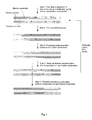
- Figure 1:
- is a schematic illustration of the method of the invention.
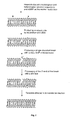
- Figure 2:
- illustrates the principle of the method using dUMP as the marker nucleotide and employing UDG, a class II AP endonuclease and a dRPase for the introduction of single-stranded breaks at the marker nucleotides.
- Figure 3:
- illustrates the principle of the method using dUMP as the marker nucleotide and employing UDG, a class I AP endonuclease and a class II AP endonuclease for the introduction of single-stranded breaks at the marker nucleotides.
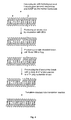
- Figure 4:
- illustrates the principle of the method using dUMP as the marker nucleotide and employing UDG, Endo VIII or Fpg, and a class II AP endonuclease or a T4 polynucleotide kinase for the introduction of single-stranded breaks at the marker nucleotides.
- Figure 5:
- illustrates the principle of the method using rNMP as the marker nucleotide and employing RNase H for the introduction of single-stranded breaks at the marker nucleotides.
- Figure 6:
- is a schematic illustration of the method of the invention employing three cycles.
- Figure 7:
- depicts a plasmid map of the shuttle vector pBV43 used in Example 3 of the Experimental Section, having the subtilisin gene inserted behind the P43 promotor.
- Figure 8:
- shows the mutations found in a representative set of recombinants that was obtained by the method of the invention as described in Example 3. The mutations are defined as differences in the amino acid sequence when comparing the variants with the subtilisin wild type amino acid sequence (SEQ ID NO:5). The amino acids are abbreviated according to the one-letter codes as listed in Table1. For example, "E160D" means that Glutamic acid (abbreviated as E) at position 160 of the wild type amino acid sequence is replaced by Aspartic acid (abbreviated as D).
- Figure 9:
- shows the results when performing the method of the invention for three rounds with four different variants of the subtilisin gene from Bacillus subtilis as described in Example 3. (A) Average number of recombination events per gene; (B) Fraction of recombinants among the resulting population. N is the number of clones in each experiment that was analyzed by sequence analysis. 1:1, 1:3 and 1:9 denote different ratios of the concentration of non-dUTP-containing strands to the concentration of dUTP-containing strands used in the method.
- As set forth above, the invention relates to a method for the production of nucleic acids with modified properties, i.e., polynucleotides consisting of stochastically combined parts of the source nucleic acids. Said embodiment will be described in more detail with reference to figure 1, which schematically shows a possible variant of the method of the invention.
- Depending on the requirements, the method of the invention permits both an incidental and a controlled new combination of heterologous sequence segments. By adjusting the probability of incorporation of marker nucleotides the average distance between recombination sites can be controlled. Distances down to one nucleotide are possible using appropriate ratios of nucleotides and marker nucleotides. This is hardly achieved with any of the before mentioned methods. In addition, the frequency of recombination can be controlled in a wide range by adjusting the number of cycles and the average recombination distance per cycle. Such a control of the recombination frequency may also be achieved by means of the method described in WO 01/34835 and the method described in WO 98/42728 that relies on a PCR with strand exchange. It is at least in part achieved by means of the methods described in WO 95/22625 and WO 01/29211. The method described in WO 98/42728 that relies on random priming provides no means to control the recombination frequency.
- Another aspect of methods for homologous recombination is their requirement for a certain degree of homology between the source nucleic acids to be recombined. The methods described in WO 95/22625, WO 98/42728 and WO 01/29211 all rely on the annealing of short sequence segments between the sites of recombination. In case that recombination events shall be distributed evenly over the entire nucleic acid sequence, this means that the entire source nucleic acid sequences have to provide sufficient homology to enable annealing of short nucleic acid segments. Regions within the nucleic acid sequences with lower homology permit said annealing and accordingly interrupt the recombination reaction. In contrast, the method described in WO 01/34835 as well as the method of the invention employ annealing of full length nucleic acid sequences to produce heteroduplices which are subjected to the recombination process. Thereby, also regions with rather low homology within the nucleic acid sequence do not interrupt the recombination and an overall lower homology is tolerated when compared to the above mentioned methods.
- Hence, the method of the invention is characterized by a combination of advantages which could not be achieved with any of the methods disclosed so far.
- Products resulting from each individual cycle according to the method of the invention are semi-conservative, single-stranded nucleic acid molecules, since - depending on the embodiment - a longer or shorter sequence segment was maintained at one side of the marker nucleotide incorporation site while the sequence segment on the other side of the marker nucleotide incorporation site was synthesized newly with the information of the template strand.
- The term "marker nucleotides" in accordance with the present invention means any nucleic acid monomer that is suited to be incorporated into a polynucleotide and that can be used as a marker to introduce single-stranded breaks at the corresponding position in order to provide intramolecular starting points for a template-directed polymerization reaction. Preferably, marker nucleotides are analogous of standard nucleotides that can be recognized specifically by a chemical reaction or by enzymatic treatment.
- In the method of the invention, step (5) requires.that more than one cycle comprising the steps (2) to (4) is completed, i.e. at least two, preferably at least ten, more preferably at least twenty and most preferably at least fifty cycles. Therefore, the template directed single-strand synthesis in step (4) is done with incorporation of marker nucleotides, thereby introducing in each cycle the marker nucleotides for the next cycle. Then, preferably, the last cycle is done without incorporation of marker nucleotides in order to produce double-strands free from marker nucleotides that can be processed further.
- The cyclic application of the method of the invention makes it possible to produce nucleic acid molecules comprising multiple recombined sequence segments from different source nucleic acids. In particular, the cyclic application makes it possible to combine several heterologous sequence segments which each other. Moreover, it is possible to control the recombination frequency for each polynucleotide strand by the number of cycles. With cyclic application, the average distance between the new combinations can be controlled by the probability of incorporating marker nucleotides in each cycle.
- In particular, the average distance between the starting points of the template-directed synthesis according to step (4) in each of two consecutive cycles is controlled by adjusting the probability of incorporating marker nucleotides in step (4) of the first of the two consecutive cycles. The probability of incorporating marker nucleotides can be controlled by adjusting the ratio of concentrations of marker nucleotides to standard nucleotides. Preferably, the probability of incorporating marker nucleotides is chosen to be lower than one and higher than the reciprocal of the length of the source nucleic acids in base pairs. It is noteworthy that, whenever more than one marker nucleotide is incorporated per polynucleotide strand, only the marker nucleotide incorporated next to the starting point of the template-directed polymerization determines the distance between recombination sites. All other marker nucleotides are removed without consequences (cf. Fig. 1).
- In a preferred embodiment, the nucleic acid molecules in the population of source nucleic acid molecules provided according to step (1) are double strands and the marker nucleotides are incorporated within the nucleic acid sequence in both strands. Here, both strands are accessible for the production of single-stranded breaks according to step (3) and, therefore, both strands are subjected to recombination and, at the same time, can serve as template strands.
- In another preferred embodiment, the nucleic acid molecules in the population of source nucleic acid molecules provided according to step (1) are double strands and the marker nucleotides are incorporated within the nucleic acid sequence in only one of both strands (marker strand or sense strand). Accordingly, only one of both strands is accessible for the production of single-stranded breaks according to step (3) and, therefore, only one of both strands is subject for recombination. The other strand serves only as a template during the whole process (template strand or antisense strand).
- In a particularly preferred embodiment, said double strands consisting of a marker strand and a template strand are produced by PCR using one primer having at least one marker nucleotide incorporated and a second primer without having any marker nucleotides incorporated.
- In another particularly preferred embodiment, said double strands consisting of a marker strand and a template strand are produced by annealing two single strands, each of which is produced by asymmetric PCR using only one primer, the marker strand being produced with incorporation of marker nucleotides during the polymerization step, while the template strand is produced without incorporation of marker nucleotides during the polymerization step.
- In another preferred embodiment, the marker nucleotides incorporated in the population of source nucleic acid molecules provided according to step (1) are incorporated next to the 5'-end, and the recombination site defined by the incorporation site of marker nucleotides and the corresponding single-stranded break according to step (3) gets closer to the 3'-end of the polynucleotide molecules with increasing cycle number.
- In another preferred embodiment, when more than one cycle is completed, the probability of incorporating marker nucleotides is altered from cycle to cycle. For example, this can be done by altering the ratio of concentrations of marker nucleotides and corresponding standard nucleotides. In this way, the distance between recombination sites can be controlled regioselectively.
- The population of source nucleic acid molecules provided according to step (1) of the method of the invention can be any population of nucleic acid molecules comprising at least two kinds of polynucleotides, consisting of homologous and heterologous segments. Preferably, two of these polynucleotides each have at least one homologous and two heterologous sequence segments when compared with each other. The term "population of nucleic acid molecules" refers to any kind of nucleic acid, e.g. single-stranded DNA, double-stranded DNA, single-stranded RNA, double-stranded RNA, double-stranded hybrids of DNA and RNA, or mixtures of any of these. In principle, the method may also be used for similarly constructed, artificial polymers. The term "homologous segments" denotes segments which are identical or complementary on two or more nucleic acid molecules, i.e. which have the same information at corresponding positions. The term "heterologous segments" means segments which are not identical or complementary on two or more nucleic acid molecules, i.e. which have different information at corresponding positions. The term ."information" or "genotype" of a nucleic acid molecule is the sequential order of various monomers in a nucleic acid molecule. A heterologous sequence segment has preferably a length of at least one nucleotide, but may also be much longer. For example, a heterologous sequence segment may have a length of two nucleotides or three nucleotides, e.g. a codon. In principle, there is no upper limit as regards the length of the heterologous segment. Nevertheless, the length of a heterologous segment should not exceed 1,000 nucleotides, preferably it should not be longer than 500 nucleotides, more preferably not longer than 200 nucleotides and most preferably not longer than 100 nucleotides. Such longer sequence segments may, for example, be the hypervariable regions of a sequence encoding an antibody, domains of a protein, genes in a gene cluster, regions of a genome, etc. Preferably, the heterologous segments are sequence segments in which the nucleic acid molecules differ in single bases. Heterologous segments, however, may also be based on the fact that a deletion, duplication, insertion, inversion, addition or similar is present or has occurred in a nucleic acid molecule.
- According to the invention, the nucleic acid molecules provided according to step (1) of embodiment (A) have preferably at least one homologous and at least two heterologous sequence segments. More preferably, however, they have a plurality of homologous and heterologous segments. In principle, there is no upper limit to the number of homologous and heterologous segments. A population of source nucleic acid molecules according to the invention may consist of (i) gene variants each carrying one or more point mutations at various positions, or (ii) of gene homologous obtained from different species providing sufficient homology to produce - at least partially - heteroduplices, or (iii) of gene variants each carrying one or more randomized cassettes such as antibody gene libraries. This enumeration is, however, not to be construed to limit the invention.
- The heterologous segments in the population of nucleic acid molecules provided according to step (1) of the method are each interrupted by homologous segments. The homologous segments preferably have a length of at least 5, more preferably of at least 10 and most preferably of at least 20 nucleotides. Like the heterologous segments, the homologous segments, too, may be much longer and, in principle, there is no upper limit to their length. Preferably, their length should not exceed 5,000 nucleotides, more preferably not longer than 2,000 nucleotides and most preferably not longer than 1,000 nucleotides.
- In a particularly preferred embodiment of the method of the invention related nucleic acid sequences are used for providing a population of source nucleic acid molecules according to step (1). In this context, the term "related" means polynucleotides which have both homologous and heterologous segments among each other. Related nucleic acid molecules may originate from a procedure to introduce random point mutations into a source nucleic acid sequence. This introduction of point mutations can be achieved by the inherent erroneous copying process alone, but also by the purposeful increase of the inaccuracy of the polymerase used (e.g. by defined non-balanced addition of the monomers, by addition of base analogues, by error-prone PCR, by polymerases with very high error rate), by chemical modification of polynucleotides after synthesis, by the complete synthesis of polynucleotides under at least partial application of monomer mixtures and/or of nucleotide analogues, by erroneous replication in vivo (e.g. by viruses having high error rates, by bacterial mutator strains, by bacteria under UV irradiation, etc.), as well as by a combination of two or more of these methods. Related nucleic acid molecules may also be nucleic acid molecules, that have been subjected to an alternative nucleic acid variation method, such as the random truncation, insertion, deletion or inversion of sequence segments or the introduction of randomized sequence segments. Related nucleic acid molecules may also be nucleic acid sequences of the distribution of mutants of a quasi-species. A "quasi-species" is a dynamic population of related molecule variants (mutants) which is formed by faulty replication and subsequent selection (WO 92/18645). Alternatively, related nucleic acid molecules may be nucleic acid sequences isolated from natural sources that have a sufficient degree of homology to form heteroduplices according to step (2) of the method. For example, analogous genes or gene fragments isolated from genomes of evolutionary related species can be employed. Any of these related nucleic acid molecules may be used directly or be subjected to a screening and/or selection procedure before application of the recombination procedure, the selection and/or screening procedure selecting those nucleic acid molecules that have a certain phenotype. The term "phenotype of a nucleic acid molecule" denotes the sum of functions and properties of the nucleic acid molecule and of the transcription or translation products encoded by the nucleic acid molecule.
- The incorporation of marker nucleotides according to step (1) and, where applicable, according to step (4) is achieved by using a template directed polymerase reaction or by chemical synthesis of oligonucleotides. Preferably, the incorporation of marker nucleotides according to step (4) is done by using a template-directed polymerase reaction.
- For said template-directed polymerase reaction according to step (4) of the method any enzyme with template directed polynucleotide-polymerization activity can be used which is able to polymerize polynucleotide strands starting from the 3'-end. A vast number of polymerases from the most varied organisms and with different functions have already been isolated and described. With regard to the kind of the template and the synthesized polynucleotide, a differentiation is made between DNA-dependent DNA polymerases, RNA-dependent DNA polymerases (reverse transcriptases), DNA-dependent RNA polymerases and RNA-dependent RNA polymerases (replicases). With regard to temperature stability, a differentiation is made between non-thermostable (37°C) and thermostable polymerases (75-95°C). In addition, polymerases differ with regard to the presence of 5'-3'- and 3'-5'-exonucleolytic activity.
- When both, the template strand and the marker strand consist of DNA, DNA-dependent DNA polymerases are preferably used. In particular, DNA polymerases with a temperature optimum of exactly or around 37°C are used. These include, for instance, DNA polymerase I from E. coli, T7 DNA polymerase from the bacteriophage T7 and T4 DNA polymerase from the bacteriophage T4 which are each traded by a large number of manufacturers. The DNA polymerase I from E. coli (holoenzyme) has a 5'-3' polymerase activity, a 3'-5' proofreading exonuclease activity and a 5'-3' exonuclease activity. The enzyme is used for in vitro labeling of DNA by means of the nick-translation method (J. Mol. Biol. 113 (1977), 237-251). In contrast to the holoenzyme, the Klenow fragment of DNA polymerase I from E. coli does not have a 5'-exonuclease activity, just like the T7 DNA polymerase and the T4 DNA polymerase. Therefore, these enzymes are used for so-called filling-in reactions or for the synthesis of long strands (Biochemistry 31 (1992), 8675-8690, Methods Enzymol. 29 (1974), 46-53). The 3'-exo(-) variant of the Klenow fragment of DNA polymerase I from E. coli does not have the 3'-exonuclease activity. This enzyme is often used for DNA sequencing according to Sanger (Proc. Natl. Acad. Sci. USA 74 (1977), 5463-5467). Apart from these enzymes, there is a plurality of other 37°C DNA polymerases with different properties which can be employed in the method of the invention.
- Moreover, thermostable DNA polymerases can be used for the method of the invention. Preferably, the most widespread thermostable DNA polymerase that has a temperature optimum of 75°C and is still sufficiently stable at 95°C, the Taq DNA polymerase from Thermus aquaticus, can be used. Taq DNA polymerase is commercially available from various manufacturers. Taq DNA polymerase is a highly-processive DNA polymerase without 3'-exonuclease activity. It is often used for standard PCRs, for sequencing reactions and for mutagenic PCRs (PCR Methods Appl. 3 (1994), 136-140, Methods Mol. Biol. 23 (1993), 109-114). However, several other thermostable DNA polymerases can be employed. The Tth DNA polymerase from Thermus thermophilus HB8 and the Tfl DNA polymerase from Thermus flavus have similar properties. The Tth DNA polymerase additionally has an intrinsic reverse transcriptase (RT) activity in the presence of manganese ions (Biotechniques 17 (1994), 1034-1036). Among the thermostable DNA polymerases without 5'- but with 3'-exonuclease activity, numerous of them are commerically available: Pwo DNA polymerase from Pyrococcus woesei, Tli, Vent or DeepVent DNA polymerase from Thermococcus litoralis, Pfx or Pfu DNA polymerase from Pyrococcus furiosus, Tub DNA polymerase from Thermus ubiquitous, Tma or UITma DNA polymerase from Thermotoga maritima. Polymerases without 3'-proofreading exonuclease activity are used for amplifying PCR products that are as free from defects as possible. With the Stoffel fragment of Taq DNA polymerase, with Vent-(exo-) DNA polymerase and Tsp DNA polymerase thermostable DNA polymerases without 5'- and without 3'-exonucleolytic activity are available.
- When RNA is used as the template strand nucleic acid and DNA as the marker strand nucleic acid, RNA-dependent DNA polymerases (reverse transcriptases) can be employed. Among the reverse transcriptases, preferably, the AMV reverse transcriptase from the avian myeloblastosis virus, the M-MuLV reverse transcriptase from the Moloney murine leukemia virus or the HIV reverse transcriptase from the human immunodeficiency virus is used. All three enzymes are traded by various manufacturers. Like the HIV reverse transcriptase, the AMV reverse transcriptase has an associated RNase-H activity. This activity is significantly reduced in M-MuLV reverse transcriptase. Both the M-MuLV and the AMV reverse transcriptase do not have a 3'-exonuclease activity. Furthermore, a thermostable reverse transcriptase can be used. Then the Tth-DNA polymerase from Thermus thermophilus with intrinsic reverse transcriptase activity is particularly preferred.
- When DNA is used as the template strand nucleic acid and RNA as the marker strand nucleic acid, DNA-dependent RNA polymerases may be employed. Preferably, the RNA polymerase from E. coli, the SP6-RNA polymerase from Salmonella typhimurium LT2 infected with the bacteriophage SP6, the T3-RNA polymerase from the bacteriophage T3 or the T7-RNA polymerase T7 from the bacteriophage T7 is used.
- In a preferred embodiment of the method, DNA is used as nucleic acid and deoxyuridine triphosphate (dUTP) is used as the marker nucleotide. Here, the incorporation of marker nucleotides according to step (1) and, where applicable, according to step (4) is achieved by using dUTP in combination with the four standard deoxynucleoside triphosphates (dNTPs; deoxyadenosine triphosphate, dATP; deoxyguanosine triphosphate, dGTP; deoxythymidine triphosphate, dTTP; deoxycytidine triphosphate, dCTP) in the template-directed polymerase reaction. The ratio of the dUTP to the dTTP concentration in this reaction can be chosen in a wide range in order to control marker nucleotide incorporation probability and, thereby, control the recombination distances. The exact ratio has to be adapted to the discrimination rate between dTTP and dUTP of the polymerase used in the template-directed polymerase reaction as well as to the desired average distance between recombination sites. The discrimination rates between dTTP and dUTP for a few of the aforementioned polymerases are: Taq DNA polymerase (Vmax/Km for the incorporation of dTTP) / (Vmax/Km for the incorporation of dUTP) = 1.2; Klenow DNA polymerase = 1.6; Vent DNA polymerase = 1.4; MMLV reverse transcriptase = 6.3 (J. Biol. Chem. 275 (2000) 40266). As an example, when Taq DNA polymerase from Thermus aquaticus is used and average distances in the range of 20 to 60 nucleobases are desired, the concentration ratio of dTTP to dUTP should, preferably, be lower than 100,000 and be higher than 0.001. More preferably the ratio should be lower than 1,000 and be higher than 0.1. Most preferably, the concentration ratio of dTTP to dUTP should be in the range of 10.
- In another preferred embodiment the nucleic acids used are DNA and 8-oxo-deoxyguanosine triphosphate (8-oxo-dGTP) is used as the marker nucleotide in combination with the four standard dNTPs in the template directed polymerase reaction. The marker incorporation probability and, thereby, the distance between recombination sites can be controlled by chosing an appropriate concentration ratio between 8-oxo-dGTP and dGTP. As an example, when Taq DNA polymerase from Thermus aquaticus is used and average distances in the range of 20 to 60 nucleobases are desired, the concentration ratio of 8-oxo-dGTP to dGTP in this reaction should preferably be chosen between 100,000 and 10. More preferably, the concentration ratio should be chosen between 10,000 and 100. Most preferably, the concentration ratio should be in the range of 1,000.
- In another preferred embodiment marker nucleotides with one of the following modified bases are used in combination with the four standard dNTPs in the template directed polymerase reaction: 3-methyladenine, 7-methyladenine, 3-methylguanine, 7-methylguanine, 7-hydroxyethylguanine, 7-chloroethylguanine, O2-alkylthymine, O2-alkylcytosine, 5-fluorouracil, 2,5-amino-5-formamidopyrimidine, 4,6-diamino-5-formamidopyrimidine, 2,6-diamino-4-hydroxy-5-formamidopyrimidine, 5-hydroxycytosine, 5,6-dihydrothymine, 5-hydroxy-5,6-dihydrothymine, thymine glycol, uracil glycol, isodialuric acid, alloxan, 5,6-dihydrouracil, 5-hydroxy-5,6-dihydrouracil, 5-hydroxyuracil, 5-formyluracil, 5-hydroxymethyluracil, hypoxanthine, 1,N6-ethenoadenine, or 3,N4-ethenocytosine. For the polymerase reaction any enzyme with template directed polynucleotide-polymerization activity can be used which is able to incorporate these marker nucleotides.
- In another preferred embodiment the marker strand nucleic acid is DNA, and one, two, three or all four ribonucleoside triphosphates (rNTPs) are used in combination with the four standard dNTPs in the template directed polymerase reaction. The concentration ratio of the rNTP to the corresponding dNTP in this reaction can be used to control the marker incorporation probability and, thereby, the distance between recombination sites. Discrimination ratios (Vmax/Km for the incorporation of dNTP) / (Vmax/Km for the incorporation of rNTP) for Taq DNA polymerase are: dUTP/rUTP = 1,500,000, dCTP/rCTP = 24,000; for Klenow DNA polymerase: dUTP/rUTP = 130,000, dCTP/rCTP = 3,100; for Vent DNA polymerase: dUTP/rUTP = 10,000, dCTP/rCTP = 2,000; and for MMLV reverse transcriptase: dUTP/rUTP = 21,000, dCTP/rCTP = 1,100 (J. Biol. Chem. 275, (2000) 40266). As an example, when Vent DNA polymerase is used in combination with rCTP as the marker nucleotide, and average distances in the range of 20 to 60 nucleobases are desired, the concentration ratio of rCTP to dCTP should preferably be lower than 10,000 and higher than 1. More preferably, the ratio should be lower than 1,000 and higher than 10. Most preferably the ratio should be in the range of 100.
- The formation of double-stranded heteroduplices according to step (2) of the method of the invention is preferably achieved by hybridization of the homologous segments of the source nucleic acid molecules. The term "heteroduplices" means double strands with at least one homologous and at least two heterologous segments. By using a population of nucleic acid sequences with heterologous segments, heteroduplices are formed with a statistical probability which corresponds to the relative frequency of sequence variants in the population. Starting out, for example, from an equimolar mixture of two variants having two heterologous segments, a heteroduplex statistically occurs with every second double-stranded nucleic acid. If the number of variants is markedly higher than the relative frequency of individual variants, heteroduplices are formed almost exclusively.
- Hybridization of homologous segments of the source nucleic acids to form heteroduplices is carried out according to methods known to the person skilled in the art. In a preferred embodiment the source nucleic acid molecules are single-stranded and the hybridization is achieved by combining said single strands and adjusting reaction conditions which promote the annealing of homologous nucleic acids, e.g. by lowering of the temperature or adjusting the salt concentration. In another preferred embodiment, the source nucleic acid molecules are double-stranded and the hybridization is achieved by melting the double strands under appropriate conditions, e.g. at temperatures higher than the melting temperature of the double strand, and allow the strands to re-anneal, e.g. by lowering the temperature below the melting temperature of the double strand.
- The production of single-stranded breaks at the positions of incorporated marker nucleotides according to step (3) of the invention is preferably achieved by chemical or enzymatic reactions. The term "breaks" means nicks or gaps in a nucleic acid strand that can serve as starting points for a template-directed polymerase reaction.
- In a preferred embodiment, the single-stranded break is achieved by removing the marker nucleotide by the action of one or more enzymes leading to a single nucleotide gap and a free 3'-OH residue on the 5' side of said gap, the free 3'-OH being extendable by a polymerase according to step (4) of the method.
- In a particularly preferred embodiment, when DNA is the nucleic acid and dUTP is used as marker nucleotide, the uracil base of the incorporated marker uridine residues is separated from the ribose by action of an uracil-DNA glycosylase (UDG, Figures 2 - 4). A large number of different UDGs isolated from various species has been described (Rev. Biochem. Tox. 9 (1988) 69; Mutat. Res. 460 (2000) 165). UDGs are involved in a base-excision pathway initiated by deamination of the DNA base cytosine leading to uracil or by misincorporation of uridine during DNA replication. The use of UDGs in PCR-carry-over-prevention has been described (Gene 93 (1990) 125). UDG from E. coli is commercially available in the engineered and in the non-engineered form by various manufacturers. E. coli UDG efficiently hydrolyzes uracil from single-stranded or double-stranded DNA, but not from dUTP. The minimal substrate for UDG was found to be pd(UN)p (Biochemistry 30 (1991) 4055). The reaction can be started e.g. by changing the buffer conditions or the temperature or by adding the UDG, and can be stopped, for instance, by changing the buffer conditions or the temperature or by adding an UDG inhibitor. The separation of the uracil bases from DNA containing uridine residues results in apyrimidinic sites (AP sites).
- In another particularly preferred embodiment, when DNA is the nucleic acid and 8-oxo-dGTP is used as marker nucleotide, the 8-oxo-guanine base is separated from the ribose using formamidopyrimidine-DNA glycosylases (Fpg) (EMBO J. 6 (1987) 3177). The reaction can be started e.g. by changing the buffer conditions or the temperature or by adding the enzyme and can be stopped, for instance, by changing the buffer conditions or temperature or by adding an inhibitor. In addition to its formamidopyrimidine-glycosylase activity, this protein also has a nicking activity that cleaves via a α,β-elimination both the 5'- and 3'-phosphodiester bonds at an AP site (Biochem. J. 262 (1989) 581). Thus the treatment of a polynucleotide molecule containing the 8-oxo-GMP residues leads to gaps of a single nucleotide with a phosphate group both at the 5'- and 3'-end.
- In another particularly preferred embodiment any other DNA N-glycosylase which detects one of the aforementioned modified bases is employed. E. coli alkylbase-DNA glycosylase (alkA gene product, Mol. Gen. Genet. 197 (1984) 368), for example, separates the bases from 3-methyladenosine, 7-methyladenosine, 3-methylguanosine, 7-methylguanosine, 7-hydroxyethylguanosine, 7-chloroethylguanosine, O2-alkylthymidine, O2-alkylcytidine, hypoxanthosine, 1,N6-ethenoadenosine or 3,N4-ethenocytidine. E. coli endonuclease III (Biochem. J. 242 (1987) 565), as an alternative, separates the bases from 5-hydroxycytidine, 5,6-dihydrothymidine, 5-hydroxy-5,6-dihydrothymidine, thymidine glycol, uridine-glycol, alloxan, 5,6-dihydrouridine, 5-hydroxy-5,6-dihydrouridine or 5-hydroxy-uridine. Endonuclease III has in addition to its DNA N-glycosylase activity an AP lyase activity which cleaves at the 3'-end bond of an AP site via β-elimination (Nucl. Acid. Res. 16 (1988) 1135). Thus the treatment of a nucleic acid molecule containing the aforementioned substrate residues for endonuclease III leads to nicks with a α,β-unsaturated aldehyde (trans-4-hydroxy-2-pentenal-5-phosphate) at the 3'-end and a phosphate group at the 5'-end.
- In another particularly preferred embodiment, when DNA is the nucleic acid and one or more rNTPs are used as marker nucleotides, the rNMP residues incorporated in a DNA double strand can be recognized by a ribonuclease H (RNase H, Figure 5). Preferably, RNase H1 from K562 human erythroleukemia cells is used, that cleaves at the 5'-site of an RNA segment in the DNA strand consisting of one or more ribonucleotide residues (J. Biol. Chem. 266 (1991) 6472). This reaction leads to a nick with a 5'-p-rNMP residue at one side and a free 3'-OH group at the other side. Alternatively, other RNases H can be employed, e.g. E. coli RNase H or the RNase H activity of reverse transcriptases. The reaction can be started e.g. by changing the buffer conditions or the temperature or by adding the enzyme and can be stopped, for instance, by changing the buffer conditions or temperature or by adding an inhibitor.
- In a preferred embodiment the AP site resulting from the action of a DNA N-glycosylase is cleaved by a class II AP endonuclease (Figure 2). In particular, Endonuclease IV (J. Biol. Chem. 252 (1977) 2808) or Exonuclease III (J. Biol. Chem., 239 (1964) 242) can be used for this reaction. The incubation of a polynucleotide molecule containing AP sites with these enzymes leads via hydrolysis to a nick with a 5'-deoxyribosephosphate (dRp) group at one side and a free 3'-OH group at the other side (Nucl. Acid. Res. 18 (1990) 5069).
- In a particularly preferred embodiment the 5'-dRp group resulting from the action of a class II AP endonuclease is cleaved by an enzyme showing deoxyribose-phosphatase activity (dRpasen). For this reaction, a multitude of enzymes can be employed. For example: E. coli exonuclease I (Nucl. Acid. Res. 20 (1992) 4699), E. coli RecJ protein (Nucl. Acid. Res. 22, 1994, 993); E. coli endonuclease III (Nucl. Acid. Res. 17, 1989, 6269); E. coli formamidopyrimidine-DNA glycosylase (Fpg, J. Biol. Chem. 267, 1992, 14429); E. coli endonuclease VIII (J. Biol. Chem. 272, 1997, 32230); T4 endonuclease V (Biochemistry 32, 1993, 8284); T4 DNA ligase (J. Biol. Chem. 273, 1998, 7888); T7 DNA ligase (J. Biol. Chem. 273, 1998, 7888) or DNA polymerase I, T7 DNA polymerase and MMLV reverse transcriptase (J. Biol. Chem. 275, 2000, 12509).
- In another preferred embodiment the AP site resulting from the action of a DNA N-glycosylase is cleaved by a class I AP endonuclease (Figure 3). For this reaction, E. coli endonuclease III (Biochem. J. 242, 1987, 565-573) or T4 endonuclease V (Mutat. Res. 459, 2000, 43-53) can be employed. The incubation of a polynucleotide molecule containing AP sites with these enzymes leads via β-elimination to a nick with a α,β-unsaturated aldehyde (trans-4-hydroxy-2-pentenal-5-phosphate) at the 3'-end and a phosphate group at the 5'-end (FEBS Lett. 178, 1984, 223; Nucl. Acid. Res. 16, 1988, 1135). The 3'-aldehyde has to be removed by a class II AP endonuclease such as exonuclease III or endonuclease IV (Biochem. J. 242, 1987, 565) resulting in a free 3'-OH group.
- In a preferred embodiment the AP site resulting from the action of a DNA N-glycosylase is cleaved by an AP lyase which cleaves at the AP site via a α,β-elimination (Figure 4). E. coli endonuclease VIII (J. Biol. Chem. 272, 1997, 32230) and E. coli formamidopyrimidine-DNA glycosylase (Fpg, J. Biol. Chem. 267, 1992, 14429) can be employed for this purpose. The incubation of a DNA double strand containing AP sites with these enzymes leads to gap of one nucleotide with a 3'-phosphate residue at one side of the gap and a 5'-phosphate residue at the other side of the gap. Afterwards, the 3'-phosphate group is removed by a class II AP endonuclease, as for example Exonuclease III or Endonuclease IV (J. Biol. Chem. 258, 1983, 15198) or by T4 polynucleotide kinase (Biochemistry 16, 1977, 5120) resulting in a free 3'-OH group.
- In another preferred embodiment the marker strand consisting of DNA and containing rNMP residues is cleaved by alkaline hydrolysis. This reactions leads to a nick with a 2'- or 3'-rNMP at the 3'-end and an OH group at the 5'-end. The reaction can be started and stopped by changing the pH.
- In another preferred embodiment the 2'- or 3'-rNMP at the 3'-end of a nick resulting from the alkaline hydrolysis of a DNA polynucleotide containing rNMPs is removed by a class II AP endonuclease. Preferably, Exonuclease III or Endonuclease IV are used, resulting in a free 3'-OH group.
- According to step (4), the free 3'-OH group at a nick or gap resulting from one or more of the aforementioned reactions is extended with a template directed polymerase reaction with or without the incorporation of additional marker nucleotides.
- In a preferred embodiment the remaining part of the marker strand 3' of the single strand break, in particular strands containing a 5'-dRp group resulting from the action of a class II AP endonuclease, are bound with a surplus of the corresponding complementary strands and are thereby removed from the template strand. Then, any kind of polymerase can be employed to extend the 3'-OH group by template-directed polymerization.
- In another preferred embodiment the remaining part of the marker strand 3' of the single strand break is removed from the template strand by employing a polymerase showing strong strand displacement properties. Preferably, Vent DNA polymerase or Klenow DNA polymerase are employed for this purpose.
- In another preferred embodiment the remaining part of the marker strand 3' of the single strand break is removed from the template strand by a 5'-exonuclease activity. For this purpose, any polymerase showing a 5'-exonuclease activity can be employed. Preferably, Taq DNA polymerase or Tth DNA polymerase are used. Alternatively, 5'-3' exonucleases can be used in combination with any polymerase. Then, preferably, Lambda Exonuclease (Gene Amplification and
Analysis 2,1981, 135) or T7 Exonuclease (Nucl. Acid. Res. 5, 1978, 4245) are used. - The invention is further explained by the following examples, which are, however, not to be construed to limit the invention.
-
- 1. Provide partially homologous and heterologous genes to be recombined. Amplify the genes by PCR introducing an Eco RI restriction site at the one end and a Hind III restriction site at the other end.
- 2.
Incubate 1 µg of each PCR product and 1 µg of pUC18 vector with 1 U Eco RI (e.g. NEB) and 1 U Hind III (e.g. NEB) in Eco RI reaction buffer (100 mM Tris-HCl, pH 7.5; 50 mM NaCl; 10 mM MgCl2; 0.025 % (v/v) Triton® X-100)-for 2 h at 37 °C. Heat inactivate the enzymes for 20 min at 65 °C. Purify the cleavage products e.g. with QiaQuick (Qiagen). - 3. Ligate the PCR products into the pUC18 vector using 200 fmol vector, 600 fmol insert, 1 µl of 10X Ligation Buffer (500 mM Tris-HCl, pH 7.5; 100 mM MgCl2; 100 mM DTT; 10 mM ATP, 250 µg/ml BSA), 5 Weiss Unit of T4 DNA ligase (e.g. NEB) ad 10 µl aqua dest. Incubate 1 h at room temperature and heat inactivate the enzyme for 10 min at 65 °C. Transform E. coli XL1-Blue with the ligated vector, e.g. by electroporation. Make plasmid preparations from positive clones using e.g. Qiagen Mini Plasmid Prep Kits.
- 4. Amplify the inserted genes with a PCR using the primers:
- pUC-left: 5'-CCAGTCACGACGTTGTAAAACG-3' (SEQ ID NO:1)
- pUC-right: 5'-TAACAATTTCACACAGGAAACAGC-3' (SEQ ID NO:2)
- 5. Make a set of asymmetric PCRs with the mixed PCR-products as templates varying the added dUTP concentration (e.g. 0.2 µM; 1 µM; 5 µM; 25 µM; 100 µM dUTP) by mixing 10 µl 10X PCR buffer (100 mM Tris-HCl, pH 8.3; 500 mM KCl; 15 mM MgCl2; 0.01 % (w/v) gelantin), 1 pmol template DNA, 100 pmol pUC-left, 100 pmol blocked pUC-right (3'-NH2 modification), 200 µM dNTPs, any of the above mentioned dUTP concentrations, 2 U Taq DNA polymerase (e.g. Applied Biosystems) ad 100 µl aqua dest., and using the following cycler protocol: 1' 94 °C; 30 cycles consisting of 1' 94 °C, 1' 50 °C, 1.5' 72 °C. Purify the PCR products, e.g. with QiaQuick® (Qiagen) and pool the PCR products as marker strands.
Make an asymmetric PCR with the mixed PCR-products as template (antisense strand) by mixing 10 µl 10X PCR buffer (100 mM Tris-HCl, pH 8.3; 500 mM KCI; 15 mM MgCl2; 0.01 % (w/v) gelantin), 1 pmol template DNA, 100 pmol blocked pUC-left (3'-NH2 modification), 100 pmol pUC-right, 200 µM dNTPs, 2 U Taq DNA polymerase (e.g. Applied Biosystems) ad 100 µl aqua dest., and using the following cycler protocol: 1' 94 °C; 30 cycles consisting of 1' 94 °C, 1' 50 °C, 1.5' 72 °C. Purify the PCR products, e.g. with QiaQuick® (Qiagen) and pool the PCR-products as template strands. - 6.
Anneal 2 pmol of sense strand (with incorporated dU's) and 2 pmol of antisense strand in 100 mM NaCl (2' 95 °C, 95 °C -> 50 °C with 0,04 °C/s). Purify the annealed double stranded DNA, e.g. with QiaQuick® -Kit - 7.
Incubate 2 pmol of the annealed double stranded DNA with 1 U UDG (e.g. NEB) and 2 U Endonuclease IV (e.g. Epicentre) 1h at 37 °C in 20 µl UDG-Puffer (20 mM Tris-HCl, pH 8.0; 1 mM EDTA; 1 mM DTT). Add 80 µl of Vent-buffer (20 mM Tris-HCl, pH 8.8; 10 mM KCl; 10 mM (NH4)2SO4; 2 mM MgSO4; 0.1 % (v/v) Triton® X-100), 200 µM dNTPs and 2 U Vent(exo-) DNA polymerase (NEB).Incubate 5 min at 72 °C. Purify the DNA with QiaQuick® (Qiagen). - 8. Incubate the product and 1 µg of pUC18 vector each with 1 U Eco RI (e.g. NEB) and 1 U Hind III (e.g. NEB) in Eco RI reaction buffer (100 mM Tris-HCl, pH 7.5; 50 mM NaCl; 10 mM MgCl2; 0.025 % (v/v) Triton® X-100) for 2 h at 37 °C. Heat inactivate the enzymes for 20 min at 65 °C. Purify the cleavage products e.g. with QiaQuick® -Kit.).
- 9. Ligate the product into the pUC18 vector using: 200 fmol vector, 600 fmol insert, 1 µl of 10X Ligation Buffer (500 mM Tris-HCl, pH 7.5; 100 mM MgCl2; 100 mM DTT; 10 mM ATP, 250 µg/ml BSA), 5 Weiss Unit of T4 DNA ligase (e.g. NEB) ad 10 µl aqua dest. Incubate 1 h at room temperature and heat inactivate the enzyme for 10 min at 65 °C. Transform E. coli XL1-Blue with the ligated vector.
- For
steps 1. to 4. see Example 1. - 5. Make an asymmetric PCR with the mixed PCR-products as template by mixing 10 µl 10X PCR buffer (100 mM Tris-HCl, pH 8.3; 500 mM KCl; 15 mM MgCl2; 0.01 % (w/v) gelantin), 1 pmol template DNA, 100 pmol pUC-left, 100 pmol locked pUC-right (3'-NH2 modification), 200 µM dNTPs, 2 µM dUTP, 2 U Taq DNA polymerase (e.g. Applied Biosystems) ad 100 µl aqua dest., and using the following cycler protocol: 1' 94 °C; 30 cycles consisting of 1' 94 °C, 1' 50 °C, 1.5' 72 °C. Purify the PCR products, e.g. with QiaQuick ® (Qiagen) as marker strands.
Make an asymmetric PCR with the mixed PCR-products as template by mixing 10 µl 10X PCR buffer (100 mM Tris-HCl, pH 8.3; 500 mM KCl; 15 mM MgCl2; 0.01 % (w/v) gelantin), 1 pmol template DNA, 100 pmol blocked pUC-left (3'-NH2 modification), 100 pmol pUC-right, 200 µM dNTPs, 2 U Taq DNA polymerase (e.g. Applied Biosystems) ad 100 µl aqua dest., and using the following cycler protocol: 1' 94 °C; 30 cycles consisting of 1' 94 °C, 1' 50 °C, 1.5' 72 °C. Purify the PCR products, e.g. with QiaQuick® (Qiagen) as template strands. - 6.
Anneal 2 pmol of marker strand (with incorporated dU's) and 2 pmol of template strand in 100 mM NaCl (2' 95 °C, 95 °C -> 50 °C with 0,04 °C/s). Purify the annealed double stranded DNA, e.g. with QiaQuick® -Kit (Qiagen). - 7.
Incubate 2 pmol of the annealed double stranded DNA with 1 U UDG (e.g. NEB) and 2 U Endonuclease IV (e.g. Epicentre) 1h at 37 °C in 20 µl UDG-Puffer (20 mM Tris-HCl, pH 8.0; 1 mM EDTA; 1 mM DTT). Add 2 U of UGI (Uracil Glycosylase Inhibitor, e.g. NEB). Add 80 µl of Vent-buffer (20 mM Tris-HCl, pH 8.8; 10 mM KCI; 10 mM (NH4)2SO4; 2 mM MgSO4; 0.1 % (v/v) Triton® X-100), 200 µM dNTPs, 2 µM dUTP and 2 U Vent(exo-) DNA polymerase (NEB).Incubate 5 min at 72 °C. Purify the DNA (e.g. with QiaQuick® ). - 8. Reaneal the various strands in 100 mM NaCl (2' 95 °C, 95 °C -> 50 °C with 0,04 °C/s).
- 9. Repeat steps 7 and 8 several times (the number of cycles should equal the length of gene in bp / 100).
- 10. Incubate the product and 1 µg of pUC18 vector each with 1 U Eco RI (e.g. NEB) and 1 U Hind III (e.g. NEB) in Eco RI reaction buffer (100 mM Tris-HCl, pH 7.5; 50 mM NaCl; 10 mM MgCl2; 0.025 % (v/v) Triton® X-100) for 2 h at 37 °C. Heat inactivate the enzymes for 20 min at 65 °C. Purify the cleavage products e.g. with QiaQuick® -Kit.
- 11. Ligate the product into the pUC18 vector using: 200 fmol vector, 600 fmol insert, 1 µl of 10X Ligation Buffer (500 mM Tris-HCl, pH 7.5; 100 mM MgCl2; 100 mM DTT; 10 mM ATP, 250 µg/ml BSA), 5 Weiss Unit of T4 DNA ligase (e.g. NEB) ad 10 µl aqua dest. Incubate 1 h at room temperature and heat inactivate the enzyme for 10 min at 65 °C. Transform E. coli XL1-Blue with the ligated vector.
- Four partially homologous and partially heterologous subtilisin genes were recombined according to the method of the invention as follows. The four genes were the wild type gene and three mutants,
variant 15,variant 21, andvariant 22, from the gene aprE coding for Subtilisin E from B. subtilis (see Figure 7 and SEQ ID NO:5 showing the amino acid sequence of the aprE encoded subtilisin E - protein). - 1. Each of the four partially homologous and partially heterologous genes was PCR-amplified using the primers:
- PrimerHL: 5'-CGTTGCATATGTGGAAGAAGATC-3' (SEQ ID NO:3)
- PrimerHR: 5'-GAAGCAGGTATGGAGGAAC-3' (SEQ ID NO:4)
- 2. In a second PCR, each of the four genes was PCR-amplified under incorporation of the marker nucleotide using the same primers as in
step 1. PCR was performed by mixing 200 µM of a dNTP mix where dTTP is reduced and replenished by dUTP to result in a ratio of dUTP/dTTP of 1:40, with 10 µl 10x PCR buffer (750 mM Tris-HCl, pH 8.8; 200 mM (NH4)2SO4; 25 mM MgCl2; 0.1 % (v/v) Tween® 20); 2.5 U Taq DNA polymerase (MBI Fermentas) ad 100 µl aqua dest, using the following thermal cycler protocol: 1' 94 °C; 25 cycles consisting of 1' 94 °C, 1' 52 °C, 1.5' 72 °C. PCR products were purified with the QiaQuick® PCR purification kit (Qiagen, Hilden, Germany). - 3. A 1:1 mixture of marker-incorporated to marker-free polynucleotides was made by mixing 0.5 µg (approx. 1 pmol) of each PCR product of step 2 (marker incorporated) and 0.5 µg (approx. 1 pmol) of each PCR product of step 1 (marker-free) in 100 mM NaCl. Produce heteroduplex molecules by heating for 2' at 94 °C, and cooling down to 50 °C with a rate of 0.04 °C/s). Analogously, 1:3 and 1:9 mixtures of marker-incorporated to marker-free polynucleotides were made by mixing corresponding amounts of PCR products from
step - 4. 2 µg (approx. 3.8 pmol) of each of the heteroduplex molecule mixtures was incubated for 30 min at 37 °C with 1 U UDG (NEB) in 20 µl 1x UDG-buffer (20 mM Tris-HCl, pH 8.0; 1 mM EDTA; 1 mM DTT). 2 U Endonuclease IV (Epicentre) were added, the reaction volume was increased to 20 µl with 1x UDG-buffer, and the mixtures were incubated for additional 30 min at 37 °C. Then, 80 µl Taq-buffer (750 mM Tris-HCl, pH 8.8; 200 mM (NH4)2SO4; 0,1 % Tween 20), 200 µM dNTPs, and 2.5 U Taq DNA Polymerase (MBI Fermentas) were added, and the mixtures were incubated for additional 5 min at 72°C. Products were purified with the QiaQuick® PCR purification kit (Qiagen, Hilden, Germany).
- 5. Polynucleotides were resuspended in 100 mM NaCl, and again, heteroduplex molecules were produced by melting strands through heating for 2' at 94 °C, and cooling down to 50 °C with a rate of 0.04 °C/s).
- 6.
Steps - 7. Finally, in order to separate heteroduplex strands, 20 pmol of PrimerML and PrimerMR were added to each mixture, and 3 cycles PCR using the cycler protocol: 1' 94 °C, 1' 52 °C, 1.5' 72 °C were performed. Recombined polynucleotides were purified using the QiaQuick® PCR purification kit (Qiagen, Hilden, Germany).
- 8. Recombined polynucleotides were then ligated into the vector pBVP43 (see Figure 7) behind the P43 promotor with the vector being constructed as follows: The pMB1 origin from pUC19 (ATCC 37254) was PCR amplified (positions 763 - 1601) and introduced into the PvuII site of pUB110 (ATCC 37015). The fragment between SapI and BglII was removed from this vector. Then, an insert containing the P43 promoter from the cdd gene of B. subtilis, the signal sequence and the terminator from the subtilisin E gene of B. subtilis, as well as a short multiple cloning site between the signal sequence and the terminator was introduced into the unique SphI site, resulting in the vector pBVP43empty. The wild type subtilisin E gene (coding for the protein of SEQ ID NO:5 and being derivable from the genome of Bacillus subtilis strain 168 (DSM #402)) without the signal sequence as well as any other subtilisin variant was introduced in frame with the signal sequence into the multiple cloning site resulting in the vector pBVP43.
- 9. Recombined polynucleotides were then ligated into the vector pBVP43 (see Figure 7) behind the P43 promotor. Ligation was done using 300 fmol vector, 1500 fmol insert, 2 µl of 10x Ligation buffer (500 mM Tris-HCl, pH 7.5; 100 mM MgCl2; 100 mM DTT; 10 mM ATP, 250 µg/ml BSA), 5 Weiss Units of T4 DNA ligase (MBI Fermentas), ad 20 µl aqua dest, by incubation for 2 h at room temperature, followed by heat inactivation for 10 min at 65 °C, and ethanol precipitation. The ligation mixture was then transformed into electrocompetent E. coli XL1-Blue.
- 10. Isolated clones were sequenced in order to determine the number of recombinants and the frequency of recombination events.
- Results from the sequence analysis of a representative set of clones are shown in Figure 8. which shows a comparison of amino acid residues of the starting material of the wild type subtilisin and three mutants thereof and those of the recombinants obtained by the use of the method of this invention. The amino acids are abbreviated as shown in Table I below.
- Overall, 17 out of 26 clones were recombined corresponding to 65 % recombinants. The average number of recombination events per gene over all clones was approximately 1.2.
As shown in Figure 9, the ratio of marker-free to marker-incorporated PCR products of 1:1 and 1:3 showed approximately 75 % recombinants (Figure 9B); the recombinants resulting of the 1:3 mixture had on average 1.50 recombination events in comparison to the 1:1 mixture (Figure 9A).Table I: Amino acid abbreviations Abbreviations Amino acid A Ala Alanin C Cys Cysteine D Asp Aspartic acid E Glu Glutamic acid F Phe Phenylalanine G Gly Glycine H His Histidine I Ile Isoleucine K Lys Lysine L Leu Leucine M Met Methionine N Asn Asparagine P Pro Proline Q Gln Glutamine R Arg Arginine S Ser Serine T Thr Threonine V Val Valine W Trp Tryptophane Y Tyr Tyrosine -
- <110> DIREVO Biotech AG
- <120> Method for the Production of Nucleic Acids Consisting of Stochastically Combined Parts of Source Nucleic Acids
- <130> 021880wo/JH/BM/ml
- <140>
<141> - <160> 5
- <170> PatentIn Ver. 2.1
- <210> 1
<211> 22
<212> DNA
<213> Artificial Sequence - <220>
<223> Description of Artificial Sequence: Primer pUC-Left - <400> 1
ccagtcacga cgttgtaaaa cg 22 - <210> 2
<211> 24
<212> DNA
<213> Artificial Sequence - <220>
<223> Description of Artificial Sequence: Primer pUC-Right - <400> 2
taacaatttc acacaggaaa cagc 24 - <210> 3
<211> 23
<212> DNA
<213> Artificial Sequence - <220>
<223> Description of Artificial Sequence: PrimerHL - <400> 3
cgttgcatat gtggaagaag atc 23 - <210> 4
<211> 19
<212> DNA
<213> Artificial Sequence - <220>
<223> Description of Artificial Sequence: PrimerHR - <400> 4
gaagcaggta tggaggaac 19 - <210> 5
<211> 275
<212> PRT
<213> Bacillus subtilis - <400> 5

Claims (18)
- A method for the production of polynucleotide molecules consisting of stochastically combined parts of source nucleic acids, comprising the following steps:(1) providing a population of source nucleic acid molecules, the individual nucleic acid molecules of said population having homologous segments which are identical or complementary on two or more nucleic acid molecules within the population, and heterologous segments which are not identical or complementary on two or more nucleic acid molecules within the population, and having at least one marker nucleotide as intramolecular starting points for a template-directed synthesis incorporated within its nucleic acid sequence;(2) forming double-stranded polynucleotide molecules of the population of source nucleic acid molecules provided according to step (1) comprising double strands with heterologous segments (heteroduplices);(3) producing single-stranded breaks at the incorporated marker nucleotides of the double-stranded heteroduplices produced according to step (2);(4) performing template-directed single-strand synthesis, with incorporation of marker nucleotides starting from single-stranded breaks produced according to step (3); and(5) performing more than one cycle comprising the aforementioned steps (2) to (4).
- The method of claim 1, wherein(i) at least two cycles, preferably at least ten and more preferably at least twenty cycles, comprising the aforementioned steps (2) to (4) are performed; and/or(ii) in all cycles but the last, step (4) is carried out with the incorporation of new marker nucleotides as intramolecular starting points for a template-directed synthesis; and/or(iii) steps (3) and (4) are carried out subsequently or contemporaneously.
- The method of claim 1 or 2, wherein(i) homologous segments which are identical or complementary on two or more nucleic acid molecules within the population of source nucleic acid molecules have a length of at least 5, preferably of at least 10 and more preferably of at least 20 nucleotides and/or are not longer than 5,000 nucleotides, preferably not longer than 2,000 nucleotides, more preferably not longer than 1,000 nucleotides; and/or(ii) the homologous segments which are identical or complementary on two or more nucleic acid molecules within the population of source nucleic acid molecules are flanked by heterologous segments which are not identical or complementary on two or more nucleic acid molecules within the population of source nucleic acid molecules.
- The method of any one of claims 1 to 3, wherein(i) the incorporation of marker nucleotides as intramolecular starting points for a template-directed synthesis into the nucleic acid molecules according to step (1) is achieved by using a template-directed polymerase reaction or by chemical synthesis of oligonucleotides; and/or(ii) the production of double-stranded heteroduplex polynucleotides according to step (2) is achieved by hybridization of the homologous segments of complementary polynucleotides; and/or(iii) the single-stranded breaks at the positions of the incorporated marker nucleotides as intramolecular starting points for a template-directed synthesis of step (3) are nicks or gaps which are achieved by using enzymatic reactions; and/or(iv) the template-directed single-strand synthesis of step (4) utilizes a polymerase.
- The method of claim 1 or 4, wherein more than one cycle comprising steps (2) to (4) is performed and the average distance between the starting points of the template-directed synthesis according to step (4) in each of two consecutive cycles is controlled by adjusting the probability of incorporating marker nucleotides in step (4) of the first of the two consecutive cycles.
- The method according to claim 5, wherein the probability of incorporating marker nucleotides as intramolecular starting points for a template-directed synthesis is controlled by adjusting the ratio of concentrations of marker nucleotides to standard nucleotides; and/or wherein the probability of incorporating marker nucleotides is lower than one and higher than the reciprocal of the source nucleic acid length in base pairs; and/or wherein the probability of incorporating marker nucleotides is altered from cycle to cycle.
- The method of any one of claims 4 to 6, wherein the nucleic acid molecules are DNA molecules and in the template-directed polymerase reaction deoxyuridine triphosphate (dUTP) is utilized as a marker nucleotide in combination with the four standard deoxynucleoside triphosphates.
- The method according to claim 7, wherein the uracil base of the incorporated marker uridine residues is separated from the ribose using an uracil-DNA glycosylase.
- The method of any one of claims 4 to 6, wherein the nucleic acid molecules are DNA molecules and in the template directed polymerase reaction 8-oxo-doxyguanosine triphosphate (8-oxo-dGTP) is utilized as a marker nucleotide in combination with the four standard deoxynucleoside triphosphates.
- The method according to claim 9, wherein the 8-oxo-guanine base of the incorporated 8-oxo-GMP residues is separated from the ribose using formamidopyrimidine-DNA glycosylases.
- The method of any one of claims 4 to 6, wherein the nucleic acid molecules are DNA molecules and in the template directed polymerase reaction marker nucleotides with the following modified bases are used in combination with the four standard dNTPs: 3-methyladenine, 7-methyladenine, 3-methylguanine, 7-methylguanine, 7-hydroxyethylguanine, 7-chloroethylguanine, O2-alkylthymine, 02-alkylcytosine, 5-fluorouracil, 2,5-amino-5-formamidopyrimidine, 4,6-diamino-5-formamidopyrimidine, 2,6-diamino-4-hydroxy-5-formamidopyrimidine, 5-hydroxycytosine, 5,6-dihydrothymine, 5-hydroxy-5,6-dihydrothymine, thymine glycol, uracil glycol, isodialuric acid, alloxan, 5,6-dihydrouracil, 5-hydroxy-5,6-dihydrouracil, 5-hydroxyuracil, 5-formyluracil, 5-hydroxymethyluracil, hypoxanthine, 1,N6-ethenoadenine or 3,N4-ethenocytosine.
- The method according to claim 11, wherein a DNA N-glycosylase which detects one of the modified base, preferably E.coli endonuclease III or alkylbase DNA glycosylase, is utilized.
- The method of any one of claims 4 to 6, wherein the nucleic acid molecules are DNA molecules and in the template directed polymerase reaction one, two, three or all four ribonucleoside triphosphates (rNTPs) are utilized as marker nucleotides in combination with the four standard dNTPs in the template directed polymerase reaction.
- The method of claim 13, wherein the rNMP residues incorporated in the DNA polynucleotide are recognized by a specific ribonuclease H, preferably by human RNase H1.
- The method of any one of claims 4 to 6, wherein the nucleic acid molecules are DNA molecules, any or all of the four ribonucleoside monophosphates (rNMPs) are used as marker nucleotides, and the marker strand is cleaved by alkaline hydrolysis at the rNMP residues.
- The method of claim 15, wherein the 2'- or 3'-rNMP at the 3'-end of a nick resulting from the alkaline hydrolysis is removed by a class II AP endonuclease, preferably by Exonuclease III or Endonuclease IV.
- The method of any one of claims 4 to 16, wherein in step (4) the 3'OH-group at a nick or gap resulting from the enzymatic reactions is extended with a template directed polymerase reaction with or without the incorporation of additional marker nucleotides as intramolecular starting points for a template-directed synthesis, preferably(i) strands containing 5'-dRp group resulting from the action of a class II AP endonuclease are bound with a surplus of the corresponding template strands and the 3'-group is extended with a template directed polymerase; and/or(ii) the 3'OH-group of the nick is template directed extended with a polymerase showing strong strand displacement properties; and/or(iii) the 3'OH-group of the nick or gap is extended by a template directed polymerase showing a 5'3'-exonuclease activity or with other template directed polymerases in combination with an additional 5'3'-exonuclease.
- The method of any one of claims 1 to 6, wherein the template strands in step (4) at which the template-directed single-strand synthesis takes place are RNA molecules, whereby an RNA-dependent DNA polymerase, preferably AMV reverse transcriptase from the avian myeloblastosis virus, HIV reverse transcriptase from the human immunodeficiency virus or MMLV reverse transcriptase from the Moloney murine leukemia virus are used for the template-directed single-strand synthesis.
Priority Applications (1)
| Application Number | Priority Date | Filing Date | Title |
|---|---|---|---|
| EP02754920A EP1419247B1 (en) | 2001-07-31 | 2002-07-20 | Method for the production of nucleic acids consisting of stochastically combined parts of source nucleic acids |
Applications Claiming Priority (4)
| Application Number | Priority Date | Filing Date | Title |
|---|---|---|---|
| EP01118416 | 2001-07-31 | ||
| EP01118416A EP1281757A1 (en) | 2001-07-31 | 2001-07-31 | Method for the production of nucleic acids consisting of stochastically combined parts of source nucleic acids |
| PCT/EP2002/008122 WO2003012100A2 (en) | 2001-07-31 | 2002-07-20 | Method for the production of nucleic acids consisting of stochastically combined parts of source nucleic acids |
| EP02754920A EP1419247B1 (en) | 2001-07-31 | 2002-07-20 | Method for the production of nucleic acids consisting of stochastically combined parts of source nucleic acids |
Publications (2)
| Publication Number | Publication Date |
|---|---|
| EP1419247A2 EP1419247A2 (en) | 2004-05-19 |
| EP1419247B1 true EP1419247B1 (en) | 2006-09-20 |
Family
ID=8178195
Family Applications (2)
| Application Number | Title | Priority Date | Filing Date |
|---|---|---|---|
| EP01118416A Withdrawn EP1281757A1 (en) | 2001-07-31 | 2001-07-31 | Method for the production of nucleic acids consisting of stochastically combined parts of source nucleic acids |
| EP02754920A Expired - Lifetime EP1419247B1 (en) | 2001-07-31 | 2002-07-20 | Method for the production of nucleic acids consisting of stochastically combined parts of source nucleic acids |
Family Applications Before (1)
| Application Number | Title | Priority Date | Filing Date |
|---|---|---|---|
| EP01118416A Withdrawn EP1281757A1 (en) | 2001-07-31 | 2001-07-31 | Method for the production of nucleic acids consisting of stochastically combined parts of source nucleic acids |
Country Status (9)
| Country | Link |
|---|---|
| US (1) | US20050130142A1 (en) |
| EP (2) | EP1281757A1 (en) |
| JP (1) | JP4180511B2 (en) |
| AT (1) | ATE340258T1 (en) |
| AU (1) | AU2002321251B2 (en) |
| CA (1) | CA2455325A1 (en) |
| DE (1) | DE60214864T2 (en) |
| DK (1) | DK1419247T3 (en) |
| WO (1) | WO2003012100A2 (en) |
Families Citing this family (20)
| Publication number | Priority date | Publication date | Assignee | Title |
|---|---|---|---|---|
| US7846733B2 (en) | 2000-06-26 | 2010-12-07 | Nugen Technologies, Inc. | Methods and compositions for transcription-based nucleic acid amplification |
| WO2002048402A2 (en) | 2000-12-13 | 2002-06-20 | Nugen Technologies, Inc. | Methods and compositions for generation of multiple copies of nucleic acid sequences and methods of detection thereof |
| KR20030082535A (en) | 2001-03-09 | 2003-10-22 | 뉴젠 테크놀로지스 인코포레이티드 | Methods and compositions for amplification of rna sequences |
| CA2439074A1 (en) | 2001-03-09 | 2002-09-19 | Nugen Technologies, Inc. | Methods and compositions for amplification of rna sequences |
| US7435572B2 (en) * | 2002-04-12 | 2008-10-14 | New England Biolabs, Inc. | Methods and compositions for DNA manipulation |
| JP2006523465A (en) | 2003-04-14 | 2006-10-19 | ニューゲン テクノロジーズ, インコーポレイテッド | Large-scale amplification using randomly primed composite primers |
| JP4518754B2 (en) * | 2003-06-30 | 2010-08-04 | パナソニック株式会社 | Nucleotide chain modification method |
| KR100683025B1 (en) * | 2003-06-30 | 2007-02-15 | 마츠시타 덴끼 산교 가부시키가이샤 | Nucleotide Chain Modification Method |
| GB0422052D0 (en) | 2004-10-04 | 2004-11-03 | Dansico As | Enzymes |
| GB0423139D0 (en) | 2004-10-18 | 2004-11-17 | Danisco | Enzymes |
| US20090298195A1 (en) | 2005-01-05 | 2009-12-03 | F-Star Biotechnologische Forschungs-Und Entwicklun Gseges M.B.H. | Synthetic immunoglobulin domains with binding properties engineered in regions of the molecule different from the complementarity determining regions |
| US7939258B2 (en) | 2005-09-07 | 2011-05-10 | Nugen Technologies, Inc. | Nucleic acid amplification procedure using RNA and DNA composite primers |
| AT503889B1 (en) | 2006-07-05 | 2011-12-15 | Star Biotechnologische Forschungs Und Entwicklungsges M B H F | MULTIVALENT IMMUNE LOBULINE |
| AT503902B1 (en) | 2006-07-05 | 2008-06-15 | F Star Biotech Forsch & Entw | METHOD FOR MANIPULATING IMMUNE LOBULINS |
| AT503861B1 (en) | 2006-07-05 | 2008-06-15 | F Star Biotech Forsch & Entw | METHOD FOR MANIPULATING T-CELL RECEPTORS |
| US8143046B2 (en) | 2007-02-07 | 2012-03-27 | Danisco Us Inc., Genencor Division | Variant Buttiauxella sp. phytases having altered properties |
| PL3241842T3 (en) | 2007-06-26 | 2024-06-10 | F-Star Therapeutics Limited | Display of binding agents |
| US8034568B2 (en) | 2008-02-12 | 2011-10-11 | Nugen Technologies, Inc. | Isothermal nucleic acid amplification methods and compositions |
| GB2470672B (en) | 2008-03-21 | 2012-09-12 | Nugen Technologies Inc | Methods of RNA amplification in the presence of DNA |
| EP2113255A1 (en) | 2008-05-02 | 2009-11-04 | f-star Biotechnologische Forschungs- und Entwicklungsges.m.b.H. | Cytotoxic immunoglobulin |
Family Cites Families (14)
| Publication number | Priority date | Publication date | Assignee | Title |
|---|---|---|---|---|
| WO1993018175A1 (en) * | 1992-03-10 | 1993-09-16 | Life Technologies, Inc. | Udg-facilitated mutagenesis |
| US5656430A (en) * | 1995-06-07 | 1997-08-12 | Trevigen, Inc. | Oscillating signal amplifier for nucleic acid detection |
| US6013473A (en) * | 1996-03-11 | 2000-01-11 | Human Genome Sciences, Inc. | Human mutY |
| US6090553A (en) * | 1997-10-29 | 2000-07-18 | Beckman Coulter, Inc. | Use of uracil-DNA glycosylase in genetic analysis |
| US6376246B1 (en) * | 1999-02-05 | 2002-04-23 | Maxygen, Inc. | Oligonucleotide mediated nucleic acid recombination |
| US7024312B1 (en) * | 1999-01-19 | 2006-04-04 | Maxygen, Inc. | Methods for making character strings, polynucleotides and polypeptides having desired characteristics |
| AU1098001A (en) * | 1999-10-19 | 2001-04-30 | Enchira Biotechnology Corporation | Method for directed evolution by random chimeragenesis on transient templates |
| WO2001029212A1 (en) * | 1999-10-19 | 2001-04-26 | Enchira Biotechnology Corporation | Methods for chimeragenesis of whole genomes or large polynucleotides |
| DE19953854C2 (en) * | 1999-11-09 | 2002-01-17 | Max Planck Gesellschaft | Process for the production of biopolymers with modified properties |
| AU2001241939A1 (en) * | 2000-02-28 | 2001-09-12 | Maxygen, Inc. | Single-stranded nucleic acid template-mediated recombination and nucleic acid fragment isolation |
| AU2002217830A1 (en) * | 2000-11-15 | 2002-05-27 | Isis Pharmaceuticals, Inc. | Human rnase h1 mutants |
| JP4689940B2 (en) * | 2001-02-02 | 2011-06-01 | ノビシ バイオテック,リミティド ライアビリティ カンパニー | Method for increasing heteroduplex complementarity |
| US8067556B2 (en) * | 2001-07-26 | 2011-11-29 | Agilent Technologies, Inc. | Multi-site mutagenesis |
| JP4467053B2 (en) * | 2004-09-07 | 2010-05-26 | 本田技研工業株式会社 | Air conditioner |
-
2001
- 2001-07-31 EP EP01118416A patent/EP1281757A1/en not_active Withdrawn
-
2002
- 2002-07-20 US US10/485,020 patent/US20050130142A1/en not_active Abandoned
- 2002-07-20 CA CA002455325A patent/CA2455325A1/en not_active Abandoned
- 2002-07-20 AU AU2002321251A patent/AU2002321251B2/en not_active Ceased
- 2002-07-20 DE DE60214864T patent/DE60214864T2/en not_active Expired - Lifetime
- 2002-07-20 JP JP2003517275A patent/JP4180511B2/en not_active Expired - Fee Related
- 2002-07-20 WO PCT/EP2002/008122 patent/WO2003012100A2/en not_active Ceased
- 2002-07-20 AT AT02754920T patent/ATE340258T1/en not_active IP Right Cessation
- 2002-07-20 EP EP02754920A patent/EP1419247B1/en not_active Expired - Lifetime
- 2002-07-20 DK DK02754920T patent/DK1419247T3/en active
Also Published As
| Publication number | Publication date |
|---|---|
| CA2455325A1 (en) | 2003-02-13 |
| DK1419247T3 (en) | 2007-01-29 |
| EP1281757A1 (en) | 2003-02-05 |
| AU2002321251B2 (en) | 2008-02-14 |
| US20050130142A1 (en) | 2005-06-16 |
| JP4180511B2 (en) | 2008-11-12 |
| JP2004535831A (en) | 2004-12-02 |
| DE60214864D1 (en) | 2006-11-02 |
| WO2003012100A2 (en) | 2003-02-13 |
| EP1419247A2 (en) | 2004-05-19 |
| ATE340258T1 (en) | 2006-10-15 |
| WO2003012100A3 (en) | 2004-03-11 |
| DE60214864T2 (en) | 2007-04-12 |
Similar Documents
| Publication | Publication Date | Title |
|---|---|---|
| AU2002321251B2 (en) | Method for the production of nucleic acids consisting of stochastically combined parts of source nucleic acids | |
| EP1230390B1 (en) | Method for the production of biopolymers with modified properties | |
| AU2002321251A1 (en) | Method for the production of nucleic acids consisting of stochastically combined parts of source nucleic acids | |
| CA3068615C (en) | Dna production method and dna fragment-joining kit | |
| EP2009102A2 (en) | Random mutagenesis and amplification of nucleic acid | |
| EP1419248B1 (en) | Method for the selective combinatorial randomization of polynucleotides | |
| US6994963B1 (en) | Methods for recombinatorial nucleic acid synthesis | |
| CN111727249A (en) | Systems and methods for nucleic acid library preparation via template switching mechanisms | |
| EP0714980A1 (en) | Hypermutagenesis | |
| EP1263987B1 (en) | Random truncation and amplification of nucleic acid | |
| EP1548113B1 (en) | A method for obtaining circular mutated and/or chimaeric polynucleotides | |
| CA2485218A1 (en) | Method for creating polynucleotide molecules | |
| US20040132054A1 (en) | Method for the selective combinatorial randomization of polynucleotides | |
| US20050153303A1 (en) | Method of mutagenic chain reaction |
Legal Events
| Date | Code | Title | Description |
|---|---|---|---|
| PUAI | Public reference made under article 153(3) epc to a published international application that has entered the european phase |
Free format text: ORIGINAL CODE: 0009012 |
|
| 17P | Request for examination filed |
Effective date: 20040115 |
|
| AK | Designated contracting states |
Kind code of ref document: A2 Designated state(s): AT BE BG CH CY CZ DE DK EE ES FI FR GB GR IE IT LI LU MC NL PT SE SK TR |
|
| AX | Request for extension of the european patent |
Extension state: AL LT LV MK RO SI |
|
| 17Q | First examination report despatched |
Effective date: 20040611 |
|
| GRAP | Despatch of communication of intention to grant a patent |
Free format text: ORIGINAL CODE: EPIDOSNIGR1 |
|
| GRAS | Grant fee paid |
Free format text: ORIGINAL CODE: EPIDOSNIGR3 |
|
| GRAA | (expected) grant |
Free format text: ORIGINAL CODE: 0009210 |
|
| AK | Designated contracting states |
Kind code of ref document: B1 Designated state(s): AT BE BG CH CY CZ DE DK EE ES FI FR GB GR IE IT LI LU MC NL PT SE SK TR |
|
| PG25 | Lapsed in a contracting state [announced via postgrant information from national office to epo] |
Ref country code: SK Free format text: LAPSE BECAUSE OF FAILURE TO SUBMIT A TRANSLATION OF THE DESCRIPTION OR TO PAY THE FEE WITHIN THE PRESCRIBED TIME-LIMIT Effective date: 20060920 Ref country code: IT Free format text: LAPSE BECAUSE OF FAILURE TO SUBMIT A TRANSLATION OF THE DESCRIPTION OR TO PAY THE FEE WITHIN THE PRESCRIBED TIME-LIMIT;WARNING: LAPSES OF ITALIAN PATENTS WITH EFFECTIVE DATE BEFORE 2007 MAY HAVE OCCURRED AT ANY TIME BEFORE 2007. THE CORRECT EFFECTIVE DATE MAY BE DIFFERENT FROM THE ONE RECORDED. Effective date: 20060920 Ref country code: NL Free format text: LAPSE BECAUSE OF FAILURE TO SUBMIT A TRANSLATION OF THE DESCRIPTION OR TO PAY THE FEE WITHIN THE PRESCRIBED TIME-LIMIT Effective date: 20060920 Ref country code: BE Free format text: LAPSE BECAUSE OF FAILURE TO SUBMIT A TRANSLATION OF THE DESCRIPTION OR TO PAY THE FEE WITHIN THE PRESCRIBED TIME-LIMIT Effective date: 20060920 Ref country code: CZ Free format text: LAPSE BECAUSE OF FAILURE TO SUBMIT A TRANSLATION OF THE DESCRIPTION OR TO PAY THE FEE WITHIN THE PRESCRIBED TIME-LIMIT Effective date: 20060920 Ref country code: FI Free format text: LAPSE BECAUSE OF FAILURE TO SUBMIT A TRANSLATION OF THE DESCRIPTION OR TO PAY THE FEE WITHIN THE PRESCRIBED TIME-LIMIT Effective date: 20060920 |
|
| REG | Reference to a national code |
Ref country code: GB Ref legal event code: FG4D |
|
| REG | Reference to a national code |
Ref country code: CH Ref legal event code: EP |
|
| REG | Reference to a national code |
Ref country code: IE Ref legal event code: FG4D |
|
| REF | Corresponds to: |
Ref document number: 60214864 Country of ref document: DE Date of ref document: 20061102 Kind code of ref document: P |
|
| PG25 | Lapsed in a contracting state [announced via postgrant information from national office to epo] |
Ref country code: SE Free format text: LAPSE BECAUSE OF FAILURE TO SUBMIT A TRANSLATION OF THE DESCRIPTION OR TO PAY THE FEE WITHIN THE PRESCRIBED TIME-LIMIT Effective date: 20061220 Ref country code: BG Free format text: LAPSE BECAUSE OF FAILURE TO SUBMIT A TRANSLATION OF THE DESCRIPTION OR TO PAY THE FEE WITHIN THE PRESCRIBED TIME-LIMIT Effective date: 20061220 |
|
| PG25 | Lapsed in a contracting state [announced via postgrant information from national office to epo] |
Ref country code: ES Free format text: LAPSE BECAUSE OF FAILURE TO SUBMIT A TRANSLATION OF THE DESCRIPTION OR TO PAY THE FEE WITHIN THE PRESCRIBED TIME-LIMIT Effective date: 20061231 |
|
| REG | Reference to a national code |
Ref country code: CH Ref legal event code: NV Representative=s name: A. BRAUN, BRAUN, HERITIER, ESCHMANN AG PATENTANWAE |
|
| REG | Reference to a national code |
Ref country code: DK Ref legal event code: T3 |
|
| NLV1 | Nl: lapsed or annulled due to failure to fulfill the requirements of art. 29p and 29m of the patents act | ||
| PG25 | Lapsed in a contracting state [announced via postgrant information from national office to epo] |
Ref country code: PT Free format text: LAPSE BECAUSE OF FAILURE TO SUBMIT A TRANSLATION OF THE DESCRIPTION OR TO PAY THE FEE WITHIN THE PRESCRIBED TIME-LIMIT Effective date: 20070312 |
|
| ET | Fr: translation filed | ||
| PLBE | No opposition filed within time limit |
Free format text: ORIGINAL CODE: 0009261 |
|
| STAA | Information on the status of an ep patent application or granted ep patent |
Free format text: STATUS: NO OPPOSITION FILED WITHIN TIME LIMIT |
|
| 26N | No opposition filed |
Effective date: 20070621 |
|
| PG25 | Lapsed in a contracting state [announced via postgrant information from national office to epo] |
Ref country code: MC Free format text: LAPSE BECAUSE OF NON-PAYMENT OF DUE FEES Effective date: 20070731 Ref country code: GR Free format text: LAPSE BECAUSE OF FAILURE TO SUBMIT A TRANSLATION OF THE DESCRIPTION OR TO PAY THE FEE WITHIN THE PRESCRIBED TIME-LIMIT Effective date: 20061221 |
|
| REG | Reference to a national code |
Ref country code: CH Ref legal event code: PFA Owner name: DIREVO BIOTECH AG Free format text: DIREVO BIOTECH AG#NATTERMANNALLEE 1#50829 KOELN (DE) -TRANSFER TO- DIREVO BIOTECH AG#NATTERMANNALLEE 1#50829 KOELN (DE) |
|
| PG25 | Lapsed in a contracting state [announced via postgrant information from national office to epo] |
Ref country code: EE Free format text: LAPSE BECAUSE OF FAILURE TO SUBMIT A TRANSLATION OF THE DESCRIPTION OR TO PAY THE FEE WITHIN THE PRESCRIBED TIME-LIMIT Effective date: 20060920 |
|
| PG25 | Lapsed in a contracting state [announced via postgrant information from national office to epo] |
Ref country code: IE Free format text: LAPSE BECAUSE OF NON-PAYMENT OF DUE FEES Effective date: 20070720 |
|
| PG25 | Lapsed in a contracting state [announced via postgrant information from national office to epo] |
Ref country code: LU Free format text: LAPSE BECAUSE OF NON-PAYMENT OF DUE FEES Effective date: 20070720 Ref country code: CY Free format text: LAPSE BECAUSE OF FAILURE TO SUBMIT A TRANSLATION OF THE DESCRIPTION OR TO PAY THE FEE WITHIN THE PRESCRIBED TIME-LIMIT Effective date: 20060920 |
|
| REG | Reference to a national code |
Ref country code: CH Ref legal event code: PUE Owner name: BAYER SCHERING PHARMA AKTIENGESELLSCHAFT Free format text: DIREVO BIOTECH AG#NATTERMANNALLEE 1#50829 KOELN (DE) -TRANSFER TO- BAYER SCHERING PHARMA AKTIENGESELLSCHAFT#MUELLERSTRASSE 178#13353 BERLIN (DE) |
|
| PG25 | Lapsed in a contracting state [announced via postgrant information from national office to epo] |
Ref country code: TR Free format text: LAPSE BECAUSE OF FAILURE TO SUBMIT A TRANSLATION OF THE DESCRIPTION OR TO PAY THE FEE WITHIN THE PRESCRIBED TIME-LIMIT Effective date: 20060920 |
|
| REG | Reference to a national code |
Ref country code: FR Ref legal event code: TP |
|
| REG | Reference to a national code |
Ref country code: GB Ref legal event code: 732E Free format text: REGISTERED BETWEEN 20091015 AND 20091021 |
|
| PGFP | Annual fee paid to national office [announced via postgrant information from national office to epo] |
Ref country code: CH Payment date: 20100714 Year of fee payment: 9 |
|
| PGFP | Annual fee paid to national office [announced via postgrant information from national office to epo] |
Ref country code: AT Payment date: 20100712 Year of fee payment: 9 Ref country code: FR Payment date: 20100805 Year of fee payment: 9 |
|
| PGFP | Annual fee paid to national office [announced via postgrant information from national office to epo] |
Ref country code: GB Payment date: 20100714 Year of fee payment: 9 |
|
| PGFP | Annual fee paid to national office [announced via postgrant information from national office to epo] |
Ref country code: DK Payment date: 20100712 Year of fee payment: 9 |
|
| REG | Reference to a national code |
Ref country code: CH Ref legal event code: PL |
|
| REG | Reference to a national code |
Ref country code: DK Ref legal event code: EBP |
|
| GBPC | Gb: european patent ceased through non-payment of renewal fee |
Effective date: 20110720 |
|
| REG | Reference to a national code |
Ref country code: AT Ref legal event code: MM01 Ref document number: 340258 Country of ref document: AT Kind code of ref document: T Effective date: 20110720 |
|
| REG | Reference to a national code |
Ref country code: FR Ref legal event code: ST Effective date: 20120330 |
|
| PG25 | Lapsed in a contracting state [announced via postgrant information from national office to epo] |
Ref country code: CH Free format text: LAPSE BECAUSE OF NON-PAYMENT OF DUE FEES Effective date: 20110731 Ref country code: LI Free format text: LAPSE BECAUSE OF NON-PAYMENT OF DUE FEES Effective date: 20110731 Ref country code: FR Free format text: LAPSE BECAUSE OF NON-PAYMENT OF DUE FEES Effective date: 20110801 |
|
| REG | Reference to a national code |
Ref country code: DE Ref legal event code: R082 Ref document number: 60214864 Country of ref document: DE Representative=s name: VON KREISLER SELTING WERNER, DE |
|
| PG25 | Lapsed in a contracting state [announced via postgrant information from national office to epo] |
Ref country code: GB Free format text: LAPSE BECAUSE OF NON-PAYMENT OF DUE FEES Effective date: 20110720 |
|
| PG25 | Lapsed in a contracting state [announced via postgrant information from national office to epo] |
Ref country code: DK Free format text: LAPSE BECAUSE OF NON-PAYMENT OF DUE FEES Effective date: 20110731 |
|
| REG | Reference to a national code |
Ref country code: DE Ref legal event code: R082 Ref document number: 60214864 Country of ref document: DE Effective date: 20120612 Representative=s name: , Ref country code: DE Ref legal event code: R081 Ref document number: 60214864 Country of ref document: DE Owner name: BAYER INTELLECTUAL PROPERTY GMBH, DE Free format text: FORMER OWNER: BAYER SCHERING PHARMA AKTIENGESELLSCHAFT, 13353 BERLIN, DE Effective date: 20120612 |
|
| PG25 | Lapsed in a contracting state [announced via postgrant information from national office to epo] |
Ref country code: AT Free format text: LAPSE BECAUSE OF NON-PAYMENT OF DUE FEES Effective date: 20110720 |
|
| REG | Reference to a national code |
Ref country code: DE Ref legal event code: R082 Ref document number: 60214864 Country of ref document: DE Representative=s name: , |
|
| REG | Reference to a national code |
Ref country code: DE Ref legal event code: R081 Ref document number: 60214864 Country of ref document: DE Owner name: BAYER INTELLECTUAL PROPERTY GMBH, DE Free format text: FORMER OWNER: BAYER PHARMA AKTIENGESELLSCHAFT, 13353 BERLIN, DE Effective date: 20130410 |
|
| PGFP | Annual fee paid to national office [announced via postgrant information from national office to epo] |
Ref country code: DE Payment date: 20140716 Year of fee payment: 13 |
|
| REG | Reference to a national code |
Ref country code: DE Ref legal event code: R119 Ref document number: 60214864 Country of ref document: DE |
|
| PG25 | Lapsed in a contracting state [announced via postgrant information from national office to epo] |
Ref country code: DE Free format text: LAPSE BECAUSE OF NON-PAYMENT OF DUE FEES Effective date: 20160202 |