EP1398389A2 - Variant of HNF-1alpha gene having a single nucleotide polymorphism and variant of protein encoded by the same - Google Patents
Variant of HNF-1alpha gene having a single nucleotide polymorphism and variant of protein encoded by the same Download PDFInfo
- Publication number
- EP1398389A2 EP1398389A2 EP03020967A EP03020967A EP1398389A2 EP 1398389 A2 EP1398389 A2 EP 1398389A2 EP 03020967 A EP03020967 A EP 03020967A EP 03020967 A EP03020967 A EP 03020967A EP 1398389 A2 EP1398389 A2 EP 1398389A2
- Authority
- EP
- European Patent Office
- Prior art keywords
- seq
- nucleic acid
- polymorphic site
- variant
- mody
- Prior art date
- Legal status (The legal status is an assumption and is not a legal conclusion. Google has not performed a legal analysis and makes no representation as to the accuracy of the status listed.)
- Withdrawn
Links
Images


Classifications
-
- C—CHEMISTRY; METALLURGY
- C12—BIOCHEMISTRY; BEER; SPIRITS; WINE; VINEGAR; MICROBIOLOGY; ENZYMOLOGY; MUTATION OR GENETIC ENGINEERING
- C12N—MICROORGANISMS OR ENZYMES; COMPOSITIONS THEREOF; PROPAGATING, PRESERVING, OR MAINTAINING MICROORGANISMS; MUTATION OR GENETIC ENGINEERING; CULTURE MEDIA
- C12N15/00—Mutation or genetic engineering; DNA or RNA concerning genetic engineering, vectors, e.g. plasmids, or their isolation, preparation or purification; Use of hosts therefor
- C12N15/09—Recombinant DNA-technology
- C12N15/11—DNA or RNA fragments; Modified forms thereof; Non-coding nucleic acids having a biological activity
-
- C—CHEMISTRY; METALLURGY
- C12—BIOCHEMISTRY; BEER; SPIRITS; WINE; VINEGAR; MICROBIOLOGY; ENZYMOLOGY; MUTATION OR GENETIC ENGINEERING
- C12Q—MEASURING OR TESTING PROCESSES INVOLVING ENZYMES, NUCLEIC ACIDS OR MICROORGANISMS; COMPOSITIONS OR TEST PAPERS THEREFOR; PROCESSES OF PREPARING SUCH COMPOSITIONS; CONDITION-RESPONSIVE CONTROL IN MICROBIOLOGICAL OR ENZYMOLOGICAL PROCESSES
- C12Q1/00—Measuring or testing processes involving enzymes, nucleic acids or microorganisms; Compositions therefor; Processes of preparing such compositions
- C12Q1/68—Measuring or testing processes involving enzymes, nucleic acids or microorganisms; Compositions therefor; Processes of preparing such compositions involving nucleic acids
- C12Q1/6876—Nucleic acid products used in the analysis of nucleic acids, e.g. primers or probes
- C12Q1/6883—Nucleic acid products used in the analysis of nucleic acids, e.g. primers or probes for diseases caused by alterations of genetic material
-
- C—CHEMISTRY; METALLURGY
- C07—ORGANIC CHEMISTRY
- C07K—PEPTIDES
- C07K14/00—Peptides having more than 20 amino acids; Gastrins; Somatostatins; Melanotropins; Derivatives thereof
- C07K14/435—Peptides having more than 20 amino acids; Gastrins; Somatostatins; Melanotropins; Derivatives thereof from animals; from humans
- C07K14/46—Peptides having more than 20 amino acids; Gastrins; Somatostatins; Melanotropins; Derivatives thereof from animals; from humans from vertebrates
- C07K14/47—Peptides having more than 20 amino acids; Gastrins; Somatostatins; Melanotropins; Derivatives thereof from animals; from humans from vertebrates from mammals
- C07K14/4701—Peptides having more than 20 amino acids; Gastrins; Somatostatins; Melanotropins; Derivatives thereof from animals; from humans from vertebrates from mammals not used
- C07K14/4702—Regulators; Modulating activity
-
- C—CHEMISTRY; METALLURGY
- C12—BIOCHEMISTRY; BEER; SPIRITS; WINE; VINEGAR; MICROBIOLOGY; ENZYMOLOGY; MUTATION OR GENETIC ENGINEERING
- C12Q—MEASURING OR TESTING PROCESSES INVOLVING ENZYMES, NUCLEIC ACIDS OR MICROORGANISMS; COMPOSITIONS OR TEST PAPERS THEREFOR; PROCESSES OF PREPARING SUCH COMPOSITIONS; CONDITION-RESPONSIVE CONTROL IN MICROBIOLOGICAL OR ENZYMOLOGICAL PROCESSES
- C12Q2600/00—Oligonucleotides characterized by their use
- C12Q2600/156—Polymorphic or mutational markers
Definitions
- the present invention relates to a nucleic acid fragment comprising a polymorphic site of SEQ ID NO: 1 having adenine (A) nucleotide at position 1699, or a polymorphic site of SEQ ID NO: 3 having thymine (T) nucleotide at position 29, and comprising more than 10 contiguous nucleotides set forth in SEQ ID NO: 1 or 3, or a complement thereof, and a protein variant comprising the polymorphic site.
- A denine
- T thymine
- the methods include a method comprising amplifying a gene by using an nucleic acid amplification method such as polymerase chain reaction (PCR), and analyzing the nucleotide sequence of the amplified gene by using nucleotide sequencing, hybridization or single strand conformational polymorphism (SSCP) analysis.
- PCR polymerase chain reaction
- SSCP single strand conformational polymorphism
- PCR and nucleotide sequencing are commercially used for BRCA gene probe.
- BRCA genes are known to be associated with breast cancer.
- MODY3 genes give rise to maturity onset diabetes of the young, representing 10 ⁇ 30% or higher of type II diabetes (Yamada et al., Diabetes 48:645, 1997; Yoshiuchi et al., Human mutation 18:345, 2001; USP 6,187,533; W09811254).
- the present invention provides a nucleic acid fragment comprising more than 10 contiguous nucleotides having a new mutation site, and complements thereof.
- the present invention also provides allele-specific oligonucleotides hybridizing to all or some of nucleic acids comprising the new mutation site.
- the present invention provides a method of analyzing a nucleic acid, comprising determining a nucleotide sequence of the nucleic acids comprising the new mutation site.
- the present invention provides a variant or fragment of a human HNF-1 ⁇ polypeptide having an amino acid sequence consisting of 10 or more amino acids having mutations of the amino acids corresponding to the nucleic acids comprising the new mutation site.
- the present invention provides a method for analyzing a protein comprising determining the mutations of the amino acids corresponding to the nucleic acid sequence comprising the new mutation site.
- a nucleic acid fragment according to the present invention comprises a polymorphic site of SEQ ID NO: 1 having adenine (A) at position 1699, or a polymorphic site of SEQ ID NO: 3 having thymine (T) at position 29, and comprises more than 10 contiguous nucleotides set forth in SEQ ID NO: 1 or 3 or complements thereof.
- the nucleic acid fragment according to the present invention may include any polynucleotide that contains a polymorphic site of SEQ ID NO: 1 having a nucleotide A at position 1699 and more than 10 contiguous nucleotides set forth in SEQ ID NO: 1.
- the nucleic acid fragment according to the present invention may also include a HNF-1 ⁇ gene itself.
- the nucleic acid fragment preferably includes 10 to 100 contiguous nucleotides, more preferably 10 to 50 contiguous nucleotides, and most preferably 10 to 20 contiguous nucleotides, set forth in SEQ ID NO: 1 or complements thereof.
- the polymorphic site may be positioned at any portion of the fragment.
- nucleic acid fragment according to the present invention may include any polynucleotide that contains more than 10 contiguous nucleotides set forth in SEQ ID NO: 3, which corresponds to a sequence of intron 8 positioned between exon 8 and exon 9 of human HNF-1 ⁇ .
- the nucleic acid may be DNA, RNA or PNA, and may be in the form of either single- or double-stranded nucleic acid.
- the nucleic acid fragment may be either a natural one or a synthesized one.
- polymorphism refers to the occurrence of two or more alternative genomic sequences or alleles in a genetically determined group.
- a "polymorphic marker or site” is the locus at which the variation occurs.
- a marker has at least two alleles having the frequency of greater than 1%, more preferably 10% to 20%, in a selected group.
- the polymorphic site may be a single base pair.
- the present invention provides an allele-specific oligonucleotide comprising a polymorphic site of SEQ ID NO: 1 having an A nucleotide at position 1699 or a polymorphic site of SEQ ID 3 having a T nucleotide at position 29, and hybridizing to the nucleotide of SEQ ID NO: 3, or complements thereof.
- allele-specific refers to specifically hybridizing to each allele.
- hybridizing is performed so as to specifically identify SNP of SEQ ID NO: 1 having an A nucleotide at position 1699.
- the hybridization is performed under stringent conditions, for example, conditions of 1 M or less in salt concentration and 25°C or higher in temperature.
- stringent conditions for example, conditions of 5xSSPE (750mM NaCl, 50mM Na Phosphate, 5mM EDTA, pH 7.4) and a temperature of 25 ⁇ 30°C are suitable for allele-specific probe hybridization.
- the allele-specific oligonucleotide may be a probe.
- probe used herein means a hybridization probe, that is, oligonucleotide capable of sequence-specifically binding with a complementary strand of a nucleic acid.
- a probe includes peptide nucleic acids as described in Science 254, 1497-1500 (1991) by Nielsen et al.
- the probe according to the present invention which is an allele-specific probe, is hybridized to DNA fragments derived from one component but is not hybridized to DNA fragments derived from different components since there is a polymorphic site in nucleic acid fragments derived from two components of the same species.
- hybridization conditions are significantly different in hybridization stringency between alleles.
- the hybridization conditions should be stringent enough to allow hybridization to only one allele.
- the probe according to the present invention is preferably disposed such that the central site, that is, position 7 in the case of a 15 nucleotide probe, or position 8 or 9 in the case of a 16 nucleotide probe, is aligned with a polymorphic site of the sequence, causing a significant difference in hybridization between alleles.
- the probe according to the present invention can be used in diagnostic methods for detecting alleles.
- the diagnostic methods include detection methods based on a nucleic acid hybridization, e.g., southern blot and in case where DNA chips are used to detect a particular nucleic acid, the probe may be provided as an immobilized form on a substrate of a DNA chip.
- the allele-specific oligonucleotide may be a primer.
- primer used herein refers to a single stranded oligonucleotide capable of acting as a starting point of template-directed DNA synthesis under appropriate conditions (for example, in a buffered conditions containing four different nucleotide triphosphates and polymerases such as DNA or RNA polymerase or reverse transcriptase) and at an appropriate temperature.
- the appropriate length of the primer may vary according to the purpose of use, generally 15 to 30 nucleotides. In general, a shorter primer molecule requires a lower temperature to form a stable hybrid with a template.
- a primer sequence is not necessarily completely complementary with a template but should be complementary enough to hybridize to a template.
- the primer is preferably arranged such that the 3' end thereof is arranged with a polymorphic site of SEQ ID NO: 1 having a nucleotide A at position 1699 or a polymorphic site of SEQ ID NO: 3 having a nucleotide T at position 29.
- the primer hybridizes to a target DNA containing a polymorphic site, and start an allelic amplification in which the primer exhibits complete homology.
- the primer is used in pair with a second primer hybridizes at the opposite site. After amplification reaction, the amplified product is obtained from two primers, which means that there is a specific allelic form.
- a method of analyzing a nucleic acid comprising determining a nucleotide sequence at the polymorphic site of position 1699 of SEQ ID NO: 1 or of position 29 of SEQ ID NO: 3.
- the method may include isolating a nucleic acid such as gemonic DNA or RNA from a sample, and determining the sequence of the isolated nucleic acid and determining the nucleotide sequence at the polymorphic site of position 1699 of SEQ ID NO: 1 or of position 29 of SEQ ID NO: 3.
- the nucleotide sequence at the polymorphic site of position 1699 of SEQ ID NO: 1 is a nucleotide other than guanine (G) or the nucleotide sequence at the polymorphic site of position 29 of SEQ ID NO: 3 is a nucleotide other than cytosine (C)
- MODY cytosine
- the nucleotide sequence is determined by general sequencing methods, for example, a dideoxy method (Sambrook et al., Molecular Cloning, A Laboratory Manual, 2 nd Ed. CSHP, New York 1989), or using automated apparatuses.
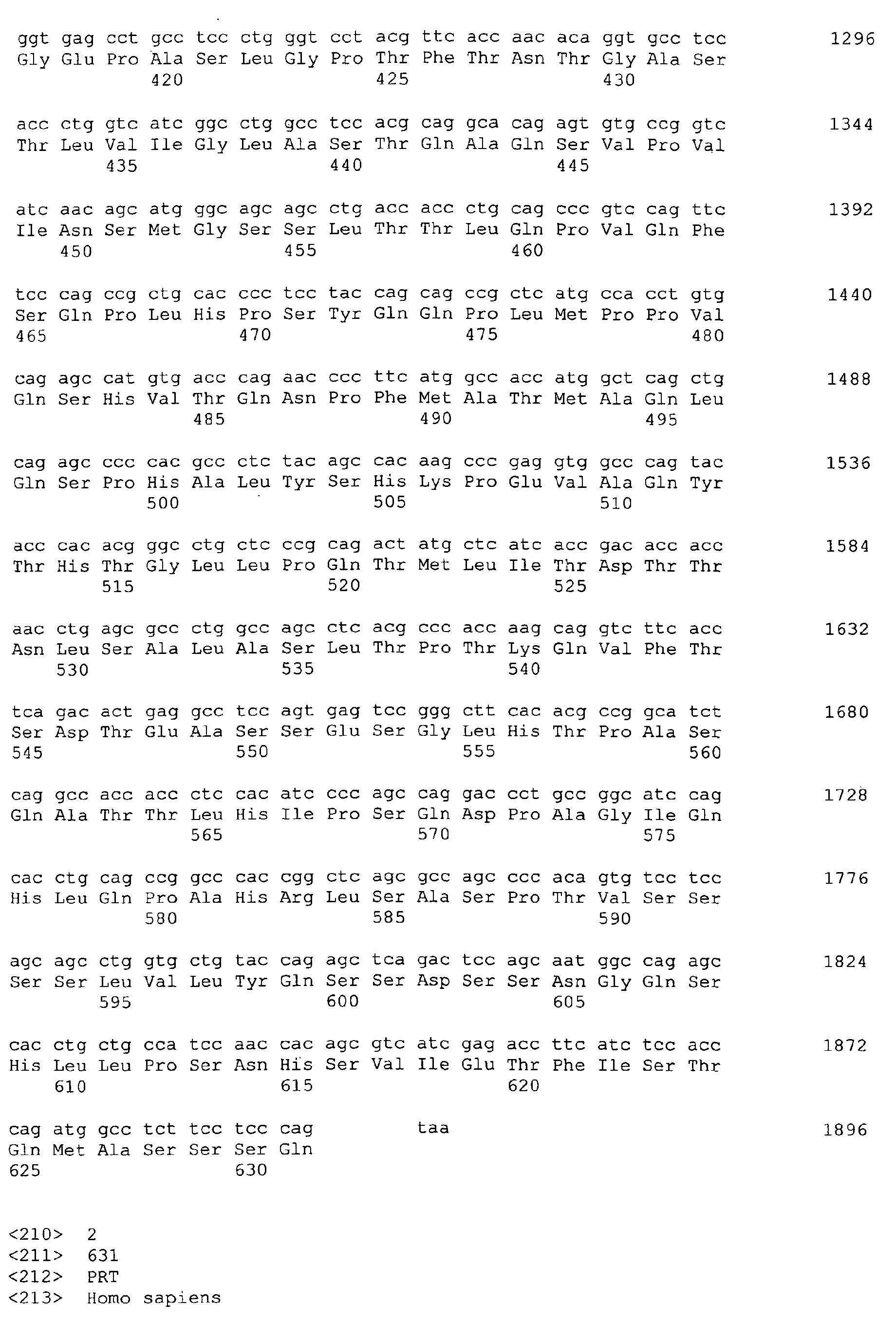
- a variant or fragment of human HNF-1 ⁇ polypeptide according to the present invention comprises a polymorphic site at which an amino acid at position 567 of SEQ ID NO: 2 is an amino acid other than valine (Val), preferably, isoleucine (Ile), and comprises more than 10 contiguous amino acids derived from the amino acid sequence of SEQ ID NO: 2.
- the variant or fragment of human HNF-1 ⁇ polypeptide according to the present invention is preferably derived from the amino acid sequence of SEQ ID NO: 2 having Ile, instead of Val, at position 567.
- the protein analyzing method of the present invention comprises determining the amino acid sequence at position 567 of SEQ ID NO: 2.
- the amino acid sequence is determined by general methods, for example, N- or C-terminal identification or using an apparatus such as MS/MS, or MALDI-TOF.
- Example 1 Amplification of 10 Exon DNA in human HNF-1 ⁇ gene
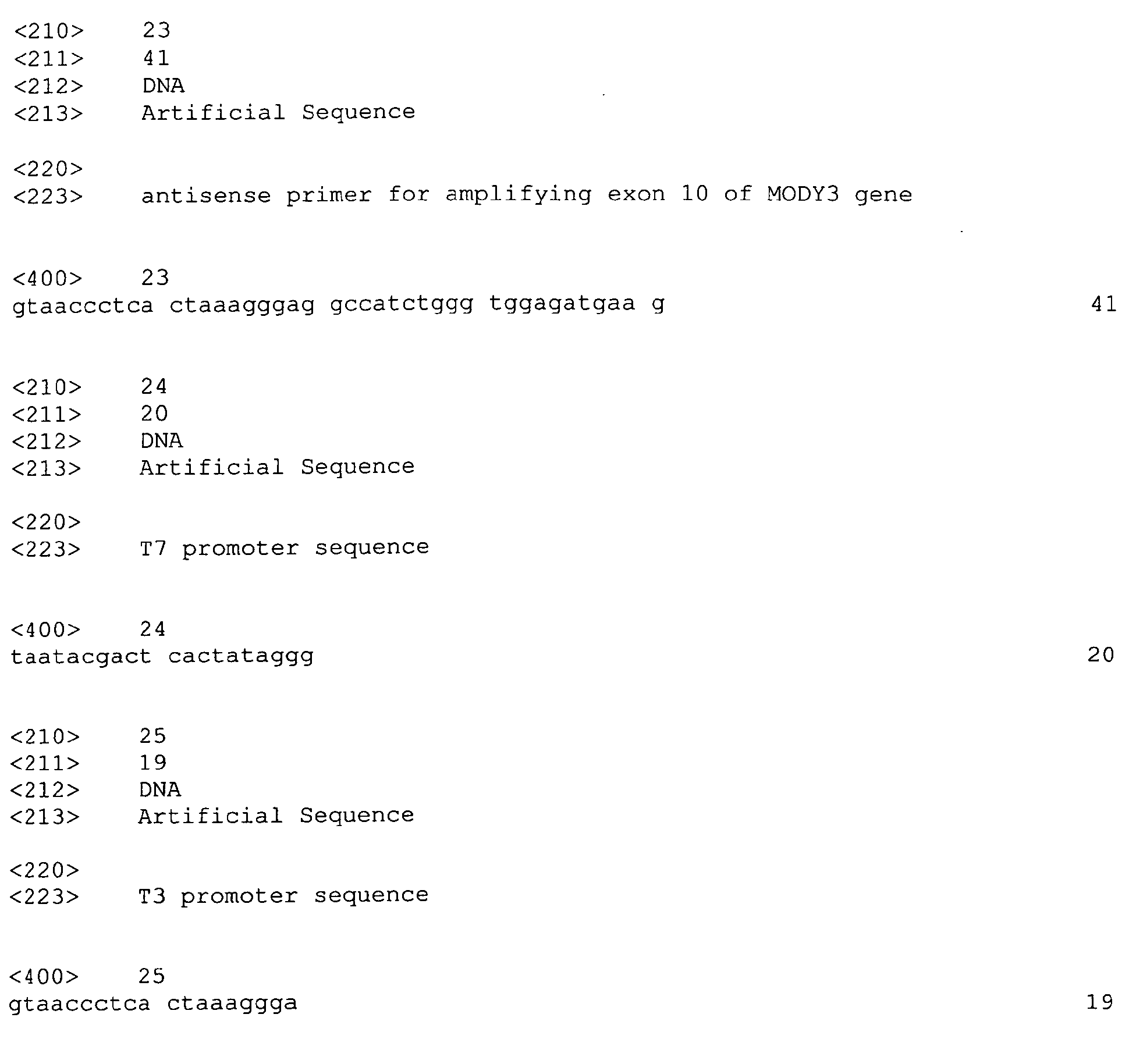
- T7 promoter sequence (SEQ ID NO: 24) was added into forward primers, and T3 promoter sequence (SEQ ID NO: 25) was added into 5' terminal of reverse primers.
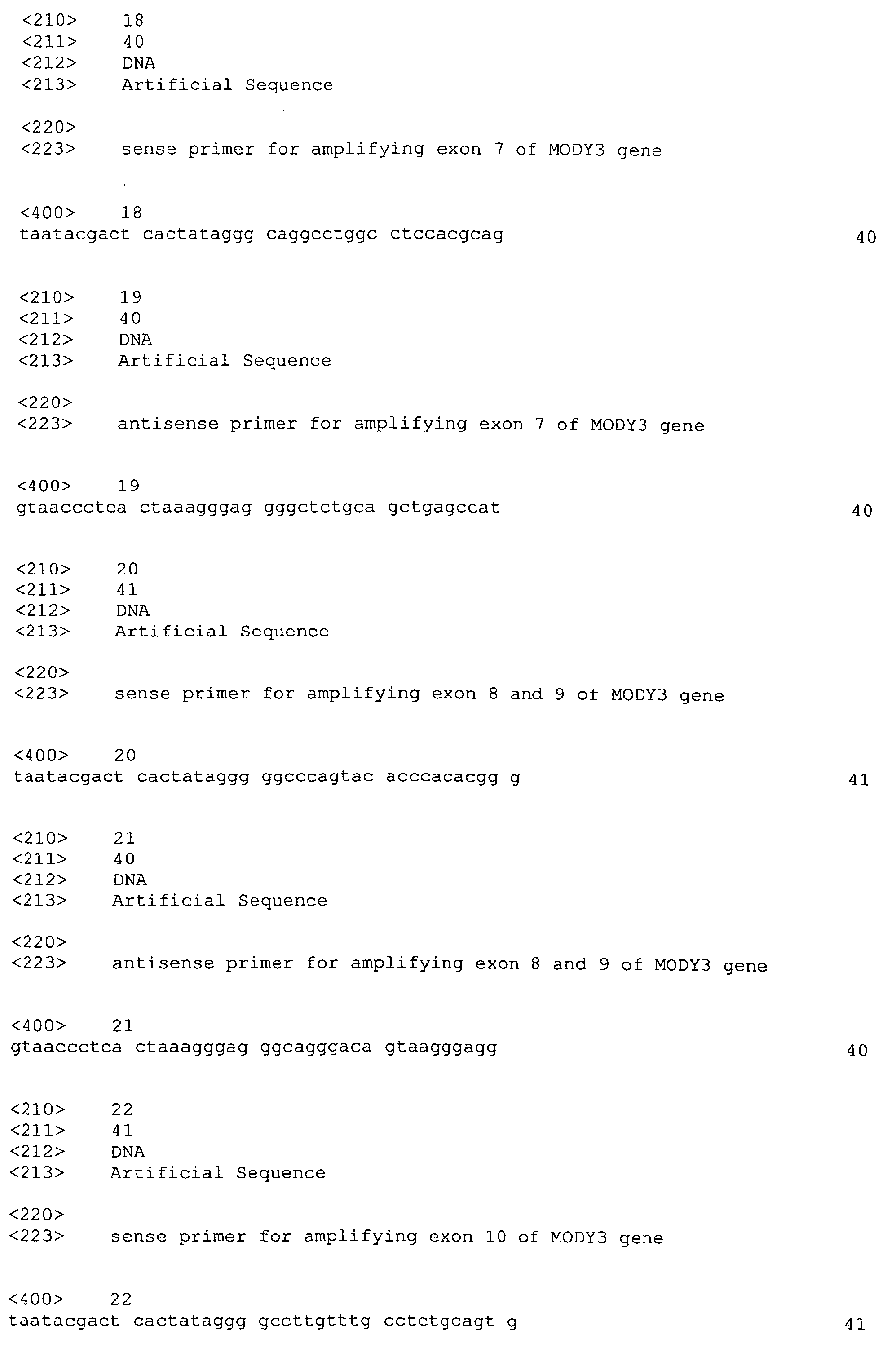
- Composition of PCR reaction solution Ingredient Volume( ⁇ l) DNase, RNase-free water 12.8 dNTP mix (2.5 mM/nucleotide) 2 10x Taq polymerase buffer 2 Primer set (10 pmol/primer) 2 Gemonic DNA (100 ⁇ 1.0 ⁇ g) 1 Taq polymerase (5 units/ ⁇ l) 0.2 PCR primers used in amplification of MODY3 gene Sequence Mody 3 promoter sense(T7) SEQ ID NO: 4 Mody 3 promoter antisense(T3) SEQ ID NO: 5 Mody 3 exon1 sense(T7) SEQ ID NO: 6 Mody 3 exon1 antisense(T3) SEQ ID NO: 7 Mody 3 exon2 sense(T7) SEQ ID NO: 8 Mody 3 exon2 antisense(T3) SEQ ID NO
- Amplified products were purified using a QIAquick kit. The purified products were used as templates for nucleotide sequence analysis.
- Nucleotide sequencing PCR was carried out using each purified primer for 10 MODY3 Exons by an ABI PRISM BigDye terminator cycle sequencing ready reaction kit (Applied Biosystem, U.S.A.) method, and the products were subjected to alcohol precipitation, followed by suspending in formamide, boiling at 5 minutes at 95°C, immediately dipping into 4°C ice. Finally, sequence analysis was performed using an ABI PRISM 3700 Genetic Analyzer (Applied Biosystem, U.S.A.).
- Example 3 Analysis for detecting mutations of MODY3 genes
- DNA sequences resulting from the sequence analysis were compared with nucleotide sequences in NCBI database, and genetic mutations were analyzed using a DNAstar program (DNASTAR, Inc, U.S.A.).
- MODY Maturity onset diabetes of the young (MODY) cases among diabetic patients are relatively lower in Korea than in Europe in which MODY accounts for 10% of all diabetes cases, which is presumably because distributions of MODY genes are different depending on racial and geographical characteristics. Thus, further studies on MODY distributions must be conducted.
- the nucleic acid fragment according to the present invention can be effectively used as a probe or primer in diagnosis of MODY.
- the allele-specific oligonucleotide according to the present invention can be used as a probe or primer in diagnosis of MODY.
- the variant or fragment human HNF-1 ⁇ polypeptide according to the present invention can be effectively used as a probe or primer in diagnosis of MODY.
- the protein analyzing method according to the present invention can be effectively used as a probe or primer in diagnosis of MODY through peptide sequence analysis.
Landscapes
- Chemical & Material Sciences (AREA)
- Life Sciences & Earth Sciences (AREA)
- Health & Medical Sciences (AREA)
- Organic Chemistry (AREA)
- Genetics & Genomics (AREA)
- Zoology (AREA)
- Engineering & Computer Science (AREA)
- Proteomics, Peptides & Aminoacids (AREA)
- Molecular Biology (AREA)
- Wood Science & Technology (AREA)
- Biophysics (AREA)
- Biochemistry (AREA)
- General Health & Medical Sciences (AREA)
- General Engineering & Computer Science (AREA)
- Analytical Chemistry (AREA)
- Biotechnology (AREA)
- Bioinformatics & Cheminformatics (AREA)
- Microbiology (AREA)
- Physics & Mathematics (AREA)
- Biomedical Technology (AREA)
- Gastroenterology & Hepatology (AREA)
- Toxicology (AREA)
- Immunology (AREA)
- Medicinal Chemistry (AREA)
- Pathology (AREA)
- Plant Pathology (AREA)
- Measuring Or Testing Involving Enzymes Or Micro-Organisms (AREA)
- Peptides Or Proteins (AREA)
Abstract
Description
| Composition of PCR reaction solution | |
| Ingredient | Volume(µℓ) |
| DNase, RNase-free water | 12.8 |
| dNTP mix (2.5 mM/nucleotide) | 2 |
| 10x Taq polymerase buffer | 2 |
| Primer set (10 pmol/primer) | 2 |
| Gemonic DNA (100∼ 1.0µg) | 1 |
| Taq polymerase (5 units/µℓ) | 0.2 |
| PCR primers used in amplification of MODY3 gene | |
| Sequence | |
| Mody 3 promoter sense(T7) | SEQ ID NO: 4 |
| Mody 3 promoter antisense(T3) | SEQ ID NO: 5 |
| Mody 3 exon1 sense(T7) | SEQ ID NO: 6 |
| Mody 3 exon1 antisense(T3) | SEQ ID NO: 7 |
| Mody 3 exon2 sense(T7) | SEQ ID NO: 8 |
| Mody 3 exon2 antisense(T3) | SEQ ID NO: 9 |
| Mody 3 exon3 sense(T7) | SEQ ID NO: 10 |
| Mody 3 exon3 antisense(T3) | SEQ ID NO: 11 |
| Mody 3 exon4 sense(T7) | SEQ ID NO: 12 |
| Mody 3 exon4 antisense(T3) | SEQ ID NO: 13 |
| Mody 3 exon5 sense(T7) | SEQ ID NO: 14 |
| Mody 3 exon5 antisense(T3) | SEQ ID NO: 15 |
| Mody 3 exon6 sense(T7) | SEQ ID NO: 16 |
| Mody 3 exon6 antisense(T3) | SEQ ID NO: 17 |
| Mody 3 exon7 sense(T7) | SEQ ID NO: 18 |
| Mody 3 exon7 antisense(T3) | SEQ ID NO: 19 |
| Mody 3 exon8 & 9 sense(T7) | SEQ ID NO: 20 |
| Mody 3 exon8 & 9 antisense(T3) | SEQ ID NO: 21 |
| Mody 3 exon10 sense(T7) | SEQ ID NO: 22 |
| Mody 3 exon10 antisense(T3) | SEQ ID NO: 23 |




Claims (12)
- A nucleic acid fragment comprising a polymorphic site of SEQ ID NO: 1 having adenine (A) at position 1699, or a polymorphic site of SEQ ID NO: 3 having thymine (T) at position 29, and comprising more than 10 contiguous nucleotides derived from nucleotide sequence set forth in SEQ ID NO: 1 or 3, or a complement thereof.
- The nucleic acid fragment of claim 1, wherein the nucleic acid fragment comprises 10 to 100 contiguous nucleotides, or a complement thereof.
- An allele-specific oligonucleotide hybridizing to the nucleic acid fragment of claim 1 or a complement thereof.
- The allele-specific oligonucleotide of claim 3, wherein the oligonucleotide is a probe.
- The allele-specific oligonucleotide of claim 3, wherein the oligonucleotide is a primer.
- The allele-specific oligonucleotide of claim 5, wherein the 3' end of the primer is arranged with the polymorphic site of the nucleic acid fragment.
- A method for analysing a nucleic acid comprising determining a nucleotide sequence of the polymorphic site at position 1699 of SEQ ID NO: 1 or at position 29 of SEQ ID NO: 3.
- The method of claim 7, wherein if the nucleotide sequence of the polymorphic site at position 1699 is A or the nucleotide sequence of the polymorphic site at position 29 is T, it is determined that there is an increased risk for maturity onset of diabetes of the young (MODY).
- A variant or fragment of human HNF-1α polypeptide, comprising a polymorphic site of an amino acid at position 567 of SEQ ID NO: 2, and comprising more than 10 contiguous amino acids derived from the amino acid sequence of SEQ ID NO: 2.
- The variant or fragment of HNF-1α polypeptide of claim 9, wherein the amino acid at position 567 is isoleucine.
- A method for analyzing a protein comprising determining the amino acid sequence at a position 567 of SEQ ID NO: 2.
- The method for analyzing a protein of claim 11, wherein if the amino acid at position 567 is isoleucine, it is determined that there is an increased risk for maturity onset diabetes of the young (MODY).
Priority Applications (1)
| Application Number | Priority Date | Filing Date | Title |
|---|---|---|---|
| EP06011392A EP1690949A1 (en) | 2002-09-16 | 2003-09-16 | Variant of HNF-1alpha gene having a single nucleotide polymorphism and variant of protein encoded by the same |
Applications Claiming Priority (2)
| Application Number | Priority Date | Filing Date | Title |
|---|---|---|---|
| KR1020020056229A KR20040024783A (en) | 2002-09-16 | 2002-09-16 | A variant of HNF-1a gene having novel single nucleotide polymorphism and a variant protein encoded by the same |
| KR2002056229 | 2002-09-16 |
Related Child Applications (1)
| Application Number | Title | Priority Date | Filing Date |
|---|---|---|---|
| EP06011392A Division EP1690949A1 (en) | 2002-09-16 | 2003-09-16 | Variant of HNF-1alpha gene having a single nucleotide polymorphism and variant of protein encoded by the same |
Publications (2)
| Publication Number | Publication Date |
|---|---|
| EP1398389A2 true EP1398389A2 (en) | 2004-03-17 |
| EP1398389A3 EP1398389A3 (en) | 2004-04-14 |
Family
ID=31885023
Family Applications (2)
| Application Number | Title | Priority Date | Filing Date |
|---|---|---|---|
| EP03020967A Withdrawn EP1398389A3 (en) | 2002-09-16 | 2003-09-16 | Variant of HNF-1alpha gene having a single nucleotide polymorphism and variant of protein encoded by the same |
| EP06011392A Withdrawn EP1690949A1 (en) | 2002-09-16 | 2003-09-16 | Variant of HNF-1alpha gene having a single nucleotide polymorphism and variant of protein encoded by the same |
Family Applications After (1)
| Application Number | Title | Priority Date | Filing Date |
|---|---|---|---|
| EP06011392A Withdrawn EP1690949A1 (en) | 2002-09-16 | 2003-09-16 | Variant of HNF-1alpha gene having a single nucleotide polymorphism and variant of protein encoded by the same |
Country Status (5)
| Country | Link |
|---|---|
| US (1) | US20040132060A1 (en) |
| EP (2) | EP1398389A3 (en) |
| JP (1) | JP2004129655A (en) |
| KR (1) | KR20040024783A (en) |
| CN (1) | CN1495191A (en) |
Families Citing this family (2)
| Publication number | Priority date | Publication date | Assignee | Title |
|---|---|---|---|---|
| KR100677724B1 (en) * | 2005-03-02 | 2007-02-02 | 인제대학교 산학협력단 | Monobasic Polymorphism of HNP-4α Gene and Its Use |
| WO2014153753A1 (en) * | 2013-03-28 | 2014-10-02 | 深圳华大基因科技有限公司 | Gene mutant and use thereof |
Family Cites Families (2)
| Publication number | Priority date | Publication date | Assignee | Title |
|---|---|---|---|---|
| US6187533B1 (en) * | 1996-09-10 | 2001-02-13 | Arch Development Corporation | Mutations in the diabetes susceptibility genes hepatocyte nuclear factor (HNF) 1 alpha (α), HNF1β and HNF4α |
| USH2191H1 (en) * | 2000-10-24 | 2007-06-05 | Snp Consortium | Identification and mapping of single nucleotide polymorphisms in the human genome |
-
2002
- 2002-09-16 KR KR1020020056229A patent/KR20040024783A/en not_active Ceased
-
2003
- 2003-09-10 JP JP2003318201A patent/JP2004129655A/en active Pending
- 2003-09-15 US US10/663,857 patent/US20040132060A1/en not_active Abandoned
- 2003-09-16 EP EP03020967A patent/EP1398389A3/en not_active Withdrawn
- 2003-09-16 CN CNA031272738A patent/CN1495191A/en active Pending
- 2003-09-16 EP EP06011392A patent/EP1690949A1/en not_active Withdrawn
Also Published As
| Publication number | Publication date |
|---|---|
| US20040132060A1 (en) | 2004-07-08 |
| KR20040024783A (en) | 2004-03-22 |
| JP2004129655A (en) | 2004-04-30 |
| EP1398389A3 (en) | 2004-04-14 |
| EP1690949A1 (en) | 2006-08-16 |
| CN1495191A (en) | 2004-05-12 |
Similar Documents
| Publication | Publication Date | Title |
|---|---|---|
| US10889865B2 (en) | Thyroid tumors identified | |
| US5756294A (en) | Susceptibility mutation for breast and ovarian cancer | |
| EP0820526A1 (en) | Coding sequences of the human brca1 gene | |
| WO1999029903A2 (en) | Cancer susceptibility mutations of brca1 | |
| CA2311680A1 (en) | Cancer susceptibility mutations of brca2 | |
| KR101206029B1 (en) | Multiple SNP for diagnosing colorectal cancer, microarray and kit comprising the same, and method for diagnosing colorectal cancer using the same | |
| EP1398389A2 (en) | Variant of HNF-1alpha gene having a single nucleotide polymorphism and variant of protein encoded by the same | |
| JP2007516719A (en) | Polynucleotide involved in type 2 diabetes including single nucleotide polymorphism, microarray and diagnostic kit containing the same, and method for analyzing polynucleotide using the same | |
| JP4111481B2 (en) | Method for determining genetic factors of myocardial infarction and oligonucleotides used therefor | |
| EP1848821B1 (en) | Polynucleotide associated with breast cancer comprising single nucleotide polymorphism, microarray and diagnostic kit comprising the same and method for diagnosing breast cancer using the same | |
| US7851151B2 (en) | HNF-1α gene including novel single-nucleotide polymorphism, protein encoded by the HNF-1α gene, and polynucleotide, microarray, kit, and method for diagnosis of MODY3 | |
| EP1352092B1 (en) | Mutations in the ferroportin 1 gene associated with hereditary haemochromatosis | |
| JP3682688B2 (en) | Osteoporosis drug sensitivity prediction method and reagent kit therefor | |
| KR102106807B1 (en) | Marker For Diagnosing Diabetic Retinopathy and Use Thereof | |
| US20030170679A1 (en) | Single nucleotide polymorphisms in GH-1 | |
| JP2006129807A (en) | Long-chain polymerase chain reaction method for amplification of high GC content repetitive sequences and diagnostic method for facial scapulohumeral muscular dystrophy using the same | |
| KR20060119737A (en) | Multiple SNP for Cardiovascular Disease Diagnosis, Microarrays and Kits Comprising the Same, and Cardiovascular Disease Diagnosis Method Using the Same | |
| JP4056212B2 (en) | GEFS + related genes and GEFS + diagnostic methods | |
| WO1999015704A1 (en) | Genetic panel assay for susceptibility mutations in breast and ovarian cancer | |
| WO1998005677A1 (en) | Susceptibility mutations for breast and ovarian cancer | |
| KR20050065386A (en) | A polynucleotide associated with a type ii diabetes mellitus comprising single nucleotide polymorphism, microarray and diagnostic kit comprising the same and method for analyzing polynucleotide using the same | |
| EP1228240A2 (en) | Diagnosis of glaucoma | |
| WO2008061672A2 (en) | Genetic risk factor for cancer | |
| CA2628700A1 (en) | Azgp gene single nucleotide polymorphisms (snps) |
Legal Events
| Date | Code | Title | Description |
|---|---|---|---|
| PUAI | Public reference made under article 153(3) epc to a published international application that has entered the european phase |
Free format text: ORIGINAL CODE: 0009012 |
|
| PUAL | Search report despatched |
Free format text: ORIGINAL CODE: 0009013 |
|
| 17P | Request for examination filed |
Effective date: 20030916 |
|
| AK | Designated contracting states |
Kind code of ref document: A2 Designated state(s): AT BE BG CH CY CZ DE DK EE ES FI FR GB GR HU IE IT LI LU MC NL PT RO SE SI SK TR |
|
| AX | Request for extension of the european patent |
Extension state: AL LT LV MK |
|
| AK | Designated contracting states |
Kind code of ref document: A3 Designated state(s): AT BE BG CH CY CZ DE DK EE ES FI FR GB GR HU IE IT LI LU MC NL PT RO SE SI SK TR |
|
| AX | Request for extension of the european patent |
Extension state: AL LT LV MK |
|
| RIN1 | Information on inventor provided before grant (corrected) |
Inventor name: KIM, MI-KYUNG Inventor name: KIM, SOOK-YOUNG Inventor name: KIM, BYUNG-JOON Inventor name: AHN, KYU-JEUNG Inventor name: JEONG, SUNG-YOUNG,SAMSUNG ADVANCED INSTITUTE Inventor name: LEE, YEON-SU,1307-101 SEONGJEO MAEUL |
|
| AKX | Designation fees paid |
Designated state(s): DE FR GB |
|
| STAA | Information on the status of an ep patent application or granted ep patent |
Free format text: STATUS: THE APPLICATION IS DEEMED TO BE WITHDRAWN |
|
| 18D | Application deemed to be withdrawn |
Effective date: 20061202 |