EP1393733A1 - Flavonoid-derivate for the treatment of eczema - Google Patents
Flavonoid-derivate for the treatment of eczema Download PDFInfo
- Publication number
- EP1393733A1 EP1393733A1 EP03015616A EP03015616A EP1393733A1 EP 1393733 A1 EP1393733 A1 EP 1393733A1 EP 03015616 A EP03015616 A EP 03015616A EP 03015616 A EP03015616 A EP 03015616A EP 1393733 A1 EP1393733 A1 EP 1393733A1
- Authority
- EP
- European Patent Office
- Prior art keywords
- formula
- compounds
- radical
- independently
- formulation
- Prior art date
- Legal status (The legal status is an assumption and is not a legal conclusion. Google has not performed a legal analysis and makes no representation as to the accuracy of the status listed.)
- Granted
Links
- 0 C*c(cc1)ccc1C(CC(c1ccc(*)cc1)=O)=O Chemical compound C*c(cc1)ccc1C(CC(c1ccc(*)cc1)=O)=O 0.000 description 6
- HUDYANRNMZDQGA-UHFFFAOYSA-N CC(c(cc1)ccc1N(C)C)=O Chemical compound CC(c(cc1)ccc1N(C)C)=O HUDYANRNMZDQGA-UHFFFAOYSA-N 0.000 description 2
- QOIOLAQMVZXLJP-YBEGLDIGSA-N CC(C)C(C(C(C)C1)/C2=C/c3ccc(C)cc3)C1(C)C2=O Chemical compound CC(C)C(C(C(C)C1)/C2=C/c3ccc(C)cc3)C1(C)C2=O QOIOLAQMVZXLJP-YBEGLDIGSA-N 0.000 description 1
- UDMUPWSLRFEKEQ-WJDWOHSUSA-N CC(C)C(C(CC1)/C2=C/c3ccc(C)cc3)C1(C)C2=O Chemical compound CC(C)C(C(CC1)/C2=C/c3ccc(C)cc3)C1(C)C2=O UDMUPWSLRFEKEQ-WJDWOHSUSA-N 0.000 description 1
- QSSHVLXDASJGTR-PTNGSMBKSA-N CC(CC(C1(C)C)/C2=C/c3ccc(C)cc3)C1(C)C2=O Chemical compound CC(CC(C1(C)C)/C2=C/c3ccc(C)cc3)C1(C)C2=O QSSHVLXDASJGTR-PTNGSMBKSA-N 0.000 description 1
- KIZCNUWGIVQQBK-UHFFFAOYSA-N Cc(cc1)cc(O)c1C(c1ccccc1)=O Chemical compound Cc(cc1)cc(O)c1C(c1ccccc1)=O KIZCNUWGIVQQBK-UHFFFAOYSA-N 0.000 description 1
- DVGGLGXQSFURLP-VDDRUYHUSA-N O[C@H](C(COC(/C=C/c(cc1)ccc1O)=O)O[C@H](C1O)OC2=C(c(cc3)ccc3O)Oc3cc(O)cc(O)c3C2=O)C1O Chemical compound O[C@H](C(COC(/C=C/c(cc1)ccc1O)=O)O[C@H](C1O)OC2=C(c(cc3)ccc3O)Oc3cc(O)cc(O)c3C2=O)C1O DVGGLGXQSFURLP-VDDRUYHUSA-N 0.000 description 1
- STMNAPXMGWBZSF-YVEPAGIJSA-N O[C@H](C(COC(c(cc1O)cc(O)c1O)=O)O[C@H](C1O)OC2=C(c(cc3)ccc3O)Oc3cc(O)cc(O)c3C2=O)C1O Chemical compound O[C@H](C(COC(c(cc1O)cc(O)c1O)=O)O[C@H](C1O)OC2=C(c(cc3)ccc3O)Oc3cc(O)cc(O)c3C2=O)C1O STMNAPXMGWBZSF-YVEPAGIJSA-N 0.000 description 1
Classifications
-
- C—CHEMISTRY; METALLURGY
- C07—ORGANIC CHEMISTRY
- C07H—SUGARS; DERIVATIVES THEREOF; NUCLEOSIDES; NUCLEOTIDES; NUCLEIC ACIDS
- C07H17/00—Compounds containing heterocyclic radicals directly attached to hetero atoms of saccharide radicals
- C07H17/04—Heterocyclic radicals containing only oxygen as ring hetero atoms
- C07H17/06—Benzopyran radicals
- C07H17/065—Benzo[b]pyrans
- C07H17/07—Benzo[b]pyran-4-ones
-
- A—HUMAN NECESSITIES
- A61—MEDICAL OR VETERINARY SCIENCE; HYGIENE
- A61K—PREPARATIONS FOR MEDICAL, DENTAL OR TOILETRY PURPOSES
- A61K31/00—Medicinal preparations containing organic active ingredients
- A61K31/33—Heterocyclic compounds
- A61K31/335—Heterocyclic compounds having oxygen as the only ring hetero atom, e.g. fungichromin
- A61K31/35—Heterocyclic compounds having oxygen as the only ring hetero atom, e.g. fungichromin having six-membered rings with one oxygen as the only ring hetero atom
- A61K31/352—Heterocyclic compounds having oxygen as the only ring hetero atom, e.g. fungichromin having six-membered rings with one oxygen as the only ring hetero atom condensed with carbocyclic rings, e.g. methantheline
-
- A—HUMAN NECESSITIES
- A61—MEDICAL OR VETERINARY SCIENCE; HYGIENE
- A61K—PREPARATIONS FOR MEDICAL, DENTAL OR TOILETRY PURPOSES
- A61K31/00—Medicinal preparations containing organic active ingredients
- A61K31/33—Heterocyclic compounds
- A61K31/395—Heterocyclic compounds having nitrogen as a ring hetero atom, e.g. guanethidine or rifamycins
- A61K31/435—Heterocyclic compounds having nitrogen as a ring hetero atom, e.g. guanethidine or rifamycins having six-membered rings with one nitrogen as the only ring hetero atom
- A61K31/4353—Heterocyclic compounds having nitrogen as a ring hetero atom, e.g. guanethidine or rifamycins having six-membered rings with one nitrogen as the only ring hetero atom ortho- or peri-condensed with heterocyclic ring systems
-
- A—HUMAN NECESSITIES
- A61—MEDICAL OR VETERINARY SCIENCE; HYGIENE
- A61K—PREPARATIONS FOR MEDICAL, DENTAL OR TOILETRY PURPOSES
- A61K31/00—Medicinal preparations containing organic active ingredients
- A61K31/56—Compounds containing cyclopenta[a]hydrophenanthrene ring systems; Derivatives thereof, e.g. steroids
- A61K31/57—Compounds containing cyclopenta[a]hydrophenanthrene ring systems; Derivatives thereof, e.g. steroids substituted in position 17 beta by a chain of two carbon atoms, e.g. pregnane or progesterone
- A61K31/573—Compounds containing cyclopenta[a]hydrophenanthrene ring systems; Derivatives thereof, e.g. steroids substituted in position 17 beta by a chain of two carbon atoms, e.g. pregnane or progesterone substituted in position 21, e.g. cortisone, dexamethasone, prednisone or aldosterone
-
- A—HUMAN NECESSITIES
- A61—MEDICAL OR VETERINARY SCIENCE; HYGIENE
- A61K—PREPARATIONS FOR MEDICAL, DENTAL OR TOILETRY PURPOSES
- A61K31/00—Medicinal preparations containing organic active ingredients
- A61K31/70—Carbohydrates; Sugars; Derivatives thereof
- A61K31/7042—Compounds having saccharide radicals and heterocyclic rings
- A61K31/7048—Compounds having saccharide radicals and heterocyclic rings having oxygen as a ring hetero atom, e.g. leucoglucosan, hesperidin, erythromycin, nystatin, digitoxin or digoxin
-
- A—HUMAN NECESSITIES
- A61—MEDICAL OR VETERINARY SCIENCE; HYGIENE
- A61K—PREPARATIONS FOR MEDICAL, DENTAL OR TOILETRY PURPOSES
- A61K45/00—Medicinal preparations containing active ingredients not provided for in groups A61K31/00 - A61K41/00
- A61K45/06—Mixtures of active ingredients without chemical characterisation, e.g. antiphlogistics and cardiaca
-
- A—HUMAN NECESSITIES
- A61—MEDICAL OR VETERINARY SCIENCE; HYGIENE
- A61P—SPECIFIC THERAPEUTIC ACTIVITY OF CHEMICAL COMPOUNDS OR MEDICINAL PREPARATIONS
- A61P17/00—Drugs for dermatological disorders
-
- A—HUMAN NECESSITIES
- A61—MEDICAL OR VETERINARY SCIENCE; HYGIENE
- A61P—SPECIFIC THERAPEUTIC ACTIVITY OF CHEMICAL COMPOUNDS OR MEDICINAL PREPARATIONS
- A61P17/00—Drugs for dermatological disorders
- A61P17/04—Antipruritics
-
- A—HUMAN NECESSITIES
- A61—MEDICAL OR VETERINARY SCIENCE; HYGIENE
- A61P—SPECIFIC THERAPEUTIC ACTIVITY OF CHEMICAL COMPOUNDS OR MEDICINAL PREPARATIONS
- A61P17/00—Drugs for dermatological disorders
- A61P17/06—Antipsoriatics
-
- A—HUMAN NECESSITIES
- A61—MEDICAL OR VETERINARY SCIENCE; HYGIENE
- A61P—SPECIFIC THERAPEUTIC ACTIVITY OF CHEMICAL COMPOUNDS OR MEDICINAL PREPARATIONS
- A61P17/00—Drugs for dermatological disorders
- A61P17/10—Anti-acne agents
-
- A—HUMAN NECESSITIES
- A61—MEDICAL OR VETERINARY SCIENCE; HYGIENE
- A61P—SPECIFIC THERAPEUTIC ACTIVITY OF CHEMICAL COMPOUNDS OR MEDICINAL PREPARATIONS
- A61P17/00—Drugs for dermatological disorders
- A61P17/14—Drugs for dermatological disorders for baldness or alopecia
Definitions
- the invention relates to the use of certain flavonoid derivatives for the preparation of formulations which are suitable for the prophylaxis and/or therapy of eczema, and to formulations which comprise flavonoid derivatives of this type.
- atopic eczema is a common disease in industrialised countries. Studies have shown that on any particular day about 2.5% of the total population of Europe is suffering from itchy skin changes caused by atopic eczema.
- eczema is an acute, sub-acute or chronic disease of the epidermis with extensive [lacuna] which are not clearly delimited from healthy skin, for example as nodulation, vesiculation and flaking with initial and accompanying skin reddening (erythema), possibly with hornification (eczema callosum), and also with participation of deeper skin layers (the term eczema cannot be clearly delimited from the term dermatitis and is frequently replaced by the latter in Anglo-Saxon language regions).
- a raised immune response, abrasions and damage to the skin and its protective sheaths (“barriers") - based on sweat and sebaceous gland activity - and infestation with pathogens (bacteria, fungi) can have a promoting or initiating action; special forms are endogenous or constitutional eczema (eczema atopicum), microbial eczema (due to bacteria and fungi as eczematogens) and seborrhoeic eczema (eczema seborrhoicum).
- Atopic eczema (eczema atopicum; endogenous eczema, essential eczema, dermatitis atopica) is eczema as a consequence of constitutional hypersensitivity (atopy), where it is frequently not possible to observe a particular eczematogen.
- atopic diathesis The skin manifestations of "atopic diathesis” are age-dependent with respect to reaction site and type: in infants as facial eczema (milk crust, infantile eczema), in schoolchildren and adults as neurodermatitis, in adults also with rather scattered foci with papules (prurigo) on the trunk and limbs; also very discreet forms, for example dermatitis sicca; often accompanied by asthma or rhinoconjunctivitis.
- Inflammatory skin changes of this type are generally treated with a mild or moderate glucocorticoid preparation in order to counter the formation of chronic skin changes.
- sudden discontinuation of the glucocorticoid can result in problems since this can favour the inflammation reaction flaring up again.
- glucocorticoid-containing ointments and creams can only be employed in the short term since the skin can become thinner on application over a number of weeks.
- the object of the present invention was therefore to provide suitable active ingredients.
- a first subject-matter of the present invention is therefore the use of compounds of the formula I or salts thereof in which
- formulation here is taken to mean a cosmetic, dermatological or pharmaceutical formulation which is suitable for topical application.
- Typical formulations comprise conventional excipients which are tolerated by the skin and have been tested in accordance with the intended use and optionally further adjuvants and active ingredients.
- a further subject-matter of the present application is a formulation for topical application comprising
- Preferred formulations comprise at least one inflammation-inhibiting active ingredient c), which is preferably selected from the glucocorticoids or tacrolimus.
- Tacrolimus has been isolated from the fungus Streptomyces tsukukaensis and exhibits an immunosuppressive action.
- Suitable glucocorticoids are, for example, prednisone, cloprednol, triamcinolone, methylprednisolone, dexamethasone, betamethasone, desoximetasone, clobetasone butyrate, halcinonide, clobetasol propionate, prednisolone, hydrocortisone butyrate, betamethasone dipropionate, fluocinolone acetonide, betamethasone valerate, hydrocortisone (cortisol), cortisone acetate, prednicarbate, diflucortolone valerate, triamcinolone acetonide, fluocortolone and fluocortolone 21-hexanoate.
- Formulations of this type which comprise an active-ingredient combination of at least one compound of the formula I and at least one of the above-mentioned further active ingredients exhibit a particularly strong inflammation-inhibiting action.
- the compounds of the formula I and the formulations according to the invention can be employed particularly advantageously in the treatment of atopic eczema, such as, in particular, milk crust, neurodermatitis, prurigo and dermatitis sicca.
- atopic eczema such as, in particular, milk crust, neurodermatitis, prurigo and dermatitis sicca.
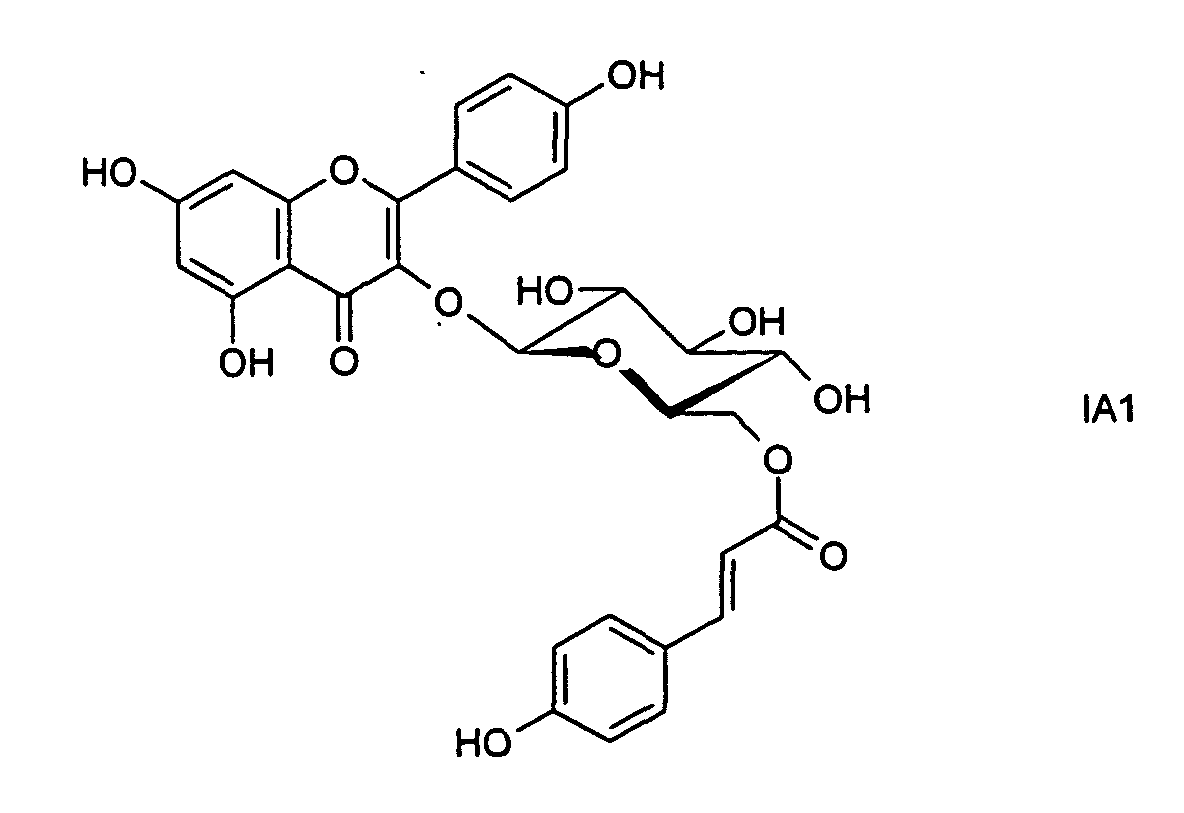
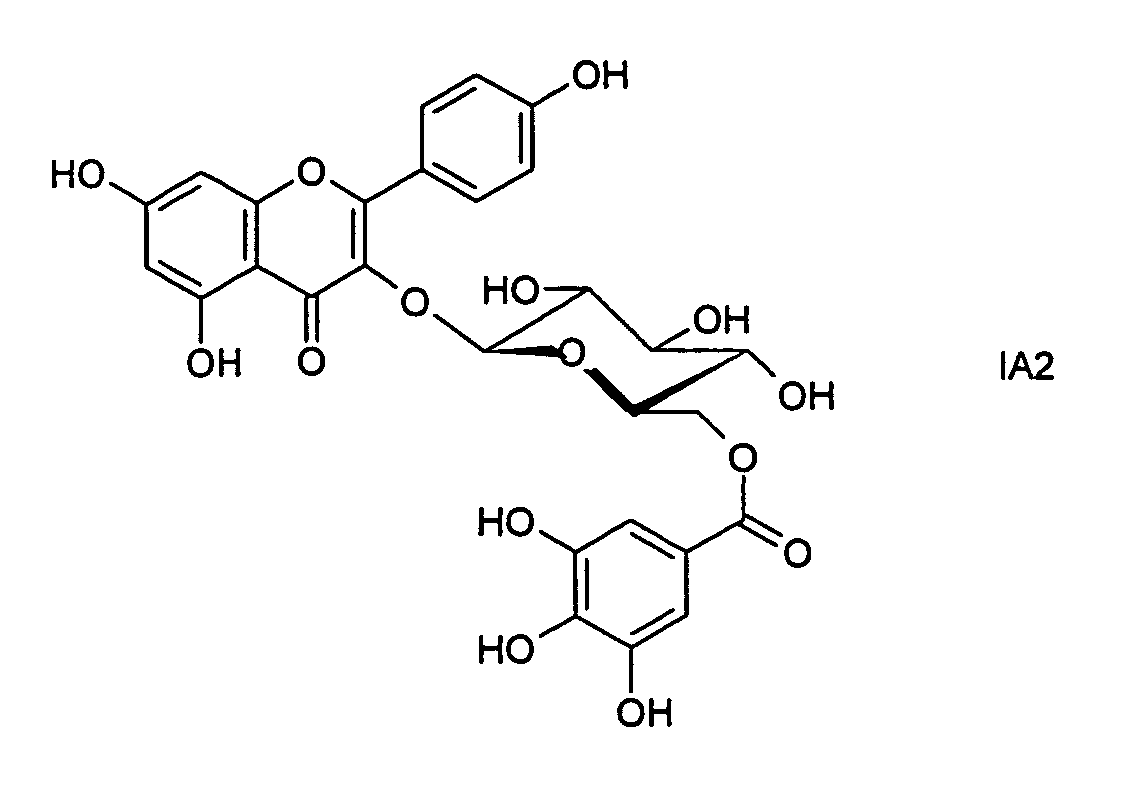
- kaempferol 3-(6"-galloylglucoside) and kaempferol 3-(6"-p-coumarylglucoside), which is also known as tiliroside.
- DE 195 44 905 A1 describes, for example, a process for the preparation of plant extracts containing tiliroside and the use of the plant extracts in medicaments and food products.
- DE 199 22 287 A1 describes tiliroside as a starting flavonoid for the preparation of tiliroside esters whose acid unit contains from 3 to 30 carbon atoms. These esters are used in cosmetics. However, DE 199 22 287 A1 does not describe any formulations comprising tiliroside.
- the formulations comprising one or more compounds of the formula I are also suitable for the protection of human skin or for the protection of body cells against oxidative stress, i.e., for example, against damage by free radicals, as generated, for example, by sunlight, heat or other influences.
- the formulations comprising one or more compounds of the formula I are particularly suitable for reducing skin ageing.
- the present invention thus also relates to the use of one or more compounds of the formula I as active ingredient for protection against oxidative stress.
- the present invention furthermore relates to the use of one or more compounds of the formula I for preventing skin ageing.
- the compounds of the formula I have antiallergic, antiinflammatory, inflammation-inhibiting and antiirritative properties and can thus be used for the treatment or preventive treatment of allergies, inflammation and irritation, in particular of the skin.
- the present invention therefore furthermore relates to the use of one or more compounds of the formula I as active ingredient having an antiallergic, antiinflammatory, inflammation-inhibiting and antiirritative action.
- the compounds to be employed in accordance with the invention have free hydroxyl groups, they additionally exhibit, in addition to the properties described, an action as antioxidant and/or free-radical scavenger. Preference is therefore also given to preparations having light-protection properties comprising at least one compound of the formula I which is characterised in that at least one of the radicals R 1 to R 3 is OH, where preferably at least one of the radicals R 1 and R 2 is OH.
- the compounds of the formula I are able to develop their positive action as free-radical scavengers on the skin particularly well, it may be preferred to allow the compounds of the formula I to penetrate into deeper skin layers. Several possibilities are available for this purpose.
- the compounds of the formula I can have an adequate lipophilicity in order to be able to penetrate through the outer skin layer into epidermal layers.
- corresponding transport agents for example liposomes, which enable transport of the compounds of the formula I through the outer skin layers may also be provided in the preparation.
- systemic transport of the compounds of the formula I is also conceivable.
- the preparation is then designed, for example, in such a way that it is suitable for oral administration.
- the substances of the formula I act as free-radical scavengers.
- Free radicals of this type are not generated only by sunlight, but instead are formed under various conditions. Examples are anoxia, which blocks the flow of electrons upstream of the cytochrome oxidases and causes the formation of superoxide free-radical anions; inflammation associated, inter alia, with the formation of superoxide anions by the membrane NADPH oxidase of the leucocytes, but also associated with the formation (through disproportionation in the presence of iron(II) ions) of the hydroxyl free radicals and other reactive species which are normally involved in the phenomenon of phagocytosis; and lipid autooxidation, which is generally initiated by a hydroxyl free radical and produces lipidic alkoxy free radicals and hydroperoxides.
- the preferred compounds of the formula I also act as enzyme inhibitors. They presumably inhibit histidine decarboxylase, protein kinases, elastase, aldose reductase and hyaluronidase, and therefore enable the intactness of the basic substance of vascular sheaths to be maintained. Furthermore, they presumably inhibit non-specifically catechol O-methyl transferase, causing the amount of available catecholamine and thus the vascular strength to be increased. Furthermore, they inhibit AMP phosphodiesterase, giving the substances potential for inhibiting thrombocyte aggregation. Owing to these properties, the preparations according to the invention are, in general, suitable for immune protection and for the protection of DNA and RNA.
- the preparations are suitable for the protection of DNA and RNA against oxidative attack, against free radicals and against damage due to radiation, in particular UV radiation.
- a further advantage of the preparations according to the invention is cell protection, in particular protection of Langerhans cells against damage due to the above-mentioned influences. All these uses and the use of the compounds of the formula I for the preparation of preparations which can be employed correspondingly are expressly also a subject-matter of the present invention.
- compositions according to the invention are also suitable for the treatment of skin diseases associated with a defect in keratinisation which affects differentiation and cell proliferation, in particular for the treatment of acne vulgaris, acne comedonica, polymorphic acne, acne rosaceae, nodular acne, acne conglobata, age-induced acne, acne which arises as a side effect, such as acne solaris, medicament-induced acne or acne professionalis, for the treatment of other defects in keratinisation, in particular ichthyosis, ichthyosiform states, Darier's disease, keratosis palmoplantaris, leucoplasia, leucoplasiform states, herpes of the skin and mucous membrane (buccal) (lichen), for the treatment of other skin diseases associated with a defect in keratinisation and which have an inflammatory and/or immunoallergic component and in particular all forms of psoriasis which affect the skin, mucous membranes and fingers and toenails, and ps
- compounds of the formula I such as, for example, tiliroside
- the weak inherent colour is, for example, a major advantage if an inherent colour of the ingredients is undesired in the products for aesthetic reasons.
- the alkoxy groups are preferably linear and have from 1 to 12 and preferably from 1 to 8 carbon atoms. These groups thus conform to the formula -O-(CH 2 ) m -H, where m is 1, 2, 3, 4, 5, 6, 7 or 8 and in particular from 1 to 5.
- the hydroxyalkoxy groups are preferably linear and have from 2 to 12 and preferably from 2 to 8 carbon atoms. These groups thus conform to the formula -O-(CH 2 ) n -OH, where n is 2, 3, 4, 5, 6, 7 or 8, in particular from 2 to 5 and extremely preferably 2.
- radicals Z 1 to Z 4 and Z 6 to Z 10 in the compounds of the formula I are a mono- or oligoglycoside radical
- this glycoside radical is bonded directly to the corresponding benzene ring in the formula I via an oxygen atom.
- the mono- or oligoglycoside radicals are preferably built up from 1 to 3 glycoside units. These units are preferably selected from the group consisting of hexosyl radicals, in particular rhamnosyl radicals and glucosyl radicals.
- hexosyl radicals for example allosyl, altrosyl, galactosyl, gulosyl, idosyl, mannosyl and talosyl, may also advantageously be used. It may also be advantageous in accordance with the invention to use pentosyl radicals.
- the mono- or oligoglycoside radicals present in the radical Z 5 of the compounds of the formula I are bonded to the group "B" of the formula I via an oxygen atom and are preferably built up from 1 to 3 glycoside units.
- the preferred units in the radicals Z 1 to Z 4 and Z 6 to Z 10 are also preferred for the mono- or oligoglycoside radical present in the radical Z 5 .
- the mono- or oligoglycoside radical present in the radical Z 5 is particularly preferably selected from the group consisting of the radicals of glucose, rhamnose and rutinose.
- X, X 1 , X 2 and/or X 3 in the compounds of the formula I are a monoglycoside radical
- these glycoside radicals are each bonded to the corresponding benzene ring via an oxygen atom.
- the preferred units in the radicals Z 1 to Z 4 and Z 6 to Z 10 are also preferred for this monoglycoside radical.
- X, X 1 , X 2 and/or X 3 are a monoglycoside radical, the glucose radical is particularly preferred.
- a polar group for example, in each case independently of one another, a sulfate or phosphate group, is bonded to one or more hydroxyl groups of the radicals mentioned in the substituents Z 1 to Z 10 .
- Suitable counterions are, for example, the ions of the alkali or alkaline earth metals, these being selected, for example, from sodium and potassium.
- sub-formulae of the formula I are derived from the compounds from the following group: rutin, trishydroxyethylrutin (troxerutin), isoquercetin, trishydroxyethylisoquercetin (troxeisoquercetin) and astragalin, and the sulfates and phosphates thereof.
- the compounds of the formula I present in the formulations according to the invention are selected from the compounds of the formula IA in which
- the radical R 2 in the compounds of the formula IA is selected from OH, CH 3 COO and an alkoxy radical having from 1 to 8 carbon atoms.
- radicals derived from these radicals are (are) bonded to the glycoside radical.
- R 4 is a mono- or diglycoside radical in which one or more hydrogen atoms of the OH groups have been replaced by acetyl or alkyl radicals, all OH groups for which replacement is possible have then preferably been replaced by acetyl or alkyl.
- the methoxy group is preferred.
- the alkyl radicals having from 1 to 8 carbon atoms mentioned in the compounds of the formula IA the methyl group is preferred.
- the mono- and diglycoside radicals mentioned in the compounds of the formula IA are preferably built up from glucose units.
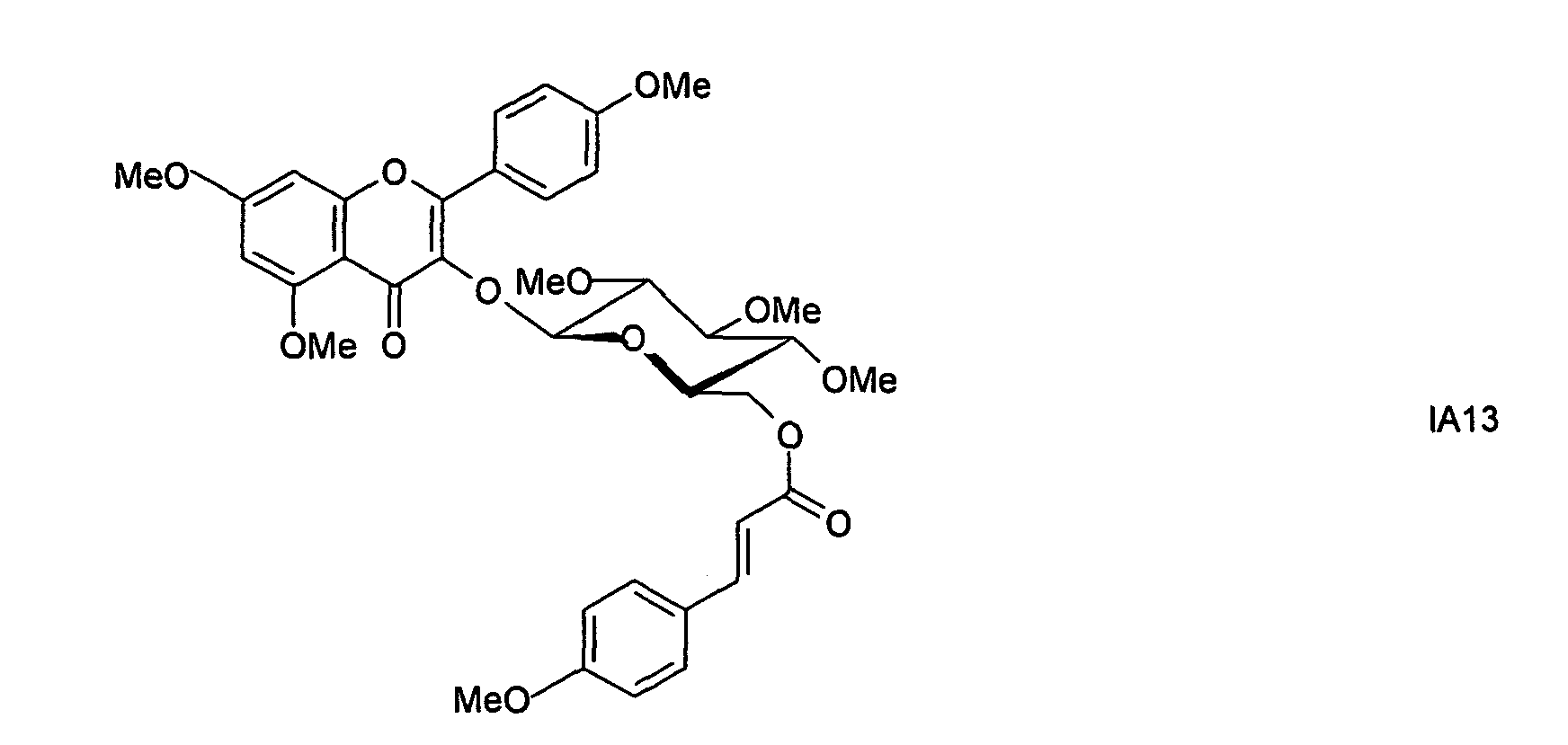
- Preferred compounds IA1 to IA13 selected from the compounds of the formula IA are indicated below:
- Me is methyl and Ac is acetyl.
- the compounds of the formula I present in the formulations according to the invention are selected from the compounds in which Z 1 to Z 4 and Z 6 to Z 10 are each, independently of one another, H, OH, alkoxy, hydroxyalkoxy, mono- or oligoglycoside radicals and where the alkoxy and hydroxyalkoxy groups may be branched or unbranched and can have from 1 to 18 carbon atoms, Z 5 , n, m, k and M are as defined in Claim 1, but the radicals X, X 1 , X 2 and X 3 present in the substituent Z 5 are each, independently of one another, OH, an alkoxy radical having from 1 to 8 carbon atoms or a monoglycoside radical, and in which one or more hydrogen atoms in the OH groups of the glycoside radicals mentioned in the substituents Z 1 to Z 10 may each, independently of one another, also be replaced by alkyl radicals having from 1 to 8 carbon atoms, and where, in each
- Z 1 to Z 4 and Z 6 to Z 10 are preferably each, independently of one another, H, OH, alkoxy or hydroxyalkoxy.
- the compounds of the formula IA present in the formulations according to the invention are selected from the compounds in which
- R 1 to R 3 are preferably each, independently of one another, OH or an alkoxy radical having from 1 to 8 carbon atoms.
- Some compounds of the formula I can be isolated from plants, for example from plants of the genera Althaea, Aristolochia, Helianthemum, Lindera, Magnolia, Platanus, Potentilla, Quercus, Rosa, Sida, Sorbus and/or Tilia. These compounds can be processed further either in isolated form or in non-isolated form, i.e., for example, incorporated into formulations in the form of an extract or in the form of a purified extract or alternatively in the form of the pure substance prepared from the plant extract.
- Althaea officinalis Althaea rosea, Aristolochia heterophylla, Helianthemum glomeratum, Lindera megaphylla, Magnolia salicifolia, Platanus acerifolia, Platanus occidentalis, Potentilla anserina, Quercus pubescens, Quercus suber, Quercus laurifolia, Quercus ilex, Quercus imbricaria, Quercus virginiana, Rosa pomifera, Sida rhombifolia, Sida poeppigiana, Sida cordifolia, Sida glaziovii, Sorbus pendula, Tilia argenta and Tilia cordata.
- the formulation according to the invention comprises tiliroside
- this compound is, in a further preferred embodiment, has been used for the preparation of the formulation in the form of a plant extract, a purified plant extract or in the form of the pure substance prepared from the plant extract.
- the plant extract comprises, for example, from 1 to 100% by weight of tiliroside.
- the plant extract preferably comprises from 5 to 90% by weight of tiliroside.
- the plant extract preferably comprises from 30 to 100% by weight, particularly preferably from 60 to 100% by weight and especially preferably from 90 to 100% by weight of tiliroside.
- the plant extract has been isolated by extraction from the Sida glaziovii plant.
- tiliroside in all uses according to the invention in which tiliroside is used, can be used, for example, in the form of a synthetically prepared substance, in the form of a plant extract, a purified plant extract or an individual substance or in the form of a pure substance isolated from the plant extract.
- tiliroside is used in the form of a plant extract, a purified plant extract or in the form of the pure substance prepared from the plant extract.
- tiliroside occurs in plants and can be isolated by extraction.
- the plant extracts are prepared by conventional methods of extraction of the plants or plant parts. Suitable extraction methods may be: maceration, remaceration, digestion, agitation maceration, fluidised-bed extraction, ultrasound extraction, countercurrent extraction, percolation, repercolation, evacolation, diacolation or solid/liquid extraction with continuous reflux, which is carried out in a Soxhlet extractor.
- the solvent used for the extraction can be, for example, water or an alcohol.
- the esterification of glycosidic OH groups using aromatic sulfonic acid units can be carried out, for example, by the method described in A.B. Foster et al., J. Chem. Soc. (1954) 3625-3629. After this, the sugar component can, for example, be reacted with a corresponding aromatic sulfonyl chloride in pyridine.
- the etherification of glycosidic OH groups using aromatic radicals can be carried out, for example, by the method described in P. Beraud et al., Tetrahedron Let. 30(3) (1989) 325-326. In this Mitsunobu reaction, the etherification is carried out, for example, by dissolving the sugar component in pyridine together with triphenylphosphine PPh 3 and reacting it with a corresponding phenol component and diethyl azodicarboxylate.
- the etherification of glycosidic OH groups using radicals of saturated hydrocarbons can be carried out, for example, by the method described in M. Goebel et al., Tetrahedron 53(9) (1997) 3123-3134.
- the etherification is carried out, for example, by carefully adding sodium hydride to the sugar component in dry dimethylformamide under an inert gas and then carefully reacting the mixture with a suitable alkylating reagent, such as, for example, a corresponding bromide.
- the proportion of the compounds of the formula I in the formulation is preferably from 0.001 to 20% by weight, particularly preferably from 0.01 to 10% by weight and especially preferably from 0.05 to 5% by weight, based on the formulation as a whole.
- the proportion of the compounds of the formula I in the formulation is very especially preferably from 0.05 to 2% by weight, based on the formulation as a whole.
- the protective action against oxidative stress or against the effect of free radicals can be further improved if the formulation comprises one or more further antioxidants.
- antioxidants for example amino acids (for example glycine, histidine, tyrosine, tryptophan) and derivatives thereof, imidazoles (for example urocanic acid) and derivatives thereof, peptides, such as D,L-carnosine, D-carnosine, L-carnosine and derivatives thereof (for example anserine), carotinoids, carotenes (for example ⁇ -carotene, ⁇ -carotene, lycopene) and derivatives thereof, chlorogenic acid and derivatives thereof, lipoic acid and derivatives thereof (for example dihydrolipoic acid), aurothioglucose, propylthiouracil and other thiols (for example thioredoxin, glutathione, cysteine, cystine, cystamine and the glycosyl, N-acetyl, methyl, ethyl, propyl, amyl, butyl and
- antioxidants are likewise suitable for use in the formulations according to the invention.
- Known and commercial mixtures are, for example, mixtures comprising, as active ingredients, lecithin, L-(+)-ascorbyl palmitate and citric acid (for example Oxynex® AP), natural tocopherols, L-(+)-ascorbyl palmitate, L-(+)-ascorbic acid and citric acid (for example Oxynex® K LIQUID), tocopherol extracts from natural sources, L-(+)-ascorbyl palmitate, L-(+)-ascorbic acid and citric acid (for example Oxynex® L LIQUID), DL- ⁇ -tocopherol, L-(+)-ascorbyl palmitate, citric acid and lecithin (for example Oxynex® LM) or butylhydroxytoluene (BHT), L-(+)-ascorbyl palmitate and citric acid (for example Oxynex
- the proportion of the one or more antioxidants in the formulation is preferably from 0.001 to 5% by weight, particularly preferably from 0.01 to 2% by weight, based on the formulation as a whole.
- the protective action of the formulations according to the invention against UV radiation and/or oxidative stress can also be improved if the formulation comprises one or more compounds selected from flavonoids and coumaranones in addition to the compounds of the formula I.
- this term is also taken to mean the aglycones, i.e. the sugar-free constituents, and the derivatives of the flavonoids and aglycones.
- the term flavonoid is furthermore also taken to mean anthocyanidine (cyanidine).
- the term coumaranones is also taken to mean the derivatives thereof.
- Preferred flavonoids are derived from flavonones, flavones, 3-hydroxyflavones, aurones and isoflavones, in particular from flavonones, flavones, 3-hydroxyflavones and aurones.
- the flavonoids are preferably selected from the following compounds: 4,6,3',4'-tetrahydroxyaurone, quercetin, rutin, isoquercetin, eriodictyol, taxifolin, luteolin, trishydroxyethylquercetin (troxequercetin), trishydroxyethylrutin (troxerutin), trishydroxyethylisoquercetin (troxeisoquercetin), trishydroxyethylluteolin (troxeluteolin) and the sulfates and phosphates thereof.
- rutin and troxerutin Very especial preference is given to troxerutin.
- the proportion of the one or more compounds selected from the flavonoids and coumaranones in the formulation is preferably from 0.001 to 5% by weight, particularly preferably from 0.01 to 2% by weight, based on the formulation as a whole.
- the formulations according to the invention may comprise vitamins as further ingredients.
- the formulations according to the invention preferably comprise vitamins and vitamin derivatives selected from vitamin A, vitamin A propionate, vitamin A palmitate, vitamin A acetate, retinol, vitamin B, thiamine chloride hydrochloride (vitamin B 1 ), riboflavin (vitamin B 2 ), nicotinamide, vitamin C (ascorbic acid), vitamin D, ergocalciferol (vitamin D 2 ), vitamin E, DL- ⁇ -tocopherol, tocopherol E acetate, tocopherol hydrogensuccinate, vitamin K 1 , esculin (vitamin P active ingredient), thiamine (vitamin B 1 ), nicotinic acid (niacin), pyridoxine, pyridoxal, pyridoxamine (vitamin B 6 ), pantothenic acid, biotin, folic acid and cobalamine (vitamin B 12 ), particularly preferably vitamin A palmitate, vitamin C,
- the formulations according to the invention may furthermore also comprise, as ingredient, ectoin [(S)-1,4,5,6-tetrahydro-2-methyl-4-pyrimidinecarboxylic acid] and then effect protection of skin cells, in particular protection of Langerhans cells.
- ectoin [(S)-1,4,5,6-tetrahydro-2-methyl-4-pyrimidinecarboxylic acid]
- Formulations comprising tiliroside and ectoin are particularly advantageous.
- Addition of 1-(2-hydroxyaryl)alkan-1-one oximes (as described, for example, in EP 0 149 242) and preferably of 2-hydroxy-5-methyllaurophenone oxime provides the formulation according to the invention with an advantageous antiinflammatory action.
- Particularly advantageous are formulations comprising tiliroside and 2-hydroxy-5-methyllaurophenone oxime in which the said substances are present in a weight ratio of from 1 : 10 to 10 : 1.
- Application forms of formulations of this type are, for example, aftersun preparations.
- formulations according to the invention which comprise tiliroside and 4,6,3',4'-tetrahydroxybenzyl-3-coumaranone.
- the said substances are present in these formulations in a weight ratio of from 1 : 10 to 10 : 1.
- the compounds of the formula I can be incorporated into formulations in a conventional manner. Suitable formulations are those for external use, for example as a cream, lotion, gel or as a solution which can be sprayed onto the skin. It is preferred here for the formulation to comprise at least one oil phase and at least one water phase.
- formulations according to the invention which may be mentioned are, for example: solutions, emulsions, PIT emulsions, suspensions, pastes, ointments, gels, creams, soaps, surfactant-containing cleansing preparations, lotions, oils, powders, sprays and aerosols. Further application forms are, for example, sticks, shampoos and shower products.
- any desired conventional excipients, adjuvants and optionally further active ingredients may be added to the formulation.
- Preferred adjuvants originate from the group consisting of preservatives, antioxidants, stabilisers, solubilisers, vitamins, colorants, odour improvers, film formers, thickeners and humectants.
- Solutions and emulsions can comprise the conventional excipients, such as solvents, solubilisers and emulsifiers, for example water, ethanol, isopropanol, ethyl carbonate, ethyl acetate, benzyl alcohol, benzyl benzoate, propylene glycol, 1,3-butyl glycol, oils, in particular cottonseed oil, groundnut oil, maize oil, olive oil, castor oil and sesame oil, glycerol fatty acid esters, polyethylene glycols and fatty acid esters of sorbitan, or mixtures of these substances.
- solvents such as solvents, solubilisers and emulsifiers, for example water, ethanol, isopropanol, ethyl carbonate, ethyl acetate, benzyl alcohol, benzyl benzoate, propylene glycol, 1,3-butyl glycol, oils, in particular cottonseed oil, groundnut oil, mai
- the emulsions can exist in various forms. Thus, they can be, for example, an emulsion or microemulsion of the water-in-oil (W/O) type or of the oil-in-water (O/W) type, or a multiple emulsion, for example of the water-in-oil-in-water (W/O/W ) type.
- W/O water-in-oil
- O/W oil-in-water
- W/O/W water-in-oil-in-water
- the formulations may also be in the form of emulsifier-free, disperse formulations. They can be, for example, hydrodispersions or Pickering emulsions.
- the formulations may also be in the form of PIT emulsions or hydrogels.
- the formulations may also comprise liposomes, which include, for example, active ingredients.
- Suspensions can comprise the conventional excipients, such as liquid diluents, for example water, ethanol or propylene glycol, suspension media, for example ethoxylated isostearyl alcohols, polyoxyethylene sorbitol esters and polyoxyethylene sorbitan esters, microcrystalline cellulose, aluminium metahydroxide, bentonite, agar-agar and tragacanth, or mixtures of these substances.
- liquid diluents for example water, ethanol or propylene glycol
- suspension media for example ethoxylated isostearyl alcohols, polyoxyethylene sorbitol esters and polyoxyethylene sorbitan esters, microcrystalline cellulose, aluminium metahydroxide, bentonite, agar-agar and tragacanth, or mixtures of these substances.
- Pastes, ointments, gels and creams can comprise the conventional excipients, for example animal and vegetable fats, waxes, paraffins, starch, tragacanth, cellulose derivatives, polyethylene glycols, silicones, bentonites, silicic acid, talc and zinc oxide, or mixtures of these substances.
- excipients for example animal and vegetable fats, waxes, paraffins, starch, tragacanth, cellulose derivatives, polyethylene glycols, silicones, bentonites, silicic acid, talc and zinc oxide, or mixtures of these substances.
- Soaps can comprise the conventional excipients, such as alkali metal salts of fatty acids, salts of fatty acid monoesters, fatty acid protein hydrolysates, isethionates, lanolin, fatty alcohol, vegetable oils, plant extracts, glycerol, sugars, or mixtures of these substances.
- Surfactant-containing cleansing products can comprise the conventional excipients, such as salts of fatty alcohol sulfates, fatty alcohol ether sulfates, sulfosuccinic acid monoesters, fatty acid protein hydrolysates, isethionates, imidazolinium derivatives, methyl taurates, sarcosinates, fatty acid amide ether sulfates, alkylamidobetaines, fatty alcohols, fatty acid glycerides, fatty acid diethanolamides, vegetable and synthetic oils, lanolin derivatives, ethoxylated glycerol fatty acid esters, or mixtures of these substances.
- excipients such as salts of fatty alcohol sulfates, fatty alcohol ether sulfates, sulfosuccinic acid monoesters, fatty acid protein hydrolysates, isethionates, imidazolinium derivatives, methyl taurates, sarcosinates
- Face and body oils can comprise the conventional excipients, such as synthetic oils, such as fatty acid esters, fatty alcohols, silicone oils, natural oils, such as vegetable oils and oily plant extracts, paraffin oils, lanolin oils, or mixtures of these substances.
- synthetic oils such as fatty acid esters, fatty alcohols, silicone oils, natural oils, such as vegetable oils and oily plant extracts, paraffin oils, lanolin oils, or mixtures of these substances.
- Powders and sprays can comprise the conventional excipients, for example milk sugar, talc, silicic acid, aluminium hydroxide, calcium silicate and polyamide powder, or mixtures of these substances.
- Sprays can additionally comprise the conventional propellants, for example chlorofluorocarbons, propane/butane or dimethyl ether.
- the formulation can comprise adjuvants which are usually used in formulations of this type, such as, for example, thickeners, plasticisers, humectants, interface-active agents, emulsifiers, preservatives, anti-foaming agents, perfumes, waxes, lanolin, propellants, dyes and/or pigments which colour the agent itself or the skin, and other ingredients usually used in cosmetics or dermatology.
- adjuvants which are usually used in formulations of this type, such as, for example, thickeners, plasticisers, humectants, interface-active agents, emulsifiers, preservatives, anti-foaming agents, perfumes, waxes, lanolin, propellants, dyes and/or pigments which colour the agent itself or the skin, and other ingredients usually used in cosmetics or dermatology.
- the dispersant or solubiliser used can be an oil, wax or other fatty body, a lower monoalcohol or a lower polyol, or mixtures thereof.
- the particularly preferred monoalcohols or polyols include ethanol, i-propanol, propylene glycol, glycerol and sorbitol.
- a preferred embodiment of the invention is an emulsion which is in the form of a protective cream or milk and, in addition to one or more compounds of the formula I, comprises fatty alcohols, fatty acids, fatty acid esters, in particular triglycerides of fatty acids, lanolin, natural or synthetic oils or waxes and emulsifiers in the presence of water.
- Solid sticks consist of natural or synthetic waxes and oils, fatty alcohols, fatty acids, fatty acid esters, lanolin and other fatty bodies.
- a formulation is in the form of an aerosol
- the conventional propellants such as alkanes, fluoroalkanes and chlorofluoroalkanes, are generally used.
- formulations according to the invention can be prepared with the aid of methods which are well known to the person skilled in the art.
- the compounds of the formula I also have a stabilising action on the formulation. On use in corresponding products, the latter therefore also remain stable for longer and do not change their appearance.
- the efficacy of the ingredients, for example vitamins is also retained on extended use or extended storage.
- the compounds of the formula I can be converted into a suitable dosage form together with at least one solid, liquid and/or semi-liquid excipient or adjuvant and optionally in combination with one or more further active ingredients.
- the formulations can be used as medicaments in human or veterinary medicine.
- Suitable excipients are also organic or inorganic substances which are suitable for enteral (for example oral), parenteral or topical application and do not react with the compounds of the formula I, in particular of the formula IA, for example water, vegetable oils, benzyl alcohols, alkylene glycols, polyethylene glycols, glycerol triacetate, gelatine, carbohydrates, such as lactose or starch, magnesium stearate, talc and Vaseline.
- Suitable for oral administration are, in particular, tablets, pills, coated tablets, capsules, powders, granules, syrups, juices or drops, suitable for rectal administration are suppositories, suitable for parenteral administration are solutions, preferably oil-based or aqueous solutions, furthermore suspensions, emulsions or implants, and suitable for topical application are ointments, creams or powders.
- the compounds of the formula I, in particular of the formula IA may also be lyophilised and the resultant lyophilisates used, for example, for the preparation of injection preparations.
- the formulations indicated may be sterilised and/or comprise adjuvants, such as lubricants, preservatives, stabilisers and/or wetting agents, emulsifiers, salts for modifying the osmotic pressure, buffer substances, dyes, flavours and/or a plurality of further active ingredients, for example one or more vitamins.
- adjuvants such as lubricants, preservatives, stabilisers and/or wetting agents, emulsifiers, salts for modifying the osmotic pressure, buffer substances, dyes, flavours and/or a plurality of further active ingredients, for example one or more vitamins.
- the compounds of the formula I are generally preferably administered in doses of between about 1 and 500 mg, in particular between 5 and 100 mg, per dosage unit.
- the daily dose is preferably between about 0.02 and 10 mg/kg of body weight.
- the specific dose for each patient depends on a very wide variety of factors, for example on the efficacy of the specific compound employed, on the age, body weight, general state of health, sex, on the diet, on the time and method of administration, on the excretion rate, medicament combination and severity of the particular disease to which the therapy applies.
- compositions comprising one or more compounds of the formula I, in particular of the formula IA, can be prepared with the aid of methods which are well known to the person skilled in the art.
- the INCl names of the raw materials used are as follows: Raw material INCI name Abil WE 09 Polyglyceryl 4-Isostearate, Cetyl Dimethicone Copolyol, Hexyl Laurate Antaron V-220 PVP/Eicosene Copolymer Arlacel 80 Sorbitan Oleate Arlacel 165 V Glyceryl Stearate, PEG-100 Stearate Avocado oil Persea Gratissima Beeswax Beeswax BiobaseTM EP Glyceryl Stearate, Cetearyl Alcohol, Sodium Stearoyl Lactylate, Lecithin Carbopol ETD 2050 Carbomer Cetiol V Decyl Oleate Cetyl alcohol Cetyl Alcohol Cetyl isononanoate Cetyl Isononanoate Cutina HR Hydrogenated Castor Oil Dimeticon Dimethicone Eusolex®232 Phenylbenzimidazole Sulfonic Acid Eusolex® 2292 Octy
- Phase A is heated to 75°C and phase B to 80°C.
- Phase B is added slowly to phase A with stirring. After homogenisation, the mixture is cooled with stirring. Perfumes are added at a temperature of 40°C.
- the preservatives used are the following:
- Phase A is heated to 75°C and phase B to 80°C.
- Phase B is added slowly to phase A with stirring. After homogenisation, the mixture is cooled with stirring. Perfumes are added at a temperature of 40°C.
- the preservatives used are the following:
- Phase A is heated to 75°C and phase B to 80°C.
- Phase B is added slowly to phase A with stirring. After homogenisation, the mixture is cooled with stirring. Perfumes are added at a temperature of 40°C.
- the preservatives used are the following:
- a cream (O/W) comprising ectoin is prepared from the following components: % by wt.
- a Paraffin, Liquid (1) 8.0 Isopropyl Myristate (1) 4.0 Mirasil CM5 (2) 3.0 Stearic Acid (1) 3.0 Arlacel 165 V (3) 5.0 Tiliroside 1.0
- phase A and B are heated separately to 75°C.
- Phase A is then added slowly to phase B with stirring, and stirring is continued until a homogeneous mixture has formed.
- the emulsion is cooled to 30°C with stirring.
- the mixture is subsequently warmed to 35°C, phase C is added, and the mixture is stirred until homogeneous.
- Sources of supply (1) Merck KGaA (2) Rhodia (3) Uniqema (4) ISP
- a Isolan PDI 3.0 Paraffin Oil, Liquid (1) 17.0 Isopropyl Myristate 5.0 Beeswax 0.2 Cutina HR (2) 0.3 Tiliroside 1.0 B Water, Demineralised to 100 Glycerin (87%) 4.0 Magnesium Sulfate 1.0 Germaben II-E (3) 1.0 C RonaCareTM LPO (1) 2.0
- Phases A and B are heated to 75°C. Phase B is added to phase A with stirring. The mixture is subsequently homogenised for 2 minutes at 9000 rpm using the Turrax. The resultant mixture is cooled to from 30 to 35°C, and C is stirred in.
- Sources of supply (1) Merck KGaA (2) Goldschmidt AG (3) ISP
- the base cream used for the experiments described below was NiveaTM cream (Beiersdorf AG, Hamburg).
- NiveaTM cream Beiersdorf AG, Hamburg.
- a female test subject (31) has suffered since birth from chronic neurodermatitis, which is being treated with PrednisolonTM.
- base cream containing 1% of added tiliroside was applied thinly to the diseased skin areas twice daily for three days. All acute symptoms disappeared completely within 2 days, and no new episode occurred within five weeks. Identical observations were made in the case of recurrences and have since lasted without loss of activity.
- a female test subject (42) suffers from neurodermatitis.
- Treatment with base cream 1% of added tiliroside
Landscapes
- Health & Medical Sciences (AREA)
- Chemical & Material Sciences (AREA)
- Life Sciences & Earth Sciences (AREA)
- General Health & Medical Sciences (AREA)
- Medicinal Chemistry (AREA)
- Pharmacology & Pharmacy (AREA)
- Animal Behavior & Ethology (AREA)
- Public Health (AREA)
- Veterinary Medicine (AREA)
- Epidemiology (AREA)
- Organic Chemistry (AREA)
- Engineering & Computer Science (AREA)
- Dermatology (AREA)
- Chemical Kinetics & Catalysis (AREA)
- General Chemical & Material Sciences (AREA)
- Nuclear Medicine, Radiotherapy & Molecular Imaging (AREA)
- Bioinformatics & Cheminformatics (AREA)
- Molecular Biology (AREA)
- Biotechnology (AREA)
- Biochemistry (AREA)
- Genetics & Genomics (AREA)
- Pharmaceuticals Containing Other Organic And Inorganic Compounds (AREA)
- Cosmetics (AREA)
- Pyrane Compounds (AREA)
- Saccharide Compounds (AREA)
- Medicines That Contain Protein Lipid Enzymes And Other Medicines (AREA)
Abstract
Description
- The invention relates to the use of certain flavonoid derivatives for the preparation of formulations which are suitable for the prophylaxis and/or therapy of eczema, and to formulations which comprise flavonoid derivatives of this type.
- According to http://yavivo.lifeline.de (BertelsmannSpringer Medizin Online GmbH), atopic eczema is a common disease in industrialised countries. Studies have shown that on any particular day about 2.5% of the total population of Europe is suffering from itchy skin changes caused by atopic eczema.
- According to ROCHE Lexikon Medizin [ROCHE Lexicon of Medicine], 3rd Edition, eczema is an acute, sub-acute or chronic disease of the epidermis with extensive [lacuna] which are not clearly delimited from healthy skin, for example as nodulation, vesiculation and flaking with initial and accompanying skin reddening (erythema), possibly with hornification (eczema callosum), and also with participation of deeper skin layers (the term eczema cannot be clearly delimited from the term dermatitis and is frequently replaced by the latter in Anglo-Saxon language regions). A raised immune response, abrasions and damage to the skin and its protective sheaths ("barriers") - based on sweat and sebaceous gland activity - and infestation with pathogens (bacteria, fungi) can have a promoting or initiating action; special forms are endogenous or constitutional eczema (eczema atopicum), microbial eczema (due to bacteria and fungi as eczematogens) and seborrhoeic eczema (eczema seborrhoicum).
- Atopic eczema (eczema atopicum; endogenous eczema, essential eczema, dermatitis atopica) is eczema as a consequence of constitutional hypersensitivity (atopy), where it is frequently not possible to observe a particular eczematogen. The skin manifestations of "atopic diathesis" are age-dependent with respect to reaction site and type: in infants as facial eczema (milk crust, infantile eczema), in schoolchildren and adults as neurodermatitis, in adults also with rather scattered foci with papules (prurigo) on the trunk and limbs; also very discreet forms, for example dermatitis sicca; often accompanied by asthma or rhinoconjunctivitis.
- Inflammatory skin changes of this type are generally treated with a mild or moderate glucocorticoid preparation in order to counter the formation of chronic skin changes. However, sudden discontinuation of the glucocorticoid can result in problems since this can favour the inflammation reaction flaring up again. Furthermore, glucocorticoid-containing ointments and creams can only be employed in the short term since the skin can become thinner on application over a number of weeks.
- Owing to these disadvantages, there is a demand for alternative or complementary active ingredients for the prophylaxis and/or therapy of eczema, in particular atopic eczema.
- The object of the present invention was therefore to provide suitable active ingredients.
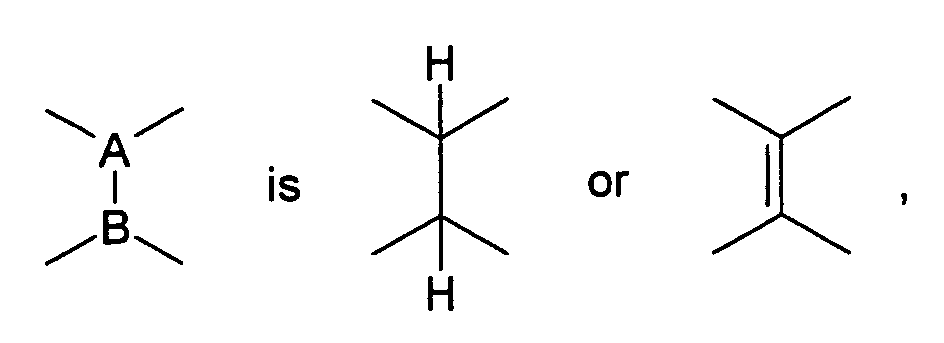
- The earlier international patent application PCT/EP 02/01200 describes compounds of the formula Iin which
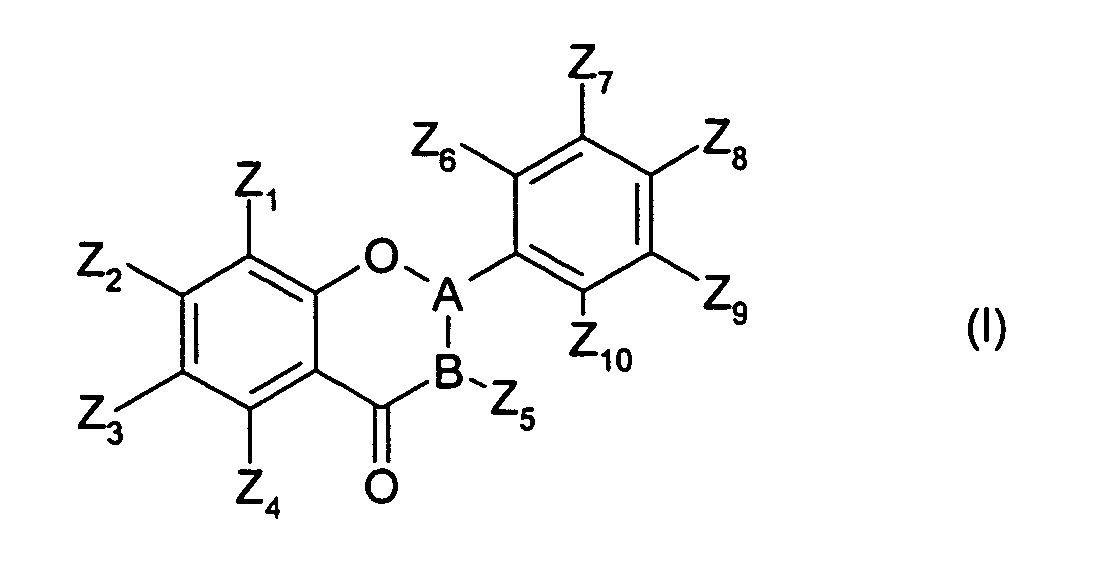
- Z1 to Z4 and Z6 to Z10
- are each, independently of one another, H, OH, CH3COO,
alkoxy, hydroxyalkoxy, mono- or oligoglycoside radicals and
where the alkoxy and hydroxyalkoxy groups may be branched
or unbranched and can have from 1 to 18 carbon atoms,
- Z5
- is a mono- or oligoglycoside radical, where at least one radical
selected from


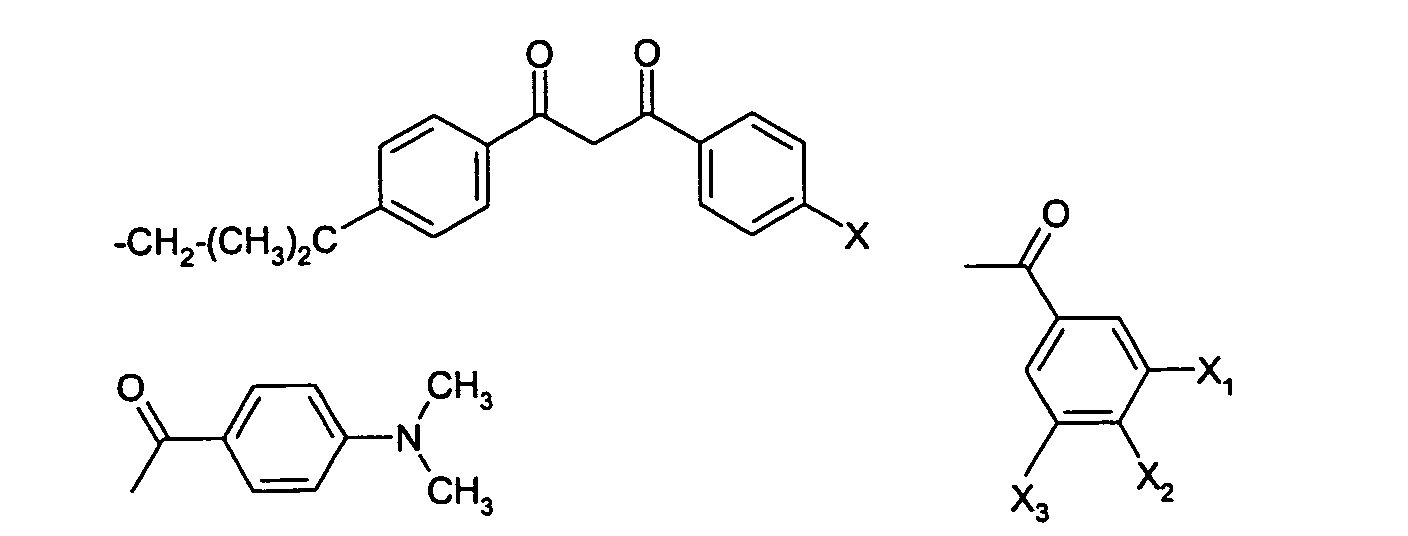
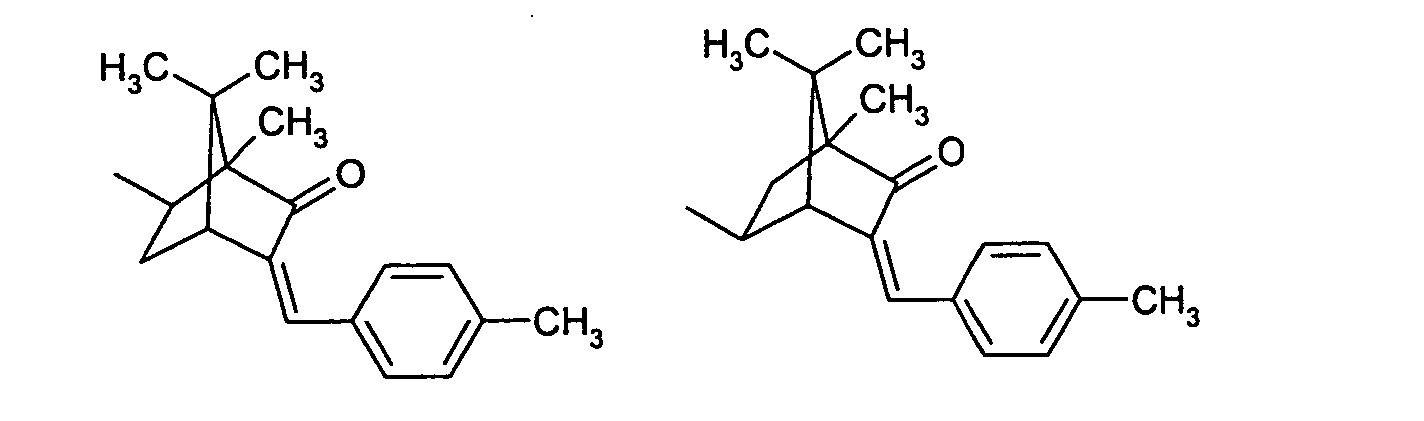
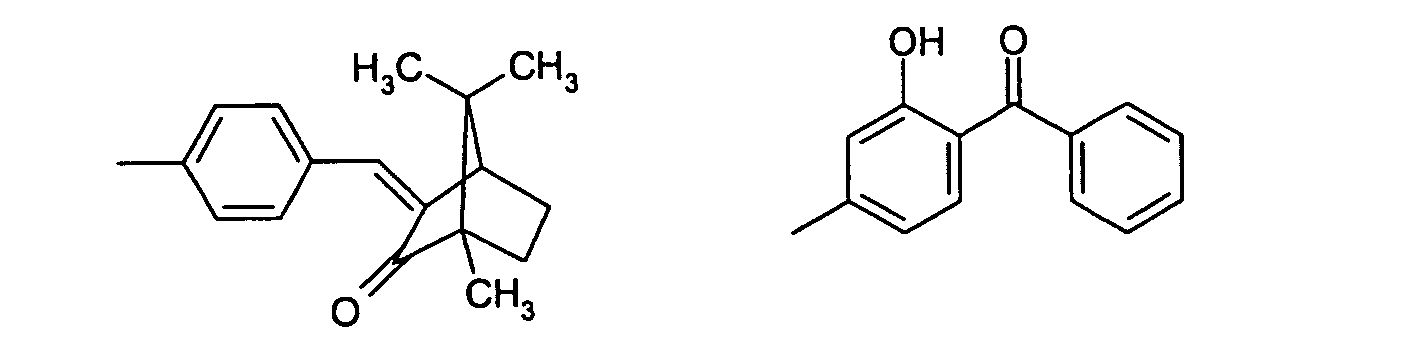

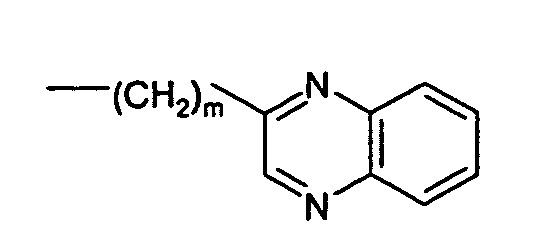 in which X, X1, X2 and X3 are each, independently of one another, OH, CH3COO, an alkoxy radical having from 1 to 8 carbon atoms or a monoglycoside radical, n is 0, 1, 2 or 3, m is 0 or 1, k is 0, 1, 2, 3 or 4, and M is H, Na or K,
- Surprisingly, it has now been found that these compounds are eminently suitable for the treatment of eczema.
- A first subject-matter of the present invention is therefore the use of compounds of the formula I or salts thereofin which

- Z1 to Z4 and Z6 to Z10
- are each, independently of one another, H, OH, CH3COO,
alkoxy, hydroxyalkoxy, mono- or oligoglycoside radicals and
where the alkoxy and hydroxyalkoxy groups may be branched
or unbranched and can have from 1 to 18 carbon atoms,

- Z5
- is a mono- or oligoglycoside radical, where at least one radical
selected from
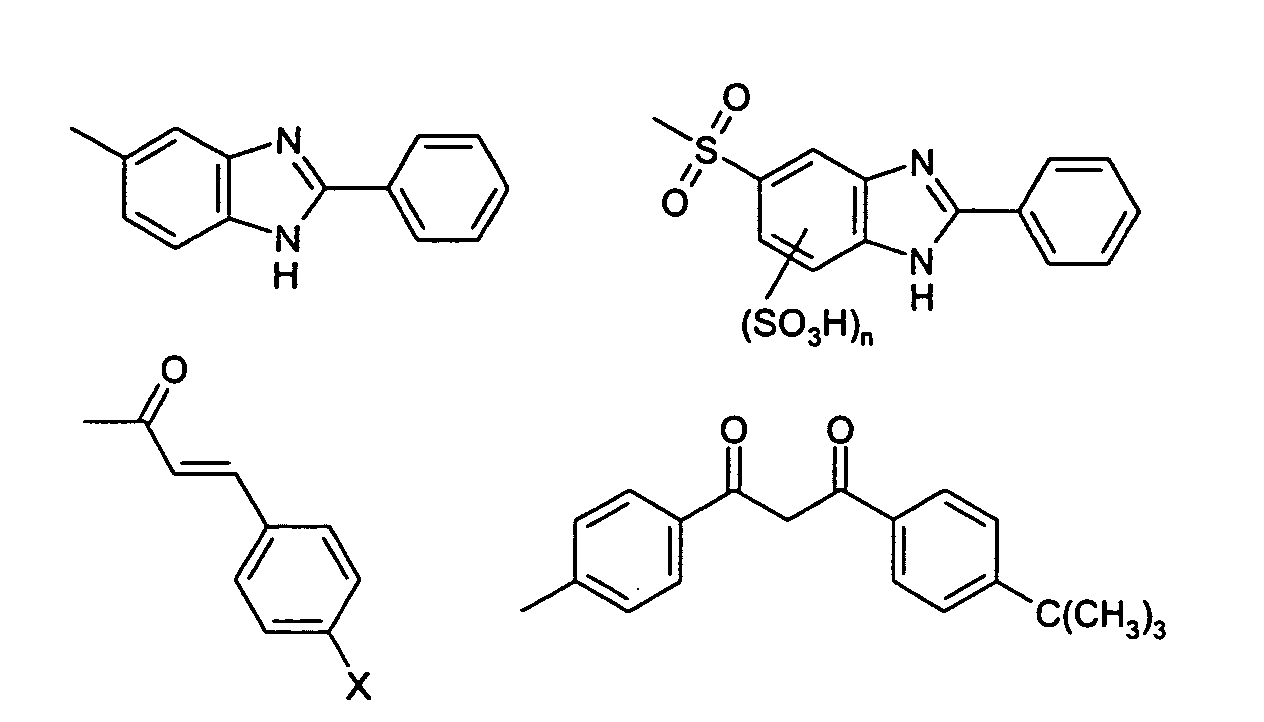
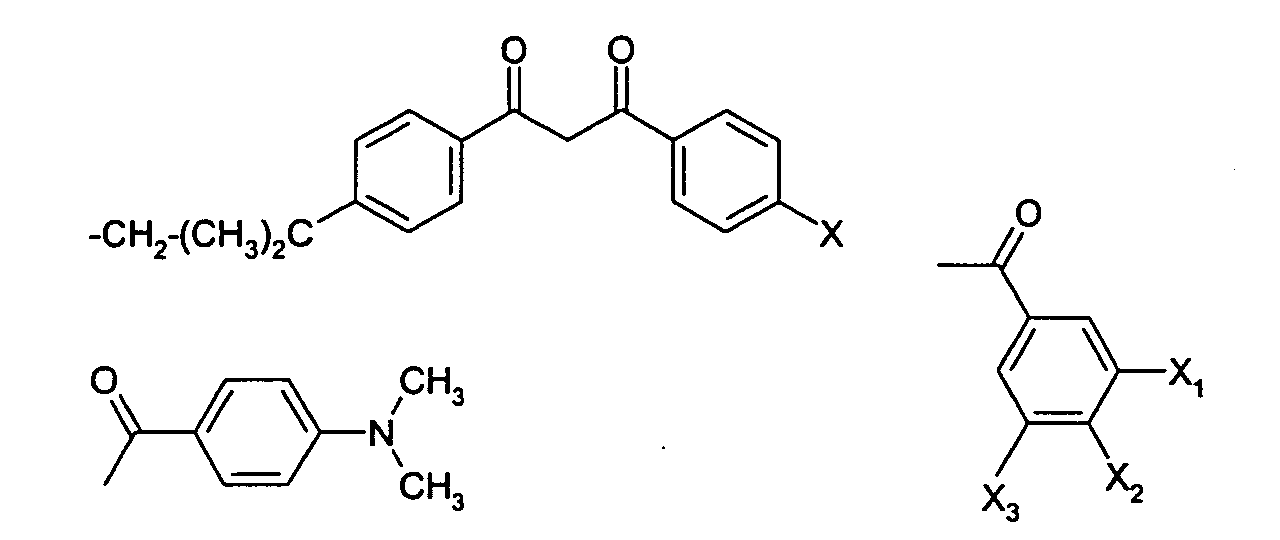


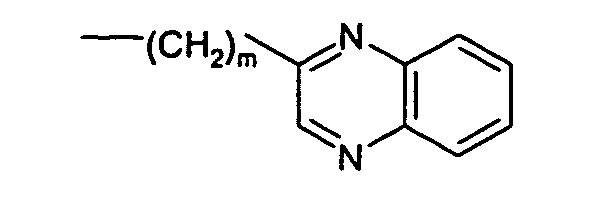 in which X, X1, X2 and X3 are each, independently of one another, OH, CH3COO, an alkoxy radical having from 1 to 8 carbon atoms or a monoglycoside radical, n is 0, 1, 2 or 3, m is 0 or 1, k is 0, 1, 2, 3 or 4, and M is H, Na or K,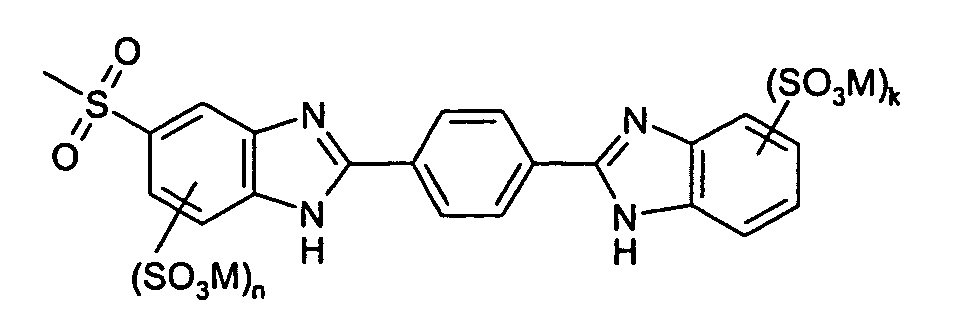
- For the purposes of the present invention, the term formulation here is taken to mean a cosmetic, dermatological or pharmaceutical formulation which is suitable for topical application. Typical formulations comprise conventional excipients which are tolerated by the skin and have been tested in accordance with the intended use and optionally further adjuvants and active ingredients.
- A further subject-matter of the present application is a formulation for topical application comprising
- a) at least one compound of the formula I as described above,
- b) a skin-tolerated excipient,
- c) optionally one or more further active ingredients having a skin-care and/or inflammation-inhibiting action.
-
- Preferred formulations comprise at least one inflammation-inhibiting active ingredient c), which is preferably selected from the glucocorticoids or tacrolimus.
- Tacrolimus has been isolated from the fungus Streptomyces tsukukaensis and exhibits an immunosuppressive action.
- Suitable glucocorticoids are, for example, prednisone, cloprednol, triamcinolone, methylprednisolone, dexamethasone, betamethasone, desoximetasone, clobetasone butyrate, halcinonide, clobetasol propionate, prednisolone, hydrocortisone butyrate, betamethasone dipropionate, fluocinolone acetonide, betamethasone valerate, hydrocortisone (cortisol), cortisone acetate, prednicarbate, diflucortolone valerate, triamcinolone acetonide, fluocortolone and fluocortolone 21-hexanoate.
- Formulations of this type which comprise an active-ingredient combination of at least one compound of the formula I and at least one of the above-mentioned further active ingredients exhibit a particularly strong inflammation-inhibiting action.
- In particular, it has been found that the compounds of the formula I and the formulations according to the invention can be employed particularly advantageously in the treatment of atopic eczema, such as, in particular, milk crust, neurodermatitis, prurigo and dermatitis sicca.
- It has been found here that the compounds of the formula I
- are able greatly to reduce the acute symptoms,
- are able to reduce the frequency of occurrence of acute symptoms,
- in general contribute to an improvement in the skin picture.
- Known compounds of the formula I are, for example, kaempferol 3-(6"-galloylglucoside) and kaempferol 3-(6"-p-coumarylglucoside), which is also known as tiliroside.Kaempferol 3-(6"-galloylglucoside):
 Tiliroside: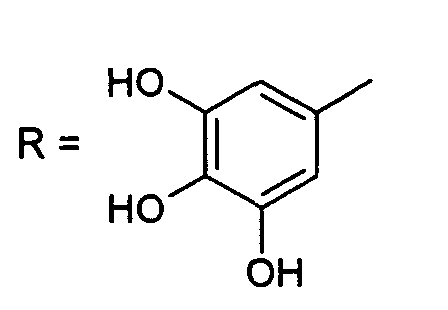

- DE 195 44 905 A1 describes, for example, a process for the preparation of plant extracts containing tiliroside and the use of the plant extracts in medicaments and food products.
- DE 199 22 287 A1 describes tiliroside as a starting flavonoid for the preparation of tiliroside esters whose acid unit contains from 3 to 30 carbon atoms. These esters are used in cosmetics. However, DE 199 22 287 A1 does not describe any formulations comprising tiliroside.
- The formulations comprising one or more compounds of the formula I are also suitable for the protection of human skin or for the protection of body cells against oxidative stress, i.e., for example, against damage by free radicals, as generated, for example, by sunlight, heat or other influences. The formulations comprising one or more compounds of the formula I are particularly suitable for reducing skin ageing.
- The present invention thus also relates to the use of one or more compounds of the formula I as active ingredient for protection against oxidative stress. The present invention furthermore relates to the use of one or more compounds of the formula I for preventing skin ageing.
- The compounds of the formula I have antiallergic, antiinflammatory, inflammation-inhibiting and antiirritative properties and can thus be used for the treatment or preventive treatment of allergies, inflammation and irritation, in particular of the skin. The present invention therefore furthermore relates to the use of one or more compounds of the formula I as active ingredient having an antiallergic, antiinflammatory, inflammation-inhibiting and antiirritative action.
- If the compounds to be employed in accordance with the invention have free hydroxyl groups, they additionally exhibit, in addition to the properties described, an action as antioxidant and/or free-radical scavenger. Preference is therefore also given to preparations having light-protection properties comprising at least one compound of the formula I which is characterised in that at least one of the radicals R1 to R3 is OH, where preferably at least one of the radicals R1 and R2 is OH.
- In order that the compounds of the formula I are able to develop their positive action as free-radical scavengers on the skin particularly well, it may be preferred to allow the compounds of the formula I to penetrate into deeper skin layers. Several possibilities are available for this purpose.
- Firstly, the compounds of the formula I can have an adequate lipophilicity in order to be able to penetrate through the outer skin layer into epidermal layers. As a further possibility, corresponding transport agents, for example liposomes, which enable transport of the compounds of the formula I through the outer skin layers may also be provided in the preparation. Finally, systemic transport of the compounds of the formula I is also conceivable. The preparation is then designed, for example, in such a way that it is suitable for oral administration.
- In general, the substances of the formula I act as free-radical scavengers. Free radicals of this type are not generated only by sunlight, but instead are formed under various conditions. Examples are anoxia, which blocks the flow of electrons upstream of the cytochrome oxidases and causes the formation of superoxide free-radical anions; inflammation associated, inter alia, with the formation of superoxide anions by the membrane NADPH oxidase of the leucocytes, but also associated with the formation (through disproportionation in the presence of iron(II) ions) of the hydroxyl free radicals and other reactive species which are normally involved in the phenomenon of phagocytosis; and lipid autooxidation, which is generally initiated by a hydroxyl free radical and produces lipidic alkoxy free radicals and hydroperoxides.
It is assumed that the preferred compounds of the formula I also act as enzyme inhibitors. They presumably inhibit histidine decarboxylase, protein kinases, elastase, aldose reductase and hyaluronidase, and therefore enable the intactness of the basic substance of vascular sheaths to be maintained. Furthermore, they presumably inhibit non-specifically catechol O-methyl transferase, causing the amount of available catecholamine and thus the vascular strength to be increased. Furthermore, they inhibit AMP phosphodiesterase, giving the substances potential for inhibiting thrombocyte aggregation.
Owing to these properties, the preparations according to the invention are, in general, suitable for immune protection and for the protection of DNA and RNA. In particular, the preparations are suitable for the protection of DNA and RNA against oxidative attack, against free radicals and against damage due to radiation, in particular UV radiation. A further advantage of the preparations according to the invention is cell protection, in particular protection of Langerhans cells against damage due to the above-mentioned influences. All these uses and the use of the compounds of the formula I for the preparation of preparations which can be employed correspondingly are expressly also a subject-matter of the present invention. - In particular, preferred compositions according to the invention are also suitable for the treatment of skin diseases associated with a defect in keratinisation which affects differentiation and cell proliferation, in particular for the treatment of acne vulgaris, acne comedonica, polymorphic acne, acne rosaceae, nodular acne, acne conglobata, age-induced acne, acne which arises as a side effect, such as acne solaris, medicament-induced acne or acne professionalis, for the treatment of other defects in keratinisation, in particular ichthyosis, ichthyosiform states, Darier's disease, keratosis palmoplantaris, leucoplasia, leucoplasiform states, herpes of the skin and mucous membrane (buccal) (lichen), for the treatment of other skin diseases associated with a defect in keratinisation and which have an inflammatory and/or immunoallergic component and in particular all forms of psoriasis which affect the skin, mucous membranes and fingers and toenails, and psoriatic rheumatism and skin atopia, such as eczema or respiratory atopia, or hypertrophy of the gums, it furthermore being possible for the compounds to be used for some inflammations which are not associated with a defect in keratinisation, for the treatment of all benign or malignant excrescence of the dermis or epidermis, which may be of viral origin, such as verruca vulgaris, verruca plana, epidermodysplasia verruciformis, oral papillomatosis, papillomatosis florida, and excrescence which may be caused by UV radiation, in particular epithelioma baso-cellulare and epithelioma spinocellulare, for the treatment of other skin diseases, such as dermatitis bullosa and diseases affecting the collagen, for the treatment of certain eye diseases, in particular corneal diseases, for overcoming or combating light-induced skin ageing associated with ageing, for reducing pigmentation and keratosis actinica and for the treatment of all diseases associated with normal ageing or light-induced ageing, for the prevention or healing of wounds/scars of atrophia of the epidermis and/or dermis caused by locally or systemically applied corticosteroids and all other types of skin atrophia, for the prevention or treatment of defects in wound healing, for the prevention or elimination of stretch marks caused by pregnancy or for the promotion of wound healing, for combating defects in tallow production, such as hyperseborrhoea in acne or simple seborrhoea, for combating or preventing cancer-like states or pre-carcinogenic states, in particular promyelocytic leukaemia, for the treatment of inflammatory diseases, such as arthritis, for the treatment of all virus-induced diseases of the skin or other areas of the body, for the prevention or treatment of alopecia, for the treatment of skin diseases or diseases of other areas of the body with an immunological component, for the treatment of cardiovascular diseases, such as arteriosclerosis or hypertension, and of non-insulin-dependent diabetes, and for the treatment of skin problems caused by UV radiation.
- Furthermore, compounds of the formula I, such as, for example, tiliroside, have only a weak inherent colour. The weak inherent colour is, for example, a major advantage if an inherent colour of the ingredients is undesired in the products for aesthetic reasons.
- In the compounds of the formula I, the alkoxy groups are preferably linear and have from 1 to 12 and preferably from 1 to 8 carbon atoms. These groups thus conform to the formula -O-(CH2)m-H, where m is 1, 2, 3, 4, 5, 6, 7 or 8 and in particular from 1 to 5.
- In the compounds of the formula I, the hydroxyalkoxy groups are preferably linear and have from 2 to 12 and preferably from 2 to 8 carbon atoms. These groups thus conform to the formula -O-(CH2)n-OH, where n is 2, 3, 4, 5, 6, 7 or 8, in particular from 2 to 5 and extremely preferably 2.
- If one or more of the radicals Z1 to Z4 and Z6 to Z10 in the compounds of the formula I are a mono- or oligoglycoside radical, this glycoside radical is bonded directly to the corresponding benzene ring in the formula I via an oxygen atom. The mono- or oligoglycoside radicals are preferably built up from 1 to 3 glycoside units. These units are preferably selected from the group consisting of hexosyl radicals, in particular rhamnosyl radicals and glucosyl radicals. However, other hexosyl radicals, for example allosyl, altrosyl, galactosyl, gulosyl, idosyl, mannosyl and talosyl, may also advantageously be used. It may also be advantageous in accordance with the invention to use pentosyl radicals.
- The mono- or oligoglycoside radicals present in the radical Z5 of the compounds of the formula I are bonded to the group "B" of the formula I via an oxygen atom and are preferably built up from 1 to 3 glycoside units. The preferred units in the radicals Z1 to Z4 and Z6 to Z10 are also preferred for the mono- or oligoglycoside radical present in the radical Z5. The mono- or oligoglycoside radical present in the radical Z5 is particularly preferably selected from the group consisting of the radicals of glucose, rhamnose and rutinose.
- If X, X1, X2 and/or X3 in the compounds of the formula I are a monoglycoside radical, these glycoside radicals are each bonded to the corresponding benzene ring via an oxygen atom. The preferred units in the radicals Z1 to Z4 and Z6 to Z10 are also preferred for this monoglycoside radical. If X, X1, X2 and/or X3 are a monoglycoside radical, the glucose radical is particularly preferred.
- In a preferred embodiment of the invention, in particular if the water solubility of the compounds of the formula I is to be increased, a polar group, for example, in each case independently of one another, a sulfate or phosphate group, is bonded to one or more hydroxyl groups of the radicals mentioned in the substituents Z1 to Z10. Suitable counterions are, for example, the ions of the alkali or alkaline earth metals, these being selected, for example, from sodium and potassium.
- In a further preferred embodiment of the invention, preference is given to the compounds of the formula I in which the radicals having an aromatic component which are present in the substituent Z5 are bonded to the mono- or oligoglycoside radical likewise present in the radical Z5 via an ester group -OOC-.
- In a further preferred embodiment of the invention, sub-formulae of the formula I are derived from the compounds from the following group: rutin, trishydroxyethylrutin (troxerutin), isoquercetin, trishydroxyethylisoquercetin (troxeisoquercetin) and astragalin, and the sulfates and phosphates thereof.
- In a further preferred embodiment, the compounds of the formula I present in the formulations according to the invention are selected from the compounds of the formula IAin which

- R1, R2 and R3
- are each, independently of one another, OH, CH3COO, an alkoxy radical having from 1 to 8 carbon atoms or a monoglycoside radical,
- R4
- is a mono- or diglycoside radical, where at least one group
selected from
where R5, R6 and R7 may each, independently of one another, be H or have the meaning of the radicals R1 to R3, is bonded to the glycoside radical, in each case via an -O-group, and in which one or more hydrogen atoms in the OH groups of the glycoside radical(s) may each, independently of one another, also be replaced by acetyl or by alkyl radicals having from 1 to 8 carbon atoms, and where, in each case independently of one another, sulfate or phosphate may also be bonded to one or more hydroxyl groups of the compounds of the formula IA.
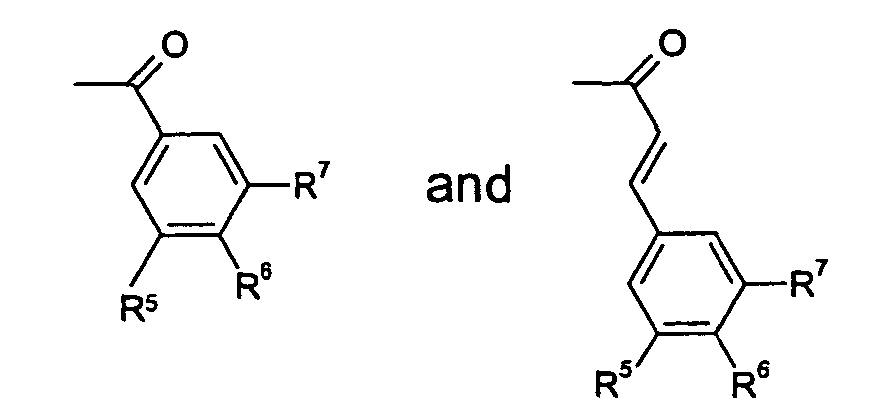
- In a preferred embodiment, the radical R2 in the compounds of the formula IA is selected from OH, CH3COO and an alkoxy radical having from 1 to 8 carbon atoms.
- In the compounds of the formula IA, all OH groups of the mono- or diglycoside radical of R4 may be esterified with a group of the formula

- Preferably, however, only one or two of the radicals derived from these radicals is (are) bonded to the glycoside radical.
- If R4 is a mono- or diglycoside radical in which one or more hydrogen atoms of the OH groups have been replaced by acetyl or alkyl radicals, all OH groups for which replacement is possible have then preferably been replaced by acetyl or alkyl.
- Of the alkoxy radicals having from 1 to 8 carbon atoms mentioned in the compounds of the formula IA, the methoxy group is preferred. Of the alkyl radicals having from 1 to 8 carbon atoms mentioned in the compounds of the formula IA, the methyl group is preferred.
- The mono- and diglycoside radicals mentioned in the compounds of the formula IA are preferably built up from glucose units.
- Preferred compounds IA1 to IA13 selected from the compounds of the formula IA are indicated below:


- In the compounds of the formulae IA1 to IA13 mentioned above, Me is methyl and Ac is acetyl.
- Of the compounds of the formula IA, particular preference is given to the compounds of the formulae IA1 and IA2. Very especial preference is given to the compound of the formula IA1, i.e. tiliroside.
- In a further preferred embodiment, the compounds of the formula I present in the formulations according to the invention are selected from the compounds in which
Z1 to Z4 and Z6 to Z10 are each, independently of one another, H, OH, alkoxy, hydroxyalkoxy, mono- or oligoglycoside radicals and where the alkoxy and hydroxyalkoxy groups may be branched or unbranched and can have from 1 to 18 carbon atoms,Z5, n, m, k and M are as defined in Claim 1, but the radicals X, X1, X2 and X3 present in the substituent Z5 are each, independently of one another, OH, an alkoxy radical having from 1 to 8 carbon atoms or a monoglycoside radical,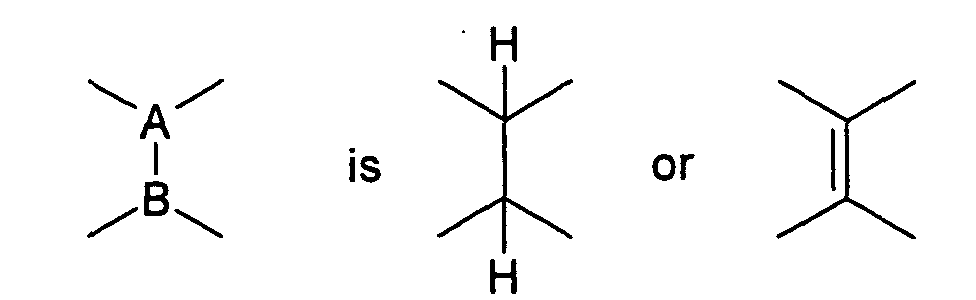
and in which one or more hydrogen atoms in the OH groups of the glycoside radicals mentioned in the substituents Z1 to Z10 may each, independently of one another, also be replaced by alkyl radicals having from 1 to 8 carbon atoms, and where, in each case independently of one another, sulfate or phosphate may also be bonded to one or more hydroxyl groups of the radicals mentioned in the substituents Z1 to Z10. - In these compounds of the formula I, Z1 to Z4 and Z6 to Z10 are preferably each, independently of one another, H, OH, alkoxy or hydroxyalkoxy.
- In a further preferred embodiment, the compounds of the formula IA present in the formulations according to the invention are selected from the compounds in which
- R1, R2 and R3
- are each, independently of one another, OH, an alkoxy radical having from 1 to 8 carbon atoms or a monoglycoside radical,
- R4
- is a mono- or diglycoside radical, where at least one group
selected from
where R5, R6 and R7 are each, independently of one another, H, OH, an alkoxy radical having from 1 to 8 carbon atoms or a monoglycoside radical, is bonded to the glycoside radical, in each case via an -O- group, and

- In these compounds of the formula IA, R1 to R3 are preferably each, independently of one another, OH or an alkoxy radical having from 1 to 8 carbon atoms.
- Some compounds of the formula I, such as, for example, tiliroside, can be isolated from plants, for example from plants of the genera Althaea, Aristolochia, Helianthemum, Lindera, Magnolia, Platanus, Potentilla, Quercus, Rosa, Sida, Sorbus and/or Tilia. These compounds can be processed further either in isolated form or in non-isolated form, i.e., for example, incorporated into formulations in the form of an extract or in the form of a purified extract or alternatively in the form of the pure substance prepared from the plant extract. Of the said genera, the following species are preferred: Althaea officinalis, Althaea rosea, Aristolochia heterophylla, Helianthemum glomeratum, Lindera megaphylla, Magnolia salicifolia, Platanus acerifolia, Platanus occidentalis, Potentilla anserina, Quercus pubescens, Quercus suber, Quercus laurifolia, Quercus ilex, Quercus imbricaria, Quercus virginiana, Rosa pomifera, Sida rhombifolia, Sida poeppigiana, Sida cordifolia, Sida glaziovii, Sorbus pendula, Tilia argenta and Tilia cordata.
- If the formulation according to the invention comprises tiliroside, this compound is, in a further preferred embodiment, has been used for the preparation of the formulation in the form of a plant extract, a purified plant extract or in the form of the pure substance prepared from the plant extract. In formulations of this type, the plant extract comprises, for example, from 1 to 100% by weight of tiliroside. In one embodiment, the plant extract preferably comprises from 5 to 90% by weight of tiliroside. In a further embodiment, the plant extract preferably comprises from 30 to 100% by weight, particularly preferably from 60 to 100% by weight and especially preferably from 90 to 100% by weight of tiliroside. In a further preferred embodiment, the plant extract has been isolated by extraction from the Sida glaziovii plant.
- In all uses according to the invention in which tiliroside is used, tiliroside can be used, for example, in the form of a synthetically prepared substance, in the form of a plant extract, a purified plant extract or an individual substance or in the form of a pure substance isolated from the plant extract. In a preferred embodiment, tiliroside is used in the form of a plant extract, a purified plant extract or in the form of the pure substance prepared from the plant extract.
- The compounds of the formula I can be isolated or prepared by methods which are well known to the person skilled in the art and are described in the literature (for example in the standard works, such as Houben-Weyl, Methoden der organischen Chemie [Methods of Organic Chemistry], Georg-Thieme-Verlag, Stuttgart).
- For example, tiliroside occurs in plants and can be isolated by extraction. The plant extracts are prepared by conventional methods of extraction of the plants or plant parts. Suitable extraction methods may be: maceration, remaceration, digestion, agitation maceration, fluidised-bed extraction, ultrasound extraction, countercurrent extraction, percolation, repercolation, evacolation, diacolation or solid/liquid extraction with continuous reflux, which is carried out in a Soxhlet extractor.
- The solvent used for the extraction can be, for example, water or an alcohol.
- It can be ascribed to the general knowledge of the person skilled in the art how these extractions can be carried out in detail and the resultant crude extracts can be purified by generally conventional methods.
- One possible synthetic route for tiliroside is, for example, also described in B. Vermes, H. Wagner, Stud. Org. Chem. (Amsterdam) (1982), Volume date 1981, 11 (Flavonoids, Bioflavonoids), 161-167 and in B. Vermes, V.M. Chari, H. Wagner, Helv. Chim. Acta (1981), 64(4), 1964-1967.
- The synthesis of tiliroside is shown in scheme 1. 4',7-Dibenzylkaempferol ( 1 ) [H. Wagner, H. Danninger, O. Seligmann, M. Nógrádi, L. Farkas, N. Farnsworth, Chem. Ber. 103 (1978) 3768] is reacted with 2,3,4-tri-O-acetyl-6-O-chloroacetyl-β-D-glucopyranosyl bromide ( 2 ) in the presence of Ag2CO3 and pyridine to give compound 3 . Compound 2 can be prepared by the method described in D.Y. Gagniere, P.J.A. Wottero, Carbohydrate Res. 28 (1973) 1965. Catalytic debenzylation and subsequent careful acetylation of compound 3 gives compound 4 , from which compound 5 can be obtained after removal of the chloroacetyl group using thiourea. In this compound, only one hydroxyl group is free, meaning that the esterification of compound 5 can proceed selectively. The esterification using the acid chloride p-acetylcoumaroyl chloride 6 can be carried out in a mixture of pyridine and dichloromethane. An excess of acid chloride and a long reaction time (about 96 hours) at room temperature are necessary to ensure that the esterification proceeds to completion. The final step, the selective saponification of the 7 acetyl groups in compound 7 , can be carried out by the method described in G. Zemplén, Chem. Ber. 59 (1926) 1258. This is carried out using a catalytic amount of NaOCH3 and a calculated amount of methanol.

- Other compounds of the formula I can be obtained by routine modification of the synthesis shown in scheme 1. Depending on the target molecule, different starting materials are used here, i.e. other optionally protected flavonoids, sugar components and radicals which are to be attached to the sugar component.
- The esterification of glycosidic OH groups using aromatic sulfonic acid units can be carried out, for example, by the method described in A.B. Foster et al., J. Chem. Soc. (1954) 3625-3629. After this, the sugar component can, for example, be reacted with a corresponding aromatic sulfonyl chloride in pyridine.
- The etherification of glycosidic OH groups using aromatic radicals can be carried out, for example, by the method described in P. Beraud et al., Tetrahedron Let. 30(3) (1989) 325-326. In this Mitsunobu reaction, the etherification is carried out, for example, by dissolving the sugar component in pyridine together with triphenylphosphine PPh3 and reacting it with a corresponding phenol component and diethyl azodicarboxylate.
- The etherification of glycosidic OH groups using radicals of saturated hydrocarbons can be carried out, for example, by the method described in M. Goebel et al., Tetrahedron 53(9) (1997) 3123-3134. The etherification is carried out, for example, by carefully adding sodium hydride to the sugar component in dry dimethylformamide under an inert gas and then carefully reacting the mixture with a suitable alkylating reagent, such as, for example, a corresponding bromide.
- The proportion of the compounds of the formula I in the formulation is preferably from 0.001 to 20% by weight, particularly preferably from 0.01 to 10% by weight and especially preferably from 0.05 to 5% by weight, based on the formulation as a whole. The proportion of the compounds of the formula I in the formulation is very especially preferably from 0.05 to 2% by weight, based on the formulation as a whole.
- The protective action against oxidative stress or against the effect of free radicals can be further improved if the formulation comprises one or more further antioxidants.
- There are many proven substances known from the specialist literature which can be used as antioxidants, for example amino acids (for example glycine, histidine, tyrosine, tryptophan) and derivatives thereof, imidazoles (for example urocanic acid) and derivatives thereof, peptides, such as D,L-carnosine, D-carnosine, L-carnosine and derivatives thereof (for example anserine), carotinoids, carotenes (for example α-carotene, β-carotene, lycopene) and derivatives thereof, chlorogenic acid and derivatives thereof, lipoic acid and derivatives thereof (for example dihydrolipoic acid), aurothioglucose, propylthiouracil and other thiols (for example thioredoxin, glutathione, cysteine, cystine, cystamine and the glycosyl, N-acetyl, methyl, ethyl, propyl, amyl, butyl and lauryl, palmitoyl, oleyl, γ-linoleyl, cholesteryl and glyceryl esters thereof) and salts thereof, dilauryl thiodipropionate, distearyl thiodipropionate, thiodipropionic acid and derivatives thereof (esters, ethers, peptides, lipids, nucleotides, nucleosides and salts), and sulfoximine compounds (for example buthionine sulfoximines, homocysteine sulfoximine, buthionine sulfones, penta-, hexa- and heptathionine sulfoximine) in very low tolerated doses (for example pmol to µmol/kg), and also (metal) chelating agents (for example α-hydroxy fatty acids, palmitic acid, phytic acid, lactoferrin), α-hydroxy acids (for example citric acid, lactic acid, malic acid), humic acid, bile acid, bile extracts, bilirubin, biliverdin, EDTA, EGTA and derivatives thereof, unsaturated fatty acids and derivatives thereof, vitamin C and derivatives (for example ascorbyl palmitate, magnesium ascorbyl phosphate, ascorbyl acetate), tocopherols and derivatives (for example vitamin E acetate), vitamin A and derivatives (for example vitamin A palmitate), and coniferyl benzoate of benzoin resin, rutinic acid and derivatives thereof, α-glycosyl rutin, ferulic acid, furfurylideneglucitol, carnosine, butylhydroxytoluene, butylhydroxyanisole, nordihydroguaiaretic acid, trihydroxybutyrophenone, quercetin, uric acid and derivatives thereof, mannose and derivatives thereof, zinc and derivatives thereof (for example ZnO, ZnSO4), selenium and derivatives thereof (for example selenomethionine), stilbenes and derivatives thereof (for example stilbene oxide, trans-stilbene oxide).
- Mixtures of antioxidants are likewise suitable for use in the formulations according to the invention. Known and commercial mixtures are, for example, mixtures comprising, as active ingredients, lecithin, L-(+)-ascorbyl palmitate and citric acid (for example Oxynex® AP), natural tocopherols, L-(+)-ascorbyl palmitate, L-(+)-ascorbic acid and citric acid (for example Oxynex® K LIQUID), tocopherol extracts from natural sources, L-(+)-ascorbyl palmitate, L-(+)-ascorbic acid and citric acid (for example Oxynex® L LIQUID), DL-α-tocopherol, L-(+)-ascorbyl palmitate, citric acid and lecithin (for example Oxynex® LM) or butylhydroxytoluene (BHT), L-(+)-ascorbyl palmitate and citric acid (for example Oxynex® 2004).
- The proportion of the one or more antioxidants in the formulation is preferably from 0.001 to 5% by weight, particularly preferably from 0.01 to 2% by weight, based on the formulation as a whole.
- The protective action of the formulations according to the invention against UV radiation and/or oxidative stress can also be improved if the formulation comprises one or more compounds selected from flavonoids and coumaranones in addition to the compounds of the formula I. Flavonoids are taken to mean the glycosides of flavonones, flavones, 3-hydroxyflavones (= flavonols), aurones, isoflavones and rotenoids [Römpp Chemie Lexikon [Römpp's Lexicon of Chemistry], Volume 9, 1993]. For the purposes of the present invention, however, this term is also taken to mean the aglycones, i.e. the sugar-free constituents, and the derivatives of the flavonoids and aglycones. For the purposes of the present invention, the term flavonoid is furthermore also taken to mean anthocyanidine (cyanidine). For the purposes of the present invention, the term coumaranones is also taken to mean the derivatives thereof.
- Preferred flavonoids are derived from flavonones, flavones, 3-hydroxyflavones, aurones and isoflavones, in particular from flavonones, flavones, 3-hydroxyflavones and aurones.
- The flavonoids are preferably selected from the following compounds: 4,6,3',4'-tetrahydroxyaurone, quercetin, rutin, isoquercetin, eriodictyol, taxifolin, luteolin, trishydroxyethylquercetin (troxequercetin), trishydroxyethylrutin (troxerutin), trishydroxyethylisoquercetin (troxeisoquercetin), trishydroxyethylluteolin (troxeluteolin) and the sulfates and phosphates thereof. Of the flavonoids, particular preference is given to rutin and troxerutin. Very especial preference is given to troxerutin.
- Of the coumaranones, preference is given to 4,6,3',4'-tetrahydroxybenzyl-3-coumaranone.
- The proportion of the one or more compounds selected from the flavonoids and coumaranones in the formulation is preferably from 0.001 to 5% by weight, particularly preferably from 0.01 to 2% by weight, based on the formulation as a whole.
- The formulations according to the invention may comprise vitamins as further ingredients. The formulations according to the invention preferably comprise vitamins and vitamin derivatives selected from vitamin A, vitamin A propionate, vitamin A palmitate, vitamin A acetate, retinol, vitamin B, thiamine chloride hydrochloride (vitamin B1), riboflavin (vitamin B2), nicotinamide, vitamin C (ascorbic acid), vitamin D, ergocalciferol (vitamin D2), vitamin E, DL-α-tocopherol, tocopherol E acetate, tocopherol hydrogensuccinate, vitamin K1, esculin (vitamin P active ingredient), thiamine (vitamin B1), nicotinic acid (niacin), pyridoxine, pyridoxal, pyridoxamine (vitamin B6), pantothenic acid, biotin, folic acid and cobalamine (vitamin B12), particularly preferably vitamin A palmitate, vitamin C, DL-α-tocopherol, tocopherol E acetate, nicotinic acid, pantothenic acid and biotin.
- The formulations according to the invention may furthermore also comprise, as ingredient, ectoin [(S)-1,4,5,6-tetrahydro-2-methyl-4-pyrimidinecarboxylic acid] and then effect protection of skin cells, in particular protection of Langerhans cells. Formulations comprising tiliroside and ectoin are particularly advantageous.
- Addition of 1-(2-hydroxyaryl)alkan-1-one oximes (as described, for example, in EP 0 149 242) and preferably of 2-hydroxy-5-methyllaurophenone oxime provides the formulation according to the invention with an advantageous antiinflammatory action. Particularly advantageous are formulations comprising tiliroside and 2-hydroxy-5-methyllaurophenone oxime in which the said substances are present in a weight ratio of from 1 : 10 to 10 : 1. Application forms of formulations of this type are, for example, aftersun preparations.
- Preference is furthermore also given to formulations according to the invention which comprise tiliroside and 4,6,3',4'-tetrahydroxybenzyl-3-coumaranone. The said substances are present in these formulations in a weight ratio of from 1 : 10 to 10 : 1.
- Further active ingredients can also be incorporated into the formulations according to the invention, for example
- hydroxyectoin [(S,S)-1,4,5,6-tetrahydro-5-hydroxy-2-methyl-4-pyrimidinecarboxylic acid]
- active ingredients which can serve for wound treatment, such as, for example, allantoin
- insect repellents, such as, for example, ethyl 3-[N-n-butyl-N-acetyl]-aminopropionate [CAS No. 52304-36-6]
- sorbitol for skin care [for example Karion®F liquid or Karion®FP liquid]
- biotin
- anti-ageing products, such as, for example, mixtures comprising hydroxyproline or derivatives of hydroxyproline, for example mixtures comprising lecithin, hydroxyproline dipalmitate, sitosterol, linoleic acid, tocopherol, sodium ascorbate, mannitol, phenoxyethanol, methylparaben, ethylparaben, propylparaben, butylparaben, water [for example RonaCare™ ASC III® ] or, for example, mixtures comprising lecithin, hydroxylated lecithin, L-hydroxyproline, disodium rutinyl disulfate, phenoxyethanol, mannitol, magnesium ascorbyl phosphate, methylparaben, ethylparaben, propylparaben, butylparaben, sitosterol, tocopherol, sodium ascorbate, water [for example RonaCare™ VTA]
- bisabolol.
- The compounds of the formula I can be incorporated into formulations in a conventional manner. Suitable formulations are those for external use, for example as a cream, lotion, gel or as a solution which can be sprayed onto the skin. It is preferred here for the formulation to comprise at least one oil phase and at least one water phase.
- Application forms of the formulations according to the invention which may be mentioned are, for example: solutions, emulsions, PIT emulsions, suspensions, pastes, ointments, gels, creams, soaps, surfactant-containing cleansing preparations, lotions, oils, powders, sprays and aerosols. Further application forms are, for example, sticks, shampoos and shower products. In addition to the compounds of the formula I, any desired conventional excipients, adjuvants and optionally further active ingredients may be added to the formulation.
- Preferred adjuvants originate from the group consisting of preservatives, antioxidants, stabilisers, solubilisers, vitamins, colorants, odour improvers, film formers, thickeners and humectants.
- Solutions and emulsions can comprise the conventional excipients, such as solvents, solubilisers and emulsifiers, for example water, ethanol, isopropanol, ethyl carbonate, ethyl acetate, benzyl alcohol, benzyl benzoate, propylene glycol, 1,3-butyl glycol, oils, in particular cottonseed oil, groundnut oil, maize oil, olive oil, castor oil and sesame oil, glycerol fatty acid esters, polyethylene glycols and fatty acid esters of sorbitan, or mixtures of these substances.
- The emulsions can exist in various forms. Thus, they can be, for example, an emulsion or microemulsion of the water-in-oil (W/O) type or of the oil-in-water (O/W) type, or a multiple emulsion, for example of the water-in-oil-in-water (W/O/W ) type.
- The formulations may also be in the form of emulsifier-free, disperse formulations. They can be, for example, hydrodispersions or Pickering emulsions.
- The formulations may also be in the form of PIT emulsions or hydrogels. The formulations may also comprise liposomes, which include, for example, active ingredients.
- Suspensions can comprise the conventional excipients, such as liquid diluents, for example water, ethanol or propylene glycol, suspension media, for example ethoxylated isostearyl alcohols, polyoxyethylene sorbitol esters and polyoxyethylene sorbitan esters, microcrystalline cellulose, aluminium metahydroxide, bentonite, agar-agar and tragacanth, or mixtures of these substances.
- Pastes, ointments, gels and creams can comprise the conventional excipients, for example animal and vegetable fats, waxes, paraffins, starch, tragacanth, cellulose derivatives, polyethylene glycols, silicones, bentonites, silicic acid, talc and zinc oxide, or mixtures of these substances.
- Soaps can comprise the conventional excipients, such as alkali metal salts of fatty acids, salts of fatty acid monoesters, fatty acid protein hydrolysates, isethionates, lanolin, fatty alcohol, vegetable oils, plant extracts, glycerol, sugars, or mixtures of these substances.
- Surfactant-containing cleansing products can comprise the conventional excipients, such as salts of fatty alcohol sulfates, fatty alcohol ether sulfates, sulfosuccinic acid monoesters, fatty acid protein hydrolysates, isethionates, imidazolinium derivatives, methyl taurates, sarcosinates, fatty acid amide ether sulfates, alkylamidobetaines, fatty alcohols, fatty acid glycerides, fatty acid diethanolamides, vegetable and synthetic oils, lanolin derivatives, ethoxylated glycerol fatty acid esters, or mixtures of these substances.
- Face and body oils can comprise the conventional excipients, such as synthetic oils, such as fatty acid esters, fatty alcohols, silicone oils, natural oils, such as vegetable oils and oily plant extracts, paraffin oils, lanolin oils, or mixtures of these substances.
- Powders and sprays can comprise the conventional excipients, for example milk sugar, talc, silicic acid, aluminium hydroxide, calcium silicate and polyamide powder, or mixtures of these substances. Sprays can additionally comprise the conventional propellants, for example chlorofluorocarbons, propane/butane or dimethyl ether.
- All compounds or components which can be used in the formulations are either known and commercially available or can be synthesised by known processes.
- The formulation can comprise adjuvants which are usually used in formulations of this type, such as, for example, thickeners, plasticisers, humectants, interface-active agents, emulsifiers, preservatives, anti-foaming agents, perfumes, waxes, lanolin, propellants, dyes and/or pigments which colour the agent itself or the skin, and other ingredients usually used in cosmetics or dermatology.
- The dispersant or solubiliser used can be an oil, wax or other fatty body, a lower monoalcohol or a lower polyol, or mixtures thereof. The particularly preferred monoalcohols or polyols include ethanol, i-propanol, propylene glycol, glycerol and sorbitol.
- A preferred embodiment of the invention is an emulsion which is in the form of a protective cream or milk and, in addition to one or more compounds of the formula I, comprises fatty alcohols, fatty acids, fatty acid esters, in particular triglycerides of fatty acids, lanolin, natural or synthetic oils or waxes and emulsifiers in the presence of water.
- Further preferred embodiments are oily lotions based on natural or synthetic oils and waxes, lanolin, fatty acid esters, in particular triglycerides of fatty acids, or oily/alcoholic lotions based on a lower alcohol, such as ethanol, or a glycol, such as propylene glycol, and/or a polyol, such as glycerol, and oils, waxes and fatty acid esters, such as triglycerides of fatty acids.
- Solid sticks consist of natural or synthetic waxes and oils, fatty alcohols, fatty acids, fatty acid esters, lanolin and other fatty bodies.
- If a formulation is in the form of an aerosol, the conventional propellants, such as alkanes, fluoroalkanes and chlorofluoroalkanes, are generally used.
- The formulations according to the invention can be prepared with the aid of methods which are well known to the person skilled in the art.
- Furthermore, the compounds of the formula I also have a stabilising action on the formulation. On use in corresponding products, the latter therefore also remain stable for longer and do not change their appearance. In particular, the efficacy of the ingredients, for example vitamins, is also retained on extended use or extended storage.
- The compounds of the formula I can be converted into a suitable dosage form together with at least one solid, liquid and/or semi-liquid excipient or adjuvant and optionally in combination with one or more further active ingredients.
- The formulations can be used as medicaments in human or veterinary medicine. Suitable excipients are also organic or inorganic substances which are suitable for enteral (for example oral), parenteral or topical application and do not react with the compounds of the formula I, in particular of the formula IA, for example water, vegetable oils, benzyl alcohols, alkylene glycols, polyethylene glycols, glycerol triacetate, gelatine, carbohydrates, such as lactose or starch, magnesium stearate, talc and Vaseline. Suitable for oral administration are, in particular, tablets, pills, coated tablets, capsules, powders, granules, syrups, juices or drops, suitable for rectal administration are suppositories, suitable for parenteral administration are solutions, preferably oil-based or aqueous solutions, furthermore suspensions, emulsions or implants, and suitable for topical application are ointments, creams or powders. The compounds of the formula I, in particular of the formula IA, may also be lyophilised and the resultant lyophilisates used, for example, for the preparation of injection preparations. The formulations indicated may be sterilised and/or comprise adjuvants, such as lubricants, preservatives, stabilisers and/or wetting agents, emulsifiers, salts for modifying the osmotic pressure, buffer substances, dyes, flavours and/or a plurality of further active ingredients, for example one or more vitamins.
- The compounds of the formula I, in particular of the formula IA, are generally preferably administered in doses of between about 1 and 500 mg, in particular between 5 and 100 mg, per dosage unit. The daily dose is preferably between about 0.02 and 10 mg/kg of body weight. However, the specific dose for each patient depends on a very wide variety of factors, for example on the efficacy of the specific compound employed, on the age, body weight, general state of health, sex, on the diet, on the time and method of administration, on the excretion rate, medicament combination and severity of the particular disease to which the therapy applies.
- The pharmaceutical formulations comprising one or more compounds of the formula I, in particular of the formula IA, can be prepared with the aid of methods which are well known to the person skilled in the art.
- Even without further comments, it is assumed that a person skilled in the art will be able to utilise the above description in the broadest scope. The preferred embodiments should therefore merely be regarded as descriptive disclosure which is absolutely not to be regarded as limiting in any way.
- The complete disclosure content of all applications and publications mentioned above and below is incorporated into this application by way of reference.
- The following examples are intended to illustrate the present invention. However, they should in no way be regarded as limiting.
- All compounds or components which can be used in the formulations are either known and commercially available or can be synthesised by known methods.
- The INCl names of the raw materials used are as follows:
Raw material INCI name Abil WE 09 Polyglyceryl 4-Isostearate, Cetyl Dimethicone Copolyol, Hexyl Laurate Antaron V-220 PVP/Eicosene Copolymer Arlacel 80 Sorbitan Oleate Arlacel 165 V Glyceryl Stearate, PEG-100 Stearate Avocado oil Persea Gratissima Beeswax Beeswax Biobase™ EP Glyceryl Stearate, Cetearyl Alcohol, Sodium Stearoyl Lactylate, Lecithin Carbopol ETD 2050 Carbomer Cetiol V Decyl Oleate Cetyl alcohol Cetyl Alcohol Cetyl isononanoate Cetyl Isononanoate Cutina HR Hydrogenated Castor Oil Dimeticon Dimethicone Eusolex®232 Phenylbenzimidazole Sulfonic Acid Eusolex® 2292 Octyl Methoxycinnamate, BHT Eusolex® 6300 4-Methylbenzylidene Camphor Eusolex 8300 4-Methylbenzylidene Eusolex® 9020 Butyl Methoxydibenzoylmethane Eusolex®HMS Homosalate Eusolex T-Aqua Aqua (Water), Titanium Dioxide, Alumina, Sodium Metaphosphate, Phenoxyethanol, Sodium Methylparaben Eutanol G Octyldodecanol Germaben II Propylene Glycol, Diazolidinyl Urea, Methylparaben, Propylparaben Germaben II-E Propylene Glycol, Diazolidinyl Urea, Methylparaben, Propylparaben Glycerin Glycerin Glycerin (87%) Glycerin Glycerin (87% extra pure) Glycerin Glycerin, anhydrous Glycerin Hetester PHA Propylene Glycol Isoceteth-3 Acetate Hexyl laurate Hexyl Laurate Imwitor 960 K flakes Glyceryl Stearate SE Isolan PDI Diisostearoyl Polyglyceryl 3-Diisostearate Isopropyl myristate Isopropyl Myristate Isopropyl palmitate Isopropyl Palmitate Jojoba oil Buxus Chinensis (Jojoba Oil) Karion F liquid Sorbitol Keltrol RD Xanthan Gum Magnesium sulfate Magnesium Sulfate Magnesium sulfate heptahydrate Magnesium Sulfate Methyl 4-hydroxybenzoate Methylparaben Miglyol 812 Caprylic/Capric Triglyceride Miglyol 812 N Caprylic/Capric Triglyceride Miglyol 812, neutral oil Caprylic/Capric Triglyceride Mirasil CM5 Cyclomethicone Mirasil DM 350 Dimethicone Montanov 68 Cetearyl Alcohol, Cetearyl Glucoside Sodium chloride Sodium Chloride Sodium hydroxide solution, 10% Sodium Hydroxide Oxynex®K PEG-8, Tocopherol, Ascorbyl Palmitate, Ascorbic Acid, Citric Acid Panthenol-D Panthenol Paracera M Microwax Paraffin oil, liquid Mineral Oil Perfume oil TND-2417 Perfume Pemulen TR-1 Acrylate/C10-30 Alkyl Acrylate Crosspolymer Pemulen® TR-2 Acrylate/C10-30 Alkyl Acrylate Crosspolymer Performa® V 825 Synthetic Wax Polyglyceryl 2-dipolyhydroxy- Polyglyceryl 2- Di po lyhyd roxystea rate stearate Prisorine 2021 Isopropyl Isostearate 1,2-Propanediol Propylene Glycol Propyl 4-hydroxybenzoate Propylparaben Rhodicare S Xanthan Gum RonaCare™ ASC III Aqua, Lecithin, Dipalmitoyl Hydroxyproline, Phenoxyethanol, Tall Oil Sterol, Linoleic Acid, Tocopherol, Sodium Ascorbate, Mannitol, Methylparaben, Ethylparaben, Propylparaben, Butylparaben RonaCare™ Bisabolol Bisabolol RonaCare™ Ectoin Ectoin RonaCare™ LPO Lauryl p-Cresol Ketoxime RonaCare™ Tocopherol acetate Tocopheryl Acetate Sepigel 305 Polyacrylamide, C13-14 Isoparaffin, Laureth-7 SFE 839 Cyclopentasiloxane, Dimethicone/ Vinyldimethicone Crosspolymer Shea butter Shea Butter Steareth-2 Steareth-2 Steareth-10 Steareth-10 Stearic acid Stearic Acid DL-α-tocopherol acetate Tocopherol Acetate Triethanolamine Triethanolamine Triethanolamine extra pure Triethanolamine Water, demineralised Aqua (Water) Zinc stearate Zinc Stearate - 200 ml of water and 19.4 g of 32% sodium hydroxide solution (155.2 mmol) are added to 29.7 g of tiliroside (50 mmol) with stirring. 19.9 g of pyridine sulfone (125 mmol) are subsequently added, and the pH is adjusted to pH 8 by addition of 32% sodium hydroxide solution. The reaction batch is stirred under N2 for 12 hours and then filtered, and the filtrate is concentrated to 50 g under reduced pressure (T = 60°C; p = 100 mbar). 250 ml of methanol are added dropwise to the concentrated filtrate over the course of 1 hour, and the precipitated solid (sodium sulfate) is filtered off. Drying gives sulfated tiliroside, sodium salt.
-
Lotion (W/O) for application to the skin % by wt. A Polyglyceryl 2-Dipolyhydroxystearate 5.0 Beeswax 0.5 Zinc Stearate 0.5 Hexyl Laurate 9.0 Cetyl lsononanoate 6.0 Shea Butter 0.5 DL-α-Tocopherol Acetate 1.0 Tiliroside 0.5 B Glycerin 5.0 Magnesium Sulfate Heptahydrate 1.0 Preservative q.s. Water, Demineralised to 100 - Phase A is heated to 75°C and phase B to 80°C. Phase B is added slowly to phase A with stirring. After homogenisation, the mixture is cooled with stirring. Perfumes are added at a temperature of 40°C.
- The preservatives used are the following:
- 0.05% of propyl 4-hydroxybenzoate
- 0.15% of methyl 4-hydroxybenzoate
-
-
Lotion (W/O) for application to the skin % by wt. A Polyglyceryl 2-Dipolyhydroxystearate 5.0 Beeswax 0.5 Zinc Stearate 0.5 Hexyl Laurate 9.0 Cetyl Isononanoate 6.0 Shea Butter 0.5 DL-α-Tocopherol Acetate 1.0 B Sulfated Tiliroside, Sodium Salt (Example A) 1.0 Glycerin 5.0 Magnesium Sulfate Heptahydrate 1.0 Preservative q.s. Water, Demineralised to 100 - Phase A is heated to 75°C and phase B to 80°C. Phase B is added slowly to phase A with stirring. After homogenisation, the mixture is cooled with stirring. Perfumes are added at a temperature of 40°C.
- The preservatives used are the following:
- 0.05% of propyl 4-hydroxybenzoate
- 0.15% of methyl 4-hydroxybenzoate
-
-
Lotion (W/O) for application to the skin % by wt. A 4,6,3',4'-Tetrahydroxybenzyl-3-coumaranone 1.0 Polyglyceryl 2-Dipolyhydroxystearate 5.0 Beeswax 0.5 Zinc Stearate 0.5 Hexyl Laurate 9.0 Cetyl Isononanoate 6.0 Shea Butter 0.5 DL-α-Tocopherol Acetate 1.0 Tiliroside 1.0 B Glycerin 5.0 Magnesium Sulfate Heptahydrate 1.0 Preservative q.s. Water, Demineralised to 100 - Phase A is heated to 75°C and phase B to 80°C. Phase B is added slowly to phase A with stirring. After homogenisation, the mixture is cooled with stirring. Perfumes are added at a temperature of 40°C.
- The preservatives used are the following:
- 0.05% of propyl 4-hydroxybenzoate
- 0.15% of methyl 4-hydroxybenzoate
-
- A cream (O/W) comprising ectoin is prepared from the following components:
% by wt. A Paraffin, Liquid (1) 8.0 Isopropyl Myristate (1) 4.0 Mirasil CM5 (2) 3.0 Stearic Acid (1) 3.0 Arlacel 165 V (3) 5.0 Tiliroside 1.0 B Glycerin (87%) (1) 3.0 Germaben II (4) 0.5 Water, Demineralised to 100 C RonaCare™ Ectoin (1) 1.0 - Firstly, phases A and B are heated separately to 75°C. Phase A is then added slowly to phase B with stirring, and stirring is continued until a homogeneous mixture has formed. After homogenisation, the emulsion is cooled to 30°C with stirring. The mixture is subsequently warmed to 35°C, phase C is added, and the mixture is stirred until homogeneous.
Sources of supply (1) Merck KGaA (2) Rhodia (3) Uniqema (4) ISP -
Topical composition as W/O emulsion % by wt. A Isolan PDI (2) 3.0 Paraffin Oil, Liquid (1) 17.0 Isopropyl Myristate 5.0 Beeswax 0.2 Cutina HR (2) 0.3 Tiliroside 1.0 B Water, Demineralised to 100 Glycerin (87%) 4.0 Magnesium Sulfate 1.0 Germaben II-E (3) 1.0 C RonaCare™ LPO (1) 2.0 - Phases A and B are heated to 75°C. Phase B is added to phase A with stirring. The mixture is subsequently homogenised for 2 minutes at 9000 rpm using the Turrax. The resultant mixture is cooled to from 30 to 35°C, and C is stirred in.
Sources of supply (1) Merck KGaA (2) Goldschmidt AG (3) ISP - The base cream used for the experiments described below was Nivea™ cream (Beiersdorf AG, Hamburg). (Ingredients: Aqua, Paraffinum Liquidum, Cera Microcristallina, Glycerin, Lanolin Alcohol (Eucerit®), Paraffin, Magnesium Sulfate Decyl Oleate, Octyldodecanol, Aluminum Stearate, Panthenol, Citric Acid, Magnesium Stearate, Perfume.)
- A female test subject (31) has suffered since birth from chronic neurodermatitis, which is being treated with Prednisolon™. In the acute stage, base cream containing 1% of added tiliroside was applied thinly to the diseased skin areas twice daily for three days. All acute symptoms disappeared completely within 2 days, and no new episode occurred within five weeks. Identical observations were made in the case of recurrences and have since lasted without loss of activity.
- A female test subject (42) suffers from neurodermatitis. Treatment with base cream (1% of added tiliroside) showed a significant improvement in the skin picture compared with tiliroside-free base cream. The reddening disappeared completely with tiliroside-containing base cream.
for the preparation of a formulation for the prophylaxis and/or therapy of eczema.
Claims (10)
- Use of a compound of the formula Iin which
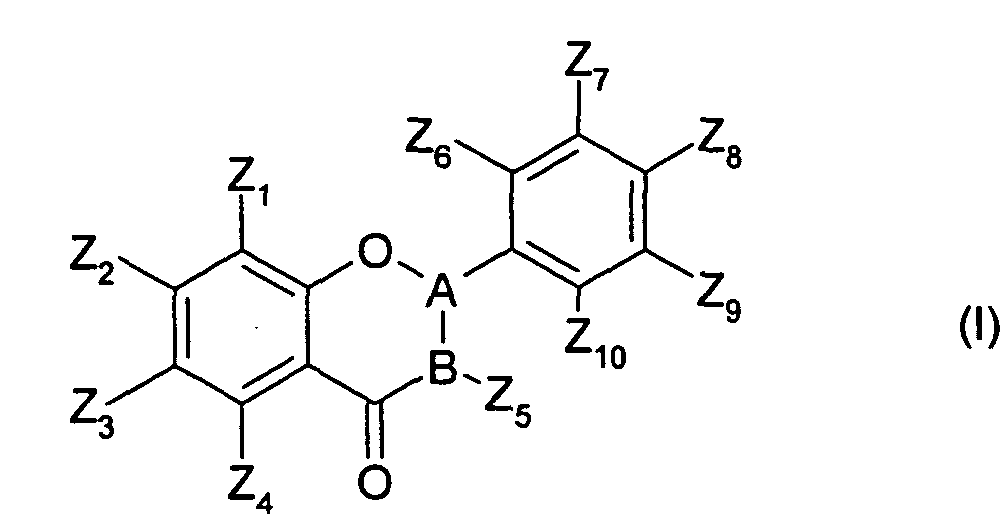
- Z1 to Z4 and Z6 to Z10
- are each, independently of one another, H, OH,
CH3COO, alkoxy, hydroxyalkoxy, mono- or
oligoglycoside radicals and where the alkoxy and
hydroxyalkoxy groups may be branched or
unbranched and can have from 1 to 18 carbon
atoms,
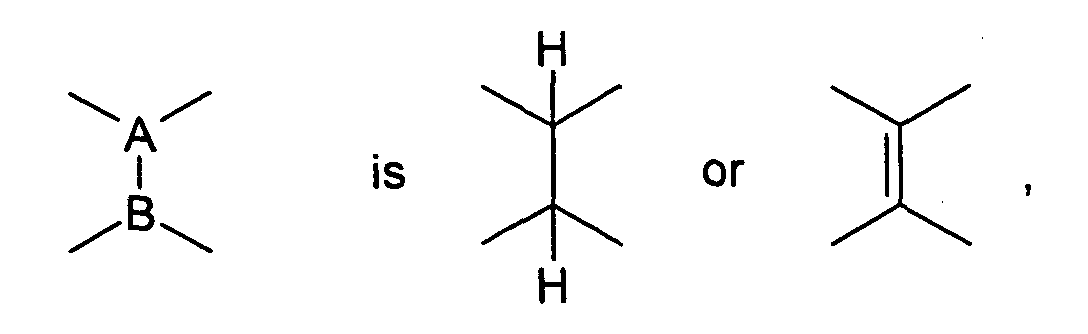
- Z5
- is a mono- or oligoglycoside radical, where at least
one radical selected from

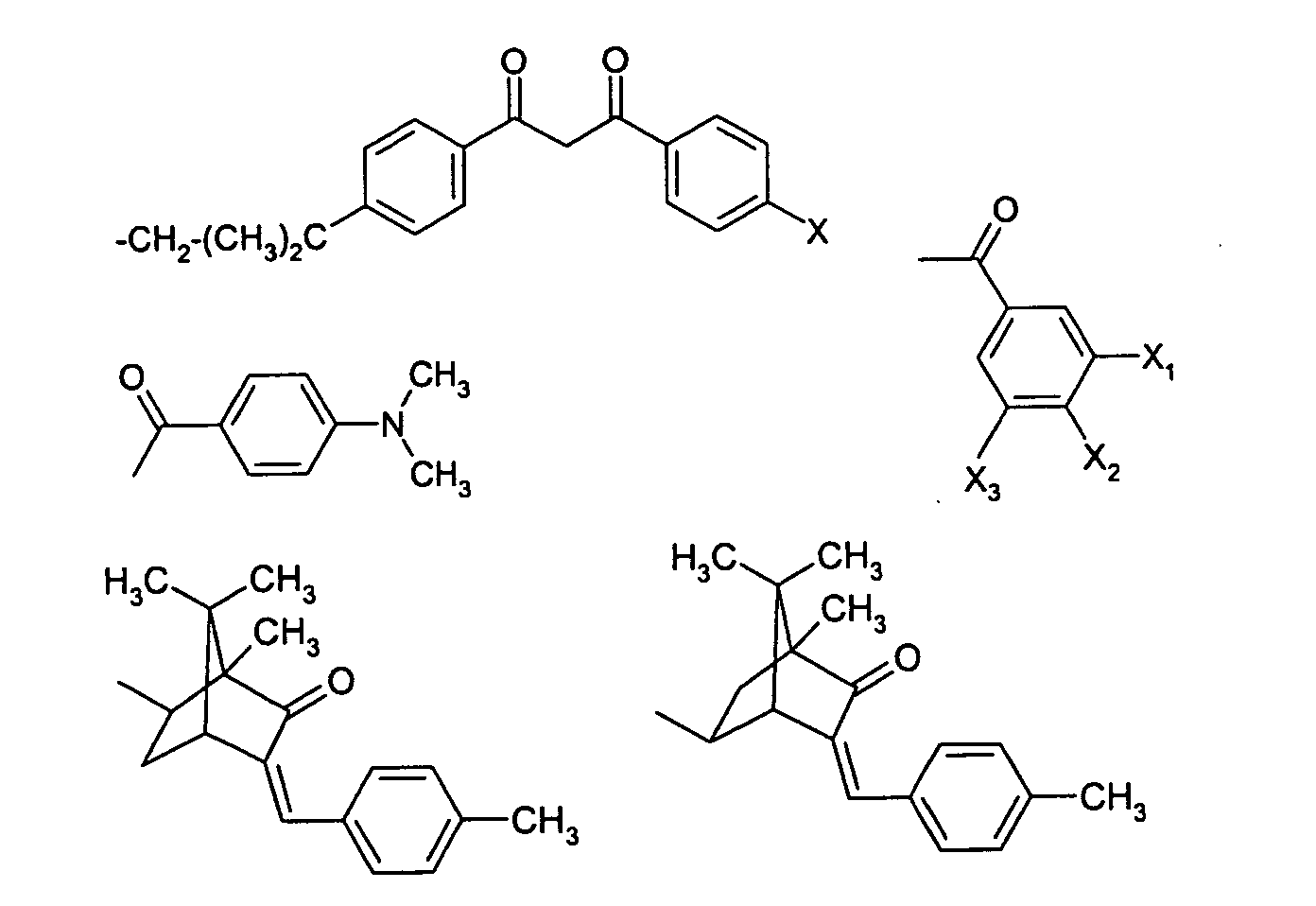


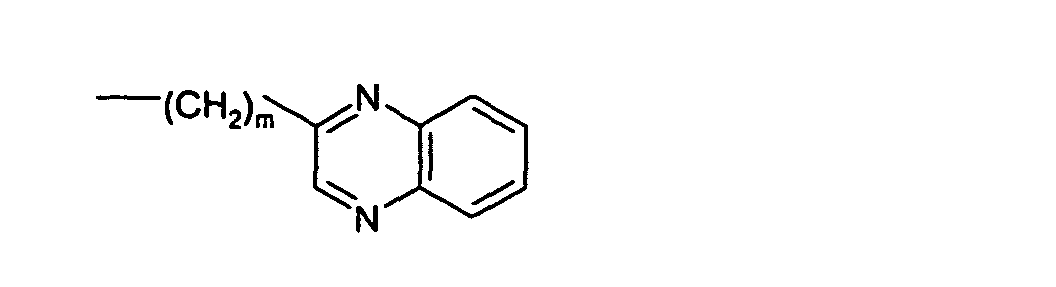 in which X, X1, X2 and X3 are each, independently of one another, OH, CH3COO, an alkoxy radical having from 1 to 8 carbon atoms or a monoglycoside radical, n is 0, 1, 2 or 3, m is 0 or 1, k is 0, 1, 2, 3 or 4, and M is H, Na or K,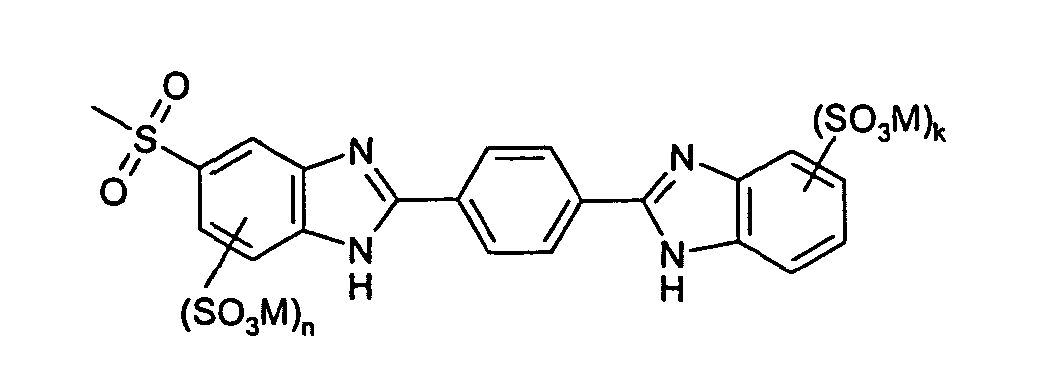
in which one or more hydrogen atoms in the OH groups of the glycoside radicals mentioned in the substituents Z1 to Z10 may each, independently of one another, also be replaced by acetyl or by alkyl radicals having from 1 to 8 carbon atoms, and where, in each case independently of one another, sulfate or phosphate may also be bonded to one or more hydroxyl groups of the radicals mentioned in the substituents Z1 to Z10,
for the preparation of a formulation which is suitable for the prophylaxis and/or therapy of eczema. - Use according to Claim 1, characterised in that the formulation is a formulation which is suitable for the prophylaxis and/or therapy of atopic eczema, such as, in particular, milk crust, neurodermatitis, prurigo and dermatitis sicca.
- Use according to at least one of the preceding claims, characterised in that the compounds of the formula I are selected from the compounds of the formula IAin which
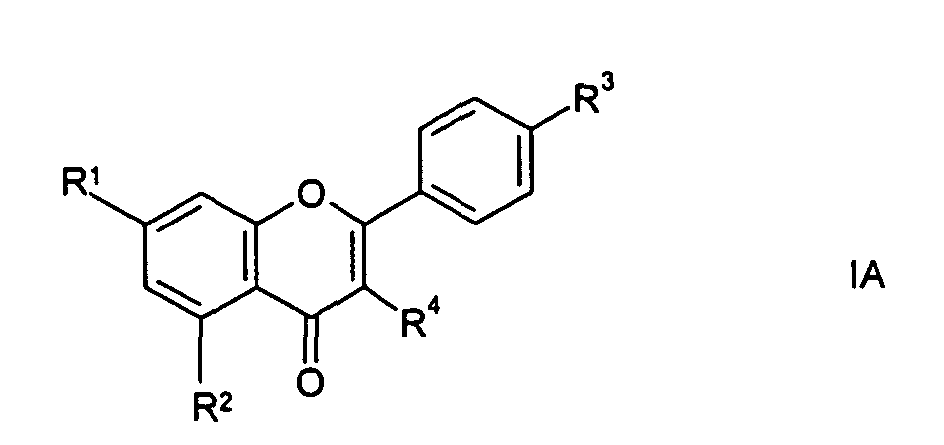
- R1, R2 and R3
- are each, independently of one another, OH, CH3COO, an alkoxy radical having from 1 to 8 carbon atoms or a monoglycoside radical,
- R4
- is a mono- or diglycoside radical, where at least
one group selected from
where R5, R6 and R7 may each, independently of one another, be H or have the meaning of the radicals R1 to R3, is bonded to the glycoside radical, in each case via an -O- group, and in which one or more hydrogen atoms in the OH groups of the glycoside radical(s) may each, independently of one another, also be replaced by acetyl or by alkyl radicals having from 1 to 8 carbon atoms, and where, in each case independently of one another, sulfate or phosphate may also be bonded to one or more hydroxyl groups of the compounds of the formula IA.

- Use according to Claim 3, characterised in that the compounds of the formula IA are selected from the compounds of the formulae IA1 and IA2
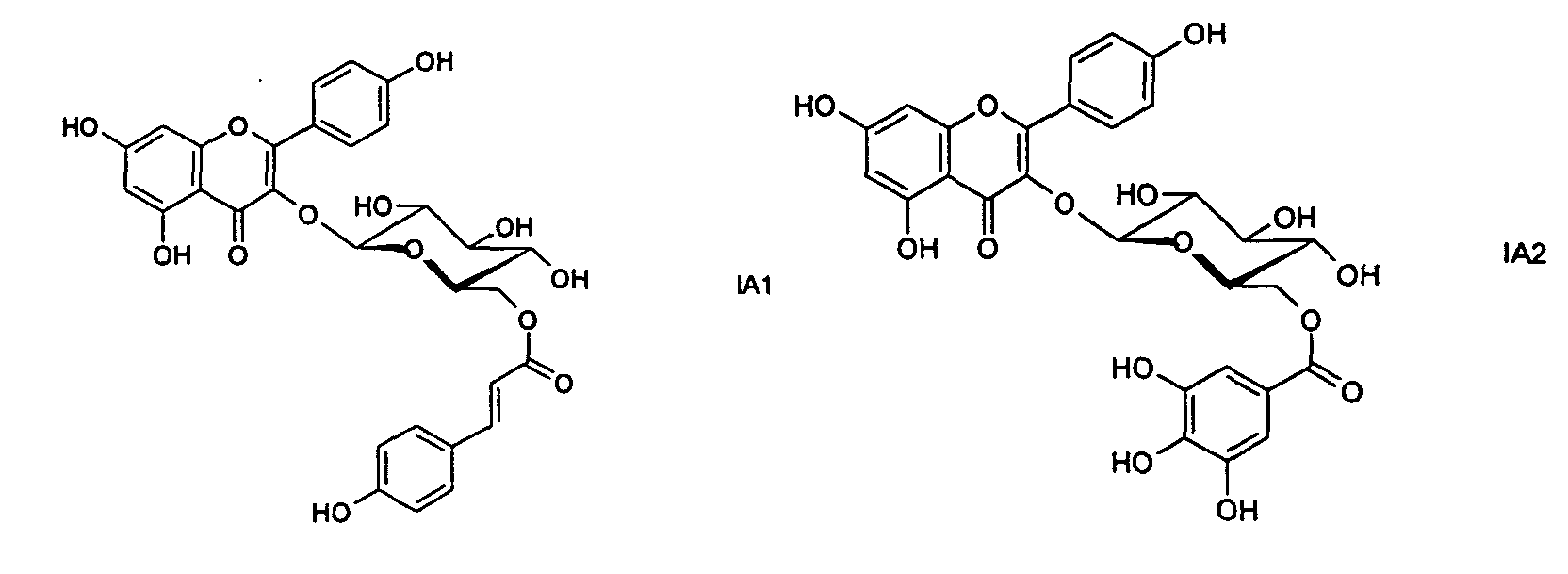
- Use according to at least one of the preceding claims, characterised in that the compound of the formula IA1 is used in the form of a plant extract, a purified plant extract or in the form of the pure substance prepared from the plant extract, where the plant extract preferably comprises from 5 to 90% by weight of the compound of the formula IA1 and has particularly preferably been isolated by extraction from the Sida glaziovii plant.
- Use according to at least one of the preceding claims, characterised in that the one or more compounds of the formula I are present in the formulation in amounts of from 0.001 to 20% by weight.
- Use according to at least one of the preceding claims, characterised in that the formulation comprises one or more antioxidants and/or one or more further active ingredients having a skin-care and/or inflammation-inhibiting action.
- Use according to at least one of the preceding claims, characterised in that the compound of the formula I is tiliroside, where tiliroside is preferably in the form of a plant extract, a purified plant extract or in the form of the pure substance prepared from the plant extract.
- Formulation for topical application comprisingd) at least one compound of the formula I according to Claim 1,e) a skin-tolerated excipient,f) optionally one or more further active ingredients having a skin-care and/or inflammation-inhibiting action.
- Formulation according to Claim 9, characterised in that the one or more further active ingredients are glucocorticoids or tacrolimus.
Applications Claiming Priority (2)
| Application Number | Priority Date | Filing Date | Title |
|---|---|---|---|
| DE10240923 | 2002-09-02 | ||
| DE10240923A DE10240923A1 (en) | 2002-09-02 | 2002-09-02 | Flavonoid derivatives for eczema treatment |
Publications (2)
| Publication Number | Publication Date |
|---|---|
| EP1393733A1 true EP1393733A1 (en) | 2004-03-03 |
| EP1393733B1 EP1393733B1 (en) | 2006-08-23 |
Family
ID=31197601
Family Applications (1)
| Application Number | Title | Priority Date | Filing Date |
|---|---|---|---|
| EP03015616A Expired - Lifetime EP1393733B1 (en) | 2002-09-02 | 2003-07-16 | Use of flavonoid-derivatives for the treatment of atopic eczema |
Country Status (6)
| Country | Link |
|---|---|
| US (1) | US20040053860A1 (en) |
| EP (1) | EP1393733B1 (en) |
| JP (1) | JP4668527B2 (en) |
| AT (1) | ATE336996T1 (en) |
| DE (2) | DE10240923A1 (en) |
| ES (1) | ES2271433T3 (en) |
Cited By (5)
| Publication number | Priority date | Publication date | Assignee | Title |
|---|---|---|---|---|
| FR2860432A1 (en) * | 2003-10-07 | 2005-04-08 | Oreal | Use of 1,3-diazacycloalkene derivatives as lysyl hydroxylase inhibitors, especially for inducing and/or stimulating growth of human keratinic fibers and/or inhibiting their loss and/or increasing their density |
| WO2006099930A1 (en) * | 2005-03-23 | 2006-09-28 | Merck Patent Gmbh | Extraction method for producing plant extracts, especially waltheria paniculata extracts containing tiliroside |
| WO2009153459A1 (en) * | 2008-06-19 | 2009-12-23 | Laboratoires Clarins | Combination of a tiliroside and a peptide |
| US7947733B2 (en) | 2007-07-31 | 2011-05-24 | Limerick Biopharma | Phosphorylated pyrone analogs and methods |
| CN103694293A (en) * | 2013-05-21 | 2014-04-02 | 江西本草天工科技有限责任公司 | Extraction purification method and detection method of tiliroside in loropetalum chinense |
Families Citing this family (17)
| Publication number | Priority date | Publication date | Assignee | Title |
|---|---|---|---|---|
| DE10330243A1 (en) * | 2003-07-03 | 2005-01-20 | bitop Aktiengesellschaft für biotechnische Optimierung | Use of osmolytes derived from extremophilic bacteria for the manufacture of medicines for the external treatment of atopic dermatitis |
| JP4819869B2 (en) * | 2006-02-22 | 2011-11-24 | 有限会社カンズ研究開発 | Drugs to suppress / reduce inflammation of intractable pruritus and inflammation |
| MX2009006958A (en) * | 2006-12-28 | 2009-07-09 | Limerick Biopharma Inc | METHODS AND COMPOSITIONS FOR THERAPEUTIC TREATMENT. |
| DE102007013857A1 (en) | 2007-03-20 | 2008-09-25 | Maria Clementine Martin Klosterfrau Vertriebsgesellschaft Mbh | New compositions, especially for the topical treatment of skin diseases |
| EA025328B1 (en) | 2007-04-19 | 2016-12-30 | Мэри Кэй Инк. | Method for improving skin elasticity or reducing skin laxity in areas around eyes |
| DE102007057543A1 (en) * | 2007-11-29 | 2009-06-04 | Merck Patent Gmbh | a-amino acid derivatives for solubility improvement |
| WO2009158031A2 (en) * | 2008-06-27 | 2009-12-30 | Limerick Biopharma, Inc. | Methods and compositions for therapeutic treatment |
| DE102008039231A1 (en) | 2008-08-22 | 2010-02-25 | Bitop Ag | Use of glucosylglycerol |
| CN101757058B (en) * | 2009-11-13 | 2013-10-23 | 段洪东 | A kind of total flavonoid extract of hollyhock flower, its preparation and application |
| EP2353596A1 (en) | 2010-02-02 | 2011-08-10 | SIGMA-TAU Industrie Farmaceutiche Riunite S.p.A. | Combination composition, comprising as active ingredients L-carnitine or propionyl L-carnitine, for the prevention or treatment of chronic venous insufficiency |
| US8865765B2 (en) | 2011-01-12 | 2014-10-21 | The William M. Yarbrough Foundation | Method for treating eczema |
| US8399030B1 (en) | 2012-03-23 | 2013-03-19 | Waeil Ali Nur | Skin treatment compositions and methods of use |
| JP6516246B2 (en) * | 2014-10-02 | 2019-05-22 | オリザ油化株式会社 | Expression promoter of filaggrin and involucrin |
| CN108451900A (en) * | 2018-05-08 | 2018-08-28 | 钟啟铭 | A kind of medicinal material and its processing method for treating hand and foot skin keratin bacterium infection |
| JP6635615B2 (en) * | 2018-09-25 | 2020-01-29 | オリザ油化株式会社 | Filaggrin and involucrin expression promoter |
| KR102272653B1 (en) * | 2019-10-29 | 2021-07-05 | 순천대학교 산학협력단 | Kaempferol-3-O-glucosyl-6¨-O-pentadionic acid having anti-inflammatory activity and composition comprising the same for anti-inflammatory |
| CN111035583A (en) * | 2019-12-23 | 2020-04-21 | 广州市拉凯尔干细胞研究所 | Skin care product composition for improving true epidermis junction layer |
Citations (3)
| Publication number | Priority date | Publication date | Assignee | Title |
|---|---|---|---|---|
| JPH06100584A (en) * | 1992-09-24 | 1994-04-12 | Jiyumoku Chushutsu Seibun Riyou Gijutsu Kenkyu Kumiai | Novel flavonoid glycoside |
| US20010031735A1 (en) * | 1998-05-15 | 2001-10-18 | Coletica | Flavonoide esters and their use notably in cosmetics |
| US6399112B1 (en) * | 1994-06-24 | 2002-06-04 | Phytotech Limited | Chinese herbs extract |
Family Cites Families (6)
| Publication number | Priority date | Publication date | Assignee | Title |
|---|---|---|---|---|
| GB9104286D0 (en) * | 1991-02-28 | 1991-04-17 | Phytopharm Ltd | Pharmaceutical compositions for the treatment of skin disorders |
| JP3839502B2 (en) * | 1994-03-03 | 2006-11-01 | 帝人株式会社 | Eczema / dermatitis group treatment |
| DE4444238A1 (en) * | 1994-12-13 | 1996-06-20 | Beiersdorf Ag | Cosmetic or dermatological drug combinations of cinnamic acid derivatives and flavone glycosides |
| DE19544905A1 (en) * | 1995-12-01 | 1997-06-05 | Robugen Gmbh | Preparation of plant extracts |
| US6514527B1 (en) * | 1998-10-29 | 2003-02-04 | Merck Patentgesellschaft | Compositions comprising a mixture of bioflavonols |
| EP1129193A4 (en) * | 1998-11-10 | 2005-08-10 | Human Genome Sciences Inc | CHEMOKINE BETA-7 |
-
2002
- 2002-09-02 DE DE10240923A patent/DE10240923A1/en not_active Withdrawn
-
2003
- 2003-07-16 AT AT03015616T patent/ATE336996T1/en not_active IP Right Cessation
- 2003-07-16 EP EP03015616A patent/EP1393733B1/en not_active Expired - Lifetime
- 2003-07-16 DE DE60307749T patent/DE60307749T2/en not_active Expired - Lifetime
- 2003-07-16 ES ES03015616T patent/ES2271433T3/en not_active Expired - Lifetime
- 2003-08-28 JP JP2003304920A patent/JP4668527B2/en not_active Expired - Fee Related
- 2003-09-02 US US10/652,043 patent/US20040053860A1/en not_active Abandoned
Patent Citations (3)
| Publication number | Priority date | Publication date | Assignee | Title |
|---|---|---|---|---|
| JPH06100584A (en) * | 1992-09-24 | 1994-04-12 | Jiyumoku Chushutsu Seibun Riyou Gijutsu Kenkyu Kumiai | Novel flavonoid glycoside |
| US6399112B1 (en) * | 1994-06-24 | 2002-06-04 | Phytotech Limited | Chinese herbs extract |
| US20010031735A1 (en) * | 1998-05-15 | 2001-10-18 | Coletica | Flavonoide esters and their use notably in cosmetics |
Non-Patent Citations (8)
| Title |
|---|
| DELLA LOGGIA R ET AL: "TOPICAL ANTI-INFLAMMATORY ACTIVITY OF SOME FLAVONOIDS FROM QUERCUS-ILEX LEAVES", PLANTA MEDICA, vol. 55, no. 1, 1989, 36TH ANNUAL CONGRESS OF THE SOCIETY FOR MEDICINAL PLANT RESEARCH, FREIBURG, WEST GERMANY, SEPTEMBER, pages 109 - 110, XP008025194, ISSN: 0032-0943 * |
| HARBORNE J B ET AL: "Advances in flavonoid research since 1992", PHYTOCHEMISTRY, PERGAMON PRESS, GB, vol. 55, no. 6, November 2000 (2000-11-01), pages 481 - 504, XP004291674, ISSN: 0031-9422 * |
| ISHIGURO K ET AL: "ANTIPRURITIC EFFECT OF FLAVONOL AND 1,4-NAPHTHOQUINONE DERIVATIVES FROM IMPATIENS BALSAMINA L", PHYTOTHERAPY RESEARCH, JOHN WILEY & SONS LTD. CHICHESTER, GB, vol. 11, 1997, pages 343 - 347, XP002929083, ISSN: 0951-418X * |
| KOMBAL R ET AL: "Flavan-3-ols and flavonoids from Potentilla anserina", PLANTA MEDICA, vol. 61, no. 5, 1995, pages 484 - 485, XP008025193, ISSN: 0032-0943 * |
| PATENT ABSTRACTS OF JAPAN vol. 018, no. 371 (C - 1224) 13 July 1994 (1994-07-13) * |
| RECIO M C ET AL: "Studies on the radical scavenger and anti-inflammatory activities of tiliroside", INFLAMMATION RESEARCH, vol. 50, no. Supplement 3, September 2001 (2001-09-01), 5th World Congress on Inflammation;Edinburgh, Scotland; September 22-26, 2001, pages S205, XP008025202, ISSN: 1023-3830 * |
| SALA ARACELI ET AL: "Anti-inflammatory and antioxidant properties of Helichrysum italicum", JOURNAL OF PHARMACY AND PHARMACOLOGY, vol. 54, no. 3, March 2002 (2002-03-01), pages 365 - 371, XP008025203, ISSN: 0022-3573 * |
| TUBARO A ET AL: "TOPICAL ANTI-INFLAMMATORY ACTIVITY OF A NEW ACYLATED FLAVONOID", AGENTS AND ACTIONS, BIRKHAEUSER VERLAG, BASEL, CH, vol. 26, no. 1/2, 1989, pages 229 - 230, XP008001961, ISSN: 0065-4299 * |
Cited By (7)
| Publication number | Priority date | Publication date | Assignee | Title |
|---|---|---|---|---|
| FR2860432A1 (en) * | 2003-10-07 | 2005-04-08 | Oreal | Use of 1,3-diazacycloalkene derivatives as lysyl hydroxylase inhibitors, especially for inducing and/or stimulating growth of human keratinic fibers and/or inhibiting their loss and/or increasing their density |
| WO2006099930A1 (en) * | 2005-03-23 | 2006-09-28 | Merck Patent Gmbh | Extraction method for producing plant extracts, especially waltheria paniculata extracts containing tiliroside |
| US7947733B2 (en) | 2007-07-31 | 2011-05-24 | Limerick Biopharma | Phosphorylated pyrone analogs and methods |
| WO2009153459A1 (en) * | 2008-06-19 | 2009-12-23 | Laboratoires Clarins | Combination of a tiliroside and a peptide |
| FR2932680A1 (en) * | 2008-06-19 | 2009-12-25 | Clarins Lab | ASSOCIATION OF TILIROSIDE AND PEPTIDE |
| AU2009261809B2 (en) * | 2008-06-19 | 2014-01-30 | Laboratoires Clarins | Combination of a tiliroside and a peptide |
| CN103694293A (en) * | 2013-05-21 | 2014-04-02 | 江西本草天工科技有限责任公司 | Extraction purification method and detection method of tiliroside in loropetalum chinense |
Also Published As
| Publication number | Publication date |
|---|---|
| JP4668527B2 (en) | 2011-04-13 |
| ATE336996T1 (en) | 2006-09-15 |
| JP2004091489A (en) | 2004-03-25 |
| EP1393733B1 (en) | 2006-08-23 |
| DE10240923A1 (en) | 2004-03-04 |
| DE60307749T2 (en) | 2007-08-16 |
| US20040053860A1 (en) | 2004-03-18 |
| ES2271433T3 (en) | 2007-04-16 |
| DE60307749D1 (en) | 2006-10-05 |
Similar Documents
| Publication | Publication Date | Title |
|---|---|---|
| US20040053860A1 (en) | Flavonoid derivatives for the treatment of eczema | |
| JP3558922B2 (en) | Flavonoid compositions and their novel use in cosmetics | |
| JP4504619B2 (en) | Cosmetic preparation | |
| KR102395982B1 (en) | Composition comprising ginseng extracts with enhanced ginsenoside content | |
| US6124268A (en) | Natural antioxidant compositions, method for obtaining same and cosmetic, pharmaceutical and nutritional formulations thereof | |
| US5843911A (en) | Hyaluronidase inhibitor containing god-type ellagitannin as active ingredient | |
| US7960430B2 (en) | Flavonoid complexes with cyclodextrins | |
| US20020106338A1 (en) | Galenical formulation | |
| JP2003524648A (en) | Formulations for protection against oxidative stress containing benzofuranone derivatives | |
| EP2379576A1 (en) | HYDROSOLUBLE [6)-O-alpha-D-GLCP-(1->]n-6-O-beta-D-GLCP-(1->-PHENOLIC DERIVATIVES WITH DERMOCOSMETIC, NUTRITIONAL AND THERAPEUTIC APPLICATIONS, AND COMPOSITIONS CONTAINING SAID WATER SOLUBLE COMPOUNDS | |
| JP2008509173A (en) | Flavonoid complex | |
| EP1689734B1 (en) | Flavonoid derivative | |
| EP1736166A2 (en) | Extracts from Ajuga reptans cell lines, their preparation and use | |
| JP2003128569A (en) | Skin external preparation and food and drink | |
| JP4182230B2 (en) | Novel glycoside, process for producing the same and composition | |
| JP2003128562A (en) | Skin care preparation, drink and food | |
| JP4643925B2 (en) | Skin preparation | |
| CN1938289A (en) | Chromone complexes | |
| KR20160081195A (en) | SKIN EXTERNAL COMPOSITION FOR MOISTURING SKIN OR WHITENING SKIN CONTAINING ISOFLAVONE AND (2S)-1-O-LINOLENOYL-3-O-β-D-GALACTOPYRANOSYL-SN-GLYCEROL | |
| KR20160081192A (en) | Skin external composition for moisturing skin or whitening skin containing isoflavone and panaxydol | |
| KR20160082131A (en) | Skin external composition for moisturing skin or whitening skin containing isoflavone and acetic acid 16-hydroxy-octadeca-9,17-diene-12,14-diynyl ester | |
| KR20160081194A (en) | Skin external composition for moisturing skin or whitening skin containing isoflavone and picrionoside a | |
| KR20160081193A (en) | Skin external composition for moisturing skin or whitening skin containing isoflavone and icariside b2 | |
| KR20160082132A (en) | Skin external composition for moisturing skin or whitening skin containing isoflavone and monogalactosyldiacylglycerol |
Legal Events
| Date | Code | Title | Description |
|---|---|---|---|
| PUAI | Public reference made under article 153(3) epc to a published international application that has entered the european phase |
Free format text: ORIGINAL CODE: 0009012 |
|
| 17P | Request for examination filed |
Effective date: 20030716 |
|
| AK | Designated contracting states |
Kind code of ref document: A1 Designated state(s): AT BE BG CH CY CZ DE DK EE ES FI FR GB GR HU IE IT LI LU MC NL PT RO SE SI SK TR |
|
| AX | Request for extension of the european patent |
Extension state: AL LT LV MK |
|
| 17Q | First examination report despatched |
Effective date: 20040604 |
|
| AKX | Designation fees paid |
Designated state(s): AT BE BG CH CY CZ DE DK EE ES FI FR GB GR HU IE IT LI LU MC NL PT RO SE SI SK TR |
|
| GRAP | Despatch of communication of intention to grant a patent |
Free format text: ORIGINAL CODE: EPIDOSNIGR1 |
|
| RTI1 | Title (correction) |
Free format text: USE OF FLAVONOID-DERIVATIVES FOR THE TREATMENT OF ATOPIC ECZEMA |
|
| GRAS | Grant fee paid |
Free format text: ORIGINAL CODE: EPIDOSNIGR3 |
|
| GRAA | (expected) grant |
Free format text: ORIGINAL CODE: 0009210 |
|
| AK | Designated contracting states |
Kind code of ref document: B1 Designated state(s): AT BE BG CH CY CZ DE DK EE ES FI FR GB GR HU IE IT LI LU MC NL PT RO SE SI SK TR |
|
| PG25 | Lapsed in a contracting state [announced via postgrant information from national office to epo] |
Ref country code: IT Free format text: LAPSE BECAUSE OF FAILURE TO SUBMIT A TRANSLATION OF THE DESCRIPTION OR TO PAY THE FEE WITHIN THE PRESCRIBED TIME-LIMIT;WARNING: LAPSES OF ITALIAN PATENTS WITH EFFECTIVE DATE BEFORE 2007 MAY HAVE OCCURRED AT ANY TIME BEFORE 2007. THE CORRECT EFFECTIVE DATE MAY BE DIFFERENT FROM THE ONE RECORDED. Effective date: 20060823 Ref country code: AT Free format text: LAPSE BECAUSE OF FAILURE TO SUBMIT A TRANSLATION OF THE DESCRIPTION OR TO PAY THE FEE WITHIN THE PRESCRIBED TIME-LIMIT Effective date: 20060823 Ref country code: SI Free format text: LAPSE BECAUSE OF FAILURE TO SUBMIT A TRANSLATION OF THE DESCRIPTION OR TO PAY THE FEE WITHIN THE PRESCRIBED TIME-LIMIT Effective date: 20060823 Ref country code: SK Free format text: LAPSE BECAUSE OF FAILURE TO SUBMIT A TRANSLATION OF THE DESCRIPTION OR TO PAY THE FEE WITHIN THE PRESCRIBED TIME-LIMIT Effective date: 20060823 Ref country code: CZ Free format text: LAPSE BECAUSE OF FAILURE TO SUBMIT A TRANSLATION OF THE DESCRIPTION OR TO PAY THE FEE WITHIN THE PRESCRIBED TIME-LIMIT Effective date: 20060823 Ref country code: CH Free format text: LAPSE BECAUSE OF FAILURE TO SUBMIT A TRANSLATION OF THE DESCRIPTION OR TO PAY THE FEE WITHIN THE PRESCRIBED TIME-LIMIT Effective date: 20060823 Ref country code: NL Free format text: LAPSE BECAUSE OF FAILURE TO SUBMIT A TRANSLATION OF THE DESCRIPTION OR TO PAY THE FEE WITHIN THE PRESCRIBED TIME-LIMIT Effective date: 20060823 Ref country code: FI Free format text: LAPSE BECAUSE OF FAILURE TO SUBMIT A TRANSLATION OF THE DESCRIPTION OR TO PAY THE FEE WITHIN THE PRESCRIBED TIME-LIMIT Effective date: 20060823 Ref country code: LI Free format text: LAPSE BECAUSE OF FAILURE TO SUBMIT A TRANSLATION OF THE DESCRIPTION OR TO PAY THE FEE WITHIN THE PRESCRIBED TIME-LIMIT Effective date: 20060823 Ref country code: RO Free format text: LAPSE BECAUSE OF FAILURE TO SUBMIT A TRANSLATION OF THE DESCRIPTION OR TO PAY THE FEE WITHIN THE PRESCRIBED TIME-LIMIT Effective date: 20060823 Ref country code: BE Free format text: LAPSE BECAUSE OF FAILURE TO SUBMIT A TRANSLATION OF THE DESCRIPTION OR TO PAY THE FEE WITHIN THE PRESCRIBED TIME-LIMIT Effective date: 20060823 |
|
| REG | Reference to a national code |
Ref country code: GB Ref legal event code: FG4D |
|
| RIC1 | Information provided on ipc code assigned before grant |
Ipc: A61P 17/04 20060101ALI20060719BHEP Ipc: A61K 36/00 20060101ALI20060719BHEP Ipc: A61K 31/352 20060101AFI20060719BHEP |
|
| REG | Reference to a national code |
Ref country code: CH Ref legal event code: EP |
|
| REG | Reference to a national code |
Ref country code: IE Ref legal event code: FG4D |
|
| REF | Corresponds to: |
Ref document number: 60307749 Country of ref document: DE Date of ref document: 20061005 Kind code of ref document: P |
|
| PG25 | Lapsed in a contracting state [announced via postgrant information from national office to epo] |
Ref country code: DK Free format text: LAPSE BECAUSE OF FAILURE TO SUBMIT A TRANSLATION OF THE DESCRIPTION OR TO PAY THE FEE WITHIN THE PRESCRIBED TIME-LIMIT Effective date: 20061123 Ref country code: BG Free format text: LAPSE BECAUSE OF FAILURE TO SUBMIT A TRANSLATION OF THE DESCRIPTION OR TO PAY THE FEE WITHIN THE PRESCRIBED TIME-LIMIT Effective date: 20061123 Ref country code: SE Free format text: LAPSE BECAUSE OF FAILURE TO SUBMIT A TRANSLATION OF THE DESCRIPTION OR TO PAY THE FEE WITHIN THE PRESCRIBED TIME-LIMIT Effective date: 20061123 |
|
| PG25 | Lapsed in a contracting state [announced via postgrant information from national office to epo] |
Ref country code: PT Free format text: LAPSE BECAUSE OF FAILURE TO SUBMIT A TRANSLATION OF THE DESCRIPTION OR TO PAY THE FEE WITHIN THE PRESCRIBED TIME-LIMIT Effective date: 20070125 |
|
| NLV1 | Nl: lapsed or annulled due to failure to fulfill the requirements of art. 29p and 29m of the patents act | ||
| REG | Reference to a national code |
Ref country code: CH Ref legal event code: PL |
|
| ET | Fr: translation filed | ||
| REG | Reference to a national code |
Ref country code: ES Ref legal event code: FG2A Ref document number: 2271433 Country of ref document: ES Kind code of ref document: T3 |
|
| PLBE | No opposition filed within time limit |
Free format text: ORIGINAL CODE: 0009261 |
|
| STAA | Information on the status of an ep patent application or granted ep patent |
Free format text: STATUS: NO OPPOSITION FILED WITHIN TIME LIMIT |
|
| 26N | No opposition filed |
Effective date: 20070524 |
|
| PG25 | Lapsed in a contracting state [announced via postgrant information from national office to epo] |
Ref country code: MC Free format text: LAPSE BECAUSE OF NON-PAYMENT OF DUE FEES Effective date: 20070731 Ref country code: GR Free format text: LAPSE BECAUSE OF FAILURE TO SUBMIT A TRANSLATION OF THE DESCRIPTION OR TO PAY THE FEE WITHIN THE PRESCRIBED TIME-LIMIT Effective date: 20061124 |
|
| PG25 | Lapsed in a contracting state [announced via postgrant information from national office to epo] |
Ref country code: EE Free format text: LAPSE BECAUSE OF FAILURE TO SUBMIT A TRANSLATION OF THE DESCRIPTION OR TO PAY THE FEE WITHIN THE PRESCRIBED TIME-LIMIT Effective date: 20060823 |
|
| PG25 | Lapsed in a contracting state [announced via postgrant information from national office to epo] |
Ref country code: IE Free format text: LAPSE BECAUSE OF NON-PAYMENT OF DUE FEES Effective date: 20070716 |
|
| PG25 | Lapsed in a contracting state [announced via postgrant information from national office to epo] |
Ref country code: LU Free format text: LAPSE BECAUSE OF NON-PAYMENT OF DUE FEES Effective date: 20070716 Ref country code: CY Free format text: LAPSE BECAUSE OF FAILURE TO SUBMIT A TRANSLATION OF THE DESCRIPTION OR TO PAY THE FEE WITHIN THE PRESCRIBED TIME-LIMIT Effective date: 20060823 |
|
| PG25 | Lapsed in a contracting state [announced via postgrant information from national office to epo] |
Ref country code: TR Free format text: LAPSE BECAUSE OF FAILURE TO SUBMIT A TRANSLATION OF THE DESCRIPTION OR TO PAY THE FEE WITHIN THE PRESCRIBED TIME-LIMIT Effective date: 20060823 Ref country code: HU Free format text: LAPSE BECAUSE OF FAILURE TO SUBMIT A TRANSLATION OF THE DESCRIPTION OR TO PAY THE FEE WITHIN THE PRESCRIBED TIME-LIMIT Effective date: 20070224 |
|
| PGFP | Annual fee paid to national office [announced via postgrant information from national office to epo] |
Ref country code: IT Payment date: 20140606 Year of fee payment: 12 Ref country code: ES Payment date: 20140611 Year of fee payment: 12 |
|
| PGFP | Annual fee paid to national office [announced via postgrant information from national office to epo] |
Ref country code: DE Payment date: 20140709 Year of fee payment: 12 |
|
| PGFP | Annual fee paid to national office [announced via postgrant information from national office to epo] |
Ref country code: FR Payment date: 20140708 Year of fee payment: 12 Ref country code: GB Payment date: 20140716 Year of fee payment: 12 |
|
| REG | Reference to a national code |
Ref country code: DE Ref legal event code: R119 Ref document number: 60307749 Country of ref document: DE |
|
| GBPC | Gb: european patent ceased through non-payment of renewal fee |
Effective date: 20150716 |
|
| PG25 | Lapsed in a contracting state [announced via postgrant information from national office to epo] |
Ref country code: IT Free format text: LAPSE BECAUSE OF NON-PAYMENT OF DUE FEES Effective date: 20150716 Ref country code: DE Free format text: LAPSE BECAUSE OF NON-PAYMENT OF DUE FEES Effective date: 20160202 Ref country code: GB Free format text: LAPSE BECAUSE OF NON-PAYMENT OF DUE FEES Effective date: 20150716 |
|
| REG | Reference to a national code |
Ref country code: FR Ref legal event code: ST Effective date: 20160331 |
|
| PG25 | Lapsed in a contracting state [announced via postgrant information from national office to epo] |
Ref country code: FR Free format text: LAPSE BECAUSE OF NON-PAYMENT OF DUE FEES Effective date: 20150731 |
|
| REG | Reference to a national code |
Ref country code: ES Ref legal event code: FD2A Effective date: 20160826 |
|
| PG25 | Lapsed in a contracting state [announced via postgrant information from national office to epo] |
Ref country code: ES Free format text: LAPSE BECAUSE OF NON-PAYMENT OF DUE FEES Effective date: 20150717 |