EP1391502A1 - Host microorganisms - Google Patents
Host microorganisms Download PDFInfo
- Publication number
- EP1391502A1 EP1391502A1 EP02728174A EP02728174A EP1391502A1 EP 1391502 A1 EP1391502 A1 EP 1391502A1 EP 02728174 A EP02728174 A EP 02728174A EP 02728174 A EP02728174 A EP 02728174A EP 1391502 A1 EP1391502 A1 EP 1391502A1
- Authority
- EP
- European Patent Office
- Prior art keywords
- gene
- microorganism
- genes
- region
- recited
- Prior art date
- Legal status (The legal status is an assumption and is not a legal conclusion. Google has not performed a legal analysis and makes no representation as to the accuracy of the status listed.)
- Granted
Links
Classifications
-
- C—CHEMISTRY; METALLURGY
- C07—ORGANIC CHEMISTRY
- C07K—PEPTIDES
- C07K14/00—Peptides having more than 20 amino acids; Gastrins; Somatostatins; Melanotropins; Derivatives thereof
- C07K14/195—Peptides having more than 20 amino acids; Gastrins; Somatostatins; Melanotropins; Derivatives thereof from bacteria
- C07K14/32—Peptides having more than 20 amino acids; Gastrins; Somatostatins; Melanotropins; Derivatives thereof from bacteria from Bacillus (G)
-
- C—CHEMISTRY; METALLURGY
- C12—BIOCHEMISTRY; BEER; SPIRITS; WINE; VINEGAR; MICROBIOLOGY; ENZYMOLOGY; MUTATION OR GENETIC ENGINEERING
- C12N—MICROORGANISMS OR ENZYMES; COMPOSITIONS THEREOF; PROPAGATING, PRESERVING, OR MAINTAINING MICROORGANISMS; MUTATION OR GENETIC ENGINEERING; CULTURE MEDIA
- C12N1/00—Microorganisms; Compositions thereof; Processes of propagating, maintaining or preserving microorganisms or compositions thereof; Processes of preparing or isolating a composition containing a microorganism; Culture media therefor
- C12N1/20—Bacteria; Culture media therefor
-
- C—CHEMISTRY; METALLURGY
- C07—ORGANIC CHEMISTRY
- C07K—PEPTIDES
- C07K2319/00—Fusion polypeptide
Definitions
- the present invention relates to a host microorganism which is useful for the production of useful proteins or polypeptides, and to a recombinant microorganism.
- Microorganisms have been employed in the industrial production of a broad range of useful substances.
- microorganisms have been used to produce not only alcoholic beverages and foods such as miso (fermented soy paste) and shoyu (soy sauce), but also amino acids, organic acids, nucleic acid-related substances, antibiotics, sugars, lipids, proteins, and many other types of substances.
- Use of such substances can be found in a wide range of fields, encompassing foods, pharmaceuticals, daily necessaries such as detergents and cosmetics, and a variety of raw materials for producing items through chemical processes.
- Microorganisms harbor a diversity of genes, so that they can adapt themselves to environmental changes in the natural kingdom. Therefore, substance productivity of microorganisms cannot necessarily be said to be efficient in terms of industrial production of proteins or similar substances employing limited types of production medium.
- an object of the present invention is to provide a host microorganism with which production of proteins or polypeptides can be increased through removal of genes which are useless or harmful in the production of proteins or polypeptides from the genome or inactivation of such genes.
- Another object of the present invention is to provide a recombinant microorganism produced by incorporating, into the above-mentioned host microorganism, a gene which codes for a protein or polypeptide and which is ligated to a transcription initiation regulation region, translation initiation regulation region, or secretion signal region at the downstream end of the region.
- Yet another object of the present invention is to provide a method for producing a protein or polypeptide by use of the recombinant microorganism.
- the present inventors have extensively searched, among a variety of genes encoded on a microorganism genome, for genes which are useless or function harmfully in the production of useful proteins or polypeptides, and have found that productivity of a protein or polypeptide of interest can be enhanced by deleting from the genome a specific gene participating in sporulation or by inactivating the gene, and then incorporating into the microorganism a gene which encodes a target protein or polypeptide and which has been ligated to a suitable transcriptional initiation region, a translational initiation region, or a secretion signal region, as compared with the productivity attained by the microorganism without such deletion or inactivation.
- the present invention provides a microorganism in which one or more genes selected from the genes which participate in sporulation in the middle to late stages of sporulation have been deleted or inactivated; a recombinant microorganism obtained by incorporating, into the gene-deleted or gene-inactivated microorganism, a gene which encodes a protein or polypeptide and which has been ligated to a transcription initiation regulation region, a translation initiation regulation region, or a secretion signal region at the downstream end of the region; and a method for producing a protein or polypeptide through use of the recombinant microorganism.
- the parental microorganism which is used to construct the microorganism of the present invention, so long as it has a gene which participates in sporulation.
- the parental microorganism is a spore-forming microorganism.
- the parental microorganism may be a wild type or a mutant. Specific examples include bacteria belonging to the genus Bacillus such as Bacillus subtilis , bacteria belonging to the genus Clostridium , and yeasts, with bacteria belonging to the genus Bacillus being preferred.
- Bacillus subtilis is particularly preferred, in view that its complete genome information has already been elucidated, that techniques of genetic engineering and genomic engineering have been established, and that bacteria belonging to the Bacillus subtilis have an ability to secrete proteins outside the cells.
- a target gene to be deleted or inactivated in the present invention is preferably a gene that promotes sporulation, and examples of such a gene include those encoding a sporulation-stage-specific ⁇ -factor, genes participating in expression of any of the ⁇ -factor genes, and genes participating in activation of any of the ⁇ -factors.
- genes which are transcribed by any of the ⁇ -factors to thereby participate in promotion of sporulation are also included within the scope of the present invention.
- a target gene to be deleted or inactivated is preferably one or more genes which are expressed specifically in the middle to late stages of sporulation to thereby participate in sporulation.
- a target gene is preferably one or more genes involved in the sporulation stage II, III, IV, or V, more preferably stage II or III, particularly preferably stage II.
- the present inventors have found that these genes are not directly involved in production of proteins of interest and are also not required for growth of the microorganisms in ordinary medium for industrial production.
- the number of the genes which are deleted or inactivated may be three or more, or five or more.
- the number is preferably two or three, particularly preferably two.
- one or more genes in addition to the above genes may be deleted or inactivated. Through such a combination, a greater effect in improvement of the productivity could be expected.
- Deletion or inactivation of a gene can be performed through known methods. Examples include a method in which target genes are sequentially deleted or inactivated, and a method in which one or more arbitrary DNA fragments are deleted or mutated for inactivation and the resultant gene is analyzed and evaluated in terms of the protein productivity by means of a suitable technique.
- a target gene is deleted or inactivated through, for example, a homologous recombination method.
- a DNA fragment containing a target gene is obtained through cloning by use of a suitable plasmid vector.
- the obtained DNA fragment is mutated by, among other methods, deleting the entire region of the gene or a portion of the target gene region through a routine gene engineering technique while retaining the DNA fragments connected to the respective ends of the target gene; by causing a nonsense mutation in the structural gene through base substitution, frameshift mutation or the like; or by isolating the target gene fragment through cloning or PCR and inserting a DNA fragment into the isolated target gene fragment.
- the mutated DNA fragment is introduced into a parental microorganism, to thereby cause homologous recombination with the parental microorganism genome at both regions adjacent to the target gene at the respective ends thereof.
- the target gene on the genome can be substituted by a DNA fragment in which the target gene has been deleted or inactivated.
- Deletion or inactivation of one or more arbitrary DNA fragments can also be performed by obtaining one or more arbitrary DNA fragments from a parental microorganism through cloning and performing homologous recombination by use of the fragments in a manner similar to that described above, or alternatively by radiation of a ⁇ -ray to the parental microorganism.
- the recombinant microorganism of the present invention can be obtained by incorporating a gene encoding a target protein or polypeptide (hereinafter referred to as "a target protein or polypeptide gene") to the thus-obtained microorganism (host microorganism) in which one or more genes selected from the genes participating in sporulation in the middle to late stages of sporulation have been deleted or inactivated.
- a target protein or polypeptide gene a gene encoding a target protein or polypeptide
- target protein or polypeptide gene No limitations are imposed on the target protein or polypeptide gene.
- examples of such genes include industrially usable enzymes such as enzymes for producing detergents, food, fibers, feed, and chemicals, for medical use, and for diagnosis, and physiologically active peptides.
- the industrially usable enzymes may be classified, on the basis of their functions, into oxidoreductases, transferases, hydrolases, lyases, isomerases, ligases/synthetases, and others.
- Preferred examples of the target protein or polypeptide gene include genes encoding a hydrolase such as a cellulase, an ⁇ -amylase, or a protease.
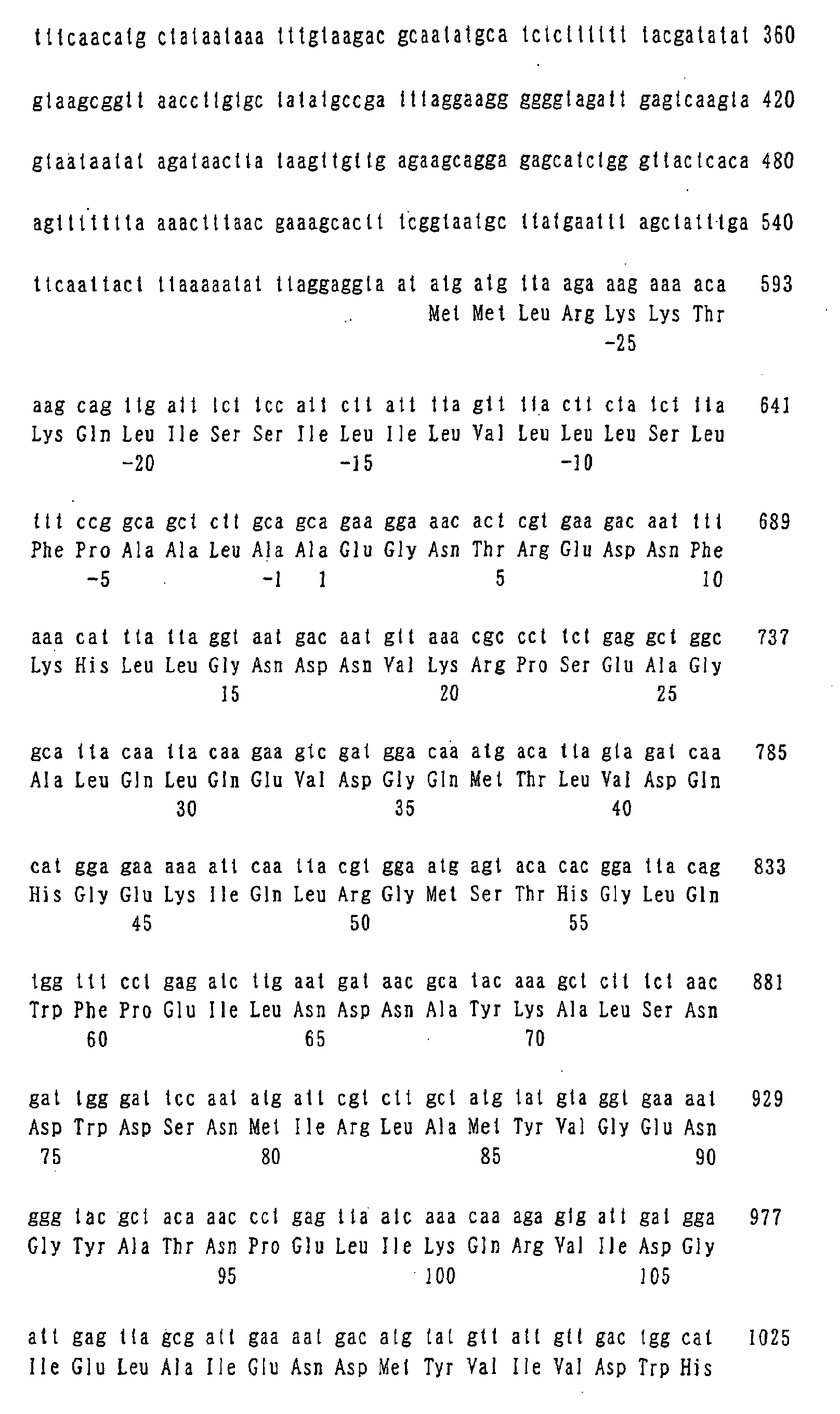
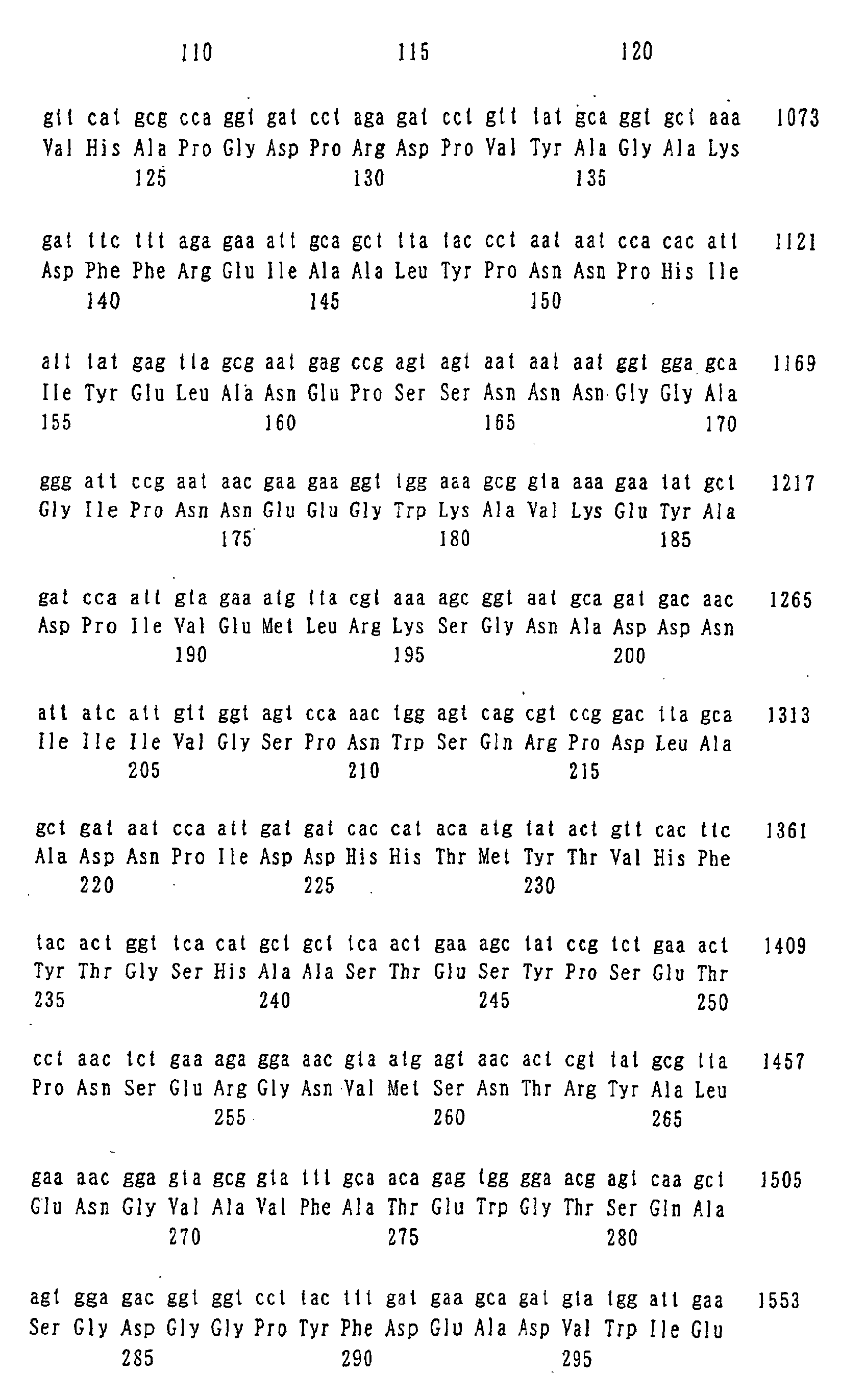
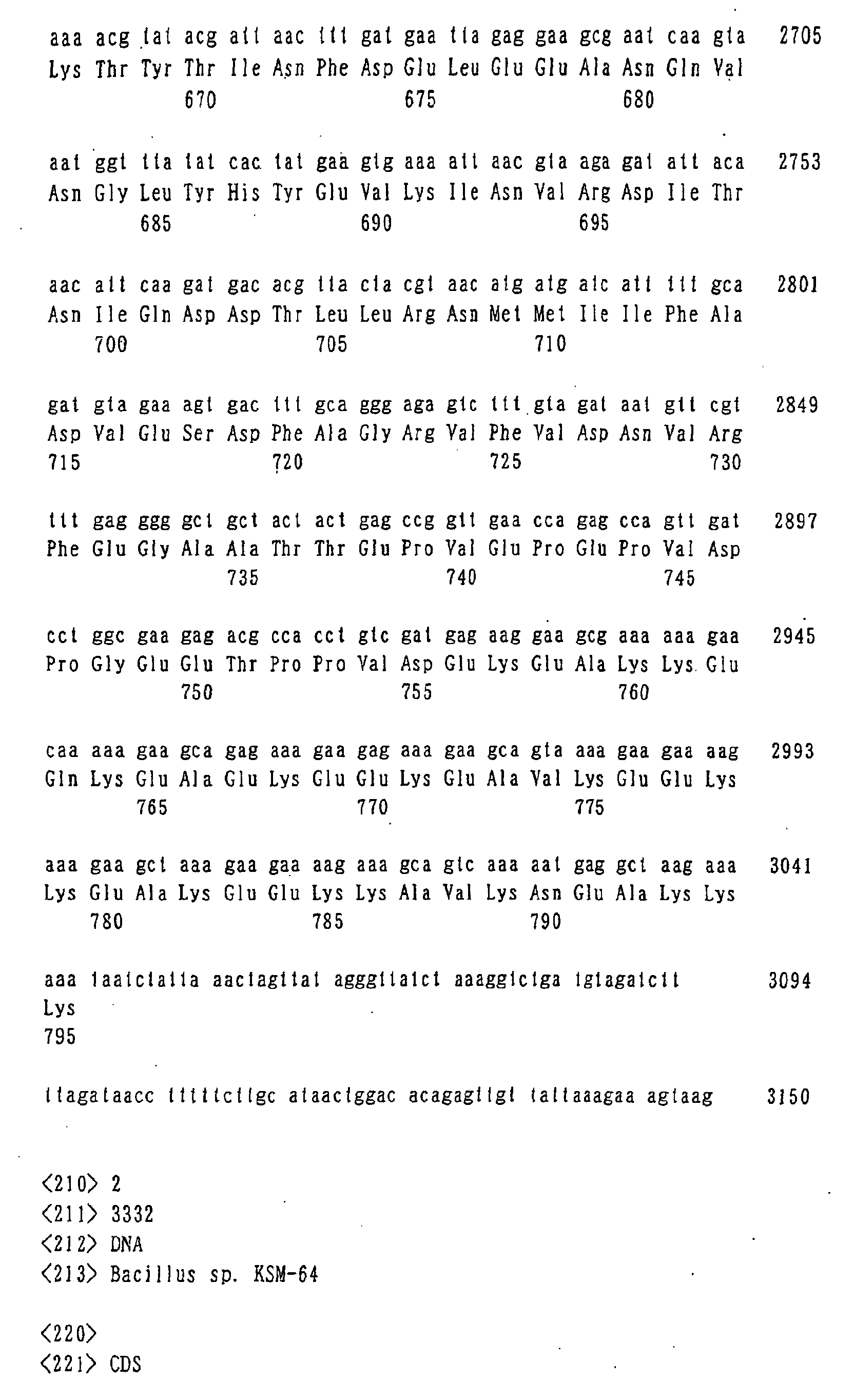
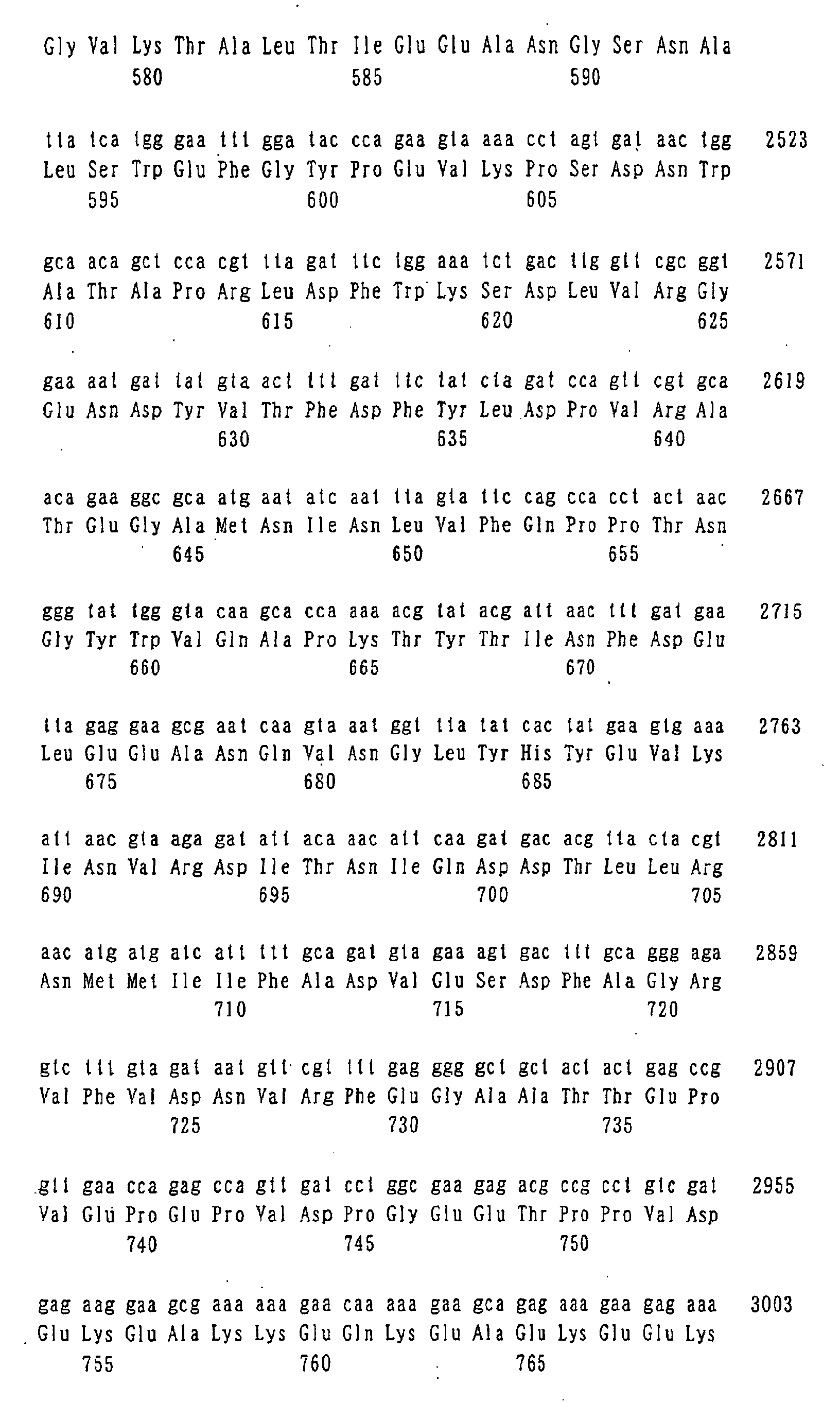
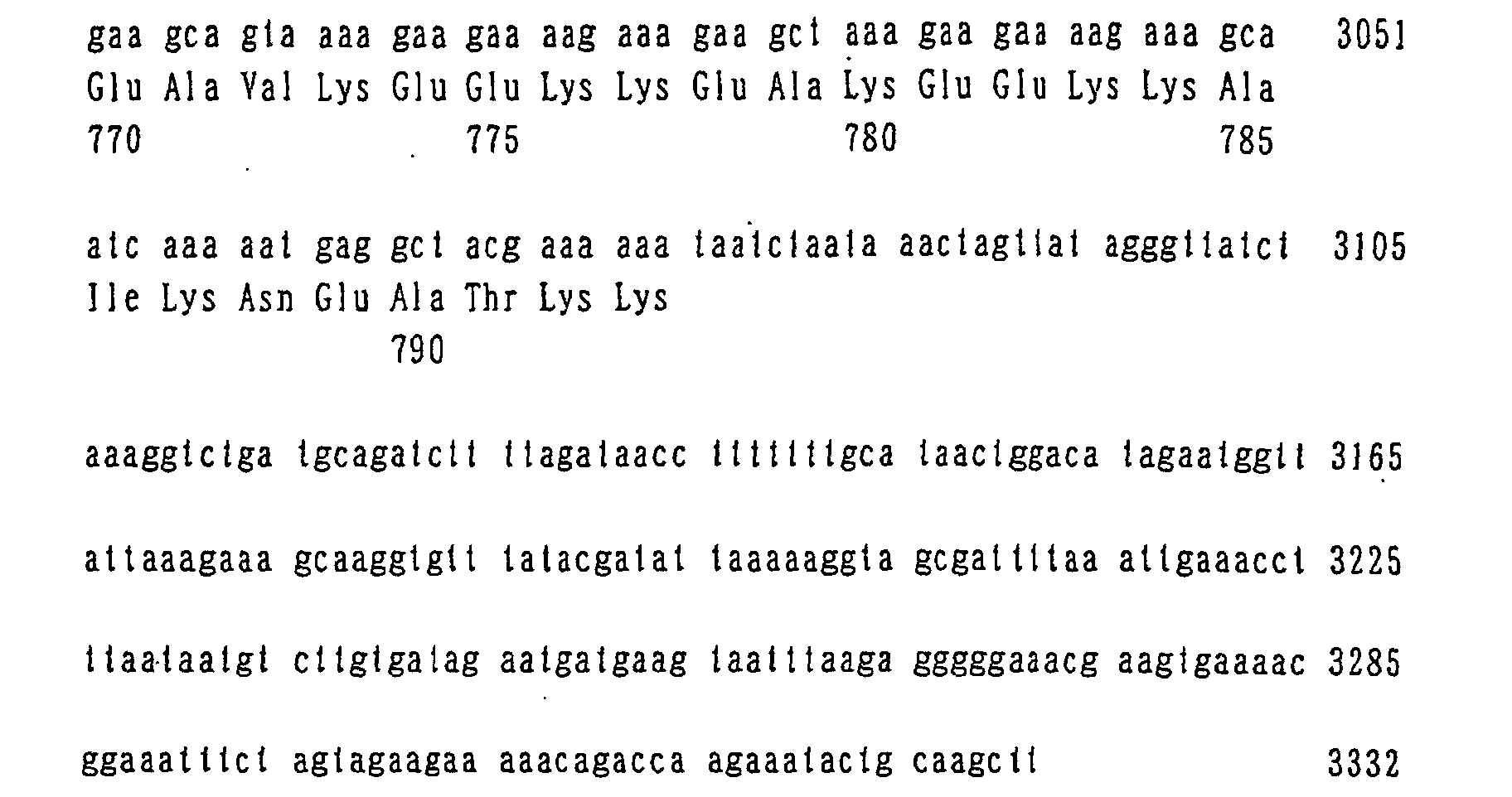
- cellulases belonging to the family 5 in Classification of polysaccharide hydrolases include cellulases belonging to the family 5 in Classification of polysaccharide hydrolases (Biochem. J., 280, 309 (1991)). Among them, cellulases derived from a microorganism, particularly cellulases derived from a bacterium belonging to the genus Bacillus are illustrated. More specific examples include alkaline cellulases derived from a bacterium belonging to the genus Bacillus and having a sequence of SEQ ID NO: 1 or 2, and cellulases having a sequence having 70% or more, preferably 80% or more, more preferably 90% or more homology with the sequence of SEQ ID NO: 1 or 2.
- the homology between amino acid sequences is determined through the Lipman-Pearson method (Science, 227, 1435 (1985)).
- ⁇ -amylases include ⁇ -amylases derived from a microorganism, and liquefaction-type amylases derived from a bacterium belonging to the genus Bacillus are particularly preferred.
- proteases include serine proteases and metal proteases derived from a microorganism, particularly derived from a bacterium belonging to the genus Bacillus.
- a target protein or polypeptide gene is desirably ligated, at the upstream end thereof, to a regulation region participating in transcription or translation of the gene or secretion of the gene product, i.e., a transcriptional initiation regulation region containing a promoter and a transcriptional initiation point, a translation initiation region containing a ribosome binding site and an initiation codon, or a secretion signal peptide region in a suitable form.
- a target protein or polypeptide gene is desirably ligated to the above regulation regions contained in a cellulase gene derived from a bacterium belonging to the genus Bacillus which is described in, for example, Japanese Patent Application Laid-Open ( kokai ) No. 2000-210081 or Hei 4-190793, and the above regulation regions contained in a region adjacent to the cellulase gene at the upstream end of the gene and having a length of 1 kb or less, preferably 0.6 kb or less.
- a target protein or polypeptide gene is desirably ligated to, among others, a sequence of SEQ ID NO: 1 or 2, or a base sequence having a certain degree of homology with SEQ ID NO: 1 or 2 and having a regulation function similar to that described above.
- the recombinant microorganism of the present invention can be obtained by combining a DNA fragment containing a target protein or polypeptide gene with a suitable plasmid vector and incorporating the recombinant plasmid into a host microorganism cell through a routine transformation method.
- the recombinant microorganism of the present invention can be obtained by using as the DNA fragment a DNA fragment ligated to a suitable homological region of a host microorganism gene and incorporating the resultant DNA fragment directly into the host microorganism gene.
- Production of a target protein or polypeptide through use of the recombinant microorganism of the present invention may be performed by inoculating the recombinant microorganism into a medium containing an assimilable source of carbon and nitrogen and the other essential components, culturing the recombinant microorganism through a conventional method, and, after completion of culture, collecting and purifying the target protein or polypeptide.
- a host microorganism of interest in which a sporulation-related gene has been deleted or inactivated can be produced, and a recombinant microorganism of interest can be produced through use of the host microorganism.
- a useful protein or polypeptide can be produced efficiently.
- An example case in which ⁇ -amylase or cellulase is produced through use of Bacillus subtilis will next be specifically described.
- sigF gene of a bacterium Bacillus subtilis (768 bp) encoding an RNA polymerase subunit ⁇ F-factor which expresses in a forespore in stage II or subsequent stages of sporulation is to be deleted, the following procedure may be employed.
- a genome gene is extracted from a host microorganism of a Bacillus subtilis strain.
- a DNA fragment at the upstream of the initiation codon of the sigF gene and a DNA fragment at the downstream of the termination codon of the sigF gene are joined by a marker gene such as chloramphenicol resistant gene inserted therebetween through SOE (splicing by overlap extention) - PCR (Gene, 77, 61 (1989)) or other methods.
- the host bacterium Bacillus subtilis is transformed by use of the thus-obtained DNA fragment through a competent method, and the transformant is isolated on the basis of chloramphenicol resistance or other characteristics, to thereby cause homologous recombination in the upstream and downstream regions of the sigF gene to give a transformant in which the sigF gene on the genome is substituted by a marker gene such as a chloramphenicol resistant gene or the like.
- a plasmid containing a gene encoding ⁇ -amylase or cellulase is introduced into the thus-obtained transformant and the original cell line of Bacillus subtilis serving as a control.
- the thus-obtained recombinant is incubated under suitable conditions, for example, under shaking in a vegetative medium.
- the supernatant of the culture solution is measured in terms of ⁇ -amylase activity or cellulase activity, and it's productivity is compared with that of the original cell line of Bacillus subtilis , to thereby confirm that an increased amount of the target product can be obtained by deleting the sigF gene.
- ⁇ -amylase and cellulase can be obtained.
- a genomic DNA was extracted from Bacillus subtilis 168. Using the extracted gene as a template, a 1.5-kb DNA fragment (A), on the genome, adjacent to the sigF gene (Base No. 2442658 ⁇ 2443425) at the upstream end thereof and a 1.5-kb DNA fragment (B) adjacent to the sigF gene at the downstream end thereof were multiplied. Separately, a 0.9-kb DNA fragment (C) containing a chloramphenicol resistant gene was multiplied using plasmid pC194 as a template. The fragments (A), (B), and (C) were serially ligated in this order, through SOE-PCR, to thereby prepare a 3.9-kb DNA fragment.
- the Bacillus subtilis 168 was transformed using the thus-obtained DNA fragment through a competent method.
- the transformed Bacillus subtilis 168 was cultured on an LB agar medium containing chloramphenicol, and the colonies were isolated as a transformant.
- the resulting transformant was confirmed through PCR and sequencing to have a genome in which the region containing the sigF gene (2442632-2443318) had been deleted and substituted by the chloramphenicol resistant gene.
- each of the following regions on the genome was deleted and substituted by the chloramphenicol resistant gene in a manner similar to that described above: a region (1604136-1604976) containing the sigE gene (1604166 ⁇ 1604885), a region (1347781-1348081) containing a substantial part of the spoIISB gene (1347913 ⁇ 1348083), a region (70537-73018) containing a substantial part of the spoIIE gene (70536 ⁇ 73019), a region (1605083-1605877) containing a substantial part of the sigG gene (1605025 ⁇ 1605807), a region (2652156-2652723) containing the spoIVCB gene (2652262 ⁇ 2652732), or a region (2652156-2701031) containing a region from the spoIVCB gene to the spoIIIC gene (2652262 ⁇ 2701023), to thereby prepare a microorganism in which a gene participating in spor
- a DNA fragment (3.1 kb) of the alkaline cellulase gene derived from Bacillus sp. KSM-S237 (Japanese Patent Application Laid-Open ( kokai ) No. 2000-210081) was introduced into a shuttle vector pHY300PLK at the cleavage point of restriction enzyme BamHI , to thereby prepare a recombinant plasmid pHY-S237.
- the plasmid was incorporated through the protoplast method into each of the gene-deleted microorganisms prepared in Example 1 and Bacillus subtilis 168 serving as a control.
- the thus-obtained microorganism was incubated overnight under shaking at 37°C in an LB medium (10 mL).
- the resultant culture solution (0.05 mL) was inoculated to 2 ⁇ L-maltose medium (50 mL; 2% trypton, 1% yeast extraction, 1% NaCl, 7.5% maltose, 7.5-ppm manganese sulfate 4-5 hydrate, 15-ppm tetracyclin), followed by incubation for three days under shaking at 30°C. After completion of incubation, the cells were removed from the culture solution through centrifugation, and the alkaline cellulase activity of the supernatant was measured to determine the amount of alkaline cellulase secreted outside the cells during incubation.
- L-maltose medium 50 mL; 2% trypton, 1% yeast extraction, 1% NaCl, 7.5% maltose, 7.5-ppm manganese sulfate 4-5 hydrate, 15-ppm tetracyclin
- the invention enables production of a target protein or target polypeptide while decreasing energy loss, production of by-products and specific production speed to largely decrease unnecessary consumption of a medium. Moreover, the production period of the protein or polypeptide can be prolonged, whereby the target product can be produced efficiently.
Landscapes
- Chemical & Material Sciences (AREA)
- Health & Medical Sciences (AREA)
- Life Sciences & Earth Sciences (AREA)
- Organic Chemistry (AREA)
- Engineering & Computer Science (AREA)
- Genetics & Genomics (AREA)
- General Health & Medical Sciences (AREA)
- Wood Science & Technology (AREA)
- Medicinal Chemistry (AREA)
- Zoology (AREA)
- Bioinformatics & Cheminformatics (AREA)
- Biochemistry (AREA)
- Biotechnology (AREA)
- Biophysics (AREA)
- Tropical Medicine & Parasitology (AREA)
- Virology (AREA)
- Proteomics, Peptides & Aminoacids (AREA)
- Biomedical Technology (AREA)
- Microbiology (AREA)
- Gastroenterology & Hepatology (AREA)
- Molecular Biology (AREA)
- General Engineering & Computer Science (AREA)
- Micro-Organisms Or Cultivation Processes Thereof (AREA)
- Preparation Of Compounds By Using Micro-Organisms (AREA)
- Enzymes And Modification Thereof (AREA)
- Peptides Or Proteins (AREA)
Abstract
Description
| Gene | Site (kb) | Function |
| sigE | 1,604 | Stage II, mother cell-specific σE factor |
| sigF | 2,443 | Stage II, forespore-specific σF factor |
| spoIISB | 1,328 | Stage II and subsequent stages, participating in sporulation |
| spoIIE | 71 | Stage II, activating forespore-specific σF factor |
| sigG | 1,605 | Stages III-V, forespore-specific σG factor |
| spoIVCB - spoIIIC | 2,652-2,701 | Stages IV-V, mother cell-specific σK factor |
| Gene | Site (kb) | Function |
| spoIIGA | 1,604 | Stage II, activating mother cell-specific σE factor |
| spoIIAA | 2,444 | Stage II, participating in activation of forespore-specific σF factor |
| spoIVFB | 2,855 | Stages IV-V, activating mother cell-specific σK factor |
| SpoIIR | 3,794 | Stage II, participating in activation of mother cell-specific σE factor |
| SpoIIIJ | 4,213 | Stages III-V, participating in activation of forespore-specific σG factor |
| Deleted gene | Site of the gene (kb) | Amount of alkaline cellulase secreted (relative value) |
| sigE | 1,604 | 217 |
| sigF | 2,443 | 212 |
| spoIISB | 1,328 | 140 |
| spoIIE | 71 | 216 |
| sigG | 1,605 | 163 |
| spoIVCB - spoIIIC | 2,652-2,701 | 141 |
| spoIVCB | 2,652 | 141 |
| None (wild type) | - | 100 |





Claims (9)
- A microorganism in which one or more genes selected from the genes which participate in speculation in the middle to late stages of sporulation have been deleted or inactivated.
- The microorganism as recited in claim 1, which is a bacterium belonging to the genus Bacillus.
- The microorganism as recited in claim 2, wherein the bacterium belonging to the genus Bacillus is Bacillus subtilis.
- The microorganism as recited in any of claims 1 through 3, wherein the genes are expressed in any of stages II, III, IV, and V of sporulation and thus participate in sporulation.
- The microorganism as recited in any of claims 1 through 4, wherein the gene to be deleted or inactivated is selected from the group consisting of sigE gene, sigF gene, spoIIE gene, spoIISB gene, and sigG gene of Bacillus subtilis, genes which fall within a region from spoIVCB to spoIIIC of Bacillus subtilis, and genes equivalent to any one or more of these genes.
- A recombinant microorganism obtained by incorporating, into the microorganism as recited in any of claims 1 through 5, a gene which encodes a protein or polypeptide and which has been ligated to a transcription initiation regulation region, a translation initiation regulation region, or a secretion signal region at the downstream end of the region.
- The recombinant microorganism as recited in claim 6, wherein the transcriptional initiation regulation region, the translational initiation regulation region, or the secretion signal region is derived from a cellulase gene of a bacterium belonging to the genus Bacillus or from a 1 kb region extending upstream of the cellulase gene.
- The recombinant microorganism as recited in claim 6 or 7, wherein the transcription initiation regulation region, the translation initiation regulation region, or the secretion signal region is derived from a cellulase gene having a sequence of SEQ ID NO: 1 or 2 or a sequence having a homology of 70% or more with the sequence of SEQ ID NO: 1 or 2.
- A method of producing a protein or polypeptide through use of the microorganism as recited in any one of claims 6 through 8.
Applications Claiming Priority (3)
| Application Number | Priority Date | Filing Date | Title |
|---|---|---|---|
| JP2001160520 | 2001-05-29 | ||
| JP2001160520 | 2001-05-29 | ||
| PCT/JP2002/005151 WO2002097064A1 (en) | 2001-05-29 | 2002-05-28 | Host microorganisms |
Publications (3)
| Publication Number | Publication Date |
|---|---|
| EP1391502A1 true EP1391502A1 (en) | 2004-02-25 |
| EP1391502A4 EP1391502A4 (en) | 2005-01-26 |
| EP1391502B1 EP1391502B1 (en) | 2012-04-25 |
Family
ID=19003928
Family Applications (1)
| Application Number | Title | Priority Date | Filing Date |
|---|---|---|---|
| EP02728174A Expired - Lifetime EP1391502B1 (en) | 2001-05-29 | 2002-05-28 | Host microorganisms |
Country Status (5)
| Country | Link |
|---|---|
| US (1) | US7585674B2 (en) |
| EP (1) | EP1391502B1 (en) |
| CN (1) | CN100439492C (en) |
| DK (1) | DK1391502T3 (en) |
| WO (1) | WO2002097064A1 (en) |
Cited By (10)
| Publication number | Priority date | Publication date | Assignee | Title |
|---|---|---|---|---|
| WO2005045045A3 (en) * | 2003-11-07 | 2006-01-12 | Kao Corp | Recombinant microorganism |
| WO2012022777A1 (en) | 2010-08-19 | 2012-02-23 | Novozymes A/S | Induced sporulation screening method |
| WO2015118126A1 (en) * | 2014-02-07 | 2015-08-13 | Dsm Ip Assets B.V. | Improved bacillus host |
| US10273509B2 (en) | 2014-07-23 | 2019-04-30 | Purac Biochem B.V. | Genetic modification of (S)-lactic acid producing thermophilic bacteria |
| WO2022269084A1 (en) | 2021-06-24 | 2022-12-29 | Basf Se | Improved bacillus host cell with altered rema/remb protein |
| WO2022269081A1 (en) | 2021-06-24 | 2022-12-29 | Basf Se | Bacillus licheniformis host cell for production of a compound of interest with increased purity |
| WO2022269082A1 (en) | 2021-06-24 | 2022-12-29 | Basf Se | Improved bacillus production host |
| WO2023117970A1 (en) | 2021-12-20 | 2023-06-29 | Basf Se | Method for improved production of intracellular proteins in bacillus |
| WO2024146919A1 (en) | 2023-01-05 | 2024-07-11 | Basf Se | Use of foldases to improve heterologous expression of secreted molecules |
| WO2025031865A1 (en) | 2023-08-08 | 2025-02-13 | Basf Se | Improved bacillus cell with inactivated metalloprotease |
Families Citing this family (22)
| Publication number | Priority date | Publication date | Assignee | Title |
|---|---|---|---|---|
| FI112666B (en) * | 2001-11-06 | 2003-12-31 | Ipsat Therapies Oy | Non-spore-forming Bacillus subtilis, its preparation and use |
| DE102004013988A1 (en) * | 2004-03-19 | 2005-10-13 | Henkel Kgaa | The factor RecA from Bacillus licheniformis and recA-inactivated safety strains for biotechnological production |
| US7432090B2 (en) * | 2004-07-01 | 2008-10-07 | Rice University | Blocking sporulation by inhibiting SpoIIE |
| JP4485341B2 (en) * | 2004-12-20 | 2010-06-23 | 花王株式会社 | Recombinant microorganism |
| EP1985695B1 (en) * | 2006-02-16 | 2013-01-09 | Kao Corporation | Recombinant microorganism |
| JP5226958B2 (en) * | 2007-02-22 | 2013-07-03 | 花王株式会社 | Recombinant microorganism |
| JP5140307B2 (en) * | 2007-04-10 | 2013-02-06 | 花王株式会社 | Recombinant microorganism |
| US20100105114A1 (en) * | 2008-06-11 | 2010-04-29 | University Of Massachusetts | Methods and Compositions for Regulating Sporulation |
| US20100047890A1 (en) * | 2008-06-16 | 2010-02-25 | Northwestern University | Methods and compositions for generating sporulation deficient bacteria |
| FI20105572A0 (en) | 2010-05-24 | 2010-05-24 | Prevab R Lcc | Modified beta-lactamase and methods and uses related thereto |
| MX355028B (en) * | 2012-01-23 | 2018-03-28 | Dsm Ip Assets Bv | Diterpene production. |
| CN104073458B (en) * | 2013-03-26 | 2018-10-12 | 南京百斯杰生物工程有限公司 | One strain capable of high-efficiency expresses the bacillus subtilis of external source secretory protein |
| JP6685925B2 (en) | 2014-04-17 | 2020-04-22 | シンセティック バイオロジクス,インコーポレイテッド | Β-lactamase with improved properties for therapeutic use |
| JP6803328B2 (en) | 2014-08-28 | 2021-01-06 | シンセティック バイオロジクス,インコーポレイテッド | E. coli-based beta-lactamase production |
| KR102467968B1 (en) | 2014-10-08 | 2022-11-16 | 신세틱 바이오로직스, 인코퍼레이티드 | Beta-lactamase formulations and uses thereof |
| WO2016105498A1 (en) | 2014-12-23 | 2016-06-30 | Synthetic Biologics, Inc. | Methods and compositions for inhibiting or preventing adverse effects of oral antibiotics |
| EP3261662B1 (en) | 2015-02-23 | 2021-07-21 | Synthetic Biologics Inc. | Carbapenemases for use with antibiotics for the protection of the intestinal microbiome |
| AU2016229976B2 (en) | 2015-03-06 | 2021-11-11 | Theriva Biologics, Inc. | Safe and effective beta-lactamase dosing for microbiome protection |
| JP7218090B2 (en) | 2018-01-12 | 2023-02-06 | 花王株式会社 | Protein production method |
| CN108929883B (en) * | 2018-08-06 | 2020-05-01 | 齐鲁工业大学 | Application of sporulation-related gene spoⅡE in affecting strain growth and enzyme production |
| CN109837228B (en) * | 2019-04-03 | 2020-03-03 | 南京工业大学 | A strain of Streptomyces lidi and its application in the control of fire blight |
| WO2022263504A1 (en) | 2021-06-17 | 2022-12-22 | Dsm Ip Assets B.V. | Improved bacillus host cell |
Family Cites Families (6)
| Publication number | Priority date | Publication date | Assignee | Title |
|---|---|---|---|---|
| JPH04190793A (en) | 1990-11-26 | 1992-07-09 | Kao Corp | Cellulase gene-containing recombinant plasmid and production of cellulase by recombinant bacterium |
| IT1244477B (en) * | 1990-12-21 | 1994-07-15 | Eniricerche Spa | ASPORYGEN STRAIN OF BACILLUS SUBTILIS AND ITS USE AS A GUEST FOR THE PREPARATION OF HETEROLOGICAL PRODUCTS |
| US5212083A (en) * | 1991-07-26 | 1993-05-18 | Board Of Regents, The University Of Texas System | Sequence for stabilizing proteins in bacteria |
| FR2740472B1 (en) * | 1995-10-27 | 1998-01-16 | Pasteur Institut | NOVEL STRAINS OF BACILLUS THURINGIENSIS AND PESTICIDE COMPOSITION CONTAINING THEM |
| US5891701A (en) * | 1997-06-12 | 1999-04-06 | Novo Nordisk Biotech Inc. | Nucleic acids encoding a polypeptide having protease activity |
| JP2000210081A (en) * | 1999-01-21 | 2000-08-02 | Kao Corp | Thermostable alkaline cellulase gene |
-
2002
- 2002-05-28 US US10/479,214 patent/US7585674B2/en not_active Expired - Fee Related
- 2002-05-28 CN CNB028111184A patent/CN100439492C/en not_active Expired - Fee Related
- 2002-05-28 DK DK02728174.0T patent/DK1391502T3/en active
- 2002-05-28 WO PCT/JP2002/005151 patent/WO2002097064A1/en not_active Ceased
- 2002-05-28 EP EP02728174A patent/EP1391502B1/en not_active Expired - Lifetime
Cited By (11)
| Publication number | Priority date | Publication date | Assignee | Title |
|---|---|---|---|---|
| WO2005045045A3 (en) * | 2003-11-07 | 2006-01-12 | Kao Corp | Recombinant microorganism |
| WO2012022777A1 (en) | 2010-08-19 | 2012-02-23 | Novozymes A/S | Induced sporulation screening method |
| WO2015118126A1 (en) * | 2014-02-07 | 2015-08-13 | Dsm Ip Assets B.V. | Improved bacillus host |
| US10287592B2 (en) | 2014-02-07 | 2019-05-14 | Dsm Ip Assets B.V. | Bacillus host |
| US10273509B2 (en) | 2014-07-23 | 2019-04-30 | Purac Biochem B.V. | Genetic modification of (S)-lactic acid producing thermophilic bacteria |
| WO2022269084A1 (en) | 2021-06-24 | 2022-12-29 | Basf Se | Improved bacillus host cell with altered rema/remb protein |
| WO2022269081A1 (en) | 2021-06-24 | 2022-12-29 | Basf Se | Bacillus licheniformis host cell for production of a compound of interest with increased purity |
| WO2022269082A1 (en) | 2021-06-24 | 2022-12-29 | Basf Se | Improved bacillus production host |
| WO2023117970A1 (en) | 2021-12-20 | 2023-06-29 | Basf Se | Method for improved production of intracellular proteins in bacillus |
| WO2024146919A1 (en) | 2023-01-05 | 2024-07-11 | Basf Se | Use of foldases to improve heterologous expression of secreted molecules |
| WO2025031865A1 (en) | 2023-08-08 | 2025-02-13 | Basf Se | Improved bacillus cell with inactivated metalloprotease |
Also Published As
| Publication number | Publication date |
|---|---|
| US20040248279A1 (en) | 2004-12-09 |
| DK1391502T3 (en) | 2012-05-21 |
| CN100439492C (en) | 2008-12-03 |
| EP1391502A4 (en) | 2005-01-26 |
| US7585674B2 (en) | 2009-09-08 |
| CN1513057A (en) | 2004-07-14 |
| EP1391502B1 (en) | 2012-04-25 |
| WO2002097064A1 (en) | 2002-12-05 |
Similar Documents
| Publication | Publication Date | Title |
|---|---|---|
| US7585674B2 (en) | Host microorganisms | |
| US20140170703A1 (en) | Recombinant microorganism | |
| JP4336082B2 (en) | Host microorganism | |
| JP2005137308A (en) | Recombinant microorganism | |
| JP4388272B2 (en) | Host microorganism | |
| JP5735775B2 (en) | Modified promoter | |
| JP2010213577A (en) | Method for producing protein or polypeptide | |
| JP4839144B2 (en) | Host microorganism | |
| EP1680502B1 (en) | Recombinant microorganism | |
| JP4915728B2 (en) | Recombinant microorganism | |
| EP1721973B1 (en) | Mutant bacterium belonging to the genus bacillus | |
| JP4832153B2 (en) | Recombinant microorganism | |
| US8623631B2 (en) | Modified promoter | |
| JP6791623B2 (en) | Recombinant microorganisms and their use | |
| JP4648038B2 (en) | Modified promoter | |
| JP4839169B2 (en) | Recombinant microorganism | |
| JP5474448B2 (en) | Mutated Bacillus bacteria | |
| JP2010178705A (en) | Bacillus subtilis variant | |
| JP2009165487A (en) | Recombinant microorganism |
Legal Events
| Date | Code | Title | Description |
|---|---|---|---|
| PUAI | Public reference made under article 153(3) epc to a published international application that has entered the european phase |
Free format text: ORIGINAL CODE: 0009012 |
|
| 17P | Request for examination filed |
Effective date: 20031124 |
|
| AK | Designated contracting states |
Kind code of ref document: A1 Designated state(s): AT BE CH CY DE DK ES FI FR GB GR IE IT LI LU MC NL PT SE TR |
|
| A4 | Supplementary search report drawn up and despatched |
Effective date: 20041215 |
|
| RIC1 | Information provided on ipc code assigned before grant |
Ipc: 7C 12R 1/125 B Ipc: 7C 12N 9/42 B Ipc: 7C 12N 15/09 B Ipc: 7C 12N 1/21 A Ipc: 7C 12R 1/07 B |
|
| 17Q | First examination report despatched |
Effective date: 20050207 |
|
| 17Q | First examination report despatched |
Effective date: 20050207 |
|
| GRAP | Despatch of communication of intention to grant a patent |
Free format text: ORIGINAL CODE: EPIDOSNIGR1 |
|
| GRAS | Grant fee paid |
Free format text: ORIGINAL CODE: EPIDOSNIGR3 |
|
| GRAA | (expected) grant |
Free format text: ORIGINAL CODE: 0009210 |
|
| AK | Designated contracting states |
Kind code of ref document: B1 Designated state(s): DE DK FR GB NL |
|
| REG | Reference to a national code |
Ref country code: GB Ref legal event code: FG4D |
|
| REG | Reference to a national code |
Ref country code: DK Ref legal event code: T3 |
|
| REG | Reference to a national code |
Ref country code: DE Ref legal event code: R096 Ref document number: 60242744 Country of ref document: DE Effective date: 20120621 |
|
| REG | Reference to a national code |
Ref country code: NL Ref legal event code: T3 |
|
| PLBE | No opposition filed within time limit |
Free format text: ORIGINAL CODE: 0009261 |
|
| STAA | Information on the status of an ep patent application or granted ep patent |
Free format text: STATUS: NO OPPOSITION FILED WITHIN TIME LIMIT |
|
| 26N | No opposition filed |
Effective date: 20130128 |
|
| REG | Reference to a national code |
Ref country code: DE Ref legal event code: R097 Ref document number: 60242744 Country of ref document: DE Effective date: 20130128 |
|
| PGFP | Annual fee paid to national office [announced via postgrant information from national office to epo] |
Ref country code: GB Payment date: 20140528 Year of fee payment: 13 |
|
| PGFP | Annual fee paid to national office [announced via postgrant information from national office to epo] |
Ref country code: DE Payment date: 20140521 Year of fee payment: 13 Ref country code: FR Payment date: 20140509 Year of fee payment: 13 |
|
| REG | Reference to a national code |
Ref country code: DE Ref legal event code: R119 Ref document number: 60242744 Country of ref document: DE |
|
| GBPC | Gb: european patent ceased through non-payment of renewal fee |
Effective date: 20150528 |
|
| REG | Reference to a national code |
Ref country code: FR Ref legal event code: ST Effective date: 20160129 |
|
| PG25 | Lapsed in a contracting state [announced via postgrant information from national office to epo] |
Ref country code: DE Free format text: LAPSE BECAUSE OF NON-PAYMENT OF DUE FEES Effective date: 20151201 Ref country code: GB Free format text: LAPSE BECAUSE OF NON-PAYMENT OF DUE FEES Effective date: 20150528 |
|
| PG25 | Lapsed in a contracting state [announced via postgrant information from national office to epo] |
Ref country code: FR Free format text: LAPSE BECAUSE OF NON-PAYMENT OF DUE FEES Effective date: 20150601 |
|
| PGFP | Annual fee paid to national office [announced via postgrant information from national office to epo] |
Ref country code: DK Payment date: 20200512 Year of fee payment: 19 |
|
| PGFP | Annual fee paid to national office [announced via postgrant information from national office to epo] |
Ref country code: NL Payment date: 20210415 Year of fee payment: 20 |
|
| REG | Reference to a national code |
Ref country code: DK Ref legal event code: EBP Effective date: 20210531 |
|
| PG25 | Lapsed in a contracting state [announced via postgrant information from national office to epo] |
Ref country code: DK Free format text: LAPSE BECAUSE OF NON-PAYMENT OF DUE FEES Effective date: 20210531 |
|
| REG | Reference to a national code |
Ref country code: NL Ref legal event code: MK Effective date: 20220527 |