EP1389006A2 - Image pickup apparatus having iris member and filter units - Google Patents
Image pickup apparatus having iris member and filter units Download PDFInfo
- Publication number
- EP1389006A2 EP1389006A2 EP03018033A EP03018033A EP1389006A2 EP 1389006 A2 EP1389006 A2 EP 1389006A2 EP 03018033 A EP03018033 A EP 03018033A EP 03018033 A EP03018033 A EP 03018033A EP 1389006 A2 EP1389006 A2 EP 1389006A2
- Authority
- EP
- European Patent Office
- Prior art keywords
- changing
- aperture diameter
- filter unit
- mode
- iris mechanism
- Prior art date
- Legal status (The legal status is an assumption and is not a legal conclusion. Google has not performed a legal analysis and makes no representation as to the accuracy of the status listed.)
- Granted
Links
Images




Classifications
-
- H—ELECTRICITY
- H04—ELECTRIC COMMUNICATION TECHNIQUE
- H04N—PICTORIAL COMMUNICATION, e.g. TELEVISION
- H04N23/00—Cameras or camera modules comprising electronic image sensors; Control thereof
- H04N23/95—Computational photography systems, e.g. light-field imaging systems
- H04N23/951—Computational photography systems, e.g. light-field imaging systems by using two or more images to influence resolution, frame rate or aspect ratio
-
- H—ELECTRICITY
- H04—ELECTRIC COMMUNICATION TECHNIQUE
- H04N—PICTORIAL COMMUNICATION, e.g. TELEVISION
- H04N23/00—Cameras or camera modules comprising electronic image sensors; Control thereof
- H04N23/60—Control of cameras or camera modules
- H04N23/667—Camera operation mode switching, e.g. between still and video, sport and normal or high- and low-resolution modes
-
- H—ELECTRICITY
- H04—ELECTRIC COMMUNICATION TECHNIQUE
- H04N—PICTORIAL COMMUNICATION, e.g. TELEVISION
- H04N23/00—Cameras or camera modules comprising electronic image sensors; Control thereof
- H04N23/70—Circuitry for compensating brightness variation in the scene
- H04N23/72—Combination of two or more compensation controls
-
- H—ELECTRICITY
- H04—ELECTRIC COMMUNICATION TECHNIQUE
- H04N—PICTORIAL COMMUNICATION, e.g. TELEVISION
- H04N23/00—Cameras or camera modules comprising electronic image sensors; Control thereof
- H04N23/70—Circuitry for compensating brightness variation in the scene
- H04N23/75—Circuitry for compensating brightness variation in the scene by influencing optical camera components
Definitions
- the present invention relates to an image pickup apparatus having an iris member and filter units.
- FIG. 8 is a block diagram showing a configuration of a conventional image pickup apparatus.
- a lens 1 for forming an image of an object an iris mechanism 2 for controlling an amount of incident light, an iris driving motor 3 for driving (moving) the iris mechanism 2, an iris mechanism drive device for driving the iris driving motor 3, an iris state detecting device for detecting a state of the iris mechanism 2, an ND filter 6 for controlling the amount of the incident light, an ND driving motor 7 for driving the ND filter 6, an ND mechanism drive device 8 for driving the ND driving motor 7, and an ND state detection device 9 for detecting a state of the ND mechanism (filter) unit 6.
- a CCD (Charge-Coupled Device) 10 for performing a photoelectric conversion of the incident light
- an image pickup element drive device 11 for controlling the CCD 10 to read photoelectrically converted signals and controlling a signal accumulation time, i.e., controlling a so-called electronic shutter function
- a CDS/AGC 12 for sampling the photoelectrically converted signals and electrically amplifying the signals
- an analog-to-digital converter (which will be hereinafter be abbreviated to an A/D converter) 13 for converting an analog signal as an output of the CDS/AGC 12 into a digital signal
- a signal processing device which will hereinafter be called a DSP) 14 having a control function of executing processing such as a color separation, a color difference matrix, etc.
- a memory 15 for storing an image processed by DSP 14, a recording medium 16 capable of recording still images and image information thereof, a microcomputer 17 for issuing processing commands to the DSP 14, and a liquid crystal panel 18 for displaying the image.
- the light incident on the lens 1 travels through the iris mechanism 2 and the ND filter 6, and the light restricted by these optical elements enters the CCD 10.
- Signals photoelectrically converted by the CCD 10 are converted into the digital signals by the A/D converter 13 cooperating with the CDS/AGC 12 and are objected to camera-signal-processing in the DSP 14.
- the DSP 14 transmits luminance data corresponding to an exposure control frame to the microcomputer 17, wherein a calculation for the exposure control is made based on the luminance data. If a result of this calculation is not proper to the exposure, the iris mechanism 2, the ND filter 6, the electronic shutter and the AGC are controlled so that the calculation result becomes proper.
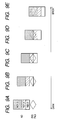
- the ND filter 6 is advanced halfway such as only by a half-insertion towards the aperture of the iris mechanism and, as shown in FIGS. 9C and 9D, different-density areas of the ND filter 6 dually cover the aperture diameter of the iris mechanism 2.
- the ND filter 6 cannot be inserted for still image photography that gives the priority to the image resolution so that a dynamic range of the exposure control decreases to an extent corresponding to a density of the ND filter 6 as compared with the moving image photography.
- an image pick apparatus capable of photographing with changing over a first mode for recording a plurality of frames and a second mode for recording one frame in accordance with a predetermined action, comprising an iris mechanism for changing an amount of light with which an image pickup element is irradiated, a filter unit for changing the amount of the light input, and a driving unit for driving the iris mechanism and the filter unit independently, wherein the driving unit drives the filter unit in different manners between the first mode and the second mode.
- an image pick apparatus capable of photographing with changing over a first mode for recording a plurality of frames and a second mode for recording one frame in accordance with a predetermined action, comprises an iris mechanism for changing an amount of light with which an image pickup element is irradiated, by changing an aperture diameter, a filter unit having a single density or a plurality of densities, for changing an amount of incident light, a unit for driving the iris mechanism and the filter unit independently, and a control unit for setting, in the second mode, the filter unit in one of states of covering an aperture diameter of the iris mechanism and of withdrawing from the aperture diameter of the iris mechanism.
- an image pick apparatus capable of photographing with changing over a first mode for recording a plurality of frames and a second mode for recording one frame in accordance with a predetermined action, comprising an iris mechanism for changing an amount of light with which an image pickup element is irradiated, by changing an aperture diameter, a filter unit, having a plurality of densities, for changing an amount of light input, a unit for driving the iris mechanism and the filter unit independently, and a control unit for performing drive control of the filter unit so that the filter unit is driven from the state in which a first density area of the filter unit is withdrawn from the aperture diameter of the iris mechanism to a state in which the first density area of the filter unit covers the aperture diameter when the aperture diameter of the iris mechanism is changed so as to be opened in the second mode and the aperture diameter reaches a predetermined aperture diameter.
- an image pick apparatus capable of photographing with changing over a first mode for recording a plurality of frames and a second mode for recording one frame in accordance with a predetermined action, comprising an iris mechanism for changing an amount of light with which an image pickup element is irradiated, by changing an aperture diameter, a filter unit, having a plurality of densities, for changing an amount of incident light, a unit for driving the iris mechanism and the filter unit independently, and a control unit for performing drive control of the filter unit so that the filter unit is driven from the state in which a first density area of the filter unit covers the aperture diameter of the iris mechanism to a state in which the first density area of the filter unit is withdrawn from the aperture diameter when the aperture diameter of the iris mechanism is driven so as to be closed up in the second mode and the aperture diameter reaches a predetermined aperture diameter.
- an image pickup apparatus comprising an iris mechanism for changing an amount of light with which an image pickup element is irradiated, a filter unit for changing the amount of the light, a unit for driving the iris mechanism and the filter unit independently, an image size changing unit for changing a size of an image to be captured, and a control unit for changing a driving method of the filter unit in accordance with the image size.
- an image pick apparatus capable of photographing with changing over a first mode for recording a plurality of frames and a second mode for recording one frame in accordance with a predetermined action, comprising an iris mechanism for changing an amount of light with which an image pickup element is irradiated, by changing an aperture diameter, a filter unit, having a plurality of densities, for changing an amount of light input, a unit for driving the iris mechanism and the filter unit independently, an image size changing unit for changing a size of an image to be photographed in the second mode, and a control unit for consecutively inserting or withdrawing the filter unit towards or from the aperture diameter of the iris mechanism in a case where a predetermined image size is designated by the image size changing unit.
- control unit performs drive control of the filter unit so that the filter unit is driven so as to withdraw from the state of covering the aperture diameter when the aperture diameter of the iris mechanism is changed so as to be closed up in the second mode and the aperture diameter reaches a predetermined aperture diameter.
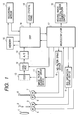
- FIG. 1 is a block diagram showing a configuration of an image pickup apparatus in one embodiment of the present invention.
- the components marked with the same numerals as those in FIG. 8 are component blocks having the same functions as those in the prior art, and hence their repetitive explanations are herein omitted.
- a different point of the configuration of the image pickup apparatus in the first embodiment from that of the prior art shown in FIG. 8, is that a moving image photographing mode and a still image photographing mode are changed over by connecting a moving/still image changeover switch 19 to a microcomputer 17.
- an ND filter 6 having a single density as in the case of the prior art is consecutively advanced towards and withdrawn from an aperture diameter of an iris mechanism 2.
- the microcomputer 17 calculates an accumulated charge amount EV of an object when changed over. It is determined based on the calculated EV value whether the ND filter 6 is fully advanced towards or fully withdrawn from the aperture diameter of the iris mechanism 2. Then, the microcomputer 17 controls an ND filter drive mechanism 8, thereby controlling the ND filter 6. Thereafter, an exposure is controlled under AGC (Automatic Gain Control) by use of the iris mechanism 2 and an electronic shutter, depending on brightness of the object.
- AGC Automatic Gain Control
- FIG. 2 showing an exposure control diagram in the first embodiment.
- the iris mechanism 2 closes up (stops down), and the control of the iris mechanism 2 is halted just when the aperture diameter comes to F11. Subsequently the control is conducted so that the ND filter 6 fully covers the aperture diameter of the iris mechanism 2. At this time, the iris mechanism 2 expands (opens) the aperture diameter to an extent corresponding to a density of the ND filter 6 in order to compensate the light shielded by the ND filter 6. The light that cannot be completely compensated by expanding the aperture diameter of the iris mechanism 2, is further compensated by lowering a shutter speed of the electronic shutter.
- the incompletely-compensated light is compensated by elongating an accumulation time of accumulating the light on a CCD (Charge-Coupled Device) 10.
- This compensation control enables an abrupt change in amount of light due to the advancing of the ND filter 6 to become inconspicuous.
- the ND filter 6 has 5-level light shielding capabilities.
- the iris mechanism has 3-level light shielding capabilities from F11 up to F4, and difference of two levels between the 5-level and the 3-level is compensated by controlling the shutter speed of the electronic shutter by the two levels in the brighter direction from 1/250 sec to 1/60 sec. Thereafter, if the brightness of the object becomes much higher, the shutter speed of the electronic shutter is set higher up to 1/250 sec from 1/60 sec, and the aperture diameter of the iris mechanism is closed up (narrowed down) to an aperture diameter of F11 from an aperture diameter of F4, thus controlling the exposure.
- an exposure control method of fully withdrawing the ND filter 6 from the state where the ND filter 6 has fully been advanced towards the aperture diameter of the iris mechanism 2 is that the exposure is controlled in a darkening direction of the object as opposed to the aforementioned brightening direction thereof.
- the iris mechanism 2 comes to the aperture diameter of F4 and the microcomputer 17 judges that the object is dark, the shutter speed of the electronic shutter is set at 1/250 sec, and the iris mechanism 2 closes up (stops down) to the aperture diameter of F11, wherein the ND filter 6 is fully withdrawn from the aperture diameter of the iris mechanism 2. Thereafter, when the object further darkens, the exposure is controlled by the shutter speed of the electronic shutter and the iris mechanism 2.
- step S1 it is judged in step S1 whether the mode is the still image photographing mode or not. If judged to be the still image photographing mode, the processing proceeds to step S2. Whereas if not, the processing is not executed until the mode is judged to be the still image photographing mode.
- step S2 It is judged in step S2 whether the ND filter 6 is now in a state of being advanced or withdrawn. If the ND filter 6 is advanced, the processing advances to step S3. Whereas if withdrawn, the processing proceeds to step S5.
- step S3 When judging in step S2 that the ND filter 6 is advanced, and the processing advances to step S3, wherein it is judged whether the iris is opened wider than F4.0. If opened wider than F4.0, the processing proceeds to step S4. Whereas if not opened wider than F4.0, there is a wait in step S3 till the iris is opened wider than F4.0.
- step S4 When advancing to step S4, the ND filter 6 is withdrawn, and the iris mechanism 2 closes up (stops down) to F11. Thereafter, the processing proceeds to step S6, wherein a proper exposure is attained by changing the shutter speed.
- step S5 When judging in step S2 that the ND filter 6 is withdrawn, and the processing advances to step S5, wherein it is judged whether the iris is closed up narrower than F11. If closed up narrower than F11, the processing proceeds to step S7. Whereas if not closed up narrower than F11, there is a wait in step S5 till the iris is closed up narrower than F11.
- step S7 When advancing to step S7, the ND filter 6 is advanced, and the iris mechanism 2 is opened up to F4.0. Thereafter, the processing proceeds to step S6, wherein the proper exposure is acquired by changing the shutter speed.
- the first embodiment when photographing the still image, adopts not the operation of consecutively inserting the ND filter 6 towards the aperture diameter of the iris but the operation of performing the control as to whether the ND filter 6 is fully advanced or withdrawn. Namely, the ND filter 6 is not advanced towards the aperture diameter of the iris till the iris mechanism 2 reaches a certain given aperture diameter of the iris, and further, in the case of desiring to reduce an amount of incident light, the ND filter 6 is advanced so as to cover the entire aperture diameter of the iris mechanism 2.
- the ND filter 6 is utilized, thereby preventing a decline of an image resolution due to a diffraction of the light that occurs when the ND filter 6 is in the state of neither being fully withdrawn from the aperture diameter of the iris mechanism 2 nor fully covering the aperture diameter, and further making it possible to ensure the same dynamic range of the exposure control as the moving image has.
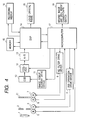
- FIG. 4 is a block diagram showing a configuration of the image pickup apparatus according to a second embodiment of the present invention, the components marked with the same numerals as those in the block diagram (FIG. 1) in the first embodiment, are component blocks having the same functions as those in the first embodiment, and hence their repetitive explanations are herein omitted.
- a different point of the configuration of the image pickup apparatus in the second embodiment from that in the first embodiment, is that a multi-density ND filter 21 exhibiting a plurality of densities is used as a substitute for the single-density ND filter 6.
- FIG. 5 showing an exposure control diagram in the second embodiment.
- the iris mechanism 2 closes up, the control of the iris mechanism 2 is halted at the aperture diameter of F11, and subsequently the multi-density ND filter 21 is controlled so that a highest-density area of the multi-density ND filter 21 covers the entire aperture diameter of the iris mechanism 2.
- the aperture diameter of the iris mechanism 2 opens (expands) so that different density areas of the ND filter 21 do not exist at the aperture diameter of the iris mechanism 2.
- the light that can not be completely compensated by expanding the aperture diameter of the iris mechanism 2 is further compensated by lowering the shutter speed of the electronic shutter in the same way as the first embodiment takes.
- the multi-density ND filter 21 has the 5-level light shielding capabilities.
- the iris mechanism 2 has 3-level light shielding capabilities from F11 up to F4, and hence difference of two levels between the 5-level and the 3-level is compensated by controlling the shutter speed of the electronic shutter by the two levels from 1/250 sec to 1/60 sec in the brighter direction. Thereafter, if the brightness of the object becomes much higher, as in the first embodiment, the shutter speed of the electronic shutter is set higher up to 1/250 sec from 1/60 sec, and the aperture diameter of the iris mechanism narrows down to an aperture diameter of F11 from an aperture diameter of F4, thus controlling the exposure.
- an exposure control method of fully withdrawing the multi-density ND filter 21 from the state where the multi-density filter 21 has fully been advanced towards the aperture diameter of the iris mechanism 2 is that the exposure is controlled in the darkening direction of the object as opposed to the aforementioned brightening direction of the object.
- the second embodiment in the still image photography of the image pickup apparatus incorporating the ND filter 21 having the plurality of densities, adopts not the operation of consecutively inserting the ND filter 21 towards the aperture diameter of the iris but the operation of performing the control as to whether the ND filter 21 is fully advanced or withdrawn. Namely, the ND filter 21 is not advanced towards the aperture diameter of the iris till the iris mechanism 2 reaches a certain given aperture diameter of the iris, and further, in the case of desiring to reduce an amount of incident light, the ND filter 21 is advanced so as to cover the entire aperture diameter of the iris mechanism 2 with the single-density area of the ND filter 21.
- the ND filter 21 is utilized, thereby preventing the decline of the image resolution due to the diffraction of the light that occurs when the ND filter 21 is in the state of neither being fully withdrawn from the aperture diameter of the iris mechanism 2 nor fully covering the aperture diameter, and due to the diffraction of the light that occurs when the ND filter 21 is in a state of fully covering the aperture diameter of the iris mechanism 21 with a different-density-mixed area of the ND filter 21, and further making it possible to ensure the same dynamic range of the exposure control as the moving image has.
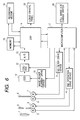
- FIG. 6 is a block diagram showing a configuration of the image pickup apparatus according to a third embodiment of the present invention, the components marked with the same numerals as those in the block diagram (FIG. 8) in the prior art, are component blocks having the same functions as those in the prior art, and hence their repetitive explanations are herein omitted.
- a different point of the configuration of the image pickup apparatus in the third embodiment from that in the prior art illustrated in FIG. 8, is that a still image size change switch 20 connected to the microcomputer 17 changes an image size of the still image.
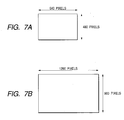
- the still image size change switch 20 selects a comparatively small still image size (e.g., 640 ⁇ 480 pixels: see FIG. 7A) exhibiting a low resolution, as in the prior art, the ND filter 6 is consecutively advanced towards or withdrawn from the aperture diameter of the iris mechanism 2.
- a comparatively small still image size e.g., 640 ⁇ 480 pixels: see FIG. 7A
- the change switch 20 upon a changeover from a low resolution mode to a high resolution mode, selects a comparatively large still image size (e.g., 1,280 ⁇ 960 pixels: see FIG. 7B) as an image size.
- the microcomputer 17 calculates an accumulated charge amount EV of the object when changed over, thereby determining based on the thus calculated EV value whether the ND filter 6 is fully advanced towards or fully withdrawn from the aperture diameter of the iris mechanism 2.
- the microcomputer 17 controls the ND filter 6 by controlling the drive mechanism 8 for the ND filter 6. Thereafter, the exposure is controlled under the AGC by use of the iris mechanism 2 and the electronic shutter, depending on the brightness of the object.
- the third embodiment has exemplified the single-density ND filter 6 and may also take the configuration involving the use of the multi-density ND filter 21 as exemplified in the second embodiment.
- the processing from the state where the ND filter 6 and the multi-density ND filter 21 are fully withdrawn from the aperture diameter of the iris mechanism 2 to the full advancing thereof towards aperture diameter, or the processing from the state where the ND filter 6 and the multi-density ND filter 21 are fully advanced towards the aperture diameter of the iris mechanism 2 to the full-withdrawing thereof, are the same as those in the first embodiment and the second embodiment.
- the image pickup apparatus has the mode in which the image exhibiting the high-quality though the image recording size becomes comparatively large can be captured in the still image photography, and also has the image size changeover function capable of reducing the image size though the image quality becomes low.
- This image pickup apparatus takes the control method of controlling the ND filter 6 in the two ways of advancing and withdrawing the ND filter 6 as described above when selecting the high-quality image photography given a priority of the image-quality, and when selecting the low-quality image photography given a priority of the image size, changes the control method to that of consecutively the ND filter 6 in the same manner as in the moving image photography.
- the exposure can be controlled smoothly with no abrupt change in luminance in the low-quality image photography, and the decline of the resolution of the still image can,be prevented in a way that does not narrow the dynamic range of the exposure control in the high-quality image photography.
- the present invention may be, without being limited to the apparatuses in the embodiments discussed above, applied to a system configured by a plurality of appliances and also to an apparatus constructed of one single appliance.
- the present invention is, as a matter of course, accomplished by supplying the system or the apparatus with a storage medium stored with software program codes for actualizing the functions in the embodiments discussed above, and making a computer (or a CPU and an MPU) of the system or the apparatus read and execute the program codes stored on the storage medium.
- the storage medium for supplying the program codes may involve using, for example, a floppy (registered trademark) disk, a hard disk, an optical disk, a magneto-optic disk, a CD-ROM, a CD-R, a magnetic tape, a nonvolatile memory card and a ROM.
- a floppy (registered trademark) disk may involve using, for example, a floppy (registered trademark) disk, a hard disk, an optical disk, a magneto-optic disk, a CD-ROM, a CD-R, a magnetic tape, a nonvolatile memory card and a ROM.
- the present invention needless to say, further includes a case in which the OS, etc. running on the computer executes a part or the whole of the actual processing on the basis of the instructions of the program codes, and the functions in the embodiments discussed above are actualized by such processing.
- the program codes read from the storage medium are written to a memory provided in a function extended board advanced into the computer and in a function extended unit connected to the computer, thereafter a CPU, etc. provided in the extended board or the extended unit executes processing of these extended functions on the basis of the subsequent instructions of the next program codes and thus executes a part or the whole of the actual processing, and the functions in the embodiments discussed above are actualized by such processing.
- the method of driving the filter unit is changed according to the still image photography and the moving image photography, thereby making it possible to prevent the decline of the resolution of the still image in a way that does not narrow the dynamic range of the exposure control.
- the filter unit driving method is changed according to the still image size, and it is therefore feasible to prevent the decline of the resolution of the still image in a way that does not narrow the dynamic range of the exposure control in the high-resolution image photography and to perform the smooth exposure control in the low-resolution image photography.
- An image pickup apparatus capable of preventing a decline of resolution of a still image while keeping a dynamic range of exposure control.
- the image pickup apparatus capable of photographing with changing over a moving image and a still image includes an iris mechanism for changing an amount of light input to an image pickup element by changing an aperture diameter, a filter unit, having a single density or a plurality of densities, for changing the amount of the light input to the image pickup element by its advancing towards and withdrawing from the aperture diameter of the iris mechanism, a unit for driving the iris mechanism and the filter unit independently, and a control unit for setting the filter unit in one of two types of states such as fully covering the aperture diameter of the iris mechanism and fully withdrawing from the aperture diameter in the still image photography.
Landscapes
- Engineering & Computer Science (AREA)
- Multimedia (AREA)
- Signal Processing (AREA)
- Computing Systems (AREA)
- Theoretical Computer Science (AREA)
- Exposure Control For Cameras (AREA)
- Studio Devices (AREA)
- Blocking Light For Cameras (AREA)
- Closed-Circuit Television Systems (AREA)
Abstract
Description
Claims (18)
- An image pick apparatus capable of photographing with changing over a first mode for recording a plurality of frames and a second mode for recording one frame in accordance with a predetermined action, comprising:wherein said driving unit drives said filter unit in different manners between the first mode and the second mode.an iris mechanism for changing an amount of light with which an image pickup element is irradiated;a filter unit for changing the amount of the light input; anda driving unit for driving said iris mechanism and said filter unit, independently,
- An image pick apparatus capable of photographing with changing over a first mode for recording a plurality of frames and a second mode for recording one frame in accordance with a predetermined action, comprising:an iris mechanism for changing an amount of light with which an image pickup element is irradiated, by changing an aperture diameter;a filter unit, having a single density or a plurality of densities, for changing an amount of incident light;a unit for driving said iris mechanism and said filter unit, independently; anda control unit for setting, in the second mode, said filter unit in one of states of covering an aperture diameter of said iris mechanism and of withdrawing from the aperture diameter of said iris mechanism.
- An image pick apparatus according to claim 2, wherein said control unit performs drive control of said filter unit so that said filter unit is driven from the state of withdrawing from the aperture diameter of said iris mechanism to the state of covering the whole of the aperture diameter, when the aperture diameter of said iris mechanism is changed so as to be opened in the second mode and the aperture diameter reaches a predetermined aperture diameter.
- An image pick apparatus according to claim 2, wherein said control unit performs drive control of said filter unit so that said filter unit is driven so as to withdraw from the state of covering the aperture diameter, when the aperture diameter of said iris mechanism is changed so as to be closed up in the second mode and the aperture diameter reaches a predetermined aperture diameter.
- An image pick apparatus capable of photographing with changing over a first mode for recording a plurality of frames and a second mode for recording one frame in accordance with a predetermined action, comprising:an iris mechanism for changing an amount of light with which an image pickup element is irradiated by changing an aperture diameter;a filter unit, having a plurality of densities, for changing an amount of light input;a unit for driving said iris mechanism and said filter unit, independently; anda control unit for performing drive control of said filter unit so that said filter unit is driven from the state in which a first density area of the said filter unit withdraws from the aperture diameter of said iris mechanism to a state in which the first density area of said filter unit covers the aperture diameter when the aperture diameter of said iris mechanism is changed so as to be opened in the second mode and the aperture diameter reaches a predetermined aperture diameter.
- An image pick apparatus capable of photographing with changing over a first mode for recording a plurality of frames and a second mode for recording one frame in accordance with a predetermined action, comprising:an iris mechanism for changing an amount of light with which an image pickup element is irradiated, by changing an aperture diameter;a filter unit, having a plurality of densities, for changing an amount of incident light;a unit for driving said iris mechanism and said filter unit, independently; anda control unit for performing drive control of said filter unit so that said filter unit is driven from the state in which a first density area of said filter unit covers the aperture diameter of said iris mechanism to a state in which the first density area of said filter unit withdraws from the aperture diameter when the aperture diameter of said iris mechanism is changed so as to be closed up in the second mode and the aperture diameter reaches a predetermined aperture diameter.
- An image pickup apparatus comprising:an iris mechanism for changing an amount of light with which an image pickup element is irradiated;a filter unit for changing the amount of the light;a unit for driving said iris mechanism and said filter unit, independently;an image size changing unit for changing a size of an image to be captured; anda control unit for changing a driving method of said filter unit in accordance with the image size.
- An image pick apparatus capable of photographing with changing over a first mode for recording a plurality of frames and a second mode for recording one frame in accordance with a predetermined action, comprising:an iris mechanism for changing an amount of light with which an image pickup element is irradiated by changing an aperture diameter;a filter unit, having a plurality of densities, for changing an amount of light input;a unit for driving said iris mechanism and said filter unit, independently;an image size changing unit for changing a size of an image to be photographed in the second mode; anda control unit for consecutively advancing or withdrawing said filter unit towards or from the aperture diameter of said iris mechanism in a case where a predetermined image size is designated by said image size changing unit.
- An image pick apparatus capable of photographing with changing over a first mode for recording a plurality of frames and a second mode for recording one frame in accordance with a predetermined action, comprising:an iris mechanism for changing an amount of light with which an image pickup element is irradiated, by changing an aperture diameter;a filter unit, having a plurality of densities, for changing an amount of light input;a unit for driving said iris mechanism and said filter unit, independently;an image size changing unit for changing a size of an image to be photographed in the second mode; anda control unit for setting said filter unit in one of a state of covering the aperture diameter of said iris mechanism and a state of withdrawing from the aperture diameter of said iris mechanism in a case where a predetermined image size is designated by said image size changing unit.
- An image pick apparatus according to claim 2, wherein said control unit performs drive control of said filter unit so that said filter unit is driven from the state of withdrawing from the aperture diameter of said iris mechanism to the state of covering the whole of the aperture diameter when the aperture diameter of said iris mechanism is changed so as to be opened in the second mode and the aperture diameter reaches a predetermined aperture diameter.
- An image pick apparatus according to claim 2, wherein said control unit performs drive control of said filter unit so that said filter unit so as to withdraw from the state of covering the aperture diameter when the aperture diameter of said iris mechanism is changed so as to be closed up in the second mode and the aperture diameter reaches a predetermined aperture diameter.
- A control method of an image pick apparatus capable of photographing with changing over a first mode for recording a plurality of frames and a second mode for recording one frame in accordance with a predetermined action, said apparatus comprising an iris mechanism for changing an amount of light input to an image pickup element, a filter unit for changing an amount of light with which said image pickup element is irradiated, and a unit for driving said iris mechanism and said filter unit independently, said method comprising:wherein a method of driving said filter unit by said driving unit is different between the first mode and the second mode.a step of discriminating which of the first mode and the second mode is selected; anda step of driving said filter unit in accordance with the selected mode discriminated in said discriminating step,
- A control method of an image pick apparatus capable of photographing with changing over a first mode for recording a plurality of frames and a second mode for recording one frame in accordance with a predetermined action, said apparatus comprising an iris mechanism for changing an amount of light with which an image pickup element is irradiated, by changing an aperture diameter, a filter unit, having a single density or a plurality of densities, for changing an amount of light input to said image pickup element by advancing and withdrawing said iris mechanism towards and from the aperture diameter, and a unit for driving said iris mechanism and said filter unit independently, said method comprising:a step of discriminating which of the first mode and the second mode is selected; anda step of setting said filter unit in one of a state of covering the aperture diameter of said iris mechanism and a state of withdrawing from the aperture diameter of said iris mechanism, when the second mode is selected.
- A control method of an image pick apparatus capable of photographing with changing over a first mode for recording a plurality of frames and a second mode for recording one frame in accordance with a predetermined action, said apparatus comprising an iris mechanism for changing an amount of light with which an image pickup element is irradiated, by changing an aperture diameter, a filter unit, having a plurality of densities, for changing an amount of light input, and a unit for driving said iris mechanism and said filter unit independently, said method comprising:a step of discriminating which of the first mode and the second mode is selected; anda step of performing drive control of said filter unit so that said filter unit is driven from a state in which a first density area of said filter unit withdraws from the aperture diameter of said iris mechanism to a state in which the first density area of said filter unit covers the aperture diameter, when the aperture diameter of said iris mechanism is changed so as to be opened in the second mode and the aperture diameter reaches a predetermined aperture diameter.
- A control method of an image pick apparatus capable of photographing with changing over a first mode for recording a plurality of frames and a second mode for recording one frame in accordance with a predetermined action, said apparatus comprising an iris mechanism for changing an amount of light input to an image pickup element, by changing an aperture diameter, a filter unit, having a plurality of densities, for changing an amount of light input, and a unit for driving said iris mechanism and said filter unit independently, said method comprising:a step of discriminating which of the first mode and the second mode is selected; anda step of performing drive control of said filter unit so that said filter unit is driven from a state in which a first density area of said filter unit covers the aperture diameter of said iris mechanism to a state in which the first density area of said filter unit withdraws from the aperture diameter, when the aperture diameter of said iris mechanism is changed so as to be closed up in the second mode and the aperture diameter reaches a predetermined aperture diameter.
- A control method of an image pick apparatus comprising an iris mechanism for changing an amount of light input to an image pickup element, a filter unit for changing an amount of light input to said image pickup element, a unit for driving said iris mechanism and said filter unit independently, and an image size changing unit for changing an image size, said method comprising:a step of discriminating the changed image size; anda step of changing a driving method of said filter unit in accordance with the image size.
- A control method of an image pick apparatus capable of photographing with changing over a first mode for recording a plurality of frames and a second mode for recording one frame in accordance with a predetermined action, said apparatus comprising an iris mechanism for changing an amount of light with which an image pickup element is irradiated, by changing an aperture diameter, a filter unit, having a plurality of densities, for changing an amount of light input, a unit for driving said iris mechanism and said filter unit independently, and an image size changing unit for changing an image size, said method comprising:a step of discriminating the changed image size; anda step of consecutively advancing or withdrawing said filter unit towards or from the aperture diameter of said iris mechanism in accordance with the discerned image size.
- A control method of an image pick apparatus capable of photographing with changing over a first mode for recording a plurality of frames and a second mode for recording one frame in accordance with a predetermined action, said apparatus comprising an iris mechanism for changing an amount of light input to an image pickup element, by changing an aperture diameter, a filter unit, having a plurality of densities, for changing an amount of light input, a unit for driving said iris mechanism and said filter unit independently, and an image size changing unit for changing an image size, said method comprising:a step of changing a size of an image to be photographed in the second mode;a step of setting said filter unit in one of a state of covering the aperture diameter of said iris mechanism and a state of withdrawing from the aperture diameter of said iris mechanism, when a predetermined image size is designated.
Priority Applications (1)
| Application Number | Priority Date | Filing Date | Title |
|---|---|---|---|
| EP07120473.9A EP1901549B1 (en) | 2002-08-08 | 2003-08-07 | Image pickup apparatus having iris member and filter units |
Applications Claiming Priority (2)
| Application Number | Priority Date | Filing Date | Title |
|---|---|---|---|
| JP2002231302A JP4599025B2 (en) | 2002-08-08 | 2002-08-08 | Imaging device |
| JP2002231302 | 2002-08-08 |
Related Child Applications (1)
| Application Number | Title | Priority Date | Filing Date |
|---|---|---|---|
| EP07120473.9A Division EP1901549B1 (en) | 2002-08-08 | 2003-08-07 | Image pickup apparatus having iris member and filter units |
Publications (3)
| Publication Number | Publication Date |
|---|---|
| EP1389006A2 true EP1389006A2 (en) | 2004-02-11 |
| EP1389006A3 EP1389006A3 (en) | 2004-04-14 |
| EP1389006B1 EP1389006B1 (en) | 2008-10-01 |
Family
ID=30437768
Family Applications (2)
| Application Number | Title | Priority Date | Filing Date |
|---|---|---|---|
| EP07120473.9A Expired - Lifetime EP1901549B1 (en) | 2002-08-08 | 2003-08-07 | Image pickup apparatus having iris member and filter units |
| EP03018033A Expired - Lifetime EP1389006B1 (en) | 2002-08-08 | 2003-08-07 | Image pickup apparatus having iris member and filter units |
Family Applications Before (1)
| Application Number | Title | Priority Date | Filing Date |
|---|---|---|---|
| EP07120473.9A Expired - Lifetime EP1901549B1 (en) | 2002-08-08 | 2003-08-07 | Image pickup apparatus having iris member and filter units |
Country Status (5)
| Country | Link |
|---|---|
| US (4) | US7365791B2 (en) |
| EP (2) | EP1901549B1 (en) |
| JP (1) | JP4599025B2 (en) |
| CN (1) | CN100346637C (en) |
| DE (1) | DE60323794D1 (en) |
Cited By (2)
| Publication number | Priority date | Publication date | Assignee | Title |
|---|---|---|---|---|
| EP1892952A3 (en) * | 2006-08-22 | 2010-07-21 | Nikon Corporation | Electronic camera |
| EP4254976A1 (en) * | 2022-04-01 | 2023-10-04 | Arnold & Richter Cine Technik GmbH & Co. Betriebs KG | Method for recording a sequence of images |
Families Citing this family (25)
| Publication number | Priority date | Publication date | Assignee | Title |
|---|---|---|---|---|
| JP4072445B2 (en) * | 2003-02-14 | 2008-04-09 | キヤノン株式会社 | Image display device |
| JP2005109630A (en) * | 2003-09-29 | 2005-04-21 | Sony Corp | Camera device |
| JP4262566B2 (en) * | 2003-10-16 | 2009-05-13 | 株式会社日立製作所 | In-vehicle imaging device and camera |
| CA2731269C (en) * | 2003-12-08 | 2013-01-08 | Qualcomm Incorporated | High data rate interface with improved link synchronization |
| JP2006259663A (en) * | 2004-06-30 | 2006-09-28 | Canon Inc | Image processing method, image display device, video reception display device, and image processing device |
| JP2007114283A (en) * | 2005-10-18 | 2007-05-10 | Ricoh Co Ltd | Image input device |
| US20140035805A1 (en) * | 2009-04-02 | 2014-02-06 | David MINNEN | Spatial operating environment (soe) with markerless gestural control |
| JP4510783B2 (en) | 2006-05-23 | 2010-07-28 | キヤノン株式会社 | Optical equipment |
| JP4855155B2 (en) * | 2006-06-27 | 2012-01-18 | 株式会社リコー | Imaging apparatus and imaging method using the same |
| JP4732264B2 (en) | 2006-07-28 | 2011-07-27 | キヤノン株式会社 | Imaging device |
| CN102692662B (en) * | 2006-08-30 | 2015-06-24 | 佳能电子株式会社 | Optical filter and image pickup apparatus |
| JP5016872B2 (en) * | 2006-08-30 | 2012-09-05 | キヤノン電子株式会社 | Optical filter |
| JP2008160190A (en) * | 2006-12-20 | 2008-07-10 | Fujifilm Corp | Imaging apparatus and method thereof |
| JP5013964B2 (en) | 2007-05-23 | 2012-08-29 | キヤノン株式会社 | Imaging apparatus and control method thereof |
| JP5391789B2 (en) * | 2008-06-27 | 2014-01-15 | 株式会社Jvcケンウッド | Imaging apparatus and exposure control method used therefor |
| US8125545B2 (en) * | 2008-10-14 | 2012-02-28 | International Business Machines Corporation | Photo sensor array using controlled motion |
| JP5428504B2 (en) * | 2009-04-30 | 2014-02-26 | 株式会社Jvcケンウッド | LIGHT CONTROL DEVICE, IMAGING DEVICE, AND LIGHT CONTROL METHOD |
| JP2011112946A (en) * | 2009-11-27 | 2011-06-09 | Victor Co Of Japan Ltd | Diaphragm mechanism |
| US8908081B2 (en) | 2010-09-09 | 2014-12-09 | Red.Com, Inc. | Optical filter opacity control for reducing temporal aliasing in motion picture capture |
| JP6188331B2 (en) * | 2013-01-21 | 2017-08-30 | キヤノン株式会社 | Light control device |
| JP6422942B2 (en) * | 2013-04-05 | 2018-11-14 | レッド.コム,エルエルシー | Optical filtering for cameras |
| US10139654B2 (en) * | 2015-09-25 | 2018-11-27 | Canon Kabushiki Kaisha | Optical apparatus that reduces driving noised by adjusting light transmissivity and camera system |
| US9904146B2 (en) * | 2015-10-29 | 2018-02-27 | GM Global Technology Operations LLC | Camera with positionable light shade |
| US10142558B2 (en) * | 2016-04-12 | 2018-11-27 | Canon Kabushiki Kaisha | Adaptor and camera system |
| CN111935407A (en) * | 2020-08-21 | 2020-11-13 | 深圳传音控股股份有限公司 | Photographing processing method, mobile terminal and storage medium |
Family Cites Families (13)
| Publication number | Priority date | Publication date | Assignee | Title |
|---|---|---|---|---|
| US4739411A (en) * | 1986-12-10 | 1988-04-19 | Eastman Kodak Company | Focus warning system for a manually-focused still video camera having an electronic viewfinder |
| US4827348A (en) | 1988-05-02 | 1989-05-02 | Polaroid Corporation | Exposure control system for dual mode electronic imaging camera |
| US5440343A (en) * | 1994-02-28 | 1995-08-08 | Eastman Kodak Company | Motion/still electronic image sensing apparatus |
| KR0148450B1 (en) * | 1994-04-08 | 1998-11-16 | 가나이 쯔또무 | Imaging Device and Control Method |
| JP3372714B2 (en) * | 1995-06-15 | 2003-02-04 | キヤノン株式会社 | Imaging device |
| US7567286B2 (en) * | 1998-02-02 | 2009-07-28 | Canon Kabushiki Kaisha | Image pickup apparatus |
| JP3697047B2 (en) * | 1998-02-02 | 2005-09-21 | キヤノン株式会社 | Imaging device |
| JP3976893B2 (en) | 1998-06-26 | 2007-09-19 | キヤノン株式会社 | Light amount adjusting device and light amount adjusting method |
| JP4273372B2 (en) * | 1998-07-31 | 2009-06-03 | ソニー株式会社 | Imaging device |
| US6563962B1 (en) * | 1998-08-17 | 2003-05-13 | Fuji Photo Film Co., Ltd. | Image reading apparatus and image formation system |
| JP3668061B2 (en) * | 1998-08-17 | 2005-07-06 | 富士写真フイルム株式会社 | Image reading device |
| JP4289766B2 (en) | 2000-06-28 | 2009-07-01 | パナソニック株式会社 | Light intensity adjustment device |
| JP4444488B2 (en) * | 2000-12-08 | 2010-03-31 | キヤノン株式会社 | Lens and imaging system |
-
2002
- 2002-08-08 JP JP2002231302A patent/JP4599025B2/en not_active Expired - Fee Related
-
2003
- 2003-08-04 US US10/632,958 patent/US7365791B2/en not_active Expired - Fee Related
- 2003-08-07 EP EP07120473.9A patent/EP1901549B1/en not_active Expired - Lifetime
- 2003-08-07 CN CNB031532322A patent/CN100346637C/en not_active Expired - Fee Related
- 2003-08-07 DE DE60323794T patent/DE60323794D1/en not_active Expired - Lifetime
- 2003-08-07 EP EP03018033A patent/EP1389006B1/en not_active Expired - Lifetime
-
2007
- 2007-01-24 US US11/626,591 patent/US7619679B2/en not_active Expired - Fee Related
- 2007-11-26 US US11/944,858 patent/US7876376B2/en not_active Expired - Fee Related
-
2009
- 2009-10-07 US US12/574,917 patent/US7995139B2/en not_active Expired - Fee Related
Cited By (4)
| Publication number | Priority date | Publication date | Assignee | Title |
|---|---|---|---|---|
| EP1892952A3 (en) * | 2006-08-22 | 2010-07-21 | Nikon Corporation | Electronic camera |
| US7800686B2 (en) | 2006-08-22 | 2010-09-21 | Nikon Corporation | Electronic camera having a light reduction device |
| EP4254976A1 (en) * | 2022-04-01 | 2023-10-04 | Arnold & Richter Cine Technik GmbH & Co. Betriebs KG | Method for recording a sequence of images |
| US12425742B2 (en) | 2022-04-01 | 2025-09-23 | Arnold & Richter Cine Technik Gmbh & Co. Betriebs Kg | Method for recording a sequence of images |
Also Published As
| Publication number | Publication date |
|---|---|
| CN100346637C (en) | 2007-10-31 |
| EP1389006B1 (en) | 2008-10-01 |
| US7619679B2 (en) | 2009-11-17 |
| US20040027479A1 (en) | 2004-02-12 |
| DE60323794D1 (en) | 2008-11-13 |
| EP1901549B1 (en) | 2014-04-02 |
| US20070120998A1 (en) | 2007-05-31 |
| CN1484085A (en) | 2004-03-24 |
| JP4599025B2 (en) | 2010-12-15 |
| US20100020189A1 (en) | 2010-01-28 |
| EP1901549A3 (en) | 2011-07-06 |
| US20080068492A1 (en) | 2008-03-20 |
| US7995139B2 (en) | 2011-08-09 |
| US7876376B2 (en) | 2011-01-25 |
| US7365791B2 (en) | 2008-04-29 |
| JP2004072580A (en) | 2004-03-04 |
| EP1389006A3 (en) | 2004-04-14 |
| EP1901549A2 (en) | 2008-03-19 |
Similar Documents
| Publication | Publication Date | Title |
|---|---|---|
| US7619679B2 (en) | Image pickup apparatus having iris member and filter units | |
| EP2186345B1 (en) | Imaging apparatus and imaging method | |
| JP3110797B2 (en) | Imaging method and imaging screen synthesis device | |
| JP4567593B2 (en) | Imaging apparatus and imaging method | |
| JP4210021B2 (en) | Image signal processing apparatus and image signal processing method | |
| US20080044170A1 (en) | Image Capturing System And Method Of Operating The Same | |
| JP2010213213A (en) | Imaging device and imaging method | |
| EP2166749A2 (en) | Photography apparatus and photography method | |
| JP5256947B2 (en) | IMAGING DEVICE, IMAGING METHOD, AND COMPUTER-READABLE RECORDING MEDIUM RECORDING PROGRAM FOR EXECUTING THE METHOD | |
| US7260267B2 (en) | Image processing apparatus, computer readable medium storing program, image processing method, image capturing apparatus, printing apparatus, and scanning apparatus | |
| JP5273895B2 (en) | Imaging device and lens device | |
| JP5091781B2 (en) | Imaging apparatus and imaging method | |
| US20090262224A1 (en) | Imaging device | |
| JP3155830B2 (en) | Imaging device | |
| US20040095496A1 (en) | CCD camera and method for controlling the same | |
| JP3244727B2 (en) | Imaging device and imaging method | |
| JP3397384B2 (en) | Imaging device | |
| JPH0817455B2 (en) | Imaging device | |
| JP3262348B2 (en) | Imaging device and imaging method | |
| JP5476863B2 (en) | Imaging apparatus, image processing method, and program | |
| JP5485680B2 (en) | Imaging apparatus and imaging method | |
| JP2002185867A (en) | Imaging device, control device for imaging device, and light amount control method | |
| JP2010068064A (en) | Imaging device and imaging method | |
| JPH11234553A (en) | Electronic camera and exposure control method for the electronic camera | |
| JPH0556338A (en) | Imaging device |
Legal Events
| Date | Code | Title | Description |
|---|---|---|---|
| PUAI | Public reference made under article 153(3) epc to a published international application that has entered the european phase |
Free format text: ORIGINAL CODE: 0009012 |
|
| AK | Designated contracting states |
Kind code of ref document: A2 Designated state(s): AT BE BG CH CY CZ DE DK EE ES FI FR GB GR HU IE IT LI LU MC NL PT RO SE SI SK TR |
|
| AX | Request for extension of the european patent |
Extension state: AL LT LV MK |
|
| PUAL | Search report despatched |
Free format text: ORIGINAL CODE: 0009013 |
|
| AK | Designated contracting states |
Kind code of ref document: A3 Designated state(s): AT BE BG CH CY CZ DE DK EE ES FI FR GB GR HU IE IT LI LU MC NL PT RO SE SI SK TR |
|
| AX | Request for extension of the european patent |
Extension state: AL LT LV MK |
|
| 17P | Request for examination filed |
Effective date: 20040824 |
|
| AKX | Designation fees paid |
Designated state(s): DE FR GB IT |
|
| GRAP | Despatch of communication of intention to grant a patent |
Free format text: ORIGINAL CODE: EPIDOSNIGR1 |
|
| RTI1 | Title (correction) |
Free format text: IMAGE PICKUP APPARATUS HAVING IRIS MEMBER AND FILTER UNITS |
|
| GRAS | Grant fee paid |
Free format text: ORIGINAL CODE: EPIDOSNIGR3 |
|
| GRAA | (expected) grant |
Free format text: ORIGINAL CODE: 0009210 |
|
| AK | Designated contracting states |
Kind code of ref document: B1 Designated state(s): DE FR GB IT |
|
| REG | Reference to a national code |
Ref country code: GB Ref legal event code: FG4D |
|
| REF | Corresponds to: |
Ref document number: 60323794 Country of ref document: DE Date of ref document: 20081113 Kind code of ref document: P |
|
| PLBE | No opposition filed within time limit |
Free format text: ORIGINAL CODE: 0009261 |
|
| STAA | Information on the status of an ep patent application or granted ep patent |
Free format text: STATUS: NO OPPOSITION FILED WITHIN TIME LIMIT |
|
| PG25 | Lapsed in a contracting state [announced via postgrant information from national office to epo] |
Ref country code: IT Free format text: LAPSE BECAUSE OF FAILURE TO SUBMIT A TRANSLATION OF THE DESCRIPTION OR TO PAY THE FEE WITHIN THE PRESCRIBED TIME-LIMIT Effective date: 20081001 |
|
| 26N | No opposition filed |
Effective date: 20090702 |
|
| REG | Reference to a national code |
Ref country code: FR Ref legal event code: PLFP Year of fee payment: 13 |
|
| PGFP | Annual fee paid to national office [announced via postgrant information from national office to epo] |
Ref country code: FR Payment date: 20150826 Year of fee payment: 13 |
|
| PGFP | Annual fee paid to national office [announced via postgrant information from national office to epo] |
Ref country code: GB Payment date: 20160825 Year of fee payment: 14 Ref country code: DE Payment date: 20160831 Year of fee payment: 14 |
|
| REG | Reference to a national code |
Ref country code: FR Ref legal event code: ST Effective date: 20170428 |
|
| PG25 | Lapsed in a contracting state [announced via postgrant information from national office to epo] |
Ref country code: FR Free format text: LAPSE BECAUSE OF NON-PAYMENT OF DUE FEES Effective date: 20160831 |
|
| REG | Reference to a national code |
Ref country code: DE Ref legal event code: R119 Ref document number: 60323794 Country of ref document: DE |
|
| GBPC | Gb: european patent ceased through non-payment of renewal fee |
Effective date: 20170807 |
|
| PG25 | Lapsed in a contracting state [announced via postgrant information from national office to epo] |
Ref country code: GB Free format text: LAPSE BECAUSE OF NON-PAYMENT OF DUE FEES Effective date: 20170807 Ref country code: DE Free format text: LAPSE BECAUSE OF NON-PAYMENT OF DUE FEES Effective date: 20180301 |