EP1386924A1 - Monomer, polymer, and ocular lens and contact lens each obtained therefrom - Google Patents

Monomer, polymer, and ocular lens and contact lens each obtained therefrom Download PDF

Info

Publication number
EP1386924A1
EP1386924A1 EP02702862A EP02702862A EP1386924A1 EP 1386924 A1 EP1386924 A1 EP 1386924A1 EP 02702862 A EP02702862 A EP 02702862A EP 02702862 A EP02702862 A EP 02702862A EP 1386924 A1 EP1386924 A1 EP 1386924A1
Authority
EP
European Patent Office
Prior art keywords
groups
monomer
ppm
vicinity
group
Prior art date
Legal status (The legal status is an assumption and is not a legal conclusion. Google has not performed a legal analysis and makes no representation as to the accuracy of the status listed.)
Granted
Application number
EP02702862A
Other languages
German (de)
French (fr)
Other versions
EP1386924B1 (en
EP1386924A4 (en
Inventor
Kazuhiko Fujisawa
Naoki Shimoyama
Mitsuru Yokota
Current Assignee (The listed assignees may be inaccurate. Google has not performed a legal analysis and makes no representation or warranty as to the accuracy of the list.)
Johnson and Johnson Vision Care Inc
Original Assignee
Johnson and Johnson Vision Care Inc
Priority date (The priority date is an assumption and is not a legal conclusion. Google has not performed a legal analysis and makes no representation as to the accuracy of the date listed.)
Filing date
Publication date
Application filed by Johnson and Johnson Vision Care Inc filed Critical Johnson and Johnson Vision Care Inc
Publication of EP1386924A1 publication Critical patent/EP1386924A1/en
Publication of EP1386924A4 publication Critical patent/EP1386924A4/en
Application granted granted Critical
Publication of EP1386924B1 publication Critical patent/EP1386924B1/en
Anticipated expiration legal-status Critical
Expired - Lifetime legal-status Critical Current

Links

Classifications

    • CCHEMISTRY; METALLURGY
    • C08ORGANIC MACROMOLECULAR COMPOUNDS; THEIR PREPARATION OR CHEMICAL WORKING-UP; COMPOSITIONS BASED THEREON
    • C08FMACROMOLECULAR COMPOUNDS OBTAINED BY REACTIONS ONLY INVOLVING CARBON-TO-CARBON UNSATURATED BONDS
    • C08F283/00Macromolecular compounds obtained by polymerising monomers on to polymers provided for in subclass C08G
    • C08F283/12Macromolecular compounds obtained by polymerising monomers on to polymers provided for in subclass C08G on to polysiloxanes
    • CCHEMISTRY; METALLURGY
    • C07ORGANIC CHEMISTRY
    • C07FACYCLIC, CARBOCYCLIC OR HETEROCYCLIC COMPOUNDS CONTAINING ELEMENTS OTHER THAN CARBON, HYDROGEN, HALOGEN, OXYGEN, NITROGEN, SULFUR, SELENIUM OR TELLURIUM
    • C07F7/00Compounds containing elements of Groups 4 or 14 of the Periodic Table
    • C07F7/02Silicon compounds
    • C07F7/08Compounds having one or more C—Si linkages
    • C07F7/0834Compounds having one or more O-Si linkage
    • C07F7/0838Compounds with one or more Si-O-Si sequences
    • CCHEMISTRY; METALLURGY
    • C08ORGANIC MACROMOLECULAR COMPOUNDS; THEIR PREPARATION OR CHEMICAL WORKING-UP; COMPOSITIONS BASED THEREON
    • C08FMACROMOLECULAR COMPOUNDS OBTAINED BY REACTIONS ONLY INVOLVING CARBON-TO-CARBON UNSATURATED BONDS
    • C08F290/00Macromolecular compounds obtained by polymerising monomers on to polymers modified by introduction of aliphatic unsaturated end or side groups
    • C08F290/02Macromolecular compounds obtained by polymerising monomers on to polymers modified by introduction of aliphatic unsaturated end or side groups on to polymers modified by introduction of unsaturated end groups
    • C08F290/06Polymers provided for in subclass C08G
    • CCHEMISTRY; METALLURGY
    • C08ORGANIC MACROMOLECULAR COMPOUNDS; THEIR PREPARATION OR CHEMICAL WORKING-UP; COMPOSITIONS BASED THEREON
    • C08FMACROMOLECULAR COMPOUNDS OBTAINED BY REACTIONS ONLY INVOLVING CARBON-TO-CARBON UNSATURATED BONDS
    • C08F290/00Macromolecular compounds obtained by polymerising monomers on to polymers modified by introduction of aliphatic unsaturated end or side groups
    • C08F290/02Macromolecular compounds obtained by polymerising monomers on to polymers modified by introduction of aliphatic unsaturated end or side groups on to polymers modified by introduction of unsaturated end groups
    • C08F290/06Polymers provided for in subclass C08G
    • C08F290/061Polyesters; Polycarbonates
    • CCHEMISTRY; METALLURGY
    • C08ORGANIC MACROMOLECULAR COMPOUNDS; THEIR PREPARATION OR CHEMICAL WORKING-UP; COMPOSITIONS BASED THEREON
    • C08FMACROMOLECULAR COMPOUNDS OBTAINED BY REACTIONS ONLY INVOLVING CARBON-TO-CARBON UNSATURATED BONDS
    • C08F290/00Macromolecular compounds obtained by polymerising monomers on to polymers modified by introduction of aliphatic unsaturated end or side groups
    • C08F290/02Macromolecular compounds obtained by polymerising monomers on to polymers modified by introduction of aliphatic unsaturated end or side groups on to polymers modified by introduction of unsaturated end groups
    • C08F290/06Polymers provided for in subclass C08G
    • C08F290/068Polysiloxanes
    • CCHEMISTRY; METALLURGY
    • C08ORGANIC MACROMOLECULAR COMPOUNDS; THEIR PREPARATION OR CHEMICAL WORKING-UP; COMPOSITIONS BASED THEREON
    • C08FMACROMOLECULAR COMPOUNDS OBTAINED BY REACTIONS ONLY INVOLVING CARBON-TO-CARBON UNSATURATED BONDS
    • C08F30/00Homopolymers or copolymers of compounds having one or more unsaturated aliphatic radicals, each having only one carbon-to-carbon double bond, and containing phosphorus, selenium, tellurium or a metal
    • C08F30/04Homopolymers or copolymers of compounds having one or more unsaturated aliphatic radicals, each having only one carbon-to-carbon double bond, and containing phosphorus, selenium, tellurium or a metal containing a metal
    • C08F30/08Homopolymers or copolymers of compounds having one or more unsaturated aliphatic radicals, each having only one carbon-to-carbon double bond, and containing phosphorus, selenium, tellurium or a metal containing a metal containing silicon
    • GPHYSICS
    • G02OPTICS
    • G02BOPTICAL ELEMENTS, SYSTEMS OR APPARATUS
    • G02B1/00Optical elements characterised by the material of which they are made; Optical coatings for optical elements
    • G02B1/04Optical elements characterised by the material of which they are made; Optical coatings for optical elements made of organic materials, e.g. plastics
    • G02B1/041Lenses
    • G02B1/043Contact lenses

Definitions

  • siloxanyl group indicates a group that has at least one Si-O-Si bond.
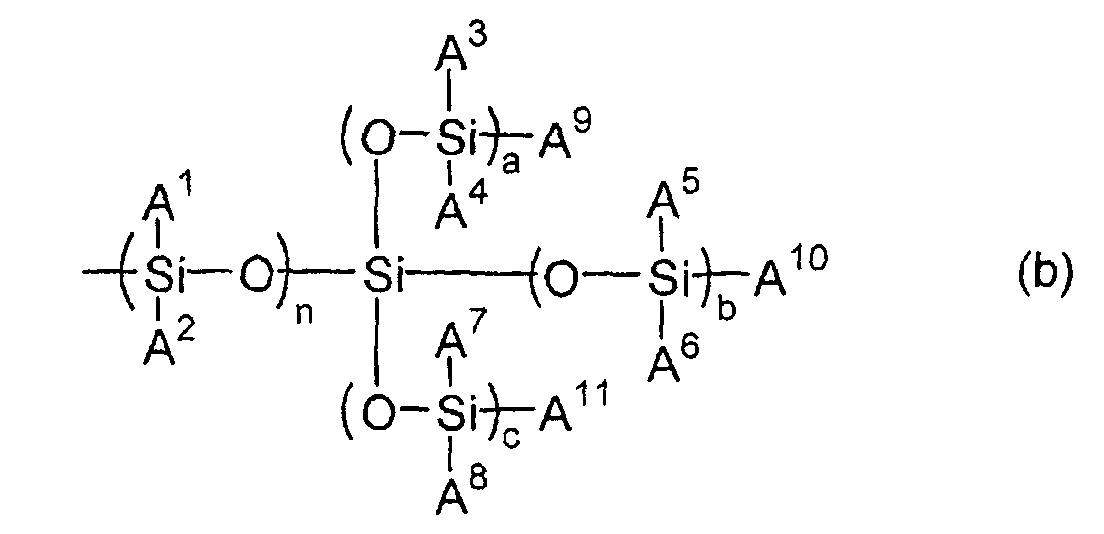
  • substituted groups represented by formula (b) below as the siloxanyl groups is desirable from the standpoints of ease of acquisition of raw materials and ease of synthesis.
  • a 1 to A 11 independently and respectively, indicate H, alkyl groups of 1 to 20 carbon atoms that may be substituted or aryl groups of 6 to 20 carbon atoms that may be substituted.
  • n indicates an integer of 0 to 200 and a, b and c, independently and respectively, indicate integers of 0 to 20, provided that the case where all of n, a, b and c denote zero is to be eliminated.
  • hydrophilic groups of this invention are introduced to mitigate the water-repellency of the monomers of this invention and to increase their hydrophilic properties.
  • Polyalkylene glycol chains and ether bonds can be cited as desirable examples of them.
  • formula (b) which illustrates the siloxanyl groups of A, A 1 to A 11 , independently and respectively, indicate H, alkyl groups such as methyl groups, ethyl groups, propyl groups, isopropyl groups, butyl groups, isobutyl groups, sec-butyl groups, t-butyl groups, hexyl groups, cyclohexyl groups, 2-ethylhexyl groups and octyl groups and aryl groups such as phenyl groups and naphthyl groups.
  • alkyl groups such as methyl groups, ethyl groups, propyl groups, isopropyl groups, butyl groups, isobutyl groups, sec-butyl groups, t-butyl groups, hexyl groups, cyclohexyl groups, 2-ethylhexyl groups and octyl groups and aryl groups such as phenyl groups and naphthyl groups.
  • the polymer of this invention may also contain ultraviolet absorbents, pigments and colorants. It may also contain ultraviolet absorbents, pigments and colorants having polymerizable groups in the form that they are copolymerized.

Landscapes

  • Chemical & Material Sciences (AREA)
  • Organic Chemistry (AREA)
  • Health & Medical Sciences (AREA)
  • Chemical Kinetics & Catalysis (AREA)
  • Medicinal Chemistry (AREA)
  • Polymers & Plastics (AREA)
  • Physics & Mathematics (AREA)
  • General Physics & Mathematics (AREA)
  • Optics & Photonics (AREA)
  • Eyeglasses (AREA)
  • Addition Polymer Or Copolymer, Post-Treatments, Or Chemical Modifications (AREA)
  • Materials For Medical Uses (AREA)
  • Prostheses (AREA)

Abstract

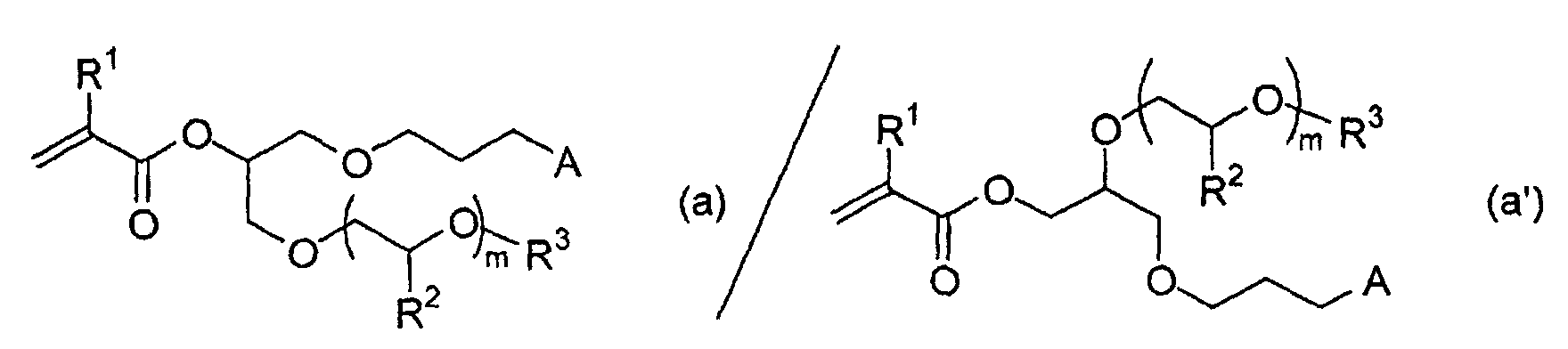
A monomer as represented by general formula (a) or (a') below, with which a polymer having high oxygen permeability and transparency and suited to an ophthalmic lens is obtained, is provided. Suitable monomers have the formula:
Figure 80000001
wherein A is a siloxanyl group; R1 and R2 are H or methyl groups; R3 is a substituted group that is selected from the group consisting of alkyl groups with 1 to 20 carbon atoms that may be substituted and aryl groups with 6 to 20 carbon atoms that may be substituted; m indicates an integer of 0 to 200.
Description

Technical Field
This invention relates to monomers and polymers. Said monomers and polymers are particularly suited to use for ophthalmic lenses such as contact lenses, intraocular lenses and artificial corneas.
Prior Art
Conventionally, monomers containing silicon groups are known as monomers for ophthalmic lenses. For example, 3-[tris(trimethylsiloxy)silyl] propyl methacrylate has been widely used as monomers for ophthalmic lenses. Polymers obtained by copolymerizing this 3-[tris(trimethylsiloxy)silyl] propyl methacrylate with N,N-dimethylacrylamide, which is a hydrophilic monomer, have the merits of being transparent and of having high oxygen permeability. However, sufficient compatibility is not obtained with three component copolymers in which a silicone macromer such as polydimethylsiloxane having a methacryl group in the terminal is added in order to obtain high oxygen permeability and rubber elasticity. For this reason, when they are used as contact lenses, for example, there are instances in which the contact lenses are turbid.
Disclosure of the Invention
This invention has the objective of providing monomers and polymers, ophthalmic lenses and contact lenses in which they are used, in which the polymers that are obtained by polymerization are of high oxygen permeability and which have sufficient compatibility in three-component systems of silicone macromers/hydrophilic monomers.
In order to achieve the aforementioned objectives, this invention has the following structure.
  • (1) A monomer comprising a polymerizable unsaturated double bond and siloxanyl group, wherein said monomer comprises a hydrophilic group in a side chain.
  • (2) The monomer of (1) above wherein the hydrophilic group is selected from an ether bond and/or polyalkylene glycol chain.
  • (3) A monomer that is represented by general formula (a) or (a'):
    Figure 00020001
    wherein A is a siloxanyl group; R1 and R2 are H or methyl groups; R3 is a substituted group that is selected from the group consisting of alkyl groups with 1 to 20 carbon atoms that may be substituted and aryl groups with 6 to 20 carbon atoms that may be substituted; m indicates an integer of 0 to 200.
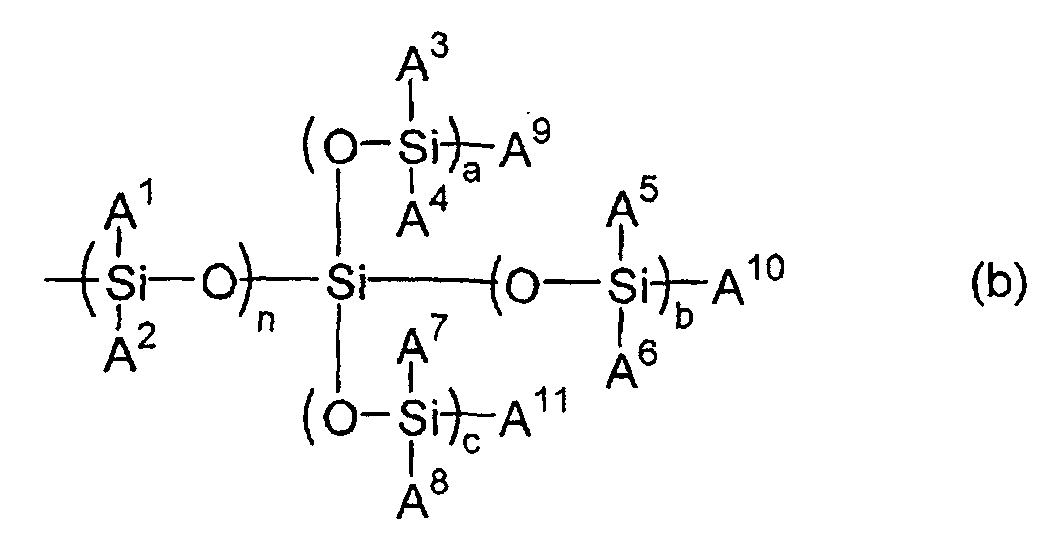
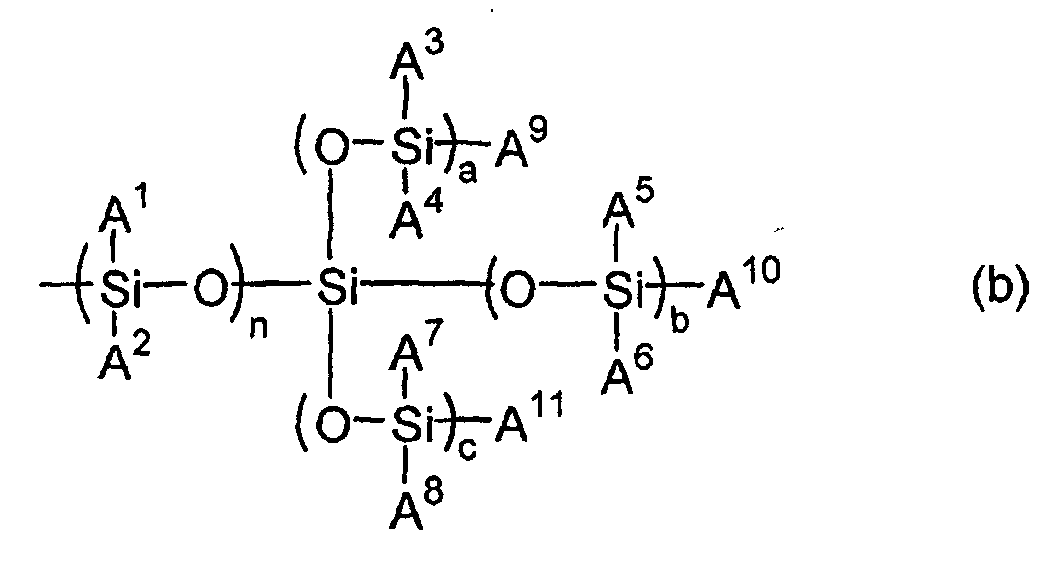
  • (4) The monomer of (3) above wherein the siloxanyl group (A) in formula (a) or (a') is a substituted group as represented by formula (b) below:
    Figure 00020002
    wherein in formula (b), A1 to A11, independently and respectively, are selected from H, alkyl groups of 1 to 20 carbon atoms that may be substituted or aryl groups of 6 to 20 carbon atoms that may be substituted; n is an integer of 0 to 200 and a, b and c, independently and respectively, indicate integers of 0 to 20, provided that the case where all of n, a, b and c denote zero is to be eliminated.
  • (5) The monomer of (3) above wherein the siloxanyl group (A) in the aforementioned general formula (a) or (a') is a substituted group selected from tris(trimethylsiloxy)silyl groups, bis(trimethylsiloxy)methylsilyl groups and trimethylsiloxydimethylsilyl groups.
  • (6) A polymer comprising the monomer described in either of (1) or (3) above as a polymerization component.
  • (7) The polymer of (6) above wherein a ratio of the hydrophilic side chain to the siloxanyl group is 0.1 to 1.
  • (8) A polymer which is a homopolymer of the monomer described in either (1) or (3) above.
  • (9) A polymer comprising the monomer described in either (1) or (3) above in a range of 10% to 80% as a polymerization component.
  • (10) An ophthalmic lens which comprises the polymer described in (6) above.
  • (11) A contact lens which comprises the polymer described in (6) above.
  • Embodiment of the Invention
    First, we shall describe the various functional groups in the monomers. The polymerizable unsaturated double bond may be any double bond as long as it can produce polymers by radical polymerization. Examples of groups that can be used include (meth)acryloyl groups, styryl groups, benzoyl groups and vinyl groups. Of these, the use of methacryloyl groups is desirable from the standpoints of ease of synthesis and polymerizability.
    The term siloxanyl group indicates a group that has at least one Si-O-Si bond. The use of substituted groups represented by formula (b) below as the siloxanyl groups is desirable from the standpoints of ease of acquisition of raw materials and ease of synthesis.
    Figure 00040001
    [In formula (b), A1 to A11, independently and respectively, indicate H, alkyl groups of 1 to 20 carbon atoms that may be substituted or aryl groups of 6 to 20 carbon atoms that may be substituted. n indicates an integer of 0 to 200 and a, b and c, independently and respectively, indicate integers of 0 to 20, provided that the case where all of n, a, b and c denote zero is to be eliminated.]
    The hydrophilic groups of this invention are introduced to mitigate the water-repellency of the monomers of this invention and to increase their hydrophilic properties. Polyalkylene glycol chains and ether bonds can be cited as desirable examples of them.
    In order to further facilitate understanding of the nature of this invention, we shall now describe the various substituted groups in general formula (a) or (a') more specifically.
    In formula (b), which illustrates the siloxanyl groups of A, A1 to A11, independently and respectively, indicate H, alkyl groups such as methyl groups, ethyl groups, propyl groups, isopropyl groups, butyl groups, isobutyl groups, sec-butyl groups, t-butyl groups, hexyl groups, cyclohexyl groups, 2-ethylhexyl groups and octyl groups and aryl groups such as phenyl groups and naphthyl groups. Examples of alkyl groups and aryl groups that may be substituted can include 3-glycidoxypropyl groups, 2-hydroxyethoxypropyl groups, 3-hydroxypropyl groups, 3-aminopropyl groups and fluorophenyl groups. Of these, methyl groups are the most desirable.
    In formula (b), n is an integer of 0 to 200, preferably, of 0 to 50, and, more preferably, of 0 to 10. a, b and c are, respectively and individually, integers of 0 to 20, and, preferably, a, b and c are, respectively and individually, integers of 0 to 5. When n = 0, desirable combinations of a, b and c are a = b = c = 1, a = b = 1 and c =0.
    Of the substituted groups represented by formula (b), those that are particularly desirable from the standpoint that they can be acquired industrially comparatively cheaply are tris(trimethylsiloxy) silyl groups, bis(trimethylsiloxy) methylsilyl groups, trimethylsilyoxydimethylsilyl groups, tris(3-hydroxypropyldimethylsiloxy) silyl groups, bis(3-hydroxypropyldimethylsiloxy) methylsilyl groups, tris[3-(2-hydroxyethoxy)propyldimethylsiloxy) silyl groups, bis[3-(2-hydroxyethoxy)propyldimethylsiloxy) methylsilyl groups, polydimethylsiloxane groups, polymethylsiloxane groups and poly-co-methylsiloxane-dimethylsiloxane groups.
    In formula (a) or (a'), R3 indicates a substituted group selected from a group comprised of alkyl groups of 1 to 20 carbon atoms that may be substituted and aryl groups of 6 to 20 carbon atoms that may be substituted. Desirable examples include methyl groups, ethyl groups, propyl groups, butyl groups, pentyl groups, hexyl groups, heptyl groups, octyl groups, decyl groups, cyclohexyl groups, benzyl groups, phenyl groups and naphthyl groups. Of these, methyl groups, ethyl groups and phenyl groups are preferable, and methyl groups are most preferable.
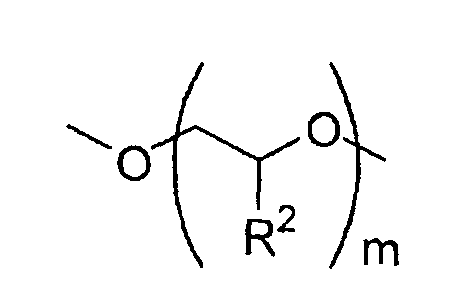
    In formula (a) or (a'), the component below indicates the hydrophilic group.
    Figure 00050001
    m indicates an integer of 0 to 200. When m increases, the hydrophilic property becomes stronger. However, the balance with high oxygen permeability deteriorates, for which reason it should be 0 to 50, and, more preferably, 0 to 20, in order to obtain a good balance of physical properties.
    The polymers of this invention can be obtained by polymerizing the monomers of this invention individually and they can also be obtained by copolymerization with other monomers. There are no particular limitations on the other monomers that are copolymerized as long as they can be copolymerized, and monomers that have (meth)acryloyl groups, styryl groups, allyl groups, vinyl groups and other polymerizable carbon-carbon unsaturated bonds can be used.
    Several examples are presented below. However, this invention is not limited to them. One group includes hydrophilic monomer groups comprised of (meth)acrylic acid, itaconic acid, crotonic acid, vinyl benzoic acid, (meth)acrylamides such as N,N-dimethylacrylamide and N-vinyl lactams such as N-vinyl pyrrolidone. Another group of examples is a hydrophobic monomer group including alkyl (meth)acrylates such as methyl (meth)acrylate and aromatic vinyl monomers such as styrene. Further, monomers having oxygen permeability include (meth)acrylates containing fluoroalkyl groups, silicone macromers such as polydimethylsiloxane having (meth)acryloyl groups in the terminals and 3-[tris(trimethylsiloxy)silyl] propylmethacrylate.
    The (co)polymerization ratio of monomers represented by general formula (a) or (a') in the polymers of this invention, in the case in which they do not include monomers containing silicon groups and from the standpoint of establishing both high oxygen permeability and high hydrophilic properties, should be 30 to 100 weight %, preferably, 40 to 99 weight %, and, more preferably, 50 to 95 weight %.
    In copolymerization with oxygen permeable monomers, it is desirable that the total for the monomers of this invention and other oxygen permeable monomers be within the range of the aforementioned copolymerization ratio. Further, in this case, when the proportion of siloxanyl groups is excessively high, it is difficult to assure balance between wettability and oxygen permeability, for which reason, it is necessary to set the hydrophilic group/siloxanyl ratio in the polymer above a fixed value. That is, it is necessary that it be from 0.1 to 1. Values from 0.3 to 0.7 are particularly desirable.
    For the purpose of obtaining good mechanical properties and of obtaining good resistance to disinfecting solutions and cleaning solutions, it is desirable to use monomers having two or more copolymerizable carbon-carbon unsaturated bonds in one molecule, in the polymers of this invention. The copolymerization ratio of the monomers having two or more copolymerizable carbon-carbon unsaturated bonds in one molecule should be greater than 0.1 weight %, preferably, greater than 0.3 weight %, and, more preferably, greater than 0.5 weight %. Their weight, when the monomers of this invention are polymerized by themselves, and the total weight of the copolymerization monomers with the monomers of this invention when they are copolymerized with other monomers are taken as 100 weight %. The same holds hereafter.
    The polymer of this invention may also contain ultraviolet absorbents, pigments and colorants. It may also contain ultraviolet absorbents, pigments and colorants having polymerizable groups in the form that they are copolymerized.
    In order to facilitate polymerization when the polymers of this invention are obtained by polymerization, the addition of thermal polymerization initiators and photopolymerization initiators of which peroxides and azo compounds are representative is desirable. When thermal polymerization is performed, a substance having optimum decomposition characteristics at the desired reaction temperature is selected and used. In general, azo initiators and peroxide initiators having 10 hour half-life temperatures of 40°C to 120°C are suitable. Carbonyl compounds, peroxides, azo compounds, sulfur compounds, halogen compounds and metal salts can be cited as photopolymerization initiators. These polymerization initiators can be used individually or in mixtures and are used in quantities up to approximately 1 weight %.
    A polymerization solvent can be used when the polymers of this invention are obtained by polymerization. Various organic and inorganic solvents can be used as the solvents and there are no particular limitations on them. Examples that can be cited include water, various alcohol solvents such as methanol, ethanol, propanol, 2-propanol, butanol and tert-butanol, various aromatic hydrocarbon solvents such as benzene, toluene and xylene, various aliphatic hydrocarbon solvents such as hexane, heptane, octane, decane, petroleum ether, kerosene, ligroin and paraffin, various ketone solvents such as acetone, methyl ethyl ketone and methyl isobutyl ketone, various ester solvents such as ethyl acetate, butyl acetate, methyl benzoate and dioctyl phthalate and various glycol ether solvents such as diethyl ether, tetrahydrofuran, dioxane, ethylene glycol dialkyl ethers, diethylene glycol dialkyl ethers, triethylene glycol dialkyl ethers, tetraethylene glycol dialkyl ethers and polyethylene glycol dialkyl ethers. They can be used individually or in mixtures.
    Usual methods can be used as the polymerization methods and molding methods of the polymers of this invention. They include, for example, a method in which they are molded into rods or plates and are then processed to the desired shapes by cutting and processing, a mold polymerization method and a spin cast method. As an example, we shall now describe the case in which the polymer of this invention is obtained by the mold polymerization method.
    The monomer composition is filled into the space of two molds having a fixed shape. Photopolymerization or thermal polymerization is performed and it is formed to the shape of the mold. The mold can be made of resin, glass, ceramics or metal. In the case of photopolymerization, a material that is optically transparent is used, and, ordinarily, resin or glass is used. In many cases, when a polymer is manufactured, a space is formed by the two opposing molds and the space is filled with the monomer composition. Depending on the shape of the mold and the properties of the monomer, a gasket may be used for the purpose of conferring a fixed thickness on the polymer and of preventing leakage of the filled monomer composition solution. The mold into the space of which the monomer composition is filled is then irradiated with active light rays such as ultraviolet rays or is introduced into an oven or a water bath or oil bath and is heated to polymerize the monomers. The two methods can also be used in combination, with thermal polymerization being performed after photopolymerization, or, conversely, it can be photopolymerization being performed after thermal polymerization. In the case of photopolymerization, for example, light containing a large portion of ultraviolet rays is usually irradiated for a short time (ordinarily 1 hour or less) using a mercury lamp or an insect attraction lamp as the light source. When thermal polymerization is performed, the temperature is gradually raised from close to room temperature, being increased to a temperature of 60°C to 200°C over a period of several hours to several tens of hours. These conditions are desirable for the purpose of maintaining the optical homogeneity and quality of the polymer and of increasing reproducibility.
    The molded product in which the polymer of this invention is used can be subjected to modification treatments by various methods. It is desirable to perform said modification treatment for the purpose of increasing surface wettability.
    Specific modification methods can include electromagnetic waves (including light) irradiation, plasma irradiation, chemical vapor deposition treatments such as vaporization and sputtering, heating treatments, treatment with bases, treatment with acids and the use of other suitable surface treatment agents, and combinations of these treatments. Of these modification procedures, treatment with bases and treatment with acids are desirable because they are simple.
    Examples of treatments with bases and treatments with acids that can be cited include a method in which the molded product is brought into contact with a basic or acidic solution and a method in which the molded product is brought into contact with a basic or acidic gas. More specific examples include, for example, a method in which the molded product is immersed in a basic or acidic solution, a method in which a basic or acidic solution or basic or acidic gas is sprayed at the molded product, a method in which the basic or acidic solution is applied to the molded product with a spatula or brush and a method in which the basic or acidic solution is applied to the molded product by the spin coating method or the dip coating method. The method whereby great modifying effects can be obtained the most simply is the method in which the molded product is immersed in a basic or acidic solution.
    There are no particular limitations on temperature when the molded product is immersed in the basic or acidic solution. However, the procedure is usually performed in a temperature range of -50°C to 300°C. When workability is considered, a temperature range of -10°C to 150°C is preferable and -5°C to 60°C is more preferable.
    The optimum period for immersion of the molded product in the basic or acidic solution varies depending on the temperature. In general, a period of up to 100 hours is desirable, a period of up to 24 hours is more preferable and a period of up to 12 hours is most preferable. When contact time is too long, workability and productivity deteriorate and there are instances in which there are such deleterious effects as decrease of oxygen permeability and decrease of mechanical properties.
    The bases that can be used include alkali metal hydroxides, alkaline earth metal hydroxides, various carbonates, various borates, various phosphates, ammonia, various ammonium salts, various amines and high molecular weight bases such as polyethylene imines and polyvinyl amines. Of these, alkali metal hydroxides are the most desirable because of their low cost and their great treatment effectiveness.
    The acids that can be used include various inorganic acids such as sulfuric acid, phosphoric acid, hydrochloric acid and nitric acid, various organic acids such as acetic acid, formic acid, benzoic acid and phenol and various high molecular weight acids such as polyacrylic acids and polystyrene sulfonic acids. Of these, high molecular weight acids are the most desirable because they have great treatment effectiveness and have little deleterious effect on other physical properties.
    Various inorganic and organic solvents can be used as solvents of the basic and acidic solutions. For example, they can include water, various alcohols such as methanol, ethanol, propanol, 2-propanol, butanol, ethylene glycol, diethylene glycol, triethylene glycol, tetraethylene glycol, polyethylene glycol and glycerol, various aromatic hydrocarbons such as benzene, toluene and xylene, various aliphatic hydrocarbons such as hexane, heptane, octane, decane, petroleum ether, kerosene, ligroin and paraffin, various ketones such as acetone, methyl ethyl ketone and methyl isobutyl ketone, various esters such as ethyl acetate, butyl acetate, methyl benzoate and dioctyl phthalate, various ethers such as diethyl ether, tetrahydrofuran, dioxane, ethylene glycol dialkyl ether, diethylene glycol dialkyl ether, triethylene glycol dialkyl ether, tetraethylene glycol dialkyl ether and polyethylene glycol dialkyl ether, various nonprotonic polar solvents such as dimethylformamide, dimethylacetamide, N-methyl-2-pyrrolidone, dimethylimidazolidinone, hexamethyl phosphoric triamide and dimethyl sulfoxide, halogen solvents such as methylene chloride, chloroform, dichloroethane, trichloroethane and trichloroethylene and freon solvents. Of these, water is the most desirable from the standpoints of economic factors, convenience of handling and chemical stability. These solvents can also be used in mixtures of two or more.
    The basic or acidic solution that is used in this invention may also contain components other than the basic or acidic substances and the solvents.
    After the molded product has been subjected to treatment with bases or acids, the basic or acidic substance can be removed by washing.
    Various inorganic and organic solvents can be used as washing solvents. For example, they can include water, various alcohols such as methanol, ethanol, propanol, 2-propanol, butanol, ethylene glycol, diethylene glycol, triethylene glycol, tetraethylene glycol, polyethylene glycol and glycerol, various aromatic hydrocarbons such as benzene, toluene and xylene, various aliphatic hydrocarbons such as hexane, heptane, octane, decane, petroleum ether, kerosene, ligroin and paraffin, various ketones such as acetone, methyl ethyl ketone and methyl isobutyl ketone, various esters such as ethyl acetate, butyl acetate, methyl benzoate and dioctyl phthalate, various ethers such as diethyl ether, tetrahydrofuran, dioxane, ethylene glycol dialkyl ether, diethylene glycol dialkyl ether, triethylene glycol dialkyl ether, tetraethylene glycol dialkyl ether and polyethylene glycol dialkyl ether, various nonprotonic polar solvents such as dimethylformamide, dimethylacetamide, N-methyl-2-pyrrolidone, dimethylimidazolidinone, hexamethyl phosphoric triamide and dimethyl sulfoxide, halogen solvents such as methylene chloride, chloroform, dichloroethane trichloroethane and trichloroethylene and freon solvents.
    Mixtures of two or more of these solvents can be used as the washing solvent. The washing solvent may contain components other than the solvents, for example, inorganic salts, surfactants and detergents.
    The entire molded product may be subjected to said modification treatment or it may be performed on only a portion of the molded product, for example, the surface. When only the surface is subjected to modification treatment, the aqueous wetting property of the surface can be improved without making great changes in the physical properties of the molded product as a whole.
    The polymers of this invention should have an oxygen permeability coefficient greater than 70 × 10-11 (cm2/sec)mLO2/(mL·hPa) in terms of the oxygen permeability.
    The polymers of this invention are particularly suited for ophthalmic lenses such as contact lenses, intraocular lenses and artificial corneas.
    Examples
    We shall now describe this invention in specific terms by means of examples. However, this invention is not limited by them.
    Determination Methods
    The various determinations in these examples were performed by the methods described below.
    (1) Proton nuclear magnetic resonance spectrum
    Determinations were performed using a model EX270 manufactured by JEOL Ltd. Chloroform-d was used as the solvent.
    (2) Gas chromatography (GC)
    A capillary column (TC-5HT) manufactured by GL Sciences, Inc. was used with a model GC-18A manufactured by SHIMADZU CORPORATION. Determinations were made with a temperature elevation program in which the temperature was maintained at 100°C for 1 minute, after which the temperature was raised to 340°C at a rate of 10°C/minute and then maintained at 340°C for 5 minutes (introduction inlet temperature, 340°C; detection temperature, 360°C).
    (3) Oxygen permeability coefficient
    The oxygen permeability coefficient of a sample in the shape of a contact lens was determined in water of 35°C using a Seikaken-shiki film oxygen permeability meter manufactured by RIKA SEIKI KOGYO Co., Ltd.
    Example 1
  • (1) 30 g (89 mmol) of 3-(glycidyloxypropyl)-1,1,1,3,5,5,5-hexamethyltrisiloxane, 90 g of 2-methoxyethanol and 1.14 g (9 mmol) of tetracyanoethylene (TCNE) were added to a 200 mL eggplant type distillation flask and the mixture was stirred for 3 hours, after which it was allowed to stand overnight at room temperature. After the reaction was completed, the solvent was removed using an evaporator. The proton nuclear magnetic resonance spectrum of the liquid that was obtained was determined and analyzed. As a result, peaks were detected in the vicinity of 0 ppm (3H), in the vicinity of 0.1 ppm (18H), in the vicinity of 0.4 ppm (2H), in the vicinity of 1.5 ppm (2H), in the vicinity of 2.6 ppm (1H), in the vicinity of 3.3 to 3.7 ppm (13H) and in the vicinity of 3.9 ppm (1H). From these findings, it was confirmed that it was a mixture of the compounds represented by formulas (M1) and (M1') below. On the basis of the GC peak area ratios, the (M1)/(M1') ratio was 85/15.
    Figure 00140001
  • (2) 30 g (73 mmol) of the compound obtained in (1) above was transferred, 80 g of ethyl acetate and 8.83 g (87 mmol) of triethylamine were added to a 300 mL eggplant type distillation flask, and 9.12 g (87 mmol) of methacrylic acid chloride was added dropwise at 0°C. After the dropwise additions were completed, the reaction solution was stirred for 3 hours as it was being restored to room temperature. The reaction solution was filtered and the precipitate was removed, after which it was transferred to a separatory funnel as it was being washed with ethyl acetate. It was then washed with saturated sodium hydrogencarbonate and saturated saline solution and dried with sodium sulfate. The solvent was removed with an evaporator and purification was performed by distillation under reduced pressure. The proton nuclear magnetic resonance spectrum of the liquid that was obtained was determined and analyzed. As a result, peaks were detected in the vicinity of 0 ppm (3H), in the vicinity of 0.1 ppm (18H), in the vicinity of 0.4 ppm (2H), in the vicinity of 1.5 ppm (2H), in the vicinity of 1.9 ppm (3H), in the vicinity of 2.6 ppm (1H), in the vicinity of 3.3 ppm (5H), in the vicinity of 3.4 to 3.7 ppm (8H), in the vicinity of 4.2 ppm (0.2H), in the vicinity of 5.1 ppm (0.8H), in the vicinity of 5.5 ppm (1H) and in the vicinity of 6.1 ppm (1H). From these findings, it was confirmed that it was a mixture of the compounds represented by formulas (M2) and (M2') below. On the basis of the GC peak area ratios, the (M2)/(M2') ratio was 85/15.
    Figure 00140002
  • Example 2
    Synthesis was performed in the same way as in Example 1 using 2-(2-methoxyethoxy)ethanol instead of 2-methoxyethanol and a silica gel column instead of distillation under reduced pressure as the purification method. The proton nuclear magnetic resonance spectrum of the liquid that was obtained was determined and analyzed. As a result, peaks were detected in the vicinity of 0 ppm (3H), in the vicinity of 0.1 ppm (18H), in the vicinity of 0.4 ppm (2H), in the vicinity of 1.5 ppm (2H), in the vicinity of 1.9 ppm (3H), in the vicinity of 3.3 ppm (5H), in the vicinity of 3.4 to 3.7 ppm (12H), in the vicinity of 4.2 ppm (0.1H), in the vicinity of 5.1 ppm (0.9H), in the vicinity of 5.5 ppm (1H) and in the vicinity of 6.1 ppm (1H). From these findings, it was confirmed that it was a mixture of the compounds represented by formulas (M3) and (M3') below. On the basis of the GC peak area ratios, the (M3)/(M3') ratio was 86/14.
    Figure 00150001
    Example 3
  • (1) 50 g (0.44 mol) of allyl glycidyl ether, 100 g (3.12 mol) of methanol and 5.61 g (0.044 mol) of tetracyanoethylene were added to a 300 mL eggplant type distillation flask and the mixture was stirred for 3 hours at room temperature, after which it was allowed to stand overnight. After the reaction was completed, the solvent was removed using an evaporator and the liquid that was obtained was purified by distillation under reduced pressure. The proton nuclear magnetic resonance spectrum of the liquid that was obtained was determined and analyzed. As a result, peaks were detected in the vicinity of 2.4 ppm (1H), in the vicinity of 3.4 ppm (7H), in the vicinity of 3.6 ppm (0.3H), in the vicinity of 3.9 ppm (2.7H), in the vicinity of 5.2 ppm (2H) and in the vicinity of 5.8 ppm (1H). From these findings, it was confirmed that it was a mixture of the compounds represented by formulas (M4) and (M4') below. On the basis of the GC peak area ratios, the (M4)/(M4') ratio was 73/27.
    Figure 00160001
  • (2) 50 g (0.34 mol) of the compound obtained in (1) above, 80 g of ethyl acetate and 41.53 g (0.41 mol) of triethylamine were added to a 300 mL eggplant type distillation flask and 42.91 g (0.41 mol) of methacrylic acid chloride was added dropwise at 0°C. The reaction solution was restored to room temperature as it was being stirred over a period of 3 hours. It was transferred to a separatory funnel as it was being washed with ethyl acetate. It was then washed with saturated sodium hydrogencarbonate and saturated saline solution and dried with sodium sulfate. The solvent was removed with an evaporator and the liquid that was obtained was purified by distillation under reduced pressure. The proton nuclear magnetic resonance spectrum of the liquid that was obtained was determined and analyzed. As a result, peaks were detected in the vicinity of 1.9 ppm (3H), in the vicinity of 3.3 ppm (3H), in the vicinity of 3.6 ppm (4H), in the vicinity of 3.9 ppm (2H), in the vicinity of 4.2 ppm (0.3H), in the vicinity of 5.2 ppm (2.7H), in the vicinity of 5.5 ppm (1H), in the vicinity of 5.8 ppm (1H) and in the vicinity of 6.1 ppm (1H). From these findings, it was confirmed that it was a mixture of the compounds represented by formulas (M5) and (M5') below. On the basis of the GC peak area ratios, the (M5)/(M5') ratio was 82/18.
    Figure 00160002
  • (3) 40 g (0.19 mol) of the compound obtained in (2) above, 100 mL of toluene, 41.1 mg (0.19 mmol) of BHT and 96.7 mg (0.19 mmol) of chloroplatinic (IV) acid 6-hydrate were added to a 300 mL eggplant type distillation flask and 25.29 g (0.19 mol) of trichlorosilane was added dropwise as the mixture was being stirred. The reaction solution was stirred over night at room temperature, after which the solvent was removed with an evaporator and purification was performed by distillation under reduced pressure.
  • A mixture obtained by adding 118.56 g (1.14 mol) of methoxytrimethylsilane to the liquid that was obtained was transferred to a dropping funnel and was added dropwise to a mixed solvent of water-methanol-hexane (40 mL - 20 mL- 20 mL) that had been cooled to 0°C. The reaction solution was stirred overnight at room temperature, after which the aqueous layer was discarded, the organic layer was washed with saturated sodium hydrogencarbonate and saturated saline solution and dried with sodium sulfate. The liquid that was obtained was purified by distillation under reduced pressure. The proton nuclear magnetic resonance spectrum of the liquid that was obtained was determined and analyzed. As a result, peaks were detected in the vicinity of 0.1 ppm (27H), in the vicinity of 0.4 ppm (2H), in the vicinity of 1.5 ppm (2H), in the vicinity of 1.9 ppm (3H), in the vicinity of 3.4 ppm (5H), in the vicinity of 3.5 ppm (4H), in the vicinity of 4.2 ppm (0.2H), in the vicinity of 5.1 ppm (0.8H), in the vicinity of 5.5 ppm (1H) and in the vicinity of 6.1 ppm (1H). From these findings, it was confirmed that it was a mixture of the compounds represented by formulas (M6) and (M6') below. On the basis of the GC peak area ratios, the (M6)/(M6') ratio was 83/17.
    Figure 00170001
    Example 4
    Synthesis was performed in the same way as in Example 3 using ethanol instead of methanol. The proton nuclear magnetic resonance spectrum of the liquid that was obtained was determined and analyzed. As a result, peaks were detected in the vicinity of 0.1 ppm (27H), in the vicinity of 0.4 ppm (2H), in the vicinity of 1.2 ppm (3H), in the vicinity of 1.5 ppm (2H), in the vicinity of 1.9 ppm (3H), in the vicinity of 3.4 ppm (4H), in the vicinity of 3.5 ppm (4H), in the vicinity of 4.2 ppm (0.2H), in the vicinity of 5.1 ppm (0.8H), in the vicinity of 5.5 ppm (1H) and in the vicinity of 6.1 ppm (1H). From these findings, it was confirmed that it was a mixture of the compounds represented by formulas (M7) and (M7') below. On the basis of the GC peak area ratios, the (M7)/(M7') ratio was 82/18.
    Figure 00180001
    Example 5
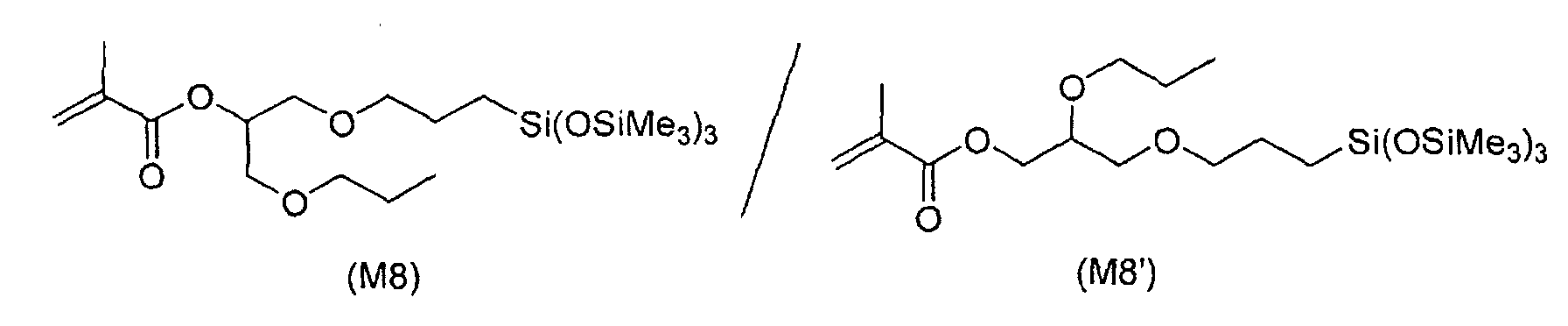
    Synthesis was performed in the same way as in Example 3 using 1-propanol instead of methanol. The proton nuclear magnetic resonance spectrum of the liquid that was obtained was determined and analyzed. As a result, peaks were detected in the vicinity of 0.1 ppm (27H), in the vicinity of 0.4 ppm (2H), in the vicinity of 0.9 ppm (3H). in the vicinity of 1.5 ppm (2H), in the vicinity of 1.6 ppm (2H), in the vicinity of 1.9 ppm (3H), in the vicinity of 3.4 ppm (4H), in the vicinity of 3.5 ppm (4H), in the vicinity of 4.2 ppm (0.2H), in the vicinity of 5.1 ppm (0.8H), in the vicinity of 5.5 ppm (1H) and in the vicinity of 6.1 ppm (1H). From these findings, it was confirmed that it was a mixture of the compounds represented by formulas (M8) and (M8') below. On the basis of the GC peak area ratios, the (M8)/(M8') ratio was 85/15.
    Figure 00180002
    Example 6
    The mixture of compounds of formulas (M2) and (M2') obtained in Example 1 (30 parts by weight), N,N-dimethylacrylamide (40 parts by weight), polydimethylsiloxane of which the terminals had been methacrylated (molecular weight, approximately 1,000; 30 parts by weight), triethylene glycol dimethacrylate (1 part by weight) and Darocure 1173 (CIBA Specialty Chemicals Inc.; 0.2 part by weight) were mixed and stirred. A homogeneous and transparent monomer mixture was obtained. This monomer mixture was deaerated in an argon atmosphere. It was poured into a contact lens mold made of a transparent resin (poly 4-methylpentene-1) in a glove box in a nitrogen atmosphere and was polymerized by light irradiation (1 mW/cm2, 10 minutes) using an insect attraction lamp, and a sample in the shape of a contact lens was obtained.
    The lens-shaped sample that was obtained was subjected to hydration treatment, after which it was immersed in a 5 weight % aqueous solution of polyacrylic acid (molecular weight, approximately 150,000) and modification treatment was performed for 8 hours at 40°C. After the modification treatment, it was washed thoroughly with purified water and immersed in a boric acid buffer solution (pH 7.1 to 7.3) in a vial and the vial was hermetically sealed. Said vial was introduced into an autoclave and boiling treatment was performed for 30 minutes at 120°C. After it had cooled, the lens-shaped sample was removed from the vial and was immersed in a boric acid buffer solution (pH 7.1 to 7.3).
    The sample that was obtained was transparent and not turbid. When this sample was subjected to hydration treatment, its oxygen permeability coefficient was 79 × 10-11 (cm2/sec)mLO2/(mL·hPa). Thus, it had high transparency and high oxygen permeability.
    Examples 7 to 10
    The monomer mixtures obtained in Examples 2 to 6 were used and contact lens-shaped samples were obtained by the same method as in Example 7. All of the samples that were obtained were transparent and they were not turbid. The oxygen permeability coefficients [× 10-11 (cm2/sec)mLO2/(mL·hPa)] when these samples were subjected to hydration treatment are shown in Table 1. All of the polymers were of high transparency and oxygen permeability.
    Oxygen permeability coefficient
    [× 10-11 (cm2/sec)mLO2/(mL·hPa)]
    Example 7 78
    Example 8 76
    Example 9 75
    Example 10 74
    Comparative Examples
    When a monomer mixture was prepared at the same molar ratio as in Example 7 using 3-tris(trimethylsiloxy)silylpropyl methacrylate, the substances did not mix sufficiently and separated from each other. This monomer mixture was polymerized by light irradiation in the same way as in Example 7, but a transparent contact lens-shaped sample was not obtained.
    Industrial Applicability
    By means of this invention, monomers are provided so that the polymers that are obtained by polymerizing them are of high oxygen permeability and transparency.

    Claims (11)

    1. A monomer comprising a polymerizable unsaturated double bond and siloxanyl group, wherein said monomer comprises a hydrophilic group in a side chain.
    2. The monomer of Claim 1 wherein the hydrophilic group is an ether bond and/or polyalkylene glycol chain.
    3. A monomer that is represented by general formula (a) or (a') below:
      Figure 00210001
      wherein A is a siloxanyl group; R1 and R2 are H or methyl groups; R3 is a substituted group that is selected from the group consisting of alkyl groups with 1 to 20 carbon atoms that may be substituted and aryl groups with 6 to 20 carbon atoms that may be substituted; m indicates an integer of 0 to 200.
    4. The monomer of Claim 3 wherein the siloxanyl group (A) in formula (a) or (a') is a substituted group as represented by formula (b) below:
      Figure 00210002
      wherein, in formula (b), A1 to A11, independently and respectively, are H, alkyl groups of 1 to 20 carbon atoms that may be substituted or aryl groups of 6 to 20 carbon atoms that may be substituted; n is an integer of 0 to 200 and a, b and c, independently and respectively, indicate integers of 0 to 20, provided that the case where all of n, a, b and c denote zero is to be eliminated.
    5. The monomer of Claim 3 wherein the siloxanyl group (A) in the aforementioned general formula (a) or (a') is a substituted group selected from tris(trimethylsiloxy)silyl groups, bis(trimethylsiloxy)methylsilyl groups and trimethylsiloxydimethylsilyl groups.
    6. A polymer comprising the monomer set forth in either of Claim 1 or 3 as a polymerization component.
    7. The polymer of Claim 6 wherein a ratio of the hydrophilic side chain to the siloxanyl group is 0.1 to 1.
    8. A polymer that is a homopolymer of the monomer set forth in either Claim 1 or 3.
    9. A polymer comprising the monomer set forth in either Claim 1 or 3 in a range of 10% to 80% as a polymerization component.
    10. An ophthalmic lens which comprises the polymer set forth in Claim 6.
    11. A contact lens which comprises the polymer set forth in Claim 6.
    EP02702862A 2001-03-30 2002-03-11 Monomer, polymer, and ocular lens and contact lens each obtained therefrom Expired - Lifetime EP1386924B1 (en)

    Applications Claiming Priority (3)

    Application Number Priority Date Filing Date Title
    JP2001100210 2001-03-30
    JP2001100210 2001-03-30
    PCT/JP2002/002231 WO2002081485A1 (en) 2001-03-30 2002-03-11 Monomer, polymer, and ocular lens and contact lens each obtained therefrom

    Publications (3)

    Publication Number Publication Date
    EP1386924A1 true EP1386924A1 (en) 2004-02-04
    EP1386924A4 EP1386924A4 (en) 2005-02-23
    EP1386924B1 EP1386924B1 (en) 2009-06-10

    Family

    ID=18953674

    Family Applications (1)

    Application Number Title Priority Date Filing Date
    EP02702862A Expired - Lifetime EP1386924B1 (en) 2001-03-30 2002-03-11 Monomer, polymer, and ocular lens and contact lens each obtained therefrom

    Country Status (6)

    Country Link
    US (1) US7071274B2 (en)
    EP (1) EP1386924B1 (en)
    AT (1) ATE433455T1 (en)
    AU (1) AU2002236279B2 (en)
    DE (1) DE60232586D1 (en)
    WO (1) WO2002081485A1 (en)

    Cited By (9)

    * Cited by examiner, † Cited by third party
    Publication number Priority date Publication date Assignee Title
    WO2005078482A1 (en) * 2004-02-11 2005-08-25 Johnson & Johnson Vision Care, Inc. (meth)acrylamide monomers containing hydroxy and silicone functionalities and polymers made therefrom
    WO2007078871A1 (en) * 2005-12-30 2007-07-12 Johnson & Johnson Vision Care, Inc. Silicone containing polymers formed from non-reactive silicone containing prepolymers
    WO2008066758A1 (en) * 2006-11-22 2008-06-05 Johnson & Johnson Vision Care, Inc. Methods for purifying siloxanyl monomers
    EP2128164A1 (en) * 2008-05-27 2009-12-02 Shin-Etsu Chemical Co., Ltd. Silicone compound, a process for the preparation thereof and a process for the preparation of an ophthalmic device therefrom
    US8080622B2 (en) 2007-06-29 2011-12-20 Johnson & Johnson Vision Care, Inc. Soluble silicone prepolymers
    US8158695B2 (en) 2002-09-06 2012-04-17 Johnson & Johnson Vision Care, Inc. Forming clear, wettable silicone hydrogel articles without surface treatments
    US8357818B2 (en) 2006-09-29 2013-01-22 Johnson & Johnson Vision Care, Inc. Hydrolysis-resistant silicone compounds
    US8637589B2 (en) 2007-12-27 2014-01-28 Johnson & Johnson Vision Care, Inc. Silicone prepolymer solutions
    US9056880B2 (en) 2006-09-29 2015-06-16 Johnson & Johnson Vision Care, Inc. Process for producing hydrolysis-resistant silicone compounds

    Families Citing this family (20)

    * Cited by examiner, † Cited by third party
    Publication number Priority date Publication date Assignee Title
    US7461937B2 (en) 2001-09-10 2008-12-09 Johnson & Johnson Vision Care, Inc. Soft contact lenses displaying superior on-eye comfort
    US20070043140A1 (en) * 1998-03-02 2007-02-22 Lorenz Kathrine O Method for the mitigation of symptoms of contact lens related dry eye
    US7052131B2 (en) 2001-09-10 2006-05-30 J&J Vision Care, Inc. Biomedical devices containing internal wetting agents
    US6822016B2 (en) 2001-09-10 2004-11-23 Johnson & Johnson Vision Care, Inc. Biomedical devices containing internal wetting agents
    US8097565B2 (en) * 2003-06-30 2012-01-17 Johnson & Johnson Vision Care, Inc. Silicone hydrogels having consistent concentrations of multi-functional polysiloxanes
    US8053539B2 (en) 2006-06-30 2011-11-08 Johnson & Johnson Vision Care Inc. Siloxanyl materials for molded plastics
    US8569538B2 (en) 2006-06-30 2013-10-29 Johnson & Johnson Vision Care, Inc. Acryloyl materials for molded plastics
    WO2008004243A2 (en) * 2006-07-07 2008-01-10 Ranka, Seema, Ajay Ionic organosilicon compounds and compositions thereof
    WO2011079380A1 (en) 2009-12-30 2011-07-07 Axcelon Biopolymers Corporation Transparent bacterial cellulose nanocomposite hydrogels
    US8557940B2 (en) 2010-07-30 2013-10-15 Novartis Ag Amphiphilic polysiloxane prepolymers and uses thereof
    JP5852659B2 (en) 2010-10-06 2016-02-03 ノバルティス アーゲー Water-treatable silicone-containing prepolymer and use thereof
    CA2813469C (en) 2010-10-06 2016-01-12 Novartis Ag Polymerizable chain-extended polysiloxanes with pendant hydrophilic groups
    US8835525B2 (en) 2010-10-06 2014-09-16 Novartis Ag Chain-extended polysiloxane crosslinkers with dangling hydrophilic polymer chains
    CA3030638C (en) 2012-12-14 2020-09-15 Novartis Ag Amphiphilic siloxane-containing vinylic monomers and uses thereof
    EP2931767B1 (en) 2012-12-14 2017-11-08 Novartis AG Amphiphilic siloxane-containing (meth)acrylamides and uses thereof
    EP3420385B1 (en) * 2016-02-23 2022-04-20 Lotus Leaf Coatings Inc. Sol-gel coatings for contact lenses
    JP6956633B2 (en) * 2016-04-04 2021-11-02 株式会社シード Soft contact lenses
    JP6277241B2 (en) * 2016-09-09 2018-02-07 株式会社日本触媒 Composition containing ether bond-containing compound and method for producing the same
    JP7050583B2 (en) 2018-06-04 2022-04-08 信越化学工業株式会社 Polysiloxane monomer and its manufacturing method
    JP7745334B2 (en) * 2019-08-22 2025-09-29 株式会社日本触媒 Method for producing ether bond-containing compound

    Family Cites Families (6)

    * Cited by examiner, † Cited by third party
    Publication number Priority date Publication date Assignee Title
    JPS584327B2 (en) * 1978-07-15 1983-01-26 東洋コンタクトレンズ株式会社 contact lens
    AU546039B2 (en) * 1982-05-08 1985-08-08 Menicon Co., Ltd Oxygen permeable hard contact lens
    JPS59185310A (en) * 1983-04-06 1984-10-20 Toyo Contact Lens Co Ltd Soft contact lens composition permeable to oxygen
    JPS61281116A (en) * 1985-06-07 1986-12-11 Nippon Contact Lens:Kk Contact lens material
    JPH03286773A (en) * 1990-04-02 1991-12-17 Nippon Contact Lens Kk Nonhydrous intra-ocular insert
    JP3982114B2 (en) 1999-06-21 2007-09-26 東レ株式会社 Monomers for ophthalmic lenses, polymers for ophthalmic lenses, and contact lenses using the same

    Cited By (16)

    * Cited by examiner, † Cited by third party
    Publication number Priority date Publication date Assignee Title
    US8158695B2 (en) 2002-09-06 2012-04-17 Johnson & Johnson Vision Care, Inc. Forming clear, wettable silicone hydrogel articles without surface treatments
    CN1989426B (en) * 2004-02-11 2013-05-08 庄臣及庄臣视力保护公司 Hydroxyl- and siloxane-functional (meth)acrylamide monomers and polymers prepared therefrom
    US7214809B2 (en) 2004-02-11 2007-05-08 Johnson & Johnson Vision Care, Inc. (Meth)acrylamide monomers containing hydroxy and silicone functionalities
    US7396890B2 (en) 2004-02-11 2008-07-08 Johnson & Johnson Vision Care, Inc. (Meth)acrylamide monomers containing hydroxy and silicone functionalities
    WO2005078482A1 (en) * 2004-02-11 2005-08-25 Johnson & Johnson Vision Care, Inc. (meth)acrylamide monomers containing hydroxy and silicone functionalities and polymers made therefrom
    WO2007078871A1 (en) * 2005-12-30 2007-07-12 Johnson & Johnson Vision Care, Inc. Silicone containing polymers formed from non-reactive silicone containing prepolymers
    US8779178B2 (en) 2006-09-29 2014-07-15 Johnson & Johnson Vision Care, Inc. Hydrolysis-resistant silicone compounds
    US9056880B2 (en) 2006-09-29 2015-06-16 Johnson & Johnson Vision Care, Inc. Process for producing hydrolysis-resistant silicone compounds
    US8921449B2 (en) 2006-09-29 2014-12-30 Johnson & Johnson Vision Care Inc. Hydrolysis-resistant silicone compounds
    US8357818B2 (en) 2006-09-29 2013-01-22 Johnson & Johnson Vision Care, Inc. Hydrolysis-resistant silicone compounds
    WO2008066758A1 (en) * 2006-11-22 2008-06-05 Johnson & Johnson Vision Care, Inc. Methods for purifying siloxanyl monomers
    US8399539B2 (en) 2007-06-29 2013-03-19 Johnson & Johnson Vision Care, Inc. Soluble silicone prepolymers
    US8080622B2 (en) 2007-06-29 2011-12-20 Johnson & Johnson Vision Care, Inc. Soluble silicone prepolymers
    US8637589B2 (en) 2007-12-27 2014-01-28 Johnson & Johnson Vision Care, Inc. Silicone prepolymer solutions
    US8168735B2 (en) 2008-05-27 2012-05-01 Shin-Etsu Chemical Co., Ltd. Silicone compound, a process for the preparation thereof and a process for the preparation of an ophthalmic device therefrom
    EP2128164A1 (en) * 2008-05-27 2009-12-02 Shin-Etsu Chemical Co., Ltd. Silicone compound, a process for the preparation thereof and a process for the preparation of an ophthalmic device therefrom

    Also Published As

    Publication number Publication date
    US20040106694A1 (en) 2004-06-03
    EP1386924B1 (en) 2009-06-10
    DE60232586D1 (en) 2009-07-23
    WO2002081485A1 (en) 2002-10-17
    EP1386924A4 (en) 2005-02-23
    AU2002236279B2 (en) 2007-06-21
    US7071274B2 (en) 2006-07-04
    ATE433455T1 (en) 2009-06-15

    Similar Documents

    Publication Publication Date Title
    US7071274B2 (en) Monomer, polymer, and ocular lens and contact lens each obtained therefrom
    EP1403296B1 (en) Monomers, polymers, and ophthalmic lenses and contact lenses made by using the same
    AU2001292336B2 (en) Monomer, polymer, and ocular lens comprising the same
    US6818719B2 (en) Polymers and ophthalmic lenses in which they are used
    JP4882136B2 (en) Monomer, polymer and ophthalmic lens using the same
    EP1354898B1 (en) Monomer composition, polymer obtained therefrom, and ocular lens
    JP2007186709A (en) Monomers for ophthalmic lenses, polymers for ophthalmic lenses and contact lenses
    JP4144088B2 (en) Contact lens polymer and contact lens using the same
    US7329694B2 (en) Ocular lens
    JP2000191730A (en) Monomer for ophthalmic lens, polymer for ophthalmic lens and contact lens using the same
    JP4686839B2 (en) Monomer, polymer and ophthalmic lens using the same
    JP4622071B2 (en) Monomers, polymers, ophthalmic lenses and contact lenses
    JP4058977B2 (en) Polymer, ophthalmic lens and contact lens using the same
    JP4783963B2 (en) Ophthalmic lens
    JP4058978B2 (en) Polymer, ophthalmic lens and contact lens using the same
    JP4859004B2 (en) Polymers and contact lenses for contact lenses, intraocular lenses or artificial corneas
    HK1064393A (en) Monomers, polymers, and ophthalmic lenses and contact lenses made by using the same
    JP4686840B2 (en) Monomer, polymer and ophthalmic lens using the same
    JP4686838B2 (en) Monomer, polymer and ophthalmic lens using the same
    HK1066013A (en) Monomer, polymer, and ocular lens comprising the same

    Legal Events

    Date Code Title Description
    PUAI Public reference made under article 153(3) epc to a published international application that has entered the european phase

    Free format text: ORIGINAL CODE: 0009012

    17P Request for examination filed

    Effective date: 20031028

    AK Designated contracting states

    Kind code of ref document: A1

    Designated state(s): AT BE CH CY DE DK ES FI FR GB GR IE IT LI LU MC NL PT SE TR

    A4 Supplementary search report drawn up and despatched

    Effective date: 20050111

    17Q First examination report despatched

    Effective date: 20070309

    GRAP Despatch of communication of intention to grant a patent

    Free format text: ORIGINAL CODE: EPIDOSNIGR1

    GRAS Grant fee paid

    Free format text: ORIGINAL CODE: EPIDOSNIGR3

    GRAA (expected) grant

    Free format text: ORIGINAL CODE: 0009210

    AK Designated contracting states

    Kind code of ref document: B1

    Designated state(s): AT BE CH CY DE DK ES FI FR GB GR IE IT LI LU MC NL PT SE TR

    REG Reference to a national code

    Ref country code: GB

    Ref legal event code: FG4D

    REG Reference to a national code

    Ref country code: CH

    Ref legal event code: EP

    REG Reference to a national code

    Ref country code: IE

    Ref legal event code: FG4D

    REF Corresponds to:

    Ref document number: 60232586

    Country of ref document: DE

    Date of ref document: 20090723

    Kind code of ref document: P

    PG25 Lapsed in a contracting state [announced via postgrant information from national office to epo]

    Ref country code: FI

    Free format text: LAPSE BECAUSE OF FAILURE TO SUBMIT A TRANSLATION OF THE DESCRIPTION OR TO PAY THE FEE WITHIN THE PRESCRIBED TIME-LIMIT

    Effective date: 20090610

    Ref country code: AT

    Free format text: LAPSE BECAUSE OF FAILURE TO SUBMIT A TRANSLATION OF THE DESCRIPTION OR TO PAY THE FEE WITHIN THE PRESCRIBED TIME-LIMIT

    Effective date: 20090610

    NLV1 Nl: lapsed or annulled due to failure to fulfill the requirements of art. 29p and 29m of the patents act
    PG25 Lapsed in a contracting state [announced via postgrant information from national office to epo]

    Ref country code: NL

    Free format text: LAPSE BECAUSE OF FAILURE TO SUBMIT A TRANSLATION OF THE DESCRIPTION OR TO PAY THE FEE WITHIN THE PRESCRIBED TIME-LIMIT

    Effective date: 20090610

    Ref country code: SE

    Free format text: LAPSE BECAUSE OF FAILURE TO SUBMIT A TRANSLATION OF THE DESCRIPTION OR TO PAY THE FEE WITHIN THE PRESCRIBED TIME-LIMIT

    Effective date: 20090910

    PG25 Lapsed in a contracting state [announced via postgrant information from national office to epo]

    Ref country code: ES

    Free format text: LAPSE BECAUSE OF FAILURE TO SUBMIT A TRANSLATION OF THE DESCRIPTION OR TO PAY THE FEE WITHIN THE PRESCRIBED TIME-LIMIT

    Effective date: 20090921

    PG25 Lapsed in a contracting state [announced via postgrant information from national office to epo]

    Ref country code: BE

    Free format text: LAPSE BECAUSE OF FAILURE TO SUBMIT A TRANSLATION OF THE DESCRIPTION OR TO PAY THE FEE WITHIN THE PRESCRIBED TIME-LIMIT

    Effective date: 20090610

    PG25 Lapsed in a contracting state [announced via postgrant information from national office to epo]

    Ref country code: PT

    Free format text: LAPSE BECAUSE OF FAILURE TO SUBMIT A TRANSLATION OF THE DESCRIPTION OR TO PAY THE FEE WITHIN THE PRESCRIBED TIME-LIMIT

    Effective date: 20091010

    PLBE No opposition filed within time limit

    Free format text: ORIGINAL CODE: 0009261

    STAA Information on the status of an ep patent application or granted ep patent

    Free format text: STATUS: NO OPPOSITION FILED WITHIN TIME LIMIT

    PG25 Lapsed in a contracting state [announced via postgrant information from national office to epo]

    Ref country code: DK

    Free format text: LAPSE BECAUSE OF FAILURE TO SUBMIT A TRANSLATION OF THE DESCRIPTION OR TO PAY THE FEE WITHIN THE PRESCRIBED TIME-LIMIT

    Effective date: 20090610

    26N No opposition filed

    Effective date: 20100311

    PG25 Lapsed in a contracting state [announced via postgrant information from national office to epo]

    Ref country code: GR

    Free format text: LAPSE BECAUSE OF FAILURE TO SUBMIT A TRANSLATION OF THE DESCRIPTION OR TO PAY THE FEE WITHIN THE PRESCRIBED TIME-LIMIT

    Effective date: 20090911

    Ref country code: MC

    Free format text: LAPSE BECAUSE OF NON-PAYMENT OF DUE FEES

    Effective date: 20100331

    REG Reference to a national code

    Ref country code: CH

    Ref legal event code: PL

    PG25 Lapsed in a contracting state [announced via postgrant information from national office to epo]

    Ref country code: LI

    Free format text: LAPSE BECAUSE OF NON-PAYMENT OF DUE FEES

    Effective date: 20100331

    Ref country code: CH

    Free format text: LAPSE BECAUSE OF NON-PAYMENT OF DUE FEES

    Effective date: 20100331

    PG25 Lapsed in a contracting state [announced via postgrant information from national office to epo]

    Ref country code: CY

    Free format text: LAPSE BECAUSE OF FAILURE TO SUBMIT A TRANSLATION OF THE DESCRIPTION OR TO PAY THE FEE WITHIN THE PRESCRIBED TIME-LIMIT

    Effective date: 20090610

    PG25 Lapsed in a contracting state [announced via postgrant information from national office to epo]

    Ref country code: LU

    Free format text: LAPSE BECAUSE OF NON-PAYMENT OF DUE FEES

    Effective date: 20100311

    PG25 Lapsed in a contracting state [announced via postgrant information from national office to epo]

    Ref country code: TR

    Free format text: LAPSE BECAUSE OF FAILURE TO SUBMIT A TRANSLATION OF THE DESCRIPTION OR TO PAY THE FEE WITHIN THE PRESCRIBED TIME-LIMIT

    Effective date: 20090610

    REG Reference to a national code

    Ref country code: FR

    Ref legal event code: PLFP

    Year of fee payment: 15

    PGFP Annual fee paid to national office [announced via postgrant information from national office to epo]

    Ref country code: IE

    Payment date: 20160309

    Year of fee payment: 15

    Ref country code: DE

    Payment date: 20160308

    Year of fee payment: 15

    PGFP Annual fee paid to national office [announced via postgrant information from national office to epo]

    Ref country code: GB

    Payment date: 20160309

    Year of fee payment: 15

    Ref country code: FR

    Payment date: 20160208

    Year of fee payment: 15

    PGFP Annual fee paid to national office [announced via postgrant information from national office to epo]

    Ref country code: IT

    Payment date: 20160324

    Year of fee payment: 15

    REG Reference to a national code

    Ref country code: DE

    Ref legal event code: R119

    Ref document number: 60232586

    Country of ref document: DE

    GBPC Gb: european patent ceased through non-payment of renewal fee

    Effective date: 20170311

    REG Reference to a national code

    Ref country code: IE

    Ref legal event code: MM4A

    REG Reference to a national code

    Ref country code: FR

    Ref legal event code: ST

    Effective date: 20171130

    PG25 Lapsed in a contracting state [announced via postgrant information from national office to epo]

    Ref country code: DE

    Free format text: LAPSE BECAUSE OF NON-PAYMENT OF DUE FEES

    Effective date: 20171003

    Ref country code: FR

    Free format text: LAPSE BECAUSE OF NON-PAYMENT OF DUE FEES

    Effective date: 20170331

    PG25 Lapsed in a contracting state [announced via postgrant information from national office to epo]

    Ref country code: IT

    Free format text: LAPSE BECAUSE OF NON-PAYMENT OF DUE FEES

    Effective date: 20170311

    Ref country code: GB

    Free format text: LAPSE BECAUSE OF NON-PAYMENT OF DUE FEES

    Effective date: 20170311

    Ref country code: IE

    Free format text: LAPSE BECAUSE OF NON-PAYMENT OF DUE FEES

    Effective date: 20170311