EP1386913A1 - Pyrrole derivative - Google Patents
Pyrrole derivative Download PDFInfo
- Publication number
- EP1386913A1 EP1386913A1 EP02720442A EP02720442A EP1386913A1 EP 1386913 A1 EP1386913 A1 EP 1386913A1 EP 02720442 A EP02720442 A EP 02720442A EP 02720442 A EP02720442 A EP 02720442A EP 1386913 A1 EP1386913 A1 EP 1386913A1
- Authority
- EP
- European Patent Office
- Prior art keywords
- halogen
- optionally substituted
- alkyl
- alkoxy
- hydroxy
- Prior art date
- Legal status (The legal status is an assumption and is not a legal conclusion. Google has not performed a legal analysis and makes no representation as to the accuracy of the status listed.)
- Granted
Links
- 0 CC(C=I*CSC)=*(*)CN=NN=N Chemical compound CC(C=I*CSC)=*(*)CN=NN=N 0.000 description 20
- DNGSEBOUXLLVIM-UHFFFAOYSA-N CC(Cc1cccc(I)c1)C(OC)=O Chemical compound CC(Cc1cccc(I)c1)C(OC)=O DNGSEBOUXLLVIM-UHFFFAOYSA-N 0.000 description 1
- UESYESGAYJRJLJ-UHFFFAOYSA-N CCC(CCc1ncccc1)=O Chemical compound CCC(CCc1ncccc1)=O UESYESGAYJRJLJ-UHFFFAOYSA-N 0.000 description 1
- ISSMUUQXBMXGKN-ONEGZZNKSA-N COC(COc1cc(OC)cc(/C=C/CBr)c1)=O Chemical compound COC(COc1cc(OC)cc(/C=C/CBr)c1)=O ISSMUUQXBMXGKN-ONEGZZNKSA-N 0.000 description 1
- WPDJLUISIDPKJJ-HWKANZROSA-N COC(COc1cccc(/C=C/CO)c1)=O Chemical compound COC(COc1cccc(/C=C/CO)c1)=O WPDJLUISIDPKJJ-HWKANZROSA-N 0.000 description 1
- FGQOOHJZONJGDT-UHFFFAOYSA-N COc1cc(C=O)cc(O)c1 Chemical compound COc1cc(C=O)cc(O)c1 FGQOOHJZONJGDT-UHFFFAOYSA-N 0.000 description 1
- BDWAUVPYOWFIHT-VMPITWQZSA-N Cc(cc1)ccc1C(c1ccc[n]1C/C=C/c(cccc1OCC(OC)=O)c1OC)=O Chemical compound Cc(cc1)ccc1C(c1ccc[n]1C/C=C/c(cccc1OCC(OC)=O)c1OC)=O BDWAUVPYOWFIHT-VMPITWQZSA-N 0.000 description 1
- AIGCRZCIISUFST-UHFFFAOYSA-N Cc(cc1)ccc1C(c1ccc[n]1CCC=C)=O Chemical compound Cc(cc1)ccc1C(c1ccc[n]1CCC=C)=O AIGCRZCIISUFST-UHFFFAOYSA-N 0.000 description 1
- JMVCUOKVGIFOOG-UHFFFAOYSA-N Cc(cc1)ccc1C(c1ccc[n]1CCc1cc(OCC(O)=O)ccc1)=O Chemical compound Cc(cc1)ccc1C(c1ccc[n]1CCc1cc(OCC(O)=O)ccc1)=O JMVCUOKVGIFOOG-UHFFFAOYSA-N 0.000 description 1
- CHDVOZBMVVVCJJ-WEVVVXLNSA-N Cc(cccc1)c1C(c1ccc[n]1C/C=C/c1cc(OCC(O)=O)ccc1)=O Chemical compound Cc(cccc1)c1C(c1ccc[n]1C/C=C/c1cc(OCC(O)=O)ccc1)=O CHDVOZBMVVVCJJ-WEVVVXLNSA-N 0.000 description 1
- UXJKPFSOFXTWQR-GQCTYLIASA-N Cc1c[n](C/C=C/c2cc(OCC(O)=O)ccc2)c(C(c(cc2)ccc2OC)=O)c1 Chemical compound Cc1c[n](C/C=C/c2cc(OCC(O)=O)ccc2)c(C(c(cc2)ccc2OC)=O)c1 UXJKPFSOFXTWQR-GQCTYLIASA-N 0.000 description 1
- AMQIPHZFLIDOCB-UHFFFAOYSA-N OCCc1cc(O)ccc1 Chemical compound OCCc1cc(O)ccc1 AMQIPHZFLIDOCB-UHFFFAOYSA-N 0.000 description 1
Classifications
-
- C—CHEMISTRY; METALLURGY
- C07—ORGANIC CHEMISTRY
- C07D—HETEROCYCLIC COMPOUNDS
- C07D207/00—Heterocyclic compounds containing five-membered rings not condensed with other rings, with one nitrogen atom as the only ring hetero atom
- C07D207/02—Heterocyclic compounds containing five-membered rings not condensed with other rings, with one nitrogen atom as the only ring hetero atom with only hydrogen or carbon atoms directly attached to the ring nitrogen atom
- C07D207/30—Heterocyclic compounds containing five-membered rings not condensed with other rings, with one nitrogen atom as the only ring hetero atom with only hydrogen or carbon atoms directly attached to the ring nitrogen atom having two double bonds between ring members or between ring members and non-ring members
- C07D207/32—Heterocyclic compounds containing five-membered rings not condensed with other rings, with one nitrogen atom as the only ring hetero atom with only hydrogen or carbon atoms directly attached to the ring nitrogen atom having two double bonds between ring members or between ring members and non-ring members with only hydrogen atoms, hydrocarbon or substituted hydrocarbon radicals, directly attached to ring carbon atoms
- C07D207/33—Heterocyclic compounds containing five-membered rings not condensed with other rings, with one nitrogen atom as the only ring hetero atom with only hydrogen or carbon atoms directly attached to the ring nitrogen atom having two double bonds between ring members or between ring members and non-ring members with only hydrogen atoms, hydrocarbon or substituted hydrocarbon radicals, directly attached to ring carbon atoms with substituted hydrocarbon radicals, directly attached to ring carbon atoms
-
- A—HUMAN NECESSITIES
- A61—MEDICAL OR VETERINARY SCIENCE; HYGIENE
- A61P—SPECIFIC THERAPEUTIC ACTIVITY OF CHEMICAL COMPOUNDS OR MEDICINAL PREPARATIONS
- A61P3/00—Drugs for disorders of the metabolism
- A61P3/08—Drugs for disorders of the metabolism for glucose homeostasis
- A61P3/10—Drugs for disorders of the metabolism for glucose homeostasis for hyperglycaemia, e.g. antidiabetics
-
- A—HUMAN NECESSITIES
- A61—MEDICAL OR VETERINARY SCIENCE; HYGIENE
- A61P—SPECIFIC THERAPEUTIC ACTIVITY OF CHEMICAL COMPOUNDS OR MEDICINAL PREPARATIONS
- A61P5/00—Drugs for disorders of the endocrine system
- A61P5/48—Drugs for disorders of the endocrine system of the pancreatic hormones
- A61P5/50—Drugs for disorders of the endocrine system of the pancreatic hormones for increasing or potentiating the activity of insulin
-
- C—CHEMISTRY; METALLURGY
- C07—ORGANIC CHEMISTRY
- C07D—HETEROCYCLIC COMPOUNDS
- C07D207/00—Heterocyclic compounds containing five-membered rings not condensed with other rings, with one nitrogen atom as the only ring hetero atom
- C07D207/02—Heterocyclic compounds containing five-membered rings not condensed with other rings, with one nitrogen atom as the only ring hetero atom with only hydrogen or carbon atoms directly attached to the ring nitrogen atom
- C07D207/30—Heterocyclic compounds containing five-membered rings not condensed with other rings, with one nitrogen atom as the only ring hetero atom with only hydrogen or carbon atoms directly attached to the ring nitrogen atom having two double bonds between ring members or between ring members and non-ring members
- C07D207/32—Heterocyclic compounds containing five-membered rings not condensed with other rings, with one nitrogen atom as the only ring hetero atom with only hydrogen or carbon atoms directly attached to the ring nitrogen atom having two double bonds between ring members or between ring members and non-ring members with only hydrogen atoms, hydrocarbon or substituted hydrocarbon radicals, directly attached to ring carbon atoms
- C07D207/33—Heterocyclic compounds containing five-membered rings not condensed with other rings, with one nitrogen atom as the only ring hetero atom with only hydrogen or carbon atoms directly attached to the ring nitrogen atom having two double bonds between ring members or between ring members and non-ring members with only hydrogen atoms, hydrocarbon or substituted hydrocarbon radicals, directly attached to ring carbon atoms with substituted hydrocarbon radicals, directly attached to ring carbon atoms
- C07D207/333—Radicals substituted by oxygen or sulfur atoms
-
- C—CHEMISTRY; METALLURGY
- C07—ORGANIC CHEMISTRY
- C07D—HETEROCYCLIC COMPOUNDS
- C07D207/00—Heterocyclic compounds containing five-membered rings not condensed with other rings, with one nitrogen atom as the only ring hetero atom
- C07D207/02—Heterocyclic compounds containing five-membered rings not condensed with other rings, with one nitrogen atom as the only ring hetero atom with only hydrogen or carbon atoms directly attached to the ring nitrogen atom
- C07D207/30—Heterocyclic compounds containing five-membered rings not condensed with other rings, with one nitrogen atom as the only ring hetero atom with only hydrogen or carbon atoms directly attached to the ring nitrogen atom having two double bonds between ring members or between ring members and non-ring members
- C07D207/32—Heterocyclic compounds containing five-membered rings not condensed with other rings, with one nitrogen atom as the only ring hetero atom with only hydrogen or carbon atoms directly attached to the ring nitrogen atom having two double bonds between ring members or between ring members and non-ring members with only hydrogen atoms, hydrocarbon or substituted hydrocarbon radicals, directly attached to ring carbon atoms
- C07D207/33—Heterocyclic compounds containing five-membered rings not condensed with other rings, with one nitrogen atom as the only ring hetero atom with only hydrogen or carbon atoms directly attached to the ring nitrogen atom having two double bonds between ring members or between ring members and non-ring members with only hydrogen atoms, hydrocarbon or substituted hydrocarbon radicals, directly attached to ring carbon atoms with substituted hydrocarbon radicals, directly attached to ring carbon atoms
- C07D207/335—Radicals substituted by nitrogen atoms not forming part of a nitro radical
-
- C—CHEMISTRY; METALLURGY
- C07—ORGANIC CHEMISTRY
- C07D—HETEROCYCLIC COMPOUNDS
- C07D207/00—Heterocyclic compounds containing five-membered rings not condensed with other rings, with one nitrogen atom as the only ring hetero atom
- C07D207/02—Heterocyclic compounds containing five-membered rings not condensed with other rings, with one nitrogen atom as the only ring hetero atom with only hydrogen or carbon atoms directly attached to the ring nitrogen atom
- C07D207/30—Heterocyclic compounds containing five-membered rings not condensed with other rings, with one nitrogen atom as the only ring hetero atom with only hydrogen or carbon atoms directly attached to the ring nitrogen atom having two double bonds between ring members or between ring members and non-ring members
- C07D207/34—Heterocyclic compounds containing five-membered rings not condensed with other rings, with one nitrogen atom as the only ring hetero atom with only hydrogen or carbon atoms directly attached to the ring nitrogen atom having two double bonds between ring members or between ring members and non-ring members with hetero atoms or with carbon atoms having three bonds to hetero atoms with at the most one bond to halogen, e.g. ester or nitrile radicals, directly attached to ring carbon atoms
-
- C—CHEMISTRY; METALLURGY
- C07—ORGANIC CHEMISTRY
- C07D—HETEROCYCLIC COMPOUNDS
- C07D401/00—Heterocyclic compounds containing two or more hetero rings, having nitrogen atoms as the only ring hetero atoms, at least one ring being a six-membered ring with only one nitrogen atom
- C07D401/02—Heterocyclic compounds containing two or more hetero rings, having nitrogen atoms as the only ring hetero atoms, at least one ring being a six-membered ring with only one nitrogen atom containing two hetero rings
- C07D401/06—Heterocyclic compounds containing two or more hetero rings, having nitrogen atoms as the only ring hetero atoms, at least one ring being a six-membered ring with only one nitrogen atom containing two hetero rings linked by a carbon chain containing only aliphatic carbon atoms
-
- C—CHEMISTRY; METALLURGY
- C07—ORGANIC CHEMISTRY
- C07D—HETEROCYCLIC COMPOUNDS
- C07D401/00—Heterocyclic compounds containing two or more hetero rings, having nitrogen atoms as the only ring hetero atoms, at least one ring being a six-membered ring with only one nitrogen atom
- C07D401/02—Heterocyclic compounds containing two or more hetero rings, having nitrogen atoms as the only ring hetero atoms, at least one ring being a six-membered ring with only one nitrogen atom containing two hetero rings
- C07D401/12—Heterocyclic compounds containing two or more hetero rings, having nitrogen atoms as the only ring hetero atoms, at least one ring being a six-membered ring with only one nitrogen atom containing two hetero rings linked by a chain containing hetero atoms as chain links
-
- C—CHEMISTRY; METALLURGY
- C07—ORGANIC CHEMISTRY
- C07D—HETEROCYCLIC COMPOUNDS
- C07D403/00—Heterocyclic compounds containing two or more hetero rings, having nitrogen atoms as the only ring hetero atoms, not provided for by group C07D401/00
- C07D403/02—Heterocyclic compounds containing two or more hetero rings, having nitrogen atoms as the only ring hetero atoms, not provided for by group C07D401/00 containing two hetero rings
- C07D403/06—Heterocyclic compounds containing two or more hetero rings, having nitrogen atoms as the only ring hetero atoms, not provided for by group C07D401/00 containing two hetero rings linked by a carbon chain containing only aliphatic carbon atoms
-
- C—CHEMISTRY; METALLURGY
- C07—ORGANIC CHEMISTRY
- C07D—HETEROCYCLIC COMPOUNDS
- C07D405/00—Heterocyclic compounds containing both one or more hetero rings having oxygen atoms as the only ring hetero atoms, and one or more rings having nitrogen as the only ring hetero atom
- C07D405/02—Heterocyclic compounds containing both one or more hetero rings having oxygen atoms as the only ring hetero atoms, and one or more rings having nitrogen as the only ring hetero atom containing two hetero rings
- C07D405/06—Heterocyclic compounds containing both one or more hetero rings having oxygen atoms as the only ring hetero atoms, and one or more rings having nitrogen as the only ring hetero atom containing two hetero rings linked by a carbon chain containing only aliphatic carbon atoms
-
- C—CHEMISTRY; METALLURGY
- C07—ORGANIC CHEMISTRY
- C07D—HETEROCYCLIC COMPOUNDS
- C07D405/00—Heterocyclic compounds containing both one or more hetero rings having oxygen atoms as the only ring hetero atoms, and one or more rings having nitrogen as the only ring hetero atom
- C07D405/02—Heterocyclic compounds containing both one or more hetero rings having oxygen atoms as the only ring hetero atoms, and one or more rings having nitrogen as the only ring hetero atom containing two hetero rings
- C07D405/12—Heterocyclic compounds containing both one or more hetero rings having oxygen atoms as the only ring hetero atoms, and one or more rings having nitrogen as the only ring hetero atom containing two hetero rings linked by a chain containing hetero atoms as chain links
-
- C—CHEMISTRY; METALLURGY
- C07—ORGANIC CHEMISTRY
- C07D—HETEROCYCLIC COMPOUNDS
- C07D409/00—Heterocyclic compounds containing two or more hetero rings, at least one ring having sulfur atoms as the only ring hetero atoms
- C07D409/02—Heterocyclic compounds containing two or more hetero rings, at least one ring having sulfur atoms as the only ring hetero atoms containing two hetero rings
- C07D409/06—Heterocyclic compounds containing two or more hetero rings, at least one ring having sulfur atoms as the only ring hetero atoms containing two hetero rings linked by a carbon chain containing only aliphatic carbon atoms
-
- C—CHEMISTRY; METALLURGY
- C07—ORGANIC CHEMISTRY
- C07D—HETEROCYCLIC COMPOUNDS
- C07D417/00—Heterocyclic compounds containing two or more hetero rings, at least one ring having nitrogen and sulfur atoms as the only ring hetero atoms, not provided for by group C07D415/00
- C07D417/02—Heterocyclic compounds containing two or more hetero rings, at least one ring having nitrogen and sulfur atoms as the only ring hetero atoms, not provided for by group C07D415/00 containing two hetero rings
- C07D417/06—Heterocyclic compounds containing two or more hetero rings, at least one ring having nitrogen and sulfur atoms as the only ring hetero atoms, not provided for by group C07D415/00 containing two hetero rings linked by a carbon chain containing only aliphatic carbon atoms
Definitions
- the present invention relates to novel pyrrole derivatives and salts thereof.
- the present invention relates to novel pyrrole derivatives and salts thereof which have antidiabetic activity.
- the present invention relates to novel pyrrole derivatives and salts thereof which have antidiabetic activity improving insulin resistance and safely controlling blood sugar level.
- Diabetes mellitus is a disease as main cause of chronically hyperglycemia and presents the symptom of said disease by lack of insulin or an excess of inhibitory factor for activity of insulin. Namely, diabetes mellitus is characterized as absolute or relative lack of insulin activity. Diabetes mellitus is clinically classified into insulin-dependent diabetes mellitus (IDDM) and noninsulin-independent diabetes mellitus (NIDDM).
- IDDM insulin-dependent diabetes mellitus
- NIDDM noninsulin-independent diabetes mellitus
- sulfonyl urea As an oral antidiabetic agent, sulfonyl urea (SU agent) is often used. The activity of this agent is based on promotion of insulin secretion in pancreas and therefore hypoglycemia occurs as side effect. Further, it is known that secondary inactivity occurs due to exhaustion of pancreas by plenty uses of a SU agent.
- the problem to be solved is to provide an antidiabetic agent which improves insulin resistance and is higher in safety.
- the present inventors have extensively studied to find that pyrrole derivatives improve hyperglycemia by improvement of insulin resistance and that it is superior in the safety and useful as an antidiabetic agent. Then the present invention was completed.
- the present invention relates novel pyrrole derivatives and salts thereof.
- the present invention relates to
- Alkylene moiety of C 2-5 alkylene group optionally substituted in W 11 includes, for example, ethylene, trimethylene, tetramethylene, pentamethylene, etc.
- C 1-4 Alkyl which is a substituent on said alkylene group includes, for example, methyl, ethyl, propyl, butyl, etc.
- C 1-4 Alkoxy which is a substituent on said alkylene group includes, for example, methoxy, ethoxy, propoxy, butoxy, etc.
- C 1-4 Alkanoyloxy which is a substituent on said alkylene group includes, for example, formyloxy, acetyloxy, propanoyloxy, butanoyloxy, etc.
- a halogen which is a substituent on said alkylene group includes, for example, fluorine, chlorine, bromine, etc.
- Methylene moiety in said alkylene group may form a carbonyl.
- the number of substituents on said alkylene group may be one or more, preferably 1 to 2. When the substituents are plural, said substituents may be the same or different.
- Alkenylene moiety of C 2-5 alkenylene group optionally substituted in W 11 includes, for example, cis or trans-vinylene, cis or trans-1-propenylene, cis or trans-2-propenylene, cis or trans-1-butenylene, cis or trans-2-butenylene, cis or trans-3-butenylene, cis or trans-1-pentenylene, cis or trans-2-pentenylene, cis or trans-3-pentenylene, cis or trans-4-pentenylene, etc.
- C 1-4 Alkyl which is a substituent on said alkenylene group includes, for example, methyl, ethyl, propyl, butyl, etc.
- C 1-4 Alkoxy which is a substituent on said alkenylene group includes, for example, methoxy, ethoxy, propoxy, butoxy, etc.
- C 1-4 Alkanoyloxy which is a substituent on said alkenylene group includes, for example, formyloxy, acetyloxy, propanoyloxy, butanoyloxy, etc.
- a halogen which is a substituent on said alkenylene group includes, for example, fluorine, chlorine, bromine, etc.
- Methylene moiety in said alkenylene group may form a carbonyl.
- the number of substituents on said alkenylene group may be one or more, preferably 1 to 2. When the substituents are plural, said substituents may be the same or different.
- Alkynylene moiety of C 2-5 alkynylene group optionally substituted in W 11 includes, for example, ethynylene, 1-propynylene, 2-propynylene, 1-butynylene, 2-butynylene, 3-butynylene, 1-pentynylene, 2-pentynylene, 3-pentynylene, 4-pentynylene, etc.
- C 1-4 Alkyl which is a substituent on said alkynylene group includes, for example, methyl, ethyl, propyl, butyl, etc.
- C 1-4 Alkoxy which is a substituent on said alkynylene group includes, for example, methoxy, ethoxy, propoxy, butoxy, etc.
- C 1-4 Alkanoyloxy which is a substituent on said alkynylene group includes, for example, formyloxy, acetyloxy, propanoyloxy, butanoyloxy, etc.
- a halogen which is a substituent on said alkylene group includes, for example, fluorine, chlorine, bromine, etc.
- Methylene moiety in said alkynylene group may form a carbonyl.
- the number of substituents on said alkynylene group may be one or more, preferably 1 to 2. When the substituents are plural, said substituents may be the same or different.
- Alkylene moiety of C 1-4 alkylene group optionally substituted in Y 1 , Y 2 , Y 3 and Y 4 includes methylene, ethylene, trimethylene, tetramethylene, etc.
- Alkyl moiety of C 1-4 alkyl group optically substituted which is the substituent on said alkylene group includes, for example, methyl, ethyl, propyl, butyl, etc.
- a halogen which is a substituent on said alkyl group includes, for example, fluorine, chlorine, bromine, etc.
- Said substituted alkyl moiety includes, for example, fluoromethyl, trifluoromethyl, chloromethyl, 2-fluoroethyl, 3-fluoropropyl, 4-fluorobutyl, etc.
- Alkoxy moiety of C 1-4 alkoxy optionally substituted which is an substituent on said alkylene group includes for example, methoxy, ethoxy, propoxy, butoxy, etc.
- a halogen which is a substituent on said alkoxy group includes, for example, fluorine, chlorine, bromine, etc.
- Said substituted alkoxy moiety includes, for example, fluoromethoxy, trifluoromethoxy, chloromethoxy, 2-fluoroethoxy, 3-fluoropropyloxy, 4-fluorobutoxy, etc.
- C 1-4 alkanoyloxy which is a substituent on said alkylene group includes, for example, formyloxy, acetyloxy, propanoyloxy, butanoyloxy, etc.
- a halogen which is a substituent on said alkylene group includes, for example, fluorine, chlorine, bromine, etc. And methylene moiety in said alkylene group may form a carbonyl.
- the number of substituents on said alkylene group may be one or more, preferably 1 to 2. When the substituents are plural, said substituents may be the same or different.
- Alkenylene moiety of C 2-5 alkeylene group in Y 1 , Y 2 , Y 3 and Y 4 includes, for example, cis or trans-vinylene, cis or trans-1-propenylene, cis or trans-2-propenylene, cis or trans-1-butenylene, cis or trans-2-butenylene, cis or trans-3-butenylene, cis or trans-1-pentenylene, cis or trans-2-pentenylene, cis or trans-3-pentenylene, cis or trans-4-pentenylene, etc.
- Alkyl moiety of C 1-4 alkyl optionally substituted which is a substituent on said alkenylene group includes, for example, methyl, ethyl, propyl, butyl, etc.
- a halogen which is a substituent on said alkyl group includes, for example, fluorine, chlorine, bromine, etc.
- Said substituted alkyl moiety includes, for example, fluoromethyl, trifluoromethyl, chloromethyl, 2-fluoroethyl, 3-fluoropropyl, 4-fluorobutyl, etc.
- Alkoxy moiety of C 1-4 alkoxy optionally substituted which is a substituent on said alkenylene group includes, for example, methoxy, ethoxy, propyloxy, butyloxy, etc.
- a halogen which is a substituent on said alkoxy group includes, for example, fluorine, chlorine, bromine, etc.
- Said substituted alkyl moiety includes, for example, fluoromethoxy, trifluoromethoxy, chloromethoxy, 2-fluoroethoxy, 3-fluoropropyloxy, 4-fluorobuoxy, etc.
- C 1-4 alkanoyloxy which is a substituent on said alkenylene group includes, for example, formyloxy, acetyloxy, propanoyloxy, butanoyloxy, etc.
- a halogen which is a substituent on said alkenylene group includes, for example, fluorine, chlorine, bromine, etc.
- Methylene moiety in said alkylene group may form a carbonyl
- the number of substituents on said alkenylene group may be one or more, preferably 1 to 2. When the substituents are plural, said substituents may be the same or different.
- Alkynylene moiety of C 2-5 alkynylene group in Y 1 , Y 2 , Y 3 and Y 4 includes, for example, ethynylene, 1-propynylene, 2-propynylene, 1-butynylene, 2-butynylene, 3-butynylene, 1-pentynylene, 2-pentynylene, 3-pentynylene, 4-pentynylene, etc.
- Alkyl moiety of C 1-4 alkyl optionally substituted which is a substituent on said alkynylene group includes, for example, methyl, ethyl, propyl, butyl, etc.
- a halogen which is a substituent on said alkyl group includes, for example, fluorine, chlorine, bromine, etc.
- Said substituted alkyl moiety includes, for example, fluoromethyl, trifluoromethyl, chloromethyl, 2-fluoroethyl, 3-fluoropropyl, 4-fluorobutyl, etc.
- Alkoxy moiety of C 1-4 alkoxy optionally substituted which is a substituent on said alkynylene group includes, for example, methoxy, ethoxy, propyloxy, butyloxy, etc.
- a halogen which is a substituent on said alkoxy group includes, for example, fluorine, chlorine, bromine, etc.
- Said substituted alkoxy moiety includes, for example, fluoromethoxy, trifluoromethoxy, chloromethoxy, 2-fluoroethoxy, 3-fluoropropyloxy, 4-fluorobuoxy, etc.
- C 1-4 Alkanoyloxy which is a substituent on said alkynylene group includes, for example, formyloxy, acetyloxy, propanoyloxy, butanoyloxy, etc.
- a halogen which is a substituent on said alkynylene group includes, for example, fluorine, chlorine, bromine, etc. And methylene moiety in said alkylene group may be substituted by two hydroxys to form a carbonyl.
- the number of substituents on said alkynylene group may be one or more, preferably 1 to 2. When the substituents are plural, said substituents may be the same or different.
- Alkoxy moiety of C 1-4 alkoxy group optionally substituted in R 6 , R 7 , R 11 and R 13 includes, for example, methoxy, ethoxy, propoxy, butoxy, etc.
- the substiuent on said alkoxy group includes C 1-4 alkyl, for example, methyl, ethyl, propyl, butyl, etc.
- the number of substituents may be one or more, preferably 1 to 2. When the substituents are plural, said substituents may be the same or different.
- Alkylsulfonyl moiety of C 1-4 alkylsulfonylamino group in R 6 , R 7 , R 11 and R 13 includes, for example, methylsulfonyl, ethylsulfonyl, propylsulfonyl, butylsulfonyl, etc.
- the substituent on said alkylsulfonyl includes C 1-4 alkyl, such as methyl, ethyl, propyl, butyl, etc., a halogen, such as fluorine, chlorine, bromine, etc.
- the number of substituents may be one or more, preferably 1 to 2. When the substituents are plural, said substituents may be the same or different.
- the substituent on phenylsulfonylamino group in R 6 , R 7 , R 11 and R 13 includes unsubstituted C 1-4 alkyl (e. g. , methyl, ethyl, propyl, butyl, etc.), C 1-4 alkyl (e.g., methyl, ethyl, propyl; butyl, etc.) substituted by C 1-4 alkyl (e.g., methyl, ethyl, propyl, butyl, etc.), and C 1-4 alkyl (e.g., methyl, ethyl, propyl, butyl, etc.) substituted by halogen atom (e.g., fluorine, chlorine, bromine, etc.), such as fluoromethyl, trifluoromethyl, chloromethyl, 2-fluoroethyl, 3-fluoropropyl, 4-fluorobutyl, etc., unsubstituted alkoxy (e
- alkoxy moiety substituted by C 1-4 alkyl (e.g., methyl, ethyl, propyl, butyl, etc.) or a halogen, such as fluorine, chlorine, bromine, etc., and a halogen (e.g., fluorine, chlorine, bromine, etc.).
- C 1-4 alkyl e.g., methyl, ethyl, propyl, butyl, etc.
- a halogen such as fluorine, chlorine, bromine, etc.
- a halogen e.g., fluorine, chlorine, bromine, etc.
- Alkyl moiety of C 1-4 alkyl optionally substituted which is the substituent on carbon atom optionally substituted in Z 1 , Z 2 , Z 3 , Z 4 and Z 5 , the substituent on substituted naphthyl ring in Ar 1 , the substituent on carbon atom optionally substituted in Z 6 , or the substituent on carbon atom optionally substituted in R 8 , R 9 and R 10 , and Z 9 , Z 10 , Z 11 and Z 12 includes, for example, methyl, ethyl, propyl, 2-propyl, butyl, etc.
- the number of substituents may be one or more, preferably 1 to 3. When the substituents are plural, said substituents may be the same or different.
- Alkenyl moiety of C 2-5 alkenyl which is the substituent on carbon atom optionally substituted in Z 1 , Z 2 , Z 3 , Z 4 and Z 5 , the substituent on substituted naphthyl ring in Ar 1 , the substituent on carbon atom optionally substituted in Z 6 , or the substituent on carbon atom optionally substituted in R 8 , R 9 and R 10 , and Z 9 , Z 10 , Z 11 and Z 12 includes, for example, allyl, 2-butenyl, 3-butenyl, 2-pentenyl, 3-pentenyl, etc.
- the number of substituents may be one or more, preferably 1 to 3. When the substituents are plural, said substituents may be the same or different.
- Alkynyl moiety of C 2-5 alkynyl, which is the substituent on carbon atom optionally substituted in Z 1 , Z 2 , Z 3 , Z 4 and Z 5 , the substituent on substituted naphthyl ring in Ar 1 , the substituent on carbon atom optionally substituted in Z 6 , or the substituent on carbon atom optionally substituted in R 8 , R 9 and R 10 , and Z 9 , Z 10 , Z 11 and Z 12 includes, for example, ethynyl, 2-propyny, 2-butynyl, 3-butynyl, 2-pentynyl, 3-pentynyl, 4-pentynyl, etc.
- the number of substituents may be one or more, preferably 1 to 3. When the substituents are plural, said substituents may be the same or different.
- Alkoxyl moiety of C 1-4 alkoxyl which is the substituent on carbon atom optionally substituted in Z 1 , Z 2 , Z 3 , Z 4 and Z 5 , the substituent on substituted naphthyl ring in Ar 1 , the substituent on carbon atom optionally substituted in Z 6 , or the substituent on carbon atom optionally substituted in R 8 , R 9 and R 10 , and Z 9 , Z 10 , Z 11 and Z 12 includes, for example, methoxy, ethoxy, propyloxy, butoxy, etc.
- C 1-4 Alkyl which is a substituent on said alkoxy includes, for example, methyl, ethyl, propyl, butyl, etc.
- C 1-4 Alkoxy which is a substituent on said alkoxy group includes, for example, methoxy, ethoxy, propyloxy, butyloxy, etc.
- a halogen which is a substituent on said alkoxy includes for example, fluorine, chlorine, bromine, etc.
- the number of substituents may be one or more, preferably 1 to 3. When the substituents are plural, said substituents may be the same or different.
- a halogen which is the substituent on carbon atom optionally substituted in Z 1 , Z 2 , Z 3 , Z 4 and Z 5 , the substituent on substituted naphthyl ring in Ar 1 , the substituent on carbon atom optionally substituted in Z 6 , or the substituent on carbon atom optionally substituted in R 8 , R 9 and R 10 , and Z 9 , Z 10 , Z 11 and Z 12 includes, for example, fluorine, chlorine, bromine, etc.
- C 2-5 Alkylaminocarbonyl which is the substituent on carbon atom optionally substituted in Z 1 , Z 2 , Z 3 , Z 4 and Z 5 , the substituent on substituted naphthyl ring in Ar 1 , the substituent on carbon atom optionally substituted in Z 6 , or the substituent on carbon atom optionally substituted in R 8 , R 9 and R 10 , and Z 9 , Z 10 , Z 11 and Z 12 includes, for example, methylaminocarbonyl, ethylaminocarbonyl, propylaminocarbonyl, 2-propylaminocarbonyl, butylaminocarbonyl, etc.
- Dialkylaminocarbonyl which is the substituent on carbon atom optionally substituted in Z 1 , Z 2 , Z 3 , Z 4 and Z 5 , the substituent on substituted naphthyl ring in Ar 1 , the substituent on carbon atom optionally substituted in Z 6 , or the substituent on carbon atom optionally substituted in R 8 , R 9 and R 10 , and Z 9 , Z 10 , Z 11 and Z 12 includes, for example, an aminocarbonyl group substituted by the same or different C 1-4 alkyls, such as dimethylaminocarbonyl, diethylaminocarbonyl, ethylmethylaminocarbonyl, dipropylaminocarbonyl, methylpropylaminocarbonyl, di-2-propylaminocarbonyl, dibutylaminocarbonyl, etc.
- an aminocarbonyl group substituted by the same or different C 1-4 alkyls such as dimethylaminocarbonyl, dieth
- dialkyls in said dialkyaminocarbonyl may be combined together or combined together via an oxygen atom to form a 5-6 membered saturated heterocyclic ring.
- Said saturated heterocyclic ring includes 1-pyrrolidinyl, 1-piperidinyl, 4-morpholinyl, etc.
- Such a dialkylaminocarbonyl group includes 1-pyrrrolidinylcarbonyl, 1-piperidinylcarbonyl, 4-morpholinylcarbonyl, etc.
- Alkylene moiety of C 1-4 alkylene group in W 12 , W 13 and W 14 includes, for example, methylene, ethylene, trimethylene, tetramethylene, etc.
- Two hydrogen atoms on methylene moiety in said alkylene group may be substituted with an oxygen atom to form a carbonyl.
- Methylene moiety, except the methylene bound to pyrrole ring preferably forms a carbonyl.
- the number of substituents may be one or more, preferably 1 to 2. When the substituents are plural, said substituents may be the same or different.
- Alkylene moiety of C 1-6 alkylene group in W 21 includes, for example, methylene, ethylene, trimethylene, tetramethylene, pentamethylene, hexamethylene, etc.
- Methylene moiety in said alkylene group may form a carbonyl
- the number of substituents may be one or more, preferably 1 to 2. When the substituents are plural, said substituents may be the same or different.
- Alkenylene moiety of C 2-5 alkenylene group optionally substituted in W 21 includes, for example, cis or trans-vinylene, cis or trans-1-propenylene, cis or trans-2-propenylene, cis or trans-1-butenylene, cis or trans-2-butenylene, cis or trans-3-butenylene, cis or trans-1-pentenylene, cis or trans-2-pentenylene, cis or trans-3-pentenylene, cis or trans-4-pentenylene, etc.
- C 1-4 Alkyl which is a substituent on said alkenylene group includes, for example, methyl, ethyl, propyl, butyl, etc.
- Methylene moiety in said alkenylene group may form a carbonyl.
- the number of substituents may be one or more, preferably 1 to 2. When the substituents are plural, said substituents may be the same or different.
- Aryl moiety of C 6-12 aryl group optionally substituted in A 21 includes, for example, phenyl, naphthyl, etc and includes biphenyl, too.
- the number of substituents may be one or more, preferably 1 to 2. When the substituents are plural, said substituents may be the same or different.
- substituents selected from alkyl group and alkoxy group When there are plural substituents selected from alkyl group and alkoxy group and they are adjacent each other, they may be combined to form a 5-7 membered cyclic ring.
- Said substituent includes, such as methylenedioxy (-OCH 2 O-), ethylenedioxy (-O-CH 2 -CH 2 -O-), 2-methyl-methylenedioxy (-O-CHMe-O-), 2-methyl-ethylenedioxy (-O-CH 2 -CHMe-O-), 1-oxy-2-ethylene (-O-CH 2 -CH 2 -), 1-oxy-2-propylene (-O-CH 2 -CH 2 -CH 2 -), propylene (-CH 2 -CH 2 -CH 2 -), butylene (-CH 2 -CH 2 -CH 2 -CH 2 -), etc.
- Monocyclic or bicyclic unsaturated hetero ring containing 1 to 3, the same or different, hetero atoms selected from N, O and S atoms in A 21 includes, for example, a five membered unsaturated monocyclic hetero ring, e.g., thiophene, furan, pyrrole, imidazole, pyrazole, thiazole, oxazole, isothiazole, isoxazole, etc., a six membered unsaturated monocyclic hetero ring, e.g., pyridine, pyrimidine, pyrazine, pyridazine, triazine, etc., an unsaturated bicyclic hetero ring, e.g., indole, isoindole, indolizine, indazole, purine, 4-H-quinolizine, quinoline, isoquinoline, phtharazine, naphthyridine, quinoxaline, quinazoline,
- the number of substituents may be one or more, preferably 1 to 2. When the substituents are plural, said substituents may be the same or different.
- C 1-4 Alkyl in C 1-4 alkyl optionally substituted in R 2 , R 3 , R 4 and R 5 includes, for example, methyl, ethyl, propyl, 2-propyl, butyl, etc.
- C 1-4 Alkyl which is a substituent on C 1-4 alkyl optionally substituted in R 2 , R 3 , R 4 and R 5 includes, for example, methyl, ethyl, propyl, butyl, etc.
- C 1-4 Alkoxy which is said substituent includes, for example, methoxy, ethoxy, propyloxy, butyloxy, etc.
- C 1-4 Alkanoyloxy group which is said substituent includes, for example, formyloxy, acetyloxy, propanoyloxy, butanoyloxy, etc.
- a halogen which is said substituent includes for example, fluorine, chlorine, bromine, etc.
- the number of said substituents may be one or more, preferably 1 to 3. When the substituents are plural, said substituents may be the same or different.
- a halogen in R 2 , R 3 , R 4 and R 5 includes for example, fluorine, chlorine, bromine, etc.
- Alkylene moiety of C 2-5 alkylene group optionally substituted in W 11' includes, for example, ethylene, trimethylene, tetramethylene, pentamethylene, etc.
- C 1-4 Alkyl moiety which is a substituent on said alkylene group includes, for example, methyl, ethyl, propyl, butyl, etc.
- a halogen which is a substituent on said alkylene group includes, for example, fluorine, chlorine, bromine, etc.
- Alkenylene moiety of C 2-5 alkenylene group optionally substituted in W 11' includes, for example, cis or trans-vinylene, cis or trans-1-propenylene, cis or trans-2-propenylene, cis or trans-1-butenylene, cis or trans-2-butenylene, cis or trans-3-butenylene, cis or trans-1-pentenylene, cis or trans-2-pentenylene, cis or trans-3-pentenylene, cis or trans-4-pentenylene, etc.
- C 1-4 Alkyl moiety which is a substituent on said alkenylene group includes, for example, methyl, ethyl, propyl, butyl, etc.
- a halogen which is a substituent on said alkenylene group includes, for example, fluorine, chlorine, bromine, etc.
- Alkynylene moiety of C 2-5 alkynylene group optionally substituted in W 11' includes, for example, ethynylene, 1-propynylene, 2-propynylene, 1-butynylene, 2-butynylene, 3-butynylene, 1-pentynylene, 2-pentynylene, 3-pentynylene, 4-pentynylene, etc.
- C 1-4 Alkyl moiety which is a substituent on said alkynylene group includes, for example, methyl, ethyl, propyl, butyl, etc.
- a halogen includes, for example, fluorine, chlorine, bromine, etc.
- Alkylene moiety of C 1-4 alkylene group optionally substituted in Y 1' includes, for example, methylene, ethylene, trimethylene, tetramethylene, etc.
- C 1-4 Alkyl moiety which is a substituent on said alkylene group includes, for example, methyl, ethyl, propyl, butyl, etc.
- C 1-4 Alkoxy group which is a substituent on said alkylene group includes, for example, methoxy, ethoxy, propyloxy, butyloxy, etc.
- a halogen which is a substituent on said alkylene group includes, for example, fluorine, chlorine, bromine, etc.
- Alkenylene moiety of C 2-5 alkenylene group optionally substituted in Y 1' includes, for example, cis or trans-vinylene, cis or trans-1-propenylene, cis or trans-2-propenylene, cis or trans-1-butenylene, cis or trans-2-butenylene, cis or trans-3-butenylene, cis or trans-1-pentenylene, cis or trans-2-pentenylene, cis or trans-3-pentenylene, cis or trans-4-pentenylene, etc.
- C 1-4 Alkyl moiety which is a substituent on said alkenylene group includes, for example, methyl, ethyl, propyl, butyl, etc.
- C 1-4 Alkoxy which is a substituent on said alkenylene group includes, for example, methoxy, ethoxy, propyloxy, butyloxy, etc.
- a halogen which is a substituent on said alkenylene group includes, for example, fluorine, chlorine, bromine, etc.
- Alkynylene moiety of C 2-5 alkynylene group optionally substituted in Y 1' includes, for example, ethynylene, 1-propynylene, 2-propynylene, 1-butynylene, 2-butynylene, 3-butynylene, 1-pentynylene, 2-pentynylene, 3-pentynylene, 4-pentynylene, etc.
- C 1-4 Alkyl moiety which is a substituent on said alkynylene group includes, for example, methyl, ethyl, propyl, butyl, etc.
- C 1-4 Alkoxy which is a substituent on said alkynylene group includes, for example, methoxy, ethoxy, propyloxy, butyloxy, etc.
- a halogen which is a substituent on said alkynylene group includes, for example, fluorine, chlorine, bromine, etc.
- Alkylene moiety of C 1-4 alkylene group optionally substituted in W 21' includes, for example, methylene, ethylene, trimethylene, tetramethylene, etc.
- C 1-4 Alkyl moiety which is a substituent on said alkylene group includes, for example, methyl, ethyl, propyl, butyl, etc.
- Alkenylene moiety of C 2-5 alkenylene group optionally substituted in W 21' includes, for example, cis or trans-vinylene, cis or trans-1-propenylene, cis or trans-2-propenylene, cis or trans-1-butenylene, cis or trans-2-butenylene, cis or trans-3-butenylene, cis or trans-1-pentenylene, cis or trans-2-pentenylene, cis or trans-3-pentenylene, cis or trans-4-pentenylene, etc.
- C 1-4 Alkyl moiety which is a substituent on said alkenylene group includes, for example, methyl, ethyl, propyl, butyl, etc.
- Aryl moiety of C 6-12 aryl group optionally substituted in A 21' includes, for example, phenyl, naphthyl, etc. and includes biphenyl, too.
- Monocyclic or bicyclic unsaturated hetero ring containg 1 to 3, the same or different, hetero atoms selected from N, O and S atoms in A 21' includes, for example, a five membered unsaturated monocyclic hetero ring, e.g., thiophene, furan, pyrrole, imidazole, pyrazole, thiazole, oxazole, isothiazole, isoxazole, a six membered unsaturated monocyclic hetero ring, e.g., pyridine, pyrimidine, pyrazine, pyridazine, triazine, etc., and, such as an unsaturated bicyclic hetero ring, e.g., indole, isoindole, indolizine, indazole, purine, 4-H-quinolizine, quinoline, isoquinoline, phtharazine, naphthyridine, quinoxaline, quinazo
- substituents selected from alkyl group and alkoxy group and the substituents are adjacent each other they may be combined to form a 5-7 membered cyclic ring.
- Said combined substituent includes, such as methylenedioxy (-OCH 2 O-), ethylenedioxy (-O-CH 2 -CH 2 -O-), 2-methyl-methylenedioxy (-O-CHMe-O-), 2-methyl-ethylenedioxy (-O-CH 2 -CHMe-O-), 1-oxy-2-ethylene (-O-CH 2 -CH 2 -), 1-oxy-2-propylene (-O-CH 2 -CH 2 -CH 2 -), propylene (-CH 2 -CH 2 -CH 2 -), butylene (-CH 2 -CH 2 -CH 2 -CH 2 -), etc.
- C 1-4 Alkyl optionally substituted in R 4' and R 5' include for example, methyl, ethyl, propyl, 2-propyl, butyl, etc.
- C 1-4 Alkyl which is a substituent on said alkyl includes methyl, ethyl, propyl, butyl, etc.
- a halogen which is said substituent includes for example, fluorine, chlorine, bromine, etc.
- a halogen on R 4' or R 5' includes for example, fluorine, chlorine, bromine, etc.
- the group which is convertible into carboxyl group by hydrolysis in vivo in R 14' is not limited as far as the carboxyl group is reproduced, and includes the group as used in case of introduction into compounds which is generally called prodrug.
- the salts of pyrrole derivatives represented by formulae (1) and (1a) include preferably pharmaceutically acceptable salts, in case that said pyrrole derivatives have an acidic group, for example, alkali metal salts, such as sodium salt, potassium salt, etc., alkaline earth metal salts, such as calcium salt, magnesium salt, etc., inorganic metal salts such as zinc salt, etc., organic basic salts, such as triethylaminate, triethanolaminate, trihydroxymethylmethylaminate, etc., and in case of that said pyrrole derivatives have a basic group, for example, inorganic salts, such as hydrochloride, hydrobromide, sulfate, phosphate, nitrate, etc., and organic acid salts, such as acetate, propionate, succinate, lactate, maleate, tartarate, citrate, maleate, fumarate, methansulfonate, p-toluenesulfonate, benzenesulfon
- the present invention includes prodrugs of pyrrole derivatives represented by the formula (1) and (1a), and hydrate or solvates (e.g., ethanol solvate) of pyrrole derivatives of the formula (1) and (1a) or prodrugs thereof or pharmaceutically acceptable salts, etc. are included.
- a pyrrole derivative of the formula (1) is prepared, for example, by the following methods.
- L 1 , L 2 and L 3 are a leaving group, such as a halogen (e.g., Cl, Br, I), methanesulfonyloxy, trifluoromethanesulfonyloxy, etc.
- a halogen e.g., Cl, Br, I
- Compound (23) is prepared by reacting compound (21) with compound (22) in an inert solvent in the presence of a base.
- the base includes alkali metal hydrides, such as sodium hydride, potassium hydride, etc., alkali metal alkoxides such as potassium t-butoxide, etc., Grignard reagents such as ethylmagnesium bromide, etc., organic lithium reagents such as butyllithium, etc.
- alkali metal hydrides such as sodium hydride, potassium hydride, etc.
- alkali metal alkoxides such as potassium t-butoxide, etc.
- Grignard reagents such as ethylmagnesium bromide, etc.
- organic lithium reagents such as butyllithium, etc.
- the inert solvent includes, for example, aprotic solvents such as dimethylformamide, etc., ethers, such as tetrahydrofuran (THF), dioxane, etc., or a mixture thereof.
- aprotic solvents such as dimethylformamide, etc.
- ethers such as tetrahydrofuran (THF), dioxane, etc., or a mixture thereof.
- the reaction is carried out at a temperature of about 0°C to about 80°C.
- the compound (23) can be prepared by reacting compound (21) with compound (22) in an inert solvent in the presence of a Lewis acid.
- the inert solvent includes hologenohydrocarbons, such as dichloromethane, dichloroethane, etc.
- Lewis acids include halogenated compounds, such as aluminum chloride, zinc chloride, trifluoroborane, etc, rare earth sulfonates, such as lanthanium trifluoromethanesulfonate, ytterbium trifluoromethanesulfonate, etc.
- the reaction is carried out at a temperature of about 0C to the boiling point of the solvent.
- Compound (23) is prepared by reacting compound (25) with compound (26) in an inert solvent in the presence of a base.
- the base includes alkali metal hydrides, such as sodium hydride, potassium hydride, etc., alkali metal alkoxides such as potassium t-butoxide, etc., Grignard reagents such as ethylmagnesium bromide, etc., organic lithium reagents such as butyllithium, etc.
- alkali metal hydrides such as sodium hydride, potassium hydride, etc.
- alkali metal alkoxides such as potassium t-butoxide, etc.
- Grignard reagents such as ethylmagnesium bromide, etc.
- organic lithium reagents such as butyllithium, etc.
- the inert solvent includes, for example, aprotic solvents such as dimethylformamide, ethers, such as tetrahydrofuran (THF), dioxane, etc., or a mixture thereof.
- aprotic solvents such as dimethylformamide
- ethers such as tetrahydrofuran (THF), dioxane, etc., or a mixture thereof.
- the reaction is carried out at a temperature of about 0°C to about 80°C.
- the compound (23) can be prepared by reacting compound (25) with compound (26) in an inert solvent in the presence of a Lewis acid.
- the inert solvent includes hologenohydrocarbons, such as dichloromethane, dichloroethane, etc.
- Lewis acids include halogenated compounds, such as aluminum chloride, zinc chloride, trifluoroborane, etc, rare earth sulfonates, such as lanthanium trifluoromethanesulfonate, ytterbium trifluoromethanesulfonate, etc.
- reaction carried out at a temperature of about 0C to the boiling point of the solvent.
- Compound (1) of the present invention is prepared by reacting compound (23) with compound (24) in an inert solvent in the presence of a base.
- the base includes alkali metal hydrides, such as sodium hydride, potassium hydride, etc., alkali metal alkoxides such as potassium t-butoxide, etc., Grignard reagents such as ethylmagnesium bromide, etc., organic lithium reagents such as butyllithium, etc.
- alkali metal hydrides such as sodium hydride, potassium hydride, etc.
- alkali metal alkoxides such as potassium t-butoxide, etc.
- Grignard reagents such as ethylmagnesium bromide, etc.
- organic lithium reagents such as butyllithium, etc.
- the inert solvent includes, for example, aprotic solvents such as dimethylformamide, etc., ethers, such as THF, dioxane, etc., or a mixture thereof.
- aprotic solvents such as dimethylformamide, etc.
- ethers such as THF, dioxane, etc., or a mixture thereof.
- the reaction is carried out at a temperature of about 0°C to about 80°C.
- W 23 is a single bond, alkylene, substituted alkylene, alkenylene, or substituted alkenylen, and A 21 is substituted aryl, or unsaturated hetero ring optionally substituted.
- Compound (30) is prepared by reaction compound (28) with aldehyde derivative (29) in an inert solvent in the presence of a lithiumamide reagent such as lithium-2,2,6,6-tetramethylpiperidine, etc.
- the inert solvent includes ethers such as THF, etc., hydrocarbons such as toluene, etc.
- the reaction is carried out at a temperature of about -100°C to room temperature.
- Compound (31) is prepared by hydrolyzing compound (30) in a solvent in the presence of a base.
- the base includes alkali metal hydroxides, such as sodium hydroxide, potassium hydroxide, etc., bases such as tetrabutylammoniumfluoride, etc.
- the inert solvent includes, for example, ethers, such as THF, dioxane, etc., alcohols, such as methanol, ethanol, etc., water, or a mixture thereof.
- the reaction is carried out at a temperature of about room temperature to the boiling point of the solvent.
- Compound (32) is prepared by reducing compound (31) in an inert solvent with a reducing agent.
- the reducing agent includes reducing agents, such as sodium borohydride-isopropanol, triethylsilane-trifluoroacetic acid, etc.
- the inert solvent includes ethers, such as THF, dioxane, etc., hologenohydrocarbons, such as dichloromethane, chlorobenzene, etc.
- the reaction is carried out at a temperature of about -20°C to the boiling point of the solvent.
- Compound (11) of the present invention is prepared by reacting compound (32) with compound (24) in an inert solvent in the presence of a base.
- the base includes alkali metal hydrides, such as sodium hydride, potassium hydride, etc., alkali metal alkoxides such as potassium t-butoxide, etc.
- the inert solvent includes, for example, aprotic solvents such as dimethylformamide, etc., ethers, such as THF, dioxane, etc., or a mixture thereof.
- aprotic solvents such as dimethylformamide, etc.
- ethers such as THF, dioxane, etc., or a mixture thereof.
- the reaction is carried out at a temperature of about 0°C to about 80°C.
- R 1 , R 3 , R 4 , R 5 , L 2 , A 21 and W 23 are the same as defined above, W 23 is a single bond, alkylene, substituted alkylene, alkenylene, or substituted alkenylen, and A 21 is substituted aryl, or unsaturated hetero ring optionally substituted, and L 4 is a leaving group, such as a halogen (e.g., Cl, Br, I), methanesulfonyloxy, trifluoromethanesulfonyloxy, etc.
- a halogen e.g., Cl, Br, I
- Compound (34) can be prepared by reacting compound (28) with compound (33) in an inert solvent in the presence of a Lewis acid.
- Lewis acids include, for example, trifluoroborane, zinc chloride, tin(IV) chloride, lanthanium trifluoromethanesulfonate, ytterbium trifluoromethanesulfonate, etc.
- the inert solvent includes hologenohydrocarbons, such as dichloromethane, dichloroethane, etc.
- the reaction is carried out at a temperature of room temperature to the boiling point of the solvent.
- Compound (35) is prepared by hydrolyzing compound (34) in a solvent in the presence of a base.
- the base includes alkali metal hydroxides, such as sodium hydroxide, potassium hydroxide, etc., bases such as tetrabutylammonium fluoride, etc.
- the inert solvent includes, for example, ethers, such as THF, dioxane, etc., alcohols, such as methanol, ethanol, etc., water, or a mixture thereof.
- the reaction is carried out at a temperature of about room temperature to the boiling point of the solvent.
- Compound (36) is prepared by reacting compound (35) with compound (24) in an inert solvent in the presence of a base.
- the base includes alkali metal hydrides, such as sodium hydride, potassium hydride, etc., alkali metal alkoxides such as potassium t-butoxide, etc.
- the inert solvent includes, for example, aprotic solvents such as dimethylformamide, etc., ethers, such as THF, dioxane, etc., or a mixture thereof.
- aprotic solvents such as dimethylformamide, etc.
- ethers such as THF, dioxane, etc., or a mixture thereof.
- the reaction is carried out at a temperature of about 0°C to about 80°C.
- the compound of the present invention represented by the formula (11) is prepared by reducing compound (36) in a inert solvent with a reducing agent.
- the reducing agent includes reducing agents, such as sodium borohydride-isopropanol, hydrazine-base (potassium hydroxide, sodium hydroxide, etc.), zinc amalgam-hydrochloric acid, etc.
- reducing agents such as sodium borohydride-isopropanol, hydrazine-base (potassium hydroxide, sodium hydroxide, etc.), zinc amalgam-hydrochloric acid, etc.
- the inert solvent includes' ethers, such as THF, dioxane, etc.
- the reaction is carried out at a temperature of about 0C to the boiling point of the solvent.
- W 33 is a single bond, alkylene, substituted alkylene, alkenylene, or substituted alkenylen
- a 31 is substituted aryl, or unsaturated hetero ring optionally substituted
- L 5 is a leaving group such as a halogen (e.g., Cl, Br, I), methanesulfonyloxy, trifluoromethanesulfonyloxy, etc.
- Compound (39) can be prepared by reacting compound (37) with compound (38) in an inert solvent in the presence of a Lewis acid.
- Lewis acids include, for example, aluminum chloride, iron chloride, etc.
- the inert solvent includes hologenohydrocarbons, such as dichloromethane, dichloroethane, etc.
- the reaction is carried out at a temperature of room temperature to boiling point of the solvent.
- Compound (40) is prepared by hydrolyzing compound (39) in a solvent in the presence of a base.
- the base includes alkali metal hydroxides, such as sodium hydroxide, potassium hydroxide, etc., bases such as tetrabutylammonium fluoride, etc.
- the inert solvent includes, for example, ethers, such as THF, dioxane, etc., alcohols, such as methanol, ethanol, etc., water, or a mixture thereof.
- the reaction is carried out at a temperature of about room temperature to the boiling point of the solvent.
- Compound (41) is prepared by reacting compound (40) with compound (24) in an inert solvent in the presence of a base.
- the base includes alkali metal hydrides, such as sodium hydride, potassium hydride, etc., alkali metal alkoxides such as potassium t-butoxide, etc.
- the inert solvent includes, for example, aprotic solvents such as dimethylformamide, etc., ethers, such as THF, dioxane, etc., or a mixture thereof.
- aprotic solvents such as dimethylformamide, etc.
- ethers such as THF, dioxane, etc., or a mixture thereof.
- the reaction is carried out at at a temperature of about 0C to about 80C.
- the compound of the present invention represented by the formula (12) is prepared by reducing compound (41) in a inert solvent with a reducing agent.
- the reducing agent includes reducing agents, such as sodium borohydride-isopropanol, hydrazine-base (an alkali metal hydroxide, such as potassium hydroxide, sodium hydroxide, etc.), zinc amalgam-hydrochloric acid, etc.
- reducing agents such as sodium borohydride-isopropanol, hydrazine-base (an alkali metal hydroxide, such as potassium hydroxide, sodium hydroxide, etc.), zinc amalgam-hydrochloric acid, etc.
- the inert solvent includes, for example, ethers, such as THF, dioxane, etc.
- the reaction is carried out at a temperature of about 0C to the boiling point of the solvent.
- R 3 , R 4 , R 5 , W 23 and A 21 are the same as defined above, A is the other group except W 11 and X 11 of the above formula (2), W 12 and X 12 of the above formula (3), W 13 and X 13 of the above formula (4), and W 14 and X 14 of the above formula (5), W 15 is C 1-4 alkylene optionally substituted, C 2-4 alkenylene optionally substituted, and L 6 is a leaving group such as a halogen (e.g., Cl, Br, I), methanesulfonyloxy, trifluoromethanesulfonyloxy, etc., and M is an alkali metal such as lithium, etc., magnesium bromide, magnesium iodde, etc.
- a halogen e.g., Cl, Br, I
- M is an alkali metal such as lithium, etc., magnesium bromide, magnesium iodde, etc.
- Compound (44) is prepared by reacting compound (42) with compound (43) in an inert solvent in the presence of a base.
- the base includes alkali metal hydrides, such as sodium hydride, potassium hydride, etc., alkali metal alkoxides such as potassium t-butoxide, etc.
- the inert solvent includes, for example, aprotic solvents such as dimethylformamide, etc., ethers, such as THF, dioxane, etc., or a mixture thereof.
- aprotic solvents such as dimethylformamide, etc.
- ethers such as THF, dioxane, etc., or a mixture thereof.
- the reaction is carried out at a temperature of about 0°C to about 80°C.
- Compound (46) is prepared by reacting compound (44) in an inert solvent with organic metal compound (45).
- the inert solvent includes, for example, ethers such as THF, etc., hydrocarbons, such as toluene, n-hexane, etc., or a mixture thereof.
- the reaction is carried out at a temperature of about -100°C to room temperature.
- the compound of the present invention represented by the formula (13) is prepared by reducing compound (46) in a inert solvent with a reducing agent.
- the reducing agent includes reducing agents, such as sodium borohydride-isopropanol, triethylsilane-trifluoroacetic acid, etc.
- the inert solvent includes, for example, ethers, such as THF, dioxane, etc., halogenohydrocarbons, such as dichloromethane, chlorobenzene, etc.
- the reaction is carried out at a temperature of about -20°C to the boiling point of the solvent.
- R 3 , R 4 , R 5 , W 15 , W 23 , A 21 and A are the same as defined above, and L 7 is a leaving group such as a halogen (e.g., Cl, Br, I), methanesulfonyloxy, trifluoromethane-sulfonyloxy, etc.
- a halogen e.g., Cl, Br, I
- Compound (48) is prepared by reacting compound (47) in an inert solvent with a halogenating agent.
- the halogenating agent includes, for example, thionyl chloride, oxalyl chloride, etc. Dimethylformamide may be added as catalyst.
- the solvent includes, for example, halogeno hydrocarbons, such as dichloromethane, dichloroethane, etc., aromatic hydrocarbons, such as toluene, benzene, etc.
- halogeno hydrocarbons such as dichloromethane, dichloroethane, etc.
- aromatic hydrocarbons such as toluene, benzene, etc.
- the reaction is carried out at a temperature of about 0C to the boiling point of the solvent.
- Compound (50) is prepared by reacting compound (48) in an inert solvent in the presence of tetrakis (triphenylphosphine) palladium and cesium carbonate with compound (49).
- the solvent includes, for example, hydrocarbons, such as toluene, n-hexane, etc.
- the reaction is carried out at a temperature of room temperature to the boiling point of the solvent.
- Compound (50) can be obtained by reacting compound (48) in an inert solvent with A 21 -W 23 -MgBr.
- the inert solvent includes, for example, ethers such as THF, diethyl ether, etc., hydrocarbons, such as toluene, n-hexane, etc.
- the reaction is carried out at a temperature of about - 100C to room temperature.
- the compound of the present invention represented by the formula (13) is prepared by reacting compound (50) with compound (51) in an inert solvent in the presence of a base.
- the base includes, for example, alkali metal hydrides, such as sodium hydride, potassium hydride, etc., alkali metal alkoxides such as potassium t-butoxide, etc.
- the inert solvent includes, for example, aprotic solvents such as dimethylformamide, etc., ethers, such as THF, dioxane, etc., or a mixture thereof.
- aprotic solvents such as dimethylformamide, etc.
- ethers such as THF, dioxane, etc., or a mixture thereof.
- the reaction is carried out at a temperature of about 0°C to about 80°C.
- R 3 , R 4 , R 5 , W 15 , W 23 , A 21 , A and L 7 are the same as defined above.
- Compound (53) is prepared by reacting compound (52) in an inert solvent in the presence of triphenylphosphine with 2,2'-bispyridinyldisulfide.
- the reaction solvent includes aromatic hydrocarbons, such as toluene, benzene, etc.
- the reaction is carried out at a temperature of about 0°C to around the boiling point of the solvent.
- Compound (50) is prepared by reacting compound (53) in an inert solvent with compound (54).
- the solvent includes ethers, such as THF, diethyl ether, etc.
- the reaction is carried out at -78 °C to room temperature.
- R 2 , R 3 , R 4 , R 5 and A are the same as defined above, W 16 is C 1-3 alkylene optionally substituted, or C 2-3 alkenylene optionally substituted, and L 8 and L 9 are the same or different, a leaving group such as a halogen (e.g., Br, I), trifluoromehanesulfonyloxy, etc.
- a halogen e.g., Br, I
- trifluoromehanesulfonyloxy etc.
- the compound (56) is prepared by reacting compound (23) with compound (55) in an inert solvent in the presence of a base.
- the base includes alkali metal hydrides, such as sodium hydride, potassium hydride, etc., alkali metal alkoxides such as potassium t-butoxide, etc.
- the inert solvent includes, for example, aprotic solvents such as dimethylformamide, etc., ethers, such as THF, dioxane, etc., or a mixture thereof.
- aprotic solvents such as dimethylformamide, etc.
- ethers such as THF, dioxane, etc., or a mixture thereof.
- the reaction is carried out at a temperature of about 0°C to about 80°C.
- the compound of the present invention represented by the formula (14) is prepared by reacting compound (56) in an inert solvent in the presence of copper bromide, dichlorobis(triphenylphosphine)palladium and a base with compound (57).
- the base includes alkylamines, such as triethylamine, ethyldiisopropylamine, diethylamine, etc.
- the inert solvent includes, for example, aprotic solvents such as dimethylformamide, etc., ethers, such as THF, dioxane, etc., or a mixture thereof.
- aprotic solvents such as dimethylformamide, etc.
- ethers such as THF, dioxane, etc., or a mixture thereof.
- the reaction is carried out at a temperature of about 0°C to about 80°C.
- R 2 , R 3 , R 4 , R 5 , A, L 9 and W 16 are the same as defined above, R G1 and R V1 are the same or different, hydrogen or alkyl, R L1 is hydrogen, trialkyl Sn, substituted boron, etc., and L 10 is a leaving group such as a halogen (e.g., Cl, Br, I), methanesulfonyloxy, trifluoromethanesulfonyloxy, etc.
- a halogen e.g., Cl, Br, I
- Compound (59) is prepared by reacting compound (23) with compound (58) in an inert solvent in the presence of a base.
- the base includes, for example, alkali metal hydrides, such as sodium hydride, potassium hydride, etc., alkali metal alkoxides such as potassium t-butoxide, etc.
- the inert solvent includes, for example, aprotic solvents such as dimethylformamide, etc., ethers, such as THF, dioxane, etc., or a mixture thereof.
- aprotic solvents such as dimethylformamide, etc.
- ethers such as THF, dioxane, etc., or a mixture thereof.
- the reaction is carried out at a temperature of about 0°C to about 80°C.
- the compound of the present invention represented by the formula (15) is prepared by reacting compound (59) in an inert solvent in the presence of transition metal catalyst and a base with compound (57).
- the base includes alkylamines, such as triethylamine, ethyldiisopropylamine, etc., metal carbonate, such as potassium carbonate, silver carbonate, etc.
- alkylamines such as triethylamine, ethyldiisopropylamine, etc.
- metal carbonate such as potassium carbonate, silver carbonate, etc.
- the transition metal catalyst includes zero vallent palladium catalyst, such as tetrakis(triphosphine)palladium, palladium dibenzylidene, etc., bivalent palladium catalyst, such as palladium acetate, dichlorobis-(triphenylphosphine)palladium, etc., platinum catalyst, nickel catalyst, etc.
- a monovalent ligand such as triphenylphosphine, tris(o-tolyl)phosphine, etc.
- a divalent ligand such as diphenylphosphynopropane, diphenylphosphynobutan.
- the inert solvent includes, for example, aprotic solvents, such as acetonitrile, dimethylformamide, etc., ethers, such as THF, dioxane, etc., hydrocarbons, such as toluene, n-hexane, etc.
- aprotic solvents such as acetonitrile, dimethylformamide, etc.
- ethers such as THF, dioxane, etc.
- hydrocarbons such as toluene, n-hexane, etc.
- the reaction is carried out at a temperature of about 0°C to about 80°C.
- Alkylene moiety of C 1-4 alkylene group optionally substituted includes, for example, methylene, ethylene, trimethylene, tetramethylene, etc.
- a substituent on substituted C 1-4 alkylene includes C 1-4 alkyl (e.g., methyl, ethyl, propyl, butyl, etc.), C 1-4 alkoxy (e.g., methoxy, ethoxy, propoxy, butoxy, etc.), hydroxy, C 1-4 alkanoyloxy (e.g., formyloxy, acetyloxy, propanoyloxy, butanoyloxy, etc.), a halogen (e.g., fluorine, chlorine, bromine, etc.), etc.
- two hydrogen atoms on said alkylene group may be substituted with an oxygen atom to form a carbonyl.
- Alkenylene moiety of C 2-4 alkenylene group optionally substituted includes, for example, cis or trans-vinylene, cis or trans-1-propenylene, cis or trans-2-propenylene, cis or trans-1-butenylene, cis or trans-2-butenylene, cis or trans-3-butenylene, etc.
- a substituent on substituted C 2-4 alkenylene includes, C 1-4 alkyl (e.g., methyl, ethyl, propyl, butyl, etc.), etc. Methylene moiety in said alkenylene may form a carbonyl.
- Alkynylene moiety of C 2-4 alkynylene group optionally substituted includes, for example, ethynylene, 1-propynylene, 2-propynylene, 1-butynylene, 2-butynylene, 3-butynylene, etc.
- a substituent on substituted C 2-4 alkynylene includes, C 1-4 alkyl (e.g., methyl, ethyl, propyl, butyl, etc.), etc. Methylene moiety in said alkynylene may form a carbonyl.
- Alkylene moiety of C 1-3 alkylene optionally substituted includes, for example, methylene, ethylene, trimethylene, etc.
- a substituent on substituted C 1-3 alkylene includes C 1-4 alkyl (e.g., methyl, ethyl, propyl, butyl, etc.), C 1-4 alkoxy (e.g., methoxy, ethoxy, propoxy, butoxy, etc.), hydroxy, C 1-4 alkanoyloxy (e.g., formyloxy, acetyloxy, propanoyloxy, butanoyloxy, etc.), a halogen (e.g., fluorine, chlorine, bromine, etc.).
- methylene. moiety in said alkylene group may form a carbonyl.
- Alkenylene moiety of C 2-3 alkenylene optionally substituted includes, for example, cis or trans-vinylene, cis or trans-1-propenylene, cis or trans-2-propenylene, etc.
- a substituent on substituted C 2-3 alkenylene includes, C 1-4 alkyl (e.g., methyl, ethyl, propyl, butyl, etc.), etc. Methylene moiety in said alkenylene may form a carbonyl.
- Alkylene moiety of alkylene optionally substituted includes, for example, C 1-5 alkylene, such as methylene, ethylene, trimethylene, tetramethylene, pentamethylene, etc.
- a substituent on substituted alkylene includes C 1-4 alkyl (e.g., methyl, ethyl, propyl, butyl, etc.), C 1-4 alkoxy (e.g., methoxy, ethoxy, propoxy, butoxy, etc.), hydroxy, C 1-4 alkanoyloxy (e.g., formyloxy, acetyloxy, propanoyloxy, butanoyloxy, etc.), a halogen (e.g., fluorine, chlorine, bromine, etc.), etc.
- methylene moiety in said alkylene may form a carbonyl.
- Alkenylene moiety of alkenylene optionally substituted includes, for example, cis or trans-vinylene, cis or trans-1-propenylene, cis or trans-2-propenylene, cis or trans-1-butenylene, cis or trans-2-butenylene, cis or trans-3-butenylene, cis or trans-1-pentenylene, cis or trans-2-pentenylene, cis or trans-3-pentenylene, cis or trans-4-pentenylene,etc.
- a substituent on substituted alkenylene includes, C 1-4 alkyl (e.g., methyl, ethyl, propyl, butyl, etc.), etc. Methylene moiety in said alkenylene may form a carbonyl.
- Alkynylene moiety of alkynylene group optionally substituted includes C 2-5 alkynylene, such as ethynylene, 1-propynylene, 2-propynylene, 1-butynylene, 2-butynylene, 3-butynylene, 1-pentynylene, 2-pentynylene, 3-pentynylene, 4-pentynylene, etc.
- a substituent on substituted alkynylene includes, C 1-4 alkyl (e.g., methyl, ethyl, propyl, butyl, etc.), etc.
- Methylene moiety in said alkynylene may form a carbonyl.
- the present invention also includes each isomer or a mixture thereof.
- optical resolution methods there are for example, optical resolution methods.
- One of the optical resolutions is to make the compound of the present invention or its intermediate form a salt, in an inert solvent (e.g., alcohols, such as methanol, ethanol, 2-propanol, ethers such as diethyl ether, esters such as ethyl acetate, aromatic hydrocarbons, such as toluene, acetonitrile, or a mixture thereof), with an optically active acid (e.g., a monocarboxylic acid, such as mandelic acid, N-benzyloxyalanine, lactic acid, a dicarboxylic acid, such as tartaric acid, o-diisopropilidene tartrate, malic acid, or a sulfonic acid, such as camphor sulfonic acid, bromocamphor sulfonic acid, etc.).
- an inert solvent e.g., alcohols, such as methanol, ethanol, 2-propanol, ethers such as die
- the compound of the present invention when the compound of the present invention, its prodrug or its intermediate has an acidic substituent such as carboxyl group, the compound can form a salt with an optically active amine (e.g., organic amine, ⁇ -phenethylamine, kinin, quinidine, cinchonidine, cinchonine, strychnine, etc.).
- an optically active amine e.g., organic amine, ⁇ -phenethylamine, kinin, quinidine, cinchonidine, cinchonine, strychnine, etc.
- the reaction for a salt formation is carried out at a temperature of room temperature to the boiling point of the solvent. It is preferable to raise the temperature to around the boiling point of the solvent once to obtain the compound with optically high purity.
- the amount of an optically active acid or amine is about 0.5 to about 2.0 moles to the substrate, preferably about 1 mole.
- the resulting precipitate is, if necessary, recrystallized from an inert solvent (e.g., alcohols, such as methanol, ethanol, 2-propanol, ethers such as diethyl ether, esters such as ethyl acetate, aromatic hydrocarbons, such as toluene, acetonitrile, or a mixture thereof) to prepare a salt with its optically higher purity.
- an inert solvent e.g., alcohols, such as methanol, ethanol, 2-propanol, ethers such as diethyl ether, esters such as ethyl acetate, aromatic hydrocarbons, such as toluene, acetonitrile, or a mixture thereof
- an inert solvent e.g., alcohols, such as methanol, ethanol, 2-propanol,
- the pyrrole derivative of the present invention, or a prodrug thereof can be administered either orally or parenterally.
- the compound is orally administered in a usual manner.
- the compound is parenterally administered in the form of local administration, injection, dermal application, or nasal application.
- the pharmaceutical composition for oral administration or rectal administration includes, for example, capsules, tablets, pills, powders, cachets, suppositories, liquids, etc.
- the injections is in form of sterile solution or emulsion.
- the composition for local administration includes e.g., creams, ointments, lotions, preparations for dermal application (patches, matrixes, etc.).
- compositions are prepared by a conventional method with pharmaceutically acceptable excipients or additives.
- the pharmaceutically acceptable excipients and additives include carriers, binders, perfumes, buffering agents, viscosity-increasing agents, coloring agents, stabilizing agents, emulsifying agents, dispersing agents, suspending agents, preserving agents, etc.
- the pharmaceutically acceptable carrier include magnesium carbonate, magnesium stearate, talc, sugar, lactose, pectin, dextrin, starch, gelatin, tragacanth, methyl cellulose, carboxymethylcellulose sodium, liquid wax, cacao butter, etc.
- Capsules are prepared by putting the compound of the present invention with pharmaceutically acceptable carriers into them.
- the compound of the present invention which is mixed with pharmaceutically acceptable excipients, or without excipients can be put in capsules.
- the cachets are prepare by the same manner as capsules.
- the solution for injection includes solutions, suspensions or emulsions, such as aqueous solution or water-propylene glycol solution.
- the solution may contain water, and may be prepared in polyethylene glycol or/and propylene glycol solution.
- the solution suitable for oral administration is prepared by mixing the compound of the present invention with water, perfumes, coloring agents, stabilizing agents, sweetening agents, solubilizing agents, viscosity-increasing agents, if necessary.
- the solution suitable for oral administration is also prepared by adding the compound of the present invention with a dispersing agent to water to make it viscous.
- the viscosity-increasing agent includes, for example, a pharmaceutically acceptable natural or synthetic gum, resin, methylcellulose, carboxymethylcellulose sodium, or a known suspending agent.
- the preparation for local administration includes the above solutions, creams, aerosols, sprays, powders, lotions, and ointments.
- the preparation for local administration is prepared by mixing the compound of the present invention with conventional pharmaceutically acceptable diluents and carriers.
- the ointments or creams are prepared by adding viscosity-increasing agents and/or gel agents to an aqueous or oily base to prepare the preparation.
- the base includes water, liquid paraffin, plant-oil (peanut oil, castor oil), etc.
- the viscosity-increasing agent includes soft paraffin, aluminum stearate, cetostearyl alcohol, propylene glycol, polyethylene glycol, lanolin, hydrogenated lanolin, bees wax, etc.
- the lotion is prepared by adding a stabilizing agent, a suspending agent, an emulsifying agent, a dispersing agent, a viscosity-increasing agent, a coloring agent, a perfume, etc., to a oily or aqueous base.
- the powder is prepared with a base for a pharmaceutically acceptable.
- Said base includes talc, lactose, starch, etc.
- the drop is prepared with an oily or aqueous base and one or more pharmaceutically acceptable dispersing agent; suspending agent, soluvilizing agent, etc.
- the preparation for local administration may contain, if necessary, a preservative agent, such as methyl hydroxybenzoate, propyl hydoxybenzoate, chlorocresol, benzalkonium chloride, a bacteria multiplication inhibitor, etc.
- a preservative agent such as methyl hydroxybenzoate, propyl hydoxybenzoate, chlorocresol, benzalkonium chloride, a bacteria multiplication inhibitor, etc.
- the pyrrole derivative or its salt can be administered to patients with diabetes mellitus, especially type II diabetes or noninsulin-dependent diabetes mellitus.
- the pyrrole derivative or its salt can control blood sugar of the patients.
- the dosage and the frequency of administration may vary according to the diseases, ages, weights of the patients and the administration form, etc., but the present compounds can usually be administered orally in a dose of about 1 to about 500 mg per day, preferably in a dose of about 5 to about 100 mg per day, in an adult, once a day, or divided into several dosage units.
- the dosage thereof is in the range of about 0.1 to about 300 mg per day, preferably in the range of about 1 to about 100 mg per day, in an adult, once a day, or divided into several dosage units.
- the subject compound was prepared starting from 4-methoxybenzoyl chloride in the same manner as Reference example 1-1.
- the subject compound was prepared starting from 2-methylbenzoyl chloride in the same manner as Reference example 1-1.
- Example 1-1 A solution of the compound (153mg, 0.393mmol) of Example 1-1 in an aqueous 1N lithium hydroxide solution (1.0ml), terahydrofuran (1.0ml) and methanol (1.0ml) was stirred for 30 minutes at room temperature. Thereto was added diluted hydrochloric acid and the solution was extracted with ethyl acetate. The organic layer was washed with an aqueous saturated sodium chloride solution and dried over magnesium sulfate. The solvent was removed under reduced pressure to give the subject compound (148mg, 100%).
- the solvent was removed under reduced pressure and the resulting methyl ester of the subject compound (309mg) was dissolved in terahydrofuran (3.0ml) and methanol (3.0ml). Thereto was added an aqueous 1N lithium hydroxide solution (3.0ml) and the mixture was stirred for 2 hours at room temperature.
- the reaction mixture was diluted with water and washed with diethyl ether.
- the aqueous layer was acidified with diluted hydrochloric acid and the mixture was extracted with diethyl ether.
- the organic layer was washed with an aqueous saturated sodium chloride solution and dried over magnesium sulfate.
- the solvent was removed under reduced pressure to give the subject compound (240mg, 91%).
- the subject compound was prepared starting from the compound of Reference example 6 and the compound of Reference example 2 in the same manner as Example 2.
- the subject compound was prepared starting from the compound of Reference example 6 and the compound of Reference example 3 in the same manner as Example 2.
- the subject compound was prepared starting from the compound of Reference example 6 and the compound of Reference example 5 in the same manner as Example 2.
- the subject compound was prepared starting from the compound of Reference example 7-1 in the same manner as
- the subject compound was prepared starting from the compound of Reference example 7-3 in the same manner as Reference example 6-4.
- the subject compound was prepared starting from the compound of Reference example 7 and the compound of Reference example 1 in the same manner as Example 1-1.
- Example 6-2 To a solution of the compound (180mg, 0.567mmol) of Example 6-2 in N,N-dimethylformamide (3.0ml) was added potassium carbonate (100mg, 0.724mmol) and ethyl 4-bromo-n-bytyrate (105mg, 0.538mmol), and the mixture was stirred for 2 hours at 45°C. To the reaction mixture was further added ethyl 4-bromo-n-butyrate (20.0mg, 0.100mmol) and the mixture was stirred for additional 9 hours at 50 °C . Thereto was added an aqueous sodium hydrogencarbonate solution and the mixture was extracted with ethyl acetate.
- Example 6-3 The subject compound was prepared starting from the compound of Example 6-3 in the same manner as Example 1-2.
- the reaction mixture was diluted with an aqueous sodium hydrogencarbonate solution and washed with ethyl acetate.
- the aqueous layer was acidified (about pH 3) and extracted with ethyl acetate.
- the reaction mixture was diluted with an aqueous sodium hydrogencarbonate solution and washed with diethyl ether.
- the aqueous layer was acidified (about pH 3) and extracted with diethyl ether.
- the organic layer was washed with an aqueous saturated sodium chloride solution and dried over magnesium sulfate. The solvent was removed under reduced pressure to give the subject compound (3.90g, total yield of three steps: 95%).
- the subject compound was prepared starting from the compound of Reference example 8 and the compound of Reference example 1 in the same manner as Example 1-1.
- Example 7-1 The subject compound was prepared starting from the compound of Example 7-1 in the same manner as Example 1-2.
- the subject compound was prepared starting from the compound of Reference example 8 and the compound of Reference example 3 in the same manner as Example 1-2.
- Example 9-1 The compound (3.42g, 17.4mmol) of Example 9-1 was dissolved in N,N-dimethylformamide(30ml) and tetrahydrofuran(30ml) and then thereto were added ethyl diethylphosphonoacetate (3.91g, 17.4mmol) and sodium hydride (766mg, 19.1mmol). After stirring for 2 hours at 60°C, the mixture was allowed to cool to room temperature, and tetrahydrofuran was removed under reduced pressure. To the residue was added water, and the mixture was extracted with ethyl acetate-toluene (3:1).
- the mixture was stirred for 2 hours, followed by addition of water and extracted with ethyl acetate.
- the organic layer was washed with water and an aqueous saturated sodium chloride solution in the order, and dried over anhydrous magnesium sulfate.
- the purified product was further dissolved in methanol (2.0ml). Thereto was added 4N hydrochloric acid-dioxane (2.0ml) and the mixture was stirred for 1 hour at room temperature.
- Example 9 The compound (140mg, 334 ⁇ mol) of Example 9 was dissolved in a mixture of tetrahydrofuran (1.0ml) and methanol (1.0ml), followed by addition of an aqueous 2N sodium hydroxide solution (2.0ml), and the mixture was stirred for 30 minutes at room temperature. The mixture was neutralized with 1N hydrochloric acid and extracted with ethyl acetate. The organic layer was washed with water and an aqueous saturated sodium chloride solution, and dried over anhydrous magnesium sulfate. The solvent was removed under reduced pressure to give a free base of the subject compound (128mg, 94.5%).
- the subject compound was prepared starting from the compound of Reference example 9-2 in the same manner as
- the subject compound was prepared starting from the compound of Reference example 9-3 in the same manner as
- the subject compound was prepared starting from the compound of Reference example 3 and the compound of Reference example 9 in the same manner as Example 11-1.
- Example 13-1 The subject compound was prepared starting from the compound of Example 13-1 in the same manner as Example 11-2.
- Example 11-3 The subject compound was prepared starting from the compound of Example 13-2 in the same manner as Example 11-3.
- the subject compound was prepared starting from the compound of Example 13 in the same manner as Example 12.
- the subject compound was prepared starting from the compound of Example 15-3 in the same manner as Reference example 9-4.
- Example 15-4 To a solution of the compound (740mg, 4.11mmol) of Example 15-4 in acetone (15ml) were added potassium carbonate (1.14g, 8.21mmol) and methyl bromoacetate (629mg, 4.11mmol), and the mixture was stirred for 2 hours at 40°C. Thereto was added water and the mixture was extracted with ethyl acetate. The organic layer was washed with water and an aqueous saturated sodium chloride solution in the order, dried over anhydrous magnesium sulfate. The solvent was removed under reduced pressure to give the subject compound (842mg, 81.1%).
- the subject compound was prepared starting from the compound of Example 16-1 in the same manner as Reference example 9-3.
- Example 16-3 The subject compound was prepared starting from the compound of Example 16-3 in the same manner as Example 15-5.
- Example 16-5 To a solution of the compound (130mg, 0.412mmol) of Example 16-5 in tetrahydrofuran (5.0ml) were added at 0°C the compound (80.1mg, 0.433mmol) of Reference example 1 and potassium t-butoxide (50.9mg, 0.456mmol), and the mixture was stirred for 3 hours at 40°C. Thereto was added ethyl acetate and the precipitate was filtered off. The filtrate was concentrated and the residue was purified with silica gel chromatography to give the subject compound (53.4mg, 30.9%).
- the subject compound was prepared starting from the compound of Example 16.
- the residue was purified with silica gel chromatography and the purified product was dissolved in a mixture of an aqueous 1N sodium hydroxide solution (2.0ml), methanol (2.0ml) and tetrahydrofuran (2.0ml). The solution was stirred for 10 hours at room temperature and then concentrated to about 2g. The concentrated mixture was washed with toluene 5 times and the aqueous layer was acidified with 1N hydrochloric acid and an aqueous 5% potassium hydrgensulfate solution. The mixture was extracted with ethyl acetate and the organic layer was concentrated to give the subject compound (11.4mg, 2.9%).
- the subject compound was prepared starting from the compound of Reference example 10 and the compound of Reference example 3 in the same manner as Example 18.
- t-Butyl (2-chloro-5-iodophenoxy)acetate (851mg, 2.00mmol) was dissolved in dimethylformamide under an atmosphere of nitrogen, and thereto were acrolein (0.400ml, 6.00mmol), sodium carbonate (0.510g, 6.00mmol), benzyltriethylammonium chloride (683mg, 3.00mmol) and palladium acetate (14.0mg, 60.0 ⁇ mol). The mixture was stirred for 3 hours at 60 °C. The reaction mixture was cooled and thereto was added sodium thiosulfate.
- Example 20-2 The compound (448mg, 1.22mmol) of Example 20-2 was dissolved in dimethylformamide (2.0ml) under an atmosphere of nitrogen, and thereto were acrolein (0.170ml, 2.50mmol), sodium hydrogencarbonate (210mg, 2.50mmol), benzyltriethylammonium chloride (342mg, 1.50mmol) and palladium acetate (5.00mg, 20.0 ⁇ mol). The mixture was stirred for 2 hours at 60°C. The reaction mixture was cooled and thereto was added sodium thiosulfate.
- acrolein 0.170ml, 2.50mmol
- sodium hydrogencarbonate 210mg, 2.50mmol
- benzyltriethylammonium chloride 342mg, 1.50mmol
- palladium acetate 5.00mg, 20.0 ⁇ mol
- Example 22-1 The compound (1.00g, 3.00mmol) of Example 22-1 was dissolved in triethylamine (30ml) under an atmosphere of nitrogen. Thereto were added propargyl alcohol(0.35ml, 6.00mmol), cupper(I) iodide (6.00mg, 30.0 ⁇ mol) and dichlorobis(triphenylphosphine)palladium (II) (42.0mg, 60.0 ⁇ mol) and the mixture was stirred for 1 hour at 70°C. The mixture was cooled and thereto was added ethyl acetate.
- the mixture was stirred for 7 hours under ice cooling. Thereto were added methanol (2.0ml) and an aqueous 4N sodium hydroxide solution (2.0ml) and the mixture was stirred for 2 hours at room temperature. The reaction mixture was washed with hexane and the precipitate was taken by filtration. The precipitate was washed with a mixture of hexane and ether (1:1) and dried under reduced pressure to give the subject compound (529mg, 95%) as white crystals.
- the subject compound was prepared starting from 4-iodophenol and t-butyl bromoacetate in the same manner as Reference example 6-1.
- the subject compound was prepared starting from the compound of Reference example 1 and the compound of Reference example 11 in the same manner as Example 22-3.
- the subject compound was prepared starting from the compound of Reference example 3 and the compound of Reference example 11 in the same manner as Example 22-3.
- the subject compound was prepared starting from 4-bromobenzenethiol and t-butyl bromoacetate in the same manner as Reference example 6-1.
- the subject compound was prepared starting from the compound of Example 25 in the same manner as Example 1-2.
- Example 27 The subject compound was prepared starting from Example 27 in the same manner as Example 1-2.
- the subject compound was prepared starting from methyl (4-buromophenyl)acetate and the compound of Reference example 12 in the same condition as Reference example 6-2.
- the subject compound was prepared starting from the compound of Example 31-1 and the compound of Reference example 13 in the same condition as Reference example 6-2.
- the subject compound was prepared in the same manner as Example 36.
- the organic layer was washed with 10% aqueous citric acid solution, an aqueous saturated sodium hydrogencarbonate solution and an aqueous saturated sodium chloride solution, and dried over sodium sulfate.
- the coupling compound was dissolved in an aqueous 10% sodium hydroxide solution (1ml) and methanol(4ml) and the solution was stirred for 1 hour at room temperature.
- the mixture was washed with hexane and the aqueous layer was acidified with an aqueous potassium hydrogensulfate solution.
- the mixture was extracted with chloroform.
- the organic layer was washed with an aqueous saturated sodium chloride solution.
- the organic layer was dried over sodium sulfate.
- the solvent was removed under reduced pressure. The residue was dried under reduced pressure to give the subject compound (56mg, 15%).
- m-Nitrocinnamic acid (10.5g, 54.4mmol) was stirred for 2 hours in the presence of 10% palladium-carbon (6.0g) in methanol under an atmosphere of hydrogen. The mixture was filtered and the filtrate was concentrated to give a mixture of 3-(3-aminophenyl)propionic acid (9.8g).
- Example 1 The compound of Example 1 or the compound of Example 7 was mixed with powdered feed (CE-2, Japan Crea) as to contain the compound 0.1% and the mixture was administered to male db/db mice (7 weeks old) for 2 weeks. On last day blood was taken from tail vein and blood sugar was measured by antosence II (Sankyo-Bayern).
- the value of blood sugar was degreased by 70% in case of administering 0.1% of the compound of Example 1, and by 34% in case of the compound of Example 7, respectively.
- the total amount of administration of the compound of Example 1, and the compound of Example 7 was 141mg/kg, and 151mg/kg, respectively.
- test compounds described in Examples were dissolved or suspended in 0.5% carboxymethyl cellulose solution.
- Mice were forced to orally administer the test compound as to administer the total amount of 30 mg/kg or 100mg/kg to male db/db mice (7 to 8 weeks old) once a day for 2 weeks.
- perchloric acid was added to remove proteins and then the blood sugar was measure by glucose CII Test Waco (Wako Pure Chemical Ind.).
- the pyrrole derivative (1), (1a) or a pharmaceutically acceptable salt thereof of the present invention can be used for an antdiabetic agent, an arrest of diabetes mellitus or a controlling agent for blood sugar.
Landscapes
- Organic Chemistry (AREA)
- Chemical & Material Sciences (AREA)
- Health & Medical Sciences (AREA)
- Diabetes (AREA)
- Medicinal Chemistry (AREA)
- Animal Behavior & Ethology (AREA)
- Chemical Kinetics & Catalysis (AREA)
- Life Sciences & Earth Sciences (AREA)
- Pharmacology & Pharmacy (AREA)
- Nuclear Medicine, Radiotherapy & Molecular Imaging (AREA)
- Bioinformatics & Cheminformatics (AREA)
- Engineering & Computer Science (AREA)
- General Chemical & Material Sciences (AREA)
- Endocrinology (AREA)
- General Health & Medical Sciences (AREA)
- Public Health (AREA)
- Veterinary Medicine (AREA)
- Emergency Medicine (AREA)
- Hematology (AREA)
- Obesity (AREA)
- Pharmaceuticals Containing Other Organic And Inorganic Compounds (AREA)
- Plural Heterocyclic Compounds (AREA)
- Pyrrole Compounds (AREA)
Abstract

Description

R1 is a formula (2):

X11 is a single bond, an oxygen atom or a sulfur atom;
W11 is C2-5 alkylene optionally substituted by C1-4 alkyl, C1-4 alkoxy, hydroxy, C1-4 alkanoyloxy or a halogen;
C2-5 alkenylene optionally substituted by C1-4 alkyl, C1-4 alkoxy, hydroxy, C1-4 alkanoyloxy or a halogen; or
C2-5 alkynylene optionally substituted by C1-4 alkyl, C1-4 alkoxy, hydroxy, C1-4 alkanoyloxy or a halogen;
either of Z1 and Z2 is a carbon atom substituted by a formula: -X1-Y1-COR6
(wherein X1 is a single bond, an oxygen atom or a sulfur atom;
Y1 is C1-4 alkylene optionally substituted by C1-4 alkyl optionally substituted by a halogen, C1-4 alkoxy optionally substituted by a halogen, hydroxy, C1-4 alkanoyloxy, a halogen or cyano;
C2-5 alkenylene optionally substituted by C1-4 alkyl optionally substituted by a halogen, C1-4 alkoxy optionally substituted by a halogen, hydroxy, C1-4 alkanoyloxy, a halogen or cyano; or
C2-5 alkynylene optionally substituted by C1-4 alkyl optionally substituted by a halogen, C1-4 alkoxy optionally substituted by a halogen, hydroxy, C1-4 alkanoyloxy, a halogen or cyano; and
R6 is hydroxy;
C1-4 alkoxy optionally substituted by C1-4 alkyl;
C1-4 alkylsulfonylamino optionally substituted by C1-4 alkyl or a halogen;
unsubstituted phenylsulfonylamino; or
phenylsulfonylamino substituted by C1-4 alkyl optionally substituted by C1-4 alkyl or a halogen, C1-4 alkoxy optionally substituted by C1-4 alkyl or a halogen, or a halogen); and
the other is a carbon atom substituted by
hydrogen;
hydroxy;
a halogen;
cyano;
carbamoyl;
C2-5 alkylaminocarbonyl;
C3-9 dialkylaminocarbonyl;
C1-4 alkyl optionally substituted by C1-4 alkyl, hydroxy, C1-4 alkoxy, C2-5 alkoxycarbonyl, C2-5 alkylcarbonyl, C1-4 acyloxy, a halogen, cyano, carbamoyl, amino, C1-4 alkylamino or C2-8 dialkylamino;
C2-5 alkenyl optionally substituted by C1-4 alkyl, hydroxy, C1-4 alkoxy, C2-5 alkoxycarbonyl, C2-5 alkylcarbonyl, C1-4 acyloxy, a halogen, cyano, carbamoyl, amino, C1-4 alkylamino or C2-8 dialkylamino;
C2-5 alkynyl optionally substituted by C1-4 alkyl, hydroxy, C1-4 alkoxy, C2-5 alkoxycarbonyl, C2-5 alkylcarbonyl, C1-4 acyloxy, a halogen, cyano, carbamoyl, amino, C1-4 alkylamino or C2-8 dialkylamino; or
C1-4 alkoxy optionally substituted by C1-4 alkyl, C1-4 alkoxy or a halogen); and
Z3, Z4 and Z5 are independently from each other, a carbon atom substituted by
hydrogen;
hydroxy;
a halogen;
cyano;
carbamoyl;
C2-5 alkylaminocarbonyl;
C3-9 dialkylaminocarbonyl;
C1-4 alkyl optionally substituted by C1-4 alkyl, hydroxy, C1-4 alkoxy, C2-5 alkoxycarbonyl, C2-5 alkylcarbonyl, C1-4 acyloxy, a halogen, cyano, carbamoyl, amino, C1-4 alkylamino or C2-8 dialkylamino;
C2-5 alkenyl optionally substituted by C1-4 alkyl, hydroxy, C1-4 alkoxy, C2-5 alkoxycarbonyl, C2-5 alkylcarbonyl, C1-4 acyloxy, a halogen, cyano, carbamoyl, amino, C1-4 alkylamino or C2-8 dialkylamino;
C2-5 alkynyl optionally substituted by C1-4 alkyl, hydroxy, C1-4 alkoxy, C2-5 alkoxycarbonyl, C2-5 alkylcarbonyl, C1-4 acyloxy, a halogen, cyano, carbamoyl, amino, C1-4 alkylamino or C2-8 dialkylamino; or
C1-4 alkoxy optionally substituted by C1-4 alkyl, C1-4 alkoxy or a halogen];
a formula (3):
Y2 is C1-4 alkylene optionally substituted by C1-4 alkyl optionally substituted by a halogen, C1-4 alkoxy optionally substituted by a halogen, hydroxy, C1-4 alkanoyloxy, a halogen or cyano;
C2-5 alkenylene optionally substituted by C1-4 alkyl optionally substituted by a halogen, C1-4 alkoxy optionally substituted by a halogen, hydroxy, C1-4 alkanoyloxy, a halogen or cyano; or
C2-5 alkynylene optionally substituted by C1-4 alkyl optionally substituted by a halogen, C1-4 alkoxy optionally substituted by a halogen, hydroxy, C1-4 alkanoyloxy, a halogen or cyano; and
R7 is hydroxy; C1-4 alkoxy optionally substituted by C1-4 alkyl; C1-4 alkylsulfonylamio optionally substituted by C1-4 alkyl or a halogen;
unsubstituted phenylsulfonylamino; or
phenylsulfonylamino substituted by C1-4 alkyl optionally substituted by C1-4 alkyl or a halogen, C1-4 alkoxy optionally substituted by C1-4 alkyl or a halogen, or a halogen), and optionally substituted by hydroxy;
C1-4 alkyl optionally substituted by C1-4 alkyl, hydroxy, C1-4 alkoxy, C2-5 alkoxycarbonyl, C2-5 alkylcarbonyl, C1-4 acyloxy, a halogen, cyano, carbamoyl, amino, C1-4 alkylamino or C2-8 dialkylamino;
C2-5 alkenyl optionally substituted by C1-4 alkyl, hydroxy, C1-4 alkoxy, C2-5 alkoxycarbonyl, C2-5 alkylcarbonyl, C1-4 acyloxy, a halogen, cyano, carbamoyl, amino, C1-4 alkylamino or C2-8 dialkylamino;
C2-5 alkynyl optionally substituted by C1-4 alkyl, hydroxy, C1-4 alkoxy, C2-5 alkoxycarbonyl, C2-5 alkylcarbonyl, C1-4 acyloxy, a halogen, cyano, carbamoyl, amino, C1-4 alkylamino or C2-8 dialkylamino;
C1-4 alkoxy optionally substituted by C1-4 alkyl, C1-4 alkoxy or a halogen;
a halogen;
cyano;
carbamoyl;
C2-5 alkylaminocarbonyl; or
C3-9 dialkylaminocarbonyl);
X12 is a single bond, an oxygen atom or a sulfur atom; and
W12 is C1-4 alkylene optionally substituted by C1-4 alkyl, C1-4 alkoxy, hydroxy, C1-4 alkanoyloxy or a halogen];
a formula (4):
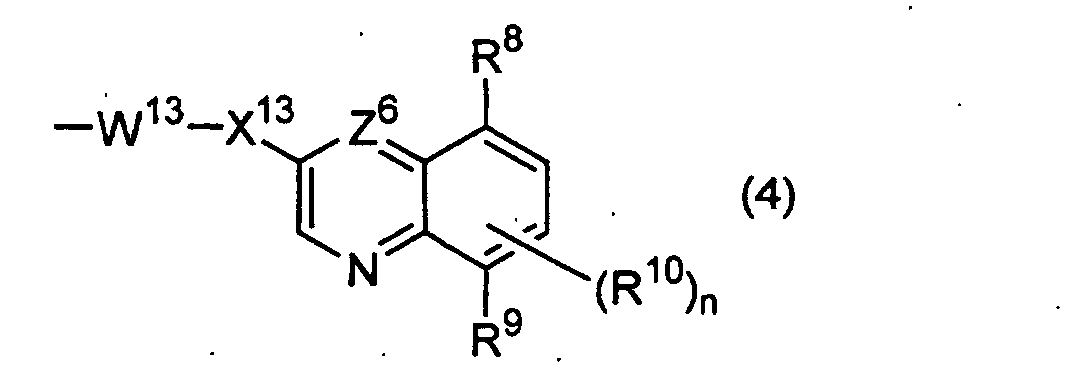
W13 is C1-4 alkylene optionally substituted by C1-4 alkyl, C1-4 alkoxy, hydroxy, C1-4 alkanoyloxy or a halogen;
either of R8 and R9 is
Y3 is C1-4 alkylene optionally substituted by C1-4 alkyl optionally substituted by a halogen, C1-4 alkoxy optionally substituted by a halogen, hydroxy, C1-4 alkanoyloxy, a halogen or cyano;
C2-5 alkenylene optionally substituted by C1-4 alkyl optionally substituted by a halogen, C1-4 alkoxy optionally substituted by a halogen, hydroxy, C1-4 alkanoyloxy, a halogen or cyano; or
C2-5 alkynylene optionally substituted by C1-4 alkyl optionally substituted by a halogen, C1-4 alkoxy optionally substituted by a halogen, hydroxy, C1-4 alkanoyloxy, a halogen or cyano; and
R11 is hydroxy;
C1-4 alkoxy optionally substituted by C1-4 alkyl;
C1-4 alkylsulfonylamino optionally substituted by C1-4 alkyl or a halogen;
unsubstituted phenylsulfonylamino; or
phenylsulfonylamino substituted by C1-4 alkyl optionally substituted by C1-4 alkyl or a halogen, C1-4 alkoxy optionally substituted by C1-4 alkyl or a halogen, or a halogen); and the other is
hydrogen;
hydroxy;
C1-4 alkyl optionally substituted by C1-4 alkyl, hydroxy, C1-4 alkoxy, C2-5 alkoxycarbonyl, C2-5 alkylcarbonyl, C1-4 acyloxy, a halogen, cyano, carbamoyl, amino, C1-4 alkylamino or C2-8 dialkylamino;
C2-5 alkenyl optionally substituted by C1-4 alkyl, hydroxy, C1-4 alkoxy, C2-5 alkoxycarbonyl, C2-5 alkylcarbonyl, C1-4 acyloxy, a halogen, cyano, carbamoyl, amino, C1-4 alkylamino or C2-8 dialkylamino;
C2-5 alkynyl optionally substituted by C1-4 alkyl, hydroxy, C1-4 alkoxy, C2-5 alkoxycarbonyl, C2-5 alkylcarbonyl, C1-4 acyloxy, a halogen, cyano, carbamoyl, amino, C1-4 alkylamino or C2-8 dialkylamino;
C1-4 alkoxy optionally substituted by C1-4 alkyl, C1-4 alkoxy or a halogen;
a halogen;
cyano;
carbamoyl;
C2-5 alkylaminocarbonyl; or
C3-9 dialkylaminocarbonyl);
Z6 is a nitrogen atom, or a carbon atom substituted by hydrogen;
hydroxy;
C1-4 alkyl optionally substituted by C1-4 alkyl, hydroxy, C1-4 alkoxy, C2-5 alkoxycarbonyl, C2-5 alkylcarbonyl, C1-4 acyloxy, a halogen, cyano, carbamoyl, amino, C1-4 alkylamino or C2-8 dialkylamino;
C2-5 alkenyl optionally substituted by C1-4 alkyl, hydroxy, C1-4 alkoxy, C2-5 alkoxycarbonyl, C2-5 alkylcarbonyl, C1-4 acyloxy, a halogen, cyano, carbamoyl, amino, C1-4 alkylamino or C2-8 dialkylamino;
C2-5 alkynyl optionally substituted by C1-4 alkyl, hydroxy, C1-4 alkoxy, C2-5 alkoxycarbonyl, C2-5 alkylcarbonyl, C1-4 acyloxy, a halogen, cyano, carbamoyl, amino, C1-4 alkylamino or C2-8 dialkylamino;
C1-4 alkoxy optionally substituted by C1-4 alkyl, C1-4 alkoxy or a halogen;
a halogen;
cyano;
carbamoyl;
C2-5 alkylaminocarbonyl; or
C3-9 dialkylaminocarbonyl;
R10 is hydroxy;
C1-4 alkyl optionally substituted by C1-4 alkyl, hydroxy, C1-4 alkoxy, C2-5 alkoxycarbonyl, C2-5 alkylcarbonyl, C1-4 acyloxy, a halogen, cyano, carbamoyl, amino, C1-4 alkylamino or C2-8 dialkylamino;
C2-5 alkenyl optionally substituted by C1-4 alkyl, hydroxy, C1-4 alkoxy, C2-5 alkoxycarbonyl, C2-5 alkylcarbonyl, C1-4 acyloxy, a halogen, cyano, carbamoyl, amino, C1-4 alkylamino or C2-8 dialkylamino;
C2-5 alkynyl optionally substituted by C1-4 alkyl, hydroxy, C1-4 alkoxy, C2-5 alkoxycarbonyl, C2-5 alkylcarbonyl, C1-4 acyloxy, a halogen, cyano, carbamoyl, amino, C1-4 alkylamino or C2-8 dialkylamino;
C1-4 alkoxy optionally substituted by C1-4 alkyl, C1-4 alkoxy or a halogen;
a halogen;
cyano;
carbamoyl;
C2-5 alkylaminocarbonyl; or
C3-9 dialkylaminocarbonyl; and
n is an integer of 1 or 2]; or
a formula (5):
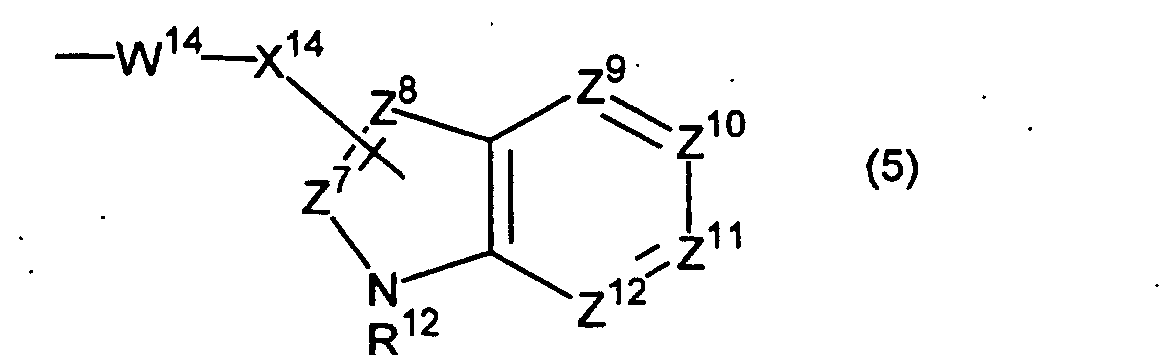
X14 is a single bond, an oxygen atom or a sulfur atom;
W14 is C1-4 alkylene optionally substituted by C1-4 alkyl, C1-4 alkoxy, hydroxy, C1-4 alkanoyloxy or a halogen;
any one of Z9, Z10, Z11 and Z12 is a carbon atom substituted by -X4-Y4-COR13 (wherein
X4 is a single bond, an oxygen or a sulfur atom; Y4 is C1-4 alkylene optionally substituted by C1-4 alkyl optionally substituted by a halogen, C1-4 alkoxy optionally substituted by a halogen, hydroxy, C1-4 alkanoyloxy, a halogen or cyano; C2-5 alkenylene optionally substituted by C1-4 alkyl optionally substituted by a halogen, C1-4 alkoxy optionally substituted by a halogen, hydroxy, C1-4 alkanoyloxy, a halogen or cyano; or
C2-5 alkynylene optionally substituted by C1-4 alkyl optionally substituted by a halogen, C1-4 alkoxy optionally substituted by a halogen, hydroxy, C1-4 alkanoyloxy, a halogen or cyano; and
R13 is hydroxy; C1-4 alkoxy optionally substituted by C1-4 alkyl; C1-4 alkylsulfonylamio optionally substituted by C1-4 alkyl or a halogen;
unsubstituted phenylsulfonylamino; or
phenylsulfonylamino substituted by C1-4 alkyl optionally substituted by C1-4 alkyl or a halogen, C1-4 alkoxy optionally substituted by C1-4 alkyl or a halogen, or a halogen); and
the other is a carbon atom substituted by
hydrogen;
hydroxy;
C1-4 alkyl optionally substituted by C1-4 alkyl, hydroxy, C1-4 alkoxy, C2-5 alkoxycarbonyl, C2-5 alkylcarbonyl, C1-4 acyloxy, a halogen, cyano, carbamoyl, amino, C1-4 alkylamino or C2-8 dialkylamino;
C2-5 alkenyl optionally substituted by C1-4 alkyl, hydroxy, C1-4 alkoxy, C2-5 alkoxycarbonyl, C2-5 alkylcarbonyl, C1-4 acyloxy, a halogen, cyano, carbamoyl, amino, C1-4 alkylamino or C2-8 dialkylamino;
C2-5 alkynyl optionally substituted by C1-4 alkyl, hydroxy, C1-4 alkoxy, C2-5 alkoxycarbonyl, C2-5 alkylcarbonyl, C1-4 acyloxy, a halogen, cyano, carbamoyl, amino, C1-4 alkylamino or C2-8 dialkylamino;
C1-4 alkoxy optionally substituted by C1-4 alkyl, C1-4 alkoxy or a halogen;
a halogen;
cyano;
carbamoyl;
C2-5 alkylaminocarbonyl; or
C3-9 dialkylaminocarbonyl, and
R12 is hydrogen, or C1-4 alkyl optionally substituted by C1-4 alkyl or a halogen];
either of R2 and R3 is a formula: -W21-A21
(wherein W21 is C1-6 alkylene optionally substituted by C1-4 alkyl, C1-4 alkoxy, hydroxy, C1-4 alkanoyloxy or a halogen;
C2-5 alkenylene optionally substituted by C1-4 alkyl; - CONH-; or -CONHCH2-; and
A21 is unsubstituted C6-12 aryl; C6-12 aryl substituted by C1-6 alkyl optionally substituted by hydroxy, C1-4 alkoxy, C1-4 alkanoyloxy, a halogen, amino, C1-4 alkylamino, C2-8 dialkylamino, carbamoyl, C2-5 alkylaminocarbonyl, C3-9 dialkylaminocarbonyl, sulfamoyl, C1-4 alkylsulfamoyl, C2-8 dialkylsulfamoyl or cyano,
by C7-8 aralkyl optionally substituted by C1-4 alkoxy, C1-4 alkyl, halogeno C1-4 alkyl or a halogen,
by C1-4 alkoxy optionally substituted by hydroxy, C1-4 alkanoyloxy, a halogen, amino, C1-4 alkylamino, C2-8 dialkylamino, carbamoyl, C2-5 alkylaminocarbonyl, C3-9 dialkylaminocarbonyl, sulfamoyl, C1-4 alkylsulfamoyl, C2-8 dialkylsulfamoyl or cyano,
by phenoxy optionally substituted by C1-4 alkoxy, C1-4 alkyl, halogeno C1-4 alkyl or a halogen, or
by C3-4 alkenyloxy,
hydroxy,
C1-4 alkanoyloxy,
a halogen,
amino,
C1-6 alkylamino,
C2-12 dialkylamino,
carbamoyl,
C2-7 alkylaminocarbonyl,
C3-14 dialkylaminocarbonyl,
sulfamoyl,
C1-6 alkylsulfamoyl,
C2-12 dialkylsulfamoyl
C2-5 alkenyl,
C1-4 alkylsulfonyloxy,
C1-4 alkylsulfonyl,
C1-4 alkylthio or
cyano;
unsaturated mono- or di-heterocycic ring containing 1-3, the same or different, heteroatoms selected from the group consisting of a nitrogen atom, an oxygen atom and a sulfur atom;
unsaturated mono- or di-heterocycic ring containing 1-3, the same or different, heteroatoms selected from the group consisting of a nitrogen atom, an oxygen atom and a sulfur atom substituted
by C1-4 alkyl optionally substituted by hydroxy, C1-4 alkanoyloxy, a halogen, amino, C1-4 alkylamino, C2-8 dialkylamino, carbamoyl, C2-5 alkylaminocarbonyl, C3-9 dialkylaminocarbonyl, sulfamoyl, C1-4 alkylsulfamoyl, C2-8 dialkylsulfamoyl or cyano,
by C1-4 alkoxy optionally substituted by hydroxy, C1-4 alkanoyloxy, a halogen, amino, C1-4 alkylamino, C2-8 dialkylamino, carbamoyl, C2-5 alkylaminocarbonyl, C3-9 dialkylaminocarbonyl, sulfamoyl, C1-4 alkylsulfamoyl, C2-8 dialkylsulfamoyl or cyano, or
by C3-4 alkenyloxy,
hydroxy,
C1-4 alkanoyloxy,
a halogen,
amino,
C1-6 alkylamino,
C2-12 dialkylamino,
carbamoyl,
C2-7 alkylaminocarbonyl,
C3-14 dialkylaminocarbonyl,
sulfamoyl,
C1-6 alkylsulfamoyl,
C2-12 dialkylsulfamoyl or
cyano; and
the other is hydrogen; C1-4 alkyl optionally substituted by C1-4 alkyl, C1-4 alkoxy, hydroxy, C1-4 alkanoyloxy or a halogen; or a halogen;
R4 is hydrogen; C1-4 alkyl optionally substituted by C1-4 alkyl, C1-4 alkoxy, hydroxy, C1-4 alkanoyloxy or a halogen; or a halogen; and
R5 is hydrogen; C1-4 alkyl optionally substituted by C1-4 alkyl, C1-4 alkoxy, hydroxy, C1-4 alkanoyloxy or a halogen; or a halogen,
or its salt.

X11 is a single bond, an oxygen atom or a sulfur atom;
W11 is C2-5 alkylene optionally substituted by C1-4 alkyl, C1-4 alkoxy, hydroxy, C1-4 alkanoyloxy or a halogen;
C2-5 alkenylene optionally substituted by C1-4 alkyl, C1-4 alkoxy, hydroxy, C1-4 alkanoyloxy or a halogen; or
C2-5 alkynylene optionally substituted by C1-4 alkyl, C1-4 alkoxy, hydroxy, C1-4 alkanoyloxy or a halogen;
either of Z1 and Z2 is a carbon atom substituted by a formula :-X1-Y1-COR6
(wherein X1 is a single bond, an oxygen atom or a sulfur atom;
Y1 is C1-4 alkylene optionally substituted by C1-4 alkyl optionally substituted by a halogen, C1-4 alkoxy optionally substituted by a halogen, hydroxy, C1-4 alkanoyloxy, a halogen or cyano;
C2-5 alkenylene optionally substituted by C1-4 alkyl optionally substituted by a halogen, C1-4 alkoxy optionally substituted by a halogen, hydroxy, C1-4 alkanoyloxy, a halogen or cyano; or
C2-5 alkynylene optionally substituted by C1-4 alkyl optionally substituted by a halogen, C1-4 alkoxy optionally substituted by a halogen, hydroxy, C1-4 alkanoyloxy, a halogen or cyano;
R6 is hydroxy;
C1-4 alkoxy optionally substituted by C1-4 alkyl;
C1-4 alkylsulfonylamino optionally substituted by C1-4 alkyl or a halogen;
unsubstituted phenylsulfonylamino; or phenylsulfonylamino substituted by C1-4 alkyl optionally substituted by C1-4 alkyl or a halogen, C1-4 alkoxy optionally substituted by C1-4 alkyl or a halogen, or a halogen); and
the other is a carbon atom substituted by
hydrogen;
hydroxy;
a halogen;
cyano;
carbamoyl;
C2-5 alkylaminocarbonyl;
C3-9 dialkylaminocarbonyl;
C1-4 alkyl optionally substituted by C1-4 alkyl, hydroxy, C1-4 alkoxy, C2-5 alkoxycarbonyl, C2-5 alkylcarbonyl, C1-4 acyloxy, a halogen, cyano, carbamoyl, amino, C1-4 alkylamino or C2-8 dialkylamino;
C2-5 alkenyl optionally substituted by C1-4 alkyl, hydroxy, C1-4 alkoxy, C2-5 alkoxycarbonyl, C2-5 alkylcarbonyl, C1-4 acyloxy, a halogen, cyano, carbamoyl, amino, C1-4 alkylamino or C2-8 dialkylamino;
C2-5 alkynyl optionally substituted by C1-4 alkyl, hydroxy, C1-4 alkoxy, C2-5 alkoxycarbonyl, C2-5 alkylcarbonyl, C1-4 acyloxy, a halogen, cyano, carbamoyl, amino, C1-4 alkylamino or C2-8 dialkylamino; or
C1-4 alkoxy optionally substituted by C1-4 alkyl, C1-4 alkoxy or a halogen); and
Z3, Z4 and Z5 are independently from each other, a carbon atom substituted by
hydrogen;
hydroxy;
a halogen;
cyano;
carbamoyl;
C2-5 alkylaminocarbonyl;
C3-9 dialkylaminocarbonyl;
C1-4 alkyl optionally substituted by C1-4 alkyl, hydroxy, C1-4 alkoxy, C2-5 alkoxycarbonyl, C2-5 alkylcarbonyl, C1-4 acyloxy, a halogen, cyano, carbamoyl, amino, C1-4 alkylamino or C2-8 dialkylamino;
C2-5 alkenyl optionally substituted by C1-4 alkyl, hydroxy, C1-4 alkoxy, C2-5 alkoxycarbonyl, C2-5 alkylcarbonyl, C1-4 acyloxy, a halogen, cyano, carbamoyl, amino, C1-4 alkylamino or C2-8 dialkylamino;
C2-5 alkynyl optionally substituted by C1-4 alkyl, hydroxy, C1-4 alkoxy, C2-5 alkoxycarbonyl, C2-5 alkylcarbonyl, C1-4 acyloxy, a halogen, cyano, carbamoyl, amino, C1-4 alkylamino or C2-8 dialkylamino; or
C1-4 alkoxy optionally substituted by C1-4 alkyl, C1-4 alkoxy or a halogen].
(wherein X1 is a single bond, an oxygen atom or a sulfur atom;
Y1 is C1-4 alkylene optionally substituted by C1-4 alkyl optionally substituted by a halogen, C1-4 alkoxy optionally substituted by a halogen, hydroxy, C1-4 alkanoyloxy, a halogen or cyano;
C2-5 alkenylene optionally substituted by C1-4 alkyl optionally substituted by a halogen, C1-4 alkoxy optionally substituted by a halogen, hydroxy, C1-4 alkanoyloxy, a halogen or cyano; or
C2-5 alkynylene optionally substituted by C1-4 alkyl optionally substituted by a halogen, C1-4 alkoxy optionally substituted by a halogen, hydroxy, C1-4 alkanoyloxy, a halogen or cyano; and
R6 is hydroxy;
C1-4 alkoxy optionally substituted by C1-4 alkyl;
C1-4 alkylsulfonylamino optionally substituted by C1-4 alkyl or a halogen;
unsubstituted phenylsulfonylamino; or
phenylsulfonylamino substituted by C1-4 alkyl optionally substituted by C1-4 alkyl or a halogen, C1-4 alkoxy optionally substituted by C1-4 alkyl or a halogen, or a halogen); and
Z2 is a carbon atom substituted by
hydrogen;
hydroxy;
a halogen;
cyano;
carbamoyl;
C2-5 alkylaminocarbonyl;
C3-9 dialkylaminocarbonyl;
C1-4 alkyl optionally substituted by C1-4 alkyl, hydroxy, C1-4 alkoxy, C2-5 alkoxycarbonyl, C2-5 alkylcarbonyl, C1-4 acyloxy, a halogen, cyano, carbamoyl, amino, C1-4 alkylamino or C2-8 dialkylamino;
C2-5 alkenyl optionally substituted by C1-4 alkyl, hydroxy, C1-4 alkoxy, C2-5 alkoxycarbonyl, C2-5 alkylcarbonyl, C1-4 acyloxy, a halogen, cyano, carbamoyl, amino, C1-4 alkylamino or C2-8 dialkylamino;
C2-5 alkynyl optionally substituted by C1-4 alkyl, hydroxy, C1-4 alkoxy, C2-5 alkoxycarbonyl, C2-5 alkylcarbonyl, C1-4 acyloxy, a halogen, cyano, carbamoyl, amino, C1-4 alkylamino or C2-8 dialkylamino; or
C1-4 alkoxy optionally substituted by C1-4 alkyl, C1-4 alkoxy or a halogen.
(wherein X1 is a single bond, an oxygen atom or a sulfur atom;
Y1 is C1-4 alkylene optionally substituted by C1-4 alkyl optionally substituted by a halogen, C1-4 alkoxy optionally substituted by a halogen, hydroxy, C1-4 alkanoyloxy, a halogen or cyano;
C2-5 alkenylene optionally substituted by C1-4 alkyl optionally substituted by a halogen, C1-4 alkoxy optionally substituted by a halogen, hydroxy, C1-4 alkanoyloxy, a halogen or cyano; or
C2-5 alkynylene optionally substituted by C1-4 alkyl optionally substituted by a halogen, C1-4 alkoxy optionally substituted by a halogen, hydroxy, C1-4 alkanoyloxy, a halogen or cyano; and
R6 is hydroxy;
C1-4 alkoxy optionally substituted by C1-4 alkyl;
C1-4 alkylsulfonylamino optionally substituted by C1-4 alkyl or a halogen;
unsubstituted phenylsulfonylamino; or
phenylsulfonylamino substituted by C1-4 alkyl optionally substituted by C1-4 alkyl or a halogen, C1-4 alkoxy optionally substituted by C1-4 alkyl or a halogen, or a halogen); and
Z1 is a carbon atom substituted by
hydrogen;
hydroxy;
a halogen;
cyano;
carbamoyl;
C2-5 alkylaminocarbonyl;
C3-9 dialkylaminocarbonyl;
C1-4 alkyl optionally substituted by C1-4 alkyl, hydroxy, C1-4
alkoxy, C2-5 alkoxycarbonyl, C2-5 alkylcarbonyl, C1-4 acyloxy, a halogen, cyano, carbamoyl, amino, C1-4 alkylamino or C2-8 dialkylamino;
C2-5 alkenyl optionally substituted by C1-4 alkyl, hydroxy, C1-4 alkoxy, C2-5 alkoxycarbonyl, C2-5 alkylcarbonyl, C1-4 acyloxy, a halogen, cyano, carbamoyl, amino, C1-4 alkylamino or C2-8 dialkylamino;
C2-5 alkynyl optionally substituted by C1-4 alkyl, hydroxy, C1-4 alkoxy, C2-5 alkoxycarbonyl, C2-5 alkylcarbonyl, C1-4 acyloxy, a halogen, cyano, carbamoyl, amino, C1-4 alkylamino or C2-8 dialkylamino; or
C1-4 alkoxy optionally substituted by C1-4 alkyl, C1-4 alkoxy or a halogen.
(wherein W21 is C1-6 alkylene optionally substituted by C1-4 alkyl, C1-4 alkoxy, hydroxy, C1-4 alkanoyloxy or a halogen; C2-5 alkenylene optionally substituted by C1-4 alkyl; - CONH-; or -CONHCH2-; and
A21 is unsubstituted C6-12 aryl; C6-12 aryl substituted by C1-6 alkyl optionally substituted by hydroxy, C1-4 alkoxy, C1-4 alkanoyloxy, a halogen, amino, C1-4 alkylamino, C2-8 dialkylamino, carbamoyl, C2-5 alkylaminocarbonyl, C3-9 dialkylaminocarbonyl, sulfamoyl, C1-4 alkylsulfamoyl, C2-8 dialkylsulfamoyl or cyano,
by C7-8 aralkyl optionally substituted by C1-4 alkoxy, C1-4 alkyl, halogeno C1-4 alkyl or a halogen,
by C1-4 alkoxy optionally substituted by hydroxy, C1-4 alkanoyloxy, a halogen, amino, C1-4 alkylamino, C2-8 dialkylamino, carbamoyl, C2-5 alkylaminocarbonyl, C3-9 dialkylaminocarbonyl, sulfamoyl, C1-4 alkylsulfamoyl, C2-8 dialkylsulfamoyl or cyano,
by phenoxy optionally substituted by C1-4 alkoxy, C1-4 alkyl, halogeno C1-4 alkyl or a halogen, or
by C3-4 alkenyloxy,
hydroxy,
C1-4 alkanoyloxy,
a halogen,
amino,
C1-6 alkylamino,
C2-12 dialkylamino,
carbamoyl,
C2-7 alkylaminocarbonyl,
C3-14 dialkylaminocarbonyl,
sulfamoyl,
C1-6 alkylsulfamoyl,
C2-12 dialkylsulfamoyl
C2-5 alkenyl,
C1-4 alkylsulfonyloxy,
C1-4 alkylsulfonyl,
C1-4 alkylthio or
cyano;
unsaturated mono- or di-heterocycic ring containing 1-3, the same or different, heteroatoms selected from the group consisting of a nitrogen atom, an oxygen atom and a sulfur atom; or
unsaturated mono- or di-heterocycic ring containing 1-3, the same or different, heteroatoms selected from the group consisting of a nitrogen atom, an oxygen atom and a sulfur atom substituted
by C1-4 alkyl optionally substituted by hydroxy, C1-4 alkanoyloxy, a halogen, amino, C1-4 alkylamino, C2-8 dialkylamino, carbamoyl, C2-5 alkylaminocarbonyl, C3-9 dialkylaminocarbonyl, sulfamoyl, C1-4 alkylsulfamoyl, C2-8 dialkylsulfamoyl or cyano,
by C1-4 alkoxy optionally substituted by hydroxy, C1-4 alkanoyloxy, a halogen, amino, C1-4 alkylamino, C2-8 dialkylamino, carbamoyl, C2-5 alkylaminocarbonyl, C3-9 dialkylaminocarbonyl, sulfamoyl, C1-4 alkylsulfamoyl, C2-8 dialkylsulfamoyl or cyano, or
C3-4 alkenyloxy,
hydroxy,
C1-4 alkanoyloxy,
a halogen,
amino,
C1-6 alkylamino,
C2-12 dialkylamino,
carbamoyl,
C2-7 alkylaminocarbonyl,
C3-14 dialkylaminocarbonyl,
sulfamoyl,
C1-6 alkylsulfamoyl,
C2-12 dialkylsulfamoyl or
cyano; and
R3 is hydrogen; C1-4 alkyl optionally substituted by C1-4 alkyl, C1-4 alkoxy, hydroxy, C1-4 alkanoyloxy or a halogen; or a halogen.
wherein W21 is C1-6 alkylene optionally substituted by C1-4 alkyl, C1-4 alkoxy, hydroxy, C1-4 alkanoyloxy or a halogen;
C2-5 alkenylene optionally substituted by C1-4 alkyl; - CONH-; or -CONHCH2-; and
A21 is unsubstituted C6-12 aryl; C6-12 aryl substituted by C1-6 alkyl optionally substituted by hydroxy, C1-4 alkoxy, C1-4 alkanoyloxy, a halogen, amino, C1-4 alkylamino, C2-8 dialkylamino, carbamoyl, C2-5 alkylaminocarbonyl, C3-9 dialkylaminocarbonyl, sulfamoyl, C1-4 alkylsulfamoyl, C2-8 dialkylsulfamoyl or cyano,
by C7-8 aralkyl optionally substituted by C1-4 alkoxy, C1-4 alkyl, halogeno C1-4 alkyl or a halogen,
by C1-4 alkoxy optionally substituted by hydroxy, C1-4 alkanoyloxy, a halogen, amino, C1-4 alkylamino, C2-8 dialkylamino, carbamoyl, C2-5 alkylaminocarbonyl, C3-9 dialkylaminocarbonyl, sulfamoyl, C1-4 alkylsulfamoyl, C2-8 dialkylsulfamoyl or cyano,
by phenoxy optionally substituted by C1-4 alkoxy, C1-4 alkyl, halogeno C1-4 alkyl or a halogen, or
by C3-4 alkenyloxy,
hydroxy,
C1-4 alkanoyloxy,
a halogen,
amino,
C1-6 alkylamino,
C2-12 dialkylamino,
carbamoyl,
C2-7 alkylaminocarbonyl,
C3-14 dialkylaminocarbonyl,
sulfamoyl,
C1-6 alkylsulfamoyl,
C2-12 dialkylsulfamoyl,
C2-5 alkenyl,
C1-4 alkylsulfonyloxy,
C1-4 alkylsulfonyl,
C1-4 alkylthio or
cyano;
unsaturated mono- or di-heterocycic ring containing 1-3, the same or different, heteroatoms selected from the group consisting of a nitrogen atom, an oxygen atom and a sulfur atom; or
unsaturated mono- or di-heterocycic ring containing 1-3, the same or different, heteroatoms selected from the group consisting of a nitrogen atom, an oxygen atom and a sulfur atom substituted
by C1-4 alkyl optionally substituted by hydroxy, C1-4 alkanoyloxy, a halogen, amino, C1-4 alkylamino, C2-8 dialkylamino, carbamoyl, C2-5 alkylaminocarbonyl, C3-9 dialkylaminocarbonyl, sulfamoyl, C1-4 alkylsulfamoyl, C2-8 dialkylsulfamoyl or cyano,
by C1-4 alkoxy optionally substituted by hydroxy, C1-4 alkanoyloxy, a halogen, amino, C1-4 alkylamino, C2-8 dialkylamino, carbamoyl, C2-5 alkylaminocarbonyl, C3-9 dialkylaminocarbonyl, sulfamoyl, C1-4 alkylsulfamoyl, C2-8 dialkylsulfamoyl or cyano, or
C3-4 alkenyloxy,
hydroxy,
C1-4 alkanoyloxy,
a halogen,
amino,
C1-6 alkylamino,
C2-12 dialkylamino,
carbamoyl,
C2-7 alkylaminocarbonyl,
C3-14 dialkylaminocarbonyl,
sulfamoyl,
C1-6 alkylsulfamoyl,
C2-12 dialkylsulfamoyl or
cyano); and
R2 is hydrogen; C1-4 alkyl optionally substituted by C1-4 alkyl, C1-4 alkoxy, hydroxy, C1-4 alkanoyloxy or a halogen; or a halogen.
(wherein W21 is C1-6 alkylene optionally substituted by C1-4 alkyl, C1-4 alkoxy, hydroxy, C1-4 alkanoyloxy or a halogen; C2-5 alkenylene optionally substituted by C1-4 alkyl; -CONH-; or -CONHCH2-; and
A21 is unsubstituted C6-12 aryl; C6-12 aryl substituted by C1-6 alkyl optionally substituted by hydroxy, C1-4 alkoxy, C1-4 alkanoyloxy, a halogen, amino, C1-4 alkylamino, C2-8 dialkylamino, carbamoyl, C2-5 alkylaminocarbonyl, C3-9 dialkylaminocarbonyl, sulfamoyl, C1-4 alkylsulfamoyl, C2-8 dialkylsulfamoyl or cyano,
by C7-8 aralkyl optionally substituted by C1-4 alkoxy, C1-4 alkyl, halogeno C1-4 alkyl or a halogen,
by C1-4 alkoxy optionally substituted by hydroxy, C1-4 alkanoyloxy, a halogen, amino, C1-4 alkylamino, C2-8 dialkylamino, carbamoyl, C2-5 alkylaminocarbonyl, C3-9 dialkylaminocarbonyl, sulfamoyl, C1-4 alkylsulfamoyl, C2-8 dialkylsulfamoyl or cyano,
by phenoxy optionally substituted by C1-4 alkoxy, C1-4 alkyl, halogeno C1-4 alkyl or a halogen, or
by C3-4 alkenyloxy,
hydroxy,
C1-4 alkanoyloxy,
a halogen,
amino,
C1-6 alkylamino,
C2-12 dialkylamino,
carbamoyl,
C2-7 alkylaminocarbonyl,
C3-14 dialkylaminocarbonyl,
sulfamoyl,
C1-6 alkylsulfamoyl,
C2-12 dialkylsulfamoyl
C2-5 alkenyl,
C1-4 alkylsulfonyloxy,
C1-4 alkylsulfonyl,
C1-4 alkylthio or
cyano;
unsaturated mono- or di-heterocycic ring containing 1-3, the same or different, heteroatoms selected from the group consisting of a nitrogen atom, an oxygen atom and a sulfur atom;
unsaturated mono- or di-heterocycic ring containing 1-3, the same or different, heteroatoms selected from the group consisting of a nitrogen atom, an oxygen atom and a sulfur atom substituted
by C1-4 alkyl optionally substituted by hydroxy, C1-4 alkanoyloxy, a halogen, amino, C1-4 alkylamino, C2-8 dialkylamino, carbamoyl, C2-5 alkylaminocarbonyl, C3-9 dialkylaminocarbonyl, sulfamoyl, C1-4 alkylsulfamoyl, C2-8 dialkylsulfamoyl or cyano,
by C1-4 alkoxy optionally substituted by hydroxy, C1-4 alkanoyloxy, a halogen, amino, C1-4 alkylamino, C2-8 dialkylamino, carbamoyl, C2-5 alkylaminocarbonyl, C3-9 dialkylaminocarbonyl, sulfamoyl, C1-4 alkylsulfamoyl, C2-8 dialkylsulfamoyl or cyano, or
by C3-4 alkenyloxy,
hydroxy,
C1-4 alkanoyloxy,
a halogen,
amino,
C1-6 alkylamino,
C2-12 dialkylamino,
carbamoyl,
C2-7 alkylaminocarbonyl,
C3-14 dialkylaminocarbonyl,
sulfamoyl,
C1-6 alkylsulfamoyl,
C2-12 dialkylsulfamoyl or
cyano); and
R3 is hydrogen; C1-4 alkyl optionally substituted by C1-4 alkyl, C1-4 alkoxy, hydroxy, C1-4 alkanoyloxy or a halogen; or a halogen. The present invention also relates to
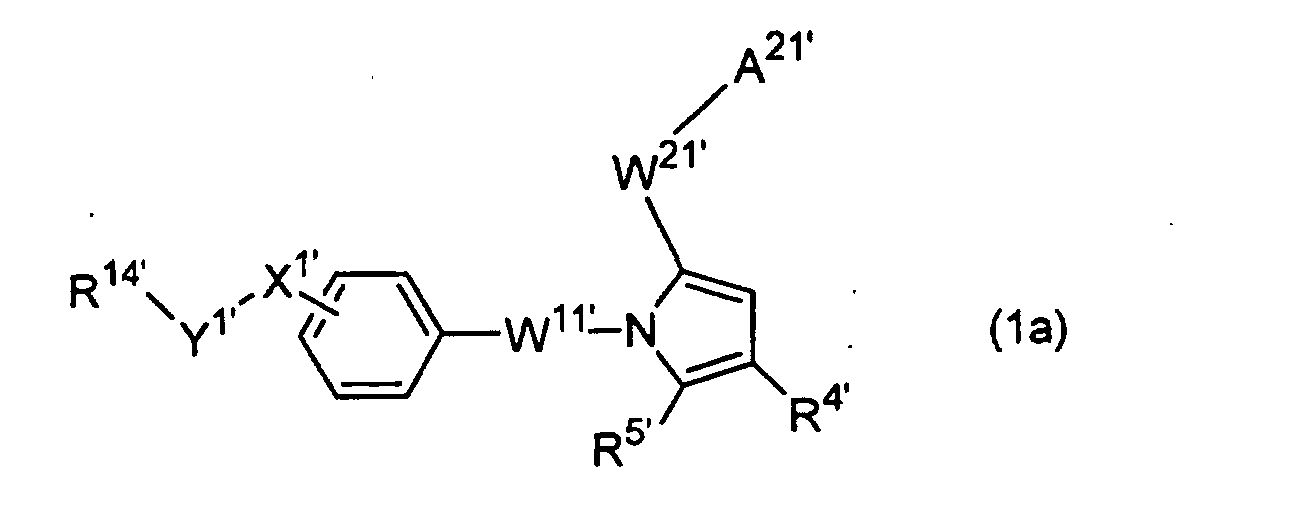
R4' is hydrogen, C1-4 alkyl optionally substituted by C1-4 alkyl or a halogen, or a halogen;
R5' is hydrogen, C1-4 alkyl optionally substituted by C1-4 alkyl or a halogen, or a halogen;
R14' is a carboxyl or a group which is convertible to a carboxyl by hydrolysis in vivo;
X1' is a single bond, an oxygen atom or a sulfur atom;
Y1' is C1-4 alkylene optionally substituted by C1-4 alkyl, C1-4 alkoxy, hydroxy or a halogen;
C2-5 alkenylene optionally substituted by C1-4 alkyl, C1-4 alkoxy, hydroxy or a halogen; or
C2-5 alkynylene optionally substituted by C1-4 alkyl, C1-4 alkoxy, hydroxy or a halogen;
W11' is C2-5 alkylene optionally substituted by C1-4 alkyl or a halogen;
C2-5 alkenylene optionally substituted by C1-4 alkyl or a halogen; or
C2-5 alkynylene optionally substituted by C1-4 alkyl or a halogen;
W21' is C1-4 alkylene in which methylene may form carbonyl, and said alkylene is optionally substituted by C1-4 alkyl; C2-5 alkenylene in which methylene may form carbonyl, and said alkenylene is optionally substituted by C1-4 alkyl; -CONH-; or -CONHCH2-; and
A21' is unsubstituted C6-12 aryl; C6-12 aryl substituted
by C1-4 alkyl optionally substituted by hydroxy, a halogen, C1-4 alkoxy or C2-8 dialkylamino,
by C1-4 alkoxy optionally substituted by a halogen, C1-4 alkoxy or C2-8 dialkylamino,
by a halogen or C2-12 dialkylamino;
unsaturated mono- or di-heterocycic ring containing 1-3, the same or different, heteroatoms selected from the group consisting of a nitrogen atom, an oxygen atom and a sulfur atom;
unsaturated mono- or di-heterocycic ring containing 1-3, the same or different, heteroatoms selected from the group consisting of a nitrogen atom, an oxygen atom and a sulfur atom substituted
by C1-4 alkyl optionally substituted by hydroxy, a halogen,
C1-4 alkoxy or C2-8 dialkylamino,
by C1-4 alkoxy optionally substituted,
by C2-8 dialkylamino,
by a halogen, or
by C2-12 dialkylamino;


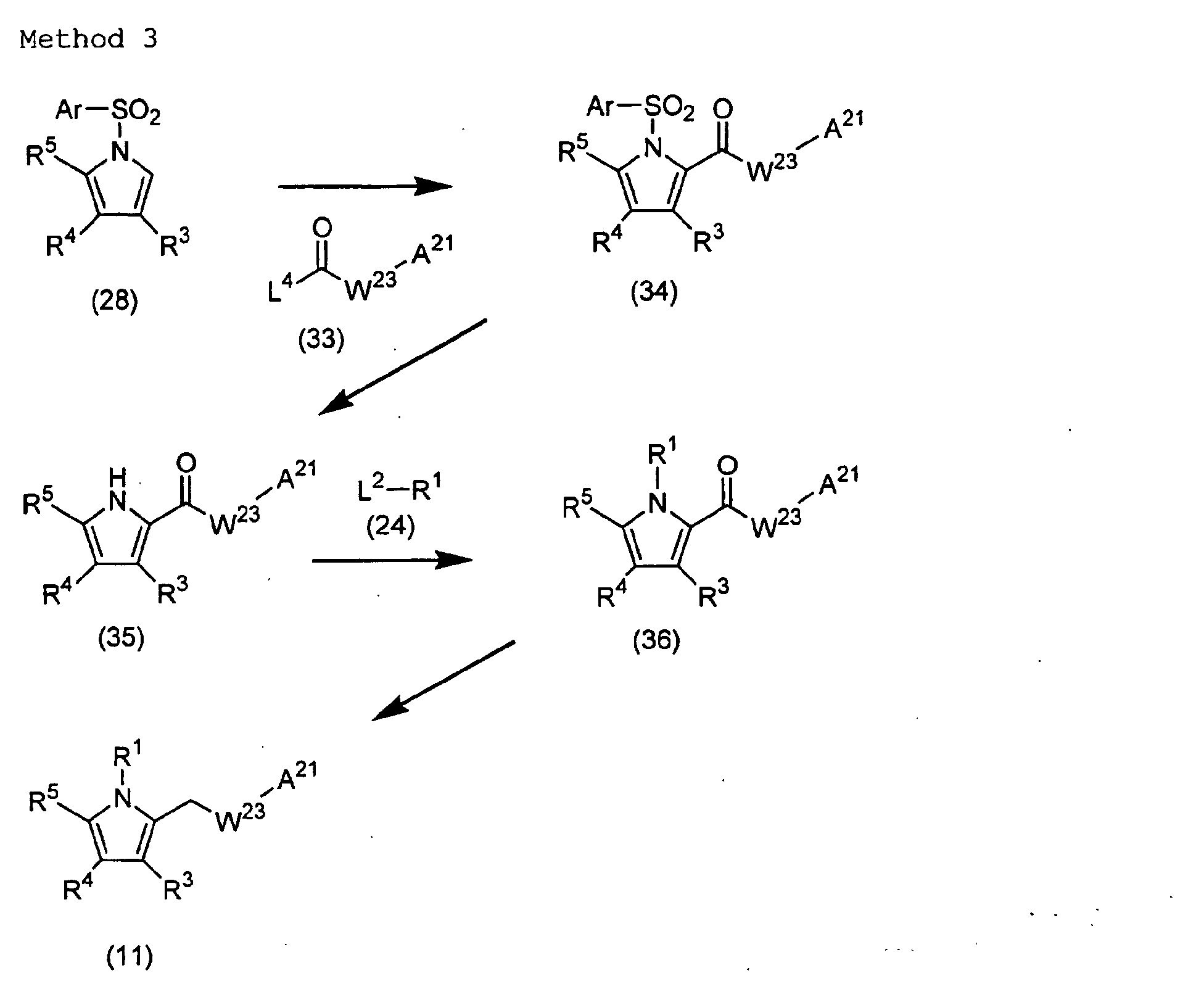
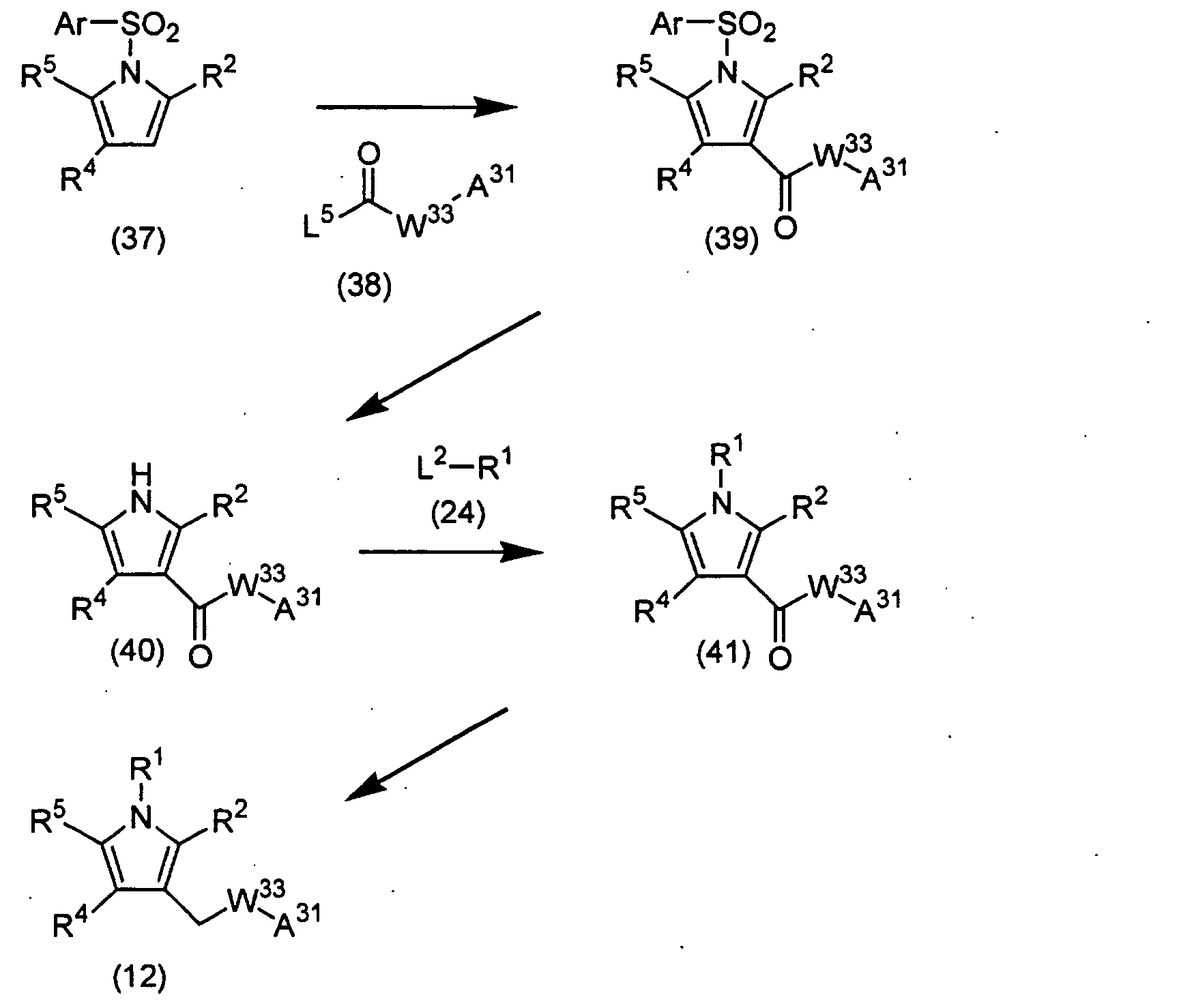
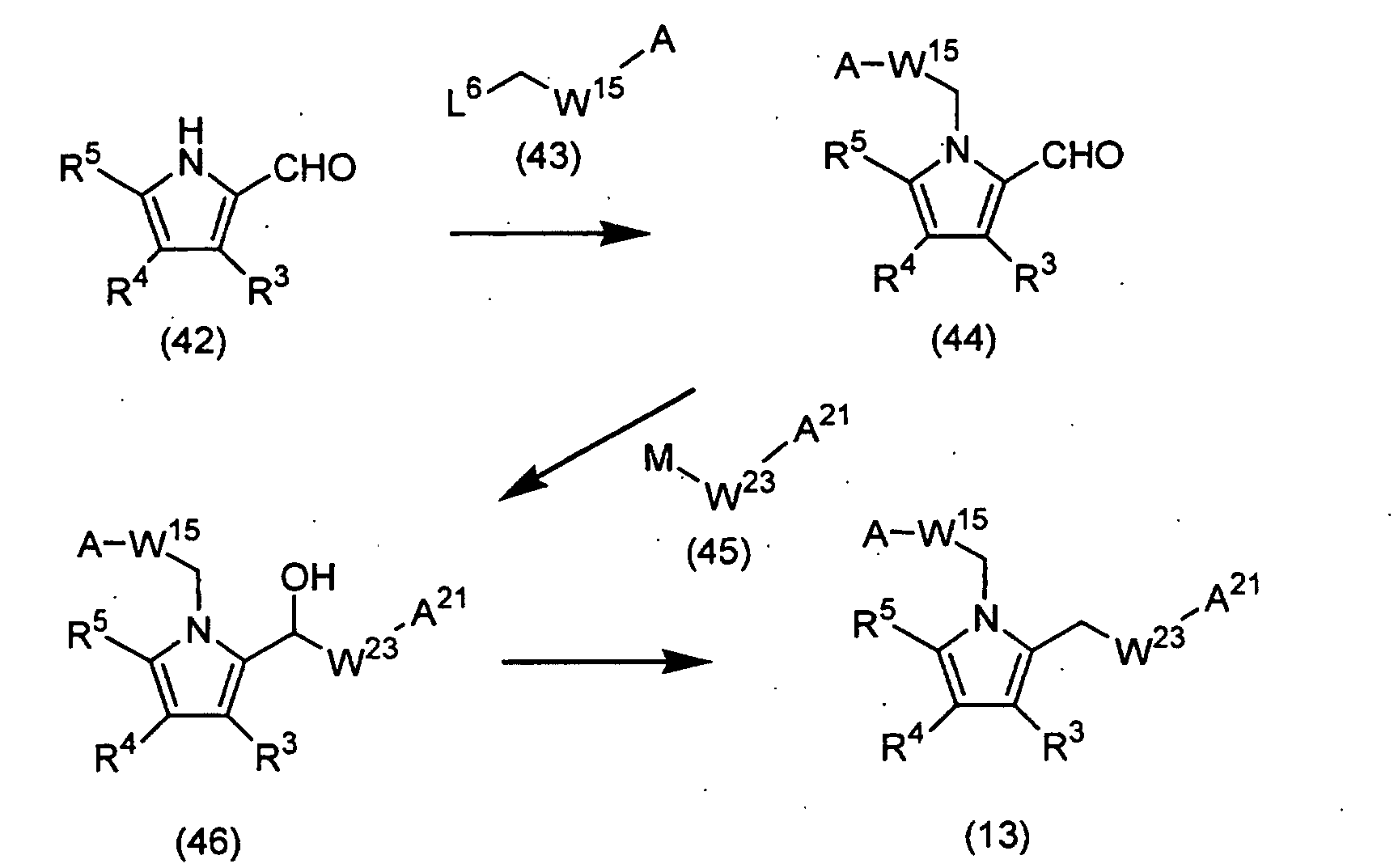
W15 is C1-4 alkylene optionally substituted, C2-4 alkenylene optionally substituted, and L6 is a leaving group such as a halogen (e.g., Cl, Br, I), methanesulfonyloxy, trifluoromethanesulfonyloxy, etc., and M is an alkali metal such as lithium, etc., magnesium bromide, magnesium iodde, etc.
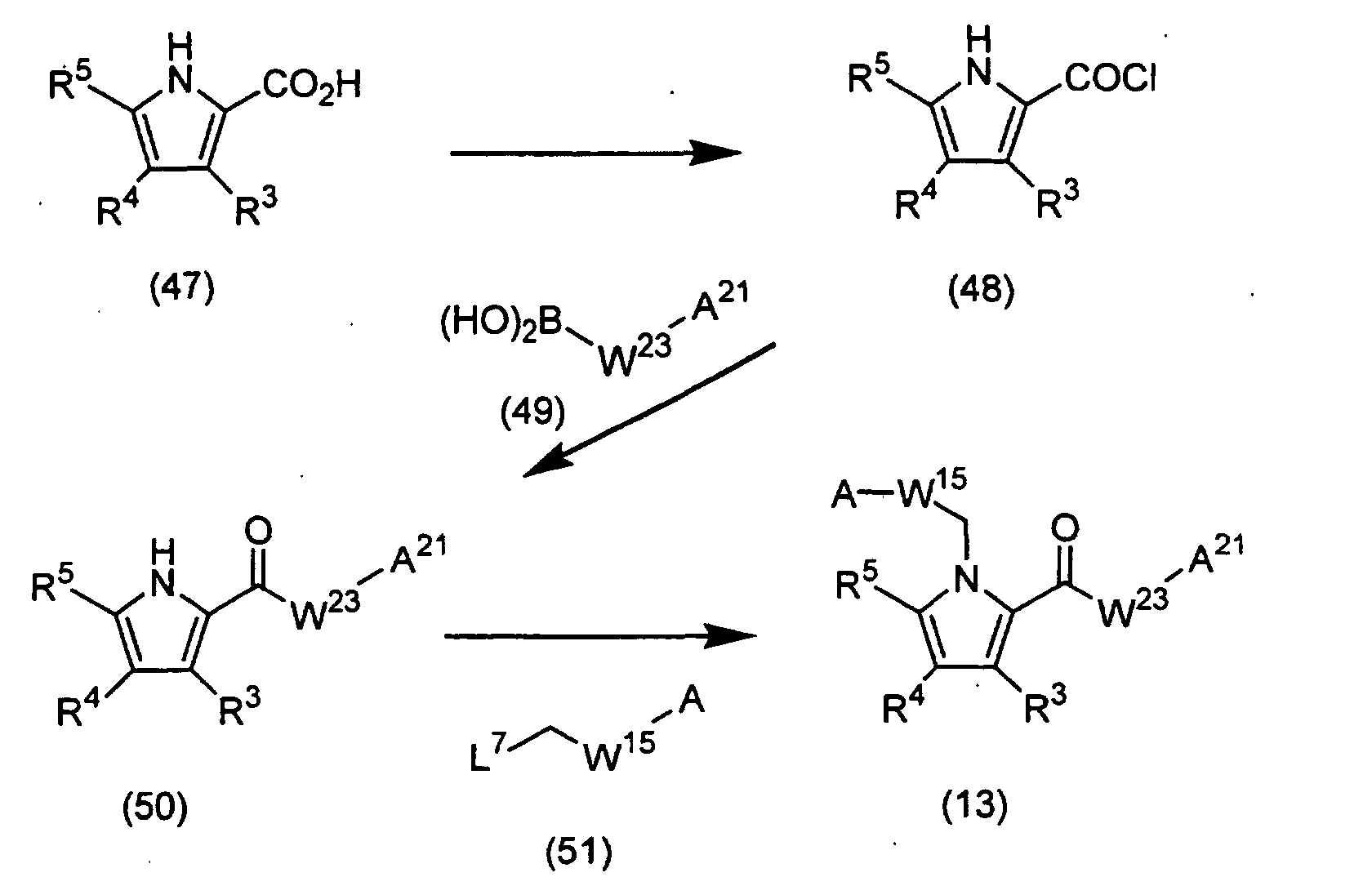
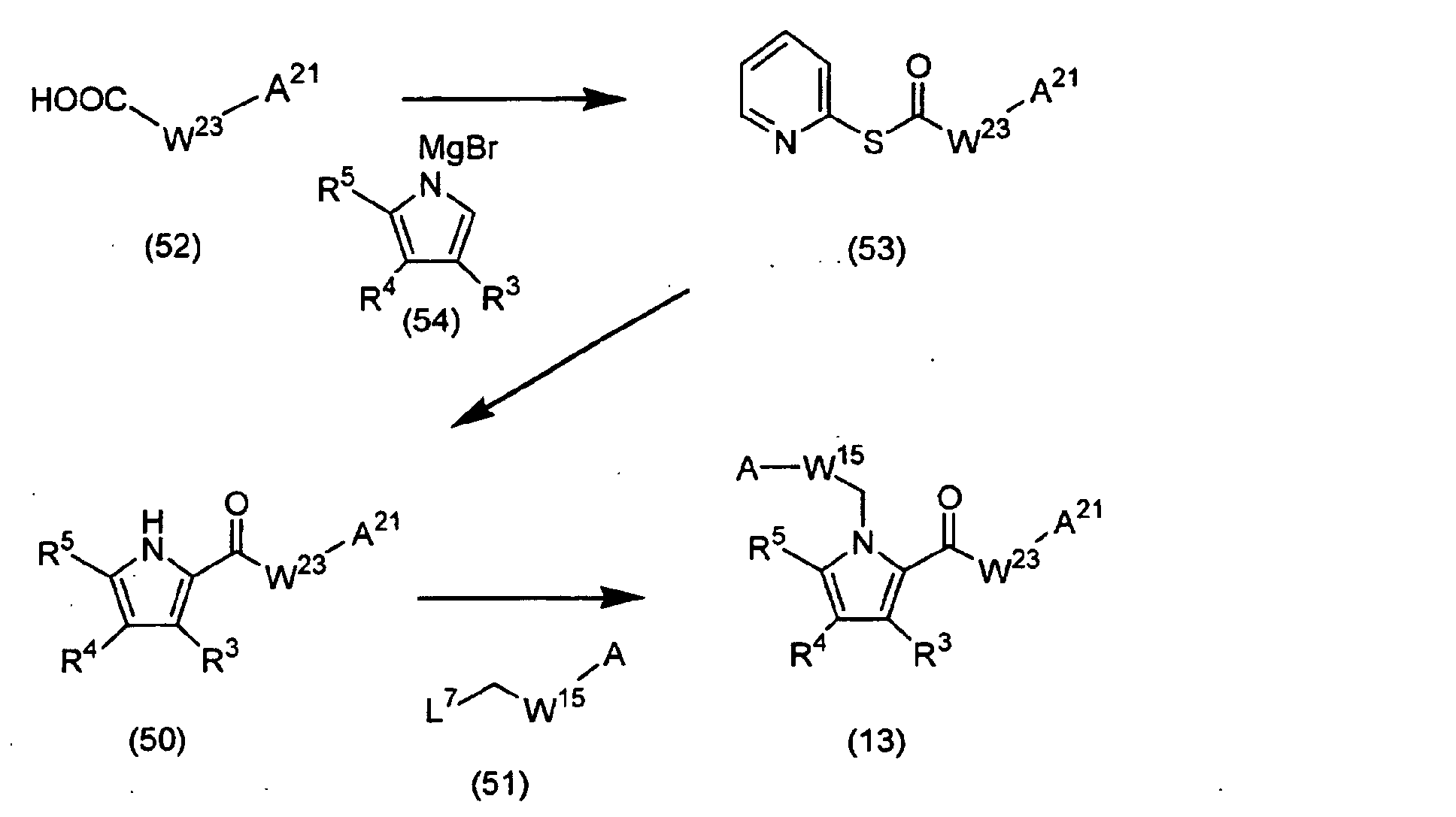


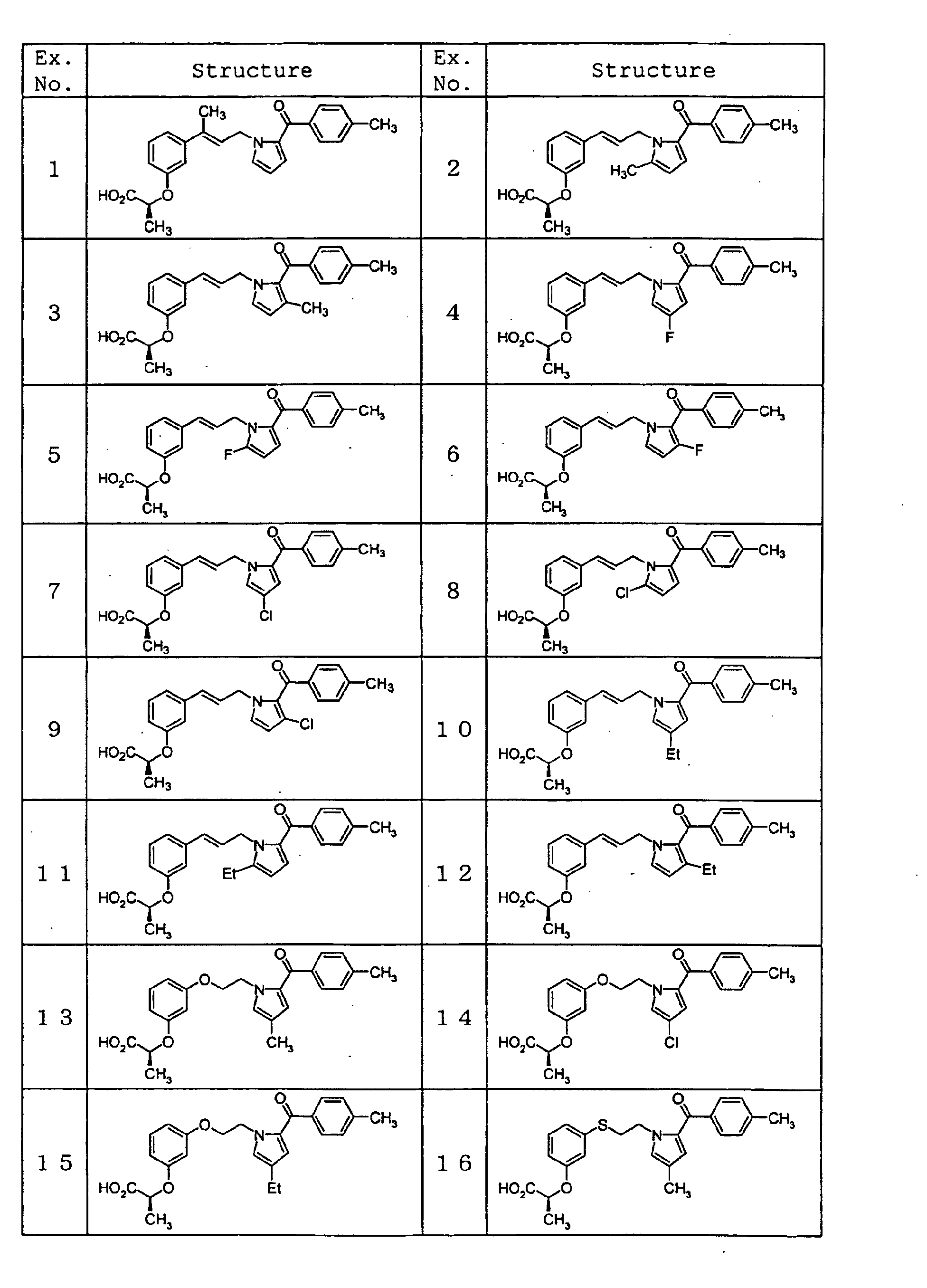
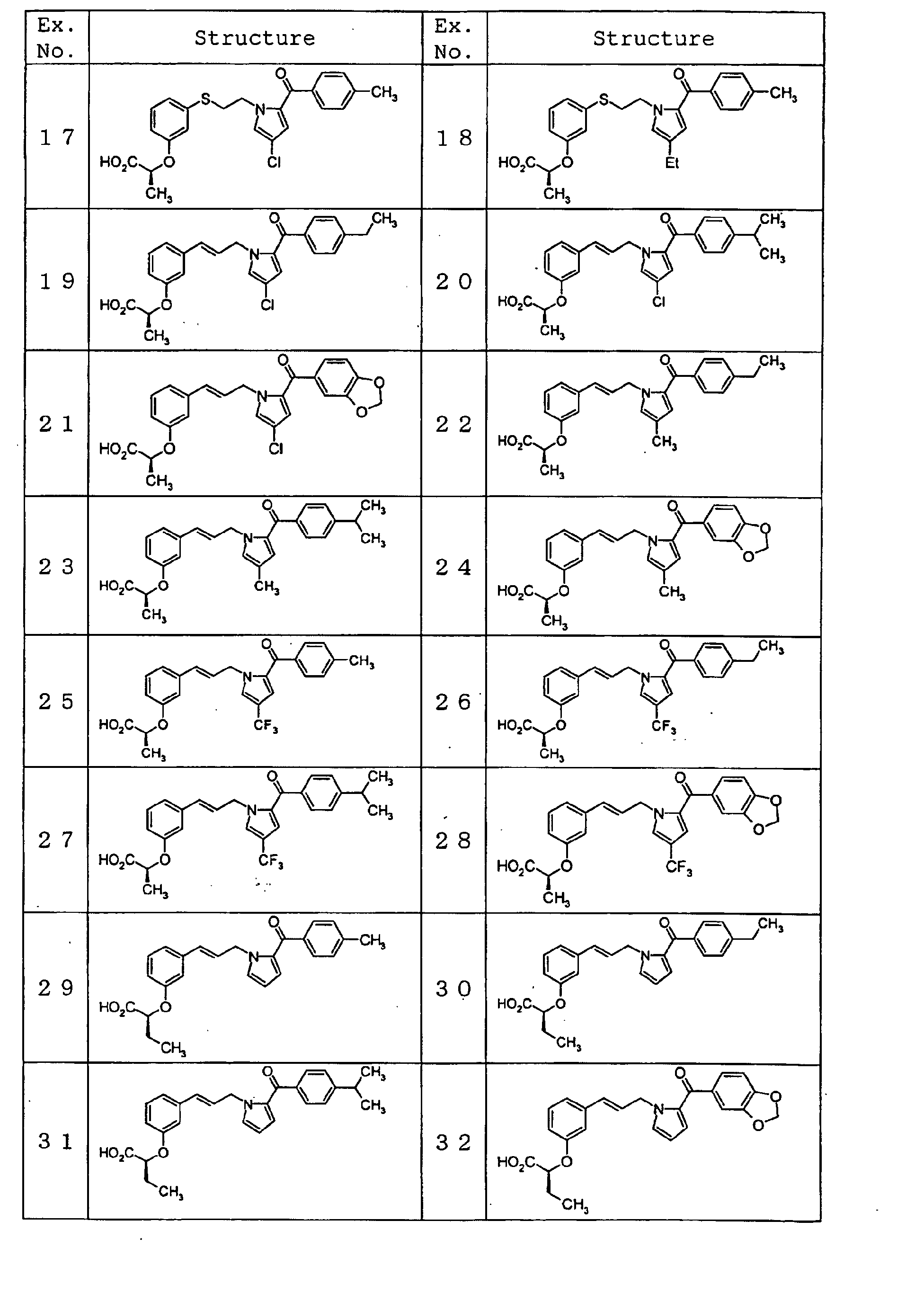


1H NMR (CDCl3, 300 MHz) δ 8.12 (d, 2 H, J = 8. 3 Hz) , 7.75-7.78 (m, 1 H), 7.72 (brd, 2 H, J = 7.9 Hz), 7.65 (brt, 1 H, J = 7.9 Hz), 7.58 (brt, 2 H, J = 7.9 Hz), 7.25 (d, 2 H, J = 8.3 Hz), 6.69 - 6.72 (m, 1 H) , 6.35 (dd, 1 H, J = 3.1 and 0.5 Hz), 2.42 (s, 3 H).
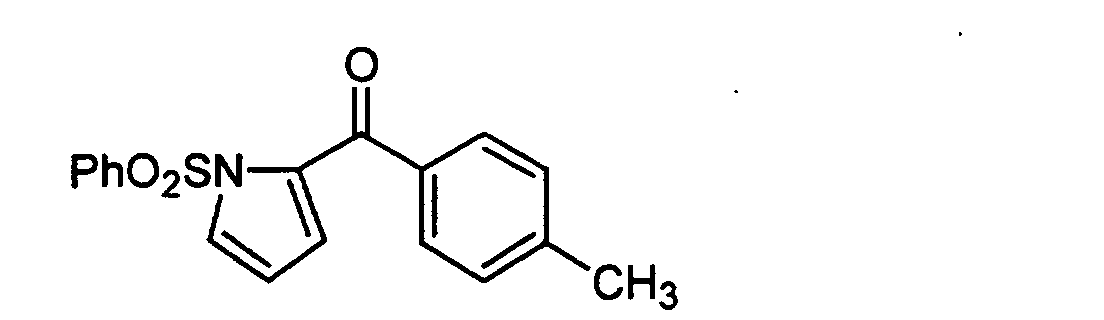
1H NMR (CDCl3, 300 MHz) δ 9. 52 (brs, 1 H), 8.25 (d, 2 H, J = 8.3 Hz), 7.29 (d, 2 H, J = 8.3 Hz), 7.12 (brs, 1 H), 6.88 - 6.91 (m, 1 H) , 6.32 - 6.36 (m, 1 H) , 2.44 (s, 3 H).

1H NMR (CDCl3, 400 MHz) δ 8.12 (dt, 2 H, J = 7.2 and 1.5 Hz), 7.84 (d, 2 H, J = 8.9 Hz), 7.73 (dd, 1 H, J = 1.7 and 3.2 Hz), 7.65 (tt, 1 H, J = 1.5 and 7.2 Hz), 7.58 (tt, 2 H, J = 1. 5 and 7.2 Hz) , 6. 93 (d, 2 H, J = 8. 9 Hz) , 6.68 (dd, 1 H, J = 1.7 and 3.6 Hz), 6.34 (dd, 1 H, J = 3.2 and 3.6 Hz), 3.87 (s, 3 H).

1H NMR (CDCl3, 400 MHz) δ 9.54 (brs, 1 H), 7.94 (d, 2 H, J = 8.9 Hz), 7.12 (dt, 1 H, J = 1.3 and 2.7 Hz), 6.93 (d, 2 H, J = 8.9 Hz), 6.89 (ddd, 1 H, J = 3.8, 2.4 and 1.3 Hz), 6.34 (dt, 1 H, J = 3.8 and 2.7 Hz), 3.89 (s, 3 H).

1H NMR (CDCl3, 400 MHz) δ 10.20 (brs, 1 H) , 9. 90 (s, 1 H), 7.98 (d, 2 H, J = 8.9 Hz), 7.72 (dd, 1 H, J = 3.3 and 1.4 Hz), 7.33 (dd, 1 H, J = 2. 3 and 1.4 Hz), 7.01 (d, 2 H, J = 8.9 Hz), 3.91 (s, 3 H).
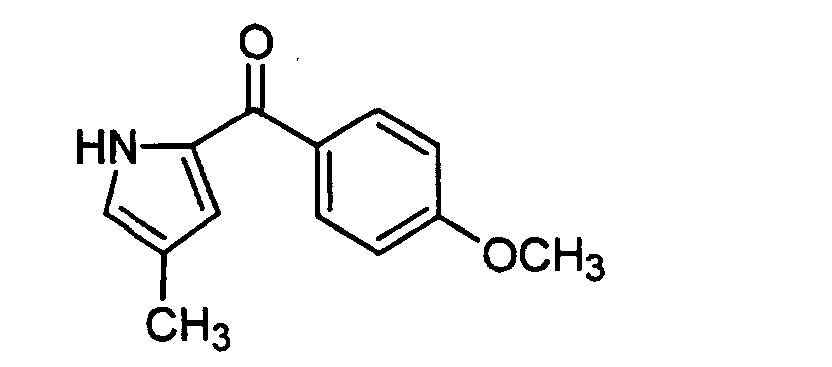
1H NMR (CDCl3, 400 MHz) δ 9.38 (brs, 1 H), 7.92 (d, 2 H, J = 8.9 Hz), 6.97 (d, 2 H, J = 8.9 Hz), 6.89 - 6.90 (m, 1 H), 6.70 (dd, 1 H, J = 1.2, 2. 0 Hz) , 3.88 (s, 3 H) , 2. 15 (s, 3 H).

1H NMR (CDCl3, 300 MHz) δ 7.89 (brd, 2 H, J = 7.9 Hz), 7.73 (d, 2 H, J = 8.0 Hz), 7.65 (brt, 1 H, J = 7.9 Hz), 7.65 (brs, 1 H), 7.34 (brt, 2 H, J = 7.9 Hz), 7.29 (d, 2 H, J = 8.0 Hz), 7.22 (dd, 1 H, J = 2.2 and 2.8 Hz), 6.80 (dd, 1 H, J = 1.5 and 2.8 Hz), 2.44 (s, 3 H).
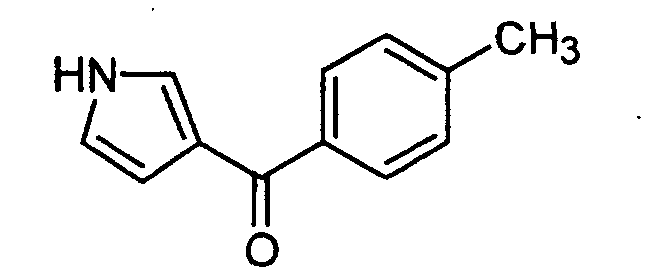
1H NMR (CDCl3, 300 MHz) δ 7.76 (d, 2 H, J = 8.1 Hz) , 7.35 (brquint., 1 H, J = 1.5 Hz), 7.26 (d, 2 H, J = 8.1 Hz), 6.84 (brq, 1 H, J = 1.5 Hz), 6.76 (brs, 1 H), 2.43 (s, 3 H).
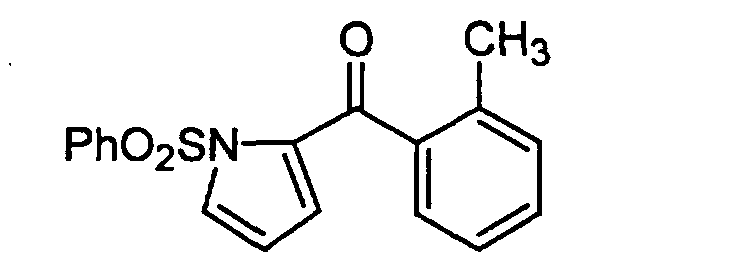
1H NMR (CDCl3, 400 MHz) δ 8.09 - 8.12 (m, 2 H), 7.84 (dd, 1 H, J = 3.1, 1.8 Hz), 7.62 - 7.77 (m, 1 H), 7.54 - 7.59 (m, 2 H), 7.27 - 7.36 (m, 2 H), 7.15 - 7.21 (m, 2 H), 6.56 (dd, 1 H, J = 3.7 and 1.8 Hz), 6.31 (dd, 1 H, J = 3.7 and 3.1 Hz), 2.19 (s, 3 H) .
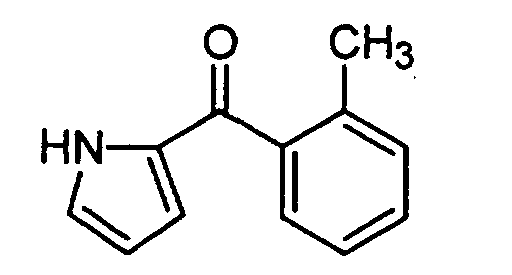
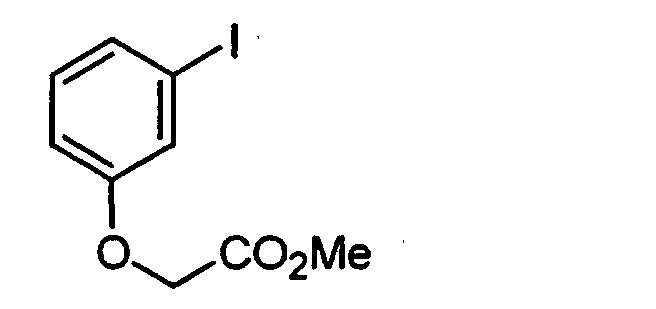
1H NMR (CDCl3, 400 MHz) δ 7.34 (brd, 1 H, J = 8.0 Hz), 7.25 - 7.28 (m, 1 H), 7.01 (t, 1 H, J = 8. 0 Hz), 6. 88 (ddd, 1 H, J = 8.0, 2.4 and 0.4 Hz), 4.61 (s, 2 H), 3.82 (s, 3 H).

1H NMR (CDCl3, 400 MHz) δ 9.71 (d, 1 H, J = 7. 7 Hz), 7.44 (d, 1 H, J = 15.9 Hz), 7.37 (t, 1 H, J = 8.0 Hz), 7.22 (brd, 1 H, J = 8.0 Hz), 7.10 (t, 1 H, J = 2.3 Hz), 6.99 (ddd, 1 H, J = 8.0, 2.3 and 0.7 Hz), 6.69 (dd, 1 H, J = 15.9 and 7.7 Hz), 4.68 (s, 2 H), 3.83 (s, 3 H).

1H NMR (CDCl3, 400 MHz) δ 7.25 (t, 1 H, J = 8.0 Hz), 7.04 (brd, 1 H, J = 8.0 Hz) , 6.94 (t, 1 H, J = 2.3 Hz), 6.79 (dd, 1 H, J = 8.0 and 2.3 Hz), 6.58 (d, 1 H, J = 15.9 Hz), 6.35 (dt, 1 H, J = 15.9 and 5.6 Hz) , 4.65 (s, 2 H) , 4. 33 (dt, 2 H, J = 1.4 and 5. 8 Hz) , 3. 82 (s, 3 H) , 1. 45 (t, 1 H, J = 5.8 Hz).

1H NMR (CDCl3, 400 MHz) δ 7.25 (t, 1 H, J = 8.0 Hz), 7.04 (d, 1 H, J = 8.0 Hz), 6.94 (t, 1 H, J = 2.3 Hz), 6.82 (dd, 1 H, J = 8.0 and 2.3 Hz), 6.60 (d, 1 H, J = 15.6 Hz), 6.38 (dt, 1 H, J = 15.6 and 7. 8 Hz) , 4. 65 (s, 2 H) , 4.15 (dd, 2 H, J = 7.8 and 0.7 Hz), 3.82 (s, 3 H).
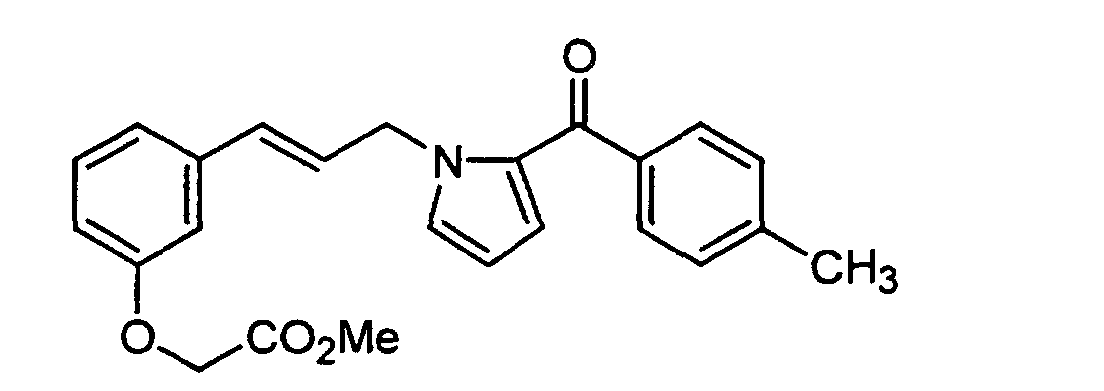
1H NMR (CDCl3, 400 MHz) δ 7.73 (d, 2 H, J = 8.1 Hz), 7.25 (d, 2 H, J = 8.1 Hz), 7.21 (t, 1 H, J = 7.6 Hz), 7.04 (dd, 1 H, J = 2.5 and 1.7 Hz), 7.00 (brd, 1 H, J = 7.6 Hz), 6.90 (dd, 1 H, J = 4.0 and 1.6 Hz), 6.76 - 6.79 (m, 1 H), 6.77 (dd, 1 H, J = 4.0 and 1.7 Hz), 6.46 (d, 1 H, J = 15.6 Hz), 6.41 (dt, 1 H, J = 15.6 and 4.8 Hz), 6.20 (dd, 1 H, J = 4.0 and 2.5 Hz), 5.19 (d, 2 H, J = 4.8 Hz), 4.62 (s, 2 H), 3.80 (s, 3 H), 2.42 (s, 3 H).

1H NMR (CDCl3, 400 MHz) δ 7.72 (d, 2 H, J = 8.1 Hz), 7.25 (d, 2 H, J = 8.1 Hz), 7.21 (t, 1 H, J = 8.0 Hz), 7.03 (dd, 1 H, J = 2.5 and 1.7 Hz), 7.01 (brd, 1 H, J = 8.0 Hz), 6.90 - 6.92 (m, 1 H) , 6.76 - 6.81 (m, 1 H) , 6.77 (dd, 1 H, J = 4.0 and 1. 7 Hz) , 6.38 - 6.47 (m, 2 H) , 6. 20 (dd, 1 H, J = 4.0 and 2.5 Hz), 5.17 - 5.20 (m, 2 H), 4.63 (s, 2 H), 2.42 (s, 3 H).

1H NMR (CDCl3, 400 MHz) δ 7.76 (d, 2 H, J = 8.1 Hz) , 7.28-7.31 (m, 1 H) , 7.25 - 7.28 (m, 1 H) , 7.25 (d, 2 H, J = 8.1 Hz), 7.03 (bd, 1 H, J = 7.8 Hz), 6.92 - 6.94 (m, 1 H), 6.84 (dd, 1 H, J = 7.8 and 2.1 Hz), 6.71 - 6.74 (m, 2 H), 6.48 (d, 1 H, J = 15.8 Hz), 6.30 (dt, 1 H, J = 15.8 and 6.1 Hz), 4.68 (s, 2 H), 4.67 - 4.70 (m, 2 H), 2.42 (s, 3 H).

1H NMR (CDCl3, 400 MHz) δ 7.84 (d, 2 H, J = 8.8 Hz), 7.23 (t, 1 H, J = 8.0 Hz), 7.01 - 7.05 (m, 2 H), 6.95 (d, 2 H, J = 8.8 Hz), 6.91 - 6.93 (m, 1 H), 6.80 (dd, 1 H, J = 8.0 and 2.3 Hz), 6.77 (dd, 1 H, J = 4.0 and 1.7 Hz), 6.42 - 6.47 (m, 2 H), 6.22 (dd, 1 H, J = 4.0 and 2.5 Hz), 5.17 - 5.20 (m, 2 H) , 4. 66 (s, 2 H) , 3. 88 (s, 3 H).
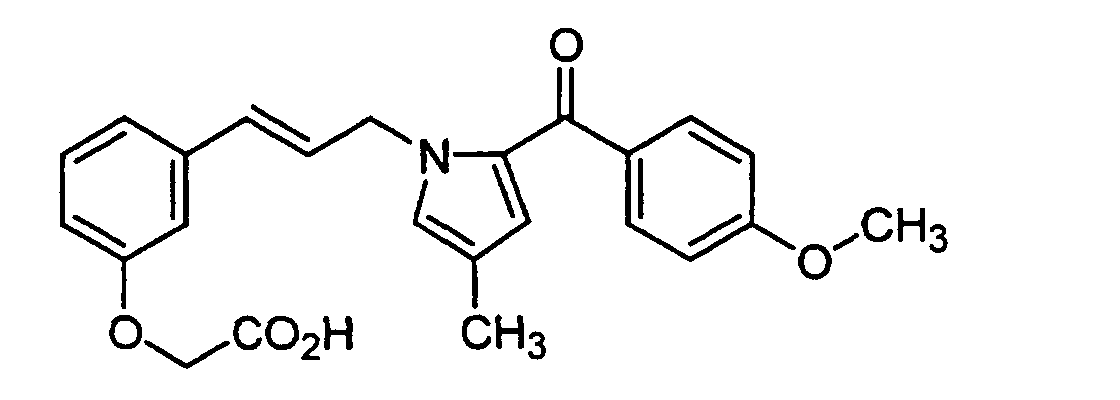
1H NMR (CDCl3, 400 MHz) δ 7.83 (d, 2 H, J = 8.8 Hz) , 7.23 (t, 1 H, J = 8.0 Hz), 7.04 (brd, 1 H, J = 8.0 Hz), 6.95 (d, 2 H, J = 8.8 Hz), 6.91 - 6.95 (m, 1 H), 6.82 (brs, 1 H) , 6.80 (dd, 1 H, J = 8.0 and 2.5 Hz), 6.57 (brs, 1 H), 6.38-6.48 (m, 2 H), 5.11 - 5.13 (m, 2 H), 4.66 (s, 2 H), 3.88 (s, 3 H) , 2.09 (3 H, s).

1H NMR (CDCl3, 400 MHz) δ 7.36 (brd, 1 H, J = 7.7 Hz), 7.32 (dd, 1 H, J = 7.7 and 1.4 Hz), 7.23 (brd, 2 H, J = 7.7 Hz), 7.21 (t, 1 H, J = 7.8 Hz), 7.05 (t, 1 H, J = 2.0 Hz), 7.03 (d, 1 H, J = 7 . 8 Hz), 6.93 (dd, 1 H, J = 2 . 5 and 1 . 7 Hz), 6.81 (dd, 1 H, J = 7.8 and 2.0 Hz), 6.53 (dd, 1 H, J = 4.0 and 1. 7 Hz), 6.43 - 6. 50 (m, 1 H) , 6. 43 (d, 1 H, J = 15. 9 Hz), 6.16 (dd, 1 H, , J = 4.0 and 2.5 Hz), 5.26 - 5.28 (m, 2 H) , 4.67 (s, 2 H) , 2.33 (s, 3 H) .
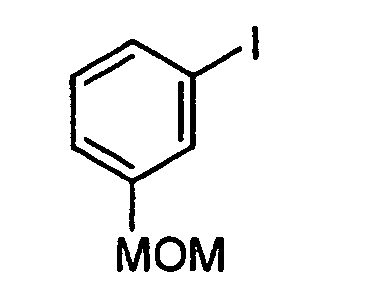
1H NMR (CDCl3, 400 MHz) δ 7. 40 - 7. 42 (m, 1 H) , 7 . 34 (dt, 1 H, J = 3.6 and 1.6 Hz), 6.99 - 7.02 (m, 2 H), 5.15 (s, 2 H), 3.47 (s, 3 H).

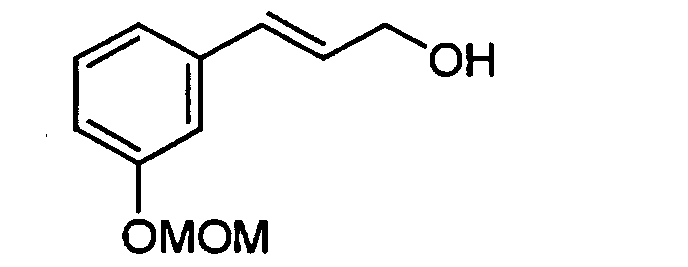
1H NMR (CDCl3, 400 MHz) δ 7.24 (t, 1 H, J = 8.0 Hz), 7.08 (t, 1 H, J = 2.0 Hz), 7.04 (d, 1 H, J = 8.0 Hz), 6.93 (ddd, 1 H, J = 8.0, 2.0 and 0.7 Hz), 6.59 (d, 1 H, J = 15.9 Hz), 6.37 (dt, 1 H, J = 15.9 and 5.7 Hz), 5.18 (s, 2 H), 4.32 (dt, 2 H, J = 5.7 and 1.4 Hz), 3.49 (s, 3 H), 1.46 (t, 1 H, J = 5.7 Hz).

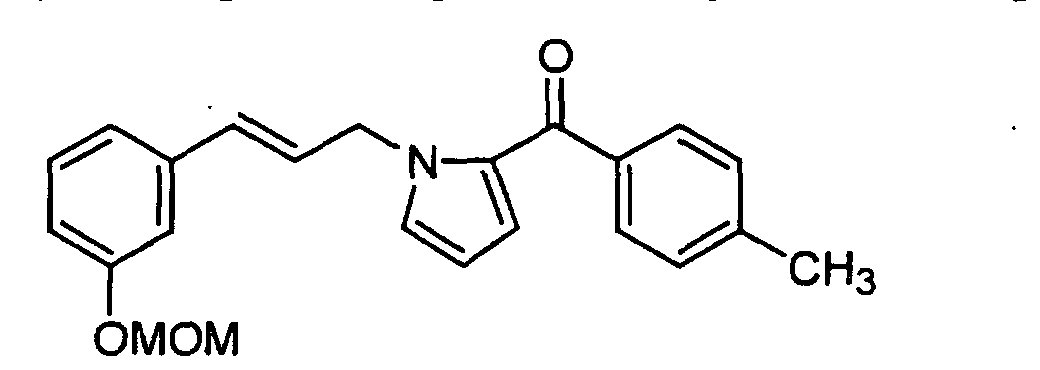
1H NMR (CDCl3, 400 MHz) 7.73 (d, 2 H, J = 8.1 Hz), 7.25 (d, 2 H, J = 8.1 Hz), 7.20 (t, 1 H, J = 8.0 Hz), 7.05 (dd, 1 H, J = 2.5, 1.7 Hz), 6.99 - 7.04 (m, 2 H) , 6.91 (ddd, 1 H, J = 8.0, 2.4 and 0.8 Hz), 6.77 (dd, 1 H, J = 4.0 and 1.7 Hz), 6.47 (d, 1 H, J = 15.8 Hz), 6.42 (dt, 1 H, J = 15.8 and 4.9 Hz), 6.21 (dd, 1 H, J = 4.0 and 2.5 Hz), 5.20 (d, 2 H, J = 4.9 Hz), 5.16 (s, 2 H), 3.47 (s, 3 H), 2.43 (s, 3 H).

1H NMR (CDCl3, 400 MHz) 7.73 (d, 2 H, J = 8.1 Hz) , 7.25 (d, 2 H, J = 8.1 Hz), 7.15 (t, 1 H, J = 7.9 Hz), 7.04 (dd, 1 H, J = 2.4 and 1. 7 Hz) , 6. 92 (brd, 1 H, J = 7 . 9 Hz) , 6.82-6.84 (m, 1 H), 6.77 (dd, 1 H, J = 4.0 and 1.7 Hz), 6.70 (ddd, 1 H, J = 7.9, 2. 5 and 0.8 Hz), 6.44 (d, 1 H, J = 15.8 Hz) , 6. 39 (dt, 1 H, J = 15. 8 and 4. 8 Hz), 6.20 (dd, 1 H, J = 4.0 and 2.4 Hz), 5.19 (d, 2 H, J = 4.8 Hz), 4.94 (s, 1 H), 2.42 (s, 3 H).
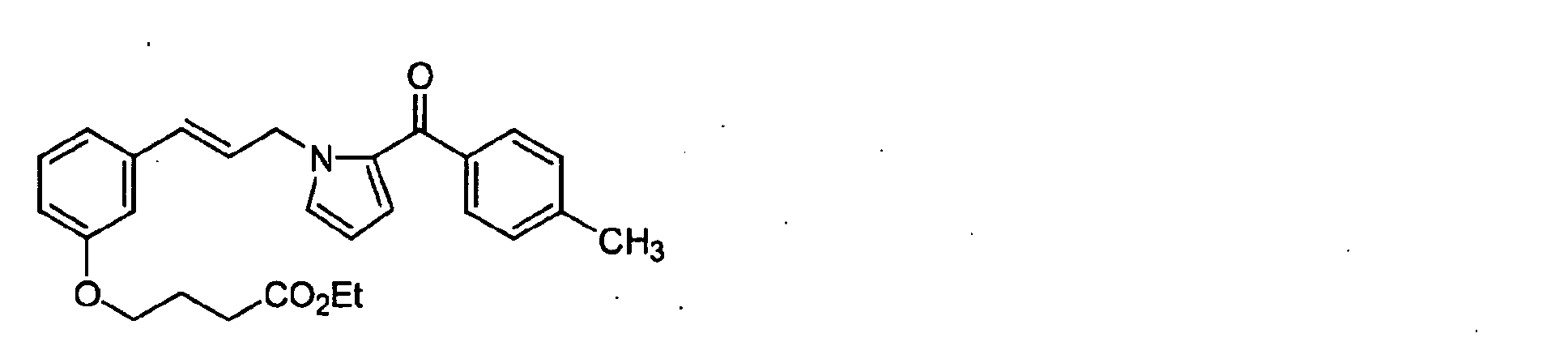
1H NMR (CDCl3, 400 MHz) δ 7.73 (d, 2 H, J = 8.1 Hz), 7.25 (d, 2 H, J = 8.1 Hz) , 7.19 (t, 1 H, J = 7. 9 Hz) , 7. 05 (dd, 1 H, J = 2.4 and 1.7 Hz), 6.94 (brd, 1 H, J = 7.9 Hz), 6.87 - 6.89 (m, 1 H), 6.76 (dd, 1 H, J = 4.0 and 1.7 Hz), 6.74 - 6.77 (m, 1 H), 6.47 (d, 1 H, J = 15.8 Hz), 6.41 (dt, 1 H, J = 15. 8 and 5.0 Hz), 6.20 (dd, 1 H, J = 4. 0 and 2.4 Hz), 5.20 (d, 2 H, J = 5.0 Hz), 4.14 (q, 2 H, J = 7.1 Hz), 3.99 (t, 2 H, J = 6.1 Hz) , 2. 50 (t, 2 H, J = 7.3 Hz) , 2.43 (s, 3 H), 2.09 (tt, 2 H, J = 7.3 and 6.1 Hz), 1.25 (t, 3 H, J = 7.1 Hz).

1H NMR (CDCl3, 400 MHz) δ 7.74 (d, 2 H, J = 8.1 Hz), 7.25 (d, 2 H, J = 8.1 Hz) , 7.19 (t, 1 H, J = 8.1 Hz) , 7. 05 (dd, 1 H, J = 2.5 and 1.6 Hz), 6.93 (brd, 1 H, J = 8.1 Hz), 6.92 - 6.94 (m, 1 H), 6.77 (dd, 1 H, J = 4.0 and 1.6 Hz), 6.74-6.77 (m, 1 H), 6.48 (d, 1 H, J = 15.6 Hz), 6.44 (dt, 1 H, J = 15.6 and 4.0 Hz), 6.20 (dd, 1 H, J = 4.0 and 2.5 Hz), 5.17 - 5.19 (m, 2 H), 4.03 (t, 2 H, J = 6.2 Hz), 2.57 (t, 2 H, J = 7.1 Hz), 2.42 (s, 3 H), 2.07 - 2.14 (m, 2 H).
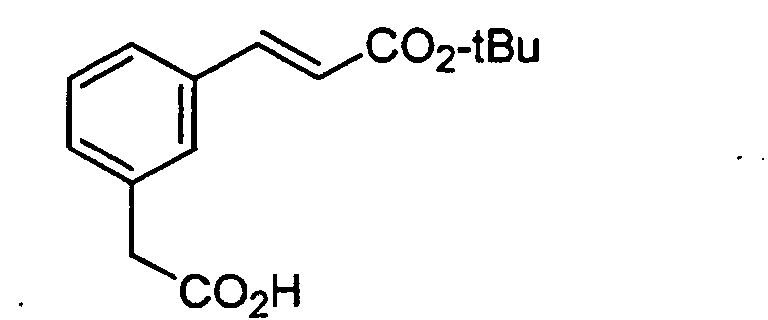
1H NMR (CDCl3, 400 MHz) δ 7.56 (d, 1 H, J = 16.0 Hz), 7.41 - 7.45 (m, 2 H), 7.35 (t, 1 H, J = 7.9 Hz), 7.28 - 7.32 (m, 1 H), 6.37 (d, 1 H, J = 16.0 Hz), 3.67 (s, 2 H), 1.53 (s, 9 H).

NMR of methyl ester of the compound of Reference example 8-1:


1H NMR (CDCl3, 400 MHz) δ 7.28 - 7.32 (m, 3 H), 7.15 - 7.18 (m, 1 H), 6.61 (dt, 1 H, J = 15. 9 and 1.4 Hz) , 6.38 (dt, 1 H, J = 15.9 and 5.8 Hz), 4.33 (dt, 2 H, J = 5.8 and 1.4 Hz), 3.70 (s, 3 H), 3.62 (s, 2 H), 1.43 (t, 1 H, J = 5.8 Hz).

1H NMR (CDCl3, 400 MHz) δ 7. 29 - 7.32 (m, 3 H), 7.17 - 7.22 (m, 1 H), 6.63 (d, 1 H, J = 15.6 Hz), 6.40 (dt, 1 H, J = 15.6 and 7.8 Hz), 4.16 (dd, 2 H, J = 7.8 and 0.7 Hz), 3.70 (s, 3 H) , 3.62 (s, 2 H) .

1H NMR (CDCl3, 400 MHz) δ 7.74 (d, 2 H, J = 8.1 Hz) , 7. 25 (d, 2 H, J = 8.1 Hz), 7.23 - 7.29 (m, 3 H), 7.13 - 7.17 (m, 1 H), 7.04 (dd, 1 H, J = 2.5 and 1.6 Hz), 6.77 (dd, 1 H, J = 4.0 and 1.6 Hz), 6.48 (d, 1 H, J = 15.8 Hz), 6.44 (dt, 1 H, J = 15.8 and 4.9 Hz), 6.20 (dd, 1 H, J = 4.0 and 2.5 Hz), 5.20 (d, 2 H, J = 4.9 Hz), 3.68 (s, 3 H), 3.59 (s, 2 H), 2.43 (s, 3 H).
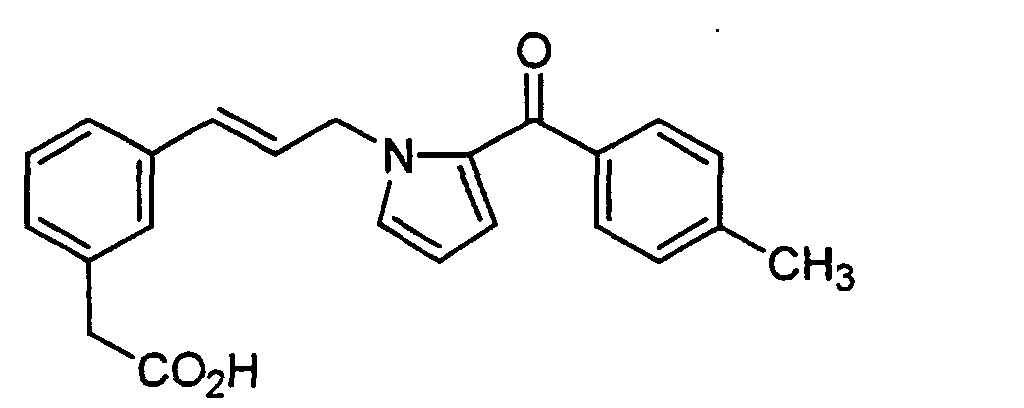
1H NMR (CDCl3, 400 MHz) δ 7.73 (d, 2 H, J = 8.1 Hz), 7.25-7.31 (m, 3 H), 7.25 (d, 2 H, J = 8.1 Hz), 7.14 - 7.18 (m, 1 H) , 7. 04 (dd, 1 H, J = 2. 5 and 1.7 Hz) , 6.77 (dd, 1 H, J = 4.0 and 1.7 Hz), 6.49 (d, 1 H, J = 15.6 Hz), 6.44 (dt, 1 H, J = 15.6 and 4.8 Hz), 6.20 (dd, 1 H, J = 4.0 and 2.5 Hz), 5.20 (d, 2 H, J = 4.8 Hz) , 3. 63 (s, 2 H) , 2.43 (s, 3 H) .

1H NMR (CDCl3, 400 MHz) δ 7.83 (d, 2 H, J = 8.8 Hz), 7.27 - 7.31 (m, 3 H) , 7.14 - 7.18 (m, 1 H) , 6. 96 (d, 2 H, J = 8.8 Hz), 6.81 - 6.84 (br, 1 H), 6.55 - 6.57 (br, 1 H), 6.48 (d, 1 H, J = 15.9 Hz), 6.42 (dt, 1 H, J = 15.9, 5.0 Hz), 5.12 (d, 2 H, J = 5.0 Hz), 3.88 (s, 3 H), 3.63 (s, 2 H), 2.09 (s, 3 H).

1H NMR (CDCl3, 400 MHz) δ 9. 86 (s, 1 H) , 7.67 (d, 1 H, J = 1.9 Hz), 7.55 (dd, 1 H, J = 1.9 and 8.3 Hz), 7.01 (d, 1 H, J = 8.3 Hz), 5.29 (s, 2 H) , 3.97 (s, 3 H) , 3.53 (s, 3 H) .

1H NMR (CDCl3, 400 MHz) δ 7.61 (d, 1 H, J = 15.9 Hz), 7.37 (d, 1 H, J = 2.0 Hz), 7.16 (dd, 1 H, J = 2.0 and 8.4 Hz), 6.89 (d, 1 H, J = 8.4 Hz), 6.31 (d, 1 H, J = 15.9 Hz), 5.25 (s, 2 H) , 4.25 (q, 2 H, J = 7.1 Hz) , 3.91 (s, 3 H), 3.53 (s, 3 H), 1.33 (t, 3 H, J = 7.1 Hz).

1H NMR (CDCl3, 400 MHz) δ 7.24 (d, 1 H, J = 2.1 Hz), 7.00 (dd, 1 H, J = 2.1 and 8.4 Hz), 6.85 (d, 1 H, J = 8.4 Hz) , 6.53 (d, 1 H, J = 15.9 Hz), 6.26 (dt, 1 H, J = 15.9 and 5.9 Hz), 5.24 (s, 2 H), 4.30 (d, 2 H, J = 5.9 Hz), 3.88 (s, 3 H), 3.52 (s, 3 H).
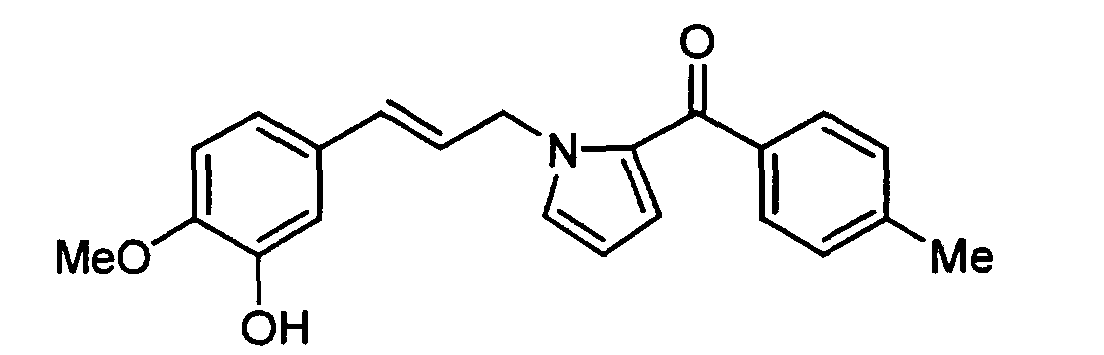
1H NMR (CDCl3, 400 MHz) δ 7.72 (d, 2 H, J = 8.1 Hz) , 7.23 (d, 2 H, J = 8.1 Hz) , 7. 04 (dd, 1 H, J = 1. 7 and 2. 5 Hz) , 6.97 (d, 1 H, J = 1.9 Hz), 6.82 (dd, 1 H, J = 1.9 and 8.4 Hz), 6.75 (d, 1 H, J = 8.4 Hz), 6.74 (dd, 1 H, J = 1.7 and 4.0 Hz), 6.41 (brd, 1 H, J = 15.9 Hz) , 6.27 (dt, 1 H, J = 15.9 and 6.2 Hz), 6.18 (dd, 1 H, J = 2.5 and 4.0 Hz), 5.53 (s, 1 H), 5.16 (dd, 2 H, J = 1.1 and 6.2 Hz), 3.86 (s, 3 H), 2.41 (s, 3 H) .

1H NMR (CDCl3, 400 MHz) δ 7.73 (d, 2 H, J = 8.1 Hz), 7.25 (d, 2 H, J = 8.1 Hz) , 7.05 (dd, 1 H, J = 1.7 and 2.6 Hz), 6.98 (dd, 1 H, J = 1.9 and 8.4 Hz), 6.86 (d, 1 H, J = 1.9 Hz), 6.82 (d, 1 H, J = 8.4 Hz), 6.76 (dd, 1 H, J = 1.7 and 4.0 Hz), 6.42 (brd, 1 H, J = 15.9 Hz), 6.26 (dt, 1 H, J = 15.9 and 6.2 Hz), 6.20 (dd, 1 H, J = 2.6 and 4.0 Hz), 5.17 (dd, 2 H, J = 1.1 and 6.2 Hz), 4 . 68 (s, 2 H) , 3. 87 (s, 3 H) , 3.79 (s, 3 H) , 3.43 (s, 3 H) .
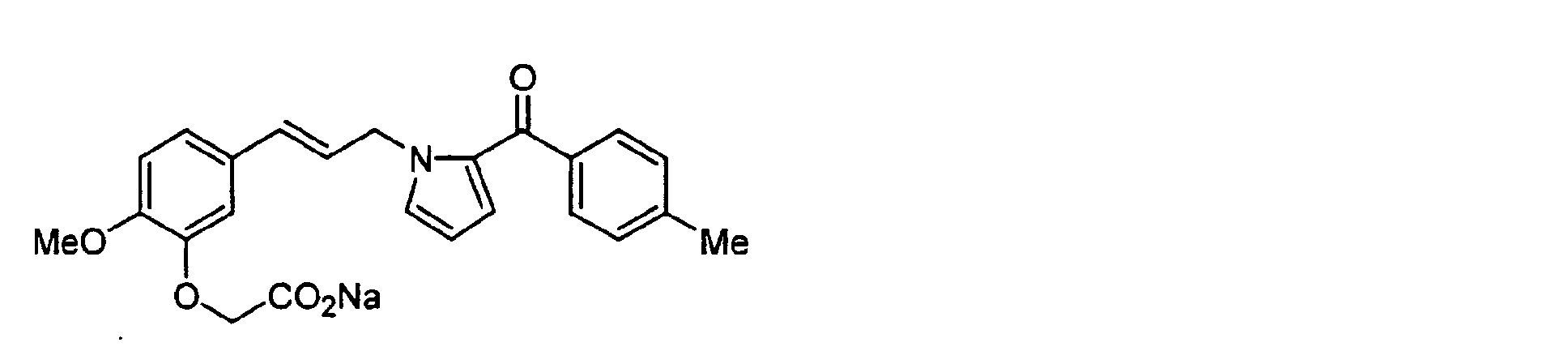
1H NMR (CDCl3, 400 MHz) δ 7.66 (d, 2 H, J = 8.1 Hz), 7.35 (dd, 1 H, J = 1.7 and 2. 6 Hz) , 7.31 (d, 2 H, J = 8.1 Hz) , 6.85 - 6. 80 (m, 3 H) , 6. 67 (dd, 1 H, J = 1 . 7 and 4 . 0 Hz) , 6.33 - 6.26 (m, 2 H) , 6.22 (dd, 1 H, J = 2. 6 and 4.0 Hz), 5.12 (d, 2 H, J = 4.6 Hz), 4.09 (s, 2 H), 3.74 (s, 3 H), 2.39 (s, 3 H).

1H NMR (CDCl3, 400 MHz) δ 10.27 (s, 1 H), 7.37 (dd, 1 H, J = 1.7 and 7.7 Hz), 7.23 (dd, 1 H, J = 1.7 and 8.0 Hz), 7.15 (m, 1 H), 5.82 (s, 1 H), 3.98 (s, 3 H). Reference example 9-2
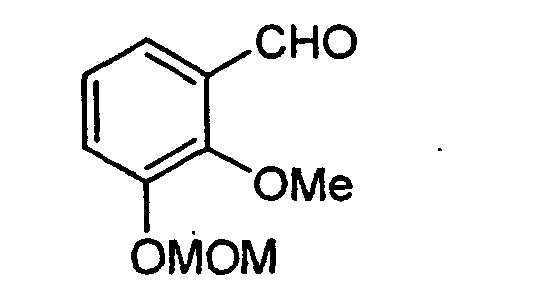
1H NMR (CDCl3, 400 MHz) δ 10.42 (s, 1 H) , 7.49 (d, 1 H, J = 7.8 Hz), 7.40 (d, 1 H, J = 8.1 Hz), 7.12 (m, 1 H)), 5.26 (s, 2 H) , 4.01 (s, 3 H) , 3.53 (s, 3 H).
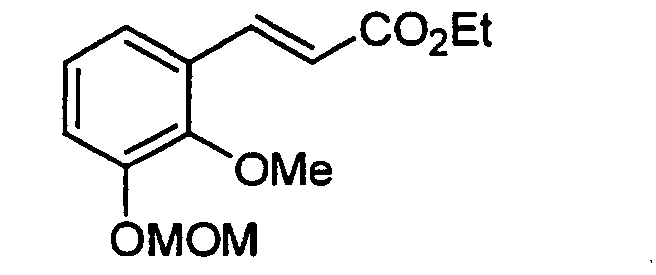
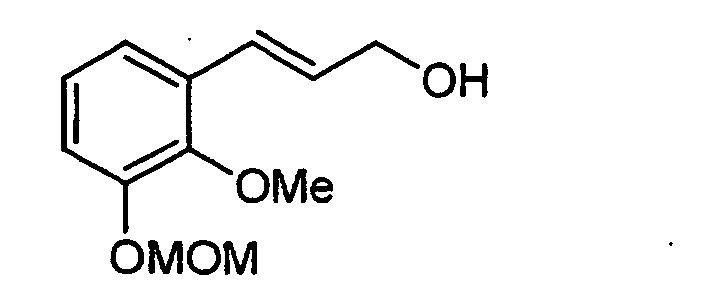

1H NMR (CDCl3, 400 MHz) δ 7.14 (dd, 1 H, J = 1.6 and 7.8 Hz), 7.08 (dd, 1 H, J = 1.6 and 8.0 Hz), 7.00 (dd, 1 H, J = 7.8 and 8.0 Hz), 6.95 (d, 1 H, J = 15.8 Hz), 6.43 (dt, 1 H, J = 15.8 and 7.8 Hz), 5.22 (s, 2 H), 4.19 (d, 2 H, J = 7.8 Hz), 3.84 (s, 3 H) , 3.52 (s, 3 H) .

1H NMR (CDCl3, 400 MHz) δ 7.74 (d, 2 H, J = 8.1 Hz) , 7.25 (d, 2 H, J = 8.1 Hz) , 7.12 (dd, 1 H, J = 1.2 and 8 . 0 Hz) , 7.06 (dd, 1 H, J = 1.7 and 2. 5 Hz) , 7 . 03 (dd, 1 H, J = 1 . 2 and 8.0 Hz), 6.96 (dd, 1 H, J = 8.0 and 8.0 Hz), 6.81 (brd, 1 H, J = 16.0 Hz), 6.77 (dd, 1 H, J = 1.7 and 4.0 Hz), 6.46 (dt, 1 H, J = 16.0 and 6.2 Hz), 6.20 (dd, 1 H, J = 2.5 and 4.0 Hz), 5.23 (dd, 2 H, J = 1.3 and 6.2 Hz), 5.20 (s, 2 H), 3.76 (s, 3 H), 3.50 (s, 3 H), 2.42 (s, 3 H).
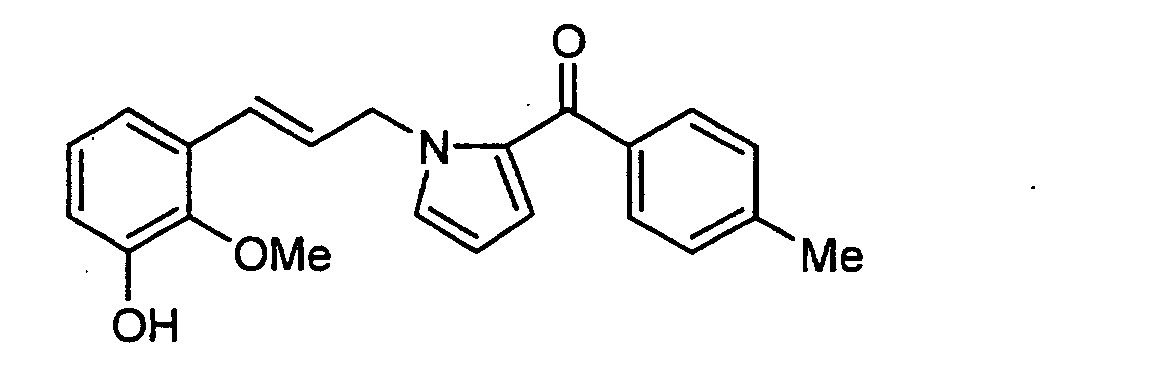
1H NMR (CDCl3, 400 MHz) δ 7.73 (d, 2 H, J = 8.1 Hz), 7.25 (d, 2 H, J = 8.1 Hz) , 7. 05 (dd, 1 H, J = 1.7 and 2.5 Hz), 6.97 - 6.91 (m, 2 H), 6.84 (dd, 1 H, J = 1.2 and 8.0 Hz), 6.78 (dd, 1 H, J = 1.7 and 4.0 Hz), 6.64 (brd, 1 H, J = 16.0 Hz), 6.46 (dt, 1 H, J = 16.0 and 6.0 Hz), 6.22 (dd, 1 H, J = 2. 5 and 4.0 Hz), 5. 66 (s, 1 H) , 5.24 (dd, 2 H, J = 1.3 and 6.0 Hz), 3.69 (s, 3 H), 2.42 (s, 3 H).
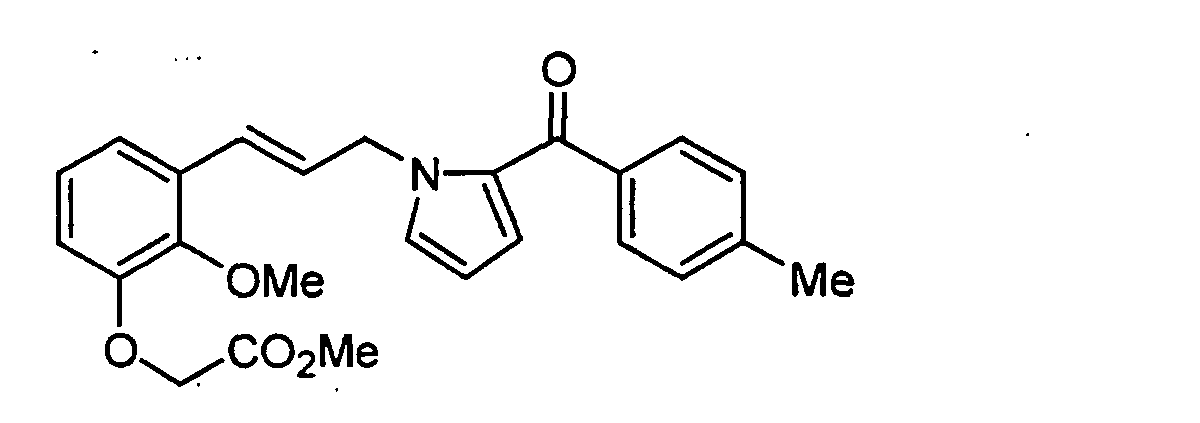
1H NMR (CDCl3, 400 MHz) δ 7.74 (d, 2 H, J = 8.1 Hz) , 7.25 (d, 2 H, J = 8.1 Hz), 7.12 (dd, 1 H, J = 1. 3 and 8.1 Hz), 7.06 (dd, 1 H, J = 1.7 and 2.5 Hz), 6.95 (dd, 1 H, J = 8.1 and 8.1 Hz), 6.81 (brd, 1 H, J = 15.9 Hz), 6.77 (dd, 1 H, J = 1.7 and 4.0 Hz), 6.72 (dd, 1 H, J = 1.3 and 8.1 Hz), 6.46 (dt, 1 H, J = 15.9 and 5.7 Hz), 6.20 (dd, 1 H, J = 2.5 and 4.0 Hz), 5.22 (dd, 2 H, J = 1.3 and 5.7 Hz), 4.68 (s, 2 H), 3.81 (s, 3 H) , 3.78 (s, 3 H) , 2. 42 (s, 3 H) .
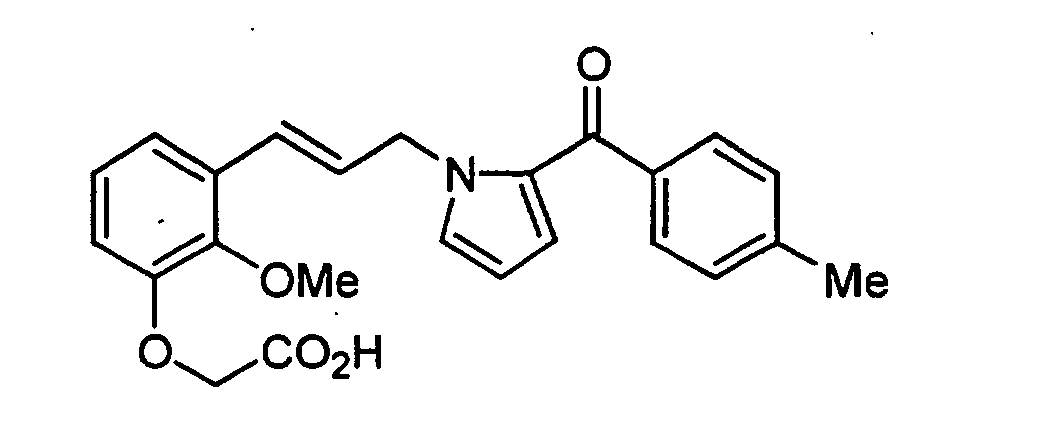
1H NMR (CDCl3, 400 MHz) δ 7.73 (d, 2 H, J = 8.1 Hz), 7.25 (d, 2 H, J = 8.1 Hz) , 7.18 (dd, 1 H, J = 1.2 and 8.0 Hz), 7.05 (dd, 1 H, J = 1.7 and 2. 5 Hz) , 7.01 (dd, 1 H, J = 8. 0 and 8.0 Hz), 6.83 (dd, 1 H, J = 1.2 and 8.0 Hz), 6.78 (dd, 1 H, J = 1.7 and 4.0 Hz), 6.73 (brd, 1 H, J = 16.0 Hz), 6.49 (dt, 1 H, J = 16.0 and 6.0 Hz), 6.22 (dd, 1 H, J = 2.5 and 4.0 Hz), 5.23 (dd, 2 H, J = 1.3 and 6.0 Hz), 4.68 (s, 2 H), 3.78 (s, 3 H), 2.42 (s, 3 H).
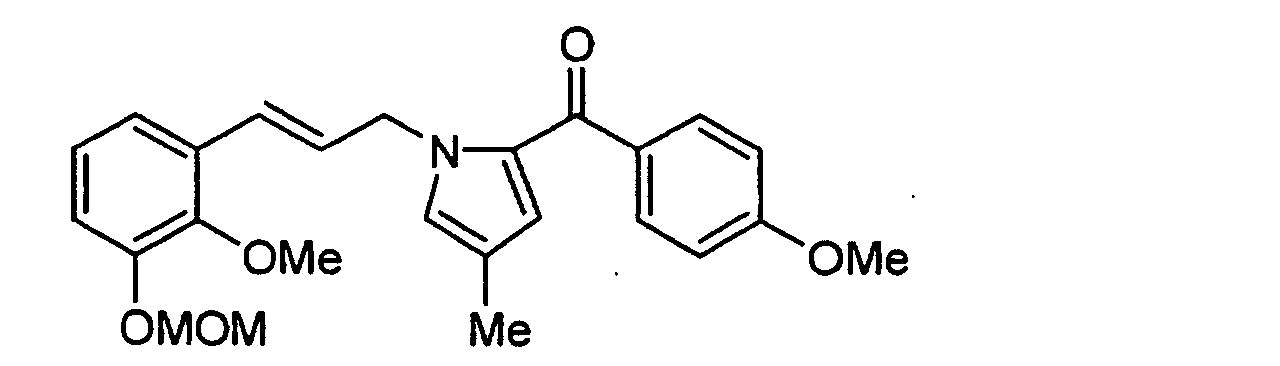
1H NMR (CDCl3, 400 MHz) δ 7.83 (d, 2 H, J = 7.8 Hz), 7.13 (dd, 1 H, J = 1.3 and 8.0 Hz), 7.03 (dd, 1 H, J = 1.3 and 8.0 Hz), 6.98 - 6.93 (m, 3 H), 6.84 (brd, 1 H), 6.80 (brd, 1 H, J = 16.0 Hz), 6.56 (brd, 1 H), 6.44 (dt, 1 H, J = 16.0 and 6.0 Hz), 5.20 (s, 2 H), 5.15 (dd, 2 H, J = 1.3 and 6.0 Hz), 3.88 (s, 3 H), 3.77 (s, 3 H), 3.50 (s, 3 H), 2.05 (s, 3 H).

1H NMR (CDCl3, 400 MHz) δ 7. 82 (d, 2 H, J = 8. 8 Hz) , 6. 99 - 6.91 (m, 5 H), 6.84 (dd, 1 H, J = 1.9 and 8.4 Hz), 6.82 (brd, 1 H), 6.64 (brd, 1 H, J = 15.9 Hz), 6.58 (brd, 1 H), 6.44 (dt, 1 H, J = 15.9 and 6.0 Hz), 5.16 (dd, 2 H, J = 1.3 and 6.0 Hz), 3.88 (s, 3 H), 3.69 (s, 3 H), 2.09 (s, 3 H).

1H NMR (CDCl3, 400 MHz) δ 7.83 (d, 2 H, J = 8.8 Hz) , 7.12 (dd, 1 H, J = 1.3 and 8.1 Hz), 6.97 - 6.92 (m, 4 H), 6.84 (brd, 1 H), 6.80 (brd, 1 H, J = 15.9 Hz), 6.72 (dd, 1 H, J = 1.3 and 8.1 Hz), 6.56 (brd, 1 H), 6.44 (dt, 1 H, J = 15.9 and 6.2 Hz), 5.14 (dd, 2 H, J = 1.3 and 6.2 Hz), 4.68 (s, 2 H), 3.88 (s, 3 H), 3.81 (s, 3 H), 3.79 (s, 3 H), 2.08 (s, 3 H).

1H NMR (CDCl3, 400 MHz) δ 7.83 (d, 2 H, J = 8.8 Hz), 7.19 (dd, 1 H, J = 1. 3 and 8.0 Hz), 7.01 (dd, 1 H, J = 8. 0 and 8.0 Hz), 6.94 (d, 2 H, J = 8.8 Hz), 6.84 - 6.82 (m, 2 H), 6.69 (brd, 1 H, J = 16.0 Hz), 6. 58 (d, 1 H, J = 1. 3 Hz) , 6.47 (dt, 1 H, J = 16.0 and 6.0 Hz), 5.15 (dd, 2 H, J = 1.3 and 6.0 Hz), 4.68 (s, 2 H), 3.88 (s, 3 H), 3.79 (s, 3 H), 2.09 (s, 3 H).

1H NMR (CDCl3, 400 MHz) δ 7. 09 (d, 2 H, J = 9.1 Hz), 6. 89 (d, 2 H, J = 9.1 Hz) , 3.89 (s, 3 H) , 3.80 (s, 3 H).

1H NMR (CDCl3, 400 MHz) δ 10.43 (s, 1 H), 7. 62 (d, 1 H, J = 3.1 Hz), 7.36 (dd, 1 H, J = 3.1 and 9.0 Hz), 7.00 (d, 1 H, J = 9.0 Hz), 3.94 (s, 3 H) , 3.90 (s, 3 H) .

1H NMR (CDCl3, 400 MHz) δ 7.87 (d, 1 H, J = 16.1 Hz), 7.03 (d, 1 H, J = 3.0 Hz), 6.86 (dd, 1 H, J = 3.0 and 8.9 Hz), 6.79 (d, 1 H, J = 8.9 Hz), 6.48 (d, 1 H, J = 16.1 Hz) , 4.26 (q, 2 H, J = 7.1 Hz), 3. 82 (s, 3 H) , 1 . 33 (t, 3 H, J = 7.1 Hz).
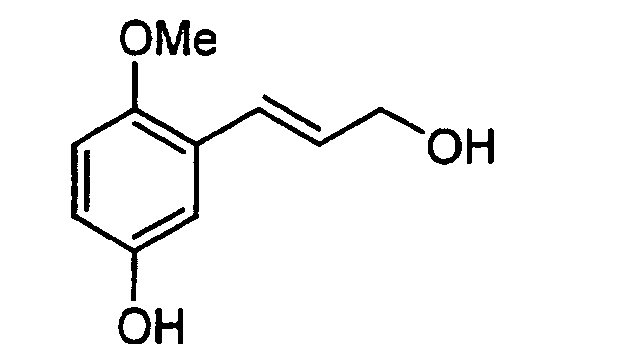
1H NMR (CDCl3, 400 MHz) δ 8.90 (s, 1 H), 6.83 (d, 1 H, J = 2. 9 Hz) , 6. 79 (d, 1 H, J = 8. 8 Hz) , 6. 72 (d, 1 H, J = 16.1 Hz), 6. 60 (dd, 1 H, J = 2.9 and 8.8 Hz) , 6.20 (dt, 1 H, J = 16.1 and 5.1 Hz) , 4.81 (t, 1 H, J = 5. 5 Hz) , 4.09 (dd, 2 H, J = 5.1 and 5.5 Hz), 3.70 (s, 3 H).
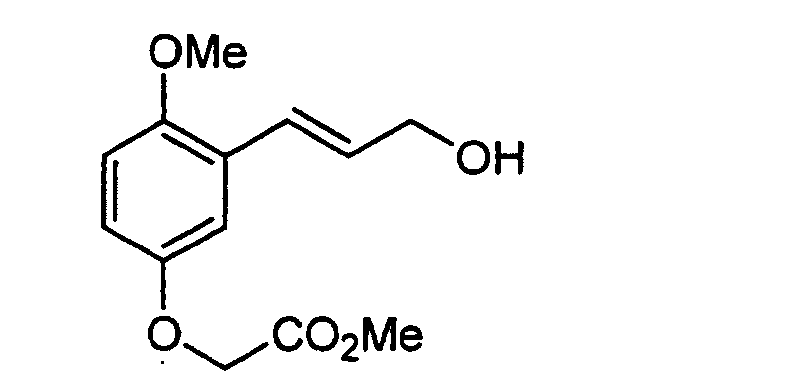
1H NMR (CDCl3, 400 MHz) δ 7.04 (t, 1 H, J = 1.5 Hz) , 6.89 (d, 1 H, J = 16.0 Hz), 6.79 (m, 2 H), 6.35 (dt, 1 H, J = 5.8 and 16.0 Hz), 4.60 (s, 2 H), 4.32 (dd, 2 H, J = 5.5 and 5.8 Hz), 3.81 (s, 3 H), 3.81 (s, 3 H), 1.47 (brt, 1 H).
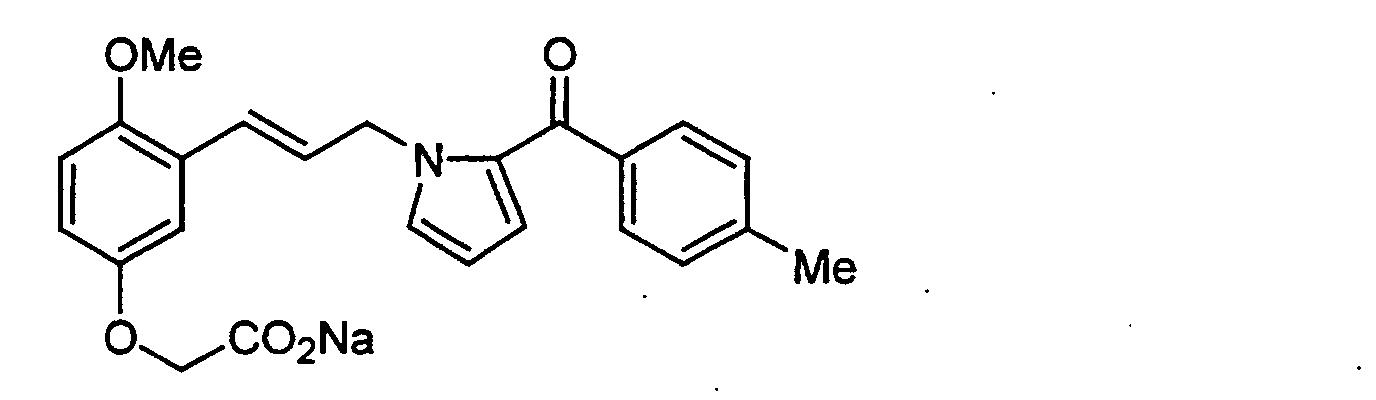

1H NMR (CDCl3, 400 MHz) δ 9.88 (s, 1 H), 7.00 (m, 1 H), 6.96 (m, 1 H), 6.68 (t, 1 H, J = 2.3 Hz), 3.84 (s, 3 H).

1H NMR (CDCl3, 400 MHz) δ 7.58 (d, 1 H, J = 16.0 Hz), 6.65 - 6.61 (m, 2 H) , 6.45 (t, 1 H, J = 2.2 Hz) , 6.38 (d, 1 H, J = 16.0 Hz) , 4. 27 (q, 2 H, J = 7.1 Hz) , 3. 80 (s, 3 H), 1. 34 (t, 3 H, J = 7.1 Hz) .

1H NMR (CDCl3, 400 MHz) δ 6.54 - 6.47 (m, 3 H), 6.36-6.31 (m, 2 H), 4.92 (s, 1 H), 4.32 (d, 2 H, J = 5.6 Hz), 3.79 (s, 3 H).

1H NMR (CDCl3, 400 MHz) δ 6. 59 - 6. 52 (m, 3 H) , 6. 39 (dd, 1 H, J = 2.3 and 2.3 Hz), 6.33 (dt, 1 H, J = 15.9 and 5.6 Hz), 4.62 (s, 2 H), 4.32 (brs, 2 H), 3.81 (s, 3 H), 3.79 (s, 3 H), 1.49 (brt, 1 H).
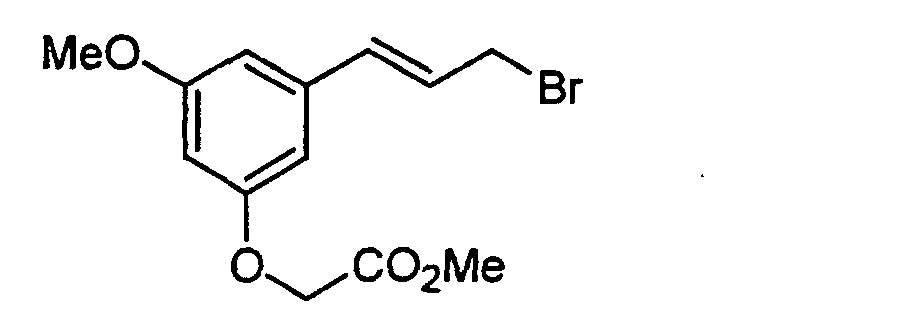
1H NMR (CDCl3, 400 MHz) δ 6.58 - 6.52 (m, 3 H), 6.41 (dd, 1 H, J = 2.2 and 2.2 Hz), 6.36 (dt, 1 H, J = 7.8 and 15.9 Hz), 4.63 (s, 2 H), 4.14 (d, 2 H, J = 7.8 Hz), 3.82 (s, 3 H), 3.79 (s, 3 H).

1H NMR (CDCl3, 400 MHz) δ 7.73 (d, 2 H, J = 8.1 Hz), 7.25 (d, 2 H, J = 8.1 Hz) , 7.04 (dd, 1 H, J = 1. 6 and 2. 6 Hz), 6.77 (dd, 1 H, J = 1 . 6 and 4 . 0 Hz) , 6. 55 (t, 1 H, J = 1 . 7 Hz), 6.49 (t, 1 H, J = 1.7 Hz), 6.41 - 6.37 (m, 3 H), 6.21 (dd, 1 H, J = 2.6 and 4.0 Hz), 5.19 (dd, 2 H, J = 1.2, 2.7 Hz), 4.60 (s, 2 H), 3.80 (s, 3 H), 3.77 (s, 3 H), 2.43 (s, 3 H).
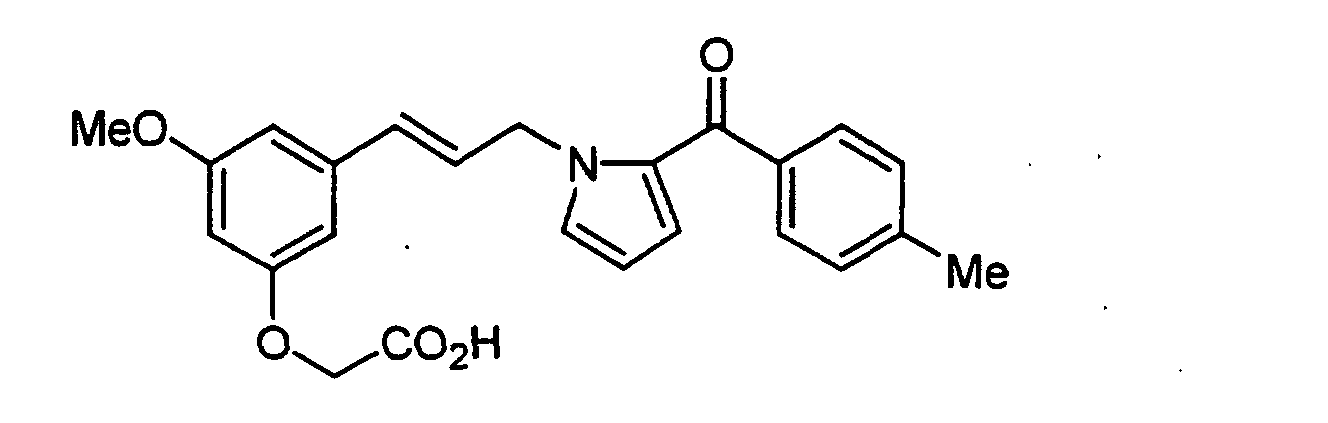
1H NMR (CDCl3, 400 MHz) δ 7.72 (d, 2 H, J = 8.1 Hz) , 7.25 (d, 2 H, J = 8.1 Hz), 7.04 (dd, 1 H, J = 1.6 and 2.5 Hz), 6.77 (dd, 1 H, J = 1.6 and 4.0 Hz), 6.56 (dd, 1 H, J = 1.7 and 1.7 Hz), 6.50 (dd, 1 H, J = 1.7 and 1.7 Hz), 6.43-6.34 (m, 3 H), 6.21 (dd, 1 H, J = 2.5 and 4.0 Hz), 5.18 (dd, 2 H, J = 1.2 and 2.7 Hz), 4.62 (s, 2 H), 3.75 (s, 3 H), 2.42 (s, 3 H).
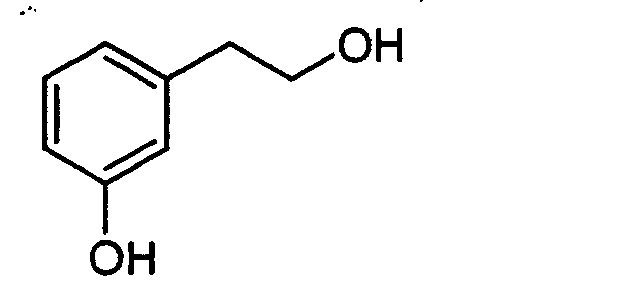
1H NMR (CDCl3, 400 MHz) δ 7.19 (t, 1 H, J = 7.4 Hz), 6.80 (d, 1 H, J = 7.4 Hz), 6. 72 (s, 1 H) , 6. 70 (d, 1 H, J = 7. 4 Hz), 3.86 (t, 2 H, J = 6.5 Hz), 2.83 (t, 2 H, J = 6.5 Hz).

1H NMR (CDCl3, 400 MHz) δ 7.24 (dd, 1 H, J = 7.4 and 7.9 Hz), 6.87 (brd, 1 H, J = 7.4 Hz), 6.81 (t, 1 H, J = 2.0 Hz), 6.76 (dd, 1 H, J = 7.9 and 2.0 Hz), 4.64 (s, 2 H), 3.86 (q, 2 H, J = 6.4 Hz), 3.81 (s, 3 H), 2.85 (t, 2 H, J = 6.4 Hz).

1H NMR (CDCl3, 400 MHz) δ 7.68 (brd, 2 H, J = 8.4 Hz), 7.27 (dd, 1 H, J = 1.7 and 2.5 Hz), 7.26 (brd, 2 H, J = 8.4 Hz), 7.19 (dd, 1 H, J = 7.4 and 7.9 Hz), 6.82 (brd, 1 H, J = 7.4 Hz), 6.76 (t, 1 H, J = 2.0 Hz), 6.74 (dd, 1 H, J = 1.7 and 4.0 Hz), 6.71 (dd, 1 H, J = 7.9 and 2.0 Hz), 6.09 (dd, 1 H, J = 2. 5 and 4 . 0 Hz) , 4 . 60 (s, 2 H) , 4. 59 (t, 2 H, J = 7. 2 Hz), 3.08 (t, 2 H, J = 7.2 Hz)2.42 (s, 3 H) .
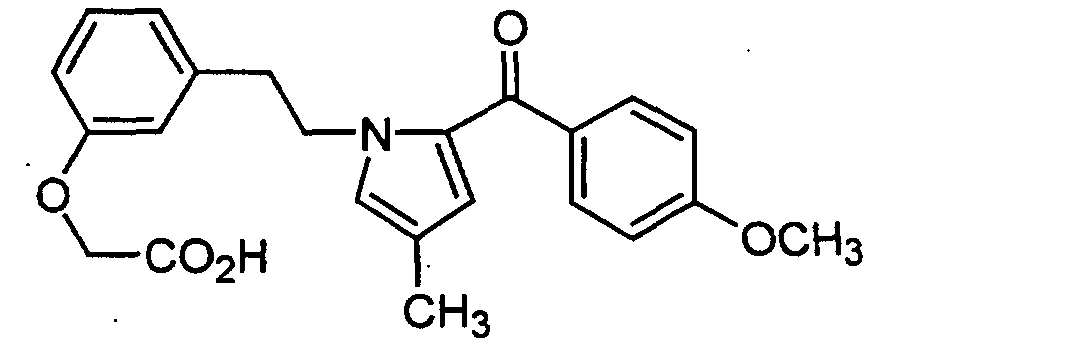
1H NMR (CDCl3, 400 MHz) δ 7.78 (d, 2 H, J = 8.7 Hz), 6.95 (dd, 1 H, J = 7.4 and 7.9 Hz) , 6.93 (d, 2 H, J = 8.7 Hz), 6.85 (brd, 1 H, J = 7.4 Hz), 6.76 (dd, 1 H, J = 7.9 and 2.0 Hz), 6.74 (brs, 1 H), 6.60 (d, 1 H, J = 1.1 Hz), 6.53 (d, 1 H, J = 1.1 Hz) , 4. 62 (s, 2 H), 4.51 (t, 2 H, J = 7.2 Hz), 3.87 (s, 3 H), 3.05 (t, 2 H, J = 7.2 Hz), 2.04 (s, 3 H).

1H NMR (CDCl3, 400 MHz) δ 7. 37 (d, 1 H, J = 2. 0 Hz) , 7.19 (dd, 1 H, J = 8.4 and 2. 0 Hz) , 7. 02 (d, 1 H, J = 8.4 Hz) , 5.52 (s, 1 H).
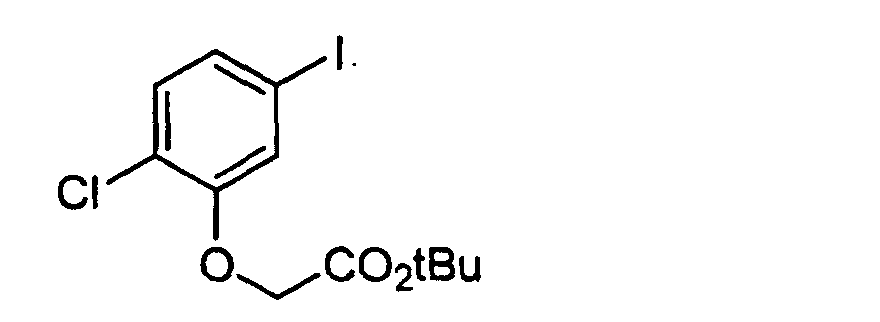
1H NMR (CDCl3, 400 MHz) δ 7.25 (dd, 1 H, J = 8.4 and 1.8 Hz), 7.08 - 7.11 (m, 2 H), 4.58 (s, 2 H), 1.49 (s, 9 H).
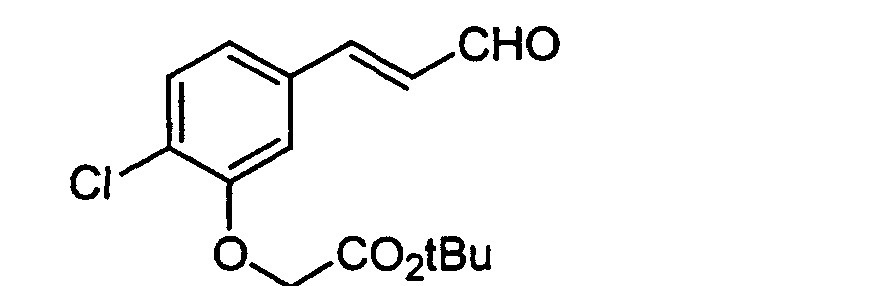
1H NMR (CDCl3, 400 MHz) δ 9.70 (d, 1 H, J = 7. 6 Hz), 7.45 (d, 1 H, J = 8.2 Hz), 7.39 (d, 1 H, J = 15.9 Hz), 7.15 (dd, 1 H, J = 8.2 and 1.9 Hz), 6.98 (d, 1 H, J = 1.8 Hz), 6.64 (dd, 1 H, J = 15. 9 and 7.6 Hz) , 4 . 65 (s, 2 H) , 1. 49 (s, 9 H).

1H NMR (CDCl3, 400 MHz) δ 7. 31 (d, 1 H, J = 8. 2 Hz) , 6. 95 (dd, 1 H, J = 8.2 and 1.8 Hz), 6.83 (d, 1 H, J = 1.8 Hz), 6.54 (d, 1 H, J = 15.9 Hz), 6.30 (dt, 1 H, J = 15.9 and 5.5 Hz), 4.61 (s, 2 H), 4.32 (br, 2 H), 1.51 (br, 1 H), 1.46 (s, 9 H) .

1H NMR (CDCl3, 400 MHz) δ 7.72 (d, 2 H, J = 8.1 Hz), 7.29 (d, 1 H, J = 8.2 Hz) , 7. 25 (d, 2 H, J = 8. 1 Hz) , 7. 04 (dd, 1 H, J = 1. 6 and 2.5 Hz), 6.97 (dd, 1 H, J = 8.2 and 1.8 Hz), 6.86 (d, 1 H, J = 1.8 Hz), 6.78 (dd, 1 H, J = 4.0 and 1.6 Hz), 6.35 - 6.45 (m, 2 H), 6.22 (dd, 1 H, J = 4.0 and 2.5 Hz), 5.18 (d, 2 H, J = 4.5 Hz), 4.75 (s, 2 H), 3.89 (br, 1 H), 2.42 (s, 3 H).
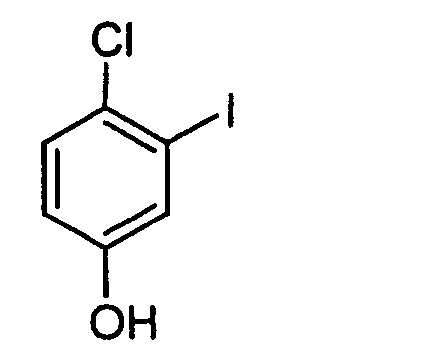
1H NMR (CDCl3, 400 MHz) δ 7.35 (d, 1 H, J = 2.9 Hz), 7.27 (d, 1 H, J = 8.7 Hz) , 6. 78 (dd, 1 H, J = 8.7 and 2. 9 Hz) , 5.30 (br, 1 H).

1H NMR (CDCl3, 400 MHz) δ 7.36 (d, 1 H, J = 2.9 Hz), 7.32 (d, 1 H, J = 8.8 Hz) , 6. 85 (dd, 2 H, J = 8. 8 and 2 . 9 Hz) , 4.47 (s, 2 H) , 1. 49 (s, 9 H).
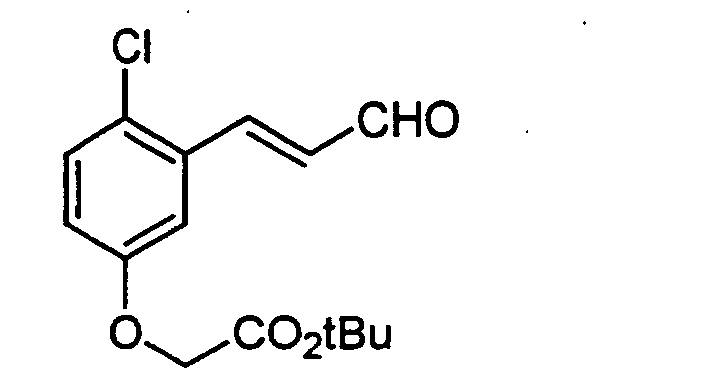
1H NMR (CDCl3, 400 MHz) δ 9.77 (d, 1 H, J = 7.7 Hz), 7.88 (d, 1 H, J = 15. 9 Hz) , 7.37 (d, 1 H, J = 8. 8 Hz) , 7.15 (d, 1 H, J = 3.0 Hz), 6.93 (dd, 1 H, J = 8.8 and 3.0 Hz), 6.64 (dd, 1 H, J = 15. 9 and 7.7 Hz) , 4. 54 (s, 2 H) , 1. 49 (s, 9 H).
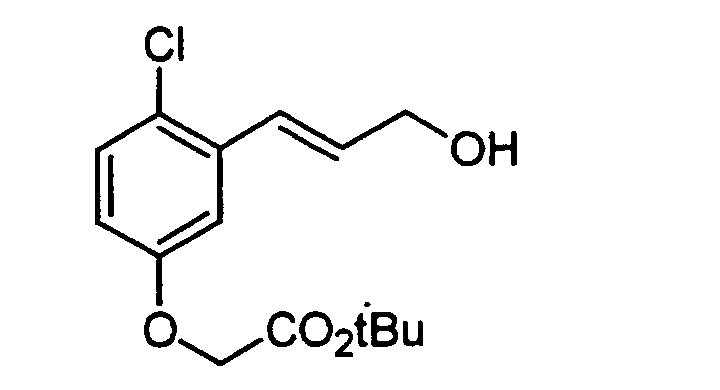
1H NMR (CDCl3, 400 MHz) δ 7.25 (d, 1 H, J = 8.8 Hz), 7.06 (d, 1 H, J = 3.0 Hz), 6.95 (dt, 1 H, J = 15.9 and 1.6 Hz), 6.74 (dd, 1 H, J = 8.8 and 3.0 Hz), 6.30 (dt, 1 H, J = 15.9 and 5.5 Hz), 4.51 (s, 2 H), 4.36 (d, 2 H, J = 5.5 Hz), 1.59 (br, 1 H), 1.49 (s, 9 H).
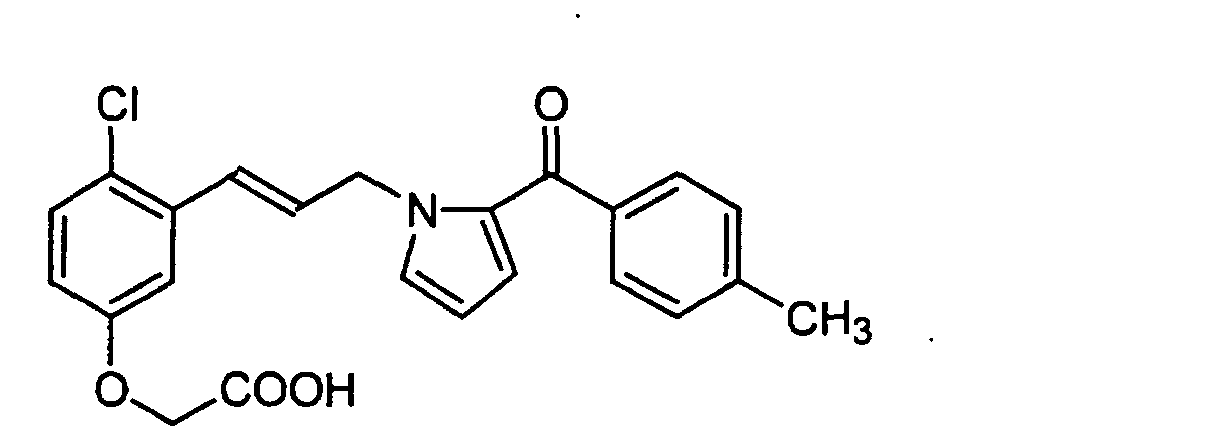
1H NMR (DMSO-d6, 400 MHz) δ 7.66 (d, 2 H, J = 7.9 Hz), 7.28 - 7.38 (m, 3 H) , 7.23 (m, 1 H) , 7. 09 (d, 1 H, J = 8. 8 Hz) , 6.76 (dd, 1 H, J = 8.8 and 2.6 Hz), 6.71 (brd, 1 H, J = 3.4 Hz), 6.44 - 6.58 (m, 2 H), 6.23 - 6.25 (m, 1 H), 5.23 (d, 2 H, J = 4.3 Hz), 4.43 (s, 2 H), 2.39 (s, 3 H) .
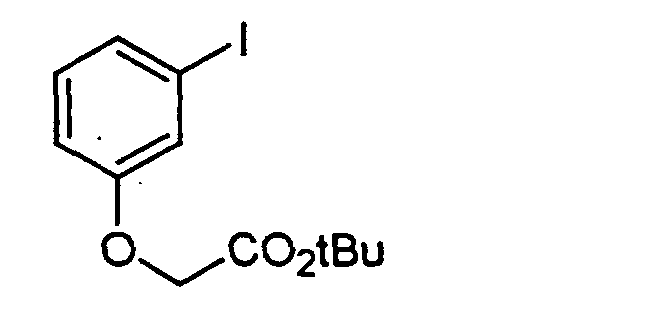
1H NMR (CDCl3, 400 MHz) δ 7.31 (ddd, 1 H, J = 8.0, 1.6 and 0.8 Hz) , 7.23 (dd, 1 H, J = 2.4 and 1. 6 Hz) , 7.00 (t, 1 H, J = 8.0 Hz), 6.85 (ddd, 1 H, J = 8.0, 2.4 and 0.8 Hz), 4.49 (s, 2 H), 1.49 (s, 9 H).

1H NMR (CDCl3, 400 MHz) δ 7.23 (t, 1 H, J = 8.0 Hz), 7. 06 (ddd, 1 H, J = 8.0, 2.5 and 1.4 Hz), 6.95 (dd, 1 H, J = 2.6 and 1.4 Hz), 6.89 (dt, 1 H, J = 8.0 and 2.5 Hz), 4.50 (s, 2 H), 1.68 (br, 1 H), 1.49 (s, 9 H) .

1H NMR (CDCl3, 400 MHz) δ 7.68 (d, 2 H, J = 8.1 Hz), 7.49 (t, 1 H, J = 2.0 Hz), 7.32 (d, 2 H, J = 7.9 Hz), 7.18 (t, 1 H, J = 7.9 Hz), 6.78 - 6.88 (m, 3 H) , 6.71 (dd, 1 H, J = 4.0 and 1.6 Hz), 6.25 (dd, 1 H, J = 4.0 and 2.6 Hz), 5.49 (s, 2 H) , 4.12 (s, 2 H) , 2.40 (s, 3 H).

1H NMR (CDCl3, 400 MHz) δ 7.56 (d, 2 H, J = 6.8 Hz), 6.67 (d, 2 H, J = 6.8 Hz), 4.48 (s, 2 H) , 1.48 (s, 9 H).

1H NMR (CDCl3, 400 MHz) δ 9.66 (d, 1 H, J = 7.7 Hz), 7.53 (d, 2 H, J = 8.8 Hz), 7 . 42 (brd, 1 H, J = 15. 9 Hz) , 6. 94 (d, 2 H, J = 8.8 Hz), 6.62 (dd, 1 H, J = 7.7 and 15.9 Hz), 4.57 (s, 2 H) , 1.49 (s, 9 H) .

1H NMR (CDCl3, 400 MHz) δ 7.33 (d, 2 H, J = 8.8 Hz) , 6.85 (d, 2 H, J = 8.8 Hz) , 6. 55 (brd, 1 H, J = 15. 9 Hz), 6.25 (dt, 1 H, J = 15.9 and 5.9 Hz), 4.51 (s, 2 H), 4.30 (t, 2 H, J = 5.9 Hz), 1.49 (s, 9 H).
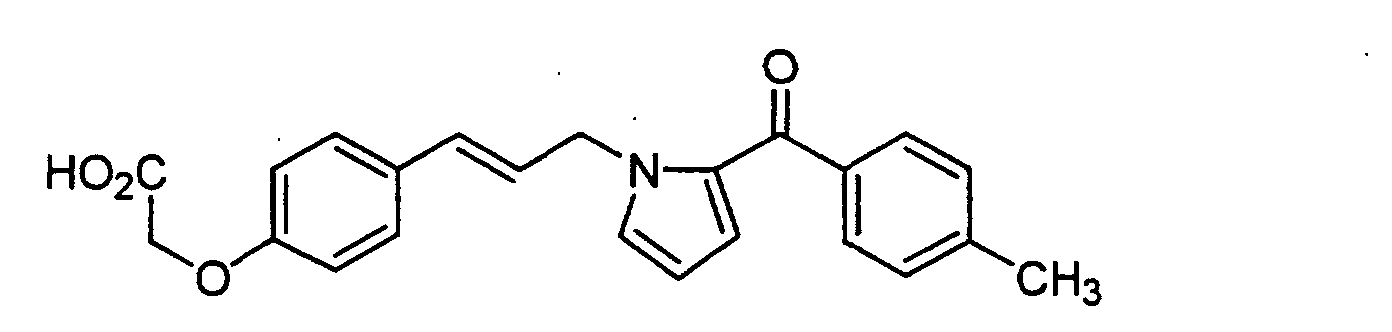
1H NMR (CDCl3, 400 MHz) δ 7.73 (d, 2 H, J = 8.1 Hz) , 7.30 (d, 2 H, J = 8.7 Hz) , 7.24 (d, 2 H, J = 8.1 Hz) , 7.04 (dd, 1 H, J = 1.6 and 2.5 Hz), 6.83 (d, 2 H, J = 8.7 Hz), 6.76 (dd, 1 H, J = 1.6 and 4.0 Hz), 6.45 (brd, 1 H, J = 15.8 Hz), 6.31 (dt, 1 H, J = 15.8 and 5.7 Hz), 6.19 (dd, 1 H, J = 2.5 and 4.0 Hz), 5.17 (d, 2 H, J = 5.7 Hz), 4.63 (s, 2 H), 2.42 (s, 3 H).

1H NMR (CDCl3, 400 MHz) δ 7.82 (d, 2 H, J = 8. 8 Hz) , 7. 31 (d, 2 H, J = 8.7 Hz), 6.94 (d, 2 H, J = 8.8 Hz), 6.85 (d, 2 H, J = 8.7 Hz), 6.83 (brd, 1 H, J = 1. 3 Hz) , 6. 56 (d, 1 H, J = 1.3 Hz), 6.45 (d, 1 H, J = 15.8 Hz), 6.30 (dt, 1 H, J = 15.8 and 6.0 Hz), 5.09 (d, 2 H, J = 6.0 Hz), 4.65 (s, 2 H), 3.88 (s, 3 H), 2.08 (s, 3 H).


1H NMR (CDCl3, 400 MHz) δ 7.71 (d, 2 H, J = 8.1 Hz) , 7.25 (d, 2 H, J = 8.1 Hz), 6.95 (dd, 1 H, J = 2.4 and 1.7 Hz), 6.72 (dd, 1 H, J = 4.0 and 1.7 Hz), 6.14 (dd, 1 H, J = 4.0 and 2.4 Hz), 5.79 (ddt, 1 H, J = 17.1, 10.2 and 6.9 Hz), 5.00 - 5.09 (m, 2 H), 4.46 (t, 2 H,J = 7.1 Hz), 2.57 (brq, 2 H, J = 7.1 Hz), 2.43 (s, 3 H).

1H NMR (CDCl3, 400 MHz) δ 7.41 (d, 2 H, J = 8. 5 Hz) , 7. 27 (d, 2 H, J = 8.5 Hz), 3.53 (s, 2 H), 1.41 (s, 9 H).
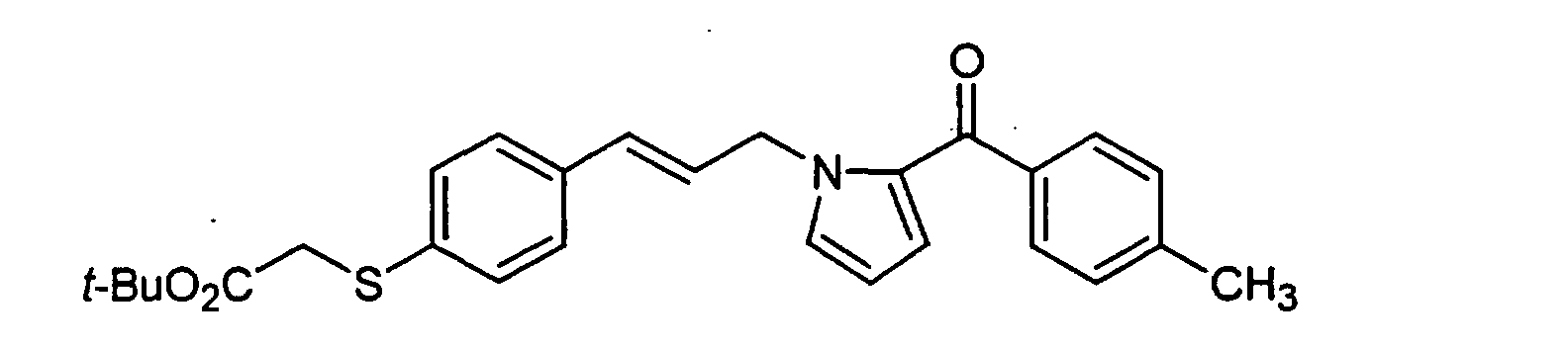
1H NMR (CDCl3, 400 MHz) δ 7.73 (d, 2 H, J = 8.1 Hz) , 7.33 - 7.27 (m, 4 H), 7.24 (d, 2 H, J = 8.1 Hz), 7.04 (dd, 1 H, J = 1.7 and 2.5 Hz), 6.76 (dd, 1 H, J = 1.7 and 4.0 Hz), 6.45 - 6.38 (m, 2 H), 6.20 (dd, 1 H, J = 2.5 and 4.0 Hz), 5.19 (d, 2 H, J = 4. 7 Hz) , 3.53 (s, 2 H) , 2.43 (s, 3 H) , 1. 40 (s, 9 H).

1H NMR (CDCl3, 400 MHz) δ 7.72 (d, 2 H, J = 8.1 Hz), 7.34 - 7.27 (m, 4 H), 7.25 (d, 2 H, J = 8.1 Hz), 7.04 (dd, 1 H, J = 1.7 and 2.5 Hz), 6.76 (dd, 1 H, J = 1.7 and 4.0 Hz), 6.45 - 6.38 (m, 2 H), 6.20 (dd, 1 H, J = 2.5 and 4.0 Hz), 5.19 (d, 2 H, J = 4.7 Hz), 3.65 (s, 2 H) , 2. 42 (s, 3 H).

1H NMR (CDCl3, 400 MHz) δ 7.68 (d, 2 H, J = 8.1 Hz), 7.24 - 7.19 (m, 4 H), 6.96 (dd, 1 H, J = 1.7 and 2.5 Hz), 6.80 (d, 2 H, J = 8.8 Hz), 6.72 (dd, 1 H, J = 1.7 and 4.0 Hz), 6.32 (brd, 1 H, J = 15.7 Hz), 6.15 (dd, 1 H, J = 2.5 and 4.0 Hz), 6.03 (dt, 1 H, J = 15.7 and 7.2 Hz), 4.52 (t, 2 H, J = 7.1 Hz), 4.49 (s, 2 H), 2.69 (dt, 2 H, J = 7.2 and 7.1 Hz), 2.42 (s, 3 H), 1.49 (s, 9 H).
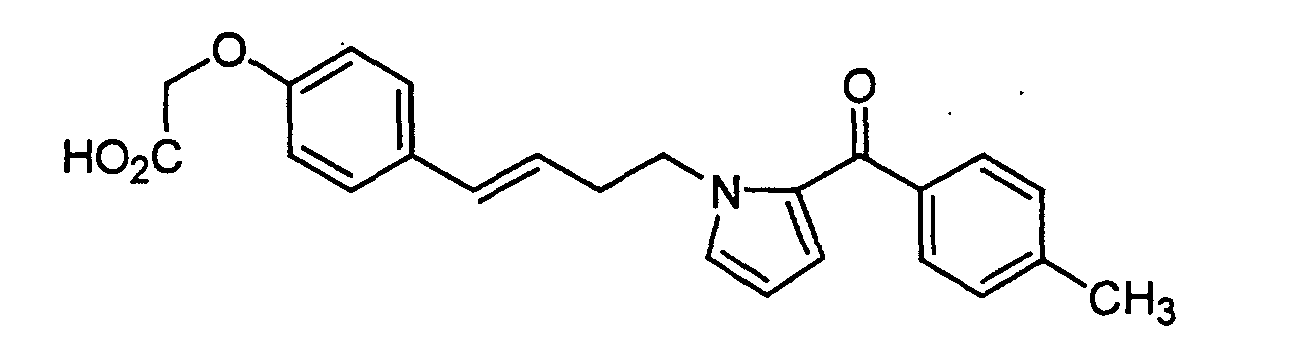
1H NMR (CDCl3, 400 MHz) δ 7.69 (d, 2 H, J = 8.1 Hz), 7.25 - 7.21 (m, 4 H), 6.96 (dd, 1 H, J = 1.7 and 2.5 Hz), 6.82 (d, 2 H, J = 8.8 Hz), 6.72 (dd, 1 H, J = 1.7 and 4.0 Hz), 6.32 (brd, 1 H, J = 15.7 Hz), 6.14 (dd, 1 H, J = 2.5 and 4.0 Hz), 6.06 (dt, 1 H, J = 15.7 and 7.2 Hz), 4.66 (s, 2 H), 4.52 (t, 2 H, J = 7.1 Hz), 2.69 (dt, 2 H, J = 7.2 and 7.1 Hz), 2.42 (s, 3 H).
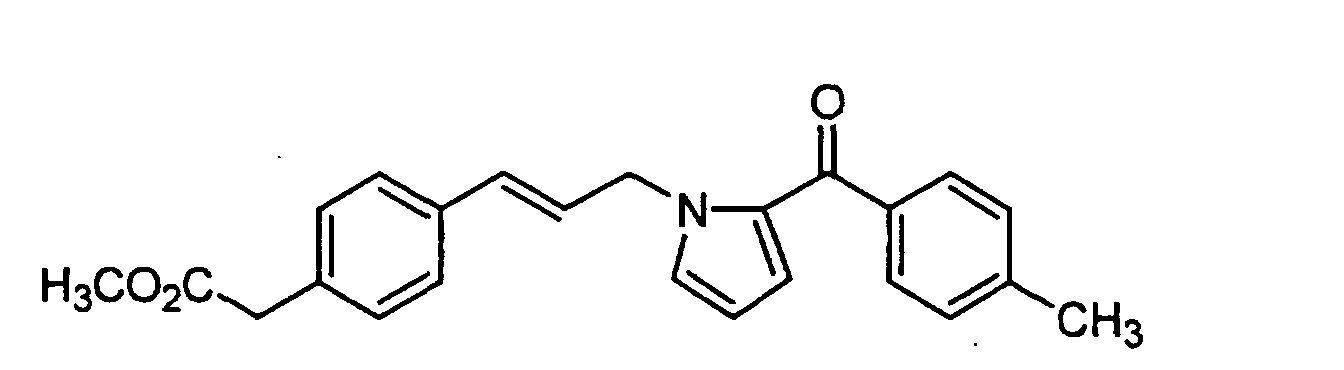
1H NMR (CDCl3, 400 MHz) δ 7.73 (d, 2 H, J = 8.1 Hz) , 7.32 (d, 2 H, J = 8.2 Hz), 7.25 (d, 2 H, J = 8.1 Hz), 7.20 (d, 2 H, J = 8.2 Hz), 7.04 (dd, 1 H, J = 1.7 and 2.5 Hz), 6.76 (dd, 1 H, J = 1.7 and 4.0 Hz), 6.48 (brd, 1 H, J = 15.7 Hz), 6.42 (dt, 1 H, J = 15.7 and 5.5 Hz), 6.20 (dd, 1 H, J = 2.5 and 4.0 Hz), 5.19 (d, 2 H, J = 5. 5 Hz), 3. 68 (s, 3 H), 3. 60 (s, 2 H) , 2.43 (s, 3 H).
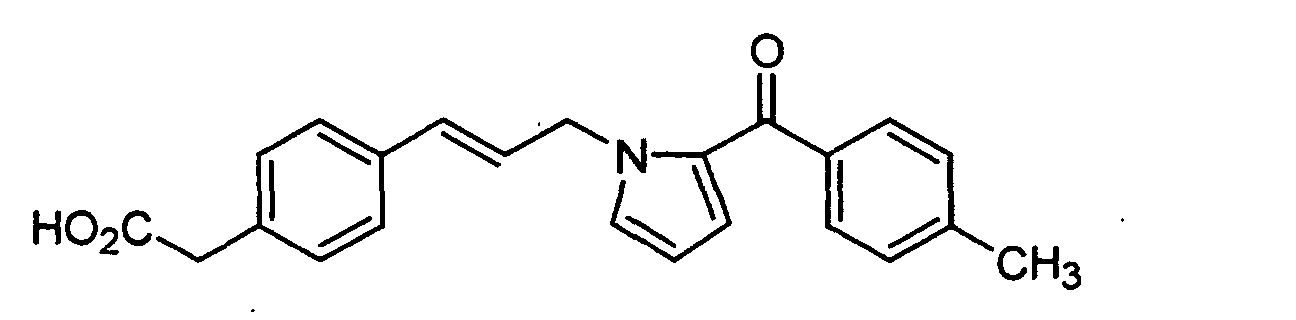
1H NMR (CDCl3, 400 MHz) δ 7.72 (d, 2 H, J = 8.1 Hz) , 7. 32 (d, 2 H, J = 8.2 Hz) , 7.26 (d, 2 H, J = 8.1 Hz), 7.20 (d, 2 H, J = 8.2 Hz), 7.04 (dd, 1 H, J = 1.7 and 2.5 Hz), 6.76 (dd, 1 H, J = 1.7 and 4.0 Hz), 6.48 (brd, 1 H, J = 15.7 Hz), 6.42 (dt, 1 H, J = 15.7 and 5.5 Hz), 6.20 (dd, 1 H, J = 2.5 and 4.0 Hz), 5.20 (d, 2 H, J = 5.5 Hz), 3.62 (s, 2 H), 2.42 (s, 3 H).
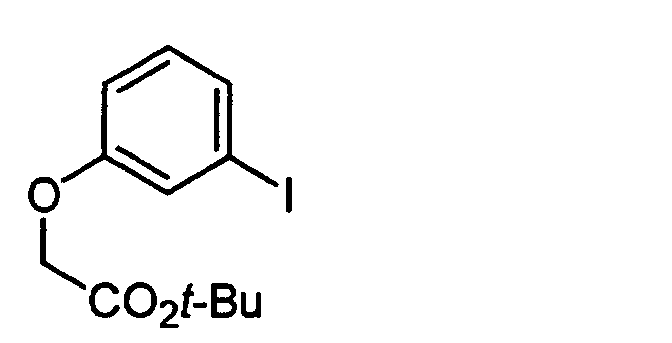
1H NMR (CDCl3, 400 MHz) δ 7.32 (ddd, 1 H, J = 7.8, 1.5 and 0.9 Hz), 7.24 (dd, 1 H, J = 2.5 and 1.5 Hz), 7.00 (dd, 1 H, J = 8.3 and 7.8 Hz), 6.87 (ddd, 1 H, J = 8.3, 2.5 and 0.9 Hz), 4.49 (s, 2 H), 1.49 (s, 9 H).


1H NMR (CDCl3, 400 MHz) δ 7.68 (d, 2 H, J = 8.0 Hz), 7.22 (d, 2 H, J = 8.0 Hz), 7.21 (t, 1 H, J = 8.1 Hz), 6.97 (dd, 1 H, J = 2.5 and 1.6 Hz), 6.95 (brd, 1 H, J = 8.1 Hz), 6.84 (brt, 1 H, J = 2.2 Hz), 6.77 (dd, 1 H, J = 8.1 and 2.2 Hz), 6.72 (dd, 1 H, J = 4.0 and 1.6 Hz), 6.33 (d, 1 H, J = 15.8 Hz), 6.17 (dt, 1 H, J = 15.8 and 7.1 Hz), 6.15 (dd, 1 H, J = 4.0 and 2.5 Hz), 4.62 (s, 2 H), 4.55 (t, 2 H,J = 7.0 Hz),2.68 - 2.74 (m, 2 H), 2.42 (s, 3 H).

1H NMR (CDCl3, 400 MHz) δ 7.69 (d, 2 H, J = 8.1 Hz), 7.23 (d, 2 H, J = 8.1 Hz), 7.18 - 7.25 (m, 3 H), 7.12 (brd, 1 H, J = 7.1 Hz), 6.97 (dd, 1 H, J = 2.5 and 1.7 Hz), 6.73 (dd, 1 H, J = 4.0 and 1.7 Hz), 6.37 (d, 1 H, J = 15.8 Hz), 6.18 (dt, 1 H, J = 15.8 and 7.2 Hz), 6.15 (dd, 1 H, J = 4.0 and 2.5 Hz), 4.53 (t, 2 H,J = 7.1 Hz),3.69 (s, 3 H), 3.58 (s, 2 H) , 2.71 (brq, 2 H, J = 7.0 Hz) , 2. 42 (s, 3 H).
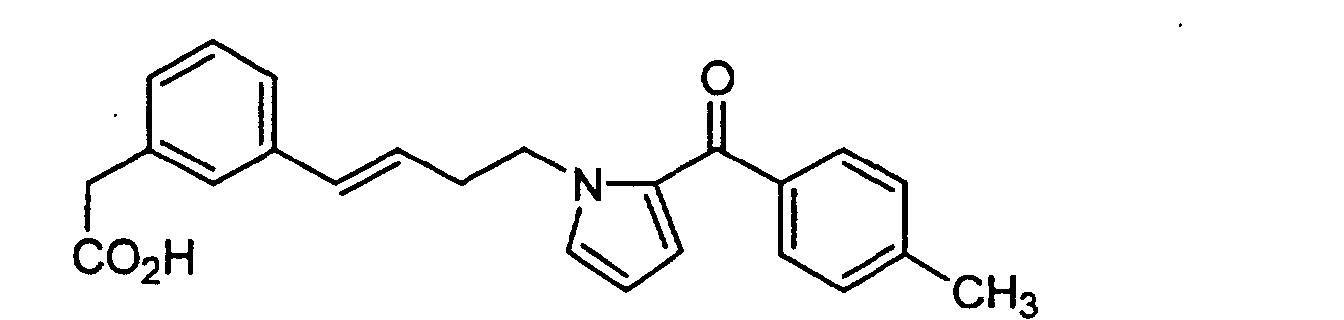
1H NMR (CDCl3, 400 MHz) δ 7.68 (d, 2 H, J = 8.1 Hz), 7.22 (d, 2 H, J = 8.1 Hz) , 7.19 - 7.25 (m, 3 H) , 7.13 (brd, 1 H, J = 7.0 Hz), 6.96 (dd, 1 H, J = 2.5 and 1.7 Hz), 6.72 (dd, 1 H, J = 4.0 and 1.7 Hz), 6.36 (d, 1 H, J = 15.9 Hz), 6.18 (dt, 1 H, J = 15.9 and 7.1 Hz), 6.14 (dd, 1 H, J = 4.0 and 2. 5 Hz), 4 . 53 (t, 2 H, J = 7. 0 Hz) , 3.61 (s, 2 H), 2.71 (brq, 2 H, J = 7.0 Hz), 2.42 (s, 3 H).
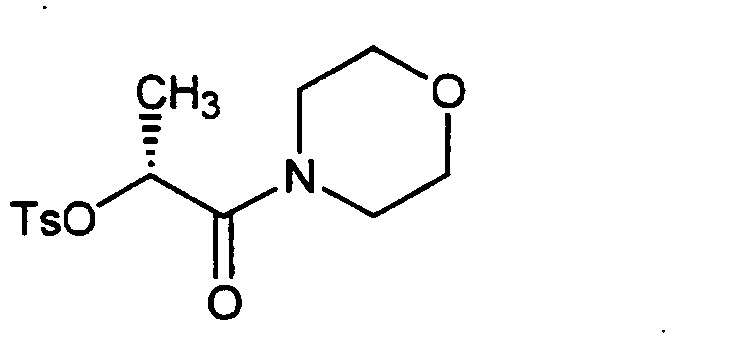
1H NMR (CDCl3, 400 MHz) δ 7.81 (d, 2 H, J = 8.0 Hz) , 7.35 (d, 2 H, J = 8.0 Hz), 5.27 (q, 1 H, J = 6.8 Hz), 3.64-3.46 (m, 8 H), 2.46 (s, 3 H), 1.47 (d, 3 H, J = 6.8 Hz).

1H NMR (CDCl3, 400 MHz) δ 7.32 (dd, 1 H, J = 1.7 and 7.8 Hz), 7.25 (dd, 1 H, J = 1.7 and 2.4 Hz), 7.00 (dd, 1 H, J = 7.8 and 8.1 Hz), 6.87 (dd, 1 H, J = 2.4 and 8.1 Hz), 4.92 (q, 1 H, J = 6.8 Hz), 3.67 - 3.46 (m, 8 H), 1.60 (d, 3 H, J = 6.8 Hz).
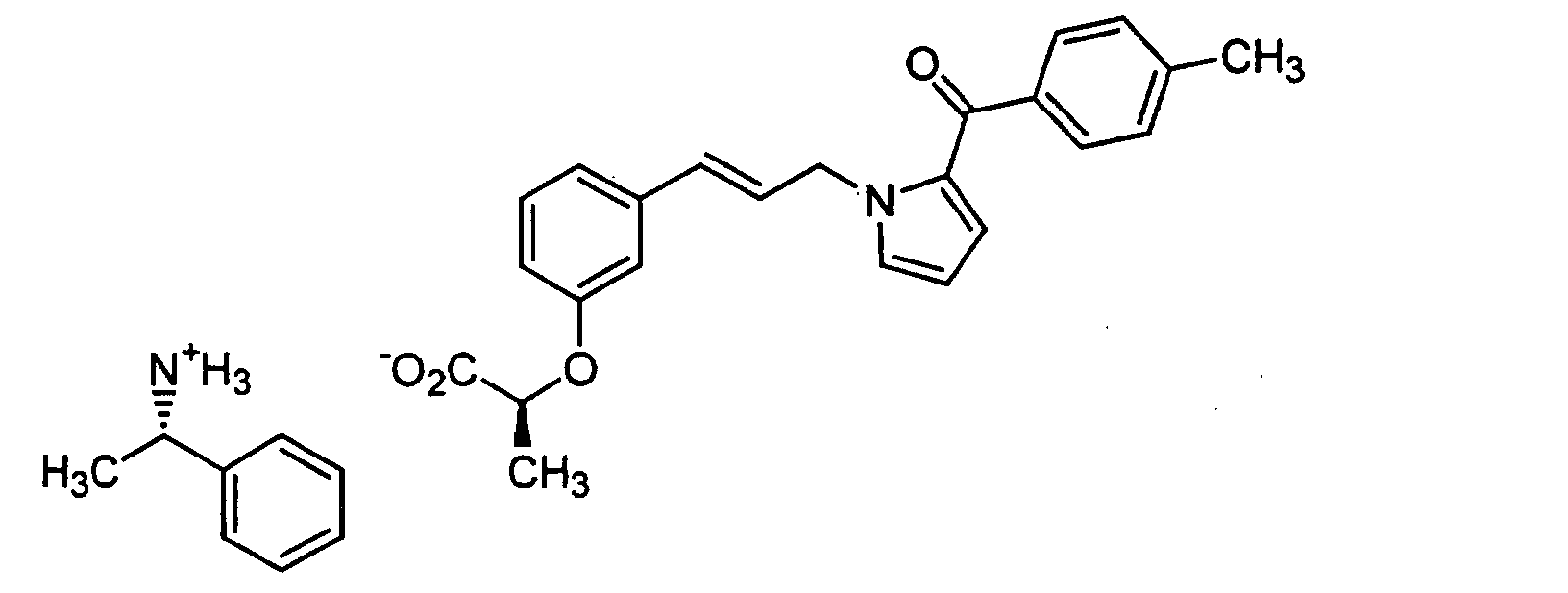
1H NMR (CDCl3, 400 MHz) δ 7.68 (d, 2 H, J = 8.1 Hz), 7.26 - 7.20 (m, 7 H), 7.09 (dd, 1 H, J = 7.8 and 8.0 Hz), 6.99 (dd, 1 H, J = 1.7 and 2.5 Hz) , 6.88 (d, 1 H, J = 7.8 Hz) , 6.82 (d, 1 H, J = 1.3 Hz), 6.74 (dd, 1 H, J = 1.6 and 4.0 Hz), 6.65 (dd, 1 H, J = 1.3 and 8.0 Hz) , 6. 47 - 6. 37 (m, 2 H) , 6.17 (dd, 1 H, J = 2.5 and 4.0 Hz), 5.10 (d, 2 H, J = 3 . 0 Hz), 4.44 (q, 1 H, J = 6.8 Hz), 3. 98 (q, 1 H, J = 6. 8 Hz) , 2.40 (s, 3 H) , 1. 40 (d, 3 H, J = 6.8 Hz), 1.35 (d, 3 H, J = 6.8 Hz).

1H NMR (DMSO-d6, 400 MHz) δ 7.65 (d, 2 H, J = 8.1 Hz), 7.34 (dd, 1 H, J = 1. 6 and 2.4 Hz) , 7.31 (d, 2 H, J = 8.1 Hz), 7.10 (dd, 1 H, J = 7.8 and 8.0 Hz) , 6.83 (d, 1 H, J = 7 . 8 Hz), 6.79 (s, 1 H), 6.69 - 6.67 (m, 2 H), 6.40 (dt, 1 H, J = 16.0 and 5.4 Hz), 6.35 (brd, 1 H, J = 16.0 Hz), 6.22 (dd, 1 H, J = 2.5 and 4.0 Hz), 5.14 (d, 2 H, J = 5.4 Hz), 4.31 (q, 1 H, J = 6.7 Hz), 2.39 (s, 3 H), 1.38 (d, 3 H, J = 6.7 Hz) .
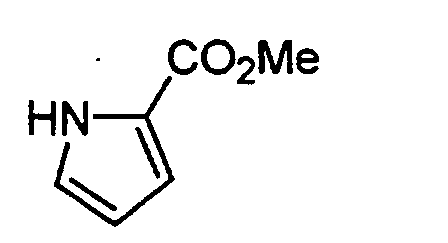
1H NMR (CDCl3, 400 MHz) δ 9. 08 (brs, 1 H) , 6. 90 - 6. 98 (m, 2 H), 6.25 - 6.29 (m, 1 H), 3.86 (s, 3 H).
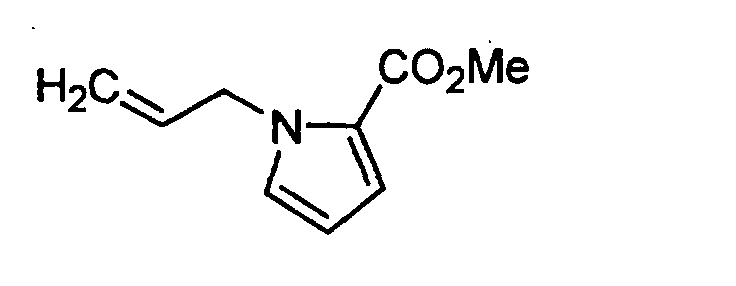
1H NMR (CDCl3, 400 MHz) δ 6.97 (dd, 1 H, J = 3.9, 1.8 Hz), 6.86 (dd, 1 H, J = 2.6, 1.8 Hz), 6.16 (dd, 1 H, J = 3.9, 2.6 Hz), 5.96 - 6.06 (m, 1 H), 5.12 - 5.17 (m, 1 H), 4.94-5.01 (m, 3 H), 3.80 (s, 3 H).

1H NMR (CDCl3, 400 MHz) δ 7.11 (dd, 1 H, J = 4.0, 1.8 Hz) , 6.91 (dd, 1 H, J = 2.6, 1.8 Hz), 6.19 (dd, 1 H, J = 4.0, 2. 6 Hz) , 6. 00 (ddt, 1 H, J = 17. 0, 10. 3, 5.2 Hz) , 5.16 (ddd, 1 H, J = 10.3, 2.6, 1.3 Hz), 4.93 - 5.03 (m, 3 H).
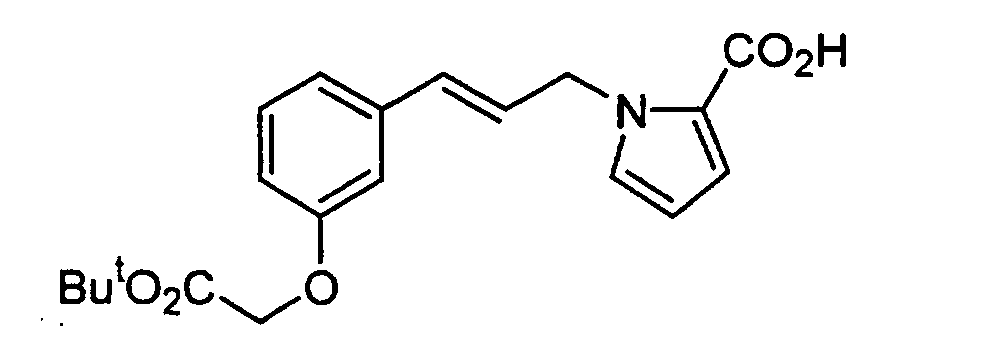
1H NMR (CDCl3, 400 MHz) δ 7.18 (t, 1 H, J = 8. 0 Hz), 7.12 (dd, 1 H, J = 4.0, 1.7 Hz), 6.95 - 6.99 (m, 2 H), 6.86-6.89 (m, 1 H), 6.78 (brdd, 1 H, J = 8.0, 2.1 Hz), 6.37 (d, 1 H, J = 15.9 Hz), 6.32 (dt, 1 H, J = 15.9, 4.8 Hz), 6.21 (dd, 1 H, J = 4 . 0, 2 . 3 Hz), 5.11 (brd, 2 H, J = 4 . 8 Hz), 4.50 (s, 2 H), 1.47 (s, 9 H).

1H NMR (CDCl3, 400 MHz) δ 7.47 (d, 2 H, J = 8.1 Hz), 7.39 (d, 2 H, J = 8.1 Hz), 7.25 (t, 1 H, J = 8.0 Hz), 7.01 (brd, 1 H, J = 8.0 Hz), 6.90 - 6.93 (m, 1'H), 6.87 - 6.89 (m, 1 H), 6.81 (brdd, 1 H, J = 8.0, 2.5 Hz), 6. 62 (dd, 1 H, J = 3. 9, 1. 6 Hz) , 6.39 (dt, 1 H, J = 16. 0, 4. 6 Hz) , 6.35 (d, 1 H, J = 16.0 Hz), 6.25 (brs, 1 H), 6.16 (dd, 1 H, J = 3.9, 2.6 Hz) , 5.17 (brd, 2 H, J = 4 . 6 Hz), 4. 65 (s, 2 H) , 4. 62 (brd, 2 H, J = 5.8 Hz).
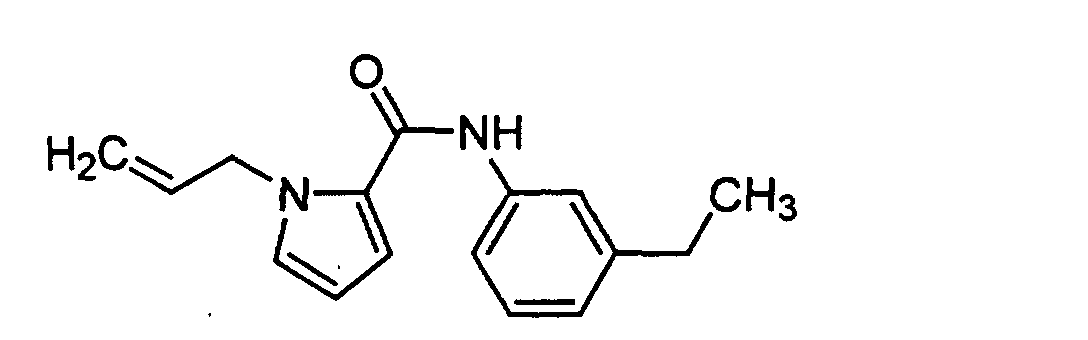
1H NMR (CDCl3, 400 MHz) δ 7.56 (brs, 1 H), 7.42 (brs, 1 H), 7.35 (brd, 1 H, J = 7.7 Hz), 7.25 (t, 1 H, J = 7.7 Hz), 6.96 (brd, 1 H, J = 7.7 Hz) , 6.85 (dd, 1 H, J = 2. 6, 1. 6 Hz), 6.70 (dd, 1 H, J = 3.9, 1.6 Hz), 6.18 (dd, 1 H, J = 3.9, 2.6 Hz), 6.01 - 6.11 (m, 1 H), 5.13 - 5.18 (m, 1 H), 4.99 - 5.05 (m, 3 H), 2.65 (q, 2 H, J = 7.6 Hz), 1.25 (t, 3 H, J = 7.6 Hz).

1H NMR (CDCl3, 400 MHz) δ 7.60 (brs, 1 H), 7.41 (brs, 1 H), 7.35 (brd, 1 H, J = 7.6 Hz) , 7.25 (brt, 1 H, J = 7 . 6 Hz) , 7.20 (brt, 1 H, J = 7. 9 Hz) , 6. 99 (brd, 1 H, J = 7. 9 Hz) , 6.96 (brd, 1 H, J = 7.6 Hz), 6.89 - 6.91 (m, 2 H), 6.77 (brdd, 1 H, J = 7 . 9, 2.1 Hz) , 6. 72 (dd, 1 H, J = 3.9, 1.6 Hz), 6.41 (dt, 1 H, J = 16.0, 4.4 Hz), 6.38 (d, 1 H, J = 16.0 Hz), 6.19 (dd, 1 H, J = 3.9, 2.6 Hz), 5.12 - 5.20 (m, 2 H) , 4.78 (q, 1 H, J = 6. 8 Hz) , 2. 65 (q, 2 H, J = 7 . 6 Hz) , 1.63 (d, 3 H, J = 6.8 Hz), 1.24 (t, 3 H, J = 7.6 Hz).
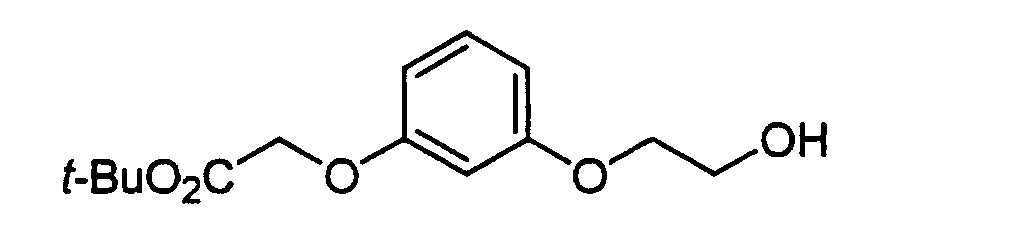
1H NMR (CDCl3, 400 MHz) δ 7.18 (t, 1 H, J = 8.1 Hz), 6.56 (dd, 1 H, J = 8.1 Hz, 1.7 Hz), 6.46 - 6.52 (m, 2 H), 4.49 (s, 2H), 4.06 (t, 2 H, J = 4.5 Hz), 3.92 - 3.97 (m, 2 H), 2.04 (t, 2 H, J = 6.2 Hz), 1.49 (s, 9 H).
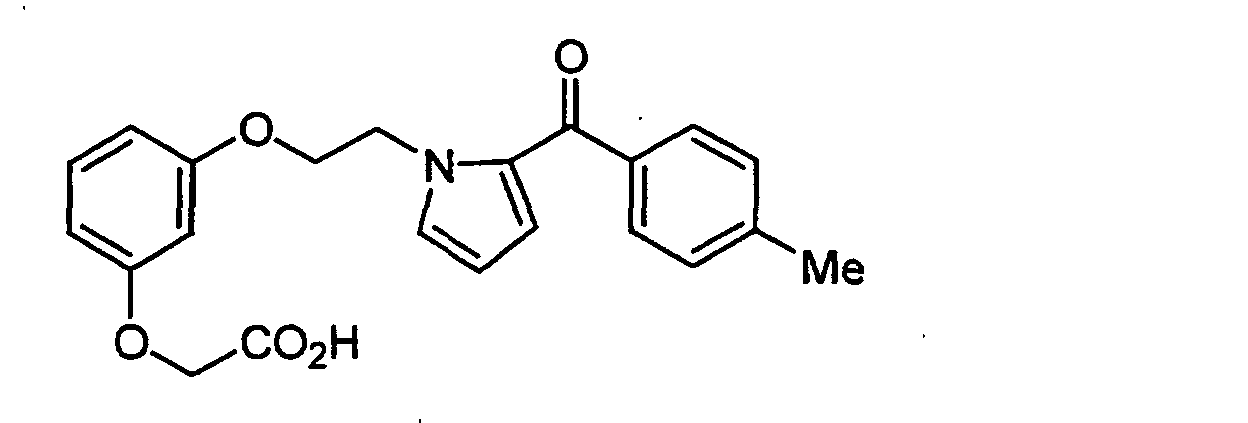
1H NMR (CDCl3, 400 MHz) δ 7.70 (d, 2 H, J = 8.1 Hz), 7.25 (d, 2 H, J = 8.1 Hz) , 7.16 (t, 1 H, J = 8.3 Hz), 7.10 (dd, 1 H, J = 2.4 Hz, 1. 9 Hz), 6.77 (dd, 1 H, J = 4. 0 Hz, 1 . 7 Hz), 6.48 - 6.56 (m, 3 H), 6.17 (dd, 1 H, J = 4.0 Hz, 2.5 Hz), 4.76 (t, 2 H, J = 5.0 Hz), 4.63 (s, 2 H), 4.34 (t, 2 H, J = 5.0 Hz), 2.42 (s, 3 H).
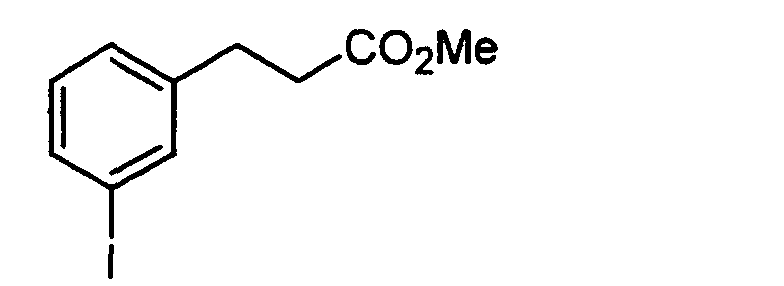
1H NMR (CDCl3, 400 MHz) δ 7.53 - 7.58 (m, 2 H), 7.18 (brd, 1 H, J = 7.7 Hz), 7.02 (t, 1 H, J = 7.7 Hz), 3.68 (s, 3 H), 2.89 (t, 2 H, J = 7.8 Hz), 2.61 (t, 2 H, J = 7.8 Hz).

1H NMR (CDCl3, 400 MHz) δ 7.54 - 7.58 (m, 2 H), 7.17 (brd, 1 H, J = 7.9 Hz), 7.02 (brt, 1 H, J = 7.9 Hz), 3.71 (s, 6 H), 3.63 (t, 1 H, J = 7.8 Hz), 3.15 (d, 2 H, J = 7.8 Hz).

1H NMR (CDCl3, 400 MHz) δ 7.56 (dt, 1 H, J = 7.7, 1.4 Hz), 7.43 (t, 1 H, J = 1.4 Hz), 7.04 (dt, 1 H, J = 7.7, 1.4 Hz), 6.99 (t, 1 H, J = 7.7 Hz), 3.72 (s, 6 H), 3.16 (s, 2 H), 1.83 (q, 2 H, J = 7.6 Hz), 0.91 (t, 3 H, J = 7.6 Hz).
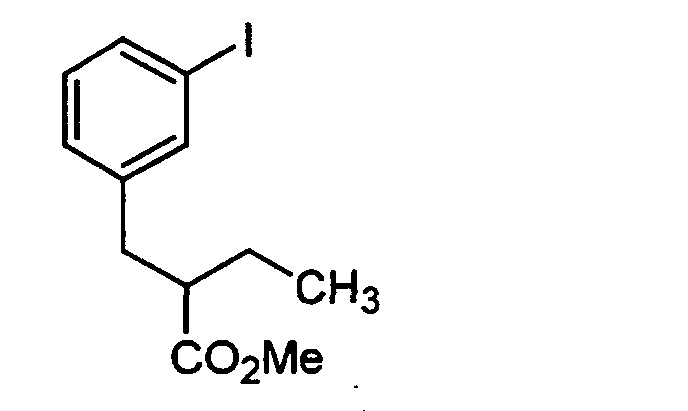
1H NMR (CDCl3, 400 MHz) δ 7.51 - 7. 55 (m, 2 H) , 7.12 (brd, 1 H, J = 7.7 Hz), 7.00 (t, 1 H, J = 7.7 Hz), 3.62 (s, 3 H), 2.87 (dd, 1 H, J = 13. 6, 6. 5 Hz) , 2. 68 (dd, 1 H, J = 13.6, 8.5 Hz), 2.52 - 2.61 (m, 1 H), 1.60 - 1.71 (m, 1 H), 1.50-1.60 (m, 1 H) , 0.91 (t, 3 H, J = 7. 4 Hz).
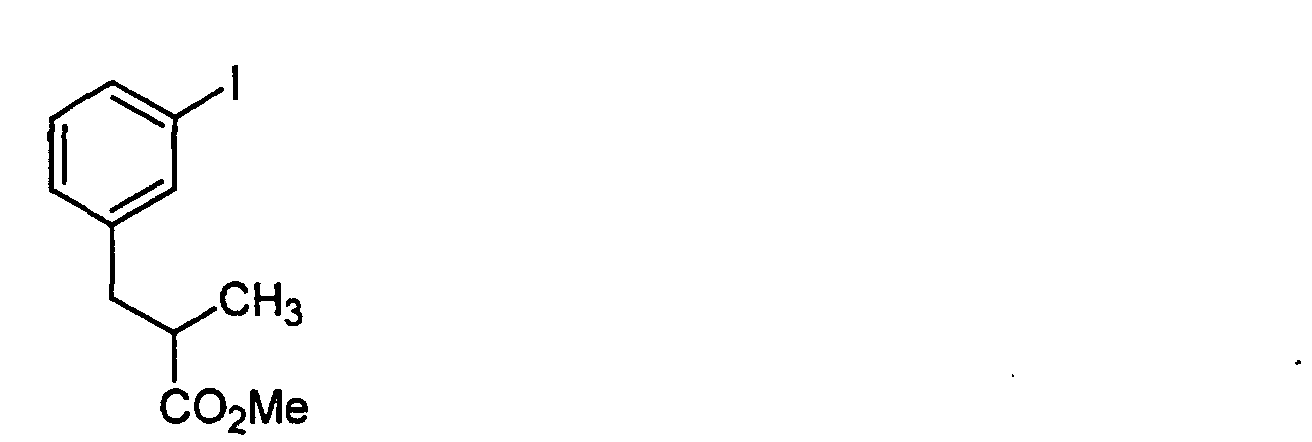
1H NMR (CDCl3, 400 MHz) δ 7.52 - 7.56 (m, 2 H), 7.12 (brd, 1 H, J = 7.7 Hz), 7.01 (t, 1 H, J = 7.7 Hz), 3.65 (s, 3 H), 2.96 (dd, 1 H, J = 13.4, 7.0 Hz), 2.65 - 2.77 (m, 1 H), 2.68 (dd, 1 H, J = 13.4, 7.6 Hz), 1.15 (d, 3 H, J = 6.9 Hz).
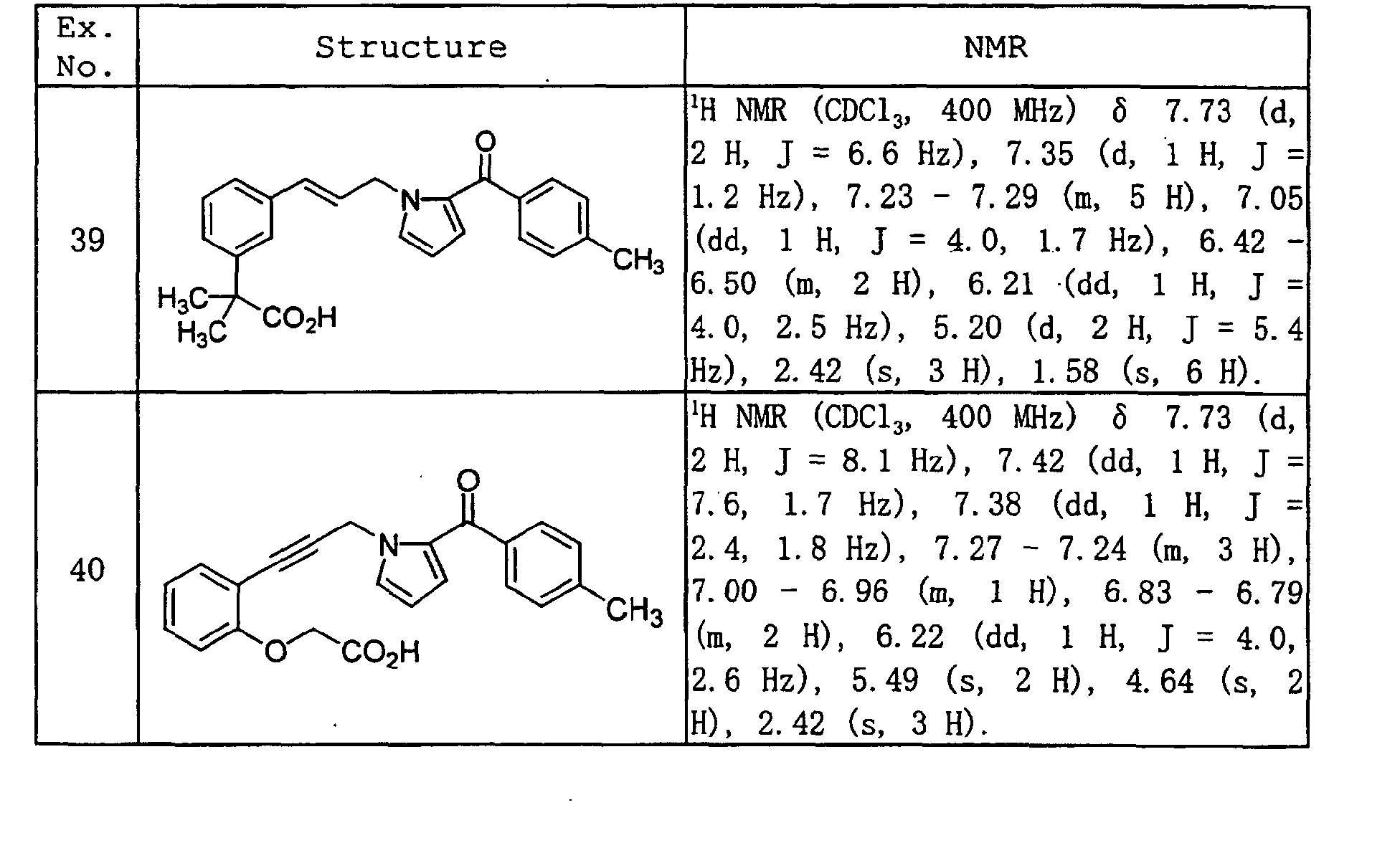


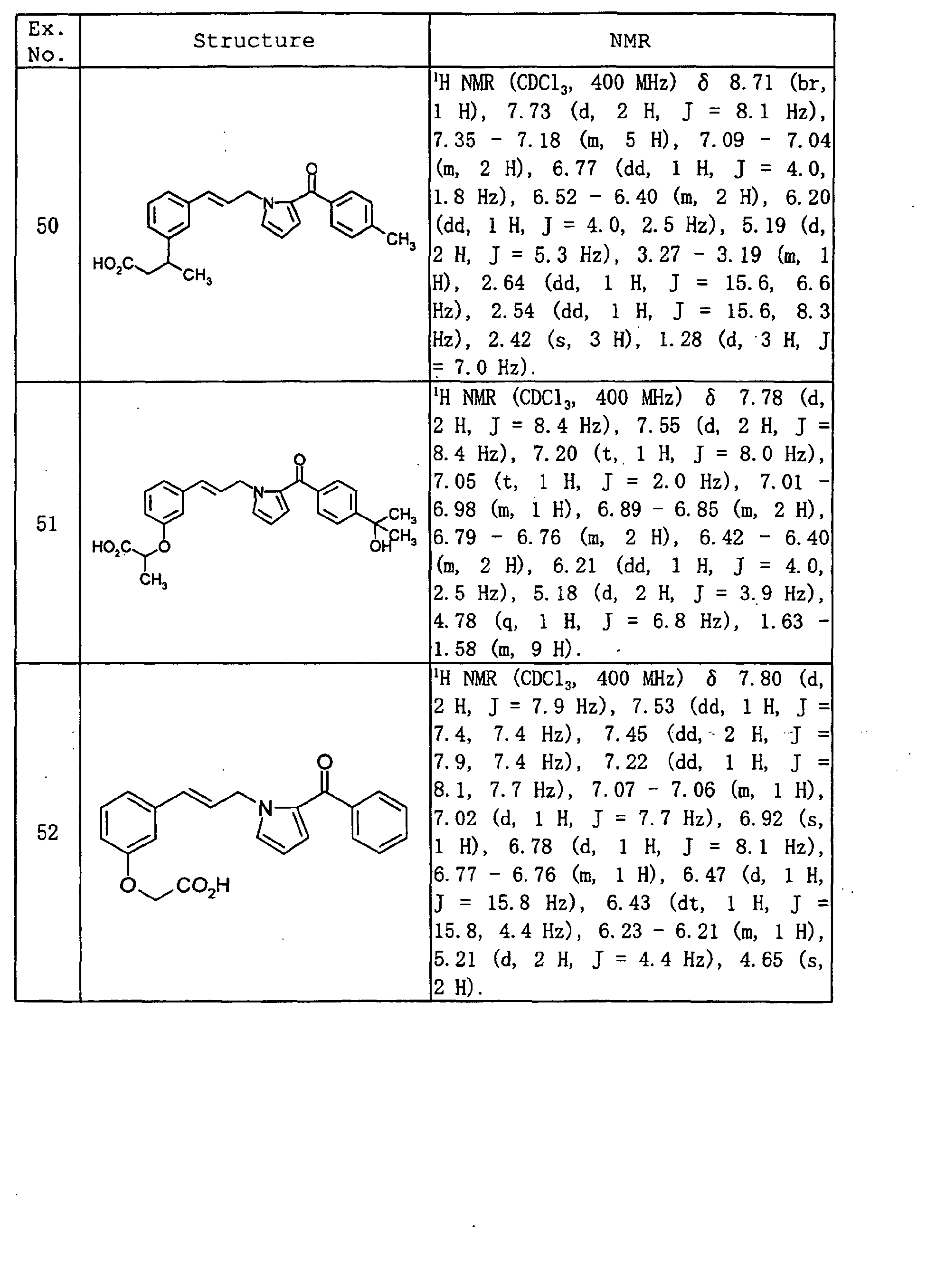
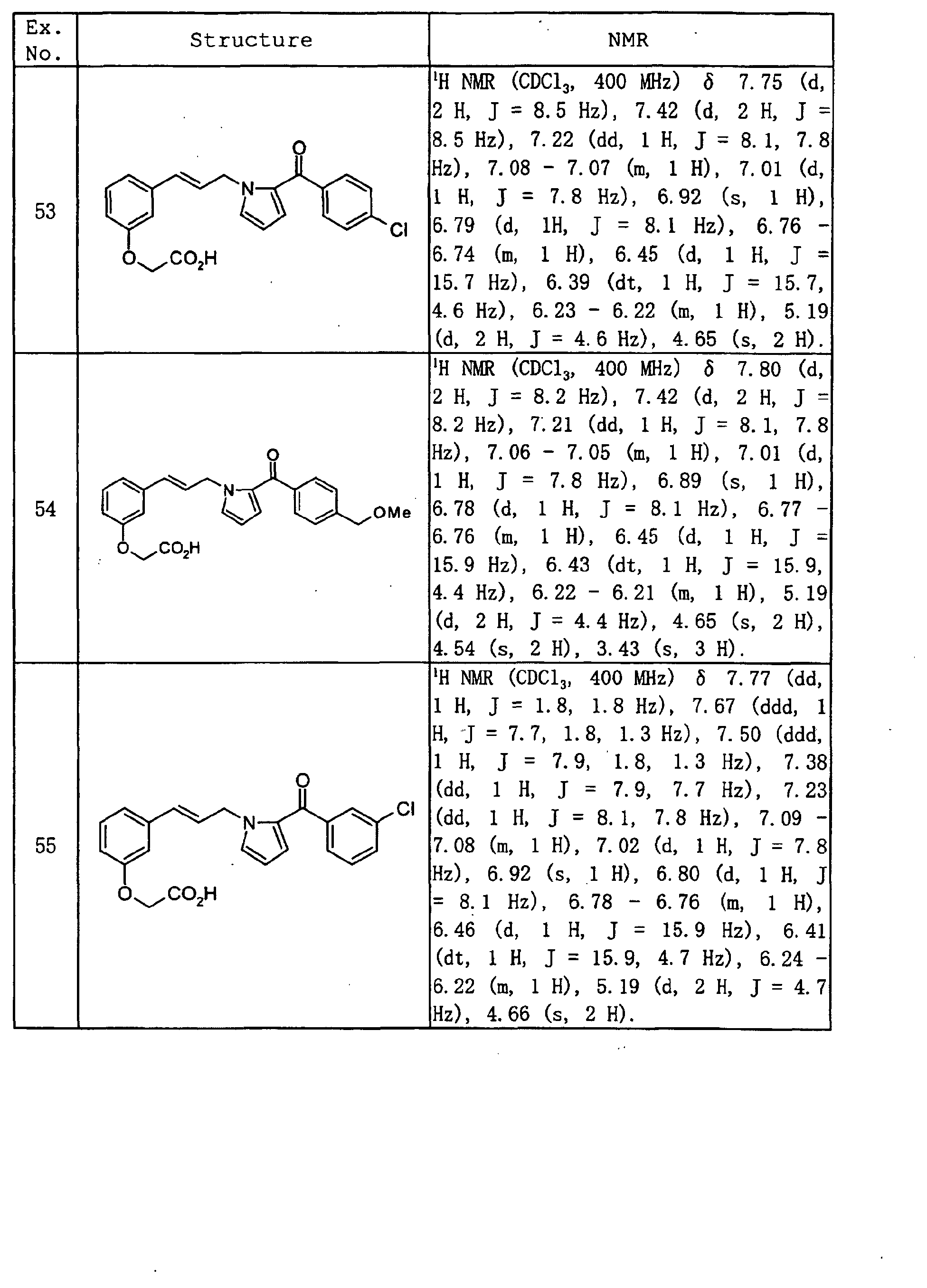

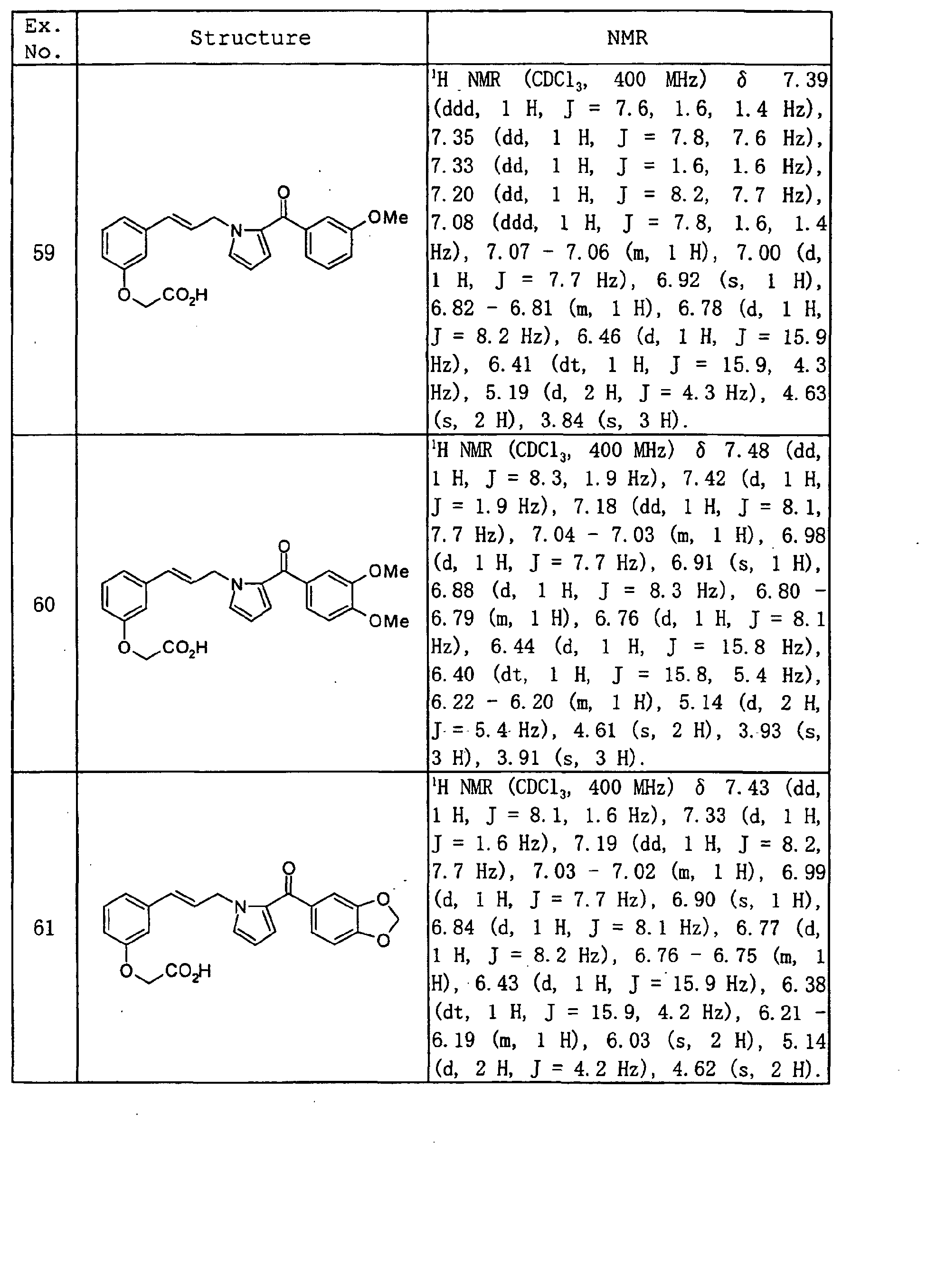
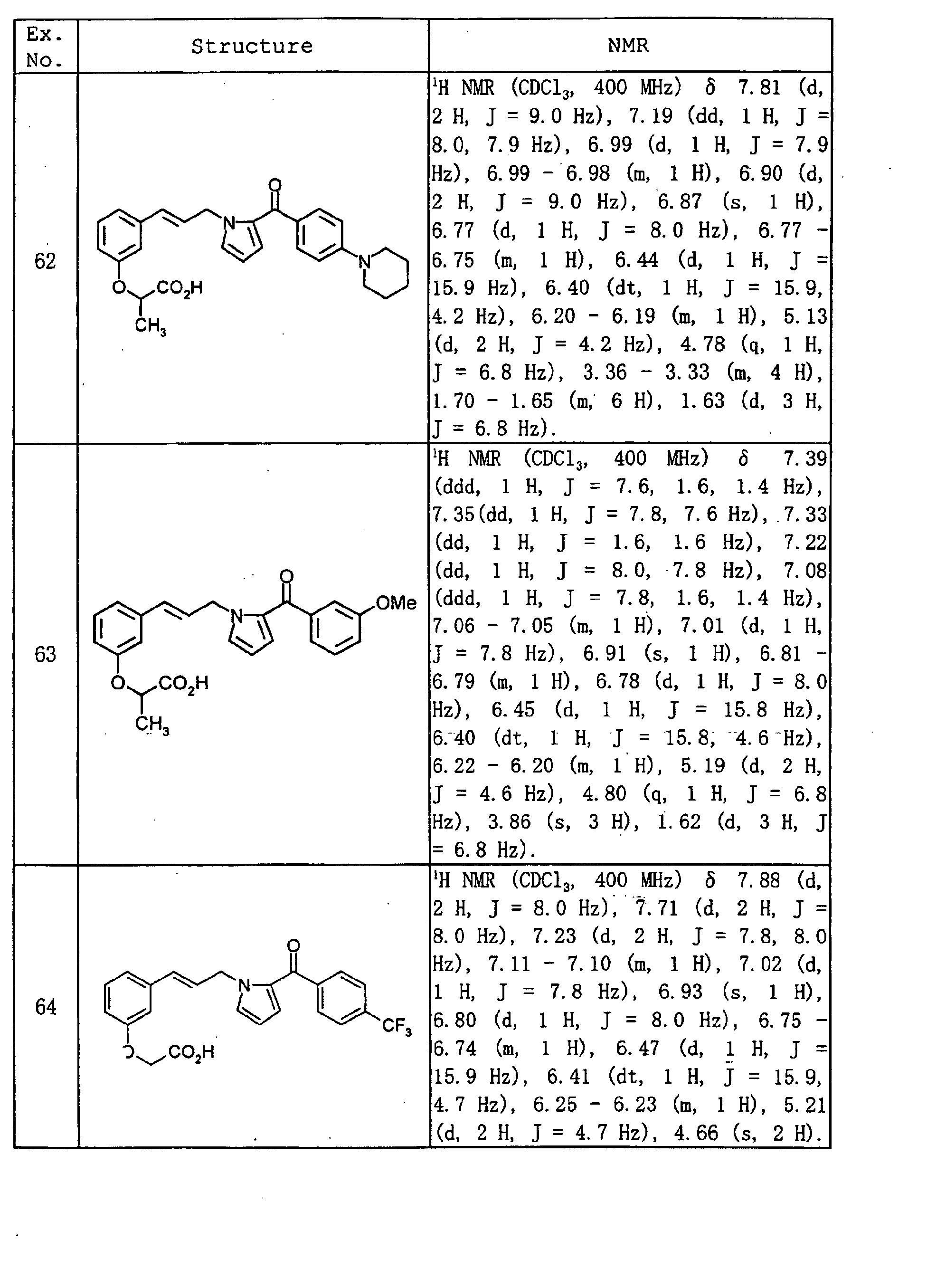


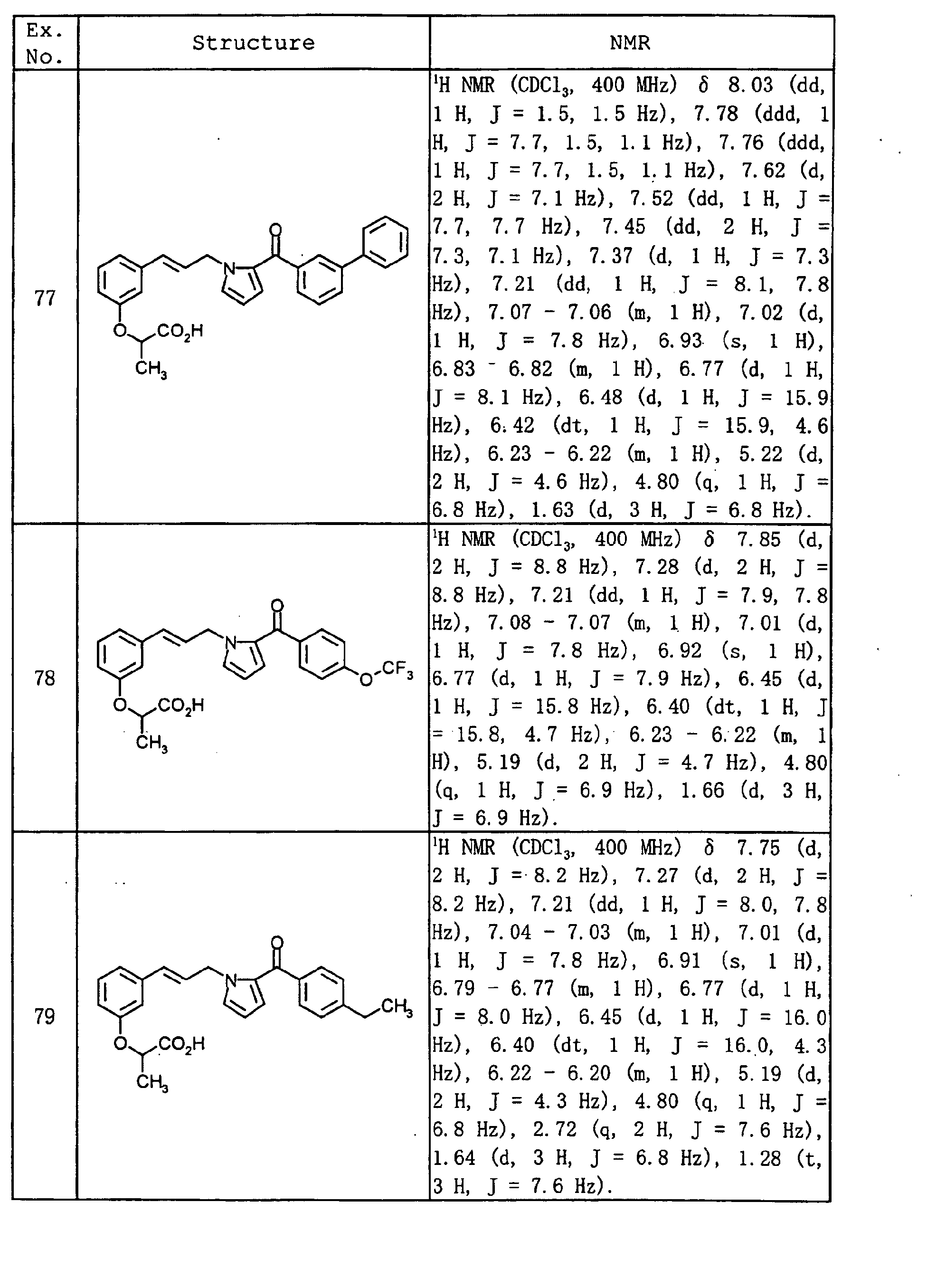

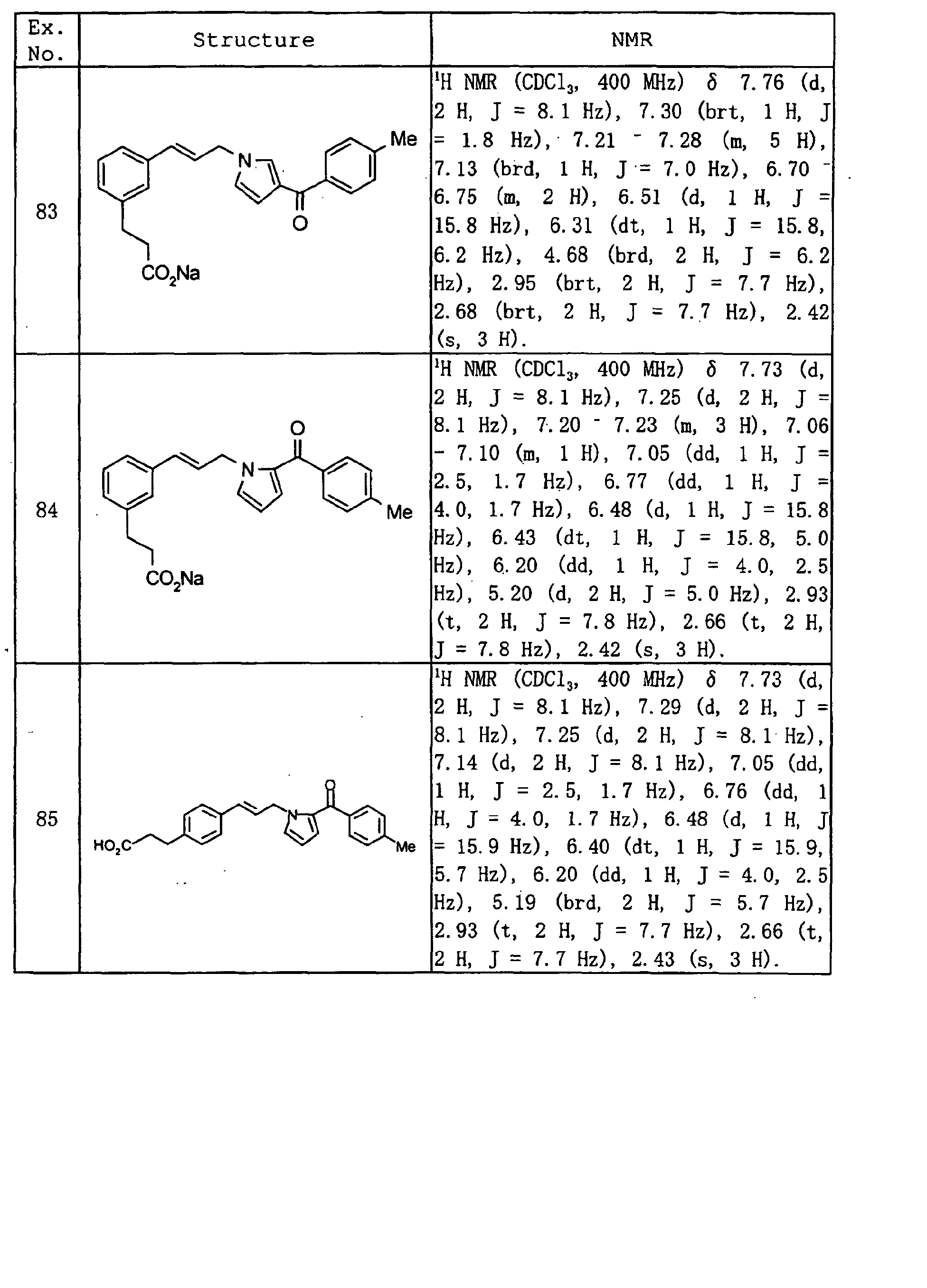

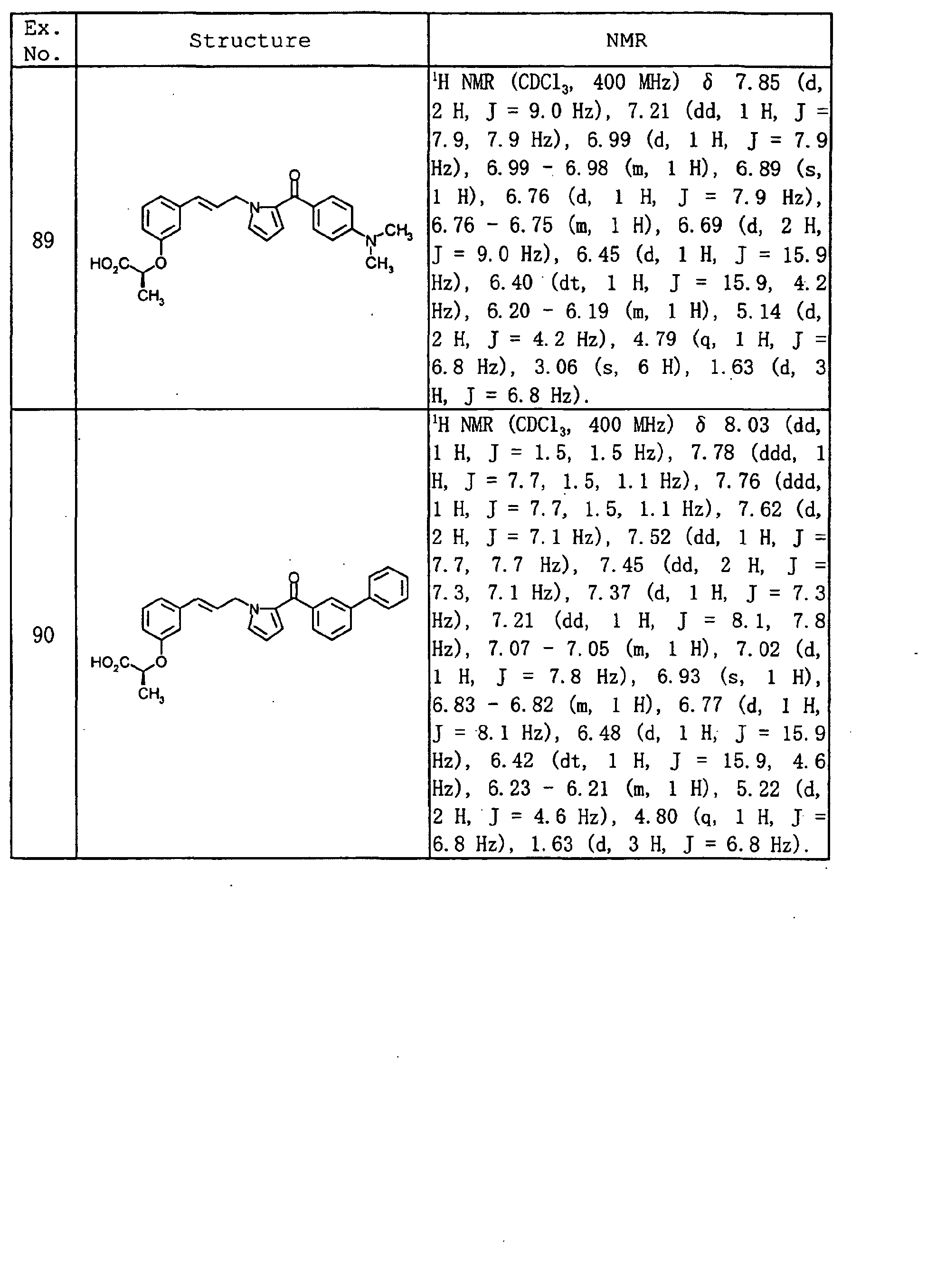


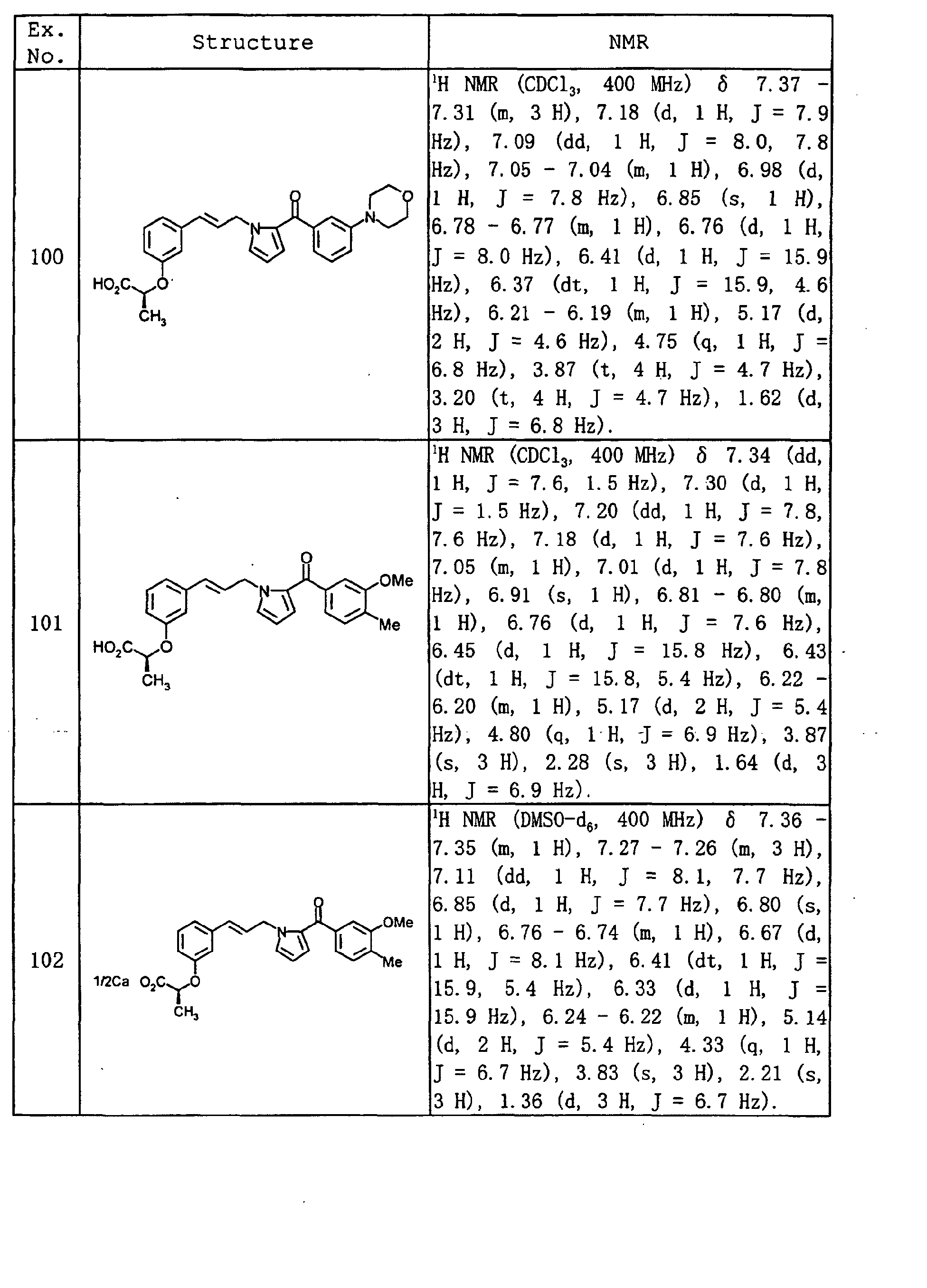

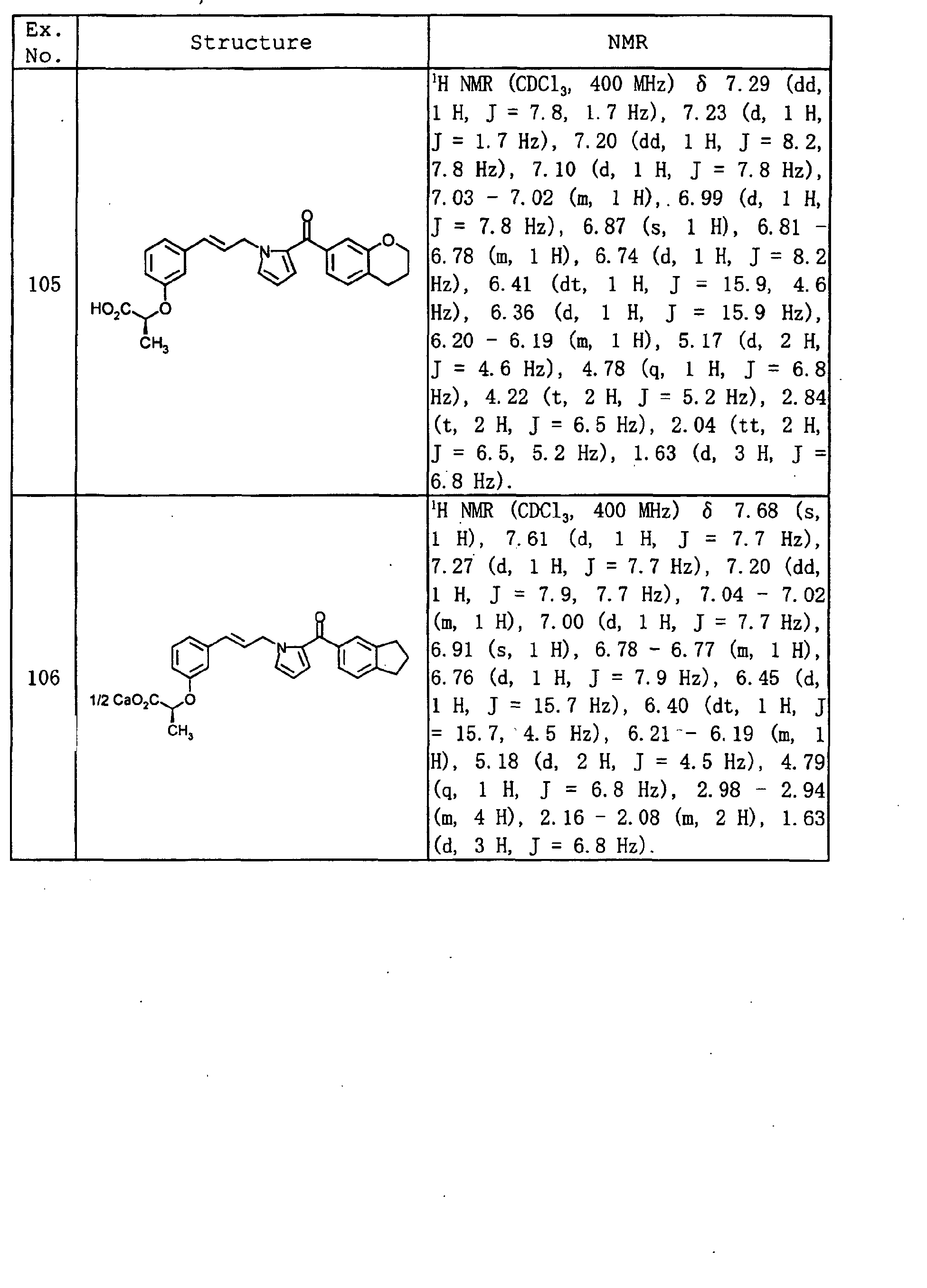


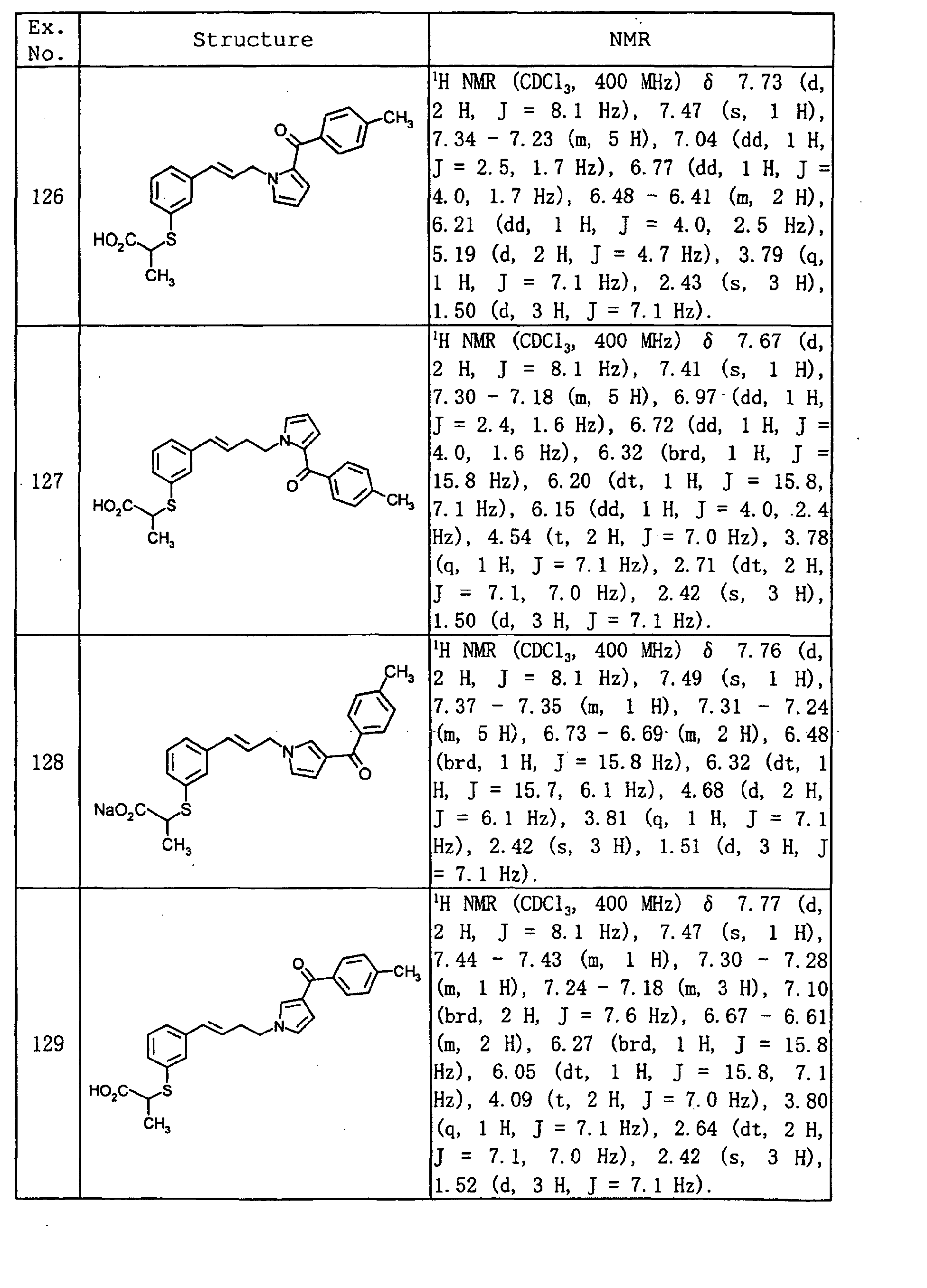


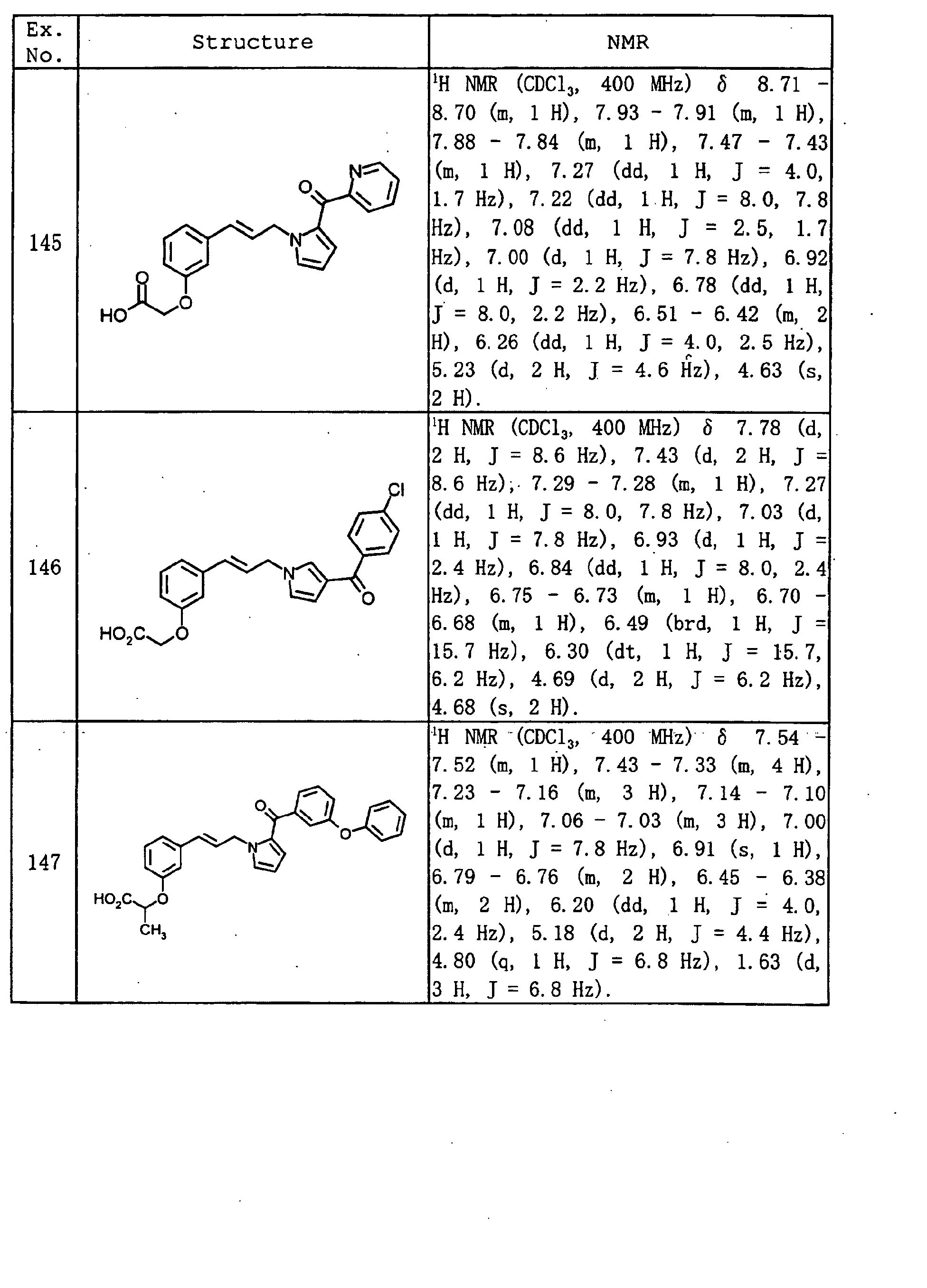
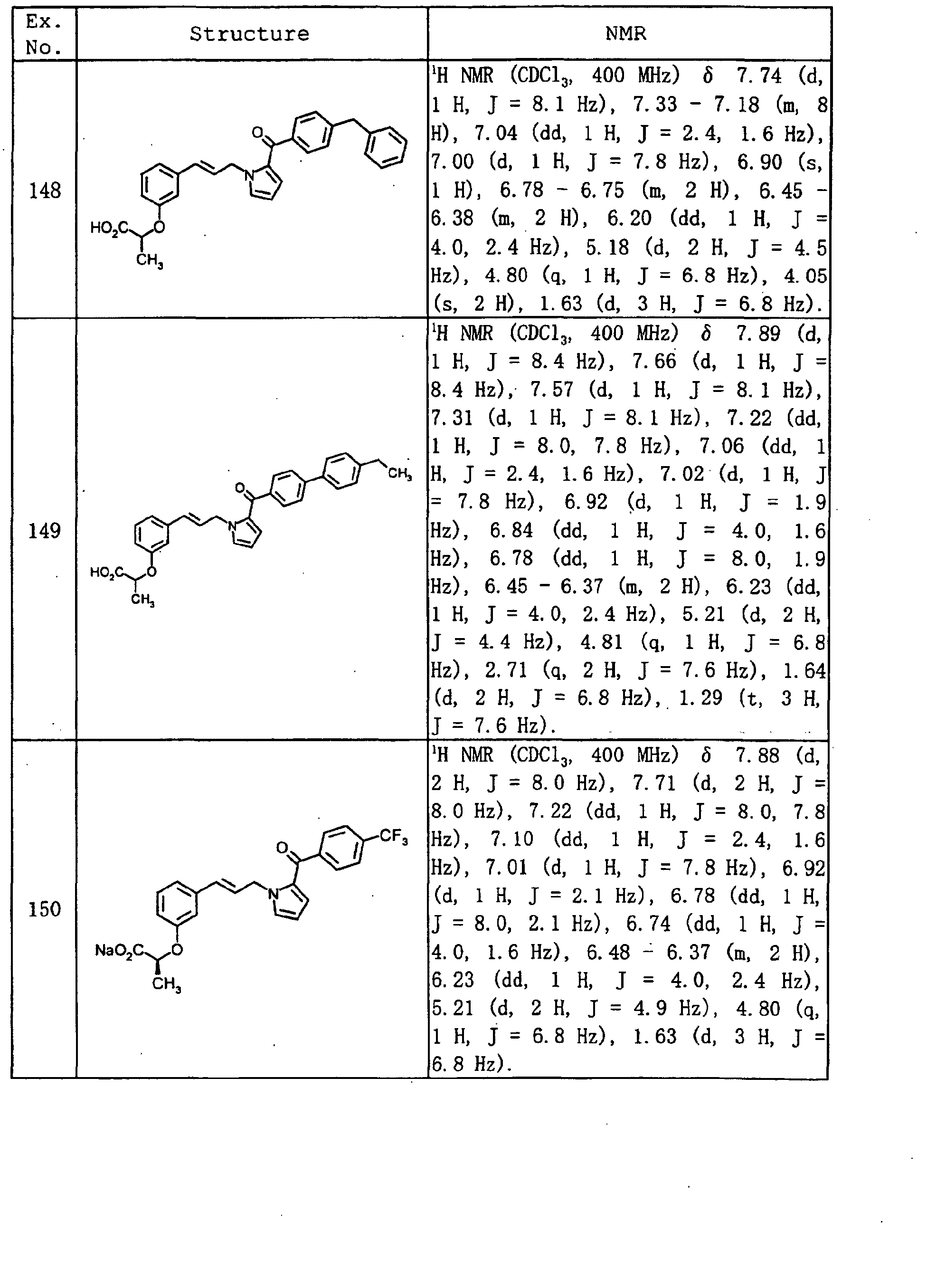
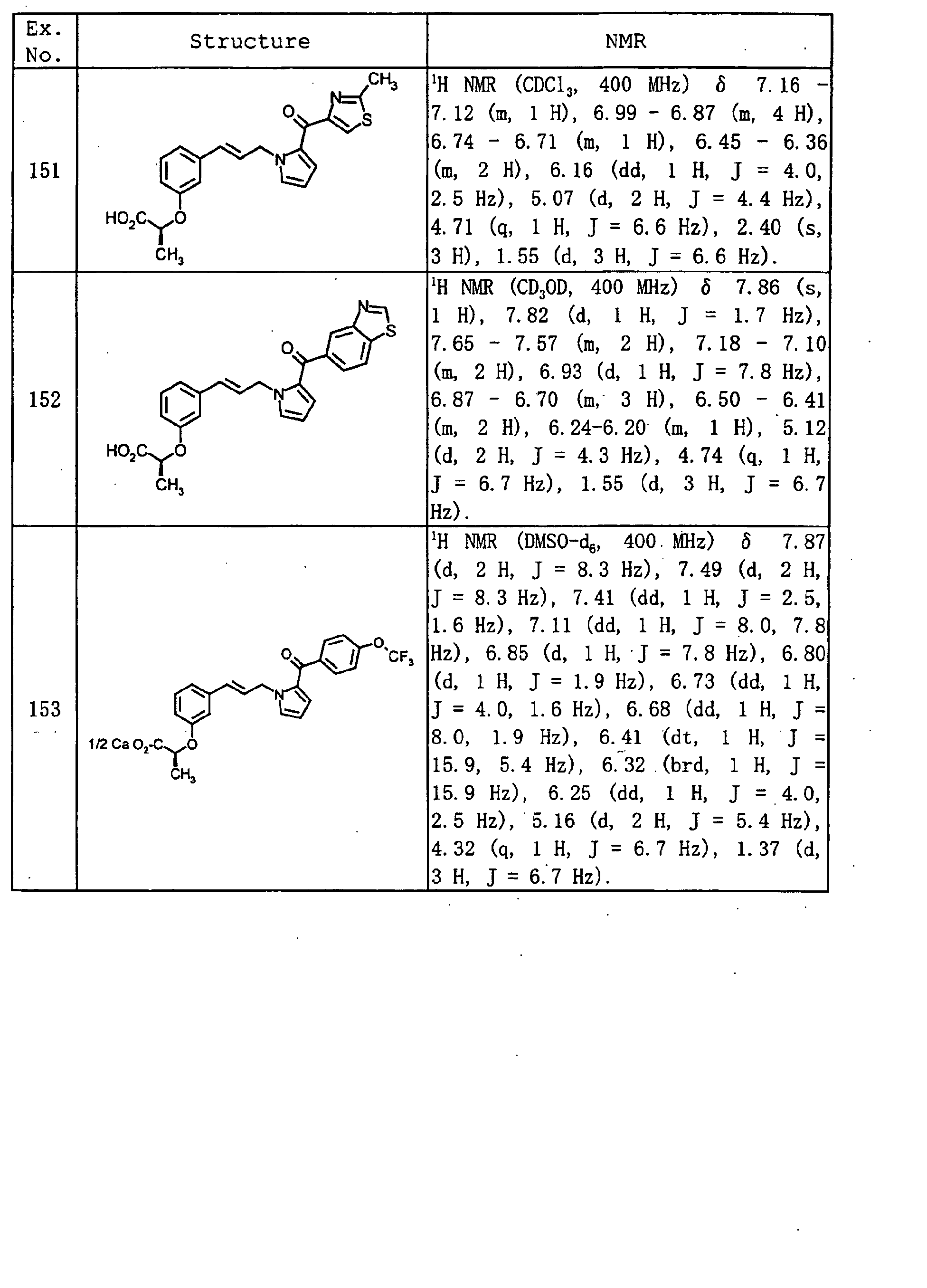
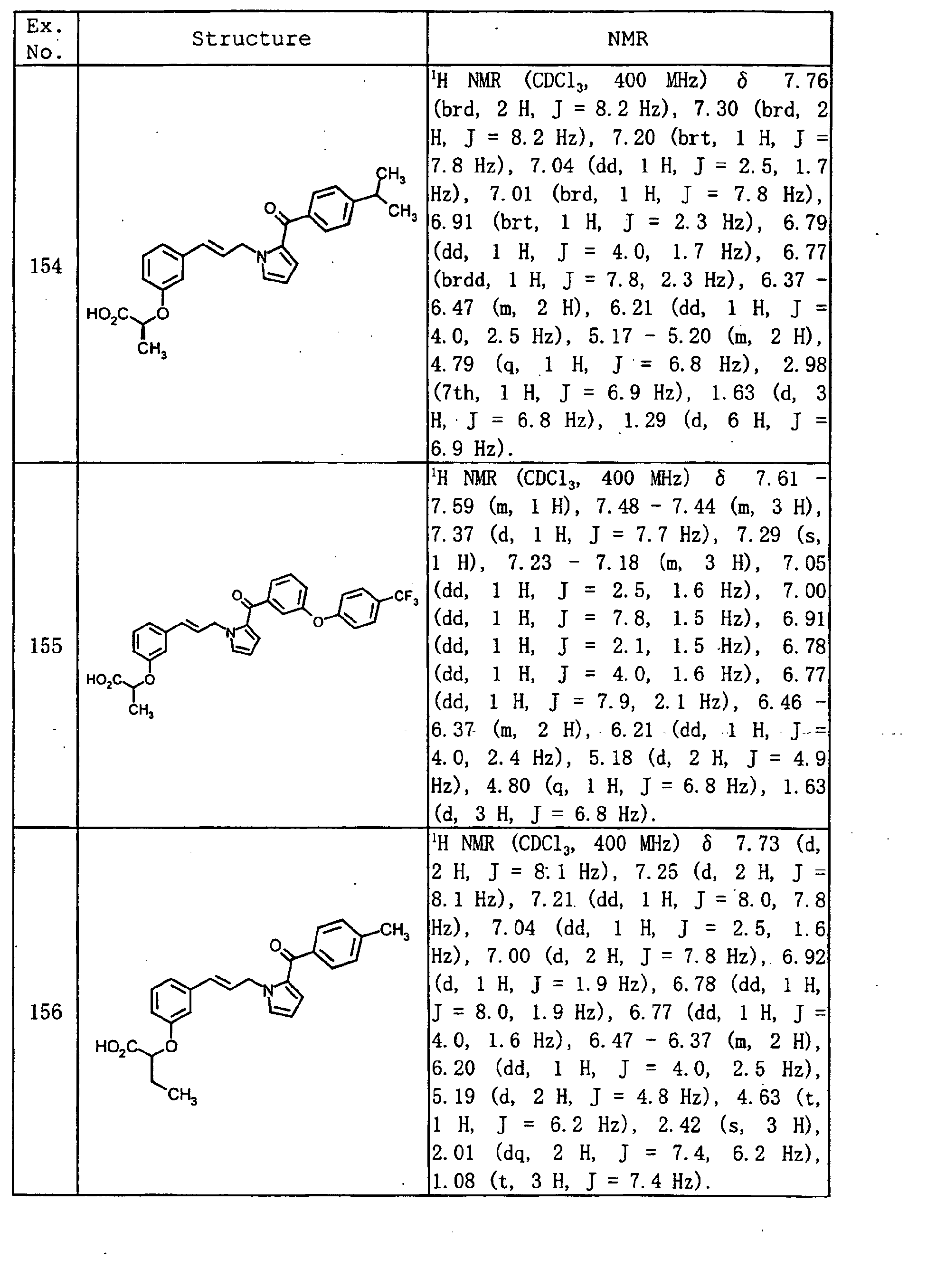


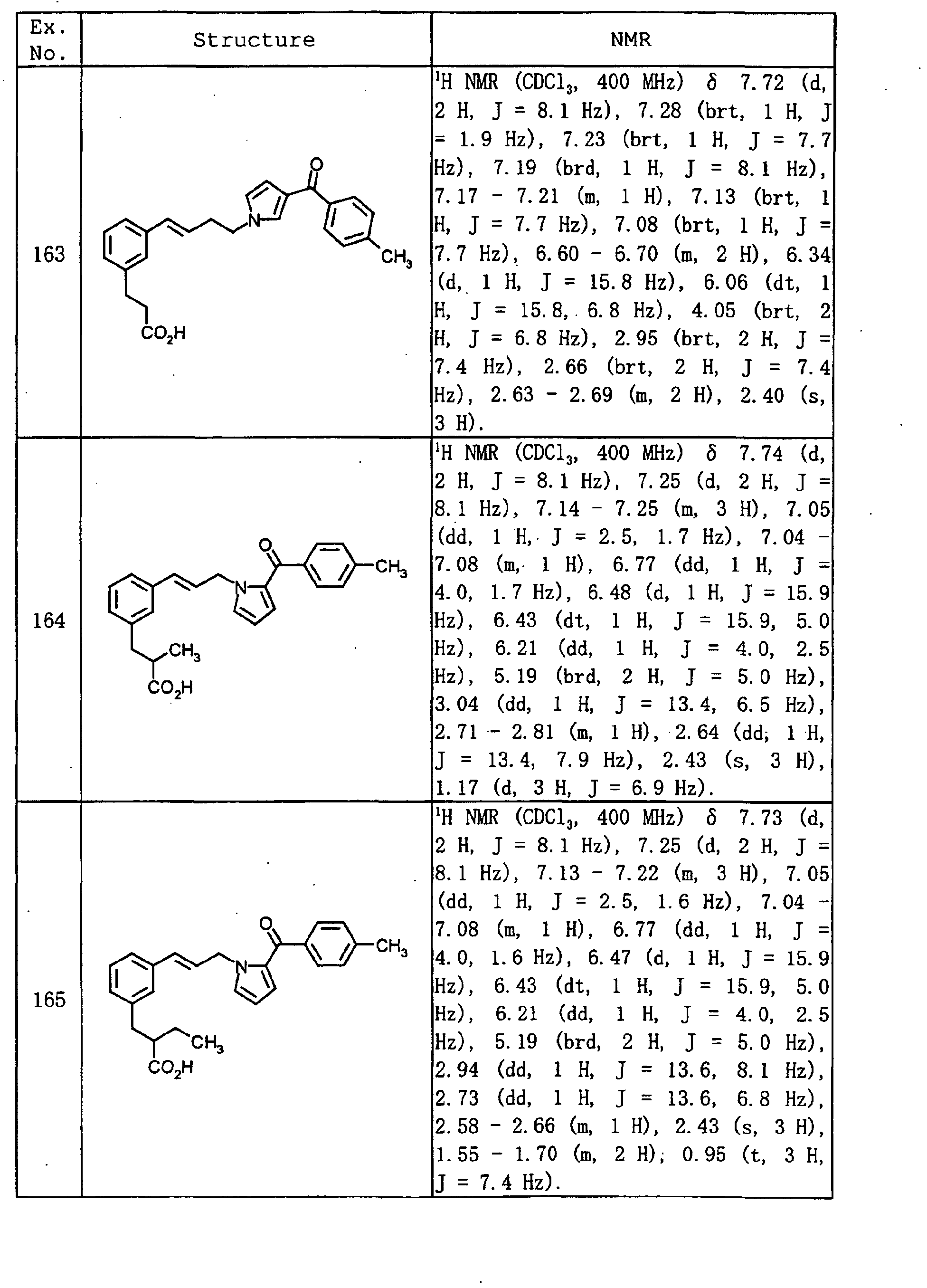
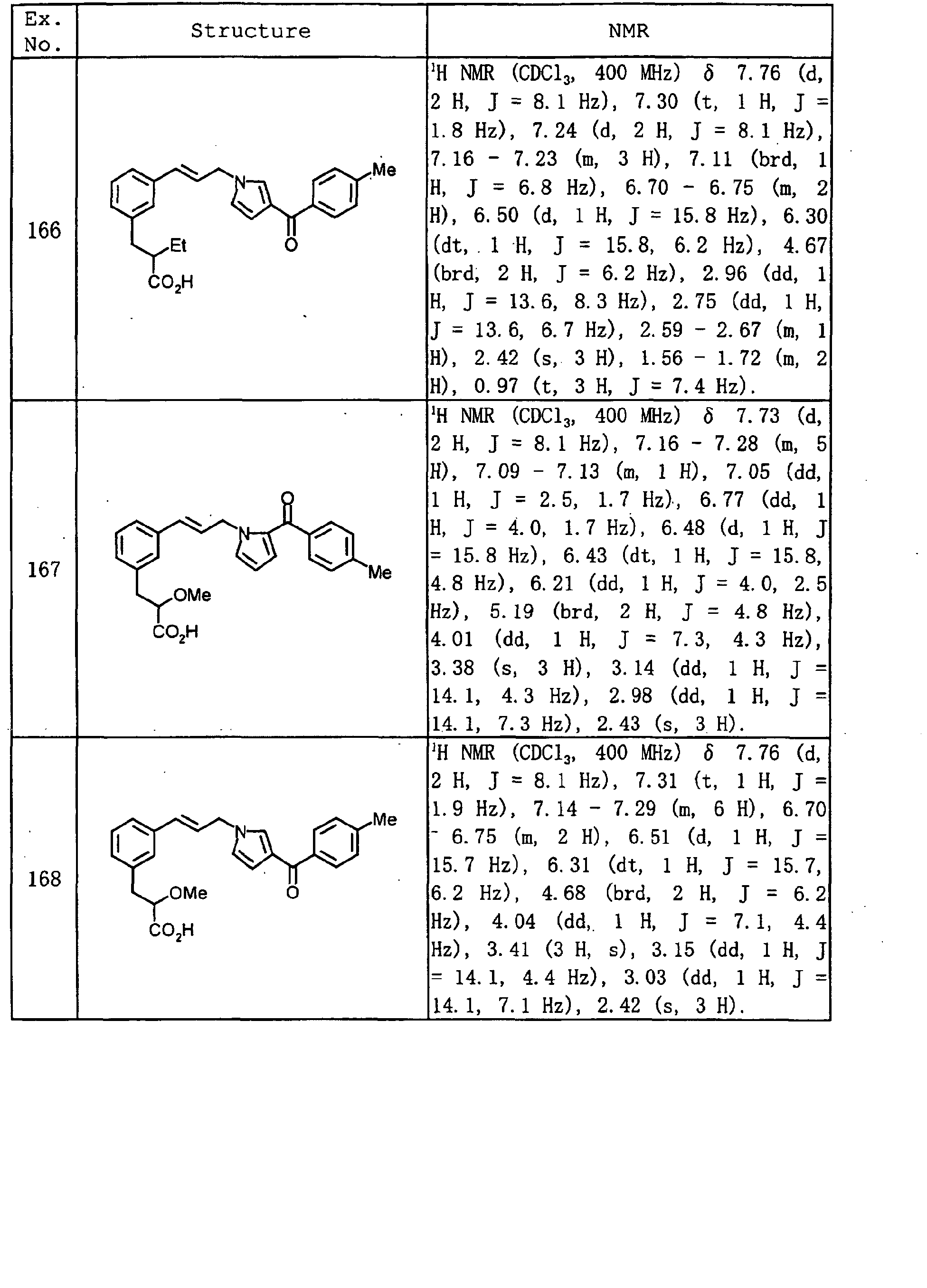
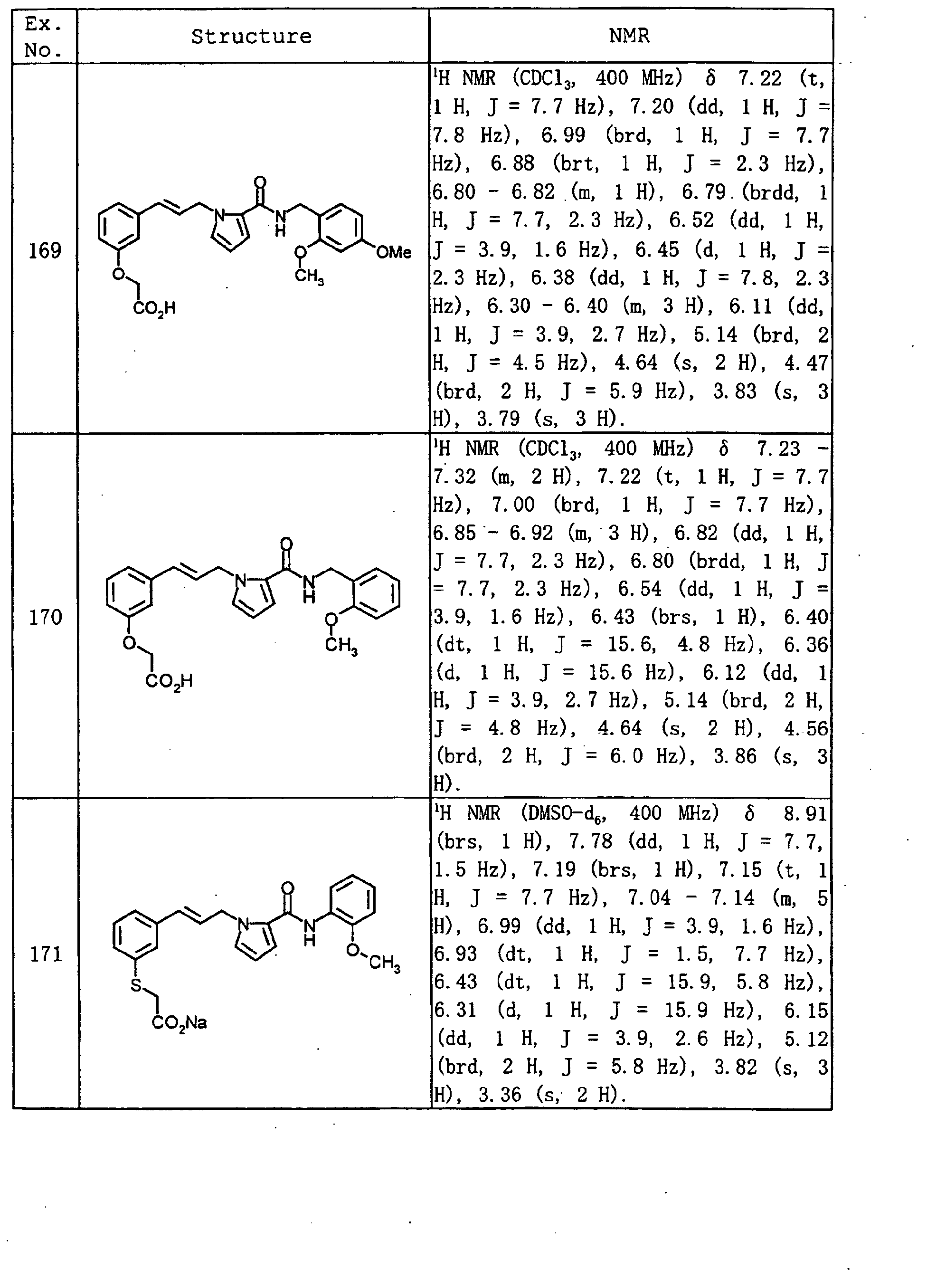
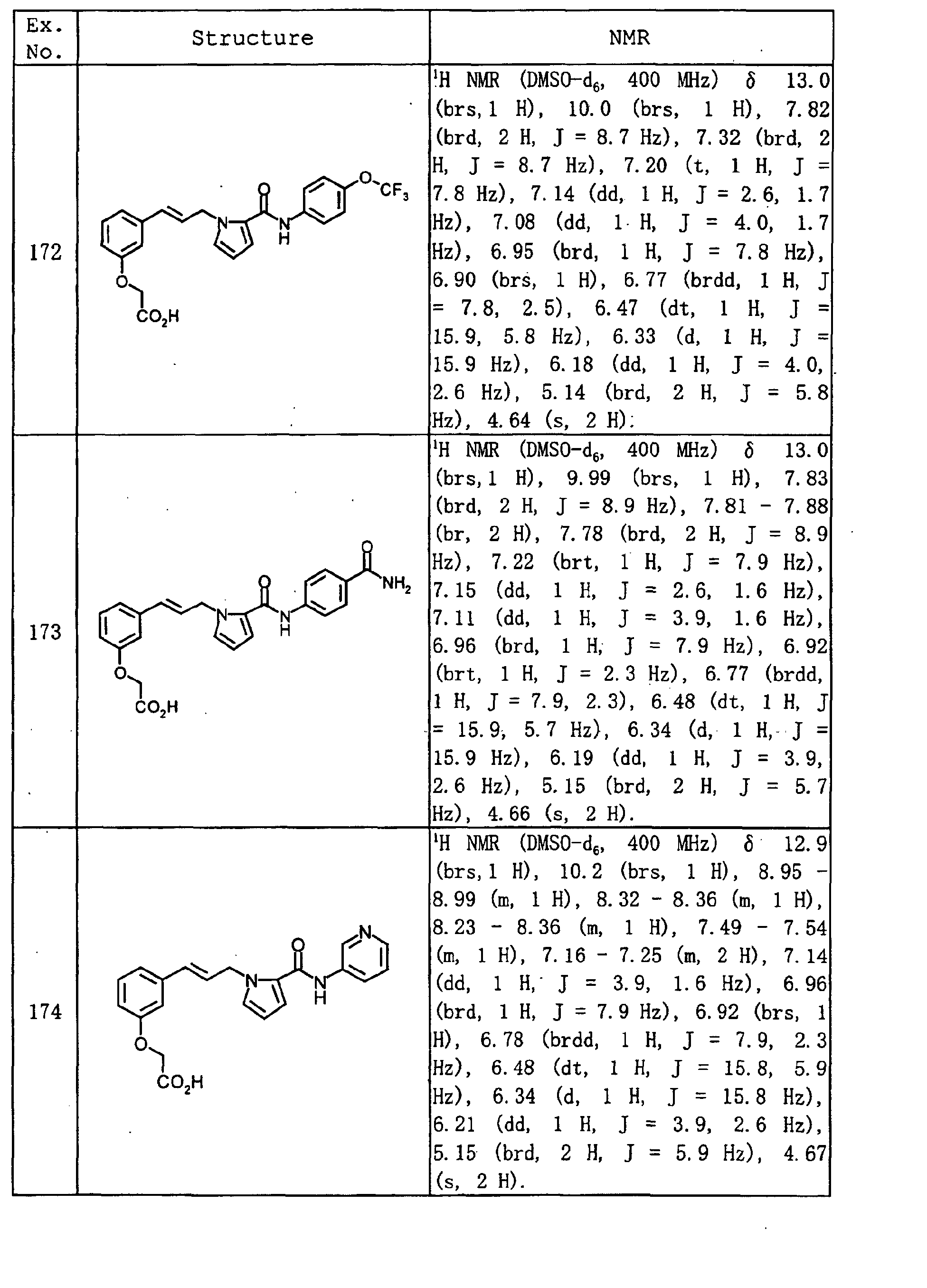
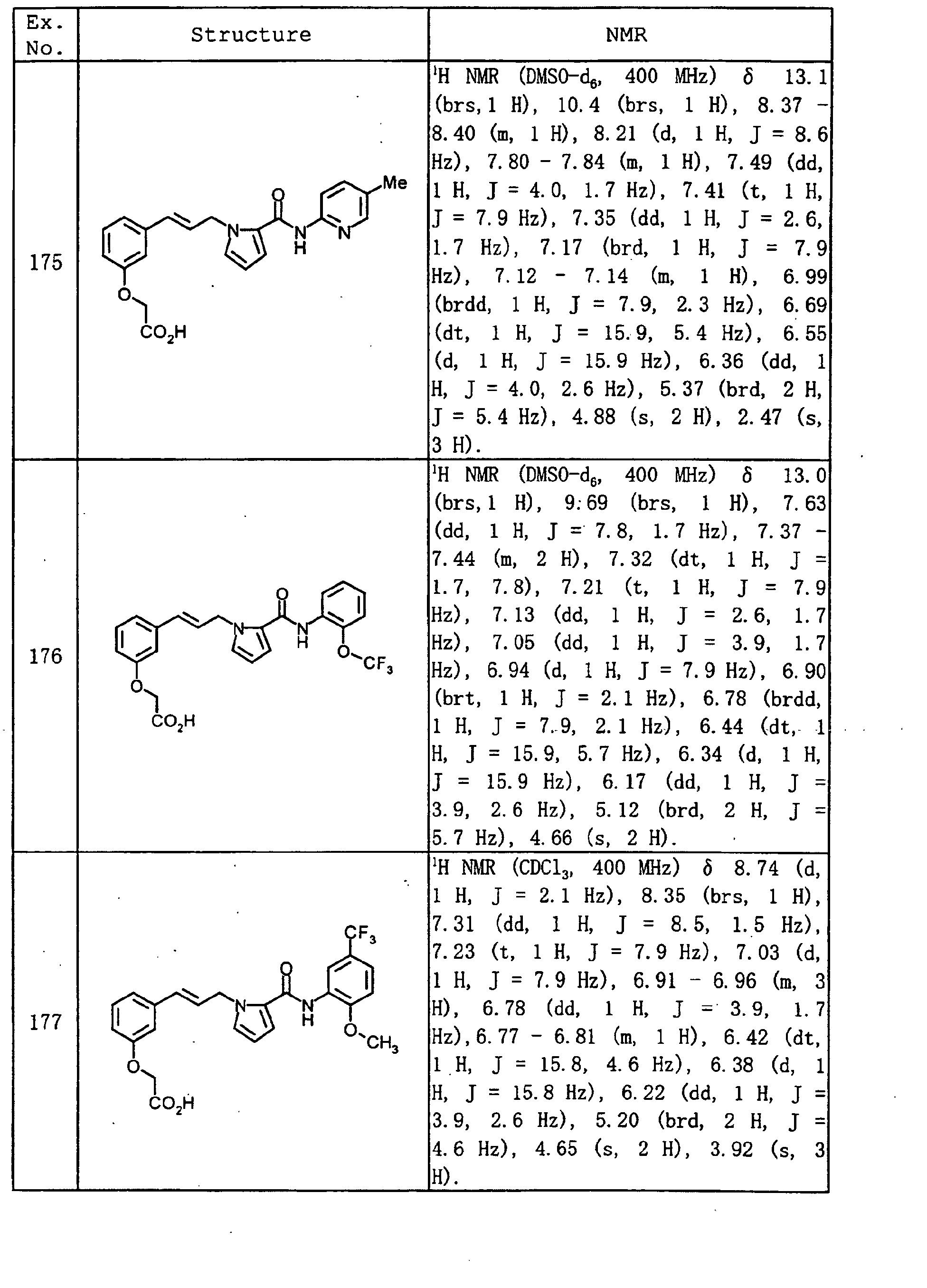


| Test compound (Ex. No.) | Salt form | Dosage (mg/kg) | Hypoglycemic activity(%) |
| 35 | Ca salt | 100 | 53 |
| 39 | Na salt | 100 | 65 |
| 53 | Free | 100 | 23 |
| 63 | Na salt | 30 | 19 |
| 91 | Ca salt | 30 | 55 |
| 92 | Ca salt | 30 | 46 |
| 104 | Ca salt | 30 | 58 |
| 110 | Na salt | 30 | 17 |
| 111 | Na salt | 30 | 61 |
| 126 | Na salt | 30 | 56 |
| 128 | Na salt | 100 | 27 |
| 135 | Free | 100 | 16 |
| 139 | Na salt | 100 | 55 |
| 142 | Na salt | 100 | 55 |
| 143 | Free | 30 | 21 |
| 155 | Ca salt | 30 | 57 |
| 158 | Ca salt | 30 | 24 |
| 165 | Na salt | 100 | 68 |
| 171 | Na salt | 100 | 20 |
| 179 | Free | 30 | 22 |
| 186 | Ca salt | 30 | 44 |
| 191 | Ca salt | 30 | 15 |
| 199 | Ca salt | 30 | 22 |
| 201 | Ca salt | 30 | 18 |
Claims (59)
- A pyrrole derivative of a generic formula (1):wherein

R1 is a formula (2):[wherein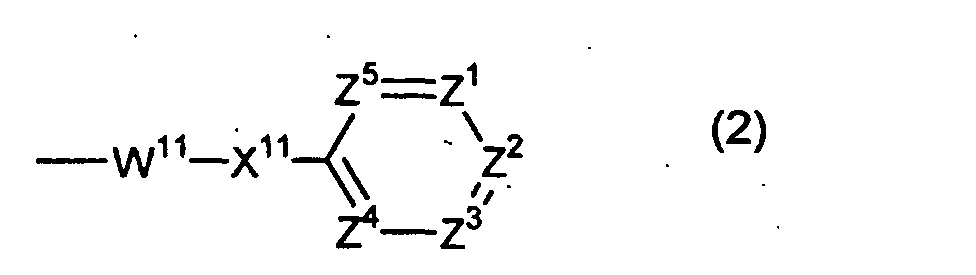
X11 is a single bond, an oxygen atom or a sulfur atom;
W11 is C2-5 alkylene optionally substituted by C1-4 alkyl, C1-4 alkoxy, hydroxy, C1-4 alkanoyloxy or a halogen;
C2-5 alkenylene optionally substituted by C1-4 alkyl, C1-4 alkoxy, hydroxy, C1-4 alkanoyloxy or a halogen; or
C2-5 alkynylene optionally substituted by C1-4 alkyl, C1-4 alkoxy, hydroxy, C1-4 alkanoyloxy or a halogen;
either of Z1 and Z2 is a carbon atom substituted by a formula :-X1-Y1-COR6
(wherein X1 is a single bond, an oxygen atom or a sulfur atom;
Y1 is C1-4 alkylene optionally substituted by C1-4 alkyl optionally substituted by a halogen, C1-4 alkoxy optionally substituted by a halogen, hydroxy, C1-4 alkanoyloxy, a halogen or cyano;
C2-5 alkenylene optionally substituted by C1-4 alkyl optionally substituted by a halogen, C1-4 alkoxy optionally substituted by a halogen, hydroxy, C1-4 alkanoyloxy, a halogen or cyano; or
C2-5 alkynylene optionally substituted by C1-4 alkyl optionally substituted by a halogen, C1-4 alkoxy optionally substituted by a halogen, hydroxy, C1-4 alkanoyloxy, a halogen or cyano; and
R6 is hydroxy;
C1-4 alkoxy optionally substituted by C1-4 alkyl;
C1-4 alkylsulfonylamino optionally substituted by C1-4 alkyl
or a halogen;
unsubstituted phenylsulfonylamino; or
phenylsulfonylamino substituted by C1-4 alkyl optionally substituted by C1-4 alkyl or a halogen, C1-4 alkoxy optionally substituted by C1-4 alkyl or a halogen, or a halogen); and
the other is a carbon atom substituted by
hydrogen;
hydroxy;
a halogen;
cyano;
carbamoyl;
C2-5 alkylaminocarbonyl;
C3-9 dialkylaminocarbonyl;
C1-4 alkyl optionally substituted by C1-4 alkyl, hydroxy, C1-4 alkoxy, C2-5 alkoxycarbonyl, C2-5 alkylcarbonyl, C1-4 acyloxy, a halogen, cyano, carbamoyl, amino, C1-4 alkylamino or C2-8 dialkylamino;
C2-5 alkenyl optionally substituted by C1-4 alkyl, hydroxy, C1-4 alkoxy, C2-5 alkoxycarbonyl, C2-5 alkylcarbonyl, C1-4 acyloxy, a halogen, cyano, carbamoyl, amino, C1-4 alkylamino or C2-8 dialkylamino;
C2-5 alkynyl optionally substituted by C1-4 alkyl, hydroxy, C1-4 alkoxy, C2-5 alkoxycarbonyl, C2-5 alkylcarbonyl, C1-4 acyloxy, a halogen, cyano, carbamoyl, amino, C1-4 alkylamino
or C2-8 dialkylamino; or
C1-4 alkoxy optionally substituted by C1-4 alkyl, C1-4 alkoxy or a halogen); and
Z3, Z4 and Z5 are independently from each other, a carbon atom substituted by
hydrogen;
hydroxy;
a halogen;
cyano;
carbamoyl;
C2-5 alkylaminocarbonyl;
C3-9 dialkylaminocarbonyl;
C1-4 alkyl optionally substituted by C1-4 alkyl, hydroxy, C1-4 alkoxy, C2-5 alkoxycarbonyl, C2-5 alkylcarbonyl, C1-4 acyloxy, a halogen, cyano, carbamoyl, amino, C1-4 alkylamino or C2-8 dialkylamino;
C2-5 alkenyl optionally substituted by C1-4 alkyl, hydroxy, C1-4 alkoxy, C2-5 alkoxycarbonyl, C2-5 alkylcarbonyl, C1-4 acyloxy, a halogen, cyano, carbamoyl, amino, C1-4 alkylamino or C2-8 dialkylamino;
C2-5 alkynyl optionally substituted by C1-4 alkyl, hydroxy, C1-4 alkoxy, C2-5 alkoxycarbonyl, C2-5 alkylcarbonyl, C1-4 acyloxy, a halogen, cyano, carbamoyl, amino, C1-4 alkylamino or C2-8 dialkylamino; or
C1-4 alkoxy optionally substituted by C1-4 alkyl, C1-4 alkoxy or a halogen];
a formula (3):
Y2 is C1-4 alkylene optionally substituted by C1-4 alkyl optionally substituted by a halogen, C1-4 alkoxy optionally substituted by a halogen, hydroxy, C1-4 alkanoyloxy, a halogen or cyano;
C2-5 alkenylene optionally substituted by C1-4 alkyl optionally substituted by a halogen, C1-4 alkoxy optionally substituted by a halogen, hydroxy, C1-4 alkanoyloxy, a halogen or cyano; or
C2-5 alkynylene optionally substituted by C1-4 alkyl optionally substituted by a halogen, C1-4 alkoxy optionally substituted by a halogen, hydroxy, C1-4 alkanoyloxy, a halogen or cyano; and
R7 is hydroxy; C1-4 alkoxy optionally substituted by C1-4 alkyl; C1-4 alkylsulfonylamio optionally substituted by C1-4 alkyl or a halogen;
unsubstituted phenylsulfonylamino; or
phenylsulfonylamino substituted by C1-4 alkyl optionally substituted by C1-4 alkyl or a halogen, C1-4 alkoxy optionally substituted by C1-4 alkyl or a halogen, or a halogen), and optionally substituted by
hydroxy;
C1-4 alkyl optionally substituted by C1-4 alkyl, hydroxy, C1-4 alkoxy, C2-5 alkoxycarbonyl, C2-5 alkylcarbonyl, C1-4 acyloxy, a halogen, cyano, carbamoyl, amino, C1-4 alkylamino or C2-8 dialkylamino;
C2-5 alkenyl optionally substituted by C1-4 alkyl, hydroxy, C1-4 alkoxy, C2-5 alkoxycarbonyl, C2-5 alkylcarbonyl, C1-4 acyloxy, a halogen, cyano, carbamoyl, amino, C1-4 alkylamino or C2-8 dialkylamino;
C2-5 alkynyl optionally substituted by C1-4 alkyl, hydroxy, C1-4 alkoxy, C2-5 alkoxycarbonyl, C2-5 alkylcarbonyl, C1-4 acyloxy, a halogen, cyano, carbamoyl, amino, C1-4 alkylamino or C2-8 dialkylamino;
C1-4 alkoxy optionally substituted by C1-4 alkyl, C1-4 alkoxy or a halogen;
a halogen;
cyano;
carbamoyl;
C2-5 alkylaminocarbonyl; or
C3-9 dialkylaminocarbonyl) ;
X12 is a single bond, an oxygen atom or a sulfur atom; and
W12 is C1-4 alkylene optionally substituted by C1-4 alkyl, C1-4 alkoxy, hydroxy, C1-4 alkanoyloxy or a halogen];
a formula (4):[wherein X13 is a single bond, an oxygen atom or a sulfur atom;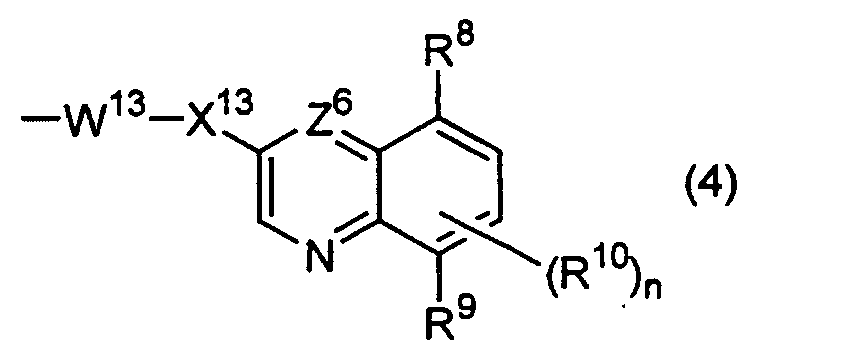
W13 is C1-4 alkylene optionally substituted by C1-4 alkyl, C1-4 alkoxy, hydroxy, C1-4 alkanoyloxy or a halogen;
either of R8 and R9 is
Y3 is C1-4 alkylene optionally substituted by C1-4 alkyl optionally substituted by a halogen, C1-4 alkoxy optionally substituted by a halogen, hydroxy, C1-4 alkanoyloxy, a halogen or cyano;
C2-5 alkenylene optionally substituted by C1-4 alkyl optionally substituted by a halogen, C1-4 alkoxy optionally substituted by a halogen, hydroxy, C1-4 alkanoyloxy, a halogen or cyano; or
C2-5 alkynylene optionally substituted by C1-4 alkyl optionally substituted by a halogen, C1-4 alkoxy optionally substituted by a halogen, hydroxy, C1-4 alkanoyloxy, a halogen or cyano; and
R11 is hydroxy;
C1-4 alkoxy optionally substituted by C1-4 alkyl;
C1-4 alkylsulfonylamino optionally substituted by C1-4 alkyl or a halogen;
unsubstituted phenylsulfonylamino; or
phenylsulfonylamino substituted by C1-4 alkyl optionally substituted by C1-4 alkyl or a halogen, C1-4 alkoxy optionally substituted by C1-4 alkyl or a halogen, or a halogen); and
the other is hydrogen; hydroxy;
C1-4 alkyl optionally substituted by C1-4 alkyl, hydroxy, C1-4 alkoxy, C2-5 alkoxycarbonyl, C2-5 alkylcarbonyl, C1-4 acyloxy, a halogen, cyano, carbamoyl, amino, C1-4 alkylamino or C2-8 dialkylamino;
C2-5 alkenyl optionally substituted by C1-4 alkyl, hydroxy, C1-4 alkoxy, C2-5 alkoxycarbonyl, C2-5 alkylcarbonyl, C1-4 acyloxy, a halogen, cyano, carbamoyl, amino, C1-4 alkylamino or C2-8 dialkylamino;
C2-5 alkynyl optionally substituted by C1-4 alkyl, hydroxy, C1-4 alkoxy, C2-5 alkoxycarbonyl, C2-5 alkylcarbonyl, C1-4 acyloxy, a halogen, cyano, carbamoyl, amino, C1-4 alkylamino or C2-8 dialkylamino;
C1-4 alkoxy optionally substituted by C1-4 alkyl, C1-4 alkoxy
or a halogen;
a halogen;
cyano;
carbamoyl;
C2-5 alkylaminocarbonyl; or
C3-9 dialkylaminocarbonyl);
Z6 is a nitrogen atom, or a carbon atom substituted by
hydrogen;
hydroxy;
C1-4 alkyl optionally substituted by C1-4 alkyl, hydroxy, C1-4 alkoxy, C2-5 alkoxycarbonyl, C2-5 alkylcarbonyl, C1-4 acyloxy, a halogen, cyano, carbamoyl, amino, C1-4 alkylamino or C2-8 dialkylamino;
C2-5 alkenyl optionally substituted by C1-4 alkyl, hydroxy, C1-4 alkoxy, C2-5 alkoxycarbonyl, C2-5 alkylcarbonyl, C1-4 acyloxy, a halogen, cyano, carbamoyl, amino, C1-4 alkylamino or C2-8 dialkylamino;
C2-5 alkynyl optionally substituted by C1-4 alkyl, hydroxy, C1-4 alkoxy, C2-5 alkoxycarbonyl, C2-5 alkylcarbonyl, C1-4 acyloxy, a halogen, cyano, carbamoyl, amino, C1-4 alkylamino or C2-8 dialkylamino;
C1-4 alkoxy optionally substituted by C1-4 alkyl, C1-4 alkoxy or a halogen;
a halogen;
cyano;
carbamoyl;
C2-5 alkylaminocarbonyl; or
C3-9 dialkylaminocarbonyl;
R10 is hydroxy;
C1-4 alkyl optionally substituted by C1-4 alkyl, hydroxy, C1-4 alkoxy, C2-5 alkoxycarbonyl, C2-5 alkylcarbonyl, C1-4 acyloxy, a halogen, cyano, carbamoyl, amino, C1-4 alkylamino or C2-8 dialkylamino;
C2-5 alkenyl optionally substituted by C1-4 alkyl, hydroxy, C1-4 alkoxy, C2-5 alkoxycarbonyl, C2-5 alkylcarbonyl, C1-4 acyloxy, a halogen, cyano, carbamoyl, amino, C1-4 alkylamino or C2-8 dialkylamino;
C2-5 alkynyl optionally substituted by C1-4 alkyl, hydroxy, C1-4 alkoxy, C2-5 alkoxycarbonyl, C2-5 alkylcarbonyl, C1-4 acyloxy, a halogen, cyano, carbamoyl, amino, C1-4 alkylamino or C2-8 dialkylamino;
C1-4 alkoxy optionally substituted by C1-4 alkyl, C1-4 alkoxy
or a halogen;
a halogen;
cyano;
carbamoyl;
C2-5 alkylaminocarbonyl; or
C3-9 dialkylaminocarbonyl; and
n is an integer of 1 or 2]; or
a formula (5):[wherein either of Z7 and Z8 is a carbon atom bound with -W14-X14 and the other is a carbon atom substituted by a hydrogen atom;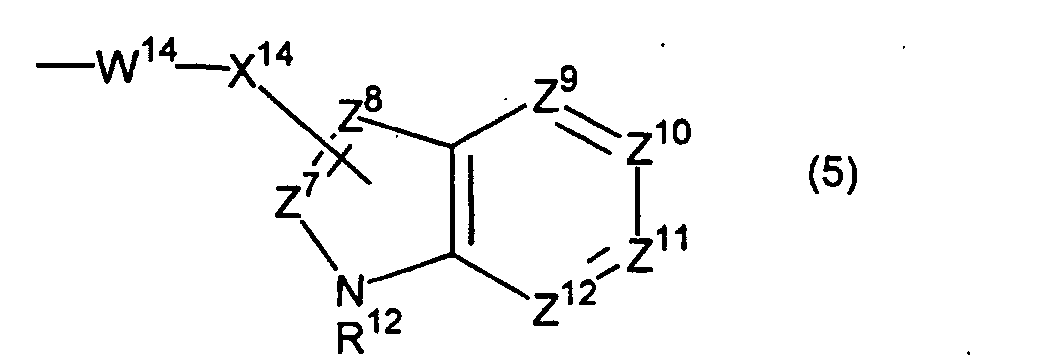
X14 is a single bond, an oxygen atom or a sulfur atom;
W14 is C1-4 alkylene optionally substituted by C1-4 alkyl, C1-4 alkoxy, hydroxy, C1-4 alkanoyloxy or a halogen;
either one of Z9, Z10, Z11 and Z12 is a carbon atom substituted by -X4-Y4-COR13 (wherein
X4 is a single bond, an oxygen or a sulfur atom; Y4 is C1-4 alkylene optionally substituted by C1-4 alkyl optionally substituted by a halogen, C1-4 alkoxy optionally substituted by a halogen, hydroxy, C1-4 alkanoyloxy, a halogen or cyano; C2-5 alkenylene optionally substituted by C1-4 alkyl optionally substituted by a halogen, C1-4 alkoxy optionally substituted by a halogen, hydroxy, C1-4 alkanoyloxy, a halogen or cyano; or
C2-5 alkynylene optionally substituted by C1-4 alkyl optionally substituted by a halogen, C1-4 alkoxy optionally substituted by a halogen, hydroxy, C1-4 alkanoyloxy, a halogen or cyano; and
R13 is hydroxy; C1-4 alkoxy optionally substituted by C1-4 alkyl; C1-4 alkylsulfonylamio optionally substituted by C1-4 alkyl or a halogen;
unsubstituted phenylsulfonylamino; or
phenylsulfonylamino substituted by C1-4 alkyl optionally substituted by C1-4 alkyl or a halogen, C1-4 alkoxy optionally substituted by C1-4 alkyl or a halogen, or a halogen); and
the other is a carbon atom substituted by
hydrogen;
hydroxy;
C1-4 alkyl optionally substituted by C1-4 alkyl, hydroxy, C1-4 alkoxy, C2-5 alkoxycarbonyl, C2-5 alkylcarbonyl, C1-4 acyloxy, a halogen, cyano, carbamoyl, amino, C1-4 alkylamino or C2-8 dialkylamino;
C2-5 alkenyl optionally substituted by C1-4 alkyl, hydroxy, C1-4 alkoxy, C2-5 alkoxycarbonyl, C2-5 alkylcarbonyl, C1-4 acyloxy, a halogen, cyano, carbamoyl, amino, C1-4 alkylamino or C2-8 dialkylamino;
C2-5 alkynyl optionally substituted by C1-4 alkyl, hydroxy, C1-4 alkoxy, C2-5 alkoxycarbonyl, C2-5 alkylcarbonyl, C1-4 acyloxy, a halogen, cyano, carbamoyl, amino, C1-4 alkylamino or C2-8 dialkylamino;
C1-4 alkoxy optionally substituted by C1-4 alkyl, C1-4 alkoxy or a halogen;
a halogen;
cyano;
carbamoyl;
C2-5 alkylaminocarbonyl; or
C3-9 dialkylaminocarbonyl, and
R12 is hydrogen, or C1-4 alkyl optionally substituted by C1-4 alkyl or a halogen];
either of R2 and R3 is a formula: -W21-A21
(wherein W21 is C1-6 alkylene optionally substituted by C1-4 alkyl, C1-4 alkoxy, hydroxy, C1-4 alkanoyloxy or a halogen; C2-5 alkenylene optionally substituted by C1-4 alkyl;
- CONH-; or -CONHCH2-; and
A21 is unsubstituted C6-12 aryl; C6-12 aryl substituted
by C1-6 alkyl optionally substituted by hydroxy, C1-4 alkoxy, C1-4 alkanoyloxy, a halogen, amino, C1-4 alkylamino, C2-8 dialkylamino, carbamoyl, C2-5 alkylaminocarbonyl, C3-9 dialkylaminocarbonyl, sulfamoyl, C1-4 alkylsulfamoyl, C2-8 dialkylsulfamoyl or cyano,
by C7-8 aralkyl optionally substituted by C1-4 alkoxy, C1-4 alkyl, halogeno C1-4 alkyl or a halogen,
by C1-4 alkoxy optionally substituted by hydroxy, C1-4 alkanoyloxy, a halogen, amino, C1-4 alkylamino, C2-8 dialkylamino, carbamoyl, C2-5 alkylaminocarbonyl, C3-9 dialkylaminocarbonyl, sulfamoyl, C1-4 alkylsulfamoyl, C2-8 dialkylsulfamoyl or cyano,
by phenoxy optionally substituted by C1-4 alkoxy, C1-4 alkyl, halogeno C1-4 alkyl or a halogen, or
by C3-4 alkenyloxy,
hydroxy,
C1-4 alkanoyloxy,
a halogen,
amino,
C1-6 alkylamino,
C2-12 dialkylamino,
carbamoyl,
C2-7 alkylaminocarbonyl,
C3-14 dialkylaminocarbonyl,
sulfamoyl,
C1-6 alkylsulfamoyl,
C2-12 dialkylsulfamoyl
C2-5 alkenyl,
C1-4 alkylsulfonyloxy,
C1-4 alkylsulfonyl,
C1-4 alkylthio or
cyano;
unsaturated mono- or di-heterocycic ring containing 1-3, the same or different, heteroatoms selected from the group consisting of a nitrogen atom, an oxygen atom and a sulfur atom;
unsaturated mono- or di-heterocycic ring containing 1-3, the same or different, heteroatoms selected from the group
consisting of a nitrogen atom, an oxygen atom and a sulfur atom substituted
by C1-4 alkyl optionally substituted by hydroxy, C1-4 alkanoyloxy, a halogen, amino, C1-4 alkylamino, C2-8 dialkylamino, carbamoyl, C2-5 alkylaminocarbonyl, C3-9 dialkylaminocarbonyl, sulfamoyl, C1-4 alkylsulfamoyl, C2-8 dialkylsulfamoyl or cyano,
by C1-4 alkoxy optionally substituted by hydroxy, C1-4 alkanoyloxy, a halogen, amino, C1-4 alkylamino, C2-8 dialkylamino, carbamoyl, C2-5 alkylaminocarbonyl, C3-9 dialkylaminocarbonyl, sulfamoyl, C1-4 alkylsulfamoyl, C2-8 dialkylsulfamoyl or cyano, or
by C3-4 alkenyloxy,
hydroxy,
C1-4 alkanoyloxy,
a halogen,
amino,
C1-6 alkylamino,
C2-12 dialkylamino,
carbamoyl,
C2-7 alkylaminocarbonyl,
C3-14 dialkylaminocarbonyl,
sulfamoyl,
C1-6 alkylsulfamoyl,
C2-12 dialkylsulfamoyl or
cyano; and
the other is hydrogen; C1-4 alkyl optionally substituted by C1-4 alkyl, C1-4 alkoxy, hydroxy, C1-4 alkanoyloxy or a halogen; or a halogen;
R4 is hydrogen; C1-4 alkyl optionally substituted by C1-4 alkyl, C1-4 alkoxy, hydroxy, C1-4 alkanoyloxy or a halogen; or a halogen; and
R5 is hydrogen; C1-4 alkyl optionally substituted by C1-4 alkyl, C1-4 alkoxy, hydroxy, C1-4 alkanoyloxy or a halogen; or a halogen, or its salt. - The pyrrole derivative or its salt according to claim 1
wherein R1 is a formula (2) :[wherein
X11 is a single bond, an oxygen atom or a sulfur atom;
W11 is C2-5 alkylene optionally substituted by C1-4 alkyl, C1-4 alkoxy, hydroxy, C1-4 alkanoyloxy or a halogen;
C2-5 alkenylene optionally substituted by C1-4 alkyl, C1-4 alkoxy, hydroxy, C1-4 alkanoyloxy or a halogen; or
C2-5 alkynylene optionally substituted by C1-4 alkyl, C1-4 alkoxy, hydroxy, C1-4 alkanoyloxy or a halogen;
either of Z1 and Z2 is a carbon atom substituted by a formula : -X1-Y1-COR6
(wherein X1 is a single bond, an oxygen atom or a sulfur atom;
Y1 is C1-4 alkylene optionally substituted by C1-4 alkyl optionally substituted by a halogen, C1-4 alkoxy optionally substituted by a halogen, hydroxy, C1-4 alkanoyloxy, a halogen or cyano;
C2-5 alkenylene optionally substituted by C1-4 alkyl optionally substituted by a halogen, C1-4 alkoxy optionally substituted by a halogen, hydroxy, C1-4 alkanoyloxy, a halogen or cyano; or
C2-5 alkynylene optionally substituted by C1-4 alkyl optionally substituted by a halogen, C1-4 alkoxy optionally substituted by a halogen, hydroxy, C1-4 alkanoyloxy, a halogen or cyano;
R6 is hydroxy;
C1-4 alkoxy optionally substituted by C1-4 alkyl;
C1-4 alkylsulfonylamino optionally substituted by C1-4 alkyl
or a halogen;
unsubstituted phenylsulfonylamino; or
phenylsulfonylamino substituted by C1-4 alkyl optionally substituted by C1-4 alkyl or a halogen, C1-4 alkoxy optionally substituted by C1-4 alkyl or a halogen, or a
halogen); and
the other is a carbon atom substituted by
hydrogen;
hydroxy;
a halogen;
cyano;
carbamoyl;
C2-5 alkylaminocarbonyl;
C3-9 dialkylaminocarbonyl;
C1-4 alkyl optionally substituted by C1-4 alkyl, hydroxy, C1-4 alkoxy, C2-5 alkoxycarbonyl, C2-5 alkylcarbonyl, C1-4 acyloxy,
a halogen, cyano, carbamoyl, amino, C1-4 alkylamino or C2-8 dialkylamino;
C2-5 alkenyl optionally substituted by C1-4 alkyl, hydroxy, C1-4 alkoxy, C2-5 alkoxycarbonyl, C2-5 alkylcarbonyl, C1-4 acyloxy, a halogen, cyano, carbamoyl, amino, C1-4 alkylamino or C2-8 dialkylamino;
C2-5 alkynyl optionally substituted by C1-4 alkyl, hydroxy, C1-4 alkoxy, C2-5 alkoxycarbonyl, C2-5 alkylcarbonyl, C1-4 acyloxy, a halogen, cyano, carbamoyl, amino, C1-4 alkylamino or C2-8 dialkylamino; or
C1-4 alkoxy optionally substituted by C1-4 alkyl, C1-4 alkoxy or a halogen); and
Z3, Z4 and Z5 are independently from each other, a carbon atom substituted by
hydrogen;
hydroxy;
a halogen;
cyano;
carbamoyl;
C2-5 alkylaminocarbonyl;
C3-9 dialkylaminocarbonyl;
C1-4 alkyl optionally substituted by C1-4 alkyl, hydroxy, C1-4 alkoxy, C2-5 alkoxycarbonyl, C2-5 alkylcarbonyl, C1-4 acyloxy,
a halogen, cyano, carbamoyl, amino, C1-4 alkylamino or C2-8 dialkylamino;
C2-5 alkenyl optionally substituted by C1-4 alkyl, hydroxy, C1-4 alkoxy, C2-5 alkoxycarbonyl, C2-5 alkylcarbonyl, C1-4 acyloxy, a halogen, cyano, carbamoyl, amino, C1-4 alkylamino or C2-8 dialkylamino;
C2-5 alkynyl optionally substituted by C1-4 alkyl, hydroxy, C1-4 alkoxy, C2-5 alkoxycarbonyl, C2-5 alkylcarbonyl, C1-4 acyloxy, a halogen, cyano, carbamoyl, amino, C1-4 alkylamino or C2-8 dialkylamino; or
C1-4 alkoxy optionally substituted by C1-4 alkyl, C1-4 alkoxy or a halogen]. - The pyrrole derivative or its salt according to claim 2
wherein Z1 is a carbon atom substituted by a formula :-X1-Y1-COR6
(wherein X1 is a single bond, an oxygen atom or a sulfur atom;
Y1 is C1-4 alkylene optionally substituted by C1-4 alkyl optionally substituted by a halogen, C1-4 alkoxy optionally substituted by a halogen, hydroxy, C1-4 alkanoyloxy, a halogen or cyano;
C2-5 alkenylene optionally substituted by C1-4 alkyl optionally substituted by a halogen, C1-4 alkoxy optionally substituted by a halogen, hydroxy, C1-4 alkanoyloxy, a halogen or cyano; or
C2-5 alkynylene optionally substituted by C1-4 alkyl optionally substituted by a halogen, C1-4 alkoxy optionally substituted by a halogen, hydroxy, C1-4 alkanoyloxy, a
halogen or cyano; and
R6 is hydroxy;
C1-4 alkoxy optionally substituted by C1-4 alkyl;
C1-4 alkylsulfonylamino optionally substituted by C1-4 alkyl
or a halogen;
unsubstituted phenylsulfonylamino; or
phenylsulfonylamino substituted by C1-4 alkyl optionally substituted by C1-4 alkyl or a halogen, C1-4 alkoxy optionally substituted by C1-4 alkyl or a halogen, or a halogen); and
Z2 is a carbon atom substituted by
hydrogen;
hydroxy;
a halogen;
cyano;
carbamoyl;
C2-5 alkylaminocarbonyl;
C3-9 dialkylaminocarbonyl;
C1-4 alkyl optionally substituted by C1-4 alkyl, hydroxy, C1-4 alkoxy, C2-5 alkoxycarbonyl, C2-5 alkylcarbonyl, C1-4 acyloxy, a halogen, cyano, carbamoyl, amino, C1-4 alkylamino or C2-8 dialkylamino;
C2-5 alkenyl optionally substituted by C1-4 alkyl, hydroxy, C1-4 alkoxy, C2-5 alkoxycarbonyl, C2-5 alkylcarbonyl, C1-4 acyloxy, a halogen, cyano, carbamoyl, amino, C1-4 alkylamino or C2-8 dialkylamino;
C2-5 alkynyl optionally substituted by C1-4 alkyl, hydroxy, C1-4 alkoxy, C2-5 alkoxycarbonyl, C2-5 alkylcarbonyl, C1-4 acyloxy, a halogen, cyano, carbamoyl, amino, C1-4 alkylamino or C2-8 dialkylamino; or
C1-4 alkoxy optionally substituted by C1-4 alkyl, C1-4 alkoxy or a halogen. - The pyrrole derivative or its salt according to claim 2
wherein Z2 is a carbon atom substituted by a formula :-X1-Y1-COR6
(wherein X1 is a single bond, an oxygen atom or a sulfur atom;
Y1 is C1-4 alkylene optionally substituted by C1-4 alkyl optionally substituted by a halogen, C1-4 alkoxy optionally substituted by a halogen, hydroxy, C1-4 alkanoyloxy, a halogen or cyano;
C2-5 alkenylene optionally substituted by C1-4 alkyl optionally substituted by a halogen, C1-4 alkoxy optionally substituted by a halogen, hydroxy, C1-4 alkanoyloxy, a halogen or cyano; or
C2-5 alkynylene optionally substituted by C1-4 alkyl optionally substituted by a halogen, C1-4 alkoxy optionally substituted by a halogen, hydroxy, C1-4 alkanoyloxy, a halogen or cyano; and
R6 is hydroxy;
C1-4 alkoxy optionally substituted by C1-4 alkyl;
C1-4 alkylsulfonylamino optionally substituted by C1-4 alkyl or a halogen;
unsubstituted phenylsulfonylamino; or
phenylsulfonylamino substituted by C1-4 alkyl optionally substituted by C1-4 alkyl or a halogen, C1-4 alkoxy optionally substituted by C1-4 alkyl or a halogen, or a halogen); and
Z1 is a carbon atom substituted by
hydrogen;
hydroxy;
a halogen;
cyano;
carbamoyl;
C2-5 alkylaminocarbonyl;
C3-9 dialkylaminocarbonyl;
C1-4 alkyl optionally substituted by C1-4 alkyl, hydroxy, C1-4 alkoxy, C2-5 alkoxycarbonyl, C2-5 alkylcarbonyl, C1-4 acyloxy, a halogen, cyano, carbamoyl, amino, C1-4 alkylamino or C2-8 dialkylamino;
C2-5 alkenyl optionally substituted by C1-4 alkyl, hydroxy, C1-4 alkoxy, C2-5 alkoxycarbonyl, C2-5 alkylcarbonyl, C1-4 acyloxy, a halogen, cyano, carbamoyl, amino, C1-4 alkylamino or C2-8 dialkylamino;
C2-5 alkynyl optionally substituted by C1-4 alkyl, hydroxy, C1-4 alkoxy, C2-5 alkoxycarbonyl, C2-5 alkylcarbonyl, C1-4 acyloxy, a halogen, cyano, carbamoyl, amino, C1-4 alkylamino or C2-8 dialkylamino; or
C1-4 alkoxy optionally substituted by C1-4 alkyl, C1-4 alkoxy or a halogen. - The pyrrole derivative or its salt according to claim 3
wherein R2 is a formula: -W21-A21
(wherein W21 is C1-6 alkylene optionally substituted by C1-4 alkyl, C1-4 alkoxy, hydroxy, C1-4 alkanoyloxy or a halogen; C2-5 alkenylene optionally substituted by C1-4 alkyl; -CONH-; or -CONHCH2-; and
A21 is unsubstituted C6-12 aryl; C6-12 aryl substituted by C1-6 alkyl optionally substitute by hydroxy, C1-4 alkoxy, C1-4 alkanoyloxy, a halogen, amino, C1-4 alkylamino, C2-8 dialkylamino, carbamoyl, C2-5 alkylaminocarbonyl, C3-9 dialkylaminocarbonyl, sulfamoyl, C1-4 alkylsulfamoyl, C2-8 dialkylsulfamoyl or cyano,
by C7-8 aralkyl optionally substituted by C1-4 alkoxy, C1-4 alkyl, halogeno C1-4 alkyl or a halogen,
by C1-4 alkoxy optionally substituted by hydroxy, C1-4 alkanoyloxy, a halogen, amino, C1-4 alkylamino, C2-8 dialkylamino, carbamoyl, C2-5 alkylaminocarbonyl, C3-9 dialkylaminocarbonyl, sulfamoyl, C1-4 alkylsulfamoyl, C2-8 dialkylsulfamoyl or cyano, by phenoxy optionally substituted by C1-4 alkoxy, C1-4 alkyl, halogeno C1-4 alkyl or a halogen, or
by C3-4 alkenyloxy,
hydroxy,
C1-4 alkanoyloxy,
a halogen,
amino,
C1-6 alkylamino,
C2-12 dialkylamino,
carbamoyl,
C2-7 alkylaminocarbonyl,
C3-14 dialkylaminocarbonyl,
sulfamoyl,
C1-6 alkylsulfamoyl,
C2-12 dialkylsulfamoyl
C2-5 alkenyl,
C1-4 alkylsulfonyloxy,
C1-4 alkylsulfonyl,
C1-4 alkylthio or
cyano;
unsaturated mono- or di-heterocycic ring containing 1-3, the same or different, heteroatoms selected from the group consisting of a nitrogen atom, an oxygen atom and a sulfur atom; or
unsaturated mono- or di-heterocycic ring containing 1-3, the same or different, heteroatoms selected from the group consisting of a nitrogen atom, an oxygen atom and a sulfur atom substituted
by C1-4 alkyl optionally substituted by hydroxy, C1-4 alkanoyloxy, a halogen, amino, C1-4 alkylamino, C2-8 dialkylamino, carbamoyl, C2-5 alkylaminocarbonyl, C3-9 dialkylaminocarbonyl, sulfamoyl, C1-4 alkylsulfamoyl, C2-8 dialkylsulfamoyl or cyano,
by C1-4 alkoxy optionally substituted by hydroxy, C1-4 alkanoyloxy, a halogen, amino, C1-4 alkylamino, C2-8 dialkylamino, carbamoyl, C2-5 alkylaminocarbonyl, C3-9 dialkylaminocarbonyl, sulfamoyl, C1-4 alkylsulfamoyl, C2-8 dialkylsulfamoyl or cyano,
C3-4 alkenyloxy,
hydroxy,
C1-4 alkanoyloxy,
a halogen,
amino,
C1-6 alkylamino,
C2-12 dialkylamino,
carbamoyl,
C2-7 alkylaminocarbonyl,
C3-14 dialkylaminocarbonyl,
sulfamoyl,
C1-6 alkylsulfamoyl,
C2-12 dialkylsulfamoyl or
cyano); and
R3 is hydrogen; C1-4 alkyl optionally substituted by C1-4 alkyl, C1-4 alkoxy, hydroxy, C1-4 alkanoyloxy or a halogen; or a halogen. - The pyrrole derivative or its salt according to claim 3
wherein R3 is a formula -W21-A21
wherein W21 is C1-6 alkylene optionally substituted by C1-4 alkyl, C1-4 alkoxy, hydroxy, C1-4 alkanoyloxy or a halogen; C2-5 alkenylene optionally substituted by C1-4 alkyl; -CONH-; or -CONHCH2-; and
A21 is unsubstituted C6-12 aryl; C6-12 aryl substituted
by C1-6 alkyl optionally substituted by hydroxy, C1-4 alkoxy, C1-4 alkanoyloxy, a halogen, amino, C1-4 alkylamino, C2-8 dialkylamino, carbamoyl, C2-5 alkylaminocarbonyl, C3-9 dialkylaminocarbonyl, sulfamoyl, C1-4 alkylsulfamoyl, C2-8 dialkylsulfamoyl or cyano,
by C7-8 aralkyl optionally substituted by C1-4 alkoxy, C1-4 alkyl, halogeno C1-4 alkyl or a halogen,
by C1-4 alkoxy optionally substituted by hydroxy, C1-4 alkanoyloxy, a halogen, amino, C1-4 alkylamino, C2-8 dialkylamino, carbamoyl, C2-5 alkylaminocarbonyl, C3-9 dialkylaminocarbonyl, sulfamoyl, C1-4 alkylsulfamoyl, C2-8 dialkylsulfamoyl or cyano,
by phenoxy optionally substituted by C1-4 alkoxy, C1-4 alkyl, halogeno C1-4 alkyl or a halogen, or
by C3-4 alkenyloxy,
hydroxy,
C1-4 alkanoyloxy,
a halogen,
amino,
C1-6 alkylamino,
C2-12 dialkylamino,
carbamoyl,
C2-7 alkylaminocarbonyl,
C3-14 dialkylaminocarbonyl,
sulfamoyl,
C1-6 alkylsulfamoyl,
C2-12 dialkylsulfamoyl,
C2-5 alkenyl,
C1-4 alkylsulfonyloxy,
C1-4 alkylsulfonyl,
C1-4 alkylthio or
cyano;
unsaturated mono- or di-heterocycic ring containing 1-3, the same or different, heteroatoms selected from the group consisting of a nitrogen atom, an oxygen atom and a sulfur atom; or
unsaturated mono- or di-heterocycic ring containing 1-3, the same or different, heteroatoms selected from the group consisting of a nitrogen atom, an oxygen atom and a sulfur atom substituted
by C1-4 alkyl optionally substituted by hydroxy, C1-4 alkanoyloxy, a halogen, amino, C1-4 alkylamino, C2-8 dialkylamino, carbamoyl, C2-5 alkylaminocarbonyl, C3-9 dialkylaminocarbonyl, sulfamoyl, C1-4 alkylsulfamoyl, C2-8 dialkylsulfamoyl or cyano,
by C1-4 alkoxy optionally substituted by hydroxy, C1-4 alkanoyloxy, a halogen, amino, C1-4 alkylamino, C2-8 dialkylamino, carbamoyl, C2-5 alkylaminocarbonyl, C3-9
dialkylaminocarbonyl, sulfamoyl, C1-4 alkylsulfamoyl, C2-8 dialkylsulfamoyl or cyano, or
C3-4 alkenyloxy,
hydroxy,
C1-4 alkanoyloxy,
a halogen,
amino,
C1-6 alkylamino,
C2-12 dialkylamino,
carbamoyl,
C2-7 alkylaminocarbonyl,
C3-14 dialkylaminocarbonyl,
sulfamoyl,
C1-6 alkylsulfamoyl,
C2-12 dialkylsulfamoyl or
cyano); and
R2 is hydrogen; C1-4 alkyl optionally substituted by C1-4 alkyl, C1-4 alkoxy, hydroxy, C1-4 alkanoyloxy or a halogen; or a halogen. - The pyrrole derivative or its salt according to claim 4
wherein R2 is a formula: -W21-A21
(wherein W21 is C1-6 alkylene optionally substituted by C1-4 alkyl, C1-4 alkoxy; hydroxy, C1-4 alkanoyloxy or a halogen;
C2-5 alkenylene optionally substituted by C1-4 alkyl; -CONH-; or -CONHCH2-; and
A21 is unsubstituted C6-12 aryl; C6-12 aryl substituted
by C1-6 alkyl optionally substituted by hydroxy, C1-4 alkoxy, C1-4 alkanoyloxy, a halogen, amino, C1-4 alkylamino, C2-8 dialkylamino, carbamoyl, C2-5 alkylaminocarbonyl, C3-9 dialkylaminocarbonyl, sulfamoyl, C1-4 alkylsulfamoyl, C2-8 dialkylsulfamoyl or cyano,
by C7-8 aralkyl optionally substituted by C1-4 alkoxy, C1-4 alkyl, halogeno C1-4 alkyl or a halogen, by C1-4 alkoxy optionally substituted by hydroxy, C1-4 alkanoyloxy, a halogen, amino, C1-4 alkylamino, C2-8 dialkylamino, carbamoyl, C2-5 alkylaminocarbonyl, C3-9 dialkylaminocarbonyl, sulfamoyl, C1-4 alkylsulfamoyl, C2-8 dialkylsulfamoyl or cyano,
by phenoxy optionally substituted by C1-4 alkoxy, C1-4 alkyl, halogeno C1-4 alkyl or a halogen, or
by C3-4 alkenyloxy,
hydroxy,
C1-4 alkanoyloxy,
a halogen,
amino,
C1-6 alkylamino,
C2-12 dialkylamino,
carbamoyl,
C2-7 alkylaminocarbonyl,
C3-14 dialkylaminocarbonyl,
sulfamoyl,
C1-6 alkylsulfamoyl,
C2-12 dialkylsulfamoyl
C2-5 alkenyl,
C1-4 alkylsulfonyloxy,
C1-4 alkylsulfonyl,
C1-4 alkylthio or
cyano;
unsaturated mono- or di-heterocycic ring containing 1-3, the same or different, heteroatoms selected from the group consisting of a nitrogen atom, an oxygen atom and a sulfur atom;
unsaturated mono- or di-heterocycic ring containing 1-3, the same or different, heteroatoms selected from the group consisting of a nitrogen atom, an oxygen atom and a sulfur atom substituted
by C1-4 alkyl optionally substituted by hydroxy, C1-4 alkanoyloxy, a halogen, amino, C1-4 alkylamino, C2-8 dialkylamino, carbamoyl, C2-5 alkylaminocarbonyl, C3-9 dialkylaminocarbonyl, sulfamoyl, C1-4 alkylsulfamoyl, C2-8 dialkylsulfamoyl or cyano,
by C1-4 alkoxy optionally substituted by hydroxy, C1-4 alkanoyloxy, a halogen, amino, C1-4 alkylamino, C2-8 dialkylamino, carbamoyl, C2-5 alkylaminocarbonyl, C3-9 dialkylaminocarbonyl, sulfamoyl, C1-4 alkylsulfamoyl, C2-8 dialkylsulfamoyl or cyano, or
by C3-4 alkenyloxy,
hydroxy,
C1-4 alkanoyloxy,
a halogen,
amino,
C1-6 alkylamino,
C2-12 dialkylamino,
carbamoyl,
C2-7 alkylaminocarbonyl,
C3-14 dialkylaminocarbonyl,
sulfamoyl,
C1-6 alkylsulfamoyl,
C2-12 dialkylsulfamoyl or
cyano); and
R3 is hydrogen; C1-4 alkyl optionally substituted by C1-4 alkyl, C1-4 alkoxy, hydroxy, C1-4 alkanoyloxy or a halogen; or a halogen. - A pyrrole derivative of a generic formula (1a) :wherein

R4' is hydrogen, C1-4 alkyl optionally substituted by C1-4 alkyl or a halogen, or a halogen;
R5' is hydrogen, C1-4 alkyl optionally substituted by C1-4 alkyl or a halogen, or a halogen;
R14' is a carboxyl or a group which is convertible to a carboxyl by hydrolysis in vivo;
X1' is a single bond, an oxygen atom or a sulfur atom;
Y1' is C1-4 alkylene optionally substituted by C1-4 alkyl, C1-4 alkoxy, hydroxy or a halogen;
C2-5 alkenylene optionally substituted by C1-4 alkyl, C1-4 alkoxy, hydroxy or a halogen; or
C2-5 alkynylene optionally substituted by C1-4 alkyl, C1-4 alkoxy, hydroxy or a halogen; W11' is C2-5 alkylene optionally substituted by C1-4 alkyl or a halogen;
C2-5 alkenylene optionally substituted by C1-4 alkyl or a halogen; or C2-5 alkynylene optionally substituted by C1-4 alkyl or a a halogen;
W21' is C1-4 alkylene in which methylene may form carbonyl, and said alkylene is optionally substituted by C1-4 alkyl; C2-5 alkenylene in which methylene may form carbonyl, and said alkenylene is optionally substituted by C1-4 alkyl; - CONH-; or -CONHCH2-; and
A21' is unsubstituted C6-12 aryl; C6-12 aryl substituted
by C1-4 alkyl optionally substituted by hydroxy, a halogen, C1-4 alkoxy or C2-8 dialkylamino,
by C1-4 alkoxy optionally substituted by a halogen, C1-4 alkyl or C2-8 dialkylamino,
by a halogen or C2-12 dialkylamino;
unsaturated mono- or di-heterocycic ring containing 1-3, the same or different, heteroatoms selected from the group consisting of a nitrogen atom, an oxygen atom and a sulfur atom;
unsaturated mono- or di-heterocycic ring containing 1-3, the same or different, heteroatoms selected from the group consisting of a nitrogen atom, an oxygen atom and a sulfur atom substituted
by C1-4 alkyl optionally substituted by hydroxy, a halogen, C1-4 alkoxy or C2-8 dialkylamino, or
by C1-4 alkoxy optionally substituted by C2-8 dialkylamino, by halogen or C2-12 dialkylamino. - The pyrrole derivative or its salt according to claim 8 wherein R4' is hydrogen or C1-4 alkyl, and R5' is hydrogen.
- The pyrrole derivative or its salt according to claim 8 wherein R4' and R5' are hydrogen.
- The pyrrole derivative or its salt according to claim 8 wherein R14' is carboxyl.
- The pyrrole derivative or its salt according to claim 8 wherein X1' is a single bond.
- The pyrrole derivative or its salt according to claim 8 wherein X1' is an oxygen atom.
- The pyrrole derivative or its salt according to claim 8 wherein X1' is a sulfur atom.
- The pyrrole derivative or its salt according to claim 8 wherein Y1' is C1-4 alkylene optionally substituted by C1-4 alkyl, C1-4 alkoxy, hydroxy or a halogen.
- The pyrrole derivative or its salt according to claim 8 wherein Y1' is methylene optionally substituted by C1-4 alkyl.
- The pyrrole derivative or its salt according to claim 8 wherein W11' is unsubstituted C2-5 alkylene, unsubstituted C2- 5 alkenylene or unsubstituted C2-5 alkynylene.
- The pyrrole derivative or its salt according to claim 8 wherein W11' is propenylene.
- The pyrrole derivative or its salt according to claim 8 wherein W11' is propenylene and X1' is an oxygen atom.
- The pyrrole derivative or its salt according to claim 8 wherein W21' is carbonyl, -CONH-, -CONHCH2- or -C(=O)CH2-.
- The pyrrole derivative or its salt according to claim 8 wherein W21' is carbonyl.
- The pyrrole derivative or its salt according to claim 8 wherein W21' is carbonyl and X1' is an oxygen atom.
- The pyrrole derivative or its salt according to claim 8 wherein A21' is unsubstituted phenyl or phenyl substituted by C1-4 alkyl optionally substituted by a halogen, C1-4 alkoxy or C2-8 dialkylamino, by C1-4 alkoxy optionally substituted by a halogen, C1-4 alkoxy or C2-8 dialkylamino, or by a halogen or C2-12 dialkylamino.
- The pyrrole derivative or its salt according to claim 8 wherein A21' is unsubstituted phenyl or phenyl substituted by C1-4 alkyl optionally substituted by a halogen, or by C1-4 alkoxy optionally substituted by a halogen.
- The pyrrole derivative or its salt according to claim 8 wherein A21' is unsubstituted phenyl or phenyl substituted by C1-4 alkyl.
- The pyrrole derivative or its salt according to claim 8 wherein X1' is an oxygen atom, and A21' is unsubstituted phenyl or phenyl substituted by C1-4 alkyl.
- The pyrrole derivative or its salt according to claim 8 wherein R4' and R5' are hydrogen, and R14' is carboxyl.
- The pyrrole derivative or its salt according to claim 8 wherein R4' and R5' are hydrogen, R14' is carboxyl, and Y1' is C1-4 alkylene optionally substituted by C1-4 alkyl, C1-4 alkoxy, hydroxy or a halogen.
- The pyrrole derivative or its salt according to claim 8 wherein R4' and R5' are hydrogen, R14' is carboxyl, X1' is an oxygen atom, and Y1' is C1-4 alkylene optionally substituted by C1-4 alkyl, C1-4 alkoxy, hydroxy or a halogen.
- The pyrrole derivative or its salt according to claim 8 wherein R4' and R5' are hydrogen, R14' is carboxyl, and W11' is unsubstituted C2-5 alkylene, unsubstituted C2-5 alkenylene or unsubstituted C2-5 alkynylene.
- The pyrrole derivative or its salt according to claim 8 wherein R4' and R5' are hydrogen, R14' is carboxyl, X1' is an oxygen and W11' is unsubstituted C2-5 alkylene, unsubstituted C2-5 alkenylene or unsubstituted C2-5 alkynylene.
- The pyrrole derivative or its salt according to claim 8 wherein R4' and R5' are hydrogen, R14' is carboxyl, and W11' is propenylene.
- The pyrrole derivative or its salt according to claim 8 wherein R4' and R5' are hydrogen, R14' is carboxyl, W11' is propenylene, and X1' is an oxygen.
- The pyrrole derivative or its salt according to claim 8 wherein R4' and R5' are hydrogen, R14' is carboxyl, and W21' is carbonyl, -CONH-, -CONHCH2- or -C(=O)CH2-.
- The pyrrole derivative or its salt according to claim 8 wherein R4' and R5' are hydrogen, R14' is carboxyl, X1' is an oxygen, and W21' is carbonyl, -CONH-, -CONHCH2- or -C(=O)CH2-.
- The pyrrole derivative or its salt according to claim 8 wherein R4' and R5' are hydrogen, R14' is carboxyl, and W21' is carbonyl.
- The pyrrole derivative or its salt according to claim 8 wherein R4' and R5' are hydrogen, R14' is carboxyl, W21' is carbonyl, and X1' is an oxygen.
- The pyrrole derivative or its salt according to claim 8 wherein R4' and R5' are hydrogen, R14' is carboxyl, and A21' is unsubstituted phenyl or phenyl substituted by C1-4 alkyl optionally substituted by a halogen, or by C1-4 alkoxy optionally substituted by a halogen.
- The pyrrole derivative or its salt according to claim 8 wherein R4' and R5' are hydrogen, R14' is carboxyl, X1' is an oxygen, and A21' is unsubstituted phenyl or phenyl substituted by C1-4 alkyl optionally substituted by a halogen, or by C1-4 alkoxy optionally substituted by a halogen.
- The pyrrole derivative or its salt according to claim 8 wherein R4' and R5' are hydrogen, R14' is carboxyl, W11' is propenylene, and Y1' is C1-4 alkylene optionally substituted by C1-4 alkyl, C1-4 alkoxy, hydroxy or a halogen.
- The pyrrole derivative or its salt according to claim 8 wherein R4' and R5' are hydrogen, R14' is carboxyl, W11' is propenylene, X1' is an oxygen, and Y1' is C1-4 alkylene optionally substituted by C1-4 alkyl, C1-4 alkoxy, hydroxy or a halogen.
- The pyrrole derivative or its salt according to claim 8 wherein R4' and R5' are hydrogen, R14' is carboxyl, and W21' is carbonyl, -CONH-, -CONHCH2- or -C(=O)CH2-, and Y1' is C1-4 alkylene optionally substituted by C1-4 alkyl, C1-4 alkoxy, hydroxy or a halogen.
- The pyrrole derivative or its salt according to claim 8 wherein R4' and R5' are hydrogen, R14' is carboxyl, X1' is an oxygen, W21' is carbonyl, -CONH-, -CONHCH2- or -C(=O)CH2-, and Y1' is C1-4 alkylene optionally substituted by C1-4 alkyl, C1-4 alkoxy, hydroxy or a halogen.
- The pyrrole derivative or its salt according to claim 8 wherein R4' and R5' are hydrogen, R14' is carboxyl, W21' is carbonyl, and Y1' is methylene optionally substituted by C1-4 alkyl.
- The pyrrole derivative or its salt according to claim 8 wherein R4' and R5' are hydrogen, R14' is carboxyl, W21' is carbonyl, X1' is an oxygen, and Y1' is methylene optionally substituted by C1-4 alkyl.
- The pyrrole derivative or its salt according to claim 8 wherein R4' and R5' are hydrogen, R14' is carboxyl, A21' is unsubstituted phenyl or phenyl substituted by C1-4 alkyl, and Y1' is C1-4 alkylene optionally substituted by C1-4 alkyl, C1-4 alkoxy, hydroxy or a halogen.
- The pyrrole derivative or its salt according to claim 8 wherein R4' and R5' are hydrogen, R14' is carboxyl, A21' is unsubstituted phenyl or phenyl substituted by C1-4 alkyl, X1' is an oxygen, and Y1' is C1-4 alkylene optionally substituted by C1-4 alkyl, C1-4 alkoxy, hydroxy or a halogen.
- The pyrrole derivative or its salt according to claim 8 wherein R4' and R5' are hydrogen, R14' is carboxyl, W11' is propenylene, W21' is carbonyl, -CONH-, -CONHCH2- or-C(=O)CH2-, and Y1' is C1-4 alkylene optionally substituted by C1-4 alkyl, C1-4 alkoxy, hydroxy or a halogen.
- The pyrrole derivative or its salt according to claim 8 wherein R4' and R5' are hydrogen, R14' is carboxyl, W11' is propenylene, W21' is carbonyl, -CONH-, -CONHCH2- or-C(=O)CH2-, X1' is an oxygen, and Y1' is C1-4 alkylene optionally substituted by C1-4 alkyl, C1-4 alkoxy, hydroxy or a halogen.
- The pyrrole derivative or its salt according to claim 8 wherein R4' and R5' are hydrogen, R14' is carboxyl, W11' is propenylene, W21' is carbonyl, and Y1' is methylene optionally substituted by C1-4 alkyl.
- The pyrrole derivative or its salt according to claim 8 wherein R4' and R5' are hydrogen, R14' is carboxyl, W11' is propenylene, W21' is carbonyl, X1' is an oxygen, and Y1' is methylene optionally substituted by C1-4 alkyl.
- The pyrrole derivative or its salt according to claim 8 wherein R4' and R5' are hydrogen, R14' is carboxyl, W11' is propenylene, Y1' is methylene optionally substituted by C1-4 alkyl, and A21' is unsubstituted phenyl or phenyl substituted by C1-4 alkyl.
- The pyrrole derivative or its salt according to claim 8 wherein R4' and R5' are hydrogen, R14' is carboxyl, W11' is propenylene, X1' is an oxygen, Y1' is methylene optionally substituted by C1-4 alkyl, and A21' is unsubstituted phenyl or phenyl substituted by C1-4 alkyl.
- The pyrrole derivative or its salt according to claim 8 wherein R4' and R5' are hydrogen, R14' is carboxyl, W21' is carbonyl, Y1' is methylene optionally substituted by C1-4 alkyl, and A21' is unsubstituted phenyl or phenyl substituted by C1-4 alkyl.
- The pyrrole derivative or its salt according to claim 8 wherein R4' and R5' are hydrogen, R14' is carboxyl, W21' is carbonyl, X1' is an oxygen, Y1' is methylene optionally substituted by C1-4 alkyl, and A21' is unsubstituted phenyl or phenyl substituted by C1-4 alkyl.
- The pyrrole derivative or its salt according to claim 8 wherein R4' and R5' are hydrogen, R14' is carboxyl, W11' is propenylene, W21' is carbonyl, and A21' is unsubstituted phenyl or phenyl substituted by C1-4 alkyl.
- The pyrrole derivative or its salt according to claim 8 wherein R4' and R5' are hydrogen, R14' is carboxyl, W11' is propenylene, W21' is carbonyl, X1' is an oxygen, and A21' is unsubstituted phenyl or phenyl substituted by C1-4 alkyl.
- The pyrrole derivative or its salt according to claim 8 wherein R4' and R5' are hydrogen, R14' is carboxyl, W11' is propenylene, W21' is carbonyl, Y1' is methylene optionally substituted by C1-4 alkyl, and A21' is unsubstituted phenyl or phenyl substituted by C1-4 alkyl.
- The pyrrole derivative or its salt according to claim 8 wherein R4' and R5' are hydrogen, R14' is carboxyl, W11' is propenylene, W21' is carbonyl, X1' is an oxygen atom, Y1' is methylene optionally substituted by C1-4 alkyl, and A21' is unsubstituted phenyl or phenyl substituted by C1-4 alkyl.
Applications Claiming Priority (3)
| Application Number | Priority Date | Filing Date | Title |
|---|---|---|---|
| JP2001120887 | 2001-04-19 | ||
| JP2001120887 | 2001-04-19 | ||
| PCT/JP2002/003790 WO2002085851A1 (en) | 2001-04-19 | 2002-04-17 | Pyrrole derivative |
Publications (3)
| Publication Number | Publication Date |
|---|---|
| EP1386913A1 true EP1386913A1 (en) | 2004-02-04 |
| EP1386913A4 EP1386913A4 (en) | 2006-02-15 |
| EP1386913B1 EP1386913B1 (en) | 2008-07-16 |
Family
ID=18970856
Family Applications (1)
| Application Number | Title | Priority Date | Filing Date |
|---|---|---|---|
| EP02720442A Expired - Lifetime EP1386913B1 (en) | 2001-04-19 | 2002-04-17 | Pyrrole derivative |
Country Status (7)
| Country | Link |
|---|---|
| US (1) | US7220773B2 (en) |
| EP (1) | EP1386913B1 (en) |
| JP (1) | JP4213960B2 (en) |
| AT (1) | ATE401306T1 (en) |
| DE (1) | DE60227655D1 (en) |
| ES (1) | ES2309161T3 (en) |
| WO (1) | WO2002085851A1 (en) |
Cited By (3)
| Publication number | Priority date | Publication date | Assignee | Title |
|---|---|---|---|---|
| EP1284260A4 (en) * | 2000-05-22 | 2004-03-31 | Takeda Chemical Industries Ltd | TYROSINE PHOSPHATASE INHIBITORS |
| EP1647546A4 (en) * | 2003-07-15 | 2008-07-23 | Dainippon Sumitomo Pharma Co | NEW HETEROARYL DERIVATIVE |
| EP3034494A1 (en) * | 2007-08-15 | 2016-06-22 | President and Fellows of Harvard College | Heterocyclic inhibitors of necroptosis |
Families Citing this family (3)
| Publication number | Priority date | Publication date | Assignee | Title |
|---|---|---|---|---|
| JPWO2003091211A1 (en) * | 2002-03-28 | 2005-09-02 | 住友製薬株式会社 | Novel heteroaryl compounds |
| AU2003284479A1 (en) * | 2002-11-28 | 2004-06-18 | Sumitomo Pharmaceuticals Co., Ltd. | Novel heteroaryl derivative |
| EP1837329A4 (en) * | 2005-01-14 | 2009-08-05 | Dainippon Sumitomo Pharma Co | NEW HETEROARYLE DERIVATIVE |
Family Cites Families (4)
| Publication number | Priority date | Publication date | Assignee | Title |
|---|---|---|---|---|
| CA2262847C (en) * | 1996-08-01 | 2007-06-05 | Merckle Gmbh | Acylpyrroldicarboxylic acids and acylindoldicarboxylic acids and their derivatives and inhibitors of the cytosolic phospholipase a2 |
| WO1999046244A1 (en) * | 1998-03-12 | 1999-09-16 | Novo Nordisk A/S | Modulators of protein tyrosine phosphatases (ptpases) |
| ES2449194T3 (en) | 2000-01-19 | 2014-03-18 | Cadila Healthcare Limited | Compounds that have hypolipidemic and hypocholesterolemic activities, procedure for their preparation and pharmaceutical compositions containing them |
| US6911468B2 (en) | 2000-05-22 | 2005-06-28 | Takeda Chemical Industries, Ltd. | Tyrosine phosphatase inhibitors |
-
2002
- 2002-04-17 DE DE60227655T patent/DE60227655D1/en not_active Expired - Fee Related
- 2002-04-17 EP EP02720442A patent/EP1386913B1/en not_active Expired - Lifetime
- 2002-04-17 JP JP2002583378A patent/JP4213960B2/en not_active Expired - Fee Related
- 2002-04-17 WO PCT/JP2002/003790 patent/WO2002085851A1/en not_active Ceased
- 2002-04-17 US US10/474,943 patent/US7220773B2/en not_active Expired - Fee Related
- 2002-04-17 ES ES02720442T patent/ES2309161T3/en not_active Expired - Lifetime
- 2002-04-17 AT AT02720442T patent/ATE401306T1/en not_active IP Right Cessation
Cited By (4)
| Publication number | Priority date | Publication date | Assignee | Title |
|---|---|---|---|---|
| EP1284260A4 (en) * | 2000-05-22 | 2004-03-31 | Takeda Chemical Industries Ltd | TYROSINE PHOSPHATASE INHIBITORS |
| US6911468B2 (en) | 2000-05-22 | 2005-06-28 | Takeda Chemical Industries, Ltd. | Tyrosine phosphatase inhibitors |
| EP1647546A4 (en) * | 2003-07-15 | 2008-07-23 | Dainippon Sumitomo Pharma Co | NEW HETEROARYL DERIVATIVE |
| EP3034494A1 (en) * | 2007-08-15 | 2016-06-22 | President and Fellows of Harvard College | Heterocyclic inhibitors of necroptosis |
Also Published As
| Publication number | Publication date |
|---|---|
| EP1386913A4 (en) | 2006-02-15 |
| US20040162331A1 (en) | 2004-08-19 |
| ATE401306T1 (en) | 2008-08-15 |
| DE60227655D1 (en) | 2008-08-28 |
| WO2002085851A1 (en) | 2002-10-31 |
| EP1386913B1 (en) | 2008-07-16 |
| JPWO2002085851A1 (en) | 2004-08-12 |
| ES2309161T3 (en) | 2008-12-16 |
| US7220773B2 (en) | 2007-05-22 |
| JP4213960B2 (en) | 2009-01-28 |
Similar Documents
| Publication | Publication Date | Title |
|---|---|---|
| US6794406B2 (en) | Indole derivatives | |
| KR100263429B1 (en) | Substituted pyrazoles with corticotropin-releasing factor (CRF) antagonistic activity | |
| AU2013341945B2 (en) | GPR40 receptor agonist, methods of preparing the same, and pharmaceutical compositions containing the same as an active ingredient | |
| EP2116530B1 (en) | Novel pyrrole derivative having ureide group and aminocarbonyl group as substituents | |
| JP2021509401A (en) | Glucolic acid oxidase inhibitor for the treatment of disease | |
| HU225774B1 (en) | Certain 5-alkyl-2-arylaminophenylacetic acids and derivatives, method for their preparation, pharmaceutical compositions comprising thereof and their use | |
| RU2126378C1 (en) | Substituted derivatives of cyclohexane | |
| CN114258390A (en) | Glycolate oxidase inhibitors for disease treatment | |
| MXPA02009621A (en) | Oxazole derivatives and their uses as tyrosine kinase inhibitors. | |
| IE910766A1 (en) | Novel pyrazole derivatives which are angiotensin ii¹receptor antagonists; their methods of preparation¹and pharmaceutical compositions in which they are present | |
| JP2011184298A (en) | Novel compound, and pharmaceutical application thereof | |
| KR100622461B1 (en) | Bicyclic compound | |
| CA2422353A1 (en) | Indazoles having an action similar to that of a thyroid hormone, method for the production thereof, and their use in medicaments | |
| PL222486B1 (en) | Novel compounds having hypolipedemic, hypocholesteremic activities, process for their preparation and pharmaceutical compositions containing them | |
| CN111148735A (en) | Nitrogen-containing heteroaryl compounds and pharmaceutical uses thereof | |
| EP1386913B1 (en) | Pyrrole derivative | |
| WO2002094319A1 (en) | Preventive or recurrence-suppressive agents for liver cancer | |
| WO2003091211A1 (en) | Novel heteroaryl compounds | |
| JP2010070514A (en) | Pyrazole derivative and its pharmaceutical application | |
| JP2003292439A (en) | PPAR activator comprising novel pyrrole derivative | |
| JP2003171275A (en) | PPARδ agonist | |
| AU2004242777A1 (en) | Substituted pyrrole derivatives and their use as HMG-Co inhibitors | |
| JP2004359646A (en) | Novel azole derivatives with antifungal activity | |
| AU2005233039A1 (en) | Indene derivatives and process for the preparation thereof | |
| EA009700B1 (en) | Non-nucleotide reverse transcriptase inhibitors |
Legal Events
| Date | Code | Title | Description |
|---|---|---|---|
| PUAI | Public reference made under article 153(3) epc to a published international application that has entered the european phase |
Free format text: ORIGINAL CODE: 0009012 |
|
| 17P | Request for examination filed |
Effective date: 20031027 |
|
| AK | Designated contracting states |
Kind code of ref document: A1 Designated state(s): AT BE CH CY DE DK ES FI FR GB GR IE IT LI LU MC NL PT SE TR |
|
| AX | Request for extension of the european patent |
Extension state: AL LT LV MK RO SI |
|
| RAP1 | Party data changed (applicant data changed or rights of an application transferred) |
Owner name: DAINIPPON SUMITOMO PHARMA CO., LTD. |
|
| A4 | Supplementary search report drawn up and despatched |
Effective date: 20051230 |
|
| RIC1 | Information provided on ipc code assigned before grant |
Ipc: A61P 3/10 20060101ALI20051223BHEP Ipc: C07D 207/32 20060101ALI20051223BHEP Ipc: A61K 31/4439 20060101ALI20051223BHEP Ipc: A61K 31/4184 20060101ALI20051223BHEP Ipc: A61K 31/404 20060101ALI20051223BHEP Ipc: A61K 31/4025 20060101ALI20051223BHEP Ipc: A61K 31/40 20060101ALI20051223BHEP Ipc: C07D 401/06 20060101ALI20051223BHEP Ipc: C07D 409/06 20060101ALI20051223BHEP Ipc: C07D 403/06 20060101ALI20051223BHEP Ipc: C07D 405/06 20060101ALI20051223BHEP Ipc: C07D 207/337 20060101ALI20051223BHEP Ipc: C07D 207/333 20060101AFI20021101BHEP |
|
| 17Q | First examination report despatched |
Effective date: 20060509 |
|
| 17Q | First examination report despatched |
Effective date: 20060509 |
|
| GRAP | Despatch of communication of intention to grant a patent |
Free format text: ORIGINAL CODE: EPIDOSNIGR1 |
|
| GRAS | Grant fee paid |
Free format text: ORIGINAL CODE: EPIDOSNIGR3 |
|
| RIN1 | Information on inventor provided before grant (corrected) |
Inventor name: IWAI, KIYOTAKA Inventor name: NAGATA, RYU Inventor name: KITOH, MAKOTO Inventor name: USHIRODA, KANTARO Inventor name: MARUTA, KATSUNORI Inventor name: YOSHIDA, KOZO |
|
| GRAA | (expected) grant |
Free format text: ORIGINAL CODE: 0009210 |
|
| AK | Designated contracting states |
Kind code of ref document: B1 Designated state(s): AT BE CH CY DE DK ES FI FR GB GR IE IT LI LU MC NL PT SE TR |
|
| REG | Reference to a national code |
Ref country code: GB Ref legal event code: FG4D |
|
| REG | Reference to a national code |
Ref country code: CH Ref legal event code: EP |
|
| REF | Corresponds to: |
Ref document number: 60227655 Country of ref document: DE Date of ref document: 20080828 Kind code of ref document: P |
|
| REG | Reference to a national code |
Ref country code: IE Ref legal event code: FG4D |
|
| REG | Reference to a national code |
Ref country code: ES Ref legal event code: FG2A Ref document number: 2309161 Country of ref document: ES Kind code of ref document: T3 |
|
| NLV1 | Nl: lapsed or annulled due to failure to fulfill the requirements of art. 29p and 29m of the patents act | ||
| PG25 | Lapsed in a contracting state [announced via postgrant information from national office to epo] |
Ref country code: PT Free format text: LAPSE BECAUSE OF FAILURE TO SUBMIT A TRANSLATION OF THE DESCRIPTION OR TO PAY THE FEE WITHIN THE PRESCRIBED TIME-LIMIT Effective date: 20081216 Ref country code: NL Free format text: LAPSE BECAUSE OF FAILURE TO SUBMIT A TRANSLATION OF THE DESCRIPTION OR TO PAY THE FEE WITHIN THE PRESCRIBED TIME-LIMIT Effective date: 20080716 |
|
| PG25 | Lapsed in a contracting state [announced via postgrant information from national office to epo] |
Ref country code: FI Free format text: LAPSE BECAUSE OF FAILURE TO SUBMIT A TRANSLATION OF THE DESCRIPTION OR TO PAY THE FEE WITHIN THE PRESCRIBED TIME-LIMIT Effective date: 20080716 Ref country code: AT Free format text: LAPSE BECAUSE OF FAILURE TO SUBMIT A TRANSLATION OF THE DESCRIPTION OR TO PAY THE FEE WITHIN THE PRESCRIBED TIME-LIMIT Effective date: 20080716 |
|
| PG25 | Lapsed in a contracting state [announced via postgrant information from national office to epo] |
Ref country code: BE Free format text: LAPSE BECAUSE OF FAILURE TO SUBMIT A TRANSLATION OF THE DESCRIPTION OR TO PAY THE FEE WITHIN THE PRESCRIBED TIME-LIMIT Effective date: 20080716 |
|
| PG25 | Lapsed in a contracting state [announced via postgrant information from national office to epo] |
Ref country code: DK Free format text: LAPSE BECAUSE OF FAILURE TO SUBMIT A TRANSLATION OF THE DESCRIPTION OR TO PAY THE FEE WITHIN THE PRESCRIBED TIME-LIMIT Effective date: 20080716 |
|
| PLBE | No opposition filed within time limit |
Free format text: ORIGINAL CODE: 0009261 |
|
| STAA | Information on the status of an ep patent application or granted ep patent |
Free format text: STATUS: NO OPPOSITION FILED WITHIN TIME LIMIT |
|
| 26N | No opposition filed |
Effective date: 20090417 |
|
| PGFP | Annual fee paid to national office [announced via postgrant information from national office to epo] |
Ref country code: ES Payment date: 20090430 Year of fee payment: 8 |
|
| PGFP | Annual fee paid to national office [announced via postgrant information from national office to epo] |
Ref country code: DE Payment date: 20090529 Year of fee payment: 8 Ref country code: IT Payment date: 20090424 Year of fee payment: 8 |
|
| PGFP | Annual fee paid to national office [announced via postgrant information from national office to epo] |
Ref country code: FR Payment date: 20090304 Year of fee payment: 8 |
|
| PGFP | Annual fee paid to national office [announced via postgrant information from national office to epo] |
Ref country code: GB Payment date: 20090424 Year of fee payment: 8 |
|
| REG | Reference to a national code |
Ref country code: CH Ref legal event code: PL |
|
| PG25 | Lapsed in a contracting state [announced via postgrant information from national office to epo] |
Ref country code: SE Free format text: LAPSE BECAUSE OF FAILURE TO SUBMIT A TRANSLATION OF THE DESCRIPTION OR TO PAY THE FEE WITHIN THE PRESCRIBED TIME-LIMIT Effective date: 20081016 Ref country code: CH Free format text: LAPSE BECAUSE OF NON-PAYMENT OF DUE FEES Effective date: 20090430 Ref country code: LI Free format text: LAPSE BECAUSE OF NON-PAYMENT OF DUE FEES Effective date: 20090430 |
|
| REG | Reference to a national code |
Ref country code: IE Ref legal event code: MM4A |
|
| PG25 | Lapsed in a contracting state [announced via postgrant information from national office to epo] |
Ref country code: IE Free format text: LAPSE BECAUSE OF NON-PAYMENT OF DUE FEES Effective date: 20090417 Ref country code: MC Free format text: LAPSE BECAUSE OF NON-PAYMENT OF DUE FEES Effective date: 20090430 |
|
| PG25 | Lapsed in a contracting state [announced via postgrant information from national office to epo] |
Ref country code: GR Free format text: LAPSE BECAUSE OF FAILURE TO SUBMIT A TRANSLATION OF THE DESCRIPTION OR TO PAY THE FEE WITHIN THE PRESCRIBED TIME-LIMIT Effective date: 20081017 |
|
| GBPC | Gb: european patent ceased through non-payment of renewal fee |
Effective date: 20100417 |
|
| REG | Reference to a national code |
Ref country code: FR Ref legal event code: ST Effective date: 20101230 |
|
| PG25 | Lapsed in a contracting state [announced via postgrant information from national office to epo] |
Ref country code: DE Free format text: LAPSE BECAUSE OF NON-PAYMENT OF DUE FEES Effective date: 20101103 |
|
| PG25 | Lapsed in a contracting state [announced via postgrant information from national office to epo] |
Ref country code: GB Free format text: LAPSE BECAUSE OF NON-PAYMENT OF DUE FEES Effective date: 20100417 Ref country code: IT Free format text: LAPSE BECAUSE OF NON-PAYMENT OF DUE FEES Effective date: 20100417 |
|
| PG25 | Lapsed in a contracting state [announced via postgrant information from national office to epo] |
Ref country code: LU Free format text: LAPSE BECAUSE OF NON-PAYMENT OF DUE FEES Effective date: 20090417 |
|
| REG | Reference to a national code |
Ref country code: ES Ref legal event code: FD2A Effective date: 20110712 |
|
| PG25 | Lapsed in a contracting state [announced via postgrant information from national office to epo] |
Ref country code: ES Free format text: LAPSE BECAUSE OF NON-PAYMENT OF DUE FEES Effective date: 20110630 |
|
| PG25 | Lapsed in a contracting state [announced via postgrant information from national office to epo] |
Ref country code: TR Free format text: LAPSE BECAUSE OF FAILURE TO SUBMIT A TRANSLATION OF THE DESCRIPTION OR TO PAY THE FEE WITHIN THE PRESCRIBED TIME-LIMIT Effective date: 20080716 |
|
| PG25 | Lapsed in a contracting state [announced via postgrant information from national office to epo] |
Ref country code: ES Free format text: LAPSE BECAUSE OF NON-PAYMENT OF DUE FEES Effective date: 20100418 Ref country code: CY Free format text: LAPSE BECAUSE OF FAILURE TO SUBMIT A TRANSLATION OF THE DESCRIPTION OR TO PAY THE FEE WITHIN THE PRESCRIBED TIME-LIMIT Effective date: 20080716 |
|
| PG25 | Lapsed in a contracting state [announced via postgrant information from national office to epo] |
Ref country code: FR Free format text: LAPSE BECAUSE OF NON-PAYMENT OF DUE FEES Effective date: 20100430 |