EP1385870B1 - Peptides as ns3-serine protease inhibitors of hepatitis c virus - Google Patents
Peptides as ns3-serine protease inhibitors of hepatitis c virus Download PDFInfo
- Publication number
- EP1385870B1 EP1385870B1 EP01954764A EP01954764A EP1385870B1 EP 1385870 B1 EP1385870 B1 EP 1385870B1 EP 01954764 A EP01954764 A EP 01954764A EP 01954764 A EP01954764 A EP 01954764A EP 1385870 B1 EP1385870 B1 EP 1385870B1
- Authority
- EP
- European Patent Office
- Prior art keywords
- compound
- mmol
- alkyl
- solution
- concentrated
- Prior art date
- Legal status (The legal status is an assumption and is not a legal conclusion. Google has not performed a legal analysis and makes no representation as to the accuracy of the status listed.)
- Expired - Lifetime
Links
- 0 C*C(*)COC(*([C@@](C1CCCCC1)C(C=C(C[C@@](C1)NC(C(c(cc2)ccc2Cl)=C)=O)[C@]1C(*CC(CCO*)C(C(C(CCC(N[C@](C(*)=O)c1ccccc1)=O)=C)=O)=O)=O)=O)=C)=O Chemical compound C*C(*)COC(*([C@@](C1CCCCC1)C(C=C(C[C@@](C1)NC(C(c(cc2)ccc2Cl)=C)=O)[C@]1C(*CC(CCO*)C(C(C(CCC(N[C@](C(*)=O)c1ccccc1)=O)=C)=O)=O)=O)=O)=C)=O 0.000 description 231
- XDTMQSROBMDMFD-UHFFFAOYSA-N C1CCCCC1 Chemical compound C1CCCCC1 XDTMQSROBMDMFD-UHFFFAOYSA-N 0.000 description 5
- OECKNVAHIJTQFY-UHFFFAOYSA-N CC(C)(C(F)(F)F)NC Chemical compound CC(C)(C(F)(F)F)NC OECKNVAHIJTQFY-UHFFFAOYSA-N 0.000 description 2
- LNUKWDDBSGEOQC-GQGLESIBSA-N CC(C)(C)OC(CN([C@@H]1C(O)=O)C([C@H](C2CCCCC2)NC(OC(C)(C)C)=O)=O)C1I Chemical compound CC(C)(C)OC(CN([C@@H]1C(O)=O)C([C@H](C2CCCCC2)NC(OC(C)(C)C)=O)=O)C1I LNUKWDDBSGEOQC-GQGLESIBSA-N 0.000 description 2
- YCLKWKCHQLIGTA-UHFFFAOYSA-N CC(CC1)CCC1C(C)(C)C Chemical compound CC(CC1)CCC1C(C)(C)C YCLKWKCHQLIGTA-UHFFFAOYSA-N 0.000 description 2
- UHOVQNZJYSORNB-UHFFFAOYSA-N c1ccccc1 Chemical compound c1ccccc1 UHOVQNZJYSORNB-UHFFFAOYSA-N 0.000 description 2
- OOXXJTSIBGVDKK-UHFFFAOYSA-N C(C1)N1C1CCNCC1 Chemical compound C(C1)N1C1CCNCC1 OOXXJTSIBGVDKK-UHFFFAOYSA-N 0.000 description 1
- HGCIXCUEYOPUTN-UHFFFAOYSA-N C1CC=CCC1 Chemical compound C1CC=CCC1 HGCIXCUEYOPUTN-UHFFFAOYSA-N 0.000 description 1
- YULMNMJFAZWLLN-UHFFFAOYSA-N C=C1CCCCC1 Chemical compound C=C1CCCCC1 YULMNMJFAZWLLN-UHFFFAOYSA-N 0.000 description 1
- GTERUVYRZXBKIA-UHFFFAOYSA-N CC(C(CC1)CC1OC1(OC)[O](C)O1)=O Chemical compound CC(C(CC1)CC1OC1(OC)[O](C)O1)=O GTERUVYRZXBKIA-UHFFFAOYSA-N 0.000 description 1
- COGRXLLCNAFTEM-UHFFFAOYSA-N CC(C(I)=O)c1ccccc1 Chemical compound CC(C(I)=O)c1ccccc1 COGRXLLCNAFTEM-UHFFFAOYSA-N 0.000 description 1
- FEZMTSUOSTXNBJ-UHFFFAOYSA-N CC(C(c1ccccc1)=C)=O Chemical compound CC(C(c1ccccc1)=C)=O FEZMTSUOSTXNBJ-UHFFFAOYSA-N 0.000 description 1
- DRPNSLXTWYCOSJ-UHFFFAOYSA-N CC(C)(C(Cl)(Cl)Cl)NC Chemical compound CC(C)(C(Cl)(Cl)Cl)NC DRPNSLXTWYCOSJ-UHFFFAOYSA-N 0.000 description 1
- SYCUAGPOHTXUGF-UHFFFAOYSA-N CC(C)(C(F)(F)F)OC(ON(C(CC1)=O)C1=O)=O Chemical compound CC(C)(C(F)(F)F)OC(ON(C(CC1)=O)C1=O)=O SYCUAGPOHTXUGF-UHFFFAOYSA-N 0.000 description 1
- OXQMIXBVXHWDPX-UHFFFAOYSA-N CC(C)(C)N(C)C Chemical compound CC(C)(C)N(C)C OXQMIXBVXHWDPX-UHFFFAOYSA-N 0.000 description 1
- WPZIOJFGHSDLAF-URABXMJYSA-N CC(C)(C)OC(CN([C@@H]1C(NC(CC2CC2)C(C(NCC(N[C@H](C(N(C)C)=O)c2ccccc2)=O)=O)=O)=O)C([C@H](C2CCCCC2)NC(OC(C)(C)C)=O)=O)C1I Chemical compound CC(C)(C)OC(CN([C@@H]1C(NC(CC2CC2)C(C(NCC(N[C@H](C(N(C)C)=O)c2ccccc2)=O)=O)=O)=O)C([C@H](C2CCCCC2)NC(OC(C)(C)C)=O)=O)C1I WPZIOJFGHSDLAF-URABXMJYSA-N 0.000 description 1
- AQWRPVUPBDMBAU-UHFFFAOYSA-N CC(C)(C)OC(NC(C(C(N)=O)O)C1CCC1)=O Chemical compound CC(C)(C)OC(NC(C(C(N)=O)O)C1CCC1)=O AQWRPVUPBDMBAU-UHFFFAOYSA-N 0.000 description 1
- NNGDBEWNUXYZQX-FOIPXRHGSA-N CC(C)(C)OC(N[C@@H](C1CCCCC1)C(N(CC1OC(C)(C)CC11)[C@@H]1C(OC)=O)=O)=O Chemical compound CC(C)(C)OC(N[C@@H](C1CCCCC1)C(N(CC1OC(C)(C)CC11)[C@@H]1C(OC)=O)=O)=O NNGDBEWNUXYZQX-FOIPXRHGSA-N 0.000 description 1
- VJPIOPZUQLPHRE-LBPRGKRZSA-N CC(C)(C)OC(N[C@H](C(N(C)C)=O)c1ccccc1)=O Chemical compound CC(C)(C)OC(N[C@H](C(N(C)C)=O)c1ccccc1)=O VJPIOPZUQLPHRE-LBPRGKRZSA-N 0.000 description 1
- HOBFSNNENNQQIU-JTQLQIEISA-N CC(C)(C)OC(N[C@H](C(O)=O)c1ccccc1)=O Chemical compound CC(C)(C)OC(N[C@H](C(O)=O)c1ccccc1)=O HOBFSNNENNQQIU-JTQLQIEISA-N 0.000 description 1
- BOAWSIPWPIUQLQ-CLRIEMFWSA-N CC(C)(C)[C@@H](C(N(CC1C(C)(C)C11)[C@@H]1C(OC)=O)=O)NC(NC(C)(C)C)=O Chemical compound CC(C)(C)[C@@H](C(N(CC1C(C)(C)C11)[C@@H]1C(OC)=O)=O)NC(NC(C)(C)C)=O BOAWSIPWPIUQLQ-CLRIEMFWSA-N 0.000 description 1
- NNOLYNMFQICDQX-GJZGRUSLSA-O CC(C)(C)[OH+]C(N(C[C@@H](C1)C#N)[C@@H]1C(OCc1ccccc1)=O)=O Chemical compound CC(C)(C)[OH+]C(N(C[C@@H](C1)C#N)[C@@H]1C(OCc1ccccc1)=O)=O NNOLYNMFQICDQX-GJZGRUSLSA-O 0.000 description 1
- UBHUCKXNUHHPNZ-QMMMGPOBSA-N CC(C)(CC1)CCC1[C@@H](C(O)=O)N Chemical compound CC(C)(CC1)CCC1[C@@H](C(O)=O)N UBHUCKXNUHHPNZ-QMMMGPOBSA-N 0.000 description 1
- NRYLIFXNLLPOKH-UHFFFAOYSA-N CC(C)C1C(C)=CC=CC1C(O)=O Chemical compound CC(C)C1C(C)=CC=CC1C(O)=O NRYLIFXNLLPOKH-UHFFFAOYSA-N 0.000 description 1
- RQSBRFZHUKLKNO-UHFFFAOYSA-N CC(C)CC(C=O)NC(OC(C)(C)C)=O Chemical compound CC(C)CC(C=O)NC(OC(C)(C)C)=O RQSBRFZHUKLKNO-UHFFFAOYSA-N 0.000 description 1
- OFKXCZBRARAGEW-BXDBSHMRSA-N CC(C)CC(CC1)C(C(NC(CC2CC2)C(C(NCC(N[C@H](C(N(C)C)=O)c2ccccc2)=O)=O)=O)=O)N1C(C(C(C)(C)C)NC(OC(C)(C)C(F)(F)F)=O)=O Chemical compound CC(C)CC(CC1)C(C(NC(CC2CC2)C(C(NCC(N[C@H](C(N(C)C)=O)c2ccccc2)=O)=O)=O)=O)N1C(C(C(C)(C)C)NC(OC(C)(C)C(F)(F)F)=O)=O OFKXCZBRARAGEW-BXDBSHMRSA-N 0.000 description 1
- MESPUBABNAXDFI-MXVAJLFVSA-N CC(C)COC(N[C@@H](C1CCCCC1)C(N(C1)C(C(NC(CCN)C(C(NCC(NC(C(O)=O)c2ccccc2)=O)=O)=O)=O)C1=O)=O)=O Chemical compound CC(C)COC(N[C@@H](C1CCCCC1)C(N(C1)C(C(NC(CCN)C(C(NCC(NC(C(O)=O)c2ccccc2)=O)=O)=O)=O)C1=O)=O)=O MESPUBABNAXDFI-MXVAJLFVSA-N 0.000 description 1
- SJCWHWCLCPTZNM-VUWPPUDQSA-N CC(C)COC([C@H](CCC1O)N1C(OC(C)(C)C)=O)=O Chemical compound CC(C)COC([C@H](CCC1O)N1C(OC(C)(C)C)=O)=O SJCWHWCLCPTZNM-VUWPPUDQSA-N 0.000 description 1
- DCKWWQRLTVEAPW-RXMQYKEDSA-N CC(C)[C@@H](C)OC(Cl)=O Chemical compound CC(C)[C@@H](C)OC(Cl)=O DCKWWQRLTVEAPW-RXMQYKEDSA-N 0.000 description 1
- AJWXXCGCMRLMJL-CGXNFDGLSA-N CC(C)[C@@H](CC1)[C@@H](C(N[C@H](CC2CC2)C(C(N)=O)=O)=O)N1C([C@H](C(CC1)CCC1(F)F)NC(OC(C)(C)C)=O)=O Chemical compound CC(C)[C@@H](CC1)[C@@H](C(N[C@H](CC2CC2)C(C(N)=O)=O)=O)N1C([C@H](C(CC1)CCC1(F)F)NC(OC(C)(C)C)=O)=O AJWXXCGCMRLMJL-CGXNFDGLSA-N 0.000 description 1
- IIJPCCCEIBTWPF-ULUSZKPHSA-N CC(C1=CC[C@@H](C)C1)O Chemical compound CC(C1=CC[C@@H](C)C1)O IIJPCCCEIBTWPF-ULUSZKPHSA-N 0.000 description 1
- YZKFCSOACWTUBF-UHFFFAOYSA-N CC(CC1)CCC1C(F)(F)F Chemical compound CC(CC1)CCC1C(F)(F)F YZKFCSOACWTUBF-UHFFFAOYSA-N 0.000 description 1
- UWCPYXSRCQVABG-UHFFFAOYSA-N CC(Cc1cccc(F)c1)=O Chemical compound CC(Cc1cccc(F)c1)=O UWCPYXSRCQVABG-UHFFFAOYSA-N 0.000 description 1
- NYHIXFDPFYIXQX-UDNWOFFPSA-N CC([C@H](C(C(Cl)Cl)C(C1)C=C)N1C(C)=O)=O Chemical compound CC([C@H](C(C(Cl)Cl)C(C1)C=C)N1C(C)=O)=O NYHIXFDPFYIXQX-UDNWOFFPSA-N 0.000 description 1
- VVEXEHJDRVDCIU-LPEHRKFASA-N CC([C@H]([C@@H](C1)[C@H](C2)C1(Br)Br)N2C(C)=C)=O Chemical compound CC([C@H]([C@@H](C1)[C@H](C2)C1(Br)Br)N2C(C)=C)=O VVEXEHJDRVDCIU-LPEHRKFASA-N 0.000 description 1
- YNEOMWVPGBUDSS-GJMOJQLCSA-N CC([C@H]([C@H]([C@H]1C2)C1(Br)Br)N2C(C)=O)=O Chemical compound CC([C@H]([C@H]([C@H]1C2)C1(Br)Br)N2C(C)=O)=O YNEOMWVPGBUDSS-GJMOJQLCSA-N 0.000 description 1
- JNLYNWBWQAKTEU-UHFFFAOYSA-N CCC(C1)CC1(F)F Chemical compound CCC(C1)CC1(F)F JNLYNWBWQAKTEU-UHFFFAOYSA-N 0.000 description 1
- PODYBRRLEVJYDN-UMAJQQTDSA-N CCCC(C(C(N)=O)=O)NC([C@H](C[C@H](C1)C(C)C)N1C([C@H](C(C1)Cc2c1cccc2)NC(OC(C)(C)C)=O)=O)=O Chemical compound CCCC(C(C(N)=O)=O)NC([C@H](C[C@H](C1)C(C)C)N1C([C@H](C(C1)Cc2c1cccc2)NC(OC(C)(C)C)=O)=O)=O PODYBRRLEVJYDN-UMAJQQTDSA-N 0.000 description 1
- IQSZPVVOGNZYDI-BXBRYHBFSA-N CCCC(C(C(NCC(N[C@H](C(N(C)C)=O)c1ccccc1)=O)=O)=O)NC([C@H](C1)N(C)CC11SCCCS1)=O Chemical compound CCCC(C(C(NCC(N[C@H](C(N(C)C)=O)c1ccccc1)=O)=O)=O)NC([C@H](C1)N(C)CC11SCCCS1)=O IQSZPVVOGNZYDI-BXBRYHBFSA-N 0.000 description 1
- SDETWPGOUQBPGC-ARWYELJZSA-N CCCC(C(C=O)=O)/N=[O]/[C@H](C=CC1)N1C(C(C1CCCCC1)N)=O Chemical compound CCCC(C(C=O)=O)/N=[O]/[C@H](C=CC1)N1C(C(C1CCCCC1)N)=O SDETWPGOUQBPGC-ARWYELJZSA-N 0.000 description 1
- ZZQGVKPZUFCUSC-UHFFFAOYSA-N CCCC(C(C=O)=O)N Chemical compound CCCC(C(C=O)=O)N ZZQGVKPZUFCUSC-UHFFFAOYSA-N 0.000 description 1
- LCPRNJINOUVILG-AMYHTWQMSA-N CCCC(CCCC=O)C(C([C@H](C)CC([C@@H](C)C(C)C(CC1CCCCC1)C(C)=O)=O)O)=O Chemical compound CCCC(CCCC=O)C(C([C@H](C)CC([C@@H](C)C(C)C(CC1CCCCC1)C(C)=O)=O)O)=O LCPRNJINOUVILG-AMYHTWQMSA-N 0.000 description 1
- BTFCHKRBBXFOBO-UHFFFAOYSA-N CCCC([NH+](C=O)[O-])N=O Chemical compound CCCC([NH+](C=O)[O-])N=O BTFCHKRBBXFOBO-UHFFFAOYSA-N 0.000 description 1
- IOBMDVLGRPZHAY-IBGZPJMESA-N CCCCC(C(CCCC(N[C@H](C(N(C)C)=O)c1ccccc1)=O)=O)=O Chemical compound CCCCC(C(CCCC(N[C@H](C(N(C)C)=O)c1ccccc1)=O)=O)=O IOBMDVLGRPZHAY-IBGZPJMESA-N 0.000 description 1
- UIWISFUVNHCOBJ-UHFFFAOYSA-N CCOC(C=C(CC1)CCC11OCCO1)=O Chemical compound CCOC(C=C(CC1)CCC11OCCO1)=O UIWISFUVNHCOBJ-UHFFFAOYSA-N 0.000 description 1
- GLJRVOMQLSQQPW-BDBFLJFWSA-N CCOC([C@H](C1C2)[C@@H]1[C@@H](C(O)=O)N2C(OC(C)(C)C)=O)=O Chemical compound CCOC([C@H](C1C2)[C@@H]1[C@@H](C(O)=O)N2C(OC(C)(C)C)=O)=O GLJRVOMQLSQQPW-BDBFLJFWSA-N 0.000 description 1
- AMYXHUJOKNHQNT-UHFFFAOYSA-N CNC(CC1)CCS1=O Chemical compound CNC(CC1)CCS1=O AMYXHUJOKNHQNT-UHFFFAOYSA-N 0.000 description 1
- QORDREFHKFOQOC-ZETCQYMHSA-N COC([C@H](C(CC1)CCC1(F)F)N)=O Chemical compound COC([C@H](C(CC1)CCC1(F)F)N)=O QORDREFHKFOQOC-ZETCQYMHSA-N 0.000 description 1
- XBYQLESEQTZMOA-WHXUTIOJSA-N C[C@@H](N(CC(C1)C(C)(C)C)C1C(C)=O)O Chemical compound C[C@@H](N(CC(C1)C(C)(C)C)C1C(C)=O)O XBYQLESEQTZMOA-WHXUTIOJSA-N 0.000 description 1
- IZCUEZNADOZPLI-QXGMNYQASA-N C[C@H](C(CC1)C2)C1C2NC(NC(C1CCCCC1)C(N(C[C@@H]([C@H]12)[IH]1(Cl)Cl)[C@@H]2C(N[C@H](CCC=C)C(C(NCC=C)=O)=O)=O)=O)=O Chemical compound C[C@H](C(CC1)C2)C1C2NC(NC(C1CCCCC1)C(N(C[C@@H]([C@H]12)[IH]1(Cl)Cl)[C@@H]2C(N[C@H](CCC=C)C(C(NCC=C)=O)=O)=O)=O)=O IZCUEZNADOZPLI-QXGMNYQASA-N 0.000 description 1
- FZMPLKVGINKUJZ-UHFFFAOYSA-N Cc(cc1)cc(F)c1F Chemical compound Cc(cc1)cc(F)c1F FZMPLKVGINKUJZ-UHFFFAOYSA-N 0.000 description 1
- LRLRAYMYEXQKID-UHFFFAOYSA-N Cc1ccc(C(F)(F)F)cc1 Chemical compound Cc1ccc(C(F)(F)F)cc1 LRLRAYMYEXQKID-UHFFFAOYSA-N 0.000 description 1
- UMEOHMCTDSMEGD-UHFFFAOYSA-N FC1(C(CS)C1)F Chemical compound FC1(C(CS)C1)F UMEOHMCTDSMEGD-UHFFFAOYSA-N 0.000 description 1
- ZAAYNSOOLXNJFX-PXYINDEMSA-N NC(C1CCCCC1)C(N(CCC1)[C@@H]1C=O)=O Chemical compound NC(C1CCCCC1)C(N(CCC1)[C@@H]1C=O)=O ZAAYNSOOLXNJFX-PXYINDEMSA-N 0.000 description 1
- GRKSIVUXMFZFMO-UHFFFAOYSA-N NC(CC1CC1)C(C=O)=O Chemical compound NC(CC1CC1)C(C=O)=O GRKSIVUXMFZFMO-UHFFFAOYSA-N 0.000 description 1
- LSBDFXRDZJMBSC-UHFFFAOYSA-N NC(Cc1ccccc1)=O Chemical compound NC(Cc1ccccc1)=O LSBDFXRDZJMBSC-UHFFFAOYSA-N 0.000 description 1
- IPOAIJXWJYUYLP-UHFFFAOYSA-N NCC(NC(C(O)=O)c1ccccc1)=O Chemical compound NCC(NC(C(O)=O)c1ccccc1)=O IPOAIJXWJYUYLP-UHFFFAOYSA-N 0.000 description 1
- UKVFMCXZRVJJFP-UHFFFAOYSA-N NCC(NC(C1CCCCC1)C(O)=O)=O Chemical compound NCC(NC(C1CCCCC1)C(O)=O)=O UKVFMCXZRVJJFP-UHFFFAOYSA-N 0.000 description 1
- PWKJILFPLSNJAO-UHFFFAOYSA-N OC(c1c(C=O)ccc(Cl)c1Cl)=O Chemical compound OC(c1c(C=O)ccc(Cl)c1Cl)=O PWKJILFPLSNJAO-UHFFFAOYSA-N 0.000 description 1
Classifications
-
- C—CHEMISTRY; METALLURGY
- C07—ORGANIC CHEMISTRY
- C07K—PEPTIDES
- C07K5/00—Peptides containing up to four amino acids in a fully defined sequence; Derivatives thereof
-
- C—CHEMISTRY; METALLURGY
- C07—ORGANIC CHEMISTRY
- C07K—PEPTIDES
- C07K5/00—Peptides containing up to four amino acids in a fully defined sequence; Derivatives thereof
- C07K5/02—Peptides containing up to four amino acids in a fully defined sequence; Derivatives thereof containing at least one abnormal peptide link
- C07K5/0202—Peptides containing up to four amino acids in a fully defined sequence; Derivatives thereof containing at least one abnormal peptide link containing the structure -NH-X-X-C(=0)-, X being an optionally substituted carbon atom or a heteroatom, e.g. beta-amino acids
-
- A—HUMAN NECESSITIES
- A61—MEDICAL OR VETERINARY SCIENCE; HYGIENE
- A61P—SPECIFIC THERAPEUTIC ACTIVITY OF CHEMICAL COMPOUNDS OR MEDICINAL PREPARATIONS
- A61P1/00—Drugs for disorders of the alimentary tract or the digestive system
- A61P1/16—Drugs for disorders of the alimentary tract or the digestive system for liver or gallbladder disorders, e.g. hepatoprotective agents, cholagogues, litholytics
-
- A—HUMAN NECESSITIES
- A61—MEDICAL OR VETERINARY SCIENCE; HYGIENE
- A61P—SPECIFIC THERAPEUTIC ACTIVITY OF CHEMICAL COMPOUNDS OR MEDICINAL PREPARATIONS
- A61P31/00—Antiinfectives, i.e. antibiotics, antiseptics, chemotherapeutics
-
- A—HUMAN NECESSITIES
- A61—MEDICAL OR VETERINARY SCIENCE; HYGIENE
- A61P—SPECIFIC THERAPEUTIC ACTIVITY OF CHEMICAL COMPOUNDS OR MEDICINAL PREPARATIONS
- A61P31/00—Antiinfectives, i.e. antibiotics, antiseptics, chemotherapeutics
- A61P31/12—Antivirals
-
- A—HUMAN NECESSITIES
- A61—MEDICAL OR VETERINARY SCIENCE; HYGIENE
- A61P—SPECIFIC THERAPEUTIC ACTIVITY OF CHEMICAL COMPOUNDS OR MEDICINAL PREPARATIONS
- A61P31/00—Antiinfectives, i.e. antibiotics, antiseptics, chemotherapeutics
- A61P31/12—Antivirals
- A61P31/14—Antivirals for RNA viruses
-
- A—HUMAN NECESSITIES
- A61—MEDICAL OR VETERINARY SCIENCE; HYGIENE
- A61P—SPECIFIC THERAPEUTIC ACTIVITY OF CHEMICAL COMPOUNDS OR MEDICINAL PREPARATIONS
- A61P43/00—Drugs for specific purposes, not provided for in groups A61P1/00-A61P41/00
-
- C—CHEMISTRY; METALLURGY
- C07—ORGANIC CHEMISTRY
- C07K—PEPTIDES
- C07K5/00—Peptides containing up to four amino acids in a fully defined sequence; Derivatives thereof
- C07K5/04—Peptides containing up to four amino acids in a fully defined sequence; Derivatives thereof containing only normal peptide links
- C07K5/08—Tripeptides
- C07K5/0802—Tripeptides with the first amino acid being neutral
- C07K5/0812—Tripeptides with the first amino acid being neutral and aromatic or cycloaliphatic
-
- C—CHEMISTRY; METALLURGY
- C07—ORGANIC CHEMISTRY
- C07K—PEPTIDES
- C07K5/00—Peptides containing up to four amino acids in a fully defined sequence; Derivatives thereof
- C07K5/04—Peptides containing up to four amino acids in a fully defined sequence; Derivatives thereof containing only normal peptide links
- C07K5/08—Tripeptides
- C07K5/0827—Tripeptides containing heteroatoms different from O, S, or N
-
- C—CHEMISTRY; METALLURGY
- C07—ORGANIC CHEMISTRY
- C07K—PEPTIDES
- C07K7/00—Peptides having 5 to 20 amino acids in a fully defined sequence; Derivatives thereof
- C07K7/02—Linear peptides containing at least one abnormal peptide link
-
- A—HUMAN NECESSITIES
- A61—MEDICAL OR VETERINARY SCIENCE; HYGIENE
- A61K—PREPARATIONS FOR MEDICAL, DENTAL OR TOILETRY PURPOSES
- A61K38/00—Medicinal preparations containing peptides
Definitions
- the present invention relates to novel hepatitis C virus ("HCV') protease inhibitors, pharmaceutical compositions containing one or more such inhibitors, methods of preparing such inhibitors and the use of such inhibitors to treat hepatitis C and related disorders.
- HCV' hepatitis C virus
- This invention specifically discloses novel peptide compounds as inhibitors of the HCV NS3/NS4a serine protease.
- Hepatitis C virus is a (+)-sense single-stranded RNA virus that has been implicated as the major causative agent in non-A, non-B hepatitis (NANBH), particularly in blood-associated NANBH (BB-NANBH)(see, International Patent Application Publication No. WO 89/04669 and European Patent Application Publication No. EP 381 216 ).
- NANBH is to be distinguished from other types of viral-induced liver disease, such as hepatitis A virus (HAV), hepatitis B virus (HBV), delta hepatitis virus (HDV), cytomegalovirus (CMV) and Epstein-Barr virus (EBV), as well as from other forms of liver disease such as alcoholism and primary biliar cirrhosis.
- HAV hepatitis A virus
- HBV hepatitis B virus
- HDV delta hepatitis virus
- CMV cytomegalovirus
- EBV Epstein-Barr virus
- This approximately 3000 amino acid polyprotein contains, from the amino terminus to the carboxy terminus, a nucleocapsid protein (C), envelope proteins (E1 and E2) and several non-structural proteins (NS1, 2, 3, 4a, 5a and 5b).
- NS3 is an approximately 68 kda protein, encoded by approximately 1893 nucleotides of the HCV genome, and has two distinct domains: (a) a serine protease domain consisting of approximately 200 of the N-terminal amino acids; and (b) an RNA-dependent ATPase domain at the C-terminus of the protein.
- the NS3 protease is considered a member of the chymotrypsin family because of similarities in protein sequence, overall three-dimensional structure and mechanism of catalysis.
- Other chymotrypsin-like enzymes are elastase, factor Xa, thrombin, trypsin, plasmin, urokinase, tPA and PSA.
- the HCV NS3 serine protease is responsible for proteolysis of the polypeptide (polyprotein) at the NS3/NS4a, NS4a/NS4b, NS4b/NS5a and NS5a/NS5b junctions and is thus responsible for generating four viral proteins during viral replication. This has made the HCV NS3 serine protease an attractive target for antiviral chemotherapy.
- NS4a protein an approximately 6 kda polypeptide
- NS3/NS4a serine protease activity of NS3 It has been determined that the NS4a protein, an approximately 6 kda polypeptide, is a co-factor for the serine protease activity of NS3.
- Autocleavage of the NS3/NS4a junction by the NS3/NS4a serine protease occurs intramolecularly ( i.e ., cis) while the other cleavage sites are processed intermolecularly ( i.e., trans ).
- NS3/NS4a junction contains a threonine at P1 and a serine at P1'.
- the Cys ⁇ Thr substitution at NS3/NS4a is postulated to account for the requirement of cis rather than trans processing at this junction. See, eg. , Pizzi et al. (1994) Proc. Natl. Acad. Sci (USA) 91:888-892 , Failla et al.
- the NS3/NS4a cleavage site is also more tolerant of mutagenesis than the other sites. See, e.g. , Kollykhalov et al. (1994) J. Virol. 68:7525-7533 . It has also been found that acidic residues in the region upstream of the cleavage site are required for efficient cleavage. See, e.g., Komoda et al. (1994) J. Virol. 68:7351-7357 .
- Inhibitors of HCV protease include antioxidants (see, International Patent Application Publication No. WO 98/14181 ), certain peptides and peptide analogs (see, International Patent Application Publication No. WO 98/17679 , Landro et al. (1997) Biochem. 36:9340-9348 , Ingallinella et al. (1998) Biochem. 37:8906-8914 , Llinàs-Brunet et al. (1998) Bioorg. Med. Chem. Lett. 8:1713-1718 ), inhibitors based on the 70-amino acid polypeptide eglin c ( Martin et al. (1998) Biochem.
- HCV has been implicated in cirrhosis of the liver and in induction of hepatocellular carcinoma.
- the prognosis for patients suffering from HCV infection is currently poor.
- HCV infection is more difficult to treat than other forms of hepatitis due to the lack of immunity or remission associated with HCV infection.
- Current data indicates a less than 50% survival rate at four years post cirrhosis diagnosis.
- Patients diagnosed with localized resectable hepatocellular carcinoma have a five-year survival rate of 10-30%, whereas those with localized unresectable hepatocellular carcinoma have a five-year survival rate of less than 1%.
- WO 99/07734 describes peptide analogues which are said to be active against the hepatitis C virus.
- WO 98/17679 describes compounds for inhibiting proteases, particularly serine proteases, and more particularly HCV NS3 proteases.
- a further object of the present invention is to provide compounds useful for modulating the activity of serine proteases, particularly the HCV NS3/NS4a serine protease.
- Another object herein is to provide compounds useful for modulating the processing of the HCV polypeptide.
- the present invention provides a novel class of inhibitors of the HCV protease, pharmaceutical compositions containing one or more of the compounds, and methods of preparing pharmaceutical formulations comprising one or more such compounds. Also disclosed are methods of treatment, prevention or amelioration of one or more of the symptoms of hepatitis C. Also disclosed are methods of modulating the interaction of an HCV polypeptide with HCV protease. Among the compounds provided herein, compounds that Inhibit HCV NS3/NS4a serine protease activity are preferred.
- the present invention provides a compound, including enantiomers, stereoisomers, rotamers, tautomers and racemates of said compound, and pharmaceutically acceptable salts or solvates of said compound, said compound having the general structure shown in Formula I: wherein:
- R 10 preferred moieties for R 10 are: H, R 14 , CH(R 1' )COOR 11 , CH(R 1' )CH(R 1' )COOR 11 , CH(R 1' )CONR 12 R 13 , CH(R 1' )CH(R 1' )CONR 12 R 13 , CH(R 1' )CH(R 1' )SO 2 R 11 , CH(R 1 )CH(R 1' )SO 2 NR 12 R 13 , CH(R 1' )CH(R 1' )COR 11 , CH(R 1' )CONHCH(R 2' )COOR 11 , CH(R 1' )CONHCH(R 2' )CONR 12 R 13 , or CH(R 1' )CONHCH(R 2' )(R'), wherein R 1' is H or alkyl, and R 2' is phenyl, substituted phenyl, hetero atom-substituted
- R 1' is H
- R 11 is H, methyl, ethyl, allyl, tert- butyl, benzyl, ⁇ -methylbenzyl, ⁇ , ⁇ -dimethylbenzyl, 1-methylcyclopropyl or 1-methylcyclopentyl
- R' is hydroxymethyl or CH 2 CONR 12 R 13 where NR 12 R 13 is selected from the group consisting of: wherein U 6 is H, OH, or CH 2 OH;
- Preferred moieties for R 2 are:
- Preferred moieties for Y are: wherein:
- Still more preferred moieties for Y are:
- the unit represents a cyclic ring structure, which may be a five-membered or six-membered ring structure.
- that cyclic ring represents a five-membered ring
- that five-membered cyclic ring does not contain a carbonyl group as part of the cyclic ring structure.
- that five-membered ring is of the structure: wherein R and R' are defined above.
- Preferred representations for that five-membered cyclic ring structure is: where R 20 is selected from the following moieties:
- R 21 and R 22 may be the same or different and are independently selected from the following moieties:
- the unit: in Formula I may be represented by the following structures b and c :
- G and J are independently selected from the group consisting of (CH 2 ) p , (CHR) p , (CHR-CHR') p , and (CRR') p ;
- a and M are independently selected from the group consisting of O, S, SO 2 , NR, (CH 2 ) p , (CHR) p , (CHR-CHR') p , and (CRR') p ; and Q is CH 2 , CHR, CRR', NH, NR, O, S, SO 2 , NR, (CH 2 ) p , (CHR) p , and (CRR') p .
- Preferred definitions for c are:
- alkyl refers to a monovalent group derived from a straight or branched chain saturated hydrocarbon by the removal of a single atom having from 1 to 8 carbon atoms, preferably from 1 to 6;
- tautomers also included in the invention are tautomers, rotamers, enantiomers and other optical isomers of compounds of Formula I, as well as pharmaceutically acceptable salts, solvates and derivatives thereof.
- a further feature of the invention is pharmaceutical compositions containing as active ingredient a compound of Formula I (or its salt, solvate or isomers) together with a pharmaceutically acceptable carrier or excipient.
- the invention also provides methods for preparing compounds of Formula I, as well as disclosing methods for treating diseases such as, for example, HCV, AIDS (Acquired Immune Deficiency Syndrome), and related disorders.
- the methods for treating comprise administering to a patient suffering from said disease or diseases a therapeutically effective amount of a compound of Formula I, or pharmaceutical compositions comprising a compound of Formula I.
- HCV hepatitis C virus
- HCV protease is the NS3 or NS4a protease.
- inventive compounds inhibit such protease. They also modulate the processing of hepatitis C virus (HCV) polypeptide.
- the present invention discloses compounds of Formula I as inhibitors of HCV protease, especially the HCV NS3/NS4a serine protease, or a pharmaceutically acceptable derivative thereof, where the various definitions are given above.
- the compounds of the invention may form pharmaceutically acceptable salts with organic or inorganic acids, or organic or inorganic bases.
- suitable acids for such salt formation are hydrochloric, sulfuric, phosphoric, acetic, citric, malonic, salicylic, malic, fumaric, succinic, ascorbic, maleic, methanesulfonic and other mineral and carboxylic acids well known to those skilled in the art.
- suitable bases are, for example, NaOH, KOH, NH 4 OH, tetraalkylammonium hydroxide, and the like.
- this invention provides pharmaceutical compositions comprising the inventive peptides as an active ingredient.
- the pharmaceutical compositions generally additionally comprise a pharmaceutically acceptable carrier diluent, excipient or carrier (collectively referred to herein as carrier materials). Because of their HCV inhibitory activity, such pharmaceutical compositions possess utility in treating hepatitis C and related disorders.
- the present invention discloses methods for preparing pharmaceutical compositions comprising the inventive compounds as an active ingredient.
- the active ingredients will typically be administered in admixture with suitable carrier materials suitably selected with respect to the intended form of administration, i.e. oral tablets, capsules (either solid-filled, semi-solid filled or liquid filled), powders for constitution, oral gels, elixirs, dispersible granules, syrups, suspensions, and the like, and consistent with conventional pharmaceutical practices.
- the active drug component may be combined with any oral non-toxic pharmaceutically acceptable inert carrier, such as lactose, starch, sucrose, cellulose, magnesium stearate, dicalcium phosphate, calcium sulfate, talc, mannitol, ethyl alcohol (liquid forms) and the like.
- suitable binders, lubricants, disintegrating agents and coloring agents may also be incorporated in the mixture.
- Powders and tablets may be comprised of from about 5 to about 95 percent inventive composition.
- Suitable binders include starch, gelatin, natural sugars, corn sweeteners, natural and synthetic gums such as acacia, sodium alginate, carboxymethylcellulose, polyethylene glycol and waxes.
- lubricants there may be mentioned for use in these dosage forms, boric acid, sodium benzoate, sodium acetate, sodium chloride, and the like.
- Disintegrants include starch, methylcellulose, guar gum and the like.
- Sweetening and flavoring agents and preservatives may also be included where appropriate.
- disintegrants namely disintegrants, diluents, lubricants, binders and the like, are discussed in more detail below.
- compositions of the present invention may be formulated in sustained release form to provide the rate controlled release of any one or more of the components or active ingredients to optimize the therapeutic effects, i.e. HCV inhibitory activity and the like.
- Suitable dosage forms for sustained release include layered tablets containing layers of varying disintegration rates or controlled release polymeric matrices impregnated with the active components and shaped in tablet form or capsules containing such impregnated or encapsulated porous polymeric matrices.
- Liquid form preparations include solutions, suspensions and emulsions. As an example may be mentioned water or water-propylene glycol solutions for parenteral injections or addition of sweeteners and pacifiers for oral solutions, suspensions and emulsions. Liquid form preparations may also include solutions for intranasal administration.
- Aerosol preparations suitable for inhalation may include solutions and solids in powder form, which may be in combination with a pharmaceutically acceptable carrier such as inert compressed gas, e.g. nitrogen.
- a pharmaceutically acceptable carrier such as inert compressed gas, e.g. nitrogen.
- a low melting wax such as a mixture of fatty acid glycerides such as cocoa butter is first melted, and the active ingredient is dispersed homogeneously therein by stirring or similar mixing. The molten homogeneous mixture is then poured into convenient sized molds, allowed to cool and thereby solidify.
- solid form preparations which are intended to be converted, shortly before use, to liquid form preparations for either oral or parenteral administration.
- liquid forms include solutions, suspensions and emulsions.
- the compounds of the invention may also be deliverable transdermally.
- the transdermal compositions may take the form of creams, lotions, aerosols and/or emulsions and can be included in a transdermal patch of the matrix or reservoir type as are conventional in the art for this purpose.
- the compound is administered orally, intravenously or subcutaneously.
- the pharmaceutical preparation is in a unit dosage form.
- the preparation is subdivided into suitably sized unit doses containing appropriate quantities of the active components, e.g., an effective amount to achieve the desired purpose.
- the quantity of the inventive active composition in a unit dose of preparation may be generally varied or adjusted from about 1.0 milligram to about 1,000 milligrams, preferably from about 1.0 to about 950 milligrams, more preferably from about 1.0 to about 500 milligrams, and typically from about 1 to about 250 milligrams, according to the particular application.
- the actual dosage employed may be varied depending upon the patient's age, sex, weight and severity of the condition being treated. Such techniques are well known to those skilled in the art.
- the human oral dosage form containing the active ingredients can be administered 1 or 2 times per day.
- the amount and frequency of the administration will be regulated according to the judgment of the attending clinician.
- a generally recommended daily dosage regimen for oral administration may range from about 1.0 milligram to about 1,000 milligrams per day, in single or divided doses.
- the pharmaceutical compositions disclosed above may be used for treatment of diseases such as, for example, hepatitis C and the like.
- the method comprises administering a therapeutically effective amount of the inventive pharmaceutical composition to a patient having such a disease or diseases and in need of such a treatment.
- the compounds of the invention may be used for the treatment of HCV in humans in monotherapy mode or in a combination therapy (e.g., dual combination, triple combination etc.) mode such as, for example, in combination with antiviral and/or immunomodulatory agents.
- antiviral and/or immunomodulatory agents include Ribavirin (from Schering-Plough Corporation, Madison, New Jersey) and Levovirin TM (from ICN Pharmaceuticals, Costa Mesa, California), VP 50406 TM (from Viropharma, Incorporated, Exton, Pennsylvania), ISIS 14803 TM (from ISIS Pharmaceuticals, Carlsbad, California), Heptazyme TM (from Ribozyme Pharmaceuticals, Boulder, Colorado), VX 497 TM (from Vertex Pharmaceuticals, Cambridge, Massachusetts), Thymosin TM (from SciClone Pharmaceuticals, San Mateo, California), Maxamine TM (Maxim Pharmaceuticals, San Diego, California), mycophenolate mofetil (from Hoffman-LaRoche, Nutley, New Jersey), inter
- PEG-interferon alpha conjugates are interferon alpha molecules covalently attached to a PEG molecule.
- Illustrative PEG-interferon alpha conjugates include interferon alpha-2a (Roferon TM , from Hoffman La-Roche, Nutley, New Jersey) in the form of pegylated interferon alpha-2a (e.g., as sold under the trade name Pegasys TM ), interferon alpha-2b (Intron TM , from Schering-Plough Corporation) in the form of pegylated interferon alpha-2b (e.g., as sold under the trade name PEG-Intron TM ), interferon alpha-2c (Berofor Alpha TM , from Boehringer Ingelheim, Ingelheim, Germany) or consensus interferon as defined by determination of a consensus sequence of naturally occurring interferon alphas (Infergen TM , from Amgen, Thousand Oaks, California).
- the invention includes tautomers, rotamers, enantiomers and other stereoisomers of the inventive compounds also.
- inventive compounds may exist in suitable isomeric forms. Such variations are contemplated to be within the scope of the invention.
- Another embodiment of the invention discloses a method of making the compounds disclosed herein.
- the compounds may be prepared by several techniques known in the art. Representative illustrative procedures are outlined in the following reaction schemes. It is to be understood that while the following illustrative schemes describe the preparation of a few representative inventive compounds, suitable substitution of any of both the natural and unnatural amino acids will result in the formation of the desired compounds based on such substitution. Such variations are contemplated to be within the scope of the invention.
- Step A (3.0 g) was treated with 4 N HCl/dioxane (36 mL) and stirred at room temperature for 7 min. The mixture was poured into 1.5 L cold (5°C) hexane and stirred, then allowed to set cold for 0.5 hr.
- Step B Compound (2.5) was prepared.
- N-Cbz-hydroxyproline methyl ester available from Bachem Biosciences, Incorporated, King of Prussia, Pennsylvania
- compound 3.01
- toluene 30 mL
- ethyl acetate 30 mL
- the mixture was stirred vigorously, and then a solution of NaBr/water (1.28 g /5 mL) was added.
- TEMPO 2,2,6,6-tetramethyl-1-piperidinyloxy free radical
- Ethyl acetate 1000 mL was added to the lower acetonitrile layer, and then the layer was washed with 10% aqueous KH 2 PO 4 (2 x 700 mL), and brine.
- the filtrate was evaporated under vacuum in a 25°C water bath, taken up in fresh ethyl acetate (1000 mL), and washed successively with 0.1 N HCl, 0.1 N NaOH, 10% aqueous KH 2 PO 4 , and brine.
- the organic solution was dried over anhydrous MgSO 4 , filtered, and evaporated under vacuum.
- any open-ended nitrogen atom with unfulfilled valence in the chemical structures in the Examples and Tables refers to NH, or in the case of a terminal nitrogen, -NH 2 .
- any open-ended oxygen atom with unfulfilled valence in the chemical structures in the Examples and Tables refers to -OH.
- the synthesis was done in a reaction vessel which was constructed from a polypropylene syringe cartridge fitted with a polypropylene frit at the bottom.
- the Fmoc-protected amino acids were coupled under standard solid-phase techniques.
- Each reaction vessel was loaded with 100 mg of the starting Fmoc-Sieber resin (approximately 0.03 mmol).
- the resin was washed with 2 mL portions of DMF (2 times).
- the Fmoc protecting group was removed by treatment with 2 mL of a 20 % v/v solution of piperidine in DMF for 20 min.
- the resin was washed with 2 mL portions of DMF (4 times).
- the coupling was done in DMF (2 mL), using 0.1 mmol of Fmoc-amino acid, 0.1 mmol of HATU [O-(7-azabenzotriazol-1-yl)-1,1,3,3-tetramethyluronium hexafluorophosphate ] and 0.2 mmol of DIPEA (N,N-diisopropylethylamine). After shaking for 2 h, the reaction vessel was drained and the resin was washed with 2 mL portions of DMF (4 times). The coupling cycle was repeated with the next Fmoc-amino acid or capping group.
- the synthesis was conducted in a reaction vessel which was constructed from a polypropylene syringe cartridge fitted with a polypropylene frit at the bottom.
- Resin-bound hydroxy compound (approximately 0.03 mmol) was treated with a solution of 0.12 mmol of Dess-Martin periodinane and 0.12 mmol of t-BuOH in 2 mL of DCM for 4 h.
- the resin was washed with 2 mL portions of a 20 % v/v solution of iPrOH in DCM, THF, a 50 % v/v solution of THF in water (4 times), THF (4 times) and DCM (4 times).
- Compound 901 B was dissolved in 10 % w/w aqueous sodium hydroxide solution (15 mL) and the resulting solution was heated under reflux for 24 h. Concentrated hydrochloric acid was added and the pH was adjusted to neutral (pH 7). The resulting solution containing compound 901C was evaporated under reduced pressure. The residue was dissolved in 5 % w/w aqueous sodium bicarbonate solution (150 mL).
- N-Fmoc-phenylalanine 801A (5 g, 12.9 mmol) in anhydrous DCM (22 mL) cooled to -30°C in a dry ice-acetone bath was added N-methylpyrrolidine (1.96 mL, 16.1 mmol) and methyl chloroformate (1.2 mL, 15.5 mmol) sequentially.
- the reaction mixture was stirred at -30°C for 1 h and a solution of N,O-dimethylhydroxylamine hydrochloride (1.51 g, 15.5 mol) and N-methylpyrrolidine (1.96 mL, 16.1 mmol) in anhydrous DCM (8 mL) was added.
- Resin-bound compound 301B, 301C, 301D, 301E, 301F and 301G were prepared according to the general procedure for solid-phase coupling reactions started with 100 mg of Fmoc-Sieber resin (0.03 mmol). Resin-bound compound 301G was oxidized to resin-bound compound 301H according to the general procedure for solid-phase Dess-Martin oxidation. The resin-bound compound 301H was treated with 4 mL of a 2 % v/v solution of TFA in DCM for 5 min. The filtrate was added to 1 mL of AcOH and the solution was concentrated by vacuum centrifugation to provide compound 301J (0.0069 g, 29 % yield). MS (LCMS-Electrospray) 771.2 MH + .
- the solution was stirred for 20 minutes at 0 °C, then the reaction mixture was concentrated in vacuo to remove the tetrahydrofuran.
- the aqueous solution was diluted with water (10 mL) and extracted with dichloromethane (3 x 40 mL). The organic layers were dried (Na 2 SO 4 ), filtered and concentrated. The residue was dissolved in dichloromethane (20 mL) and triethylsilane (310 ⁇ L, 2.0 mmol), then cooled to -78 °C and boron trifluoride diethyletherate (270 ⁇ L, 2.13 mmol) was added dropwise.
- the solution was stirred for 10 minutes at 0 °C, then the reaction mixture was concentrated in vacuo to remove the tetrahydrofuran.
- the aqueous solution was diluted with water (300 mL) and extracted with dichloromethane (3 x 200 mL). The organic layers were dried (sodium sulfate), filtered and concentrated. The residue was dissolved in dichloromethane (100 mL) and triethylsilane (2.6 mL, mmol), then cooled to -78 °C and boron trifluoride diethyletherate (2.2 mL, mmol) was added dropwise.
- N-Boc-pyroglutamic(4-allyl)-tert-butylester obtained in the Step 1 above (2.68 g, 8.24 mmol) was subjected to a second alkylation with allyl bromide under similar conditions. Flash chromatography in 15:85 ethylacetate: hexanes provided 2.13 g product (71%) as a clear oil.
- the Boc-Pro(4-spirocyclopentane)-tert-butylester (1.26, 3.9 mmol) was treated with dichloromethane (10 ml) and trifluoroacetic acid (15 ml) for three hours.
- the reaction mixture was concentrated and the yellow oil obtained was dissolved in water (6 ml).
- Fluorenylmethyl succinyl carbonate (1.45 g, 4.3 mmol) dissolved in dioxane (6 ml) was added portionwise followed by the addition of potassium carbonate (2.16 g, 15.6 mmol). The reaction was stirred for 18 hours and concentrated.
- the oil was dissolved in water (53 mL) containing sodium carbonate (5.31 g, 50.1 mmol) and a solution of fluorenylmethyl succinyl carbonate (8.37 g, 29.8 mmol) in dioxane (60 mL) was added over 40 min.
- the reaction mixture was stirred at room temperature for 17 h, then concentrated to remove the dioxane and diluted with water (200 mL).
- the solution was washed with ether (3 x 100 mL).
- the pH of the aqueous solution was adjusted to 2 by the addition of citric acid (caution! foaming! and water (100 mL).
- the mixture was extracted with dichloromethane (400 mL, 100 mL, 100 mL) and the combined organic layers were dried (sodium sulfate), filtered and concentrated to give the title compound.
- Step 4 N-t-butoxycarbonyl-4-trans-(N-fluorenylmethyloxycarbonyl aminomethyl)-L-proline (Boc-Pro(4t-MeNHFmoc)-OH) :
- the solution was washed with ether (3 x 75 mL).
- the pH of the aqueous solution was adjusted to 2 by the addition of citric acid (approx. 20 g, caution! foaming! and water (100 mL).
- the mixture was extracted with dichloromethane (4 x 100 mL), and the combined organic layers were dried (sodium sulfate), filtered and concentrated.
- the crude product contained a major impurity which necessitated a three step purification.
- the crude product was dissolved in dichloromethane (50 mL) and trifluoroacetic acid (50 mL) and stirred for 5 h before being concentrated.
- the residue was purified by preparatory reverse-phase HPLC.
- the mixture was extracted with ethyl acetate (3 x 150 mL) and the combined organic layers were washed with saturated aqueous sodium chloride (100 mL), dried (sodium sulfate), filtered and concentrated.
- the crude product was dissolved in saturated aqueous sodium bicarbonate(100 mL) and washed with ether (3 x 75 mL).
- the combined organic layers were dried (sodium sulfate), filtered and concentrated to the title compound (1.373 g, 2.94 mmol, 42%).
- Step 2 Synthesis of isobutyloxycarbonyl-cyclohexylglycyl-3,4-isopropylideneproline (iBoc-G(Chx)- P[3,4-(diMe-cyclopropyl)]-OH):
- the reaction mixture was diluted with water (20 mL) and extracted with ethylacetate (3 x 70 mL). The combined organic layers were dried, filtered and concentrated to give the dipeptide iBoc-G(Chx)-3,4-isopropylideneproline (100 mg, 0.25 mmol, 96%).
- N-benzyloxycarbonyl-L-phenylglycine 25g, 88 mmols was dissolved in THF (800mL) and cooled to -10 °C.
- N-methylmorpholine 9.7 mL, 88 mmols
- isobutylchloroformate (11.4 mL, 88.0 mmols) were added and the mixture allowed to stir for 1 minute.
- Dimethylamine 100 mL, 2M in THF
- the mixture was filtered and the filtrate concentrated in vacuo to afford N-benzyloxycabonyl -L-phenylglycine dimethylamide (32.5 g) as a yellow oil.
- N-benzyloxycarbonyl-L-phenylglycine dimethylamide (32.5 g) obtained above was dissolved in methanol (750 ml) and 10% palladium on activated carbon (3.3 g) was added. This mixture was hydrogenated on a Parr apparatus under 35 psi hydrogen for 2 hours. The reaction mixture was filtered and the solvent removed in vacuo and the residue recrystallized from methanol-hexanes to afford phenylglycine dimethylamide (26g) as an off white solid. The ee of this material was determined to be >99% by HPLC analysis of the 2,3,4,6-tetra-O-acetylglucopyranosylthioisocyanate derivative.
- the reaction was diluted with saturated ammonium chloride (50 mL), ethylacetate (100 mL) and hexanes (100 mL). The organic layer was washed with water and brine, dried filtered and concentrated. The residue was stirred with hexanes (70 mL) for 10 min and filtered. The filtrate was concentrated and chromatographed using 25% ethylacetate in hexanes to give the title compound (1.925 g, 12.5 mmol, 65%).
- the reaction mixture was diluted with dichloromethane (350 ml) and washed twice each with 75 ml portions of 1 M hydrochloric acid, saturated sodium bicarbonate and brine. The organic layer was dried, filtered and concentrated. The residue obtained was subjected to flash chromatography in a 2" ⁇ 6" silica gel column using 10% ethylacetate in hexanes (800 ml) followed by 1:1 ethylacetate in hexanes (800 ml). The fractions corresponding to the product were pooled and concentrated to yield 980 mg (79%) product.
- the reaction mixture was concentrated and the remaining residue was diluted with ethylacetate and washed successively with two 75 ml portions of 1 M hydrochloric acid, saturated sodium bicarbonate and brine. The organic layer was then dried filtered and concentrated.
- the crude product was subjected to flash chromatography in a 2" ⁇ 6" silica gel column using 4:1 ethylacetate: hexanes (700 ml) followed by ethylacetate (1000 ml) and 10% methanol in dichloromethane (600 ml). The fractions corresponding to the product were pooled and concentrated to yield 445 mg (80%) white solid.
- Step 7 Synthesis of iBoc-G(Chx)-Pro(4,4-dimethyl)-Leu-(CO)-Gly-Phg-dimethylamide:
- reactors for the solid-phase synthesis of peptidyl ketoamides are comprised of a reactor vessel with at least one surface permeable to solvent and dissolved reagents, but not permeable to synthesis resin of the selected mesh size.
- Such reactors include glass solid phase reaction vessels with a sintered glass frit, polypropylene tubes or columns with frits, or reactor Kans TM made by Irori Inc., San Diego CA.
- the type of reactor chosen depends on volume of solid-phase resin needed, and different reactor types might be used at different stages of a synthesis. The following procedures will be referenced in the subsequent examples:
- Example XXII Representative solid phase Synthesis of Hep C inhibitors: (iBoc-G(Chx)-P(4t-NHSO2Ph)-nV-(CO)-G-G(Ph)-NH2)
- the commercially available MBHA resin (2.6 g, 1.12 mmol/g, 2.91 mmol) was transferred to a 250 mL fritted solid phase reaction vessel equipped with a nitrogen inlet. It was then washed thoroughly with 30 ml portions of dichloromethane, methanol, dimethylformamide and dichloromethane and coupled over 18 hours to the commercially available Fmoc-Phg-OH (2.17 g, 5.82 mmol) according Procedure A with 99.82% efficiency. The resin was then subjected to Fmoc deprotection according to procedure B. A qualitative ninhydrin assay on a small aliquot gave dark blue resin and solution, indicating a successful reaction.
- step II The resin obtained in step II (2.6 g, 0.8 mmol/g, 2.91 mmol) was reacted with Fmoc-nVal-(dpsc)-Gly-Oallyl (Step IG) (5.82 mmol, 3.77 g) according to Procedure A. After 18 hours, quantitative ninhydrin analysis indicated 99.91 % coupling efficiency.
- the resin was subjected to Fmoc deprotection according to procedure B. A qualitative ninhydrin assay on a small aliquot gave dark blue resin and solution, indicating a successful reaction.
- Step 8 Synthesis of iBoc-G(Chx)-Pro(4t-NHSO2Bn)-nVal(dpsc)-Gly-Phg-MBHA resin:
- the resin obtained in the previous step (Fmoc-G(Chx)-Pro(4t-NHSO2Bn)-nVal(dpsc)-Gly-Phg-MBHA resin) was subjected to Fmoc deprotection according to procedure B.
- a ninhydrin assay on a small aliquot gave dark blue resin and solution, indicating a successful reaction.
- To the resin (0.2 g, 0.22 mmol) suspended in 2 ml NMP was added isobutylchloroformate (0.12 ml, 0.90 mmol) followed by diisopropylethylamine (0.31 ml, 1.79 mmol), and the reaction mixture was shaken for 18 hours at room temperature.
- Qualitative ninhydrin analysis showed colorless beads and solution indicating a successful reaction.
- Step 9 Synthesis of iBoc-G(Chx)-Pro(4t-NHSO2Bn)-nVal(CO)-Gly-Phg-MBHA resin:
- Step 10 Synthesis of Synthesis of iBoc-G(Chx)-Pro(4t-NHSO2Bn)-nVal(CO)-Gly-Phg-NH 2 :
- the resin of the previous step (iBoc-G(Chx)-Pro(4t-NHSO 2 Bn)-nVal(CO)-Gly-Phg-MBHA resin) (100 mg) was subjected to HF cleavage condition (Procedure E) to yield the desired crude product.
- the material was purified by HPLC using a 2.2 ⁇ 25 cm reverse phase column, containing a C-18 resin comprised of 10 micron size gel particles with a 300 angstrom pore size, eluting with a gradient using 20-50% acetonitrile in water.
- XXIIIi can also be obtained directly by the reaction of XXIIIf (4.5 g, 17.7 mmol) with aq. H 2 O 2 (10 mL), LiOH•H 2 O (820 mg, 20.8 mmol) at 0 °C in 50 mL of CH 3 OH for 0.5 h.)
- the amino ester XXIIII was prepared following the method of R. Zhang and J. S. Madalengoitia (J. Org. Chem. 1999, 64, 330 ), with the exeception that the Boc group was cleved by the reaction of the Boc-protected amino acid with methanolic HCl.
- Step 12
- the desired product XXIIIi was prepared according to the procedure in Example XXIII, Step 11.
- the desired product XXVI was prepared according to the procedure in Example XXIII, Step 12.
- the desired product XXVIIb was prepared according to the procedure in Example XXIV, Step 2.
- the intermediate XXVIIIb was prepared according to the procedure in Example XXIII, Steps 3-6.
- Step 5 The product of Step 5 (0.15g) was dissolved in CH 2 Cl 2 and reacted with HATU (0.137g), NH 4 Cl (0.08g, 5equiv.) and DIPEA (0.53 mL). After 2 hours at room temperature, the reaction was diluted with EtOAc, washed with a 10% citric acid solution, then a saturated NaHCO 3 solution. The EtOAc layer was washed with brine then dried over MgSO 4 , filtered and concentrated in vacuo to afford a crude mixture. Purification by flash column chromatography (30% Acetone, Hexane, silica) furnished the desired product XXVIII (0.096g). Mass spectrum (LCMS) 507 (M+H + ).
- the desired acid product was prepared according to the procedure in Example XXIV, Step 3.
- the desired product XXXIV was prepared according to the procedure in Example XXIX, Steps 4-5.
- the product of the preceding step (3.7 g) was dissolved in a mixture of THF (150 mL) and water (48 mL), cooled to 0°C, treated with 30% H 2 O 2 (3.95 mL), and then with LiOH ⁇ H 2 0 (0.86 g). The mixture was stirred for 1 hour at 0°C, then quenched with a solution of Na 2 SO 3 (5.6 g) in water (30 mL), followed by a solution of 0.5 N NaHCO 3 (100 mL). The mixture was concentrated under vacuum to 1/2 volume, diluted with water (to 500 mL), and extracted with CH 2 Cl 2 (4 x 200 mL).
- the aqueous phase was acidified to pH 1-2 with 5N HCl, and extracted with EtOAc (4 x 200 mL). The extract was washed brine; then dried over anhydrous Na 2 SO 4 , filtered, and the filtrate evaporated to afford the title compound (1.95 g), 91% yield, which was used directly in the next step.
- the desired acid product was prepared according to the procedure in Example XXIV, Step 3.
- the desired acid product was prepared according to the procedure in Example XXIX, Step 4.
- the compound of formula XXXVIb was prepared from a compound of formula XXXVIa as follows by known procedures:
- hydroxy sulfonamide XXXIXd was synthesized similar to the procedure for the synthesis of XXVf except replacing the amine XXVd with XXXIXc. The crude reaction mixture directly used for the next reaction.
- Spectrophotometric assay for the HCV serine protease was performed on the inventive compounds by following the procedure described by R. Zhang et al, Analytical Biochemistry, 270 (1999) 268-275 .
- the assay based on the proteolysis of chromogenic ester substrates is suitable for the continuous monitoring of HCV NS3 protease activity.
- chromophoric alcohols 3- or 4-nitrophenol, 7-hydroxy-4-methyl-coumarin, or 4-phenylazophenol.
- the prewarming block was from USA Scientific (Ocala, Florida) and the 96-well plate vortexer was from Labline Instruments (Melrose Park, Illinois).
- a Spectramax Plus microtiter plate reader with monochrometer was obtained from Molecular Devices (Sunnyvale, California).
- HCV NS3/NS4A protease (strain 1 a) was prepared by using the procedures published previously ( D. L. Sali et al, Biochemistry, 37 (1998) 3392-3401 ). Protein concentrations were determined by the Biorad dye method using recombinant HCV protease standards previously quantified by amino acid analysis.
- the enzyme storage buffer 50 mM sodium phosphate pH 8.0, 300 mM NaCl, 10% glycerol, 0.05% lauryl maltoside and 10 mM DTT
- the assay buffer 25 mM MOPS pH 6.5, 300 mM NaCl, 10% glycerol, 0.05% lauryl maltoside, 5 ⁇ M EDTA and 5 ⁇ M DTT
- the synthesis of the substrates was done as reported by R.
- N-acetylated and fully protected peptide fragments were cleaved from the resin either by 10% acetic acid (HOAc) and 10% trifluoroethanol (TFE) in dichloromethane (DCM) for 30 min, or by 2% trifluoroacetic acid (TFA) in DCM for 10 min.
- HOAc acetic acid
- TFE trifluoroethanol
- TFE trifluoroacetic acid
- ester substrates were assembled using standard acid-alcohol coupling procedures ( K. Holmber et al, Acta Chem. Scand., B33 (1979) 410-412 ). Peptide fragments were dissolved in anhydrous pyridine (30-60 mg/ml) to which 10 molar equivalents of chromophore and a catalytic amount (0.1 eq.) of paratoluenesulfonic acid (pTSA) were added. Dicyclohexylcarbodiimide (DCC, 3 eq.) was added to initiate the coupling reactions. Product formation was monitored by HPLC and found to be complete following 12-72 hour reaction at room temperature.
- DCC dicyclohexylcarbodiimide
- Spectra of Substrates and Products Spectra of substrates and the corresponding chromophore products were obtained in the pH 6.5 assay buffer. Extinction coefficients were determined at the optimal off-peak wavelength in 1-cm cuvettes (340 nm for 3-Np and HMC, 370 nm for PAP and 400 nm for 4-Np) using multiple dilutions. The optimal off-peak wavelength was defined as that wavelength yielding the maximum fractional difference in absorbance between substrate and product (product OD - substrate OD)/substrate OD).
- HCV protease assays were performed at 30°C using a 200 ⁇ l reaction mix in a 96-well microtiter plate.
- Assay buffer conditions 25 mM MOPS pH 6.5, 300 mM NaCl, 10% glycerol, 0.05% lauryl maltoside, 5 ⁇ M EDTA and 5 ⁇ M DTT
- Assay buffer conditions 25 mM MOPS pH 6.5, 300 mM NaCl, 10% glycerol, 0.05% lauryl maltoside, 5 ⁇ M EDTA and 5 ⁇ M DTT
- 150 ⁇ l mixtures of buffer, substrate and inhibitor were placed in wells (final concentration of DMSO 4 % v/v) and allowed to preincubate at 30 °C for approximately 3 minutes.
- the resulting data were fitted using linear regression and the resulting slope, 1/(Ki*(1+[S] o /K m ), was used to calculate the Ki* value.
- Ki* values for the various compounds of the present invention are given in the afore-mentioned Tables wherein the compounds have been arranged in the order of ranges of Ki* values. From these test results, it would be apparent to the skilled artisan that the compounds of the invention have excellent utility as NS3-serine protease inhibitors.
Landscapes
- Chemical & Material Sciences (AREA)
- Health & Medical Sciences (AREA)
- Organic Chemistry (AREA)
- Life Sciences & Earth Sciences (AREA)
- Medicinal Chemistry (AREA)
- General Health & Medical Sciences (AREA)
- Molecular Biology (AREA)
- Biophysics (AREA)
- Biochemistry (AREA)
- Proteomics, Peptides & Aminoacids (AREA)
- Genetics & Genomics (AREA)
- Animal Behavior & Ethology (AREA)
- Pharmacology & Pharmacy (AREA)
- General Chemical & Material Sciences (AREA)
- Chemical Kinetics & Catalysis (AREA)
- Public Health (AREA)
- Veterinary Medicine (AREA)
- Nuclear Medicine, Radiotherapy & Molecular Imaging (AREA)
- Oncology (AREA)
- Virology (AREA)
- Communicable Diseases (AREA)
- Bioinformatics & Cheminformatics (AREA)
- Engineering & Computer Science (AREA)
- Crystallography & Structural Chemistry (AREA)
- Gastroenterology & Hepatology (AREA)
- Medicines That Contain Protein Lipid Enzymes And Other Medicines (AREA)
- Peptides Or Proteins (AREA)
- Pharmaceuticals Containing Other Organic And Inorganic Compounds (AREA)
- Heterocyclic Carbon Compounds Containing A Hetero Ring Having Nitrogen And Oxygen As The Only Ring Hetero Atoms (AREA)
Abstract
Description
- The present invention relates to novel hepatitis C virus ("HCV') protease inhibitors, pharmaceutical compositions containing one or more such inhibitors, methods of preparing such inhibitors and the use of such inhibitors to treat hepatitis C and related disorders. This invention specifically discloses novel peptide compounds as inhibitors of the HCV NS3/NS4a serine protease.
- Hepatitis C virus (HCV) is a (+)-sense single-stranded RNA virus that has been implicated as the major causative agent in non-A, non-B hepatitis (NANBH), particularly in blood-associated NANBH (BB-NANBH)(see, International Patent Application Publication No.
WO 89/04669 EP 381 216 - Recently, an HCV protease necessary for polypeptide processing and viral replication has been identified, cloned and expressed; (see, e.g.,
U.S. Patent No. 5,712,145 ). This approximately 3000 amino acid polyprotein contains, from the amino terminus to the carboxy terminus, a nucleocapsid protein (C), envelope proteins (E1 and E2) and several non-structural proteins (NS1, 2, 3, 4a, 5a and 5b). NS3 is an approximately 68 kda protein, encoded by approximately 1893 nucleotides of the HCV genome, and has two distinct domains: (a) a serine protease domain consisting of approximately 200 of the N-terminal amino acids; and (b) an RNA-dependent ATPase domain at the C-terminus of the protein. The NS3 protease is considered a member of the chymotrypsin family because of similarities in protein sequence, overall three-dimensional structure and mechanism of catalysis. Other chymotrypsin-like enzymes are elastase, factor Xa, thrombin, trypsin, plasmin, urokinase, tPA and PSA. The HCV NS3 serine protease is responsible for proteolysis of the polypeptide (polyprotein) at the NS3/NS4a, NS4a/NS4b, NS4b/NS5a and NS5a/NS5b junctions and is thus responsible for generating four viral proteins during viral replication. This has made the HCV NS3 serine protease an attractive target for antiviral chemotherapy. - It has been determined that the NS4a protein, an approximately 6 kda polypeptide, is a co-factor for the serine protease activity of NS3. Autocleavage of the NS3/NS4a junction by the NS3/NS4a serine protease occurs intramolecularly (i.e., cis) while the other cleavage sites are processed intermolecularly (i.e., trans).
- Analysis of the natural cleavage sites for HCV protease revealed the presence of cysteine at P1 and serine at P1' and that these residues are strictly conserved in the NS4a/NS4b, NS4b/NS5a and NS5a/NS5b junctions. The NS3/NS4a junction contains a threonine at P1 and a serine at P1'. The Cys→Thr substitution at NS3/NS4a is postulated to account for the requirement of cis rather than trans processing at this junction. See, eg., Pizzi et al. (1994) Proc. Natl. Acad. Sci (USA) 91:888-892, Failla et al. (1996) Folding & Design 1:35-42. The NS3/NS4a cleavage site is also more tolerant of mutagenesis than the other sites. See, e.g., Kollykhalov et al. (1994) J. Virol. 68:7525-7533. It has also been found that acidic residues in the region upstream of the cleavage site are required for efficient cleavage. See, e.g., Komoda et al. (1994) J. Virol. 68:7351-7357.
- Inhibitors of HCV protease that have been reported include antioxidants (see, International Patent Application Publication No.
WO 98/14181 WO 98/17679 - Reference is also made to the
PCT Publications, No. WO 98/17679, published April 30, 1998 WO 98/22496, published May 28, 1998 WO 99/07734, published February 18, 1999 - HCV has been implicated in cirrhosis of the liver and in induction of hepatocellular carcinoma. The prognosis for patients suffering from HCV infection is currently poor. HCV infection is more difficult to treat than other forms of hepatitis due to the lack of immunity or remission associated with HCV infection. Current data indicates a less than 50% survival rate at four years post cirrhosis diagnosis. Patients diagnosed with localized resectable hepatocellular carcinoma have a five-year survival rate of 10-30%, whereas those with localized unresectable hepatocellular carcinoma have a five-year survival rate of less than 1%.
- Reference is made to A. Marchetti et al, Synlett, S1, 1000-1002 (1999) describing the synthesis of bicylic analogs of an inhibitor of HCV NS3 protease. A compound disclosed therein has the formula:

- Reference is also made to W. Han et al, Bioorganic & Medicinal Chem. Lett, (2000) 10, 711-713, which describes the preparation of certain α-ketoamides, α-ketoesters and α-diketones containing allyl and ethyl functionalities.
- Reference is also made to
WO 00/09558 

- Reference is also made to
WO 00/09543 

- Current therapies for hepatitis C include interferon-α (INFα) and combination therapy with ribavirin and interferon. See, e.g., Beremguer et al. (1998) Proc. Assoc. Am. Physicians 110(2):98-112. These therapies suffer from a low sustained response rate and frequent side effects. See, e.g., Hoofnagle et al. (1997) N. Engl. J. Med. 336:347. Currently, no vaccine is available for HCV infection.
- Pending and copending U. S. patent applications, Serial No.
60/194,607, filed April 5, 2000 60/198,204 60/220,110, filed July 21,2000 60/220,109, filed July 21, 2000 60/220,107, filed July 21, 2000 60/254,869, filed December 12, 2000 60/220,101, filed July 21, 2000 -
WO 99/07734 -
WO 98/17679 - There is a need for new treatments and therapies for HCV infection. It is, therefore, an object of this invention to provide compounds useful in the treatment or prevention or amelioration of one or more symptoms of hepatitis C.
- A further object of the present invention is to provide compounds useful for modulating the activity of serine proteases, particularly the HCV NS3/NS4a serine protease.
- Another object herein is to provide compounds useful for modulating the processing of the HCV polypeptide.
- In its many embodiments, the present invention provides a novel class of inhibitors of the HCV protease, pharmaceutical compositions containing one or more of the compounds, and methods of preparing pharmaceutical formulations comprising one or more such compounds. Also disclosed are methods of treatment, prevention or amelioration of one or more of the symptoms of hepatitis C. Also disclosed are methods of modulating the interaction of an HCV polypeptide with HCV protease. Among the compounds provided herein, compounds that Inhibit HCV NS3/NS4a serine protease activity are preferred. The present invention provides a compound, including enantiomers, stereoisomers, rotamers, tautomers and racemates of said compound, and pharmaceutically acceptable salts or solvates of said compound, said compound having the general structure shown in Formula I:

- Y is selected from the group consisting of the following moieties: alkyl, alkyl-aryl, heteroalkyl, heteroaryl, aryl-heteroaryl, alkyl-heteroaryl, cycloalkyl, alkyloxy, alkyl-aryloxy, aryloxy, heteroaryloxy, heterocycloalkyloxy, cycloalkyloxy, alkylamino, arylamino, alkyl-arylamino, arylamino, heteroarylamino, cycloalkylamino and heterocycloalkylamino, with the proviso that Y may be optionally substituted with X11 or X12;
- X11 is alkyl, alkenyl, alkynyl, cycloalkyl, cycloalkyl-alkyl, heterocyclyl, heterocyclylalkyl, aryl, alkylaryl, arylalkyl, heteroaryl, alkylheteroaryl, or heteroarylalkyl, with the proviso that X11 may be additionally optionally substituted with X12;
- X12 is hydroxy, alkoxy, aryloxy, thio, alkylthio, arylthio, amino, alkylamino, arylamino, alkylsulfonyl, arylsulfonyl, alkylsulfonamido, arylsulfonamido, carboxy, carbalkoxy, carboxamido, alkoxycarbonylamino, alkoxycarbonyloxy, alkylureido, arylureido, halogen, cyano, or nitro, with the proviso that said alkyl, alkoxy, and aryl may be additionally optionally substituted with moieties independently selected from X12;
- R1
- is COCONR9R10, wherein R9 is H, R10 is H, R14, [CH(R1')]pCOOR11, [CH(R1')]pCONR12R13, [CH(R1')]pSO2R11, [CH(R1')]pSO2NR12R13, [CH(R1')]pCOR11, CH(R1')CONHCH(R2')COOR11, CH(R1')CONHCH(R2')CONR12R13, or CH(R1')CONHCH(R2')(R'), wherein R1', R2', R11, R12, and R13 are independently selected from the group consisting of H, alkyl, aryl, heteroalkyl, heteroaryl, cycloalkyl, alkyl-aryl, alkyl-heteroaryl, aryl-alkyl and heteroaralkyl, and wherein R14 is H, alkyl, aryl, heteroalkyl, heteroaryl, cycloalkyl, alkyl-aryl, alkyl-heteroaryl, aryl-alkyl, alkenyl, alkynyl or heteroaralkyl;
- Z
- is selected from O, N, CH or CR;
- W
- may be present or absent, and if W is present, W is selected from C=O, C=S, C(=N-CN), or SO2;
- Q
- may be present or absent, and when Q is present, Q is CH, N, P, (CH2)p, (CHR)p, (CRR')p, O, NR, S, or SO2; and when Q is absent, M may be present or absent; when Q and M are absent, A is directly linked to L;
- A
- is O, CH2, (CHR)p, (CHR-CHR')p, (CRR')p, NR, S, SO2 or a bond;
- E
- is CH, N, CR, or a double bond towards A, L or G;
- G
- may be present or absent, and when G is present, G is (CH2)p, (CHR)p, or (CRR')p; and when G is absent, J is present and E is directly connected to the carbon atom in Formula I as G is linked to;
- J
- may be present or absent, and when J is present, J is (CH2)p, (CHR)p, or (CRR')p, SO2, NH, NR or O; and when J is absent, G is present and E is directly linked to N shown In Formula I as linked to J;
- L
- may be present or absent, and when L is present, L is CH, CR, O, S or NR; and when L is absent, then M may be present or absent; and if M is present with L being absent, then M is directly and independently linked to E, and J is directly and independently linked to E;
- M
- may be present or absent, and when M is present, M is O, NR, S, SO2, (CH2) p, (CHR) p (CHR-CHR')p, or (CRR')p ;
- p
- is a number from 0 to 6; and
- R, R', R2, R3 and R4
- are independently selected from the group consisting of H; C1-C10 alkyl; C2-C10 alkenyl; C3-C8 cycloalkyl; C3-C8 heterocycloalkyl, alkoxy, aryloxy, alkylthio, arylthio, amino, amido, ester, carboxylic acid, carbamate, urea, ketone, aldehyde, cyano, nitro, halogen; (cycloalkyl)alkyl and (heterocycloalkyl)alkyl, wherein said cycloalkyl is made of three to eight carbon atoms, and zero to six oxygen, nitrogen, sulfur, or phosphorus atoms, and said alkyl is of one to six carbon atoms; aryl; heteroaryl; alkyl-aryl; and alkyl-heteroaryl;
- Among the above-stated definitions for the various moieties of Formula I, the preferred groups for the various moieties are as follows:
- Among the above for R10, preferred moieties for R10 are: H, R14, CH(R1')COOR11, CH(R1')CH(R1')COOR11, CH(R1')CONR12R13, CH(R1')CH(R1')CONR12R13, CH(R1')CH(R1')SO2R11, CH(R1)CH(R1')SO2NR12R13, CH(R1')CH(R1')COR11, CH(R1')CONHCH(R2')COOR11, CH(R1')CONHCH(R2') CONR12R13, or CH(R1')CONHCH(R2')(R'), wherein R1' is H or alkyl, and R2' is phenyl, substituted phenyl, hetero atom-substituted phenyl, thiophenyl, cycloalkyl, piperidyl or pyridyl.
- More preferred moieties are: for R1' is H, for R11 is H, methyl, ethyl, allyl, tert-butyl, benzyl, α-methylbenzyl, α,α-dimethylbenzyl, 1-methylcyclopropyl or 1-methylcyclopentyl; for
R' is hydroxymethyl or CH2CONR12R13 where
NR12R13 is selected from the group consisting of:


- R14 is preferably selected from the group consisting of: H, Me, Et, n-propyl, methoxy, cyclopropyl, n-butyl, 1-but-3-ynyl, benzyl, α-methylbenzyl, phenethyl, allyl, 1-but-3-enyl, OMe, cyclopropylmethyl;
- and R2' is preferably independently selected from the group consisting of:


- U1 and U2
- maybe same or different and are selected from H, F, CH2COOH, CH2COOMe, CH2CONH2, CH2CONHMe, CH2CONMe2, azido, amino, hydroxyl, substituted amino, substituted hydroxyl;
- U3
- and U4 maybe same or different and are selected from O and S;
- U5
- is selected from the moieties consisting of alkyl sulfonyl, aryl sulfonyl, heteroalkyl sulfonyl, heteroaryl sulfonyl, alkyl carbonyl, aryl carbonyl, heteroalkyl carbonyl, heteroaryl carbonyl, alkoxycarbonyl, aryloxycarbonyl, heteroaryloxycarbonyl, alkylaminocarbonyl, arylaminocarbonyl, heteroarylaminocarbonyl or a combination thereof.
- Preferred moieties for R2 are:


- Preferred moieties for R3 are:


- Y19 is selected from the following moieties:


- and Y20 is selected from the following moieties:


- Most preferred moieties for R3 are:


- Some other preferred moieties are: for Z it is N, for R4 it is H, and for W it is C=O. Additionally, the moiety Z-C-R3 in Formula I, with R4 being absent, may be represented by the following structures:

- Preferred moieties for Y are:














- Y11
- is selected from H, COOH, COOEt, OMe, Ph, OPh, NHMe, NHAc, NHPh, CH(Me)2, 1-triazolyl, 1-imidazolyl, and NHCH2COOH;
- Y12
- is selected from H, COOH, COOMe, OMe, F, Cl, or Br;
- Y13
- is selected from the following moieties:
- Y14
- is selected from MeSO2, Ac, Boc, iBoc, Cbz, or Alloc;
- Y15 and Y16
- are independently selected from alkyl, aryl, heteroalkyl, and heteroaryl;
- Y17
- is CF3, NO2, CONH2, OH, COOCH3, OCH3, OC6H5, C6H5, COC6H5, NH2, or COOH; and
- Y18
- is COOCH3, NO2, N(CH3)2, F, OCH3, CH2COOH, COOH, SO2NH2, or NHCOCH3.
- Y
- may be more preferably represented by:








- Y17 = CF3, NO2, CONH2, OH, NH2, or COOH;
- Y18= F, COOH,
- Still more preferred moieties for Y are:





- As shown in Formula I, the unit:


- Furthermore, that five-membered ring, along with its adjacent two exocyclic carbonyls, may be represented as follows:




- Some preferred illustrations for the five-membered ring structure:


- Additionally, the unit:


- Preferred definitions for b are:


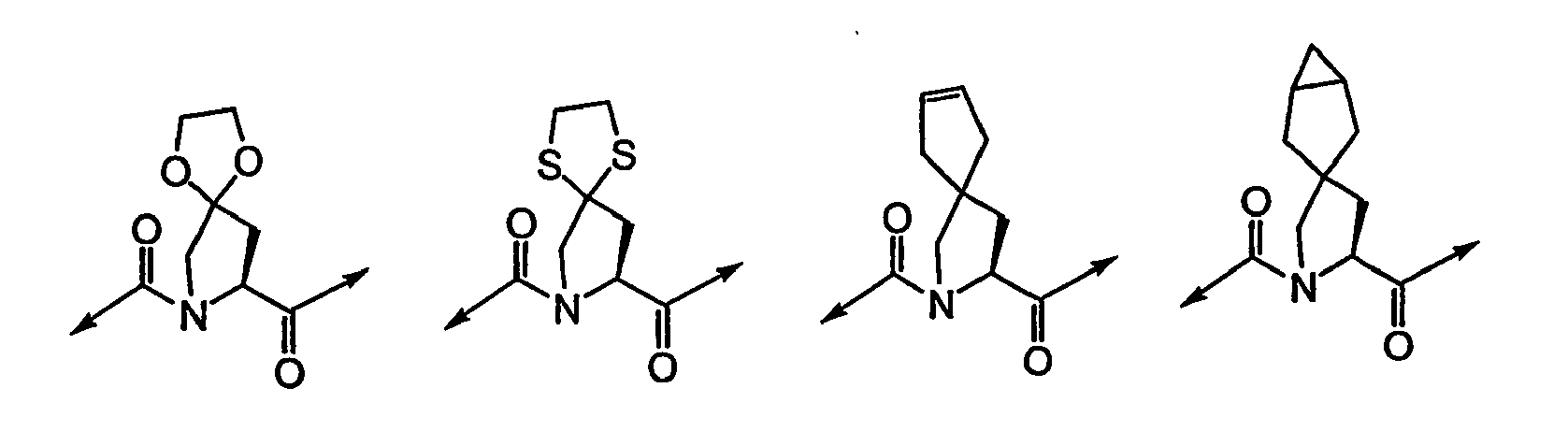
- In c, G and J are independently selected from the group consisting of (CH2)p, (CHR)p, (CHR-CHR')p, and (CRR')p; A and M are independently selected from the group consisting of O, S, SO2, NR, (CH2)p, (CHR)p, (CHR-CHR')p, and (CRR')p; and Q is CH2, CHR, CRR', NH, NR, O, S, SO2, NR, (CH2)p, (CHR)p, and (CRR')p. Preferred definitions for c are:


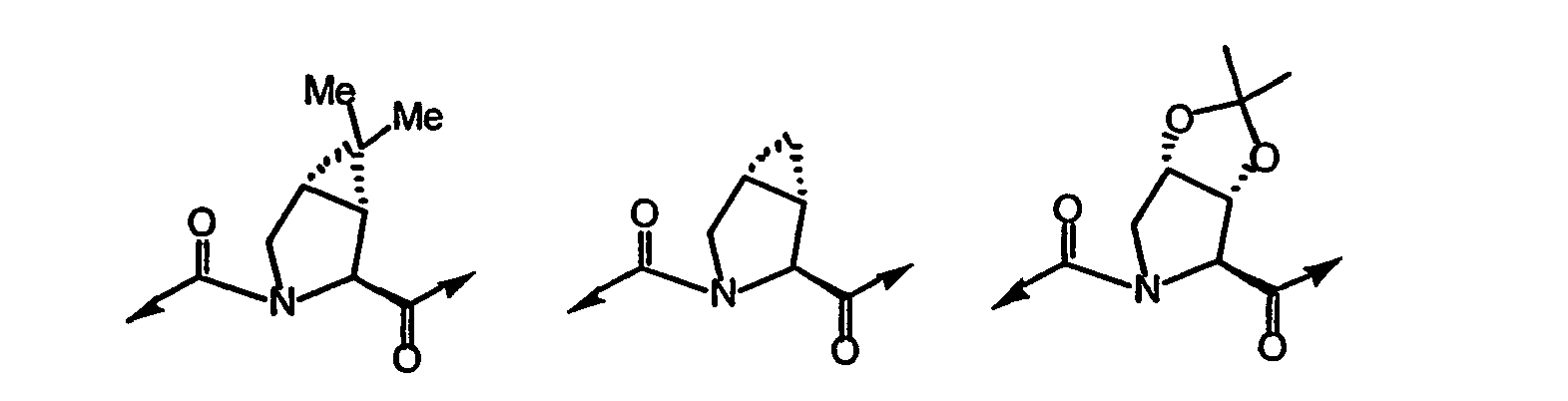


- When the cyclic ring structure is depicted as:


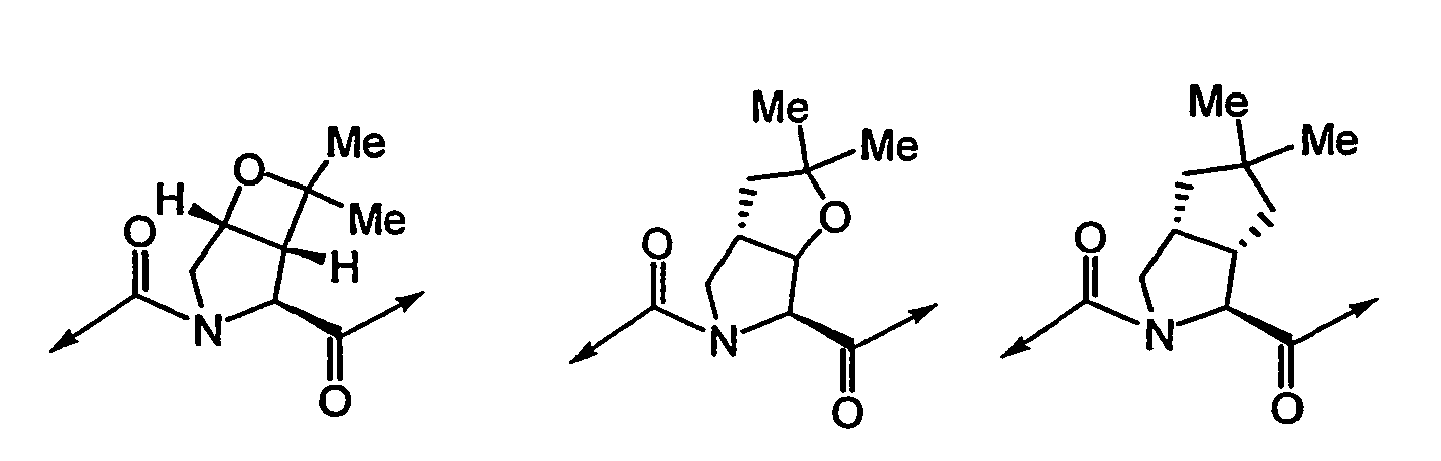


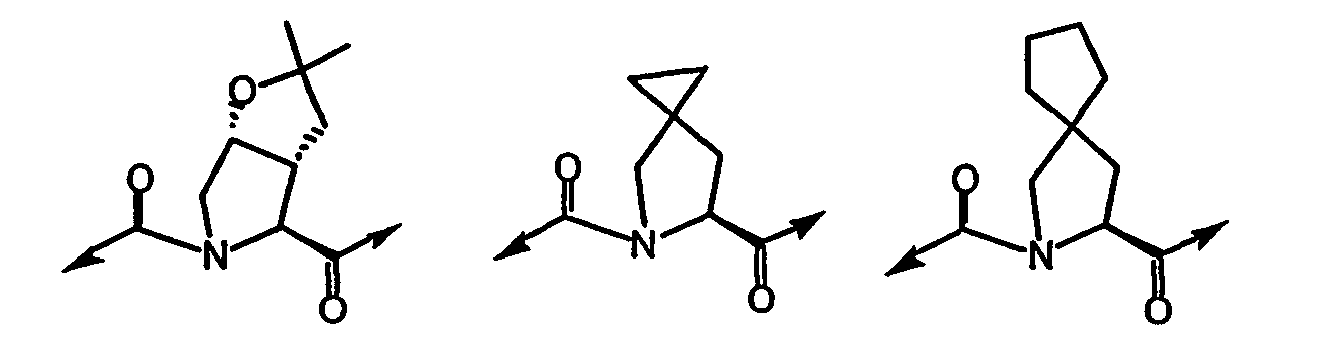


- Some of the still preferred moieties for the unit:


- Unless defined otherwise, all technical and scientific terms used herein have the same meaning as is commonly understood by one of skill in the art to which this invention belongs. Thus, for example, the term alkyl (including the alkyl portions of alkoxy) refers to a monovalent group derived from a straight or branched chain saturated hydrocarbon by the removal of a single atom having from 1 to 8 carbon atoms, preferably from 1 to 6;
- aryl - represents a carbocyclic group having from 6 to 14 carbon atoms and having at least one benzenoid ring, with all available substitutable aromatic carbon atoms of the carbocyclic group being intended as possible points of attachment. Preferred aryl groups include phenyl, 1-naphthyl, 2-naphthyl and indanyl, and especially phenyl and substituted phenyl;
- aralkyl - represents a moiety containing an aryl group linked vial a lower alkyl;
- alkylaryl - represents a moiety containing a lower alkyl linked via an aryl group;
- cycloalkyl - represents a saturated carbocyclic ring having from 3 to 8 carbon atoms, preferably 5 or 6, optionally substituted.
- heterocyclic - represents, in addition to the heteroaryl groups defined below, saturated and unsaturated cyclic organic groups having at least one O, S and/or N atom interrupting a carbocyclic ring structure that consists of one ring or two fused rings, wherein each ring is 5-, 6- or 7-membered and may or may not have double bonds that lack delocalized pi electrons, which ring structure has from 2 to 8, preferably from 3 to 6 carbon atoms, e.g., 2- or 3-piperidinyl, 2- or 3-piperazinyl, 2- or 3-morpholinyl, or 2- or 3-thiomorpholinyl;
- halogen - represents fluorine, chlorine, bromine and iodine;
- heteroaryl - represents a cyclic organic group having at least one O, S and/or N atom interrupting a carbocyclic ring structure and having a sufficient number of delocalized pi electrons to provide aromatic character, with the aromatic heterocyclyl group having from 2 to 14, preferably 4 or 5 carbon atoms, e.g., 2-, 3- or 4-pyridyl, 2- or 3-furyl, 2- or 3-thienyl, 2-, 4- or 5-thiazolyl, 2- or 4-imidazolyl, 2-, 4- or 5-pyrimidinyl, 2-pyrazinyl, or 3- or 4-pyridazinyl, etc. Preferred heteroaryl groups are 2-, 3- and 4-pyridyl; such heteroaryl groups may also be optionally substituted. Additionally, unless otherwise specifically defined, as stated above, the term "substituted or unsubstituted" or "optionally substituted" refers to the subject moiety being optionally and chemically-suitably substituted with a moiety belonging to R12 or R13. As used herein, "prodrug" means compounds that are drug precursors which, following administration to a patient, release the drug in vivo via some chemical or physiological process (e.g., a prodrug on being brought to the physiological pH or through enzyme action Is converted to the desired drug form).
- Also included in the invention are tautomers, rotamers, enantiomers and other optical isomers of compounds of Formula I, as well as pharmaceutically acceptable salts, solvates and derivatives thereof.
- A further feature of the invention is pharmaceutical compositions containing as active ingredient a compound of Formula I (or its salt, solvate or isomers) together with a pharmaceutically acceptable carrier or excipient.
- The invention also provides methods for preparing compounds of Formula I, as well as disclosing methods for treating diseases such as, for example, HCV, AIDS (Acquired Immune Deficiency Syndrome), and related disorders. The methods for treating comprise administering to a patient suffering from said disease or diseases a therapeutically effective amount of a compound of Formula I, or pharmaceutical compositions comprising a compound of Formula I.
- Also disclosed is the use of a compound of Formula I for the manufacture of a medicament for treating HCV, AIDS, and related disorders.
- Also disclosed is a method of treatment of a hepatitis C virus associated disorder, comprising administering an effective amount of one or more of the inventive compounds.
- Also disclosed is a method of modulating the activity of hepatitis C virus (HCV) protease, comprising contacting HCV protease with one or more inventive compounds.
- Also disclosed is a method of treating, preventing, or ameliorating one or more symptoms of hepatitis C, comprising administering an effective amount of one or more of the inventive compounds. The HCV protease is the NS3 or NS4a protease. The inventive compounds inhibit such protease. They also modulate the processing of hepatitis C virus (HCV) polypeptide.
- In one embodiment, the present invention discloses compounds of Formula I as inhibitors of HCV protease, especially the HCV NS3/NS4a serine protease, or a pharmaceutically acceptable derivative thereof, where the various definitions are given above.
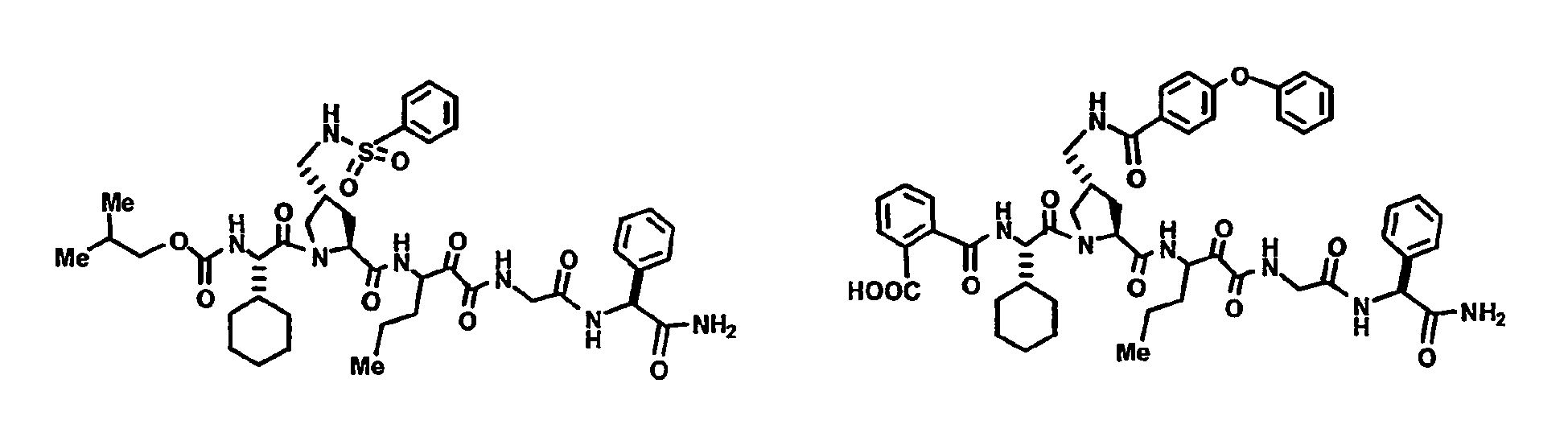
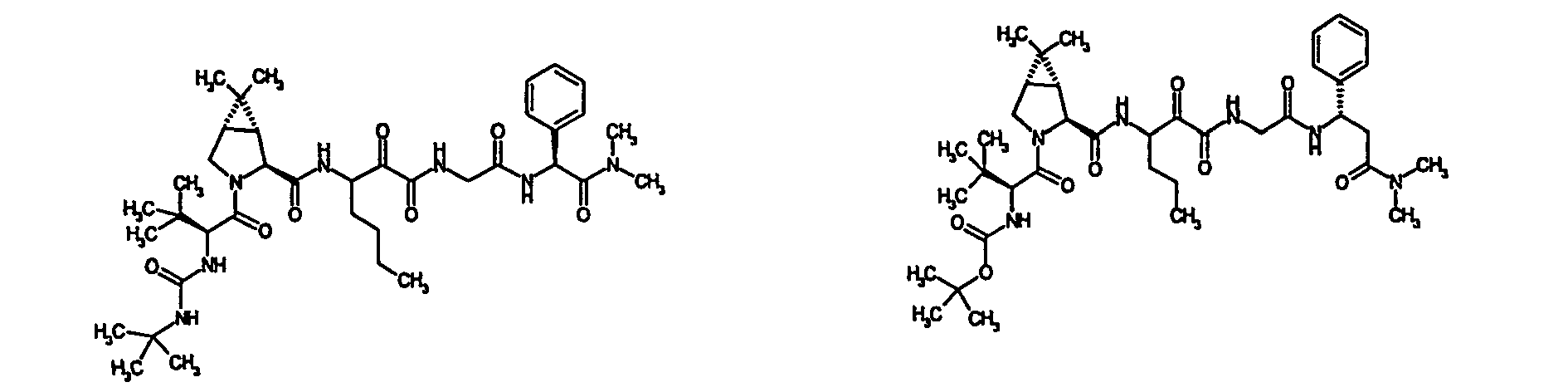
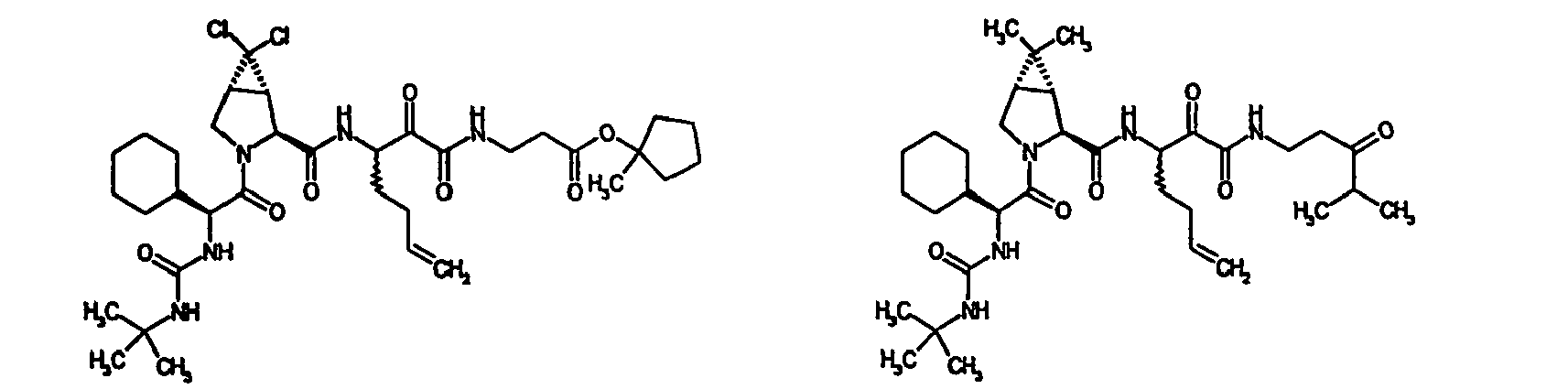
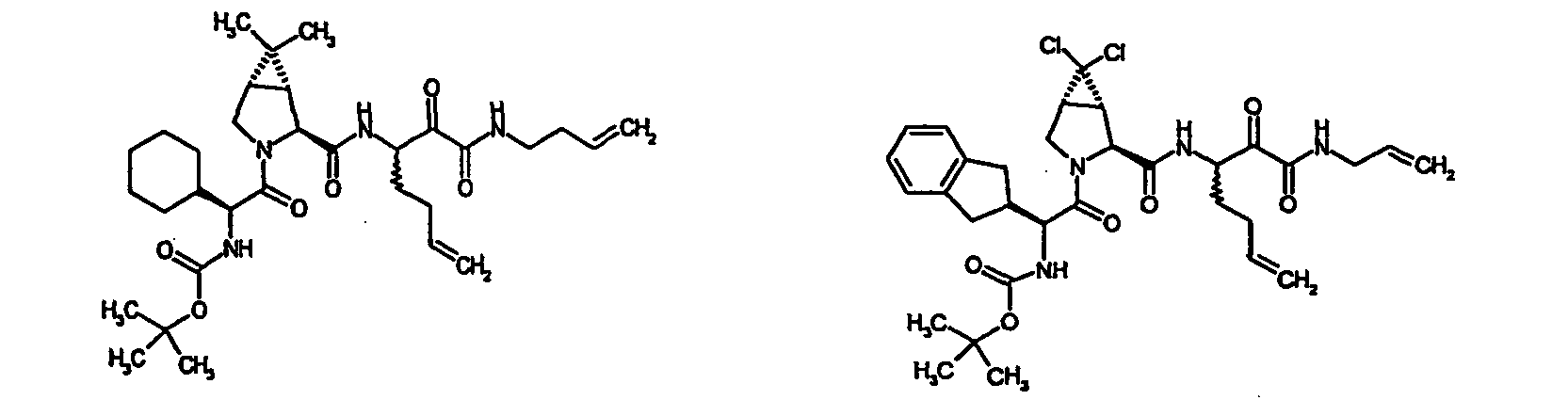
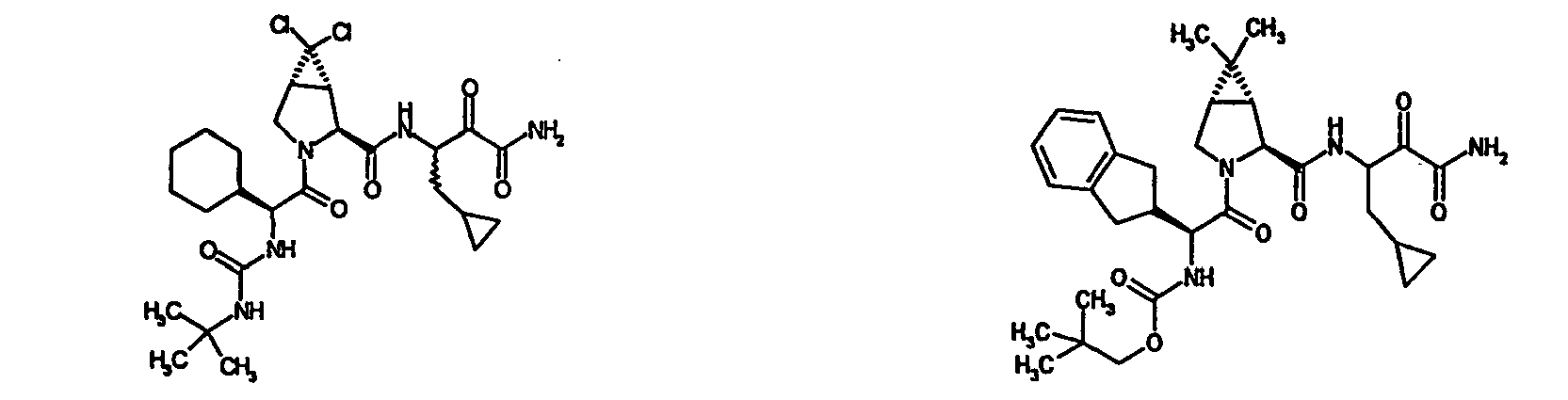
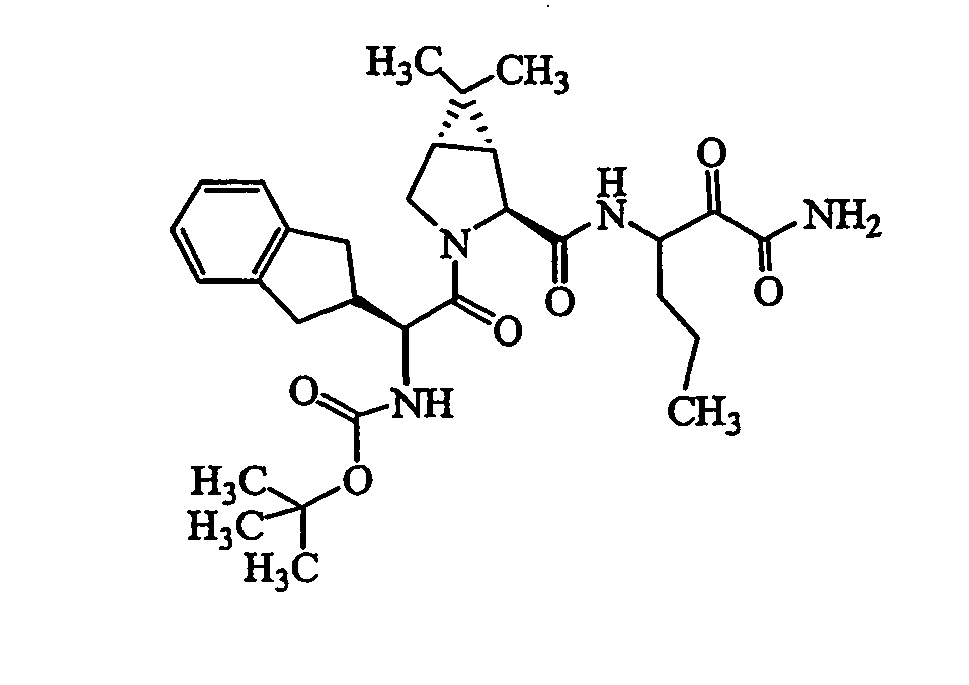
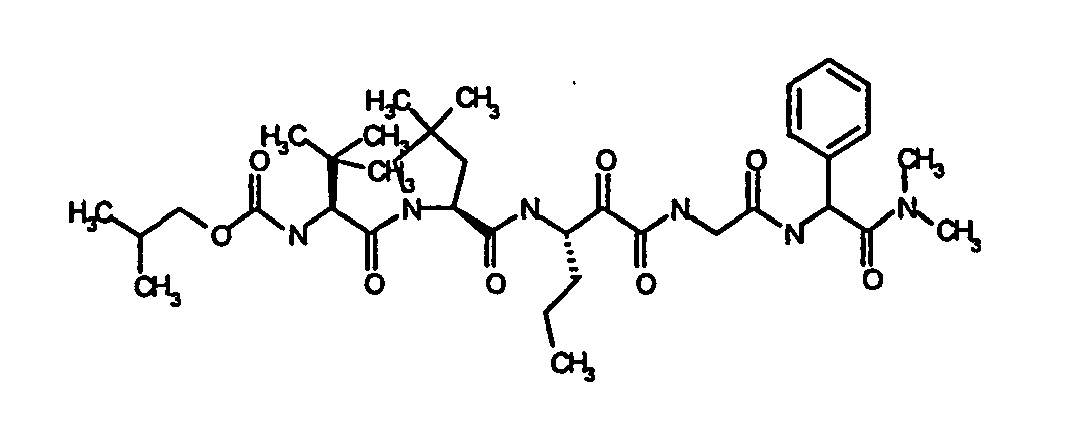
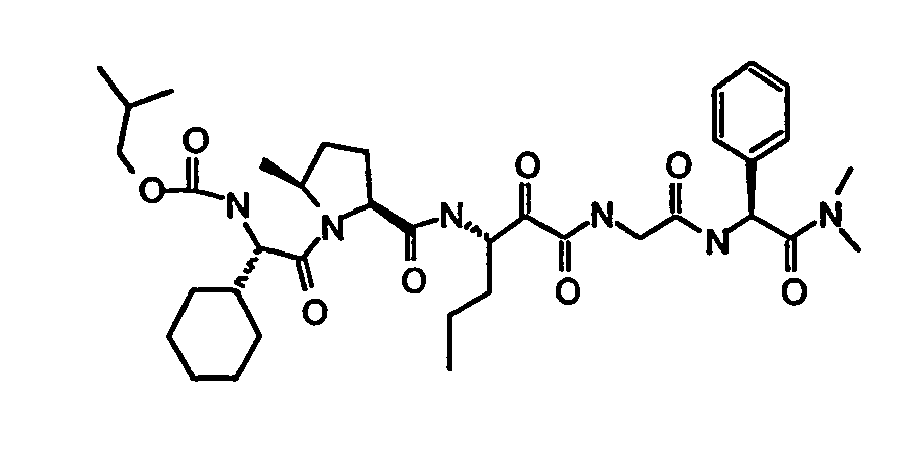
- Representative compounds of the invention which exhibit excellent HCV protease inhibitory activity are listed below in Tables 1 to 5 along with their activity (ranges of Ki* values in nanomolar, nM). Several compounds as well as addiitonal compounds are additionally disclosed in the Claims.
Table 1: Compounds and HCV protease continuous assay results Compound from Example No. Ki* Range 1 C 2 C 3 C 4 C 5 C 6 C 7 C 8 C 9 C 10 C 11 C 12 C 13 C 14 C 15 C 16 C 17 C 18 C 19 C 20 C 21 C 22 C 23 C 24 C 25 C 26 C 27 C 28 C 29 C 30 C 31 C 32 C 33 C 34 C 35 C 36 C 37 C 38 C 39 C 40 C 41 C 42 C 43 C 44 C 45 C 46 C 47 C 48 C 49 C 50 C 51 C 52 C 53 C 54 C 55 C 56 C 57 C 58 C 59 C 60 C 61 C 62 C 63 C 64 C 65 C 66 C 67 C 68 B 69 C 70 C 71 B 72 C 73 B 74 C 75 C 76 A 77 B 78 A 79 C 80 A 81 C 82 A 83 B 84 C 85 C 86 B 87 B 88 A 89 B 90 C 91 C 92 C 93 C 94 C 95 C 96 C 97 C 98 B 99 B 100 A 101 A 102 C 103 C 104 C 105 C 106 C 107 B 108 A - 109 A 110 A 111 A 112 A 113 B 114 A 115 B 116 A 117 A 118 A 119 A 120 A 121 B 122 B 123 A 124 B 125 B 126 B 127 A 128 A 129 A 130 B 131 A 132 A 133 A 134 B 135 A 136 A 137 A 138 A 139 A 140 B 141 A 142 A 143 B 144 B 145 C 146 A 147 A 148 B 149 A 150 A 151 A 152 A 153 A 154 A 155 B 156 B 157 B 158 C 159 B 160 A 161 A 162 A 163 C 164 A 165 C 166 B 167 A 168 C 169 B 170 B 171 A 172 A 173 A 174 A 175 A 176 B 177 B 178 A 179 A 180 B 181 A 182 B 183 A 184 A 185 A 186 A 187 A 188 A 189 B 190 B 191 B 192 A 193 A 194 B 195 A 196 B 197 A 198 A 199 A 200 A 201 B 202 A 203 B 204 B 205 B 206 B 207 B 208 A 209 A 210 A 211 A 212 A 213 B 214 B 215 B 216 B 217 C 218 A 219 A 220 A 221 A 222 A 223 B 224 C 225 C 226 A 227 A 228 C 229 A 230 A 231 A 232 C 233 C 234 C 235 C 236 B 237 C 238 A 239 C 240 A 241 C 242 B 243 C 244 B 245 C 246 B 247 A 248 A 249 C 250 C 251 B 252 C 253 C 254 B 255 B 256 A 257 C 258 A 259 A 260 C 261 C 262 A 263 B 264 B 265 C 266 B 267 A 268 C 269 A 270 C 271 A 272 C 273 C 274 C 275 C 276 A 277 B 278 A 279 B 280 A 281 C 282 C 283 C 284 C 285 C 286 C 287 C 288 B 289 B 290 C 291 C 292 C 293 C 294 C 295 C 296 B 297 C 298 C 299 B 300 B 301 C 302 C 303 B 304 C 305 C 306 C 307 B 308 B 309 C 310 C 311 C 312 C 313 B 314 A 315 B 316 B 317 A 318 A 319 A 320 A 321 C 322 C 323 C 324 C 325 A 326 A 327 C 328 B 329 B 330 A 331 A 332 A 333 B 334 B 335 B 336 A 337 A 338 C 339 A 340 C 341 C 342 C 343 A 344 C 345 C 346 C 347 B 348 B 349 C 350 C 351 C 352 C 353 C 354 C 355 C 356 A 357 A 358 C 359 A 360 B 361 B 362 C
Category A = 1-100 nM; Category B = 101-1,000 nM; Category C >1000 nM. - Some of the types of the inventive compounds and methods of synthesizing the various types of the inventive compounds of Formula I are listed below, then schematically described, followed by the illustrative Examples.


















- Depending upon their structure, the compounds of the invention may form pharmaceutically acceptable salts with organic or inorganic acids, or organic or inorganic bases. Examples of suitable acids for such salt formation are hydrochloric, sulfuric, phosphoric, acetic, citric, malonic, salicylic, malic, fumaric, succinic, ascorbic, maleic, methanesulfonic and other mineral and carboxylic acids well known to those skilled in the art. For formation of salts with bases, suitable bases are, for example, NaOH, KOH, NH4OH, tetraalkylammonium hydroxide, and the like.
- In another embodiment, this invention provides pharmaceutical compositions comprising the inventive peptides as an active ingredient. The pharmaceutical compositions generally additionally comprise a pharmaceutically acceptable carrier diluent, excipient or carrier (collectively referred to herein as carrier materials). Because of their HCV inhibitory activity, such pharmaceutical compositions possess utility in treating hepatitis C and related disorders.
- In yet another embodiment, the present invention discloses methods for preparing pharmaceutical compositions comprising the inventive compounds as an active ingredient. In the pharmaceutical compositions and methods of the present invention, the active ingredients will typically be administered in admixture with suitable carrier materials suitably selected with respect to the intended form of administration, i.e. oral tablets, capsules (either solid-filled, semi-solid filled or liquid filled), powders for constitution, oral gels, elixirs, dispersible granules, syrups, suspensions, and the like, and consistent with conventional pharmaceutical practices. For example, for oral administration in the form of tablets or capsules, the active drug component may be combined with any oral non-toxic pharmaceutically acceptable inert carrier, such as lactose, starch, sucrose, cellulose, magnesium stearate, dicalcium phosphate, calcium sulfate, talc, mannitol, ethyl alcohol (liquid forms) and the like. Moreover, when desired or needed, suitable binders, lubricants, disintegrating agents and coloring agents may also be incorporated in the mixture. Powders and tablets may be comprised of from about 5 to about 95 percent inventive composition. Suitable binders include starch, gelatin, natural sugars, corn sweeteners, natural and synthetic gums such as acacia, sodium alginate, carboxymethylcellulose, polyethylene glycol and waxes. Among the lubricants there may be mentioned for use in these dosage forms, boric acid, sodium benzoate, sodium acetate, sodium chloride, and the like. Disintegrants include starch, methylcellulose, guar gum and the like.
- Sweetening and flavoring agents and preservatives may also be included where appropriate. Some of the terms noted above, namely disintegrants, diluents, lubricants, binders and the like, are discussed in more detail below.
- Additionally, the compositions of the present invention may be formulated in sustained release form to provide the rate controlled release of any one or more of the components or active ingredients to optimize the therapeutic effects, i.e. HCV inhibitory activity and the like. Suitable dosage forms for sustained release include layered tablets containing layers of varying disintegration rates or controlled release polymeric matrices impregnated with the active components and shaped in tablet form or capsules containing such impregnated or encapsulated porous polymeric matrices.
- Liquid form preparations include solutions, suspensions and emulsions. As an example may be mentioned water or water-propylene glycol solutions for parenteral injections or addition of sweeteners and pacifiers for oral solutions, suspensions and emulsions. Liquid form preparations may also include solutions for intranasal administration.
- Aerosol preparations suitable for inhalation may include solutions and solids in powder form, which may be in combination with a pharmaceutically acceptable carrier such as inert compressed gas, e.g. nitrogen.
- For preparing suppositories, a low melting wax such as a mixture of fatty acid glycerides such as cocoa butter is first melted, and the active ingredient is dispersed homogeneously therein by stirring or similar mixing. The molten homogeneous mixture is then poured into convenient sized molds, allowed to cool and thereby solidify.
- Also included are solid form preparations which are intended to be converted, shortly before use, to liquid form preparations for either oral or parenteral administration. Such liquid forms include solutions, suspensions and emulsions.
- The compounds of the invention may also be deliverable transdermally. The transdermal compositions may take the form of creams, lotions, aerosols and/or emulsions and can be included in a transdermal patch of the matrix or reservoir type as are conventional in the art for this purpose.
- Preferably the compound is administered orally, intravenously or subcutaneously.
- Preferably, the pharmaceutical preparation is in a unit dosage form. In such form, the preparation is subdivided into suitably sized unit doses containing appropriate quantities of the active components, e.g., an effective amount to achieve the desired purpose.
- The quantity of the inventive active composition in a unit dose of preparation may be generally varied or adjusted from about 1.0 milligram to about 1,000 milligrams, preferably from about 1.0 to about 950 milligrams, more preferably from about 1.0 to about 500 milligrams, and typically from about 1 to about 250 milligrams, according to the particular application. The actual dosage employed may be varied depending upon the patient's age, sex, weight and severity of the condition being treated. Such techniques are well known to those skilled in the art.
- Generally, the human oral dosage form containing the active ingredients can be administered 1 or 2 times per day. The amount and frequency of the administration will be regulated according to the judgment of the attending clinician. A generally recommended daily dosage regimen for oral administration may range from about 1.0 milligram to about 1,000 milligrams per day, in single or divided doses.
- Some useful terms are described below:
- Capsule - refers to a special container or enclosure made of methyl cellulose, polyvinyl alcohols, or denatured gelatins or starch for holding or containing compositions comprising the active ingredients. Hard shell capsules are typically made of blends of relatively high gel strength bone and pork skin gelatins. The capsule itself may contain small amounts of dyes, opaquing agents, plasticizers and preservatives.
- Tablet- refers to a compressed or molded solid dosage form containing the active ingredients with suitable diluents. The tablet can be prepared by compression of mixtures or granulations obtained by wet granulation, dry granulation or by compaction.
- Oral gel- refers to the active ingredients dispersed or solubilized in a hydrophillic semi-solid matrix.
- Powder for constitution refers to powder blends containing the active ingredients and suitable diluents which can be suspended in water or juices.
- Diluent - refers to substances that usually make up the major portion of the composition or dosage form. Suitable diluents include sugars such as lactose, sucrose, mannitol and sorbitol; starches derived from wheat, corn, rice and potato; and celluloses such as microcrystalline cellulose. The amount of diluent in the composition can range from about 10 to about 90% by weight of the total composition, preferably from about 25 to about 75%, more preferably from about 30 to about 60% by weight, even more preferably from about 12 to about 60%.
- Disintegrant - refers to materials added to the composition to help it break apart (disintegrate) and release the medicaments. Suitable disintegrants include starches; "cold water soluble" modified starches such as sodium carboxymethyl starch; natural and synthetic gums such as locust bean, karaya, guar, tragacanth and agar; cellulose derivatives such as methylcellulose and sodium carboxymethylcellulose; microcrystalline celluloses and cross-linked microcrystalline celluloses such as sodium croscarmellose; alginates such as alginic acid and sodium alginate; clays such as bentonites; and effervescent mixtures. The amount of disintegrant in the composition can range from about 2 to about 15% by weight of the composition, more preferably from about 4 to about 10% by weight.
- Binder - refers to substances that bind or "glue" powders together and make them cohesive by forming granules, thus serving as the "adhesive" in the formulation. Binders add cohesive strength already available in the diluent or bulking agent. Suitable binders include sugars such as sucrose; starches derived from wheat, corn rice and potato; natural gums such as acacia, gelatin and tragacanth; derivatives of seaweed such as alginic acid, sodium alginate and ammonium calcium alginate; cellulosic materials such as methylcellulose and sodium carboxymethylcellulose and hydroxypropylmethylcellulose; polyvinylpyrrolidone; and inorganics such as magnesium aluminum silicate. The amount of binder in the composition can range from about 2 to about 20% by weight of the composition, more preferably from about 3 to about 10% by weight, even more preferably from about 3 to about 6% by weight.
- Lubricant - refers to a substance added to the dosage form to enable the tablet, granules, etc. after it has been compressed, to release from the mold or die by reducing friction or wear. Suitable lubricants include metallic stearates such as magnesium stearate, calcium stearate or potassium stearate; stearic acid; high melting point waxes; and water soluble lubricants such as sodium chloride, sodium benzoate, sodium acetate, sodium oleate, polyethylene glycols and d'l-leucine. Lubricants are usually added at the very last step before compression, since they must be present on the surfaces of the granules and in between them and the parts of the tablet press. The amount of lubricant in the composition can range from about 0.2 to about 5% by weight of the composition, preferably from about 0.5 to about 2%, more preferably from about 0.3 to about 1.5% by weight.
- Glident - material that prevents caking and improve the flow characteristics of granulations, so that flow is smooth and uniform. Suitable glidents include silicon dioxide and talc. The amount of glident in the compositions can range from about 0.1 % to about 5% by weight of the total composition, preferably from about 0.5 to about 2% by weight.
- Coloring agents - excipients that provide coloration to the composition or the dosage form. Such excipients can include food grade dyes and food grade dyes adsorbed onto a suitable adsorbent such as clay or aluminum oxide. The amount of the coloring agent can vary from about 0.1 to about 5% by weight of the composition, preferably from about 0.1 to about 1%.
- Bioavailability - refers to the rate and extent to which the active drug ingredient or therapeutic moiety is absorbed into the systemic circulation from an administered dosage form as compared to a standard or control.
- Conventional methods for preparing tablets are known. Such methods include dry methods such as direct compression and compression of granulation produced by compaction, or wet methods or other special procedures. Conventional methods for making other forms for administration such as, for example, capsules, suppositories and the like are also well known.
- The pharmaceutical compositions disclosed above may be used for treatment of diseases such as, for example, hepatitis C and the like. The method comprises administering a therapeutically effective amount of the inventive pharmaceutical composition to a patient having such a disease or diseases and in need of such a treatment.
- The compounds of the invention may be used for the treatment of HCV in humans in monotherapy mode or in a combination therapy (e.g., dual combination, triple combination etc.) mode such as, for example, in combination with antiviral and/or immunomodulatory agents. Examples of such antiviral and/or immunomodulatory agents include Ribavirin (from Schering-Plough Corporation, Madison, New Jersey) and Levovirin™ (from ICN Pharmaceuticals, Costa Mesa, California), VP 50406™ (from Viropharma, Incorporated, Exton, Pennsylvania), ISIS 14803™ (from ISIS Pharmaceuticals, Carlsbad, California), Heptazyme™ (from Ribozyme Pharmaceuticals, Boulder, Colorado), VX 497™ (from Vertex Pharmaceuticals, Cambridge, Massachusetts), Thymosin™ (from SciClone Pharmaceuticals, San Mateo, California), Maxamine™ (Maxim Pharmaceuticals, San Diego, California), mycophenolate mofetil (from Hoffman-LaRoche, Nutley, New Jersey), interferon (such as, for example, interferon-alpha, PEG-interferon alpha conjugates) and the like. "PEG-interferon alpha conjugates" are interferon alpha molecules covalently attached to a PEG molecule. Illustrative PEG-interferon alpha conjugates include interferon alpha-2a (Roferon™, from Hoffman La-Roche, Nutley, New Jersey) in the form of pegylated interferon alpha-2a (e.g., as sold under the trade name Pegasys™), interferon alpha-2b (Intron™, from Schering-Plough Corporation) in the form of pegylated interferon alpha-2b (e.g., as sold under the trade name PEG-Intron™), interferon alpha-2c (Berofor Alpha™, from Boehringer Ingelheim, Ingelheim, Germany) or consensus interferon as defined by determination of a consensus sequence of naturally occurring interferon alphas (Infergen™, from Amgen, Thousand Oaks, California).
- As stated earlier, the invention includes tautomers, rotamers, enantiomers and other stereoisomers of the inventive compounds also. Thus, as one skilled in the art appreciates, some of the inventive compounds may exist in suitable isomeric forms. Such variations are contemplated to be within the scope of the invention.
- Another embodiment of the invention discloses a method of making the compounds disclosed herein. The compounds may be prepared by several techniques known in the art. Representative illustrative procedures are outlined in the following reaction schemes. It is to be understood that while the following illustrative schemes describe the preparation of a few representative inventive compounds, suitable substitution of any of both the natural and unnatural amino acids will result in the formation of the desired compounds based on such substitution. Such variations are contemplated to be within the scope of the invention.
- Abbreviations which are used in the descriptions of the schemes, preparations and the examples that follow are:
- THF: Tetrahydrofuran
- DMF: N,N-Dimethylformamide
- EtOAc: Ethyl acetate
- AcOH: Acetic acid
- HOOBt: 3-Hydroxy-1,2,3-benzotriazin-4(3H)-one
- EDCl: 1-(3-dimethylaminopropyl)-3-ethylcarbodiimide hydrochloride
- NMM: N-Methylmorpholine
- ADDP: 1,1'-(Azodicarbobyl)dipiperidine
- DEAD: Diethylazodicarboxylate
- MeOH: Methanol
- EtOH: Ethanol
- Et2O: Diethyl ether
- DMSO: Dimethylsulfoxide
- HOBt: N-Hydroxybenzotriazole
- PyBrOP: Bromo-tris-pyrrolidinophosphonium hexafluorophosphate
- DCM: Dichloromethane
- DCC: 1,3-Dicyclohexylcarbodiimide
- TEMPO: 2,2,6,6-Tetramethyl-1-piperidinyloxy
- Phg: Phenylglycine
- Chg: Cyclohexylglycine
- Bn: Benzyl
- Bzl: Benzyl
- Et: Ethyl
- Ph: Phenyl
- iBoc: isobutoxycarbonyl
- iPr: isopropyl
- tBu or But: tert-Butyl
- Boc: tert-Butyloxycarbonyl
- Cbz: Benzyloxycarbonyl
- Cp: Cylcopentyldienyl
- Ts: p-toluenesulfonyl
- Me: Methyl
- HATU: O-(7-azabenzotriazol-1-y1-yl)-1,1,3,3-tetramethyluronium hexafluorophosphate
- DMAP: 4-N,N-Dimethylaminopyridine
- Bop: Benzotriazol-1-yl-oxy-tris(dimethylamino)hexafluorophosphate
- The following schemes describe the methods of synthesis of intermediate building blocks:


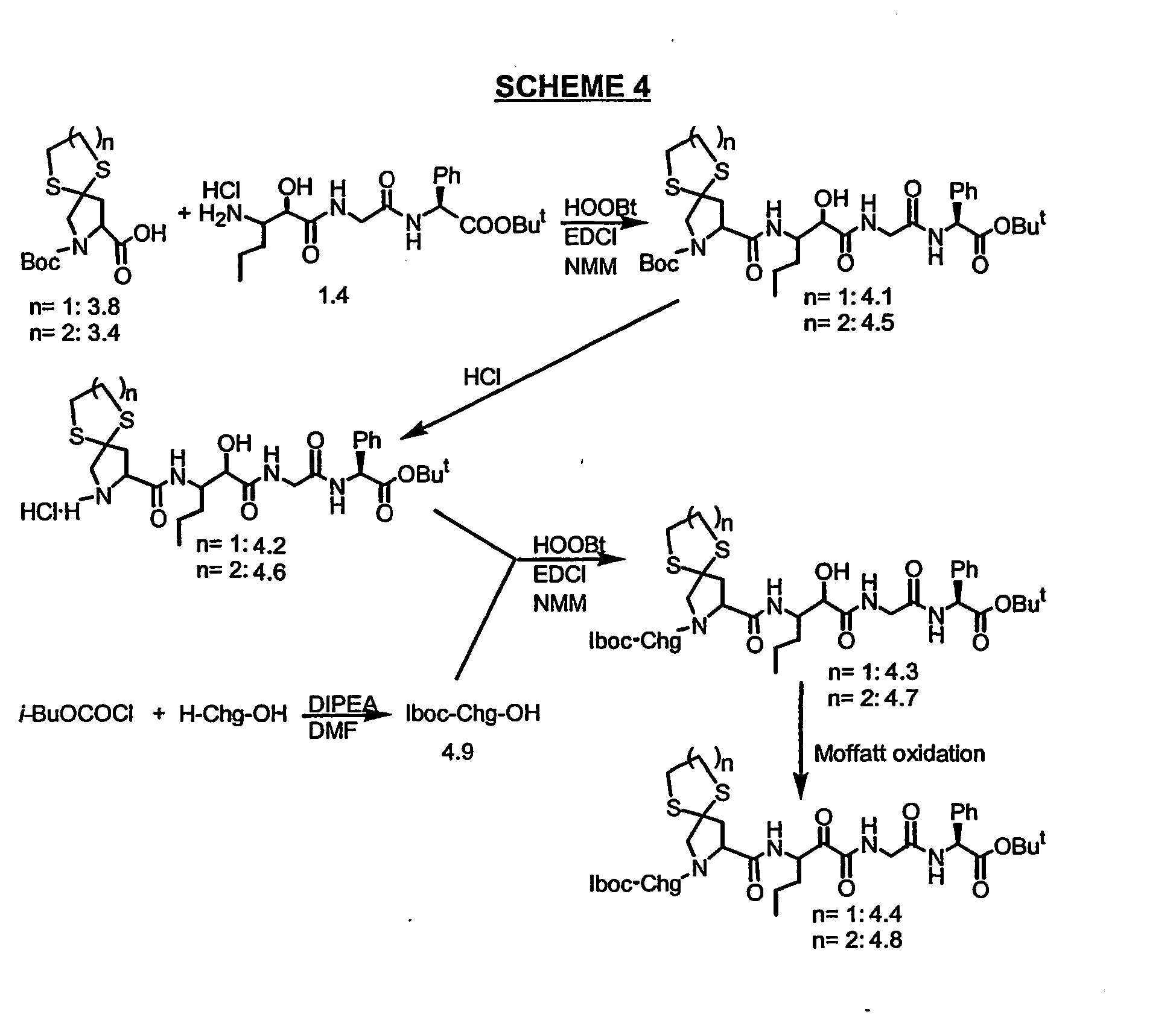


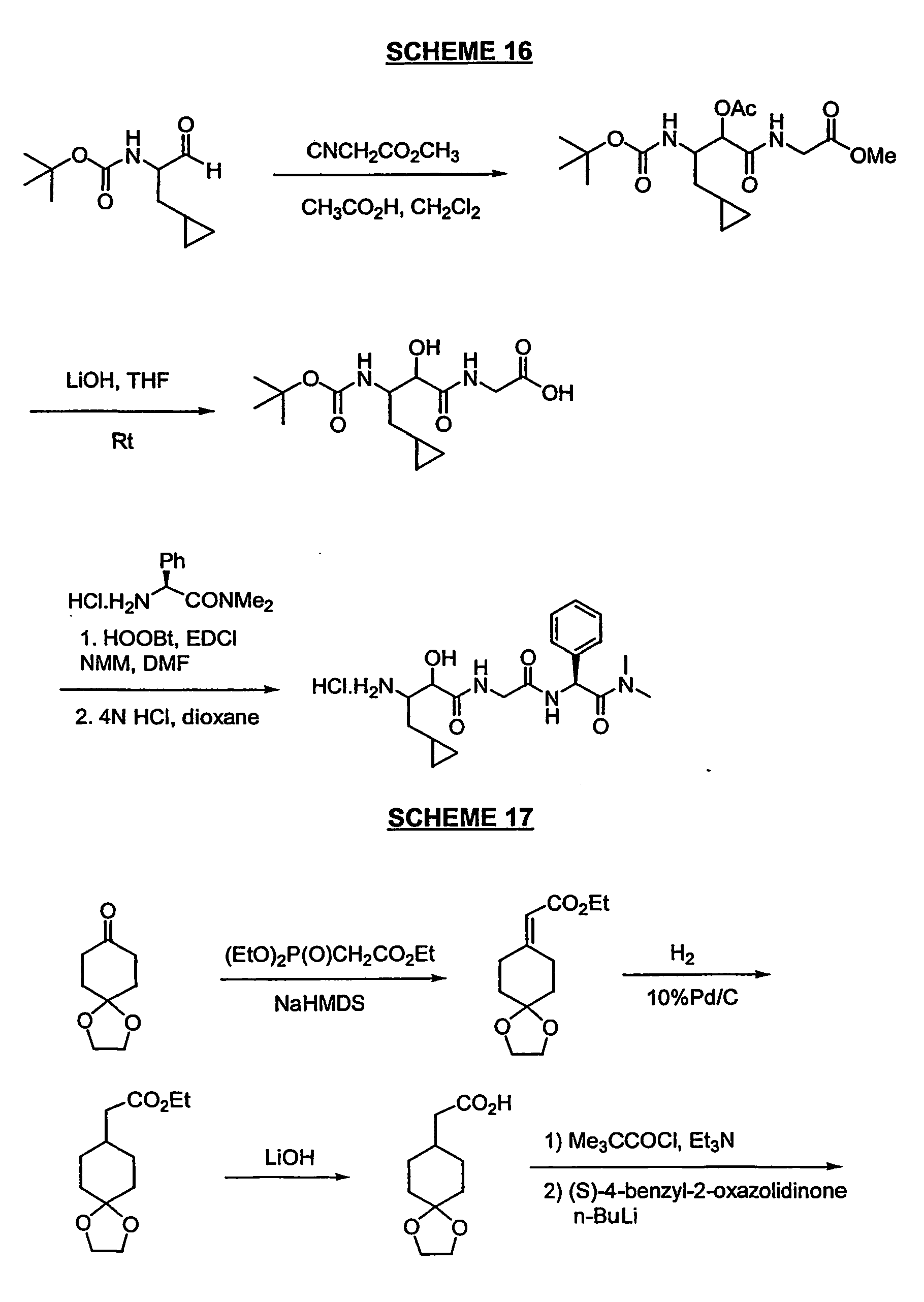


-

- To a stirred solution of Compound (1.08)(3.00 g, 12.0 mmol (S. L. Harbeson et al. J.Med.Chem. 37 No.18 (1994) 2918-2929) in DMF (15 mL) and CH2Cl2 (15 mL) at -20°C was added HOOBt (1.97 g, 12.0 mmol), N-methyl morpholine (4.0 mL, 36.0 mmol) and EDCI (2.79 g, 14.5 mmol) and stirred for 10 minutes, followed by addition of HCl.H2N-Gly-OBn (2.56 g, 13.0 mmol). The resulting solution was stirred at -20°C for 2 hrs, kept refrigerated overnight and then concentrated to dryness, followed by dilution with EtOAc (150 mL). The EtOAc solution was then washed twice with saturated NaHCO3, H2O, 5% H3PO4, brine, dried over Na2SO4, filtered and concentrated to dryness to give the Compound (1.09) (4.5 g, 94%). LRMS m/z MH+= 395.1.
-

- A solution of Compound (1.09) (7.00 g, 17.8 mmol) in absolute ethanol (300 mL) was stirred at room temperature under a hydrogen atmosphere in the presence of Pd-C (300 mg, 10%). The reaction progress was monitored by tlc. After 2 h, the mixture was filtered through a celite pad and the resulting solution was concentrated in vacuo to give Compound (1.1) (5.40 g, quantitative). LRMS m/z MH+= 305.1.
-

- A mixture of Compound (1.1) from Preparative Example 1, Step B above (1 eq.), Compound (1.2) (from Novabiochem, Catalog No. 04-12-5147) (1.03 eq.), HOOBt (1.03 eq.), N-methylmorpholine (2.2 eq.), and dimethylformamide (70 mUg) was stirred at -20°C. EDCI (1.04 eq.) was added and the reaction stirred for 48 hr. The reaction mixture was poured into 5% aqueous KH2PO4 and extracted with ethyl acetate (2 x). The combined organics were washed with cold 5% aqueous K2CO3, then 5% aqueous KH2PO4, then brine, and the organic layer was dried over anhydrous MgSO4. The mixture was filtered, then evaporated and the filtrate dried under vacuum, the residue was triturated with Et2O-hexane, and filtered to leave the title compound (1.3)(86% yield), C25H39N3O7 (493.60), mass spec. (FAB) M+1 = 494.3.
-

- Compound (1.3) from Preparative Example 2, Step A (3.0 g) was treated with 4 N HCl/dioxane (36 mL) and stirred at room temperature for 7 min. The mixture was poured into 1.5 L cold (5°C) hexane and stirred, then allowed to set cold for 0.5 hr. The mixture was suction-filtered in a dry atmosphere, and the collected solid was further dried to afford the title compound (1.4) (2.3 g, 88% yield), C20H31N3O5·HCl, H1 NMR (DMSO-d6/NaOD) δ 7.38 (m, 5H), 5.25 (m, 1H), 4.3-4.1 (m, 1H), 3.8 (m, 2H), 3.4-3.3 (m, obscured by D2O), 1.7-1.1 (m, 4H), 1.35 (s, 9H), 0.83 (m, 3H).
-

- Compound (1.3) from Preparative Example 2, Step A, was treated in essentially the same manner as in Preparative Example 7, Step A below to afford Compound (1.5).
-

- Compound (1.5) from Preparative Example 3, was treated in essentially the same manner as in Preparative Example 2, Step B, to afford Compound (1.6).
-

- To a solution of dimethylamine hydrochloride (1.61 g, 19.7 mmol), N-Boc-phenylglycine, Compound (2.08)(4.50 g, 17.9 mmol, Bachem Co. # A-2225), HOOBt (3.07 g, 18.8 mmol) and EDCI (4.12 g, 21.5 mmol) in anhydrous DMF (200 mL) and CH2Cl2 (150 mL) at -20°C was added NMM (5.90 mL, 53.7 mmol). After being stirred at this temperature for 30 min, the reaction mixture was kept in a freezer overnight (18 h). It was then allowed to warm to rt, and EtOAc ( 450 mL), brine (100 mL) and 5% H3PO4 (100 mL) were added. After the layers were separated, the organic layer was washed with 5% H3PO4 (100 mL), saturated aqueous sodium bicarbonate solution (2 X 150 mL), water (150 mL), and brine (150 mL), dried (MgSO4), filtered and concentrated in vacuo to afford Compound (2.09) (4.86 g) as a white solid, which was used without further purification.
-

- Compound (2.09) from Preparative Example 5, Step A (4.70 g, crude) was dissolved in 4 N HCl (60 mL, 240 mmol) and the resulting solution was stirred at room temperature. The progress of the reaction was monitored by TLC. After 4 h, the solution was concentrated in vacuo to yield Compound (2.1) as a white solid which was used in the next reaction without further purification. LRMS mlz MH+= 179.0.
-

- In essentially the same manner as Preparative Example 2, Step A. substituting phenylglycine N,N-dimethylamide hydrochloride in place of phenylglycine t-butyl ester hydrochloride, Compound (2.2) was prepared mass spec. (FAB) M+1 = 465.3.
-

- Compound (2.2) from Step A (1.85 g) was reacted with 4 N HCl/dioxane (50 mL) at room temperature for 1 hr. The mixture was evaporated under vacuum in a 20°C water bath, triturated under isopropyl ether, filtered, and dried to afford Compound (2.3) (1.57 g, 98% yield), C18H28N4O4·HCl, mass spec. (FAB) M+1 = 365.3
-


- A solution of Compound (2.2) from Preparative Example 5, Step A (2.0 g) in dichloromethane (60 mL) was treated with dimethylsulfoxide (3.0 mL) and 2,2-dichloroacetic acid (0.70 mL). The stirred mixture was cooled to 5°C and then added 1 M dicyclohexylcarbodiimide/ dichloromethane solution (8.5 mL). The cold bath was removed and the mixture stirred for 22 hr. Then added 2-propanol (0.5 mL), and stirred for an additional 1 hr. The mixture was filtered then washed with ice-cold 0.1 N NaOH (50mL), then ice-cold 0.1 N HCl (50 mL), then 5% aqueous KH2PO4, then saturated brine. The organic solution was dried over anhydrous magnesium sulfate, then filtered. The filtrate was evaporated, and chromatographed on silica gel, eluting with ethyl acetate to afford Compound (2.3) (1.87 g, 94% yield), C23H34N4O6, mass spec. (FAB) M+1 = 463.3.
-

- In essentially the same manner as Preparative Example 2, Step B, Compound (2.5) was prepared.
-

- In a flask were combined N-Cbz-hydroxyproline methyl ester (available from Bachem Biosciences, Incorporated, King of Prussia, Pennsylvania), compound (3.01) (3.0 g), toluene (30 mL), and ethyl acetate (30 mL). The mixture was stirred vigorously, and then a solution of NaBr/water (1.28 g /5 mL) was added. To this was added 2,2,6,6-tetramethyl-1-piperidinyloxy free radical (TEMPO, 17 mg, from Aldrich Chemicals, Milwaukee, Wisconsin). The stirred mixture was cooled to 5°C and then was added a prepared solution of oxidant [commercially available bleach, Clorox® (18 mL), NaHCO3 (2.75 g) and water to make up 40 mL] dropwise over 0.5 hr. To this was added 2-propanol (0.2 mL). The organic layer was separated, and the aqueous layer extracted with ethyl acetate. The organic extracts were combined, washed with 2% sodium thiosulfate, then saturated brine. The organic solution was dried over anhydrous MgSO4, filtered, and evaporated the filtrate under vacuum to leave a pale yellow gum suitable for subsequent reactions (2.9 g, 97% yield), C14H15NO5 (277.28), mass spec. (FAB) M+1 = 278.1.
-

- Compound (3.1) from Step A above (7.8 g) was dissolved in dichloromethane (100 mL), and cooled to 15°C. To this mixture was first added 1,3-propanedithiol (3.1 mL), followed by freshly distilled boron trifluoride etherate (3.7 mL). The mixture was stirred at room temperature for 18 h. While stirring vigorously, a solution of K2CO3/water (2 g / 30 mL)was carefully added, followed by saturated NaHCO3 (10 mL). The organic layer was separated from the aqueous layer (pH ∼7.4), washed with water (10 mL), then brine. The organic solution was dried over anhydrous MgSO4, filtered, and evaporated under vacuum. The residue was chromatographed on silica gel, eluting with toluene, then a with a gradient of hexane-Et2O (2:3 to 0:1) to afford a brown oil (7.0 g, 68% yield), C17H21NO4S2 (367.48), mass spec. (FAB) M+1 =368.1.
-

- A solution of compound (3.2) from Step B above (45 g) in acetonitrile (800 mL) at 20°C was treated with freshly distilled iodotrimethylsilane (53 mL) at once. The reaction was stirred for 30 min., then poured into a freshly prepared solution of di-t-butyldicarbonate (107 g), ethyl ether (150 mL), and diisopropylethylamine (66.5 mL). The mixture stirred for 30 min. more then was washed with hexane (2 x 500 mL). Ethyl acetate (1000 mL) was added to the lower acetonitrile layer, and then the layer was washed with 10% aqueous KH2PO4 (2 x 700 mL), and brine. The filtrate was evaporated under vacuum in a 25°C water bath, taken up in fresh ethyl acetate (1000 mL), and washed successively with 0.1 N HCl, 0.1 N NaOH, 10% aqueous KH2PO4, and brine. The organic solution was dried over anhydrous MgSO4, filtered, and evaporated under vacuum. The residue (66 g) was chromatographed on silica gel (2 kg), eluting with hexane (2 L), then Et2O/hexan (55:45, 2 L), then Et2O (2 L) to afford an orange gum which slowly crystallized on standing (28 g, 69% yield), C14H23NO4S2 (333.46), mass spec. (FAB) M+1 = 334.1.
-

- A solution of compound (3.3) from Step C above (11 g) in dioxane (150 mL) at 20°C was treated with 1N aqueous LiOH (47 mL) and stirred for 30 h. The mixture was concentrated under vacuum in a 30°C water bath to half volume. The remainder was diluted with water (300 mL), extracted with Et2O (2 x 200 mL). The aqueous layer was acidified to pH -4 with 12 N HCl (3-4 mL), extracted with ethyl acetate, and washed with brine. The organic solution was dried over anhydrous MgSO4, filtered, and evaporated under vacuum to leave Compound (3.4) (8.1 g, 78%), C13H21NO4S2 (319.44), mass spec. (FAB) M+1 = 320.1.
-

- To a solution of compound (3.3) from Step C above (1 g) in dioxane (5 mL), was added 4 N HCl-dioxane solution (50 mL). The mixture was stirred vigorously for 1 hr. The mixture was evaporated under vacuum in a 25°C water bath. The residue was triturated with Et2O, and filtered to leave the title compound (0.76 g, 93% yield), C9H15NO2S2·HCl (269.81), mass spec. (FAB) M+1 = 234.0.
-

- Following essentially the same procedure of Preparative Example 8, Step B, substituting ethane dithiol for propane dithiol, compound (3.6) was obtained.
-

- Following essentially the same procedure of Preparative Example 8, Step C, substituting compound (3.6) for compound (3.2), the product compound (3.7) was obtained.
-

- Following essentially the same procedure of Preparative Example 8, Step D, substituting compound (3.7) for compound (3.3) the product compound (3.8) was obtained.
-

- Following essentially the same procedure of Preparative Example 8, Step E, substituting compound (3.7) for compound (3.3) the product compound (3.9) was obtained.
-

- In essentially the same manner as Preparative Example 2, Step A, Compound (4.1) was prepared C33H48N4O9S2 (708.89).
-

- In essentially the same manner as Preparative Example 2, Step B, Compound (4.2) was prepared mass spec. (FAB) M+1 = 609.3.
-

- In essentially the same manner as Preparative Example 2, Step A, Compound (4.3) was prepared, C41H61N5O10S2 (708.89), mass spec. (FAB) M+1 = 709.3.
-

- In essentially the same manner as Preparative Example 7, Step A, Compound (4.4) was prepared.
-

- In essentially the same manner as Preparative Example 2, Step A, Compound (4.5) was prepared.
-

- In essentially the same manner as Preparative Example 2, Step B, Compound (4.6) was prepared.
-

- Compound (4.9) from Preparative Example 12, was reacted with Compound (4.6) from Step B above, in essentially the same manner as Preparative Example 2, Step A, to afford Compound (4.7).
-

- In essentially the same manner as Preparative Example 7, Step A, Compound (4.8) was prepared.
-

- A solution of L-cyclohexylglycine (4.02) (1.0 eq.), dimethylformamide (20 mUg), and diisopropylethylamine (1.1 eq.) at 5°C is treated with isobutyl chloroformate (4.01) (1.1 eq.). The cold bath is removed and it is stirred for 6 hr. The reaction mixture is poured into 5% aqueous KH2PO4 and extracted with ethyl acetate (2 x). The combined organics are washed with cold 5% aqueous K2CO3, then 5% aqueous KH2PO4, then brine, and the organics are dried over anhydrous MgSO4. The mixture is filtered, the filtrate evaporated under vacuum, the residue chromatographed if necessary or else the residue triturated with Et2O-hexane, and filtered to leave the title compound (4.9), C13H23NO4 (257.33).
-

- In essentially the same manner as Preparative Example 12, substituting L-O-benzylthreonine (13.02) (Wang et al, J. Chem. Soc., Perkin Trans. 1, (1997) No. 5, 621-624.) for L-cyclohexylglycine (4.02) Compound (13.1) is prepared C16H23NO5 (309.36), mass spec. (FAB) M+1 = 310.2.
-

- Compound (4.8) from Preparative Example 11, Step D (1.0 g) was reacted with a solution of anhydrous trifluoroacetic acid-dichloromethane (1:1, 50 mL) for 2 hr. The solution was diluted with xylene (100 mL) and evaporated under vacuum. The residue was triturated with Et2O, and filtered to leave the title compound (5.1) (0.9 g), C37H53N5O9S2 (775.98), mass spec. (FAB) M+1 =776.5.
-

- In essentially the same manner as Preparative Example 2, Step A, Compound (5.1) was reacted with ammonia (0.5 M 1,4-dioxane solution), to obtain the title compound (5.2) C37H54N6O8S2 (774.99), mass spec. (FAB) M+1 = 775.4.
-

- A mixture of Compound (5.1) from Preparative Example 14, Step A (0.15 g), N,N-dimethylamine (0.12 mL of 2 M THF solution), dimethylformamide (10 mL), and PyBrOP coupling reagent (0.11 g) was cooled to 5°C, then diisopropylethylamine (DIEA or DIPEA, 0.12 mL) was added. The mixture was stirred cold for 1 min., then stirred at room temperature for 6 hr. The reaction mixture was poured into cold 5% aqueous H3PO4 (50 mL) and extracted with ethyl acetate (2 x). The combined organics were washed with cold 5% aqueous K2CO3, then 5% aqueous KH2PO4, then brine. The organic solution was dried over anhydrous MgSO4, filtered, and evaporated under vacuum. The residue was chromatographed on silica gel, eluting with MeOH-CH2Cl2 to afford the title compound (5.3), C39H58N6O8S2 (803.05), mass spec. (FAB) M+1 =803.5.
-

- In essentially the same manner as Preparative Example 2, Step A, Compound (6.1) hydroxyproline benzyl ester hydrochloride was reacted with Compound (4.9) from Preparative Example 12, to obtain the title compound (6.2), C25H36N2O6 (460.56), mass spec. (FAB) M+1 = 461.2.
-

- In essentially the same manner as Preparative Example 8, Compound (6.3) was prepared, C25H34N2O6 (458.55), mass spec. (FAB) M+1 = 459.2.
-
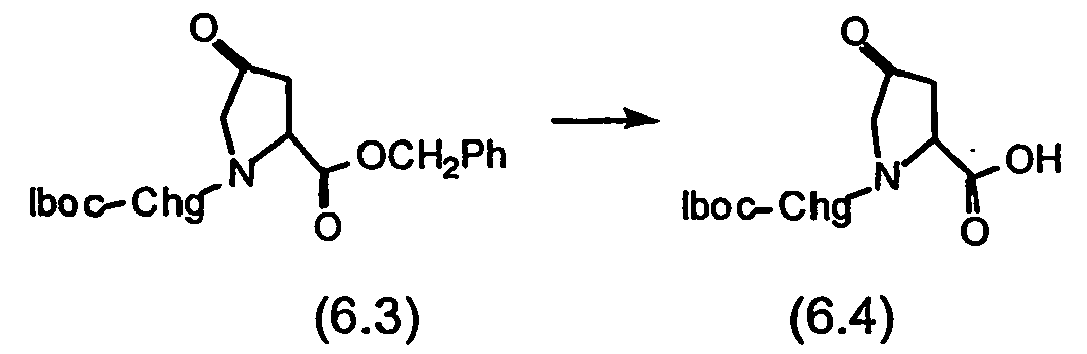
- A mixture of Compound (6.3) from Step B (1 g), 10% Pd/C (0.05 g), and EtOH (100 mL) was stirred under 1 atm. H2 for 6 hr. The mixture was filtered, and evaporated to dryness under vacuum to leave the title compound (6.4) (0.77 g), C18H28N2O6 (368.42) mass spec. (FAB) M+1 = 369.2.
-

- Compound (6.4) from Preparative Example 16, Step C, was reacted with Compound (2.3) from Preparative Example 6, Step B, in essentially the same manner as Preparative Example 2, Step A, to afford Compound (7.1), C36H54N6O9 (714.85), mass spec. (FAB) M+1 = 715.9.
-
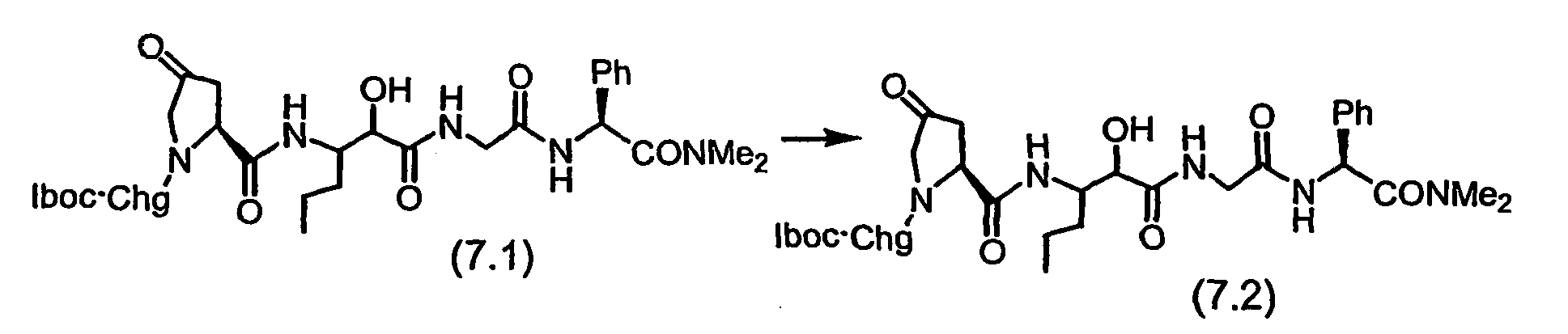
- Compound (7.1) was reacted in essentially the same manner as Preparative Example 7, Step A, to afford Compound (7.2), C36H52N6O9 (712.83), mass spec. (FAB) M+1 = 713.5.
-

- Compound (7.2) from Step B above, was reacted in essentially the same manner as Preparative Example 8, Step B, with 1,4-butanedithiol, to obtain the title compound (7.3), C40H60N6O8S2 (817.07), mass spec. (FAB) M+1 = 817.5.
- Using the above-noted procedures, the compounds in the attached Table 2 were prepared. As a general note to all the Tables that are attached hereto as well as to the Examples and Schemes in this specification, any open-ended nitrogen atom with unfulfilled valence in the chemical structures in the Examples and Tables refers to NH, or in the case of a terminal nitrogen, -NH2. Similarly, any open-ended oxygen atom with unfulfilled valence in the chemical structures in the Examples and Tables refers to -OH.
- The synthesis was done in a reaction vessel which was constructed from a polypropylene syringe cartridge fitted with a polypropylene frit at the bottom. The Fmoc-protected amino acids were coupled under standard solid-phase techniques. Each reaction vessel was loaded with 100 mg of the starting Fmoc-Sieber resin (approximately 0.03 mmol). The resin was washed with 2 mL portions of DMF (2 times). The Fmoc protecting group was removed by treatment with 2 mL of a 20 % v/v solution of piperidine in DMF for 20 min. The resin was washed with 2 mL portions of DMF (4 times). The coupling was done in DMF (2 mL), using 0.1 mmol of Fmoc-amino acid, 0.1 mmol of HATU [O-(7-azabenzotriazol-1-yl)-1,1,3,3-tetramethyluronium hexafluorophosphate ] and 0.2 mmol of DIPEA (N,N-diisopropylethylamine). After shaking for 2 h, the reaction vessel was drained and the resin was washed with 2 mL portions of DMF (4 times). The coupling cycle was repeated with the next Fmoc-amino acid or capping group.
- The synthesis was conducted in a reaction vessel which was constructed from a polypropylene syringe cartridge fitted with a polypropylene frit at the bottom. Resin-bound hydroxy compound (approximately 0.03 mmol) was treated with a solution of 0.12 mmol of Dess-Martin periodinane and 0.12 mmol of t-BuOH in 2 mL of DCM for 4 h. The resin was washed with 2 mL portions of a 20 % v/v solution of iPrOH in DCM, THF, a 50 % v/v solution of THF in water (4 times), THF (4 times) and DCM (4 times).
-

- To a solution of potassium cyanide (1.465 g, 22.5 mmol) and ammonium carbonate (5.045 g, 52.5 mmol) in water (15 mL) was added a solution of 2,3-dimethoxybenzaldehye 901A (2.5 g, 15 mmol) in ethanol (15 mL). The reaction mixture was heated at 40 °C for 24 h. The volume of the solution was reduced to 10 mL by evaporating under reduced pressure. Concentrated hydrochloric acid (15 mL) was added and compound 901 B was obtained as a white precipitate. Compound 901B was isolated by filtration (2.2 g, 9.3 mmol). Compound 901 B was dissolved in 10 % w/w aqueous sodium hydroxide solution (15 mL) and the resulting solution was heated under reflux for 24 h. Concentrated hydrochloric acid was added and the pH was adjusted to neutral (pH 7). The resulting solution containing compound 901C was evaporated under reduced pressure. The residue was dissolved in 5 % w/w aqueous sodium bicarbonate solution (150 mL). The solution was cooled to 0 °C in an ice bath and 1,4-dioxane (30 mL) and a solution of 9-fluorenylmethyl succinimidyl carbonate (2.7 g, 8 mmol) in 1,4-dioxane (30 mL) was added at 0 °C. The reaction mixture was allowed to warm to room temperature and was stirred at room temperature for 24 h. 1,4-dioxane was evaporated under reduced pressure. The aqueous solution was washed with diethyl ether. Concentrated hydrochloric acid was added and the pH was adjusted to acidic (pH 1). Ethyl acetate was added the organic layer was washed with water and brine. The organic layer was dried over anhydrous sodium sulfate. The solvent was evaporated under reduced pressure to afford the desired compound 901 as a white foamy solid (3.44 g, 7.9 mmol). MS (LCMS-Electrospray) 434.1 MH+.
-

- To a solution of N-Fmoc-phenylalanine 801A (5 g, 12.9 mmol) in anhydrous DCM (22 mL) cooled to -30°C in a dry ice-acetone bath was added N-methylpyrrolidine (1.96 mL, 16.1 mmol) and methyl chloroformate (1.2 mL, 15.5 mmol) sequentially. The reaction mixture was stirred at -30°C for 1 h and a solution of N,O-dimethylhydroxylamine hydrochloride (1.51 g, 15.5 mol) and N-methylpyrrolidine (1.96 mL, 16.1 mmol) in anhydrous DCM (8 mL) was added. The reaction mixture was allowed to warm to room temperature and was stirred at room temperature overnight. Toluene was added and the organic layer was washed with dilute hydrochloric acid, aqueous sodium bicarbonate solution and brine. The organic layer was dried over anhydrous sodium sulfate. The solvent was evaporated under reduced pressure to afforded compound 801B (4 g, 9.29 mmol).
- To a solution of Red-Al (6.28 mL, 21.4 mmol) in anhydrous toluene (8 mL) cooled to -20°C in a dry ice-acetone bath was added a solution of compound 801B (4 g, 9.29 mmol) in anhydrous toluene (12 mL). The reaction mixture was stirred at 20 °C for 1.5 h. The organic layer was washed with dilute hydrochloric acid, aqueous sodium bicarbonate solution and brine. The organic layer was dried over anhydrous sodium sulfate. The solvent was evaporated under reduced pressure and the crude product 801C was used in the next reaction without further purification.
- To a solution of compound 801C (approx. 9.29 mmol) in hexane (15 mL) was added a solution of potassium cyanide (24 mg, 0.37 mmol) and tetrabutylammonium iodide (34 mg, 0.092 mmol) in water (4 mL) and acetone cyanohydrin (1.27 mL, 13.9 mmol) sequentially. The reaction mixture was stirred at room temperature for 24 h. Ethyl acetate was added and the organic layer was washed with water and brine. The organic layer was dried over anhydrous sodium sulfate. The solvent was evaporated under reduced pressure to afford compound 801D (2.4 g, 6.03 mmol).
- To a solution of compound 801D (2.4 g, 6.03 mmol) in 1,4-dioxane (11 mL) was added concentrated hydrochloric acid (11 mL). The reaction mixture was heated at 80 °C for 3 h. Ethyl acetate (25 mL) and water (25 mL) was added. The organic layer was washed with brine and dried over anhydrous sodium sulfate. The solvent was evaporated under reduced pressure to afford the desired compound 801 as a white foamy solid (2 g, 4.8 mmol). MS (LCMS-Electrospray) 418.1 MH+.

-

- Resin-bound compound 301B, 301C, 301D, 301E, 301F and 301G were prepared according to the general procedure for solid-phase coupling reactions started with 100 mg of Fmoc-Sieber resin (0.03 mmol). Resin-bound compound 301G was oxidized to resin-bound compound 301H according to the general procedure for solid-phase Dess-Martin oxidation. The resin-bound compound 301H was treated with 4 mL of a 2 % v/v solution of TFA in DCM for 5 min. The filtrate was added to 1 mL of AcOH and the solution was concentrated by vacuum centrifugation to provide compound 301J (0.0069 g, 29 % yield). MS (LCMS-Electrospray) 771.2 MH+.
- Using the solid phase synthesis techniques detailed above, and the following moieties for the various functionalities in the compound of Formula 1, the compounds in Table 3 were prepared:
- -W-:

- Y-W-:


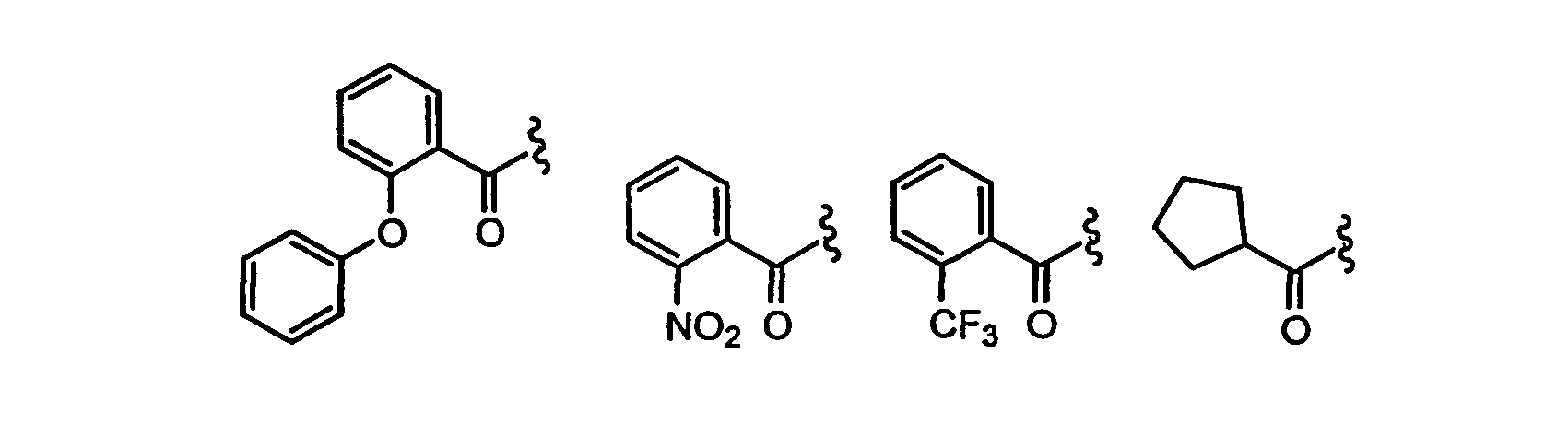


- -R4:

- -Z-:

- -R3:


- -R2:

- -R1:

- -R5:

- -R7:

- -R9:

- -R10 :

- -R1':

- -R2':


- Table 3. Compounds prepared by Solid Phase Synthesis
STRUCTURE Ki* CLASS 
C 
C 
C 
C 
C 
C 
C 
C 
C 
B 
B 
C 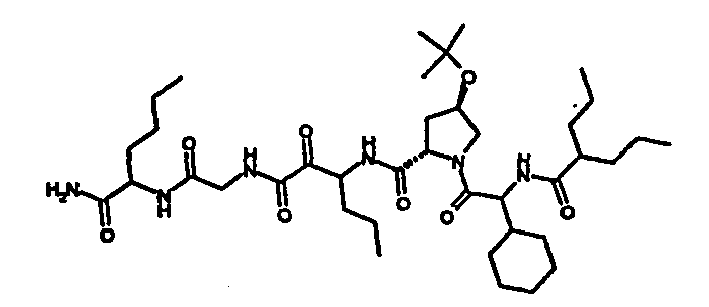
B 
C 
B 
B 
C 
C 
C 
C 
C 
C 
C 
C 
C 
C 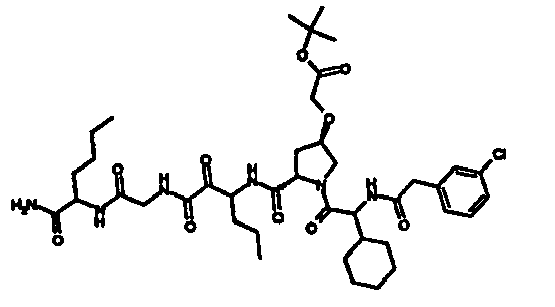
C 
C 
C 
C 
C 
C 
C 
C 
C 
C 
C 
C 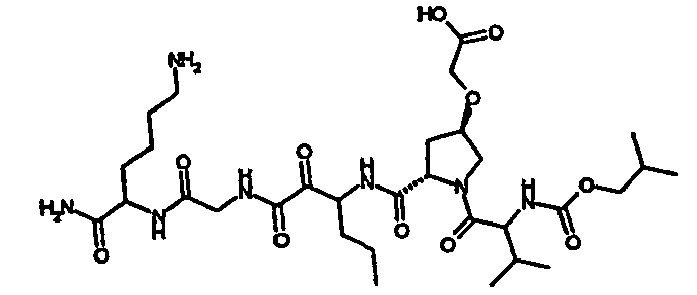
C 
C 
C 
B 
C 
B 
C 
C 
C 
C 
C 
C 
C 
C 
C 
C 
C 
C 
C 
C 
C 
C 
C 
C 
C 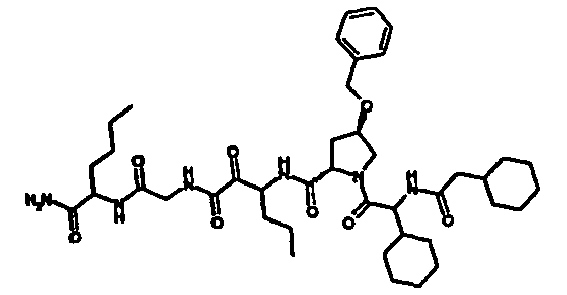
B 
B 
B 
C 
C 
C 
C 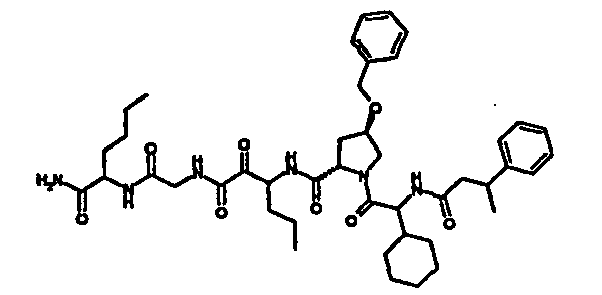
C 
C 
C 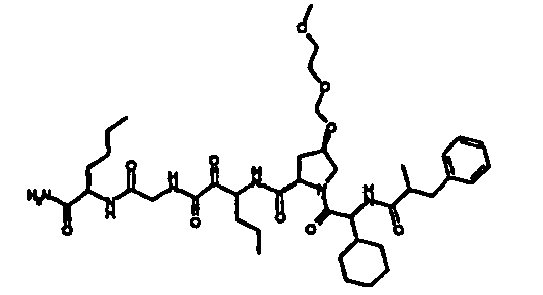
C 
C 
B 
C 
B 
C 
B 
B 
C 
A 
A 
A 
B 
A 
B 
B 
B 
C 
B 
B 
B 
B 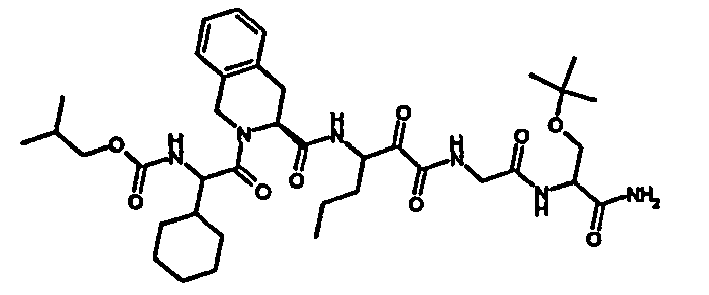
C 
B 
B 
B 
B 
B 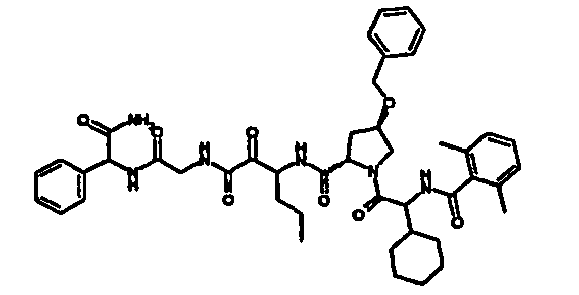
B 
C 
C 
A 
B 
B 
B 
B 
B 
B 
B 
C 
B 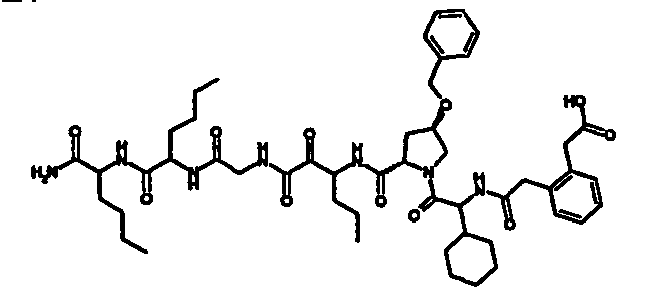
B 
B 
B 
B 
A 
B 
B 
B 
B 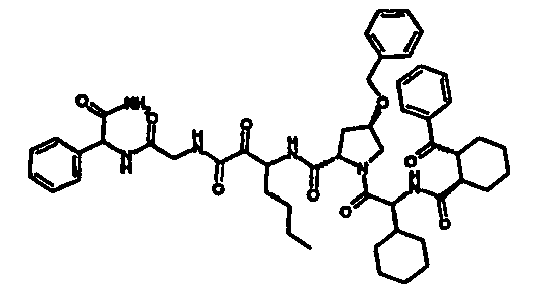
C 
B 
B 
B 
B 
B 
B 
C 
C 
C 
A 
B 
A 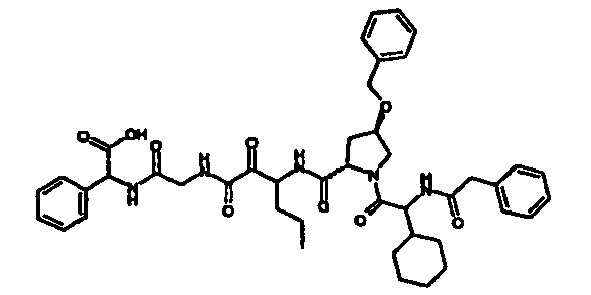
A 
B 
A 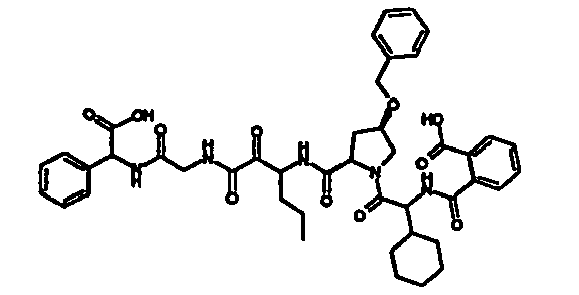
A 
A 
A 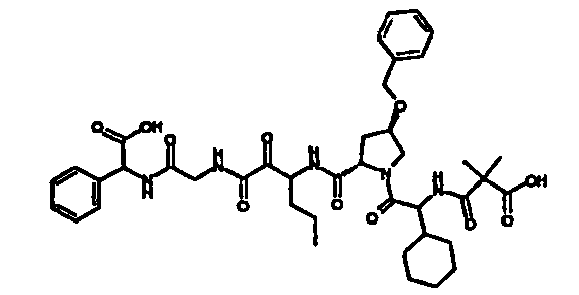
B 
B 
A 
A 
B 
B 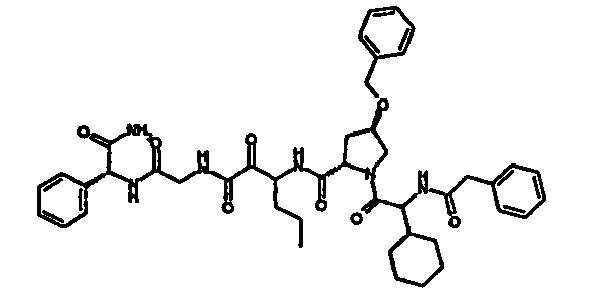
C 
B 
B 
B 
B 
C 
C 
C 
C 
B 
B 
B 
B 
A 
B 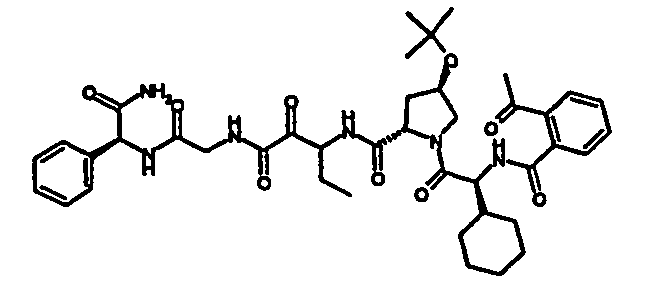
C 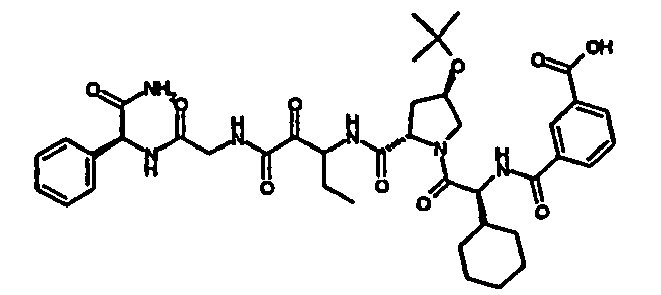
C 
B 
B 
B 
B 
A 
A 
A 
A 
B 
C 
B 
A 
C 
A 
C 
C 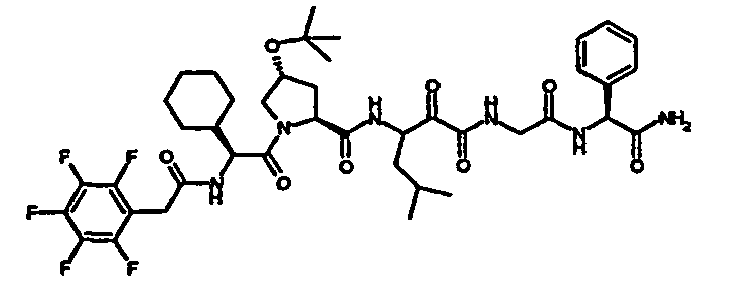
C 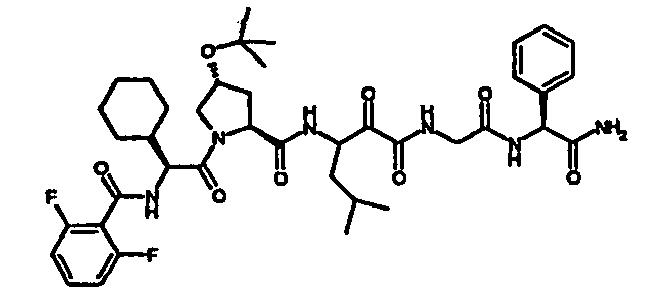
C 
C 
C 
C 
C 
C 
C 
C 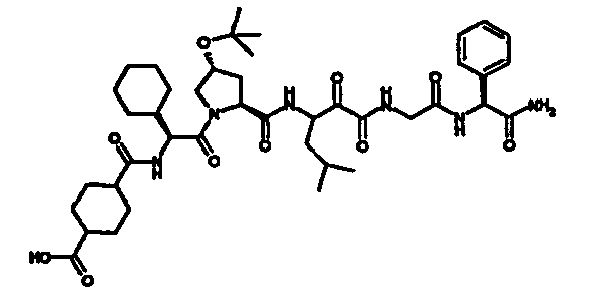
C 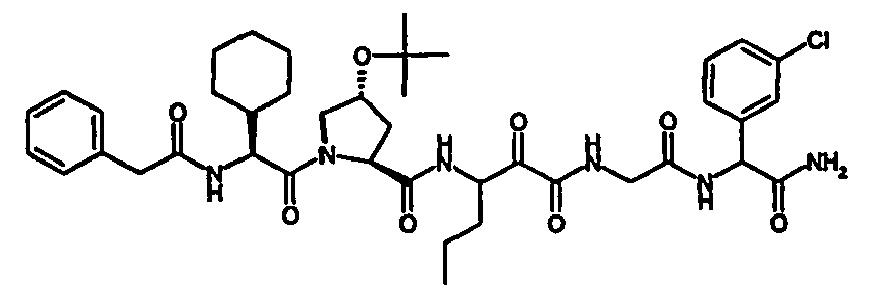
B 
B 
B 
B 
C 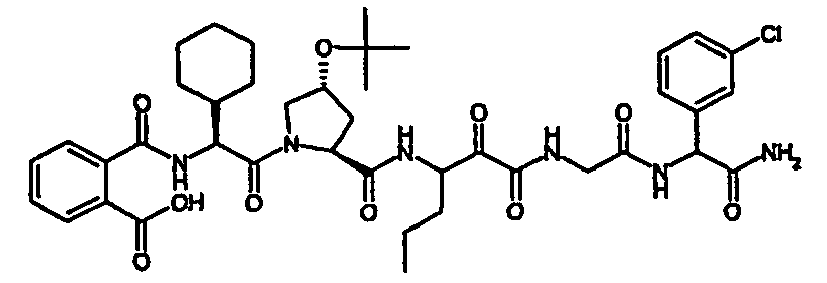
B 
A 
B 
B 
B 
B 
B 
B 
B 
B 
B 
B 
B 
A 
B 
C 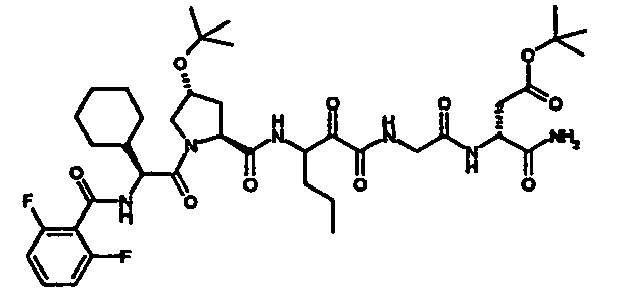
C 
C 
C 
C 
B 
C 
C 
B 
C 
B 
B 
B 
B 
B 
B 
B 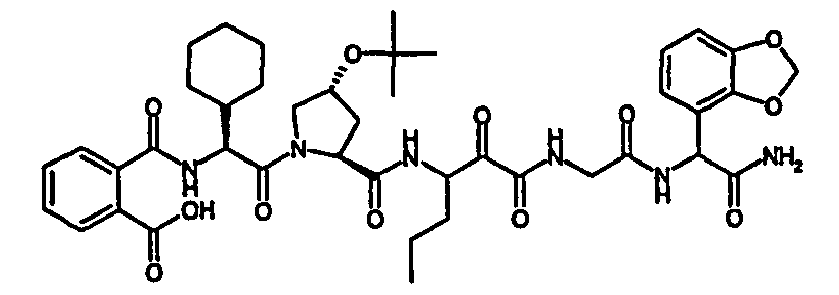
B 
B 
B 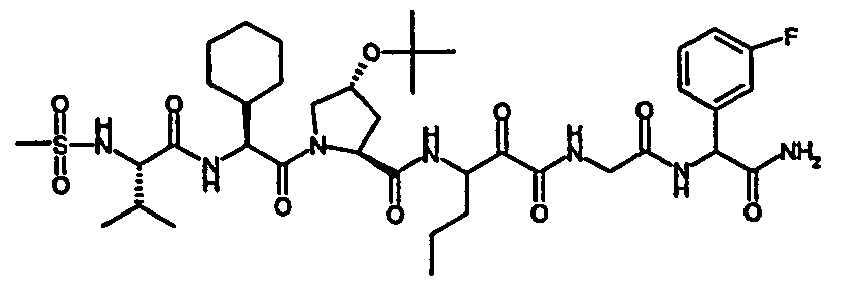
B 
B 
B 
B 
B 
B 
B 
B 
B 
B 
B 
B 
B 
B 
B 
C 
B 
B 
C 
C 
C 
C 
B 
C 
C 
C 
C 
C 
C 
C 
C 
C 
C 
C 
C 
C 
B 
B 
B 
B 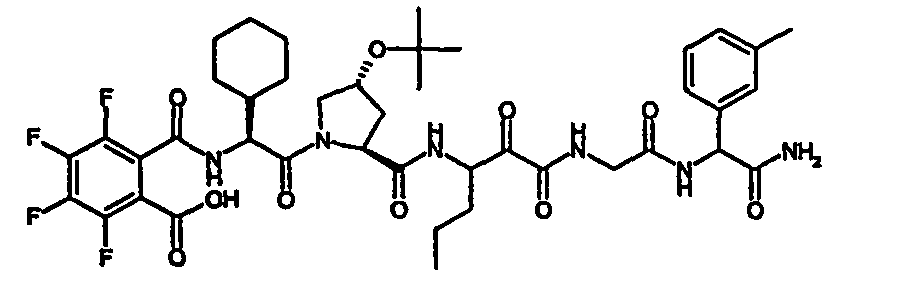
B 
B 
B 
B 
B 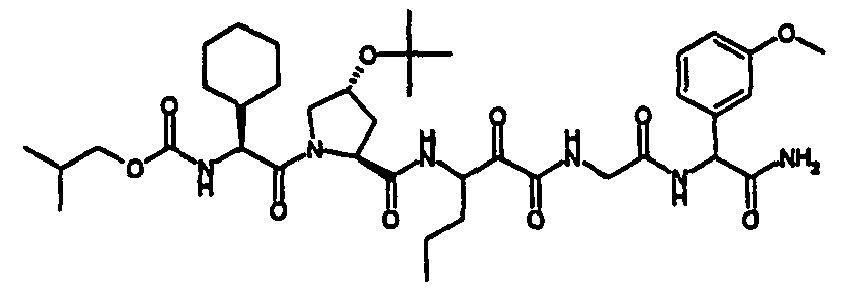
B 
C 
B 
B 
C 
B 
C 
B 
B 
B 
B 
C 
C 
C 
C 
C 
C 
B 
C 
C 
C 
B 
C 
B 
C 
C 
C 
C 
B 
B 
C 
C 
C 
C - Additional compounds that were prepared and their activity (Ki*) ranges are given in the attached Tables 4 and 5. The procedure used to prepare the compounds in Tables 4 and 5 is outlined below.
-

-

- To a solution of tert-butyl N-tert-butoxycarbonyl-pyroglutamate (11.5 g, 40 mmol) in THF (200 mL) stirring at -78 °C, was added a 1 M solution of lithium hexamethyldisilazide in THF (42 mL, 42 mmol) dropwise over 5 minutes. After 30 minutes, methyliodide (3.11 mL, 50 mmol) was added. After an additional 2 hours at -78 °C, the cooling bath was removed and 50% saturated aqueous ammonium chloride (200 mL) was added. The solution was stirred for 20 minutes, then extracted with ether (3 x 200 mL). The combined organic layers were washed with brine (200 mL), dried (Na2SO4), filtered and concentrated. The residue was chromatographed with 1:1 ethylacetate/hexanes to give Boc-PyroGlu(4-methyl)-OtBu (10.6 grams, 35.4 mmol, 88%) as a mixture of isomers (2:1 cis to trans). Step 2. Synthesis of tert-Butyl N-tert-butoxycarbonyl-4,4-dimethyl-L-pyroglutamate (Boc-PyroGlu(4,4-dimethyl)-OtBu):

- To a solution of tert-butyl N-tert-butoxycarbonyl-4-methyl-L-pyroglutamate (1.2 g, 4.0 mmol) in tetrahydrofuran (20 mL) stirring at -78 °C, was added a 1 M solution of lithium hexamethyldisilazide in tetrahydrofuran (4.4 mL, 4.4 mmol) dropwise over 5 minutes. After 30 minutes, methyliodide (0.33 mL, 5.2 mmol) was added. After an additional 3 hours at -78 °C, the cooling bath was removed and 50% saturated aqueous ammonium chloride (40 mL) was added. The solution was stirred for 20 minutes, then extracted with ether (2 x 50 mL). The combined organic layers were washed with water(2 x 25 mL), saturated sodium bicarbonate (2 x 25 mL), brine (50 mL), dried (Na2SO4), filtered and concentrated to give Boc-PyroGlu(4,4-dimethyl)-OtBu (0.673 g, 54%).
-

- Modification of known procedure: Pedregal, C.; Ezquerra, J.; Escribano, A.; Carreno, M. C.; Garcia Ruano, J. L. Tetrahedron Letters 1994, 35(13), 2053-2056).
- To a solution of tert-butyl N-tert-butoxycarbonyl-4,4-dimethylpyroglutamate (2.0 mmol) in tetrahydrofuran (5 mL) stirring at -78 °C, was added a 1 M solution of lithium triethylborohydride in tetrahydrofuran (2.4 mL, 2.4 mmol) dropwise over 5 minutes. After 30 minutes, the cooling bath was removed and saturated aqueous sodium bicarbonate (5 mL) was added. The reaction mixture was immersed in an ice/water bath and 30% aqueous hydrogen peroxide (10 drops) was added. The solution was stirred for 20 minutes at 0 °C, then the reaction mixture was concentrated in vacuo to remove the tetrahydrofuran. The aqueous solution was diluted with water (10 mL) and extracted with dichloromethane (3 x 40 mL). The organic layers were dried (Na2SO4), filtered and concentrated. The residue was dissolved in dichloromethane (20 mL) and triethylsilane (310 µL, 2.0 mmol), then cooled to -78 °C and boron trifluoride diethyletherate (270 µL, 2.13 mmol) was added dropwise. Stirring was continued for 30 minutes, at which time additional triethylsilane (310 µL, 2.0 mmol) and boron trifluoride diethyletherate (270 µL, 2.13 mmol) were added. After stirring at -78 °C for an additional two hours, the cooling bath was removed and saturated aqueous sodium bicarbonate (4 mL) was added. After 5 minutes the mixture was extracted with dichloromethane (3 x 40 mL). The organic layers were dried (Na2SO4), filtered and concentrated to give Boc-Pro(4,4-dimethyl)-OtBu.
-

- A solution of tert-butyl N-tert-butoxycarbonyl-4,4-dimethylproline in dichloromethane (5 mL) and trifluoroacetic (5 mL) was stirred at room temperature for five hours. The solution was concentrated, dried under high vacuum and taken to the next step without further purification.
-

- To a solution of 4,4-dimethylproline trifluoroacetic salt (1.5 mmol) in dioxane (7 mL), acetonitrile (12 mL) and diisopropylethylamine (700 µL, 4 mmol) was added a solution of di-tert-butyl-dicarbonate (475 mg, 2.18 mmol) in acetonitrile (5 mL). After stirring for 12 hours at room temperature the solution was concentrated in vacuo, dissolved in saturated aqueous sodium bicarbonate (50 mL) and washed with diethyl ether (3 x 40 mL). The aqueous layer was acidified to pH=3 with citric acid, then extracted with dichloromethane (3 x 40 mL). The combined organic layers were dried over sodium sulfate filtered and concentrated.
-

- To a solution of Boc-Pro(4,4-diMe)-OH (0.5 g, 2.06 mmol) in anhydrous methanol (8 ml) was added dropwise thionylchloride (448 I, 6.18 mmol) and the reaction was stirred for six hours at room temperature. The reaction mixture was concentrated to an amorphous solid (377 mg, 95%).
-

- Compounds where R group is allyl and benzyl were synthesized following steps 1-4 below:
-

- To a solution of tert-butyl N-tert-butoxycarbonyl-4-methyl-L-pyroglutamate (10.2 g, mmol) (see Example I, step 1) in tetrahydrofuran (170 mL) stirring at -78 °C, was added a 1 M solution of lithium hexamethyldisilazide in tetrahydrofuran (37.5 mL, 37.5 mmol) dropwise over 5 minutes. After 40 minutes, alkyl halide (61.4 mmol) was added. After an additional 3 hours at -78 °C, the cooling bath was removed and 50% saturated aqueous ammonium chloride (200 mL) was added. The solution was stirred for 20 minutes, then extracted with ether (2 x 200 mL). The combined organic layers were diluted with hexanes (150 mL) and washed with saturated sodium bicarbonate (100 mL), water (2 x 100 mL) and brine (100 mL), dried (Na2SO4), filtered and concentrated. The residue was flash chromatographed using 20% ethylacetate in hexanes to give the pure tert-Butyl N-tert-butoxycarbonyl-4-alkyl-4-methyl-L-pyroglutamate.
-

- Modification of known procedure: Pedregal, C.; Ezquerra, J.; Escribano, A.; Carreno, M. C.; Garcia Ruano, J. L. Tetrahedron Letters (1994) 35(13), 2053-2056).
- To a solution of tert-butyl N-tert-butoxycarbonyl-4-alkyl-4-methylpyroglutamate (16.6 mmol) in tetrahydrofuran (40 mL) stirring at -78 °C, was added a 1 M solution of lithium triethylborohydride in tetrahydrofuran (20 mL, 20 mmol) dropwise over 10 minutes. After 120 minutes, the cooling bath was allowed to warm to -25 °C at which point saturated aqueous sodium bicarbonate (40 mL) was added. The reaction mixture was immersed in an ice/water bath and 30% aqueous hydrogen peroxide (4 mL) was added. The solution was stirred for 10 minutes at 0 °C, then the reaction mixture was concentrated in vacuo to remove the tetrahydrofuran. The aqueous solution was diluted with water (300 mL) and extracted with dichloromethane (3 x 200 mL). The organic layers were dried (sodium sulfate), filtered and concentrated. The residue was dissolved in dichloromethane (100 mL) and triethylsilane (2.6 mL, mmol), then cooled to -78 °C and boron trifluoride diethyletherate (2.2 mL, mmol) was added dropwise. Stirring was continued for 1 hour, at which time additional triethylsilane (2.6 mL, mmol) and boron trifluoride diethyletherate (2.2 mL, mmol) were added. After stirring at -78 °C for an additional 4 hours, the cooling bath was removed and saturated aqueous sodium bicarbonate (30 mL) and water (150 mL) were added. After 5 minutes the mixture was extracted with dichloromethane (3 x 200 mL). The organic layers were dried (Na2SO4), filtered and concentrated.
-

- A solution of tert-butyl N-tert-butoxycarbonyl-4-alkyl-4-methylproline in dichloromethane (5 mL) and trifluoroacetic (5 mL) was stirred at room temperature for 5 hours. Toluene was added and the solution was concentrated and then dried under high vacuum.
-

- To a solution of 4-alkyl-4-methylproline trifluoroacetic salt (1.5 mmol) in dioxane (7 mL), acetonitrile (12 mL) and diisopropylethylamine (700 µL, 4 mmol) was added a solution of di-tert-butyl-dicarbonate (475 mg, 2.18 mmol) in acetonitrile(5 mL). After stirring for 12 hours at room temperature the solution was concentrated in vacuo, dissolved in saturated aqueous sodium bicarbonate (50 mL) and washed with diethyl ether (3 x 40 mL). The aqueous layer was acidified to pH=3 with 1N hydrochloric acid, then extracted with dichloromethane (3 x 40 mL). The combined organic layers were dried (Na2SO4), filtered and concentrated. The residue was purified by flash chromatography using 1:1 ethylacetate/hexanes with 1 % acetic acid.
-

- A solution of N-tertbutoxycarbonyl-4-allyl-4-methylproline (400 mg, 1.48 mmol) (see Example II Step 4) and 10% Pd on carbon (400 mg) in methanol (20 mL) was hydrogenated at 50 psi for 4 hours. The mixture was filtered and concentrated.
-

- A solution of the commercially available Boc-4-phenylproline (750 mg) and 5% Rh on carbon (750 mg) in methanol (15 mL) was hydrogenated at 50 psi for 24 hours. The mixture was filtered and concentrated to give 730 mg of product.
-

-

- To a cooled (-78 °C) solution of the commercially available N-Bo c-tert-butyl pyroglutamate (10 g, 35.1 mmol) in THF (175 ml) was added lithium hexamethyldisilazide (36.8 mL, 36.8 mmol) over five minutes. Stirring continued for thirty minutes. A solution of allyl bromide (6.1 ml, 70.2 mmol) in THF (39 mL) was added dropwise to the first solution. After two hours at -78 °C, the reaction was quenched by the slow addition of saturated ammonium chloride (50 mL) solution. The reaction mixture was then diluted with ethylacetate and the layers were separated. The organic layer dried over sodium sulfate and concentrated. Flash column chromatography carried out in 2:8 ethylacetate: hexanes afforded the product (6 g, 53%). NMR δ ppm (CDCl3): 5.7 (m, 1H), 5.1 (dd, 2H), 4.4 (m, 1H), 2.6 (m, 2H), 2.4 (m, 1H), 1.8-2.2 (m, 1H), 1.45 (s, 9H), 1.4 (s, 9H).
-

- N-Boc-pyroglutamic(4-allyl)-tert-butylester obtained in the Step 1 above (2.68 g, 8.24 mmol) was subjected to a second alkylation with allyl bromide under similar conditions. Flash chromatography in 15:85 ethylacetate: hexanes provided 2.13 g product (71%) as a clear oil.
-

- Part a: To a cooled (-78 °C) solution of Boc-PyroGlu(4,4-diallyl)-tert-butylester (2.13 g, 5.83 mmol) in tetrahydrofuran (14 ml) was added lithium triethylborohydride (1M in tetrahydrofuran, 7.29 ml, 7.29 mmol) over five minutes. After two hours at -78 °C, the reaction was warmed-up to 0 °C and quenched by the slow addition of saturated sodium bicarbonate solution (20 ml) and 30% hydrogen peroxide (20 drops). Stirring continued for 20 minutes. The tetrahydrofuran was removed under reduced pressure and the remaining thick white residue was diluted with water (80 ml) and extracted three times with dichloromethane. The organic layer was dried, filtered and concentrated and taken to the next step without further purification.
- Part b): To the product obtained in part (a) in dichloromethane (14 ml) was added triethylsilane (931 µl, 5.83 mmol) followed by boron trifluoride diethyl etherate (776 µl, 6.12 mmol). After thirty minutes more triethylsilane (931 µl, 5.83 mmol) and boron trifluoride diethyl etherate etherate (776 µl, 6.12 mmol) were added and the reaction was stirred at -78 °C for three hours at which time the reaction was quenched by the slow addition of saturated sodium bicarbonate solution and water. The reaction mixture was extracted with dichloromethane and the organic layer was dried, filtered and concentrated. Flash column chromatography in 15% ethylacetate in hexanes afforded 1.07 colorless oil (57%). NMR δ ppm (CDCl3): 5.7-5.8 (m, 2H), 5.1 (m, 4H), 4.1-4.2 (2 dd's, 1H rotamers), 3.5-3.3 (dd, 1H) and 3.2 (dd, 1H) rotamers, 2.2-2.0 (m, 5H), 1.7(m, 1H), 1.46 (s, 9H), 1.43 (s, 9H).
-
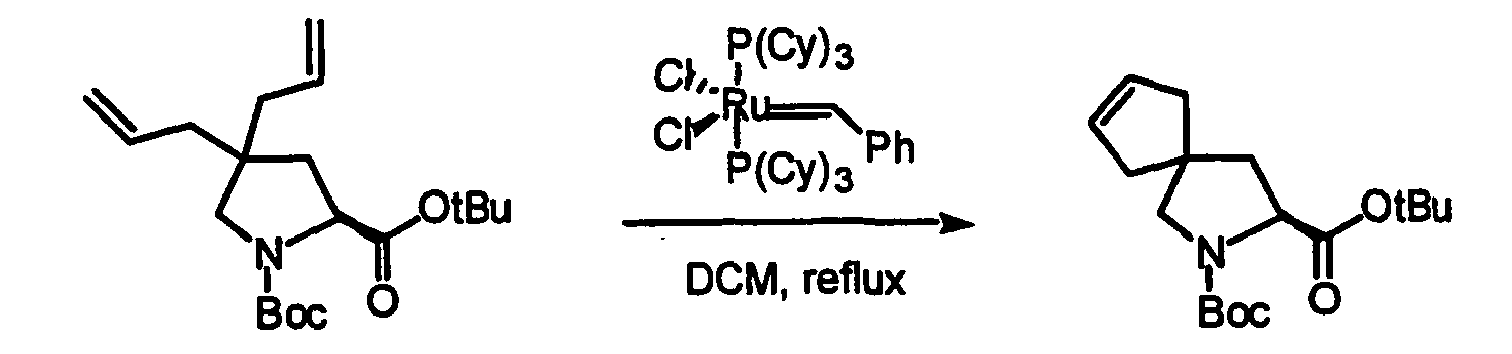
- To Boc-Pro(4,4-diallyl)-tert-butylester (1.07 g, 3.31 mmol) in dichloromethane (66 ml) was added 5% Bis(tricyclohexylphosphin)benzylidene ruthenium IV dichloride (Grubbs catalyst) and the mixture was heated at reflux for 1.5 hours. The reaction mixture was concentrated and the remaining residue was purified by flash column chromatography in 15% ethylacetate in hexanes. A yellow oil was obtained (0.57 g, 53%). NMR δ ppm (CDCl3): 5.56 (bs, 2H), 4.2 and 4.1 (t, 1H, rotamers), 3.2-3.5 (m, 2H), 2.2-2.5 (m, 5H), 1.9 (dd, 1H) 1.47 and 1.46 (2 s's, 9H, rotamers), 1.45 and 1.44 (2 s's, 9H, rotamers).
-
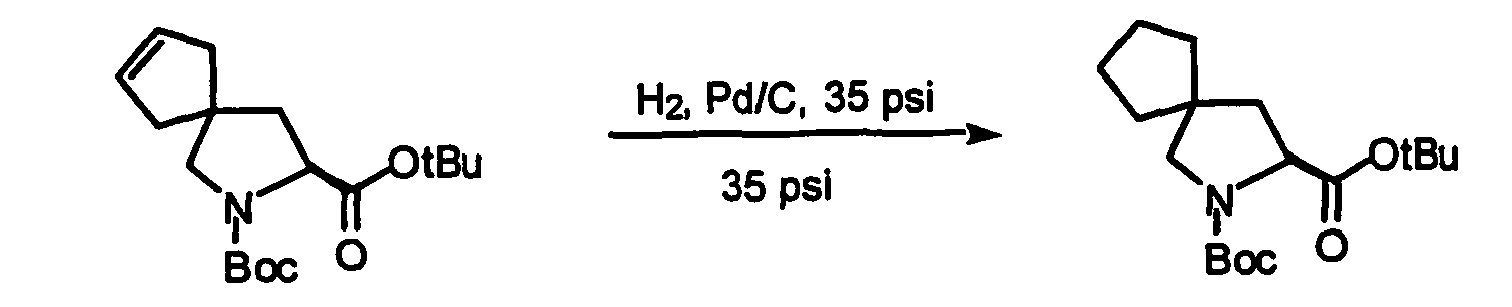
- A solution of Boc-Pro(4-spirocyclopentene)-tert-butylester (1.12 g) in methanol (18 ml), water (4 ml) and acetic acid (4 ml) was placed in the Parr shaker and was hydrogenated for three hours at 35 psi in the presence of 10% palladium on carbon (300 mg). The catalyst was filtered off and the filtrate was concentrated to a colorless oil (1.26 g). NMR δ ppm (CDCl3): 4.1 and 4.2 (t, 1H, rotamers, 3.4 (d, 1H), 3.2 (d, 1H), 2.1 (m, 1H), 1.9 (m, 1H), 1.6-1.7 (m, 10H), 1.5 (3 s's, 18H, rotamers).
-

- The Boc-Pro(4-spirocyclopentane)-tert-butylester (1.26, 3.9 mmol) was treated with dichloromethane (10 ml) and trifluoroacetic acid (15 ml) for three hours. The reaction mixture was concentrated and the yellow oil obtained was dissolved in water (6 ml). Fluorenylmethyl succinyl carbonate (1.45 g, 4.3 mmol) dissolved in dioxane (6 ml) was added portionwise followed by the addition of potassium carbonate (2.16 g, 15.6 mmol). The reaction was stirred for 18 hours and concentrated. The remaining residue was diluted with the saturated sodium bicarbonate solution (10 mL) and washed with diethylether (3 × 10 ml). The aqueous layer was then acidified to pH - 1 with 1 N sodium bisulfate solution and extracted with ethylacetate. The organic layer was dried over sodium sulfate, filtered and concentrated to a beige foam (1.3 g, 100%).
-

-

- A mixture of the commercially available N-t e rt-butoxycarbonyl-trans-4-hydroxy-proline (8.79 g, 38 mmol), potassium carbonate (13.0 g, 94 mmol), benzyl bromide (4.5 ml, 38 mmol) and dimethylformamide (150 mL) was stirred for 18 h. Addition of ethyl acetate (100 mL) was followed by filtration. The white cloudy filtrate was clarified by the addition of 1 M HCl (100 mL). The layers were separated and the aqueous layer was extracted with additional ethyl acetate (2 x 100 mL). The combined organic layers were washed with water (2 x 50 mL), dried (sodium sulfate), filtered and concentrated. Toluene was added to the crude benzyl ester, and the solution was filtered and reconcentrated. Dichloromethane (70 mL) and carbon tetrachloride (70 mL) was added, followed by triphenylphosphine (21.11 g, 80 mmol). The reaction mixture was stirred for 10 h, quenched with ethanol (7 mL) and stirred for 5 more h. The solution was concentrated to approx. 100 ml, then dichloromethane (40 mL) was added, followed by the addition of ether (200 mL) while stirring. The solution was cooled for 4 h, filtered and concentrated to give a yellow-brown oil which was purified by flash chromatography using ether/hexane/dichloromethane 2:2:1 to give the title compound (9.13 g, 26.9 mmol, 71%) as a white solid.
-

- A solution of Nα-tert-butoxycarbonyl-cis-4-chloro-L-proline benzyl ester (9.0 g, 26.5 mmol) and sodium azide (7.36 g, 113 mmol) in dimethylformamide (270 mL) was heated at 75°C for 2 days. Water (100 mL) was added and the reaction mixture was extracted with ethyl acetate (3 x 100 mL). The combined organic layers were washed with water (3 x 50 mL), dried (sodium sulfate), filtered and concentrated. The oil was purified by flash chromatography using ethyl acetate/hexanes 1:1 to give the title compound (8.59 g, 24.8 mmol, 94%).
-

- A mixture of N-α-t-butoxycarbonyl-trans-4-azido-L-proline benzyl ester (8.59 g, 24.8 mmol) and 10% palladium on carbon (900 mg) in ethanol (500 mL) was hydrogenated at 50 psi for 14 h using a Parr hydrogenation apparatus. The mixture was filtered, concentrated, dissolved in methanol (60 mL), refiltered and concentrated to give a colorless oil. The oil was dissolved in water (53 mL) containing sodium carbonate (5.31 g, 50.1 mmol) and a solution of fluorenylmethyl succinyl carbonate (8.37 g, 29.8 mmol) in dioxane (60 mL) was added over 40 min. The reaction mixture was stirred at room temperature for 17 h, then concentrated to remove the dioxane and diluted with water (200 mL). The solution was washed with ether (3 x 100 mL). The pH of the aqueous solution was adjusted to 2 by the addition of citric acid (caution! foaming!) and water (100 mL). The mixture was extracted with dichloromethane (400 mL, 100 mL, 100 mL) and the combined organic layers were dried (sodium sulfate), filtered and concentrated to give the title compound.
-

-

- To a mixture of cis-hydroxy-L-proline (5 g, 38.1 mmol) in benzene (45 mL) and benzyl alcohol (45 mL) was added p-toluenesulfonic acid monohydrate (7.6 g, 40.0 mmol). The reaction mixture was heated at 125°C for 20 h while water (2ml) was removed using a Dean-Stark trap. The solution was filtered while still hot, and then ether (150 ml) was added. The solution was allowed to cool for three h at room temperature, then three h at 4 °C. The resulting solid was collected, washed with ether (100 mL) and dried in vacuo for 1 h to give 13.5 grams of white solid. The solid was dissolved in dioxane (40 mL) and diisopropylethylamine (7.6 mL), and then di-tert-butyl-dicarbonate (10 g, 45.8 mmol) was added over 5 min while using an ice bath to maintain a constant reaction temperature. After 10 h at room temperature the reaction mixture was poured into cold water (200 mL) and extracted with ethyl acetate (3 x 200 mL). The combined organic layers were washed with water (3 x 100 mL) and saturated aqueous sodium chloride (50 mL), dried (sodium sulfate), filtered and concentrated. The crude product was purified by flash chromatography using 40-60% ethyl acetate in hexanes to give the title compound (10.04 g, 31.24 mmol, 82%).
-

- To a solution of Boc-Pro(4-cis-OH)-OBn (8.45 g, 26.3 mmol) in pyridine (65 mL) at 0°C, was added methanesulfonyl chloride (3.4 mL, 44 mmol) dropwise over 7 min. The reaction mixture was allowed to warm to room temperature over 2 h, then stirred overnight. A solution of 10% water in pyridine (20 mL) was added over 15 min and the reaction mixture was concentrated. The residue was dissolved in water and extracted with ethyl acetate (2 x 200 mL). The combined organic layers were washed with water (2 x 50 mL) saturated aqueous sodium bicarbonate (50 mL) and saturated aqueous sodium chloride (50 mL), dried (sodium sulfate), filtered and concentrated. The resulting residue was dissolved in toluene (100 mL) and concentrated to remove traces of pyridine. The residue was dried in vacuo for 30 min to afford the title compound (10.7 g, 102%), then used in the next step without purification.
-

- A solution of Boc-Pro(4-cis-OMs)-OBn (10.7 g, 26.3 mmol) and tetrabutylammonium cyanide (15.0 g, 56 mmol) in dimethylformamide (100 mL) was heated in an oil bath at 55°C for 28 h. After cooling, water (150 mL) was added and the mixture was extracted with ethyl acetate (3 x 200 mL). The combined organic layers were washed with water (3 x 100 mL) and saturated aqueous sodium chloride (100 mL), dried (sodium sulfate), filtered and concentrated. The resulting residue was purified by flash chromatography (1:1 ether/hexanes) and then recrystallized from ethyl acetate/hexanes to provide the title compound (2.40 g, 7.26 mmol, 28%).
-

- A mixture of the compound of Step 3 above (2.31 g, 7 mmol), water (10 mL), methanol (85 mL) and 10% palladium on carbon (700 mg) was hydrogenated at 50 psi for 11 h using a Parr hydrogenation apparatus. The mixture was filtered and concentrated. Water (15 mL) and sodium carbonate (1.5 g, 14.2 mmol) was added to the residue. A solution of fluorenylmethyl succinyl carbonate (2.36 g, 7.0 mmol) in dioxane (17 mL) was added over 5 min and stirring was continued for 28 h at room temperature. The reaction was concentrated in vacuo to a 15 mL volume, and water (100 mL) was added. The solution was washed with ether (3 x 75 mL). The pH of the aqueous solution was adjusted to 2 by the addition of citric acid (approx. 20 g, caution! foaming!) and water (100 mL). The mixture was extracted with dichloromethane (4 x 100 mL), and the combined organic layers were dried (sodium sulfate), filtered and concentrated. The crude product contained a major impurity which necessitated a three step purification. The crude product was dissolved in dichloromethane (50 mL) and trifluoroacetic acid (50 mL) and stirred for 5 h before being concentrated. The residue was purified by preparatory reverse-phase HPLC. The pure 4-(N-fluorenylmethyloxycarbonyl aminomethyl)proline trifluoroacetate salt (1.887 g, 3.93 mmol) was dissolved in dioxane (10 mL), acetonitrile (20 mL) and diisopropylethylamine (1.4 mL, 8 mmol). To the reaction mixture was added a solution of di-tert-butyldicarbonate (1.1g, 5 mmol) in dioxane (5 mL). After stirring for 18 h, the pH of the solution was adjusted to 2 by the addition of citric acid (caution: foaming!) and water (100 mL). The mixture was extracted with ethyl acetate (3 x 150 mL) and the combined organic layers were washed with saturated aqueous sodium chloride (100 mL), dried (sodium sulfate), filtered and concentrated. The crude product was dissolved in saturated aqueous sodium bicarbonate(100 mL) and washed with ether (3 x 75 mL). The aqueous layer was adjusted to pH = 3 by the addition of citric acid, then extracted with dichloromethane (4 x 100 mL). The combined organic layers were dried (sodium sulfate), filtered and concentrated to the title compound (1.373 g, 2.94 mmol, 42%).
-

- Step 1. Cyclopropanation reaction ( Tetrahedron Lett. 1993, 34 ( 16 ), 2691 and 2695 ):

- To a stirring solution of isopropyltriphenyl- phosphonium iodide (4.14 g, 9.58 mmol) in tetrahydrofuran (60 mL) at 0 °C, was added n-butyllithium (1.6 M in hexanes, 5.64 mL, 9.02 mmol) over 5 min. After 30 min, a solution of enamide ((5R, 7S)-5-phenyl-5,6,7,7a-tetrahydro-6-oxapyrrolizin-3-one) (1.206 grams, 6.0 mmol) (see J. Org. Chem. 1999, 64(2), 547 for the synthesis of the enamide starting material) in tetrahydrofuran (40 mL) was added over 10 min. After an additional 10 min, the cooling bath was removed and the reaction mixture was stirred at room temperature for 4 hours. The reaction was poured into water (400 mL) and extracted with diethyl ether (400 mL) and ethylacetate (2 x 400 mL). The combined organic extracts were dried with sodium sulfate, filtered and concentrated to give the desired crude product. The residue was purified by flash chromatography eluting with 3:5:2 ethylacetate/hexanes/methylene chloride to give pure cyclopropanated product (750 mg, 3.08 mmol, 51%).
- Step 2. Synthesis of 3,4-isopropylideneprolinol P[3,4-(diMe-cyclopropyl)]-alcohol) ( J. Org. Chem. (1999) 64(2), 330 ):

- A mixture of the product obtained in step 1 above (1.23 grams, 5.06 mmol) and lithium aluminum hydride (1.0 M in THF, 15 mL, 15 mmol) was heated at reflux for 5 hours. After cooling to 0 °C, the remaining aluminum hydride was carefully quenched by the dropwise addition of saturated aqueous sodium sulfate (1.5 mL) over 15 min. The mixture was diluted with ethylacetate (40 mL) and then filtered through celite. The filtrate was dried with sodium sulfate, filtered and concentrated to give crude N-benzyl aminoalcohol (1.25 grams), which was carried on to the next step without further purification. A solution of crude N-benzyl aminoalcohol (1.25 grams, 5.06 mmol) in 1:1 acetic acid/ethylacetate (30 mL) with 10% Pd/C (1 gram) was hydrogenated at 50 psi for 16 hours using a Parr hydrogenation apparatus. The reaction mixture was filtered to remove the carbon-based catalyst and the filtrate was concentrated. The residue was dissolved in water (30 mL) and the pH was adjusted to 13 with 50% NaOH. The mixture was extracted with ether (3 x 60 mL). The combined extract was dried with sodium sulfate, filtered and concentrated to give crude aminoalcohol (485 mg, 3.43 mmol). This material was taken to the next step without further purification.
-

-

- To a solution of the commercially available cyclohexylglycine hydrochloride (15 g, 77.4 mmol) in acetonitrile (320 ml) and water (320 ml) was added potassium carbonate. Isobutylchloroformate (11.1 ml, 85.1 mmol) was added to the clear solution over 15 minutes and the reaction was stirred for 17 hours. The acetonitrile was removed under reduced pressure and the remaining aqueous layer was extracted twice with ether (100 ml). The aqueous layer was then acidified to pH 1 with 6N hydrochloric acid and extracted with dichloromethane (3 x 300 ml). The organic layer was dried over sodium sulfate, filtered and concentrated to yield 18.64 g (94%) product as a white solid.
-

- To a solution of iBoc-G(Chx)-OH (890 mg, 3.45 mmol) in acetonitrile (20 mL) was added HATU (1.33 g, 3.5 mmol), HOAt (476 mg, 3.5 grams) and then diisopropylethylamine (2.5 mL, 14 mmol). After a 2 minutes, 3,4-isopropylideneprolinol (485 mg, 3.43 mmol) was added and the reaction mixture was stirred overnight. Addition of saturated aqueous sodium bicarbonate was followed by extraction with ether and ethylacetate. The combined organic layers were dried, filtered and concentrated. The residue was purified by flash chromatography eluting with 1:1 ethylacetate/hexanes to give pure dipeptide alcohol iBoc-G(Chx)-3,4-isopropylideneprolinol (870 mg, 2.3 mmol, 67%)
- To a solution of dipeptide alcohol iBoc-G(Chx)-3,4-isopropylideneprolinol (100 mg, 0.26 mmol) in acetone (2 mL) stirring at 0 °C was added Jones reagent (300 µL) dropwise over 5 min. [Jones Reagent: Prepared from chromium trioxide (13.4 g) and concentrated sulfuric acid (11.5 mL) diluted with water to a total volume of 50 mL.] After stirring at 0 °C for 3 hours, isopropanol (500 µL) was added and stirring continued for an additional 10 minutes. The reaction mixture was diluted with water (20 mL) and extracted with ethylacetate (3 x 70 mL). The combined organic layers were dried, filtered and concentrated to give the dipeptide iBoc-G(Chx)-3,4-isopropylideneproline (100 mg, 0.25 mmol, 96%).
-
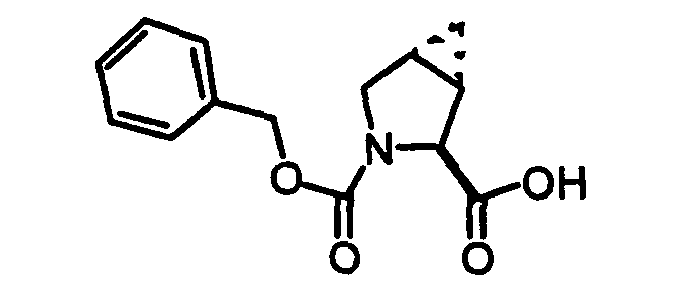
-
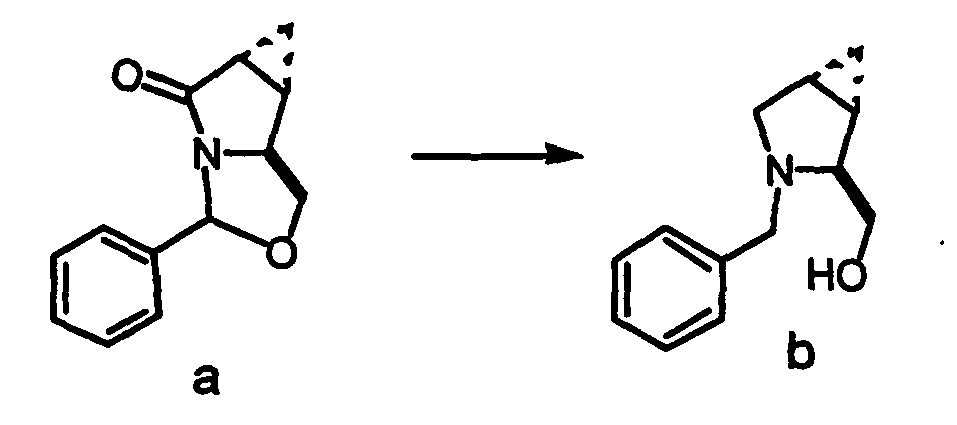
- A mixture of the benzylidene starting material (J. Org. Chem. 1999, 64(2),547) (4.6 grams, 21.4 mmol) and lithium aluminum hydride (1.0 M in THF, 64 mL, 64 mmol) was heated at reflux for 5 hours. After cooling to 0 °C, the remaining aluminum hydride was carefully quenched by the dropwise addition of saturated aqueous sodium sulfate (5 mL) over 15 min. The mixture was diluted with ethylacetate (200 mL) and then filtered through celite. The filtrate was dried with sodium sulfate, filtered and concentrated to give crude N-benzyl aminoalcohol (3.45 grams), which was carried on to the next step without further purification.
-

- A solution of crude N-benzyl aminoalcohol (3 grams, 14.76 mmol) in methanol (120 mL) and concentrated HCl (1.5 mL) with 10% Pd/C (300 mg) was hydrogenated at 50 psi for 16 hours. The reaction mixture was filtered to remove the carbon-based catalyst and the filtrate was concentrated. The residue was dissolved in water/dioxane (100 mL) and diisopropylethylamine (3.2 mL) was added. Benzyl chloroformate (2.76 mL, 16.2 mmol) was added and the reaction was stirred overnight. The reaction mixture was concentrated, dissolved in 1 M HCl (100 mL) and extracted with ethylacetate (3 x 200 mL). The combined organic layers were dried with magnesium sulfate, filtered and concentrated. The residue was purified by flash chromatography using 1:3 ethylacetate/hexanes to give the N-Cbz-3,4-methanoprolinol (2.4 g)
-

- To a solution of N-Cbz-3,4-methanoprolinol (2.2 g, 8.90 mmol) in acetone (68 mL) stirring at 0 °C, was added Jones reagent (6.6 mL) dropwise over 5 min. [Jones Reagent: Prepared from chromium trioxide (13.4 g) and concentrated sulfuric acid (11.5 mL) diluted with water to a total volume of 50 mL.] After stirring at 0 °C for 3 hours, isopropanol (11 mL) was added and stirring continued for an additional 10 minutes. The reaction mixture was diluted with water (400 mL) and extracted with ethylacetate (3 x 500 mL). The combined organic layers were dried over magnesium sulfate, filtered and concentrated to give N-Cbz-3,4-methanoproline (2.25 g, 96%)
-

- The synthesis of the title compound was carried out according to the published procedure: Marinozzi, M.; Nataini, B.; Ni, M.H.; Costantino, G.; Pellicciari R. IL Farmaco (1995) 50 (5), 327-331.
-

- The synthesis of the title compound was carried out according to the published procedure: Kogami Y., Okawa, K. Bull. Chem. Soc. Jpn. (1987) 60, 2963-2965.
-

- A solution of crude 2-aza-2-(1-phenylethyl)-3S-methoxycarbonyl-[2,2,2]-bicyclooct-5-ene (10 mmol) (Tetrahedron (1992) 48(44) 9707-9718) and 10% Pd on carbon (1 g) in methanol (30 mL) was acidified with 12N HCl then hydrogenated at 50 psi for 16 hours using a Parr hydrogenation apparatus. The reaction mixture was filtered to remove the carbon-based catalyst and the filtrate was concentrated. The residue was dissolved in concentrated HCl and stirred overnight. The solution was concentrated and redissolved in acetonitrile (50 mL). Diisopropylethylamine (3.5 mL) and di-tert-butyldicarbonate (1 g) were added. The reaction mixture was stirred for 24 hours and then concentrated. The residue was dissolved in CH2Cl2 and 5% aqueous sulfuric acid. The reaction mixture was extracted with CH2Cl2 and the combined organic layers were concentrated. The residue was dissolved in 10% saturated sodium bicarbonate, washed with diethyl ether (2x) and acidified with 5% aqueous sulfuric acid. The aqueous layer was extracted with ethylacetate (2x). The combined ethylacetate layers were dried filtered and concentrated to give N-tert-butoxycarbonyl 2-aza-3S-hydroxycarbonyl-[2,2,2]-bicyclooctane (650 mg).
-

-

- To a solution of iBoc-G(Chx)-OH (Example IX, Step 1.)(377 mg, 1.95 mmol) in acetonitrile (7 mL) was added successively HCl•HN-Pro(4,4-dimethyl)-OMe (Example I, step 6)(377 mg, 1.95 mmol), N-hydroxybenzotriazole (239 mg, 1.75 mmol), TBTU (845 mg, 2.63 mmol) and diisopropylethylamine (1.35 mL, 7.8 mmol). The reaction mixture was stirred at room temperature for 18 hours. The reaction mixture was concentrated and the remaining residue was dissolved in ethylacetate. The organic layer was washed twice with 10 ml portions of saturated sodium bicarbonate solution, 1 N hydrochloric solution, and brine. The organic layer was dried over sodium sulfate, filtered and concentrated to a white solid (612 mg, 79%).
-

- The methyl ester obtained in Step 1 above (612 mg, 1.54 mmol) in methanol (6 ml) was saponified in the presence of 2M lithium hydroxide (1.16 ml) for three hours. The methanol was removed under reduced pressure and the remaining residue was diluted with ethylacetate and acidified to pH=2 with 1 N hydrochloric acid. The layers were separated and the organic layer was washed with water and brine, dried over sodium sulfate, filtered and concentrated.
-

-

- N-benzyloxycarbonyl-L-phenylglycine (25g, 88 mmols) was dissolved in THF (800mL) and cooled to -10 °C. N-methylmorpholine (9.7 mL, 88 mmols) and isobutylchloroformate (11.4 mL, 88.0 mmols) were added and the mixture allowed to stir for 1 minute. Dimethylamine (100 mL, 2M in THF) was added and the reaction was allowed to warm to room temperature. The mixture was filtered and the filtrate concentrated in vacuo to afford N-benzyloxycabonyl -L-phenylglycine dimethylamide (32.5 g) as a yellow oil.

- The N-benzyloxycarbonyl-L-phenylglycine dimethylamide (32.5 g) obtained above was dissolved in methanol (750 ml) and 10% palladium on activated carbon (3.3 g) was added. This mixture was hydrogenated on a Parr apparatus under 35 psi hydrogen for 2 hours. The reaction mixture was filtered and the solvent removed in vacuo and the residue recrystallized from methanol-hexanes to afford phenylglycine dimethylamide (26g) as an off white solid. The ee of this material was determined to be >99% by HPLC analysis of the 2,3,4,6-tetra-O-acetylglucopyranosylthioisocyanate derivative.
-

-

- To a solution of 1-methyl-1-hydroxycarbonylcyclohexane (10 g, 70 mmol) in tetrahydrofuran(300 mL) at 0 °C was added 1 M diborane in tetrahydrofuran (200 mL, 200 mmol) over 90 minutes. The cooling bath was removed and the reaction mixture was stirred at room temperature for two days. The remaining borane was quenched by the slow addition of saturated sodium bisulfate (10 mL) over 90 min with cooling. Additional saturated sodium bisulfate (200 mL) was added and after 20 min of stirring the aqueous layer was removed. The organic layer was washed with water and saturated sodium chloride, dried, filtered and concentrated. The residue was purified by flash chromatography using 20% diethylether in hexanes to give 1-methyl-1-hydroxymethylcyclohexane (6.17 g, 48 mmol, 69%).
-

- To a solution of 1-methyl-1-hydroxymethylcyclohexane (6.17 g, 48 mmol) and triethylamine (20.1 mL, 144 mmol) in dichloromethane (150 mL) at 0 °C, was added a solution of pyridine sulfur trioxide complex (22.9 g, 144 mmol) in dimethylsulfoxide (150 mL) over 15 min. The cooling bath was allowed to warm to room temperature over two hours, at which time the reaction mixture was poured into brine with ice (400 mL). The layers were separated and the aqueous layer was extracted with dichloromethane (200 mL). The combined organic layers were diluted with hexanes (600 mL) and washed with 1M HCl (2 x 150 mL), saturated sodium chloride (2 x 100 mL), dried, filtered and concentrated. The residue was purified by flash chromatography to give 1-methylcyclohexylcarboxaldehyde (1.77 g, 13.8 mmol, 29%).
-

- The synthesis of the 2,3,4-tri-O-pivaloyl- - D-arabinosylamine was carried out according to the published procedure (Kunz. H.; Pfrengle, W.; Ruck, K.; Wilfried, S. Synthesis (1991) 1039-1042).
- To a solution of 1-methylcyclohexylcarboxaldehyde (1.17 g, 8.34 mmol), 2,3,4-tri-O-pivaloyl- -D-arabinosylamine (8.3 g, 20.7 mmol), formic acid (850 µL, 22.2 mmol) and tert-butylisocyanide (2.4 mL, 21.2 mmol) in tetrahydrofuran (170 mL) at -30 °C was added 0.5M zinc chloride in tetrahydrofuran (41 mL, 20.57 mmol). The solution was stirred at -20 °C for 3 days, then concentrated. The residue was diluted with CH2Cl2 (500 mL), washed with saturated sodium bicarbonate (2 x 500 mL), water (500 mL). The organic layer was dried, filtered and concentrated to give a clear oil. Flash chromatography (20% ethylacetate in hexanes) provided pure product (4.3 g, 6.6 mmol, 33%)
-

- A solution of the product obtained in step 3 above (4.3 g, 6.6 mmol) in dichloromethane (30 mL) and saturated anhydrous methanolic HCl (30 mL) was stirred overnight. The solution was concentrated and the residue was dissolved in water (100 mL) and washed with pentane (2 x 100 mL). The aqueous layer was concentrated and the residue was dissolved in 6N HCl (50 mL) and heated at reflux for 30 hours. The solution was concentrated to give the crude (1-methylcyclohexyl)glycine hydrochloride (790 mg, 3.82 mmol, 58%).
-
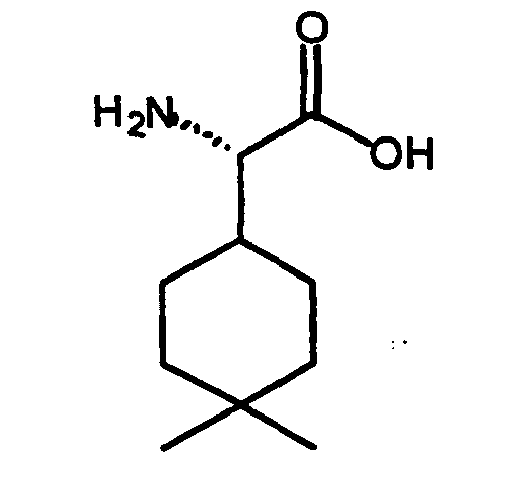
-

- A mixture of 4,4-dimethylcyclohex-2-en-1-one (12 mL, 91.2 mmol) and Degussa type 10% Pd on carbon (2 g) was hydrogenated at 40 psi for 18 hours. The mixture was filtered and concentrated (1H NMR showed a mixture of ketone and alcohol in a 5:3 ratio). The mixture was dissolved in acetone (400 mL) and cooled to 0 °C. Jones reagent (40 mL) was added over 30 min and the cooling bath was removed. After 2 days the excess acetone was evaporated and the resulting residue was dissolved in water and diethylether. The ether layer was washed with water until colorless, dried, filtered and concentrated to give 4,4-dimethylcyclohexanone (7.4 g, 58.6 mmol, 64%).
-
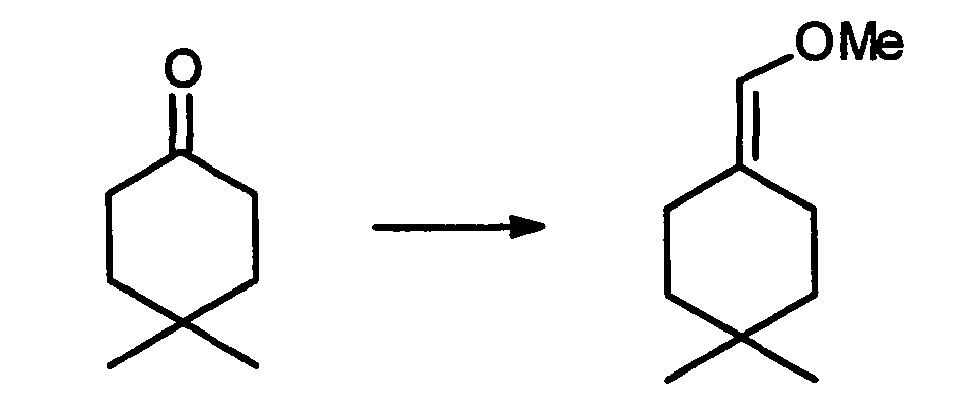
- To a solution of methoxymethyl triphenylphosphonium chloride (8.6 g) in tetrahydrofuran (125 mL) at 0 °C was added n-butyllithium (1.6M in hexanes, 14.3 mL) over 10 min. After 30 min the reaction mixture was cooled to -78 °C and a solution of 4,4-dimethylcyclohexanone (2.45 g, 19.1 mmol) in tetrahydrofuran (50 mL) was added over 20 min. After 1 hour the cooling bath was remove and the reaction was warmed slowly to 0 °C. The reaction was diluted with saturated ammonium chloride (50 mL), ethylacetate (100 mL) and hexanes (100 mL). The organic layer was washed with water and brine, dried filtered and concentrated. The residue was stirred with hexanes (70 mL) for 10 min and filtered. The filtrate was concentrated and chromatographed using 25% ethylacetate in hexanes to give the title compound (1.925 g, 12.5 mmol, 65%).
-

- A solution of the methyl enol ether of 4,4-dimethylcyclohexylcarboxaldehyde (1.925 g, 12.5 mmol) (Step II above), tetrahydrofuran (100 mL) and 6M HCl (20 mL) was stirred at room temperature for 4 hours. The reaction mixture was diluted with hexanes, diethylether, brine and water. The organic layer was dried, filtered and concentrated to give 4,4-dimethylcyclohexylcarboxaldehyde (1.0 g, 7.1 mmol, 57%).
-
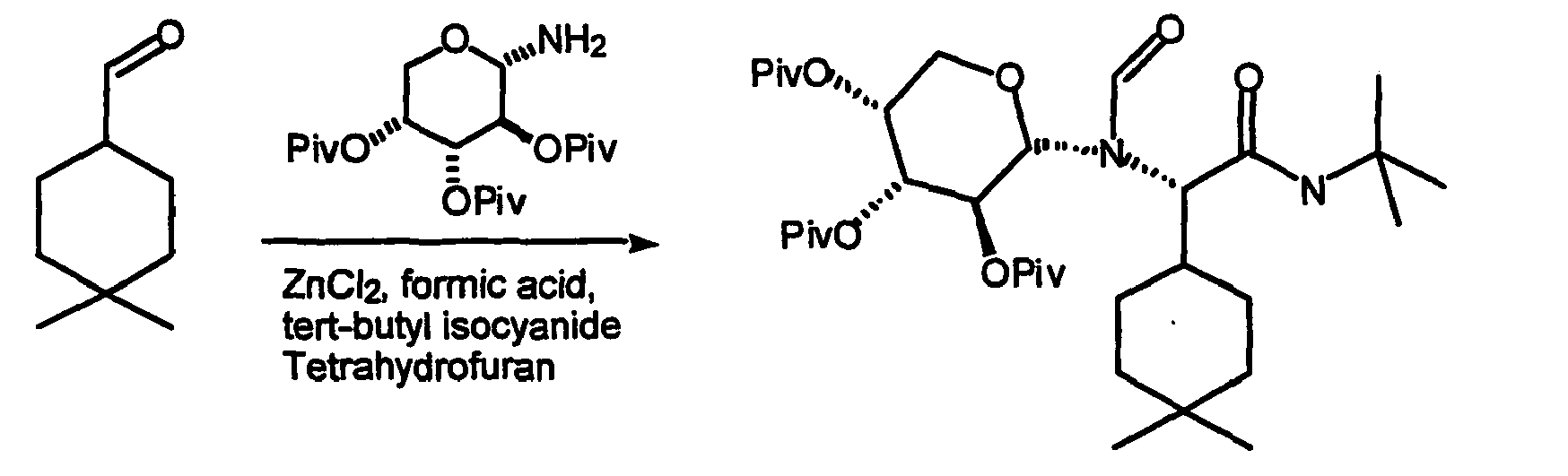
- To a solution of 4,4-dimethylcyclohexylcarboxaldehyde (1.17 g, 8.34 mmol), 2,3,4-tri-O-pivaloyl-α-D-arabinosylamine (3.43 g, 8.55 mmol), formic acid (350 µL, 9.17 mmol) and tert-butylisocyanide (990 µL, 8.76 mmol) in THF (70 mL) at -30 °C was added 0.5M zinc chloride in tetrahydrofuran (17 mL, 8.5 mmol). The solution was stirred at -20 °C for 2 days, then concentrated. The residue was diluted with dichloromethane (200 mL), washed with saturated sodium bicarbonate (2 x 200 mL), water (200 mL). The organic layer was dried, filtered and concentrated to give a clear oil. Flash chromatography (20% ethylacetate in hexanes) provided pure product (2.1 g, 3.3 mmol, 39%)
-
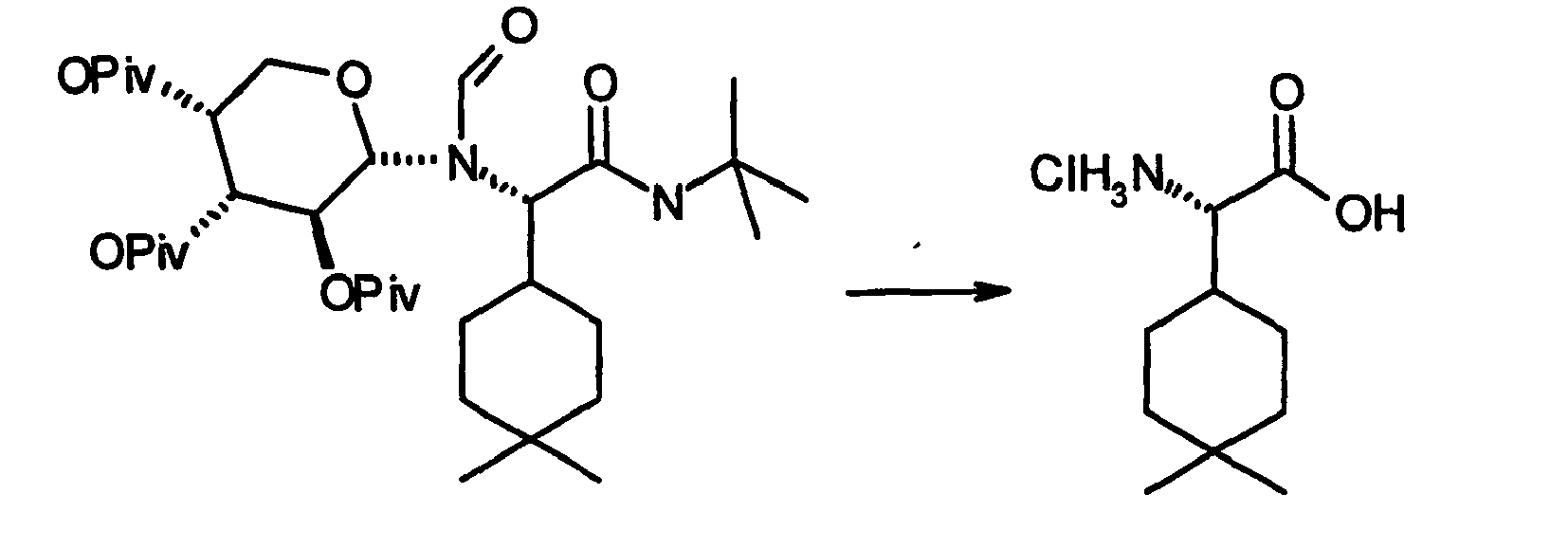
- A solution of the Ugi product obtained in step 4 above (2.1 g, 3.3 mmol) in dichloromethane (20 mL) and saturated anhydrous methanolic HCl (20 mL) was stirred overnight. The solution was concentrated and the residue was dissolved in water (100 mL) and washed with pentane (2 x 100 mL). The aqueous layer was concentrated and the residue was dissolved in 6N HCl (40 mL) and heated at reflux for 30 hours. The solution was concentrated to give the crude (1-methylcyclohexyl)glycine hydrochloride (300 mg, 1.36 mmol, 41%).
-

-

- To a solution of Boc-norvaline (25.0 g, 0.115 mol) in tetrahydrofuran (461 mL), cooled to 0°C, was added borane/tetrahydrofuran complex (461 mL of a 1.0M solution in tetrahydrofuran) dropwise. After 1h at 0°C, the solution was warmed to room temperature over a period of 1.5h. TLC indicated that the reaction was complete. Methanol was added to quench the reaction. The solution was concentrated to yield the title compound (22.56 g, 96%) as a foamy syrup. TLC of the products indicated satisfactory purity. Rf = 0.34 (40% ethyl acetate/hexanes).
-

- To Boc-norvalinol (7.77 g, 38 mmol), in anhydrous dimethylsulfoxide (153 mL) and toluene (153 mL) was added EDC (73.32g, 382 mmol). After the solution was cooled to 0°C, dichloroacetic acid (15.8 mL, 191 mmol) was added dropwise. After addition was complete, the reaction was stirred for 15 min. The solution was allowed to warm to room temperature over a period of 2h. The reaction mixture was concentrated to remove the toluene, then dissolved in ethyl acetate. The solution was washed successively with 1 N sodium bisulfate, saturated sodium bicarbonate and brine, dried over sodium sulfate, filtered and concentrated to afford crude Boc-norvalinal which was used directly in the next step. TLC Rf = 0.84 (40% ethyl acetate/hexanes).
-

- To a solution of the crude Boc-norvalinal (4.18 g, 20.77 mmol) in dichloromethane (83 mL) was added ethylisocyanoacetate (2.72 ml, 24.93 mmol) and pyridine (6.72 ml, 83.09 mmol). After the solution was cooled to 0°C, trifluoroacetic acid (4.15 ml, 41.54 mmol) was added dropwise. After stirring for 1h, the solution was stirred at room temperature for 18 hours while allowing the solvent from the reaction mixture in an uncovered vessel to evaporate under ambient conditions. The reaction mixture was concentrated, then dissolved in ethyl acetate. The solution was washed successively with 1N sodium bisulfate, saturated sodium bicarbonate and brine, dried over sodium sulfate, filtered and then concentrated. The residue was purified by flash chromatography eluting with 20% to 40% ethylacetate/hexanes to afford 2.8 g of the title compound as a yellow syrup. Low resolution mass spectroscopy confirmed the presence of the desired product (MH+ 333).
-

- The product obtained (Boc-nVal-(CHOH)-Gly-OEt) (1.52 g, 4.70 mmol) dissolved in ethanol (23 ml) was saponified with 1 N lithium hydroxide (18.81 ml) for two hours at room temperature. The reaction mixture was acidified to pH ≅ 2 with Dowex® 50 WX8 ion exchange resin, stirred for 20 minutes and then filtered. The resin was washed well with ethanol and water and the combined filtrates were concentrated to a white foam (0.48 g, 33%).
-

-

- To a solution of tert-Butyl diethylphosphonoacetate (4.7 mL, 20 mmol) dissolved in THF (50 mL) at -78° C was added 1.6M n-butyl lithium in hexanes (12.4 mL). After 30 minutes (1S, 2S)-2-methylcyclopropylcarboxaldehyde (1 g, 12 mmol) (Barrett, A. G. M.; Doubleday, W. W.; Kasdorf, K.; Tustin, G. J., J. Org. Chem. (1996) 61, 3280) in diethyl ether (100 mL) was added over 10 min. The reaction was warmed to 0° C for 2 hours and to 6 °C for 12 hours. The reaction was quenched with saturated ammonium chloride (20 mL) and the organic layer was separated, washed with 50 mL brine and dried over sodium sulfate, filtered and concentrated to afford 3.5 g of a clear oil. Flash chromatography (20% ethylacetate in hexanes) afforded pure unsaturated tert-butylester (1.4 g).
-

- To a solution of benzyl carbamate (3.55g, 23.5 mmols) in n-propanol (24 mL) was added a solution of sodium hydroxide (900 mg ,22.7 mmol)in water (48 mL), followed by tert-butylhypochlorite (2.57 mL, 22.7 mmol). After 15 minutes the reaction was cooled to 0 °C and (DHQ)2PHAL (350 mg, 0.45 mmol) was added in n-propanol (24 mL), followed by unsaturated tert-butyl ester (1.4 g) from above in n-propanol (48 mL). Finally potassium osmate (110 mg, 0.30 mmol) in water (2 mL) was added and the solution very rapidly developed a dark green color which persisted for 4 hours. After 6 hours saturated sodium sulfate (50 mL) was added and the mixture extracted with ethyl acetate (2 x 50 mL). The combined organic layers were washed with brine (30 mL), dried over sodium sulfate, filtered and concentrated. Flash chromatography with 20% ethylacetate in hexanes afforded the desired cBz protected amino tert-butylester as a white solid (316 mg).
-

- A mixture of CBz protected amino tert-butylester (316 mg, 0.9 mmol) and 32mg 10% palladium on carbon in 9 mL methanol was hydrogenated for 8 hours. The mixture was filtered and concentrated to afford the free amine as a clear oil (195 mg).
-
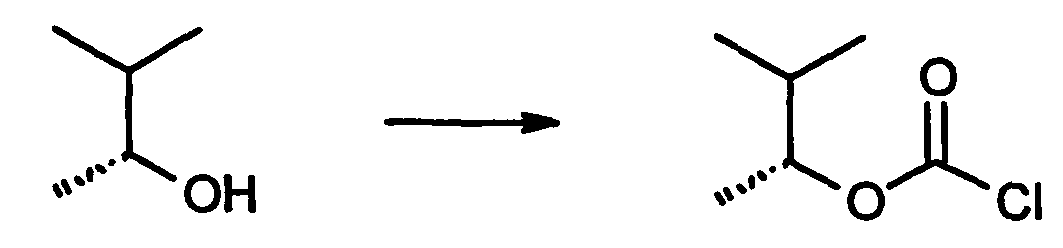
- To the commercially available 2R-hydroxy-3-methylbutane (410 mg, 4.65 mmol) was added a solution of 20% phosgene in toluene (1 mL, 2 mmol). The solution was stirred for 6 hours to generate the chloroformate (2 mmol) which was reacted directly and immediately with the desired amine. The S-isomer was synthesized by the same procedure.
-

-

- To a solution of the commercially available (Advanced Chem Tech) Boc-L-leucinol (0.78 g, 3.6 mmol) in anhydrous dichloromethane (17.5 ml) was added triethyl amine (2 ml, 14.36 mmol) and the mixture was cooled to 0 °C. Dimethyl sulfoxide (17.5 ml) was added followed by sulfur trioxide pyridine complex (2.3 g, 14.36 mmol) and the reaction was stirred for two hours. TLC in 1:1 ethylacetate: hexanes confirmed the completion of the reaction. The reaction mixture was concentrated and the remaining residue diluted with ethylacetate. The ethylacetate layer was washed with 1 M hydrochloric acid (2 × 75 ml) followed by saturated sodium bicarbonate solution (2 × 75 ml) and brine (75 ml). The organic layer was dried (sodium sulfate), filtered and concentrated to yield 775 mg of product.
-

- To a solution of Boc-Leucine aldehyde (0.77 g, 3.59 mmol) in anhydrous dichloromethane (24 ml) was added anhydrous pyridine (1.16 ml, 14.36 mmol) and ethylisocyanoacetate (0.4 ml, 4.66 mmol). The reaction mixture was cooled to 0 °C and trifluoroacetic acid (0.55 ml, 7/18 mmol) was added over two minutes. The reaction mixture was capped and stirred at 4 °C for four days, and at room temperature for one day. The reaction mixture was diluted with dichloromethane (350 ml) and washed twice each with 75 ml portions of 1 M hydrochloric acid, saturated sodium bicarbonate and brine. The organic layer was dried, filtered and concentrated. The residue obtained was subjected to flash chromatography in a 2" × 6" silica gel column using 10% ethylacetate in hexanes (800 ml) followed by 1:1 ethylacetate in hexanes (800 ml). The fractions corresponding to the product were pooled and concentrated to yield 980 mg (79%) product.
-

- To a solution of Boc-Leu-(CHOH)-Gly-Oet (0.98 g, 2.83 mmol) in ethanol (11.3 ml) was added 2M lithium hydroxide (4.25 ml) and the reaction was stirred for five hours at room temperature. The ethanol was removed under reduced pressure and the aqueous layer was diluted with ethylacetate. The organic layer was washed with 1 M hydrochloric acid followed by brine, dried, filtered and concentrated to yield 775 mg (86%) product as a white solid.
-

- To a solution of Boc-Leu-(CHOH)-Gly-OH (0.37 g, 1.18 mmol) in acetonitrile (23 ml) was added successively phenylglycine dimethylamide (obtained in Example XV, Step 2), EDC (0.34 g, 1.76 mmol), N-hydroxybenzotriazole (HOBt)(0.18 g, 1.18 mmol) and diisopropylethylamine (DIEA) (0.82 ml, 4.7 mmol) and the reaction was stirred for 18 hours at room temperature. The reaction mixture was concentrated and the remaining residue was diluted with ethylacetate and washed successively with two 75 ml portions of 1 M hydrochloric acid, saturated sodium bicarbonate and brine. The organic layer was then dried filtered and concentrated. The crude product was subjected to flash chromatography in a 2" × 6" silica gel column using 4:1 ethylacetate: hexanes (700 ml) followed by ethylacetate (1000 ml) and 10% methanol in dichloromethane (600 ml). The fractions corresponding to the product were pooled and concentrated to yield 445 mg (80%) white solid.
-

- To a solution Boc-Leu-(CHOH)-Gly-Phg-dimethylamide (70 mg, 0.146 mmol) in dichloromethane (1 ml) was added trifluoroacetic acid (1 ml) and the reaction was stirred at room temperature for 1 hour. The reaction mixture was concentrated and taken to the next step without further purification.
-

- To a solution of iBoc-G(Chx)-P(4,4-diMe)-OH (Example XIV, step 2)(53 mg, 0.148 mmol) in acetonitrile (3 ml) was added successively TFA•2HN-Leu(CHOH)-Gly-Phg-NMe2 (61 mg, 0.148 mmol), N-Hydroxybenzotriazole (HOBt) (23 mg, 0.148 mmol), TBTU (71.5 mg, 0.222 mmol and diisopropylethyl amine (1031, 0.593 mmol). The reaction was stirred at room temperature for 18 hours and concentrated. The remaining residue was dissolved in ethylacetate and washed with 1 M hydrochloric acid (2 × 5 ml), saturated sodium bicarbonate solution (2 × 5 ml), and brine (2 × 5 ml). The organic layer was dried, filtered and concentrated. The product (100 mg) was taken to the next step without further purification.
-

- To a solution of iBoc-G(Chx)-Pro(4,4-dimethyl)-Leu-(CHOH)-Gly-Phg-dimethylamide (30 mg, 0.04 mmol) in dichloromethane (1 ml) was added the commercially available Dess-Martin reagent (Omega Chemical Company Inc.)(67.8 mg, 0.16 mmol) and the reaction was stirred at room temperature for 90 minutes. The reaction mixture was concentrated and the remaining residue was stirred in 5% sodium thiosulfate. It was then diluted with dichloromethane and the layers were separated. The organic layer was washed with sodium thiosulfate (4 × 3 ml), followed by water and brine. The organic layer was dried over sodium sulfate, filtered and concentrated. The crude product was dissolved in hexanes and isopropyl alcohol and was subjected to HPLC purification using a normal phase Kromasil 5 silica column (Phenomenex, 250 × 21.20 mm, 100 angstrom pore size, 5 µm gel particles) eluting with a 30 minutes gradient consisting of 0 to 25% isopropyl alcohol in hexanes (25 ml/minutes). The fractions corresponding to the product were pooled and concentrated. Lyophilization from water yielded 6.7 mg white powder. Low resolution mass spectra confirmed the desired mass (MH+ = 741.4).
- Solid-phase synthesis is useful for the production of small amounts of certain compounds of the present invention. As with the conventional solid-phase synthesis of peptides, reactors for the solid-phase synthesis of peptidyl ketoamides are comprised of a reactor vessel with at least one surface permeable to solvent and dissolved reagents, but not permeable to synthesis resin of the selected mesh size. Such reactors include glass solid phase reaction vessels with a sintered glass frit, polypropylene tubes or columns with frits, or reactor Kans™ made by Irori Inc., San Diego CA. The type of reactor chosen depends on volume of solid-phase resin needed, and different reactor types might be used at different stages of a synthesis. The following procedures will be referenced in the subsequent examples:
- Procedure A: Coupling reaction: To the resin suspended in N-methylpyrrolidine (NMP) (10-15 mL/ gram resin) was added Fmoc-amino acid (2 eq), HOAt (2 eq), HATU (2 eq) and diisopropylethylamine (4 eq). The mixture was let to react for 4-48 hours. The reactants were drained and the resin was washed successively with dimethylformamide, dichloromethane, methanol, dichloromethane and diethylether (use 10-15 mL solvent/ gram resin). The resin was then dried in vacuo.
- Procedure B: Fmoc deprotection: The Fmoc-protected resin was treated with 20% piperidine in dimethylformamide (10 mL reagent/ g resin) for 30 minutes. The reagents were drained and the resin was washed successively with dimethylformamide, dichloromethane, methanol, dichloromethane and diethyl ether (10 mL solvent/ gram resin).
- Procedure C: Boc deprotection: The Boc-protected resin was treated with a 1:1 mixture of dichloromethane and trifluoroacetic acid for 20-60 minutes (10 mL solvent/ gram resin). The reagents were drained and the resin was washed successively with dichloromethane, dimethylformamide, 5% diisopropylethylamine in dimethylformamide, dimethylformamide, dichloromethane and dimethylformamide (10 mL solvent/ gram resin).
- Procedure D: Semicarbazone hydrolysis: The resin was suspended in the cleavage cocktail (10 mL/ g resin) consisting of trifluoroacetic acid: pyruvic acid: dichloromethane: water 9:2:2:1 for 2 hours. The reactants were drained and the procedure was repeated three more times. The resin was washed successively with dichloromethane, water and dichloromethane and dried under vacuum. Procedure E: HF cleavage: The dried peptide-nVal(CO)-G-O-PAM resin (50 mg) was placed in an HF vessel containing a small stir bar. Anisole (10% of total volume) was added as a scavenger. In the presence of glutamic acid and cysteine amino acids, thioanisole (10%) and 1,2-ethanedithiol (0.2%) were also added. The HF vessel was then hooked up to the HF apparatus (Immuno Dynamics) and the system was flushed with nitrogen for five minutes. It was then cooled down to -70°C with a dry ice/ isopropanol bath. After 20 minutes, HF was distilled to the desired volume (10 mL HF/ g resin). The reaction was let to proceed for one and a half hour at 0°C. Work up consisted of removing all the HF using nitrogen. Dichloromethane was then added to the resin and the mixture was stirred for five minutes. This was followed by the addition of 20% acetic acid in water (4 mL). After stirring for 20 minutes, the resin was filtered using a fritted funnel and the dichloromethane was removed under reduced pressure. The remaining residue and the mixture was washed with hexanes (2x) to remove scavengers. Meanwhile, the resin was soaked in 1 mL methanol. The aqueous layer (20% HOAc) was added back to the resin and the mixture was agitated for five minutes and then filtered. The methanol was removed under reduced pressure and the aqueous layer was lyophilized. The peptide was then dissolved in 10-25% methanol (containing 0.1% trifluoroacetic acid) and purified by reverse phase HPLC.
-

-
- A) Synthesis of allyl isocyanoacetate (steps a-b below):
- a) Synthesis of isocyanoacetic acid potassium salt:

Ethyl isocyanoacetate (96.6 ml, 0.88 mol) was added dropwise to a chilled solution of ethanol (1.5 L) and potassium hydroxide (59.52 g, 1.0 mol). The reaction was slowly warmed to room temperature. After two hours the precipitated product was filtered on a glass funnel and washed with several portions of chilled ethanol. The potassium salt of isocyanoacetic acid thus obtained was dried in vacuo to a golden-brown solid (99.92 g, 91.8%). - b) Synthesis of allyl isocyanoacetate:

To the product of part a (99.92 g, 0.81 mol) dissolved in acetonitrile (810 ml) was added allyl bromide (92 ml, 1.05 mol). After heating at reflux for four hours a dark brown solution was obtained. The reaction mixture was concentrated and the remaining residue was dissolved in ether (1.5 L) and washed three times with water (500 ml). The organic layer was dried, filtered and concentrated to a dark brown syrup. The crude was purified by vacuum distillation at 7 mm Hg (98 C) to a clear oil (78.92 g, 78%). NMR δ ppm (CDCl3): 5.9 (m, 1H), 5.3 (m, 2H), 4.7 (d, 2H), 4.25 (s, 2H). - a) Synthesis of isocyanoacetic acid potassium salt:
- B) Synthesis of 9-fluorenylmethoxycarbonyl-norvalinal (steps a-c below):
- a) Synthesis of 9-fluorenylmethoxycarbonyl-L-norvaline methyl ester (Fmoc-nVal-OMe):

To a chilled solution of the commercially available Fmoc-norvaline (25 g, 73.75 mmol) in anhydrous methanol (469 ml) was added thionyl chloride (53.76 ml, 737.5 mmol) over one hour. TLC in ethylacetate taken an hour later confirmed the completion of the reaction (Rf = 0.85). The reaction mixture was concentrated and the remaining residue was dissolved in ethylacetate. The organic layer was washed with several 200 ml portions of saturated sodium bicarbonate followed by brine. The organic layer was dried, filtered and concentrated to afford Fmoc-norVal-OMe) as a white solid (26.03 g) in quantitative yield. NMR δ ppm (CD3OD): 7.7 (m, 2H), 7.6 (m, 2H), 7.4 (m, 2H), 7.3 (m, 2H), 4.3 (m, 2H), 4.1 (m, 2H), 3.7 (s, 3H), 1.7 (m, 1H), 1.6 (m, 1H), 1.4 (m, 2H), 0.95 (t, 3H). - b) Synthesis of 9-fluorenylmethoxycarbonyl-norvalinol (Fmoc-nValinol):

To Fmoc-nVal-OMe (26.03 g, 73.75 mmol) in tetrahydrofuran (123 ml) and methanol (246 ml) was added calcium chloride (16.37 g, 147.49 mmol). The reaction mixture was cooled to 0°C and sodium borohydride (11.16 g, 294.98 mmol) was added in several batches. To the thick paste obtained, methanol (500 ml) was added and the reaction was let to stir at room temperature for 90 minutes. TLC in 2:3 ethylacetate: hexanes confirmed the completion of the reaction (Rf = 0.25). The reaction was quenched with the slow addition of water (100 ml) at 0°C. The methanol was removed under reduced pressure and the remaining aqueous phase was diluted with ethylacetate. The organic layer was washed with water (3 × 500 ml), saturated sodium bicarbonate (3 × 500 ml) and brine (500 ml). The organic layer was dried over sodium sulfate, filtered and concentrated to a white solid (21.70 g, 90.5%). NMR δ ppm (CD3OD): 7.8 (m, 2H), 7.7 (m, 2H), 7.4 (m, 2H), 7.3 (m, 2H), 4.3-4.5 (m, 2H), 4.2 (m, 1H), 3.6 (s, 1H), 3.5 (s, 2H), 1.5 (m, 1H), 1.3-1.4 (m, 3H), 0.99 (m, 3H). - c) Synthesis of 9-fluorenylmethoxycarbonyl-norvalinal (Fmoc-nVal-CHO):

To a solution of Fmoc-norValinol (21.70 g, 66.77 mmol) in dichloromethane (668 ml) was added triethylamine (37.23 ml, 267 mmol) and the solution was cooled to 0°C. A suspension of pyridine sulfur trioxide complex (42.51 g, 267 mmol) in dimethylsulfoxide (96 ml) was added to the chilled solution. After one hour, TLC in 2:3 ethylacetate: hexanes confirmed the completion of the reaction. The dichloromethane was removed under reduced pressure and the remaining residue was dissolved in ethylacetate and washed with water (2 × 50 ml), 1N saturated sodium bisulfate (2 × 50 ml), saturated sodium bicarbonate (2 × 50 ml) and brine (50 ml). The organic layer was concentrated to yield a white solid. Theoretical yield (21.57 g) was assumed and the reaction was taken to the next step without further purification. - a) Synthesis of 9-fluorenylmethoxycarbonyl-L-norvaline methyl ester (Fmoc-nVal-OMe):
-
C) Synthesis of diphenylmethyl semicarbazide (dpsc) trifluoroacetate salt (steps a-b below):
- a) Synthesis of Boc-semicarbazid-4-yl diphenylmethane

To a solution of carbonyldiimidazole (16.2 g, 0.10 mole) in dimethylformamide (225 ml) was added a solution of t-butyl carbazate (13.2 g, 0.100 mol) in dimethylformamide (225 ml) dropwise over 30 minutes. Diphenylmethylamine (18.3 g, 0.10 mol) was added next over 30 minutes. The reaction was allowed to stir at room temperature for one hour. Water (10 mL) was added and the mixture was concentrated to about 150 mL under reduced pressure. This solution was poured into water (500 mL) and extracted with ethyl acetate (400 mL). The ethylacetate phase was washed two times each with 75 mL 1N HCl, water, saturated sodium bicarbonate solution and sodium chloride, and dried with magnesium sulfate. The mixture was filtered and the solution was concentrated to give 29.5 g (85% yield) of a white foam. This material could be purified by recrystallization from ethyl acetate/hexane, but was pure enough to use directly in the next step: mp 142-143°C. 1H NMR (CDCl3) d 1.45 (s, 9H), 6.10 (dd, 2H), 6.42 (s, 1H), 6.67 (bs, 1H), 7.21-7.31 (m, 10H). Anal calculated for C19H23N3O3: C, 66.84; H, 6.79; N, 12.31. Found: C, 66.46; H, 6.75; N; 12.90. - b) Synthesis of diphenylmethyl semicarbazide (dpsc) trifluoroacetate salt

A solution of Boc-semicarbazid-4-yl diphenylmethane (3.43 g, 10 mmol) in dichloromethane (12.5 mL) was treated with 12.5 mL of trifluoroacetic acid at room temperature and stirred for 30 min. The solution was added dropwise to 75 mL of ether and the resulting solid (2.7 g, 80%) was collected by filtration. mp 182-184°C. 1H NMR (CD3OD) d 6.05 (s, 1H), 7.21-7.35 (m, 10H). 13C NMR (CD3OD) d 57.6, 118.3 (q, CF3), 126.7, 127.9, 141.6, 156.9, 160.9 (q, CF3 CO2H).
- a) Synthesis of Boc-semicarbazid-4-yl diphenylmethane
- D) Synthesis of Fmoc-nVal-(CHOH)-Gly-Oallyl:

To a solution of Fmoc-nVal-CHO (Step IB) (5.47 g, 16.90 mmol) in dichloromethane (170 ml) was added allyl isocyanoacetate (Step IA) (2.46 ml, 20.28 mmol) and pyridine (5.47 ml, 67.61 mmol). The reaction mixture was cooled to 0°C and trifluoroacetic acid (3.38 ml, 33.80 mmol) was added dropwise. The reaction was stirred at 0°C for 1h, and then at room temperature for 48 hours. TLC taken in ethylacetate confirmed the completion of the reaction. The reaction mixture was concentrated and subjected to flash chromatography using 20% to 70% ethylacetate in hexanes. Fractions containing the desired product were pooled and concentrated to a white foam (6.88 g, 87.3%). TLC in 50:50 ethylacetate shows one spot (Rf = 0.37). NMR δ ppm (CD3OD): 7.8 (m, 2H), 7.65 (m, 2H), 7.4 (m, 2H), 7.3 (m, 2H), 5.9 (m, 1H), 5.1-5.4 (m, 2H), 4.55-4.65 (m, 2H), 4.3-4.4 (m, 2H), 4.15-4.25 (m, 1H), 4.01 (s, 1H), 3.9-4.0 (m, 3H), 1.5-1.6 (m, 2H), 1.35-1.45 (m, 3H), 0.9 (m, 3H). - E) Synthesis of Fmoc-nVal-(CO)-Gly-Oallyl:

- F) Synthesis of Fmoc-nVal-(dpsc)-Gly-Oallyl:

To a solution of Fmoc-nVal-(CO)-Gly-Oallyl (Step E) (4.99 g, 10.75 mmol) in ethanol (130 ml) and water (42 ml) was added diphenylmethyl semicarbazide (dpsc) trifluoroacetate salt (Step IC) (7.6 g, 21.5 mmol) and sodium acetate •3H2O (1.76 g, 12.9 mmol), successively. The reaction mixture was heated at reflux for 90 minutes. The completion of reaction was confirmed by TLC taken in 1:1 ethylacetate: hexane. Ethanol was removed under reduced pressure and the remaining residue was dissolved in ethylacetate and washed with 1 N sodium bisulfate (2 × 10 ml), saturated sodium bicarbonate (2 × 10 ml), followed by brine (10 ml). The organic layer was dried, filtered and concentrated. The resulting residue was purified by flash chromatography in 20% to 50% ethylacetate in hexanes to give a white solid (5.76g, 78%). TLC in 50:50 ethylacetate: hexanes showed two spots (cis and trans isomers) with Rf = 0.42 and 0.5. - G) Synthesis of Fmoc-nVal-(dpsc)-Gly-OH:

To a solution of Fmoc-nVal-(dpsc)-Gly-Oallyl (Step IG) (4.53 g, 6.59 mmol) in tetrahydrofuran (300 ml) was added dimedone (4.62 g, 32.97 mmol) followed by tetrakis(triphenylphosphine) palladium(0) catalyst (0.76 g, 0.66 mmol). The completion of the reaction was confirmed by TLC after 90 minutes using 9:1 dichloromethane: methanol. The reaction mixture was concentrated and the remaining residue was dissolved in ethylacetate and washed three times with 50 ml portions of 0.1 M potassium biphosphate. The organic layer was then treated with 50 ml sodium bisulfite and the two phase system was stirred for 15 minutes. The phases were separated and the procedure was repeated twice more. The organic layer was dried and concentrated and subjected to flash chromatography with 20% to 100% ethylacetate in hexanes. This was followed with 9:1 dichloromethane: methanol solution. The fractions corresponding to the pure product were pooled and concentrated to obtain a white solid (3.99 g, 94%). TLC in 9:1 dichloromethane: methanol showed two spots (cis and trans isomers). NMR δ ppm (CD3OD): 7.75 (m, 2H), 7.6 (m, 3H), 7.2-7.4 (m, 14H), 6.1-6.2 (m, 1H), 4.25-4.4 (m, 2H), 4.1-4.2 (m, 2H), 3.85 (s, 2H), 1.6-1.8 (m, 2H), 1.3-1.5 (m, 2H), 0.95 (t, 3H). -

- The commercially available MBHA resin (2.6 g, 1.12 mmol/g, 2.91 mmol) was transferred to a 250 mL fritted solid phase reaction vessel equipped with a nitrogen inlet. It was then washed thoroughly with 30 ml portions of dichloromethane, methanol, dimethylformamide and dichloromethane and coupled over 18 hours to the commercially available Fmoc-Phg-OH (2.17 g, 5.82 mmol) according Procedure A with 99.82% efficiency. The resin was then subjected to Fmoc deprotection according to procedure B. A qualitative ninhydrin assay on a small aliquot gave dark blue resin and solution, indicating a successful reaction.
-

- The resin obtained in step II (2.6 g, 0.8 mmol/g, 2.91 mmol) was reacted with Fmoc-nVal-(dpsc)-Gly-Oallyl (Step IG) (5.82 mmol, 3.77 g) according to Procedure A. After 18 hours, quantitative ninhydrin analysis indicated 99.91 % coupling efficiency. The resin was subjected to Fmoc deprotection according to procedure B. A qualitative ninhydrin assay on a small aliquot gave dark blue resin and solution, indicating a successful reaction.
-

- The compound H-nVal(dpsc)-Gly-Phg-MBHA resin (Step 3 above) (600 mg, 0.8 mmol/g, 0.67 mmol) was transferred to a fritted polypropylene tube and was coupled to Boc-Pro(4t-NHFmoc)-OH (Example VI, Step 3) (610 mg, 1.34 mmol) according to procedure A. After 18 hours, quantitative ninhydrin analysis indicated 99.96% coupling efficiency.
-

- The resin from the previous step (Boc-Pro(4t-NHFmoc)-nVal(dpsc)-Gly-Phg-MBHA resin) was subjected to Fmoc deprotection according to procedure B. A qualitative ninhydrin assay on a small aliquot gave dark blue resin and solution, indicating a successful reaction.
-

- To the resin obtained from the previous step (Boc-Pro(4t-NH2)-nVal(dpsc)-Gly-Phg-MBHA resin) (0.2 g, 0.22 mmol) suspended in NMP (2 ml) was added 2,4,6-collidine (0.24 ml, 1.79 mmol) and benzenesulfonyl chloride and the reaction was shaken for 18 hours. The solvent was drained and the resin was washed thoroughly with 2 ml portions of dichloromethane, methanol, dimethylformamide and dichloromethane. Qualitative ninhydrin analysis showed colorless beads and solution indicating a successful reaction.
-

- The resin obtained in the previous step (Boc-Pro(4t-NHSO2Bn)-nVal(dpsc)-Gly-Phg-MBHA resin) was subjected to the Boc deprotection procedure according to Procedure C. Fmoc-G(Chx) (0.17 g, 0.45 mmol) was then coupled according to procedure A. After 18 hours qualitative ninhydrin analysis showed colorless beads and the quantitative ninhydrin analysis indicated 99.79% coupling efficiency.
-

- The resin obtained in the previous step (Fmoc-G(Chx)-Pro(4t-NHSO2Bn)-nVal(dpsc)-Gly-Phg-MBHA resin) was subjected to Fmoc deprotection according to procedure B. A ninhydrin assay on a small aliquot gave dark blue resin and solution, indicating a successful reaction. To the resin (0.2 g, 0.22 mmol) suspended in 2 ml NMP was added isobutylchloroformate (0.12 ml, 0.90 mmol) followed by diisopropylethylamine (0.31 ml, 1.79 mmol), and the reaction mixture was shaken for 18 hours at room temperature. Qualitative ninhydrin analysis showed colorless beads and solution indicating a successful reaction.
-

- The compound of the previous step (iBoc-G(Chx)-Pro(4t-NHSO2Bn)-nVal(dpsc)-Gly-Phg-MBHA resin) (200 mg) was subjected to semicarbazone hydrolysis Procedure D.
-

- The resin of the previous step (iBoc-G(Chx)-Pro(4t-NHSO2Bn)-nVal(CO)-Gly-Phg-MBHA resin) (100 mg) was subjected to HF cleavage condition (Procedure E) to yield the desired crude product. The material was purified by HPLC using a 2.2 × 25 cm reverse phase column, containing a C-18 resin comprised of 10 micron size gel particles with a 300 angstrom pore size, eluting with a gradient using 20-50% acetonitrile in water. Analytical HPLC using a 4.6 × 250 mm reverse phase column, containing a C-18 resin comprised of 5 micron size gel particles with a 300 angstrom pore size, eluting with 25-75% acetonitrile (containing 0.1 % trifluoroacetic acid) showed one peak at 13.5 minutes. Low resolution mass spectrum confirmed the desired mass (MH+ 826.4).
- Representative procedures to prepare additional inventive compounds are shown below, and the compounds prepared by such procedures are listed in Table 5.
-

-

- A stirred solution of ketimime XXIIIa (50 g, 187.1 mmol) under N2 in dry THF (400 mL) was cooled to -78°C and treated with 1 M solution of K-tBuO (220 mL, 1.15 equiv.) in THF. The reaction mixture was warmed to 0 °C and stirred for 1 h and treated with bromomethyl cyclobutane (28 mL, 249 mmol). The reaction mixture was stirred at room temperature for 48 h and concentrated in vacuo. The residue was dissolved in Et2O (300 mL) and treated with aq. HCl (2 M, 300 mL) The resulting solution was stirred at room temperature for 5 h and extracted with Et2O (1 L). The aqueous layer was made basic to pH ∼12-14 with NaOH (50 % aq.) and extracted with CH2Cl2 (3x300 mL). The combined organic layers were dried (MgSO4), filtered, and concentrated to give pure amine (XXIIIb, 18 g) as a colorless oil.
-

- A solution of amine XXIIIb (18g, 105.2 mmol) at 0 °C in CH2Cl2 (350 mL) was treated with di-tert-butyldicarbonate (23 g, 105.4 mmol) and stirred at rt. for 12 h. After the completion of the reaction (TLC), the reaction mixture was concentrated in vacuo and the residue was dissolved in THF/H2O (200 ml, 1:1) and treated with LiOH•H2O (6.5 g, 158.5 mmol) and stirred at room temperature for 3 h. The reaction mixture was concentrated and the basic aqueous layer was extracted with Et2O. The aqueous layer was acidified with conc. HCl to pH∼1-2 and extracted with CH2Cl2. The combined organic layers were dried (MgSO4), filtered, and concentrated in vacuo to yield XXIIIc as a colorless viscous oil which was used for next step without any further purification.
-

- A solution of acid XXIIIc (15.0 g, 62 mmol) in CH2Cl2 (250 mL) was treated with BOP reagent (41.1 g, 93 mmol), N-methyl morpholine (27 mL), N,O-dimethyl hydroxylamine hydrochloride (9.07 g, 93 mmol) and stirred overnight at rt. The reaction mixture was diluted with 1 N aq. HCl (250 mL), and the layers were separated and the aqueous layer was extracted with CH2Cl2 (3x300 ml). The combined organic layers were dried (MgSO4), filtered and concentrated in vacuo and purified by chromatography (SiO2, EtOAc/Hex 2:3) to yield the amide XXIIId (15.0 g) as a colorless solid.
-

- A solution of amide XXIIId (15 g, 52.1 mmol) in dry THF (200 mL) was treated dropwisely with a solution of LiAlH4 (1M, 93 mL, 93 mmol) at 0 °C. The reaction mixture was stirred at room temperature for 1 h and carefully quenched at 0 °C with a solution of KHSO4 (10% aq.) and stirred for 0.5 h. The reaction mixture was diluted with aq. HCl (1 M, 150 mL) and extracted with CH2Cl2 (3x200 mL), The combined organic layers were washed with aq. HCl (1 M), saturated NaHCO3, brine, and dried (MgSO4). The mixture was filtered and concentrated in vacuo to yield XXIIIe as a viscous colorless oil (14 g).
-

- A solution of the aldehyde XXIIIe (14 g, 61.6 mmol) in CH2Cl2 (50 mL), was treated with Et3N (10.73 mL, 74.4 mmol), and acetone cyanohydrin (10.86 g, 127.57 mmol) and stirred at room temperature for 24 hrs. The reaction mixture was concentrated in vacuo and diluted with aq. HCl (1 M, 200 mL) and extracted into CH2Cl2 (3x200 mL). The combined organic layer were washed with H2O, brine, dried (MgSO4), filtered, concentrated in vacuo and purified by chromatography (SiO2, EtOAc/Hex 1:4) to yield XXIIIf (10.3 g) as a colorless liquid
-

- Methanol saturated with HCl*, prepared by bubbling HCl gas to CH3OH (700 ml) at 0 °C, was treated with cyanohydrin XXIIIf and heated to reflux for 24 h. The reaction was concentrated in vacuo to yield XXIIIg, which was used in the next step without purification.
* Alternatively 6M HCl prepared by addition of AcCl to dry methanol can also be used. -
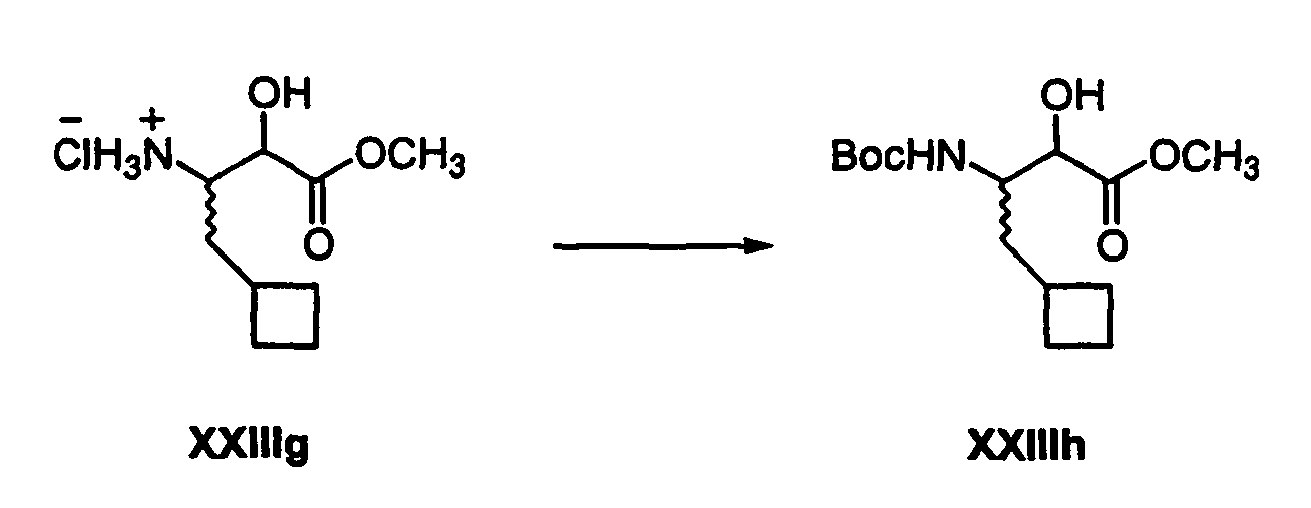
- A solution of the amine hydrochloride XXIIIg in CH2Cl2 (200 mL) was treated with Et3N (45.0 mL, 315 mmol) and Boc2O (45.7g, 209 mmol) at -78 °C. The reaction mixture was then stirred at room temperature overnight and diluted with HCl (2 M, 200 mL) and extracted into CH2Cl2, The combined organic layer were dried (MgSO4) filtered, concentrated in vacuo and purified by chromatography (EtOAc/Hex 1:4) to yield hydroxy ester XXIIIh.
-

- A solution of methyl ester XXIIIh (3g, 10.5 mmol) in THF/H2O (1:1) was treated with LiOH•H2O (645 mg, 15.75 mmol) and stirred at rt. for 2 h. The reaction mixture was acidfied with aq HCl (1 M, 15 mL) and concentrated in vacuo. The residue was dried in vacuum.
- A solution of the acid in CH2Cl2 (50 mL) and DMF (25 mL) was treated with NH4Cl (2.94 g, 55.5 mmol), EDCI (3.15 g, 16.5 mmol), HOOBt (2.69 g, 16.5 mmol), and NMM (4.4 g, 44 mmol). The reaction mixture was stirred at room temperature for 3 d. The solvents were removed under vacuo and the residue was diluted with aq. HCl (250 mL) and extracted with CH2Cl2. The combined organic layers were washed with aq. Sat'd. NaHCO3, dried (MgSO4) filtered concentrated in vacuo to obtain XXIIIi, which was used as it is in the following steps. (Alternatively XXIIIi can also be obtained directly by the reaction of XXIIIf (4.5 g, 17.7 mmol) with aq. H2O2 (10 mL), LiOH•H2O (820 mg, 20.8 mmol) at 0 °C in 50 mL of CH3OH for 0.5 h.)
-

- A solution of XXIIIi obtained in the previous step was dissolved in 4 N HCl in dioxane and stirred at rt. for 2 h. The reaction mixture was concentrated in vacuo to give XXIIIj as a solid, which was used without further purification.
-

- The amino ester XXIIII was prepared following the method of R. Zhang and J. S. Madalengoitia (J. Org. Chem. 1999, 64, 330), with the exeception that the Boc group was cleved by the reaction of the Boc-protected amino acid with methanolic HCl.
- A solution of commercial amino acid Boc-Chg-OH, XXIIIk (Senn chemicals, 6.64 g, 24.1 mmol) and amine hydrochloride XXIIII (4.5 g, 22 mmol) in CH2Cl2 (100 mL) at 0 °C was treated with BOP reagent and stirred at rt. for 15 h. The reaction mixture was concentrated in vacuo, then it was diluted with aq. 1 M HCl and extracted into EtOAc (3x200 mL). The combined organic layers were washed with sat'd. NaHCO3 (200 mL), dried (MgSO4), filtered and concentrated in vacuo, and chromatographed (SiO2, EtOAc/Hex 3:7) to obtain XXIIIm (6.0 g) as a colorless solid.
-

- A solution of methyl ester XXIIIm (4.0 g, 9.79 mmol) in THF/H2O (1:1) was treated with LiOH•H2O (401 mg, 9.79 mmol) and stirred at rt. for 3 h. The reaction mixture was acidified with aq. HCl and concentrated in vacuo to obtain the free acid.
- A solution of acid (1.5 g; 3.74 mmol) in DMF/CH2Cl2 (1:1 50mL) was treated with amine XXIIIj (772 mg, 3.74 mmol), EDCI (1.07 g, 5.61 mmol), HOOBt (959 mg , 5.61 mmol) and NMM (2.15 mL, 14.96 mmol) at -10°C. The reaction mixture was stirred at 0 °C for 48 h and concentrated in vacuo. The residue was diluted with aq. 1 M HCl and extracted with CH2Cl2, The combined organic layers were extracted with aq. NaHCO3, aq. HCl, brine, dried (MgSO4), filtered and concentrated in vacuo to obtain XXIIIn (2.08 g) as a tan colored solid.
-

- A solution of amide XXIIIn (2.08 g, 3.79 mmol) in toluene and DMSO (1:1 20 mL) at 0 °C was treated with EDCl (7.24 g, 37.9 mmol) and dichloroacetic acid (2.42 g, 19.9 mmol) and stirred at rt. for 4 h. The reaction mixture was diluted with CH2Cl2, washed with sat'd. NaHCO3, and brine. The organic layer were dried (MgSO4) filtered, concentrated, in vacuo and purified by chromatography (SiO2, Acetone/Hexanes 3:7) to yield XXIII as a colorless solid.
-

-

- A solution of Boc-tert-Lue XXIVa (Fluka, 5.0 g 21.6 mmol) in dry CH2Cl2/DMF (50 mL, 1:1 ) was cooled to 0 °C and treated with the amine XXIIII (5.3 g, 25.7 mmol), NMM (6.5 g, 64.8 mmol) and BOP reagent (11.6 g, 25.7 mmol). The reaction was stirred at rt. for 24h, diluted with aq. HCl (1 M) and extracted with CH2Cl2. The combined organic layers were washed with HCL (aq, 1 M), sat'd. NaHCO3, brine, dried (MgSO4), filtered and concentrated in vacuo and purified by chromatography (SiO2, Acetone/Hexane 1:5) to yield XXIVb as a colorless solid.
-

- A solution of methyl ester XXIVb (4.0 g, 10.46 mmol) was dissolved in HCl (4 M soln. dioxane) and stirred at rt. for 3 h. The reaction mixture was concentrated in vacuo to obtain the amine hydrochloride salt used in the next step.
- A solution of the amine hydrochloride salt (397 mg, 1.24 mmol) in CH2Cl2 (10 mL) was cooled to -78°C and treated with tert-butyl isocyanate (250 mg, 2.5 mmol) and stirred at rt. overnight. The reaction mixture was concentrated in vacuo and the residue was diluted with aq. HCl (1 M) and extracted with CH2Cl2. The combined organic layers were washed with aq. HCl (1 M), sat'd. NaHCO3 and brine. The organic layers were dried, filtered and concentrated in vacuo and the residue was purified by chromatography (SiO2, acetone/Hex 1:4) to yield XXIVc as a colorless solid.
-

- A solution of methyl ester XXIVc (381 mg, 1.0 mmol) in THF/H2O (1:1, 5 mL) was treated with LiOH•H2O (62 mg, 1.5 mmol) and stirred at rt. for 3 h. The reaction mixture was acidified with aq. HCl and concentrated in vacuo to obtain the free acid.
- A solution of acid (254.9 mg, 0.69 mmol) in DMF/CH2Cl2 (1:1, 5.0 mL) was treated with amine XXIIIj (159 mg, 0.763 mmol), EDCI (199 mg, 1.04 mmol), HOOBt (169.5 mg , 1.04 mmol) and NMM (280 mg, 2.77 mmol) at -20 °C. The reaction mixture was stirred at -20 °C for 48 h and concentrated in vacuo. The residue was diluted with aq. 1 M HCl and extracted with EtOAc, The combined organic layers were extracted with aq. NaHCO3, aq. HCl, brine, dried (MgSO4) filtered concentrated in vacuo to obtain XXIVd (470 mg) as a tan colored solid.
-
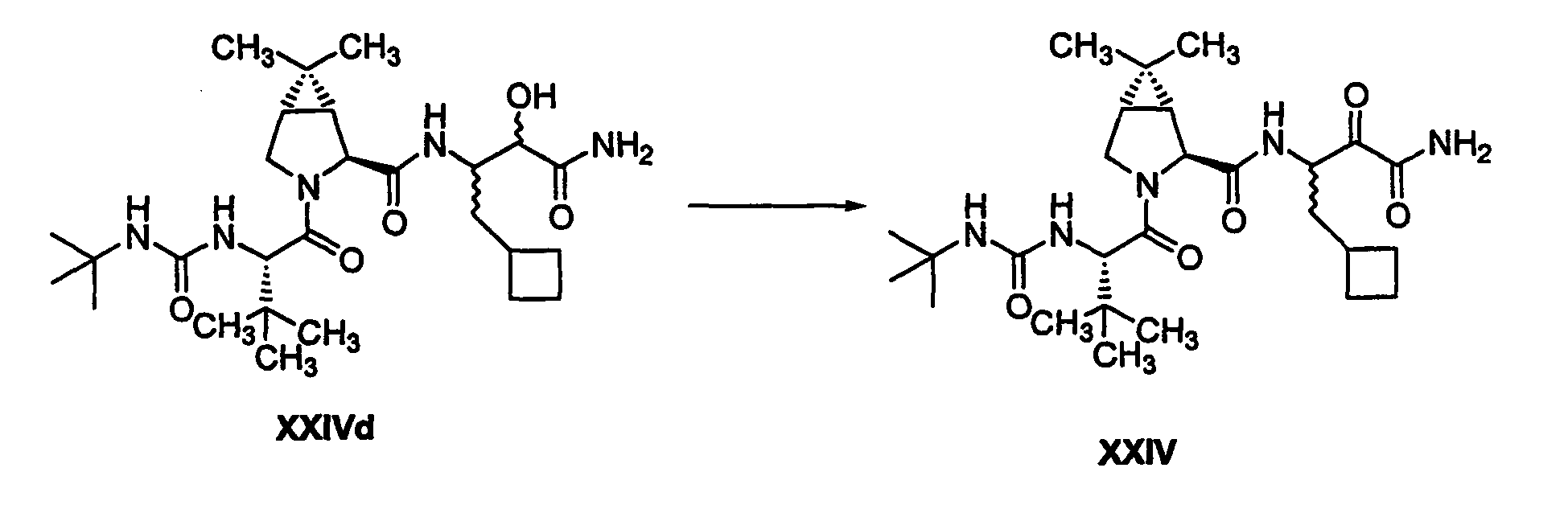
- A solution of amide XXIVd (470 mg, 0.9 mmol) in toluene and DMSO (1:1 20 mL) at 0 °C was treated with EDCI (1.72 g, 9.0 mmol) and dichloroacetic acid (0.37 mL, 4.5 mmol) and stirred at 0 °C for 4h. The reaction mixture was diluted with CH2Cl2, and washed with satd. NaHCO3, and brine. The organic layer was dried (MgSO4), filtered, concentrated, in vacuo and purified by chromatography (SiO2, Acetone/Hexanes 3:7) to yield XXIV as a colorless solid.
-

-

- A solution of Fmoc-glycine (Bachem, 2.0 g, 6.87 mmol) in CH2Cl2 (20 mL) was treated with 2-phenyl-2-propanol (Aldrich, 3.36 g, 24.7 mmol), DCC (1M soln CH2Cl2, 8.24 mL), DMAP (167 mg, 1.37 mmol) and stirred at rt. for 24 h. The reaction mixture was concentrated in vacuo and diluted with Et2O (100 mL). The solid seperating out was filtered and the filterate was washed with satd. NaHCO3. The organic layer was dried (MgSO4), filtered, concentrated in vacuo, and purified by chromatography (SiO2, EtOAc/Hex 1:5) to yield ester XXVc (1.1 g) as a colorless viscous liquid.
-

- A solution of XXVc in CH2Cl2 (16.0 mL) was treated with piperidine (4.0 mL) and stirred at rt. for 0.5 h. The reaction mixture was concentrated in vacuo and purified by chromatography (SiO2, Acetone/Hexanes 1:10 to 1:1) to yield the amine XXVd (420 mg) as a colorless liquid.
-

- A solution of methyl ester XXIVc (381 mg, 1.0 mmol) in THF/H2O (1:1, 5 mL) was treated with LiOH•H2O (62 mg, 1.5 mmol) and stirred at rt. for 3 h. The reaction mixture was acidified with aq. HCl and concentrated in vacuo to obtain the free acid.
- A solution of acid (2.0 g, 5.5 mmol) in DMF/CH2Cl2 (1:1, 40.0 mL) at-10 °C was treated with amine XXIIIg (1.51 g, 6.8 mmol), EDCl (1.57 g, 8.25 mmol), HOOBt (1.41 g, 8.25 mmol) and NMM (2.5 g, 24.7 mmol). The reaction mixture was stirred at 0 °C for 48 h and concentrated in vacuo. The residue was diluted with aq. 1M HCl (100 mL) and extracted with CH2Cl2 (3x100 mL). The combined organic layers were extracted with aq. NaHCO3, aq. HCl, brine, dried (MgSO4) filtered, concentrated in vacuo to obtain XXVe (3.17 g) as a tan colored solid used further without any purification.
-

- A solution of methyl ester XXVe (2.5 g, 4.66 mmol) in THF/H2O/CH3OH (1:1:1, 60 mL) was treated with LiOH•H2O (200 mg, 4.87 mmol) and stirred at rt. for 4 h. The reaction mixture was acidified with aq. HCl and concentrated in vacuo to obtain the free acid.
- A solution of acid (200.0 mg, 0.38 mmol) in DMF/CH2Cl2 (1:1, 6.0 mL) at - 10°C was treated with amine XXVd (78 mg, 0.4 mmol), EDCl (105 mg, 0.55 mmol), HOOBt (95 mg, 0.55 mmol) and NMM (150 mg, 1.48 mmol). The reaction mixture was stirred at 0 °C for 48 h and concentrated in vacuo. The residue was diluted with aq. 1 M HCl (30 mL) and extracted with CH2Cl2 (3x30 mL). The combined organic layers were extracted with aq. NaHCO3 (2x30 mL), aq. HCl, brine (30 mL), dried (MgSO4) filtered, concentrated in vacuo to obtain XXVf (240 mg) as a tan colored solid.
-

- A solution of XXVf (240 mg, 0.28 mmol) in CH2Cl2 (10 mL) was treated with Dess-Martin reagent (Omega, 242 mg, 0.56 mmol) and stirred at rt. for 2 h. After the oxidation was complete (TLC, Acetone/Hex 1:4) the reaction mixture was diluted with satd. NaHCO3 (20 mL) and Na2S2O3 (10% aq soln, 20 mL). The reaction mixture was stirred for 30 min and extractred with CH2Cl2 (3x30 mL). The combined organic layers were extracted with satd. NaHCO3, brine, dried (MgSO4) filtered concentrated in vacuo and purified by chromatography (SiO2, acetone/Hexanes 1:5) to yield XXV (122 mg) as a colorless solid.
-

-

- To a stirred solution of N-Boc-3,4-dehydroproline XXVIa (5.0 g, 23.5 mmol), di-tert-butyl dicarbonate (7.5 g, 34.4 mmol), and 4-N,N-dimethylaminopyridine (0.40 g, 3.33 mmol) in acetonitrile (100 mL) at room temperature was added triethylamine (5.0 mL, 35.6 mmol). The resulting solution was stirred at this temperature for 18 h before it was concentrated in vacuo. The dark brown residue was purified by flash column chromatography eluting with 10-25% EtOAc/hexane to give the product XXVIb as a pale yellow oil (5.29 g, 84%).
-

- To a stirred solution of dehydroproline XXVIb (10.1 g, 37.4 mmol), benzyltriethylammonium chloride (1.60 g, 7.02 mmol) in chloroform (120 mL) at room temperature was added 50% aqueous sodium hydroxide (120 g). After vigorously stirred at this temperature for 24 h, the black mixture was diluted with CH2Cl2 (200 mL) and diethyl ether (600 mL). After the layers were separated, the aqueous solution was extracted with CH2Cl2/Et2O (1:2, 3x600 mL). The organic solution was dried (MgSO4) and concentrated. The residue was purified by flash column chromatography using 5-20% EtOAc/hexane to afford 9.34 g (71%) of XXVIc as an off-white solid.
-

- The solution of XXVIc (9.34 g, 26.5 mmol) in CH2Cl2 (25 mL) and CF3CO2H (50 mL) was stirred at room temperature for 4.5 h before it was concentrated in vacuo to give a brown residue which was used in Step 4 without further purification.
-

- Commercial concentrated hydrochloric acid (4.5 mL) was added to a solution of the residue from Step 3 in methanol (70 mL) and the resulting mixture was warmed to 65°C in an oil bath. After 18 h, the mixture was concentrated in vacuo to give a brown oil XXVIe, which was used in Step 5 without further purification.
-

- To a stirred solution of proline methyl ester XXVIe from Step 4, commercial N-Boc-cyclohexylglycine XXVIf (10.2 g, 40.0 mmol) and [O-(7-azabenzotriazol-1-yl)-1,1,3,3-tetramethyluronium hexafluorophosphate] (HATU) (16.0 g, 42.1 mmol) in DMF (200 mL) at 0°C was added diisopropylethylamine (18.0 mL, 104 mmol) . After allowed to warm to room temperature along with the ice bath over night (18 h), the reaction mixture was diluted with EtOAc (600 mL), 5% H3PO4 (150 mL) and brine (150 mL). The organic solution was washed with 5% H3PO4 (150 mL), saturated NaHCO3 (2x200 mL) before it was dried (MgSO4), filtered and concentrated in vacuo. The residue was purified by flash column chromatography using 5-20% EtOAc/hexane to afford 3.84 g (32%, three steps) of XXVIg as an off-white solid.
-

- The solution of methyl ester XXVIg (5.87g, 13.1 mmol) and LiOH (1.65 g, 39.3 mmol) in THF/MeOH/H2O (1:1:1, 90 mL) was stirred at room temperature for 4 h. Methanol and THF were removed under reduced pressure. The aqueous solution was acidified to PH∼2 using 1 N aqueous HCl solution (50 mL) and saturated with solid sodium chloride before it was extracted with EtOAc (3x150 mL). The organic solutions were combined, dried (MgSO4), filtered and concentrated in vacuo to give a white solid XXVIh (5.8 g, quantitative).
-

- The desired product XXIIIi was prepared according to the procedure in Example XXIII, Step 11.
-

- The desired product XXVI was prepared according to the procedure in Example XXIII, Step 12.
-

-

- The desired product XXVIIa was prepared according to the procedure in Example XXIII, Step 9.
-

- The desired product XXVIIb was prepared according to the procedure in Example XXIV, Step 2.
-

- The desired product XXVII was prepared according to the procedure in Example XXIII, Step 12.
-
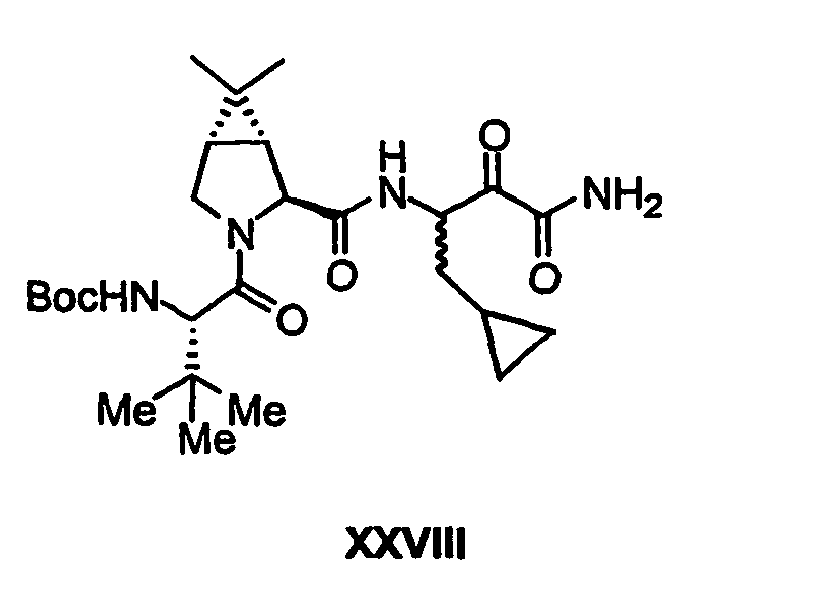
-
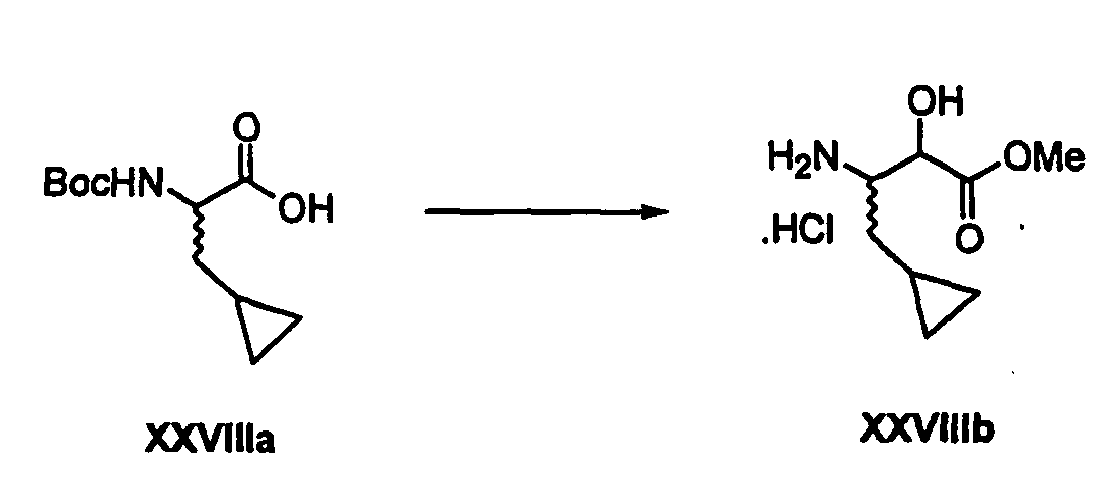
- The intermediate XXVIIIb was prepared according to the procedure in Example XXIII, Steps 3-6.
-

- The acid from Example XXIV, Step 2 (XXVIIIc) (0.7g) was reacted with product from Step 1 above (0.436g), HATU (0.934g) and DIPEA (1.64 mL) in the manner previously described in Example IX, Step 2a to afford 0.66 g of the desired product XXVIIId.
-

- The product of Step 2 (0.5g) was reacted with Dess-Martin reagent (1g) in the manner previously described in Example XX, Step 7. Purification by flash column chromatography (40% EtOAc, Hexane, silica) furnished 0.35g of product XXVIIIe. Mass spectrum (LCMS) 522 (M+H+).
-

- The product of Step 4 (0.3g) was added a 1/1 H2O/MeOH solution (20 mL) and NaHCO3 solid (242 mg, 5equiv.). After being stirred for 18 hours at room temperature, the reaction was diluted with EtOAc and layers were separated. The aqueous layer was acidified to pH 2 with HCl 1.0 N and extracted with EtOAc. The EtOAc layer was washed with brine then dried over MgSO4, filtered and concentrated in vacuo to afford product XXVIIIf as a white powder (0.26g). Mass spectrum (LCMS) 508 (M+H+).
-

- The product of Step 5 (0.15g) was dissolved in CH2Cl2 and reacted with HATU (0.137g), NH4Cl (0.08g, 5equiv.) and DIPEA (0.53 mL). After 2 hours at room temperature, the reaction was diluted with EtOAc, washed with a 10% citric acid solution, then a saturated NaHCO3 solution. The EtOAc layer was washed with brine then dried over MgSO4, filtered and concentrated in vacuo to afford a crude mixture. Purification by flash column chromatography (30% Acetone, Hexane, silica) furnished the desired product XXVIII (0.096g). Mass spectrum (LCMS) 507 (M+H+).
-
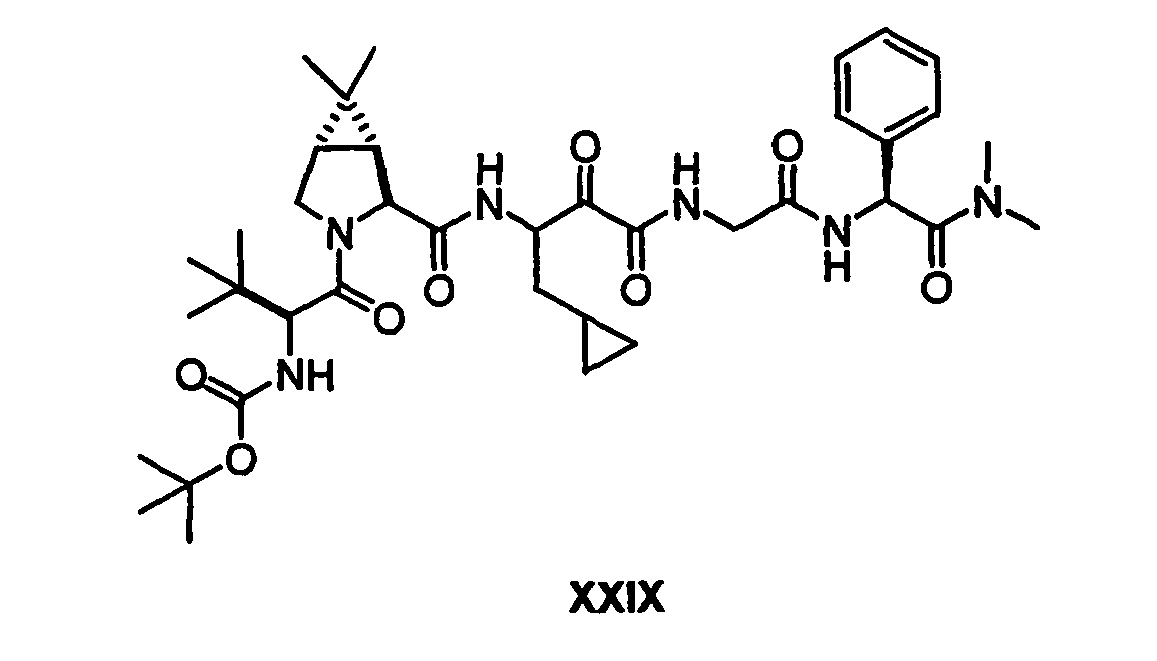
-
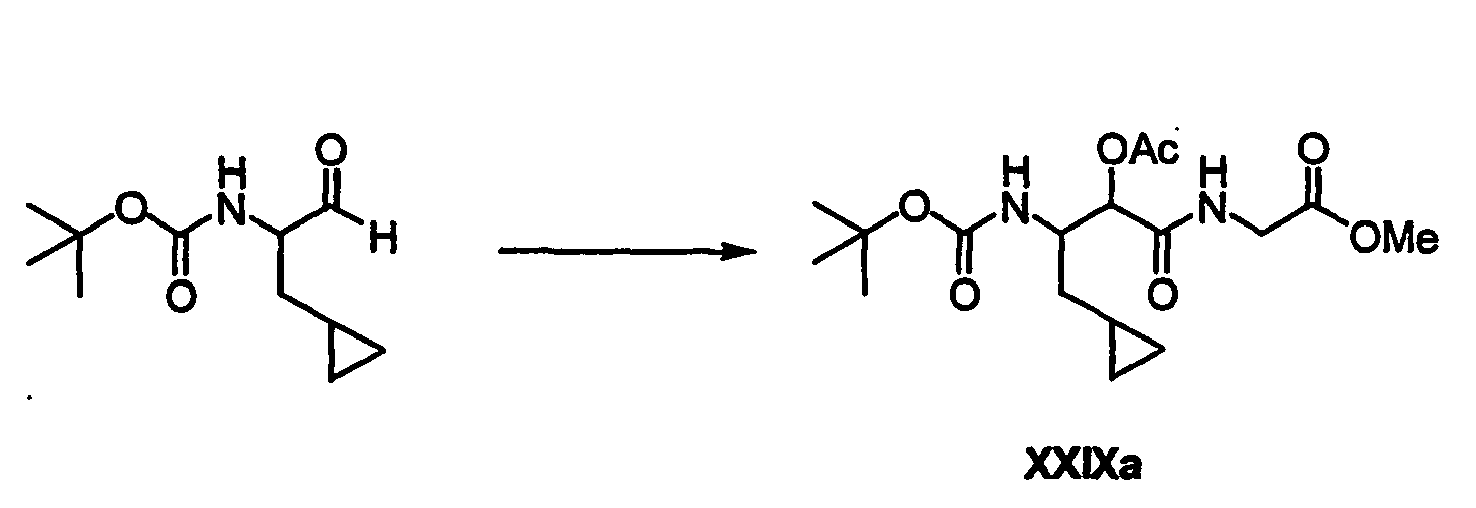
- To a 0 °C solution of the starting aldehyde (4.0g) in CH2Cl2 (75 mL) was added acetic acid (2.0 equiv., 2.15 mL) followed by methylisocyanoacetate (1.1 equiv., 1.9 mL). The reaction was then gradually warmed-up to room temperature. After 18 hours (overnight), the reaction was diluted with EtOAc and washed with a saturated NaHCO3 solution. The EtOAc layer was washed with brine then dried over MgSO4, filtered and concentrated in vacuo to afford a crude mixture. Purification by flash column chromatography (30 to 40% EtOAc, Hexane, silica) furnished the product XXIXa (4.5g).
-

- To a 0 °C solution of XXIXa (4.4g) in THF (100 mL) was added 26 mL (2.2 equiv.) of a 1.0 N LiOH solution. The reaction was stirred at this temperature for 2 hours then warmed-up to room temperature. After 2 hours, reaction mixture was acidified to pH 2 with a 1.0 N HCl solution. EtOAc was added and layers were separated. The EtOAc layer was washed with brine then dried over MgSO4, filtered and concentrated in vacuo to afford product XXIXb (3.7g).
-

- The acid XXIXb was reacted with the amine from Example XV in the manner previously described in Example XXI, Step 4. The resulting intermediate was then treated with HCl in the manner previously described in Example XXIII, Step 9 to afford product XXIXc.
-

- The acid XXVIIIc (2.43g) was dissolved in CH2Cl2 and was reacted with amine XXIXc (2.47g), HATU (2.5g) and DIPEA (5.8 mL) in the manner previously described in Example IX, Step 2a to afford, after purification by flash column chromatography (4% MeOH, CH2Cl2, silica), the desired product XXIXd (4.35g). Mass spectrum (LCMS) 727 (M+H+).
-

- The product of Step 4 (4.2g) was reacted with Dess-Martin reagent (6.4g) in the manner previously described in preparative Example XX, Step 7. Purification by flash column chromatography (100% EtOAc, silica) furnished 3 g of the final product XXIX. Mass spectrum (LCMS) 725 (M+H+).
-

-

- The alcohol 2-(trifluoromethyl)propan-2-ol (1.28g) was reacted with N,N-disucciminidyl carbonate (3.84g) and Et3N (4.2 mL) in dry CH3CN (50 mL) for 18 hours. The mixture was diluted with EtOAc (200 mL) and filtered. The filtrate was washed with NaHCO3, brine then dried over MgSO4, filtered and concentrated in vacuo to afford a crude mixture. Purification by flash column chromatography (50% EtOAc, Hexane, silica) furnished the desired product XXXa (0.3g).
-
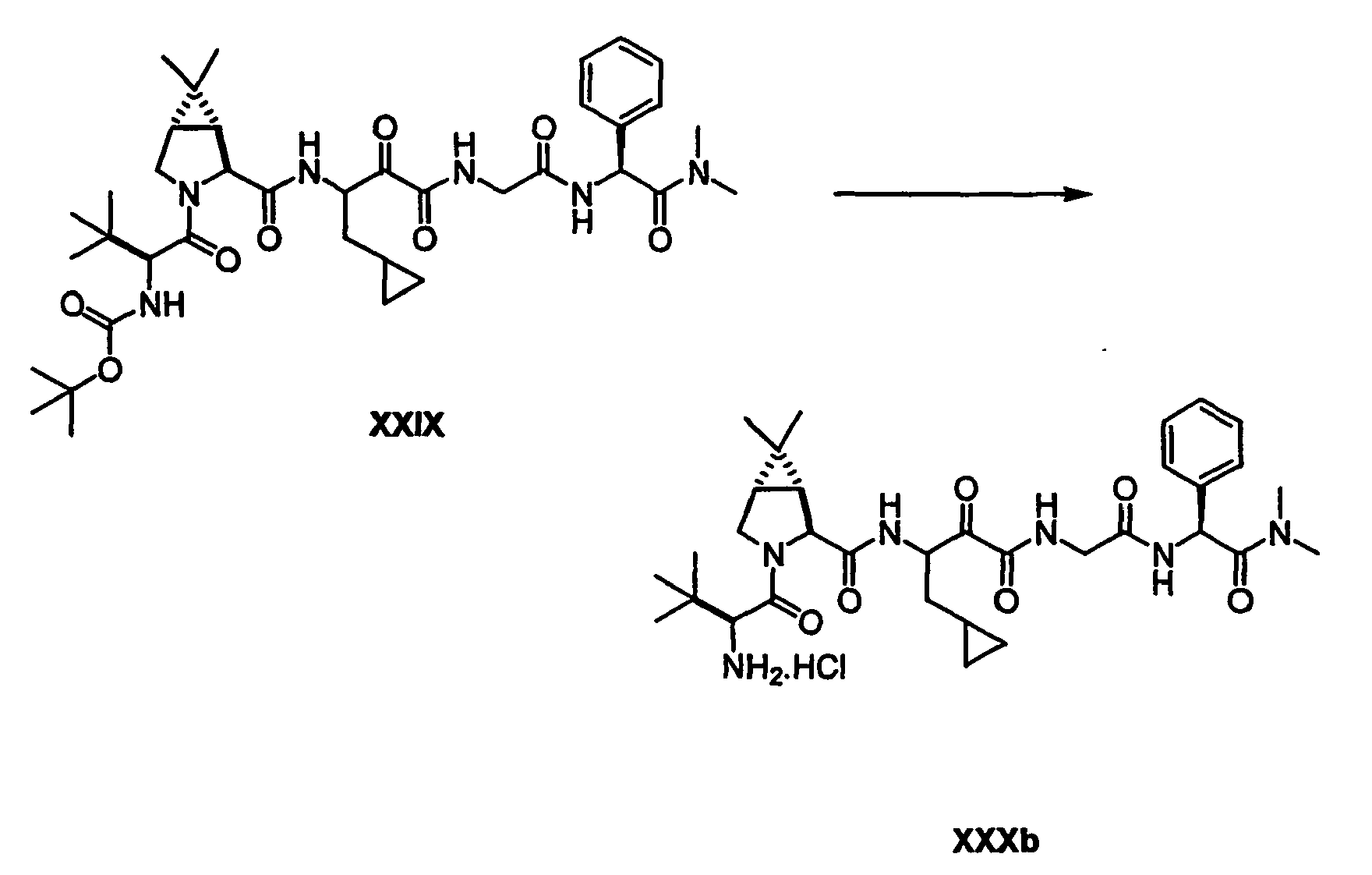
- The product from Example XXIX (0.3g) was treated with 100 mL of 4.0 N HCl in dioxane. After 1 h, 200 mL of Et2O were added and the resulting precipitate was filtered off and dried under vacuo to afford the product XXXb (0.27g) as a white powder. Mass spectrum (LCMS) 625 (M - HCl +H+).
-

- To a room temperature solution of XXXb (0.05g) in CH2Cl2 (5 mL) was added DIPEA (0.040 mL) XXXa (1.5 equiv., 0.030g), followed by 1 crystal of DMAP. After 30 minutes, reaction was diluted with EtOAc (20 mL) and washed with HCl 1.5 N then NaHCO3 then brine. EtOAc layer was dried over MgSO4, filtered and concentrated in vacuo to afford a crude mixture. Purification by preparative chromatography (40% Acetone, Hexane, silica) furnished the desired product XXX (0.044g). Mass spectrum (LCMS) 779 (M+H+).
-

-

- To a solution of XXXb (0.05g) in CH2Cl2 (5 mL) at room temperature was added DIPEA (0.040 mL) and tert-butylisocyanate (1.2 equiv., 0.01 mL). After 18 hours, reaction was diluted with EtOAc (20 mL) and washed with HCl 1.5 N, NaHCO3 and brine. EtOAc layer was dried over MgSO4, filtered and concentrated in vacuo to afford a crude mixture. Purification by preparative chromatography (100% EtOAc, silica) furnished the final product XXXI (0.021g). Mass spectrum (LCMS) 724 (M+H+).
-

-

- The product from Example XXVIII was treated in the manner previously described in preparative Example XXX, Step 2 to afford product XXXIIa. Mass spectrum (LCMS) 407 (M - HCl +H+).
-

- The amine XXXIIa was reacted with XXXa in the manner previously described in preparative Example XXX, Step 3 to afford the desired product XXXII. Mass spectrum (LCMS) 508 (M+H+),
-

-
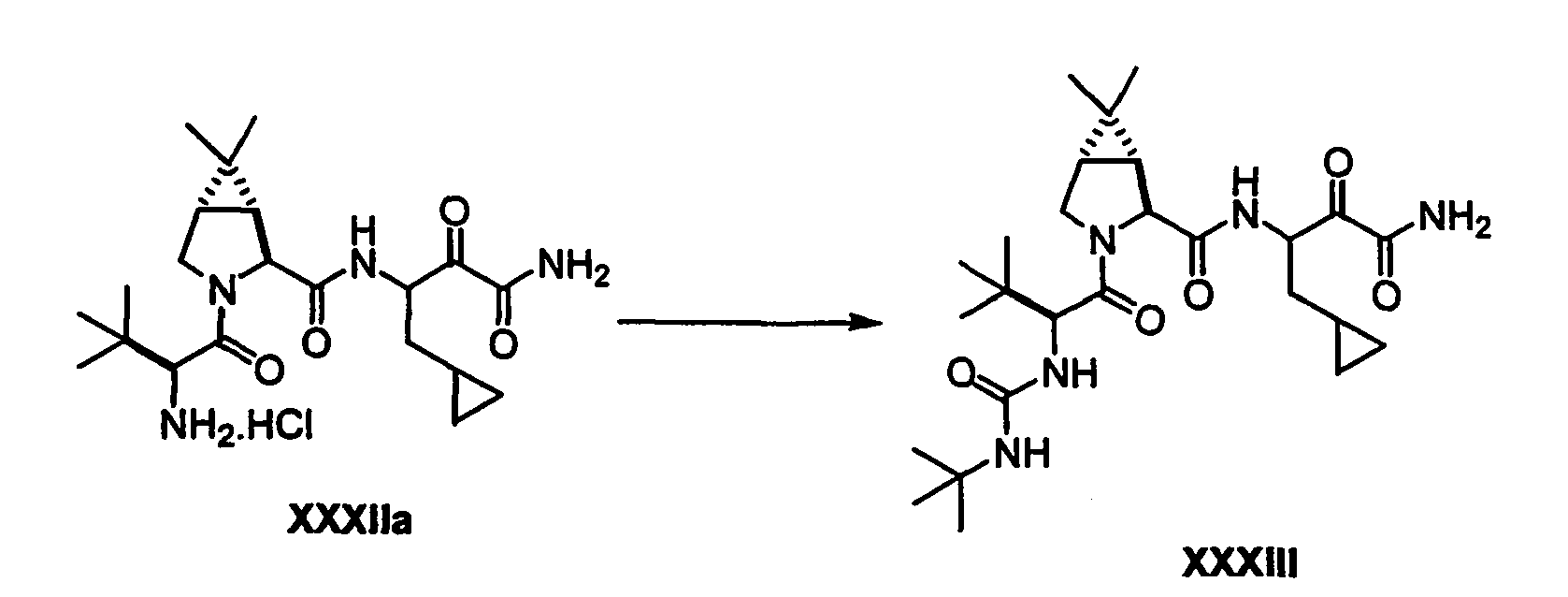
- The amine XXXIIa was reacted with tert-butylisocyanate in the manner previously described in Example XXXI, Step 1, to afford the product XXXIII. Mass spectrum (LCMS) 561 (M+H+).
-

-

- To the mixture of ester (6.0g) and molecular sieve (5.2g) in anhydrous methylene chloride (35 mL) was aded pyrrolidine (5.7 mL, 66.36 mmoL). The resulting brown slurry was stirred at room temperature under N2 for 24 h, filtered and washed with anhydrous CH3CN. The combined filtrate was concentrated to yield the desired product.
-

- To a solution of the product from proceeding step in CH3CN (35 mL) was added anhydrous K2CO3, methallyl chloride (2.77g, 30.5 mmoL), Nal (1.07g, 6.7 mmoL). The resulting slurry was stirred at ambient temperature under N2 for 24 h. 50 mL of ice-cold water was added followed by 2N KHSO4 solution until pH was 1. EtOAc (100 mL) was added and the mixture was stirred for 0.75h. Combined organic layer was collected and washed with brine, dried over MgSO4, and evaporated to yield the desired product.
-

- The product from preceding step (2.7 g, 8.16 mmoL) was dissolved in dioxane (20 mL) and treated with freshly prepared 1 N LiOH (9 mL). The reaction mixture was stirred at ambient temperature under N2 for 20 h. The reaction mixture was taken in EtOAc and washed with H2O. The combined aqueous phase was cooled to 0°C and acidifed to pH 1.65 using 1 N HCl. The turbid mixture was extracted with EtOAc (2 x 100 mL). Combined organic layer was washed with brine, dried over MgSO4, concentrated to give the desired acid (3.40 g).
-

- To a suspension of NaBH(OAc)3 (3.93g, 18.5 mmoL) in CH2Cl2 (55 mL) was added a solution of product from preceding step in anhydrous CH2Cl2 (20 mL) and acetic acid (2 mL). The slurry was stirred at ambient temperature for 20 h . Ice cold water (100 mL) was added to the slurry and stirred for 1/2 hr. Organic layer was separated, filtered, dried and evaporated to yield the desired product.
-
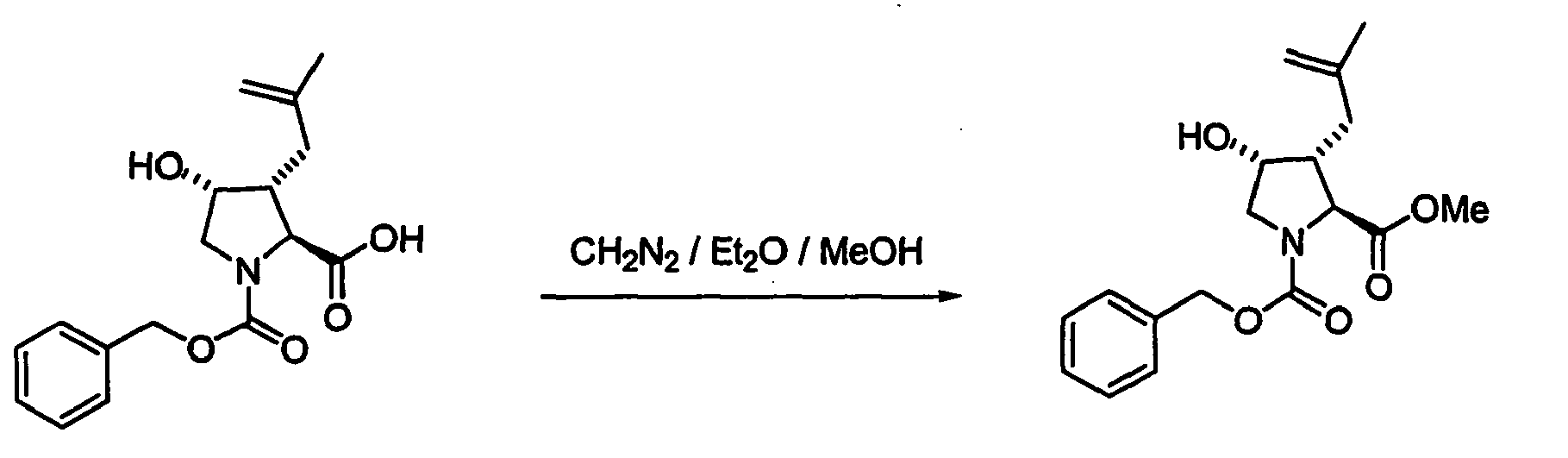
- To a solution of the product from preceding step (1.9g) in MeOH (40 mL) was treated with excess of CH2N2 / Et2O solution and stirred for overnight. The reaction mixture was concentrated to dryness to yield a crude residue. The residue was chromatographed on silica gel, eluting with a gradient of EtOAc / hexane to afford 1.07 g of the pure desired product.
-

- To a solution of product from preceding step (1.36 g) in anhydrous CH2Cl2 (40 mL) was treated with BF3. Me2O (0.7 mL). The reaction mixture was stirred at ambient temperature for 20 h and quenched with sat. NaHCO3 (30 mL) ad stirred for 1/2 hr. Organic layer was separated and combined organic layer was washed with brine, dried over MgSO4, concentrated to give crude residue. The residue was chromotagraphed on silica gel eluting with a gradient of EtOAc / hexane to afford 0.88 g of the desired compound.
-

- To a solution of the product (0.92 g) from preceding step in MeOH (30 mL) was added 10 % Pd/C (0.16 g) at room temperature and hydrogenated at ambient temperature under 1 atm. Pressure. The reaction mixture was stirred for 4 h and concentrated to dryness to yeild the desired compound.
-

- The desired product was prepared according to the procedure in Example XXIII, Step 10.
-

- The desired acid product was prepared according to the procedure in Example XXIV, Step 3.
-

- The desired product XXXIV was prepared according to the procedure in Example XXIX, Steps 4-5.
-

-

- A solution of triethyl phosphonate (44.8 g) in THF (30 mL) at 0°C was treated with a 1 M solution (200 mL) of sodium bis(trimethylsilylamide) in THF. The resulting mixture was stirred at RT for 0.5 hour, and then cooled to 0°C. A solution of 1,4-cyclohexanedione ethylene ketal (15.6 g) in THF (50 mL) was added dropwise, and the resulting solution was stirred at RT for 18 hours. The reaction mixture was then cooled to 0°C, treated with cold aqueous citric acid, and the mixture was extracted with EtOAc. The extract was washed with saturated aqueous NaHCO3, then brine; then dried over anhydrous Na2SO4, filtered, and the filtrate evaporated. The residue was chromatographed on silica gel, eluting with a gradient of CH2Cl2/EtOAc to afford the title compound (21 g), 92% yield. Mass spectrum (FAB) 227.3 (M+H+).
-

- The product of the preceding step (20 g) was dissolved in EtOH (150 mL) and treated with 10% Pd/C under 1 atm of hydrogen for 3 days. The mixture was filtered and the filtrate evaporated to afford the title compound (20.3 g), 100 % yield. Mass spectrum (FAB) 229.2 (M+H+).
-
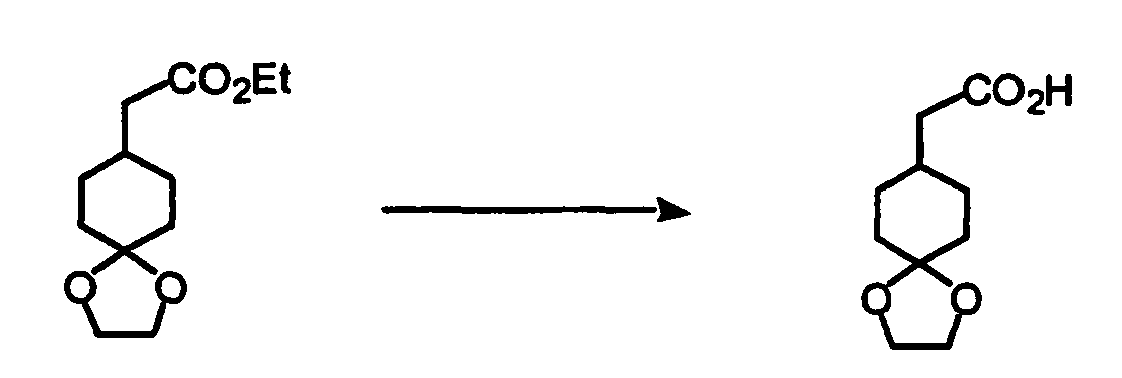
- The product of the preceding step (20 g) was dissolved in MeOH (150 mL) and treated with a solution of LiOH (3.6 g) in water (50 mL). The mixture was stirred for 18 hours, and concentrated under vacuum. The residue was dissolved in cold water (100 mL), the solution was acidified to pH 2-3 with 5N HCl, and the resulting mixture was extracted with EtOAc. The extract was dried over anhydrous Na2SO4, filtered, and the filtrate evaporated to afford the title compound (17.1 g), 97% yield. Mass spectrum (FAB) 201.2 (M+H+).
-

- 1. The product of the preceding step (3.0 g) was dissolved in Et2O (150 mL), treated with Et3N (2.1 mL), and the solution cooled to -78°C. Pivaloyl chloride (1.85 mL) was added dropwise, and after 0.25 hour additional stirring, the reaction was allowed to warm to 0°C over 0.75 hour, and then cooled again to -78°C to afford a solution of mixed anhydride for reaction in part 2.
- 2. A solution of (S)-4-benzyl-2-oxazolidinone (2.66 g) in THF (22 mL) was cooled to -78°C, and a 1.6 M solution (9.38 mL) of n-butyllithium in hexane was added dropwise. After an additional 0.33 hour stirring at this temperature, the solution was transferred via canula to the cold solution of part 1. The mixture was stirred at -78°C , then warmed to 0°C, and stirred at this temperature for 0.5 hour. The organic layer was separated, the aqueous layer was extracted with Et2O, the combined organics were washed with brine, dried over anhydrous Na2SO4, filtered, and the filtrate evaporated. The residue was chromatographed on silica gel, eluting with a gradient of hexane/EtOAc (9:1) to afford the title compound (5.0 g), 93% yield. Mass spectrum (FAB) 360.4 (M+H+).
-

- The product of the preceding step (2.7 g) was dissolved in THF (25 mL), cooled to -78°C, transferred by canula to a solution of 0.5 M potassium bis(trimethylsilyl)amide/toluene (16.5 mL) in THF (25 mL) at -78°C, and the resulting solution was stirred at -78°C for 0.75 hour. To this solution was added via canula a solution of trisyl azide (3.01 g) in THF (25 mL) pre-cooled to -78°C. After 1.5 minutes, the reaction was quenched with acetic acid (1.99 mL), the reaction was warmed to RT, and then stirred for 16 hours. The reaction was diluted with EtOAc (300 mL), and washed with 5% aqueous NaCl. The aqueous phase was extracted with EtOAc, the combined organic phases were washed with saturated aqueous NaHCO3, then brine; then dried over anhydrous Na2SO4, filtered, and the filtrate evaporated. The residue was chromatographed on silica gel, eluting with EtOAc/hexane (1:3) to afford the title compound (2.65 g), 88% yield.
-

- The product of the preceding step (11.4 g) was dissolved in 95% formic acid (70 mL) and heated at 70°C for 0.5 hour while stirring. The solution was evaporated under vacuum, and the residue was taken up in EtOAc. The solution was washed with saturated aqueous NaHCO3, then brine; then dried over anhydrous Na2SO4, filtered, and the filtrate evaporated. The residue was chromatographed on silica gel to afford the title compound (8.2 g).
-

- The product of the preceding step (8.2 g) was dissolved in CH2Cl2 (16 mL) and treated with diethylaminosulfur trifluoride (DAST, 7.00 mL) at RT for 3 hours. The reaction was poured over ice/water (200 cc), and extracted with CH2Cl2. The extract was washed with saturated aqueous NaHCO3, then brine; then dried over anhydrous Na2SO4, filtered, and the filtrate evaporated. The residue was chromatographed on silica gel, eluting with EtOAc/hexane (15:85) to afford the title compound (4.5 g), 52% yield.
-

- The product of the preceding step (3.7 g) was dissolved in a mixture of THF (150 mL) and water (48 mL), cooled to 0°C, treated with 30% H2O2 (3.95 mL), and then with LiOH·H20 (0.86 g). The mixture was stirred for 1 hour at 0°C, then quenched with a solution of Na2SO3 (5.6 g) in water (30 mL), followed by a solution of 0.5 N NaHCO3 (100 mL). The mixture was concentrated under vacuum to 1/2 volume, diluted with water (to 500 mL), and extracted with CH2Cl2 (4 x 200 mL). The aqueous phase was acidified to pH 1-2 with 5N HCl, and extracted with EtOAc (4 x 200 mL). The extract was washed brine; then dried over anhydrous Na2SO4, filtered, and the filtrate evaporated to afford the title compound (1.95 g), 91% yield, which was used directly in the next step.
-

- The product of the preceding example (2.6 g) was dissolved in Et2O (50 mL) and treated dropwise with a solution of CH2N2 in Et2O until the solution remained yellow. The solution was stirred for 18 hours, then evaporated under vacuum to afford the title compound (2.8), which was used directly in the next step.
-

- The product of the preceding step (1.95 g) was dissolved in MeOH (150 mL), treated with formic acid (1.7 mL), then treated with 10% Pd/C (3.3 g, Degussa type E101) under 1 atm of hydrogen for 1.5 hours. The mixture was filtered and the filtrate evaporated to afford the title compound (2.1 g) as the formic acid salt, which was used directly in the next step.
-
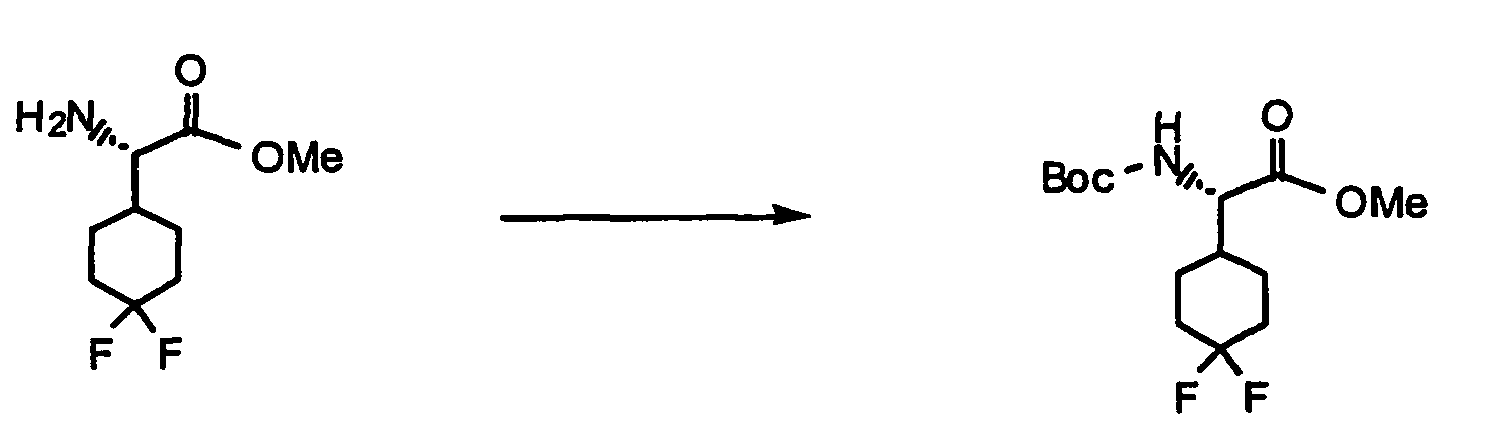
- The product of the preceding step (2.1 g) was dissolved in 1,4-dioxane (100 mL) and di-tert-butyl dicarbonate (1.9 g) was added, followed by diisopropylethylamine (2.9 mL). The solution was stirred for 18 hours, and concentrated under vacuum. The residue was treated with aqueous 5% KH2PO4 and the mixture extracted with EtOAc. The extract was washed with brine; then dried over anhydrous MgSO4, filtered, and the filtrate evaporated. The residue was chromatographed on silica gel, eluting with a gradient of CH2Cl2/Et2O to afford the title compound (2.5 g), 99% yield. Mass spectrum (FAB) 307.9 (M+H+).
-

- The product of the preceding step (2.5 g) was dissolved in 1,4-dioxane (35 mL), treated with aqueous 1 M LiOH (17 mL), and stirred for 2 hours. The mixture was quenched with ice/water (125 cc), the mixture was acidified to pH 3-4 with 3N HCl, and extracted with EtOAc. The extract was dried over anhydrous MgSO4, filtered, and the filtrate evaporated to afford the title compound (2.3 g), 96% yield. Mass spectrum (FAB) 294.0 (M+H+).
-

- The desired product was prepared according to the procedure in Example XXIII, Step 10.
-

- The desired acid product was prepared according to the procedure in Example XXIV, Step 3.
-

- The desired acid product was prepared according to the procedure in Example XXIX, Step 4.
- Compounds of formulas XXXVI and XXXVIII were prepared according to the scheme below and utilizing preparative Examples 11 through 15 discussed above.

- The compound of formula XXXVIb was prepared from a compound of formula XXXVIa as follows by known procedures:
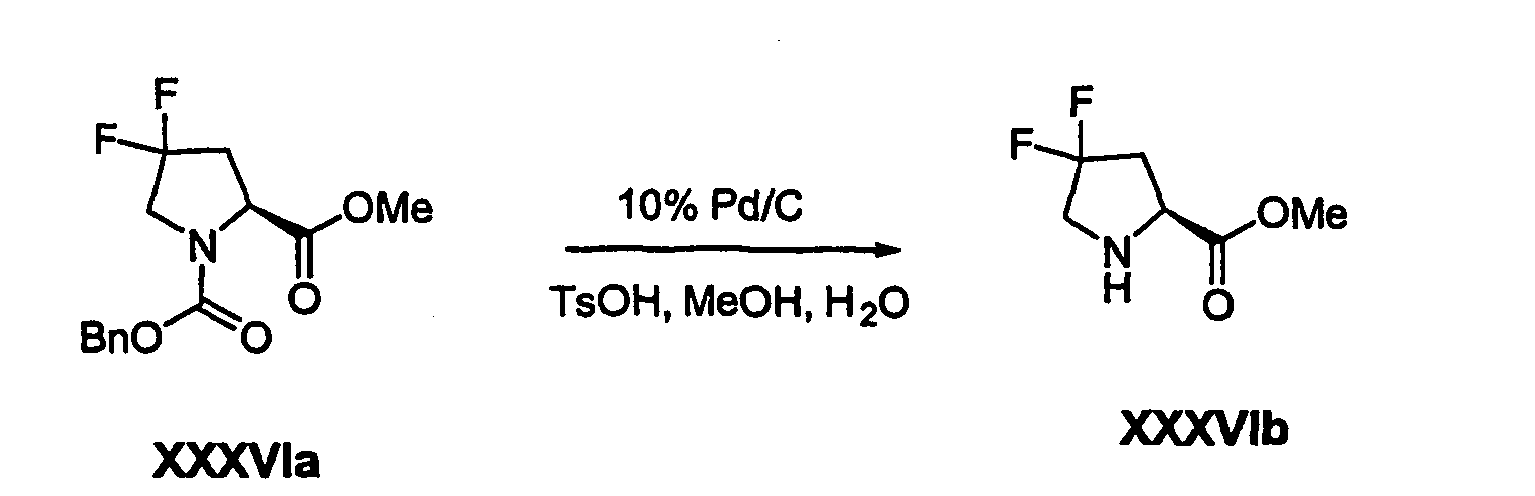
- To a solution of Compound XXXVIa (6.58g, 22 mmol) in 100 mL of MeOH was added 10% Pd/C (0.8 g) and p-toluene sulfonic acid (4.2 g). The reaction mixture was subjected to hydrogenation at room temperature overnight. The reaction mixture was filtered through celite and washed with excess MeOH. The combined filtrate was concentrated in-vacuo to provide the title compound XXXVIb as a gummy. Conversion of XXXVIb to XXXVI and XXXVII followed the route as shown in the scheme above and according to preparative examples 11-15.
- A compound of the formula XXXVIII was prepared utilizing the following scheme and following preparative Examples 11 through 15 discussed earlier.

-

-

- A solution of the sulfonyl chloride XXXIXa prepared by the procedure of H. Mcklwain (J. Chem. Soc 1941, 75) was added dropwise to a mixture of 1.1. equiv of t-butylmethylamine and triethylamine at -78 °C and stirred at rt for 2h. The reaction mixture was concentrated in vacuo and purified by chromatography (SiO2, Hex/Acetone 4:1) to yield sulfonamide XXXIXb as a colorless oil.
-

- A solution of the Cbz-protected amine XXXIXb was dissolved in methanol and treated with 5 mol% of Pd /C (5%w/w) and hydrogenated at 60 psi. The reaction mixture was filtered through a plug of celite and concentrated in vacuo to obtain the free amine XXXIXc which solidfied on standing.
-

- The hydroxy sulfonamide XXXIXd was synthesized similar to the procedure for the synthesis of XXVf except replacing the amine XXVd with XXXIXc. The crude reaction mixture directly used for the next reaction.
-

- The hydroxy amide XXXIXd was oxidized to compound XXXIX using the Dess Martin reagent following the procedure for the synthesis of XXV (step 5). The crude mixture was purified by chromatography (SiO2, Acetone/Hexane 3:7) to obtain XXXIX as a colorless solid.
- Spectrophotometric Assay: Spectrophotometric assay for the HCV serine protease was performed on the inventive compounds by following the procedure described by R. Zhang et al, Analytical Biochemistry, 270 (1999) 268-275. The assay based on the proteolysis of chromogenic ester substrates is suitable for the continuous monitoring of HCV NS3 protease activity. The substrates were derived from the P side of the NS5A-NS5B junction sequence (Ac-DTEDVVX(Nva), where X = A or P) whose C-terminal carboxyl groups were esterified with one of four different chromophoric alcohols (3- or 4-nitrophenol, 7-hydroxy-4-methyl-coumarin, or 4-phenylazophenol). Presented below are the synthesis, characterization and application of these novel spectrophotometric ester substrates to high throughput screening and detailed kinetic evaluation of HCV NS3 protease inhibitors.
- Materials: Chemical reagents for assay related buffers were obtained from Sigma Chemical Company (St. Louis, Missouri). Reagents for peptide synthesis were from Aldrich Chemicals, Novabiochem (San Diego, California), Applied Biosystems (Foster City, California) and Perseptive Biosystems (Framingham, Massachusetts). Peptides were synthesized manually or on an automated ABI model 431A synthesizer (from Applied Biosystems). UV/VIS Spectrometer model LAMBDA 12 was from Perkin Elmer (Norwalk, Connecticut) and 96-well UV plates were obtained from Coming (Corning, New York). The prewarming block was from USA Scientific (Ocala, Florida) and the 96-well plate vortexer was from Labline Instruments (Melrose Park, Illinois). A Spectramax Plus microtiter plate reader with monochrometer was obtained from Molecular Devices (Sunnyvale, California).
- Enzyme Preparation: Recombinant heterodimeric HCV NS3/NS4A protease (strain 1 a) was prepared by using the procedures published previously (D. L. Sali et al, Biochemistry, 37 (1998) 3392-3401). Protein concentrations were determined by the Biorad dye method using recombinant HCV protease standards previously quantified by amino acid analysis. Prior to assay initiation, the enzyme storage buffer (50 mM sodium phosphate pH 8.0, 300 mM NaCl, 10% glycerol, 0.05% lauryl maltoside and 10 mM DTT) was exchanged for the assay buffer (25 mM MOPS pH 6.5, 300 mM NaCl, 10% glycerol, 0.05% lauryl maltoside, 5 µM EDTA and 5 µM DTT) utilizing a Biorad Bio-Spin P-6 prepacked column. Substrate Synthesis and Purification: The synthesis of the substrates was done as reported by R. Zhang et al, (ibid.) and was initiated by anchoring Fmoc-Nva-OH to 2-chlorotrityl chloride resin using a standard protocol (K. Barlos et al, Int. J. Pept. Protein Res., 37 (1991), 513-520). The peptides were subsequently assembled, using Fmoc chemistry, either manually or on an automatic ABI model 431 peptide synthesizer. The N-acetylated and fully protected peptide fragments were cleaved from the resin either by 10% acetic acid (HOAc) and 10% trifluoroethanol (TFE) in dichloromethane (DCM) for 30 min, or by 2% trifluoroacetic acid (TFA) in DCM for 10 min. The combined filtrate and DCM wash was evaporated azeotropically (or repeatedly extracted by aqueous Na2CO3 solution) to remove the acid used in cleavage. The DCM phase was dried over Na2SO4 and evaporated.
- The ester substrates were assembled using standard acid-alcohol coupling procedures (K. Holmber et al, Acta Chem. Scand., B33 (1979) 410-412). Peptide fragments were dissolved in anhydrous pyridine (30-60 mg/ml) to which 10 molar equivalents of chromophore and a catalytic amount (0.1 eq.) of paratoluenesulfonic acid (pTSA) were added. Dicyclohexylcarbodiimide (DCC, 3 eq.) was added to initiate the coupling reactions. Product formation was monitored by HPLC and found to be complete following 12-72 hour reaction at room temperature. Pyridine solvent was evaporated under vacuum and further removed by azeotropic evaporation with toluene. The peptide ester was deprotected with 95% TFA in DCM for two hours and extracted three times with anhydrous ethyl ether to remove excess chromophore. The deprotected substrate was purified by reversed phase HPLC on a C3 or C8 column with a 30% to 60% acetonitrile gradient (using six column volumes). The overall yield following HPLC purification was approximately 20-30%. The molecular mass was confirmed by electrospray ionization mass spectroscopy. The substrates were stored in dry powder form under desiccation.
- Spectra of Substrates and Products: Spectra of substrates and the corresponding chromophore products were obtained in the pH 6.5 assay buffer. Extinction coefficients were determined at the optimal off-peak wavelength in 1-cm cuvettes (340 nm for 3-Np and HMC, 370 nm for PAP and 400 nm for 4-Np) using multiple dilutions. The optimal off-peak wavelength was defined as that wavelength yielding the maximum fractional difference in absorbance between substrate and product (product OD - substrate OD)/substrate OD).
- Protease Assay: HCV protease assays were performed at 30°C using a 200 µl reaction mix in a 96-well microtiter plate. Assay buffer conditions (25 mM MOPS pH 6.5, 300 mM NaCl, 10% glycerol, 0.05% lauryl maltoside, 5 µM EDTA and 5 µM DTT) were optimized for the NS3/NS4A heterodimer (D. L. Sali et al, ibid.)). Typically, 150 µl mixtures of buffer, substrate and inhibitor were placed in wells (final concentration of DMSO 4 % v/v) and allowed to preincubate at 30 °C for approximately 3 minutes. Fifty µls of prewarmed protease (12 nM, 30°C) in assay buffer, was then used to initiate the reaction (final volume 200 µl).The plates were monitored over the length of the assay (60 minutes) for change in absorbance at the appropriate wavelength (340 nm for 3-Np and HMC, 370 nm for PAP, and 400 nm for 4-Np) using a Spectromax Plus microtiter plate reader equipped with a monochrometer (acceptable results can be obtained with plate readers that utilize cutoff filters). Proteolytic cleavage of the ester linkage between the Nva and the chromophore was monitored at the appropriate wavelength against a no enzyme blank as a control for non-enzymatic hydrolysis. The evaluation of substrate kinetic parameters was performed over a 30-fold substrate concentration range (-6-200 µM). Initial velocities were determined using linear regression and kinetic constants were obtained by fitting the data to the Michaelis-Menten equation using non-linear regression analysis (Mac Curve Fit 1.1, K. Raner). Turnover numbers (k cat) were calculated assuming the enzyme was fully active.
- Evaluation of Inhibitors and Inactivators: The inhibition constants (Ki*) for the competitive inhibitors Ac-D-(D-Gla)-L-I-(Cha)-C-OH (27), Ac-DTEDVVA(Nva)-OH and Ac-DTEDVVP(Nva)-OH were determined experimentally at fixed concentrations of enzyme and substrate by plotting vo/vi vs. inhibitor concentration ([I]o) according to the rearranged Michaelis-Menten equation for competitive inhibition kinetics: vo/vi = 1 + [I]o /(Ki* (1 + [S]o /Km)), where vo is the uninhibited initial velocity, vi is the initial velocity in the presence of inhibitor at any given inhibitor concentration ([I]o) and [S]o is the substrate concentration used. The resulting data were fitted using linear regression and the resulting slope, 1/(Ki*(1+[S]o/Km), was used to calculate the Ki* value.
- The obtained Ki* values for the various compounds of the present invention are given in the afore-mentioned Tables wherein the compounds have been arranged in the order of ranges of Ki* values. From these test results, it would be apparent to the skilled artisan that the compounds of the invention have excellent utility as NS3-serine protease inhibitors.
- While the present invention has been described with in conjunction with the specific embodiments set forth above, many alternatives, modifications and other variations thereof will be apparent to those of ordinary skill in the art. All such alternatives, modifications and variations are intended to fall within the spirit and scope of the present invention.
Table 2 Ex. # STRUCTURE molecular weight 1 
691.7853 2 
627.7441 3 
754.8883 4 
527.6259 5 
698.7799 6 
631.7352 7 
381.476 8 
540.6626 9 
498.5813 10 
633.7482 11 
641.7249 12 
641.7249 13 
683.8061 14 
637.7802 15 
637.7802 16 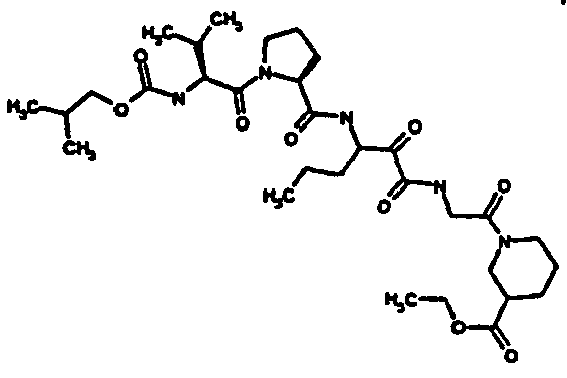
637.7802 17 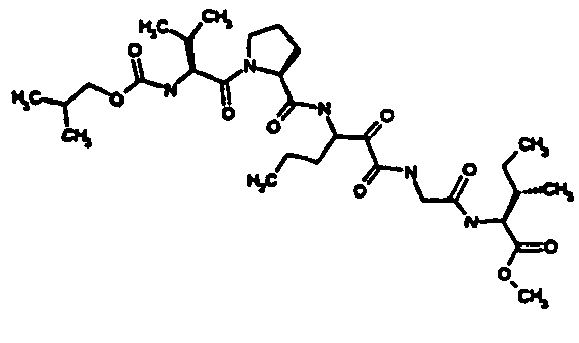
625.769 18 
613.6707 19 
613.6707 20 
627.6978 21 
609.726 22 
609.726 23 
609.726 24 
611.742 25 
600.7183 26 
554.7361 27 
478.5937 28 
546.7132 29 
562.7562 30 
699.8519 31 
643.7435 32 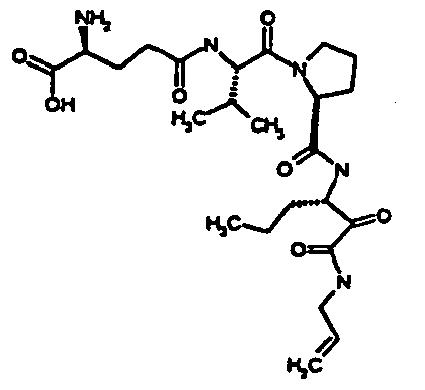
509.6077 33 
637.7802 34 
637.7802 35 
579.6995 36 
537.6619 37 
539.6342 38 
597.7149 39 
493.6055 40 
632.8044 41 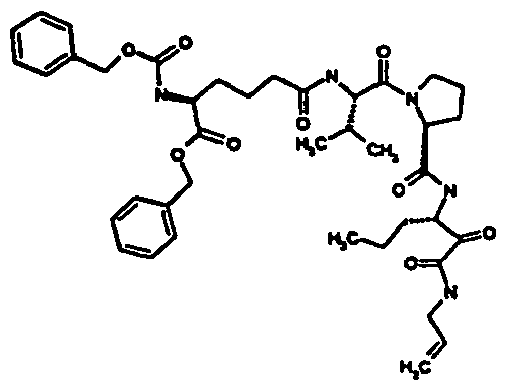
747.8965 42 
523.6348 43 
598.7024 44 
578.712 45 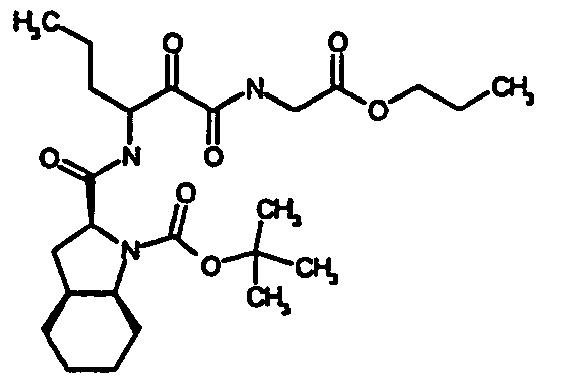
495.6214 46 
627.7878 47 
541.6501 48 
543.666 49 
501.5847 50 
656.7394 51 
578.712 52 
725.8901 53 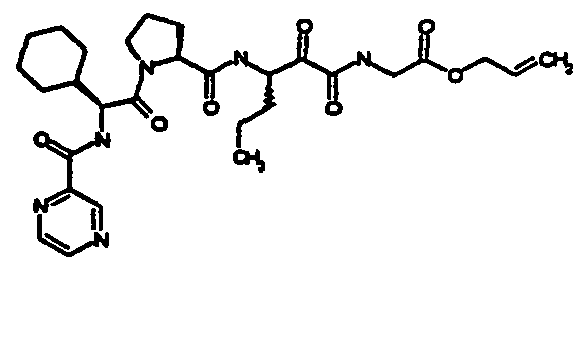
584.6782 54 
538.6467 55 
685.8248 56 
527.6695 57 
810.9557 58 
552.6737 59 
592.7391 60 
534.702 61 
653.8232 62 
696.892 63 
606.7662 64 
643.7435 65 
742.8771 66 
747.8965 67 
747.8965 68 
761.9236 69 
747.8965 70 
733.913 71 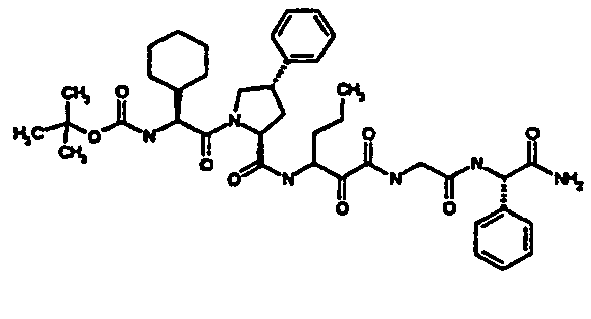
746.9118 72 
646.7935 73 
746.9118 74 
668.8782 75 
628.8129 76 
760.9792 77 
818.0723 78 
761.964 79 
844.0702 80 
753.9443 81 
844.0702 82 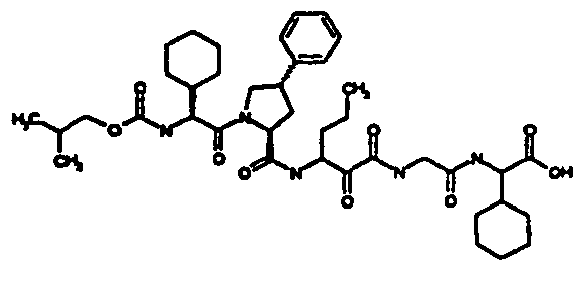
753.9443 83 
747.8965 84 
804.0049 85 
879.2858 86 
823.1774 87 
832.0994 88 
775.9911 89 
725.8901 90 
698.9483 91 
642.84 92 
853.0995 93 
789.9778 94 
809.9682 95 
878.8583 96 
772.006 97 
761.9672 98 
728.85 99 
828.0239 100 
789.0334 101 
775.0063 102 
886.1102 103 
880.8306 104 
855.0718 105 
790.7047 106 
821.0543 107 
685.7812 108 
891.8973 109 
775.0063 110 
785.0452 111 
789.0334 112 
803.0605 113 
862.4689 114 
884.1323 115 
889.5384 116 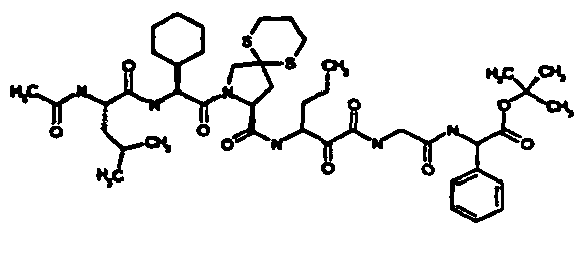
887.1794 117 
831.071 118 
830.0863 119 
858.1405 120 
874.1399 121 
904.1227 122 
929.195 123 
873.0867 124 
872.1019 125 
900.1561 126 
860.11 127 
804.0016 128 
803.0169 129 
831.071 130 
806.0612 131 
749.9528 132 
748.9681 133 
777.0223 134 
842.1382 135 
786.0299 136 
813.0994 137 
829.0988 138 
788.0022 139 
815.0717 140 
846.1265 141 
790.0181 142 
817.0876 143 
833.087 144 
911.2017 145 
931.1921 146 
844.1106 147 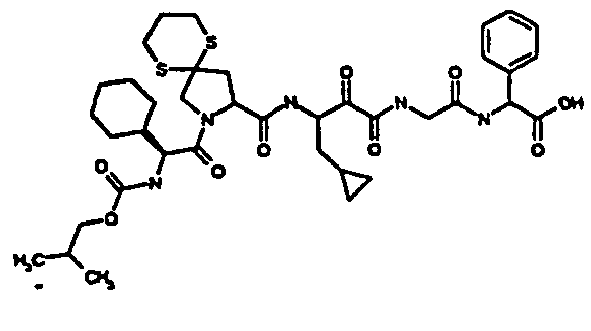
788.0022 148 
815.0717 149 
817.0876 150 
831.1147 151 
819.0599 152 
833.087 153 
829.0988 154 
845.0981 155 
816.0784 156 
773.0125 157 
787.0396 158 
850.0959 159 
807.03 160 
821.0571 161 
793.9876 162 
759.9701 163 
767.9714 164 
711.863 165 
712.8506 166 
712.8506 167 
817.0876 168 
817.0876 169 
817.0876 170 
817.0876 171 
777.0223 172 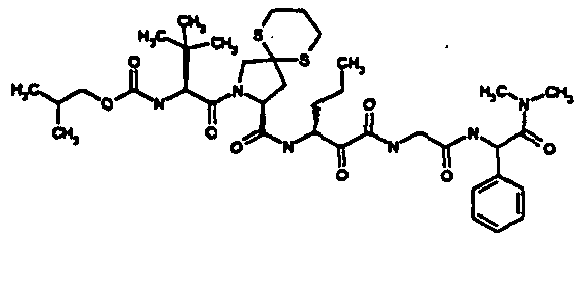
777.0223 173 
801.0882 174 
919.9515 175 
919.9515 176 
892.8821 177 
892.8821 178 
818.0723 179 
761.964 180 
789.0334 181 
789.0334 182 
820.0883 183 
763.9799 184 
791.0494 185 
791.0494 186 
791.0494 187 
809.0674 188 
809.0674 189 
823.0945 190 
823.0945 191 
865.1758 192 
865.1758 193 
817.0876 194 
817.0876 195 
1606.121 196 
1606.121 197 
1638.12 198 
1638.12 199 
775.0063 200 
775.0063 201 
763.887 202 
707.7786 203 
734.848 204 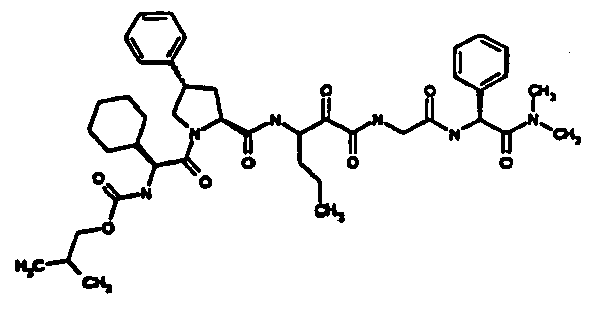
774.9659 205 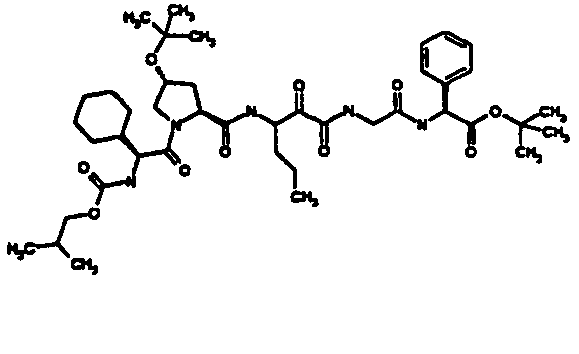
800.0139 206 
687.7971 207 
714.8666 208 
853.0774 209 
853.0774 210 
811.0398 211 
811.0398 212 
811.0398 213 
817.0876 214 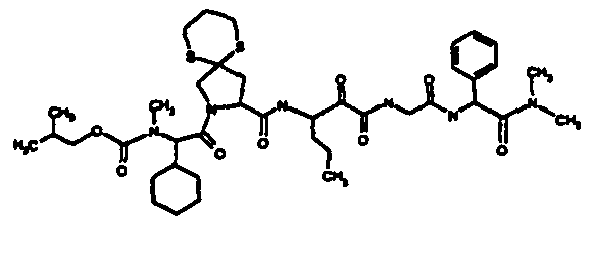
817.0876 215 
835.1057 216 
630.8288 217 
616.8018 218 
742.9208 219 
744.9367 220 
735.9694 221 
853.0774 222 
809.0862 223 
749.9965 224 
612.7703 225 
598.7432 226 
758.9638 227 
684.8401 228 
758.9638 229 
758.9638 230 
795.0404 231 
795.0404 232 
624.7815 233 
610.7544 234 
770.9749 235 
612.7703 236 
722.8369 237 
598.7432 238 
795.0592 239 
758.9638 240 
839.0414 241 
729.8375 242 
756.0443 243 
701.9518 244 
734.0159 245 
715.9789 246 
715.9789 247 
741.9951 248 
821.0786 249 
626.7974 250 
612.7703 251 
698.8672 252 
674.842 253 
584.7162 254 
735.9694 255 
772.9909 256 
776.9383 257 
626.7974 258 
835.0189 259 
835.0189 260 
612.7703 261 
686.856 262 
686.856 263 
686.856 264 
686.856 265 
742.9236 266 
738.9325 267 
738.9325 268 
817.0444 269 
738.9325 270 
772.9909 271 
795.0592 272 
758.9638 273 
810.9966 274 
610.7544 275 
596.7273 276 
756.9479 277 
756.9479 278 
744.9799 279 
698.8672 280 
698.8672 281 
709.8471 282 
598.7432 283 
810.9966 284 
758.9638 285 
742.9236 286 
817.0444 287 
817.0444 288 
759.9526 289 
494.6367 290 
719.9263 291 
731.938 292 
677.8887 293 
612.7703 294 
612.7703 295 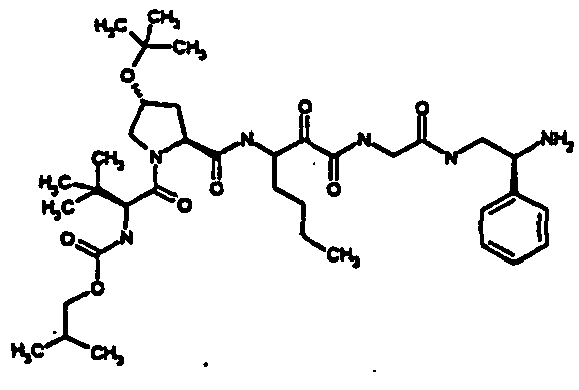
716.9261 296 
717.9109 297 
950.0884 298 
729.9221 299 
578.712 300 
564.6849 301 
703.8838 302 
553.7021 303 
703.8838 304 
552.7173 305 
523.6756 306 
731.9783 307 
509.6485 308 
508.6638 309 
731.9783 310 
667.8503 311 
667.8503 312 
567.7292 313 
724.9054 314 
724.9054 315 
762.9736 316 
764.9896 317 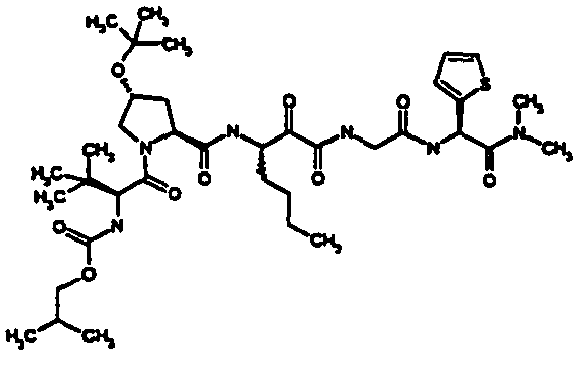
764.9896 318 
764.9896 319 
908.0734 320 
724.9054 321 
508.6638 322 
522.6909 323 
522.6909 324 
731.938 325 
744.9367 326 
727.9102 327 
567.7292 328 
584.8029 329 
726.9214 330 
726.9214 331 
726.9214 332 
740.9484 333 
688.8284 334 
564.6849 335 
550.6578 336 
820.9918 337 
710.8784 338 
746.9089 339 
710.8784 340 
590.6823 341 
716.9261 342 
539.675 343 
772.9473 344 
731.938 345 
731.938 346 
731.938 347 
546.7132 348 
606.7662 349 
578.712 350 
564.7722 351 
548.7291 352 
562.7562 353 
642.8432 354 
536.718 355 
574.7673 356 
726.9214 357 
726.9214 358 
580.7279 359 
639.799 360 
538.6902 361 
562.7562 362 
566.7444 Table 4 
(3,4-diCl-6-CO2)PhCO-G(Chx)-P(4t-NH-iBoc)-nV-(CO)-G-G(Ph)-Am A 
(3,4-diCl-6-CO2)PhCO-G(Chx)-P(4t-UreaPh)-nV(CO)-G-G(Ph)-Am A 
iBoc-G(Chx)-P(4t-Urea-(3-Cl)Ph)-nV-(CO)-G-G(Ph)-Am B 
(3,4-diCl-6-CO2)PhCO-G(Chx)-P(4t-NHSO2-Ph)-nV-(CO)-G-G(Ph)-Am A 
iBoc-G(Chx)-P(3,4 iPr)-nV-(CO)-G-G(Ph)-OH A 
iBoc-G(Chx)-P(4t-Chx)-nV-(CO)-G-G(Ph)-Am B 
iBoc-G(Chx)-P(4-diMe)-nV-(CO)-G-G(Ph)-Am A 
(2-CO2)PhCO-G(chx)-P(4t-UreaPh)-nV-(CO)-G-G(ph)-Am C 
iBoc-G(Chx)-P(4t-NHS02-(4Me)Ph)-nV(CO)-G-G(Ph)-Am B 
iBoc-G(Chx)-P(4t-NHSO2-(3Cl)Ph)-nV-(CO)-G-G(Ph)-Am B 
iBoc-G(Chx)-P(4t-NHS02-(4-NHAc)Ph)-nV-(CO)-G-G(Ph)-Am A 
iBoc-G(Chx)-P(4t-NHSO2-(3,4-diCl)Ph)-nV-(CO)-G-G(Ph)-Am B 
iBoc-G(Chx)-P(4t-Urea-1-Np)-nV-(CO)-G-G(Ph)-Am B 
iBoc-G(Chx)-P(4t-NHSO2-2-Np)-nV-(CO)-G-G(Ph)-Am B 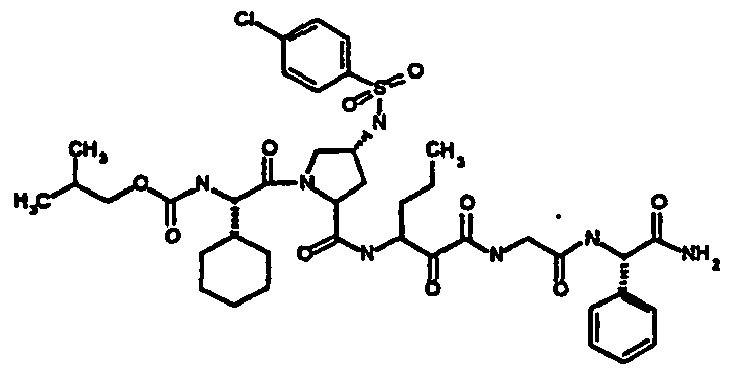
iBoc-G(Chx)-P(4t-NHSO2-(4Cl)Ph)-nV-(CO)-G-G(Ph)-Am B 
iBoc-G(Chx)-P(4t-NHS02-5(2,3-dihydrobenzofuran))-nV-(CO)-G-G(Ph)-Am B 
iBoc-G(Chx)-P(4t-NHS02-6(4-OMe)Courmarin)-nV-(CO)-G-G(Ph)-Am B 
iBoc-G(Chx)-P(4t-Urea-Ph(4-OMe))-nV-(CO)-G-G(Ph)-Am A 
iBoc-G(Chx)-P(4t-Urea-Ph(4-Cl))-nV-(CO)-G-G(Ph)-Am B 
iBoc-G(Chx)-P(4t-Urea-Ph(4-Cl))-nV-(CO)-G-G(Ph)-Am C 
iBoc-G(Chx)-P(4t-Urea-Ph(4-Ac))-nV-(CO)-G-G(Ph)-Am B 
iBoc-G(Chx)-P(4t-Urea-Ph(4-Ac))-nV-(CO)-G-G(Ph)-Am B 
iBoc-G(Chx)-P(4t-NHS02-Ph(4-OMe))-nV-(CO)-G-G(Ph)-Am B 
iBoc-V-P(4t-NHS02-Ph)-nV-(CO)-G-G(Ph)-Am B 
iBoc-G(Chx)-P(4t-NHS02-1Np)-nV-(CO)-G-G(Ph)-Am B 
iBoc-G(Chx)-P(4t-NHS02-8-Quinoline)-nV-(CO)-G-G(Ph)-Am B 
(2,5-diF-6-CO2)PhCO-G(Chx)-P(4t-NH-iBoc)-nV-(CO)-G-G(Ph)-Am A 
(2,5-diF-6-CO2)PhCO-G(Chx)-P(4t-NHS02-Ph)-nV-(CO)-G-G(Ph)-Am A 
(3,4-diCl-6-CO2)PhCO-G(Chx)-P(4t-NH-iBoc)-nV-(CO)-G-G(Ph)-Am A 
(3,4-diCl-6-CO2)PhCO-G(Chx)-P(4t-UreaPh)-nV(CO)-G-G(Ph)-Am A 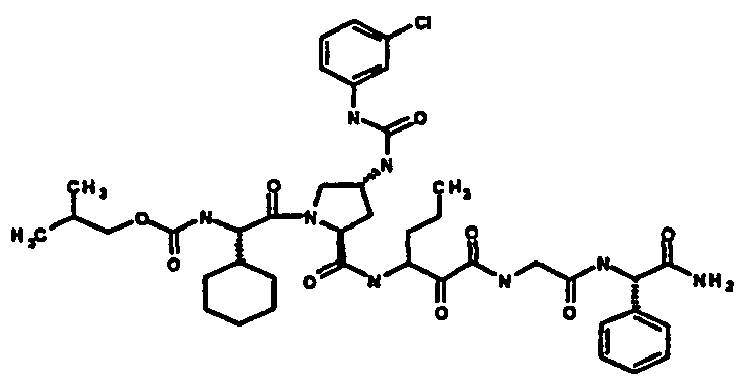
iBoc-G(Chx)-P(4t-Urea-(3-Cl)Ph)-nV-(CO)-G-G(Ph)-Am B 
(3,4-diCl-6-CO2)PhCO-G(Chx)-P(4t-NHSO2-Ph)-nV-(CO)-G-G(Ph)-Am A 
iBoc-G(Chx)-P(3,4 iPr)-nV-(CO)-G-G(Ph)-OH A 
iBoc-G(Chx)-P(4t-Chx)-nV-(CO)-G-G(Ph)-Am B 
iBoc-G(Chx)-P(4-diMe)-nV-(CO)-G-G(Ph)-Am A 
iBoc-G(Chx)-P(4-Bn,4-Me)-nV-(CO)-G-G(Ph)-Am B 
iBoc-G(Chx)-P(4-spirocyclopentane )-nV-(CO)-G-G(Ph)-OH A 
iBoc-G(Chx)-2-Azabicyclo[2.2.2]o ctane-3-CO-nV-(CO)-G-G(Ph)-Am B 
iPrOCO-G(Chx)-P(4-OtBu)-nV-(CO)-G-G(Ph)-OH A 
Neopentoxy(CO)-G(Chx)-P(4-OtBu)-nV- (CO)-G-G(Ph)-OH B 
Neopentoxy(CO)-G(Chx)-P(OH)-nV-(CO)-G- G(Ph)-OH B 
Ethoxy(CO)-G(Chx)-P(OH)-nV-(CO)-G- G(Ph)-OH B 
iBoc-G(Chx)-P(4,4-diMe)-nV-(CO)- G-G(Ph)-N(Me)2 A 
iBoc-G(Chx)-P(3,4-iPr)-nV-(CO)- G-G(Ph)-N(Me)2 A 
iBoc-G(Chx)-P(4-spirocyclopentane )- nV-(CO)-G-G(Ph)-N(Me)2 A 
iBoc-G(Chx)-P(4c-Me,4t-Pr)- nV-(CO)-G-G(Ph)-N(Me)2 A 
iBoc-G(Chx)-P(4,4-diMe)-nV-(CO)- G-G(Ph)-OMe A 
iBoc-G(Chx)-P(4-spirocyclopentane )- nV-(CO)-G-G(Ph)-OMe A 
iBoc-G(Chx)-P(3t-Me)-nV-(CO)- G-G(Ph)-N(Me)2 A 
iBoc-G(Chx)-P(4,4-diMe)-nV-(CO)-S(Me)-G(Ph)-OH A 
iBoc-G(Chx)-P(4,4-diMe)-nV-(CO)-S-G(Ph)-OH B 
iBoc-G(Chx)-P(4,4-diMe)-nV-(CO)-G(Ac)-G(Ph)-OH C 
N-Me-G(Chx)-P(4,4-diMe)-nV-(CO)-G- G(Ph)-CO2H C 
iBoc-G(tBu)-P(4,4-diMe)-nV-(CO)-G-G(Ph)-N(Me)2 A 
iBoc-G(Chx)-P(3,4-(diMe-cyclopropyl))-G((S,S)-Me-cyclopropyl)-(CO)-G-G(Ph)-N(Me) A 
iBoc-G(Chx)-P(6S-CEM)-nV-(CO)-G-G(Ph)-N(Me)2 A 
iPoc-G(tBu)-P(4,4-diMe)-nV-(CO)-G-G(Ph)-N(Me)2 A 
iBoc-G(Chx)-P(6R-CEM)-nV-(CO)-G-G(Ph)-N(Me)2 A 
iBoc-G(tBu)-P(4,4-diMe)-L-(CO)-G-G(Ph)-N(Me)2 A 
((R)-1-Me-iBoc)-G(Chx)-P(4,4-diMe)-nV-(CO)-G-G(Ph)-N(Me)2 A 
iBoc-G(Chx)-P(5-c/t-Me)-nV-(CO)-G-G(Ph)-CO2H A 
iBoc-G(Chx)-P(5-cis-Ph)-nV-(CO)-G-G(Ph)-CO2H B 
iBoc-G(4,4-diMeChx)-P(4,4-diMe)-nV-(CO)-G-G(Ph)-N(Me)2 A 
iBoc-G(1-MeChx)-P(4,4-diMe)-nV-(CO)-G-G(Ph)-N(Me)2 A 
iBoc-G(Chx)-P(3,4-CH2)-nV-(CO)-G-G(Ph)-N(Me)2 A 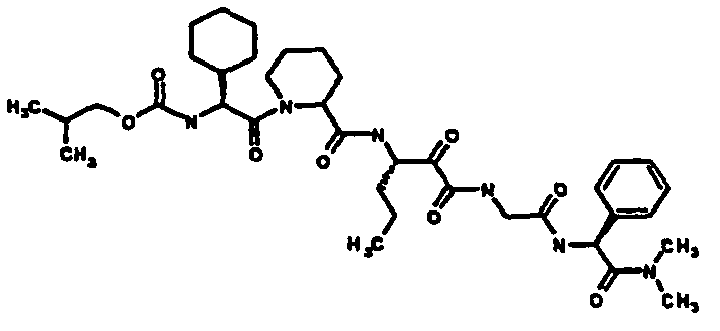
iBoc-Chg-Pip-nV-(CO)-G-G(Ph)-N(Me)2 C 
iBoc-G(Chx)-P(4,4-diMe)-L-(CO)-G-G(Ph)-N(Me)2 A 
iPoc-G(tBu)-P(4,4-diMe)-L-(CO)-G-G(Ph)-N(Me)2 A 
iPoc-G(tBu)-P(5-c/t-Me)-nV-(CO)-G-G(Ph)-N(Me)2 A 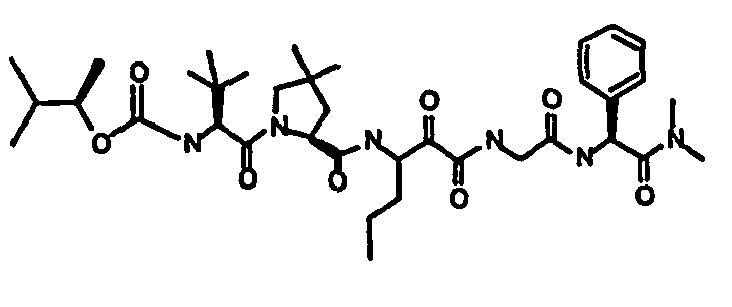
((R)-1-Me-iBoc)-G(tBu)-P(4,4-diMe)-nV-(CO)-G-G(Ph)-N(Me)2 A 
(S)-1-MeiBoc-G(Chx)-P(4,4-diMe)-nV-(CO)-G-G(Ph)-N(Me)2 A 
iBoc-G(tBu)-P(4-cis-Me)-nV-(CO)-G-G(Ph)-N(Me)2 A 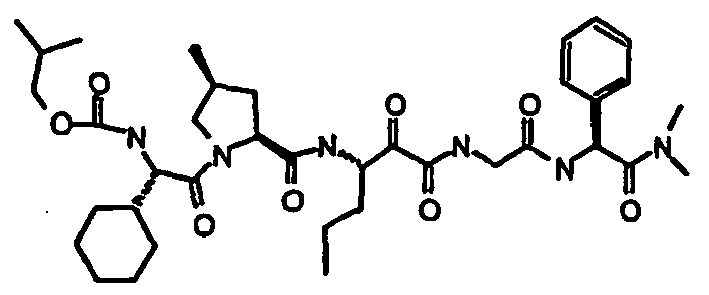
iBoc-G(Chx)-P(4-cis-Me)-nV-(CO)-G-G(Ph)-N(Me)2 A 
iBoc-G(tBu)-P(5-cis-Me)-nV-(CO)-G-G(Ph)-N(Me)2 A 
iBoc-G(Chx)-P(5-cis-Me)-nV-(CO)-G-G(Ph)-N(Me)2 A 
iBoc-G(Chx)-P(t-3Ph)-nV-(CO)-G-G(Ph)-N(Me)2 B 
iBoc-allo(Ile)-P(4,4-diMe)-nV-(CO)-G-G(Ph)-N(Me)2 A 
iBoc-G(Chx)-Pip(4-morpholino)-nV-(CO)-G-G(Ph)-N(Me)2 B 
iBoc-G(1-MeChx)-P[3,4-(diMe-cyclopropyl)]-nV-(CO)-G-G(Ph)-N(Me)2 A 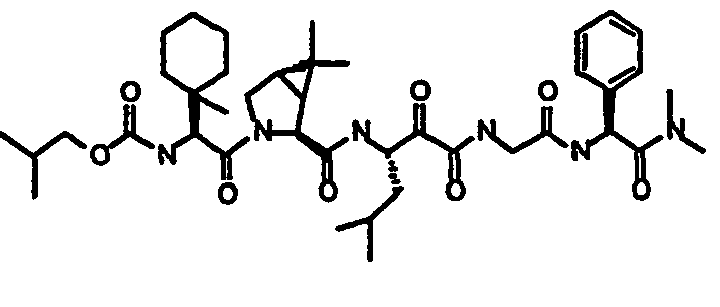
iBoc-G(1-MeChx)-P[3,4-(diMe-cyclopropyl)]-L-(CO)-G-G(Ph)-N(Me)2 A 
iBoc-G(tBu)-P[3,4-(diMe-cyclopropyl)]-L-(CO)-G-G(Ph)-N(Me)2 A 
iBoc-erythro-D,L-F(beta-Me)-P(4,4-diMe)-nV-(CO)-G-G(Ph)-N(Me)2 A 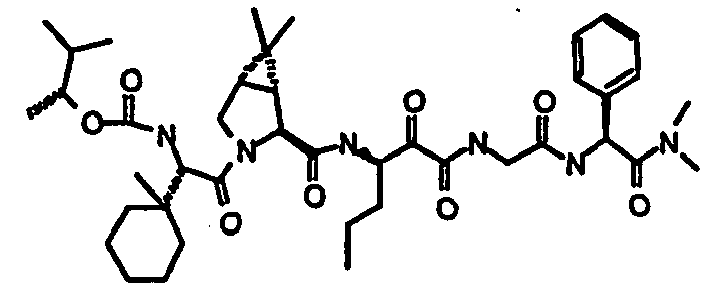
((R)-1-Me)iBoc-G(1-MeChx)-P[3,4-(diMe-cyclorpropyl)]-nV-(CO)-G-G(Ph)-N(Me)2 A 
iPoc-G(tBu)-P[3,4-(diMe-cyclopropyl)]-nV-(CO)-G-G(Ph)-N(Me)2 A 
iPoc-G(tBu)-P[3,4-(diMe-cyclopropyl)]-L-(CO)-G-G(Ph)-N(Me)2 A 
iBoc-G(tBu)-P(3,4-CH2)-nV-(CO)-G-G(Ph)-N(Me)2 A 
iBoc-G(Chx)-P(3,4-CH2)-nV-(CO)-G-G(Ph)-N(Me)2 A 
iPoc-G(tBu)-P(3,4-CH2)-nV-(CO)-G-G(Ph)-N(Me)2 A 
((R)-1-Me)iBoc-G(tBu)-P(3,4-CH2)-nV-(CO)-G-G(Ph)-N(Me)2 A 
((R)-1-Me)iBoc-G(1-MeChx)-P(3,4-CH2)-nV-(CO)-G-G(Ph)-N(Me)2 A 


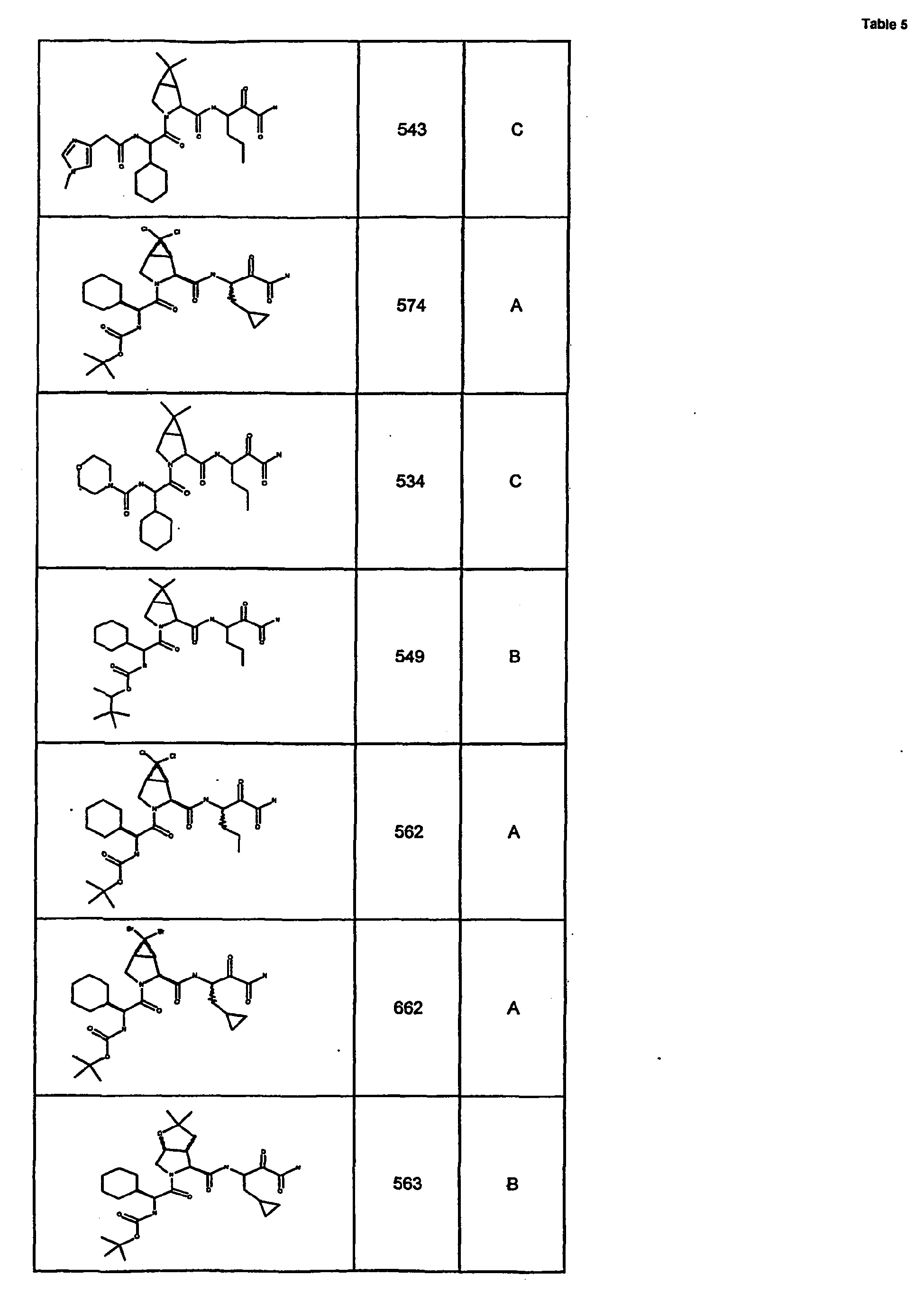
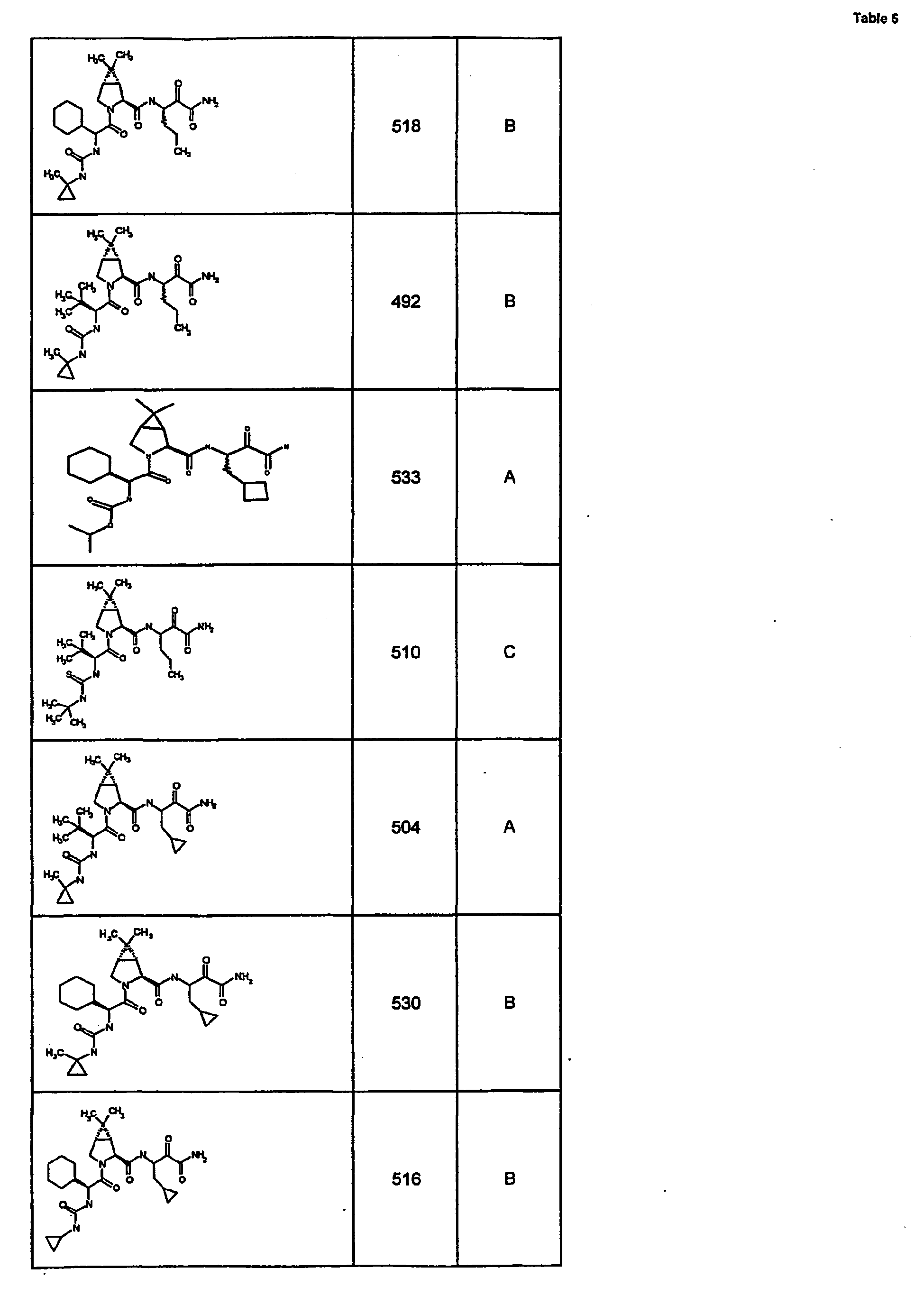
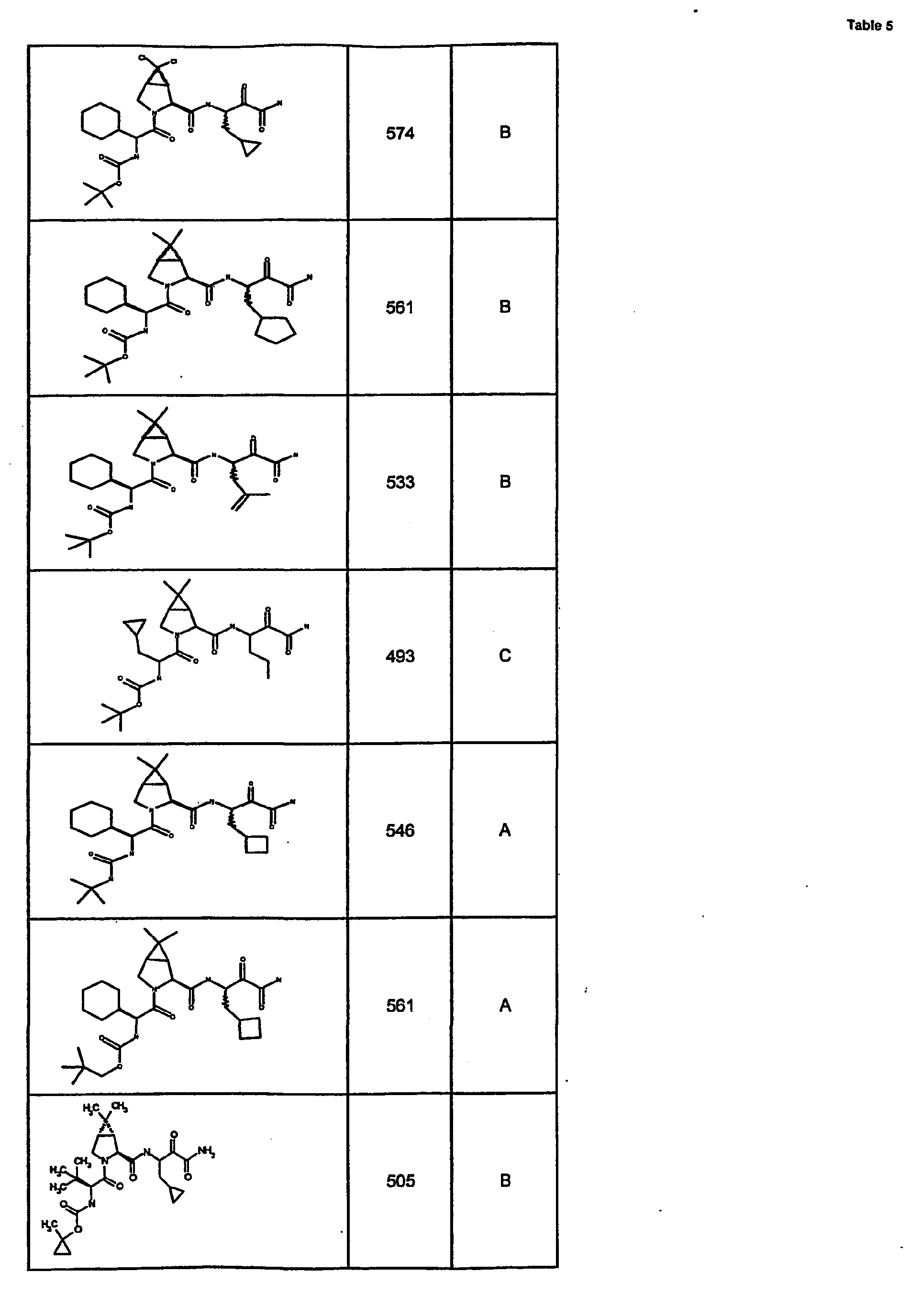


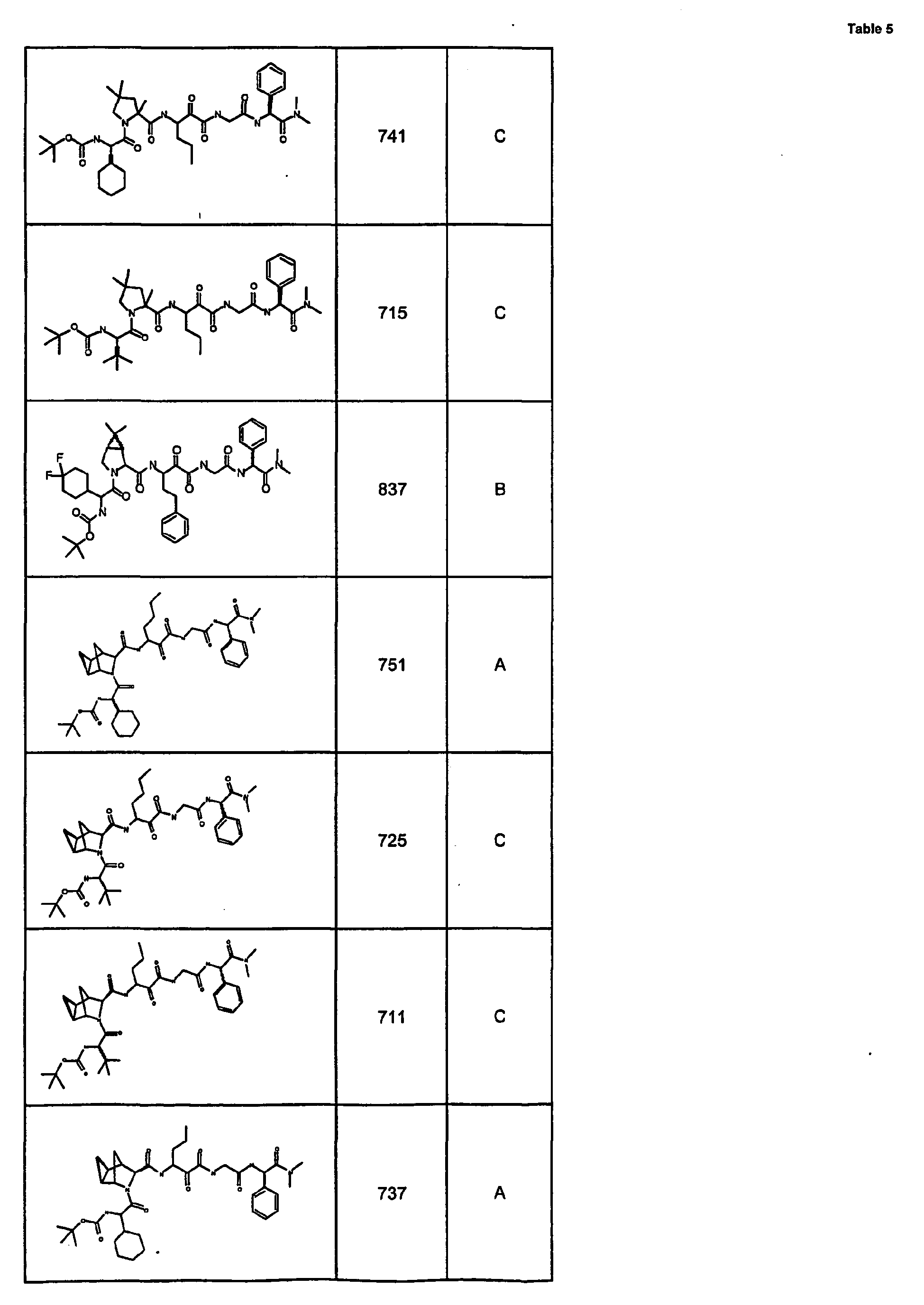


further wherein said unit N-C-G-E-L-J-N represents a five-membered or six-membered cyclic ring structure with the proviso that when said unit N-C-G-E-L-J-N represents a five-membered cyclic ring structure, or when the bicyclic ring structure in Formula I comprising N, C, G, E, L, J, N, A, Q, and M represents a five-membered cyclic ring structure, then said five-membered cyclic ring structure lacks a carbonyl group as part of the cyclic ring.


Claims (56)
- A compound, including enantiomers, stereoisomers, rotamers, tautomers and racemates of said compound, and pharmaceutically acceptable salts or solvates of said compound, said compound having the general structure shown in Formula I:
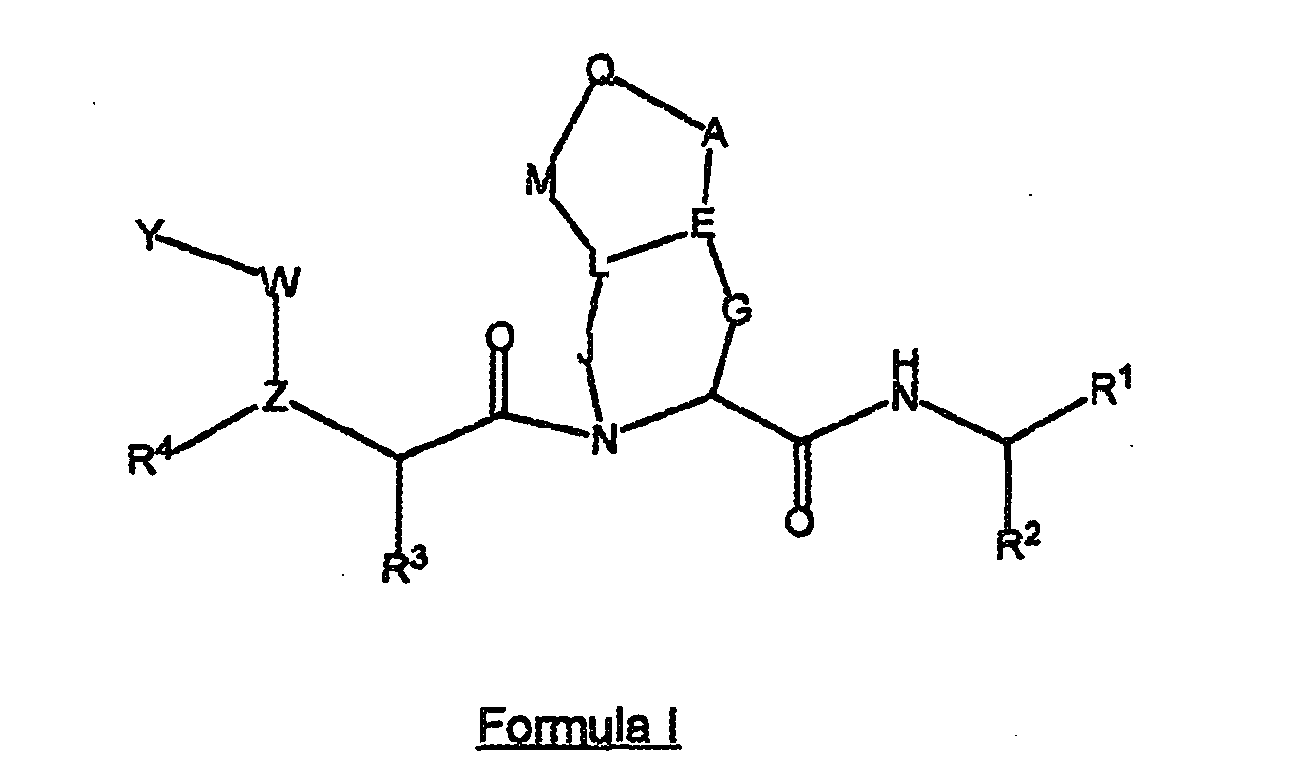 Y is selected from the group consisting of the following moieties: alkyl, alkyl-aryl, heteroalkyl, heteroaryl, aryl-heteroaryl, alkyl-heteraaryl, cycloalkyl, alkyloxy, alkyl-aryloxy, aryloxy, heteroaryloxy, heterocycloalkyloxy, cycloalkyloxy, alkylamino, arylamino, alkyl-arylamino, arylamino, heteroarylamino, cycloalkylamino and heterocycloalkylamino, with the proviso that Y may be optionally substituted with X11 or X12;X11 is alkyl, alkenyl, alkynyl, cycloalkyl, cycloalkyl-alkyl, heterocyclyl, heterocyclylalkyl, aryl, alkylaryl, arylalkyl, heteroaryl, alkylheteroaryl, or heteroarylalkyl, with the proviso that X11 may be additionally optionally substituted with X12;X12 is hydroxy, alkoxy, aryloxy, thio, alkylthio, arylthio, amino, alkylamino, arylamino, alkylsulfonyl, arylsulfonyl, alkylsulfonamido, arylsulfonamido, carboxy, carbalkoxy, carboxamido, alkoxycarbonylamino, alkoxycarbonyloxy, alkylureldo, arylureido, halogen, cyano, or nitro, with the proviso that said alkyl, alkoxy, and aryl may be additionally optionally substituted with moieties independently selected from X12,R1 is COCONR9R10, wherein R9 is H, R10 is H, R14, [CH(R1')]pCOOR11, [CH(R1')]pCONR12R13, [CH(R1')]pSO2R11, [CH(R1')]pSO2NR12R13, [CH(R1')]pCOR11, CH(R1')CONHCH(R2')COOR11,
CH(R1')CONHCH(R2')CONR12R13, or CH(R1')CONHCH(R2')(R'), wherein R1', R2', R11, R12, and R13 are independently selected from the group consisting of H, alkyl, aryl, heteroalkyl, heteroaryl, cycloalkyl, alkyl-aryl, alkyl-heteroaryl, aryl-alkyl and heteroaralkyl, and wherein R14 is H, alkyl, aryl, heteroalkyl, heteroaryl, cycloalkyl, alkyl-aryl, alkyl-heteroaryl, aryl-alkyl, alkenyl, alkynyl or heteroaralkyl;Z is selected from O, N, CH or CR;W may be present or absent, and if W is present, W is selected from C=O, C=S, C(=N-CN), or SO2;Q may be present or absent, and when Q is present, Q is CH, N, P, (CH2)p, (CHR)p, (CRR')p, O, NR, S, or SO2; and when Q is absent, M may be present or absent; when Q and M are absent, A is directly linked to L;A is O, CH2, (CHR)p, (CHR-CHR')p, (CRR')p, NR, S, SO2 or a bond;E is CH, N, CR, or a double bond towards A, L or G;G may be present or absent, and when G is present, G is (CH2)p, (CHR) p, or (CRR')p; and when G is absent, J is present and E is directly connected to the carbon atom in Formula I as G is linked to;J may be present or absent, and when J is present, J is (CH2)p, (CHR) p, or (CRR')p, SO2, NH, NR or O; and when J is absent, G is present and E is directly linked to N shown in Formula I as linked to J;L may be present or absent, and when L is present, L is CH, CR, O, S or NR; and when L is absent, then M may be present or absent; and if M is present with L being absent, then M is directly and independently linked to E, and J is directly and independently linked to E;M may be present or absent, and when M is present, M is O, NR, S, SO2, (CH2)p, (CHR) p (CHR-CHR')p, or (CRR')p ;p is a number from 0 to 6; andR, R', R2, R3 and R4 are independently selected from the group consisting of H; C1-C10 alkyl; C2-C10 alkenyl; C3-C8 cycloalkyl; C3-C8 heterocycloalkyl, alkoxy, aryloxy, alkylthio, arylthio, amino, amido, ester, carboxylic acid, carbamate, urea, ketone, aldehyde, cyano, nitro, halogen; (cycloalkyl)alkyl and (heterocycloalkyl)alkyl, wherein said cycloalkyl is made of three to eight carbon atoms, and zero to six oxygen, nitrogen, sulfur, or phosphorus atoms, and said alkyl is of one to six carbon atoms; aryl; heteroaryl; alkyl-aryl; and aikyl-heteroaryl;wherein said alkyl, heteroalkyl, alkenyl, heteroalkenyl, aryl, heteroaryl, cycloalkyl and heterocycloalkyl moieties may be optionally and chemically-suitably substituted, with said term "substituted" referring to optional and chemically-suitable substitution with one or more moieties selected from the group consisting of alkyl, alkenyl, alkynyl, aryl, aralkyl, cycloalkyl, heterocyclic, halogen, hydroxy, thio, alkoxy, aryloxy, alkylthio, arylthio, amino, amido, ester, carboxylic acid, carbamate, urea, ketone, aldehyde, cyano, nitro, sulfonamido, sulfoxide, sulfone, sulfonyl urea, hydrazide, and hydroxamate; further wherein said unit N-C-G-E-L-J-N represents a five-membered or six-membered cyclic ring structure with the proviso that when said unit N-C-G-E-L-J-N represents a five-membered cyclic ring structure, or when the bicyclic ring structure in Formula I comprising N, C, G, E, L, J, N, A, Q, and M represents a five-membered cyclic ring structure, then said five-membered cyclic ring structure lacks a carbonyl group as part of the cyclic ring. - The compound of claim 1, wherein R10 is H, R14, CH(R1')COOR11, CH(R11)CH(R1')COOR11, CH(R1')CONR12R13, CH(R1')CH(R1')CONR12R13, CH(R1')CH(R1')SO2R11, CH(R1')CH(R1')SO2N R12R13, CH(R1')CH(R1')COR11. CH(R1')CONHCH(R2')COOR11, CH(R1')CONHCH(R2') CONR12R13, or CH(R1')CONHCH(R2')(R'), wherein R1' is H or alkyl, and R2' is phenyl, substituted phenyl, hetero atom-substituted phenyl, thiophenyl, cycloalkyl, piperidyl or pyridyl.
- The compound of claim 2, wherein R1' is H.
- The compound of claim 3, wherein R11 is H, methyl, ethyl, allyl, tert-butyl, benzyl, α-methylbenzyl, α,α-dimethylbenzyl, 1-methylcyclopropyl or 1-methylcyclopentyl;R' is hydroxymethyl or CH2CONR12R13;R2' is independently selected from the group consisting of:wherein:

 U1 and U2 maybe same or different and are selected from H, F, CH2COOH, CH2COOMe, CH2CONH2, CH2CONHMe, CH2CONMe2, azido, amino, hydroxyl, substituted amino, substituted hydroxyl;U3 and U4 maybe same or different and are selected from O and S;U5 is selected from the moieties consisting of alkyl sulfonyl, aryl sulfonyl, heteroalkyl sulfonyl, heteroaryl sulfonyl, alkyl carbonyl, aryl carbonyl, heteroalkyl carbonyl, heteroaryl carbonyl, alkoxycarbonyl, aryloxycarbonyl, heteroaryloxycarbonyl, alkylaminocarbonyl, arylaminocarbonyl, heteroarylaminocarbonyl or a combination thereof;and NR12R13 is selected from the group consisting of:


 R14 is selected from the group consisting of: H, Me, Et, n-propyl, methoxy, cyclopropyl, n-butyl, 1-but-3-ynyl, benzyl, α-methylbenzyl, phenethyl, allyl, 1-but-3-enyl, OMe, cyclopropylmethyl.
 - The compound of claim 1, wherein R2 is selected from the group consisting of the following moieties:
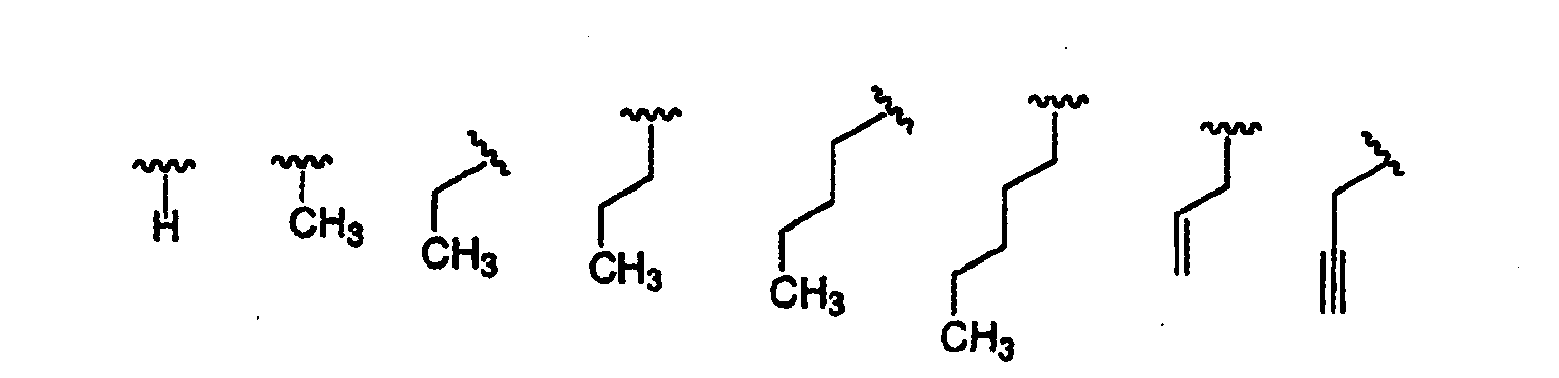





- The compound of claim 5, wherein R3 is selected from the group consisting of:


 Y19 is selected from the following moieties:
 and Y20 is selected from the following moieties:


- The compound of claim 6, wherein R3 is selected from the group consisting of the following moieties:


- The compound of claim 7, wherein Z is N and R4 is H.
- The compound of claim 8, wherein W is C=O.
- The compound of claim 9, wherein Y is selected from the following moieties:





 Y11 is selected from H, COOH, COOEt, OMe, Ph, OPh, NHMe, NHAc, NHPh, CH(Me)2, 1-triazolyl, 1-imidazolyl, and NHCH2COOH;Y12 is selected from H, COOH, COOMe, OMe, F, Cl, or Br;Y13 Is selected from the following moieties:

 Y14 is selected from MeSO2, Ac, Boc, iBoc. Cbz, or Alloc;Y15 and Y16 are independently selected from alkyl, aryl, heteroalkyl, and heteroaryl;Y17 is CF3, NO2, CONH2, OH, COOCH3, OCH3, OC6H5, C6H5, COC6H5, NH2, or COOH; andY18 is COOCH3, NO2, N(CH3)2, F, OCH3, CH2COOH, COOH,SO2NH2, or NHCOCH3.
 - The compound of claim 10 , wherein Y is selected from the group consisting of:


 Y17 = CF3, NO2, CONH2, OH, NH2, or COOH;Y18= F, COOH,
 - The compound of claim 11, wherein Y is selected from the group consisting of:


- The compound of claim 12, wherein L and M are absent, and J is directly linked to E.
- The compound of claim 12, wherein L, J and M are absent and E is directly linked to N.
- The compound of claim 12, wherein G and M are absent
- The compound of claim 12, wherein the moiety:


- The compound of claim 16, wherein structure a is selected from the following structures:


- The compound of claim 16, wherein structure a is:


- The compound of claim 16, wherein structure a is:


- The compound of claim 16, wherein structure a is selected from the following structures:


- The compound of claim 12, wherein:


- The compound of claim 21, wherein structure b is selected from the following structures:


- The compound of claim 12, wherein:


- The compound of claim 23, wherein structure c is selected from the following structures:


- The compound of claim 12, wherein:


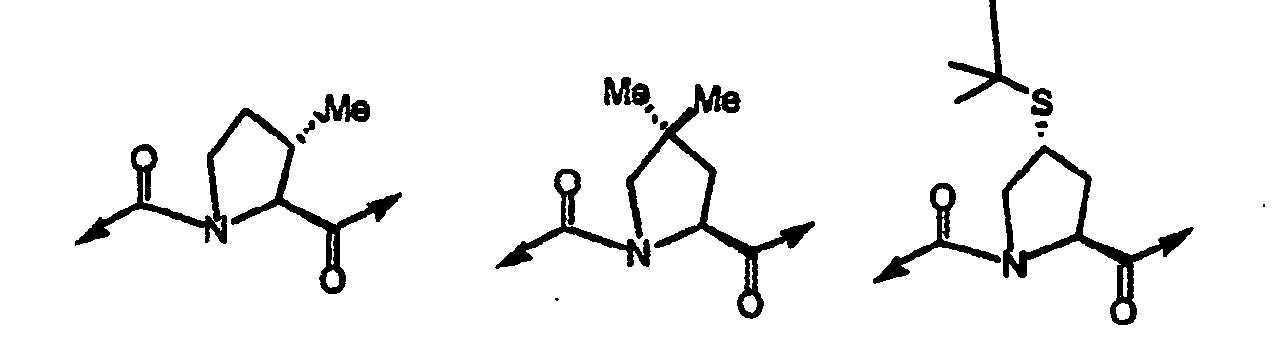


- The compound of claim 25, wherein:


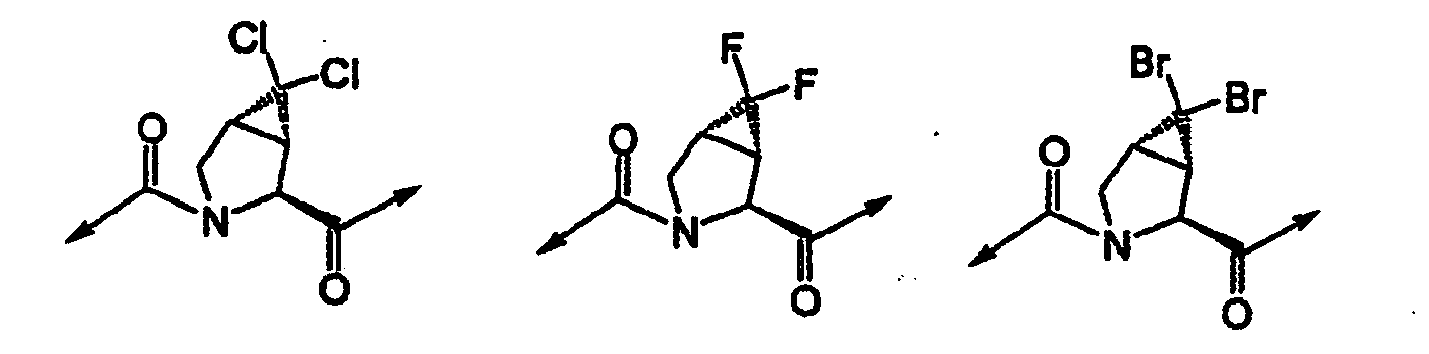


- A pharmaceutical composition comprising as an active ingredient a compound of any of claims 1 to 26.
- The pharmaceutical composition of claim 27 for use in treating disorders associated with HCV.
- The pharmaceutical composition of claim 27 or 28, additionally containing (a) an antiviral agent or (b) an interferon, or both (a) and (b).
- The pharmaceutical composition of claim 29, wherein said antiviral agent is ribavirin and said interferon is α-interferon or pegylated interferon.
- The use of a compound of any of claims 1 to 26 for the manufacture of a medicament to treat disorders associated with the HCV.
- A method of preparing a pharmaceutical composition for treating the disorders associated with the HCV, said method comprising bringing into intimate contact a compound of any of claims 1 to 26 and a pharmaceutically acceptable carrier.
- A compound exhibiting HCV protease inhibitory activity, including enantiomers, stereoisomers, rotamers, tautomers and racemates of said compound, and pharmaceutically acceptable salts or solvates of said compound, said compound being selected from the compounds of structures listed below:


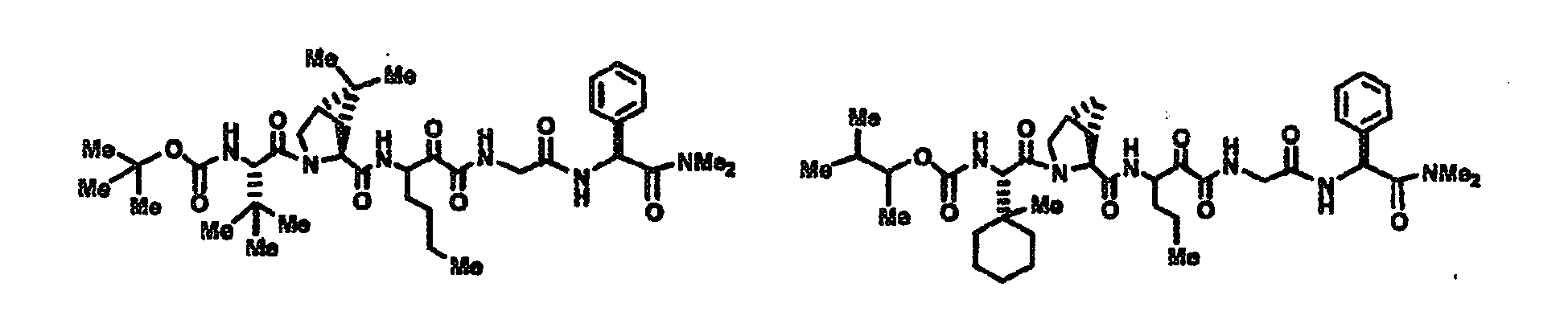


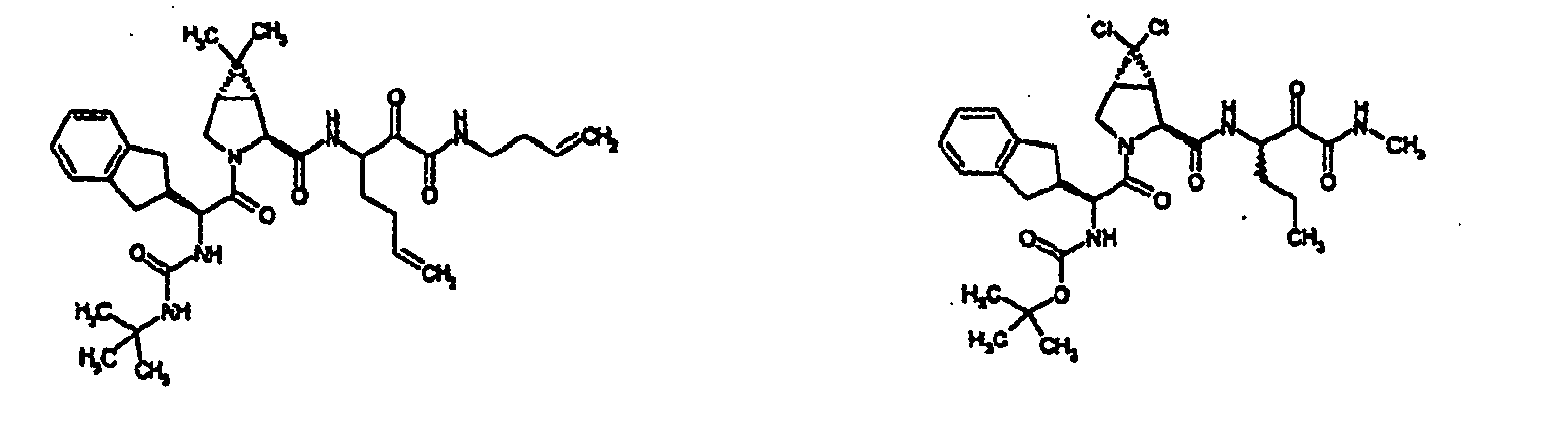

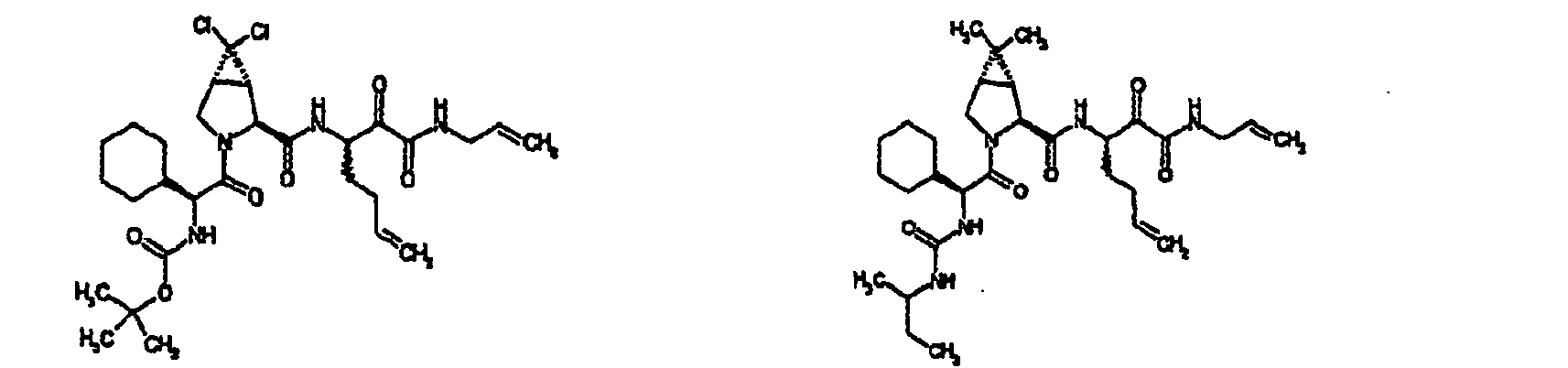
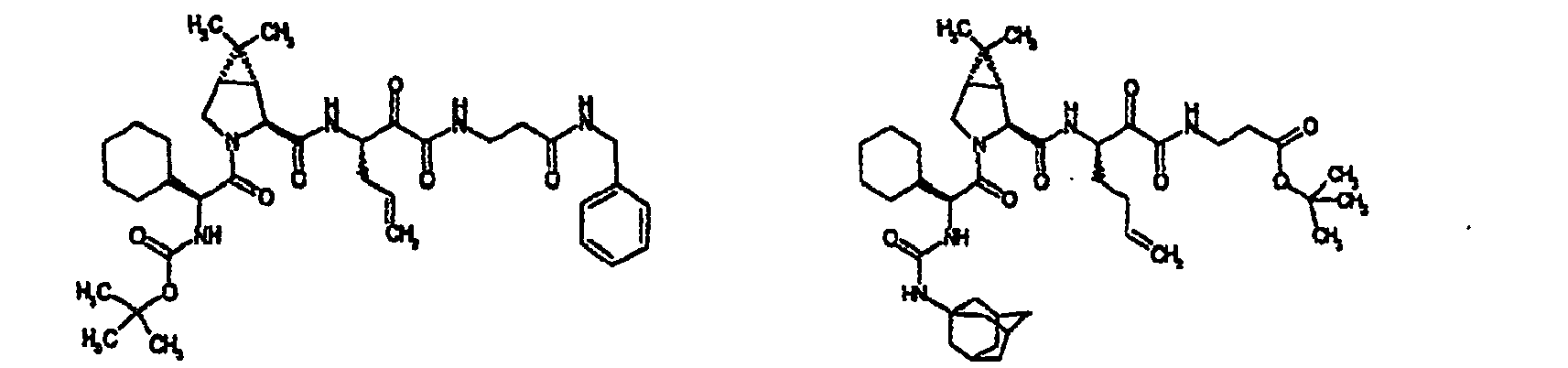


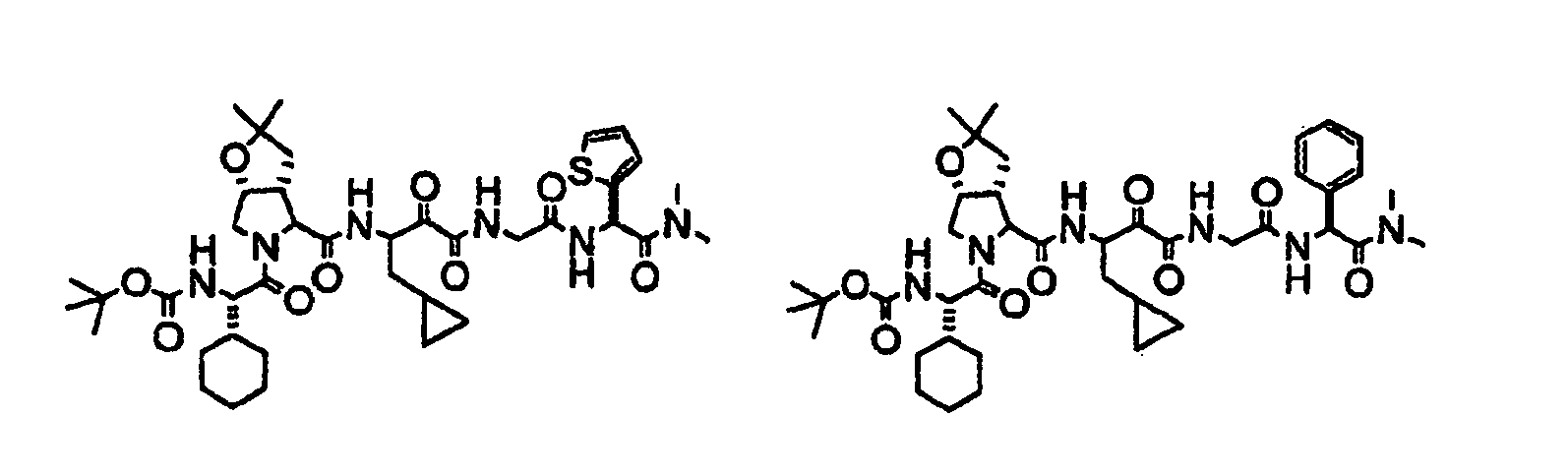


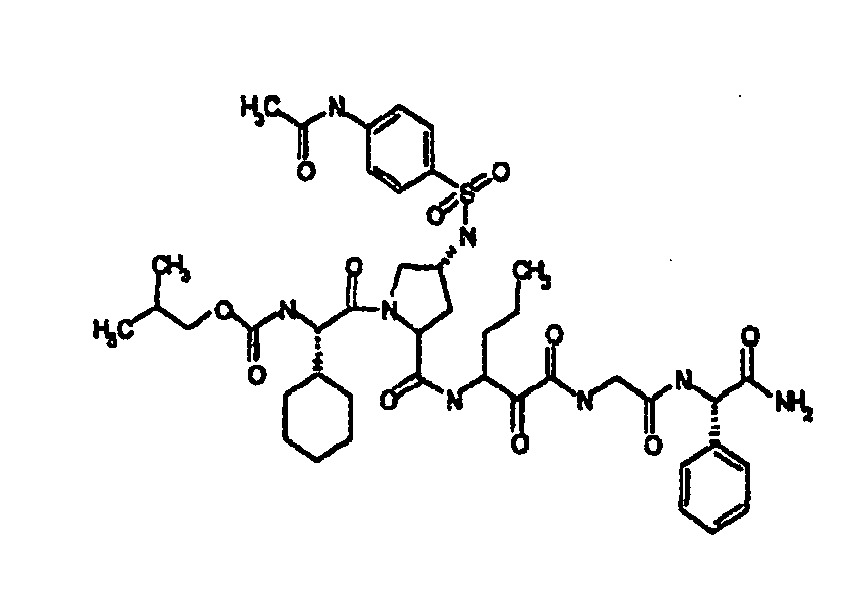


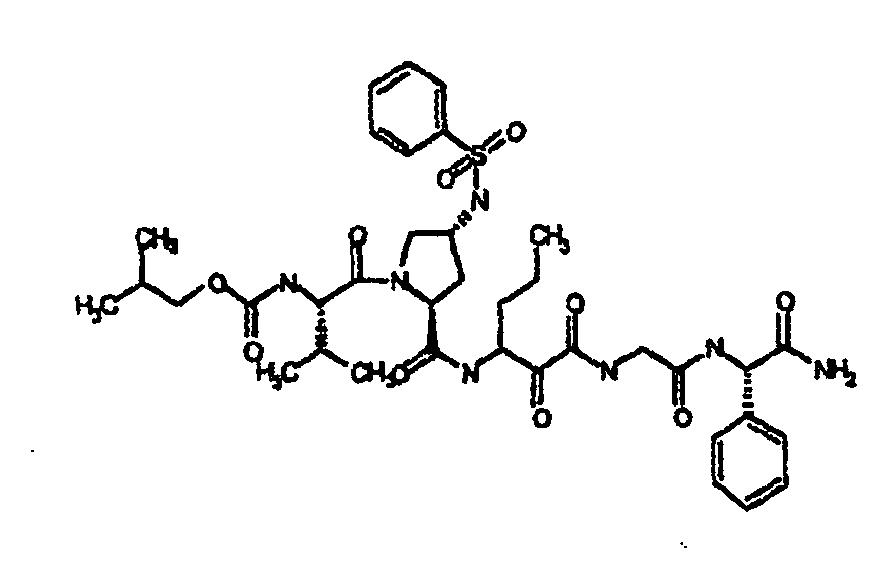


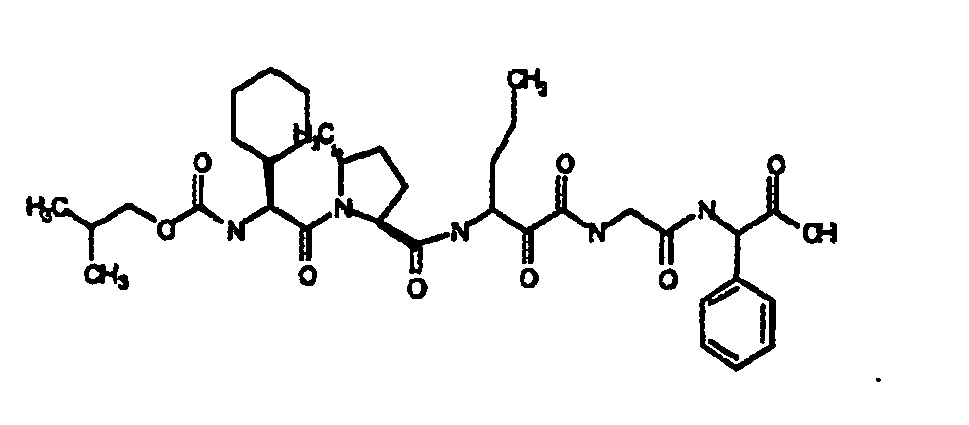


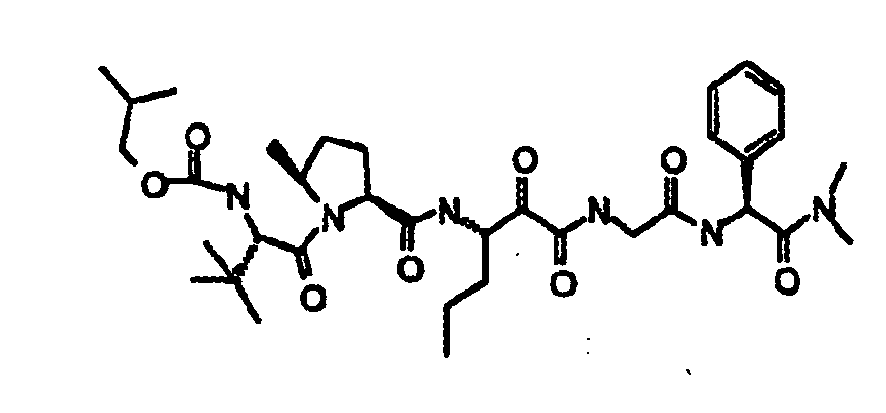


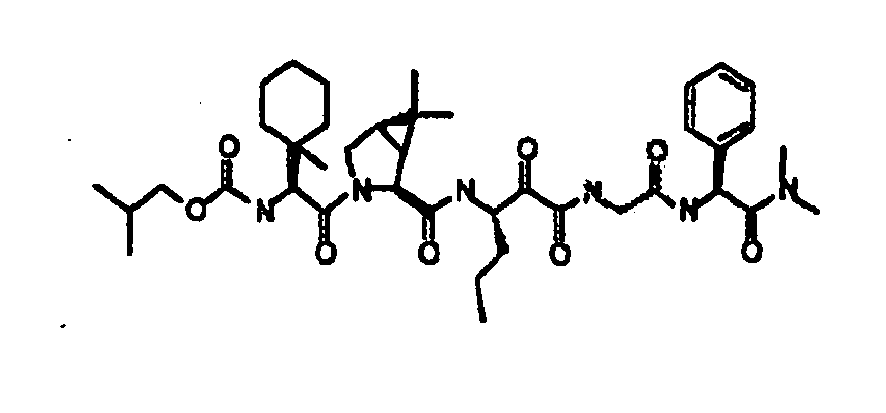


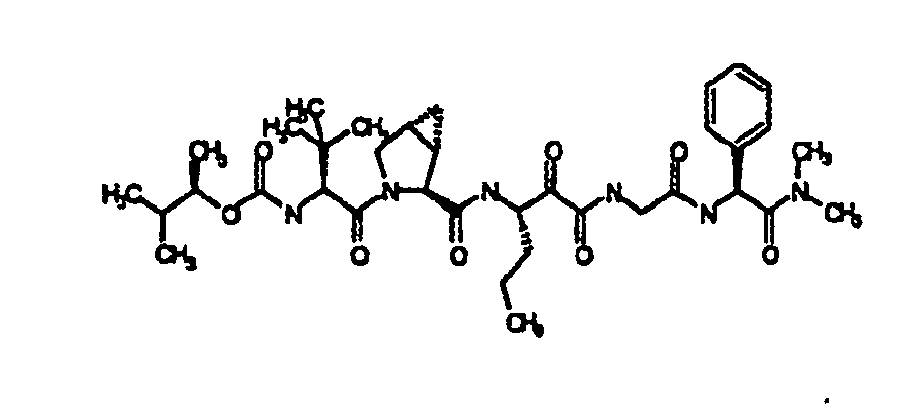

- A pharmaceutical composition for treating disorders associated with the HCV, said composition comprising therapeutically effective amount of one or more compounds in claim 33 and a pharmaceutically acceptable carrier.
- The pharmaceutical composition of claim 34, additionally containing (a) an antiviral agent or (b) an interferon or PEG-interferon alpha conjugate or both (a) and (b).
- The pharmaceutical composition of claim 35, wherein said antiviral agent is ribavirin and said interferon is α-interferon.

- A compound exhibiting HCV protease inhibitory activity, including enantiomers, stereoisomers, rotamers, tautomers and racemates of said compound, and pharmaceutically acceptable salts or solvates of said compound, said compound being the compound of structure shown below:

- A compound exhibiting HCV protease inhibitory activity, including enantiomers, stereoisomers, rotamers, tautomers and racemates of said compound, and pharmaceutically acceptable salts or solvates of said compound, said compound being the compound of structure shown below:

- A compound exhibiting HCV protease inhibitory activity, including enantiomers, stereoisomers, rotamers, tautomers and racemates of said compound, and pharmaceutically acceptable salts or solvates of said compound, said compound being the compound of structure shown below:
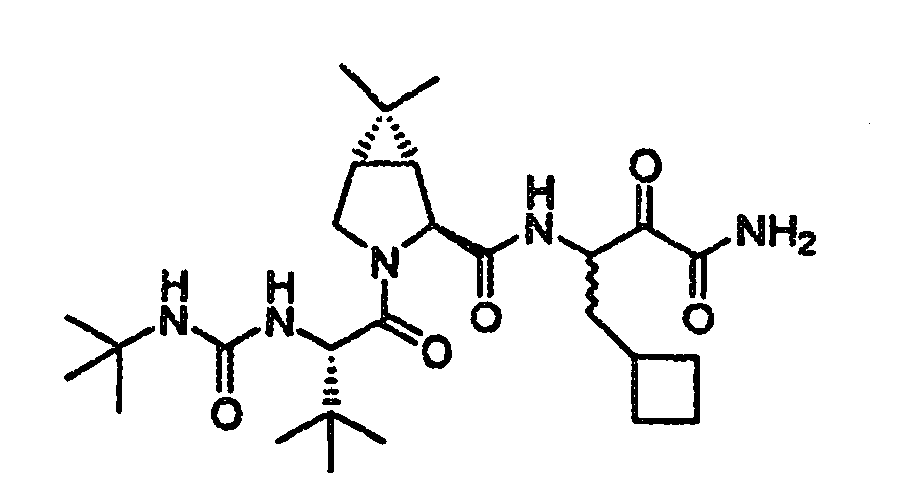
- A compound exhibiting HCV protease inhibitory activity, including enantiomers, stereoisomers, rotamers, tautomers and racemates of said compound, and pharmaceutically acceptable salts or solvates of said compound, said compound being the compound of structure shown below:

- A compound exhibiting HCV protease inhibitory activity, including enantiomers, stereoisomers, rotamers, tautomars and racemates of said compound, and pharmaceutical acceptable salts or solvates of said compound, said compound being the compound of structure shown below:

- A compound exhibiting HCV protease inhibitory activity, including enantiomers, stereoisomers, rotamers, tautomers and racemates of said compound, and pharmaceutically acceptable salts or solvates of said compound, said compound being the compound of structure shown below:

- A compound exhibiting HCV protease inhibitory activity, including enantiomers, stereoisomers, rotamers, tautomers and racemates of said compound, and pharmaceutically acceptable salts or solvates of said compound, said compound being the compound of structure shown below:

- A compound exhibiting HCV protease inhibitory activity, including enantiomers, stereoisomers, rotamers, tautomers and racemates of said compound, and pharmaceutically acceptable salts or solvates of said compound, said compound being the compound of structure shown below:

- A compound exhibiting HCV protease inhibitory activity, including enantiomers, stereoisomers, rotamers, tautomers and racemates of said compound, and pharmaceutically acceptable salts or solvates of said compound, said compound being the compound of structure shown below:

- A compound exhibiting HCV protease inhibitory activity, including enantiomers, stereoisomers, rotamers, tautomers and racemates of said compound, and pharmaceutically acceptable salts or solvates of said compound, said compound being the compound of structure shown below:

- A pharmaceutical composition comprising as an active ingredient a compound, including enantiomers, stereoisomers, rotamers, tautomers and racemates of said compound, and pharmaceutically acceptable salts or solvates of said compound, said compound being selected from the following:


- The pharmaceutical composition of claim 47, additionally containing (a) an antiviral agent or (b) an, interferon or PEG-interferon alpha conjugate, or both (a) and (b).
- The pharmaceutical composition of claim 48, wherein said antiviral agent is ribavirin and said interferon is α-interferon.
- A compound according to any of claims 37 to 46, said compound being selected from the following:


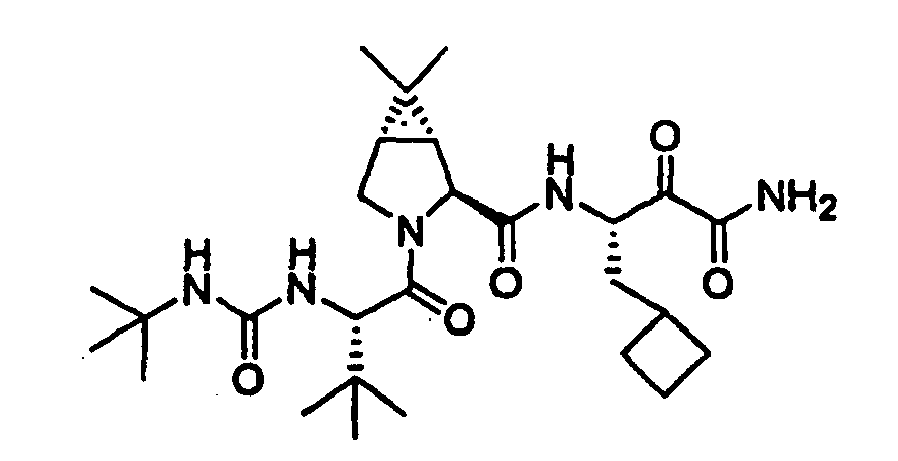


- The pharmaceutical composition of claim 47, wherein said compound is selected from the following:


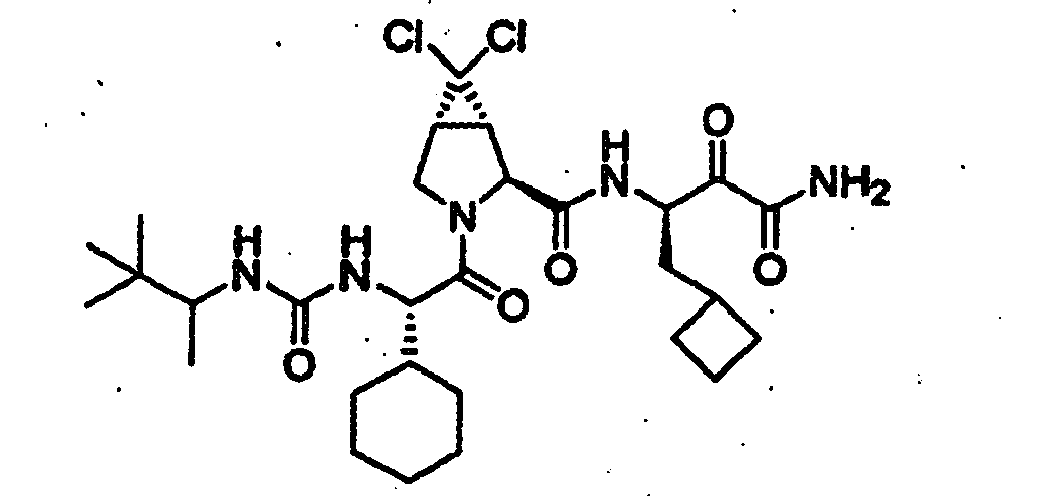


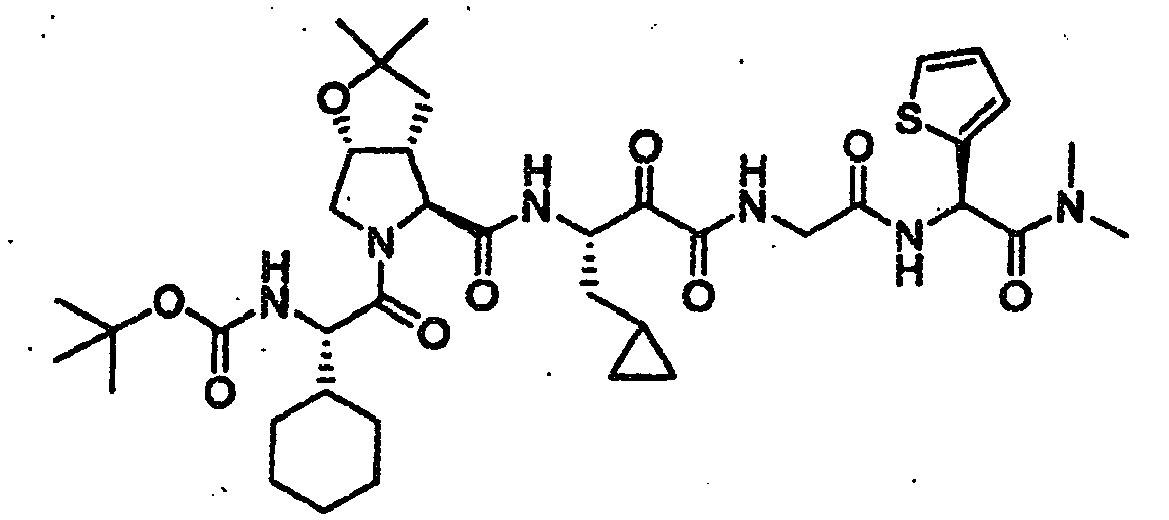


- The pharmaceutical composition of claim 51, additionally containing (a) an antiviral agent or (b) an interferon or pegylated-interferon alpha conjugate, or both (a) and (b).
- The pharmaceutical composition of claim 52, wherein said antiviral agent is ribavirin and said interferon is alpha-interferon.
- The use of a compound according to any of Claims 1 to 26, 33, 37 to 46 and 50 in the manufacture of a composition for use in a combination therapy for treating disorders associated with hepatitic C virus (HCV), said combination therapy comprising administering (i) said compound and (ii) an interferon
- The use of an interferon in the manufacture of a composition for use in a combination therapy for treating disorders associated with hepatitic C virus (HCV), said combination therapy comprising administering (i) an interferon and (ii) a compound according to any of Claims 1 to 26, 33, 37 to 46 and 50.
- The use of claim 54 or 55, wherein said interferon is alpha-interferon or pegylated interferon.
Priority Applications (2)
| Application Number | Priority Date | Filing Date | Title |
|---|---|---|---|
| SI200130967T SI1385870T1 (en) | 2000-07-21 | 2001-07-19 | Peptides as ns3-serine protease inhibitors of hepatitis c virus |
| CY20101100554T CY1112267T1 (en) | 2000-07-21 | 2010-06-16 | New Peptides as NS3-Serine Protease Inhibitors of Virus C |
Applications Claiming Priority (3)
| Application Number | Priority Date | Filing Date | Title |
|---|---|---|---|
| US22010800P | 2000-07-21 | 2000-07-21 | |
| US220108P | 2000-07-21 | ||
| PCT/US2001/022678 WO2002008244A2 (en) | 2000-07-21 | 2001-07-19 | Peptides as ns3-serine protease inhibitors of hepatitis c virus |
Publications (2)
| Publication Number | Publication Date |
|---|---|
| EP1385870A2 EP1385870A2 (en) | 2004-02-04 |
| EP1385870B1 true EP1385870B1 (en) | 2010-03-17 |
Family
ID=22822095
Family Applications (1)
| Application Number | Title | Priority Date | Filing Date |
|---|---|---|---|
| EP01954764A Expired - Lifetime EP1385870B1 (en) | 2000-07-21 | 2001-07-19 | Peptides as ns3-serine protease inhibitors of hepatitis c virus |
Country Status (31)
| Country | Link |
|---|---|
| US (4) | US7012066B2 (en) |
| EP (1) | EP1385870B1 (en) |
| JP (3) | JP4298289B2 (en) |
| KR (2) | KR100939155B1 (en) |
| CN (3) | CN102372764A (en) |
| AR (2) | AR033985A1 (en) |
| AT (1) | ATE461207T1 (en) |
| AU (2) | AU7698801A (en) |
| BR (1) | BR0112540A (en) |
| CA (1) | CA2410662C (en) |
| CY (2) | CY1112267T1 (en) |
| CZ (1) | CZ303213B6 (en) |
| DE (2) | DE60141608D1 (en) |
| DK (1) | DK1385870T3 (en) |
| EC (1) | ECSP034438A (en) |
| ES (1) | ES2341534T3 (en) |
| HU (1) | HU229997B1 (en) |
| IL (2) | IL153670A0 (en) |
| LU (1) | LU91910I2 (en) |
| MX (1) | MXPA03000627A (en) |
| MY (2) | MY139078A (en) |
| NO (2) | NO332329B1 (en) |
| NZ (1) | NZ523782A (en) |
| PL (1) | PL206255B1 (en) |
| PT (1) | PT1385870E (en) |
| RU (2) | RU2355700C9 (en) |
| SI (1) | SI1385870T1 (en) |
| SK (1) | SK288064B6 (en) |
| TW (1) | TWI324611B (en) |
| WO (1) | WO2002008244A2 (en) |
| ZA (1) | ZA200210312B (en) |
Families Citing this family (276)
| Publication number | Priority date | Publication date | Assignee | Title |
|---|---|---|---|---|
| CZ298749B6 (en) | 1996-10-18 | 2008-01-16 | Vertex Pharmaceuticals Incorporated | Inhibitors of serine proteases and pharmaceutical compositions in which the inhibitors are comprised |
| US6608027B1 (en) | 1999-04-06 | 2003-08-19 | Boehringer Ingelheim (Canada) Ltd | Macrocyclic peptides active against the hepatitis C virus |
| PE20011350A1 (en) | 2000-05-19 | 2002-01-15 | Vertex Pharma | PROPHARMAC OF AN INHIBITOR OF INTERLEUKIN-1ß CONVERTER ENZYME (ICE) |
| MXPA03000627A (en) * | 2000-07-21 | 2004-07-30 | Schering Corp | Novel peptides as ns3-serine protease inhibitors of hepatitis c virus. |
| US7244721B2 (en) * | 2000-07-21 | 2007-07-17 | Schering Corporation | Peptides as NS3-serine protease inhibitors of hepatitis C virus |
| SV2003000617A (en) * | 2000-08-31 | 2003-01-13 | Lilly Co Eli | INHIBITORS OF PROTEASA PEPTIDOMIMETICA REF. X-14912M |
| US6660731B2 (en) | 2000-09-15 | 2003-12-09 | Vertex Pharmaceuticals Incorporated | Pyrazole compounds useful as protein kinase inhibitors |
| ES2266258T3 (en) | 2000-09-15 | 2007-03-01 | Vertex Pharmaceuticals Incorporated | PIRAZOL COMPOUNDS USED AS PROTEIN KINASES INHIBITORS. |
| US7473691B2 (en) | 2000-09-15 | 2009-01-06 | Vertex Pharmaceuticals Incorporated | Pyrazole compounds useful as protein kinase inhibitors |
| GB2367816A (en) * | 2000-10-09 | 2002-04-17 | Bayer Ag | Urea- and thiourea-containing derivatives of beta-amino acids |
| HUP0303436A2 (en) * | 2000-12-12 | 2004-01-28 | Schering Corp. | Diaryl peptides as ns3-serine protease inhibitors of hepatitis c virus, pharmaceutical compositions containing them and their use |
| EP1345925B1 (en) | 2000-12-21 | 2006-05-17 | Vertex Pharmaceuticals Incorporated | Pyrazole compounds useful as protein kinase inhibitors |
| CA2449504A1 (en) | 2001-07-11 | 2003-01-23 | Vertex Pharmaceuticals Incorporated | Bridged bicyclic serine protease inhibitors |
| NZ531681A (en) | 2001-10-24 | 2007-05-31 | Vertex Pharma | Inhibitors of serine protease, particularly hepatitis C virus NS3-NS4A protease, incorporating a fused ring system |
| AU2003207625B2 (en) * | 2002-01-23 | 2006-09-07 | Schering Corporation | Proline compounds as NS3-serine protease inhibitors for use in treatment of hepatites C virus infection |
| US7119072B2 (en) | 2002-01-30 | 2006-10-10 | Boehringer Ingelheim (Canada) Ltd. | Macrocyclic peptides active against the hepatitis C virus |
| US7091184B2 (en) | 2002-02-01 | 2006-08-15 | Boehringer Ingelheim International Gmbh | Hepatitis C inhibitor tri-peptides |
| US6642204B2 (en) | 2002-02-01 | 2003-11-04 | Boehringer Ingelheim International Gmbh | Hepatitis C inhibitor tri-peptides |
| JP2005535574A (en) | 2002-04-11 | 2005-11-24 | バーテックス ファーマシューティカルズ インコーポレイテッド | Inhibitors of serine proteases, particularly HCV NS3-NS4A protease |
| MY140680A (en) | 2002-05-20 | 2010-01-15 | Bristol Myers Squibb Co | Hepatitis c virus inhibitors |
| MY141867A (en) | 2002-06-20 | 2010-07-16 | Vertex Pharma | Substituted pyrimidines useful as protein kinase inhibitors |
| US20050075279A1 (en) | 2002-10-25 | 2005-04-07 | Boehringer Ingelheim International Gmbh | Macrocyclic peptides active against the hepatitis C virus |
| AU2011203054B2 (en) * | 2003-04-11 | 2012-04-26 | Vertex Pharmaceuticals, Incorporated | Inhibitors of Serine Proteases, Particularly HCV NS3-NS4A Protease |
| ATE547412T1 (en) | 2003-04-11 | 2012-03-15 | Vertex Pharma | INHIBITORS OF SERINE PROTEASES, IN PARTICULAR HCV NS3-NS4A PROTEASE |
| HRP20080014T3 (en) | 2003-05-21 | 2008-02-29 | Boehringer Ingelheim International Gmbh | Hepatitis c inhibitor compounds |
| EP1633698A1 (en) * | 2003-06-17 | 2006-03-15 | Schering Corporation | Process and intermediates for the preparation of 3-(amino)-3-cyclobutylmethyl-2-hydroxy-propionamide or salts thereof |
| AR044694A1 (en) * | 2003-06-17 | 2005-09-21 | Schering Corp | PROCESS AND INTERMEDIATE COMPOUNDS FOR THE PREPARATION OF (1R, 2S, 5S) - 3 AZABICICLO [3,1,0] HEXANO-2- CARBOXAMIDE, N- [3- AMINO-1- (CYCLLOBUTILMETILE) - 2, 3 - DIOXOPROPIL] -3- [(2S) - 2 - [[[1,1- DIMETHYTILE] AMINO] CARBONYLAMINE] -3,3-DIMETHYL -1- OXOBUTIL] -6.6 DIMETHYL |
| MXPA05013752A (en) * | 2003-06-17 | 2006-03-08 | Schering Corp | Process and intermediates for the preparation of (1r,2s,5s)-6,6-dimethyl-3-azabicyclo[3,1,0]hexane-2-carboxylates or salts thereof. |
| BRPI0412761A (en) | 2003-07-18 | 2006-09-26 | Vertex Pharma | serine protease inhibitors, particularly vhc protease ns3-ns4a |
| WO2005021584A2 (en) * | 2003-08-26 | 2005-03-10 | Schering Corporation | Novel peptidomimetic ns3-serine protease inhibitors of hepatitis c virus |
| PE20050374A1 (en) | 2003-09-05 | 2005-05-30 | Vertex Pharma | SERINE PROTEASE INHIBITORS, IN PARTICULAR HCV PROTEASE NS3-NS4A |
| CA2538791A1 (en) * | 2003-09-18 | 2005-03-31 | Vertex Pharmaceuticals Incorporated | Inhibitors of serine proteases, particularly hcv ns3-ns4a protease |
| RS20060197A (en) | 2003-09-22 | 2008-09-29 | Boehringer Ingelheim International Gmbh., | Macrocyclic peptides active against the hepatitis c virus |
| KR20060085248A (en) * | 2003-09-26 | 2006-07-26 | 쉐링 코포레이션 | Macrocyclic Inhibitors of Hepatitis C Virus NS3 Serine Protease |
| CA2541634A1 (en) * | 2003-10-10 | 2005-04-28 | Vertex Pharmaceuticals Incorporated | Inhibitors of serine proteases, particularly hcv ns3-ns4a protease |
| US7491794B2 (en) * | 2003-10-14 | 2009-02-17 | Intermune, Inc. | Macrocyclic compounds as inhibitors of viral replication |
| JP4890254B2 (en) | 2003-10-27 | 2012-03-07 | バーテックス ファーマシューティカルズ インコーポレイテッド | HCVNS3-NS4A protease resistant mutant |
| EP1944042A1 (en) | 2003-10-27 | 2008-07-16 | Vertex Pharmceuticals Incorporated | Combinations for HCV treatment |
| US8187874B2 (en) | 2003-10-27 | 2012-05-29 | Vertex Pharmaceuticals Incorporated | Drug discovery method |
| JP2007532479A (en) | 2003-11-20 | 2007-11-15 | シェーリング コーポレイション | Depeptideization inhibitor of hepatitis C virus NS3 protease |
| CA2549167A1 (en) * | 2003-12-11 | 2005-06-30 | Schering Corporation | Inhibitors of hepatitis c virus ns3/ns4a serine protease |
| ATE495185T1 (en) | 2004-01-21 | 2011-01-15 | Boehringer Ingelheim Int | MACROCYCLIC PEPTIDES ACTIVE AGAINST HEPATITIS C VIRUS |
| KR20120090077A (en) * | 2004-01-30 | 2012-08-16 | 얀센 알 앤드 디 아일랜드 | Hcv ns-3 serine protease inhibitors |
| EP2311851A3 (en) | 2004-02-04 | 2011-05-25 | Vertex Pharmaceuticals Incorporated | Inhibitors of serine proteases, particularly HCV NS3-NS4A protease |
| PT1719773E (en) | 2004-02-24 | 2009-06-03 | Japan Tobacco Inc | Fused heterotetracyclic compounds and use tehreof as hcv polymerase inhibitor |
| US20070049593A1 (en) | 2004-02-24 | 2007-03-01 | Japan Tobacco Inc. | Tetracyclic fused heterocyclic compound and use thereof as HCV polymerase inhibitor |
| US7192957B2 (en) * | 2004-02-27 | 2007-03-20 | Schering Corporation | Compounds as inhibitors of hepatitis C virus NS3 serine protease |
| DE602005023224D1 (en) * | 2004-02-27 | 2010-10-07 | Schering Corp | Novel compounds as inhibitors of hepatitis C virus NS3 serine protease |
| US7635694B2 (en) | 2004-02-27 | 2009-12-22 | Schering Corporation | Cyclobutenedione-containing compounds as inhibitors of hepatitis C virus NS3 serine protease |
| US7205330B2 (en) * | 2004-02-27 | 2007-04-17 | Schering Corporation | Inhibitors of hepatitis C virus NS3 protease |
| AU2005219824B2 (en) * | 2004-02-27 | 2007-11-29 | Merck Sharp & Dohme Corp. | Novel ketoamides with cyclic p4's as inhibitors of ns3 serine protease of hepatitis c virus |
| MY145081A (en) * | 2004-02-27 | 2011-12-15 | Schering Corp | Sulfur compounds as inhibitors of hepatitis c virus ns3 serine protease |
| CN1946690A (en) * | 2004-02-27 | 2007-04-11 | 先灵公司 | Cyclobutenedione groups-containing compounds as inhibitors of hepatitis C virus NS3 serine protease |
| US7816326B2 (en) * | 2004-02-27 | 2010-10-19 | Schering Corporation | Sulfur compounds as inhibitors of hepatitis C virus NS3 serine protease |
| ES2328589T3 (en) * | 2004-02-27 | 2009-11-16 | Schering Corporation | PROLIN 3.4 COMPOUNDS (CYCLOPENTIL) FUSED AS INHIBITORS OF THE SERINE PROTEASE NS3 OF THE HEPATITIS VIRUS C. |
| KR101135765B1 (en) * | 2004-03-12 | 2012-04-23 | 버텍스 파마슈티칼스 인코포레이티드 | Processes and intermediates for the preparation of aspartic acetal caspase inhibitors |
| AR049635A1 (en) * | 2004-05-06 | 2006-08-23 | Schering Corp | (1R, 2S, 5S) -N - ((1S) -3-AMINO-1- (CYCLLOBUTILMETIL) -2,3-DIOXOPROPIL) -3 - ((2S) -2 - (((((1,1-DIMETILETIL ) AMINO) CARBONIL) AMINO) -3,3-DIMETIL-1-OXOBUTIL) -6,6-DIMETIL-3-AZABICICLO (3.1.0) HEXAN-2-CARBOXAMIDE AS INHIBITOR OF THE NS3 / NS4A SERINA PROTEASA DEL VIRUS DE HEPATITIS C |
| CN1984922A (en) | 2004-05-20 | 2007-06-20 | 先灵公司 | Substituted prolines as inhibitors of hepatitis c virus NS3 serine protease |
| JP4914355B2 (en) | 2004-07-20 | 2012-04-11 | ベーリンガー インゲルハイム インターナショナル ゲゼルシャフト ミット ベシュレンクテル ハフツング | Hepatitis C inhibitor peptide analog |
| UY29016A1 (en) | 2004-07-20 | 2006-02-24 | Boehringer Ingelheim Int | ANALOGS OF INHIBITING DIPEPTIDES OF HEPATITIS C |
| CA2577812A1 (en) | 2004-08-27 | 2006-03-09 | Schering Corporation | Acylsulfonamide compounds as inhibitors of hepatitis c virus ns3 serine protease |
| US7196161B2 (en) * | 2004-10-01 | 2007-03-27 | Scynexis Inc. | 3-ether and 3-thioether substituted cyclosporin derivatives for the treatment and prevention of hepatitis C infection |
| CA2583472A1 (en) | 2004-10-01 | 2006-04-13 | Chao Lin | Hcv ns3-ns4a protease inhibition |
| JP5139065B2 (en) * | 2004-10-01 | 2013-02-06 | スシネキス インク | 3-ether and 3-thioether substituted cyclosporine derivatives for the treatment and prevention of hepatitis C infection |
| US7659263B2 (en) | 2004-11-12 | 2010-02-09 | Japan Tobacco Inc. | Thienopyrrole compound and use thereof as HCV polymerase inhibitor |
| GB0426661D0 (en) * | 2004-12-06 | 2005-01-05 | Isis Innovation | Pyrrolidine compounds |
| WO2006130554A2 (en) * | 2005-06-02 | 2006-12-07 | Schering Corporation | Methods of treating hepatitis c virus |
| US20060276406A1 (en) * | 2005-06-02 | 2006-12-07 | Schering Corporation | Methods of treating hepatitis C virus |
| US20060281689A1 (en) * | 2005-06-02 | 2006-12-14 | Schering Corporation | Method for modulating activity of HCV protease through use of a novel HCV protease inhibitor to reduce duration of treatment period |
| WO2006130627A2 (en) * | 2005-06-02 | 2006-12-07 | Schering Corporation | Methods for treating hepatitis c |
| WO2006130686A2 (en) | 2005-06-02 | 2006-12-07 | Schering Corporation | Hcv protease inhibitors in combination with food |
| US20060275366A1 (en) * | 2005-06-02 | 2006-12-07 | Schering Corporation | Controlled-release formulation |
| WO2006130687A2 (en) * | 2005-06-02 | 2006-12-07 | Schering Corporation | Liver/plasma concentration ratio for dosing hepatitis c virus protease inhibitor |
| CN101212970B (en) | 2005-06-02 | 2010-07-21 | 先灵公司 | Compositions of HCV protease inhibitors and surfactants |
| NZ563369A (en) * | 2005-06-02 | 2011-03-31 | Schering Corp | Controlled-release formulation useful for treating disorders associated with hepatitus C virus |
| ZA200711069B (en) * | 2005-06-30 | 2009-03-25 | Virobay Inc | HCV inhibitors |
| US7608592B2 (en) * | 2005-06-30 | 2009-10-27 | Virobay, Inc. | HCV inhibitors |
| US20110104109A1 (en) * | 2005-07-13 | 2011-05-05 | Frank Bennett | Tetracyclic indole derivatives and their use for treating or preventing viral infections |
| JP5249028B2 (en) | 2005-07-25 | 2013-07-31 | インターミューン・インコーポレーテッド | Novel macrocyclic inhibitor of hepatitis C virus replication |
| ES2373685T3 (en) | 2005-07-29 | 2012-02-07 | Tibotec Pharmaceuticals | MACROCYCLIC INHIBITORS OF HEPATITIS VIRUS C. |
| TWI412535B (en) | 2005-07-29 | 2013-10-21 | Tibotec Pharm Ltd | Macrocylic inhibitors of hepatitis c virus |
| CA2617679A1 (en) * | 2005-08-02 | 2007-02-08 | Steve Lyons | Inhibitors of serine proteases |
| US8399615B2 (en) | 2005-08-19 | 2013-03-19 | Vertex Pharmaceuticals Incorporated | Processes and intermediates |
| CA2619659A1 (en) | 2005-08-19 | 2007-02-22 | Vertex Pharmaceuticals Incorporated | Processes and intermediates |
| AR055395A1 (en) * | 2005-08-26 | 2007-08-22 | Vertex Pharma | INHIBITING COMPOUNDS OF THE ACTIVITY OF SERINA PROTEASA NS3-NS4A OF HEPATITIS C VIRUS |
| US7964624B1 (en) * | 2005-08-26 | 2011-06-21 | Vertex Pharmaceuticals Incorporated | Inhibitors of serine proteases |
| BRPI0616476A2 (en) * | 2005-09-30 | 2011-06-21 | Scynexis Inc | use of a therapeutically effective amount of a cyclosporin derivative, and, pharmaceutical composition |
| US8329658B2 (en) * | 2005-09-30 | 2012-12-11 | Scynexis, Inc. | Arylalkyl and heteroarylalkyl derivatives of cyclosporine A for the treatment and prevention of viral infection |
| GEP20104956B (en) * | 2005-10-11 | 2010-04-12 | Array Biopharma Inc | Compounds for inhibiting hepatitis c viral replication and use thereof |
| WO2007056163A2 (en) | 2005-11-03 | 2007-05-18 | Vertex Pharmaceuticals Incorporated | Aminopyrimidines useful as kinase inhibitors |
| AU2006315438A1 (en) | 2005-11-11 | 2007-05-24 | Vertex Pharmaceuticals Incorporated | Hepatitis C virus variants |
| US7705138B2 (en) | 2005-11-11 | 2010-04-27 | Vertex Pharmaceuticals Incorporated | Hepatitis C virus variants |
| AR056805A1 (en) * | 2005-11-14 | 2007-10-24 | Schering Corp | AN OXIDATION PROCESS FOR THE PREPARATION OF N- (3- AMINO-1- (CICLOBUTILMETIL) -2,3- DIOXOPROPIL) -3- (N - ((TER-BUTILAMINO) CARBONIL) -3- METIL-L- VALIL) -6,6- DIMETIL-3- AZABICICLO (3.1.0) HEXANO -2- CARBOXAMIDE AND RALATED COMPOUNDS |
| EP1963267B1 (en) * | 2005-12-22 | 2013-08-14 | Merck Sharp & Dohme Corp. | Process for the preparation of 6, 6-dimethyl-3-azabicyclo-[3.1.0]-hexane compounds and enantiomeric salts thereof |
| DK1966130T3 (en) | 2005-12-23 | 2014-02-10 | Zealand Pharma As | Modified lysine mimetic compounds |
| US7816348B2 (en) | 2006-02-03 | 2010-10-19 | Boehringer Ingelheim International Gmbh | Viral polymerase inhibitors |
| AR059430A1 (en) * | 2006-02-09 | 2008-04-09 | Schering Corp | NEW COMBINATIONS AND METHODS OF HCV INHIBITORS |
| US20070274951A1 (en) * | 2006-02-09 | 2007-11-29 | Xiao Tong | Combinations comprising HCV protease inhibitor(s) and HCV polymerase inhibitor(s), and methods of treatment related thereto |
| CA2643688A1 (en) * | 2006-02-27 | 2007-08-30 | Vertex Pharmaceuticals Incorporated | Co-crystals and pharmaceutical compositions comprising the same |
| MX2008011354A (en) * | 2006-03-03 | 2008-09-15 | Schering Corp | Pharmaceutical combinations of hcv-protease and -ires inhibitors. |
| CA2645684A1 (en) * | 2006-03-06 | 2007-09-13 | Abbott Laboratories | Compositions and methods of use of ritonavir for treating hcv |
| WO2007109080A2 (en) | 2006-03-16 | 2007-09-27 | Vertex Pharmaceuticals Incorporated | Deuterated hepatitis c protease inhibitors |
| US20080045530A1 (en) * | 2006-04-11 | 2008-02-21 | Trixi Brandl | Organic Compounds and Their Uses |
| CA2643680A1 (en) * | 2006-04-11 | 2007-11-22 | Novartis Ag | Hcv/hiv inhibitors and their uses |
| MX2008013125A (en) * | 2006-04-11 | 2008-10-21 | Novartis Ag | Hcv inhibitors. |
| US8017612B2 (en) | 2006-04-18 | 2011-09-13 | Japan Tobacco Inc. | Piperazine compound and use thereof as a HCV polymerase inhibitor |
| CN101495095B (en) * | 2006-04-28 | 2013-05-29 | 默沙东公司 | Process for Precipitating and Isolating 6,6-Dimethyl-3-aza-bicyclo[3.1.0]hexane-amide Compounds by Controlled Precipitation and Pharmaceutical Preparations Containing The Same |
| EP2012753A2 (en) * | 2006-04-28 | 2009-01-14 | Schering Corporation | Process for the precipitation and isolation of 6,6-dimethyl-3-aza-bicyclo [3.1.0]hexane-amide compounds by controlled precipitation and pharmaceutical formulations containing same |
| US8420122B2 (en) * | 2006-04-28 | 2013-04-16 | Merck Sharp & Dohme Corp. | Process for the precipitation and isolation of 6,6-dimethyl-3-aza-bicyclo [3.1.0] hexane-amide compounds by controlled precipitation and pharmaceutical formulations containing same |
| ATE502633T1 (en) | 2006-05-19 | 2011-04-15 | Scynexis Inc | CYCLOSPORINS FOR THE TREATMENT AND PREVENTION OF EYE DISEASES |
| RU2419625C2 (en) * | 2006-05-23 | 2011-05-27 | Айрм Ллк | Compounds and compositions as canal activating protease inhibitors |
| US7951823B2 (en) * | 2006-05-23 | 2011-05-31 | Irm Llc | Compounds and compositions as channel activating protease inhibitors |
| EP2027761A1 (en) * | 2006-06-02 | 2009-02-25 | Claude Annie Perrichon | Management of active electrons |
| KR20090024834A (en) * | 2006-07-05 | 2009-03-09 | 인터뮨, 인크. | New Inhibitors of Hepatitis C Virus Replication |
| EP2049474B1 (en) | 2006-07-11 | 2015-11-04 | Bristol-Myers Squibb Company | Hepatitis c virus inhibitors |
| EP1886685A1 (en) | 2006-08-11 | 2008-02-13 | INSERM (Institut National de la Santé et de la Recherche Médicale) | Methods, uses and compositions for modulating replication of hcv through the farnesoid x receptor (fxr) activation or inhibition |
| JP2010500978A (en) | 2006-08-17 | 2010-01-14 | ベーリンガー インゲルハイム インターナショナル ゲゼルシャフト ミット ベシュレンクテル ハフツング | Viral polymerase inhibitor |
| US20080182895A1 (en) * | 2006-08-25 | 2008-07-31 | Howe Anita Y M | Identification and characterization of hcv replicon variants with reduced susceptibility to hcv-796, and methods related thereto |
| US20100204159A1 (en) * | 2006-09-13 | 2010-08-12 | Trixl Brandl | Organic compounds and their uses |
| US8343477B2 (en) | 2006-11-01 | 2013-01-01 | Bristol-Myers Squibb Company | Inhibitors of hepatitis C virus |
| US7772180B2 (en) | 2006-11-09 | 2010-08-10 | Bristol-Myers Squibb Company | Hepatitis C virus inhibitors |
| US7763584B2 (en) | 2006-11-16 | 2010-07-27 | Bristol-Myers Squibb Company | Hepatitis C virus inhibitors |
| US7888464B2 (en) | 2006-11-16 | 2011-02-15 | Bristol-Myers Squibb Company | Hepatitis C virus inhibitors |
| US8003604B2 (en) | 2006-11-16 | 2011-08-23 | Bristol-Myers Squibb Company | Hepatitis C virus inhibitors |
| US7576057B2 (en) | 2006-11-20 | 2009-08-18 | Scynexis, Inc. | Cyclic peptides |
| JP2010510246A (en) * | 2006-11-21 | 2010-04-02 | スミスクライン ビーチャム コーポレーション | Amide antiviral compounds |
| US20100055071A1 (en) * | 2006-11-21 | 2010-03-04 | Martin Robert Leivers | Anti-Viral Compounds |
| WO2008073282A2 (en) * | 2006-12-07 | 2008-06-19 | Schering Corporation | Ph sensitive matrix formulation |
| CA2672268A1 (en) * | 2006-12-15 | 2008-06-26 | Schering Corporation | Bisulfite purification of an alpha-keto amide |
| PL2121605T3 (en) * | 2006-12-20 | 2014-05-30 | Merck Sharp & Dohme | Process for preparing (1r,2s,5s)-n-[(1s)-3-amino-1-(cyclobutylmethyl)-2,3-dioxopropyl]-3-[(2s)-2-[[[(1,1-dimethylethyl)amino]-carbonyl]amino]-3,3-dimethyl-1-oxobutyl]-6,6-dimethyl-3-azabicyclo[3.1.0]hexane-2-carboxamide |
| WO2008079266A2 (en) | 2006-12-21 | 2008-07-03 | Wyeth | Synthesis of pyrrolidine compounds |
| CA2674831A1 (en) | 2006-12-22 | 2008-11-13 | Schering Corporation | 5,6-ring annulated indole derivatives and methods of use thereof |
| MX2009006880A (en) | 2006-12-22 | 2009-07-03 | Schering Corp | 4,5-ring annulated indole derivatives for treating or preventing of hcv and related viral infections. |
| JP5211068B2 (en) * | 2006-12-22 | 2013-06-12 | メルク・シャープ・アンド・ドーム・コーポレーション | 4,5-cyclic indole derivatives for the treatment or prevention of HCV and related viral diseases |
| US20080161254A1 (en) * | 2007-01-03 | 2008-07-03 | Virobay, Inc. | Hcv inhibitors |
| KR20090108131A (en) * | 2007-02-09 | 2009-10-14 | 아이알엠 엘엘씨 | Compounds and Compositions as Channel Activating Protease Inhibitors |
| WO2008106058A2 (en) * | 2007-02-27 | 2008-09-04 | Vertex Pharmaceuticals Incorporated | Inhibitors of serine proteases |
| GEP20125645B (en) * | 2007-02-27 | 2012-09-25 | Vertex Pharma | Co-crystals and pharmaceutical compositions comprising the same |
| JP2010522172A (en) * | 2007-03-23 | 2010-07-01 | シェーリング コーポレイション | P1-non-epimerized ketoamide inhibitor of HCV NS3 protease |
| KR20100024920A (en) * | 2007-05-03 | 2010-03-08 | 인터뮨, 인크. | Novel macrocyclic inhibitors of hepatitis c virus replication |
| ES2381410T3 (en) | 2007-05-04 | 2012-05-28 | Vertex Pharmceuticals Incorporated | Combination therapy for the treatment of HCV infections |
| MX2009012093A (en) * | 2007-05-10 | 2010-01-25 | Intermune Inc | Novel peptide inhibitors of hepatitis c virus replication. |
| EP2188274A4 (en) | 2007-08-03 | 2011-05-25 | Boehringer Ingelheim Int | Viral polymerase inhibitors |
| CA2697500A1 (en) | 2007-08-29 | 2009-03-12 | Schering Corporation | 2,3-substituted azaindole derivatives for treating viral infections |
| ES2447543T3 (en) * | 2007-08-29 | 2014-03-12 | Merck Sharp & Dohme Corp. | Substituted indole derivatives and methods of use thereof |
| EP2197842B1 (en) * | 2007-08-29 | 2012-05-23 | Schering Corporation | 2, 3-substituted indole derivatives for treating viral infections |
| WO2009032198A1 (en) | 2007-08-30 | 2009-03-12 | Vertex Pharmaceuticals Incorporated | Co-crystals and pharmaceutical compositions comprising the same |
| AU2008301981A1 (en) * | 2007-09-14 | 2009-03-26 | Merck Sharp & Dohme Corp. | Method of treating hepatitis C patients |
| BRPI0817881A2 (en) * | 2007-10-10 | 2015-03-31 | Novartis Ag | Organic compounds and their uses |
| US8419332B2 (en) * | 2007-10-19 | 2013-04-16 | Atlas Bolt & Screw Company Llc | Non-dimpling fastener |
| EP2222672B1 (en) * | 2007-11-16 | 2013-12-18 | Merck Sharp & Dohme Corp. | 3-aminosulfonyl substituted indole derivatives and methods of use thereof |
| CA2705586A1 (en) * | 2007-11-16 | 2009-05-22 | Schering Corporation | 3-heterocyclic substituted indole derivatives and methods of use thereof |
| CN101910130A (en) * | 2007-11-28 | 2010-12-08 | 先灵公司 | Dehydrohalogenation process for the preparation of intermediates for the formation of 6,6-dimethyl-3-azabicyclo[3.1.0]hexane compounds |
| WO2009076747A1 (en) | 2007-12-19 | 2009-06-25 | Boehringer Ingelheim International Gmbh | Viral polymerase inhibitors |
| US8202996B2 (en) | 2007-12-21 | 2012-06-19 | Bristol-Myers Squibb Company | Crystalline forms of N-(tert-butoxycarbonyl)-3-methyl-L-valyl-(4R)-4-((7-chloro-4-methoxy-1-isoquinolinyl)oxy)-N- ((1R,2S)-1-((cyclopropylsulfonyl)carbamoyl)-2-vinylcyclopropyl)-L-prolinamide |
| CN102089274B (en) * | 2007-12-21 | 2014-09-10 | 默沙东公司 | Method for synthesizing 3-amino-3-cyclobutylmethyl-2-hydroxypropionamide or its salt |
| KR20100118991A (en) | 2008-02-04 | 2010-11-08 | 아이데닉스 파마슈티칼스, 인코포레이티드 | Macrocyclic serine protease inhibitors |
| KR20110005869A (en) * | 2008-04-15 | 2011-01-19 | 인터뮨, 인크. | Novel Macrocyclic Inhibitors of Hepatitis C Virus Replication |
| US8163921B2 (en) | 2008-04-16 | 2012-04-24 | Bristol-Myers Squibb Company | Hepatitis C virus inhibitors |
| US8044023B2 (en) | 2008-05-29 | 2011-10-25 | Bristol-Myers Squibb Company | Hepatitis C virus inhibitors |
| US7964560B2 (en) | 2008-05-29 | 2011-06-21 | Bristol-Myers Squibb Company | Hepatitis C virus inhibitors |
| US9090671B2 (en) * | 2008-06-06 | 2015-07-28 | Scynexis, Inc. | Macrocyclic peptides |
| US20090306033A1 (en) * | 2008-06-06 | 2009-12-10 | Keqiang Li | Novel cyclic peptides |
| WO2009152200A1 (en) * | 2008-06-13 | 2009-12-17 | Schering Corporation | Tricyclic indole derivatives and methods of use thereof |
| CA2728226A1 (en) | 2008-06-24 | 2010-01-21 | Codexis, Inc. | Biocatalytic processes for the preparation of substantially stereomerically pure fused bicyclic proline compounds |
| US8188137B2 (en) | 2008-08-15 | 2012-05-29 | Avila Therapeutics, Inc. | HCV protease inhibitors and uses thereof |
| TW201020245A (en) | 2008-08-20 | 2010-06-01 | Schering Corp | Ethynyl-substituted pyridine and pyrimidine derivatives and their use in treating viral infections |
| WO2010022126A1 (en) | 2008-08-20 | 2010-02-25 | Schering Corporation | Azo-substituted pyridine and pyrimidine derivatives and their use in treating viral infections |
| CA2734486A1 (en) | 2008-08-20 | 2010-02-25 | Southern Research Institute | Substituted pyridine and pyrimidine derivatives and their use in treating viral infections |
| ES2439009T3 (en) | 2008-08-20 | 2014-01-21 | Merck Sharp & Dohme Corp. | Pyridine and pyrimidine derivatives substituted with ethenyl and their use in the treatment of viral infections |
| US8207341B2 (en) | 2008-09-04 | 2012-06-26 | Bristol-Myers Squibb Company | Process or synthesizing substituted isoquinolines |
| US8563505B2 (en) | 2008-09-29 | 2013-10-22 | Bristol-Myers Squibb Company | Hepatitis C virus inhibitors |
| US8044087B2 (en) | 2008-09-29 | 2011-10-25 | Bristol-Myers Squibb Company | Hepatitis C virus inhibitors |
| CN102216321A (en) * | 2008-10-15 | 2011-10-12 | 因特蒙公司 | Therapeutic antiviral peptides |
| US8283310B2 (en) | 2008-12-15 | 2012-10-09 | Bristol-Myers Squibb Company | Hepatitis C virus inhibitors |
| EP2376524B1 (en) * | 2008-12-31 | 2017-03-15 | Cypralis Limited | Derivatives of cyclosporin a |
| WO2010080874A1 (en) | 2009-01-07 | 2010-07-15 | Scynexis, Inc. | Cyclosporine derivative for use in the treatment of hcv and hiv infection |
| GB0900914D0 (en) | 2009-01-20 | 2009-03-04 | Angeletti P Ist Richerche Bio | Antiviral agents |
| US8102720B2 (en) * | 2009-02-02 | 2012-01-24 | Qualcomm Incorporated | System and method of pulse generation |
| AR075584A1 (en) * | 2009-02-27 | 2011-04-20 | Intermune Inc | THERAPEUTIC COMPOSITIONS THAT INCLUDE beta-D-2'-DESOXI-2'-FLUORO-2'-C-METHYLYCTIDINE AND A CARDIEX ISOINDOL ACID DERIVATIVE AND ITS USES. COMPOUND. |
| JP5690286B2 (en) | 2009-03-04 | 2015-03-25 | イデニク プハルマセウティカルス,インコーポレイテッド | Phosphothiophene and phosphothiazole HCV polymerase inhibitors |
| US8377962B2 (en) | 2009-04-08 | 2013-02-19 | Idenix Pharmaceuticals, Inc. | Macrocyclic serine protease inhibitors |
| US20110182850A1 (en) * | 2009-04-10 | 2011-07-28 | Trixi Brandl | Organic compounds and their uses |
| US8512690B2 (en) | 2009-04-10 | 2013-08-20 | Novartis Ag | Derivatised proline containing peptide compounds as protease inhibitors |
| US20120244122A1 (en) | 2009-05-28 | 2012-09-27 | Masse Craig E | Peptides for the Treatment of HCV Infections |
| CA2763140A1 (en) | 2009-05-29 | 2010-12-02 | Schering Corporation | Antiviral compounds composed of three linked aryl moieties to treat diseases such as hepatitis c |
| WO2010151488A1 (en) | 2009-06-23 | 2010-12-29 | Gilead Sciences, Inc. | Combination of boceprevir with 5- ( { 6- [2, 4- bis (trifluoromethyl) phenyl] pyridazin-3 -yl } methyl) -2- (2 -fluorophenyl) -5h- imidazo [4, 5-c] pyridine for the treatment of hcv |
| AR077688A1 (en) | 2009-08-04 | 2011-09-14 | Takeda Pharmaceutical | HETEROCICLIC COMPOUNDS, USEFUL IN CANCER TREATMENT |
| US9284307B2 (en) | 2009-08-05 | 2016-03-15 | Idenix Pharmaceuticals Llc | Macrocyclic serine protease inhibitors |
| US9156818B2 (en) | 2009-09-11 | 2015-10-13 | Enanta Pharmaceuticals, Inc. | Hepatitis C virus inhibitors |
| WO2011038293A1 (en) * | 2009-09-28 | 2011-03-31 | Intermune, Inc. | Cyclic peptide inhibitors of hepatitis c virus replication |
| WO2011041551A1 (en) * | 2009-10-01 | 2011-04-07 | Intermune, Inc. | Therapeutic antiviral peptides |
| US20110117055A1 (en) | 2009-11-19 | 2011-05-19 | Macdonald James E | Methods of Treating Hepatitis C Virus with Oxoacetamide Compounds |
| AU2010324871A1 (en) | 2009-11-25 | 2012-06-14 | Merck Sharp & Dohme Corp. | Fused tricyclic compounds and derivatives thereof useful for the treatment of viral diseases |
| SG181797A1 (en) | 2009-12-18 | 2012-07-30 | Idenix Pharmaceuticals Inc | 5,5-fused arylene or heteroarylene hepatitis c virus inhibitors |
| CA2785488A1 (en) | 2009-12-22 | 2011-07-21 | Merck Sharp & Dohme Corp. | Fused tricyclic compounds and methods of use thereof for the treatment of viral diseases |
| US9433621B2 (en) | 2010-02-18 | 2016-09-06 | Merck Sharp & Dohme Corp. | Substituted pyridine and pyrimidine derivatives and their use in treating viral infections |
| CA2791045A1 (en) * | 2010-02-25 | 2011-09-01 | Vereniging Voor Christelijk Hoger Onderwijs, Wetenschappelijk Onderzoek En Patieentenzorg | A process for the preparation of substituted prolyl peptides and similar peptidomimetics |
| EP2545060B1 (en) | 2010-03-09 | 2015-11-25 | Merck Sharp & Dohme Corp. | Fused tricyclic silyl compounds and methods of use thereof for the treatment of viral diseases |
| WO2012018534A2 (en) | 2010-07-26 | 2012-02-09 | Schering Corporation | Substituted biphenylene compounds and methods of use thereof for the treatment of viral diseases |
| EP2621279B1 (en) | 2010-09-29 | 2018-04-04 | Merck Sharp & Dohme Corp. | Fused tetracycle derivatives and methods of use thereof for the treatment of viral diseases |
| US9353100B2 (en) | 2011-02-10 | 2016-05-31 | Idenix Pharmaceuticals Llc | Macrocyclic serine protease inhibitors, pharmaceutical compositions thereof, and their use for treating HCV infections |
| WO2012107589A1 (en) | 2011-02-11 | 2012-08-16 | INSERM (Institut National de la Santé et de la Recherche Médicale) | Methods and pharmaceutical compositions for the treatment and prevention of hcv infections |
| US20120252721A1 (en) | 2011-03-31 | 2012-10-04 | Idenix Pharmaceuticals, Inc. | Methods for treating drug-resistant hepatitis c virus infection with a 5,5-fused arylene or heteroarylene hepatitis c virus inhibitor |
| EP2696681B1 (en) | 2011-04-13 | 2018-10-03 | Merck Sharp & Dohme Corp. | 2'-substituted nucleoside derivatives and methods of use thereof for the treatment of viral diseases |
| US9156872B2 (en) | 2011-04-13 | 2015-10-13 | Merck Sharp & Dohme Corp. | 2′-azido substituted nucleoside derivatives and methods of use thereof for the treatment of viral diseases |
| US8957203B2 (en) | 2011-05-05 | 2015-02-17 | Bristol-Myers Squibb Company | Hepatitis C virus inhibitors |
| US8691757B2 (en) | 2011-06-15 | 2014-04-08 | Bristol-Myers Squibb Company | Hepatitis C virus inhibitors |
| WO2013033899A1 (en) | 2011-09-08 | 2013-03-14 | Merck Sharp & Dohme Corp. | Substituted benzofuran compounds and methods of use thereof for the treatment of viral diseases |
| WO2013033901A1 (en) | 2011-09-08 | 2013-03-14 | Merck Sharp & Dohme Corp. | Heterocyclic-substituted benzofuran derivatives and methods of use thereof for the treatment of viral diseases |
| WO2013033900A1 (en) | 2011-09-08 | 2013-03-14 | Merck Sharp & Dohme Corp. | Tetracyclic heterocycle compounds and methods of use thereof for the treatment of viral diseases |
| WO2013039876A1 (en) | 2011-09-14 | 2013-03-21 | Merck Sharp & Dohme Corp. | Silyl-containing heterocyclic compounds and methods of use thereof for the treatment of viral diseases |
| CN104023726A (en) | 2011-10-21 | 2014-09-03 | 艾伯维公司 | Combination therapy with one or more DAAs used to treat HCV (eg, with ABT-072 or ABT-333) |
| CA2811203C (en) | 2011-10-21 | 2015-05-05 | Abbvie Inc. | Methods for treating hcv |
| US8466159B2 (en) | 2011-10-21 | 2013-06-18 | Abbvie Inc. | Methods for treating HCV |
| US8492386B2 (en) | 2011-10-21 | 2013-07-23 | Abbvie Inc. | Methods for treating HCV |
| US20130123325A1 (en) | 2011-11-14 | 2013-05-16 | Sven Ruf | Use of boceprevir and related compounds in atherosclerosis, heart failure, renal diseases, liver diseases or inflammatory diseases |
| AR091192A1 (en) * | 2012-05-30 | 2015-01-21 | Chemo Iberica Sa | MULTICOMPONENT PROCEDURE FOR THE PREPARATION OF BICYCLE COMPOUNDS |
| CN103508918B (en) * | 2012-06-18 | 2015-09-09 | 上海医药工业研究院 | With the Alpha-hydroxy beta-amino ester compound and preparation method thereof of cyclobutyl |
| WO2014053533A1 (en) | 2012-10-05 | 2014-04-10 | Sanofi | Use of substituted 3-heteroaroylamino-propionic acid derivatives as pharmaceuticals for prevention/treatment of atrial fibrillation |
| WO2014061034A1 (en) * | 2012-10-18 | 2014-04-24 | Msn Laboratories Limited | Process for preparation of boceprevir and intermediates thereof |
| SI2909205T1 (en) | 2012-10-19 | 2017-02-28 | Bristol-Myers Squibb Company | 9-methyl substituted hexadecahydrocyclopropa(e)pyrrolo(1,2-a)(1,4)diazacyclopentadecinyl carbamate derivatives as non-structural 3 (ns3) protease inhibitors for the treatment of hepatitis c virus infections |
| WO2014068265A1 (en) | 2012-10-29 | 2014-05-08 | Cipla Limited | Antiviral phosphonate analogues and process for preparation thereof |
| US9643999B2 (en) | 2012-11-02 | 2017-05-09 | Bristol-Myers Squibb Company | Hepatitis C virus inhibitors |
| EP2914613B1 (en) | 2012-11-02 | 2017-11-22 | Bristol-Myers Squibb Company | Hepatitis c virus inhibitors |
| EP2914598B1 (en) | 2012-11-02 | 2017-10-18 | Bristol-Myers Squibb Company | Hepatitis c virus inhibitors |
| US9409943B2 (en) | 2012-11-05 | 2016-08-09 | Bristol-Myers Squibb Company | Hepatitis C virus inhibitors |
| WO2014083575A2 (en) | 2012-11-29 | 2014-06-05 | Mylan Laboratories Ltd | Improved process for the preparation of boceprevir intermediate |
| CN103936652B (en) * | 2013-01-18 | 2016-07-06 | 上海医药工业研究院 | Intermediate compound IV of anti-hepatitis C medicine Boceprevir and its preparation method and application |
| CN103936818B (en) * | 2013-01-18 | 2017-09-29 | 上海医药工业研究院 | Anti- hepatitis medicine Boceprevir intermediate I and its preparation method and application |
| CN103936627B (en) * | 2013-01-18 | 2016-08-31 | 上海医药工业研究院 | Intermediate VII of anti-hepatitis medicine Boceprevir and its preparation method and application |
| US9580463B2 (en) | 2013-03-07 | 2017-02-28 | Bristol-Myers Squibb Company | Hepatitis C virus inhibitors |
| AR095426A1 (en) | 2013-03-14 | 2015-10-14 | Onyx Therapeutics Inc | TRIPEPTIDE INHIBITORS OF PROTEASA EPOXYCETONE |
| EA030957B1 (en) | 2013-03-14 | 2018-10-31 | Оникс Терапьютикс, Инк. | Dipeptide and tripeptide epoxy ketone protease inhibitors |
| EP3184095A1 (en) | 2013-05-23 | 2017-06-28 | IP Gesellschaft für Management mbH | Administration units comprising polymorph 1 of 2-(2-methylamino-pyrimidin-4-yl]-1h-indole-5-carboxylic acid [(s)-1-carbamoyl-2-(phenyl-pyrimidin-2-yl-amino)-ethyl]-amide |
| CN103387510B (en) * | 2013-08-08 | 2015-09-09 | 苏州永健生物医药有限公司 | A kind of synthetic method of β-amino-alpha-hydroxycyclobutylbutanamide hydrochloride |
| WO2015042375A1 (en) | 2013-09-20 | 2015-03-26 | Idenix Pharmaceuticals, Inc. | Hepatitis c virus inhibitors |
| EP3060554A1 (en) * | 2013-10-24 | 2016-08-31 | Bristol-Myers Squibb Company | Inhibitors of human immunodeficiency virus replication |
| US10167298B2 (en) | 2013-10-30 | 2019-01-01 | Merck Sharp & Dohme Corp. | Pseudopolymorphs of an HCV NS5A inhibitor and uses thereof |
| EP2899207A1 (en) | 2014-01-28 | 2015-07-29 | Amikana.Biologics | New method for testing HCV protease inhibition |
| US20170066779A1 (en) | 2014-03-05 | 2017-03-09 | Idenix Pharmaceuticals Llc | Solid forms of a flaviviridae virus inhibitor compound and salts thereof |
| WO2015134561A1 (en) | 2014-03-05 | 2015-09-11 | Idenix Pharmaceuticals, Inc. | Pharmaceutical compositions comprising a 5,5-fused heteroarylene flaviviridae inhibitor and their use for treating or preventing flaviviridae infection |
| CN106810485A (en) * | 2015-11-27 | 2017-06-09 | 上海现代制药股份有限公司 | A kind of Preparation Method And Their Intermediate of chiral boxidine alkanone |
| JP7129703B2 (en) | 2016-04-28 | 2022-09-02 | エモリー ユニバーシティー | Alkyne-Containing Nucleotide and Nucleoside Therapeutic Compositions and Uses Associated Therewith |
| EP4257191A3 (en) * | 2016-06-21 | 2023-11-22 | Orion Ophthalmology LLC | Heterocyclic prolinamide derivatives |
| JP7076438B2 (en) * | 2016-06-21 | 2022-05-27 | オリオン・オフサルモロジー・エルエルシー | Aliphatic proline amide derivative |
| WO2017222914A1 (en) | 2016-06-21 | 2017-12-28 | Inception 4, Inc. | Carbocyclic prolinamide derivatives |
| WO2018073110A1 (en) | 2016-10-20 | 2018-04-26 | Basf Se | Quinoline compounds as fungicides |
| WO2018134127A1 (en) | 2017-01-23 | 2018-07-26 | Basf Se | Fungicidal pyridine compounds |
| US20200187500A1 (en) | 2017-04-06 | 2020-06-18 | Basf Se | Pyridine compounds |
| JP6989864B2 (en) | 2017-05-05 | 2022-02-03 | ジーランド ファーマ,アー/エス | Gap junction intercellular communication modulators and their use for the treatment of diabetic eye disease |
| US20220106308A1 (en) | 2019-02-19 | 2022-04-07 | Univerza V Ljubljani | Antibacterials based on monocyclic fragments coupled to aminopiperidine naphthyridine scaffold |
| US20230218644A1 (en) | 2020-04-16 | 2023-07-13 | Som Innovation Biotech, S.A. | Compounds for use in the treatment of viral infections by respiratory syndrome-related coronavirus |
| WO2022013684A1 (en) | 2020-07-11 | 2022-01-20 | Pfizer Inc. | Antiviral heteroaryl ketone derivatives |
| SMT202500351T1 (en) * | 2020-07-20 | 2025-11-10 | Enanta Pharm Inc | Functionalized peptides containing two pyrrolidine rings as anticoronavirus agents |
| US11351149B2 (en) | 2020-09-03 | 2022-06-07 | Pfizer Inc. | Nitrile-containing antiviral compounds |
| US12083099B2 (en) | 2020-10-28 | 2024-09-10 | Accencio LLC | Methods of treating symptoms of coronavirus infection with viral protease inhibitors |
| KR20230124583A (en) | 2020-11-23 | 2023-08-25 | 이난타 파마슈티칼스, 인코포레이티드 | Novel spiropyrrolidine-derived antiviral agent |
| US12540141B2 (en) | 2020-11-23 | 2026-02-03 | Enanta Pharmaceuticals, Inc. | Spiropyrrolidine derived antiviral agents |
| US20240217930A1 (en) * | 2021-04-01 | 2024-07-04 | Heptares Therapeutics Limited | Sars-cov-2 mpro inhibitor compounds |
| RS66213B1 (en) * | 2021-04-16 | 2024-12-31 | Fujian Akeylink Biotechnology Co Ltd | Ring-modified proline short peptide compound and use thereof |
| WO2022235605A1 (en) | 2021-05-04 | 2022-11-10 | Enanta Pharmaceuticals, Inc. | Novel macrocyclic antiviral agents |
| US12398147B2 (en) | 2021-05-11 | 2025-08-26 | Enanta Pharmaceuticals, Inc. | Macrocyclic spiropyrrolidine derived antiviral agents |
| CA3224494A1 (en) | 2021-07-09 | 2023-01-12 | Koen Vandyck | Anti-viral compounds |
| US12479854B2 (en) | 2021-07-29 | 2025-11-25 | Enanta Pharmaceuticals, Inc. | Spiropyrrolidine derived antiviral agents |
| WO2023043816A1 (en) | 2021-09-17 | 2023-03-23 | Aligos Therapeutics, Inc. | Anti-viral compounds for treating coronavirus, picornavirus, and norovirus infections |
| US11858945B2 (en) | 2021-11-12 | 2024-01-02 | Enanta Pharmaceuticals, Inc. | Alkyne-containing antiviral agents |
| US11919910B2 (en) | 2021-11-12 | 2024-03-05 | Enanta Pharmaceuticals, Inc. | Spiropyrrolidine derived antiviral agents |
| US11912714B2 (en) | 2021-11-12 | 2024-02-27 | Enanta Pharmaceuticals, Inc. | Spiropyrrolidine derived antiviral agents |
| US11993600B2 (en) | 2021-12-08 | 2024-05-28 | Enanta Pharmaceuticals, Inc. | Saturated spirocyclics as antiviral agents |
| WO2023107417A1 (en) | 2021-12-08 | 2023-06-15 | Enanta Pharmaceuticals, Inc. | Heterocyclic antiviral agents |
| CN114133350B (en) * | 2021-12-16 | 2023-05-23 | 浙江乐普药业股份有限公司 | Preparation method of anti-neocrown drug Paxlovid intermediate |
| WO2023149981A1 (en) * | 2022-02-07 | 2023-08-10 | Purdue Research Foundation | Compounds for the treatment of sars |
| US12145942B2 (en) | 2022-04-05 | 2024-11-19 | Enanta Pharmaceuticals, Inc. | Spiropyrrolidine derived antiviral agents |
| CN114736151B (en) * | 2022-04-13 | 2023-04-21 | 湖南复瑞生物医药技术有限责任公司 | Preparation method of Pa Luo Weide key intermediate and structural formula of compound |
| CN115160205B (en) * | 2022-07-08 | 2024-06-07 | 上海皓鸿生物医药科技有限公司 | Method for preparing (S) -1- (tert-butoxycarbonyl) -2, 5-dihydro-1H-pyrrole-2-carboxylic acid and salt thereof |
Family Cites Families (54)
| Publication number | Priority date | Publication date | Assignee | Title |
|---|---|---|---|---|
| HU177134B (en) * | 1977-07-18 | 1981-07-28 | Richter Gedeon Vegyeszet | Process for preparing angiotensin ii analogues containing alpha-hydroxy-acid in position 1 with angiotensin ii antagonist activity |
| DE2936099A1 (en) * | 1979-09-06 | 1981-04-02 | Victor Dipl.- Chem. 8000 München Brantl | PHARMACOLOGICALLY ACTIVE PEPTIDES |
| JPS5781447A (en) * | 1980-11-11 | 1982-05-21 | Toyo Jozo Co Ltd | Human chorionic gonadotropic hormone c-terminal fragment |
| EP0124317B1 (en) * | 1983-04-27 | 1990-04-11 | Ici Americas Inc. | Proline derivatives |
| ZA86746B (en) | 1985-02-04 | 1986-09-24 | Merrell Dow Pharma | Novel peptidase inhibitors |
| US5496927A (en) * | 1985-02-04 | 1996-03-05 | Merrell Pharmaceuticals Inc. | Peptidase inhibitors |
| BR8807310A (en) | 1987-11-18 | 1990-03-13 | Chiron Corp | POLINUCLEOTIDIO, POLINUCLEOTIDIO RECOMBINANT, RECOMBINANT VECTOR, CELL HOSTESS, EXPRESSION SYSTEM RECOMBINANT, CELL TRANSFORMED, polypeptide, HCV, DE polypeptide PREPARATION, polypeptide OF HCV polypeptide PURIFIED, polypeptide RECOMBINANT, DE FUSION polypeptide, MONOCLONAL ANTIBODY, PREPARATION PURIFIED ANTIBODY POLYCLONAL, PARTICLE, POLYNUCLEOTID PROBE, ANTIBODY KIT FOR HCV EPETOPE, METHOD FOR POLYPEPTIDY PRODUCTION, METHOD FOR DETECTING HCV NUCLEIC ACIDS, IMMUNOENSAIO TO DETECT HCV ANTIGENE, IMMUNOENSAIO DETECTORIGIO ANTIGENE OF HCV, CELL, CELL INFECTED WITH HCV, METHOD FOR THE PRODUCTION OF ANTIBODIES FOR HCV AND METHOD FOR ISOLATING CDNA DERIVED FROM THE GENOME FROM AN UNIDENTIFIED INFECTIOUS AGENT |
| ZA897515B (en) | 1988-10-07 | 1990-06-27 | Merrell Dow Pharma | Novel peptidase inhibitors |
| ATE132182T1 (en) | 1989-02-01 | 1996-01-15 | Asahi Glass Co Ltd | AZEOTROPIC OR AZEOTROP-LIKE COMPOSITION BASED ON CHLOROFLUOROHYDROCARBONS |
| US5162500A (en) * | 1989-04-15 | 1992-11-10 | Zaidan Hojin Biseibutsu Kagaku Kenkyu Kai | Poststatin and related compounds or salts thereof |
| US5359138A (en) * | 1989-04-15 | 1994-10-25 | Zaidan Hojin Biseibutsu Kagaku Kenkyu Kai | Poststatin and related compounds or salts thereof |
| DE69133617D1 (en) | 1990-04-04 | 2009-07-23 | Novartis Vaccines & Diagnostic | Protease of hepatitis C virus |
| JP2804817B2 (en) | 1990-04-13 | 1998-09-30 | 財団法人微生物化学研究会 | Method for producing 3-amino-2-oxo fatty acid derivative |
| JPH04149166A (en) | 1990-10-12 | 1992-05-22 | Nippon Kayaku Co Ltd | Novel keto acid amide derivative |
| WO1992011850A2 (en) | 1990-12-28 | 1992-07-23 | Cortex Pharmaceuticals, Inc. | Use of calpain inhibitors in the inhibition and treatment of neurodegeneration |
| FR2686086A1 (en) * | 1992-01-15 | 1993-07-16 | Adir | NOVEL THERAPEUTICALLY ACTIVE PEPTIDE AND PSEUDOPEPTIDE DERIVATIVES IN BLOOD COAGULATION CASCADE, PREPARATION METHOD THEREOF AND PHARMACEUTICAL COMPOSITIONS CONTAINING SAME. |
| JP3439209B2 (en) * | 1992-01-31 | 2003-08-25 | アボツト・ラボラトリーズ | Mammalian expression system for HCV proteins |
| EP0650368A1 (en) | 1992-06-24 | 1995-05-03 | Cortex Pharmaceuticals, Inc. | Use of calpain inhibitors in the inhibition and treatment of medical conditions associated with increased calpain activity |
| US5514694A (en) * | 1992-09-21 | 1996-05-07 | Georgia Tech Research Corp | Peptidyl ketoamides |
| US5414018A (en) * | 1993-09-24 | 1995-05-09 | G. D. Searle & Co. | Alkylaminoalkyl-terminated sulfide/sulfonyl-containing propargyl amino-diol compounds for treatment of hypertension |
| US5843450A (en) * | 1994-02-14 | 1998-12-01 | Abbott Laboratories | Hepatitis GB Virus synthetic peptides and uses thereof |
| IT1272179B (en) * | 1994-02-23 | 1997-06-16 | Angeletti P Ist Richerche Bio | METHODOLOGY TO REPRODUCE IN VITRO THE PROTEOLITHIC ACTIVITY OF THE NS3 PROTEASE OF THE VIRUS HCV. |
| US6285380B1 (en) * | 1994-08-02 | 2001-09-04 | New York University | Method and system for scripting interactive animated actors |
| RU2104284C1 (en) * | 1994-10-20 | 1998-02-10 | Научно-исследовательский институт вирусологии им.Д.И.Ивановского РАМН | Synthetic oligoypeptides specifically interacting with antibodies raised to hepatitis c virus, methods of diagnosis hcv-infection (variants) |
| US5843752A (en) * | 1995-05-12 | 1998-12-01 | Schering Corporation | Soluble active hepatitis C virus protease |
| US5919765A (en) | 1995-06-07 | 1999-07-06 | Cor Therapeutics, Inc. | Inhibitors of factor XA |
| GB9517022D0 (en) | 1995-08-19 | 1995-10-25 | Glaxo Group Ltd | Medicaments |
| US5763576A (en) * | 1995-10-06 | 1998-06-09 | Georgia Tech Research Corp. | Tetrapeptide α-ketoamides |
| IL120310A (en) | 1996-03-01 | 2002-02-10 | Akzo Nobel Nv | Serine protease inhibitors and pharmaceutical compositions containing them |
| US5633388A (en) * | 1996-03-29 | 1997-05-27 | Viropharma Incorporated | Compounds, compositions and methods for treatment of hepatitis C |
| US5736576A (en) * | 1996-06-04 | 1998-04-07 | Octamer, Inc. | Method of treating malignant tumors with thyroxine analogues having no significant hormonal activity |
| WO1998007734A1 (en) | 1996-08-21 | 1998-02-26 | Hybridon, Inc. | Oligonucleotide prodrugs |
| IT1285158B1 (en) | 1996-09-17 | 1998-06-03 | Angeletti P Ist Richerche Bio | SOLUBLE POLYPEPTIDES WITH THE SERINO-PROTEASIS ACTIVITY OF NS3 OF THE HEPATITIS C VIRUS, AND PROCEDURE FOR THEIR PREPARATION AND |
| CN1238002A (en) | 1996-09-24 | 1999-12-08 | 普罗格特-甘布尔公司 | Liquid detergents containing proteolytic enzyme, peptide aldehyde and source of boric acid |
| US5922757A (en) | 1996-09-30 | 1999-07-13 | The Regents Of The University Of California | Treatment and prevention of hepatic disorders |
| CZ298749B6 (en) * | 1996-10-18 | 2008-01-16 | Vertex Pharmaceuticals Incorporated | Inhibitors of serine proteases and pharmaceutical compositions in which the inhibitors are comprised |
| GB9623908D0 (en) | 1996-11-18 | 1997-01-08 | Hoffmann La Roche | Amino acid derivatives |
| JP2001508418A (en) | 1996-12-27 | 2001-06-26 | ベーリンガー インゲルハイム(カナダ)リミテッド | Peptidomimetic inhibitors of human cytomegalovirus protease |
| WO1998037180A2 (en) | 1997-02-22 | 1998-08-27 | Abbott Laboratories | Hcv fusion protease and polynucleotide encoding same |
| DE69829381T2 (en) | 1997-08-11 | 2006-04-13 | Boehringer Ingelheim (Canada) Ltd., Laval | HEPATITIS C INHIBITOR PEPTIDE |
| EP1012180B1 (en) * | 1997-08-11 | 2004-12-01 | Boehringer Ingelheim (Canada) Ltd. | Hepatitis c inhibitor peptide analogues |
| GB9809664D0 (en) | 1998-05-06 | 1998-07-01 | Hoffmann La Roche | a-Ketoamide derivatives |
| GB9812523D0 (en) | 1998-06-10 | 1998-08-05 | Angeletti P Ist Richerche Bio | Peptide inhibitors of hepatitis c virus ns3 protease |
| US6576613B1 (en) * | 1998-07-24 | 2003-06-10 | Corvas International, Inc. | Title inhibitors of urokinase |
| AR022061A1 (en) * | 1998-08-10 | 2002-09-04 | Boehringer Ingelheim Ca Ltd | INHIBITING PEPTIDES OF HEPATITIS C, A PHARMACEUTICAL COMPOSITION CONTAINING THEM, THE USE OF THE SAME TO PREPARE A PHARMACEUTICAL COMPOSITION, THE USE OF AN INTERMEDIATE PRODUCT FOR THE PREPARATION OF THESE PEPTIDES AND A PROCEDURE FOR THE PREPARATION OF ANOGRAPH . |
| US6323180B1 (en) | 1998-08-10 | 2001-11-27 | Boehringer Ingelheim (Canada) Ltd | Hepatitis C inhibitor tri-peptides |
| JP2000256396A (en) | 1999-03-03 | 2000-09-19 | Dainippon Pharmaceut Co Ltd | Heterocyclic compounds and their intermediates and elastase inhibitors |
| UA74546C2 (en) * | 1999-04-06 | 2006-01-16 | Boehringer Ingelheim Ca Ltd | Macrocyclic peptides having activity relative to hepatitis c virus, a pharmaceutical composition and use of the pharmaceutical composition |
| WO2001040262A1 (en) * | 1999-12-03 | 2001-06-07 | Bristol-Myers Squibb Pharma Company | Alpha-ketoamide inhibitors of hepatitis c virus ns3 protease |
| JP4806154B2 (en) * | 2000-04-03 | 2011-11-02 | バーテックス ファーマシューティカルズ インコーポレイテッド | Inhibitors of serine proteases, especially hepatitis C virus NS3 protease |
| MXPA03000627A (en) * | 2000-07-21 | 2004-07-30 | Schering Corp | Novel peptides as ns3-serine protease inhibitors of hepatitis c virus. |
| AR029851A1 (en) * | 2000-07-21 | 2003-07-16 | Dendreon Corp | NEW PEPTIDES AS INHIBITORS OF NS3-SERINA PROTEASA DEL VIRUS DE HEPATITIS C |
| US7244721B2 (en) | 2000-07-21 | 2007-07-17 | Schering Corporation | Peptides as NS3-serine protease inhibitors of hepatitis C virus |
| SV2003000617A (en) | 2000-08-31 | 2003-01-13 | Lilly Co Eli | INHIBITORS OF PROTEASA PEPTIDOMIMETICA REF. X-14912M |
-
2001
- 2001-07-19 MX MXPA03000627A patent/MXPA03000627A/en active IP Right Grant
- 2001-07-19 AT AT01954764T patent/ATE461207T1/en active
- 2001-07-19 DE DE60141608T patent/DE60141608D1/en not_active Expired - Lifetime
- 2001-07-19 CN CN2011102287110A patent/CN102372764A/en active Pending
- 2001-07-19 CZ CZ20030151A patent/CZ303213B6/en not_active IP Right Cessation
- 2001-07-19 SK SK75-2003A patent/SK288064B6/en not_active IP Right Cessation
- 2001-07-19 KR KR1020097002011A patent/KR100939155B1/en not_active Expired - Fee Related
- 2001-07-19 SI SI200130967T patent/SI1385870T1/en unknown
- 2001-07-19 CN CN2011100651916A patent/CN102206247B/en not_active Expired - Fee Related
- 2001-07-19 MY MYPI20013436A patent/MY139078A/en unknown
- 2001-07-19 CA CA2410662A patent/CA2410662C/en not_active Expired - Fee Related
- 2001-07-19 DK DK01954764.5T patent/DK1385870T3/en active
- 2001-07-19 ES ES01954764T patent/ES2341534T3/en not_active Expired - Lifetime
- 2001-07-19 KR KR1020037000784A patent/KR100904788B1/en not_active Expired - Fee Related
- 2001-07-19 PT PT01954764T patent/PT1385870E/en unknown
- 2001-07-19 JP JP2002514149A patent/JP4298289B2/en not_active Expired - Fee Related
- 2001-07-19 HU HU0401730A patent/HU229997B1/en not_active IP Right Cessation
- 2001-07-19 MY MYPI20064737A patent/MY143322A/en unknown
- 2001-07-19 IL IL15367001A patent/IL153670A0/en unknown
- 2001-07-19 NZ NZ523782A patent/NZ523782A/en not_active IP Right Cessation
- 2001-07-19 BR BR0112540-0A patent/BR0112540A/en not_active IP Right Cessation
- 2001-07-19 WO PCT/US2001/022678 patent/WO2002008244A2/en not_active Ceased
- 2001-07-19 PL PL366063A patent/PL206255B1/en unknown
- 2001-07-19 AU AU7698801A patent/AU7698801A/en active Pending
- 2001-07-19 EP EP01954764A patent/EP1385870B1/en not_active Expired - Lifetime
- 2001-07-19 RU RU2003105217/04A patent/RU2355700C9/en not_active IP Right Cessation
- 2001-07-19 US US09/908,955 patent/US7012066B2/en not_active Ceased
- 2001-07-19 CN CNA018131115A patent/CN1498224A/en active Pending
- 2001-07-19 AU AU2001276988A patent/AU2001276988B2/en not_active Ceased
- 2001-07-20 TW TW090117804A patent/TWI324611B/en not_active IP Right Cessation
- 2001-07-20 AR ARP010103450A patent/AR033985A1/en not_active Application Discontinuation
-
2002
- 2002-12-19 ZA ZA200210312A patent/ZA200210312B/en unknown
- 2002-12-25 IL IL153670A patent/IL153670A/en active Protection Beyond IP Right Term
-
2003
- 2003-01-20 NO NO20030272A patent/NO332329B1/en not_active IP Right Cessation
- 2003-01-20 EC EC2003004438A patent/ECSP034438A/en unknown
-
2005
- 2005-09-30 US US11/241,656 patent/US20060205672A1/en not_active Abandoned
-
2008
- 2008-06-30 RU RU2008126266/04A patent/RU2008126266A/en not_active Application Discontinuation
- 2008-10-27 JP JP2008275159A patent/JP2009051860A/en active Pending
- 2008-11-19 AR ARP080105033A patent/AR069373A2/en unknown
-
2010
- 2010-06-16 CY CY20101100554T patent/CY1112267T1/en unknown
- 2010-12-20 US US12/973,020 patent/US20110117057A1/en not_active Abandoned
-
2011
- 2011-04-22 US US13/068,159 patent/USRE43298E1/en not_active Expired - Lifetime
- 2011-12-02 LU LU91910C patent/LU91910I2/en unknown
- 2011-12-16 CY CY2011020C patent/CY2011020I1/en unknown
-
2012
- 2012-01-13 DE DE201212000004 patent/DE122012000004I1/en active Pending
- 2012-11-05 JP JP2012243691A patent/JP5775505B2/en not_active Expired - Fee Related
-
2013
- 2013-02-12 NO NO2013003C patent/NO2013003I2/en unknown
Also Published As
Similar Documents
| Publication | Publication Date | Title |
|---|---|---|
| EP1481000B1 (en) | Novel peptides as ns3-serine protease inhibitors of hepatitis c virus | |
| USRE43298E1 (en) | Peptides as NS3-serine protease inhibitors of hepatitis C virus | |
| US6800434B2 (en) | Peptides as NS3-serine protease inhibitors of hepatitis C virus | |
| AU2001276988A1 (en) | Peptides as NS3-serine protease inhibitors of hepatitis C virus | |
| EP1303487A1 (en) | Novel peptides as ns3-serine protease inhibitors of hepatitis c virus | |
| HK1058047B (en) | Peptides as ns3-serine protease inhibitors of hepatitis c virus | |
| ES2344890T3 (en) | NEW PEPTIDES AS INHIBITORS OF THE SERINA PROTEASA NS3 OF THE VIRUS OF HEPATITIS C. | |
| AU2001280637B2 (en) | Novel peptides as NS3-serine protease inhibitors of hepatitis C virus | |
| AU2003216064A1 (en) | Novel peptides as NS3-serine protease inhibitors of hepatitis C virus | |
| AU2001280637A1 (en) | Novel peptides as NS3-serine protease inhibitors of hepatitis C virus |
Legal Events
| Date | Code | Title | Description |
|---|---|---|---|
| PUAI | Public reference made under article 153(3) epc to a published international application that has entered the european phase |
Free format text: ORIGINAL CODE: 0009012 |
|
| 17P | Request for examination filed |
Effective date: 20021209 |
|
| AK | Designated contracting states |
Kind code of ref document: A2 Designated state(s): AT BE CH CY DE DK ES FI FR GB GR IE IT LI LU MC NL PT SE TR |
|
| AX | Request for extension of the european patent |
Extension state: AL LT LV MK RO SI |
|
| RIN1 | Information on inventor provided before grant (corrected) |
Inventor name: HENDRATA, SISKA Inventor name: MC CORMICK, JINPING, L. Inventor name: SANTHANAM, BAMA Inventor name: PAREKH, TEJAL, N. Inventor name: BOGEN, STEPHANE, L. Inventor name: WANG, HAIYAN Inventor name: LOVEY, RAYMOND, G. Inventor name: LIM-WILBY, MARGUETITA Inventor name: VENKATRAMAN, SRIKANTH Inventor name: GIRIJAVALLABHAN, VIYYOOR, MOOPIL Inventor name: VACCARO, HENRY, A. Inventor name: HUANG, YUHUA Inventor name: PINTO, PATRICK A. Inventor name: KEMP, SCOTT JEFFREY Inventor name: CHAN, TIN-YAU Inventor name: ZHU, ZHAONING Inventor name: JAO, EDWIN, E. Inventor name: LIU, YI-TSUNG Inventor name: TAMURA, SUSAN Y. Inventor name: CHEN, KEVIN, X. Inventor name: WU, WANLI Inventor name: SAKSENA, ANIL, K. Inventor name: PIKE, RUSSELL, E. Inventor name: NJOROGE, F., GEORGE Inventor name: BENNETT, FRANK Inventor name: LEVY, ODILE ESTHER Inventor name: ARASAPPAN, ASHOK Inventor name: GANGULY, ASHIT, K. |
|
| RIN1 | Information on inventor provided before grant (corrected) |
Inventor name: PINTO, PATRICK A. Inventor name: HUANG, YUHUA Inventor name: HENDRATA, SISKA Inventor name: VACCARO, HENRY, A. Inventor name: VENKATRAMAN, SRIKANTH Inventor name: PAREKH, TEJAL, N. Inventor name: WANG, HAIYAN Inventor name: LOVEY, RAYMOND, G. Inventor name: SANTHANAM, BAMA Inventor name: LEVY, ODILE ESTHER Inventor name: JAO, EDWIN, E. Inventor name: MC CORMICK, JINPING, L. Inventor name: SAKSENA, ANIL, K. Inventor name: GIRIJAVALLABHAN, VIYYOOR, MOOPIL Inventor name: CHEN, KEVIN, X. Inventor name: PIKE, RUSSELL, E. Inventor name: KEMP, SCOTT JEFFREY Inventor name: ZHU, ZHAONING Inventor name: BENNETT, FRANK Inventor name: GANGULY, ASHIT, K. Inventor name: BOGEN, STEPHANE, L. Inventor name: CHAN, TIN-YAU Inventor name: ARASAPPAN, ASHOK Inventor name: LIU, YI-TSUNG Inventor name: WU, WANLI Inventor name: TAMURA, SUSAN Y. Inventor name: NJOROGE, F., GEORGE Inventor name: LIM-WILBY, MARGUETITA |
|
| RAP1 | Party data changed (applicant data changed or rights of an application transferred) |
Owner name: SCHERING CORPORATION Owner name: DENDREON SAN DIEGO LLC |
|
| RAP1 | Party data changed (applicant data changed or rights of an application transferred) |
Owner name: SCHERING CORPORATION Owner name: DENDREON CORPORATION |
|
| 17Q | First examination report despatched |
Effective date: 20051021 |
|
| GRAP | Despatch of communication of intention to grant a patent |
Free format text: ORIGINAL CODE: EPIDOSNIGR1 |
|
| RAX | Requested extension states of the european patent have changed |
Extension state: RO Payment date: 20021209 Extension state: SI Payment date: 20021209 |
|
| GRAS | Grant fee paid |
Free format text: ORIGINAL CODE: EPIDOSNIGR3 |
|
| GRAA | (expected) grant |
Free format text: ORIGINAL CODE: 0009210 |
|
| AK | Designated contracting states |
Kind code of ref document: B1 Designated state(s): AT BE CH CY DE DK ES FI FR GB GR IE IT LI LU MC NL PT SE TR |
|
| AX | Request for extension of the european patent |
Extension state: RO SI |
|
| REG | Reference to a national code |
Ref country code: GB Ref legal event code: FG4D |
|
| BECA | Be: change of holder's address |
Owner name: 3005 FIRST AVENUE, SEATTLE, WASHINGTON 98121 (US) Effective date: 20100317 Owner name: PATENT DEPARTMENT - K-6-1 1990 2000 GALLOPING HI Effective date: 20100317 Owner name: DENDREON CORP. Effective date: 20100317 Owner name: SCHERING CORP. Effective date: 20100317 |
|
| REG | Reference to a national code |
Ref country code: CH Ref legal event code: EP |
|
| REG | Reference to a national code |
Ref country code: IE Ref legal event code: FG4D |
|
| REF | Corresponds to: |
Ref document number: 60141608 Country of ref document: DE Date of ref document: 20100429 Kind code of ref document: P |
|
| RAP2 | Party data changed (patent owner data changed or rights of a patent transferred) |
Owner name: DENDREON CORPORATION Owner name: SCHERING CORPORATION |
|
| REG | Reference to a national code |
Ref country code: PT Ref legal event code: SC4A Free format text: AVAILABILITY OF NATIONAL TRANSLATION Effective date: 20100531 |
|
| REG | Reference to a national code |
Ref country code: CH Ref legal event code: NV Representative=s name: ISLER & PEDRAZZINI AG |
|
| REG | Reference to a national code |
Ref country code: ES Ref legal event code: FG2A Ref document number: 2341534 Country of ref document: ES Kind code of ref document: T3 |
|
| REG | Reference to a national code |
Ref country code: NL Ref legal event code: T3 |
|
| REG | Reference to a national code |
Ref country code: FR Ref legal event code: CA |
|
| REG | Reference to a national code |
Ref country code: DK Ref legal event code: T3 |
|
| REG | Reference to a national code |
Ref country code: SE Ref legal event code: TRGR |
|
| REG | Reference to a national code |
Ref country code: GR Ref legal event code: EP Ref document number: 20100401390 Country of ref document: GR |
|
| REG | Reference to a national code |
Ref country code: HK Ref legal event code: GR Ref document number: 1058047 Country of ref document: HK |
|
| PLBE | No opposition filed within time limit |
Free format text: ORIGINAL CODE: 0009261 |
|
| STAA | Information on the status of an ep patent application or granted ep patent |
Free format text: STATUS: NO OPPOSITION FILED WITHIN TIME LIMIT |
|
| 26N | No opposition filed |
Effective date: 20101220 |
|
| REG | Reference to a national code |
Ref country code: FI Ref legal event code: SPCF Spc suppl protection certif: C20110030 |
|
| REG | Reference to a national code |
Ref country code: NL Ref legal event code: KC1 Free format text: PRODUCT NAME: BOCEPREVIR, OF EEN ENANTIOMEER, STEREOISIOMEER, ROATMEER, TAUTOMEER OF RACEMAAT VAN DIE VERBINDING, DESGEWENST IN DE VORM VAN EEN FARMACEUTISCH AANVAARDBAAR ZOUT OF SOLVAAT; REGISTRATION NO/DATE: EU/1/11/704/001 20110718 Spc suppl protection certif: C300506 Filing date: 20111128 Extension date: 20260717 |
|
| REG | Reference to a national code |
Ref country code: GB Ref legal event code: CTFF Free format text: PRODUCT NAME: BOCEPREVIR OR A PHARMACEUTICALLY ACCEPTABLE SALT THEREOF; REGISTERED: UK EU/1/11/704/001 20110718 Spc suppl protection certif: SPC/GB11/057 Filing date: 20111124 Ref country code: IE Ref legal event code: SPCF Free format text: SPC038/2011: 20111123 Spc suppl protection certif: SPC038/2011 Filing date: 20111123 |
|
| REG | Reference to a national code |
Ref country code: FR Ref legal event code: CP Free format text: PRODUCT NAME: BOCEPREVIR OU UN ENANTIOMERE, STEREOISOMERE, ROTAMERE, TAUTOMERE OU RACEMATE DUDIT COMPOSE, OU UN DE SES SELS OU SOLVATES PHARMACEUTIQUEMENT ACCEPTABLES; REGISTRATION NO/DATE: EU/1/11/704/001 20110718 Spc suppl protection certif: 12C0002 Filing date: 20120109 |
|
| REG | Reference to a national code |
Ref country code: CH Ref legal event code: SPCF Free format text: PRODUCT NAME: BOCEPREVIR; REGISTRATION NUMBER/DATE: SWISSMEDIC 62105 31.10.2011 Filing date: 20120103 |
|
| REG | Reference to a national code |
Ref country code: SE Ref legal event code: SPCF Free format text: PRODUCT NAME: BOCEPREVIR ELLER EN ENANTIOMER, STEREOISOMER, ROTAMER, TAUTOMER ELLER RACEMAT AV NAEMNDA FOERENING ELLER ETT FARMACEUTISKT GODTAGBART SALT ELLER SOLVAT AV NAEMNDA FOERENING; REG. NO/DATE: 2011/1/11/704/001 20110718 Spc suppl protection certif: 1190037-0 |
|
| REG | Reference to a national code |
Ref country code: SI Ref legal event code: SPCF Ref document number: 1385870 Country of ref document: SI Kind code of ref document: T1 Free format text: PRODUCT NAME: BOCEPREVIR; NATIONAL AUTHORISATION NUMBER: EU/1/11/704/001; DATE OF NATIONAL AUTHORISATION: 20110718; AUTHORITY FOR NATIONAL AUTHORISATION: EU Spc suppl protection certif: 201140018 Filing date: 20111208 |
|
| REG | Reference to a national code |
Ref country code: LU Ref legal event code: CCP Free format text: 91910, EXPIRES: 20260718 Spc suppl protection certif: 91910 Expiry date: 20260718 |
|
| REG | Reference to a national code |
Ref country code: DK Ref legal event code: CTFF Spc suppl protection certif: CA 2011 00036 Filing date: 20111215 Expiry date: 20260718 Ref country code: DK Ref legal event code: CTFG Free format text: PRODUCT NAME: BOCEPREVIR ELLER EN ENANTIOMER, EN STEREOISOMER, EN ROTAMER, EN TAUTOMER ELLER ET RACEMAT AF DENNE FORBINDELSE, ELLER FARMACEUTISK ACCEPTABELT SALT ELLER SOLVAT AF DENNE FORBINDEL Spc suppl protection certif: CA 2011 00036 Filing date: 20111215 |
|
| REG | Reference to a national code |
Ref country code: FR Ref legal event code: CR Free format text: PRODUCT NAME: BOCEPREVIR OU UN ENANTIOMERE, STEREOISOMERE, ROTAMERE, TAUTOMERE OU RACEMATE DUDIT COMPOSE, OU UN DE SES SELS OU SOLVATES PHARMACEUTIQUEMENT ACCEPTABLES; REGISTRATION NO/DATE IN FRANCE: EU/1/11/704/001 DU 20110718; REGISTRATION NO/DATE AT EEC: EU/1/11/704/001 DU 20110718 Spc suppl protection certif: 12C0002 Filing date: 20120109 Ref country code: FR Ref legal event code: CP Free format text: PRODUCT NAME: BOCEPREVIR OU UN ENANTIOMERE, STEREOISOMERE, ROTAMERE, TAUTOMERE OU RACEMATE DUDIT COMPOSE, OU UN DE SES SELS OU SOLVATES PHARMACEUTIQUEMENT ACCEPTABLES; REGISTRATION NO/DATE: EU/1/11/704/001 20110718 Spc suppl protection certif: 12C0002 Filing date: 20120109 |
|
| REG | Reference to a national code |
Ref country code: CH Ref legal event code: PFA Owner name: DENDREON CORPORATION Free format text: DENDREON CORPORATION#3005 FIRST AVENUE#SEATTLE, WASHINGTON 98121 (US) $ SCHERING CORPORATION#PATENT DEPARTMENT - K-6-1 1990, 2000 GALLOPING HILL ROAD#KENILWORTH, NJ 07033-0530 (US) -TRANSFER TO- DENDREON CORPORATION#3005 FIRST AVENUE#SEATTLE, WASHINGTON 98121 (US) $ MERCK SHARP & DOHME CORP.#126 EAST LINCOLN AVENUE#RAHWAY, NEW JERSEY 07065 (US) |
|
| REG | Reference to a national code |
Ref country code: SI Ref legal event code: SPCG Ref document number: 1385870 Country of ref document: SI Kind code of ref document: T1 Free format text: PRODUCT NAME: BOCEPREVIR; NATIONAL AUTHORISATION NUMBER: EU/1/11/704/001; DATE OF NATIONAL AUTHORISATION: 20110718; AUTHORITY FOR NATIONAL AUTHORISATION: EU Spc suppl protection certif: 201140018 Filing date: 20111208 Expiry date: 20210719 Extension date: 20260718 |
|
| REG | Reference to a national code |
Ref country code: NL Ref legal event code: TD Owner name: DENDREON CORPORATIONMERCK SHARP & DOHME CORP., US Effective date: 20120925 |
|
| REG | Reference to a national code |
Ref country code: SE Ref legal event code: SPCG Free format text: PRODUCT NAME: BOCEPREVIR ELLER EN ENANTIOMER, STEREOISOMER, ROTAMER, TAUTOMER ELLER RACEMAT AV NAEMNDA FOERENING ELLER ETT FARMACEUTISKT GODTAGBART SALT ELLER SOLVAT AV NAEMNDA FOERENING; REG. NO/DATE: EU/1/11/704/001 20110718 Spc suppl protection certif: 1190037-0 Expiry date: 20210720 Extension date: 20260717 |
|
| REG | Reference to a national code |
Ref country code: ES Ref legal event code: PC2A Owner name: MERCK SHARP & DOHME CORP. Effective date: 20121023 |
|
| REG | Reference to a national code |
Ref country code: FR Ref legal event code: CT Free format text: PRODUCT NAME: BOCEPREVIR OU UN ENANTIOMERE, STEREOISOMERE, ROTAMERE, TAUTOMERE OU RACEMATE DUDIT COMPOSE, OU UN DE SES SELS OU SOLVATES PHARMACEUTIQUEMENT ACCEPTABLES; REGISTRATION NO/DATE: EU/1/11/704/001 20110718 Spc suppl protection certif: 12C0002 Filing date: 20120109 Extension date: 20260718 |
|
| REG | Reference to a national code |
Ref country code: SI Ref legal event code: SPC1 Ref document number: 1385870 Country of ref document: SI Kind code of ref document: T1 Free format text: PRODUCT NAME: BOCEPREVIR; NATIONAL AUTHORISATION NUMBER: EU/1/11/704/001; DATE OF NATIONAL AUTHORISATION: 20110718; AUTHORITY FOR NATIONAL AUTHORISATION: EU Spc suppl protection certif: 201140018 Filing date: 20111208 Ref country code: SI Ref legal event code: SP73 Owner name: MERCK SHARP & DOHME CORP.; US Effective date: 20130109 |
|
| REG | Reference to a national code |
Ref country code: AT Ref legal event code: HC Ref document number: 461207 Country of ref document: AT Kind code of ref document: T Owner name: MERCK SHARP & DOHME CORP., US Effective date: 20130117 Ref country code: AT Ref legal event code: HC Ref document number: 461207 Country of ref document: AT Kind code of ref document: T Owner name: DENDREON CORPORATION, US Effective date: 20130117 |
|
| REG | Reference to a national code |
Ref country code: FR Ref legal event code: CD Owner name: DENDREON CORPORATION; SCHERING CORPORATION Free format text: PRODUCT: BOCEPREVIR OU UN ENANTIOMERE, STEREOISOMERE, ROTAMERE, TAUTOMERE OU RACEMATE DUDIT COMPOSE, OU UN DE SES SELS OU SOLVATES PHARMACEUTIQUEMENT ACCEPTABLES; REGISTRATION NO/DATE: FR - EU/1/11/704/001 - 20110718 Spc suppl protection certif: FR12C0002 |
|
| REG | Reference to a national code |
Ref country code: FR Ref legal event code: CD Owner name: DENDREON CORPORATION, US Effective date: 20130319 Ref country code: FR Ref legal event code: CD Owner name: SCHERING CORPORATION, US Effective date: 20130319 |
|
| REG | Reference to a national code |
Ref country code: DE Ref legal event code: R082 Ref document number: 60141608 Country of ref document: DE Representative=s name: UEXKUELL & STOLBERG, DE Effective date: 20130516 Ref country code: DE Ref legal event code: R081 Ref document number: 60141608 Country of ref document: DE Owner name: DENDREON CORP., US Free format text: FORMER OWNER: SCHERING CORPORATION, DENDREON CORP., , US Effective date: 20130516 Ref country code: DE Ref legal event code: R081 Ref document number: 60141608 Country of ref document: DE Owner name: MERCK SHARP & DOHME CORP., US Free format text: FORMER OWNER: SCHERING CORPORATION, DENDREON CORP., , US Effective date: 20130516 Ref country code: DE Ref legal event code: R081 Ref document number: 60141608 Country of ref document: DE Owner name: DENDREON CORP., SEATTLE, US Free format text: FORMER OWNER: SCHERING CORPORATION, DENDREON CORP., , US Effective date: 20130516 Ref country code: DE Ref legal event code: R081 Ref document number: 60141608 Country of ref document: DE Owner name: MERCK SHARP & DOHME CORP., RAHWAY, US Free format text: FORMER OWNER: SCHERING CORPORATION, DENDREON CORP., , US Effective date: 20130516 Ref country code: DE Ref legal event code: R081 Ref document number: 60141608 Country of ref document: DE Owner name: MERCK SHARP & DOHME CORP., RAHWAY, US Free format text: FORMER OWNERS: SCHERING CORPORATION, KENILWORTH, N.J., US; DENDREON CORP., SEATTLE, WASH., US Effective date: 20130516 Ref country code: DE Ref legal event code: R081 Ref document number: 60141608 Country of ref document: DE Owner name: DENDREON CORP., SEATTLE, US Free format text: FORMER OWNERS: SCHERING CORPORATION, KENILWORTH, N.J., US; DENDREON CORP., SEATTLE, WASH., US Effective date: 20130516 Ref country code: DE Ref legal event code: R082 Ref document number: 60141608 Country of ref document: DE Representative=s name: UEXKUELL & STOLBERG PARTNERSCHAFT VON PATENT- , DE Effective date: 20130516 |
|
| REG | Reference to a national code |
Ref country code: IE Ref legal event code: SPCG Free format text: PRODUCT NAME: BOCEPREVIR OR AN ENANTIOMER, STEREOISOMER, ROTAMER, TAUTOMER OR RACEMATE OF SAID COMPOUND OR A PHARMACEUTICALLY ACCEPTABLE SALT OR SOLVATE OF SAID COMPOUND; REGISTRATION NO/DATE: EU/1/11/704/001 20110718 Spc suppl protection certif: 2011/038 Extension date: 20260717 Effective date: 20140113 |
|
| REG | Reference to a national code |
Ref country code: GB Ref legal event code: SPCX Free format text: SUPPLEMENTARY PROTECTION CERTIFICATE NO SPC/GB11/057 FILED BY MERCK SHARP + DOHME CORP. AND DENDREON CORPORATION IN RESPECT OF THE PRODUCT BOCEPREVIR OR A PHARMACEUTICALLY ACCEPTABLE SALT THEREOF, THE FILING OF WHICH WAS ADVERTISED IN JOURNAL NO 6396 DATED 21/12/2011 HAS HAD THE DATE OF THE MARKETING AUTHORISATION CORRECTED TO 20/07/2011. Spc suppl protection certif: SPC/GB11/057 |
|
| REG | Reference to a national code |
Ref country code: FI Ref legal event code: SPCG Spc suppl protection certif: 410 Extension date: 20260718 |
|
| REG | Reference to a national code |
Ref country code: GB Ref legal event code: CTFG Free format text: PRODUCT NAME: BOCEPREVIR OR A PHARMACEUTICALLY ACCEPTABLE SALT THEREOF; REGISTERED: UK EU/1/11/704/001 20110720 Spc suppl protection certif: SPC/GB11/057 Filing date: 20111124 Extension date: 20260718 Effective date: 20141208 Ref country code: CH Ref legal event code: SPCG Free format text: PRODUCT NAME: BOCEPREVIR; REGISTRATION NO/DATE: SWISSMEDIC 62105 31.10.2011 Spc suppl protection certif: C01385870/01 Filing date: 20120103 Extension date: 20260718 |
|
| REG | Reference to a national code |
Ref country code: FR Ref legal event code: PLFP Year of fee payment: 16 |
|
| PGFP | Annual fee paid to national office [announced via postgrant information from national office to epo] |
Ref country code: GR Payment date: 20160627 Year of fee payment: 16 Ref country code: MC Payment date: 20160628 Year of fee payment: 16 Ref country code: IE Payment date: 20160627 Year of fee payment: 16 |
|
| PGFP | Annual fee paid to national office [announced via postgrant information from national office to epo] |
Ref country code: LU Payment date: 20160715 Year of fee payment: 16 Ref country code: DK Payment date: 20160627 Year of fee payment: 16 Ref country code: TR Payment date: 20160622 Year of fee payment: 16 Ref country code: PT Payment date: 20160628 Year of fee payment: 16 |
|
| PGFP | Annual fee paid to national office [announced via postgrant information from national office to epo] |
Ref country code: NL Payment date: 20160708 Year of fee payment: 16 |
|
| PGFP | Annual fee paid to national office [announced via postgrant information from national office to epo] |
Ref country code: FI Payment date: 20160706 Year of fee payment: 16 Ref country code: IT Payment date: 20160721 Year of fee payment: 16 Ref country code: CH Payment date: 20160725 Year of fee payment: 16 |
|
| PGFP | Annual fee paid to national office [announced via postgrant information from national office to epo] |
Ref country code: SE Payment date: 20160708 Year of fee payment: 16 Ref country code: AT Payment date: 20160627 Year of fee payment: 16 Ref country code: CY Payment date: 20160616 Year of fee payment: 16 |
|
| PGFP | Annual fee paid to national office [announced via postgrant information from national office to epo] |
Ref country code: BE Payment date: 20160714 Year of fee payment: 16 Ref country code: ES Payment date: 20160708 Year of fee payment: 16 |
|
| REG | Reference to a national code |
Ref country code: SE Ref legal event code: RPOT |
|
| REG | Reference to a national code |
Ref country code: FR Ref legal event code: PLFP Year of fee payment: 17 |
|
| REG | Reference to a national code |
Ref country code: DK Ref legal event code: EBP Effective date: 20170731 |
|
| REG | Reference to a national code |
Ref country code: CH Ref legal event code: PL |
|
| REG | Reference to a national code |
Ref country code: NL Ref legal event code: MM Effective date: 20170801 |
|
| REG | Reference to a national code |
Ref country code: SE Ref legal event code: EUG |
|
| REG | Reference to a national code |
Ref country code: AT Ref legal event code: MM01 Ref document number: 461207 Country of ref document: AT Kind code of ref document: T Effective date: 20170719 |
|
| REG | Reference to a national code |
Ref country code: IE Ref legal event code: MM4A |
|
| PG25 | Lapsed in a contracting state [announced via postgrant information from national office to epo] |
Ref country code: IE Free format text: LAPSE BECAUSE OF NON-PAYMENT OF DUE FEES Effective date: 20170719 Ref country code: LI Free format text: LAPSE BECAUSE OF NON-PAYMENT OF DUE FEES Effective date: 20170731 Ref country code: NL Free format text: LAPSE BECAUSE OF NON-PAYMENT OF DUE FEES Effective date: 20170801 Ref country code: FI Free format text: LAPSE BECAUSE OF NON-PAYMENT OF DUE FEES Effective date: 20170719 Ref country code: CH Free format text: LAPSE BECAUSE OF NON-PAYMENT OF DUE FEES Effective date: 20170731 Ref country code: CY Free format text: LAPSE BECAUSE OF NON-PAYMENT OF DUE FEES Effective date: 20170719 Ref country code: SE Free format text: LAPSE BECAUSE OF NON-PAYMENT OF DUE FEES Effective date: 20170720 |
|
| REG | Reference to a national code |
Ref country code: SI Ref legal event code: KO00 Effective date: 20180320 |
|
| PG25 | Lapsed in a contracting state [announced via postgrant information from national office to epo] |
Ref country code: GR Free format text: LAPSE BECAUSE OF NON-PAYMENT OF DUE FEES Effective date: 20180208 Ref country code: AT Free format text: LAPSE BECAUSE OF NON-PAYMENT OF DUE FEES Effective date: 20170719 Ref country code: PT Free format text: LAPSE BECAUSE OF NON-PAYMENT OF DUE FEES Effective date: 20180119 |
|
| REG | Reference to a national code |
Ref country code: BE Ref legal event code: MM Effective date: 20170731 |
|
| REG | Reference to a national code |
Ref country code: SE Ref legal event code: SPCC Spc suppl protection certif: 1190037-0 |
|
| REG | Reference to a national code |
Ref country code: FR Ref legal event code: PLFP Year of fee payment: 18 |
|
| PG25 | Lapsed in a contracting state [announced via postgrant information from national office to epo] |
Ref country code: LU Free format text: LAPSE BECAUSE OF NON-PAYMENT OF DUE FEES Effective date: 20170719 |
|
| REG | Reference to a national code |
Ref country code: SI Ref legal event code: SPCI Ref document number: 1385870 Country of ref document: SI Kind code of ref document: T1 Free format text: PRODUCT NAME: BOCEPREVIR; NATIONAL AUTHORISATION NUMBER: EU/1/11/704/001; DATE OF NATIONAL AUTHORISATION: 20110718; AUTHORITY FOR NATIONAL AUTHORISATION: EU Spc suppl protection certif: 201140018 Filing date: 20111208 |
|
| PG25 | Lapsed in a contracting state [announced via postgrant information from national office to epo] |
Ref country code: DK Free format text: LAPSE BECAUSE OF NON-PAYMENT OF DUE FEES Effective date: 20170731 |
|
| PG25 | Lapsed in a contracting state [announced via postgrant information from national office to epo] |
Ref country code: IT Free format text: LAPSE BECAUSE OF NON-PAYMENT OF DUE FEES Effective date: 20170719 Ref country code: BE Free format text: LAPSE BECAUSE OF NON-PAYMENT OF DUE FEES Effective date: 20170731 |
|
| PGFP | Annual fee paid to national office [announced via postgrant information from national office to epo] |
Ref country code: FR Payment date: 20180620 Year of fee payment: 18 |
|
| REG | Reference to a national code |
Ref country code: IE Ref legal event code: SPCI Free format text: PRODUCT NAME: BOCEPREVIR OR AN ENANTIOMER, STEREOISOMER, ROTAMER, TAUTOMER OR RACEMATE OF SAID COMPOUND OR A PHARMACEUTICALLY ACCEPTABLE SALT OR SOLVATE OF SAID COMPOUND; REGISTRATION NO/DATE: EU/1/11/704/001 20110718 Spc suppl protection certif: 2011/038 |
|
| REG | Reference to a national code |
Ref country code: ES Ref legal event code: FD2A Effective date: 20181029 |
|
| PGFP | Annual fee paid to national office [announced via postgrant information from national office to epo] |
Ref country code: GB Payment date: 20180625 Year of fee payment: 18 Ref country code: DE Payment date: 20180618 Year of fee payment: 18 |
|
| REG | Reference to a national code |
Ref country code: RO Ref legal event code: SPCG Free format text: PRODUCT NAME: BOCEPREVIR(1R,2S,5S)-N-[3-AMINO-1-(CICLOBUTILMETIL)-2,3-DIOXOPROPIL]-3-[(2S)-2[[[(1,1-BOXAMIDA; NATIONAL AUTHORISATION NUMBER: RO EU/1/11/704/001; DATE OF NATIONAL AUTHORISATION: 20110718; NUMBER OF FIRST AUTHORISATION IN EUROPEAN ECONOMIC AREA (EEA): EMEA EU/1/11/704/001; DATE OF FIRST AUTHORISATION IN EEA: 20110718 DIMETILETIL)AMINO]CARBONIL]AMINO]-3,3-DIMETIL-1-OXOBUTIL]-6,6-DIMETIL-3-AZABICICLO[3.1.0]HEXAN-2-CAR Spc suppl protection certif: C 2011 014 Extension date: 20260718 Effective date: 20140430 |
|
| PG25 | Lapsed in a contracting state [announced via postgrant information from national office to epo] |
Ref country code: ES Free format text: LAPSE BECAUSE OF NON-PAYMENT OF DUE FEES Effective date: 20170720 |
|
| PG25 | Lapsed in a contracting state [announced via postgrant information from national office to epo] |
Ref country code: MC Free format text: LAPSE BECAUSE OF NON-PAYMENT OF DUE FEES Effective date: 20170731 |
|
| REG | Reference to a national code |
Ref country code: NL Ref legal event code: SPCD Free format text: PRODUCT NAME: BOCEPREVIR, OF EEN ENANTIOMEER, STEREOISIOMEER, ROTAMEER, TAUTOMEER OF RACEMAAT VAN DIE VERBINDING, DESGEWENST IN DE VORM VAN EEN FARMACEUTISCH AANVAARDBAAR ZOUT OF SOLVAAT; REGISTRATION NO/DATE: EU/1/11/704/001 20110718 Spc suppl protection certif: 300506 Filing date: 20111128 Expiry date: 20210718 Extension date: 20260717 Effective date: 20191205 |
|
| REG | Reference to a national code |
Ref country code: DE Ref legal event code: R119 Ref document number: 60141608 Country of ref document: DE |
|
| GBPC | Gb: european patent ceased through non-payment of renewal fee |
Effective date: 20190719 |
|
| PG25 | Lapsed in a contracting state [announced via postgrant information from national office to epo] |
Ref country code: DE Free format text: LAPSE BECAUSE OF NON-PAYMENT OF DUE FEES Effective date: 20200201 Ref country code: GB Free format text: LAPSE BECAUSE OF NON-PAYMENT OF DUE FEES Effective date: 20190719 |
|
| PG25 | Lapsed in a contracting state [announced via postgrant information from national office to epo] |
Ref country code: FR Free format text: LAPSE BECAUSE OF NON-PAYMENT OF DUE FEES Effective date: 20190731 |
|
| REG | Reference to a national code |
Ref country code: GB Ref legal event code: CTFL Free format text: PRODUCT NAME: BOCEPREVIR OR A PHARMACEUTICALLY ACCEPTABLE SALT THEREOF; REGISTERED: UK EU/1/11/704/001 20110720; REASON FOR LAPSE: SURRENDERED Spc suppl protection certif: SPC/GB11/057 Filing date: 20111124 Effective date: 20210719 |
|
| REG | Reference to a national code |
Ref country code: DE Ref legal event code: R119 Ref document number: 60141608 Country of ref document: DE Free format text: PRODUCT NAME: BOCEPREVIR, EINSCHLIESSLICH ENANTIOMERE, STEREOISOMERE, ROTAMERE, TAUTOMERE UND RACEMATE VON BOCEPREVIR, UND PHARMAZEUTISCH VERTRAEGLICHE SALZE ODER SOLVATE VON BOCEPREVIR; REGISTRATION NO/DATE: EU/1/11/704/001 20110718 Spc suppl protection certif: 122012000004 Filing date: 20120113 Expiry date: 20210720 Extension date: 20260719 |
|
| REG | Reference to a national code |
Ref country code: CH Ref legal event code: SPCL Spc suppl protection certif: C01385870/01 |
|
| PG25 | Lapsed in a contracting state [announced via postgrant information from national office to epo] |
Ref country code: TR Free format text: LAPSE BECAUSE OF NON-PAYMENT OF DUE FEES Effective date: 20170719 |
|
| REG | Reference to a national code |
Ref country code: DK Ref legal event code: CTFL Free format text: PRODUCT NAME: BOCEPREVIR ELLER EN ENANTIOMER, EN STEREOISOMER, EN ROTAMER, EN TAUTOMER ELLER ET RACEMAT AF DENNE FORBINDELSE, ELLER FARMACEUTISK ACCEPTABELT SALT ELLER SOLVAT AF DENNE FORBINDELSE; REG. NO/DATE: EU/1/11/704/001 20110720 Spc suppl protection certif: CR 2011 00036 Filing date: 20111215 Expiry date: 20210719 |
|
| REG | Reference to a national code |
Ref country code: GB Ref legal event code: SPCX Free format text: CORRECTED ENTRY FOLLOWS; REASON FOR LAPSE IN JOURNAL 6901 - 25.08.2021 WAS PUBLISHED IN ERROR, THE REASON FOR LAPSE WAS FEES NOT PAID. ; APPLICANTS: MERCK SHARP & DOHME CORP. AND DENDREON CORP; 126 EAST LINCOLN AVENUE, RAHWAY, NEW JERSEY 07065, USA; PRODUCT: BOCEPREVIR OR A PHARMACEUTICALLY ACCEPTABLE SALT THEREOF; PRODUCT TYPE: MEDICINAL; AUTHORISED: UK EU/1/11/704/001 20 JULY 2011; AUTHORISED EXTENSION:; PATENT NO: EP1385870; TITLE: PEPTIDES AS NS3-SERINE PROTEASE INHIBITORS OF HEPATITIS C VIRUS.; SPC NO: SPC/GB11/057; REASON FOR LAPSE: SURRENDERED; DATE LAPSED: 19 JULY 2021 Spc suppl protection certif: SPC/GB11/057 |