EP1383336A2 - Procédé de décompression et de restitution d'un flux de données multimédia numériques compressées comprenant une pluralité d'entités encodées. Dispositif, système et signal correspondants - Google Patents
Procédé de décompression et de restitution d'un flux de données multimédia numériques compressées comprenant une pluralité d'entités encodées. Dispositif, système et signal correspondants Download PDFInfo
- Publication number
- EP1383336A2 EP1383336A2 EP03364015A EP03364015A EP1383336A2 EP 1383336 A2 EP1383336 A2 EP 1383336A2 EP 03364015 A EP03364015 A EP 03364015A EP 03364015 A EP03364015 A EP 03364015A EP 1383336 A2 EP1383336 A2 EP 1383336A2
- Authority
- EP
- European Patent Office
- Prior art keywords
- composition
- decoding
- entities
- decoded
- encoded
- Prior art date
- Legal status (The legal status is an assumption and is not a legal conclusion. Google has not performed a legal analysis and makes no representation as to the accuracy of the status listed.)
- Granted
Links
Images


Classifications
-
- H—ELECTRICITY
- H04—ELECTRIC COMMUNICATION TECHNIQUE
- H04N—PICTORIAL COMMUNICATION, e.g. TELEVISION
- H04N7/00—Television systems
- H04N7/24—Systems for the transmission of television signals using pulse code modulation
-
- H—ELECTRICITY
- H04—ELECTRIC COMMUNICATION TECHNIQUE
- H04N—PICTORIAL COMMUNICATION, e.g. TELEVISION
- H04N21/00—Selective content distribution, e.g. interactive television or video on demand [VOD]
- H04N21/40—Client devices specifically adapted for the reception of or interaction with content, e.g. set-top-box [STB]; Operations thereof
- H04N21/43—Processing of content or additional data, e.g. demultiplexing additional data from a digital video stream; Elementary client operations, e.g. monitoring of home network or synchronising decoder's clock; Client middleware
- H04N21/44—Processing of video elementary streams, e.g. splicing a video clip retrieved from local storage with an incoming video stream or rendering scenes according to encoded video stream scene graphs
- H04N21/44012—Processing of video elementary streams, e.g. splicing a video clip retrieved from local storage with an incoming video stream or rendering scenes according to encoded video stream scene graphs involving rendering scenes according to scene graphs, e.g. MPEG-4 scene graphs
-
- H—ELECTRICITY
- H04—ELECTRIC COMMUNICATION TECHNIQUE
- H04N—PICTORIAL COMMUNICATION, e.g. TELEVISION
- H04N19/00—Methods or arrangements for coding, decoding, compressing or decompressing digital video signals
- H04N19/60—Methods or arrangements for coding, decoding, compressing or decompressing digital video signals using transform coding
- H04N19/61—Methods or arrangements for coding, decoding, compressing or decompressing digital video signals using transform coding in combination with predictive coding
-
- H—ELECTRICITY
- H04—ELECTRIC COMMUNICATION TECHNIQUE
- H04N—PICTORIAL COMMUNICATION, e.g. TELEVISION
- H04N21/00—Selective content distribution, e.g. interactive television or video on demand [VOD]
- H04N21/20—Servers specifically adapted for the distribution of content, e.g. VOD servers; Operations thereof
- H04N21/23—Processing of content or additional data; Elementary server operations; Server middleware
- H04N21/234—Processing of video elementary streams, e.g. splicing of video streams or manipulating encoded video stream scene graphs
- H04N21/23412—Processing of video elementary streams, e.g. splicing of video streams or manipulating encoded video stream scene graphs for generating or manipulating the scene composition of objects, e.g. MPEG-4 objects
-
- H—ELECTRICITY
- H04—ELECTRIC COMMUNICATION TECHNIQUE
- H04N—PICTORIAL COMMUNICATION, e.g. TELEVISION
- H04N21/00—Selective content distribution, e.g. interactive television or video on demand [VOD]
- H04N21/20—Servers specifically adapted for the distribution of content, e.g. VOD servers; Operations thereof
- H04N21/23—Processing of content or additional data; Elementary server operations; Server middleware
- H04N21/234—Processing of video elementary streams, e.g. splicing of video streams or manipulating encoded video stream scene graphs
- H04N21/2343—Processing of video elementary streams, e.g. splicing of video streams or manipulating encoded video stream scene graphs involving reformatting operations of video signals for distribution or compliance with end-user requests or end-user device requirements
- H04N21/234318—Processing of video elementary streams, e.g. splicing of video streams or manipulating encoded video stream scene graphs involving reformatting operations of video signals for distribution or compliance with end-user requests or end-user device requirements by decomposing into objects, e.g. MPEG-4 objects
-
- H—ELECTRICITY
- H04—ELECTRIC COMMUNICATION TECHNIQUE
- H04N—PICTORIAL COMMUNICATION, e.g. TELEVISION
- H04N21/00—Selective content distribution, e.g. interactive television or video on demand [VOD]
- H04N21/40—Client devices specifically adapted for the reception of or interaction with content, e.g. set-top-box [STB]; Operations thereof
- H04N21/43—Processing of content or additional data, e.g. demultiplexing additional data from a digital video stream; Elementary client operations, e.g. monitoring of home network or synchronising decoder's clock; Client middleware
-
- H—ELECTRICITY
- H04—ELECTRIC COMMUNICATION TECHNIQUE
- H04N—PICTORIAL COMMUNICATION, e.g. TELEVISION
- H04N21/00—Selective content distribution, e.g. interactive television or video on demand [VOD]
- H04N21/40—Client devices specifically adapted for the reception of or interaction with content, e.g. set-top-box [STB]; Operations thereof
- H04N21/43—Processing of content or additional data, e.g. demultiplexing additional data from a digital video stream; Elementary client operations, e.g. monitoring of home network or synchronising decoder's clock; Client middleware
- H04N21/4302—Content synchronisation processes, e.g. decoder synchronisation
- H04N21/4307—Synchronising the rendering of multiple content streams or additional data on devices, e.g. synchronisation of audio on a mobile phone with the video output on the TV screen
- H04N21/43072—Synchronising the rendering of multiple content streams or additional data on devices, e.g. synchronisation of audio on a mobile phone with the video output on the TV screen of multiple content streams on the same device
Definitions
- the field of the invention is that of restitution on a client terminal a multimedia flow, representative for example of an animated graphic scene in two or three dimensions, an audio or video signal, etc. More precisely, the invention relates to a technique for decoding such a stream, with a view to its restitution on the terminal.
- Such multimedia streams are generally arranged in the form of a succession of coded autonomous units referenced by a temporal stamp unique, whose purpose is to inform the receiving terminal of the time at which The interpretation and the restitution of the received signal must take place.
- interpretation of an autonomous unit we generally mean the calculation of the structure to be restored to on the one hand, information contained in that autonomous unit, and, on the other hand, information held by the refunding mechanism.
- restitution we classically means the display, the visual, sound or sensitive presentation to the user.
- the reproduction of the multimedia signal by the terminal requires the decoding of autonomous units, received from a server or transmitter terminal in coded form.
- the Systems part of the MPEG-4 standard (in English "Moving Picture Coding Experts Group ", in French” Group of Experts for Image Coding "(ISO-IEC / 14496-1) defines a decoding model, based on the time stamping of the encoded frames.
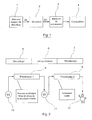
- the channel of decoding and restitution implemented according to this standard is illustrated in Figure 1; she presents briefly the operation of the software modules of a visualization tool or render, implemented to decode the multimedia stream, and then compose the signal thus decoded.
- the various multimedia streams are stored in a decoding buffer 1, and the various encoded entities (again called EE) which constitute them feed a decoder 2, which delivers entities decoded (also called ED).
- EE encoded entities
- ED entities decoded
- the processing implemented by the client terminal on receipt of a stream Multimedia thus essentially comprises two phases, a first phase of decoding of the EE encoded entities and a second phase of composition of the ED decoded entities.
- the time stamp associated with each of the autonomous entities of the flow indicates the moment at which the flow data must be returned (visual, sound, etc.) by the terminal to the user.
- the decoding and composition of frames are implemented at the instant indicated by the ETC, so it is artificially considered that the decoding time of EE is zero.
- the decoding time is not always negligible, and the decoded entity ED is not always available early enough for the composer 4 restores it at the instant defined by his ETC. The rendering process is so found delayed.
- a time stamp specific called time decoding stamp, or ETD
- ETD time decoding stamp
- this approach is not however, more relevant when dealing with complex flows, such as flows description of BIFS scene (this format is notably presented in "the MPEG-4 Systems Verification Model ", ISO / IEC JTC1 / SC29 / WG 11-N1693, MPEG 97, April 1997), MPEG-7 metadata or new types of video streams as H26L (ISO-IEC / 14496-10).
- the aim of the invention is in particular to overcome the different disadvantages of the prior art mentioned above, in the light in particular the problem identified by the inventors.
- an object of the invention is to provide a technique of rendering a stream or a plurality of multimedia streams that renders fluid, regardless of the complexity of the flow (s) considered.
- Another object of the invention is to implement such a technique of restitution, based on an optimized decoding of the received signals.
- the invention also aims to provide such a technique of restitution which makes it possible to make the best use of the memory and calculation resources restitution terminals.
- the invention also aims to implement such a technique rendition that is compatible with art decoding techniques prior.
- Another objective of the invention is to propose such a technique of restitution which does not result in a significant additional cost in terms of resources, and particularly of memory resources, compared to the techniques of restitution of the prior art.
- said decoding step is anticipated with respect to said time stamp of composition, if a composition context associated with said encoded entity verifies at least one predetermined criterion.
- the invention is based on an entirely new and inventive approach multimedia feed restitution, which is particularly well adapted to complex flow processing, such as scene description streams such as MPEG-4 / BIFS or new video streams like MPEG-4 Visual (ISO-IEC / 14496-2) or H26L (ISO-IEC / 14496-10).
- scene description streams such as MPEG-4 / BIFS
- new video streams like MPEG-4 Visual (ISO-IEC / 14496-2) or H26L (ISO-IEC / 14496-10).
- the invention proposes to anticipate the decoding of the received signals by relationship to their timestamp of composition, taking into account the context of composition, which had never been envisaged according to the techniques of the art prior.
- Decoding here means the actual decoding phase, but also possibly a pre-interpretation phase, allowing the at least partial calculation of the structure to be restored associated with the decoded entity.
- the invention makes it possible to optimize the decoding resources of the restitution devices: in fact, it allows the optimal use of computing resources for "multi-threaded" platforms (ie platforms allowing the launch of multiple software tasks in parallel), which is essential in the case of the processing of graphic signals for which meet fluidity constraints.
- the invention therefore makes it possible to optimize the decoding, since the rendering device, together with the interpretation and the restitution of the decoded entities, anticipates the decoding of the already encoded entities received.
- such a restitution process implements a step of comparison of a current composition context and said context of composition associated with said encoded entity, and said decoding step is anticipated when said comparison is positive.
- the decoding step is anticipated when the composition context current is identical to the composition context associated with the encoded entity considered. Indeed, a positive comparison indicates that the result of the Early decoding of the encoded entity may be used during the phase of composition, subject to any modification of the context of the current composition before the implementation of this phase.
- said anticipated decoded entities are stored by said client terminal to said composition step.
- said encoded entity is stored in said client terminal, and said decoding step is implemented at said instant defined by said timestamp of composition associated.
- said comparison step is reiterated, prior to said compounding step, and said compounding step is carried out when said second comparison is positive.
- composition stage is implemented for the decoded entity only if the context of the current composition is still identical to the composition context associated with the entity concerned.
- said method implements an error management step.
- a decoding order information is furthermore associated with at least some of said encoded entities.
- the decoding order of the encoded entities differs from their order of composition: this is particularly the case when certain entities encoded large or complex require a longer decoding time important. They are then decoded before the encoded entities months complex, so as to guarantee their availability in decoded form at the moment indicated by the timestamp of composition.
- said information decoding order is a decoding time stamp.
- said decoding means are activated before said time stamp of composition, if a composition context associated with said encoded entity verifies at least one predetermined criterion.
- said decoded entities are stored in said buffer memory of composition in ascending order of timestamp of composition.
- the decoded entities are therefore processed in the order in which they are stored in the composition buffer, and it is the decoding means which ensure the sorting of the decoded entities according to of their timestamp of composition, so as to order them in the composition buffer.
- said decoded entities are stored in said buffer memory of composition in ascending order of decoding.
- the decoding means arrange the entities in the memory composition buffer in the order in which they were decoded, and these are the composition means that sort the decoded entities, within the composition buffer, so as to process them in ascending order of their timestamp of composition.
- said decoding means are activated before said time stamp of composition, if a composition context associated with said encoded entity verifies at least one predetermined criterion.
- the invention also relates to a signal representative of a data stream intended to be restored by at least one rendering device as described previously, said signal being available at the output of said decoding means and feeding said composition means of said device.
- the general principle of the invention is based on the anticipation of the decoding of encoded entities of the multimedia stream, depending on the context of composition associated with them.
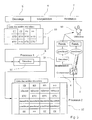
- an EE 10 encoded entity is received by a display terminal or more generally rendering, which must make him suffer successive phases of decoding 5, interpretation 6, restitution 7, so to allow its display 12 on the screen, in the case where this EE 10 comes from a video stream.
- a first referenced process 8 comprises the decoding phases 5 and a pre-interpretation phase 6, which makes it possible, starting from the EE 10, to produce a corresponding decoded entity 11, stored by the display terminal until it is returned 12.
- a second process referenced 9 includes a post-interpretation phase of the decoded entity ED 11 and the restitution phase 7 itself. This second process 9 aims to restore the decoded entity 11 the most quickly, so as to respect the temporal constraints of restitution imposed by the ETC of the frame.
- the first referenced process 8 is advantageously out of sync with the second process 9, so as to allow a anticipation of the decoding with respect to the frame's ETC, and thus guarantee a fast and fluid restitution of the signal to the user.
- the decoding order of the entities encoded 10 is identical to the composition order of the decoded entities 11, indicated by the time stamp of ETC composition.
- the decoding order of the entities encoded EE 10 differs from the order indicated by the ETCs, for example if certain more complex entities require a longer decode time, and must so be decoded in priority.
- a information indicating the decoding order must be associated with the encoded entities EE 10, for example in the form of an ETD decoding time stamp.
- FIG. decoders of the signal 30, 31, implemented respectively by each of the referenced processes 8 and 9 of FIG.
- the first referenced process 8 operates independently, and in asynchronous mode, compared to the second referenced process 9.
- the latter performs the restitution 7 of the signal received by the device, and therefore operates in synchronous mode with respect to the signal time.
- the two processes referenced 8 and 9 use the same buffer memory referenced 32, which contains the set of decoded entities ED 11.
- this buffer will be called 32, a composition buffer.
- the decoded entities are stored in the composition buffer in the increasing order of their time stamp ETC composition, which also corresponds to their decoding order by the decoder 30.
- the entities encoded EE 10 are received from the source encoded signal (for example an audio or video stream server), and are stored in ascending order of their ETCs in a buffer referenced 33, called decoding buffer.
- the source encoded signal for example an audio or video stream server
- each encoded entity EE 10 is associated with a stamp temporal ETC composition, and possibly in the second variant of which will be studied later in this document, with a stamp ETD decoding time.
- composition buffer memory 32 contains the entity in encoded form EE 10.
- the decoding buffer 33 containing the list of encoded entities EE 10 is scanned.
- a first encoded entity EE (i) is read 40, and the corresponding decoding data, decodInfo , are retrieved from the composition context 44.
- This composition context 44 corresponds to the current values of the signal to be represented: for example, in the case a graphical scene visualization, this composition context corresponds to the different objects present in the scene at the current time, and to the hierarchical tree representative of their arrangement.
- the composition context associated with the entity EE (i) is compared with the current composition context, so as to determine whether an early decoding of EE (i) by the decoder 30 is possible.
- the decoding of the frame EE (i) corresponding to the flying inside this car can not be anticipated according to the invention if, at the current moment of decoding, the composition context corresponding to the car is represented on the screen.
- this first referenced process 8 generates the data isDecod, presStruct , and fills the composition buffer memory 32 with the decoded entities ED 11 obtained.
- This referenced process 8 operates in asynchronous mode, and it is assigned, within the rendering device of FIG. 3, a low priority, so as not to use the computing resources necessary for the device to ensure a smooth reproduction of the signal by the second process referenced 9.
- ETC stamps imposes on the device of restitution to guarantee, at time T, the restitution by the second process 9, of all ED decoded entities whose time stamp ETC composition is lower than T.
- the second process 9 must therefore have resources of sufficient calculation to allow to restore the decoded entities ED contained in the composition buffer 32 as quickly as possible.
- composition buffer 32 is traversed so as to read (50) successively the different decoded entities ED (i) that it contains.
- the value of the isDecod tag is analyzed to determine whether an advance decoding has been performed by the decoder 30 of the first process referenced 8.
- composition context information current depends on the different implantations possible of the device, and corresponds to conventional techniques, which are well known the skilled person, which will not be detailed further in the context of the present invention.
- decodInfo differs (54) from the current composition context, it is necessary to reiterate the decoding 56 of the EE (i), depending on the current composition context.
- decodInfo coincides (55) with the current composition context, then the presStruct structure is valid, and the decoded entity ED (i) can be restored at the instant indicated by its ETC composition time stamp.
- the structure presStruct (i) is interpreted 57, and ED (i) is restored 58, before the process 9 passes to the next ED 59 of the composition buffer 32.
- the decoded entity ED 11 is then deleted. of the composition buffer memory 32 because, after retrieval, this entity is now obsolete.
- the order in which the EEs are stored in the buffer of decoding 33 therefore differs from the restitution order of the decoded entities ED.
- the first referenced process 8, presented previously in connection with the figure 4, then operates in the order of storage of the entities in the buffer of decoding 33.
- this decoding order is indicated by a stamp ETD decoding time associated with each of the entities of the flow
- the indices i assigned to EE entities (i) in Figure 4 correspond to increasing ETDs.
- the decoded entities ED are stored in the composition buffer memory in the decoding order, and it is then the restitution function of the second process 9 that has the role of select the ED entity with the smallest ETC stamp min .
- the ED entities are stored in the composition buffer 32 in the order of the ETC stamps growing.
- the restitution function of the second process 9 then remains the same to that which has been presented previously in connection with FIG. 5; in contrast, the decoding function of the second process 9 must traverse the composition buffer 32 in the decoding order indicated by the time stamps of increasing ETD decoding.
- the time spent by the second process 9 on decoding the encoded entities EE is thus greatly reduced, because the maximum of EE encoded entities possible has already decoded by the decoder 30 of the first process 8, which makes it possible to ensure an excellent fluidity of restitution of the signal.
- the time stamp of ETD decoding equals the ETC composition time stamp for all Encoded Entities EE; so we are in the first variant of embodiment of the invention described above, according to which the order of decoding is the one of restitution.
- the invention therefore makes it possible to optimize the decoding of the received stream, and presents many advantages.
- the invention makes it possible to optimize the decoding process without introduce significant additional memory requirements in relation to techniques of the prior art. Indeed, according to the invention, only two processes of decoding must be started in parallel. One of the processes is synchronous with the clock used to restore the signal, the other process (called anticipation) works asynchronously.
- the memory increment elicited according to the invention compared to the techniques of the prior art is smaller than the size of a unique decoding process because these two processes share the same buffers.
- the technique of the invention can not induce decoding superfluous only if the anticipation of decoding leads to an error of decoding.
- This decoding error can be easily controlled, because it suffices synchronous process decoder to compare the start parameters of decoding with those of the decoder which ensures the anticipation.
- the technique of the invention also makes it possible to optimally use the computing resources for "multi-threaded” platforms (i.e. allow to run multiple software tasks in parallel). This is essential when dealing with graphic signals while meeting the constraints of fluidity.
- the technique of the invention is perfectly compatible with the classical decoding techniques. Indeed, the fact of using a decoder additional, which ensures the anticipation of the decoding, ensures a great flexibility of use scenario and compatibility with conventional decoding signals known from the prior art.
Landscapes
- Engineering & Computer Science (AREA)
- Multimedia (AREA)
- Signal Processing (AREA)
- Compression Or Coding Systems Of Tv Signals (AREA)
- Two-Way Televisions, Distribution Of Moving Picture Or The Like (AREA)
- Detection And Prevention Of Errors In Transmission (AREA)
- Compression, Expansion, Code Conversion, And Decoders (AREA)
Abstract
- décodage dudit ou desdits flux, de façon à obtenir au moins un flux décodé comprenant une pluralité d'entités décodées ;
- composition desdites entités décodées, aux instants définis par lesdites estampilles temporelles de composition.
Description
- décodage dudit ou desdits flux, de façon à obtenir au moins un flux décodé comprenant une pluralité d'entités décodées ;
- composition desdites entités décodées, aux instants définis par lesdites estampilles temporelles de composition.
- les flux vidéo ;
- les flux de description d'une scène graphique à au moins deux dimensions ;
- les flux audio ;
- les flux de description d'un objet à au moins deux dimensions ;
- les flux d'animation d'au moins un objet ;
- les flux de description de méta-données.
- les formats de média MPEG ;
- les formats de description de données MPEG-7 ;
- les formats de description de scène BIFS ;
- les formats H26L.
- des moyens de décodage dudit ou desdits flux, permettant d'obtenir au moins un flux décodé comprenant une pluralité d'entités décodées ;
- des moyens de composition desdites entités décodées, mis en oeuvre aux instants définis par lesdites estampilles temporelles de composition.
- une mémoire tampon de décodage, dans laquelle lesdites entités encodées sont stockées en ordre croissant de décodage ;
- une mémoire tampon de composition, dans laquelle sont mémorisées lesdites entités décodées.
ledit terminal client comprenant :
- des moyens de décodage dudit ou desdits flux, permettant d'obtenir au moins un flux décodé comprenant une pluralité d'entités décodées ;
- des moyens de composition desdites entités décodées, mis en oeuvre aux instants définis par lesdites estampilles temporelles de composition.
- une estampille temporelle de composition ;
- un marqueur isdecod, indiquant si ladite entité a été décodée de manière anticipée ;
- des informations, appelées presStruct, relatives à une structure de restitution de ladite entité ;
- des informations, appelées decodInfo, relatives au décodage de ladite entité.
- la figure 1, déjà présentée précédemment, présente un synoptique d'une chaíne de traitement d'un flux multimédia dans un terminal de restitution ;
- la figure 2 illustre sous forme schématique les différentes phases de traitement mises en oeuvre selon l'invention ;
- la figure 3 présente un synoptique d'un dispositif de restitution mettant en oeuvre une anticipation du décodage selon l'invention ;
- la figure 4 détaille le processus de décodage implémenté par le dispositif de la figure 3 ;
- la figure 5 décrit le processus de composition implémenté selon l'invention par le dispositif de la figure 3.
- une estampille temporelle de composition ETC indiquant au dispositif de la figure 3 l'instant auquel cette entité ED 11 doit être restituée 12 à l'utilisateur ;
- des informations, appelées decodInfo, qui ne sont pas contenues dans l'EE 10, mais qui ont été nécessaires lors de son décodage, permettant la création de l'entité décodée ED 11 ;
- un marqueur, noté isDecod, indiquant si un décodage anticipé de l'entité encodée EE 10 par le décodeur 30 a été réalisé lors du premier processus référencé 8 ;
- une structure, notée presStruct, qui sera utilisée par le second processus référencé 9 pour restituer l'entité décodée ED 11, si un décodage anticipé, indiqué par isDecod=1, a été possible lors du premier processus référencé 8. On notera que cette structure presStruct dépend, d'une part, de decodInfo et d'autre part, d'informations contenues dans l'entité encodée EE 10, selon une fonction de dépendance calculée par le décodeur 30.
- on identifie, au sein de la mémoire tampon de composition 32, l'entité présentant la plus petite estampille ETC ;
- dès que l'instant T est supérieur à la plus petite estampille temporelle de composition ETCmin identifiée, on procède à la restitution de la structure presStruct de l'entité décodée ED associée à cette estampille ETCmin, et on supprime l'entité décodée Ed correspondante de la mémoire tampon de composition 32.
- on identifie, au sein de la mémoire tampon de composition 32, l'entité de valeur isDecod=0 présentant la plus petite estampille temporelle de décodage ETDmin ;
- on décode ensuite l'entité encodée EE correspondant à cette estampille ETDmin identifiée ;
- on décode les entités encodées EE successivement, dans l'ordre des estampilles temporelles de décodage ETD, jusqu'à ce que toutes les entités présentent une valeur isDecod=1.
Suivant la nature de l'Entité Encodée, on obtiendra des valeurs différentes :
- Si l'Entité Encodée est une commande BIFS d'insertion de noeud (telle que
définie dans la section 9.3.6.5 ISO/IEC 14496-1:2000(E)), alors :
- decodInfo est la valeur de l'identification du noeud et de la table de décodage correspondant à ce noeud, c'est-à-dire {nodeID, GetNDTFromID(nodeID)} ;
- presStruct est un objet facilement interprétable qui décrit la commande telle qu'elle est définie dans la structure décrite dans la section 9.3.6.5.1 de la norme MPEG-4/System.
- Si l'EE est une commande IndexedValueInsertion, alors :
- decodInfo est la valeur de l'identification du noeud, celle de l'identification du champ du noeud, la valeur du noeud et la valeur du champ correspondant à ce noeud, c'est-à-dire {nodeID, inID, node=GetNodeFromID(nodeID),field= node.field[node.in2all[inID]]} ;
- presStruct est un objet facilement interprétable qui décrit la commande telle qu'elle est définie dans la structure décrite dans la section 9.3.6.6.1 de la norme MPEG-4/System.
- Si l'EE est une commande IndexedValueDeletion, alors :
- decodInfo est {nodeID , inID, node=GetNodeFromID(nodeID),field= node.field[node.in2all[inID]] } ;
- presStruct est un objet facilement interprétable qui décrit la commande telle qu'elle est définie dans la structure et est une simple indication de destruction d'une valeur à la position deletionPosition obtenue lors du décodage de l'EE.
- Si l'EE est une commande FieldReplacement (décrite dans la section 9.3.6.14
de la norme), alors :
- decodInfo est { nodeID , inID, node=GetNodeFromID(nodeID),field= node.field[node.in2all[inID]] } ;
- presStruct est un objet facilement interprétable qui décrit la commande telle qu'elle est définie dans la structure décrite dans la section 9.3.6.14.1 de la norme.
- Si l'EE est une commande IndexedValueReplacement, alors :
- decodInfo est { nodeID , inID, node=GetNodeFromID(nodeID),field= node.field[node.in2all[inID]] } ;
- presStruct est un objet facilement interprétable qui décrit la commande telle qu'elle est définie dans la position replacePosition et la structure décrite dans la section 9.3.6.14.1.
- Si l'EE est une commande SceneReplace, alors :
- decodInfo est vide { }
- presStruct est un objet facilement interprétable qui décrit la commande telle qu'elle est définie dans la structure décrite dans la section 9.3.7.1.1
- Dans tous les autres cas, l'entité encodée EE n'est pas décodée par anticipation.
Claims (16)
- Procédé de restitution, sur au moins un terminal client, d'au moins un flux de données comprenant une pluralité d'entités encodées, associées chacune à au moins une estampille temporelle de composition, ledit procédé comprenant des étapes de :caractérisé en ce que, pour l'une au moins desdites entités encodées, ladite étape de décodage est anticipée par rapport à ladite estampille temporelle de composition, si un contexte de composition associé à ladite entité encodée vérifie au moins un critère prédéterminé.décodage dudit ou desdits flux, de façon à obtenir au moins un flux décodé comprenant une pluralité d'entités décodées ;composition desdites entités décodées, aux instants définis par lesdites estampilles temporelles de composition ,
- Procédé de restitution selon la revendication 1, caractérisé en ce qu'il met en oeuvre une étape de comparaison d'un contexte de composition courant et dudit contexte de composition associé à ladite entité encodée, et en ce que ladite étape de décodage est anticipée lorsque ladite comparaison est positive.
- Procédé de restitution selon l'une quelconque des revendications 1 et 2, caractérisé en ce que lesdites entités décodées par anticipation sont mémorisées par ledit terminal client jusqu'à ladite étape de composition.
- Procédé de restitution selon la revendication 2, caractérisé en ce qu'en cas de comparaison négative, ladite entité encodée est mémorisée dans ledit terminal client, et en ce que ladite étape de décodage est mise en oeuvre audit instant défini par ladite estampille temporelle de composition associée.
- Procédé de restitution selon l'une quelconque des revendications 2 et 3, caractérisé en ce que, pour au moins certaines desdites entités décodées par anticipation, il réitère ladite étape de comparaison, préalablement à ladite étape de composition, et en ce que ladite étape de composition est mise en oeuvre lorsque ladite deuxième comparaison est positive.
- Procédé de restitution selon la revendication 5, caractérisé en ce que, lorsque ladite deuxième comparaison est négative, ledit procédé met en oeuvre une étape de gestion d'erreurs.
- Procédé de restitution selon l'une quelconque des revendications 1 à 6, caractérisé en ce qu'une information d'ordre de décodage est en outre associée à au moins certaines desdites entités encodées.
- Procédé de restitution selon la revendication 7, caractérisé en ce que ladite information d'ordre de décodage est une estampille temporelle de décodage.
- Procédé de restitution selon l'une quelconque des revendications 1 à 8, caractérisé en ce que ledit flux de données appartient au groupe comprenant :les flux vidéo ;les flux de description d'une scène graphique à au moins deux dimensions ;les flux audio ;les flux de description d'un objet à au moins deux dimensions ;les flux d'animation d'au moins un objet ;les flux de description de méta-données.
- Procédé de restitution selon l'une quelconque des revendications 1 à 9, caractérisé en ce que le format desdites entités encodées appartient au groupe comprenant :les formats de média MPEG ;les formats de description de données MPEG-7 ;les formats de description de scène BIFS ;les formats H26L.
- Dispositif de restitution d'au moins un flux de données comprenant une pluralité d'entités encodées, associées chacune à au moins une estampille temporelle de composition, ledit dispositif comprenant :caractérisé en ce que, pour l'une au moins desdites entités encodées, lesdits moyens de décodage sont activés préalablement à ladite estampille temporelle de composition, si un contexte de composition associé à ladite entité encodée vérifie au moins un critère prédéterminé.des moyens de décodage dudit ou desdits flux, permettant d'obtenir au moins un flux décodé comprenant une pluralité d'entités décodées ;des moyens de composition desdites entités décodées, mis en oeuvre aux instants définis par lesdites estampilles temporelles de composition ,
- Dispositif de restitution selon la revendication 11, caractérisé en ce qu'il comprend en outre :une mémoire tampon de décodage, dans laquelle lesdites entités encodées sont stockées en ordre croissant de décodage ;une mémoire tampon de composition, dans laquelle sont mémorisées lesdites entités décodées.
- Dispositif selon la revendication 12, caractérisé en ce que lesdites entités décodées sont mémorisées dans ladite mémoire tampon de composition en ordre croissant d'estampille temporelle de composition.
- Dispositif selon la revendication 12, caractérisé en ce que lesdites entités décodées sont mémorisées dans ladite mémoire tampon de composition en ordre croissant de décodage.
- Système de transmission d'au moins un flux de données d'un serveur de données vers au moins un terminal client,
ledit serveur comprenant des moyens de codage dudit flux de données, sous la forme d'une pluralité d'entités encodées, associées chacune à au moins une estampille temporelle de composition,
ledit terminal client comprenant :caractérisé en ce que, pour l'une au moins desdites entités encodées, lesdits moyens de décodage sont activés préalablement à ladite estampille temporelle de composition, si un contexte de composition associé à ladite entité encodée vérifie au moins un critère prédéterminé.des moyens de décodage dudit ou desdits flux, permettant d'obtenir au moins un flux décodé comprenant une pluralité d'entités décodées ;des moyens de composition desdites entités décodées, mis en oeuvre aux instants définis par lesdites estampilles temporelles de composition , - Signal représentatif d'un flux de données destiné à être restitué par au moins un dispositif de restitution selon l'une quelconque des revendications 11 et 14, ledit signal étant disponible en sortie desdits moyens de décodage et alimentant lesdits moyens de composition dudit dispositif,
caractérisé en ce qu'il comprend une pluralité d'entités dudit flux, comprenant chacune :et en ce que, lorsque ledit marqueur isdecod prend une première valeur, ladite entité est sous forme encodée et, lorsque ledit marqueur isdecod prend une seconde valeur, ladite entité est sous forme décodée et comprend en outre :une estampille temporelle de composition ;un marqueur isdecod, indiquant si ladite entité a été décodée de manière anticipée ;des informations, appelées presStruct, relatives à une structure de restitution de ladite entité ;des informations, appelées decodInfo, relatives au décodage de ladite entité.
Applications Claiming Priority (2)
| Application Number | Priority Date | Filing Date | Title |
|---|---|---|---|
| FR0208587 | 2002-07-08 | ||
| FR0208587A FR2842058B1 (fr) | 2002-07-08 | 2002-07-08 | Procede de restitution d'un flux de donnees multimedia sur un terminal client, dispositif, systeme et signal correspondants |
Publications (3)
| Publication Number | Publication Date |
|---|---|
| EP1383336A2 true EP1383336A2 (fr) | 2004-01-21 |
| EP1383336A3 EP1383336A3 (fr) | 2004-08-25 |
| EP1383336B1 EP1383336B1 (fr) | 2016-05-04 |
Family
ID=29725293
Family Applications (1)
| Application Number | Title | Priority Date | Filing Date |
|---|---|---|---|
| EP03364015.2A Expired - Lifetime EP1383336B1 (fr) | 2002-07-08 | 2003-07-07 | Procédé de décompression et de restitution d'un flux de données multimédia numériques compressées comprenant une pluralité d'entités encodées. Dispositif, système et signal correspondants |
Country Status (6)
| Country | Link |
|---|---|
| US (1) | US7634169B2 (fr) |
| EP (1) | EP1383336B1 (fr) |
| JP (1) | JP4279622B2 (fr) |
| KR (1) | KR100943738B1 (fr) |
| CA (1) | CA2434990C (fr) |
| FR (1) | FR2842058B1 (fr) |
Families Citing this family (3)
| Publication number | Priority date | Publication date | Assignee | Title |
|---|---|---|---|---|
| US7908369B2 (en) * | 2006-02-28 | 2011-03-15 | France Telecom | Method of collecting descriptions of streams pertaining to streams relating to at least one client network attached to an interconnection network |
| KR100689864B1 (ko) * | 2006-03-14 | 2007-03-08 | 주식회사 타 셋 | 폐활성 슬러지의 감량화 장치 |
| TW201125376A (en) * | 2010-01-05 | 2011-07-16 | Lite On Technology Corp | Communicating module, multimedia player and transceiving system comprising the multimedia player |
Family Cites Families (6)
| Publication number | Priority date | Publication date | Assignee | Title |
|---|---|---|---|---|
| US6262776B1 (en) | 1996-12-13 | 2001-07-17 | Microsoft Corporation | System and method for maintaining synchronization between audio and video |
| KR100562116B1 (ko) * | 1997-11-28 | 2006-05-25 | 마츠시타 덴끼 산교 가부시키가이샤 | 처리 효율을 높인 영상음성 처리장치 |
| KR20010034920A (ko) * | 1998-06-26 | 2001-04-25 | 매클린토크 샤운 엘 | 엠펙-4 비디오 프로그램을 작성하고 표현하기 위한 단말기 |
| US6539054B1 (en) * | 1998-09-18 | 2003-03-25 | Matsushita Electric Industrial Co., Ltd. | Image output apparatus, image reproduction method, object composition apparatus, object composition method, and data storage medium |
| US20010027468A1 (en) * | 2000-03-09 | 2001-10-04 | Sanyo Electric Co., Ltd. | Transmission system, reception system, and transmission and reception system capable of displaying a scene with high quality |
| GB0007868D0 (en) * | 2000-03-31 | 2000-05-17 | Koninkl Philips Electronics Nv | Methods and apparatus for editing digital video recordings and recordings made by such methods |
-
2002
- 2002-07-08 FR FR0208587A patent/FR2842058B1/fr not_active Expired - Fee Related
-
2003
- 2003-07-07 EP EP03364015.2A patent/EP1383336B1/fr not_active Expired - Lifetime
- 2003-07-07 CA CA2434990A patent/CA2434990C/fr not_active Expired - Lifetime
- 2003-07-07 US US10/614,471 patent/US7634169B2/en active Active
- 2003-07-08 KR KR1020030046198A patent/KR100943738B1/ko not_active Expired - Lifetime
- 2003-07-08 JP JP2003271798A patent/JP4279622B2/ja not_active Expired - Lifetime
Also Published As
| Publication number | Publication date |
|---|---|
| EP1383336B1 (fr) | 2016-05-04 |
| JP2004040807A (ja) | 2004-02-05 |
| JP4279622B2 (ja) | 2009-06-17 |
| CA2434990C (fr) | 2010-03-16 |
| US7634169B2 (en) | 2009-12-15 |
| FR2842058A1 (fr) | 2004-01-09 |
| CA2434990A1 (fr) | 2004-01-08 |
| KR20040005663A (ko) | 2004-01-16 |
| US20050086684A1 (en) | 2005-04-21 |
| HK1062250A1 (zh) | 2004-10-21 |
| KR100943738B1 (ko) | 2010-02-23 |
| FR2842058B1 (fr) | 2004-10-01 |
| EP1383336A3 (fr) | 2004-08-25 |
Similar Documents
| Publication | Publication Date | Title |
|---|---|---|
| EP4183130B1 (fr) | Decodage video utilisant un reseau de neurones | |
| FR2849327A1 (fr) | Procede et dispositif de decodage audio/video, circuit pilote video et boitier decodeur l'incorporant | |
| EP1483915B1 (fr) | Procede de transmission de flux de donnees dependants | |
| FR2929787A1 (fr) | Procede et dispositif de traitement d'un flux de donnees | |
| EP3378232B1 (fr) | Procédé de traitement de données codées, procédé de réception de données codées, dispositifs, et programmes d'ordinateurs associés | |
| EP1383336B1 (fr) | Procédé de décompression et de restitution d'un flux de données multimédia numériques compressées comprenant une pluralité d'entités encodées. Dispositif, système et signal correspondants | |
| FR2771884A1 (fr) | Procede de gestion d'informations de service dans un systeme de television numerique et recepteur mettant en oeuvre ce procede | |
| FR3018125A1 (fr) | Procede de fourniture, a un terminal, de contenus multimedias proteges | |
| EP1862009A2 (fr) | Procede d'envoi de commande a un serveur de flux de donnees numeriques et appareil implementant le procede | |
| FR2866183A1 (fr) | Procedes d'emission et de reception d'une animation, et dispositifs associes | |
| EP3780632B1 (fr) | Systeme de distribution d'un contenu audiovisuel | |
| FR2827447A1 (fr) | Procede de transmission de flux de donnees, flux de donnees, serveur, terminal, procede de reception et utilisation correspondants | |
| DK1289307T3 (en) | A method for video coding | |
| FR2851112A1 (fr) | Dispositif securise pour la diffusion, l'enregistrement et la visualisation a la demande des oeuvres audiovisuelles au format de type mpeg-2ts | |
| EP1343327B1 (fr) | Procédé pour effectuer un traitement sur un contenu multimedia | |
| EP1004206B1 (fr) | Signal d'animation d'une scene graphique, procede et dispositif correspondants | |
| WO2008047054A2 (fr) | Procedes et dispositifs pour optimiser les ressources necessaires a la presentation de contenus multimedias | |
| FR2743969A1 (fr) | Dispositif d'extraction de paramaetres de decodage d'un flux de donnees video codees selon une norme mpeg | |
| FR2831379A1 (fr) | Procede de copie de donnees numeriques compressees | |
| EP1762068B1 (fr) | Procede d'edition de pages multimedia aupres d'un terminal,avec pre-memorisation de parametres d'objets intervenant dans les scenes | |
| EP3675505B1 (fr) | Procede et systeme de distribution d'un contenu audiovisuel | |
| FR2859591A1 (fr) | Dispositif et procede de traitement de donnees video et graphiques | |
| EP1714458A1 (fr) | Procede d'edition d'une page multimedia avec pre-memorisation | |
| EP4593401A1 (fr) | Gestion optimisée des fichiers manifestes pour clients de télécommunications recevant des contenus adaptatifs sur http (has) | |
| FR2851358A1 (fr) | Controle de navigation dans une image possedant des zones zoomables |
Legal Events
| Date | Code | Title | Description |
|---|---|---|---|
| PUAI | Public reference made under article 153(3) epc to a published international application that has entered the european phase |
Free format text: ORIGINAL CODE: 0009012 |
|
| AK | Designated contracting states |
Kind code of ref document: A2 Designated state(s): AT BE BG CH CY CZ DE DK EE ES FI FR GB GR HU IE IT LI LU MC NL PT RO SE SI SK TR |
|
| AX | Request for extension of the european patent |
Extension state: AL LT LV MK |
|
| RIN1 | Information on inventor provided before grant (corrected) |
Inventor name: GEGOUT, CEDRIC Inventor name: PICAUD, MICHAEL |
|
| PUAL | Search report despatched |
Free format text: ORIGINAL CODE: 0009013 |
|
| AK | Designated contracting states |
Kind code of ref document: A3 Designated state(s): AT BE BG CH CY CZ DE DK EE ES FI FR GB GR HU IE IT LI LU MC NL PT RO SE SI SK TR |
|
| AX | Request for extension of the european patent |
Extension state: AL LT LV MK |
|
| 17P | Request for examination filed |
Effective date: 20040715 |
|
| REG | Reference to a national code |
Ref country code: HK Ref legal event code: DE Ref document number: 1062250 Country of ref document: HK |
|
| AKX | Designation fees paid |
Designated state(s): AT BE BG CH CY CZ DE DK EE ES FI FR GB GR HU IE IT LI LU MC NL PT RO SE SI SK TR |
|
| 17Q | First examination report despatched |
Effective date: 20070611 |
|
| RAP1 | Party data changed (applicant data changed or rights of an application transferred) |
Owner name: ORANGE |
|
| REG | Reference to a national code |
Ref country code: DE Ref legal event code: R079 Ref document number: 60348908 Country of ref document: DE Free format text: PREVIOUS MAIN CLASS: H04N0007240000 Ipc: H04N0021430000 |
|
| GRAP | Despatch of communication of intention to grant a patent |
Free format text: ORIGINAL CODE: EPIDOSNIGR1 |
|
| RIC1 | Information provided on ipc code assigned before grant |
Ipc: H04N 21/44 20110101ALI20151123BHEP Ipc: H04N 21/43 20110101AFI20151123BHEP |
|
| INTG | Intention to grant announced |
Effective date: 20151207 |
|
| GRAS | Grant fee paid |
Free format text: ORIGINAL CODE: EPIDOSNIGR3 |
|
| GRAA | (expected) grant |
Free format text: ORIGINAL CODE: 0009210 |
|
| AK | Designated contracting states |
Kind code of ref document: B1 Designated state(s): AT BE BG CH CY CZ DE DK EE ES FI FR GB GR HU IE IT LI LU MC NL PT RO SE SI SK TR |
|
| REG | Reference to a national code |
Ref country code: GB Ref legal event code: FG4D Free format text: NOT ENGLISH |
|
| REG | Reference to a national code |
Ref country code: DE Ref legal event code: R081 Ref document number: 60348908 Country of ref document: DE Owner name: ORANGE, FR Free format text: FORMER OWNER: FRANCE TELECOM, PARIS, FR |
|
| REG | Reference to a national code |
Ref country code: CH Ref legal event code: EP |
|
| REG | Reference to a national code |
Ref country code: AT Ref legal event code: REF Ref document number: 797804 Country of ref document: AT Kind code of ref document: T Effective date: 20160515 |
|
| REG | Reference to a national code |
Ref country code: IE Ref legal event code: FG4D Free format text: LANGUAGE OF EP DOCUMENT: FRENCH |
|
| REG | Reference to a national code |
Ref country code: DE Ref legal event code: R096 Ref document number: 60348908 Country of ref document: DE |
|
| REG | Reference to a national code |
Ref country code: FR Ref legal event code: PLFP Year of fee payment: 14 |
|
| REG | Reference to a national code |
Ref country code: NL Ref legal event code: MP Effective date: 20160504 |
|
| PG25 | Lapsed in a contracting state [announced via postgrant information from national office to epo] |
Ref country code: FI Free format text: LAPSE BECAUSE OF FAILURE TO SUBMIT A TRANSLATION OF THE DESCRIPTION OR TO PAY THE FEE WITHIN THE PRESCRIBED TIME-LIMIT Effective date: 20160504 Ref country code: NL Free format text: LAPSE BECAUSE OF FAILURE TO SUBMIT A TRANSLATION OF THE DESCRIPTION OR TO PAY THE FEE WITHIN THE PRESCRIBED TIME-LIMIT Effective date: 20160504 |
|
| REG | Reference to a national code |
Ref country code: AT Ref legal event code: MK05 Ref document number: 797804 Country of ref document: AT Kind code of ref document: T Effective date: 20160504 |
|
| PG25 | Lapsed in a contracting state [announced via postgrant information from national office to epo] |
Ref country code: GR Free format text: LAPSE BECAUSE OF FAILURE TO SUBMIT A TRANSLATION OF THE DESCRIPTION OR TO PAY THE FEE WITHIN THE PRESCRIBED TIME-LIMIT Effective date: 20160805 Ref country code: PT Free format text: LAPSE BECAUSE OF FAILURE TO SUBMIT A TRANSLATION OF THE DESCRIPTION OR TO PAY THE FEE WITHIN THE PRESCRIBED TIME-LIMIT Effective date: 20160905 Ref country code: SE Free format text: LAPSE BECAUSE OF FAILURE TO SUBMIT A TRANSLATION OF THE DESCRIPTION OR TO PAY THE FEE WITHIN THE PRESCRIBED TIME-LIMIT Effective date: 20160504 Ref country code: ES Free format text: LAPSE BECAUSE OF FAILURE TO SUBMIT A TRANSLATION OF THE DESCRIPTION OR TO PAY THE FEE WITHIN THE PRESCRIBED TIME-LIMIT Effective date: 20160504 |
|
| PG25 | Lapsed in a contracting state [announced via postgrant information from national office to epo] |
Ref country code: BE Free format text: LAPSE BECAUSE OF NON-PAYMENT OF DUE FEES Effective date: 20160731 Ref country code: IT Free format text: LAPSE BECAUSE OF FAILURE TO SUBMIT A TRANSLATION OF THE DESCRIPTION OR TO PAY THE FEE WITHIN THE PRESCRIBED TIME-LIMIT Effective date: 20160504 |
|
| PG25 | Lapsed in a contracting state [announced via postgrant information from national office to epo] |
Ref country code: SK Free format text: LAPSE BECAUSE OF FAILURE TO SUBMIT A TRANSLATION OF THE DESCRIPTION OR TO PAY THE FEE WITHIN THE PRESCRIBED TIME-LIMIT Effective date: 20160504 Ref country code: EE Free format text: LAPSE BECAUSE OF FAILURE TO SUBMIT A TRANSLATION OF THE DESCRIPTION OR TO PAY THE FEE WITHIN THE PRESCRIBED TIME-LIMIT Effective date: 20160504 Ref country code: CZ Free format text: LAPSE BECAUSE OF FAILURE TO SUBMIT A TRANSLATION OF THE DESCRIPTION OR TO PAY THE FEE WITHIN THE PRESCRIBED TIME-LIMIT Effective date: 20160504 Ref country code: RO Free format text: LAPSE BECAUSE OF FAILURE TO SUBMIT A TRANSLATION OF THE DESCRIPTION OR TO PAY THE FEE WITHIN THE PRESCRIBED TIME-LIMIT Effective date: 20160504 Ref country code: DK Free format text: LAPSE BECAUSE OF FAILURE TO SUBMIT A TRANSLATION OF THE DESCRIPTION OR TO PAY THE FEE WITHIN THE PRESCRIBED TIME-LIMIT Effective date: 20160504 |
|
| REG | Reference to a national code |
Ref country code: DE Ref legal event code: R097 Ref document number: 60348908 Country of ref document: DE |
|
| PG25 | Lapsed in a contracting state [announced via postgrant information from national office to epo] |
Ref country code: AT Free format text: LAPSE BECAUSE OF FAILURE TO SUBMIT A TRANSLATION OF THE DESCRIPTION OR TO PAY THE FEE WITHIN THE PRESCRIBED TIME-LIMIT Effective date: 20160504 |
|
| REG | Reference to a national code |
Ref country code: CH Ref legal event code: PL |
|
| PLBE | No opposition filed within time limit |
Free format text: ORIGINAL CODE: 0009261 |
|
| STAA | Information on the status of an ep patent application or granted ep patent |
Free format text: STATUS: NO OPPOSITION FILED WITHIN TIME LIMIT |
|
| PG25 | Lapsed in a contracting state [announced via postgrant information from national office to epo] |
Ref country code: MC Free format text: LAPSE BECAUSE OF FAILURE TO SUBMIT A TRANSLATION OF THE DESCRIPTION OR TO PAY THE FEE WITHIN THE PRESCRIBED TIME-LIMIT Effective date: 20160504 |
|
| 26N | No opposition filed |
Effective date: 20170207 |
|
| PG25 | Lapsed in a contracting state [announced via postgrant information from national office to epo] |
Ref country code: CH Free format text: LAPSE BECAUSE OF NON-PAYMENT OF DUE FEES Effective date: 20160731 Ref country code: LI Free format text: LAPSE BECAUSE OF NON-PAYMENT OF DUE FEES Effective date: 20160731 |
|
| REG | Reference to a national code |
Ref country code: IE Ref legal event code: MM4A |
|
| REG | Reference to a national code |
Ref country code: HK Ref legal event code: GR Ref document number: 1062250 Country of ref document: HK |
|
| PG25 | Lapsed in a contracting state [announced via postgrant information from national office to epo] |
Ref country code: SI Free format text: LAPSE BECAUSE OF FAILURE TO SUBMIT A TRANSLATION OF THE DESCRIPTION OR TO PAY THE FEE WITHIN THE PRESCRIBED TIME-LIMIT Effective date: 20160504 |
|
| REG | Reference to a national code |
Ref country code: FR Ref legal event code: PLFP Year of fee payment: 15 |
|
| PG25 | Lapsed in a contracting state [announced via postgrant information from national office to epo] |
Ref country code: IE Free format text: LAPSE BECAUSE OF NON-PAYMENT OF DUE FEES Effective date: 20160707 |
|
| PG25 | Lapsed in a contracting state [announced via postgrant information from national office to epo] |
Ref country code: LU Free format text: LAPSE BECAUSE OF NON-PAYMENT OF DUE FEES Effective date: 20160707 |
|
| PG25 | Lapsed in a contracting state [announced via postgrant information from national office to epo] |
Ref country code: CY Free format text: LAPSE BECAUSE OF FAILURE TO SUBMIT A TRANSLATION OF THE DESCRIPTION OR TO PAY THE FEE WITHIN THE PRESCRIBED TIME-LIMIT Effective date: 20160504 Ref country code: HU Free format text: LAPSE BECAUSE OF FAILURE TO SUBMIT A TRANSLATION OF THE DESCRIPTION OR TO PAY THE FEE WITHIN THE PRESCRIBED TIME-LIMIT; INVALID AB INITIO Effective date: 20030707 |
|
| REG | Reference to a national code |
Ref country code: FR Ref legal event code: PLFP Year of fee payment: 16 |
|
| PG25 | Lapsed in a contracting state [announced via postgrant information from national office to epo] |
Ref country code: TR Free format text: LAPSE BECAUSE OF FAILURE TO SUBMIT A TRANSLATION OF THE DESCRIPTION OR TO PAY THE FEE WITHIN THE PRESCRIBED TIME-LIMIT Effective date: 20160504 |
|
| PG25 | Lapsed in a contracting state [announced via postgrant information from national office to epo] |
Ref country code: BG Free format text: LAPSE BECAUSE OF FAILURE TO SUBMIT A TRANSLATION OF THE DESCRIPTION OR TO PAY THE FEE WITHIN THE PRESCRIBED TIME-LIMIT Effective date: 20160504 |
|
| PGFP | Annual fee paid to national office [announced via postgrant information from national office to epo] |
Ref country code: GB Payment date: 20220621 Year of fee payment: 20 |
|
| PGFP | Annual fee paid to national office [announced via postgrant information from national office to epo] |
Ref country code: FR Payment date: 20220622 Year of fee payment: 20 |
|
| PGFP | Annual fee paid to national office [announced via postgrant information from national office to epo] |
Ref country code: DE Payment date: 20220621 Year of fee payment: 20 |
|
| REG | Reference to a national code |
Ref country code: DE Ref legal event code: R071 Ref document number: 60348908 Country of ref document: DE |
|
| REG | Reference to a national code |
Ref country code: GB Ref legal event code: PE20 Expiry date: 20230706 |
|
| PG25 | Lapsed in a contracting state [announced via postgrant information from national office to epo] |
Ref country code: GB Free format text: LAPSE BECAUSE OF EXPIRATION OF PROTECTION Effective date: 20230706 |