EP1382674A2 - Alpha-keto acid reductase, method for producing the same, and method for producing optically active alpha-hydroxy acids using the same - Google Patents
Alpha-keto acid reductase, method for producing the same, and method for producing optically active alpha-hydroxy acids using the same Download PDFInfo
- Publication number
- EP1382674A2 EP1382674A2 EP03016163A EP03016163A EP1382674A2 EP 1382674 A2 EP1382674 A2 EP 1382674A2 EP 03016163 A EP03016163 A EP 03016163A EP 03016163 A EP03016163 A EP 03016163A EP 1382674 A2 EP1382674 A2 EP 1382674A2
- Authority
- EP
- European Patent Office
- Prior art keywords
- acid
- keto
- protein
- reductase
- enzyme
- Prior art date
- Legal status (The legal status is an assumption and is not a legal conclusion. Google has not performed a legal analysis and makes no representation as to the accuracy of the status listed.)
- Withdrawn
Links
- 150000004716 alpha keto acids Chemical class 0.000 title claims abstract description 123
- 229940061720 alpha hydroxy acid Drugs 0.000 title claims abstract description 37
- 150000001280 alpha hydroxy acids Chemical class 0.000 title claims abstract description 34
- 238000004519 manufacturing process Methods 0.000 title claims description 32
- 102000004190 Enzymes Human genes 0.000 claims abstract description 83
- 108090000790 Enzymes Proteins 0.000 claims abstract description 83
- 241001468194 Leuconostoc mesenteroides subsp. dextranicum Species 0.000 claims abstract description 24
- QBYIENPQHBMVBV-HFEGYEGKSA-N (2R)-2-hydroxy-2-phenylacetic acid Chemical class O[C@@H](C(O)=O)c1ccccc1.O[C@@H](C(O)=O)c1ccccc1 QBYIENPQHBMVBV-HFEGYEGKSA-N 0.000 claims abstract description 17
- 108090000854 Oxidoreductases Proteins 0.000 claims description 108
- 244000005700 microbiome Species 0.000 claims description 100
- 108090000623 proteins and genes Proteins 0.000 claims description 100
- 238000000034 method Methods 0.000 claims description 96
- 102000004169 proteins and genes Human genes 0.000 claims description 72
- 108091033319 polynucleotide Proteins 0.000 claims description 62
- 239000002157 polynucleotide Substances 0.000 claims description 62
- 102000040430 polynucleotide Human genes 0.000 claims description 62
- 230000003287 optical effect Effects 0.000 claims description 51
- 239000013598 vector Substances 0.000 claims description 44
- OLRUAXAXQYMKFH-UHFFFAOYSA-N 2-(2-chlorophenyl)-2-oxoacetic acid Chemical compound OC(=O)C(=O)C1=CC=CC=C1Cl OLRUAXAXQYMKFH-UHFFFAOYSA-N 0.000 claims description 37
- 125000003275 alpha amino acid group Chemical group 0.000 claims description 37
- 108090000698 Formate Dehydrogenases Proteins 0.000 claims description 26
- 239000000758 substrate Substances 0.000 claims description 26
- 238000006722 reduction reaction Methods 0.000 claims description 24
- RWOLDZZTBNYTMS-UHFFFAOYSA-N 2-(2-chlorophenyl)-2-hydroxyacetic acid Chemical class OC(=O)C(O)C1=CC=CC=C1Cl RWOLDZZTBNYTMS-UHFFFAOYSA-N 0.000 claims description 23
- FWMNVWWHGCHHJJ-SKKKGAJSSA-N 4-amino-1-[(2r)-6-amino-2-[[(2r)-2-[[(2r)-2-[[(2r)-2-amino-3-phenylpropanoyl]amino]-3-phenylpropanoyl]amino]-4-methylpentanoyl]amino]hexanoyl]piperidine-4-carboxylic acid Chemical compound C([C@H](C(=O)N[C@H](CC(C)C)C(=O)N[C@H](CCCCN)C(=O)N1CCC(N)(CC1)C(O)=O)NC(=O)[C@H](N)CC=1C=CC=CC=1)C1=CC=CC=C1 FWMNVWWHGCHHJJ-SKKKGAJSSA-N 0.000 claims description 23
- FAQJJMHZNSSFSM-UHFFFAOYSA-N phenylglyoxylic acid Chemical class OC(=O)C(=O)C1=CC=CC=C1 FAQJJMHZNSSFSM-UHFFFAOYSA-N 0.000 claims description 22
- RWOLDZZTBNYTMS-SSDOTTSWSA-N (2r)-2-(2-chlorophenyl)-2-hydroxyacetic acid Chemical compound OC(=O)[C@H](O)C1=CC=CC=C1Cl RWOLDZZTBNYTMS-SSDOTTSWSA-N 0.000 claims description 21
- 108010050375 Glucose 1-Dehydrogenase Proteins 0.000 claims description 20
- 239000005515 coenzyme Substances 0.000 claims description 18
- 101710088194 Dehydrogenase Proteins 0.000 claims description 17
- 150000001413 amino acids Chemical class 0.000 claims description 15
- 125000003729 nucleotide group Chemical group 0.000 claims description 15
- 239000002773 nucleotide Substances 0.000 claims description 14
- 125000001424 substituent group Chemical group 0.000 claims description 14
- 241000192132 Leuconostoc Species 0.000 claims description 13
- 230000009467 reduction Effects 0.000 claims description 13
- 125000001997 phenyl group Chemical group [H]C1=C([H])C([H])=C(*)C([H])=C1[H] 0.000 claims description 11
- 238000002415 sodium dodecyl sulfate polyacrylamide gel electrophoresis Methods 0.000 claims description 9
- 241000192130 Leuconostoc mesenteroides Species 0.000 claims description 8
- 125000005843 halogen group Chemical group 0.000 claims description 8
- 229910052751 metal Inorganic materials 0.000 claims description 8
- 239000002184 metal Substances 0.000 claims description 8
- 244000063299 Bacillus subtilis Species 0.000 claims description 7
- 235000014469 Bacillus subtilis Nutrition 0.000 claims description 7
- 241000187644 Mycobacterium vaccae Species 0.000 claims description 7
- 238000012258 culturing Methods 0.000 claims description 7
- 238000002523 gelfiltration Methods 0.000 claims description 5
- 125000003277 amino group Chemical group 0.000 claims description 4
- 238000006356 dehydrogenation reaction Methods 0.000 claims description 4
- 125000002887 hydroxy group Chemical group [H]O* 0.000 claims description 4
- 125000000449 nitro group Chemical group [O-][N+](*)=O 0.000 claims description 4
- 125000000951 phenoxy group Chemical group [H]C1=C([H])C([H])=C(O*)C([H])=C1[H] 0.000 claims description 4
- 125000004001 thioalkyl group Chemical group 0.000 claims description 4
- 125000003396 thiol group Chemical group [H]S* 0.000 claims description 4
- 125000006273 (C1-C3) alkyl group Chemical group 0.000 claims description 3
- 125000006274 (C1-C3)alkoxy group Chemical group 0.000 claims description 3
- 229910052784 alkaline earth metal Inorganic materials 0.000 claims description 3
- 150000001342 alkaline earth metals Chemical class 0.000 claims description 3
- 125000004435 hydrogen atom Chemical group [H]* 0.000 claims description 3
- 238000006479 redox reaction Methods 0.000 claims description 2
- BAWFJGJZGIEFAR-NNYOXOHSSA-N NAD zwitterion Chemical compound NC(=O)C1=CC=C[N+]([C@H]2[C@@H]([C@H](O)[C@@H](COP([O-])(=O)OP(O)(=O)OC[C@@H]3[C@H]([C@@H](O)[C@@H](O3)N3C4=NC=NC(N)=C4N=C3)O)O2)O)=C1 BAWFJGJZGIEFAR-NNYOXOHSSA-N 0.000 claims 9
- 229930027945 nicotinamide-adenine dinucleotide Natural products 0.000 abstract description 54
- BOPGDPNILDQYTO-NNYOXOHSSA-N nicotinamide-adenine dinucleotide Chemical compound C1=CCC(C(=O)N)=CN1[C@H]1[C@H](O)[C@H](O)[C@@H](COP(O)(=O)OP(O)(=O)OC[C@@H]2[C@H]([C@@H](O)[C@@H](O2)N2C3=NC=NC(N)=C3N=C2)O)O1 BOPGDPNILDQYTO-NNYOXOHSSA-N 0.000 abstract description 43
- 239000003814 drug Substances 0.000 abstract description 4
- 239000000575 pesticide Substances 0.000 abstract description 4
- 239000000543 intermediate Substances 0.000 abstract description 3
- 230000002194 synthesizing effect Effects 0.000 abstract description 2
- 102000004316 Oxidoreductases Human genes 0.000 description 92
- 229940088598 enzyme Drugs 0.000 description 77
- 238000006243 chemical reaction Methods 0.000 description 69
- 230000000694 effects Effects 0.000 description 66
- 210000004027 cell Anatomy 0.000 description 63
- 235000018102 proteins Nutrition 0.000 description 62
- 239000013612 plasmid Substances 0.000 description 52
- 239000000243 solution Substances 0.000 description 44
- 108020004414 DNA Proteins 0.000 description 38
- YXFVVABEGXRONW-UHFFFAOYSA-N Toluene Chemical compound CC1=CC=CC=C1 YXFVVABEGXRONW-UHFFFAOYSA-N 0.000 description 28
- BAWFJGJZGIEFAR-NNYOXOHSSA-O NAD(+) Chemical compound NC(=O)C1=CC=C[N+]([C@H]2[C@@H]([C@H](O)[C@@H](COP(O)(=O)OP(O)(=O)OC[C@@H]3[C@H]([C@@H](O)[C@@H](O3)N3C4=NC=NC(N)=C4N=C3)O)O2)O)=C1 BAWFJGJZGIEFAR-NNYOXOHSSA-O 0.000 description 23
- 238000005119 centrifugation Methods 0.000 description 23
- 239000012634 fragment Substances 0.000 description 23
- 239000002609 medium Substances 0.000 description 21
- 239000000047 product Substances 0.000 description 19
- WEVYAHXRMPXWCK-UHFFFAOYSA-N Acetonitrile Chemical compound CC#N WEVYAHXRMPXWCK-UHFFFAOYSA-N 0.000 description 18
- PEDCQBHIVMGVHV-UHFFFAOYSA-N Glycerine Chemical compound OCC(O)CO PEDCQBHIVMGVHV-UHFFFAOYSA-N 0.000 description 18
- 239000007788 liquid Substances 0.000 description 17
- 125000004182 2-chlorophenyl group Chemical group [H]C1=C([H])C(Cl)=C(*)C([H])=C1[H] 0.000 description 16
- 241000588724 Escherichia coli Species 0.000 description 16
- LFQSCWFLJHTTHZ-UHFFFAOYSA-N Ethanol Chemical compound CCO LFQSCWFLJHTTHZ-UHFFFAOYSA-N 0.000 description 16
- WQZGKKKJIJFFOK-GASJEMHNSA-N Glucose Natural products OC[C@H]1OC(O)[C@H](O)[C@@H](O)[C@@H]1O WQZGKKKJIJFFOK-GASJEMHNSA-N 0.000 description 16
- 239000000284 extract Substances 0.000 description 16
- 239000008103 glucose Substances 0.000 description 16
- 235000001014 amino acid Nutrition 0.000 description 15
- 239000000872 buffer Substances 0.000 description 15
- 229940024606 amino acid Drugs 0.000 description 14
- 150000001875 compounds Chemical class 0.000 description 14
- BASFCYQUMIYNBI-UHFFFAOYSA-N platinum Chemical compound [Pt] BASFCYQUMIYNBI-UHFFFAOYSA-N 0.000 description 14
- 239000006228 supernatant Substances 0.000 description 14
- DGVVWUTYPXICAM-UHFFFAOYSA-N β‐Mercaptoethanol Chemical compound OCCS DGVVWUTYPXICAM-UHFFFAOYSA-N 0.000 description 14
- AVKUERGKIZMTKX-NJBDSQKTSA-N ampicillin Chemical compound C1([C@@H](N)C(=O)N[C@H]2[C@H]3SC([C@@H](N3C2=O)C(O)=O)(C)C)=CC=CC=C1 AVKUERGKIZMTKX-NJBDSQKTSA-N 0.000 description 13
- 229960000723 ampicillin Drugs 0.000 description 13
- XEKOWRVHYACXOJ-UHFFFAOYSA-N Ethyl acetate Chemical compound CCOC(C)=O XEKOWRVHYACXOJ-UHFFFAOYSA-N 0.000 description 12
- YBYRMVIVWMBXKQ-UHFFFAOYSA-N phenylmethanesulfonyl fluoride Chemical compound FS(=O)(=O)CC1=CC=CC=C1 YBYRMVIVWMBXKQ-UHFFFAOYSA-N 0.000 description 12
- RTZKZFJDLAIYFH-UHFFFAOYSA-N Diethyl ether Chemical compound CCOCC RTZKZFJDLAIYFH-UHFFFAOYSA-N 0.000 description 11
- KFZMGEQAYNKOFK-UHFFFAOYSA-N Isopropanol Chemical compound CC(C)O KFZMGEQAYNKOFK-UHFFFAOYSA-N 0.000 description 11
- 240000004808 Saccharomyces cerevisiae Species 0.000 description 11
- 235000014680 Saccharomyces cerevisiae Nutrition 0.000 description 11
- XJLXINKUBYWONI-DQQFMEOOSA-N [[(2r,3r,4r,5r)-5-(6-aminopurin-9-yl)-3-hydroxy-4-phosphonooxyoxolan-2-yl]methoxy-hydroxyphosphoryl] [(2s,3r,4s,5s)-5-(3-carbamoylpyridin-1-ium-1-yl)-3,4-dihydroxyoxolan-2-yl]methyl phosphate Chemical compound NC(=O)C1=CC=C[N+]([C@@H]2[C@H]([C@@H](O)[C@H](COP([O-])(=O)OP(O)(=O)OC[C@@H]3[C@H]([C@@H](OP(O)(O)=O)[C@@H](O3)N3C4=NC=NC(N)=C4N=C3)O)O2)O)=C1 XJLXINKUBYWONI-DQQFMEOOSA-N 0.000 description 11
- 238000004458 analytical method Methods 0.000 description 11
- 230000001580 bacterial effect Effects 0.000 description 11
- 238000010276 construction Methods 0.000 description 11
- 241000186660 Lactobacillus Species 0.000 description 10
- 241000235648 Pichia Species 0.000 description 10
- 230000015572 biosynthetic process Effects 0.000 description 10
- 230000002255 enzymatic effect Effects 0.000 description 10
- JVTAAEKCZFNVCJ-UHFFFAOYSA-N lactic acid Chemical compound CC(O)C(O)=O JVTAAEKCZFNVCJ-UHFFFAOYSA-N 0.000 description 10
- 239000003960 organic solvent Substances 0.000 description 10
- 239000008057 potassium phosphate buffer Substances 0.000 description 10
- 238000003786 synthesis reaction Methods 0.000 description 10
- 241000894006 Bacteria Species 0.000 description 9
- OKKJLVBELUTLKV-UHFFFAOYSA-N Methanol Chemical compound OC OKKJLVBELUTLKV-UHFFFAOYSA-N 0.000 description 9
- 230000001419 dependent effect Effects 0.000 description 9
- 239000000499 gel Substances 0.000 description 9
- VLKZOEOYAKHREP-UHFFFAOYSA-N n-Hexane Chemical compound CCCCCC VLKZOEOYAKHREP-UHFFFAOYSA-N 0.000 description 9
- 239000008363 phosphate buffer Substances 0.000 description 9
- 239000013600 plasmid vector Substances 0.000 description 9
- 108010021809 Alcohol dehydrogenase Proteins 0.000 description 8
- 102000007698 Alcohol dehydrogenase Human genes 0.000 description 8
- IJGRMHOSHXDMSA-UHFFFAOYSA-N Atomic nitrogen Chemical compound N#N IJGRMHOSHXDMSA-UHFFFAOYSA-N 0.000 description 8
- 108091028043 Nucleic acid sequence Proteins 0.000 description 8
- 238000007792 addition Methods 0.000 description 8
- 239000013611 chromosomal DNA Substances 0.000 description 8
- 239000003599 detergent Substances 0.000 description 8
- 239000001963 growth medium Substances 0.000 description 8
- -1 methylenedioxy, ethylenedioxy Chemical group 0.000 description 8
- 108091008146 restriction endonucleases Proteins 0.000 description 8
- 239000000523 sample Substances 0.000 description 8
- AFHZHGQGROJXQB-UHFFFAOYSA-N 2-(3-chlorophenyl)-2-oxoacetic acid Chemical compound OC(=O)C(=O)C1=CC=CC(Cl)=C1 AFHZHGQGROJXQB-UHFFFAOYSA-N 0.000 description 7
- VEXZGXHMUGYJMC-UHFFFAOYSA-N Hydrochloric acid Chemical compound Cl VEXZGXHMUGYJMC-UHFFFAOYSA-N 0.000 description 7
- 235000011187 glycerol Nutrition 0.000 description 7
- 102000039446 nucleic acids Human genes 0.000 description 7
- 108020004707 nucleic acids Proteins 0.000 description 7
- 150000007523 nucleic acids Chemical class 0.000 description 7
- 229910052697 platinum Inorganic materials 0.000 description 7
- 230000010076 replication Effects 0.000 description 7
- 238000012216 screening Methods 0.000 description 7
- 238000012360 testing method Methods 0.000 description 7
- CSCPPACGZOOCGX-UHFFFAOYSA-N Acetone Chemical compound CC(C)=O CSCPPACGZOOCGX-UHFFFAOYSA-N 0.000 description 6
- HEDRZPFGACZZDS-UHFFFAOYSA-N Chloroform Chemical compound ClC(Cl)Cl HEDRZPFGACZZDS-UHFFFAOYSA-N 0.000 description 6
- IWYDHOAUDWTVEP-UHFFFAOYSA-N R-2-phenyl-2-hydroxyacetic acid Natural products OC(=O)C(O)C1=CC=CC=C1 IWYDHOAUDWTVEP-UHFFFAOYSA-N 0.000 description 6
- FAPWRFPIFSIZLT-UHFFFAOYSA-M Sodium chloride Chemical compound [Na+].[Cl-] FAPWRFPIFSIZLT-UHFFFAOYSA-M 0.000 description 6
- DTQVDTLACAAQTR-UHFFFAOYSA-N Trifluoroacetic acid Chemical compound OC(=O)C(F)(F)F DTQVDTLACAAQTR-UHFFFAOYSA-N 0.000 description 6
- 238000002835 absorbance Methods 0.000 description 6
- 238000009825 accumulation Methods 0.000 description 6
- 238000010828 elution Methods 0.000 description 6
- 229940039696 lactobacillus Drugs 0.000 description 6
- 238000009630 liquid culture Methods 0.000 description 6
- BDAGIHXWWSANSR-UHFFFAOYSA-N methanoic acid Natural products OC=O BDAGIHXWWSANSR-UHFFFAOYSA-N 0.000 description 6
- 239000006872 mrs medium Substances 0.000 description 6
- 239000002994 raw material Substances 0.000 description 6
- 239000002904 solvent Substances 0.000 description 6
- 239000000126 substance Substances 0.000 description 6
- XLYOFNOQVPJJNP-UHFFFAOYSA-N water Substances O XLYOFNOQVPJJNP-UHFFFAOYSA-N 0.000 description 6
- 241000186146 Brevibacterium Species 0.000 description 5
- GUBGYTABKSRVRQ-QKKXKWKRSA-N Lactose Natural products OC[C@H]1O[C@@H](O[C@H]2[C@H](O)[C@@H](O)C(O)O[C@@H]2CO)[C@H](O)[C@@H](O)[C@H]1O GUBGYTABKSRVRQ-QKKXKWKRSA-N 0.000 description 5
- 239000002253 acid Substances 0.000 description 5
- BFNBIHQBYMNNAN-UHFFFAOYSA-N ammonium sulfate Chemical compound N.N.OS(O)(=O)=O BFNBIHQBYMNNAN-UHFFFAOYSA-N 0.000 description 5
- 229910052921 ammonium sulfate Inorganic materials 0.000 description 5
- 235000011130 ammonium sulphate Nutrition 0.000 description 5
- 238000003556 assay Methods 0.000 description 5
- 239000006227 byproduct Substances 0.000 description 5
- 150000001720 carbohydrates Chemical class 0.000 description 5
- 238000004587 chromatography analysis Methods 0.000 description 5
- 210000000349 chromosome Anatomy 0.000 description 5
- 229960004592 isopropanol Drugs 0.000 description 5
- 239000004310 lactic acid Substances 0.000 description 5
- 235000014655 lactic acid Nutrition 0.000 description 5
- 239000008101 lactose Substances 0.000 description 5
- 229960002510 mandelic acid Drugs 0.000 description 5
- 239000000203 mixture Substances 0.000 description 5
- 238000000746 purification Methods 0.000 description 5
- 230000008929 regeneration Effects 0.000 description 5
- 238000011069 regeneration method Methods 0.000 description 5
- 238000006467 substitution reaction Methods 0.000 description 5
- IWYDHOAUDWTVEP-SSDOTTSWSA-N (R)-mandelic acid Chemical compound OC(=O)[C@H](O)C1=CC=CC=C1 IWYDHOAUDWTVEP-SSDOTTSWSA-N 0.000 description 4
- SAMVPMGKGGLIPF-UHFFFAOYSA-N 2-(3-chlorophenyl)-2-hydroxyacetic acid Chemical compound OC(=O)C(O)C1=CC=CC(Cl)=C1 SAMVPMGKGGLIPF-UHFFFAOYSA-N 0.000 description 4
- 108010070495 2-dehydropantoate 2-reductase Proteins 0.000 description 4
- 241000222120 Candida <Saccharomycetales> Species 0.000 description 4
- 241000194033 Enterococcus Species 0.000 description 4
- 241000194032 Enterococcus faecalis Species 0.000 description 4
- 241001131785 Escherichia coli HB101 Species 0.000 description 4
- 241000186839 Lactobacillus fructivorans Species 0.000 description 4
- 241000186685 Lactobacillus hilgardii Species 0.000 description 4
- 241000186359 Mycobacterium Species 0.000 description 4
- 108700026244 Open Reading Frames Proteins 0.000 description 4
- ISWSIDIOOBJBQZ-UHFFFAOYSA-N Phenol Chemical compound OC1=CC=CC=C1 ISWSIDIOOBJBQZ-UHFFFAOYSA-N 0.000 description 4
- LCTONWCANYUPML-UHFFFAOYSA-N Pyruvic acid Chemical compound CC(=O)C(O)=O LCTONWCANYUPML-UHFFFAOYSA-N 0.000 description 4
- 108020005091 Replication Origin Proteins 0.000 description 4
- 238000000246 agarose gel electrophoresis Methods 0.000 description 4
- WQZGKKKJIJFFOK-VFUOTHLCSA-N beta-D-glucose Chemical compound OC[C@H]1O[C@@H](O)[C@H](O)[C@@H](O)[C@@H]1O WQZGKKKJIJFFOK-VFUOTHLCSA-N 0.000 description 4
- 229940041514 candida albicans extract Drugs 0.000 description 4
- 239000007795 chemical reaction product Substances 0.000 description 4
- 239000002299 complementary DNA Substances 0.000 description 4
- 238000010586 diagram Methods 0.000 description 4
- 229940032049 enterococcus faecalis Drugs 0.000 description 4
- 238000006911 enzymatic reaction Methods 0.000 description 4
- 238000010353 genetic engineering Methods 0.000 description 4
- LELOWRISYMNNSU-UHFFFAOYSA-N hydrogen cyanide Chemical compound N#C LELOWRISYMNNSU-UHFFFAOYSA-N 0.000 description 4
- 229940116108 lactase Drugs 0.000 description 4
- 238000004811 liquid chromatography Methods 0.000 description 4
- 230000035699 permeability Effects 0.000 description 4
- 108090000765 processed proteins & peptides Proteins 0.000 description 4
- 239000012138 yeast extract Substances 0.000 description 4
- SAMVPMGKGGLIPF-SSDOTTSWSA-N (2r)-2-(3-chlorophenyl)-2-hydroxyacetic acid Chemical compound OC(=O)[C@H](O)C1=CC=CC(Cl)=C1 SAMVPMGKGGLIPF-SSDOTTSWSA-N 0.000 description 3
- QKNYBSVHEMOAJP-UHFFFAOYSA-N 2-amino-2-(hydroxymethyl)propane-1,3-diol;hydron;chloride Chemical compound Cl.OCC(N)(CO)CO QKNYBSVHEMOAJP-UHFFFAOYSA-N 0.000 description 3
- YUCRNASRVPZKNQ-UHFFFAOYSA-N 2-chlorobenzoyl cyanide Chemical compound ClC1=CC=CC=C1C(=O)C#N YUCRNASRVPZKNQ-UHFFFAOYSA-N 0.000 description 3
- PKVVTUWHANFMQC-UHFFFAOYSA-N 2-dehydropantoic acid Chemical compound OCC(C)(C)C(=O)C(O)=O PKVVTUWHANFMQC-UHFFFAOYSA-N 0.000 description 3
- OSWFIVFLDKOXQC-UHFFFAOYSA-N 4-(3-methoxyphenyl)aniline Chemical compound COC1=CC=CC(C=2C=CC(N)=CC=2)=C1 OSWFIVFLDKOXQC-UHFFFAOYSA-N 0.000 description 3
- HBAQYPYDRFILMT-UHFFFAOYSA-N 8-[3-(1-cyclopropylpyrazol-4-yl)-1H-pyrazolo[4,3-d]pyrimidin-5-yl]-3-methyl-3,8-diazabicyclo[3.2.1]octan-2-one Chemical class C1(CC1)N1N=CC(=C1)C1=NNC2=C1N=C(N=C2)N1C2C(N(CC1CC2)C)=O HBAQYPYDRFILMT-UHFFFAOYSA-N 0.000 description 3
- QTBSBXVTEAMEQO-UHFFFAOYSA-N Acetic acid Chemical compound CC(O)=O QTBSBXVTEAMEQO-UHFFFAOYSA-N 0.000 description 3
- 108010025188 Alcohol oxidase Proteins 0.000 description 3
- UHOVQNZJYSORNB-UHFFFAOYSA-N Benzene Chemical compound C1=CC=CC=C1 UHOVQNZJYSORNB-UHFFFAOYSA-N 0.000 description 3
- 241000222128 Candida maltosa Species 0.000 description 3
- OKTJSMMVPCPJKN-UHFFFAOYSA-N Carbon Chemical compound [C] OKTJSMMVPCPJKN-UHFFFAOYSA-N 0.000 description 3
- 241000186216 Corynebacterium Species 0.000 description 3
- 235000005956 Cosmos caudatus Nutrition 0.000 description 3
- 241001527609 Cryptococcus Species 0.000 description 3
- 241000196324 Embryophyta Species 0.000 description 3
- 241000588697 Enterobacter cloacae Species 0.000 description 3
- 241001522957 Enterococcus casseliflavus Species 0.000 description 3
- 241001524175 Glutamicibacter protophormiae Species 0.000 description 3
- DHMQDGOQFOQNFH-UHFFFAOYSA-N Glycine Chemical compound NCC(O)=O DHMQDGOQFOQNFH-UHFFFAOYSA-N 0.000 description 3
- 241000235649 Kluyveromyces Species 0.000 description 3
- 241001468197 Lactobacillus collinoides Species 0.000 description 3
- 241001465754 Metazoa Species 0.000 description 3
- 241000320412 Ogataea angusta Species 0.000 description 3
- 102000011755 Phosphoglycerate Kinase Human genes 0.000 description 3
- 241000589516 Pseudomonas Species 0.000 description 3
- 241000316848 Rhodococcus <scale insect> Species 0.000 description 3
- 241000187693 Rhodococcus rhodochrous Species 0.000 description 3
- 241000223252 Rhodotorula Species 0.000 description 3
- 241000221523 Rhodotorula toruloides Species 0.000 description 3
- 241000235070 Saccharomyces Species 0.000 description 3
- 229920002684 Sepharose Polymers 0.000 description 3
- 241000194017 Streptococcus Species 0.000 description 3
- 241000187747 Streptomyces Species 0.000 description 3
- 101001099217 Thermotoga maritima (strain ATCC 43589 / DSM 3109 / JCM 10099 / NBRC 100826 / MSB8) Triosephosphate isomerase Proteins 0.000 description 3
- 241000186882 Weissella viridescens Species 0.000 description 3
- 240000008042 Zea mays Species 0.000 description 3
- 235000002017 Zea mays subsp mays Nutrition 0.000 description 3
- 239000013543 active substance Substances 0.000 description 3
- 238000000137 annealing Methods 0.000 description 3
- 229910052799 carbon Inorganic materials 0.000 description 3
- 239000013592 cell lysate Substances 0.000 description 3
- 210000000170 cell membrane Anatomy 0.000 description 3
- 239000000460 chlorine Substances 0.000 description 3
- KRKNYBCHXYNGOX-UHFFFAOYSA-N citric acid Chemical compound OC(=O)CC(O)(C(O)=O)CC(O)=O KRKNYBCHXYNGOX-UHFFFAOYSA-N 0.000 description 3
- 238000010367 cloning Methods 0.000 description 3
- 230000004186 co-expression Effects 0.000 description 3
- 239000013078 crystal Substances 0.000 description 3
- 238000004925 denaturation Methods 0.000 description 3
- 230000036425 denaturation Effects 0.000 description 3
- 238000001962 electrophoresis Methods 0.000 description 3
- 235000019253 formic acid Nutrition 0.000 description 3
- 102000006602 glyceraldehyde-3-phosphate dehydrogenase Human genes 0.000 description 3
- 108020004445 glyceraldehyde-3-phosphate dehydrogenase Proteins 0.000 description 3
- 230000002209 hydrophobic effect Effects 0.000 description 3
- 229910052588 hydroxylapatite Inorganic materials 0.000 description 3
- 239000002198 insoluble material Substances 0.000 description 3
- 239000012528 membrane Substances 0.000 description 3
- 239000012046 mixed solvent Substances 0.000 description 3
- 238000010369 molecular cloning Methods 0.000 description 3
- 229910052757 nitrogen Inorganic materials 0.000 description 3
- XYJRXVWERLGGKC-UHFFFAOYSA-D pentacalcium;hydroxide;triphosphate Chemical compound [OH-].[Ca+2].[Ca+2].[Ca+2].[Ca+2].[Ca+2].[O-]P([O-])([O-])=O.[O-]P([O-])([O-])=O.[O-]P([O-])([O-])=O XYJRXVWERLGGKC-UHFFFAOYSA-D 0.000 description 3
- 239000012071 phase Substances 0.000 description 3
- 102000004196 processed proteins & peptides Human genes 0.000 description 3
- 230000001172 regenerating effect Effects 0.000 description 3
- 238000011160 research Methods 0.000 description 3
- 239000011780 sodium chloride Substances 0.000 description 3
- 238000000527 sonication Methods 0.000 description 3
- 238000005160 1H NMR spectroscopy Methods 0.000 description 2
- ONIKNECPXCLUHT-UHFFFAOYSA-N 2-chlorobenzoyl chloride Chemical compound ClC(=O)C1=CC=CC=C1Cl ONIKNECPXCLUHT-UHFFFAOYSA-N 0.000 description 2
- IAWVHZJZHDSEOC-UHFFFAOYSA-N 3,3-dimethyl-2-oxobutanoic acid Chemical compound CC(C)(C)C(=O)C(O)=O IAWVHZJZHDSEOC-UHFFFAOYSA-N 0.000 description 2
- LGRKVHGBNVCVHV-UHFFFAOYSA-N 3-chlorobenzoyl cyanide Chemical compound ClC1=CC=CC(C(=O)C#N)=C1 LGRKVHGBNVCVHV-UHFFFAOYSA-N 0.000 description 2
- QHKABHOOEWYVLI-UHFFFAOYSA-N 3-methyl-2-oxobutanoic acid Chemical compound CC(C)C(=O)C(O)=O QHKABHOOEWYVLI-UHFFFAOYSA-N 0.000 description 2
- 241000186361 Actinobacteria <class> Species 0.000 description 2
- 241000588810 Alcaligenes sp. Species 0.000 description 2
- QGZKDVFQNNGYKY-UHFFFAOYSA-N Ammonia Chemical compound N QGZKDVFQNNGYKY-UHFFFAOYSA-N 0.000 description 2
- NLXLAEXVIDQMFP-UHFFFAOYSA-N Ammonia chloride Chemical compound [NH4+].[Cl-] NLXLAEXVIDQMFP-UHFFFAOYSA-N 0.000 description 2
- 241001634946 Apiotrichum brassicae Species 0.000 description 2
- 241000228212 Aspergillus Species 0.000 description 2
- 241000193830 Bacillus <bacterium> Species 0.000 description 2
- 241000589539 Brevundimonas diminuta Species 0.000 description 2
- DKPFZGUDAPQIHT-UHFFFAOYSA-N Butyl acetate Natural products CCCCOC(C)=O DKPFZGUDAPQIHT-UHFFFAOYSA-N 0.000 description 2
- 241001530515 Candida sake Species 0.000 description 2
- 241000589518 Comamonas testosteroni Species 0.000 description 2
- 241000186145 Corynebacterium ammoniagenes Species 0.000 description 2
- 241000186226 Corynebacterium glutamicum Species 0.000 description 2
- 241001489166 Cyberlindnera fabianii Species 0.000 description 2
- 241000235646 Cyberlindnera jadinii Species 0.000 description 2
- RGHNJXZEOKUKBD-SQOUGZDYSA-N D-gluconic acid Chemical compound OC[C@@H](O)[C@@H](O)[C@H](O)[C@@H](O)C(O)=O RGHNJXZEOKUKBD-SQOUGZDYSA-N 0.000 description 2
- 108010001539 D-lactate dehydrogenase Proteins 0.000 description 2
- 241000235036 Debaryomyces hansenii Species 0.000 description 2
- 102100023319 Dihydrolipoyl dehydrogenase, mitochondrial Human genes 0.000 description 2
- IAZDPXIOMUYVGZ-UHFFFAOYSA-N Dimethylsulphoxide Chemical compound CS(C)=O IAZDPXIOMUYVGZ-UHFFFAOYSA-N 0.000 description 2
- 241000194029 Enterococcus hirae Species 0.000 description 2
- 241000588722 Escherichia Species 0.000 description 2
- 229930091371 Fructose Natural products 0.000 description 2
- 239000005715 Fructose Substances 0.000 description 2
- RFSUNEUAIZKAJO-ARQDHWQXSA-N Fructose Chemical compound OC[C@H]1O[C@](O)(CO)[C@@H](O)[C@@H]1O RFSUNEUAIZKAJO-ARQDHWQXSA-N 0.000 description 2
- 241000233866 Fungi Species 0.000 description 2
- 241001509412 Gordonia sputi Species 0.000 description 2
- DCXYFEDJOCDNAF-REOHCLBHSA-N L-asparagine Chemical compound OC(=O)[C@@H](N)CC(N)=O DCXYFEDJOCDNAF-REOHCLBHSA-N 0.000 description 2
- ZDXPYRJPNDTMRX-VKHMYHEASA-N L-glutamine Chemical compound OC(=O)[C@@H](N)CCC(N)=O ZDXPYRJPNDTMRX-VKHMYHEASA-N 0.000 description 2
- 241000186851 Lactobacillus mali Species 0.000 description 2
- 102000004317 Lyases Human genes 0.000 description 2
- 108090000856 Lyases Proteins 0.000 description 2
- 108010026217 Malate Dehydrogenase Proteins 0.000 description 2
- 102000013460 Malate Dehydrogenase Human genes 0.000 description 2
- 241000191938 Micrococcus luteus Species 0.000 description 2
- 241001235480 Nakazawaea ernobii Species 0.000 description 2
- 108010033272 Nitrilase Proteins 0.000 description 2
- 241001489172 Ogataea glucozyma Species 0.000 description 2
- 241000235059 Ogataea pini Species 0.000 description 2
- 102000012288 Phosphopyruvate Hydratase Human genes 0.000 description 2
- 108010022181 Phosphopyruvate Hydratase Proteins 0.000 description 2
- 241001136637 Priceomyces carsonii Species 0.000 description 2
- 241000191441 Priceomyces castillae Species 0.000 description 2
- 241000191440 Priceomyces haplophilus Species 0.000 description 2
- 241000588767 Proteus vulgaris Species 0.000 description 2
- 101710130181 Protochlorophyllide reductase A, chloroplastic Proteins 0.000 description 2
- 241000187561 Rhodococcus erythropolis Species 0.000 description 2
- 241000187694 Rhodococcus fascians Species 0.000 description 2
- 241000221507 Rhodotorula diobovata Species 0.000 description 2
- 241000223253 Rhodotorula glutinis Species 0.000 description 2
- 241000223254 Rhodotorula mucilaginosa Species 0.000 description 2
- 241000222049 Saitozyma flava Species 0.000 description 2
- 241000192263 Scheffersomyces shehatae Species 0.000 description 2
- 241000235346 Schizosaccharomyces Species 0.000 description 2
- 241000235347 Schizosaccharomyces pombe Species 0.000 description 2
- 229920002472 Starch Polymers 0.000 description 2
- QAOWNCQODCNURD-UHFFFAOYSA-N Sulfuric acid Chemical compound OS(O)(=O)=O QAOWNCQODCNURD-UHFFFAOYSA-N 0.000 description 2
- 241001634922 Tausonia pullulans Species 0.000 description 2
- 241000223259 Trichoderma Species 0.000 description 2
- 241000223230 Trichosporon Species 0.000 description 2
- XSQUKJJJFZCRTK-UHFFFAOYSA-N Urea Chemical compound NC(N)=O XSQUKJJJFZCRTK-UHFFFAOYSA-N 0.000 description 2
- 241000222050 Vanrija humicola Species 0.000 description 2
- 241001193070 Wickerhamomyces subpelliculosus Species 0.000 description 2
- 241000191437 Yamadazyma nakazawae Species 0.000 description 2
- 241000191479 Yamadazyma scolyti Species 0.000 description 2
- 235000005824 Zea mays ssp. parviglumis Nutrition 0.000 description 2
- 241000235017 Zygosaccharomyces Species 0.000 description 2
- 241000235033 Zygosaccharomyces rouxii Species 0.000 description 2
- 241000222292 [Candida] magnoliae Species 0.000 description 2
- 150000001298 alcohols Chemical class 0.000 description 2
- 125000000217 alkyl group Chemical group 0.000 description 2
- 125000000539 amino acid group Chemical group 0.000 description 2
- 238000005571 anion exchange chromatography Methods 0.000 description 2
- 238000013459 approach Methods 0.000 description 2
- 239000003125 aqueous solvent Substances 0.000 description 2
- 125000004429 atom Chemical group 0.000 description 2
- 239000011324 bead Substances 0.000 description 2
- HUMNYLRZRPPJDN-UHFFFAOYSA-N benzaldehyde Chemical compound O=CC1=CC=CC=C1 HUMNYLRZRPPJDN-UHFFFAOYSA-N 0.000 description 2
- 108010005774 beta-Galactosidase Proteins 0.000 description 2
- 235000014633 carbohydrates Nutrition 0.000 description 2
- 229950005499 carbon tetrachloride Drugs 0.000 description 2
- 238000007796 conventional method Methods 0.000 description 2
- DOBRDRYODQBAMW-UHFFFAOYSA-N copper(i) cyanide Chemical compound [Cu+].N#[C-] DOBRDRYODQBAMW-UHFFFAOYSA-N 0.000 description 2
- 235000005822 corn Nutrition 0.000 description 2
- 238000012136 culture method Methods 0.000 description 2
- 238000012217 deletion Methods 0.000 description 2
- 230000037430 deletion Effects 0.000 description 2
- 230000018109 developmental process Effects 0.000 description 2
- 230000029087 digestion Effects 0.000 description 2
- 229910001873 dinitrogen Inorganic materials 0.000 description 2
- 239000013604 expression vector Substances 0.000 description 2
- 238000000855 fermentation Methods 0.000 description 2
- 230000004151 fermentation Effects 0.000 description 2
- 239000000706 filtrate Substances 0.000 description 2
- 108020001507 fusion proteins Proteins 0.000 description 2
- 102000037865 fusion proteins Human genes 0.000 description 2
- 230000014509 gene expression Effects 0.000 description 2
- FUZZWVXGSFPDMH-UHFFFAOYSA-N hexanoic acid Chemical compound CCCCCC(O)=O FUZZWVXGSFPDMH-UHFFFAOYSA-N 0.000 description 2
- 238000002744 homologous recombination Methods 0.000 description 2
- 230000006801 homologous recombination Effects 0.000 description 2
- 238000009396 hybridization Methods 0.000 description 2
- 239000000411 inducer Substances 0.000 description 2
- 238000003780 insertion Methods 0.000 description 2
- 230000037431 insertion Effects 0.000 description 2
- 230000010354 integration Effects 0.000 description 2
- NNICRUQPODTGRU-UHFFFAOYSA-N mandelonitrile Chemical class N#CC(O)C1=CC=CC=C1 NNICRUQPODTGRU-UHFFFAOYSA-N 0.000 description 2
- 230000001404 mediated effect Effects 0.000 description 2
- 150000002739 metals Chemical class 0.000 description 2
- 238000012986 modification Methods 0.000 description 2
- 230000004048 modification Effects 0.000 description 2
- 229950006238 nadide Drugs 0.000 description 2
- 150000007524 organic acids Chemical class 0.000 description 2
- 230000001766 physiological effect Effects 0.000 description 2
- 229940007042 proteus vulgaris Drugs 0.000 description 2
- 229940107700 pyruvic acid Drugs 0.000 description 2
- 238000011002 quantification Methods 0.000 description 2
- 230000035484 reaction time Effects 0.000 description 2
- 230000001105 regulatory effect Effects 0.000 description 2
- 150000003839 salts Chemical class 0.000 description 2
- 238000002741 site-directed mutagenesis Methods 0.000 description 2
- 239000007974 sodium acetate buffer Substances 0.000 description 2
- VWDWKYIASSYTQR-UHFFFAOYSA-N sodium nitrate Chemical compound [Na+].[O-][N+]([O-])=O VWDWKYIASSYTQR-UHFFFAOYSA-N 0.000 description 2
- 230000003595 spectral effect Effects 0.000 description 2
- 235000019698 starch Nutrition 0.000 description 2
- 239000008107 starch Substances 0.000 description 2
- 150000005846 sugar alcohols Chemical class 0.000 description 2
- 239000000725 suspension Substances 0.000 description 2
- VZGDMQKNWNREIO-UHFFFAOYSA-N tetrachloromethane Chemical compound ClC(Cl)(Cl)Cl VZGDMQKNWNREIO-UHFFFAOYSA-N 0.000 description 2
- 231100000419 toxicity Toxicity 0.000 description 2
- 230000001988 toxicity Effects 0.000 description 2
- 238000000108 ultra-filtration Methods 0.000 description 2
- 238000005406 washing Methods 0.000 description 2
- NGEWQZIDQIYUNV-SCSAIBSYSA-N (R)-2-hydroxy-3-methylbutyric acid Chemical compound CC(C)[C@@H](O)C(O)=O NGEWQZIDQIYUNV-SCSAIBSYSA-N 0.000 description 1
- LVRFTAZAXQPQHI-RXMQYKEDSA-N (R)-2-hydroxy-4-methylpentanoic acid Chemical compound CC(C)C[C@@H](O)C(O)=O LVRFTAZAXQPQHI-RXMQYKEDSA-N 0.000 description 1
- OTOIIPJYVQJATP-BYPYZUCNSA-N (R)-pantoic acid Chemical compound OCC(C)(C)[C@@H](O)C(O)=O OTOIIPJYVQJATP-BYPYZUCNSA-N 0.000 description 1
- 108091032973 (ribonucleotides)n+m Proteins 0.000 description 1
- NWUYHJFMYQTDRP-UHFFFAOYSA-N 1,2-bis(ethenyl)benzene;1-ethenyl-2-ethylbenzene;styrene Chemical compound C=CC1=CC=CC=C1.CCC1=CC=CC=C1C=C.C=CC1=CC=CC=C1C=C NWUYHJFMYQTDRP-UHFFFAOYSA-N 0.000 description 1
- QAQSNXHKHKONNS-UHFFFAOYSA-N 1-ethyl-2-hydroxy-4-methyl-6-oxopyridine-3-carboxamide Chemical compound CCN1C(O)=C(C(N)=O)C(C)=CC1=O QAQSNXHKHKONNS-UHFFFAOYSA-N 0.000 description 1
- GZCWLCBFPRFLKL-UHFFFAOYSA-N 1-prop-2-ynoxypropan-2-ol Chemical compound CC(O)COCC#C GZCWLCBFPRFLKL-UHFFFAOYSA-N 0.000 description 1
- OWEGMIWEEQEYGQ-UHFFFAOYSA-N 100676-05-9 Natural products OC1C(O)C(O)C(CO)OC1OCC1C(O)C(O)C(O)C(OC2C(OC(O)C(O)C2O)CO)O1 OWEGMIWEEQEYGQ-UHFFFAOYSA-N 0.000 description 1
- BCGITRTXBFIXCC-UHFFFAOYSA-N 2-(2-bromophenyl)-2-oxoacetic acid Chemical compound OC(=O)C(=O)C1=CC=CC=C1Br BCGITRTXBFIXCC-UHFFFAOYSA-N 0.000 description 1
- PAWQVTBBRAZDMG-UHFFFAOYSA-N 2-(3-bromo-2-fluorophenyl)acetic acid Chemical compound OC(=O)CC1=CC=CC(Br)=C1F PAWQVTBBRAZDMG-UHFFFAOYSA-N 0.000 description 1
- NOKUFSBJFYUWLW-UHFFFAOYSA-N 2-(3-bromophenyl)-2-oxoacetic acid Chemical compound OC(=O)C(=O)C1=CC=CC(Br)=C1 NOKUFSBJFYUWLW-UHFFFAOYSA-N 0.000 description 1
- LVRFTAZAXQPQHI-UHFFFAOYSA-N 2-hydroxy-4-methylvaleric acid Chemical compound CC(C)CC(O)C(O)=O LVRFTAZAXQPQHI-UHFFFAOYSA-N 0.000 description 1
- 239000001903 2-oxo-3-phenylpropanoic acid Substances 0.000 description 1
- TYEYBOSBBBHJIV-UHFFFAOYSA-N 2-oxobutanoic acid Chemical compound CCC(=O)C(O)=O TYEYBOSBBBHJIV-UHFFFAOYSA-N 0.000 description 1
- XNIHZNNZJHYHLC-UHFFFAOYSA-N 2-oxohexanoic acid Chemical compound CCCCC(=O)C(O)=O XNIHZNNZJHYHLC-UHFFFAOYSA-N 0.000 description 1
- KDVFRMMRZOCFLS-UHFFFAOYSA-N 2-oxopentanoic acid Chemical compound CCCC(=O)C(O)=O KDVFRMMRZOCFLS-UHFFFAOYSA-N 0.000 description 1
- WHIHIKVIWVIIER-UHFFFAOYSA-N 3-chlorobenzoyl chloride Chemical compound ClC(=O)C1=CC=CC(Cl)=C1 WHIHIKVIWVIIER-UHFFFAOYSA-N 0.000 description 1
- BKAJNAXTPSGJCU-UHFFFAOYSA-N 4-methyl-2-oxopentanoic acid Chemical compound CC(C)CC(=O)C(O)=O BKAJNAXTPSGJCU-UHFFFAOYSA-N 0.000 description 1
- QUKRTJQSGPLQKQ-UHFFFAOYSA-N 5-methylsulfonyl-3h-1,3-benzoxazol-2-one Chemical compound CS(=O)(=O)C1=CC=C2OC(=O)NC2=C1 QUKRTJQSGPLQKQ-UHFFFAOYSA-N 0.000 description 1
- ZCYVEMRRCGMTRW-UHFFFAOYSA-N 7553-56-2 Chemical group [I] ZCYVEMRRCGMTRW-UHFFFAOYSA-N 0.000 description 1
- QTBSBXVTEAMEQO-UHFFFAOYSA-M Acetate Chemical compound CC([O-])=O QTBSBXVTEAMEQO-UHFFFAOYSA-M 0.000 description 1
- 102000013563 Acid Phosphatase Human genes 0.000 description 1
- 108010051457 Acid Phosphatase Proteins 0.000 description 1
- 229920001817 Agar Polymers 0.000 description 1
- 241000588986 Alcaligenes Species 0.000 description 1
- 241000187643 Amycolatopsis Species 0.000 description 1
- 241001430312 Amycolatopsis orientalis Species 0.000 description 1
- 108010065511 Amylases Proteins 0.000 description 1
- 241000186063 Arthrobacter Species 0.000 description 1
- DCXYFEDJOCDNAF-UHFFFAOYSA-N Asparagine Natural products OC(=O)C(N)CC(N)=O DCXYFEDJOCDNAF-UHFFFAOYSA-N 0.000 description 1
- 241000228245 Aspergillus niger Species 0.000 description 1
- 240000006439 Aspergillus oryzae Species 0.000 description 1
- 235000002247 Aspergillus oryzae Nutrition 0.000 description 1
- 108090000145 Bacillolysin Proteins 0.000 description 1
- 108091005658 Basic proteases Proteins 0.000 description 1
- 102100026189 Beta-galactosidase Human genes 0.000 description 1
- 241000255789 Bombyx mori Species 0.000 description 1
- 240000002791 Brassica napus Species 0.000 description 1
- 235000004977 Brassica sinapistrum Nutrition 0.000 description 1
- 241001430355 Brevibacterium iodinum Species 0.000 description 1
- WKBOTKDWSSQWDR-UHFFFAOYSA-N Bromine atom Chemical group [Br] WKBOTKDWSSQWDR-UHFFFAOYSA-N 0.000 description 1
- 241000589513 Burkholderia cepacia Species 0.000 description 1
- 239000012619 Butyl Sepharose® Substances 0.000 description 1
- OYPRJOBELJOOCE-UHFFFAOYSA-N Calcium Chemical compound [Ca] OYPRJOBELJOOCE-UHFFFAOYSA-N 0.000 description 1
- 241000222122 Candida albicans Species 0.000 description 1
- 241000530349 Candida silvatica Species 0.000 description 1
- 241000222178 Candida tropicalis Species 0.000 description 1
- 108010059892 Cellulase Proteins 0.000 description 1
- 241001619326 Cephalosporium Species 0.000 description 1
- LZZYPRNAOMGNLH-UHFFFAOYSA-M Cetrimonium bromide Chemical compound [Br-].CCCCCCCCCCCCCCCC[N+](C)(C)C LZZYPRNAOMGNLH-UHFFFAOYSA-M 0.000 description 1
- 241000589519 Comamonas Species 0.000 description 1
- 108020004635 Complementary DNA Proteins 0.000 description 1
- 241001149409 Cystobasidium minutum Species 0.000 description 1
- FBPFZTCFMRRESA-FSIIMWSLSA-N D-Glucitol Natural products OC[C@H](O)[C@H](O)[C@@H](O)[C@H](O)CO FBPFZTCFMRRESA-FSIIMWSLSA-N 0.000 description 1
- RGHNJXZEOKUKBD-UHFFFAOYSA-N D-gluconic acid Natural products OCC(O)C(O)C(O)C(O)C(O)=O RGHNJXZEOKUKBD-UHFFFAOYSA-N 0.000 description 1
- 108020005199 Dehydrogenases Proteins 0.000 description 1
- 241000588914 Enterobacter Species 0.000 description 1
- 241000701959 Escherichia virus Lambda Species 0.000 description 1
- 101710089384 Extracellular protease Proteins 0.000 description 1
- BDAGIHXWWSANSR-UHFFFAOYSA-M Formate Chemical compound [O-]C=O BDAGIHXWWSANSR-UHFFFAOYSA-M 0.000 description 1
- 239000004471 Glycine Substances 0.000 description 1
- 244000068988 Glycine max Species 0.000 description 1
- 235000010469 Glycine max Nutrition 0.000 description 1
- HVLSXIKZNLPZJJ-TXZCQADKSA-N HA peptide Chemical compound C([C@@H](C(=O)N[C@@H](CC(O)=O)C(=O)N[C@@H](C(C)C)C(=O)N1[C@@H](CCC1)C(=O)N[C@@H](CC(O)=O)C(=O)N[C@@H](CC=1C=CC(O)=CC=1)C(=O)N[C@@H](C)C(O)=O)NC(=O)[C@H]1N(CCC1)C(=O)[C@@H](N)CC=1C=CC(O)=CC=1)C1=CC=C(O)C=C1 HVLSXIKZNLPZJJ-TXZCQADKSA-N 0.000 description 1
- 241000238631 Hexapoda Species 0.000 description 1
- 102100031004 Histidine-tRNA ligase, cytoplasmic Human genes 0.000 description 1
- 102100029015 Histidine-tRNA ligase, mitochondrial Human genes 0.000 description 1
- 101000838688 Homo sapiens D-aminoacyl-tRNA deacylase 1 Proteins 0.000 description 1
- 101000843187 Homo sapiens Histidine-tRNA ligase, cytoplasmic Proteins 0.000 description 1
- 101000696493 Homo sapiens Histidine-tRNA ligase, mitochondrial Proteins 0.000 description 1
- 101000695548 Homo sapiens Probable proline-tRNA ligase, mitochondrial Proteins 0.000 description 1
- DGAQECJNVWCQMB-PUAWFVPOSA-M Ilexoside XXIX Chemical compound C[C@@H]1CC[C@@]2(CC[C@@]3(C(=CC[C@H]4[C@]3(CC[C@@H]5[C@@]4(CC[C@@H](C5(C)C)OS(=O)(=O)[O-])C)C)[C@@H]2[C@]1(C)O)C)C(=O)O[C@H]6[C@@H]([C@H]([C@@H]([C@H](O6)CO)O)O)O.[Na+] DGAQECJNVWCQMB-PUAWFVPOSA-M 0.000 description 1
- 108010093096 Immobilized Enzymes Proteins 0.000 description 1
- 241001138401 Kluyveromyces lactis Species 0.000 description 1
- 241000235058 Komagataella pastoris Species 0.000 description 1
- QIVBCDIJIAJPQS-VIFPVBQESA-N L-tryptophane Chemical compound C1=CC=C2C(C[C@H](N)C(O)=O)=CNC2=C1 QIVBCDIJIAJPQS-VIFPVBQESA-N 0.000 description 1
- NGEWQZIDQIYUNV-UHFFFAOYSA-N L-valinic acid Natural products CC(C)C(O)C(O)=O NGEWQZIDQIYUNV-UHFFFAOYSA-N 0.000 description 1
- 244000172809 Leuconostoc cremoris Species 0.000 description 1
- 235000017632 Leuconostoc cremoris Nutrition 0.000 description 1
- 102000003960 Ligases Human genes 0.000 description 1
- 108090000364 Ligases Proteins 0.000 description 1
- 108090001060 Lipase Proteins 0.000 description 1
- 108010053229 Lysyl endopeptidase Proteins 0.000 description 1
- FYYHWMGAXLPEAU-UHFFFAOYSA-N Magnesium Chemical compound [Mg] FYYHWMGAXLPEAU-UHFFFAOYSA-N 0.000 description 1
- GUBGYTABKSRVRQ-PICCSMPSSA-N Maltose Natural products O[C@@H]1[C@@H](O)[C@H](O)[C@@H](CO)O[C@@H]1O[C@@H]1[C@@H](CO)OC(O)[C@H](O)[C@H]1O GUBGYTABKSRVRQ-PICCSMPSSA-N 0.000 description 1
- UIHCLUNTQKBZGK-UHFFFAOYSA-N Methyl isobutyl ketone Natural products CCC(C)C(C)=O UIHCLUNTQKBZGK-UHFFFAOYSA-N 0.000 description 1
- 241001467578 Microbacterium Species 0.000 description 1
- 241000192041 Micrococcus Species 0.000 description 1
- 125000001429 N-terminal alpha-amino-acid group Chemical group 0.000 description 1
- XJLXINKUBYWONI-NNYOXOHSSA-N NADP zwitterion Chemical compound NC(=O)C1=CC=C[N+]([C@H]2[C@@H]([C@H](O)[C@@H](COP([O-])(=O)OP(O)(=O)OC[C@@H]3[C@H]([C@@H](OP(O)(O)=O)[C@@H](O3)N3C4=NC=NC(N)=C4N=C3)O)O2)O)=C1 XJLXINKUBYWONI-NNYOXOHSSA-N 0.000 description 1
- 229910002651 NO3 Inorganic materials 0.000 description 1
- 241000221960 Neurospora Species 0.000 description 1
- 108091005507 Neutral proteases Proteins 0.000 description 1
- 102000035092 Neutral proteases Human genes 0.000 description 1
- NHNBFGGVMKEFGY-UHFFFAOYSA-N Nitrate Chemical compound [O-][N+]([O-])=O NHNBFGGVMKEFGY-UHFFFAOYSA-N 0.000 description 1
- CTQNGGLPUBDAKN-UHFFFAOYSA-N O-Xylene Chemical compound CC1=CC=CC=C1C CTQNGGLPUBDAKN-UHFFFAOYSA-N 0.000 description 1
- 241001112159 Ogataea Species 0.000 description 1
- YXLXNENXOJSQEI-UHFFFAOYSA-L Oxine-copper Chemical compound [Cu+2].C1=CN=C2C([O-])=CC=CC2=C1.C1=CN=C2C([O-])=CC=CC2=C1 YXLXNENXOJSQEI-UHFFFAOYSA-L 0.000 description 1
- 101150012394 PHO5 gene Proteins 0.000 description 1
- 229910019142 PO4 Inorganic materials 0.000 description 1
- 239000001888 Peptone Substances 0.000 description 1
- 108010080698 Peptones Proteins 0.000 description 1
- ZLMJMSJWJFRBEC-UHFFFAOYSA-N Potassium Chemical compound [K] ZLMJMSJWJFRBEC-UHFFFAOYSA-N 0.000 description 1
- 102100028531 Probable proline-tRNA ligase, mitochondrial Human genes 0.000 description 1
- 102000007327 Protamines Human genes 0.000 description 1
- 108010007568 Protamines Proteins 0.000 description 1
- 229940124158 Protease/peptidase inhibitor Drugs 0.000 description 1
- 108010009736 Protein Hydrolysates Proteins 0.000 description 1
- 241000588769 Proteus <enterobacteria> Species 0.000 description 1
- 241000589776 Pseudomonas putida Species 0.000 description 1
- 230000010757 Reduction Activity Effects 0.000 description 1
- 108020001027 Ribosomal DNA Proteins 0.000 description 1
- 241001514649 Sakaguchia dacryoidea Species 0.000 description 1
- 241000293869 Salmonella enterica subsp. enterica serovar Typhimurium Species 0.000 description 1
- 238000012300 Sequence Analysis Methods 0.000 description 1
- 241000607720 Serratia Species 0.000 description 1
- 239000004280 Sodium formate Substances 0.000 description 1
- 244000061456 Solanum tuberosum Species 0.000 description 1
- 235000002595 Solanum tuberosum Nutrition 0.000 description 1
- HVUMOYIDDBPOLL-XWVZOOPGSA-N Sorbitan monostearate Chemical compound CCCCCCCCCCCCCCCCCC(=O)OC[C@@H](O)[C@H]1OC[C@H](O)[C@H]1O HVUMOYIDDBPOLL-XWVZOOPGSA-N 0.000 description 1
- 241000187398 Streptomyces lividans Species 0.000 description 1
- 241000187122 Streptomyces virginiae Species 0.000 description 1
- 229930006000 Sucrose Natural products 0.000 description 1
- CZMRCDWAGMRECN-UGDNZRGBSA-N Sucrose Chemical compound O[C@H]1[C@H](O)[C@@H](CO)O[C@@]1(CO)O[C@@H]1[C@H](O)[C@@H](O)[C@H](O)[C@@H](CO)O1 CZMRCDWAGMRECN-UGDNZRGBSA-N 0.000 description 1
- NINIDFKCEFEMDL-UHFFFAOYSA-N Sulfur Chemical compound [S] NINIDFKCEFEMDL-UHFFFAOYSA-N 0.000 description 1
- 239000012505 Superdex™ Substances 0.000 description 1
- 241000499912 Trichoderma reesei Species 0.000 description 1
- 241000209140 Triticum Species 0.000 description 1
- 235000021307 Triticum Nutrition 0.000 description 1
- 229920004890 Triton X-100 Polymers 0.000 description 1
- 239000013504 Triton X-100 Substances 0.000 description 1
- QIVBCDIJIAJPQS-UHFFFAOYSA-N Tryptophan Natural products C1=CC=C2C(CC(N)C(O)=O)=CNC2=C1 QIVBCDIJIAJPQS-UHFFFAOYSA-N 0.000 description 1
- 241000311098 Yamadazyma Species 0.000 description 1
- 241000235013 Yarrowia Species 0.000 description 1
- 235000016383 Zea mays subsp huehuetenangensis Nutrition 0.000 description 1
- ZNOZWUKQPJXOIG-XSBHQQIPSA-L [(2r,3s,4r,5r,6s)-6-[[(1r,3s,4r,5r,8s)-3,4-dihydroxy-2,6-dioxabicyclo[3.2.1]octan-8-yl]oxy]-4-[[(1r,3r,4r,5r,8s)-8-[(2s,3r,4r,5r,6r)-3,4-dihydroxy-6-(hydroxymethyl)-5-sulfonatooxyoxan-2-yl]oxy-4-hydroxy-2,6-dioxabicyclo[3.2.1]octan-3-yl]oxy]-5-hydroxy-2-( Chemical compound O[C@@H]1[C@@H](O)[C@@H](OS([O-])(=O)=O)[C@@H](CO)O[C@H]1O[C@@H]1[C@@H]2OC[C@H]1O[C@H](O[C@H]1[C@H]([C@@H](CO)O[C@@H](O[C@@H]3[C@@H]4OC[C@H]3O[C@H](O)[C@@H]4O)[C@@H]1O)OS([O-])(=O)=O)[C@@H]2O ZNOZWUKQPJXOIG-XSBHQQIPSA-L 0.000 description 1
- 241000192420 [Candida] gropengiesseri Species 0.000 description 1
- 230000002378 acidificating effect Effects 0.000 description 1
- 238000005377 adsorption chromatography Methods 0.000 description 1
- 238000001042 affinity chromatography Methods 0.000 description 1
- 239000003513 alkali Substances 0.000 description 1
- 125000003545 alkoxy group Chemical group 0.000 description 1
- 125000005530 alkylenedioxy group Chemical group 0.000 description 1
- 102000004139 alpha-Amylases Human genes 0.000 description 1
- 108090000637 alpha-Amylases Proteins 0.000 description 1
- WQZGKKKJIJFFOK-PHYPRBDBSA-N alpha-D-galactose Chemical compound OC[C@H]1O[C@H](O)[C@H](O)[C@@H](O)[C@H]1O WQZGKKKJIJFFOK-PHYPRBDBSA-N 0.000 description 1
- 229940024171 alpha-amylase Drugs 0.000 description 1
- 229910021529 ammonia Inorganic materials 0.000 description 1
- 235000019270 ammonium chloride Nutrition 0.000 description 1
- 150000003863 ammonium salts Chemical class 0.000 description 1
- 230000003321 amplification Effects 0.000 description 1
- 239000000883 anti-obesity agent Substances 0.000 description 1
- 230000000692 anti-sense effect Effects 0.000 description 1
- 239000002518 antifoaming agent Substances 0.000 description 1
- 229940127218 antiplatelet drug Drugs 0.000 description 1
- 229960001230 asparagine Drugs 0.000 description 1
- 235000009582 asparagine Nutrition 0.000 description 1
- QVGXLLKOCUKJST-UHFFFAOYSA-N atomic oxygen Chemical compound [O] QVGXLLKOCUKJST-UHFFFAOYSA-N 0.000 description 1
- 230000008901 benefit Effects 0.000 description 1
- GUBGYTABKSRVRQ-QUYVBRFLSA-N beta-maltose Chemical compound OC[C@H]1O[C@H](O[C@H]2[C@H](O)[C@@H](O)[C@H](O)O[C@@H]2CO)[C@H](O)[C@@H](O)[C@@H]1O GUBGYTABKSRVRQ-QUYVBRFLSA-N 0.000 description 1
- 230000004071 biological effect Effects 0.000 description 1
- 244000309464 bull Species 0.000 description 1
- 239000011575 calcium Substances 0.000 description 1
- 229910052791 calcium Inorganic materials 0.000 description 1
- 159000000007 calcium salts Chemical class 0.000 description 1
- 229940095731 candida albicans Drugs 0.000 description 1
- 239000004202 carbamide Substances 0.000 description 1
- 125000004432 carbon atom Chemical group C* 0.000 description 1
- 239000005018 casein Substances 0.000 description 1
- BECPQYXYKAMYBN-UHFFFAOYSA-N casein, tech. Chemical compound NCCCCC(C(O)=O)N=C(O)C(CC(O)=O)N=C(O)C(CCC(O)=N)N=C(O)C(CC(C)C)N=C(O)C(CCC(O)=O)N=C(O)C(CC(O)=O)N=C(O)C(CCC(O)=O)N=C(O)C(C(C)O)N=C(O)C(CCC(O)=N)N=C(O)C(CCC(O)=N)N=C(O)C(CCC(O)=N)N=C(O)C(CCC(O)=O)N=C(O)C(CCC(O)=O)N=C(O)C(COP(O)(O)=O)N=C(O)C(CCC(O)=N)N=C(O)C(N)CC1=CC=CC=C1 BECPQYXYKAMYBN-UHFFFAOYSA-N 0.000 description 1
- 235000021240 caseins Nutrition 0.000 description 1
- 230000003197 catalytic effect Effects 0.000 description 1
- 238000005277 cation exchange chromatography Methods 0.000 description 1
- 239000002738 chelating agent Substances 0.000 description 1
- KXZJHVJKXJLBKO-UHFFFAOYSA-N chembl1408157 Chemical compound N=1C2=CC=CC=C2C(C(=O)O)=CC=1C1=CC=C(O)C=C1 KXZJHVJKXJLBKO-UHFFFAOYSA-N 0.000 description 1
- 239000003638 chemical reducing agent Substances 0.000 description 1
- 239000003795 chemical substances by application Substances 0.000 description 1
- 229910052801 chlorine Inorganic materials 0.000 description 1
- 125000001309 chloro group Chemical group Cl* 0.000 description 1
- 230000000052 comparative effect Effects 0.000 description 1
- 238000001816 cooling Methods 0.000 description 1
- 150000001879 copper Chemical class 0.000 description 1
- 238000002425 crystallisation Methods 0.000 description 1
- 230000008025 crystallization Effects 0.000 description 1
- 235000013365 dairy product Nutrition 0.000 description 1
- 238000000354 decomposition reaction Methods 0.000 description 1
- 230000003247 decreasing effect Effects 0.000 description 1
- 238000001514 detection method Methods 0.000 description 1
- 235000014113 dietary fatty acids Nutrition 0.000 description 1
- 239000012156 elution solvent Substances 0.000 description 1
- 238000012869 ethanol precipitation Methods 0.000 description 1
- 125000001301 ethoxy group Chemical group [H]C([H])([H])C([H])([H])O* 0.000 description 1
- OAYLNYINCPYISS-UHFFFAOYSA-N ethyl acetate;hexane Chemical compound CCCCCC.CCOC(C)=O OAYLNYINCPYISS-UHFFFAOYSA-N 0.000 description 1
- 125000001495 ethyl group Chemical group [H]C([H])([H])C([H])([H])* 0.000 description 1
- 230000001747 exhibiting effect Effects 0.000 description 1
- 238000002474 experimental method Methods 0.000 description 1
- 238000000605 extraction Methods 0.000 description 1
- 229930195729 fatty acid Natural products 0.000 description 1
- 239000000194 fatty acid Substances 0.000 description 1
- 150000004665 fatty acids Chemical class 0.000 description 1
- 238000011049 filling Methods 0.000 description 1
- 229910052731 fluorine Inorganic materials 0.000 description 1
- 125000001153 fluoro group Chemical group F* 0.000 description 1
- 235000013305 food Nutrition 0.000 description 1
- 238000001640 fractional crystallisation Methods 0.000 description 1
- 238000005194 fractionation Methods 0.000 description 1
- 229930182830 galactose Natural products 0.000 description 1
- 239000007792 gaseous phase Substances 0.000 description 1
- 230000002068 genetic effect Effects 0.000 description 1
- 239000011521 glass Substances 0.000 description 1
- 239000000174 gluconic acid Substances 0.000 description 1
- 235000012208 gluconic acid Nutrition 0.000 description 1
- ZDXPYRJPNDTMRX-UHFFFAOYSA-N glutamine Natural products OC(=O)C(N)CCC(N)=O ZDXPYRJPNDTMRX-UHFFFAOYSA-N 0.000 description 1
- 150000004676 glycans Chemical class 0.000 description 1
- 230000034659 glycolysis Effects 0.000 description 1
- 229910052736 halogen Inorganic materials 0.000 description 1
- 150000002367 halogens Chemical class 0.000 description 1
- 238000010438 heat treatment Methods 0.000 description 1
- KDCIHNCMPUBDKT-UHFFFAOYSA-N hexane;propan-2-one Chemical compound CC(C)=O.CCCCCC KDCIHNCMPUBDKT-UHFFFAOYSA-N 0.000 description 1
- HNDVDQJCIGZPNO-UHFFFAOYSA-N histidine Natural products OC(=O)C(N)CC1=CN=CN1 HNDVDQJCIGZPNO-UHFFFAOYSA-N 0.000 description 1
- 239000000413 hydrolysate Substances 0.000 description 1
- 239000012535 impurity Substances 0.000 description 1
- 230000006698 induction Effects 0.000 description 1
- 229910010272 inorganic material Inorganic materials 0.000 description 1
- 239000011147 inorganic material Substances 0.000 description 1
- 229910052500 inorganic mineral Inorganic materials 0.000 description 1
- 229910052740 iodine Inorganic materials 0.000 description 1
- 239000003456 ion exchange resin Substances 0.000 description 1
- 229920003303 ion-exchange polymer Polymers 0.000 description 1
- BTNMPGBKDVTSJY-UHFFFAOYSA-N keto-phenylpyruvic acid Chemical compound OC(=O)C(=O)CC1=CC=CC=C1 BTNMPGBKDVTSJY-UHFFFAOYSA-N 0.000 description 1
- 150000002576 ketones Chemical class 0.000 description 1
- 238000002372 labelling Methods 0.000 description 1
- 230000002934 lysing effect Effects 0.000 description 1
- 239000011777 magnesium Substances 0.000 description 1
- 229910052749 magnesium Inorganic materials 0.000 description 1
- 159000000003 magnesium salts Chemical class 0.000 description 1
- 235000009973 maize Nutrition 0.000 description 1
- 150000002696 manganese Chemical class 0.000 description 1
- 239000003550 marker Substances 0.000 description 1
- 238000005259 measurement Methods 0.000 description 1
- 235000013372 meat Nutrition 0.000 description 1
- 125000000956 methoxy group Chemical group [H]C([H])([H])O* 0.000 description 1
- 125000002496 methyl group Chemical group [H]C([H])([H])* 0.000 description 1
- 235000013336 milk Nutrition 0.000 description 1
- 239000008267 milk Substances 0.000 description 1
- 210000004080 milk Anatomy 0.000 description 1
- 239000011707 mineral Substances 0.000 description 1
- 235000013379 molasses Nutrition 0.000 description 1
- 230000035772 mutation Effects 0.000 description 1
- 230000031942 natural killer cell mediated cytotoxicity Effects 0.000 description 1
- 150000002823 nitrates Chemical class 0.000 description 1
- 229910017464 nitrogen compound Inorganic materials 0.000 description 1
- 150000002830 nitrogen compounds Chemical class 0.000 description 1
- 238000003199 nucleic acid amplification method Methods 0.000 description 1
- 235000015097 nutrients Nutrition 0.000 description 1
- 150000002897 organic nitrogen compounds Chemical class 0.000 description 1
- 230000001590 oxidative effect Effects 0.000 description 1
- 239000001301 oxygen Substances 0.000 description 1
- 229910052760 oxygen Inorganic materials 0.000 description 1
- QNGNSVIICDLXHT-UHFFFAOYSA-N para-ethylbenzaldehyde Natural products CCC1=CC=C(C=O)C=C1 QNGNSVIICDLXHT-UHFFFAOYSA-N 0.000 description 1
- 239000012188 paraffin wax Substances 0.000 description 1
- 230000037361 pathway Effects 0.000 description 1
- 239000000137 peptide hydrolase inhibitor Substances 0.000 description 1
- 235000019319 peptone Nutrition 0.000 description 1
- 101150079312 pgk1 gene Proteins 0.000 description 1
- NBIIXXVUZAFLBC-UHFFFAOYSA-K phosphate Chemical compound [O-]P([O-])([O-])=O NBIIXXVUZAFLBC-UHFFFAOYSA-K 0.000 description 1
- 239000010452 phosphate Substances 0.000 description 1
- 239000000106 platelet aggregation inhibitor Substances 0.000 description 1
- 229920002401 polyacrylamide Polymers 0.000 description 1
- 235000010482 polyoxyethylene sorbitan monooleate Nutrition 0.000 description 1
- 229920001184 polypeptide Polymers 0.000 description 1
- 229920001282 polysaccharide Polymers 0.000 description 1
- 239000005017 polysaccharide Substances 0.000 description 1
- 229920000053 polysorbate 80 Polymers 0.000 description 1
- 239000011591 potassium Substances 0.000 description 1
- 229910052700 potassium Inorganic materials 0.000 description 1
- 159000000001 potassium salts Chemical class 0.000 description 1
- 239000002244 precipitate Substances 0.000 description 1
- 238000001556 precipitation Methods 0.000 description 1
- 238000002360 preparation method Methods 0.000 description 1
- 229950008679 protamine sulfate Drugs 0.000 description 1
- 239000012521 purified sample Substances 0.000 description 1
- 230000009257 reactivity Effects 0.000 description 1
- 238000001953 recrystallisation Methods 0.000 description 1
- 238000004007 reversed phase HPLC Methods 0.000 description 1
- 108020004418 ribosomal RNA Proteins 0.000 description 1
- 238000005185 salting out Methods 0.000 description 1
- 238000010187 selection method Methods 0.000 description 1
- 238000012163 sequencing technique Methods 0.000 description 1
- 238000010898 silica gel chromatography Methods 0.000 description 1
- 229910052710 silicon Inorganic materials 0.000 description 1
- 239000010703 silicon Substances 0.000 description 1
- 239000011734 sodium Substances 0.000 description 1
- 229910052708 sodium Inorganic materials 0.000 description 1
- BHZOKUMUHVTPBX-UHFFFAOYSA-M sodium acetic acid acetate Chemical compound [Na+].CC(O)=O.CC([O-])=O BHZOKUMUHVTPBX-UHFFFAOYSA-M 0.000 description 1
- HLBBKKJFGFRGMU-UHFFFAOYSA-M sodium formate Chemical compound [Na+].[O-]C=O HLBBKKJFGFRGMU-UHFFFAOYSA-M 0.000 description 1
- 235000019254 sodium formate Nutrition 0.000 description 1
- 239000004317 sodium nitrate Substances 0.000 description 1
- 235000010344 sodium nitrate Nutrition 0.000 description 1
- 159000000000 sodium salts Chemical class 0.000 description 1
- 239000007787 solid Substances 0.000 description 1
- 239000000600 sorbitol Substances 0.000 description 1
- 235000013599 spices Nutrition 0.000 description 1
- 239000007858 starting material Substances 0.000 description 1
- 239000005720 sucrose Substances 0.000 description 1
- 229910052717 sulfur Inorganic materials 0.000 description 1
- 239000011593 sulfur Substances 0.000 description 1
- 239000006188 syrup Substances 0.000 description 1
- 235000020357 syrup Nutrition 0.000 description 1
- 125000004055 thiomethyl group Chemical group [H]SC([H])([H])* 0.000 description 1
- 125000003944 tolyl group Chemical group 0.000 description 1
- 238000013518 transcription Methods 0.000 description 1
- 230000035897 transcription Effects 0.000 description 1
- 230000009466 transformation Effects 0.000 description 1
- 230000001131 transforming effect Effects 0.000 description 1
- 238000013519 translation Methods 0.000 description 1
- 101150019416 trpA gene Proteins 0.000 description 1
- 239000012137 tryptone Substances 0.000 description 1
- 238000011144 upstream manufacturing Methods 0.000 description 1
- 235000015112 vegetable and seed oil Nutrition 0.000 description 1
- 239000008158 vegetable oil Substances 0.000 description 1
- 239000011534 wash buffer Substances 0.000 description 1
- 239000002699 waste material Substances 0.000 description 1
- 239000008096 xylene Substances 0.000 description 1
- 150000003751 zinc Chemical class 0.000 description 1
Images


Classifications
-
- C—CHEMISTRY; METALLURGY
- C12—BIOCHEMISTRY; BEER; SPIRITS; WINE; VINEGAR; MICROBIOLOGY; ENZYMOLOGY; MUTATION OR GENETIC ENGINEERING
- C12N—MICROORGANISMS OR ENZYMES; COMPOSITIONS THEREOF; PROPAGATING, PRESERVING, OR MAINTAINING MICROORGANISMS; MUTATION OR GENETIC ENGINEERING; CULTURE MEDIA
- C12N9/00—Enzymes; Proenzymes; Compositions thereof; Processes for preparing, activating, inhibiting, separating or purifying enzymes
- C12N9/0004—Oxidoreductases (1.)
-
- C—CHEMISTRY; METALLURGY
- C12—BIOCHEMISTRY; BEER; SPIRITS; WINE; VINEGAR; MICROBIOLOGY; ENZYMOLOGY; MUTATION OR GENETIC ENGINEERING
- C12N—MICROORGANISMS OR ENZYMES; COMPOSITIONS THEREOF; PROPAGATING, PRESERVING, OR MAINTAINING MICROORGANISMS; MUTATION OR GENETIC ENGINEERING; CULTURE MEDIA
- C12N9/00—Enzymes; Proenzymes; Compositions thereof; Processes for preparing, activating, inhibiting, separating or purifying enzymes
- C12N9/0004—Oxidoreductases (1.)
- C12N9/0012—Oxidoreductases (1.) acting on nitrogen containing compounds as donors (1.4, 1.5, 1.6, 1.7)
- C12N9/0036—Oxidoreductases (1.) acting on nitrogen containing compounds as donors (1.4, 1.5, 1.6, 1.7) acting on NADH or NADPH (1.6)
-
- C—CHEMISTRY; METALLURGY
- C12—BIOCHEMISTRY; BEER; SPIRITS; WINE; VINEGAR; MICROBIOLOGY; ENZYMOLOGY; MUTATION OR GENETIC ENGINEERING
- C12P—FERMENTATION OR ENZYME-USING PROCESSES TO SYNTHESISE A DESIRED CHEMICAL COMPOUND OR COMPOSITION OR TO SEPARATE OPTICAL ISOMERS FROM A RACEMIC MIXTURE
- C12P7/00—Preparation of oxygen-containing organic compounds
- C12P7/40—Preparation of oxygen-containing organic compounds containing a carboxyl group including Peroxycarboxylic acids
- C12P7/42—Hydroxy-carboxylic acids
-
- A—HUMAN NECESSITIES
- A61—MEDICAL OR VETERINARY SCIENCE; HYGIENE
- A61K—PREPARATIONS FOR MEDICAL, DENTAL OR TOILETRY PURPOSES
- A61K38/00—Medicinal preparations containing peptides
Definitions
- the present invention relates to a novel reduced ⁇ -nicotinamide adenine dinucleotide-dependent ⁇ -keto acid reductase.
- the present invention also relates to polynucleotides encoding the reductase, method for producing the reductase, and a method for producing optically active ⁇ -hydroxy acids, in particular, (R)-2-chloromandelic acid, using a recombinant that expresses the reductase.
- enzymes not only have high catalytic activity but also exhibit stereospecificity, substrate specificity and reaction specificity.
- the stereospecificity of an enzyme is almost absolute with some exceptions.
- optical isomers sometimes have completely different physiological activities to each other, and thus techniques to specifically obtain optical isomers are important.
- the problem of a mixture of the enantiomers is not only that the other isomer has no activity in the mixture but also may competitively inhibit the coexisting effective enantiomer. Because of such competition, the biological activity of a racemate may be greatly decreased up to 1/2 as compared with that of the effective enantiomer. Therefore, it is an industrially important objective to develop methods for obtaining optically pure enantiomers (synthesis or resolution).
- a technique widely used to achieve the objective comprises the synthesis of racemate followed by effective optical resolution of the synthesized racemate.
- this technique comprising the optical resolution after synthesis, an unintended enantiomer is always synthesized as a by-product.
- this technique is still problematic with respect to efficient utilization of raw materials. Even when the recovered by-product is regenerated as the raw material, a constant amount of by-product is always repeatedly synthesized.
- an enzymatic optical resolution method that neither produces a by-product nor produces a large volume of waste liquid has been attracting attention.
- the enzymatic optical resolution method utilizes specific generation of an objective enantiomer by taking advantage of the specificity of enzymes. This method suppresses the synthesis of unnecessary enantiomer so that they are produced at low levels. As a result of this method, products with high optical purity can be readily obtained. In addition, this method is advantageous for its efficient use of raw materials.
- Optically active ⁇ -hydroxy acids include optically active mandelic acid, which is useful as an intermediate for synthesizing pharmaceuticals and pesticides.
- Known methods for producing optically active mandelic acid having a substituent on the benzene ring include the following:
- the method using nitrilase requires a mandelonitrile derivative as the raw material.
- Sodium cyanide is necessary for the synthesis of the mandelonitrile derivative.
- An objective of the present invention is to provide an enzymatic method for producing an optically active ⁇ -hydroxy acid that has substituents on its benzene ring.
- Another objective of the present invention is to provide a novel enzyme that generates an ⁇ -hydroxy acid with a high optical purity through the reduction of an ⁇ -keto acid using reduced ⁇ -nicotinamide adenine dinucleotide (hereinafter abbreviated as NADH) as a coenzyme.
- Another objective of the present invention is to isolate a DNA encoding an enzyme having the properties of interest as a recombinant.
- another objective of the present invention is to provide a method for producing optically active ⁇ -hydroxy acids using the recombinant.
- the present inventors revealed that Leuconostoc mesenteroides subsp. dextranicum stereoselectively reduces 2-chlorophenyl glyoxylic acid to produce (R) -2-chloromandelic acid. Both the yield and stereoselectivity of this reaction were high.
- the present inventors purified an enzyme that reduced 2-chlorophenyl glyoxylic acid from cell-free extract of the strain till the enzyme appeared as a single band via electrophoresis. , The inventors also determined various properties of this enzyme. As a result, the inventors discovered that the enzyme is a novel ⁇ -keto acid reductase that reduces various types of ⁇ -keto acids. In a reduction reaction, the enzyme reduced 2-chlorophenyl glyoxylic acid to produce (R)-2-chloromandelic acid at a high yield and with a high optical purity. Furthermore, the inventors isolated a DNA encoding this enzyme and obtained a transformant expressing the enzyme at a high level. This transformant was confirmed to be useful for enzymatic production of optically active ⁇ -hydroxy acids, thereby allowing the successful completion of the present invention.
- Candida famata IFO 0856 JP-A Hei 6-7179
- This finding was surprising, since this compound of formula (I) has a Cl substitution at the ortho position of the benzene ring constituting the phenylglyoxylic acid derivative. More surprisingly, the optical purity of the optically active mandelic acid produced by the microorganism was very high sufficient for practical use.
- D-LDH D-lactate dehydrogenase
- D-HicDH D- ⁇ -hydroxyisocaproic acid dehydrogenase
- D-ManDH D-mandelic acid dehydrogenase
- the present invention relates to an ⁇ -keto acid reductase, a DNA encoding the reductase, a method for producing the reductase, uses thereof, and a method for producing ⁇ -hydroxy acids (described below).
- the ⁇ -keto acid reductase of the present invention has the physicochemical properties of:
- An ⁇ -keto acid reductase of the present invention can be obtained, from Leuconostoc mesenteroides subsp. dextranicum.
- the ⁇ -keto acid reductase derived from the microorganism substantially cannot utilize reduced ⁇ -nicotinamide adenine dinucleotide phosphate (hereinafter abbreviated as NADPH) as the coenzyme.
- NADPH reduced ⁇ -nicotinamide adenine dinucleotide phosphate
- enzymes having the above-described physicochemical properties (i) and (ii) are encompassed in the ⁇ -keto acid reductase of the present invention.
- the ⁇ -keto acid reductase of the present invention preferably includes Enzymes additionally having the above-described properties (iii) to (v).
- the dehydrogenase activity against 2-chloromandelic acid of an enzyme can be confirmed by the following assay procedure:incubate the enzyme at 30°C in a reaction solution of 50 mM Tris-HC1 buffer (pH 8.5) containing 2.5 mM NAD + , and 1 mM 2-chloromandelic acid; and measure the increase in absorbance at 340 nm associated with the generation of NADH.
- 1 U is defined as an amount of enzyme that catalyzes the production of 1 ⁇ mol NADH in one minute.
- substantial absence of a dehydrogenase activity against both optical isomers of 2-chloromandelic acid of a certain protein can be determined by taking the activity of the protein to reduce 2-chlorophenyl glyoxylic acid as a relative activity of 100%, and confirming that the dehydrogenase activities of the protein against each of the two optical isomers of 2-chloromandelic acid is 20% or lower.
- substantially fails to dehydrogenate either of the two optical isomers of 2-chloromandelic acid indicates that the dehydrogenase activity of an enzyme against either of the two optical isomers of 2-chrolomandelic acid is 20% or lower taking the relative activity of the enzyme to reduce 2-chlorophenyl glyoxylic acid as 100%.
- substantial inability of a certain protein to utilize NADPH can be determined by taking the activity of the protein to NADPH dependently reduce 2-chlorophenyl glyoxylic acid as a relative activity of 100%, and confirming that the NADPH-dependent 2-chlorophenyl glyoxylic acid-reducing activity of the protein is 20% or lower.
- an NADPH-dependent 2-chlorophenyl glyoxylic acid-reducing activity can be confirmed by the following assay procedure: incubate the enzyme at 30°C in a reaction solution of 50 mM acetic acid-sodium acetate buffer (pH 5.5) containing 0.2 mM NADPH and 1 mM 2-chlorophenyl glyoxylic acid; and measuring a decrease in the absorbance at 340 nm associated with the decrease of NADPH.
- 1 U is defined as an amount of enzyme that catalyzes the decrease of 1 ⁇ mol NADPH in one minute.
- a preferred ⁇ -keto acid reductase according to the present invention can be characterized by the properties of: (1) being capable to use NADH as a coenzyme; (2) substantial lack of dehydrogenase activity against ⁇ -hydroxy acids; and (3) reducing 2-chlorophenyl glyoxylic acid using NADH as the coenzyme to produce (R)-2-chloromandelic acid with an optical purity of 99% ee (enantiomeric excess) or higher.
- An ⁇ -keto acid reductase having the above-described physicochemical properties can be purified, for example, from culture of a lactic acid bacterium belonging to the genus Enterococcus, Lactobacillus, or Leuconostoc.
- Microorganisms having particularly excellent productivity of ⁇ -keto acid reductase of the present invention include Enterococcus faecalis and Enterococcus hirae of the genus Enterococcus; Lactobacillus fructivorans and Lactobacillus hilgardii of the genus Lactobacillus; and Leuconostoc mesenteroides subsp.
- dextranicum of the genus Leuconostoc Strains of Leuconostoc mesenteroides subsp. dextranicum that can be used to prepare the ⁇ -keto acid reductase of the present invention include ATCC 17072 and NRIC 1085.
- An ⁇ -keto acid reductase of the present invention can be prepared as follows .
- a medium such as MRS medium, generally used for culturing lactic acid bacteria.
- a cell-free extract is prepared by lysing the cells in a buffer supplemented with a reducing agent (e.g., 2-mercaptoethanol) and a protease inhibitor (e.g., phenylmethanesulfonyl fluoride).
- a reducing agent e.g., 2-mercaptoethanol
- a protease inhibitor e.g., phenylmethanesulfonyl fluoride
- the enzyme of interest can be purified from the cell-free extract by appropriate combination of fractionation based on protein solubility (precipitation using organic solvent; salting out with ammonium sulfate, etc.); cation-exchange chromatography; anion-exchange chromatography; gel filtration; hydrophobic chromatography; and affinity chromatography using chelating agent, dye, antibody, etc.
- the enzyme of the present invention can be purified as a single band on electrophoresis with a series of procedures utilizing hydrophobic chromatography using phenyl-Sepharose, anion-exchange chromatography using Mono Q, hydrophobic chromatography using butyl-Sepharose, and adsorption chromatography with hydroxyapatite.
- the present invention relates to polynucleotides encoding ⁇ -keto acid reductase and homologs of the polynucleotides.
- a polynucleotide of the present invention may be an artificial molecule including artificial nucleotide derivatives.
- a polynucleotide of the present invention can also be a chimeric molecule of DNA-RNA.
- the polynucleotides of the present invention encoding ⁇ -keto acid reductase include the nucleotide sequence of SEQ ID NO: 1.
- the nucleotide sequence of SEQ ID NO: 1 encodes a protein comprising the amino acid sequence of SEQ ID NO: 2.
- the protein comprising the amino acid sequence is a preferable embodiment of the ⁇ -keto acid reductase of the present invention.
- the homologs of polynucleotides encoding the ⁇ -keto acid reductase of the present invention include polynucleotides encoding a protein having the above-described physicochemical properties (i) and (ii), and which comprise the amino acid sequence of SEQ ID NO: 2 wherein one or more amino acids have been deleted, substituted, inserted, and/or added.
- the homologs of a polynucleotide of the present invention also include polynucleotides hybridizing under stringent conditions to a polynucleotide that comprises the nucleotide sequence of SEQ ID NO: 1, and which encodes a protein having the above-described physicochemical properties (i) and (ii).
- a "polynucleotide hybridizing under stringent conditions” refers to a polynucleotide that hybridizes to one or more probe DNAs which comprises a sequence of at least 20, preferably at least 30 continuous residues (for example, 40, 60 or 100 continuous residues) arbitrary selected from the sequence of SEQ ID NO: 1, for example, using ECL direct nucleic acid labeling and detection system (Amersham Pharmacia Biotech) under the conditions described in the manual (washing at 42°C in a primary wash buffer containing 0.5x SSC).
- the homologs of the polynucleotides of the present invention also include polynucleotides encoding a protein having a homology of at least 50%, preferably at least 60%, and more preferably 70% or higher to the amino acid sequence of SEQ ID NO: 2.
- a preferred protein of the present invention comprises an amino acid sequence having a homology of 80% or higher, 85% or higher, preferably 90% or higher, and more preferably 95% or higher (for example, 98% or higher) to the amino acid sequence of SEQ ID NO: 2.
- a homology search of a protein can be carried out against databases of the amino acid sequence of proteins (e.g., SWISS-PROT and PIR), databases of DNA sequences (e.g., DDBJ, EMBL and Gene-Bank), or databases of amino acid sequences deduced from DNA sequences using programs such as BLAST and FASTA, for example, via the Internet.
- databases of the amino acid sequence of proteins e.g., SWISS-PROT and PIR
- databases of DNA sequences e.g., DDBJ, EMBL and Gene-Bank
- the polynucleotides of the present invention include isolated polynucleotides.
- isolated polynucleotide refers to polynucleotides existing in a different form compared to naturally occurring polynucleotides.
- vectors and polynucleotides integrated in the genome of another organism are included in the isolated polynucleotides.
- the isolated polynucleotide includes polynucleotides obtained as a cDNA, PCR product, or restriction fragment.
- polynucleotides that are used as a portion of a polynucleotide encoding a fusion protein is also encompassed by the phrase "isolated polynucleotide".
- keto pantoic acid reductase (EC 1.1.1.169) produced by Salmonella typhimurium exhibited the highest homology.
- the keto pantoic acid reductase has a different property with the ⁇ -keto acid reductase of the present invention and reduces keto pantoic acid in an NADPH-dependent manner.
- the score of homology between SEQ ID NO: 2 and this keto pantoic acid reductase was 67/148 (45%) Identity and 95/148 (63%) Positive. Since the homology was calculated based on only a part of the sequence, homology was re-calculated using the Maximum Matching program of Genetyx-win software package (Software Development Co., Ltd.). The newly calculated homology between the two was found to be 46% (J. Biochem., 92, 1173-1177 (1984)). As used herein, the phrase "50% or higher homology" refers to a homology score determined, for example, by the Maximum Matching program.
- the present invention relates to proteins comprising the amino acid sequence of SEQ ID NO: 2.
- the present invention further includes homologs of proteins comprising the amino acid sequence of SEQ ID NO: 2.
- a "homolog of the ⁇ -keto acid reductase” refers to a protein that comprising the amino acid sequence of SEQ ID NO: 2 in which one or more amino acids have been deleted, substituted, inserted and/or added, and which is functionally equivalent to the protein comprising the amino acid sequence of SEQ ID NO: 2.
- a homolog of the ⁇ -keto acid reductase may contain in the amino acid sequence of SEQ ID NO: 2 mutations of, for example, 100 amino acid residues or less, typically 50 residues or less, preferably 30 residues or less, more preferably 15 residues or less, yet more preferably 10 residues or less, and most preferably 5 amino acid residues or less.
- amino acids of the protein are substituted with amino acids that have a similar characteristic to the original amino acid. Such amino acid substitution is called "conservative substitution".
- Non-charged amino acids include Gly, Ser, Thr, Cys, Tyr, Asn and Gln.
- Acidic amino acids include Asp and Glu.
- Basic amino acids include Lys, Arg and His.
- the phrase "functionally equivalent to the protein comprising the amino acid sequence of SEQ ID NO: 2" means that a protein has the above-described enzymological properties of (i) to (ii).
- One skilled in the art can obtain polynucleotides encoding a homolog of the ⁇ -keto acid reductase by appropriately introducing substitutions, deletions, insertions and/or additions into the DNA of SEQ ID NO: 1 using site-directed mutagenesis (Nucleic Acid Res., 10, 6487 (1982); Methods in Enzymol., 100, 448 (1983); "Molecular Cloning 2 nd Edition", Cold Spring Harbor Laboratory Press (1989); and “PCR A Practical Approach", IRL Press, 200 (1991)) and so on.
- a homolog of the ⁇ -keto acid reductase of SEQ ID NO: 2 can be obtained by introducing and expressing a polynucleotide encoding the homolog of the ⁇ -keto acid reductase into a host.
- homolog of ⁇ -keto acid reductase refers to a protein having a homology of at least 50%, preferably at least 60%, and more preferably 70% or higher to the amino acid sequence of SEQ ID NO: 2.
- a protein homology search can be carried out against various amino acid sequence databases and DNA databases using programs such as BLAST and FASTA. Available databases include databases of amino acid sequences of proteins, such as SWISS-PROT and PIR; databases of DNA sequences, such as DDBJ, EMBL and Gene-Bank; and databases of amino acid sequences deduced from DNA sequences. All these databases can be used via the Internet.
- an ⁇ -keto acid reductase or a homolog thereof may contain additional amino acid sequence, as long as the protein has an functionally equivalent activity to the protein comprising amino acid sequence of SEQ ID NO: 2.
- a tag sequence such as histidine tag or HA tag can be attached to the protein of the present invention.
- the protein may be in a form of fusion protein with another protein.
- the ⁇ -keto acid reductase or homolog of the present invention includes fragments of proteins as long as it has a functionally equivalent activity to the protein comprising the amino acid sequence of SEQ ID NO: 2.
- a protein having the enzymatic activity of reducing ⁇ -keto acid of the present invention can be purified as a substantially pure protein sample.
- substantially pure protein sample refers to a sample that substantially contains no other biomolecules.
- a substantially pure protein sample typically has a purity at dry weight of 75% or higher, or 80% or higher, preferably 85% or higher, more preferably 95% or higher, and yet more preferably 99% or higher.
- Methods for determining the purity of a protein are known in the art. Specifically, the purity of a protein can be determined using various column chromatographic methods or electrophoretic analysis such as SDS-PAGE.
- a polynucleotide encoding the ⁇ -keto acid reductase of the present invention can be isolated, for example, by the method described below: designing PCR primers based on the nucleotide sequence of SEQ ID NO: 1, and carrying out PCR using chromosomal DNA or cDNA library from a reductase-producing strain as the template to obtain a DNA of the present invention.
- a polynucleotide of the present invention can be prepared using the obtained DNA fragment as a probe by conducting screening of, (a) a library obtained by introducing restriction enzyme fragments of chromosomal DNA derived from a reductase-producing strain into phages or plasmids and transforming Escherichia coli cells with the phages or vectors, or (b) a cDNA library, by colony hybridization, plaque hybridization, etc.
- a polynucleotide of the present invention can be obtained by analyzing the nucleotide sequence of a DNA fragment obtained by PCR; designing PCR primers based on the analyzed sequence for extending a strand to the outside of the known DNA sequence; digesting the chromosomal DNA of a reductase-producing strain with an appropriate restriction enzyme; and then carrying out reverse-PCR by a self-cyclizing reaction using the DNA as a template (Genetics, 120, 621-623 (1988)).
- a polynucleotide of the present invention can be obtained by the RACE method (Rapid Amplification of cDNA End, "PCR Jikken Manual (Manual for PCR experiments)", 25-33, HBJ Publishing Bureau).
- the polynucleotides of the present invention include synthesized DNAs.
- polynucleotides of the present invention can be isolated by above-described methods from a microorganism belonging to the genus selected from the group of:
- microorganisms belonging to the genera selected from the group listed above include
- microorganisms are available as cell strains from various depositary institutions.
- depositary institutions for cell strains include:
- Vectors expressing the ⁇ -keto acid reductase can be prepared by inserting a polynucleotide encoding the ⁇ -keto acid reductase of the present invention, which has been isolated by the above-mentioned methods, into known expression vectors.
- the ⁇ -keto acid reductase of the present invention can also be obtained from a recombinant by culturing a transformant transformed with such expression vectors.
- microorganism there is no limitation on the type of microorganism to be transformed to express the ⁇ -keto acid reductase, as long as the microorganism can be transformed with a recombinant vector that contains a polynucleotide encoding a polypeptide having the ⁇ -keto acid reductase activity and can express the ⁇ -keto acid reductase.
- Available microorganisms include those for which a host-vector system has been developed, for example:
- Procedure for the preparation of a transformant and construction of a recombinant vector suitable for a host can be carried out by employing techniques that are commonly used in the fields of molecular biology, bioengineering, and genetic engineering (for example, see Sambrook et al., "Molecular Cloning", Cold Spring Harbor Laboratories).
- the gene encoding the ⁇ -keto reductase of the present invention whose electron donator is NADH it is necessary to introduce the DNA into a plasmid vector or phage vector that is stable in the microorganism and let the genetic information being transcribed and translated.
- a promoter a unit for regulating transcription and translation, is placed upstream of the 5' end of the DNA of the present invention, and preferably a terminator is placed downstream of the 3' end of the DNA.
- the promoter and the terminator should be functional in the microorganism to be utilized as a host. Available vectors, promoters, and terminators for the above-mentioned various microorganisms are described in detail in "Biseibutugaku Kisokoza 8, Idenshikogaku (Fundamental Course in Microbiology (8): Genetic Engineering)", Kyoritsu Shuppan, specifically for yeasts, in "Adv. Biochem. Eng., 43, 75-102 (1990)” and "Yeast, 8, 423-488 (1992)".
- available plasmids include pBR series and pUC series plasmids; available promoters include promoters derived from lac (derived from ⁇ -galactosidase gene) , trp (derived from the tryptophan operon), tac and trc (which are chimeras of lac and trp), P L and P R of ⁇ phage, etc. Available terminators are derived from trpA, phages, rrnB ribosomal RNA, etc.
- vector pSE420D (described in JP-A 2000-189170), commercially available pSE420 (Invitrogen) partly modified at the multi-cloning-site, can be preferably used.
- available vectors are pUB110 series and pC194 series plasmids; the vectors can be integrated into host chromosome.
- Available promoters and terminators are derived from apr (alkaline protease), npr (neutral protease), amy ( ⁇ -amylase), etc.
- Pseudomonas For the genus Pseudomonas, there are host-vector systems developed for Pseudomonas putida and Pseudomonas cepacia.
- plasmid vectors include pAJ43 (Gene, 39, 281 (1985) ). Promoters and terminators used for Escherichia coli can be utilized without any modification for Brevibacterium.
- plasmid vectors such as pCS11 (JP-A Sho 57-183799) and pCB101 (Mol. Gen. Genet., 196, 175 (1984)) are available.
- plasmid vectors such as pHV1301 (FEMS Microbiol. Lett., 26, 239 (1985)) and pGK1 (Appl. Environ. Microbiol., 50, 94 (1985)) can be used.
- plasmid vectors such as pAM ⁇ 1 (J. Bacteriol., 137, 614 (1979)), which were developed for the genus Streptococcus can be utilized and promoters that are used for Escherichia coli are also usable.
- Rhodococcus For the genus Rhodococcus, plasmid vectors isolated from Rhodococcus rhodochrous are available (J. Gen. Microbiol., 138, 1003 (1992)).
- plasmids can be constructed in accordance with the method as described in "Genetic Manipulation of Streptomyces: A Laboratory Manual” (Cold Spring Harbor Laboratories, (1985)) by Hopwood et al.
- pIJ486 Mol. Gen. Genet., 203, 468-478 (1986)
- pKC1064 Gene, 103, 97-99 (1991)
- pUWL-KS Gene, 165, 149-150 (1995)
- the same plasmids can also be utilized for Streptomyces virginiae (Actinomycetol., 11, 46-53 (1997)).
- Saccharomyces for Saccharomyces cerevisiae, YRp series, YEp series, YCp series, and YIp series plasmids are available; integration vectors (refer EP 537456, etc.), which are integrated into chromosome via homologous recombination with multicopy-ribosomal genes, allow to introduce a gene of interest in multicopy and the gene incorporated is stably maintained in the microorganism; and thus, these types of vectors are highly useful.
- Available promoters and terminators are derived from genes encoding ADH (alcohol dehydrogenase), GAPDH (glyceraldehyde-3-phosphate dehydrogenase) , PHO (acid phosphatase) , GAL ( ⁇ -galactosidase) , PGK (phosphoglycerate kinase), ENO (enolase), etc.
- ADH alcohol dehydrogenase
- GAPDH glycoside dehydrogenase
- PHO acid phosphatase
- GAL ⁇ -galactosidase
- PGK phosphoglycerate kinase
- ENO enolase
- plasmids are those such as 2- ⁇ m plasmids derived from Saccharomyces cerevisiae, pKD1 series plasmids (J. Bacteriol., 145, 382-390 (1981)), plasmids derived from pGK11 and involved in the killer activity, KARS (Kluyveromyces autonomous replication sequence) plasmids, and plasmids (see, EP 537456, etc.) capable of being integrated into chromosome via homologous recombination with the ribosomal DNA. Promoters and terminators derived from ADH, PGK, and the like are available.
- plasmid vectors comprising ARS (autonomous replication sequence) derived from Schizosaccharomyces pombe and auxotrophy-complementing selectable markers derived from Saccharomyces cerevisiae (Mol. Cell. Biol., 6, 80 (1986)). Promoters such as ADH promoter derived from Schizosaccharomyces pombe are usable (EMBO J., 6, 729 (1987)).
- pAUR224 is commercially available from TaKaRa Shuzo Co., Ltd.
- plasmids originating from those such as pSB3 (Nucleic Acids Res., 13, 4267 (1985)) derived from Zygosaccharomyces rouxii are available; it is possible to use promoters such as PHO5 promoter derived from Saccharomyces cerevisiae and GAP-Zr (Glyceraldehyde-3-phosphate dehydrogenase) promoter (Agri. Biol. Chem., 54, 2521 (1990)) derived from Zygosaccharomyces rouxii.
- promoters such as PHO5 promoter derived from Saccharomyces cerevisiae and GAP-Zr (Glyceraldehyde-3-phosphate dehydrogenase) promoter (Agri. Biol. Chem., 54, 2521 (1990)) derived from Zygosaccharomyces rouxii.
- a host vector system for the genus Pichia, a host vector system is developed for Pichia angusta (previously called Hansenula polymorpha).
- autonomous replication sequences (HARS1 and HARS2) derived from Pichia angusta are available as vectors, they are rather unstable. Therefore, multicopy integration to chromosome is effective for microorganisms of the genus Pichia (Yeast, 7, 431-443 (1991)).
- promoters of AOX (alcohol oxidase) and FDH (formate dehydrogenase) induced by methanol and such are available.
- Candida maltosa For the genus Candida, host-vector systems have been developed for Candida maltosa, Candida albicans, Candida tropicalis, Candida utilis, etc.
- An autonomous replication sequence originating from Candida maltosa has been cloned (Agri. Biol. Chem., 51, 1587 (1987)), and a vector using the sequence has been developed for Candida maltosa.
- a chromosome-integration vector with a highly efficient promoter unit has been developed for Candida utilis (JP-A Hei 08-173170).
- Aspergillus Aspergillus niger and Aspergillus oryzae have intensively been studied among fungi, and thus plasmid vectors and chromosome-integration vectors are available, as well as promoters derived from an extracellular protease gene and amylase gene (Trends in Biotechnology, 7, 283-287 (1989)).
- Trichoderma For the genus Trichoderma, host-vector systems have been developed for Trichoderma reesei, and promoters such as that derived from an extracellular cellulase gene are available (Biotechnology, 7, 596-603 (1989)).
- the systems include those of insect such as silkworm (Nature, 315, 592-594 (1985) ), and plants such as rapeseed, maize, potato, etc. These systems are preferably employed to express a large amount of foreign protein.
- the present invention relates to a method for producing optically active ⁇ -hydroxy acid, which comprises the steps of: (1) reacting an ⁇ -keto acid with the ⁇ -keto acid reductase of the present invention, a protein having the enzymatic activity of the reductase, a microorganism producing the reductase or the protein, or processed product of the microorganism described above; and (2) collecting the generated optically active ⁇ -hydroxy acid.
- Microorganisms suitably used for producing the ⁇ -keto acid reductase or proteins having the enzymatic activity of the reductase in the present invention include all strains of the genus Leuconostoc, mutants and variants that have the ability to produce the ⁇ -keto acid reductase, as well as transformed strains created by genetic engineering that acquired the ability to produce the enzyme of the present invention.
- the desired enzymatic reaction can be carried out by contacting a reaction solution containing ⁇ -keto acid as a substrate with an enzyme molecule, processed product thereof, culture containing the enzyme molecule, microorganism producing the enzyme, or processed product of the microorganism.
- the procedure for contacting the enzyme with the reaction solution is not restricted to these specific examples.
- the processed products of a microorganism having the ability to produce the ⁇ -keto acid reductase of the present invention specifically include microorganisms whose cell membrane permeability has been altered by the treatment with a detergent or organic solvent such as toluene; cell-free extracts prepared by fragmenting the cells of microorganisms by a treatment with glass beads or enzymes; and samples partially purified from the cell-free extracts.
- microorganisms can be cultured based on the knowledge in the field of zymology. Both synthetic and natural culture media can be used so long as the media contains adequate levels of carbon source, nitrogen source, inorganic material, and other nutrients. Both liquid and solid media can be used.
- one or more carbon sources are appropriately selected from the following typical carbon sources:
- one or more nitrogen sources are appropriately selected from the following typical nitrogen sources:
- Inducers can also be used to enhance the ⁇ -keto acid reductase producing ability of a microorganism.
- Such inducers include optically active derivatives of ⁇ -hydroxy acid and ⁇ -keto acid of interest, and may be used depending on the type of the microorganism to be used.
- inorganic salts appropriately selected from magnesium salts, manganese salts, potassium salts, calcium salts, sodium salts, copper salts, zinc salts, and such of phosphate, hydrochloride, nitrate, acetate, etc. may be used for the culture.
- antifoaming agents such as vegetable oils, detergents and silicon may be added to the liquid medium.
- Microorganisms can be cultured in a liquid medium containing the above-described components of medium by typical culture methods such as shaking culture, aerated spinner culture, continuous culture, and fed-batch culture.
- Culture conditions can be appropriately selected depending on the types of microorganism, culture, and culture method. There is no limitation on the type of culture conditions as long as the strain proliferates and the proliferated cells have the ability to convert phenylglyoxylic acid derivative into mandelic acid derivative.
- the microorganisms are typically cultured under a temperature condition of 15 to 70°C, preferably 25 to 40°C, adjusting the pH at the start of culture to pH 4 to 10, preferably to pH 6 to 8.
- a temperature condition of 15 to 70°C, preferably 25 to 40°C, adjusting the pH at the start of culture to pH 4 to 10, preferably to pH 6 to 8.
- the duration of culture is no limitation on the duration of culture as long as cells of the microorganisms that have the ability to convert phenylglyoxylic acid derivative to mandelic acid derivative can be obtained.
- the culture is continued for 1 to 7 days, preferably 1 to 3 days.
- Processed products of such cells of microorganisms of the present invention include, for example, freeze-dried cells, acetone-dried cells, autolysates of cells, cell extracts, crushed cells, and sonicated cells of the above-mentioned microorganism.
- the processed products further include enzymes purified from cell extracts by the combined use of known methods , and may be purified enzymes or partially purified enzymes.
- the cells of microorganisms of the present invention or processed products thereof can be immobilized, for example, by known methods, such as the polyacrylamide method, the sulfur-containing polysaccharide gel method ( ⁇ -carrageenan gel method, etc.), the alginate-gel method, the agar-gel method, or the ion-exchange resin method.
- known methods such as the polyacrylamide method, the sulfur-containing polysaccharide gel method ( ⁇ -carrageenan gel method, etc.), the alginate-gel method, the agar-gel method, or the ion-exchange resin method.
- a method for asymmetric reduction using an enzyme or a microorganism of the present invention can be conducted by culturing a microorganism under the above-mentioned appropriate conditions which ensure the induction of the enzyme, and adding a reaction substrate to the obtained liquid medium, cells harvested from the liquid medium, or processed product of the cells.
- the asymmetric reduction can be conducted in parallel with the culture of the microorganism for 1 to 7 days under the same culture conditions, i.e., pH and temperature range as described above.
- an efficient reaction can be expected by conducting the reaction in the presence of saccharide, alcohol or sugar alcohol as an energy source for the reduction.
- saccharides include glucose, fructose, and sucrose; such alcohols include ethanol, isopropanol, and glycerol; and such sugar alcohols include sorbitol.
- the amount of a compound to be added as the energy source for the reduction depends on the amount of the reaction substrate, i.e., ⁇ -keto acid.
- a detergent is preferably added in the reaction to reduce the reaction time.
- a detergent is preferably added in the reaction to reduce the reaction time.
- Such detergents include cetylpyridinium bromide, cetyl-trimethylammonium bromide, Triton X-100, para-isooctylphenyl ether, Tween 80, and Span 60, and are preferably used at a concentration of approximately 0.0001% to 1% in a reaction solution.
- a similar effect can be achieved by adding an organic solvent to the reaction solution.
- organic solvents include toluene and xylene, and are preferably used at a concentration of approximately 0.0001% to 1% in the reaction solution.
- cells of microorganisms with increased membrane permeability can be obtained by treating the harvested cells with the detergent or organic solvent.
- the amount of typical by-product generated by the asymmetric reduction of the present invention may be sometimes increased under an aerobic condition.
- a high yield of the object product can be expected by performing the reaction under an anaerobic or limited oxygen condition.
- an increase in yield can be expected by conducting the reaction while passing nitrogen gas through the reaction solution or filling the gaseous phase with nitrogen gas.
- ⁇ -keto acids used as substrate in the method for producing optically active ⁇ -hydroxy acids according to the present invention includes, for example, the phenylglyoxylic acid derivative of formula (I) shown below: wherein X is hydrogen atom, alkaline metal or alkaline earth metal; and R indicates one or more substituents at the ortho, meta or para position selected from the group of halogen atom, hydroxyl group, C 1-3 alkyl group, C 1-3 alkoxy group, C 1-3 thioalkyl group, amino group, nitro group, mercapto group, phenyl group and phenoxy group.
- formula (I) shown below: wherein X is hydrogen atom, alkaline metal or alkaline earth metal; and R indicates one or more substituents at the ortho, meta or para position selected from the group of halogen atom, hydroxyl group, C 1-3 alkyl group, C 1-3 alkoxy group, C 1-3 thioalkyl group, amino group, nitro group, mercap
- substituents include: halogen atoms such as bromine atom, chlorine atom, fluorine atom and iodine atom; branched or non-branched lower alkyl groups having 1 to 3 carbon atoms; alkoxy groups such as methoxy group and ethoxy group; thioalkyl groups such as thiomethyl group; amino groups; nitro groups; mercapto groups ; phenyl groups; phenoxy groups, etc.
- the compound may contain one or more of such substituents, and may further form a ring structure like lower alkylenedioxy groups such as methylenedioxy, ethylenedioxy and trimethylenedioxy groups.
- the metal atom may be monovalent metals such as sodium and potassium, or divalent metals such as calcium and magnesium.
- 2-halophenyl glyoxylic acid compounds such as 2-chlorophenyl glyoxylic acid (R at the ortho position is Cl) and 2-bromophenyl glyoxylic acid may be used as the compound of formula (I) (i.e., substrate).
- 3-halophenyl glyoxylic acid compounds such as 3-chlorophenyl glyoxylic acid (R at the meta position is Cl) and 3-bromophenyl glyoxylic acid may be used as the substrate in the present invention.
- halogen of the above-described compounds may be substituted with hydroxyl group (R is OH) or alkyl group (R is methyl or ethyl) in the present invention.
- substrate compounds can be produced by conventional methods.
- 2-chlorophenyl glyoxylic acid shown in the Examples can be synthesized via 2-chlorophenyl-oxo-acetonitrile from 2-chlorobenzoyl chloride as the starting material (Bull. Soc. Chim. Fr., 850, 851 (1959)).
- ⁇ -keto acids that can be used in the method for producing optically active ⁇ -hydroxy acids of the present invention and corresponding ⁇ -hydroxy acid products include:
- the reaction substrate of the present invention i.e., ⁇ -keto acid can be used at an adequate concentration which ensures efficient generation of the product of interest. Since the solubility of ⁇ -keto acid in aqueous solvent is high, it can be used at a high concentration within a range that does not inhibit the reaction .
- An exemplary concentration range of ⁇ -keto acid in the reaction solution is 0.1 to 50% w/v, and preferably 1 to 20% w/v.
- the ⁇ -keto acid may be added by any method, e.g., addition at once (batch operation), stepwise addition (fed-batch operation), or continuous addition (feed operation).
- optically active ⁇ -hydroxy acid refers to ⁇ -hydroxy acid wherein one of the optical isomers is more abundant than the other.
- a preferred optically active ⁇ -hydroxy acid has typically an enatiomeric excess of 50% ee (enantiomeric excess) or higher, preferably 80% ee or higher, more preferably 90% ee or higher, and yet more preferably 95% ee or higher.
- the enantiomeric excess of an optically active ⁇ -hydroxy acid can be determined, for example, using an optical resolution column or such.
- an "optical isomer" of the present invention may also be called “optically active substance" or "enantiomer”.
- Regeneration of NADH from NAD + which is generated from NADH in association with the above-mentioned reduction reaction, can be achieved by utilizing the NAD + -reducing abilities of microorganisms (glycolysis, C1 compound assimilatory pathway of methylotroph, etc.).
- NAD + -reducing ability can be potentiated by adding glucose, ethanol, formic acid, etc. to the reaction system.
- NADH can also be regenerated by adding a microorganism, processed product thereof, or an enzyme having the ability to convert NAD + to NADH to the reaction system.
- NADH regeneration can be achieved using microorganisms containing glucose dehydrogenase, formate dehydrogenase, alcohol dehydrogenase, amino acid dehydrogenase, or organic acid dehydrogenase (malate dehydrogenase, etc.); processed products thereof; and partially purified or purified enzymes.
- These components required for the NADH regeneration reaction can be added directly or after being immobilized on a support to the reaction system to produce ⁇ -hydroxy acid of the present invention.
- the components may be contacted via a NADH permeable membrane with the reaction system to produce ⁇ -hydroxy acid of the present invention.
- a viable cell of a microorganism transformed with a recombinant vector comprising a DNA of the present invention is used in the above-described method for producing ⁇ -hydroxy acid, in some cases, additional reaction system for NADH regeneration can be omitted.
- additional reaction system for NADH regeneration can be omitted.
- the use of a microorganism with a high NADH regenerating activity as the transformant for the reduction reaction allows efficient reduction reaction without any addition of enzymes for regenerating NADH.
- a gene encoding glucose dehydrogenase, formate dehydrogenase, alcohol dehydrogenase, amino acid dehydrogenase, or organic acid dehydrogenase (malate dehydrogenase, etc.) that can be used to regenerate NADH may be introduced into a host simultaneously with a DNA encoding NADH-dependent ⁇ -keto acid reductase of the present invention to express the NADH regeneration enzyme and the NADH-dependent ⁇ -keto acid reductase, and finally achieve a reduction reaction with a higher efficiency.
- Methods to introduce two or more of these genes into a host include: (1) transformation of the host with two or more recombinant vectors separately inserted with respective genes and which vectors have different replication origins to each other to avoid incompatibility; (2) introduction of a single vector inserted with both (or all) genes; and (3) introduction of both (or all) or one (or more) of the genes into the chromosome of the host.
- regulatory regions for expression such as promoter and terminator may be ligated to each of the genes, or the genes may be expressed as a polycistronic operon such as lactose operon.
- NADH-regenerating enzymes are exemplified by formate dehydrogenase derived from Mycobacterium vaccae and glucose dehydrogenase derived from Bacillus subtilis.
- recombinant vectors pSF-LMK1 comprising genes encoding an ⁇ -keto acid reductase and a formate dehydrogenase
- pSG-LMK1 comprising genes encoding an ⁇ -keto acid reductase and a glucose dehydrogenase
- the reduction reaction using the enzyme of the present invention can be performed in water; organic solvent immiscible with water, for example, ethyl acetate, butyl acetate, toluene, chloroform, or n-hexane; two-phase system of the water immiscible organic solvent and an aqueous solvent; or mixed solvent system of an organic solvent that is miscible with water, for example, methanol, ethanol, isopropylalcohol, acetonitrile, acetone, or dimethylsulfoxide.
- the reaction of the present invention can be conducted using immobilized enzyme, membrane reactor, etc.
- the reaction of the present invention can be conducted at a reaction temperature of 4°C to 60°C, preferably 15°C to 37°C; at pH 3 to 11, preferably pH 5 to -9; and at a substrate concentration of 0.01% to 50%, preferably 0.1% to 20%, and more preferably 0.1% to 10%.
- coenzyme NAD + or NADH can be added to the reaction system at a concentration of 0.001 mM to 100 mM, preferably 0.01 mM to 10 mM.
- the substrate may be added at once at the start of the reaction. However, continuous or stepwise addition of the substrate is preferable in order to prevent the substrate concentration from becoming too high.
- glucose is added to the reaction system.
- formic acid and ethanol or isopropanol are added when formate dehydrogenase and alcohol dehydrogenase are used, respectively.
- These compounds may be added, in molar ratio, 0.1 to 20-fold excess, and preferably 1 to 5-fold excess over the substrate ⁇ -keto acid.
- NADH-regenerating enzyme such as glucose dehydrogenase, formate dehydrogenase, or alcohol dehydrogenase can be added, in terms of enzyme activity, 0.1 to 100-fold excess, and preferably about 0.5 to 20-fold excess over the NADH-dependent ⁇ -keto acid reductase of the present invention.
- a phenylglyoxylic acid derivative is asymmetrically reduced by the reaction of the present invention to produce an optically active mandelic acid derivative.
- the resulting optically active mandelic acid derivative can readily be isolated according to conventional methods.
- an optically active mandelic acid derivative can be collected as crystal by the following procedure: (1) removing insoluble materials such as cells from the reaction solution by centrifugation; (2) lowering the pH of the reaction solution preferably to about pH 1 with an appropriate mineral acid, for example, sulfuric acid or hydrochloric acid; and (3) following extraction with ethyl acetate, butyl acetate, toluene, hexane, benzene, methyl isobutyl ketone, methyl tert-butyl ester, diethyl ether, or the like, the solution is concentrated under reduced pressure.
- the concentrated reaction product is dissolved in a small volume of acetone, and purified by silica gel column chromatography using hexane-acetone mixed solvent as the elution solution to give a highly purified sample.
- the reaction product can be easily separated from impurities by dissolving the reaction product in benzene, toluene or hexane-ethyl acetate mixed solvent while being heated, and cooling the solution for recrystallization.
- Optically active ⁇ -hydroxy acid can be efficiently produced by the asymmetric reduction reaction using a microorganism of the present invention. A high-yield can be expected by the method of the present invention. Thus the method of the present invention is advantageous for industrial application.
- Optically active ⁇ -hydroxy acids produced according to the present invention include optically active mandelic acid derivatives which are useful as optical resolution agents, and as raw materials for the synthesis of optically active pharmaceuticals and pesticides. More specifically, optically active mandelic acid derivatives are used as intermediates in the synthesis of anti-platelet agents or anti-obesity drugs, and in preferential crystallization.
- the present invention provides an NADH-dependent a-keto acid reductase which is useful for the production of optically active ⁇ -hydroxy acids.
- the present invention also provides a method for efficiently producing (R)-2-chloromandelic acids with high optical purity from 2-chlorophenyl glyoxylic acid using the enzyme.
- Liquid medium (pH 6.0) containing 3 g/L yeast extract, 3 g/L malt extract, 20 g/L glucose, and 5 g/L polypeptone was aliquoted into test tubes (18-mm diameter) (4 mL to each tube), and then was sterilized by heating in autoclave at 121°C for 15 minutes.
- Each of the strains of microorganisms listed below in Table 1 was inoculated to respective tubes using a platinum loop, and then was cultured with shaking at 30°C for 48 hours.
- the cells were removed from the reaction solution by centrifugation, and 2-chloromandelic acid in the supernatant was quantified by liquid chromatography using a C18 reverse-phase column (Wakosil II 5C18 HG 4.6 mm x 250 mm; Wako Pure Chemical Industries Ltd.). The column temperature was set to 40°C.
- 2-chloromandelic acid was extracted with ethyl acetate from the reaction solution to remove the solvent, and the optical purity of the extracted 2-chloromandelic acid was determined by liquid chromatography using an optical resolution column.
- Chiralcell OJ-H (CHIRALCEL OJ-H 4.6 mm x 150 mm; Daicel Chemical Industries, Ltd.) was used as the optical resolution column.
- the cells of microorganism were removed from the reaction solution by centrifugation.
- 2-chloromandelic acid in the obtained supernatant was quantified and its optical purity was determined according to the procedures described in Example 2.
- IAM 1015 1.47 97.8 Arthrobacter protophormiae IFO 12128 5.31 98.7 Brevibacterium iodirum IFO 3558 2.29 93.4 Comamonas testosteroni IFO 12048 2.45 95.4 Corynebacterium ammoniagenes IFO 12072 6.92 98.2 Enterobacter cloacae IFO 3320 3.06 98.7 Micrococcus luteus IFO 3333 2.00 100 Proteus vulgaris IFO 3851 2.49 100 Pseudomonas diminuta IFO 12697 2.76 98.7
- MRS medium Lactobacilli MRS broth; Difco Laboratories
- Test tubes 18-mm diameter
- Each of the strains of microorganisms listed below in Table 3 was inoculated to respective tubes using a platinum loop, and then was cultured with shaking at 30°C for 48 hours.
- the cells of microorganisms were removed from the reaction solution by centrifugation.
- 2-chloromandelic acid in the obtained supernatant was quantified and its optical purity was determined according to the procedures described in Example 2.
- MRS medium Lactobacilli MRS broth; Difco Laboratories
- Test tubes 18-mm diameter
- Each of the strains of microorganisms listed below in Table 4 was inoculated to respective tubes using a platinum loop, and then was cultured with shaking at 30°C for 48 hours.
- the cells of microorganisms were removed from the reaction solution by centrifugation.
- 2-chloromandelic acid in the obtained supernatant was quantified and its optical purity was determined according to the procedures described in Example 2.
- Liquid medium (pH 6.0) containing 3 g/L yeast extract, 3 g/L malt extract, 20 g/L glucose and 5 g/L polypeptone was aliquoted (4 mL) into test tubes (18-mm diameter), and were heat sterilized in autoclave at 121°C for 15 minutes.
- Candida famata strain IFO 0856 described in Japanese Patent No. 03146641 (JP-A Hei 6-7179) was inoculated to the tubes using a platinum loop, and was cultured with shaking at 30°C for 48 hours.
- the cells of microorganism were removed from the reaction solution by centrifugation.
- 2-chloromandelic acid in the obtained supernatant was quantified according to the procedure described in Example 2.
- MRS medium Lactobacilli MRS broth; Difco Laboratories
- Test tubes 18-mm diameter
- Each of the strains of microorganisms listed below in Table 5 was inoculated to respective tubes using a platinum loop, and was cultured with shaking at 30°C for 48 hours.
- Leuconostoc mesenteroides subsp. dextranicum strain (ATCC 17072) was cultured in 1.2 L of MRS medium (Lactobacilli MRS broth, Difco Laboratories) , and then cells were harvested by centrifugation. The resulting wet cells were suspended in 50 mM Tris-HC1 buffer (pH 8.5) containing 0.02% 2-mercaptoethanol and 2 mM phenylmethanesulfonyl fluoride (PMSF), and crushed with a bead beater (Biospec Products, Inc.). Then, cell debris was removed by centrifugation to prepare cell-free extract.
- Protamine sulfate was added to the cell-free extract and the mixture was centrifuged to prepare supernatant avoid of nucleic acid. Ammonium sulfate was added to the supernatant at a final concentration of 30%. The mixture was loaded onto phenyl-Sepharose HP (2.6 cm x 10 cm) equilibrated with standard buffer (10 mM Tris-HCl buffer (pH 8.5), 0.01% 2-mercaptoethanol, 10% glycerol) containing 30% ammonium sulfate, and eluted with a 30% to 0% concentration gradient of ammonium sulfate. NADH-dependent 2-chlorophenyl glyoxylic acid-reducing activity was detected in fractions eluted with the gradient. The peak fractions eluted were collected and concentrated by ultrafiltration.
- the concentrated enzyme solution was dialyzed against the standard buffer.
- the solution was loaded onto a Mono Q (0.5 cm x 5 cm) column equilibrated with the same buffer, followed by elution with a 0 M to 0.5 M concentration gradient of sodium chloride.
- the active fractions eluted were collected and concentrated enzyme solution was prepared by ultrafiltration.
- the concentrated enzyme solution was dialyzed against 5 mM potassium phosphate buffer (pH 8.0) containing 0.01% 2-mercaptoethanol and 10% glycerol. Then the solution was loaded onto a hydroxyapatite column (0.5 cm x 10 cm) equilibrated with the same buffer, followed by elution with a 5 mM to 350 mM concentration gradient of potassium phosphate buffer (pH 8.0). A fraction exhibiting the highest specific activity among the eluted active fractions was analyzed by SDS-PAGE to detect a single band (Fig. 1).
- the molecular weight of the subunit of the enzyme obtained in Example 9 was determined to be approximately 35,000 daltons by SDS-PAGE. On the other hand, the molecular weight determined using a Superdex G200 gel filtration column was approximately 63,000 daltons.
- 2-chlorophenyl glyoxylic acid-reducing activities of the enzyme obtained in Example 9 at various pHs were determined by changing the pH with the use of potassium phosphate buffer, sodium acetate buffer, and Britten and Robinson broad-range buffer. The activities are shown in Fig. 2, defined as relative activities taking the maximal activity as 100. The optimum pH for the reaction was 5.0 to 5.5.
- 2-chlorophenyl glyoxylic acid-reducing activities of the enzyme obtained in Example 9 were measured under standard reaction conditions at various temperatures. The activities are shown in Fig. 3, defined as relative activities taking the maximal activity as 100. The activity was 80% or higher of the maximal activity at a temperature of 45°C to 55°C.
- Example 9 The enzyme obtained in Example 9 was incubated in Britten and Robinson broad-range buffer at 25°C for 30 minutes, and residual 2-chlorophenyl glyoxylic acid-reducing activities were determined.
- the residual activities are shown in Fig. 4, defined by taking the activity of untreated sample as 100.
- the residual activities were 80% or higher at pH 5 to 10.5.
- Example 9 The enzyme obtained in Example 9 was incubated in potassium phosphate buffer (pH 8.0) at various temperatures for 10 minutes, and residual 2-chlorophenyl glyoxylic acid-reducing activities were determined.
- the residual activities are shown in Fig. 5, defined by taking the activity of untreated sample as 100.
- the residual activity was 80% or higher at the temperature of 50°C or lower.
- Example 9 The enzyme obtained in Example 9 was incubated with various ⁇ -keto acids, ketones, ketols, etc.
- the activities of the reduction reaction are shown in Table 8, defined as relative activities taking the reduction activity of 2-chlorophenyl glyoxylic acid as 100.
- a reaction solution containing 200 mM potassium phosphate buffer (pH 6.5), 100 mM NADH, 1U ⁇ -keto acid reductase, and 50 mM 2-chlorophenyl glyoxylic acid was incubated at 25°C overnight.
- the resulting 2-chloromandelic acid was quantified and its optical purity was determined according to the procedure of Example 2.
- the 2-chloromandelic acid generated according to the present invention was the R isomer with an optical purity of 99% ee.
- the reaction yield was 100%.
- the N-terminal amino acid sequence of the enzyme obtained in Example 9 was analyzed using protein sequencer.
- the amino acid sequence is shown in SEQ ID NO: 3.
- a piece of the SDS-PAGE gel containing ⁇ -keto acid reductase was excised. After washing the gel twice, in-gel digestion was carried out overnight at 35°C using lysyl-endopeptidase .
- the digested peptides were fractionated using reverse-phase HPLC (TSK gel ODS-80-Ts, 2.0 mm x 250 mm; Tosoh Corp.) by a gradient elution with acetonitrile in 0.1% trifluoro acetic acid to obtain peptides.
- lep_71 and lep_72 Two of the fractionated peptide peak fractions were designated as “lep_71” and “lep_72", respectively, and their amino acid sequences were analyzed with protein sequencer (Hewlett Packard G1005A Protein Sequencer System). The amino acid sequences of lep_71 and lep_72 are shown in SEQ ID NOs: 4 and 5, respectively.
- Leuconostoc mesenteroides subsp. dextranicum strain (ATCC 17072) was cultured in MRS medium, and then the cells were harvested. The chromosomal DNA of the cells was purified according to the method described in J. Dairy Sci., 75, 1186-1191 (1992).
- Sense primers and antisense primers were synthesized based on the amino acid sequences of the N-terminus, lep_71, and lep_72. Respective nucleotide sequences of the primers are shown in SEQ ID NO: 6 (LmKAR-N4) , SEQ ID NO: 7 (LmKAR-71B) , SEQ ID NO: 8 (LmKAR-71D), SEQ ID NO: 9 (LmKAR-72B) and SEQ ID NO: 10 (LmKAR-72D).
- the five primers were combined as four pairs: LmKAR-N4 and LmKAR-71B; LmKAR-N4 and LmKAR-72B; LmKAR-71D and LmKAR-72B; and LmKAR-72D and LmKAR-71B.
- PCR was carried out using a reaction solution (50 ⁇ L) containing each of the pair of primers (50 pmol each of the primer), 10 nmol dNTP, 50 ng chromosomal DNA derived from Leuconostoc mesenteroides subsp.
- the obtained DNA fragment was ligated using TaKaRa Ligation Kit with pUC18 (TaKaRa Shuzo Co., Ltd.), which was pre-digested with HindIII.
- the ligated DNA was then transformed into E. coli strain JM109.
- the transformant was grown on LB medium plate (1% bacto-tryptone, 0.5% bacto-yeast extract, 1% sodium chloride; hereinafter abbreviated as LB medium) containing ampicillin (50 ⁇ g/mL).
- LB medium 1% bacto-tryptone, 0.5% bacto-yeast extract, 1% sodium chloride
- Several white colonies selected by the Blue/White selection method were cultured in liquid LB medium containing ampicillin.
- Plasmids were purified by Flexi-Prep (Pharmacia).
- the plasmid containing the DNA fragment amplified by the combination of LmKAR-N4 and LmKAR-72B was dubbed “pLMK1"
- pLMK2 the plasmid containing the DNA fragment amplified by the combination of LmKAR-71D and LmKAR-72B was dubbed "pLMK2.
- the nucleotide sequence of the insert DNA was analyzed using the purified plasmids.
- the nucleotide sequence analysis was carried out by PCR using BigDye Terminator Cycle Sequencing FS ready Reaction Kit (Perkin Elmer) on DNA sequencer ABI PRISM TM 310 (Perkin Elmer).
- the determined nucleotide sequence of the core region is shown in SEQ ID NO: 11.
- Chromosomal DNA derived from Leuconostoc mesenteroides subsp. dextranicum was digested with restriction enzymes PstI and HaeII, and each of the digested fragments was cyclized overnight at 16°C by self-ligation using T4 ligase.
- PCR was carried out in 50 ⁇ L of a reaction solution containing LA-Taq buffer (TaKaRa Shuzo Co., Ltd.) and LA-Taq 2U (TaKaRa Shuzo Co., Ltd.) using primers: LMK-IPU (SEQ ID NO: 12) and LMK-IPD (SEQ ID NO: 13) (100 pmol each) , and 25 ng of the cyclized DNA on GeneAmp PCR System 2400 (Perkin Elmer).
- the condition for the PCR was: 30 cycles of denaturation at 94°C for 30 seconds, annealing at 55°C for 30 seconds and extension at 72°C for 10 minutes .
- Primers LmKAR-N5 (SEQ ID NO: 14) and LmKAR-C (SEQ ID NO: 15) were synthesized to clone a fragment containing only the ORF from the structural gene sequence of ⁇ -keto acid reductase.
- PCR was carried out in 50 ⁇ L of a reaction solution containing a set of primers (50 pmol each), 10 nmol dNTP, 50 ng chromosomal DNA derived from Leuconostoc mesenteroides subsp. dextranicum, Pfu Turbo-DNA polymerase buffer (STRATAGENE), and 3.75 U Pfu Turbo-DNA polymerase (STRATAGENE) on GeneAmp PCR System 2400 (Perkin Elmer).
- the condition for the PCR was: 30 cycles of denaturation at 95°C for 2 minutes and 30 seconds, annealing at 55°C for 1 minute and extension at 72°C for 1 minute.
- the amplified DNA fragment was extracted with phenol/chloroform and collected as an ethanol-precipitate. Then, the collected DNA fragment was double-digested with restriction enzymes EcoRI and HindIII. Agarose gel electrophoresis was conducted to excise the bands of interest from the gel and purify with Sephaglas BandPrep Kit (Pharmacia).
- pSE420D is a plasmid prepared by modifying the multi-cloning site of plasmid vector pSE420 (Invitrogen; JP-A 2000-189170). The resulting plasmid was transformed into E. coli strain JM109.
- the transformant was grown on LB medium plate containing ampicillin.
- the nucleotide sequence of the insert fragment was determined.
- the plasmid encoding the ⁇ -keto acid reductase gene of interest was dubbed "pSE-LMK1". The procedure of plasmid construction is shown in Fig. 6.
- the E. coli strain JM109 transformed with the plasmid pSE-LMK1 expressing ⁇ -keto acid reductase was cultured overnight at 30°C in liquid LB medium containing ampicillin. Then, 0.1 mM isopropyl-1-thio- ⁇ -D-galactoside (IPTG) was added and the culture was further continued for four hours.
- IPTG isopropyl-1-thio- ⁇ -D-galactoside
- Bacterial cells were harvested by centrifugation and suspended in 50 mM Tris-HCl buffer (pH 8.5) containing 0.02% 2-mercaptoethanol, 2 mM PMSF and 10% glycerin. The cells were lysed by sonication in Bioruptor UCD-200 TM (Cosmo Bio) for 3 minutes. The bacterial cell lysate was centrifuged and the resulting supernatant was collected as bacterial extract. E. coli containing the plasmid pSE420D (control) without the ⁇ -keto acid reductase gene was also cultured overnight in LB medium. After the addition of 0 .1 mM IPTG, cells were further cultured for four hours.
- Plasmid pSFR426 (EP 1211316) expressing the Mycobacterium-derived formate dehydrogenase gene was double-digested with restriction enzymes NcoI and EcoRI to prepare a DNA fragment containing the Mycobacterium-derived formate dehydrogenase gene.
- the prepared DNA fragment was ligated using TaKaRa Ligation Kit with pSE420D, which was double-digested with NcoI and EcoRI.
- the resulting plasmid was transformed into E. coli strain JM109.
- the transformant was cultured in liquid LB medium containing ampicillin.
- the plasmid was purified with Qiagen Tip-500 (QIAGEN).
- the plasmid containing the DNA fragment of the Mycobacterium-derived formate dehydrogenase gene was dubbed "pSE-MF26".
- the procedure of plasmid construction is shown in Fig. 7.
- pSE-MF26 was double-digested with two restriction enzymes EcoRI and HindIII, and then, using TaKaRa Ligation Kit, ligated with a DNA fragment containing the ⁇ -keto acid reductase gene digested from pSE-LMK1 with the same enzymes.
- the obtained plasmid co-expresses the formate dehydrogenase and ⁇ -keto acid reductase and was dubbed "pSF-LMK1".
- the procedure of plasmid construction is shown in Fig. 8.
- E. coli strain JM109 was transformed with pSF-LMK1 and cultured overnight at 30°C in liquid LB medium containing ampicillin. 0.1 mM IPTG was added and the culture was incubated for another 4 hours.
- Bacterial cells were harvested by centrifugation, suspended in 50 mM Tris-HCl buffer (pH 8.5) containing 0.02% 2-mercaptoethanol, 2 mM PMSF and 10% glycerin, and lysed by sonication in Bioruptor UCD-200 TM (Cosmo Bio) for 3 minutes. The bacterial cell lysate was centrifuged and the resulting supernatant was collected as bacterial extract. The extract was assayed for its activities to reduce 2-chlorophenyl glyoxylic acid and dehydrogenate formate.
- Assay for the formate dehydrogenase activity was carried out at 30°C in a reaction solution containing 100 mM potassium phosphate buffer (pH 7.0), 2.5 mM NAD + , 100 mM formic acid, and the enzyme.
- 1 U was defined as an enzyme quantity which catalyzes the production of 1 ⁇ mol NADH in 1 minute under the reaction condition described above.
- the crude enzyme liquid derived from E. coli was determined to have a 2-chlorophenyl glyoxylic acid-reducing activity of 620 U/mg protein and a formate dehydrogenase activity of 0.240 U/mg protein.
- the E. coli strain HB101 transformed with pSF-LMK1 was cultured overnight at 30°C in 20 mL of liquid LB medium containing ampicillin. Then 0.1 mM IPTG was added to the culture and the cells were further cultured for four hours.
- Bacterial cells were harvested by centrifugation, and suspended in 10 mL of 500 mM potassium phosphate buffer (pH 6.5) containing 270 mM 2-chlorophenyl glyoxylic acid and 540 mM sodium formate. The suspension was reacted with shaking at 30°C overnight. After the reaction, the optical purity of the generated 2-chloromandelic acid, and the quantities of 2-chloromandelic acid and 2-chlorophenyl glyoxylic acid in the reaction solution were determined similar to the analysis methods in Example 2 . The optical purity of the generated (R)-2-chloromandelic acid was higher than 99% ee, and the reaction yield was 100%.
- Plasmid pSE-BSG3 (JP-A 2000-3745931) containing the glucose dehydrogenase gene derived from Bacillus subtilis was double-digested with two restriction enzymes EcoRI and HindIII, and ligated, using TaKaRa Ligation Kit, with a DNA fragment containing the ⁇ -keto acid reductase gene digested from pSE-LMK1 with the same enzymes.
- a plasmid co-expressing the glucose dehydrogenase and ⁇ -keto acid reductase was obtained and dubbed "pSG-LMK1".
- the procedure of plasmid construction is shown in Fig. 9.
- E. coli strain JM109 was transformed with pSG-LMK1 and cultured overnight at 30°C in liquid LB medium containing ampicillin. 0.1 mM IPTG was added and the culture was continued for another 4 hours.
- Bacterial cells were harvested by centrifugation, suspended in 50 mM potassium phosphate buffer (pH 6.5) containing 0.5M NaCl, 0.02% 2-mercaptoethanol, 2 mM PMSF and 10% glycerin, and lysed by sonication in a Bioruptor UCD-200 TM (Cosmo Bio) for 3 minutes.
- the bacterial cell lysate was centrifuged and the resulting supernatant was collected as bacterial extract.
- the extract was assayed for its activities to reduce 2-chlorophenyl glyoxylic acid and dehydrogenate glucose.
- the assay for glucose dehydrogenase activity was carried out in a reaction solution containing 100 mM potassium phosphate buffer (pH 6.5), 2.5 mM NAD + , 100 mM glucose, and the enzyme at 30°C. 1 U was defined as an enzyme quantity which catalyzes the production of 1 ⁇ mol NADH in 1 minute under the reaction condition described above.
- the crude enzyme liquid derived from E. coli was determined to have a 2-chlorophenyl glyoxylic acid-reducing activity of 800 U/mg protein, and a glucose dehydrogenase activity of 5.87 U/mg protein.
- E. coli strain HB101 was transformed with pSG-LMK1, and cultured overnight at 30 °C in 20 mL of liquid LB medium containing ampicillin. Then, 0.1 mM IPTG was added for further culture for four hours.
- Bacterial cells were harvested by centrifugation, suspended in 10 mL of 500 mM potassium phosphate buffer (pH 7.5) containing 270 mM 2-chlorophenyl glyoxylic acid and 324 mM glucose, and the suspension was reacted overnight with shaking at 30°C. After the reaction, the optical purity of the generated 2-chloromandelic acid and the quantities of 2-chloromandelic acid and 2-chlorophenyl glyoxylic acid in the reaction solution were determined similarly to the analysis methods shown in Example 2. The optical purity of the generated (R)-2-chloromandelic acid was higher than 99% ee, and the reaction yield was 70%.
Landscapes
- Chemical & Material Sciences (AREA)
- Life Sciences & Earth Sciences (AREA)
- Organic Chemistry (AREA)
- Health & Medical Sciences (AREA)
- Engineering & Computer Science (AREA)
- Zoology (AREA)
- Wood Science & Technology (AREA)
- Genetics & Genomics (AREA)
- Bioinformatics & Cheminformatics (AREA)
- General Health & Medical Sciences (AREA)
- Microbiology (AREA)
- Biochemistry (AREA)
- Biotechnology (AREA)
- General Engineering & Computer Science (AREA)
- Medicinal Chemistry (AREA)
- Molecular Biology (AREA)
- Biomedical Technology (AREA)
- General Chemical & Material Sciences (AREA)
- Chemical Kinetics & Catalysis (AREA)
- Micro-Organisms Or Cultivation Processes Thereof (AREA)
- Enzymes And Modification Thereof (AREA)
- Preparation Of Compounds By Using Micro-Organisms (AREA)
- Organic Low-Molecular-Weight Compounds And Preparation Thereof (AREA)
Abstract
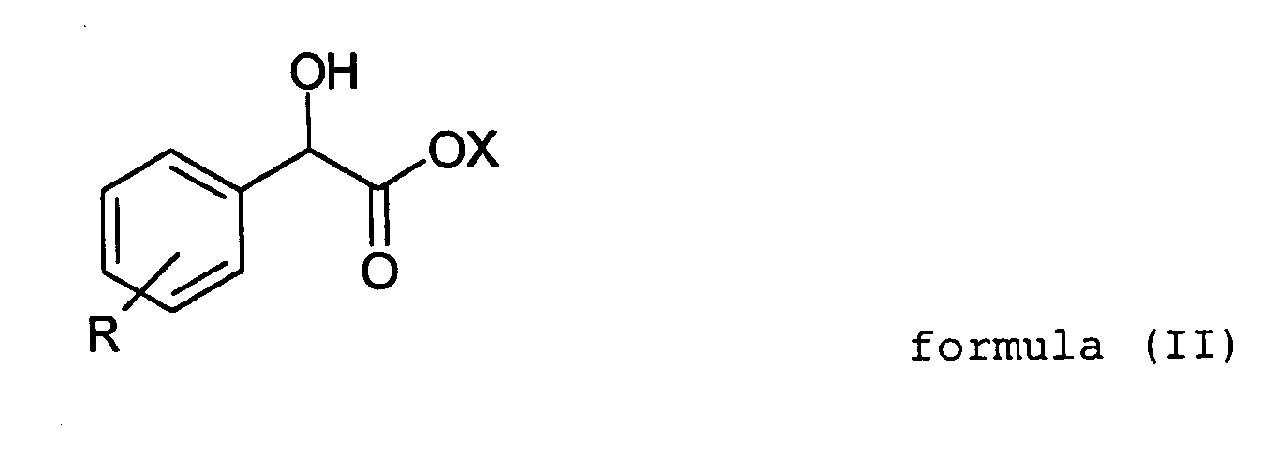
Description
- The present invention relates to a novel reduced β-nicotinamide adenine dinucleotide-dependent α-keto acid reductase. The present invention also relates to polynucleotides encoding the reductase, method for producing the reductase, and a method for producing optically active α-hydroxy acids, in particular, (R)-2-chloromandelic acid, using a recombinant that expresses the reductase.
- In general, enzymes not only have high catalytic activity but also exhibit stereospecificity, substrate specificity and reaction specificity. The stereospecificity of an enzyme is almost absolute with some exceptions.
- According to recent research, the importance of the use of optically active substances in the field of pharmaceuticals, pesticides, animal foods, spices, etc. is increasing. Specifically, optical isomers sometimes have completely different physiological activities to each other, and thus techniques to specifically obtain optical isomers are important. For example, when only one of two enantiomers has the physiological activity of interest, the problem of a mixture of the enantiomers is not only that the other isomer has no activity in the mixture but also may competitively inhibit the coexisting effective enantiomer. Because of such competition, the biological activity of a racemate may be greatly decreased up to 1/2 as compared with that of the effective enantiomer. Therefore, it is an industrially important objective to develop methods for obtaining optically pure enantiomers (synthesis or resolution).
- A technique widely used to achieve the objective comprises the synthesis of racemate followed by effective optical resolution of the synthesized racemate. However, according to this technique comprising the optical resolution after synthesis, an unintended enantiomer is always synthesized as a by-product. Thus, this technique is still problematic with respect to efficient utilization of raw materials. Even when the recovered by-product is regenerated as the raw material, a constant amount of by-product is always repeatedly synthesized. Hence, an enzymatic optical resolution method that neither produces a by-product nor produces a large volume of waste liquid has been attracting attention. The enzymatic optical resolution method utilizes specific generation of an objective enantiomer by taking advantage of the specificity of enzymes. This method suppresses the synthesis of unnecessary enantiomer so that they are produced at low levels. As a result of this method, products with high optical purity can be readily obtained. In addition, this method is advantageous for its efficient use of raw materials.
- Optically active α-hydroxy acids include optically active mandelic acid, which is useful as an intermediate for synthesizing pharmaceuticals and pesticides. Known methods for producing optically active mandelic acid having a substituent on the benzene ring include the following:
- · optical resolution method comprising fractional crystallization of racemates (Unexamined Published Japanese Patent Application No. (JP-A) 2001-72644);
- · chromatographic optical resolution (Journal of Chromatography, 282, 83-8, (1983));
- · method using nitrilase (JP-A Hei 4-99496; JP-A Hei 6-237789);
- · method for obtaining an optical isomer by oxidizing one of the isomer in a racemate (JP-A Hei 6-165695); and
- · method using hydroxylnitrile lyase (JP-A 2001-354616).
-
- The method using nitrilase requires a mandelonitrile derivative as the raw material. Sodium cyanide is necessary for the synthesis of the mandelonitrile derivative.
- On the other hand, the method using hydroxylnitrile lyase requires benzaldehyde and hydrocyanic acid as the raw material. Due to its toxicity, hydrocyanic acid must be handled carefully.
- A method for producing optically active mandelic acid by microorganism-mediated asymmetric reduction of phenylglyoxylic acid having no substituent on the benzene ring, is known in the art (JP-A Sho 57-198096; JP-A Sho 57-198097; JP-A Sho 63-32492; JP-A Hei 6-7179, etc.).
- Methods for obtaining optical active substances of mandelic acid derivatives that have substituents on the benzene ring through enzymatic reactions will be of great use. However, no enzymatic method practicable on an industrial scale is known in the art.
- An objective of the present invention is to provide an enzymatic method for producing an optically active α-hydroxy acid that has substituents on its benzene ring.
- Another objective of the present invention is to provide a novel enzyme that generates an α-hydroxy acid with a high optical purity through the reduction of an α-keto acid using reduced β-nicotinamide adenine dinucleotide (hereinafter abbreviated as NADH) as a coenzyme. Another objective of the present invention is to isolate a DNA encoding an enzyme having the properties of interest as a recombinant. Furthermore, another objective of the present invention is to provide a method for producing optically active α-hydroxy acids using the recombinant.
- The present inventors revealed that Leuconostoc mesenteroides subsp. dextranicum stereoselectively reduces 2-chlorophenyl glyoxylic acid to produce (R) -2-chloromandelic acid. Both the yield and stereoselectivity of this reaction were high.
- The present inventors purified an enzyme that reduced 2-chlorophenyl glyoxylic acid from cell-free extract of the strain till the enzyme appeared as a single band via electrophoresis. , The inventors also determined various properties of this enzyme. As a result, the inventors discovered that the enzyme is a novel α-keto acid reductase that reduces various types of α-keto acids. In a reduction reaction, the enzyme reduced 2-chlorophenyl glyoxylic acid to produce (R)-2-chloromandelic acid at a high yield and with a high optical purity. Furthermore, the inventors isolated a DNA encoding this enzyme and obtained a transformant expressing the enzyme at a high level. This transformant was confirmed to be useful for enzymatic production of optically active α-hydroxy acids, thereby allowing the successful completion of the present invention.
- As described above, methods for producing optically active mandelic acid by microorganism-mediated asymmetric reduction of phenylglyoxylic acid that has no substituent on the benzene ring are known in the art. However, typically, it is difficult to assume that the same microorganism catalyzes a similar reaction using, as the substrate, a phenylglyoxylic acid having substituents on the benzene ring. The progress of a similar reaction cannot be expected due to the steric hindrance by the substituents, toxicity of the substrate compound or product to the microorganism, and difference in the electronic effect of the substrate depending on the substituents.
- For example, as shown in the Examples described ahead, Candida famata IFO 0856 (JP-A Hei 6-7179) that reacts on phenylglyoxylic acid derivatives without substituent did not react on 2-chlorophenyl glyoxylic acid having the formula (I). This finding was surprising, since this compound of formula (I) has a Cl substitution at the ortho position of the benzene ring constituting the phenylglyoxylic acid derivative. More surprisingly, the optical purity of the optically active mandelic acid produced by the microorganism was very high sufficient for practical use.
- Hitherto, known enzymes having the activity to NADH-dependently reduce α-keto acids include D-lactate dehydrogenase (D-LDH), D- α-hydroxyisocaproic acid dehydrogenase (D-HicDH), and D-mandelic acid dehydrogenase (D-ManDH) highly purified from lactic acid bacteria etc., and various properties thereof have been clarified (Enzyme Microb. Technol., 14, 28-35 (1992) ; Appl. Environ. Microbiol., 68, 2, 947-951 (2002)). However, all of these dehydrogenases show a dehydrogenating activity on α-hydroxy acids corresponding to the α-keto acids. Hence, it appears that these known enzymes have different properties as compared to the α-keto acid reductase of the present invention.
- Specifically, the present invention relates to an α-keto acid reductase, a DNA encoding the reductase, a method for producing the reductase, uses thereof, and a method for producing α-hydroxy acids (described below).
- (1) An α-keto acid reductase having the following
physicochemical properties:
- (i) function:
- reduces α-keto acid to produce (R)- α-hydroxy acid using reduced β-nicotinamide adenine dinucleotide as the coenzyme; and
- (ii) substrate specificity:
- (a) utilizes reduced β-nicotinamide adenine dinucleotide as the coenzyme in the reduction reaction of (i);
- (b) reducing 2-chlorophenyl glyoxylic acid to produce (R)-2-chloromandelic acid; and
- (c) reduces 2-chlorophenyl glyoxylic acid but substantially fails to dehydrogenate either of the two optical isomers of 2-chloromandelic acid;
- (2) the α-keto acid reductase of (1), further having the
following physicochemical properties:
- (iii) optimum pH:
- pH 5.0 to 5.5;
- (iv) optimum temperature:
- 45 to 55°C; and
- (v) molecular weight of
about 35,000 Daltons and about 63,000 Daltons, as determined by sodium dodecyl sulfate-polyacrylamide gel electrophoresis and gel filtration, respectively; - (3) the α-keto acid reductase of (1), which is produced by a microorganism belonging to the genus Leuconostoc;
- (4) the α-keto acid reductase of (3), wherein the microorganism belonging to the genus Leuconostoc is Leuconostoc mesenteroides;
- (5) the α-keto acid reductase of (4), wherein the microorganism belonging to Leuconostoc mesenteroides is Leuconostoc mesenteroides subsp. dextranicum;
- (6) a polynucleotide encoding a protein, wherein said protein
is an enzyme that catalyzes the reduction of α-keto acids, and wherein
said polynucleotide is selected from the group consisting of:
- (a) a polynucleotide comprising the nucleotide sequence of SEQ ID NO: 1;
- (b) a polynucleotide encoding a protein comprising the amino acid sequence of SEQ ID NO: 2;
- (c) a polynucleotide encoding a protein comprising the amino acid sequence of SEQ ID NO: 2, wherein one or more amino acids have been substituted, deleted, inserted, and/or added;
- (d) a polynucleotide hybridizing under stringent conditions to a DNA comprising the nucleotide sequence of SEQ ID NO: 1; and
- (e) a polynucleotide encoding an amino acid sequence which exhibits 50% or higher homology to the amino acid sequence of SEQ ID NO: 2;
- (7) a protein encoded by the polynucleotide of (6);
- (8) a recombinant vector wherein the polynucleotide of (6) has been inserted;
- (9) the recombinant vector of (8), wherein a polynucleotide encoding a dehydrogenase catalyzing an oxidation-reduction reaction using β-nicotinamide adenine dinucleotide as the coenzyme has been further inserted;
- (10) the vector of (9), wherein the dehydrogenase is a formate dehydrogenase;
- (11) the vector of (10), wherein the formate dehydrogenase is derived from Mycobacterium vaccae;
- (12) the vector of (9), wherein the dehydrogenase is a glucose dehydrogenase;
- (13) the recombinant vector of (12), wherein the glucose dehydrogenase is derived from Bacillus subtilis;
- (14) a transformant comprising any one of the polynucleotides of (6), or the vector of (8) in an expressible manner;
- (15) a method for producing the protein of (7), wherein said method comprises the steps of culturing the transformant of (14), and collecting the expressed product;
- (16) a method for producing the enzyme of (1) or the protein of (7), wherein said method comprises the step of culturing a microorganism belonging to the genus Leuconostoc that produces the enzyme of (1) or the protein of (7);
- (17) the method of (16), wherein the microorganism belonging to the genus Leuconostoc is Leuconostoc mesenteroides;
- (18) the method of (17), wherein the microorganism belonging to Leuconostoc mesenteroides is Leuconostoc mesenteroides subsp. dextranicum;
- (19) a method for producing an optically active α-hydroxy acid,
wherein said method comprises the following sequential steps:
- (i) reacting
- (a) the α-keto acid reductase of (1) or (2);
- (b) the protein of (7);
- (c) a microorganism producing said α-keto reductase or said protein; or
- (d) a processed product of the microorganism with an α-keto acid; and
- (ii) collecting the optically active α-hydroxy acid produced in step (i) ;
- (20) the method of (19), wherein the α-keto acid is a
phenylglyoxylic acid derivative of formula (I):
wherein:
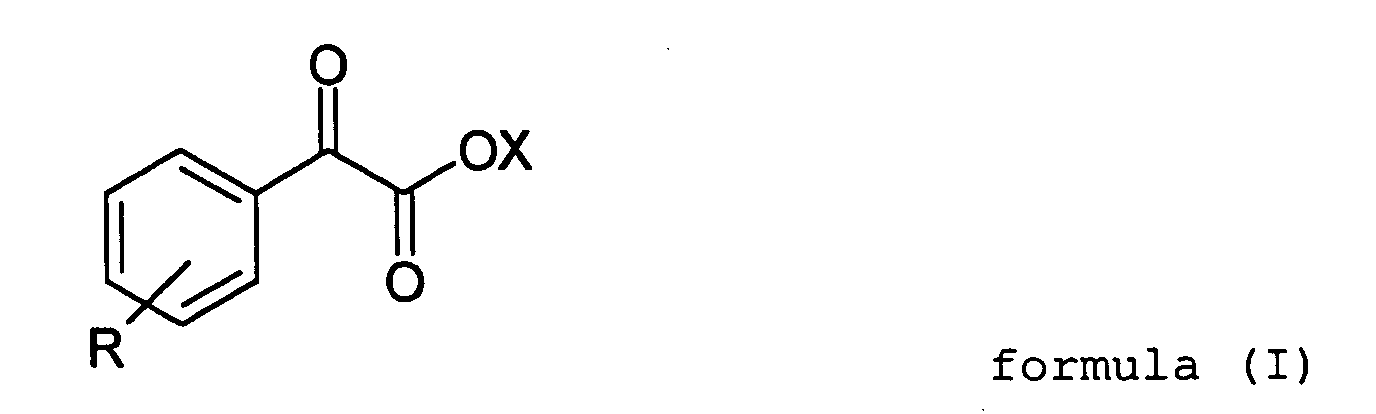
- X is a hydrogen atom, an alkaline metal, or a alkaline earth metal; and
- R indicates one or more substituents at the ortho, meta, or para positions selected from the group consisting of a halogen atom, a hydroxyl group, a C1-3 alkyl group, a C1-3 alkoxy group, a C1-3 thioalkyl group, an amino group, a nitro group, a mercapto group, a phenyl group, and a phenoxy group, and wherein said method comprises the step of collecting the optically produced active mandelic acid derivative of formula (II):
- (21) the method of (20), wherein the ortho position of the phenylglyoxylic acid derivative is substituted;
- (22) the method of (21), wherein the ortho position of the phenylglyoxylic acid derivative is substituted with a halogen atom;
- (23) the method of (20), wherein the meta position of the phenylglyoxylic acid derivative is substituted;
- (24) the method of (23), wherein the meta position of the phenylglyoxylic acid derivative is substituted with a halogen atom;
- (25) the method of (19), wherein the α-keto acid is 2-chlorophenyl glyoxylic acid and the optically active α-hydroxy acid is (R)-2-chloromandelic acid;
- (26) the method of (19), wherein the microorganism is the transformant of (14);
- (27) the method of (19), wherein said method further comprises the step of converting oxidized β-nicotinamide adenine dinucleotide to reduced β-nicotinamide adenine dinucleotide;
- (28) the method of (27), wherein the oxidized β-nicotinamide adenine dinucleotide is converted to reduced β-nicotinamide adenine dinucleotide by the function of an enzyme that catalyzes dehydrogenation using oxidized β-nicotinamide adenine dinucleotide as the coenzyme; and
- (29) the method of (28), wherein the enzyme that catalyzes dehydrogenation using oxidized β-nicotinamide adenine dinucleotide as the coenzyme is formate dehydrogenase and/or glucose dehydrogenase.
-
-
- Fig. 1 shows a photograph depicting the electrophoretic pattern
by SDS-PAGE.
Lane 1, molecular weight marker;lane 2, the enzyme obtained in Example 1. The band indicated with an arrow corresponds to the enzyme. - Fig. 2 depicts a diagram showing the pH dependency of the 2-chlorophenyl glyoxylic acid-reducing activity of the enzyme obtained in Example 9. The ordinate indicates the relative enzymatic activity (%) taking the maximal activity as 100%; the abscissa indicates the pH.
- Fig. 3 depicts a diagram showing the temperature dependency of the 2-chlorophenyl glyoxylic acid-reducing activity of the enzyme obtained in Example 9. The ordinate indicates the relative enzymatic activity (%) taking the maximal activity as 100%; the abscissa indicates the temperature (°C).
- Fig. 4 depicts a diagram showing the pH stability of the 2-chlorophenyl glyoxylic acid-reducing activity of the enzyme obtained in Example 9. The ordinate indicates the relative enzymatic activity (%) taking the maximal activity as 100%; the abscissa indicates the pH.
- Fig. 5 depicts a diagram showing the thermostability of the 2-chlorophenyl glyoxylic acid-reducing activity of the enzyme obtained in Example 9. The ordinate indicates the relative enzymatic activity (%) taking the maximal activity as 100; the abscissa indicates the temperature (°C).
- Fig. 6 depicts a schematic illustration of the construction of the plasmid pSE-LMK1, which contains as an insert the α-keto acid reductase derived gene from Leuconostoc mesenteroides subsp. dextranicum. In the plasmid map, P (trc) indicates the trc promoter; T(rrnB), the rrnBT1T2 terminator; amp, the β-lactase gene for ampicillin resistance; ori, the replication origin of the plasmid; rop, the ROP-protein gene; and laqIq, the lactose repressor. LmKAR of pSE-LMK1 indicates the α-keto acid reductase gene derived from Leuconostoc mesenteroides subsp. dextranicum.
- Fig. 7 depicts a schematic illustration of the construction of the plasmid pSE-MCF26, which contains as an insert the formate dehydrogenase gene derived from Mycobacterium vaccae. In the plasmid map, P(trc) indicates the trc promoter; T(rrnB), the rrnBT1T2 terminator; amp, the β-lactase gene for ampicillin resistance; ori, the replication origin of the plasmid; rop, the ROP-protein gene; laqIq, the lactose repressor; and McFDH, the formate dehydrogenase gene derived from Mycobacterium vaccae.
- Fig. 8 depicts a schematic illustration of the construction of the plasmid pSF-LMK1, which contains as inserts the Leuconostoc mesenteroides subsp. dextranicum-derived α-keto acid reductase and the Mycobacterium vaccae-derived formate dehydrogenase gene. In the plasmid map, P (trc) indicates the trc promoter; T (rrnB) , the rrnBT1T2 terminator; amp, the β-lactase gene for ampicillin resistance; ori, the replication origin of plasmid; rop, ROP-protein gene; laqIq, the lactose repressor; McFDH, the formate dehydrogenase gene derived from Mycobacterium vaccae; and LmKAR, the α-keto acid reductase gene derived from Leuconostoc mesenteroides subsp. dextranicum.
- Fig. 9 depicts a schematic illustration of the construction of the plasmid pSG-LMK1, which contains as inserts the Leuconostoc mesenteroides subsp. dextranicum-derived α-keto acid reductase and the Bacillus subtilis-derived glucose dehydrogenase gene. In the plasmid map, P(trc) indicates the trc promoter; T(rrnB), rrnBT1T2 terminator; amp, the β-lactase gene for ampicillin resistance; ori, the replication origin of plasmid; rop, the ROP-protein gene; laqIq, the lactose repressor; BsGlcDH, the glucose dehydrogenase gene derived from Bacillus subtilis; and LmKAR, the α-keto acid reductase gene derived from Leuconostoc mesenteroides subsp. dextranicum.
-
- The α-keto acid reductase of the present invention has the physicochemical properties of:
- (i) function:
- reduces α-keto acid to produce (R) - α-hydroxy acid using reduced β-nicotinamide adenine dinucleotide as the coenzyme; and
- (ii) substrate specificity:
- (a) utilizes reduced β-nicotinamide adenine dinucleotide as the coenzyme in the reduction reaction of (i);
- (b) reducing 2-chlorophenyl glyoxylic acid to produce (R)-2-chloromandelic acid; and
- (c) reduces 2-chlorophenyl glyoxylic acid but substantially fails to dehydrogenate either of the two optical isomers of 2-chloromandelic acid. Preferably, the α-keto acid reductase of the present invention additionally has the physicochemical properties of:
- (iii) optimum pH:
- pH 5.0 to 5.5;
- (iv) optimum temperature:
- 45 to 55°C; and
- (v) molecular weight of about 35, 000 Daltons and about 63 , 000 Daltons , as determined by sodium dodecyl sulfate-polyacrylamide gel electrophoresis (hereinafter abbreviated as SDS-PAGE)and gel filtration, respectively.
-
- An α-keto acid reductase of the present invention can be obtained, from Leuconostoc mesenteroides subsp. dextranicum. The α-keto acid reductase derived from the microorganism substantially cannot utilize reduced β-nicotinamide adenine dinucleotide phosphate (hereinafter abbreviated as NADPH) as the coenzyme. However, regardless of the ability to use NADPH, enzymes having the above-described physicochemical properties (i) and (ii) are encompassed in the α-keto acid reductase of the present invention. The α-keto acid reductase of the present invention preferably includes Enzymes additionally having the above-described properties (iii) to (v).
- In the present invention, the dehydrogenase activity against 2-chloromandelic acid of an enzyme can be confirmed by the following assay procedure:incubate the enzyme at 30°C in a reaction solution of 50 mM Tris-HC1 buffer (pH 8.5) containing 2.5 mM NAD+, and 1 mM 2-chloromandelic acid; and measure the increase in absorbance at 340 nm associated with the generation of NADH. 1 U is defined as an amount of enzyme that catalyzes the production of 1 µmol NADH in one minute.
- On the other hand, in the present invention, substantial absence of a dehydrogenase activity against both optical isomers of 2-chloromandelic acid of a certain protein can be determined by taking the activity of the protein to reduce 2-chlorophenyl glyoxylic acid as a relative activity of 100%, and confirming that the dehydrogenase activities of the protein against each of the two optical isomers of 2-chloromandelic acid is 20% or lower. Thus, "substantially fails to dehydrogenate either of the two optical isomers of 2-chloromandelic acid" indicates that the dehydrogenase activity of an enzyme against either of the two optical isomers of 2-chrolomandelic acid is 20% or lower taking the relative activity of the enzyme to reduce 2-chlorophenyl glyoxylic acid as 100%.
- Furthermore, substantial inability of a certain protein to utilize NADPH can be determined by taking the activity of the protein to NADPH dependently reduce 2-chlorophenyl glyoxylic acid as a relative activity of 100%, and confirming that the NADPH-dependent 2-chlorophenyl glyoxylic acid-reducing activity of the protein is 20% or lower.
- According to the present invention, an NADPH-dependent 2-chlorophenyl glyoxylic acid-reducing activity can be confirmed by the following assay procedure: incubate the enzyme at 30°C in a reaction solution of 50 mM acetic acid-sodium acetate buffer (pH 5.5) containing 0.2 mM NADPH and 1 mM 2-chlorophenyl glyoxylic acid; and measuring a decrease in the absorbance at 340 nm associated with the decrease of NADPH. 1 U is defined as an amount of enzyme that catalyzes the decrease of 1 µmol NADPH in one minute.
- Alternatively, a preferred α-keto acid reductase according to the present invention can be characterized by the properties of: (1) being capable to use NADH as a coenzyme; (2) substantial lack of dehydrogenase activity against α-hydroxy acids; and (3) reducing 2-chlorophenyl glyoxylic acid using NADH as the coenzyme to produce (R)-2-chloromandelic acid with an optical purity of 99% ee (enantiomeric excess) or higher.
- An α-keto acid reductase having the above-described physicochemical properties can be purified, for example, from culture of a lactic acid bacterium belonging to the genus Enterococcus, Lactobacillus, or Leuconostoc. Microorganisms having particularly excellent productivity of α-keto acid reductase of the present invention include Enterococcus faecalis and Enterococcus hirae of the genus Enterococcus; Lactobacillus fructivorans and Lactobacillus hilgardii of the genus Lactobacillus; and Leuconostoc mesenteroides subsp. dextranicum of the genus Leuconostoc. Strains of Leuconostoc mesenteroides subsp. dextranicum that can be used to prepare the α-keto acid reductase of the present invention include ATCC 17072 and NRIC 1085.
- An α-keto acid reductase of the present invention can be prepared as follows . First, the above microorganisms are cultured in a medium, such as MRS medium, generally used for culturing lactic acid bacteria. Then sufficiently grown cells of the microorganism are harvested, and a cell-free extract is prepared by lysing the cells in a buffer supplemented with a reducing agent (e.g., 2-mercaptoethanol) and a protease inhibitor (e.g., phenylmethanesulfonyl fluoride). The enzyme of interest can be purified from the cell-free extract by appropriate combination of fractionation based on protein solubility (precipitation using organic solvent; salting out with ammonium sulfate, etc.); cation-exchange chromatography; anion-exchange chromatography; gel filtration; hydrophobic chromatography; and affinity chromatography using chelating agent, dye, antibody, etc. For example, the enzyme of the present invention can be purified as a single band on electrophoresis with a series of procedures utilizing hydrophobic chromatography using phenyl-Sepharose, anion-exchange chromatography using Mono Q, hydrophobic chromatography using butyl-Sepharose, and adsorption chromatography with hydroxyapatite.
- The present invention relates to polynucleotides encoding α-keto acid reductase and homologs of the polynucleotides. In addition to natural polynucleotides such as DNA and RNA, a polynucleotide of the present invention may be an artificial molecule including artificial nucleotide derivatives. A polynucleotide of the present invention can also be a chimeric molecule of DNA-RNA. The polynucleotides of the present invention encoding α-keto acid reductase include the nucleotide sequence of SEQ ID NO: 1. The nucleotide sequence of SEQ ID NO: 1 encodes a protein comprising the amino acid sequence of SEQ ID NO: 2. The protein comprising the amino acid sequence is a preferable embodiment of the α-keto acid reductase of the present invention.
- The homologs of polynucleotides encoding the α-keto acid reductase of the present invention include polynucleotides encoding a protein having the above-described physicochemical properties (i) and (ii), and which comprise the amino acid sequence of SEQ ID NO: 2 wherein one or more amino acids have been deleted, substituted, inserted, and/or added. One skilled in the art can obtain homologs of the polynucleotides of the present invention by appropriately introducing substitutions, deletions, insertions and/or additions into the polynucleotide of SEQ ID NO: 1 utilizing site-directed mutagenesis (Nucleic Acid Res., 10, 6487 (1982); Methods in Enzymol., 100, 448 (1983); "
Molecular Cloning 2nd Edition", Cold Spring Harbor Laboratory Press (1989); "PCR A Practical Approach", IRL Press, 200 (1991)), etc. - The homologs of a polynucleotide of the present invention also include polynucleotides hybridizing under stringent conditions to a polynucleotide that comprises the nucleotide sequence of SEQ ID NO: 1, and which encodes a protein having the above-described physicochemical properties (i) and (ii). The phrase a "polynucleotide hybridizing under stringent conditions" refers to a polynucleotide that hybridizes to one or more probe DNAs which comprises a sequence of at least 20, preferably at least 30 continuous residues (for example, 40, 60 or 100 continuous residues) arbitrary selected from the sequence of SEQ ID NO: 1, for example, using ECL direct nucleic acid labeling and detection system (Amersham Pharmacia Biotech) under the conditions described in the manual (washing at 42°C in a primary wash buffer containing 0.5x SSC).
- The homologs of the polynucleotides of the present invention also include polynucleotides encoding a protein having a homology of at least 50%, preferably at least 60%, and more preferably 70% or higher to the amino acid sequence of SEQ ID NO: 2. A preferred protein of the present invention comprises an amino acid sequence having a homology of 80% or higher, 85% or higher, preferably 90% or higher, and more preferably 95% or higher (for example, 98% or higher) to the amino acid sequence of SEQ ID NO: 2. A homology search of a protein can be carried out against databases of the amino acid sequence of proteins (e.g., SWISS-PROT and PIR), databases of DNA sequences (e.g., DDBJ, EMBL and Gene-Bank), or databases of amino acid sequences deduced from DNA sequences using programs such as BLAST and FASTA, for example, via the Internet.
- The polynucleotides of the present invention include isolated polynucleotides. The phrase "isolated polynucleotide" refers to polynucleotides existing in a different form compared to naturally occurring polynucleotides. For example, vectors and polynucleotides integrated in the genome of another organism are included in the isolated polynucleotides. In addition, the isolated polynucleotide includes polynucleotides obtained as a cDNA, PCR product, or restriction fragment. Furthermore, polynucleotides that are used as a portion of a polynucleotide encoding a fusion protein is also encompassed by the phrase "isolated polynucleotide".
- The SWISS-PROT database was searched for homology against the amino acid sequence of SEQ ID NO: 2 using the BLAST program. As a result, among known proteins, keto pantoic acid reductase (EC 1.1.1.169) produced by Salmonella typhimurium exhibited the highest homology. However, the keto pantoic acid reductase has a different property with the α-keto acid reductase of the present invention and reduces keto pantoic acid in an NADPH-dependent manner.
- The score of homology between SEQ ID NO: 2 and this keto pantoic acid reductase was 67/148 (45%) Identity and 95/148 (63%) Positive. Since the homology was calculated based on only a part of the sequence, homology was re-calculated using the Maximum Matching program of Genetyx-win software package (Software Development Co., Ltd.). The newly calculated homology between the two was found to be 46% (J. Biochem., 92, 1173-1177 (1984)). As used herein, the phrase "50% or higher homology" refers to a homology score determined, for example, by the Maximum Matching program.
- Furthermore, the present invention relates to proteins comprising the amino acid sequence of SEQ ID NO: 2. The present invention further includes homologs of proteins comprising the amino acid sequence of SEQ ID NO: 2.
- As used herein, the phrase a "homolog of the α-keto acid reductase" refers to a protein that comprising the amino acid sequence of SEQ ID NO: 2 in which one or more amino acids have been deleted, substituted, inserted and/or added, and which is functionally equivalent to the protein comprising the amino acid sequence of SEQ ID NO: 2. A homolog of the α-keto acid reductase may contain in the amino acid sequence of SEQ ID NO: 2 mutations of, for example, 100 amino acid residues or less, typically 50 residues or less, preferably 30 residues or less, more preferably 15 residues or less, yet more preferably 10 residues or less, and most preferably 5 amino acid residues or less. In general, to retain the function of a protein, amino acids of the protein are substituted with amino acids that have a similar characteristic to the original amino acid. Such amino acid substitution is called "conservative substitution".
- For example, Ala, Val, Leu, Ile, Pro, Met, Phe and Trp are all classified into the group of non-polar amino acids, and have similar properties. Non-charged amino acids include Gly, Ser, Thr, Cys, Tyr, Asn and Gln. Acidic amino acids include Asp and Glu. Basic amino acids include Lys, Arg and His.
- As used herein, the phrase "functionally equivalent to the protein comprising the amino acid sequence of SEQ ID NO: 2" means that a protein has the above-described enzymological properties of (i) to (ii). One skilled in the art can obtain polynucleotides encoding a homolog of the α-keto acid reductase by appropriately introducing substitutions, deletions, insertions and/or additions into the DNA of SEQ ID NO: 1 using site-directed mutagenesis (Nucleic Acid Res., 10, 6487 (1982); Methods in Enzymol., 100, 448 (1983); "
Molecular Cloning 2nd Edition", Cold Spring Harbor Laboratory Press (1989); and "PCR A Practical Approach", IRL Press, 200 (1991)) and so on. A homolog of the α-keto acid reductase of SEQ ID NO: 2 can be obtained by introducing and expressing a polynucleotide encoding the homolog of the α-keto acid reductase into a host. - Furthermore, as used herein, the phrase "homolog of α-keto acid reductase" refers to a protein having a homology of at least 50%, preferably at least 60%, and more preferably 70% or higher to the amino acid sequence of SEQ ID NO: 2. A protein homology search can be carried out against various amino acid sequence databases and DNA databases using programs such as BLAST and FASTA. Available databases include databases of amino acid sequences of proteins, such as SWISS-PROT and PIR; databases of DNA sequences, such as DDBJ, EMBL and Gene-Bank; and databases of amino acid sequences deduced from DNA sequences. All these databases can be used via the Internet.
- According to the present invention, an α-keto acid reductase or a homolog thereof may contain additional amino acid sequence, as long as the protein has an functionally equivalent activity to the protein comprising amino acid sequence of SEQ ID NO: 2. For example, a tag sequence such as histidine tag or HA tag can be attached to the protein of the present invention. Alternatively, the protein may be in a form of fusion protein with another protein. Furthermore, the α-keto acid reductase or homolog of the present invention includes fragments of proteins as long as it has a functionally equivalent activity to the protein comprising the amino acid sequence of SEQ ID NO: 2.
- A protein having the enzymatic activity of reducing α-keto acid of the present invention can be purified as a substantially pure protein sample. As used herein, the phrase "substantially pure protein sample" refers to a sample that substantially contains no other biomolecules. Specifically, a substantially pure protein sample typically has a purity at dry weight of 75% or higher, or 80% or higher, preferably 85% or higher, more preferably 95% or higher, and yet more preferably 99% or higher. Methods for determining the purity of a protein are known in the art. Specifically, the purity of a protein can be determined using various column chromatographic methods or electrophoretic analysis such as SDS-PAGE.
- A polynucleotide encoding the α-keto acid reductase of the present invention can be isolated, for example, by the method described below: designing PCR primers based on the nucleotide sequence of SEQ ID NO: 1, and carrying out PCR using chromosomal DNA or cDNA library from a reductase-producing strain as the template to obtain a DNA of the present invention.
- Furthermore, a polynucleotide of the present invention can be prepared using the obtained DNA fragment as a probe by conducting screening of, (a) a library obtained by introducing restriction enzyme fragments of chromosomal DNA derived from a reductase-producing strain into phages or plasmids and transforming Escherichia coli cells with the phages or vectors, or (b) a cDNA library, by colony hybridization, plaque hybridization, etc.
- Alternatively, a polynucleotide of the present invention can be obtained by analyzing the nucleotide sequence of a DNA fragment obtained by PCR; designing PCR primers based on the analyzed sequence for extending a strand to the outside of the known DNA sequence; digesting the chromosomal DNA of a reductase-producing strain with an appropriate restriction enzyme; and then carrying out reverse-PCR by a self-cyclizing reaction using the DNA as a template (Genetics, 120, 621-623 (1988)). Furthermore, a polynucleotide of the present invention can be obtained by the RACE method (Rapid Amplification of cDNA End, "PCR Jikken Manual (Manual for PCR experiments)", 25-33, HBJ Publishing Bureau).
- In addition to the genomic DNAs and cDNAs cloned by the methods as described above, the polynucleotides of the present invention include synthesized DNAs.
- The polynucleotides of the present invention can be isolated by above-described methods from a microorganism belonging to the genus selected from the group of:
- the genus Candida;
- the genus Cryptococcus;
- the genus Hansenula;
- the genus Ogataea;
- the genus Pichia;
- the genus Rhodosporidium;
- the genus Rhodotorula;
- the genus Saccharomyces;
- the genus Trichosporon;
- the genus Yamadazyma;
- the genus Rhodococcus;
- the genus Amycolatopsis;
- the genus Alcaligenes;
- the genus Arthrobacter;
- the genus Brevibacterium;
- the genus Comamonas;
- the genus Corynebacterium;
- the genus Enterobacter;
- the genus Enterococcus;
- the genus Lactobacillus;
- the genus Leuconostoc;
- the genus Microbacterium;
- the genus Micrococcus;
- the genus Proteus; and
- the genus Pseudomonas. All microorganisms belonging to these genera produce (R)-mandelic acid derivatives using the above-mentioned phenylglyoxylic acid derivative of formula (I) as a substrate.
-
- More specifically, microorganisms belonging to the genera selected from the group listed above include
- Candida ernobii;
- Candida gropengiesseri;
- Candida magnoliae;
- Candida sake;
- Candida shehatae;
- Candida sylvatica;
- Cryptococcus flavus;
- Cryptococcus humicolus;
- Cryptococcus marcerans;
- Hansenula beckii;
- Hansenula canadensis;
- Hansenula glucozyma;
- Ogataea pini;
- Pichia carsonii;
- Pichia fabianii;
- Pichia haplophila;
- Pichia subpelliculosa;
- Rhodosporidium dacryoideum;
- Rhodosporidium diobovatum;
- Rhodosporidium toruloides;
- Rhodotorula glutinis;
- Rhodotorula minuta;
- Rhodotorula rubra;
- Saccharomyces cerevisiae;
- Trichosporon brassicae;
- Trichosporon pullulans;
- Yamadazyma castillae;
- Yamadazyma nakazawae var. akitaensis;
- Yamadazyma scolyti;
- Rhodococcus erythropolis;
- Rhodococcus fascians;
- Rhodococcus obuensis;
- Rhodococcus rhodochrous;
- Amycolatopsis orientalis subsp. orientalis;
- Alcaligenes sp.;
- Arthrobacter protophormiae;
- Brevibacterium iodinum;
- Comamonas testosteroni;
- Corynebacterium ammoniagenes;
- Enterobacter cloacae;
- Enterococcus casseliflavus;
- Enterococcus faecalis;
- Enterococcus hirae;
- Lactobacillus viridescens;
- Lactobacillus mali;
- Lactobacillus collinoides;
- Lactobacillus fructivorans;
- Lactobacillus hilgardii;
- Leuconostoc mesenteroides subsp. dextranicum;
- Micrococcus luteus;
- Proteus vulgaris; and
- Pseudomonas diminuta. All the microorganisms can produce (R) -mandelic acid derivatives with a high optical purity.
-
- These microorganisms are available as cell strains from various depositary institutions. Such depositary institutions for cell strains include:
- IFO: Institute for Fermentation OSAKA;
- DSM: Deutsche Sammlung von Mikroorganismen;
- ATCC: American Type Culture Collection;
- JCM: Japan Collection of Microorganisms, RIKEN (The Institute of Physical and Chemical Research);
- IAM: Institute of Applied Microbiology, University of Tokyo; and
- NRIC: NODAI Culture Collection Center, Faculty of Applied
- Bio-Science, Tokyo University of Agriculture. One skilled in the art can also isolate desired microorganisms from various samples.
-
- Vectors expressing the α-keto acid reductase can be prepared by inserting a polynucleotide encoding the α-keto acid reductase of the present invention, which has been isolated by the above-mentioned methods, into known expression vectors.
- The α-keto acid reductase of the present invention can also be obtained from a recombinant by culturing a transformant transformed with such expression vectors.
- According to the present invention, there is no limitation on the type of microorganism to be transformed to express the α-keto acid reductase, as long as the microorganism can be transformed with a recombinant vector that contains a polynucleotide encoding a polypeptide having the α-keto acid reductase activity and can express the α-keto acid reductase. Available microorganisms include those for which a host-vector system has been developed, for example:
- bacteria such as the genus Escherichia, the genus Bacillus, the genus Pseudomonas, the genus Serratia, the genus Brevibacterium, the genus Corynebacterium, the genus Streptococcus, and the genus Lactobacillus;
- actinomycetes such as the genus Rhodococcus and the genus Streptomyces;
- yeasts such as the genus Saccharomyces, the genus Kluyveromyces, the genus Schizosaccharomyces, the genus Zygosaccharomyces, the genus Yarrowia, the genus Trichosporon, the genus Rhodosporidium, the genus Pichia, and the genus Candida; and
- fungi such as the genus Neurospora, the genus Aspergillus, the genus Cephalosporium, and the genus Trichoderma.
-
- Procedure for the preparation of a transformant and construction of a recombinant vector suitable for a host can be carried out by employing techniques that are commonly used in the fields of molecular biology, bioengineering, and genetic engineering (for example, see Sambrook et al., "Molecular Cloning", Cold Spring Harbor Laboratories). In order to express, in a microorganism, the gene encoding the α-keto reductase of the present invention whose electron donator is NADH, it is necessary to introduce the DNA into a plasmid vector or phage vector that is stable in the microorganism and let the genetic information being transcribed and translated.
- To do so, a promoter, a unit for regulating transcription and translation, is placed upstream of the 5' end of the DNA of the present invention, and preferably a terminator is placed downstream of the 3' end of the DNA. The promoter and the terminator should be functional in the microorganism to be utilized as a host. Available vectors, promoters, and terminators for the above-mentioned various microorganisms are described in detail in "
Biseibutugaku Kisokoza 8, Idenshikogaku (Fundamental Course in Microbiology (8): Genetic Engineering)", Kyoritsu Shuppan, specifically for yeasts, in "Adv. Biochem. Eng., 43, 75-102 (1990)" and "Yeast, 8, 423-488 (1992)". - For example, for the genus Escherichia, in particular, for Escherichia coli, available plasmids include pBR series and pUC series plasmids; available promoters include promoters derived from lac (derived from β-galactosidase gene) , trp (derived from the tryptophan operon), tac and trc (which are chimeras of lac and trp), PL and PR of λ phage, etc. Available terminators are derived from trpA, phages, rrnB ribosomal RNA, etc. Among various plasmids available for the expression of the reductase of the present invention, vector pSE420D (described in JP-A 2000-189170), commercially available pSE420 (Invitrogen) partly modified at the multi-cloning-site, can be preferably used.
- For the genus Bacillus, available vectors are pUB110 series and pC194 series plasmids; the vectors can be integrated into host chromosome. Available promoters and terminators are derived from apr (alkaline protease), npr (neutral protease), amy (α-amylase), etc.
- For the genus Pseudomonas, there are host-vector systems developed for Pseudomonas putida and Pseudomonas cepacia. A broad-host-range vector, pKT240, (containing RSF1010-derived genes required for autonomous replication) based on TOL plasmid, which is involved in decomposition of toluene compounds, is available; a promoter and a terminator derived from the lipase gene (JP-A Hei 5-284973) are available.
- For the genus Brevibacterium, in particular, for Brevibacterium lactofermentum, available plasmid vectors include pAJ43 (Gene, 39, 281 (1985) ). Promoters and terminators used for Escherichia coli can be utilized without any modification for Brevibacterium.
- For the genus Corynebacterium, in particular, for Corynebacterium glutamicum, plasmid vectors such as pCS11 (JP-A Sho 57-183799) and pCB101 (Mol. Gen. Genet., 196, 175 (1984)) are available.
- For the genus Streptococcus, plasmid vectors such as pHV1301 (FEMS Microbiol. Lett., 26, 239 (1985)) and pGK1 (Appl. Environ. Microbiol., 50, 94 (1985)) can be used.
- For the genus Lactobacillus, plasmid vectors such as pAMβ1 (J. Bacteriol., 137, 614 (1979)), which were developed for the genus Streptococcus can be utilized and promoters that are used for Escherichia coli are also usable.
- For the genus Rhodococcus, plasmid vectors isolated from Rhodococcus rhodochrous are available (J. Gen. Microbiol., 138, 1003 (1992)).
- For the genus Streptomyces, plasmids can be constructed in accordance with the method as described in "Genetic Manipulation of Streptomyces: A Laboratory Manual" (Cold Spring Harbor Laboratories, (1985)) by Hopwood et al. In particular, for Streptomyces lividans, pIJ486 (Mol. Gen. Genet., 203, 468-478 (1986)), pKC1064 (Gene, 103, 97-99 (1991)), and pUWL-KS (Gene, 165, 149-150 (1995)) are usable. The same plasmids can also be utilized for Streptomyces virginiae (Actinomycetol., 11, 46-53 (1997)).
- For the genus Saccharomyces, in particular, for Saccharomyces cerevisiae, YRp series, YEp series, YCp series, and YIp series plasmids are available; integration vectors (refer EP 537456, etc.), which are integrated into chromosome via homologous recombination with multicopy-ribosomal genes, allow to introduce a gene of interest in multicopy and the gene incorporated is stably maintained in the microorganism; and thus, these types of vectors are highly useful. Available promoters and terminators are derived from genes encoding ADH (alcohol dehydrogenase), GAPDH (glyceraldehyde-3-phosphate dehydrogenase) , PHO (acid phosphatase) , GAL (β-galactosidase) , PGK (phosphoglycerate kinase), ENO (enolase), etc.
- For the genus Kluyveromyces, in particular, for Kluyveromyces lactis, available plasmids are those such as 2-µm plasmids derived from Saccharomyces cerevisiae, pKD1 series plasmids (J. Bacteriol., 145, 382-390 (1981)), plasmids derived from pGK11 and involved in the killer activity, KARS (Kluyveromyces autonomous replication sequence) plasmids, and plasmids (see, EP 537456, etc.) capable of being integrated into chromosome via homologous recombination with the ribosomal DNA. Promoters and terminators derived from ADH, PGK, and the like are available.
- For the genus Schizosaccharomyces, it is possible to use plasmid vectors comprising ARS (autonomous replication sequence) derived from Schizosaccharomyces pombe and auxotrophy-complementing selectable markers derived from Saccharomyces cerevisiae (Mol. Cell. Biol., 6, 80 (1986)). Promoters such as ADH promoter derived from Schizosaccharomyces pombe are usable (EMBO J., 6, 729 (1987)). In particular, pAUR224 is commercially available from TaKaRa Shuzo Co., Ltd.
- For the genus Zygosaccharomyces, plasmids originating from those such as pSB3 (Nucleic Acids Res., 13, 4267 (1985)) derived from Zygosaccharomyces rouxii are available; it is possible to use promoters such as PHO5 promoter derived from Saccharomyces cerevisiae and GAP-Zr (Glyceraldehyde-3-phosphate dehydrogenase) promoter (Agri. Biol. Chem., 54, 2521 (1990)) derived from Zygosaccharomyces rouxii.
- For the genus Pichia, a host vector system is developed for Pichia angusta (previously called Hansenula polymorpha). Although autonomous replication sequences (HARS1 and HARS2) derived from Pichia angusta are available as vectors, they are rather unstable. Therefore, multicopy integration to chromosome is effective for microorganisms of the genus Pichia (Yeast, 7, 431-443 (1991)). In addition, promoters of AOX (alcohol oxidase) and FDH (formate dehydrogenase) induced by methanol and such are available. Furthermore, host-vector systems originating from autonomous replication sequences (PARS1, PARS2) derived from the genus Pichia such as Pichia pastoris have been developed (Mol. Cell. Biol., 5, 3376 (1985) ), and it is possible to employ a highly efficient promoter such as methanol-inducible AOX promoter, which is available for high-cell-density-culture (Nucleic Acids Res., 15, 3859 (1987)).
- For the genus Candida, host-vector systems have been developed for Candida maltosa, Candida albicans, Candida tropicalis, Candida utilis, etc. An autonomous replication sequence originating from Candida maltosa has been cloned (Agri. Biol. Chem., 51, 1587 (1987)), and a vector using the sequence has been developed for Candida maltosa. Further, a chromosome-integration vector with a highly efficient promoter unit has been developed for Candida utilis (JP-A Hei 08-173170).
- For the genus Aspergillus, Aspergillus niger and Aspergillus oryzae have intensively been studied among fungi, and thus plasmid vectors and chromosome-integration vectors are available, as well as promoters derived from an extracellular protease gene and amylase gene (Trends in Biotechnology, 7, 283-287 (1989)).
- For the genus Trichoderma, host-vector systems have been developed for Trichoderma reesei, and promoters such as that derived from an extracellular cellulase gene are available (Biotechnology, 7, 596-603 (1989)).
- There are various host-vector systems developed for plants and animals other than microorganisms. In particular, the systems include those of insect such as silkworm (Nature, 315, 592-594 (1985) ), and plants such as rapeseed, maize, potato, etc. These systems are preferably employed to express a large amount of foreign protein.
- The present invention relates to a method for producing optically active α-hydroxy acid, which comprises the steps of: (1) reacting an α-keto acid with the α-keto acid reductase of the present invention, a protein having the enzymatic activity of the reductase, a microorganism producing the reductase or the protein, or processed product of the microorganism described above; and (2) collecting the generated optically active α-hydroxy acid. Microorganisms suitably used for producing the α-keto acid reductase or proteins having the enzymatic activity of the reductase in the present invention include all strains of the genus Leuconostoc, mutants and variants that have the ability to produce the α-keto acid reductase, as well as transformed strains created by genetic engineering that acquired the ability to produce the enzyme of the present invention. The desired enzymatic reaction can be carried out by contacting a reaction solution containing α-keto acid as a substrate with an enzyme molecule, processed product thereof, culture containing the enzyme molecule, microorganism producing the enzyme, or processed product of the microorganism. However, the procedure for contacting the enzyme with the reaction solution is not restricted to these specific examples.
- The processed products of a microorganism having the ability to produce the α-keto acid reductase of the present invention specifically include microorganisms whose cell membrane permeability has been altered by the treatment with a detergent or organic solvent such as toluene; cell-free extracts prepared by fragmenting the cells of microorganisms by a treatment with glass beads or enzymes; and samples partially purified from the cell-free extracts.
- Such microorganisms can be cultured based on the knowledge in the field of zymology. Both synthetic and natural culture media can be used so long as the media contains adequate levels of carbon source, nitrogen source, inorganic material, and other nutrients. Both liquid and solid media can be used.
- Specifically, taking the assimilation ability of the used microorganism, one or more carbon sources are appropriately selected from the following typical carbon sources:
- Saccharides: glucose, fructose, maltose, galactose;
- Natural carbohydrates: starch, starch hydrolysate, syrup, blackstrap molasses, wheat, corn, etc.;
- Alcohols: glycerol, methanol, ethanol, etc.;
- Fatty acids: acetic acid, gluconic acid, pyruvic acid, citric acid, etc.;
- Amino acids: glycine, glutamine, asparagine, etc.; and
- Carbohydrates: normal paraffin, etc.
-
- Considering the assimilation ability of the used microorganism, one or more nitrogen sources are appropriately selected from the following typical nitrogen sources:
- Organic nitrogen compounds:
- meat extract; peptone; yeast extract; soybean hydrolysate; milk casein; casamino acid; various amino acids; corn steep liquor; hydrolysates of other animals, plants and microorganisms; etc.; and
- Inorganic nitrogen compounds:
- ammonia; ammonium salt such as ammonium nitrate, ammonium sulfate, and ammonium chloride; nitrate salts such as sodium nitrate; urea; etc.
-
- Inducers can also be used to enhance the α-keto acid reductase producing ability of a microorganism. Such inducers include optically active derivatives of α-hydroxy acid and α-keto acid of interest, and may be used depending on the type of the microorganism to be used.
- Furthermore, trace quantities of one or more inorganic salts appropriately selected from magnesium salts, manganese salts, potassium salts, calcium salts, sodium salts, copper salts, zinc salts, and such of phosphate, hydrochloride, nitrate, acetate, etc. may be used for the culture. Moreover, according to the need, antifoaming agents such as vegetable oils, detergents and silicon may be added to the liquid medium.
- Microorganisms can be cultured in a liquid medium containing the above-described components of medium by typical culture methods such as shaking culture, aerated spinner culture, continuous culture, and fed-batch culture.
- Culture conditions can be appropriately selected depending on the types of microorganism, culture, and culture method. There is no limitation on the type of culture conditions as long as the strain proliferates and the proliferated cells have the ability to convert phenylglyoxylic acid derivative into mandelic acid derivative.
- According to the present invention, the microorganisms are typically cultured under a temperature condition of 15 to 70°C, preferably 25 to 40°C, adjusting the pH at the start of culture to
pH 4 to 10, preferably topH 6 to 8. There is no limitation on the duration of culture as long as cells of the microorganisms that have the ability to convert phenylglyoxylic acid derivative to mandelic acid derivative can be obtained. Typically, the culture is continued for 1 to 7 days, preferably 1 to 3 days. - Processed products of such cells of microorganisms of the present invention include, for example, freeze-dried cells, acetone-dried cells, autolysates of cells, cell extracts, crushed cells, and sonicated cells of the above-mentioned microorganism. The processed products further include enzymes purified from cell extracts by the combined use of known methods , and may be purified enzymes or partially purified enzymes.
- Furthermore, before use, the cells of microorganisms of the present invention or processed products thereof can be immobilized, for example, by known methods, such as the polyacrylamide method, the sulfur-containing polysaccharide gel method ( κ-carrageenan gel method, etc.), the alginate-gel method, the agar-gel method, or the ion-exchange resin method.
- A method for asymmetric reduction using an enzyme or a microorganism of the present invention can be conducted by culturing a microorganism under the above-mentioned appropriate conditions which ensure the induction of the enzyme, and adding a reaction substrate to the obtained liquid medium, cells harvested from the liquid medium, or processed product of the cells. Alternatively, the asymmetric reduction can be conducted in parallel with the culture of the microorganism for 1 to 7 days under the same culture conditions, i.e., pH and temperature range as described above.
- An exemplary reaction condition is as follows:
- pH: 4.0 to 9.0, preferably 5.0 to 8.0;
- temperature: 15 to 50°C, preferably 25 to 40°C; and
- reaction time: 4 hours to 7 days. In general, a better result can be expected by separately carrying out the asymmetric reduction than together with the culture of microorganisms.
-
- When the asymmetric reduction is conducted parallel with the culture of microorganisms, an efficient reaction can be expected by conducting the reaction in the presence of saccharide, alcohol or sugar alcohol as an energy source for the reduction. Such saccharides include glucose, fructose, and sucrose; such alcohols include ethanol, isopropanol, and glycerol; and such sugar alcohols include sorbitol. The amount of a compound to be added as the energy source for the reduction depends on the amount of the reaction substrate, i.e., α-keto acid.
- When the pH of the reaction solution changes in accordance with the consumption of the reduction energy source, an improved reactivity can be maintained by adjusting the pH within a certain range using an appropriate acid or alkali.
- When viable cells of microorganisms are used in the present invention, a detergent is preferably added in the reaction to reduce the reaction time. There is no limitation on the type of detergent to be used for this purpose as long as the detergent increases the cell-membrane permeability of the viable cells of microorganism. Such detergents include cetylpyridinium bromide, cetyl-trimethylammonium bromide, Triton X-100, para-isooctylphenyl ether,
Tween 80, andSpan 60, and are preferably used at a concentration of approximately 0.0001% to 1% in a reaction solution. - A similar effect can be achieved by adding an organic solvent to the reaction solution. There is no limitation on the type of organic solvent to be used for this purpose, as long as it increases the cell-membrane permeability of the viable cells of microorganism. Such organic solvents include toluene and xylene, and are preferably used at a concentration of approximately 0.0001% to 1% in the reaction solution.
- Instead of adding a detergent or organic solvent to the reaction solution, cells of microorganisms with increased membrane permeability can be obtained by treating the harvested cells with the detergent or organic solvent.
- The amount of typical by-product generated by the asymmetric reduction of the present invention may be sometimes increased under an aerobic condition. In such cases, a high yield of the object product can be expected by performing the reaction under an anaerobic or limited oxygen condition. Specifically, for example, an increase in yield can be expected by conducting the reaction while passing nitrogen gas through the reaction solution or filling the gaseous phase with nitrogen gas.
- α-keto acids used as substrate in the method for producing optically active α-hydroxy acids according to the present invention includes, for example, the phenylglyoxylic acid derivative of formula (I) shown below:wherein X is hydrogen atom, alkaline metal or alkaline earth metal; and R indicates one or more substituents at the ortho, meta or para position selected from the group of halogen atom, hydroxyl group, C1-3 alkyl group, C1-3 alkoxy group, C1-3 thioalkyl group, amino group, nitro group, mercapto group, phenyl group and phenoxy group.

- Specific examples of the substituent include: halogen atoms such as bromine atom, chlorine atom, fluorine atom and iodine atom; branched or non-branched lower alkyl groups having 1 to 3 carbon atoms; alkoxy groups such as methoxy group and ethoxy group; thioalkyl groups such as thiomethyl group; amino groups; nitro groups; mercapto groups ; phenyl groups; phenoxy groups, etc. The compound may contain one or more of such substituents, and may further form a ring structure like lower alkylenedioxy groups such as methylenedioxy, ethylenedioxy and trimethylenedioxy groups.
- When the compound of formula (I) is a metal salt (i.e., x is metal atom) , the metal atom may be monovalent metals such as sodium and potassium, or divalent metals such as calcium and magnesium.
- According to the present invention, for example, 2-halophenyl glyoxylic acid compounds such as 2-chlorophenyl glyoxylic acid (R at the ortho position is Cl) and 2-bromophenyl glyoxylic acid may be used as the compound of formula (I) (i.e., substrate).
- Alternatively, 3-halophenyl glyoxylic acid compounds such as 3-chlorophenyl glyoxylic acid (R at the meta position is Cl) and 3-bromophenyl glyoxylic acid may be used as the substrate in the present invention.
- Furthermore, the halogen of the above-described compounds may be substituted with hydroxyl group (R is OH) or alkyl group (R is methyl or ethyl) in the present invention.
- These substrate compounds can be produced by conventional methods. For example, 2-chlorophenyl glyoxylic acid shown in the Examples can be synthesized via 2-chlorophenyl-oxo-acetonitrile from 2-chlorobenzoyl chloride as the starting material (Bull. Soc. Chim. Fr., 850, 851 (1959)).
- Specific examples of α-keto acids that can be used in the method for producing optically active α-hydroxy acids of the present invention and corresponding α-hydroxy acid products include:
- phenylglyoxylic acid: (R)-mandelic acid;
- 2-ketoisovaleric acid:(R)-2-hydroxyisovaleric acid;
- 2-ketoisocaproic acid: (R)-2-hydroxyisocaproic acid;
- 3-chlorophenyl glyoxylic acid: (R)-3-chloromandelic acid;
- keto pantoic acid: (R)-pantoic acid;
- trimethylpyruvic acid: (R)-2-hydroxy-3,3-dimethylbutylate; and
- 2-chlorophenyl glyoxylic acid: (R)-2-chloromandelic acid.
-
- The reaction substrate of the present invention, i.e., α-keto acid can be used at an adequate concentration which ensures efficient generation of the product of interest. Since the solubility of α-keto acid in aqueous solvent is high, it can be used at a high concentration within a range that does not inhibit the reaction . An exemplary concentration range of α-keto acid in the reaction solution is 0.1 to 50% w/v, and preferably 1 to 20% w/v. The α-keto acid may be added by any method, e.g., addition at once (batch operation), stepwise addition (fed-batch operation), or continuous addition (feed operation).
- As used herein, the phrase "optically active α-hydroxy acid" refers to α-hydroxy acid wherein one of the optical isomers is more abundant than the other. According to the present invention, a preferred optically active α-hydroxy acid has typically an enatiomeric excess of 50% ee (enantiomeric excess) or higher, preferably 80% ee or higher, more preferably 90% ee or higher, and yet more preferably 95% ee or higher. The enantiomeric excess of an optically active α-hydroxy acid can be determined, for example, using an optical resolution column or such. Generally, an "optical isomer" of the present invention may also be called "optically active substance" or "enantiomer".
- Regeneration of NADH from NAD+, which is generated from NADH in association with the above-mentioned reduction reaction, can be achieved by utilizing the NAD+-reducing abilities of microorganisms (glycolysis, C1 compound assimilatory pathway of methylotroph, etc.). Such NAD+-reducing ability can be potentiated by adding glucose, ethanol, formic acid, etc. to the reaction system. Alternatively, NADH can also be regenerated by adding a microorganism, processed product thereof, or an enzyme having the ability to convert NAD+ to NADH to the reaction system. For example, NADH regeneration can be achieved using microorganisms containing glucose dehydrogenase, formate dehydrogenase, alcohol dehydrogenase, amino acid dehydrogenase, or organic acid dehydrogenase (malate dehydrogenase, etc.); processed products thereof; and partially purified or purified enzymes. These components required for the NADH regeneration reaction can be added directly or after being immobilized on a support to the reaction system to produce α-hydroxy acid of the present invention. Alternatively, the components may be contacted via a NADH permeable membrane with the reaction system to produce α-hydroxy acid of the present invention.
- When a viable cell of a microorganism transformed with a recombinant vector comprising a DNA of the present invention is used in the above-described method for producing α-hydroxy acid, in some cases, additional reaction system for NADH regeneration can be omitted. Specifically, the use of a microorganism with a high NADH regenerating activity as the transformant for the reduction reaction allows efficient reduction reaction without any addition of enzymes for regenerating NADH. Alternatively, a gene encoding glucose dehydrogenase, formate dehydrogenase, alcohol dehydrogenase, amino acid dehydrogenase, or organic acid dehydrogenase (malate dehydrogenase, etc.) that can be used to regenerate NADH may be introduced into a host simultaneously with a DNA encoding NADH-dependent α-keto acid reductase of the present invention to express the NADH regeneration enzyme and the NADH-dependent α-keto acid reductase, and finally achieve a reduction reaction with a higher efficiency. Methods to introduce two or more of these genes into a host include: (1) transformation of the host with two or more recombinant vectors separately inserted with respective genes and which vectors have different replication origins to each other to avoid incompatibility; (2) introduction of a single vector inserted with both (or all) genes; and (3) introduction of both (or all) or one (or more) of the genes into the chromosome of the host.
- In case of inserting multiple genes into a single vector, regulatory regions for expression, such as promoter and terminator may be ligated to each of the genes, or the genes may be expressed as a polycistronic operon such as lactose operon.
- Available NADH-regenerating enzymes are exemplified by formate dehydrogenase derived from Mycobacterium vaccae and glucose dehydrogenase derived from Bacillus subtilis. Specifically, recombinant vectors pSF-LMK1 (comprising genes encoding an α-keto acid reductase and a formate dehydrogenase) and pSG-LMK1 (comprising genes encoding an α-keto acid reductase and a glucose dehydrogenase) are preferably used in the method of the present invention.
- The reduction reaction using the enzyme of the present invention can be performed in water; organic solvent immiscible with water, for example, ethyl acetate, butyl acetate, toluene, chloroform, or n-hexane; two-phase system of the water immiscible organic solvent and an aqueous solvent; or mixed solvent system of an organic solvent that is miscible with water, for example, methanol, ethanol, isopropylalcohol, acetonitrile, acetone, or dimethylsulfoxide. The reaction of the present invention can be conducted using immobilized enzyme, membrane reactor, etc.
- The reaction of the present invention can be conducted at a reaction temperature of 4°C to 60°C, preferably 15°C to 37°C; at
pH 3 to 11, preferablypH 5 to -9; and at a substrate concentration of 0.01% to 50%, preferably 0.1% to 20%, and more preferably 0.1% to 10%. If required, coenzyme NAD+ or NADH can be added to the reaction system at a concentration of 0.001 mM to 100 mM, preferably 0.01 mM to 10 mM. The substrate may be added at once at the start of the reaction. However, continuous or stepwise addition of the substrate is preferable in order to prevent the substrate concentration from becoming too high. - When a glucose dehydrogenase is used for regenerating NADH, glucose is added to the reaction system. Similarly, formic acid and ethanol or isopropanol are added when formate dehydrogenase and alcohol dehydrogenase are used, respectively. These compounds may be added, in molar ratio, 0.1 to 20-fold excess, and preferably 1 to 5-fold excess over the substrate α-keto acid. On the other hand, the NADH-regenerating enzyme such as glucose dehydrogenase, formate dehydrogenase, or alcohol dehydrogenase can be added, in terms of enzyme activity, 0.1 to 100-fold excess, and preferably about 0.5 to 20-fold excess over the NADH-dependent α-keto acid reductase of the present invention.
- Thus, a phenylglyoxylic acid derivative is asymmetrically reduced by the reaction of the present invention to produce an optically active mandelic acid derivative. The resulting optically active mandelic acid derivative can readily be isolated according to conventional methods. For example, an optically active mandelic acid derivative can be collected as crystal by the following procedure: (1) removing insoluble materials such as cells from the reaction solution by centrifugation; (2) lowering the pH of the reaction solution preferably to about
pH 1 with an appropriate mineral acid, for example, sulfuric acid or hydrochloric acid; and (3) following extraction with ethyl acetate, butyl acetate, toluene, hexane, benzene, methyl isobutyl ketone, methyl tert-butyl ester, diethyl ether, or the like, the solution is concentrated under reduced pressure. - Furthermore, in order to improve the purity of the reaction product, the concentrated reaction product is dissolved in a small volume of acetone, and purified by silica gel column chromatography using hexane-acetone mixed solvent as the elution solution to give a highly purified sample. Alternatively, the reaction product can be easily separated from impurities by dissolving the reaction product in benzene, toluene or hexane-ethyl acetate mixed solvent while being heated, and cooling the solution for recrystallization.
- Optically active α-hydroxy acid can be efficiently produced by the asymmetric reduction reaction using a microorganism of the present invention. A high-yield can be expected by the method of the present invention. Thus the method of the present invention is advantageous for industrial application. Optically active α-hydroxy acids produced according to the present invention include optically active mandelic acid derivatives which are useful as optical resolution agents, and as raw materials for the synthesis of optically active pharmaceuticals and pesticides. More specifically, optically active mandelic acid derivatives are used as intermediates in the synthesis of anti-platelet agents or anti-obesity drugs, and in preferential crystallization.
- The present invention provides an NADH-dependent a-keto acid reductase which is useful for the production of optically active α-hydroxy acids. The present invention also provides a method for efficiently producing (R)-2-chloromandelic acids with high optical purity from 2-chlorophenyl glyoxylic acid using the enzyme.
- The present invention is illustrated in more detail below with reference to Examples, but is not to be construed as being limited thereto. Any patents, patent applications, and publication cited herein are incorporated by reference.
- The abbreviations in the column of strain name in the table refer to the following depositary institutions:
- IFO: Institute for Fermentation, OSAKA;
- DSM: Deutsche Sammlung von Mikroorganismen;
- ATCC: American Type Culture Collection;
- JCM: Japan Collection of Microorganisms, RIKEN (The Institute of Physical and Chemical Research);
- IAM: Institute of Applied Microbiology, University of Tokyo; and
- NRIC: NODAI Culture Collection Center, Faculty of Applied Bio-Science, Tokyo University of Agriculture.
-
- 17.5 g (0.1 mol) 2-chlorobenzoyl chloride, 11.65 g (0.13 mol) copper (I) cyanide, and 8 mL of acetonitrile in 15 mL of toluene was refluxed for 3 hours, and then cooled to room temperature. Insoluble material was filtered and the residue was washed with toluene. The solvent in the resulting filtrate was evaporated under reduced pressure, and the residue was distilled to yield 12.3 g of 2-chlorophenyloxoacetonitrile (yield=75%).
- 16.5 g (0.1 mol) of the prepared 2-chlorophenyloxoacetonitrile was incubated in 110 mL of concentrated hydrochloric acid at room temperature for 5 days, and 1100 mL of water was added thereto. The resulting mixture was extracted with ether, and the solvent of the ether layer was removed under reduced pressure. The residue was recrystallized in tetrachloromethane to yield white crystal (16.6 g) .
- The compound (yield=90%) was confirmed to be 2-chlorophenyl glyoxylic acid of formula (III) by spectral analyses of 1H-NMR, MS and IR.

- Liquid medium (pH 6.0) containing 3 g/L yeast extract, 3 g/L malt extract, 20 g/L glucose, and 5 g/L polypeptone was aliquoted into test tubes (18-mm diameter) (4 mL to each tube), and then was sterilized by heating in autoclave at 121°C for 15 minutes. Each of the strains of microorganisms listed below in Table 1 was inoculated to respective tubes using a platinum loop, and then was cultured with shaking at 30°C for 48 hours.
- Following centrifugation of 2 mL of the obtained culture media, 1 mL of 100 mM phosphate buffer (pH 7.0) containing 10 mg 2-chlorophenyl glyoxylic acid and 10 mg glucose was added to the cells of microorganism collected by the centrifugation. The cells were reacted with shaking at 30°C for 48 hours.
- The cells were removed from the reaction solution by centrifugation, and 2-chloromandelic acid in the supernatant was quantified by liquid chromatography using a C18 reverse-phase column (Wakosil II 5C18 HG 4.6 mm x 250 mm; Wako Pure Chemical Industries Ltd.). The column temperature was set to 40°C. The compound of interest was eluted with 50 mM phosphate buffer (pH 2.5): acetonitrile = 3:1 with a flow rate of 1 mL/min, and the UV absorbance at 254 nm was measured for quantification.
- Furthermore, 2-chloromandelic acid was extracted with ethyl acetate from the reaction solution to remove the solvent, and the optical purity of the extracted 2-chloromandelic acid was determined by liquid chromatography using an optical resolution column. Chiralcell OJ-H (CHIRALCEL OJ-H 4.6 mm x 150 mm; Daicel Chemical Industries, Ltd.) was used as the optical resolution column. The compound of interest was eluted with n-hexane:isopropanol:trifluoroacetic acid =85:15:0.1 at a flow rate of 1.5 mL/min, and the UV absorbance at 254 nm was detected to measure the optical purity.
- The analysis result is shown in Table 1. The production of the optically active (R) -2-chloromandelic acid was confirmed.
Strain name Accumulation amount (g/L) Optical activity (%) Candida sake IFO 1517 0.661 100 Candida shehatae IFO 1983 0.690 100 Candida silvatica IFO 10311 1.27 99.8 Candida magnoliae DSM 70638 0.784 92.0 Candida ernobii DSM 70858 0.508 84.1 Cryptococcus marcerans IFO 1870 3.68 100 Cryptococcus flavus IFO 0407 3.06 100 Cryptococcus humicolus IFO 0760 1.20 99.4 Hansenula glucozyma DSM 70271 0.232 99.3 Hansenula canadensis DSM 70281 0.271 99.1 Hansenula beckii DSM 70266 0.268 87.3 Ogataea pini IFO 1342 0.654 100 Pichia fabianii IFO 1253 0.242 98.4 Pichia carsonii DSM 70392 0.675 97.5 Pichia subpelliculosa IFO 0808 0.342 94.9 Pichia haplophila DSM 70365 0.299 94.7 Rhodosporidium toruloides IFO 1535 1.41 100 Rhodosporidium diobovatum IFO 1830 1.16 100 Rhodosporidium toruloides IFO 0559 2.92 96.2 Rhodotorula rubra IFO 0383 0.635 100 Rhodotorula glutinis IFO 0898 0.511 100 Saccharomyces cerevisiae IFO 0203 0.166 94.0 Trichosporon brassicae IFO 1584 1.49 100 Trichosporon pullulans IFO 1232 0.339 100 Yamadazyma castillae IFO 1823 1.21 100 Yamadazyma scolyti IFO 1280 0.511 100 Yamadazyma nakazawae
var.akitaensis IFO 16690.454 96.0 - Bouillon medium (Nissui Pharmaceutical Co., Ltd.) was aliquoted (4 mL) into test tubes (18-mm diameter), and was heat sterilized in autoclave at 121°C for 15 minutes. Each of the strains of microorganisms listed below in Table 2 was inoculated to respective tubes using a platinum loop, and was cultured with shaking at 30°C for 48 hours.
- Cells of microorganism were collected by centrifugation of 2 mL of the obtained liquid culture medium, and 1 mL of 100 mM phosphate buffer (pH 7.0) containing 10 mg 2-chlorophenyl glyoxylic acid and 10 mg glucose was added thereto. The cells were reacted with shaking at 30°C for 48 hours.
- The cells of microorganism were removed from the reaction solution by centrifugation. 2-chloromandelic acid in the obtained supernatant was quantified and its optical purity was determined according to the procedures described in Example 2.
- The analysis result is shown in Table 2. The production of optically active (R)-2-chloromandelic acid was confirmed.
Strain name Accumulation amount (g/L) Optical activity (%) Amyclatopsis orientalis
subsp. orientalis IFO 128062.42 97.9 Rhodococcus erythropolis JCM 6822 2.28 100 Rhodococcus fascians IFO 12077 4.79 99.7 Rhodococcus obuensis JCM 6048 2.72 99.4 Rhodococcus rhodochrous DSM 363 1.42 100 Alcaligenes sp. IAM 1015 1.47 97.8 Arthrobacter protophormiae IFO 12128 5.31 98.7 Brevibacterium iodirum IFO 3558 2.29 93.4 Comamonas testosteroni IFO 12048 2.45 95.4 Corynebacterium ammoniagenes IFO 12072 6.92 98.2 Enterobacter cloacae IFO 3320 3.06 98.7 Micrococcus luteus IFO 3333 2.00 100 Proteus vulgaris IFO 3851 2.49 100 Pseudomonas diminuta IFO 12697 2.76 98.7 - MRS medium (Lactobacilli MRS broth; Difco Laboratories) was aliquoted (4 mL) into test tubes (18-mm diameter), and was heat sterilized in autoclave at 121 °C for 15 minutes. Each of the strains of microorganisms listed below in Table 3 was inoculated to respective tubes using a platinum loop, and then was cultured with shaking at 30°C for 48 hours.
- Cells of microorganism were collected by centrifugation of 2 mL of the obtained liquid culture medium, and 1 mL of 100 mM phosphate buffer (pH 7.0) containing 10 mg 2-chlorophenyl glyoxylic acid and 10 mg glucose was added thereto. The cells were reacted with shaking at 30°C for 48 hours.
- The cells of microorganisms were removed from the reaction solution by centrifugation. 2-chloromandelic acid in the obtained supernatant was quantified and its optical purity was determined according to the procedures described in Example 2.
- The analysis result is shown in Table 3. The production of optically active (R)-2-chloromandelic acid was confirmed.
Strain name Accumulation amount (g/L) Optical activity (%) Enterococcus casseliflavus NRIC 0106 3.63 99.0 Enterococcus faecalis IFO 12966 3.89 99.0 Enterococcus hiae ATCC 49611 1.15 98.4 Lactobacillus viridescens NRIC 1073 3.09 99.1 Lactobacillus mali NRIC 1076 2.02 99.1 Lactobacillus collinoides NRIC 1049 5.37 99.0 Lactobacillus fructivorans NRIC 0224 5.22 98.9 Lactobacillus hilgardii DSM 20051 8.06 98.8 Leucoriostoc meseriteroides subsp. dextranicum NRIC 1085 9.49 99.1 Leuconostoc mesenteroides subsp. dextranicum ATCC 17072 8.87 99.8 - MRS medium (Lactobacilli MRS broth; Difco Laboratories) was aliquoted (4 mL) into test tubes (18-mm diameter), and was heat sterilized in autoclave at 121°C for 15 minutes. Each of the strains of microorganisms listed below in Table 4 was inoculated to respective tubes using a platinum loop, and then was cultured with shaking at 30°C for 48 hours.
- Cells of microorganism were collected by centrifugation of 2 mL of the obtained liquid culture medium, and 1 mL of 100 mM phosphate buffer (pH 7.0) containing 10 mg 2-chlorophenyl glyoxylic acid and 10 mg glucose was added thereto. The cells were reacted with shaking at 30°C for 48 hours.
- The cells of microorganisms were removed from the reaction solution by centrifugation. 2-chloromandelic acid in the obtained supernatant was quantified and its optical purity was determined according to the procedures described in Example 2.
- The result of the analysis is shown in Table 4. The production of optically active (R)-2-chloromandelic acid was confirmed.
Strain name Accumulation amount (g/L) Optical activity (%) Lactobacillus halololerans NRIC 1627 1.32 -100 Leuconostoc mesenteroides
subsp. cremoris IAM 10872.07 -17.6 - Liquid medium (pH 6.0) containing 3 g/L yeast extract, 3 g/L malt extract, 20 g/L glucose and 5 g/L polypeptone was aliquoted (4 mL) into test tubes (18-mm diameter), and were heat sterilized in autoclave at 121°C for 15 minutes. Candida famata strain IFO 0856 described in Japanese Patent No. 03146641 (JP-A Hei 6-7179) was inoculated to the tubes using a platinum loop, and was cultured with shaking at 30°C for 48 hours.
- Cells of microorganism were collected by centrifugation of 2 mL of the obtained liquid culture medium and 1 mL of 100 mM phosphate buffer (pH 7.0) containing 10 mg 2-chlorophenyl glyoxylic acid and 10 mg glucose was added thereto. The cells were reacted with shaking at 30°C for 48 hours.
- The cells of microorganism were removed from the reaction solution by centrifugation. 2-chloromandelic acid in the obtained supernatant was quantified according to the procedure described in Example 2.
- 2-Chloromandelic acid could not be detected in the supernatant.
- 43.8 g (0.1 mol) 3-chlorobenzoyl chloride, 29.1 g (0.13 mol) copper (I) cyanide, and 20 mL acetonitrile in 37 mL toluene was refluxed for 3 hours, and then cooled to room temperature. Insoluble material was filtered and the residue was washed with toluene. The solvent in the resulting filtrate was evaporated under reduced pressure, and the residue was distilled to yield 28 g 3-chlorophenyloxoacetonitrile (yield=68%).
- 15 g (0.1 mol) of the prepared 3-chlorophenyloxoacetonitrile was reacted in 110 mL of concentrated hydrochloric acid at room temperature for 5 days, 1100 mL of water was added thereto, extracted with ether, and the solvent in the ether layer was evaporated under reduced pressure. The residue was recrystallized in tetrachloromethane to yield white crystal (15.1 g).
- The compound (yield=90%) was confirmed to be 3-chlorophenyl glyoxylic acid of formula (III) by spectral analyses of 1H-NMR, MS and IR.
- Bouillon medium (Nissui Pharmaceutical Co., Ltd.) was aliquoted (4 mL) into test tubes (18-mm diameter), and was heat sterilized in autoclave at 121°C for 15 minutes. Each of the strains of microorganisms listed below in Table 5 was inoculated to respective tubes using a platinum loop, and was cultured with shaking at 30°C for 48 hours.
- Cells of microorganism were collected by centrifugation of 2 mL of the obtained liquid culture medium, and 1 mL of 100 mM phosphate buffer (pH 7.0) containing 10 mg 3-chlorophenyl glyoxylic acid and 10 mg glucose was added thereto. The cells were reacted with shaking at 30°C for 48 hours.
- The cells of microorganisms were removed from the reaction solution by centrifugation. 3-chloromandelic acid in the obtained supernatant was quantified by liquid chromatography using a C18 reverse-phase column (Wakosil II 5C18 HG 4.6 mm x 250 mm; Wako Pure Chemical Industries) . 50 mM phosphate buffer (pH 2.5): acetonitrile =3:1 was used as the elution solvent. The elution was conducted at a flow rate of 1 mL/min, and quantification was performed by detecting the UV absorbance at 254 nm.
- Furthermore, 3-chloromandelic acid was extracted with ethyl acetate from the reaction solution, the solvent was removed, and then the optical purity of 3-chloromandelic acid was determined by liquid chromatography using an optical resolution column, Chiralcell OJ-H (CHIRALCEL OJ-H 4.6 mm x 150 mm; Daicel Chemical Industries, Ltd.). Elution solution n-hexane:isopropanol:trifluoroacetic acid =85:15:0.1 was passed through the column at a flow rate of 1.5 mL/min, and the UV absorbance at 254 nm was detected for the measurement of the optical purity.
- The analysis result is shown in Table 5. The production of optically active (R)-3-chloromandelic acid was confirmed.
Strain name Accumulation amount (g/L) Optical activity (%) Enterobacter cloacae IFO 3320 1.09 99.0 Arthrobacter protophormiae IFO 12128 3.06 98.8 - MRS medium (Lactobacilli MRS broth; Difco Laboratories) was aliquoted (4 mL) into test tubes (18-mm diameter), and was heat sterilized in autoclave at 121°C for 15 minutes. Each of the strains of microorganisms listed below in Table 5 was inoculated to respective tubes using a platinum loop, and was cultured with shaking at 30°C for 48 hours.
- Cells of microorganism were collected by centrifugation of 2 mL of the obtained liquid culture medium, and 1 mL of 100 mM phosphate buffer (pH 7.0) containing 10 mg 3-chlorophenyl glyoxylic acid and 10 mg glucose was added thereto. The cells were reacted with shaking at 30°C for 48 hours.
- The cells of microorganisms were removed from the reaction solution by centrifugation. 3-chloromandelic acid in the obtained supernatant was quantified and its optical purity was determined according to the procedures described in Example 7.
- The analysis result is shown in Table 6. The production of optically active (R)-3-chloromandelic acid was confirmed.
Strain name Accumulation amount (9/L) Optical activity (%) Enterococcus faecalis IFO 12966 6.90 99.0 Enterococcus casseliflavus NRIC 0106 5.44 98.8 Lactobacillus collinoides NRIC 1049 0.323 98.5 Lactobacillus viridescens NRIC 1073 3.00 99.1 Leuconostoc mesenteroides subsp. dextranicum NRIC 1085 3.11 99.0 Leuconostoc mesenferoides subsp. dextranicum ATCC 17072 4.72 99.0 Lactobacillus hilgardii DSM 20051 0.706 99.1 Lactobacillus fructivorans NRIC 0224 0.156 98.9 - Leuconostoc mesenteroides subsp. dextranicum strain (ATCC 17072) was cultured in 1.2 L of MRS medium (Lactobacilli MRS broth, Difco Laboratories) , and then cells were harvested by centrifugation. The resulting wet cells were suspended in 50 mM Tris-HC1 buffer (pH 8.5) containing 0.02% 2-mercaptoethanol and 2 mM phenylmethanesulfonyl fluoride (PMSF), and crushed with a bead beater (Biospec Products, Inc.). Then, cell debris was removed by centrifugation to prepare cell-free extract. Protamine sulfate was added to the cell-free extract and the mixture was centrifuged to prepare supernatant avoid of nucleic acid. Ammonium sulfate was added to the supernatant at a final concentration of 30%. The mixture was loaded onto phenyl-Sepharose HP (2.6 cm x 10 cm) equilibrated with standard buffer (10 mM Tris-HCl buffer (pH 8.5), 0.01% 2-mercaptoethanol, 10% glycerol) containing 30% ammonium sulfate, and eluted with a 30% to 0% concentration gradient of ammonium sulfate. NADH-dependent 2-chlorophenyl glyoxylic acid-reducing activity was detected in fractions eluted with the gradient. The peak fractions eluted were collected and concentrated by ultrafiltration.
- The concentrated enzyme solution was dialyzed against the standard buffer. The solution was loaded onto a Mono Q (0.5 cm x 5 cm) column equilibrated with the same buffer, followed by elution with a 0 M to 0.5 M concentration gradient of sodium chloride. The active fractions eluted were collected and concentrated enzyme solution was prepared by ultrafiltration.
- The concentrated enzyme solution was dialyzed against 5 mM potassium phosphate buffer (pH 8.0) containing 0.01% 2-mercaptoethanol and 10% glycerol. Then the solution was loaded onto a hydroxyapatite column (0.5 cm x 10 cm) equilibrated with the same buffer, followed by elution with a 5 mM to 350 mM concentration gradient of potassium phosphate buffer (pH 8.0). A fraction exhibiting the highest specific activity among the eluted active fractions was analyzed by SDS-PAGE to detect a single band (Fig. 1).
- Specific activity of the purified enzyme was 3,810 U/mg. The outline of purification is shown in Table 7.
Outline of purification Purification step Protein (mg) Enzyme activity (U) Relative activity (U/mg) Cell-free extract 1,950 5,330 2.7 Supernatant without nucleic acid 973 4,290 4.4 Solution purified by Phenyl-Sepharose column 63.0 4,125 65.7 Solution purified by Mono Q column 7.22 2,046 284 Solution purified by hydroxyapatite column 0.108 412 3810 - The molecular weight of the subunit of the enzyme obtained in Example 9 was determined to be approximately 35,000 daltons by SDS-PAGE. On the other hand, the molecular weight determined using a Superdex G200 gel filtration column was approximately 63,000 daltons.
- 2-chlorophenyl glyoxylic acid-reducing activities of the enzyme obtained in Example 9 at various pHs were determined by changing the pH with the use of potassium phosphate buffer, sodium acetate buffer, and Britten and Robinson broad-range buffer. The activities are shown in Fig. 2, defined as relative activities taking the maximal activity as 100. The optimum pH for the reaction was 5.0 to 5.5.
- 2-chlorophenyl glyoxylic acid-reducing activities of the enzyme obtained in Example 9 were measured under standard reaction conditions at various temperatures. The activities are shown in Fig. 3, defined as relative activities taking the maximal activity as 100. The activity was 80% or higher of the maximal activity at a temperature of 45°C to 55°C.
- The enzyme obtained in Example 9 was incubated in Britten and Robinson broad-range buffer at 25°C for 30 minutes, and residual 2-chlorophenyl glyoxylic acid-reducing activities were determined. The residual activities are shown in Fig. 4, defined by taking the activity of untreated sample as 100. The residual activities were 80% or higher at
pH 5 to 10.5. - The enzyme obtained in Example 9 was incubated in potassium phosphate buffer (pH 8.0) at various temperatures for 10 minutes, and residual 2-chlorophenyl glyoxylic acid-reducing activities were determined. The residual activities are shown in Fig. 5, defined by taking the activity of untreated sample as 100. The residual activity was 80% or higher at the temperature of 50°C or lower.
- The enzyme obtained in Example 9 was incubated with various α-keto acids, ketones, ketols, etc. The activities of the reduction reaction are shown in Table 8, defined as relative activities taking the reduction activity of 2-chlorophenyl glyoxylic acid as 100.
Substrate specificity of α-keto acid reductase Substrate Coenzyme Concentration (mM) Relative activity (%) 2-chlorophenyl glyoxylic acid NADH 1 100.0 2-chlorophenyl glyoxylic acid NADPH 1 0.4 pyruvic acid NADH 1 0.0 α- ketobutyric acid NADH 1 0.4 α- ketovaleric acid NADH 1 3.1 α- ketocaproic acid NADH 1 4.3 keto pantoic acid NADH 5 3.1 α- ketoisovaleric acid NADH 1 19.3 α- ketoisocaproic acid NADH 1 14.7 trimethyl pyruvic acid NADH 1 0.1 phenyl glyoxylic acid NADH 1 12.9 β- phenylpyruvic acid NADH 1 0.3 α-keto-4- phenylpyruvic acid NADH 1 0.1 3-chlorophenyl glyoxylic acid NADH 1 4.5 (R,S)-2- chloromandelic acid NAD + 1 0.022 (R)-2- chloromandelic acid NAD + 1 0.045 - A reaction solution containing 200 mM potassium phosphate buffer (pH 6.5), 100 mM NADH, 1U α-keto acid reductase, and 50 mM 2-chlorophenyl glyoxylic acid was incubated at 25°C overnight. The resulting 2-chloromandelic acid was quantified and its optical purity was determined according to the procedure of Example 2. As a result, the 2-chloromandelic acid generated according to the present invention was the R isomer with an optical purity of 99% ee. The reaction yield was 100%.
- The N-terminal amino acid sequence of the enzyme obtained in Example 9 was analyzed using protein sequencer. The amino acid sequence is shown in SEQ ID NO: 3. A piece of the SDS-PAGE gel containing α-keto acid reductase was excised. After washing the gel twice, in-gel digestion was carried out overnight at 35°C using lysyl-endopeptidase . The digested peptides were fractionated using reverse-phase HPLC (TSK gel ODS-80-Ts, 2.0 mm x 250 mm; Tosoh Corp.) by a gradient elution with acetonitrile in 0.1% trifluoro acetic acid to obtain peptides.
- Two of the fractionated peptide peak fractions were designated as "lep_71" and "lep_72", respectively, and their amino acid sequences were analyzed with protein sequencer (Hewlett Packard G1005A Protein Sequencer System). The amino acid sequences of lep_71 and lep_72 are shown in SEQ ID NOs: 4 and 5, respectively.



- Leuconostoc mesenteroides subsp. dextranicum strain (ATCC 17072) was cultured in MRS medium, and then the cells were harvested. The chromosomal DNA of the cells was purified according to the method described in J. Dairy Sci., 75, 1186-1191 (1992).
- Sense primers and antisense primers were synthesized based on the amino acid sequences of the N-terminus, lep_71, and lep_72. Respective nucleotide sequences of the primers are shown in SEQ ID NO: 6 (LmKAR-N4) , SEQ ID NO: 7 (LmKAR-71B) , SEQ ID NO: 8 (LmKAR-71D), SEQ ID NO: 9 (LmKAR-72B) and SEQ ID NO: 10 (LmKAR-72D).





- The five primers were combined as four pairs: LmKAR-N4 and LmKAR-71B; LmKAR-N4 and LmKAR-72B; LmKAR-71D and LmKAR-72B; and LmKAR-72D and LmKAR-71B. PCR was carried out using a reaction solution (50 µL) containing each of the pair of primers (50 pmol each of the primer), 10 nmol dNTP, 50 ng chromosomal DNA derived from Leuconostoc mesenteroides subsp. dextranicum, Ex-Taq buffer (TaKaRa Shuzo Co., Ltd.), and Ex-Taq 2U (TaKaRa Shuzo Co., Ltd.) on GeneAmp PCR System 2400 (Perkin Elmer). The PCR condition was as follows: 30 cycles of denaturation at 94°C for 30 seconds, annealing at 50°C for 30 seconds, and extension at 70°C for 40 seconds.
- An aliquot of the PCR reaction solution was analyzed by agarose gel electrophoresis. A seemingly specific band of approximately 800 bp was detected with the pairs of primers, LmKAR-N4 and LmKAR-71B, and LmKAR-71D and LmKAR-72B. After extracting the two DNA fragments with phenol/chloroform, the fragments were collected as ethanol-precipitation and digested with restriction enzyme HindIII. Then, agarose gel electrophoresis was conducted to excise the band of interest from the gel and purify by Sephaglas BandPrep Kit (Pharmacia).
- The obtained DNA fragment was ligated using TaKaRa Ligation Kit with pUC18 (TaKaRa Shuzo Co., Ltd.), which was pre-digested with HindIII. The ligated DNA was then transformed into E. coli strain JM109.
- The transformant was grown on LB medium plate (1% bacto-tryptone, 0.5% bacto-yeast extract, 1% sodium chloride; hereinafter abbreviated as LB medium) containing ampicillin (50 µg/mL). Several white colonies selected by the Blue/White selection method were cultured in liquid LB medium containing ampicillin. Plasmids were purified by Flexi-Prep (Pharmacia). The plasmid containing the DNA fragment amplified by the combination of LmKAR-N4 and LmKAR-72B was dubbed "pLMK1", and the plasmid containing the DNA fragment amplified by the combination of LmKAR-71D and LmKAR-72B was dubbed "pLMK2. "
- The nucleotide sequence of the insert DNA was analyzed using the purified plasmids. The nucleotide sequence analysis was carried out by PCR using BigDye Terminator Cycle Sequencing FS ready Reaction Kit (Perkin Elmer) on DNA sequencer ABI PRISMTM 310 (Perkin Elmer). The determined nucleotide sequence of the core region is shown in SEQ ID NO: 11.
- Chromosomal DNA derived from Leuconostoc mesenteroides subsp. dextranicum was digested with restriction enzymes PstI and HaeII, and each of the digested fragments was cyclized overnight at 16°C by self-ligation using T4 ligase. Then, PCR was carried out in 50 µL of a reaction solution containing LA-Taq buffer (TaKaRa Shuzo Co., Ltd.) and LA-Taq 2U (TaKaRa Shuzo Co., Ltd.) using primers: LMK-IPU (SEQ ID NO: 12) and LMK-IPD (SEQ ID NO: 13) (100 pmol each) , and 25 ng of the cyclized DNA on GeneAmp PCR System 2400 (Perkin Elmer). The condition for the PCR was: 30 cycles of denaturation at 94°C for 30 seconds, annealing at 55°C for 30 seconds and extension at 72°C for 10 minutes . An aliquot of the PCR solution was analyzed by agarose gel electrophoresis. Digestion of the template DNA with PstI and HaeII yielded DNA fragments of approximately 2500 bp and 4000 bp. The DNA fragments were purified by Sephaglas BandPrep Kit (Pharmacia) and the nucleotide sequences were analyzed using LMK-IPU and LMK-IPD. The open reading frame (ORF) sequence of the α-keto acid reductase was thus determined. The determined DNA sequence is shown in SEQ ID NO: 1 and the deduced amino acid sequence is shown in SEQ ID NO: 2. ORF search was carried out using Genetyx-win software (Software Development Co., Ltd.).


- Primers LmKAR-N5 (SEQ ID NO: 14) and LmKAR-C (SEQ ID NO: 15) were synthesized to clone a fragment containing only the ORF from the structural gene sequence of α-keto acid reductase. PCR was carried out in 50 µL of a reaction solution containing a set of primers (50 pmol each), 10 nmol dNTP, 50 ng chromosomal DNA derived from Leuconostoc mesenteroides subsp. dextranicum, Pfu Turbo-DNA polymerase buffer (STRATAGENE), and 3.75 U Pfu Turbo-DNA polymerase (STRATAGENE) on GeneAmp PCR System 2400 (Perkin Elmer). The condition for the PCR was: 30 cycles of denaturation at 95°C for 2 minutes and 30 seconds, annealing at 55°C for 1 minute and extension at 72°C for 1 minute.


- The amplified DNA fragment was extracted with phenol/chloroform and collected as an ethanol-precipitate. Then, the collected DNA fragment was double-digested with restriction enzymes EcoRI and HindIII. Agarose gel electrophoresis was conducted to excise the bands of interest from the gel and purify with Sephaglas BandPrep Kit (Pharmacia).
- The purified DNA fragment was ligated using TaKaRa Ligation Kit with pSE420D, which was double-digested with EcoRI and HindIII. pSE420D is a plasmid prepared by modifying the multi-cloning site of plasmid vector pSE420 (Invitrogen; JP-A 2000-189170). The resulting plasmid was transformed into E. coli strain JM109.
- The transformant was grown on LB medium plate containing ampicillin. The nucleotide sequence of the insert fragment was determined. The plasmid encoding the α-keto acid reductase gene of interest was dubbed "pSE-LMK1". The procedure of plasmid construction is shown in Fig. 6.
- The E. coli strain JM109 transformed with the plasmid pSE-LMK1 expressing α-keto acid reductase was cultured overnight at 30°C in liquid LB medium containing ampicillin. Then, 0.1 mM isopropyl-1-thio-β-D-galactoside (IPTG) was added and the culture was further continued for four hours.
- Bacterial cells were harvested by centrifugation and suspended in 50 mM Tris-HCl buffer (pH 8.5) containing 0.02% 2-mercaptoethanol, 2 mM PMSF and 10% glycerin. The cells were lysed by sonication in Bioruptor UCD-200TM (Cosmo Bio) for 3 minutes. The bacterial cell lysate was centrifuged and the resulting supernatant was collected as bacterial extract. E. coli containing the plasmid pSE420D (control) without the α-keto acid reductase gene was also cultured overnight in LB medium. After the addition of 0 .1 mM IPTG, cells were further cultured for four hours. The cells were also crushed by the same procedure as described above, and then used in assay for 2-chlorophenyl glyoxylic acid-reducing activity. The result is shown in Table 9.
Effect of the plasmids Plasmid 2-chlorophenyl glyoxylic acid-reducing activity (U/mg protein) pSE420D (control) 0 pSE-LMK1 383 - Plasmid pSFR426 (EP 1211316) expressing the Mycobacterium-derived formate dehydrogenase gene was double-digested with restriction enzymes NcoI and EcoRI to prepare a DNA fragment containing the Mycobacterium-derived formate dehydrogenase gene. The prepared DNA fragment was ligated using TaKaRa Ligation Kit with pSE420D, which was double-digested with NcoI and EcoRI. The resulting plasmid was transformed into E. coli strain JM109. The transformant was cultured in liquid LB medium containing ampicillin. The plasmid was purified with Qiagen Tip-500 (QIAGEN). The plasmid containing the DNA fragment of the Mycobacterium-derived formate dehydrogenase gene was dubbed "pSE-MF26". The procedure of plasmid construction is shown in Fig. 7.
- pSE-MF26 was double-digested with two restriction enzymes EcoRI and HindIII, and then, using TaKaRa Ligation Kit, ligated with a DNA fragment containing the α-keto acid reductase gene digested from pSE-LMK1 with the same enzymes. The obtained plasmid co-expresses the formate dehydrogenase and α-keto acid reductase and was dubbed "pSF-LMK1". The procedure of plasmid construction is shown in Fig. 8.
- E. coli strain JM109 was transformed with pSF-LMK1 and cultured overnight at 30°C in liquid LB medium containing ampicillin. 0.1 mM IPTG was added and the culture was incubated for another 4 hours.
- Bacterial cells were harvested by centrifugation, suspended in 50 mM Tris-HCl buffer (pH 8.5) containing 0.02% 2-mercaptoethanol, 2 mM PMSF and 10% glycerin, and lysed by sonication in Bioruptor UCD-200TM (Cosmo Bio) for 3 minutes. The bacterial cell lysate was centrifuged and the resulting supernatant was collected as bacterial extract. The extract was assayed for its activities to reduce 2-chlorophenyl glyoxylic acid and dehydrogenate formate. Assay for the formate dehydrogenase activity was carried out at 30°C in a reaction solution containing 100 mM potassium phosphate buffer (pH 7.0), 2.5 mM NAD+, 100 mM formic acid, and the enzyme. 1 U was defined as an enzyme quantity which catalyzes the production of 1 µmol NADH in 1 minute under the reaction condition described above. The crude enzyme liquid derived from E. coli was determined to have a 2-chlorophenyl glyoxylic acid-reducing activity of 620 U/mg protein and a formate dehydrogenase activity of 0.240 U/mg protein.
- The E. coli strain HB101 transformed with pSF-LMK1 was cultured overnight at 30°C in 20 mL of liquid LB medium containing ampicillin. Then 0.1 mM IPTG was added to the culture and the cells were further cultured for four hours.
- Bacterial cells were harvested by centrifugation, and suspended in 10 mL of 500 mM potassium phosphate buffer (pH 6.5) containing 270 mM 2-chlorophenyl glyoxylic acid and 540 mM sodium formate. The suspension was reacted with shaking at 30°C overnight. After the reaction, the optical purity of the generated 2-chloromandelic acid, and the quantities of 2-chloromandelic acid and 2-chlorophenyl glyoxylic acid in the reaction solution were determined similar to the analysis methods in Example 2 . The optical purity of the generated (R)-2-chloromandelic acid was higher than 99% ee, and the reaction yield was 100%.
- Plasmid pSE-BSG3 (JP-A 2000-3745931) containing the glucose dehydrogenase gene derived from Bacillus subtilis was double-digested with two restriction enzymes EcoRI and HindIII, and ligated, using TaKaRa Ligation Kit, with a DNA fragment containing the α-keto acid reductase gene digested from pSE-LMK1 with the same enzymes. Thus, a plasmid co-expressing the glucose dehydrogenase and α-keto acid reductase was obtained and dubbed "pSG-LMK1". The procedure of plasmid construction is shown in Fig. 9.
- E. coli strain JM109 was transformed with pSG-LMK1 and cultured overnight at 30°C in liquid LB medium containing ampicillin. 0.1 mM IPTG was added and the culture was continued for another 4 hours.
- Bacterial cells were harvested by centrifugation, suspended in 50 mM potassium phosphate buffer (pH 6.5) containing 0.5M NaCl, 0.02% 2-mercaptoethanol, 2 mM PMSF and 10% glycerin, and lysed by sonication in a Bioruptor UCD-200TM (Cosmo Bio) for 3 minutes. The bacterial cell lysate was centrifuged and the resulting supernatant was collected as bacterial extract. The extract was assayed for its activities to reduce 2-chlorophenyl glyoxylic acid and dehydrogenate glucose. The assay for glucose dehydrogenase activity was carried out in a reaction solution containing 100 mM potassium phosphate buffer (pH 6.5), 2.5 mM NAD+, 100 mM glucose, and the enzyme at 30°C. 1 U was defined as an enzyme quantity which catalyzes the production of 1 µmol NADH in 1 minute under the reaction condition described above. The crude enzyme liquid derived from E. coli was determined to have a 2-chlorophenyl glyoxylic acid-reducing activity of 800 U/mg protein, and a glucose dehydrogenase activity of 5.87 U/mg protein.
- E. coli strain HB101 was transformed with pSG-LMK1, and cultured overnight at 30 °C in 20 mL of liquid LB medium containing ampicillin. Then, 0.1 mM IPTG was added for further culture for four hours.
- Bacterial cells were harvested by centrifugation, suspended in 10 mL of 500 mM potassium phosphate buffer (pH 7.5) containing 270 mM 2-chlorophenyl glyoxylic acid and 324 mM glucose, and the suspension was reacted overnight with shaking at 30°C. After the reaction, the optical purity of the generated 2-chloromandelic acid and the quantities of 2-chloromandelic acid and 2-chlorophenyl glyoxylic acid in the reaction solution were determined similarly to the analysis methods shown in Example 2. The optical purity of the generated (R)-2-chloromandelic acid was higher than 99% ee, and the reaction yield was 70%.
- While the invention has been described in detail and with reference to specific embodiments thereof, it will be apparent to one skilled in the art that various changes and modifications can be made therein without departing from the spirit and scope of the invention.

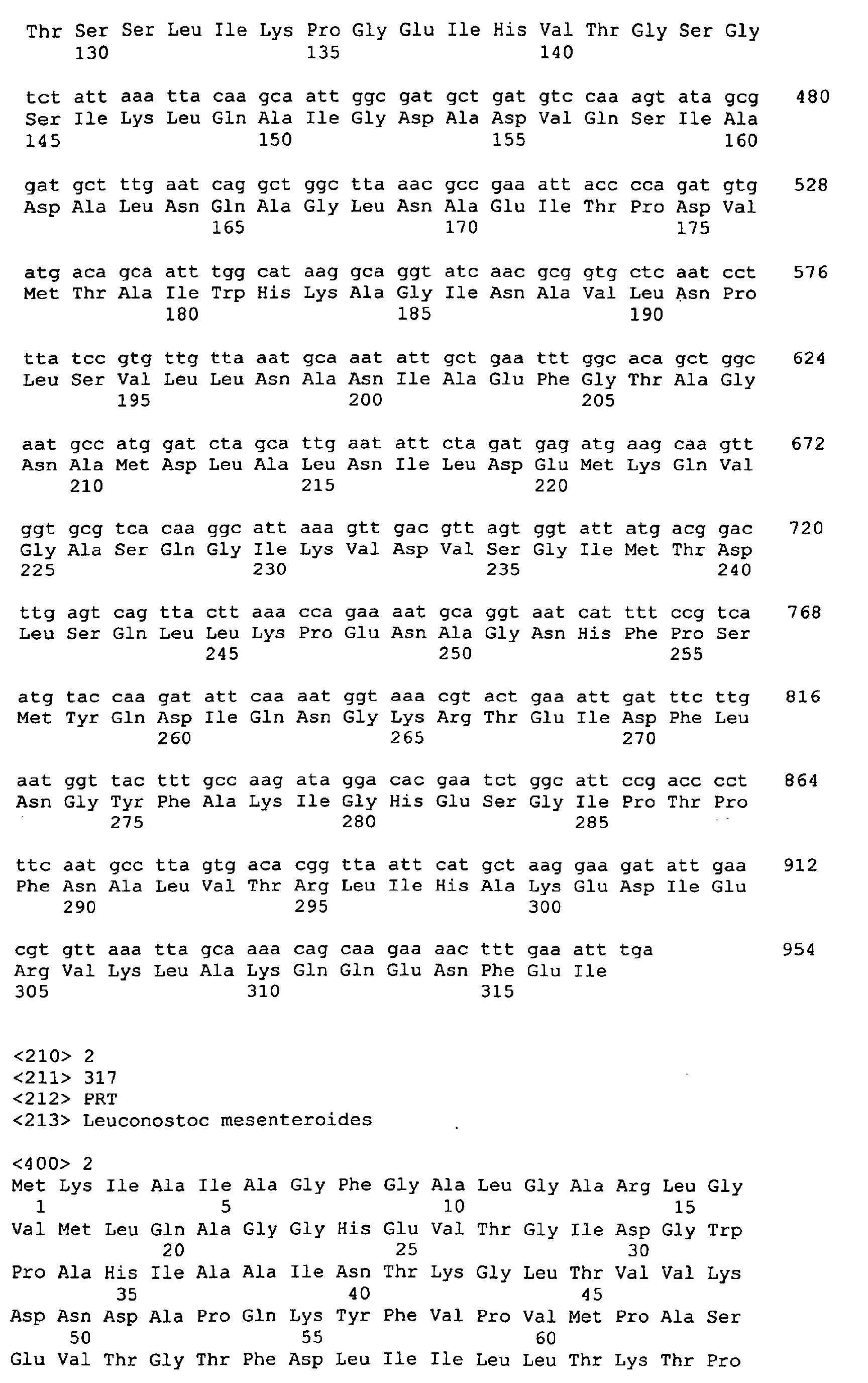
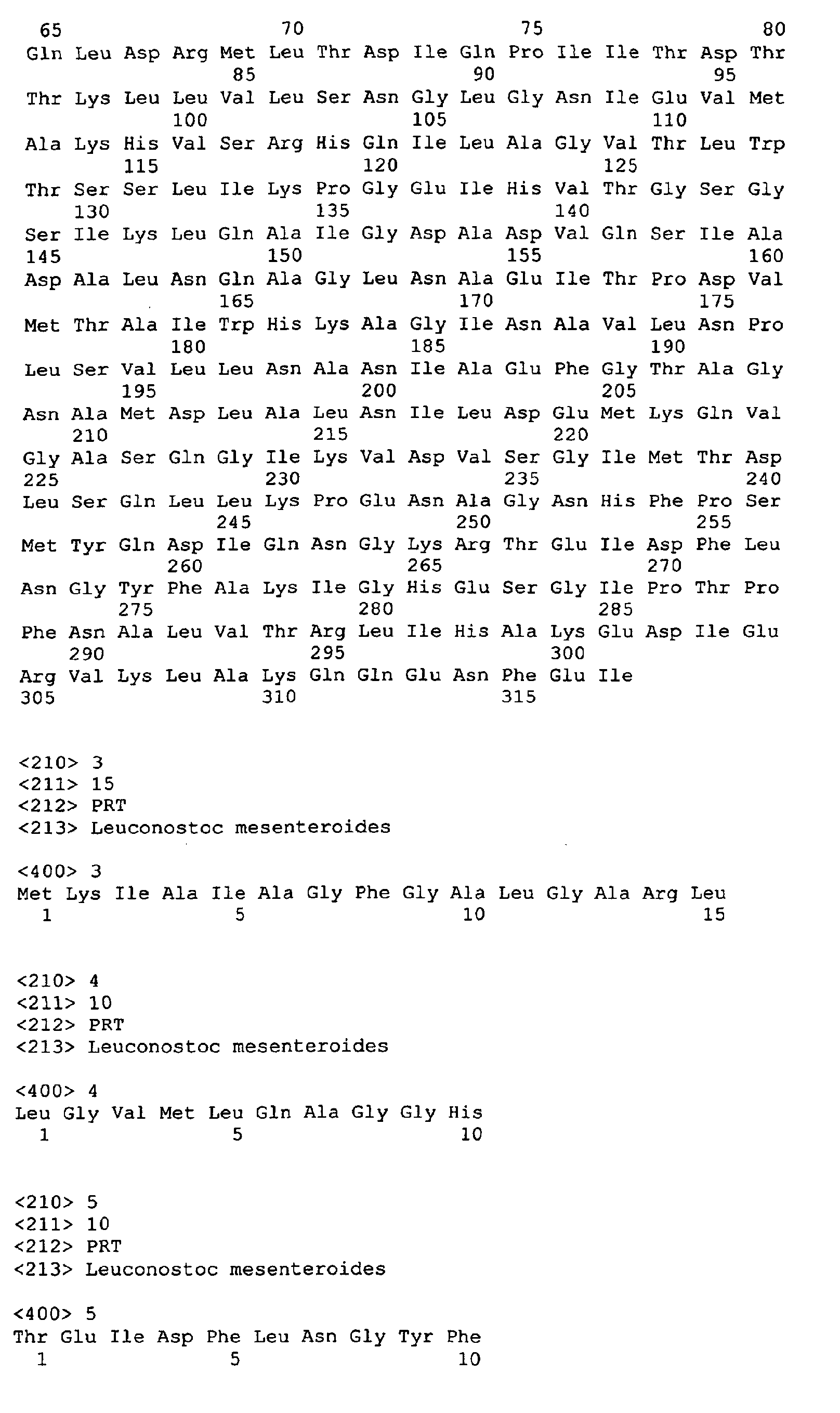
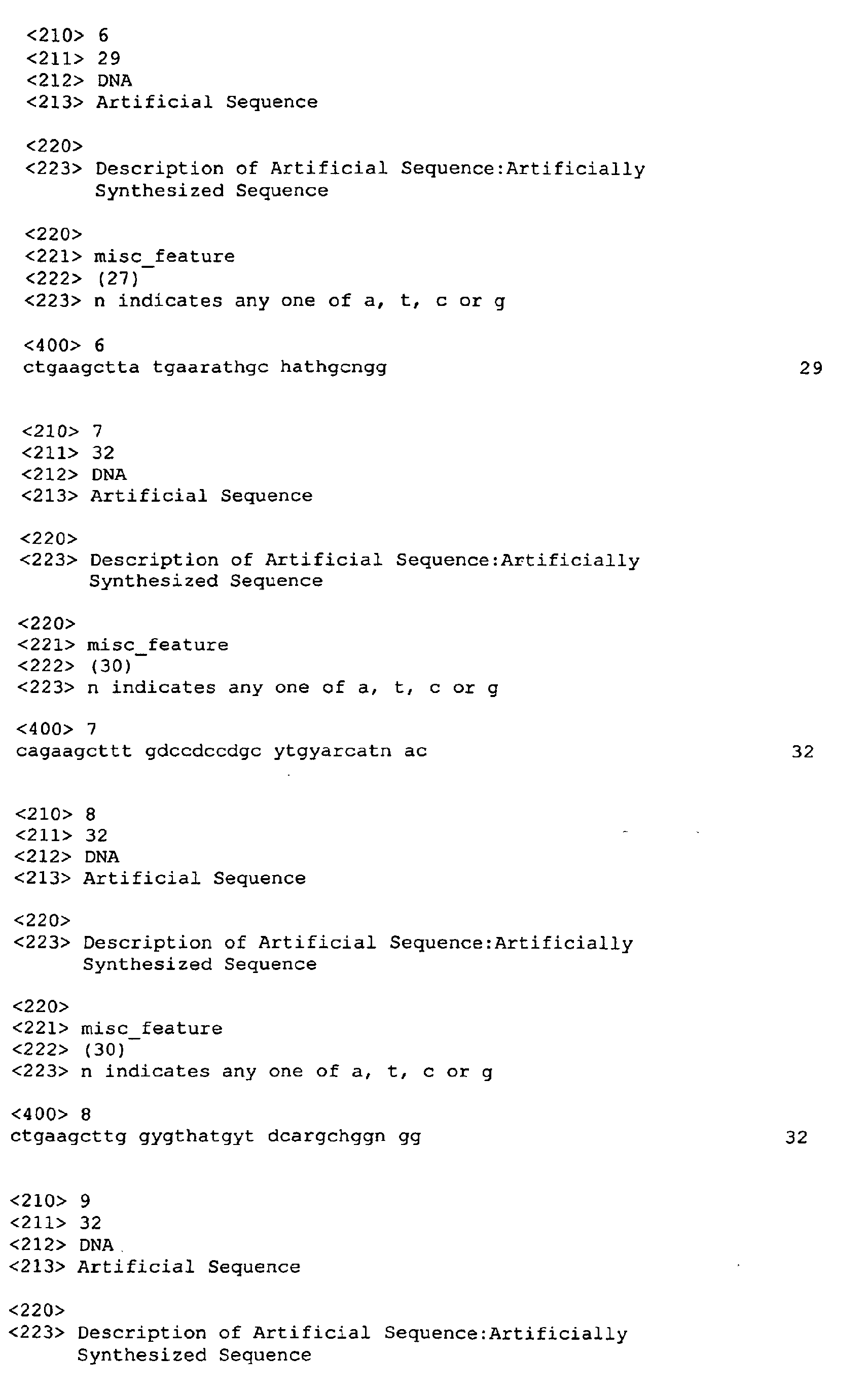
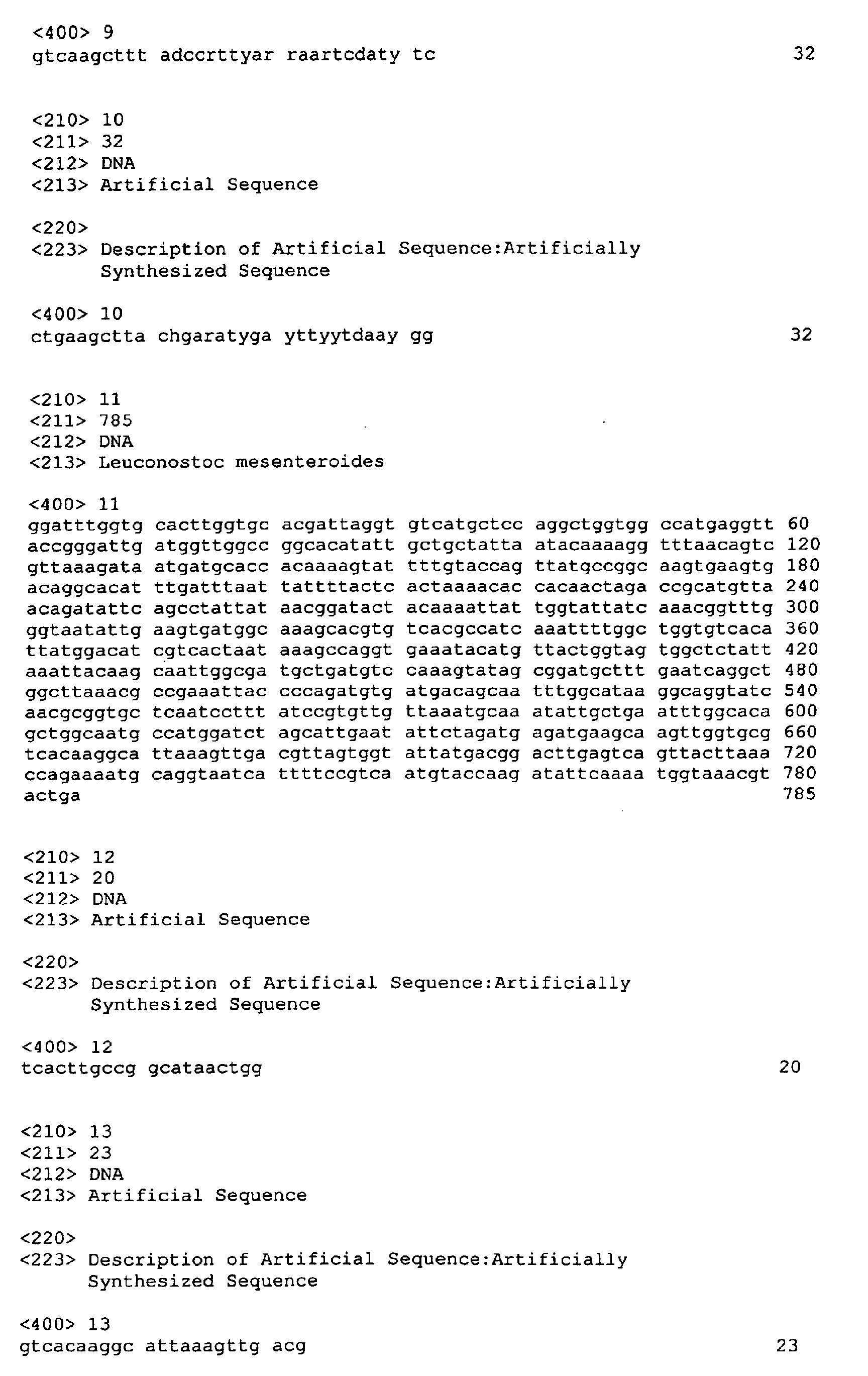
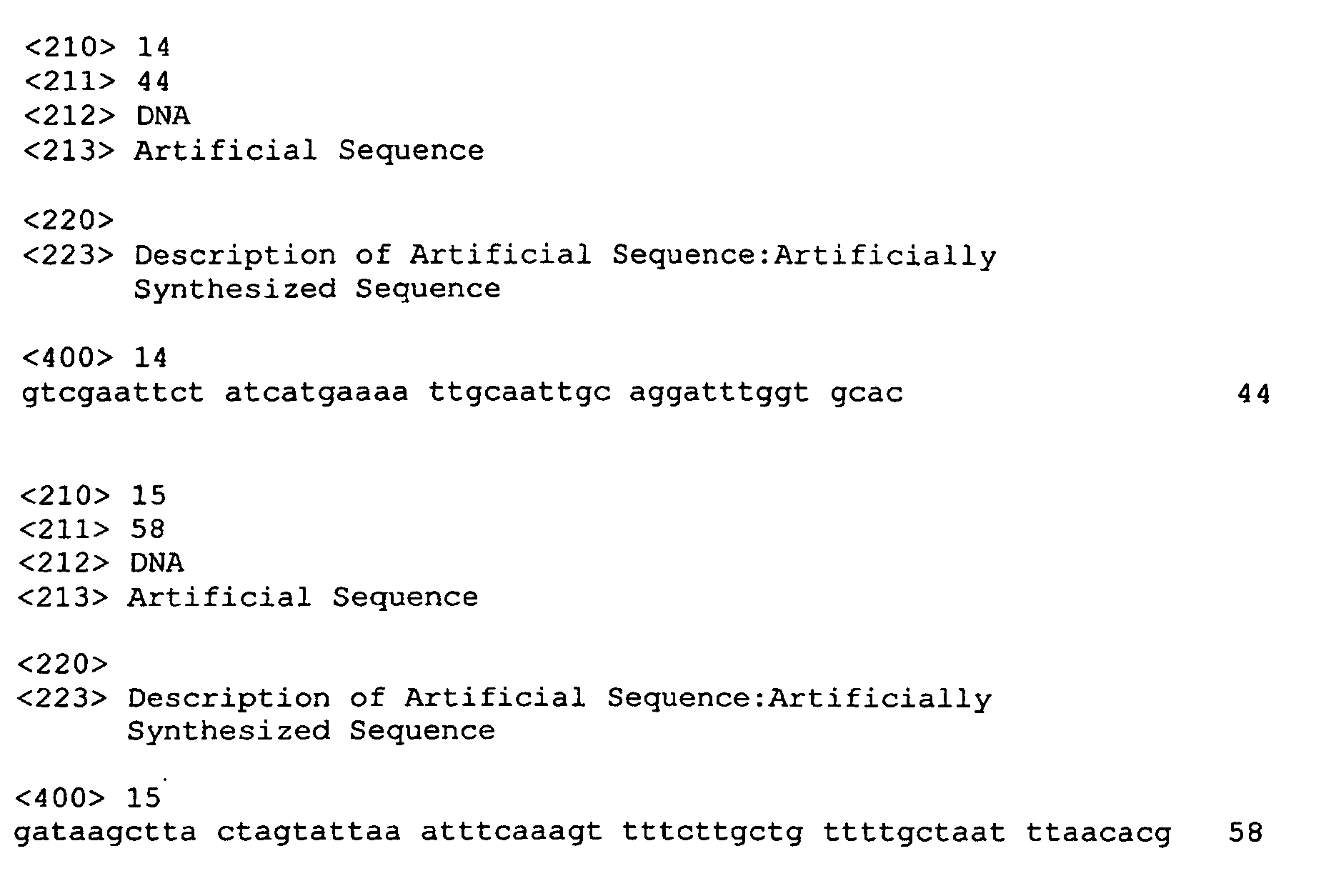
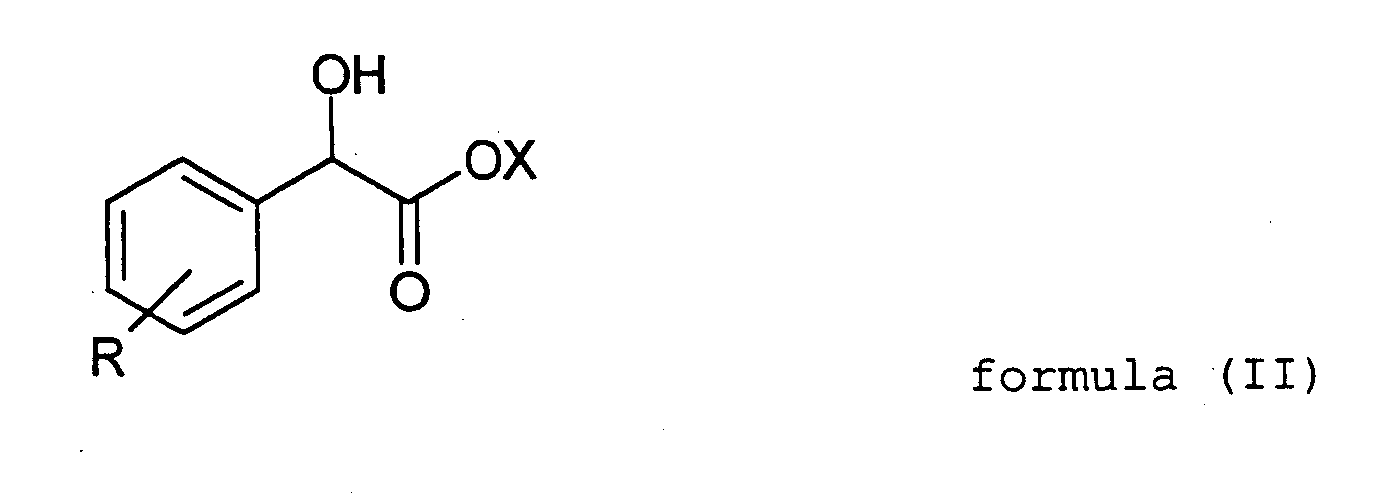
Claims (29)
- An α-keto acid reductase having the following physicochemical properties:(i) function:reduces α-keto acid to produce (R) - α-hydroxy acid using reduced β-nicotinamide adenine dinucleotide as the coenzyme; and(ii) substrate specificity:(a) utilizes reduced β-nicotinamide adenine dinucleotide as the coenzyme in the reduction reaction of (i);(b) reducing 2-chlorophenyl glyoxylic acid to produce (R)-2-chloromandelic acid; and(c) reduces 2-chlorophenyl glyoxylic acid but substantially fails to dehydrogenate either of the two optical isomers of 2-chloromandelic acid.
- The α-keto acid reductase of claim 1, further having the following physicochemical properties:(iii) optimum pH:pH 5.0 to 5.5;(iv) optimum temperature:45 to 55°C; and(v) molecular weight of
about 35,000 Daltons and about 63,000 Daltons, as determined by sodium dodecyl sulfate-polyacrylamide gel electrophoresis and gel filtration, respectively. - The α-keto acid reductase of claim 1, which is produced by a microorganism belonging to the genus Leuconostoc.
- The α-keto acid reductase of claim 3, wherein the microorganism belonging to the genus Leuconostoc is Leuconostoc mesenteroides.
- The α-keto acid reductase of claim 4, wherein the microorganism belonging to Leuconostoc mesenteroides is Leuconostoc mesenteroides subsp. dextranicum.
- A polynucleotide encoding a protein, wherein said protein is an enzyme that catalyzes the reduction of α-keto acids, and wherein said polynucleotide is selected from the group consisting of:(a) a polynucleotide comprising the nucleotide sequence of SEQ ID NO: 1;(b) a polynucleotide encoding a protein comprising the amino acid sequence of SEQ ID NO: 2;(c) a polynucleotide encoding a protein comprising the amino acid sequence of SEQ ID NO: 2, wherein one or more amino acids have been substituted, deleted, inserted, and/or added;(d) a polynucleotide hybridizing under stringent conditions to a DNA comprising the nucleotide sequence of SEQ ID NO: 1; and(e) a polynucleotide encoding an amino acid sequence which exhibits 50% or higher homology to the amino acid sequence of SEQ ID NO: 2.
- A protein encoded by the polynucleotide of claim 6.
- A recombinant vector wherein the polynucleotide of claim 6 has been inserted.
- The recombinant vector of claim 8, wherein a polynucleotide encoding a dehydrogenase catalyzing an oxidation-reduction reaction using β-nicotinamide adenine dinucleotide as the coenzyme has been further inserted.
- The vector of claim 9, wherein the dehydrogenase is a formate dehydrogenase.
- The vector of claim 10, wherein the formate dehydrogenase is derived from Mycobacterium vaccae.
- The vector of claim 9, wherein the dehydrogenase is a glucose dehydrogenase.
- The recombinant vector of claim 12, wherein the glucose dehydrogenase is derived from Bacillus subtilis.
- A transformant comprising any one of the polynucleotides of claim 6, or the vector of claim 8 in an expressible manner.
- A method for producing the protein of claim 7, wherein said method comprises the steps of culturing the transformant of claim 14, and collecting the expressed product.
- A method for producing the enzyme of claim 1 or the protein of claim 7, wherein said method comprises the step of culturing a microorganism belonging to the genus Leuconostoc that produces the enzyme of claim 1 or the protein of claim 7.
- The method of claim 16, wherein the microorganism belonging to the genus Leuconostoc is Leuconostoc mesenteroides.
- The method of claim 17, wherein the microorganism belonging to Leuconostoc mesenteroides is Leuconostoc mesenteroides subsp. dextranicum.
- A method for producing an optically active α-hydroxy acid, wherein said method comprises the following sequential steps:(i) reactingwith an α-keto acid; and(a) the α-keto acid reductase of claim 1 or 2;(b) the protein of claim 7;(c) a microorganism producing said α-keto reductase or said protein; or(d) a processed product of the microorganism(ii) collecting the optically active α-hydroxy acid produced in step (i).
- The method of claim 19, wherein the α-keto acid is a phenylglyoxylic acid derivative of formula (I):wherein:
 and wherein said method comprises the step of collecting the optically produced active mandelic acid derivative of formula (II):X is a hydrogen atom, an alkaline metal, or a alkaline earth metal; andR indicates one or more substituents at the ortho, meta, or para positions selected from the group consisting of a halogen atom, a hydroxyl group, a C1-3 alkyl group, a C1-3 alkoxy group, a C1-3 thioalkyl group, an amino group, a nitro group, a mercapto group, a phenyl group, and a phenoxy group,wherein X and R are as defined in Formula (I).
- The method of claim 20, wherein the ortho position of the phenylglyoxylic acid derivative is substituted.
- The method of claim 21, wherein the ortho position of the phenylglyoxylic acid derivative is substituted with a halogen atom.
- The method of claim 20, wherein the meta position of the phenylglyoxylic acid derivative is substituted.
- The method of claim 23, wherein the meta position of the phenylglyoxylic acid derivative is substituted with a halogen atom.
- The method of claim 19, wherein the α-keto acid is 2-chlorophenyl glyoxylic acid and the optically active (α-hydroxy acid is (R)-2-chloromandelic acid.
- The method of claim 19, wherein the microorganism is the transformant of claim 14.
- The method of claim 19, wherein said method further comprises the step of converting oxidized β-nicotinamide adenine dinucleotide to reduced β-nicotinamide adenine dinucleotide.
- The method of claim 27, wherein the oxidized β-nicotinamide adenine dinucleotide is converted to reduced β-nicotinamide adenine dinucleotide by the function of an enzyme that catalyzes dehydrogenation using oxidized β-nicotinamide adenine dinucleotide as the coenzyme.
- The method of claim 28, wherein the enzyme that catalyzes dehydrogenation using oxidized β-nicotinamide adenine dinucleotide as the coenzyme is formate dehydrogenase and/or glucose dehydrogenase.
Applications Claiming Priority (2)
| Application Number | Priority Date | Filing Date | Title |
|---|---|---|---|
| JP2002207507 | 2002-07-16 | ||
| JP2002207507A JP4154182B2 (en) | 2002-07-16 | 2002-07-16 | α-Keto acid reductase, method for producing the same, and method for producing optically active α-hydroxy acid using the same |
Publications (2)
| Publication Number | Publication Date |
|---|---|
| EP1382674A2 true EP1382674A2 (en) | 2004-01-21 |
| EP1382674A3 EP1382674A3 (en) | 2004-01-28 |
Family
ID=29774623
Family Applications (1)
| Application Number | Title | Priority Date | Filing Date |
|---|---|---|---|
| EP03016163A Withdrawn EP1382674A3 (en) | 2002-07-16 | 2003-07-16 | Alpha-keto acid reductase, method for producing the same, and method for producing optically active alpha-hydroxy acids using the same |
Country Status (5)
| Country | Link |
|---|---|
| US (1) | US7250278B2 (en) |
| EP (1) | EP1382674A3 (en) |
| JP (1) | JP4154182B2 (en) |
| KR (1) | KR20040010202A (en) |
| CN (1) | CN1497046A (en) |
Cited By (2)
| Publication number | Priority date | Publication date | Assignee | Title |
|---|---|---|---|---|
| KR100722155B1 (en) | 2006-01-05 | 2007-05-28 | 엔자이텍 주식회사 | Method for preparing optically active 2-chloromandelic acid ester and 2-chloromandelic acid by enzymatic method |
| CN107796904A (en) * | 2016-08-31 | 2018-03-13 | 武汉武药制药有限公司 | A kind of method with HPLC separation determination o-chloromandelic acid enantiomters |
Families Citing this family (7)
| Publication number | Priority date | Publication date | Assignee | Title |
|---|---|---|---|---|
| JP4213524B2 (en) | 2003-04-17 | 2009-01-21 | ダイセル化学工業株式会社 | Novel carbonyl reductase, polynucleotide containing DNA encoding the enzyme, method for producing the same, and method for producing optically active alcohol using the same |
| JP2006006133A (en) * | 2004-06-23 | 2006-01-12 | Daicel Chem Ind Ltd | Process for producing optically active hydroxycarboxylic acid derivative |
| CN101253271A (en) * | 2005-09-02 | 2008-08-27 | 第一精密化学株式会社 | Method for production of optically active alpha-hydroxycarboxylic acid |
| CN113355367B (en) * | 2018-03-22 | 2024-03-26 | 浙江工业大学 | Application of keto acid reductase in the synthesis of chiral aromatic 2-hydroxy acids |
| CN109593739B (en) * | 2018-12-30 | 2020-07-28 | 浙江工业大学 | Recombinant ketoacid reductase mutants, genes, engineered bacteria and their applications |
| CN113930463B (en) * | 2021-08-30 | 2023-12-08 | 上海晖胧生物医药有限公司 | Method for preparing chiral mandelic acid by biocatalysis of 2- (phenylcarbonyl) acetonitrile |
| CN114560779B (en) * | 2022-01-25 | 2024-06-25 | 杭州华东医药集团浙江华义制药有限公司 | Synthesis method of mirabegron key intermediate |
Family Cites Families (8)
| Publication number | Priority date | Publication date | Assignee | Title |
|---|---|---|---|---|
| JPS57198097A (en) | 1981-06-01 | 1982-12-04 | Kanegafuchi Chem Ind Co Ltd | Preparation of l(+)-mandelic acid |
| JPS57198096A (en) | 1981-06-01 | 1982-12-04 | Kanegafuchi Chem Ind Co Ltd | Preparation of d(-)-mandelic acid |
| DE3320495A1 (en) * | 1983-06-07 | 1984-12-13 | Degussa Ag, 6000 Frankfurt | MICROBIOLOGICALLY PRODUCED D-2-HYDROXY-4-METHYLPENTANIC ACID DEHYDROGENASE, METHOD FOR THEIR DETERMINATION AND THEIR USE |
| JPS6332492A (en) | 1986-07-28 | 1988-02-12 | Agency Of Ind Science & Technol | Production of levorotatory optically active isomer of mandelic acid by enzymatic process |
| JP2676568B2 (en) | 1991-06-26 | 1997-11-17 | 日東化学工業株式会社 | Method for producing R (-)-mandelic acid and its derivatives |
| JP3146641B2 (en) | 1992-06-25 | 2001-03-19 | 東レ株式会社 | Method for producing optically active mandelic acid |
| JP2001072644A (en) | 1999-09-06 | 2001-03-21 | Yamakawa Yakuhin Kogyo Kk | Method for producing optically active 2-chloromandelic acid and intermediate for production |
| JP2003199595A (en) | 2001-10-24 | 2003-07-15 | Daicel Chem Ind Ltd | Method for producing optically active mandelic acid derivative |
-
2002
- 2002-07-16 JP JP2002207507A patent/JP4154182B2/en not_active Expired - Fee Related
-
2003
- 2003-07-15 KR KR1020030048385A patent/KR20040010202A/en not_active Abandoned
- 2003-07-15 US US10/619,779 patent/US7250278B2/en not_active Expired - Fee Related
- 2003-07-16 EP EP03016163A patent/EP1382674A3/en not_active Withdrawn
- 2003-07-16 CN CNA031649297A patent/CN1497046A/en active Pending
Non-Patent Citations (1)
| Title |
|---|
| DATABASE EMBL EBI; 1 March 2002 (2002-03-01), "2-dehydropantoate 2-reductase (Ketopantoate reductase) (KPA reductase)", retrieved from EMBL Database accession no. Q8Z4L0 * |
Cited By (3)
| Publication number | Priority date | Publication date | Assignee | Title |
|---|---|---|---|---|
| KR100722155B1 (en) | 2006-01-05 | 2007-05-28 | 엔자이텍 주식회사 | Method for preparing optically active 2-chloromandelic acid ester and 2-chloromandelic acid by enzymatic method |
| WO2007078176A1 (en) * | 2006-01-05 | 2007-07-12 | Enzytech, Ltd. | The method of making optically active 2-chloromandelic acid esters and 2-chloromandelic acids by enzymatic method |
| CN107796904A (en) * | 2016-08-31 | 2018-03-13 | 武汉武药制药有限公司 | A kind of method with HPLC separation determination o-chloromandelic acid enantiomters |
Also Published As
| Publication number | Publication date |
|---|---|
| US7250278B2 (en) | 2007-07-31 |
| JP4154182B2 (en) | 2008-09-24 |
| JP2004049028A (en) | 2004-02-19 |
| KR20040010202A (en) | 2004-01-31 |
| CN1497046A (en) | 2004-05-19 |
| US20040086993A1 (en) | 2004-05-06 |
| EP1382674A3 (en) | 2004-01-28 |
Similar Documents
| Publication | Publication Date | Title |
|---|---|---|
| JP4630486B2 (en) | Novel (R) -2,3-butanediol dehydrogenase, method for producing the same, and method for producing optically active alcohol using the same | |
| US6969600B2 (en) | Carbonyl reductase, method for producing said enzyme, DNA encoding said enzyme, and method for producing alcohol using said enzyme | |
| JP4651896B2 (en) | (R) -2-Octanol dehydrogenase, method for producing the enzyme, DNA encoding the enzyme, and method for producing alcohol using the same | |
| JPWO2001061014A1 (en) | (R)-2-octanol dehydrogenase, method for producing said enzyme, DNA encoding said enzyme, and method for producing alcohol using said DNA | |
| JP4213524B2 (en) | Novel carbonyl reductase, polynucleotide containing DNA encoding the enzyme, method for producing the same, and method for producing optically active alcohol using the same | |
| JP4294382B2 (en) | (2S, 3S) -2,3-butanediol dehydrogenase | |
| US7250278B2 (en) | α-keto acid reductase, method for producing the same, and method for producing optically active α-hydroxy acids using the same | |
| JP4688313B2 (en) | Novel enone reductase, production method thereof, and method for selectively reducing carbon-carbon double bond of α, β-unsaturated ketone using the same | |
| JP4587348B2 (en) | Novel (R) -2,3-butanediol dehydrogenase | |
| JP4295531B2 (en) | Novel carbonyl reductase, DNA encoding the same, and method for producing optically active alcohol using the same | |
| US7771977B2 (en) | Alkane polyol dehydrogenase | |
| JP2005218348A (en) | Process for producing optically active α-hydroxyamide | |
| JP2001238682A (en) | Gene encoding reductase | |
| JP2005095022A (en) | Method for producing optically active alcohol |
Legal Events
| Date | Code | Title | Description |
|---|---|---|---|
| PUAI | Public reference made under article 153(3) epc to a published international application that has entered the european phase |
Free format text: ORIGINAL CODE: 0009012 |
|
| PUAL | Search report despatched |
Free format text: ORIGINAL CODE: 0009013 |
|
| AK | Designated contracting states |
Kind code of ref document: A2 Designated state(s): AT BE BG CH CY CZ DE DK EE ES FI FR GB GR HU IE IT LI LU MC NL PT RO SE SI SK TR |
|
| AX | Request for extension of the european patent |
Extension state: AL LT LV MK |
|
| AK | Designated contracting states |
Kind code of ref document: A3 Designated state(s): AT BE BG CH CY CZ DE DK EE ES FI FR GB GR HU IE IT LI LU MC NL PT RO SE SI SK TR |
|
| AX | Request for extension of the european patent |
Extension state: AL LT LV MK |
|
| 17P | Request for examination filed |
Effective date: 20040504 |
|
| 17Q | First examination report despatched |
Effective date: 20040604 |
|
| AKX | Designation fees paid |
Designated state(s): CH DE FR GB IT LI NL |
|
| 17Q | First examination report despatched |
Effective date: 20040604 |
|
| RAP1 | Party data changed (applicant data changed or rights of an application transferred) |
Owner name: DAICEL CHEMICAL INDUSTRIES, LTD. |
|
| STAA | Information on the status of an ep patent application or granted ep patent |
Free format text: STATUS: THE APPLICATION IS DEEMED TO BE WITHDRAWN |
|
| 18D | Application deemed to be withdrawn |
Effective date: 20120201 |