EP1381099A1 - Negative electrode for non-aqueous electrolyte secondary cell and non-aqueous electrolyte secondary cell using the negative electrode - Google Patents
Negative electrode for non-aqueous electrolyte secondary cell and non-aqueous electrolyte secondary cell using the negative electrode Download PDFInfo
- Publication number
- EP1381099A1 EP1381099A1 EP02759831A EP02759831A EP1381099A1 EP 1381099 A1 EP1381099 A1 EP 1381099A1 EP 02759831 A EP02759831 A EP 02759831A EP 02759831 A EP02759831 A EP 02759831A EP 1381099 A1 EP1381099 A1 EP 1381099A1
- Authority
- EP
- European Patent Office
- Prior art keywords
- nonaqueous electrolyte
- carbon
- composite particles
- sample
- lithium
- Prior art date
- Legal status (The legal status is an assumption and is not a legal conclusion. Google has not performed a legal analysis and makes no representation as to the accuracy of the status listed.)
- Granted
Links
Images
Classifications
-
- H—ELECTRICITY
- H01—ELECTRIC ELEMENTS
- H01M—PROCESSES OR MEANS, e.g. BATTERIES, FOR THE DIRECT CONVERSION OF CHEMICAL ENERGY INTO ELECTRICAL ENERGY
- H01M4/00—Electrodes
- H01M4/02—Electrodes composed of, or comprising, active material
- H01M4/36—Selection of substances as active materials, active masses, active liquids
- H01M4/362—Composites
- H01M4/364—Composites as mixtures
-
- H—ELECTRICITY
- H01—ELECTRIC ELEMENTS
- H01M—PROCESSES OR MEANS, e.g. BATTERIES, FOR THE DIRECT CONVERSION OF CHEMICAL ENERGY INTO ELECTRICAL ENERGY
- H01M4/00—Electrodes
- H01M4/02—Electrodes composed of, or comprising, active material
- H01M4/13—Electrodes for accumulators with non-aqueous electrolyte, e.g. for lithium-accumulators; Processes of manufacture thereof
-
- H—ELECTRICITY
- H01—ELECTRIC ELEMENTS
- H01M—PROCESSES OR MEANS, e.g. BATTERIES, FOR THE DIRECT CONVERSION OF CHEMICAL ENERGY INTO ELECTRICAL ENERGY
- H01M10/00—Secondary cells; Manufacture thereof
- H01M10/05—Accumulators with non-aqueous electrolyte
- H01M10/052—Li-accumulators
- H01M10/0525—Rocking-chair batteries, i.e. batteries with lithium insertion or intercalation in both electrodes; Lithium-ion batteries
-
- H—ELECTRICITY
- H01—ELECTRIC ELEMENTS
- H01M—PROCESSES OR MEANS, e.g. BATTERIES, FOR THE DIRECT CONVERSION OF CHEMICAL ENERGY INTO ELECTRICAL ENERGY
- H01M10/00—Secondary cells; Manufacture thereof
- H01M10/05—Accumulators with non-aqueous electrolyte
- H01M10/056—Accumulators with non-aqueous electrolyte characterised by the materials used as electrolytes, e.g. mixed inorganic/organic electrolytes
- H01M10/0564—Accumulators with non-aqueous electrolyte characterised by the materials used as electrolytes, e.g. mixed inorganic/organic electrolytes the electrolyte being constituted of organic materials only
- H01M10/0566—Liquid materials
- H01M10/0568—Liquid materials characterised by the solutes
-
- H—ELECTRICITY
- H01—ELECTRIC ELEMENTS
- H01M—PROCESSES OR MEANS, e.g. BATTERIES, FOR THE DIRECT CONVERSION OF CHEMICAL ENERGY INTO ELECTRICAL ENERGY
- H01M10/00—Secondary cells; Manufacture thereof
- H01M10/05—Accumulators with non-aqueous electrolyte
- H01M10/056—Accumulators with non-aqueous electrolyte characterised by the materials used as electrolytes, e.g. mixed inorganic/organic electrolytes
- H01M10/0564—Accumulators with non-aqueous electrolyte characterised by the materials used as electrolytes, e.g. mixed inorganic/organic electrolytes the electrolyte being constituted of organic materials only
- H01M10/0566—Liquid materials
- H01M10/0569—Liquid materials characterised by the solvents
-
- H—ELECTRICITY
- H01—ELECTRIC ELEMENTS
- H01M—PROCESSES OR MEANS, e.g. BATTERIES, FOR THE DIRECT CONVERSION OF CHEMICAL ENERGY INTO ELECTRICAL ENERGY
- H01M4/00—Electrodes
- H01M4/02—Electrodes composed of, or comprising, active material
- H01M4/13—Electrodes for accumulators with non-aqueous electrolyte, e.g. for lithium-accumulators; Processes of manufacture thereof
- H01M4/131—Electrodes based on mixed oxides or hydroxides, or on mixtures of oxides or hydroxides, e.g. LiCoOx
-
- H—ELECTRICITY
- H01—ELECTRIC ELEMENTS
- H01M—PROCESSES OR MEANS, e.g. BATTERIES, FOR THE DIRECT CONVERSION OF CHEMICAL ENERGY INTO ELECTRICAL ENERGY
- H01M4/00—Electrodes
- H01M4/02—Electrodes composed of, or comprising, active material
- H01M4/13—Electrodes for accumulators with non-aqueous electrolyte, e.g. for lithium-accumulators; Processes of manufacture thereof
- H01M4/133—Electrodes based on carbonaceous material, e.g. graphite-intercalation compounds or CFx
-
- H—ELECTRICITY
- H01—ELECTRIC ELEMENTS
- H01M—PROCESSES OR MEANS, e.g. BATTERIES, FOR THE DIRECT CONVERSION OF CHEMICAL ENERGY INTO ELECTRICAL ENERGY
- H01M4/00—Electrodes
- H01M4/02—Electrodes composed of, or comprising, active material
- H01M4/13—Electrodes for accumulators with non-aqueous electrolyte, e.g. for lithium-accumulators; Processes of manufacture thereof
- H01M4/134—Electrodes based on metals, Si or alloys
-
- H—ELECTRICITY
- H01—ELECTRIC ELEMENTS
- H01M—PROCESSES OR MEANS, e.g. BATTERIES, FOR THE DIRECT CONVERSION OF CHEMICAL ENERGY INTO ELECTRICAL ENERGY
- H01M4/00—Electrodes
- H01M4/02—Electrodes composed of, or comprising, active material
- H01M4/13—Electrodes for accumulators with non-aqueous electrolyte, e.g. for lithium-accumulators; Processes of manufacture thereof
- H01M4/136—Electrodes based on inorganic compounds other than oxides or hydroxides, e.g. sulfides, selenides, tellurides, halogenides or LiCoFy
-
- H—ELECTRICITY
- H01—ELECTRIC ELEMENTS
- H01M—PROCESSES OR MEANS, e.g. BATTERIES, FOR THE DIRECT CONVERSION OF CHEMICAL ENERGY INTO ELECTRICAL ENERGY
- H01M4/00—Electrodes
- H01M4/02—Electrodes composed of, or comprising, active material
- H01M4/13—Electrodes for accumulators with non-aqueous electrolyte, e.g. for lithium-accumulators; Processes of manufacture thereof
- H01M4/139—Processes of manufacture
- H01M4/1393—Processes of manufacture of electrodes based on carbonaceous material, e.g. graphite-intercalation compounds or CFx
-
- H—ELECTRICITY
- H01—ELECTRIC ELEMENTS
- H01M—PROCESSES OR MEANS, e.g. BATTERIES, FOR THE DIRECT CONVERSION OF CHEMICAL ENERGY INTO ELECTRICAL ENERGY
- H01M4/00—Electrodes
- H01M4/02—Electrodes composed of, or comprising, active material
- H01M4/13—Electrodes for accumulators with non-aqueous electrolyte, e.g. for lithium-accumulators; Processes of manufacture thereof
- H01M4/139—Processes of manufacture
- H01M4/1395—Processes of manufacture of electrodes based on metals, Si or alloys
-
- H—ELECTRICITY
- H01—ELECTRIC ELEMENTS
- H01M—PROCESSES OR MEANS, e.g. BATTERIES, FOR THE DIRECT CONVERSION OF CHEMICAL ENERGY INTO ELECTRICAL ENERGY
- H01M4/00—Electrodes
- H01M4/02—Electrodes composed of, or comprising, active material
- H01M4/36—Selection of substances as active materials, active masses, active liquids
- H01M4/362—Composites
-
- H—ELECTRICITY
- H01—ELECTRIC ELEMENTS
- H01M—PROCESSES OR MEANS, e.g. BATTERIES, FOR THE DIRECT CONVERSION OF CHEMICAL ENERGY INTO ELECTRICAL ENERGY
- H01M4/00—Electrodes
- H01M4/02—Electrodes composed of, or comprising, active material
- H01M4/36—Selection of substances as active materials, active masses, active liquids
- H01M4/38—Selection of substances as active materials, active masses, active liquids of elements or alloys
- H01M4/40—Alloys based on alkali metals
-
- H—ELECTRICITY
- H01—ELECTRIC ELEMENTS
- H01M—PROCESSES OR MEANS, e.g. BATTERIES, FOR THE DIRECT CONVERSION OF CHEMICAL ENERGY INTO ELECTRICAL ENERGY
- H01M4/00—Electrodes
- H01M4/02—Electrodes composed of, or comprising, active material
- H01M4/36—Selection of substances as active materials, active masses, active liquids
- H01M4/38—Selection of substances as active materials, active masses, active liquids of elements or alloys
- H01M4/40—Alloys based on alkali metals
- H01M4/405—Alloys based on lithium
-
- H—ELECTRICITY
- H01—ELECTRIC ELEMENTS
- H01M—PROCESSES OR MEANS, e.g. BATTERIES, FOR THE DIRECT CONVERSION OF CHEMICAL ENERGY INTO ELECTRICAL ENERGY
- H01M4/00—Electrodes
- H01M4/02—Electrodes composed of, or comprising, active material
- H01M4/36—Selection of substances as active materials, active masses, active liquids
- H01M4/48—Selection of substances as active materials, active masses, active liquids of inorganic oxides or hydroxides
- H01M4/485—Selection of substances as active materials, active masses, active liquids of inorganic oxides or hydroxides of mixed oxides or hydroxides for inserting or intercalating light metals, e.g. LiTi2O4 or LiTi2OxFy
-
- H—ELECTRICITY
- H01—ELECTRIC ELEMENTS
- H01M—PROCESSES OR MEANS, e.g. BATTERIES, FOR THE DIRECT CONVERSION OF CHEMICAL ENERGY INTO ELECTRICAL ENERGY
- H01M4/00—Electrodes
- H01M4/02—Electrodes composed of, or comprising, active material
- H01M4/36—Selection of substances as active materials, active masses, active liquids
- H01M4/58—Selection of substances as active materials, active masses, active liquids of inorganic compounds other than oxides or hydroxides, e.g. sulfides, selenides, tellurides, halogenides or LiCoFy; of polyanionic structures, e.g. phosphates, silicates or borates
-
- H—ELECTRICITY
- H01—ELECTRIC ELEMENTS
- H01M—PROCESSES OR MEANS, e.g. BATTERIES, FOR THE DIRECT CONVERSION OF CHEMICAL ENERGY INTO ELECTRICAL ENERGY
- H01M4/00—Electrodes
- H01M4/02—Electrodes composed of, or comprising, active material
- H01M4/36—Selection of substances as active materials, active masses, active liquids
- H01M4/58—Selection of substances as active materials, active masses, active liquids of inorganic compounds other than oxides or hydroxides, e.g. sulfides, selenides, tellurides, halogenides or LiCoFy; of polyanionic structures, e.g. phosphates, silicates or borates
- H01M4/583—Carbonaceous material, e.g. graphite-intercalation compounds or CFx
-
- H—ELECTRICITY
- H01—ELECTRIC ELEMENTS
- H01M—PROCESSES OR MEANS, e.g. BATTERIES, FOR THE DIRECT CONVERSION OF CHEMICAL ENERGY INTO ELECTRICAL ENERGY
- H01M4/00—Electrodes
- H01M4/02—Electrodes composed of, or comprising, active material
- H01M2004/026—Electrodes composed of, or comprising, active material characterised by the polarity
- H01M2004/027—Negative electrodes
-
- H—ELECTRICITY
- H01—ELECTRIC ELEMENTS
- H01M—PROCESSES OR MEANS, e.g. BATTERIES, FOR THE DIRECT CONVERSION OF CHEMICAL ENERGY INTO ELECTRICAL ENERGY
- H01M4/00—Electrodes
- H01M4/02—Electrodes composed of, or comprising, active material
- H01M4/36—Selection of substances as active materials, active masses, active liquids
- H01M4/38—Selection of substances as active materials, active masses, active liquids of elements or alloys
- H01M4/386—Silicon or alloys based on silicon
-
- H—ELECTRICITY
- H01—ELECTRIC ELEMENTS
- H01M—PROCESSES OR MEANS, e.g. BATTERIES, FOR THE DIRECT CONVERSION OF CHEMICAL ENERGY INTO ELECTRICAL ENERGY
- H01M4/00—Electrodes
- H01M4/02—Electrodes composed of, or comprising, active material
- H01M4/62—Selection of inactive substances as ingredients for active masses, e.g. binders, fillers
- H01M4/624—Electric conductive fillers
- H01M4/625—Carbon or graphite
-
- Y—GENERAL TAGGING OF NEW TECHNOLOGICAL DEVELOPMENTS; GENERAL TAGGING OF CROSS-SECTIONAL TECHNOLOGIES SPANNING OVER SEVERAL SECTIONS OF THE IPC; TECHNICAL SUBJECTS COVERED BY FORMER USPC CROSS-REFERENCE ART COLLECTIONS [XRACs] AND DIGESTS
- Y02—TECHNOLOGIES OR APPLICATIONS FOR MITIGATION OR ADAPTATION AGAINST CLIMATE CHANGE
- Y02E—REDUCTION OF GREENHOUSE GAS [GHG] EMISSIONS, RELATED TO ENERGY GENERATION, TRANSMISSION OR DISTRIBUTION
- Y02E60/00—Enabling technologies; Technologies with a potential or indirect contribution to GHG emissions mitigation
- Y02E60/10—Energy storage using batteries
Definitions
- the present invention relates to a negative material including metal capable of electrochemically reacting with lithium in a nonaqueous electrolyte and a nonaqueous electrolyte secondary battery using the negative material.
- nonaqueous electrolyte secondary batteries such as lithium-ion secondary batteries can obtain energy density higher than those of lead-acid batteries and nickel-cadmium batteries as conventional aqueous electrolyte secondary batteries, the nonaqueous electrolyte secondary batteries are useful as the power sources of the electronic devices.
- carbonaceous materials such as non-graphitizable carbon or graphite have been widely employed, because they have a relatively high capacity and show good cyclic characteristics.
- the carbonaceous materials to act as an anode further need to have higher capacity.
- Japanese Patent Application Laid-Open No. hei 8-315825 proposes that carbonizing materials and manufacturing conditions are selected to achieve a high capacity by the carbonaceous materials.
- an anode discharging potential is 0.8 V to 1.0 V relative to lithium
- battery discharging voltage when a battery is formed becomes low, so that a great improvement of the energy density of the battery is not anticipated.
- the carbonaceous anode materials are disadvantageously large in its hysteresis in the form of a charging and discharging curve and low in its energy efficiency in each charging and discharging cycle.
- anode having a high capacity there have been proposed materials produced by applying a process that a certain kind of metal is electrochemically alloyed with lithium and the alloy is reversibly combined/decombined.
- materials there may be exemplified, for instance, Li-Al alloy, etc.
- Si alloys such as Li-Si alloy are disclosed in the specification of US patent No. 4,950,566.
- a battery using the Li-Al alloy and the Li-Si alloy as negative materials exhibits disadvantages that the expansion and contraction of an anode upon charging and discharging operations are terrible, the negative material is caused to be minute every time charging and discharging cycles are repeated and cyclic characteristics are seriously bad.
- the negative materials are caused to be minute so that the electronic connection between the negative materials or the negative materials and a current collector is prevented to hardly advance charging and discharging reactions.
- the present invention is proposed by taking the problems of the related art as described above into consideration and it is an object of the present invention to provide an anode having a high capacity and capable of realizing excellent cyclic characteristics, anonaqueous electrolyte secondary battery using this negative material and a method for manufacturing a negative material.
- an anode according to the present invention includes composite particles having a metallic material containing a carbon material, and metal capable of electrochemically reacting with lithium in a nonaqueous electrolyte as the metallic material.
- the composite particles of the negative material include the metal capable of electrochemically reacting with lithium in the nonaqueous electrolyte as the metallic material, the anode is used for a nonaqueous electrolyte secondary battery so that the high capacity of the battery can be realized.
- the composite particles are caused to be minute when charging and discharging operations are repeated.
- the carbon materials are included in the composite particles, even when the composite particles are caused to be minute, the carbon materials are provided between the particles to ensure an electronic conductivity in the composite particles.
- the present invention concerns a nonaqueous electrolyte secondary battery comprising an anode, a cathode and a nonaqueous electrolyte.
- the anode used in the battery includes composite particles as negative active material having a metallic material containing a carbon material and metal capable of electrochemically reacting with lithium in a nonaqueous electrolyte as the metallic material.
- the anode includes the composite particles as negative active material having the metallic material containing the carbon material. Since the composite particles include the metal capable of electrochemically reacting with lithium in the nonaqueous electrolyte as the metallic material, the nonaqueous electrolyte secondary battery with a high capacity can be realized.
- the composite particles are caused to be minute when charging and discharging operations are repeated.
- the carbon materials are included in the composite particles, even when the composite particles are caused to be minute, the carbon materials are provided between the minute particles so that an electronic conductivity in the composite particles can be ensured.
- the nonaqueous electrolyte secondary battery according to the present invention even when the charging and discharging operations are repeated, the increase of internal resistance of the battery due to the deterioration of electrodes can be suppressed.
- a method for manufacturing an anode according to the present invention which includes composite particles having a metallic material containing a carbon material and metal capable of electrochemically reacting with lithium in a nonaqueous electrolyte as the metallic material, comprises a step of mixing the metallic material with the carbon material and pelletizing the mixture, and at least a part of the step is carried out in a non-oxidizing atmosphere.
- a state that the carbon material is included in the metallic material indicates a state that the carbon material is stuck to the metallic material.
- a part of the carbon material may be exposed from the surfaces of the composite particles or the carbon material may be completely buried in the composite particles.
- a negative material, a nonaqueous electrolyte battery and a method for manufacturing an anode according to the present invention will be described below in detail by referring to the drawings.
- a negative material according to the present invention includes composite particles having a carbon material contained in a metallic material.
- the metallic material includes metal capable of electrochemically reacting with lithium in a nonaqueous electrolyte.
- the composite particles include the metal capable of electrochemically reacting with lithium in a nonaqueous electrolyte (simply refer it to as "metal capable of electrochemically reacting with lithium", hereinafter), when the anode is used for a battery, it can achieve a higher capacity than that of an anode using a conventional carbonaceous material.
- the metal capable of electrochemically reacting with lithium expands and contracts due to electrochemical reactions, the metal is caused to be minute causing a structural destruction by repeating charging and discharging operations. As a result, the electronic conductivity between the minute metals capable of electrochemically reacting with lithium is deteriorated.
- the carbon materials are included in the composite particles, even when the composite particles are caused to be minute, the contained carbon materials are interposed between the minute particles. Even when the composite particles are caused to be minute by repeating the charging and discharging reactions, the anode to which the present invention is applied can maintain the electronic conductivity in the composite particles.
- a state that the carbon materials are contained in the metallic material means a state that the carbon materials stick to the metallic material.
- the carbon materials may be partly exposed from the surfaces of the composite particles or completely buried in the composite particles. Where the carbon materials are merely stuck on the surfaces of the composite particles, this case is not included in the scope of the present invention.
- Whether or not the carbon materials are included in the metallic material is decided depending on whether the carbon materials are mixed in the composite particles or not, for instance by cutting the composite particles and observing the cut section by an analytical electron microscope.
- the metal capable of reacting with lithium in the nonaqueous electrolyte indicates such metals capable of reacting with lithium in the nonaqueous electrolyte as described below.
- the alloy compound herein designates a compound represented by a chemical formula M x M' y Li z (here, M' in the formula indicates one or more metal elements except Li and M. x is a numeric value larger than 0 and y and z are numeric values not smaller than 0.), when assuming that a certain metal element capable of forming alloy with lithium is M.
- elements such as B, Si, As, etc. as semiconductor elements.
- metals such as Mg, Al, Ga, In, Si, Ge, Sn, Pb, Sb, Bi, Cd, Ag, Zn, Hf, Zr, Y, etc. and alloy compounds thereof, Li-Al, Li-Al-M (here, M in the formula designates one or more kinds of elements selected from the 2A group, 3B group, 4B group, and transition metals.), AlSb, CuMgSb, etc.
- the 4B group main group elements are preferably employed and Si or Sn are more preferably used.
- Si or Sn are more preferably used.
- x and y are numeric values larger than 0.), such as SiB 4 , SiB 6 , Mg 2 Si, Mg 2 Sn, Ni 2 Si, TiSi 2 , MoSi 2 , CoSi 2 , NiSi 2 , CaSi 2 , CrSi 2 , Cu 5 Si, FeSi 2 , MnSi 2 , NbSi 2 , TaSi 2 , VSi 2 , WSi 2 , ZnSi 2 , etc.
- the metallic materials used in the present invention a plurality of kinds of metals may be combined together.
- mixtures of metals capable of electrochemically reacting with lithium in the nonaqueous electrolyte and metals which do not electrochemically react with lithium in the nonaqueous electrolyte and specifically mixtures of metals capable of electrochemically forming alloys with lithium and metals which do not electrochemically form alloys with lithium.
- the carbon materials included in the composite particles various kinds of carbon materials which can ensure an electronic conductivity even in the minute composite particles can be suitably selected.
- the carbon materials there may be used non-graphitizable carbon, graphitizable carbon, graphite, carbon black, etc.
- a fibrous material, a spherical material, a granular material, a scale material, etc. can be employed.
- the carbon materials a plurality of carbon materials may be mixed and the mixture may be use.
- a high crystalline graphite is preferably used as the carbon material includes in the composite particles.
- the non-graphitizable carbon is preferably employed as the carbon material included in the composite particles.
- the fibrous carbon material is preferably used as the carbon material included in the composite particles.
- the carbon black is preferably employed as the carbon material included in the composite particles.
- the granular carbon material or the spherical carbon material is preferably employed as the carbon material included in the composite particles.
- two or more kinds of carbon materials may be mixed as the carbon materials included in the composite particles and the mixture may be preferably employed.
- the content of the carbon materials included in the composite particles is preferably located within a range showing a higher capacity than that of an anode using a usual carbonaceous material in view of achieving a high capacity.
- the metallic material including the metal capable of electrochemically reacting with lithium is preferably located within a range to 0.3 wt% to 90 wt% relative to the metallic material including the metal capable of electrochemically reacting with lithium, more preferably located within a range of 0.5 wt% to 80 wt%, and especially preferably located within a range of 1 wt% to 70 wt%.
- the content of the carbon materials is lower than the above-described range, there is a fear that the electronic conductivity may not be possibly maintained in the minute composite particles. Further, when the content of the carbon materials exceeds the above-described range, there exists a fear that an effect of improving a capacity may be more insufficient than that of the anode using the usual carbonaceous anode material.
- metallic carbide compounds can be used as the carbon materials included in the composite particles.
- the metallic carbide compounds are included in the composite particles, so that various of kinds of effects can be obtained as well as the improvement effect of the electronic conductivity like the above-described non-graphitizable carbon, graphitizable carbon, graphite, carbon black, etc.
- the metallic carbide compound can stabilize the composition of the metal capable of electrochemically reacting with lithium.
- the metallic carbide compound shows a thermal shock buffer effect in a pelletizing step of the composite particles to contribute to the stabilization of the structures of the composite particles.
- metallic carbide compounds there are enumerated SiC, B 4 C, WC, W 2 C, TiC, ZrC, HfC, VC, NbC, TaC, MoC, V 2 C, Ta 2 C, Mo 2 C, Mn 3 C, Fe 3 C, Co 3 C, Ni 3 C, etc.
- These metallic carbide compounds may be independently used, or two or more kinds of them may be mixed and the mixture may be used depending on purposes.
- the metallic carbide compounds may be mixed with the above-described non-graphitizable carbon, graphitizable carbon, graphite, carbon black, etc. and the mixture may be used.
- the mixture of the metallic carbide compounds and thenon-graphitizable carbon, the graphitizable carbon, the graphite, the carbon black, etc. as the carbon materials is included in the composite particles, so that the composite particles having more excellent characteristics are obtained by the synergistic effect thereof.
- the metallic carbide compound hardly has a charging and discharging capacity by itself. Therefore, the composite particles containing the metallic carbide compound shows a capacity in a total of the anode materials lower than that when the above-described non-graphitizable carbon, graphitizable carbon, graphite, carbon black, etc. are included in the composite particles. Accordingly, the content of the metallic carbide compound included in the composite particles is preferably suitably adjusted.
- the specific content of the metallic carbide compound is preferably located within a range of 1 wt% to 85 wt% relative to the metallic material including the metal capable of electrochemically reacting with lithium, more preferably located within a range of 5 wt% to 60 wt%, and especially preferably located within a range of 10 wt% to 50 wt%.
- the content of the metallic carbide compound is lower than the above-described range, there exists a fear that the electronic conductivity may not be possibly ensured in the minute composite particles.
- the content of the carbon material exceeds the above-described range, there exists a fear that the improvement effect of a capacity may be possibly more insufficient than that of an anode using a usual carbonaceous anode material.
- the anode according to the present invention preferably includes carbon powder as well as the composite particles having the carbon material contained in the above-described metallic material.
- the carbon powder is different from the carbon material included in the composite particles, provided between a plurality of composite particles and serves as a conductive agent or an anode material.
- the anode includes the carbon powder as well as the composite particles, so that the electronic conductivity between the composite particles or the composite particles and, for instance, a current collector can be more improved.
- the amount of mixing of the carbon powder relative to the composite particles in the anode is preferably located within a range showing a higher capacity than that of an anode using a usual carbonaceous anode materials in view of achieving a high capacity.
- the specific amount of mixing of the carbon powder is preferably located within a range of 1 wt% to 95 wt% relative to the composite particles.
- the amount of mixing of the carbon powder is lower than 1 wt%, there exists a fear that the electronic conductivity of the composite particles or the composite particles and, for instance, the current collector may be possibly deteriorated.
- the amount of mixing of the carbon powder exceeds 95 wt%, the content of the composite particles in the anode is relatively decreased, and accordingly, an effect of improving a capacity may be insufficient.
- the carbon powder to be mixed with the composite particles may be the same as or different from the carbon material included in the composite particles as described above.
- the specific types of the carbon powder there may be exemplified, non-graphitizable carbon, graphitizable carbon, graphite, carbon black, etc.
- a plurality of kinds of carbon powder may be mixed and the mixture may be used.
- the forms of the carbon powder there may be used the powder of fibrous, spherical, granular, scale forms, etc. Further, a plurality of kinds of forms of powder may be mixed and the mixture may be used.
- a well-known binding agent and a current collector, etc. can be used as well as the above-described materials.
- the anode includes the composite particles having the metal capable of electrochemically reacting with lithium, the anode can realize a nonaqueous electrolyte secondary battery having a high capacity.
- the carbon material is contained in the composite particles in the anode, even when the composite particles are caused to be minute, the carbon material is interposed between the minute composite particles to ensure the electronic conductivity in the composite particles. Consequently, even when charging and discharging operations are repeated, the rise of internal resistance in the battery due to the deterioration of electrodes can be suppressed. Accordingly, when this anode is used for the nonaqueous electrolyte battery, the anode suppresses the rise of the internal resistance in the battery due to the deterioration of electrodes and realizes excellent cyclic characteristics.
- a step of including the carbon material in the metallic material that is, a step of mixing the metallic material with the carbon material and pelletizing the mixture. At least a part of the step is carried out in a non-oxidizing atmosphere.
- the oxidation or combustion of the carbon materials is prevented.
- the carbon material included in the composite particles is prevented from deteriorating its electronic conductivity in the production step. Accordingly, can be produced the composite particles which can ensure the electronic conductivity, because the carbon material is interposed between the minute composite particles even when the composite particles are caused to be minute by an electrochemical reaction.
- non-oxidizing atmosphere there may be exemplified a vacuum atmosphere, a reducing atmosphere, an inert atmosphere, etc. More specifically, there may be exemplified a gas atmosphere such as N 2 , Ar, He, H 2 , Co, etc. and a plurality of kinds of them may be mixed and the mixture may be used.
- a vacuum atmosphere a reducing atmosphere, an inert atmosphere, etc.
- a gas atmosphere such as N 2 , Ar, He, H 2 , Co, etc. and a plurality of kinds of them may be mixed and the mixture may be used.
- the metallic material including the metal capable of electrochemically reacting with lithium is heated to be molten.
- the carbon material is mixed with the molten metallic material and dispersed.
- the mixture of the molten metallic material and the carbon material is atomized to obtain atomized powder.
- the atomized powder is classified by using a desired mesh, so that the composite particles having the carbon material included in the metallic material can be obtained.
- a process for mixing the carbon material with the molten metallic material and dispersing the mixture is preferably carried out in a non-oxidizing atmosphere. Since the temperature of the molten metallic material is high, the metallic material can be mixed with the carbon material to prevent the carbon material from being oxidized or burnt. Further, an atmosphere in which the mixture of the metallic material and the carbon material is atomized is preferably a non-oxidizing atmosphere.
- any of a method for mechanically agitating the mixture, a method using a self-agitating action such as an induction heating, etc. may be employed.
- the metallic material may be mixed with the carbon material under a dry state before the metallic material is molten.
- the ambient atmosphere of the mixture of the metallic material and the carbon material may be replaced by a vacuum atmosphere or a non-oxidizing atmosphere.
- the composite particles by mixing the carbon material with the metallic material and pelletizing the mixture there may be exemplified a ball mill method, a mechanical alloying method, etc.
- a step in which the carbon material may be possibly oxidized or burnt is carried out in a non-oxidizing atmosphere.
- the metallic carbide compound when the metallic carbide compound is used as the carbon material there may be exemplified, for instance, there is exemplified a method for adding the metallic carbide compound when the metal capable of electrochemically reacting with lithium is molten.
- a method for adding the metallic carbide compound when the metal capable of electrochemically reacting with lithium is molten.
- carbon and metal as component materials of the metallic carbide compound are respectively added to the molten metal capable of electrochemically reacting with lithium and the molten metal capable of electrochemically reacting with lithium is heated up to temperature at which the molten metal and the added carbon and metal form the metallic carbide compound.
- the step of mixing the metallic material including the metal capable of electrochemically reacting with lithium with the carbon material and forming pellets from the mixture is carried out in the non-oxidizing atmosphere.
- the carbon material is interposed between the minute composite particles so that the composite particles capable of ensuring the electronic conductivity can be obtained. Accordingly, according to the present invention, the anode which realizes a nonaqueous electrolyte secondary battery having a high capacity and excellent cyclic characteristics can be manufactured.
- nonaqueous electrolyte secondary battery as one example of the nonaqueous electrolyte secondary battery using the above-described anode will be described below.
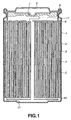
- FIG. 1 A nonaqueous electrolyte secondary battery to which the present invention is applied is shown in Fig. 1.
- This nonaqueous electrolyte secondary battery is, what is called, a cylindrical type.
- a spirally coiled electrode element formed by laminating an elongated cathode 2 having a cathode material and an elongated anode 3 having an anode material through a separator 4, and coiling the laminated body many times and fixing the final end part of the separator 4 as an outermost periphery by an adhesive tape 5.
- the separator 4 is impregnated with, for instance, nonaqueous electrolyte solution as a nonaqueous electrolyte.
- a battery cover 6 and a safety valve device 7 provided inside the battery cover 6 are attached by caulking through a gasket 8 to seal the battery can 1.
- the battery cover 6 is made of the same material as that of, for instance, the battery can 1.
- a pair of insulating plates 9 and 10 are respectively provided perpendicularly to the peripheral surface so as to sandwich the spirally coiled electrode element in therebetween.
- the safety valve device 7 is provided with, what is called a current cutting-off mechanism which is electrically connected to the battery cover 6 and cuts off the electrical connection between the battery cover 6 and the spirally coiled electrode element when the internal pressure of the battery becomes a prescribed value or higher due to an internal short circuit or an external heating.
- a cathode lead 11 made of aluminum or the like is connected to the cathode 2 to be electrically connected to the battery cover 6.
- an anode lead 12 made of nickel or the like is connected to the anode 3.
- the anode lead 12 is welded to the battery can 1 to be electrically connected thereto.
- metallic oxides, metallic sulfides, specific polymers, etc. can be used depending on kinds of desired batteries.
- specific cathode materials there may be exemplified, metallic sulfides or metallic oxides including no lithium such as TiS 2 , MoS 2 , NbSe 2 , V 2 O 5 , etc., lithium composite oxides including a main component represented by a general formula Li x MO 2 (here, M designates one or more kinds of transition metals, x is different depending on the charging and discharging states of a battery and ordinarily located within a range expressed by 0.05 ⁇ x ⁇ 1.10).
- the transition metals M forming the lithium composite oxide preferably include Co, Ni, Mn, etc.
- the specific lithium composite oxides there may be exemplified LiCoO 2 , LiNiO 2 , Li x Ni y Co 1-y O 2 (here, x and y are different depending on the charging and discharging states of a battery and ordinarily located within ranges expressed by 0 ⁇ x ⁇ 1 and 0.7 ⁇ y ⁇ 1.02.), lithium manganese oxides having spinel type structures, etc.
- Such lithium composite oxides can generate high voltage and are excellent in energy density.
- a plurality of kinds of the above-described positive materials may be mixed together and the mixture may be used.
- a well-known conductive agent or a binding agent may be added thereto.
- the anode 3 includes the above-described composite particles having the carbon material contained in the metallic material and metal capable of electrochemically reacting with lithium in a nonaqueous electrolyte as the metallic material. Since the anode 3 has the above-described composite particles, a nonaqueous electrolyte secondary battery having a higher capacity than that using a usual carbonaceous anode material can be realized.
- the carbon material is included in the composite particles, even when the composite particles are caused to be minute, the carbon material included in the composite particles is interposed between the minute composite particles to ensure the electronic conductivity in the composite particles. Accordingly, there can be realized a nonaqueous electrolyte secondary battery in which even when charging and discharging reactions are repeated, the rise of internal resistance in the battery due to the deterioration of electrodes can be suppressed and excellent cyclic characteristics can be achieved.
- the anode 3 may be electrochemically doped with lithium in the battery after the battery is manufactured, or lithium may be electrochemically supplied to the anode from the cathode 2 or a lithium source except the cathode 2 after or before the battery is manufactured.
- the anode may be doped with lithium by synthesizing a material including lithium upon synthesizing the material or including lithium in the anode 3 upon manufacturing the battery.
- nonaqueous electrolyte there may be used, for instance, nonaqueous electrolyte solution formed by dissolving electrolyte salt in a nonaqueous electrolyte solvent.
- any of solvents used in such nonaqueous electrolyte secondary batteries may be employed.
- solvents used in such nonaqueous electrolyte secondary batteries there are exemplified, for instance, propionic carbonate, ethylene carbonate, diethyl carbonate, dimethyl carbonate, 1,2-dimethoxyethane, 1,2-diethoxyethane, ⁇ -butyrolactone, tetrahydrofuran, 2-methylhydrofuran, 1-3-dioxolane, 4-methyl-1,3-dioxolane, diethyl ether, sulfolane, methyl sulfolane, acetonitrile, propiononitrile, anisole, acetic ester, butyric ester, propionic ester, etc.
- any of salts used for such nonaqueous electrolyte secondary batteries may be employed.
- the anode 3 includes the composite particles which have the carbon material contained in the metallic material including metal capable of electrochemically reacting with lithium. Therefore, in the nonaqueous electrolyte secondary battery to which the present invention is applied, a high capacity is achieved as compared with a battery using a conventional carbonaceous anode material.
- the composite particles included in the anode 3 are caused to be minute due to expansion and contraction upon charging and discharging the battery, the carbon material is interposed between the minute particles so that the electronic conductivity in the composite particles can be ensured. Accordingly, in the nonaqueous electrolyte secondary battery to which the present invention is applied, the rise of internal resistance in the battery due to the deterioration of electrodes is suppressed and excellent cyclic characteristics are achieved.
- the nonaqueous electrolyte secondary battery to which the present invention is applied can realize the high capacity and the excellent cyclic characteristics.
- the present invention is not limited thereto.
- the present invention may be applied to examples using, as the nonaqueous electrolyte, for instance, a solid electrolyte including electrolyte salt and a gel electrolyte obtained by impregnating an organic polymer with a nonaqueous solvent and electrolyte salt, etc.
- the solid electrolyte either an inorganic solid electrolyte or a solid polymer electrolyte, which is a material having a lithium ion conductivity, can be employed.
- the specific inorganic solid electrolytes there may be exemplified, lithium nitride, lithium iodide, etc.
- the solid polymer electrolyte comprises electrolyte salt and a polymer compound for dissolving it.
- ether polymers such as poly(ethylene oxide) or bridged materials thereof, poly(methacrylate) esters, acrylate, etc. are independently used or copolymerized or mixed in molecules and the copolymerized or mixed materials can be used.
- organic polymers used for the gel electrolyte various kinds of polymers absorbing a nonaqueous solvent to gel can be used.
- specific organic polymers there can be used fluorinated polymers such as poly(vinylidene fluoride) or poly(vinylidene fluoride-co-hexafluoro propylene), ether polymers such as poly(ethylene oxide) or bridged materials thereof, poly (acrylonitrile), etc.
- fluorinated polymers are preferably used from the viewpoint of oxidation-reduction stability.
- the electrolyte salt is included in these organic polymers to obtain an ionic conductivity.
- nonaqueous electrolyte secondary battery is not limited thereto and may have various kinds of forms.
- the nonaqueous electrolyte secondary battery according to the present invention may be formed in any of shapes of a prismatic type, a coin type, a button type, etc.
- Lithium existing in the battery system of the nonaqueous electrolyte secondary battery according to the present invention does not need to be always supplied from the cathode 2 or the anode 3.
- the cathode 2 or the anode 3 may be electrochemically doped with lithium during the manufacturing step of electrodes or the battery.
- an anode and negative material were manufactured as described below.
- Si powder as metal capable of electrochemically reacting with lithium in a nonaqueous electrolyte was heated at 1500°C and molten in an atmosphere of Ar.
- a carbon material of 0.1 wt% was added to Si in a molten state without changing the atmosphere and they were mixed for some time.
- spherical graphite (trade name: MCMB 6-28 produced by Osaka Gas Chemicals Co., Ltd.) was used.
- the atomized powder was classified by 200 meshes and the classified product thus obtained was used as composite particles having the carbon material contained in a metallic material.
- the composite particles and scale shaped graphite (trade name: KS-44 produced by Timcal Co., Ltd) were mixed in the weight ratio 50 : 50.
- Polyvinylidene fluoride of 8 parts by weight was added to this mixture of 100 parts by weight and n-methylpyrrolidone as a solvent was further added to the mixture to obtain anode composite mixture slurry.
- the anode composite mixture slurry was uniformly applied to both the surfaces of an elongated copper foil having the thickness of 15 m as an anode current collector and dried, and then, the anode current collector having the slurry applied and dried was compression-molded by a roll press machine to obtain an elongated anode.
- LiCoO 2 as a positive active material, lithium carbonate and cobalt carbonate were mixed in the ratio 0.5 mole : 1 mole and the mixture was sintered in air at 900°C for 5 hours.
- LiCoO 2 of 91 parts by weight, graphite of 6 parts by weight as a conductive agent and polyvinylidene fluoride of 3 parts by weight as a binding agent were mixed together to obtain cathode composite mixture slurry.
- the cathode composite mixture slurry was applied to both the surfaces of an elongated aluminum foil having the thickness of 20 m as a cathode current collector and dried, and the then, the dried cathode current collector was compression-molded by a roll press machine to obtain an elongated cathode.
- the anode and the cathode manufacture as described above were laminated through a separator made of a microporous polypropylene film having the thickness of 25 m, then stacked the anode, the separator, the cathode and the separator, respectively.
- the laminated body thus obtained was spirally coiled many times and the final end part of the separator as an outermost periphery was fixed by an adhesive tape to manufacture a spirally coiled electrode element.
- the spirally coiled electrode element was accommodated in a battery can made of iron and plated with nickel.
- the battery can having diameter of 18 mm, height of 65 mm, inside diameter of 17.38 mm, and the thickness of 0.31 mm was used.
- a pair of insulating plates were disposed on both the upper and lower surfaces of the spirally coiled electrode element and a cathode lead made of aluminum was drawn from the cathode current collector and connected to a battery cover. Further, an anode lead made of nickel was drawn from the anode current collector and welded to the battery can.
- Nonaqueous electrolyte solution obtained by dissolving LiPF 6 in the mixed solvent of ethylene carbonate and dimethyl carbonate of equal volume at the rate of 1 mole/l was injected into the battery can.
- the battery can was caulked through a gasket having a surface to which asphalt was applied to fix the battery cover thereto and hold an air-tightness in the battery.
- a cylindrical nonaqueous electrolyte secondary battery was manufactured in such a manner as described above.
- a nonaqueous electrolyte secondary battery was manufactured in the same manner as that of the Sample 1 except that the carbon material of 0.3 wt% was included in the composite particles.
- a nonaqueous electrolyte secondary battery was manufactured in the same manner as that of the Sample 1 except that the carbon material of 0.5 wt% was included in the composite particles.
- a nonaqueous electrolyte secondary battery was manufactured in the same manner as that of the Sample 1 except that the carbon material of 1.0 wt% was included in the composite particles.
- a nonaqueous electrolyte secondary battery was manufactured in the same manner as that of the Sample 1 except that the carbon material of 3.0 wt% was included in the composite particles.
- a nonaqueous electrolyte secondary battery was manufactured in the same manner as that of the Sample 1 except that the carbon material of 5.0 wt% was included in the composite particles.
- a nonaqueous electrolyte secondary battery was manufactured in the same manner as that of the Sample 1 except that the carbon material of 10.0 wt% was included in the composite particles.
- a nonaqueous electrolyte secondary battery was manufactured in the same manner as that of the Sample 1 except that the carbon material of 15.0 wt% was included in the composite particles.
- a nonaqueous electrolyte secondary battery was manufactured in the same manner as that of the Sample I except that the carbon material of 20.0 wt% was included in the composite particles.
- a nonaqueous electrolyte secondary battery was manufactured in the same manner as that of the Sample 1 except that the carbon material of 30.0 wt% was included in the composite particles.
- a nonaqueous electrolyte secondary battery was manufactured in the same manner as that of the Sample I except that the carbon material of 50.0 wt% was included in the composite particles.
- a nonaqueous electrolyte secondary battery was manufactured in the same manner as that of the Sample 1 except that the carbon material of 70.0 wt% was included in the composite particles.
- a nonaqueous electrolyte secondary battery was manufactured in the same manner as that of the Sample I except that the carbon material of 90.0 wt% was included in the composite particles.
- a nonaqueous electrolyte secondary battery was manufactured in the same manner as that of the Sample 1 except that metal capable of electrochemically reacting with lithium was not used and only spherical graphite (trade name: MCMB 6-28 produced by Osaka Gas Chemicals Co., Ltd.) was used.
- a nonaqueous electrolyte secondary battery was manufactured in the same manner as that of the Sample 1 except that the carbon material was not included in metal capable of electrochemically reacting with lithium, that is, the composite particles were only composed of Si.
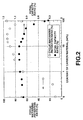
- the cyclic maintaining/retention ratios of the Samples 1 to 15 manufactured as described above were obtained.
- charging and discharging cycles were repeated in which a constant-current and constant-voltage charging operation was carried out under the conditions of maximum voltage of 4.2 V, constant-current of 1A and charging time for 5 hours and a discharging operation was carried out under constant-current of 1A up to end voltage of 2.5 V.
- the discharging capacity of a first cycle was 100
- the discharging capacity of 50th cycle was represented by % as a cyclic maintaining/retention ratio.
- the initial capacity of each of the Samples 1 to 15 was measured. Assuming that the initial capacity of the Sample 1 was 1, the ratio of the initial capacity of each of the Samples 2 to 15 was represented as an initial capacity ratio.
- the Sample 14 using the negative active material of the anode including no metal capable of electrochemically reacting with lithium and composed only of the carbon material showed an initial capacity lower than those of the Samples 1 to 13 using the composite particles including the metallic material.
- the anode included the composite particles having the carbon material contained in the metallic material and metal capable of electrochemically reacting with lithium in the nonaqueous electrolyte solution was included as the metallic material so that the nonaqueous electrolyte secondary battery in which a high initial capacity was compatible with excellent cyclic characteristics could be realized.
- a nonaqueous electrolyte secondary battery was manufactured in the same manner as that of the Sample 1 except that acetylene black (produced by Denki Kagaku Kogyo K. K.) of 10 wt% was used as the carbon material contained in the composite particles.
- the acetylene black is an aggregate of several hundred nm to several thousand nm having fine particles of about several ten nm connected in a string of beads.
- a nonaqueous electrolyte secondary battery was manufactured in the same manner as that of the Sample 1 except that scale type graphite (trade name: KS-6 produced by Timcal Co., Ltd.) of 10 wt% was used as the carbon material contained in the composite particles.
- scale type graphite trade name: KS-6 produced by Timcal Co., Ltd.
- a nonaqueous electrolyte secondary battery was manufactured in the same manner as that of the Sample 1 except that fibrous graphite (trade name: VGCF produced by Showa Denko, K. K.) of 10 wt% was used as the carbon material contained in the composite particles.
- fibrous graphite trade name: VGCF produced by Showa Denko, K. K.
- a nonaqueous electrolyte secondary battery was manufactured in the same manner as that ofthe Sample 1 except that pitch-based non-graphitizable carbon (trade name: Carbotron P produced by Kureha Chemical Industry Co., Ltd.) of 10 wt% was used as the carbon material contained in the composite particles.
- the pitch-based non-graphitizable carbon has angular forms caused to be minute to have an average diameter of about several m to several ten m.
- a nonaqueous electrolyte secondary battery was manufactured in the same manner as that of the Sample 1 except that the mixture of scale type graphite (trade name: KS-6 produced by Timcal Co., Ltd.) and fibrous graphite (trade name: KS-6 produced by Timcal Co., Ltd.) of 10 wt% having equal volume was used as the carbon material contained in the composite particles.
- the nonaqueous electrolyte secondary battery having a high capacity and excellent cyclic characteristics could be realized.
- any of a spherical form, a scale form and a fibrous form could be used as the form of the carbon material contained in the composite particles and a plurality of kinds of them could be mixed and used.
- Si powder of 20 parts by weight as metal capable of electrochemically reacting with lithium was mixed with Cu powder of 80 parts by weight as metal which did not electrochemically react with lithium and the mixture was heated at 1000°C and molten in an atmosphere of Ar.
- a carbon material of 0.1 wt% was added to the mixture of Si and Cu in a molten state without changing the atmosphere and they were mixed for some time.
- spherical graphite (trade name: MCMB 6-28 produced by Osaka Gas Chemicals Co., Ltd.) was used.
- the atomized powder was classified by 200 meshes and the classified product thus obtained was used as composite particles.
- a nonaqueous electrolyte secondary battery was manufacture in the same manner as that of the Sample 1 except that the composite particles obtained as described above were used as the anode material.
- the initial capacity ratio and the cyclic maintaining/retention ratio of the Sample 21 manufactured as mentioned above were obtained in a similar manner to that of the above Experiment 1.
- the results of the initial capacity ratio and the cyclic maintaining/retention ratio of the Sample 21 are shown in Table 3 as well as the results of the Sample 10.
- Contained Carbon Material wt%) Scale Shaped Graphite Conductive Agent (%) Cyclic Maintaining/retention Ratio (%) Initial Capacity Ratio Sample 10 30.0 50 94 0.98 Sample 21 30.0 50 95 0.98
- Composite particles were produced in the same manner as that of the Sample 8.
- the composite particles and scale type graphite (trade name: KS-44 produced by Timcal Co., Ltd.) were mixed in the weight ratio 95 : 5.
- a nonaqueous electrolyte secondary battery was manufactured in the same manner as that of the Sample 8 except that an anode was manufactured by using the mixture.
- Composite particles were produced in the same manner as that of the Sample 8.
- the composite particles and scale type graphite (trade name: KS-44 produced by Timcal Co., Ltd.) were mixed in the weight ratio 85 : 15.
- a nonaqueous electrolyte secondary battery was manufactured in the same manner as the Sample 8 except that an anode was manufactured by using the mixture.
- Composite particles were produced in the same manner as that of the Sample 8.
- the composite particles and scale type graphite (trade name: KS-44 produced by Timcal Co., Ltd.) were mixed in the weight ratio 65 : 35.
- a nonaqueous electrolyte secondary battery was manufactured in the same manner as that of the Sample 8 except that an anode was manufactured by using the mixture.
- Composite particles were produced in the same manner as that of the Sample 8.
- the composite particles and scale type graphite (trade name: KS-44 produced by Timcal Co., Ltd. ) were mixed in the weight ratio 25 : 75.
- a nonaqueous electrolyte secondary battery was manufactured in the same manner as the Sample 8 except that an anode was manufactured by using the mixture.
- Composite particles were produced in the same manner as that of the Sample 8.
- the composite particles and scale type graphite (trade name: KS-44 produced by Timcal Co., Ltd.) were mixed in the weight ratio 5 : 95.
- a nonaqueous electrolyte secondary battery was manufactured in the same manner as that of the Sample 8 except that an anode was manufactured by using the mixture.
- the nonaqueous electrolyte secondary battery having a high capacity and excellent cyclic characteristics could be realized under various kinds of mixture ratios.
- a nonaqueous electrolyte secondary battery was manufactured in the same manner as that of the Sample 10 except that a carbon material was added to Si in a molten state under the atmosphere of air and they were mixed for some time, when composite particles were produced.
- a nonaqueous electrolyte secondary battery was manufactured in the same manner as that of the Sample 7 except that composite particles were produced by further adding metallic carbide compound (SiC) of 1 wt% as a carbon material to Si in a molten state.
- Spherical graphite (trade name: MCMB 6-28 produced by Osaka Gas Chemicals Co., Ltd.) and the metallic carbide compound (SiC) as the carbon materials were added to Si in the molten state at the same time.
- a nonaqueous electrolyte secondary battery was manufactured in the same manner as that of the Sample 7 except that composite particles were produced by further adding metallic carbide compound (SiC) of 3 wt% as a carbon material to Si in a molten state.
- Spherical graphite (trade name: MCMB 6-28 produced by Osaka Gas Chemicals Co., Ltd.) and the metallic carbide compound (SiC) as the carbon materials were added to Si in the molten state at the same time.
- a nonaqueous electrolyte secondary battery was manufactured in the same manner as that of the Sample 7 except that composite particles were produced by further adding metallic carbide compound (SiC) of 5 wt% as a carbon material to Si in a molten state.
- Spherical graphite (trade name: MCMB 6-28 produced by Osaka Gas Chemicals Co., Ltd.) and the metallic carbide compound (SiC) as the carbon materials were added to Si in the molten state at the same time.
- a nonaqueous electrolyte secondary battery was manufactured in the same manner as that of the Sample 7 except that composite particles were produced by further adding metallic carbide compound (SiC) of 10 wt% as a carbon material to Si in amolten state.
- Spherical graphite (trade name: MCMB 6-28 produced by Osaka Gas Chemicals Co., Ltd.) and the metallic carbide compound (SiC) as the carbon materials were added to Si in the molten state at the same time.
- a nonaqueous electrolyte secondary battery was manufactured in the same manner as that of the Sample 7 except that composite particles were produced by further adding metallic carbide compound (SiC) of 20 wt% as a carbon material to Si in a molten state.
- Spherical graphite (trade name: MCMB 6-28 produced by Osaka Gas Chemicals Co., Ltd. ) and the metallic carbide compound (SiC) as the carbon materials were added to Si in the molten state at the same time.
- a nonaqueous electrolyte secondary battery was manufactured in the same manner as that of the Sample 7 except that composite particles were produced by further adding metallic carbide compound (SiC) of 40 wt% as a carbon material to Si in a molten state.
- Spherical graphite (trade name: MCMB 6-28 produced by Osaka Gas Chemicals Co., Ltd. ) and the metallic carbide compound (SiC) as the carbon materials were added to Si in the molten state at the same time.
- a nonaqueous electrolyte secondary battery was manufactured in the same manner as that of the Sample 7 except that composite particles were produced by further adding metallic carbide compound (SiC) of 70 wt% as a carbon material to Si in amolten state.
- Spherical graphite (trade name: MCMB 6-28 produced by Osaka Gas Chemicals Co., Ltd.) and the metallic carbide compound (SiC) as the carbon materials were added to Si in the molten state at the same time.
- a nonaqueous electrolyte secondary battery was manufactured in the same manner as that of the Sample 7 except that composite particles were produced by further adding metallic carbide compound (SiC) of 90 wt% as a carbon material to Si in a molten state.
- Spherical graphite (trade name: MCMB 6-28 produced by Osaka Gas Chemicals Co., Ltd.) and the metallic carbide compound (SiC) as the carbon materials were added to Si in the molten state at the same time.
- a nonaqueous electrolyte secondary battery was manufactured in the same manner as that of the Sample 1 except that composite particles were produced by adding only metallic carbide compound (SiC) of 40 wt% as a carbon material to Si in a molten state.
- SiC metallic carbide compound
- the nonaqueous electrolyte secondary battery excellent in its cyclic characteristics could be realized by using the metallic carbide compound as the carbon material to be contained in the composite particles.
- the mixture of materials such as the metallic carbide compound and acetylene black could be used as the carbon material to be contained in the composite particles.
- an anode according to the present invention can realize a high capacity. Further, the anode according to the present invention can ensure an electronic conductivity in the composite particles even when the composite particles are caused to be minute due to expansion and contraction upon electrochemical reaction, because a carbon material is contained in the composite particles so that the carbon material is interposed between the minute particles.
- the anode in which a high capacity is exhibited the rise of internal resistance in a battery due to the deterioration of electrodes is suppressed and excellent characteristics are realized, when the anode is used for a nonaqueous electrolyte battery.
- an anode in a nonaqueous electrolyte secondary battery according to the present invention, includes composite particles having a carbon material contained in a metallic material. Since the composite particles include metal capable of electrochemically reacting with lithium in nonaqueous electrolyte solution as the metallic material, the nonaqueous electrolyte secondary battery having a high capacity can be realized. Even when the composite particles are caused to be minute, since the carbon material is contained in the composite particles, the carbon material is interposed between the minute particles to ensure an electronic conductivity in the composite particles. As a result, even when charging and discharging operations are repeated, the rise of internal resistance in the battery due to the deterioration of electrodes is suppressed.
- the nonaqueous electrolyte secondary battery in which a high capacity is shown, the rise of internal resistance in the battery due to the deterioration of electrodes is suppressed and excellent cyclic characteristics are realized.
- anode when composite particles are produced, at least a part of a step of mixing a metallic material including metal capable of electrochemically reacting with lithium in a nonaqueous electrolyte with a carbon material and pelletizing the mixture is carried out in a non-oxidizing atmosphere.
- a metallic material including metal capable of electrochemically reacting with lithium in a nonaqueous electrolyte with a carbon material and pelletizing the mixture is carried out in a non-oxidizing atmosphere.
- the carbon material is prevented from being oxidized or burnt. Therefore, according to the present invention, can be manufactured the anode capable of realizing a nonaqueous electrolyte secondary battery having high capacity and excellent cyclic characteristics.
Landscapes
- Chemical & Material Sciences (AREA)
- General Chemical & Material Sciences (AREA)
- Chemical Kinetics & Catalysis (AREA)
- Electrochemistry (AREA)
- Engineering & Computer Science (AREA)
- Materials Engineering (AREA)
- Inorganic Chemistry (AREA)
- Manufacturing & Machinery (AREA)
- Composite Materials (AREA)
- Physics & Mathematics (AREA)
- Condensed Matter Physics & Semiconductors (AREA)
- General Physics & Mathematics (AREA)
- Battery Electrode And Active Subsutance (AREA)
- Secondary Cells (AREA)
Abstract
Description
| Contained Carbon Material (wt%) | Scale Shaped Graphite Conductive Agent (%) | Cyclic Maintaining/retention Ratio (%) | Initial | |
| Sample | ||||
| 1 | 0.1 | 50 | 11 | 1.00 |
| | 0.3 | 50 | 15 | 1.03 |
| | 0.5 | 50 | 32 | 1.05 |
| | 1.0 | 50 | 68 | 1.09 |
| | 3.0 | 50 | 81 | 1.11 |
| | 5.0 | 50 | 84 | 1.11 |
| | 10.0 | 50 | 90 | 1.10 |
| | 15.0 | 50 | 93 | 1.06 |
| | 20.0 | 50 | 94 | 1.02 |
| | 30.0 | 50 | 94 | 0.98 |
| | 50.0 | 50 | 90 | 0.91 |
| | 70.0 | 50 | 80 | 0.73 |
| Sample 13 | 90.0 | 50 | 70 | 0.45 |
| Sample 14 | 100.0 | 50 | 95 | 0.35 |
| Sample 15 | 0.0 | 50 | 9 | 0.99 |
| Contained Carbon Material (wt%) | Scale Shaped Graphite Conductive Agent (%) | Cyclic Maintaining/retention Ratio (%) | Initial | |
| Sample | ||||
| 7 | 10.0 | 50 | 90 | 1.10 |
| Sample 16 | 10.0 | 50 | 91 | 1.05 |
| Sample 17 | 10.0 | 50 | 92 | 1.07 |
| Sample 18 | 10.0 | 50 | 93 | 1.08 |
| Sample 19 | 10.0 | 50 | 94 | 1.04 |
| | 10.0 | 50 | 93 | 1.09 |
| Contained Carbon Material (wt%) | Scale Shaped Graphite Conductive Agent (%) | Cyclic Maintaining/retention Ratio (%) | Initial | |
| Sample | ||||
| 10 | 30.0 | 50 | 94 | 0.98 |
| Sample 21 | 30.0 | 50 | 95 | 0.98 |
| Contained Carbon Material (wt%) | Scale Shaped Graphite Conductive Agent (%) | Cyclic Maintaining/retention Ratio (%) | Initial Capacity Ratio | |
| Sample 22 | 15.0 | 5 | 75 | 1.33 |
| Sample 23 | 15.0 | 15 | 81 | 1.22 |
| Sample 24 | 15.0 | 35 | 94 | 1.15 |
| | 15.0 | 50 | 93 | 1.06 |
| Sample 25 | 15.0 | 75 | 94 | 0.88 |
| Sample 26 | 15.0 | 95 | 94 | 0.45 |
| Contained Carbon Material (wt%) | Scale Shaped Graphite Conductive Agent (%) | Cyclic Maintaining/retention Ratio (%) | Initial | |
| Sample | ||||
| 10 | 30.0 | 50 | 94 | 0.98 |
| Sample 27 | 30.0 | 50 | 92 | 0.98 |
| Composite Particle | |||
| Metal Capable of Electrochemically Reacting with Lithium (wt%) | Contained Carbon Material | ||
| Metallic Carbide Compound (SiC) (wt%) | Acetylene Black (wt%) | ||
| Sample 28 | 90 | 1 | 10 |
| Sample 29 | 90 | 3 | 10 |
| Sample 30 | 90 | 5 | 10 |
| Sample 31 | 90 | 10 | 10 |
| Sample 32 | 90 | 20 | 10 |
| Sample 33 | 90 | 40 | 10 |
| Sample 34 | 90 | 70 | 10 |
| Sample 35 | 90 | 90 | 10 |
| Sample 36 | 100 | 40 | ― |
| Scale Shaped Graphite Conductive Agent (%) | Cyclic Maintaining/retention Ratio (%) | |
| Sample 28 | 50 | 90 |
| Sample 29 | 50 | 91 |
| Sample 30 | 50 | 93 |
| Sample 31 | 50 | 94 |
| Sample 32 | 50 | 94 |
| Sample 33 | 50 | 93 |
| Sample 34 | 50 | 92 |
| Sample 35 | 50 | 90 |
| Sample 36 | 50 | 92 |
Claims (15)
- A negative material including composite particles having a metallic material containing a carbon material, wherein metal capable of electrochemically reacting with lithium in a nonaqueous electrolyte is included as the metallic material.
- The negative material according to claim 1, wherein the metallic material is a mixture of the metal capable of electrochemically reacting with lithium in the nonaqueous electrolyte and metal which does not electrochemically react with lithium in the nonaqueous electrolyte.
- The negative material according to claim 1, wherein the carbon material is composed of at least one or more kinds of materials of non-graphitizable carbon, graphitizable carbon, graphite and carbon black.
- The negative material according to claim 1, wherein the carbon material has at least one or more kinds of forms between fiber forms, spherical forms, granular forms and scale forms.
- The negative material according to claim 1, including the composite particles and carbon powder.
- The negative material according to claim 1, wherein the carbon material is a metallic carbide compound.
- A nonaqueous electrolyte secondary battery comprising an anode, a cathode and a nonaqueous electrolyte, wherein the anode comprises a negative material including composite particles having a metallic material containing a carbon material and metal capable of electrochemically reacting with lithium in a nonaqueous electrolyte is included as the metallic material.
- The nonaqueous electrolyte secondary battery according to claim 7, wherein the metallic material comprises a mixture of the metal capable of electrochemically reacting with lithium in the nonaqueous electrolyte and metal which does not electrochemically react with lithium in the nonaqueous electrolyte.
- The nonaqueous electrolyte secondary battery according to claim 7, wherein the carbon material comprises at least one or more kinds of materials of non-graphitizable carbon, graphitizable carbon, graphite and carbon black.
- The nonaqueous electrolyte secondary battery according to claim 7, wherein the carbon material comprises at least one or more kinds of forms between fiber forms, spherical forms, granular forms and scale forms.
- The nonaqueous electrolyte secondary battery according to claim 7, wherein the anode comprises the composite particles and carbon powder.
- The nonaqueous electrolyte secondary battery according to claim 7, wherein the carbon material comprises a metallic carbide compound.
- The nonaqueous electrolyte secondary battery according to claim 7, wherein the cathode comprises lithium composite oxide represented by a general formula LixMO2 (here, M indicates one or more kinds of transition metals, x is different depending on charging and discharging states of a battery and is ordinarily located within a range expressed by 0.05 ≤ x ≤ 1.10).
- A method for manufacturing a negative active material which includes composite particles having a metallic material containing a carbon material and in which metal capable of electrochemically reacting with lithium in a nonaqueous electrolyte is included as the metallic material, said method comprising the step of:mixing the metallic material with the carbon material and pelletizing the mixture, wherein at least a part of the step is carried out in a non-oxidizing atmosphere.
- The method for manufacturing an anode according to claim 14, said method comprising the steps of:melting the metallic material;mixing the molten metallic material with the carbon material to have a mixture, andatomizing the mixture to obtain the composite particles, wherein at least the second step is carried out in a non-oxidizing atmosphere.
Applications Claiming Priority (5)
| Application Number | Priority Date | Filing Date | Title |
|---|---|---|---|
| JP2001110548 | 2001-04-09 | ||
| JP2001110548 | 2001-04-09 | ||
| JP2001294504A JP4140222B2 (en) | 2001-04-09 | 2001-09-26 | Negative electrode, non-aqueous electrolyte secondary battery, and negative electrode manufacturing method |
| JP2001294504 | 2001-09-26 | ||
| PCT/IB2002/001115 WO2002082567A1 (en) | 2001-04-09 | 2002-04-09 | Negative electrode for non-aqueous electrolyte secondary cell and non-aqueous electrolyte secondary cell using the negative electrode |
Publications (3)
| Publication Number | Publication Date |
|---|---|
| EP1381099A1 true EP1381099A1 (en) | 2004-01-14 |
| EP1381099A4 EP1381099A4 (en) | 2007-01-10 |
| EP1381099B1 EP1381099B1 (en) | 2017-05-31 |
Family
ID=26613330
Family Applications (1)
| Application Number | Title | Priority Date | Filing Date |
|---|---|---|---|
| EP02759831.7A Expired - Lifetime EP1381099B1 (en) | 2001-04-09 | 2002-04-09 | Negative electrode for non-aqueous electrolyte secondary cell and non-aqueous electrolyte secondary cell using the negative electrode |
Country Status (4)
| Country | Link |
|---|---|
| US (3) | US9450245B2 (en) |
| EP (1) | EP1381099B1 (en) |
| JP (1) | JP4140222B2 (en) |
| WO (1) | WO2002082567A1 (en) |
Cited By (9)
| Publication number | Priority date | Publication date | Assignee | Title |
|---|---|---|---|---|
| EP1479118A4 (en) * | 2002-02-27 | 2007-11-07 | Cyprus Amax Minerals Co | Electrochemical cell with carbonaceous material and molybdenum carbide as anode |
| EP2723559A4 (en) * | 2011-06-21 | 2015-03-04 | Univ Drexel | COMPOSITIONS COMPRISING FREE BIDIMENSIONAL NANOCRYSTALS |
| US9193595B2 (en) | 2011-06-21 | 2015-11-24 | Drexel University | Compositions comprising free-standing two-dimensional nanocrystals |
| CN105359315A (en) * | 2013-06-27 | 2016-02-24 | 丰田自动车株式会社 | Electrode for non-aqueous secondary battery |
| US10538431B2 (en) | 2015-03-04 | 2020-01-21 | Drexel University | Nanolaminated 2-2-1 MAX-phase compositions |
| US10573768B2 (en) | 2014-09-25 | 2020-02-25 | Drexel University | Physical forms of MXene materials exhibiting novel electrical and optical characteristics |
| US10720644B2 (en) | 2015-04-20 | 2020-07-21 | Drexel University | Two-dimensional, ordered, double transition metals carbides having a nominal unit cell composition M′2M″nXn+1 |
| US11278862B2 (en) | 2017-08-01 | 2022-03-22 | Drexel University | Mxene sorbent for removal of small molecules from dialysate |
| US11470424B2 (en) | 2018-06-06 | 2022-10-11 | Drexel University | MXene-based voice coils and active acoustic devices |
Families Citing this family (13)
| Publication number | Priority date | Publication date | Assignee | Title |
|---|---|---|---|---|
| KR100584671B1 (en) * | 2004-01-14 | 2006-05-30 | (주)케이에이치 케미컬 | Method for manufacturing carbon nanotube or carbon nanofiber electrode using sulfur or metal nanoparticles as an adhesive and electrode manufactured by the same |
| US7531267B2 (en) | 2003-06-02 | 2009-05-12 | Kh Chemicals Co., Ltd. | Process for preparing carbon nanotube electrode comprising sulfur or metal nanoparticles as a binder |
| JP4406789B2 (en) * | 2003-11-20 | 2010-02-03 | 福田金属箔粉工業株式会社 | Negative electrode material for lithium secondary battery and method for producing the same |
| JP5156195B2 (en) * | 2006-03-28 | 2013-03-06 | Jfeケミカル株式会社 | Negative electrode material for lithium ion secondary battery and method for producing the same, negative electrode for lithium ion secondary battery, and lithium ion secondary battery |
| US8187754B2 (en) * | 2006-10-11 | 2012-05-29 | Panasonic Corporation | Coin-type non-aqueous electrolyte battery |
| KR101103104B1 (en) * | 2008-12-23 | 2012-01-04 | 서울대학교산학협력단 | Method for producing zinc antimonide-carbon composite and anode material for secondary battery comprising the composite |
| JP2013171793A (en) * | 2012-02-22 | 2013-09-02 | Mitsubishi Chemicals Corp | Negative electrode material for nonaqueous electrolyte secondary battery, method for producing the same, negative electrode for nonaqueous electrolyte secondary battery, and nonaqueous electrolyte secondary battery |
| KR20140038192A (en) * | 2012-09-20 | 2014-03-28 | 삼성에스디아이 주식회사 | Lithium battery |
| KR20160098370A (en) * | 2014-01-14 | 2016-08-18 | 쇼와 덴코 가부시키가이샤 | Lithium secondary battery and conductive assistant used in same |
| WO2017010476A1 (en) * | 2015-07-16 | 2017-01-19 | 昭和電工株式会社 | Production method for graphite-containing carbon powder for secondary battery, and carbon material for battery electrode |
| JP6724242B2 (en) * | 2016-08-11 | 2020-07-15 | ワッカー ケミー アクチエンゲゼルシャフトWacker Chemie AG | Production of Si/C composite particles |
| KR102385948B1 (en) * | 2021-12-02 | 2022-04-12 | 한국세라믹기술원 | Silicon-carbon composite negative elelctrode active material for lithium secondary battery with improved electrochemical properties and method of manufacturing thereof, and lithium secondary batery including the same |
| WO2026070410A1 (en) * | 2024-09-30 | 2026-04-02 | パナソニックIpマネジメント株式会社 | Non-aqueous electrolyte secondary battery |
Family Cites Families (27)
| Publication number | Priority date | Publication date | Assignee | Title |
|---|---|---|---|---|
| US5294498A (en) * | 1991-03-02 | 1994-03-15 | Sony Corporation | Anode material, method for producing it and non-aqueous electrolyte cell employing such anode materials |
| JPH05234583A (en) * | 1992-02-25 | 1993-09-10 | Osaka Gas Co Ltd | Negative electrode for lithium secondary battery and lithium secondary battery using it |
| JPH0845548A (en) * | 1994-08-03 | 1996-02-16 | Matsushita Electric Ind Co Ltd | Method for manufacturing lithium secondary battery and negative electrode thereof |
| JP3165953B2 (en) | 1995-02-02 | 2001-05-14 | 株式会社日立製作所 | Lithium secondary battery |
| EP0729194B1 (en) | 1995-02-02 | 1999-06-02 | Hitachi, Ltd. | Secondary battery using system and material for negative electrode of secondary battery |
| JPH0963651A (en) * | 1995-06-12 | 1997-03-07 | Hitachi Ltd | Non-aqueous secondary battery and negative electrode material thereof |
| WO1997030487A1 (en) * | 1996-02-16 | 1997-08-21 | Fuji Photo Film Co., Ltd. | Nonaqueous secondary battery |
| EP0810681B1 (en) * | 1996-05-31 | 2002-03-27 | Matsushita Electric Industrial Co., Ltd. | Nonaqueous electrolyte secondary battery |
| JPH10112316A (en) * | 1996-10-08 | 1998-04-28 | Matsushita Electric Ind Co Ltd | Non-aqueous electrolyte secondary battery |
| JP3460509B2 (en) | 1997-05-30 | 2003-10-27 | 松下電器産業株式会社 | Manufacturing method of alkaline storage battery and its electrode |
| JPH10334889A (en) * | 1997-06-02 | 1998-12-18 | Hitachi Ltd | Lithium secondary battery, portable electric device, electric vehicle, motorcycle and power storage device using the lithium secondary battery |
| JPH1116571A (en) | 1997-06-23 | 1999-01-22 | Hitachi Ltd | Battery and electric device using the same |
| JPH1131532A (en) | 1997-07-09 | 1999-02-02 | Hitachi Ltd | Lithium secondary battery |
| JPH11135153A (en) | 1997-10-31 | 1999-05-21 | Denso Corp | Non-aqueous electrolyte secondary battery |
| US5943389A (en) * | 1998-03-06 | 1999-08-24 | Varian Medical Systems, Inc. | X-ray tube rotating anode |
| US6228516B1 (en) * | 1998-04-02 | 2001-05-08 | Motorola, Inc. | Self-switching electrochemical cells and method of making same |
| JP4055254B2 (en) | 1998-06-25 | 2008-03-05 | 宇部興産株式会社 | Non-aqueous secondary battery |
| JP2000188134A (en) * | 1998-12-21 | 2000-07-04 | Toyota Motor Corp | Lithium ion secondary battery and method for producing negative electrode active material or positive electrode conductive material used therein |
| AU1118000A (en) * | 1998-12-21 | 2000-07-12 | University Of Chicago, The | Novel anodes for rechargeable lithium batteries |
| FR2790330B1 (en) * | 1999-02-25 | 2001-05-04 | Cit Alcatel | LITHIUM RECHARGEABLE ELECTROCHEMICAL GENERATOR POSITIVE ELECTRODE WITH ALUMINUM CURRENT COLLECTOR |
| JP2000323174A (en) | 1999-05-12 | 2000-11-24 | Japan Storage Battery Co Ltd | Non-aqueous electrolyte secondary battery |
| JP2001052742A (en) * | 1999-08-09 | 2001-02-23 | Yuasa Corp | Sheet secondary battery |
| JP4706088B2 (en) | 1999-12-06 | 2011-06-22 | 三菱化学株式会社 | Non-aqueous electrolyte secondary battery |
| KR100350535B1 (en) * | 1999-12-10 | 2002-08-28 | 삼성에스디아이 주식회사 | Negative active material for lithium secondary battery and method of preparing same |
| JP2001294504A (en) | 2000-04-13 | 2001-10-23 | Fumakilla Ltd | How to control pests |
| JP2001338643A (en) * | 2000-05-26 | 2001-12-07 | Hitachi Maxell Ltd | Lithium battery |
| US6780388B2 (en) * | 2000-05-31 | 2004-08-24 | Showa Denko K.K. | Electrically conducting fine carbon composite powder, catalyst for polymer electrolyte fuel battery and fuel battery |
-
2001
- 2001-09-26 JP JP2001294504A patent/JP4140222B2/en not_active Expired - Fee Related
-
2002
- 2002-04-09 EP EP02759831.7A patent/EP1381099B1/en not_active Expired - Lifetime
- 2002-04-09 WO PCT/IB2002/001115 patent/WO2002082567A1/en not_active Ceased
- 2002-04-09 US US10/297,650 patent/US9450245B2/en not_active Expired - Fee Related
-
2016
- 2016-08-10 US US15/233,331 patent/US9972831B2/en not_active Expired - Fee Related
-
2018
- 2018-04-06 US US15/947,280 patent/US20180226638A1/en not_active Abandoned
Cited By (18)
| Publication number | Priority date | Publication date | Assignee | Title |
|---|---|---|---|---|
| EP1479118A4 (en) * | 2002-02-27 | 2007-11-07 | Cyprus Amax Minerals Co | Electrochemical cell with carbonaceous material and molybdenum carbide as anode |
| EP2723559A4 (en) * | 2011-06-21 | 2015-03-04 | Univ Drexel | COMPOSITIONS COMPRISING FREE BIDIMENSIONAL NANOCRYSTALS |
| US9193595B2 (en) | 2011-06-21 | 2015-11-24 | Drexel University | Compositions comprising free-standing two-dimensional nanocrystals |
| US9415570B2 (en) | 2011-06-21 | 2016-08-16 | Drexel University | Compositions comprising free-standing two-dimensional nanocrystals |
| US9416011B2 (en) | 2011-06-21 | 2016-08-16 | Drexel University | Compositions comprising free-standing two-dimensional nanocrystals |
| US9837182B2 (en) | 2011-06-21 | 2017-12-05 | Drexel University | Compositions comprising free-standing two-dimensional nanocrystals |
| CN105359315A (en) * | 2013-06-27 | 2016-02-24 | 丰田自动车株式会社 | Electrode for non-aqueous secondary battery |
| US9819025B2 (en) | 2013-06-27 | 2017-11-14 | Toyota Jidosha Kabushiki Kaisha | Electrode for non-aqueous secondary battery |
| US11296243B2 (en) | 2014-09-25 | 2022-04-05 | Drexel University | Physical forms of MXene materials exhibiting novel electrical and optical characteristics |
| US10573768B2 (en) | 2014-09-25 | 2020-02-25 | Drexel University | Physical forms of MXene materials exhibiting novel electrical and optical characteristics |
| US12015092B2 (en) | 2014-09-25 | 2024-06-18 | Drexel University | Physical forms of MXene materials exhibiting novel electrical and optical characteristics |
| US10538431B2 (en) | 2015-03-04 | 2020-01-21 | Drexel University | Nanolaminated 2-2-1 MAX-phase compositions |
| US10720644B2 (en) | 2015-04-20 | 2020-07-21 | Drexel University | Two-dimensional, ordered, double transition metals carbides having a nominal unit cell composition M′2M″nXn+1 |
| US11411218B2 (en) | 2015-04-20 | 2022-08-09 | Drexel University | Two-dimensional, ordered, double transition metals carbides having a nominal unit cell composition M′2M″NXN+1 |
| US12322800B2 (en) | 2015-04-20 | 2025-06-03 | Drexel University | Two-dimensional, ordered, double transition metals carbides having a nominal unit cell composition m′2M″NXN+1 |
| US11278862B2 (en) | 2017-08-01 | 2022-03-22 | Drexel University | Mxene sorbent for removal of small molecules from dialysate |
| US11772066B2 (en) | 2017-08-01 | 2023-10-03 | Drexel University | MXene sorbent for removal of small molecules from dialysate |
| US11470424B2 (en) | 2018-06-06 | 2022-10-11 | Drexel University | MXene-based voice coils and active acoustic devices |
Also Published As
| Publication number | Publication date |
|---|---|
| US20180226638A1 (en) | 2018-08-09 |
| JP4140222B2 (en) | 2008-08-27 |
| US9450245B2 (en) | 2016-09-20 |
| WO2002082567A1 (en) | 2002-10-17 |
| US20160351895A1 (en) | 2016-12-01 |
| JP2002373648A (en) | 2002-12-26 |
| US20030148184A1 (en) | 2003-08-07 |
| EP1381099B1 (en) | 2017-05-31 |
| EP1381099A4 (en) | 2007-01-10 |
| US9972831B2 (en) | 2018-05-15 |
Similar Documents
| Publication | Publication Date | Title |
|---|---|---|
| US9972831B2 (en) | Negative material for nonaqueous electrolyte secondary battery and nonaqueous electrolyte secondary battery using the negative material | |
| EP1126538B1 (en) | Non-aqueous electrolyte secondary battery | |
| CN100433428C (en) | non-aqueous electrolyte battery | |
| KR101055154B1 (en) | Nonaqueous electrolyte battery | |
| US7754381B2 (en) | Anode and battery, and manufacturing methods thereof | |
| KR100848792B1 (en) | Nonaqueous Electrolyte Secondary Battery | |
| US20170092922A1 (en) | Non-aqueous electrolyte battery | |
| EP1156548A2 (en) | Charging method for charging nonaqueous electrolyte secondary battery | |
| US6497980B2 (en) | Organic electrolytic solution and lithium secondary battery adopting the same | |
| KR20030081160A (en) | Battery | |
| EP2461391A1 (en) | Battery | |
| JP2004047131A (en) | Non-aqueous electrolyte battery | |
| EP1489672A1 (en) | Production methods for positive electrode active matter and non-aqueous electrolytic battery | |
| EP1498966A1 (en) | Cell | |
| KR20090084693A (en) | Non-aqueous electrolyte battery and negative electrode and manufacturing method thereof | |
| EP1109243A2 (en) | Secondary battery | |
| KR100991676B1 (en) | Anode Material and Battery Using Same | |
| KR101044561B1 (en) | Anode Material and Battery Using Same | |
| JP2004006188A (en) | Non-aqueous electrolyte battery | |
| JP2000331686A (en) | Non-aqueous electrolyte secondary battery | |
| JP2005317447A (en) | battery | |
| JP2001015168A (en) | Lithium secondary battery | |
| JP3985263B2 (en) | NEGATIVE ELECTRODE ACTIVE MATERIAL, METHOD FOR PRODUCING SAME, AND NON-AQUEOUS ELECTROLYTE SECONDARY BATTERY | |
| JP2005322597A (en) | Battery and manufacturing method thereof | |
| JP2000340227A (en) | Lithium secondary battery |
Legal Events
| Date | Code | Title | Description |
|---|---|---|---|
| PUAI | Public reference made under article 153(3) epc to a published international application that has entered the european phase |
Free format text: ORIGINAL CODE: 0009012 |
|
| 17P | Request for examination filed |
Effective date: 20021127 |
|
| AK | Designated contracting states |
Kind code of ref document: A1 Designated state(s): AT BE CH CY DE DK ES FI FR GB GR IE IT LI LU MC NL PT SE TR |
|
| AX | Request for extension of the european patent |
Extension state: AL LT LV MK RO SI |
|
| A4 | Supplementary search report drawn up and despatched |
Effective date: 20061208 |
|
| RIC1 | Information provided on ipc code assigned before grant |
Ipc: H01M 6/14 20060101ALI20061204BHEP Ipc: H01M 4/58 20060101AFI20021021BHEP |
|
| 17Q | First examination report despatched |
Effective date: 20090804 |
|
| STAA | Information on the status of an ep patent application or granted ep patent |
Free format text: STATUS: EXAMINATION IS IN PROGRESS |
|
| GRAP | Despatch of communication of intention to grant a patent |
Free format text: ORIGINAL CODE: EPIDOSNIGR1 |
|
| STAA | Information on the status of an ep patent application or granted ep patent |
Free format text: STATUS: GRANT OF PATENT IS INTENDED |
|
| INTG | Intention to grant announced |
Effective date: 20170103 |
|
| RBV | Designated contracting states (corrected) |
Designated state(s): DE FR GB |
|
| GRAS | Grant fee paid |
Free format text: ORIGINAL CODE: EPIDOSNIGR3 |
|
| GRAA | (expected) grant |
Free format text: ORIGINAL CODE: 0009210 |
|
| STAA | Information on the status of an ep patent application or granted ep patent |
Free format text: STATUS: THE PATENT HAS BEEN GRANTED |
|
| RAP1 | Party data changed (applicant data changed or rights of an application transferred) |
Owner name: SONY CORPORATION |
|
| AK | Designated contracting states |
Kind code of ref document: B1 Designated state(s): DE FR GB |
|
| REG | Reference to a national code |
Ref country code: GB Ref legal event code: FG4D Ref country code: DE Ref legal event code: R081 Ref document number: 60248905 Country of ref document: DE Owner name: MURATA MANUFACTURING CO., LTD., NAGAOKAKYO-SHI, JP Free format text: FORMER OWNER: SONY CORPORATION, TOKIO/TOKYO, JP |
|
| REG | Reference to a national code |
Ref country code: DE Ref legal event code: R096 Ref document number: 60248905 Country of ref document: DE |
|
| REG | Reference to a national code |
Ref country code: DE Ref legal event code: R097 Ref document number: 60248905 Country of ref document: DE |
|
| PLBE | No opposition filed within time limit |
Free format text: ORIGINAL CODE: 0009261 |
|
| STAA | Information on the status of an ep patent application or granted ep patent |
Free format text: STATUS: NO OPPOSITION FILED WITHIN TIME LIMIT |
|
| 26N | No opposition filed |
Effective date: 20180301 |
|
| REG | Reference to a national code |
Ref country code: DE Ref legal event code: R081 Ref document number: 60248905 Country of ref document: DE Owner name: MURATA MANUFACTURING CO., LTD., NAGAOKAKYO-SHI, JP Free format text: FORMER OWNER: TOHOKU MURATA MANUFACTURING CO., LTD, KORIYAMA-SHI, JP Ref country code: DE Ref legal event code: R081 Ref document number: 60248905 Country of ref document: DE Owner name: MURATA MANUFACTURING CO., LTD., NAGAOKAKYO-SHI, JP Free format text: FORMER OWNER: SONY CORPORATION, TOKYO, JP |
|
| GBPC | Gb: european patent ceased through non-payment of renewal fee |
Effective date: 20180409 |
|
| PG25 | Lapsed in a contracting state [announced via postgrant information from national office to epo] |
Ref country code: GB Free format text: LAPSE BECAUSE OF NON-PAYMENT OF DUE FEES Effective date: 20180409 |
|
| PG25 | Lapsed in a contracting state [announced via postgrant information from national office to epo] |
Ref country code: FR Free format text: LAPSE BECAUSE OF NON-PAYMENT OF DUE FEES Effective date: 20180430 |
|
| PGFP | Annual fee paid to national office [announced via postgrant information from national office to epo] |
Ref country code: DE Payment date: 20200420 Year of fee payment: 19 |
|
| REG | Reference to a national code |
Ref country code: DE Ref legal event code: R119 Ref document number: 60248905 Country of ref document: DE |
|
| PG25 | Lapsed in a contracting state [announced via postgrant information from national office to epo] |
Ref country code: DE Free format text: LAPSE BECAUSE OF NON-PAYMENT OF DUE FEES Effective date: 20211103 |