The present invention relates to a method of
manufacturing aluminum-substituted hematite to be used
as a red pigment for ceramics, lacquer wares, tiles,
bricks, roofing tiles, coating materials, and paints.
In the past, "Fukiya Bengara" containing iron
oxide as a main component, which means refinery red
iron oxide, was used as a high-quality red pigment for
ceramics. The refinery red iron oxide was manufactured
until the middle of the 1960s but is not manufactured
today. However, there has been a strong demand for a
bright red pigment such as the refinery red iron oxide.
Conventional artificial red iron oxide, which is
synthesized by a solid-phase reaction, is directed to
high-purity hematite (α-Fe2O3). The high purity
hematite synthesized through the solid-phase reaction
is stable at temperatures of 650°C or lower but
exhibits a dull color at temperatures of 700°C or
higher. It has been proved that the dull color is
attributed to growth of hematite grains. Accordingly,
the high-purity hematite cannot be used as a pigment
under the conditions that high temperature heating is
performed.
An object of the present invention is to provide a
method of manufacturing aluminum-substituted hematite
that shows stably a bright color even when it is heated
to high temperatures.
According to an aspect of the present invention,
there is provided a method of manufacturing aluminum-substituted
hematite comprising: mixing an iron
compound and an aluminum compound such that an atomic
ratio of Fe to Al falls within a range of 99:1 to
85:15; adding citric acid and ethylene glycol to the
mixture of the iron compound and aluminum compound to
produce a gel by a polymerized complex method; and
pyrolyzing the gel, followed by calcining the pyrolyzed
product to produce the aluminum-substituted hematite.
This summary of the invention does not necessarily
describe all necessary features so that the invention
may also be a sub-combination of these described
features.
The invention can be more fully understood from
the following detailed description when taken in
conjunction with the accompanying drawings, in which:
Embodiments of the present invention will be
described below.
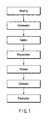
FIG. 1 is a flowchart showing the process for
manufacturing aluminum-substituted hematite by a
polymerized complex method according to the present
invention. As shown in FIG. 1, an iron compound and an
aluminum compound, which are used as starting
materials, are weighed. Citric acid and ethylene
glycol are added to the resultant mixture to produce a
complex, which is then gelled and polymerized. The
resultant gel is pyrolyzed and then calcined to produce
aluminum-substituted hematite. The resultant aluminum-substituted
hematite is pulverized and used as a
pigment.
The iron compound to be used in the present
invention includes (a) iron (II) acetate; iron (II)
bromide and a hydrate thereof; iron (III) bromide; iron
(II) chloride and a hydrate thereof; iron (III)
chloride and a hydrate thereof; iron (III) citrate and
a hydrate thereof; iron (II) lactate and a hydrate
thereof; iron (III) nitrate and a hydrate thereof; iron
(II) perchlorate and a hydrate thereof; iron (II)
sulfate and a hydrate thereof; iron (III) sulfate and a
hydrate thereof; ammonium iron (III) citrate; ammonium
iron (II) sulfate and a hydrate thereof; and ammonium
iron (III) sulfate and a hydrate thereof; as well as
(a') iron (II) oxalate dihydrate; iron (II) phosphate
and a hydrate thereof; iron (III) phosphate and a
hydrate thereof; iron oxide; iron (II) fluoride and a
hydrate thereof; and ammonium iron (III) oxalate and a
hydrate thereof.
The aluminum compound to be used in the present
invention includes (b) aluminum acetate and a hydrate
thereof; ammonium aluminum sulfate and a hydrate
thereof; aluminum bromide; aluminum lactate; aluminum
nitrate and a hydrate thereof; aluminum perchlorate and
a hydrate thereof; aluminum sulfate and a hydrate
thereof; aluminum oxalate and a hydrate thereof; and
aluminum dihydrogenphosphate.
When an iron compound (a) and an aluminum compound
(b) are used, citric acid, ethylene glycol, and water
are added to these compounds and the resultant mixture
is subjected to the polymerized complex method. When
an iron compound (a') and an aluminum compound (b) are
used, they are dissolved in an acid such as nitric
acid, hydrochloric acid, or acetic acid, and thereafter
citric acid and ethylene glycol are added to the
solution, and the resultant mixture is subjected to the
polymerized complex method.
The amount of citric acid is preferably 1 to
10 times that of the starting materials (the total
amount of an iron compound and an aluminum compound) by
molar ratio. The amount of ethylene glycol is
preferably 5 to 30 times that of the starting materials
by molar ratio. When water is used, the amount of
water is preferably 5 to 70 times that of the starting
materials.
In the polymerized complex method, a chelate
complex is formed of citric acid and a metal salt. The
chelate complex is reacted with ethylene glycol to
cause dehydration and condensation (esterification)
thereby producing a polymerized complex (gel). The
polymerized complex method is performed at temperatures
of 100 to 190°C for 0.5 to 24 hours. This method makes
it possible to form a three-dimensional network having
metal ions (Fe ions and Al ions) uniformly dispersed
therein.
Pyrolysis of the gel is performed at temperatures
of 200°C to 500°C for 0.5 to 12 hours. Calcination of
the pyrolyzed product is performed at temperatures of
350°C to 1100°C, more preferably, 700°C to 1100°C for
0.5 to 12 hours.
As mentioned above, the polymerized complex method
makes it possible to synthesize aluminum-substituted
hematite represented by α-(Fe1-xAlx)2O3 where x=0.01 to
0.15, which is a compound formed by substituting Al for
Fe in hematite (α-(Fe2O3)) in a concentration as high
as 1 to 15 at%. The Al substitution for Fe in hematite
(α-(Fe2O3)) is preferably 2 to 15 at% and more
preferably 5 to 15 at%.
In the aluminum-substituted hematite produced by
the method of the present invention, grain growth
rarely occurs even if it is heated to high
temperatures. Thus, the aluminum-substituted hematite
stably shows a bright color. In contrast, the high-purity
hematite synthesized by a conventional solid-phase
reaction, whose Al substitution for Fe is 1 at%
or less, has a problem that it exhibits a dull color
where it is heated to elevated temperatures of 700°C or
more.
EXAMPLES
Examples of the present invention will be
explained below.
As starting materials, Fe(NO3)3·9H2O (molecular
weight 404.0) and Al(NO3)3·6H2O (molecular weight
375.134) were weighed. The molar ratio of Fe to Al is
set to be within the range of 100:0 to 70:30. Citric
acid (molecular weight 192.12), ethylene glycol
(molecular weight 62.07), and water (molecular weight
18.00) were added 5 times, 15 times, and 50 times that
of the starting materials by molar ratio, respectively.
For example, in a case where 5 at% aluminum-substituted
α-(Fe
0.95Al
0.05)
2O
3 was prepared by using
10g of the starting materials, the following
formulation was employed.
| Fe(NO3)3·9H2O | 9.53406 g(0.0235991 mol) |
| Al(NO3)3·6H2O | 0.46594 g(0.0012420 mol) |
| Total | 10 g (0.02484 mol) |
| Citric acid | 23.86371 g (0.1242 mol) |
| Ethylene glycol | 23.12841 g (0.3726 mol) |
| Water | 22.35709 (1.242 mol) |
In another case where 10 at% aluminum-substituted
α-(Fe
0.9Al
0.1)
2O
3 was prepared by using 10g of the
starting material, the following formulation was
employed.
| Fe(NO3)3·9H2O | 9.06477 g (0.0224375 mol) |
| Al(NO3)3·6H2O | 0.93523 g (0.0024930 mol) |
| Total | 10 g (0.02493 mol) |
| Citric acid | 23.94958 g (0.12465 mol) |
| Ethylene glycol | 23.21163 g (0.37395 mol) |
| Water | 22.43754 (1.2465 mol) |
Complexation, gelation, and polymerization were
performed to produce a gel. The polymerization was
performed in the air at 180°C for 6 hours. The
resultant gel was pyrolyzed in air by heating at 300°C
for 12 hours. The pyrolyzed product was calcined in
air at different temperatures between 350°C and 1100°C
for 2 hours to obtain hematite samples. The resultant
hematite samples were pulverized.
The samples of aluminum-substituted hematite,
represented by a formula: α-(Fe1-xAlx)2O3 [where x
ranges from 0 to 0.15], were subjected to the following
evaluation.
FIGS. 2A to 2C show the results of powder X-ray
diffraction with respect to samples having different Al
substitution, which were calcined at different
temperatures. FIG. 2A shows the diagram for the
aluminum-unsubstituted sample (Fe:Al=100:0), FIG. 2B
shows the diagram for the 5 at% aluminum-substituted
sample (Fe:Al=95:5), and FIG. 2C shows the diagram for
the 15 at% aluminum-substituted sample (Fe:Al=85:15).
From identification for the generated phases,
diffraction peaks, assigned to either a spinel phase of
Fe or Fe and Al or a hematite (α-Fe2O3) phase, were
confirmed.
FIGS. 2A to 2C show the following facts. A spinel
phase and a hematite (α-Fe2O3) phase coexist in the
samples calcined at a low temperature of 400°C, whereas
a hematite (α-Fe2O3) single phase is observed in the
samples calcined at high temperatures of 600°C or more.
It is found that, in the samples containing aluminum up
to 15 at%, a hematite single phase is observed.
Furthermore, as the Al substitution increases, the
calcination temperature by which a hematite single
phase is resulted is raised.
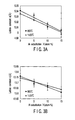
FIGS. 3A and 3B show the relationship between the
Al substitution x (at%) and the lattice constant of the
a-axis or c-axis. These measurements were performed
with respect to the samples heated at 950°C or 1100°C.
FIGS. 3A and 3B demonstrate that the lattice
constant of each of the a-axis and c-axis decreases
with the Al substitution x. It is judged that this
tendency is attributed to solution of Al into α- Fe2O3.
Samples having different Al substitution were
heated at different temperatures and checked for color.
FIGS. 4A to 4C show chromaticity (hue and chroma) of
each sample according to the L*a*b* color space in the
a*b* coordinates. The value of +a* indicates the
direction toward red, the value of -a* indicates the
direction toward green, the value of +b* indicates the
direction toward yellow, and the value of -b* indicates
the direction toward blue. For the reference, the
chromaticity of an extant "Fukiya Bengara" (indicated
by "red iron oxide A") is plotted in each graph.
FIG. 4A shows the graph for the aluminum-unsubstituted
sample (Fe:Al=100:0), FIG. 4B shows the graph for the
5 at% aluminum-substituted sample (Fe:Al=95:5) and
FIG. 4C shows the graph for the 15 at% aluminum-substituted
sample (Fe:Al=85:15).
As shown in FIGS. 4A to 4C, the 5 at% aluminum-substituted
sample calcined at 900°C and the 15 at%
aluminum-substituted sample calcined at 1050°C indicate
substantially the same chromaticity as the extant
Bengara. This demonstrates that the aluminum-substituted
hematite having a high aluminum
substitution is substantially free from growth of
hematite grains even if it is heated to elevated
temperatures ranging from 700°C to 1100°C, with the
result that the resultant hematite stably exhibits a
bright color.