EP1376151A1 - Position measuring method and mobile communication terminal - Google Patents
Position measuring method and mobile communication terminal Download PDFInfo
- Publication number
- EP1376151A1 EP1376151A1 EP02707160A EP02707160A EP1376151A1 EP 1376151 A1 EP1376151 A1 EP 1376151A1 EP 02707160 A EP02707160 A EP 02707160A EP 02707160 A EP02707160 A EP 02707160A EP 1376151 A1 EP1376151 A1 EP 1376151A1
- Authority
- EP
- European Patent Office
- Prior art keywords
- mobile communication
- communication terminal
- satellites
- server
- data
- Prior art date
- Legal status (The legal status is an assumption and is not a legal conclusion. Google has not performed a legal analysis and makes no representation as to the accuracy of the status listed.)
- Withdrawn
Links
Images


Classifications
-
- G—PHYSICS
- G01—MEASURING; TESTING
- G01S—RADIO DIRECTION-FINDING; RADIO NAVIGATION; DETERMINING DISTANCE OR VELOCITY BY USE OF RADIO WAVES; LOCATING OR PRESENCE-DETECTING BY USE OF THE REFLECTION OR RERADIATION OF RADIO WAVES; ANALOGOUS ARRANGEMENTS USING OTHER WAVES
- G01S19/00—Satellite radio beacon positioning systems; Determining position, velocity or attitude using signals transmitted by such systems
- G01S19/01—Satellite radio beacon positioning systems transmitting time-stamped messages, e.g. GPS [Global Positioning System], GLONASS [Global Orbiting Navigation Satellite System] or GALILEO
- G01S19/03—Cooperating elements; Interaction or communication between different cooperating elements or between cooperating elements and receivers
- G01S19/05—Cooperating elements; Interaction or communication between different cooperating elements or between cooperating elements and receivers providing aiding data
- G01S19/06—Cooperating elements; Interaction or communication between different cooperating elements or between cooperating elements and receivers providing aiding data employing an initial estimate of the location of the receiver as aiding data or in generating aiding data
-
- G—PHYSICS
- G01—MEASURING; TESTING
- G01C—MEASURING DISTANCES, LEVELS OR BEARINGS; SURVEYING; NAVIGATION; GYROSCOPIC INSTRUMENTS; PHOTOGRAMMETRY OR VIDEOGRAMMETRY
- G01C21/00—Navigation; Navigational instruments not provided for in groups G01C1/00 - G01C19/00
-
- G—PHYSICS
- G01—MEASURING; TESTING
- G01S—RADIO DIRECTION-FINDING; RADIO NAVIGATION; DETERMINING DISTANCE OR VELOCITY BY USE OF RADIO WAVES; LOCATING OR PRESENCE-DETECTING BY USE OF THE REFLECTION OR RERADIATION OF RADIO WAVES; ANALOGOUS ARRANGEMENTS USING OTHER WAVES
- G01S19/00—Satellite radio beacon positioning systems; Determining position, velocity or attitude using signals transmitted by such systems
- G01S19/38—Determining a navigation solution using signals transmitted by a satellite radio beacon positioning system
- G01S19/39—Determining a navigation solution using signals transmitted by a satellite radio beacon positioning system the satellite radio beacon positioning system transmitting time-stamped messages, e.g. GPS [Global Positioning System], GLONASS [Global Orbiting Navigation Satellite System] or GALILEO
- G01S19/42—Determining position
-
- H—ELECTRICITY
- H04—ELECTRIC COMMUNICATION TECHNIQUE
- H04W—WIRELESS COMMUNICATION NETWORKS
- H04W64/00—Locating users or terminals or network equipment for network management purposes, e.g. mobility management
Definitions
- the present invention relates to a method for measuring positions of a mobile communication terminal, a mobile communication terminal, a program and a storage medium for storing the program.
- GPS Global Positioning System
- a navigation message contains various data such as, time correction data, ephemeris data and almanac data.
- Ephemeris data from a GPS satellite indicates a precise orbit of the GPS satellite, and almanac data indicates approximate orbits of all GPS satellites.
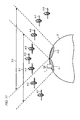
- a terminal 1 is not able to simultaneously receive radio signals from all GPS satellites. Namely, a radio signal that the terminal is able to receive from a GPS satellite is dependent on a current position of the terminal.
- terminal 1 is able to receive radio signals from GPS satellites 4-2 to 4-5 when it is located in area 5-1; and is able to receive radio signals from GPS satellites 4-3 to 4-6 when it is located in area 5-2.
- GPS satellites in the visible area are referred to as "GPS satellites in the visible area" for terminal 1.
- a terminal 1 with GPS function receives radio signals from two or more GPS satellites respectively, computes distances from the GPS satellites on the basis of the navigation messages included in the radio signals, and thereby measures the position of the terminal. This measurement operation will be referred to as a " position measurement operation.”
- terminal 1 receives navigation messages from one of the GPS satellites 4 (e.g. GPS satellite 4-2), and extracts almanac data from the received navigation messages.
- the GPS satellites 4 e.g. GPS satellite 4-2
- terminal 1 determines the GPS satellites in the visible area for terminal 1 on the basis of the almanac data.
- GPS satellites 4-2 to 4-5 are determined as the GPS satellites in the visible area for terminal 1.
- terminal 1 tunes into GPS satellites 4-2 to 4-5 in the visible area, and receives navigation messages from GPS satellites 4-2 to 4-5, respectively.
- terminal 1 computes distances between terminal 1 and each one of the satellites 4-2 to 4-5 on the basis of ephemeris data included in the navigation messages, and measures the position of the terminal.
- Each GPS satellite transmits a navigation message at a transmission rate of 50 bps.
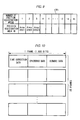
- the navigation message consists of 25 frames as shown in Fig. 10, while each frame consists of 1,500 bits. Therefore, a time of 750 seconds (1,500 bits x 25/50bps) is required to receive the complete navigation message.
- a time taken by terminal 1 to receive a navigation message is relatively long at the commencement of a position measurement operation; and terminal 1 must then extract almanac data from the navigation message.
- terminal 1 suffers from a drawback in that it is not convenient to use since a position measurement operation that it carries out takes a relatively long time.
- the present invention provides a method for measuring a position of a mobile communication terminal accommodated in a mobile communication network, including:
- the present invention provides a method for measuring a position of a mobile communication terminal that is accommodated in a mobile communication network, including:
- the mobile communication network is configured to be provided in a plurality of areas; the first step may also include a seventh step for detecting a residency area in which the mobile communication terminal currently resides; and an eighth step for determining, on the basis of the detected residency area, whether the mobile communication terminal has moved the predetermined distance.
- these methods will be referred to as third position measurement methods.
- the number of changes in the residency areas is counted in the eighth step. On the basis of the number of changes counted, it can be determined whether the mobile communication terminal has moved the predetermined distance. Alternatively, a number of changes without duplication in the residency areas may be counted in the eighth step. Then, on the basis of the number of changes, it can be determined whether the mobile communication terminal has moved the predetermined distance. For convenience, these methods will be referred to as fourth and fifth position measurement methods respectively.
- the area consists of one or a plurality of cells, and a base station corresponding to each cell executes radio communication with the mobile communication terminal. Then, on the basis of area identification data transmitted from the base station the residency area can be detected. For convenience, these methods will be referred to as sixth position measurement methods.
- the area identification data includes data for determining a movement distance of the mobile communication terminal. Then, on the basis of the data for determining movement distance, which data is included in the area identification data transmitted from the base station, it can be determined in the eighth step whether the mobile communication terminal has moved the predetermined distance. For convenience, these methods will be referred to as seventh position measurement methods.
- a position of the mobile communication terminal can be measured by said mobile communication terminal alone.
- these methods will be referred to as eight position measurement methods.
- the third step may further include the steps of:
- the present invention provides a mobile communication terminal which is accommodated in a mobile communication terminal, having:
- the present invention provides a mobile communication terminal, having:
- the mobile communication network is configured to be provided in a plurality of areas, and the first means may further include:
- the eighth means counts a number of changes in the residency areas, and on the basis of the number of the changes counted, it can be determined, whether the mobile communication terminal has moved the predetermined distance.
- the eighth means counts a number of changes without duplication in the residency areas, and then determines, on the basis of the number of changes, whether the mobile communication terminal has moved the predetermined distance.
- the terms fourth and fifth mobile communication terminals will be used.
- the area consists of one or a plurality of cells.
- a base station corresponding to each cell executes radio communication with the mobile communication terminal.
- the seventh means is able to further detect a residency area.
- the term sixth mobile communication terminal will be used.
- the area identification data includes data for determining a movement distance of the mobile communication terminal.
- the eighth means may further determine whether the mobile communication terminal has moved the predetermined distance, by referring data for determining movement distance included in the area identification data transmitted from the base station.
- the term seventh mobile communication terminal will be used.
- the first means alone may further measure a position of the mobile communication terminal on the basis of the radio signals received from the satellites.
- the term eighth mobile communication terminal will be used.
- the third means may further include:
- the present invention provides a program for causing a computer, which is equipped in a mobile communication terminal accommodated in a mobile communication network, to execute functions of:
- the mobile communication network is configured to be provided in a plurality of areas; the first function may further include:
- the present invention provides a computer readable storage media for storing the first or second program.
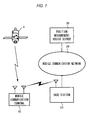
- Fig. 1 is a diagram illustrating the entire system according to the first embodiment of the present invention.
- the system includes mobile communication network 20, mobile communication terminal 10 accommodated in mobile communication network 20, and position measurement assist server 30 connected to mobile communication network 20.
- Mobile communication network 20 includes a plurality of base stations 21, provided at predetermined distances from one another, a switch (not shown) for performing circuit switching in network 20, home memory (not shown), and communication links that connect base stations 21, the switch and the home memory to each other.
- Base station 21 is provided to form a radio cell having a diameter of between several hundred meters to several kilometers.
- a position registration area is formed by grouping together a predetermined number of radio cells.
- Each of base stations 21 located within a position registration area transmits a broadcast message to a radio cell of the base station 21.
- a broadcast message includes position registration area ID that is unique to a position registration area.
- Mobile communication terminal 10 transmits a position registration request to mobile communication network 20, each time mobile communication terminal 10 receives a new position registration area ID. Then, a position is registered in the home memory in response to the request. Therefore, the position of the mobile communication terminal 10 can be known by referring to the home memory.
- Mobile communication terminal 10 is a terminal such as a cellular phone or Personal Digital Assistants (PDA).
- Mobile communication terminal 10 has a GPS position measurement function for tuning into radio signals emitted from a plurality of GPS satellites, and for measuring its own position on the basis of navigation data included in the received radio signals; and also a communication function for performing data communication through mobile communication network 20 with position measurement assist server 30 by a method such as Time Division Multiple Access (TDMA) or Code Division Multiple Access (CDMA).
- TDMA Time Division Multiple Access
- CDMA Code Division Multiple Access
- Mobile communication terminal 10 performs stand-alone position measurement by using the GPS function of the terminal.
- mobile communication terminal 10 performs network position measurement in cooperation with position measurement assist server 30, in addition to the terminal performing a GPS function.
- mobile communication terminal 10 functions to provide to a user services such as navigation, by using the position obtained in the position measurement.
- Position measurement assist server 30 assists mobile communication terminal 10 in performing a network position measurement in cooperation with the GPS function of mobile communication terminal 10, in a case that mobile communication terminal 10 performs a network position measurement.
- Position measurement assist server 30 provides mobile communication terminal 10 with position measurement assist-data, such as satellite capture data for expressing GPS satellites in a visible area for mobile communication terminal 10, and a Doppler shift for expressing delay conditions of radio signals, and also correction data for correcting errors in a stand-alone position measurement.
- Mobile communication terminal 10 is able to perform position measurement more rapidly and precisely by using the position measurement assist-data, as compared to stand-alone position measurement.
- mobile communication terminal 10 Since mobile communication terminal 10 does not receive position measurement assist-data in a stand-alone position measurement, precision of position measurement is lower than that in network position measurement.
- Position measurement assist-data that is used to a network position measurement are dependent on an approximate position of mobile communication terminal 10. For example, it is known that mobile communication terminal 10 has moved a distance of around 150 kilometers, GPS satellites 4 in the visible area for mobile communication terminal 10 are not the same as those in the visible area before the movement. Alternatively, if the movement range of mobile communication terminal 10 is not greater than 150 kilometers, network position measurement can be performed by using the same GPS satellites 4, namely, the same position measurement assist-data.
- mobile communication terminal 10 notifies its own rough position to position measurement assist server 30, and performs network position measurement on the basis of position measurement assist-data provided from position measurement assist server 30, and in accordance with the notification.
- Mobile communication terminal 10 measures its own position by performing a stand-alone position measurement each time mobile communication terminal 10 moves 150 kilometers, and stores the position until mobile communication terminal 10 moves another 150 kilometers from the measured point. This enables mobile communication terminal 10 to maintain its own position, which is necessary to obtain position measurement assist-data from position measurement assist server 30.
- the position obtained by the stand-alone position measurement will include a degree of error, since the position has not been corrected on the basis of position measurement assist-data.
- the position obtained by the stand-alone position measurement will be referred to as an "approximate position", expressing approximate position of mobile communication terminal 10.
- mobile communication terminal 10 performs the network position measurement by using the stored approximate position.
- mobile communication terminal 10 transmits the stored approximate position to position measurement assist server 30 as denoted by the arrow P, and receives position measurement assist-data transmitted from position measurement assist server 30 in accordance with the approximate position.
- Position measurement assist server 30 generates position measurement assist-data in accordance with the approximate position of mobile communication terminal 10.
- Position measurement assist server 30, for example, determines GPS satellites 4 in the visible area for mobile communication terminal 10, by using a known art, on the basis of positions of GPS satellites deduced from the approximate position of mobile communication terminal 10 and almanac data. It is sufficient to know the approximate position obtained by a stand-alone position measurement as described above, since it is not necessary to obtain a particularly precise position to generate position measurement assist-data.
- Mobile communication terminal 10 receives radio signals in sync with GPS satellites 4 indicated in the satellite capturing data included in the position measurement assist-data, and measures its own position. Mobile communication terminal 10 computes its own precise position by using Doppler shift data and correction data described above, and the like.
- stand-alone position measurement is used for preparing an approximate position for network position measurement.
- Mobile communication terminal 10 does not need to provide services such as a navigation, which is based directly on a position obtained by the stand-alone position measurement. Low precision measurement in stand-alone measurement, therefore, does not matter.
- stand-alone position measurement or network position measurement are used depending on the purpose of obtaining a position measurement.
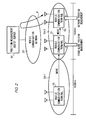
- Fig. 3 is a plan chart showing an over view of a plurality of position registration areas. Since each position registration area has a size of 10 kilometers in diameter as described above, the end to end length of the rows of 15 position registration area when arranged in a line is equal to around 150 kilometers. If mobile communication terminal 10, for example, moves linearly as denoted by arrow L and the position registration area where the mobile communication terminal 10 resides change 15 times, it is determined that the mobile communication terminal 10 has moved linearly by around 150 kilometers. Alternatively, if mobile communication terminal 10 moves along a curve as denoted by arrow M or N, the linear travel distance is shorter than 150 kilometers. However, in this case it may be determined that the mobile communication terminal 10 has moved around 150 kilometers at the moment the position registration area change 15 times. Because, once mobile communication terminal 10 has obtained its own position by performing stand-alone position measurement, mobile communication terminal 10 is able to immediately perform network position measurement as requested in excess of processing of stand-alone position measurement.
- Mobile communication terminal 10 consists of radio communication unit 11, GPS receiving unit 12, Central Processing Unit (CPU) 13, Read Only Memory (ROM) 14, Static Random Access Memory (SRAM) 15, user interface unit 16, and bus 17 for connecting these respective units to one other.
- CPU Central Processing Unit
- ROM Read Only Memory
- SRAM Static Random Access Memory
- Radio communication unit 11 is provided with an antenna and communication control circuits (not shown), and performs radio communication with base station 21 of mobile communication network 20.
- GPS receiving unit 12 is provided with a GPS antenna and receiving circuits (not shown) receives radio signals from GPS satellites 4, and provides the received radio signals to CPU 13 through bus 17.
- ROM 14 stores control programs.
- the programs include a program for performing position measurement on the basis of navigation messages received from GPS satellites; a program for performing data communication with position measurement assist server 30; a program for providing user with a navigation service; and the like.
- CPU 13 reads the control programs from ROM 14, and controls each unit of mobile communication terminal 10 by executing the control programs.
- SRAM 15 stores an ID of each position registration area received from base station 21 by mobile communication terminal 10 (referred to as a residency area ID, and a residency area, respectively, below), a number of changes in the residency area, and an approximate position obtained by stand-alone position measurement. SRAM 15 also has battery backup, and thus is able to retain its content in a case that mobile communication terminal 10 is powered down. In the example shown in Fig. 4, contents of SRAM 15 show that residency area ID is "AREA0001", and an approximate position is "N --- E ---.”
- User interface unit 13 consists of a liquid crystal display for displaying a variety of information; a keypad that a user employs to perform a variety of input operations; a microphone; and a speaker for inputting and outputting voices, respectively, and the like.
- the residency area ID stored in SRAM 15 at the moment of powering on is the same as an ID of the position registration area in which mobile communication terminal 10 resided at the time of powering off, (in this example, "AREA0002"). Accordingly, the approximate position stored in SRAM 15 is the same as the approximate position stored in SRAM 15 at the time of powering off.
- the initial value of a number of changes in the residency area is thus set to "0".
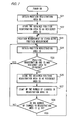
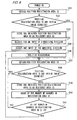
- Radio communication unit 11 receives a broadcast message transmitted from base station 21, and detects a position registration area ID (in this example "AREA0001") included in the broadcast message. Radio communication unit 11 provides the detected position registration area ID through bus 17 to CPU 13. CPU 13 obtains a position registration area ID of position registration area where mobile communication terminal 10 resides at the time of powering up (step S1).
- a position registration area ID in this example "AREA0001”
- CPU compares the residency area ID, "AREA0002" and the position registration area ID obtained in step S1, "AREA0001", and determines if the IDs coincide(step S2).
- step S2 since they differ (step S2: No), operation of CPU 13 advances to step S3 so as to obtain a new approximate position.
- step S2 the residency area ID, "AREA0002" and the position registration area ID obtained in step S1 coincide, the operation of CPU 13 advances to step S5 described below, since there is no need to obtain a new approximate position.
- CPU 13 overwrites the old residency area ID in SRAM 15 with the position registration area ID obtained in step S1, "AREA0001", as a new residency area ID (step S3).
- CPU 13 measures a position of the mobile station by using stand-alone position measurement, and overwrites the old approximate position in SRAM 15 with the measured latitude and longitude as a new approximate position (step S4).
- Radio communication unit 11 receives a broadcast message transmitted from base station 21, detects position registration area ID included in the received broadcast message, and provides the detected position registration area ID (for example, "AREA0003") through bus 17 to CPU 13 (step S5).
- CPU 13 compares the position registration area ID obtained in step S1, "AREA0001” and the position registration area ID obtained in step S5, "AREA003", and determines if these IDs coincide (step S6).
- step S6 No
- CPU 13 overwrites the old residency area ID in SRAM 15 with the position registration area ID obtained in step S5, "AREA0003", as a new residency area ID (step S7).
- CPU 13 counts up a number of changes in position registration area in SRAM 15 by an amount of one (step S8).
- the number of changes in position registration area changes from "0" to "1".
- CPU 13 determines if the number of changes in position registration area in SRAM 15 is greater than 14 (step S9). In this case, the number of changes in position registration area is 1 and, therefore, smaller than 15 (step S9: No), so that CPU 13 executes step S5. CPU 13 then again executes the processes in accordance with steps S5 to S9, described above.
- step S9 Yes
- CPU 13 again measures its own approximate position by using stand-alone position measurement, and stores the approximate position in SRAM 15.
- Mobile communication terminal 10 by performing stand-alone position measurement, and storing its own approximate position every 15 times residency area ID is changed, is able to continually record its approximate position, so as to be able to perform network position measurement, as described below.
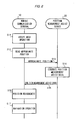
- a user Using the keypad of mobile communication terminal 10, a user instructs a start of navigation service (step S11).
- Mobile communication terminal 10 reads an approximate position stored in SRAM 15 (step S12), and requests position measurement assist server 30 to provide position measurement assist-data by transmitting the approximate position through mobile communication network 20 to position measurement assist server 30 (step S13).
- position measurement assist server 30 On receiving the approximate position, position measurement assist server 30 generates position measurement assist-data in accordance with the approximate position (step S 14), and transmit the position measurement assist-data through mobile communication network 20 to mobile communication terminal 10 (step S 15).
- mobile communication terminal 10 On receiving position measurement assist-data, mobile communication terminal 10 measures its own position on the basis of the position measurement assist-data (step S16).
- Mobile communication terminal 10 displays, on the basis of the measured longitude and latitude, an image overlapping a current position or a route to a destination in a liquid crystal display (LCD) screen, to provide a navigation service to the user (step S 17).
- LCD liquid crystal display
- a position can be rapidly obtained when providing services that make use of position information. Thus, such services can be smoothly provided.
- the second embodiment of the present invention is described below.
- the configuration of the second embodiment is common with that of the first embodiment.
- the operation of the second embodiment differs from that of the first embodiment in that when mobile communication terminal 10 is powered off, a residency area ID and an approximate position stored in SRAM 15 are cleared. As a result, when mobile communication terminal 10 is powered on it obtains its own position by performing stand-alone position measurement.
- Radio communication unit 11 receives a broadcast message transmitted from base station 21, and detects a position registration ID (in this case, "AREA0001" is chosen) included in the broadcast message. Radio communication unit 11 provides the detected position registration ID to CPU 13 through bus 17 (step S21).
- a position registration ID in this case, "AREA0001" is chosen
- CPU 13 stores the position registration ID "AREA0001" obtained in step S21 in SRAM 15 as a residency area ID (step S22).
- CPU 13 measures position of the mobile communication terminal by performing a stand-alone position measurement, and stores the measured longitude and latitude in SRAM 15 (step S23).
- radio communication unit 11 Periodically, radio communication unit 11 receives a broadcast message transmitted from base station 21; and, as described below, CPU 13 repeats steps S24 to S28.
- Radio communication unit 11 receives a broadcast message transmitted from base station 21, and, on detecting position registration area ID included in the received broadcast message, provides the detected position registration area ID (for example, "AREA0003") through bus 17 to CPU 13 (step S24).
- the detected position registration area ID for example, "AREA0003"
- CPU 13 compares the position registration area ID "AREA0001" stored in SRAM 15 with the position registration area ID "AREA0003" obtained in step S24, and determines whether they agree (step S25).
- CPU 13 overwrites the position registration area ID "AREA0003" obtained in step S24 in SRAM 15 as residency area ID (step S26).
- CPU 13 counts up a number of changes in position registration area stored in SRAM 15 by one (step S27). Accordingly, the number of changes in position registration area changes to "1" from the initial value of "0".
- CPU 13 determines whether the number of changes in position registration area is greater than 14 (step S28). In this case, since the number of changes in position registration area is 1 and less than 15 (step S28: No), CPU 13 returns to step S24 and performs steps S24 to S28, described above, again.
- step S28 Yes
- CPU 13 clears the number of changes in position registration area and resets it to "0", and returns to step S23.
- CPU 13 measures its own approximate position again by performing stand-alone position measurement, and stores the approximate position in SRAM 15.
- mobile communication terminal 10 always maintains its approximate position necessary for performing network position measurement, and is thus able to provide services such as a navigation service, promptly.
- Mobile communication terminal 10 does not need to store residency area ID or an approximate position in SRAM when powered off.
- E-GPS Enhanced GPS
- the third embodiment has a common configuration with the first embodiment.
- ROM 14 of mobile communication terminal 10 does not store a program for performing position measurement. Instead, position measurement assist server 30 stores a program for calculating a position of mobile communication terminal 10. Accordingly, mobile communication terminal 10 transfers the received navigation message to position measurement assist server 30 when performing position measurement, and subsequently receives the result of position measurement calculation made by position measurement assist server 30.
- the residency area ID stored in SRAM 15 at the moment of powering on is the same as an ID of the position registration area in which the mobile communication terminal 10 resided at the time of powering off (in this example, "AREA0002").
- the approximate position stored in SRAM 15 is the same as the approximate position stored in SRAM 15 at the time of powering off.
- the initial value of number of changes in the residency area is set to "0".
- Radio communication unit 11 receives a broadcast message transmitted from base station 21, and detects a position registration area ID (in this example "AREA0001") included in the broadcast message. Radio communication unit 11 provides the detected position registration area ID through bus 17 to CPU 13. Thus, CPU 13 obtains position registration area ID of position registration area where mobile communication terminal 10 resides at the time of powering up (step S31). CPU 13 compares the residency area ID "AREA0002" stored in SRAM 15 with the position registration area ID "AREA0001" obtained in step S21, and determines whether they agree (step S32).
- step S32: No In this case, they do not agree (step S32: No), and CPU 13 therefore proceeds in operation to step S33.
- step S31 In another case when the residency area ID stored in SRAM 15 and the position registration area ID obtained in step S21 do agree in step S32, CPU 13 does not need to obtain a new approximate position, and therefore proceeds in operation to step S37.
- step S33 CPU 13 overwrites the position registration area ID "AREA0001" obtained in step S33 in SRAM 15 as residency area ID.
- CPU 13 generates a screen image for instructing a user to input a name of a municipal division, where mobile communication terminal 10 resides, and displays the screen image on a liquid crystal display (LCD) display (step S34).
- the screen image instruction may instruct a user to input either a name of a municipal division or a code pre-assigned to each municipal division, or a screen showing a list of names or codes of municipal divisions, to allow a user to select a municipal division from the list.
- CPU 13 When a user inputs a municipal division in accordance with the screen image instruction, CPU 13 accepts the input operation of a name or a code of the municipal division and stores it in SRAM 15 (step S35).
- CPU 13 performs position measurement in accordance with the operations below (step S36).
- CPU 13 reads the name or the code of a municipal division stored in SRAM 15, requests position measurement assist server 30 to provide position measurement assist-data, by transmitting the name or the code of a municipal division through radio communication unit 11 to position measurement assist server 30.
- Position measurement assist server 30 on receiving the name or the code of a municipal division, generates position measurement assist-data accordingly, and transmits them through mobile communication network 20 to mobile communication terminal 10.
- CPU 13 of mobile communication terminal 10 on obtaining the position measurement assist-data, captures radio signals from GPS satellites 4 appointed by the position measurement assist-data, transmits navigation messages included in the radio signals through radio communication unit 11 to position measurement assist server 30 and request the server to perform an operation for measuring the position of the mobile communication terminal 10.
- Position measurement assist server 30 on receiving the navigation message, calculates a position of the mobile communication terminal 10 on the basis of the navigation messages, and transmits the result of position measurement through mobile communication network 20 to mobile communication terminal 10.
- CPU 13 of mobile communication terminal 10 obtains the result of the position measurement and stores it in SRAM 15.
- radio communication unit 11 Each time radio communication unit 11 receives a navigation message transmitted from bas station 21, CPU 13 repeats steps S37 to S41 below.
- Radio communication unit 11 receives a broadcast message transmitted from base station 21, and detects a position registration area ID included in the received broadcast message. Radio communication unit 11 provides the detected position registration area ID (for example, "AREA0003") through bus 17 to CPU 13.
- a position registration area ID for example, "AREA0003"
- CPU 13 compares the position registration area ID "AREA0001" stored in SRAM 15 with the position registration area ID "AREA0003" obtained in step S24, and determines whether they agree (step S38).
- step S38: No In this case they do not agree (step S38: No), and so CPU 13 overwrites the position registration area ID "AREA0003" obtained in step S37 in SRAM 15 as residency area ID (step S39).
- CPU 13 counts up by one a number of changes in position registration area stored in SRAM 15 (step S40). Accordingly, the number of changes in position registration area changes from the initial value of "0" to "1".
- CPU 13 determines whether the number of changes in position registration area is greater than 14 (step S41). In this case, the number of changes in position registration area is 1 and less than 15 (step S41: No), and so CPU 13 returns it operation to step S37 and performs steps S37 to S41 described above, again.
- CPU 13 repeats the steps S37 to S41 until the number of changes in position registration area is 15 (step S41: Yes), then CPU 13 clears the number of changes in position registration area stored in SRAM 15 and resets it to "0", and returns to step S36.
- CPU 13 measures its own approximate position again by performing stand-alone position measurement, and stores its approximate position in SRAM 15.
- mobile communication terminal 10 always maintains its approximate position being necessary to perform network position measurement, so that mobile communication terminal 10 can make use of its approximate position to provide services such as a navigation service, promptly.
- Mobile communication terminal 10 can obtain its position promptly, even if mobile communication terminal 10 is not able to perform stand-alone position measurement. Thus, such services can be smoothly provided.
- each time position registration area ID received by mobile communication terminal 10 changes, a number of changes in position registration area is counted.
- the methods for counting changes in position registration area are not restricted to those of the embodiments.
- counting table CT illustrated in Fig. 9 can be generated in SRAM 15, and it can be used for the counting.
- numerals 1 to 15 in a row for number of position registration areas denote numbers of position registration area to which a mobile communication terminal 10 has moved.
- a position registration area ID received by a mobile communication terminal 10 is stored from the first column one by one along the row for a number of position registration areas.
- the position registration IDs are stored in counting table CT as shown in Fig. 9.
- the position registration IDs are similarly stored in counting table CT as shown in Fig. 9, since a position registration ID is stored for the same IDs.
- obtaining an approximate position of a mobile communication terminal 10 can be avoided, when it is not necessary. For example, if mobile communication terminal 10 round trips through less than 15 position registration areas, it is not necessary to obtain a new approximate position of the mobile communication terminal 10, since a number of position registration areas stored in counting table CT does not reach 15.
- the size of position registration area is not restricted to around 10 kilometers in diameter. If the size of position registration area differs from around 10 kilometers, then the number of changes in position registration area, which is used as a reference to determine to perform obtaining approximate position, varies depending on the size of a position registration area.
- mobile communication terminal 10 is equipped with both GPS functionality and communication functionality.
- these functionalities may be provided in separate equipment, respectively.
- the operation above may be performed in cooperation with these equipment.
- a program which CPU 13 of mobile communication terminal 10 executes in order to perform position measurement operations described above, may be installed in the mobile communication terminal 10 as an application program.
- the application program may be provided, for example, in storing in a storage medium readable from CPU 13 of mobile communication terminal 10, such as magnetic storage media, optical storage media, or ROM.
- the application may be provided to mobile communication terminal 10 through a network such as the Internet.
- an approximate position of mobile communication terminal 10 is obtained in accordance with the 150 kilometer criterion.
- the criterion for obtaining approximate position is set to 150 kilometers. However, the criterion is not limited to 150 kilometers.
- the criterion for obtaining an approximate position has to correspond to the maximum range of distance where common position measurement assist-data is available.
- the criterion for obtaining an approximate position may vary in accordance with the conditions, for example, number of GPS satellites or the like.
- a movement distance is determined on the basis of number of changes in position registration area.
- methods for determining a movement distance are not restricted to the method.
- base station 21 in an area may broadcast data unique to the area.
- each position registration area ID in an area includes common upper digits. As shown in Fig. 3, for example, IDs of position registration areas included in a square area of 150 kilometers are set to "AREA11XX (XX are arbitrary)", so that two digits following "Area" are set to "11". The ID will also be referred to as position registration area identification data.
- IDs of position registration areas included in the first adjoining square area of 150 kilometers are set to "AREA22XX (XX are arbitrary)", so that two digits following "Area” are set to "22".
- IDs of position registration areas included in the second adjoining square area of 150 kilometers are set to "AREA33XX (XX are arbitrary)", so that two digits following "Area” are set to "33 ".
- mobile communication terminal 10 determines its movement distance on the basis of two digits following "Area" of the received position registration area IDs.
- the upper two digits of position registration area identification data corresponds to data for determining movement distance of mobile communication terminal 10.
- a movement distance is determined on the basis of a number of changes in position registration area.
- methods for determining a movement distance are not restricted to the method. For example, if mobile communication terminal 10 performs a handover operation, a number of handover operations may be counted. Since mobile communication terminal has moved from a cell to an adjoining cell on this occasion, a movement distance of mobile communication terminal can be computed in a unit of size of the cell by counting number of handover operations.
- a name of a municipal division or a code pre-assigned to a municipal division is inputted, but the input is not restricted to that of a municipal division.
- divisions in weather reports or divisions by municipalities may be used.
- the present invention is not limited to provide the navigation services exemplified in the first to third embodiments.
- the present invention is able to provide various type of services using the measured position to a user.
- a position related data providing service for providing a location of the nearest restaurant can be provided, and a service for providing the third party to find positions of the person carrying mobile communication terminal 10 can be provided.
Landscapes
- Engineering & Computer Science (AREA)
- Radar, Positioning & Navigation (AREA)
- Remote Sensing (AREA)
- Computer Networks & Wireless Communication (AREA)
- Physics & Mathematics (AREA)
- General Physics & Mathematics (AREA)
- Signal Processing (AREA)
- Automation & Control Theory (AREA)
- Position Fixing By Use Of Radio Waves (AREA)
- Mobile Radio Communication Systems (AREA)
- Navigation (AREA)
Abstract
Description
Claims (46)
- A method for measuring a position of a mobile communication terminal that is accommodated in a mobile communication terminal, comprising:a first step for determining whether the mobile communication terminal has moved a predetermined distance;a second step for measuring a position of the mobile communication terminal and for storing the position as an approximate position of the mobile communication terminal, each time it is determined in said first step that the mobile communication terminal has moved the predetermined distance;a third step of selecting a plurality of satellites selected on the basis of the stored approximate position, and receiving radio signals from the selected satellites; anda fourth step of measuring a position of the mobile communication terminal by using data included in the received radio signals.
- A method for measuring a position of a mobile communication terminal that is accommodated in a mobile communication terminal, comprising:a first step for determining whether the mobile communication terminal has moved a predetermined distance;a second step for measuring a position of the mobile communication terminal and for storing the position as an approximate position of the mobile communication terminal, each time it is determined in said first step that the mobile communication terminal has moved the predetermined distance;a third step for selecting a plurality of satellites selected on the basis of the stored approximate position and receiving radio signals from the selected satellites;a fifth step for transmitting the data included in the radio signals through the mobile communication network to a server; anda sixth step for receiving a position of the mobile communication terminal which is calculated in accordance with the data, and transmitted by the server.
- A method for measuring a position of a mobile communication terminal according to claim 1, wherein the mobile communication network is configured to be provided in a plurality of areas, characterized in that said first step comprises:a seventh step for detecting a residency area where the mobile communication terminal resides; andan eighth step for determining, on the basis of the detected residency area, whether the mobile communication terminal has moved the predetermined distance.
- A method for measuring a position of a mobile communication terminal according to claim 3, characterized by
the number of changes in the residency areas counted in the eighth step, and
determining on the basis of said number of changes whether the mobile communication terminal has moved the predetermined distance. - A method for measuring a position of a mobile communication terminal according to claim 3, characterized by
the number of changes not including duplication in the residency areas counted in the eighth step, and
determining on the basis of said number of changes whether the mobile communication terminal has moved the predetermined distance. - A method for measuring a position of a mobile communication terminal according to claim 3, wherein the area consists of one or a plurality of cells, and a base station corresponding to each cell executes radio communication with the mobile communication terminal, characterized in that
the residency area is detected on the basis of area identification data transmitted from the base station, in the seventh step. - A method for measuring a position of a mobile communication terminal according to claim 6, wherein the area identification data includes data for determining a movement distance of the mobile communication terminal, characterized by
determining whether the mobile communication terminal has moved the predetermined distance by referring to the data for determining movement distance included in the area identification data transmitted from the base station, in the eighth step. - A method for measuring a position of a mobile communication terminal according to claim 1, characterized in that
a position of the mobile communication terminal is measured by said mobile communication terminal alone on the basis of the radio signals received from the satellites, in the second step. - A method for measuring a position of a mobile communication terminal according to claim 3, characterized in that
a position of the mobile communication terminal measured by said mobile communication terminal alone on the basis of the radio signals received from the satellites, in the second step. - A method for measuring a position of a mobile communication terminal according to claim 4, characterized in that
a position of the mobile communication terminal measured by said mobile communication terminal alone on the basis of the radio signals received from the satellites, in the second step. - A method for measuring a position of a mobile communication terminal according to claim 5, characterized in that
a position of the mobile communication terminal is measured by said mobile communication terminal alone on the basis of the radio signals received from the satellites, in the second step. - A method for measuring a position of a mobile communication terminal according to claim 6, characterized in that
a position of the mobile communication terminal is measured by said mobile communication terminal alone on the basis of the radio signals received from the satellites, in the second step. - A method for measuring a position of a mobile communication terminal according to claim 7, characterized in that
a position of the mobile communication terminal is measured by said mobile communication terminal alone on the basis of the radio signals received from the satellites, in the second step. - A method for measuring a position of a mobile communication terminal according to claim 1, characterized in that the third step further comprises the steps of:transmitting the stored approximate position through the mobile communication network to a server;receiving a position measurement assist-data transmitted from the server according to the approximate position; andselecting the plurality of satellites assigned by the position measurement assist-data.
- A method for measuring a position of a mobile communication terminal according to claim 3, characterized in that the third step further comprises the steps of:transmitting the stored approximate position through the mobile communication network to a server;receiving a position measurement assist-data transmitted from the server according to the approximate position; andselecting the plurality of satellites assigned by the position measurement assist-data.
- A method for measuring a position of a mobile communication terminal according to claim 4, characterized in that the third step further comprises the steps of:transmitting the stored approximate position through the mobile communication network to a server;receiving a position measurement assist-data transmitted from the server in accordance with the approximate position; andselecting the plurality of satellites assigned by the position measurement assist-data.
- A method for measuring a position of a mobile communication terminal according to claim 5, characterized in that the third step further comprises the steps of:transmitting the stored approximate position through the mobile communication network to a server;receiving a position measurement assist-data transmitted from the server in accordance with the approximate position; andselecting the plurality of satellites assigned by the position measurement assist-data.
- A method for measuring a position of a mobile communication terminal according to claim 6, characterized in that the third step further comprises the steps of:transmitting the stored approximate position through the mobile communication network to a server;receiving position measurement assist-data transmitted from the server in accordance with the approximate position; andselecting the plurality of satellites assigned by the position measurement assist-data.
- A method for measuring a position of a mobile communication terminal according to claim 7, characterized in that the third step further comprises the steps of:transmitting the stored approximate position through the mobile communication network to a server;receiving a position measurement assist-data transmitted from the server in accordance with the approximate position; andselecting the plurality of satellites assigned by the position measurement assist-data.
- A method for measuring a position of a mobile communication terminal according to claim 1, characterized in that
the second step further comprises a step in which a rough position of the mobile communication terminal is assigned, and
said rough position is stored as an approximate position of the mobile communication terminal, in the second step. - A method for measuring a position of a mobile communication terminal according to claim 20, characterized in that said rough position is assigned by an input of first information.
- A method for measuring a position of a mobile communication terminal according to claim 21, characterized in that said first information is data denoting a geographically divided area.
- A mobile communication terminal that is accommodated in a mobile communication terminal, comprising:first means for determining whether the mobile communication terminal has moved a predetermined distance;second means for measuring a position of the mobile communication terminal and for storing the position as an approximate position of the mobile communication terminal, each time it is determined by said first means that the mobile communication terminal has moved the predetermined distance;third means for selecting a plurality of satellites selected on the basis of the stored approximate position and receiving radio signals from the selected satellites; andfourth means for measuring position of the mobile communication terminal by using data included in the received radio signals.
- A mobile communication terminal, comprising:first means for determining whether the mobile communication terminal has moved a predetermined distance;second means for measuring a position of the mobile communication terminal and for storing the position as an approximate position of the mobile communication terminal, each time it is determined by said first means that the mobile communication terminal has moved the predetermined distance;third means for selecting a plurality of satellites selected on the basis of the stored approximate position and receiving radio signals from the selected satellites;fifth means for transmitting the data included in the radio signals through a mobile communication network to a server; andsixth means for receiving a position of the mobile communication terminal calculated and transmitted by the server in accordance with the data.
- A mobile communication terminal according to claim 23, wherein the mobile communication network is configured to be provided in a plurality of areas, characterized in that said first means further comprises:seventh means for detecting an area where the mobile communication terminal resides; andeighth means for determining, on the basis of the detected residency area, whether the mobile communication terminal has moved the predetermined distance.
- A mobile communication terminal according to claim 25, characterized in that eighth means counts the number of changes in the residency areas, and determines, on the basis of said number of changes, whether the mobile communication terminal has moved the predetermined distance.
- A mobile communication terminal according to claim 25, characterized in that the eighth means counts the number of changes without duplication in the residency areas, and determines, on the basis of said number of changes, whether the mobile communication terminal has moved the predetermined distance.
- A mobile communication terminal according to claim 25, wherein the area consists of one or a plurality of cells, and a base station corresponding each cell executes a radio communication with the mobile communication terminal, characterized in that
the seventh means detects the residency area on the basis of area identification data transmitted from the base station. - A mobile communication terminal according to claim 28, wherein the area identification data includes data for determining a movement distance of the mobile communication terminal, characterized in that
the eighth means determines whether the mobile communication terminal has moved the predetermined distance, by referring to data for determining movement distance included in the area identification data transmitted from the base station. - A mobile communication terminal according to claim 23, characterized in that the first means alone measures a position of the mobile communication terminal on the basis of the radio signals received from the satellites.
- A mobile communication terminal according to claim 25, characterized in that the second means alone measures a position of the mobile communication terminal on the basis of the radio signals received from satellites.
- A mobile communication terminal according to claim 26, characterized in that the second means alone measures a position of the mobile communication terminal on the basis of the radio signals received from satellites.
- A mobile communication terminal according to claim 27, characterized in that the second means alone measures a position of the mobile communication terminal on the basis of the radio signals received from satellites.
- A mobile communication terminal according to claim 28, characterized in that the second means alone measures a position of the mobile communication terminal on the basis of the radio signals received from satellites.
- A mobile communication terminal according to claim 29, characterized in that the second means alone measures a position of the mobile communication terminal on the basis of the radio signals received from satellites.
- A mobile communication terminal according to claim 23, characterized in that the third means further comprises:means for transmitting the stored approximate position through the mobile communication network to a server;means for receiving a position measurement assist-data transmitted from the server in accordance with the approximate position; andmeans for selecting the plurality of satellites assigned by the position measurement assist-data.
- A mobile communication terminal according to claim 25, characterized in that the third means further comprises:means for transmitting the stored approximate position through the mobile communication network to a server;means for receiving a position measurement assist-data transmitted from the server in accordance with the approximate position; andmeans for selecting the plurality of satellites assigned by the position measurement assist-data.
- A mobile communication terminal according to claim 26, characterized in that the third means further comprises:means for transmitting the stored approximate position through the mobile communication network to a server;means for receiving a position measurement assist-data transmitted from the server in accordance with the approximate position; andmeans for selecting the plurality of satellites assigned by the position measurement assist-data.
- A mobile communication terminal according to claim 27, characterized in that the third means further comprises:means for transmitting the stored approximate position through the mobile communication network to a server;means for receiving a position measurement assist-data transmitted from the server in accordance with the approximate position; andmeans for selecting the plurality of satellites assigned by the position measurement assist-data.
- A mobile communication terminal according to claim 28, characterized in that the third means further comprises:means for transmitting the stored approximate position through the mobile communication network to a server;means for receiving a position measurement assist-data transmitted from the server in accordance with the approximate position; andmeans for selecting the plurality of satellites assigned by the position measurement assist-data.
- A mobile communication terminal according to claim 29, characterized in that the third means further comprises:means for transmitting the stored approximate position to through the mobile communication network to a server;means for receiving a position measurement assist-data transmitted from the server in accordance with the approximate position; andmeans for selecting the plurality of satellites assigned by the position measurement assist-data.
- A mobile communication terminal according to claim 30, characterized in that the third means further comprises:means for transmitting the stored approximate position to through the mobile communication network to a server;means for receiving a position measurement assist-data transmitted from the server in accordance with the approximate position; andmeans for selecting the plurality of satellites assigned by the position measurement assist-data.
- A program for causing a computer, which is equipped in a mobile communication terminal accommodated in a mobile communication network, to execute:a first function for determining whether the mobile communication terminal has moved a predetermined distance;a second function for measuring a position of the mobile communication terminal and for storing the position as an approximate position of the mobile communication terminal, each time it is determined by said first function that the mobile communication terminal has moved the predetermined distance;a third function for selecting a plurality of satellites selected on the basis of the stored approximate position and controlling a receiver circuit to receive radio signals from the selected satellites; anda fourth function for measuring a position of said mobile communication terminal by using data included in the received radio signals.
- A program according to claim 43, wherein the mobile communication network is configured to be provided in a plurality of areas, characterized in that said first function comprises:a fifth function for detecting a residency area where the mobile communication terminal resides; anda sixth function for determining, on the basis of the detected residency area, whether the mobile communication terminal has moved the predetermined distance.
- A computer readable storage media for storing a program according to claim 43.
- A computer readable storage media for storing a program according to claim 44.
Applications Claiming Priority (3)
| Application Number | Priority Date | Filing Date | Title |
|---|---|---|---|
| JP2001097512A JP3839680B2 (en) | 2001-03-29 | 2001-03-29 | Position measurement method, mobile communication terminal, program, and recording medium |
| JP2001097512 | 2001-03-29 | ||
| PCT/JP2002/002904 WO2002079797A1 (en) | 2001-03-29 | 2002-03-26 | Position measuring method and mobile communication terminal |
Publications (2)
| Publication Number | Publication Date |
|---|---|
| EP1376151A1 true EP1376151A1 (en) | 2004-01-02 |
| EP1376151A4 EP1376151A4 (en) | 2009-11-18 |
Family
ID=18951290
Family Applications (1)
| Application Number | Title | Priority Date | Filing Date |
|---|---|---|---|
| EP02707160A Withdrawn EP1376151A4 (en) | 2001-03-29 | 2002-03-26 | POSITION MEASUREMENT METHOD AND MOBILE COMMUNICATION TERMINAL |
Country Status (6)
| Country | Link |
|---|---|
| US (1) | US7590424B2 (en) |
| EP (1) | EP1376151A4 (en) |
| JP (1) | JP3839680B2 (en) |
| KR (1) | KR100481961B1 (en) |
| CN (1) | CN100403053C (en) |
| WO (1) | WO2002079797A1 (en) |
Cited By (3)
| Publication number | Priority date | Publication date | Assignee | Title |
|---|---|---|---|---|
| WO2005074169A1 (en) * | 2004-01-31 | 2005-08-11 | Samsung Electronics Co., Ltd. | Method for locating mobile terminals |
| GB2416461A (en) * | 2004-07-20 | 2006-01-25 | Vodafone Plc | System and method for tracing the whereabouts of mobile terminals in mobile communications system |
| EP1614236A4 (en) * | 2003-03-25 | 2006-07-26 | Utstarcom Korea Ltd | Method for operating an active gps receiver using a bts position remote input |
Families Citing this family (27)
| Publication number | Priority date | Publication date | Assignee | Title |
|---|---|---|---|---|
| JP2004233071A (en) | 2003-01-28 | 2004-08-19 | Nec Corp | Portable terminal equipped with global positioning function, and its global positioning processing method |
| EP2527862B1 (en) * | 2003-04-25 | 2016-11-23 | Qualcomm Incorporated | System and method to obtain signal acquisition assistance data |
| US8971913B2 (en) * | 2003-06-27 | 2015-03-03 | Qualcomm Incorporated | Method and apparatus for wireless network hybrid positioning |
| US8483717B2 (en) * | 2003-06-27 | 2013-07-09 | Qualcomm Incorporated | Local area network assisted positioning |
| JP4865553B2 (en) * | 2003-07-23 | 2012-02-01 | クゥアルコム・インコーポレイテッド | Selecting a navigation solution used for positioning a device in a wireless communication system |
| FR2865606B1 (en) * | 2004-01-26 | 2008-05-16 | Evolium Sas | METHOD FOR SUPPORTING LOCATION SERVES IN A MOBILE RADIOCOMMUNICATIONS SYSTEM |
| US7319878B2 (en) | 2004-06-18 | 2008-01-15 | Qualcomm Incorporated | Method and apparatus for determining location of a base station using a plurality of mobile stations in a wireless mobile network |
| US20060116131A1 (en) * | 2004-11-30 | 2006-06-01 | Morgan Scott D | Reporting satellite positioning system assistance integrity information in wireless communication networks |
| US7747258B2 (en) * | 2005-02-04 | 2010-06-29 | Qualcomm Incorporated | Method and apparatus for performing position determination with pre-session action |
| US20060208943A1 (en) * | 2005-03-21 | 2006-09-21 | Sirf Technology, Inc. | Location tagging using post-processing |
| JP4165539B2 (en) * | 2005-07-14 | 2008-10-15 | セイコーエプソン株式会社 | TERMINAL DEVICE, TERMINAL DEVICE CONTROL METHOD, TERMINAL DEVICE CONTROL PROGRAM |
| US7257413B2 (en) | 2005-08-24 | 2007-08-14 | Qualcomm Incorporated | Dynamic location almanac for wireless base stations |
| US9042917B2 (en) | 2005-11-07 | 2015-05-26 | Qualcomm Incorporated | Positioning for WLANS and other wireless networks |
| KR100798500B1 (en) * | 2006-04-27 | 2008-01-28 | 주식회사 카이네스 | Method and system for providing location based information using moving distance |
| US9226257B2 (en) | 2006-11-04 | 2015-12-29 | Qualcomm Incorporated | Positioning for WLANs and other wireless networks |
| US7864108B2 (en) * | 2007-02-15 | 2011-01-04 | Seiko Epson Corporation | Present position estimation method, positioning method, program, and mobile terminal |
| CN101828127A (en) * | 2007-10-19 | 2010-09-08 | Nxp股份有限公司 | Signal Processing of Satellite Positioning System |
| JP2008175824A (en) * | 2008-02-07 | 2008-07-31 | Softbank Mobile Corp | Positioning method and positioning system |
| JP5449788B2 (en) * | 2009-01-23 | 2014-03-19 | 株式会社Nttドコモ | Positioning support apparatus and positioning support method |
| JP5500619B2 (en) * | 2009-03-30 | 2014-05-21 | 日本電気株式会社 | GPS terminal, positioning method, communication system, and program |
| JP5434367B2 (en) * | 2009-08-24 | 2014-03-05 | 日本電気株式会社 | Mobile communication terminal, positioning system, positioning method and program |
| US8874710B2 (en) * | 2010-04-27 | 2014-10-28 | Nokia Corporation | Access network discovery |
| JP6032692B2 (en) * | 2011-01-26 | 2016-11-30 | 株式会社ソニー・インタラクティブエンタテインメント | Information processing system, information processing system control method, program, and information storage medium |
| WO2017111126A1 (en) * | 2015-12-23 | 2017-06-29 | 京セラ株式会社 | Server device, vehicle control device, and communication device |
| EP3246730A1 (en) * | 2016-05-19 | 2017-11-22 | Deutsche Telekom AG | Method to increase positioning accuracy of global navigation satellite systems by integration of correction service with a mobile communication network |
| CN109870714B (en) * | 2019-03-12 | 2023-05-16 | 腾讯科技(深圳)有限公司 | Information transmission method, information transmission device, positioning server and mobile terminal |
| CN112565315B (en) * | 2019-09-10 | 2023-02-21 | 维沃移动通信有限公司 | Position information acquisition method, position service configuration method and communication equipment |
Family Cites Families (27)
| Publication number | Priority date | Publication date | Assignee | Title |
|---|---|---|---|---|
| JPS62298785A (en) * | 1986-06-18 | 1987-12-25 | Nissan Motor Co Ltd | Gps position measuring apparatus |
| JPS63111485A (en) * | 1986-10-29 | 1988-05-16 | Nissan Motor Co Ltd | Gps navigation device |
| FI97932C (en) * | 1993-10-20 | 1997-03-10 | Nokia Telecommunications Oy | Cellular radio network, a subscriber device for a cellular radio network and a method for location updating in a cellular radio network |
| US5635940A (en) * | 1994-02-02 | 1997-06-03 | Hickman; Paul L. | Communication configurator and method for implementing same |
| JP3660388B2 (en) | 1995-04-03 | 2005-06-15 | 株式会社エヌ・ティ・ティ・ドコモ | Electric field strength measuring device |
| JP3151395B2 (en) | 1995-10-16 | 2001-04-03 | 株式会社エヌ・ティ・ティ・ドコモ | Dual mode location registration method, mobile communication system using the same, and radio base station used in the mobile communication system |
| JP3287190B2 (en) | 1995-10-20 | 2002-05-27 | 株式会社日立製作所 | GPS positioning device |
| JP3209090B2 (en) * | 1996-05-22 | 2001-09-17 | セイコーエプソン株式会社 | Location information providing system |
| US5999125A (en) | 1996-07-31 | 1999-12-07 | Motorola, Inc. | Method and apparatus for a global positioning data service |
| JP3296261B2 (en) | 1997-09-02 | 2002-06-24 | セイコーエプソン株式会社 | Terminal device, information providing system, information obtaining method, information providing method, and recording medium |
| JPH1183529A (en) * | 1997-09-03 | 1999-03-26 | Furuno Electric Co Ltd | Position detection notification device |
| US6070078A (en) * | 1997-10-15 | 2000-05-30 | Ericsson Inc. | Reduced global positioning system receiver code shift search space for a cellular telephone system |
| US6081229A (en) * | 1998-03-17 | 2000-06-27 | Qualcomm Incorporated | System and method for determining the position of a wireless CDMA transceiver |
| US6411811B2 (en) * | 1998-04-20 | 2002-06-25 | Ericsson Inc. | System and method for provisioning assistance global positioning system information to a mobile station |
| US6104338A (en) | 1998-05-04 | 2000-08-15 | Snaptrack, Inc. | Method and apparatus for operating a satellite positioning system receiver |
| US6249245B1 (en) | 1998-05-14 | 2001-06-19 | Nortel Networks Limited | GPS and cellular system interworking |
| JP3673087B2 (en) * | 1998-08-10 | 2005-07-20 | 株式会社エヌ・ティ・ティ・ドコモ | Position measurement method and map information supply method |
| JP2000131415A (en) | 1998-10-23 | 2000-05-12 | Matsushita Electric Works Ltd | GPS receiving system |
| US6539230B2 (en) * | 1999-08-19 | 2003-03-25 | Lucent Technologies Inc. | Dynamic maintenance of location dependent operating parameters in a wireless terminal |
| US6429808B1 (en) * | 1999-11-12 | 2002-08-06 | Motorola, Inc. | Method and apparatus for assisted GPS integrity maintenance |
| US6480149B1 (en) * | 1999-12-28 | 2002-11-12 | Nokia Mobile Phones Limited | Electrical, mechanical, and logical interface for a user terminal GPS accessory module |
| US6438382B1 (en) * | 2001-02-14 | 2002-08-20 | Telefonaktiebolaget Lm Ericsson (Publ.) | Expedited location determination in analog service areas |
| US6703971B2 (en) * | 2001-02-21 | 2004-03-09 | Sirf Technologies, Inc. | Mode determination for mobile GPS terminals |
| IL157487A0 (en) * | 2001-03-09 | 2004-03-28 | Qualcomm Inc | Server-assisted position determination in a radio network |
| JP4049558B2 (en) * | 2001-08-06 | 2008-02-20 | 株式会社デンソー | Wireless communication terminal, computer program, and position-related information transmission method |
| AU2002219420A1 (en) * | 2001-11-19 | 2003-06-10 | Nokia Corporation | Provision of location information |
| US6856282B2 (en) * | 2002-02-08 | 2005-02-15 | Qualcomm Incorporated | Directly acquiring precision code GPS signals |
-
2001
- 2001-03-29 JP JP2001097512A patent/JP3839680B2/en not_active Expired - Fee Related
-
2002
- 2002-03-26 CN CNB028009940A patent/CN100403053C/en not_active Expired - Fee Related
- 2002-03-26 WO PCT/JP2002/002904 patent/WO2002079797A1/en not_active Ceased
- 2002-03-26 EP EP02707160A patent/EP1376151A4/en not_active Withdrawn
- 2002-03-26 US US10/343,075 patent/US7590424B2/en not_active Expired - Fee Related
- 2002-03-26 KR KR10-2002-7016191A patent/KR100481961B1/en not_active Expired - Fee Related
Cited By (7)
| Publication number | Priority date | Publication date | Assignee | Title |
|---|---|---|---|---|
| EP1614236A4 (en) * | 2003-03-25 | 2006-07-26 | Utstarcom Korea Ltd | Method for operating an active gps receiver using a bts position remote input |
| WO2005074169A1 (en) * | 2004-01-31 | 2005-08-11 | Samsung Electronics Co., Ltd. | Method for locating mobile terminals |
| US8099103B2 (en) | 2004-01-31 | 2012-01-17 | Samsung Electronics Co., Ltd. | Method for locating mobile terminals |
| CN101742643B (en) * | 2004-01-31 | 2013-08-21 | 三星电子株式会社 | Method for locating mobile terminals |
| USRE45545E1 (en) | 2004-01-31 | 2015-06-02 | Ssmsung Electronics Co., Ltd | Method for locating mobile terminals |
| GB2416461A (en) * | 2004-07-20 | 2006-01-25 | Vodafone Plc | System and method for tracing the whereabouts of mobile terminals in mobile communications system |
| GB2416461B (en) * | 2004-07-20 | 2009-07-08 | Vodafone Plc | System and method for tracing the whereabouts of mobile terminals in mobile communications systems |
Also Published As
| Publication number | Publication date |
|---|---|
| WO2002079797A1 (en) | 2002-10-10 |
| CN100403053C (en) | 2008-07-16 |
| US7590424B2 (en) | 2009-09-15 |
| JP3839680B2 (en) | 2006-11-01 |
| EP1376151A4 (en) | 2009-11-18 |
| US20040029583A1 (en) | 2004-02-12 |
| CN1460189A (en) | 2003-12-03 |
| JP2002296339A (en) | 2002-10-09 |
| KR100481961B1 (en) | 2005-04-14 |
| KR20030013434A (en) | 2003-02-14 |
Similar Documents
| Publication | Publication Date | Title |
|---|---|---|
| US7590424B2 (en) | Position measuring method and mobile communication terminal | |
| JP5095623B2 (en) | Method for providing assistance data to a mobile station of a satellite positioning system | |
| US6289279B1 (en) | Positioning system, method, and device for obtaining information about a current position | |
| EP1437014B1 (en) | System for utilizing cell information to locate a wireless device | |
| EP1645889B1 (en) | Mobile communication terminal and method for determining its position | |
| JP4955804B2 (en) | System and method for incremental broadcasting of GPS navigation data within a cellular network | |
| JP4850491B2 (en) | Ground position system and wireless communication equipment | |
| JP4304293B2 (en) | GPS positioning system, portable terminal device, GPS receiver, and positioning mode switching method used therefor | |
| JP2009515156A5 (en) | ||
| EP1269215A2 (en) | Accurate gps time estimate based on information from a wireless communications system | |
| KR20210031166A (en) | Apparatus for precise positioning compensation using positioning difference and method thereof | |
| US8289204B2 (en) | Mobile communication terminal and GPS positioning method | |
| US7634292B2 (en) | Portable terminal, and radio quality display method, program, and system | |
| US20050026626A1 (en) | Wireless network with positioned mobile devices | |
| HK1059964A (en) | Position measuring method and mobile communication terminal | |
| JP2005265552A (en) | GPS assist data providing method, GPS assist data providing device, and GPS assist data requesting device | |
| KR100260253B1 (en) | The transmission method and device for dgps using wireless pager | |
| JPH099339A (en) | Positioning method using mobile communication system and calling method of mobile communication system | |
| KR101503833B1 (en) | Communication terminal and its base station location information management method | |
| MXPA00007092A (en) | Positioning system, positioning method and positioning device |
Legal Events
| Date | Code | Title | Description |
|---|---|---|---|
| PUAI | Public reference made under article 153(3) epc to a published international application that has entered the european phase |
Free format text: ORIGINAL CODE: 0009012 |
|
| 17P | Request for examination filed |
Effective date: 20021217 |
|
| AK | Designated contracting states |
Kind code of ref document: A1 Designated state(s): AT BE CH CY DE DK ES FI FR GB GR IE IT LI LU MC NL PT SE TR |
|
| REG | Reference to a national code |
Ref country code: HK Ref legal event code: DE Ref document number: 1059964 Country of ref document: HK |
|
| A4 | Supplementary search report drawn up and despatched |
Effective date: 20091021 |
|
| 17Q | First examination report despatched |
Effective date: 20091221 |
|
| STAA | Information on the status of an ep patent application or granted ep patent |
Free format text: STATUS: THE APPLICATION IS DEEMED TO BE WITHDRAWN |
|
| 18D | Application deemed to be withdrawn |
Effective date: 20121002 |
|
| REG | Reference to a national code |
Ref country code: HK Ref legal event code: WD Ref document number: 1059964 Country of ref document: HK |