EP1369382A2 - Carbon monoxide removal from reformate gas - Google Patents
Carbon monoxide removal from reformate gas Download PDFInfo
- Publication number
- EP1369382A2 EP1369382A2 EP03002918A EP03002918A EP1369382A2 EP 1369382 A2 EP1369382 A2 EP 1369382A2 EP 03002918 A EP03002918 A EP 03002918A EP 03002918 A EP03002918 A EP 03002918A EP 1369382 A2 EP1369382 A2 EP 1369382A2
- Authority
- EP
- European Patent Office
- Prior art keywords
- oxidation reactor
- preferential oxidation
- carbon monoxide
- air supply
- flow rate
- Prior art date
- Legal status (The legal status is an assumption and is not a legal conclusion. Google has not performed a legal analysis and makes no representation as to the accuracy of the status listed.)
- Withdrawn
Links
Images




Classifications
-
- B—PERFORMING OPERATIONS; TRANSPORTING
- B01—PHYSICAL OR CHEMICAL PROCESSES OR APPARATUS IN GENERAL
- B01J—CHEMICAL OR PHYSICAL PROCESSES, e.g. CATALYSIS OR COLLOID CHEMISTRY; THEIR RELEVANT APPARATUS
- B01J19/00—Chemical, physical or physico-chemical processes in general; Their relevant apparatus
- B01J19/0006—Controlling or regulating processes
- B01J19/0013—Controlling the temperature of the process
-
- B—PERFORMING OPERATIONS; TRANSPORTING
- B01—PHYSICAL OR CHEMICAL PROCESSES OR APPARATUS IN GENERAL
- B01J—CHEMICAL OR PHYSICAL PROCESSES, e.g. CATALYSIS OR COLLOID CHEMISTRY; THEIR RELEVANT APPARATUS
- B01J12/00—Chemical processes in general for reacting gaseous media with gaseous media; Apparatus specially adapted therefor
- B01J12/007—Chemical processes in general for reacting gaseous media with gaseous media; Apparatus specially adapted therefor in the presence of catalytically active bodies, e.g. porous plates
-
- C—CHEMISTRY; METALLURGY
- C01—INORGANIC CHEMISTRY
- C01B—NON-METALLIC ELEMENTS; COMPOUNDS THEREOF; METALLOIDS OR COMPOUNDS THEREOF NOT COVERED BY SUBCLASS C01C
- C01B3/00—Hydrogen; Gaseous mixtures containing hydrogen; Separation of hydrogen from mixtures containing it; Purification of hydrogen; Reversible storage of hydrogen
- C01B3/02—Production of hydrogen; Production of gaseous mixtures containing hydrogen
- C01B3/32—Production of hydrogen; Production of gaseous mixtures containing hydrogen by reaction of gaseous or liquid organic compounds with gasifying agents, e.g. water, carbon dioxide or air
- C01B3/34—Production of hydrogen; Production of gaseous mixtures containing hydrogen by reaction of gaseous or liquid organic compounds with gasifying agents, e.g. water, carbon dioxide or air by reaction of hydrocarbons with gasifying agents
- C01B3/38—Production of hydrogen; Production of gaseous mixtures containing hydrogen by reaction of gaseous or liquid organic compounds with gasifying agents, e.g. water, carbon dioxide or air by reaction of hydrocarbons with gasifying agents using catalysts
- C01B3/382—Processes with two or more reaction steps, of which at least one is catalytic, e.g. steam reforming and partial oxidation
-
- G—PHYSICS
- G01—MEASURING; TESTING
- G01N—INVESTIGATING OR ANALYSING MATERIALS BY DETERMINING THEIR CHEMICAL OR PHYSICAL PROPERTIES
- G01N25/00—Investigating or analyzing materials by the use of thermal means
- G01N25/20—Investigating or analyzing materials by the use of thermal means by investigating the development of heat, i.e. calorimetry, e.g. by measuring specific heat, by measuring thermal conductivity
- G01N25/22—Investigating or analyzing materials by the use of thermal means by investigating the development of heat, i.e. calorimetry, e.g. by measuring specific heat, by measuring thermal conductivity on combustion or catalytic oxidation, e.g. of components of gas mixtures
- G01N25/28—Investigating or analyzing materials by the use of thermal means by investigating the development of heat, i.e. calorimetry, e.g. by measuring specific heat, by measuring thermal conductivity on combustion or catalytic oxidation, e.g. of components of gas mixtures the rise in temperature of the gases resulting from combustion being measured directly
- G01N25/30—Investigating or analyzing materials by the use of thermal means by investigating the development of heat, i.e. calorimetry, e.g. by measuring specific heat, by measuring thermal conductivity on combustion or catalytic oxidation, e.g. of components of gas mixtures the rise in temperature of the gases resulting from combustion being measured directly using electric temperature-responsive elements
-
- G—PHYSICS
- G01—MEASURING; TESTING
- G01N—INVESTIGATING OR ANALYSING MATERIALS BY DETERMINING THEIR CHEMICAL OR PHYSICAL PROPERTIES
- G01N25/00—Investigating or analyzing materials by the use of thermal means
- G01N25/20—Investigating or analyzing materials by the use of thermal means by investigating the development of heat, i.e. calorimetry, e.g. by measuring specific heat, by measuring thermal conductivity
- G01N25/22—Investigating or analyzing materials by the use of thermal means by investigating the development of heat, i.e. calorimetry, e.g. by measuring specific heat, by measuring thermal conductivity on combustion or catalytic oxidation, e.g. of components of gas mixtures
- G01N25/28—Investigating or analyzing materials by the use of thermal means by investigating the development of heat, i.e. calorimetry, e.g. by measuring specific heat, by measuring thermal conductivity on combustion or catalytic oxidation, e.g. of components of gas mixtures the rise in temperature of the gases resulting from combustion being measured directly
- G01N25/34—Investigating or analyzing materials by the use of thermal means by investigating the development of heat, i.e. calorimetry, e.g. by measuring specific heat, by measuring thermal conductivity on combustion or catalytic oxidation, e.g. of components of gas mixtures the rise in temperature of the gases resulting from combustion being measured directly using mechanical temperature-responsive elements, e.g. bimetallic
- G01N25/36—Investigating or analyzing materials by the use of thermal means by investigating the development of heat, i.e. calorimetry, e.g. by measuring specific heat, by measuring thermal conductivity on combustion or catalytic oxidation, e.g. of components of gas mixtures the rise in temperature of the gases resulting from combustion being measured directly using mechanical temperature-responsive elements, e.g. bimetallic for investigating the composition of gas mixtures
-
- H—ELECTRICITY
- H01—ELECTRIC ELEMENTS
- H01M—PROCESSES OR MEANS, e.g. BATTERIES, FOR THE DIRECT CONVERSION OF CHEMICAL ENERGY INTO ELECTRICAL ENERGY
- H01M8/00—Fuel cells; Manufacture thereof
- H01M8/06—Combination of fuel cells with means for production of reactants or for treatment of residues
- H01M8/0662—Treatment of gaseous reactants or gaseous residues, e.g. cleaning
-
- B—PERFORMING OPERATIONS; TRANSPORTING
- B01—PHYSICAL OR CHEMICAL PROCESSES OR APPARATUS IN GENERAL
- B01J—CHEMICAL OR PHYSICAL PROCESSES, e.g. CATALYSIS OR COLLOID CHEMISTRY; THEIR RELEVANT APPARATUS
- B01J2219/00—Chemical, physical or physico-chemical processes in general; Their relevant apparatus
- B01J2219/00049—Controlling or regulating processes
- B01J2219/00051—Controlling the temperature
-
- B—PERFORMING OPERATIONS; TRANSPORTING
- B01—PHYSICAL OR CHEMICAL PROCESSES OR APPARATUS IN GENERAL
- B01J—CHEMICAL OR PHYSICAL PROCESSES, e.g. CATALYSIS OR COLLOID CHEMISTRY; THEIR RELEVANT APPARATUS
- B01J2219/00—Chemical, physical or physico-chemical processes in general; Their relevant apparatus
- B01J2219/00049—Controlling or regulating processes
- B01J2219/00191—Control algorithm
- B01J2219/00193—Sensing a parameter
- B01J2219/00195—Sensing a parameter of the reaction system
- B01J2219/002—Sensing a parameter of the reaction system inside the reactor
-
- B—PERFORMING OPERATIONS; TRANSPORTING
- B01—PHYSICAL OR CHEMICAL PROCESSES OR APPARATUS IN GENERAL
- B01J—CHEMICAL OR PHYSICAL PROCESSES, e.g. CATALYSIS OR COLLOID CHEMISTRY; THEIR RELEVANT APPARATUS
- B01J2219/00—Chemical, physical or physico-chemical processes in general; Their relevant apparatus
- B01J2219/00049—Controlling or regulating processes
- B01J2219/00191—Control algorithm
- B01J2219/00209—Control algorithm transforming a sensed parameter
-
- B—PERFORMING OPERATIONS; TRANSPORTING
- B01—PHYSICAL OR CHEMICAL PROCESSES OR APPARATUS IN GENERAL
- B01J—CHEMICAL OR PHYSICAL PROCESSES, e.g. CATALYSIS OR COLLOID CHEMISTRY; THEIR RELEVANT APPARATUS
- B01J2219/00—Chemical, physical or physico-chemical processes in general; Their relevant apparatus
- B01J2219/00049—Controlling or regulating processes
- B01J2219/00191—Control algorithm
- B01J2219/00211—Control algorithm comparing a sensed parameter with a pre-set value
- B01J2219/00213—Fixed parameter value
-
- B—PERFORMING OPERATIONS; TRANSPORTING
- B01—PHYSICAL OR CHEMICAL PROCESSES OR APPARATUS IN GENERAL
- B01J—CHEMICAL OR PHYSICAL PROCESSES, e.g. CATALYSIS OR COLLOID CHEMISTRY; THEIR RELEVANT APPARATUS
- B01J2219/00—Chemical, physical or physico-chemical processes in general; Their relevant apparatus
- B01J2219/00049—Controlling or regulating processes
- B01J2219/00191—Control algorithm
- B01J2219/00222—Control algorithm taking actions
- B01J2219/00227—Control algorithm taking actions modifying the operating conditions
- B01J2219/00229—Control algorithm taking actions modifying the operating conditions of the reaction system
- B01J2219/00231—Control algorithm taking actions modifying the operating conditions of the reaction system at the reactor inlet
-
- C—CHEMISTRY; METALLURGY
- C01—INORGANIC CHEMISTRY
- C01B—NON-METALLIC ELEMENTS; COMPOUNDS THEREOF; METALLOIDS OR COMPOUNDS THEREOF NOT COVERED BY SUBCLASS C01C
- C01B2203/00—Integrated processes for the production of hydrogen or synthesis gas
-
- C—CHEMISTRY; METALLURGY
- C01—INORGANIC CHEMISTRY
- C01B—NON-METALLIC ELEMENTS; COMPOUNDS THEREOF; METALLOIDS OR COMPOUNDS THEREOF NOT COVERED BY SUBCLASS C01C
- C01B2203/00—Integrated processes for the production of hydrogen or synthesis gas
- C01B2203/04—Integrated processes for the production of hydrogen or synthesis gas containing a purification step for the hydrogen or the synthesis gas
- C01B2203/0435—Catalytic purification
- C01B2203/044—Selective oxidation of carbon monoxide
-
- C—CHEMISTRY; METALLURGY
- C01—INORGANIC CHEMISTRY
- C01B—NON-METALLIC ELEMENTS; COMPOUNDS THEREOF; METALLOIDS OR COMPOUNDS THEREOF NOT COVERED BY SUBCLASS C01C
- C01B2203/00—Integrated processes for the production of hydrogen or synthesis gas
- C01B2203/04—Integrated processes for the production of hydrogen or synthesis gas containing a purification step for the hydrogen or the synthesis gas
- C01B2203/0465—Composition of the impurity
- C01B2203/047—Composition of the impurity the impurity being carbon monoxide
-
- C—CHEMISTRY; METALLURGY
- C01—INORGANIC CHEMISTRY
- C01B—NON-METALLIC ELEMENTS; COMPOUNDS THEREOF; METALLOIDS OR COMPOUNDS THEREOF NOT COVERED BY SUBCLASS C01C
- C01B2203/00—Integrated processes for the production of hydrogen or synthesis gas
- C01B2203/06—Integration with other chemical processes
- C01B2203/066—Integration with other chemical processes with fuel cells
-
- C—CHEMISTRY; METALLURGY
- C01—INORGANIC CHEMISTRY
- C01B—NON-METALLIC ELEMENTS; COMPOUNDS THEREOF; METALLOIDS OR COMPOUNDS THEREOF NOT COVERED BY SUBCLASS C01C
- C01B2203/00—Integrated processes for the production of hydrogen or synthesis gas
- C01B2203/12—Feeding the process for making hydrogen or synthesis gas
- C01B2203/1205—Composition of the feed
- C01B2203/1211—Organic compounds or organic mixtures used in the process for making hydrogen or synthesis gas
- C01B2203/1217—Alcohols
- C01B2203/1223—Methanol
-
- C—CHEMISTRY; METALLURGY
- C01—INORGANIC CHEMISTRY
- C01B—NON-METALLIC ELEMENTS; COMPOUNDS THEREOF; METALLOIDS OR COMPOUNDS THEREOF NOT COVERED BY SUBCLASS C01C
- C01B2203/00—Integrated processes for the production of hydrogen or synthesis gas
- C01B2203/12—Feeding the process for making hydrogen or synthesis gas
- C01B2203/1205—Composition of the feed
- C01B2203/1211—Organic compounds or organic mixtures used in the process for making hydrogen or synthesis gas
- C01B2203/1235—Hydrocarbons
- C01B2203/1247—Higher hydrocarbons
-
- C—CHEMISTRY; METALLURGY
- C01—INORGANIC CHEMISTRY
- C01B—NON-METALLIC ELEMENTS; COMPOUNDS THEREOF; METALLOIDS OR COMPOUNDS THEREOF NOT COVERED BY SUBCLASS C01C
- C01B2203/00—Integrated processes for the production of hydrogen or synthesis gas
- C01B2203/14—Details of the flowsheet
- C01B2203/146—At least two purification steps in series
-
- C—CHEMISTRY; METALLURGY
- C01—INORGANIC CHEMISTRY
- C01B—NON-METALLIC ELEMENTS; COMPOUNDS THEREOF; METALLOIDS OR COMPOUNDS THEREOF NOT COVERED BY SUBCLASS C01C
- C01B2203/00—Integrated processes for the production of hydrogen or synthesis gas
- C01B2203/16—Controlling the process
-
- C—CHEMISTRY; METALLURGY
- C01—INORGANIC CHEMISTRY
- C01B—NON-METALLIC ELEMENTS; COMPOUNDS THEREOF; METALLOIDS OR COMPOUNDS THEREOF NOT COVERED BY SUBCLASS C01C
- C01B2203/00—Integrated processes for the production of hydrogen or synthesis gas
- C01B2203/16—Controlling the process
- C01B2203/1614—Controlling the temperature
- C01B2203/1619—Measuring the temperature
-
- C—CHEMISTRY; METALLURGY
- C01—INORGANIC CHEMISTRY
- C01B—NON-METALLIC ELEMENTS; COMPOUNDS THEREOF; METALLOIDS OR COMPOUNDS THEREOF NOT COVERED BY SUBCLASS C01C
- C01B2203/00—Integrated processes for the production of hydrogen or synthesis gas
- C01B2203/16—Controlling the process
- C01B2203/1642—Controlling the product
- C01B2203/1647—Controlling the amount of the product
- C01B2203/1652—Measuring the amount of product
-
- C—CHEMISTRY; METALLURGY
- C01—INORGANIC CHEMISTRY
- C01B—NON-METALLIC ELEMENTS; COMPOUNDS THEREOF; METALLOIDS OR COMPOUNDS THEREOF NOT COVERED BY SUBCLASS C01C
- C01B2203/00—Integrated processes for the production of hydrogen or synthesis gas
- C01B2203/16—Controlling the process
- C01B2203/1642—Controlling the product
- C01B2203/1647—Controlling the amount of the product
- C01B2203/1652—Measuring the amount of product
- C01B2203/1661—Measuring the amount of product the product being carbon monoxide
-
- G—PHYSICS
- G01—MEASURING; TESTING
- G01N—INVESTIGATING OR ANALYSING MATERIALS BY DETERMINING THEIR CHEMICAL OR PHYSICAL PROPERTIES
- G01N33/00—Investigating or analysing materials by specific methods not covered by groups G01N1/00 - G01N31/00
- G01N33/0004—Gaseous mixtures, e.g. polluted air
- G01N33/0009—General constructional details of gas analysers, e.g. portable test equipment
- G01N33/0027—General constructional details of gas analysers, e.g. portable test equipment concerning the detector
- G01N33/0036—General constructional details of gas analysers, e.g. portable test equipment concerning the detector specially adapted to detect a particular component
- G01N33/004—CO or CO2
-
- H—ELECTRICITY
- H01—ELECTRIC ELEMENTS
- H01M—PROCESSES OR MEANS, e.g. BATTERIES, FOR THE DIRECT CONVERSION OF CHEMICAL ENERGY INTO ELECTRICAL ENERGY
- H01M8/00—Fuel cells; Manufacture thereof
- H01M8/06—Combination of fuel cells with means for production of reactants or for treatment of residues
- H01M8/0606—Combination of fuel cells with means for production of reactants or for treatment of residues with means for production of gaseous reactants
- H01M8/0612—Combination of fuel cells with means for production of reactants or for treatment of residues with means for production of gaseous reactants from carbon-containing material
-
- Y—GENERAL TAGGING OF NEW TECHNOLOGICAL DEVELOPMENTS; GENERAL TAGGING OF CROSS-SECTIONAL TECHNOLOGIES SPANNING OVER SEVERAL SECTIONS OF THE IPC; TECHNICAL SUBJECTS COVERED BY FORMER USPC CROSS-REFERENCE ART COLLECTIONS [XRACs] AND DIGESTS
- Y02—TECHNOLOGIES OR APPLICATIONS FOR MITIGATION OR ADAPTATION AGAINST CLIMATE CHANGE
- Y02A—TECHNOLOGIES FOR ADAPTATION TO CLIMATE CHANGE
- Y02A50/00—TECHNOLOGIES FOR ADAPTATION TO CLIMATE CHANGE in human health protection, e.g. against extreme weather
- Y02A50/20—Air quality improvement or preservation, e.g. vehicle emission control or emission reduction by using catalytic converters
-
- Y—GENERAL TAGGING OF NEW TECHNOLOGICAL DEVELOPMENTS; GENERAL TAGGING OF CROSS-SECTIONAL TECHNOLOGIES SPANNING OVER SEVERAL SECTIONS OF THE IPC; TECHNICAL SUBJECTS COVERED BY FORMER USPC CROSS-REFERENCE ART COLLECTIONS [XRACs] AND DIGESTS
- Y02—TECHNOLOGIES OR APPLICATIONS FOR MITIGATION OR ADAPTATION AGAINST CLIMATE CHANGE
- Y02E—REDUCTION OF GREENHOUSE GAS [GHG] EMISSIONS, RELATED TO ENERGY GENERATION, TRANSMISSION OR DISTRIBUTION
- Y02E60/00—Enabling technologies; Technologies with a potential or indirect contribution to GHG emissions mitigation
- Y02E60/30—Hydrogen technology
- Y02E60/50—Fuel cells
-
- Y—GENERAL TAGGING OF NEW TECHNOLOGICAL DEVELOPMENTS; GENERAL TAGGING OF CROSS-SECTIONAL TECHNOLOGIES SPANNING OVER SEVERAL SECTIONS OF THE IPC; TECHNICAL SUBJECTS COVERED BY FORMER USPC CROSS-REFERENCE ART COLLECTIONS [XRACs] AND DIGESTS
- Y10—TECHNICAL SUBJECTS COVERED BY FORMER USPC
- Y10T—TECHNICAL SUBJECTS COVERED BY FORMER US CLASSIFICATION
- Y10T436/00—Chemistry: analytical and immunological testing
- Y10T436/12—Condition responsive control
-
- Y—GENERAL TAGGING OF NEW TECHNOLOGICAL DEVELOPMENTS; GENERAL TAGGING OF CROSS-SECTIONAL TECHNOLOGIES SPANNING OVER SEVERAL SECTIONS OF THE IPC; TECHNICAL SUBJECTS COVERED BY FORMER USPC CROSS-REFERENCE ART COLLECTIONS [XRACs] AND DIGESTS
- Y10—TECHNICAL SUBJECTS COVERED BY FORMER USPC
- Y10T—TECHNICAL SUBJECTS COVERED BY FORMER US CLASSIFICATION
- Y10T436/00—Chemistry: analytical and immunological testing
- Y10T436/23—Carbon containing
-
- Y—GENERAL TAGGING OF NEW TECHNOLOGICAL DEVELOPMENTS; GENERAL TAGGING OF CROSS-SECTIONAL TECHNOLOGIES SPANNING OVER SEVERAL SECTIONS OF THE IPC; TECHNICAL SUBJECTS COVERED BY FORMER USPC CROSS-REFERENCE ART COLLECTIONS [XRACs] AND DIGESTS
- Y10—TECHNICAL SUBJECTS COVERED BY FORMER USPC
- Y10T—TECHNICAL SUBJECTS COVERED BY FORMER US CLASSIFICATION
- Y10T436/00—Chemistry: analytical and immunological testing
- Y10T436/25—Chemistry: analytical and immunological testing including sample preparation
-
- Y—GENERAL TAGGING OF NEW TECHNOLOGICAL DEVELOPMENTS; GENERAL TAGGING OF CROSS-SECTIONAL TECHNOLOGIES SPANNING OVER SEVERAL SECTIONS OF THE IPC; TECHNICAL SUBJECTS COVERED BY FORMER USPC CROSS-REFERENCE ART COLLECTIONS [XRACs] AND DIGESTS
- Y10—TECHNICAL SUBJECTS COVERED BY FORMER USPC
- Y10T—TECHNICAL SUBJECTS COVERED BY FORMER US CLASSIFICATION
- Y10T436/00—Chemistry: analytical and immunological testing
- Y10T436/25—Chemistry: analytical and immunological testing including sample preparation
- Y10T436/25125—Digestion or removing interfering materials
-
- Y—GENERAL TAGGING OF NEW TECHNOLOGICAL DEVELOPMENTS; GENERAL TAGGING OF CROSS-SECTIONAL TECHNOLOGIES SPANNING OVER SEVERAL SECTIONS OF THE IPC; TECHNICAL SUBJECTS COVERED BY FORMER USPC CROSS-REFERENCE ART COLLECTIONS [XRACs] AND DIGESTS
- Y10—TECHNICAL SUBJECTS COVERED BY FORMER USPC
- Y10T—TECHNICAL SUBJECTS COVERED BY FORMER US CLASSIFICATION
- Y10T436/00—Chemistry: analytical and immunological testing
- Y10T436/25—Chemistry: analytical and immunological testing including sample preparation
- Y10T436/25375—Liberation or purification of sample or separation of material from a sample [e.g., filtering, centrifuging, etc.]
Definitions
- This invention relates to the removal of carbon monoxide from reformate gas used in a fuel cell power plant.
- a carbon monoxide oxidizer In fuel cell power plants using reformate gas, it is necessary to remove carbon monoxide from the reformate gas generated by a reformer.
- the carbon monoxide oxidizer comprises two preferential oxidation reactors (PROX reactors) which are arranged in series.
- a catalyst comprising a noble metal is disposed inside the preferential oxidation reactors. Air is respectively supplied to the PROX reactors, and the catalyst removes CO in the reformate gas by reacting the CO in the reformate gas with oxygen (O 2 ) in the air to produce carbon dioxide (CO 2 ).
- JP08-329969 published by the Japanese Patent Office in 1996 discloses a method where the reaction amount of the PROX reactor is controlled by increasing the air supply amount to the PROX reactor according to the increase in the CO concentration in the reformate gas.
- the preferential oxidation reaction is an exothermic reaction, and when the air supply amount to the PROX reactor is increased, the liberated heat increases as the preferential oxidation reaction proceeds, so the temperature of the catalyst rises. As a result, if the catalyst temperature increases above the reaction temperature of the catalyst, the catalyst deteriorates.
- the two PROX reactors in the carbon monoxide removal system of JP2000-169106 are respectively cooled by a coolant, but as described in JP08-329969, when the air supply amount is increased according to the CO concentration in the reformate gas, it can be expected that the temperature rise of the catalyst will easily exceed the cooling ability of the coolant.
- this invention provides a carbon monoxide removal system comprising plural PROX reactors disposed in series which remove carbon monoxide contained in reformate gas via a catalyst, wherein the PROX reactors comprises a first PROX reactor and a second PROX reactor arranged further downstream than the first PROX reactor.
- the system further comprises an air supply mechanism which supplies air containing oxygen as an oxidizing agent to the first PROX reactor and the second PROX reactor, a first temperature sensor which detects a temperature of the first PROX reactor, a second temperature sensor which detects a temperature of the second PROX reactor, and a controller functioning to control the air supply mechanism so that an air supply flow rate to the first PROX reactor and an air supply flow rate to the second PROX reactor vary based on the temperature of the first PROX reactor and the temperature of the second PROX reactor.
- an air supply mechanism which supplies air containing oxygen as an oxidizing agent to the first PROX reactor and the second PROX reactor
- a first temperature sensor which detects a temperature of the first PROX reactor
- a second temperature sensor which detects a temperature of the second PROX reactor
- a controller functioning to control the air supply mechanism so that an air supply flow rate to the first PROX reactor and an air supply flow rate to the second PROX reactor vary based on the temperature of the first PROX reactor and the temperature of the second PROX reactor.
- This invention also provides a control method of a carbon monoxide removal system comprising plural PROX reactors disposed in series which remove carbon monoxide contained in reformate gas via a catalyst, wherein the PROX reactors comprises a first PROX reactor and a second PROX reactor arranged further downstream than the first PROX reactor.
- the method comprises supplying air to the first PROX reactor and the second PROX reactor, detecting a temperature of the first PROX reactor, detecting a temperature of the second PROX reactor, and varying an air supply flow rate to the second PROX reactor and an sir supply flow rate to the second PROX reactor based on the temperature of the first PROX reactor and the temperature of the second PROX reactor.
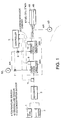
- FIG. 1 is a schematic diagram of a fuel cell power plant comprising a carbon monoxide removal system according to this invention.
- FIG. 2 is a flowchart describing a routine for controlling an air supply flow rate executed by a controller according to this invention.
- FIG. 3 is a diagram showing the relation between carbon monoxide concentration in reformate gas flowing into a first PROX reactor, air supply flow rate and carbon monoxide conversion rate of the first PROX reactor.
- FIG. 4 is similar to FIG. 2, but showing a second embodiment of this invention.
- FIG. 5 is similar to FIG. 2, but showing a third embodiment of this invention.
- FIG. 6 is a diagram describing differences ⁇ T1, ⁇ T2 between the catalyst temperatures of
- FIG. 7 is a schematic diagram of a fuel cell power plant using a carbon monoxide removal system according to a fourth embodiment of this invention.
- FIG. 8 is similar to FIG. 2, but showing the fourth embodiment of this invention.
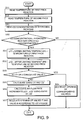
- FIG. 9 is similar to FIG. 2, but showing a fifth embodiment of this invention.
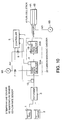
- FIG. 10 is a schematic diagram of a fuel cell power plant using a carbon monoxide removal system according to a sixth embodiment of this invention.
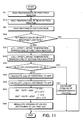
- FIG. 11 is similar to FIG. 2, but showing the sixth embodiment of this invention.
- FIGs. 12A, 12B are diagrams describing the characteristics of a map specifying the relation between the flow rate of reformate gas flowing into the PROX reactors and the air amount supplied to the PROX reactors stored by the controller according to the sixth embodiment of this invention.
- FIG. 13 is a schematic diagram of a fuel cell power plant using a carbon monoxide removal system according to a seventh embodiment of this invention.
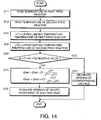
- FIG. 14 is similar to FIG. 2, but showing the seventh embodiment of this invention.
- a fuel cell power plant for a vehicle removes carbon monoxide in reformate gas produced by a reformer 3 by a carbon monoxide oxidizer 20 comprising two PROX reactors 20A, 20B, and supplies an anode 4A of a fuel cell stack 4 with hydrogen-rich gas.
- Air is supplied from an air pump 6B to a cathode 4B of the fuel cell stack 4.
- the hydrogen-rich gas and the oxygen in the air cause electrode reactions shown by the following chemical equations (1), (2) at the anode 4A and cathode 4B.
- Anode 4A H 2 ⁇ 2H + + 2e -
- Cathode 4B 2H + + 2e - + 1 / 2 O 2 ⁇ H 2 O
- a vehicle drive motor not shown, is connected to the fuel cell stack 4.
- Fuel gas from a fuel tank 1 and water from a water tank 2 are respectively supplied to the reformer 3.
- the fuel gas may be a hydrocarbon fuel such as methanol or gasoline.
- the reformer 3 If methanol is used as the fuel gas, the reformer 3 generates reformate gas according to the chemical reactions shown by the following chemical equations (3), (4). CH 3 OH + H 2 O ⁇ CO 2 + 3H 2 CH 3 OH ⁇ CO + 2H 2
- the reformate gas has hydrogen (H) as its main component, and contains carbon monoxide (CO). If the carbon monoxide is supplied to the fuel cell stack 4, it causes a decline of power generating efficiency of the fuel cell stack 4, and poisons the catalyst at the anode 4A of the fuel cell stack 4. Therefore, the carbon monoxide in the reformate gas is removed by the carbon monoxide oxidizer 20, and hydrogen-rich gas in which the carbon monoxide concentration has been sufficiently reduced is supplied to the anode of the fuel cell stack 4.
- H hydrogen
- CO carbon monoxide
- the preferential oxidation reaction which takes place in the first PROX reactor 20A and second PROX reactor 20B of the carbon monoxide oxidizer 20, may be represented by the following chemical equation (5). CO+ 1 / 2O 2 ⁇ CO 2
- the carbon monoxide oxidizer 20 decreases the CO concentration in the reformate gas from the order of several percent to about 100ppm in the first PROX reactor 20A, and then from about 1000ppm to less than 20ppm in the second PROX reactor 20B.
- the oxygen (O 2 ) required for the preferential oxidation reaction is respectively supplied as air to the first PROX reactor 20A via a valve 7, and to the second PROX reactor 20B via a valve 8.
- the air pump 6A has a function to supply air constantly under a constant pressure.
- the air supply flow rate to the first PROX reactor 20A is determined by the opening of the valve 7.
- the old air supply flow rate to the second PROX reactor 20B is determined by the opening of the valve 8.
- the valves 7, 8 comprise electro-magnetic valves of which the opening is varied according to opening signals respectively output by the controller 5.
- the controller 5 controls the opening of the valves 7, 8 depending on the carbon monoxide concentration in the reformate gas and the temperatures of the first PROX reactor 20A and second PROX reactor 20B.
- the first PROX reactor 20A and second PROX reactor 20B have identical specifications.
- a CO concentration sensor 11 which detects the carbon monoxide concentration in the reformate gas produced by the reformer 3 is installed midway in a pipe leading reformate gas from the reformer 3 to the carbon monoxide oxidizer 20. Also, a temperature sensor which detects the catalyst temperature of the first PROX reactor 20A and a temperature sensor 10 which detects the catalyst temperature of the second PROX reactor 20B, are provided. The detection data from these sensors are respectively input to the controller 5 as signals.
- the controller 5 comprises a microprocessor having a central processing unit (CPU), read-only memory (ROM), random access memory (RAM) and input/output interface (I/O interface).
- the controller may also comprise plural microcomputers.
- the CO concentration in reformate gas may rise above the CO concentration in the normal running state.
- the air supply flow rate to the PROX reactors 20A, 20B must be increased so that the CO concentration in the hydrogen-rich gas supplied to the fuel cell stack 4 does not increase, and the carbon monoxide removal efficiency is enhanced.
- the controller 5 when the catalyst temperature is lower than the predetermined temperature, opens the valves 7, 8 to increase the air supply flow rate to the PROX reactors 20A, 20B, and when the catalyst temperature is higher than the predetermined temperature, it closes the valves 7, 8 to decrease the air supply flow rate to the PROX reactors 20A, 2B.
- This routine is executed at an interval of 0.1 seconds during the running of the fuel cell power plant.
- the routines for controlling the air supply flow rate according to other embodiments described later, are all repeatedly executed at an interval of 0.1 seconds during the running of the power plant.
- the controller 5 in a step S11, reads the temperature detected by the temperature sensor 9, in a step S12, reads the temperature detected by the temperature sensor 10, and in a step S13, reads the temperature detected by the CO concentration sensor 11.
- the detected CO concentration in the reformate gas is compared with a preset specified concentration. From the allowable CO concentration in the hydrogen -rich gas supplied to the fuel cell stack 4, and the CO removal performance of the PROX reactors 20A, 20B during normal running, the allowable CO concentration in the reformate gas can be calculated.
- the specified concentration is a value set based on the allowable CO concentration. A typical specified concentration range is 1-2%.
- the controller 5 When the CO concentration in the reformate gas is lower than the specified concentration, the controller 5 immediately terminates the routine without proceeding to subsequent steps. This is because, in this case, the CO concentration in the hydrogen-rich gas remains within the allowable range even if the air supply flow rate to the PROX reactors 20A, 20B is not increased.
- the controller 5 compares the catalyst temperature of the first PROX reactor 20A with a predetermined temperature.
- the predetermined temperature is set to a value within the activation temperature range of the catalyst.
- a typical predetermined temperature is within the range of 140°C to 160°C.
- a step S16 the controller 5 throttles the valve 7 by a fixed amount. Due to this processing, as the air flow rate supplied to the first PROX reactor 20A decreases, the preferential oxidation reaction amount in the first PROX reactor 20A decreases, and the catalyst temperature correspondingly decreases. After the processing of the step S16, the controller 5 performs the processing of a step S18.
- the controller 5 When the catalyst temperature of the first PROX reactor 20A is lower than the predetermined temperature, the controller 5 performs the processing of a step S17.
- step S17 a map having the characteristics shown in FIG. 3 prestored in a memory is looked up, and the air flow rate required to reach a target CO conversion rate is calculated from the CO concentration in the reformate gas.
- a typical target CO conversion rate is 95%.
- the controller 5 compares the catalyst temperature of the second PROX reactor 20B with the aforesaid predetermined temperature.
- a common predetermined temperature is used in the steps S15 and S18, but different predetermined temperatures may also be used for catalysts having different activities in the first PROX reactor 20A and second PROX reactor 20B.
- a step S19 the controller 5 throttles the opening of the valve 8 by a fixed amount. Due to this processing, as the air flow rate supplied to the second PROX reactor 20B decreases, the preferential oxidation reaction amount in the second PROX reactor 20B decreases, and the catalyst temperature decreases correspondingly. After the processing of the step S19, the controller 5 terminates the routine.
- the controller 5 When the catalyst temperature of the second PROX reactor 20B is lower than the predetermined temperature, the controller 5 performs the processing of a step S20.
- the air flow rate required to reach the target CO conversion rate is calculated from the CO concentration of the inflowing gas by looking up the map having the characteristics shown in FIG. 3 which was looked up in the step S17.
- the first PROX reactor 20A and second PROX reactor 20B have identical specifications, so the same map can be used in the steps S17 and S20, but if the specifications of the first PROX reactor 20A and second PROX reactor 20B are different, different maps are used.
- the CO concentration in the inflowing gas is the CO concentration in the gas flowing out of the first PROX reactor 20A calculated in the equation (7).
- the controller 5 adjusts the opening of the valve 8 to realize the air flow rate thus obtained, in a next step S21. After the processing of the step S21, the controller 5 terminates the routine.
- the air flow rates supplied to the first PROX reactor 20A and second PROX reactor 20B increase until the catalysts in the first PROX reactor 20A and second PROX reactor 20B reach the predetermined temperature, and the CO removal performance of the first PROX reactor 20A and second PROX reactor 20B are enhanced.
- the catalyst temperature of the corresponding PROX reactor is reduced to the predetermined temperature by decreasing the air flow rate supplied to that PROX reactor.
- the air flow rate is determined based on a difference between the upper limiting temperature for catalyst activation of the first PROX reactor 20A and second PROX reactor 20B, and the detected catalyst temperatures.
- the openings of the valves 7, 8 are adjusted correspondingly.
- the upper limiting temperature for catalyst activation is the highest value within the temperature range when the catalyst is activated.
- a typical upper limiting temperature for catalyst activation is within the range of 200°C-240°C.
- a common upper limiting temperature for catalyst activation is used for the first PROX reactor 20A and second PROX reactor 20B, but when different catalysts are used in the first PROX reactor 20A and second PROX reactor 20B, different upper limiting temperatures for catalyst activation are used according to the characteristics of these catalysts.
- step S14 when the CO concentration of the reformate gas is not lower than the specified concentration, the controller 5 performs the processing of a step S31. In the step S14, when the CO concentration of the reformate gas is lower than the specified concentration, the controller 5 immediately terminates the routine.
- the controller 5 calculates a temperature difference ⁇ T1 between the upper limiting temperature for catalyst activation and the temperature of the first PROX reactor 20A.
- step S32 the controller 5 calculates a temperature difference ⁇ T2 between the upper limiting temperature for catalyst activation and the temperature of the second PROX reactor 20B.
- step S33 it is determined whether or not one of the temperature difference ⁇ T1 and temperature difference ⁇ T2 is a negative value.
- the controller 5 throttles the opening of the valve of the PROX reactor for which the temperature difference was a negative value by a fixed amount. After the processing of the step S34, the controller 5 terminates the routine.
- the controller 5 compares the temperature difference ⁇ T1 and temperature difference ⁇ T2.
- the controller 5 looks up the map having the characteristics shown in FIG. 3 prestored in the memory, and calculates the air flow rate required to reach the target CO conversion rate from the CO concentration detected by the CO concentration sensor 11. This calculation is identical to the calculation of the step S17 of the routine of FIG. 2 according to the first embodiment. Further, the controller 5 adjusts the opening of the valve 7 so that the calculated air flow rate is realized.
- the controller 5 continuously performs the processing of steps S36 and S37.
- the controller 5 calculates the CO concentration of the gas flowing into the second PROX reactor 20B.
- the controller 5 first calculates the CO conversion rate of the first PROX reactor 20A by looking up the map having the characteristics shown in FIG. 3 from the CO concentration detected by the CO concentration sensor 11 and the air flow rate supplied to the first PROX reactor 20A.
- the CO concentration of the outflowing gas is calculated by substituting the CO concentration detected by the CO concentration sensor 11 and the CO conversion rate obtained into equation (6). This is effectively the CO concentration of the gas flowing into the second PROX reactor 20B.
- the controller 5 adjusts the air flow rate required to reach the target CO conversion rate by looking up the map having the characteristics shown in FIG. 3 from the CO concentration of the gas flowing into the second PROX reactor 20B.
- the controller 5 further adjusts the opening of the valve 8 to realize the calculated air flow rate.
- the controller 5 terminates the routine.
- the controller 5 determines whether or not the catalyst temperature of one of the PROX reactors exceeds the upper limiting temperature for catalyst activation, and when it does exceed this temperature, the air supply flow rate to the corresponding PROX reactor is reduced.
- increments of the CO conversion rates are determined based on the temperature differences ⁇ T1, ⁇ T2 between the upper limiting temperature for catalyst activation and the catalyst temperatures of the PROX reactors as shown in FIG. 6, and the air supply flow rate to the PROX reactors is determined based on the determined increments.
- step S33 the controller 5, when neither of the temperature differences ⁇ T1, ⁇ T2 are negative values, i.e., when both of them are positive values, the processing of steps S41 to S43 is performed.
- the controller 5 increases the CO conversion rates of the first PROX reactor 20A and second PROX reactor 20B respectively in the proportion of ⁇ T1 : ⁇ T2 from the target CO conversion rate.
- the target CO conversion rate of the first PROX reactor 20A be 95%
- the target CO conversion rate of the second PROX reactor 20B be 98%.
- the target CO concentration of hydrogen-rich gas flowing from the second PROX reactor 20B be 20ppm.
- Cin is the concentration detected by the CO concentration sensor 11. Therefore, the increments ⁇ n1 , ⁇ n2 in the CO conversion rate of the first PROX reactor 20A and second PROX reactor 20B can be calculated from the following equations (9), (10).
- the controller 5 calculates the air flow rate supplied to the first PROX reactor 20A from the sum of the target CO conversion rate of 95% and increment ⁇ n1 by looking up a map having the characteristics shown in FIG. 3 prestored in the memory. The controller 5 further adjusts the opening of the valve 7 so that the calculated air flow rate is realized.
- the CO concentration in the gas flowing into the second PROX reactor 20B is calculated.
- the air flow rate supplied to the second PROX reactor 20B is likewise calculated from the sum of the target CO conversion rate of 98% and increment ⁇ n2 by looking up a map having the characteristics shown in FIG. 3.
- the controller 5 further adjusts the opening of the valve 8 so that the calculated air flow rate is realized. After the processing of the step S43, the controller 5 terminates the routine.
- the air flow rate supplied to the PROX reactors is increased according to the differences ⁇ T1, ⁇ T2 between the upper limiting temperatures for catalyst activation and the catalyst temperatures of the PROX reactors, so the CO concentration can be efficiently reduced by using all the temperature differences between the upper limiting temperatures for catalyst activation and the catalyst temperatures of the PROX reactors.
- the hardware construction is different from that of the first-third embodiments.
- a concentration sensor 12 which detects the CO concentration in the hydrogen-rich gas supplied to the fuel cell stack 4 from the second PROX reactor 20B is provided.
- the remaining features of the hardware are identical to those of the first-third embodiments.
- the controller 5 executes a routine for controlling the air supply flow rate shown in FIG. 8.
- the processing of the steps S11, S12, S31-S35 is identical to that of the routine of FIG. 5 of the second embodiment.
- the controller 5 in the step S11, reads the temperature detected by the temperature sensor 9, in the step S12, reads the temperature detected by the temperature sensor 10, and in a step S51, reads the CO concentration of the hydrogen-rich gas detected by the concentration sensor 12.
- the CO concentration of the hydrogen-rich gas and a hydrogen-rich gas specified concentration are compared.
- the hydrogen-rich gas specified concentration is the upper limiting value of the CO concentration which does not affect the power generating performance of the fuel cell stack 4.
- the specified concentration of the hydrogen-rich gas is 30ppm. If the CO concentration of the hydrogen-rich gas is lower than the specified concentration, the controller 5 does not proceed to subsequent steps, and immediately terminates the routine. If the CO concentration of the hydrogen-rich gas is not lower than the specified concentration, the controller 5 performs the processing of the steps S31-S35 which were described in relation to the second embodiment.
- step S35 when the temperature difference ⁇ T1 is larger than the temperature difference ⁇ T2 , the controller 5, in a step S53, increases the opening of the valve 7 so that the air flow rate supplied by the valve 7 increases by a fixed amount.
- the controller 5, in a step S54 increases the opening of the valve 8 so that the air flow rate supplied to the valve 8 increases by a fixed amount.
- the controller 5 increases the air flow rate supplied to one of the PROX reactors according to the temperature differences ⁇ T1, ⁇ T2, and repeats this operation until the CO concentration of the hydrogen-rich gas falls to the hydrogen-rich gas specified concentration.
- the air flow rate supplied to the PROX reactors 20A, 20B is feedback-controlled based on the CO concentration of the hydrogen-rich gas.
- the CO conversion rate of the first PROX reactor 20A and second PROX reactor 20B are not necessarily constant due to temperature variation and catalyst deterioration. However, if the air flow rate supplied is feedback-controlled based on the CO concentration of the hydrogen-rich gas, the CO concentration of the hydrogen-rich gas can always be suppressed below the hydrogen-rich gas specified concentration even if there is scatter in the performance of the PROX reactors 20A, 20B.
- the air flow rate supplied is increased to whichever of the PROX reactors has the higher tolerance for increase of catalyst temperature, so temperature rise above the upper limiting temperature for catalyst activation due to the increase of air flow rate can effectively be prevented.
- the processing of the steps S11, S12, steps S51, S52 and steps S31-S34 of this routine are identical to the routine of FIG. 8 in the fourth embodiment.
- the method of feedback-controlling the air flow rate supplied to the PROX reactors 20A, 20B based on the CO concentration of the hydrogen-rich gas is different from that of the fourth embodiment.
- the air flow rates supplied to the PROX reactors 20A, 20B are both increased, and gains G1, G2 applied to the calculation of the increase amount of the air supply flow rate are made to vary dynamically according to the temperature differences ⁇ T1, ⁇ T2.
- the sum value of the air increase amount gains G1, G2 is fixed, and this sum value is first determined by experiment or simulation.
- the values of the air increase amount gains G1, G2 are determined from this sum value and the ratio of the air increase amount gains G1, G2 obtained from equation (11).
- step S56 the controller 5 calculates an increment ⁇ Q1 of the air supply flow rate to the first PROX reactor 20A by multiplying a first basic increment for the first PROX reactor 20A by the air increase amount gain G1 .
- an increment ⁇ Q2 of the air supply flow rate to the second PROX reactor 20B is calculated by multiplying a second basic increment for the second PROX reactor 20B by the air increase amount gain G2.
- the first basic increment and second basic increment are fixed values predetermined by experiment or simulation.
- a next step S57 the opening of the valve 7 is adjusted based on the increment ⁇ Q1 of the air supply flow rate to the first PROX reactor 20A, and the opening of the valve 8 is adjusted based on the increment ⁇ Q2 of the air supply flow rate to the second PROX reactor 20B.
- the CO concentration in the hydrogen-rich gas can always be suppressed below the specified concentration even if there is scatter in the performance of the PROX reactors.
- the air supply flow rate to the PROX reactors is increased according to the differences ⁇ T1, ⁇ T2 between the upper limiting temperature for catalyst activation and the catalyst temperatures of the PROX reactors, so the CO concentration can be efficiently reduced making use of all the temperature differences between the upper limiting temperature for catalyst activation and the catalyst temperatures of the PROX reactors.
- FIGs. 10, 11 and FIGs. 12A, 12B Next, a sixth embodiment of this invention will be described referring to FIGs. 10, 11 and FIGs. 12A, 12B.
- the hardware construction is different from that of the first-third embodiments.
- a flow rate sensor 13 which detects the flow rate of reformate gas generated by the reformer 12 is installed midway in the pipe leading reformate gas from the reformer 3 to the carbon monoxide oxidizer 20.
- the remaining features of the construction are identical to those of the first-third embodiments.
- the controller 5 executes a routine for controlling the air supply flow rate shown in FIG. 11.
- the opening of the valves 7, 8 are first initialized to an opening corresponding to a specified flow rate of reformate gas.n
- the specified flow rate corresponds to a flow rate when the power plant is running steadily.
- the processing of the steps S11, S12 is identical to the routine of FIG. 2 of the first embodiment.
- the processing of the. steps S31-S34 is identical to the routine of FIG. 5 of the second embodiment.
- step S61 the controller 5 reads the reformate gas flow rate detected by the flow rate sensor 13.
- a next step S62 it is determined whether the reformate gas flow rate is equal to the specified flow rate.
- the controller 5 immediately terminates the routine without preceding to subsequent steps.
- the controller 5 When the reformate gas flow rate is not equal to the specified flow rate, the controller 5 performs the processing of the steps S31-S34 as in the routine of FIG. 4 of the second embodiment.
- the controller 5 calculates a basic variation amount ⁇ Qa1 of the air flow rate supplied to the first PROX reactor 20A from the reformate gas flow rate by looking up a map having the characteristics shown in FIG. 12A which is prestored in the memory.
- the basic variation amount ⁇ Qa1 in this map means the variation amount from a specified flow rate Qa1R of the air supply flow rate when the reformate gas flow rate increases as shown by the dotted line relative to the specified flow rate.
- the controller 5 calculates a basic variation amount ⁇ Qa2 of the air flow rate supplied to the second PROX reactor 20B from the gas flow rate flowing into the second PROX reactor 20B by looking up a map having the characteristics shown in FIG. 12B which is prestored in the memory.
- the gas flow rate flowing into the second PROX reactor 20B is the gas flow rate flowing out of the first PROX reactor 20A, and this may be approximated to the sum of the reformate gas flow rate flowing into the first PROX reactor 20A and the air flow rate supplied to the first PROX reactor 20A.
- the basic variation amount ⁇ Qa2 in this map is the variation amount from the specified flow rate of the air supply flow rate when the inflowing gas flow rate increases as shown by the dotted line relative to the specified flow rate.
- the controller 5 calculates an air flow rate Qa1' supplied to the first PROX reactor 20A and an air flow rate Qa2' supplied to the second PROX reactor 20B by applying the following equations (12), (13).
- a next step S66 the opening of the valve 7 is adjusted so that the air flow rate Qa1' is realized, and the opening of the valve 8 is adjusted so that the air flow rate Qa2' is realized.
- the controller 5 terminates the routine.
- the opening of the valves 7 or 8 is decreased as in all the other embodiments, so that the air flow rate supplied to the corresponding first PROX reactor 20A or second PROX reactor 20B is decreased. Therefore, the carbon monoxide removal performance can be optimized while preventing catalyst temperature rise of the PROX reactors.
- This embodiment is different from the other embodiments in terms of the hardware construction.
- the CO concentration sensor or flow rate sensor is not used. According to this embodiment, when the fuel cell power plant is running steadily, it is assumed that the CO concentration and flow rate of reformate gas are respectively constant.
- the controller 5 executes a routine for controlling the supply air flow rate shown in FIG. 14.
- the processing of the steps S11, S12 is identical to the routine of FIG. 2 according to the first embodiment.
- the processing of the steps S31-S34 is identical to the routine of FIG. 4 according to the second embodiment.
- step S71 when both of the temperature differences ⁇ T1, ⁇ T2 are not negative values, the controller 5, in a step S71, applies the following equations (14), (15), and calculates the air supply flow rate Qna1' to the first PROX reactor 20A and the air supply flow rate Qna2' to the PROX reactor 20B from the temperature differences ⁇ T1, ⁇ T2.
- Qna1' Qna1+C1 ⁇ ⁇ T1 ⁇ T1 + ⁇ T2
- correction coefficients C1, C2 are respectively set experimentally.
- step S72 the controller 5 adjusts the opening of the valve 7 so that the calculated air flow rate Qna1' is realized, and adjusts the opening of the valve 8 so that the calculated air flow rate Qna2' is realized. After the processing of the step S72, the controller 5 terminates the routine.
- the air supply flow rate to the PROX reactor having a higher tolerance for temperature rise is increased based on the catalyst temperatures of the first PROX reactor 20A and second PROX reactor 20B, so excessive catalyst temperature rise can be prevented, and the carbon monoxide removal performance of the of the first PROX reactor 20A and second PROX reactor 20B can be utilized to the maximum.
- the CO concentration sensor or flow rate sensor is not used, so the construction of the device can be simplified.
- Tokugan 2002-88058 The contents of Tokugan 2002-88058, with a filing date of March 27, 2002 in Japan, are hereby incorporated by reference.
- the carbon monoxide oxidizer 20 is comprised of the two PROX reactors 20A, 20B, but this invention may be applied also to a carbon monoxide removal device comprising three or more PROX reactors.
Landscapes
- Chemical & Material Sciences (AREA)
- Chemical Kinetics & Catalysis (AREA)
- Engineering & Computer Science (AREA)
- Combustion & Propulsion (AREA)
- Organic Chemistry (AREA)
- General Health & Medical Sciences (AREA)
- Health & Medical Sciences (AREA)
- Life Sciences & Earth Sciences (AREA)
- Physics & Mathematics (AREA)
- General Physics & Mathematics (AREA)
- Pathology (AREA)
- Immunology (AREA)
- Analytical Chemistry (AREA)
- Biochemistry (AREA)
- Sustainable Development (AREA)
- General Chemical & Material Sciences (AREA)
- Sustainable Energy (AREA)
- Electrochemistry (AREA)
- Inorganic Chemistry (AREA)
- Manufacturing & Machinery (AREA)
- Hydrogen, Water And Hydrids (AREA)
- Fuel Cell (AREA)
- Exhaust Gas Treatment By Means Of Catalyst (AREA)
Abstract
Description
- Qna2 = specified air flow rate supplied to the
second PROX reactor 20B, and - C2 = correction coefficient.
Claims (20)
- A carbon monoxide removal system comprising:plural preferential oxidation reactors (20A, 20B) disposed in series which remove carbon monoxide contained in reformate gas via a catalyst, the preferential oxidation reactors comprising a first preferential oxidation reactor (20A) and a second preferential oxidation reactor (20B) arranged further downstream than the first preferential oxidation reactor (20A);an air supply mechanism (6A, 7, 8) which supplies air containing oxygen as an oxidizing agent to the first preferential oxidation reactor (20A) and the second preferential oxidation reactor (20B);first temperature sensing means (9) for detecting a temperature of the first preferential oxidation reactor (20A);second temperature sensing means (10) for detecting a temperature of the second preferential oxidation reactor (20B); andcontrol means (5, S15-S21, S31-S38, S41-S43, S53-S57, S63-S66, S71, S72) for controlling the air supply mechanism (6A, 7, 8) so that an air supply flow rate to the first preferential oxidation reactor (20A) and an air supply flow rate to the second preferential oxidation reactor (20B) vary based on the temperature of the first preferential oxidation reactor (20A) and the temperature of the second preferential oxidation reactor (20B).
- The carbon monoxide removal system as defined in Claim 1, wherein the control means (5, S15-S21, S31-S38, S41-S43, S53-S57, S63-S66, S71, S72) comprises a controller (5) functioning to control the air supply mechanism (6A, 7, 8) so that an air supply flowrate to the first preferential oxidation reactor (20A) and an air supply flowrate to the second preferential oxidation reactor (20B) vary based on the temperature of the first preferential oxidation reactor (20A) and the temperature of the second preferential oxidation reactor (20B) ((5, S15-S21, S31-S38, S41-S43, S53-S57, S63-S66, S71, S72).
- The carbon monoxide removal system as defined in Claim 2, wherein the controller (5) further functions, when the temperature of the first preferential oxidation reactor (20A) is lower than a first predetermined temperature, to control the air supply mechanism (6A, 7, 8) to decrease the air supply flow rate to the first preferential oxidation reactor (20A) (S16), and when the temperature of the second preferential oxidation reactor (20B) is lower than a second predetermined temperature, to decrease the air supply flow rate to the second preferential oxidation reactor (20B) (S19).
- The carbon monoxide removal system as defined in Claim 3, wherein the controller (5) further functions, when the temperature of the first preferential oxidation reactor (20A) is lower than the first predetermined temperature, to allow an increase of the air supply flow rate to the first preferential oxidation reactor (20A) (S17), and when the temperature of the second preferential oxidation reactor (20B) is lower than the second predetermined temperature, to allow an increase of the air supply flow rate to the second preferential oxidation reactor (20B) (S21).
- The carbon monoxide removal system as defined in Claim 4, wherein the carbon monoxide removal system further comprises a carbon monoxide sensor (11) which detects a carbon monoxide concentration of the reformate gas flowing into the first preferential reactor (20A), and the controller (5) further functions, when the temperature of the first preferential oxidation reactor (20A) is lower than the first predetermined temperature, to calculate a target air supply flow rate to the first preferential oxidation reactor (20A) from the carbon monoxide concentration of the reformate gas and a preset target carbon monoxide conversion rate of the first preferential oxidation reactor (20A), and control the air supply mechanism (6A, 7, 8) so that the target air supply flow rate to the first preferential oxidation reactor (20A) is realized (S17).
- The carbon monoxide removal system as defined in Claim 5, wherein the controller (5) further functions, when the temperature of the second preferential oxidation reactor (20B) is lower than the second predetermined temperature, to calculate a carbon monoxide concentration of an inflowing gas into the second preferential oxidation reactor (20B) from the carbon monoxide concentration of the reformate gas and a preset target carbon monoxide conversion rate of the first preferential oxidation reactor (20A) (S20), calculate a target air supply flow rate to the second preferential oxidation reactor (20B) from the carbon monoxide concentration of the inflowing gas and a preset target carbon monoxide conversion rate of the second preferential oxidation reactor (20B), and control the air supply mechanism (6A, 7, 8) so that the target air supply flow rate to the second preferential oxidation reactor (20B) is realized (S21).
- The carbon monoxide removal system as defined in Claim 2, wherein the controller (5) further functions to calculate a difference between a predetermined upper limiting temperature for catalyst activation and the catalyst temperature of the first preferential oxidation reactor (20A) as a first temperature difference (ΔT1), calculate a difference between a predetermined upper limiting temperature for catalyst activation and the catalyst temperature of the second preferential oxidation reactor (20B) as a second temperature difference (ΔT2) (S31, S32), determine whether or not one of the first temperature difference (ΔT1) and the second temperature difference (ΔT2) is a negative value (S33), and when one of the first temperature difference (ΔT1) and the second temperature difference (ΔT2) is a negative value, control the air supply mechanism (6A, 7, 8) to decrease the air supply flow rate to the corresponding preferential oxidation reactor (20A, 20B) (S38).
- The carbon monoxide removal system as defined in Claim 7, wherein the carbon monoxide removal system further comprises a carbon monoxide sensor (11) which detects a carbon monoxide concentration of the reformate gas flowing into the first preferential oxidation reactor (20A), and the controller (5) further functions to control the air supply mechanism (6A, 7, 8) based on the carbon monoxide concentration of the reformate gas when neither of the first temperature difference (ΔT1) and the second temperature difference (ΔT2) are negative values (S37, S38, S42, S43).
- The carbon monoxide removal system as defined in Claim 8, wherein the controller (5) further functions, when neither of the first temperature difference (ΔT1) and the second temperature difference (ΔT2) are negative values and the first temperature difference (ΔT1) is larger than the second temperature difference (ΔT2), to calculate a target air supply flow rate to the first preferential oxidation reactor (20A) from the carbon monoxide concentration of the reformate gas and a preset target carbon monoxide conversion rate of the first preferential oxidation reactor (20A), and control the air supply mechanism (6A, 7, 8) so that the target air supply flow rate to the first preferential oxidation reactor (20A) is realized (S38).
- The carbon monoxide removal system as defined in Claim 9, wherein the controller (5) further functions, when neither of the first temperature difference (ΔT1) and the second temperature difference (ΔT2) are negative values and the first temperature difference (ΔT1) is larger than the second temperature difference (ΔT2), to calculate a carbon monoxide concentration of an inflowing gas into the second preferential oxidation reactor (20B) from the carbon monoxide concentration of the reformate gas and the preset target carbon monoxide conversion rate of the first preferential oxidation reactor (20A), calculate a target air supply flow rate to the second preferential oxidation reactor (20B) from the carbon monoxide concentration of the inflowing gas and a preset target carbon monoxide conversion rate of the second preferential oxidation reactor (20B), and control the air supply mechanism (6A, 7, 8) so that the target air supply flow rate to the second preferential oxidation reactor (20B) is realized (S37).
- The carbon monoxide removal system as defined in Claim 8, wherein the controller (5) further functions, when neither of the first temperature difference (ΔT1) and the second temperature difference (ΔT2) are negative values, to respectively increase a preset target carbon monoxide conversion rate of the first preferential oxidation reactor (20A) and a preset target carbon monoxide conversion rate of the second preferential oxidation reactor (20B) according to a ratio of the first temperature difference (ΔT1) and the second temperature difference (ΔT2) (S41), calculate a target air supply flow rate to the first preferential oxidation reactor (20A) based on the carbon monoxide concentration in the reformate gas and a target carbon monoxide conversion rate of the first preferential oxidation reactor (20A) after increase, and control the air supply mechanism (6A, 7, 8) so that the target air supply flow rate to the first preferential oxidation reactor (20A) is realized (S42).
- The carbon monoxide removal system as defined in Claim 11, wherein the controller (5) further functions, when neither of the first temperature difference (ΔT1) and the second temperature difference (ΔT2) are negative values, to calculate a carbon monoxide concentration of an inflowing gas into the second preferential oxidation reactor (20B) based on the target carbon monoxide conversion rate of the first preferential oxidation reactor (20A) after increase and the carbon monoxide concentration of the reformate gas (S36), calculate a target air supply flow rate to the second preferential oxidation reactor (20B) based on the carbon monoxide concentration of the inflowing gas and target monoxide conversion rate of the second preferential oxidation reactor (20B) after increase, and control the air supply mechanism (6A, 7, 8) so that the target air supply flow rate to the second preferential oxidation reactor (20B) is realized (S42).
- The carbon monoxide removal system as defined in Claim 7, wherein the carbon monoxide removal system further comprises a sensor (12) which detects a carbon monoxide concentration of an outflowing gas from the second preferential oxidation reactor (20B), and the controller (5) further functions, when neither of the first temperature difference (ΔT1) and the second temperature difference (ΔT2) are negative values, to control the air supply mechanism (6A, 7, 8) based on the carbon monoxide concentration of the outflowing gas (S53, S54, S42, S43).
- The carbon monoxide removal system as defined in Claim 13, wherein the controller (5) further functions, when neither of the first temperature difference (ΔT1) and the second temperature difference (ΔT2) are negative values, to control the air supply mechanism (6A, 7, 8) so that an air supply flow rate to a preferential oxidation reactor (20A, 20B) corresponding to the larger of the first temperature difference (ΔT1) and second temperature difference (ΔT2), increases (S53, S54, S55-S57).
- The carbon monoxide removal system as defined in Claim 13 or Claim 14, wherein the controller (5) further functions, when neither of the first temperature difference (ΔT1) and the second temperature difference (ΔT2) are negative values, to control the air supply mechanism (6A, 7, 8) so that the air supply flow rate to the first preferential oxidation reactor (20A) and the air supply flow rate to the second preferential oxidation reactor (20B) respectively increase in proportion to the first temperature difference (ΔT1) and the second temperature difference (ΔT2) (S55-S57).
- The carbon monoxide removal system as defined in Claim 7, wherein the controller (5) further functions, when neither of the first temperature difference (ΔT1) and the second temperature difference (ΔT2) are negative values, to calculate a target air supply flow rate to the first preferential oxidation reactor (20A) and a target air supply flow rate to the second preferential oxidation reactor (20B) from the first temperature difference (ΔT1) and the second temperature difference (ΔT2) (S63-S65, S71), and control the air supply mechanism (6A, 7, 8) so that the target air supply flow rate to the first preferential oxidation reactor (20A) and the target air supply flow rate to the second preferential oxidation reactor (20B) are realized (S66, S72).
- The carbon monoxide removal system as defined in Claim 16, wherein the carbon monoxide removal system further comprises a flow rate sensor (13) which detects a flow rate of the reformate gas flowing into the first preferential oxidation reactor (20A), and the controller (5) further functions, when neither of the first temperature difference (ΔT1) and the second temperature difference (ΔT2) are negative values, to calculate the target air supply flow rate to the first preferential oxidation reactor (20A) and the target air supply flow rate to the second preferential oxidation reactor (20B) from the flow rate of the reformate gas, the first temperature difference (ΔT1) and the second temperature difference (ΔT2) (S63-S65), and control the air supply mechanism (6A, 7, 8) so that the target air supply flow rate to the first preferential oxidation reactor (20A) and the target air supply flow rate to the second preferential oxidation reactor (20B) are realized (S66).
- The carbon monoxide removal system as defined in any one of Claim 1 through Claim 17, wherein the carbon monoxide removal system comprises a system which removes carbon monoxide from a reformate gas generated by a reformer (3) of a fuel cell power plant, the first preferential oxidation reactor (20A) is connected to the reformer (3), the second preferential oxidation reactor (20B) is connected to a fuel cell stack (4), and the air supply mechanism (6A, 7, 8) comprises a valve (7) which adjusts the air supply flow rate to the first preferential oxidation reactor (20A) and a valve (8) which adjust the air supply flow rate to the second preferential oxidation reactor (20B).
- The carbon monoxide removal system as defined in any one of Claim 3 through Claim 6, wherein the first predetermined temperature is set equal to the second predetermined temperature.
- A control method of a carbon monoxide removal system comprising plural preferential oxidation reactors (20A, 20B) disposed in series which remove carbon monoxide contained in reformate gas via a catalyst, the preferential oxidation reactors comprising a first preferential oxidation reactor (20A) and a second preferential oxidation reactor (20B) arranged further downstream than the first preferential oxidation reactor (20A), the method comprising:supplying air to the first preferential oxidation reactor (20A) and the second preferential oxidation reactor (20B);detecting a catalyst temperature of the first preferential oxidation reactor (20A);detecting a catalyst temperature of the second preferential oxidation reactor (20B); andvarying an air supply flow rate to the second preferential oxidation reactor (20B) and an sir supply flow rate to the second preferential oxidation reactor (20B) based on a detected temperature of the first preferential oxidation reactor (20A) and a detected temperature of the second preferential oxidation reactor (20B).
Applications Claiming Priority (2)
| Application Number | Priority Date | Filing Date | Title |
|---|---|---|---|
| JP2002088058A JP3722079B2 (en) | 2002-03-27 | 2002-03-27 | Carbon monoxide removal equipment |
| JP2002088058 | 2002-03-27 |
Publications (2)
| Publication Number | Publication Date |
|---|---|
| EP1369382A2 true EP1369382A2 (en) | 2003-12-10 |
| EP1369382A3 EP1369382A3 (en) | 2005-12-21 |
Family
ID=28449418
Family Applications (1)
| Application Number | Title | Priority Date | Filing Date |
|---|---|---|---|
| EP03002918A Withdrawn EP1369382A3 (en) | 2002-03-27 | 2003-02-10 | Carbon monoxide removal from reformate gas |
Country Status (3)
| Country | Link |
|---|---|
| US (1) | US7189373B2 (en) |
| EP (1) | EP1369382A3 (en) |
| JP (1) | JP3722079B2 (en) |
Families Citing this family (19)
| Publication number | Priority date | Publication date | Assignee | Title |
|---|---|---|---|---|
| JP4265239B2 (en) * | 2003-03-03 | 2009-05-20 | 日産自動車株式会社 | Fuel reforming system |
| JP2007302533A (en) * | 2006-05-12 | 2007-11-22 | Mitsubishi Heavy Ind Ltd | Fuel reformer, fuel cell system, and CO removal method |
| KR100784038B1 (en) * | 2007-01-09 | 2007-12-10 | 삼성에스디아이 주식회사 | Heat exchanger integrated PRP reactor and its operation method |
| JP5773587B2 (en) * | 2010-06-30 | 2015-09-02 | 三菱重工業株式会社 | CO removal system and CO removal method |
| US8710106B2 (en) * | 2010-07-29 | 2014-04-29 | Precision Combustion, Inc. | Sabatier process and apparatus for controlling exothermic reaction |
| US8258356B2 (en) | 2010-08-17 | 2012-09-04 | Uop Llc | Selective CO oxidation for acetylene converter feed CO control |
| CN103389357A (en) * | 2013-07-01 | 2013-11-13 | 安徽省旌德县天益医药化工厂 | Gas concentration monitor |
| US11881093B2 (en) | 2020-08-20 | 2024-01-23 | Denso International America, Inc. | Systems and methods for identifying smoking in vehicles |
| US11760169B2 (en) | 2020-08-20 | 2023-09-19 | Denso International America, Inc. | Particulate control systems and methods for olfaction sensors |
| US12251991B2 (en) | 2020-08-20 | 2025-03-18 | Denso International America, Inc. | Humidity control for olfaction sensors |
| US11828210B2 (en) | 2020-08-20 | 2023-11-28 | Denso International America, Inc. | Diagnostic systems and methods of vehicles using olfaction |
| US11932080B2 (en) | 2020-08-20 | 2024-03-19 | Denso International America, Inc. | Diagnostic and recirculation control systems and methods |
| US12017506B2 (en) | 2020-08-20 | 2024-06-25 | Denso International America, Inc. | Passenger cabin air control systems and methods |
| US12269315B2 (en) | 2020-08-20 | 2025-04-08 | Denso International America, Inc. | Systems and methods for measuring and managing odor brought into rental vehicles |
| US11760170B2 (en) | 2020-08-20 | 2023-09-19 | Denso International America, Inc. | Olfaction sensor preservation systems and methods |
| US11813926B2 (en) | 2020-08-20 | 2023-11-14 | Denso International America, Inc. | Binding agent and olfaction sensor |
| US12377711B2 (en) | 2020-08-20 | 2025-08-05 | Denso International America, Inc. | Vehicle feature control systems and methods based on smoking |
| US11636870B2 (en) | 2020-08-20 | 2023-04-25 | Denso International America, Inc. | Smoking cessation systems and methods |
| US20220300788A1 (en) * | 2021-03-19 | 2022-09-22 | Qualcomm Incorporated | Efficient compression of activation functions |
Family Cites Families (17)
| Publication number | Priority date | Publication date | Assignee | Title |
|---|---|---|---|---|
| US4046956A (en) * | 1976-05-27 | 1977-09-06 | United Technologies Corporation | Process for controlling the output of a selective oxidizer |
| US6010675A (en) * | 1992-03-19 | 2000-01-04 | International Fuel Cells Corp. | Method of and apparatus for removing carbon monoxide from gaseous media |
| JP3840677B2 (en) | 1994-11-02 | 2006-11-01 | トヨタ自動車株式会社 | Fuel cell power generator |
| GB9720353D0 (en) * | 1997-09-25 | 1997-11-26 | Johnson Matthey Plc | Hydrogen purification |
| JPH11255512A (en) * | 1998-03-09 | 1999-09-21 | Toyota Motor Corp | Carbon monoxide reduction apparatus and driving method thereof |
| US6245214B1 (en) * | 1998-09-18 | 2001-06-12 | Alliedsignal Inc. | Electro-catalytic oxidation (ECO) device to remove CO from reformate for fuel cell application |
| US6332901B1 (en) * | 1998-10-12 | 2001-12-25 | Toyota Jidosha Kabushiki Kaisha | Carbon monoxide reducing device for reducing carbon monoxide in a reformate gas |
| JP2000188122A (en) | 1998-10-12 | 2000-07-04 | Toyota Motor Corp | Carbon monoxide removal equipment |
| JP2000154002A (en) | 1998-11-18 | 2000-06-06 | Toyota Motor Corp | Apparatus for reducing carbon monoxide concentration in reformed gas |
| JP4193257B2 (en) | 1998-12-02 | 2008-12-10 | トヨタ自動車株式会社 | CO transformer and hydrogen generator |
| JP2000203804A (en) * | 1999-01-14 | 2000-07-25 | Toyota Motor Corp | Fuel reforming apparatus and fuel reforming method |
| JP3674441B2 (en) * | 2000-02-16 | 2005-07-20 | 日産自動車株式会社 | Reformer control device |
| US6921595B2 (en) * | 2000-05-31 | 2005-07-26 | Nuvera Fuel Cells, Inc. | Joint-cycle high-efficiency fuel cell system with power generating turbine |
| US6916564B2 (en) * | 2000-05-31 | 2005-07-12 | Nuvera Fuel Cells, Inc. | High-efficiency fuel cell power system with power generating expander |
| JP3900823B2 (en) * | 2000-11-20 | 2007-04-04 | 日産自動車株式会社 | Method for stopping fuel reforming system |
| JP4463437B2 (en) | 2001-01-31 | 2010-05-19 | 本田技研工業株式会社 | Carbon monoxide selective oxidation removal apparatus and carbon monoxide selective oxidation removal method |
| JP3778101B2 (en) * | 2002-02-08 | 2006-05-24 | 日産自動車株式会社 | Carbon monoxide removal system |
-
2002
- 2002-03-27 JP JP2002088058A patent/JP3722079B2/en not_active Expired - Fee Related
-
2003
- 2003-02-10 EP EP03002918A patent/EP1369382A3/en not_active Withdrawn
- 2003-02-19 US US10/367,755 patent/US7189373B2/en not_active Expired - Fee Related
Also Published As
| Publication number | Publication date |
|---|---|
| US7189373B2 (en) | 2007-03-13 |
| JP2003286002A (en) | 2003-10-07 |
| JP3722079B2 (en) | 2005-11-30 |
| EP1369382A3 (en) | 2005-12-21 |
| US20030185709A1 (en) | 2003-10-02 |
Similar Documents
| Publication | Publication Date | Title |
|---|---|---|
| EP1369382A2 (en) | Carbon monoxide removal from reformate gas | |
| US6322917B1 (en) | Diagnostic method and control of preferential oxidation of carbon monoxide | |
| US7033688B2 (en) | Apparatus and method for controlling a fuel cell system | |
| EP0978476B1 (en) | Control apparatus and control method for reformer | |
| US6582841B2 (en) | Fuel cell system and method of controlling the same | |
| US20050123812A1 (en) | Fuel cell system and its control method | |
| EP0995717B1 (en) | Carbon monoxide reducing device and carbon monoxide reducing method | |
| EP1442493B1 (en) | Fuel cell system and its startup control | |
| US20020068204A1 (en) | Fuel cell power plant | |
| US6613465B2 (en) | Control device for a fuel reforming apparatus | |
| US6602628B2 (en) | Control system for fuel cell | |
| JP4325270B2 (en) | Operation control method of fuel cell power generator | |
| US20030194354A1 (en) | Fuel reforming system | |
| US7348084B2 (en) | Air distribution method and controller for a fuel cell system | |
| US7377950B2 (en) | Method for operating a plant for the steam reforming of hydrocarbons and corresponding plant | |
| EP1427047A1 (en) | Method for controlling flow rate of oxidizer in fuel cell system | |
| KR100519030B1 (en) | Carbon monoxide removal from reformate gas | |
| US20080152962A1 (en) | Controlling oxidant flow to a reactor of a fuel cell system | |
| JP4135243B2 (en) | Control device for reformer | |
| JP2000188122A (en) | Carbon monoxide removal equipment | |
| JP4802486B2 (en) | Fuel cell system | |
| JP2000154002A (en) | Apparatus for reducing carbon monoxide concentration in reformed gas | |
| US20060156628A1 (en) | Fuel reforming device | |
| US20070148504A1 (en) | Maintaining a fluid level in a heat exchanger of a fuel cell system |
Legal Events
| Date | Code | Title | Description |
|---|---|---|---|
| PUAI | Public reference made under article 153(3) epc to a published international application that has entered the european phase |
Free format text: ORIGINAL CODE: 0009012 |
|
| 17P | Request for examination filed |
Effective date: 20030210 |
|
| AK | Designated contracting states |
Kind code of ref document: A2 Designated state(s): AT BE BG CH CY CZ DE DK EE ES FI FR GB GR HU IE IT LI LU MC NL PT SE SI SK TR |
|
| AX | Request for extension of the european patent |
Extension state: AL LT LV MK RO |
|
| PUAL | Search report despatched |
Free format text: ORIGINAL CODE: 0009013 |
|
| AK | Designated contracting states |
Kind code of ref document: A3 Designated state(s): AT BE BG CH CY CZ DE DK EE ES FI FR GB GR HU IE IT LI LU MC NL PT SE SI SK TR |
|
| AX | Request for extension of the european patent |
Extension state: AL LT LV MK RO |
|
| AKX | Designation fees paid |
Designated state(s): DE FR GB |
|
| 17Q | First examination report despatched |
Effective date: 20071119 |
|
| STAA | Information on the status of an ep patent application or granted ep patent |
Free format text: STATUS: THE APPLICATION IS DEEMED TO BE WITHDRAWN |
|
| 18D | Application deemed to be withdrawn |
Effective date: 20100901 |