EP1368020B1 - Verfahren zur identifizierung von maxi-k-kanal-blockern - Google Patents
Verfahren zur identifizierung von maxi-k-kanal-blockern Download PDFInfo
- Publication number
- EP1368020B1 EP1368020B1 EP02705934A EP02705934A EP1368020B1 EP 1368020 B1 EP1368020 B1 EP 1368020B1 EP 02705934 A EP02705934 A EP 02705934A EP 02705934 A EP02705934 A EP 02705934A EP 1368020 B1 EP1368020 B1 EP 1368020B1
- Authority
- EP
- European Patent Office
- Prior art keywords
- alkyl
- defined above
- aryl
- phenyl
- heteroaryl
- Prior art date
- Legal status (The legal status is an assumption and is not a legal conclusion. Google has not performed a legal analysis and makes no representation as to the accuracy of the status listed.)
- Expired - Lifetime
Links
- 0 *CC1OCCC1 Chemical compound *CC1OCCC1 0.000 description 4
Images
Classifications
-
- G—PHYSICS
- G01—MEASURING; TESTING
- G01N—INVESTIGATING OR ANALYSING MATERIALS BY DETERMINING THEIR CHEMICAL OR PHYSICAL PROPERTIES
- G01N33/00—Investigating or analysing materials by specific methods not covered by groups G01N1/00 - G01N31/00
- G01N33/48—Biological material, e.g. blood, urine; Haemocytometers
- G01N33/50—Chemical analysis of biological material, e.g. blood, urine; Testing involving biospecific ligand binding methods; Immunological testing
- G01N33/68—Chemical analysis of biological material, e.g. blood, urine; Testing involving biospecific ligand binding methods; Immunological testing involving proteins, peptides or amino acids
- G01N33/6872—Intracellular protein regulatory factors and their receptors, e.g. including ion channels
-
- A—HUMAN NECESSITIES
- A61—MEDICAL OR VETERINARY SCIENCE; HYGIENE
- A61K—PREPARATIONS FOR MEDICAL, DENTAL OR TOILETRY PURPOSES
- A61K31/00—Medicinal preparations containing organic active ingredients
- A61K31/21—Esters, e.g. nitroglycerine, selenocyanates
- A61K31/215—Esters, e.g. nitroglycerine, selenocyanates of carboxylic acids
- A61K31/22—Esters, e.g. nitroglycerine, selenocyanates of carboxylic acids of acyclic acids, e.g. pravastatin
- A61K31/222—Esters, e.g. nitroglycerine, selenocyanates of carboxylic acids of acyclic acids, e.g. pravastatin with compounds having aromatic groups, e.g. dipivefrine, ibopamine
-
- A—HUMAN NECESSITIES
- A61—MEDICAL OR VETERINARY SCIENCE; HYGIENE
- A61K—PREPARATIONS FOR MEDICAL, DENTAL OR TOILETRY PURPOSES
- A61K31/00—Medicinal preparations containing organic active ingredients
- A61K31/33—Heterocyclic compounds
- A61K31/395—Heterocyclic compounds having nitrogen as a ring hetero atom, e.g. guanethidine or rifamycins
- A61K31/40—Heterocyclic compounds having nitrogen as a ring hetero atom, e.g. guanethidine or rifamycins having five-membered rings with one nitrogen as the only ring hetero atom, e.g. sulpiride, succinimide, tolmetin, buflomedil
- A61K31/403—Heterocyclic compounds having nitrogen as a ring hetero atom, e.g. guanethidine or rifamycins having five-membered rings with one nitrogen as the only ring hetero atom, e.g. sulpiride, succinimide, tolmetin, buflomedil condensed with carbocyclic rings, e.g. carbazole
- A61K31/404—Indoles, e.g. pindolol
-
- A—HUMAN NECESSITIES
- A61—MEDICAL OR VETERINARY SCIENCE; HYGIENE
- A61P—SPECIFIC THERAPEUTIC ACTIVITY OF CHEMICAL COMPOUNDS OR MEDICINAL PREPARATIONS
- A61P25/00—Drugs for disorders of the nervous system
- A61P25/24—Antidepressants
-
- A—HUMAN NECESSITIES
- A61—MEDICAL OR VETERINARY SCIENCE; HYGIENE
- A61P—SPECIFIC THERAPEUTIC ACTIVITY OF CHEMICAL COMPOUNDS OR MEDICINAL PREPARATIONS
- A61P25/00—Drugs for disorders of the nervous system
- A61P25/28—Drugs for disorders of the nervous system for treating neurodegenerative disorders of the central nervous system, e.g. nootropic agents, cognition enhancers, drugs for treating Alzheimer's disease or other forms of dementia
-
- A—HUMAN NECESSITIES
- A61—MEDICAL OR VETERINARY SCIENCE; HYGIENE
- A61P—SPECIFIC THERAPEUTIC ACTIVITY OF CHEMICAL COMPOUNDS OR MEDICINAL PREPARATIONS
- A61P27/00—Drugs for disorders of the senses
- A61P27/02—Ophthalmic agents
-
- A—HUMAN NECESSITIES
- A61—MEDICAL OR VETERINARY SCIENCE; HYGIENE
- A61P—SPECIFIC THERAPEUTIC ACTIVITY OF CHEMICAL COMPOUNDS OR MEDICINAL PREPARATIONS
- A61P27/00—Drugs for disorders of the senses
- A61P27/02—Ophthalmic agents
- A61P27/06—Antiglaucoma agents or miotics
-
- A—HUMAN NECESSITIES
- A61—MEDICAL OR VETERINARY SCIENCE; HYGIENE
- A61P—SPECIFIC THERAPEUTIC ACTIVITY OF CHEMICAL COMPOUNDS OR MEDICINAL PREPARATIONS
- A61P43/00—Drugs for specific purposes, not provided for in groups A61P1/00-A61P41/00
-
- C—CHEMISTRY; METALLURGY
- C07—ORGANIC CHEMISTRY
- C07C—ACYCLIC OR CARBOCYCLIC COMPOUNDS
- C07C235/00—Carboxylic acid amides, the carbon skeleton of the acid part being further substituted by oxygen atoms
- C07C235/42—Carboxylic acid amides, the carbon skeleton of the acid part being further substituted by oxygen atoms having carbon atoms of carboxamide groups bound to carbon atoms of six-membered aromatic rings and singly-bound oxygen atoms bound to the same carbon skeleton
- C07C235/44—Carboxylic acid amides, the carbon skeleton of the acid part being further substituted by oxygen atoms having carbon atoms of carboxamide groups bound to carbon atoms of six-membered aromatic rings and singly-bound oxygen atoms bound to the same carbon skeleton with carbon atoms of carboxamide groups and singly-bound oxygen atoms bound to carbon atoms of the same non-condensed six-membered aromatic ring
- C07C235/58—Carboxylic acid amides, the carbon skeleton of the acid part being further substituted by oxygen atoms having carbon atoms of carboxamide groups bound to carbon atoms of six-membered aromatic rings and singly-bound oxygen atoms bound to the same carbon skeleton with carbon atoms of carboxamide groups and singly-bound oxygen atoms bound to carbon atoms of the same non-condensed six-membered aromatic ring with carbon atoms of carboxamide groups and singly-bound oxygen atoms, bound in ortho-position to carbon atoms of the same non-condensed six-membered aromatic ring
- C07C235/60—Carboxylic acid amides, the carbon skeleton of the acid part being further substituted by oxygen atoms having carbon atoms of carboxamide groups bound to carbon atoms of six-membered aromatic rings and singly-bound oxygen atoms bound to the same carbon skeleton with carbon atoms of carboxamide groups and singly-bound oxygen atoms bound to carbon atoms of the same non-condensed six-membered aromatic ring with carbon atoms of carboxamide groups and singly-bound oxygen atoms, bound in ortho-position to carbon atoms of the same non-condensed six-membered aromatic ring having the nitrogen atoms of the carboxamide groups bound to hydrogen atoms or to acyclic carbon atoms
-
- C—CHEMISTRY; METALLURGY
- C07—ORGANIC CHEMISTRY
- C07C—ACYCLIC OR CARBOCYCLIC COMPOUNDS
- C07C271/00—Derivatives of carbamic acids, i.e. compounds containing any of the groups, the nitrogen atom not being part of nitro or nitroso groups
- C07C271/06—Esters of carbamic acids
- C07C271/32—Esters of carbamic acids having oxygen atoms of carbamate groups bound to carbon atoms of rings other than six-membered aromatic rings
- C07C271/34—Esters of carbamic acids having oxygen atoms of carbamate groups bound to carbon atoms of rings other than six-membered aromatic rings with the nitrogen atoms of the carbamate groups bound to hydrogen atoms or to acyclic carbon atoms
-
- C—CHEMISTRY; METALLURGY
- C07—ORGANIC CHEMISTRY
- C07C—ACYCLIC OR CARBOCYCLIC COMPOUNDS
- C07C327/00—Thiocarboxylic acids
- C07C327/20—Esters of monothiocarboxylic acids
- C07C327/22—Esters of monothiocarboxylic acids having carbon atoms of esterified thiocarboxyl groups bound to hydrogen atoms or to acyclic carbon atoms
-
- C—CHEMISTRY; METALLURGY
- C07—ORGANIC CHEMISTRY
- C07D—HETEROCYCLIC COMPOUNDS
- C07D209/00—Heterocyclic compounds containing five-membered rings, condensed with other rings, with one nitrogen atom as the only ring hetero atom
- C07D209/02—Heterocyclic compounds containing five-membered rings, condensed with other rings, with one nitrogen atom as the only ring hetero atom condensed with one carbocyclic ring
- C07D209/04—Indoles; Hydrogenated indoles
- C07D209/10—Indoles; Hydrogenated indoles with substituted hydrocarbon radicals attached to carbon atoms of the hetero ring
- C07D209/18—Radicals substituted by carbon atoms having three bonds to hetero atoms with at the most one bond to halogen, e.g. ester or nitrile radicals
- C07D209/26—Radicals substituted by carbon atoms having three bonds to hetero atoms with at the most one bond to halogen, e.g. ester or nitrile radicals with an acyl radical attached to the ring nitrogen atom
- C07D209/28—1-(4-Chlorobenzoyl)-2-methyl-indolyl-3-acetic acid, substituted in position 5 by an oxygen or nitrogen atom; Esters thereof
-
- G—PHYSICS
- G01—MEASURING; TESTING
- G01N—INVESTIGATING OR ANALYSING MATERIALS BY DETERMINING THEIR CHEMICAL OR PHYSICAL PROPERTIES
- G01N33/00—Investigating or analysing materials by specific methods not covered by groups G01N1/00 - G01N31/00
- G01N33/48—Biological material, e.g. blood, urine; Haemocytometers
- G01N33/50—Chemical analysis of biological material, e.g. blood, urine; Testing involving biospecific ligand binding methods; Immunological testing
- G01N33/5005—Chemical analysis of biological material, e.g. blood, urine; Testing involving biospecific ligand binding methods; Immunological testing involving human or animal cells
- G01N33/5008—Chemical analysis of biological material, e.g. blood, urine; Testing involving biospecific ligand binding methods; Immunological testing involving human or animal cells for testing or evaluating the effect of chemical or biological compounds, e.g. drugs, cosmetics
-
- G—PHYSICS
- G01—MEASURING; TESTING
- G01N—INVESTIGATING OR ANALYSING MATERIALS BY DETERMINING THEIR CHEMICAL OR PHYSICAL PROPERTIES
- G01N33/00—Investigating or analysing materials by specific methods not covered by groups G01N1/00 - G01N31/00
- G01N33/48—Biological material, e.g. blood, urine; Haemocytometers
- G01N33/50—Chemical analysis of biological material, e.g. blood, urine; Testing involving biospecific ligand binding methods; Immunological testing
- G01N33/5005—Chemical analysis of biological material, e.g. blood, urine; Testing involving biospecific ligand binding methods; Immunological testing involving human or animal cells
- G01N33/5008—Chemical analysis of biological material, e.g. blood, urine; Testing involving biospecific ligand binding methods; Immunological testing involving human or animal cells for testing or evaluating the effect of chemical or biological compounds, e.g. drugs, cosmetics
- G01N33/502—Chemical analysis of biological material, e.g. blood, urine; Testing involving biospecific ligand binding methods; Immunological testing involving human or animal cells for testing or evaluating the effect of chemical or biological compounds, e.g. drugs, cosmetics for testing non-proliferative effects
-
- C—CHEMISTRY; METALLURGY
- C07—ORGANIC CHEMISTRY
- C07C—ACYCLIC OR CARBOCYCLIC COMPOUNDS
- C07C2601/00—Systems containing only non-condensed rings
- C07C2601/12—Systems containing only non-condensed rings with a six-membered ring
- C07C2601/14—The ring being saturated
-
- G—PHYSICS
- G01—MEASURING; TESTING
- G01N—INVESTIGATING OR ANALYSING MATERIALS BY DETERMINING THEIR CHEMICAL OR PHYSICAL PROPERTIES
- G01N2500/00—Screening for compounds of potential therapeutic value
- G01N2500/02—Screening involving studying the effect of compounds C on the interaction between interacting molecules A and B (e.g. A = enzyme and B = substrate for A, or A = receptor and B = ligand for the receptor)
Definitions
- Maxi-K channels are important for controlling a number of physiological processes. They play a role in the regulation of aqueous humor dynamics in the eye.
- maxi-K channel inhibitors cause the lowering of intraocular pressure (IOP).
- IOP intraocular pressure
- This effect of maxi-K channel blockers could be a consequence of either blocking channels in the non-pigmented ciliary epithelium to diminish aqueous humor inflow, or blocking channels in the ciliary muscle to facilitate aqueous humor outflow, or from both effects occurring simultaneously.
- Potassium channel antagonists are useful for a number of physiological disorders in mammals, including humans. Ion channels, including potassium channels, are found in all mammalian cells and are involved in the modulation of various physiological processes and normal cellular homeostasis. Potassium channels generally control the resting membrane potential, and the efflux of potassium ions causes repolarization of the plasma membrane after cell depolarization. Potassium channel antagonists prevent repolarization and enable the cell to stay in the depolarized, excited state
- US-A-5637470 discloses an assay for identifying maxi-K channel blockers.
- WO-A-0025770 discloses carbocyclic potassium channel inhibitors.
- maxi-K channel blockers do not display the appropriate solubility properties that are expected of a development candidate for topical eye application.
- a robust and reliable functional assay is required.
- High throughput screening assays with ion channels have been developed (see Aurora Biosciences J.E. Gonzalez et al., DDT, 4, 431-439, 1999 ).
- transient transfection of maxi-K channel alpha and betal subunits into TsA-201 cells leads to the maxi-K channel controlling the membrane potential of those cells, under appropriate experimental conditions.
- transient transfection experiments are limited because, typically, the transfection has to occur for every experiment, the cells are only available for assay twice a week and results can be variable depending on the transfection efficiency.
- This invention relates to a new functional assay, which utilizes HEK-293 cells, which once transfected remains as such, thereby eliminating the need for further transfection.
- the claimed method also provides more reliable reading of the maxi-K channel activity.
- This invention relates to a method for identifying maxi-K channel blockers, which are useful for lowering IOP, using HEK-293 cells, comprising the steps of:
- This invention relates to a method for identifying maxi-K channel blockers, which are useful for lowering intraocular pressure, using HEK-293 cells stably transfected with alpha and beta 1 subunits of the maxi-K channel, comprising the steps of:
- An embodiment of this invention is the method recited above wherein the stable cell lines are constructed by transfection.
- An embodiment of the invention is the method as recited above wherein the measurement of the membrane resting potential, comprises the steps of:
- An embodiment of the invention is the method as recited above wherein the measurement of the maxi-K channel blocking activity of a compound, comprises the steps of:
- the potassium channel blockers employed in the claimed invention and the method of making said compounds are disclosed in US Patent Application number 09/422,143 filed October 21, 1999 .
- a preferred embodiment is the compound of Formula II below wherein x is 2 and y is 1.
- Yet another preferred emobodiment is the compound of Formula II above, wherein a is further defined as a single bond;
- a most preferred embodiment of formula I or II is a compound selected from the group consisting of: trans 1-(N-ethylcarbamoyloxy)-4-phenyl-4-(3-(2-methoxyphenyl)-3-oxo-2-azaprop1-1yl)cyclohexane, trans 1-(N-allylcarbamoyloxy)-4-phenyl-4-(3-(2-hydroxy-5-fluorophenyl)-3-oxo-2-azaprop-1-yl)cyclohexane, trans 1-(N-n-propylcarbamoyloxy)-4-phenyl-4-(3-(2-methoxyphenyl)-3-oxo-2-azaprop-1-yl)cyclohexane, trans 1-(N-methylcarbamoyloxy)-4-phenyl-4-(3-(2-methoxyphenyl)-3-oxo-2-azaprop-1-yl)cyclohexane, and trans 1-(N-
- Another embodiment of the invention is the compound of Formula III,
- a preferred embodiment is the compound of Formula III, wherein R 1 ,
- Another preferred emodiment is the compound of Formula III,
- alkyl includes those alkyl groups of a designated number of carbon atoms of either a straight, branched, or cyclic configuration (carbocycles).
- alkyl include methyl, ethyl, propyl, isopropyl, butyl, sec-and tert-butyl, pentyl, hexyl, heptyl, cyclopropyl, cyclobutyl, cyclopentyl, cyclohexyl, cycloheptyl, norbornyl, and the like.
- Alkoxy represents an alkyl group of indicated number of carbon atoms attached through an oxygen bridge, such as methoxy, ethoxy, propoxy, butoxy and pentoxy.
- "O-(C 1 -C 3 )-alkyl” may be methoxy, ethoxy, n-propoxy, i-propoxy, or cyclopropoxy.
- a C 0 designation is used, as in "-(C 0 -C 2 )-alkyl-phenyl.”
- the substituent is intended to be any of the following: phenyl, benzyl, 1-phenylethyl,or 2-phenylethyl.
- the alkyl may be substituted with one or more substituents.
- a definition which reads "(C 1 -C 2 )-alkyl, substituted with one or two substitutents selected from oxo, hydroxy, and halo" is intended to include C(O)CH 3 , CH 2 BrCH 3 , CO 2 H, C(OH)CH 3 , CH 2 CH 2 (OH), CH 2 CO 2 H, CHBrCH 2 Cl, CHO, and so on.
- Alkenyl is intended to include hydrocarbon chains of a specified number of carbon atoms of either a straight- or branched- configuration and at least one unsaturation, which may occur at any point along the chain, such as ethenyl, propenyl, butenyl, pentenyl, dimethyl pentenyl, and the like, and includes E and Z forms, where applicable.
- Hydrogen and halo as used herein, mean fluoro, chloro, bromo and iodo.
- aryl unless specifically defined otherwise, is defined as phenyl or naphthyl, unsubstituted or substituted with one, two or three of the substituents selected from the group consisting of halo, hydroxy, alkyl, perfluoroalkyl, alkenyl, alkynyl, alkyloxy, alkyl-S(O) n -, phenyl, phenoxy, cyano, nitro, CO 2 H, CO-alkyl, CO 2 -alkyl, CONR 8 R 9 , and NR 8 R 9 .
- heteroaryl as utilized herein, unless specifically defined otherwise, is intended to include the following: an unsubstituted, monosubstituted, or disubstituted five or six membered aromatic heterocycle containing from 1 to 3 heteroatoms selected from the group consisting of O, N and S and wherein the substituent is halo, hydroxy, alkyl, perfluoroalkyl, alkenyl, alkynyl, alkyloxy, -alkylS(O) n -, phenyl, phenoxy, cyano, nitro, CO 2 H, CO-alkyl, CO 2 -alkyl, CONR 8 R 9 , NR 8 R 9 , or a fused benzo or pyridyl group.
- Heteroaryl groups within the scope of this definition include but are not limited to: acridinyl, carbazolyl, cinnolinyl, quinoxalinyl, pyrrazolyl, indolyl, benzotriazolyl, furanyl, thienyl, benzothienyl, benzofuranyl, quinolinyl, isoquinolinyl, pyrazinyl, pyridazinyl, pyridinyl, pyrimidinyl, and pyrrolyl which are substituted or unsubstituted as defined above.
- the heteroaryl or aryl groups may be optionally substituted with the substituents listed above at any available carbon atom or nitrogen atom (if present), but compounds bearing certain substitutents, directly substituted to a nitrogen may be relatively unstable and are not preferred.
- the heteroaryl may also be fused to a second 5-, 6-, or 7-membered ring containing one or two oxygens such as: dioxolanyl, dihydrofuranyl, dihydropyranyl, and dioxanyl. Disubstituted aryl groups may be ortho, para or meta and all three are intended unless specifically defined otherwise.
- Heterocyclyl is defined as a 3 to 7 atom cyclic, non-aromatic substituent containing from 1 to 3 heteroatoms selected from the group consisting of O, N, and S, which is unsubstituted or substituted with one, two or three substituents selected from the group consisting of halo, hydroxy, alkyl, perfluoroalkyl, alkenyl, alkynyl, alkyloxy, alkyl-S(O) n -, phenyl, phenoxy, cyano, nitro, CO 2 H, COalkyl, CO 2 -alkyl, CONR 8 R 9 , NR 8 R 9 , NR 8 CO-alkyl, oxo, fused benzo, and fused pyridyl group.
- Pharmaceutically acceptable salts include both the metallic (inorganic) salts and organic salts; a list of which is given in Remington's Pharmaceutical Sciences, 17th Edition, pg. 1418 (1985 ).
- a most preferred embodiment of the compounds of formula III is a compound which is selected from the group consisting of: 1-(2-methoxyphenyl)-1-oxo-2-aza-(S)-4-i-butyl-4-phenylbutane, 1-(2-methoxyphenyl)-1-oxo-2-aza-4-(S)-((3-allyloxycarbonyloxy)propyl))-4-phenylbutane, 1-(2-methoxyphenyl)-1-oxo-2-aza-4,4-diethyl-4-phenylbutane, 1-(2,3-dihydrobenzofuran-7-yl)-1-oxo-2-aza-4,4-diethyl-4-(phenyl)-butane, and 1-(2-methoxyphenyl)-1-oxo-2-aza-4-(S)-(3-hydroxypropyl)-4-phenylbutane.
- the most preferred potassium channel blockers of the claimed invention are: or a pharmaceutically acceptable salt, ester, diatereomer or enantiomer thereof. Generally, 3 to 10 micromolar of the potassium channel blocker is added in the well, preferable 3 to 5 micromolar.
- An aspect of this embodiment is realized when the potassium channel blocker that selectively eliminates endogenous potassium conductances of the HEK-293 cells does so without affecting the maxi-K channel activity.
- Still another preferred embodiment of this invention is realized when the HEK-293 cells are transfected with maxi-K channel alpha and beta 1 subunits before incubation with the potassium channel blocker.
- the maxi-K channel sets the resting potential of the HEK-293 cells.
- addition of high-potassium solution causes the cells to depolarize and this activity can be monitored with fluorescence dyes using a voltage/ion probe reader (VIPR) instrument.
- VPR voltage/ion probe reader
- Preincubation of the cells with an inhibitor of the maxi-K channel will lead to cell depolarization.
- addition of the high-potassium solution will not cause any change in the emission properties of the fluorescence dyes because the cells are already predepolarized.
- HEK-293 cells have endogenous potassium conductances, these conductances have to be eliminated so that the maxi-K channel is the predominate one setting the resting potential at E k . Elimination is achieved when the HEK-293 cells are incubated with a potassium channel blocker prior to adding a test compound. The consequence of this pharmacological manipulation is the generation of a very large screening window where the fluorescence signal denoting a hyperpolarized resting potential is abolished by selective maxi-K channel blockers.
- Untransfected HEK-293 cells are commercially available.
- the HEK-293 cells can be transfected as described herein.
- the identification of inhibitors of the Maxi-K channel is based on the ability of expressed Maxi-K channels to set cellular resting potential after transfection of both alpha and beta1 subunits of the channel in HEK-293 cells and after being incubated with potassium channel blockers that selectively eliminate the endogenous potassium conductances of HEK-293 cells.
- the transfected HEK-293 cells display a hyperpolarized membrane potential, negative inside, close to E K (-80 mV) which is a consequence of the activity of the maxi-K channel.
- Blockade of the Maxi-K channel by incubation with maxi-K channel blockers will cause cell depolarization. Changes in membrane potential can be determined with voltage-sensitive fluorescence resonance energy transfer (FRET) dye pairs that use two components, a donor coumarin (CC 2 DMPE) and an acceptor oxanol (DiSBAC 2 (3)).
- FRET voltage-sensitive fluorescence resonance energy transfer
- Oxanol is a lipophilic anion and distributes across the membrane according to membrane potential. Under normal conditions, when the inside of the cell is negative with respect to the outside, oxanol is accumulated at the outer leaflet of the membrane and excitation of coumarin will cause FRET to occur. Conditions that lead to membrane depolarization will cause the oxanol to redistribute to the inside of the cell, and, as a consequence, to a decrease in FRET. Thus, the ratio change (donor/acceptor) increases after membrane depolarization, which determines if a test compound actively blocks the maxi-K channel.
- the HEK-293 cells were obtained from the American Type Culture Collection, 12301 Parklawn Drive, Rockville, Maryland, 20852 under accession number ATCC CRL-1573. Any restrictions relating to public access to the cell lines shall be irrevocably removed upon patent issuance.
- HEK-293 cells were plated in 100 mm tissue culture treated dishes at a density of 3x10 6 cells per dish, and a total of five dishes were prepared. Cells were grown in a medium consisting of Dulbecco's Modified Eagle Medium (DMEM) supplemented with 10% Fetal Bovine serum, 1X L-Glutamine, and 1X Penicillin/Streptomycin, at 37°C, 10% CO 2 .
- DMEM Dulbecco's Modified Eagle Medium
- cells were put under selection media which consisted of DMEM supplemented with both 600 ⁇ g/ml G418 and 0.75 ⁇ g/ml puromycin. Cells were grown until separate colonies were formed. Five colonies were collected and transferred to a 6 well tissue culture treated dish. A total of 75 colonies were collected. Cells were allowed to grow until a confluent monolayer was obtained. Cells were then tested for the presence of maxi-K channel alpha and beta 1 subunits using an assay that monitors binding of 125 I-iberiotoxin-D19Y/Y36F to the channel.
- Cells expressing 125 I-iberiotoxin-D19Y/Y36F binding activity were then evaluated in a functional assay that monitors the capability of maxi-K channels to control the membrane potential of transfected HEK-293 cells using fluorescence resonance energy transfer (FRET) ABS technology with a VIPR instrument.
- FRET fluorescence resonance energy transfer
- the colony giving the largest signal to noise ratio was subjected to limiting dilution. For this, cells were resuspended at approximately 5 cells/ml, and 200 ⁇ l were plated in individual wells in a 96 well tissue culture treated plate, to add ca. one cell per well. A total of two 96 well plates were made. When a confluent monolayer was formed, the cells were transferred to 6 well tissue culture treated plates. A total of 62 wells were transferred. When a confluent monolayer was obtained, cells were tested using the FRET-functional assay. Transfected cells giving the best signal to noise ratio were identified and used in subsequent functional assays.
- the transfected cells (2E+06 Cells/mL) are then plated on 96-well poly-D-lysine plates at a density of about 100,000 cells/well and incubated for about 16 to about 24 hours.
- the medium is aspirated of the cells and the cells washed one time with 100 ⁇ l of Dulbecco's phosphate buffered saline (D-PBS).
- D-PBS Dulbecco's phosphate buffered saline
- One hundred microliters of about 9 ⁇ M coumarin (CC 2 DMPE)-0.02% pluronic-127 in D-PBS per well is added and the wells are incubated in the dark for about 30 minutes.
- the cells are washed two times with 100 ⁇ l of Dulbecco's phosphate-buffered saline and 100 ⁇ l of about 4.5 ⁇ M of oxanol (DiSBAC 2 (3)) in (mM) 140 NaCl, 0.1 KCl, 2 CaCl 2 , 1 MgCl 2 , 20 Hepes-NaOH, pH 7.4, 10 glucose is added.
- oxanol Dulbecco's phosphate-buffered saline and 100 ⁇ l of about 4.5 ⁇ M of oxanol (DiSBAC 2 (3)) in (mM) 140 NaCl, 0.1 KCl, 2 CaCl 2 , 1 MgCl 2 , 20 Hepes-NaOH, pH 7.4, 10 glucose is added.
- Three micromolar of an inhibitor of endogenous potassium conductance of HEK-293 cells such as Compounds A or B is added.
- a maxi-K channel blocker is added
- the plates are loaded into a voltage/ion probe reader (VIPR) instrument, and the fluorescence emission of both CC 2 DMPE and DiSBAC 2 (3) are recorded for 10 sec.
- VPR voltage/ion probe reader
- 100 ⁇ l of high-potassium solution (mM): 140 KCl, 2 CaCl 2 , 1 MgCl 2 , 20 Hepes-KOH, pH 7.4, 10 glucose are added and the fluorescence emission of both dyes recorded for an additional 10 sec.
- the ratio CC 2 DMPE/DiSBAC 2 (3), before addition of high-potassium solution equals 1. In the absence of maxi-K channel inhibitor, the ratio after addition of high-potassium solution varies between 1.65-2.0.
- Maxi-K channel blockers that can be used in the claimed method are those disclosed in Merck & Co., Inc. Attorney Docket number 20798PV, filed January 30, 2001 under U.S.S.N 60/264,954, and simultaneously with this application.
- U.S.S.N. 60/176,695, filed January 18, 2000 and U.S.SN 60/176,694, filed January 19, 2000 also disclose maxi-K channel blockers that can be used in the claimed method. Examples of the maxi-K channel blockers that can be evaluated with this method are:
- HEK-293 cells were plated on 96-well poly-D-lysine plates and incubated for about 16 to 24 hours at 37°C. The media was aspirated and the cells were washed once with D-PBS. Cells were incubated with 9 ⁇ M coumarin (CC2DMPE)-0.02% pluronic-127 in D-PBS for 30 minutes in the dark. Cells were washed twice with D-PBS, and incubated with 4.5 ⁇ M oxanol (DiSBAC 2 (3)) in the absence (Control) or presence of increasing concentrations of test compound, in the dark for 30 minutes. Plates were loaded onto a VIPR instrument and the fluorescence emission of both dyes was recorded for 10 seconds. A solution containing high-potassium was then added and the fluorescence emission of the dyes was recorded for another 10 seconds. The coumarin/oxanol ratio was calculated under both conditions. Before addition of high-potassium, this ratio was always normalized to 1.
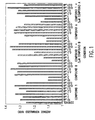
- Figure 1 shows the effect of high-potassium addition to HEK-293 cells.
- Control cells display a signal suggesting the presence of some potassium conductance that contributes to setting the resting potential of the cells.
- the signal is not affected by the presence of different concentrations of the selective maxi-K channel blocker, Compound 1.
- Compound 1 in the presence of either Compound A or Compound B there is a concentration-dependent inhibition of the fluorescence signal suggesting that those channels that contribute to setting the resting potential of the cells are sensitive to the presence of these agents.
- a useful concentration range for these agents is 3-10 ⁇ M.
- the efficacy of either Compound A or Compound B is unaffected.
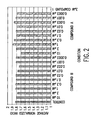
- Figure 2 shows the effect of the potassium channel blockers Compound A and Compound B on maxi-K channel activity using maxi-K channels transiently expressed in TsA-201 cells.
- the presence of 3 ⁇ M Compound 1 completely inhibits the control signal.
- neither Compound A, nor Compound B have any effect on maxi-K channel activity.
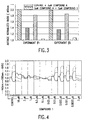
- Figure 3 shows the effect of the potassium channel blocker Compound A. on maxi-K channel activity using HEK-293 cells stably transfected with both alpha and beta1 subunits of the maxi-K channel.
- the maxi-K channel blocker Compound 1 only partially blocks the signal generated by addition of a high-potassium solution suggesting that other potassium conductances, in addition to maxi-K channels, control the resting potential of the transfected HEK cells.
- addition of Compound 1 causes complete inhibition of the signal.
- Compound A has no significant effect on the magnitude of the signal caused by addition of high-potassium solution.
- Figure 4 shows representative fluorescence traces obtained in the VIPR instrument with HEK-293 cells stably transfected with both alpha and beta1 subunits of the maxi-K channel. Recordings from twelve different wells are shown. The horizontal scale represents time, whereas the vertical axis shows the fluorescence readings of both coumarin (460 nm) and oxanol (580 nm). The ratio coumarin/oxanol is also indicated. In all wells, 3 ⁇ M Compound A was present to block endogenous potassium conductances of HEK cells. Addition of increasing concentrations of the selective maxi-K channel blocker, Compound 1, causes a concentration-dependent inhibition of the control signal. This assay can thus be used to identify inhibitors of the maxi-K channel.
Landscapes
- Health & Medical Sciences (AREA)
- Chemical & Material Sciences (AREA)
- Life Sciences & Earth Sciences (AREA)
- Engineering & Computer Science (AREA)
- Organic Chemistry (AREA)
- Biomedical Technology (AREA)
- General Health & Medical Sciences (AREA)
- Medicinal Chemistry (AREA)
- Bioinformatics & Cheminformatics (AREA)
- Immunology (AREA)
- Public Health (AREA)
- Animal Behavior & Ethology (AREA)
- Veterinary Medicine (AREA)
- Pharmacology & Pharmacy (AREA)
- Molecular Biology (AREA)
- Urology & Nephrology (AREA)
- Hematology (AREA)
- Chemical Kinetics & Catalysis (AREA)
- Nuclear Medicine, Radiotherapy & Molecular Imaging (AREA)
- General Chemical & Material Sciences (AREA)
- Cell Biology (AREA)
- Analytical Chemistry (AREA)
- Biochemistry (AREA)
- Ophthalmology & Optometry (AREA)
- Pathology (AREA)
- Biotechnology (AREA)
- General Physics & Mathematics (AREA)
- Neurosurgery (AREA)
- Microbiology (AREA)
- Neurology (AREA)
- Physics & Mathematics (AREA)
- Food Science & Technology (AREA)
- Tropical Medicine & Parasitology (AREA)
- Epidemiology (AREA)
- Toxicology (AREA)
- Psychiatry (AREA)
- Hospice & Palliative Care (AREA)
- Emergency Medicine (AREA)
- Pain & Pain Management (AREA)
- Proteomics, Peptides & Aminoacids (AREA)
Claims (9)
- Verfahren zum Identifizieren von Maxi-K-Kanalblockern, die zur Absenkung des intraokularen Druckes (1) unter Anwendung von HEK-293-Zellen verwendbar sind, welches Verfahren die Schritte umfasst:(a) Aufbauen von stabilen HEK-293-Zell-Linien, die sowohl alpha- als auch beta-1-Subeinheiten des Maxi-K-Kanals exprimieren;(b) Inkubieren der HEK-293-Zellen mit einem Kalium-Kanalblocker, welche selektiv die endogene Kalium-Leitfähigkeit von HEK-293-Zellen eliminiert, ohne die Maxi-K-Kanal-Aktivität zu beeinträchtigen (2)(c) Beladen der inkubierten HEK-K-293-Zellen mit einer Testverbindung und Inkubieren sowie(d) Messen der Maxi-K-Kanalblockeraktivität der Testverbindung unter Verwendung eines Spannung/Ionensonden-Leseinstrumentes und auf Fluoreszenz-Resonanzenergietransfer(3)-basierenden Membranpotentials, indem Farbstoffe zur Beobachtung des Membranpotentials erfasst werden.
- Verfahren nach Anspruch 1, welches Verfahren die Schritte umfasst:(a) Anlegen einer Plattenkultur der HEK-293-Zellen, 2E+06-Zellen/ml, auf 96er Mikrotiter-Poly-D-Lysin-Platten mit einer Dichte von etwa 100.000 Zellen/Mulde;(b) Inkubieren der Platten für 16 bis 24 Stunden;(c) Absaugen des Mediums von den Zellen;(d) Waschen der Zellen einmal mit Dulbecco's Phosphat-gepufferter Salzlösung;(e) Zugeben von 100 µl von 9 µM-Cumarin-Farbstoff-0,02% Pluronic-127 in Dulbecco's Phosphat-gepufferter Salzlösung (4) pro Mulde;(f) Inkubieren bei Dunkelheit für etwa 30 Minuten;(g) Waschen der Zellen zweimal mit Dulbecco's Phosphat-gepufferter Salzlösung;(h) Zugeben von 100 µl 4,5 µM Oxanol-Farbstoff in (mM): 140 NaCl, 0,1 KCl, 2 CaCl2, 1 MgCl2, 20 Hepes-NaOH, pH-Wert bei etwa 7,4, 10 Glucose pro Mulde;(i) Zugeben eines Inhibitors der endogenen Kalium-Leitfähigkeit von HEK-293-Zellen;(j) Zugeben einer Testverbindung;(k) Inkubieren bei Raumtemperatur für etwa 30 Minuten;(l) Laden der Platten auf einem Spannung/Ionen-Sondenleser und Aufzeichnen der Fluoreszenzemission beider Farbstoffe für etwa 10 Sekunden;(m) Zugeben von 100 µl kaliumreicher Lösung in (mM): 140 KCl, 2 CaCl2, 1 MgCl2, 20 Hepes-KOH, pH-Wert bei etwa 7,4, 10 Glucose; und Aufzeichnen der Fluoreszenzemission beider Farbstoffe für etwa 10 Sekunden und Bestimmen des Membranpotentials dieser Daten unter Anwendung eines Spannung/Ionensonden-Lesegeräts.
- Verfahren nach Anspruch 1 oder 2, bei welchem der Kalium-Kanalblocker eine Verbindung mit der Strukturformel I ist:
 a eine Einfachbindung oder eine Doppelbindung ist, wenn R4 nicht vorhanden ist und in der vorgenannten Struktur dargestellt wird durch = unter der Voraussetzung, dass a eine Einfachbindung ist, wenn x + y = 0 gilt;n beträgt 0, 1, 2 oder 3;r beträgt 0 oder 1;s beträgt 0 oder 1;x oder y sind unabhängig 0, 1 oder 2;R1, R2, R6 und R7 sind unabhängig:(1) Halogen, worin Halogen Fluor, Chlor, Brom oder Iod ist,(2) Hydroxy,(3) (C1-C6)-Alkyl,(4) HO(C1-C6)-Alkyloxy,(5) (C1-C4)-Perfluoralkyl,(6) (C2-C6)-Alkenyl,(7) (C2-C6)-Alkinyl,(8) O[C=O)Or]s(C1-C6)-Alkyl,(9) (C1-C6)-Alkyl-S(O)n -,(10) -(O)r(C0-C6)-Alkylaryl, worin Aryl Phenyl ist oder Naphthyl ist, unsubstituiert ist oder substituiert ist mit bis zu drei Substituenten, die ausgewählt sind aus (C1-C3)-Alkyl, Trifluormethyl und Halogen;(11) -(O)r-Heteroaryl, worin das Heteroaryl Pyridinyl oder Pyrryl ist,(12) Cyano,(13) Nitro,(14) CO2H,(15) CO(C1-C6)-Alkyl,(16) CO2(C1-C6)-Alkyl,(17) CONR8R9,(18) NR8R9,(20) (C2-C6)-Alkenyloxy,(21) (CO)-Aryl, worin Aryl Phenyl, Naphthyl, Benzothienyl ist oder ein Benzophenon-Rest und unsubstituiert ist oder substituiert ist mit bis zu zwei Substituenten, die ausgewählt sind aus Halogen, Trifluormethyl und (C1-C3)-Alkyl,(22) Wasserstoff,(23) OCF3,(24) -(CH2)-O-N=C(CH3)(Aryl), worin Aryl Phenyl ist oder Naphthyl ist und unsubstituiert ist oder substituiert ist mit bis zu drei Halogen-Substituenten;(25) -S(O)n-N R8R9 oder(26) R1 und R2 oder R6 und R7 können zusammengenommen werden, sofern an angrenzenden Kohlenstoffen, um eine kondensierte Benzo-Dihydrofuranyl-, Furanyl-, Pyrrolidyl-, Dihydropyrrolidyl- oder 1,3-Dioxolan-Gruppe zu bilden;R3 und R4 sind unabhängig:(1) Halogen, worin Halogen Fluor, Chlor, Brom oder Iod ist,(2) Hydroxy, wenn a eine Einfachbindung ist,(3) HO(C1-C6)-Alkyloxy,(4) (C1-C4)-Perfluoralkyl,(5) O(CO)CCl3,(6) (C1-C6)-Alkyl-S(O)n-,(7) Phenyl-(CH2)r-S(O)n-,(8) Cyano,(9) Nitro,(10) CO2H,(11) CO(C1-C6)-Alkyl,(12) CO2(C1-C6)-Alkyl,(13) CONR8R9,(14) NR8R9,(15) O(CO)NR8R9,(16) Azido,(17) NR8(CO)NR8R9,(18) Wasserstoff(19) (C1-C10)-Alkyl, worin Alkyl cyclische sowie acyclische Gruppen einschließt und unsubstituiert ist oder substituiert ist mit einem oder zwei der Substituenten, die ausgewählt sind aus der Gruppe, bestehend aus:(a) Halogen, worin Halogen Fluor, Chlor, Brom oder Iod ist,(b) Hydroxy,(c) Oxo,(d) O[(C=O)Or]s(C1-C6)-Alkyl,(e) (C1-C6)-Alkyl-S(O)n-,(f) Aryl-(C1-C6)-Alkyloxy,(g) Cyano,(h) Nitro,(i) Vinyl,(j) NR8R9,(k) O(CO)NR8R9,(l) CHO,(m) CO2H,(n) CO(C1-C6)-Alkyl,(o) CO2(C1-C6)-Alkyl,(p) CONR8R9,(q) Aryl, wenn Aryl festgelegt ist als Phenyl oder Naphthyl, unsubstituiert oder substituiert mit einem, zwei oder drei der Substituenten, die ausgewählt sind aus der Gruppe, bestehend aus:(a') Halogen, wie vorstehend festgelegt,(b') Hydroxy,(c') (C1-C6)-Alkyl,(d') (C1-C4)-Perfluoralkyl,(e') (C2-C6)-Alkenyl,(f') (C2-C6)-Alkinyl,(g') (C1-C6)-Alkyloxy,(h') (C1-C6)Alkyl-S(O)n-,(i') Phenyl,(j') Phenoxy,(k') Cyano,(l') Nitro,(m') CO2H,(n') CO(C1-C6)-Alkyl,(o') CO2(C1-C6)-Alkyl,(p') CONR8R9 und(q') NR8R9,(r) Heteroaryl, worin Heteroaryl festgelegt ist als ein unsubstituierter, monosubstituierter oder disubstituierter, fünf- oder sechsgliedriger aromatischer Heterocyclus, der 1 bis 3 Heteroatome enthält, die ausgewählt sind aus der Gruppe, bestehend aus O, N und S, und worin die Substituenten Vertreter sind, die ausgewählt sind aus der Gruppe, bestehend aus:(a') Halogen, wie vorstehend festgelegt,(b') Hydroxy,(c') (C1-C6)-Alkyl,(d') (C1-C4)-Perfluoralkyl,(e') (C2-C6)-Alkenyl,(f') (C2-C6)-Alkinyl,(g') (C1-C6)-Alkyloxy,(h') (C1-C6)Alkyl-S(O)n-,(i') Phenyl,(j') Phenoxy,(k') Cyano,(l') Nitro,(m') CO2H,(n') CO(C1-C6)-Alkyl,(o') CO2(C1-C6)-Alkyl,(p') CONR8R9 und(q') NR8R9 und(r') kondensierte Benzo- oder Pyridyl-Gruppe,(s) Heterocyclyl, worin Heterocyclyl festgelegt ist als ein cyclischer, nichtaromatischer Substituent mit 3 bis 7 Atomen, der 1 bis 3 Heteroatome enthält, die ausgewählt sind aus der Gruppe, bestehend aus O, N und S, wobei der Heterocyclus unsubstituiert ist oder substituiert ist mit einem, zwei oder drei Substituenten, die ausgewählt sind aus der Gruppe, bestehend aus:(a') Halogen, wie vorstehend festgelegt,(b') Hydroxy,(c') (C1-C6)-Alkyl,(d') (C1-C4)-Perfluoralkyl,(e') (C2-C6)-Alkenyl,(f') (C2-C6)-Alkinyl,(g') (C1-C6)-Alkyloxy,(h') (C1-C6)Alkyl-S(O)n-,(i') Phenyl,(j') Phenoxy,(k') Cyano,(l') Nitro,(m') CO2H,(n') CO(C1-C6)-Alkyl,(o') CO2(C1-C6)-Alkyl,(p') CONR8R9 und(q') NR8R9,(r') NR8CO(C1-C6)-Alkyl,(s') Oxo,(t') kondensierte Benzo- und(u') kondensierte Pyridyl-Gruppe;(t) Benzyl-S(O)n-,(u) O[(C=O)Or]s(C1-C6)-Alkenyl,(v) O[(C=O)Or]s-Aryl,(w) O[(C=O)Or]s-Heteroaryl,(x) O(CH2)n-Heteroaryl oder(y) O(CH2)n-Aryl;(20) (C2-C10)-Alkenyl, worin Alkenyl unsubstituiert ist oder substituiert ist mit einem oder zwei der Substituenten, die ausgewählt sind aus der Gruppe, bestehend aus:(a) Halogen, worin Halogen Fluor, Chlor, Brom oder Iod ist,(b) Hydroxy,(c) Oxo,(e) (C1-C6)-Alkyl-S(O)n-,(f) Phenyl-(C1-C6)-Alkyloxy,(g) Cyano,(h) Nitro,(i) NR8R9,(j) CHO,(k) CO2H,(l) CO(C1-C6)-Alkyl,(m) CO2(C1-C6)-Alkyl,(n) CONR8R9,(o) Aryl, worin Aryl wie vorstehend festgelegt ist,(p) Heteroaryl, worin Heteroaryl wie vorstehend festgelegt ist,(q) Heterocyclyl, worin Heterocyclyl wie vorstehend festgelegt ist,(r) O[(C=O)Or]s(C1-C6)-Alkyl, worin Alkyl wie vorstehend festgelegt ist,(s) O[(C=O)Or]s(C2-C6)-Alkenyl, worin Alkenyl wie vorstehend festgelegt ist,(t) O[(C=O)Or]s(C1-C6)-Aryl, worin Aryl wie vorstehend festgelegt ist,(u) O[(C=O)Or]s-Heteroaryl, worin Heteroaryl wie vorstehend festgelegt ist,(v) ((CH2)n-Heteroaryl, worin Heteroaryl wie vorstehend festgelegt ist,(w) O(CH2)n-Aryl, worin Aryl wie vorstehend festgelegt ist;(21) (C2-C10)-Alkinyl, worin Alkinyl unsubstituiert ist oder substituiert ist mit einem oder zwei der Substituenten, die ausgewählt sind aus der Gruppe, bestehend aus:(a) Halogen, worin Halogen Fluor, Chlor, Brom oder Iod ist,(b) Hydroxy,(c) Oxo,(d) (C1-C6)-Alkyloxy,(e) (C1-C6)-S(O)n-,(f) Phenyl-(C1-C6)-Alkyloxy,(g) Cyano,(h) Nitro,(i) Vinyl,(j) NR8R9,(k) NR8CO(C1C6)-Alkyl,(l) CHO,(m) CO2H,(n) CO(C1-C6)-Alkyl,(o) CO2C(C1-C6)-Alkyl,(p) CONR8R9,(q) Aryl, worin Aryl wie vorstehend festgelegt ist,(r) Heteroaryl, worin Heteroaryl wie vorstehend festgelegt ist,(s) Heterocyclyl, worin Heterocyclyl wie vorstehend festgelegt ist,(t) O[(C=O)Or]s(C1-C6)-Alkyl, worin Alkyl wie vorstehend festgelegt ist,(u) O[(C=O)Or]s(C2-C6)-Alkenyl, worin Alkenyl wie vorstehend festgelegt ist,(v) O[(C=O)Or]s-Aryl, worin Aryl wie vorstehend festgelegt ist,(w) O[(C=O)Or]s-Heteroaryl, worin Heteroaryl wie vorstehend festgelegt ist,(x) O(CH2)n-Heteroaryl, worin Heteroaryl wie vorstehend festgelegt ist,(y) O(CH2)n-Aryl, worin Aryl wie vorstehend festgelegt ist,(22) O[(C=O)Or]s(C1-C6)-Alkyl, worin Alkyl wie vorstehend festgelegt ist,(23) O[(C=O)Or]s(C2-C6)-Alkenyl, worin Alkenyl wie vorstehend festgelegt ist,(24) O[(C=O)Or]s-Aryl, worin Aryl wie vorstehend festgelegt ist,(25) O[(C=O)Or]s-Heteroaryl, worin Heteroaryl wie vorstehend festgelegt ist,(26) O(CH2)n-Heteroaryl, worin Heteroaryl wie vorstehend festgelegt ist,(27) Aryl, worin Aryl wie vorstehend festgelegt ist,(28) O[(C=O)Or]s-Heteroaryl, worin Heteroaryl wie vorstehend festgelegt ist,(29) O(CO)NH(CH2-CO-NR8R9) oder(30) O(CH2)n-Aryl, worin Aryl wie vorstehend festgelegt ist;R3 kann ebenfalls jeder beliebige der Folgenden sein, wenn a eine Einfachbindung ist und R4 nicht vorhanden ist;(31) Oxo,(32) =CH-(C1-C6)-Alkyl, worin Alkyl wie vorstehend festgelegt ist,(33) =CH-(C2-C6)-Alkenyl, worin Alkenyl wie vorstehend festgelegt ist,(34) =CH-Aryl, worin Aryl wie vorstehend festgelegt ist,(35) =CH2 oderR3 und R4 können zusammengenommen eine spiro-kondensierte Heterocyclyl-Gruppe bilden, worin Heterocyclyl wie vorstehend festgelegt ist, oderR3 und R5 können zusammengenommen ein kondensiertes Oxiran bilden, wenn a eine Einfachbindung ist unter der Voraussetzung, dass R4 nicht vorhanden ist, wenn a eine Doppelbindung ist;R5 ist:(1) Wasserstoff,(2) Halogen,(3) (C2-C6)-Alkenyl,(4) Hydroxy,(5) O[(C=O)Or]s(C1-C6)-Alkyl,(6) O(CO)NR8R9,(7) Oxo, wenn a eine Einfachbindung ist, oderR5 und R3 können zusammengenommen ein kondensiertes Oxiran bilden, wenn a eine Einfachbindung ist;R8 und R9 sind unabhängig ausgewählt aus der Gruppe, bestehend aus:(1) Wasserstoff,(2) [(C=O)Or]s-Aryl, worin Aryl wie vorstehend festgelegt ist,(3) [(C=O)Or]s(C2-C8)-Alkenyl, worin Alkenyl wie vorstehend festgelegt ist,(4) [(C=O)Or]s(C1-C8)-Alkyl, worin Alkyl wie vorstehend festgelegt ist,(5) (C=O)rS(O)n(C1-C8)-Alkyl, worin Alkyl wie vorstehend festgelegt ist,(6) (C=O)rS(O)n-Aryl, worin Aryl wie vorstehend festgelegt ist und(7) Heterocyclyl, worin Heterocyclyl wie vorstehend festgelegt ist;R10 ist:(1) Wasserstoff,(2) [(C=O)Or]s-Aryl, worin Aryl wie vorstehend festgelegt ist oder(3) [(C=O)Or]s(C1-C6)-Alkyl, worin Alkyl wie vorstehend festgelegt ist.
 - Verfahren nach Anspruch 3, worin die Verbindung der Formel I ferner wie in der Verbindung von Formel II festgelegt ist, worin x 2 und y 1 betragen.

- Verfahren nach Anspruch 4, worin a ferner festgelegt ist als eine Einfachbindung;R1, R2, R6 und R7 sind unabhängig:(1) Halogen, worin Halogen Fluor, Chlor, Brom oder Iod ist,(2) Hydroxy,(3) (C1-C6)-Alkyl,(4) HO(C1-C6)-Alkyloxy,(5) (C1-C6)-Alkyloxy, worin das Alkyl cyclisch ist oder geradkettig,(6) Acetoxy,(7) Nitro,(8) NR8R9,(9) -(O)r(C0-C3)-Aryl, worin Aryl Phenyl oder Napthyl ist, unsubstituiert ist oder substituiert ist mit bis zu drei Substituenten, die ausgewählt sind aus (C1-C3)-Alkyl, Trifluormethyl und Halogen,(10) Wasserstoff,(11) (O)rCF3,(12) (C1-C6)-Alkyl-S(O)n-, worin n 0, 1, 2 oder 3 beträgt,(13) (CO2)-(C1-C6)-Alkyl,(14) -(O)r-Heteroaryl, worin Heteroaryl Pyridinyl oder Pyrryl ist,(15) (CO)-Aryl, worin Aryl Phenyl ist, Naphthyl, Benzothienyl oder ein Benzophenon-Rest ist und unsubstituiert ist oder substituiert ist mit bis zu zwei Substituenten, die ausgewählt sind aus Halogen, Trifluormethyl und (C1-C3)-Alkyl,(16) -(CH2)-O-N-C(CH3)(Aryl), worin Aryl Phenyl ist, unsubstituiert ist oder substituiert ist mit bis zu drei Halogen-Substituenten,(17) -S(O)n-N R8R9 oder(18) R1 und R2 oder R6 und R7 können zusammengenommen werden, um ein kondensierte Benzo-, Dihydrofuranyl-, Furanyl-, Pyrrolidyl-, Dihydropyrrolidyl- oder 1,3-Dioxan-Gruppe zu bilden;R3 und R4 sind unabhängig:(1) Halogen, worin Halogen Fluor, Chlor, Brom oder Iod ist,(2) Hydroxy,(3) HO(C1-C6-Alkyloxy),(4) (C=O)O(C1-C6)-Alkyl,(5) O(CO)CCl3,(6) (C1-C6)-Alkyl-S(O)n-, worin n 0, 1, 2 oder 3 beträgt,(7) CH2CO2-(C1-C6)-Alkyl,(8) Cyano,(9) Benzyloxy,(10) CH2OAc,(11) OAc,(12) (C2-C6)-Alkenyl,(13) (C1-C6)-Alkyl, worin Alkyl unsubstituiert sein kann oder substituiert ist mit Bromid,(14) NR8R9,(15) O(CO)NR8R9,(16) Azido,(17) NR8(CO)NR8R9,(18) Wasserstoff(19) CH2OH,(20) CH2O(C=O)-Phenyl, worin Phenyl unsubstituiert ist oder monosubstituiert ist mit Methoxy,(21) O(C2-C6)-Alkenyl,(22) O(C=O)-Phenyl; worin Phenyl unsubstituiert ist oder monosubstituiert ist mit Bromid,(23) O(C=O)O-Phenyl, worin Phenyl unsubstituiert ist oder monosubstituiert ist mit Nitro,(24) CH3(CO)NR8R9,(25) O(C=O)O-(C2-C6)-Alkenyl,(26) O(C=O)-(C1-C3)-Alkyl, worin das Alkyl unsubstituiert sein kann oder substituiert ist mit Bromid oder -CO2CH3,(27) O(C1-C6)-Alkyl, worin Alkyl unsubstituiert sein kann oder substituiert ist mit Phenyl,(28) O(C=O)O-(C1-C6)-Alkyl,(29) CH2O(CO)NR8R9 oder(30) CH2(C=O)O-(C1-C6)-Alkyl,R3 kann jedes beliebige der Folgenden sein, wenn R4 nicht vorhanden ist:(31) Oxo,(32) =CH2,(33) =CH-CO2-(C1-C6)-Alkyl,(34) =CH-(CO)-NR8R9 oder(35) =CH-CO2H oderR3 und R4 können zusammengenommen werden, um eine spiro-kondensierte Heterocyclyl-Gruppe zu bilden, worin Heterocyclyl festgelegt ist als:(36) Oxiran,(37) 1,3-Dioxolan,(38) 2,2-Dimethyl-1,3-dioxolan oder(39) Glykolsulfit oderR3 und R5 können zusammengenommen werden, um ein kondensiertes Oxiran zu bilden;R5 ist:(1) Wasserstoff,(2) Halogen(3) (C2-C6)-Alkenyl,(4) Hydroxy,(5) O(C=O)(C1-C3)-Alkyl,(6) O(CO)NR8R9,(7) Oxo, wenn a eine Einfachbindung ist oderR5 und R3 können zusammengenommen werden, um ein kondensiertes Oxiran zu bilden, wenn a eine Einfachbindung ist;R8 und R9 sind unabhängig ausgewählt aus der Gruppe, bestehend aus:(1) Wasserstoff,(2) (C=O)O(C1-C6)-Alkyl, worin Alkyl wahlweise substituiert ist mit Phenyl oder Methoxy,(3) (C=O)-Phenyl, worin Phenyl wahlweise substituiert ist mit Bromid oder Methoxy,(4) (C1-C6)-Alkyl, worin Alkyl wahlweise substituiert ist mit Phenyl, Methoxy, Hydroxy, OCH2OCH3, Benzyl-SO3, Phenyl-SO3 oder Carboxymethyl,(5) (C2-C6)-Alkenyl,(6) (C=O)O-Phenyl, worin Phenyl wahlweise substituiert ist mit Nitro,(7) (C=O)O(C2-C6)-Alkenyl,(8) (C=O)(C1-C3)-Alkyl, worin Alkyl wahlweise substituiert ist mit Phenyl,(9) (C=O)(C2-C4)-Alkenyl,(10) Phenyl,(11) SO2-Phenyl,(12) SO2-Benzyl,(13) CH2(CO)CH3,(14) CH2(CO)NH-Benzyl,(15) CH2(CO)NH-Allyl,(16) CH2(CO)N(CH3)2,(17) CH2(CO)NH(CH3),(18)
 (19)
(19) (20)
(20) (21)
(21) (22)
(22) (23)
(23) (24) CH2CH2NHCO2(C1-C3)-Alkyl,(25) CH2CH2O(CO)NHCH3,(26) CH2CH2O(CO)NH-Allyl,(27) CH2CH2NH(SO2)CH3,(28) CH2CH2NH2,(29) CH2CH2NH(CO)CH2CH3 und(30) Benzyl;R10 ist:(1) Wasserstoff(2) (C=O)-Phenyl, worin Phenyl unsubstituiert ist oder substituiert ist mit F, Cl, Br oder I oder(3) (C1-C3)-Alkyl.
 - Verfahren nach Anspruch 1 oder 2, bei welchem der Kalium-Kanalblocker eine Verbindung der Strukturformel III ist;
 n ist: 0, 1, 2 oder 3;r ist: 0 oder 1;s ist: 0 oder 1;R1, R2 R5, R6 und R7 sind unabhängig:(1) Halogen, worin Halogen Fluor, Chlor, Brom oder Iod ist,(2) Hydroxy,(3) (C1-C6)-Alkyl,(4) HO(C1-C6)-Alkyloxy,(5) (C1-C4)-Perfluoralkyl,(6) (C2-C6)-Alkenyl,(7) (C2-C6)-Alkinyl,(8) O[(C=O)Or]s(C1-C6)-Alkyl, worin das Alkyl cyclisch sein kann oder geradkettig,(9) (C1-C6)-Alkyl-S(O)n-,(10) Phenyl,(11) Phenoxy,(12) Cyano,(13) Nitro,(14) CO2H,(15) CO(C1-C6)-Alkyl,(16) CO2(C1-C6)-Alkyl,(17) CONR8R9,(18) NR8R9,(20) (C2-C6)-Alkenyloxy,(21) Benzyloxy,(22) Wasserstoff,(23) OCF3 oder(24) R1 und R2 oder R6 und R7 können zusammengenommen werden, wenn an angrenzenden Kohlenstoffen, um eine kondensierte Benzo-, Dihydrofuranyl-, Furanyl-, Pyrrolidyl-, Dihydropyrrolidyl- oder 1,3-Dioxolan-Gruppe zu bilden;R3 und R4 sind unabhängig:(1) Halogen, worin Halogen Fluor, Chlor, Brom oder Iod ist,(2) Hydroxy,(3) HO(C1-C6)-Alkyloxy,(4) (C1-C4)-Perfluoralkyl,(5) O(CO)CCl3,(6) (C1-C6)-Alkyl-S(O)n-,(7) Phenyl-(CH2)r-S(O)n-,(8) Cyano,(9) Nitro,(10) CO2H,(11) CO(C1-C6)-Alkyl"(12) CO2(C1-C6)-Alkyl,(13) CONR8R9,(14) NR8R9,(15) O(CO)NR8R9,(16) Azido,(17) NR8(CO)NR8R9,(18) Wasserstoff,(19) (C1-C10)-Alkyl, worin Alkyl sowohl cyclische als auch acyclische Gruppen einschließt und unsubstituiert ist oder substituiert ist mit einem oder zwei der Substituenten, die ausgewählt sind aus der Gruppe, bestehend aus:(a) Halogen, worin Halogen, Fluor, Chlor, Brom oder Iod ist,(b) Hydroxy,(c) Oxo,(d) O[(C=O)Or]s(C1-C6)-Alkyl,(e) (C1-C6)-Alkyl-S(O)n-,(f) Aryl-(C1-C6)-Alkyloxy,(g) Cyano,(h) Nitro,(i) Vinyl,(j) NR8R9,(k) O(CO)NR8R9,(l) CHO,(m) CO2H,(n) CO(C1-C6)-Alkyl,(o) CO2(C1-C6)-Alkyl, worin Alkyl substituiert sein kann mit Phenyl,(p) CONR8R9,(q) Aryl, worin Aryl festgelegt ist als Phenyl oder Naphthyl, unsubstituiert ist oder substituiert ist mit einem, zwei oder drei der Substituenten, die ausgewählt sind aus der Gruppe, bestehend aus:(a') Halogen, wie vorstehend festgelegt,(b') Hydroxy,(c') (C1-C6)-Alkyl,(d') (C1-C4)-Perfluoralkyl,(e') (C2-C6)-Alkenyl,(f') (C2-C6)-Alkinyl,(g') (C1-C6)-Alkyloxy,(h') (C1-C6)-Alkyl-S(O)n-,(i') Phenyl,(j') Phenoxy,(k') Cyano,(l') Nitro,(m') CO2H,(n') CO(C1-C6)-Alkyl,(o') CO2(C1-C6)-Alkyl,(p') CONR8R9,(q') NR8R9 und(r) Heteroaryl, worin Heteroaryl festgelegt ist als ein unsubstituierter, monosubstituierter oder disubstituierter fünfgliedriger oder sechsgliedriger aromatischer Heterocyclus, der 1 bis 3 Heteroatome enthält, die ausgewählt sind aus der Gruppe, bestehend aus O, N und S, und worin die Substituenten Vertreter sind, die ausgewählt sind aus der Gruppe, bestehend aus:(a') Halogen, wie vorstehend festgelegt,(b') Hydroxy,(c') (C1-C6)-Alkyl,(d') (C1-C4)-Perfluoralkyl,(e') (C2-C6)-Alkenyl,(f') (C2-C6)-Alkinyl,(g') (C1-C6)-Alkyloxy,(h') (C1-C6)-Alkyl-S(O)n-,(i') Phenyl,(j') Phenoxy,(k') Cyano,(l') Nitro,(m') CO2H,(n') CO(C1-C6)-Alkyl,(o') CO2(C1-C6)-Alkyl,(p') CONR8R9,(q') NR8R9 und(r') kondensierte Benzo- oder Pyridyl-Gruppe,(s) Heterocyclyl, worin Heterocyclyl festgelegt ist als ein cyclischer, nichtaromatischer Substituent mit 3 bis 7 Atomen, der 1 bis 3 Heteroatome enthält, die ausgewählt sind aus der Gruppe, bestehend aus O, N und S, wobei der Heterocyclus unsubstituiert ist oder substituiert ist mit einem oder zwei oder drei Substituenten, die ausgewählt sind aus der Gruppe, bestehend aus:(a') Halogen, wie vorstehend festgelegt,(b') Hydroxy,(c') (C1-C6)-Alkyl,(d') (C1-C4)-Perfluorelkyl,(e') (C2-C6)-Alkenyl,(f') (C2-C6)-Alkinyl,(g') (C1-C6)-Alkyloxy,(h') (C1-C6)-Alkyl-S(O)n-,(i') Phenyl,(j') Phenoxy,(k') Cyano,(l') Nitro,(m') CO2H,(n') CO(C1-C6)-Alkyl,(o') CO2(C1-C6)-Alkyl,(p') CONR8R9,(q') NR8R9,(r') NR8CO(C1-C6)-Alkyl,(s') Oxo,(t') kondensierte Benzo- und(u') kondensierte Pyridyl-Gruppe;(t) Benzyl-S(O)n-,(u) O[(C=O)Or]s(C2-C6)-Alkenyl,(v) O[(C=O)Or]s-Aryl,(w) O[(C=O)Or]s-Heteroaryl,(x) O(CH2)n-Heteroaryl oder(y) O(CH2)n-Aryl;(20) (C2-C10)-Alkenyl, worin Alkenyl unsubstituiert ist oder substituiert ist mit einem oder zwei der Substituenten, die ausgewählt sind aus der Gruppe, bestehend aus:(a) Halogen, worin Halogen Fluor, Chlor, Brom oder Iod ist,(b) Hydroxy,(c) Oxo,(e) (C1-C6)-Alkyl-S(O)n-,(f) Phenyl-(C1-C6)-Alkyloxy,(g) Cyano,(h) Nitro,(i) NR8R9,(j) CHO,(k) CO2H,(l) CO(C1-C6)-Alkyl,(m) CO2(C1-C6)-Alkyl,(n) CONR8R9,(o) Aryl, worin Aryl wie vorstehend festgelegt ist,(p) Heteroaryl, worin Heteroaryl wie vorstehend festgelegt ist,(q) Heterocyclyl, worin Heterocyclyl wie vorstehend festgelegt ist,(r) O[(C=O)Or]s(C1-C6)-Alkyl, worin Alkyl wie vorstehend festgelegt ist,(s) O[(C=O)Or]s(C2-C6)-Alkenyl, worin Alkenyl wie vorstehend festgelegt ist,(t) O[(C=O)Or]sAryl, worin Aryl wie vorstehend festgelegt ist,(u) O[(C=O)Or]s-Heteroaryl, worin Heteroaryl wie vorstehend festgelegt ist,(v) O(CH2)n-Heteroaryl, worin Heteroaryl wie vorstehend festgelegt ist,(w) O(CH2)n-Aryl, worin Aryl wie vorstehend festgelegt ist;(21) (C2-C10)-Alkinyl, worin Alkinyl unsubstituiert ist oder substituiert ist mit einem oder zwei der Substituenten, die ausgewählt aus der Gruppe, bestehend aus:(a) Halogen, worin Halogen Fluor, Chlor, Brom oder Iod ist,(b) Hydroxy,(c) Oxo,(d) (C1-C6)-Alkyloxy,(e) (C1-C6)-S(O)n-,(f) Phenyl-(C1-C6)-Alkyloxy,(g) Cyano,(h) Nitro,(i) Vinyl,(j) NR8R9,(k) NR8CO(C1-C6)-Alkyl,(l) CHO,(m) CO2H,(n) CO(C1-C6)-Alkyl,(o) CO2C(C1-C6)-Alkyl,(p) CONR8R9,(q) Aryl, worin Aryl wie vorstehend festgelegt ist,(r) Heteroaryl, worin Heteroaryl wie vorstehend festgelegt ist,(s) Heterocyclyl, worin Heterocyclyl wie vorstehend festgelegt ist,(t) O[(C=O)Or]s(C1-C6)-Alkyl, worin Alkyl wie vorstehend festgelegt ist,(u) O[(C=O)Or]s/C2-C6)-Alkenyl, worin Alkenyl wie vorstehend festgelegt ist,(v) O[(C=O)Or]s-Aryl, worin Aryl wie vorstehend festgelegt ist,(w) O[(C=O)Or]s-Heteroparyl, worin Heteroaryl wie vorstehend festgelegt ist;(x) O(CH2)n-Heteroaryl, worin Heteroaryl wie vorstehend festgelegt ist,(y) O(CH2)n-Aryl, worin Aryl wie vorstehend festgelegt ist,(22) O[(C=O)Or]s(C1-C6)-Alkyl, worin Alkyl wie vorstehend festgelegt ist,(23) O[(C=O)Or]s(C2-C6)-Alkenyl, worin Alkenyl wie vorstehend festgelegt ist,(24) O[(C=O)Or]s-Aryl, worin Aryl wie vorstehend festgelegt ist,(25) O[(C=O)Or]s-Heteroaryl, worin Heteroaryl wie vorstehend festgelegt ist,(26) O(CH2)n-Heteroaryl, worin Heteroaryl wie vorstehend festgelegt ist,(27) Aryl, worin Aryl wie vorstehend festgelegt ist oder(28) O(CH2)n-Aryl, worin Aryl wie vorstehend festgelegt ist;R3 kann ebenfalls ein beliebiger der Folgenden sein, wenn R4 nicht vorhanden ist:(29) Oxo,(30) =CH-(C1-C6)-Alkyl, worin Alkyl wie vorstehend festgelegt ist,(31) =CH-(C2-C6)-Alkenyl, worin Alkenyl wie vorstehend festgelegt ist,(32) =CH-Aryl, worin Aryl wie vorstehend festgelegt ist oder(33) =CH2;R8 und R9 sind unabhängig ausgewählt aus der Gruppe, bestehend aus:(1) Wasserstoff,(2) [(C=O)Or]s-Aryl, worin Aryl wie vorstehend festgelegt ist,(3) [(C=O)Or]s(C2-C8)-Alkenyl, worin Alkenyl wie vorstehend festgelegt ist,(4) [(C=O)Or]s(C1-C8)-Alkyl, worin Alkyl wie vorstehend festgelegt ist,(5) (C=O)rS(O)n(C1-C8)-Alkyl, worin Alkyl wie vorstehend festgelegt ist,(6) (C=O)rS(O)n-Aryl, worin Aryl wie vorstehend festgelegt ist,(7) Heterocyclyl, worin Heterocyclyl wie vorstehend festgelegt ist;R10 ist:(1) Wasserstoff,(2) [(C=O)Or]s-Aryl, worin Aryl wie vorstehend festgelegt ist oder(3) [(C=O)Or]s(C1-C6)-Alkyl, worin Alkyl wie vorstehend festgelegt ist.
 - Verfahren nach Anspruch 6, worin R1, R2, R5, R6 und R7 der Formel III unabhängig sind:(1) Halogen, worin Halogen Fluor, Chlor, Brom oder Iod ist,(2) Hydroxy,(3) (C1-C3)-Alkyl,(4) (C2-C3)-Alkenyl,(5) O(C1-C4)-Alkyl, worin das Alkyl cyclisch oder geradkettig sein kann,(6) O(CO)CH3,(7) CO(C1-C3)-Alkyl,(8) CO2(C1-C3)-Alkyl,(9) Wasserstoff,(10) R1 und R2 oder R6 und R7 können zusammengenommen werden, wenn an angrenzenden Kohlenstoffatomen, um eine kondensierte Benzo-, Dihydrofuranyl-, Furanyl-, Pyrrolidyl-, Dihydropyrrolidyl- oder 1,3-Dioxolan-Gruppe zu bilden;R3 und R4 sind unabhängig:(1) Wasserstoff,(2) (C1-C6)-Alkyl, worin Alkyl cyclische sowie acyclische Gruppen einschließt und unsubstituiert ist oder substituiert ist mit einem oder zwei der Substituenten, die ausgewählt sind aus der Gruppe, bestehend aus:(a) Halogen, worin Halogen Fluor, Chlor, Brom oder Iod ist,(b) Hydroxy,(c) Oxo,(d) O[(C=O)Or]s(C1-C6)-Alkyl, worin r und s unabhängig Null oder 1 sind,(e) CO2(C2-C3)-Alkenyl,(f) O[(C=O)Or]s(C1-C6)-Alkenyl, worin r und s unabhängig Null oder 1 sind,(g) NR8R9,(h) O(CO)NR8R9,(i) CHO,(j) CO2H,(k) CO(C1-C6)-Alkyl,(l) CO2(C1-C6)-Alkyl, worin Alkyl substituiert sein kann mit Phenyl,(m) CONR8R9,(n) Aryl, worin Aryl festgelegt ist als Phenyl, unsubstituiert oder substituiert mit einem Substituenten, der ausgewählt ist aus der Gruppe, bestehend aus:(a') Halogen, wie vorstehend festgelegt,(b') Hydroxy,(c') (C1-C6)-Alkyl und(d') (C1-C6)-Alkyloxy und(o) O[(C=O)Or]s(C2-C6)-Alkenyl, worin r und s unabhängig Null oder 1 sind,(3) (C2-C6)-Alkenyl,(4) Aryl, worin Aryl wie vorstehend festgelegt ist oder(5) O(CO2)n-Aryl, worin Aryl wie vorstehend festgelegt ist;R3 kann ebenfalls ein beliebiger der Folgenden sein, wenn R4 nicht vorhanden ist:(6) =CH-(C1-C6)-Alkyl, worin Alkyl wie vorstehend festgelegt ist,(7) =CH-(C2-C6)-Alkenyl, worin Alkenyl wie vorstehend festgelegt ist;R8 und R9 sind unabhängig ausgewählt aus der Gruppe, bestehend aus:(1) Wasserstoff,(2) [(C=O)Or]s-Aryl, worin Aryl wie vorstehend festgelegt ist und r und s unabhängig Null oder 1 sind,(3) (C2-C8)-Alkenyl, worin Alkenyl wie vorstehend festgelegt ist und(4) (C1-C6)-Alkyl, worin Alkyl wie vorstehend festgelegt ist, undR10 ist,(1) Wasserstoff oder(2) (C=O)(C1-C3)-Alkyl, worin Alkyl wie vorstehend festgelegt ist.
- Verfahren nach Anspruch 1 oder 2, bei welchem der Kalium-Kanalblocker ist: trans-1-(N-Ethylcarbamoyloxy)-4-phenyl-4-(3-(2-methoxyphenyl)-3-oxo-2-azaprop-1-yl)cyclohexan, trans-1-(N-Allylcarbamoyloxy)-4-phenyl-4-(3-(2-hydroxy-5-fluorphenyl)-3-oxo-2-azaprop-1-yl)cyclohexan, trans-1-(N-n-Propylcarbamoyloxy)-4-phenyl-4-(3-(2-methoxyphenyl)-3-oxo-2-azaprop-1-yl)cyclohexan, trans-1-(N-Methylcarbamoyloxy)-4-phenyl-4-(3-(2-methoxyphenyl)-3-oxo-2-azaprop-1-yl)cyclohexan, trans-1-(N-Allylcarbamoyloxy)-4-phenyl-4-(3-(2-methoxyphenyl)-3-oxo-2-azapropyl)cyclohexan, 1-(2-Methoxyphenyl)-1-oxo-2-aza-(S)-4-isobutyl-4-phenylbutan, 1-(2-Methoxyphenyl)-1-oxo-2-aza-4-(S)-((3-allyloxycarbonyloxy)propyl))-4-phenylbutan, 1-(2-Methoxyphenyl)-1-oxo-2-aza-4,4-diethyl-4-phenylbutan, 1-(2,3-Dihydrobenzofuran-7-yl)-1-oxo-2-aza-4,4-diethyl-4-phenyl)-butan und 1-(2-Methoxyphenyl)-1-oxo-2-aza-4-(S)-(3-hydroxypropyl)-4-phenylbutan.
- Verfahren nach Anspruch 1 oder 2, bei welchem der Kalium-Kanalblocker ist:

Applications Claiming Priority (3)
| Application Number | Priority Date | Filing Date | Title |
|---|---|---|---|
| US26495601P | 2001-01-30 | 2001-01-30 | |
| US264956P | 2001-01-30 | ||
| PCT/US2002/002014 WO2002060340A2 (en) | 2001-01-30 | 2002-01-25 | Method for identifying maxi-k channel blockers |
Publications (3)
| Publication Number | Publication Date |
|---|---|
| EP1368020A2 EP1368020A2 (de) | 2003-12-10 |
| EP1368020A4 EP1368020A4 (de) | 2004-05-12 |
| EP1368020B1 true EP1368020B1 (de) | 2008-03-05 |
Family
ID=23008352
Family Applications (1)
| Application Number | Title | Priority Date | Filing Date |
|---|---|---|---|
| EP02705934A Expired - Lifetime EP1368020B1 (de) | 2001-01-30 | 2002-01-25 | Verfahren zur identifizierung von maxi-k-kanal-blockern |
Country Status (7)
| Country | Link |
|---|---|
| EP (1) | EP1368020B1 (de) |
| JP (1) | JP2005503761A (de) |
| AT (1) | ATE388400T1 (de) |
| AU (1) | AU2002240051B2 (de) |
| CA (1) | CA2436744A1 (de) |
| DE (1) | DE60225420T2 (de) |
| WO (1) | WO2002060340A2 (de) |
Families Citing this family (1)
| Publication number | Priority date | Publication date | Assignee | Title |
|---|---|---|---|---|
| CN120157616B (zh) * | 2025-02-27 | 2025-12-16 | 浙江大学 | 一种镍催化不对称胺基化合成全碳季碳立体中心化合物的方法 |
Citations (1)
| Publication number | Priority date | Publication date | Assignee | Title |
|---|---|---|---|---|
| WO1996033719A1 (en) * | 1995-04-28 | 1996-10-31 | Allergan | Method for reducing intraocular pressure in the mammalian eye by administration of potassium channel blockers |
Family Cites Families (2)
| Publication number | Priority date | Publication date | Assignee | Title |
|---|---|---|---|---|
| US5637470A (en) * | 1994-05-13 | 1997-06-10 | Merck & Co., Inc. | Screening array using cells expressing recombinant α and β subunits of the mammalian large-conductance (maxi-K) potassium channel |
| US6632836B1 (en) * | 1998-10-30 | 2003-10-14 | Merck & Co., Inc. | Carbocyclic potassium channel inhibitors |
-
2002
- 2002-01-25 DE DE60225420T patent/DE60225420T2/de not_active Expired - Fee Related
- 2002-01-25 EP EP02705934A patent/EP1368020B1/de not_active Expired - Lifetime
- 2002-01-25 CA CA002436744A patent/CA2436744A1/en not_active Abandoned
- 2002-01-25 AT AT02705934T patent/ATE388400T1/de not_active IP Right Cessation
- 2002-01-25 JP JP2002560537A patent/JP2005503761A/ja active Pending
- 2002-01-25 WO PCT/US2002/002014 patent/WO2002060340A2/en not_active Ceased
- 2002-01-25 AU AU2002240051A patent/AU2002240051B2/en not_active Ceased
Patent Citations (1)
| Publication number | Priority date | Publication date | Assignee | Title |
|---|---|---|---|---|
| WO1996033719A1 (en) * | 1995-04-28 | 1996-10-31 | Allergan | Method for reducing intraocular pressure in the mammalian eye by administration of potassium channel blockers |
Non-Patent Citations (1)
| Title |
|---|
| GONZALEZ ET AL: "Cell-based assays and instrumentation for screening ion-channel targets", DDT, vol. 4, 1999, pages 431 - 439, XP001026838 * |
Also Published As
| Publication number | Publication date |
|---|---|
| CA2436744A1 (en) | 2002-08-08 |
| JP2005503761A (ja) | 2005-02-10 |
| DE60225420T2 (de) | 2009-03-26 |
| AU2002240051B2 (en) | 2006-06-01 |
| WO2002060340A2 (en) | 2002-08-08 |
| EP1368020A2 (de) | 2003-12-10 |
| EP1368020A4 (de) | 2004-05-12 |
| WO2002060340A3 (en) | 2003-06-26 |
| WO2002060340A9 (en) | 2002-11-21 |
| DE60225420D1 (de) | 2008-04-17 |
| ATE388400T1 (de) | 2008-03-15 |
Similar Documents
| Publication | Publication Date | Title |
|---|---|---|
| JP4064945B2 (ja) | 光学的方法による膜内外電位差の検出 | |
| Kramer et al. | Polyamine depletion in human melanoma cells leads to G1 arrest associated with induction of p21WAF1/CIP1/SDI1, changes in the expression of p21-regulated genes, and a senescence-like phenotype | |
| Lepple-Wienhues et al. | The tyrosine kinase p56 lck mediates activation of swelling-induced chloride channels in lymphocytes | |
| Yang et al. | Nanomolar affinity small molecule correctors of defective ΔF508-CFTR chloride channel gating | |
| Oltman et al. | Progression of vascular and neural dysfunction in sciatic nerves of Zucker diabetic fatty and Zucker rats | |
| He et al. | Maintenance of calcium homeostasis in the endoplasmic reticulum by Bcl-2 | |
| Zhang et al. | Phenanthrene exposure causes cardiac arrhythmia in embryonic zebrafish via perturbing calcium handling | |
| Tesfamariam et al. | Differential effects of pravastatin, simvastatin, and atorvastatin on Ca2+ release and vascular reactivity | |
| Maasch et al. | Protein kinase Cα targeting is regulated by temporal and spatial changes in intracellular free calcium concentration [Ca2+] i | |
| JP6496481B2 (ja) | 甘味を提供若しくは調整するための組成物および方法ならびにそれらのスクリーニング方法 | |
| Zaarour et al. | Multiple evolutionarily conserved Di-leucine like motifs in the carboxyl terminus control the anterograde trafficking of NKCC2 | |
| Mao et al. | Volume-activated chloride channels contribute to cell-cycle-dependent regulation of HeLa cell migration | |
| Pedemonte et al. | Structure-activity relationship of 1, 4-dihydropyridines as potentiators of the cystic fibrosis transmembrane conductance regulator chloride channel | |
| Cao et al. | Effect of recurrent epileptiform discharges induced by magnesium-free treatment on developing cortical neurons in vitro | |
| Holevinsky et al. | Elevation in intracellular calcium activates both chloride and proton currents in human macrophages | |
| Huang et al. | Inhibition of p38 mitogen–activated protein kinase ameliorates HAP40 depletion–induced toxicity and proteasomal defect in Huntington’s disease model | |
| EP1368020B1 (de) | Verfahren zur identifizierung von maxi-k-kanal-blockern | |
| Pabelick et al. | Calcium concentration-dependent mechanisms through which ketamine relaxes canine airway smooth muscle | |
| US20040115739A1 (en) | Method for identifying maxi-k channel blockers for use in lowering elevated intraocular pressure using hek-293 cells | |
| Secondo et al. | Molecular pharmacology of the amiloride analog 3-amino-6-chloro-5-[(4-chloro-benzyl) amino]-n-[[(2, 4-dimethylbenzyl)-amino] iminomethyl]-pyrazinecarboxamide (CB-DMB) as a pan inhibitor of the Na+-Ca2+ exchanger isoforms NCX1, NCX2, and NCX3 in stably transfected cells | |
| AU2002240051A1 (en) | Method for identifying maxi-K channel blockers | |
| Pavenstädt et al. | Potassium conductance of smooth muscle cells from rabbit aorta in primary culture | |
| De Roos et al. | Membrane depolarization in NRK fibroblasts by bradykinin is mediated by a calcium‐dependent chloride conductance | |
| Biraboneye et al. | Potential neuroprotective drugs in cerebral ischemia: new saturated and polyunsaturated lipids coupled to hydrophilic moieties: synthesis and biological activity | |
| Clunn et al. | Differential effects of lovastatin on mitogen induced calcium influx in human cultured vascular smooth muscle cells |
Legal Events
| Date | Code | Title | Description |
|---|---|---|---|
| PUAI | Public reference made under article 153(3) epc to a published international application that has entered the european phase |
Free format text: ORIGINAL CODE: 0009012 |
|
| AK | Designated contracting states |
Kind code of ref document: A2 Designated state(s): AT BE CH CY DE DK ES FI FR GB GR IE IT LI LU MC NL PT SE TR |
|
| AX | Request for extension of the european patent |
Extension state: AL LT LV MK RO SI |
|
| 17P | Request for examination filed |
Effective date: 20031229 |
|
| RIC1 | Information provided on ipc code assigned before grant |
Ipc: 7C 07C 233/65 B Ipc: 7G 01N 33/50 A Ipc: 7C 07C 69/00 B Ipc: 7G 01N 33/68 B |
|
| A4 | Supplementary search report drawn up and despatched |
Effective date: 20040324 |
|
| 17Q | First examination report despatched |
Effective date: 20060224 |
|
| GRAP | Despatch of communication of intention to grant a patent |
Free format text: ORIGINAL CODE: EPIDOSNIGR1 |
|
| GRAS | Grant fee paid |
Free format text: ORIGINAL CODE: EPIDOSNIGR3 |
|
| GRAA | (expected) grant |
Free format text: ORIGINAL CODE: 0009210 |
|
| AK | Designated contracting states |
Kind code of ref document: B1 Designated state(s): AT BE CH CY DE DK ES FI FR GB GR IE IT LI LU MC NL PT SE TR |
|
| REG | Reference to a national code |
Ref country code: GB Ref legal event code: FG4D |
|
| REG | Reference to a national code |
Ref country code: CH Ref legal event code: EP |
|
| REG | Reference to a national code |
Ref country code: IE Ref legal event code: FG4D |
|
| REF | Corresponds to: |
Ref document number: 60225420 Country of ref document: DE Date of ref document: 20080417 Kind code of ref document: P |
|
| REG | Reference to a national code |
Ref country code: CH Ref legal event code: NV Representative=s name: RITSCHER & PARTNER AG |
|
| PG25 | Lapsed in a contracting state [announced via postgrant information from national office to epo] |
Ref country code: FI Free format text: LAPSE BECAUSE OF FAILURE TO SUBMIT A TRANSLATION OF THE DESCRIPTION OR TO PAY THE FEE WITHIN THE PRESCRIBED TIME-LIMIT Effective date: 20080305 Ref country code: ES Free format text: LAPSE BECAUSE OF FAILURE TO SUBMIT A TRANSLATION OF THE DESCRIPTION OR TO PAY THE FEE WITHIN THE PRESCRIBED TIME-LIMIT Effective date: 20080616 |
|
| PG25 | Lapsed in a contracting state [announced via postgrant information from national office to epo] |
Ref country code: AT Free format text: LAPSE BECAUSE OF FAILURE TO SUBMIT A TRANSLATION OF THE DESCRIPTION OR TO PAY THE FEE WITHIN THE PRESCRIBED TIME-LIMIT Effective date: 20080305 |
|
| NLV1 | Nl: lapsed or annulled due to failure to fulfill the requirements of art. 29p and 29m of the patents act | ||
| PG25 | Lapsed in a contracting state [announced via postgrant information from national office to epo] |
Ref country code: BE Free format text: LAPSE BECAUSE OF FAILURE TO SUBMIT A TRANSLATION OF THE DESCRIPTION OR TO PAY THE FEE WITHIN THE PRESCRIBED TIME-LIMIT Effective date: 20080305 |
|
| PG25 | Lapsed in a contracting state [announced via postgrant information from national office to epo] |
Ref country code: SE Free format text: LAPSE BECAUSE OF FAILURE TO SUBMIT A TRANSLATION OF THE DESCRIPTION OR TO PAY THE FEE WITHIN THE PRESCRIBED TIME-LIMIT Effective date: 20080605 Ref country code: PT Free format text: LAPSE BECAUSE OF FAILURE TO SUBMIT A TRANSLATION OF THE DESCRIPTION OR TO PAY THE FEE WITHIN THE PRESCRIBED TIME-LIMIT Effective date: 20080805 Ref country code: NL Free format text: LAPSE BECAUSE OF FAILURE TO SUBMIT A TRANSLATION OF THE DESCRIPTION OR TO PAY THE FEE WITHIN THE PRESCRIBED TIME-LIMIT Effective date: 20080305 |
|
| ET | Fr: translation filed | ||
| PLBE | No opposition filed within time limit |
Free format text: ORIGINAL CODE: 0009261 |
|
| STAA | Information on the status of an ep patent application or granted ep patent |
Free format text: STATUS: NO OPPOSITION FILED WITHIN TIME LIMIT |
|
| PG25 | Lapsed in a contracting state [announced via postgrant information from national office to epo] |
Ref country code: DK Free format text: LAPSE BECAUSE OF FAILURE TO SUBMIT A TRANSLATION OF THE DESCRIPTION OR TO PAY THE FEE WITHIN THE PRESCRIBED TIME-LIMIT Effective date: 20080305 |
|
| 26N | No opposition filed |
Effective date: 20081208 |
|
| PG25 | Lapsed in a contracting state [announced via postgrant information from national office to epo] |
Ref country code: IT Free format text: LAPSE BECAUSE OF FAILURE TO SUBMIT A TRANSLATION OF THE DESCRIPTION OR TO PAY THE FEE WITHIN THE PRESCRIBED TIME-LIMIT Effective date: 20080305 Ref country code: MC Free format text: LAPSE BECAUSE OF NON-PAYMENT OF DUE FEES Effective date: 20090131 |
|
| REG | Reference to a national code |
Ref country code: CH Ref legal event code: PL |
|
| GBPC | Gb: european patent ceased through non-payment of renewal fee |
Effective date: 20090125 |
|
| PG25 | Lapsed in a contracting state [announced via postgrant information from national office to epo] |
Ref country code: CY Free format text: LAPSE BECAUSE OF FAILURE TO SUBMIT A TRANSLATION OF THE DESCRIPTION OR TO PAY THE FEE WITHIN THE PRESCRIBED TIME-LIMIT Effective date: 20080305 |
|
| PG25 | Lapsed in a contracting state [announced via postgrant information from national office to epo] |
Ref country code: CH Free format text: LAPSE BECAUSE OF NON-PAYMENT OF DUE FEES Effective date: 20090131 Ref country code: DE Free format text: LAPSE BECAUSE OF NON-PAYMENT OF DUE FEES Effective date: 20090801 Ref country code: LI Free format text: LAPSE BECAUSE OF NON-PAYMENT OF DUE FEES Effective date: 20090131 |
|
| REG | Reference to a national code |
Ref country code: FR Ref legal event code: ST Effective date: 20091030 |
|
| PG25 | Lapsed in a contracting state [announced via postgrant information from national office to epo] |
Ref country code: GB Free format text: LAPSE BECAUSE OF NON-PAYMENT OF DUE FEES Effective date: 20090125 |
|
| PG25 | Lapsed in a contracting state [announced via postgrant information from national office to epo] |
Ref country code: IE Free format text: LAPSE BECAUSE OF NON-PAYMENT OF DUE FEES Effective date: 20090126 |
|
| PG25 | Lapsed in a contracting state [announced via postgrant information from national office to epo] |
Ref country code: FR Free format text: LAPSE BECAUSE OF NON-PAYMENT OF DUE FEES Effective date: 20090202 |
|
| PG25 | Lapsed in a contracting state [announced via postgrant information from national office to epo] |
Ref country code: GR Free format text: LAPSE BECAUSE OF FAILURE TO SUBMIT A TRANSLATION OF THE DESCRIPTION OR TO PAY THE FEE WITHIN THE PRESCRIBED TIME-LIMIT Effective date: 20080606 |
|
| PG25 | Lapsed in a contracting state [announced via postgrant information from national office to epo] |
Ref country code: LU Free format text: LAPSE BECAUSE OF NON-PAYMENT OF DUE FEES Effective date: 20090125 |
|
| PG25 | Lapsed in a contracting state [announced via postgrant information from national office to epo] |
Ref country code: TR Free format text: LAPSE BECAUSE OF FAILURE TO SUBMIT A TRANSLATION OF THE DESCRIPTION OR TO PAY THE FEE WITHIN THE PRESCRIBED TIME-LIMIT Effective date: 20080305 |