EP1363429A2 - Logische Gruppierung von physikalischen Ports in logischer Schnittstelle um die Bandbreiten zu erhöhen - Google Patents
Logische Gruppierung von physikalischen Ports in logischer Schnittstelle um die Bandbreiten zu erhöhen Download PDFInfo
- Publication number
- EP1363429A2 EP1363429A2 EP03291033A EP03291033A EP1363429A2 EP 1363429 A2 EP1363429 A2 EP 1363429A2 EP 03291033 A EP03291033 A EP 03291033A EP 03291033 A EP03291033 A EP 03291033A EP 1363429 A2 EP1363429 A2 EP 1363429A2
- Authority
- EP
- European Patent Office
- Prior art keywords
- recited
- received packet
- hash value
- ports
- data
- Prior art date
- Legal status (The legal status is an assumption and is not a legal conclusion. Google has not performed a legal analysis and makes no representation as to the accuracy of the status listed.)
- Withdrawn
Links
Images


Classifications
-
- H—ELECTRICITY
- H04—ELECTRIC COMMUNICATION TECHNIQUE
- H04L—TRANSMISSION OF DIGITAL INFORMATION, e.g. TELEGRAPHIC COMMUNICATION
- H04L45/00—Routing or path finding of packets in data switching networks
- H04L45/54—Organization of routing tables
-
- H—ELECTRICITY
- H04—ELECTRIC COMMUNICATION TECHNIQUE
- H04L—TRANSMISSION OF DIGITAL INFORMATION, e.g. TELEGRAPHIC COMMUNICATION
- H04L45/00—Routing or path finding of packets in data switching networks
-
- H—ELECTRICITY
- H04—ELECTRIC COMMUNICATION TECHNIQUE
- H04L—TRANSMISSION OF DIGITAL INFORMATION, e.g. TELEGRAPHIC COMMUNICATION
- H04L45/00—Routing or path finding of packets in data switching networks
- H04L45/24—Multipath
Definitions
- the present invention relates to the field of packet switching networks, and more particularly to logically grouping physical ports of a network device, e.g., router, into logical interfaces thereby expanding the bandwidth capacity of transmitting packets from that network device to another network device.
- a network device e.g., router
- a packet switching network has switching points or nodes (commonly referred to as routers or switches) for transmissions of data among senders and receivers connected to the network.
- the switching performed by these switching points is in fact the action of passing on packets of data received by a switching point or node to a further node in the network.
- Such switching actions are the means by which communication data is moved through the packet switching network.
- Each router may comprise a switch fabric coupled to a plurality of blades.
- the switch fabric may be configured to direct the incoming packets of data to particular blades coupled to the switch fabric.
- Each blade may comprise a processor commonly referred to as a network processor coupled to one or more ports.
- Each port may be physically connected to another network device, e.g., router.
- the network processor may index into a table, commonly referred to as a forwarding table, to determine the address of which port to transmit the processed packet.
- the forwarding table may comprise a plurality of entries where each entry may comprise an address of a particular port. The address indexed may correspond to a particular port connected to another network device. The processed packet may then be transmitted across that port to the connected network device.
- the rate at which the processed packets are transmitted is limited to the bandwidth of the connection. That is, since the processed packets may be transmitted by the network processor across one physical port to a particular network device, the rate at which the processed packets are transmitted is limited to the bandwidth of the physical connection between the port and the network device.
- the problems outlined above may at least in part be solved in some embodiments by mapping a plurality of physical ports connected to a network device into a logical interface to that network device, e.g., router, gateway, edge device, server. That is, a plurality of physical ports may be logically grouped into a logical interface to a network device thereby enabling a network processor to transmit packets of data across multiple ports instead of one physical port.
- a network device e.g., router, gateway, edge device, server.
- a method for routing packets may comprise the step of mapping a plurality of physical ports in a network device, e.g., router, connected to another network device, e.g., router, gateway, edge device, server, into a logical interface to that network device.
- a network processor in the network device e.g., router, may be able to transmit packets of data across multiple physical ports to a particular network device instead of one physical port as discussed further below.
- a network device e.g., router, may comprise a switch fabric coupled to a plurality of blades where each blade may comprise one or more network processors coupled to one or more ports. These ports may be connected to another one or more network devices.
- the switch fabric may be configured to direct incoming packets of data to particular blades where one or more of the network processors in the recipient blade may be configured to process the received packets.
- the network processor may index into a table, commonly referred to as a forwarding table, to determine the table associated with a particular logical interface as well as the next destination address.
- the forwarding table may comprise a plurality of entries where each entry may comprise information indicating a particular table associated with a particular logical interface as well as the next destination address.
- Each logical interface may be associated with a table storing a plurality of entries containing blade/port combinations as discussed further below.
- an entry may be indexed in the forwarding table using a destination address in the received packet header.
- a hash function may then be performed on the received packet to generate a hash value.
- a hash function may be performed on the source and destination address in the packet header to generate a hash value.
- the hash value generated may be used to index into the table associated with a particular logical interface.
- an appropriate blade/port combination may be identified to transmit the received packet of data.
- a blade/port combination may be selected in the indexed entry of the table associated with the logical interface by using a portion of the bits of the hashed value.
- the received packet may then be transmitted through the identified blade/port combination to the next destination (next destination previously identified by the next destination address in the forwarding table).
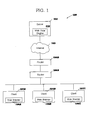
- Figure 1 illustrates one embodiment of the present invention of a network system 100.
- Network system 100 may comprise one or more clients 101A-C connected to a server 102 via the Internet 103.
- the Internet 103 may refer to a network of computers.
- Network system 100 may further comprise one or more routers, e.g., 104A-B, that may be coupled to one or more clients 101A-C.
- Routers 104A-B may be configured to forward packets of information from the one or more clients 101A-C to the Internet 103.
- Clients 101A-C may collectively or individually be referred to as clients 101 or client 101, respectively.
- a more detailed description of client 101 is provided further below in conjunction with Figure 2.
- Routers 104A-B may collectively or individually be referred to as routers 104 or router 104, respectively.
- network system 100 may comprise any number of clients 101, any number of servers 102 as well as any number of routers 104 and that Figure 1 is illustrative.
- network system 100 may comprise one or more routers (not shown) that may be coupled to server 102. These routers (not shown) may be configured to forward received packets of information to server 102.
- the connection between clients 101 and the Internet 103 may be any medium type, e.g., wireless, wired.
- client 101 may be any type of device, e.g., wireless, Personal Digital Assistant (PDA), cell phone, personal computer system, workstation, Internet appliance, configured with the capability of connecting to the Internet 103 and consequently communicating with server 102.
- PDA Personal Digital Assistant
- Figure 1 is not to be limited in scope to any one particular embodiment.
- server 102 may comprise a web page engine 105 for maintaining and providing access to an Internet web page which is enabled to forward static web pages as well as web pages to a web browser 106 of client 101 via the Internet 103.
- Each client 101A-C may comprise a web browser 106A-C, respectively, which may be configured for communicating with the Internet 103 and for reading and executing web pages.
- Browsers 106A-C may collectively or individually be referred to as browsers 106 or browser 106, respectively. While the illustrated client engine is a web browser 106, those skilled in the art will recognize that other client engines may be used in accordance with the present invention.
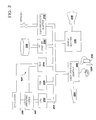
- Figure 2 illustrates a typical hardware configuration of client 101 (Figure 1) which is representative of a hardware environment for practicing the present invention.
- Client 101 may have a central processing unit (CPU) 210 coupled to various other components by system bus 212.
- An operating system 240 may run on CPU 210 and provide control and coordinate the functions of the various components of Figure 2.
- An application 250 in accordance with the principles of the present invention may run in conjunction with operating system 240 and provide calls to operating system 240 where the calls implement the various functions or services to be performed by application 250.
- Application 250 may include, for example, a web browser.
- Read-Only Memory (ROM) 216 may be coupled to system bus 212 and include a Basic Input/Output System (“BIOS”) that controls certain basic functions of client 101.
- BIOS Basic Input/Output System
- RAM 214 and I/O adapter 218 may also be coupled to system bus 212. It should be noted that software components including operating system 240 and application 250 may be loaded into RAM 214 which may be client's 101 main memory for execution. I/O adapter 218 may be a small computer system interface ("SCSI") adapter that communicates with a disk unit 220, e.g., disk drive. It is noted that the web browser may reside in disk unit 220 or in application 250.
- SCSI small computer system interface
- client 101 may further comprise a communications adapter 234 coupled to bus 212.
- Communications adapter 234 may enable client 101 to communicate with server 102 ( Figure 1), router 104 ( Figure 1).
- I/O devices may also be connected to system bus 212 via a user interface adapter 222 and a display adapter 236.
- Keyboard 224, mouse 226 and speaker 230 may all be interconnected to bus 212 through user interface adapter 222.
- Event data may be inputted to client 101 through any of these devices.
- a display monitor 238 may be connected to system bus 212 by display adapter 236. In this manner, a user is capable of inputting to client 101 through keyboard 224 or mouse 226 and receiving output from client 101 via display 238.
- FIG 3 illustrates an embodiment of the present invention of server 102 ( Figure 1).
- server 102 may comprise a processor 310 coupled to various other components by system bus 312.
- An operating system 330 may run on processor 310 and provide control as well as coordinate the function of the various components of Figure 3.
- An application 340 in accordance with the principles of the present invention may run in conjunction with operating system 330 and provide calls to operating system 330 where the calls implement the various functions or services to be performed by application 340.
- An application 340 may include, for example, a program for operating a web site.
- Read-only memory (ROM) 316 may be coupled to system bus 312 and include a Basic Input/Output System ("BIOS”) that controls certain basic functions of server 102.
- BIOS Basic Input/Output System
- Random access memory (RAM) 314 and disk adapter 318 may also be coupled to system bus 312. It should be noted that software components including operating system 330 and application 340 may be loaded into RAM 314 which may be server's 102 main memory. Disk adapter 318 may be an adapter that communicates with disk unit 320, e.g., disk drive. Communications adapter 334 may also be coupled to system bus 312. Communications adapter 334 may interconnect bus 312 with an outside network enabling server 102 to communicate with client 101 via the Internet 103.
- Figure 4 illustrates an embodiment of the present invention of router 104A ( Figure 1) implementing logical interface(s) as discussed further below. It is noted that even though the following discusses an embodiment of the present invention of router 104A that the description of router 104A applies to any router 104, e.g., router 104B, of network system 100 ( Figure 1).
- router 104A may be configured to receive packets of data such as from client 101 ( Figure 1), e.g., client 101A, that may be directed to another particular network device, e.g., router 104B, in network 100 ( Figure 1).
- Router 104A may comprise a switch fabric 401 configured to direct the incoming packets of data to particular blades 402A-C coupled to switch fabric 401.
- Blade 402A may comprise a network processor 403A coupled with one or more ports 404A-C.
- Blade 402B may comprise a network processor 403B coupled with one or more ports 404D-F.
- Blade 402C may comprise a network processor 403C coupled with one or more ports 404G-I.
- Blades 402A-C may collectively or individually be referred to as blades 402 or blade 402, respectively.
- Network processors 403A-C may collectively or individually be referred to as network processors 403 or network processor 403, respectively.
- Ports 404A-I may collectively or individually be referred to as ports 404 or port 404, respectively.
- Each port 404 may be coupled to a particular network device, e.g., gateway, server, router such as router 104B, in network system 100. It is noted that some of ports 404 may be coupled to a separate network device and that Figure 4 is illustrative. It is further noted that router 104A may comprise any number of blades 402 and each blade 402 may comprise any number of network processors 403 and ports 404.
- network processor 403 may be configured to receive a packet of data from switch fabric 401. Upon receiving a packet, network processor 403 may be configured to process the packet of data. Processing may include but not limited to: determining what activities to be performed on the received packet, transmitting or discarding the received packet, determining which network device, e.g., router such as router 104B, server, edge device, gateway, to transmit the received packet, etc. Network processor 403 may then transmit the processed packet to a particular network device, e.g., router such as router 104B, through a port 404 connected to that network device.
- a particular network device e.g., router such as router 104B
- each port may be physically coupled to another network device, e.g., router. Since the processed packets may be transmitted by a network processor across one particular address, the rate at which the processed packets are transmitted is limited to the bandwidth of the connection. That is, since the processed packets may be transmitted by the network processor across one physical port to a particular network device, the rate at which the processed packets are transmitted is limited to the bandwidth of the physical connection between the port and the network device.
- packets of data were able to be transmitted across multiple physical ports to a particular network device from a particular network processor, then the bandwidth capacity would be increased. That is, if packets of data were able to be transmitted across multiple physical ports to a particular network device by a network processor, then the rate packets of data are transmitted may be increased. It would therefore be desirable to enable a network processor to transmit packets of data across multiple physical ports to a particular network device instead of one physical port.
- Network processor 403 may be configured to transmit packets of data across multiple physical ports 404 to a particular network device, e.g., router 104B, by logically grouping a plurality of physical ports 404, e.g., ports 404A-I, into a logical interface 405. That is, the physical connections between router 104A and a particular network device, e.g., router 104B, may be logically grouped into a logical interface 405. Each set of physical connections between router 104A and a particular network device may be logically grouped into a particular logical interface 405. For example, if ports 404A-F were physically connected to network device #1, then ports 404A-F may be logically grouped into logical interface 405 #1.
- ports 404G-I may be logically grouped into logical interface 405 #2.
- physical ports 404 may be logically grouped into more than one logical interface 405 and that Figure 4 is illustrative.
- each logical interface 405 may be associated with logically grouping a plurality of physical connections to a particular network device, e.g., router, gateway, edge device, server.
- a logical interface 405 may be associated with logically grouping a plurality of ports in either one blade 402 or across multiple blades 402.
- network processor 403 may be configured to transmit processed packets to that particular network device via any blade 402/port 404 combination grouped in that logical interface 405.
- ports 404A-404I are physically connected to router 104B. If ports 404A-404I were logically grouped into logical interface 405, then a particular network processor 403, e.g., network processor 403A, may be configured to transmit processed packets that are determined to be transmitted to router 104B through any of ports 404A-404I in blades 402A-C, respectively.
- Network processor 403, e.g., network processor 403A may be configured to transmit the processed packets to router 104B through ports 404, e.g., ports 404D-I, not in its blade 402, e.g., blade 402A, by forwarding the processed packets to switch fabric 401 which may then direct the processed packets to another appropriate physical blade 402/port 404 combination.
- Network processor 403, e.g., network processor 403A may further be configured to transmit the processed packets to router 104B through any ports 404, e.g., ports 404A-C, in its blade 402, e.g., blade 402A, instead of just one physical port 404 in its blade 402, e.g., blade 402A.
- a more detailed description of routing packets implementing logical interface(s) 405 is provided below in Figure 5.
- Network processor 403, e.g., network processor 403A may be configured in one embodiment to comprise a memory (not shown), e.g., non-volatile memory, to store a program to perform the steps of a method for routing packets implementing logical interface(s) 405 as described below in conjunction with Figure 5.
- the memory (not shown) in network processor 403 may further be configured to store a forwarding table and tables associated with logical interfaces 405 as discussed below in Figure 5.
- Network processor 403 may further comprise a processor (not shown), commonly referred to as a packet processor, coupled to the memory (not shown).
- the packet processor (not shown) may be configured to execute the instructions of the program. It is further noted that the steps of the method performed by the program mentioned above may in an alternative embodiment be implemented in hardware such as in an Application Specific Integrated Circuit (ASIC).
- ASIC Application Specific Integrated Circuit
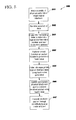
- Figure 5 is a flowchart of one embodiment of the present invention of a method 500 for routing packets implementing logical interface(s) 405 ( Figure 4).
- a plurality of physical ports 404 connected to a particular network device may be mapped into a logical interface 405.
- ports 404A-I of router 104A connected to router 104B may be logically grouped into a logical interface 405 thereby enabling network processor 403, e.g., network processor 403A, to transmit packets of data across multiple physical ports 404 to a particular network device, e.g., router 104B, instead of one physical port 404 as discussed further below.
- network processor 403, e.g., network processor 403A may receive a packet of data from switch fabric 401.
- network processor 403, in step 503 may index into a table, commonly referred to as a forwarding table, to determine the table associated with a particular logical interface 405 as well as the next destination address, i.e., the next hop address.
- the forwarding table may comprise a plurality of entries where each entry may comprise information indicating a particular table associated with a particular logical interface 405 as well as the next destination address.
- Each logical interface 405 may be associated with a table storing a plurality of entries containing blade 402/port 404 combinations as discussed further below.
- an entry may be indexed in the forwarding table using a destination address in the received packet header. It is noted that an entry may be indexed in the forwarding table using other means and that such means would be recognized by an artisan of ordinary skill in the art. It is further noted that embodiments implementing such means would fall within the scope of the present invention.
- a hash function may be performed on the received packet to generate a hash value.
- a hash function may be performed on the source and destination address in the packet header to generate a hash value. It is noted that in other embodiments a hash function may be performed on different fields, e.g., port, type of service, in the received packet to generate a hash value.
- step 505 the hash value generated in step 504 may be used to index into the table associated with a particular logical interface 405 determined in step 503. Upon indexing into the table associated with the logical interface 405 determined in step 503, an appropriate blade 402/port 404 combination may be identified in step 506 to transmit the received packet of data as explained below.
- the table associated with a particular logical interface 405 may comprise a plurality of entries where each entry may comprise a threshold value associated with a particular blade 402/port 404 combination.
- the threshold value may represent a percentage of the total number of packets received by router 104A that may be transmitted through the blade 402/port 404 combination associated with that threshold value.
- the threshold value may be updated periodically by a user, e.g., system administrator, in control of router 104, e.g., router 104A.
- the threshold value e.g., twenty percent of the number of packets received by router 104A, associated with a particular blade 402/port 404 combination may be updated by lowering the threshold value by one percent during each update.
- Table 1 above illustrates an exemplary entry in the table associated with a particular logical interface 405.
- Each entry may comprise a plurality of threshold values (16 threshold values in exemplary Table 1) where each threshold value is associated with a particular blade 402/port 404 combination.
- threshold value (Th0) is associated with blade B0/port P0 combination where blade B0 may refer to a particular blade 402, e.g., blade 402B, and port P0 may refer to a particular port 404, e.g., port 404E.
- Threshold value (Th1) is associated with blade B1/port P1 combination and so forth.
- each threshold value may represent a percentage of the total number of packets received by router 104A that may be transmitted through the blade 402/port 404 combination associated with that threshold value.
- threshold value may represent a percentage of the total number of packets received by router 104A that may be transmitted through port P0 in blade B0. If port P0 refers to port 404D and blade B0 refers to blade 402B, then if Th0 has a value of twenty percent, a maximum of twenty percent of the total packets received by router 104A may be transmitted through port 404D in blade 402B.
- an appropriate blade 402/port 404 combination may be identified in step 506 to transmit the received packet of data.
- the hash value generated in step 504 may be used to select a particular threshold value and hence a blade 402/port 404 combination associated with the selected threshold value.
- a portion of the bits of the hash value e.g., most significant bits, may be used to select a particular threshold value in the entry indexed in step 505. For example, referring to Table 1, since there are 16 different threshold values in each entry of the table associated with logical interface 405, only four bits of the hash value generated in step 504 may be used to select a threshold value.
- the blade 402/port 404 combination associated with the selected threshold value may be used to transmit the received packet.
- the received packet may be transmitted through the blade 402/port 404 combination identified in step 506 to the destination identified in step 503.
- network processor 403A may forward the processed packet to switch fabric 401 which may then direct the processed packet to blade 402B/port 404D.
- method 500 may be executed in a different order presented and that the order presented in the discussion of Figure 5 is illustrative. It is further noted that certain steps in Figure 5 may be executed almost concurrently.
Landscapes
- Engineering & Computer Science (AREA)
- Computer Networks & Wireless Communication (AREA)
- Signal Processing (AREA)
- Data Exchanges In Wide-Area Networks (AREA)
Applications Claiming Priority (2)
| Application Number | Priority Date | Filing Date | Title |
|---|---|---|---|
| US10/144,075 US7280527B2 (en) | 2002-05-13 | 2002-05-13 | Logically grouping physical ports into logical interfaces to expand bandwidth |
| US144075 | 2002-05-13 |
Publications (2)
| Publication Number | Publication Date |
|---|---|
| EP1363429A2 true EP1363429A2 (de) | 2003-11-19 |
| EP1363429A3 EP1363429A3 (de) | 2004-06-23 |
Family
ID=29269717
Family Applications (1)
| Application Number | Title | Priority Date | Filing Date |
|---|---|---|---|
| EP03291033A Withdrawn EP1363429A3 (de) | 2002-05-13 | 2003-04-25 | Logische Gruppierung von physikalischen Ports in logischer Schnittstelle um die Bandbreiten zu erhöhen |
Country Status (2)
| Country | Link |
|---|---|
| US (1) | US7280527B2 (de) |
| EP (1) | EP1363429A3 (de) |
Cited By (6)
| Publication number | Priority date | Publication date | Assignee | Title |
|---|---|---|---|---|
| WO2005064897A3 (en) * | 2003-12-18 | 2006-01-05 | Intel Corp | Addresses assignment for adaptor interfaces |
| US7155546B2 (en) | 2003-12-18 | 2006-12-26 | Intel Corporation | Multiple physical interfaces in a slot of a storage enclosure to support different storage interconnect architectures |
| US7376147B2 (en) | 2003-12-18 | 2008-05-20 | Intel Corporation | Adaptor supporting different protocols |
| US7738397B2 (en) | 2004-02-19 | 2010-06-15 | Intel Corporation | Generating topology information identifying devices in a network topology |
| US8261337B1 (en) * | 2004-11-17 | 2012-09-04 | Juniper Networks, Inc. | Firewall security between network devices |
| CN108228494A (zh) * | 2016-12-09 | 2018-06-29 | 慧与发展有限责任合伙企业 | 用于存储驱动器的端口模式 |
Families Citing this family (17)
| Publication number | Priority date | Publication date | Assignee | Title |
|---|---|---|---|---|
| US20050138221A1 (en) * | 2003-12-23 | 2005-06-23 | Intel Corporation | Handling redundant paths among devices |
| US7840731B2 (en) * | 2004-08-25 | 2010-11-23 | Cisco Technology, Inc. | Accelerated data switching on symmetric multiprocessor systems using port affinity |
| US7333430B2 (en) * | 2005-07-06 | 2008-02-19 | Fortinet, Inc. | Systems and methods for passing network traffic data |
| JP4886073B2 (ja) | 2008-02-06 | 2012-02-29 | テレフオンアクチーボラゲット エル エム エリクソン(パブル) | ダウンリンク割り当てに関連する方法およびデバイス |
| US9237100B1 (en) | 2008-08-06 | 2016-01-12 | Marvell Israel (M.I.S.L.) Ltd. | Hash computation for network switches |
| US8826138B1 (en) * | 2008-10-29 | 2014-09-02 | Hewlett-Packard Development Company, L.P. | Virtual connect domain groups |
| US8614950B2 (en) | 2010-11-30 | 2013-12-24 | Marvell Israel (M.I.S.L) Ltd. | Load balancing hash computation for network switches |
| US20120287946A1 (en) * | 2011-05-13 | 2012-11-15 | Broadcom Corporation | Hash-Based Load Balancing with Flow Identifier Remapping |
| US20130067157A1 (en) * | 2011-09-12 | 2013-03-14 | Byungcheol Cho | Semiconductor storage device having multiple host interface units for increased bandwidith |
| US9171030B1 (en) | 2012-01-09 | 2015-10-27 | Marvell Israel (M.I.S.L.) Ltd. | Exact match lookup in network switch devices |
| US9819637B2 (en) | 2013-02-27 | 2017-11-14 | Marvell World Trade Ltd. | Efficient longest prefix matching techniques for network devices |
| US9537771B2 (en) | 2013-04-04 | 2017-01-03 | Marvell Israel (M.I.S.L) Ltd. | Exact match hash lookup databases in network switch devices |
| US9906592B1 (en) | 2014-03-13 | 2018-02-27 | Marvell Israel (M.I.S.L.) Ltd. | Resilient hash computation for load balancing in network switches |
| US10587516B1 (en) | 2014-07-15 | 2020-03-10 | Marvell Israel (M.I.S.L) Ltd. | Hash lookup table entry management in a network device |
| CN107580769B (zh) | 2015-03-06 | 2021-02-02 | 马维尔亚洲私人有限公司 | 用于网络交换机中的负载均衡的方法与装置 |
| US10904150B1 (en) | 2016-02-02 | 2021-01-26 | Marvell Israel (M.I.S.L) Ltd. | Distributed dynamic load balancing in network systems |
| US10243857B1 (en) | 2016-09-09 | 2019-03-26 | Marvell Israel (M.I.S.L) Ltd. | Method and apparatus for multipath group updates |
Family Cites Families (22)
| Publication number | Priority date | Publication date | Assignee | Title |
|---|---|---|---|---|
| SE470039B (sv) | 1992-03-17 | 1993-10-25 | Ellemtel Utvecklings Ab | Sätt att i en paketväljare åstadkomma länkgruppering |
| JP2583010B2 (ja) * | 1993-01-07 | 1997-02-19 | インターナショナル・ビジネス・マシーンズ・コーポレイション | 多層インデックス構造におけるローカルインデックステーブル及び大域インデックステーブルの間の一貫性を維持する方法 |
| JP2770782B2 (ja) | 1995-05-31 | 1998-07-02 | 日本電気株式会社 | Lan間接続装置 |
| US6072797A (en) | 1997-07-31 | 2000-06-06 | International Business Machines Corporation | Methods, apparatus and computer program products for aggregated transmission groups in high speed networks |
| US6711166B1 (en) | 1997-12-10 | 2004-03-23 | Radvision Ltd. | System and method for packet network trunking |
| US6831914B1 (en) * | 1998-03-27 | 2004-12-14 | Verizon Services Corp. | Services control point selection in an advanced intelligent network |
| US6167052A (en) | 1998-04-27 | 2000-12-26 | Vpnx.Com, Inc. | Establishing connectivity in networks |
| US6658002B1 (en) * | 1998-06-30 | 2003-12-02 | Cisco Technology, Inc. | Logical operation unit for packet processing |
| WO2000003516A1 (en) | 1998-07-08 | 2000-01-20 | Broadcom Corporation | Network switching architecture with multiple table synchronization, and forwarding of both ip and ipx packets |
| US6424659B2 (en) | 1998-07-17 | 2002-07-23 | Network Equipment Technologies, Inc. | Multi-layer switching apparatus and method |
| US6108702A (en) | 1998-12-02 | 2000-08-22 | Micromuse, Inc. | Method and apparatus for determining accurate topology features of a network |
| US6192051B1 (en) * | 1999-02-26 | 2001-02-20 | Redstone Communications, Inc. | Network router search engine using compressed tree forwarding table |
| US6377987B1 (en) * | 1999-04-30 | 2002-04-23 | Cisco Technology, Inc. | Mechanism for determining actual physical topology of network based on gathered configuration information representing true neighboring devices |
| US6697475B1 (en) * | 1999-10-26 | 2004-02-24 | Lhs Group, Inc. | System and method for implementing an end office switch with enhanced functionality using an operating system independent distributed self-contained dynamic logic system |
| US6463067B1 (en) * | 1999-12-13 | 2002-10-08 | Ascend Communications, Inc. | Submission and response architecture for route lookup and packet classification requests |
| US20020093952A1 (en) * | 2000-06-30 | 2002-07-18 | Gonda Rumi Sheryar | Method for managing circuits in a multistage cross connect |
| US7388831B2 (en) * | 2000-07-26 | 2008-06-17 | Pluris, Inc. | Method and apparatus for bond management according to hierarchy |
| US6553005B1 (en) | 2000-07-26 | 2003-04-22 | Pluris, Inc. | Method and apparatus for load apportionment among physical interfaces in data routers |
| EP1193918B1 (de) | 2000-09-20 | 2007-08-22 | Broadcom Corporation | Vermittlungsanordnung mit mehreren Modulen in einem Rahmen |
| US20030101426A1 (en) * | 2001-11-27 | 2003-05-29 | Terago Communications, Inc. | System and method for providing isolated fabric interface in high-speed network switching and routing platforms |
| US8782287B2 (en) * | 2001-12-21 | 2014-07-15 | Agere Systems Llc | Methods and apparatus for using multiple reassembly memories for performing multiple functions |
| US6973508B2 (en) * | 2002-02-12 | 2005-12-06 | Fisher-Rosemount Systems, Inc. | Highly versatile process control system controller |
-
2002
- 2002-05-13 US US10/144,075 patent/US7280527B2/en not_active Expired - Fee Related
-
2003
- 2003-04-25 EP EP03291033A patent/EP1363429A3/de not_active Withdrawn
Cited By (10)
| Publication number | Priority date | Publication date | Assignee | Title |
|---|---|---|---|---|
| WO2005064897A3 (en) * | 2003-12-18 | 2006-01-05 | Intel Corp | Addresses assignment for adaptor interfaces |
| US7155546B2 (en) | 2003-12-18 | 2006-12-26 | Intel Corporation | Multiple physical interfaces in a slot of a storage enclosure to support different storage interconnect architectures |
| US7376147B2 (en) | 2003-12-18 | 2008-05-20 | Intel Corporation | Adaptor supporting different protocols |
| US7502865B2 (en) | 2003-12-18 | 2009-03-10 | Intel Corporation | Addresses assignment for adaptor interfaces |
| CN1890655B (zh) * | 2003-12-18 | 2010-11-03 | 英特尔公司 | 适配器接口的地址分配 |
| US8214525B2 (en) | 2003-12-18 | 2012-07-03 | Intel Corporation | Addresses assignment for adaptor interfaces |
| US7738397B2 (en) | 2004-02-19 | 2010-06-15 | Intel Corporation | Generating topology information identifying devices in a network topology |
| US8261337B1 (en) * | 2004-11-17 | 2012-09-04 | Juniper Networks, Inc. | Firewall security between network devices |
| US8839352B2 (en) | 2004-11-17 | 2014-09-16 | Juniper Networks, Inc. | Firewall security between network devices |
| CN108228494A (zh) * | 2016-12-09 | 2018-06-29 | 慧与发展有限责任合伙企业 | 用于存储驱动器的端口模式 |
Also Published As
| Publication number | Publication date |
|---|---|
| EP1363429A3 (de) | 2004-06-23 |
| US7280527B2 (en) | 2007-10-09 |
| US20030210688A1 (en) | 2003-11-13 |
Similar Documents
| Publication | Publication Date | Title |
|---|---|---|
| EP1363429A2 (de) | Logische Gruppierung von physikalischen Ports in logischer Schnittstelle um die Bandbreiten zu erhöhen | |
| US10911398B2 (en) | Packet generation method based on server cluster and load balancer | |
| EP2165465B1 (de) | Netzwerkschnittstellenauswahl mithilfe historischer verbindungsinformationen | |
| US8621020B2 (en) | Method and apparatus for selective E-mail processing | |
| US6298381B1 (en) | System and method for information retrieval regarding services | |
| JP3115769B2 (ja) | メトリック値をネットワークの各リンクに割り当てる方法 | |
| US9544234B1 (en) | Hash based ECMP load balancing with non-power-of-2 port group sizes | |
| US6292832B1 (en) | System and method for determining a preferred service in a network | |
| US6389506B1 (en) | Block mask ternary cam | |
| US7299296B1 (en) | Filtering data flows based on associated forwarding tables | |
| US7769025B2 (en) | Load balancing in data networks | |
| EP2984798B1 (de) | Identifizierung von genommenen pfaden in einem netzwerk von miteinander verbundenen vorrichtungen | |
| US7380002B2 (en) | Bi-directional affinity within a load-balancing multi-node network interface | |
| US20080165775A1 (en) | Method and Apparatus for Efficient Path MTU Information Discovery and Storage | |
| US6973503B2 (en) | Preventing at least in part control processors from being overloaded | |
| KR20170009927A (ko) | 흐름 엔트리 구성 방법, 장치, 및 시스템 | |
| US20180367431A1 (en) | Heavy network flow detection method and software-defined networking switch | |
| US20030200441A1 (en) | Detecting randomness in computer network traffic | |
| CN111371920A (zh) | Dns前端解析方法及系统 | |
| US7411965B2 (en) | Method and apparatus for determining a multilayer switching path | |
| US20250141803A1 (en) | Cloud System, Packet Processing Method and Apparatus, and Network Interface Card | |
| WO2014050091A1 (en) | Communication system, communication method, information processing apparatus, communication control method, and program | |
| US8630296B2 (en) | Shared and separate network stack instances | |
| EP3902212A1 (de) | Ein verfahren zur abschwächung der hash-korrelation in mehrwege-netzwerken | |
| US6813273B2 (en) | Method and apparatus for determining existence of an address in an address look-up table |
Legal Events
| Date | Code | Title | Description |
|---|---|---|---|
| PUAI | Public reference made under article 153(3) epc to a published international application that has entered the european phase |
Free format text: ORIGINAL CODE: 0009012 |
|
| AK | Designated contracting states |
Kind code of ref document: A2 Designated state(s): AT BE BG CH CY CZ DE DK EE ES FI FR GB GR HU IE IT LI LU MC NL PT RO SE SI SK TR |
|
| AX | Request for extension of the european patent |
Extension state: AL LT LV MK |
|
| PUAL | Search report despatched |
Free format text: ORIGINAL CODE: 0009013 |
|
| AK | Designated contracting states |
Kind code of ref document: A3 Designated state(s): AT BE BG CH CY CZ DE DK EE ES FI FR GB GR HU IE IT LI LU MC NL PT RO SE SI SK TR |
|
| AX | Request for extension of the european patent |
Extension state: AL LT LV MK |
|
| 17P | Request for examination filed |
Effective date: 20041223 |
|
| AKX | Designation fees paid |
Designated state(s): AT BE BG CH CY CZ DE DK EE ES FI FR GB GR HU IE IT LI LU MC NL PT RO SE SI SK TR |
|
| RAP1 | Party data changed (applicant data changed or rights of an application transferred) |
Owner name: INTERNATIONAL BUSINESS MACHINES CORPORATION Owner name: ALCATEL LUCENT |
|
| 17Q | First examination report despatched |
Effective date: 20101022 |
|
| RAP1 | Party data changed (applicant data changed or rights of an application transferred) |
Owner name: INTERNATIONAL BUSINESS MACHINES CORPORATION Owner name: ALCATEL LUCENT |
|
| 111Z | Information provided on other rights and legal means of execution |
Free format text: AT BE BG CH CY CZ DE DK EE ES FI FR GB GR HU IE IT LI LU MC NL PT RO SE SI SK TR Effective date: 20130410 |
|
| RAP1 | Party data changed (applicant data changed or rights of an application transferred) |
Owner name: INTERNATIONAL BUSINESS MACHINES CORPORATION Owner name: ALCATEL LUCENT |
|
| D11X | Information provided on other rights and legal means of execution (deleted) | ||
| STAA | Information on the status of an ep patent application or granted ep patent |
Free format text: STATUS: THE APPLICATION HAS BEEN WITHDRAWN |
|
| 18W | Application withdrawn |
Effective date: 20150529 |