EP1358752B1 - Verarbeitung von ipsec verkehr - Google Patents
Verarbeitung von ipsec verkehr Download PDFInfo
- Publication number
- EP1358752B1 EP1358752B1 EP02713503A EP02713503A EP1358752B1 EP 1358752 B1 EP1358752 B1 EP 1358752B1 EP 02713503 A EP02713503 A EP 02713503A EP 02713503 A EP02713503 A EP 02713503A EP 1358752 B1 EP1358752 B1 EP 1358752B1
- Authority
- EP
- European Patent Office
- Prior art keywords
- packet
- traffic
- ipsec
- classification parameter
- encryption
- Prior art date
- Legal status (The legal status is an assumption and is not a legal conclusion. Google has not performed a legal analysis and makes no representation as to the accuracy of the status listed.)
- Expired - Lifetime
Links
- 238000012545 processing Methods 0.000 title description 6
- 230000007246 mechanism Effects 0.000 claims description 31
- 238000000034 method Methods 0.000 claims description 24
- 238000004891 communication Methods 0.000 description 4
- 230000005540 biological transmission Effects 0.000 description 3
- 238000010586 diagram Methods 0.000 description 3
- 238000012795 verification Methods 0.000 description 3
- 238000013478 data encryption standard Methods 0.000 description 2
- 241001522296 Erithacus rubecula Species 0.000 description 1
- 208000004160 Rasmussen subacute encephalitis Diseases 0.000 description 1
- 230000001133 acceleration Effects 0.000 description 1
- 230000001413 cellular effect Effects 0.000 description 1
- 238000001514 detection method Methods 0.000 description 1
- 239000000835 fiber Substances 0.000 description 1
- 230000006870 function Effects 0.000 description 1
- 230000006855 networking Effects 0.000 description 1
- 238000005457 optimization Methods 0.000 description 1
- 238000012546 transfer Methods 0.000 description 1
Images



Classifications
-
- H—ELECTRICITY
- H04—ELECTRIC COMMUNICATION TECHNIQUE
- H04L—TRANSMISSION OF DIGITAL INFORMATION, e.g. TELEGRAPHIC COMMUNICATION
- H04L63/00—Network architectures or network communication protocols for network security
- H04L63/08—Network architectures or network communication protocols for network security for authentication of entities
-
- H—ELECTRICITY
- H04—ELECTRIC COMMUNICATION TECHNIQUE
- H04L—TRANSMISSION OF DIGITAL INFORMATION, e.g. TELEGRAPHIC COMMUNICATION
- H04L63/00—Network architectures or network communication protocols for network security
- H04L63/16—Implementing security features at a particular protocol layer
- H04L63/164—Implementing security features at a particular protocol layer at the network layer
Definitions
- This invention relates to processing Internet Protocol security traffic.
- IPsec Internet Protocol security
- AH authentication header
- ESP encapsulating security payload
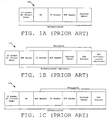
- a packet can include both AH and ESP protocols (see packet 104 in FIG. 1C).
- the source and the destination of an IPsec packet may each support an encryption/decryption system, such as a symmetric key encryption system, that each can use to encrypt and decrypt the IPsec packet as appropriate.
- An IPsec packet can be of any traffic type: clear (no IPsec), transport only, tunnel only, multiple tunnels, and transport with one or more tunnels.
- clear no IPsec
- transport mode the payload portion of the IPsec packet is encrypted.
- tunnel mode the IPsec packet's header, trailer, and payload are encrypted.
- An IPsec packet sent with multiple tunnels has multiple headers and trailers, each header and trailer being encrypted.
- the invention relates to processing of IPsec traffic as claimed in method claim 1, article claim 6 and system claim 11.
- a network configuration 200 includes a classifying forwarding element (CFE) 202, decrypting forwarding elements (DFEs) 204a, 204b, and 204c, and a control element (CE) 206 that can communicate with each other using one or more communication links 208.
- the CFE 202, the DFEs 204a-204c, and the CE 206 can each perform various IPsec operation(s) on traffic traveling either to or from a network 212.
- the traffic can include a number of traffic streams, each of the traffic streams including packets, such as a packet 210 (see also, e.g., the packets 100, 102, and 104 in FIGS. 1A, 1B, and 1C, respectively).
- the IPsec operations can include packet dropping decision-making, packet forwarding decision-making, cryptographic operations, Internet Key Exchange (IKE) operations, and other similar operations. IPsec operations can be performed on these multiple elements and the traffic can be efficiently classified and transmitted to and/or from the network 212. Furthermore, the IPsec operations can be performed before or after making any load balancing decisions regarding a route for the traffic.
- IKE Internet Key Exchange
- Operations of the CFE 202 include classifying the traffic it receives from the network 212 for transmission to a destination, such as a server 214a, 214b, or 214c, or from one of the servers 214a-214c for transmission to the network 212. This classifying can involve adding a header/trailer, load balancing, intrusion detection, firewalling, and other similar route optimization and security tasks.
- the CFE 202 classifies the traffic based on parameters sent to it by the CE 206.
- the parameters can include IPsec Security Parameter Index (SPI) information.
- SPI IPsec Security Parameter Index
- SPIs are identifiers, each uniquely associated with a security association (SA) relative to a security protocol.
- SA security association
- An SA is a set of agreements between a packet's source and destination that determine the protocols used in transmitting the packet between the source and the destination. All traffic flowing over the same SA is treated the same by the CFE 202.
- Each SA includes fields that define the characteristics of the SA. These fields can include:
- Each SA has an associated selector that specifies which traffic type is to be sent on the SA. Packets sent over an SA may be sent in tunnel and/or transport mode. The SA specifies the mode(s) for all packets sent over that SA. Transport mode is typically used for secure transmission of the packet from its source to its ultimate destination. Tunnel mode is typically used when the packet traverses through a gateway device such as a virtual private network (VPN) gateway or other network device that is the endpoint for the packet's security but is not the packet's ultimate destination. Packets can travel through multiple tunnels from the packet's source to its ultimate destination.
- VPN virtual private network
- the CFE 202 may forward the traffic to one of the DFEs 204a-204c.
- the DFE 204a receives the traffic and encrypts and/or decrypts the traffic as appropriate.
- the DFE 204a can use any encryption/decryption system, such as a symmetric key system.
- a public key encryption system uses two keys: a public key and a private key.
- the source of the traffic uses the public key to encrypt the traffic, while the destination uses the private key to decrypt the traffic.
- Examples of public key encryption systems include Diffie-Hellman (DH), Elliptic Curve Cryptography, RSA, and other similar systems.
- the DFE 204a may use other types of encryption/decryption systems, such a symmetric encryption system (e.g., Data Encryption Standard (DES)), a password system, and other similar systems.
- DES Data Encryption Standard
- the DFE 204a may also use encryption acceleration hardware for performing symmetric or asymmetric key encryption.
- the DFE 204a also determines if the traffic needs an IKE negotiation, in which case the DFE 204a forwards the traffic to the CE 206.
- the CE 206 includes (or otherwise has access to) a policy engine 216 that determines encryption/decryption parameters and classification parameters for the traffic.
- the encryption/decryption parameters may include cryptographic keys such as passwords, tables, or codes that the DFE 204a may need to encrypt and/or decrypt the traffic.
- the CE 206 forwards the determined encryption/decryption parameters to the DFE 204a.
- the CE 206 forwards the determined classification parameters to the CFE 202.
- the CE 206 may also apply policies to the traffic such as allowing or disallowing certain endpoints from participating in an IPsec exchange of some or all of the traffic.
- the CE 206 should have security information for the servers 214a-214c, the end systems. This security information can include access tokens.
- the CE 206 is typically not the end station for the traffic and should have at least the same security measures as the device that the CE 206 is proxying for (e.g., one of the servers 214a-214c).
- the CE 206 can include any device capable of communicating with the network 212 and with the CFE 202 and the DFEs 204a-204c, such as a mobile computer, a stationary computer, a server, or other similar device.
- the CFE 202 and the DFEs 204a-204c can each include any device capable of communicating with the CE 206 and with each other, such as a server, a switch, a router, or similar device.
- the CFE 202, the DFEs 204a-204c, and the CE 206 may be layer two devices.
- a layer two or data link layer device forwards network traffic based on information included in the second layer of the Open Systems Interconnect (OSI) networking model.
- the second layer typically includes addressing information for the network traffic, including Medium Access Control (MAC) layer information.
- MAC Medium Access Control
- CE 206 and the DFEs 204a-204c can be included in the same physical device.
- the DFE's encryption/decryption capabilities may be placed inline at the CE 206 to allow operations that could overload the DFE 204a to pass to the CE 206 for processing.
- the processes executed by the CFE 202, the DFEs 204a-204c, and the CE 206 can each be accessible by its associated element, be included on its associated element (e.g., as a stand-alone application or as part of another application), or otherwise be accessible to its associated element (e.g., be included on a network accessible by its associated element).
- the network 212 can include any kind and any combination of networks such as an Internet, a local network, a private network, a public network, or other similar network.
- the servers 214a-214b can each include any device capable of communicating with the network 212 such as a file server, a mobile computer, a stationary computer, or other similar device.
- the communication links can be any kind and any combination of communication links such as modem links, cables, point-to-point links, infrared connections, fiber optic links, cellular links, Bluetooth, satellite links, and other similar links.
- the network configuration 200 is simplified for ease of explanation; the network configuration 200 may include additional elements such as networks, communication links, proxy servers, firewalls or other security mechanisms, Internet Service Providers (ISPs), and other elements. Additionally, the network configuration 200 can include any number of DFEs (one or more). The CE 206 can support all of the DFEs, or different CEs may support different ones of the DFEs.
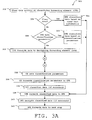
- a process 300 illustrates an example of processing the packet 210 using the CFE 202, the DFEs 204a-204c, and the CE 206.
- the process 300 begins when the packet 210 arrives 302 at the CFE 202.
- the packet 210 may have been sent from one of the servers 214a-214c or from another source that can communicate with the network 212.
- the CFE 202 attempts to classify the packet 210.
- the CFE 202 determines 304 if the packet 210 is in the clear (i.e., is not encrypted). If the packet 210 is in the clear, then the CFE 202 can access the packet's contents and appropriately classify 306 the packet 210 using clear-text or plain-text information included in the packet's contents.
- the CFE 202 classifies the packet 210, the CFE 202 forwards 338 the classified packet 210 to one of the DFEs 204a-204c.
- the CFE 202 can use any selection technique to choose which DFE 204a-204c receives the packet 210.
- the CFE 202 could implement a load balancing technique that distributes packets to the DFEs 204a-204c based on resource availability of the DFEs 204a-204c and/or the servers 214a-214c associated with the DFEs 204a-204c.
- the CFE 202 could implement a fixed scheme that distributed packets to the DFEs 204a-204c based on a fixed rotating order or based on a round robin scheme.
- the DFE 204a decrypts 340 the packet 210 if necessary. In the case of a clear packet, decryption is not necessary.
- the DFE 204a then forwards 342 the clear (or decrypted) packet 210 to its next stop.
- the next stop is typically the server 214a associated with the DFE 204a or an element included in the network 212, although in a different network configuration, the next stop could be another server, another CFE, a network, a router, a switch, or other element.
- the packet 210 is encrypted. If the packet 210 is encrypted, then the CFE 202 typically cannot access any encrypted contents of the packet 210 that may help in classifying the packet 210.
- the CFE 202 determines 308 if it has the classification parameters necessary to classify the packet 210. If the CFE 202 has not received another packet from the same traffic stream as the packet 210, e.g., another packet sent over the same SA as the packet 210, then the CFE 202 likely does not have the classification parameters. If the CFE 202 previously received another packet from the same traffic stream, then the CFE 202 has likely already received from the CE 206 the classification parameters for that traffic stream and thus for the packet 210.
- the CFE 202 may have been preset with classification parameters for certain traffic streams. If the CFE 202 has the classification parameters, then the CFE 202 classifies 310 the packet 210 using those classification parameters. As described above, the CFE 202 forwards 338 the classified packet 210 to one of the DFEs 204a-204c, which decrypts 340 the packet 210 as appropriate and forwards 342 the packet 210 to its next stop.
- the CFE 202 If the CFE 202 does not have the classification parameters, then the CFE 202 cannot presently classify the packet 210. Thus, the CFE 202 forwards 312 the packet 210 to one of the DFEs 204a-204c.
- the DFE 204a can decrypt the packet 210 before decrypting the packet 210. Before decrypting the packet 210, however, the DFE 204a determines if an IKE negotiation needs to occur for the packet 210. (IKE negotiation is one way that security keys can be negotiated and exchanged for IPsec data. The network configuration 200, and therefore the DFEs 204a-204c and the CE 206, could be set up to use IKE or any another Internet Security Association and Key Management Protocol (ISAKMP) negotiation technique.)
- IKE negotiation is one way that security keys can be negotiated and exchanged for IPsec data.
- the network configuration 200, and therefore the DFEs 204a-204c and the CE 206 could be set up to use IKE or any another Internet Security Association and Key Management Protocol (ISAKMP) negotiation technique.
- ISAKMP Internet Security Association and Key Management Protocol
- the DFE 204a determines 314 if the packet 210 is in the clear. If the packet 210 is in the clear, then the DFE 204a determines 316 if packets in the clear can be accepted from the source of the packet 210. (The packet's source is typically indicated in the packet's header.) The DFE 204a may be configured to reject packets in the clear from certain sources, perhaps for a security reason such as ensuring data integrity. If packets in the clear are allowed from the packet's source, then the DFE 204a forwards 318 the packet 210 to its next stop. If packets in the clear are not allowed from the packet's source, then the DFE 204a drops 320 the packet 210. The packet 210 therefore does not reach its destination.
- the DFE 204a determines 322 if it has the correct SA for the packet 210. If so, the DFE 204a decrypts 324 the packet 210 using the encryption/integrity algorithms and/or keys included in the SA. The DFE 204a forwards 326 the now decrypted packet 210 to its next stop. If the DFE 204a does not have the correct SA for the packet 210, then the DFE 204a does not have the information necessary to decrypt the packet 210. Thus, the DFE 204a forwards 328 the packet 210 to the CE 206 and then drops 330 the packet 210.
- the CE 206 sets 332 classification parameters for the packet 210.
- the CE 206 may include a particular IKE handler mechanism or other mechanism to set the classification parameters.
- the CE 206 can use the packet's SA.
- the CE 206 may use the SPI included in the SA in setting the classification parameters.
- the SPI is typically carried in the packet's unencrypted header (and in the unencrypted headers of other packets in the packet's traffic stream).
- the CFE 202 can use the classification parameters and classify packets based on the SPI information included in the packets' headers, which are unencrypted and therefore readable by the CFE 202.
- the CE 206 forwards 334 the classification parameters for the packet 210 (which are also for the SA associated with the packet 210) to the CFE 202.
- the CFE 202 stores or otherwise retains the classification parameters for use in classifying the packet 210 and other packets having the same SA as the packet 210.
- the CFE 202 classifies 336 the packet 210.
- the packet 210 may still need classification if, for example, the CFE 202 received the packet 210 back from the DFE 204a or the CE 202.
- the CFE 202 may have forwarded a copy of the packet 210 to the DFE 204a in which case the CFE 202 still has the unclassified packet 210.
- the packet 210 may not need classification by the CFE 202 for a variety of reasons.
- the DFE 204a may have kept the packet 210 (or the DFE 204a may be included in the CE 206), the CE 206 may have provided the DFE 204a with the classification parameters for the packet 210, and the DFE 204a may have classified the packet 210 (and decrypted and forwarded the packet 210 as appropriate).
- the CFE 202 cannot classify the packet 210 when it first receives the packet 210, the packet 210 may be dropped and not delivered to its destination, even if classification parameters for the packet 210 are eventually set by the CE 206. If the CFE 202 classifies the packet 210, the CFE 202, as described above, forwards the packet 210 to the DFE 204a, which decrypts the packet 210 as appropriate and forwards the packet 210 to its next stop.
- a network configuration 400 illustrates routing elements 402a, 402b, 402c, and 402d each including a CFE 404, a DFE 406, and a CE 408.
- a source 410 sends a traffic stream across a network 412 to a host destination 414.
- the traffic stream encounters the first routing element 402a, where the first CFE 404a classifies the traffic stream.
- the first DFE 406a and the first CE 408a also process the traffic stream if necessary.
- the traffic stream passes from the first routing element 402a either to the second routing element 402b or to the third routing element 402c.
- parts (packets) of the traffic stream may pass to different ones of the routing elements 402b and 402c on its way to the destination 414.
- the traffic stream reaches the fourth routing element 402d, which passes the traffic stream to the destination 414.
- the network configuration 400 is simplified and may include additional elements. Similarly, the elements included in the network configuration 400 can be implemented as described above (and below).
- an alternate network configuration 500 has a setup and operation similar to the network configuration 200 described above but includes an additional CFE 502 in-between each DFE 204 and server 504a-M and 506a-N.
- the alternate network configuration 500 illustrates the scenario in which one of multiple servers, e.g., the servers 504a-M or the servers 504a-504N, behind a DFE 204 could be the ultimate destination of the packet 210.
- the CFEs 502 are similar to the CFE 202 and the servers 504 and 506 are similar to the servers 214.
- the CFE 202 receives the packets 210, classifies the packet 210, and forwards the classified packet to one of the DFEs 204a-204b.
- the DFE 204 that receives the packet 210 decrypts the packet 210 if necessary and forwards the clear or decrypted packet 210 to its associated CFE 502.
- the CFE 502 that receives the packet 210 forwards the packet 210 to one of its associated servers 504 or 506.
- the CFE 502 can use any selection technique to choose which server 504 or 506 should receive the packet 210.
- the packet 210 may specify which server 504 or 506 it should be forwarded to by the CFE 502.
- the techniques described here are not limited to any particular hardware or software configuration; they may find applicability in any computing or processing environment.
- the techniques may be implemented in hardware, software, or a combination of the two.
- the techniques may be implemented in programs executing on programmable machines such as mobile or stationary computers, personal digital assistants, and similar devices that each include a processor, a storage medium readable by the processor (including volatile and non-volatile memory and/or storage elements), at least one input device, and one or more output devices.
- Program code is applied to data entered using the input device to perform the functions described and to generate output information.
- the output information is applied to one or more output devices.
- Each program may be implemented in a high level procedural or object oriented programming language to communicate with a machine system.
- the programs can be implemented in assembly or machine language, if desired.
- the language may be a compiled or interpreted language.
- Each such program may be stored on a storage medium or device, e.g., compact disc read only memory (CD-ROM), hard disk, magnetic diskette, or similar medium or device, that is readable by a general or special purpose programmable machine for configuring and operating the machine when the storage medium or device is read by the computer to perform the procedures described in this document.
- a storage medium or device e.g., compact disc read only memory (CD-ROM), hard disk, magnetic diskette, or similar medium or device, that is readable by a general or special purpose programmable machine for configuring and operating the machine when the storage medium or device is read by the computer to perform the procedures described in this document.
- the system may also be considered to be implemented as a machine-readable storage medium, configured with a program, where the storage medium so configured causes a machine to operate in a specific and predefined manner.
Landscapes
- Engineering & Computer Science (AREA)
- Computer Security & Cryptography (AREA)
- Computer Hardware Design (AREA)
- Computing Systems (AREA)
- General Engineering & Computer Science (AREA)
- Computer Networks & Wireless Communication (AREA)
- Signal Processing (AREA)
- Data Exchanges In Wide-Area Networks (AREA)
Claims (26)
- Verfahren, das die folgenden Schritte beinhaltet:Ermitteln an einem ersten Ort (202), ob ein Klassifizierungsparameter für IPsec-(Internet Protocol Sicherheit)-Verkehr zur Verfügung steht, der eine Route für den IPsec-Verkehr anzeigt;wenn kein Klassifizierungsparameter zur Verfügung steht, Entschlüsseln des IPsec-Verkehrs an einem zweiten Ort (204), wenn der IPsec-Verkehr verschlüsselt ist, und Ermitteln des Klassifizierungsparameters für den IPsec-Verkehr an dem zweiten Ort; undWeiterleiten des IPsec-Verkehrs auf der Basis des Klassifizierungsparameters.
- Verfahren nach Anspruch 1, das ferner das Empfangen des IPsec-Verkehrs an dem ersten Ort umfasst.
- Verfahren nach Anspruch 1, bei dem der Klassifizierungsparameter einen Sicherheitsparameterindex (SPI) in Verbindung mit dem IPsec-Verkehr beinhaltet.
- Verfahren nach Anspruch 1, bei dem der IPsec-Verkehr ein Datenpaket beinhaltet.
- Verfahren nach Anspruch 1, das ferner das Weiterleiten von anderem IPsec-Verkehr beinhaltet, der in einem Verkehrsstrom mit dem IPsec-Verkehr auf der Basis des Klassifizierungsparameters enthalten ist.
- Artikel, der Folgendes umfasst:ein rechnerlesbares Medium, das maschinenausführbare Befehle speichert, wobei die Befehle bewirken, dass eine Maschine Folgendes ausführt:Ermitteln an einem ersten Mechanismus (202), ob ein Klassifizierungsparameter für IPsec-(Internet Protocol Sicherheit)-Verkehr zur Verfügung steht, der eine Route für den IPsec-Verkehr anzeigt;wenn kein Klassifizierungsparameter zur Verfügung steht, Entschlüsseln des IPsec-Verkehrs an einem zweiten Mechanismus (204), wenn der IPsec-Verkehr verschlüsselt ist, und Ermitteln des Klassifizierungsparameters für den IPsec-Verkehr an dem zweiten Mechanismus; undWeiterleiten des IPsec-Verkehrs auf der Basis des Klassifizierungsparameters.
- Artikel nach Anspruch 6, der ferner bewirkt, dass eine Maschine den IPsec-Verkehr an dem ersten Mechanismus empfängt.
- Artikel nach Anspruch 6, bei dem der Klassifizierungsparameter einen Sicherheitsparameterindex (SPI) in Verbindung mit dem IPsec-Verkehr beinhaltet.
- Artikel nach Anspruch 6, wobei der IPsec-Verkehr ein Datenpaket beinhaltet.
- Artikel nach Anspruch 6, der ferner bewirkt, dass eine Maschine sonstigen in einem Verkehrsstrom enthaltenen IPsec-Verkehr mit dem IPsec-Verkehr auf der Basis des Klassifizierungsparameters weiterleitet.
- System, das Folgendes umfasst:einen ersten Mechanismus (202), der für die Kommunikation mit einem Netzwerk konfiguriert ist, um zu ermitteln, ob ein Klassifizierungsparameter, der eine Route für einen Verkehrsstrom anzeigt, für ein in dem Verkehrsstrom enthaltenes Paket zur Verfügung steht; undeinen zweiten Mechanismus (204), der so konfiguriert ist, dass er das Paket von dem ersten Mechanismus (202) empfängt, um ein Verschlüsselungsverfahren an dem Paket durchzuführen, wenn das Paket verschlüsselt und mit einem bekannten verschlüsselungsbezogenen Key assoziiert ist, und, wenn der Klassifizierungsparameter zur Verfügung steht, das Paket auf der Basis der Route für den Verkehrsstrom weiterleitet.
- System nach Anspruch 11, das ferner einen dritten Mechanismus umfasst, der so konfiguriert ist, dass er mit dem ersten Mechanismus und mit dem zweiten Mechanismus kommuniziert und einen Klassifizierungsparameter für das Paket ermittelt, wenn kein Klassifizierungsparameter zur Verfügung steht.
- System nach Anspruch 12, bei dem der zweite Mechanismus auch so konfiguriert ist, dass er das Paket zum dritten Mechanismus weiterleitet, wenn das Paket nicht mit einem bekannten verschlüsselungsbezogenen Key assoziiert ist.
- System nach Anspruch 12, bei dem der dritte Mechanismus auch so konfiguriert ist, dass er nach dem Ermitteln des Klassifizierungsparameters für das Paket den Klassifizierungsparameter zu dem ersten Mechanismus weiterleitet.
- System nach Anspruch 12, bei dem der dritte Mechanismus auch so konfiguriert ist, dass er nach dem Ermitteln des verschlüsselungsbezogenen Key für das Paket den verschlüsselungsbezogenen Key zu dem zweiten Mechanismus weiterleitet, so dass der zweite Mechanismus das verschlüsselungsbezogene Verfahren ausführen kann.
- System nach Anspruch 12, bei dem der zweite Mechanismus und der dritte Mechanismus beide als Teil eines vierten Mechanismus enthalten sind.
- System nach Anspruch 11, das ferner eine Mehrzahl zusätzlicher Mechanismen umfasst, wobei jeder zusätzliche Mechanismus so konfiguriert ist, dass er mit dem ersten Mechanismus kommuniziert, dass er ein Verschlüsselungsverfahren an dem Paket durchführt, wenn das Paket verschlüsselt und mit einem bekannten verschlüsselungsbezogenen Key assoziiert ist, und, wenn der Klassifizierungsparameter zur Verfügung steht, das Paket auf der Basis der Route für den Verkehrsstrom weiterleitet.
- System nach Anspruch 11, bei dem das Paket ein Internet-Protocol-Sicherheitsdatenpaket beinhaltet.
- System nach Anspruch 11, bei dem der Verkehrsstrom mehrere Internet-Protocol-Sicherheitsdatenpakete enthält.
- System nach Anspruch 11, bei dem der erste Mechanismus auch so konfiguriert ist, dass er das Paket zu dem zweiten Mechanismus weiterleitet, wenn das Paket verschlüsselt ist.
- System nach Anspruch 11, bei dem die Route für den Verkehrsstrom eine Route durch ein Netzwerk beinhaltet.
- System nach Anspruch 21, bei dem das Netzwerk ein Internet beinhaltet.
- System nach Anspruch 11, bei dem das Verschlüsselungsverfahren das Verschlüsseln des Pakets beinhaltet.
- System nach Anspruch 11, bei dem das Verschlüsselungsverfahren das Entschlüsseln des Pakets beinhaltet.
- System nach Anspruch 11, das ferner einen weiteren Mechanismus umfasst, der so konfiguriert ist, dass er das Paket von dem zweiten Mechanismus empfängt und das Paket auf der Basis der Route zu einem Endziel des Pakets weiterleitet.
- System nach Anspruch 11, bei dem der erste Mechanismus auch so konfiguriert ist, dass er in dem Verkehrsstrom enthaltene Pakete auf der Basis eines Lastausgleichsschemas leitet.
Applications Claiming Priority (3)
| Application Number | Priority Date | Filing Date | Title |
|---|---|---|---|
| US774429 | 2001-01-30 | ||
| US09/774,429 US6996842B2 (en) | 2001-01-30 | 2001-01-30 | Processing internet protocol security traffic |
| PCT/US2002/002594 WO2002062033A2 (en) | 2001-01-30 | 2002-01-29 | Processing internet protocol security traffic |
Publications (2)
| Publication Number | Publication Date |
|---|---|
| EP1358752A2 EP1358752A2 (de) | 2003-11-05 |
| EP1358752B1 true EP1358752B1 (de) | 2006-08-30 |
Family
ID=25101202
Family Applications (1)
| Application Number | Title | Priority Date | Filing Date |
|---|---|---|---|
| EP02713503A Expired - Lifetime EP1358752B1 (de) | 2001-01-30 | 2002-01-29 | Verarbeitung von ipsec verkehr |
Country Status (3)
| Country | Link |
|---|---|
| US (1) | US6996842B2 (de) |
| EP (1) | EP1358752B1 (de) |
| WO (1) | WO2002062033A2 (de) |
Families Citing this family (45)
| Publication number | Priority date | Publication date | Assignee | Title |
|---|---|---|---|---|
| US5926624A (en) * | 1996-09-12 | 1999-07-20 | Audible, Inc. | Digital information library and delivery system with logic for generating files targeted to the playback device |
| US7600131B1 (en) | 1999-07-08 | 2009-10-06 | Broadcom Corporation | Distributed processing in a cryptography acceleration chip |
| US20020184487A1 (en) * | 2001-03-23 | 2002-12-05 | Badamo Michael J. | System and method for distributing security processing functions for network applications |
| US7061899B2 (en) * | 2001-05-01 | 2006-06-13 | Hewlett-Packard Development Company, L.P. | Method and apparatus for providing network security |
| JP2003204326A (ja) * | 2002-01-09 | 2003-07-18 | Nec Corp | 通信システムと暗号処理機能付きlan制御装置、及び通信制御プログラム |
| US7185365B2 (en) | 2002-03-27 | 2007-02-27 | Intel Corporation | Security enabled network access control |
| US20030212901A1 (en) * | 2002-05-13 | 2003-11-13 | Manav Mishra | Security enabled network flow control |
| US20030212900A1 (en) * | 2002-05-13 | 2003-11-13 | Hsin-Yuo Liu | Packet classifying network services |
| US7346770B2 (en) * | 2002-10-31 | 2008-03-18 | Microsoft Corporation | Method and apparatus for traversing a translation device with a security protocol |
| US20040123123A1 (en) * | 2002-12-18 | 2004-06-24 | Buer Mark L. | Methods and apparatus for accessing security association information in a cryptography accelerator |
| US7568110B2 (en) * | 2002-12-18 | 2009-07-28 | Broadcom Corporation | Cryptography accelerator interface decoupling from cryptography processing cores |
| US7434043B2 (en) | 2002-12-18 | 2008-10-07 | Broadcom Corporation | Cryptography accelerator data routing unit |
| US7191341B2 (en) * | 2002-12-18 | 2007-03-13 | Broadcom Corporation | Methods and apparatus for ordering data in a cryptography accelerator |
| US20040123120A1 (en) * | 2002-12-18 | 2004-06-24 | Broadcom Corporation | Cryptography accelerator input interface data handling |
| US20040148520A1 (en) * | 2003-01-29 | 2004-07-29 | Rajesh Talpade | Mitigating denial of service attacks |
| US7774593B2 (en) * | 2003-04-24 | 2010-08-10 | Panasonic Corporation | Encrypted packet, processing device, method, program, and program recording medium |
| US8689319B2 (en) * | 2004-04-19 | 2014-04-01 | Sollitionary, Inc. | Network security system |
| US7422152B2 (en) * | 2004-05-13 | 2008-09-09 | Cisco Technology, Inc. | Methods and devices for providing scalable RFID networks |
| US7789308B2 (en) * | 2004-05-13 | 2010-09-07 | Cisco Technology, Inc. | Locating and provisioning devices in a network |
| US7325734B2 (en) * | 2004-05-13 | 2008-02-05 | Cisco Technology, Inc. | Methods and devices for assigning RFID device personality |
| CN1294728C (zh) | 2004-08-05 | 2007-01-10 | 华为技术有限公司 | 边缘路由器提供服务质量保证的方法及系统 |
| KR100624691B1 (ko) * | 2004-09-09 | 2006-09-15 | 삼성전자주식회사 | 블록 암호화 데이터의 복호화 처리 장치 및 그 방법 |
| US9100266B2 (en) * | 2004-11-01 | 2015-08-04 | Alcatel Lucent | SoftRouter protocol failovers |
| US7509431B2 (en) * | 2004-11-17 | 2009-03-24 | Cisco Technology, Inc. | Performing message and transformation adapter functions in a network element on behalf of an application |
| US7664879B2 (en) * | 2004-11-23 | 2010-02-16 | Cisco Technology, Inc. | Caching content and state data at a network element |
| US7987272B2 (en) * | 2004-12-06 | 2011-07-26 | Cisco Technology, Inc. | Performing message payload processing functions in a network element on behalf of an application |
| US7496750B2 (en) * | 2004-12-07 | 2009-02-24 | Cisco Technology, Inc. | Performing security functions on a message payload in a network element |
| US7725934B2 (en) | 2004-12-07 | 2010-05-25 | Cisco Technology, Inc. | Network and application attack protection based on application layer message inspection |
| US8082304B2 (en) * | 2004-12-10 | 2011-12-20 | Cisco Technology, Inc. | Guaranteed delivery of application layer messages by a network element |
| US7606267B2 (en) | 2004-12-10 | 2009-10-20 | Cisco Technology, Inc. | Reducing the sizes of application layer messages in a network element |
| US20060136717A1 (en) | 2004-12-20 | 2006-06-22 | Mark Buer | System and method for authentication via a proximate device |
| US8295484B2 (en) * | 2004-12-21 | 2012-10-23 | Broadcom Corporation | System and method for securing data from a remote input device |
| US7551567B2 (en) * | 2005-01-05 | 2009-06-23 | Cisco Technology, Inc. | Interpreting an application message at a network element using sampling and heuristics |
| US7698416B2 (en) * | 2005-01-25 | 2010-04-13 | Cisco Technology, Inc. | Application layer message-based server failover management by a network element |
| US7345585B2 (en) * | 2005-08-01 | 2008-03-18 | Cisco Technology, Inc. | Network based device for providing RFID middleware functionality |
| US20080059788A1 (en) * | 2006-08-30 | 2008-03-06 | Joseph John Tardo | Secure electronic communications pathway |
| US8418241B2 (en) * | 2006-11-14 | 2013-04-09 | Broadcom Corporation | Method and system for traffic engineering in secured networks |
| US8607302B2 (en) * | 2006-11-29 | 2013-12-10 | Red Hat, Inc. | Method and system for sharing labeled information between different security realms |
| US8166534B2 (en) * | 2007-05-18 | 2012-04-24 | Microsoft Corporation | Incorporating network connection security levels into firewall rules |
| US8752131B2 (en) * | 2008-04-30 | 2014-06-10 | Fujitsu Limited | Facilitating protection of a maintenance entity group |
| US9524399B1 (en) * | 2013-04-01 | 2016-12-20 | Secturion Systems, Inc. | Multi-level independent security architecture |
| US9356912B2 (en) | 2014-08-20 | 2016-05-31 | Alcatel Lucent | Method for load-balancing IPsec traffic |
| US11388225B1 (en) * | 2020-12-11 | 2022-07-12 | Cisco Technology, Inc. | Load balancing based on security parameter index values |
| US12166677B2 (en) * | 2020-12-11 | 2024-12-10 | Cisco Technology, Inc. | Encrypted tunnel migration |
| WO2022125814A1 (en) * | 2020-12-11 | 2022-06-16 | Cisco Technology, Inc. | Maintaining quality of service treatment of packets using security parameter index values |
Family Cites Families (14)
| Publication number | Priority date | Publication date | Assignee | Title |
|---|---|---|---|---|
| NZ329891A (en) * | 1994-01-13 | 2000-01-28 | Certco Llc | Method of upgrading firmware of trusted device using embedded key |
| GB2317539B (en) * | 1996-09-18 | 2001-03-28 | Secure Computing Corp | Generalized security policy management system and method |
| US6157955A (en) * | 1998-06-15 | 2000-12-05 | Intel Corporation | Packet processing system including a policy engine having a classification unit |
| US6253321B1 (en) * | 1998-06-19 | 2001-06-26 | Ssh Communications Security Ltd. | Method and arrangement for implementing IPSEC policy management using filter code |
| US6438612B1 (en) * | 1998-09-11 | 2002-08-20 | Ssh Communications Security, Ltd. | Method and arrangement for secure tunneling of data between virtual routers |
| US6519636B2 (en) * | 1998-10-28 | 2003-02-11 | International Business Machines Corporation | Efficient classification, manipulation, and control of network transmissions by associating network flows with rule based functions |
| US6484257B1 (en) * | 1999-02-27 | 2002-11-19 | Alonzo Ellis | System and method for maintaining N number of simultaneous cryptographic sessions using a distributed computing environment |
| US7086086B2 (en) * | 1999-02-27 | 2006-08-01 | Alonzo Ellis | System and method for maintaining N number of simultaneous cryptographic sessions using a distributed computing environment |
| US6505192B1 (en) * | 1999-08-12 | 2003-01-07 | International Business Machines Corporation | Security rule processing for connectionless protocols |
| US6430622B1 (en) * | 1999-09-22 | 2002-08-06 | International Business Machines Corporation | Methods, systems and computer program products for automated movement of IP addresses within a cluster |
| US6578084B1 (en) * | 1999-10-15 | 2003-06-10 | Cisco Technology, Inc. | Packet processing using encapsulation and decapsulation chains |
| US7120692B2 (en) * | 1999-12-02 | 2006-10-10 | Senvid, Inc. | Access and control system for network-enabled devices |
| US6539483B1 (en) * | 2000-01-12 | 2003-03-25 | International Business Machines Corporation | System and method for generation VPN network policies |
| US6741556B1 (en) * | 2000-09-29 | 2004-05-25 | Nortel Networks Limited | Method for classifying persistent TCP flows |
-
2001
- 2001-01-30 US US09/774,429 patent/US6996842B2/en not_active Expired - Fee Related
-
2002
- 2002-01-29 EP EP02713503A patent/EP1358752B1/de not_active Expired - Lifetime
- 2002-01-29 WO PCT/US2002/002594 patent/WO2002062033A2/en not_active Ceased
Also Published As
| Publication number | Publication date |
|---|---|
| WO2002062033A2 (en) | 2002-08-08 |
| HK1056061A1 (en) | 2004-01-30 |
| EP1358752A2 (de) | 2003-11-05 |
| WO2002062033A3 (en) | 2003-02-27 |
| US6996842B2 (en) | 2006-02-07 |
| US20020104020A1 (en) | 2002-08-01 |
Similar Documents
| Publication | Publication Date | Title |
|---|---|---|
| EP1358752B1 (de) | Verarbeitung von ipsec verkehr | |
| US9197616B2 (en) | Out-of-band session key information exchange | |
| EP3113443B1 (de) | Verfahren, system und computerprogrammprodukte zur sicheren aktivierung netzinterner funktionalität über verschlüsselte datensitzungen | |
| US20080040775A1 (en) | Enforcing security groups in network of data processors | |
| US7086086B2 (en) | System and method for maintaining N number of simultaneous cryptographic sessions using a distributed computing environment | |
| JP2022023942A (ja) | クライアント-クラウドまたはリモートサーバーの安全なデータまたはファイル・オブジェクト暗号化ゲートウェイ | |
| CN114788225B (zh) | 用于进行互联网密钥交换重认证优化的方法和系统 | |
| US20170142100A1 (en) | Secure distribution of session credentials from client-side to server-side traffic management devices | |
| US20080130900A1 (en) | Method and apparatus for providing secure communication | |
| KR100839941B1 (ko) | IPSec 설정정보와 세션정보를 이용한 비정상IPSec 트래픽 제어 시스템 및 그 제어 방법 | |
| AU2006280301A1 (en) | Split termination for secure communication protocols | |
| JP2009506617A (ja) | セキュア伝送情報を処理するシステムおよび方法 | |
| WO2008105834A2 (en) | Re-encrypting policy enforcement point | |
| US20080095367A1 (en) | Methods and apparatus for confidentiality protection for fibre channel common transport | |
| JP2010539839A (ja) | サーバ基盤移動インターネットプロトコルシステムにおけるセキュリティ方法 | |
| KR20250079172A (ko) | 암호화된 위성 통신 | |
| WO2009018510A1 (en) | Systems and methods for implementing a mutating internet protocol security | |
| KR101847636B1 (ko) | 암호화 트래픽을 감시하기 위한 방법 및 장치 | |
| US20240422139A1 (en) | Cryptographic Micro-Segmentation Using IKEv2 | |
| US20080222693A1 (en) | Multiple security groups with common keys on distributed networks | |
| CN110995564B (zh) | 一种报文传输方法、装置及安全网络系统 | |
| HK1056061B (en) | Processing internet protocol security traffic | |
| US20210297391A1 (en) | Method for Securing a Data Communication Network | |
| CN115460596A (zh) | 一种量子加密wifi应用系统、装置与方法 | |
| AU2012211423B2 (en) | Split termination for secure communication protocols |
Legal Events
| Date | Code | Title | Description |
|---|---|---|---|
| PUAI | Public reference made under article 153(3) epc to a published international application that has entered the european phase |
Free format text: ORIGINAL CODE: 0009012 |
|
| 17P | Request for examination filed |
Effective date: 20030827 |
|
| AK | Designated contracting states |
Kind code of ref document: A2 Designated state(s): AT BE CH CY DE DK ES FI FR GB GR IE IT LI LU MC NL PT SE TR |
|
| RIN1 | Information on inventor provided before grant (corrected) |
Inventor name: STRAHM, FREDERICK, W. Inventor name: KUNZE, AARON, R. |
|
| GRAP | Despatch of communication of intention to grant a patent |
Free format text: ORIGINAL CODE: EPIDOSNIGR1 |
|
| REG | Reference to a national code |
Ref country code: DE Ref legal event code: 8566 |
|
| GRAS | Grant fee paid |
Free format text: ORIGINAL CODE: EPIDOSNIGR3 |
|
| GRAA | (expected) grant |
Free format text: ORIGINAL CODE: 0009210 |
|
| AK | Designated contracting states |
Kind code of ref document: B1 Designated state(s): GB |
|
| REG | Reference to a national code |
Ref country code: GB Ref legal event code: FG4D |
|
| REG | Reference to a national code |
Ref country code: HK Ref legal event code: GR Ref document number: 1056061 Country of ref document: HK |
|
| PLBE | No opposition filed within time limit |
Free format text: ORIGINAL CODE: 0009261 |
|
| STAA | Information on the status of an ep patent application or granted ep patent |
Free format text: STATUS: NO OPPOSITION FILED WITHIN TIME LIMIT |
|
| 26N | No opposition filed |
Effective date: 20070531 |
|
| PGFP | Annual fee paid to national office [announced via postgrant information from national office to epo] |
Ref country code: GB Payment date: 20180207 Year of fee payment: 17 |
|
| GBPC | Gb: european patent ceased through non-payment of renewal fee |
Effective date: 20190129 |
|
| PG25 | Lapsed in a contracting state [announced via postgrant information from national office to epo] |
Ref country code: GB Free format text: LAPSE BECAUSE OF NON-PAYMENT OF DUE FEES Effective date: 20190129 |