EP1348442A1 - Antiobestic agents and health foods - Google Patents
Antiobestic agents and health foods Download PDFInfo
- Publication number
- EP1348442A1 EP1348442A1 EP01972719A EP01972719A EP1348442A1 EP 1348442 A1 EP1348442 A1 EP 1348442A1 EP 01972719 A EP01972719 A EP 01972719A EP 01972719 A EP01972719 A EP 01972719A EP 1348442 A1 EP1348442 A1 EP 1348442A1
- Authority
- EP
- European Patent Office
- Prior art keywords
- action
- anion exchange
- pharmaceutically acceptable
- exchange resin
- acceptable anion
- Prior art date
- Legal status (The legal status is an assumption and is not a legal conclusion. Google has not performed a legal analysis and makes no representation as to the accuracy of the status listed.)
- Ceased
Links
- 0 CCCC(C)N1C=CN(C(C)*C(C)(C)CC)C1C Chemical compound CCCC(C)N1C=CN(C(C)*C(C)(C)CC)C1C 0.000 description 1
Images


Classifications
-
- A—HUMAN NECESSITIES
- A61—MEDICAL OR VETERINARY SCIENCE; HYGIENE
- A61K—PREPARATIONS FOR MEDICAL, DENTAL OR TOILETRY PURPOSES
- A61K31/00—Medicinal preparations containing organic active ingredients
- A61K31/74—Synthetic polymeric materials
- A61K31/785—Polymers containing nitrogen
-
- A—HUMAN NECESSITIES
- A23—FOODS OR FOODSTUFFS; TREATMENT THEREOF, NOT COVERED BY OTHER CLASSES
- A23L—FOODS, FOODSTUFFS OR NON-ALCOHOLIC BEVERAGES, NOT OTHERWISE PROVIDED FOR; PREPARATION OR TREATMENT THEREOF
- A23L33/00—Modifying nutritive qualities of foods; Dietetic products; Preparation or treatment thereof
- A23L33/10—Modifying nutritive qualities of foods; Dietetic products; Preparation or treatment thereof using additives
-
- A—HUMAN NECESSITIES
- A23—FOODS OR FOODSTUFFS; TREATMENT THEREOF, NOT COVERED BY OTHER CLASSES
- A23L—FOODS, FOODSTUFFS OR NON-ALCOHOLIC BEVERAGES, NOT OTHERWISE PROVIDED FOR; PREPARATION OR TREATMENT THEREOF
- A23L33/00—Modifying nutritive qualities of foods; Dietetic products; Preparation or treatment thereof
- A23L33/30—Dietetic or nutritional methods, e.g. for losing weight
-
- A—HUMAN NECESSITIES
- A61—MEDICAL OR VETERINARY SCIENCE; HYGIENE
- A61K—PREPARATIONS FOR MEDICAL, DENTAL OR TOILETRY PURPOSES
- A61K31/00—Medicinal preparations containing organic active ingredients
- A61K31/74—Synthetic polymeric materials
- A61K31/785—Polymers containing nitrogen
- A61K31/787—Polymers containing nitrogen containing heterocyclic rings having nitrogen as a ring hetero atom
-
- A—HUMAN NECESSITIES
- A61—MEDICAL OR VETERINARY SCIENCE; HYGIENE
- A61P—SPECIFIC THERAPEUTIC ACTIVITY OF CHEMICAL COMPOUNDS OR MEDICINAL PREPARATIONS
- A61P3/00—Drugs for disorders of the metabolism
- A61P3/04—Anorexiants; Antiobesity agents
Definitions
- the present invention relates to an antiobesity agent and a health food, each containing as an active ingredient a substance having an action of adsorbing bile acids in the digestive tract, an action of inhibiting enterohepatic circulation, or an action of suppressing absorption of exogenous lipids, which reduce body weight and/or visceral fat levels without decrease of food consumption.
- Hyperlipidemia and diabetes are considered as the highest risk factor of atherosclerosis, and treatment of obesity is believed to improve these conditions.
- Obesity treatment is normally based on dietetic treatment.
- the development of a medicament or a health food has been desired that reduces body weight and visceral fat levels without decrease of food consumption.
- An anion exchange resin which is known as a cholesterol lowering agent including colestimide as a typical example (trade name: Cholebine, Mitsubishi Pharma Corporation), is known to adsorb bile acids in the intestine to excrete the acids into feces, and inhibits reabsorption of the bile acids from the intestine. Accordingly, in the liver, conversion of cholesterol to bile acids (catabolism of cholesterol) is promoted, and as a result, blood LDL cholesterol is uptaken into the liver to supply cholesterol as a raw material, whereby blood cholesterol levels are decreased in humans and various animals.
- colestimide exhibits high adsorption ability to cholic acid, as well as to all the constitutive lipids in bile acid-lipid complex micelles consisting of cholic acid, oleic acid, monooleyl glycerol, phospholipid (lecithin + lisolecithin), and cholesterol [Pharmacology and Therapy (Yakuri-to-chiryo), 24 (Suppl. 4): 601, 1996].
- the report merely describes that food consumption is decreased by utilizing the feeling of fullness achieved by Cholebine, so as to reduce body weight.
- the inventors are aware, no report has been made on reduction of body weight and/or visceral fat levels without decrease of food consumption, as intended by the present invention.
- an object of the present invention is to provide a novel method for reducing body weight and/or visceral fat levels without decrease of food consumption.
- the inventors of the present invention conducted various studies to achieve the foregoing objective. As a result, they found that substances that have an action of adsorbing bile acids in the digestive tract, an action of inhibiting intestinal circulation, or an action of suppressing absorption of exogenous lipids, which are represented by pharmaceutically acceptable anion exchange resins including colestimide (2-methylimidazol-epichlorohydrin copolymer) known as a cholesterol lowering agent, reduce body weight and/or visceral fat levels without decrease of food consumption.
- pharmaceutically acceptable anion exchange resins including colestimide (2-methylimidazol-epichlorohydrin copolymer) known as a cholesterol lowering agent
- the gist of the present invention thus relates to an antiobesity agent which comprises as an active ingredient a substance having an action of adsorbing bile acids in the digestive tract, an action of inhibiting intestinal circulation, or an action of suppressing absorption of exogenous lipids.
- a preferred embodiment relates to reduction of body weight and/or visceral fat levels without decrease of food consumption.
- the second gist of the present invention includes a pharmaceutical composition for prophylactic and/or therapeutic treatment of obesity which comprises an active ingredient a substance having an action of adsorbing bile acids in the digestive tract, an action of inhibiting intestinal circulation, or an action of suppressing absorption of exogenous lipids.
- a preferred embodiment of the present invention includes a pharmaceutical composition for prophylactic and/or therapeutic treatment of obesity, which is characterized to reduce body weight and/or visceral fat levels without decrease of food consumption.
- the third gist of the present invention includes a health food, which contains a substance having an action of adsorbing bile acids in the digestive tract, an action of inhibiting intestinal circulation, or an action of suppressing absorption of exogenous lipids.
- a preferred embodiment of the present invention relates to reduction of body weight and/or visceral fat levels without decrease of food consumption
- aspects of the present invention include a method of reducing body weight without decrease of food consumption by using a substance having an action of adsorbing bile acids in the digestive tract, an action of inhibiting intestinal circulation, or an action of suppressing absorption of exogenous lipids; and a method of decreasing visceral fat levels without decrease of food consumption by using a substance having an action of adsorbing bile acids in the digestive tract, an action of inhibiting intestinal circulation, or an action of suppressing absorption of exogenous lipids.
- Preferred embodiments of the present invention include the inventions wherein a substance having an action of adsorbing bile acids in the digestive tract, an action of inhibiting intestinal circulation, or an action of suppressing absorption of exogenous lipids is a pharmaceutically acceptable anion exchange resin; the inventions wherein the pharmaceutically acceptable anion exchange resin is selected from colestimide, cholestyramine resin, colestipol, colesevelam hydrochloride, and sevelamer hydrochloride; and inventions wherein the pharmaceutically acceptable anion exchange resin is an anion exchange resin synthesized by polymerization reaction of an epichlorohydrin derivative with an amine. More preferable embodiments include the inventions wherein the pharmaceutically acceptable anion exchange resin is colestimide.
- a substance having an action of adsorbing bile acids in the digestive tract, an action of inhibiting intestinal circulation, or an action of suppressing absorption of exogenous lipids is used.
- the substance is not particularly limited, so far that the substance has the aforementioned action.
- the substance has an action of reducing body weight and/or visceral fat levels without decrease of food consumption.
- An example of these substances is a pharmaceutically acceptable anion exchange resin.
- An example of the pharmaceutically acceptable anion exchange resin includes colestimide (2-methylimidazol-epichlorohydrin copolymer) as a most preferred example.
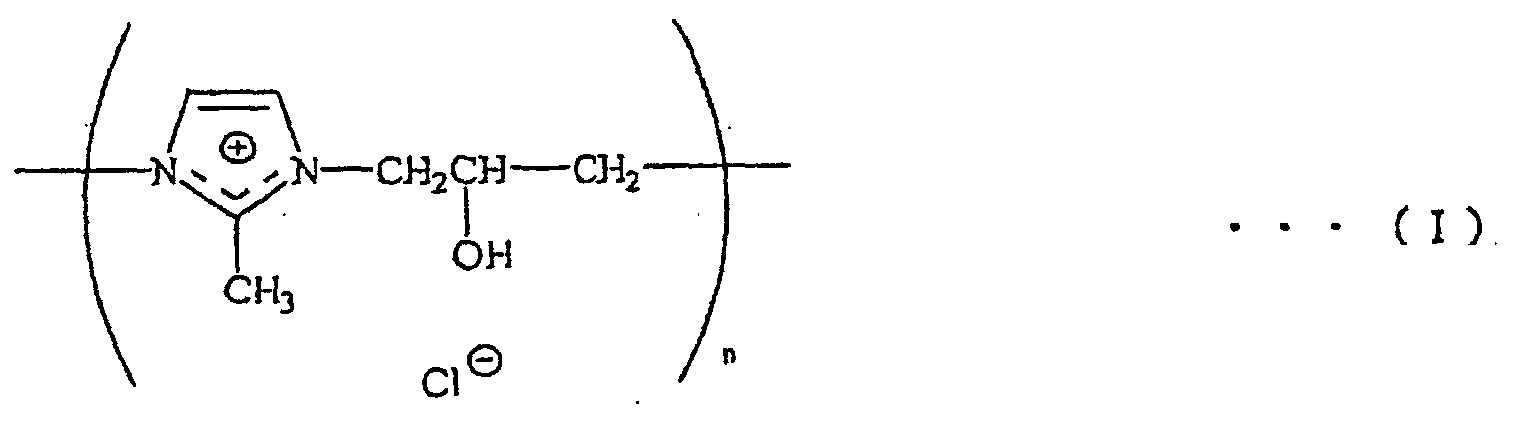
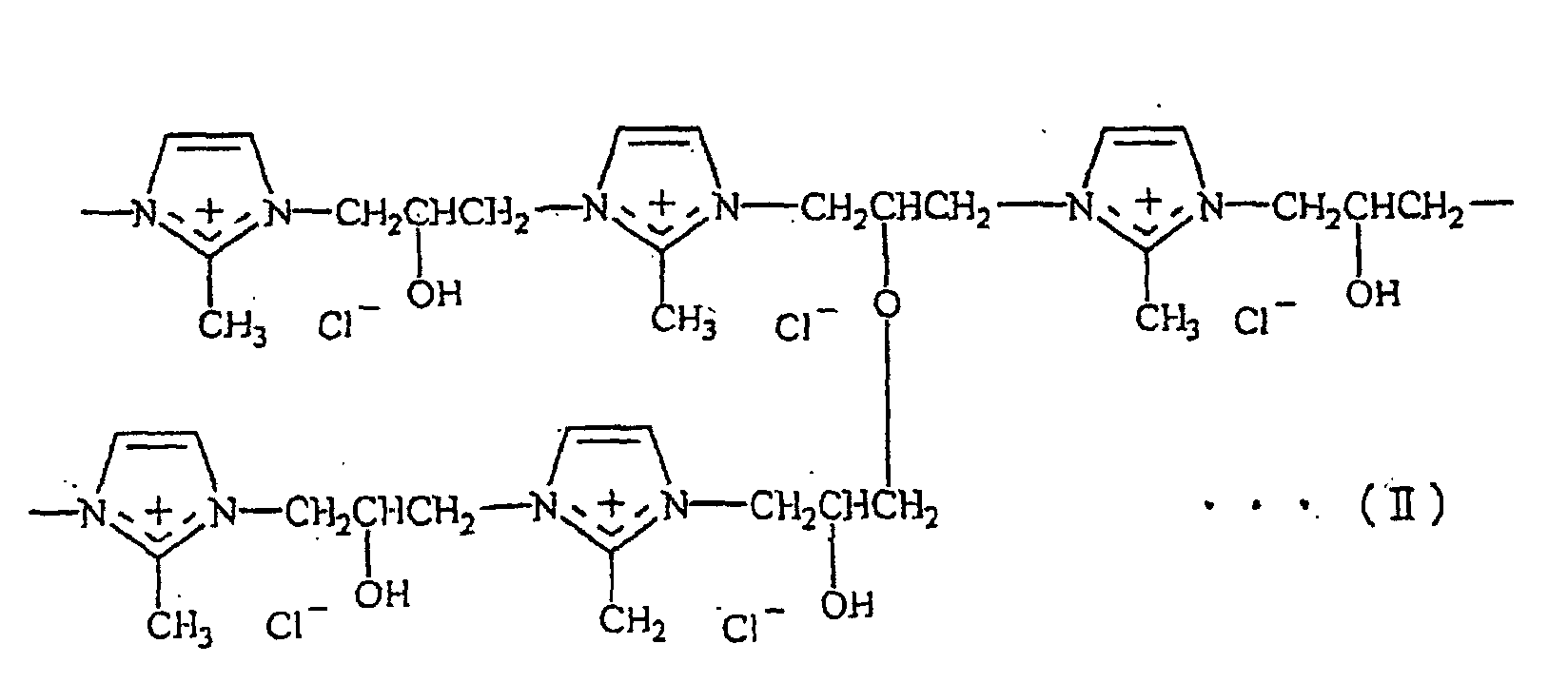
- Colestimide has an irregularly assembled and complicated stereostructure, and is represented by the fundamental structure of the following formula (I) that is partially represented by the following formula (II).
- the resin is obtained by the polymerization reaction of an epichlorohydrin derivative with an amine including an imidazole derivative as a typical example, more specifically, by the production method described in Japanese Patent Unexamined Publication (Kokai) No. 60-209523.
- Examples of other preferable anion exchange resins include the above cholestyramine resin, and colestipol (chloromethyl)oxirane-added N-(2-aminoethyl)-N'-[2-[(2-aminoethyl)amino]ethyl]-1,2-ethanediaminepolymer), which are sold by SIGMA.
- the cholestyramine resin is a strongly basic anion exchange resin containing styrene-divinylbenzene copolymer added with quarternary ammonium groups, and its fundamental structure is represented by the following formula (III).
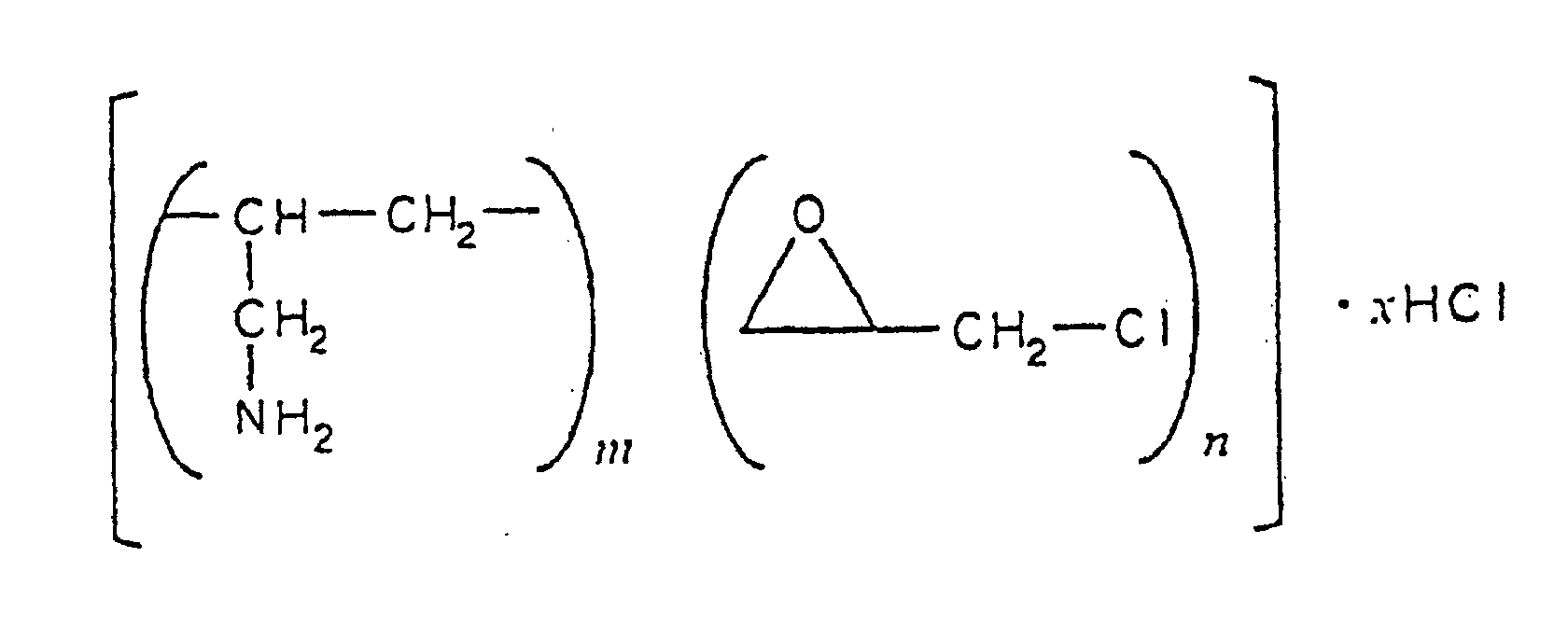
- the fundamental structure of colesevelam hydrochloride is represented by the following formula (IV), and the resin can be produced by the method of U.S. Patent No. 5607669 or a similar method thereto.
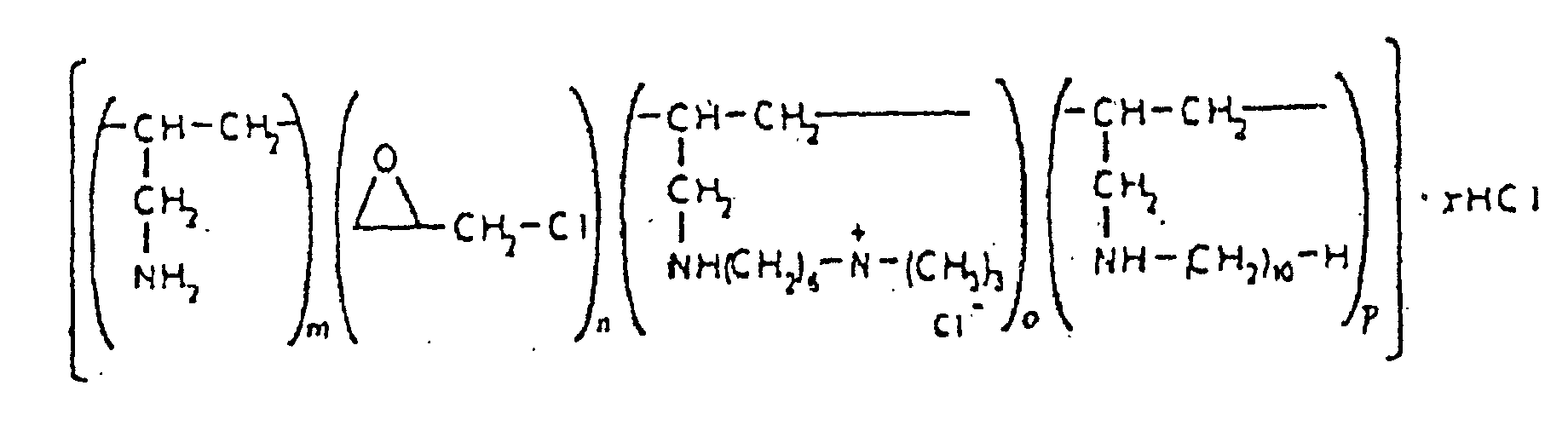
- the fundamental structure of sevelamer hydrochloride is represented by the following formula (V), and the resin can be produced by the method of U.S. Patent No. 5496545, or a similar method thereto.
- anion exchange resins described in Japanese Patent Publication of International Application (Kohyo) Nos. 9-504782, 9-500368, 10-501264, 10-501842, 11-507093, 11-512074, and 5-512332, and Japanese Patent Unexamined Publication (Kokai) Nos. 8-208750, 9-202732, 10-114661, and 11-228449 can also be used in the present invention, as long as they are not beyond the gist of the present invention.
- an active ingredient per se, can be used as the antiobesity agent and the health food of the present invention. It is preferred that a pharmaceutical composition and a health food containing the above active ingredient is manufactured by using an widely-used additive for pharmaceutical preparation, and then use the same.
- the pharmaceutical composition and the health food examples include tablets, capsules, subtle granules, pills, troches, and liquids, and these are orally administered.
- the good when applied as a health food, the good may be in the form of a confectionary
- the pharmaceutical composition and health food for oral administration can be manufactured by a conventional method widely used, such as mixing, filling or compressing. Further, by applying repeated formulation procedures, the active ingredient may be distributed in a pharmaceutical composition or a health food containing a large amount of excipient.
- tablets or capsules used for oral administration are preferably provided as unit dosage forms, and they may contain ordinarily used carriers for pharmaceutical preparation, such as a binder, excipient, diluent, compressing agent, lubricant, disintegrator, coloring agent, flavoring agent, and moistening agent.
- a tablet may be manufactured as a coated tablet according to a well known method in the art by using a coating agent, for example.
- Examples of a preferable excipient include cellulose, mannitol, and lactose.
- Starch, polyvinylpyrrolidone, starch derivative including sodium starch glycolate or the like as a disintegrator, and sodium lauryl sulfate or the like as a lubricant can be used as additives for the pharmaceutical preparation.
- Orally-available pharmaceutical compositions and health foods in the form of a liquid are provided as, for example, a pharmaceutical composition or a health food, such as an aqueous or oil suspension, a solution, an emulsion, a syrup, or an elixir; or a dry pharmaceutical composition or a health food which can be re-dissolved in water or an appropriate medium before use.
- a precipitation preventing agent such as sorbitol, syrup, methyl cellulose, gelatin, hydroxyethylcellulose, carboxymethylcellulose, aluminum stearate gel, or hydrogenated edible fat
- an emulsifier such as lecithin, sorbitan monooleate, or gum arabicum
- oily esters such as almond oil, refined coconut oil, or glycerin esters
- non-aqueous medium such as propylene glycol, or ethyl alcohol (edible oils may be included)
- a preservative such as methylester, ethyl ester, or propyl ester of p-hydroxybenzoic acid, or sorbic acid
- an optionally ordinarily used flavoring agent or coloring agent such as, for example, a precipitation preventing agent, such as sorbitol, syrup, methyl cellulose, gelatin, hydroxyethylcellulose, carboxymethylcellulose, aluminum stearate gel, or hydrogenated edible fat
- the above pharmaceutical composition and the health food for oral administration such as in the forms of tablets, capsules, or subtilized granules generally contain 5 to 95% by weight, preferably 25 to 90% by weight of the active ingredient.
- the colestimide has been sold by Mitsubishi Pharma Corporation as a trade nam of "Cholebinein", and Cholebine may be used, per se, for the present invention.
- Dose of the antiobesity agent of the present invention may appropriately be determined depending on the age, health conditions, and body weight of a patient, severity of disease, a type of simultaneous therapy or treatment, a nature of desired effects and the like.
- a dose per day for an adult may be 1 to 60 g as a weight of an active ingredient, and the agent may be administered once or several times a day.
- an amount can be appropriately determined based on the above dose.
- the present invention will be specifically explained by referring to the examples. However, the present invention is not limited to these examples.
- the colestimide used below was prepared by the production method described in Japanese Patent Unexamined Publication (Kokai) No. 60-209523.
- control group The three groups administered with the same amount of food were forcedly and orally administered with water (control group), or with 62.5 mg/kg of colestimide, or 125 mg/kg of colestimide as a drug once a day before feeding for 24 days.
- the satiation group was remained unadministered.
- Each dose of colestimide per body weight of a hamster was suspended in 10 mL of water when administered.
- portal blood After 24 days of administration as described above, portal blood, abdominal vena cava blood, intrahepatic fat, and intra-abdominal fat (visceral fat) were collected from the satiation group, control group, 62.5 mg/kg colestimide-administered group and 125 mg/kg colestimide-administered group under ether anesthesia. Further, fat in the visceral organs was collected, and the wet weight was measured. In addition TC (total cholesterol), TG (triglyceride), PL (phospholipid), and FFA (free fatty acid), in portal blood and vena cava blood were respectively measured as serum lipid by a standard method.
- TC total cholesterol
- TG triglyceride
- PL phospholipid
- FFA free fatty acid
- the body weight of the satiation group was slightly and gradually increased. Whilst, the body weight of the control group was gradually reduced, and on day 24, the weight was reduced by 15.0 g on the average.
- the colestimide-administered groups also gave reduced body weight in a dose-related manner (-19.2 g in the 62.5 mg/kg colestimide-administered group, and -22.8 g in the 125 mg/kg colestimide-administered group), and the groups constantly gave body weight lower than that of the control group throughout the experimental period. From day 17, both of the drug-administered groups gave significant body weight reduction compared to the control group.
- the control group gave a 54.5% decrease (2.91 g).
- Dose-dependent decreases were observed in the colestimide-administered groups, i.e., 29.9% in the 62.5 mg/kg colestimide-administered group and 46.0% in the 125 mg/kg colestimide-administered group.
- TC, TG, and FFA in the blood of the whole body obtained from the vena cava were decreased insignificantly by the administration with colestimide.
- PL was significantly decreased in the high dose (125 mg/kg)-administered group, in comparison with the control group. Whilst, the satiation group gave significantly higher values than the control group except for PL.
- the effect on serum lipids is shown below: Effect on serum lipids (venous blood) Group TC, mg/dL TG, mg/dL PL, mg/dL FFA, ⁇ M eq. Satiation group 377.3 ⁇ 18.4 156.5 ⁇ 18.4 .
- colestimide had an antiobesity action to reduce cholesterol levels as well as reduce body weight and visceral fat levels when used in combination with dietetic treatment.
- a novel antiobesity agent and a health food is successfully provided that can reduce body weight and/or visceral fat levels without decrease of food consumption.
Landscapes
- Health & Medical Sciences (AREA)
- Life Sciences & Earth Sciences (AREA)
- Chemical & Material Sciences (AREA)
- Veterinary Medicine (AREA)
- Animal Behavior & Ethology (AREA)
- Medicinal Chemistry (AREA)
- Public Health (AREA)
- General Health & Medical Sciences (AREA)
- Pharmacology & Pharmacy (AREA)
- Engineering & Computer Science (AREA)
- Epidemiology (AREA)
- Food Science & Technology (AREA)
- Nutrition Science (AREA)
- Polymers & Plastics (AREA)
- Mycology (AREA)
- Obesity (AREA)
- Organic Chemistry (AREA)
- Nuclear Medicine, Radiotherapy & Molecular Imaging (AREA)
- General Chemical & Material Sciences (AREA)
- Chemical Kinetics & Catalysis (AREA)
- Hematology (AREA)
- Diabetes (AREA)
- Bioinformatics & Cheminformatics (AREA)
- Child & Adolescent Psychology (AREA)
- Pharmaceuticals Containing Other Organic And Inorganic Compounds (AREA)
- Coloring Foods And Improving Nutritive Qualities (AREA)
- Acyclic And Carbocyclic Compounds In Medicinal Compositions (AREA)
Abstract
Description

| Effect on serum lipids (venous blood) | ||||
| Group | TC, mg/dL | TG, mg/dL | PL, mg/dL | FFA, µM eq. |
| Satiation group | 377.3 ±18.4 | 156.5 ±18.4 . | 233.9±8.5 | 1524.2 ± 55.9 |
| Control group | 247.2 ± 8.8 | 53.8 ± 5.0 | 274.7 ± 5.0 | 1370.3 ± 88.9 |
| 62.5·mg/kgadministered group | 233.3 ± 13.8 | 51.9 ± 4.8 | 250.4 ± 10.2 | 1278.4 ± 81.3 |
| 125 mg/kg·administered group | 221.7 ± 9.3 | 43.9 ± 4.4 | 240.0±5.1** | 1310.3 ± 98-3 |
Claims (20)
- An antiobesity agent which comprises as an active ingredient a substance having an action of adsorbing a bile acid in digestive tract, an action of inhibiting intestinal circulation, or an action of suppressing absorption of an exogenous lipid.
- The antiobesity agent according to claim 1, which reduces a body weight and/or a visceral fat level without decrease of food consumption.
- The antiobesity agent according to claim 1 or 2, wherein the substance having an action of an adsorbing a bile acid in digestive tract, an action of inhibiting intestinal circulation, or an action of suppressing absorption of an exogenous lipid is a pharmaceutically acceptable anion exchange resin.
- The antiobesity agent according to claim 3, wherein the pharmaceutically acceptable anion exchange resin is selected from colestimide, cholestyramine resin, colestipol, colesevelam hydrochloride, and sevelamer hydrochloride.
- The antiobesity agent according to claim 3, wherein the pharmaceutically acceptable anion exchange resin is synthesized by a polymerization reaction of an epichlorohydrin derivative with an amine.
- The antiobesity agent according to any one of claims 3 to 5, wherein the pharmaceutically acceptable anion exchange resin is colestimide.
- A pharmaceutical composition for preventing obesity and/or reducing a visceral fat level, which comprises as an active ingredient a substance having an action of adsorbing a bile acid in digestive tract, an action of inhibiting intestinal circulation, or an action of suppressing absorption of an exogenous lipid.
- The pharmaceutical composition for preventing and/or therapeutic treatment of obesity according to claim 7, which reduces a body weight and/or a visceral fat level without decrease of food consumption.
- The pharmaceutical composition according to claim 7 or 8, wherein the substance having an action of adsorbing a bile acid in digestive tract, an action of inhibiting intestinal circulation, or an action of suppressing absorption of an exogenous lipid is a pharmaceutically acceptable anion exchange resin.
- The pharmaceutical composition according to claim 9, wherein the pharmaceutically acceptable anion exchange resin is selected from colestimide, cholestyramine resin, colestipol, colesevelam hydrochloride, and sevelamer hydrochloride.
- The pharmaceutical composition according to claim 9, wherein the pharmaceutically acceptable anion exchange resin is synthesized by a polymerization reaction of an epichlorohydrin derivative with an amine.
- The pharmaceutical composition according to any one of claims 9 to 11, wherein the pharmaceutically acceptable anion exchange resin is colestimide.
- A health food which contains a substance having an action of adsorbing a bile acid in digestive tract, an action of inhibiting intestinal circulation, or an action of suppressing absorption of an exogenous lipid.
- The health food according to claim 13, which reduces a body weight and/or a visceral fat level without decrease of food consumption.
- The health food according to claim 13 or 14, wherein the substance having an action of adsorbing a bile acid in digestive tract, an action of inhibiting intestinal circulation, or an action of suppressing absorption of an exogenous lipid is a pharmaceutically acceptable anion exchange resin.
- The health food according to claim 15, wherein the pharmaceutically acceptable anion exchange resin is selected from colestimide, cholestyramine resin, colestipol, colesevelam hydrochloride, and sevelamer hydrochloride.
- The health food according to claim 15, wherein the pharmaceutically acceptable anion exchange resin is synthesized by a polymerization reaction of an epichlorohydrin derivative with an amine.
- The health food according to any one of claims 15 to 17, wherein the pharmaceutically acceptable anion exchange resin is colestimide.
- A method for reducing a body weight without decrease of food consumption by using a substance having an action of adsorbing a bile acid in digestive tract, an action of inhibiting intestinal circulation, or an action of suppressing absorption of an exogenous lipid.
- A method for reducing a visceral fat level without decrease of food consumption by using a substance having an action of adsorbing a bile acid in the digestive tract, an action of inhibiting intestinal circulation, or an action of suppressing absorption of an exogenous lipid.
Applications Claiming Priority (5)
| Application Number | Priority Date | Filing Date | Title |
|---|---|---|---|
| JP2000361835 | 2000-11-28 | ||
| JP2000361835 | 2000-11-28 | ||
| JP2001037938 | 2001-02-15 | ||
| JP2001037938 | 2001-02-15 | ||
| PCT/JP2001/008847 WO2002043761A1 (en) | 2000-11-28 | 2001-10-09 | Antiobestic agents and health foods |
Publications (2)
| Publication Number | Publication Date |
|---|---|
| EP1348442A1 true EP1348442A1 (en) | 2003-10-01 |
| EP1348442A4 EP1348442A4 (en) | 2005-02-02 |
Family
ID=26604749
Family Applications (1)
| Application Number | Title | Priority Date | Filing Date |
|---|---|---|---|
| EP01972719A Ceased EP1348442A4 (en) | 2000-11-28 | 2001-10-09 | AGENTS AGAINST OBESITY AND HEALTHY FOODS |
Country Status (8)
| Country | Link |
|---|---|
| US (1) | US7199160B2 (en) |
| EP (1) | EP1348442A4 (en) |
| JP (2) | JPWO2002043761A1 (en) |
| KR (1) | KR100771322B1 (en) |
| CN (1) | CN100594933C (en) |
| AU (1) | AU2001292368A1 (en) |
| CA (1) | CA2430122C (en) |
| WO (1) | WO2002043761A1 (en) |
Families Citing this family (5)
| Publication number | Priority date | Publication date | Assignee | Title |
|---|---|---|---|---|
| US20080115235A1 (en) * | 2004-12-27 | 2008-05-15 | Takaharu Maruyama | Drugs For Diseases Accompanying Changes In Total Bile Acid Pool Or Lipid Metabolism Disorders And Method Of Screening These Drugs |
| US8524212B2 (en) * | 2007-10-24 | 2013-09-03 | Mitsubishi Tanabe Pharma Corporation | Prophylactic and/or therapeutic drug for nonalcoholic steatohepatitis |
| CN106478948B (en) * | 2010-02-24 | 2019-05-07 | 瑞立普萨公司 | Polyimidazole as bile acid sequestrant |
| JP5930872B2 (en) | 2012-06-27 | 2016-06-08 | 富士フイルム株式会社 | Hair dye composition |
| US20250177436A1 (en) * | 2023-11-30 | 2025-06-05 | Sq Biopharma Inc. | Method for treating metabolic disorders by ileum-targeted delivery of endotoxin sequestrant |
Family Cites Families (13)
| Publication number | Priority date | Publication date | Assignee | Title |
|---|---|---|---|---|
| SE450325B (en) * | 1983-02-23 | 1987-06-22 | Tricum Ab | FOOD FIBER PRODUCT BASED ON FOOD PARTS FROM FROZEN BY CERALIER |
| JPS60209523A (en) * | 1984-04-03 | 1985-10-22 | Mitsubishi Petrochem Co Ltd | Antilipemic agent |
| JPH01114828A (en) | 1987-10-28 | 1989-05-08 | Nippon Mektron Ltd | Electrophoresis display device |
| US5137716A (en) * | 1990-11-15 | 1992-08-11 | Weisenfeld Michael S | Method of reducing weight in mammals |
| JPH05186356A (en) * | 1992-01-10 | 1993-07-27 | Kirin Brewery Co Ltd | Diet lipid digestive absorption inhibitor and food/ beverage containing the same |
| US5380522A (en) * | 1992-08-11 | 1995-01-10 | Day; Charles E. | Method for treatment of irritable bowel syndrome |
| US5607669A (en) * | 1994-06-10 | 1997-03-04 | Geltex Pharmaceuticals, Inc. | Amine polymer sequestrant and method of cholesterol depletion |
| CA2129079C (en) * | 1993-08-03 | 2006-01-17 | Tatsuo Nomura | Orally administrable cholesterol lowering agent |
| US5496545A (en) * | 1993-08-11 | 1996-03-05 | Geltex Pharmaceuticals, Inc. | Phosphate-binding polymers for oral administration |
| ES2162658T3 (en) * | 1996-03-05 | 2002-01-01 | Mitsubishi Chem Corp | USE OF ANIONIC EXCHANGING RESINS FOR THE MANUFACTURE OF A MEDICINAL PRODUCT FOR THE TREATMENT OF HYPERPHOSPHATEMIA. |
| WO1997036927A1 (en) * | 1996-03-29 | 1997-10-09 | Dario Boffelli | Amphipathic molecules as cholesterol and other lipid uptake inhibitors |
| JP4010585B2 (en) * | 1996-10-15 | 2007-11-21 | 久光製薬株式会社 | Tablets containing anion exchange resin |
| JP3807464B2 (en) * | 1997-11-17 | 2006-08-09 | 康二 嘉島 | Anti-obesity agent |
-
2001
- 2001-10-09 JP JP2002545731A patent/JPWO2002043761A1/en active Pending
- 2001-10-09 CA CA2430122A patent/CA2430122C/en not_active Expired - Fee Related
- 2001-10-09 AU AU2001292368A patent/AU2001292368A1/en not_active Abandoned
- 2001-10-09 US US10/432,877 patent/US7199160B2/en not_active Expired - Fee Related
- 2001-10-09 WO PCT/JP2001/008847 patent/WO2002043761A1/en not_active Ceased
- 2001-10-09 KR KR1020037006405A patent/KR100771322B1/en not_active Expired - Fee Related
- 2001-10-09 CN CN01819683A patent/CN100594933C/en not_active Expired - Fee Related
- 2001-10-09 EP EP01972719A patent/EP1348442A4/en not_active Ceased
-
2008
- 2008-04-25 JP JP2008115999A patent/JP2008273969A/en not_active Withdrawn
Also Published As
| Publication number | Publication date |
|---|---|
| US7199160B2 (en) | 2007-04-03 |
| WO2002043761A1 (en) | 2002-06-06 |
| AU2001292368A1 (en) | 2002-06-11 |
| CN1477974A (en) | 2004-02-25 |
| EP1348442A4 (en) | 2005-02-02 |
| CN100594933C (en) | 2010-03-24 |
| KR20030070027A (en) | 2003-08-27 |
| KR100771322B1 (en) | 2007-10-29 |
| CA2430122C (en) | 2010-08-24 |
| JPWO2002043761A1 (en) | 2004-04-02 |
| JP2008273969A (en) | 2008-11-13 |
| CA2430122A1 (en) | 2002-06-06 |
| US20040067215A1 (en) | 2004-04-08 |
Similar Documents
| Publication | Publication Date | Title |
|---|---|---|
| US3383281A (en) | Method for binding bile acids in vivo | |
| CA2549103C (en) | Use of a fatty acid composition comprising at least one of epa and dha or any combinations thereof | |
| JP4265911B2 (en) | New pharmaceutical composition | |
| JP2023165967A (en) | Self-emulsifying composition of ω3 fatty acids | |
| KR100556324B1 (en) | Pharmaceutical composition comprising lipase inhibitor and bile acid sequestrant | |
| WO1999021566A1 (en) | Dietary composition with lipid binding properties for weight management and serum lipid reduction | |
| HUE026628T2 (en) | Sachet formulation for amine polymers | |
| AU595276B2 (en) | Use of a hydrophobic substance for preparing an enteric preparation for treatment of obesity and an enteric preparation | |
| CN101842103A (en) | Unit Dose for Brain Health | |
| AU758181B2 (en) | Therapeutic agents | |
| EP0881903B1 (en) | Multifunctional fat absorption and blood cholesterol reducing formulation containing chitosan and nicotinic acid | |
| US7199160B2 (en) | Antiobestic agents and health foods | |
| PL191023B1 (en) | Application of photolipide obtained from vitis vinifera extracts as antiarteriosclerotic agents | |
| US4175124A (en) | Method of treating hypercholesterolemia | |
| HU218925B (en) | Process for producing pharmaceutical compositions containing galacturonic acid derivatives suitable for oral treating hyperlipidaemia and/or atherosclerosis | |
| FI107432B (en) | Use of microcrystalline chitosan | |
| JP2003113089A (en) | Chitosan-containing preparations and foods and drinks having lipid accumulation inhibition and cholesterol lowering action | |
| KR20010053211A (en) | Medicaments containing bisphosphonic acids and derivatives thereof which are provided for preventing and treating autoimmune diseases and allergies | |
| CA1315690C (en) | Synergistic combination of decarboxylase inhibitors and l-dopa pellets | |
| JPH11116478A (en) | Antiobesity agent | |
| US3892865A (en) | Method of controlling lipids in the bloodstream | |
| WO2023212091A1 (en) | Novel ketone ester compounds | |
| JPH052652B2 (en) | ||
| CN1943590A (en) | Artificial tears for treating xerophthalmia | |
| NZ536917A (en) | Use of ginkgo biloba extracts in order to promote muscle mass to the detriment of fatty mass |
Legal Events
| Date | Code | Title | Description |
|---|---|---|---|
| PUAI | Public reference made under article 153(3) epc to a published international application that has entered the european phase |
Free format text: ORIGINAL CODE: 0009012 |
|
| 17P | Request for examination filed |
Effective date: 20030620 |
|
| AK | Designated contracting states |
Kind code of ref document: A1 Designated state(s): AT BE CH CY DE DK ES FI FR GB GR IE IT LI LU MC NL PT SE TR |
|
| AX | Request for extension of the european patent |
Extension state: AL LT LV MK RO SI |
|
| A4 | Supplementary search report drawn up and despatched |
Effective date: 20041221 |
|
| RAP1 | Party data changed (applicant data changed or rights of an application transferred) |
Owner name: MITSUBISHI TANABE PHARMA CORPORATION |
|
| 17Q | First examination report despatched |
Effective date: 20081210 |
|
| STAA | Information on the status of an ep patent application or granted ep patent |
Free format text: STATUS: THE APPLICATION HAS BEEN REFUSED |
|
| 18R | Application refused |
Effective date: 20101011 |