TECHNICAL FIELD
The present invention relates to a method for
producing a preparation containing a bioactive substance.
More specifically, the present invention relates to a
method for producing a preparation comprising a bioactive
substance, which is unstable to heat or solvents, and a
polymer.
BACKGROUND ART
Peptidic or non-peptidic bioactive substances are
known to exhibit various pharmacological activities in a
living body, and the application thereof as medicaments
have been attempted. However, it is required to administer
these bioactive substances frequently since their half-life
in a living body is generally short. Then, physical burden
of patients due to administration by injection cannot be
ignored. For example, growth hormone, a representative
hormone which is originally produced and secreted in the
anterior portion of the pituitary gland, is a bioactive
peptide having widely diverse physiological activities such
as, in addition to promotion of growth in the body,
metabolism of saccharides and lipids, anabolism of proteins,
cell proliferation and differentiation, and the like. At
present, growth hormone is produced on a large scale by
Escherichia coli using genetic recombination technology,
and put to medicinal use clinically and worldwide. However,
it is required to administer growth hormone frequently in
order to maintain an effective blood level because of its
short biological half-life. Especially, in the case of
pituitary dwarfism, a daily subcutaneous administration to
infants or young patients over a long period of time
ranging from a few months to 10 years or more is actually
taken place.
In order to deal with problems inherent in such
bioactive substances, various drug delivery systems have
been studied. For example, a sustained-release agent that
provides sustained-release of a bioactive peptide over a
long period of time has been studied. JP 8-217691 A
(WO96/07399) discloses a method for producing a sustained-release
preparation comprising a water-insoluble or poorly
water soluble polyvalent metal salt of a water-soluble
peptidic bioactive substance, which is formed by an aqueous
solution of zinc chloride, etc., and a biodegradable
polymer.
Further, for a sustained-release preparation using a
biodegradable polymer, it is desired to maintain the
activity of a bioactive substance with suppressing the
initial release of a bioactive substance, in particular,
release of the excess amount within one day, and to control
the release of the bioactive substance arbitrarily over a
long period of time. Regarding this problem, JP 11-322631
A discloses a method for producing a sustained-release
preparation comprising adding a water-miscible organic
solvent and/or a volatile salt to an aqueous solution of a
bioactive peptide, followed by lyophilizing to obtain a
bioactive peptide powder, dispersing the powder in a
solution of a biodegradable polymer in an organic solvent,
and removing the organic solvent. Furthermore, JP 9-132524
A discloses a method for producing sustained-release
microcapsules comprising a bioactive substance and a
biodegradable polymer which comprises, after forming
microcapsules, heat-drying the microcapsules at a
temperature of not less than the glass transition
temperature of the biodegradable polymer for about 24 to
120 hours. These are methods for producing a sustained-release
preparation containing very little residual organic
solvent and having very superior clinical properties as
medicaments.
OBJECTS OF THE INVENTION
However, according to the solvent-removing procedures
in the above-mentioned production methods, since it takes
long period of time for removing the solvent, there is
still room for improvement in view of the production costs
for the industrial application.
On the other hand, as a procedure for removing a
solvent that remains in a component (e.g., polymer) used
for formulating a preparation of a medicament, heat drying
method, vacuum drying method and flash drying with dried
gas have been known. However, in these procedures, when a
substance has strong affinity for a solvent and is unstable
to heat, the removal of the solvent tends to be
insufficient or, in some cases, the substance is decomposed.
Furthermore, in these procedures, when the boiling point of
a solvent to be removed is high, the properties of a
preparation obtained may be deteriorated.
SUMMARY OF THE INVENTION
The present inventors have studied intensively to
solve the above-mentioned problems and unexpectedly found
that, in a method for producing a sustained-release
preparation comprising a bioactive substance and a
biodegradable polymer, a sustained-release preparation
having superior clinical properties as a medicament, in
which excess initial release of the bioactive substance
immediately after administration is markedly suppressed, a
constant amount of the bioactive substance is being
released from immediately after administration over a long
period of time and very little residual organic solvent is
contained therein, can be obtained by, after forming a
solid material, contacting the solid material with high-pressure
gas for about 10 minutes to about 12 hours. The
present invention has been completed based on these
findings.
That is, the present invention provides:
BRIEF DESCRIPTION OF THE DRAWINGS
Fig.1 is a schematic drawing of a solvent-removing
apparatus using carbon dioxide in a high-pressure gaseous
state.
Each number in the drawing has the following meaning.
1: liquefied carbon dioxide bomb, 2: CO2 delivery pump,
3: heat exchanger, 4: extraction vessel, 5: thermostat, 6:
detector, 7: automatic pressure regulating valve, 8:
recovery vessel.
DETAILED DESCRIPTION OF THE INVENTION
The bioactive substance used in the present invention
includes various drugs, which have useful physiological
activities for animals and plants and can be used as an
agrochemical or an animal drug, or can be used clinically.
As the bioactive substance used in the present invention, a
bioactive substance being unstable to heat or solvents is
preferred. The bioactive substance being unstable to heat
or solvents used herein means a bioactive substance that is
decomposed, metabolized, inactivated or denatured in a
production step which involves heating or contact with an
organic solvent, such as emulsification, removing of a
solvent or drying. The agrochemical includes, for example,
control agents for pests, control agents for plant diseases,
herbicides, plant growth regulators, fertilizers and the
like, and the animal drug includes, for example,
antibacterial agents, vitamin preparations, hormone
preparations, vaccines, additives for fishery products,
insecticide and disinfectant preparations, drugs for pets
and the like. For an ideal agrochemical or animal drug,
which is safe and environment-friendly, reduction of
residual solvents is important. Examples of various drugs
those can be used clinically include, and are not
specifically limited, peptidic compounds having
physiological activities, as well as antibiotics,
antifungal agents, antihyperlipidemic agents, antitumor
agents, antipyretic agents, analgesic agents,
antiinflammatory agents, antitussive and expectorant agents,
sedatives, muscle relaxants, antiepileptics, antiulcer
agents, antidepressants, antiallergic agents, cardiotonics,
antiarrhythmic agents, vasodilators, hypotensive diuretics,
antidiabetic agents, anticoagulants, hemostatic agents,
antiplatelet agents, antituberculous agent, hormones,
antinarcotics, bone resorption-suppressing agents,
osteogenesis-accelerating agents, and neovascularization
suppressing agents. Of these, a peptidic or non-peptidic
bioactive substance that produces a dimer, a polymer or
related substances such as an oxidized substances,
deamidated substances, and the like by heat, or a peptidic
or non-peptidic bioactive substance that produces a
reaction product with a biodegradable polymer, is
preferably used in the present invention.
The bioactive peptide in the present invention
includes various peptides or proteins, which have
physiological activities useful for mammals and can be used
clinically. As the "bioactive peptide", that having a
molecular weight (as monomers) of, for example, about 200
to 500,000, preferably molecular weight of about 2,000 to
500,000, is generally used. More preferably, a peptide
having a molecular weight of 5,000 to about 500,000 is used.
The typical activity of the bioactive peptide includes
hormone activities. The bioactive peptide may be any of
natural substances, synthesized substances and semi-synthesized
substances, or may be derivatives or related
substances thereof. The functional mechanism of the
bioactive peptide may be either of agonistic and
antagonistic.
As the bioactive peptide in the present invention,
there can be used peptide hormones, cytokines, peptide
nerve transmitter substances, hematopoietic factors,
various growth factors, enzymes, polypeptide antibiotics,
analgetic peptides, vaccines, and the like.
As the peptide hormones, there can be used insulin,
somatostatin, somatostatin derivatives (Sandostatin; see
U.S. Pat. Nos. 4,087,390, 4,093,574, 4,100,117 and
4,253,998), growth hormones (GH), sodium diuretic peptides,
gastrin, prolactin, adrenocorticotropic hormone (ACTH),
ACTH derivatives (e.g., ebiratide, etc.), melanocyte-stimulating
hormone (MSH), thyroid hormone-releasing
hormone (TRH) and salts and derivatives thereof (see JP 50-121273
A and JP 52-116465 A), thyroid-stimulating hormone
(TSH), luteinizing hormone (LH), follicle-stimulating
hormone (FSH), human chorionic gonadotropin (HCG), thymosin,
motilin, vasopressin, vasopressin derivatives [desmopressin,
see Folia Endocrinologica Japonica, Vol. 54, No. 5, pp.
676-691 (1978)], oxytocin, calcitonin, parathyroid hormone
(PTH), glucagon, secretin, pancreozymin, cholecystokinin,
angiotensin, human placental lactogen, glucagon-like
peptide (GLP-1) and derivatives thereof (see JP 6-80584 A,
JP 7-2695 A, EP 658568, JP 8-245696 A, JP 8-269097 A,
WO97/15296, WO97/31943, WO98/19698 WO98/43658, JP 10-511365
A, WO99/55310, JP 11-513983 A, CA2270320, WO99/64061,
JP 11-514972 A, JP 2000-500505 A, WO2000/66138,
WO2000/66142, WO2000/78333, JP 2001-11095, Tissue Eng.
2(1)35-44(2001), Diabetologia 43(10)1319-1328(2000),
WO2000/34331, WO2000/34332, U.S. Patent No. 6,268,343, U.S.
2001011071 A, U.S. 2001006943 A, EP 0733644, WO2000/77039,
WO99/43707, WO99/43341, WO99/43706, WO99/43708, WO99/43705,
WO99/29336, WO2000/37098, EP 0969016, U.S. Patent No.
5,981,488, U.S. Patent No. 5,958,909, WO93/25579,
WO98/43658, EP 0869135, U.S. Patent No. 5,614,492, U.S.
Patent No. 5,545,618, U.S. Patent No. 5,120,712, U.S.
Patent No. 5,118,666, WO95/05848, WO91/11457, EP 0708179,
WO96/06628, EP0658568, WO87/06941), glucose-dependent
insulin secretory peptide (GIP), exendin and derivatives
thereof (see WO2000/66629, WO2000/41546, WO99/07404,
WO2000/09666, and U.S. Patent No. 5,424,286), metastin and
derivatives thereof (see WO2000/24890), and the like.
Preferably, the peptide hormone is insulin and growth
hormone, etc.
Growth hormone (hereinafter referred to as GH)
originating from any animal species can be used, and is
preferably human growth hormone (hereinafter referred to as
hGH). Further, although natural products extracted from
the pituitary gland can be used in the present invention,
genetic recombinant type GH (see JP 6-12996 B and JP 6-48987
B) is preferred. The recombinant type hGH having the
same structure as a natural type which does not have
methionine at the N-terminal group is more preferred. Such
GH may be in the form of a metal salt, and one being
substantially free from a metal is also used. About 20K
dalton type of hGH (see JP 7-101877 A and JP 10-265404 A)
as well as about 22K dalton type of hGH can be used.
Furthermore, the derivatives or related substances of hGH
(see WO99/03887 can be used.
As the cytokines, for example, lymphokines, monokines,
and the like can be used. As the lymphokines, there can be
used, for example, interferons (alpha type, beta type,
gamma type and the like), interleukins (IL-2, 3, 4, 5, 6, 7,
8, 9, 10, 11, 12 and the like) and the like. As the
monokines include, for example, interleukin-1 (IL-1), tumor
necrosis factor (TNF), and the like can be used. The
cytokines are preferably lymphokines, and the like, more
preferably interferons, and the like, especially preferably
interferon-alpha.
As the peptide neurotransmitters, substance P,
serotonin, GABA, and the like can be used.
As the hematopoietic factors, there can be used, for
example, erythropoietin (EPO), colony stimulating factors
(G-CSF, GM-CSF, M-CSF and the like), thrombopoietin (TPO),
platelet growth stimulating factor, megakaryocyte
potentiator, and the like.
As various growth factors, there can be used, for
example, basic and acidic fibroblast growth factors (FGF)
and their family (e.g., EGF, TGF-α, TGF-β, PDGF, acidic FGF,
basic FGF, FGF-9, and the like), nerve growth factors (NGF)
and their family (e.g., BDNF, NT-3, NT-4, CNTF, GDNF, and
the like), insulin-like growth factors (e.g. IGF-1, IGF-2,
and the like), bone morphogenetic protein (BMP) and their
family, and the like.
As the enzymes include, there can be used, for example,
superoxide dismutase (SOD), urokinase, tissue plasminogen
activator (TPA), asparaginase, kallikrein, and the like.
As the polypeptide antibiotics, for example, polymixin
B, colistin, gramicidin, bacitracin, and the like can be
used.
As the analgesic peptides, for example, enkephalin,
enkephalin derivatives (see U.S. Patent No. 4,277,394 and
EP 031567 A), endorphin, kyotorphin, and the like can be
used.
As the vaccines, there can be used, for example,
influenza vaccine, Japanese encephalitis vaccine,
antirabies vaccine, hepatitis B vaccine, hepatitis A
vaccine, cholera vaccine, DPT mixed vaccine, pneumococcus
vaccine, diphteria vaccine, tetanus vaccine, polio vaccine,
prostatic specific antigen vaccine, and the like.
Furthermore, the bioactive peptides include
thymopoietin, dynorphin, bombesin, caerulein, thymostimulin,
thymic humoral factor (THF), blood thymic factor (FTS) and
derivatives thereof (see U.S. Patent No. 4,229,438), other
thymic factors [Igaku no Ayumi, Vol.125, No. 10, pp. 835-843
(1983)], neurotensin, bradykinin, endothelin-antagonistic
peptides (see EP 436189 A, EP 457195 A and EP
496452 A, JP 3-94692 A and JP 3-130299 A), and the like.
In the present invention, when the bioactive peptide
contains a metal, the metal contained in the bioactive
peptide may be removed previously, if necessary, and, as a
method for removing the metal, a known method can be used.
For example, an insulin in the form of amorphous and
containing a minimum amount of metal can be obtained by
dialyzing an aqueous solution of insulin acidified with
hydrochloric acid to water or a solution of ammonium
acetate, followed by lyophilization.
As the non-peptidic bioactive substance of the present
invention, for example, there may be mentioned one or more
components selected from nourishing and health-promoting
agents, antipyretic-analgesic-antiinflammatory agents,
antipsychotic drugs, antianxiety drugs, antidepressants,
hypnotic-sedatives, spasmolytics, central nervous system
affecting drugs, cerebral metabolism ameliolators,
antiepileptics, sympathomimetic agents, gastrointestinal
function conditioning agents, antacids, antiulcer agents,
antitussive-expectorants, antiemetics, respiratory
stimulants, bronchodilators, antiallergic agents, dental
buccal drugs, antihistamines, cardiotonics, antiarrhythmic
agents, diuretics, hypotensive agents, vasoconstrictors,
coronary vasodilators, peripheral vasodilators,
antihyperlipidemic agents, cholagogues, antibiotics,
chemotherapeutic agents, antidiabetic agents, drugs for
osteoporosis, skeletal muscle relaxants, antimotion
sickness drugs, hormones, alkaloid narcotics, sulfa drugs,
drugs for treatment of gout, anticoagulants, anti-malignant
tumor agents, agents for Alzheimer's disease and the like.
Examples of the nourishing and health-promoting agents
include vitamins such as vitamin A, vitamin D, vitamin E
(d-α-tocopherol acetate and the like), vitamin B1
(dibenzoylthiamine, fursultiamine hydrochloride and the
like), vitamin B2 (riboflavin butyrate and the like),
vitamin B6 (pyridoxine hydrochloride and the like), vitamin
C (ascorbic acid, sodium L-ascorbate and the like), vitamin
B12 (hydroxocobalamin acetate and the like) and the like;
minerals such as calcium, magnesium and iron; amino acids;
oligosaccharides; galenical; and the like. Examples of the
antipyretic-analgesic-antiinflammatory agents include
aspirin, acetaminophen, ethenzamide, ibuprofen,
diphenhydramine hydrochloride, dl-chlorpheniramine maleate,
dihydrocodeine phosphate, noscapine, methylephedrine
hydrochloride, phenylpropanolamine hydrochloride, caffeine,
anhydrous caffeine, tolfenamic acid, mefenamic acid,
diclofenac sodium, flufenamic acid, salicylamide,
aminopyrine, ketoprofen, indomethacin, bucolome,
pentazocine and the like. Examples of the antipsychotic
drugs include chlorpromazine, reserpine and the like.
Examples of the antianxiety drugs include alprazolam,
chlordiazepoxide, diazepam and the like. Examples of the
antidepressants include imipramine, maprotiline,
amphetamine and the like.
Examples of the hypnotic-sedatives include estazolam,
nitrazepam, diazepam, perlapine, phenobarbital sodium and
the like. Examples of the spasmolytics include scopolamine
hydrobromide, diphenhydramine hydrochloride, papaverine
hydrochloride and the like. Examples of the central
nervous system affecting drugs include citicoline,
rotirenine and the like. Examples of the cerebral
metabolism ameliolators include vinpocetine, meclofenoxate
hydrochloride and the like. Examples of the antiepileptics
include phenytoin, carbamazepine and the like. Examples of
the sympathomimetic agents include isoproterenol
hydrochloride and the like. Examples of the
gastrointestinal function conditioning agents include
stomachic-digestives such as gentian, swertia herb, nux
vomica, phellodendron bark, bitter orange peel, Condurango,
cinnamon oil and the like; intestinal function controlling
drugs such as perperine hydrochloride, resistant lactic
acid bacterium, Lactobacillus bifidus and the like.
Examples of the antacids include magnesium carbonate,
sodium hydrogen carbonate, magnesium aluminometasilicate,
synthetic hydrotalcite, precipitated calcium carbonate,
magnesium oxide and the like. Examples of the antiulcer
agents include lansoprazole, omeprazole, rabeprazole,
pantoprazole, famotidine, cimetidine, ranitidine
hydrochloride and the like.
Examples of the antitussive-expectorants include
chloperastine hydrochloride, dextromethorphan hydrobromide,
theophylline, potassium guaiacolsulfonate, guaifenesin,
codeine phosphate and the like. Examples of the
antiemetics include diphenidol hydrochloride,
metoclopramide and the like. Examples of the respiratory
stimulants include levallorphan tatrate and the like.
Examples of the bronchodilators include theophylline,
salbutamol sulfate and the like. Examples of the
antiallergic agents include amlexanox, seratrodast and the
like. Examples of the dental buccal drugs include
oxytetracycline, triamcinolone acetonide, chlorhexidine
hydrochloride, lidocaine and the like. Examples of the
antihistamines include diphenhydramine hydrochloride,
promethazine, isothipendyl hydrochloride, dl-chlorpheniramine
maleate and the like. Examples of the
cardiotonics include caffeine, digoxin and the like.
Examples of the antiarryhythmic agents include procainamide
hydrochloride, propranolol hydrochloride, pindolol and the
like. Examples of the diuretics include isosorbide,
furosemide and the like. Examples of the hypotensive
agents include delapril hydrochloride, captopril,
hexamethonium bromide, hydralazine hydrochloride, labetalol
hydrochloride, manidipine hydrochloride, losartan,
eprosartan, candesartan cilexetil (TCV-116), candesartan
(CV-11974), valsartan, telmisartan, irbesartan, tasosartan,
ormesartan and the like. As the hypotensive agents,
candesartan, candesartan cilexetil and the like are
preferred, and candesartan and the like are specifically
preferred.
Examples of the vasoconstrictors include phenylephrine
hydrochloride and the like. Examples of the coronary
vasodilators include carbocromen hydrochloride, molsidomine,
verapamil hydrochloride and the like. Examples of the
peripheral vasodilators include cinnarizine and the like.
Examples of the antihyperlipidemic agents include
cerivastatin sodium, simvastatin, pravastatin sodium and
the like. Examples of the cholagogues include
dehydrocholic acid, trepibutone and the like. Examples of
the antibiotics include cephem antibiotics such as
cefalexin, amoxicillin, pivmecillinam hydrochloride,
cefotiam dihydrochloride, cefozopran hydrochloride,
cefinenoxime hydrochloride, cefsluodin sodium, etc.;
synthetic antibacterials such as ampicillin, cyclacillin,
sulbenicillin sodium, nalidixic acid, enoxacin, etc.;
monobactam antibiotics such as carumonam sodium; penem
antibiotics, carbapenem antibiotics, etc.; and the like.
Examples of the chemotherapeutic agents include
sulfamethizole hydrochloride, thiazosulfone and the like.
Examples of the antidiabetic agents include tolbutamide,
voglibose, pioglitazone (hydrochloride), troglitazone, 5-[[4-[2-(methyl-2-pyridinylamino)ethoxy]phenyl]methyl]-2,4-thiazolidinedione
(BRL-49653), acarbose, miglitol,
emiglitate and the like. Examples of the drugs for
osteoporosis include ipriflavone and the like. Examples of
the skeletal muscle relaxants include methocarbamol and the
like. Examples of the antimotion sickness drugs include
meclizine hydrochloride, dimenhydrinate and the like.
Examples of the hormones include riothyroinine sodium,
dexamethasone sodium phosphate, prednisolone, oxendolone,
leupororelin acetate and the like. Examples of the
alkaloid narcotics include opium, morphine hydrochloride,
ipecac, oxycodone hydrochloride, opium alkaloids
hydrochlorides, cocaine hydrochloride and the like.
Examples of the sulfa drugs include sulfanilamide,
sufamethizole and the like. Examples of the drugs for
treatment of gout include allopurinol, colchicine and the
like. Examples of the anticoagulants include dicoumarol
and the like. Examples of the anti-malignant tumor agents
include 5-fluorouracil, uracil, mitomycin and the like.
Examples of the agents for Alzheimer's disease include
idebenone, vinpocetine and the like.
As the non-peptidic bioactive substance in the present
invention, a compound having an oxygen atom in the molecule,
specifically, a compound having an ether bond or a carbonyl
group is preferred. Such compound includes a compound
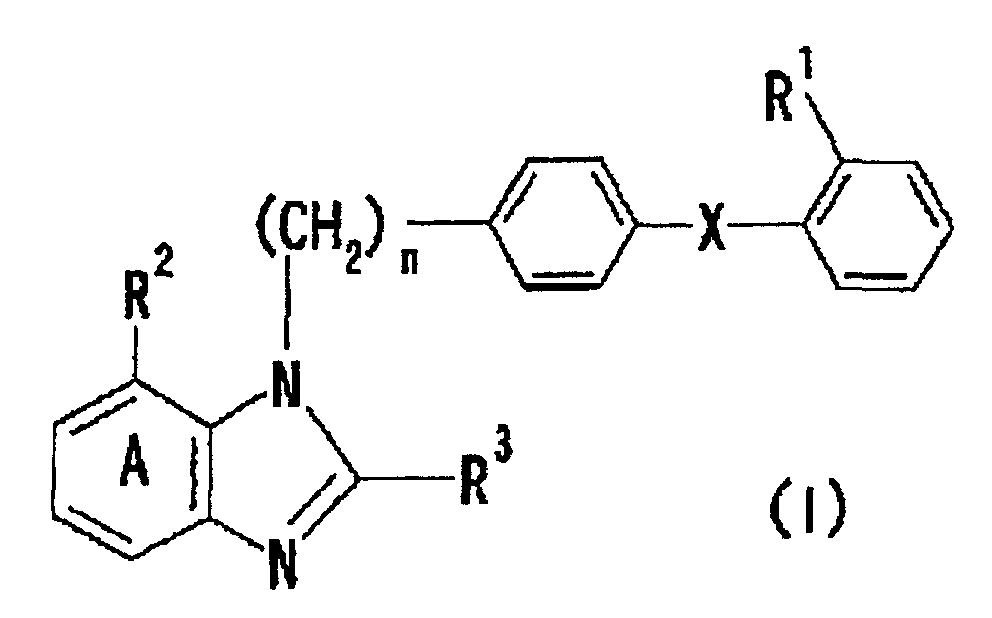
represented by the formula (I):
or a salt thereof.
In the above-mentioned formula (I), examples of the
group capable of forming an anion (a group having hydrogen
atom that may be liberated as a proton) as R1 include (1) a
carboxyl group, (2) a tetrazolyl group, (3) a
trifluoromethanesulfonic acid amide group (-NHSO2CF3), (4)
a phosphoric acid group, (5) a sulfonic acid group, (6) an
optionally substituted 5- to 7-membered (preferably 5- or
6-membered) monocyclic heterocycle residue containing one
or two or more of N, S and O, and the like.
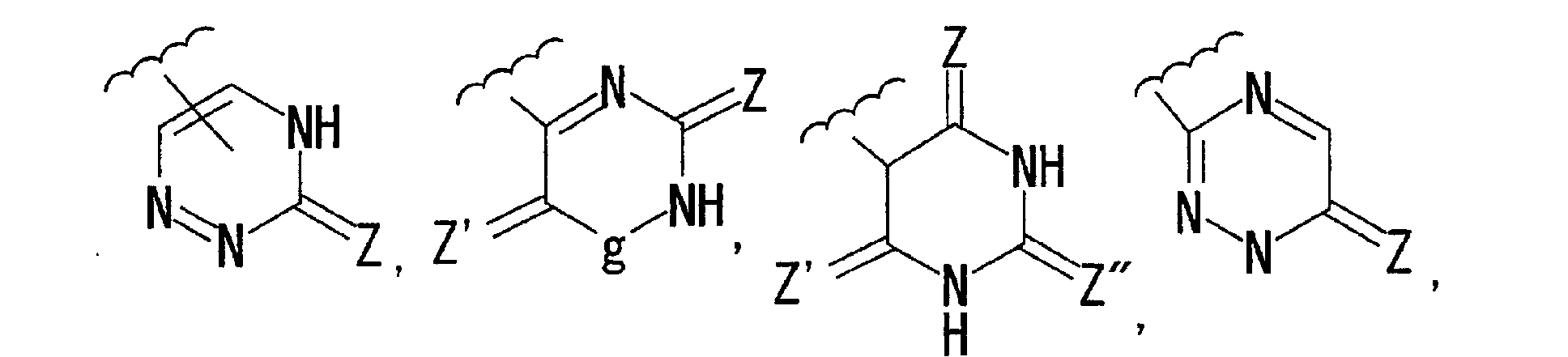
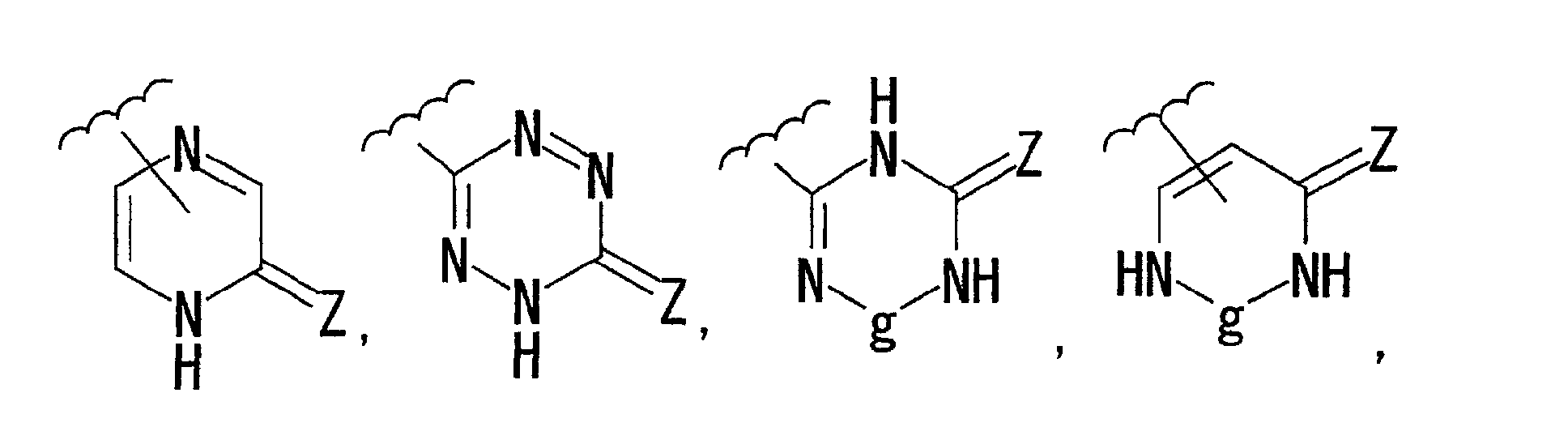
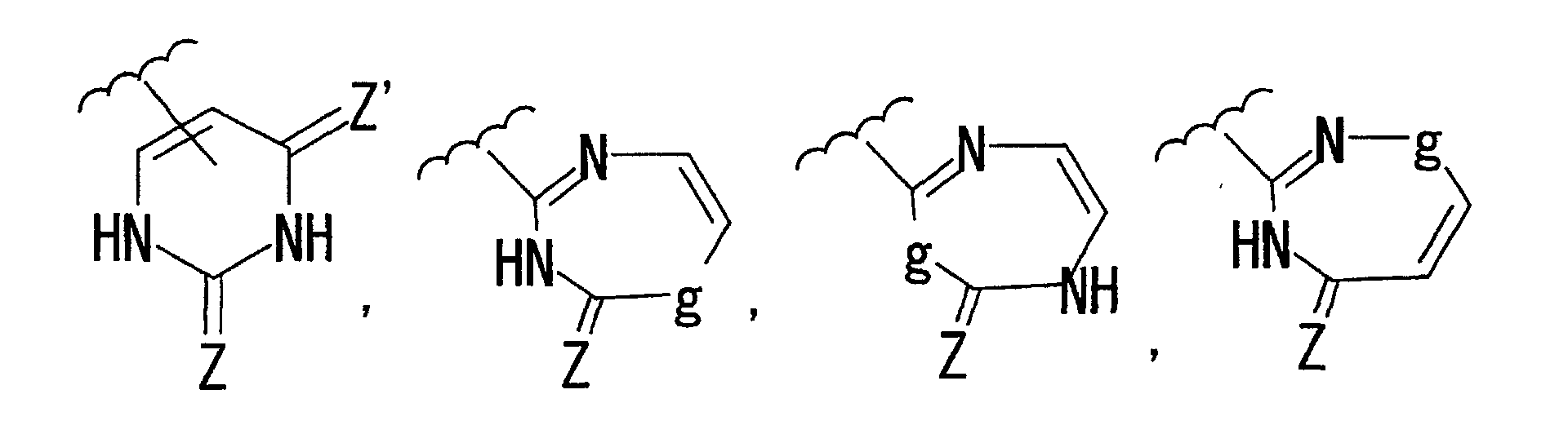
Examples of the above-mentioned "optionally
substituted 5- to 7-membered (preferably 5- or 6-membered)
monocyclic heterocycle residue containing one or two or
more of N, S and O" include
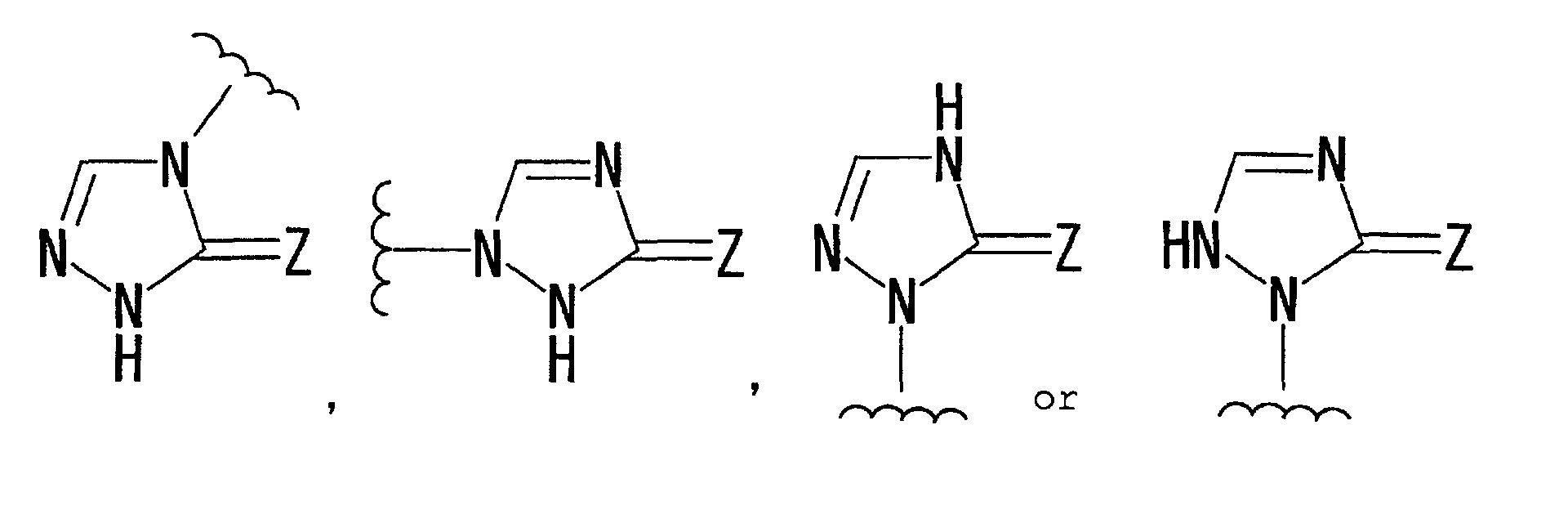
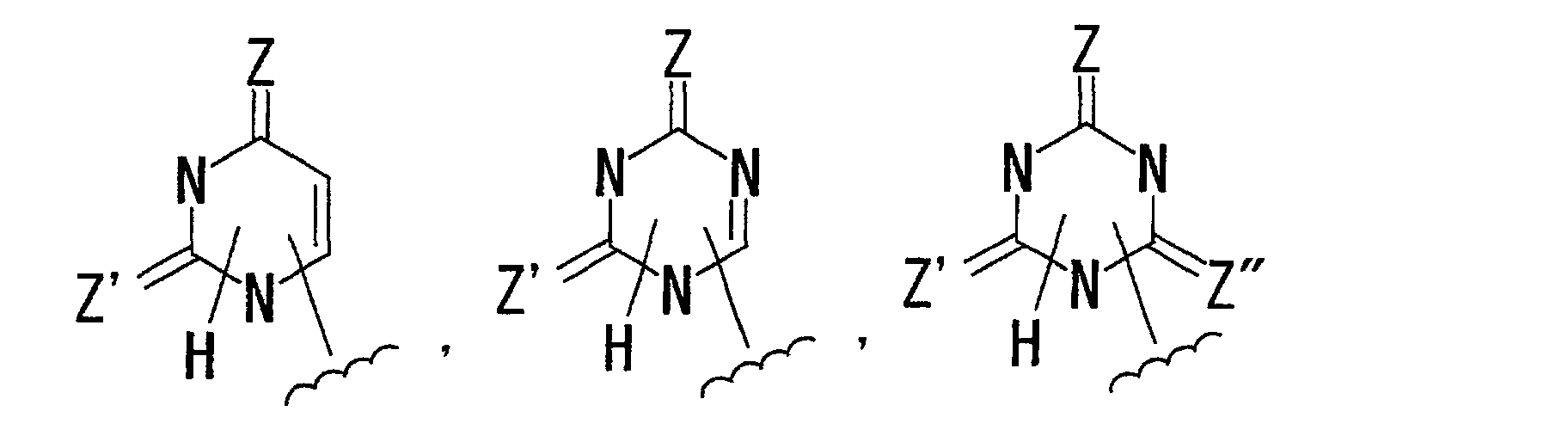
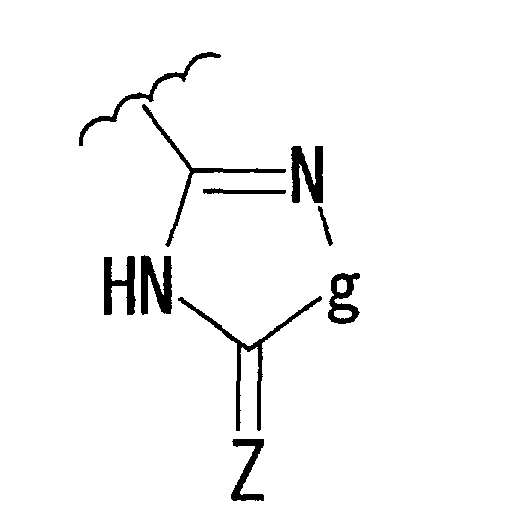
and the like. Furthermore, when the g in the above-mentioned
formula represents -NH- and the like, the linkage
between the heterocyclic residue represented by R
1 and the
phenyl group to which the heterocyclic residue is linked,
may link via one of existing plural nitrogen atoms, in
addition to the above-mentioned carbon-carbon bond(s). For
example, when R
1 is represented by the formula:
specifically, examples thereof are
and the like, respectively. The other examples of the link
via a nitrogen atom include
and the like.
In the above-mentioned formula, g represents -CH2-,-NH-,
-O- or -S(O)m-, >=Z, >=Z' and >=Z'' each represents a
carbonyl group, a thiocarbonyl group or an optionally
oxidized sulfur atom (e.g., S, S(O), S(O)2 and the like)
(preferably a carbonyl or a thiocarbonyl group, more
preferably a carbonyl group), respectively, and m
represents 0, 1 or 2.
The heterocyclic residue represented by R1 is
preferably groups obtained by eliminating one hydrogen atom
from a ring that has both -NH- or -OH group as a proton
donor, and a carbonyl group, a thiocarbonyl group, a
sulfinyl group, or the like as a proton acceptor,
simultaneously, such as an oxadiazolone ring, an
oxadiathiazolone ring, a thiadiazolone group, or the like.
Furthermore, the heterocyclic residue represented by R1 may
form a condensed ring group by linking substituents on the
ring. As the heterocyclic residue represented by R1, a 5-or
6-membered ring residue is preferred, and a 5-membered
residue is more preferred.
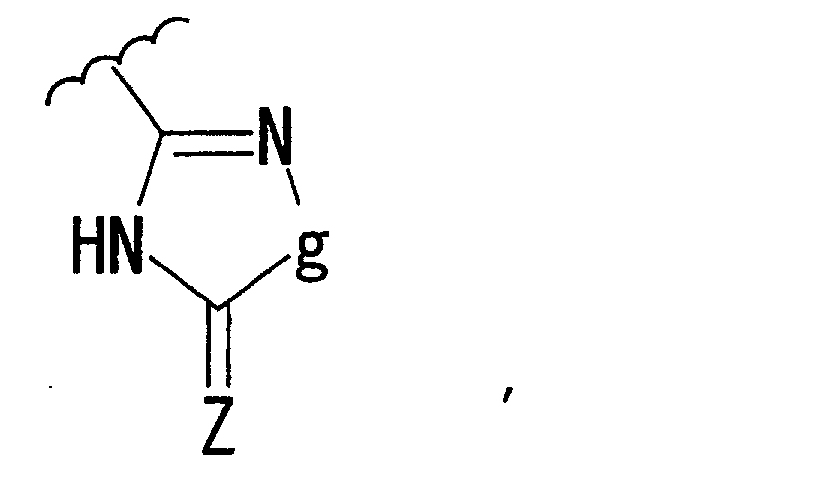
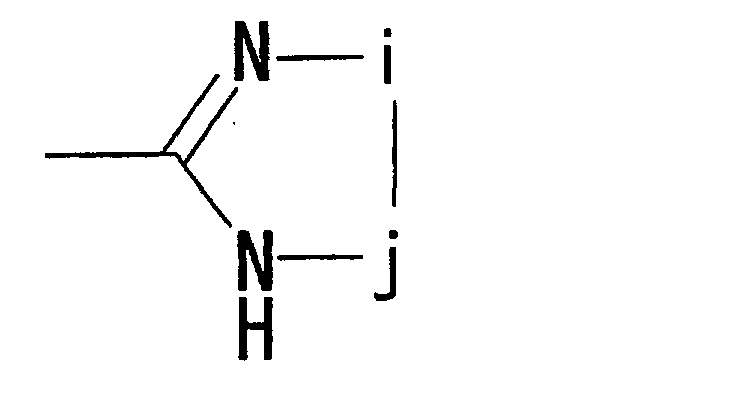
As the heterocyclic residue represented by R
1, a group
represented by the formula:
wherein i represents -O- or -S-, j represents >=O, >=S or
>=S(O)
m, m is as defined above (among these, 2,5-dihydro-5-oxo-1,2,4-oxadiazol-3-yl,
2,5-dihydro-5-thioxo-1,2,4-oxadiazol-3-yl,
2,5-dihydro-5-oxo-1,2,4-thiadiazol-3-yl,
especially 2,5-dihydro-5-oxo-1,2,4-oxadiazol-3-yl) and the
like are preferred.
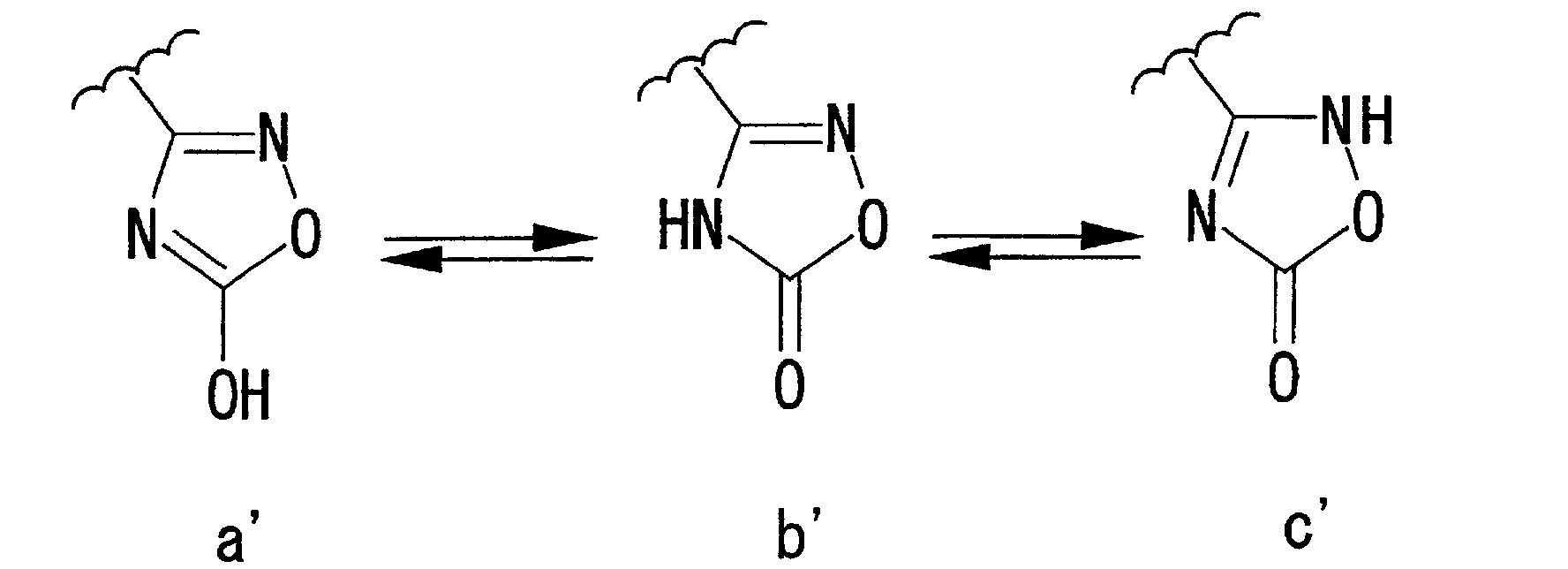
Furthermore, the above-mentioned heterocyclic residue
(R
1) has tautomers as shown below. For example, when Z=0
and g=O in the following formula:
three tautomers a', b' and c', such as
are present, and the heterocyclic residue represented by
the formula:
encompasses all of the above-mentioned a', b' and c'.
The group capable of forming an anion as R1 may be
protected with an optionally substituted lower (C1-4) alkyl
group or an acyl group (e.g., a lower (C2-5) alkanoyl, a
benzoyl, etc.), and the like, at substitutable position(s).
The optionally substituted lower (C1-4) alkyl group
include, for example, (1) a lower (C1-4) alkyl group
optionally substituted with 1 to 3 phenyl group(s)
optionally having a halogen atom, nitro, lower (C1-4) alkyl,
lower (C1-4) alkoxy and the like (e.g., methyl,
triphenylmethyl, p-methoxybenzyl, p-nitrobenzyl and the
like), (2) a lower (C1-4) alkoxy-lower (C1-4) alkyl group
(e.g., methoxymethyl, ethoxymethyl and the like), (3) the
formula -CH(R4)-OCOR5 [wherein R4 represents (a) hydrogen,
(b) a straight chain or branched lower alkyl group having
1-6 carbon atom(s) (e.g., methyl, ethyl, n-propyl,
isopropyl, n-butyl, isobutyl, t-butyl, n-pentyl, isopentyl,
neopentyl and the like), (c) a straight chain or branched
lower alkenyl group having 2-6 carbon atoms or (d) a
cycloalkyl group having 3-8 carbon atoms (e.g., cyclopentyl,
cyclohexyl, cycloheptyl and the like), R5 represents (a) a
straight chain or branched lower alkyl group having 1-6
carbon atom(s) (e.g., methyl, ethyl, n-propyl, isopropyl,
n-butyl, isobutyl, sec-butyl, t-butyl, n-pentyl, isopentyl,
neopentyl and the like), (b) a straight chain or branched
lower alkenyl group having 2-6 carbon atoms, (c) a lower
alkyl group having 1 to 3 carbon atom(s) substituted with a
cycloalkyl group having 3-8 carbon atoms (e.g., cyclopentyl,
cyclohexyl, cycloheptyl and the like) or an optionally
substituted aryl group (e.g., a phenyl or naphthyl group
and the like, each of which may have a halogen atom, nitro,
lower (C1-4) alkyl, lower (C1-4) alkoxy and the like) (e.g.,
benzyl, p-chlorobenzyl, phenethyl, cyclopentylmethyl,
cyclohexylmethyl and the like), (d) a lower alkenyl group
having 2 to 3 carbon atoms substituted by a cycloalkyl
having 3-8 carbon atoms or an optionally substituted aryl
group (e.g., a phenyl or naphthyl group and the like, each
of which may have a halogen atom, nitro, lower (C1-4) alkyl,
lower (C1-4) alkoxy and the like) (e.g., a group having
alkenyl portion(s) such as vinyl, propenyl, allyl,
isopropenyl and the like, such as cinnamyl, and the like),
(e) an optionally substituted aryl group (e.g., a phenyl or
a naphthyl group and the like, each of which may have a
halogen atom, nitro, lower (C1-4) alkyl, lower (C1-4) alkoxy
and the like, such as phenyl, p-tolyl, naphthyl and the
like), (f) a straight or a branched lower alkoxy group
having 1-6 carbon atom(s) (e.g., methoxy, ethoxy, n-propoxy,
isopropoxy, n-butoxy, isobutoxy, sec-butoxy, t-butoxy, n-pentyloxy,
isopentyloxy, neopentyloxy and the like), (g) a
straight chain or branched lower alkenyloxy group having 2
to 8 carbon atoms (e.g., allyloxy, isobutenyloxy and the
like), (h) a cycloalkyloxy group having 3-8 carbon atoms
(e.g., cyclopentyloxy, cyclohexyloxy, cycloheptyloxy and
the like), (i) a lower alkoxy group having 1 to 3 carbon
atom(s) substituted with a cycloalkyl having 3-8 carbon
atoms (e.g., cyclopentyl, cyclohexyl, cycloheptyl and the
like) or an optionally substituted aryl group (e.g., a
phenyl or naphthyl group and the like, each of which may
have a halogen atom, nitro, lower (C1-4) alkyl, lower (C1-4)
alkoxy and the like) (e.g., a group having alkoxy
portion(s) such as methoxy, ethoxy, n-propoxy, isopropoxy
and the like, such as benzyloxy, phenethyloxy,
cyclopentylmethoxy, cyclohexylmethoxy and the like), (j) a
lower alkenyloxy group having 2 to 3 carbon atoms
substituted with a cycloalkyl having 3-8 carbon atoms (e.g.,
cyclopentyl, cyclohexyl, cycloheptyl and the like) or an
optionally substituted aryl group (e.g., a phenyl or
naphthyl group and the like, each of which may have a
halogen atom, nitro, lower (C1-4) alkyl, lower (C1-4) alkoxy
and the like) (e.g., a group having alkenyloxy portion(s)
such as vinyloxy, propenyloxy, allyloxy, isopropenyloxy and
the like, such as cinnamyloxy and the like, and the like),
(k) an optionally substituted aryloxy group (e.g., phenoxy
or naphthoxy group and the like, each of which may have a
halogen atom, nitro, lower (C1-4) alkyl, lower (C1-4) alkoxy
and the like, such as phenoxy, p-nitrophenoxy, naphthoxy
and the like, and the like)], and the like.
Furthermore, the group capable of forming an anion as
R1 may have substituent(s) such as an optionally
substituted lower (C1-4) alkyl group (which includes the
groups similar to the "optionally substituted lower (C1-4)
alkyl group" that is exemplified as protective groups for
the group capable of forming an anion as the above-mentioned
R1) , a halogen atom, nitro, cyano, lower (C1-4)
alkoxy, an amino optionally substituted with 1 or 2 of
lower (C1-4) alkyl(s) and the like, at the substitutable
position(s), in addition to the protective groups such as
the above-mentioned optionally substituted lower (C1-4)
alkyl group or acyl group (e.g., a lower (C2-5) alkanoyl, a
benzoyl and the like).
In the above-mentioned formula, the group which may be
converted into the group capable of forming an anion as R1
(a group having hydrogen atom that may be liberated as a
proton) may be a group which can be converted into the
group capable of forming an anion by a reaction under
biological, i.e., physiological conditions (for example, an
in vivo reaction such as oxidation, reduction, hydrolysis
or the like with an in vivo enzyme, and the like) (so-called
prodrug), or may be a group which can be converted
into a group capable of forming an anion represented by R1
by a chemical reaction, such as cyano, an N-hydroxycarbamimidoyl
group (-C(=N-OH)-NH2), or (1) a
carboxyl group, (2) a tetrazolyl group, (3) a
trifluoromethanesulfonic acid amide group (-NHSO2CF3), (4)
a phosphoric acid group, (5) a sulfonic acid group, and (6)
an optionally substituted 5- to 7-membered (preferably 5-or
6-membered) monocyclic heterocycle residue containing
one or two or more of N, S and O, each of which has been
protected with an optionally substituted lower (C1-4) alkyl
group or an acyl group (so-called synthetic intermediate).
Preferred examples of R1 include a carboxyl, a
tetrazolyl, or a 2,5-dihydro-5-oxo-1,2,4-oxadiazol-3-yl
(preferably tetrazolyl) optionally protected with an
optionally substituted lower (C1-4) alkyl (e.g., methyl,
triphenylmethyl, methoxymethyl, ethoxymethyl, p-methoxybenzyl,
p-nitrobenzyl and the like) or an acyl group
(e.g., lower (C2-5) alkanoyl, benzoyl and the like), or a
cyano, an N-hydroxycarbamimidoyl (preferably cyano), and
specifically, cyano is preferably used.
In the above-mentioned formula, X represents that the
adjacent phenylene group and phenyl group are linked
directly or via a spacer of an atomic chain having two or
less atom(s) (preferably linked directly), and the spacer
of an atomic chain having two or less atom(s) may be any
divalent chain whose straight chain portion is constituted
of 1 or 2 atom(s). The chain may also have side chain(s).
Specifically, it includes a lower (C1-4) alkylene whose
straight chain portion is constituted of 1 or 2 atoms, -CO-,
-O-, -S-, -NH-, -CO-NH-, -O-CH2-, -S-CH2-, -CH=CH- and the
like.
In the above-mentioned formula, n represents an
integer of 1 or 2 (preferably 1).
In the above-mentioned formula, ring A represents a
benzene ring which may be further substituted in addition
to the substituent R2, and examples of the substituent
include (1) halogen (e.g., F, Cl, Br and the like), (2)
cyano, (3) nitro, (4) optionally substituted lower (C1-4)
alkyl, (5) lower (C1-4) alkoxy, (6) an optionally
substituted amino group (e.g., amino, N-lower (C1-4)
alkylamino (e.g., methylamino and the like), N,N-dilower
(C1-4) alkylamino (e.g., dimethylamino and the like), N-arylamino
(e.g., phenylamino and the like), alicyclic amino
(e.g., morpholino, piperidino, piperadino, N-phenylpiperadino
and the like), and the like), (7) a group
represented by the formula -CO-D' [wherein D' represents a
hydroxy group or lower (C1-4) alkoxy in which the alkyl
portion may be substituted with a hydroxy group, lower (C1-
4) alkoxy, lower (C2-6) alkanoyloxy (e.g., acetoxy,
pivaloyloxy and the like), lower (C1-6) alkoxycarbonyloxy
(e.g., methoxycarbonyloxy, ethoxycarbonyloxy and the like)
or lower (C3-6) cycloalkoxycarbonyloxy (e.g.,
cyclohexyloxycarbonyloxy and the like)], (8) tetrazolyl, a
trifluoromethanesulfonic acid amide group, a phosphoric
acid group or a sulfonic acid group, each of which is
optionally protected with optionally substituted lower (C1-
4) alkyl (including the groups similar to the "optionally
substituted lower (C1-4) alkyl group" exemplified as
protective groups for the group capable of forming an anion
as the above-mentioned R1) or acyl (e.g., lower (C2-5)
alkanoyl, benzoyl and the like), or the like.
One or two of these substituents may be present at the
substitutable position(s) of the benzene ring,
simultaneously, while preferred substituent which is
further possessed by ring A in addition to the substituent
R2 is optionally substituted lower (C1-4) alkyl (e.g., lower
(C1-4) alkyl optionally substituted with a hydroxy group, a
carboxyl group, halogen, etc., and the like), halogen, and
the like, and more preferably, the ring A does not have any
substituent except for the substituent R2.
In the above-mentioned formula, examples of the group
capable of forming an anion as R2 (a group having hydrogen
atom that may be liberated as a proton) include (1) a
carboxyl group which may be esterified or amidated, (2) a
tetrazolyl group, (3) a trifluoromethanesulfonic acid amide
group (-NHSO2CF3), (4) a phosphoric acid group, (5) a
sulfonic acid group, and the like. These groups may be
protected with an optionally substituted lower alkyl group
(including a group similar to the "optionally substituted
lower (C1-4) alkyl group" exemplified as protective groups
for the group capable of forming an anion as the above-mentioned
R1) or an acyl group (e.g., lower (C2-5) alkanoyl,
benzoyl, and the like), and may be any group as long as it
is a group capable of forming an anion or a group which may
be converted into such a group under biological, i.e.,
physiological conditions (for example, an in vivo reaction
such as oxidation, reduction or hydrolysis, and the like
with an in vivo enzyme, and the like), or chemically.
Examples of the carboxyl which may be esterified or
amidated, as R2, include a group represented by the formula
-CO-D [wherein D represents (1) a hydroxy group, (2)
optionally substituted amino (for example, amino, N-lower
(C1-4) alkylamino, N,N-dilower (C1-4) alkylamino and the
like), (3) optionally substituted alkoxy {e.g., (i) a lower
(C1-6) alkoxy group in which the alkyl portion is optionally
substituted with a hydroxy group, optionally substituted
amino (e.g., amino, N-lower (C1-4) alkylamino, N,N-dilower
(C1-4) alkylamino, piperidino, morpholino and the like),
halogen, lower (C1-6) alkoxy, lower (C1-6) alkylthio, lower
(C3-8) cycloalkoxy or optionally substituted dioxolenyl
(e.g., 5-methyl-2-oxo-1,3-dioxolen-4-yl and the like), or
(ii) a group of the formula -O-CH(R6)-OCOR7 [wherein R6
represents (a) hydrogen, (b) a straight chain or branched
lower alkyl group having 1-6 carbon atom(s) (e.g., methyl,
ethyl, n-propyl, isopropyl, n-butyl, isobutyl, t-butyl, n-pentyl,
isopentyl, neopentyl and the like), (c) a straight
chain or branched lower alkenyl group having 2-6 carbon
atoms or (d) a cycloalkyl group having 3-8 carbon atoms
(e.g., cyclopentyl, cyclohexyl, cycloheptyl and the like),
R7 represents (a) a straight chain or branched lower alkyl
group having 1-6 carbon atom(s) (e.g., methyl, ethyl, n-propyl,
isopropyl, n-butyl, isobutyl, sec-butyl, t-butyl,
n-pentyl, isopentyl, neopentyl and the like), (b) a
straight chain or branched lower alkenyl group having 2-6
carbon atoms, (c) a lower alkyl group having 1 to 3 carbon
atom(s) substituted with a cycloalkyl group having 3-8
carbon atoms (e.g., cyclopentyl, cyclohexyl, cycloheptyl
and the like) or an optionally substituted aryl group (e.g.,
a phenyl or a naphthyl group and the like, each of which
may have a halogen atom, nitro, lower (C1-4) alkyl, lower
(C1-4) alkoxy and the like) (e.g., benzyl, p-chlorobenzyl,
phenethyl, cyclopentylmethyl, cyclohexylmethyl and the
like), (d) a lower alkenyl group having 2 to 3 carbon atoms
substituted with a cycloalkyl having 3-8 carbon atoms or an
optionally substituted aryl group (e.g., phenyl or naphthyl
group and the like, each of which may have a halogen atom,
nitro, lower (C1-4) alkyl, lower (C1-4) alkoxy and the like)
(e.g., a group having an alkenyl portion such as vinyl,
propenyl, allyl, isopropenyl, and the like, for example,
cinnamyl, and the like), (e) an optionally substituted aryl
group (e.g., a phenyl or naphthyl group and the like, each
of which may have a halogen atom, nitro, lower (C1-4) alkyl,
lower (C1-4) alkoxy and the like, such as phenyl, p-tolyl,
naphthyl and the like), (f) a straight chain or branched
lower alkoxy group having 1-6 carbon atom(s) (e.g., methoxy,
ethoxy, n-propoxy, isopropoxy, n-butoxy, isobutoxy, sec-butoxy,
t-butoxy, n-pentyloxy, isopentyloxy, neopentyloxy
and the like), (g) a straight chain or branched lower
alkenyloxy group having 2 to 8 carbon atoms (e.g., allyloxy,
isobutenyloxy and the like), (h) a cycloalkyloxy group
having 3-8 carbon atoms (e.g., cyclopentyloxy,
cyclohexyloxy, cycloheptyloxy and the like), (i) a lower
alkoxy group having 1 to 3 carbon atom(s) substituted with
a cycloalkyl having 3-8 carbon atoms (e.g., cyclopentyl,
cyclohexyl, cycloheptyl and the like) or an optionally
substituted aryl group (e.g., a phenyl or naphthyl group
and the like, each of which may have a halogen atom, nitro,
lower (C1-4) alkyl, lower (C1-4) alkoxy and the like) (e.g.,
a group having alkoxy portion(s) such as methoxy, ethoxy,
n-propoxy, isopropoxy and the like, such as benzyloxy,
phenethyloxy, cyclopentylmethoxy, cyclohexylmethoxy and the
like), (j) a lower alkenyloxy group having 2 to 3 carbon
atoms substituted with a cycloalkyl having 3-8 carbon atoms
(e.g., cyclopentyl, cyclohexyl, cycloheptyl and the like)
or an optionally substituted aryl group (e.g., a phenyl or
naphthyl group and the like, each of which may have a
halogen atom, nitro, lower (C1-4) alkyl, lower (C1-4) alkoxy
and the like) (e.g., a group having alkenyloxy portion(s)
such as vinyloxy, propenyloxy, allyloxy, isopropenyloxy and
the like, such as cinnamyloxy and the like) or (k) an
optionally substituted aryloxy group (e.g., phenoxy or
naphthoxy group and the like, each of which may have a
halogen atom, nitro, lower (C1-4) alkyl, lower (C1-4) alkoxy
and the like, such as phenoxy, p-nitro phenoxy, naphthoxy
and the like)]}, and the like], and the like.
As R2, an optionally esterified carboxyl is preferred,
and the specific examples thereof include -COOH and a salt
thereof, -COOMe, -COOEt, -COOtBu, -COOPr,
pivaloyloxymethoxycarbonyl, 1-(cyclohexyloxycarbonyloxy)ethoxycarbonyl,
5-methyl-2-oxo-1,3-dioxolen-4-ylmethoxycarbonyl,
acetoxymethoxycarbonyl,
propionyloxymethoxycarbonyl, n-butyryloxymethoxycarbonyl,
isobutyryloxymethoxycarbonyl, 1-(ethoxycarbonyloxy)ethoxycarbonyl,
1-(acetoxy)ethoxycarbonyl,
1-(isobutyryloxy)ethoxycarbonyl,
cyclohexylcarbonyloxymethoxycarbonyl,
benzoyloxymethoxycarbonyl, cinnamyloxycarbonyl,
cyclopentylcarbonyloxymethoxycarbonyl and the like, and may
be any group as long as it is a group capable of forming an
anion (e.g., COO-, its derivative, and the like) or a group
which may be converted into such a group under biological,
i.e., physiological conditions (for example, an in vivo
reaction such as oxidation, reduction or hydrolysis, and
the like with an in vivo enzyme, and the like), or
chemically, or it may be carboxyl group or a prodrug
thereof.
The above-mentioned R2 is preferably the group
represented by the formula -CO-D [wherein D represents (1)
a hydroxy group or (2) lower (C1-4) alkoxy in which the
alkyl portion is optionally substituted with a hydroxy
group, amino, halogen, lower (C2-6) alkanoyloxy (e.g.,
acetoxy, pivaloyloxy and the like), lower (C3-8)
cycloalkanoyloxy, lower (C1-6) alkoxycarbonyloxy (e.g.,
methoxycarbonyloxy, ethoxycarbonyloxy and the like), lower
(C3-8) cycloalkoxycarbonyloxy (e.g.,
cyclohexyloxycarbonyloxy and the like), lower (C1-4) alkoxy
or lower (C3-8) cycloalkoxy]. Among these, carboxyl
esterified with a lower (C1-4) alkyl (preferably methyl or
ethyl) is preferred.
In the above-mentioned formula, examples of the
"hydrocarbon residue" of the "hydrocarbon residue which may
link via a heteroatom and may be substituted" represented
by R3 include (1) an alkyl group, (2) an alkenyl group, (3)
an alkynyl group, (4) a cycloalkyl group, (5) an aryl group,
(6) an aralkyl group and the like. Among these, an alkyl
group, an alkenyl group and a cycloalkyl group are
preferred.
The alkyl group of the above-mentioned (1) may be any
of straight chain or branched lower alkyl groups having
about 1 to 8 carbon atom(s) such as methyl, ethyl, propyl,
isopropyl, butyl, isobutyl, sec-butyl, t-butyl, pentyl, i-pentyl,
hexyl, heptyl, octyl and the like.
The alkenyl group of the above-mentioned (2) may be
any of straight chain or branched lower alkenyl groups
having 2 to 8 carbon atoms such as vinyl, propenyl, 2-butenyl,
3-butenyl, isobutenyl, 2-octenyl and the like.
The alkynyl group of the above-mentioned (3) may be
any of straight chain or branched lower alkynyl groups
having 2 to 8 carbon atoms such as ethynyl, 2-propynyl, 2-butynyl,
2-pentynyl, 2-octynyl and the like.
The cycloalkyl group of the above-mentioned (4)
include lower cycloalkyl having about 3 to 6 carbon atoms
such as cyclopropyl, cyclobutyl, cyclopentyl, cyclohexyl
and the like.
Each of the above-mentioned alkyl group, alkenyl group,
alkynyl group or cycloalkyl group may be substituted with a
hydroxy group, an optionally substituted amino group (e.g.,
amino, N-lower (C1-4) alkylamino, N,N-dilower (C1-4)
alkylamino and the like), halogen, a lower (C1-4) alkoxy
group, a lower (C1-4) alkylthio group and the like.
The aryl group of the above-mentioned (5) includes,
for example, phenyl and the like, and the aralkyl group of
the above-mentioned (6) include a phenyl-lower (C1-4) alkyl
and the like such as benzyl, phenethyl and the like.
Each of the above-mentioned aralkyl group or aryl
group may have, at the substitutable position(s) on the
benzene ring, for example, halogen (e.g., F, Cl, Br and the
like), nitro, an optionally substituted amino group (e.g.,
amino, N-lower (C1-4) alkylamino, N,N-dilower (C1-4)
alkylamino and the like), lower (C1-4) alkoxy (e.g., methoxy,
ethoxy and the like), lower (C1-4) alkylthio (e.g.,
methylthio, ethylthio and the like), lower (C1-4) alkyl
(e.g., methyl, ethyl and the like) and the like.
Among the above-mentioned groups, as the "hydrocarbon
residue" of the "hydrocarbon residue which may link via a
heteroatom and may be substituted" represented by R3, an
optionally substituted alkyl or alkenyl group (e.g., lower
(C1-5) alkyl or lower (C2-5) alkenyl group and the like, each
of which is optionally substituted with a hydroxy group, an
amino group, halogen or a lower (C1-4) alkoxy group) are
preferred. Among these, a lower (C1-5) alkyl (more
preferably ethyl) is preferred.
The "heteroatom" of the "hydrocarbon residue which may
link via a heteroatom and may be substituted" represented
by R3 include -O-, -S(O)m- [m represents an integer of 0 to
2], -NR'- [R' represents a hydrogen atom or lower (C1-4)
alkyl] and the like. Among these, -O- is preferably used.
Among the above-mentioned groups, as R3, a lower (C1-5)
alkyl or lower (C2-5) alkenyl group and the like, each of
which may be linked via -O-, -S(O)m- [m represents an
integer of 0 to 2] or -NR'- [R' represents a hydrogen atom
or lower (C1-4) alkyl] and may be substituted with a
substituent selected from a hydroxy group, an amino group,
halogen and lower (C1-4) alkoxy group, is preferred. Among
these, a lower (C1-5) alkyl or a lower (C1-5) alkoxy (more
preferably ethoxy) is preferred.
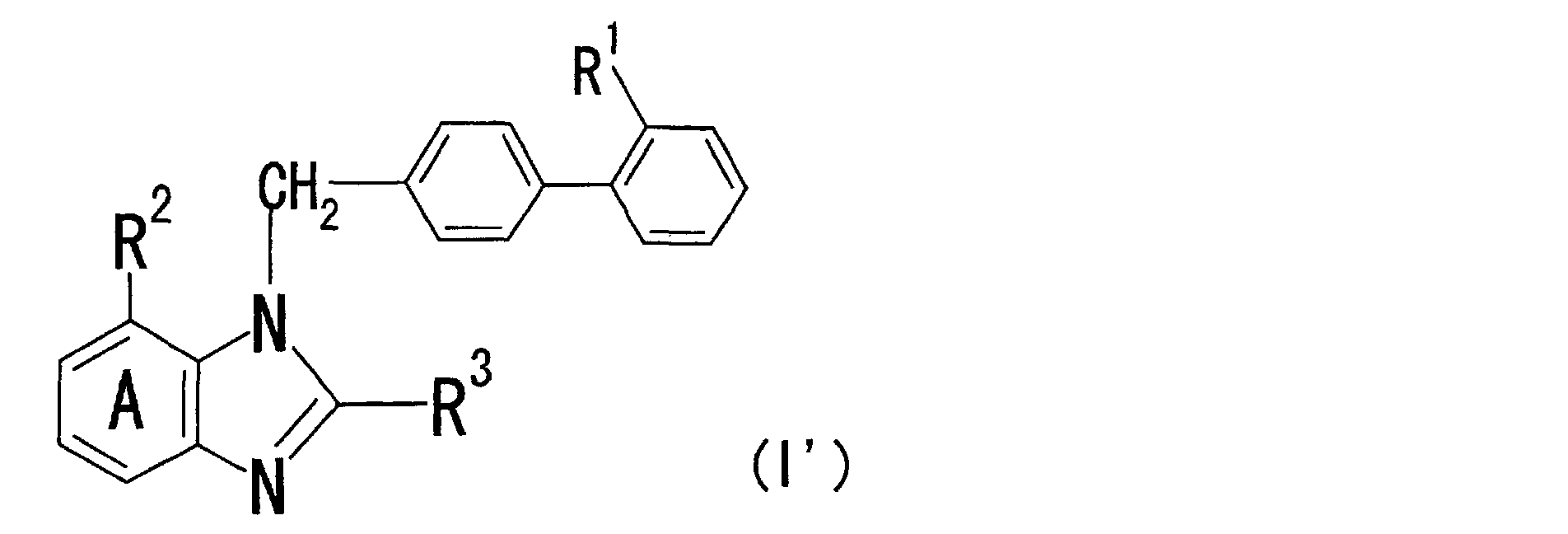
Among the compounds represented by the formula (I), a
benzimidazol-7-carboxylic acid derivative represented by
the formula (I'):
wherein R
1 is (1) a carboxyl group, (2) a tetrazolyl group
or (3) a group represented by the formula:
wherein i represents -O- or -S-, j represents >=O, >=S or
>=S(O)
m, m is as defined above, ring A represents a benzene
ring which may be further substituted with optionally
substituted lower (C
1-4) alkyl (e.g., lower (C
1-4) alkyl
optionally substituted with a hydroxy group, a carboxyl
group, halogen and the like) or halogen and the like, in
addition to the substituent R
2 (preferably a benzene ring
that does not have any substituent except for R
2), R
2
represents a group represented by the formula -CO-D
[wherein D represents (1) a hydroxy group or (2) lower (C
1-
4) alkoxy wherein the alkyl portion is optionally
substituted with a hydroxy group, amino, halogen, lower
(C
2-6) alkanoyloxy (e.g., acetoxy, pivaloyloxy and the like),
lower (C
3-8) cycloalkanoyloxy, lower (C
1-6) alkoxycarbonyloxy
(e.g., methoxycarbonyloxy, ethoxycarbonyloxy and the like),
lower (C
3-8) cycloalkoxycarbonyloxy (e.g.,
cyclohexyloxycarbonyloxy and the like), lower (C
1-4) alkoxy
or a lower (C
3-8) cycloalkoxy],
R
3 is a lower (C
1-5) alkyl or lower (C
2-5) alkenyl group
which may link via -O-, -S(O)
m- [m represents an integer of
0 to 2] or -NR'- [R' represents a hydrogen atom or lower
(C
1-4) alkyl] and may be substituted with a substituent
selected from a hydroxy group, an amino group, halogen and
a lower (C
1-4) alkoxy group (preferably lower (C
1-5) alkyl or
lower (C
1-5) alkoxy; more preferably ethoxy)], or a
pharmacologically acceptable salt thereof, is preferred.
Among these, preferred are 2-ethoxy-1-[[2'-(1H-tetrazol-5-yl)biphenyl-4-yl]methyl]benzimidazol-7-carboxylic
acid
[Candesartan], 1-(cyclohexyloxycarbonyloxy)ethyl 2-ethoxy-1-[[2'-(1H-tetrazol-5-yl)biphenyl-4-yl]methyl]benzimidazol-7-carboxylate
[Candesartan cilexetil], pivaloyloxymethyl 2-ethoxy-1-[[2'-(1H-tetrazol-5-yl)biphenyl-4-yl]methyl]benzimidazol-7-carboxylate,
2-ethoxy-1-[[2'-(2,5-dihydro-5-oxo-1,2,4-oxadiazol-3-yl)biphenyl-4-yl]methyl]benzimidazol-7-carboxylic
acid or a salt thereof
and the like.
The above-mentioned benzimidazol derivatives can be
synthesized by, for example, known methods disclosed in EP
425921, EP 459136, EP 553879, EP 578125, EP 520423, EP
668272 and the like, or a similar manner thereto, and the
like. Further, when Candesartan cilexetil is used, it is
preferable to use the stable C type crystal disclosed in EP
459136.
While the amount of the bioactive substance formulated
into the sustained-release preparation of the present
invention varies depending on the kind of the bioactive
substance and the like, it is generally about 0.1 to 50%
(W/W), preferably about 0.2 to 30% (W/W), and more
preferably about 0.5 to 20% (W/W) in case of a bioactive
peptide, or it is generally about 0.1 to 60% (W/W),
preferably about 0.2 to 40% (W/W), and more preferably
about 0.5 to 30% (W/W) in case of a non-peptidic bioactive
substance.
The polymer used in the present invention is a polymer
which is slightly soluble or insoluble in water and has
biocompatibility. Examples thereof include polystyrene,
poly-acrylic acid, poly-methacrylic acid, a copolymer of
acrylic acid and methacrylic acid, nylon, tetlon, silicone
polymer, dextran stearate, ethylcellulose, acetylcellulose,
nitrocellulose, polyurethane, ethylene vinyl acetate
copolymer, polyvinyl acetate, polyvinyl alcohol,
polyacrylicamide and the like. Furthermore, examples of
the biodegradable polymer include polymers synthesized from
one or more of α-hydroxycarboxylic acids (e.g., glycolic
acid, lactic acid and the like), hydroxydicarboxylic acids
(e.g., malic acid and the like), hydroxytricarboxylic acids
(e.g., citric acid and the like) etc., by catalyst-free
dehydration polycondensation, which have free carboxyl
group(s), or a mixture thereof, poly-α-cyanoacrylic esters,
polyamino acids (e.g., poly-y-benzyl-L-glutamic acid and
the like), maleic anhydride polymers (e.g., a
styrene/maleic acid polymer and the like), and the like.
The polymer may be a homopolymer or a copolymer. The type
of polymerization may be of random, block or graft. When
the above-mentioned α-hydroxycarboxylic acids,
hydroxydicarboxylic acids and hydroxytricarboxylic acids
have optically active centers in their molecular structures,
they may be any of the D-, L- and DL-configurations.
Among these polymers, the biodegradable polymer having
a free terminal carboxyl group such as a polymer
synthesized from α-hydroxycarboxylic acids (e.g., glycolic
acid, lactic acid and the like) (e.g., poly-lactic acid,
lactic acid/glycolic acid copolymer, and the like), poly-α-cyanoacrylic
acid esters and the like are preferred.
The biodegradable polymer is more preferably a polymer
synthesized from α-hydroxycarboxylic acids and the like,
especially preferably a lactic acid/glycolic acid polymer
and the like.
Not only homopolymers such as poly-lactic acid, polyglycolic
acid, etc., but also lactic acid/glycolic acid
copolymers are sometimes simply referred to as the lactic
acid/glycolic acid polymer herein inclusively.
When the lactic acid/glycolic acid polymer (a lactic
acid/glycolic acid copolymer or homopolymer) is used as the
biodegradable polymer, its composition ratio (mol %) is
preferably about 100/0 to about 40/60, more preferably
about 85/15 to about 50/50.
The weight-average molecular weight of the above-described
lactic acid/glycolic acid polymer is preferably
about 3,000 to about 50,000, more preferably about 3,000 to
about 25,000, further more preferably about 5,000 to about
20,000.
The degree of dispersion (weight-average molecular
weight/number-average molecular weight) of the lactic
acid/glycolic acid polymer is preferably about 1.2 to about
4.0, more preferably about 1.5 to about 3.5.
Regarding the weight-average molecular weight and the
degree of dispersion used herein, the former is a value
converted into polystyrene as determined by gel permeation
chromatography (GPC) using as reference substances 9 kinds
of polystyrenes having the weight-average molecular weights
of 120,000, 52,000, 22,000, 9,200, 5,050, 2,950, 1,050, 580
and 162, respectively, and the latter is calculated
therefrom. The above determination is carried out using
GPC column KF804L × 2 (manufactured by Showa Denko K.K.)
and RI monitor L-3300 (manufactured by Hitachi Ltd.) with
chloroform as a mobile phase.
Further, the biodegradable polymer having a free
terminal carboxyl group is a biodegradable polymer in which
the number-average molecular weight based on GPC
measurement and the number-average molecular weight based
on terminal group quantification almost agree with each
other. The number-average molecular weight based on
terminal group quantification is calculated as follows:
About 1 to 3 g of the biodegradable polymer is
dissolved in a mixed solvent of acetone (25 ml) and
methanol (5 ml), and the solution is quickly titrated with
a 0.05 N alcoholic solution of potassium hydroxide using
phenolphthalein as an indicator while stirring at room
temperature (20°C) to determine the carboxyl group content;
the number-average molecular weight based on terminal group
quantification is calculated from the following equation:
Number-average molecular weight based on terminal group
quantification = 20000 × A/B
A: the mass (g) of the biodegradable polymer
B: the amount (ml) of 0.05 N alcoholic solution of
potassium hydroxide added until the titration end point
The number-average molecular weight based on terminal
group quantification is an absolute value, while the
number-average molecular weight based on GPC measurement is
a relative value that varies depending on various
analytical conditions (e.g., kind of mobile phase, kind of
column, reference substance, slice width chosen, baseline
chosen, etc.). Therefore, although it is difficult to
express unequivocally and numerically, such description
that "the number-average molecular weight based on GPC
measurement and that based on terminal group quantification
almost agree with each other" means, for example, that the
number-average molecular weight based on terminal group
quantification of a polymer synthesized from α-hydroxycarboxylic
acids falls within the range from about
0.5 to about 2 times, preferably from about 0.7 to about
1.5 times as much as the number-average molecular weight
based on GPC measurement.
For example, in case of a polymer having a free
terminal carboxyl group and synthesized from one or more α-hydroxycarboxylic
acids by catalyst-free dehydration
polycondensation, the number-average molecular weight based
on GPC measurement and the number-average molecular weight
based on terminal group quantification almost agree with
each other. On the other hand, in case of a polymer having
substantially no free terminal carboxyl group and
synthesized from a cyclic dimer by ring-opening
polymerization using a catalyst, the number-average
molecular weight based on terminal group quantification is
significantly higher than (more than about 2 times) that
based on GPC measurement. This difference makes it
possible to clearly distinguish a polymer having a free
terminal carboxyl group from a polymer having no free
terminal carboxyl group.
The lactic acid/glycolic acid polymer having a free
terminal carboxyl group can be produced by a per se known
process, for example, that described in JP 61-28521 A (e.g.,
a process by a catalyst-free dehydration polycondensation
reaction, or a dehydration polycondensation reaction in the
presence of an inorganic solid acid catalyst, etc.).
While the decomposition/disappearance rate of the
lactic acid/glycolic acid polymer varies widely, depending
on the composition ratio or the weight-average molecular
weight, the release duration can be extended (e.g., for
about 6 months) by lowering the ratio of glycolic acid or
increasing the molecular weight, since
decomposition/disappearance is generally delayed as the
ratio of glycolic acid decreases. In contrast, the release
duration can be shortened (e.g., for about one week) by
increasing the ratio of glycolic acid or decreasing the
molecular weight. For obtaining a one week to two months
type sustained-release preparation, it is preferable to use
the lactic acid/glycolic acid polymer whose composition
ratio and weight-average molecular weight are within the
above-described ranges.
Therefore, the composition of the biodegradable
polymer used in the present invention is preferably
selected according to the desired kind of a bioactive
peptide and the desired duration of sustained-release.
Specifically, for example, when GH is used as the bioactive
peptide, a lactic acid/glycolic acid polymer is preferably
used. As the lactic acid/glycolic acid polymer, a
preferred polymer is a lactic acid/glycolic acid copolymer
having a lactic acid/glycolic acid composition ratio (mol
%) of about 85/15 to about 50/50, more preferably about
75/25 to about 50/50. The weight-average molecular weight
thereof is preferably about 8,000 to about 20,000, more
preferably about 10,000 to about 20,000. Further, the
degree of dispersion (weight-average molecular
weight/number-average molecular weight) of the lactic
acid/glycolic acid polymer is about 1.2 to about 4.0, more
preferably about 1.5 to about 3.5.
The lactic acid/glycolic acid polymer used can be
produced by known methods such as those described in the
above publications and the like. The polymer is preferably
that produced by catalyst-free dehydration polycondensation.
Any organic solvent used for the production of the polymer
and remaining in the polymer is removed after the
polymerization. As a method for this purpose, there are,
for example, heat drying, vacuum drying, flash drying with
dried gas, etc. However, such a solvent can be much more
quickly removed by contacting with continuously provided
high-pressure gas according to the present invention,
thereby significantly reducing the time required for
removing the solvent. It is preferable to use the lactic
acid/glycolic acid polymer (PLGA) wherein the number-average
molecular weight based on terminal group
quantification and the number-average molecular weight
based on GPC measurement almost agree with each other.
Further, two kinds of lactic acid/glycolic acid
polymers different in the composition ratio and/or the
weight-average molecular weight may be used by mixing them
in an arbitrary ratio. An example thereof is a mixture of
a lactic acid/glycolic acid copolymer having the
composition ratio of lactic acid/glycolic acid (mol %) of
about 75/25 and the weight-average molecular weight of
about 10,000, and a lactic acid/glycolic acid copolymer
having the composition ratio of lactic acid/glycolic acid
(mol %) of about 50/50 and the weight-average molecular
weight is about 12,000. The preferred weight ratio of
these copolymers upon mixing is about 25/75 to about 75/25.
The biodegradable polymer used in the present
invention may be a metal salt of the above mentioned
biodegradable polymer. For example, there can be used the
various polyvalent metal salts of the biodegradable polymer
described in WO97/01331, and the like. Preferably, a
polyvalent metal salt of the lactic acid/glycolic acid
polymer and the like, (more preferably, zinc salt, calcium
salt, magnesium salt and the like, further more preferably
zinc salt and the like) can be used. The species of the
metal of the polyvalent metal salt is not specifically
limited as long as it does not cause any adverse effect to
a living body. For example, there can be used a polyvalent
metal such as a divalent metal (e.g., iron, zinc, copper,
calcium, magnesium, aluminum, tin, manganese and the like),
a trivalent metal (e.g., iron, aluminum, manganese and the
like), a tetravalent metal (e.g., tin and the like) and the
like.
A metal salt of the biodegradable polymer is sometimes
referred to as the biodegradable polymer herein inclusively.
For example, in case of a polyvalent metal salt of the
lactic acid/glycolic acid polymer, sometimes, it is also
referred to as the lactic acid/glycolic acid polymer.
The above polyvalent metal salt of the biodegradable
polymer can be produced by the method described in
WO97/01331 or similar methods.
In case that a polyvalent metal salt of the
biodegradable polymer is a zinc salt, it can be produced by
reacting the biodegradable polymer with zinc oxide in an
organic solvent.
In this method, first, a solution of the biodegradable
polymer-zinc oxide complex in an organic solvent is
prepared by coexistence of the biodegradable polymer with
zinc oxide in the organic solvent. In that case, although
the concentration of the biodegradable polymer in the
solvent varies depending on the molecular weight thereof, a
kind of the organic solvent and the like, for example, the
concentration is about 0.1 to about 80% (W/W), preferably
about 1 to about 70% (W/W), more preferably about 2 to
about 60% (W/W). Further, although the amount of zinc
oxide to be added varies depending on the kind of the
organic solvent, for example, when the desired bioactive
substance is a peptide, the amount is about 0.001 to about
2% (W/W), preferably about 0.01 to about 1.5% (W/W), more
preferably about 0.1 to about 1% (W/W), when the desired
bioactive substance is a non-peptide, the amount is about
0.001 to about 30% (W/W), preferably about 0.01 to about
20% (W/W), more preferably about 0.1 to about 10% (W/W),
based on the amount of the biodegradable polymer, as
described in JP 10-231252 A.
Regarding the order of the addition of the
biodegradable polymer and zinc oxide to the organic solvent,
zinc oxide in the form of a powder or suspended in the
organic solvent can be added to a solution prepared by
dissolving the biodegradable polymer in the organic solvent,
or on the contrary, a solution of the biodegradable polymer
in the organic solvent can be added to a suspension
prepared by suspending zinc oxide in the organic solvent.
Further, both of the biodegradable polymer and zinc oxide
can be mixed in the form of powders, then the organic
solvent can be added thereto. When the desired bioactive
substance is a non-peptide, the organic solvent can be
added after mixing of the biodegradable polymer, zinc oxide
and the bioactive substance in the form of powders.
The content of the biodegradable polymer in the
preparation of the present invention is generally about 30
to 99.9% (W/W), preferably about 60 to 97% (W/W), and more
preferably about 70 to 90% (W/W).
The preparation of the present invention is produced
by forming a solid material containing the bioactive
substance and the biodegradable polymer and contacting the
solid material with high-pressure gas.
The solid material containing the bioactive substance
and the biodegradable polymer is formed by, when the
bioactive substance is a bioactive peptide, for example,
removing a solvent from a S/O dispersion obtained by
dispersing a powder (S phase), which has been obtained by
lyophilizing a solution of the bioactive peptide, in a
solution of the biodegradable polymer in an organic solvent
(O phase), or removing a solvent from a W/O emulsion
obtained by dispersing an aqueous phase (W phase), which
is an aqueous solution of the bioactive peptide, in a
solution of the biodegradable polymer dissolved in an
organic solvent, or removing a solvent from a solution of
both bioactive peptide and biodegradable polymer dissolved
in an organic solvent (O phase). As a method for this,
there are, for example, (a) in-water drying method (S/O/W
method and W/O/W or O/W method), (b) phase separation
method (coacervation method) and (c) spray-drying method,
or similar methods thereto and the like. In the present
description, the solid material means a material in which
constituents are linked to each other physically or
chemically. The solid material includes, but not
specifically limited to, microcapsules and the like.
The organic solvent used for dissolving the
biodegradable polymer preferably has the boiling point of
not lower than 30°C. Examples of the organic solvent
includes halogenated hydrocarbons such as dichloromethane,
dichloroethane, chloroform, carbon tetrachloride and the
like, aliphatic hydrocarbons such as pentane, hexane,
heptane, cyclohexane, petroleum benzine, petroleum ether
and the like, aromatic hydrocarbons such as toluene, xylene
and the like, alcohols such as methyl alcohol, ethyl
alcohol, n-propyl alcohol, isopropyl alcohol, benzyl
alcohol and the like, polyhydric alcohols such as ethylene
glycol, propylene glycol and the like, esters such as
methyl acetate, ethyl acetate and the like, organic acids
such as formic acid, acetic acid, trifluoroacetic acid,
trichloroacetic acid and the like, ethers such as diethyl
ether, isopropyl ether, dioxane, tetrahydrofuran and the
like, ketones such as acetone, methyl ethyl ketone and the
like, nitrogen-containing compounds such as acetonitrile,
propionitrile, pyridine, dimethylacetamide,
dimethylformamide and the like, sulfur-containing compounds
such as dimethylsulfoxide and the like, and the like.
These may be mixed in a suitable ratio. A solvent
contained in a substance, especially an organic compound,
e.g., a medicament should be substantially removed from a
product in view of properties of the medicament.
Furthermore, for foods and general chemicals, residual
solvents in products are strictly regulated depending on
their application. The allowable amount of a residual
solvent for medicaments is described in the guideline based
on the ICH ("A guideline for residual solvent in
medicament", Pharm. Tech. Japan 16(5), 687-704, 2000), and
for example, the concentration limit for dichloromethane
(classified into the Class 2) is 600 ppm, and the
concentration limit for acetone (classified into the Class
3) is 0.5% (5,000 ppm).
Moreover, an organic solvent used in dissolution of
the biodegradable polymer preferably has a boiling point of
not higher than 120°C. The organic solvent includes such
as halogenated hydrocarbons (e.g., dichloromethane,
chloroform and the like), alcohols (e.g., ethanol, methanol
and the like), ethyl acetate, acetonitrile and the like.
These may be mixed in a suitable ratio. When an organic
solvent is used alone, for example, dichloromethane, ethyl
acetate, acetonitrile and the like are preferred. When
organic solvents are used as a mixed solvent, for example,
a combination of halogenated hydrocarbons (e.g.,
dichloromethane, chloroform and the like) and alcohols
(e.g., ethanol, methanol and the like) or acetonitrile is
preferred. The mixing ratio (volume ratio) of the
halogenated hydrocarbons and alcohols or acetonitrile is
about 100:1 to about 1:1, and it is desirable to use a
mixed solvent having a mixing ratio of preferably about
30:1 to about 2:1. Furthermore, while the concentration of
the biodegradable polymer in a solution varies depending on
the molecular weight, the kind of an organic solvent, and
the like, for example, it is about 0.01 to about 80% (W/W),
preferably about 0.1 to about 70% (W/W), and more
preferably about 1 to about 60% (W/W).
Hereinafter, a method for microcapsulation, in case of
the production of sustained-release microcapsules as the
preparation and using a bioactive peptide as the bioactive
substance, will be explained in detail.
(a-1) In-Water Drying Method (S/O/W Method)
According to this method, first, a water-miscible
organic solvent and/or a volatile salt are added to an
aqueous solution of the bioactive peptide, and then, a
bioactive peptide powder (S phase) is produced by
lyophilization. A biodegradable polymer is dissolved in an
organic solvent, and then, the above bioactive peptide
powder is dispersed into the resulting organic solvent
solution. The ratio (ratio by weight) of the bioactive
peptide and the biodegradable polymer is, for example,
about 1:1000 to about 1:1, preferably about 1:200 to about
1:5, more preferably about 1:100 to about 1:5. Preferably,
an external physical energy is applied to disperse the
bioactive peptide powder uniformly in the organic solvent
solution. As a method for this, there can be used, for
example, irradiation of ultrasonic wave, a turbine stirrer,
a homogenizer and the like. As to the average particle
size of the bioactive peptide in the organic solvent
solution, it is preferably not more than about 10 µm, more
preferably about 0.1 to 10 µm, further more preferably
about 0.5 to 5 µm. In the present invention, the average
particle size of the bioactive peptide means the value
obtained by using a laser analytic particle size
distribution measuring device (SALD2000A, manufactured by
Shimadzu Corporation) after dispersing the bioactive
peptide in an organic solvent such as dichloromethane by
using a homogenizer. In this process, the bioactive
peptide is added to the organic solvent at the
concentration of about 20 to 100 mg/ml, and then dispersed
using a homogenizer, such as Polytron (manufactured by
Kinematica) at about 20,000 rpm for about 30 seconds to 1
minutes. The dispersion is diluted appropriately with the
organic solvent so that the average particle size can be
measured with the above particle size distribution
measuring device, followed by analysis.
Then, the organic solvent dispersion (S/O dispersion)
thus prepared is added to an aqueous solvent (W phase), and
then the same external physical energy as that mentioned
above, for example, irradiation of ultrasonic wave, a
turbine stirrer, a homogenizer and the like is applied to
form a S/O/W emulsion. Then, the organic solvent of O
phase is evaporated to produce microcapsules. At this time,
the volume of the aqueous phase is generally selected from
about 1 times to about 10,000 times, preferably about 2
times to about 5,000 times, more preferably about 5 times
to about 2,000 times as much as the volume of the O phase.
An emulsifier can be added to the above external
aqueous phase. As the emulsifier, there can be used any
one which is generally capable of forming a stable S/O/W
emulsion. Examples of the emulsifier include anionic
surfactants, nonionic surfactants, polyoxyethylene castor
oil derivative, polyvinylpyrrolidones, polyvinyl alcohols,
carboxymethylcelluloses, lecithin, gelatin, hyaluronic
acids and the like. These emulsifiers can be used by
appropriately combining them. The concentration of the
emulsifier in the external aqueous phase is, preferably
about 0.001% to 20% (w/w), more preferably about 0.01% to
10% (w/w), particularly preferably about 0.05% to 5% (w/w).
The thus-obtained microcapsules are recovered by
centrifugation or filtration, washed with distilled water
to remove the emulsifier and the like adhering to the
surface of microcapsules, re-dispersed in distilled water,
and lyophilized.
In the present invention, examples of the water-miscible
organic solvent, which can be added to the aqueous
solution of the bioactive peptide, include alcohols (e.g.
methanol, ethanol, isopropanol and the like, preferably
methanol, ethanol and the like), acetone and the like.
These may be used by mixing them at an appropriate ratio.
Preferably, an alcohol, more preferably ethanol is used
alone. The amount (concentration) to be added to the
aqueous solution of the bioactive peptide is about 0.03 to
0.5% (V/V), preferably about 0.06 to 0.25% (V/V); more
preferably about 0.1 to 0.15% (V/V), in terms of volume-ratio.
By further lyophilizing the resultant aqueous
solution of the bioactive peptide obtained by addition of
the water-miscible organic solvent, it is possible to
prepare a bioactive peptide powder which is easy to handle
(superior operability) and is very fine (a small particle
size).
In the present invention, as the volatile salt, which
is added to the aqueous solution of the bioactive peptide,
there are, for example, ammonium salts (e.g., ammonium
acetate, ammonium bicarbonate, ammonium carbonate, ammonium
chloride and the like, preferably ammonium acetate and the
like). The volatile salt can be used by mixing them at an
appropriate ratio. The added amount of the volatile salt
is about 10 times to about 80 times mole, preferably about
10 times to about 70 times mole, more preferably about 15
times to about 70 times mole, further more preferably about
20 times to about 70 times mole, most preferably about 20
times to about 50 times mole as much as the aqueous
solution of the bioactive peptide in terms of mole ratio.
By lyophilizing the resultant aqueous solution of the
bioactive peptide obtained by addition of the volatile salt
in a similar manner as the addition of the water-miscible
organic solvent, it is possible to prepare the bioactive
peptide powder which is easy to handle (superior
operability) and is very fine (a small particle size).
In the present invention, the water-miscible organic
solvent and/or the volatile salt added to the aqueous
solution of the bioactive peptide can be used alone or in
appropriate combination thereof. When the water-miscible
organic solvent and the volatile salt are used in
combination thereof, they can be added to the aqueous
solution of the bioactive peptide in accordance with the
above amounts respectively.
(a-2) In-water drying method (W/O/W method)
According to this method, water or a suitable buffer
is added to the bioactive peptide to give a solution of the
bioactive peptide (W phase). The biodegradable polymer is
then dissolved in an organic solvent, and to this organic
solvent solution is added the above-mentioned solution of
the bioactive peptide and the mixture is dispersed. The
thus-obtained W/O emulsion is added to an aqueous solvent
(W phase). According to the same method as the above-mentioned
S/O/W method, microcapsules are obtained through
a W/O/W emulsion.
(a-3) In-water drying method (O/W method)
According to this method, the biodegradable polymer
together with the bioactive peptide are dissolved in an
organic solvent. The organic solvent (O phase) is then
added to an aqueous solvent (W phase). According to the
same method as the above-mentioned S/O/W method,
microcapsules are obtained through an O/W emulsion.
(b) Phase Separation Method (Coacervation Method)
According to this method, a coacervating agent is
gradually added to the S/O dispersion of (a-1) or the W/O
emulsion of (a-2) or the O phase solution of (a-3) as
described above with stirring to precipitate and solidify
microcapsules. The amount of the coacervating agent to be
added is about 0.01 to about 1,000 times by volume,
preferably about 0.05 to about 500 times by volume,
especially preferably about 0.1 to about 200 times by
volume as much as the volume of the above dispersion. Any
coacervating agent can be used, as long as it is a
polymeric, mineral oil or vegetable oil compound which is
miscible with the organic solvent used for dissolution of
the biodegradable polymer but does not dissolve the
biodegradable polymer used. Specifically, examples of the
coacervating agent include silicone oil, sesame oil,
soybean oil, corn oil, cottonseed oil, coconut oil, linseed
oil, mineral oil, n-hexane, n-heptane and the like. Two or
more of these can be used in combination. The thus-obtained
microcapsules are recovered by filtration, washed
repeatedly with heptane and the like to remove the
coacervating agent. Further, washing is carried out in the
same manner as that in the above (a), followed by
lyophilization.
In the production of microcapsules by the in-water
drying method or coacervation method, an antiaggregation
agent can be added for preventing aggregation of particles.
Examples of the antiaggregation agent can be used, for
example, water-soluble polysaccharides such as mannitol,
lactose, glucose, starches (e.g., corn starch and the like),
hyaluronic acid and its alakaline metal salt, etc.; protein
such as glycine, fibrin, collagen, etc.; inorganic salts
such as sodium chloride, sodium hydrogen phosphate, etc.;
and the like.
(c) Spray-Drying Method
In this method, microcapsules are produced by spraying
the S/O dispersion of (a-1), the W/O emulsion of (a-2) or
the O phase solution of (a-3) described above via a nozzle
into the drying chamber of a spray drier to volatilize the
organic solvent in fine droplets within a very short time.
As the nozzle, there are, for example, a two-fluid nozzle
type, a pressure nozzle type and a rotary disc type and the
like. It is also advantageous, if necessary, to spray an
aqueous solution of the above-described antiaggregation
agent via another nozzle in order to prevent aggregation of
microcapsule particles.
The solid material formed by the above-mentioned
method such as microcapsules containing the bioactive
substance and the biodegradable polymer, and the like, is
then contacted with high-pressure gas (preferably carbon
dioxide) to further extract and remove the organic solvent.
Specifically, for example, a lyophilized microcapsule
powder obtained by (a) is fed into an extraction vessel,
and extraction treatment is carried out with an extraction
system comprising a carbon dioxide delivery pump and a
pressure regulating valve. Alternatively, a microcapsule
suspension before lyophilization, obtained by (a) or (b)
may be fed into an extraction vessel and subjected to
extraction treatment similarly. In these cases, the
extraction treatment is desirably carried out under more
gentle conditions so as to not deteriorate the quality of a
sustained-release preparation.
The high-pressure gas in the present invention is gas
at pressure not less than the atmospheric pressure at a
given temperature but not more than the liquefying pressure
at said temperature.
Examples of the high-pressure gas used in the present
invention include carbon dioxide, nitrous oxide, nitrogen,
helium, argon, alkane (e.g., ethane, propane and the like),
alkene (e.g., ethylene and the like), and the like. While
these may be used by mixing them in a suitable ratio,
preferably, it is desirable to use carbon dioxide alone.
When a temperature of high-pressure gas contacting
with a preparation is much higher than the glass transition
temperature of a biodegradable polymer used as a substrate
of the preparation, the risk of adhesion, deformation,
decomposition of the bioactive substance, deterioration and
the like of the preparation increases. The glass
transition temperature in the present invention means
medium glass transition temperature obtained by rising
temperature at the rate of 10 or 20°C/min using a
differential scanning calorimeter (DSC). Alternatively,
when a temperature of high-pressure gas is too low, the
removal of an organic solvent becomes insufficient. The
organic solvent is preferably removed to less than 1,000
ppm, preferably less than 500 ppm, and more preferably less
than 100 ppm. Therefore, the advantageous temperature for
using carbon dioxide as high-pressure gas in the present
invention is within a temperature range of +20 to -60°C,
preferably +10 to -50°C, more preferably 0 to -40°C, still
more preferably -5 to -30°C, and the most preferably -10 to
- 25°C, based on the glass transition temperature of the
biodegradable polymer (generally about 20 to 60°C).
While the range of pressure varies depending on the
selected high-pressure gas, but generally, when the
pressure of high-pressure gas is too high, the risk of
adhesion, deformation, increase of the initial release
immediately after administration and the like for the
microcapsules increases, or when the pressure is too low,
the removal of the organic solvent becomes insufficient.
The advantageous pressure for using carbon dioxide as high-pressure
gas in the present invention pressure is about 1
to 7 MPa, preferably about 1 to 4 MPa, and more preferably
about 2 to 4 MPa.
While the period for contacting with the high-pressure
gas varies depending on the pressure of the high-pressure
gas, temperature, the amount of microcapsules to be treated
and the like, it is preferably about 5 minutes to about 48
hours when carbon dioxide is used as high-pressure gas.
More preferably, it is about 10 minutes to about 12 hours.
Hereinafter the step for high-pressure gas treatment
of microcapsules using carbon dioxide in a high-pressure
gaseous state will be explained in more detail with
referring to Fig. 1. Fig. 1 is a schematic drawing, which
exemplifies an apparatus used for the high-pressure gas
treatment in the present invention. Such apparatus for
high-pressure gas treatment comprises, for example, as
shown in Fig. 1, a liquefied carbon dioxide bomb 1, a
carbon dioxide delivery pump 2, a heat exchanger 3, an
extraction vessel 4, a thermostat 5, a detector 6, an
automatic pressure-regulating valve 7 and a recovery vessel
8. Microcapsules to be treated are fed into the extraction
vessel 4, and the apparatus is sealed and heated to a
predetermined temperature. The liquefied carbon dioxide is
then delivered from the liquefied carbon dioxide bomb 1 to
the heat exchanger 3 by the carbon dioxide delivery pump 2,
heated to a predetermined temperature, and converted into a
high-pressure gaseous state. The carbon dioxide in the
high-pressure gaseous state is then blown into the
extraction vessel 4 to dissolve and extract the solvent in
the microcapsules into the high-pressure gas. The
extracted solvent is recovered in the recovery vessel 8 via
the detector 6 and automatic pressure regulating valve 7.
The pressure applied to the whole system is controlled by
the automatic pressure regulating valve 7 connected to the
lowest downstream. By contacting with the high-pressure
gas for a given period, the excess amount of the initial
release of the bioactive substance immediately after
administration is markedly suppressed, and the residual
organic solvent can be removed without producing aggregates,
related substances or reactants of the bioactive peptide.
The sustained-release preparation of the present
invention is preferably in the form of fine particles.
That is, the sustained-release preparation does not provide
undue pain to a patient, when it is administered to said
patient using an injection needle, which is generally used
for subcutaneous or intramuscular injection. The particle
size of the sustained-release preparation is, for example,
about 0.1 to 300 µm, preferably about 1 to 150 µm,
specifically preferably about 2 to 100 µm in terms of a
mean particle diameter. The content of the bioactive
substance contained in the sustained-release preparation of
the present invention is, for example, in case of a
bioactive peptide, generally about 0.1 to 50% (W/W),
preferably about 0.2 to 30% (W/W), and more preferably
about 0.5 to 20% (W/W). The content of the biodegradable
polymer contained in the sustained-release preparation of
the present invention is generally about 30 to 99.9% (W/W),
preferably about 60 to 97% (W/W), and more preferably about
70 to 90% (W/W).
The initial release percentage of the sustained-release
preparation of the present invention [the release
percentage up to one day (24 hours) after administration]
is, in case of a bioactive peptide, preferably about not
more than 40%, more preferably about 1 to 40%, and more
preferably about 3 to 35%.
The sustained-release preparation of the present
invention can be administered as microcapsules or as
preparations in various forms prepared by using
microcapsules as a raw material, such as parenteral
preparations (e.g., injectable preparations or preparations
for implantation in muscle, subcutaneous, organs and the
like, preparations for administering to mucosa onto cavitas
nasi, rectum, uterus, etc.), oral preparations (e.g.,
capsules (hard capsules, soft capsules, etc.), solid
preparations such as granules and powders, etc., liquid
preparations such as suspensions, etc.), and the like.
In particular, the sustained-release preparation of
the present invention is preferably for injection. For
example, in case that the sustained-release preparation is
microcapsules, it is possible to obtain a practical
sustained-release preparation for injection by formulating
the microcapsules in an aqueous suspension together with a
dispersing agent (e.g., a surfactant such as Tween 80, HCO-60,
etc., polysaccharides such as carboxymethyl celluloses,
sodium alginate, hyaluronic acid, etc.), a preservative
(e.g., methylparaben, propylparaben, etc.), a tonicity
agent (e.g., sodium chloride, mannitol, sorbitol, glucose,
etc.), and the like. It is also possible to obtain a
practical sustained-release preparation for injection by
dispersing the microcapsules together with a vegetable oil
such as sesame oil, corn oil, etc., or a mixture thereof
with a phospholipid such as lecithin, or a medium-chain
fatty acid triglyceride (e.g., Miglyol 812) to prepare an
oily suspension.
When the sustained-release preparation is, for example,
microcapsules, the particle size of the sustained-release
preparation for an injectable suspension can be selected
from the range satisfying the requirements for the degree
of dispersion and the needle passability for the injection.
For example, the particle size is within the range of about
0.1 to about 300 µm, preferably about 1 to about 150 µm,
more preferably about 2 to about 100 µm, as the average
particle size.
Methods for producing a sterile preparation from the
above microcapsules include, but are not limited to, to
carry out entire production steps aseptically, to sterilize
with gamma rays, to add an antiseptic, and the like.
The sustained-release preparation can be safely used
in mammals (e.g., human, cattle, pig, dog, cat, mouse, rat,
rabbit and the like) with low toxicity.
Indication of the sustained-release preparation varies
depending on a bioactive peptide used. The sustained-release
preparation is useful to prevent or treat diabetes
when insulin is used as the bioactive peptide; viral
hepatitis (e.g., type C hepatitis, HBe antigen-positive
active hepatitis and the like) and cancer (e.g., renal
carcinoma, multiple myeloma and the like) when interferon-a
is used; anemia (e.g., anemia during dialysis of kidney and
the like) when erythropoietin is used; neutropenia (e.g.,
in cancer therapy and the like) and infections when G-CSF
is used; cancer (e.g., hemangioendothelioma and the like)
when IL-2 is used; fracture, wound (e.g., bedsore and the
like), periodontitis and gastrointestinal ulcer when FGF is
used; thrombocytopenia when FGF-9 is used; senile dementia
and neuropathy when NGF is used; thrombosis when TPA is
used; and cancer when tumor necrosis factor is used.
Further, the sustained-release preparation containing GH is
applied to Turner's syndrome, chronic renal diseases,
achondroplasia, and adult hypopituitarisin (adult GHD), in
addition to pituitary dwarfism, based on growth hormone
activity of GH. Further, since, GH is reported to be
applied to diseases such as Down syndrome, Silver syndrome,
hypochondroplasia and juvenile chronic arthritis to provide
excellent therapeutic effects, the sustained-release
preparation containing GH can also be applied to these
diseases. The sustained-release preparation containing GH
is also useful to prevent or treat congestive heart-failure
and the like. The other indications to which the
sustained-release preparation containing GH can be applied
include, hematogenesis during organ implantation or
treatment for a patient suffering from AIDS with a drug,
improvement of hypoalimentation, renal anemia, angina
pectoris, hyperlipidemia, obesity, acceleration of
treatment for burn, wound or ulcer, invasiveness from
surgery (operation, lesion), early recovery after operation,
sepsis, prevention of fracture due to osteoporosis, early
recovery of muscular strength of a patient suffering from
fracture due to osteoporosis, amyotropic lateral scelosis
(ALS), decubitus and the like. Furthermore, it is expected
to have effects as an antiaging agent aiming at improving
the quality of life (QOL) for frail aged persons, or
effects for suppressing the development or improving
neurodegenerative diseases (Alzheimer's disease,
Parkinson's disease, cerebrovascular disease and the like)
due to the nerve protective effect of hGH. By forming GH
into a sustained-release preparation, drug effects superior
to those of a GH subcutaneous injection can be obtained for
these indications. When the bioactive substance is
candesartan, the preparation is effective for the
prevention or improvement of cardiomegaly, cardiac failure,
myocardial infarct, cerebral stroke, ischemic peripheral
neuropathy, myocardial ischemia, venous incompetence,
development of cardiac failure after myocardial infarct,
diabetic nephropathy, nephritis, glomerular nephritis,
arteriosclerosis, vascular hypertrophy, vascular
hypertrophy or occulusion after percutaneous transluminal
coronary angioplasty, vascular re-occulusion after bypass
operation, hyperaldosteronism, glomerular sclerosis, renal
failure, glaucoma, ocular hypertension, hyperlipidemia,
stenocardia, aneurysm, coronary arteriosclerosis, cerebral
arteriosclerosis, peripheral arteriosclerosis, thrombosis,
central nerve system disease, Alzheimer's disease, amnesia,
depression, amnestic syndrome, senile dementia, dysesthesia,
multiple organ failure, prevention or treatment of disease
or sclerodermia associated with endothelial disorder, or
symptom of anxiety, symptom of strain, unpleasantmental
state or maldigestion.
Although the dose of the sustained-release preparation
varies depending on a particular kind and amount of the
bioactive peptide, release duration, target disease,
subject animal species and other factors, it can be set at
any level, as long as an effective concentration of the
bioactive peptide in the body is maintained. For example,
when the sustained-release preparation is one designed for
two week release, the dose of the bioactive peptide can be
suitably chosen from the range of preferably about 0.0001
to about 10 mg/kg body weight, more preferably about 0.05
to about 3 mg/kg body weight, per an adult. The preferred
administration frequency of the sustained-release
preparation can be suitably chosen from once a week, once
every two weeks, once a month, once every two months and
the like, depending on a particular kind and amount of the
bioactive peptide, dosage form, release duration, target
disease, subject animal species and other factors.
Preferably, the sustained-release preparation includes a
one week to two months type sustained-release preparation,
more preferably one week to one month type sustained-release
preparation.
When the bioactive peptide as an active component in
the sustained-release preparation is, for example, insulin,
the dose per administration to an diabetic adult is
suitably chosen from the range of usually about 0.001 to
about 1 mg/kg body weight, preferably about 0.01 to about
0.2 mg/kg body weight, as an effective ingredient. And the
preferred administration frequency is once a week.
When the bioactive peptide as an active component in
the sustained-release preparation is GH, the dose can be
set at any level, as long as an effective concentration of
GH in the body is maintained, although varying depending on
a particular kind and amount of GH, release duration,
target disease, subject animal species and other factors.
Regarding the treatment of the above described diseases,
when the sustained-release preparation is one designed for
two week release, the dose of GH can be suitably chosen
from the range of about 0.01 to about 5 mg/kg body weight
(about 0.03 to about 15 IU/kg body weight), more preferably
about 0.05 to about 1 mg/kg body weight (about 0.15 to
about 3 IU/kg body weight), per a child or an adult for
safe administration. The preferred administration
frequency can be suitably chosen from once a week, once
every two weeks, once a month and etc., depending on a
particular amount of GH, dosage form, release duration,
target disease, subject animal species and other factors,
preferably one week to two months-type sustained-release
preparation, more preferably one week to one month-type
sustained-release preparation.
The sustained-release preparation is preferably stored
at ordinary temperature or in a cold place. More
preferably, the sustained-release preparation is stored in
a cold place. The "ordinary temperature" and the "cold
place" are defined in the Pharmacopoeia of Japan. Namely,
the "ordinary temperature" means 15 to 25°C, and the "cold
place" means a temperature of not more than 15°C. In the
"cold place", it is more preferably about 2 to 8°C.
Hereinafter the present invention will be explained
more specifically with referring to the Reference Examples,
Examples and Test Examples, which do not limit the present
invention.
Reference Example 1
To an aqueous solution of gene recombinant hGH (final
hGH concentration = 2 mg/ml) was added ammonium acetate
(20-fold mol equivalent). The mixture (100 ml) was
dropwise added to the inner wall surface of a distillation
flask cooled in a dry ice-ethanol bath using a peristaltic
pump over 30 minutes to rapid-freeze the mixture and the
frozen mixture was dried in vacuo to obtain hGH powder. A
lactic acid-glycolic acid copolymer (lactic acid/glycolic
acid = 65/35, viscosity = 0.160 dl/g, 1.690 g) and zinc
oxide (10 mg) were dissolved in dichloromethane (2.7 ml).
To the organic solvent solution was added the above-mentioned
hGH powder (359 mg) and the mixture was finely
granulated with Polytron (manufactured by Kinematica).
This S/O dispersion was added to a 0.1% aqueous solution of
polyvinyl alcohol (800 ml) and the mixture was stirred and
emulsified using a homomixer. The mixture was stirred at
room temperature for 3 hours to volatilize dichloromethane
and centrifuged (about 1,500 rpm) to obtained microcapsules.
The microcapsules were then washed twice with distilled
water (400 ml) and lyophilized from D-mannitol (0.2 g) to
obtain lyophilized hGH-containing microcapsule powder.
Under the same conditions, six batches of the microcapsules
were produced. The yield of the lyophilized microcapsule
powder obtained was 6.8 g.
Reference Example 2
To an aqueous solution of gene recombinant hGH (final
hGH concentration = 2 mg/ml) was added ammonium acetate
(20-fold mol equivalent). A lactic acid-glycolic acid
copolymer (lactic acid/glycolic acid = 50/50, viscosity =
0.154 dl/g, 1.850 g) and zinc oxide (10 mg) were dissolved
in dichloromethane (2.7 ml). To the organic solvent
solution was added the above-mentioned hGH powder (155 mg)
and the mixture was finely granulated with Polytron
(manufactured by Kinematica). This S/O dispersion was
added to a 0.1% aqueous solution of polyvinyl alcohol (800
ml) and the mixture was stirred and emulsified using a
homomixer. The mixture was stirred at room temperature for
3 hours to volatilize dichloromethane and centrifuged
(about 1,500 rpm) to obtain microcapsules. The
microcapsules were then washed twice with distilled water
(400 ml) and lyophilized from D-mannitol (0.2 g) to obtain
lyophilized hGH-containing microcapsule powder. Under the
same conditions, six batches of the microcapsules were
produced. The yield of the lyophilized microcapsule powder
obtained was 7.6 g.
Reference Example 3
To an aqueous solution of gene recombinant hGH (final
hGH concentration = 2 mg/ml) was added ammonium acetate
(20-fold mol equivalent). The mixture (100 ml) was
dropwise added to the inner wall surface of a distillation
flask cooled in a dry ice-ethanol bath using a peristaltic
pump over 30 minutes so as to rapid-freeze the mixture and
the frozen mixture was dried in vacuo to obtain hGH powder.
A lactic acid-glycolic acid copolymer (lactic acid/glycolic
acid = 65/35, viscosity = 0.160 dl/g, 1.521 g) and zinc
oxide (9 mg) were dissolved in dichloromethane (2.4 ml).
To the organic solvent solution was added the above-mentioned
hGH powder (270 mg) and the mixture was finely
granulated with Polytron (manufactured by Kinematica).
This S/O dispersion was added to a 0.1% aqueous solution of
polyvinyl alcohol (800 ml) that had been cooled to 18°C,
and the mixture was stirred and emulsified using a
homomixer. The mixture was stirred at room temperature for
3 hours to volatilize dichloromethane and centrifuged
(about 1,500 rpm) to obtain microcapsules. To the
microcapsule suspension, which had been obtained by
removing the supernatant as much as possible by aspiration
operation, was added a 50% aqueous solution of ethanol (500
ml), and the mixture was stirred gently using a propeller
at room temperature for 15 minutes. The mixture was
centrifuged (about 1,500 rpm) to obtain microcapsules. The
microcapsules were then washed twice with distilled water
(400 ml) and lyophilized from D-mannitol (180 mg) to give
lyophilized hGH-containing microcapsule powder. In order
to remove the residual solvent, the powder was dried in
vacuo at 46°C for 72 hours to obtain microcapsules.
Reference Example 4
Evaluation of pharmacological effect for human growth
hormone-containing microcapsules
To female SD rats, which had been removed glandula
pituitaria at four-week old, was administered an
immunosuppressive agent, tacrolimus (Prograf injection,
manufactured by Fujisawa Pharmaceutical Co., Ltd.) to
suppress the production of antibodies to hGH.
Microcapsules were administered to the animal at six-week
old, and the body weight, body length and concentration of
rat insulin-like growth factor I (rIGF-I) in blood serum
were measured for 5 weeks. Specifically, the Prograf
injection (5 mg) was diluted with saline, and the dilution
was injected subcutaneously, at the dose of 50 µg/0.2
ml/rat at three days before the first administration of
microcapsules, immediately after the first administration
of microcapsules and on the 4th, 7th and 11th days after
the first administration, and at the dose of 75 µg/0.2
ml/rat on the 14th, 18th, 21st, 25th, 28th and 32nd days
after the first administration, respectively. Furthermore,
in order to more physically normalize the glandula
pituitaria-removed rat, hormone supplementation was also
carried out. A mixed solution of sodium L-thyroxin
pentahydrate and hydrocortisone succinate (both are
manufactured by Wako pure chemical Industries, Ltd) (the
final concentrations were 1 µg and 50 µg per 0.2 ml/rat,
respectively) was subcutaneously administered three times a
week, namely, three days before the first administration of
the microcapsules, immediately after the first
administration, and on the 2nd, 4th, 7th, 9th, 11th, 14th,
16th, 18th, 21st, 23rd, 25th, 28th, 30th and 32nd days
after the first administration. The microcapsules were
dispersed in a dispersion medium (5% mannitol, 0.5%
carboxymethylcellulose sodium, 0.1% Tween 80) so as to be
24 mg hGH/ml, and 0.5 ml of the dispersion was administered
subcutaneously to the back of the rat under ether
anesthesia. The dose was 12 mg as hGH. After the
administration of microcapsules, the body weight and body
length of the rat was measured with time up to 35 days. In
addition, blood was collected from the caudal vein with
time and blood serum was fractionated. The concentration
of rIGF-I in blood serum was measured by radioimmunoassay
(DSL-2900, Diagnostic Systems Laboratories, Inc.).
Reference Example 5
Candesartan (2.0 g), zinc oxide (manufactured by
Hakusui Chemical Industries, Ltd., 0.37 g) and a lactic
acid-glycolic acid copolymer (lactic acid/glycolic acid
75/25 (mol%), weight-average molecular weight 8,700,
manufactured by Wako Pure Chemical Industries, Ltd, 3.6 g)
were added to a mixed solution of dichloromethane (12.75
ml), methanol (2.25 ml) and acetic acid (0.136 ml), and the
mixture was stirred with shaking at room temperature
overnight to obtain a homogenous solution. The solution
was added to a 0.1% aqueous solution of polyvinyl alcohol
(800 ml) containing 20 mM of zinc acetate, which had been
previously adjusted to 18°C, and an O/W emulsion was
prepared using a turbine type homomixer at 7,000rpm. This
O/W emulsion was stirred at room temperature for 3 hours to
volatilize dichloromethane, methanol and acetic acid, and
the oil phase was solidified and collected using centrifuge
at 3,000 rpm. This was dispersed in distilled water again
and further centrifuged to wash out free drug and the like.
The collected microcapsules were dispersed again by adding
distilled water containing mannitol (0.8 g) and lyophilized
to obtain a powder. The encapsulation ratio of candesartan
in microcapsules was 90.9%, and the content of candesartan
in microcapsules/mannitol powder was 26.5%.
Reference Example 6
One batch was conducted in the following amount for
treatment. Candesartan (2.0 g), zinc oxide (manufactured
by Hakusui Chemical Industries, Ltd., 0.37 g) and a lactic
acid-glycolic acid copolymer (lactic acid/glycolic acid
75/25 (mol%), weight-average molecular weight 8,700,
manufactured by Wako Pure Chemical Industries, Ltd, 3.6 g)
were added to a mixed solution of dichloromethane (12.75
ml), methanol (2.25 ml) and acetic acid (0.136 ml), and the
mixture was stirred with shaking at room temperature
overnight to obtain a homogenous solution. The solution
was added to a 0.1% aqueous solution of polyvinyl alcohol
(800 ml) containing 10 mM of zinc acetate, which had been
previously adjusted to 18°C, and an O/W emulsion was
prepared using a turbine type homomixer at 7,000 rpm. This
O/W emulsion was stirred at room temperature for 3 hours to
volatilize dichloromethane, methanol and acetic acid, and
the oil phase was solidified and collected using centrifuge
at 3,000 rpm. This was dispersed in distilled water again
and further centrifuged to wash out free drug and the like.
The above-mentioned operations were conducted by two
batches, and the microcapsules of the two batches were
mixed, and the microcapsules were dispersed again by adding
distilled water containing mannitol (1.6 g) and lyophilized
to obtain a powder. The encapsulation ratio of candesartan
in microcapsules was 90.7%, and the content of candesartan
in microcapsules/mannitol powder was 26.4%.
Example 1
The solvent was removed under the following four
conditions using 0.3 g of the hGH-containing lyophilized
microcapsule powder obtained in Reference Example 1,
respectively. The microcapsule powder was transferred into
an extraction vessel (volume 10 ml) of a supercritical
fluid extraction apparatus (manufactured by JASCO
Corporation). The apparatus was sealed and heated to a
predetermined temperature in a thermostat. Carbon dioxide
was delivered to a heat exchanger via a delivery pump (SCF-Get)
at the bomb pressure (about 6 to 7 MPa) and heated to
the given temperature. The pressure applied to the whole
system was controlled by an automatic pressure regulating
valve (SCF-Bpg), and the carbon dioxide was converted into
a high-pressure gaseous state at given pressure. The high-pressurized
carbon dioxide gas was then blown into an
extraction vessel, and the solvent was removed under the
following four conditions.
Example 2
The solvent was removed under the following four
conditions using 0.3 g of the hGH-containing lyophilized
microcapsule powder obtained in Reference Example 2,
respectively. The microcapsule powder was transferred into
an extraction vessel (volume 10 ml) of a supercritical
fluid extraction apparatus (manufactured by JASCO
Corporation). The apparatus was sealed and heated to a
given temperature in a thermostat. Carbon dioxide was
delivered to a heat exchanger via a delivery pump (SCF-Get)
at the bomb pressure (about 6 to 7 MPa) and heated to the
predetermined temperature. The pressure applied to the
whole system was controlled by an automatic pressure
regulating valve (SCF-Bpg), and the carbon dioxide was
converted into a high-pressure gaseous state at
predetermined pressure. The high-pressurized carbon
dioxide gas was then blown into an extraction vessel, and
the solvent was removed under the following four conditions.
Example 3
The solvent was removed under the following 18
conditions using 0.3 g of the candesartan-containing
lyophilized microcapsule powder obtained in Reference
Example 5, respectively. The microcapsule powder was
transferred into an extraction vessel (volume 10 ml) of a
supercritical fluid extraction apparatus (manufactured by
JASCO Corporation). The apparatus was sealed and heated to
a predetermined temperature using a thermostat. Carbon
dioxide was delivered to a heat exchanger via a delivery
pump (SCF-Get) at the bomb pressure (about 6 to 7 MPa) and
heated to the given temperature. The pressure applied to
the whole system was controlled by an automatic pressure
regulating valve (SCF-Bpg), and the carbon dioxide was
converted into a high-pressure gaseous at the given
pressure. The high-pressurized carbon dioxide gas was then
blown into an extraction vessel, and the solvent was
removed under the following 18 conditions.
Example 4
The solvent was removed under the following three
conditions using the candesartan-containing lyophilized
microcapsule powder obtained in Reference Example 6,
respectively. The microcapsule powder was transferred into
an extraction vessel (volume 10 ml) of a supercritical
fluid extraction apparatus (manufactured by JASCO
Corporation). The apparatus was sealed and heated to a
predetermined temperature using a thermostat. Carbon
dioxide was delivered to a heat exchanger via a delivery
pump (SCF-Get) at the bomb pressure (about 6 to 7 MPa) and
heated to a given temperature. The pressure applied to the
whole system was controlled by an automatic pressure
regulating valve (SCF-Bpg), and the carbon dioxide was
converted into a high-pressure gaseous state at a given
pressure. The high-pressurized carbon dioxide gas was then
blown into an extraction vessel, and the solvent was
removed under the following three conditions.
Test Example 1
For the hGH-containing microcapsules and untreated
lyophilized microcapsules obtained in Example 1 (1) to (4),
the amount of residual dichloromethane (DCM) and hGH
content in the microcapsules were measured by the following
method.
(1) Amount of residual dichloromethane (DCM)
Microcapsules (about 100 mg) were weighed precisely,
dissolved in dimethylsulfoxide and made up to exactly 5 ml
to prepare a sample solution. Separately, dichloromethane
(about 1 g) was weighed precisely and made up to exactly 20
ml with addition of dimethylsulfoxide. This solution was
diluted by exactly 10000 times with dimethylsulfoxide to
obtain a standardized solution. The sample solution and
standardized solution (each 1 µl) were tested by gas
chromatography under the following conditions, and the peak
area of dichloromethane for each solution was measured by
automatic integration to calculate the amount of
dichloromethane.
Detector: hydrogen flame ionization detector
Column: OVI-G43 film thickness 3 µm, 0.53 mm i.d. x 30 m
(Supelco)
Inlet temperature: 140°C
Detector temperature: 260°C
Column temperature: 40°C (10 min retention) → 240°C
(35°C/min) → 240°C (20 min retention) cooling → 40°C
Carrier gas: helium
Flow: 35 cm/sec
(2) hGH content
Microcapsule (10 mg) was weighed precisely in a 5 ml
messflask, acetonitrile (1.75 ml) was added thereto and the
mixture was ultra-sonicated. To the obtained acetonitrile
solution was added 150 mM phosphate saline buffer (pH 8.0,
3 ml), and the solution was ultra-sonicated and made up to
a given volume with 150 mM phosphate saline buffer (pH 8.0).
An 1 ml portion of the solution was centrifuged at 15000
rpm for 10 min, and the supernatant was filtered using a
membrane filter having the pore size of 0.5 µm. This hGH
extract solution was then subjected to size exclusion high-performance
liquid chromatography under the following
conditions to measure the content of hGH.
Column: TSK-gel G2000SWXL, 7.8 mm i.d. × 300 mm
(manufactured by Tosoh Corporation)
Mobile phase: 0.05 mol/1 ammonium hydrogencarbonate
solution
Flow rate: 0.6 ml/min
The results are shown in Table 1.
| Contents of residual dichloromethane and hGH in microcapsules |
| | Conditions for treatment | Quality |
| | Pressure (Mpa) | Temperature (°C) | Time (min) | Residual DCM (ppm) | Content of hGH (%) |
| | Untreated microcapsules | 738 | 10.61 |
| (1) | 2 | 15 | 15 | 137 | 10.50 |
| (2) | 2 | 15 | 30 | 50 | 10.46 |
| (3) | 2 | 15 | 45 | <32 | 10.41 |
| (4) | 2 | 15 | 60 | <32 | 10.52 |
As seen from the results in Table 1, the amount of
residual dichloromethane in the microcapsules treated with
carbon dioxide in a high-pressure gaseous state markedly
decreased in comparison with the untreated microcapsules.
Furthermore, it was found that the content of hGH in the
microcapsules did not decrease by the treatment with carbon
dioxide in a high-pressure gaseous state.
Test Example 2
For the hGH-containing microcapsules and untreated
lyophilized microcapsules obtained in Example 1 (1) to (4),
the amount of hGH aggregate and hGH related protein in the
microcapsules were measured by the following method.
(1) hGH aggregate
Microcapsules (10 mg) were weighted precisely,
acetonitrile (2.5 ml) was added thereto, and the sample was
dispersed by ultrasonic irradiation. The sample was
subsequently irradiated with ultrasonic for about 2 min,
and centrifuged at 3000 rpm for 10 minutes. The
supernatant was removed, and acetonitrile (2.5 ml) was
added to the residue. The residue was dispersed by
ultrasonic irradiation. The dispersion was subsequently
irradiated with ultrasonic for about 2 minutes, and
centrifuged at 3000 rpm for 10 minutes. The supernatant
was removed, and the residue was dried in a desiccator
under reduced pressure. To the residue was added a diluent
(phosphate buffer (pH 8.0)/acetonitrile mixed solution
(13:7), 1.25 ml), and the sample was dispersed by
ultrasonic irradiation. The dispersion was subsequently
irradiated with ultrasonic for about 2 min and filtered
with a membrane filter having a pore size of 0.5 µm, and
the filtrate was used as a sample solution. Separately,
hGH reference standard (0.2 ml) was added to a diluent (0.2
ml). This solution (0.2 ml) was added to a diluent (4.8
ml) to obtain a standardized solution. The sample solution
and standardized solution (each 50 µl) were measured by
liquid chromatography under the following conditions,
respectively. The peak area of the peak that elutes
earlier than the retention time of hGH in the sample
solution and the peak area of hGH in the standardized
solution were measured by automatic integration to
calculate the content of aggregate. At the same time, a
diluent (50 µl) was injected and the peak detected in blank
was subtracted from the calculation.
Detector: ultraviolet spectrometer (wavelength for
measurement: 214 nm)
Column: TSK-gel G2000SWXL, 7.8 mm i.d. × 300 mm
(manufactured by Tosoh Corporation)
Column temperature: constant temperature about 25°C
Mobile phase: 0.05 mol/1 ammonium hydrogencarbonate
solution
Flow rate: 0.6 ml/ min
(2) hGH related protein
Microcapsules (40 mg) were precisely weighed and
acetonitrile (2 ml) was added thereto. The sample was
dispersed by ultrasonic irradiation. The dispersion was
subsequently irradiated with ultrasonic for about 2 minutes.
Phosphate buffer (pH8.0, 3 ml) was added thereto and the
dispersion was irradiated with ultrasonic for about 2
minutes with occasionally shaking, and centrifuged at 4°C
for 3500 rpm for 10 minutes. The supernatant was filtered
with a membrane filter having pore size of 0.5 µm, and the
filtrate was used as a sample solution. Separately, hGH
reference standard (0.1 ml) was added to a diluent
(phosphate buffer (pH 8.0)/acetonitrile mixed solution
(13:7), 3.9 ml) to obtain a standardized solution. The
sample solution and standardized solution (each 20 µl) were
measured by liquid chromatography under the following
conditions, respectively. The peak areas of the substances
other than hGH in the sample solution and the peak area of
hGH in the standardized solution were measured by automatic
integration, respectively, to calculate the content of
related protein. At the same time, a diluent (20 µl) was
injected and the peak detected in blank was subtracted from
the calculation.
Detector: ultraviolet spectrometer (measurement wavelength:
220 nm)
Column: PROTEIN C4, 4.6 mm i.d. × 250 mm (VYDAC)
Column temperature: constant temperature about 45°C
Mobile phase: (A) 2-amino-2-hydroxymethyl-1,3-propanediol
buffer (pH 7.5)/1-propanol mixed solution (19:6)
(B) 2-amino-2-hydroxymethyl-1,3-propanediol buffer (pH
7.5)/1-propanol mixed solution (17:8)
The solution (A) and solution (B) were flowed in the
proportion of (1:1).
Flow rate: 0.5 ml/min
The results are shown in Table 2.
| Contents of hGH aggregate and related protein in microcapsules |
| | Conditions for treatment | Quality |
| | Pressure (Mpa) | Temperature (°C) | Time (min) | Aggregate (%) | Related protein (%) |
| | Untreated microcapsules | 1.95 | 5.08 |
| (1) | 2 | 15 | 15 | 2.00 | 5.42 |
| (2) | 2 | 15 | 30 | 1.96 | 5.47 |
| (3) | 2 | 15 | 45 | 1.94 | 5.50 |
| (4) | 2 | 15 | 60 | 1.95 | 5.26 |
As seen from the results in Table 2, the amounts of
hGH aggregate and related protein in the microcapsules
treated with carbon dioxide in the state of high-pressure
gas did not increase in comparison with those of the
untreated microcapsules.
Test Example 3
For the hGH-containing microcapsules and untreated
lyophilized microcapsules obtained in Example 1 (1) to (4),
the mean particle diameter and in vivo initial release
percentage of the microcapsules were measured by the
following method.
(1) Mean particle diameter of microcapsules
The mean particle diameter of microcapsules was
measured using a measurement apparatus for particle size
distribution (Multisizer II, Coulter Electronics Ltd., Beds,
UK).
(2) In vivo initial release percentage
Rats were subjected to immunosuppression treatment
with tacrolimus. Prograf injection (manufactured by
Fujisawa Pharmaceutical Co., Ltd., 5 mg) was diluted with
saline. The dilution was subcutaneously administered at
the dose of, 0.4 mg/0.2 ml/rat (three days before the first
administration of the microcapsules), 0.2 mg/0.2 ml/rat
(immediately after the first administration of
microcapsules, and on the 4th, 7th and 11th days after
administration), 0.3 mg/0.2 ml/rat (on the 14th, 18th, 21st,
25th, 28th and 32nd days after the first administration),
respectively, whereby the production of antibodies to hGH
could be suppressed, which allowed the evaluation of the
concentration of hGH in the blood serum of rats for 5 weeks
after the first administration.
The microcapsules were dispersed in a dispersion
medium (5% mannitol, 0.5% carboxymethylcellulose, 0.1%
Tween80) at the concentration of 16 mg hGH/ml. The
obtained dispersion (0.75 ml) was subcutaneous administered
to the back of the rat under ether anesthesia. The dose
was 12 mg as hGH. After the administration of the
microcapsules, blood was collected with time from the
caudal vein and blood serum was fractionated.
The measurement of the concentration of hGH in blood
serum was measured by immunoradiometric assay (Ab beads HGH,
manufactured by Eiken Chemical Co., Ltd.).
To the immunosuppressed rats were subcutaneously
administered a solution of hGH at the dose of 5, 10 and 20
mg/kg, respectively, and blood was collected with time and
the concentration of hGH in blood serum was measured. AUC
was calculated by trapezoid method. From the AUC up to 24
hours after administration of microcapsules, the
administered amount of hGH, the corresponding administered
amount of hGH solution in the case of subcutaneous
administration was calculated, which was divided by the
administered amount of microcapsules (12 mg) to calculate
the initial release percentage.
The results are shown in Table 3.
| Mean particle diameter and initial release percentage of microcapsules |
| | Conditions for treatment | Quality |
| | Pressure (Mpa) | Temperature (°C) | Time (min) | Mean particle diameter (µm) | Initial release percenta ge (%) |
| | Untreated microcapsules | 36.2 | 28.3 |
| (1) | 2 | 15 | 15 | 34.9 | 17.0 |
| (2) | 2 | 15 | 30 | 35.7 | 16.7 |
| (3) | 2 | 15 | 45 | 35.1 | 13.8 |
| (4) | 2 | 15 | 60 | 37.7 | 24.2 |
As seen from the results in Table 3, it was confirmed
that the mean particle diameter of the microcapsules did
not change by the treatment with carbon dioxide in a high-pressure
gaseous state and did not aggregate. Furthermore,
the initial release percentage of the microcapsules treated
with carbon dioxide in a high-pressure gaseous state
markedly decreased in comparison with that of the untreated
microcapsules.
Test Example 4
For the hGH-containing microcapsules and untreated
lyophilized microcapsules obtained in Example 2 (1) to (4),
the amount of residual dichloromethane (DCM) and hGH
content in the microcapsules were measured by the following
method.
(1) Amount of residual dichloromethane (DCM)
Microcapsules (about 100 mg) were weighed precisely,
dissolved in dimethylsulfoxide to made up to exactly 5 ml
to prepare a sample solution. Separately, dichloromethane
(about 1 g) was measured precisely, and dimethylsulfoxide
was added thereto to made up to exactly 20 ml. This
solution was diluted by exactly 10000 times with
dimethylsulfoxide to obtain a standardized solution. The
sample solution and standardized solution (each 1 µl) were
tested by gas chromatography under the following conditions,
and the peak area of dichloromethane for each solution was
measured by automatic integration to calculate the amount
of dichloromethane.
Detector: hydrogen flame ionization detector
Column: OVI-G43 film thickness 3 µm, 0.53 mm i.d. × 30 m
(Supelco)
Inlet temperature: 140°C
Detector temperature: 260°C
Column temperature: 40°C (10 min retention) → 240°C
(35°C/min) → 240°C (20 min retention) → cooling → 40°C
Carrier gas: helium
Flow: 35 cm/sec
(2) hGH content
Microcapsules (20 mg) were weighed precisely in a 5 ml
graduated flask, and acetonitrile (1.75 ml) was added
thereto and the mixture was ultra-sonicated. To the
obtained acetonitrile solution was added 150 mM phosphate
saline buffer (pH 8.0, 3 ml) and the solution was ultra-sonicated.
To the solution was added 150 mM phosphate
saline buffer (pH 8.0) to make up to a given volume. A 1
ml portion of the solution was centrifuged at 15000 rpm for
10 min, and the supernatant was filtered using a membrane
filter having the pore size of 0.5 µm. This hGH extract
solution was then subjected to size exclusion high-performance
liquid chromatography under the following
conditions to measure the content of hGH.
Column: TSK-gel G2000SWXL, 7.8 mm i.d. × 300 mm
(manufactured by Tosoh Corporation)
Mobile phase: 0.05 mol/l ammonium hydrogencarbonate
solution
Flow rate: 0.6 ml/min
The results are shown in Table 4.
| Contents of residual dichloromethane and hGH in microcapsules |
| | Conditions for treatment | Quality |
| | Pressure (Mpa) | Tempera ture (°C) | Time (min) | Residual DCM (ppm) | Content of hGH (%) |
| | Untreated microcapsules | 4283 | 4.82 |
| (1) | 2 | 15 | 30 | 683 | 4.72 |
| (2) | 2 | 15 | 60 | 207 | 4.74 |
| (3) | 2 | 15 | 180 | 26 | 4.68 |
| (4) | 1 | 15 | 720 | 1000 | 4.74 |
As is seen from the results in Table 4, the amount of
residual dichloromethane in the microcapsules treated with
carbon dioxide in a high-pressure gaseous state markedly
decreased in comparison with that of the untreated
microcapsules. Furthermore, it was found that the content
of hGH in the microcapsules was not decreased by the
treatment with carbon dioxide in a high-pressure gaseous
state.
Test Example 5
For the hGH-containing microcapsules and untreated
lyophilized microcapsules obtained in Example 2 (1) to (4),
the amount of hGH aggregate and hGH related protein in the
microcapsules were measured by the following method.
(1) hGH aggregate
Microcapsules (10 mg) were weighed precisely,
acetonitrile (2.5 ml) was added thereto, and the sample was
dispersed by ultrasonic irradiation. The sample was
subsequently irradiated with ultrasonic for about 2 minutes,
and centrifuged at 3000 rpm for 10 minutes. The
supernatant was removed, and acetonitrile (2.5 ml) was
added to the residue. The residue was dispersed by
ultrasonic irradiation. The dispersion was subsequently
irradiated with ultrasonic for about 2 min, and centrifuged
at 3000 rpm for 10 minutes. The supernatant was removed,
and the residue was dried in a desiccator under reduced
pressure. To the residue was added a diluent (phosphate
buffer (pH 8.0)/acetonitrile mixed solution (13:7), 1.25
ml), and the sample was dispersed by ultrasonic irradiation.
The dispersion was subsequently irradiated with ultrasonic
for about 2 minutes and filtered with a membrane filter
having pore size of 0.5 µm, and the filtrate was used as a
sample solution. Separately, hGH reference standard (0.2
ml) was added to a diluent (0.2 ml). This solution (0.2
ml) was added to a diluent (4.8 ml) to obtain a
standardized solution. The sample solution and
standardized solution (each 50 µl) were measured by liquid
chromatography under the following conditions, respectively.
The peak area of the peak that eluted earlier than the
retention time of hGH in the sample solution and the peak
area of hGH in the standardized solution were measured by
automatic integration to calculate the content of aggregate.
At the same time, a diluent (50 µl) was injected and the
peak detected in blank was subtracted from the calculation.
Detector: ultraviolet spectrometer (wavelength for
measurement: 214 nm)
Column: TSK-gel G2000SWXL, 7.8 mm i.d. × 300 mm
(manufactured by Tosoh Corporation)
Column temperature: constant temperature about 25°C
Mobile phase: 0.05 mol/l ammonium hydrogencarbonate
solution
Flow rate: 0.6 ml/min
(2) hGH related protein
Microcapsules (40 mg) were precisely weighed and
acetonitrile (2 ml) was added thereto. The sample was
dispersed by ultrasonic irradiation. The dispersion was
subsequently irradiated with ultrasonic for about 2 minutes.
Phosphate buffer (pH 8.0, 3 ml) was added thereto and the
dispersion was irradiated with ultrasonic for about 2
minutes with occasionally shaking, and centrifuged at 4°C
for 3500 rpm for 10 min. The supernatant was filtered with
a membrane filter having pore size of 0.5 µm, and the
filtrate was used as a sample solution. Separately, hGH
reference standard (0.1 ml) was added to a diluent
(phosphate buffer (pH 8.0)/acetonitrile mixed solution
(13:7), 3.9 ml) to obtain a standardized solution. The
sample solution and standardized solution (each 20 µl) were
measured by liquid chromatography under the following
conditions, respectively. The peak areas of the substances
other than hGH in the sample solution and the peak area of
hGH in the standardized solution were measured by automatic
integration, respectively, to calculate the content of
related protein. At the same time, a diluent (20 µl) was
injected and the peak detected in blank was subtracted from
the calculation.
Detector: ultraviolet spectrometer (measurement wavelength:
220 nm)
Column: PROTEIN C4, 4.6 mm i.d. × 250 mm (VYDAC)
Column temperature: constant temperature about 45°C
Mobile phase: (A) 2-amino-2-hydroxymethyl-1,3-propanediol
buffer (pH 7.5)/1-propanol mixed solution (19:6)
(B) 2-amino-2-hydroxymethyl-1,3-propanediol buffer (pH
7.5)/1-propanol mixed solution (17:8)
The solution (A) and solution (B) were flowed in the
proportion of (1:1).
Flow rate: 0.5 ml/min
The results are shown in Table 5.
| Contents of hGH aggregate and related protein in microcapsules |
| | Conditions for treatment | Quality |
| | Pressure (Mpa) | Temperature (°C) | Time (min) | Aggregate (ppm) | Relalted protein (%) |
| | Untreated microcapsules | 1.44 | 7.46 |
| (1) | 2 | 15 | 30 | 1.29 | 7.90 |
| (2) | 2 | 15 | 60 | 1.24 | 7.44 |
| (3) | 2 | 15 | 180 | 1.38 | 7.48 |
| (4) | 1 | 15 | 720 | 1.48 | 7.54 |
As is seen from the results in Table 5, the amounts of
hGH aggregate and related protein in the microcapsules
treated with carbon dioxide in the high-pressure gaseous
state did not increase in comparison with those of the
untreated microcapsules.
Test Example 6
For the hGH-containing microcapsules and untreated
lyophilized microcapsules obtained in Example 2 (1) to (4),
the mean particle diameter and in vivo initial release
percentage of the microcapsules were measured by the
following method.
(1) Mean particle diameter of microcapsules
The mean particle diameter of microcapsules was
measured using a measurement apparatus for particle size
distribution (Multisizer II, Coulter Electronics Ltd., Beds,
UK).
(2) In vivo initial release percentage
Rats were subjected to immunosuppression treatment
with tacrolimus. Prograf injection (manufactured by
Fujisawa Pharmaceutical Co., Ltd., 5 mg) was diluted with
saline. The dilution was subcutaneously administered in
the dose of, 0.4 mg/0.2 ml/rat (three days before
administration of the microcapsules), 0.2 mg/0.2 ml/rat
(immediately after the first administration of
microcapsules, and on the 4th, 7th, 11th, 14th and 18th
days after the first administration), respectively. The
microcapsules were dispersed in a dispersion medium (5%
mannitol, 0.5% carboxymethylcellulose, 0.1% Tween80) at the
concentration of 8 mg hGH/ml. The obtained dispersion
(0.75 ml) was subcutaneous administered to the back of the
rat under ether anesthesia. The dose was 6 mg as hGH.
After the administration of the microcapsules, blood was
sequentially taken from the caudal vein and blood serum was
fractionated.
The concentration of hGH in blood serum was measured
by immunoradiometric assay (Ab beads HGH, Eiken Chemical
Co., Ltd.).
To the immunosuppressed rat was subcutaneously
administered a solution of hGH at the dose of 5, 10 and 20
mg/kg, respectively, and blood was collected with time and
the concentration of hGH in blood serum was measured. AUC
was calculated by trapezoid method. From the AUC up to 24
hr after administration of microcapsules, the administered
amount of hGH, the corresponding administered amount of hGH
solution in the case of subcutaneous administration was
calculated, which was divided by the administered amount of
microcapsules (6 mg) to calculate the initial release
percentage.
The results are shown in Table 6.
| Mean particle diameter and initial release percentage of microcapsules |
| | Conditions for treatment | Quality |
| | Pressure (Mpa) | Temperature (°C) | Time (min) | Mean particle diameter (µm) | Initial release percentage (%) |
| | Untreated microcapsules | 36.6 | 25.8 |
| (1) | 2 | 15 | 30 | 37.9 | 13.9 |
| (2) | 2 | 15 | 60 | 37.2 | 15.0 |
| (3) | 2 | 15 | 180 | 37.9 | 19.0 |
| (4) | 1 | 15 | 720 | 37.3 | 14.7 |
As is seen from the results in Table 6, it was
confirmed that the mean particle diameter of the
microcapsules was not changed by the treatment with carbon
dioxide in the high-pressure gaseous state and the
microcapsules did not aggregate. Furthermore, the initial
release percentage of the microcapsules treated with carbon
dioxide in the high-pressure gaseous state markedly
decreased in comparison with that of the untreated
microcapsules.
Test Example 7
For the candesartan-containing microcapsules and
untreated lyophilized microcapsules obtained in Example 3
(1) to (18), the amount of residual dichloromethane (DCM)
and candesartan content in the microcapsules were measured
by the following method.
(1) Amount of residual dichloromethane (DCM)
Microcapsules (about 100 mg) were weighed precisely,
dissolved in dimethylsulfoxide to make up to exactly 5 ml
to prepare a sample solution. Separately, dichloromethane
(about 1 g) was weighed precisely, and dimethylsulfoxide
was added thereto to make up to exactly 20 ml. This
solution was diluted by exactly 10000 times with
dimethylsulfoxide to obtain a standardized solution. The
sample solution and standardized solution (each 1 µl) were
tested by gas chromatography under the following conditions,
and the peak area of dichloromethane for each solution was
measured by automatic integration to calculate the amount
of dichloromethane.
Detector: hydrogen flame ionization detector
Column: OVI-G43 film thickness 3 µm, 0.53 mm i.d. × 30 m
(Supelco)
Inlet temperature: 140°C
Detector temperature: 260°C
Column temperature: 40°C (10 min retention) → 260°C
(35°C/min) (10 min retention)
Carrier gas: helium
Flow: 35 cm/sec
(2) Candesartan content
Microcapsules (5 to 10 mg) were weighed precisely in a
centrifuge tube, HPLC mobile phase (30 ml) was added
thereto and the mixture was stirred with shaking for 1 hour.
The mixture was then centrifuged at 2950 rpm for 10 minutes,
and the supernatant was filtered with a membrane filter
having the pore size of 0.5 µm. This candesartan extract
solution was then subjected to reverse phase high-performance
liquid chromatography under the following
conditions to measure the content of candesartan.
Column : Inertsil ODS-3 (4.6 mm×150 mm, manufactured by GL
science)
Mobile phase: 0.1M KH
2PO
4/AcCN/MeOH/AcOH = 50/35/15/1 (v/v)
Flow rate:1 ml/min
Detection: UV wavelength 254 nm
The results are shown in Table 7.
| Contents of residual dichloromethane and candesartan in microcapsules |
| | Conditions for treatment | Quality |
| | Pressure (Mpa) | Temperature (°C) | Time (min) | Charged amount (g) | Residual dichlorome thane (ppm) | Drug content (%) |
| | Untreated microcapsules | 18026 | 26.5 |
| (1) | 2.0 | 15 | 30 | 0.3 | 826 | 26.0 |
| (2) | 2.0 | 15 | 60 | 0.3 | 230 | 26.0 |
| (3) | 2.0 | 15 | 120 | 0.3 | 106 | 26.5 |
| (4) | 2.0 | 15 | 180 | 0.3 | 0 | 26.3 |
| (5) | 2.5 | 15 | 30 | 0.3 | 411 | 26.1 |
| (6) | 2.5 | 15 | 60 | 0.3 | 375 | 26.9 |
| (7) | 2.5 | 15 | 120 | 0.3 | 0 | 26.9 |
| (8) | 2.5 | 15 | 180 | 0.3 | 0 | 26.5 |
| (9) | 3.0 | 15 | 15 | 0.3 | 6923 | 26.8 |
| (10) | 3.0 | 15 | 30 | 0.3 | 2993 | 26.2 |
| (11) | 3.0 | 15 | 60 | 0.3 | 0 | 26.8 |
| (12) | 3.0 | 15 | 120 | 0.3 | 0 | 26.9 |
| (13) | 3.0 | 15 | 180 | 0.3 | 0 | 26.8 |
| (14) | 3.5 | 15 | 30 | 0.3 | 3926 | 26.3 |
| (15) | 3.5 | 15 | 60 | 0.3 | 0 | 27.1 |
| (16) | 3.5 | 15 | 120 | 0.3 | 321 | 26.9 |
| (17) | 3.5 | 15 | 180 | 0.3 | 0 | 26.5 |
| (18) | 4.0 | 15 | 30 | 0.3 | 1148 | 27.1 |
As is seen from the results in Table 7, the amount of
residual dichloromethane in the microcapsules treated with
carbon dioxide in the high-pressure gaseous state markedly
decreased in comparison with that of the untreated
microcapsules. Furthermore, it was confirmed that the
content of candesartan in the microcapsules was not
decreased by the treatment with carbon dioxide in the state
of high-pressure gas.
Test Example 8
For the candesartan-containing microcapsules and
untreated lyophilized microcapsules obtained in Example 4
(1) to (3), the amount of residual dichloromethane (DCM)
and candesartan content in the microcapsules were measured
by the similar method to that of Test Example 7.
The results are shown in Table 8.
| Contents of residual dichloromethane and candesartan in microcapsules |
| | Conditions for treatment | Quality |
| | Pressure (Mpa) | Temperature (°C) | Time Time (min) | Charged amount (g) | Residual dichlorome thane (ppm) | Drug content (%) |
| | Untreated microcapsules | 24692 | 26.4 |
| (1) | 3.0 | 15 | 60 | 0.3 | 116 | 26.8 |
| (2) | 3.0 | 15 | 60 | 2 | 0 | 26.4 |
| (3) | 3.0 | 15 | 60 | 5 | 137 | 27.7 |
As is seen from the results in Table 8, the amount of
residual dichloromethane in the microcapsules treated with
carbon dioxide in the high-pressure gaseous state markedly
decreased in comparison with that of the untreated
microcapsules. Furthermore, it was confirmed that the
content of candesartan in the microcapsules did not
decrease by the treatment with carbon dioxide in a high-pressure
gaseous state.
INDUSTRIAL APPLICABILITY
According to the present invention, in a method for
producing a sustained-release preparation, by forming a
solid material containing a bioactive substance and a
polymer and contacting the solid material with high-pressure
gas, it is possible to produce a sustained-release
preparation which is a medicament having such very superior
clinical properties that the excess amount of initial
release of the bioactive substance immediately after
administration is markedly suppressed, a constant amount of
the bioactive substance is being released from immediately
after administration over a long period of time, and the
denaturation of the bioactive substance and the residual
organic solvent are extremely decreased. Furthermore, by
modifying the method for removing a solvent, the treatment
period required for the removal of the solvent has been
markedly decreased.