EP1345822B1 - Unstacker for unstacking items conveyed in a bulk stream - Google Patents
Unstacker for unstacking items conveyed in a bulk stream Download PDFInfo
- Publication number
- EP1345822B1 EP1345822B1 EP01272434A EP01272434A EP1345822B1 EP 1345822 B1 EP1345822 B1 EP 1345822B1 EP 01272434 A EP01272434 A EP 01272434A EP 01272434 A EP01272434 A EP 01272434A EP 1345822 B1 EP1345822 B1 EP 1345822B1
- Authority
- EP
- European Patent Office
- Prior art keywords
- conveyor
- declined
- items
- sensor
- conveyors
- Prior art date
- Legal status (The legal status is an assumption and is not a legal conclusion. Google has not performed a legal analysis and makes no representation as to the accuracy of the status listed.)
- Expired - Lifetime
Links
- 238000011144 upstream manufacturing Methods 0.000 claims abstract description 50
- 230000007423 decrease Effects 0.000 claims abstract description 29
- 238000012546 transfer Methods 0.000 claims abstract description 15
- 238000000034 method Methods 0.000 claims description 18
- 230000001105 regulatory effect Effects 0.000 claims description 16
- 230000001276 controlling effect Effects 0.000 claims description 6
- 230000000712 assembly Effects 0.000 description 4
- 238000000429 assembly Methods 0.000 description 4
- JOYRKODLDBILNP-UHFFFAOYSA-N Ethyl urethane Chemical compound CCOC(N)=O JOYRKODLDBILNP-UHFFFAOYSA-N 0.000 description 2
- 238000013461 design Methods 0.000 description 2
- 238000000926 separation method Methods 0.000 description 2
- 238000007792 addition Methods 0.000 description 1
- 238000012217 deletion Methods 0.000 description 1
- 230000037430 deletion Effects 0.000 description 1
- 238000007599 discharging Methods 0.000 description 1
- 238000012986 modification Methods 0.000 description 1
- 230000004048 modification Effects 0.000 description 1
- 238000006467 substitution reaction Methods 0.000 description 1
Images
Classifications
-
- B—PERFORMING OPERATIONS; TRANSPORTING
- B65—CONVEYING; PACKING; STORING; HANDLING THIN OR FILAMENTARY MATERIAL
- B65G—TRANSPORT OR STORAGE DEVICES, e.g. CONVEYORS FOR LOADING OR TIPPING, SHOP CONVEYOR SYSTEMS OR PNEUMATIC TUBE CONVEYORS
- B65G47/00—Article or material-handling devices associated with conveyors; Methods employing such devices
- B65G47/22—Devices influencing the relative position or the attitude of articles during transit by conveyors
- B65G47/26—Devices influencing the relative position or the attitude of articles during transit by conveyors arranging the articles, e.g. varying spacing between individual articles
- B65G47/30—Devices influencing the relative position or the attitude of articles during transit by conveyors arranging the articles, e.g. varying spacing between individual articles during transit by a series of conveyors
- B65G47/31—Devices influencing the relative position or the attitude of articles during transit by conveyors arranging the articles, e.g. varying spacing between individual articles during transit by a series of conveyors by varying the relative speeds of the conveyors forming the series
-
- B—PERFORMING OPERATIONS; TRANSPORTING
- B65—CONVEYING; PACKING; STORING; HANDLING THIN OR FILAMENTARY MATERIAL
- B65G—TRANSPORT OR STORAGE DEVICES, e.g. CONVEYORS FOR LOADING OR TIPPING, SHOP CONVEYOR SYSTEMS OR PNEUMATIC TUBE CONVEYORS
- B65G59/00—De-stacking of articles
- B65G59/12—De-stacking of articles characterised by de-stacking during transit
Definitions
- the present invention relates to an unstacker and method for unstacking items being conveyed in a bulk stream.
- the handing of items such as cartons, parcels, bundles, magazines, polybags, etc. often involves conveying the items in a bulk stream while stacked one upon the other.
- the items In order for the items to be properly handled, e.g., to redirect magazines to their intended destination, it may be necessary to first destack the items.
- U.S. Patent 2,006,870 describes a decline unstacker for unstacking bundles of sugar being conveyed in stacks along a horizontal flight of an endless conveyor.
- the horizontal flight transforms into a declined flight, causing the top items to slide off the bottom items and onto a declined chute.
- a rapidly moving horizontal endless conveyor pulls the items successively away.
- the bottom bundles may form a continuous line of bundles along the declined flight of the feed conveyor and the chute, whereby the top bundles simply slide upon that line of bundles without ever becoming unstacked.
- the present invention relates to a decline unstacking apparatus and an incline unstacking apparatus which can be combined in series, or utilized separately.
- the decline unstacking apparatus comprises a feed conveyor for feeding stacks of items, and a declined conveyor arrangement including at least first and second declined conveyors arranged in series.
- a first of the declined conveyors has an upstream end disposed at a discharge end of the feed conveyor.
- the first declined conveyor is declined at an angle relative to a direction of travel of the feed conveyor whereby items in a stack being discharged from the feed conveyor tilts to cause the items in the stack to slide off one another into a shingle arrangement on the first declined conveyor.
- the second declined conveyor includes an upstream end disposed adjacent a downstream end of the first declined conveyor and traveling at a faster speed than the first declined conveyor, whereby the second declined conveyor tends to separate the items received from the first declined conveyor.
- a sensor is provided for sensing items on the first declined conveyor.
- a controller is provided for controlling a speed of the feed conveyor in response to signals from the sensor, for preventing a discharge of additional items onto the first declined conveyor until there is space on the first declined conveyor for receiving additional items.
- An upstream end of a conveying surface defined by the second declined conveyor is preferably offset upwardly with respect to a path of travel of the downstream end of a conveying surface defined by the first declined conveyor, causing a leading end of each item to be raised when passing from the first declined conveyor to the second declined conveyor.
- Another aspect of the invention relates to a method of unstacking items fed in stacked relationship in a bulk stream.
- the method comprises the steps of:
- the method includes the steps of sensing items on the first declined conveyor, and regulating a speed of the feed conveyor in response to signals from the sensor, to prevent the discharge of additional items to the first declined conveyor until there is space on the first declined conveyor for receiving additional items.
- the incline unstacking apparatus comprises a feed conveyor for feeding stacks of items, and an inclined conveyor arrangement including at least first and second inclined conveyors arranged in series.
- a first of the inclined conveyors has an upstream end disposed at a discharge end of the feed conveyor.
- the first inclined conveyor is inclined at an angle relative to a direction of travel of the feed conveyor whereby items in a stack being discharged from the feed conveyor tilts rearwardly to cause the items in the stack to slide rearwardly off one another into a shingle arrangement on the first inclined conveyor.
- the second inclined conveyor includes an upstream end disposed adjacent a downstream end of the first inclined conveyor and traveling at a faster speed than the first inclined conveyor, whereby the second inclined conveyor tends to separate the items received from the first inclined conveyor.
- a sensor is provided for sensing items on the first inclined conveyor.
- a controller is provided for controlling a speed of the feed conveyor in response to signals from the sensor, for preventing a discharge of additional items onto the first inclined conveyor until there is space on the first inclined conveyor for receiving additional items.
- An upstream end of a conveying surface defined by the second inclined conveyor is preferably offset downwardly with respect to a path of travel of the downstream end of a conveying surface defined by the first inclined conveyor, causing a leading end of each item to descend when passing from the first inclined conveyor to the second inclined conveyor.
- Another aspect of the invention relates to a method of unstacking items fed in stacked relationship in a bulk stream.
- the method comprises the steps of:
- the method includes the steps of sensing items on the first inclined conveyor, and regulating a speed of the feed conveyor in response to signals from the sensor, to prevent the discharge of additional items to the first inclined conveyor until there is space on the first inclined conveyor for receiving additional items.
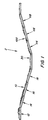
- Fig. 1 Depicted in Fig. 1 is a decline-incline unstacker 2 according to the present invention.
- the unstacker 2 includes a decline section 10 and an incline section 100 interconnected by a transfer conveyor 30.
- the unstacker 2 functions to convert a 3-dimensional bulk stream of goods into a 2-dimensional stream, by unstacking and separating the items.
- Such items may include cartons, parcels, bundles, magazines, envelopes, polybags, etc.
- the decline section 10 could be used with or without the incline section 100 and the same is true of the incline conveyor section 100.
- both sections 10,100 are used together so that items which may remain in a stacked condition upon exiting the decline section 10 will be unstacked in the incline section 100.
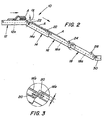
- the decline unstacking section 10 comprises a feed conveyor assembly 12 and a declined conveyor arrangement which includes two or more declined conveyor assemblies 14, 16, 18. Those assemblies include respective conveyors 14a, 16a, and 18a shown as conveying a bulk stream of items A, at least some of which are in stacked relationship.
- the feed conveyor assembly includes a conveyor 12a which conveys the items in a horizontal direction to an upstream end of a first of the declined conveyors 14a.
- the conveyors 12a, 14a, 16a, 18a are driven by respective variable speed motors, (not shown), the speeds being regulated by a controller (not shown).
- the conveyors could be of any suitable type, such as belts or rollers for example, but preferably are in the form of endless belts each extending around a pair of rotatable pulleys 20. One of the pulleys associated with each belt is driven by the motor.
- Each of the declined conveyors forms a conveying surface upon which the items ride.
- the conveying surface is formed by the upper flight of the belt.
- the conveying surfaces have a higher coefficient of friction than the outer faces of the items A.
- the belts could be formed of rubber, urethane or PVC.
- each of the declined conveyors 16a, 18a has an upstream end of its conveying surface offset upwardly by a distance D with respect to a downstream end of the conveying surface of the preceding conveyor, i.e., offset in a direction requiring that the front or leading edge of each item A be raised relative to its rear or trailing edge as the item is being transferred from the preceding conveyor to the succeeding conveyor, to facilitate separation of the items as will be discussed.
- the magnitude of the offset distance D can vary, although one preferred distance is equal to the radius of the downstream pulley.
- the first declined conveyor assembly 14 includes an infeed sensor 22 located adjacent an upstream end of the respective conveyor 14a for detecting the presence of items. That infeed sensor 22 is connected to the conveyor speed controller for providing a signal that controls the speed of the feed conveyor 12a as will be explained.
- the infeed sensor 22 could be of any suitable type, such as a photocell for example.
- the angle of declination ⁇ of the conveying surface of the first declined conveyor 14a is chosen so that the items being conveyed will slide on top of each other but will not slide on the conveying surface.
- the optimum size of the angle ⁇ will depend on the coefficient of friction of the outer surface of the items A, but will usually lie in the range of 20-40 degrees.
- the conveying surfaces of the remaining declined conveyors 16a, 18a are preferably, but not necessarily parallel to the conveying surface of the first declined conveyor 14.
- the general speed relationship of the declined conveyors is such that each declined conveyor travels faster than the preceding declined conveyor. For lower throughputs the relative conveying speeds could be fixed.
- the relative conveying speeds could be variable, and controlled by a programmable logic device such as a PC or PLC.
- Each conveyor would then include a sensor 22b, 24b, 26b located near the downstream end thereof to check for the presence of items A. If items A are detected by a sensor 22b, 24b, 26b, then the speed of the respective conveyor would be set to a fraction of the speed of the next downstream conveyor. In this way, the speed would always be increasing for each consecutive belt in the series.
- This speed-increasing feature is utilized to pull the items apart (i.e., de-shingle the items) as they transfer from one conveyor to the next.
- a speed ratio of at least 2:1 is desired between consecutive conveyors. Typical speeds for the conveyors 14a, 16a, 18a would be 10, 20 and 40 feet per minute, respectively.
- the speed of the last declined conveyor 18a is determined by the speed of the transfer conveyor 30 located immediately downstream from the declined conveyor arrangement. In order to avoid the possibility of re-stacking the items, the last declined conveyor should operate at a speed no greater than that of the transfer conveyor 30.
- the declined conveyors would then run at a maximum design speed. This maximizes the throughput by closing gaps in the item flow stream.
- identical items A are conveyed in a bulk stream on the feed conveyor 12a, at least some of the items being arranged in stacks.
- the stack will tilt forwardly, causing the items to tend to slide forwardly off one another and eventually assume a shingle orientation on the high-friction first declined conveyor 14a, or possibly on one of the subsequent declined conveyors, depending on the density of items being conveyed.
- this shingle orientation the leading end of an item is disposed beneath the trailing end of a preceding item. Due to the high-friction of the conveying surface, the items will stay where they land on the conveying surface, but items disposed atop another item will continue to slide downwardly, thereby creating the shingle orientation.
- the feed conveyor 12a It may be necessary to stop, or slow down, the feed conveyor 12a to prevent the discharging of additional items upon the shingled items that were previously discharged, in order to avoid a re-stacking of items on the first declined conveyor 14a.
- the infeed sensor 22a senses the presence of items, it will send a signal to the controller for stopping or slowing the feed conveyor 12a. Once the infeed sensor 22a no longer senses items, the feed conveyor 12a will resume its normal speed.
- the raising of an item's leading edge brings the underside of the item into surface contact with the high-friction second declined conveyor 16a. Since the item's trailing edge still rests on the low-friction item trailing therebehind, and since the downstream conveyor 16a is traveling faster than (e.g., twice as fast as) the upstream conveyor 14a, the leading item is pulled forwardly relative to the trailing item. Depending upon the magnitude of the speed difference, the leading item can be completely or partially pulled off the trailing item. If only partially pulled off the trailing item, the leading item will be further separated from the trailing item by subsequent one(s) 18 of the declined conveyors until completely separated from the trailing item.
- the decline unstacker according to the invention provides an effective way of unstacking items while ensuring that no re-stacking will occur.
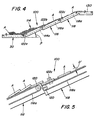
- the incline unstacker 100 comprises multiple inclined conveyor assemblies 114, 116, 118. Those assemblies include respective conveyors 114a, 116a, and 118a shown as conveying a bulk stream of items A, at least some of which are in stacked relationship.
- the transfer conveyor 30 conveys the items in a horizontal direction to an upstream end of a first of the declined conveyors 114a, and thus constitutes a feed conveyor for the incline section 100.
- the conveyors 114a, 116a, 118a are driven by respective variable speed motors, (not shown), the speeds being regulated by a controller (not shown).
- the conveyors could be of any suitable type, such as belts or rollers for example, but preferably are in the form of endless belts each extending around a pair of rotatable pulleys 120. One of the pulleys associated with each belt is driven by the motor.
- Each of the inclined conveyors forms a conveying surface upon which the items ride.
- the conveying surface is formed by the upper flight of the belt.
- the conveying surfaces have a higher coefficient of friction than the outer faces of the items A.
- the belts could be formed of rubber, urethane or PVC.
- each of the inclined conveyors 16a, 18a has an upstream end of its conveying surface offset downwardly by a distance D' with respect to a downstream end of the conveying surface of the preceding conveyor, i.e., offset in a direction requiring that the front or leading edge of each item A descend relative to its rear or trailing edge as the item is being transferred from the preceding conveyor to the succeeding conveyor, to facilitate separation of the items as will be discussed.
- the magnitude of the offset distance D' can vary, although one preferred distance is equal to the radius of the downstream pulley.
- the first inclined conveyor assembly 114 includes an infeed sensor 122a located adjacent an upstream end of the respective conveyor 114a for detecting the presence of items. That infeed sensor 122a is connected to the conveyor speed controller for providing a signal that controls the speed of the feed conveyor 112a as will be explained.
- the infeed sensor 122 could be of any suitable type, such as a photocell for example.
- the angle of inclination ⁇ of the conveying surface of the first inclined conveyor 114a is chosen so that the items being conveyed will slide on top of each other but will not slide on the conveying surface.
- the optimum size of the angle ⁇ will depend on the coefficient of friction of the outer surface of the items A, but will usually lie in the range of 20-40 degrees.
- the conveying surfaces of the remaining inclined conveyors 116a, 118a are preferably, but not necessarily parallel to the conveying surface of the first inclined conveyor 114.
- the general speed relationship of the inclined conveyors is such that each inclined conveyor travels faster than the preceding inclined conveyor. For lower throughputs, the relative conveying speeds could be fixed.
- the relative conveying speeds could be variable, and controlled by a programmable logic device such as a PC or PLC.
- Each conveyor 116, 118 would then include a sensor 122b, 122c located near the upstream end thereof to check for the presence of items A. If items A are detected by such a sensor, then the speed of the respective conveyor would be set to a fraction of the speed of the next downstream conveyor. In this way, the speed would always be increasing for each consecutive belt in the series.
- This speed-increasing feature is utilized to pull the items apart (i.e., de-shingle the items) as they transfer from one conveyor to the next.
- a speed ratio of at least 2:1 is desired between consecutive conveyors. Typical speeds for the conveyors 114a, 116a, 118a would be 10, 20 and 40 feet per minute, respectively.
- the speed of the last inclined conveyor 118a is determined by the speed of the take-away conveyor 130 located immediately downstream from the inclined conveyor arrangement In order to avoid the possibility of re-stacking the items, the last inclined conveyor should operate at a speed no greater than that of the take-away conveyor 30.
- the inclined conveyors would then run at a maximum design speed. This maximizes the throughput by closing gaps in the item flow stream.
- identical items A are conveyed in a bulk stream on the transfer conveyor 30, at least some of the items being arranged in stacks. If the incline section 100 is not used in combination with a decline section 10, then the items A may be delivered to the incline section 100 in a more stacked condition than if a decline section 10 were being used.
- the stack will tilt rearwardly, causing the items to tend to slide rearwardly off one another and eventually assume a shingle orientation on the high-friction first inclined conveyor 114a, or possibly on one of the subsequent inclined conveyors, depending on the density of items being conveyed.
- the transfer conveyor 30 It may be necessary to stop, or slow down, the transfer conveyor 30 to avoid re-stacking items on the first inclined conveyor 114a. As long as the infeed sensor 122a senses the presence of items, it will send a signal to the controller for stopping or slowing the transfer conveyor 30. Once the infeed sensor 122a no longer senses items, the transfer conveyor 30 will resume its normal speed.
- each item A reaches the second inclined conveyor 116a, its leading edge will drop down, due to the downwardly offset relationship of the conveying surface of the second inclined conveyor 116a relative to that of the first inclined conveyor 114a. This will free any loose debris, such as paperclips, staples, rubber bands, etc., trapped beneath the items, enabling the debris to fall through a gap disposed between the conveyors 114a, 116a.
- the descent of an item's leading edge brings the underside of the item into surface contact with the high-friction second inclined conveyor 116a. Since the item's trailing edge still rests on the low-friction item trailing therebehind, and since the downstream conveyor 116a is traveling faster than (e.g., twice as fast as) the upstream conveyor 114a, the leading item is pulled forwardly relative to the trailing item. Depending upon the magnitude of the speed difference, the leading item can be completely or partially pulled off the trailing item. If only partially pulled off the trailing item, the leading item will be further separated from the trailing item by subsequent one(s) of the inclined conveyors until completely separated from the trailing item.
Landscapes
- Engineering & Computer Science (AREA)
- Mechanical Engineering (AREA)
- Attitude Control For Articles On Conveyors (AREA)
- Control Of Conveyors (AREA)
- Intermediate Stations On Conveyors (AREA)
- Warehouses Or Storage Devices (AREA)
- Manipulator (AREA)
- Agricultural Chemicals And Associated Chemicals (AREA)
- Low-Molecular Organic Synthesis Reactions Using Catalysts (AREA)
- Organic Low-Molecular-Weight Compounds And Preparation Thereof (AREA)
Abstract
Description
Claims (30)
- A decline unstacking apparatus comprising:a feed conveyor (12) for feeding stacks of items (A); anda declined conveyor arrangement including at least first and second declined conveyors (14a, 16a) arranged in series, the first and second declined conveyors (14a, 16a) being arranged to travel at non-zero, first and second conveyor speeds, a first of the declined conveyors (14a) having an upstream end disposed at a discharge end of the feed conveyor (12), the first declined conveyor (14a) being declined from its upstream end at an angle (α) relative to a direction of travel of the feed conveyor (12) whereby a stack (A) being discharged from the discharge end tilts forwardly and causes the items in the stack to slide forwardly off one another into a shingle arrangement on the first declined conveyor (14a), wherein the leading end of an item is situated beneath the trailing end of a preceding item, the second declined conveyor (16a) including an upstream end disposed adjacent a downstream end of the first declined conveyor (14a) and traveling at a faster speed than the first declined conveyor for at least partially de-shingling the items received from the first declined conveyor.
- The decline unstacking apparatus according to claim 1 further comprising a sensor (22) for sensing items on the first declined conveyor (14a); and a controller for controlling a speed of the feed conveyor (12) in response to signals from the sensor, for preventing the discharge of additional items (A) onto the first declined conveyor (14a) until there is sufficient space on the first declined conveyor for receiving additional items.
- The decline unstacking apparatus according to claim 2 wherein the sensor (22) comprises a first sensor (22), and further including a second sensor (22) for sensing items on the first declined conveyor (14a), the second sensor disposed downstream of the first sensor and connected to the controller for regulating a speed of the second declined conveyor (16a) in accordance with signals from the second sensor.
- The decline unstacking apparatus according to claim 1 wherein an upstream end of a conveying surface defined by the second declined conveyor (16a) is offset upwardly with respect to a path of travel of a conveying surface defined by a downstream end of the first declined conveyor (14a), causing a downstream end of each item (A) to be raised when passing from the first declined conveyor to the second declined conveyor.
- The decline unstacking apparatus according to claim 4 wherein the downstream end of the first declined conveyor (14a) and the upstream end of the second declined conveyor (16a) travel around respective first and second support pulleys (20), the upstream end of the conveying surface defined by the second declined conveyor being offset from the path of travel of the downstream end of the conveying surface defined by the first declined conveyor by a distance equal substantially to a radius of the second support pulley.
- The decline unstacking apparatus according to claim 4 further comprising a sensor (22) for sensing items on the first declined conveyor (14a); and a controller for controlling a speed of the feed conveyor (12) in response to signals from the sensor, for preventing the discharge of additional items (A) onto the first declined conveyor (14a) until there is sufficient space on the first declined conveyor for receiving additional items.
- The decline stacking apparatus according to claim 6 wherein the sensor (22) comprises a first sensor (22), and further including a second sensor (22) for sensing items on the first declined conveyor (14a), the second sensor disposed downstream of the first sensor (22) and connected to the controller for regulating a speed of the second declined conveyor (16a) in accordance with signals from the second sensor.
- The decline unstacking apparatus according to claim 1 wherein the declined conveyor arrangement includes at least three declined conveyors (14a, 16a, 18a) arranged in series.
- The decline stacking apparatus according to claim 1 wherein the first and second declined conveyors (14a, 16a) comprise endless belts.
- A method of unstacking items (A) fed in stacked relationship in a bulk stream, comprising the steps of:A) feeding the stream along a feed conveyor (12) to an upstream end of a declined conveyor arrangement comprising at least first and second declined conveyors (14a, 16a) arranged in series, the first and second declined conveyors being arranged to travel at non-zero, first and second conveyor speeds, whereby a stack of items (A) tilts forwardly as it reaches an upstream end of the first declined conveyor (14a), causing the items to slide forwardly off one another into a shingle arrangement on the first declined conveyor (14a), wherein the leading end of an item is situated beneath the trailing end of a preceding item; andB) driving the second declined conveyor (16a) at a faster speed than the first declined conveyor (14a) whereby the second declined conveyor at least partially de-shingles the items received from the first declined conveyor.
- The method according to claim 10, further comprising the steps of sensing items on the first declined conveyor (14a); and regulating a speed of the feed conveyor in response to signals from the sensor (22), to prevent the discharge of additional items onto the first declined conveyor (14a) until there is sufficient space on the first declined conveyor for receiving additional items.
- The method according to claim 10, further comprising the step of raising a leading end of each item relative to a trailing end of the item when passing the item from the first declined conveyor (14a) to the second declined conveyor (16a).
- The method according to claim 10 comprising a first sensing step of sensing items on the first declined conveyor (14a); regulating a speed of the feed conveyor in response to signals from the sensor (22), to prevent the discharge of additional items onto the first declined conveyor (14a) until there is sufficient space on the first declined conveyor for receiving additional items, the method further comprising a second sensing step of sensing items on the first declined conveyor (14a) at a location spaced downstream of the first sensing step, and regulating a speed of the second declined conveyor (16a) in accordance with signals from the second sensing step while always driving the second declined conveyor faster than the first declined conveyor.
- An incline unstacking apparatus comprising:a feed conveyor (30) for feeding stacks of items (A); andan inclined conveyor arrangement including at least first and second inclined conveyors (114a, 116a) arranged in series, the first and second inclined conveyors being arranged to travel at non-zero, first and second conveyor speeds, a first of the inclined conveyors (114a) having an upstream end disposed at a discharge end of the feed conveyor (30), the first inclined conveyor (114a) being inclined from its upstream end at an angle relative to a direction of travel of the feed conveyor (30) whereby a stack (A) being discharged from the discharge end tilts rearwardly and causes the items in the stack to slide rearwardly off one another into a shingle arrangement on the first inclined conveyor (114a), wherein the leading end of an item rests upon the trailing end of a preceding item, the second inclined conveyor (116a) including an upstream end disposed adjacent a downstream end of the first inclined conveyor (114a) and traveling at a faster speed than the first inclined conveyor for at least partially de-shingling the items received from the first inclined conveyor.
- The incline unstacking apparatus according to claim 14 further comprising a sensor (122a) for sensing items on the first inclined conveyor (114a); and a controller for controlling a speed of the feed conveyor in response to signals from the sensor (122a), for preventing the discharge of additional items onto the first inclined conveyor (114a) until there is sufficient space on the first inclined conveyor for receiving additional items.
- The incline unstacking apparatus according to claim 15 wherein the sensor comprises a first sensor (122a), and further including a second sensor (122b) for sensing items on the first inclined conveyor (114a), the second sensor (122b) disposed downstream of the first sensor (122a) and connected to the controller for regulating a speed of the second inclined conveyor in accordance with signals from the second sensor.
- The incline unstacking apparatus according to claim 14 wherein an upstream end of a conveying surface defined by the second inclined conveyor (116a) is offset downwardly with respect to a path of travel of a conveying surface defined by a downstream end of the first inclined conveyor (114a), causing a downstream end of each item to descend when passing from the first inclined conveyor to the second inclined conveyor.
- The incline unstacking apparatus according to claim 17 wherein the downstream end of the first inclined conveyor (114a) and the upstream end of the second inclined conveyor (116a) travel around respective first and second support pulleys (120), the upstream end of the conveying surface defined by the second inclined conveyor (116a) being offset from the path of travel of the downstream end of the conveying surface defined by the first inclined conveyor (114a) by a distance equal substantially to a radius of the second support pulley (120).
- The incline unstacking apparatus according to claim 17 further comprising a sensor (122a) for sensing items on the first inclined conveyor (114a); and a controller for controlling a speed of the feed conveyor in response to signals from the sensor (122a), for preventing the discharge of additional items onto the first inclined conveyor (114a) until there is sufficient space on the first inclined conveyor for receiving additional items.
- The incline stacking apparatus according to claim 19 wherein the sensor comprises a first sensor (122a), and further including a second sensor (122b) for sensing items on the first inclined conveyor (114a), the second sensor (122b) disposed downstream of the first sensor (122a) and connected to the controller for regulating a speed of the second inclined conveyor (116a) in accordance with signals from the second sensor.
- The incline unstacking apparatus according to claim 14 wherein the inclined conveyor arrangement includes at least three inclined conveyors (114a, 116a, 118a) arranged in series.
- The incline stacking apparatus according to claim 14 wherein the first and second inclined conveyors (114a, 116a) comprise endless belts.
- A method of unstacking items fed in stacked relationship in a bulk stream, comprising the steps of:A) feeding the stream along a feed conveyor (30) to an upstream end of an inclined conveyor arrangement comprising at least first and second inclined conveyors (114a, 116a) arranged in series, the first and second inclined conveyors being arranged to travel at non-zero, first and second conveyor speeds, whereby a stack of items (A) tilts forwardly as it reaches an upstream end of the first inclined conveyor (114a), causing the items to slide forwardly off one another into a shingle arrangement on the first inclined conveyor, wherein the leading end of an item rests upon the trailing end of a preceding item; andB) driving the second inclined conveyor (116a) at a faster speed than the first inclined conveyor (114a) whereby the second inclined conveyor at least partially de-shingles the items received from the first inclined conveyor.
- The method according to claim 23, further comprising the steps of sensing items (A) on the first inclined conveyor; and regulating a speed of the feed conveyor (30) in response to signals from the sensor (122), to prevent the discharge of additional items onto the first inclined conveyor (114a) until there is sufficient space on the first inclined conveyor for receiving additional items.
- The method according to claim 23, further comprising the step of raising a leading end of each item relative to a trailing end of the item when passing the item from the first inclined conveyor (114a) to the second inclined conveyor (116a).
- The method according to claim 23 further comprising a first sensing step comprising sensing items (A) on the first inclined conveyor; regulating a speed of the feed conveyor (30) in response to signals from the sensor (122a), to prevent the discharge of additional items onto the first inclined conveyor (114a) until there is sufficient space on the first inclined conveyor for receiving additional items; and a second sensing step of sensing items on the first inclined conveyor (114a) at a location spaced downstream of the first sensing step, and regulating a speed of the second inclined conveyor (116a) in accordance with signals from the second sensing step while always driving the second inclined conveyor faster than the first inclined conveyor.
- An unstacking apparatus comprising a decline unstacking section (10), an incline unstacking section (100), and a transfer conveyor (30) for transferring items from the decline unstacking section to the incline unstacking section, the decline unstacking section comprising:a feed conveyor (12) for feeding stacks of items, anda declined conveyor arrangement including at least first and second declined conveyors (14a, 16a) arranged in series, the first and second declined conveyors being arranged to travel at non-zero, first and second declined conveyor speeds, a first of the declined conveyors (14a) having an upstream end disposed at a discharge end of the feed conveyor (12), the first declined conveyor (14a) being declined from its upstream end at an angle relative to a direction of travel of the feed conveyor (12) whereby a stack being discharged from the discharge end tilts forwardly, causing the items in the stack to slide forwardly off one another into a shingle arrangement on the first declined conveyor (14a), wherein the leading end of an item is situated beneath the trailing end of a preceding item;the incline unstacking section (100) comprising:an inclined conveyor arrangement including at least first and second inclined conveyors (114a, 116a) arranged in series, the first and second inclinedconveyors being arranged to travel at non-zero, first and second conveyor speeds, a first of the inclined conveyors (114a) having an upstream end arranged to receive items that have traveled through the decline unstacking section (10), the first inclined conveyor being inclined from its upstream end at an angle relative to a direction of travel of the feed conveyor (30) whereby a stack being discharged from the discharge end tilts rearwardly and causes the items in the stack to slide rearwardly off one another into a shingle arrangement on the first inclined conveyor (114a), wherein the leading end of an item rests upon the trailing end of a preceding item, the second inclined conveyor (116a) including an upstream end disposed adjacent a downstream end of the first inclined conveyor (114a) andtraveling at a faster speed than the first inclined conveyor for at least partially de-shingling the items received from the first inclined conveyor.
- A method of unstacking items fed in stacked relationship in a bulk stream, comprising the steps of:A) feeding the stream along a feed conveyor (12) to an upstream end of a declined conveyor arrangement (10) comprising at least first and second declined conveyors (14a, 16a) arranged in series, the first and second declined conveyors being arranged to travel at non-zero, first and second conveyor speeds, whereby a stack of items tilts forwardly as it reaches an upstream end of the first declined conveyor (14a), causing the items to slide forwardly off one another into a shingle arrangement on the first declined conveyor, wherein the leading end of an item is situated beneath the trailing end of a preceding item;B) driving the second declined conveyor (16a) at a faster speed than the first declined conveyor (14a) whereby the second declined conveyor at least partially de-shingles the items received from the first declined conveyor;C) feeding the stream exiting the declined conveyor arrangement to an upstream end of an inclined conveyor arrangement (100) comprising at least first and second inclined conveyors (114a, 116a) arranged in series, the first and second inclined conveyors being arranged to travel at non-zero, first and second conveyor speeds, whereby a stack of items tilts forwardly as it reaches an upstream end of the first inclined conveyor (114a), causing the items to slide off one another into a shingle arrangement on the first inclined conveyor, wherein the leading end of an item rests upon the trailing end of a preceding item; andD) driving the second inclined conveyor (116a) at a faster speed than the first inclined conveyor (114a) whereby the second inclined conveyor at least partially de-shingles the items received from the first inclined conveyor.
- A decline unstacking apparatus according to claim 1 further comprising:an upstream end of a conveying surface defined by the second declined conveyor (16a) being offset upwardly with respect to a path of travel of a downstream end of a conveying surface defined by the first declined conveyor (14a), causing a downstream end of each item to be raised when passing from the first declined conveyor (14a) to the second declined conveyor (16a);a sensor (22) for sensing items on the first declined conveyor (14a); anda controller for regulating a speed of the second declined conveyor (16a) in response to a signal from the sensor (22), while always maintaining a speed of the second downstream conveyor (16a) greater than a speed of the first declined conveyor (14a).
- An incline unstacking apparatus (100) according to claim 14 further comprising:an upstream end of a conveying surface defined by the second inclined conveyor (116a) being offset upwardly with respect to a path of travel of a downstream end of a conveying surface defined by the first inclined conveyor (114a), causing a downstream end of each item to descend when passing from the first inclined conveyor to the second inclined conveyor;a sensor (122b) for sensing items on the first inclined conveyor (114a): anda controller for regulating a speed of the second inclined conveyor (116a) in response to a signal from the sensor, while always maintaining a speed of the second downstream conveyor greater than a speed of the first inclined conveyor.
Applications Claiming Priority (3)
| Application Number | Priority Date | Filing Date | Title |
|---|---|---|---|
| US745449 | 2000-12-26 | ||
| US09/745,449 US6491154B2 (en) | 2000-12-26 | 2000-12-26 | Unstacker for unstacking items conveyed in a bulk stream |
| PCT/SE2001/002880 WO2002051724A2 (en) | 2000-12-26 | 2001-12-20 | Apparatus for unstacking objects during transit, and a method for the same |
Publications (3)
| Publication Number | Publication Date |
|---|---|
| EP1345822A2 EP1345822A2 (en) | 2003-09-24 |
| EP1345822B1 true EP1345822B1 (en) | 2005-06-29 |
| EP1345822B8 EP1345822B8 (en) | 2005-08-31 |
Family
ID=24996721
Family Applications (1)
| Application Number | Title | Priority Date | Filing Date |
|---|---|---|---|
| EP01272434A Expired - Lifetime EP1345822B8 (en) | 2000-12-26 | 2001-12-20 | Unstacker for unstacking items conveyed in a bulk stream |
Country Status (7)
| Country | Link |
|---|---|
| US (1) | US6491154B2 (en) |
| EP (1) | EP1345822B8 (en) |
| JP (1) | JP4125594B2 (en) |
| CN (1) | CN1226172C (en) |
| AT (1) | ATE298718T1 (en) |
| DE (1) | DE60111773T2 (en) |
| WO (1) | WO2002051724A2 (en) |
Cited By (2)
| Publication number | Priority date | Publication date | Assignee | Title |
|---|---|---|---|---|
| DE202013005786U1 (en) | 2013-06-27 | 2013-07-10 | Beumer Gmbh & Co. Kg | Device for separating piece goods |
| IT202400002665A1 (en) * | 2024-02-08 | 2025-08-08 | Mech Sistemi S R L | CONVEYOR, SYSTEM AND PROCEDURE FOR HANDLING ARTICLES |
Families Citing this family (50)
| Publication number | Priority date | Publication date | Assignee | Title |
|---|---|---|---|---|
| US20030209406A1 (en) * | 2002-05-09 | 2003-11-13 | Jones David A. | Apparatus for sorting pouched articles |
| US6910568B1 (en) | 2004-02-04 | 2005-06-28 | Sandvik Ab | Methods and apparatus for diverting articles from a conveyor |
| FR2878839B1 (en) * | 2004-12-08 | 2007-04-13 | Poste Etablissement Public | DEVICE FOR DISCHARGING BULK OBJECTS |
| KR100784817B1 (en) * | 2006-06-23 | 2007-12-17 | 대한민국 | Pepper sorting device |
| US7811043B2 (en) * | 2007-03-27 | 2010-10-12 | Ryan Gale Anderson | Belt loader extension ramp |
| US7938252B2 (en) * | 2007-12-21 | 2011-05-10 | Cinetic Sorting Corp. | Unstacking conveyor with floating surface |
| TWM336948U (en) * | 2007-12-26 | 2008-07-21 | guang-xiong Wu | Paperboard stacking mechanism |
| CN101397088B (en) * | 2008-09-26 | 2013-08-07 | 云南昆船设计研究院 | Tobacco carton distributing apparatus capable of pre-sorting |
| DK177253B1 (en) * | 2010-03-10 | 2012-08-20 | Kilde As Automation | Modular single exciter for feeding items of various shapes and sizes |
| CN103921982B (en) * | 2013-01-10 | 2016-02-17 | 北京大森长空包装机械有限公司 | A kind of packing device utilizing the parallel thruster of disk and three sections of belt feeder clutch feedings |
| US9038810B2 (en) | 2013-03-12 | 2015-05-26 | Fives Intralogistics Corp. | Singulator conveyor |
| DE102013102595A1 (en) * | 2013-03-14 | 2014-09-18 | Jörn Strauß | Transport device for transporting bar-type foods and sorting machine |
| CN105473474B (en) | 2013-05-17 | 2018-01-23 | 因特利格兰特总部有限责任公司 | robot carton unloader |
| US10807805B2 (en) | 2013-05-17 | 2020-10-20 | Intelligrated Headquarters, Llc | Robotic carton unloader |
| DE102013212423A1 (en) | 2013-06-27 | 2014-12-31 | Siemens Aktiengesellschaft | Device and method for stripping and conveying objects arranged in stacks |
| CN103693403A (en) * | 2013-09-30 | 2014-04-02 | 昆山中士设备工业有限公司 | Automated mold shelf |
| CN103786924B (en) * | 2014-01-01 | 2016-01-06 | 广州辐艾达机电设备有限公司 | Automatic switching chartered plane in bulk |
| WO2016182657A1 (en) * | 2015-05-14 | 2016-11-17 | Laitram, L.L.C. | Inclined-roller destacker |
| CN106986182A (en) * | 2016-01-21 | 2017-07-28 | 广东科达洁能股份有限公司 | Brick machine above and below a kind of automatic sorting |
| EP3214450B1 (en) * | 2016-03-01 | 2021-09-29 | Roche Diagnostics GmbH | Transporting device for transporting a laboratory diagnostic vessel carrier |
| US20180079606A1 (en) * | 2016-09-16 | 2018-03-22 | Siemens Industry, Inc. | Cascade de-layering |
| US10061308B2 (en) * | 2016-09-16 | 2018-08-28 | Siemens Industry, Inc. | Parcel delayering systems and methods for automatic parcel processing based on accurate de-layering |
| US10597235B2 (en) | 2016-10-20 | 2020-03-24 | Intelligrated Headquarters, Llc | Carton unloader tool for jam recovery |
| EP3395728A1 (en) * | 2017-04-24 | 2018-10-31 | Siemens Aktiengesellschaft | Configuration of the distance between goods to be conveyed |
| EP3444208B1 (en) * | 2017-08-11 | 2021-02-17 | Intelligrated Headquarters LLC | Robotic carton unloader |
| CN107673025A (en) * | 2017-10-17 | 2018-02-09 | 正新橡胶(中国)有限公司 | Tire stack provision for disengagement and the tire conveying equipment of tire are not captured |
| US10988327B1 (en) | 2018-07-06 | 2021-04-27 | Span Tech Llc | Sortation system and related methods |
| IT201800007630A1 (en) * | 2018-07-30 | 2020-01-30 | Fives Intralogistics Spa Con Socio Unico | Singularizing apparatus. |
| US10781053B1 (en) | 2018-12-13 | 2020-09-22 | Amazon Technologies, Inc. | Control system for automated singulation system |
| US10961060B1 (en) * | 2018-12-13 | 2021-03-30 | Amazon Technologies, Inc. | Automated singulation system |
| CN111687057B (en) * | 2019-03-15 | 2022-11-25 | 深圳蓝胖子机器智能有限公司 | Article sorting method, sorting system, sorting equipment and readable storage medium |
| US11014765B1 (en) | 2019-03-29 | 2021-05-25 | Amazon Technologies, Inc. | System and method for collimating items |
| US10870543B1 (en) * | 2019-03-29 | 2020-12-22 | Amazon Technologies, Inc. | Item singulation system and method |
| CN110002187B (en) * | 2019-04-12 | 2021-03-09 | 红云红河烟草(集团)有限责任公司 | Cigarette pack conveying line and cigarette pack conveying adjustment method |
| US10807808B1 (en) * | 2019-04-22 | 2020-10-20 | Amazon Technologies, Inc. | Systems and methods for automated item separation and presentation |
| CN110065803B (en) * | 2019-04-25 | 2020-08-25 | 重庆京东方显示照明有限公司 | Plastic frame sorting device |
| US11097903B2 (en) * | 2019-05-02 | 2021-08-24 | Automated Industrial Technologies, Inc. | Board conveyor apparatus for use in a board processing system |
| US11407595B2 (en) * | 2019-12-10 | 2022-08-09 | Intelligrated Headquarters, Llc | Methods and apparatuses for performing article singulation |
| CN111392370B (en) * | 2020-03-13 | 2021-07-27 | 江苏金恒信息科技股份有限公司 | Chain bed transmission mode control method and device applied to bar counting |
| JP7362541B2 (en) | 2020-04-09 | 2023-10-17 | 株式会社東芝 | feeding device |
| FR3110468B1 (en) * | 2020-05-19 | 2022-09-30 | Ynsect | Insect sorting device allowing the separation of crawling insects from the rest of a mixture |
| CN113184270B (en) * | 2021-03-12 | 2024-02-23 | 深圳市富云帝科技有限公司 | Material distributing system and method |
| CN115367407B (en) * | 2021-05-19 | 2025-08-08 | 威海新北洋正棋机器人股份有限公司 | Object processing equipment and object processing method |
| JP7664764B2 (en) | 2021-06-09 | 2025-04-18 | 株式会社東芝 | Item supply system and item processing system |
| AT525478B1 (en) * | 2021-09-20 | 2025-02-15 | Most Technik Gmbh | separating device for profiles |
| JP7675613B2 (en) | 2021-10-07 | 2025-05-13 | 株式会社東芝 | Luggage conveying device and luggage supply device |
| CN114572662A (en) * | 2022-02-17 | 2022-06-03 | 浙江华睿科技股份有限公司 | Package separation method and device and readable storage medium |
| US12545513B1 (en) * | 2022-03-09 | 2026-02-10 | Amazon Technologies, Inc. | Automated container accumulation and delivery systems and methods |
| CN114950970B (en) * | 2022-05-19 | 2023-06-23 | 杭州海康机器人股份有限公司 | Method and device for controlling target object to transmit, transmission system and electronic equipment |
| US20240140727A1 (en) * | 2022-10-28 | 2024-05-02 | Automated Industrial Technologies, Inc. | Method And Multi-Level Switchback Conveyor Apparatus For Product Singulation And Alignment |
Citations (4)
| Publication number | Priority date | Publication date | Assignee | Title |
|---|---|---|---|---|
| US2006870A (en) * | 1933-02-23 | 1935-07-02 | Jacob J Neuman | Material handling apparatus |
| US4150743A (en) * | 1977-12-27 | 1979-04-24 | Burroughs Corporation | Singulation device for mail |
| US5069440A (en) * | 1990-04-05 | 1991-12-03 | Unisys Corporation | Apparatus and method for automatically and continuously producing a flow of singulated mail flats |
| US5201397A (en) * | 1990-10-05 | 1993-04-13 | Electrocom Automation L.P. | Method and apparatus for separating a stack of products into a stream of single products for sorting |
Family Cites Families (11)
| Publication number | Priority date | Publication date | Assignee | Title |
|---|---|---|---|---|
| US3730386A (en) * | 1971-05-10 | 1973-05-01 | Wright Machinery Co | Article arranging and counting machine |
| DE2152727C3 (en) | 1971-10-22 | 1975-11-20 | Karl Haist Kg, 8000 Muenchen | Device for automatic unstacking and feeding of boards to a processing machine |
| US3837469A (en) * | 1972-05-17 | 1974-09-24 | Dake Corp | Product orienting apparatus for packaging |
| WO1987002340A1 (en) | 1985-10-12 | 1987-04-23 | Prima Meat Packers, Ltd. | Apparatus for aligning and supplying short cylindrical food products |
| US5282613A (en) * | 1992-09-29 | 1994-02-01 | R. R. Donnelley & Sons Company | Signature stream feeding apparatus |
| US5740901A (en) * | 1994-01-03 | 1998-04-21 | Lockheed Martin Corporation | Apparatus and method for handling flow of packages |
| US5860504A (en) * | 1994-11-16 | 1999-01-19 | Lockheed Martin Corporation | Transfer buffer and inserter and method |
| US5697753A (en) * | 1995-09-19 | 1997-12-16 | Recot, Inc. | Semiautomatic stacker for stackable articles |
| NL1006121C2 (en) * | 1997-05-23 | 1998-11-25 | Buhrs Zaandam Bv | Device and method for separating a stack of documents into separate documents. |
| US5950800A (en) | 1997-07-17 | 1999-09-14 | Sandvik Sorting Systems, Inc. | Conveying methods and apparatus |
| US6259967B1 (en) * | 1998-07-29 | 2001-07-10 | Crisplant A/S | Parcel singulation system |
-
2000
- 2000-12-26 US US09/745,449 patent/US6491154B2/en not_active Expired - Lifetime
-
2001
- 2001-12-20 CN CNB018212565A patent/CN1226172C/en not_active Expired - Lifetime
- 2001-12-20 AT AT01272434T patent/ATE298718T1/en not_active IP Right Cessation
- 2001-12-20 DE DE60111773T patent/DE60111773T2/en not_active Expired - Lifetime
- 2001-12-20 JP JP2002552833A patent/JP4125594B2/en not_active Expired - Lifetime
- 2001-12-20 WO PCT/SE2001/002880 patent/WO2002051724A2/en not_active Ceased
- 2001-12-20 EP EP01272434A patent/EP1345822B8/en not_active Expired - Lifetime
Patent Citations (4)
| Publication number | Priority date | Publication date | Assignee | Title |
|---|---|---|---|---|
| US2006870A (en) * | 1933-02-23 | 1935-07-02 | Jacob J Neuman | Material handling apparatus |
| US4150743A (en) * | 1977-12-27 | 1979-04-24 | Burroughs Corporation | Singulation device for mail |
| US5069440A (en) * | 1990-04-05 | 1991-12-03 | Unisys Corporation | Apparatus and method for automatically and continuously producing a flow of singulated mail flats |
| US5201397A (en) * | 1990-10-05 | 1993-04-13 | Electrocom Automation L.P. | Method and apparatus for separating a stack of products into a stream of single products for sorting |
Cited By (3)
| Publication number | Priority date | Publication date | Assignee | Title |
|---|---|---|---|---|
| DE202013005786U1 (en) | 2013-06-27 | 2013-07-10 | Beumer Gmbh & Co. Kg | Device for separating piece goods |
| EP2818436A1 (en) | 2013-06-27 | 2014-12-31 | BEUMER GmbH & Co. KG | Device for separating piece goods |
| IT202400002665A1 (en) * | 2024-02-08 | 2025-08-08 | Mech Sistemi S R L | CONVEYOR, SYSTEM AND PROCEDURE FOR HANDLING ARTICLES |
Also Published As
| Publication number | Publication date |
|---|---|
| JP2004516210A (en) | 2004-06-03 |
| US6491154B2 (en) | 2002-12-10 |
| WO2002051724A3 (en) | 2003-04-17 |
| DE60111773D1 (en) | 2005-08-04 |
| JP4125594B2 (en) | 2008-07-30 |
| EP1345822A2 (en) | 2003-09-24 |
| US20020079194A1 (en) | 2002-06-27 |
| CN1482988A (en) | 2004-03-17 |
| EP1345822B8 (en) | 2005-08-31 |
| WO2002051724A2 (en) | 2002-07-04 |
| ATE298718T1 (en) | 2005-07-15 |
| CN1226172C (en) | 2005-11-09 |
| DE60111773T2 (en) | 2006-05-11 |
Similar Documents
| Publication | Publication Date | Title |
|---|---|---|
| US6491154B2 (en) | Unstacker for unstacking items conveyed in a bulk stream | |
| US6609607B2 (en) | Article separation conveyor | |
| US10500613B2 (en) | Induction conveyor | |
| EP1036022B1 (en) | Conveying method and apparatus | |
| CN105873839B (en) | Separator Conveyor System for Big Bags in Rigid and Small Bags | |
| EP2544978B1 (en) | Package-culling conveyor system and method | |
| US6259967B1 (en) | Parcel singulation system | |
| US5641052A (en) | Apparatus and method for handling flow of packages | |
| US20100329833A1 (en) | Multi-Mode Unstacker Device for Unstacking Mailpieces | |
| US7712735B2 (en) | Device for unstacking postal items with optimized management of unstacking conditions | |
| CN100537382C (en) | Device for separating overlapping flat postal items | |
| JP7161454B2 (en) | Unstacking device | |
| US20260125224A1 (en) | Conveyor parcel accumulation chute assembly | |
| KR20060107563A (en) | Method and apparatus for classifying flat cargo | |
| EP1293454A2 (en) | Device for momentary separation of layered lengths of timber | |
| CN113905962A (en) | Multi-stage conveyor unit for separating packages |
Legal Events
| Date | Code | Title | Description |
|---|---|---|---|
| PUAI | Public reference made under article 153(3) epc to a published international application that has entered the european phase |
Free format text: ORIGINAL CODE: 0009012 |
|
| 17P | Request for examination filed |
Effective date: 20030512 |
|
| AK | Designated contracting states |
Kind code of ref document: A2 Designated state(s): AT BE CH CY DE DK ES FI FR GB GR IE IT LI LU MC NL PT SE TR |
|
| 17Q | First examination report despatched |
Effective date: 20040405 |
|
| GRAP | Despatch of communication of intention to grant a patent |
Free format text: ORIGINAL CODE: EPIDOSNIGR1 |
|
| GRAS | Grant fee paid |
Free format text: ORIGINAL CODE: EPIDOSNIGR3 |
|
| GRAA | (expected) grant |
Free format text: ORIGINAL CODE: 0009210 |
|
| AK | Designated contracting states |
Kind code of ref document: B1 Designated state(s): AT BE CH CY DE DK ES FI FR GB GR IE IT LI LU MC NL PT SE TR |
|
| PG25 | Lapsed in a contracting state [announced via postgrant information from national office to epo] |
Ref country code: IT Free format text: LAPSE BECAUSE OF FAILURE TO SUBMIT A TRANSLATION OF THE DESCRIPTION OR TO PAY THE FEE WITHIN THE PRESCRIBED TIME-LIMIT;WARNING: LAPSES OF ITALIAN PATENTS WITH EFFECTIVE DATE BEFORE 2007 MAY HAVE OCCURRED AT ANY TIME BEFORE 2007. THE CORRECT EFFECTIVE DATE MAY BE DIFFERENT FROM THE ONE RECORDED. Effective date: 20050629 Ref country code: BE Free format text: LAPSE BECAUSE OF FAILURE TO SUBMIT A TRANSLATION OF THE DESCRIPTION OR TO PAY THE FEE WITHIN THE PRESCRIBED TIME-LIMIT Effective date: 20050629 Ref country code: CH Free format text: LAPSE BECAUSE OF FAILURE TO SUBMIT A TRANSLATION OF THE DESCRIPTION OR TO PAY THE FEE WITHIN THE PRESCRIBED TIME-LIMIT Effective date: 20050629 Ref country code: ES Free format text: LAPSE BECAUSE OF FAILURE TO SUBMIT A TRANSLATION OF THE DESCRIPTION OR TO PAY THE FEE WITHIN THE PRESCRIBED TIME-LIMIT Effective date: 20050629 Ref country code: TR Free format text: LAPSE BECAUSE OF FAILURE TO SUBMIT A TRANSLATION OF THE DESCRIPTION OR TO PAY THE FEE WITHIN THE PRESCRIBED TIME-LIMIT Effective date: 20050629 Ref country code: LI Free format text: LAPSE BECAUSE OF FAILURE TO SUBMIT A TRANSLATION OF THE DESCRIPTION OR TO PAY THE FEE WITHIN THE PRESCRIBED TIME-LIMIT Effective date: 20050629 Ref country code: FI Free format text: LAPSE BECAUSE OF FAILURE TO SUBMIT A TRANSLATION OF THE DESCRIPTION OR TO PAY THE FEE WITHIN THE PRESCRIBED TIME-LIMIT Effective date: 20050629 Ref country code: NL Free format text: LAPSE BECAUSE OF FAILURE TO SUBMIT A TRANSLATION OF THE DESCRIPTION OR TO PAY THE FEE WITHIN THE PRESCRIBED TIME-LIMIT Effective date: 20050629 Ref country code: AT Free format text: LAPSE BECAUSE OF FAILURE TO SUBMIT A TRANSLATION OF THE DESCRIPTION OR TO PAY THE FEE WITHIN THE PRESCRIBED TIME-LIMIT Effective date: 20050629 |
|
| REG | Reference to a national code |
Ref country code: GB Ref legal event code: FG4D |
|
| REG | Reference to a national code |
Ref country code: CH Ref legal event code: EP |
|
| RAP2 | Party data changed (patent owner data changed or rights of a patent transferred) |
Owner name: SANDVIK INTELLECTUAL PROPERTY HB |
|
| REF | Corresponds to: |
Ref document number: 60111773 Country of ref document: DE Date of ref document: 20050804 Kind code of ref document: P |
|
| REG | Reference to a national code |
Ref country code: IE Ref legal event code: FG4D |
|
| RAP2 | Party data changed (patent owner data changed or rights of a patent transferred) |
Owner name: SANDVIK INTELLECTUAL PROPERTY AB |
|
| PG25 | Lapsed in a contracting state [announced via postgrant information from national office to epo] |
Ref country code: SE Free format text: LAPSE BECAUSE OF FAILURE TO SUBMIT A TRANSLATION OF THE DESCRIPTION OR TO PAY THE FEE WITHIN THE PRESCRIBED TIME-LIMIT Effective date: 20050929 Ref country code: GR Free format text: LAPSE BECAUSE OF FAILURE TO SUBMIT A TRANSLATION OF THE DESCRIPTION OR TO PAY THE FEE WITHIN THE PRESCRIBED TIME-LIMIT Effective date: 20050929 Ref country code: DK Free format text: LAPSE BECAUSE OF FAILURE TO SUBMIT A TRANSLATION OF THE DESCRIPTION OR TO PAY THE FEE WITHIN THE PRESCRIBED TIME-LIMIT Effective date: 20050929 |
|
| NLT2 | Nl: modifications (of names), taken from the european patent patent bulletin |
Owner name: SANDVIK INTELLECTUAL PROPERTY HB Effective date: 20050727 |
|
| NLT2 | Nl: modifications (of names), taken from the european patent patent bulletin |
Owner name: SANDVIK INTELLECTUAL PROPERTY AB Effective date: 20050831 |
|
| NLV1 | Nl: lapsed or annulled due to failure to fulfill the requirements of art. 29p and 29m of the patents act | ||
| PG25 | Lapsed in a contracting state [announced via postgrant information from national office to epo] |
Ref country code: PT Free format text: LAPSE BECAUSE OF FAILURE TO SUBMIT A TRANSLATION OF THE DESCRIPTION OR TO PAY THE FEE WITHIN THE PRESCRIBED TIME-LIMIT Effective date: 20051207 |
|
| PG25 | Lapsed in a contracting state [announced via postgrant information from national office to epo] |
Ref country code: CY Free format text: LAPSE BECAUSE OF FAILURE TO SUBMIT A TRANSLATION OF THE DESCRIPTION OR TO PAY THE FEE WITHIN THE PRESCRIBED TIME-LIMIT Effective date: 20051220 Ref country code: IE Free format text: LAPSE BECAUSE OF NON-PAYMENT OF DUE FEES Effective date: 20051220 |
|
| REG | Reference to a national code |
Ref country code: CH Ref legal event code: PL |
|
| PG25 | Lapsed in a contracting state [announced via postgrant information from national office to epo] |
Ref country code: LU Free format text: LAPSE BECAUSE OF NON-PAYMENT OF DUE FEES Effective date: 20051231 Ref country code: MC Free format text: LAPSE BECAUSE OF NON-PAYMENT OF DUE FEES Effective date: 20051231 |
|
| ET | Fr: translation filed | ||
| PLBE | No opposition filed within time limit |
Free format text: ORIGINAL CODE: 0009261 |
|
| STAA | Information on the status of an ep patent application or granted ep patent |
Free format text: STATUS: NO OPPOSITION FILED WITHIN TIME LIMIT |
|
| 26N | No opposition filed |
Effective date: 20060330 |
|
| REG | Reference to a national code |
Ref country code: IE Ref legal event code: MM4A |
|
| REG | Reference to a national code |
Ref country code: DE Ref legal event code: R082 Ref document number: 60111773 Country of ref document: DE Representative=s name: WSL PATENTANWAELTE PARTNERSCHAFT MBB, DE Ref country code: DE Ref legal event code: R081 Ref document number: 60111773 Country of ref document: DE Owner name: FIVES MANUFACTURING INDUSTRIES SA, FR Free format text: FORMER OWNER: SANDVIK INTELLECTUAL PROPERTY AB, SANDVIKEN, SE |
|
| REG | Reference to a national code |
Ref country code: GB Ref legal event code: 732E Free format text: REGISTERED BETWEEN 20150702 AND 20150708 |
|
| REG | Reference to a national code |
Ref country code: FR Ref legal event code: CD Owner name: FIVES MANUFACTURING INDUSTRIES, FR Effective date: 20150908 Ref country code: FR Ref legal event code: TP Owner name: FIVES MANUFACTURING INDUSTRIES, FR Effective date: 20150908 Ref country code: FR Ref legal event code: CA Effective date: 20150908 |
|
| REG | Reference to a national code |
Ref country code: FR Ref legal event code: PLFP Year of fee payment: 15 |
|
| REG | Reference to a national code |
Ref country code: FR Ref legal event code: PLFP Year of fee payment: 16 |
|
| REG | Reference to a national code |
Ref country code: FR Ref legal event code: PLFP Year of fee payment: 17 |
|
| PGFP | Annual fee paid to national office [announced via postgrant information from national office to epo] |
Ref country code: GB Payment date: 20201123 Year of fee payment: 20 Ref country code: FR Payment date: 20201120 Year of fee payment: 20 Ref country code: DE Payment date: 20201119 Year of fee payment: 20 |
|
| REG | Reference to a national code |
Ref country code: DE Ref legal event code: R071 Ref document number: 60111773 Country of ref document: DE |
|
| REG | Reference to a national code |
Ref country code: GB Ref legal event code: PE20 Expiry date: 20211219 |
|
| PG25 | Lapsed in a contracting state [announced via postgrant information from national office to epo] |
Ref country code: GB Free format text: LAPSE BECAUSE OF EXPIRATION OF PROTECTION Effective date: 20211219 |