TECHNICAL FIELD
The present invention relates to method and system for offering gene analysis
information, and attestation identification method of a gene donor by using these
method and system.
BACKGROUND ART
The Japanese Patent Application Laid-Open No. 2000-60553 relates to an
apparatus for processing the motif extract of the gene and a method of processing the
motif extract of the gene, and a recording medium in which the processing program of
the motif extract of the gene is recorded. The processing apparatus for the motif extract
of the gene includes a data input part where at least one gene sequence information is
input, a data edit part where various edits and assignment of the range of motif extract,
etc. are done to the input gene sequence information, a motif extract part where the
motif of gene is automatically extracted from the input gene sequence information or
the specified range of motif extract, an extract result processing part where the display
of extracted motif and the registration to a motif data base, etc. are done, and a motif
retrieval part where the gene sequence information in a part of which the extracted motif
is contained is retrieved from a gene sequence information data, wherein the apparatus
further includes a mechanism for adding the gene sequence information retrieved by the
motif retrieval part to gene sequence information input from the data input part by
inputting the retrieved gene sequence information to the data edit part.
There are the Japanese Patent Application Laid-Open No. 09-245107 and the
Japanese Patent Application Laid-Open No. 11-149453, etc. as a well-known example
which uses the gene to identify the attestation.
DISCLOSURE OF INVENTION
The problems of the present invention is in providing the method of offering
information and its achievement means in view of the characteristics of gene
information, wherein the information corresponds to various requests of the customer,
by designing the mechanism providing it to the customer to whom gene information
was confirmed in various forms and with time, and by continuously managing the
supply of gene information over the long term.
The customer and the organization of the gene management are connected by
an electronic means for transmitting information such as the Internet etc. are made
electronic in the present invention to achieve the above-mentioned object. Further, the
following business forms are designed, 1) a means for securing an individual secret, 2)
provision of the phased information according to needs of the customer (including the
medical treatment organization, the same as follows), and 3) gene preservation for a
long term, information provision having the function to provide the information at any
time for the period. An organization is set, in which customer's gene is collected and
analyzed, and the storage of gene, and the provision and management of the gene
information are performed in the lump, when the gene information (including the
information which the obtained gene information is processed in this case) is provided.
As a method of offering gene information from this organization, three phases of a short
term, a middle term, and a long-term are set from a viewpoint of the emergency of
information, the time required to analyze, and the time required to interpret the result
and acquire the related information. Information can be provided even by the behavior
comparison result of the restriction enzyme cleavage fragment, etc. though the gene
information to be offered is mainly based on the sequence information of the base on
the gene chain which composes genome. The base sequence is analyzed by a DNA
analysis device usually used. Various el ectrophoresis apparatuses, DNA sequencers, and
DNA chip analysis devices are chiefly used. However, it should be not limited to these
technologies. Gene information on a normal homo and polymorphic information are
compared with the information on the gene base sequence, the characteristic of
customer's gene is derived, the influence and the mutation degree are evaluated, and the
answer is provided in the form demanded by the customer. Demands of the customer
diverge according to the importance degree based on the time required to obtain
information first. If the gene information relates to immediate disease and treatment, the
customer wants to obtain the result immediately. Then, Requests getting in three phases
are set according to the easiness of gene analysis information and the length of the
analytical time required.
First, the range of one month is set as a short term, and the gene which can be
analyzed within the range and the information are offered. When information will be
needed in a short term, the information is offered on the assumption of the cases based
on the needs on the customer side such as the pre -acquirement of the information before
the treatment, the cancellation of uneasiness and misgivings about the gene, and the
cancellation of misgivings about states of the pregnancy and genetic diseases, in
addition to the correspondence to the gene analysis of which the time required is short.
The genome DNA is steady, and the needs that an urgent information supply is required
to diagnose is few. However, there is one to require the emergency in the customer's
needs. Moreover, the period of about six months is set in a mid -term analysis. The gene
analysis which does not require the emergency and the gene analysis which requires
time for the analysis such as life-style-relevant disease related genes, chronic ailment
related gene, drug metabolism related gene, and SNP (monobasic polymorphous) based
on two or more gene factors are carried out.
In a long-term analysis, the information is not provided by analyzing an only
specific disease and gene characteristic, but the gene information is provided to the
customer by analyzing the base sequence and its characteristic over the entire gene of
the customer. This course requires occasionally a long term of one year or more to
obtain all analytical results. Therefore, the analytical results are provided one by one. If
the elucidation of a new gene advances to as the gene research progresses, an analysis
request of the customer who requires the new elucidation can deal in such a long-term
analysis.
The gene analysis is executed if the charge is presented to the customer based
on the phase divided by the period of time of such information supply, the variety of the
information supply based on the phase, and the information analysis charge, and it is
accepted.
The information on gene DNA basically includes sequence information on four
kinds of bases. The function part of the gene is distinguished from a specified part of
this sequence. Namely, an object of the gene information service is to clarify an
individual gene characteristic. Because the gene information has large capacity, the use
of the electronic information network spread widely like the Internet is the best to
transmit the information to the customer. As a result, a prompt information transmission
can be done, and the two-way communications becomes easy.
BRIEF DESCRIPTION OF DRAWINGS
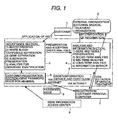
Fig.1 is an information route chart in an embodiment.
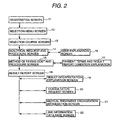
Fig.2 is a view showing the transition of the customer comput er screen.
Fig.3 is a view showing an example of the customer identification access
screen.
Fig.4 is a view showing an example of the offer service screen.
Fig.5 is a view showing an example of the screen of a short-term analytical
menu.
Fig.6 is a view showing an example of the screen of a mid-term analytical
menu.
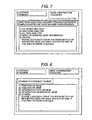
Fig.7 is a view showing an example of the screen of a long-term analytical
menu.
Fig.8 is a view showing an example of the screen of the information request
menu.
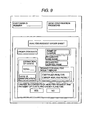
Fig.9 is a view showing an example of the analytical order screen from the
customer.
Fig.10 is a view showing an example of the screen of an analytical result.
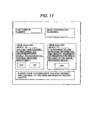
Fig.11 is a view showing an example of the screen of mediation and link
information.
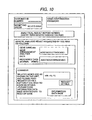
Fig.12 is a view showing an example of the screen of the explanation for the
customer.
Fig.13 is a view showing the account payment method.
BEST MODE FOR IMPLEMENTING THE INVENTION
Hereafter, the present invention will be explained based on the embodiment.
The embodiment according to the present invention is described in Fig.1 in
schematic form. In the present invention, the mechanism which accomplishes a main
function is gene information access center 6. All roles of the gene obtaining from the
customer, analysis, data storage, data transmission, an analytical information service,
and the report and mediation, etc. to the medical treatment organization are performed
in this organization. The information transmission with the customer is done through the
electronic computer network and the Internet.
Gene information access center 6 first requests the gene to for instance new
customer 1 who wishes to be served. The usual gene separation is carried out by using
the method described in the chapter of the Japanese Association of Medical
Technologists "Clinical examination, Gene and Chromosome examination textbook"
(issued by Kindai Publication in 1998), etc.
Acceptance section 3 in the gene information access center works as follows.
Customer's peripheral blood is collected by an injector etc.; the buffer solution which
dissolves the red blood corpuscle is added. The solution is centrifugally separated for
five minutes at 3000 revolutions per minute by a centrifugal separator, and then the
supernatant liquid is thrown away. The deposit is suspended in the buffer after the
supernatant liquid becomes clean, proteolytic enzyme proteinaze K and surface active
agent SDS are added, and digested. The saturation phenol liquid is added to this, the
supernatant is separated, and DNA contained in this is precipitated with the ethanol.
Afterwards, the supernatant liquid is centrifugally separated, the ethanol is evaporated
finally, too and is dissolved in the tris-EDTA buffer solution. In addition, it is divided
into a lot of preservation containers little by little, and they are preserved in the low
temperature frozen warehouse of -80°C or less. The gene of each person is numbered,
and kept individually. The refined gene is moved to analysis and information section 4,
and kept at the ultra low temperature till the analytical work. Next, in
acceptance section
3, the little preserved gene of 5-10µ gram is melted and analyzed to do the gene
identification of the customer who requests for the analysis with a high degree of
accuracy. DNA is cut into a suitable fragment by the restriction enzyme, and DNA
fragment which contains the sequence for identification is amplified by adding the
primer for individual identification. It is amplified by the conventional PCR method
(Roche Co.) etc. as an amplification method, and the base sequence is read. It is
requested to set the base sequence of the fragment with a large individual change as an
identification code based on the sequence information in such a gene segment It is
possible to make the identification code by combining base sequence information on
two or more short fragments. The base sequence which includes 12 places or more, the
parts where four-kind substitution of adenin (A), thymine (T), guanine (G), and cytosine
(C) occurs easily is selected, and used for the identification of the individual. If the gene
sequence part to which four kinds of base change at the probability of 25% is used, and
the password which contains these change parts at 12 places or more is used for
identification for instance, 4
12=16,777,216 kinds of combinations are thought. Therefore,
only the base sequence of the same combination with the possibility of about one person
to every 16,000,000 people or more same can occur. Accordingly, the customer can be
identified very selectively. If this probability is high still enough, it may become
possible to obtain the possibility of about one person to every 100,000,000 people or
more by increasing the number of base sequence parts of four-kind mutations to be
chosen, or it may choose base sequence with lower probability. If the identification
password is issued so as to include the high frequency mutation base parts at 15 places
or more, the individual who has same identification code on the earth is gone, when
judged from the population on the present earth. In the special case like the twin, it is
possible to identify them by setting the code number having another one digit.
Customer
registration section 5 transmits the individual identification code number of the
gene-origin decided like this to the customer as
password 8, in order to confirm the
access on the Internet customer screen. An example of such a password is shown in
Table 1. In Example 1, the individual is identified by 40 alphabetic characters of A, T, G
and C. The alphabet of X and Y at the end was given for the distinction though
Examples 2 and 3 were identical twin's gene password. With regard to the length of the
password like this, the decision method can be chosen, in which the passwords does not
overlap based on the appropriate mutation rate and its base. The password may be
divided suitably as shown at Example 4 or it may be used together with other signs,
because it is not easy to memorize when the password is too long. Further, the
combination of two or more passwords may be also used. However, the base sequence
part adopted for the password is chosen so that there is no repetition.
| Example Of Password |
| Customer | Example of password |
| Example 1 | AATGCTAGCGGTAATCAATCGTGGCCTAACCGATGATCAG |
| Example 2 | GCGTATAGCGGTAAGCTCATGTCTGACTGGTACTGATCGTX |
| Example 3 | GCGTATAGCGGTAAGCTCATGTCTGACTGGTACTGATCGTY |
| Example 4 | AATGC-TAGCG-GTAAT-CAATC-GTGGC-CTAAC-CGATG-ATCAG |
A method of offering gene analysis information is achieved according to the
communication between customer 1 and an organization. The organization is set up to
execute the following processes; transmitting the information based on customer's
specific gene information; collecting customer's gene, separating it, keeping it, and
analyzing it properly when it is necessary; selecting in phase and with time and
accepting an order based on the selection by the customer; transmitting the analytical
result to the customer; keeping the customer's gene information for a long term; and
exchanging the information with external organization 2 (for instance, external medical
treatment organization) according to the demand from the customer.
Gene information is composed of the base sequence of DNA. The kind, the
number, and gene associated diseases information on an analysis gene are contained for
the period which the range of the selection to the information requires to obtain
information.
The gene information is composed of the base sequence of DNA.
The range of selection of the information service is set so as to include the
period of time required to acquire the information, the kind and number of the gene to
be analyzed, and the gene related disease information.
A computer (personal computer) at customer registration section 5, a computer
(personal computer 7) for the registered customer (gene donor), and a computer
(personal computer) at analysis and information section 4 are connected by way of the
Internet. Customer 1 can consult external organization 2 about the medical treatment by
using registered customer's personal computer 7.
Thus, transmission of information, selection of the analytical content, order,
and account payment (order, information service, and cost claim) 9 are performed
through the electronic network.
The organization issues the password which combines two or more gene base
sequence signs to the customer in order to perform the attestation identification by
customer's gene.
Gene information access center 6 is the organization which operates as a core
of the present invention as mentioned above, and manages the send and the receive of
gene to and from the customer, the storage and the analysis of the gene, the acceptance
of order and the result report of the gene analysis, the send and the receive of accounts,
and customers' gene information. The exchange of the information and the
communications between customer 1 and gene information access center 6 can be
performed promptly and safely by using the network spread widely such as the Internet
etc. It is required to manage strictly the information, because of the organization that
manages the gene information that is extremely important individual information. It
becomes possible to access the obtained gene information only when the customer
agrees or only when the manager requested gives permission. The password based on
customer's specific gene information is issued by the gene information access center,
and the analysis is carried out after the password confirmation is completed
(preservation and accepting order analysis). If the contact with the splitting ferment is
refused, the gene DNA provided by the customer can be preserved stably for a long term,
and can answer the request for the gene information from the customer for years. It is
also possible to obtain the whole image of individual gene information by combining
the gene information obtained gradually.
The disease that is the analysis object is following. Phenylketonuria, sickle -cell
anemia, alpha-1-antitrypsin deficiency, citrullinemia, hemophilia, von Willebrand
disease, antithrombin III anomalous syndrome, urea cycle enzyme deficiency,
arginosuccinic acid urine syndrome, glycogenosis, mucopolysaccharidosis, Gaucher's
disease, infanitile amaurotic familial idiocy, Sandhoff disease, Lesch -Nyhan syndrome,
APRT deficiency, adenosine deaminase anomalous syndrome, xeroderma pigmentosum,
hypercholesterolemia, Tangier disease, Du Channe type myotrophia dystonica, a
mitochondrion brain muscle syndrome, Kearns-Sayre syndrome, MELAS syndrome,
MERRF syndrome, amyloid neuropathy, Alzheimer's disease, HCHWA-D, retinitis
pigmentosa, pus bulla fibrosing disease, chronicity granuloma, polyposis coli,
neurofibromatosis, Wilms tumor, and Li-Fraumeni syndrome, etc. These are only the
one understood now, and the disease that derives from the gene displacement further
increases as the research progresses. If immediate diagnosis is necessary when the
genetic disease cause gene is analyzed, it is important to have a set of serious genetic
disease cause gene analyzed first.
Moreover, the cause is complex and compositive in the life custom diseases
(diseases such as diabetes mellitus, hypertension, and hyperlipemia which are caused by
adult life customs) and chronic diseases (hepatitis, nephritis, and immunological disease,
etc.). Most diseases are still at the research phase (referring to "Gene diagnosis
introduction" written by Hiroshi Nojima, Youdo Co. 1992). However, it seems that the
elucidation of the cause gene and the generation mechanism will be elucidated by the
progress of a gene research of the disease in the future. Therefore, the gene information
access center can offer the disease related gene information about these complicated
diseases. The relationship between disease and monobase polymorphous SNP (Single
Nucleotide Polymorphism)of the ge ne which seems to relate to the diathesis and the
effect of the drug adverse reaction is hardly understood. If it is possible to provide as
gene information, it becomes effective to treat the customer 's disease. Because the gene
information controls the his/her biological function during all his/her life, it is also
important to provide necessary gene information at each phase of his/her life. The
long-term analysis can answer the demand of the customer who wants to clarify an
individual inherited characteristic which does not relate directly to the disease in request.
The gene information access center adds attached information to the gene analysis result
based on various factors such as customer's job, the age, sex, contracted clinical
histories, and the living conditions for a preventive object of the disease. The short -term,
the mid-term, and the long-term are relative divisions. These fixed periods change
according to the gene.
Therefore, an analytical menu can be frequently updated, if necessary.
The password for the customer identification is indispensable for secret
maintenance. Using the password decided from customer's gene in the present invention
enabled the person in question to recognize absolutely though it was also possible to
specify the arbitrary password. The password is a code for the individual identification
composed of four kinds of alphabets of A, T, G, and C which is basically the
abbreviation of the base, and a lot of numbers of digits rises the identification degree.
However, identification becomes difficult for multi child siblings more than a
monovular twin or the persons whose genes are extremely similar. For this case, the
alphabet is added further to distinguish. It is preferable to decide which gene sequence
part to be assumed the sequence of the password according to the magnitude of the
propability of mutation. The password is made by choosing a plurality of base
sequences including the sequences of the circumference of the sequence where the
change of the base is extremely high in each individual. If the part with high degree of
variability is used, a different password can be decided to everyone by selecting the
same gene sequence part to a lot of people. If the password like this into which
individual gene information is taken is used, the decipherment becomes difficult and
secret maintenance becomes easy. It should be confirmed that the password is different
from the existing gene password before issued.
Fig.2 is a view showing the transition of the customer computer screen of
registration customer personal computer 7. In this figure, selection menu screen 12 is
made to appear from registration screen 11 to display selection course screen 13.
Analysis requests and orders are performed from analysis request and order screen 14
with reference to gene explanation screen 15. Payment terms and result report condition
explanation 17 are received, and various cost payment procedures are done from the
method of paying cost and the procedure screen 16. Result report screen 18 is di splayed,
and the result interpretation explanation, the consultation, the medical treatment
organization introduction or the storage and keeping into the link information data base
are performed with reference to result interpretation explanatory screen 19 , consultation
request screen 20, medical treatment organization introduction screen 21 or link
information data base screen 22.
The customer confirmation collation work shown in Fig.3 is started first when
the message of the service request from the customer is transmitted to customer
registration section 5 at the gene access center, and a menu screen of the gene analysis
service appears next when the confirmation is completed. Next, the display of the
selection course shown in Fig.4 appears. A short-term analysis request (within one
month), a mid-term analysis request (within six months), and a long-term analysis
request (one year or more) which are set in phase (with time) are included in this course.
Although the analysis of three phases like this is desirable in case of the gene analysis, it
is possible to use the analysis of two phases. Gene information access center 6 clarifies
the analytical content while explaining it for which the customer requests by using
reference information shown in Fig.5 to Fig.8, and have the customer select.
The short-term analysis request course (within one month from the request)
includes the followings as shown in Fig.5.
The mid-term analysis request course (within six months from the request)
includes the followings as shown in Fig.6
The long-term analysis request course (continues to the completion for one
year or more from the request) includes the followings as shown in Fig.7.
The information request course includes the followings as shown in Fig.8.
Gene information access center 6 answers the doubt and the demand of the
customer through the Internet etc. The rough estimate of the cost estimation is displayed
on the customer access screen for the selected period based on the content of an analysis
request and the report frequency (Fig.8).
After an analytical content is informed the customer, the approval screen is
displayed. The account is decided by the followings.
1) selection period (short term, middle term, and long term), 2) number of gene to be
analyzed, 3) difficulty of analysis gene, 3) situation of mutation degree, 4) information
use period, 5) access center use frequency, 5) provision of an additional information
(Mediation and introduction are included), etc. This is decided according to the add
method shown next.
T=[A(m1+m2+···+mX)+B(n1+n2+···+nX)+C(p1 +p2+ ···+pX)+D(t1+t2+ ···+tX)+E]/L
Where, A, B, and C designate the accounting basic rate corresponding to the
period course, mX, nX, and pX designates the basic charge of each analysis object gene
in each course, D designates the basic rate for the information service, and tX designates
the charge for individual information. Further, E designates other service charge that
does not depend on the frequency. L designates the information service period, and T
the total amount of the accounting per unit period. The accounting can be paid and the
collection be made electronically through the network such as the Internet, etc. as
shown in Table 2.
With regard to the information service, it is possible to add and/or change
without being limited to the above-mentioned content. Reference information can be
also provided to judge the value of these information (Fig.12). when the selection by the
customer ends, the approval is obtained, and the order is done, the gene access center
makes the plan to analyze the keeping gene and executes analytical work. In a long
series of analysis, analytical work is started after the priority order is confirmed in
advance by the customer. The obtained result is reported to the customer in the form
shown in Fig.10. As a result, if the consultation of the medical treatment and the
treatment information are occasionally requested from the customer side, a medical
treatment organization is introduced and new information is provided to the medical
treatment organization after agreement of the customer is obtained (Fig.11). Gene
information access center 6 preserves the individual gene information obtained by the
above-mentioned method for a long term. The name of the gene and the base sequence,
etc. are accommodated in magnetic storage media such as the hard disk of the computer,
MOs, and compact discs, and protected by the password for the individual confirmation.
The information section in the gene information access center manages the information,
the access to the customer, and the gene information in the access center. The service
given to the customer is divided into many kinds of phases according to the period, the
difficulty of the demand gene information and the use frequency, and the accounting is
changed according to the phases. The accepting order system is set up so that the
customer can select freely according to the desired information and the estimated
amount of the accounting, and all information service method can be adopted.
Fig.13 shows a money payment method. In the figure, customer 1 ,that is, the
gene donor requests the analysis from registration customer personal computer 7 to
gene access center 6. The gene access center 6 demands the accounting with the
notification of an analytical result. This accounting claim becomes one corresponding to
three-phase analysis as mentioned above, and the unified price may be used when the
umbrella contract is concluded. Customer 1 pay the accounting from the registered
customer personal computer 7 to gene information access center 6 through financial
institution and credit company 1.
According to the above-mentioned composition, the following method is
provided.
A gene analysis information offering method in which analyzed gene sequence
information is stored and provided, comprising: a step of collecting customer's gene,
separating, and keeping; a step of selecting the content of analysis of gene sequence in
phase by a customer; a step of receiving gene sequence analysis work, and storing data
in a computer; and a step of transmitting gene sequence information, storing, and
keeping.
Further, the following method is provided.
A gene analysis information offering method in which analyzed gene sequence
information is stored and provided, comprising: a step of setting the content of gene
sequence to at least three phases and setting charge corresponding to each of the phases;
a step of selecting the content of analysis of gene sequence in phase by a customer; a
step of accepting an order of gene sequence analysis based on the selection, and
claiming accounting payment; a step of transmitting gene sequence information, storing,
and keeping; and a step of attaching comments to the gene sequence information based
on the demand of the customer, and providing the gene sequence information stored and
kept or gene sequence information processed to an external organization along with
comments.
The phased selection by the customer is performed to the kind and the number
of gene, and gene related disease information.
The gene sequence is a base sequence of DNA.
Further, the following system is provided.
A gene analysis information offering system in which analyzed gene sequence
information is stored and provided, comprising: a process computer having; a
acceptance part which collects, separates, and keeps at least one gene, an input part
which inputs phased selection about the content of analysis of gene sequence, an
accepting order information input part which inputs accepting order information on the
gene sequence analysis based on the selection, a processing part which claims the
accounting payment corresponding to the selected phase, and a storage part which stores
gene sequence information, and a network which connects the process computer, a gene
donor's computer and an external organization computer; wherein the gene sequence
information is transmitted to the gene donor computer, the provi ding of the gene
sequence information from the gene donor's computer to the external organization
computer is made to be allowed.
The accounting payment claim and the payment work are done through said
network.
Furthermore, the following system is provid ed.
A gene analysis information offering system in which analyzed gene sequence
information is stored and provided, comprising: a process computer having; an input
part which inputs phased selection about the content of analysis of gene sequence, an
accepting order information input part which inputs accepting order information on the
gene sequence analysis based on the selection, and a storage part which stores gene
sequence information, wherein the computer issues a password made of gene base
sequence signs corresponding to said phase.
The password is the combination of two or more gene base sequence signs.
Further, the following method is provided.
A gene analysis information offering method in which analyzed gene sequence
information is stored and provided, comprising: a step of inputting phased selection
about the content of analysis of the gene sequence, a step of inputting accepting order
information on the gene sequence analysis based on the selection, a step of storing gene
sequence information, and a step of issuing a password for identifying the attestation by
combining two or more gene base sequence signs according to said selected phase.
Further, the following method is provided.
A gene attestation identifying method in which analyzed gene sequence
information is stored and provided, comprising: a step of inputting phased selection
about the content of analysis of the gene sequence, a step of storing gene sequence
information, a step of issuing a password by combining two or more gene base sequ ence
signs according to said selected phase, and a step of identifying the attestation of a gene
donor by using the password.