EP1337853B1 - An extended tethering approach for rapid identification of ligands - Google Patents
An extended tethering approach for rapid identification of ligands Download PDFInfo
- Publication number
- EP1337853B1 EP1337853B1 EP01995216A EP01995216A EP1337853B1 EP 1337853 B1 EP1337853 B1 EP 1337853B1 EP 01995216 A EP01995216 A EP 01995216A EP 01995216 A EP01995216 A EP 01995216A EP 1337853 B1 EP1337853 B1 EP 1337853B1
- Authority
- EP
- European Patent Office
- Prior art keywords
- sws
- tbm
- library
- sme
- site
- Prior art date
- Legal status (The legal status is an assumption and is not a legal conclusion. Google has not performed a legal analysis and makes no representation as to the accuracy of the status listed.)
- Expired - Lifetime
Links
- 239000003446 ligand Substances 0.000 title claims description 80
- 238000013459 approach Methods 0.000 title description 17
- 238000000034 method Methods 0.000 claims abstract description 72
- 108090000623 proteins and genes Proteins 0.000 claims description 68
- 239000004606 Fillers/Extenders Substances 0.000 claims description 65
- 102000004169 proteins and genes Human genes 0.000 claims description 65
- 150000003573 thiols Chemical class 0.000 claims description 62
- 235000018102 proteins Nutrition 0.000 claims description 60
- BWGNESOTFCXPMA-UHFFFAOYSA-N Dihydrogen disulfide Chemical compound SS BWGNESOTFCXPMA-UHFFFAOYSA-N 0.000 claims description 52
- 230000002441 reversible effect Effects 0.000 claims description 33
- 150000003384 small molecules Chemical class 0.000 claims description 30
- -1 TL-6 Proteins 0.000 claims description 27
- XUJNEKJLAYXESH-REOHCLBHSA-N L-Cysteine Chemical compound SC[C@H](N)C(O)=O XUJNEKJLAYXESH-REOHCLBHSA-N 0.000 claims description 26
- 239000012038 nucleophile Substances 0.000 claims description 26
- 230000008569 process Effects 0.000 claims description 25
- 235000018417 cysteine Nutrition 0.000 claims description 24
- XUJNEKJLAYXESH-UHFFFAOYSA-N cysteine Natural products SCC(N)C(O)=O XUJNEKJLAYXESH-UHFFFAOYSA-N 0.000 claims description 23
- 125000000524 functional group Chemical group 0.000 claims description 23
- 102000004190 Enzymes Human genes 0.000 claims description 22
- 108090000790 Enzymes Proteins 0.000 claims description 22
- 108020004414 DNA Proteins 0.000 claims description 19
- 102000005962 receptors Human genes 0.000 claims description 16
- 108020003175 receptors Proteins 0.000 claims description 16
- 102000011727 Caspases Human genes 0.000 claims description 13
- 108010076667 Caspases Proteins 0.000 claims description 13
- 239000003638 chemical reducing agent Substances 0.000 claims description 13
- 108091005804 Peptidases Proteins 0.000 claims description 10
- 239000004365 Protease Substances 0.000 claims description 10
- DGVVWUTYPXICAM-UHFFFAOYSA-N β‐Mercaptoethanol Chemical compound OCCS DGVVWUTYPXICAM-UHFFFAOYSA-N 0.000 claims description 10
- 229960003151 mercaptamine Drugs 0.000 claims description 8
- 102100021569 Apoptosis regulator Bcl-2 Human genes 0.000 claims description 7
- 102000012199 E3 ubiquitin-protein ligase Mdm2 Human genes 0.000 claims description 7
- 101000971171 Homo sapiens Apoptosis regulator Bcl-2 Proteins 0.000 claims description 7
- 102100033001 Tyrosine-protein phosphatase non-receptor type 1 Human genes 0.000 claims description 7
- UFULAYFCSOUIOV-UHFFFAOYSA-N cysteamine Chemical compound NCCS UFULAYFCSOUIOV-UHFFFAOYSA-N 0.000 claims description 7
- 208000005176 Hepatitis C Diseases 0.000 claims description 6
- 108090001007 Interleukin-8 Proteins 0.000 claims description 6
- 102000004890 Interleukin-8 Human genes 0.000 claims description 6
- 108010025020 Nerve Growth Factor Proteins 0.000 claims description 6
- 101710128896 Tyrosine-protein phosphatase non-receptor type 1 Proteins 0.000 claims description 6
- 230000001588 bifunctional effect Effects 0.000 claims description 6
- 229940088597 hormone Drugs 0.000 claims description 6
- 239000005556 hormone Substances 0.000 claims description 6
- 102100025012 Dipeptidyl peptidase 4 Human genes 0.000 claims description 5
- 241000709661 Enterovirus Species 0.000 claims description 5
- 108010002350 Interleukin-2 Proteins 0.000 claims description 5
- 102000000588 Interleukin-2 Human genes 0.000 claims description 5
- 102000004388 Interleukin-4 Human genes 0.000 claims description 5
- 108090000978 Interleukin-4 Proteins 0.000 claims description 5
- 102100037611 Lysophospholipase Human genes 0.000 claims description 5
- 102000001253 Protein Kinase Human genes 0.000 claims description 5
- 102000040945 Transcription factor Human genes 0.000 claims description 5
- 108091023040 Transcription factor Proteins 0.000 claims description 5
- 102100023132 Transcription factor Jun Human genes 0.000 claims description 5
- 101800004564 Transforming growth factor alpha Proteins 0.000 claims description 5
- 108010073929 Vascular Endothelial Growth Factor A Proteins 0.000 claims description 5
- 108010019530 Vascular Endothelial Growth Factors Proteins 0.000 claims description 5
- 230000003281 allosteric effect Effects 0.000 claims description 5
- 108060006633 protein kinase Proteins 0.000 claims description 5
- PMNLUUOXGOOLSP-UHFFFAOYSA-N 2-mercaptopropanoic acid Chemical compound CC(S)C(O)=O PMNLUUOXGOOLSP-UHFFFAOYSA-N 0.000 claims description 4
- 102000005590 Anaphylatoxin C5a Receptor Human genes 0.000 claims description 4
- 108010059426 Anaphylatoxin C5a Receptor Proteins 0.000 claims description 4
- 102100021257 Beta-secretase 1 Human genes 0.000 claims description 4
- 102000003951 Erythropoietin Human genes 0.000 claims description 4
- 108090000394 Erythropoietin Proteins 0.000 claims description 4
- 102000012673 Follicle Stimulating Hormone Human genes 0.000 claims description 4
- 108010079345 Follicle Stimulating Hormone Proteins 0.000 claims description 4
- 102000002254 Glycogen Synthase Kinase 3 Human genes 0.000 claims description 4
- 108010014905 Glycogen Synthase Kinase 3 Proteins 0.000 claims description 4
- 101000894895 Homo sapiens Beta-secretase 1 Proteins 0.000 claims description 4
- 101000908391 Homo sapiens Dipeptidyl peptidase 4 Proteins 0.000 claims description 4
- 101000599951 Homo sapiens Insulin-like growth factor I Proteins 0.000 claims description 4
- 101000595923 Homo sapiens Placenta growth factor Proteins 0.000 claims description 4
- 101000914514 Homo sapiens T-cell-specific surface glycoprotein CD28 Proteins 0.000 claims description 4
- 108060003951 Immunoglobulin Proteins 0.000 claims description 4
- 102100037852 Insulin-like growth factor I Human genes 0.000 claims description 4
- 102000000589 Interleukin-1 Human genes 0.000 claims description 4
- 108010002352 Interleukin-1 Proteins 0.000 claims description 4
- 102000009151 Luteinizing Hormone Human genes 0.000 claims description 4
- 108010073521 Luteinizing Hormone Proteins 0.000 claims description 4
- 108020002496 Lysophospholipase Proteins 0.000 claims description 4
- 108060004795 Methyltransferase Proteins 0.000 claims description 4
- 102000015336 Nerve Growth Factor Human genes 0.000 claims description 4
- 108010015832 Non-Receptor Type 2 Protein Tyrosine Phosphatase Proteins 0.000 claims description 4
- 102000007999 Nuclear Proteins Human genes 0.000 claims description 4
- 108010089610 Nuclear Proteins Proteins 0.000 claims description 4
- 102100035194 Placenta growth factor Human genes 0.000 claims description 4
- 102100023712 Poly [ADP-ribose] polymerase 1 Human genes 0.000 claims description 4
- 229920000776 Poly(Adenosine diphosphate-ribose) polymerase Polymers 0.000 claims description 4
- 108091008611 Protein Kinase B Proteins 0.000 claims description 4
- 102100027213 T-cell-specific surface glycoprotein CD28 Human genes 0.000 claims description 4
- 108010041111 Thrombopoietin Proteins 0.000 claims description 4
- 102000036693 Thrombopoietin Human genes 0.000 claims description 4
- 102000001400 Tryptase Human genes 0.000 claims description 4
- 108060005989 Tryptase Proteins 0.000 claims description 4
- 102100033141 Tyrosine-protein phosphatase non-receptor type 2 Human genes 0.000 claims description 4
- 102000007624 ZAP-70 Protein-Tyrosine Kinase Human genes 0.000 claims description 4
- 108010046882 ZAP-70 Protein-Tyrosine Kinase Proteins 0.000 claims description 4
- 230000006907 apoptotic process Effects 0.000 claims description 4
- 230000001580 bacterial effect Effects 0.000 claims description 4
- 230000002281 colonystimulating effect Effects 0.000 claims description 4
- VHJLVAABSRFDPM-ZXZARUISSA-N dithioerythritol Chemical compound SC[C@H](O)[C@H](O)CS VHJLVAABSRFDPM-ZXZARUISSA-N 0.000 claims description 4
- VHJLVAABSRFDPM-QWWZWVQMSA-N dithiothreitol Chemical compound SC[C@@H](O)[C@H](O)CS VHJLVAABSRFDPM-QWWZWVQMSA-N 0.000 claims description 4
- 229940105423 erythropoietin Drugs 0.000 claims description 4
- DNJIEGIFACGWOD-UHFFFAOYSA-N ethyl mercaptane Natural products CCS DNJIEGIFACGWOD-UHFFFAOYSA-N 0.000 claims description 4
- 229940028334 follicle stimulating hormone Drugs 0.000 claims description 4
- RWSXRVCMGQZWBV-WDSKDSINSA-N glutathione Chemical compound OC(=O)[C@@H](N)CCC(=O)N[C@@H](CS)C(=O)NCC(O)=O RWSXRVCMGQZWBV-WDSKDSINSA-N 0.000 claims description 4
- 210000003714 granulocyte Anatomy 0.000 claims description 4
- 102000018358 immunoglobulin Human genes 0.000 claims description 4
- 229940072221 immunoglobulins Drugs 0.000 claims description 4
- NOESYZHRGYRDHS-UHFFFAOYSA-N insulin Chemical compound N1C(=O)C(NC(=O)C(CCC(N)=O)NC(=O)C(CCC(O)=O)NC(=O)C(C(C)C)NC(=O)C(NC(=O)CN)C(C)CC)CSSCC(C(NC(CO)C(=O)NC(CC(C)C)C(=O)NC(CC=2C=CC(O)=CC=2)C(=O)NC(CCC(N)=O)C(=O)NC(CC(C)C)C(=O)NC(CCC(O)=O)C(=O)NC(CC(N)=O)C(=O)NC(CC=2C=CC(O)=CC=2)C(=O)NC(CSSCC(NC(=O)C(C(C)C)NC(=O)C(CC(C)C)NC(=O)C(CC=2C=CC(O)=CC=2)NC(=O)C(CC(C)C)NC(=O)C(C)NC(=O)C(CCC(O)=O)NC(=O)C(C(C)C)NC(=O)C(CC(C)C)NC(=O)C(CC=2NC=NC=2)NC(=O)C(CO)NC(=O)CNC2=O)C(=O)NCC(=O)NC(CCC(O)=O)C(=O)NC(CCCNC(N)=N)C(=O)NCC(=O)NC(CC=3C=CC=CC=3)C(=O)NC(CC=3C=CC=CC=3)C(=O)NC(CC=3C=CC(O)=CC=3)C(=O)NC(C(C)O)C(=O)N3C(CCC3)C(=O)NC(CCCCN)C(=O)NC(C)C(O)=O)C(=O)NC(CC(N)=O)C(O)=O)=O)NC(=O)C(C(C)CC)NC(=O)C(CO)NC(=O)C(C(C)O)NC(=O)C1CSSCC2NC(=O)C(CC(C)C)NC(=O)C(NC(=O)C(CCC(N)=O)NC(=O)C(CC(N)=O)NC(=O)C(NC(=O)C(N)CC=1C=CC=CC=1)C(C)C)CC1=CN=CN1 NOESYZHRGYRDHS-UHFFFAOYSA-N 0.000 claims description 4
- 229940040129 luteinizing hormone Drugs 0.000 claims description 4
- 101150024228 mdm2 gene Proteins 0.000 claims description 4
- 229940053128 nerve growth factor Drugs 0.000 claims description 4
- OXCMYAYHXIHQOA-UHFFFAOYSA-N potassium;[2-butyl-5-chloro-3-[[4-[2-(1,2,4-triaza-3-azanidacyclopenta-1,4-dien-5-yl)phenyl]phenyl]methyl]imidazol-4-yl]methanol Chemical compound [K+].CCCCC1=NC(Cl)=C(CO)N1CC1=CC=C(C=2C(=CC=CC=2)C2=N[N-]N=N2)C=C1 OXCMYAYHXIHQOA-UHFFFAOYSA-N 0.000 claims description 4
- 230000019491 signal transduction Effects 0.000 claims description 4
- 230000003612 virological effect Effects 0.000 claims description 4
- 102000017420 CD3 protein, epsilon/gamma/delta subunit Human genes 0.000 claims description 3
- 108050005493 CD3 protein, epsilon/gamma/delta subunit Proteins 0.000 claims description 3
- 108010029697 CD40 Ligand Proteins 0.000 claims description 3
- 102100032937 CD40 ligand Human genes 0.000 claims description 3
- 108090000613 Cathepsin S Proteins 0.000 claims description 3
- 102100035654 Cathepsin S Human genes 0.000 claims description 3
- 108010055166 Chemokine CCL5 Proteins 0.000 claims description 3
- 108010012236 Chemokines Proteins 0.000 claims description 3
- 102000019034 Chemokines Human genes 0.000 claims description 3
- 108010025464 Cyclin-Dependent Kinase 4 Proteins 0.000 claims description 3
- 102100036252 Cyclin-dependent kinase 4 Human genes 0.000 claims description 3
- 102100031111 Disintegrin and metalloproteinase domain-containing protein 17 Human genes 0.000 claims description 3
- 108010002459 HIV Integrase Proteins 0.000 claims description 3
- 101000738771 Homo sapiens Receptor-type tyrosine-protein phosphatase C Proteins 0.000 claims description 3
- 101000716102 Homo sapiens T-cell surface glycoprotein CD4 Proteins 0.000 claims description 3
- 101001050288 Homo sapiens Transcription factor Jun Proteins 0.000 claims description 3
- 108060006678 I-kappa-B kinase Proteins 0.000 claims description 3
- 102000001284 I-kappa-B kinase Human genes 0.000 claims description 3
- 102000019223 Interleukin-1 receptor Human genes 0.000 claims description 3
- 108050006617 Interleukin-1 receptor Proteins 0.000 claims description 3
- 108010002616 Interleukin-5 Proteins 0.000 claims description 3
- 102000015696 Interleukins Human genes 0.000 claims description 3
- 108010063738 Interleukins Proteins 0.000 claims description 3
- 102100023482 Mitogen-activated protein kinase 14 Human genes 0.000 claims description 3
- 102100033115 Mitogen-activated protein kinase kinase kinase 1 Human genes 0.000 claims description 3
- 101710164423 Mitogen-activated protein kinase kinase kinase 1 Proteins 0.000 claims description 3
- 101700056750 PAK1 Proteins 0.000 claims description 3
- 102100024242 Phosphatidylinositol 3,4,5-trisphosphate 5-phosphatase 2 Human genes 0.000 claims description 3
- 101710174325 Phosphatidylinositol 3,4,5-trisphosphate 5-phosphatase 2 Proteins 0.000 claims description 3
- 102000004022 Protein-Tyrosine Kinases Human genes 0.000 claims description 3
- 108090000412 Protein-Tyrosine Kinases Proteins 0.000 claims description 3
- 102100033810 RAC-alpha serine/threonine-protein kinase Human genes 0.000 claims description 3
- 102100037422 Receptor-type tyrosine-protein phosphatase C Human genes 0.000 claims description 3
- 101710125350 Serine/threonine-protein kinase N1 Proteins 0.000 claims description 3
- 102100025237 T-cell surface antigen CD2 Human genes 0.000 claims description 3
- 102100036011 T-cell surface glycoprotein CD4 Human genes 0.000 claims description 3
- 125000000217 alkyl group Chemical group 0.000 claims description 3
- BFPSDSIWYFKGBC-UHFFFAOYSA-N chlorotrianisene Chemical compound C1=CC(OC)=CC=C1C(Cl)=C(C=1C=CC(OC)=CC=1)C1=CC=C(OC)C=C1 BFPSDSIWYFKGBC-UHFFFAOYSA-N 0.000 claims description 3
- 108010068338 p38 Mitogen-Activated Protein Kinases Proteins 0.000 claims description 3
- 230000002194 synthesizing effect Effects 0.000 claims description 3
- VBEQCZHXXJYVRD-GACYYNSASA-N uroanthelone Chemical compound C([C@@H](C(=O)N[C@H](C(=O)N[C@@H](CS)C(=O)N[C@@H](CC(N)=O)C(=O)N[C@@H](CS)C(=O)N[C@H](C(=O)N[C@@H]([C@@H](C)CC)C(=O)NCC(=O)N[C@@H](CC=1C=CC(O)=CC=1)C(=O)N[C@@H](CO)C(=O)NCC(=O)N[C@@H](CC(O)=O)C(=O)N[C@@H](CCCNC(N)=N)C(=O)N[C@@H](CS)C(=O)N[C@@H](CCC(N)=O)C(=O)N[C@@H]([C@@H](C)O)C(=O)N[C@@H](CCCNC(N)=N)C(=O)N[C@@H](CC(O)=O)C(=O)N[C@@H](CC(C)C)C(=O)N[C@@H](CCCNC(N)=N)C(=O)N[C@@H](CC=1C2=CC=CC=C2NC=1)C(=O)N[C@@H](CC=1C2=CC=CC=C2NC=1)C(=O)N[C@@H](CCC(O)=O)C(=O)N[C@@H](CC(C)C)C(=O)N[C@@H](CCCNC(N)=N)C(O)=O)C(C)C)[C@@H](C)O)NC(=O)[C@H](CO)NC(=O)[C@H](CC(O)=O)NC(=O)[C@H](CC(C)C)NC(=O)[C@H](CO)NC(=O)[C@H](CCC(O)=O)NC(=O)[C@@H](NC(=O)[C@H](CC=1NC=NC=1)NC(=O)[C@H](CCSC)NC(=O)[C@H](CS)NC(=O)[C@@H](NC(=O)CNC(=O)CNC(=O)[C@H](CC(N)=O)NC(=O)[C@H](CC(C)C)NC(=O)[C@H](CS)NC(=O)[C@H](CC=1C=CC(O)=CC=1)NC(=O)CNC(=O)[C@H](CC(O)=O)NC(=O)[C@H](CC=1C=CC(O)=CC=1)NC(=O)[C@H](CO)NC(=O)[C@H](CO)NC(=O)[C@H]1N(CCC1)C(=O)[C@H](CS)NC(=O)CNC(=O)[C@H]1N(CCC1)C(=O)[C@H](CC=1C=CC(O)=CC=1)NC(=O)[C@H](CO)NC(=O)[C@@H](N)CC(N)=O)C(C)C)[C@@H](C)CC)C1=CC=C(O)C=C1 VBEQCZHXXJYVRD-GACYYNSASA-N 0.000 claims description 3
- CHZAMJVESILJGH-UHFFFAOYSA-N 3-[bis(2-cyanoethyl)phosphanyl]propanenitrile Chemical compound N#CCCP(CCC#N)CCC#N CHZAMJVESILJGH-UHFFFAOYSA-N 0.000 claims description 2
- 108010039209 Blood Coagulation Factors Proteins 0.000 claims description 2
- 102000015081 Blood Coagulation Factors Human genes 0.000 claims description 2
- 108090000610 Cathepsin F Proteins 0.000 claims description 2
- 102000004176 Cathepsin F Human genes 0.000 claims description 2
- 108010001857 Cell Surface Receptors Proteins 0.000 claims description 2
- 102000001327 Chemokine CCL5 Human genes 0.000 claims description 2
- 108010005939 Ciliary Neurotrophic Factor Proteins 0.000 claims description 2
- 102100031614 Ciliary neurotrophic factor Human genes 0.000 claims description 2
- 102100039498 Cytotoxic T-lymphocyte protein 4 Human genes 0.000 claims description 2
- 230000006820 DNA synthesis Effects 0.000 claims description 2
- 101100481408 Danio rerio tie2 gene Proteins 0.000 claims description 2
- 101100015729 Drosophila melanogaster drk gene Proteins 0.000 claims description 2
- 101800003838 Epidermal growth factor Proteins 0.000 claims description 2
- 108010024636 Glutathione Proteins 0.000 claims description 2
- 108010017213 Granulocyte-Macrophage Colony-Stimulating Factor Proteins 0.000 claims description 2
- 102100039620 Granulocyte-macrophage colony-stimulating factor Human genes 0.000 claims description 2
- 108010051696 Growth Hormone Proteins 0.000 claims description 2
- 101000889276 Homo sapiens Cytotoxic T-lymphocyte protein 4 Proteins 0.000 claims description 2
- 101000777461 Homo sapiens Disintegrin and metalloproteinase domain-containing protein 17 Proteins 0.000 claims description 2
- 101000831616 Homo sapiens Protachykinin-1 Proteins 0.000 claims description 2
- 101000617830 Homo sapiens Sterol O-acyltransferase 1 Proteins 0.000 claims description 2
- 101000934346 Homo sapiens T-cell surface antigen CD2 Proteins 0.000 claims description 2
- 102100021854 Inhibitor of nuclear factor kappa-B kinase subunit beta Human genes 0.000 claims description 2
- 101710205525 Inhibitor of nuclear factor kappa-B kinase subunit beta Proteins 0.000 claims description 2
- 102000004877 Insulin Human genes 0.000 claims description 2
- 108090001061 Insulin Proteins 0.000 claims description 2
- 108010008212 Integrin alpha4beta1 Proteins 0.000 claims description 2
- 102000003814 Interleukin-10 Human genes 0.000 claims description 2
- 108090000174 Interleukin-10 Proteins 0.000 claims description 2
- 108090000177 Interleukin-11 Proteins 0.000 claims description 2
- 102000003815 Interleukin-11 Human genes 0.000 claims description 2
- 102000013462 Interleukin-12 Human genes 0.000 claims description 2
- 108010065805 Interleukin-12 Proteins 0.000 claims description 2
- 102000003816 Interleukin-13 Human genes 0.000 claims description 2
- 108090000176 Interleukin-13 Proteins 0.000 claims description 2
- 102000003812 Interleukin-15 Human genes 0.000 claims description 2
- 108090000172 Interleukin-15 Proteins 0.000 claims description 2
- 102000003810 Interleukin-18 Human genes 0.000 claims description 2
- 108090000171 Interleukin-18 Proteins 0.000 claims description 2
- 108010002386 Interleukin-3 Proteins 0.000 claims description 2
- 102000000646 Interleukin-3 Human genes 0.000 claims description 2
- 101100481410 Mus musculus Tek gene Proteins 0.000 claims description 2
- 102000003945 NF-kappa B Human genes 0.000 claims description 2
- 108010057466 NF-kappa B Proteins 0.000 claims description 2
- 102000007072 Nerve Growth Factors Human genes 0.000 claims description 2
- 102000004576 Placental Lactogen Human genes 0.000 claims description 2
- 108010003044 Placental Lactogen Proteins 0.000 claims description 2
- 239000000381 Placental Lactogen Substances 0.000 claims description 2
- 101710179684 Poly [ADP-ribose] polymerase Proteins 0.000 claims description 2
- 102100024819 Prolactin Human genes 0.000 claims description 2
- 108010057464 Prolactin Proteins 0.000 claims description 2
- 102100024304 Protachykinin-1 Human genes 0.000 claims description 2
- 102000001892 Protein Kinase C-theta Human genes 0.000 claims description 2
- 108010015499 Protein Kinase C-theta Proteins 0.000 claims description 2
- 230000006819 RNA synthesis Effects 0.000 claims description 2
- 102100038803 Somatotropin Human genes 0.000 claims description 2
- 102000007451 Steroid Receptors Human genes 0.000 claims description 2
- 108010085012 Steroid Receptors Proteins 0.000 claims description 2
- 102100021993 Sterol O-acyltransferase 1 Human genes 0.000 claims description 2
- 101000697584 Streptomyces lavendulae Streptothricin acetyltransferase Proteins 0.000 claims description 2
- 101710135349 Venom phosphodiesterase Proteins 0.000 claims description 2
- 239000003114 blood coagulation factor Substances 0.000 claims description 2
- 210000000988 bone and bone Anatomy 0.000 claims description 2
- 230000015556 catabolic process Effects 0.000 claims description 2
- 229960002433 cysteine Drugs 0.000 claims description 2
- 238000006731 degradation reaction Methods 0.000 claims description 2
- 229940116977 epidermal growth factor Drugs 0.000 claims description 2
- 230000002538 fungal effect Effects 0.000 claims description 2
- 229960003180 glutathione Drugs 0.000 claims description 2
- 101150098203 grb2 gene Proteins 0.000 claims description 2
- 239000003102 growth factor Substances 0.000 claims description 2
- 239000000122 growth hormone Substances 0.000 claims description 2
- 229940125396 insulin Drugs 0.000 claims description 2
- 229940047122 interleukins Drugs 0.000 claims description 2
- 210000004698 lymphocyte Anatomy 0.000 claims description 2
- 210000002540 macrophage Anatomy 0.000 claims description 2
- 230000000921 morphogenic effect Effects 0.000 claims description 2
- 230000017074 necrotic cell death Effects 0.000 claims description 2
- 229940097325 prolactin Drugs 0.000 claims description 2
- ADNPLDHMAVUMIW-CUZNLEPHSA-N substance P Chemical compound C([C@@H](C(=O)NCC(=O)N[C@@H](CC(C)C)C(=O)N[C@@H](CCSC)C(N)=O)NC(=O)[C@H](CC=1C=CC=CC=1)NC(=O)[C@H](CCC(N)=O)NC(=O)[C@H](CCC(N)=O)NC(=O)[C@H]1N(CCC1)C(=O)[C@H](CCCCN)NC(=O)[C@H]1N(CCC1)C(=O)[C@@H](N)CCCN=C(N)N)C1=CC=CC=C1 ADNPLDHMAVUMIW-CUZNLEPHSA-N 0.000 claims description 2
- 210000001519 tissue Anatomy 0.000 claims description 2
- 230000008467 tissue growth Effects 0.000 claims description 2
- SGPUHRSBWMQRAN-UHFFFAOYSA-N 2-[bis(1-carboxyethyl)phosphanyl]propanoic acid Chemical compound OC(=O)C(C)P(C(C)C(O)=O)C(C)C(O)=O SGPUHRSBWMQRAN-UHFFFAOYSA-N 0.000 claims 2
- 102100037486 Reverse transcriptase/ribonuclease H Human genes 0.000 claims 2
- 102000006747 Transforming Growth Factor alpha Human genes 0.000 claims 2
- 102000005789 Vascular Endothelial Growth Factors Human genes 0.000 claims 2
- 102000009024 Epidermal Growth Factor Human genes 0.000 claims 1
- 101001059454 Homo sapiens Serine/threonine-protein kinase MARK2 Proteins 0.000 claims 1
- 101000864342 Homo sapiens Tyrosine-protein kinase BTK Proteins 0.000 claims 1
- 102000000743 Interleukin-5 Human genes 0.000 claims 1
- 102000009516 Protein Serine-Threonine Kinases Human genes 0.000 claims 1
- 108010009341 Protein Serine-Threonine Kinases Proteins 0.000 claims 1
- 102100028904 Serine/threonine-protein kinase MARK2 Human genes 0.000 claims 1
- 102100027910 Serine/threonine-protein kinase PAK 1 Human genes 0.000 claims 1
- 102100029823 Tyrosine-protein kinase BTK Human genes 0.000 claims 1
- 108010057085 cytokine receptors Proteins 0.000 claims 1
- 102000003675 cytokine receptors Human genes 0.000 claims 1
- 239000002532 enzyme inhibitor Substances 0.000 claims 1
- 102000006240 membrane receptors Human genes 0.000 claims 1
- 230000027455 binding Effects 0.000 abstract description 57
- 238000012512 characterization method Methods 0.000 abstract description 2
- 108090000765 processed proteins & peptides Proteins 0.000 description 52
- 101150048348 GP41 gene Proteins 0.000 description 42
- 150000001875 compounds Chemical class 0.000 description 34
- 102000004196 processed proteins & peptides Human genes 0.000 description 33
- 230000015572 biosynthetic process Effects 0.000 description 28
- YMWUJEATGCHHMB-UHFFFAOYSA-N Dichloromethane Chemical compound ClCCl YMWUJEATGCHHMB-UHFFFAOYSA-N 0.000 description 27
- 125000003396 thiol group Chemical group [H]S* 0.000 description 26
- 238000006243 chemical reaction Methods 0.000 description 25
- 229920001184 polypeptide Polymers 0.000 description 25
- 235000001014 amino acid Nutrition 0.000 description 24
- 150000001413 amino acids Chemical class 0.000 description 21
- 210000004027 cell Anatomy 0.000 description 21
- 239000012634 fragment Substances 0.000 description 20
- 125000004429 atom Chemical group 0.000 description 18
- 108090000397 Caspase 3 Proteins 0.000 description 16
- 102100029855 Caspase-3 Human genes 0.000 description 16
- WYURNTSHIVDZCO-UHFFFAOYSA-N Tetrahydrofuran Chemical compound C1CCOC1 WYURNTSHIVDZCO-UHFFFAOYSA-N 0.000 description 16
- 150000002894 organic compounds Chemical class 0.000 description 16
- 102000040430 polynucleotide Human genes 0.000 description 16
- 108091033319 polynucleotide Proteins 0.000 description 16
- 238000004949 mass spectrometry Methods 0.000 description 15
- 239000002157 polynucleotide Substances 0.000 description 15
- 238000012216 screening Methods 0.000 description 14
- 238000003786 synthesis reaction Methods 0.000 description 14
- 206010061218 Inflammation Diseases 0.000 description 13
- 230000004054 inflammatory process Effects 0.000 description 13
- XEKOWRVHYACXOJ-UHFFFAOYSA-N Ethyl acetate Chemical compound CCOC(C)=O XEKOWRVHYACXOJ-UHFFFAOYSA-N 0.000 description 12
- ZMXDDKWLCZADIW-UHFFFAOYSA-N N,N-Dimethylformamide Chemical compound CN(C)C=O ZMXDDKWLCZADIW-UHFFFAOYSA-N 0.000 description 12
- 108091032973 (ribonucleotides)n+m Proteins 0.000 description 11
- 125000005647 linker group Chemical group 0.000 description 11
- DTQVDTLACAAQTR-UHFFFAOYSA-N Trifluoroacetic acid Chemical compound OC(=O)C(F)(F)F DTQVDTLACAAQTR-UHFFFAOYSA-N 0.000 description 10
- 239000002253 acid Substances 0.000 description 10
- 239000000126 substance Substances 0.000 description 10
- 125000000539 amino acid group Chemical group 0.000 description 9
- 150000003839 salts Chemical class 0.000 description 9
- 239000002904 solvent Substances 0.000 description 9
- QTBSBXVTEAMEQO-UHFFFAOYSA-N Acetic acid Chemical compound CC(O)=O QTBSBXVTEAMEQO-UHFFFAOYSA-N 0.000 description 8
- IJGRMHOSHXDMSA-UHFFFAOYSA-N Atomic nitrogen Chemical compound N#N IJGRMHOSHXDMSA-UHFFFAOYSA-N 0.000 description 8
- IAZDPXIOMUYVGZ-UHFFFAOYSA-N Dimethylsulphoxide Chemical compound CS(C)=O IAZDPXIOMUYVGZ-UHFFFAOYSA-N 0.000 description 8
- 102000035195 Peptidases Human genes 0.000 description 8
- FAPWRFPIFSIZLT-UHFFFAOYSA-M Sodium chloride Chemical compound [Na+].[Cl-] FAPWRFPIFSIZLT-UHFFFAOYSA-M 0.000 description 8
- 150000001412 amines Chemical class 0.000 description 8
- 125000000151 cysteine group Chemical group N[C@@H](CS)C(=O)* 0.000 description 8
- 239000012039 electrophile Substances 0.000 description 8
- 239000000203 mixture Substances 0.000 description 8
- 230000004048 modification Effects 0.000 description 8
- 238000012986 modification Methods 0.000 description 8
- 239000000758 substrate Substances 0.000 description 8
- YLQBMQCUIZJEEH-UHFFFAOYSA-N tetrahydrofuran Natural products C=1C=COC=1 YLQBMQCUIZJEEH-UHFFFAOYSA-N 0.000 description 8
- 206010028980 Neoplasm Diseases 0.000 description 7
- 150000001299 aldehydes Chemical class 0.000 description 7
- 239000002585 base Substances 0.000 description 7
- 208000037265 diseases, disorders, signs and symptoms Diseases 0.000 description 7
- 150000002500 ions Chemical class 0.000 description 7
- 239000000047 product Substances 0.000 description 7
- 230000003068 static effect Effects 0.000 description 7
- 102000004127 Cytokines Human genes 0.000 description 6
- 108090000695 Cytokines Proteins 0.000 description 6
- 206010062016 Immunosuppression Diseases 0.000 description 6
- 238000007792 addition Methods 0.000 description 6
- 230000033115 angiogenesis Effects 0.000 description 6
- 239000011324 bead Substances 0.000 description 6
- 230000004071 biological effect Effects 0.000 description 6
- 239000000872 buffer Substances 0.000 description 6
- 201000011510 cancer Diseases 0.000 description 6
- 201000010099 disease Diseases 0.000 description 6
- 239000003814 drug Substances 0.000 description 6
- 230000001506 immunosuppresive effect Effects 0.000 description 6
- 239000003112 inhibitor Substances 0.000 description 6
- 239000008194 pharmaceutical composition Substances 0.000 description 6
- 235000019419 proteases Nutrition 0.000 description 6
- MTCFGRXMJLQNBG-REOHCLBHSA-N (2S)-2-Amino-3-hydroxypropansäure Chemical compound OC[C@H](N)C(O)=O MTCFGRXMJLQNBG-REOHCLBHSA-N 0.000 description 5
- RTZKZFJDLAIYFH-UHFFFAOYSA-N Diethyl ether Chemical compound CCOCC RTZKZFJDLAIYFH-UHFFFAOYSA-N 0.000 description 5
- 108091034117 Oligonucleotide Proteins 0.000 description 5
- MTCFGRXMJLQNBG-UHFFFAOYSA-N Serine Natural products OCC(N)C(O)=O MTCFGRXMJLQNBG-UHFFFAOYSA-N 0.000 description 5
- 235000004279 alanine Nutrition 0.000 description 5
- 238000003556 assay Methods 0.000 description 5
- 108700000707 bcl-2-Associated X Proteins 0.000 description 5
- 102000055102 bcl-2-Associated X Human genes 0.000 description 5
- OOTFVKOQINZBBF-UHFFFAOYSA-N cystamine Chemical compound CCSSCCN OOTFVKOQINZBBF-UHFFFAOYSA-N 0.000 description 5
- 229940099500 cystamine Drugs 0.000 description 5
- 238000013461 design Methods 0.000 description 5
- 125000002228 disulfide group Chemical group 0.000 description 5
- 150000002019 disulfides Chemical class 0.000 description 5
- 229940079593 drug Drugs 0.000 description 5
- 150000002576 ketones Chemical class 0.000 description 5
- 229910052757 nitrogen Inorganic materials 0.000 description 5
- 102000040650 (ribonucleotides)n+m Human genes 0.000 description 4
- ZJIRDMSFRJFABE-UHFFFAOYSA-N 3-[(2-acetylsulfanylacetyl)amino]-5-(2,6-dichlorobenzoyl)oxy-4-oxopentanoic acid Chemical compound CC(=O)SCC(=O)NC(CC(O)=O)C(=O)COC(=O)C1=C(Cl)C=CC=C1Cl ZJIRDMSFRJFABE-UHFFFAOYSA-N 0.000 description 4
- 0 CCS(*)SC(CCC1)C1SS(C)*C Chemical compound CCS(*)SC(CCC1)C1SS(C)*C 0.000 description 4
- 102100035904 Caspase-1 Human genes 0.000 description 4
- 108090000426 Caspase-1 Proteins 0.000 description 4
- HEDRZPFGACZZDS-UHFFFAOYSA-N Chloroform Chemical compound ClC(Cl)Cl HEDRZPFGACZZDS-UHFFFAOYSA-N 0.000 description 4
- 102000005927 Cysteine Proteases Human genes 0.000 description 4
- 108010005843 Cysteine Proteases Proteins 0.000 description 4
- 238000002965 ELISA Methods 0.000 description 4
- VEXZGXHMUGYJMC-UHFFFAOYSA-N Hydrochloric acid Chemical compound Cl VEXZGXHMUGYJMC-UHFFFAOYSA-N 0.000 description 4
- 108090001005 Interleukin-6 Proteins 0.000 description 4
- QNAYBMKLOCPYGJ-REOHCLBHSA-N L-alanine Chemical compound C[C@H](N)C(O)=O QNAYBMKLOCPYGJ-REOHCLBHSA-N 0.000 description 4
- 238000005481 NMR spectroscopy Methods 0.000 description 4
- 102000004160 Phosphoric Monoester Hydrolases Human genes 0.000 description 4
- 108090000608 Phosphoric Monoester Hydrolases Proteins 0.000 description 4
- 108091000080 Phosphotransferase Proteins 0.000 description 4
- 150000007513 acids Chemical class 0.000 description 4
- 125000003275 alpha amino acid group Chemical group 0.000 description 4
- 208000006673 asthma Diseases 0.000 description 4
- 150000001720 carbohydrates Chemical class 0.000 description 4
- 229910052799 carbon Inorganic materials 0.000 description 4
- 239000003153 chemical reaction reagent Substances 0.000 description 4
- 239000003795 chemical substances by application Substances 0.000 description 4
- 229940125898 compound 5 Drugs 0.000 description 4
- 238000001514 detection method Methods 0.000 description 4
- 230000000694 effects Effects 0.000 description 4
- 238000002474 experimental method Methods 0.000 description 4
- 229910052739 hydrogen Inorganic materials 0.000 description 4
- 239000001257 hydrogen Substances 0.000 description 4
- 238000001727 in vivo Methods 0.000 description 4
- 230000002427 irreversible effect Effects 0.000 description 4
- 229920002521 macromolecule Polymers 0.000 description 4
- 239000012528 membrane Substances 0.000 description 4
- 102000020233 phosphotransferase Human genes 0.000 description 4
- 238000000746 purification Methods 0.000 description 4
- 230000002829 reductive effect Effects 0.000 description 4
- 239000011780 sodium chloride Substances 0.000 description 4
- 238000006467 substitution reaction Methods 0.000 description 4
- YBBRCQOCSYXUOC-UHFFFAOYSA-N sulfuryl dichloride Chemical class ClS(Cl)(=O)=O YBBRCQOCSYXUOC-UHFFFAOYSA-N 0.000 description 4
- XLYOFNOQVPJJNP-UHFFFAOYSA-N water Substances O XLYOFNOQVPJJNP-UHFFFAOYSA-N 0.000 description 4
- WEVYAHXRMPXWCK-UHFFFAOYSA-N Acetonitrile Chemical compound CC#N WEVYAHXRMPXWCK-UHFFFAOYSA-N 0.000 description 3
- 102000004580 Aspartic Acid Proteases Human genes 0.000 description 3
- 108010017640 Aspartic Acid Proteases Proteins 0.000 description 3
- 102000053602 DNA Human genes 0.000 description 3
- 108050002772 E3 ubiquitin-protein ligase Mdm2 Proteins 0.000 description 3
- 102000001301 EGF receptor Human genes 0.000 description 3
- 108060006698 EGF receptor Proteins 0.000 description 3
- 108010009202 Growth Factor Receptors Proteins 0.000 description 3
- 102000009465 Growth Factor Receptors Human genes 0.000 description 3
- 102000004889 Interleukin-6 Human genes 0.000 description 3
- AFVFQIVMOAPDHO-UHFFFAOYSA-N Methanesulfonic acid Chemical compound CS(O)(=O)=O AFVFQIVMOAPDHO-UHFFFAOYSA-N 0.000 description 3
- OKKJLVBELUTLKV-UHFFFAOYSA-N Methanol Chemical compound OC OKKJLVBELUTLKV-UHFFFAOYSA-N 0.000 description 3
- SJRJJKPEHAURKC-UHFFFAOYSA-N N-Methylmorpholine Chemical compound CN1CCOCC1 SJRJJKPEHAURKC-UHFFFAOYSA-N 0.000 description 3
- DNIAPMSPPWPWGF-UHFFFAOYSA-N Propylene glycol Chemical compound CC(O)CO DNIAPMSPPWPWGF-UHFFFAOYSA-N 0.000 description 3
- 102000012479 Serine Proteases Human genes 0.000 description 3
- 108010022999 Serine Proteases Proteins 0.000 description 3
- 102100023085 Serine/threonine-protein kinase mTOR Human genes 0.000 description 3
- PMZURENOXWZQFD-UHFFFAOYSA-L Sodium Sulfate Chemical compound [Na+].[Na+].[O-]S([O-])(=O)=O PMZURENOXWZQFD-UHFFFAOYSA-L 0.000 description 3
- 102400001320 Transforming growth factor alpha Human genes 0.000 description 3
- ZMANZCXQSJIPKH-UHFFFAOYSA-N Triethylamine Chemical compound CCN(CC)CC ZMANZCXQSJIPKH-UHFFFAOYSA-N 0.000 description 3
- 102100039037 Vascular endothelial growth factor A Human genes 0.000 description 3
- 102100033177 Vascular endothelial growth factor receptor 2 Human genes 0.000 description 3
- 229960000583 acetic acid Drugs 0.000 description 3
- 230000004913 activation Effects 0.000 description 3
- 235000014633 carbohydrates Nutrition 0.000 description 3
- 150000001735 carboxylic acids Chemical class 0.000 description 3
- 230000003197 catalytic effect Effects 0.000 description 3
- KRKNYBCHXYNGOX-UHFFFAOYSA-N citric acid Chemical compound OC(=O)CC(O)(C(O)=O)CC(O)=O KRKNYBCHXYNGOX-UHFFFAOYSA-N 0.000 description 3
- 230000008878 coupling Effects 0.000 description 3
- 238000010168 coupling process Methods 0.000 description 3
- 238000005859 coupling reaction Methods 0.000 description 3
- 230000006378 damage Effects 0.000 description 3
- 238000009510 drug design Methods 0.000 description 3
- 238000001952 enzyme assay Methods 0.000 description 3
- 150000002118 epoxides Chemical class 0.000 description 3
- 230000006870 function Effects 0.000 description 3
- 238000002825 functional assay Methods 0.000 description 3
- 238000000589 high-performance liquid chromatography-mass spectrometry Methods 0.000 description 3
- 125000002887 hydroxy group Chemical group [H]O* 0.000 description 3
- 238000000338 in vitro Methods 0.000 description 3
- 239000012948 isocyanate Substances 0.000 description 3
- 150000002513 isocyanates Chemical class 0.000 description 3
- 150000002540 isothiocyanates Chemical class 0.000 description 3
- 238000001819 mass spectrum Methods 0.000 description 3
- 239000000463 material Substances 0.000 description 3
- 150000007523 nucleic acids Chemical class 0.000 description 3
- 239000000523 sample Substances 0.000 description 3
- 230000011664 signaling Effects 0.000 description 3
- WBHQBSYUUJJSRZ-UHFFFAOYSA-M sodium bisulfate Chemical compound [Na+].OS([O-])(=O)=O WBHQBSYUUJJSRZ-UHFFFAOYSA-M 0.000 description 3
- 229910000342 sodium bisulfate Inorganic materials 0.000 description 3
- 229910052938 sodium sulfate Inorganic materials 0.000 description 3
- 235000011152 sodium sulphate Nutrition 0.000 description 3
- 239000000243 solution Substances 0.000 description 3
- 150000003871 sulfonates Chemical class 0.000 description 3
- 125000005931 tert-butyloxycarbonyl group Chemical group [H]C([H])([H])C(OC(*)=O)(C([H])([H])[H])C([H])([H])[H] 0.000 description 3
- JOXIMZWYDAKGHI-UHFFFAOYSA-N toluene-4-sulfonic acid Chemical compound CC1=CC=C(S(O)(=O)=O)C=C1 JOXIMZWYDAKGHI-UHFFFAOYSA-N 0.000 description 3
- MRUDNSFOFOQZDA-UHFFFAOYSA-N 2,6-dichlorobenzoic acid Chemical compound OC(=O)C1=C(Cl)C=CC=C1Cl MRUDNSFOFOQZDA-UHFFFAOYSA-N 0.000 description 2
- 102100022014 Angiopoietin-1 receptor Human genes 0.000 description 2
- 102100034524 Apoptotic protease-activating factor 1 Human genes 0.000 description 2
- 102100035875 C-C chemokine receptor type 5 Human genes 0.000 description 2
- 101710149870 C-C chemokine receptor type 5 Proteins 0.000 description 2
- 102100021943 C-C motif chemokine 2 Human genes 0.000 description 2
- 101710155857 C-C motif chemokine 2 Proteins 0.000 description 2
- 102100032367 C-C motif chemokine 5 Human genes 0.000 description 2
- VTYYLEPIZMXCLO-UHFFFAOYSA-L Calcium carbonate Chemical compound [Ca+2].[O-]C([O-])=O VTYYLEPIZMXCLO-UHFFFAOYSA-L 0.000 description 2
- 102100026550 Caspase-9 Human genes 0.000 description 2
- 108090000566 Caspase-9 Proteins 0.000 description 2
- 108010077544 Chromatin Proteins 0.000 description 2
- 102100023804 Coagulation factor VII Human genes 0.000 description 2
- FEWJPZIEWOKRBE-JCYAYHJZSA-N Dextrotartaric acid Chemical compound OC(=O)[C@H](O)[C@@H](O)C(O)=O FEWJPZIEWOKRBE-JCYAYHJZSA-N 0.000 description 2
- 101100342473 Drosophila melanogaster Raf gene Proteins 0.000 description 2
- 108010062466 Enzyme Precursors Proteins 0.000 description 2
- 102000010911 Enzyme Precursors Human genes 0.000 description 2
- 241000588724 Escherichia coli Species 0.000 description 2
- 108010023321 Factor VII Proteins 0.000 description 2
- WQZGKKKJIJFFOK-GASJEMHNSA-N Glucose Natural products OC[C@H]1OC(O)[C@H](O)[C@@H](O)[C@@H]1O WQZGKKKJIJFFOK-GASJEMHNSA-N 0.000 description 2
- DHMQDGOQFOQNFH-UHFFFAOYSA-N Glycine Chemical compound NCC(O)=O DHMQDGOQFOQNFH-UHFFFAOYSA-N 0.000 description 2
- 229930186217 Glycolipid Natural products 0.000 description 2
- 102000003886 Glycoproteins Human genes 0.000 description 2
- 108090000288 Glycoproteins Proteins 0.000 description 2
- NTYJJOPFIAHURM-UHFFFAOYSA-N Histamine Chemical compound NCCC1=CN=CN1 NTYJJOPFIAHURM-UHFFFAOYSA-N 0.000 description 2
- 101000753291 Homo sapiens Angiopoietin-1 receptor Proteins 0.000 description 2
- 101000624625 Homo sapiens M-phase inducer phosphatase 1 Proteins 0.000 description 2
- 101000644251 Homo sapiens Urotensin-2 receptor Proteins 0.000 description 2
- 108010042653 IgA receptor Proteins 0.000 description 2
- 108010061833 Integrases Proteins 0.000 description 2
- 102100022339 Integrin alpha-L Human genes 0.000 description 2
- 102100039897 Interleukin-5 Human genes 0.000 description 2
- 108010002335 Interleukin-9 Proteins 0.000 description 2
- AYFVYJQAPQTCCC-GBXIJSLDSA-N L-threonine Chemical compound C[C@@H](O)[C@H](N)C(O)=O AYFVYJQAPQTCCC-GBXIJSLDSA-N 0.000 description 2
- 102000003960 Ligases Human genes 0.000 description 2
- 108090000364 Ligases Proteins 0.000 description 2
- 239000000232 Lipid Bilayer Substances 0.000 description 2
- 102100023326 M-phase inducer phosphatase 1 Human genes 0.000 description 2
- OFOBLEOULBTSOW-UHFFFAOYSA-N Malonic acid Chemical compound OC(=O)CC(O)=O OFOBLEOULBTSOW-UHFFFAOYSA-N 0.000 description 2
- JGFZNNIVVJXRND-UHFFFAOYSA-N N,N-Diisopropylethylamine (DIPEA) Chemical compound CCN(C(C)C)C(C)C JGFZNNIVVJXRND-UHFFFAOYSA-N 0.000 description 2
- 102000005348 Neuraminidase Human genes 0.000 description 2
- 108010006232 Neuraminidase Proteins 0.000 description 2
- 108700019535 Phosphoprotein Phosphatases Proteins 0.000 description 2
- 102000045595 Phosphoprotein Phosphatases Human genes 0.000 description 2
- NBIIXXVUZAFLBC-UHFFFAOYSA-N Phosphoric acid Chemical compound OP(O)(O)=O NBIIXXVUZAFLBC-UHFFFAOYSA-N 0.000 description 2
- RJKFOVLPORLFTN-LEKSSAKUSA-N Progesterone Chemical compound C1CC2=CC(=O)CC[C@]2(C)[C@@H]2[C@@H]1[C@@H]1CC[C@H](C(=O)C)[C@@]1(C)CC2 RJKFOVLPORLFTN-LEKSSAKUSA-N 0.000 description 2
- 102100034014 Prolyl 3-hydroxylase 3 Human genes 0.000 description 2
- 101100523543 Rattus norvegicus Raf1 gene Proteins 0.000 description 2
- 102100031206 Serine/threonine-protein kinase N1 Human genes 0.000 description 2
- CDBYLPFSWZWCQE-UHFFFAOYSA-L Sodium Carbonate Chemical compound [Na+].[Na+].[O-]C([O-])=O CDBYLPFSWZWCQE-UHFFFAOYSA-L 0.000 description 2
- QAOWNCQODCNURD-UHFFFAOYSA-L Sulfate Chemical compound [O-]S([O-])(=O)=O QAOWNCQODCNURD-UHFFFAOYSA-L 0.000 description 2
- QAOWNCQODCNURD-UHFFFAOYSA-N Sulfuric acid Chemical compound OS(O)(=O)=O QAOWNCQODCNURD-UHFFFAOYSA-N 0.000 description 2
- 108010065917 TOR Serine-Threonine Kinases Proteins 0.000 description 2
- AYFVYJQAPQTCCC-UHFFFAOYSA-N Threonine Natural products CC(O)C(N)C(O)=O AYFVYJQAPQTCCC-UHFFFAOYSA-N 0.000 description 2
- 239000004473 Threonine Substances 0.000 description 2
- 108010000499 Thromboplastin Proteins 0.000 description 2
- IQFYYKKMVGJFEH-XLPZGREQSA-N Thymidine Chemical group O=C1NC(=O)C(C)=CN1[C@@H]1O[C@H](CO)[C@@H](O)C1 IQFYYKKMVGJFEH-XLPZGREQSA-N 0.000 description 2
- 102100030859 Tissue factor Human genes 0.000 description 2
- ISAKRJDGNUQOIC-UHFFFAOYSA-N Uracil Chemical group O=C1C=CNC(=O)N1 ISAKRJDGNUQOIC-UHFFFAOYSA-N 0.000 description 2
- 102100020942 Urotensin-2 receptor Human genes 0.000 description 2
- 102000026557 Urotensins Human genes 0.000 description 2
- 108010011107 Urotensins Proteins 0.000 description 2
- 101100523549 Xenopus laevis raf1 gene Proteins 0.000 description 2
- 101150037250 Zhx2 gene Proteins 0.000 description 2
- 230000003213 activating effect Effects 0.000 description 2
- 239000000556 agonist Substances 0.000 description 2
- 150000001335 aliphatic alkanes Chemical class 0.000 description 2
- 150000001336 alkenes Chemical class 0.000 description 2
- 238000004458 analytical method Methods 0.000 description 2
- 239000005557 antagonist Substances 0.000 description 2
- 150000001502 aryl halides Chemical class 0.000 description 2
- 150000001541 aziridines Chemical class 0.000 description 2
- WQZGKKKJIJFFOK-VFUOTHLCSA-N beta-D-glucose Chemical compound OC[C@H]1O[C@@H](O)[C@H](O)[C@@H](O)[C@@H]1O WQZGKKKJIJFFOK-VFUOTHLCSA-N 0.000 description 2
- 125000002915 carbonyl group Chemical group [*:2]C([*:1])=O 0.000 description 2
- 125000003178 carboxy group Chemical group [H]OC(*)=O 0.000 description 2
- 239000000969 carrier Substances 0.000 description 2
- 238000007385 chemical modification Methods 0.000 description 2
- 210000003483 chromatin Anatomy 0.000 description 2
- 238000004587 chromatography analysis Methods 0.000 description 2
- 230000000052 comparative effect Effects 0.000 description 2
- 229940125782 compound 2 Drugs 0.000 description 2
- 229940126214 compound 3 Drugs 0.000 description 2
- 239000000470 constituent Substances 0.000 description 2
- ZHGASCUQXLPSDT-UHFFFAOYSA-N cyclohexanesulfonic acid Chemical compound OS(=O)(=O)C1CCCCC1 ZHGASCUQXLPSDT-UHFFFAOYSA-N 0.000 description 2
- HCAJEUSONLESMK-UHFFFAOYSA-N cyclohexylsulfamic acid Chemical compound OS(=O)(=O)NC1CCCCC1 HCAJEUSONLESMK-UHFFFAOYSA-N 0.000 description 2
- 206010012601 diabetes mellitus Diseases 0.000 description 2
- 235000014113 dietary fatty acids Nutrition 0.000 description 2
- 238000005516 engineering process Methods 0.000 description 2
- 102000052116 epidermal growth factor receptor activity proteins Human genes 0.000 description 2
- 108700015053 epidermal growth factor receptor activity proteins Proteins 0.000 description 2
- 238000011067 equilibration Methods 0.000 description 2
- CCIVGXIOQKPBKL-UHFFFAOYSA-M ethanesulfonate Chemical compound CCS([O-])(=O)=O CCIVGXIOQKPBKL-UHFFFAOYSA-M 0.000 description 2
- AVEZUPSKZQQURH-UHFFFAOYSA-N ethyl 2-(3-hydroxycyclobutyl)acetate Chemical compound CCOC(=O)CC1CC(O)C1 AVEZUPSKZQQURH-UHFFFAOYSA-N 0.000 description 2
- 229940012413 factor vii Drugs 0.000 description 2
- 229930195729 fatty acid Natural products 0.000 description 2
- 239000000194 fatty acid Substances 0.000 description 2
- 150000004665 fatty acids Chemical class 0.000 description 2
- 150000002373 hemiacetals Chemical class 0.000 description 2
- 208000006454 hepatitis Diseases 0.000 description 2
- 231100000283 hepatitis Toxicity 0.000 description 2
- 238000004128 high performance liquid chromatography Methods 0.000 description 2
- 150000007857 hydrazones Chemical class 0.000 description 2
- 125000002768 hydroxyalkyl group Chemical group 0.000 description 2
- 230000036039 immunity Effects 0.000 description 2
- 239000004615 ingredient Substances 0.000 description 2
- 230000002401 inhibitory effect Effects 0.000 description 2
- 230000005764 inhibitory process Effects 0.000 description 2
- 230000000977 initiatory effect Effects 0.000 description 2
- 230000003993 interaction Effects 0.000 description 2
- JVTAAEKCZFNVCJ-UHFFFAOYSA-N lactic acid Chemical compound CC(O)C(O)=O JVTAAEKCZFNVCJ-UHFFFAOYSA-N 0.000 description 2
- 150000002611 lead compounds Chemical class 0.000 description 2
- 238000005259 measurement Methods 0.000 description 2
- 125000000325 methylidene group Chemical group [H]C([H])=* 0.000 description 2
- 238000010369 molecular cloning Methods 0.000 description 2
- 238000002703 mutagenesis Methods 0.000 description 2
- 231100000350 mutagenesis Toxicity 0.000 description 2
- YOHYSYJDKVYCJI-UHFFFAOYSA-N n-[3-[[6-[3-(trifluoromethyl)anilino]pyrimidin-4-yl]amino]phenyl]cyclopropanecarboxamide Chemical compound FC(F)(F)C1=CC=CC(NC=2N=CN=C(NC=3C=C(NC(=O)C4CC4)C=CC=3)C=2)=C1 YOHYSYJDKVYCJI-UHFFFAOYSA-N 0.000 description 2
- 102000039446 nucleic acids Human genes 0.000 description 2
- 108020004707 nucleic acids Proteins 0.000 description 2
- 239000002773 nucleotide Substances 0.000 description 2
- 125000003729 nucleotide group Chemical group 0.000 description 2
- 239000013110 organic ligand Substances 0.000 description 2
- 150000002923 oximes Chemical class 0.000 description 2
- 229910052760 oxygen Inorganic materials 0.000 description 2
- 239000000546 pharmaceutical excipient Substances 0.000 description 2
- DCWXELXMIBXGTH-UHFFFAOYSA-N phosphotyrosine Chemical compound OC(=O)C(N)CC1=CC=C(OP(O)(O)=O)C=C1 DCWXELXMIBXGTH-UHFFFAOYSA-N 0.000 description 2
- 229920000075 poly(4-vinylpyridine) Polymers 0.000 description 2
- 238000003752 polymerase chain reaction Methods 0.000 description 2
- 125000006239 protecting group Chemical group 0.000 description 2
- 238000003751 purification from natural source Methods 0.000 description 2
- 229920005989 resin Polymers 0.000 description 2
- 239000011347 resin Substances 0.000 description 2
- 210000003705 ribosome Anatomy 0.000 description 2
- 238000002741 site-directed mutagenesis Methods 0.000 description 2
- 230000009870 specific binding Effects 0.000 description 2
- 238000001228 spectrum Methods 0.000 description 2
- 238000010561 standard procedure Methods 0.000 description 2
- 235000000346 sugar Nutrition 0.000 description 2
- 239000006188 syrup Substances 0.000 description 2
- 235000020357 syrup Nutrition 0.000 description 2
- 150000007970 thio esters Chemical class 0.000 description 2
- LWIHDJKSTIGBAC-UHFFFAOYSA-K tripotassium phosphate Chemical compound [K+].[K+].[K+].[O-]P([O-])([O-])=O LWIHDJKSTIGBAC-UHFFFAOYSA-K 0.000 description 2
- 239000000780 urotensin Substances 0.000 description 2
- 238000010792 warming Methods 0.000 description 2
- 238000002424 x-ray crystallography Methods 0.000 description 2
- VAVNEUKAWUEHAG-UHFFFAOYSA-N (2,3,4,5,6-pentafluorophenyl) 2-acetylsulfanylacetate Chemical compound CC(=O)SCC(=O)OC1=C(F)C(F)=C(F)C(F)=C1F VAVNEUKAWUEHAG-UHFFFAOYSA-N 0.000 description 1
- MXWMFBYWXMXRPD-YFKPBYRVSA-N (2s)-2-azaniumyl-4-[(2-methylpropan-2-yl)oxy]-4-oxobutanoate Chemical compound CC(C)(C)OC(=O)C[C@H](N)C(O)=O MXWMFBYWXMXRPD-YFKPBYRVSA-N 0.000 description 1
- AAWZDTNXLSGCEK-LNVDRNJUSA-N (3r,5r)-1,3,4,5-tetrahydroxycyclohexane-1-carboxylic acid Chemical compound O[C@@H]1CC(O)(C(O)=O)C[C@@H](O)C1O AAWZDTNXLSGCEK-LNVDRNJUSA-N 0.000 description 1
- MZOFCQQQCNRIBI-VMXHOPILSA-N (3s)-4-[[(2s)-1-[[(2s)-1-[[(1s)-1-carboxy-2-hydroxyethyl]amino]-4-methyl-1-oxopentan-2-yl]amino]-5-(diaminomethylideneamino)-1-oxopentan-2-yl]amino]-3-[[2-[[(2s)-2,6-diaminohexanoyl]amino]acetyl]amino]-4-oxobutanoic acid Chemical compound OC[C@@H](C(O)=O)NC(=O)[C@H](CC(C)C)NC(=O)[C@H](CCCN=C(N)N)NC(=O)[C@H](CC(O)=O)NC(=O)CNC(=O)[C@@H](N)CCCCN MZOFCQQQCNRIBI-VMXHOPILSA-N 0.000 description 1
- UUPWIFSQHLDLNE-UHFFFAOYSA-N (4-hydroxy-3-nitrophenyl)-phenylmethanone Chemical compound C1=C([N+]([O-])=O)C(O)=CC=C1C(=O)C1=CC=CC=C1 UUPWIFSQHLDLNE-UHFFFAOYSA-N 0.000 description 1
- NWUYHJFMYQTDRP-UHFFFAOYSA-N 1,2-bis(ethenyl)benzene;1-ethenyl-2-ethylbenzene;styrene Chemical compound C=CC1=CC=CC=C1.CCC1=CC=CC=C1C=C.C=CC1=CC=CC=C1C=C NWUYHJFMYQTDRP-UHFFFAOYSA-N 0.000 description 1
- BDNKZNFMNDZQMI-UHFFFAOYSA-N 1,3-diisopropylcarbodiimide Chemical compound CC(C)N=C=NC(C)C BDNKZNFMNDZQMI-UHFFFAOYSA-N 0.000 description 1
- RYHBNJHYFVUHQT-UHFFFAOYSA-N 1,4-Dioxane Chemical compound C1COCCO1 RYHBNJHYFVUHQT-UHFFFAOYSA-N 0.000 description 1
- WRGQSWVCFNIUNZ-GDCKJWNLSA-N 1-oleoyl-sn-glycerol 3-phosphate Chemical compound CCCCCCCC\C=C/CCCCCCCC(=O)OC[C@@H](O)COP(O)(O)=O WRGQSWVCFNIUNZ-GDCKJWNLSA-N 0.000 description 1
- 238000005160 1H NMR spectroscopy Methods 0.000 description 1
- UFULAYFCSOUIOV-XSCORUHJSA-N 2-aminoethanethiol Chemical group NCC[35SH] UFULAYFCSOUIOV-XSCORUHJSA-N 0.000 description 1
- ACGZSACKMXZHNC-UHFFFAOYSA-N 2-azoniaspiro[3.3]heptane-6-carboxylate Chemical compound C1C(C(=O)O)CC11CNC1 ACGZSACKMXZHNC-UHFFFAOYSA-N 0.000 description 1
- YOETUEMZNOLGDB-UHFFFAOYSA-N 2-methylpropyl carbonochloridate Chemical compound CC(C)COC(Cl)=O YOETUEMZNOLGDB-UHFFFAOYSA-N 0.000 description 1
- AKMCEJBIZZGMKP-UHFFFAOYSA-N 3-azabicyclo[2.1.1]hexane-4-carboxylic acid;hydrochloride Chemical compound Cl.C1C2CC1(C(=O)O)NC2 AKMCEJBIZZGMKP-UHFFFAOYSA-N 0.000 description 1
- DKIDEFUBRARXTE-UHFFFAOYSA-N 3-mercaptopropanoic acid Chemical class OC(=O)CCS DKIDEFUBRARXTE-UHFFFAOYSA-N 0.000 description 1
- QTBSBXVTEAMEQO-UHFFFAOYSA-M Acetate Chemical compound CC([O-])=O QTBSBXVTEAMEQO-UHFFFAOYSA-M 0.000 description 1
- GUBGYTABKSRVRQ-XLOQQCSPSA-N Alpha-Lactose Chemical compound O[C@@H]1[C@@H](O)[C@@H](O)[C@@H](CO)O[C@H]1O[C@@H]1[C@@H](CO)O[C@H](O)[C@H](O)[C@H]1O GUBGYTABKSRVRQ-XLOQQCSPSA-N 0.000 description 1
- 102000009840 Angiopoietins Human genes 0.000 description 1
- 108010009906 Angiopoietins Proteins 0.000 description 1
- 108010062544 Apoptotic Protease-Activating Factor 1 Proteins 0.000 description 1
- 239000004475 Arginine Substances 0.000 description 1
- XUKUURHRXDUEBC-KAYWLYCHSA-N Atorvastatin Chemical compound C=1C=CC=CC=1C1=C(C=2C=CC(F)=CC=2)N(CC[C@@H](O)C[C@@H](O)CC(O)=O)C(C(C)C)=C1C(=O)NC1=CC=CC=C1 XUKUURHRXDUEBC-KAYWLYCHSA-N 0.000 description 1
- 208000023275 Autoimmune disease Diseases 0.000 description 1
- 102100021663 Baculoviral IAP repeat-containing protein 5 Human genes 0.000 description 1
- DWRXFEITVBNRMK-UHFFFAOYSA-N Beta-D-1-Arabinofuranosylthymine Natural products O=C1NC(=O)C(C)=CN1C1C(O)C(O)C(CO)O1 DWRXFEITVBNRMK-UHFFFAOYSA-N 0.000 description 1
- LSNNMFCWUKXFEE-UHFFFAOYSA-M Bisulfite Chemical compound OS([O-])=O LSNNMFCWUKXFEE-UHFFFAOYSA-M 0.000 description 1
- 102100031172 C-C chemokine receptor type 1 Human genes 0.000 description 1
- 101710149814 C-C chemokine receptor type 1 Proteins 0.000 description 1
- 102100032366 C-C motif chemokine 7 Human genes 0.000 description 1
- 101710155834 C-C motif chemokine 7 Proteins 0.000 description 1
- 108091008927 CC chemokine receptors Proteins 0.000 description 1
- 102000005674 CCR Receptors Human genes 0.000 description 1
- 101150015099 CHIA1 gene Proteins 0.000 description 1
- 101100005789 Caenorhabditis elegans cdk-4 gene Proteins 0.000 description 1
- 101100123850 Caenorhabditis elegans her-1 gene Proteins 0.000 description 1
- 101100139845 Caenorhabditis elegans rac-2 gene Proteins 0.000 description 1
- 101100314454 Caenorhabditis elegans tra-1 gene Proteins 0.000 description 1
- OKTJSMMVPCPJKN-UHFFFAOYSA-N Carbon Chemical compound [C] OKTJSMMVPCPJKN-UHFFFAOYSA-N 0.000 description 1
- 208000024172 Cardiovascular disease Diseases 0.000 description 1
- 102100026549 Caspase-10 Human genes 0.000 description 1
- 108090000572 Caspase-10 Proteins 0.000 description 1
- 102100025597 Caspase-4 Human genes 0.000 description 1
- 101710090338 Caspase-4 Proteins 0.000 description 1
- 102100038916 Caspase-5 Human genes 0.000 description 1
- 101710090333 Caspase-5 Proteins 0.000 description 1
- 102100026548 Caspase-8 Human genes 0.000 description 1
- 108090000538 Caspase-8 Proteins 0.000 description 1
- 108090000625 Cathepsin K Proteins 0.000 description 1
- 102000004171 Cathepsin K Human genes 0.000 description 1
- 102000000844 Cell Surface Receptors Human genes 0.000 description 1
- KRKNYBCHXYNGOX-UHFFFAOYSA-K Citrate Chemical compound [O-]C(=O)CC(O)(CC([O-])=O)C([O-])=O KRKNYBCHXYNGOX-UHFFFAOYSA-K 0.000 description 1
- AAWZDTNXLSGCEK-UHFFFAOYSA-N Cordycepinsaeure Natural products OC1CC(O)(C(O)=O)CC(O)C1O AAWZDTNXLSGCEK-UHFFFAOYSA-N 0.000 description 1
- 208000011231 Crohn disease Diseases 0.000 description 1
- 108010068192 Cyclin A Proteins 0.000 description 1
- 102100025191 Cyclin-A2 Human genes 0.000 description 1
- FBPFZTCFMRRESA-FSIIMWSLSA-N D-Glucitol Natural products OC[C@H](O)[C@H](O)[C@@H](O)[C@H](O)CO FBPFZTCFMRRESA-FSIIMWSLSA-N 0.000 description 1
- NBSCHQHZLSJFNQ-GASJEMHNSA-N D-Glucose 6-phosphate Chemical compound OC1O[C@H](COP(O)(O)=O)[C@@H](O)[C@H](O)[C@H]1O NBSCHQHZLSJFNQ-GASJEMHNSA-N 0.000 description 1
- FBPFZTCFMRRESA-KVTDHHQDSA-N D-Mannitol Chemical compound OC[C@@H](O)[C@@H](O)[C@H](O)[C@H](O)CO FBPFZTCFMRRESA-KVTDHHQDSA-N 0.000 description 1
- FBPFZTCFMRRESA-JGWLITMVSA-N D-glucitol Chemical compound OC[C@H](O)[C@@H](O)[C@H](O)[C@H](O)CO FBPFZTCFMRRESA-JGWLITMVSA-N 0.000 description 1
- 108090000626 DNA-directed RNA polymerases Proteins 0.000 description 1
- 102000004163 DNA-directed RNA polymerases Human genes 0.000 description 1
- 101710088194 Dehydrogenase Proteins 0.000 description 1
- 108020005199 Dehydrogenases Proteins 0.000 description 1
- YXHKONLOYHBTNS-UHFFFAOYSA-N Diazomethane Chemical compound C=[N+]=[N-] YXHKONLOYHBTNS-UHFFFAOYSA-N 0.000 description 1
- 101100296720 Dictyostelium discoideum Pde4 gene Proteins 0.000 description 1
- 238000012286 ELISA Assay Methods 0.000 description 1
- 102400001368 Epidermal growth factor Human genes 0.000 description 1
- 244000187656 Eucalyptus cornuta Species 0.000 description 1
- 108010087819 Fc receptors Proteins 0.000 description 1
- 102000009109 Fc receptors Human genes 0.000 description 1
- 108090000386 Fibroblast Growth Factor 1 Proteins 0.000 description 1
- 102000003971 Fibroblast Growth Factor 1 Human genes 0.000 description 1
- 108090000379 Fibroblast growth factor 2 Proteins 0.000 description 1
- 102000003974 Fibroblast growth factor 2 Human genes 0.000 description 1
- 108010010803 Gelatin Proteins 0.000 description 1
- 101000930822 Giardia intestinalis Dipeptidyl-peptidase 4 Proteins 0.000 description 1
- VFRROHXSMXFLSN-UHFFFAOYSA-N Glc6P Natural products OP(=O)(O)OCC(O)C(O)C(O)C(O)C=O VFRROHXSMXFLSN-UHFFFAOYSA-N 0.000 description 1
- 239000004471 Glycine Substances 0.000 description 1
- 102100040094 Glycogen phosphorylase, brain form Human genes 0.000 description 1
- 102000004269 Granulocyte Colony-Stimulating Factor Human genes 0.000 description 1
- 108010017080 Granulocyte Colony-Stimulating Factor Proteins 0.000 description 1
- 102100033067 Growth factor receptor-bound protein 2 Human genes 0.000 description 1
- 208000031886 HIV Infections Diseases 0.000 description 1
- 208000037357 HIV infectious disease Diseases 0.000 description 1
- 238000007341 Heck reaction Methods 0.000 description 1
- 102100031000 Hepatoma-derived growth factor Human genes 0.000 description 1
- 102000004384 Histamine H3 receptors Human genes 0.000 description 1
- 108090000981 Histamine H3 receptors Proteins 0.000 description 1
- 101000924629 Homo sapiens Apoptotic protease-activating factor 1 Proteins 0.000 description 1
- 101000797762 Homo sapiens C-C motif chemokine 5 Proteins 0.000 description 1
- 101000748183 Homo sapiens Glycogen phosphorylase, brain form Proteins 0.000 description 1
- 101000871017 Homo sapiens Growth factor receptor-bound protein 2 Proteins 0.000 description 1
- 101001083798 Homo sapiens Hepatoma-derived growth factor Proteins 0.000 description 1
- 101001046683 Homo sapiens Integrin alpha-L Proteins 0.000 description 1
- 101001043809 Homo sapiens Interleukin-7 receptor subunit alpha Proteins 0.000 description 1
- 101000967918 Homo sapiens Left-right determination factor 2 Proteins 0.000 description 1
- 101000628949 Homo sapiens Mitogen-activated protein kinase 10 Proteins 0.000 description 1
- 101000986786 Homo sapiens Orexin/Hypocretin receptor type 1 Proteins 0.000 description 1
- 101000777293 Homo sapiens Serine/threonine-protein kinase Chk1 Proteins 0.000 description 1
- 101000914484 Homo sapiens T-lymphocyte activation antigen CD80 Proteins 0.000 description 1
- 101000596093 Homo sapiens Transcription initiation factor TFIID subunit 1 Proteins 0.000 description 1
- 101001087394 Homo sapiens Tyrosine-protein phosphatase non-receptor type 1 Proteins 0.000 description 1
- 101000851007 Homo sapiens Vascular endothelial growth factor receptor 2 Proteins 0.000 description 1
- 241001214603 Human rhinovirus A1 Species 0.000 description 1
- 241000710124 Human rhinovirus A2 Species 0.000 description 1
- 241000710120 Human rhinovirus A89 Species 0.000 description 1
- UFHFLCQGNIYNRP-UHFFFAOYSA-N Hydrogen Chemical compound [H][H] UFHFLCQGNIYNRP-UHFFFAOYSA-N 0.000 description 1
- 102000004157 Hydrolases Human genes 0.000 description 1
- 108090000604 Hydrolases Proteins 0.000 description 1
- AVXURJPOCDRRFD-UHFFFAOYSA-N Hydroxylamine Chemical compound ON AVXURJPOCDRRFD-UHFFFAOYSA-N 0.000 description 1
- 206010020751 Hypersensitivity Diseases 0.000 description 1
- 102000026633 IL6 Human genes 0.000 description 1
- GRSZFWQUAKGDAV-KQYNXXCUSA-N IMP Chemical compound O[C@@H]1[C@H](O)[C@@H](COP(O)(O)=O)O[C@H]1N1C(NC=NC2=O)=C2N=C1 GRSZFWQUAKGDAV-KQYNXXCUSA-N 0.000 description 1
- 229930010555 Inosine Natural products 0.000 description 1
- UGQMRVRMYYASKQ-KQYNXXCUSA-N Inosine Chemical compound O[C@@H]1[C@H](O)[C@@H](CO)O[C@H]1N1C2=NC=NC(O)=C2N=C1 UGQMRVRMYYASKQ-KQYNXXCUSA-N 0.000 description 1
- 102100029228 Insulin-like growth factor-binding protein 7 Human genes 0.000 description 1
- 102100034343 Integrase Human genes 0.000 description 1
- 102000012330 Integrases Human genes 0.000 description 1
- 108010064593 Intercellular Adhesion Molecule-1 Proteins 0.000 description 1
- 102100037877 Intercellular adhesion molecule 1 Human genes 0.000 description 1
- 108010002586 Interleukin-7 Proteins 0.000 description 1
- 102100021593 Interleukin-7 receptor subunit alpha Human genes 0.000 description 1
- 101150009057 JAK2 gene Proteins 0.000 description 1
- 101150069380 JAK3 gene Proteins 0.000 description 1
- 150000008575 L-amino acids Chemical class 0.000 description 1
- ODKSFYDXXFIFQN-BYPYZUCNSA-P L-argininium(2+) Chemical compound NC(=[NH2+])NCCC[C@H]([NH3+])C(O)=O ODKSFYDXXFIFQN-BYPYZUCNSA-P 0.000 description 1
- KDXKERNSBIXSRK-YFKPBYRVSA-N L-lysine Chemical compound NCCCC[C@H](N)C(O)=O KDXKERNSBIXSRK-YFKPBYRVSA-N 0.000 description 1
- JVTAAEKCZFNVCJ-UHFFFAOYSA-M Lactate Chemical compound CC(O)C([O-])=O JVTAAEKCZFNVCJ-UHFFFAOYSA-M 0.000 description 1
- GUBGYTABKSRVRQ-QKKXKWKRSA-N Lactose Natural products OC[C@H]1O[C@@H](O[C@H]2[C@H](O)[C@@H](O)C(O)O[C@@H]2CO)[C@H](O)[C@@H](O)[C@H]1O GUBGYTABKSRVRQ-QKKXKWKRSA-N 0.000 description 1
- 102100040511 Left-right determination factor 2 Human genes 0.000 description 1
- 108010064548 Lymphocyte Function-Associated Antigen-1 Proteins 0.000 description 1
- KDXKERNSBIXSRK-UHFFFAOYSA-N Lysine Natural products NCCCCC(N)C(O)=O KDXKERNSBIXSRK-UHFFFAOYSA-N 0.000 description 1
- 239000004472 Lysine Substances 0.000 description 1
- 229930195725 Mannitol Natural products 0.000 description 1
- 102000005741 Metalloproteases Human genes 0.000 description 1
- 108010006035 Metalloproteases Proteins 0.000 description 1
- 102100028379 Methionine aminopeptidase 1 Human genes 0.000 description 1
- 101710161855 Methionine aminopeptidase 1 Proteins 0.000 description 1
- 108700027654 Mitogen-Activated Protein Kinase 10 Proteins 0.000 description 1
- 108700027648 Mitogen-Activated Protein Kinase 8 Proteins 0.000 description 1
- 108700027653 Mitogen-Activated Protein Kinase 9 Proteins 0.000 description 1
- 102100026931 Mitogen-activated protein kinase 10 Human genes 0.000 description 1
- 108010085220 Multiprotein Complexes Proteins 0.000 description 1
- 102000007474 Multiprotein Complexes Human genes 0.000 description 1
- 101100341510 Mus musculus Itgal gene Proteins 0.000 description 1
- 101000967919 Mus musculus Left-right determination factor 1 Proteins 0.000 description 1
- 102000011835 Myelin and Lymphocyte-Associated Proteolipid Proteins Human genes 0.000 description 1
- 108010061061 Myelin and Lymphocyte-Associated Proteolipid Proteins Proteins 0.000 description 1
- VZUNGTLZRAYYDE-UHFFFAOYSA-N N-methyl-N'-nitro-N-nitrosoguanidine Chemical compound O=NN(C)C(=N)N[N+]([O-])=O VZUNGTLZRAYYDE-UHFFFAOYSA-N 0.000 description 1
- 241000208125 Nicotiana Species 0.000 description 1
- 235000002637 Nicotiana tabacum Nutrition 0.000 description 1
- 108091028043 Nucleic acid sequence Proteins 0.000 description 1
- BZQFBWGGLXLEPQ-UHFFFAOYSA-N O-phosphoryl-L-serine Natural products OC(=O)C(N)COP(O)(O)=O BZQFBWGGLXLEPQ-UHFFFAOYSA-N 0.000 description 1
- 102000002512 Orexin Human genes 0.000 description 1
- 108050000742 Orexin Receptor Proteins 0.000 description 1
- 102000008834 Orexin receptor Human genes 0.000 description 1
- 108050001089 Orexin receptor 2 Proteins 0.000 description 1
- 102100028141 Orexin/Hypocretin receptor type 1 Human genes 0.000 description 1
- 229910019142 PO4 Inorganic materials 0.000 description 1
- 208000002606 Paramyxoviridae Infections Diseases 0.000 description 1
- 108010058864 Phospholipases A2 Proteins 0.000 description 1
- 101100082610 Plasmodium falciparum (isolate 3D7) PDEdelta gene Proteins 0.000 description 1
- 102000002727 Protein Tyrosine Phosphatase Human genes 0.000 description 1
- 108010089507 Proto-Oncogene Proteins c-maf Proteins 0.000 description 1
- 102000007987 Proto-Oncogene Proteins c-maf Human genes 0.000 description 1
- 201000004681 Psoriasis Diseases 0.000 description 1
- AAWZDTNXLSGCEK-ZHQZDSKASA-N Quinic acid Natural products O[C@H]1CC(O)(C(O)=O)C[C@H](O)C1O AAWZDTNXLSGCEK-ZHQZDSKASA-N 0.000 description 1
- 102000014128 RANK Ligand Human genes 0.000 description 1
- 108010025832 RANK Ligand Proteins 0.000 description 1
- 108090000873 Receptor Protein-Tyrosine Kinases Proteins 0.000 description 1
- 102000004278 Receptor Protein-Tyrosine Kinases Human genes 0.000 description 1
- 241000710122 Rhinovirus B14 Species 0.000 description 1
- 125000000066 S-methyl group Chemical group [H]C([H])([H])S* 0.000 description 1
- 108010011005 STAT6 Transcription Factor Proteins 0.000 description 1
- 239000002262 Schiff base Substances 0.000 description 1
- 150000004753 Schiff bases Chemical class 0.000 description 1
- 108090000184 Selectins Proteins 0.000 description 1
- 102000003800 Selectins Human genes 0.000 description 1
- 206010040047 Sepsis Diseases 0.000 description 1
- 102100031081 Serine/threonine-protein kinase Chk1 Human genes 0.000 description 1
- 102100023980 Signal transducer and activator of transcription 6 Human genes 0.000 description 1
- 108020004682 Single-Stranded DNA Proteins 0.000 description 1
- UIIMBOGNXHQVGW-DEQYMQKBSA-M Sodium bicarbonate-14C Chemical class [Na+].O[14C]([O-])=O UIIMBOGNXHQVGW-DEQYMQKBSA-M 0.000 description 1
- 229920002472 Starch Polymers 0.000 description 1
- CZMRCDWAGMRECN-UGDNZRGBSA-N Sucrose Chemical compound O[C@H]1[C@H](O)[C@@H](CO)O[C@@]1(CO)O[C@@H]1[C@H](O)[C@@H](O)[C@H](O)[C@@H](CO)O1 CZMRCDWAGMRECN-UGDNZRGBSA-N 0.000 description 1
- 229930006000 Sucrose Natural products 0.000 description 1
- NINIDFKCEFEMDL-UHFFFAOYSA-N Sulfur Chemical compound [S] NINIDFKCEFEMDL-UHFFFAOYSA-N 0.000 description 1
- 108010002687 Survivin Proteins 0.000 description 1
- 210000001744 T-lymphocyte Anatomy 0.000 description 1
- 102100027222 T-lymphocyte activation antigen CD80 Human genes 0.000 description 1
- PZBFGYYEXUXCOF-UHFFFAOYSA-N TCEP Chemical compound OC(=O)CCP(CCC(O)=O)CCC(O)=O PZBFGYYEXUXCOF-UHFFFAOYSA-N 0.000 description 1
- FEWJPZIEWOKRBE-UHFFFAOYSA-N Tartaric acid Natural products [H+].[H+].[O-]C(=O)C(O)C(O)C([O-])=O FEWJPZIEWOKRBE-UHFFFAOYSA-N 0.000 description 1
- 108010022394 Threonine synthase Proteins 0.000 description 1
- 102000005497 Thymidylate Synthase Human genes 0.000 description 1
- 102100035222 Transcription initiation factor TFIID subunit 1 Human genes 0.000 description 1
- 108090001012 Transforming Growth Factor beta Proteins 0.000 description 1
- 102000004887 Transforming Growth Factor beta Human genes 0.000 description 1
- 102400000716 Transforming growth factor beta-1 Human genes 0.000 description 1
- 101800002279 Transforming growth factor beta-1 Proteins 0.000 description 1
- 102400001359 Transforming growth factor beta-2 Human genes 0.000 description 1
- 101800000304 Transforming growth factor beta-2 Proteins 0.000 description 1
- 102400000398 Transforming growth factor beta-3 Human genes 0.000 description 1
- 108090000097 Transforming growth factor beta-3 Proteins 0.000 description 1
- 101800001690 Transmembrane protein gp41 Proteins 0.000 description 1
- 206010052779 Transplant rejections Diseases 0.000 description 1
- 108060008682 Tumor Necrosis Factor Proteins 0.000 description 1
- 102000000852 Tumor Necrosis Factor-alpha Human genes 0.000 description 1
- 108091008605 VEGF receptors Proteins 0.000 description 1
- 108010053099 Vascular Endothelial Growth Factor Receptor-2 Proteins 0.000 description 1
- 241000700605 Viruses Species 0.000 description 1
- JGRHRMBLXPUEQS-UHFFFAOYSA-N [3-[(2-acetylsulfanylacetyl)amino]-5-[(2-methylpropan-2-yl)oxy]-2,5-dioxopentyl] 2,6-dichlorobenzoate Chemical compound CC(=O)SCC(=O)NC(CC(=O)OC(C)(C)C)C(=O)COC(=O)C1=C(Cl)C=CC=C1Cl JGRHRMBLXPUEQS-UHFFFAOYSA-N 0.000 description 1
- JLCPHMBAVCMARE-UHFFFAOYSA-N [3-[[3-[[3-[[3-[[3-[[3-[[3-[[3-[[3-[[3-[[3-[[5-(2-amino-6-oxo-1H-purin-9-yl)-3-[[3-[[3-[[3-[[3-[[3-[[5-(2-amino-6-oxo-1H-purin-9-yl)-3-[[5-(2-amino-6-oxo-1H-purin-9-yl)-3-hydroxyoxolan-2-yl]methoxy-hydroxyphosphoryl]oxyoxolan-2-yl]methoxy-hydroxyphosphoryl]oxy-5-(5-methyl-2,4-dioxopyrimidin-1-yl)oxolan-2-yl]methoxy-hydroxyphosphoryl]oxy-5-(6-aminopurin-9-yl)oxolan-2-yl]methoxy-hydroxyphosphoryl]oxy-5-(6-aminopurin-9-yl)oxolan-2-yl]methoxy-hydroxyphosphoryl]oxy-5-(6-aminopurin-9-yl)oxolan-2-yl]methoxy-hydroxyphosphoryl]oxy-5-(6-aminopurin-9-yl)oxolan-2-yl]methoxy-hydroxyphosphoryl]oxyoxolan-2-yl]methoxy-hydroxyphosphoryl]oxy-5-(5-methyl-2,4-dioxopyrimidin-1-yl)oxolan-2-yl]methoxy-hydroxyphosphoryl]oxy-5-(4-amino-2-oxopyrimidin-1-yl)oxolan-2-yl]methoxy-hydroxyphosphoryl]oxy-5-(5-methyl-2,4-dioxopyrimidin-1-yl)oxolan-2-yl]methoxy-hydroxyphosphoryl]oxy-5-(5-methyl-2,4-dioxopyrimidin-1-yl)oxolan-2-yl]methoxy-hydroxyphosphoryl]oxy-5-(6-aminopurin-9-yl)oxolan-2-yl]methoxy-hydroxyphosphoryl]oxy-5-(6-aminopurin-9-yl)oxolan-2-yl]methoxy-hydroxyphosphoryl]oxy-5-(4-amino-2-oxopyrimidin-1-yl)oxolan-2-yl]methoxy-hydroxyphosphoryl]oxy-5-(4-amino-2-oxopyrimidin-1-yl)oxolan-2-yl]methoxy-hydroxyphosphoryl]oxy-5-(4-amino-2-oxopyrimidin-1-yl)oxolan-2-yl]methoxy-hydroxyphosphoryl]oxy-5-(6-aminopurin-9-yl)oxolan-2-yl]methoxy-hydroxyphosphoryl]oxy-5-(4-amino-2-oxopyrimidin-1-yl)oxolan-2-yl]methyl [5-(6-aminopurin-9-yl)-2-(hydroxymethyl)oxolan-3-yl] hydrogen phosphate Polymers Cc1cn(C2CC(OP(O)(=O)OCC3OC(CC3OP(O)(=O)OCC3OC(CC3O)n3cnc4c3nc(N)[nH]c4=O)n3cnc4c3nc(N)[nH]c4=O)C(COP(O)(=O)OC3CC(OC3COP(O)(=O)OC3CC(OC3COP(O)(=O)OC3CC(OC3COP(O)(=O)OC3CC(OC3COP(O)(=O)OC3CC(OC3COP(O)(=O)OC3CC(OC3COP(O)(=O)OC3CC(OC3COP(O)(=O)OC3CC(OC3COP(O)(=O)OC3CC(OC3COP(O)(=O)OC3CC(OC3COP(O)(=O)OC3CC(OC3COP(O)(=O)OC3CC(OC3COP(O)(=O)OC3CC(OC3COP(O)(=O)OC3CC(OC3COP(O)(=O)OC3CC(OC3COP(O)(=O)OC3CC(OC3COP(O)(=O)OC3CC(OC3CO)n3cnc4c(N)ncnc34)n3ccc(N)nc3=O)n3cnc4c(N)ncnc34)n3ccc(N)nc3=O)n3ccc(N)nc3=O)n3ccc(N)nc3=O)n3cnc4c(N)ncnc34)n3cnc4c(N)ncnc34)n3cc(C)c(=O)[nH]c3=O)n3cc(C)c(=O)[nH]c3=O)n3ccc(N)nc3=O)n3cc(C)c(=O)[nH]c3=O)n3cnc4c3nc(N)[nH]c4=O)n3cnc4c(N)ncnc34)n3cnc4c(N)ncnc34)n3cnc4c(N)ncnc34)n3cnc4c(N)ncnc34)O2)c(=O)[nH]c1=O JLCPHMBAVCMARE-UHFFFAOYSA-N 0.000 description 1
- 150000001241 acetals Chemical class 0.000 description 1
- 235000011054 acetic acid Nutrition 0.000 description 1
- 150000000475 acetylene derivatives Chemical class 0.000 description 1
- 230000009471 action Effects 0.000 description 1
- 239000012190 activator Substances 0.000 description 1
- 239000004480 active ingredient Substances 0.000 description 1
- 125000002252 acyl group Chemical group 0.000 description 1
- 230000009824 affinity maturation Effects 0.000 description 1
- 238000004220 aggregation Methods 0.000 description 1
- 125000003295 alanine group Chemical group N[C@@H](C)C(=O)* 0.000 description 1
- 150000001298 alcohols Chemical class 0.000 description 1
- 150000001345 alkine derivatives Chemical class 0.000 description 1
- 125000003545 alkoxy group Chemical group 0.000 description 1
- 208000026935 allergic disease Diseases 0.000 description 1
- 230000007815 allergy Effects 0.000 description 1
- 229940125528 allosteric inhibitor Drugs 0.000 description 1
- 229940125516 allosteric modulator Drugs 0.000 description 1
- 150000001371 alpha-amino acids Chemical class 0.000 description 1
- 235000008206 alpha-amino acids Nutrition 0.000 description 1
- AWUCVROLDVIAJX-UHFFFAOYSA-N alpha-glycerophosphate Natural products OCC(O)COP(O)(O)=O AWUCVROLDVIAJX-UHFFFAOYSA-N 0.000 description 1
- 229910000147 aluminium phosphate Inorganic materials 0.000 description 1
- 238000010976 amide bond formation reaction Methods 0.000 description 1
- 238000010640 amide synthesis reaction Methods 0.000 description 1
- 150000001408 amides Chemical class 0.000 description 1
- 125000000320 amidine group Chemical group 0.000 description 1
- 125000003277 amino group Chemical group 0.000 description 1
- 230000003321 amplification Effects 0.000 description 1
- 150000008064 anhydrides Chemical class 0.000 description 1
- 239000000427 antigen Substances 0.000 description 1
- 108091007433 antigens Proteins 0.000 description 1
- 102000036639 antigens Human genes 0.000 description 1
- 230000001640 apoptogenic effect Effects 0.000 description 1
- 238000003782 apoptosis assay Methods 0.000 description 1
- 230000036528 appetite Effects 0.000 description 1
- 235000019789 appetite Nutrition 0.000 description 1
- 239000012223 aqueous fraction Substances 0.000 description 1
- ODKSFYDXXFIFQN-UHFFFAOYSA-N arginine Natural products OC(=O)C(N)CCCNC(N)=N ODKSFYDXXFIFQN-UHFFFAOYSA-N 0.000 description 1
- 229910052785 arsenic Inorganic materials 0.000 description 1
- 125000003118 aryl group Chemical group 0.000 description 1
- QVGXLLKOCUKJST-UHFFFAOYSA-N atomic oxygen Chemical compound [O] QVGXLLKOCUKJST-UHFFFAOYSA-N 0.000 description 1
- SRSXLGNVWSONIS-UHFFFAOYSA-M benzenesulfonate Chemical compound [O-]S(=O)(=O)C1=CC=CC=C1 SRSXLGNVWSONIS-UHFFFAOYSA-M 0.000 description 1
- 229940077388 benzenesulfonate Drugs 0.000 description 1
- SRSXLGNVWSONIS-UHFFFAOYSA-N benzenesulfonic acid Chemical compound OS(=O)(=O)C1=CC=CC=C1 SRSXLGNVWSONIS-UHFFFAOYSA-N 0.000 description 1
- 229940092714 benzenesulfonic acid Drugs 0.000 description 1
- IQFYYKKMVGJFEH-UHFFFAOYSA-N beta-L-thymidine Natural products O=C1NC(=O)C(C)=CN1C1OC(CO)C(O)C1 IQFYYKKMVGJFEH-UHFFFAOYSA-N 0.000 description 1
- 230000008827 biological function Effects 0.000 description 1
- 230000031018 biological processes and functions Effects 0.000 description 1
- 229920001222 biopolymer Polymers 0.000 description 1
- 230000000903 blocking effect Effects 0.000 description 1
- 210000004369 blood Anatomy 0.000 description 1
- 239000008280 blood Substances 0.000 description 1
- KGBXLFKZBHKPEV-UHFFFAOYSA-N boric acid Chemical compound OB(O)O KGBXLFKZBHKPEV-UHFFFAOYSA-N 0.000 description 1
- 239000004327 boric acid Substances 0.000 description 1
- 230000005587 bubbling Effects 0.000 description 1
- 244000309464 bull Species 0.000 description 1
- 229910052793 cadmium Inorganic materials 0.000 description 1
- 229910000019 calcium carbonate Inorganic materials 0.000 description 1
- 239000001506 calcium phosphate Substances 0.000 description 1
- 229910000389 calcium phosphate Inorganic materials 0.000 description 1
- 235000011010 calcium phosphates Nutrition 0.000 description 1
- 238000005251 capillar electrophoresis Methods 0.000 description 1
- 150000004657 carbamic acid derivatives Chemical class 0.000 description 1
- 235000013877 carbamide Nutrition 0.000 description 1
- 125000004432 carbon atom Chemical group C* 0.000 description 1
- 150000004649 carbonic acid derivatives Chemical class 0.000 description 1
- 150000001732 carboxylic acid derivatives Chemical class 0.000 description 1
- 238000012219 cassette mutagenesis Methods 0.000 description 1
- 150000001768 cations Chemical class 0.000 description 1
- 230000006721 cell death pathway Effects 0.000 description 1
- 230000024245 cell differentiation Effects 0.000 description 1
- 230000005754 cellular signaling Effects 0.000 description 1
- 239000001913 cellulose Substances 0.000 description 1
- 229920002678 cellulose Polymers 0.000 description 1
- 230000008859 change Effects 0.000 description 1
- 125000003636 chemical group Chemical group 0.000 description 1
- 239000013626 chemical specie Substances 0.000 description 1
- 101150014959 chi1 gene Proteins 0.000 description 1
- BULLHNJGPPOUOX-UHFFFAOYSA-N chloroacetone Chemical compound CC(=O)CCl BULLHNJGPPOUOX-UHFFFAOYSA-N 0.000 description 1
- 230000002759 chromosomal effect Effects 0.000 description 1
- 235000015165 citric acid Nutrition 0.000 description 1
- 238000003776 cleavage reaction Methods 0.000 description 1
- 238000004132 cross linking Methods 0.000 description 1
- 239000012043 crude product Substances 0.000 description 1
- 239000013078 crystal Substances 0.000 description 1
- 150000001945 cysteines Chemical class 0.000 description 1
- 238000001212 derivatisation Methods 0.000 description 1
- 238000011161 development Methods 0.000 description 1
- 230000018109 developmental process Effects 0.000 description 1
- 229950006137 dexfosfoserine Drugs 0.000 description 1
- 239000008121 dextrose Substances 0.000 description 1
- 230000004069 differentiation Effects 0.000 description 1
- 238000006471 dimerization reaction Methods 0.000 description 1
- 208000035475 disorder Diseases 0.000 description 1
- 229940000406 drug candidate Drugs 0.000 description 1
- 238000007876 drug discovery Methods 0.000 description 1
- 238000012912 drug discovery process Methods 0.000 description 1
- 230000009881 electrostatic interaction Effects 0.000 description 1
- 238000007824 enzymatic assay Methods 0.000 description 1
- 150000002148 esters Chemical class 0.000 description 1
- 150000002170 ethers Chemical class 0.000 description 1
- 230000005373 execution phase of apoptosis Effects 0.000 description 1
- 238000001914 filtration Methods 0.000 description 1
- 238000003818 flash chromatography Methods 0.000 description 1
- 238000002376 fluorescence recovery after photobleaching Methods 0.000 description 1
- 238000009472 formulation Methods 0.000 description 1
- 238000004108 freeze drying Methods 0.000 description 1
- 230000004927 fusion Effects 0.000 description 1
- BTCSSZJGUNDROE-UHFFFAOYSA-N gamma-aminobutyric acid Chemical compound NCCCC(O)=O BTCSSZJGUNDROE-UHFFFAOYSA-N 0.000 description 1
- 229920000159 gelatin Polymers 0.000 description 1
- 239000008273 gelatin Substances 0.000 description 1
- 235000019322 gelatine Nutrition 0.000 description 1
- 235000011852 gelatine desserts Nutrition 0.000 description 1
- 239000012362 glacial acetic acid Substances 0.000 description 1
- 239000011521 glass Substances 0.000 description 1
- 239000008103 glucose Substances 0.000 description 1
- 108010034429 heregulin alpha Proteins 0.000 description 1
- 125000005842 heteroatom Chemical group 0.000 description 1
- 238000012203 high throughput assay Methods 0.000 description 1
- 229960001340 histamine Drugs 0.000 description 1
- 108091008039 hormone receptors Proteins 0.000 description 1
- 208000033519 human immunodeficiency virus infectious disease Diseases 0.000 description 1
- 230000002209 hydrophobic effect Effects 0.000 description 1
- 150000002463 imidates Chemical class 0.000 description 1
- 150000002466 imines Chemical class 0.000 description 1
- 230000001900 immune effect Effects 0.000 description 1
- 238000011534 incubation Methods 0.000 description 1
- 206010022000 influenza Diseases 0.000 description 1
- 239000007924 injection Substances 0.000 description 1
- 238000002347 injection Methods 0.000 description 1
- 150000002484 inorganic compounds Chemical class 0.000 description 1
- 229910010272 inorganic material Inorganic materials 0.000 description 1
- 229960003786 inosine Drugs 0.000 description 1
- 235000013902 inosinic acid Nutrition 0.000 description 1
- 230000002452 interceptive effect Effects 0.000 description 1
- 108040006732 interleukin-1 receptor activity proteins Proteins 0.000 description 1
- 102000014909 interleukin-1 receptor activity proteins Human genes 0.000 description 1
- 108040006852 interleukin-4 receptor activity proteins Proteins 0.000 description 1
- 238000001361 intraarterial administration Methods 0.000 description 1
- 238000007918 intramuscular administration Methods 0.000 description 1
- 238000007912 intraperitoneal administration Methods 0.000 description 1
- 238000001990 intravenous administration Methods 0.000 description 1
- JDNTWHVOXJZDSN-UHFFFAOYSA-N iodoacetic acid Chemical compound OC(=O)CI JDNTWHVOXJZDSN-UHFFFAOYSA-N 0.000 description 1
- 239000003456 ion exchange resin Substances 0.000 description 1
- 229920003303 ion-exchange polymer Polymers 0.000 description 1
- 238000002955 isolation Methods 0.000 description 1
- 239000004310 lactic acid Substances 0.000 description 1
- 235000014655 lactic acid Nutrition 0.000 description 1
- 239000008101 lactose Substances 0.000 description 1
- 239000010410 layer Substances 0.000 description 1
- 230000000670 limiting effect Effects 0.000 description 1
- 238000004811 liquid chromatography Methods 0.000 description 1
- 239000000594 mannitol Substances 0.000 description 1
- 235000010355 mannitol Nutrition 0.000 description 1
- 238000004519 manufacturing process Methods 0.000 description 1
- 230000007246 mechanism Effects 0.000 description 1
- 229910052753 mercury Inorganic materials 0.000 description 1
- 229910052751 metal Inorganic materials 0.000 description 1
- 239000002184 metal Substances 0.000 description 1
- 150000002739 metals Chemical class 0.000 description 1
- 230000031864 metaphase Effects 0.000 description 1
- 238000005649 metathesis reaction Methods 0.000 description 1
- 229940098779 methanesulfonic acid Drugs 0.000 description 1
- 238000002156 mixing Methods 0.000 description 1
- 230000004001 molecular interaction Effects 0.000 description 1
- XGHNLHVZHBSTHO-UHFFFAOYSA-N mono-boc-cystamine Chemical compound CC(C)(C)OC(=O)NCCSSCCN XGHNLHVZHBSTHO-UHFFFAOYSA-N 0.000 description 1
- 239000000178 monomer Substances 0.000 description 1
- LNOPIUAQISRISI-UHFFFAOYSA-N n'-hydroxy-2-propan-2-ylsulfonylethanimidamide Chemical compound CC(C)S(=O)(=O)CC(N)=NO LNOPIUAQISRISI-UHFFFAOYSA-N 0.000 description 1
- COPCAFIJNXYIDM-UHFFFAOYSA-N n-methoxyadamantan-2-imine Chemical compound C1C(C2)CC3CC1C(=NOC)C2C3 COPCAFIJNXYIDM-UHFFFAOYSA-N 0.000 description 1
- 201000009240 nasopharyngitis Diseases 0.000 description 1
- 230000004770 neurodegeneration Effects 0.000 description 1
- 230000007935 neutral effect Effects 0.000 description 1
- 229930027945 nicotinamide-adenine dinucleotide Natural products 0.000 description 1
- BOPGDPNILDQYTO-NNYOXOHSSA-N nicotinamide-adenine dinucleotide Chemical compound C1=CCC(C(=O)N)=CN1[C@H]1[C@H](O)[C@H](O)[C@@H](COP(O)(=O)OP(O)(=O)OC[C@@H]2[C@H]([C@@H](O)[C@@H](O2)N2C3=NC=NC(N)=C3N=C2)O)O1 BOPGDPNILDQYTO-NNYOXOHSSA-N 0.000 description 1
- 231100000252 nontoxic Toxicity 0.000 description 1
- 230000003000 nontoxic effect Effects 0.000 description 1
- 238000003199 nucleic acid amplification method Methods 0.000 description 1
- 239000003921 oil Substances 0.000 description 1
- 235000019198 oils Nutrition 0.000 description 1
- 108060005714 orexin Proteins 0.000 description 1
- 239000012044 organic layer Substances 0.000 description 1
- 125000002524 organometallic group Chemical group 0.000 description 1
- 150000002917 oxazolidines Chemical class 0.000 description 1
- 230000001590 oxidative effect Effects 0.000 description 1
- 239000001301 oxygen Substances 0.000 description 1
- 239000000816 peptidomimetic Substances 0.000 description 1
- 239000002831 pharmacologic agent Substances 0.000 description 1
- 239000008196 pharmacological composition Substances 0.000 description 1
- NBIIXXVUZAFLBC-UHFFFAOYSA-K phosphate Chemical compound [O-]P([O-])([O-])=O NBIIXXVUZAFLBC-UHFFFAOYSA-K 0.000 description 1
- 239000010452 phosphate Substances 0.000 description 1
- 125000002467 phosphate group Chemical group [H]OP(=O)(O[H])O[*] 0.000 description 1
- 125000004437 phosphorous atom Chemical group 0.000 description 1
- BZQFBWGGLXLEPQ-REOHCLBHSA-N phosphoserine Chemical compound OC(=O)[C@@H](N)COP(O)(O)=O BZQFBWGGLXLEPQ-REOHCLBHSA-N 0.000 description 1
- 230000000704 physical effect Effects 0.000 description 1
- 230000035790 physiological processes and functions Effects 0.000 description 1
- 229920001223 polyethylene glycol Polymers 0.000 description 1
- 229920005862 polyol Polymers 0.000 description 1
- 150000003077 polyols Chemical class 0.000 description 1
- 229920005990 polystyrene resin Polymers 0.000 description 1
- 229910000160 potassium phosphate Inorganic materials 0.000 description 1
- 235000011009 potassium phosphates Nutrition 0.000 description 1
- 239000000843 powder Substances 0.000 description 1
- 239000002244 precipitate Substances 0.000 description 1
- 239000002243 precursor Substances 0.000 description 1
- 238000002360 preparation method Methods 0.000 description 1
- 150000003141 primary amines Chemical class 0.000 description 1
- 125000002924 primary amino group Chemical group [H]N([H])* 0.000 description 1
- 238000012545 processing Methods 0.000 description 1
- 239000000186 progesterone Substances 0.000 description 1
- 229960003387 progesterone Drugs 0.000 description 1
- 230000005522 programmed cell death Effects 0.000 description 1
- 108020000494 protein-tyrosine phosphatase Proteins 0.000 description 1
- 230000004850 protein–protein interaction Effects 0.000 description 1
- 230000006337 proteolytic cleavage Effects 0.000 description 1
- 150000003212 purines Chemical group 0.000 description 1
- 150000003230 pyrimidines Chemical group 0.000 description 1
- 238000010791 quenching Methods 0.000 description 1
- 230000000171 quenching effect Effects 0.000 description 1
- JWVCLYRUEFBMGU-UHFFFAOYSA-N quinazoline Chemical compound N1=CN=CC2=CC=CC=C21 JWVCLYRUEFBMGU-UHFFFAOYSA-N 0.000 description 1
- 150000003246 quinazolines Chemical class 0.000 description 1
- ZHNFLHYOFXQIOW-LPYZJUEESA-N quinine sulfate dihydrate Chemical compound [H+].[H+].O.O.[O-]S([O-])(=O)=O.C([C@H]([C@H](C1)C=C)C2)C[N@@]1[C@@H]2[C@H](O)C1=CC=NC2=CC=C(OC)C=C21.C([C@H]([C@H](C1)C=C)C2)C[N@@]1[C@@H]2[C@H](O)C1=CC=NC2=CC=C(OC)C=C21 ZHNFLHYOFXQIOW-LPYZJUEESA-N 0.000 description 1
- 239000011541 reaction mixture Substances 0.000 description 1
- 230000009257 reactivity Effects 0.000 description 1
- 238000006268 reductive amination reaction Methods 0.000 description 1
- 230000001105 regulatory effect Effects 0.000 description 1
- 238000011160 research Methods 0.000 description 1
- 230000004044 response Effects 0.000 description 1
- 238000012552 review Methods 0.000 description 1
- 229920006395 saturated elastomer Polymers 0.000 description 1
- 230000007017 scission Effects 0.000 description 1
- 150000007659 semicarbazones Chemical class 0.000 description 1
- 238000000926 separation method Methods 0.000 description 1
- 230000020509 sex determination Effects 0.000 description 1
- 238000012868 site-directed mutagenesis technique Methods 0.000 description 1
- 150000003385 sodium Chemical class 0.000 description 1
- 229910000029 sodium carbonate Inorganic materials 0.000 description 1
- HELHAJAZNSDZJO-UHFFFAOYSA-L sodium tartrate Chemical compound [Na+].[Na+].[O-]C(=O)C(O)C(O)C([O-])=O HELHAJAZNSDZJO-UHFFFAOYSA-L 0.000 description 1
- 239000007787 solid Substances 0.000 description 1
- 239000000600 sorbitol Substances 0.000 description 1
- 239000003381 stabilizer Substances 0.000 description 1
- 230000000087 stabilizing effect Effects 0.000 description 1
- 239000008107 starch Substances 0.000 description 1
- 235000019698 starch Nutrition 0.000 description 1
- 239000011550 stock solution Substances 0.000 description 1
- 238000007920 subcutaneous administration Methods 0.000 description 1
- 125000001424 substituent group Chemical group 0.000 description 1
- 239000005720 sucrose Substances 0.000 description 1
- 150000008163 sugars Chemical class 0.000 description 1
- IIACRCGMVDHOTQ-UHFFFAOYSA-M sulfamate Chemical compound NS([O-])(=O)=O IIACRCGMVDHOTQ-UHFFFAOYSA-M 0.000 description 1
- 125000002653 sulfanylmethyl group Chemical group [H]SC([H])([H])[*] 0.000 description 1
- 229940124530 sulfonamide Drugs 0.000 description 1
- 150000003456 sulfonamides Chemical class 0.000 description 1
- BDHFUVZGWQCTTF-UHFFFAOYSA-M sulfonate Chemical compound [O-]S(=O)=O BDHFUVZGWQCTTF-UHFFFAOYSA-M 0.000 description 1
- 125000000472 sulfonyl group Chemical group *S(*)(=O)=O 0.000 description 1
- 229910052717 sulfur Inorganic materials 0.000 description 1
- 239000011593 sulfur Substances 0.000 description 1
- 239000011975 tartaric acid Substances 0.000 description 1
- 235000002906 tartaric acid Nutrition 0.000 description 1
- UBWMAZDHXKTPMB-UHFFFAOYSA-N tert-butyl 3-[(2-acetylsulfanylacetyl)amino]-5-chloro-4-oxopentanoate Chemical compound CC(=O)SCC(=O)NC(C(=O)CCl)CC(=O)OC(C)(C)C UBWMAZDHXKTPMB-UHFFFAOYSA-N 0.000 description 1
- GSJJCZSHYJNRPN-UHFFFAOYSA-N tert-butyl n-(2-sulfanylethyl)carbamate Chemical compound CC(C)(C)OC(=O)NCCS GSJJCZSHYJNRPN-UHFFFAOYSA-N 0.000 description 1
- WROMPOXWARCANT-UHFFFAOYSA-N tfa trifluoroacetic acid Chemical compound OC(=O)C(F)(F)F.OC(=O)C(F)(F)F WROMPOXWARCANT-UHFFFAOYSA-N 0.000 description 1
- ZRKFYGHZFMAOKI-QMGMOQQFSA-N tgfbeta Chemical compound C([C@H](NC(=O)[C@H](C(C)C)NC(=O)CNC(=O)[C@H](CCC(O)=O)NC(=O)[C@H](CCCNC(N)=N)NC(=O)[C@H](CC(N)=O)NC(=O)[C@H](CC(C)C)NC(=O)[C@H]([C@@H](C)O)NC(=O)[C@H](CCC(O)=O)NC(=O)[C@H]([C@@H](C)O)NC(=O)[C@H](CC(C)C)NC(=O)CNC(=O)[C@H](C)NC(=O)[C@H](CO)NC(=O)[C@H](CCC(N)=O)NC(=O)[C@@H](NC(=O)[C@H](C)NC(=O)[C@H](C)NC(=O)[C@@H](NC(=O)[C@H](CC(C)C)NC(=O)[C@@H](N)CCSC)C(C)C)[C@@H](C)CC)C(=O)N[C@@H]([C@@H](C)O)C(=O)N[C@@H](C(C)C)C(=O)N[C@@H](CC=1C=CC=CC=1)C(=O)N[C@@H](C)C(=O)N1[C@@H](CCC1)C(=O)N[C@@H]([C@@H](C)O)C(=O)N[C@@H](CC(N)=O)C(=O)N[C@@H](CCC(O)=O)C(=O)N[C@@H](C)C(=O)N[C@@H](CC=1C=CC=CC=1)C(=O)N[C@@H](CCCNC(N)=N)C(=O)N[C@@H](C)C(=O)N[C@@H](CC(C)C)C(=O)N1[C@@H](CCC1)C(=O)N1[C@@H](CCC1)C(=O)N[C@@H](CCCNC(N)=N)C(=O)N[C@@H](CCC(O)=O)C(=O)N[C@@H](CCCNC(N)=N)C(=O)N[C@@H](CO)C(=O)N[C@@H](CCCNC(N)=N)C(=O)N[C@@H](CC(C)C)C(=O)N[C@@H](CC(C)C)C(O)=O)C1=CC=C(O)C=C1 ZRKFYGHZFMAOKI-QMGMOQQFSA-N 0.000 description 1
- 230000001225 therapeutic effect Effects 0.000 description 1
- 150000003548 thiazolidines Chemical class 0.000 description 1
- 239000002562 thickening agent Substances 0.000 description 1
- 238000004809 thin layer chromatography Methods 0.000 description 1
- 150000003558 thiocarbamic acid derivatives Chemical class 0.000 description 1
- 150000003568 thioethers Chemical class 0.000 description 1
- 229940104230 thymidine Drugs 0.000 description 1
- 238000004448 titration Methods 0.000 description 1
- 230000000699 topical effect Effects 0.000 description 1
- 231100000419 toxicity Toxicity 0.000 description 1
- 230000001988 toxicity Effects 0.000 description 1
- YIYBQIKDCADOSF-ONEGZZNKSA-N trans-pent-2-enoic acid Chemical compound CC\C=C\C(O)=O YIYBQIKDCADOSF-ONEGZZNKSA-N 0.000 description 1
- 238000013518 transcription Methods 0.000 description 1
- 230000035897 transcription Effects 0.000 description 1
- 230000002103 transcriptional effect Effects 0.000 description 1
- 230000007704 transition Effects 0.000 description 1
- 238000002054 transplantation Methods 0.000 description 1
- QORWJWZARLRLPR-UHFFFAOYSA-H tricalcium bis(phosphate) Chemical compound [Ca+2].[Ca+2].[Ca+2].[O-]P([O-])([O-])=O.[O-]P([O-])([O-])=O QORWJWZARLRLPR-UHFFFAOYSA-H 0.000 description 1
- 108010086502 tumor-derived adhesion factor Proteins 0.000 description 1
- 238000011144 upstream manufacturing Methods 0.000 description 1
- 229940035893 uracil Drugs 0.000 description 1
- 150000003672 ureas Chemical class 0.000 description 1
- 239000013598 vector Substances 0.000 description 1
- 235000015112 vegetable and seed oil Nutrition 0.000 description 1
- 239000008158 vegetable oil Substances 0.000 description 1
- 229920002554 vinyl polymer Polymers 0.000 description 1
Images
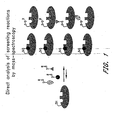
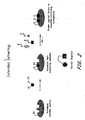


Classifications
-
- C—CHEMISTRY; METALLURGY
- C40—COMBINATORIAL TECHNOLOGY
- C40B—COMBINATORIAL CHEMISTRY; LIBRARIES, e.g. CHEMICAL LIBRARIES
- C40B30/00—Methods of screening libraries
- C40B30/04—Methods of screening libraries by measuring the ability to specifically bind a target molecule, e.g. antibody-antigen binding, receptor-ligand binding
-
- C—CHEMISTRY; METALLURGY
- C40—COMBINATORIAL TECHNOLOGY
- C40B—COMBINATORIAL CHEMISTRY; LIBRARIES, e.g. CHEMICAL LIBRARIES
- C40B40/00—Libraries per se, e.g. arrays, mixtures
- C40B40/04—Libraries containing only organic compounds
-
- C—CHEMISTRY; METALLURGY
- C40—COMBINATORIAL TECHNOLOGY
- C40B—COMBINATORIAL CHEMISTRY; LIBRARIES, e.g. CHEMICAL LIBRARIES
- C40B50/00—Methods of creating libraries, e.g. combinatorial synthesis
- C40B50/14—Solid phase synthesis, i.e. wherein one or more library building blocks are bound to a solid support during library creation; Particular methods of cleavage from the solid support
-
- G—PHYSICS
- G01—MEASURING; TESTING
- G01N—INVESTIGATING OR ANALYSING MATERIALS BY DETERMINING THEIR CHEMICAL OR PHYSICAL PROPERTIES
- G01N33/00—Investigating or analysing materials by specific methods not covered by groups G01N1/00 - G01N31/00
- G01N33/48—Biological material, e.g. blood, urine; Haemocytometers
- G01N33/50—Chemical analysis of biological material, e.g. blood, urine; Testing involving biospecific ligand binding methods; Immunological testing
- G01N33/68—Chemical analysis of biological material, e.g. blood, urine; Testing involving biospecific ligand binding methods; Immunological testing involving proteins, peptides or amino acids
- G01N33/6803—General methods of protein analysis not limited to specific proteins or families of proteins
- G01N33/6845—Methods of identifying protein-protein interactions in protein mixtures
-
- B—PERFORMING OPERATIONS; TRANSPORTING
- B01—PHYSICAL OR CHEMICAL PROCESSES OR APPARATUS IN GENERAL
- B01J—CHEMICAL OR PHYSICAL PROCESSES, e.g. CATALYSIS OR COLLOID CHEMISTRY; THEIR RELEVANT APPARATUS
- B01J2219/00—Chemical, physical or physico-chemical processes in general; Their relevant apparatus
- B01J2219/00274—Sequential or parallel reactions; Apparatus and devices for combinatorial chemistry or for making arrays; Chemical library technology
- B01J2219/00718—Type of compounds synthesised
- B01J2219/0072—Organic compounds
-
- C—CHEMISTRY; METALLURGY
- C07—ORGANIC CHEMISTRY
- C07B—GENERAL METHODS OF ORGANIC CHEMISTRY; APPARATUS THEREFOR
- C07B2200/00—Indexing scheme relating to specific properties of organic compounds
- C07B2200/11—Compounds covalently bound to a solid support
-
- G—PHYSICS
- G01—MEASURING; TESTING
- G01N—INVESTIGATING OR ANALYSING MATERIALS BY DETERMINING THEIR CHEMICAL OR PHYSICAL PROPERTIES
- G01N2500/00—Screening for compounds of potential therapeutic value
- G01N2500/04—Screening involving studying the effect of compounds C directly on molecule A (e.g. C are potential ligands for a receptor A, or potential substrates for an enzyme A)
-
- Y—GENERAL TAGGING OF NEW TECHNOLOGICAL DEVELOPMENTS; GENERAL TAGGING OF CROSS-SECTIONAL TECHNOLOGIES SPANNING OVER SEVERAL SECTIONS OF THE IPC; TECHNICAL SUBJECTS COVERED BY FORMER USPC CROSS-REFERENCE ART COLLECTIONS [XRACs] AND DIGESTS
- Y02—TECHNOLOGIES OR APPLICATIONS FOR MITIGATION OR ADAPTATION AGAINST CLIMATE CHANGE
- Y02P—CLIMATE CHANGE MITIGATION TECHNOLOGIES IN THE PRODUCTION OR PROCESSING OF GOODS
- Y02P20/00—Technologies relating to chemical industry
- Y02P20/50—Improvements relating to the production of bulk chemicals
- Y02P20/55—Design of synthesis routes, e.g. reducing the use of auxiliary or protecting groups
Definitions
- the present invention relates generally to a method for rapid identification and characterization of binding partners for a target molecule, and for providing modified binding partners with improved binding affinity. More specifically, the invention concerns an improved tethering method for the rapid identification of small molecule fragments that bind near one another on a target molecule.
- the method is particularly suitable for rapid identification of small molecule ligands that bind weakly near sites of interest through a preformed linker on a t arget b iological m olecule (TBM), such as a polypeptide or other macromolecule, to produce higher affinity compounds.
- TBM t arget b iological m olecule
- the drug discovery process usually begins with massive screening of compound libraries (typically hundreds of thousands of members) to identify modest affinity leads ( K d ⁇ 1 to 10 ⁇ M). Although some targets are well suited for this screening process, most are problematic because moderate affinity leads are difficult to obtain. Identifying and subsequently optimizing weaker binding compounds would improve the success rate, but screening at high concentrations is generally impractical because of compound insolubility and assay artifacts. Moreover, the typical screening process does not target specific sites for drug design, only those sites for which a high-throughput assay is available. Finally, many traditional screening methods rely on inhibition assays that are often subject to artifacts caused by reactive chemical species ordenaturants.
- the disulfide-tethered fragments can then be identified by a variety of methods, including mass spectrometry (MS), and their affinity improved by traditional approaches upon removal of the disulfide tether. See also PCT Publication No. WO 00/00823, published on January 6, 2000 .
- the present invention describes a strategy to rapidly and reliably identify ligands that have intrinsic binding affinity for different sites on a target molecule by using an extended tethering approach.
- This approach is based on the design of a S mall M olecule E xtender (SME) that is tethered, via a reversible covalent bond, to a T arget B idogical M olecule (TBM) at or near a first site of interest, and has a chemically reactive group reactive with small organic molecules to be screened for affinity to a second site of interest on the TBM.
- SME S mall M olecule E xtender
- TBM T arget B idogical M olecule
- the SME is used for screening a plurality of ligand candidates to identify a ligand that has intrinsic binding affinity for a second site of interest on the TBM. If desired, further SME's can be designed based on the identification of the ligand with binding affinity for the second site of interest, and the screening can be repeated to identify further ligands having intrinsic binding affinity for the same or other site(s) of interest on the same or related TBM's.
- One aspect of the invention concerns the design of a S mall M olecule E xtender (SME).
- the invention concerns a process comprising: the steps as in claim 1.
- the reactive group on the TBM is a nucleophile, preferably a thiol, protected thiol, reversible disulfide, hydroxyl, protected hydroxyl, amino, protected amino, carboxyl, or protected carboxyl group
- preferred first functional groups on the SME are groups capable of undergoing SN2-like additions or forming Michael-type adducts with the nucleophile.
- the SME is designed to contain a first functional group that forms a first reversible covalent bond with the nucleophile or electrophile on the TBM.
- the reactive group on the TBM preferably is a nucleophile.
- the reversible covalent bond preferably is a disulfide bond which is formed with a thiol, protected thiol, or reversible disulfide bond on the TBM.
- SME's designed in this manner are then contacted with the TBM simultaneously with contacting the TBM with a plurality of second small organic ligand candidates, each small organic ligand candidate having a free thiol, protected thiol, or a reversible disulfide group, under conditions of thiol exchange, wherein a ligand candidate having affinity for the second site of interest on the TBM forms a disulfide bond with the TBM-SME complex, whereby a second ligand is identified.
- the process may be performed in the presence of a disulfide reducing agent, such as mercaptoethanol, dithiothreitol (DTT), dithioerythritol (DTE), mercaptopropanoic acid, glutathione, cysteamine, cysteine, tri(carboxyethyl)phosphine (TCEP), and tris(cyanoethyl)phosphine.
- a disulfide reducing agent such as mercaptoethanol, dithiothreitol (DTT), dithioerythritol (DTE), mercaptopropanoic acid, glutathione, cysteamine, cysteine, tri(carboxyethyl)phosphine (TCEP), and tris(cyanoethyl)phosphine.
- the SME is designed based on selection of a small organic molecule having a thiol or protected thiol (disulfide monophore) from a library of such molecules by a T arget B iological M olecule (TBM) having a thiol at or near a site of interest.
- TBM T arget B iological M olecule
- the small molecule extender (SME) of step (iii) is designed to contain a first functional group that forms a first reversible disulfide bond with the thiol on the TBM.
- SME's designed in this manner are then contacted with the TBM simultaneously with contacting the TBM with a second library of small organic molecules, each small organic molecule having a free thiol or a reversible disulfide group, under conditions of thiol exchange under conditions wherein the member of the second library having affinity, preferably the highest affinity, for a second site of interest on the TBM (second ligand) forms a disulfide bond with the TBM-SME complex.
- the process may be performed in the presence of a disulfide reducing agent, such as those listed above.
- Determining the affinity of a ligand candidate (library member) for a first or second site of interest on a TBM can be carried out by competition between different library members in a pool, or by comparison (i.e. titration) with a reducing agent, such as those listed above.
- the processes of the present invention may be performed with a library in which each member forms a disulfide bond.
- a library is one in which each member forms a cysteamine disulfide.
- a preferred molar ratio of reducing agent to total disulfides is from about 1:100 to about 100:1 and more preferably from about 1:1 to about 50:1.
- the tethering process may be performed by contacting members of the disulfide library one at a time with the TBM or in pools of 2 or more. When pools are used it is preferred to use from 5-15 library members per pool.
- the identity of the small molecules that bind to the SME and/or a site of interest on a TBM may be determined, for example, by mass spectrometry (MS), or by means of a detectable tag.
- MS mass spectrometry
- each member of the pool differs in molecular weight, preferably by about 10 Daltons.
- Identification can be performed by measuring the mass of the TBM-library member complex, or by releasing the library member from the complex first or by using a functional assay, e.g. ELISA, enzyme assay etc.
- Comparative Figure 1 is a schematic illustration of the basic tethering approach for side-directed ligand discovery.
- a target molecule containing or modified to contain a free thiol group (such as a cysteine-containing protein) is equilibrated with a disulfide-containing library in the presence of a reducing agent, such as 2-mercaptoethanol.
- a reducing agent such as 2-mercaptoethanol.
- Most of the library members will have little or no intrinsic affinity for the target molecule, and thus by mass action the equilibrium will lie toward the unmodified target molecule. However, if a library member does show intrinsic affinity for the target molecule, the equilibrium will shift toward the modified target molecule, having attached to it the library member with a disulfide tether.
- Comparative Figure 2 is a schematic illustration of the static extended tethering approach.
- a target molecule containing or modified to contain a free thiol group such as a cysteine-containing protein
- a thiol-containing extender comprising a reactive group capable of forming an irreversible covalent bond with the thiol group on the target molecule, a portion having intrinsic affinity for the target molecule, and a thiol group.
- the complex formed between the target molecule and the thiol-containing extender is then used to screen a library of disulfide-containing monophores to identify a library member that has the highest intrinsic binding affinity for a second binding site on the target molecule.
- Figure 3 illustrates the dynamic extended tethering strategy, where the extender is bifunctional and contains two functional groups (usually disulfide), each capable of forming reversible covalent bonds.
- R reactive group.
- Figure. 4 illustrates the chemical synthesis of a specific extender (2,6-dichloro-benzoic acid 3-(2-acetylsulfanyl-acetylamino)-4-carboxy-2-oxo-butyl ester), as described in Example 2.
- Figure 5 shows the structural comparison between a known tetrapeptide inhibitor of Caspase-3 and a generic extender synthesized based on the inhibitor.
- Figure 6 shows mass spectra of two representative extended tethering experiments.
- target refers to a chemical or biological entity for which a ligand has intrinsic binding affinity.
- the target can be a molecule, a portion of a molecule, or an aggregate of molecules.
- the target is capable of reversible attachment to a ligand via a reversible or irreversible covalent bond (tether).
- target molecules include polypeptides or proteins (e.g., enzymes, including proteases, e.g.
- TBMs Target Biological Molecules
- TBM Target Biological Molecule
- the TBM is a polypeptide that comprises two or more amino acids, and which possesses or is capable of being modified to possess a reactive group for binding to members of a library of small organic molecules.
- polynucleotide when used in singular or plural, generally refers to any polyribonucleotide or polydeoxribonucleotide, which may be unmodified RNA or DNA or modified RNA or DNA.
- polynucleotides as defined herein include, without limitation, single- and double-stranded DNA, DNA including single- and double-stranded regions, single- and double-stranded RNA, and RNA including single-and double-stranded regions, hybrid molecules comprising DNA and RNA that may be single-stranded or, more typically, double-stranded or include single- and double-stranded regions,
- polynucleotide as used herein refers to triple-stranded regions comprising RNA or DNA or both RNA and DNA.
- the strands in such regions may be from the same molecule or from different molecules.
- the regions may include all of one or more of the molecules, but more typically involve only a region of some of the molecules.
- One of the molecules of a triple-helical region often is an oligonucleotide.
- the term "polynucleotide” specifically includes DNAs and RNAs that contain one or more modified bases.
- DNAs or RNAs with backbones modified for stability or for other reasons are “polynucleotides” as that term is intended herein.
- DNAs or RNAs comprising unusual bases, such as inosine, or modified bases, such as tritylated bases are included within the term "polynucleotides” as defined herein.
- polynucleotide embraces all chemically, enzymatically and/or metabolically modified forms of unmodified polynucleotides, as well as the chemical forms of DNA and RNA characteristic of viruses and cells, including simple and complex cells.
- a "ligand” as defined herein is an entity which has an intrinsic binding affinity for the target.
- the ligand can be a molecule, or a portion of a molecule which binds the target.
- the ligands are typically small organic molecules which have an intrinsic binding affinity for the target molecule, but may also be other sequence-specific binding molecules, such as peptides (D-, L- or a mixture of D- and L-), peptidomimetics, complex carbohydrates or other oligomers of individual units or monomers which bind specifically to the target.
- the term “monophore” is used herein interchangeably with the term “ligand” and refers to a monomeric unit of a ligand.
- diaphore denotes two monophores covalently linked to form a unit that has a higher affinity for the target because of the two constituent monophore units or ligands binding to two separate but nearby sites on the target.
- the binding affinity of a diaphore that is higher than the product of the affinities of the individual components is referred to as "avidity.”
- the term diaphore is used irrespective of whether the unit is covalently bound to the target or existing separately after its release from the target.
- the term also includes various derivatives and modifications that are introduced in order to enhance binding to the target.
- a "site of interest" on a target as used herein is a site to which a specific ligand binds, which may include a specific sequence of monomeric subunits, e.g. amino acid residues, or nucleotides, and may have a three-dimensional structure.
- the molecular interactions between the ligand and the site of interest on the target are non-covalent, and include hydrogen bonds, van der Waals interactions and electrostatic interactions.
- the site of interest broadly includes the amino acid residues involved in binding of the target to a molecule with which it forms a natural complex in vivo or in vitro.
- Small molecules are usually less than 10 kDa molecular weight, and include but are not limited to synthetic organic or inorganic compounds, peptides, (poly)nucleotides, (oligo)saccharides and the like. Small molecules specifically include small non-polymeric (e.g. not peptide or polypeptide) organic and inorganic molecules. Many pharmaceutical companies have extensive libraries of such molecules, which can be conveniently screened by using the extended tethering approach of the present invention. Preferred small molecules have molecular weights of less than about 300 Da and more preferably less than about 650 Da.
- tether refers to a structure which includes a moiety capable of forming a reversible or reversible covalent bond with a target (including Target Biological Molecules as hereinabove defined), near a site of interest.
- SME mall M olecule E xtender
- SME S mall M olecule E xtender
- the phrase "S mall M olecule E xtender" (SME) as used herein refers to a small organic molecule having a molecular weight of from about 75 to about 1,500 daltons and having a first functional group reactive with a nucleophile on a TM and a second functional group reactive with a ligand candidate or members of a library of ligand candidates.
- the first functional group is reactive with a nucleophile on a TBM (capable of forming a reversible covalent bond with such -nucleophile), and the reactive group at the other end of the SME is a free or protected thiol or a group that is a precursor of a free of protected thiol.
- the small molecule extender is capable of forming a noncovalent bond with a first site of interest on the TBM (i.e. has an inherent affinity for such first site of interest).
- a first site of interest on the TBM i.e. has an inherent affinity for such first site of interest.
- small organic (including non-polymeric) molecules containing metals such as Cd, Hg and As which may form a bond with the nucleophile e.g. SH of the TBM.
- reversible covalent bond refers to a covalent bond which can be broken, preferably under conditions that do not denature the target. Examples include, without limitation, disulfides, Schiff-bases, thioesters, and the like.
- reactive group with reference to a ligand is used to describe a chemical group or moiety providing a site at which covalent bond with the ligand candidates (e.g. members of a library or small organic compounds) may be formed.
- the reactive group is chosen such that it is capable of forming a covalent bond with members of the library against which it is screened.
- antagonist is used in the broadest sense and includes any ligand that partially or fully blocks, inhibits or neutralizes a biological activity exhibited by a target, such as a TBM.
- agonist is used in the broadest sense and includes any ligand that mimics a biological activity exhibited by a target, such as a TBM, for example, by specifically changing the function or expression of such TBM, or the efficiency of signaling through such TBM, thereby altering (increasing or inhibiting) an already existing biological activity or triggering a new biological activity.
- modified to contain and “modified to possess” are used interchangeably, and refer to making a mutant, variant or derivative of the target, or the reactive nucleophile or electrophile, including but not limited to chemical modifications.
- a mutant, variant or derivative of the target or the reactive nucleophile or electrophile, including but not limited to chemical modifications.
- Another example is the conversion of the thiol group of a cysteine residue to an amine group.
- reactive nucleophile refers to a nucleophile that is capable of forming a covalent bond with a compatible functional group on another molecule under conditions that do not denature or damage the target, e.g. TBM.
- the most relevant nucleophiles are thiols, alcohols, activated carbonyls, epoxides, aziridines, aromatic sulfonates, hemiacetals, and amines.
- reactive electrophile refers to an electrophile that is capable of forming a covalent bond with a compatible functional group on another molecule, preferably under conditions that do not denature or otherwise damage the target, e.g. TMB.
- the most relevant electrophiles are imines, carbonyls, epoxides, aziridies, sulfonates; and hemiacetals.
- a "first site of interest" on a target refers to a site that can be contacted by at least a portion of the SME when it is covalently bound to the reactive nucleophile.
- the first site of interest may, but does not have to possess the ability to form a noncovalent bond with the SME.
- group reactive with the nucleophile refers to a functional group on the SME that can form a covalent bond with the nucleophile on the TBM under conditions that do not denature or otherwise damage the TBM.
- protected thiol refers to a thiol that has been reacted with a group or molecule to form a covalent bond that renders it less reactive and which may be deprotected to regenerate a free thiol.
- adjusting the conditions refers to subjecting a target, such as a TBM to any individual, combination or series of reaction conditions or reagents necessary to cause a covalent bond to form between the ligand and the target, such as a nucleophile and the group reactive with the nucleophile on the SME, or to break a covalent bond already formed.
- covalent complex refers to the combination of the SME and the TBM which is both covalently bonded through the nucleophile on the TBM with the group reactive with the nucleophile on the SME, and non-covalently bonded through a portion of the small molecule extender and the first site of interest on the TBM.
- exchangeable disulfide linking group refers to the library of molecules screened with the covalent complex displaying the thiol-containing small molecule extender, where each member of the library contains a disulfide group that can react with the thiol or protected thiol displayed on the covalent complex to form a new disulfide bond when the reaction conditions are adjusted to favor such thiol exchange.
- phase "highest affinity for the second site of interest” as used herein refers to the molecule having the greater thermodynamic stability toward the second site of interest on the TBM that is preferentially selected from the library of disulfide-containing library members.
- “Functional variants” of a molecule herein are variants having an activity in common with the reference molecule.
- Targets such as target biological molecules (TBMs), that find use in the present invention include, without limitation, molecules, portions of molecules and aggregates of molecules to which a ligand candidate may bind, such as polypeptides or proteins (e.g., enzymes, receptors, transcription factors, ligands for receptors, growth factors, immunoglobulins, nuclear proteins, signal transduction components, allosteric enzyme regulators, and the like), polynucleotides, peptides, carbohydrates, glycoproteins, glycolipids, and other macromolecules, such as nucleic acid-protein complexes, chromatin or ribosomes, lipid bilayer-containing structures, such as membranes, or structures derived from membranes, such as vesicles.
- the target can be obtained in a variety of ways, including isolation and purification from natural source, chemical synthesis, recombinant production and any combination of these and similar methods.
- Preferred enzyme target families are cysteine proteases, aspartyl proteases, serine proteases, metalloproteases, kinases, phosphatases, polymerases and integrases.
- Preferred protein:protein targets are 4-helical cytokines, trimeric cytokines, signaling modules, transcription factors and chemokines.
- the target is a TBM, and even more preferably is a polypeptide, especially a protein.
- Polypeptides, including proteins, that find use herein as targets for binding ligands, preferably small organic molecule ligands include virtually any polypeptide (including short polypeptides also referred to as peptides) or protein that comprises two or more binding sites of interest, and which possesses or is capable of being modified to possess a reactive group for binding to a small organic molecule or other ligand (e.g. peptide).
- Polypeptides of interest may be obtained commercially, recombinantly, by chemical synthesis, by purification from natural source, or otherwise and, for the most parts are proteins, particularly proteins associated with a specific human disease or condition, such as cell surface and soluble receptor proteins, such as lymphocyte cell surface receptors, enzymes, such as proteases (e.g., serine, cysteine, and aspartyl proteases) and thymidylate synthetase, steroid receptors, nuclear proteins, allosteric enzymes, clotting factors, kinases (both serine and threonine) and dephosphorylases (or phophatases, either serine/threonine or protein tyrosine phosphatases, e.g.
- proteases e.g., serine, cysteine, and aspartyl proteases
- thymidylate synthetase steroid receptors
- nuclear proteins allosteric enzymes
- clotting factors kin
- PTP's especially PTP1B
- bacterial enzymes especially those associate with HIV, influenza, rhinovirus and RSV
- signal transduction molecules especially those associate with HIV, influenza, rhinovirus and RSV
- transcription factors especially those associate with HIV, influenza, rhinovirus and RSV
- signal transduction molecules especially those associate with HIV, influenza, rhinovirus and RSV
- transcription factors especially those associate with HIV, influenza, rhinovirus and RSV
- signal transduction molecules especially those associate with HIV, influenza, rhinovirus and RSV
- transcription factors especially those associate with HIV, influenza, rhinovirus and RSV
- proteins or enzymes associated with DNA and/or RNA synthesis or degradation immunoglobulins, hormones, receptors for various cytokines including, for example, erythropoietin (EPO), granulocyte colony stimulating (G-CSF) receptor, granulocyte macrophage colony stimulating (GM-CSF) receptor, thrombopoietin (TPO), interleukins, e.g.
- EPO erythropo
- An important group of human inflammation and immunology targets includes: IgE/IgER, ZAP-70, Ick, syk, ITKIBTK, TACE, Cathepsin S and F, CD11a, LFA/ICAM, VLA-4, CD28/B7, CTLA4, TNF alpha and beta, (and the p55 and p75 TNF receptors), CD40L, p38 map kinase, IL-2, IL-4, II-13, IL-15, Rac 2, PKC theta, IL-8, TAK-1, jnk, IKK2 and IL-18.
- Still other important specific targets include: caspases 1, 3, 8 and 9, IL-1/IL-1 receptor, BACE, HIV integrase, PDE IV, Hepatitis C helicase, Hepatitis C protease, rhinovirus protease, tryptase, cPLA (cytosolic Phospholipase A2), CDK4, c-jun kinase, adaptors such as Grb2, GSK-3, AKT, MEKK-1, PAK-1, raf, TRAF's 1-6, Tie2, ErbB 1 and 2, FGF, PDGF, PARP, CD2, C5a receptor, CD4, CD26, CD3, TGF-alpha, NF-kB, IKK beta, STAT 6, Neurokinnin-1, PTP-1B, CD45, Cdc25A, SHIP-2, TC-PTP, PTP-alpha, LAR and human p53, bax/bcl2 and mdm2.
- the TBM of interest will be chosen such that it possesses or is modified to possess a reactive group which is capable of forming a reversible or irreversible covalent bond with a ligand having intrinsic affinity for a site of interest on the target.
- a reactive group for example, amine, thiol, aldehyde, ketone, hydroxyl groups, and the like
- ligands such as members of an organic small molecule library
- polypeptides often have amino acids with chemically reactive side chains (e.g., cysteine, lysine, arginine, and the like).
- synthetic technology presently allows the synthesis of biological target molecules using, for example, automates peptide or nucleic acid synthesizers, which possess chemically reactive groups at predetermined sites of interest.
- a chemically reactive group may be synthetically introduced into the TBM, during automated synthesis.
- the target comprises at least a first reactive group which, if the target is a polypeptide, may or may not be associated with a cysteine residue of that polypeptide, and preferably is associated with a cysteine residue of the polypeptide, if the tether chosen is a free or protected thiol group (see below).
- the target preferably contains, or is modified to contain, only a limited number of free or protected thiol groups, preferably not more than about 5 thiol groups, more preferably not more than about 2 thiol groups, more preferably not more than one free thiol group, although polypeptides having more free thiol groups will also find use.
- the target, such as TBM, of interest may be initially obtained or selected such that it already possesses the desired number of thiol groups, or may be modified to possess the desired number of thiol groups.
- a tether can, for example, be attached to the polynucleotide on a base at any exocyclic amine or any vinyl carbon, such as the 5- or 6- position of pyrimidines, 8- or 2-positions of purines, at the 5' or 3' carbons, at the sugar phosphate backbone, or at internucleotide phosphorus atoms.
- a tether can be introduced also at other positions, such as the 5-position of thymidine or uracil.
- a tether in the case of a double-stranded DNA, for example, can be located in a major or minor groove, close to the site of interest, but not so close as to result in steric hindrance, which might interfere with binding of the ligand to the target at the site of interest.
- a target e.g. a polypeptide of interest such that it possesses a desired number of free thiol groups that are available for covalent binding to a ligand candidate comprising a free thiol group.
- Such techniques include, for example, site-directed mutagenesis of the nucleic acid sequence encoding the target polypeptide such that it encodes a polypeptide with a different number of cysteine residues. Particularly preferred is site-directed mutagenesis using polymerase chain reaction (PCR) amplification (see, for example, U.S. Pat. No.
- Amino acid sequence variants with more than one amino acid substitution may be generated in one of several ways. If the amino acids are located close together in the polypeptide chain, they may be mutated simultaneously, using one oligonucleotide that codes for all of the desired amino acid substitutions. If, however, the amino acids are located some distance from one another (e.g. separated by more than ten amino acids), it is more difficult to generate a single oligonucleotide that encodes all of the desired changes. Instead, one of two alternative methods may be employed. In the first method, a separate oligonucleotide is generated for each amino acid to be substituted.
- the oligonucleotides are then annealed to the single-stranded template DNA simultaneously, and the second strand of DNA that is synthesized from the template will encode all of the desired amino acid substitutions.
- the alternative method involves two or more rounds of mutagenesis to produce the desired mutant.
- Sources of new reactive groups e.g. cysteines can be placed anywhere within the target. For example, if a cysteine is introduced onto the surface of the protein in an area known to be important for protein-protein interactions, small molecules can be selected that bind to and block this surface.
- TBM target biological molecules
- TBM's target biological molecules
- TAF1 UNSURE UNSURE (see below) UNSURE NA SWS Q99142 (?? Tobacco Prot.) NA; tobacco Tumor Activating Factor NA GB AAB30018 NA; Tumor-derived Adhesion Factor NA GB D45198 NA; Template Activating Factor HIV-Integrase 1BL3 (2.0) SWS P12497 Maignan, S., et al., J Mol Biol, 282(2):359-68 (1998 ). 1EXQ SWS P04585 Chen, J. C-H., et al., PNAS USA, 97(15):8233-8 (2000 ).
- PDE-IV 1FOJ PDE4B2B SWS Q07343 Xu, R. X., et al., Science., 288(5472):1822-5 (2000 ).
- IL-2 NA in-house
- IL-1 NA SWS P01584 (IL-1 B Cytokine) NA IL-1R 1G0Y SWS P14778 Vigers, GPA, et al., J Biol Chem., 275(47):36927-33 (2000 ).
- IL-8 1QE6 SWS P10145 Gerber, N., et al., Proteins, 38(4):361-7 (2000 ).
- RANTES-R NA SWS P32246 NA RANTES NA GBXP_035842 NA NA SWS P13501 NA
- (T-cell specific RANTES protein) MCP-1 NA SWS Q14805 NA
- (Metaphase chromosomal protein) MCP-1 1D0K SWS P13500 Lubowski, J., et al., Nat Struct Biol., 4(1):64-9 (1997 ).
- TRAF-A (TRAF-1?) NA SWS Q13077 (TRAF-1) NA TRAF-B (TRAF-2?) NA SWS Q12933 (TRAF-2) NA 1D00(TRAF-2) GB S56163 (TRAF-2) (2.0) Ye, H., et al., Mol Cell, 4(3):321-30 (1999 ).
- TRAF-C (TRAF-3?) NA SWS Q13114 (TRAF-3) NA TRAF-D (TRAF-4?) NA GB XP_008483 (TRAF-4) NA TRAF-E (TRAF-5?) NA GB XP_010656 (TRAF-5) NA VEGF 1FLT SWS P15692 Wiesmann, C., et al., Cell, 91(5):695-704 (1997 ).
- NA SWS P08235 NA Estrogen Receptor 3ERD SWS P03372 Shiau, A. K., Barstad, D., Loria, P. M., Cheng, L., Kushner, P. J., Agard, D. A., Greene, G.
- NA SWS Q12933 (TRAF-2) NA 1 FLK (TRAF-3) GB Q13114 (TRAF-3) (2.8) Ni, C.-Z., et al., Proc Natl Acad Sci U S A., 97(19):10395-9 (2000 ).
- BAX/BCL-2 NA SWS Q07812 (BAX alpha) NA NA SWS Q07814 (BAX beta) NA NA SWS Q07815 (BAX gamma) NA NA SWS P55269 (BAX delta) NA NA SWS P10415 (BCL-2) NA IgE 1F6A (3.5) SWS P01854 (IgE chain C) Garman, S. C., et al., T.
- the "site of interest" on a particular target is defined by the residues that are involved in binding of the target to a molecule with which it forms a natural complex in vivo or in vitro.
- TBM Target Biological Molecule
- the site of interest is defined by the amino acid residues that participate in binding to (usually by non-covalent association) to a ligand of the target.
- the target biological molecule is a protein that exerts its biological effect through binding to another protein, such as with hormones, cytokines or other proteins involved in signaling, it may form a natural complex in vivo with one or more other proteins.
- the site of interest is defined as the critical contact residues involved in a particular protein:protein binding interface.
- Critical contact residues are defined as those amino acids on protein A that make direct contact with amino acids on protein B, and when mutated to alanine decrease the binding affinity by at least 10 fold and preferably at least 20 fold, as measured with a direct binding or competition assay (e.g. ELISA or RIA).
- Scanning amino acid analysis can be employed to identify one or more amino acids along a contiguous sequence.
- preferred scanning amino acids are relatively small, neutral amino acids.
- amino acids include alanine, glycine, serine, and cysteine.
- Alanine is typically a preferred scanning amino acid among this group because it eliminates the side-chain beyond the beta-carbon and is less likely to alter the main-chain conformation of the variant ( Cunningham and Wells, Science, 244: 1081-1085 (1989 )). Alanine is also typically preferred because it is the most common amino acid. Further, it is frequently found in both buried and exposed positions ( Creighton, The Proteins, (W.H. Freeman & Co., N.Y .); Chothia, J. Mol. Biol., 150:1 (1976 )). If alanine substitution does not yield adequate amounts of variant, an isosteric amino acid can be used.
- the site of interest can include amino acids that make contact with, or lie within, about 4 angstroms of a bound substrate, inhibitor, activator, cofactor or allosteric modulator of the enzyme.
- the site of interest would include the substrate binding channel from P4 to P4', residues involved in catalytic function (e.g. the catalytic triad) and any cofactor (e.g. Zn) binding site.
- the site of interest would include the substrate-binding channel (as above) in addition to the ATP binding site.
- the site of interest would include the substrate binding region as well as the site occupied by NAD/NADH.
- the site of interest would include all residues contacting the cAMP substrate, as well as residues involved in binding the catalytic divalent cations ( Xu, R. X. et al. Science 288:1822-1825 (2000 )).
- the site of interest includes all residues in the substrate binding region, residues in contact with the natural allosteric inhibitor glucose-6-phosphate, and residues in novel allosteric sites such as those identified in binding other inhibitors such as CP320626 ( Oikonomakos NG, et al. Structure Fold Des 8:575-584 (2000 )).
- the TBM's either contain, or are modified to contain, a reactive residue at or near a site of interest.
- the TBM's contain or are modified to contain a thiol-containing amino acid residue at or near a site of interest.
- the site of interest is calculated. Once the site of interest is known, a process of determining which amino acid residue within, or near, the site of interest to modify is undertaken. For example, one preferred modification results in substituting a cysteine residue for another amino acid residue located near the.site of interest.
- TBM three dimensional description of the TBM is obtained from one of several well-known sources.
- the tertiary structure of many TBMs has been determined through x-ray crystallography experiments. These x-ray structures are available from a wide variety of sources, such as the Protein Databank (PDB) which can be found on the Internet at http://www.rcsb.org. Tertiary structures can also be found in the Protein Structure Database (PSdb) which is located at the Pittsburg Supercomputer Center at http://www.psc.com.
- PDB Protein Databank
- PSdb Protein Structure Database
- a measurement is made based on a structural model of the wild type, or a. variant form, of the target biological molecule from any atom of an amino acid within the site of interest across the surface of the protein for a distance of approximately 10 angstroms.
- Variants which have been modified to contain the desired reactive groups (e.g. thiol groups, or thiol-containing residues) are based on the identification of one or more wild-type amino acid(s) on the surface of the target biological molecule that fall within that approximate 10-angstrom radius from the site of interest.
- any amino acid having at least one atom falling within the about 10 angstrom radius from any atom of an amino acid within the site of interest is a potential residue to be modified to a thiol containing residue.
- Preferred residues for modification are those that are solvent-accessible. Solvent accessibility may be calculated from structural models using standard numeric ( Lee, B. & Richards, F. M. J. Mol. Biol 55:379-400 (1971 ); Shrake, A. & Rupley, J. A. J. Mol. Biol. 79:351-371 (1973 )) or analytical ( Connolly, M. L. Science 221:709-713 (1983 ); Richmond, T. J. J. Mol. Biol. 178:63-89 (1984 )) methods.
- a potential cysteine variant is considered solvent-accessible if the combined surface area of the carbon-beta (CB), or sulfur- gamma (SG) is greater than 21 ⁇ 2 when calculated by the method of Lee and Richards (Lee, B. & Richards, F. M. J. Mol. Biol 55:379-400 (1971 )). This value represents approximately 33% of the theoretical surface area accessible to a cysteine side-chain as described by Creamer et al . ( Creamer, T. P. et al. Biochemistry 34:16245-16250 (1995 )).
- the residue to be mutated to cysteine, or another thiol-containing amino acid residue does not participate in hydrogen-bonding with backbone atoms or, that at most, it interacts with the backbone through only one hydrogen bond.
- Wild-type residues where the side-chain participates in multiple (>1) hydrogen bonds with other side-chains are also less preferred.
- Variants for which all standard rotamers (chi1 angle of -60°, 60°, or 180°) can introduce unfavorable steric contacts with the N, CA, C, O, or CB atoms of any other residue are also less preferred.
- Unfavorable contacts are defined as interatomic distances that are less than 80% of the sum of the van der Waals. radii of the participating atoms.
- Wild-type residues that fall within highly flexible regions of the protein are less preferred.
- highly flexible regions can be defined as segments where the backbone atoms possess weak electron density or high temperature factors (> 4 standard deviations above the mean temperature factor for the structure).
- highly flexible regions can be defined as segments possessing ⁇ 5 experimental restraints (derived from distance, dihedral coupling, and H-bonding data) per residue, or regions displaying a high variability (> 2.0 A 2 RMS deviation) among the models in the ensemble. Additionally, residues found on convex "ridge" regions adjacent to concave surfaces are more preferred while those within concave regions are less preferred cysteine residues to be modified.
- Convexity and concavity can be calculated based on surface vectors ( Duncan, B. S. & Olson, A. J. Biopolymers 33:219-229 (1993 )) or by determining the accessibility of water probes placed along the molecular surface ( Nicholls, A. et al. Proteins 11:281-296 (1991 ); Brady, G. P., Jr. & Stouten, P. F. J. Comput. Aided Mol. Des. 14:383-401 (2000 )). Residues possessing a backbone conformation that is nominally forbidden for L-amino acids ( Ramachandran, G. N. et al. J. Mol. Biol.
- preferred variants are those which, when mutated to cysteine and linked via a disulfide bond to an alkyl tether, would possess a conformation that directs the atoms of that tether towards the site of interest.
- Two general procedures can be used to identify these preferred variants. In the first procedure, a search is made of unique structures ( Hobohm, U. et al. Protein Science 1:409-417 (1992 )) in the Protein Databank ( Berman, H. M. et al.
- the SME is a double reversible covalent bond SME ("double disulfide" extender), that is, this SME is bifunctional and contains two functional groups (usually disulfide) capable of forming reversible covalent bonds.
- This SME forms a "dynamic" or first reversible covalent bond through a first functional group on the SME with the nucleophile on the TBM, thereby forming a reversible TBM-SME complex (7 below).
- the SME also forms a non-covalent bond with a first site of interest on the TBM (the portion of the SME that forms a non-covalent bond with the TBM is referred to herein as SME').
- the SME contains or is modified to contain a second functional group capable of forming a second reversible bond with a library member of a second library of small organic molecules, each molecule having a functional group capable of forming a reversible bond with the first or second functional group of the SME.
- the TBM-SME complex and the second library are subjected to conditions wherein the library member having the highest affinity for a second site of interest on the TBM forms a reversible bond with the TBM-SME complex (8 below).
- the covalent bonds are disulfides, which may be reversible in the presence of a reducing agent.
- a TMB containing or modified to contain a thiol or protected thiol is incubated with a first library of small organic molecules containing a thiol or protected thiol (a disulfide-containing monophore) under conditions, such as with a reducing agent, wherein at least one member of the library forms a disulfide bond linking the selected library member with the TBM.
- this process is repeated with a library of TBM's differing from one another by the location of the thiol or protected thiol, i.e. different cysteine mutants of the same protein.
- each member of the small molecule library differs in molecular weight from each of the other library members.
- the small molecule library contains from 1-100 members, more preferable from 5-15 and most preferably about 10 members.
- the selected small molecule library member also forms a noncovalent bond with a first site of interest on the TBM.
- the selected monophore, or a derivative thereof, is then modified to contain a second thiol or protected thiol thereby forming a "double disulfide" extender.
- This synthetic double disulfide extender is then incubated with the TBM in the presence of a second library of small organic molecules containing a thiol or protected thiol (the library may be the same or different from the first library) under conditions, such as with a reducing agent like mercaptoethanol, wherein at least one member of the second library forms a disulfide bond linking the selected library member with the TBM through the double disulfide extender as shown in 8 above.
- a diaphore is synthesized based on the two selected library members (monophores).
- synthesis of the dynamic extender proceeds generically, that is by modification of the monophore linker without any modification of the portion of the monophore that forms a non-covalent bond with the TBM.
- the extender usually arises from the screening of a disulfide monophore library as shown in Figure 3 .
- a typical monophore selected from the library or pool will contain a linker of 2 or 3 methylene units between the disulfide that links the monophore to the TBM cysteine and the portion of the monophore that binds non-covalently to the first site of interest on the TBM.
- This monophore linker can be derivatized as shown below to produce a double disulfide extender in which the "R" or variable group of the monophore remains invariant and becomes the portion of the extender (SME') that binds non-covalently with the first site of interest on the TBM.
- the monophore is derivatized either at the methylene nearest the cysteamine nitrogen to produce dynamic double disulfide extender 1 or at the cysteamine nitrogen itself to produce the symmetrical dynamic double disulfide extender 2.
- the alpha carbon can be derivatized to produce a generic dynamic double disulfide extender of the form shown in 3 below.
- the amide nitrogen may be derivatized with an acyl or sulfonyl to produce an extender of the form shown in 4 above.
- a second strategy involves derivatizing the portion of the monophore that binds non-covalently to the first site of interest on the TBM.
- the derivatization is preferably carried out at a site that minimally alters the binding of the monophore to the first site of interest as illustrated below.
- the dynamic tether is shown bound to the TBM thiol forming the TBM-SME complex, where R' is the cysteamine radical.
- This complex can then be contacted with a disulfide monophore or library of disulfide monophores to obtain a linked compound having a higher affinity for the TBM than either the SME or selected monophore alone.
- a second example of a SME designed from a disulfide monophore that binds to the TBM is shown below.
- This dynamic SME can be contacted with the TBM in the presence of one or more disulfide monophores to form a covalent TBM-SME-monophore complex where the SME has an affinity for the first site of interest and the monophore has an affinity for the second site of interest on the TBM.
- Detection and identification of the structure of the TBM-SME-monophore complex can be carried out by mass spectrometry or inhibition in a functional assay (e.g. ELISA, enzyme assay etc.).
- a functional assay e.g. ELISA, enzyme assay etc.
- SME's are often customized for a particular TBM or family of TBM's.
- quinazoline derivatives are capable of forming static or dynamic extenders with the EGF receptor or an "RD" kinase.
- cys 773 is a suitable nucleophile for either a static or dynamic quinazoline extender as shown below; where R 1 is linked to cys 773 through a Michael acceptor or disulfide,
- Phosphotyrosine (P-tyr), phosphoserine (P-ser) and phoshpothreonine (P-thr) mimetics or surrogates may be used as extenders in the present invention to identify fragments that interact with subsites nearby to improve specificity or affinity for a target phosphatase.
- P-tyr Phosphotyrosine
- P-ser phosphoserine
- P-thr phoshpothreonine mimetics or surrogates
- Phosphotyrosine (P-tyr) mimetics are examples of SME's that may be customized for phosphatases like PTP-1B, LAR etc.
- PTP-1B P-tyr mimetics derivatized with mercapto-propanoic acid and/or cystaeamine or the protected forms thereof, shown below, bind to the active site of a PTP-1B cys mutant.
- Such a compound may be used as a dynamic extender to select a second fragment by covalent tethering as described above.
- the compound shown above when bound to the target and titrated against - mercaptoethanol ( ) displays a BME 50 (the concentration of -mercaptoethanol that, at equalibrium, is capable of displacing 50 % of the bound compound from the target) of about 2.5 mM.
- BME + library thiols total thiol concentration
- the total thiol concentration in the second fragment screening step should be 2.5 mM or less and more preferrabley about 2 fold less, e.g. about 1 mM or less.
- the dynamic extenter may be converted to a static extender removing the second fragment screening total thiol concentration issue.
- converting a dynamic extender to a static extender it is important to maintain the same atom count so that non-covalent binding of the static extender to the target will not be distorted. For similar reasons it is important to minimize introduction of other bulky atoms or groups.
- the above dynamic extender may be converted into the static extenders defined below. where R 1 is selected from and where R 2 is selected from and
- an extender may be a peptide reversibly bound to the TBM.
- the peptide is from about 2-15 residues long, preferable from 5 to 10 residues, and may be composed of natural and/or artificial alpha amino acids.
- An example of such a peptide extender is an alpha helical p53 fragment peptide (or smaller known non-natural peptides) that are capable of binding to the N-terminal domain of MDM2 in a deep hydrophobic cleft with nM affinities.
- BCL-2 and BCL-xL are also known to contain deep peptide-binding grooves analogous the MDM2. Peptides that bind to these targets may also be useful peptide extenders according to the present invention.
- a fragment peptide of p53 may form a reversible (e.g. disulfide) bond through an existing (e.g. cys) thiol or an introduced thiol (introduced cys, cysteamine derivatized with the carboxyl terminus or mercapto-propanoic acid through the amino terminus) on the peptide with an existing or introduced thiol on the TBM.
- a TBM-peptide extender complex will be formed which is capable of being used to select a thiol or disulfide fragment from a subsequent covalent tether screen.
- This dynamic peptide extender will have one other free or protected thiol (e.g.
- TBM-peptide extender complex one of the above not used to form the TBM-peptide extender complex), which is contacted with a library of thiol or protected thiol fragments under conditions suitable for forming a covalent disulfide bond with a fragment having affinity for the TBM.
- Such a peptide extender may also be a synthetic peptide such as the "Z-WQPY" peptide where the TBM is the IL-1 receptor.
- the peptide FEWTPGYWQPYALPL or fragments, mutants or analogues thereof can be used as a dynamic extender as described above to discover fragments via covalent tethering, where the disulfide tether is to or with the extender and the non-covalent bond is between the selected fragment and the TBM.
- organometallic reagents such as organoboron, reagents, at p. 662
- organometallic reagents such as organoboron, reagents
- organoboron, reagents at p. 662
- organotin, and organozinc reagents formation of oxazolidines ( Ede et al., Tetrahedron Letts. 28:7119-7122 [1997 ]); formation of thiazolidines ( Patek et al., Tetrahedron Letts.
- disulfide-containing small molecule libraries may be made from commercially available carboxylic acids and protected cysteamine (e.g. mono-BOC-cysteamine) by adapting the method of Parlow et al., Mol. Diversity 1:266-269 (1995 ), and can be screened for binding to polypeplides
- the TBM-SME complex may also be formed under denaturing conditions, followed by refolding the complex by methods known in the art.
- the SME and the covalent bond should not substantially alter the three-dimensional structure of the target, so that the ligands will recognize and bind to a site of interest on the target with useful site specificity.
- the SME should be substantially unreactive with other sites on the target under the reaction and assay conditions.
- MS mass spectroscopy
- a mass spectrometer first converts molecules into gas-phase ions, then individual ions are separated on the basis of m/z ratios and are finally detected.
- a mass analyzer which is an integral part of a mass spectrometer, uses a physical property (e.g. electric or magnetic fields, or time-of-flight [TOF]) to separate ions of a particular m/z value that then strikes the ion detector.
- a physical property e.g. electric or magnetic fields, or time-of-flight [TOF]
- Mass spectrometers are capable of generating data quickly and thus have a great potential for high-throughput analysis.
- MS offers a very versatile tool that can be used for drug discovery.
- Mass spectroscopy may be employed either alone or in combination with other means for detection or identifying the organic compound ligand bound to the target. Techniques employing mass spectroscopy are well known in the art and have been employed for a variety of applications (see, e.g., Fitzgerald and Siuzdak, Chemistry & Biology 3: 707-715 [1996 ]; Chu et al., J. Am. Chem. Soc. 118: 7827-7835 [1996 ]; Siudzak, Proc. Natl. Acad. Sci.
- any other suitable technique for the detection of the adduct formed between the biological target molecule and the library member can be used.
- various chromatographic techniques such as liquid chromatography, thin layer chromatography and likes for separation of the components of the reaction mixture so as to enhance the ability to identify the covalently bound organic molecule.
- Such chromatographic techniques may be employed in combination with mass spectroscopy or separate from mass spectroscopy.
- One may optionally couple a labeled probe (fluorescently, radioactively, or otherwise) to the liberated organic compound so as to facilitate its identification using any of the above techniques.
- the formation of the new bonds liberates a labeled probe, which can then be monitored.
- a simple functional assay such as an ELISA or enzymatic assay may also be used to detect binding when binding of the extender or second fragment to the target occurs in an area essential for what the assay measures (e.g. binding to a "Hot Spot" in a protein:protein ELISA or binding in the substrate binding pocket for an enzyme assay).
- Other techniques that may find use for identifying the organic compound bound to the target molecule include, for example, nuclear magnetic resonance (NMR), capillary electrophoresis, X-ray crystallography, and the like, all of which will be well known to those skilled in the art.
- conjugate molecules e.g. diaphores
- Linker elements that find use for linking two or more organic molecule ligands to produce a conjugate molecule will be multifunctional, preferably bifunctional, cross-linking molecules that can function to covalently bond at least two organic molecules together via reactive functionalities possessed by those molecules.
- Linker elements will have at least two, and preferably only two, reactive functionalities that are available for bonding to at least two organic molecules, wherein those functionalities may appear anywhere on the linker, preferably at each end of the linker and wherein those functionalities may be the same or different depending upon whether the organic molecules to be linked have the same or different reactive functionalities.
- Linker elements that find use herein may be straight-chain, branched, aromatic, and the like, preferably straight chain, and will generally be at least about 2 atoms in length, more generally more than about 4 atoms in length, and often as many as about 12 or more atoms in length.
- Linker elements will generally comprise carbon atoms, either hydrogen saturated or unsaturated, and therefore, may comprise alkanes, alkenes or alkynes, and/or other heteroatoms including nitrogen, sulfur, oxygen, and the like, which may be unsubstituted or substituted, preferably with alkyl, alkoxyl, hydroxyalkyl or hydroxyalkyl groups.
- Linker elements that find use will be a varying lengths, thereby providing a means for optimizing the binding properties of a conjugate ligand compound prepared therefrom.
- the first organic compound that covalently bound to the target biomolecule may itself possess a chemically reactive group that provides a site for bonding to a second organic compound.
- the first organic molecule may be modified (either chemically, by binding a compound comprising a chemically reactive group thereto, or otherwise) prior to screening against a second library of organic compounds.
- the ligands identified by the method of the invention typically serve as lead compounds for the development of further variants and derivatives designed by following well known techniques.
- the ligands identified (including monophores, diaphores, and more complex structures) are amenable to medicinal chemistry and affinity maturation, and can be rapidly optimized using structure-aided design.
- the present extended tethering approach is superior over other known techniques, including combinatorial chemistry, in that it allows further chemical modifications focused on ligands which have already been shown to to bind to different sites on a target, e.g. a TBM.
- the method of the present invention is a powerful technique for generating drug leads, allows the identification of two or more fragments that bind weakly or with moderate binding affinity to a target at sites near one another, and the synthesis of diaphores or larger molecules comprising the identified fragments (monophores) covalently linked to each other to produce higher affinity compounds.
- the diaphores or similar multimeric compounds including further ligand compounds are valuable tools in rational drug design, which can be further modified and optimized using medicinal chemistry approaches and structure-aided design.
- the diaphores identified in accordance with the present invention and the modified drug leads and drugs designed therefrom can be used, for example, to regulate a variety of in vitro and in vivo biological processes which require or depend on the site-specific interaction of two molecules.
- Molecules which bind to a polynucleotide can be used, for example, to inhibit or prevent gene activation by blocking the access of a factor needed for activation to the target gene, or repress transcription by stabilizing duplex DNA or interfering with the transcriptional machinery.
- the ligands identified in accordance with the method of the present invention, and compounds comprising such ligands, as well as analogues of such compounds, can be used in pharmaceutical compositions to prevent and/or treat a targeted disease or condition.
- the target disease or condition depends on the biological/physiological function of the target, e.g. TBM to which the ligand or the compounds designed based on such ligand(s) binds. Examples of such diseases and conditions are listed in the table of TBM's above.
- Suitable forms of pharmaceutical compositions depend upon the use or route of entry, for example oral, transdermal, inhalation, or by injections. Such forms should allow the agent or composition to reach a target cell whether the target cell is present in a multicellular host or in culture.
- pharmacological agents or compositions injected into the blood stream should be soluble.
- Other factors are known in the art, and include considerations such as toxicity and forms that prevent the agent or composition from exerting its effect.
- the active ingredient when appropriate, can also be formulated as pharmaceutically acceptable salts (e.g., acid addition salts) and/or complexes.
- Pharmaceutically acceptable salts are non-toxic at the concentration at which they are administered.
- Pharmaceutically acceptable salts include acid addition salts such as those containing sulfate, hydrochloride, phosphate, sulfonate, sulfamate, sulfate, acetate, citrate, lactate, tartarate, methanesulfonate, ethanesulfonate, benzenesulfonate, p-toluenesulfonate, cyclohexylsulfonate, cyclohexylsulfamate an quinate.
- Pharmaceutically acceptable salts can be obtained from acids such as hydrochloric acid, sulfuric acid, phosphoric acid, sulfonic acid, sulfamic acid, acetic acid, citric acid, lactic acid, tartaric acid, malonic acid, methanesulfonic acid, ethanesulfonic acid, benzenesulfonic acid, p-toluenesulfonic acid, cyclohexylsulfonic acid, cyclohexylsulfamic acid, and quinic acid.
- acids such as hydrochloric acid, sulfuric acid, phosphoric acid, sulfonic acid, sulfamic acid, acetic acid, citric acid, lactic acid, tartaric acid, malonic acid, methanesulfonic acid, ethanesulfonic acid, benzenesulfonic acid, p-toluenesulfonic acid, cyclohexylsulfonic acid, cycl
- Such salts may be prepared by, for example, reacting the free acid or base forms of the product with one or more equivalents of the appropriate base or acid in a solvent or medium in which the salt is insoluble, or in a solvent such as water, which is then removed in vacuo or by freeze-drying or by exchanging the ions of an existing salt for another ion on a suitable ion exchange resin.
- Carriers or excipients can also be used to facilitate administration of the compound.
- carriers and excipients include calcium carbonate, calcium phosphate, various sugars such as lactose, glucose, or sucrose, or types of starch, cellulose derivatives, gelatin, vegetable oils, polyethylene glycols and physiologically compatible solvents.
- the compositions or pharmaceutical compositions can be administered by different routes including, but not limited to, intravenous, intra-arterial, intraperitoneal, intrapericardial, intracoronary, subcutaneous, intramuscular, oral topical, or transmucosal.
- compositions can be accomplished using sodium chloride or other pharmaceutically acceptable agents such as dextrose, boric acid, sodium tartarate, propylene glycol, polyols (such as mannitol and sorbitol), or other inorganic or organic solutes.
- sodium chloride or other pharmaceutically acceptable agents such as dextrose, boric acid, sodium tartarate, propylene glycol, polyols (such as mannitol and sorbitol), or other inorganic or organic solutes.
- compositions are prepared by mixing the ingredients following generally accepted procedures.
- the selected components can be mixed simply in a blender or other standard device to produce a concentrated mixture which can then be adjusted to the final concentration and viscosity by the addition of water or thickening agent and possibly a buffer to control pH or an additional solute to control tonicity.
- compositions of the invention to be administered can be determined by standard procedures. Generally, a therapeutically effective amount is between about 100 mg/kg and 10 -12 mg/kg depending on the age and size of the patient, and the disease or disorder associated with the patient. Generally, it is an amount between about 0.05 and 50 mg/kg of the individual to be treated. The determination of the actual dose is well within the skill of an ordinary physician.
- the methods of the present invention are used to identify low molecular weight ligands that bind to at least two different sites of interest on target proteins through intermediary disulfide tethers formed between a first ligand and the protein, and a reactive group on the first ligand and a second ligand, respectively.
- the low molecular weight ligands screened in preferred embodiments of the invention will be, for the most part, small chemical molecules that will be less than about 2000 daltons in size, usually less than about 1500 daltons in size, more usually less than about 750 daltons in size, preferably less than about 500 daltons in size, often less than about 250 daltons in size, and more often less than about 200 daltons in size, although organic molecules larger than 2000 daltons in size will also find use herein.
- such small chemical molecules are small organic molecules, other than polypeptides or polynucleotides.
- the small organic molecules are non-polymeric, i.e. are not peptide, polypeptides, polynucleotides, etc.
- Organic molecules may be obtained from a commercial or non-commercial source.
- a large number of small organic chemical compounds are readily obtainable from commercial suppliers, such as Aldrich Chemical Co., Milwaukee, Wl and Sigma Chemical Co., Sr. Louis, MO, or may be obtained by chemical synthesis.
- the methods of the present invention are preferably used to screen libraries of small organic compounds carrying appropriate reactive groups, preferably thiol or protected thiol groups.
- libraries of organic compounds which find use herein will comprise at least 2 organic compounds, often at least about 25 different organic compounds, more often at least about 100 different organic compounds, usually at least about 300 different organic compounds, preferably at least about 2500 different organic compounds, and most preferably at least about 5000 or more different organic compounds.
- Populations may be selected or constructed such that each individual molecule of the population may be spatially separated from the other molecules of the population (e.g. in a separate microtiter well) or two or more members of the population may be combined if methods for deconvolution are readily available.
- each member of the organic molecule library will be of the same chemical class (i.e. all library members are aldehydes, all library members are primary amines, etc.), however, libraries of organic compounds may also contain molecules from two or more different chemical classes.
- the target biological molecule is a polypeptide that contains or has been modified to contain a thiol group, protected thiol group or reversible disulfide bond.
- TBM is then reacted with a Small Molecule extender (SME), which includes a portion having affinity for a first site of interest on the TBM and a group reactive with the thiol, protected thiol or reversible disulfide bond on the TBM.
- SME Small Molecule extender
- the linkage between the TBM and the SME is a reversible covalent bond ("dynamic" extended tethering) to form a TBM-SME complex.
- the TBM-SME complex is then used to screen a library of disulfide-containing monophores to identify a library member that has intrinsic affinity, most preferably the highest intrinsic affinity, for a second binding site (site of interest) on the target molecule.
- the reactive group on the modified TBM is a free thiol group contributed by the extender, and the library is made up of small molecular weight compounds containing reactive thiol group.
- the reaction must be under rapid exchange to allow for equilibration.
- the reaction is carried out in the presence of a catatytic amount of a reducing agent such as 2-mercaptoethanol.
- Thermodynamic equilibrium reached in the presence of a reducing agent will favor the formation of a disulfide bond between a thiol group of the extender on the modified TBM and a thiol group of a member of the library having intrinsic affinity for the TBM.
- two different ligands with intrinsic affinity for two different sites on the same TBM will be covalently linked to form a diaphore.
- the diaphore will bind to the TBM with a higher affinity than any of the constituent monophore units.
- the monophore units in a diaphore may be from the same or different chemical classes.
- “same chemical class” is meant that each monophore component is of the same chemical type, i.e., both are aldehyde or amines etc.
- the target can be present on a chip contacted with the ligand candidates.
- the covalent bond linking the first ligand to the target may be formed with the chip, in which case, the chip will become part of the covalent bond, representing a special class of "Small Molecule Extenders.”
- the library of the ligand candidates can be attached to a solid surface, e.g. displayed on beads, for example as described in PCT publication WO 98/11436 published on March 19,1998 .
- beads are modified to introduce reactive groups, e.g. a low level of sulfhydryl groups.
- a library of ligand candidates is then synthesized on the modified beads.
- the library is incubated, under oxidizing conditions, with the target containing or modified to contain a reactive group, e.g. a sulfhydryl group such that a disulfide bond can be formed between the target and the sulfhydryl on the bead.
- the beads are then washed in the presence of a reducing agent, followed by incubation in the presence of a sulfhydryl quenching agent, such as iodoacetate.
- a sulfhydryl quenching agent such as iodoacetate.
- the beads may then be washed under denaturing conditions to remove any non-covalently bound target.
- the first caspase (now referred to as Caspase-1) was originally designated as interleukin-1 ⁇ -converting enzyme (ICE) ( Thomburry et al., Nature 356:768-774 [1992 ]; Cerretti et al., Science 356:97-100 [1992 ]). Subsequently a large number of caspases have been identified and characterized forming a caspase family. Presently there are at least 10 members in the family (Caspase-1 to Caspase-10). Caspases are expressed in cells in an enzymatically inactive form and become activated by proteolytic cleavage in response to an apoptotic stimulus.
- ICE interleukin-1 ⁇ -converting enzyme
- the inactive proenzyme form consists of a large and a small domain (subunit), in addition to an inhibitory N-terminal domain.
- Caspase activation involves the processing of the proenzyme into the large and small subunits, which occurs internally within the molecule.
- Caspases are activated either by self-aggregation and autoprocessing (as in the initiation of apoptosis), or via cleavage by an activated upstream caspase (as in the execution phase of apoptosis). For review, see, for example, Cohen G.M. Biochem. J. 326: 1-16 (1997 ).
- Disulfide libraries were synthesized using standard chemistry from the following classes of compounds: aldehydes, ketones, carboxylic acids, amines, sulfonyl chlorides, isocyanates, and isothiocyanates.
- the disulfide-containing library members were made from commercially available carboxylic acids and mono- N -( tert -butoxycarbonyl)-protected cystamine (mono-BOC-cystamine) by adapting the method of Parlow and coworkers ( Parlow and Normansell, Mol. Diversity 1: 266-269 [1995 ]).
- oxime-based libraries were constructed by reacting 10 ⁇ mol of specific aldehydes or ketones with 10.5 ⁇ mol of HO(CH 2 ) 2 S-S(CH 2 ) 2 ONH 2 in 1:1 methanol/chloroform (with 2% acetic acid added) for 12 h at ambient temperature to yield the oxime product.
- a total of 448 compounds were made by using this methodology.
- extender (2,6-Dichloro-benzoic acid 3-(2-acetylsulfanyl-acetylamino)-4-carboxy-2-oxo-butyl ester, shown as compound 5 in Figure 4 ) was synthesized using a series of chemical reactions as shown in Figure 4 , and described below.
- Acetylsulfanyl-acetic acid pentafluorophenyl ester (1.6 g, 5.3 mmol) and H-Asp(OtBu)-OH (1 g, 5.3 mmol) were mixed in 20 ml of dry dichloromethane (DCM). Then 1.6 ml of triethylamine (11.5 mmol) was added, and the reaction was allowed to proceed at ambient temperature for 3.5 hours. The organic layer was then extracted with 3 x 15 ml of 1 M sodium carbonate, the combined aqueous fractions were acidified with 100 ml of 1 M sodium hydrogensulfate and extracted with 3 x 30 ml ethyl acetate.
- DCM dry dichloromethane
- the yellow ether layer was then decanted into the reaction containing the mixed anhydride, and the reaction allowed to proceed while slowly warming to ambient temperature over a period of 165 minutes.
- the reaction was cooled to 8 °C, and 1.5 ml of 4 N HCl in dioxane (6 mmol total) was added dropwise. This resulted in much bubbling, and the yellow solution became colorless.
- the reaction was allowed to proceed for two hours while gradually warming to ambient temperature and then quenched with 1 ml of glacial acetic acid.
- Caspase 3 was cloned, overexpressed, and purified using standard techniques ( Rotonda et al., Nature Structural Biology 3(7):619-625 (1996 )). To 2 ml of a 0.2 mg/ml Caspase 3 solution was added 10 ml of 50-mM 2,6-Dichloro-benzoic acid 3-(2-acetylsulfanyl-acetylamino)-4-carboxy-2-oxo-butyl ester (compound 5, Fig.
- the protein was then screened against a disulfide library prepared as described above, in Example 1, and using the methodology described in Example 4 below.
- the protein was present at a concentration of ⁇ 15 ⁇ M, each of the disulfide library members was present at -0.2 mM, and thus the total concentration of all disulfide library members was ⁇ 2 mM.
- the reaction was done in a buffer containing 25 mM potassium phosphate (pH 7.5) and 1 mM 2-mercaptoethanol, although other buffers and reducing agents can be used.
- the reactions were allowed to equilibrate at ambient temperature for at least 30 min. These conditions can be varied considerably depending on the ease with which the protein ionizes in the mass spectrometer, the reactivity of the specific cysteine(s), etc.
- the mass spectrum shown on the left side is a deconvoluter mass spectrum of unmodified Caspase-3 (a cysteine-containing polypeptide target), and the same disulfide-containing small molecule ligand used above.
- the spectrum reveals a predominant peak corresponding to the mass of unmodified Caspase-3 (16,614 DA).
- a significantly smaller peak represents Caspase-3 disulfide-bonded to 2-aminoethanethiol (combined mass: 16,691 Da). Note that here the small molecule ligand is not selected because its binding site is too far from the reactive cysteine and no extender has introduced.
- the initial lead compound identified as describe above, was then modified in order to evaluate the relative importance of various substituents in specific binding to Caspase-3.
Landscapes
- Health & Medical Sciences (AREA)
- Life Sciences & Earth Sciences (AREA)
- Chemical & Material Sciences (AREA)
- Molecular Biology (AREA)
- Organic Chemistry (AREA)
- Engineering & Computer Science (AREA)
- Medicinal Chemistry (AREA)
- Biochemistry (AREA)
- Chemical Kinetics & Catalysis (AREA)
- General Chemical & Material Sciences (AREA)
- Immunology (AREA)
- Physics & Mathematics (AREA)
- Biomedical Technology (AREA)
- Urology & Nephrology (AREA)
- Hematology (AREA)
- General Health & Medical Sciences (AREA)
- Biotechnology (AREA)
- Structural Engineering (AREA)
- Biophysics (AREA)
- Cell Biology (AREA)
- Bioinformatics & Computational Biology (AREA)
- Microbiology (AREA)
- Bioinformatics & Cheminformatics (AREA)
- Food Science & Technology (AREA)
- Analytical Chemistry (AREA)
- General Physics & Mathematics (AREA)
- Pathology (AREA)
- Proteomics, Peptides & Aminoacids (AREA)
- Medicines That Contain Protein Lipid Enzymes And Other Medicines (AREA)
- Investigating Or Analysing Biological Materials (AREA)
- Medicines Containing Antibodies Or Antigens For Use As Internal Diagnostic Agents (AREA)
- Transition And Organic Metals Composition Catalysts For Addition Polymerization (AREA)
- Peptides Or Proteins (AREA)
- Macromolecular Compounds Obtained By Forming Nitrogen-Containing Linkages In General (AREA)
- Adhesives Or Adhesive Processes (AREA)
- Control And Safety Of Cranes (AREA)
- Other Investigation Or Analysis Of Materials By Electrical Means (AREA)
- Non-Silver Salt Photosensitive Materials And Non-Silver Salt Photography (AREA)
Abstract
Description
- The present invention relates generally to a method for rapid identification and characterization of binding partners for a target molecule, and for providing modified binding partners with improved binding affinity. More specifically, the invention concerns an improved tethering method for the rapid identification of small molecule fragments that bind near one another on a target molecule. The method is particularly suitable for rapid identification of small molecule ligands that bind weakly near sites of interest through a preformed linker on a target biological molecule (TBM), such as a polypeptide or other macromolecule, to produce higher affinity compounds.
- The drug discovery process usually begins with massive screening of compound libraries (typically hundreds of thousands of members) to identify modest affinity leads (K d ∼1 to 10 µM). Although some targets are well suited for this screening process, most are problematic because moderate affinity leads are difficult to obtain. Identifying and subsequently optimizing weaker binding compounds would improve the success rate, but screening at high concentrations is generally impractical because of compound insolubility and assay artifacts. Moreover, the typical screening process does not target specific sites for drug design, only those sites for which a high-throughput assay is available. Finally, many traditional screening methods rely on inhibition assays that are often subject to artifacts caused by reactive chemical species ordenaturants.
- Erlanson et al., Proc. Nat. Acad Sci. USA 97:9367-9372 (2000), have recently reported a new strategy, called "tethering", to rapidly and reliably identify small (-250 Da) soluble drug fragments that bind with low affinity to a specifically targeted site on a protein or other macromolecule, using an intermediary disulfide "tether." According to this approach, a library of disulfide-containing molecules is allowed to react with a cysteine-containing target protein under partially reducing conditions that promote rapid thiol exchange. If a molecule has even weak affinity for the target protein, the disulfide bond ("tether") linking the molecule to the target protein will be entropically stabilized. The disulfide-tethered fragments can then be identified by a variety of methods, including mass spectrometry (MS), and their affinity improved by traditional approaches upon removal of the disulfide tether. See also
PCT Publication No. WO 00/00823, published on January 6, 2000 - Although the tethering approach of Erlanson et al. represents a significant advance in the rapid identification of small low-affinity ligands, and is a powerful tool for generating drug leads, there is a need for further improved methods to facilitate the rational design of drug candidates.
- The present invention describes a strategy to rapidly and reliably identify ligands that have intrinsic binding affinity for different sites on a target molecule by using an extended tethering approach. This approach is based on the design of a Small Molecule Extender (SME) that is tethered, via a reversible covalent bond, to a Target Bidogical Molecule (TBM) at or near a first site of interest, and has a chemically reactive group reactive with small organic molecules to be screened for affinity to a second site of interest on the TBM. Accordingly, the SME is used for screening a plurality of ligand candidates to identify a ligand that has intrinsic binding affinity for a second site of interest on the TBM. If desired, further SME's can be designed based on the identification of the ligand with binding affinity for the second site of interest, and the screening can be repeated to identify further ligands having intrinsic binding affinity for the same or other site(s) of interest on the same or related TBM's.
- One aspect of the invention concerns the design of a Small Molecule Extender (SME). In this aspect, the invention concerns a process comprising: the steps as in
claim 1. - In a preferred embodiment, the reactive group on the TBM is a nucleophile, preferably a thiol, protected thiol, reversible disulfide, hydroxyl, protected hydroxyl, amino, protected amino, carboxyl, or protected carboxyl group, and preferred first functional groups on the SME are groups capable of undergoing SN2-like additions or forming Michael-type adducts with the nucleophile.
- In an embodiment of the invention, the SME is designed to contain a first functional group that forms a first reversible covalent bond with the nucleophile or electrophile on the TBM. The reactive group on the TBM preferably is a nucleophile. The reversible covalent bond preferably is a disulfide bond which is formed with a thiol, protected thiol, or reversible disulfide bond on the TBM. SME's designed in this manner are then contacted with the TBM simultaneously with contacting the TBM with a plurality of second small organic ligand candidates, each small organic ligand candidate having a free thiol, protected thiol, or a reversible disulfide group, under conditions of thiol exchange, wherein a ligand candidate having affinity for the second site of interest on the TBM forms a disulfide bond with the TBM-SME complex, whereby a second ligand is identified. The process may be performed in the presence of a disulfide reducing agent, such as mercaptoethanol, dithiothreitol (DTT), dithioerythritol (DTE), mercaptopropanoic acid, glutathione, cysteamine, cysteine, tri(carboxyethyl)phosphine (TCEP), and tris(cyanoethyl)phosphine.
- In a particular embodiment, the SME is designed based on selection of a small organic molecule having a thiol or protected thiol (disulfide monophore) from a library of such molecules by a Target Biological Molecule (TBM) having a thiol at or near a site of interest.
- In an alternative embodiment, the small molecule extender (SME) of step (iii) is designed to contain a first functional group that forms a first reversible disulfide bond with the thiol on the TBM. SME's designed in this manner are then contacted with the TBM simultaneously with contacting the TBM with a second library of small organic molecules, each small organic molecule having a free thiol or a reversible disulfide group, under conditions of thiol exchange under conditions wherein the member of the second library having affinity, preferably the highest affinity, for a second site of interest on the TBM (second ligand) forms a disulfide bond with the TBM-SME complex.
- The process may be performed in the presence of a disulfide reducing agent, such as those listed above.
- Determining the affinity of a ligand candidate (library member) for a first or second site of interest on a TBM can be carried out by competition between different library members in a pool, or by comparison (i.e. titration) with a reducing agent, such as those listed above.
- In a particular embodiment, the processes of the present invention may be performed with a library in which each member forms a disulfide bond. An example of such a library is one in which each member forms a cysteamine disulfide. When library members form disulfides, a preferred molar ratio of reducing agent to total disulfides is from about 1:100 to about 100:1 and more preferably from about 1:1 to about 50:1.
- The tethering process may be performed by contacting members of the disulfide library one at a time with the TBM or in pools of 2 or more. When pools are used it is preferred to use from 5-15 library members per pool.
- In all embodiments, the identity of the small molecules that bind to the SME and/or a site of interest on a TBM may be determined, for example, by mass spectrometry (MS), or by means of a detectable tag. When mass spectrometry is used to detect the library member that binds to a TBM and pools are used, it is preferred that each member of the pool differs in molecular weight, preferably by about 10 Daltons. Identification can be performed by measuring the mass of the TBM-library member complex, or by releasing the library member from the complex first or by using a functional assay, e.g. ELISA, enzyme assay etc.
- Comparative
Figure 1 is a schematic illustration of the basic tethering approach for side-directed ligand discovery. A target molecule, containing or modified to contain a free thiol group (such as a cysteine-containing protein) is equilibrated with a disulfide-containing library in the presence of a reducing agent, such as 2-mercaptoethanol. Most of the library members will have little or no intrinsic affinity for the target molecule, and thus by mass action the equilibrium will lie toward the unmodified target molecule. However, if a library member does show intrinsic affinity for the target molecule, the equilibrium will shift toward the modified target molecule, having attached to it the library member with a disulfide tether. - Comparative
Figure 2 is a schematic illustration of the static extended tethering approach. In the first step, a target molecule containing or modified to contain a free thiol group (such as a cysteine-containing protein) is modified by a thiol-containing extender, comprising a reactive group capable of forming an irreversible covalent bond with the thiol group on the target molecule, a portion having intrinsic affinity for the target molecule, and a thiol group. The complex formed between the target molecule and the thiol-containing extender is then used to screen a library of disulfide-containing monophores to identify a library member that has the highest intrinsic binding affinity for a second binding site on the target molecule. LG = ligand; PG = protecting group; R = reactive group. -
Figure 3 illustrates the dynamic extended tethering strategy, where the extender is bifunctional and contains two functional groups (usually disulfide), each capable of forming reversible covalent bonds. R = reactive group. -
Figure. 4 illustrates the chemical synthesis of a specific extender (2,6-dichloro-benzoic acid 3-(2-acetylsulfanyl-acetylamino)-4-carboxy-2-oxo-butyl ester), as described in Example 2. -
Figure 5 shows the structural comparison between a known tetrapeptide inhibitor of Caspase-3 and a generic extender synthesized based on the inhibitor. -
Figure 6 shows mass spectra of two representative extended tethering experiments. - Unless defined otherwise, technical and scientific terms used herein have the same meaning as commonly understood by one of ordinary skill in the art to which this invention belongs. Singleton et al., Dictionary of Microbiology and Molecular Biology 2nd ed., J. Wiley & Sons (New York, NY 1994), and March, Advanced Organic Chemistry Reactions, Mechanisms and Structure 4th ed., John Wiley & Sons (New York, NY 1992), provide one skilled in the art with a general guide to many of the terms used in the present application
- One skilled in the art will recognize many methods and materials similar or equivalent to those described herein, which could be used in the practice of the present invention. Indeed, the present invention is in no way limited to the methods and materials described. For purposes of the present invention, the following terms are defined below.
- The terms "target," "Target Molecule," and "TM" are used interchangeably and in the broadest sense, and refer to a chemical or biological entity for which a ligand has intrinsic binding affinity. The target can be a molecule, a portion of a molecule, or an aggregate of molecules. The target is capable of reversible attachment to a ligand via a reversible or irreversible covalent bond (tether). Specific examples of target molecules include polypeptides or proteins (e.g., enzymes, including proteases, e.g. cysteine, serine, and aspartyl proteases), receptors, transcription factors, ligands for receptors, growth factors, cytokines, immunoglobulins, nuclear proteins, signal transduction components (e.g., kinases, phosphatases), allosteric enzyme regulators, and the like, polynucleotides, peptides, carbohydrates, glycoproteins, glycolipids, and other macromolecules, such as nucleic acid-protein complexes, chromatin or ribosomes, lipid bilayer-containing structures, such as membranes, or structures derived from membranes, such as vesicles. The definition specifically includes Target Biological Molecules (TBMs) as defined below.
- A "Target Biological Molecule" or "TBM" as used herein refers to a single biological molecule or a plurality of biological molecules capable of forming a biologically relevant complex with one another for which a small molecule agonist or antagonist would have therapeutic importance. In a preferred embodiment, the TBM is a polypeptide that comprises two or more amino acids, and which possesses or is capable of being modified to possess a reactive group for binding to members of a library of small organic molecules.
- The term "polynucleotide", when used in singular or plural, generally refers to any polyribonucleotide or polydeoxribonucleotide, which may be unmodified RNA or DNA or modified RNA or DNA. Thus, for instance, polynucleotides as defined herein include, without limitation, single- and double-stranded DNA, DNA including single- and double-stranded regions, single- and double-stranded RNA, and RNA including single-and double-stranded regions, hybrid molecules comprising DNA and RNA that may be single-stranded or, more typically, double-stranded or include single- and double-stranded regions, In addition, the term "polynucleotide" as used herein refers to triple-stranded regions comprising RNA or DNA or both RNA and DNA. The strands in such regions may be from the same molecule or from different molecules. The regions may include all of one or more of the molecules, but more typically involve only a region of some of the molecules. One of the molecules of a triple-helical region often is an oligonucleotide. The term "polynucleotide" specifically includes DNAs and RNAs that contain one or more modified bases. Thus, DNAs or RNAs with backbones modified for stability or for other reasons are "polynucleotides" as that term is intended herein. Moreover, DNAs or RNAs comprising unusual bases, such as inosine, or modified bases, such as tritylated bases, are included within the term "polynucleotides" as defined herein. In general, the term "polynucleotide" embraces all chemically, enzymatically and/or metabolically modified forms of unmodified polynucleotides, as well as the chemical forms of DNA and RNA characteristic of viruses and cells, including simple and complex cells.
- A "ligand" as defined herein is an entity which has an intrinsic binding affinity for the target. The ligand can be a molecule, or a portion of a molecule which binds the target. The ligands are typically small organic molecules which have an intrinsic binding affinity for the target molecule, but may also be other sequence-specific binding molecules, such as peptides (D-, L- or a mixture of D- and L-), peptidomimetics, complex carbohydrates or other oligomers of individual units or monomers which bind specifically to the target. The term "monophore" is used herein interchangeably with the term "ligand" and refers to a monomeric unit of a ligand. The term "diaphore" denotes two monophores covalently linked to form a unit that has a higher affinity for the target because of the two constituent monophore units or ligands binding to two separate but nearby sites on the target. The binding affinity of a diaphore that is higher than the product of the affinities of the individual components is referred to as "avidity." The term diaphore is used irrespective of whether the unit is covalently bound to the target or existing separately after its release from the target. The term also includes various derivatives and modifications that are introduced in order to enhance binding to the target.
- A "site of interest" on a target as used herein is a site to which a specific ligand binds, which may include a specific sequence of monomeric subunits, e.g. amino acid residues, or nucleotides, and may have a three-dimensional structure. Typically, the molecular interactions between the ligand and the site of interest on the target are non-covalent, and include hydrogen bonds, van der Waals interactions and electrostatic interactions. In the case of polypeptide, e.g. protein targets, the site of interest broadly includes the amino acid residues involved in binding of the target to a molecule with which it forms a natural complex in vivo or in vitro.
- "Small molecules" are usually less than 10 kDa molecular weight, and include but are not limited to synthetic organic or inorganic compounds, peptides, (poly)nucleotides, (oligo)saccharides and the like. Small molecules specifically include small non-polymeric (e.g. not peptide or polypeptide) organic and inorganic molecules. Many pharmaceutical companies have extensive libraries of such molecules, which can be conveniently screened by using the extended tethering approach of the present invention. Preferred small molecules have molecular weights of less than about 300 Da and more preferably less than about 650 Da.
- The term "tether" as used herein refers to a structure which includes a moiety capable of forming a reversible or reversible covalent bond with a target (including Target Biological Molecules as hereinabove defined), near a site of interest.
- The phrase "Small Molecule Extender" (SME) as used herein refers to a small organic molecule having a molecular weight of from about 75 to about 1,500 daltons and having a first functional group reactive with a nucleophile on a TM and a second functional group reactive with a ligand candidate or members of a library of ligand candidates. The first functional group is reactive with a nucleophile on a TBM (capable of forming a reversible covalent bond with such -nucleophile), and the reactive group at the other end of the SME is a free or protected thiol or a group that is a precursor of a free of protected thiol. In one embodiment, at least a portion of the small molecule extender is capable of forming a noncovalent bond with a first site of interest on the TBM (i.e. has an inherent affinity for such first site of interest). Included within this definition are small organic (including non-polymeric) molecules containing metals such as Cd, Hg and As which may form a bond with the nucleophile e.g. SH of the TBM.
- The phrase "reversible covalent bond" as used herein refers to a covalent bond which can be broken, preferably under conditions that do not denature the target. Examples include, without limitation, disulfides, Schiff-bases, thioesters, and the like.
- The term "reactive group" with reference to a ligand is used to describe a chemical group or moiety providing a site at which covalent bond with the ligand candidates (e.g. members of a library or small organic compounds) may be formed. Thus, the reactive group is chosen such that it is capable of forming a covalent bond with members of the library against which it is screened.
- The term "antagonist" is used in the broadest sense and includes any ligand that partially or fully blocks, inhibits or neutralizes a biological activity exhibited by a target, such as a TBM. In a similar manner, the term "agonist" is used in the broadest sense and includes any ligand that mimics a biological activity exhibited by a target, such as a TBM, for example, by specifically changing the function or expression of such TBM, or the efficiency of signaling through such TBM, thereby altering (increasing or inhibiting) an already existing biological activity or triggering a new biological activity.
- The phrases "modified to contain" and "modified to possess" are used interchangeably, and refer to making a mutant, variant or derivative of the target, or the reactive nucleophile or electrophile, including but not limited to chemical modifications. For example, in a protein one can substitute an amino acid residue having a side chain containing a nucleophile or electrophile for a wild-type residue. Another example is the conversion of the thiol group of a cysteine residue to an amine group.
- The term "reactive nucleophile" as used herein refers to a nucleophile that is capable of forming a covalent bond with a compatible functional group on another molecule under conditions that do not denature or damage the target, e.g. TBM. The most relevant nucleophiles are thiols, alcohols, activated carbonyls, epoxides, aziridines, aromatic sulfonates, hemiacetals, and amines. Similarly, the term "reactive electrophile" as used herein refers to an electrophile that is capable of forming a covalent bond with a compatible functional group on another molecule, preferably under conditions that do not denature or otherwise damage the target, e.g. TMB. The most relevant electrophiles are imines, carbonyls, epoxides, aziridies, sulfonates; and hemiacetals.
- A "first site of interest" on a target, e.g. TBM refers to a site that can be contacted by at least a portion of the SME when it is covalently bound to the reactive nucleophile. The first site of interest may, but does not have to possess the ability to form a noncovalent bond with the SME.
- The phrases "group reactive with the nucleophile; "-"nucleophile-reactive group," "group reactive with an electrophile," and "electrophile reactive group," as used herein, refer to a functional group on the SME that can form a covalent bond with the nucleophile on the TBM under conditions that do not denature or otherwise damage the TBM.
- The term "protected thiol" as used herein refers to a thiol that has been reacted with a group or molecule to form a covalent bond that renders it less reactive and which may be deprotected to regenerate a free thiol.
- The phrase "adjusting the conditions" as used herein refers to subjecting a target, such as a TBM to any individual, combination or series of reaction conditions or reagents necessary to cause a covalent bond to form between the ligand and the target, such as a nucleophile and the group reactive with the nucleophile on the SME, or to break a covalent bond already formed.
- The term "covalent complex" as used herein refers to the combination of the SME and the TBM which is both covalently bonded through the nucleophile on the TBM with the group reactive with the nucleophile on the SME, and non-covalently bonded through a portion of the small molecule extender and the first site of interest on the TBM.
- The phrase "exchangeable disulfide linking group" as used herein refers to the library of molecules screened with the covalent complex displaying the thiol-containing small molecule extender, where each member of the library contains a disulfide group that can react with the thiol or protected thiol displayed on the covalent complex to form a new disulfide bond when the reaction conditions are adjusted to favor such thiol exchange.
- The phase "highest affinity for the second site of interest" as used herein refers to the molecule having the greater thermodynamic stability toward the second site of interest on the TBM that is preferentially selected from the library of disulfide-containing library members.
- "Functional variants" of a molecule herein are variants having an activity in common with the reference molecule.
- "Active" or "activity" means a qualitative biological and/or immunological property.
- Targets, such as target biological molecules (TBMs), that find use in the present invention include, without limitation, molecules, portions of molecules and aggregates of molecules to which a ligand candidate may bind, such as polypeptides or proteins (e.g., enzymes, receptors, transcription factors, ligands for receptors, growth factors, immunoglobulins, nuclear proteins, signal transduction components, allosteric enzyme regulators, and the like), polynucleotides, peptides, carbohydrates, glycoproteins, glycolipids, and other macromolecules, such as nucleic acid-protein complexes, chromatin or ribosomes, lipid bilayer-containing structures, such as membranes, or structures derived from membranes, such as vesicles. The target can be obtained in a variety of ways, including isolation and purification from natural source, chemical synthesis, recombinant production and any combination of these and similar methods.
- Preferred enzyme target families are cysteine proteases, aspartyl proteases, serine proteases, metalloproteases, kinases, phosphatases, polymerases and integrases. Preferred protein:protein targets are 4-helical cytokines, trimeric cytokines, signaling modules, transcription factors and chemokines.
- According to the present invention, the target is a TBM, and even more preferably is a polypeptide, especially a protein. Polypeptides, including proteins, that find use herein as targets for binding ligands, preferably small organic molecule ligands, include virtually any polypeptide (including short polypeptides also referred to as peptides) or protein that comprises two or more binding sites of interest, and which possesses or is capable of being modified to possess a reactive group for binding to a small organic molecule or other ligand (e.g. peptide). Polypeptides of interest may be obtained commercially, recombinantly, by chemical synthesis, by purification from natural source, or otherwise and, for the most parts are proteins, particularly proteins associated with a specific human disease or condition, such as cell surface and soluble receptor proteins, such as lymphocyte cell surface receptors, enzymes, such as proteases (e.g., serine, cysteine, and aspartyl proteases) and thymidylate synthetase, steroid receptors, nuclear proteins, allosteric enzymes, clotting factors, kinases (both serine and threonine) and dephosphorylases (or phophatases, either serine/threonine or protein tyrosine phosphatases, e.g. PTP's, especially PTP1B), bacterial enzymes, fungal enzymes and viral enzymes (especially those associate with HIV, influenza, rhinovirus and RSV), signal transduction molecules, transcription factors, proteins or enzymes associated with DNA and/or RNA synthesis or degradation, immunoglobulins, hormones, receptors for various cytokines including, for example, erythropoietin (EPO), granulocyte colony stimulating (G-CSF) receptor, granulocyte macrophage colony stimulating (GM-CSF) receptor, thrombopoietin (TPO), interleukins, e.g. IL-2, IL-3, IL-4, IL-5, IL-6, IL-10, IL-11, IL-12, growth hormone, prolactin, human placental lactogen (LPL), CNTF, oncostatin, various chemokines and their receptors, such as RANTES MIPβ, IL-8, various ligands and receptors for tyrosine kinase, such as insulin, insulin-like growth factor 1 (IGF-1), epidermal growth factor (EGF), heregulin-α and heregulin-β, vascular endothelial growth factor (VEGF), placental growth factor (PLGF), tissue growth factors (TGF-α and TGF-β), nerve growth factor (NGF), various neurotrophins and their ligands, other hormones and receptors such as, bone morphogenic factors, follicle stimulating hormone (FSH), and luteinizing hormone (LH), trimeric hormones including tissue necrosis factor (TNF) and CD40 ligand, apoptosis factor and -2 (AP-1 and AP-2), p53, bax/bcl2, mdm2, caspases, and proteins and receptors that share 20% or more sequence identity to these.
- An important group of human inflammation and immunology targets includes: IgE/IgER, ZAP-70, Ick, syk, ITKIBTK, TACE, Cathepsin S and F, CD11a, LFA/ICAM, VLA-4, CD28/B7, CTLA4, TNF alpha and beta, (and the p55 and p75 TNF receptors), CD40L, p38 map kinase, IL-2, IL-4, II-13, IL-15,
Rac 2, PKC theta, IL-8, TAK-1, jnk, IKK2 and IL-18. - Still other important specific targets include:
caspases ErbB - The TBM of interest will be chosen such that it possesses or is modified to possess a reactive group which is capable of forming a reversible or irreversible covalent bond with a ligand having intrinsic affinity for a site of interest on the target. For example, many targets naturally possess reactive groups (for example, amine, thiol, aldehyde, ketone, hydroxyl groups, and the like) to which ligands, such as members of an organic small molecule library, may covalently bond. For example, polypeptides often have amino acids with chemically reactive side chains (e.g., cysteine, lysine, arginine, and the like). Additionally, synthetic technology presently allows the synthesis of biological target molecules using, for example, automates peptide or nucleic acid synthesizers, which possess chemically reactive groups at predetermined sites of interest. As such, a chemically reactive group may be synthetically introduced into the TBM, during automated synthesis.
- In one particular embodiment, the target comprises at least a first reactive group which, if the target is a polypeptide, may or may not be associated with a cysteine residue of that polypeptide, and preferably is associated with a cysteine residue of the polypeptide, if the tether chosen is a free or protected thiol group (see below). The target preferably contains, or is modified to contain, only a limited number of free or protected thiol groups, preferably not more than about 5 thiol groups, more preferably not more than about 2 thiol groups, more preferably not more than one free thiol group, although polypeptides having more free thiol groups will also find use. The target, such as TBM, of interest may be initially obtained or selected such that it already possesses the desired number of thiol groups, or may be modified to possess the desired number of thiol groups.
- When the target is a polynucleotide, a tether can, for example, be attached to the polynucleotide on a base at any exocyclic amine or any vinyl carbon, such as the 5- or 6- position of pyrimidines, 8- or 2-positions of purines, at the 5' or 3' carbons, at the sugar phosphate backbone, or at internucleotide phosphorus atoms. However, a tether can be introduced also at other positions, such as the 5-position of thymidine or uracil. In the case of a double-stranded DNA, for example, a tether can be located in a major or minor groove, close to the site of interest, but not so close as to result in steric hindrance, which might interfere with binding of the ligand to the target at the site of interest.
- Those skilled in the art are well aware of various recombinant, chemical, synthesis and/or other techniques that can be routinely employed to modify a target, e.g. a polypeptide of interest such that it possesses a desired number of free thiol groups that are available for covalent binding to a ligand candidate comprising a free thiol group. Such techniques include, for example, site-directed mutagenesis of the nucleic acid sequence encoding the target polypeptide such that it encodes a polypeptide with a different number of cysteine residues. Particularly preferred is site-directed mutagenesis using polymerase chain reaction (PCR) amplification (see, for example,
U.S. Pat. No. 4,683,195 issued 28 July 1987 ; and Current Protocols In Molecular Biology, Chapter 15 (Ausubel et al., ed., 1991). Other site-directed mutagenesis techniques are also well known in the art and are described, for example, in the following publications: Ausubel et al., supra, Chapter 8; Molecular Cloning: A Laboratory Manual., 2nd edition (Sambrook et al., 1989); Zoller et al., Methods Enzymol. 100:468-500 (1983); Zoller & Smith, DNA 3:479-488 (1984); Zoller et al., Nucl. Acids Res., 10:6487 (1987); Brake et al., Proc. Natl. Acad. Sci. USA 81:4642-4646 (1984); Botstein et al., Science 229:1193 (1985); Kunkel et al., Methods Enzymol. 154:367-82 (1987), Adelman et al., DNA 2:183 (1983); and Carter et al., Nucl. Acids Res., 13:4331 (1986). Cassette mutagenesis (Wells et al., Gene, 34:315 [1985]), and restriction selection mutagenesis (Wells et al., Philos. Trans. R. Soc. London SerA, 317:415 [1986]) may also be used. - Amino acid sequence variants with more than one amino acid substitution may be generated in one of several ways. If the amino acids are located close together in the polypeptide chain, they may be mutated simultaneously, using one oligonucleotide that codes for all of the desired amino acid substitutions. If, however, the amino acids are located some distance from one another (e.g. separated by more than ten amino acids), it is more difficult to generate a single oligonucleotide that encodes all of the desired changes. Instead, one of two alternative methods may be employed. In the first method, a separate oligonucleotide is generated for each amino acid to be substituted. The oligonucleotides are then annealed to the single-stranded template DNA simultaneously, and the second strand of DNA that is synthesized from the template will encode all of the desired amino acid substitutions. The alternative method involves two or more rounds of mutagenesis to produce the desired mutant.
- Sources of new reactive groups, e.g. cysteines can be placed anywhere within the target. For example, if a cysteine is introduced onto the surface of the protein in an area known to be important for protein-protein interactions, small molecules can be selected that bind to and block this surface.
- The following tables exemplify target biological molecules (TBM's) that can be used in accordance with the present invention.
Tables of Targets Immunology Indications IL-6 Inflammation B7/CD28 Graft rejection CD4 Immunosuppression CD3 Immunosuppression CD2 Renal Transplantation c-maf Inflammation/Immunosuppression CD11a/LFA1 (ICAM) Immunosuppression/Inflammation Enzymes Indications Phospholipase A2 Inflammation ZAP-70 Immunosuppression Phophodiesterase IV Asthma Interleukin converting enzyme (ICE) Inflammation Inosine monophosphate dehydrogenase Autoimmune diseases Tryptase Psoriasis/asthma CDK4 Cancer mTOR Immunosuppression PARP (Cell death pathway) Stroke Phosphatases Cancer Raf Cancer JNK3 Neurodegeneration MEK Cancer GSK-3 Diabetes FABI (Fatty acid biosynthesis) Bacterial FABH (Fatty acid biosynthesis) Bacterial BACE Alzheimer's IkB-ubiquitin Ligase Inflammation/diabetes Lysophosphatidic acid acetlytransferase CD26 (dipeptidyl peptidase IV) Akt TNF converting enzyme Inflammation Viral Targets Indications Rhinovirus protease Common cold Parainfluenza neuraminidase Colds/Veterinary uses HIV fusion gp41 HIV infection/ treatment Hepatitis C Helicase Hepatitis Hepatitis C protease Hepatitis Protein-Protein Targets Indications ErbB Receptors Cancer Neurokinin-1 Inflammation, Migraine IL-9 Asthma FGF Angiogenesis PDGF Angiogenesis TIE2 Angiogenesis NF□B Dimerization Inflammation Tissue Factor/Factor VII Cardiovascular Disease Selectins Inflammation TGF-□ Angiogenesis Angiopoietin I Angiogenesis - APAF-1/Caspase 9 CARD Stroke Bcl-2 Cancer 7-Transmembrane Indications IL-8 Stroke, inflammation Rantes Inflammation, Migraine CC Chemokine Receptors Asthma GPR14/Urotensin Angiogenesis Orexin/Receptor Appetite C5a receptor Sepsis/ crohn's disease Histamine H3 receptor Allergy CCR5 HIV attachment Target PDB Codes Accession No. Crystal Structure Ref. BACE 1FKN GB AAF13715 Hong, L. et al., Science. 290(5489):150-3 (2000). Caspase 11BMQ SWS P29466 Okamoto, Y., et al., Chem Pharm Bull (Tokyo), 47(1):11-21 (1999). Caspase 4 none SWS P49662 NA Caspase 5 none SWS P51878 NA Caspase 3 1 CP3 SWS P42574 Mittl, PR, et al., J Biol Chem,272(10):6539-47(1997). Caspase 8 1I4E, 1QTN SWS P08160; GB BAB32555 Xu, G., et al., Nature, 410(6827):494-7 (2001). Caspase 9 3YGS SWS P55211 Qin, H., et al., Nature, 399(6736):549-57 (1999). RHV Prot 1CQQ SWS P04936 Matthews, D., et al., 96(20):11000-7 (1999). Cathepsin K 1MEM SWS P43235 McGrath, ME, et al., Nat Struct Biol,4(2):105- (1997). Cathepsin S 1BXF (model) SWS P25774 Fengler, A., et al., Protein Eng,11(11):1007-13(1998). Tryptase 1A0L SWS P20231 Pereira, P. J. et al., Nature, 392(6673):306-11 (1998). HCV Prot 1A1R, 1DY9 SWS Q81755 Di Marco, et al., J Biol Chem. 275(10):7152-7(2000). CD26 none SWS P27487 NA TACE 1BKC GB U69612 Maskos, K., et al., PNAS, 95(7):3408-12 (1998). ZAP-70 none SWS P43403 NA p38 MAP 1 P38 SWS P47811 Wang, Z., et al., PNAS, 94(6):2327-32 (1997). CDK-4 none SWS Q9XTB6 NA c-jun kinase NA SWS P45983 (C-Jun Kinase-1) NA NA SWS P45984 (C-Jun Kinase-2) NA 1JNK SWS P53779 (C-Jun Kinase-3) NA GSK-3 NA SWS P49840 (GSK-3A) NA NA SWS P49841 (GSK-3B) NA AKT none SWS P31749 NA MEK none SWS Q02750 NA Raf none SWS P04049 NA TIE-2 none SWS Q02763 NA ILK none SWS Q13418 NA IkB NA SWS 015111 (IKappaBKinase) NA NA SWS 014920 (IKappBKinBeta) NA Jak1 none SWS P23458 NA Jak2 none SWS 060674 NA Jak3 none SWS P52333 NA Tyk2 none SWS P29597 NA EGF Kinase see Vasc. Endo. Growth Factor Receptor (VEGFR) and EGFR both with tyrosine kinase activity(Below): VEGFR2/KDR Kinase NA SWS P35968 NA EGFR NA SWS P00533 NA TC-PTP NA SWS P17706 NA: T-cell Protein Tyrosine Phosphatase CDC25A NA SWS P30304 NA CDC25A CDK NA GB 014757 (CHK1) NA CD45 NA SWS P08575 NA PTP alpha NA SWS P18433 NA pol III (PolRIIIA) NA SWS 014802 NA; DNA directed RNA polymerase III mur-D Ligase NA GB 014802 (E. coli) NA NA SWS P14900 (E. Coli) NA SHP NA SWS Q15466 NA PTP-1B 1PTP SWS P00760 Finer-Moore, JS, et al., Proteins,12(3):203-22(1992). SHIP-2 none SWS Q9R1V2 NA MEKK-1 NA SWS Q13233 NA PAK-1 NA SWS Q13153 NA ICAM-1 NA SWS P05362 Bella, J., et al., Proc Natl Acad Sci USA, 95(8):4140-5 (1998). CD11A/LFA-1 NA SWS P20701 Qu, A., et al., Proc Natl Acad Sci USA, 92(22):10277-81 (1995). TAF1 UNSURE UNSURE (see below) UNSURE NA SWS Q99142 (?? Tobacco Prot.) NA; tobacco Tumor Activating Factor NA GB AAB30018 NA; Tumor-derived Adhesion Factor NA GB D45198 NA; Template Activating Factor HIV-Integrase 1BL3 (2.0) SWS P12497 Maignan, S., et al., J Mol Biol, 282(2):359-68 (1998). 1EXQ SWS P04585 Chen, J. C-H., et al., PNAS USA, 97(15):8233-8 (2000). NA SWS 056380 NA 1HYZ SWS 056381; GB AAC37875 Molteni, V., et al., Acta Crystallogr D Bio Crystallog., 57:536-44 (2001). 1HYV GB AAC37875 Molteni, V., et al., Acta Crystallogr D Biol Crystallogr., 57(Pt 4):536-44 (2001). NA SWS 056382 NA NA SWS 056383 NA NA SWS 056384 NA NA SWS 056385 NA HCV-Helicase 1N13, 1DY9, others SWS Q81755 (1 DY9) (Integrase) Di Marco, S., et al., J Biol Chem., 275(10):7152-7 (2000). 1HEI SWS P2664 (Helicase) Yao, N., et al., Nat Struct Biol, 4(6):463-7 (1997). Infl. Neuraminidase 1A4G; many SWS P27907 Taylor, N., et al., J Med Chem, 41(6):798-807 (1998). PDE-IV 1FOJ (PDE4B2B) SWS Q07343 Xu, R. X., et al., Science., 288(5472):1822-5 (2000). cPLA-2 1CJY SWS P47712 Dessen, A., et al., Cell., 97(3):349-60 (1999). IL-2 NA (in-house) SWS P01585 NA IL-4 1HIK(apo) SWS P05112 (2.60) Muller, T., et al., J Mol Biol, 247(2):360-72 (1995). 1IAR (complex) SWS P05112 (2.30) ** Hage, T., et al., Cell., 97(2):271-81 (1999). IL-4R 1IAR SWS P24394 Hage, T., et al., Cell., 97(2):271-81 (1999). IL-5 1HUL SWS P05113 Milbum, M. V., et al., Nature, 363(6425):172-6 (1993). IL-6 1I1R(viral IL6) GB AAB62676 (2.6) Chow, D:, et al., Science, 291(5511):2150-5 (2001). 1ALU SWS P05231 (1.9) Somers, W., et al., EMBO J, 16(5):989-97 (1997). IL-7 1IL7 (model) SWS P13232 Cosenza, L., et al., Protein Sci., 9(5):916-26 (2000). IL-9 none SWS P15248 NA IL-13 1GA3 (NMR) SWS P35225 NA TNF 1TNF SWS P01375 (TNF-alpha) Eck, MJ, et al.,J Biol Chem,264(29)17595-605(1989). CD-40 L 1ALY SWS P29965 Karpusas, M., et al., Structure, 3(12):1426 (1995). OPGL none SWS 014788 NA BAFF none SWS Q9Y275 NA TRAIL 1DG6 (1.30) GB AAC50332 Hymowitz, S. G., et al., Biochemistry, 39(4):633-40 (2000). 1DU3 (2.2) SWS P50591; GB AAC50332 Cha SS, et al., J Biol Chem, 275(40):31171-7 (2000). 1D2Q GB AAC50332 Cha and Oh, Immunity, 11(2):253-61 (1999). IL-1 NA SWS P01584 (IL-1 B Cytokine) NA IL-1R 1G0Y SWS P14778 Vigers, GPA, et al., J Biol Chem., 275(47):36927-33 (2000). IL-8 1QE6 SWS P10145 Gerber, N., et al., Proteins, 38(4):361-7 (2000). RANTES-R NA SWS P32246 NA RANTES NA GBXP_035842 NA NA SWS P13501 NA; (T-cell specific RANTES protein) MCP-1 NA SWS Q14805 NA; (Metaphase chromosomal protein) MCP-1 1D0K SWS P13500 Lubowski, J., et al., Nat Struct Biol., 4(1):64-9 (1997). MCP-3 NA SWS P80098 Nat Struct Biol, 4(1):64-9 (1997). TRAF-A (TRAF-1?) NA SWS Q13077 (TRAF-1) NA TRAF-B (TRAF-2?) NA SWS Q12933 (TRAF-2) NA 1D00(TRAF-2) GB S56163 (TRAF-2) (2.0) Ye, H., et al., Mol Cell, 4(3):321-30 (1999). TRAF-C (TRAF-3?) NA SWS Q13114 (TRAF-3) NA TRAF-D (TRAF-4?) NA GB XP_008483 (TRAF-4) NA TRAF-E (TRAF-5?) NA GB XP_010656 (TRAF-5) NA VEGF 1FLT SWS P15692 Wiesmann, C., et al., Cell, 91(5):695-704 (1997). Mineral Corticoid R. NA SWS P08235 NA Estrogen Receptor 3ERD SWS P03372 Shiau, A. K., Barstad, D., Loria, P. M., Cheng, L., Kushner, P. J., Agard, D. A., Greene, G. L., Cell, 95(7):927-37 (1998). Progesterone Rec. 1A28 SWS P06401 Williams, S. P., Sigler, P. B, Nature, 393(6683):392-6 (1998). NF-kappa-B-1 SWS P19838 P53 NA SWS P04637 NA Y1CQ GB AAA59989 (2.3) Kussie, P. H., et al., Science,74(5289):948-53 (1996). MDM2 1YCR SWS Q00987 Kussie, P. H., et al., Science,74(5289):948-53 (1996). STAT6 NA SWS P42226 NA IL4R-alpha NA SWS P24394 NA IL6R-alpha NA SWS P08887 NA IL6R-beta chain 1BQU SWS P40189 Bravo, J., Staunton, D., Heath, J. K., Jones, E. Y., EMBO J, 17(6):1665-74 (1998). IL5R-alpha NA SWS Q01344 NA IL7R NA SWS P16871 NA IL2R-alpha NA SWS P01589 NA IL2R-beta NA SWS P14784 NA HIV GP41 1AIK SWS P19551 Chan, D. C., Fass, D., Berger, J. M., Kim, P. S., Cell, 89(2):263-73 (1997). HIV GP41 1AIK SWS P04582 Chan, D. C., Fass, D., Berger, J. M., Kim, P. S., Cell, 89(2):263-73 (1997). HIV GP41 SWS P03378 HIV GP41 SWS P03375 HIV GP41 SWS P04582 HIV GP41 SWS P12488 HIV GP41 SWS P03377 HIV GP41 SWS P05879 HIV GP41 SWS P04581 HIV GP41 SWS P04578 HIV GP41 SWS P04624 HIV GP41 SWS P12489 HIV GP41 SWS P20871 HIV GP41 SWS P31819 HIV GP41 SWS Q70626 HIV GP41 SWS P04583 HIV GP41 SWS P19551 HIV GP41 SWS P05577 HIV GP41 SWS P18799 HIV GP41 SWS P20888 HIV GP41 SWS P03376 HIV GP41 SWS P04579 HIV GP41 SWS P19550 HIV GP41 SWS P19549 HIV GP41 SWS P05878 HIV GP41 SWS P31872 HIV GP41 SWS P05880 HIV GP41 SWS P35961 HIV GP41 SWS P12487 HIV GP41 SWS P04580 HIV GP41 SWS P05882 HIV GP41 SWS P05881 HIV GP41 SWS P18094 HIV GP41 SWS P24105 HIV GP41 SWS P17755 HIV GP41 SWS P15831 HIV GP41 SWS P18040 HIV GP41 SWS Q74126 HIV GP41 SWS P05883 HIV GP41 SWS P04577 HIV GP41 SWS P32536 HIV GP41 SWS P12449 HIV GP41 SWS P20872 c-mal NA GB NP_071884 NA; T- cell differentiation protein NA GB CAA54102 NA NA GB XP_017128 NA Mal NA SWS P21145 NA; T-LYMPHOCYTE MATURATION-ASSOCIATED PROTEIN NA SWS P01732 NA; T-LYMPHOCYTE DIFFERENTIATION ANTIGEN T8/CD8(?) Her-1 NA SWS P34704 NA: Cell Signaling in C. elegans Sex Determination Her-2 NA SWS P04626 NA; RECEPTOR PROTEIN-TYROSINE KINASE ERBB-2 E2F-1 NA SWS Q01094 NA E2F-2 NA SWS Q14209 NA E2F-3 NA SWS 000716 NA E2F-4 NA SWS Q16254 NA E2F-5 NA SWS Q15329 NA E2F-6 NA SWS 075461 NA Cyclin A 1QMZ SWS P20248 Brown, N. R., et al., Nat Cell Biol., 1(7):438-43 (1999). mTOR/FRAP 1NSG SWS P42345 Liang, J., et al., Acta Crystall D Biol Crystall, 55 ( Pt 4):736-44 (1995). Survivin 1F3H SWS 015392 Verdecia, M. A., et al., Nat Struct Biol., 7(7):602-8 (2000). FGF-1 1EV2 SWS P05230 Plotnikov, A. N., et al., Cell., 101(4):413-24 (2000).(Heparin Binding Growth Factor I) Basic FGF Rec. I 1FGK SWS P11362 Mohammadi, M., et al., Cell, 86(4):577-87 (1996).(Basic FGF Rec. I) FGF-2 1CVS SWS P09038 Plotnikov, A. N., et al. , Cell, 98(5):641-50 (1999). FGF-3 NA SWS P11487 NA FGF-4 NA SWS P08620 NA FGF-5 NA SWS P12034 NA FGF-6 NA SWS P10767 NA FGF-7 NA SWS P21781 NA FGF-8 NA SWS P55075 NA FGF-9 11HK SWS P31371 Plotnikov, A. N., et al., J Biol Chem., 276(6):4322-9 (2001). PARP NA SWS P09874 NA PDGF-alpha NA SWS P04085 NA PDGF-beta NA SWS P01127 NA C5a receptor NA SWS P21730 NA CCR5 NA SWS P51681(CC Chemo R-V) NA GPR14/Urotensin IIR) NA SWS Q9UKP6 NA Tissue Factor 2HFT SWS P13726 Muller, Y. A., et al., J Mol Biol, 256(1):144-59 (1996). Factor VII 1JBU SWS P08709 Eigenbrot, C., et al., Structure, 9:627 (2001). Histamine H3 rec. NA GB CAC39434 NA Neurokinin-1- NA GB SPHUB NA orexin receptor-1 NA SWS 043613 NA orexin receptor-2 NA SWW 043614 NA CD-3 delta chain NA SWS P04234 NA CD-3 epsilon chain NA SWS P07766 NA CD-3 gamma chain NA SWS P09693 NA CD-3 zeta chain NA SWS P20963 NA CD-4 1CDJ SWS P01730 Wu, H., et al., Proc Natl Acad Sci USA, 93(26):15030-5 (1996). TGF-alpha NA SWS P01135 NA TGF-beta-1 NA SWS P01137 NA TGF-beta-2 NA SWS P08112 NA TGF-beta-3 NA SWS P10600 NA TGF-beta-4 NA SWS 000292 NA GRB2 1GRI SWS P29354 (3.1) Maignan S, et al., Science, 268(5208):291-3 (1995). 1ZFP SWS P29354 (1.8) Rahuel, J., et al., J Mol Biol, 279(4):1013-22 (1998). 1 BMB SWS P29354 (1.8) Ettmayer, P., et al., J Med Chem, 42(6):971-80 (1999). LCK 1LKK SWS P06239;(2nd=P0710 0) Tong, L, et al., J Mol Biol, 256(3):601-10 (1996). SRC 2SRC SWS P12931 Xu, W., et al., Mol Cell., 3(5):629-38 (1999). TRAFs ? NA SWS Q13077 (TRAF-1) NA 1 CZZ (TRAF-2) GB S56163 (TRAF-2) (2.7) Ye, H., et al., Mol Cell, 4(3):321-30 (1999). 1 CZY (TRAF-2) GB S56163 (TRAF-2) (2.0) Ye, H., et al., Mol Cell, 4(3):321-30 (1999). 1D00 (TRAF-2) GB S56163 (TRAF-2) (2.0) Ye, H., et al., Mol Cell, 4(3):321-30 (1999). NA SWS Q12933 (TRAF-2) NA 1 FLK (TRAF-3) GB Q13114 (TRAF-3) (2.8) Ni, C.-Z., et al., Proc Natl Acad Sci U S A., 97(19):10395-9 (2000). BAX/BCL-2 NA SWS Q07812 (BAX alpha) NA NA SWS Q07814 (BAX beta) NA NA SWS Q07815 (BAX gamma) NA NA SWS P55269 (BAX delta) NA NA SWS P10415 (BCL-2) NA IgE 1F6A (3.5) SWS P01854 (IgE chain C) Garman, S. C., et al., T. S., Nature., 406(6793):259-66 (2000). IgER NA SWS P06734 (IgE Fc Receptor) NA 1F6A (3.5) SWS P12319 (IgE Fc Rec. alpha) Garman, S. C., et al., T. S., Nature., 406(6793):259-66 (2000). 1F2Q (2.4) SWS P12319 (IgE Fc Rec. alpha) Garman, S. C.; Kinet, J. P., Jardetzky, T. S., Cell, 95(7):951-61 (1998). NA SWS Q01362 (IgE FcRec. Beta) NA NA SWS P30273 (IgE FcRec. Gama) NA Rhinovirus Protease NA SWS P03303 (HRV-14 polyprot.) NA NA SWS P12916 (HRV-1 B) NA 1CQQ SWS P04936 (HRV-2) (1.85) Matthews, D., et al., Proc Natl Acad Sci USA, 96(20):11000-7 (1999). NA SWS P07210 (HRV-89) NA 1C8M SWS Q82122 (HRV-16) Chakravarty, S., et al., to be published B7/CD28LG/ CD8 01 DR9 SWS P33681 lkemizu, S., et al., Immunity. 2000 Jan;12(1):51-60. CD28 NA SWS P10747 NA APAF1 NA SWS 014727 NA - Broadly, the "site of interest" on a particular target, such as a Target Biological Molecule (TBM), is defined by the residues that are involved in binding of the target to a molecule with which it forms a natural complex in vivo or in vitro. If the target is a peptide, polypeptide, or protein, the site of interest is defined by the amino acid residues that participate in binding to (usually by non-covalent association) to a ligand of the target.
- When, for example, the target biological molecule is a protein that exerts its biological effect through binding to another protein, such as with hormones, cytokines or other proteins involved in signaling, it may form a natural complex in vivo with one or more other proteins. In this case, the site of interest is defined as the critical contact residues involved in a particular protein:protein binding interface. Critical contact residues are defined as those amino acids on protein A that make direct contact with amino acids on protein B, and when mutated to alanine decrease the binding affinity by at least 10 fold and preferably at least 20 fold, as measured with a direct binding or competition assay (e.g. ELISA or RIA). See (A Hot Spot of Binding Energy in a Hormone-Receptor Interface by Clackston and Wells Science 267:383-386 (1995) and Cunningham and Wells J. Mol. Biol, 234:554-563 (1993)). Also included in the definition of a site of interest are amino acid residues from protein B that are within about 4 angstroms of the critical contact residues identified in protein A.
- Scanning amino acid analysis can be employed to identify one or more amino acids along a contiguous sequence. Among the preferred scanning amino acids are relatively small, neutral amino acids. Such amino acids include alanine, glycine, serine, and cysteine. Alanine is typically a preferred scanning amino acid among this group because it eliminates the side-chain beyond the beta-carbon and is less likely to alter the main-chain conformation of the variant (Cunningham and Wells, Science, 244: 1081-1085 (1989)). Alanine is also typically preferred because it is the most common amino acid. Further, it is frequently found in both buried and exposed positions (Creighton, The Proteins, (W.H. Freeman & Co., N.Y.); Chothia, J. Mol. Biol., 150:1 (1976)). If alanine substitution does not yield adequate amounts of variant, an isosteric amino acid can be used.
- When the target biological molecule is an enzyme, the site of interest can include amino acids that make contact with, or lie within, about 4 angstroms of a bound substrate, inhibitor, activator, cofactor or allosteric modulator of the enzyme. By way of illustration, when the enzyme is a protease, the site of interest would include the substrate binding channel from P4 to P4', residues involved in catalytic function (e.g. the catalytic triad) and any cofactor (e.g. Zn) binding site. For protein kinases, the site of interest would include the substrate-binding channel (as above) in addition to the ATP binding site. For dehydrogenases, the site of interest would include the substrate binding region as well as the site occupied by NAD/NADH. In hydrolases such as PDE4, the site of interest would include all residues contacting the cAMP substrate, as well as residues involved in binding the catalytic divalent cations (Xu, R. X. et al. Science 288:1822-1825 (2000)).
- For an allosterically regulated enzyme, such as glycogen phosphorylase B, the site of interest includes all residues in the substrate binding region, residues in contact with the natural allosteric inhibitor glucose-6-phosphate, and residues in novel allosteric sites such as those identified in binding other inhibitors such as CP320626 (Oikonomakos NG, et al. Structure Fold Des 8:575-584 (2000)).
- The TBM's either contain, or are modified to contain, a reactive residue at or near a site of interest. Preferably, the TBM's contain or are modified to contain a thiol-containing amino acid residue at or near a site of interest. In this case, after a TBM is selected, the site of interest is calculated. Once the site of interest is known, a process of determining which amino acid residue within, or near, the site of interest to modify is undertaken. For example, one preferred modification results in substituting a cysteine residue for another amino acid residue located near the.site of interest.
- The choice of which residue within, or near, the site of interest to modify is determined based on the following selection criteria. First, a three dimensional description of the TBM is obtained from one of several well-known sources. For example, the tertiary structure of many TBMs has been determined through x-ray crystallography experiments. These x-ray structures are available from a wide variety of sources, such as the Protein Databank (PDB) which can be found on the Internet at http://www.rcsb.org. Tertiary structures can also be found in the Protein Structure Database (PSdb) which is located at the Pittsburg Supercomputer Center at http://www.psc.com.
- In addition, the tertiary structure of many proteins, and protein complexes, has been determined through computer-based modeling approaches. Thus, models of protein three-dimensional conformations are now widely available.
- Once the three dimensional structure of the TBM is known, a measurement is made based on a structural model of the wild type, or a. variant form, of the target biological molecule from any atom of an amino acid within the site of interest across the surface of the protein for a distance of approximately 10 angstroms. Variants, which have been modified to contain the desired reactive groups (e.g. thiol groups, or thiol-containing residues) are based on the identification of one or more wild-type amino acid(s) on the surface of the target biological molecule that fall within that approximate 10-angstrom radius from the site of interest. For the purposes of this measurement, any amino acid having at least one atom falling within the about 10 angstrom radius from any atom of an amino acid within the site of interest is a potential residue to be modified to a thiol containing residue.
- Preferred residues for modification are those that are solvent-accessible. Solvent accessibility may be calculated from structural models using standard numeric (Lee, B. & Richards, F. M. J. Mol. Biol 55:379-400 (1971); Shrake, A. & Rupley, J. A. J. Mol. Biol. 79:351-371 (1973)) or analytical (Connolly, M. L. Science 221:709-713 (1983); Richmond, T. J. J. Mol. Biol. 178:63-89 (1984)) methods. For example, a potential cysteine variant is considered solvent-accessible if the combined surface area of the carbon-beta (CB), or sulfur-gamma (SG) is greater than 21 Å2 when calculated by the method of Lee and Richards (Lee, B. & Richards, F. M. J. Mol. Biol 55:379-400 (1971)). This value represents approximately 33% of the theoretical surface area accessible to a cysteine side-chain as described by Creamer et al. (Creamer, T. P. et al. Biochemistry 34:16245-16250 (1995)).
- It is also preferred that the residue to be mutated to cysteine, or another thiol-containing amino acid residue, does not participate in hydrogen-bonding with backbone atoms or, that at most, it interacts with the backbone through only one hydrogen bond. Wild-type residues where the side-chain participates in multiple (>1) hydrogen bonds with other side-chains are also less preferred. Variants for which all standard rotamers (chi1 angle of -60°, 60°, or 180°) can introduce unfavorable steric contacts with the N, CA, C, O, or CB atoms of any other residue are also less preferred. Unfavorable contacts are defined as interatomic distances that are less than 80% of the sum of the van der Waals. radii of the participating atoms.
- Wild-type residues that fall within highly flexible regions of the protein are less preferred. Within structures derived from x-ray data, highly flexible regions can be defined as segments where the backbone atoms possess weak electron density or high temperature factors (> 4 standard deviations above the mean temperature factor for the structure). Within structures derived from NMR data, highly flexible regions can be defined as segments possessing < 5 experimental restraints (derived from distance, dihedral coupling, and H-bonding data) per residue, or regions displaying a high variability (> 2.0 A2 RMS deviation) among the models in the ensemble. Additionally, residues found on convex "ridge" regions adjacent to concave surfaces are more preferred while those within concave regions are less preferred cysteine residues to be modified. Convexity and concavity can be calculated based on surface vectors (Duncan, B. S. & Olson, A. J. Biopolymers 33:219-229 (1993)) or by determining the accessibility of water probes placed along the molecular surface (Nicholls, A. et al. Proteins 11:281-296 (1991); Brady, G. P., Jr. & Stouten, P. F. J. Comput. Aided Mol. Des. 14:383-401 (2000)). Residues possessing a backbone conformation that is nominally forbidden for L-amino acids (Ramachandran, G. N. et al. J. Mol. Biol. 7:95-99 (1963); Ramachandran, G. N. & Sasisekharahn, V. Adv. Prot. Chem. 23:283-437 (1968)) are less preferred targets for modification to a cysteine. Forbidden conformations commonly feature a positive value of the phi angle.
- Other preferred variants are those which, when mutated to cysteine and linked via a disulfide bond to an alkyl tether, would possess a conformation that directs the atoms of that tether towards the site of interest. Two general procedures can be used to identify these preferred variants. In the first procedure, a search is made of unique structures (Hobohm, U. et al. Protein Science 1:409-417 (1992)) in the Protein Databank (Berman, H. M. et al. Nucleic Acids Research 28:235-242 (2000)) to identify structural fragments containing a disulfide-bonded cysteine at position j in which the backbone atoms of residues j-1,j, and j+1 of the fragment can be superimposed on the backbone atoms of residues i-1,i, and i+1 of the target molecule with an RMSD of less than 0.75 A2. If fragments are identified that place the CB atom of the residue disulfide-bonded to the cysteine at position j closer to any atom of the site of interest than the CB atom of residue i (when mutated to cysteine), position i is considered preferred. In an alternative procedure, the residue at position i is computationally "mutated" to a cysteine and capped with an S-Methyl group via a disulfide bond.
- Further details of identifying site(s) of interest on the targets of the invention are provided in copending application Serial No.
60/310,725, filed on August 7, 2001 - According to the invention the SME is a double reversible covalent bond SME ("double disulfide" extender), that is, this SME is bifunctional and contains two functional groups (usually disulfide) capable of forming reversible covalent bonds. This SME forms a "dynamic" or first reversible covalent bond through a first functional group on the SME with the nucleophile on the TBM, thereby forming a reversible TBM-SME complex (7 below). Optionally the SME also forms a non-covalent bond with a first site of interest on the TBM (the portion of the SME that forms a non-covalent bond with the TBM is referred to herein as SME'). Additionally the SME contains or is modified to contain a second functional group capable of forming a second reversible bond with a library member of a second library of small organic molecules, each molecule having a functional group capable of forming a reversible bond with the first or second functional group of the SME. The TBM-SME complex and the second library are subjected to conditions wherein the library member having the highest affinity for a second site of interest on the TBM forms a reversible bond with the TBM-SME complex (8 below). Preferably the covalent bonds are disulfides, which may be reversible in the presence of a reducing agent.

- The dynamic extended tethering process is illustrated in
Figure 3 where a TMB containing or modified to contain a thiol or protected thiol is incubated with a first library of small organic molecules containing a thiol or protected thiol (a disulfide-containing monophore) under conditions, such as with a reducing agent, wherein at least one member of the library forms a disulfide bond linking the selected library member with the TBM. Optionally this process is repeated with a library of TBM's differing from one another by the location of the thiol or protected thiol, i.e. different cysteine mutants of the same protein. Preferably each member of the small molecule library differs in molecular weight from each of the other library members. Preferably the small molecule library contains from 1-100 members, more preferable from 5-15 and most preferably about 10 members. Optionally the selected small molecule library member (selected monophore) also forms a noncovalent bond with a first site of interest on the TBM. The selected monophore, or a derivative thereof, is then modified to contain a second thiol or protected thiol thereby forming a "double disulfide" extender. This synthetic double disulfide extender is then incubated with the TBM in the presence of a second library of small organic molecules containing a thiol or protected thiol (the library may be the same or different from the first library) under conditions, such as with a reducing agent like mercaptoethanol, wherein at least one member of the second library forms a disulfide bond linking the selected library member with the TBM through the double disulfide extender as shown in 8 above. Optionally thereafter a diaphore is synthesized based on the two selected library members (monophores). - Two basic strategies exist for synthesizing a "double disulfide" extender. In the first, synthesis of the dynamic extender proceeds generically, that is by modification of the monophore linker without any modification of the portion of the monophore that forms a non-covalent bond with the TBM. By way of illustration, the extender usually arises from the screening of a disulfide monophore library as shown in
Figure 3 . A typical monophore selected from the library or pool will contain a linker of 2 or 3 methylene units between the disulfide that links the monophore to the TBM cysteine and the portion of the monophore that binds non-covalently to the first site of interest on the TBM. This monophore linker can be derivatized as shown below to produce a double disulfide extender in which the "R" or variable group of the monophore remains invariant and becomes the portion of the extender (SME') that binds non-covalently with the first site of interest on the TBM.
- Here the monophore is derivatized either at the methylene nearest the cysteamine nitrogen to produce dynamic
double disulfide extender 1 or at the cysteamine nitrogen itself to produce the symmetrical dynamicdouble disulfide extender 2. - Alternatively, when the monophore is a 3-mercaptopropionic acid derivative the alpha carbon can be derivatized to produce a generic dynamic double disulfide extender of the form shown in 3 below.

- Optionally the amide nitrogen may be derivatized with an acyl or sulfonyl to produce an extender of the form shown in 4 above.
- A second strategy involves derivatizing the portion of the monophore that binds non-covalently to the first site of interest on the TBM. The derivatization is preferably carried out at a site that minimally alters the binding of the monophore to the first site of interest as illustrated below.

- Here the dynamic tether is shown bound to the TBM thiol forming the TBM-SME complex, where R' is the cysteamine radical. This complex can then be contacted with a disulfide monophore or library of disulfide monophores to obtain a linked compound having a higher affinity for the TBM than either the SME or selected monophore alone.
- A second example of a SME designed from a disulfide monophore that binds to the TBM is shown below. This dynamic SME can be contacted with the TBM in the presence of one or more disulfide monophores to form a covalent TBM-SME-monophore complex where the SME has an affinity for the first site of interest and the monophore has an affinity for the second site of interest on the TBM.

- Detection and identification of the structure of the TBM-SME-monophore complex can be carried out by mass spectrometry or inhibition in a functional assay (e.g. ELISA, enzyme assay etc.).
- SME's are often customized for a particular TBM or family of TBM's. For example quinazoline derivatives are capable of forming static or dynamic extenders with the EGF receptor or an "RD" kinase. In the case of the EGF receptor, cys 773 is a suitable nucleophile for either a static or dynamic quinazoline extender as shown below;

- R1 is selected from


R3, R4 and R5 are -O-(CH2)n-SR' and -(CH2)n-SR';
R6 are; -(CH2)n-SR'; where n is 1, 2, or 3 and
R' is H, a disulfide or a thiol protecting group. - Phosphotyrosine (P-tyr), phosphoserine (P-ser) and phoshpothreonine (P-thr) mimetics or surrogates may be used as extenders in the present invention to identify fragments that interact with subsites nearby to improve specificity or affinity for a target phosphatase. Thus extended tethering using known substrates or inhibitors as "anchors" to find nearby fragments by standard covalent tethering with the extender is one preferred embodiment of the instant invention.
- Phosphotyrosine (P-tyr) mimetics are examples of SME's that may be customized for phosphatases like PTP-1B, LAR etc. Known PTP-1B P-tyr mimetics derivatized with mercapto-propanoic acid and/or cystaeamine or the protected forms thereof, shown below, bind to the active site of a PTP-1B cys mutant.

- Such a compound may be used as a dynamic extender to select a second fragment by covalent tethering as described above. The compound shown above when bound to the target and titrated against - mercaptoethanol ( ) displays a BME50(the concentration of -mercaptoethanol that, at equalibrium, is capable of displacing 50 % of the bound compound from the target) of about 2.5 mM. When using a dynamic extender it is preferred to measure the BME50 for the dynamic extender and to screen for a second fragment by covalent tethering at a total thiol concentration (BME + library thiols) at or below the BME50 of the dynamic extender. For example, with the dynamic extender shown above having a BME50 of 2.5 mM, the total thiol concentration in the second fragment screening step should be 2.5 mM or less and more preferrabley about 2 fold less, e.g. about 1 mM or less. Alternatively the dynamic extenter may be converted to a static extender removing the second fragment screening total thiol concentration issue. When converting a dynamic extender to a static extender it is important to maintain the same atom count so that non-covalent binding of the static extender to the target will not be distorted. For similar reasons it is important to minimize introduction of other bulky atoms or groups. With these factors in mind, the above dynamic extender may be converted into the static extenders defined below.


- In still another embodiment of the invention, an extender may be a peptide reversibly bound to the TBM. In this embodiment the peptide is from about 2-15 residues long, preferable from 5 to 10 residues, and may be composed of natural and/or artificial alpha amino acids. An example of such a peptide extender is an alpha helical p53 fragment peptide (or smaller known non-natural peptides) that are capable of binding to the N-terminal domain of MDM2 in a deep hydrophobic cleft with nM affinities. BCL-2 and BCL-xL are also known to contain deep peptide-binding grooves analogous the MDM2. Peptides that bind to these targets may also be useful peptide extenders according to the present invention. For example, a fragment peptide of p53 may form a reversible (e.g. disulfide) bond through an existing (e.g. cys) thiol or an introduced thiol (introduced cys, cysteamine derivatized with the carboxyl terminus or mercapto-propanoic acid through the amino terminus) on the peptide with an existing or introduced thiol on the TBM. In this case a TBM-peptide extender complex will be formed which is capable of being used to select a thiol or disulfide fragment from a subsequent covalent tether screen. This dynamic peptide extender will have one other free or protected thiol (e.g. one of the above not used to form the TBM-peptide extender complex), which is contacted with a library of thiol or protected thiol fragments under conditions suitable for forming a covalent disulfide bond with a fragment having affinity for the TBM.
- Such a peptide extender may also be a synthetic peptide such as the "Z-WQPY" peptide where the TBM is the IL-1 receptor. Here, the peptide FEWTPGYWQPYALPL or fragments, mutants or analogues thereof can be used as a dynamic extender as described above to discover fragments via covalent tethering, where the disulfide tether is to or with the extender and the non-covalent bond is between the selected fragment and the TBM.
- Other chemistries available for forming a reversible or irreversible covalent bond between reactive groups on a SME and a target or ligand, respectively, or between two ligands, are well known in the art, and are described in basic textbooks, such as, e.g. March, Advanced Organic Chemistry, John Wiley & Sons, New York, 4th edition, 1992. Reductive aminations between aldehydes and ketones and amines are described, for example, in March et al., supra, at pp. 898-900; alternative methods for preparing amines--at page 1276; reactions between aldehydes and ketones and hydrazide derivatives to give hydrazones and hydrazone derivatives such as semicarbazones at pp. 904-906; amide bond formation at p. 1275; formation of ureas at p. 1299; formation of thiocarbamates at p. 892; formation of carbamates at p. 1280; formation of sulfonamides at p. 1296; formation of thioethers at p. 1297; formation of disulfides at p. 1284; formation of ethers at p. 1285; formation of esters at p. 1281; additions to epoxides at p. 368; additions to aziridines at p. 368; formation of acetals and ketals at p. 1269; formation of carbonates at p. 392; formation of denamines at p. 1264; metathesis of alkenes at pp. 1146-1148 (see also Grubbs et al., Acc,Chem. Res. 28:446-453 [1995]); transition metal-catalyzed couplings of aryl halides and sulfonates with alkanes and acetylenes, e.g. Heck reactions, at p.p. 717-178; the reaction of aryl halides and sulfonates with organometallic reagents, such as organoboron, reagents, at p. 662 (see also Miyaura et al., Chem. Rev. 95:2457 [1995]); organotin, and organozinc reagents, formation of oxazolidines (Ede et al., Tetrahedron Letts. 28:7119-7122 [1997]); formation of thiazolidines (Patek et al., Tetrahedron Letts. 36:2227-2230 [1995[); amines linked through amidine groups by coupling amines through imidoesters (Davies et al., Canadian J. Biochem.c50:416-422 [1972]), and the like. In particular, disulfide-containing small molecule libraries may be made from commercially available carboxylic acids and protected cysteamine (e.g. mono-BOC-cysteamine) by adapting the method of Parlow et al., Mol. Diversity 1:266-269 (1995), and can be screened for binding to polypeplides
- While it is usually preferred that the attachment of the SME does not denature the target, the TBM-SME complex may also be formed under denaturing conditions, followed by refolding the complex by methods known in the art. Moreover, the SME and the covalent bond should not substantially alter the three-dimensional structure of the target, so that the ligands will recognize and bind to a site of interest on the target with useful site specificity. Finally, the SME should be substantially unreactive with other sites on the target under the reaction and assay conditions.
- The ligands bound to a target can be readily detected and identified by mass spectroscopy (MS). MS detects molecules based on mass-to-charge ratio (m/z) and thus can resolve molecules based on their sizes (reviewed in Yates, Trends Genet. 16: 5-8 [2000]). A mass spectrometer first converts molecules into gas-phase ions, then individual ions are separated on the basis of m/z ratios and are finally detected. A mass analyzer, which is an integral part of a mass spectrometer, uses a physical property (e.g. electric or magnetic fields, or time-of-flight [TOF]) to separate ions of a particular m/z value that then strikes the ion detector. Mass spectrometers are capable of generating data quickly and thus have a great potential for high-throughput analysis. MS offers a very versatile tool that can be used for drug discovery. Mass spectroscopy may be employed either alone or in combination with other means for detection or identifying the organic compound ligand bound to the target. Techniques employing mass spectroscopy are well known in the art and have been employed for a variety of applications (see, e.g., Fitzgerald and Siuzdak, Chemistry & Biology 3: 707-715 [1996]; Chu et al., J. Am. Chem. Soc. 118: 7827-7835 [1996]; Siudzak, Proc. Natl. Acad. Sci. USA 91: 11290-11297 [1994]; Burlingame et al., Anal. Chem. 68: 599R-651R [1996]; Wu et al., Chemistry & Biology 4: 653-657 [1997]; and Loo et al., Am. Reports Med. Chem. 31: 319-325 [1996]).
- However, the scope of the instant invention is not limited to the use of MS. In fact, any other suitable technique for the detection of the adduct formed between the biological target molecule and the library member can be used. For example, one may employ various chromatographic techniques such as liquid chromatography, thin layer chromatography and likes for separation of the components of the reaction mixture so as to enhance the ability to identify the covalently bound organic molecule. Such chromatographic techniques may be employed in combination with mass spectroscopy or separate from mass spectroscopy. One may optionally couple a labeled probe (fluorescently, radioactively, or otherwise) to the liberated organic compound so as to facilitate its identification using any of the above techniques. In yet another embodiment, the formation of the new bonds liberates a labeled probe, which can then be monitored. A simple functional assay, such as an ELISA or enzymatic assay may also be used to detect binding when binding of the extender or second fragment to the target occurs in an area essential for what the assay measures (e.g. binding to a "Hot Spot" in a protein:protein ELISA or binding in the substrate binding pocket for an enzyme assay). Other techniques that may find use for identifying the organic compound bound to the target molecule include, for example, nuclear magnetic resonance (NMR), capillary electrophoresis, X-ray crystallography, and the like, all of which will be well known to those skilled in the art.
- Linker elements that find use for linking two or more organic molecule ligands to produce a conjugate molecule will be multifunctional, preferably bifunctional, cross-linking molecules that can function to covalently bond at least two organic molecules together via reactive functionalities possessed by those molecules. Linker elements will have at least two, and preferably only two, reactive functionalities that are available for bonding to at least two organic molecules, wherein those functionalities may appear anywhere on the linker, preferably at each end of the linker and wherein those functionalities may be the same or different depending upon whether the organic molecules to be linked have the same or different reactive functionalities. Linker elements that find use herein may be straight-chain, branched, aromatic, and the like, preferably straight chain, and will generally be at least about 2 atoms in length, more generally more than about 4 atoms in length, and often as many as about 12 or more atoms in length. Linker elements will generally comprise carbon atoms, either hydrogen saturated or unsaturated, and therefore, may comprise alkanes, alkenes or alkynes, and/or other heteroatoms including nitrogen, sulfur, oxygen, and the like, which may be unsubstituted or substituted, preferably with alkyl, alkoxyl, hydroxyalkyl or hydroxyalkyl groups. Linker elements that find use will be a varying lengths, thereby providing a means for optimizing the binding properties of a conjugate ligand compound prepared therefrom. The first organic compound that covalently bound to the target biomolecule may itself possess a chemically reactive group that provides a site for bonding to a second organic compound. Alternatively, the first organic molecule may be modified (either chemically, by binding a compound comprising a chemically reactive group thereto, or otherwise) prior to screening against a second library of organic compounds.
- The ligands identified by the method of the invention typically serve as lead compounds for the development of further variants and derivatives designed by following well known techniques. In particular, the ligands identified (including monophores, diaphores, and more complex structures) are amenable to medicinal chemistry and affinity maturation, and can be rapidly optimized using structure-aided design. The present extended tethering approach is superior over other known techniques, including combinatorial chemistry, in that it allows further chemical modifications focused on ligands which have already been shown to to bind to different sites on a target, e.g. a TBM.
- The method of the present invention is a powerful technique for generating drug leads, allows the identification of two or more fragments that bind weakly or with moderate binding affinity to a target at sites near one another, and the synthesis of diaphores or larger molecules comprising the identified fragments (monophores) covalently linked to each other to produce higher affinity compounds. The diaphores or similar multimeric compounds including further ligand compounds, are valuable tools in rational drug design, which can be further modified and optimized using medicinal chemistry approaches and structure-aided design.
- The diaphores identified in accordance with the present invention and the modified drug leads and drugs designed therefrom can be used, for example, to regulate a variety of in vitro and in vivo biological processes which require or depend on the site-specific interaction of two molecules. Molecules which bind to a polynucleotide can be used, for example, to inhibit or prevent gene activation by blocking the access of a factor needed for activation to the target gene, or repress transcription by stabilizing duplex DNA or interfering with the transcriptional machinery.
- The ligands identified in accordance with the method of the present invention, and compounds comprising such ligands, as well as analogues of such compounds, can be used in pharmaceutical compositions to prevent and/or treat a targeted disease or condition. The target disease or condition depends on the biological/physiological function of the target, e.g. TBM to which the ligand or the compounds designed based on such ligand(s) binds. Examples of such diseases and conditions are listed in the table of TBM's above.
- Suitable forms of pharmaceutical compositions, in part, depend upon the use or route of entry, for example oral, transdermal, inhalation, or by injections. Such forms should allow the agent or composition to reach a target cell whether the target cell is present in a multicellular host or in culture. For example, pharmacological agents or compositions injected into the blood stream should be soluble. Other factors are known in the art, and include considerations such as toxicity and forms that prevent the agent or composition from exerting its effect.
- The active ingredient, when appropriate, can also be formulated as pharmaceutically acceptable salts (e.g., acid addition salts) and/or complexes. Pharmaceutically acceptable salts are non-toxic at the concentration at which they are administered. Pharmaceutically acceptable salts include acid addition salts such as those containing sulfate, hydrochloride, phosphate, sulfonate, sulfamate, sulfate, acetate, citrate, lactate, tartarate, methanesulfonate, ethanesulfonate, benzenesulfonate, p-toluenesulfonate, cyclohexylsulfonate, cyclohexylsulfamate an quinate.
- Pharmaceutically acceptable salts can be obtained from acids such as hydrochloric acid, sulfuric acid, phosphoric acid, sulfonic acid, sulfamic acid, acetic acid, citric acid, lactic acid, tartaric acid, malonic acid, methanesulfonic acid, ethanesulfonic acid, benzenesulfonic acid, p-toluenesulfonic acid, cyclohexylsulfonic acid, cyclohexylsulfamic acid, and quinic acid. Such salts may be prepared by, for example, reacting the free acid or base forms of the product with one or more equivalents of the appropriate base or acid in a solvent or medium in which the salt is insoluble, or in a solvent such as water, which is then removed in vacuo or by freeze-drying or by exchanging the ions of an existing salt for another ion on a suitable ion exchange resin.
- Carriers or excipients can also be used to facilitate administration of the compound. Examples of carriers and excipients include calcium carbonate, calcium phosphate, various sugars such as lactose, glucose, or sucrose, or types of starch, cellulose derivatives, gelatin, vegetable oils, polyethylene glycols and physiologically compatible solvents. The compositions or pharmaceutical compositions can be administered by different routes including, but not limited to, intravenous, intra-arterial, intraperitoneal, intrapericardial, intracoronary, subcutaneous, intramuscular, oral topical, or transmucosal.
- The desired isotonicity of the compositions can be accomplished using sodium chloride or other pharmaceutically acceptable agents such as dextrose, boric acid, sodium tartarate, propylene glycol, polyols (such as mannitol and sorbitol), or other inorganic or organic solutes.
- Techniques and ingredients for making pharmaceutical formulations generally may be found, for example, in Remington's Pharmaceutical Sciences, 18th Edition, Mack Publishing Co., Easton, PA 1990. See also, Wang and Hanson "Parental Formulations of Proteins and Peptides: Stability and Stabilizers, "Journal of Parental Science and technology, Technical Report No. 10, Supp. 42-2S (1988). A suitable administration format can be best determined by a medical practitioner for each disease or condition individually, and also in view of the patient's condition.
- Pharmaceutical compositions are prepared by mixing the ingredients following generally accepted procedures. For example, the selected components can be mixed simply in a blender or other standard device to produce a concentrated mixture which can then be adjusted to the final concentration and viscosity by the addition of water or thickening agent and possibly a buffer to control pH or an additional solute to control tonicity.
- The amounts of various compounds for use in the compositions of the invention to be administered can be determined by standard procedures. Generally, a therapeutically effective amount is between about 100 mg/kg and 10-12 mg/kg depending on the age and size of the patient, and the disease or disorder associated with the patient. Generally, it is an amount between about 0.05 and 50 mg/kg of the individual to be treated. The determination of the actual dose is well within the skill of an ordinary physician.
- In a preferred embodiment, the methods of the present invention are used to identify low molecular weight ligands that bind to at least two different sites of interest on target proteins through intermediary disulfide tethers formed between a first ligand and the protein, and a reactive group on the first ligand and a second ligand, respectively.
- The low molecular weight ligands screened in preferred embodiments of the invention will be, for the most part, small chemical molecules that will be less than about 2000 daltons in size, usually less than about 1500 daltons in size, more usually less than about 750 daltons in size, preferably less than about 500 daltons in size, often less than about 250 daltons in size, and more often less than about 200 daltons in size, although organic molecules larger than 2000 daltons in size will also find use herein. In one preferred embodiment, such small chemical molecules are small organic molecules, other than polypeptides or polynucleotides. In another preferred embodiment, the small organic molecules are non-polymeric, i.e. are not peptide, polypeptides, polynucleotides, etc.
- Organic molecules may be obtained from a commercial or non-commercial source. For example, a large number of small organic chemical compounds are readily obtainable from commercial suppliers, such as Aldrich Chemical Co., Milwaukee, Wl and Sigma Chemical Co., Sr. Louis, MO, or may be obtained by chemical synthesis. The methods of the present invention are preferably used to screen libraries of small organic compounds carrying appropriate reactive groups, preferably thiol or protected thiol groups.
- In recent years, combinatorial libraries, typically having from dozens to hundreds of thousands of members, have become a major tool for ligand discovery and drug development. In general, libraries of organic compounds which find use herein will comprise at least 2 organic compounds, often at least about 25 different organic compounds, more often at least about 100 different organic compounds, usually at least about 300 different organic compounds, preferably at least about 2500 different organic compounds, and most preferably at least about 5000 or more different organic compounds. Populations may be selected or constructed such that each individual molecule of the population may be spatially separated from the other molecules of the population (e.g. in a separate microtiter well) or two or more members of the population may be combined if methods for deconvolution are readily available. Usually, each member of the organic molecule library will be of the same chemical class (i.e. all library members are aldehydes, all library members are primary amines, etc.), however, libraries of organic compounds may also contain molecules from two or more different chemical classes.
- In a preferred embodiment, the target biological molecule (TBM) is a polypeptide that contains or has been modified to contain a thiol group, protected thiol group or reversible disulfide bond. The TBM is then reacted with a Small Molecule extender (SME), which includes a portion having affinity for a first site of interest on the TBM and a group reactive with the thiol, protected thiol or reversible disulfide bond on the TBM. As discussed above, the linkage between the TBM and the SME is a reversible covalent bond ("dynamic" extended tethering) to form a TBM-SME complex. The TBM-SME complex is then used to screen a library of disulfide-containing monophores to identify a library member that has intrinsic affinity, most preferably the highest intrinsic affinity, for a second binding site (site of interest) on the target molecule. In a preferred embodiment, the reactive group on the modified TBM is a free thiol group contributed by the extender, and the library is made up of small molecular weight compounds containing reactive thiol group. For disulfide tethering to capture the most stable ligand, the reaction must be under rapid exchange to allow for equilibration. In a preferred embodiment, the reaction is carried out in the presence of a catatytic amount of a reducing agent such as 2-mercaptoethanol. Thermodynamic equilibrium reached in the presence of a reducing agent will favor the formation of a disulfide bond between a thiol group of the extender on the modified TBM and a thiol group of a member of the library having intrinsic affinity for the TBM. Thus, two different ligands with intrinsic affinity for two different sites on the same TBM will be covalently linked to form a diaphore. The diaphore will bind to the TBM with a higher affinity than any of the constituent monophore units. The monophore units in a diaphore may be from the same or different chemical classes. By "same chemical class" is meant that each monophore component is of the same chemical type, i.e., both are aldehyde or amines etc.
- In a particular embodiment, the target can be present on a chip contacted with the ligand candidates. In this case, the covalent bond linking the first ligand to the target may be formed with the chip, in which case, the chip will become part of the covalent bond, representing a special class of "Small Molecule Extenders."
- The library of the ligand candidates, e.g. small organic molecule ligands, can be attached to a solid surface, e.g. displayed on beads, for example as described in
PCT publication WO 98/11436 published on March 19,1998 - The invention is further illustrated by the following, non-limiting examples. Unless otherwise noted, all the standard molecular biology procedures are performed according to protocols described in (Molecular Cloning: A Laboratory Manual, vols. 1-3, edited by Sambrook, J., Fritsch, E.F., and Maniatis, T., Cold Spring Harbor Laboratory Press, 1989; Current Protocols in Molecular Biology, vols. 1-2, edited by Ausbubel, F., Brent, R., Kingston, R., Moore, D., Seidman, J.G., Smith, J., and Struhl, K., Wiley Interscience, 1987).
- The concept of basic tethering approach has been described by Erlanson et al., supra, and in
PCT Publication No. WO 00/00823 - Based on a known tetrapeptide inhibitor of caspase (Ator and Dolle, Current Pharmaceutical Design 1:191-210 (1995)), an extender was synthesized: 2,6-Dichloro-benzoic acid 3-(2-acetylsulfanyl-acetylamino)-4-carboxy-2-oxo-butyl ester (shown as
compound 5 inFigure 4 ), the synthesis of which is described in Example 2 below. A generic structure of extender is shown inFigure 4 . Caspase was modified by reacting with the extender (Example 3) and subsequently used as a biological target molecule for screening of disulfide library prepared as described in Example 1, by using the extended tethering approach. - All commercially available materials were used as received. All synthesized compounds were characterized by 1H NMR [Bruker (Billerica, MA) DMX400 MHz Spectrometer] and HPLC-MS (Hewlett-Packard Series 1100 MSD).
- Disulfide libraries were synthesized using standard chemistry from the following classes of compounds: aldehydes, ketones, carboxylic acids, amines, sulfonyl chlorides, isocyanates, and isothiocyanates. For example, the disulfide-containing library members were made from commercially available carboxylic acids and mono-N-(tert-butoxycarbonyl)-protected cystamine (mono-BOC-cystamine) by adapting the method of Parlow and coworkers (Parlow and Normansell, Mol. Diversity 1: 266-269 [1995]). Briefly, 260 µmol of each carboxylic acid was immobilized onto 130 µmol equivalents of 4-hydroxy-3-nitrobenzophenone on polystyrene resin using 1,3-diisopropylcarbodiimide (DIC) in N,N-dimethylformamide (DMF). After 4 h at room temperature, the resin was rinsed with DMF (x2), dichloromethane (DCM, x3), and tetrahydrofuran (THF, ×1) to remove uncoupled acid and DIC. The acids were cleaved from the resin via amide formation with 66 µmol of mono-BOC protected cystamine in THF. After reaction for 12 h at ambient temperature, the solvent was evaporated, and the BOC group was removed from the uncoupled half of each disulfide by using 80% trifluoroacetic acid (TFA) in DCM. The products were characterized by HPLC-MS, and those products that were substantially pure were used without further purification. A total of 530 compounds were made by using this methodology.
- Libraries were also constructed from mono-BOC-protected cystamine and a variety of sulfonyl chlorides, isocyanates, and isothiocyanates. In the case of the sulfonyl chlorides, 10 µmol of each sulfonyl chloride was coupled with 10.5 µmol of mono-BOC-protected cystamine in THF (with 2% diisopropyl ethyl amine) in the presence of 15 mg of poly(4-vinyl pyridine). After 48 h, the poly(4-vinylpyridine) was removed via filtration, and the solvent was evaporated. The BOC group was removed by using 50% TFA in DCM. In the case of the isothiocyanates, 10 µmol of each isocyanate or isothiocyanatewas coupled with 10.5 µmol of mono-BOC-protected cystamine in THF. After reaction for 12 h at ambient temperature, the solvent was evaporated, and the BOC group was removed by using 50% TFA in DCM. A total of 212 compounds were made by using this methodology.
- Finally, oxime-based libraries were constructed by reacting 10 µmol of specific aldehydes or ketones with 10.5 µmol of HO(CH2)2S-S(CH2)2ONH2 in 1:1 methanol/chloroform (with 2% acetic acid added) for 12 h at ambient temperature to yield the oxime product. A total of 448 compounds were made by using this methodology.
- Individual library members were redissolved in either acetonitrile or dimethyl sulfoxide to a final concentration of 50 or 100 mM. Aliquots of each of these were then pooled into groups of 8-15 discrete compounds, with each member of the pool having a unique molecular weight.
- For extended tethering approach, extender (2,6-Dichloro-benzoic acid 3-(2-acetylsulfanyl-acetylamino)-4-carboxy-2-oxo-butyl ester, shown as
compound 5 inFigure 4 ) was synthesized using a series of chemical reactions as shown inFigure 4 , and described below. - Acetylsulfanyl-acetic acid pentafluorophenyl ester (1.6 g, 5.3 mmol) and H-Asp(OtBu)-OH (1 g, 5.3 mmol) were mixed in 20 ml of dry dichloromethane (DCM). Then 1.6 ml of triethylamine (11.5 mmol) was added, and the reaction was allowed to proceed at ambient temperature for 3.5 hours. The organic layer was then extracted with 3 x 15 ml of 1 M sodium carbonate, the combined aqueous fractions were acidified with 100 ml of 1 M sodium hydrogensulfate and extracted with 3 x 30 ml ethyl acetate. The combined organic fractions were then rinsed with 30 ml of 1 M sodium hydrogensulfate, 30 ml of 5 M NaCl, dried over sodium sulfate, filtered, and evaporated under reduced pressure to yield 1.97 g of a nearly colorless syrup which was used without further purification. MW = 305 (found 306, M+1).
- The free acid (compound 2) was dissolved in 10 ml of dry tetrahydrofuran (THF), cooled to 0 °C, and treated with 0.58 ml N-methyl-morpholine (5.3 mmol) and 0.69 isobutylchloroformate. Dense white precipitate immediately formed, and after 30 minutes the reaction was filtered through a glass frit and transferred to a new flask with an-additional 10 ml of THF. Meanwhile, diazomethane was prepared by reacting 1-methyl-3-nitro-1-nitrosoguanidine (2.3 g, 15.6 mmol) with 7.4 ml of 40% aqueous KOH and 25 ml diethyl ether for 45 minutes at 0 °C. The yellow ether layer was then decanted into the reaction containing the mixed anhydride, and the reaction allowed to proceed while slowly warming to ambient temperature over a period of 165 minutes. The reaction was cooled to 8 °C, and 1.5 ml of 4 N HCl in dioxane (6 mmol total) was added dropwise. This resulted in much bubbling, and the yellow solution became colorless. The reaction was allowed to proceed for two hours while gradually warming to ambient temperature and then quenched with 1 ml of glacial acetic acid. The solvent was removed under reduced pressure and the residue redissolved in 75 ml ethyl acetate, rinsed with 2 x 50 ml saturated sodium bicarbonate, 50 ml 5 M NaCl, dried over sodium sulfate, filtered, and evaporated to dryness before purification by flash chromatography using 90:10 chloroform : ethyl acetate to yield 0.747 g of light yellow oil (2.2 mmol, 42% from (1)). Expected MW = 337.7, -found 338 (M+1).
- The chloromethylketone (compound 3) (0.25 g, 0.74 mmol) was dissolved in 5 ml of dry N,N-dimethylformamide (DMF), to which was added 0.17
g 2,6-dichlorobenzoic acid (0.89 mmol) and 0.107 g KF (1.84 mmol). The reaction was allowed to proceed at ambient temperature for 19 hours, at which point it was diluted with 75 ml ethyl acetate, rinsed with 2 x 50 ml saturated sodium bicarbonated, 50 ml 1 M sodium hydrogen sulfate, 50 ml 5 M NaCl, dried over sodium sulfate, filtered, and dried under reduced pressure to yield a yellow syrup which HPLC-MS revealed to be about 75% product and 25% unreacted (3). This was used without further purification. Expected MW = 492.37, found 493 (M+1). - The product of the previous step (compound 4) was dissolved in 10 ml of dry DCM, cooled to 0 °C, and treated with 9 ml trifluoroacetic acid (TFA). The reaction was then removed from the ice bath and allowed to warm to ambient temperature over a period of one hour. Solvent was removed under reduced pressure, and the residue redissoved twice in DCM and evaporated to remove residual TFA. The crude product was purified by reverse-phase high-pressure liquid chromatography to yield 101.9 mg (0.234 mmol, 32 % from (3)) of white hygroscopic powder. Expected MW = 436.37, found 437 (M+1). This was dissolved in dimethylsulfoxide (DMSO) to yield a 50 mM stock solution.
-
Caspase 3 was cloned, overexpressed, and purified using standard techniques (Rotonda et al., Nature Structural Biology 3(7):619-625 (1996)). To 2 ml of a 0.2 mg/ml Caspase 3 solution was added 10 ml of 50-mM 2,6-Dichloro-benzoic acid 3-(2-acetylsulfanyl-acetylamino)-4-carboxy-2-oxo-butyl ester (compound 5,Fig. 3 ) synthesized as described in Example 2, and the reaction was allowed to proceed at ambient temperature for 3.5 hours, at which point mass spectroscopy revealed complete modification of thecaspase 3 large subunit (MW 16861 Da, calculated MW 16860Da). The thioester was deprotected by adding 0.2 ml of 0.5 M hydroxylamine buffered in PBS buffer, and allowing the reaction to proceed for 18 hours, at which point the large subunit had a mass of 16819Da (calculated 16818Da). The protein was concentrated in aUltrafree 5 MWCO unit (Millipore) and the buffer exchanged to 0.1 M TES pH 7.5 using a Nap-5 column (Amersham Pharmacia Biotech). The structure of the resulting "extended" caspase-3 is shown inFigure 6 . - The protein was then screened against a disulfide library prepared as described above, in Example 1, and using the methodology described in Example 4 below.
- In a typical experiment, 1 µl of a DMSO solution containing a library of 8-15 disulfide-containing compounds was added to 49 µl of buffer containing extender-modified protein. When mass spectroscopy was used for the identification of the bound ligand, the compounds were chosen so that each has a unique molecular weight. For example, these molecular weights differ by at least 10 atomic mass units so that deconvolution is unambiguous. Although pools of 8-15 disulfide-containing compounds were typically chosen for screening because of the ease of deconvolution, larger pools can also be used. The protein was present at a concentration of ∼15 µM, each of the disulfide library members was present at -0.2 mM, and thus the total concentration of all disulfide library members was ∼2 mM. The reaction was done in a buffer containing 25 mM potassium phosphate (pH 7.5) and 1 mM 2-mercaptoethanol, although other buffers and reducing agents can be used. The reactions were allowed to equilibrate at ambient temperature for at least 30 min. These conditions can be varied considerably depending on the ease with which the protein ionizes in the mass spectrometer, the reactivity of the specific cysteine(s), etc.
- After equilibration of aspartyl-conjugated caspase-3 (Example 3) and library (Example 1), the reaction was injected onto an HP1100 HPLC and chromatographed on a C18 column attached to a mass spectrometer (Finnigan-MAT LCQ, San Jose, CA). The multiply charged ions arising from the protein were deconvoluted with available software (XCALIBUR) to arrive at the mass of the protein. The identity of any library member bonded through a disulfide bond to the protein was then easily determined by subtracting the known mass of the unmodified protein from the observed mass. This process assumes that the attachment of a library member does not dramatically change the ionization characteristics of the protein itself, a conservative assumption because in most cases the protein will be at least 20-fold larger than any given library member. This assumption was confirmed by demonstrating that small molecules selected by one protein are not selected by other proteins.
- The results of a representative experiment are shown in
Figure 6 . The spectrum on the right side ofFigure 6 shows the result of reacting "extended" Casase-3 (synthesized as described in Example 3), with a disulfide-containing molecule identified from a pool as modifying extended Caspase-3. The predominant peak obtained (mass of 17,094) corresponds to Caspase-3 covalently linked to the small molecule ligand which has an intrinsic affinity for a second site of interest on Caspase-3, resulting in the diaphore compound shown above the peak. - The mass spectrum shown on the left side is a deconvoluter mass spectrum of unmodified Caspase-3 (a cysteine-containing polypeptide target), and the same disulfide-containing small molecule ligand used above. The spectrum reveals a predominant peak corresponding to the mass of unmodified Caspase-3 (16,614 DA). A significantly smaller peak represents Caspase-3 disulfide-bonded to 2-aminoethanethiol (combined mass: 16,691 Da). Note that here the small molecule ligand is not selected because its binding site is too far from the reactive cysteine and no extender has introduced.
- The initial lead compound, identified as describe above, was then modified in order to evaluate the relative importance of various substituents in specific binding to Caspase-3.
-
- <110> Sunesis Pharmaceuticals, Inc.
Erlanson, Daniel A
Braisted, Andrew C.
McDowell, Robert
Prescott, John - <120> Extended Tethering Approach For Rapid
Identification of Ligands - <130> H 1878 EPS3
- <140>
PCT/US01/44036
<141> 2001-11-21 - <150>
US 60/252,294
<151> 2000-11-21 - <160> 1
- <170> FastSEQ for windows version 4.0
- <210> 1
<211> 15
<212> PRT
<213> Artificial Sequence - <220>
- <223> synthetic peptide
- <400> 1

Claims (14)
- A process comprising:(i) providing a Target Biological Molecule (TBM) containing or modified to contain a reactive nucleophile near a first site of interest on the TBM;(ii) contacting the TBM from (i) with a library of small organic molecules in the presence of a bifunctional small molecule extender (SME) having a first and a second functional group, wherein the first functional group of the SME forms a reversible covalent bond with the nucleophile on the TBM, and the second functional group of the SME forms a reversible covalent bond with a functional group on a member of said library to form a reversible TBM-SME-library member complex, and(iii) identifying the library member from (ii).
- The process of claim 1, wherein the bifunctional small molecule extender also forms a non-covalent bond with the first site of interest on the TBM.
- The process of claim 1 or 2, wherein step (ii) is conducted under conditions such that the SME forms a reversible covalent bond with a functional group on a member of said library having the highest affinity for a second site of interest on the TBM.
- The process of claim 3, wherein the first and second functional groups on the bifunctional SME are free thiols or protected thiols.
- The process of claim 4, wherein in the library of small organic molecules each member has a free thiol or exchangeable disulfide linking group.
- The process of claim 5, wherein step (ii) is performed under conditions of thiol exchange wherein the SME forms a disulfide bond with the library member having the highest affinity for the second site of interest on the TBM.
- The process of claim 6, wherein the thiol exchange conditions occur from the addition of a disulfide reducing agent selected from the group consisting of mercaptoethanol, dithiothreitol (DTT), dithioerythritol (DTE), mercaptopropanoic acid, glutathione, cysteamine, cysteine, tris(carboxyethyl)phosphine (TCEP), and tris(cyanoethyl)-phosphine.
- The process of claim 7 further comprising the step of synthesizing a molecule consisting essentially of the small molecule extenders wherein the first functional group is no longer reactive with the nucleophile on the TBM and the disulfide bond between the second functional group and the library member identified in step (i) is replaced with a different group.
- The process of claim 8, wherein the disulfide bond is replaced with an alkyl group.
- The process of claim 8 further comprising the step of synthesizing derivatives of the molecule.
- The process of claim 4, wherein the reactive nucleophile is a thiol.
- The process of any one of claims 1 to 11, wherein the TBM is selected from the group consisting of lymphocyte cell surface receptors, enzymes, steroid receptors, nuclear proteins, allosteric enzyme inhibitors, clotting factors, serine/threonine kinases and dephosphorylases, threonine kinases and dephosphorylases, bacterial enzymes, fungal enzymes and viral enzymes, signal transduction molecules, transcription factors, proteins associated with DNA and/or RNA synthesis or degradation, immunoglobulins, hormones, cytokine receptors, chemokines and their receptors, ligands and receptors for tyrosine kinase, neurotrophins and their ligands, and other hormones and receptors.
- The process of any one of claims I to 11, wherein the TBM is selected from the group consisting of erythropoietin (EPO), granulocyte colony stimulating (G-CSF) receptor, granulocyte macrophage colony stimulating (GM-CSF) receptor, thrombopoietin (TPO), interleukins, e.g. IL-2, IL-3, IL-4, IL-5, TL-6, IL-10, IL-11, IL-12, growth hormone, prolactin, human placental lactogen (LPI.), CNTF, oncostatin, RANTES MIPβ,IL-8, insulin, insulin-like growth factor 1 (IGF-1), epidermal growth factor (RGF), heregulin-a and heregulin-β, vascular endothelial growth factor (VEGF), placental growth factor (PLGF), tissue growth factors (TGF-α and TOF-β), nerve growth factor (NGF), bone morphogenic factors, follicle stimulating hormone (FSH), luteinizing hormone (LH), tissue necrosis factor (TNF), apoptosis factor-1 and -2 (AP-1 and AP-2), and mdm2.
- The process of any one of claims 1 to 11, wherein the TBM is selected from the group consisting of IgE/IgER, ZAP-70, Ick, syk, ITK/BTK, TACE, Cathepsin S and F, CD11a, LFA/ICAM, VLA-4, CD28/B7, CTLA4, TNF alpha and beta, (and the p55 and p75 TNF receptors), CD40L, p38 map kinase, IL-2, IL-4, IL-13, IL-15, -Rac 2, PKC theta, IL-8, TAK-1, jnk, IKK2 , IL-18, caspases 1, 3, 8 and 9, IL-1/IL-1 receptor, BACE, HIV integrase, PDE IV, Hepatitis C helicase, Hepatitis C protease, rhinovirus protease, tryptase, cPLA (cytosolic Phospholipase A2), CDK4, c-jun kinase, adaptors such as Grb2, GSK-3, AKT, MEKK-1, PAK-1. raf, TRAP's 1-6, Tie2, ErbB 1 and 2, FGF, PDGF, PARP, CD2, C5a receptor, CD4, CD26, CD3, TGF-alpha, NF-kB, IKK beta, STAT 6, Neurokinin-1, PTP-1B, CD45, Cdc25A, SHIP-2, TC-PTP, PTP-alpha, LAR and human p53, bax/bcl2 and mdm2.
Priority Applications (1)
| Application Number | Priority Date | Filing Date | Title |
|---|---|---|---|
| EP04008373A EP1441228B1 (en) | 2000-11-21 | 2001-11-20 | An extended tethering approach for rapid identification of ligands |
Applications Claiming Priority (3)
| Application Number | Priority Date | Filing Date | Title |
|---|---|---|---|
| US25229400P | 2000-11-21 | 2000-11-21 | |
| US252294P | 2000-11-21 | ||
| PCT/US2001/044036 WO2002042773A2 (en) | 2000-11-21 | 2001-11-20 | An extended tethering approach for rapid identification of ligands |
Related Child Applications (1)
| Application Number | Title | Priority Date | Filing Date |
|---|---|---|---|
| EP04008373A Division EP1441228B1 (en) | 2000-11-21 | 2001-11-20 | An extended tethering approach for rapid identification of ligands |
Publications (2)
| Publication Number | Publication Date |
|---|---|
| EP1337853A2 EP1337853A2 (en) | 2003-08-27 |
| EP1337853B1 true EP1337853B1 (en) | 2009-01-07 |
Family
ID=22955415
Family Applications (2)
| Application Number | Title | Priority Date | Filing Date |
|---|---|---|---|
| EP04008373A Expired - Lifetime EP1441228B1 (en) | 2000-11-21 | 2001-11-20 | An extended tethering approach for rapid identification of ligands |
| EP01995216A Expired - Lifetime EP1337853B1 (en) | 2000-11-21 | 2001-11-20 | An extended tethering approach for rapid identification of ligands |
Family Applications Before (1)
| Application Number | Title | Priority Date | Filing Date |
|---|---|---|---|
| EP04008373A Expired - Lifetime EP1441228B1 (en) | 2000-11-21 | 2001-11-20 | An extended tethering approach for rapid identification of ligands |
Country Status (13)
| Country | Link |
|---|---|
| EP (2) | EP1441228B1 (en) |
| JP (2) | JP3836791B2 (en) |
| AT (1) | ATE420366T1 (en) |
| AU (2) | AU2573102A (en) |
| CA (1) | CA2430234C (en) |
| DE (1) | DE60137356D1 (en) |
| DK (1) | DK1337853T3 (en) |
| ES (1) | ES2322796T3 (en) |
| IL (2) | IL155926A0 (en) |
| MX (1) | MXPA03004435A (en) |
| NZ (1) | NZ525861A (en) |
| WO (1) | WO2002042773A2 (en) |
| ZA (1) | ZA200303772B (en) |
Cited By (1)
| Publication number | Priority date | Publication date | Assignee | Title |
|---|---|---|---|---|
| US12172992B2 (en) | 2022-03-22 | 2024-12-24 | Abbvie Inc. | Pyrimidines for degrading Bruton's tyrosine kinase |
Families Citing this family (26)
| Publication number | Priority date | Publication date | Assignee | Title |
|---|---|---|---|---|
| US7214487B2 (en) * | 1998-06-26 | 2007-05-08 | Sunesis Pharmaceuticals, Inc. | Methods for identifying compounds that modulate enzymatic activities by employing covalently bonded target-extender complexes with ligand candidates |
| US6998233B2 (en) | 1998-06-26 | 2006-02-14 | Sunesis Pharmaceuticals, Inc. | Methods for ligand discovery |
| MXPA04001074A (en) * | 2001-08-07 | 2004-07-08 | Sunesis Pharmaceuticals Inc | Disulfide and thiosulfonate ligands and libraries comprising these ligands. |
| NZ532579A (en) * | 2001-11-21 | 2006-11-30 | Sunesis Pharmaceuticals Inc | Methods for ligand discovery based on tethering process |
| JP2005534286A (en) | 2002-03-21 | 2005-11-17 | サネシス ファーマシューティカルズ, インコーポレイテッド | Identification of kinase inhibitors |
| CN1668918A (en) | 2002-07-24 | 2005-09-14 | 基德姆生物科学有限公司 | Methods of Drug Discovery |
| US7149280B2 (en) | 2002-12-23 | 2006-12-12 | Astex Therapeutics Limited | Synthesis and screening of ligands using X-ray crystallography |
| AU2003270848A1 (en) * | 2003-09-17 | 2005-04-27 | Sunesis Pharmaceuticals, Inc. | Identification of kinase inhibitors |
| JP5173193B2 (en) * | 2003-11-14 | 2013-03-27 | スリーエム イノベイティブ プロパティズ カンパニー | N-sulfonylaminocarbonyl-containing compound |
| US8053243B2 (en) | 2004-04-12 | 2011-11-08 | The University Of Vermont And State Agricultural College | Detection of nitrosylated proteins |
| EP1824796A4 (en) * | 2004-11-16 | 2010-02-17 | Avidia Res Inst | Protein scaffolds and uses thereof |
| US20080070802A1 (en) * | 2006-08-23 | 2008-03-20 | Moerschell Richard P | Directed heterobifunctional linkers |
| US8859731B2 (en) | 2010-04-21 | 2014-10-14 | Novo Nordisk A/S | Selective modification of proteins |
| AP2013006706A0 (en) | 2010-07-02 | 2013-02-28 | Gilead Sciences Inc | Napht-2-ylacetic acid derivatives to treat AIDS |
| PH12013500015A1 (en) | 2010-07-02 | 2013-02-18 | Gilead Sciences Inc | 2 -quinolinyl- acetic acid derivatives as hiv antiviral compounds |
| UA111841C2 (en) | 2011-04-21 | 2016-06-24 | Гіліад Сайєнсіз, Інк. | BENZOTHIAZOL COMPOUNDS AND THEIR PHARMACEUTICAL APPLICATION |
| WO2013103738A1 (en) | 2012-01-04 | 2013-07-11 | Gilead Sciences, Inc. | Napthalene acetic acid derivatives against hiv infection |
| US9376392B2 (en) | 2012-01-04 | 2016-06-28 | Gilead Sciences, Inc. | 2-(tert-butoxy)-2-(7-methylquinolin-6-yl) acetic acid derivatives for treating AIDS |
| US9096586B2 (en) | 2012-04-20 | 2015-08-04 | Gilead Sciences, Inc. | Therapeutic compounds |
| US10782295B2 (en) * | 2013-08-13 | 2020-09-22 | The Scripps Research Institute | Cysteine-reactive ligand discovery in proteomes |
| RU2685728C2 (en) * | 2014-01-29 | 2019-04-23 | Шанхай Хэнжуй Фармасьютикал Ко., Лтд. | Ligand-cytotoxic drug conjugate, production method and use thereof |
| AU2016218840A1 (en) * | 2015-02-15 | 2017-08-31 | Jiangsu Hengrui Medicine Co., Ltd. | Ligand-cytotoxicity drug conjugate, preparing method therefor, and application thereof |
| JP6953400B2 (en) * | 2015-10-22 | 2021-10-27 | ザ スクリプス リサーチ インスティテュート | Cysteine-reactive probe and its use |
| GB201614152D0 (en) | 2016-08-18 | 2016-10-05 | Imp Innovations Ltd | Assay |
| WO2018136555A2 (en) | 2017-01-18 | 2018-07-26 | The Scripps Research Institute | Photoreactive ligands and uses thereof |
| US20180372751A1 (en) * | 2017-06-23 | 2018-12-27 | The Scripps Research Institute | Lysine reactive probes and uses thereof |
Family Cites Families (3)
| Publication number | Priority date | Publication date | Assignee | Title |
|---|---|---|---|---|
| WO1998011436A1 (en) * | 1996-09-13 | 1998-03-19 | Whitehead Institute For Biomedical Research | Non-specific affinity enhancement to identify combinatorial library members |
| US6344330B1 (en) * | 1998-03-27 | 2002-02-05 | The Regents Of The University Of California | Pharmacophore recombination for the identification of small molecule drug lead compounds |
| US6335155B1 (en) * | 1998-06-26 | 2002-01-01 | Sunesis Pharmaceuticals, Inc. | Methods for rapidly identifying small organic molecule ligands for binding to biological target molecules |
-
2001
- 2001-11-20 EP EP04008373A patent/EP1441228B1/en not_active Expired - Lifetime
- 2001-11-20 JP JP2002544662A patent/JP3836791B2/en not_active Expired - Fee Related
- 2001-11-20 DE DE60137356T patent/DE60137356D1/en not_active Expired - Fee Related
- 2001-11-20 MX MXPA03004435A patent/MXPA03004435A/en active IP Right Grant
- 2001-11-20 ES ES01995216T patent/ES2322796T3/en not_active Expired - Lifetime
- 2001-11-20 AU AU2573102A patent/AU2573102A/en active Pending
- 2001-11-20 EP EP01995216A patent/EP1337853B1/en not_active Expired - Lifetime
- 2001-11-20 WO PCT/US2001/044036 patent/WO2002042773A2/en not_active Ceased
- 2001-11-20 CA CA002430234A patent/CA2430234C/en not_active Expired - Fee Related
- 2001-11-20 NZ NZ525861A patent/NZ525861A/en not_active IP Right Cessation
- 2001-11-20 IL IL15592601A patent/IL155926A0/en unknown
- 2001-11-20 AU AU2002225731A patent/AU2002225731B2/en not_active Ceased
- 2001-11-20 DK DK01995216T patent/DK1337853T3/en active
- 2001-11-20 AT AT01995216T patent/ATE420366T1/en not_active IP Right Cessation
-
2003
- 2003-05-15 ZA ZA200303772A patent/ZA200303772B/en unknown
- 2003-05-15 IL IL155926A patent/IL155926A/en not_active IP Right Cessation
-
2005
- 2005-12-13 JP JP2005359639A patent/JP2006113077A/en active Pending
Cited By (1)
| Publication number | Priority date | Publication date | Assignee | Title |
|---|---|---|---|---|
| US12172992B2 (en) | 2022-03-22 | 2024-12-24 | Abbvie Inc. | Pyrimidines for degrading Bruton's tyrosine kinase |
Also Published As
| Publication number | Publication date |
|---|---|
| IL155926A0 (en) | 2003-12-23 |
| EP1441228A1 (en) | 2004-07-28 |
| HK1063844A1 (en) | 2005-01-14 |
| DE60137356D1 (en) | 2009-02-26 |
| ZA200303772B (en) | 2004-05-17 |
| WO2002042773B1 (en) | 2002-12-12 |
| CA2430234C (en) | 2008-02-12 |
| JP3836791B2 (en) | 2006-10-25 |
| DK1337853T3 (en) | 2009-05-04 |
| EP1441228B1 (en) | 2006-06-28 |
| MXPA03004435A (en) | 2005-01-25 |
| AU2002225731B2 (en) | 2005-04-14 |
| ATE420366T1 (en) | 2009-01-15 |
| WO2002042773A2 (en) | 2002-05-30 |
| JP2004514891A (en) | 2004-05-20 |
| WO2002042773A3 (en) | 2002-11-14 |
| ES2322796T3 (en) | 2009-06-29 |
| JP2006113077A (en) | 2006-04-27 |
| NZ525861A (en) | 2004-09-24 |
| CA2430234A1 (en) | 2002-05-30 |
| AU2573102A (en) | 2002-06-03 |
| IL155926A (en) | 2009-06-15 |
| EP1337853A2 (en) | 2003-08-27 |
Similar Documents
| Publication | Publication Date | Title |
|---|---|---|
| EP1441228B1 (en) | An extended tethering approach for rapid identification of ligands | |
| US6919178B2 (en) | Extended tethering approach for rapid identification of ligands | |
| AU2002225731A1 (en) | An extended tethering approach for rapid identification of ligands | |
| JP4391237B2 (en) | Methods for ligand discovery | |
| US6998233B2 (en) | Methods for ligand discovery | |
| JP2005534286A (en) | Identification of kinase inhibitors | |
| US20050084905A1 (en) | Identification of kinase inhibitors | |
| US20080261831A1 (en) | Ligands and libraries of ligands | |
| AU2005203048B2 (en) | An extended tethering approach for rapid identification of ligands | |
| CA2539064A1 (en) | Identification of kinase inhibitors | |
| HK1063844B (en) | An extended tethering approach for rapid identification of ligands | |
| US20040005632A1 (en) | Methods for identifying compounds that modulate enzymatic activity | |
| US20040014140A1 (en) | Methods for identifying allosteric sites | |
| JP2005503380A (en) | Methods for detecting cysteine variants and ligands that bind to biological molecules | |
| CN1791671A (en) | Method of screening for target ligands | |
| Dorman et al. | Recent advances in chemical genomics | |
| ZA200403668B (en) | Methods for ligand discovery |
Legal Events
| Date | Code | Title | Description |
|---|---|---|---|
| PUAI | Public reference made under article 153(3) epc to a published international application that has entered the european phase |
Free format text: ORIGINAL CODE: 0009012 |
|
| 17P | Request for examination filed |
Effective date: 20030520 |
|
| AK | Designated contracting states |
Designated state(s): AT BE CH CY DE DK ES FI FR GB GR IE IT LI LU MC NL PT SE TR |
|
| AX | Request for extension of the european patent |
Extension state: AL LT LV MK RO SI |
|
| 17Q | First examination report despatched |
Effective date: 20061020 |
|
| 17Q | First examination report despatched |
Effective date: 20061020 |
|
| GRAP | Despatch of communication of intention to grant a patent |
Free format text: ORIGINAL CODE: EPIDOSNIGR1 |
|
| GRAS | Grant fee paid |
Free format text: ORIGINAL CODE: EPIDOSNIGR3 |
|
| GRAA | (expected) grant |
Free format text: ORIGINAL CODE: 0009210 |
|
| AK | Designated contracting states |
Kind code of ref document: B1 Designated state(s): AT BE CH CY DE DK ES FI FR GB GR IE IT LI LU MC NL PT SE TR |
|
| REG | Reference to a national code |
Ref country code: GB Ref legal event code: FG4D |
|
| REG | Reference to a national code |
Ref country code: CH Ref legal event code: EP |
|
| REG | Reference to a national code |
Ref country code: IE Ref legal event code: FG4D |
|
| REF | Corresponds to: |
Ref document number: 60137356 Country of ref document: DE Date of ref document: 20090226 Kind code of ref document: P |
|
| REG | Reference to a national code |
Ref country code: SE Ref legal event code: TRGR |
|
| REG | Reference to a national code |
Ref country code: DK Ref legal event code: T3 |
|
| REG | Reference to a national code |
Ref country code: CH Ref legal event code: NV Representative=s name: VOSSIUS & PARTNER |
|
| RAP2 | Party data changed (patent owner data changed or rights of a patent transferred) |
Owner name: SUNESIS PHARMACEUTICALS, INC. |
|
| REG | Reference to a national code |
Ref country code: ES Ref legal event code: FG2A Ref document number: 2322796 Country of ref document: ES Kind code of ref document: T3 |
|
| PG25 | Lapsed in a contracting state [announced via postgrant information from national office to epo] |
Ref country code: FI Free format text: LAPSE BECAUSE OF FAILURE TO SUBMIT A TRANSLATION OF THE DESCRIPTION OR TO PAY THE FEE WITHIN THE PRESCRIBED TIME-LIMIT Effective date: 20090107 |
|
| NLT2 | Nl: modifications (of names), taken from the european patent patent bulletin |
Owner name: SUNESIS PHARMACEUTICALS, INC. Effective date: 20090520 |
|
| PG25 | Lapsed in a contracting state [announced via postgrant information from national office to epo] |
Ref country code: PT Free format text: LAPSE BECAUSE OF FAILURE TO SUBMIT A TRANSLATION OF THE DESCRIPTION OR TO PAY THE FEE WITHIN THE PRESCRIBED TIME-LIMIT Effective date: 20090608 |
|
| PG25 | Lapsed in a contracting state [announced via postgrant information from national office to epo] |
Ref country code: BE Free format text: LAPSE BECAUSE OF FAILURE TO SUBMIT A TRANSLATION OF THE DESCRIPTION OR TO PAY THE FEE WITHIN THE PRESCRIBED TIME-LIMIT Effective date: 20090107 |
|
| PLBE | No opposition filed within time limit |
Free format text: ORIGINAL CODE: 0009261 |
|
| STAA | Information on the status of an ep patent application or granted ep patent |
Free format text: STATUS: NO OPPOSITION FILED WITHIN TIME LIMIT |
|
| 26N | No opposition filed |
Effective date: 20091008 |
|
| REG | Reference to a national code |
Ref country code: NL Ref legal event code: V1 Effective date: 20100601 |
|
| EUG | Se: european patent has lapsed | ||
| PG25 | Lapsed in a contracting state [announced via postgrant information from national office to epo] |
Ref country code: MC Free format text: LAPSE BECAUSE OF NON-PAYMENT OF DUE FEES Effective date: 20091130 |
|
| REG | Reference to a national code |
Ref country code: CH Ref legal event code: PL |
|
| REG | Reference to a national code |
Ref country code: DK Ref legal event code: EBP |
|
| GBPC | Gb: european patent ceased through non-payment of renewal fee |
Effective date: 20091120 |
|
| REG | Reference to a national code |
Ref country code: FR Ref legal event code: ST Effective date: 20100730 |
|
| PG25 | Lapsed in a contracting state [announced via postgrant information from national office to epo] |
Ref country code: LI Free format text: LAPSE BECAUSE OF NON-PAYMENT OF DUE FEES Effective date: 20091130 Ref country code: IE Free format text: LAPSE BECAUSE OF NON-PAYMENT OF DUE FEES Effective date: 20091120 Ref country code: GR Free format text: LAPSE BECAUSE OF FAILURE TO SUBMIT A TRANSLATION OF THE DESCRIPTION OR TO PAY THE FEE WITHIN THE PRESCRIBED TIME-LIMIT Effective date: 20090408 Ref country code: FR Free format text: LAPSE BECAUSE OF NON-PAYMENT OF DUE FEES Effective date: 20091130 Ref country code: CH Free format text: LAPSE BECAUSE OF NON-PAYMENT OF DUE FEES Effective date: 20091130 Ref country code: NL Free format text: LAPSE BECAUSE OF NON-PAYMENT OF DUE FEES Effective date: 20100601 |
|
| PG25 | Lapsed in a contracting state [announced via postgrant information from national office to epo] |
Ref country code: DE Free format text: LAPSE BECAUSE OF NON-PAYMENT OF DUE FEES Effective date: 20100601 |
|
| PG25 | Lapsed in a contracting state [announced via postgrant information from national office to epo] |
Ref country code: GB Free format text: LAPSE BECAUSE OF NON-PAYMENT OF DUE FEES Effective date: 20091120 |
|
| PG25 | Lapsed in a contracting state [announced via postgrant information from national office to epo] |
Ref country code: DK Free format text: LAPSE BECAUSE OF NON-PAYMENT OF DUE FEES Effective date: 20091130 Ref country code: AT Free format text: LAPSE BECAUSE OF NON-PAYMENT OF DUE FEES Effective date: 20091120 |
|
| REG | Reference to a national code |
Ref country code: ES Ref legal event code: FD2A Effective date: 20110330 |
|
| PG25 | Lapsed in a contracting state [announced via postgrant information from national office to epo] |
Ref country code: IT Free format text: LAPSE BECAUSE OF NON-PAYMENT OF DUE FEES Effective date: 20091120 |
|
| PG25 | Lapsed in a contracting state [announced via postgrant information from national office to epo] |
Ref country code: LU Free format text: LAPSE BECAUSE OF NON-PAYMENT OF DUE FEES Effective date: 20091120 |
|
| PG25 | Lapsed in a contracting state [announced via postgrant information from national office to epo] |
Ref country code: SE Free format text: LAPSE BECAUSE OF NON-PAYMENT OF DUE FEES Effective date: 20091121 |
|
| PG25 | Lapsed in a contracting state [announced via postgrant information from national office to epo] |
Ref country code: ES Free format text: LAPSE BECAUSE OF NON-PAYMENT OF DUE FEES Effective date: 20110317 |
|
| PG25 | Lapsed in a contracting state [announced via postgrant information from national office to epo] |
Ref country code: TR Free format text: LAPSE BECAUSE OF FAILURE TO SUBMIT A TRANSLATION OF THE DESCRIPTION OR TO PAY THE FEE WITHIN THE PRESCRIBED TIME-LIMIT Effective date: 20090107 |
|
| PG25 | Lapsed in a contracting state [announced via postgrant information from national office to epo] |
Ref country code: CY Free format text: LAPSE BECAUSE OF FAILURE TO SUBMIT A TRANSLATION OF THE DESCRIPTION OR TO PAY THE FEE WITHIN THE PRESCRIBED TIME-LIMIT Effective date: 20090107 Ref country code: ES Free format text: LAPSE BECAUSE OF NON-PAYMENT OF DUE FEES Effective date: 20091121 |