EP1336737A2 - Supercharge pressure control apparatus and method - Google Patents
Supercharge pressure control apparatus and method Download PDFInfo
- Publication number
- EP1336737A2 EP1336737A2 EP03003337A EP03003337A EP1336737A2 EP 1336737 A2 EP1336737 A2 EP 1336737A2 EP 03003337 A EP03003337 A EP 03003337A EP 03003337 A EP03003337 A EP 03003337A EP 1336737 A2 EP1336737 A2 EP 1336737A2
- Authority
- EP
- European Patent Office
- Prior art keywords
- supercharge pressure
- pressure control
- supercharge
- changing means
- electric motor
- Prior art date
- Legal status (The legal status is an assumption and is not a legal conclusion. Google has not performed a legal analysis and makes no representation as to the accuracy of the status listed.)
- Granted
Links
Images



Classifications
-
- F—MECHANICAL ENGINEERING; LIGHTING; HEATING; WEAPONS; BLASTING
- F02—COMBUSTION ENGINES; HOT-GAS OR COMBUSTION-PRODUCT ENGINE PLANTS
- F02B—INTERNAL-COMBUSTION PISTON ENGINES; COMBUSTION ENGINES IN GENERAL
- F02B37/00—Engines characterised by provision of pumps driven at least for part of the time by exhaust
- F02B37/04—Engines with exhaust drive and other drive of pumps, e.g. with exhaust-driven pump and mechanically-driven second pump
- F02B37/10—Engines with exhaust drive and other drive of pumps, e.g. with exhaust-driven pump and mechanically-driven second pump at least one pump being alternatively or simultaneously driven by exhaust and other drive, e.g. by pressurised fluid from a reservoir or an engine-driven pump
-
- F—MECHANICAL ENGINEERING; LIGHTING; HEATING; WEAPONS; BLASTING
- F02—COMBUSTION ENGINES; HOT-GAS OR COMBUSTION-PRODUCT ENGINE PLANTS
- F02B—INTERNAL-COMBUSTION PISTON ENGINES; COMBUSTION ENGINES IN GENERAL
- F02B37/00—Engines characterised by provision of pumps driven at least for part of the time by exhaust
- F02B37/005—Exhaust driven pumps being combined with an exhaust driven auxiliary apparatus, e.g. a ventilator
-
- F—MECHANICAL ENGINEERING; LIGHTING; HEATING; WEAPONS; BLASTING
- F02—COMBUSTION ENGINES; HOT-GAS OR COMBUSTION-PRODUCT ENGINE PLANTS
- F02B—INTERNAL-COMBUSTION PISTON ENGINES; COMBUSTION ENGINES IN GENERAL
- F02B37/00—Engines characterised by provision of pumps driven at least for part of the time by exhaust
- F02B37/12—Control of the pumps
-
- F—MECHANICAL ENGINEERING; LIGHTING; HEATING; WEAPONS; BLASTING
- F02—COMBUSTION ENGINES; HOT-GAS OR COMBUSTION-PRODUCT ENGINE PLANTS
- F02B—INTERNAL-COMBUSTION PISTON ENGINES; COMBUSTION ENGINES IN GENERAL
- F02B37/00—Engines characterised by provision of pumps driven at least for part of the time by exhaust
- F02B37/12—Control of the pumps
- F02B37/14—Control of the alternation between or the operation of exhaust drive and other drive of a pump, e.g. dependent on speed
-
- F—MECHANICAL ENGINEERING; LIGHTING; HEATING; WEAPONS; BLASTING
- F02—COMBUSTION ENGINES; HOT-GAS OR COMBUSTION-PRODUCT ENGINE PLANTS
- F02B—INTERNAL-COMBUSTION PISTON ENGINES; COMBUSTION ENGINES IN GENERAL
- F02B37/00—Engines characterised by provision of pumps driven at least for part of the time by exhaust
- F02B37/12—Control of the pumps
- F02B37/16—Control of the pumps by bypassing charging air
-
- F—MECHANICAL ENGINEERING; LIGHTING; HEATING; WEAPONS; BLASTING
- F02—COMBUSTION ENGINES; HOT-GAS OR COMBUSTION-PRODUCT ENGINE PLANTS
- F02B—INTERNAL-COMBUSTION PISTON ENGINES; COMBUSTION ENGINES IN GENERAL
- F02B37/00—Engines characterised by provision of pumps driven at least for part of the time by exhaust
- F02B37/12—Control of the pumps
- F02B37/24—Control of the pumps by using pumps or turbines with adjustable guide vanes
-
- F—MECHANICAL ENGINEERING; LIGHTING; HEATING; WEAPONS; BLASTING
- F02—COMBUSTION ENGINES; HOT-GAS OR COMBUSTION-PRODUCT ENGINE PLANTS
- F02B—INTERNAL-COMBUSTION PISTON ENGINES; COMBUSTION ENGINES IN GENERAL
- F02B39/00—Component parts, details, or accessories relating to, driven charging or scavenging pumps, not provided for in groups F02B33/00 - F02B37/00
- F02B39/02—Drives of pumps; Varying pump drive gear ratio
- F02B39/08—Non-mechanical drives, e.g. fluid drives having variable gear ratio
- F02B39/10—Non-mechanical drives, e.g. fluid drives having variable gear ratio electric
-
- F—MECHANICAL ENGINEERING; LIGHTING; HEATING; WEAPONS; BLASTING
- F02—COMBUSTION ENGINES; HOT-GAS OR COMBUSTION-PRODUCT ENGINE PLANTS
- F02B—INTERNAL-COMBUSTION PISTON ENGINES; COMBUSTION ENGINES IN GENERAL
- F02B39/00—Component parts, details, or accessories relating to, driven charging or scavenging pumps, not provided for in groups F02B33/00 - F02B37/00
- F02B39/16—Other safety measures for, or other control of, pumps
-
- Y—GENERAL TAGGING OF NEW TECHNOLOGICAL DEVELOPMENTS; GENERAL TAGGING OF CROSS-SECTIONAL TECHNOLOGIES SPANNING OVER SEVERAL SECTIONS OF THE IPC; TECHNICAL SUBJECTS COVERED BY FORMER USPC CROSS-REFERENCE ART COLLECTIONS [XRACs] AND DIGESTS
- Y02—TECHNOLOGIES OR APPLICATIONS FOR MITIGATION OR ADAPTATION AGAINST CLIMATE CHANGE
- Y02T—CLIMATE CHANGE MITIGATION TECHNOLOGIES RELATED TO TRANSPORTATION
- Y02T10/00—Road transport of goods or passengers
- Y02T10/10—Internal combustion engine [ICE] based vehicles
- Y02T10/12—Improving ICE efficiencies
Definitions
- the invention relates to supercharge pressure control apparatus and method for controlling the supercharge pressure through the use of an electric motor-equipped turbocharger in which the turbocharger turbine can be driven by an electric motor.
- the technology for achieving high output (or high fuel efficiency) of an internal combustion engine by supercharging intake air into the engine through the use of a turbocharger has conventionally been employed.
- An aspect of the turbocharger technology in which improvement is desired is that the rising of supercharge pressure in a low revolution speed range is poor, and therefore the engine output characteristic in the low revolution speed range is not very good.
- the aforementioned drawback is a phenomenon that normally occurs in a low revolution speed range due to low exhaust energy.
- a twin-turbocharger arrangement is often adopted.
- the amount of change in the supercharge pressure to be caused by the electric motor is determined based on comparison of the actual supercharge pressure with a target supercharge pressure.
- improvements in this respect is needed in the turbocharger described in the aforementioned laid-open patent application.
- the aforementioned other supercharge pressure changing controls include an intake-side air bypass valve control, a waste gate valve control, a variable nozzle control in a variable nozzle turbocharger, an A/R variable control in an A/R variable mechanism, etc.
- the supercharge pressure control apparatus comprises an electric motor for rotating a compressor of a turbocharger, first supercharge pressure changing means for performing a supercharge pressure control based on rotation of the compressor; second supercharge pressure changing means for performing a supercharge pressure control independent of the first supercharge pressure changing means; and supercharge pressure control means for performing the supercharge pressure control by the second supercharge pressure changing means with a priority over the supercharge pressure control by the first supercharge pressure changing means.
- the supercharge pressure control means determines whether a difference between a target supercharge pressure value and an actually-measured supercharge pressure value that is actually measured is positive or negative. If the difference between the target supercharge pressure and the actually-measured supercharge pressure value is positive, the supercharge pressure control by the first supercharge pressure changing means is performed in addition to the supercharge pressure control by the second supercharge pressure changing means. If the difference between the target supercharge pressure and the actually-measured supercharge pressure value is negative, only the supercharge pressure control by the second supercharge pressure changing means is performed, and the electric motor is prohibited from being driven.
- the target supercharge pressure is calculated by adding a base target supercharge pressure value which is calculated from an engine rotation speed and an engine load estimated from an amount of intake air and a degree of throttle opening and which is a supercharge pressure value that occurs during a steady operation, to a change supercharge pressure value determined from a pre-set value, based on the engine rotation speed and an amount of accelerator operation.
- the supercharge pressure control means calculates the change supercharge pressure value after performing an operation region determination as to whether an operation state of the engine is included in a specific operation region, based on the engine rotation speed and the amount of accelerator operation.
- the specific operation region is a case where the operation state of the engine is a sharp acceceleration state in the operation region determination.
- the specific operation region is a state where the engine rotation speed is at most a predetermined rotation speed and the amount of accelerator operation is at least a predetermined amount.
- the supercharge pressure control means calculates the change supercharge pressure value as a negative value.
- the second supercharge pressure changing means is a flow changing mechanism of turbine nozzle means.
- the supercharge pressure control means performs a surge avoiding operation for avoiding a surge by delaying a closing operation of a throttle valve and causing the electric motor to perform regenerative power generation.
- the supercharge pressure control means determines whether a rate of change in intake pipe pressure, degree of throttle opening, amount of accelerator operation or engine rotation speed is smaller than a predetermined rate of decrease. If the rate of change is smaller than the predetermined rate of decrease, the supercharge pressure control means performs the surge avoiding operation.
- the supercharge pressure control means performs the surge avoiding operation by releasing pressure downstream of the compressor of the turbocharger.
- the supercharge pressure control means performs an operation region determination as to whether: an operation state of the engine (1) is in a specific operation region, so that the supercharge pressure control by the first supercharge pressure changing means is to be performed in addition to the supercharge pressure control by the second supercharge pressure changing means; or the operation state of the engine (1) is outside the specific operation region, so that only the supercharge pressure control by the second supercharge pressure changing means is to be performed. If it is determined that the operation state of the engine is outside the specific operation region, the supercharge pressure control means prohibits the supercharge pressure control by the first supercharge pressure changing means.
- a supercharge pressure control method in a turbocharger system of an internal combustion engine including: an electric motor for rotating a compressor of a turbocharger; first supercharge pressure changing means for performing a supercharge pressure control based on rotation of the compressor; and second supercharge pressure changing means for performing a supercharge pressure control independent of the first supercharge pressure changing means.
- the supercharge pressure control by the second supercharge pressure changing means is performed with a priority over the supercharge pressure control by the first supercharge pressure changing means.
- a difference between a target supercharge pressure value and an actually-measured supercharge pressure value actually measured is positive or negative. If the difference between the target supercharge pressure and the actually-measured supercharge pressure value is positive, the supercharge pressure control by the first supercharge pressure changing means is performed in addition to the supercharge pressure control by the second supercharge pressure changing means. If the difference between the target supercharge pressure and the actually-measured supercharge pressure value is negative, only the supercharge pressure control by the second supercharge pressure changing means is performed, and the electric motor is prohibited from being driven.
- a surge avoiding operation for avoiding a surge is performed by delaying a closing operation of a throttle valve and causing the electric motor to perform regenerative power generation.
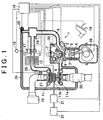
- FIG 1 is a diagram illustrating the construction of an engine equipped with a supercharge pressure control apparatus in accordance with the invention
- FIG. 2 is a flowchart illustrating a basic control of a supercharge pressure control
- FIG 3 indicates a map for determining a supercharge pressure increase that is provided by an electric motor
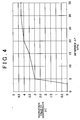
- FIG 4 indicates a map for determining an instruction value that is output to a controller of the electric motor.
- FIG. 5 is a flowchart illustrating a surge avoiding control.
- FIG. 1 shows an engine 1 equipped with a supercharge pressure control apparatus in accordance with this embodiment.
- the engine 1 described herein is a direction injection type gasoline engine.
- the embodiment is also applicable to a type of gasoline engine in which fuel is injected into an intake passageway, diesel engines, etc.
- the term “supercharge pressure” sometimes means the differential pressure with respect to the atmospheric pressure.
- the term “supercharge pressure” means the absolute pressure in an intake pipe.
- the supercharge pressure control can easily be performed based on the supercharge pressure as the difference from the atmospheric pressure in a case where the pressure sensor is a sensor that detects differential pressure with respect to the atmospheric pressure.
- the pressure sensor is a sensor that detects absolute pressure
- the engine 1 in this embodiment is a multi-cylinder engine although only one of the cylinders is shown in a sectional view in FIG 1.
- the engine 1 is a type of engine in which fuel is injected from an injector 2 toward a top surface of a piston 4 within a cylinder 3.
- the engine 1 is a generally termed lean-burn engine capable of stratified charge combustion. By conducting lean-burn combustion while supercharging intake air through the use of a turbocharger, the engine 1 is able to achieve improved fuel efficiency as well as increased engine output.
- air taken into the cylinder 3 via an intake passageway 5 is compressed by the piston 4, and fuel is injected into a recess formed on the top surface of the piston 4, thereby forming a rich mixture of fuel and air around an ignition plug 7.
- the mixture is ignited by the ignition plug 7 for combustion.
- Communication between the interior of the cylinder 3 and the intake passageway 5 is opened and closed by an intake valve 8.
- Exhaust gas produced as a result of combustion is discharged into an exhaust passageway 6.
- Communication between the interior of the cylinder 3 and the exhaust passageway 6 is opened and closed by an exhaust valve 9.
- An air cleaner 10, a turbocharger unit 11, an intercooler 12, a throttle valve 13, etc., are disposed in that order from an upstream side in the intake passageway 5.
- the air cleaner 10 is a filter that removes dirt and dust from intake air.
- the turbocharger unit 11 is disposed between the intake passageway 5 and the exhaust passageway 6, and performs supercharging.
- a turbine-side impellor and a compressor-side impellor are connected by a rotation shaft (hereinafter, this portion will be simply referred to as "turbine/compressor 11a").
- the turbocharger in accordance with the embodiment is an electric motor-equipped turbocharger in which an electric motor 11b is incorporated so that the rotation shaft of the turbine/compressor 11a is an output shaft of the electric motor 11b.
- the electric motor 11b is an AC motor that can also serves as a generator.
- the turbocharger unit 11 can function as an ordinary supercharger that performs supercharging by using only exhaust energy, and also can perform enhanced supercharging by using the electric motor 11b to forcibly drive the turbine/compressor 11a.
- the turbocharger unit 11 allows the electric motor 11b to be rotated by exhaust energy via the turbine/compressor 11a so as to perform regenerative power generation, and thereby recovers generated electric power.
- the electric motor 11b has, as major components, a rotor fixed to the rotation shaft of the turbine/compressor 11a, and a stator disposed around the rotor.
- Disposed on the intake passageway 5 downstream of the turbocharger unit 11 is the air-cooled intercooler 12 for reducing the temperature of intake air that has been heated with the pressure rise caused by the supercharging operation of the turbocharger unit 11. Due to the temperature reduction of intake air by the intercooler 12, the air charging efficiency improves.
- the throttle valve 13 for adjusting the amount of intake air is disposed downstream of the intercooler 12.
- the throttle valve 13 in this embodiment is a generally termed electronically controlled throttle valve.
- the degree of opening of the throttle valve 13 is determined by an ECU 16 on the basis of the amount of operation of an accelerator pedal 14 and other information quantities.
- the amount of operation the accelerator pedal 14 is detected by an accelerator positioning sensor 15.
- the throttle valve 13 is opened and closed by a throttle motor 17 that is disposed near the throttle valve 13.
- the throttle valve 13 is also provided with a throttle positioning sensor 18 for detecting the degree of opening of the throttle valve 13.
- a pressure sensor 19 for detecting the pressure in the intake passageway 5 (intake pressure) is disposed downstream of the throttle valve 13.
- the sensors 15, 18, 19 are connected to the ECU 16, and output detection results to the ECU 16.
- the ECU 16 is an electronic control unit that has a CPU, a ROM, a RAM, etc.
- the ECU 16 is connected to the injector 2, the ignition plug 7, the electric motor 11b, etc., which are controlled by signals from the ECU 16.
- the ECU 16 is further connected to a variable valve timing mechanism 20 for controlling the open-close timing of the intake valve 8, a controller 21 connected to the electric motor 11b, a battery 22, etc.
- the controller 21 not only controls the driving of the electric motor 11b, but also performs a function as an inverter for voltage transformation of power regenerated by the electric motor 11b.
- the regenerated power is stored into the battery 22 after being subjected to voltage transformation by the controller 21.
- a bypass 27 that connects an upstream side and a downstream side of the turbocharger unit 11 (compressor).
- the bypass 27 is provided with an air bypass valve 28 for controlling the communication through the bypass 27.
- the air bypass valve 28 in this embodiment is electrically controlled to open and close by a signal from the ECU 16.
- the air bypass valve 28 may also be a mechanical one-way valve that opens when the pressure downstream of the compressor becomes higher than the pressure upstream of the compressor by a predetermined pressure value.
- An emission control catalyst 23 for purification of exhaust gas is attached to the exhaust passageway 6 downstream of the turbocharger unit 11.
- An EGR (exhaust gas recirculation) passageway 24 for returning exhaust gas from the exhaust passageway 6 (a portion upstream of the turbocharger unit 11) to the intake passageway 5 (a surge tank portion formed downstream of the pressure sensor 19) is provided.
- the EGR passageway 24 is provided with an EGR valve 25 for adjusting the amount of exhaust gas recirculated. The degree of opening of the EGR valve 25 is also controlled by the ECU 16.
- a rotation speed sensor 26 for detecting the engine rotation speed is disposed near a crankshaft of the engine 1.
- the turbocharger unit 11 in this embodiment is a generally termed variable nozzle turbocharger as well.
- the variable nozzle turbocharger has a plurality of movable vanes disposed in a nozzle portion provided at an outward position in the exhaust-side turbine/compressor 11a, and is therefore capable of variable control of the amount of flow of exhaust gas from the turbine nozzle toward the turbine/compressor 11a.
- the supercharge pressure can also be changed by controlling the variable nozzle.
- An actuator for driving the variable nozzle is connected to the ECU 16, and is controlled by the ECU 16.
- a passageway that bypasses the turbocharger unit 11 is connected to the exhaust passageway 6.
- This bypass passageway is provided with a waste gate valve.
- the waste gate valve When the supercharge pressure reaches at least a predetermined pressure, the waste gate valve is opened so as to control the supercharge pressure by reducing the amount of flow of exhaust to the turbine/compressor 11a.
- the waste gate valve in this embodiment is of a passive type that is opened and closed through the use of intake pressure.
- the waste gate valve may instead be a solenoid valve or the like that is actively controlled to open and close by the ECU 16.
- FIG. 2 is a flowchart illustrating the basic portion of the control.
- the control illustrated by the flowchart of FIG. 2 is repeatedly executed at every predetermined time (e.g., every 32 ms).
- the engine rotation speed is detected by the rotation speed sensor 26, and the engine load is estimated from the amount of intake air (that is estimated based on the pressure sensor 19) and the degree of throttle opening (that is detected by the throttle positioning sensor 18) (step 200).
- a base target supercharge pressure B is computed (step 205).
- the base target supercharge pressure B is a supercharge pressure expected at the time of a predetermined engine rotation speed and a predetermined engine load during a steady operation, and is acquired beforehand through experiments or the like, and is pre-stored as a map in the ROM of the ECU 16.
- the control of the variable nozzle is performed on the basis of the base target supercharge pressure B.
- the supercharge pressure increase P to be provided by the electric motor 11b is determined on the basis of the engine rotation speed detected by the rotation speed sensor 26 and the amount of accelerator operation detected by the accelerator positioning sensor 15 (step 210).
- a relationship among the engine rotation speed, the amount of accelerator operation and the supercharge pressure increase P is determined beforehand through experiments or the like, and is pre-stored as a map in the ROM of the ECU 16. This map is indicated in FIG. 3.
- a region where the engine rotation speed is less than or equal to a predetermined speed and the amount of accelerator operation is greater than or equal to a predetermined amount is set as a specific operation region.
- the supercharge pressure increase P is set as a positive value, and assist using the electric motor 11b is performed. In the specific operation region, the supercharge pressure increase P increases with decreasing engine rotation speed, and with increasing amount of accelerator operation.
- the supercharge pressure increase P is set at a negative value instead of zero, whereby the assist using the electric motor 11b is substantially prohibited.
- the meaning of the setting of the supercharge pressure increase P at a negative value will be described below.
- a target supercharge pressure T is calculated by adding the supercharge pressure increase P provided by the electric motor 11b to the base target supercharge pressure B (step 215).
- the intake pipe pressure is detected as an actual supercharge pressure C by the pressure sensor 19 (step 220).
- a difference ⁇ P between the target supercharge pressure T and the detected actual supercharge pressure C is calculated (step 225).
- step 230 It is determined whether the calculated difference ⁇ P is greater than "0" (step 230). If the difference ⁇ P is not greater than "0", an assist flag F indicating the presence/absence of the assist by the electric motor 11b is set at "0", and the flow illustrated in FIG 2 is temporarily exited without the supercharge assist by the electric motor 11b. If the difference ⁇ P is less than or equal to "0", the supercharge by the electric motor 11b is not performed regardless of whether the supercharge pressure increase P is a positive value.
- step 230 If the determination at step 230 is affirmative, that is, if the difference ⁇ P is greater than "0", an instruction value for performing the supercharge assist by the electric motor 11b is determined on the basis of the difference ⁇ P, and the instruction value is output to the controller 21 (step 235).
- FIG. 4 indicates a relationship between the difference ⁇ P and the instruction value sent to the controller 21.
- the instruction value to the controller 21 is provided in the form of a voltage value. If the difference ⁇ P is greater, a greater voltage value is sent to the controller 21.
- the range of the voltage value herein is the range of 0 to 4.3 V. If the voltage of 4.3 V is sent to the controller 21, the controller 21 performs full assist of supercharge by fully operating the electric motor 11b.
- the assist flag F is set to "1" (step 240). Subsequently, the controller 21 controls the electric motor 11b based on the instruction value received by the controller 21 (step 245).
- the controller 21 outputs an electric current determined from the supplied instruction value to the electric motor 11b.
- the electric motor 11b changes the output torque in accordance with the supplied electric current, and is controlled via the output current.
- the current based on the instruction value is supplied to the electric motor 11b, and feedback control of the electric motor 11b is not performed.
- the control illustrated by the flowchart of FIG. 2 is repeatedly performed, so that the value of electric current supplied to the electric motor 11b changes.
- feedback control of the electric motor 11b may be performed.
- the turbine/compressor 11a is provided with a rotation speed sensor, and feedback control of the current supplied to the electric motor 11b is performed on the basis of the turbine rotation speed.
- the supercharge pressure control performed by the variable nozzle mechanism is provided with higher priority than the supercharge pressure control performed by the electric motor 11b. Therefore, since the priority sequence of the two supercharge pressure controls is set, the two supercharge pressure controls do not interfere with each other, so that stable control of supercharge pressure can be realized.
- the variable nozzle mechanism is controlled based on the base target supercharge pressure B, whereas the electric motor 11b is controlled based on the target supercharge pressure T obtained by adding the supercharge pressure increase P to the base target supercharge pressure B.
- the controls of the two members are provided with different targets (control maps). Therefore, even if the assist by the electric motor 11b should become excessive, the other supercharge pressure control, independent of the assist by the electric motor 11b, will not become ineffective. In this respect, too, interference between the two supercharge pressure controls is unlikely.
- the supercharge pressure control by the variable nozzle mechanism in this embodiment is a known supercharge pressure control, such as a PID feedback control or the like, due to the relationship with the actual supercharge pressure C.
- the supercharge pressure control by the electric motor 11b is substantially prohibited if the operation region is outside the specific operation region. Therefore, unnecessary electric power consumption is reduced, and operation with good energy efficiency can be realized.
- the specific operation region is a sharp acceleration state. Specifically, the sharp acceleration state is set as a state where the engine rotation speed is less than or equal to a predetermined speed, and the amount of accelerator operation is greater than or equal to a predetermined amount.
- the supercharge pressure increase P is set at a negative value, as mentioned above. Due to this manner of setting, the target supercharge pressure T is calculated as a reduced value, so that the difference ⁇ P is also calculated as a reduced value.
- the determination regarding whether to perform the supercharge pressure control by the electric motor 11b is made based on the magnitude of the difference ⁇ P. Therefore, a smaller difference ⁇ P calculated means that execution of the supercharge pressure control by the electric motor 11b becomes unlikely.
- the difference ⁇ P is a difference between the relatively small calculated target supercharge pressure T and the actual supercharge pressure C, a certain width of fluctuation with respect to the actual supercharge pressure C is secured in the determination as to whether the supercharge pressure control by the electric motor 11b is needed.
- the supercharge pressure control by the electric motor 11b is unlikely to be executed in a situation where the assist by the electric motor 11b is not desired, for example, a situation where the actual supercharge pressure C merely fluctuates due to an external disturbance or the like.
- supercharge pressure control can be stably performed. For example, in a case where the actual supercharge pressure C changes in a fashion of repeated small increases and decreases, the supercharge pressure control will become rather rough if the start and stop of the supercharge performed by the electric motor 11b is frequently repeated. That is, unnecessary supercharge pressure control by the electric motor 11b is performed. Therefore, setting is made such that the supercharge by the electric motor 11b is unlikely to be started when the supercharge by the electric motor 11b is considered unnecessary (outside the specific operation region).
- the electric motor 11b is used as a generator, electric energy can be recovered.
- the electric motor 11b retards rotation of the turbine/compressor 11a. That is, the electric motor 11b not only increases the rotation speed of the turbine/compressor 11a by consuming electric energy, but also retards rotation of the turbine/compressor 11a by performing regenerative power generation.
- the rotation control (supercharge pressure control) of the turbine/compressor 11a performed by the electric motor 11b has a wide control width.
- the turbine/compressor 11a is rotated only by exhaust energy. In that case, the electric motor 11b does not retard rotation of the turbine/compressor 11a (the cogging torque is ignorably small).
- surge may occur if the throttle valve is closed during deceleration.
- This surge is avoided by opening the air bypass valve 28 according to the conventional technology.
- the surge is avoided by causing the electric motor 11b to perform regenerative power generation and therefore retarding rotation of the turbine/compressor 11a. Since regenerative power generation is performed as well, recovery of electric energy can be achieved in addition to the avoidance of the surge.
- the control described herein is illustrated in the flowchart of FIG 5.
- step 500 it is determined whether the intake pipe pressure detected by the pressure sensor 19 has changed from a higher side to a lower side. If the determination is affirmatively made in step 500, it is subsequently determined whether the degree of throttle opening detected by the throttle positioning sensor 18 has changed from a larger side to a smaller side (step 505). If the determination is affirmatively made in step 505, it is subsequently determined whether the amount of accelerator operation detected by the accelerator positioning sensor 15 has changed from a larger side to a smaller side (step 510). If the determination is affirmatively made in step 510, that is, if all the conditions of steps 500, 505 and 510 are met, there is a possibility of occurrence of a surge during a decelerating state, and therefore a surge avoiding operation is needed.
- step 515 it is determined whether the change in the amount of accelerator operation toward the closed side is great, whether the change in the amount of depression of the brake pedal toward the depressed side is great, etc.
- the present operation state is not a sharp deceleration state, and therefore, the electric motor 11b is caused to perform regenerative power generation, so that rotation of the turbine/compressor 11 a is retarded and a surge is avoided (step 520).
- step 520 the degree of opening of the throttle valve 13 is also controlled in addition to the retardation of rotation of the turbine/compressor 11a caused by regenerative power generation of the electric motor 11b. Since the throttle valve 13 in this embodiment is of an electronically controlled type, the degree of opening of the throttle valve 13 can be controlled by the ECU 16. In this embodiment, rotation of the turbine/compressor 11a is sharply reduced by regenerative power generation, and the throttle valve 13 is not rapidly closed, but is gradually closed (the throttle valve 13, positioned to the closed side in step 505, is closed more slowly during a sharp deceleration). This manner of operation increases the amount of electric power recovered by regenerative power generation.
- a surge can be avoided only through retardation of rotation of the turbine/compressor 11a caused by regenerative power generation, without closing the throttle valve 13.
- acceleration from the decelerated state can be achieved merely by switching the electric motor 11b from the regenerative power generation mode to the rotation drive mode.
- high output can be quickly produced with a good response.
- the present operation state is a sharp deceleration state, and therefore, there is a possibility that the regenerative power generation of the electric motor 11b may be insufficient to avoid a surge.
- a surge is avoided by opening the air bypass valve 28 (so that pressure downstream of the compressor is released), by opening the EGR valve 25 (so that exhaust flow is returned to the intake side), etc.
- These surge avoiding operations are operations that are performed in ordinary turbocharger systems. Due to these operations, the frequency of execution of regenerative power generation of the electric motor 11b is increased, except when the vehicle is sharply decelerated. Thus, electric energy recovery is increased.
- the release of pressure downstream of the compressor may be realized by returning the downstream-side pressure via the bypass 27 and the air bypass valve 28, and may also be realized by simply releasing it to the atmosphere via an intake relief valve or the like.
- the use of the bypass 27 or the air bypass valve 28 is more preferable.
- the EGR valve 25 is opened to avoid a surge, it is necessary that the throttle valve 13 be open.
- regenerative power generation by the electric motor 11b may be performed, at the time of a surge avoiding operation after a sharp deceleration state is determined (i.e., simultaneously with the opening of the air bypass valve 28). In this case, the regenerative power generation by the electric motor 11b contributes to good energy efficiency although the regenerative power generation does not highly contribute to avoidance of a surge.
- the supercharge pressure changing means other than the electric motor is the variable nozzle
- the supercharge pressure changing means other than the electric motor may also be mechanisms other than the variable nozzle, for example, a means that variably controls an A/R, or the like.
- the supercharge pressure control means does not need to be formed by a single component part, but may be made up of a plurality of component parts (e.g., an ECU, an actuator, a sensor, etc.).
- the turbine-side impellor and the compressor-side impellor are firmly connected by the rotation shaft, and therefore rotate together.
- the invention is also applicable to a turbocharger that has a turbine/compressor in which a clutch is disposed in an intermediate portion of the rotation shaft.
- the compressor-side rotation shaft is rotatable by the electric motor.
- the turbine-side rotation shaft is connected to the electric motor.
- an arrangement incorporating a turbine-driving electric motor and a compressor-driving electric motor is also possible.
- a supercharge pressure control apparatus of the invention is characterized by comprising an electric motor for rotating a turbine/compressor of a turbocharger so as to provide supercharge pressure, supercharge pressure changing means other than the electric motor-equipped compressor, and supercharge pressure changing means for performing a supercharge pressure control by the supercharge pressure changing means with priority over the supercharge pressure control by the first supercharge pressure changing means.
- the supercharge pressure can be controlled without interference between the control by the electric motor and the control by the other supercharge pressure changing means, thus contributing to improvements in output characteristic and fuel economy.
- a supercharge pressure control apparatus of the invention is characterized by comprising an electric motor (11b) for rotating a turbine/compressor (11a) of a turbocharger (11) so as to provide supercharge pressure, supercharge pressure changing means other than the electric motor-equipped compressor, and supercharge pressure changing means for performing a supercharge pressure control by the supercharge pressure changing means with priority over the supercharge pressure control by the first supercharge pressure changing means.
- the supercharge pressure can be controlled without interference between the control by the electric motor (11b) and the control by the other supercharge pressure changing means, thus contributing to improvements in output characteristic and fuel economy.
Landscapes
- Engineering & Computer Science (AREA)
- Chemical & Material Sciences (AREA)
- Combustion & Propulsion (AREA)
- Mechanical Engineering (AREA)
- General Engineering & Computer Science (AREA)
- Supercharger (AREA)
- Output Control And Ontrol Of Special Type Engine (AREA)
- Combined Controls Of Internal Combustion Engines (AREA)
Abstract
Description
A supercharge pressure control apparatus of the invention is characterized by comprising an electric motor (11b) for rotating a turbine/compressor (11a) of a turbocharger (11) so as to provide supercharge pressure, supercharge pressure changing means other than the electric motor-equipped compressor, and supercharge pressure changing means for performing a supercharge pressure control by the supercharge pressure changing means with priority over the supercharge pressure control by the first supercharge pressure changing means.
Claims (15)
- A supercharge pressure control apparatus in a turbocharger system of an internal combustion engine, comprising:an electric motor (11b) for rotating a compressor (11a) of a turbocharger (11),first supercharge pressure changing means for performing a supercharge pressure control based on rotation of the compressor (11a), andsecond supercharge pressure changing means for performing a supercharge pressure control independent of the first supercharge pressure changing means,the supercharge pressure control apparatus is characterized by further comprising supercharge pressure control means for performing the supercharge pressure control by the second supercharge pressure changing means with a priority over the supercharge pressure control by the first supercharge pressure changing means.
- The supercharge pressure control apparatus according to claim 1, characterized in:that the supercharge pressure control means determines whether a difference between a target supercharge pressure value and an actually-measured supercharge pressure value actually measured is positive or negative, andthat if the difference between the target supercharge pressure and the actually-measured supercharge pressure value is positive, the supercharge pressure control by the first supercharge pressure changing means is performed in addition to the supercharge pressure control by the second supercharge pressure changing means, andthat if the difference between the target supercharge pressure and the actually-measured supercharge pressure value is negative, only the supercharge pressure control by the second supercharge pressure changing means is performed, and the electric motor (11b) is prohibited from being driven.
- The supercharge pressure control apparatus according to claim 2, characterized in that the target supercharge pressure is calculated by adding a base target supercharge pressure value which is calculated from an engine rotation speed and an engine load estimated from an amount of intake air and a degree of throttle opening and which is a supercharge pressure value that occurs during a steady operation, to a change supercharge pressure value determined from a pre-set value, based on the engine rotation speed and an amount of accelerator operation.
- The supercharge pressure control apparatus according to claim 3, characterized in that the supercharge pressure control means calculates the change supercharge pressure value after performing an operation region determination as to whether an operation state of the engine (1) is included in a specific operation region, based on the engine rotation speed and the amount of accelerator operation.
- The supercharge pressure control apparatus according to claim 4, characterized in that the specific operation region is a case where the operation state of the engine (1) is a sharp acceleration state in the operation region determination.
- The supercharge pressure control apparatus according to claim 4 or 5, characterized in that the specific operation region is a state where the engine rotation speed is at most a predetermined rotation speed and the amount of accelerator operation is at least a predetermined amount.
- The supercharge pressure control apparatus according to any one of claims 4 to 6, characterized in that if it is determined in the operation region determination that the operation state of the engine (1) is not included in the specific operation region, the supercharge pressure control means calculates the change supercharge pressure value as a negative value.
- The supercharge pressure control apparatus according to any one of claims 1 to 7, characterized in that the second supercharge pressure changing means is a flow changing mechanism of turbine nozzle means.
- The supercharge pressure control apparatus according to any one of claims 1 to 8, characterized in that the supercharge pressure control means performs a surge avoiding operation for avoiding a surge by delaying a closing operation of a throttle valve (13) and causing the electric motor (11b) to perform regenerative power generation.
- The supercharge pressure control apparatus according to any one of claims 1 to 9, characterized in that the supercharge pressure control means determines whether a rate of change in intake pipe pressure, degree of throttle opening, amount of accelerator operation or engine rotation speed is smaller than a predetermined rate of decrease, and that if the rate of change is smaller than the predetermined rate of decrease, the supercharge pressure control means performs the surge avoiding operation.
- The supercharge pressure control apparatus according. to any one of claims 1 to 10, characterized in that if it is determined that the rate of change is greater than the predetermined rate of decrease, and a sharp deceleration operation is perfomed, the supercharge pressure control means performs the surge avoiding operation by releasing pressure downstream of the compressor (11a) of the turbocharger (11).
- The supercharge pressure control apparatus according to claim 1, characterized in:that the supercharge pressure control means performs an operation region determination as to whether:an operation state of the engine (1) is in a specific operation region, so that the supercharge pressure control by the first supercharge pressure changing means is to be performed in addition to the supercharge pressure control by the second supercharge pressure changing means; orthe operation state of the engine (1) is outside the specific operation region, so that only the supercharge pressure control by the second supercharge pressure changing means is to be performed, andthat if it is determined that the operation state of the engine (1) is outside the specific operation region, the supercharge pressure control means prohibits the supercharge pressure control by the first supercharge pressure changing means.
- A supercharge pressure control method in a turbocharger system of an internal combustion engine, wherein the turbocharger system comprises an electric motor (11b) for rotating a compressor (11a) of a turbocharger (11), wherein said method comprises the steps of;
performing a supercharge pressure control based on rotation of the compressor (11a) by a first supercharge pressure changing means; and
performing a supercharge pressure control independent of the first supercharge pressure changing means by a second supercharge pressure changing means,
the method being characterized in that the supercharge pressure control by the second supercharge pressure changing means is performed with a priority over the supercharge pressure control by the first supercharge pressure changing means. - The supercharge pressure control method according to claim 13, characterized by the steps of:determining whether a difference between a target supercharge pressure value and an actually-measured supercharge pressure value actually measured is positive or negative, andif the difference between the target supercharge pressure and the actually-measured supercharge pressure value is positive, the supercharge pressure control by the first supercharge pressure changing means is performed in addition to the supercharge pressure control by the second supercharge pressure changing means, andif the difference between the target supercharge pressure and the actually-measured supercharge pressure value is negative, only the supercharge pressure control by the second supercharge pressure changing means is performed, and the electric motor (11b) is prohibited from being driven.
- The supercharge pressure control method according to claim 13 or 14, characterized by the step of performing a surge avoiding operation for avoiding a surge is performed by delaying a closing operation of a throttle valve (13) and causing the electric motor (11b) to perform regenerative power generation.
Applications Claiming Priority (2)
| Application Number | Priority Date | Filing Date | Title |
|---|---|---|---|
| JP2002040551A JP3912132B2 (en) | 2002-02-18 | 2002-02-18 | Supercharging pressure control device |
| JP2002040551 | 2002-02-18 |
Publications (3)
| Publication Number | Publication Date |
|---|---|
| EP1336737A2 true EP1336737A2 (en) | 2003-08-20 |
| EP1336737A3 EP1336737A3 (en) | 2003-11-12 |
| EP1336737B1 EP1336737B1 (en) | 2008-06-11 |
Family
ID=27621481
Family Applications (1)
| Application Number | Title | Priority Date | Filing Date |
|---|---|---|---|
| EP03003337A Expired - Lifetime EP1336737B1 (en) | 2002-02-18 | 2003-02-13 | Supercharge pressure control apparatus and method |
Country Status (3)
| Country | Link |
|---|---|
| EP (1) | EP1336737B1 (en) |
| JP (3) | JP3912132B2 (en) |
| DE (1) | DE60321496D1 (en) |
Cited By (16)
| Publication number | Priority date | Publication date | Assignee | Title |
|---|---|---|---|---|
| WO2006087014A1 (en) * | 2005-02-16 | 2006-08-24 | Honeywell International, Inc. | Turbocharging device and control method for controlling the turbocharging device |
| WO2007020524A1 (en) | 2005-08-19 | 2007-02-22 | Toyota Jidosha Kabushiki Kaisha | Boost pressure control |
| EP1686254A3 (en) * | 2005-01-26 | 2007-08-01 | Denso Corporation | Engine control system having turbocharger |
| EP2006507A1 (en) * | 2007-06-22 | 2008-12-24 | ABB Turbo Systems AG | Control of a charging system for combustion engines |
| US7478533B2 (en) * | 2005-08-03 | 2009-01-20 | Honda Motor Co., Ltd. | Engine system with a supercharger |
| CN101535616A (en) * | 2006-08-10 | 2009-09-16 | 丰田自动车株式会社 | Control device for internal combustion engine with supercharger |
| EP2050943A4 (en) * | 2006-08-10 | 2010-03-24 | Toyota Motor Co Ltd | CONTROL DEVICE FOR INTERNAL COMBUSTION ENGINE EQUIPPED WITH A TURBOCHARGER |
| CN102472161A (en) * | 2010-01-21 | 2012-05-23 | 三菱重工业株式会社 | Engine exhaust energy recovery device, ship provided therewith, and power generation plant provided with said engine exhaust energy recovery device |
| CN101563532B (en) * | 2006-12-19 | 2012-07-04 | 丰田自动车株式会社 | Internal combustion supercharge control system |
| RU2472950C2 (en) * | 2011-04-20 | 2013-01-20 | Владимир Анатольевич Жуков | Ice turbo-supercharging system |
| CN105201667A (en) * | 2014-06-18 | 2015-12-30 | 丰田自动车株式会社 | Vehicle Drive Control Device |
| DE102010051503B4 (en) * | 2009-11-23 | 2016-10-20 | GM Global Technology Operations LLC (n. d. Ges. d. Staates Delaware) | Air pressure control systems and methods for turbocharger systems |
| EP3109445A1 (en) * | 2015-06-25 | 2016-12-28 | Volkswagen Aktiengesellschaft | Combustion engine and method for operating a combustion engine |
| US20230064305A1 (en) * | 2021-08-27 | 2023-03-02 | Garrett Transportation I Inc. | Active surge supression through dynamically controlled actuated turboshaft speed |
| CN117167657A (en) * | 2023-08-30 | 2023-12-05 | 北京卫星环境工程研究所 | Gas treatment systems and methods |
| DE102009010980B4 (en) | 2009-02-27 | 2026-03-05 | Bayerische Motoren Werke Aktiengesellschaft | Engine control unit for vehicles equipped with a turbocharger |
Families Citing this family (14)
| Publication number | Priority date | Publication date | Assignee | Title |
|---|---|---|---|---|
| JP4548215B2 (en) * | 2005-05-20 | 2010-09-22 | 株式会社デンソー | Supercharging pressure control device for internal combustion engine |
| WO2006136790A2 (en) * | 2005-06-20 | 2006-12-28 | Ricardo Uk Limited | Supercharged diesel engines |
| JP2007132288A (en) * | 2005-11-11 | 2007-05-31 | Toyota Motor Corp | Control device for internal combustion engine |
| JP2007132298A (en) * | 2005-11-11 | 2007-05-31 | Toyota Motor Corp | Control device for internal combustion engine |
| JP4433051B2 (en) | 2005-11-11 | 2010-03-17 | トヨタ自動車株式会社 | Control device for internal combustion engine |
| JP2007154809A (en) * | 2005-12-07 | 2007-06-21 | Toyota Motor Corp | Control device for internal combustion engine |
| JP2008019835A (en) * | 2006-07-14 | 2008-01-31 | Mazda Motor Corp | Turbocharged engine |
| JP4844569B2 (en) * | 2008-01-11 | 2011-12-28 | トヨタ自動車株式会社 | Internal combustion engine supercharging system |
| JP4951608B2 (en) * | 2008-11-05 | 2012-06-13 | 本田技研工業株式会社 | Intake device for internal combustion engine |
| JP2010265810A (en) * | 2009-05-14 | 2010-11-25 | Mitsubishi Electric Corp | Control device for internal combustion engine |
| JP5402705B2 (en) * | 2010-02-15 | 2014-01-29 | トヨタ自動車株式会社 | Control device for internal combustion engine |
| KR101892427B1 (en) * | 2011-09-20 | 2018-08-28 | 히다치 조센 가부시키가이샤 | Turbo charger control system and control method |
| JP6010905B2 (en) * | 2011-12-19 | 2016-10-19 | いすゞ自動車株式会社 | Control method and control apparatus for internal combustion engine |
| JP6128081B2 (en) * | 2014-09-02 | 2017-05-17 | トヨタ自動車株式会社 | Internal combustion engine system |
Family Cites Families (6)
| Publication number | Priority date | Publication date | Assignee | Title |
|---|---|---|---|---|
| US4505117A (en) * | 1982-06-07 | 1985-03-19 | Warner-Ishi | Turbocharged internal combustion engine having an engine driven positive displacement compressor |
| JP2510855B2 (en) * | 1986-02-10 | 1996-06-26 | いすゞ自動車株式会社 | Energy recovery device in vehicle |
| JPH0192525A (en) * | 1987-09-30 | 1989-04-11 | Aisin Seiki Co Ltd | Composite supercharger for engine |
| JPH01100318A (en) * | 1987-10-09 | 1989-04-18 | Isuzu Motors Ltd | Control device for turbo-charger with revolving armature |
| US5076060A (en) * | 1990-05-04 | 1991-12-31 | Allied-Signal Inc. | Control logic for exhaust gas driven turbocharger |
| US5400597A (en) * | 1993-06-18 | 1995-03-28 | Mirabile; Nicholas F. | Turbocharger system with electric blower |
-
2002
- 2002-02-18 JP JP2002040551A patent/JP3912132B2/en not_active Expired - Fee Related
-
2003
- 2003-02-13 DE DE60321496T patent/DE60321496D1/en not_active Expired - Lifetime
- 2003-02-13 EP EP03003337A patent/EP1336737B1/en not_active Expired - Lifetime
-
2006
- 2006-09-04 JP JP2006239458A patent/JP4380674B2/en not_active Expired - Fee Related
- 2006-09-04 JP JP2006239451A patent/JP2006316797A/en active Pending
Cited By (25)
| Publication number | Priority date | Publication date | Assignee | Title |
|---|---|---|---|---|
| US7503175B2 (en) | 2005-01-26 | 2009-03-17 | Denso Corporation | Engine control system having turbocharger |
| EP1686254A3 (en) * | 2005-01-26 | 2007-08-01 | Denso Corporation | Engine control system having turbocharger |
| WO2006087014A1 (en) * | 2005-02-16 | 2006-08-24 | Honeywell International, Inc. | Turbocharging device and control method for controlling the turbocharging device |
| US7478533B2 (en) * | 2005-08-03 | 2009-01-20 | Honda Motor Co., Ltd. | Engine system with a supercharger |
| CN101243246B (en) * | 2005-08-19 | 2010-10-06 | 丰田自动车株式会社 | boost pressure control |
| WO2007020524A1 (en) | 2005-08-19 | 2007-02-22 | Toyota Jidosha Kabushiki Kaisha | Boost pressure control |
| CN101535616A (en) * | 2006-08-10 | 2009-09-16 | 丰田自动车株式会社 | Control device for internal combustion engine with supercharger |
| EP2050943A4 (en) * | 2006-08-10 | 2010-03-24 | Toyota Motor Co Ltd | CONTROL DEVICE FOR INTERNAL COMBUSTION ENGINE EQUIPPED WITH A TURBOCHARGER |
| US7762068B2 (en) | 2006-08-10 | 2010-07-27 | Toyota Jidosha Kabushiki Kaisha | Control apparatus for internal combustion engine with supercharger |
| CN101563532B (en) * | 2006-12-19 | 2012-07-04 | 丰田自动车株式会社 | Internal combustion supercharge control system |
| EP2006507A1 (en) * | 2007-06-22 | 2008-12-24 | ABB Turbo Systems AG | Control of a charging system for combustion engines |
| DE102009010980B4 (en) | 2009-02-27 | 2026-03-05 | Bayerische Motoren Werke Aktiengesellschaft | Engine control unit for vehicles equipped with a turbocharger |
| DE102010051503B4 (en) * | 2009-11-23 | 2016-10-20 | GM Global Technology Operations LLC (n. d. Ges. d. Staates Delaware) | Air pressure control systems and methods for turbocharger systems |
| CN102472161A (en) * | 2010-01-21 | 2012-05-23 | 三菱重工业株式会社 | Engine exhaust energy recovery device, ship provided therewith, and power generation plant provided with said engine exhaust energy recovery device |
| EP2527615A4 (en) * | 2010-01-21 | 2014-09-10 | Mitsubishi Heavy Ind Ltd | ENGINE EXHAUST GAS ENERGY RECOVERY DEVICE, SHIP EQUIPPED WITH SAME, AND POWER GENERATION PLANT EQUIPPED WITH SAID ENGINE EXHAUST GAS ENERGY RECOVERY DEVICE |
| CN102472161B (en) * | 2010-01-21 | 2014-11-19 | 三菱重工业株式会社 | Engine exhaust energy recovery device, ship provided therewith, and power generation plant provided with said engine exhaust energy recovery device |
| RU2472950C2 (en) * | 2011-04-20 | 2013-01-20 | Владимир Анатольевич Жуков | Ice turbo-supercharging system |
| US9739220B2 (en) | 2014-06-18 | 2017-08-22 | Toyota Jidosha Kabushiki Kaisha | Vehicle drive control device |
| DE102015109695B4 (en) | 2014-06-18 | 2018-06-14 | Toyota Jidosha Kabushiki Kaisha | Vehicle drive control device |
| CN105201667B (en) * | 2014-06-18 | 2018-08-03 | 丰田自动车株式会社 | Electronic four-wheel drive control |
| CN105201667A (en) * | 2014-06-18 | 2015-12-30 | 丰田自动车株式会社 | Vehicle Drive Control Device |
| EP3109445A1 (en) * | 2015-06-25 | 2016-12-28 | Volkswagen Aktiengesellschaft | Combustion engine and method for operating a combustion engine |
| US20230064305A1 (en) * | 2021-08-27 | 2023-03-02 | Garrett Transportation I Inc. | Active surge supression through dynamically controlled actuated turboshaft speed |
| US11788460B2 (en) * | 2021-08-27 | 2023-10-17 | Garrett Transportation I Inc. | Active surge supression through dynamically controlled actuated turboshaft speed |
| CN117167657A (en) * | 2023-08-30 | 2023-12-05 | 北京卫星环境工程研究所 | Gas treatment systems and methods |
Also Published As
| Publication number | Publication date |
|---|---|
| EP1336737A3 (en) | 2003-11-12 |
| JP3912132B2 (en) | 2007-05-09 |
| JP2003239755A (en) | 2003-08-27 |
| JP4380674B2 (en) | 2009-12-09 |
| DE60321496D1 (en) | 2008-07-24 |
| JP2006316798A (en) | 2006-11-24 |
| EP1336737B1 (en) | 2008-06-11 |
| JP2006316797A (en) | 2006-11-24 |
Similar Documents
| Publication | Publication Date | Title |
|---|---|---|
| EP1336737B1 (en) | Supercharge pressure control apparatus and method | |
| EP1657417B1 (en) | Control device for turbocharger with electric motor | |
| JP4512617B2 (en) | Control device and method for internal combustion engine | |
| CN103958861B (en) | The control device of internal combustion engine | |
| JP2005220888A (en) | Supercharging pressure estimation device for an internal combustion engine with a supercharger | |
| JP3912131B2 (en) | Supercharging pressure control device | |
| CN1930386B (en) | Control device for internal combustion engine with electric supercharger | |
| CN111417772B (en) | Method and device for controlling internal combustion engine for vehicle | |
| CN104797810A (en) | Method for operating a spark ignition internal combustion engine with an exhaust gas turbocharger | |
| US7487639B2 (en) | Method and control device for controlling a turbocharger having a turbine-side charging pressure control and a circulating-air valve | |
| JP4048828B2 (en) | Control device for internal combustion engine | |
| CN109209620B (en) | Control device for internal combustion engine | |
| JP2014169647A (en) | Supercharger control device for internal combustion engine | |
| JP2008267247A (en) | Control device for internal combustion engine | |
| JP2018159271A (en) | Control method of internal combustion engine and control device of internal combustion engine | |
| JP5338709B2 (en) | Control device for internal combustion engine | |
| US9303569B2 (en) | Control device for internal combustion engine | |
| JP2004316558A (en) | Control device for supercharger with motor | |
| JP2003322038A (en) | Internal combustion engine control device | |
| JP2017214893A (en) | Engine mounted with exhaust-driven generator | |
| JP4946782B2 (en) | Control device for internal combustion engine | |
| JP2000145524A (en) | Internal combustion engine with variable turbocharger | |
| EP1367237B1 (en) | Vehicular control apparatus and vehicular control method | |
| JP2006077604A (en) | Supercharging system for internal combustion engines | |
| JP2002115554A (en) | Control device for variable capacity turbocharger |
Legal Events
| Date | Code | Title | Description |
|---|---|---|---|
| PUAI | Public reference made under article 153(3) epc to a published international application that has entered the european phase |
Free format text: ORIGINAL CODE: 0009012 |
|
| 17P | Request for examination filed |
Effective date: 20030213 |
|
| AK | Designated contracting states |
Designated state(s): AT BE BG CH CY CZ DE DK EE ES FI FR GB GR HU IE IT LI LU MC NL PT SE SI SK TR |
|
| AX | Request for extension of the european patent |
Extension state: AL LT LV MK RO |
|
| PUAL | Search report despatched |
Free format text: ORIGINAL CODE: 0009013 |
|
| AK | Designated contracting states |
Kind code of ref document: A3 Designated state(s): AT BE BG CH CY CZ DE DK EE ES FI FR GB GR HU IE IT LI LU MC NL PT SE SI SK TR |
|
| AX | Request for extension of the european patent |
Extension state: AL LT LV MK RO |
|
| 17Q | First examination report despatched |
Effective date: 20040324 |
|
| AKX | Designation fees paid |
Designated state(s): DE FR IT |
|
| 17Q | First examination report despatched |
Effective date: 20040324 |
|
| GRAP | Despatch of communication of intention to grant a patent |
Free format text: ORIGINAL CODE: EPIDOSNIGR1 |
|
| RIN1 | Information on inventor provided before grant (corrected) |
Inventor name: IGARASHI, OSAMU,C/O TOYOTA JIDOSHA KABUSHIKI KAISH Inventor name: SASAKI, SHOJI,C/O TOYOTA JIDOSHA KABUSHIKI KAISHA Inventor name: KANBA, CHIKA,C/O TOYOTA JIDOSHA KABUSHIKI KAISHA Inventor name: HASHIMOTO, HIROMASA,C/O TOYOTA JIDOSHA KABUSHIKI K Inventor name: AKITA, KOICHI,C/O TOYOTA JIDOSHA KABUSHIKI KAISHA Inventor name: MASUDA, KEI,C/O TOYOTA JIDOSHA KABUSHIKI KAISHA |
|
| GRAS | Grant fee paid |
Free format text: ORIGINAL CODE: EPIDOSNIGR3 |
|
| GRAA | (expected) grant |
Free format text: ORIGINAL CODE: 0009210 |
|
| AK | Designated contracting states |
Kind code of ref document: B1 Designated state(s): DE FR IT |
|
| REF | Corresponds to: |
Ref document number: 60321496 Country of ref document: DE Date of ref document: 20080724 Kind code of ref document: P |
|
| PLBE | No opposition filed within time limit |
Free format text: ORIGINAL CODE: 0009261 |
|
| STAA | Information on the status of an ep patent application or granted ep patent |
Free format text: STATUS: NO OPPOSITION FILED WITHIN TIME LIMIT |
|
| 26N | No opposition filed |
Effective date: 20090312 |
|
| REG | Reference to a national code |
Ref country code: FR Ref legal event code: PLFP Year of fee payment: 14 |
|
| REG | Reference to a national code |
Ref country code: FR Ref legal event code: PLFP Year of fee payment: 15 |
|
| REG | Reference to a national code |
Ref country code: FR Ref legal event code: PLFP Year of fee payment: 16 |
|
| PGFP | Annual fee paid to national office [announced via postgrant information from national office to epo] |
Ref country code: IT Payment date: 20180221 Year of fee payment: 16 Ref country code: FR Payment date: 20180111 Year of fee payment: 16 |
|
| PGFP | Annual fee paid to national office [announced via postgrant information from national office to epo] |
Ref country code: DE Payment date: 20190129 Year of fee payment: 17 |
|
| PG25 | Lapsed in a contracting state [announced via postgrant information from national office to epo] |
Ref country code: FR Free format text: LAPSE BECAUSE OF NON-PAYMENT OF DUE FEES Effective date: 20190228 Ref country code: IT Free format text: LAPSE BECAUSE OF NON-PAYMENT OF DUE FEES Effective date: 20190213 |
|
| REG | Reference to a national code |
Ref country code: DE Ref legal event code: R119 Ref document number: 60321496 Country of ref document: DE |
|
| PG25 | Lapsed in a contracting state [announced via postgrant information from national office to epo] |
Ref country code: DE Free format text: LAPSE BECAUSE OF NON-PAYMENT OF DUE FEES Effective date: 20200901 |