EP1335287A1 - Procédé de mise à jour automatique d'un chemin d'accès au disque système d'un périmètre matériel de ressources informatiques, système pour exécuter ce procédé et mémoire utilisée dans ce système - Google Patents
Procédé de mise à jour automatique d'un chemin d'accès au disque système d'un périmètre matériel de ressources informatiques, système pour exécuter ce procédé et mémoire utilisée dans ce système Download PDFInfo
- Publication number
- EP1335287A1 EP1335287A1 EP03290229A EP03290229A EP1335287A1 EP 1335287 A1 EP1335287 A1 EP 1335287A1 EP 03290229 A EP03290229 A EP 03290229A EP 03290229 A EP03290229 A EP 03290229A EP 1335287 A1 EP1335287 A1 EP 1335287A1
- Authority
- EP
- European Patent Office
- Prior art keywords
- perimeter
- activity
- path
- system disk
- disk
- Prior art date
- Legal status (The legal status is an assumption and is not a legal conclusion. Google has not performed a legal analysis and makes no representation as to the accuracy of the status listed.)
- Granted
Links
Images


Classifications
-
- G—PHYSICS
- G06—COMPUTING OR CALCULATING; COUNTING
- G06F—ELECTRIC DIGITAL DATA PROCESSING
- G06F9/00—Arrangements for program control, e.g. control units
- G06F9/06—Arrangements for program control, e.g. control units using stored programs, i.e. using an internal store of processing equipment to receive or retain programs
- G06F9/46—Multiprogramming arrangements
Definitions
- one of the axes of evolution of materials and / or IT systems concerns the implementation of maximum flexibility configurable IT resources for the benefit of a user, locally with significantly reduced IT resources.
- a multicellular platform PF of computer resources is used.
- the multicellular platform PF is formed by several calculation cells C kj comprising at least one central processing unit and local working memories including a non-volatile memory called NVRAM memory.
- the working memories of each cell include in particular a boot program or BIOS program (Basic Input / Output System) and a path to a system disk containing an operating system capable of managing a cell or a group of cells. Calculation.
- BIOS program Basic Input / Output System
- the path is used by the BIOS program to find out the location of the system disk containing the operating system to be loaded and launched. Conventionally, the path is saved in NVRAM memory.
- the common resources include mass memories including in particular system disks and data disks.
- the data disks comprise for example application or application software to be executed and / or data to be processed.
- the common resources include a data disk DD 1 containing application software L 1 , a system disk DS 1 containing an operating system OS 1 , a data disk DD 2 containing L 2 application software and a DS 2 system disk containing an OS 2 operating system.
- the common resources are connected to the platform PF by addressable means of interconnection Ml conforming to a SAN (Storage Area Network) architecture.
- These interconnection means M1 are intended to allow access to common resources from any cell or group of cells configured on the platform PF.
- a data disk can be accessed from a cell C kj in a given configuration of the platform PF, then subsequently by a cell C kj + 1 in the context of a configuration different from the platform .
- Such interconnection means M1 are therefore able to allow all the cells of the platform to access the common resources without it being necessary to carry out any rewiring operation for this.
- the configurable or reconfigurable IT systems also include an administration tool MT allowing a user to group the hardware IT resources into perimeters of IT resources P i intended to execute operating activities A i .
- the term "operating activity" designates all of the software means necessary to implement a function that a user of the system wants to perform. Examples of such functions are for example the establishment of payrolls or the generation of lists of customers to contact.
- An activity therefore comprises at least one operating system capable of managing the hardware computing resources of the platform. Since the function desired by the user is generally not fulfilled by the operating system alone, an operating activity commonly comprises in addition one or more application software intended to be executed on the operating system for perform the function or functions desired by the user.
- an activity A 1 comprises the software L 1 and the operating system OS 1 .
- Each perimeter P i is formed by a group of cells C kj and a part of the common resources such as a data disk and at least one system disk. It is possible in these systems to define several perimeters P i .
- two perimeters P 1 and P 2 have been configured.
- the perimeter P 1 delimited by a first dotted line, comprises a first group of cells, the data disk DD 1 and the system disk DS 1 .
- the perimeter P 2 delimited by a second dotted line, comprises a second group of cells, distinct from the first group of cells, the data disk DD 2 and the system disk DS 2 .
- perimeters P 1 and P 2 of FIG. 1 When two perimeters such as the perimeters P 1 and P 2 of FIG. 1 each use material resources distinct from that of the other perimeter, they can be executed simultaneously on the same platform. Otherwise, they must be executed successively on the PF platform.
- Such systems correspond to systems or machines usually referred to as partition machines. They normally make it possible to install and execute simultaneously or successively different operating activities A i in different perimeters of the platform. However, when such an installation is carried out, it is generally not possible to simply transfer the same operating activity carried out in a first perimeter to a different perimeter without reinstallation or physical manipulation.
- the execution context of the operating activity containing for example the various environment variables necessary for starting or restarting the operating activity, is saved, at least in part, in the memories of local perimeter work. This is particularly the case for the path to the system disk.
- a user currently has two solutions when he wishes to relaunch the activity A 1 hitherto executed in the perimeter P 1 , in the new perimeter P 2 .
- the first solution consists in physically replacing the system disk DS 2 of the perimeter P 2 by the system disk DS 1 of the perimeter P 1 .
- the access path recorded in the NVRAM memory of the perimeter P 2 corresponds well to an access path to the system disk DS 1 .
- the second solution consists in carrying out a reinstallation operation of the system disk of the perimeter P 2 to replace the path currently saved in the local NVRAM memory of the perimeter P 2 with a new path corresponding to the system disk DS 1 .
- the operations are long and tedious.
- the invention aims to remedy this drawback by proposing a simpler process to include a new system disk in a IT perimeter configured on a multicell platform.
- the new activity When defining a new activity, the new activity is associated with the lower part of the system disk contained in the memory.
- the lower part associated with the new activity corresponds to the system disk containing the operating system intended to be used to carry out this activity.
- the path to the system disk of this new perimeter is automatically updated.
- the upper part of the access path new perimeter is known since it is constant. This upper part is constant, because in a configurable system as described above, the system disks are connected to the corresponding processing units by through addressable interconnection means. No operation rewiring to connect a processing unit to the interconnection means is therefore not necessary and the upper part of each perimeter is therefore constant.
- the invention also relates to a memory intended to be used in a configurable system according to the invention, characterized in that it includes an identity file associating an identifier of an activity and an identifier of the lower part of a path corresponding to the system disk containing the operating system launched when performing this activity.
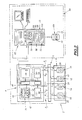
- Figure 2 shows a configurable system 2 of resources computer systems comprising a multicellular platform 4 connected by through means 6 of interconnection to computer resources municipalities 8.
- common IT resources only contain mass memories. These mass memories are here consist of two data disks 10 and 12 and two disks system 14 and 16. Data discs 10 and 12 are intended to contain application software and / or data to be processed.
- the data disc 10 contains application software 20 and the data disc 12 contains a application software 22.
- These software 20, 22 are, for example, database management, software known as ERP (Enterprise Resource Planning), or administration software for IT resources.
- ERP Enterprise Resource Planning
- system disks 14 and 16 have a operating system 24 and an operating system 26. These systems 24 and 26 are able to manage IT resources and hardware of platform 4. So these operating systems offer features for installing a new system disk. These systems operating systems are for example conventional operating systems such as UNITE, LINUX or WINDOWS NT.
- Each of the common resource disks 8 is connected, by its own link, to the interconnection means 6.
- the access paths, from the interconnection means 6 to the disks 10, 12, 14 and 16 are respectively denoted L 1 , L 3 , L 2 , and L 4 . These access paths correspond, for example, to the address of the input / output port of the interconnection means 6 to which the disk is connected.
- each access path, from the interconnection means 6 to a system disk will be called lower parts of an access path to a system disk.
- system 2 has two lower parts of access paths: L 2 and L 4 .
- the multicellular platform 4 is divided into several cells of calculation.
- platform 4 has four calculation cells 30, 32, 34 and 36 identical. Thus, only cell 30 will be described in detail.
- the cell 30 is capable of being executed, independently or in cooperation with other cells, operating activities recorded in common resources. For this, this cell or group of cells is managed by one of the operating systems registered in the resources municipalities.
- the cell 30 includes a central processing unit 40 connected via data and address bus to an input / output card 42 and to local working memories.
- the data and address bus is also connected to a set 46 of interface cards with a tool platform administration 4.
- the central processing unit 40 is intended to execute calculation operations. To this end, it includes, in the embodiment described here, eight 64-bit microcontrollers capable of executing, in parallel and simultaneously, these calculation operations.
- the input / output card 42 is intended to ensure exchanges information between the common resources and cell 30. For this, it is connected, by an information exchange link, to the means interconnection 6.
- the memory 48 is an NVRAM non-volatile memory intended to contain the path to the system disk which should be launched on cell 30. This path therefore indicates what is the succession of material segments to browse to reach the system disk.
- this path consists of two parts: one part upper and lower part described above with regard to resources 8.
- the upper part describes the material segments to be covered in the cell 30 to reach the input / output card connected to the means interconnection 6, i.e. for cell 30, for example the address of the card 42.
- the upper part is constant for each cell. Indeed, the succession of material segments, to reach the map input / output connected to the interconnection means 6, is not modified for a given cell, regardless of the system disk used by this cell.
- the lower part corresponds to a given system disk. It is independent of the cell or group of cells using this disk system. This is because the system disks are not physically moved or rewired, the access paths of the means interconnect 6 to the system drives remain unchanged.
- H 1 , H 2 , H 3 and H 4 the upper part of the access paths of cells 30, 32, 34 and 36.
- the memory 50 includes the boot program or program BIOS (Basic Input Ouput System).
- BIOS Basic Input Ouput System
- This BIOS program performs the functions elementary interface between the material resources of cell 30 and a operating system running on this cell.
- This BIOS program is suitable, in addition, to launch the operating system corresponding to the path saved in memory 48. It is also capable, under the control of the operating system launched, modify and / or save a new path access in memory 48.
- this BIOS program is also adapted so that when a modification or registration order a new path in memory 48 is transmitted by the system the new access path is also transmitted to the set 46 of interface cards.
- each cell comprises, recorded in one of its local working memories, a serial number to distinguish it from other platform cells 4.
- the interconnection means 6 are able to connect one any of the cells from platform 4 to any of the disks 10, 12, 14 and 16. Thus, thanks to the interconnection means 6, no operation of rewiring is required to connect any of the drives to one any of the cells of platform 4.
- These interconnection means are, here, a network dedicated to the storage of information, for example, in accordance with a SAN (Storage Area Network) architecture. It is made here from products known as "Fiber Channel Switches" and marketed by example, by Brocade Communications Systems, Inc., 1745 Technology Drive, San Jose, CA 95110, U.S.A. and bearing references SW 3800 or SW 2040 from this supplier.
- System 2 also includes an administration tool 60 connected via the set 46 of interface cards to the cells of platform 4.
- This administration tool 60 is able to manage the configuration of the platform 4.
- the interface cards here are interfaces exchange of information between the administration tool 60 and the different platform cells 4.
- the administration tool 60 is for example produced from a computer 62 separate from platform 4, equipped with a screen, a keyboard and associated with a memory 64.
- the memory 64 contains two lists of data 70 and 72.
- the list 70 contains the lower part of the path to each system disk associated with the platform 4. Here, this list 70 therefore contains the lower parts L 2 and L 4 .
- List 72 contains the definition of several logical domains likely to be executed on platform 4.
- a logical domain groups together on the one hand an identity file and, on the other hand, a definition file of a hardware perimeter of IT resources.
- the identity file includes an identifier of an operating activity and identifiers of software resources to be implemented to execute this activity.
- the software resource identifiers here contain at least one operating system identifier and possibly one or more application software identifiers to launch.
- the identity file includes attributes for saving the execution context of the activity.
- these backup attributes are intended to contain all of the configuration parameters required to run the operating system activity so that this operating system can run with the same configuration parameters on any perimeter. The independence of the operating system from the resource perimeter material on which it is or will be executed is thus obtained.
- these backup attributes one of which is the lower part of the path to system disk containing the operating system on which to be run application software (s) corresponding to the activity identifier to execute.
- the perimeter definition file contains the definition of the hardware IT resources intended to be used to execute the operating activity corresponding to the activity identifier recorded in the identity file for this domain.
- the definition of a perimeter includes one or more references to cells of platform 4, at least one reference to a system disk and one or more references to data disks.
- the list 72 here comprises two fields denoted D 1 and D 2 .
- the domain D 1 includes the definition of a perimeter P 1 , and an identity file Id 1 .
- the perimeter P 1 defined in this example includes cells 30, 32 and 36 of the platform 4, as well as the data disk 10 and the system disk 14.
- the identity file Id 1 includes an identifier d activity A 1 , an identifier corresponding to the application software 20, an identifier corresponding to the operating system 24, and an attribute for saving the lower part of the access path equal to L 2 or equal to an identifier of the lower part L 2 .
- the domain D 2 includes a file for defining a perimeter P 2 and an identity file Id 2 .
- the perimeter P 2 defined in this example includes cell 34, the data disk 12 and the system disk 16.
- the identity file Id 2 contains an activity identifier A 2 , an identifier corresponding to the software of application 22, an identifier corresponds to the operating system 26, and an attribute for saving the lower part of the access path equal to L 4 or equal to an identifier for the lower part L 4 .
- the perimeters P 1 and P 2 are represented schematically in dotted lines in FIG. 1.
- a perimeter such as the perimeter P 1 , comprising several cells
- the other cells of the same perimeter are slave cells.
- this set of cells actually behaves like a single multiprocessor processing unit.
- the master cell is for example automatically determined by choosing the cell with the lowest serial number in the perimeter.
- the full access path recorded in the working memory of the perimeter P 1 is H 1 / L 2
- that recorded in the working memory of the perimeter P 2 is H 3 / L 4 .
- the computer 62 is equipped with administration software 76.
- This software is intended, under the control of an operator, to define and activate new logical domains in system 2. It is also suitable for automatically save, in the list of 70 paths, the parts low paths to new system disks installed from of an activated perimeter on platform 4. For this, it includes means 78 for defining a new domain, a backup module 80 of the lower part of the paths in the list 70, and a module 82 activation of a domain on platform 4.
- the means 78 are suitable for defining new fields under the operator control. To this end, they include in particular a module 84 of a perimeter definition file and an identity file of an activity.
- This association module 84 is, for example, associated here with a module 86 for creating a definition file for a perimeter and a module 88 for creating an identity file.
- the module 86 for creating a file definition of a perimeter is able to define, under operator control, hardware IT resources that are part of a new scope.
- the module 88 for creating an identity file is suitable for defining an activity, that is to say all of the software means to be used to achieve this activity. This module 88 is therefore suitable for recording, under the command operator, activity identifier, operating system identifier and the application software identifier (s).
- This module 88 is also able to select, from the list of 70 paths, the part low corresponding to the system disk containing the operating system of the activity and save it in the backup attribute provided for this purpose in the identity file.
- the module 78 also includes a module 90 to register, in list 72, the new domain defined using the modules 84, 86 and 88.
- the backup module 80 is capable of automatically recording the lower part of a path to a new system disk when installing it from an activated perimeter. To this end, it includes a submodule 94 for receiving the new path to a new disk system transmitted by the BIOS program of the perimeter used to realize installing the new system disk. The module 80 also includes a submodule 96 for neutralizing the access paths received and a submodule 98 for recording, in list 70, disabled paths.
- the sub-module 96 is suitable for replacing the upper part of a path access received via the sub-module 94 by a wildcard.
- This wildcard is here, for example, the character: "$".
- this neutralization sub-module 96 is capable of recognizing the structure the upper part of the access road and replace it with the "$" character.
- the module 82 is intended to activate, on platform 4, the domains logics recorded in the list 72.
- This activation module 82 comprises in in particular a sub-module 102 for updating the access path, in the working memory 48 of the master cell of the perimeter defined in the field logic to activate.
- This update sub-module is suitable for replacing the part low path currently saved in working memory local perimeter by that referenced in the domain identity file to activate.
- the method of FIG. 3 comprises five main steps 120, 122, 124, 128 and 132 successive.
- Step 120 is a step of defining a new perimeter P 3 on the platform 4 to execute the operating activity A 1 .
- This step 120 mainly comprises a step 134 of creation, by the operator of the administration tool 60, of a new logical domain D 3 in the list 72 of logical domains. It comprises two successive substeps 136 and 140.
- sub-step 136 the operator creates, using module 86, a definition file for the new perimeter P 3 .
- the new perimeter P 3 defined during this sub-step comprises the cell 34, the data disk 10 and the system disk 14.
- the new logical domain D 3 is constituted by associating, using module 84, the file for defining the perimeter P 3 defined during the previous sub-step 136 and the identity file Id 1 already defined for activity A 1 in domain D 1 of list 72. Finally, at the end of sub-step 140, the new domain D 3 is recorded in list 72 of logical domains using of module 90.
- the perimeters P 1 and P 2 are assumed to be inactive or are deactivated by the operator of the system 2, so that the hardware IT resources corresponding to the perimeter P 3 are available on the platform 4.
- step 122 the operator activates, using the module 82, the domain D 3 recorded in the list 72.
- the module 82 for activating a perimeter begins by initializing and configure the IT resources corresponding to the P 3 perimeter as defined by the P 3 perimeter definition file for domain D 3 . Then, it restores the execution context of the operating activity A 1 from the information recorded in the backup attributes of the identity file Id 1 of the domain D 3 .
- this step includes an operation 150 of updating the access path of the local working memory of cell 34.
- This operation 150 of updating consists in replacing the lower part of the access path currently contained in the local working memory of cell 34 by the lower part recorded in the identity file Id 1 of domain D 3 .
- this operation consists in replacing the access path H 3 / L 4 previously used when the perimeter P 2 was active with the updated access path H 3 / L 2 .
- the activation module 82 launches the BIOS program of the cell 34.
- This BIOS program launches the execution of the operating system 24 contained in the system disk 14 corresponding to the path H 3 / L 2 .
- the application software 20 is launched, either automatically or by the operator, on the new perimeter P 3 managed by the operating system 24.
- system disk 16 is assumed, by way of illustration only, to have been uninstalled, so that the lower part L 4 no longer appears in the list 70 and that it is necessary to reinstall it.
- Step 124 is a step of installing a new system disk from a currently activated perimeter. This step 124 will be described here in the particular case where the perimeter activated on the platform 4 is the perimeter P 3 . It is assumed here that the new system disk to be installed is the system disk 16 of FIG. 1.
- Step 124 comprises a first sub-step 158 of updating the full path of the non-volatile working memory of the cell 34. This sub-step 158 is carried out by the operating system 24 which controls the BIOS program so that it saves the new path to the system disk 16 in the local working memory of cell 34. This new access path corresponds here to the H 3 / L 4 path.
- Sub-step 158 is followed by a sub-step 160 for saving the lower part of the new access path in the list 70.
- Sub-step 160 comprises four successive operations 162, 164, 166 and 168.
- Operation 162 is an operation for transmitting the new path to the administration tool 60.
- This operation 162 is executed by the BIOS program, which automatically transmits the new path to the administration tool 60. access which he has just recorded in the working memory of cell 34.
- the path transmitted by the BIOS program is the full path, that is to say comprising the upper part and the lower part of the access road.
- the administration tool 60 receives this access path and transmits it to the sub-module 96 for neutralization.
- the neutralization sub-module 96 of the backup module 80 replaces the upper part of the access path received, that is to say here H 3 , with the generic character " $. "
- the access path neutralized during the operation 166 is saved in the list 70 of access paths by the submodule 98.
- the access path registered neutralized access is therefore: $ / L 4 .
- a step 128, the operator defines a new activity A 3 carried out using the operating system of the system disk 16 which has just been installed during step 124 and using the software d application 20.
- This step 128 begins with a sub-step 176.
- the operator creates, using the module 88, a new identity file, noted Id 3 , corresponding to the new activity A 3 .
- This sub-step 176 essentially comprises an operation 178 for defining the operating activity A 3 to be executed and an operation 180 for associating, with this activity A 3 , the lower part corresponding to the system disk to be used.
- Operation 178 consists for example in entering the activity identifier A 3 and the identifiers of the application software and of the operating system to be executed.
- the identifier of the application software entered corresponds to the software 20 and the identifier of the operating system to the operating system 26.
- Operation 180 consists in selecting, from the list 70, using the module 88, the lower part of the path to the system disk 16, that is to say here the lower part L 4 . During operation 180, the selected lower part is saved in the corresponding backup attribute of the file Id 3 defined during operation 178.
- step 128 also includes a second sub-step 182 consisting in creating a new domain D 4 associating the perimeter P 3 and the new identity file Id 3 .
- This sub-step 182 is similar to sub-step 140 and will therefore not be described in detail.
- step 132 of activation of the domain D 4 is executed. This step 132 is similar to step 122 and will therefore not be described here in more detail.
- this new activity A 3 is associated with the lower part of the path to its system disk, and since system 2 is adapted to update the local memories of the perimeters before their activation, it is possible later to transfer this new activity A 3 on other perimeters, without requiring the operator to reinstall the system disk again. In the particular embodiment described here, it suffices to activate, on platform 4, a logical domain associating the definition of the new perimeter with the identity file Id 3 .
- the operator can therefore easily transfer an operating activity from a perimeter to a perimeter different. This is particularly useful for example when an activity temporarily requires more processing power to that available in the perimeter over which it is currently executed.
- System 2 has been described here in the particular case where the disks of data and system disks are independent physical entities one from the other.
- the system disk can also contain one or more application software and their data.
- the system disk corresponds to a portion of a space of larger information storage.
- the BIOS program transmits only the lower part of the path to the administration tool. So in this variant, the neutralization step of the complete access path is carried out not not by the administration tool itself, but directly by the program BIOS for example.
- the administration tool includes an additional module installing a new system disk.
- This additional module to run on the administration tool 60, is able to record directly in list 70 at least the lower part of the path to this new disk system.
- the installation of a new system disk is not therefore not carried out from an activated perimeter, but from the tool of administration 60.
- the administration tool which has been described as separate from platform 4, is physically integrated into this platform multicellular computing.
- Operation 150 of updating the access path, before execution of an activity on a new perimeter has been described in the particular case where the upper part of the access path is pre-saved in the working memory of this new perimeter.
- the upper part of the access path is pre-saved in the working memory of this new perimeter.
- the path update sub-module is suitable for create the new full path by combining the upper part contained in the definition file of the new perimeter and the lower part associated with the activity that will be launched on this new scope.
- This variant has the advantage of not depending on the content of the working memory locale saved in previous platform configurations multicellular. Indeed, in this variant, the full path is updated at each launch of an activity on a new scope.
Landscapes
- Engineering & Computer Science (AREA)
- Software Systems (AREA)
- Theoretical Computer Science (AREA)
- Physics & Mathematics (AREA)
- General Engineering & Computer Science (AREA)
- General Physics & Mathematics (AREA)
- Information Retrieval, Db Structures And Fs Structures Therefor (AREA)
- Stored Programmes (AREA)
Abstract
Description
- configurer plusieurs périmètres destinés à être activés
simultanément ou successivement, chaque périmètre comportant :
- une unité centrale de traitement, formée à partir d'une ou plusieurs cellules de calcul d'une plate-forme informatique multicellulaire,
- des ressources communes à l'ensemble de la plate-forme dont au moins un disque système raccordé à l'unité centrale de traitement par l'intermédiaire de moyens adressables d'interconnexion de la plate-forme au disque système, et
- une mémoire de travail contenant le chemin d'accès utilisé lors de l'activation du périmètre pour lancer un système d'exploitation contenu dans le disque système, ce chemin d'accès se composant d'une partie haute définissant les éléments matériels à parcourir pour atteindre les moyens d'interconnexion à partir de l'unité de traitement, cette partie haute étant uniquement fonction de l'unité de traitement utilisée dans ce périmètre, et d'une partie basse définissant les éléments matériels à parcourir pour atteindre le disque système à partir des moyens d'interconnexion, cette partie basse étant uniquement fonction de la position du disque système par rapport aux moyens d'interconnexion,
- définir une activité d'exploitation susceptible d'être lancée successivement sur plusieurs périmètres différents, l'activité regroupant des moyens logiciels à mettre en oeuvre pour réaliser cette activité, ces moyens logiciels comportant au moins un système d'exploitation apte à gérer les ressources matérielles du périmètre sur lequel l'activité doit être lancée.
- lors de l'installation d'un nouveau disque système, une étape de sauvegarde de la partie basse du chemin d'accès au nouveau disque système dans une liste de chemins d'accès, enregistrée dans une mémoire,
- à l'occasion de la définition de l'activité d'exploitation, une étape d'association à cette activité de la partie basse, enregistrée dans la liste de chemins d'accès, correspondant au disque système comportant le système d'exploitation lancé lors de cette activité,
- à l'occasion du lancement de l'activité sur un périmètre, une étape d'actualisation automatique du chemin d'accès contenu dans la mémoire de travail de ce périmètre en combinant la partie haute du chemin d'accès de ce périmètre avec la partie basse du chemin d'accès associée à cette activité lors de sa définition.
- l'étape d'association consiste à enregistrer, dans la mémoire, un fichier d'identité contenant à la fois un identificateur de l'activité d'exploitation et un identificateur de la partie basse du chemin d'accès enregistrée dans la liste, cette partie basse correspondant au disque système comportant le système d'exploitation lancé lors de l'exécution de cette activité,
- l'étape de sauvegarde comporte une opération de neutralisation du chemin d'accès à enregistrer dans la liste de chemins d'accès, cette opération consistant à supprimer la partie haute du chemin d'accès complet au nouveau disque et à n'enregistrer dans la liste de chemins d'accès que le chemin d'accès au nouveau disque système sans sa partie haute,
- lorsque l'installation du nouveau disque système est effectuée à
partir d'un périmètre comportant un programme d'amorçage (BIOS) apte à
enregistrer dans la mémoire de travail de ce périmètre le chemin d'accès au
nouveau disque système, l'étape de sauvegarde comporte :
- une opération de transmission à un outil d'administration associé à la mémoire, de la partie basse du chemin d'accès au nouveau disque système, cette opération étant réalisée par le programme d'amorçage, et
- une opération d'enregistrement dans la liste de chemins d'accès de la partie basse transmise par le programme d'amorçage, cette opération étant réalisée par l'outil d'administration,
- lors de l'opération de transmission de la partie basse du chemin d'accès, le programme d'amorçage transmet à l'outil d'administration le chemin d'accès complet au nouveau disque système, et l'opération de neutralisation du chemin d'accès et l'opération d'enregistrement dans la liste de chemins d'accès sont successivement réalisées par l'outil d'administration,
- lorsqu'une activité est lancée sur un périmètre comportant un programme d'amorçage (BIOS) apte à lancer le système d'exploitation, le procédé comporte, après l'étape d'actualisation du nouveau périmètre, une étape de lancement du système d'exploitation correspondant au chemin d'accès actualisé, réalisée par le programme d'amorçage (BIOS).
- plusieurs périmètres matériels de ressources informatiques destinés
à être activés simultanément ou successivement, chaque périmètre
comportant
- une unité centrale de traitement, formée à partir d'une ou plusieurs cellules de calcul d'une plate-forme informatique multicellulaire,
- des ressources communes à l'ensemble de la plate-forme dont au moins un disque système raccordé à l'unité centrale de traitement par l'intermédiaire de moyens adressables d'interconnexion de la plate-forme au disque système, et
- une mémoire de travail contenant le chemin d'accès utilisé lors de l'activation du périmètre pour lancer un système d'exploitation contenu dans le disque système, ce chemin d'accès se composant d'une partie haute définissant les éléments matériels à parcourir pour atteindre les moyens d'interconnexion à partir de l'unité de traitement, cette partie haute étant uniquement fonction de l'unité de traitement utilisée dans ce périmètre, et d'une partie basse définissant les éléments matériels à parcourir pour atteindre le disque système à partir des moyens d'interconnexion, cette partie basse étant uniquement fonction de la position du disque système par rapport aux moyens d'interconnexion,
- un outil d'administration apte à définir une activité d'exploitation susceptible d'être lancée successivement sur plusieurs périmètres différents, l'activité regroupant des moyens logiciels à mettre en oeuvre pour réaliser cette activité, ces moyens logiciels comportant au moins un système d'exploitation apte à gérer les ressources matérielles du périmètre sur lequel l'activité doit être lancée,
- un module de sauvegarde, dans une mémoire, d'une liste de chemins d'accès contenant les parties basses des chemins d'accès aux disques système ,
- un module d'association à l'activité de la partie basse, enregistrée dans la liste de chemins d'accès, correspondant au disque système comportant le système d'exploitation lancé lors de cette activité,
- un module d'actualisation automatique du chemin d'accès contenu dans la mémoire de travail d'un périmètre en combinant la partie haute du chemin d'accès de ce périmètre avec la partie basse du chemin d'accès associée à l'activité à l'aide du module d'association.
- le module de sauvegarde comporte un sous-module de neutralisation du chemin d'accès à enregistrer dans la liste de chemins d'accès, ce module de sauvegarde étant apte à supprimer la partie haute du chemin d'accès complet à un disque système à enregistrer dans la liste de chemins d'accès,
- chaque périmètre comporte un programme d'amorçage (BIOS) apte à enregistrer, dans la mémoire de travail du périmètre, le chemin d'accès à un nouveau disque système, et ce programme d'amorçage est adapté pour transmettre automatiquement, au module de sauvegarde, au moins la partie basse du chemin d'accès complet au nouveau disque système.
- la figure 1 est une illustration schématique d'une plate-forme multicellulaire connue,
- la figure 2 est une illustration schématique de l'architecture matérielle d'un système conforme à l'invention, et
- la figure 3 est un organigramme d'un procédé de configuration de périmètres de ressources informatiques conforme à l'invention.
Claims (10)
- Procédé de mise à jour automatique d'un chemin d'accès au disque système d'un périmètre matériel de ressources informatiques lors du lancement d'une activité d'exploitation sur ce périmètre, le périmètre étant configuré dans un système configurable de ressources informatiques adapté pour:caractérisé en ce que le procédé comporteconfigurer plusieurs périmètres destinés à être activés simultanément ou successivement, chaque périmètre comportant :une unité centrale de traitement, formée à partir d'une ou plusieurs cellules de calcul (30, 32, 34, 36) d'une plate-forme informatique multicellulaire (4),des ressources (8) communes à l'ensemble de la plate-forme (4) dont au moins un disque système (14, 16) raccordé à l'unité centrale de traitement par l'intermédiaire de moyens (6) adressables d'interconnexion de la plate-forme au disque système (14, 16), etune mémoire de travail (48) contenant le chemin d'accès utilisé lors de l'activation du périmètre pour lancer un système d'exploitation (24, 26) contenu dans le disque système (14, 16), ce chemin d'accès se composant d'une partie haute définissant les éléments matériels à parcourir pour atteindre les moyens d'interconnexion (6) à partir de l'unité de traitement, cette partie haute étant uniquement fonction de l'unité de traitement utilisée dans ce périmètre, et d'une partie basse définissant les éléments matériels à parcourir pour atteindre le disque système (14, 16) à partir des moyens d'interconnexion (6), cette partie basse étant uniquement fonction de la position du disque système (14, 16) par rapport aux moyens d'interconnexion (6),définir une activité d'exploitation susceptible d'être lancée successivement sur plusieurs périmètres différents, l'activité regroupant des moyens logiciels à mettre en oeuvre pour réaliser cette activité, ces moyens logiciels comportant au moins un système d'exploitation apte à gérer les ressources matérielles du périmètre sur lequel l'activité doit être lancée,lors de l'installation d'un nouveau disque système, une étape (160) de sauvegarde de la partie basse du chemin d'accès au nouveau disque système dans une liste (70) de chemins d'accès, enregistrée dans une mémoire (64),à l'occasion de la définition de l'activité d'exploitation, une étape (180) d'association à cette activité de la partie basse, enregistrée dans la liste (70) de chemins d'accès, correspondant au disque système comportant le système d'exploitation lancé lors de cette activité,à l'occasion du lancement de l'activité sur un périmètre, une étape (150) d'actualisation automatique du chemin d'accès contenu dans la mémoire de travail (48) de ce périmètre en combinant la partie haute du chemin d'accès de ce périmètre avec la partie basse du chemin d'accès associée à cette activité lors de sa définition.
- Procédé selon la revendication 1, caractérisé en ce que l'étape (180) d'association consiste à enregistrer, dans la mémoire (64), un fichier d'identité contenant à la fois un identificateur de l'activité d'exploitation et un identificateur de la partie basse du chemin d'accès enregistrée dans la liste (70), cette partie basse correspondant au disque système comportant le système d'exploitation lancé lors de l'exécution de cette activité.
- Procédé selon la revendication 1 ou 2, caractérisé en ce que l'étape de sauvegarde (160) comporte une opération (166) de neutralisation du chemin d'accès à enregistrer dans la liste (70) de chemins d'accès, cette opération consistant à supprimer la partie haute du chemin d'accès complet au nouveau disque et à n'enregistrer dans la liste (70) de chemins d'accès que le chemin d'accès au nouveau disque système sans sa partie haute.
- Procédé selon l'une quelconque des revendications précédentes, caractérisé en ce que, lorsque l'installation du nouveau disque système est effectuée à partir d'un périmètre comportant un programme d'amorçage (BIOS) apte à enregistrer dans la mémoire de travail (48) de ce périmètre le chemin d'accès au nouveau disque système, l'étape de sauvegarde (160) comporteune opération (162) de transmission à un outil d'administration (60) associé à la mémoire (64), de la partie basse du chemin d'accès au nouveau disque système, cette opération étant réalisée par le programme d'amorçage, etune opération (168) d'enregistrement dans la liste (70) de chemins d'accès de la partie basse transmise par le programme d'amorçage, cette opération étant réalisée par l'outil d'administration (60).
- Procédé selon les revendications 3 et 4 prises ensemble, caractérisé en ce que, lors de l'opération (162) de transmission de la partie basse du chemin d'accès, le programme d'amorçage transmet à l'outil d'administration (60) le chemin d'accès complet au nouveau disque système, et en ce que l'opération (166) de neutralisation du chemin d'accès et l'opération (168) d'enregistrement dans la liste de chemins d'accès sont successivement réalisées par l'outil d'administration.
- Procédé selon l'une quelconque des revendications précédentes, caractérisé en ce que, lorsqu'une activité est lancée sur un périmètre comportant un programme d'amorçage (BIOS) apte à lancer le système d'exploitation, le procédé comporte, après l'étape (150) d'actualisation du nouveau périmètre, une étape (152) de lancement du système d'exploitation correspondant au chemin d'accès actualisé, réalisée par le programme d'amorçage (BIOS).
- Système (2) de mise à jour automatique d'un chemin d'accès au disque système, comportantcaractérisé en ce qu'il comporteplusieurs périmètres matériels de ressources informatiques destinés à être activés simultanément ou successivement, chaque périmètre comportant :une unité centrale de traitement, formée à partir d'une ou plusieurs cellules de calcul (30, 32, 34, 36) d'une plate-forme informatique multicellulaire (4),des ressources (8) communes à l'ensemble de la plate-forme (4) dont au moins un disque système (14, 16) raccordé à l'unité centrale de traitement par l'intermédiaire de moyens (6) adressables d'interconnexion de la plate-forme au disque système (14, 16), etune mémoire de travail (48) contenant le chemin d'accès utilisé lors de l'activation du périmètre pour lancer un système d'exploitation (24, 26) contenu dans le disque système (14, 16), ce chemin d'accès se composant d'une partie haute définissant les éléments matériels à parcourir pour atteindre les moyens d'interconnexion (6) à partir de l'unité de traitement, cette partie haute étant uniquement fonction de l'unité de traitement utilisée dans ce périmètre, et d'une partie basse définissant les éléments matériels à parcourir pour atteindre le disque système (14, 16) à partir des moyens d'interconnexion (6), cette partie basse étant uniquement fonction de la position du disque système (14, 16) par rapport aux moyens d'interconnexion (6),un outil d'administration apte à définir une activité d'exploitation susceptible d'être lancée successivement sur plusieurs périmètres différents, l'activité regroupant des moyens logiciels à mettre en oeuvre pour réaliser cette activité, ces moyens logiciels comportant au moins un système d'exploitation apte à gérer les ressources matérielles du périmètre sur lequel l'activité doit être lancée,un module (80) de sauvegarde, dans une mémoire (64), d'une liste (70) de chemins d'accès contenant les parties basses des chemins d'accès aux disques système (14, 16),un module (88) d'association à l'activité, de la partie basse enregistrée dans la liste (70) de chemins d'accès correspondant au disque système comportant le système d'exploitation lancé lors de cette activité,un module (102) d'actualisation automatique du chemin d'accès contenu dans la mémoire de travail d'un périmètre en combinant la partie haute du chemin d'accès de ce périmètre avec la partie basse du chemin d'accès associée à l'activité à l'aide du module (88) d'association.
- Système selon la revendication 7, caractérisé en ce que le module de sauvegarde (80) comporte un sous-module (96) de neutralisation du chemin d'accès à enregistrer dans la liste (70) de chemins d'accès, ce module de sauvegarde (80) étant apte à supprimer la partie haute du chemin d'accès complet à un disque système à enregistrer dans la liste (70) de chemins d'accès.
- Système selon la revendication 7 ou 8, caractérisé en ce que chaque périmètre comporte un programme d'amorçage (BIOS) apte à enregistrer, dans la mémoire de travail (48) du périmètre, le chemin d'accès à un nouveau disque système, et en ce que ce programme d'amorçage est adapté pour transmettre automatiquement, au module de sauvegarde (80), au moins la partie basse du chemin d'accès complet au nouveau disque système.
- Mémoire (64) destinée à être utilisée dans un système configurable selon l'une quelconque des revendications 7 à 9, caractérisé en ce qu'elle comporte un fichier d'identité associant un identificateur d'une activité d'exploitation et un identificateur de la partie basse d'un chemin d'accès correspondant au disque système comportant le système d'exploitation lancé lors de l'exécution de cette activité.
Applications Claiming Priority (2)
| Application Number | Priority Date | Filing Date | Title |
|---|---|---|---|
| FR0201520 | 2002-02-07 | ||
| FR0201520A FR2835630B1 (fr) | 2002-02-07 | 2002-02-07 | Procede de mise a jour automatique d'un chemin d'acces au disque systeme d'un perimetre materiel de ressources informatiques, systeme pour executer ce procede et memoire utilisee dans ce systeme |
Publications (2)
| Publication Number | Publication Date |
|---|---|
| EP1335287A1 true EP1335287A1 (fr) | 2003-08-13 |
| EP1335287B1 EP1335287B1 (fr) | 2007-11-14 |
Family
ID=27589608
Family Applications (1)
| Application Number | Title | Priority Date | Filing Date |
|---|---|---|---|
| EP03290229A Expired - Lifetime EP1335287B1 (fr) | 2002-02-07 | 2003-01-29 | Procédé de mise à jour automatique d'un chemin d'accès au disque système d'un périmètre matériel de ressources informatiques, système pour exécuter ce procédé et mémoire utilisée dans ce système |
Country Status (4)
| Country | Link |
|---|---|
| US (1) | US6816927B2 (fr) |
| EP (1) | EP1335287B1 (fr) |
| DE (1) | DE60317392T2 (fr) |
| FR (1) | FR2835630B1 (fr) |
Cited By (1)
| Publication number | Priority date | Publication date | Assignee | Title |
|---|---|---|---|---|
| US8103591B2 (en) | 2004-10-01 | 2012-01-24 | Bull S.A.S. | Flexible management process for multiple activities executed on partitionable platforms of a multiple processor system |
Families Citing this family (17)
| Publication number | Priority date | Publication date | Assignee | Title |
|---|---|---|---|---|
| US20050216910A1 (en) * | 2002-05-23 | 2005-09-29 | Benoit Marchand | Increasing fault-tolerance and minimizing network bandwidth requirements in software installation modules |
| AU2003295356A1 (en) * | 2002-10-23 | 2004-05-13 | Onaro | Method and system for validating logical end-to-end access paths in storage area networks |
| US7546333B2 (en) * | 2002-10-23 | 2009-06-09 | Netapp, Inc. | Methods and systems for predictive change management for access paths in networks |
| US7961594B2 (en) * | 2002-10-23 | 2011-06-14 | Onaro, Inc. | Methods and systems for history analysis for access paths in networks |
| US7429251B2 (en) | 2003-05-27 | 2008-09-30 | Matsushita Electric Works, Ltd. | Massaging device having controller to remove dead points during operation |
| US8150837B2 (en) | 2004-06-25 | 2012-04-03 | Apple Inc. | Methods and systems for managing data |
| US8131674B2 (en) | 2004-06-25 | 2012-03-06 | Apple Inc. | Methods and systems for managing data |
| US7529816B2 (en) * | 2005-06-03 | 2009-05-05 | Hewlett-Packard Development Company, L.P. | System for providing multi-path input/output in a clustered data storage network |
| JP5060485B2 (ja) * | 2005-09-27 | 2012-10-31 | オナロ インコーポレイテッド | 複製データの可用性及び最新性を検証するための方法及びシステム。 |
| US8826032B1 (en) | 2006-12-27 | 2014-09-02 | Netapp, Inc. | Systems and methods for network change discovery and host name resolution in storage network environments |
| US8332860B1 (en) | 2006-12-30 | 2012-12-11 | Netapp, Inc. | Systems and methods for path-based tier-aware dynamic capacity management in storage network environments |
| US9042263B1 (en) | 2007-04-06 | 2015-05-26 | Netapp, Inc. | Systems and methods for comparative load analysis in storage networks |
| JP2009140147A (ja) * | 2007-12-05 | 2009-06-25 | Hitachi Ltd | ホストから論理ボリュームまでのアクセスパスの作成を支援する装置。 |
| US10929326B2 (en) * | 2016-09-19 | 2021-02-23 | International Business Machines Corporation | Firm channel paths |
| CN112732421B (zh) * | 2020-12-28 | 2024-11-01 | 航天信息股份有限公司 | 一种在税控设备托管盘组上同时访问多个税控设备的方法及系统 |
| US12561180B2 (en) * | 2022-01-07 | 2026-02-24 | Dell Products L.P. | System and method for subscription management by instantiating and/or retiring composed systems of a managed system |
| CN114048197B (zh) * | 2022-01-13 | 2022-04-19 | 浙江大华技术股份有限公司 | 树形结构数据处理方法、电子设备及计算机可读存储装置 |
Citations (4)
| Publication number | Priority date | Publication date | Assignee | Title |
|---|---|---|---|---|
| US5345590A (en) * | 1990-08-31 | 1994-09-06 | International Business Machines Corporation | Method and apparatus for cross-partition control in a partitioned process environment |
| US5845329A (en) * | 1993-01-29 | 1998-12-01 | Sanyo Electric Co., Ltd. | Parallel computer |
| US6047353A (en) * | 1997-05-07 | 2000-04-04 | Emc Corporation | Method and apparatus for monitoring of host activities relating to an attached storage device |
| US6260120B1 (en) * | 1998-06-29 | 2001-07-10 | Emc Corporation | Storage mapping and partitioning among multiple host processors in the presence of login state changes and host controller replacement |
Family Cites Families (3)
| Publication number | Priority date | Publication date | Assignee | Title |
|---|---|---|---|---|
| US5388217A (en) * | 1991-12-13 | 1995-02-07 | Cray Research, Inc. | Distributing system for multi-processor input and output using channel adapters |
| US6732166B1 (en) * | 1999-05-28 | 2004-05-04 | Intel Corporation | Method of distributed resource management of I/O devices in a network cluster |
| US6671776B1 (en) * | 1999-10-28 | 2003-12-30 | Lsi Logic Corporation | Method and system for determining and displaying the topology of a storage array network having multiple hosts and computer readable medium for generating the topology |
-
2002
- 2002-02-07 FR FR0201520A patent/FR2835630B1/fr not_active Expired - Fee Related
-
2003
- 2003-01-29 EP EP03290229A patent/EP1335287B1/fr not_active Expired - Lifetime
- 2003-01-29 DE DE60317392T patent/DE60317392T2/de not_active Expired - Lifetime
- 2003-02-07 US US10/359,694 patent/US6816927B2/en not_active Expired - Lifetime
Patent Citations (4)
| Publication number | Priority date | Publication date | Assignee | Title |
|---|---|---|---|---|
| US5345590A (en) * | 1990-08-31 | 1994-09-06 | International Business Machines Corporation | Method and apparatus for cross-partition control in a partitioned process environment |
| US5845329A (en) * | 1993-01-29 | 1998-12-01 | Sanyo Electric Co., Ltd. | Parallel computer |
| US6047353A (en) * | 1997-05-07 | 2000-04-04 | Emc Corporation | Method and apparatus for monitoring of host activities relating to an attached storage device |
| US6260120B1 (en) * | 1998-06-29 | 2001-07-10 | Emc Corporation | Storage mapping and partitioning among multiple host processors in the presence of login state changes and host controller replacement |
Cited By (1)
| Publication number | Priority date | Publication date | Assignee | Title |
|---|---|---|---|---|
| US8103591B2 (en) | 2004-10-01 | 2012-01-24 | Bull S.A.S. | Flexible management process for multiple activities executed on partitionable platforms of a multiple processor system |
Also Published As
| Publication number | Publication date |
|---|---|
| US20030149813A1 (en) | 2003-08-07 |
| DE60317392D1 (de) | 2007-12-27 |
| DE60317392T2 (de) | 2008-10-30 |
| EP1335287B1 (fr) | 2007-11-14 |
| FR2835630A1 (fr) | 2003-08-08 |
| FR2835630B1 (fr) | 2004-03-26 |
| US6816927B2 (en) | 2004-11-09 |
Similar Documents
| Publication | Publication Date | Title |
|---|---|---|
| EP1335287B1 (fr) | Procédé de mise à jour automatique d'un chemin d'accès au disque système d'un périmètre matériel de ressources informatiques, système pour exécuter ce procédé et mémoire utilisée dans ce système | |
| TWI446183B (zh) | 用以組配電腦之方法與系統 | |
| EP0020202B1 (fr) | Système multiprocesseur de traitement de signal | |
| FR2671223A1 (fr) | Memoire semiconductrice remanente pour ordinateur personnel. | |
| FR2672709A1 (fr) | Machine d'etat d'ordre. | |
| FR2799286A1 (fr) | Unite personnalisee de donnees locales | |
| EP3637266A1 (fr) | Procédé d'accès à une mémoire | |
| EP1341087B1 (fr) | Procédé et système de gestion d'un journal personnel d'évènements | |
| EP1643344B1 (fr) | Procédé de gestion des licenses des logiciels exécutées sur des plateformes partionnables d'un système à processeurs multiples | |
| EP2585931B1 (fr) | Dispositif, chaine et procédé de traitement de données, et programme d'ordinateur correspondant | |
| WO2012107189A2 (fr) | Procede de reprogrammation d'un calculateur, support de memorisation de donnees et calculateur de vehicule automobile | |
| EP3588294A2 (fr) | Procédé de gestion de panne dans un réseau de noeuds basé sur une stratégie globale | |
| WO2002101752A1 (fr) | Procede de programmation/reprogrammation parallele de memoire flash embarquee par bus a acces multiples | |
| US20050066337A1 (en) | Portable operating environment | |
| EP1728164B1 (fr) | Procede pour l'emulation logicielle de disques durs d'une plate-forme informatique au niveau du systeme d'exploitation avec gestion parametrable a la volee des requetes d'ecriture et de lecture | |
| WO2021073990A1 (fr) | Procede d'aide a l'identification de secteurs vierges d'une memoire non-volatile d'un microcontroleur | |
| FR2656707A1 (fr) | Procede d'exploitation d'un bus d'ordinateur. | |
| FR2806498A1 (fr) | Systeme informatique de calcul et procede de calcul mis en oeuvre au moyen d'un tel systeme | |
| JP3964117B2 (ja) | バックアップ方法およびリムーバブル記録媒体 | |
| EP4055485B1 (fr) | Procédé pour exécuter une transaction | |
| EP4657301A1 (fr) | Procede de mise a jour d'une donnee de securite stockee dans une memoire d'un microcontroleur | |
| EP2755160B1 (fr) | Procédé de traçage de données liées à l'activité d'un utilisateur d'un équipement | |
| EP4684516A1 (fr) | Procédé de mise à jour d'un modèle opérationnel courant d'un équipement d'un réseau de communication | |
| WO2019102159A1 (fr) | Système informatique, procédé d'accès à un fichier informatique et programme d'ordinateur correspondant | |
| FR2824650A1 (fr) | Systeme de traitement de donnees et procede de distribution d'acces a des memoires |
Legal Events
| Date | Code | Title | Description |
|---|---|---|---|
| PUAI | Public reference made under article 153(3) epc to a published international application that has entered the european phase |
Free format text: ORIGINAL CODE: 0009012 |
|
| 17P | Request for examination filed |
Effective date: 20030503 |
|
| AK | Designated contracting states |
Designated state(s): AT BE BG CH CY CZ DE DK EE ES FI FR GB GR HU IE IT LI LU MC NL PT SE SI SK TR |
|
| AX | Request for extension of the european patent |
Extension state: AL LT LV MK RO |
|
| AKX | Designation fees paid |
Designated state(s): DE FR GB IT |
|
| GRAP | Despatch of communication of intention to grant a patent |
Free format text: ORIGINAL CODE: EPIDOSNIGR1 |
|
| GRAS | Grant fee paid |
Free format text: ORIGINAL CODE: EPIDOSNIGR3 |
|
| GRAA | (expected) grant |
Free format text: ORIGINAL CODE: 0009210 |
|
| AK | Designated contracting states |
Kind code of ref document: B1 Designated state(s): DE FR GB IT |
|
| REG | Reference to a national code |
Ref country code: GB Ref legal event code: FG4D Free format text: NOT ENGLISH |
|
| GBT | Gb: translation of ep patent filed (gb section 77(6)(a)/1977) |
Effective date: 20071114 |
|
| REF | Corresponds to: |
Ref document number: 60317392 Country of ref document: DE Date of ref document: 20071227 Kind code of ref document: P |
|
| PLBE | No opposition filed within time limit |
Free format text: ORIGINAL CODE: 0009261 |
|
| STAA | Information on the status of an ep patent application or granted ep patent |
Free format text: STATUS: NO OPPOSITION FILED WITHIN TIME LIMIT |
|
| 26N | No opposition filed |
Effective date: 20080815 |
|
| REG | Reference to a national code |
Ref country code: FR Ref legal event code: PLFP Year of fee payment: 14 |
|
| REG | Reference to a national code |
Ref country code: FR Ref legal event code: PLFP Year of fee payment: 15 |
|
| REG | Reference to a national code |
Ref country code: FR Ref legal event code: PLFP Year of fee payment: 16 |
|
| PGFP | Annual fee paid to national office [announced via postgrant information from national office to epo] |
Ref country code: IT Payment date: 20200123 Year of fee payment: 18 |
|
| PG25 | Lapsed in a contracting state [announced via postgrant information from national office to epo] |
Ref country code: IT Free format text: LAPSE BECAUSE OF NON-PAYMENT OF DUE FEES Effective date: 20210129 |
|
| PGFP | Annual fee paid to national office [announced via postgrant information from national office to epo] |
Ref country code: GB Payment date: 20220125 Year of fee payment: 20 Ref country code: DE Payment date: 20220120 Year of fee payment: 20 |
|
| PGFP | Annual fee paid to national office [announced via postgrant information from national office to epo] |
Ref country code: FR Payment date: 20220120 Year of fee payment: 20 |
|
| REG | Reference to a national code |
Ref country code: DE Ref legal event code: R071 Ref document number: 60317392 Country of ref document: DE |
|
| REG | Reference to a national code |
Ref country code: GB Ref legal event code: PE20 Expiry date: 20230128 |
|
| PG25 | Lapsed in a contracting state [announced via postgrant information from national office to epo] |
Ref country code: GB Free format text: LAPSE BECAUSE OF EXPIRATION OF PROTECTION Effective date: 20230128 |