EP1332774A2 - Method of treating fats and oils - Google Patents
Method of treating fats and oils Download PDFInfo
- Publication number
- EP1332774A2 EP1332774A2 EP03250743A EP03250743A EP1332774A2 EP 1332774 A2 EP1332774 A2 EP 1332774A2 EP 03250743 A EP03250743 A EP 03250743A EP 03250743 A EP03250743 A EP 03250743A EP 1332774 A2 EP1332774 A2 EP 1332774A2
- Authority
- EP
- European Patent Office
- Prior art keywords
- fats
- oils
- adsorbing
- adsorbing agent
- porous body
- Prior art date
- Legal status (The legal status is an assumption and is not a legal conclusion. Google has not performed a legal analysis and makes no representation as to the accuracy of the status listed.)
- Withdrawn
Links
Images


Classifications
-
- C—CHEMISTRY; METALLURGY
- C10—PETROLEUM, GAS OR COKE INDUSTRIES; TECHNICAL GASES CONTAINING CARBON MONOXIDE; FUELS; LUBRICANTS; PEAT
- C10G—CRACKING HYDROCARBON OILS; PRODUCTION OF LIQUID HYDROCARBON MIXTURES, e.g. BY DESTRUCTIVE HYDROGENATION, OLIGOMERISATION, POLYMERISATION; RECOVERY OF HYDROCARBON OILS FROM OIL-SHALE, OIL-SAND, OR GASES; REFINING MIXTURES MAINLY CONSISTING OF HYDROCARBONS; REFORMING OF NAPHTHA; MINERAL WAXES
- C10G25/00—Refining of hydrocarbon oils in the absence of hydrogen, with solid sorbents
- C10G25/003—Specific sorbent material, not covered by C10G25/02 or C10G25/03
-
- B—PERFORMING OPERATIONS; TRANSPORTING
- B01—PHYSICAL OR CHEMICAL PROCESSES OR APPARATUS IN GENERAL
- B01D—SEPARATION
- B01D15/00—Separating processes involving the treatment of liquids with solid sorbents; Apparatus therefor
-
- B—PERFORMING OPERATIONS; TRANSPORTING
- B01—PHYSICAL OR CHEMICAL PROCESSES OR APPARATUS IN GENERAL
- B01J—CHEMICAL OR PHYSICAL PROCESSES, e.g. CATALYSIS OR COLLOID CHEMISTRY; THEIR RELEVANT APPARATUS
- B01J20/00—Solid sorbent compositions or filter aid compositions; Sorbents for chromatography; Processes for preparing, regenerating or reactivating thereof
- B01J20/30—Processes for preparing, regenerating, or reactivating
- B01J20/32—Impregnating or coating ; Solid sorbent compositions obtained from processes involving impregnating or coating
- B01J20/3202—Impregnating or coating ; Solid sorbent compositions obtained from processes involving impregnating or coating characterised by the carrier, support or substrate used for impregnation or coating
- B01J20/3204—Inorganic carriers, supports or substrates
-
- B—PERFORMING OPERATIONS; TRANSPORTING
- B01—PHYSICAL OR CHEMICAL PROCESSES OR APPARATUS IN GENERAL
- B01J—CHEMICAL OR PHYSICAL PROCESSES, e.g. CATALYSIS OR COLLOID CHEMISTRY; THEIR RELEVANT APPARATUS
- B01J20/00—Solid sorbent compositions or filter aid compositions; Sorbents for chromatography; Processes for preparing, regenerating or reactivating thereof
- B01J20/30—Processes for preparing, regenerating, or reactivating
- B01J20/32—Impregnating or coating ; Solid sorbent compositions obtained from processes involving impregnating or coating
- B01J20/3202—Impregnating or coating ; Solid sorbent compositions obtained from processes involving impregnating or coating characterised by the carrier, support or substrate used for impregnation or coating
- B01J20/3206—Organic carriers, supports or substrates
- B01J20/3208—Polymeric carriers, supports or substrates
- B01J20/321—Polymeric carriers, supports or substrates consisting of a polymer obtained by reactions involving only carbon to carbon unsaturated bonds
-
- B—PERFORMING OPERATIONS; TRANSPORTING
- B01—PHYSICAL OR CHEMICAL PROCESSES OR APPARATUS IN GENERAL
- B01J—CHEMICAL OR PHYSICAL PROCESSES, e.g. CATALYSIS OR COLLOID CHEMISTRY; THEIR RELEVANT APPARATUS
- B01J20/00—Solid sorbent compositions or filter aid compositions; Sorbents for chromatography; Processes for preparing, regenerating or reactivating thereof
- B01J20/30—Processes for preparing, regenerating, or reactivating
- B01J20/32—Impregnating or coating ; Solid sorbent compositions obtained from processes involving impregnating or coating
- B01J20/3202—Impregnating or coating ; Solid sorbent compositions obtained from processes involving impregnating or coating characterised by the carrier, support or substrate used for impregnation or coating
- B01J20/3206—Organic carriers, supports or substrates
- B01J20/3208—Polymeric carriers, supports or substrates
- B01J20/3212—Polymeric carriers, supports or substrates consisting of a polymer obtained by reactions otherwise than involving only carbon to carbon unsaturated bonds
-
- B—PERFORMING OPERATIONS; TRANSPORTING
- B01—PHYSICAL OR CHEMICAL PROCESSES OR APPARATUS IN GENERAL
- B01J—CHEMICAL OR PHYSICAL PROCESSES, e.g. CATALYSIS OR COLLOID CHEMISTRY; THEIR RELEVANT APPARATUS
- B01J20/00—Solid sorbent compositions or filter aid compositions; Sorbents for chromatography; Processes for preparing, regenerating or reactivating thereof
- B01J20/30—Processes for preparing, regenerating, or reactivating
- B01J20/32—Impregnating or coating ; Solid sorbent compositions obtained from processes involving impregnating or coating
- B01J20/3231—Impregnating or coating ; Solid sorbent compositions obtained from processes involving impregnating or coating characterised by the coating or impregnating layer
- B01J20/3242—Layers with a functional group, e.g. an affinity material, a ligand, a reactant or a complexing group
- B01J20/3244—Non-macromolecular compounds
- B01J20/3246—Non-macromolecular compounds having a well defined chemical structure
- B01J20/3248—Non-macromolecular compounds having a well defined chemical structure the functional group or the linking, spacer or anchoring group as a whole comprising at least one type of heteroatom selected from a nitrogen, oxygen or sulfur, these atoms not being part of the carrier as such
-
- B—PERFORMING OPERATIONS; TRANSPORTING
- B01—PHYSICAL OR CHEMICAL PROCESSES OR APPARATUS IN GENERAL
- B01J—CHEMICAL OR PHYSICAL PROCESSES, e.g. CATALYSIS OR COLLOID CHEMISTRY; THEIR RELEVANT APPARATUS
- B01J20/00—Solid sorbent compositions or filter aid compositions; Sorbents for chromatography; Processes for preparing, regenerating or reactivating thereof
- B01J20/30—Processes for preparing, regenerating, or reactivating
- B01J20/32—Impregnating or coating ; Solid sorbent compositions obtained from processes involving impregnating or coating
- B01J20/3231—Impregnating or coating ; Solid sorbent compositions obtained from processes involving impregnating or coating characterised by the coating or impregnating layer
- B01J20/3242—Layers with a functional group, e.g. an affinity material, a ligand, a reactant or a complexing group
- B01J20/3244—Non-macromolecular compounds
- B01J20/3246—Non-macromolecular compounds having a well defined chemical structure
- B01J20/3248—Non-macromolecular compounds having a well defined chemical structure the functional group or the linking, spacer or anchoring group as a whole comprising at least one type of heteroatom selected from a nitrogen, oxygen or sulfur, these atoms not being part of the carrier as such
- B01J20/3251—Non-macromolecular compounds having a well defined chemical structure the functional group or the linking, spacer or anchoring group as a whole comprising at least one type of heteroatom selected from a nitrogen, oxygen or sulfur, these atoms not being part of the carrier as such comprising at least two different types of heteroatoms selected from nitrogen, oxygen or sulphur
-
- B—PERFORMING OPERATIONS; TRANSPORTING
- B01—PHYSICAL OR CHEMICAL PROCESSES OR APPARATUS IN GENERAL
- B01J—CHEMICAL OR PHYSICAL PROCESSES, e.g. CATALYSIS OR COLLOID CHEMISTRY; THEIR RELEVANT APPARATUS
- B01J20/00—Solid sorbent compositions or filter aid compositions; Sorbents for chromatography; Processes for preparing, regenerating or reactivating thereof
- B01J20/30—Processes for preparing, regenerating, or reactivating
- B01J20/32—Impregnating or coating ; Solid sorbent compositions obtained from processes involving impregnating or coating
- B01J20/3231—Impregnating or coating ; Solid sorbent compositions obtained from processes involving impregnating or coating characterised by the coating or impregnating layer
- B01J20/3242—Layers with a functional group, e.g. an affinity material, a ligand, a reactant or a complexing group
- B01J20/3244—Non-macromolecular compounds
- B01J20/3246—Non-macromolecular compounds having a well defined chemical structure
- B01J20/3248—Non-macromolecular compounds having a well defined chemical structure the functional group or the linking, spacer or anchoring group as a whole comprising at least one type of heteroatom selected from a nitrogen, oxygen or sulfur, these atoms not being part of the carrier as such
- B01J20/3255—Non-macromolecular compounds having a well defined chemical structure the functional group or the linking, spacer or anchoring group as a whole comprising at least one type of heteroatom selected from a nitrogen, oxygen or sulfur, these atoms not being part of the carrier as such comprising a cyclic structure containing at least one of the heteroatoms nitrogen, oxygen or sulfur, e.g. heterocyclic or heteroaromatic structures
-
- C—CHEMISTRY; METALLURGY
- C10—PETROLEUM, GAS OR COKE INDUSTRIES; TECHNICAL GASES CONTAINING CARBON MONOXIDE; FUELS; LUBRICANTS; PEAT
- C10G—CRACKING HYDROCARBON OILS; PRODUCTION OF LIQUID HYDROCARBON MIXTURES, e.g. BY DESTRUCTIVE HYDROGENATION, OLIGOMERISATION, POLYMERISATION; RECOVERY OF HYDROCARBON OILS FROM OIL-SHALE, OIL-SAND, OR GASES; REFINING MIXTURES MAINLY CONSISTING OF HYDROCARBONS; REFORMING OF NAPHTHA; MINERAL WAXES
- C10G21/00—Refining of hydrocarbon oils, in the absence of hydrogen, by extraction with selective solvents
-
- Y—GENERAL TAGGING OF NEW TECHNOLOGICAL DEVELOPMENTS; GENERAL TAGGING OF CROSS-SECTIONAL TECHNOLOGIES SPANNING OVER SEVERAL SECTIONS OF THE IPC; TECHNICAL SUBJECTS COVERED BY FORMER USPC CROSS-REFERENCE ART COLLECTIONS [XRACs] AND DIGESTS
- Y10—TECHNICAL SUBJECTS COVERED BY FORMER USPC
- Y10S—TECHNICAL SUBJECTS COVERED BY FORMER USPC CROSS-REFERENCE ART COLLECTIONS [XRACs] AND DIGESTS
- Y10S210/00—Liquid purification or separation
- Y10S210/902—Materials removed
- Y10S210/908—Organic
Definitions
- the present invention relates to a method of treating fats and oils, in particular, a method of treating a contaminated oil which is suitable for selectively adsorbing and separating persistent organic pollutants from fats and oils containing pollutants.
- PPS Persistent organic pollutants
- PCB polychlorinated biphenyls
- This evaporating method utilizes a difference in boiling points of 2 or more materials in order to separate a mixture of those materials as is well known.
- mineral oils which are fats and oils to be treated have boiling points close to those of aromatic halogenated compounds which are representative pollutants, it is difficult to recover aromatic halogenated compounds from fats and oils at a high precision.
- a liquid-liquid extracting method is to separate and remove pollutants by transferring pollutants from fat and oils into non-protonic polar solvents by a first step of extracting aromatic halogenated compounds or pollutants dissolved in fats and oils (liquid) into non-protonic polar solvents, and a second step of separating fats and oils and non-protonic polar solvents containing the extracted aromatic halogenated compounds, for example, disclosed in USP 4,405, 448.
- An object of the present invention is to provide a method of treating fats and oils, which separates fats and oils such as mineral oils containing aromatic halogenated compounds such as polychlorinated biphenyls at the low concentration, into fats and oils and aromatic halogenated compounds, simply and at a high precision.
- a first present invention is a method of treating a contaminated oil, which comprises contacting an adsorbing agent comprising a porous body and a non-protonic polar solvent held in the interior of fine pores of a porous body, with contaminated fats and oils containing organic pollutants, and adsorbing the pollutants in the non-protonic polar solvent in the porous body.
- a second present invention is a method of treating fats and oils, which comprises an adsorbing step of contacting fats and oils containing aromatic halogenated compounds of pollutants with an adsorbing agent comprising a solid acid to adsorb the aromatic halogenated compounds onto the adsorbing agent, and a step of contacting the adsorbing agent with an organic solvent to extract the aromatic halogenated compounds adsorbed onto the adsorbing agent into the organic solvent.
- the solid acid is at least one selected frommetal oxide, metal silicon composite compound, metal sulfide, metal chloride, salfate, phosphate, silicate, synthetic zeolite (molecular sieve), silica gel, heteropolyacid, active carbon, clay mineral, H 3 PO 4 -containing diatomaceous earth and cationic exchange resin.
- the first present invention is a method of treating a contaminated oil, which comprises contacting an adsorbing agent provided with a porous body and a non-protonic polar solvent held in the interior of fine pours in the porous body, with contaminated fats and oils containing organic pollutants, and adsorbing the pollutants in the non-protonic polar solvent in the porous body.
- non-protonic polar solvent at least one selected from acetone, acetonitrile, N,N-dimethylformamide (DMF), dimethyl sulfoxide (DMSO), hexamathylephosphoramide (HMPA), tetrahydrofuran (THF), sulfolane, 1,3-dimethyl-2-imidazolidine (DMI), N-methyl-2-pyrrolidone (NMP) and propylene carbonate and an aqueous solution of the above solvent is used.
- non-protcnic polar solvents in particular, 1,3-dimethyl-2-imidazolizine (DMI) is preferable. This is because it is excellent in the PCB extracting ability.
- porous body at least one material selected from charcoal, bone charcoal, active carbon, silica gel, fused silica, natural zeolite, synthetic zeolite, frass earth, activated clay, bauxite, alumina, magnesia, porous glass bead, chelating resin, chitosan and a polymer compound resin is used.
- active carbon is particularly preferable. This is because it is easy to handle, is flexible, and can be easily prepared into porous bodies having a variety of shapes.
- a porous body can be formed as a non-woven fabric or a woven fabric using a fibrous active carbon.
- DMI 1,3-dimethyl-2-imidazolidine
- aqueous DMI solution is adopted as the non-protonic polar solvent, and this is impregnated into active carbon for use.
- examples of subject oils to be treated include animal and vegetable oils, essential oils, resin oils, mineral oils, electrical insulating oils such as transformer oils and condenser oils, cutting oils, lubricating oils, heat media, paints, food oils and fuel oils.
- oils which are accumulated in animals and vegetables including human body may probably have adverse effect thereon, and are difficult to be decomposed in the natural world, such as organic chlorinated compounds such as polychlorinated biphenyls, dioxins, furans, chlorden, heptachlor, aldrin, dieldrin, endrin, hexachlorobenzene, DDT, toxafen, mylex, hexachlorocyclohexane, pentachlorophenol and chlornitrofen.
- organic chlorinated compounds such as polychlorinated biphenyls, dioxins, furans, chlorden, heptachlor, aldrin, dieldrin, endrin, hexachlorobenzene, DDT, toxafen, mylex, hexachlorocyclohexane, pentachlorophenol and chlornitrofen.
- a non-protonic polar solvent is held in fine pores of a porous body, and this non-protonic polar solvent has the low affinity with oils and the high affinity with organic pollutants, even persistent organic pollutants are selectively extracted into a non-protonic polar solvent and the non-protonic polar solvent is held in fine pours of a porous body. Thereafter, by separating a porous body from oils by simple work such as filtration, it becomes possible to remove a non-protonic polar solvent and organic pollutants together with a porous body from oils.
- a method of treating a contaminated oil in the present embodiment is to continuously contact a waste oil into which organic pollutants at a maximum of around tens thousands ppm are mixed, with an adsorbing agent holding a non-protonic polar solvent at 20°C to 80°C, and selectively adsorb and remove organic pollutants in a waste oil.
- Contact of a waste oil and an adsorbing agent may be performed a plurality of times.
- a time for contacting a contaminated oil to be treated with an adsorbing agent is different depending on factors such as an amount of pollutants contained in a contaminated oil, a specific surface area of a porous adsorbing agent and a porous volume, and usually around 10 minutes to 48 hours is sufficient.
- an accumulated contact time may be set to be in the aforementioned range.
- a way of procedure is not particularly limited, but the previously known continuous or batch methods such as a contact filtration method, a fluidized layer adsorbing method, a fixed layer adsorbing method and a moving layer adsorbing method can be used.
- a contact filtration method it is preferable to adopt a contact filtration method. This is because a powdery or fine particulate adsorbing agent can be used, it is very easy to recover arid handle an adsorbing agent, and when a fluid having the relatively high viscosity such as an electrical insulating oil is a subject to be treated, the efficacy is higher as compared with other adsorbing procedures.
- This contact filtration method is a method of mixing a powdery or fine particulate adsorbing agent into a contaminated oil, and stirring the mixture, whereby an adsorbing agent is suspended in an oil to promote adsorption, and an adsorbing agent is filtered after reaching equilibrium.
- non-protonic polar solvent to be held in fine pores of a porous body in present embodiment, at least one or mixture of 2 or more selected from acetone, acetonitrile, dimethylacetamide, N,N-dimethylformamide (DMF), dimethyl sulfoxide (DMSO), hexamethylphosphoramide (HMPA), THF, sulfolane, 1,3-dimethyl-2-imidazolidine (DMI) and N-methyl-2-pyrrolidone (NMP) and aqueous solutions of these solvents can be used.
- acetone acetonitrile
- dimethylacetamide N,N-dimethylformamide
- DMSO dimethyl sulfoxide
- HMPA hexamethylphosphoramide
- THF hexamethylphosphoramide
- sulfolane 1,3-dimethyl-2-imidazolidine
- NMP N-methyl-2-pyrrolidone
- a porous body to be used in the present invention at least one kind of material selected from charcoal, bone charcoal, active carbon, silica gel, fused silica, natural zeolite, synthetic zeolite, frass earth, activatedclay, bauxite, alumina, magnesia, porous glass bead, chelating resin, chitosan and polyner synthetic adsorbing agent can be used. It is preferable that this adsorbing agent has a specific surface area of 100 to 3000 m 2 /g and a fine pore volume of 0.5 to 2.5 ml/g.
- an adsorbing agent is preferably particulate such that an average particle diameter is around 5 to 1000 ⁇ m.
- an average particle diameter is below the aforementioned range, a particle is too fine and it becomes difficult to handle a particle, and further, a packing density of this adsorbing agent becomes higher, and it becomes difficult to contact an adsorbing agent with a contaminated oil to be used.
- an average particle diameter is above the aforementioned range, since a packing density of an adsorbing agent to be packed into an adsorbing container is reduced, a treating apparatus becomes large size.
- a process of preparing an adsorbing agent holding a non-protonic polar solvent used in the present embodiment is not particularly limited, but examples thereof include a method of impregnating a porous body with a non-protonic polar solvent, and a method of coating a non-protonic solvent on a porous body.
- a non-protonic polar solvent is held throughout fine pores of a porous body by an impregnating process using the known vacuum impregnating apparatus.
- a solvent can be held throughout fine pores of a porous body.
- FIG. 1 shows a schematic cross-sectional view of the thus obtained adsorbing agent holding a non-protonic polar solvent used in the present embodiment.
- reference numeral 3 is a porous adsorbing agent particle, and this particle is composed of a comparatively large macroscopic fine pore 4, an intermediate pore 5 connecting to this macroscopic fine pore 4, and a microscopic fine pore 6 connecting to this intermediate pore 5 and having the smallest pore diameter.
- a non-protonic polar solvent 2 is held in pores of these macroscopic fine pore 4, intermediate pore 5 and microscopic fine pore 6.
- This adsorbing agent 3 is dispersed in an untreated oil (waste oil) 7, and when contacted with the waste oil untreated oil 7, since organic pollutants 1 dispersed and dissolved in an untreated oil have the affinity with a non-protonic polar solvent, the adsorbing agent 3 enters through the macroscopic fine pore 4 and is adsorbed in fine pores.
- an adsorbing agent holding an non-protonic polar solvent in the present invention with an acid such as hydrochloric acid as necessary to decompose a non-protonic polar solvent, and further, by mixing the decomposed solvent with an organic solvent, adsorbed organic pollutants can be concentration-recovered into an organic solvent.
- the aforementioned organic solvent is not particularly limited, but a nonpolar solvent such as hexane, a lower alcohol such as 2-propanol or an organic solvent having a low-boiling point is preferably used.
- an adsorbing agent after organic pollutants recovering treatment can be reused. That is, a kind and the concentration of an acid to be used for the aforementioned chemical treatment are not particularly limited because they vary depending on a kind of an adsorbing agent holding a non-protonic polar solvent to be used, but 1M to 5M hydrochloric acid is preferable.
- a non-protonic polar solvent held by a porous adsorbing agent is used.
- the modified example is to treat a contaminated oil to be treated using, as the aforementioned adsorbing agent, a porous body in which the surface of the porous body carries a noble fine particle and a non-protonic polar solvent is held in the interiors of fine pores in the porous body.
- the adsorbing agent can be employed as a noble metal fine particle-carrying adsorbing agent for treating of rendering organic pollutants in a waste oil harmless (treatment of rendering harmless by dechlorination).
- An amount of a noble metal to be carried upon this is not particularly limited, but 0.5 wt% to 10 wt% is preferable
- a noble metal fine particle is carried on the surface of and in pores of a porous adsorbing agent, organic pollutants selectively adsorbed in porous fine pores are decomposed by this catalyst, whereby adsorption of fresh organic pollutants into fine pores is further promoted, and further effective removal by adsorption becomes possible.
- organic pollutants can be effectively treated by adding active carbon on which a noble metal fine particle is carried after recovery to a reaction system in which an alkali such as sodium hydroxide and potassium hydroxide is dissolved in a lower alcohol such as 2-propanol, under the reaction conditions of nitrogen atmosphere and around 80°C.
- an alkali such as sodium hydroxide and potassium hydroxide is dissolved in a lower alcohol such as 2-propanol
- this embodiment of the second invention is a method of treating fats and oils, which comprises an adsorbing step of contacting fats and oils containing an aromatic halogenated compound with an adsorbing agent comprising a solid acid to adsorb the aromatic halogenated compound onto the adsorbing agent, and a step of contacting the adsorbing agent with an organic solvent to extract the aromatic halogenated compound adsorbed onto the adsorbing agent into the organic solvent.
- contaminated fats and oils containing an aromatic halogenated compound can be acid-treated before the aforementioned adsorbing step.
- polar materials which inhibit adsorption of an aromatic halogenated compound contained in fats and oils can be decomposition-treated.
- acidity of the solid acid is not less than 0.1 mmol/g and not more than 1 mmol/g, and acidity of the solid acid (Lewis acid + Br ⁇ nsted acid) is not more than +4.0.
- the solid acid is at least one selected from metal oxide, metal silicon composite oxide, metal sulfide, metal chloride, sulfate, phosphate, silicate, synthetic zeolite (molecular sieve), silica gel, heteropolyacid, active carbon, clay mineral, H 3 PO 4 -containing diatomaceous earth and cationic exchange resin.
- any fats and oils can be treated as far as they are fats and oils which may be derived from any origin and are liquid at a normal temperature or become liquid by heating, such as mineral oils, vegetable oils and animal oils which are contaminated with an aromatic halogenated compound. More specifically, examples thereof include mineral oils such as petroleum, light oil and heavy oil, vegetable oils such as olive oil, cotton seed oil, rapeseed oil, linseed oil, coconut oil and tung oil, and animal oils such as beef tallow, born oil, whale oil, fish oil and cod-liver oil.
- mineral oils such as petroleum, light oil and heavy oil
- vegetable oils such as olive oil, cotton seed oil, rapeseed oil, linseed oil, coconut oil and tung oil
- animal oils such as beef tallow, born oil, whale oil, fish oil and cod-liver oil.
- the present embodiment can be also applied to fats and oils which become liquid at a temperature of around 100°C.
- examples thereof include wax and shortening.
- These fats and oils contain fatty acid glycerin triester as a main ingredient and contain free fatty acid, long chain alcohol and hydrocarbon as an ingredient.
- These fats and oils are used as electric insulating oils such as transformer oils and condenser oils, cutting oils, lubricating oils, heat media, paints, food oils and fuel oils.
- An amount of a pollutant contained in these fats and oils is suitably in a range of 0.5 ppm to 10000 ppm.
- a recovery efficacy per unit time is reduced, being not practical.
- a recovery rate is reduced, and long time treatment is required in order that the pollutant concentration is reduced to a desired range, being not practical.
- a pollutant which is suitable to be used in the present embodiment is a material which is an aromatic halogenated compound, is flame-retardant, is not decomposed in the natural world, and may have influence on animals and plants.
- examples thereof include polychlorinated biphenyls, polychlorinated dibenzoparadioxins (PCDDs), polychlorinated dibenzofurans (PCDFs) and hexachlorobenzene (HCB).
- a treating method of the present embodiment comprises a step of adsorbing an aromatic halogenated compound and a step of extracting an aromatic halogenated compound.
- the first step is a step of contacting fats and oils contaminated with an aromatic halogenated compound with an adsorbing agent comprising a solid acid to selectively adsorb the aromatic halogenated compound onto the adsorbing agent.
- fats and oils such as a mineral oil containing 0.5 ppm to a few thousands ppm polychlorinated biphenyl is continuously contacted with a solid acid to selectively adsorb an aromatic halogenated compound such as polychlorinated biphenyls onto an adsorbing agent.
- Atreating temperature in this adsorbing stop is preferably in a range of 20°C to 100°C.
- an adsorbing temperature is below this range, not only the viscosity of fats and oils is increased and it becomes difficult to handle, but also since the flowability of fats and oils is lost, a rate of removing aromatic halogenated compound pollutants is reduced.
- the temperature is above the aforementioned range, degeneration such as oxidation of fats and oils and evaporation of an aromatic halogenated compound occur, and it becomes difficult to control the treatment environment.
- An adsorbing time for contacting fats and oils to be treated with an adsorbing agent is different depending on factors such as the viscosity of fats and oils, a ratio of mixing fats and oils to be treated with an adsorbing agent and the nature of the surface of an adsorbing agent, but is usually selected from a range of around 30 minutes to 48 hours. When an adsorbing time is below this range, an aromatic halogenated compound removing rate is reduced. On the other hand, when an adsorbing time is above this range, the effect of improving a removing rate is not seen for a necessary step time, being uneconomical.
- the adsorbing procedure is not particularly limited, but the known continuous batch methods such as a contact filtration method, a fluidized adsorbing method, a fixed layer adsorbing method and a moving layer adsorbing method can be used.
- adsorbing treatment When adsorbing treatment is performed by a continuous manner, fats and oils to be treated are placed in a container packed with an adsorbing agent, and treatment can be performed while contacting an adsorbing agent with fats and oils to be treated.
- an adsorbing agent is disposed in a container, fats and oils to be treated are added to this container, and an adsorbing agent and fats and oils to be treated are contacted and adsorbed for a predetermined time while performing stirring by a stirring apparatus as necessary.
- adsorption of an aromatic halogenated compound occurs by contact of an adsorbing agent with fats and oils to be treated, and therefore, it is important to maintain and control the procedure so as to promote contact.
- An adsorbing agent used in this embodiment contains a solid acid, and a solid acid functions as a proton donor or an electron acceptor, whereby the adsorbing agent selectively adsorbs an aromatic halogenated compound.
- solid acids such as metal oxide, metal silicon composite oxide, metal sulfide, metal chloride, sulfate, phosphate, silicate, synthetic zeolite (molecular sieve), silica gel, heteropolyacid, active carbon, clay mineral, H 3 PO 4 -containing diatomaceous earth and cationic exchange resin can be used. These solid acids may be used alone, or a plurality of solid acids may be used by mixing them.
- metal oxide alumina and magnesium oxide are suitable.
- metal silicon composite oxide silica magnesia, silica boria, silica nickel oxide and silica zirconia are suitable.
- metal sulfide zinc sulfide (ZnS) is suitable.
- metal chloride aluminium chloride and copper chloride are suitable.
- phosphate aluminium phosphate and titanium phosphate are suitable.
- silicate potassium silicate, cesium silicate, calcium silicate and magnesium silicate are suitable.
- clay mineral acid clay and montmorillonite are suitable.
- acidity and acid strength can be regulated by performing suitable surface modifying treatment.
- suitable surface modifying treatment for example, in the case of zeolite, an amount of Br ⁇ nsted acid points and an amount of Lewis acid points can be regulated by heat treatment (200°C to 900°C).
- a sulfone group or a cationic exchange group surface acidic active group such as phenolic hydroxyl group and carboxyl group
- an acidic group can be produced to the same extent as that of concentrated nitric acid treatment also by air oxidation at 400°C.
- acidity of the solid acid is in a range of not less than 0.1 mmol/g and not more than 1 mmol/g, and a value of acid strength of the solid acid (Lewis acid + Br ⁇ nsted acid) is not more than +4.0.
- This acidity is a measured number of acid points or acidic centers of the solid surface, and can be measured by titrating the solid acid in a nonpolar solvent with amines.
- this acid strength is the ability of acid points of the solid surface of donating a proton to a base or the ability of receiving an electron pair from a base, and can be measured by using various acid base converting indicators, Pkas of which are known.
- an adsorbing agent used in the present embodiment has an average particle diameter in a range of 10 to 1000 ⁇ m and is particulate.
- an average particle diameter is below the above range, not only handling is difficult but also contact between an adsorbing agent and fats and oils to be treated becomes difficult in adsorbing treatment and the recovery efficacy may be reduced.
- an average particle diameter exceeds the above range, there is a tendency that a specific surface area of an adsorbing agent is reduced, and a necessary amount of an adsorbing agent for treating a required volume of fats and oils is increased.
- the surface of an adsorbing agent is porous.
- a preferable specific surface area is in a range of 10 to 3000 m 2 /g. When this specific surface area is below the above range, the adsorbing efficacy is reduced. On the other hand, when a specific surface area exceeds the above range, since it is extremely difficult to prepare such an adsorbing agent as compared with an adsorbing agent having a specific surface area in the above range, the adsorbing agent lacks the versatility. In addition, the mechanical strength of an adsorbing agent is reduced, and the workability is deteriorated, being not preferable.
- magnesium silicate is used is the case of polychlorinated biphenyls having a small number of chlorine substitution, and active carbon is used in the case of polychlorinated biphenyls having the planar structure.
- an adsorbing agent which was used in treatment in an adsorbing step is treated with an organic solvent, and an aromatic halogenated compound is separated from an adsorbing agent, whereby an aromatic halogenated compound can be extracted.
- an adsorbing agent with an aromatic halogenated compound adsorbed thereon and an organic solvent are contacted to dissolve an aromatic halogenated compound adsorbed on an adsorbing agent with an organic solvent, and as a result, an aromatic halogenated compound is separated from an adsorbing agent.
- the known continuous or batch extracting apparatuses such as Soxhlet's extractor can be used. It is preferable from a viewpoint of the extracting efficacy that a time of contact between an adsorbing agent and an organic solvent is in a range of 5 minutes to 2 hours.
- An aromatic halogenated compound can be concentrated by evaporating an organic solvent in which an aromatic halogenated compound after extraction is dissolved. Note that it is desirable to remove an adsorbing agent from an organic solvent before evaporation of an organic solvent.
- An organic solvent used in the present embodiment is not particularly limited as far as it dissolves a halogenated compound, but inert nonpolar solvents such as hexane and petroleum ether, non-protonic polar solvents such as acetone, acetonitrine, dimethyl sulfoxide (DMSO) and N, N-dimethylformide (DMF), and lower alcohols such as ethanol, methanol, propanol, 2-propanol, butanol and 2-butanol can be used.
- the above solvents may be used alone, or 2 or more may be used by mixing them. It is preferable to use an organic solvent having a low boiling point by which an aromatic halogenated compound after recovery is easily concentrated.
- an aromatic halogenated compound on an adsorbing agent is extracted and concentrated by an organic solvent, and can be recovered in an organic solvent at the concentration of around a few % to 30%. Since the thus obtained aromatic halogenated compound has the high concentration, it can be effectively combusted by the known method, or can be rendered harmless by a chemical decomposition method.
- a modified example of an embodiment of the second in invention is to perform pre-treatment with an acid prior to adsorbing treatment and extracting treatment in the embodiment of the aforementioned second invention. That is, prior to the above adsorbing step, fats and oils to be treated are chemically treated with concentrated sulfuric acid, mixed acid (mixture of concentrated sulfuric acid and concentrated nitric acid) or a mixture of fuming sulfuric acid and concentrated sulfuric acid.
- polar materials such as pigment ingredients, oxidized fats and oils, polycyclic aromatic hydrocarbons, unsaturated hydrocarbons and phthalic acid esters which are produced mainly by deterioration of fats and oils and can inhibit adsorption of an aromatic halogenated compound
- polar materials such as pigment ingredients, oxidized fats and oils, polycyclic aromatic hydrocarbons, unsaturated hydrocarbons and phthalic acid esters which are produced mainly by deterioration of fats and oils and can inhibit adsorption of an aromatic halogenated compound
- an aromatic halogenated compound in fats and oils which have been deteriorated considerably by long term use or long time storage can be also effectively adsorption-treated.
- chemical treatment with a mixed acid (concentrated sulfuric acid + concentrated nitric acid) or fuming sulfuric acid induces nitration or sulfonation of an aromatic halogenated compound.
- a ratio of mixing the concentrated sulfuric acid and concentrated nitric acid and the concentration of fuming sulfuric acid are not particularly limited, but a mixed acid having a volumetric ratio of concentrated sulfuric acid and concentrated nitric acid of 1:1 to 3:1, and fuming sulfuric acid which is 6 to 8% of sulfur trioxide diluted with concentrated sulfuric acid are preferable.
- Nitration and sulfonation of an aromatic halogenated compound by this pre-treatment are particularly effective to adsorption of a highly chlorinated aromatic halogenated compound having the low deviated polarity among aromatic halogenated compounds.
- This pre-treatment is performed by mixing and stirring fats and oils to be treated and an acid.
- a pre-treatment time is suitably 10 minutes to 1 hour.
- a temperature is preferably in a range of 10°C to 60°C.
- a ratio of mixing is preferably in a range of 1 to 20 parts by mass of the aforementioned acid relative to 100 parts by mass of fats and oils.
- fats and oils to be treated and a mixed acid are separated by means such as allowing to stand, and an acid remaining in fats and oils such as mineral oils is removed by washing with pure water and dehydration treatment.
- adsorbing agent 1 g of active carbon was used in which 1,3-dimethyl-2-imidazoline (DMI) was held in a powdery active carbon matrix having a specific surface area of 938 m 2 /g and a fine pore volume of 1.1 cm 2 /g.
- DMI 1,3-dimethyl-2-imidazoline
- a reaction was carried out at a temperature of 25°C for 24 hours under normal pressure.
- Apressure of a closed container in which a constant amount of the aforementioned active carbon was placed was reduced, and thereafter, 50 ml of the aforementioned 1,3-dimethyl-2-imidazoline (DMI) was injected until active carbon was completely immersed. After allowing to stand for 24 hours, DMI was separated by filtration, which was dried for 5 hours with a dryer set at 40°C.
- DMI 1,3-dimethyl-2-imidazoline
- silica gel holding DMI was prepared in the same manner as described above.
- adsorbing agent 1 g of active carbon was used in which dimethyl sulfoxide (DMSO) was held by a powdery active carbon matrix having a specific surface area of 938 m 2 /g and a fine pore volume of 1.1 cm 2 /g (Example 2).
- DMSO dimethyl sulfoxide
- silica gel As an adsorbing agent in another Example, 1 g of silica gel was used in which dimethyl sulfoxide (DMSO) was held by a silica gel matrix having a specific surface area of 450 m 2 /g and a fine pore volume 0.8 cm 2 /g (Example 3).
- DMSO dimethyl sulfoxide
- a reaction was carried out at a temperature of 25°C for 24 hours under normal pressure.
- a pressure of a closed container in which a constant amount of the aforementioned active carbon was placed was reduced, and thereafter 50 ml of the aforementioned dimethyl sulfoxide (DMSO) was injected until active carbon was completely immersed. After allowing to stand for 24 hours, DMSO was separated by filtration, which was dried for 5 hours with a dryer set at 40°C.
- DMSO dimethyl sulfoxide
- silica gel holding DMSO was prepared in the same manner as described above.
- Adsorption removal of low concentration polychlorinated biphenyls from an electric insulating oil was effectively accomplished using an adsorbing agent holding a non-protonic polar solvent.
- Example 2 5 mg of a palladium particle having an average particle diameter of 0.1 ⁇ m was deposited on 92 g of powdery active carbon (specific surface area of 938 m 2 /g, fine pore volume of 1.1 cm 2 /g) used in Example 2. Thereafter, in the same manner as in Example 2, a mineral oil containing polychlorinated biphenyls was treated. Recovered palladium-carrying active carbon was added to 500 ml of a solution in which 125 mmol/dm -3 of sodium hydroxide was dissolved in 500 ml of 2-propanol, which was subjected to rendering harmless treatment at a temperature of 80°C while stirring with a stirrer under nitrogen atmosphere. As a result, PCB decomposition rate of 99.9999% was accomplished at a reaction time of 1 hour.
- a palladium noble metal fine particle was carried on an adsorbing agent as follows.
- the present Example comprises A: adsorbing treatment and B: extracbing treatment, and both treatments were performed using a contact filtrating method under the following test conditions.
- a subject sample to be treated was prepared by mixing 200 g of an electric insulating oil (mineral oil) and 0.096 g of PCB (KC-300) (the concentration of polychlorinated biphenyls corresponds to 480 ppm). Then, as an adsorbing agent, 3 g of magnesium silicate (particle diameter of 200 ⁇ m, specific surface area of 130.6 m 2 /g) was washed with hexane, and activated by drying at 120°C for 4 hours, which was used. A reaction temperature was 25°C, and a reaction pressure was normal pressure. In addition, a reaction time was such that an adsorption treating time was 48 hours and an extraction treating time was 2 hours.
- an electric insulating oil mineral oil
- PCB KC-300
- Magnesium silicate recovered by suction filtration was added to 100 ml of n-hexane in a flask, and the mixture was sufficiently stirred for 2 hours by a shaking stirrer. After stirring, magnesium silicate and n-hexane were separated with a suction filtrating apparatus, and the concentration of polychlorinated biphenyls in n-hexane was measured by gas chromatography equipped with a high resolution mass analyzer.
- a removal rate in Table 2 is a ratio of an amount of an aromatic halogenated compound pollutant contained in fats and oils to be treated, and an amount obtained by subtracting an amount of a pollutant remaining in fats and oils after treatment from an amount of a pollutant before this treatment, that is, an amount of a pollutant removed by treatment of the present invention.
- a recovery rate is a ratio of an amount of a pollutant contained in an organic solvent after treatment, and an amount of a pollutant contained in fats and oils to be treated before treatment.
- Example 5 According to the same treatment conditions as those of Example 5 except that silica alumina having acidity and acid strength in a range of the present invention was used, adsorption treatment and extraction treatment were carried out using a polychlorinated biphenyls-containing waste oil.
- adsorption treatment and extraction treatment were carried out using a polychlorinated biphenyls-containing insulating oil which had been subjected to mixed acid treatment, as pre-treatment prior to an adsorption step.
- a rate of recovering polychlorinated biphenyls is also high as 95% or more under both conditions of "adsorption treatment” and “chemical treatment + adsorption treatment”, and thus, concentration and recovery of polychlorinated biphenyls in an insulating oil by the present invention were confirmed.
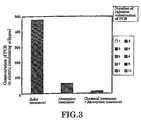
- Fig. 3 shows the results of measurement of the concentration of PCB contained in an electric insulating oil, the concentration of PCB contained in an electric insulating oil subjected to adsorption treatment, and the concentration of PCB contained in an electric insulating oil subjected to chemical treatment which is acid treatment. Numerical values of 1 to 10 in the figure indicate the number of chlorine substitution of contained PCB. As apparent from this result, it was made clear that PCB was effectively removed from an insulating oil by treatment of the present invention.
- aromatic halogenated compound pollutants can be effectively removed from fats and oils containing pollutants comprising low concentration aromatic halogenated compounds by a simple method, and pollutants can be recovered at the high concentration, and thus, the present invention is an excellent method as a method of cleaning the environmental pollution and has the high industrial value.
Landscapes
- Chemical & Material Sciences (AREA)
- Chemical Kinetics & Catalysis (AREA)
- Organic Chemistry (AREA)
- Analytical Chemistry (AREA)
- Oil, Petroleum & Natural Gas (AREA)
- Engineering & Computer Science (AREA)
- General Chemical & Material Sciences (AREA)
- Inorganic Chemistry (AREA)
- Solid-Sorbent Or Filter-Aiding Compositions (AREA)
- Treatment Of Liquids With Adsorbents In General (AREA)
- Fats And Perfumes (AREA)
Abstract
Description

| Solid acid | Acidity | Acid Strength | Removal rate | Recovery rate | |
| Example 5 | Magnesium silicate | 0.85 mmol/g | < +4.0 | 87.5% | 97.2% |
| Example 6 | Silica alumina | 0.34 mmol/g | < -8.2 | 85.8% | 98.3% |
| Example 7 | Silica alumina | 0.1 mmol/g | < +4.0 | 82.5% | 97.5% |
| Example 8 | | 1 mmol/g | < -5.6 | 85.3% | 95.6% |
| Example 9 | Nickel sulfate | 0.72 mmol/g | +6.8 to +4.8 | 55.5% | 85.2% |
| Example 10 | Silica alumina | 0.05 mmol/g | < -5.6 | 61.0% | 86.3% |
Claims (15)
- A method of treating fats and oils, characterized in that the method includes:contacting an adsorbing agent comprising a porous body and a non-protonic polar solvent held in the interiors of fine pores in the porous body, with contaminated fats and oils containing organic pollutants;and adsorbing the pollutants in the non-protonic polar solvent in the porous body.
- The method of treating fats and oils according to claim 1, characterized in that the adsorbing agent carries a noble metal fine particle, and the adsorbing agent comprises the non-protonic polar solvent held in the interiors of fine pores in the porous body.
- The method of treating fats and oils according to claim 2, characterized in that the noble metal particle carried by the porous body is carried in a range of 0.5 to 10 wt% relative to the porous body.
- The method of treating fats and oils according to any preceding claim,
characterized in that the non-protonic polar solvent is at least one kind selected from acetone, acetonitrile, N,N-dimethylformamide (DMF), dimethyl sulfoxide (DMSO), hexamethylphosphoramide (HMPA), tetrahydrofuran (THF), sulfolane, 1,3-dimethyl-2-imidazolidine (DMI), N-methyl-2-pyrrolidone (NMP) and propylene carbonate and aqueous solutions thereof. - The method of treating fats and oils according to claim any preceding claim, characterized in that the porous body comprises at least one kind of material selected from charcoal, bone charcoal, active carbon, silica gel, fused silica, natural zeolite, synthetic zeolite, frass earth, activated clay, bauxite, alumina, magnesia, porous glass bead, chelating resin, chitosan and polymer compound resin.
- The method of treating fats and oils according to claim 4, characterized in that the porous body has a specific surface area in a range of 100 to 3000 m2/g.
- The method of treating fats and oils according to any of claims 1 to 3, 1, characterized in that the non-protonic polar solvent is 1,3-dimethyl-2-imidazolidine, and a porous body holding the same is active carbon.
- The method of treating fats and oils according to either of claims 5 or 7
characterized in that the active carbon is fibrous active carbon. - The method of fats and oils according to any preceding claim, characterized in that the porous body holding a non-protonic polar solvent which has adsorbed pollutants by contact with the fats and oils is treated using an acid, and thereafter, the porous body is treated with an organic solvent selected from a non-polar solvent and a lower alcohol, whereby, the pollutants are dissolved in the organic solvent.
- A method of treating fats and oils, characterized in that the method includes:an adsorbing step of contacting fats and oils containing aromatic halogenated compounds with an adsorbing agent comprising a solid acid to adsorb the aromatic halogenated compounds onto the adsorbing agent;a step of contacting the adsorbing agent with an organic solvent to extract the aromatic halogenated compounds adsorbed on the absorbing agent into the organic solvent.
- The method of treating fats and oils according to claim 10, further comprising a step of acid-treating contaminated fats and oils containing aromatic halogenated compounds prior to the adsorbing step.
- The method of treating fats and oils according to either of claims 10 or 11,
characterized in that the acidity of the solid acid (Lewis acid + Brønsted acid) is not less than 0.1 mmol/g and not more than 1 mmol/g, and the acid strength of the solid acid (Lewis acid + Brønsted acid) is not more than +4.0. - The method of treating fats and oils according to any of claims 10 to 12,
characterized in that the solid acid is at least one kind selected from metal oxide, metal silicate composite oxide, metal sulfide, metal chloride, sulfate, phosphate, silicate, synthetic zeolite (molecular sieve), silica gel, heteropolyacid, active carbon, clay mineral, H3PO4-containing diatomaceous earth and cationic ion exchange resin. - The method of treating fats and oils according to claim13, characterized in that the solid acid is magnesium silicate.
- The method of treating fats and oils according to claim 13, characterized in that the solid acid has an average particle diameter in a range of 10 to 1000 µm and is particulate.
Applications Claiming Priority (4)
| Application Number | Priority Date | Filing Date | Title |
|---|---|---|---|
| JP2002028370 | 2002-02-05 | ||
| JP2002028371 | 2002-02-05 | ||
| JP2002028371A JP4064117B2 (en) | 2002-02-05 | 2002-02-05 | Contaminated oil treatment method |
| JP2002028370A JP4064116B2 (en) | 2002-02-05 | 2002-02-05 | Processing method of fats and oils |
Publications (2)
| Publication Number | Publication Date |
|---|---|
| EP1332774A2 true EP1332774A2 (en) | 2003-08-06 |
| EP1332774A3 EP1332774A3 (en) | 2003-12-17 |
Family
ID=26625682
Family Applications (1)
| Application Number | Title | Priority Date | Filing Date |
|---|---|---|---|
| EP03250743A Withdrawn EP1332774A3 (en) | 2002-02-05 | 2003-02-05 | Method of treating fats and oils |
Country Status (4)
| Country | Link |
|---|---|
| US (1) | US6998050B2 (en) |
| EP (1) | EP1332774A3 (en) |
| AU (1) | AU2003200424B2 (en) |
| CA (1) | CA2418443C (en) |
Cited By (7)
| Publication number | Priority date | Publication date | Assignee | Title |
|---|---|---|---|---|
| FR2861210A1 (en) * | 2003-10-16 | 2005-04-22 | Jean Baptiste Gilardi | Depolluting dielectric fluid from electrical power device contaminated by polychlorobiphenyls involves using mobile treatment unit containing active carbon filter in mobile treatment unit |
| WO2010039037A1 (en) * | 2008-10-03 | 2010-04-08 | Dag Arntsen | Process for removal of contaminations from organic oils |
| EP2133401A3 (en) * | 2008-06-11 | 2011-03-23 | General Electric Company | Methods and system for removing impurities from heavy fuel |
| CN102614848A (en) * | 2011-01-26 | 2012-08-01 | 湖北省电力公司孝感供电公司 | Method of producing adsorbent particles for processing deteriorated oil |
| EP2325142A4 (en) * | 2008-09-18 | 2012-10-03 | Mizusawa Industrial Chem | NEW ACTIVATED CLAY AND DECOUPLING AGENT FOR ANIMAL OR VEGETABLE FATS OR OILS OR MINERAL OILS |
| CN103421603A (en) * | 2013-09-11 | 2013-12-04 | 四川国为制药有限公司 | Method for removing dioxin and analogues thereof in fish oil |
| CN109821272A (en) * | 2018-12-11 | 2019-05-31 | 广东电网有限责任公司 | A kind of method of the removing of aminopyrine |
Families Citing this family (39)
| Publication number | Priority date | Publication date | Assignee | Title |
|---|---|---|---|---|
| JP2004210945A (en) * | 2002-12-27 | 2004-07-29 | Toshiba Corp | Method for separating aromatic halogen compounds |
| US8552232B2 (en) * | 2006-07-27 | 2013-10-08 | Swift Fuels, Llc | Biogenic turbine and diesel fuel |
| EP2046924A1 (en) * | 2006-07-27 | 2009-04-15 | Swift Enterprises, Ltd. | Renewable engine fuel |
| US8907150B2 (en) | 2006-07-27 | 2014-12-09 | Swift Fuels, Llc | Biogenic fuel and method of making same |
| US8556999B2 (en) | 2007-07-27 | 2013-10-15 | Swift Fuels, Llc | Renewable engine fuel and method of producing same |
| US7803343B2 (en) * | 2007-06-27 | 2010-09-28 | J.M. Huber Corporation | Silica gel manufacturing method and gels made thereby |
| US8596468B2 (en) * | 2007-06-27 | 2013-12-03 | J.M. Huber Corporation | Composite caustic silica gel manufacturing method and gels made thereby |
| US9145566B2 (en) | 2007-07-27 | 2015-09-29 | Swift Fuels, Llc | Renewable engine fuel and method of producing same |
| US20090036546A1 (en) * | 2007-07-31 | 2009-02-05 | Chevron U.S.A. Inc. | Medicinal Oil Compositions, Preparations, and Applications Thereof |
| CN105238435A (en) | 2007-08-09 | 2016-01-13 | 埃莱文斯可更新科学公司 | Thermal methods for treating a metathesis feedstock |
| US9284515B2 (en) | 2007-08-09 | 2016-03-15 | Elevance Renewable Sciences, Inc. | Thermal methods for treating a metathesis feedstock |
| BRPI0814994A2 (en) | 2007-08-09 | 2015-02-03 | Elevance Renewable Sciences | CHEMICAL METHODS FOR TREATMENT OF A METATESE RAW MATERIAL |
| US8889932B2 (en) * | 2008-11-26 | 2014-11-18 | Elevance Renewable Sciences, Inc. | Methods of producing jet fuel from natural oil feedstocks through oxygen-cleaved reactions |
| MY156576A (en) * | 2008-11-26 | 2016-03-15 | Elevance Renewable Sciences | Methods of producing jet fuel from natural oil feedstocks through metathesis reactions |
| CA2745024A1 (en) * | 2008-11-28 | 2010-06-03 | Pronova Biopharma Norge As | A composition, with/without at least one easily oxidised component, comprising an edible processed oil or fat mixture, for promoting growth in an animal, preventing oxidative stress, avoiding that fish develop enlarged liver and feed composition |
| US20110088311A1 (en) * | 2009-09-18 | 2011-04-21 | Swift Enterprises, Ltd. | Mesitylene As An Octane Enhancer For Automotive Gasoline, Additive For Jet Fuel, And Method Of Enhancing Motor Fuel Octane And Lowering Jet Fuel Carbon Emissions |
| US9382502B2 (en) | 2009-10-12 | 2016-07-05 | Elevance Renewable Sciences, Inc. | Methods of refining and producing isomerized fatty acid esters and fatty acids from natural oil feedstocks |
| US9175231B2 (en) | 2009-10-12 | 2015-11-03 | Elevance Renewable Sciences, Inc. | Methods of refining natural oils and methods of producing fuel compositions |
| US9222056B2 (en) | 2009-10-12 | 2015-12-29 | Elevance Renewable Sciences, Inc. | Methods of refining natural oils, and methods of producing fuel compositions |
| US8735640B2 (en) | 2009-10-12 | 2014-05-27 | Elevance Renewable Sciences, Inc. | Methods of refining and producing fuel and specialty chemicals from natural oil feedstocks |
| US9169447B2 (en) | 2009-10-12 | 2015-10-27 | Elevance Renewable Sciences, Inc. | Methods of refining natural oils, and methods of producing fuel compositions |
| US9365487B2 (en) | 2009-10-12 | 2016-06-14 | Elevance Renewable Sciences, Inc. | Methods of refining and producing dibasic esters and acids from natural oil feedstocks |
| PL2488474T3 (en) | 2009-10-12 | 2017-07-31 | Elevance Renewable Sciences, Inc. | Methods of refining and producing fuel from natural oil feedstocks |
| US9000246B2 (en) | 2009-10-12 | 2015-04-07 | Elevance Renewable Sciences, Inc. | Methods of refining and producing dibasic esters and acids from natural oil feedstocks |
| US9051519B2 (en) | 2009-10-12 | 2015-06-09 | Elevance Renewable Sciences, Inc. | Diene-selective hydrogenation of metathesis derived olefins and unsaturated esters |
| US9169174B2 (en) | 2011-12-22 | 2015-10-27 | Elevance Renewable Sciences, Inc. | Methods for suppressing isomerization of olefin metathesis products |
| US9133416B2 (en) | 2011-12-22 | 2015-09-15 | Elevance Renewable Sciences, Inc. | Methods for suppressing isomerization of olefin metathesis products |
| US9139493B2 (en) | 2011-12-22 | 2015-09-22 | Elevance Renewable Sciences, Inc. | Methods for suppressing isomerization of olefin metathesis products |
| US9388098B2 (en) | 2012-10-09 | 2016-07-12 | Elevance Renewable Sciences, Inc. | Methods of making high-weight esters, acids, and derivatives thereof |
| US9816041B2 (en) | 2013-12-09 | 2017-11-14 | Swift Fuels, Llc | Aviation gasolines containing mesitylene and isopentane |
| US20150259619A1 (en) | 2014-03-11 | 2015-09-17 | Swift Fuels, Llc | Motor fuel formulation |
| CN106552611B (en) * | 2015-09-28 | 2019-06-11 | 中国石油天然气股份有限公司 | Preparation method of adsorbent and method for adsorbing and separating chlorine in oil |
| CN107216946A (en) * | 2016-03-22 | 2017-09-29 | 浙江医药股份有限公司新昌制药厂 | The minimizing technology of plasticiser in a kind of fish oil |
| CN105920876A (en) * | 2016-06-27 | 2016-09-07 | 河南中托力合化学有限公司 | Organic solvent refining device |
| US20180371358A1 (en) * | 2017-06-23 | 2018-12-27 | Pure, Llc | Cannabis extract filtration methods and systems |
| JP7218584B2 (en) * | 2019-01-18 | 2023-02-07 | 三浦工業株式会社 | Method for fractionating dioxins |
| CN110578180B (en) * | 2019-09-27 | 2021-09-17 | 武汉轻工大学 | Acidified modified cellulose fiber, preparation method thereof and application thereof in processing edible oil |
| CN112812823B (en) * | 2020-12-28 | 2022-09-09 | 湖南两山环境科技有限公司 | Waste mineral oil recovery storage device based on multiple filtration |
| CN117603747B (en) * | 2023-12-04 | 2025-12-26 | 山东沐荣生物科技有限公司 | A natural ester insulating oil, a method for preparing the natural ester insulating oil using cottonseed oil, and its application. |
Family Cites Families (27)
| Publication number | Priority date | Publication date | Assignee | Title |
|---|---|---|---|---|
| GB707950A (en) * | 1951-10-02 | 1954-04-28 | Commw Scient Ind Res Org | Improved partition adsorbent and a method for its use |
| FR2212174B1 (en) * | 1972-12-30 | 1978-06-09 | Toyo Jozo Kk | |
| FR2340910A1 (en) * | 1976-02-11 | 1977-09-09 | Inst Francais Du Petrole | PROCESS FOR PURIFYING WATER CONTAINING ORGANIC PRODUCTS BY EXTRACTION OF THE SAID ORGANIC PRODUCTS BY MEANS OF AN IMMOBILIZED SOLVENT |
| US4124834A (en) * | 1977-10-05 | 1978-11-07 | Westinghouse Electric Corp. | Electrical inductive apparatus |
| JPS56127685A (en) * | 1980-03-13 | 1981-10-06 | Zenkoku Sekiyu Kogyo Kyodo Kumiai | Solvent refining method of light fraction and lubricant fraction of petroleum oil |
| US4387018A (en) | 1982-03-17 | 1983-06-07 | The United States Of America As Represented By The United States Department Of Energy | Method of removing polychlorinated biphenyl from oil |
| US4405448A (en) | 1982-03-31 | 1983-09-20 | Googin John M | Process for removing halogenated aliphatic and aromatic compounds from petroleum products |
| US4477354A (en) | 1982-09-07 | 1984-10-16 | Electric Power Research Institute | Destruction of polychlorinated biphenyls during solvent distillation |
| EP0106970A1 (en) * | 1982-09-30 | 1984-05-02 | American Cyanamid Company | Extraction of halogenated hydrocarbons from aqueous solutions using phosphine oxides on inert supports as the extractant |
| US4430208A (en) | 1982-10-29 | 1984-02-07 | The Franklin Institute | Method for the solvent extraction of polychlorinated biphenyls |
| US4764256A (en) | 1983-12-07 | 1988-08-16 | Electric Power Research Institute, Inc. | Removal of polychlorinated biphenyls by solvent extraction |
| DE3401866C2 (en) * | 1984-01-20 | 1986-10-09 | Didier-Werke Ag, 6200 Wiesbaden | Process for the long-term removal of chlorinated biphenyls (PCB) from transformer insulating fluids |
| JPS6339991A (en) * | 1986-08-04 | 1988-02-20 | クロ−ダジヤパン株式会社 | Purification of animal oils and fats |
| US4952746A (en) * | 1986-11-14 | 1990-08-28 | Uop | Process for the removal of hydrogenatable hydrocarbonaceous compounds from a hydrocarbonaceous stream and hydrogenating these compounds |
| DE3724184A1 (en) * | 1987-07-17 | 1989-01-26 | Luehr Hans Peter | Process for removing PCBs and other halogenated organic pollutants from waste oils |
| US5077070A (en) * | 1989-07-07 | 1991-12-31 | Gycor International, Ltd. | Method of making a composite filter material and its use in treating edible oils |
| JP2611900B2 (en) * | 1992-06-05 | 1997-05-21 | 財団法人生産開発科学研究所 | Method for removing halogenated aromatic compounds from hydrocarbon oil |
| US6764603B2 (en) * | 1992-08-07 | 2004-07-20 | Akzo Nobel Nv | Material for extracting hydrophobic components dissolved in water |
| AU4704493A (en) * | 1992-08-07 | 1994-03-03 | Akzo Nobel N.V. | Material for extracting hydrophobic components dissolved in water |
| US5460792A (en) * | 1992-12-23 | 1995-10-24 | Rohm And Haas Company | Removal and destruction of halogenated organic and hydrocarbon compounds with porous carbonaceous materials |
| US5382736A (en) * | 1993-05-03 | 1995-01-17 | General Electric Company | Method for catalytic dechlorination of polychlorinated biphenyls |
| JP3247505B2 (en) * | 1993-06-24 | 2002-01-15 | 財団法人生産開発科学研究所 | Method for decomposing halogenated aromatic compounds |
| DE69629979T2 (en) * | 1995-06-02 | 2004-07-29 | Corning Inc. | Device for removing contaminants from fluid streams |
| JP2965896B2 (en) * | 1995-10-13 | 1999-10-18 | 田口 ひろみ | Processing material for oil containing polychlorinated biphenyl |
| WO1998018526A1 (en) * | 1996-10-31 | 1998-05-07 | Manuel Galan Mayoral | Process for transforming polychoride-biphenyl (pcb) into inert residues |
| JP4337958B2 (en) * | 1999-07-09 | 2009-09-30 | 関西ティー・エル・オー株式会社 | Method for dechlorination of aromatic chlorine compounds |
| US6638551B1 (en) * | 2002-03-05 | 2003-10-28 | Selecto Scientific, Inc. | Methods and compositions for purifying edible oil |
-
2003
- 2003-02-04 CA CA002418443A patent/CA2418443C/en not_active Expired - Fee Related
- 2003-02-05 US US10/358,335 patent/US6998050B2/en not_active Expired - Fee Related
- 2003-02-05 AU AU2003200424A patent/AU2003200424B2/en not_active Ceased
- 2003-02-05 EP EP03250743A patent/EP1332774A3/en not_active Withdrawn
Cited By (10)
| Publication number | Priority date | Publication date | Assignee | Title |
|---|---|---|---|---|
| FR2861210A1 (en) * | 2003-10-16 | 2005-04-22 | Jean Baptiste Gilardi | Depolluting dielectric fluid from electrical power device contaminated by polychlorobiphenyls involves using mobile treatment unit containing active carbon filter in mobile treatment unit |
| EP2133401A3 (en) * | 2008-06-11 | 2011-03-23 | General Electric Company | Methods and system for removing impurities from heavy fuel |
| US8088277B2 (en) | 2008-06-11 | 2012-01-03 | General Electric Company | Methods and system for removing impurities from heavy fuel |
| EP2325142A4 (en) * | 2008-09-18 | 2012-10-03 | Mizusawa Industrial Chem | NEW ACTIVATED CLAY AND DECOUPLING AGENT FOR ANIMAL OR VEGETABLE FATS OR OILS OR MINERAL OILS |
| WO2010039037A1 (en) * | 2008-10-03 | 2010-04-08 | Dag Arntsen | Process for removal of contaminations from organic oils |
| EP2344614A4 (en) * | 2008-10-03 | 2012-03-28 | Dag Arntsen | Process for removal of contaminations from organic oils |
| CN102614848A (en) * | 2011-01-26 | 2012-08-01 | 湖北省电力公司孝感供电公司 | Method of producing adsorbent particles for processing deteriorated oil |
| CN103421603A (en) * | 2013-09-11 | 2013-12-04 | 四川国为制药有限公司 | Method for removing dioxin and analogues thereof in fish oil |
| CN109821272A (en) * | 2018-12-11 | 2019-05-31 | 广东电网有限责任公司 | A kind of method of the removing of aminopyrine |
| CN109821272B (en) * | 2018-12-11 | 2021-07-30 | 广东电网有限责任公司 | A kind of method for removing aminopyrine |
Also Published As
| Publication number | Publication date |
|---|---|
| US6998050B2 (en) | 2006-02-14 |
| CA2418443A1 (en) | 2003-08-05 |
| CA2418443C (en) | 2007-04-24 |
| AU2003200424B2 (en) | 2005-11-17 |
| EP1332774A3 (en) | 2003-12-17 |
| AU2003200424A1 (en) | 2003-08-21 |
| US20030175401A1 (en) | 2003-09-18 |
Similar Documents
| Publication | Publication Date | Title |
|---|---|---|
| US6998050B2 (en) | Method of treating fats and oils | |
| AU2010330678B2 (en) | Amine modified clay sorbents | |
| JP3025701B2 (en) | Method for decomposing halogenated and non-halogenated organic compounds in contaminated media with base catalyst | |
| Younker et al. | Impact of salinity and dispersed oil on adsorption of dissolved aromatic hydrocarbons by activated carbon and organoclay | |
| JP4064116B2 (en) | Processing method of fats and oils | |
| EP3913362A1 (en) | Method for fractionating dioxin-type compounds | |
| JP2611900B2 (en) | Method for removing halogenated aromatic compounds from hydrocarbon oil | |
| EP2017317B1 (en) | Use of selective adsorbents for halogenated aromatic compounds contained in organic media and method of capturing of said halogenated aromatic compounds | |
| JP4514284B2 (en) | Method for treating organohalogen compounds | |
| JP4064117B2 (en) | Contaminated oil treatment method | |
| JP4023816B1 (en) | Method for treating catalyst with reduced resolution | |
| JP2022055260A (en) | Method for extracting organic halogen compound | |
| JP5691120B2 (en) | Production method of silica gel containing high concentration sulfuric acid | |
| Choi | Treatment characteristics of various sediment components spiked with 2-chlorobiphenyl using reactive activated carbon | |
| JP4332915B2 (en) | Environmental hormone-containing water treatment method and environmental hormone-containing water treatment apparatus | |
| JP4786046B2 (en) | Purification method for contaminated soil | |
| DE69624721T2 (en) | METHOD FOR DECONTAMINATING AND TREATING A LIQUID, GASEOUS OR SOLID MATRIX WITH OXIDATIVE COUNTERFLOW | |
| KR100367939B1 (en) | Decomposition of Halogenated Aromatic Compounds | |
| JP2003300058A (en) | Soil treatment method | |
| JP5544735B2 (en) | Method for treating catalyst with reduced resolution | |
| JP2003225505A (en) | Treatment method of contaminated oil | |
| RS50267B (en) | THE PROCESS OF TREATMENT OF LAND CONTAMINATED BY ORGANIC UNITS | |
| JP2007042420A (en) | Refining method of insulation oil | |
| JP2000246002A (en) | Method and apparatus for purifying solids contaminated with organic halogen compounds | |
| TW201918296A (en) | Method for treating polluted soil |
Legal Events
| Date | Code | Title | Description |
|---|---|---|---|
| PUAI | Public reference made under article 153(3) epc to a published international application that has entered the european phase |
Free format text: ORIGINAL CODE: 0009012 |
|
| 17P | Request for examination filed |
Effective date: 20030214 |
|
| AK | Designated contracting states |
Designated state(s): AT BE BG CH CY CZ DE DK EE ES FI FR GB GR HU IE IT LI LU MC NL PT SE SI SK TR |
|
| AX | Request for extension of the european patent |
Extension state: AL LT LV MK RO |
|
| PUAL | Search report despatched |
Free format text: ORIGINAL CODE: 0009013 |
|
| AK | Designated contracting states |
Kind code of ref document: A3 Designated state(s): AT BE BG CH CY CZ DE DK EE ES FI FR GB GR HU IE IT LI LU MC NL PT SE SI SK TR |
|
| AX | Request for extension of the european patent |
Extension state: AL LT LV MK RO |
|
| AKX | Designation fees paid |
Designated state(s): DE FR GB |
|
| 17Q | First examination report despatched |
Effective date: 20090827 |
|
| STAA | Information on the status of an ep patent application or granted ep patent |
Free format text: STATUS: THE APPLICATION IS DEEMED TO BE WITHDRAWN |
|
| 18D | Application deemed to be withdrawn |
Effective date: 20090829 |