Technical Field
The present invention relates to a method of producing a protein
degradation product by treating a protein in a sample with a protease.
Background Art
Conventionally, for the purpose of detecting a target protein
(including a peptide) in a sample or deactivating a function of the protein that
affects the determination, a method of degrading the protein with a protease
has been employed in various determining methods etc.
For example, attempts now are being made to determine, by an
enzymic method, a glycated protein in blood, especially glycated hemoglobin
in red blood cells reflecting previous blood glucose levels in vivo, as an
important index for the diagnosis, treatment, etc. of diabetes, and the method
of degrading a glycated protein with a protease also is employed in such an
enzymic method. In the above-mentioned enzymic method, a fructosyl
amino acid oxidase (hereinafter, referred to as "FAOD") is reacted with a
glycation site of a glycated protein contained in a hemolysate sample so that
hydrogen peroxide is generated. The amount of the hydrogen peroxide
corresponds to the amount of the glycated protein. After this FAOD
treatment, a peroxidase (hereinafter, referred to as "POD") and a reducing
agent are added to the sample so that the POD catalyzes a redox reaction
between the hydrogen peroxide and the reducing agent. In the case where a
color-developing substrate that develops color by oxidation is used as the
reducing agent, the amount of the hydrogen peroxide can be determined by
measuring the color development, and the amount of the glycated protein in
the sample can be known from the amount of the hydrogen peroxide thus
determined.
However, FAOD to be reacted with the glycation site acts on a
glycated amino acid and a glycated peptide fragment shorter than a glycated
protein and a glycated peptide more easily than on the glycated protein and
the glycated peptide. Accordingly, with the intention of improving the
accuracy of determination, the glycated protein is degraded with a protease in
advance so that FAOD can act on the glycation site of the glycated protein
more easily.
Disclosure of Invention
However, a protease has a substrate specificity and the degradation
activity thereof differs depending on the substrate to be treated. Accordingly,
depending on the type of the target protein, it may take a long time to
degrade the target protein so that the determination cannot be carried out
quickly. Further, when the target protein is glycated as in the case of the
above-mentioned glycated protein, it may be difficult to degrade the glycated
protein due to the steric hindrance and the like. For this reason, when
determining the glycated protein in the above-mentioned manner, the
determination process as a whole takes a long time due to the protease
treatment carried out in advance. Therefore, from the viewpoint of
applicability in the field of clinical tests etc., there has been a demand for a
method by which a glycated protein can be determined quickly
Therefore, it is an object of the present invention to provide a method
of producing a protein degradation product, by which a protein in a sample
can be degraded quickly and efficiently.
In order to achieve the above object, a method of producing a protein
degradation product according to the present invention includes: treating a
sample containing a protein with a protease in the presence of a tetrazolium
compound. It is to be noted that the term "protein" as used in the present
invention includes a peptide.
By treating the sample containing the protein with the protease in
the presence of the tetrazolium compound as described above, it becomes
possible to degrade the protein in the sample quickly.
The tetrazolium compound is a compound having a tetrazole ring
structure. In the producing method of the present invention, tetrazolium
compounds as described later can be used as the tetrazolium compound.
Preferably, the tetrazolium compound is one containing ring substituents at
least at two positions on its tetrazole ring. Most preferably, the tetrazolium
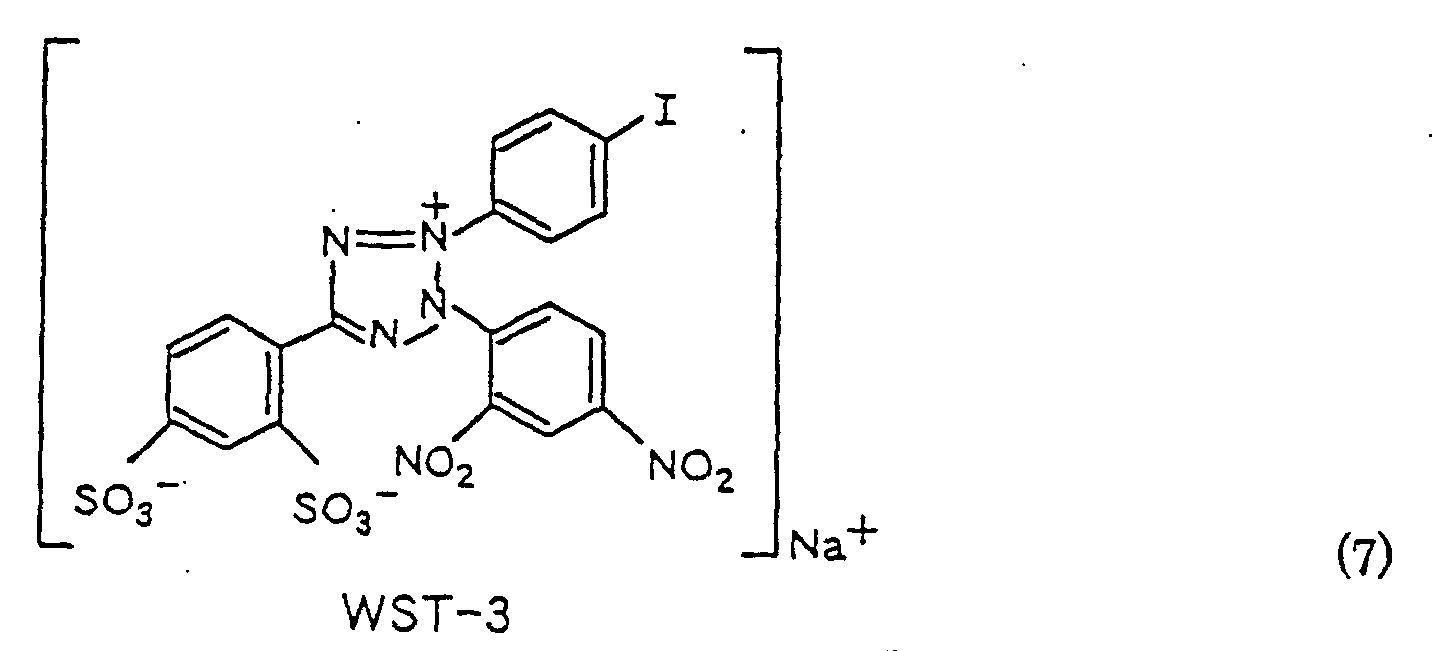
compound is 2-(4-iodophenyl)-3-(2,4-dinitrophenyl)-5-(2,4-disulfophenyl)-2H-tetrazolium
salt.
In the producing method of the present invention, the amount of the
tetrazolium compound added to the sample is not specifically limited and can
be decided as appropriate, for example, depending on the type and the added
amount of the protease, the type of the sample, the amount of the protein
contained in the sample, and the like. More specifically, it is preferable that
the tetrazolium compound is added to the sample so that a content of the
tetrazolium compound per microliter of the sample is in the range from 0.02
to 10 µmol, more preferably from 0.05 to 2 µmol, and most preferably from 0.1
to 2 µmol, for example.
Further, the ratio of the added amount of the tetrazolium compound
to the added amount of the protease is as follows, for example: the
tetrazolium compound is added to the sample so that a content of the
tetrazolium compound per KU of the protease is in a range from 0.001 to 100
µmol, preferably 0.01 to 20 µmol, and most preferably 0.05 to 5 µmol.
In the producing method of the present invention, it is preferable that
the sample is treated with the protease in the presence of the tetrazolium
compound and a surfactant. By carrying out the protease treatment under
the condition that the surfactant coexists with the tetrazolium compound, the
degradation of the protein with the protease can be accelerated still further so
that the protein in the sample can be determined quickly.
The surfactant is not specifically limited, and can be, for example, a
nonionic surfactant. More specifically, polyoxyethylene alkyl ethers,
polyoxyethylene alkylphenyl ethers, sorbitan fatty acid esters, and the like
can be used as the surfactant. Among these, polyoxyethylene alkyl ethers
and polyoxyethylene alkylphenyl ethers are preferable. Other than these,
sodium lauryl sulfate, deoxycholic acid, and the like can be used, for example.
More specifically, polyoxyethylene-p-t-octylphenyl ether such as
commercially available Triton-type surfactants and the like; polyoxyethylene
sorbitan alkyl ester such as commercially available Tween-type surfactants
and the like; and polyoxyethylene alkyl ether such as commercially available
Brij-type surfactants and the like can be used, for example. Other than
these, polyoxyethylene (10) lauryl ether; polyoxyethylene (9) lauryl ether such
as Nikkol BL-9 EX (trade name, available from Wako Pure Chemical
Industries, Ltd.: the weight-average degree of polymerization N of
polyoxyethylene is 9) and the like; and polyoxyethylene octylphenyl ether
such as Tergitol NPX (trade name, available from Nacalai Tesque, Inc.: the
weight-average degree of polymerization N of polyoxyethylene is about 10.5),
Tergitol NP-40 (trade name, available from Nacalai Tesque, Inc.: the
weight-average degree of polymerization N of polyoxyethylene is 20), and the
like also can be used, for example.
In the producing method of the present invention, the amount of the
tetrazolium compound added to a sample is not specifically limited. For
example, the surfactant preferably is added to the sample so that a content of
the surfactant per mole of the tetrazolium compound is in the range from 0.01
to 300 mol, more preferably from 0.05 to 150 mol, and most preferably from
0.2 to 100 mol.
On the other hand, the added amount of the surfactant per microliter
of the sample preferably is in the range from 0.01 to 50 µmol and more
preferably from 0.05 to 10 µmol.
In the producing method of the present invention, it is preferable that
the protein to be degraded is a glycated protein. Examples of the glycated
protein include glycated hemoglobin, glycated albumin, and the like. Among
these, glycated hemoglobin is preferable. Further, if a degradation product
of a glycated protein is produced by the producing method of the present
invention, the glycated protein can be determined quickly by a method of
determining a glycated protein (including a glycated peptide) as described
later.
The protease used in the producing method of the present invention is
not specifically limited. Examples of the protease include serine proteases,
thiol proteases, metalloproteases, and the like. More specifically, it is
preferable to use a trypsin, proteinase K, chymotrypsin, papain, bromelain,
subtilisin, elastase, aminopeptidase, and the like.
Further, in the case where the protein to be degraded is glycated
hemoglobin, a protease that degrades the glycated hemoglobin selectively, e.g.,
a bromelain, papain, trypsin derived from porcine pancreas,
metalloproteinase, and protease derived from Bacillus subtilis, preferably is
used. Examples of the protease derived from Bacillus subtilis include
Protease N (trade name, available from Fluka Chemie AG, for example),
Protease N "AMANO" (trade name, available from Amano Enzyme Inc.), and
the like. Examples of the metalloproteinase include the metalloproteinase
(EC 3. 4. 24. 4) derived from the genus Bacillus (e.g., available from Toyobo
Co., Ltd. under the trade name Toyoteam) and the like. Among these, a
metalloproteinase, bromelain, and papain are more preferable, and a
metalloproteinase is most preferable. By using the protease that degrades
the glycated hemoglobin selectively, a degradation product of a particular
glycated protein can be prepared selectively.
In the producing method of the present invention, the amount of the
protease added to the sample is not specifically limited and can be decided as
appropriate, for example, depending on the type of the protease to be used,
the type and the amount of the protein to be degraded, and the like. For
example, the protease preferably is added to the sample so that a content of
the protease per microliter of the sample is in the range from 10 to 1,000,000
U, more preferably from 100 to 500,000 U, and most preferably from 500 to
200,000 U.
In the producing method of the present invention, the sample is not
specifically limited. For example, in addition to blood samples such as whole
blood, plasma, serum, blood cells, and the like, biological samples such as
urine, spinal fluid, saliva and the like; beverage such as juice and the like;
food such as soy sauce, sauce, and the like also can be used as the sample.
Among these, blood samples such as whole blood and the like and blood cell
samples are preferable.
Next, a method of determining an amount of glycated protein
according to the present invention includes: degrading a glycated protein in a
sample by the method of producing a protein degradation product according
to the present invention to give a glycated protein degradation product;
causing a redox reaction between a glycation site of the glycated protein
degradation product and FAOD; and determining the redox reaction to
determine an amount of the glycated protein. It is to be noted that, as is
described above with regard to the term "protein", the term "glycated protein"
also includes a glycated peptide.
According to a conventional method in which a glycated protein is
treated with a protease in the absence of a tetrazolium compound, it is
necessary to carry out the protease treatment for about 6 to 40 hours in order
to degrade the glycated protein sufficiently so as to allow FAOD to act on the
glycation site of the glycated protein easily. Accordingly, the
above-mentioned enzymic method requires a long time to determine the
glycated protein and thus is not very useful. In contrast, according to the
method of determining a glycated protein of the present invention, a glycated
protein can be determined quickly because it is possible to degrade a protein
within a short time. For example, in the case where a glycated protein is
determined by the determining method of the present invention under the
same conditions as in the conventional method except that a tetrazolium
compound is added, the time require for the determination can be reduced to
about 1/25 to 1/1200 of that in the case where a tetrazolium compound is not
added.
Examples of the tetrazolium compound and the protease used in the
determining method of the present invention include those described above.
Further, the added amounts of the tetrazolium compound and the protease
also are the same as those described above.
In the determining method of the present invention, examples of the
glycated protein include those described above. Among these, glycated
hemoglobin is most preferable. Hemoglobin is contained in blood at a high
concentration of about 60 to 200 g/L, and besides, it is difficult to degrade
hemoglobin. Therefore, conventionally, a protease treatment of glycated
hemoglobin takes several hours to several days. In contrast, according to
the determining method of the present invention, the protease treatment can
be carried out within 20 seconds to 2 hours, which allows the glycated
hemoglobin to be determined quickly.
In the determining method of the present invention, it is preferable
that determining the redox reaction is determining an amount of hydrogen
peroxide generated by the redox reaction between the glycation site of the
glycated protein degradation product and the FAOD.
It is preferable that the amount of the hydrogen peroxide is
determined using an oxidase and a substrate that develops color (i.e., a
color-developing substrate) by oxidation. The oxidase is not specifically
limited. However, POD preferably is used as the oxidase. Also, the
color-developing substrate, is not specifically limited. However,
N-(carboxymethylaminocarbonyl)-4,4'-bis(dimethylamino) diphenylamine
sodium (for example, the trade name DA-64: available from Wako Pure
Chemical Industries, Ltd.), for example, preferably is used as the
color-developing substrate because it can be detected with high sensitivity.
The sample to be used in the determining method of the present
invention is not specifically limited. Examples of the sample to be used in
this method include those described above.
In the determining method of the present invention, FAOD catalyzing
a reaction represented by Formula (1) below preferably is used.
R1-CO-CH2-NH-R2 + H2O + O2
→ R1-CO-CHO + NH2 - R2 + H2O2
In Formula (1), R1 denotes a hydroxyl group or a residue derived from
a sugar that is not yet subjected to the glycation reaction (i.e., sugar moiety).
The sugar moiety (R1) is an aldose residue when the unreacted sugar is
aldose, and is a ketose residue when the unreacted sugar is ketose. When
the unreacted sugar is glucose, for example, the sugar in the glycated product
takes on the fructose structure after the glycation reaction due to Amadori
rearrangement. In this case, the sugar moiety (R1) is a glucose residue
(aldose residue). This sugar moiety (R1) can be represented, for example, by
-[CH(OH)]n-CH2OH
where n denotes an integer of 0 to 6.
In Formula (1), R2 is not specifically limited. However, in the case
where the substrate is a glycated amino acid, a glycated peptide, or a glycated
protein, for example, R2 varies depending on which of an α-amino group and
an amino group other than the α-amino group is glycated.
In Formula (1), in the case where an α-amino group is glycated, R2 is
an amino acid residue or a peptide residue represented by Formula (2) below.
-CHR3-CO-R4
In Formula (2), R3 denotes an amino-acid side chain group. R4
denotes a hydroxyl group, an amino acid residue, or a peptide residue, and
can be represented, for example, by Formula (3) below. In Formula (3), n
denotes an integer of 0 or more and R3 denotes an amino-acid side chain
group as described above.
-(NH-CHR3-CO)n-OH
In Formula (1), in the case where an amino group other than the
α-amino group is glycated (i.e., an amino-acid side chain group is glycated),
R2 is represented by Formula (4) below.
-R5-CH(NH-R6)-CO-R7
In Formula (4), R5 denotes a portion other than the glycated amino
group in the amino-acid side chain group. For example, in the case where
the glycated amino acid is lysine, R5 is as follows.
-CH2-CH2-CH2-CH2-
On the other hand, in the case where the glycated amino acid is arginine, for
example, R5 is as follows.
-CH2-CH2-CH2-NH-CH(NH2)-
In Formula (4), R6 denotes hydrogen, an amino acid residue, or a
peptide residue, and can be represented, for example, by Formula (5) below.
In Formula (5), n denotes an integer of 0 or more and R3 denotes an
amino-acid side chain group as described above.
-(CO-CHR3-NH)n-H
In Formula (4), R7 denotes a hydroxyl group, an amino acid residue,
or a peptide residue, and can be represented, for example, by Formula (6)
below. In Formula (6), n denotes an integer of 0 or more and R3 denotes an
amino-acid side chain group as described above.
-(NH-CHR3-CO)n-OH
Best Mode for Carrying Out the Invention
The tetrazolium compound to be used in a method of producing a
protein degradation product according to the present invention preferably
contains ring substituents at least at two positions on its tetrazole ring, more
preferably at three positions on its tetrazole ring, for example.
In the case where the tetrazolium compound contains ring
substituents at least at two positions on its tetrazole ring as described above,
it is preferable that the ring substituents are at the 2-position and 3-position
on the tetrazole ring. Further, in the case where the tetrazolium compound
contains ring substituents at three positions on its tetrazole ring, it is
preferable that the ring substituents are at the 2-position, 3-position, and
5-position on the tetrazole ring.
Further, it is preferable that at least two ring substituents of the
tetrazolium compound have a benzene ring structure. Other than the
benzene ring structure, the ring substituents may have a resonance structure
with S or O being contained in the ring skeleton, for example. Examples of
the ring substituents with such a resonance structure include a thienyl group,
thiazoyl group, and the like.
Furthermore, it is preferable that the tetrazolium compound contains
ring substituents at least at three positions on its tetrazole ring and at least
two of the ring substituents have a benzene ring structure.
Still further, it is preferable that at least one ring substituent of the
tetrazolium compound contains a functional group, and a larger number of
functional groups are more preferable.
As the functional group, an electron-withdrawing functional group
preferably is used. For example, a halogen group, ether group, ester group,
carboxy group, acyl group, nitroso group, nitro group, hydroxy group, sulfo
group, and the like can be used. Other than these, characteristic groups
containing oxygen such as a hydroperoxy group, oxy group, epoxy group,
epidioxy group, oxo group, and the like; and characteristic groups containing
sulfur such as a mercapto group, alkylthio group, methylthiomethyl group,
thioxo group, sulfino group, benzenesulfonyl group, phenylsulfonyl group,
p-toluenesulfonyl group, p-tolylsulfonyl group, tosyl group, sulfamoyl group,
isothiocyanate group, and the like also can be used, for example. Among
these electron-withdrawing functional groups, a nitro group, sulfo group,
halogen group, carboxy group, hydroxy group, methoxy group, and ethoxy
group are preferable. Further, in addition to the above-mentioned
electron-withdrawing functional groups, unsaturated hydrocarbon groups
such as a phenyl group (C6H5-), styryl group (C6H5CH = CH-), and the like
also can be used, for example. It is to be noted that the functional groups
may have been ionized by dissociation.
Still further, it is preferable that the tetrazolium compound contains
benzene rings at the 2-position and 3-position on its tetrazole ring and at
least one of the benzene rings contains at least one functional group selected
from the group consisting of a halogen group, carboxy group, nitro group,
hydroxy group, sulfo group, methoxy group, and ethoxy group. It is to be
noted here that both the benzene rings may contain the functional group.
Further, the functional group may be contained at any positions (ortho-,
meta-, para-) on the benzene ring. Furthermore, the number of the
functional group is not specifically limited, and in the case where the at least
one of the benzene rings contains a plurality of functional groups, the
functional groups contained in the benzene ring may be the same or different.
Examples of the tetrazolium compound containing ring substituents
having a benzene ring structure at the 2-position, 3-position, and 5-position
on its tetrazole ring include:
The tetrazolium compound is not limited to those described above.
In addition to the above-mentioned tetrazolium compounds, a tetrazolium
compound containing ring substituents having a benzene ring structure at
two positions and one ring substituent having a structure other than the
benzene ring structure at one position on its tetrazole ring also may be used.
Examples of such a tetrazolium compound include:
Further, a tetrazolium compound containing ring substituents having
a benzene ring structure at two positions and one substituent not having a
ring structure at one position on its tetrazole ring also can be used.
Examples of such a tetrazolium compound include:
Among the above-mentioned tetrazolium compounds, the tetrazolium
compounds containing three ring substituents are preferable as described
above. Among these, the tetrazolium compounds containing three ring
substituents having a benzene ring structure and a large number of
electron-withdrawing functional groups is more preferable, and
2-(4-iodophenyl)-3-(2,4-dinitrophenyl)-5-(2,4-disulfophenyl)-2H-tetrazolium
salt is most preferable. It is to be noted here that the above-mentioned
tetrazolium compounds may be a salt or may have been ionized, for example.
Further, the tetrazolium compounds may be used alone or in combinations of
two or more types.
Hereinafter, a method of producing a protein degradation product
according to the present invention will be described by taking as an example
the case where a glycated protein in blood cells is degraded.
First, a hemolysate sample is prepared by causing hemolysis of whole
blood or of a blood cell fraction separated from the whole blood according to a
usual method such as centrifugation and the like. The method of causing
hemolysis is not specifically limited, and can be, for example, a method using
a surfactant, a method using ultrasonic waves, and a method utilizing the
difference in osmotic pressure. Among these, the method using a surfactant
is preferable.
The surfactant to be used for causing hemolysis is not specifically
limited. For example, as the surfactant, nonionic surfactants such as
polyoxyethylene-p-t-octylphenyl ether (Triton-type surfactant etc.),
polyoxyethylene sorbitan alkyl ester (Tween-type surfactant etc.),
polyoxyethylene alkyl ether (Brij-type surfactant etc.), and the like can be
used. More specifically, Triton X-100 (trade name), Tween-20 (trade name),
Brij 35 (trade name), and the like can be used, for example. Generally, the
treatment with the surfactant can be carried out under the following
conditions: in the case where the solution to be treated contains 1 to 10 vol%
of blood cells, the surfactant is added to the solution so as to give a
concentration of 0.1 to 1 wt% and the resultant mixture is stirred at room
temperature for about 5 seconds to 1 minute.
Further, when utilizing the difference in osmotic pressure, to the
whole blood is added 2 to 100 times its volume of purified water to cause
hemolysis, for example.
Subsequently, the hemolysate sample is pretreated with the protease
in the presence of the tetrazolium compound. As a result, a glycated protein
degradation product is obtained.
Generally, this pretreatment with the protease is carried out in a
buffer. Further, the type of the buffer is not specifically limited, and can be,
for example, Tris-HCl buffer, EPPS buffer, PIPES buffer, phosphate buffer,
ADA buffer, citrate buffer, acetate buffer, glycineamide buffer, CHES buffer,
and the like. The pH of the buffer preferably is in the range from 5 to 12,
more preferably from 6 to 10, and most preferably from 7 to 9.
The protease is added to the sample at the following ratio, for
example: in the case where the solution to be pretreated contains 0.1 to 10
vol% of blood cells, the protease preferably is added to the solution so as to
give a concentration in the range from 0.1 to 100 g/L, more preferably from
0.3 to 50 g/L, and most preferably from 0.5 to 20 g/L.
Further, in the case where the glycated protein to be degraded is
glycated hemoglobin, a protease that degrades the glycated hemoglobin
selectively, for example, is used as the protease. As the protease that
degrades the glycated hemoglobin selectively, a bromelain, papain, trypsin
derived from porcine pancreas, metalloproteinase, and protease derived from
Bacillus subtilis preferably are used. The protease that degrades the
glycated hemoglobin selectively is added to the sample at the following ratio,
for example: in the case where the solution to be pretreated contains 0.1 to 10
vol% of blood cells, the protease preferably is added to the solution so as to
give a concentration in the range from 0.1 to 50 g/L, more preferably from 0.3
to 30 g/L, and most preferably from 1 to 20 g/L. More specifically, in the case
where a metalloproteinase is used as the protease, the metalloproteinase
preferably is added to the solution to be pretreated containing 0.3 to 5 vol% of
blood cells so as to give a concentration in the range from 0.1 to 30 g/L, more
preferably from 0.3 to 20 g/L, and most preferably from 1 to 10 g/L.
The tetrazolium compound is added to the sample at the following
ratio, for example: in the case where the solution to be pretreated contains 0.1
to 10 vol% of blood cells, the tetrazolium compound preferably is added to the
solution so as to give a concentration in the range from 0.1 to 50 mmol/L,
more preferably from 0.2 to 20 mmol/L, and most preferably from 0.3 to 10
mmol/L. More specifically, in the case where the tetrazolium compound is
2-(4-iodophenyl)-3-(2,4-dinitrophenyl)-5- (2,4-disulfophenyl)-2H-tetrazolium
salt and the solution to be pretreated contains 0.1 to 10 vol% of blood cells,
the tetrazolium compound preferably is added to the solution so as to give a
concentration in the range from 0.3 to 15 mmol/L, more preferably from 0.5 to
15 mmol/L, and most preferably from 1 to 10 mmol/L.
The tetrazolium compound may be used as it is. However, on
account of the ease of operation, treatment efficiency, etc., it is preferable to
use a tetrazolium compound solution obtained by dissolving the tetrazolium
compound in a solvent. The concentration of the tetrazolium compound in
the solution can be decided as appropriate, for example, depending on the
type of the tetrazolium compound to be used (e.g., the molecular weight
thereof) and the like. For example, the concentration of the tetrazolium
compound in the solution is in the range from 0.01 to 120 mmol/L, preferably
from 0.1 to 50 mmol/L, and more preferably from 0.2 to 20 mmol/L. As the
solvent, distilled water, a physiological salt solution, buffers, and the like can
be used, for example. Examples of the buffers include those described above.
Further, the tetrazolium compound may be used alone or in combinations of
two or more types.
The conditions of the protease treatment carried out in the presence
of the tetrazolium compound are not specifically limited. For example, the
protease treatment is carried out at a temperature in the range from 10°C to
37°C and the treatment time in the range from 30 seconds to 60 minutes;
preferably at a temperature in the range from 20°C to 37°C and the
treatment time in the range from 30 seconds to 10 minutes; and more
preferably at a temperature in the range from 25°C to 37°C and the
treatment time in the range from 30 seconds to 5 minutes.
By treating a sample with the protease in the presence of the
tetrazolium compound as describe above, degradation of a glycated protein in
the sample can be accelerated. Accordingly, a degradation product of the
glycated protein can be obtained within a short time and besides, with high
degradation efficiency.
The protease treatment may be carried out not only in the presence of
the tetrazolium compound as described above but also in the presence of both
the tetrazolium compound and a surfactant. When the protease treatment
is carried out under the condition that the surfactant coexists with the
tetrazolium compound, the degradation of a glycated protein in the sample
can be further accelerated.
The amount of the surfactant added to the sample is not specifically
limited. For example, the surfactant may be added to the sample at the
following ratio: in the case where the solution to be pretreated contains 0.3 to
5 vol% of blood cells, the surfactant preferably is added to the solution so as to
give a concentration in the range from 0.1 to 500 mmol/L, more preferably
from 0.5 to 150 mmol/L, and most preferably from 1 to 100 mmol/L. More
specifically, in the case where the surfactant is Triton X-100 (trade name), the
surfactant preferably is added to the solution so as to give a concentration in
the range from 0.2 to 400 mmol/L, more preferably from 1 to 150 mmol/L, and
most preferably from 2 to 100 mmol/L. On the other hand, in the case where
the surfactant is Brij 35 (trade name), the surfactant preferably is added to
the solution so as to give a concentration in the range from 0.1 to 200 mmol/L,
more preferably from 0.5 to 10 mmol/L, and most preferably from 1 to 50
mmol/L.
The surfactant may be added to the sample so that a content of the
surfactant per millimole of the tetrazolium compound is in the range from
0.01 to 300 mmol, more preferably from 0.05 to 150 mmol, and most
preferably from 0.2 to 100 mmol, for example.
More specifically, in the case where the surfactant is Triton X-100
(trade name), the surfactant is added to the sample so that a content of the
surfactant per 1.5 mmol of the tetrazolium compound is in the range from 0.2
to 400 mmol, more preferably from 1 to 150 mmol, and most preferably from
2 to 100 mmol. On the other hand, in the case where the surfactant is Brij
35 (trade name), the surfactant is added to the sample so that a content of the
surfactant per 1.5 mmol of the tetrazolium compound is in the range from 0.1
to 200 mmol, more preferably from 0.5 to 150 mmol, and most preferably
from 1 to 50 mmol.
Further, in the case where hemolysis of the sample is caused by
treating the sample with the surfactant as described above, the surfactant
may previously be added to the sample during this hemolysis treatment so as
to give a sufficient surfactant concentration for the pretreatment with the
protease.
Hereinafter, a method of determining a glycated protein according to
the present invention will be described by taking as an example the case
where the amount of a glycated protein in blood cells is determined.
First, a hemolysate sample is prepared from a whole blood sample or
a blood cell sample in the same manner as described above. Then, the
hemolysate sample is treated with a protease in the presence of a tetrazolium
compound in the same manner as described above to prepare a degradation
product of a glycated protein. As described above, FAOD acts on a glycated
amino acid and a glycated peptide fragment shorter than the glycated protein
more easily than on the glycated protein itself. On this account, the
protease treatment is carried out to degrade the glycated protein so that
FAOD can act on a glycation site of the glycated protein more easily. By
treating the sample with the protease in the presence of the tetrazolium
compound as described above, it becomes possible to degrade the glycated
protein within a short time and besides, with high degradation efficiency.
Accordingly, FAOD can act on the glycation site sufficiently even though the
protease treatment is carried out only for a short time. The protease
treatment may be carried out in the presence of a tetrazolium compound and
a surfactant because this allows degradation of the glycated protein to be
further accelerated.
Next, the degradation product obtained through the above-mentioned
protease treatment is treated with the FAOD. This FAOD treatment
catalyzes the reaction represented by Formula (1) above.
Similarly to the above-mentioned protease treatment, this FAOD
treatment preferably is carried out in a buffer. The conditions of the FAOD
treatment are decided as appropriate depending on the type of the FAOD to
be used, the type and the concentration of the glycated protein to be
determined, and the like.
More specifically, the FAOD treatment is carried out under the
following conditions, for example: the FAOD concentration in the reaction
solution in the range from 50 to 50,000 U/L, the blood cell concentration in
the reaction solution in the range from 0.01 to 1 vol%, the reaction
temperature in the range from 15°C to 37°C, the reaction time in the range
from 1 to 60 minutes, and the pH in the range from 6 to 9. The type of the
buffer is not specifically limited, and the same buffers as used in the protease
treatment also can be used in the FAOD treatment.
Next, using POD and the color-developing substrate, the amount of
the hydrogen peroxide generated by the FAOD treatment is determined
utilizing a redox reaction.
As the color-developing substrate, N-(carboxymethylaminocarbonyl)-4,4'-bis(dimethylamino)diphenylamine
sodium, orthophenylenediamine
(OPD), a substrate obtained by combining a Trinder's reagent and
4-aminoantipyrine, and the like can be used, for example. Examples of the
Trinder's reagent include phenols, phenol derivatives, aniline derivatives,
naphthols, naphthol derivatives, naphthylamine, naphthylamine derivatives,
and the like. Further, in place of the above-mentioned 4-aminoantipyrine, it
is possible to use aminoantipyrine derivatives, vanillin diamine sulfonic acid,
methyl benzothiazolinone hydrazone (MBTH), sulfonated methyl
benzothiazolinone hydrazone (SMBTH), and the like. Among these
color-developing substrates, N-(carboxymethylaminocarbonyl)-4,4'-bis
(dimethylamino)diphenylamine sodium is most preferable as described above.
The above-mentioned redox reaction generally is induced in a buffer
under the conditions decided as appropriate depending on the concentration
of the hydrogen peroxide generated and the like. Generally, the redox
reaction is induced under the following conditions: the concentration of POD
in the reaction solution in the range from 10 to 20,000 IU/L, the
concentration of the color-developing substrate in the range from 0.001 to 1
mmol/L, the reaction temperature in the range from 20°C to 37°C, the
reaction time in the range from 1 to 5 minutes, and the pH in the range from
6 to 9. Further, the buffer is not specifically limited, and the same buffers as
used in the protease treatment, the FAOD treatment, etc. also can be used.
For example, in the case where the color-developing substrate is used
in the redox reaction, the amount of the hydrogen peroxide can be determined
by measuring the degree of color development (i.e., the absorbance) of the
reaction solution with a spectrophotometer. The amount of the glycated
protein in the sample can be determined using the concentration of the
hydrogen peroxide thus determined and a calibration curve etc.
It is to be noted here that the amount of the hydrogen peroxide can be
determined not only by the above-mentioned enzymic method using the POD
etc. but also by an electrical method, for example.
The method of determining a glycated protein according to the
present invention enables quick determination as described above. Further,
according to a conventional method, a shortened treatment time of the
protease treatment may cause the accuracy of determination to be degraded.
In contrast, according to the method of the present invention, the glycated
protein can be determined with high accuracy within a short time.
EXAMPLES
Hereinafter, examples of the present invention will be described along
with comparative examples.
Example 1 and Comparative Example 1
In Example 1, hemoglobin (Hb) was treated with a protease in the
presence of a tetrazolium compound, and the amount of a glycation product
contained in the thus-obtained hemoglobin degradation product was
determined to examine the degree of Hb degradation. The samples,
reagents, and method used in the present example will be described in the
following.
(Preparation of Hb)
Whole blood was collected from a healthy subject and washed with a
0.9 wt% NaCl aqueous solution 3 to 5 times. Then, the blood cells were
diluted 5-fold (by volume) with distilled water to cause hemolysis. The
hemolysate was then centrifuged (7000 G, 30 min) and the supernatant
(about 75 to 200 mL) was collected as a hemolysate sample. About 30 g of a
cation exchange gel (the trade name POROS HS/50: available from Applied
Biosystems) was swelled in 500 mL of a 20 mM sodium phosphate buffer (pH
6.0). Then, the supernatant was added to the cation exchange gel and the
resultant mixture was stirred so that Hb is adsorbed onto the gel. The
mixture was allowed to stand for about 60 minutes and thereafter, the
mixture was filtered through a funnel having a diameter of 95 mm and the
gel was collected. Then, the collected gel was washed with the sodium
phosphate buffer until a filtrate thereof became transparent. Subsequently,
Hb was eluted with a 50 mM sodium phosphate buffer (pH 7.5) and the
eluted fraction was collected (about 300 to 400 ml). The eluted fraction thus
obtained was used as a purified Hb sample. The Hb concentration of the
sample was determined by the usual method (e.g., SLS method and the like).
The storage temperature of the sample was -80°C.
(Protease solutions)
Proteinase K (trade name, available from Wako Pure Chemical
Industries, Ltd.), Toyoteam (trade name, available from Toyobo Co., Ltd.),
Protease N "AMANO" (trade name, available from Amano Enzyme Inc.), and
Papain (trade name, available from Hoffmann-La Roche Inc.) were dissolved
in purified water, respectively, to prepare protease solutions (2g/L).
(WST-3 solution: hereinafter the same)
2-(4-iodophenyl)-3-(2,4-dinitrophenyl)-5-(2,4-disulfophenyl)-2H-tetrazolium
monosodium salt (the trade name WST-3: available from
Dojindo Laboratories) represented by Formula (7) below was dissolved in
purified water so as to give a concentration of 5 mM to prepare a WST-3
solution.
80 mM glycine-sodium buffer (pH 10, pH 11)
(Composition of Protease Reaction Solution)
| |
Example 1 |
Comparative Example 1 |
Final Concentration |
| Purified Hb sample |
50 µl |
50 µl |
1.87 mg/ml |
| Purified water |
250 µl |
350 µl |
- |
| Buffer |
50 µl |
50 µl |
8.0 mM |
| Protease solution |
50 µl |
50 µl |
0.2 g/L |
| WST-3 solution |
100 µl |
- |
1.7 mM |
| Total volume |
500 µl |
500 µl |
(Reagent A)
| POD (Toyobo Co., Ltd., hereinafter the same) |
20 KU/L |
| DA 64 (trade name, Wako Pure Chemical Industries, Ltd.) |
40 µmol/L |
| Potassium phosphate buffer (KPB) pH 7.0 |
0.1 mol/L |
(Reagent B)
| FAOD (Asahi Chemical Industry Co., Ltd.) |
14.6 KU/L |
| KPB |
0.1 mol/L |
(Method)
Protease reaction solutions having the above-mentioned composition
were prepared using the above-mentioned respective proteases. The
protease reaction solutions were reacted at 37°C for a predetermined time (0
min, 10 min, 30 min, and 60 min). Thereafter, the reaction solutions were
cooled with ice to stop the reaction. The reaction solutions were supplied to
an ultrafiltration membrane (10,000 molecular weight cut off, 7000 G, 60 min,
4°C) and filtrates were collected.
Subsequently, 45 µl of the reagent A was added to 25 µl of the
respective filtrates, and 20 µl of the reagent B was further added after 5
minutes. Then, assuming the time point at which the reagent B was added
to be 0 minute, an increase in absorbance of these filtrates after 3 minutes
was measured using a biochemical automatic analysis apparatus (the trade
name JCA-BM 8: available from Japan Electron Optics Laboratory Co. Ltd.).
The absorbance was measured using, as a measurement wavelength, a main
wavelength of 751 nm and a sub-wavelength of 884 nm. Table 1 below
shows the absorbance of the filtrates according to Example 1 in which the
protease treatment was carried out in the presence of WST-3. It is to be
noted here that the absorbance measured 0 minute after the start of the
reaction was assumed to be 0.000. As Comparative Example 1, the
absorbance of the filtrates was measured in the same manner as in Example
1 except that purified water was added in place of WST-3 as shown in the
above-mentioned "Composition of Protease Reaction Solution".
| Protease | pH of | Time for protease treatment |
| | reaction solution | 10 min | 30 min | 60 min |
| Proteinase K | 10 | 0.22 | - | - |
| | 11 | 0.011 | 0.018 | - |
| Toyoteam | 10 | 0.004 | 0.007 | 0.010 |
| | 11 | 0.002 | 0.004 | 0.004 |
| Protease N "AMANO" | 10 | 0.003 | 0.011 | 0.017 |
| | 11 | 0.004 | 0.004 | 0.005 |
| Papain | 10 | 0.000 | 0.002 | 0.004 |
In Comparative Example 1, no increase in absorbance (absorbance:
0.00) was observed even when the protease treatment was carried out for 60
minutes, and only a slight increase in absorbance (absorbance: 0.000 to 0.004)
was observed when the protease treatment was carried out for 3 to 6 hours.
In contrast, in Example 1 in which the protease treatment was carried out in
the presence of WST-3, an increase in absorbance with time as show in Table
1 was observed because Hb was degraded by the protease treatment carried
out for 10 to 60 minutes.
Example 2
In Example 2, hemoglobin was treated with a protease in the
presence of WST-3 and a surfactant, and the degree of degradation of Hb was
examined. The samples, reagents, and method used in the present example
will be described in the following. Unless otherwise stated, the process for
examining the degree of degradation of Hb was the same manner as that in
Example 1.
(Surfactant Solutions)
Triton X-100 (trade name, available from Wako Pure Chemical
Industries) and Brij 35 (trade name, available from Sigma Chemical Co.)
were added to purified water, respectively, so as to give a concentration of 0.3
wt% to prepare surfactant solutions.
The protease reaction was induced in the same manner as in
Example 1 except that 250 µl of the above-mentioned surfactant solutions
were used in place of 250 µl of purified water (the final concentration of the
surfactants: 0.15 wt%), and the absorbance was measured also in the same
manner as in Example 1. Table 2 below shows the results in the case where
hemoglobin was treated in the presence of WST-3 and Triton X-100, and
Table 3 below shows the results in the case where hemoglobin was treated in
the presence of WST-3 and Brij 35.
| WST-3 and Triton X-100 |
| Protease | pH of
reaction solution | Time for protease treatment |
| | | 10 min | 30 min | 60 min |
| Proteinase K | 11 | 0.020 | 0.021 | 0.019 |
| Toyoteam | 10 | 0.014 | 0.018 | 0.020 |
| Protease N "AMANO" | 10 | 0.021 | 0.022 | 0.022 |
| Papain | 10 | 0.003 | 0.005 | 0.005 |
| WST-3 and Brij 35 |
| Protease | pH of
reaction solution | Time for protease treatment |
| | | 10 min | 30 min | 60 min |
| Proteinase K | 11 | 0.023 | 0.021 | 0.021 |
| Toyoteam | 10 | 0.012 | 0.015 | 0.016 |
| Protease N "AMANO" | 10 | 0.018 | 0.018 | 0.020 |
As can be seen from Tables 2 and 3, in the case where the surfactant
was used in combination with WST-3 when carrying out the protease
treatment in the presence of WST-3, the increase in absorbance was even
greater than that observed in Example 1. Further, after the absorbance
reached around 0.020, no further increase in absorbance was observed. The
reason for this is considered that the reaction was terminated.
As described above, when a protease treatment is carried out in the
presence of WST-3, degradation of a protein is accelerated so that the protein
can be degraded within a short time and with high degradation efficiency.
Further, by using a surfactant in combination with WST-3, the protease
treatment can be accelerated still further.
Industrial Applicability
As specifically described above, a method of producing a protein
degradation product according to the present invention can degrade a protein
in a sample quickly by treating the sample with a protease in the presence of
a tetrazolium compound. Therefore, according to a method of determining a
glycated protein of the present invention employing the method of producing
a protein degradation product, determination of glycated hemoglobin in red
blood cell, which is important for the diagnosis of diabetes, can be carried out
quickly.