EP1325910B1 - Aliphatic nitrogenous five-membered ring compounds - Google Patents
Aliphatic nitrogenous five-membered ring compounds Download PDFInfo
- Publication number
- EP1325910B1 EP1325910B1 EP01974717A EP01974717A EP1325910B1 EP 1325910 B1 EP1325910 B1 EP 1325910B1 EP 01974717 A EP01974717 A EP 01974717A EP 01974717 A EP01974717 A EP 01974717A EP 1325910 B1 EP1325910 B1 EP 1325910B1
- Authority
- EP
- European Patent Office
- Prior art keywords
- group
- substituted
- apci
- trans
- cyano
- Prior art date
- Legal status (The legal status is an assumption and is not a legal conclusion. Google has not performed a legal analysis and makes no representation as to the accuracy of the status listed.)
- Expired - Lifetime
Links
- 0 NC([C@]1NC*C1)=O Chemical compound NC([C@]1NC*C1)=O 0.000 description 19
- DXMRPADIDUNHFZ-UHFFFAOYSA-N CC(N(C)CCCOC)=O Chemical compound CC(N(C)CCCOC)=O DXMRPADIDUNHFZ-UHFFFAOYSA-N 0.000 description 1
- OMDUJCOBSARIRM-UHFFFAOYSA-N CC(N(C1)CC2=C1CCC=C2OC=C)=O Chemical compound CC(N(C1)CC2=C1CCC=C2OC=C)=O OMDUJCOBSARIRM-UHFFFAOYSA-N 0.000 description 1
- NSPDAYXPNSSYDM-UHFFFAOYSA-N CC(N(CC1)c(cc2)c1cc2NC(CN(C)C)=O)=O Chemical compound CC(N(CC1)c(cc2)c1cc2NC(CN(C)C)=O)=O NSPDAYXPNSSYDM-UHFFFAOYSA-N 0.000 description 1
- NMESLZPOQHZADU-AULYBMBSSA-N CC(N[C@H](CC1)CC[C@@H]1Oc(cc1)ccc1[N+]([O-])=O)=O Chemical compound CC(N[C@H](CC1)CC[C@@H]1Oc(cc1)ccc1[N+]([O-])=O)=O NMESLZPOQHZADU-AULYBMBSSA-N 0.000 description 1
- WJNSVXFSWHAQGU-JOCQHMNTSA-N CC(N[C@H](CC1)CC[C@@H]1Oc(cc1)ncc1C#N)=O Chemical compound CC(N[C@H](CC1)CC[C@@H]1Oc(cc1)ncc1C#N)=O WJNSVXFSWHAQGU-JOCQHMNTSA-N 0.000 description 1
- ZXNNVOLXHKFKMT-UHFFFAOYSA-N CC1(CCCCC1)NC(C)=O Chemical compound CC1(CCCCC1)NC(C)=O ZXNNVOLXHKFKMT-UHFFFAOYSA-N 0.000 description 1
- PGTYNKFWSGJDGL-UHFFFAOYSA-N CCCN(C)C(C)=O Chemical compound CCCN(C)C(C)=O PGTYNKFWSGJDGL-UHFFFAOYSA-N 0.000 description 1
- MGDNHIJGIWHQBL-UHFFFAOYSA-N CCN(C)C(C)=O Chemical compound CCN(C)C(C)=O MGDNHIJGIWHQBL-UHFFFAOYSA-N 0.000 description 1
- CGENPBMSAIVDAP-UHFFFAOYSA-N CN(CC(O)=O)C=O Chemical compound CN(CC(O)=O)C=O CGENPBMSAIVDAP-UHFFFAOYSA-N 0.000 description 1
- SXDQYVMCVFUPNA-UHFFFAOYSA-N CN(Cc1ccc2OCOc2c1)C=O Chemical compound CN(Cc1ccc2OCOc2c1)C=O SXDQYVMCVFUPNA-UHFFFAOYSA-N 0.000 description 1
- ACVHDOLKAPAIGB-UHFFFAOYSA-N CN(Cc1ccccc1)C=O Chemical compound CN(Cc1ccccc1)C=O ACVHDOLKAPAIGB-UHFFFAOYSA-N 0.000 description 1
- AGZQPTBBDDQFKJ-UHFFFAOYSA-N CNc1ncccc1C#N Chemical compound CNc1ncccc1C#N AGZQPTBBDDQFKJ-UHFFFAOYSA-N 0.000 description 1
- VAVGOGHLNAJECD-UHFFFAOYSA-N COc1cccc(Cl)n1 Chemical compound COc1cccc(Cl)n1 VAVGOGHLNAJECD-UHFFFAOYSA-N 0.000 description 1
- IWTFOFMTUOBLHG-UHFFFAOYSA-N COc1ncccc1 Chemical compound COc1ncccc1 IWTFOFMTUOBLHG-UHFFFAOYSA-N 0.000 description 1
- MTMGQKFGZHMTTK-UHFFFAOYSA-N COc1nccnc1N Chemical compound COc1nccnc1N MTMGQKFGZHMTTK-UHFFFAOYSA-N 0.000 description 1
- KVOJHZHNVMEDSE-UHFFFAOYSA-N Fc(cc1)ccc1NI Chemical compound Fc(cc1)ccc1NI KVOJHZHNVMEDSE-UHFFFAOYSA-N 0.000 description 1
- KDVBYUUGYXUXNL-UHFFFAOYSA-N Nc(cc1)ncc1C#N Chemical compound Nc(cc1)ncc1C#N KDVBYUUGYXUXNL-UHFFFAOYSA-N 0.000 description 1
- HBOZZBGZGBOXHR-UHFFFAOYSA-N O=C1N2C1COCC2 Chemical compound O=C1N2C1COCC2 HBOZZBGZGBOXHR-UHFFFAOYSA-N 0.000 description 1
Classifications
-
- C—CHEMISTRY; METALLURGY
- C07—ORGANIC CHEMISTRY
- C07D—HETEROCYCLIC COMPOUNDS
- C07D207/00—Heterocyclic compounds containing five-membered rings not condensed with other rings, with one nitrogen atom as the only ring hetero atom
- C07D207/02—Heterocyclic compounds containing five-membered rings not condensed with other rings, with one nitrogen atom as the only ring hetero atom with only hydrogen or carbon atoms directly attached to the ring nitrogen atom
- C07D207/30—Heterocyclic compounds containing five-membered rings not condensed with other rings, with one nitrogen atom as the only ring hetero atom with only hydrogen or carbon atoms directly attached to the ring nitrogen atom having two double bonds between ring members or between ring members and non-ring members
- C07D207/34—Heterocyclic compounds containing five-membered rings not condensed with other rings, with one nitrogen atom as the only ring hetero atom with only hydrogen or carbon atoms directly attached to the ring nitrogen atom having two double bonds between ring members or between ring members and non-ring members with hetero atoms or with carbon atoms having three bonds to hetero atoms with at the most one bond to halogen, e.g. ester or nitrile radicals, directly attached to ring carbon atoms
- C07D207/36—Oxygen or sulfur atoms
- C07D207/40—2,5-Pyrrolidine-diones
- C07D207/404—2,5-Pyrrolidine-diones with only hydrogen atoms or radicals containing only hydrogen and carbon atoms directly attached to other ring carbon atoms, e.g. succinimide
-
- A—HUMAN NECESSITIES
- A61—MEDICAL OR VETERINARY SCIENCE; HYGIENE
- A61K—PREPARATIONS FOR MEDICAL, DENTAL OR TOILETRY PURPOSES
- A61K31/00—Medicinal preparations containing organic active ingredients
- A61K31/33—Heterocyclic compounds
- A61K31/395—Heterocyclic compounds having nitrogen as a ring hetero atom, e.g. guanethidine or rifamycins
- A61K31/40—Heterocyclic compounds having nitrogen as a ring hetero atom, e.g. guanethidine or rifamycins having five-membered rings with one nitrogen as the only ring hetero atom, e.g. sulpiride, succinimide, tolmetin, buflomedil
-
- A—HUMAN NECESSITIES
- A61—MEDICAL OR VETERINARY SCIENCE; HYGIENE
- A61K—PREPARATIONS FOR MEDICAL, DENTAL OR TOILETRY PURPOSES
- A61K31/00—Medicinal preparations containing organic active ingredients
- A61K31/33—Heterocyclic compounds
- A61K31/395—Heterocyclic compounds having nitrogen as a ring hetero atom, e.g. guanethidine or rifamycins
- A61K31/41—Heterocyclic compounds having nitrogen as a ring hetero atom, e.g. guanethidine or rifamycins having five-membered rings with two or more ring hetero atoms, at least one of which being nitrogen, e.g. tetrazole
- A61K31/425—Thiazoles
-
- A—HUMAN NECESSITIES
- A61—MEDICAL OR VETERINARY SCIENCE; HYGIENE
- A61K—PREPARATIONS FOR MEDICAL, DENTAL OR TOILETRY PURPOSES
- A61K31/00—Medicinal preparations containing organic active ingredients
- A61K31/33—Heterocyclic compounds
- A61K31/395—Heterocyclic compounds having nitrogen as a ring hetero atom, e.g. guanethidine or rifamycins
- A61K31/435—Heterocyclic compounds having nitrogen as a ring hetero atom, e.g. guanethidine or rifamycins having six-membered rings with one nitrogen as the only ring hetero atom
- A61K31/44—Non condensed pyridines; Hydrogenated derivatives thereof
-
- A—HUMAN NECESSITIES
- A61—MEDICAL OR VETERINARY SCIENCE; HYGIENE
- A61K—PREPARATIONS FOR MEDICAL, DENTAL OR TOILETRY PURPOSES
- A61K31/00—Medicinal preparations containing organic active ingredients
- A61K31/33—Heterocyclic compounds
- A61K31/395—Heterocyclic compounds having nitrogen as a ring hetero atom, e.g. guanethidine or rifamycins
- A61K31/495—Heterocyclic compounds having nitrogen as a ring hetero atom, e.g. guanethidine or rifamycins having six-membered rings with two or more nitrogen atoms as the only ring heteroatoms, e.g. piperazine or tetrazines
- A61K31/4965—Non-condensed pyrazines
-
- A—HUMAN NECESSITIES
- A61—MEDICAL OR VETERINARY SCIENCE; HYGIENE
- A61K—PREPARATIONS FOR MEDICAL, DENTAL OR TOILETRY PURPOSES
- A61K31/00—Medicinal preparations containing organic active ingredients
- A61K31/33—Heterocyclic compounds
- A61K31/395—Heterocyclic compounds having nitrogen as a ring hetero atom, e.g. guanethidine or rifamycins
- A61K31/495—Heterocyclic compounds having nitrogen as a ring hetero atom, e.g. guanethidine or rifamycins having six-membered rings with two or more nitrogen atoms as the only ring heteroatoms, e.g. piperazine or tetrazines
- A61K31/4965—Non-condensed pyrazines
- A61K31/497—Non-condensed pyrazines containing further heterocyclic rings
-
- A—HUMAN NECESSITIES
- A61—MEDICAL OR VETERINARY SCIENCE; HYGIENE
- A61K—PREPARATIONS FOR MEDICAL, DENTAL OR TOILETRY PURPOSES
- A61K31/00—Medicinal preparations containing organic active ingredients
- A61K31/33—Heterocyclic compounds
- A61K31/395—Heterocyclic compounds having nitrogen as a ring hetero atom, e.g. guanethidine or rifamycins
- A61K31/535—Heterocyclic compounds having nitrogen as a ring hetero atom, e.g. guanethidine or rifamycins having six-membered rings with at least one nitrogen and one oxygen as the ring hetero atoms, e.g. 1,2-oxazines
- A61K31/5375—1,4-Oxazines, e.g. morpholine
-
- A—HUMAN NECESSITIES
- A61—MEDICAL OR VETERINARY SCIENCE; HYGIENE
- A61P—SPECIFIC THERAPEUTIC ACTIVITY OF CHEMICAL COMPOUNDS OR MEDICINAL PREPARATIONS
- A61P3/00—Drugs for disorders of the metabolism
- A61P3/08—Drugs for disorders of the metabolism for glucose homeostasis
- A61P3/10—Drugs for disorders of the metabolism for glucose homeostasis for hyperglycaemia, e.g. antidiabetics
-
- A—HUMAN NECESSITIES
- A61—MEDICAL OR VETERINARY SCIENCE; HYGIENE
- A61P—SPECIFIC THERAPEUTIC ACTIVITY OF CHEMICAL COMPOUNDS OR MEDICINAL PREPARATIONS
- A61P43/00—Drugs for specific purposes, not provided for in groups A61P1/00-A61P41/00
-
- C—CHEMISTRY; METALLURGY
- C07—ORGANIC CHEMISTRY
- C07D—HETEROCYCLIC COMPOUNDS
- C07D207/00—Heterocyclic compounds containing five-membered rings not condensed with other rings, with one nitrogen atom as the only ring hetero atom
- C07D207/02—Heterocyclic compounds containing five-membered rings not condensed with other rings, with one nitrogen atom as the only ring hetero atom with only hydrogen or carbon atoms directly attached to the ring nitrogen atom
- C07D207/04—Heterocyclic compounds containing five-membered rings not condensed with other rings, with one nitrogen atom as the only ring hetero atom with only hydrogen or carbon atoms directly attached to the ring nitrogen atom having no double bonds between ring members or between ring members and non-ring members
- C07D207/10—Heterocyclic compounds containing five-membered rings not condensed with other rings, with one nitrogen atom as the only ring hetero atom with only hydrogen or carbon atoms directly attached to the ring nitrogen atom having no double bonds between ring members or between ring members and non-ring members with hetero atoms or with carbon atoms having three bonds to hetero atoms with at the most one bond to halogen, e.g. ester or nitrile radicals, directly attached to ring carbon atoms
- C07D207/16—Carbon atoms having three bonds to hetero atoms with at the most one bond to halogen, e.g. ester or nitrile radicals
-
- C—CHEMISTRY; METALLURGY
- C07—ORGANIC CHEMISTRY
- C07D—HETEROCYCLIC COMPOUNDS
- C07D207/00—Heterocyclic compounds containing five-membered rings not condensed with other rings, with one nitrogen atom as the only ring hetero atom
- C07D207/02—Heterocyclic compounds containing five-membered rings not condensed with other rings, with one nitrogen atom as the only ring hetero atom with only hydrogen or carbon atoms directly attached to the ring nitrogen atom
- C07D207/30—Heterocyclic compounds containing five-membered rings not condensed with other rings, with one nitrogen atom as the only ring hetero atom with only hydrogen or carbon atoms directly attached to the ring nitrogen atom having two double bonds between ring members or between ring members and non-ring members
- C07D207/34—Heterocyclic compounds containing five-membered rings not condensed with other rings, with one nitrogen atom as the only ring hetero atom with only hydrogen or carbon atoms directly attached to the ring nitrogen atom having two double bonds between ring members or between ring members and non-ring members with hetero atoms or with carbon atoms having three bonds to hetero atoms with at the most one bond to halogen, e.g. ester or nitrile radicals, directly attached to ring carbon atoms
- C07D207/36—Oxygen or sulfur atoms
- C07D207/40—2,5-Pyrrolidine-diones
- C07D207/416—2,5-Pyrrolidine-diones with hetero atoms or with carbon atoms having three bonds to hetero atoms with at the most one bond to halogen, e.g. ester or nitrile radicals, directly attached to other ring carbon atoms
-
- C—CHEMISTRY; METALLURGY
- C07—ORGANIC CHEMISTRY
- C07D—HETEROCYCLIC COMPOUNDS
- C07D401/00—Heterocyclic compounds containing two or more hetero rings, having nitrogen atoms as the only ring hetero atoms, at least one ring being a six-membered ring with only one nitrogen atom
- C07D401/02—Heterocyclic compounds containing two or more hetero rings, having nitrogen atoms as the only ring hetero atoms, at least one ring being a six-membered ring with only one nitrogen atom containing two hetero rings
- C07D401/12—Heterocyclic compounds containing two or more hetero rings, having nitrogen atoms as the only ring hetero atoms, at least one ring being a six-membered ring with only one nitrogen atom containing two hetero rings linked by a chain containing hetero atoms as chain links
-
- C—CHEMISTRY; METALLURGY
- C07—ORGANIC CHEMISTRY
- C07D—HETEROCYCLIC COMPOUNDS
- C07D401/00—Heterocyclic compounds containing two or more hetero rings, having nitrogen atoms as the only ring hetero atoms, at least one ring being a six-membered ring with only one nitrogen atom
- C07D401/14—Heterocyclic compounds containing two or more hetero rings, having nitrogen atoms as the only ring hetero atoms, at least one ring being a six-membered ring with only one nitrogen atom containing three or more hetero rings
-
- C—CHEMISTRY; METALLURGY
- C07—ORGANIC CHEMISTRY
- C07D—HETEROCYCLIC COMPOUNDS
- C07D403/00—Heterocyclic compounds containing two or more hetero rings, having nitrogen atoms as the only ring hetero atoms, not provided for by group C07D401/00
- C07D403/02—Heterocyclic compounds containing two or more hetero rings, having nitrogen atoms as the only ring hetero atoms, not provided for by group C07D401/00 containing two hetero rings
- C07D403/12—Heterocyclic compounds containing two or more hetero rings, having nitrogen atoms as the only ring hetero atoms, not provided for by group C07D401/00 containing two hetero rings linked by a chain containing hetero atoms as chain links
-
- C—CHEMISTRY; METALLURGY
- C07—ORGANIC CHEMISTRY
- C07D—HETEROCYCLIC COMPOUNDS
- C07D405/00—Heterocyclic compounds containing both one or more hetero rings having oxygen atoms as the only ring hetero atoms, and one or more rings having nitrogen as the only ring hetero atom
- C07D405/02—Heterocyclic compounds containing both one or more hetero rings having oxygen atoms as the only ring hetero atoms, and one or more rings having nitrogen as the only ring hetero atom containing two hetero rings
- C07D405/12—Heterocyclic compounds containing both one or more hetero rings having oxygen atoms as the only ring hetero atoms, and one or more rings having nitrogen as the only ring hetero atom containing two hetero rings linked by a chain containing hetero atoms as chain links
-
- C—CHEMISTRY; METALLURGY
- C07—ORGANIC CHEMISTRY
- C07D—HETEROCYCLIC COMPOUNDS
- C07D409/00—Heterocyclic compounds containing two or more hetero rings, at least one ring having sulfur atoms as the only ring hetero atoms
- C07D409/14—Heterocyclic compounds containing two or more hetero rings, at least one ring having sulfur atoms as the only ring hetero atoms containing three or more hetero rings
-
- C—CHEMISTRY; METALLURGY
- C07—ORGANIC CHEMISTRY
- C07D—HETEROCYCLIC COMPOUNDS
- C07D413/00—Heterocyclic compounds containing two or more hetero rings, at least one ring having nitrogen and oxygen atoms as the only ring hetero atoms
- C07D413/02—Heterocyclic compounds containing two or more hetero rings, at least one ring having nitrogen and oxygen atoms as the only ring hetero atoms containing two hetero rings
- C07D413/12—Heterocyclic compounds containing two or more hetero rings, at least one ring having nitrogen and oxygen atoms as the only ring hetero atoms containing two hetero rings linked by a chain containing hetero atoms as chain links
-
- C—CHEMISTRY; METALLURGY
- C07—ORGANIC CHEMISTRY
- C07D—HETEROCYCLIC COMPOUNDS
- C07D413/00—Heterocyclic compounds containing two or more hetero rings, at least one ring having nitrogen and oxygen atoms as the only ring hetero atoms
- C07D413/14—Heterocyclic compounds containing two or more hetero rings, at least one ring having nitrogen and oxygen atoms as the only ring hetero atoms containing three or more hetero rings
-
- C—CHEMISTRY; METALLURGY
- C07—ORGANIC CHEMISTRY
- C07D—HETEROCYCLIC COMPOUNDS
- C07D417/00—Heterocyclic compounds containing two or more hetero rings, at least one ring having nitrogen and sulfur atoms as the only ring hetero atoms, not provided for by group C07D415/00
- C07D417/02—Heterocyclic compounds containing two or more hetero rings, at least one ring having nitrogen and sulfur atoms as the only ring hetero atoms, not provided for by group C07D415/00 containing two hetero rings
- C07D417/12—Heterocyclic compounds containing two or more hetero rings, at least one ring having nitrogen and sulfur atoms as the only ring hetero atoms, not provided for by group C07D415/00 containing two hetero rings linked by a chain containing hetero atoms as chain links
-
- C—CHEMISTRY; METALLURGY
- C07—ORGANIC CHEMISTRY
- C07D—HETEROCYCLIC COMPOUNDS
- C07D417/00—Heterocyclic compounds containing two or more hetero rings, at least one ring having nitrogen and sulfur atoms as the only ring hetero atoms, not provided for by group C07D415/00
- C07D417/14—Heterocyclic compounds containing two or more hetero rings, at least one ring having nitrogen and sulfur atoms as the only ring hetero atoms, not provided for by group C07D415/00 containing three or more hetero rings
-
- C—CHEMISTRY; METALLURGY
- C07—ORGANIC CHEMISTRY
- C07D—HETEROCYCLIC COMPOUNDS
- C07D471/00—Heterocyclic compounds containing nitrogen atoms as the only ring hetero atoms in the condensed system, at least one ring being a six-membered ring with one nitrogen atom, not provided for by groups C07D451/00 - C07D463/00
- C07D471/02—Heterocyclic compounds containing nitrogen atoms as the only ring hetero atoms in the condensed system, at least one ring being a six-membered ring with one nitrogen atom, not provided for by groups C07D451/00 - C07D463/00 in which the condensed system contains two hetero rings
- C07D471/04—Ortho-condensed systems
-
- C—CHEMISTRY; METALLURGY
- C07—ORGANIC CHEMISTRY
- C07D—HETEROCYCLIC COMPOUNDS
- C07D513/00—Heterocyclic compounds containing in the condensed system at least one hetero ring having nitrogen and sulfur atoms as the only ring hetero atoms, not provided for in groups C07D463/00, C07D477/00 or C07D499/00 - C07D507/00
- C07D513/02—Heterocyclic compounds containing in the condensed system at least one hetero ring having nitrogen and sulfur atoms as the only ring hetero atoms, not provided for in groups C07D463/00, C07D477/00 or C07D499/00 - C07D507/00 in which the condensed system contains two hetero rings
- C07D513/04—Ortho-condensed systems
Definitions
- the present invention relates to a novel aliphatic nitrogen-containing 5-membered ring compound having superior dipeptidylpeptidase IV (DPPIV) inhibitory action that is useful as a pharmaceutical.
- DPPIV dipeptidylpeptidase IV
- Dipeptidylpeptidase IV is a kind of serine protease that specifically hydrolyzes a dipeptide of Xaa-Pro or Xaa-Ala (where Xaa may be any amino acid) from the N terminus of a polypeptide chain.
- DPPIV also called to as CD26
- CD26 DPPIV
- researchers There are various reports regarding the role of DPPIV (also called to as CD26) in the body and its relationship with diseases ( Holst, et al., Diabetes, Vol. 47, pp. 1663-1670, 1998 ; Augustyns, et al., Current Medicinal Chemistry, Vol. 6, pp. 311-327, 1999 ; Meester, et al., Immunol. Today, Vol. 20, pp. 367-375, 1999 ; and, Fleicher, et al., Immunol. Today, Vol. 15, pp. 180-184, 1994 ).
- GLP-1 (glucagon-like peptide 1) is a peptide hormone that mainly acts in the pancreas after being secreted from the lower small intestine after meals, and primarily has the function of amplifying glucose-induced insulin secretion. In addition, there are several reports suggesting that GLP-1 has an appetite-suppressing action. DPPIV hydrolyzes GLP-1, forming an inactive or antagonistic peptide.
- Substances that inhibit the enzyme activity of DPPIV enhance the insulin secretion response to oral glucose loading by enhancing the action of intrinsic GLP-1, thereby improving impaired glucose tolerance.
- DPPIV inhibitors are considered to be useful for the prophylaxis and treatment of diabetes (particularly type 2 diabetes), etc. Also, they are expected to be effective for the prophylaxis and treatment of other diseases induced or exacerbated by impaired glucose tolerance (including hyperglycemia (such as postprandial hyperglycemia), hyperinsulinemia, diabetes complications (such as renal disorder and neurological disorder), lipid metabolism disorder and obesity, etc.).
- hyperglycemia such as postprandial hyperglycemia
- hyperinsulinemia such as postprandial hyperglycemia
- diabetes complications such as renal disorder and neurological disorder
- lipid metabolism disorder and obesity lipid metabolism disorder and obesity, etc.
- DPPIV inhibitors are also expected to be effective for the prophylaxis and treatment of diseases that are to be improved by enhancing the appetite-suppressing action of GLP-1 (including overeating and obesity, etc.).
- DPPIV (CD26) present on the surface of T cells is strongly upregulated following T cell activation, and plays an important role in the activation and proliferation of T cells.
- T cell activity is known to be suppressed when DPPIV (CD26) is blocked by antibodies or inhibitory substances.
- DPPIV (CD26) positive rate of peripheral blood T cells is elevated in rheumatoid patients, and high levels of DPPIV activity have been detected in the urine of nephritis patients.
- DPPIV (CD26) is also thought to play an important role in the entry of HIV into lymphocytes.
- substances that inhibit DPPIV are expected to demonstrate prophylactic and therapeutic effects against diseases including autoimmune diseases (such as arthritis and rheumatoid arthritis), osteoporosis, acquired immunodeficiency syndrome (AIDS) and rejections of transplanted organs and tissues.
- diseases including autoimmune diseases (such as arthritis and rheumatoid arthritis), osteoporosis, acquired immunodeficiency syndrome (AIDS) and rejections of transplanted organs and tissues.
- the present invention provides a novel aliphatic nitrogen-containing 5-membered ring compound having an excellent DPPIV inhibitory action.
- the present inventors found a novel aliphatic nitrogen-containing 5-membered ring compound having DPPIV inhibitory action, thereby accomplished the present invention.
- the present invention relates to an aliphatic nitrogen-containing 5-membered ring compound represented by the formula [I]: wherein A represents -CH 2 - or -S-, R 1 represents hydrogen atom, a C 1-6 alkyl group, a hydroxy C 1-6 alkyl group or a C 1-6 alkoxy C 1-6 alkyl group, X represents CO, R 2 represents
- optical isomers based on an asymmetric carbon can be present in the objective compound [I] of the present invention, the present invention includes any of these optical isomers as well as mixtures thereof.
- isomers (cis form or trans form) are also present based on the relative positions of substituents with respect to the standard plane of a cyclic group, the present invention also includes any of these isomers as well as mixtures thereof.
- a lower alkyl group, a lower alkylthio group, a lower alkylsulfonyl group, a lower alkoxy group and a lower alkylamino group include linear or branched groups having 1 to 6 carbon atoms, and particularly those having 1 to 4 carbon atoms.
- a lower alkanoyl group and a lower alkanoylamino group include linear or branched groups having 2 to 7 carbon atoms, and particularly those having 2 to 5 carbon atoms.
- a lower cycloalkyl group and lower cycloalkenyl group include those having 3 to 8 carbon atoms, and particularly 3 to 6 carbon atoms.
- a lower alkylene group includes linear or branched groups having 1 to 6 carbon atoms, and particularly 1 to 4 carbon atoms.
- a lower alkenyl group and lower alkenylene group include those having 2 to 7 carbon atoms, and particularly 2 to 5 carbon atoms.
- examples of a halogen atom include fluorine, chlorine, bromine and iodine.
- examples of hydrogen atom or a lower alkyl group represented by R 3 include hydrogen atom, methyl group, etc. Among them, hydrogen atom is more preferred.
- examples of "hydrogen atom, a lower alkyl group, a hydroxy lower alkyl group or lower alkoxy lower alkyl group” represented by R 1 include hydrogen atom, methyl group, hydroxymethyl group and methoxymethyl group. Among them, hydrogen atom is preferred.
- a cyclic group portion of "a cyclic group which may be substituted" represented by R 2 is a phenyl group, a cyclohexyl group, a pyrrolidinyl group, a tetrazolyl group, a furyl group, a thienyl group, a thiazolyl group, a piperidyl group, a piperazinyl group, a morpholinyl group, a thiomorpholinyl group, a pyridyl group, a pyrimidinyl group, a pyrazinyl group, a pyridazinyl group, a perhydroazepinyl group, an indolinyl group, an isoindolinyl group, a benzothienyl group, a thienopyridyl group, a pyrrolopyridyl group, a dihydropyrrolopyr
- particularly preferred examples include: "1-pyrrolidinyl group, 1-piperidyl group, 1-piperazinyl group, 4-morpholinyl group, 4-thiomorpholinyl group, 2-pyridyl group, 2-pyrimidinyl group, 2-isoindolinyl group, 1-indolinyl group, 2,3-dihydro-1H-pyrrolo[3,4-b]pyridin-2-yl group, etc.”.
- a cyclic group which may be substituted " represented by R 2 may be unsubstituted or have 1 to 3 substituents which are the same or different.
- Substituents in the cyclic group are selected from the following “substituents of Group A”. Among them, “substituents of Group A' " are more preferred.
- an amino group which may be substituted represented by R 2 may be unsubstituted or may be an amino group having 1 or 2 substituents which are the same or different (a mono- or di-substituted amino group).
- Substituents in the amino group are selected from the following "substituents of Group B". Among them, “substituents of Group B'" are more preferred.
- "An amino group which may be substituted” represented by R 2 is preferably a substituted amino group (a mono- or di-substituted amino group), and more specifically "an amino group substituted by 1 or 2 substituents which are the same or different and selected from the group consisting of a lower alkyl group (methyl group, ethyl group, isopropyl group, butyl group, etc.), a lower cycloalkyl group, a lower alkoxy-substituted lower alkyl group, a pyrimidinyl group, a thiazolyl group and a thiadiazolyl group” is preferred. Among them,
- a monocylic 5- or 6-membered heterocyclic group portion includes a monocyclic 5- or 6-membered heterocyclic group containing 1 or 2 hetero atoms selected from nitrogen atom, oxygen atom and sulfur atom, and specific examples include a piperidyl group, a piperazinyl group, a morpholinyl group, a pyridyl group, a pyrimidinyl group, a pyrazinyl group, a pyridazinyl group, a pyrrolidinyl group, an imidazolidinyl group, a pyrazolidinyl group, a pyrrolyl group, an imidazolyl group, a pyrazolyl group, a thiazolyl group, a thiadiazolyl group, a thienyl group, etc.
- a monocyclic 5- or 6-membered heterocyclic group portion includes a monocyclic 5- or 6-membered heterocyclic group containing 1 or 2 hetero atoms selected from nitrogen atom, oxygen atom and sulfur atom, and examples of which include a piperidyl group, a piperazinyl group, a morpholinyl group, a pyridyl group, a pyrimidinyl group, a pyrazinyl group, a pyridazinyl group, a pyrrolidinyl group, an imidazolidinyl group, a pyrazolidinyl group, a pyrrolyl group, an imidazolyl group, a pyrazolyl group, a thiazolyl group, a thiadiazolyl group, a thienyl group, etc.
- R 2 is a di-substituted amino group, a lower alkyl group (methyl group, ethyl group, isopropyl group, butyl group, etc.), a lower cycloalkyl group and a lower alkoxy-substituted lower alkyl group; and in case that R 2 is a mono-substituted amino group, a pyrimidinyl group, a thiazolyl group and a thiadiazolyl group.
- a monocyclic 5- or 6-membered heterocyclic group portion includes a monocyclic 5- or 6-membered heterocyclic group containing 1 or 2 hetero atoms selected from nitrogen atom, oxygen atom and sulfur atom, and examples of which include a piperidyl group, a piperazinyl group, a morpholinyl group, a pyridyl group, a pyrimidinyl group, a pyrazinyl group, a pyridazinyl group, a pyrrolidinyl group, an imidazolidinyl group, a pyrazolidinyl group, a pyrrolyl group, an imidazolyl group, a pyrazolyl group, a thiazolyl group, a thiadiazolyl group, a thienyl group, etc.)
- R 2 when X is -CO- there may be mentioned (1) a nitrogen-containing heterocyclic group which may be substituted or (2) an amino group which may be substituted, represented by the formula: as preferred examples.
- a trans-isomeric compound is more preferred from the viewpoint of obtaining higher DPPIV inhibitory activity. That is, among the objective compound [I] of the present invention, a compound having the following partial structure: or a pharmaceutically acceptable salt thereof is preferred.
- a compound group in which X is -CO- and A is -CH 2 -; a compound group in which X is -CO-, A is -CH 2 - and R 1 is hydrogen atom; a compound group in which X is -CO-, A is -CH 2 -, R 1 is hydrogen atom and R 2 is a cyclic group which may be substituted; a compound group in which X is -CO-, A is -CH 2 -, R 1 is hydrogen atom and R 2 is a substituted amino group; a compound group in which X is -CO- and A is -S-; a compound group in which X is -CO-, A is -S- and R 1 is hydrogen atom; a compound group in which X is -CO-, A is -S-, R 1 is hydrogen atom; a compound group in which X is -CO-, A is -S-, R 1 is hydrogen atom and R 2 is a cyclic group which
- the objective compound [I] or a pharmaceutically acceptable salt thereof of the present invention has superior inhibitory action on the enzyme activity of DPPIV. They have superior inhibitory action especially on human DPPIV. In addition, they also exhibit high selectivity with respect to DPPIV (namely, type IV dipeptidylpeptidase) in various serine proteases (e.g., plasmin, thrombin, prolylendopeptidase, trypsin and dipeptidylpeptidase II).
- DPPIV namely, type IV dipeptidylpeptidase
- serine proteases e.g., plasmin, thrombin, prolylendopeptidase, trypsin and dipeptidylpeptidase II.
- the objective compound [I] or a pharmaceutically acceptable salt thereof of the present invention improves insulin secretion response to oral glucose loading by means of its DPPIV inhibitory action.
- the objective compound [I] or a pharmaceutically acceptable salt thereof of the present invention is useful as prophylactic or therapeutic agents for diseases relating to DPPIV (diseases mediated by DPPIV), that is, diseases which is expected to be alleviated by inhibiting DPPIV enzyme activity.
- diabetes e.g., type 1 diabetes and type 2 diabetes
- hyperglycemia such as postprandial hyperglycemia
- hyperinsulinemia such as postprandial hyperglycemia
- diabetes complications such as renal disorder and neurological disorder
- obesity overeating
- lipid metabolism disorder such as hyperlipemia including hypertriglyceridemia and others
- autoimmune diseases such as arthritis and rheumatoid arthritis
- osteoporosis acquired immunodeficiency syndrome (AIDS) and rejection of transplanted organs and tissues.
- AIDS acquired immunodeficiency syndrome
- the objective compound [I] or a pharmaceutically acceptable salt thereof of the present invention is particularly useful as a prophylactic or therapeutic agent of diabetes (and particularly type 2 diabetes).
- the compound of the present invention has low toxicity, and thus, has a high degree of safety when used as a pharmaceutical compound. Also, it also demonstrates superior pharmacokinetic characteristics [including bioavailability, in vitro metabolic stability (stability in human liver homogenates), P450 inhibitory action, protein binding capabilities, etc.].
- the DPPIV inhibitory action of the compound of the present invention as well as its pharmaceutical efficacy (including anti-hyperglycemia effect and the effect of improving insulin secretion response to glucose loading) based on that action can be confirmed by known methods or methods equivalent to those methods ( WO98/19998 ; WO00/ 34241 ; Holst, et al., Diabetes, Vol. 47, pp. 1663-1670, 1998 ; Augustyns, et al., Current Medicinal Chemistry, Vol. 6, pp. 311-327, 1999 ; Meester, et al., Immunol. Today, Vol. 20, pp. 367-375, 1999 ; and, Fleicher, et al., Immunol. Today, Vol. 15, pp. 180-184, 1994 ).
- the objective compound [I] of the present invention can be used for a pharmaceutical use either in a free form or in a form of a pharmaceutically acceptable salt.
- the pharmaceutically acceptable salt of the compound [I] include an inorganic acid salt such as hydrochloride, sulfate, phosphate or hydrobromide, and an organic acid salt such as acetate, fumarate, oxalate, citrate, methanesulfonate, benzenesulfonate, tosylate or maleate, etc.
- a salt with a base for example, an alkali metal salt such as a sodium salt, a potassium salt, etc., or an alkaline earth metal salt such as a calcium salt and the like
- a base for example, an alkali metal salt such as a sodium salt, a potassium salt, etc., or an alkaline earth metal salt such as a calcium salt and the like
- the objective compound [I] or a pharmaceutically acceptable salt thereof of the present invention includes its internal salt, an adduct, a solvate and a hydrate.
- the objective compound [I] or a pharmaceutically acceptable salt thereof of the present invention can be administered orally or parenterally and used as commonly used pharmaceutical preparations such as a tablet, granule, capsule, powder, injection solution and inhalant.
- the compound of the present invention can be used with an excipient or a diluent acceptable for general pharmaceuticals such as a binder, disintegrator, extender, filler and lubricant, to form a preparation according to the usual method.
- the administration dose of the objective compound [I] or a pharmaceutically acceptable salt thereof of the present invention may vary depending on the administration method, age, weight and condition of a patient, and it is generally about 0.01 to 300 mg/kg, particularly preferably about 0.1 to 30 mg/kg per day.
- the objective compound [I] of the present invention can be prepared according to the following (Process A) and (Process B), but it is not limited to these processes.
- the objective compound [I] of the present invention can be prepared by reacting a compound represented by the formula [II] : wherein Z 1 represents a reactive residue and A has the same meaning as defined above, with a compound represented by the formula [III]: wherein R 1 , R 2 and X have the same meanings as defined above, or a salt thereof, and optionally, by making the product into a pharmaceutically acceptable salt.
- a salt with an inorganic acid such as hydrochloride and sulfate, or a salt with an inorganic base such as an alkali metal salt and an alkaline earth metal salt can be used.
- reactive residue of Z 1 commonly used reactive residues such as a halogen atom, a lower alkylsulfonyloxy group and an arylsulfonyloxy group can be used, among which the halogen atom is particularly preferred.
- reaction of the compound [II] with the compound [III] or the salt thereof can be carried out in a suitable solvent or without solvent in the presence or absence of an acid acceptor.
- any solvents may be suitable as long as it does not adversely affect to the reaction, and, for example, acetonitrile, methanol, ethanol, isopropyl alcohol, propyl alcohol, acetone, dimethylformamide, dimethyl sulfoxide, tetrahydrofuran, ether, dioxane, ethyl acetate, toluene, methylene chloride, dichloroethane, chloroform or a mixed solvent of these solvents can be suitably used.
- This reaction suitably proceeds at 0 to 120°C, particularly at room temperature to 80°C.
- an inorganic base for example, alkali metal hydride such as sodium hydride, alkali metal carbonate such as sodium carbonate and potassium carbonate, alkali metal alkoxide such as sodium methoxide, alkali metal such as sodium, and alkali metal hydroxide such as sodium hydroxide and potassium hydroxide, etc.
- an organic base for example, triethylamine, diisopropylethylamine, N-methylmorpholine, pyridine, dimethylaniline, dimethylaminopyridine, etc.
- the compound represented by the formula [I-a]: wherein R 21 represents (1) a monocyclic, bicyclic or tricyclic nitrogen-containing heterocyclic group which may be substituted or (2) an amino group which may be substituted, and represented by the formula: and R 1 and A have the same meanings as defined above, can be prepared by reacting a compound represented by the formula [IV]: wherein R 4 represents a protective group for an amino group, and R 1 and A have the same meanings as defined above, or a salt thereof with the compound represented by the formula [V]: R 21 -H or a salt thereof to obtain a compound represented by the formula [VI] : wherein R 1 , R 4 , R 21 and A have the same meanings as defined above, or a salt thereof, and by removing the protective group for the amino group (R 4 ) from the product, and optionally, by making the product into a pharmaceutically acceptable salt.
- salts of the compounds [IV] to [VI] a salt with an inorganic acid such as hydrochloride and sulfate, or a salt with an inorganic base such as an alkali metal salt and an alkaline earth metal salt can be used.
- any of the commonly used protective groups for the amino group such as t-butoxycarbonyl group, benzyloxycarbonyl group, trifluoroacetyl group, chloroacetyl group, 9-fluorenylmethyloxycarbonyl group, etc. can be suitably used.
- reaction of the compound [IV] or a salt thereof with the compound [V] or a salt thereof can be carried out in a suitable solvent or without solvent in the presence or absence of a condensing agent.
- any solvents may be suitable as long as it does not adversely affect to the reaction, and, for example, acetonitrile, methanol, ethanol, isopropyl alcohol, propyl alcohol, acetone, dimethylformamide, tetrahydrofuran, ether, dioxane, ethyl acetate, toluene, methylene chloride, dichloroethane, chloroform or a mixed solvent of these solvents can be suitably used.
- This reaction suitably proceeds at 0 to 120°C, particularly at room temperature to 80°C.
- O-benzotriazol-1-yl-N,N,N',N'-tetramethyluroniumhexafluorophosphate DCC (dicyclohexylcarbodiimide), EDC (1-ethyl-3-(3-dimethylaminopropyl)carbodiimide), chloroformates (for example, ethyl chloroformate and isobutyl chloroformate) and carbonyldiimidazole can be suitably used.
- additives such as base (sodium carbonate, sodium hydrogencarbonate, triethylamine, pyridine, 4-dimethylaminopyridine, diisopropylethylamine, 1,8-diazabicyclo[5.4.0]undec-7-ene, etc.), 1-hydroxybenzotriazole, 1-hydroxysuccinimide, etc. can be added to the above condensing agents.
- base sodium carbonate, sodium hydrogencarbonate, triethylamine, pyridine, 4-dimethylaminopyridine, diisopropylethylamine, 1,8-diazabicyclo[5.4.0]undec-7-ene, etc.
- 1-hydroxybenzotriazole 1-hydroxysuccinimide, etc.
- the subsequent removal of the protective group (R 4 ) for the amino group of the compound [VI] can be carried out according to the conventional method, and it can be carried out, for example, in a suitable solvent or without solvent by an acid treatment, base treatment or catalytic reduction.
- any solvents may be suitable as long as it does not adversely affect to the reaction, and, for example, methanol, ethanol, isopropyl alcohol, propyl alcohol, dioxane, methylene chloride, chloroform, dichloroethane, ether, tetrahydrofuran, ethyl acetate, toluene or a mixed solvent of these solvents can be suitably used.
- This reaction suitably proceeds at -78 to 80°C, particularly at 0°C to room temperature.
- an inorganic acid such as hydrochloric acid, sulfuric acid, etc.
- an organic acid such as acetic acid, trifluoroacetic acid, methanesulfonic acid, p-toluenesulfonic acid, etc.
- an inorganic base for example, alkali metal hydride such as sodium hydride, etc., alkali metal carbonate such as sodium carbonate, potassium carbonate, etc., alkali metal alkoxide such as sodium methoxide, etc., alkali metal such as sodium, etc., and alkali metal hydroxide such as sodium hydroxide, potassium hydroxide, etc.
- an organic base for example, triethylamine, diisopropylethylamine, morpholine, N-methylmorpholine, pyridine, piperidine, dimethylaniline, dimethylaminopyridine, etc.
- the catalytic reduction can be carried out by suitably using palladium-carbon, palladium hydroxide-carbon, platinum oxide or Raney nickel under hydrogen atmosphere.
- the starting material [II] of the present invention can be prepared, for example, according to the method described in International Patent Publications Nos. WO 98/19998 , WO 00/34241 , Reference Examples (Reference Example 1 or 2) mentioned below and the like.
- the compound [II] can be obtained by reacting a compound represented by the formula [10]: wherein A has the same meaning as defined above, with a compound represented by the formula [11]: Z 2 -CH 2 CO-Z 3 [11] wherein Z 2 and Z 3 represent reactive residues which may be the same or different, in the presence of an acid acceptor (for example, triethylamine) to obtain a compound represented by the formula [12] : wherein Z 2 and A have the same meanings as defined above, and treating the product with a dehydrating agent (for example, phosphorous oxychloride, trifluoroacetic anhydride, etc.) according to the conventional method.
- a dehydrating agent for example, phosphorous oxychloride, trifluoroacetic anhydride, etc.
- the same reactive residue commonly used as in the above Z 1 can be suitably used.
- the starting material [III] can be prepared, for example, by the same method as described in Reference Examples (Reference Examples 3 to 14) mentioned below.
- the compound [III] in which X is -CO- and R 2 is a group represented by the formula: can be produced by reacting a compound represented by the formula [15]: wherein V 2 represents -COOH and R 1 has the same meaning as defined above, an amino group-protected material thereof or a salt thereof with a compound represented by the formula [16]: R 22 -H [16] wherein R 22 represents (1) a monocyclic, bicyclic or tricyclic nitrogen-containing heterocyclic group which may be substituted or (2) an amino group which may be substituted, represented by the formula: and forms a cyclic or straight amine together with hydrogen atom, or a salt thereof, in the presence of a condensing agent (1-ethyl-3-(3-dimethylaminopropyl)carbodiimide, etc.) and, if necessary, by removing the protective group for the amino group according to the conventional method.
- a condensing agent (1-ethyl-3-(3-dimethyla
- the compound [III] in which X is -CO- can be obtained by reacting a compound represented by the formula [17] : wherein Z 5 represents a reactive residue and R 1 has the same meaning as defined above, an amino group-protected material thereof or a salt thereof with a compound represented by the formula [18]: R 2 -Sn(R 5 ) 3 [18] wherein R 5 represents a lower alkyl group and R 2 has the same meaning as defined above, in the presence of a palladium catalyst (for example, dichlorobis(triphenylphosphine)palladium, etc.).
- a palladium catalyst for example, dichlorobis(triphenylphosphine)palladium, etc.
- any of the same protective groups commonly used as in the above R 4 can be suitably used.
- the reactive residue of Z 5 the same reactive residues commonly used as in the above Z 1 can be suitably used.
- the starting materials [10] to [20] can be prepared according to known methods or in the same manner as described in Reference Examples mentioned below.
- each trans form of the starting cyclohexane compounds (the compounds [13], [15], [17], etc.) may be used.
- the starting material [IV] can be prepared, for example, in the same manner as in the process described in Example (Example 3-1, (1) to (3)) mentioned below or in accordance with these processes, as shown in the following figure. (in the figure, Z 6 represents a reactive residue, R 4 represents a protective group for an amino group and other symbols have the same meanings as defined above.)
- the same reactive residues commonly used as in the above Z 1 can be suitably used.
- the compound [I] of the present invention or its starting material prepared according to the above is isolated in a free form or as a salt thereof, and purified.
- the salt can be prepared by subjecting to the salt-forming treatment conventionally used.
- Isolation and purification can be carried out by applying the usual chemical operations such as extraction, concentration, crystallization, filtration, recrystallization, various kinds of chromatographies and the like.
- optical isomers such as racemic isomers, optically active isomers, diastereomers, etc. can be present alone or as mixtures thereof.
- a stereochemically pure isomer can be derived by using a stereochemically pure starting material or by separating an optical isomer according to the general separation process for racemic resolution.
- diastereomeric mixtures can be separated according to the conventional method, for example, fractional crystallization or by chromatography.
- Example 1a-1 compounds of Tables 1a to 1d shown below Examples 1c-1 to 1c-52 and 1d-1 to 152 were obtained.
- the corresponding starting materials were obtained by the similar method as described in Reference Examples mentioned below, by known methods or by a method in combination of these methods.
- Example 1d-77 Provided that the compound of Example 1d-77 was obtained by using trans-4-(1-,piperazinylcarbonyl)cyclohexylamine as a starting material.
- Example 1c-39 namely, (S)-2-cyano-1- ⁇ trans-4-[(N-carboxymethyl-N-methylamino)carbonyl]-cyclohexylamino ⁇ acetylpyrrolidine hydrochloride
- the compound of Example 1c-38 namely, (S)-2-cyano-1-(trans-4-[(N-tert-butoxycarbonylmethyl-N-methylamino)carbonyl]cyclohexylamino ⁇ acetylpyrrolidine
- trifluoroacetic acid namely, (S)-2-cyano-1-(trans-4-[(N-tert-butoxycarbonylmethyl-N-methylamino)carbonyl]cyclohexylamino ⁇ acetylpyrrolidine
- the compound of the Example 1-14 (namely, (S)-2-cyano-1-[trans-4-(1-piperazinylcarbonyl)cyclohexylamino]-acetylpyrrolidine-dihydrochloride) was obtained by treating a free form of the compound of Example 1d-70 ((S)-2-cyano-1-[trans-4-(4-benzyloxycarbonyl-1-piperazinylcarbonyl)cyclohexylamino]acetylpyrrolidine) with trimethylsilyl iodide.
- Example 3-1 The compounds of Examples 3-2 to 3-12 in Table 3 were obtained in the same manner as in Example 3-1 (4), using (S)-2-cyano-1-(N-tert-butoxycarbonyl-trans-4-carboxycyclo-hexylamino)acetylpyrrolidine (the compound of the above Example 3-1 (3)) and the corresponding starting materials.
- L-thioprolineamide hydrochloride was synthesized according to the process described in the literature ( Ashworth et. al., Bioorg. Med. Chem. Lett., Vol. 6, pp. 2745-2748, 1996 ). 2.36 ml of chloroacetyl chloride was added to a solution of 150 ml of dichloromethane containing 5.00 g of L-thioprolineamide hydrochloride thus obtained and 8.67 ml of triethylamine under ice-cooling, and the mixture was stirred at the same temperature for 1 hour.
- Example 3-49 in Table 5 was obtained by treating the corresponding starting material (Reference Example 3-47) in the same manner as mentioned above.
- a mixture comprising 1.70 g of t-4-tert-butoxycarbonylamino-4-methyl-r-1-cyclohexylamine (the compound obtained in the above Reference Example 6-1 (5)), 2.04 g of 2-chloropyrimidine, 3.24 mL of diisopropylethylamine and 13 mL of 2-propanol was refluxed for 12 hours. After cooling, the reaction mixture was diluted with water and extracted with ethyl acetate. The extract was washed with water and brine, dried over anhydrous sodium sulfate, and the solvent was removed under reduced pressure.
- the hydrochloride compound was made into an aqueous solution, and the solution was treated with potassium carbonate and extracted with chloroform to obtain its free form (Reference Example 9-49).
- Reference Examples 10-2 and 10-3 in Table 6 were obtained in the same manner as in Reference Example 9-1 by using t-4-tert-butoxycarbonylamino-4-methyl-r-1-cyclohexanol (Reference Example 10-1 (4)) and the corresponding starting materials. Also, the compounds of Reference Examples 10-4 to 10-8 in Table 6 were obtained in the same manner as mentioned above by using c-4-tert-butoxycarbonylamino-4-methyl-r-1-cyclohexanol (Reference Example 10-1 (3)) and the corresponding starting materials.
- a mixture comprising 500 mg of trans-4-(tert-butoxycarbonylamino)cyclohexanecarboxylic acid, 250 mg of N-methyl-benzylamine, 434 mg of 1-(3-dimethylaminopropyl)-3-ethylcarbodiimide hydrochloride, 306 mg of 1-hydroxybenzotriazol and 5 ml of N,N-dimethylformamide was stirred at room temperature for 15 hours.
- the reaction mixture was made basic by adding an aqueous sodium hydrogencarbonate solution, and extracted with ethyl acetate.
- this compound was suspended in 25 mL of dioxane, 4N hydrochloric acid-dioxane solution (25 mL) was added thereto, and the mixture was stirred for 16 hours.
- Ether was added to the reaction mixture and precipitates were collected by filtration and dissolved in water.
- the solution was made basic by adding potassium carbonate, and extracted with chloroform. After the extract was dried over anhydrous sodium sulfate, the solvent was removed under reduced pressures. The residue was suspended in diisopropyl ether and precipitates were collected by filtration to obtain trans-4-(1,1-dioxo-4-thiomorpholinyl-carbonyl)cyclohexylamine (Reference Example 12-97 in Table 8) .
- reaction mixture was concentrated under reduced pressure and 500 mg of the residual solid was added to 8 ml of an ice-cold methylene chloride solution containing 207 mg of 2-aminopyrimidine and 0.4 ml of triethylamine. After stirring at room temperature for 2 hours, water was added to the reaction mixture and the mixture was extracted with chloroform. The extract was concentrated under reduced pressure, and the resulting residue was purified by silica gel column chromatography (solvent: chloroform-methanol (50:1)) to obtain 240 mg of N-benzyloxycarbonyl-trans-4-[(pyrimidin-2-ylamino)carbonyl]cyclohexylamine.
- the deprotection was carried out as mentioned below by using hydrogen bromide-acetic acid. That is, the compound was stirred in 3 ml of 30% hydrogen bromide-acetic acid solution at 50°C for 4 hours. 30 ml of diisopropyl ether was added to the reaction mixture and precipitates were collected by filtration to obtain a hydrobromide of the deprotected compound. This hydrobromide was made into a solution and the solution was saturated with potassium carbonate and extracted with chloroform to obtain a free form.
- N-tert-butoxycarobonyl-trans-4-(1-piperazinylcarbony-1)cyclohexylamine was obtained by treating trans-4-(tert-butoxycarbonylamino)cyclohexanecarboxylic acid and piperazine in the same manner as in the above-mentioned Reference Example 11-1.
- Methyl chlorocarbonate was added dropwise to a mixture comprising 400 mg of this compound, 260 mg of triethylamine and 8 mL of methylene chloride under ice-cooling, and the mixture was stirred at room temperature overnight.
- the reaction mixture was successively washed with water and brine, dried over anhydrous sodium sulfate, and concentrated under reduced pressure.
- the resulting residue was suspended in diisopropyl ether and precipitates were collected by filtration to obtain 410 mg N-tert-butoxycarbonyl-trans-4-(4-methoxycarbonyl-1-piperazinylcarbonyl)-cyclohexylamine.
- 0.15 ml of triethylamine and 0.07 ml of methanesulfonyl chloride were added to 10 ml of a tetrahydrofuran-methylene chloride suspension containing 0.31 g of N-benzyloxycarbonyl-trans-4-[(5-hydroxylmethyl-2-isoindolinyl)carbonyl]cyclohexylamine under ice-cooling, and the mixture was stirred under ice-cooling for 1 hour. Water was added to the reaction mixture and the mixture was extracted with ethyl acetate. After the extract was dried over sodium sulfate, the solvent was removed under reduced pressure.
- a mixture comprising 400 mg of cis-4-(tert-butoxycarbonylamino)cyclohexanecarboxylic acid, 216 mg of 4-hydroxypiperidine, 244 mg of 1-hydroxybenzotriazole, 686 mg of O-benzotriazol-1-yl-N,N,N',N'-tetramethyluroniumhexafluorophosphate, 398 ⁇ l of N-methylmorpholine and 11 ml of N,N-dimethylformamide was stirred at room temperature for 14 hours. Water was added to the reaction mixture and the mixture was extracted with ethyl acetate.
- Examples 14-2 to 14-16 in Table 8 were obtained in the same manner as mentioned above, using the corresponding starting materials. (Provided that in case of free compounds, they can be obtained by saturating an aqueous solution of a hydrochloride salt compound with potassium carbonate, and after extracting the solution with chloroform, drying the extract over anhydrous sodium sulfate and removing the solvent under reduced pressure.)
- Reference Example 15-1
- N-isopropylpiperazine-dihydrochloride was obtained in the same manner as mentioned above.
- a mixture comprising N-(tert-butoxycarbonyl)piperidine-4-carboxylic acid (700 mg), morpholine (319 pL), 1-ethyl-3-(3-dimethylaminopropyl)-carbodiimide (702 mg), 1-hydroxybenzotriazole (495 mg) and N,N-dimethylformamide (9 ml) was stirred at room temperature for 16 hours to undergo reaction, and the resulting compound was acid-treated with hydrochloric acid to obtain 4-(morpholinocarbonyl)piperidine ⁇ hydrochloride.
- a mixture comprising 4-amino-1-(tert-butoxycarbonyl)-piperidine (700 mg), benzoic acid (512 mg), 1-ethyl-3-(3-dimethylaminopropyl)-carbodiimide (804 mg), 1-hydroxybenzotriazole (567 mg) and N,N-dimethylformamide (10 ml) was stirred at room temperature for 16 hours to undergo reaction, and the resulting compound was acid-treated with hydrochloric acid to obtain 4-(benzoylamino)piperidine ⁇ hydrochloride.
- Methanesulfonyl chloride (3.65 ml) was added to a methylene chloride (50 ml) solution containing N-formyl-piperazine (5.08 g) and triethylamine (6.85 ml) under ice-cooling, and the mixture was stirred at room temperature for 18 hours to undergo reaction, thereby obtaining 1-formyl-4-methanesulfonylpiperazine.
- This compound was acid-treated with hydrochloric acid to obtain 1-methane-sulfonylpiperazine-hydrochloride.
- 1-(phenylsulfonyl)piperazine ⁇ hydrochloride was obtained in the same manner as mentioned above by using the corresponding starting material.
Landscapes
- Chemical & Material Sciences (AREA)
- Organic Chemistry (AREA)
- Health & Medical Sciences (AREA)
- Medicinal Chemistry (AREA)
- Pharmacology & Pharmacy (AREA)
- Life Sciences & Earth Sciences (AREA)
- Animal Behavior & Ethology (AREA)
- General Health & Medical Sciences (AREA)
- Public Health (AREA)
- Veterinary Medicine (AREA)
- Epidemiology (AREA)
- Diabetes (AREA)
- Engineering & Computer Science (AREA)
- Bioinformatics & Cheminformatics (AREA)
- Chemical Kinetics & Catalysis (AREA)
- General Chemical & Material Sciences (AREA)
- Nuclear Medicine, Radiotherapy & Molecular Imaging (AREA)
- Endocrinology (AREA)
- Emergency Medicine (AREA)
- Hematology (AREA)
- Obesity (AREA)
- Pharmaceuticals Containing Other Organic And Inorganic Compounds (AREA)
- Plural Heterocyclic Compounds (AREA)
- Heterocyclic Carbon Compounds Containing A Hetero Ring Having Nitrogen And Oxygen As The Only Ring Hetero Atoms (AREA)
- Hydrogenated Pyridines (AREA)
- Acyclic And Carbocyclic Compounds In Medicinal Compositions (AREA)
- Peptides Or Proteins (AREA)
- Investigating Or Analysing Biological Materials (AREA)
- Glass Compositions (AREA)
- Heterocyclic Carbon Compounds Containing A Hetero Ring Having Oxygen Or Sulfur (AREA)
Abstract
Description
- The present invention relates to a novel aliphatic nitrogen-containing 5-membered ring compound having superior dipeptidylpeptidase IV (DPPIV) inhibitory action that is useful as a pharmaceutical.
- Dipeptidylpeptidase IV (DPPIV) is a kind of serine protease that specifically hydrolyzes a dipeptide of Xaa-Pro or Xaa-Ala (where Xaa may be any amino acid) from the N terminus of a polypeptide chain.
- There are various reports regarding the role of DPPIV (also called to as CD26) in the body and its relationship with diseases (Holst, et al., Diabetes, Vol. 47, pp. 1663-1670, 1998; Augustyns, et al., Current Medicinal Chemistry, Vol. 6, pp. 311-327, 1999; Meester, et al., Immunol. Today, Vol. 20, pp. 367-375, 1999; and, Fleicher, et al., Immunol. Today, Vol. 15, pp. 180-184, 1994).
- GLP-1 (glucagon-like peptide 1) is a peptide hormone that mainly acts in the pancreas after being secreted from the lower small intestine after meals, and primarily has the function of amplifying glucose-induced insulin secretion. In addition, there are several reports suggesting that GLP-1 has an appetite-suppressing action. DPPIV hydrolyzes GLP-1, forming an inactive or antagonistic peptide.
- Substances that inhibit the enzyme activity of DPPIV enhance the insulin secretion response to oral glucose loading by enhancing the action of intrinsic GLP-1, thereby improving impaired glucose tolerance.
- Consequently, DPPIV inhibitors are considered to be useful for the prophylaxis and treatment of diabetes (particularly type 2 diabetes), etc. Also, they are expected to be effective for the prophylaxis and treatment of other diseases induced or exacerbated by impaired glucose tolerance (including hyperglycemia (such as postprandial hyperglycemia), hyperinsulinemia, diabetes complications (such as renal disorder and neurological disorder), lipid metabolism disorder and obesity, etc.).
- Moreover, DPPIV inhibitors are also expected to be effective for the prophylaxis and treatment of diseases that are to be improved by enhancing the appetite-suppressing action of GLP-1 (including overeating and obesity, etc.).
- Also, DPPIV (CD26) present on the surface of T cells is strongly upregulated following T cell activation, and plays an important role in the activation and proliferation of T cells. T cell activity is known to be suppressed when DPPIV (CD26) is blocked by antibodies or inhibitory substances. Also, there has been an interest in the correlation between this enzyme and the pathological state in collagen metabolism disorders and diseases associated with abnormal immunity. For example, the DPPIV (CD26) positive rate of peripheral blood T cells is elevated in rheumatoid patients, and high levels of DPPIV activity have been detected in the urine of nephritis patients. Moreover, DPPIV (CD26) is also thought to play an important role in the entry of HIV into lymphocytes.
- Consequently, substances that inhibit DPPIV (CD26) are expected to demonstrate prophylactic and therapeutic effects against diseases including autoimmune diseases (such as arthritis and rheumatoid arthritis), osteoporosis, acquired immunodeficiency syndrome (AIDS) and rejections of transplanted organs and tissues.
- On the other hand, as compounds having DPPIV inhibitory action, there are described 2-cyanopyrrolidine derivatives having DPPIV inhibitory action in International Patent Laid-Open Publications Nos.
WO98/19998 WO00/34241 - The present invention provides a novel aliphatic nitrogen-containing 5-membered ring compound having an excellent DPPIV inhibitory action.
- As a result of earnest research to solve the above problems, the present inventors found a novel aliphatic nitrogen-containing 5-membered ring compound having DPPIV inhibitory action, thereby accomplished the present invention.
- Namely, the present invention relates to an aliphatic nitrogen-containing 5-membered ring compound represented by the formula [I]:

A represents -CH2- or -S-,
R1 represents hydrogen atom, a C1-6 alkyl group, a hydroxy
C1-6 alkyl group or a C1-6 alkoxy C1-6 alkyl group,
X represents CO,
R 2 represents - (1) a cyclic group selected from:
a phenyl group, a cyclohexyl group, a pyrrolidinyl group, a tetrazolyl group, a furyl group, a thienyl group, a thiazolyl group, a piperidyl group, a piperazinyl group, a morpholinyl group, a thiomorpholinyl group, a pyridyl group, a pyrimidinyl group, a pyrazinyl group, a pyridazinyl group, a perhydroazepinyl group, an indolinyl group, an isoindolinyl group, a benzothienyl group, a thienopyridyl group, a pyrrolopyridyl group, a dihydropyrrolopyridyl group, a quinolyl group, an isoquinolyl group, a quinoxalinyl group and partially or completely saturated cyclic groups thereof;
which may have 1 to 3 substituents which are the same or different and selected from the following substituents of Group A:
Substituents of Group A:
a halogen atom; cyano group; a nitro group; an oxo group; a hydroxy group; a carboxy group; an oxidyl group; amino group; a carbamoyl group; an aminosulfonyl group; a C1-6 alkyl group; a C1-6 alkoxy group; a C2-7 alkanoyl group; a C1-6 alkoxycarbonyl group; a C1-6 alkoxy-substituted C2-7 alkanoyl group; a C1-6 alkoxycarbonyl-substituted C1-6 alkoxy group; a C1-6 alkoxycarbonyl-substituted C1-6 alkoxycarbonyl group; a C1-6 alkylthio group; a C1-6 alkylsulfonyl group; a di-C1-6 alkylamino-substituted C1-6 alkoxy group; a di-C1-6 alkylaminocarbonyloxy group; a C1-6 alkyl group substituted by group(s) selected from an amino group, a carbamoyl group, a halogen atom, a hydroxy group, a carboxy group, a C1-6 alkoxy group and a mono- or di-substituted amino group; a mono- or di-substituted amino group; a mono- or di-substituted carbamoyl group; a substituted or unsubstituted C3-8 cycloalkyl group; a substituted or unsubstituted C3-8 cycloalkyl-CO- group; a substituted or unsubstituted C3-8 cycloalkyl-C1-6 alkyl group; a substituted or unsubstituted phenyl group; a substituted or unsubstituted phenyl-O- group; a substituted or unsubstituted phenyl-CO- group; a substituted or unsubstituted phenyl-C1-6 alkyl group; a substituted or unsubstituted phenyl-O-C1-6 alkyl group; a substituted or unsubstituted phenylsulfonyl group; a substituted or unsubstituted phenyl-C1-6 alkoxy group; a substituted or unsubstituted phenyl-C1-6 alkoxycarbonyl group; a substituted or unsubstituted C3-8 cycloalkenyl group; a substituted or unsubstituted monocyclic 5- or 6-membered heterocyclic group; a substituted or unsubstituted monocyclic 5- or 6-membered heterocyclic group-O-; a substituted or unsubstituted monocyclic 5- or 6-membered heterocyclic group-CO-; a substituted or unsubstituted monocyclic 5- or 6-membered heterocyclic group-CO-C1-6 alkyl group; and a substituted or unsubstituted monocyclic 5- or 6-membered heterocyclic group-C1-6 alkyl group; or, - (2) an amino group which may have 1 or 2 substituents which are the same or different and selected from the following substituents of group B:
Substituents of Group B:
a C1-6 alkyl group; a C1-6 alkoxy-substituted C1-6 alkyl group; a C1-6 alkoxycarbonyl-substituted C1-6 alkyl group; a hydroxy C1-6 alkyl group; a carboxy C1-6 alkyl group; a C3-8 cycloalkyl group; a C3-8 cycloalkyl-C1-6 alkyl group; a phenyl group; a phenyl-C1-6 alkyl group; a monocyclic 5- or 6-membered heterocyclic group; and a monocyclic 5- or 6-membered heterocyclic group-C1-6 alkyl group;
wherein when the "substituent selected from the substituents of Group A" is a mono- or di-substituted amino C1-6 alkyl group, a mono- or di-substituted amino group or a mono- or di-substituted carbamoyl group, then the substituent has substituent(s) selected from the substituents of Group C:
Substituents of Group C:
a C1-6 alkyl group; a hydroxy-C1-6 alkyl group; a C2-7 alkanoyl group; a C3-8 cycloalkylcarbonyl group; a C1-6 alkoxy group; a C1-6 alkoxycarbonyl group; a C1-6 alkylsulfonyl group; a di-C1-6 alkyl-substituted carbamoyl group; a di-C1-6 alkylamino-substituted C2-7 alkanoyl group; a phenyl group; a phenyl-O- group; a phenyl-CO- group; a phenyl- C2-7 alkanoyl group; a phenyl-C1-6 alkyl group; a phenyl-C1-6 alkoxy group; a monocyclic 5- or 6-membered heterocyclic group; a monocyclic 5- or 6-membered heterocyclic group-O-; a monocyclic 5- or 6-membered heterocyclic group-CO-; and a monocyclic 5- or 6-membered heterocyclic group-substituted amino group; - Although optical isomers based on an asymmetric carbon can be present in the objective compound [I] of the present invention, the present invention includes any of these optical isomers as well as mixtures thereof. In addition, although isomers (cis form or trans form) are also present based on the relative positions of substituents with respect to the standard plane of a cyclic group, the present invention also includes any of these isomers as well as mixtures thereof.
- In the present invention, a lower alkyl group, a lower alkylthio group, a lower alkylsulfonyl group, a lower alkoxy group and a lower alkylamino group include linear or branched groups having 1 to 6 carbon atoms, and particularly those having 1 to 4 carbon atoms. And, a lower alkanoyl group and a lower alkanoylamino group include linear or branched groups having 2 to 7 carbon atoms, and particularly those having 2 to 5 carbon atoms. A lower cycloalkyl group and lower cycloalkenyl group include those having 3 to 8 carbon atoms, and particularly 3 to 6 carbon atoms. A lower alkylene group includes linear or branched groups having 1 to 6 carbon atoms, and particularly 1 to 4 carbon atoms. A lower alkenyl group and lower alkenylene group include those having 2 to 7 carbon atoms, and particularly 2 to 5 carbon atoms. Further, examples of a halogen atom include fluorine, chlorine, bromine and iodine.
- In the objective compound [I] of the present invention, examples of hydrogen atom or a lower alkyl group represented by R3 include hydrogen atom, methyl group, etc. Among them, hydrogen atom is more preferred.
- In the compound [I] of the present invention, examples of "hydrogen atom, a lower alkyl group, a hydroxy lower alkyl group or lower alkoxy lower alkyl group" represented by R1 include hydrogen atom, methyl group, hydroxymethyl group and methoxymethyl group. Among them, hydrogen atom is preferred.
- In the compound [I] of the present invention, a cyclic group portion of "a cyclic group which may be substituted" represented by R2 is a phenyl group, a cyclohexyl group, a pyrrolidinyl group, a tetrazolyl group, a furyl group, a thienyl group, a thiazolyl group, a piperidyl group, a piperazinyl group, a morpholinyl group, a thiomorpholinyl group, a pyridyl group, a pyrimidinyl group, a pyrazinyl group, a pyridazinyl group, a perhydroazepinyl group, an indolinyl group, an isoindolinyl group, a benzothienyl group, a thienopyridyl group, a pyrrolopyridyl group, a dihydropyrrolopyridyl group, a quinolyl group, an isoquinolyl group, a quinoxalinyl group or partially or completely saturated cyclic groups thereof, and preferred examples include:
"a pyrrolidinyl group, a piperidyl group, a piperazinyl group, a morpholinyl group, a thiomorpholinyl group, a pyridyl group, a pyrimidinyl group, an indolinyl group, an isoindolinyl group, a pyrrolopyridyl group, a dihydropyrrolopyridyl group and partially or completely saturated cyclic groups thereof, etc." - Among them, particularly preferred examples include: "1-pyrrolidinyl group, 1-piperidyl group, 1-piperazinyl group, 4-morpholinyl group, 4-thiomorpholinyl group, 2-pyridyl group, 2-pyrimidinyl group, 2-isoindolinyl group, 1-indolinyl group, 2,3-dihydro-1H-pyrrolo[3,4-b]pyridin-2-yl group, etc.".
- "A cyclic group which may be substituted " represented by R2 may be unsubstituted or have 1 to 3 substituents which are the same or different.
- Substituents in the cyclic group are selected from the following "substituents of Group A". Among them, "substituents of Group A' " are more preferred.
- In the objective compound [I] of the present invention, "an amino group which may be substituted" represented by R 2 may be unsubstituted or may be an amino group having 1 or 2 substituents which are the same or different (a mono- or di-substituted amino group).
- Substituents in the amino group are selected from the following "substituents of Group B". Among them, "substituents of Group B'" are more preferred. "An amino group which may be substituted" represented by R2 is preferably a substituted amino group (a mono- or di-substituted amino group), and more specifically "an amino group substituted by 1 or 2 substituents which are the same or different and selected from the group consisting of a lower alkyl group (methyl group, ethyl group, isopropyl group, butyl group, etc.), a lower cycloalkyl group, a lower alkoxy-substituted lower alkyl group, a pyrimidinyl group, a thiazolyl group and a thiadiazolyl group" is preferred. Among them,
- "(i) an amino group di-substituted by substituents which are the same or different and selected from a lower alkyl group (methyl group, ethyl group, isopropyl group, butyl group, etc.), a lower cycloalkyl group and a lower alkoxy-substituted lower alkyl group; or
- (ii) an amino group mono-substituted by a substituent selected from a pyrimidinyl group, a thiazolyl group and a thiadiazolyl group" is more preferred, and
- As substituents of Group A, the following substituents are mentioned:
- a halogen atom (Cl, F, Br, etc.); cyano group; nitro group, oxo group, hydroxy group, carboxy group; oxidyl group;
- amino group; carbamoyl group; aminosulfonyl group; a lower alkyl group; a lower alkoxy group; a lower alkanoyl group;
- a lower alkoxycarbonyl group; a lower alkoxy-substituted lower alkanoyl group; a lower alkoxycarbonyl-substituted lower alkoxy group; a lower alkoxycarbonyl-substituted lower alkoxycarbonyl group;
- a lower alkylthio group;
- a lower alkylsulfonyl group;
- a di-lower alkylamino-substituted lower alkoxy group;
- a di-lower alkylaminocarboxy group;
- a lower alkyl group substituted by group(s) selected from amino group, carbamoyl group, a halogen atom, hydroxy group, carboxy group, a lower alkoxy group and a mono- or di-substituted amino group
- (substituents in the substituted amino group portion are
- not particularly limited, and examples of which include substituents of Group C mentioned below.);
- a mono- or di-substituted amino group or a mono- or di-substituted carbamoyl group
- (substituents in the substituted amino group or substituted carbamoyl group are not particularly limited, and examples of which include substituents of Group C mentioned below.); a substituted or unsubstituted lower cycloalkyl group,
- a substituted or unsubstituted lower cycloalkyl-CO-,
- a substituted or unsubstituted lower cycloalkyl-lower alkyl group,
- a substituted or unsubstituted phenyl group,
- a substituted or unsubstituted phenyl-0-,
- a substituted or unsubstituted phenyl-CO-,
- a substituted or unsubstituted phenyl-lower alkyl group,
- a substituted or unsubstituted phenyl-O-lower alkyl group,
- a substituted or unsubstituted phenylsulfonyl group,
- a substituted or unsubstituted phenyl-lower alkoxy group,
- a substituted or unsubstituted phenyl-lower alkoxycarbonyl group,
- a substituted or unsubstituted cycloalkenyl group (a cyclobutenyl group, etc.),
- a substituted or unsubstituted monocyclic 5- or 6-membered ' heterocyclic group,
- a substituted or unsubstituted monocyclic 5- or 6-membered heterocyclic group-O-,
- a substituted or unsubstituted monocyclic 5- or 6-membered heterocyclic group-CO-,
- a substituted or unsubstituted monocyclic 5- or 6-membered heterocyclic group-CO-lower alkyl group, and
- a substituted or unsubstituted monocyclic 5- or 6-membered heterocyclic group-lower alkyl group
- (substituents in the substituted lower cycloalkyl group portion, substituted phenyl group portion, substituted lower cycloalkenyl group portion or substituted monocyclic 5- or 6-membered heterocyclic group portion are selected from a halogen atom (Cl, F, Br, etc.), cyano group, nitro group, and oxo group).
- Also, a monocylic 5- or 6-membered heterocyclic group portion includes a monocyclic 5- or 6-membered heterocyclic group containing 1 or 2 hetero atoms selected from nitrogen atom, oxygen atom and sulfur atom, and specific examples include a piperidyl group, a piperazinyl group, a morpholinyl group, a pyridyl group, a pyrimidinyl group, a pyrazinyl group, a pyridazinyl group, a pyrrolidinyl group, an imidazolidinyl group, a pyrazolidinyl group, a pyrrolyl group, an imidazolyl group, a pyrazolyl group, a thiazolyl group, a thiadiazolyl group, a thienyl group, etc.
- As more preferable substituents of Group A, the following substituents are mentioned:
- a halogen atom (Cl, etc.); cyano group; nitro group; oxo group; carbamoyl group; a lower alkyl group; a lower alkoxy group; a lower alkanoyl group; a lower alkoxycarbonyl group; a lower alkoxy-substituted lower alkyl group,
- a lower cycloalkyl-CO-,
- a substituted or unsubstituted phenyl group (phenyl group, a halophenyl group, etc.),
- a substituted or unsubstituted phenyl-lower alkyl group (a phenyl-lower alkyl group, a halophenyl-lower alkyl group, etc.),
- a substituted or unsubstituted monocyclic 5- or 6-membered heterocyclic group (a thienyl group, etc.),
- a substituted or unsubstituted monocyclic 5- or 6-membered heterocyclic group-O- (a pyrimidinyloxy group, a halo-pyrimidinyloxy group, etc.), and
- a substituted or unsubstituted monocyclic 5- or 6-membered heterocyclic group-CO- (a pyridylcarbonyl group, a thienylcarbonyl group, etc.).
- (In the above description, each monocyclic 5- or 6-membered heterocyclic group portion includes a monocyclic 5- or 6-membered heterocyclic group containing 1 or 2 hetero atoms selected from nitrogen atom, oxygen atom and sulfur atom, and examples of which include a pyridyl group, a pyrimidinyl group, a thienyl group, etc.)
- As substituents of Group B, the following substituents are mentioned:
- a lower alkyl group; a lower alkoxy-substituted lower alkyl group; a lower alkoxycarbonyl-substituted lower alkyl group; a hydroxy lower alkyl group; a carboxy lower alkyl group;
- a lower cycloalkyl group,
- a lower cycloalkyl-lower alkyl group,
- a phenyl group,
- a phenyl-lower alkyl group,
- a monocyclic 5- or 6-membered heterocyclic group, and
- a monocyclic 5- or 6-membered heterocyclic group-lower alkyl group
- Also, a monocyclic 5- or 6-membered heterocyclic group portion includes a monocyclic 5- or 6-membered heterocyclic group containing 1 or 2 hetero atoms selected from nitrogen atom, oxygen atom and sulfur atom, and examples of which include a piperidyl group, a piperazinyl group, a morpholinyl group, a pyridyl group, a pyrimidinyl group, a pyrazinyl group, a pyridazinyl group, a pyrrolidinyl group, an imidazolidinyl group, a pyrazolidinyl group, a pyrrolyl group, an imidazolyl group, a pyrazolyl group, a thiazolyl group, a thiadiazolyl group, a thienyl group, etc.
- As more preferred substituents of Group B, the following substituents are mentioned:
- a lower alkyl group (methyl group, ethyl group, isopropyl group, butyl group, etc.), a lower cycloalkyl group, a lower alkoxy-substituted lower alkyl group, a pyrimidinyl group, a thiazolyl group, a thiadiazolyl group.
- As particularly preferred substituents of Group B, the following substituents are exemplified:
- In case that R2 is a di-substituted amino group, a lower alkyl group (methyl group, ethyl group, isopropyl group, butyl group, etc.), a lower cycloalkyl group and a lower alkoxy-substituted lower alkyl group; and in case that R2 is a mono-substituted amino group, a pyrimidinyl group, a thiazolyl group and a thiadiazolyl group.
- As substituents of Group C, the following substituents are mentioned:
- a lower alkyl group; a hydroxy-lower alkyl group; a lower alkanoyl group; a lower cycloalkylcarbonyl group; a lower alkoxy group; a lower alkoxycarbonyl group; a lower alkylsulfonyl group; a di-lower alkyl-substituted carbamoyl group; a di-lower alkylamino-substituted lower alkanoyl group; and
- a phenyl group,
- a phenyl-O-,
- a phenyl - CO - ,
- a phenyl-lower alkanoyl group,
- a phenyl-lower alkyl group,
- a phenyl-lower alkoxy group,
- a monocyclic 5- or 6-membered heterocyclic group,
- a monocyclic 5- or 6-membered heterocyclic group-O- (a pyridyloxy group, etc.),
- a monocyclic 5- or 6-membered heterocyclic group-CO- (a pyridylcarbonyl group, etc.),
and - a monocyclic 5- or 6-membered heterocyclic group-substituted amino group (a pyridylamino group, etc.).
- Also, a monocyclic 5- or 6-membered heterocyclic group portion includes a monocyclic 5- or 6-membered heterocyclic group containing 1 or 2 hetero atoms selected from nitrogen atom, oxygen atom and sulfur atom, and examples of which include a piperidyl group, a piperazinyl group, a morpholinyl group, a pyridyl group, a pyrimidinyl group, a pyrazinyl group, a pyridazinyl group, a pyrrolidinyl group, an imidazolidinyl group, a pyrazolidinyl group, a pyrrolyl group, an imidazolyl group, a pyrazolyl group, a thiazolyl group, a thiadiazolyl group, a thienyl group, etc.)
- In the objective compound [I] of the present invention, as R2 when X is -CO-, there may be mentioned (1) a nitrogen-containing heterocyclic group which may be substituted or (2) an amino group which may be substituted, represented by the formula:

- Also, in the objective compound [I] of the present invention, among the two kinds of cis-trans isomers based on a cyclohexyl ring in the structure [I] as a standard plane, a trans-isomeric compound is more preferred from the viewpoint of obtaining higher DPPIV inhibitory activity. That is, among the objective compound [I] of the present invention, a compound having the following partial structure:

- In particular, for a compound in which the group X is -CO-, superiority of such trans isomer is remarkable.
- Also, as more preferred compound group, the compounds in which R2 is
- (1) a cyclic group which may be substituted wherein the cyclic group portion is a group selected from a pyrrolidinyl group, a piperidyl group, a piperazinyl group, a morpholinyl group, a thiomorpholinyl group, a pyridyl group, a pyrimidinyl group, an indolinyl group, an isoindolinyl group, a pyrrolopyridyl group, a dihydropyrrolopyridyl group and partially or completely saturated cyclic groups thereof; or
- (2) a substituted amino group can be mentioned (Compound Group 5).
- Also, among the compounds [I], as another more preferred compound group, the compounds in which R2 is
- (1) a cyclic group which may have 1 to 3 substituents, which are the same or different, selected from the substituents of Group A', where the cyclic group portion is selected from the group consisting of a pyrrolidinyl group, a piperidyl group, a piperazinyl group, a morpholinyl group, a thiomorpholinyl group, a pyridyl group, a pyrimidinyl group, an indolinyl group, an isoindolinyl group, a pyrrolopyridyl group, a dihydropyrrolopyridyl group and partially or completely saturated cyclic groups thereof; or
- (2) an amino group substituted by 1 or 2 substituents, which are the same or different, selected from the substituents of Group B' can be mentioned. (Compound Group 6)
- Also, among the compounds [I], or among each of the above-mentioned Compound Groups 5 and 6, a group of compounds in which, when X is -CO-, R2 is (1) a nitrogen-containing heterocyclic group which may be substituted or (2) an amino group which may be substituted, represented by the formula:

- Also, among the compounds [I] or the above-mentioned Compound Groups 5, 6 or 8, as more preferred compound groups,
a compound group in which X is -CO- and A is -CH2-;
a compound group in which X is -CO-, A is -CH2- and R1 is hydrogen atom;
a compound group in which X is -CO-, A is -CH2-, R1 is hydrogen atom and R2 is a cyclic group which may be substituted;
a compound group in which X is -CO-, A is -CH2-, R1 is hydrogen atom and R2 is a substituted amino group;
a compound group in which X is -CO- and A is -S-;
a compound group in which X is -CO-, A is -S- and R1 is hydrogen atom;
a compound group in which X is -CO-, A is -S-, R1 is hydrogen atom and R2 is a cyclic group which may be substituted; a compound group in which X is -CO-, A is -S-, R1 is hydrogen atom and R2 is a substituted amino group, etc. may be mentioned. - Also, in each of the above-mentioned compound groups, as a more preferred compound group, a compound group having the following partial structure:

- Also, among the compounds [I], the following compounds can be mentioned as examples of preferred compounds;
(S)-2-cyano-1-[trans-4-(dimethylaminocarbonyl)-cyclohexylamino]acetylpyrrolidine;
(S)-2-cyano-1-[trans-4-(morpholinocarbonyl)cyclohexylamino]acetylpyrrolidine;
(S)-2-cyano-1-[trans-4-(5-pyrimidinylaminocarbonyl)-cyclohexylamino]acetylpyrrolidine;
(S)-2-cyano-1-[trans-4-(N-ethyl-N-methoxyethylamino-carbonyl)cyclohexylamino]acetylpyrrolidine;
(S)-2-cyano-1-[trans-4-(N-ethyl-N-isopropylaminocarbonyl)cyclohexylamino]acetylpyrrolidine;
(S)-2-cyano-1-[trans-4-(N-methyl-N-butylamino-carbonyl)cyclohexylamino]acetylpyrrolidine;
(S)-2-cyano-1-[trans-4-[(S)-2-methoxymethylpyrrolidin-1-ylcarbonyl]cyclohexylamino]acetylpyrrolidine;
(S)-2-cyano-1-[trans-4-(3-carbamoylpiperidinocarbonyl)cyclohexylamino]acetylpyrrolidine;
(S)-2-cyano-1-[trans-4-(4-acetylpiperazin-1-ylcarbonyl)cyclohexylamino]acetylpyrrolidine;
(S)-2-cyano-1-[trans-4-(2-isoindolinylcarbonyl)cyclohexylamino]acetylpyrrolidine;
(S)-2-cyano-1-[trans-4-[4-(3-pyridylcarbonyl)piperazin-1-ylcarbonyl]cyclohexylamino]acetylpyrrolidine;
(S)-2-cyano-1-{trans-4-[4-(3-thenoyl)piperazin-1-yl-carbonyl]cyclohexylamino}acetylpyrrolidine;
(S)-2-cyano-1-{trans-4-[4-(4-chlorophenyl)piperazin-1-ylcarbonyl]cyclohexylamino}acetylpyrrolidine;
(S)-2-cyano-1-[trans-4-(cis-2,6-dimethylmorpholinocarbonyl)cyclohexylamino]acetylpyrrolidine;
(S)-2-cyano-1-[trans-4-(5-nitro-2-isoindolinylcarbonyl)cyclohexylamino]acetylpyrrolidine;
(S)-2-cyano-1-[trans-4-(piperidinocarbonyl)cyclohexylamino]acetylpyrrolidine;
(S)-2-cyano-1-[trans-4-(4-carbamoylpiperidinocarbonyl)cyclohexylamino]acetylpyrrolidine;
(S)-2-cyano-1-[trans-4-(1-pyrrolidinylcarbonyl)-cyclohexylamino]acetylpyrrolidine;
(S)-2-cyano-1-[trans-4-(4-cyclopropylcarbonyl-piperazin-1-ylcarbonyl)cyclohexylamino]acetylpyrrolidine;
(S)-2-cyano-1-[trans-4-(4-propionylpiperazin-1-yl-carbonyl)cyclohexylamino]acetylpyrrolidine;
(S)-2-cyano-1-[trans-4-(1-indolinylcarbonyl)cyclohexylamino]acetylpyrrolidine;
(S)-2-cyano-1-[trans-4-(2,3-dihydro-1H-pyrrolo[3,4-b]pyridin-2-ylcarbonyl)cyclohexylamino]acetylpyrrolidine;
(S)-2-cyano-1-[trans-4-[4-(2-pyzimidinyloxy)-piperidinocarbonyl]cyclohexylamino]acetylpyrrolidine;
(S)-2-cyano-1-{trans-4-[4-(5-bromo-2-pyrimidinyloxy)-piperidinocarbonyl]cyclohexylamino}acetylpyrrolidine;
(S)-2-cyano-1-[trans-4-(cis-3,5-dimethyl-4-benzyl-piperazin-1-ylcarbonyl)cyclohexylamino]acetylpyrrolidine;
(S)-2-cyano-1-[trans-4-(4-cyclohexylcarbonylamino-piperidinocarbonyl)cyclohexylamino]acetylpyrrolidine;
(S)-2-cyano-1-{trans-4-[4-(N-phenylcarbamoyl)-piperazin-1-ylcarbonyl]cyclohexylamino}acetylpyrrolidine;
(S)-2-cyano-1-[trans-4-(4-ethoxycarbonylpiperazin-1-ylcarbonyl)cyclohexylamino]acetylpyrrolidine;
(S)-2-cyano-1-{trans-4-[4-(2-thienyl)piperidinocarbonyl]cyclohexylamino}acetylpyrrolidine;
(S)-2-cyano-1-[trans-4-(1,1-dioxoperhydro-1,4-thiazin-4-ylcarbonyl)cyclohexylamino]acetylpyrrolidine;
(R)-4-cyano-3-[trans-4-(dimethylaminocarbonyl)cyclohexylamino]acetylthiazolidine;
(R)-4-cyano-3-(trans-4-(2-isoindolinylcarbonyl)cyclohexylamino]acetylthiazolidine;
(R)-4-cyano-3-[trans-4-(morpholinocarbonyl)cyclohexylamino]acetylthiazolidine; and
(R)-4-cyano-3-(trans-4-(pyrrolidinylcarbonyl)cyclohexylamino]acetylthiazolidine. - The objective compound [I] or a pharmaceutically acceptable salt thereof of the present invention has superior inhibitory action on the enzyme activity of DPPIV. They have superior inhibitory action especially on human DPPIV. In addition, they also exhibit high selectivity with respect to DPPIV (namely, type IV dipeptidylpeptidase) in various serine proteases (e.g., plasmin, thrombin, prolylendopeptidase, trypsin and dipeptidylpeptidase II).
- Also, the objective compound [I] or a pharmaceutically acceptable salt thereof of the present invention improves insulin secretion response to oral glucose loading by means of its DPPIV inhibitory action.
- Thus, the objective compound [I] or a pharmaceutically acceptable salt thereof of the present invention is useful as prophylactic or therapeutic agents for diseases relating to DPPIV (diseases mediated by DPPIV), that is, diseases which is expected to be alleviated by inhibiting DPPIV enzyme activity.
- Examples of such diseases include diabetes (e.g., type 1 diabetes and type 2 diabetes), hyperglycemia (such as postprandial hyperglycemia), hyperinsulinemia, diabetes complications (such as renal disorder and neurological disorder), obesity, overeating, lipid metabolism disorder (such as hyperlipemia including hypertriglyceridemia and others), autoimmune diseases (such as arthritis and rheumatoid arthritis), osteoporosis, acquired immunodeficiency syndrome (AIDS) and rejection of transplanted organs and tissues.
- The objective compound [I] or a pharmaceutically acceptable salt thereof of the present invention is particularly useful as a prophylactic or therapeutic agent of diabetes (and particularly type 2 diabetes).
- Also, the compound of the present invention has low toxicity, and thus, has a high degree of safety when used as a pharmaceutical compound. Also, it also demonstrates superior pharmacokinetic characteristics [including bioavailability, in vitro metabolic stability (stability in human liver homogenates), P450 inhibitory action, protein binding capabilities, etc.].
- The DPPIV inhibitory action of the compound of the present invention as well as its pharmaceutical efficacy (including anti-hyperglycemia effect and the effect of improving insulin secretion response to glucose loading) based on that action can be confirmed by known methods or methods equivalent to those methods (
WO98/19998 WO00/ 34241 - The objective compound [I] of the present invention can be used for a pharmaceutical use either in a free form or in a form of a pharmaceutically acceptable salt. Examples of the pharmaceutically acceptable salt of the compound [I] include an inorganic acid salt such as hydrochloride, sulfate, phosphate or hydrobromide, and an organic acid salt such as acetate, fumarate, oxalate, citrate, methanesulfonate, benzenesulfonate, tosylate or maleate, etc. In addition, in case that a compound has a substituent(s) such as carboxyl group, a salt with a base (for example, an alkali metal salt such as a sodium salt, a potassium salt, etc., or an alkaline earth metal salt such as a calcium salt and the like) may be mentioned.
- The objective compound [I] or a pharmaceutically acceptable salt thereof of the present invention includes its internal salt, an adduct, a solvate and a hydrate.
- The objective compound [I] or a pharmaceutically acceptable salt thereof of the present invention can be administered orally or parenterally and used as commonly used pharmaceutical preparations such as a tablet, granule, capsule, powder, injection solution and inhalant. For example, the compound of the present invention can be used with an excipient or a diluent acceptable for general pharmaceuticals such as a binder, disintegrator, extender, filler and lubricant, to form a preparation according to the usual method.
- The administration dose of the objective compound [I] or a pharmaceutically acceptable salt thereof of the present invention may vary depending on the administration method, age, weight and condition of a patient, and it is generally about 0.01 to 300 mg/kg, particularly preferably about 0.1 to 30 mg/kg per day.
- The objective compound [I] of the present invention can be prepared according to the following (Process A) and (Process B), but it is not limited to these processes.
- The objective compound [I] of the present invention can be prepared by reacting a compound represented by the formula [II] :

same meaning as defined above,
with a compound represented by the formula [III]:
or a salt thereof, and optionally, by making the product into a pharmaceutically acceptable salt. - As examples of the salt of the compound [III], a salt with an inorganic acid such as hydrochloride and sulfate, or a salt with an inorganic base such as an alkali metal salt and an alkaline earth metal salt can be used.
- As the reactive residue of Z1, commonly used reactive residues such as a halogen atom, a lower alkylsulfonyloxy group and an arylsulfonyloxy group can be used, among which the halogen atom is particularly preferred.
- The reaction of the compound [II] with the compound [III] or the salt thereof can be carried out in a suitable solvent or without solvent in the presence or absence of an acid acceptor.
- As the solvent, any solvents may be suitable as long as it does not adversely affect to the reaction, and, for example, acetonitrile, methanol, ethanol, isopropyl alcohol, propyl alcohol, acetone, dimethylformamide, dimethyl sulfoxide, tetrahydrofuran, ether, dioxane, ethyl acetate, toluene, methylene chloride, dichloroethane, chloroform or a mixed solvent of these solvents can be suitably used.
- This reaction suitably proceeds at 0 to 120°C, particularly at room temperature to 80°C.
- As the acid acceptor, an inorganic base (for example, alkali metal hydride such as sodium hydride, alkali metal carbonate such as sodium carbonate and potassium carbonate, alkali metal alkoxide such as sodium methoxide, alkali metal such as sodium, and alkali metal hydroxide such as sodium hydroxide and potassium hydroxide, etc.) or an organic base (for example, triethylamine, diisopropylethylamine, N-methylmorpholine, pyridine, dimethylaniline, dimethylaminopyridine, etc.) can be suitably used.
- In addition, among the objective compound [I] of the present invention,
the compound represented by the formula [I-a]:

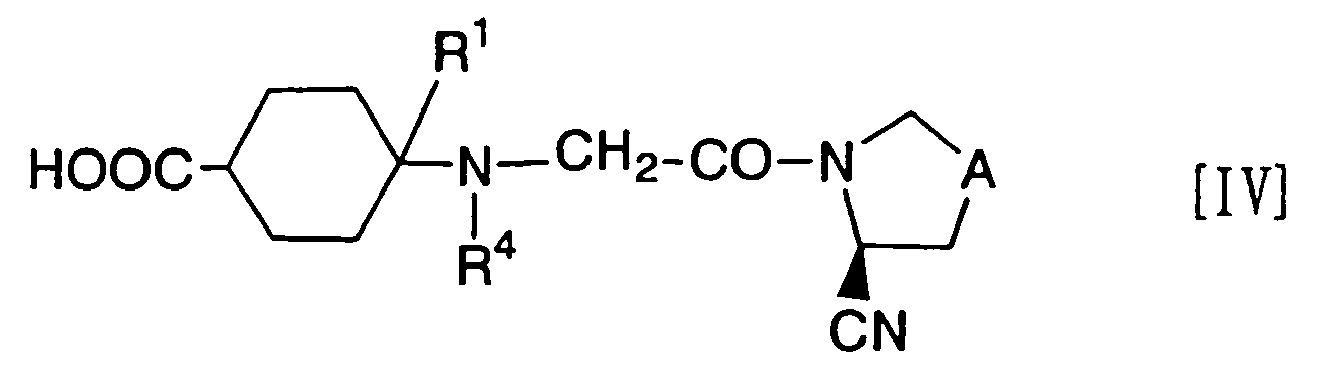
or a salt thereof with the compound represented by the formula [V]:
R21-H
or a salt thereof to obtain a compound represented by the formula [VI] :
or a salt thereof, and by removing the protective group for the amino group (R4) from the product, and optionally, by making the product into a pharmaceutically acceptable salt. - As examples of salts of the compounds [IV] to [VI], a salt with an inorganic acid such as hydrochloride and sulfate, or a salt with an inorganic base such as an alkali metal salt and an alkaline earth metal salt can be used.
- As the protective group for the amino group of R4, any of the commonly used protective groups for the amino group such as t-butoxycarbonyl group, benzyloxycarbonyl group, trifluoroacetyl group, chloroacetyl group, 9-fluorenylmethyloxycarbonyl group, etc. can be suitably used.
- The reaction of the compound [IV] or a salt thereof with the compound [V] or a salt thereof can be carried out in a suitable solvent or without solvent in the presence or absence of a condensing agent.
- As the solvent, any solvents may be suitable as long as it does not adversely affect to the reaction, and, for example, acetonitrile, methanol, ethanol, isopropyl alcohol, propyl alcohol, acetone, dimethylformamide, tetrahydrofuran, ether, dioxane, ethyl acetate, toluene, methylene chloride, dichloroethane, chloroform or a mixed solvent of these solvents can be suitably used.
- This reaction suitably proceeds at 0 to 120°C, particularly at room temperature to 80°C.
- For the condensing agent, O-benzotriazol-1-yl-N,N,N',N'-tetramethyluroniumhexafluorophosphate, DCC (dicyclohexylcarbodiimide), EDC (1-ethyl-3-(3-dimethylaminopropyl)carbodiimide), chloroformates (for example, ethyl chloroformate and isobutyl chloroformate) and carbonyldiimidazole can be suitably used.
- Also, for promoting the reaction, additives such as base (sodium carbonate, sodium hydrogencarbonate, triethylamine, pyridine, 4-dimethylaminopyridine, diisopropylethylamine, 1,8-diazabicyclo[5.4.0]undec-7-ene, etc.), 1-hydroxybenzotriazole, 1-hydroxysuccinimide, etc. can be added to the above condensing agents.
- The subsequent removal of the protective group (R4) for the amino group of the compound [VI] can be carried out according to the conventional method, and it can be carried out, for example, in a suitable solvent or without solvent by an acid treatment, base treatment or catalytic reduction.
- As the solvent, any solvents may be suitable as long as it does not adversely affect to the reaction, and, for example, methanol, ethanol, isopropyl alcohol, propyl alcohol, dioxane, methylene chloride, chloroform, dichloroethane, ether, tetrahydrofuran, ethyl acetate, toluene or a mixed solvent of these solvents can be suitably used.
- This reaction suitably proceeds at -78 to 80°C, particularly at 0°C to room temperature.
- As the acid, an inorganic acid such as hydrochloric acid, sulfuric acid, etc., and an organic acid such as acetic acid, trifluoroacetic acid, methanesulfonic acid, p-toluenesulfonic acid, etc. can be suitably used.
- As the base, an inorganic base (for example, alkali metal hydride such as sodium hydride, etc., alkali metal carbonate such as sodium carbonate, potassium carbonate, etc., alkali metal alkoxide such as sodium methoxide, etc., alkali metal such as sodium, etc., and alkali metal hydroxide such as sodium hydroxide, potassium hydroxide, etc.) or an organic base (for example, triethylamine, diisopropylethylamine, morpholine, N-methylmorpholine, pyridine, piperidine, dimethylaniline, dimethylaminopyridine, etc.) can be suitably used.
- The catalytic reduction can be carried out by suitably using palladium-carbon, palladium hydroxide-carbon, platinum oxide or Raney nickel under hydrogen atmosphere.
- The starting material [II] of the present invention can be prepared, for example, according to the method described in International Patent Publications Nos.
WO 98/19998 WO 00/34241 - For example, the compound [II] can be obtained by reacting a compound represented by the formula [10]:

Z2-CH2CO-Z3 [11]
wherein Z2 and Z3 represent reactive residues which may be the same or different,
in the presence of an acid acceptor (for example, triethylamine) to obtain a compound represented by the formula [12] :
and treating the product with a dehydrating agent (for example, phosphorous oxychloride, trifluoroacetic anhydride, etc.) according to the conventional method. - As the reactive residue of Z2 or Z3, the same reactive residue commonly used as in the above Z1 can be suitably used.
- The starting material [III] can be prepared, for example, by the same method as described in Reference Examples (Reference Examples 3 to 14) mentioned below.
- For example, the compound [III] in which X is -CO- and R2 is a group represented by the formula:


an amino group-protected material thereof or a salt thereof with a compound represented by the formula [16]:
R22-H [16]
wherein R22 represents (1) a monocyclic, bicyclic or tricyclic nitrogen-containing heterocyclic group which may be substituted or (2) an amino group which may be substituted, represented by the formula:
or a salt thereof, in the presence of a condensing agent (1-ethyl-3-(3-dimethylaminopropyl)carbodiimide, etc.) and, if necessary, by removing the protective group for the amino group according to the conventional method. - Or else, the compound [III] in which X is -CO- can be obtained by reacting a compound represented by the formula [17] :
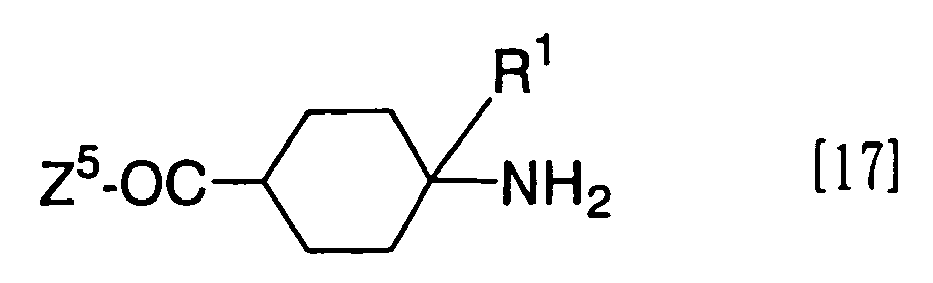
an amino group-protected material thereof or a salt thereof with a compound represented by the formula [18]:
R2-Sn(R5)3 [18]
wherein R5 represents a lower alkyl group and R2 has the same meaning as defined above,
in the presence of a palladium catalyst (for example, dichlorobis(triphenylphosphine)palladium, etc.). - As the protective group for the amino group, any of the same protective groups commonly used as in the above R4can be suitably used. Also, as the reactive residue of Z5, the same reactive residues commonly used as in the above Z1 can be suitably used.
- The starting materials [10] to [20] can be prepared according to known methods or in the same manner as described in Reference Examples mentioned below.
- In order to obtain a trans form of the starting material [III] taking a cyclohexane ring as a standard plane, each trans form of the starting cyclohexane compounds (the compounds [13], [15], [17], etc.) may be used.
- Also, the starting material [IV] can be prepared, for example, in the same manner as in the process described in Example (Example 3-1, (1) to (3)) mentioned below or in accordance with these processes, as shown in the following figure. (in the figure, Z6 represents a reactive residue, R4 represents a protective group for an amino group and other symbols have the same meanings as defined above.)
- As the reactive residue of Z6, the same reactive residues commonly used as in the above Z1 can be suitably used.

- The compound [I] of the present invention or its starting material prepared according to the above is isolated in a free form or as a salt thereof, and purified. The salt can be prepared by subjecting to the salt-forming treatment conventionally used.
- Isolation and purification can be carried out by applying the usual chemical operations such as extraction, concentration, crystallization, filtration, recrystallization, various kinds of chromatographies and the like.
- In the compound of the present invention, optical isomers such as racemic isomers, optically active isomers, diastereomers, etc. can be present alone or as mixtures thereof. A stereochemically pure isomer can be derived by using a stereochemically pure starting material or by separating an optical isomer according to the general separation process for racemic resolution. Also, diastereomeric mixtures can be separated according to the conventional method, for example, fractional crystallization or by chromatography.
- The present invention will be described in detail by referring to the following Examples but these Examples do not intend to limit the present invention.
- A acetonitrile-methanol solution containing 100 mg of (S)-1-bromoacetyl-2-cyanopyrrolidine (Reference Example 1 mentioned below) and 327 mg of N-(5-nitro-2-pyridyl)-trans-1,4-cyclohexanediamine (Reference Example 3-1 mentioned below) was stirred at room temperature for 15 hours. Water was added to the reaction mixture and the mixture was extracted with chloroform. After the extract was dried over sodium sulfate, the solvent was removed under reduced pressure. The residue was purified by diol column chromatography (solvent: 0 to 10% methanol-chloroform) to obtain an oily product. The oily product was dissolved in 0.5 ml of ethyl acetate-0.5 ml of chloroform, and then, 1.0 ml of 2N hydrochloric acid-ether and 2 ml of ether were successively added thereto. Precipitates were collected by filtration and washed with ether to obtain (S)-2-cyano-1 [trans-4-(5-nitro-2-pyridylamino)cyclohexylamino]acetylpyrrolidine dihydrochloride (Example 1a-1 in Table 1a). Examples 1a-2 to 1d-152
- Using (S)-1-bromoacetyl-2-cyanopyrrolidine and corresponding starting materials, they were treated in the same manner as in Example 1a-1 compounds of Tables 1a to 1d shown below (Examples 1c-1 to 1c-52 and 1d-1 to 152) were obtained. Incidentally, the corresponding starting materials were obtained by the similar method as described in Reference Examples mentioned below, by known methods or by a method in combination of these methods.
- Provided that the compound of Example 1d-77 was obtained by using trans-4-(1-,piperazinylcarbonyl)cyclohexylamine as a starting material.
- Also, the compound of Example 1c-39 (namely, (S)-2-cyano-1-{trans-4-[(N-carboxymethyl-N-methylamino)carbonyl]-cyclohexylamino}acetylpyrrolidine hydrochloride) was obtained by treating the compound of Example 1c-38 (namely, (S)-2-cyano-1-(trans-4-[(N-tert-butoxycarbonylmethyl-N-methylamino)carbonyl]cyclohexylamino}acetylpyrrolidine) with trifluoroacetic acid, followed by treating with hydrochloric acid.
- Also, the compound of the Example 1-14 (namely, (S)-2-cyano-1-[trans-4-(1-piperazinylcarbonyl)cyclohexylamino]-acetylpyrrolidine-dihydrochloride) was obtained by treating a free form of the compound of Example 1d-70 ((S)-2-cyano-1-[trans-4-(4-benzyloxycarbonyl-1-piperazinylcarbonyl)cyclohexylamino]acetylpyrrolidine) with trimethylsilyl iodide.
-

- (1) In water was dissolved 5.0 g of trans-4-ethoxycarbonyl-cyclohexylamine dihydrochloride, and after the solution was made basic by adding potassium carbonate, the solution was extracted with chloroform. The extract was washed with brine, dried over anhydrous sodium sulfate, and the solvent was removed under reduced pressure. A mixture of the residue, 5.1 g of p-toluensulfonic acid monohydrate and 50 ml of allyl alcohol was refluxed for 48 hours. The reaction mixture was concentrated, and then, diluted with chloroform. The chloroform solution was washed with an aqueous potassium carbonate solution, water and brine, dried over anhydrous sodium sulfate, and concentrated under reduced pressure. The residue was purified by silica gel flash column chromatography (solvent: chloroform-methanol-aqueous ammonia (500:10:1)) to obtain 3.29 g of trans-4-(2-propenyloxycarbonyl)cyclohexylamine.
- (2) A mixture of 507 mg of the compound obtained in the above (1), 400 mg of (S)-1-bromoacetyl-2-cyanopyrrolidine, 714 mg of N,N-diisopropylethylamine and 4 ml of acetonitrile was stirred at 50°C for 12 hours. After cooling to room temperature, 476 mg of N,N-diisopropylethylamine, followed by 4 ml of acetonitrile solution containing 803 mg of di-tert-butyldicarbonate were added to the reaction mixture, and the mixture was stirred at room temperature for 3 hours. After the reaction mixture was concentrated, the concentrate was diluted with ethyl acetate. The ethyl acetate solution was washed with an aqueous 10% citric acid solution, water and brine, dried over anhydrous sodium sulfate, and concentrated under reduced pressure. The residue was purified by silica gel flash chromatography (solvent: chloroform-methanol (100:1)) to obtain 658 mg of (S)-2-cyano-1-[N-tert-butoxycarbonyl-trans-4-(2-propenyl-oxycarbonyl)cyclohexylamino]acetylpyrrolidine.
- (3) A mixture of 600 mg of the compound obtained in the above (2), 165 mg of tetrakis(triphenylphosphine)palladium, 271 mg of ammonium formate and 6 ml of dioxane was stirred at 50°C for 1 hour. After cooling, the reaction mixture was poured into water and extracted with chloroform. The extract was washed with brine, dried over anhydrous sodium sulfate, and then, the solvent was removed under reduced pressure. The residue was purified by silica gel flash chromatography (solvent: chloroform-methanol (50:1)) to obtain 394 mg of (S)-2-cyano-1-(N-tert-butoxycarbonyl-trans-4-carboxycyclohexylamino)acetylpyrrolidine.
- (4) A solution of 2 ml N,N-dimethylformamide containing 150 mg of the compound obtained in the above (3), 64 mg of 2-aminomethylpyridine, 114 mg of 1-ethyl-3-(3-dimethylaminopropyl)-carbodiimide and 80 mg of 1-hydroxybenzotriazole was stirred at room temperature for 24 hours. An aqueous saturated sodium hydrogencarbonate solution was added to the reaction mixture and the mixture was extracted with chloroform. The extract was washed with brine and dried over anhydrous sodium sulfate and the solvent was removed under reduced pressure. The residue was dissolved in 3 ml of acetonitrile, and 1 ml of an acetonitrile solution of 118 mg of trimethylsilyl iodide was added dropwise to the solution under ice-cooling, and the mixture was stirred at room temperature for 30 minutes. To the reaction mixture were added methanol and water, and after stirring for a while, the mixture was neutralized with an aqueous saturated sodium hydrogencarbonate solution, and then, extracted with chloroform. The extract was washed with an aqueous saturated sodium hydrogencarbonate solution, water and brine, dried over anhydrous sodium sulfate, and then, the solvent was removed under reduced pressure. The residue was purified by diol chromatography (solvent: chloroform) to obtain an oily product. The oily product was dissolved in 1 ml of ethyl acetate, and then, 0.5 ml of 1N hydrochloric acid-ether followed by 2 ml of ether were added thereto, and precipitates were washed with ether to obtain 106 mg of (S)-2-cyano-1-(trans-4-(2-pyridylmethylaminocarbonyl)cyclohexylamino]acetylpyrrolidine · dihydrochloride (Example 3-1 in Table 3).
- The compounds of Examples 3-2 to 3-12 in Table 3 were obtained in the same manner as in Example 3-1 (4), using (S)-2-cyano-1-(N-tert-butoxycarbonyl-trans-4-carboxycyclo-hexylamino)acetylpyrrolidine (the compound of the above Example 3-1 (3)) and the corresponding starting materials.
- A solution of 2 ml of acetonitrile-1 ml of methanol containing 100 mg of (R)-3-chloroacetyl-4-cyanothiazolidine (the compound of Reference Example 2 mentioned below) and 372 mg of N-(5-nitro-2-pyridyl)-trans-1,4-cyclohexanediamine was stirred at room temperature for 15 hours. Water was added to the reaction mixture and the mixture was extracted with chloroform. After the extract was dried over anhydrous sodium sulfate, the solvent was removed under reduced pressure. The residue was purified by diol column chromatography (solvent: 0 to 5% methanol-chloroform) to obtain an oily product. The oily product was dissolved in 0.5 ml of ethyl acetate-0.5 ml of chloroform, and 1.0 ml of 2N hydrochloric acid-ether was added thereto, followed by 2 ml of ether. Precipitates were collected by filtration and washed with ether to obtain 173 mg of (R)-4-cyano-3-[trans-4-(5-nitro-2-pyridylamino)cyclohexylamino]-acetylthiazolidine · dihydrochloride (Example 4-1 in Table 4).
- Also, the compounds of Examples 4-2 to 4-32 in Table 4 were obtained in the same manner as mentioned above, using the corresponding starting materials.
- According to the process described in the literature (
WO 98/19998 - L-thioprolineamide hydrochloride was synthesized according to the process described in the literature (Ashworth et. al., Bioorg. Med. Chem. Lett., Vol. 6, pp. 2745-2748, 1996). 2.36 ml of chloroacetyl chloride was added to a solution of 150 ml of dichloromethane containing 5.00 g of L-thioprolineamide hydrochloride thus obtained and 8.67 ml of triethylamine under ice-cooling, and the mixture was stirred at the same temperature for 1 hour. To the reaction mixture was added a dichloromethane solution containing 4.8 ml of pyridine and 8.4 ml of trifluoroacetic anhydride, and the mixture was further stirred at room temperature for 1 hour. The reaction mixture was washed with an aqueous 10% HCl solution and water, dried over anhydrous magnesium sulfate, filtered and concentrated under reduced pressure, and subsequently, the residue was crystallized from ether to obtain 4.82 g of (R)-3-chloroacetyl-4-cyanothiazolidine as yellow-brownish crystals. Reference Examples 3-1 to 3-40
- A solution of 5-nitro-2-chloropyridine (2.50 g) and trans-1,4-cyclohexanediamine (5.40 g) in ethanol (15 ml)-tetrahydrofuran (10 ml) was stirred at room temperature for 5 days. The precipitates were removed by filtration and the filtrate was concentrated under reduced pressure. The residue was purified by silica gel column chromatography (solvent: chloroform-methanol-concentrated aqueous ammonia (20:4:1)) and crystallized from ethyl acetate to obtain N-(5-nitro-2-pyridyl)-trans-1,4-cyclohexanediamine (Reference Example 3-1 in Table 5).
- Also, the compounds of Examples 3-2 to 3-40 in Table 5 were obtained in the same manner as mentioned above, using the corresponding starting materials.
- A N,N-dimethylacetamide (30 ml) solution containing 4-nitrofluorobenzene (1.69 g) and trans-1,4-cyclohexanediamine (4.1 g) was stirred at 144°C for 3 days. After cooling, an aqueous saturated potassium carbonate solution was added to the reaction solution, and the reaction mixture was extracted with ethyl acetate. The extract was dried over anhydrous potassium carbonate, and then, the solvent was removed under reduced pressure. The residue was purified by silica gel flash column chromatography (solvent: chloroform-methanol-ammonia (90:10:1)), and the solvent was removed to obtain trans-N-(4-nitrophenyl)-1,4-cyclohexanediamine (Reference Example 3-41 in Table 5) (2.31 g).
- Also, the compounds of Examples 3-42 to 3-44 in Table 5 were obtained in the same manner as mentioned above, using the corresponding starting materials.
- 25 mL of an ethanol solution containing 1.23 g of N-tert-butoxycarbonyl-trans-1,4-cyclohexanediamine, 1.0 g of 2-chloro-3-nitro-pyridine 1-oxide and 700 mg of dimethylaminopyridine was refluxed under argon atmosphere for 2 hours.
- After cooling, the reaction solution was concentrated under reduced pressure, the residue was dissolved in chloroform, washed with water, dried over anhydrous sodium sulfate, and then, the solvent was removed under reduced pressure. The obtained residue was purified by silica gel flash column chromatography (solvent: chloroform-methanol (30:1)) to obtain red powder. The resulting compound was dissolved in 5mL of trifluoroacetic acid and the solution was stirred at room temperature for 3 hours. After the solvent was removed under reduced pressure, the residue was purified by silica gel flash column chromatography (solvent: aqueous ammonia-saturated chloroform-methanol (10:1)) to obtain 110 mg of N-(3-nitropyridine-1-oxid-2-yl)-trans-1,4-cyclohexanediamine (Reference Example 3-45 in Table 5).
- Also, the compounds of Examples 3-46 to 3-47 in Table 5 were obtained in the same manner as mentioned above, using corresponding starting materials.
- In the mixed solvent of 5 ml of ethanol and 4 ml of tetrahydrofuran were dissolved 168 mg of N-tert-butoxycarbonyl-trans-4-[(6-chloro-3-pyridazinyl)amino]cyclohexylamine (Reference Example 3-46) and 0.5 ml of triethylamine. To the solution was added 50 mg of 10% palladium carbon and the mixture was stirred under hydrogen atmosphere with normal pressure at room temperature for 1 day. After the catalyst was removed by filtration, the solvent was removed, and the residue was stirred in 2 ml of trifluoroacetic acid for 3 hours. The solvent was removed, an aqueous 10% sodium hydroxide solution was added to the residue, the mixture was extracted with chloroform and dried over anhydrous sodium sulfate. Subsequently, the solvent was removed under reduced pressure to obtain 61 mg of trans-4-(pyridazin-3-ylamino)cyclohexylamine (Reference Example 3-48 in Table 5).
- Also, the compound of Example 3-49 in Table 5 was obtained by treating the corresponding starting material (Reference Example 3-47) in the same manner as mentioned above.
- Also, the compounds of Examples 3-50 to 3-58 in Table 5 were obtained in the same manner as in Reference Example 9-50 or Reference Example 9-55.
- Ethyl 4-chloro-2-phenyl-5-pyrimidinecarboxylate and N-tert-butoxycarbonyl-trans-1,4-cyclohexanediamine were reacted in ethanol in the presence of dimethylaminopyridine in the same manner as in Reference Example 3-49 to obtain N-tert-butoxycarbonyl-trans-4-(5-ethoxycarbonyl-2-phenyl-4-pyrimidinylamino)cyclohexylamine.
- The compound was treated in the same manner as in Reference Example 9-56 (1) and (2) to obtain trans-4-(5-morpholinocarbonyl-2-phenyl-4-pyrimidinylamino)cyclohexylamine (Reference 3-59 in Table 5).
-
- (1) To 150 ml of a tetrahydrofuran suspension containing 10 g of trans-4-aminocyclohexanol was added 15ml of triethylamine, 50 ml of a tetrahydrofuran solution containing 2-chloro-5-nitropyridine was further added thereto under ice-cooling, and then, the mixture was stirred at room temperature for 18 hours. Water was added to the reaction mixture and the mixture was extracted with chloroform. The extract was washed with brine, dried over anhydrous sodium sulfate, and the solvent was removed under reduced pressure. The residue was purified by silica gel flash column chromatography (solvent: ethyl acetate-hexane (2:1)) to obtain 8.52 g of trans-4-(5-nitro-2-pyridylamino)cyclohexanol.
- (2) To 10 ml of a dichloromethane solution containing 1.0 g of the compound obtained in the above (1) was added 1.8 ml of triethylamine, 0.65 ml of methanesulfonyl chloride was further added thereto under ice-cooling, and the mixture was stirred for 1 hour. An aqueous saturated sodium bicarbonate solution was added to the reaction mixture and the mixture was extracted with chloroform. The extract was washed with water and brine, dried over anhydrous sodium sulfate, and then, the solvent was removed under reduced pressure. 1.37 g of sodium azide was added to a solution of the residue dissolved in 10 ml of dimethylformamide and the mixture was stirred at 50°C for 3 days. After cooling, an aqueous saturated sodium bicarbonate solution was added to the reaction mixture and the mixture was extracted with ethyl acetate. The extract was washed with water and brine, dried over sodium sulfate, and then, the solvent was removed under reduced pressure. The residue was purified by silica gel flash column chromatography (solvent: ethyl acetate-hexane (1:5)) to obtain 758 mg of cis-4-azide-N-(5-nitro-2-pyridyl)cyclohexylamine.
- (3) A solution comprising 10 ml of tetrahydrofuran-1 ml of water, containing 640 mg of the compound obtained in the above (2) and 704 mg of triphenylphosphine was stirred at room temperature for 2 days. The reaction mixture was concentrated, and the residue was purified by silica gel flash column chromatography (solvent: ethyl acetate-methanol (10:1)) to obtain 531 mg of N-(5-nitro-2-pyridyl)-cis-1,4-cyclohexanediamine (the compound of Reference Example 4 in Table 5).
-
- (1) In 600 mL of dimethylformamide were suspended 60.0 g of trans-4-tert-butoxycarbonylaminocyclohexyl methanesulfonate and 20.1 g of sodium azide and the suspension was stirred at 90°C for 6 hours. The reaction mixture was poured into water and extracted with ethyl acetate. The extract was washed with water and brine, dried over anhydrous sodium sulfate, and then, the solvent was removed under reduced pressure to obtain 47.9 g of cis-4-azide-N-(tert-butoxycarbonyl)cyclohexylamine.
- (2) In 8 mL of tetrahydrofuran were suspended 500 mg of the compound obtained in the above (1) and 100 mg of palladium-carbon (wet) and the suspension was vigorously stirred under hydrogen atmosphere at room temperature for 1.5 hours. During the course, hydrogen in the system was replaced twice. The insolubles were removed by filtration, and the filtrate was concentrated under reduced pressure. The residue was purified by silica gel chromatography (solvent: chloroform-methanol (20:1), followed by chloroform-methanol-aqueous ammonia (100:10:1)) to obtain 395 mg of N-tert-butoxycarbonyl-cis-1,4-cyclohexanediamine.
- (3) A suspension comprising 10 mL of 2-propanol, 2.0 g of the compound obtained in the above (2), 1.63 g of 2-chloro-3-nitropyridine and 1.95 mL of diisopropylethylamine was stirred at 80°C for 1 day. After the reaction mixture was concentrated under reduced pressure, water was added thereto and the mixture was extracted with ethyl acetate. The extract was washed with brine, dried over anhydrous sodium sulfate, and then, the solvent was removed under reduced pressure. The residue was purified by silica gel chromatography (solvent: chloroform, followed by chloroform-ethyl acetate (7:1)). To a suspension of the resultant compound in ethanol was added hydrochloric acid-dioxane, the mixture was stirred at room temperature for 18 hours, and the precipitates were collected by filtration to obtain 2.15 g of N-(3-nitro-2-pyridyl)-cis-1,4-cyclohexanediamine dihydrochloride (Reference Example 5-1 in Table 5).
- Also, the compounds of Reference Examples 5-2 to 5-6 in Table 5 were obtained in the same manner as mentioned above, using the corresponding starting materials. Reference Example 6-1

- (1) According to the process described in the literature (
JP83-118577
(The starting materials were synthesized according to the process described in the literature by Rosemmund et al. (Chem. Ber., 1975, Vol. 108, pp. 1871-1895) and the literature by Black et al. (Synthesis, 1981, p. 829).) - (2) A mixture of 3.80 g of the compound obtained in the above (1), 3.55 g of sodium hydroxide, 16 mL of methanol and 25 mL of water was refluxed for 2 hours. The reaction mixture was ice-cooled, adjusted its pH to 5 by 2N hydrochloric acid and an aqueous 10% citric acid solution, and extracted with ethyl acetate. The extract was washed with water and brine, dried over anhydrous sodium sulfate and the solvent was removed under reduced pressure to obtain 3.46 mg of 8-methyl-1,4-dioxaspiro[4.5]decan-8-carboxylic acid (the compound (2) of the above figure).
- (3) A mixture comprising 16.19 g of the compound obtained in the above (2), 24.51 g of diphenylphosphoryl azide, 9.00 g of triethylamine and 160 mL of toluene was refluxed for 2.5 hours. The reaction mixture was ice-cooled, washed with an aqueous saturated sodium hydrogencarbonate solution, water and brine, dried over anhydrous sodium sulfate, and the solvent was removed under reduced pressure. To a solution of the resulting compound in 100 mL of dimethylacetamide was gradually added 9.55 g of potassium tert-butoxide under ice-cooling, and the mixture was stirred at room temperature for 1 hour. The reaction mixture was poured into ice-water, and the precipitated crystals were collected by filtration, washed with water and dried. To a solution of the resulting compound in 100 mL of tetrahydrofuran was added 100 mL of an aqueous solution containing 30.87 g of p-toluenesulfonic acid hydrate, and the mixture was stirred at room temperature for 16 hours. The mixture was diluted with an aqueous saturated sodium hydrogencarbonate solution and extracted with ethyl acetate. The extract was washed with water and brine, dried over anhydrous sodium sulfate, and the solvent was removed under reduced pressure to obtain 10.41 g of 4-tert-butoxycarbonylamino-4-methylcyclohexanone (the compound (3) of the above figure).
- (4) A mixture comprising 10.41 g of the compound obtained in the above (3), 11.01 g of sodium triacetoxyborohydride, 5.10 mL of benzylamine and 150 mL of methylene chloride was stirred at room temperature for 16 hours. The mixture was diluted with an aqueous saturated sodium hydrogencarbonate solution and extracted with ethyl acetate. The extract was washed with water and brine, dried over anhydrous sodium sulfate, and the solvent was removed under reduced pressure. To a solution of the resulting compound in 15 mL of methanol was added 3.32 g of p-toluenesulfonic acid hydrate, followed by 160 mL of ether. The precipitates were collected by filtration, washed with ether and dried to obtain 7.49 g of N-benzyl-t-4-tert-butoxycarbonylamino-4-methyl-r-1-cyclohexylamine p-toluenesulfonate (the compound (4) of the above figure).
- (5) A mixture comprising 16.63 g of the compound obtained in the above (4), 5.0 g of 10% palladium-carbon and 400 mL of methanol was stirred under hydrogen atmosphere (1 atm) for 24 hours. 10% palladium-carbon was removed by filtration and the filtrate was concentrated. The resulting residue was dissolved in a mixture of 50 mL of an aqueous 10% sodium hydroxide solution and 300 mL of ether, the ether layer was washed with water and brine, dried over anhydrous sodium sulfate, and the solvent was removed under reduced pressure to obtain 6.87 g of t-4-tert-butoxycarbonylamino-4-methyl-r-1-cyclohexylamine (the compound (5) of the above figure).
- (6) The filtrate in the step of the above (4) was treated with an aqueous sodium hydroxide solution and extracted with chloroform. The extract was washed with water and brine, dried over anhydrous sodium sulfate, and the solvent was removed under reduced pressure. The residue was applied to NH-silica gel column chromatography (solvent: hexane-ethyl acetate (30:1 to 3:1) to obtain N-benzyl-c-4-tert-butoxycarbonylamino-4-methyl-r-1-cyclohexylamine. Then, this compound was treated in the same manner as described in the above (5) to obtain c-4-tert-butoxycarbonylamino-4-methyl-r-1-cyclohexylamine (the compound (6) of the above figure).
- In the same manner as in Reference Example 6-1 (1) to (5) or (6) except for using benzyloxymethyl chloride instead of methyl iodide in the step of Reference Example 6-1 (1), t-4-tert-butoxycarbonylamino-4-hydroxymethyl-r-1-cyclohexylamine or c-4-tert-butoxycarbonylamino-4-hydroxymethyl-r-1-cyclohexylamine was obtained.
- Also, in the same manner as in Reference Example 6-1 (1) to (5) or (6) except for using methoxymethyl chloride instead of methyl iodide in the step of Reference Example 6-1 (1), t-4-tert-butoxycarbonylamino-4-methoxymethyl-r-1-cyclohexylamine or c-4-tert-butoxycarbonylamino-4-methoxymethyl-r-1-cyclohexylamine was obtained.
- A mixture comprising 1.70 g of t-4-tert-butoxycarbonylamino-4-methyl-r-1-cyclohexylamine (the compound obtained in the above Reference Example 6-1 (5)), 2.04 g of 2-chloropyrimidine, 3.24 mL of diisopropylethylamine and 13 mL of 2-propanol was refluxed for 12 hours. After cooling, the reaction mixture was diluted with water and extracted with ethyl acetate. The extract was washed with water and brine, dried over anhydrous sodium sulfate, and the solvent was removed under reduced pressure. The residue was purified by silica gel column chromatography (solvent: ethyl acetate-hexane (30:70 to 50:50). The resulting compound was dissolved in 4 mL of dioxane, 10 mL of 4N hydrochloric acid-dioxane was added thereto, and the mixture was stirred for 8 hours. The reaction mixture was diluted with ether and the precipitated crystals were collected by filtration and washed with ether. The resulting crystals were dissolved in water, which was saturated with potassium carbonate, subsequently extracted with chloroform. The extract was dried over anhydrous sodium sulfate, and the solvent was removed under reduced pressure to obtain 587 mg of 1-methyl-t-4-(2-pyrimidinylamino)-r-1-cyclohexylamine (Reference Example 7-1 in Table 5).
- Also, the compounds of Reference Examples 7-2 to 7-5 in Table 5 were obtained in the same manner as mentioned above, using the corresponding starting materials.
- Also, the compounds of Reference Examples 7-6 to 7-9 in Table 5 were obtained in the same manner as mentioned above, using c-4-tert-butoxycarbonylamino-4-methyl-r-1-cyclohexylamine (the compound obtained in the above Reference Example 6-1, (6)) and the corresponding starting materials.
- Also, the compounds of Reference Examples 7-10 to 7-18 in Table 5 were obtained in the same manner as mentioned above, using t- or c-4-tert-butoxycarbonylamino-4-hydroxymethyl-r-1-cyclohexylamine (Reference Example 6-2) and the corresponding starting materials.
- 4-tert-Butoxycarbonylamino-4-methylcyclohexanone (the compound (3) of Reference Example 6-1) and the corresponding starting materials (an amine compounds) were reacted in the presence of sodium triacetoxyborohydride at room temperature for 16 hours under stirring, and then, an acid treatment of the reaction mixture was carried out to remove a protective group (t-butoxycarbonyl group), to obtain the compounds of Reference Examples 7-19 to 7-23 in Table 5. Reference Examples 8-1 to 8-4
- (1) To 160 ml of a methylene chloride solution containing 16.93 g of 4-(tert-butoxycarbonylamino)cyclohexanone and 10.55 ml of N-methylbenzylamine was added 19.08 g of sodium triacetoxyborohydride under ice-cooling, and the mixture was stirred at room temperature for 14 hours. The reaction mixture was diluted with an aqueous sodium hydrogencarbonate solution and extracted with ethyl acetate. The extract was washed with water and brine, dried over anhydrous sodium sulfate, and then, the solvent was removed under reduced pressure. The resulting residue was suspended in hexane and collected by filtration. This mother liquor was concentrated, and the residue was purified by NH-silica gel chromatography (solvent: hexane-ethyl acetate (97:3 to 83:17), and the residue was further suspended in hexane and collected by filtration, whereby it was combined with the product previously obtained by filtration to give 13.55 g of N'-benzyl-N-tert-butoxycarbonyl-N'-methyl-trans-1,4-cyclohxanediamine.
A suspension of 13.53 g of this compound and 2.00 g of palladium hydroxide-carbon suspended in methanol was subjected to catalytic hydrogenation under normal pressure at room temperature over 5 hours. The catalyst was removed by filtration and the filtrate was concentrated under reduced pressure to obtain 9.93 g of N-tert-butoxycarbonyl-N'-methyl-trans-1,4-cyclohexanediamine. - (2) The compound obtained in the above (1) and the corresponding starting materials (chloride) were used and reacted under reflux in 2-propanol in the presence of diisopropylethylamine for 12 hours as in Reference Example 7-1, and the resulting compound was subjected to acid treatment with hydrochloric acid, and then, neutralized with potassium carbonate to obtain the compounds of Reference Examples 8-1 to 8-4 in Table 5.
- 2.04 g of 60 % sodium hydride was gradually added to 150 ml of a tetrahydrofuran solution containing 10.0 g of trans-4-(tert-butoxycarbonylamino)cyclohexanol and 7.35 g of 2-chloro-5-nitropyridine, and 30 mL of dimethylsulfoxide was further added thereto, and then, the mixture was stirred at room temperature for 1 day. The reaction mixture was poured into water and extracted with chloroform. The extract was washed with water and brine, dried over anhydrous sodium sulfate, and then, the solvent was removed under reduced pressure. The residue was applied to silica gel column chromatography (solvent: chloroform alone to chloroform-ethyl acetate (20:1)). The obtained powder crystals were suspended in ethyl acetate-hexane mixed solution and collected by filtration to obtain 12.20 g of trans-1-tert-butoxycarbonylamino-4-(5-nitro-2-pyridyloxy)-cyclohexane. To 10 ml of an ethanol suspension containing 800 mg of this compound was added 2 ml of 2N hydrochloric acid-dioxane solution, and the mixture was stirred at room temperature for 18 hours. The precipitates were collected by filtration to obtain 568 mg of trans-4-(5-nitro-2-pyridyloxy)cyclohexylamine · hydrochloride (Reference Example 9-1 in Table 6).
- Also, the compounds of Reference Examples 9-2 to 9-45 in Table 6 were obtained in the same manner as mentioned above, using the corresponding starting materials. Reference Examples 9-46 to 9-47
- 60% sodium hydride was added to 10 ml of a tetrahydrofuran suspension containing 1.00 g of trans-4-amino-cyclohexanol hydrochloride and the mixture was refluxed for 1 hour. After cooling to room temperature, 2-chloropyrimidine was slowly added thereto and the mixture was stirred at room temperature for 6 hours. The reaction mixture was poured into ice-cold water and extracted with chloroform. The extract was washed with brine and dried over anhydrous sodium sulfate, and then, the solvent was removed under reduced pressure. The residue was purified by NH-silica gel column chromatography (solvent: ethyl acetate-hexane (1:4) to chloroform alone) to obtain 788 mg of trans-4-(2-pyrimidinyloxy)cyclohexylamine (Reference Example 9-46 in Table 6).
- Also, the compound of Examples 9-47 in Table 6 was obtained in the same manner as mentioned above, using the corresponding starting materials.
- In the same manner as in Reference Example 9-1, trans-1-tert-butoxycarbonylamino-4-(3-nitro-2-pyridyloxy)-cyclohexane was obtained. Subsequently, a suspension of 3.35 g of this compound in 30 ml of ethanol was stirred at 50°C, and 155 mg of palladium-carbon (dry) and then 1.6 ml of hydrazine monohydrate were added thereto. After the mixture was stirred for 10 minutes, 185 mg of the remaining palladium-carbon was added thereto and the mixture was refluxed for 40 minutes. After the reaction mixture was cooled to room temperature, the insolubles were removed by filtration and the filtrate was concentrated under reduced pressure. The resulting residue was crystallized from ethanol-water (1:1) and the crystals were collected by filtration to obtain 2.58 g of trans-1-tert-butoxycarbonylamino-4-(3-amino-2-pyridyloxy)cyclohexane.
- Then, hydrochloric acid-dioxane was added to an ethanol solution of this compound to subject to acid treatment to obtain trans-4-(3-amino-2-pyridyloxy)cyclohexylamine hydrochloride (Reference Example 9-48 in Table 6). Reference Example 9-49
- In the same manner as in Reference Example 9-1 by using trans-4-(tert-butoxycarbonylamino)cyclohexanol and the corresponding starting materials, trans-4-(5-ethoxycarbonyl-2-methylthiopyrimidin-4-yloxy)cyclohexylamine hydrochloride was obtained.
- The hydrochloride compound was made into an aqueous solution, and the solution was treated with potassium carbonate and extracted with chloroform to obtain its free form (Reference Example 9-49).
- In 50 mL of chloroform was dissolved 2.75 g of N-tert-butoxycarbonyl-trans-4-(5-ethoxycarbonyl-2-methylthio-pyrimidin-4-yloxy)cyclohexylamine (a compound of Reference Example 9-49 prior to deprotection (hydrochloric acid-dioxane treatment)), 1.73 g of 75%-m-chloroperbenzoic acid was added to the solution, and the mixture was stirred at room temperature for 30 minutes. Then, 1.14 g of dimethylamine hydrochloride and 2.79 mL of triethylamine were added thereto and the mixture was further stirred for 5 hours. An aqueous saturated sodium hydrogencarbonate solution was added to the reaction mixture, and the mixture was stirred. Then, the chloroform layer was collected by separation, dried over anhydrous sodium sulfate and the solvent was removed under reduced pressure. The residue was purified by silica gel flash chromatography (solvent: hexane-chloroform (50:50 to 100:0)) to obtain 2.74 g of N-tert-butoxycarbonyl-trans-4-(5-ethoxycarbonyl-2-(dimethylamino)-pyrimidin-4-yloxy]cyclohexylamine.
- This compound was deprotected by treating with hydrochloric acid-dioxane, and subsequently neutralized with potassium carbonate to obtain trans-4-[5-ethoxycarbonyl-2-(dimethylamino)pyrimidin-4-yloxy]cyclohexylamine (Reference Example 9-50 in Table 6).
- Also, the compounds of Reference Examples 9-51 to 9-54 in Table 6 were obtained in the same manner as mentioned above.
-
- (1) In 15 mL of ethanol was dissolved 2.675 g of N-tert-butoxycarbonyl-trans-4-[5-ethoxycarbonyl-2-(dimethylamino)-pyrimidin-4-yloxy]cyclohexylamine (the compound of Reference Example 9-50 prior to deprotection treatment), 3.27 mL of an aqueous 3N-sodium hydroxide solution was added thereto at room temperature, and the mixture was stirred overnight. The reaction mixture was diluted with water, and then, citric acid was added thereto until the solution became neutral. The precipitated crystals were collected by filtration, washed with water and dried under reduced pressure to obtain 2.015 g of N-tert-butoxycarbonyl-trans-4-[5-carboxy-2-(dimethylamino)pyrimidin-4-yloxy]cyclohexylamine.
- (2) The compound obtained in the above (1) was used as a starting material and reacted with a starting amine compound in the same manner as in Reference Example 11-1. The resulting compound (hydrochloride) was made into an aqueous solution, and the solution was treated with potassium carbonate and extracted with chloroform to obtain a free form.
- Thus, the compounds of Reference Examples 9-55 to 9-57 in Table 6 were obtained.
-
- (1) 0.494 ml of DMSO was slowly added dropwise to 10 ml of a methylene chloride solution containing 0.526 ml of oxalyl chloride under argon gas atmosphere at -78°C. After 15 minutes from the completion of the addition, 30 ml of a methylene chloride suspension containing trans-4-tert-butoxycarbonylaminocyclohexanol in was added dropwise, and further 30 minutes later, 2.52 ml of triethylamine was added thereto and the mixture was stirred at -78°C for 30 minutes and at 0°C for 15 minutes. An aqueous sodium bicarbonate solution was added to the reaction mixture and the mixture was extracted with chloroform. The extract was dried over anhydrous sodium sulfate, and then, the solvent was removed under reduced pressure. The resulting residue was suspended in a hexane-isopropyl ether mixed solvent and collected by filtration to obtain 0.903 g of 4-(tert-butoxycarbonylamino)cyclohexanone.
- (2) To 350 ml of a toluene solution containing 33.05 g of the compound obtained in the above (1) was added dropwise 313 ml of 1.0 M diisobutyl aluminum hydride-toluene solution at -78°C, and the mixture was stirred at the same temperature for 4 hours. After an excessive reagent was decomposed by adding 33 ml of methanol dropwise to the mixture, 100 ml of water was added thereto, and the mixture was stirred for 1 hour. The precipitated insolubles were removed by filtration. The organic layer of the filtrate was separated and dried over anhydrous sodium sulfate. The solvent was removed under reduced pressure, the resulting residue was suspended in chloroform-isopropyl ether mixed solvent under heating and the insolubles were removed by filtration. The filtrate was concentrated, and then, the same operation was performed with isopropyl ether. The resulting filtrate was concentrated and the residue was purified by silica gel flash column chromatography (solvent: ethyl acetate-hexane (1:2 to 1:1)), and the obtained colorless crystals were further suspended in hexane-isopropyl ether mixed solvent under heating and subjected to filtration at 0°C to obtain 6.95 g of cis-4-tert-butoxycarbonylaminocyclohexanol.
- (3) The compounds of Reference Examples 9-58 to 9-64 in Table 6 were obtained in the same manner as in Reference Example 9-1, using the above-obtained cis-4-tert-butoxy-carbonylaminocyclohexanol and the corresponding starting materials.
-
- (1) A mixture comprising 9.13 g of 4-tert-butoxycarbonylamino-4-methylcyclohexanone, 3.05 g of sodium borohydride and 100 mL of isopropyl alcohol was stirred at room temperature for 1 hour. Under ice-cooling, the reaction mixture was diluted with an aqueous saturated ammonium chloride solution and extracted with ethyl acetate. The resulting extract was washed with water and brine, dried over anhydrous sodium sulfate, and then, the solvent was removed under reduced pressure to obtain 9.20 g of a mixture of t-4-tert-butoxycarbonylamino-4-methyl-r-1-cyclohexanol and c-4-tert-butoxycarbonylamino-4-methyl-r-1-cyclohexanol.
- (2) A mixture comprising 9.20 g of the compound obtained in the above (1), 8.26 g of p-methoxybenzoic acid chloride, 5.93 g of dimethylaminopyridine and 100 mL of methylene chloride was refluxed for 20 hours. After cooling, the reaction mixture was washed with an aqueous saturated sodium hydrogencarbonate solution, an aqueous 10% citric acid solution, water and brine, dried over anhydrous sodium sulfate, and then, the solvent was removed. The residue was crystallized from n-hexane to obtain 0.68 g of c-4-tert-butoxycarbonylamino-4-methyl-O-(4-methoxyphenyl-carbonyD-r-1-cyclohexanol (cis compound).
Also, the residue was purified by silica gel column chromatography [solvent: ethyl acetate/n-hexane (1/10)] to obtain 3.50 g of a mixture (1:5) of the above compound (cis compound) and t-4-tert-butoxycarbonylamino-4-methyl-O-(4-methoxyphenylcarbonyl)-r-1-cyclohexanol (trans compound). - (3) A mixture comprising 10.68 g of the cis compound obtained in the above (2), 6.10 g of sodium hydroxide, 150 mL of methanol and 120 mL of water was heated at external temperature of 75°C for 1 hour. After cooling the reaction mixture, the solvent was removed under reduced pressure and extracted with ethyl acetate. The extract was washed with an aqueous saturated sodium hydrogencarbonate solution, water and brine, dried over anhydrous sodium sulfate, and then, the solvent was removed under reduced pressure to obtain 6.61 g of c-4-tert-butoxycarbonylamino-4-methyl-r-1-cyclohexanol.
- (4) In the same manner as in the above (3) by using 3.50 g of the mixture (1:5) of cis form and trans form obtained in the above (2), 1.77 g of t-4-tert-butoxycarbonylamino-4-methyl-r-1-cyclohexanol was obtained.
- The compounds of Reference Examples 10-2 and 10-3 in Table 6 were obtained in the same manner as in Reference Example 9-1 by using t-4-tert-butoxycarbonylamino-4-methyl-r-1-cyclohexanol (Reference Example 10-1 (4)) and the corresponding starting materials. Also, the compounds of Reference Examples 10-4 to 10-8 in Table 6 were obtained in the same manner as mentioned above by using c-4-tert-butoxycarbonylamino-4-methyl-r-1-cyclohexanol (Reference Example 10-1 (3)) and the corresponding starting materials. Reference Examples 11-1 to 11-38 and 12-1 to 12-96
- A mixture comprising 500 mg of trans-4-(tert-butoxycarbonylamino)cyclohexanecarboxylic acid, 250 mg of N-methyl-benzylamine, 434 mg of 1-(3-dimethylaminopropyl)-3-ethylcarbodiimide hydrochloride, 306 mg of 1-hydroxybenzotriazol and 5 ml of N,N-dimethylformamide was stirred at room temperature for 15 hours. The reaction mixture was made basic by adding an aqueous sodium hydrogencarbonate solution, and extracted with ethyl acetate. The extract was washed with water and brine, dried over anhydrous sodium sulfate, and then, the solvent was removed under reduced pressure to obtain 691 mg of N-benzyl-trans-4-tert-butoxycarbonylamino-N-methylcyclohexanecarboxamide. A mixture comprising 670 mg of this compound, 5 mL of 4N-hydrochloric acid-dioxane and 5 ml of dioxane was stirred at room temperature for 12 hours. The reaction mixture was concentrated to obtain 585 mg of trans-4-amino-N-benzyl-N-methylcyclohexanecarboxamide hydrochloride (Reference Example 11-1 in Table 7).
- Also, the compounds of Reference Examples of 11-2 to 11-38 and 12-1 to 12-96 in Table 7 and Table 8 mentioned below were obtained in the same manner as mentioned above by using the corresponding starting amine compounds (straight chain amine compounds or cyclic secondary amine compounds such as a piperidine compound, a piperazine compound, etc.). (Provided that in case of free compounds, they can be obtained by saturating an aqueous solution of a hydrochloride salt compound with potassium carbonate, and after extracting the solution with chloroform, drying the extract over sodium sulfate and removing the solvent under reduced pressure.) (As the starting amine compounds (a piperidine compound, a piperazine compound, etc.), those synthesized by the methods of Reference Examples 15-1 to 15-11 mentioned below, or known methods or combined methods thereof were used.) Reference Example 12-97
- (1) A mixture comprising 4.5 g of trans-4-(tert-butoxycarbonylamino)cyclohexanecarboxylic acid, 2.29 g of thiomorpholine, 3.90 g of 1-(3-dimethylaminopropyl)-3-ethylcarbodiimide, 2.74 g of 1-hydroxybenzotriazol and 30 ml of N,N-dimethylformamide was stirred at room temperature for 4 hours.
The reaction mixture was made basic by adding an aqueous sodium hydrogencarbonate solution, and extracted with ethyl acetate. The extract was washed with water and brine, dried over anhydrous sodium sulfate, and then, the solvent was removed under reduced pressure. The residue was suspended in diisopropyl ether and precipitates were collected by filtration to obtain N-tert-butoxycarbonyl-trans-4-(4-thiomorpholinylcarbonyl)cyclohexylamine. - (2) To 50 ml of a chloroform solution containing 5.4 g of the compound obtained in the above (1) was added 8.9 g of 75%-m-chloroperbenzoic acid under ice-cooling, and the mixture was stirred at room temperature for 1 hour. The reaction mixture was made basic by adding an aqueous sodium hydrogencarbonate solution, and extracted with ethyl acetate. The extract was washed with water and brine, dried over sodium sulfate, and then, the solvent was removed under reduced pressure. The residue was suspended in diisopropyl ether, and precipitates were collected by filtration.
- Then, this compound was suspended in 25 mL of dioxane, 4N hydrochloric acid-dioxane solution (25 mL) was added thereto, and the mixture was stirred for 16 hours. Ether was added to the reaction mixture and precipitates were collected by filtration and dissolved in water. The solution was made basic by adding potassium carbonate, and extracted with chloroform. After the extract was dried over anhydrous sodium sulfate, the solvent was removed under reduced pressures. The residue was suspended in diisopropyl ether and precipitates were collected by filtration to obtain trans-4-(1,1-dioxo-4-thiomorpholinyl-carbonyl)cyclohexylamine (Reference Example 12-97 in Table 8) .
- To 50 ml of a methylene chloride suspension containing 5.07 g of trans-4-(benzyloxycarbonylamino)cyclohexanecarboxylic acid were added 4.0 ml of thionyl chloride and 0.3 ml of N,N-dimethylformamide and the mixture was stirred at room temperature for 1 hour.
- The reaction mixture was concentrated under reduced pressure and 500 mg of the residual solid was added to 8 ml of an ice-cold methylene chloride solution containing 207 mg of 2-aminopyrimidine and 0.4 ml of triethylamine. After stirring at room temperature for 2 hours, water was added to the reaction mixture and the mixture was extracted with chloroform. The extract was concentrated under reduced pressure, and the resulting residue was purified by silica gel column chromatography (solvent: chloroform-methanol (50:1)) to obtain 240 mg of N-benzyloxycarbonyl-trans-4-[(pyrimidin-2-ylamino)carbonyl]cyclohexylamine.
- This compound was applied to deprotection treatment to obtain trans-4-[(pyrimidin-2-ylamino)carbonyl]cyclohexylamine (Reference Example 13-1 in Table 8).
- Also, the compounds of Reference Examples 13-2 to 13-7 in Table 8 were obtained in the same manner as mentioned above by using the corresponding starting materials instead of 2-aminopyrimidine.
- The deprotection was carried out as mentioned below by using hydrogen bromide-acetic acid. That is, the compound was stirred in 3 ml of 30% hydrogen bromide-acetic acid solution at 50°C for 4 hours. 30 ml of diisopropyl ether was added to the reaction mixture and precipitates were collected by filtration to obtain a hydrobromide of the deprotected compound. This hydrobromide was made into a solution and the solution was saturated with potassium carbonate and extracted with chloroform to obtain a free form.
- Provided that the deprotection of the compound of Reference Example 13-2 was carried out by using palladium-carbon as mentioned below. That is, to a methanol-tetrahydrofuran suspension of the compound were added 10% palladium-carbon catalyst and ammonium formate, and the mixture was refluxed. The insolubles were removed by filtration and the filtrate was concentrated under reduced pressure.
- Under argon atmosphere, a mixture comprising 1.0 g trans-4-(benzyloxycarbonylamino)cyclohexanecarbonyl chloride, 1.92 g of tributylphenyltin, 61 mg of dichlorobis-(triphenylphosphine)palladium and 10 mL of dioxane was stirred at 110°C for 12 hours. After cooling, the reaction mixture was concentrated by a centrifugal concentrator, and then, the residue was dissolved in tetrahydrofuran and evaporated to dryness with 5 g of silica gel. The resulting residue was purified by silica gel flash chromatography (solvent: ethyl acetate-hexane (1:2) to (1:1) to obtain 883 mg of N-benzyloxycarbonyl-trans-4-benzoylcylohexylamine.
- 870 mg of this compound was stirred with 1.0 g of trimethylsilyl iodide and 5 mL of chloroform under argon atmosphere at room temperature for 2 hours. Disappearance of the starting material was confirmed by TLC, 0.17 mL of methanol and 5 mL of diethyl ether were added to the reaction mixture and the mixture was stirred at room temperature for 3 days. The resulting precipitates were collected by filtration, washed with anhydrous diethyl ether, and dried to obtain 830 mg of trans-4-benzoylcyclo-hexylamine (Reference Example 13-8 in Table 8).
- Also, the compounds of Reference Examples 13-9 to 13-16 in Table 8 were obtained in the same manner as mentioned above.
-
- (1) trans-4-Methoxycarbonylcyclohexane-1-carbonyl chloride was obtained from 5 g of trans-4-methoxycarbonylcyclohxane-1-carboxylic acid and oxalyl chloride. 7.58 g of morpholine was added dropwise to 50 mL of a methylene chloride solution thereof under ice-cooling, and the mixture was stirred for 2 hours. The reaction mixture was poured into an aqueous 10% citric acid solution, extracted with chloroform, dried over anhydrous magnesium sulfate, and then, the solvent was removed under reduced pressure. The residue was purified by silica gel flash column chromatography (solvent: ethyl acetate-hexane (1:1) to ethyl acetate-chloroform (1:1)) and crystallized from hexane to obtain 6.49 g of trans-1-methoxycarbonyl-4-(morpholinocarbonyl)-cyclohexane.
- (2) Under argon atmosphere, 10 mL of a tetrahydrofuran solution containing 2.0 g of the compound obtained in the above (1) was added dropwise to 40 mL of a hexane-tetrahydrofuran (3:5) solution containing LDA (lithium diisopropylamide) (0.024 mol) prepared at the time of using at -78°C and the temperature of the mixture was elevated to -30°C over 2 hours, while stirring. The reaction mixture was cooled again to -78°C, reacted with 1.46 mL of methyl iodide, and allowed to stand to 0°C, and then, water was added thereto and the mixture was extracted with ethyl acetate. The extract was successively washed with an aqueous 10% citric acid solution, water and brine, dried over anhydrous sodium sulfate, and then, the solvent was removed under reduced pressure. The residue was purified by silica gel flash column chromatography (solvent: ethyl acetate-hexane (1:2) to (1:1)) to obtain 1.47 g of isomeric mixture of 1-methoxycarbonyl-1-methyl-4-(morpholinocarbonyl)cyclohexane. This mixture was stirred in a mixture comprising 158 mg of sodium hydroxide, 1 mL of ethanol and 1 mL of water at room temperature for 12 hours. The reaction mixture was extracted with diethyl ether, the extract was washed with water, dried over anhydrous sodium sulfate, and then, the solvent was removed under reduced pressure. The residue was recrystallized from a mixed solvent comprising diethyl ether-hexane to obtain 592 mg of single isomer of 1-methoxycarbonyl-1-methyl-4-(morpholine-carbonyl)cyclohexane.
- (3) 546 mg of the compound (single isomer) obtained in the above (2) was stirred in a mixture comprising 251 mg of sodium hydroxide, 5 mL of methanol and 10 mL of water at 110°C for 2 hours. After cooling, pH of the reaction mixture was adjusted to 3 by 10% hydrochloric acid, extracted three times with chloroform, the extract was dried over anhydrous magnesium sulfate, and then, the solvent was removed under reduced pressure. 5 mL of a toluene solution containing 479 mg of the resulting compound (carboxylic acid), 550 mg of diphenylphosphoryl azide and 216 mg of benzyl alcohol was stirred under heating for 12 hours. After cooling, an aqueous 10% citric acid solution was added to the reaction mixture, and the toluene layer was separated, washed with brine and dried over anhydrous sodium sulfate, and then, the solvent was removed under reduced pressure. The resulting residue was purified by silica gel flash chromatography (solvent: ethyl acetate-hexane (1:2)) to (1:1) to obtain 387 mg of N-benzyloxycarbonyl-1-methyl-4-(morpholinocarbonyl)cyclohexylamine.
- This compound was deprotected by treating with trimethylsilyl iodide to obtain 1-methyl-4-(morpholinocarbonyl)cyclohexylamine (Reference Example 13-17 in Table 8). Reference Examples 13-18 to 13-21
- N-tert-butoxycarobonyl-trans-4-(1-piperazinylcarbony-1)cyclohexylamine was obtained by treating trans-4-(tert-butoxycarbonylamino)cyclohexanecarboxylic acid and piperazine in the same manner as in the above-mentioned Reference Example 11-1.
- Methyl chlorocarbonate was added dropwise to a mixture comprising 400 mg of this compound, 260 mg of triethylamine and 8 mL of methylene chloride under ice-cooling, and the mixture was stirred at room temperature overnight. The reaction mixture was successively washed with water and brine, dried over anhydrous sodium sulfate, and concentrated under reduced pressure. The resulting residue was suspended in diisopropyl ether and precipitates were collected by filtration to obtain 410 mg N-tert-butoxycarbonyl-trans-4-(4-methoxycarbonyl-1-piperazinylcarbonyl)-cyclohexylamine.
- This compound was deprotected under acidic conditions according to the conventional method and the acidic mixture was returned to basic to obtain trans-4-(4-methoxycarbonyl-1-piperazinylcarbonyl)cyclohexylamine (Reference Example 13-18 of Table 8).
- Also, the compounds of Reference Examples 13-19 to 13-21 in Table 8 were obtained in the same manner as mentioned above.
- A mixture comprising 623 mg of N-tert-butoxycarbonyl-trans-4-(piperazinocarbonyl)cyclohexylamine, 340 mg of 3,4-diethoxy-3-cyclobuten-1,2-dione and 5 ml of ethanol was stirred at room temperature for 2.5 days. The reaction mixture was concentrated under reduced pressure, and the resulting residue was purified by silica gel column chromatography (solvent: chloroform-methanol (50:1)) and subsequently triturated with ether.
- This compound was deprotected by treating with hydrochloric acid-dioxane to obtain trans-4-[4-(4-ethoxy-1,2-dioxo-3-cyclobuten-3-yl)piperazinylcarbonyl]cyclohexylamine (Reference Example 13-22 in Table 8).
-
- (1) A mixture comprising 1101 mg of N-benzyloxycarbonyl-piperazine, 1131 mg of 3,4-dibutoxy-3-cyclobutene-1,2-dione and 5 ml of ethanol was stirred at room temperature for 25 hours. The reaction mixture was concentrated under reduced pressure, and the resulting residue was purified by silica gel column chromatography (solvent: chloroform-ethyl acetate (19:1)) to obtain 1570 mg of 1-benzyloxycarbonyl-4-(4-butoxy-1,2-dioxo-3-cyclobuten-3-yl)-piperazine.
This compound was deprotected by treating with palladium-carbon in the presence of 3 ml of 10% hydrochloric acid under hydrogen atmosphere to obtain 4-(4-butoxy-1,2-dioxo-3-cyclobuten-3-yl)-piperazine. - (2) The compound obtained in the above (1) was reacted with trans-(4-benzyloxycarbonylamino)cyclohexanecarbonyl chloride in methylene chloride in the presence of triethylamine to obtain N-benzyloxycarbonyl-trans-4-[4-(4-butoxy-1,2-dioxo-3-cyclobuten-3-yl)piperazinocarbonyl]cyclohexylamine.
- (3) The compound obtained in the above (2) and dimethylamine hydrochloride were reacted in ethanol in the presence of triethylamine to obtain N-benzyloxycarbonyl-trans-4-[4-(4-dimethylamino-1,2-dioxo-3-cyclobuten-3-yl)piperazinyl-carbonyl]cyclohexylamine. This compound was deprotected by treating with trimethylsilyl iodide to obtain trans-4-[4-(4-dimethylamino-1,2-dioxo-3-cyclobuten-3-yl)piperazinyl-carbonyl]cyclohexylamine (Reference Example 13-23 in Table 8) .
- 0.15 ml of triethylamine and 0.07 ml of methanesulfonyl chloride were added to 10 ml of a tetrahydrofuran-methylene chloride suspension containing 0.31 g of N-benzyloxycarbonyl-trans-4-[(5-hydroxylmethyl-2-isoindolinyl)carbonyl]cyclohexylamine under ice-cooling, and the mixture was stirred under ice-cooling for 1 hour. Water was added to the reaction mixture and the mixture was extracted with ethyl acetate. After the extract was dried over sodium sulfate, the solvent was removed under reduced pressure. To the residue were added 5 ml of dimethylformamide and 0.25 ml of morpholine, and the mixture was stirred at room temperature overnight. Water was added to the reaction mixture and the mixture was extracted with ethyl acetate. After the extract was dried over anhydrous sodium sulfate, the solvent was removed under reduced pressure. The residue was purified by silica gel chromatography (solvent: chloroform-methanol = 100:1). This compound was treated with palladium-carbon under hydrogen atmosphere to obtain trans-4-[(5-morpholinomethyl-2-isoindolinyl)carbonyl]cyclohexylamine (Reference Example 13-24 in Table 8).
-
- (1) 20 g of manganese dioxide was added to 120 ml of a chloroform solution containing 4.0 g of N-benzyloxycarbonyl-trans-4-[(5-hydroxymethyl-2-isoindolinyl)carbonyl]cyclohexylamine, and the mixture was stirred at room temperature for 4 hours. Manganese dioxide was removed by filtration through Celite and the solvent was removed under reduced pressure. The residue was suspended in hexane-ethyl acetate and the crystals were collected by filtration to obtain N-benzyloxycarbonyl-trans-4-[(5-formyl-2-isoindolinyl)-carbonyl]cyclohexylamine.
- (2) To an aqueous solution containing 3.35 g of silver nitrate were added 2.75 g of the compound obtained in the above (1) and 110 ml of ethanol under ice-cooling, and then, an aqueous solution containing 2.61 g of potassium hydroxide was added dropwise thereto. The mixture was stirred under ice-cooling for 1 hour and separated by filtration through Celite, and then, the solvent was removed under reduced pressure. To the residue was added 50 ml of an aqueous 1N hydrochloric acid solution and the mixture was extracted with chloroform. After the extract was dried over anhydrous sodium sulfate, the solvent was removed under reduced pressure. The residue was suspended in hexane-ether and the crystals were collected by filtration to obtain N-benzyloxycarbonyl-trans-4-[(5-carboxy-2-isoindolinyl)carbonyl]cyclohexylamine.
- (3) The compound obtained in the above (2) was used and condensed with a starting amine compound in the same manner as in Reference Example 11-1, and subsequently treated with palladium-carbon under hydrogen atmosphere to obtain trans-4-[(5-dimethylaminocarbonyl-2-isoindolinyl)carbonyl]cyclohexylamine (Reference 13-25 in Table 8).
- Also, the compounds of Reference Examples 13-26 to 13-29 in Table 8 were obtained in the same manner as mentioned above.
-
- (1) 2.6 g of tert-butylcarbamate, 3.5 ml of triethylsilane and 1.15 ml of trifluoroacetic acid were added to 25 ml of an acetonitrile suspension containing 3.0 g of N-benzyloxycarbonyl-trans-4-[(5-formyl-2-isoindolinyl)carbonyl]cyclohexylamine (the compound obtained in Reference Example 13-25 (1)), and the mixture was stirred at room temperature overnight. Water was added to the reaction mixture and the mixture was extracted with chloroform. After the extract was dried over anhydrous sodium sulfate, the solvent was removed under reduced pressure. The residue was suspended in hexane-ethyl acetate and the crystals were collected by filtration to obtain N-benzyloxycarbonyl-trans-4-[(5-tert-butoxycarbonylaminomethyl-2-isoindolinyl)carbonyl]cyclohexylamine.
- (2) The compound obtained in the above (1) was treated with palladium-carbon under hydrogen atmosphere to obtain trans-4-[(5-tert-butoxycarbonylaminomethyl-2-isoindolinyl)carbonyl]cyclohexylamine (Reference Example 13-30 in Table 8).
- (3) The compound obtained in the above (1) was treated with 4N hydrochloric acid-dioxane to obtain N-benzyloxycarbonyl-trans-4-[(5-aminomethyl-2-isoindolinyl)carbonyl]cyclohexylamine · hydrochloride.
- (4) 0.25 ml of cyclopropanecarbonyl chloride was added to 5 ml of a methylene chloride-pyridine solution containing 0.5 g of the compound (hydrochloride) obtained in the above (3), and the mixture was stirred at room temperature for 4 hours. Diluted aqueous hydrochloric acid solution was added to the reaction mixture and the mixture was extracted with chloroform. After the extract was dried over anhydrous sodium sulfate, the solvent was removed under reduced pressure. The residue was purified by silica gel chromatography (solvent: chloroform-methanol = 50:1) to obtain crystals. This compound was treated with palladium-carbon under hydrogen atmosphere to obtain trans-4-[(5-cyclopropyl-carbonylaminomethyl-2-isoindolinyl)carbonyl]cyclohexylamine (Reference Example 13-31 in Table 8).
- Also, the compounds of Reference Examples 13-32 to 13-33 in Table 8 were obtained in the same manner as mentioned above.
-
- (1) 0.08 g of hydroxylamine hydrochloride and 0.09 g of sodium formate were added to 3 ml of a formic acid solution containing 0.3 g of N-benzyloxycarbonyl-trans-4-[(5-formyl-2-isoindolinyl)carbonyl]cyclohexylamine (the compound obtained in Reference Example 13-25 (1)), and the mixture was refluxed for 3 hours. Water was added to the reaction mixture and the mixture was extracted with ethyl acetate. After the extract was dried over anhydrous sodium sulfate, the solvent was removed under reduced pressure. The residue was purified by NH silica gel chromatography (solvent: chloroform-ethyl acetate = 50:1), and the resulting compound was treated with trimethylsilyl iodide to obtain trans-4-[(5-cyano-2-isoindolinyl)carbonyl]cyclohexylamine· hydroiodide (Reference Example 13-34 in Table 8).
-
- (1) 17.33 g of stannous chloride was added to a hydrated ethanol (120 ml of ethanol + 1.2 ml of water) suspension containing 6.08 g of N-benzyloxycarbonyl-trans-4-[(6-nitro-1-indolinyl)carbonyl]cyclohexylamine (the compound obtained in the same manner as in Reference Example 13-1 before deprotection), and the mixture was refluxed under argon atmosphere for 4.5 hours. An aqueous 10% sodium hydroxide solution was added to the reaction mixture to adjust pH of the mixture to pH 9 to 10, the mixture was diluted with 300 ml of chloroform and dried over anhydrous magnesium sulfate, and then, the insolubles were removed by filtration. The filtrate was concentrated under reduced pressure, and the resulting residue was purified by silica gel column chromatography (solvent: chloroform-ethyl acetate (2:1)) to obtain 4.72 g of N-benzyloxycarbonyl-trans-4-[(6-amino-1-indolinyl)carbonyl]cyclohexylamine.
- (2) 0.12 ml of pyridine and 0.104 ml of acetic anhydride were added to 10 ml of a methylene chloride solution containing 396 mg of the compound obtained in the above (1), and the mixture was stirred for 5 hours. 5% hydrochloric acid was added to the reaction mixture and the mixture was extracted with chloroform. The extracted layer was successively washed with water and an aqueous saturated sodium bicarbonate solution and dried over anhydrous sodium sulfate, and then, the solvent was removed under reduced pressure. The residue was purified by silica gel column chromatography (solvent: chloroform-ethyl acetate (1:1)).
This compound was deprotected by treating with palladium-carbon to obtain trans-4-[(6-acetylamino-1-indolinyl)carbonyl]cyclohexylamine (Reference Example 13-35 in Table 8).
Also, the compounds of Reference Examples 13-36 to 13-37 in Table 8 were obtained in the same manner as mentioned above. - (3) 0.085 ml of methanesulfonyl chloride was added to 10 ml of a pyridine solution containing 400 mg of the compound obtained in the above (1) at room temperature, and the mixture was stirred for 5 hours. The reaction mixture was concentrated under reduced pressure, the residue was dissolved in chloroform, washed successively with 5% hydrochloric acid, water and an aqueous saturated sodium bicarbonate solution and dried over anhydrous sodium sulfate, and then, the solvent was removed under reduced pressure. The residue was purified by silica gel column chromatography (solvent: chloroform-ethyl acetate (2:1)).
This compound was deprotected by treating with palladium-carbon to obtain trans-4-[(6-methylsulfonylamino-1-indolinyl)carbonyl]cyclohexylamine (Reference Example 13-38 in Table 8). - (4) 15 ml of N,N-dimethylformamide solution containing 403 mg of the compound obtained in the above (1), 169 mg of N,N-dimethylglycine hydrochloride, 243 mg of 1-ethyl-3-(3-dimethylaminopropyl)-carbodiimide hydrochloride, 173 mg of 1-hydroxybenzotriazole and 0.181 ml of triethylamine in was stirred at room temperature for 5 hours. The reaction mixture was concentrated under reduced pressure, the residue was dissolved in ethyl acetate, successively washed with an aqueous saturated sodium bicarbonate solution, water and brine, dried over anhydrous sodium sulfate, and then, the solvent was removed under reduced pressure. The residue was purified by silica gel column chromatography (solvent: chloroform-methanol (50:1)).
This compound was deprotected by treating with palladium-carbon to obtain trans-4-{[6-(dimethylamino)-methylcarbonyl-1-indolinyl]carbonyl}cyclohexylamine (Reference Example 13-39 in Table 8). - (5) 0.8 ml of an aqueous 37% formalin solution and 635 mg of sodium triacetoxyborohydride were added to 10 ml of an acetonitrile suspension containing 402 mg of the compound obtained in the above (1) at room temperature, and the mixture was stirred for 1.5 hours. The reaction mixture was diluted with water and extracted with ethyl acetate. The extracted layer was washed with water and brine in order, dried over anhydrous sodium sulfate, and then, the solvent was removed under reduced pressure. The residue was purified by silica gel column chromatography (solvent: chloroform-ethyl acetate (2:1)).
This compound was deprotected by treating with palladium-carbon to obtain trans-4-[(6-dimethylamino-1-indolinyl)carbonyl]cyclohexylamine (Reference Example 13-40 in Table 8). - (6) The compounds of Reference Examples 13-41 to 13-46 were obtained in the same manner as in the above (1) to (5) except for using N-benzyloxycarbonyl-trans-4-[(5-nitro-1-indolinyl)carbonyl]cyclohexylamine (the compound obtained in the same manner as in Reference Example 13-1) as a starting material.
- 451 mg of potassium carbonate and 238 mg of 2-(dimethylamino)ethyl chloride hydrochloride were added to 5 ml of a N,N-dimethylformamide solution containing 400 mg of N-benzyloxycarbonyl-trans-4-[(5-hydroxy-1-indolinyl)carbonyl]cyclohexylamine (the compound obtained in the same manner as in Reference Example 13-1), and the mixture was stirred at 50°C for 19 hours. The reaction mixture was concentrated under reduced pressure, and a solution of the residue in chloroform was washed with water, dried over sodium sulfate, and then, the solvent was removed under reduced pressure. The residue was purified by silica gel column chromatography (solvent: chloroform-methanol (30:1)).
- 100 mg of 10% palladium-carbon catalyst and 920 mg of ammonium formate were added to 10 ml of methanol-10 ml of tetrahydrofuran suspension containing this compound, and the mixture was refluxed for 17 hours. The insolubles were removed by filtration, and the filtrate was concentrated under reduced pressure to obtain 281 mg of trans-4-{[5-(2-dimethylaminoethyl)oxy-1-indolinyl]carbonyl}cyclohexylamine (Reference Example 13-47 in Table 8).
- Also, the compounds of Reference Examples 13-48 to 13-52 in Table 8 were obtained in the same manner as mentioned above.
- A mixture comprising 400 mg of cis-4-(tert-butoxycarbonylamino)cyclohexanecarboxylic acid, 216 mg of 4-hydroxypiperidine, 244 mg of 1-hydroxybenzotriazole, 686 mg of O-benzotriazol-1-yl-N,N,N',N'-tetramethyluroniumhexafluorophosphate, 398 µl of N-methylmorpholine and 11 ml of N,N-dimethylformamide was stirred at room temperature for 14 hours. Water was added to the reaction mixture and the mixture was extracted with ethyl acetate. The extract was washed with an aqueous 10% citric acid solution, water and brine, dried over anhydrous sodium sulfate, and then, the solvent was removed under reduced pressure. The resulting residue was dissolved in 5 ml of dioxane, then, 6 ml of 4N hydrochloric acid-dioxane was added thereto, and the mixture was stirred at room temperature for 12 hours. The reaction mixture was concentrated, methanol was added to the residue and the mixture was concentrated under reduced pressure. Next, ether was added to the residue, and the mixture was concentrated under reduced pressure to obtain cis-4-(4-hydroxypiperidinocarbonyl)cyclohexylamine-hydrochloride (Reference Example 14-1 in Table 8).
- Also, the compounds of Examples 14-2 to 14-16 in Table 8 were obtained in the same manner as mentioned above, using the corresponding starting materials. (Provided that in case of free compounds, they can be obtained by saturating an aqueous solution of a hydrochloride salt compound with potassium carbonate, and after extracting the solution with chloroform, drying the extract over anhydrous sodium sulfate and removing the solvent under reduced pressure.) Reference Example 15-1
- To a dimethylformamide (7 ml) solution containing N-(tert-butoxycarbonyl)piperazine (1.0 g) were added potassium carbonate (742 mg) and then butyl iodide (1.09 g), and the mixture was stirred at room temperature for 15 hours to undergo reaction, thereby obtaining N-tert-butoxycarbonyl-N-butylpiperazine. This compound was acid-treated with hydrochloric acid to obtain N-butylpiperazine-dihydrochloride.
- Also, N-isopropylpiperazine-dihydrochloride was obtained in the same manner as mentioned above.
- Dimethylamine hydrochloride (430 mg) was added to a methylene chloride (10 ml) solution containing 4-(tert-butoxycarbonyl)piperidone (1.0 g), and under ice-cooling, triethylamine (0.84 ml) and triacetoxyborohydride (1.17 g) were further added thereto, and the mixture was stirred at room temperature for 3 hours to undergo reaction, thereby obtaining N-tert-butoxycarbonyl-4-dimethylaminopiperidine. This compound was acid-treated with hydrochloric acid to obtain 4-(dimethylamino) piperidine dihydrochloride. Reference Example 15-3
- Sodium triacetoxyborohydride (10.51 g) was added to a methylene chloride (50 ml) solution containing N-formyl-piperazine (5.08 g) and cyclohexanecarboxyaldehyde (7.50 g) under ice-cooling, and the mixture was stirred at room temperature for 18 hours to undergo reaction, thereby obtaining 1-formyl-4-cyclohexylmethylpiperazine, which was then acid-treated with hydrochloric acid to obtain 1-(cyclohexylmethyl)piperazine·hydrochloride.
- 60% Sodium hydride (0.232 g) was gradually added to a tetrahydrofuran (4.5 ml) solution containing 1-tert-butoxycarbonyl-4-hydroxypiperidine (0.900 g) and 2-chloropyrimidine (0.666 g), and 2 hours later, dimethyl sulfoxide (1.0 ml) was added thereto, and the mixture was stirred at room temperature for 1 day to undergo reaction, thereby obtaining 1-tert-butoxycarbonyl-4-(2-pyrimidinyloxy)piperidine. This compound was acid-treated with hydrochloric acid to obtain 4-(2-pyrimidinyloxy)piperidine·hydrochloride.
- Also, the following compounds were obtained in the same manner as mentioned above.
4-(5-Cyano-2-pyridyloxy)piperidine·hydrochloride
4-(5-Bromo-2-pyrimidinyloxy)piperidine·hydrochloride
4-(p-Nitrophenoxy)piperidine·hydrochloride - A mixture comprising N-(tert-butoxycarbonyl)piperidine-4-carboxylic acid (700 mg), morpholine (319 pL), 1-ethyl-3-(3-dimethylaminopropyl)-carbodiimide (702 mg), 1-hydroxybenzotriazole (495 mg) and N,N-dimethylformamide (9 ml) was stirred at room temperature for 16 hours to undergo reaction, and the resulting compound was acid-treated with hydrochloric acid to obtain 4-(morpholinocarbonyl)piperidine·hydrochloride.
- Also, the following compounds were obtained in the same manner as mentioned above.
4-(Diethylaminocarbonyl)piperidine·hydrochloride
4-(N-methyl-N-benzylaminocarbonyl)piperidine·hydrochloride
4-(p-Chlorophenylaminocarbonyl)piperidine·hydrochloride - A mixture comprising 4-amino-1-(tert-butoxycarbonyl)-piperidine (700 mg), benzoic acid (512 mg), 1-ethyl-3-(3-dimethylaminopropyl)-carbodiimide (804 mg), 1-hydroxybenzotriazole (567 mg) and N,N-dimethylformamide (10 ml) was stirred at room temperature for 16 hours to undergo reaction, and the resulting compound was acid-treated with hydrochloric acid to obtain 4-(benzoylamino)piperidine· hydrochloride.
- Also, the following compounds were obtained in the same manner as mentioned above.
4-(2-Pyridylcarbonylamino)piperidine·hydrochloride
4-(Cyclohexylcarbonylamino)piperidine·hydrochloride - An acetonitrile (7 ml) solution containing N-(tert-butoxycarbonyl)piperazine (700 mg), N-methyl-N-phenylcarbamoyl chloride (700 mg) and triethylamine (1.05 mL) was stirred at room temperature for 15 hours to undergo reaction, and the resulting compound was acid-treated with hydrochloric acid to obtain 1-(N-methyl-N-phenylaminocarbonyl)piperazine·hydrochloride.
- Methanesulfonyl chloride (3.65 ml) was added to a methylene chloride (50 ml) solution containing N-formyl-piperazine (5.08 g) and triethylamine (6.85 ml) under ice-cooling, and the mixture was stirred at room temperature for 18 hours to undergo reaction, thereby obtaining 1-formyl-4-methanesulfonylpiperazine. This compound was acid-treated with hydrochloric acid to obtain 1-methane-sulfonylpiperazine-hydrochloride. Also, 1-(phenylsulfonyl)piperazine·hydrochloride was obtained in the same manner as mentioned above by using the corresponding starting material.
- 0.84 ml of triethylamine and 0.37 ml of methanesulfonyl chloride were added to 10 ml of a tetrahydrofuran solution containing 0.99 g of 2-tert-butoxycarbonyl-5-(hydroxylmethyl)isoindoline under ice-cooling, and the mixture was stirred under ice-cooling for 1 hour. Water was added to the reaction mixture and the mixture was extracted with ethyl acetate. After the extract was dried over sodium sulfate, the solvent was removed under reduced pressure. To the residue were added 20 ml of ethanol and 1.02 ml of diisopropylethylamine, and the mixture was refluxed for 30 minutes. The reaction mixture was concentrated under reduced pressure, and ethyl acetate and an aqueous 5% hydrochloric acid solution were added to the residue, followed by the extraction. After the extract was dried over sodium sulfate, the solvent was removed under reduced pressure. The residue was purified by silica gel chromatography (solvent: hexane-ethyl acetate = 4:1) to obtain an oily product. This oily product was dissolved in 5 ml of dioxane, then, 8 ml of 4N hydrochloric acid-dioxane was added thereto, and the mixture was stirred at room temperature. The precipitates precipitated by addition of 20 ml of ether were collected by filtration and washed with ether to obtain 5-(ethoxymethyl)isoindoline·hydrochloride.
- Also, the following compounds were obtained in the same manner as mentioned above.
5-(Methoxymethyl)isoindoline·hydrochloride
5-(Isopropyloxymethyl)isoindoline· hydrochloride - 0.85 ml of triethylamine and 0.35 ml of methyl chloroformate were added to 8 ml of a methylene chloride solution containing 0.72 g of 5-amino-2-tert-butoxycarbonylisoindoline, and the mixture was stirred at room temperature for 5 hours. Water was added to the reaction mixture and the mixture was extracted with ethyl acetate. After the extract was dried over anhydrous sodium sulfate, the solvent was removed under reduced pressure. The residue was purified by silica gel chromatography (solvent: chloroform-ethyl acetate = 2:1) to obtain an oil. This oil was dissolved in 5 ml of dioxane, then, 8 ml of 4N hydrochloric acid-dioxane was added thereto, and the mixture was stirred at room temperature. The precipitates precipitated by addition of 20 ml of ether were collected by filtration and washed with ether to obtain 5-(methoxycarbonylamino)iso-indoline · hydrochloride.
- Also, the following compounds were obtained in the same manner as mentioned above.
5-(Acetylamino)isoindoline'hydrochloride - 2-tert-Butoxycarbonyl-5-aminoisoindoline (the compound obtained in the same manner as in
WO 00/23428 - In the following Table 1a to Table 1d and Table 2 to Table 8, chemical structures and physical properties of the compounds of the above Examples and Reference Examples are shown. (In Tables, "Me" represents a methyl group. Also, in Tables, MS'APCI (m/z) represents mass spectrometric value (atmospheric pressure chemical ionization mass spectrum).)
Table 1c 
Example No. R2-X- R1 Salt Physical properties, etc. 1c-1 
H 2HCl Colorless powder MS ·APCI (m/z): 356[M+H]+ 1c-2 
H HCl Colorless powder MS ·APCI (m/z) : 361 [M+H] 1c-3 
H HCl Purified powder MS·APCI(m/z): 362 1c-4 
H HCl Colorless powder MS ·APCI(m/z): 355[M+H]+ 1c-5 
H HCl Colorless powder MS ·APCI (m/z): 375 [M+H] 1c-6 
H HCl Colorless powder MS ·APCI (m/ z ) : 383[M+H]+ 1c-7 
H 2HCl Purified powder MS ·APCI(m/z): 404 1c-8 
H 2HCl Colorless powder MS ·APCI (m/z) : 398 [M+H] 1c-9 
H HCl Purified powder MS ·APCI (m/z) : 427 1c-10 
H HCl Colorless crystal Melting point: 211°C (decomposed) MS ·APCI (m/z) : 307 [M+H] 1c-11 
H HCl Purified powder MS -APCI (m/z) : 349 1c-12 
H HCl Colorless powder MS ·APCI (m/z) : 377 [M+H]+ 1c-13 
H HCl Purified powder MS ·APCI (m/z) : 349 1c-14 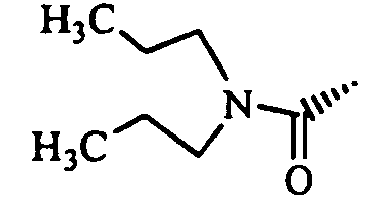
H HCl Colorless powder MS ·APCI (m/z) : 363[M+H]+ 1c-15 
H HCl Purified powder MS ·APCI (m/z) : 365 1c-16 
H HCl Colorless powder MS -APCI (m/z) : 389 [M+H] + 1c-17 
H HCl Pale brownish purified resin state MS ·APCI(m/z): 279[M+H]+ 1c-18 
H HCl Purified powder MS ·APCI (m/z) : 293 [M+H] + 1c-19 
H HCl Purified powder MS ·APCI (m/z) : 307[M+H]+ 1c-20 
H HCl Purified powder MS ·APCI (m/z) : 335[M+H]+ 1c-21 
H HCl Purified powder MS ·APCI (m/z) : 321[M+H]+ 1c-22 
H HCl Purified powder MS·APCI(m/z): 335[M+H]+ 1c-23 
H HCl Colorless powder MS ·APCI (m/z) : 357[M+H]+ 1c-24 
H HCl Colorless powder MS ·APCI (m/z) : 357[M+H]+ 1c-25 
H HCl Colorless powder MS·APCI (m/z) : 373[M+H]+ 1c-26 
H HCl Colorless powder MS ·APCI (m/z) : 362[M+H]+ 1c-27 
H HCl Colorless powder MS ·APCI (m/z) :376[M+H]+ 1c-28 
H HCl Pale brownish powder MS·APCI (m/z) : 363[M+H]+ 1c-29 
H HCl Colorless purified powder MS·APCI (m/z): 395 [M+H]+ 1c-30 
H HCl Purified powder MS ·APCI (m/z) : 321[M+H]+ 1c-31 
H HCl Purified powder MS ·APCI (m/z) : 335(M+H)+ 1c-32 
H HCl Brownish purified resin state MS ·APCI (m/z) : 365[M+H]+ 1c-33 
H HCl Pale brownish purified powder MS ·APCI (m/z) : 365[M+H]+ 1c-34 
H HCl Pale brownish purified resin state MS ·APCI (m/z) : 379[M+H]+ 1c-35 
H HCl Purified powder MS ·APCI (m/z) : 351 1c-36 
H HCl Purified powder MS ·APCI (m/z) : 351 1c-37 
H HCl Colorless purified powder MS ·APCI (m/z) : 365[M+H]+ 1c-38 
H HCl Colorless purified powder MS ·APCI (m/z) : 407[M+H]+ 1c-39 
H HCl Colorless purified powder MS ·APCI (m/z) : 351[M+H]+ 1c-40 
H HCl Colorless purified powder MS ·APCI (m/z) : 379[M+H]+ 1c-41 
H HCl Colorless purified powder MS ·APCI (m/z) : 333[M+H]+ 1c-42 
H 2HCl Purified powder MS ·APCI (m/z) : 370 [M+H]+ 1c-43 
H 2HCl Purified powder MS ·APCI (m/z) : 400 [M+H]+ 1c-44 
H HCl Colorless purified powder MS ·APCI (m/z) : 409 [M+H] + 1c-45 
H HCl Colorless purified powder MS ·APCI (m/z) : 423 [M+H] + 1c-46 
H HCl Purified powder MS ·APCI (m/z) : 307[M+H]+ 1c-47 
H HCl Colorless powder MS ·APCI (m/z) : 335 [M+H] + 1c-48 
H HCl Purified powder MS ·APCI (m/z) : 479 [M+H]+ 1c-49 
H HCl Purified powder MS ·APCI (m/z) : 498 [M+H] + 1c-50 
H HCl Purified powder MS ·APCI (m/z) : 492 [M+H] + 1c-51 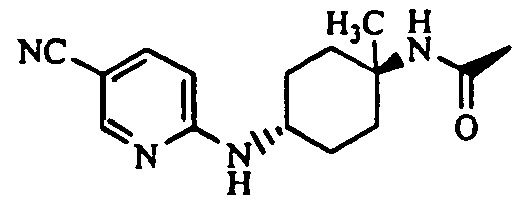
H 2HCl Purified powder MS ·APCI (m/z) : 492 [M+H]+ 1c-52 
H 2HCl Colorless powder MS ·APCI (m/z) : 452 [M+H] + Table 1d 
Example No. R2-X- R1 Salt Physical properties, etc. 1d-1 
H HCl Colorless powder MS ·APCI (m/z) : 333 [M+H]+ 1d-2 
H HCl Purified powder MS ·APCI (m/z) : 363 1d-3 
H HCl Purified powder MS ·APCI (m/z) : 377 1d-4 
H HCl Colorless powder MS ·APCI (m/z) : 361 [M+H] + 1d-5 
H HCl Colorless powder MS ·APCI (m/z) : 347 [M+H] + 1d-6 
H HCl Colorless powder MS ·APCI (m/z) : 361 [M+H]+ 1d-7 
H HCl Colorless powder MS·APCI (m/z) : 375 [M+H]+ 1d-8 
H HCl Purified powder MS ·APCI (m/z) : 403 [M+H]+ 1d-9 
H HCl Purified powder MS ·APCI (m/z) : 405 [M+H]+ 1d-10 
H Free form Purified powder MS ·APCI (m/z) : 390 1d-11 
H HCl Colorless powder MS ·APCI(m/z): 390 [M+H]+ 1d-12 
H 2HCl Colorless powder MS ·APCI (m/z) : 390[M+H]+ 1d-13 
H HCl Purified powder MS ·APCI (m/z) : 446 [M+H]+ 1d-14 
H 2HCl Colorless powder MS ·APCI (m/z) : 348 [M+H]+ 1d-15 
H 2HCl Purified powder MS ·APCI (m/z) : 376 1d-16 
H 2HCl Colorless powder MS ·APCI (m/z) : 390[M+H]+ 1d-17 
H 2HCl Colorless powder MS ·APCI (m/z) : 404[M+H]+ 1d-18 
H 2HCl Colorless powder MS ·APCI (m/z) : 392[M+H]+ 1d-19 
H HCl Colorless powder MS ·APCI (m/z) : 390 [M+H] 1d-20 
H HCl Purified powder MS ·APCI (m/z) : 404 1d-21 
H HCl Purified powder MS ·APCI (m/z) : 418 1d-22 
H HCl Colorless powder 1d-23 
H HCl Purified powder MS ·APCI (m/z) : 432 1d-24 
H HCl Purified powder MS ·APCI (m/z) : 432 1d-25 
H HCl Colorless crystal Gradually decomposed at around Melting point: 198°C MS ·APCI (m/z) : 420 [M+H] + 1d-26 
H HCl Purified powder MS ·APCI (m/z) : 426[M+H]+ 1d-27 
H HCl Colorless crystal Melting point: 207-211°C MS ·APCI (m/z) : 377 [M+H] 1d-28 
H HCl Colorless crystal Melting point: 219°C (decomposed) MS ·APCI (m/z) : 349 [M+H]+ Methane sulfonic acid Colorless crystal Melting point: 217-218°C (decomposed) 1d-29 
H HCl Colorless powder MS ·APCI (m/z) : 365 [M+H]+ 1d-30 
H HCl Colorless powder MS ·APCI (m/z) : 397 [M+H]+ 1d-31 
H HCl Pale brownish powder MS ·APCI (m/z) : 426 [M+H]+ 1d-32 
H HCl Colorless crystal Melting point: 198-200°C(decomposed) MS ·APCI (m/z) : 381 [M+H] 1d-33 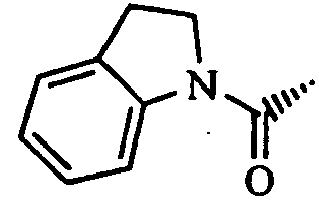
H HCl Pale yellowish powder MS ·APCI (m/z) : 381 [M+H] + 1d-34 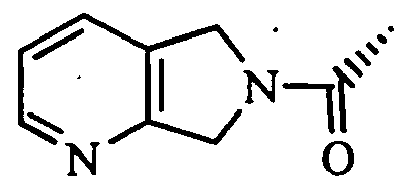
H 2HCl Colorless crystal Melting point: >300°C MS ·APCI (m/z) : 382 [M+H] + 1d-35 
H HCl Purified powder MS ·APCI (m/z) : 395 1d-36 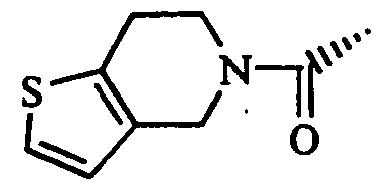
H HCl Purified powder MS ·APCI (m/z) : 401 1d-37 
H HCl Purified powder MS ·APCI (m/z) : 423 1d-38 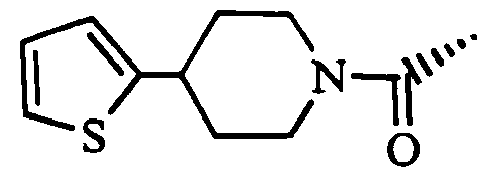
H HCl Colorless powder MS ·APCI (m/z) : 429 [M+H] + 1d-39 
H HCl Colorless powder MS ·APCI (m/z) : 451 [M+H]+ 1d-40 
H HCl Purified powder MS ·APCI (m/z) : 424 1d-41 
H 2HCl Colorless powder MS ·APCI (m/z) : 438 [M+H] 1d-42 
H 2HCl Colorless powder MS ·APCI (m/z) : 458 [M+H] 1d-43 
H 2HCl Purified powder MS ·APCI (m/z) : 454 1d-44 
H 2HCl Purified powder MS ·APCI (m/z) : 425 1d-45 
H 2HCl Colorless powder MS ·APCI (m/z) : 426[M+H]+ 1d-46 
H HCl Colorless powder MS ·APCI (m/z) : 492[M+H]+ 1d-47 
H 2HCl Purified powder MS ·APCI (m/z) : 444[M+H]+ 1d-48 
H 2HCl Purified powder MS ·APCI (m/z) : 438 1d-49 
H 2HCl Colorless powder MS ·APCI (m/z) : 466 [M+H] 1d-50 
H 2HCl Purified powder MS ·APCI (m/z) : 494 1d-51 
H HCl Purified powder MS ·APCI (m/z) : 437 1d-52 
H Maleic acid Purified powder Melting point: 180-183°C 1d-53 
H HCl Purified powder MS ·APCI (m/z) : 465 1d-54 
H HCl Purified powder MS ·APCI (m/z) : 521, 519 1d-55 
H HCl Purified powder MS ·APCI (m/z) : 484 1d-56 
H HCl Purified powder MS ·APCI (m/z) 451 1d-57 
H HCl Purified powder MS ·APCI (m/z) : 460 [M+H] + 1d-58 
H HCl Purified powder MS ·APCI (m/z) : 416 1d-59 
H HCl Purified powder MS ·APCI (m/z) : 458 1d-60 
H HCl Colorless powder MS ·APCI (m/z) : 452 [M+H] 1d-61 
H 2HCl Colorless powder MS ·APCI(m/z) : 453 [M+H] 1d-62 
H HCl Colorless powder MS ·APCI(m/z) : 458 [M+H] 1d-63 
H HCl Colorless powder MS ·APCI (m/z) : 455 [M+H] 1d-64 
H HCl Colorless powder MS ·APCI (m/z) : 461 [M+H] + 1d-65 
H HCl Purified powder MS ·APCI (m/z) : 488[M+H]+ 1d-66 
H HCl Colorless powder MS ·APCI (m/z) : 467 [M+H]+ 1d-67 
H HCl Purified powder MS ·APCI (m/z) : 500 [M+H]+ 1d-68 
H HCl Colorless powder MS ·APCI (m/z) : 481 [M+H]+ 1d-69 
H HCl Purified powder MS ·APCI (m/z) : 494 [M+H] + 1d-70 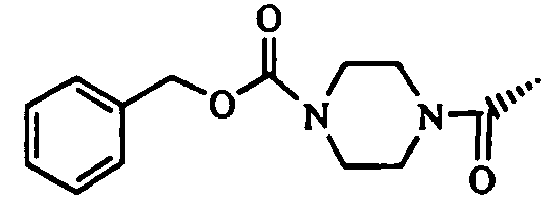
H HCl Colorless powder MS ·APCI (m/z) : 482 [M+H]+ 1d-71 
H HCl Purified powder MS ·APCI (m/z) : 466 [M+H] + 1d-72 
H 2HCl Purified powder MS ·APCI (m/z) : 467 [M+H]+ 1d-73 
H HCl Purified powder MS ·APCI (m/z) : 472 [M+H]+ 1d-74 
H 2HCl Purified powder MS ·APCI (m/z) : 514 [M+H] + 1d-75 
H HCl Purified powder MS ·APCI (m/z) : 377 1d-76 
H HCl Purified powder MS ·APCI (m/z) : 377 1d-77 
H 2HCl Colorless powder MS ·APCI (m/z) : 484[M+H] 1d-78 
H HCl Purified powder MS ·APCI (m/z) : 376 1d-79 
H HCl Pale yellowish powder MS ·APCI (m/z) : 420[M+H]+ 1d-80 
H HCl Colorless powder MS ·APCI (m/z) : 419 [M+H] 1d-81 
H HCl Colorless purified powder MS ·APCI (m/z) : 524[M+H]+ 1d-82 
H HCl Colorless purified powder MS ·APCI (m/z) : 453[M+H]+ 1d-83 
H HCl Colorless powder MS ·APCI (m/z) : 411[M+H]+ 1d-84 
H 2HCl Colorless purified powder MS ·APCI(m/z) : 481 [M+H]+ 1d-85 
H HCl Colorless purified powder MS ·APCI (m/z) : 474 [M+H]+ 1d-86 
H HCl Purified powder MS ·APCI (m/z) : 411[M+H]+ 1d-87 
H HCl Colorless purified powder MS ·APCI (m/z) : 411 [M+H] + 1d-88 
H HCl Colorless purified powder MS ·APCI (m/z) : 425 [M+H] + 1d-89 
H HCl Colorless powder MS ·APCI (m/z) : 397 [M+H] + 1d-90 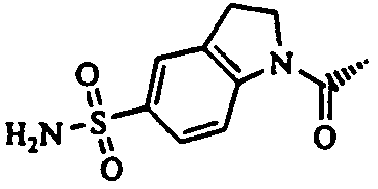
H Free form Colorless solid MS ·APCI (m/z) : 460[M+H]+ 1d-91 
H HCl Colorless powder MS ·APCI (m/z) : 425 [M+H]+ 1d-92 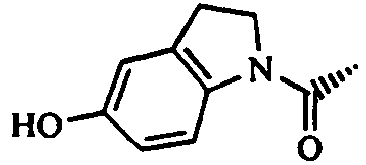
H HCl Colorless powder MS ·APCI (m/z) : 397 [M+H] 1d-93 
H HCl Purified powder MS ·APCI (m/z) : 410 1d-94 
H HCl Purified powder MS ·APCI (m/z) : 340 [M+H] 1d-95 
H HCl Purified powder MS ·APCI (m/z) : 365 [M+H] 1d-96 
H HCl Colorless powder MS ·APCI (m/z) : 374 [M+H] 1d-97 
H HCl Yellowish powder MS ·APCI (m/z) : 385[M+H] 1d-98 
H HCl Colorless powder MS ·APCI (m/z) : 382 [M+H] 1d-99 
H HCl Purified powder MS ·APCI (m/z) : 330 [M+H] 1d-100 
H HCl Purified powder MS ·APCI (m/z) : 346 [M+H] 1d-101 
H HCl Colorless powder MS ·APCI (m/z) : 396[M+H] 1d-102 
H 2HCl Colorless powder MS ·APCI (m/z) : 341[M+H] 1d-103 
Me HCl Purified powder MS ·APCI (m/z) : 363 [M+H] 1d-104 
H HCl Colorless powder MS ·APCI (m/z) : 406[M+H] 1d-105 
H HCl Colorless powder MS ·APCI (m/z) : 448 [M+H] 1d-106 
H HCl Colorless powder MS ·APCI (m/z) : 434 [M+H] 1d-107 
H HCl Colorless powder MS ·APCI (m/z) : 468 [M+H] 1d-108 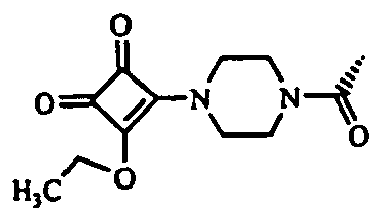
H HCl Pale yellowish powder MS ·APCI (m/z) : 472 [M+H] 1d-109 
H HCl Pale yellowish powder MS ·APCI (m/z) : 471 [M+H] 1d-110 
H HCl Purified powder MS ·APCI (m/z) : 439 [M+H]+ 1d-111 
H HCl Colorless purified powder MS ·APCI (m/z) : 425 [M+H]+ 1d-112 
H HCl Purified powder MS ·APCI (m/z) : 453 [M+H]+ 1d-113 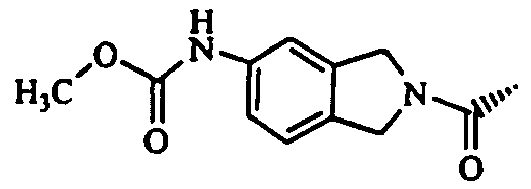
H HCl Colorless purified powder MS ·APCI (m/z): 454 [M+H] + 1d-114 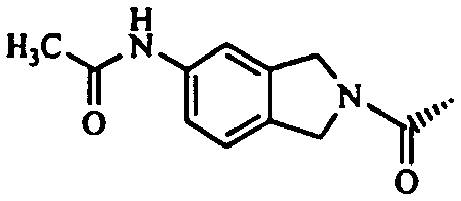
H HCl Colorless purified powder MS ·APCI (m/z) : 438 [M+H] + 1d-115 
H 2HCl Purified powder MS ·APCI (m/z) : 480 [M+H]+ 1d-116 
H HCl Colorless purified powder MS ·APCI (m/z) : 452 [M+H]+ 1d-117 
H HCl Colorless purified powder MS ·APCI (m/z) : 424 [M+H]+ 1d-118 
H HCl Colorless purified powder MS ·APCI (m/z) : 468 [M+H] + 1d-119 
H HCl Colorless purified powder MS ·APCI (m/z) : 478 [M+H]+ 1d-120 
H HCl Colorless purified powder MS ·APCI (m/z) : 494 [M+H] + 1d-121 
H 2HCl Colorless purified powder MS ·APCI (m/z) : 410 1d-122 
H HCl Colorless purified powder MS ·APCI (m/z) : 478[M+H]+ 1d-123 
H HCl Colorless purified powder MS ·APCI (m/z) : 452[M+H]+ 1d-124 
H HCl Colorless purified powder MS ·APCI (m/z) : 488[M+H]+ 1d-125 
H HCl Colorless purified powder MS ·APCI (m/z) : 406 [M+H] + 1d-126 
H HCl Colorless powder MS ·APCI (m/z) : 438 [M+H] 1d-127 
H HCl Colorless powder MS ·APCI (m/z) : 467 [M+H] 1d-128 
H HCl Colorless powder MS ·APCI (m/z) : 454 [M+H] 1d-129 
H HCl Colorless powder MS ·APCI (m/z) : 474 [M+H] 1d-130 
H 2HCl Colorless powder MS ·APCI (m/z) : 481 [M+H] 1d-131 
H 2HCl Colorless powder MS ·APCI(m/z): 424 [M+H] 1d-132 
H HCl Colorless powder MS ·APCI(m/z) : 438 [M+H] 1d-133 
H HCl Yellow brownishpowder MS ·APCI (m/z) : 467 [M+H] 1d-134 
H HCl Colorless powder MS ·APCI(m/z) : 454 [M+H] 1d-135 
H HCl Colorless powder MS ·APCI (m/z) : 474 [M+H] 1d-136 
H 2HCl Pale brownish powder MS ·APCI (m/z) : 481 [M+H] 1d-137 
H 2HCl Colorless powder MS ·APCI (m/z) : 424 [M+H] 1d-138 
H 2HCl Pale yellowish powder MS ·APCI (m/z) : 468[M+H]+ 1d-139 
H HCl Colorless powder MS ·APCI (m/z) : 411[M+H]+ 1d-140 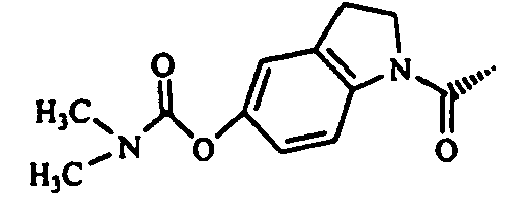
H HCl Colorless powder MS ·APCI(m/z) : 468[M+H]+ 1d-141 
H HCl Colorless powder MS ·APCI (m/z) : 469 [M+H] 1d-142 
H HCl Colorless powder MS ·APCI (m/z) : 468[M+H]+ 1d-143 
H HCl Colorless powder MS ·APCI (m/z) : 469[M+H]+ 1d-144 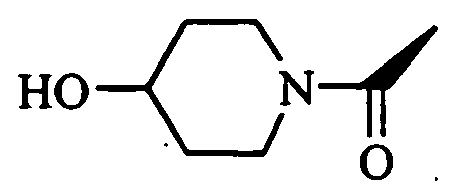
H HCl Purified powder MS ·APCI (m/z) : 363 [M+H]+ 1d-145 
H HCl Colorless powder MS ·APCI (m/z) : 349 [M+H]+ 1d-146 
H HCl Purified powder MS ·APCI (m/z) : 381 [M+H]+ 1d-147 
H HCl Colorless powder MS·APCI (m/z) : 425 [M+H]+ 1d-148 
H 2HCl Colorless powder MS ·APCI (m/z) : 425 [M+H]+ 1d-149 
H 2HCl Colorless resin state MS ·APCI (m/z) : 430 [M+H]+ 1d-150 
H HCl Colorless powder MS ·APCI (m/z) : 439 [M+H] + 1d-151 
H 2HCl Purified powder MS ·APCI (m/z) : 438 [M+H]+ 1d-152 
H 2HCl Colorless powder MS ·APCI (m/z) : 438 [M+H]+ Table 3 
Example No. R2-X- R1 Salt Physical properties, etc. 3-1 
H 2HCl Colorless powder MS ·APCI (m/z): 370 [M+H]+ 3-2 
H 2HCl Colorless powder MS ·APCI (m/z) : 370 [M+H]+ 3-3 
H 2HCl Colorless powder MS ·APCI (m/z) : 357 [M+H]+ 3-4 
H 2HCl Resin state MS ·APCI (m/z) : 371 [M+H]+ 3-5 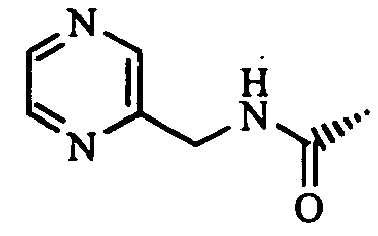
H 2HCl Resin state MS ·APCI (m/z) : 371 [M+H]+ 3-6 
H 2HCl Resin state MS ·APCI (m/z) : 400 [M+H]+ 3-7 
H 2HCl Resin state MS ·APCI (m/z) : 384 [M+H] + 3-8 
H HCl Colorless powder MS· APCI (m/z) : 337 [M+H]+ 3-9 
H HCl Colorless powder MS ·APCI (m/z) : 335 [M+H]+ 3-10 
H HCl Pale yellowish powder MS ·APCI (m/z) 363 [M+H]+ 3-11 
H 2HCl Colorless powder MS ·APCI (m/z): 362 [M+H]+ 3-12 
H HCl Colorless powder MS ·APCI (m/z) : 455 [M+H] + * not part of the invention Table 4 
Example No. R2-X- R1 Salt Physical properties, etc. 4-1 * 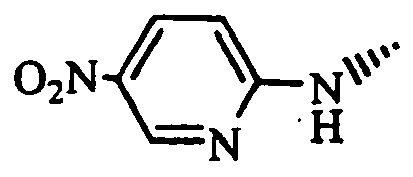
H 2HCl Pale yellowish powder MS ·APCI (m/z) : 391 [M+H] + 4-2 * 
H 2HCl Colorless powder MS ·APCI (m/z) : 346[M+H]+ 4-3 * 
H 2HCl Pale yellowish powder MS ·APCI (m/z) : 371 [M+H] + 4-4 * 
H 2HCl Colorless powder MS ·APCI (m/z) : 414 [M+H] + 4-5 * 
H HCl Colorless powder Melting point: >300°C MS ·APCI (m/z) : 347 [M+H] + 4-6 * 
H 2HCl Colorless powder MS ·APCI (m/z) : 425 427 [M+H] + 4-7 * 
H 2HCl Colorless powder MS ·APCI (m/z) : 393 [M+H]+ 4-8 * 
H 2HCl Colorless powder MS ·APCI (m/z) : 381 4-9 * 
H 2HCl Colorless powder MS ·APCI (m/z) : 352 [M+H] + 4-10 * 
H 2HCl Pale yellowish powder MS ·APCI (m/z) : 391 [M+H] + 4-11 * 
H HCl Colorless powder MS ·APCI (m/z) : 392 [M+H] + 4-12 * 
H HCl Colorless powder MS·APCI(m/z): 372 [M+H]+ 4-13 * 
H HCl Colorless powder MS ·APCI(m/z): 426 [M+H]+ 4-14 * 
H HCl Colorless powder MS ·APCI(m/z) 382 [M+H]+ 4-15 * 
H HCl Colorless powder MS ·APCI(m/z): 394 [M+H]+ 4-16 * 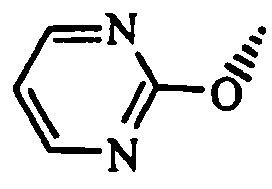
H HCl Colorless powder Melting point: 80°C- (Decomposed) MS ·APCI (m/z) : 348 [M+H]+ 4-17 * 
H HCl Colorless powder MS ·APCI (m/z) : 414 [M+H]+ 4-18 * 
H HCl Pale yellowish powder MS ·APCI (m/z): 391 [M+H]+ 4-19 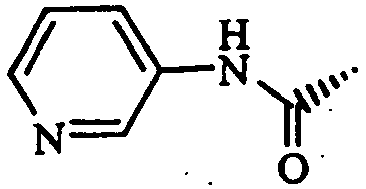
H 2HCl Colorless powder MS ·APCI (m/z) : 374, [M+H]+ 4-20 
H HCl Colorless purified powder MS ·APCI (m/z) : 297 [M+H]+ 4-21 
H HCl Purified powder MS ·APCI (m/z) 325 [M+H]+ 4-22 
H HCl Colorless purified powder MS ·APCI (m/z) : 397 [M+H]+ 4-23 
H HCl Colorless powder MS ·APCI (m/z) : 438[M+H]+ 4-24 
H HCl Colorless powder MS ·APCI (m/z) : 923[M+H]+ 4-25 
H HCl Colorless.purified powder MS·APCI(m/z) : 471[M+H]+ 4-26 
H HCl Colorless powder MS ·APCI (m/z) : 367 [M+H]+ 4-27 
H HCl Colorless powder MS ·APCI (m/z) : 351 [M+H]+ 4-28 
H HCl Colorless powder MS ·APCI (m/z) : 399 [M+H]+ 4-29 
H 2HCl Colorless powder MS ·APCI(m/z) : 414 [M+H]+ 4-30 
H HCl Colorless powder MS ·APCI (m/z) : 429 [M+H]+ 4-31 
H HCl Colorless powder MS ·APCI (m/z) : 444 [M+H]+ 4-32 
H HCl Colorless powder MS ·APCI (m/z) : 486[M+H]+ Table 5 
Reference Example No. R2-X- R1 Salt Physical properties, etc. 3-1 
H Free form Yellowish crystal Melting point: 156-158°C 3-2 
H Free form Pale brownish crystal Melting point: 110-122°C 3-3 
H Free form Colorless crystal Melting point: 152-154°C 3-4 
H Free form Pale brownish crystal Melting point: 77-80°C 3-5 
H Free form Pale yellowish needle-like crystal Melting point: 107-108°C 3-6 
H Free form Yellowish needle-like crystal Melting point: 84°C- 3-7 
H Free form Colorless crystal Melting point: 128-129°C 3-8 
H Free form Colorless crystal Melting point: 140-141°C 3-9 
H Free form Pale yellowish crystal Melting point: 116-118°C 3-10 
H 2HCl Colorless crystal Melting point: >300°C 3-11 
H Free form Pale yellowish needle-like crystal Melting point: 92-94°C 3-12 
H Free form Brownish crystal Melting point: 120-123°C 3-13 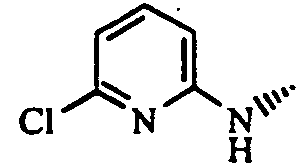
H Free form Powder MS ·APCI (m/z) : 228,226 3-14 
H Free form Oil MS ·APCI (m/z) : 228,226 3-15 
H Free form Oil MS ·APCI (m/z) : 228,226 3-16 
H Free form Oil 3-17 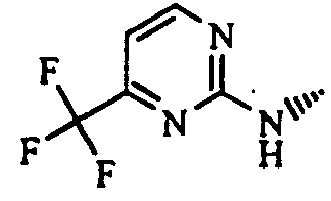
H Free form Powder MS ·APCI (m/z) : 261 3-18 
H Free form Oil MS ·APCI (m/z) : 221 3-19 
H Free form Powder MS ·APCI (m/z) : 218 3-20 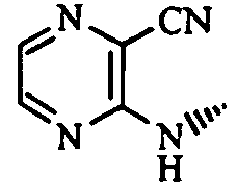
H Free form Powder MS ·APCI (m/z) : 218 3-21 
H Free form Yellowish oil MS ·APCI (m/z) : 239[M+H]+ 3-22 
H Free form Yellowish foam MS ·APCI (m/z) : 311[M+H]+ 3-23 
H Free form Yellowish oil MS ·APCI (m/z) : 312 [M+H] + 3-24 
H Free form Colorless oil 3-25 
H Free form Colorless oil 3-26 
H Free form Powder MS ·APCI (m/z): 269 3-27 
H Free form Yellowish oil MS ·APCI (m/z) : 259[M+H]+ 3-28 
H Free form Oil MS ·APCI (m/z) : 250 3-29 
H Free form Powder MS ·APCI (m/z) : 236 3-30 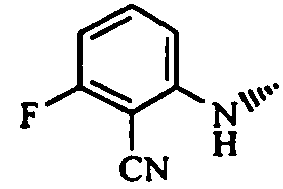
H Free form Powder MS ·APCI (m/z) : 234 3-31 
H Free form Oil MS ·APCI (m/z) : 234 3-32 
H Free form Powder MS ·APCI (m/z) : 284 3-33 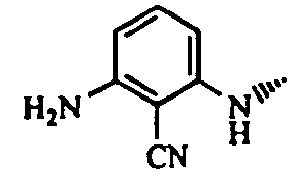
H Free form Powder MS ·APCI (m/z) : 231 3-34 
H Free form Powder MS-APCI(m/z): 234 3-35 
H Free form Pale brownish crystal Melting point: 99-102°C MS-APCI(m/z): 216 [M+H] 3-36 
H Free form Yellowish resin MS ·APCI (m/z) : 234[M+H] 3-37 
H Free form Pale reddish brownish Powder MS-APCI(m/z): 296, 294 [M+H] 3-38 
H Free form Pale reddish brownish Powder MS ·APCI (m/z) : 246 [M+H] 3-39 
H Free form Oil 3-40 
H Free form Oil 3-41 
H Free form Yellowish crystal Melting point: 135-136.5°C 3-42 
H Free form Yellowish powder MS ·APCI (m/z) : 242[M+H]+ 3-43 
H Free form Yellowish crystal Melting point: 81.5-83.5°C 3-44 
H Free form Reddish liquid MS -APCI (m/z) : 266 [M+H] 3-45 
H Free form Dark reddish powder MS-APCI(m/z): 253 [M+H] 3-46 
H Free form Powder MS-APCI(m/z): 229, 227 3-47 
H Free form Oil 3-48 
H Free form Powder MS ·APCI (m/z) : 193 3-49 
H Free form Oil 3-50 
H Free form Colorless oil 3-51 
H Free form Colorless oil 3-52 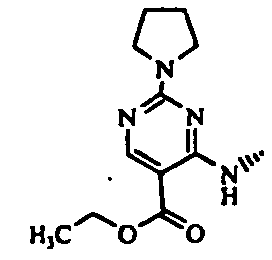
H Free form Colorless oil 3-53 
H Free form Yellowish oil 3-54 
H Free form Colorless oil 3-55 
H Free form Colorless oil 3-56 
H Free form Yellowish oil 3-57 
H Free form Colorless foam 3-58 
H Free form Colorless oil 3-59 
H Free form Colorless oil 4 
H Free form Pale yellowish solid Melting point: 153-155°C 5-1 
H 2HCl Yellowish crystal Melting point: 219-222°C 5-2 
H 2HCl' Colorless powder MS ·APCI (m/z) : 217 [M+H]+ 5-3 
H 2HCl Colorless crystal Melting point: 215-218°C 5-4 
H 2HCl Colorless crystal Melting point: 245-250°C 5-5 
H 2HCl Colorless crystal Melting point: 303°C 5-6 
H 2HCl Yellowish crystal Melting point: 234-237°C 7-1 
Me Free form Colorless crystal Melting point: 121-123°C 7-2 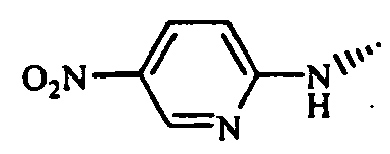
Me Free form Yellowish crystal Melting point: 164-166°C 7-3 
Me Free form Yellowish crystal Melting point: 40-43°C 7-4 
Me Free form Pale yellowish crystal Melting point: 147-148°C 7-5 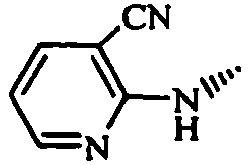
Me Free form Colorless crystal Melting point: 111-112°C 7-6 
Me Free form Pale brownish crystal Melting point: 121-124°C 7-7 
Me Free form Yellowish crystal Melting point: 58-59°C 7-8 
Me Free form Colorless crystal Melting point: 182-184°C 7-9 
Me Free form Pale brownish crystal Melting point: 76-79°C 7-10 
CH2OH 2HCl Pale yellowish solid MS ·APCI (m/z) : 267[M+H]+ 7-11 
CH2OH 2HCl Colorless solid MS ·APCI (m/z) : 247[M+H]+ 7-12 
CH2OH 2HCl Yellowish powder MS ·APCI (m/z) : 267[M+H]+ 7-13 
CH2OH Free form Colorless oil MS ·APCI (m/z) : 247[M+H]+ 7-14 
CH2O 2HCl Pale yellowish solid MS ·APCI (m/z) : 269[M+H]+ 7-15 
CH2OH 2HCl Colorless powder MS -APCI (m/z) : 247[M+H]+ 7-16 
CH2O 2HCl Colorless solid MS ·APCI (m/z) : 247[M+H]+ 7-17 
CH2OH 2HCl Yellowish powder MS ·APCI (m/z) : 267[M+H]+ 7-18 
CH2OH 2HCl Pale yellowish solid MS ·APCI (m/z) : 267[M+H]+ 7-19 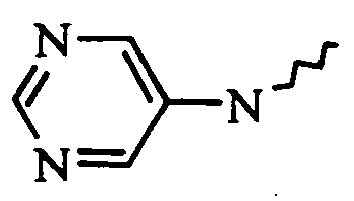
Me 2HCl Colorless resin state MS ·APCI (m/z) : 207 [M+H]+ 7-20 
Me Free form Powder MS ·APCI (m/z) : 311 7-21 
Me 7-22 
Me 7-23 
Me 8-1 
H Free form Colorless resin MS ·APCI (m/z) : 207 [M+H]+ 8-2 
H Free form Colorless crystal Melting point: 109-112°C 8-3 
H Free form Pale brownish resin MS ·APCI (m/z) : 207 [M+H]+ 8-4 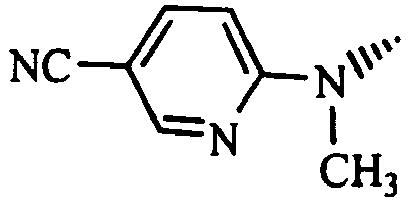
H Free form Colorless crystal Melting point: 85-87°C Table 6 
Reference Example No. R2-X- R1 Salt Physical properties, etc. 9-1 
H HCl Colorless crystal Melting point: 271°C 9-2 
H HCl Colorless crystal Melting point: 289°C 9-3 
H HCl Colorless crystal Melting point: 253-254°C 9-4 
H HCl Pale yellowish crystal Melting point: 230°C 9-5 
H Free form Colorless crystal Melting point: 70-72°C 9-6 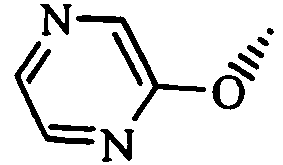
H Free form Colorless crystal Melting point: 58-59°C 9-7 
H HCl Colorless crystal Melting point: 284°C (decomposed) 9-8 
H HCl Colorless crystal Melting point: 279-280°C (decomposed) 9-9 
H HCl Colorless crystal Melting point: 275°C (decomposed) 9-10 
H HCl Colorless crystal Melting point: 275-276°C (decomposed) 9-11 
H HCl Colorless crystal Melting point: 194°C 9-12 
H Free form Pale yellowish crystal Melting point: 222-223°C 9-13 
H Free form Crystal Melting point: 91-94°C MS ·APCI (m/z) : 229,227 9-14 
H Free form Powder MS ·APCI (m/z) : 229,227 9-15 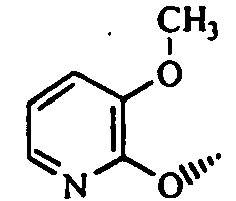
H Free form Powder MS ·APCI (m/z): 223 9-16 
H Free form Powder MS ·APCI (m/z) : 193 9-17 
H Free form Powder MS ·APCI (m/z) : 229,227 9-18 
H 9-19 
H Free form Oil 9-20 
H 9-21 
H 9-22 
H Free form Colorless powder MS ·APCI (m/z) : 240 (M+H+)+ 9-23 
H 9-24 
H Free form Powder MS ·APCI (m/z) : 222 9-25 
H Free form Oil 9-26 
H Free form Powder MS ·APCI (m/z) : 262,260 9-27 
H Free form Powder MS-APCI (m/z) : 194 9-28 
H Free form Oil MS-APCI(m/z) : 320 9-29 
H Free form Powder MS ·APCI (m/z) : 356,354 9-30 
H Free form Powder MS ·APCI (m/z) : 270 9-31 
H Free form Powder MS ·APCI (m/z) : 243 9-32 
H Free form Oil 9-33 
H Free form Powder MS ·APCI (m/z) : 237 9-34 
H HCl Colorless crystal Melting point: 215-218°C MS ·APCI (m/z) : 217 [M+H] 9-35 
H Free form Yellowish oil 9-36 
H Free form Yellowish oil 9-37 
H Free form Yellowish oil 9-38 
H Free form Colorless oil 9-39 
H Free form Colorless oil 9-40 
H HCl Colorless crystal Melting point: 253-254°C MS ·APCI (m/z) : 231[M+H] 9-41 
H HCl Pale green melting point: 270-285°C MS ·APCI (m/z) : 235[M+H] 9-42 
H HCl Colorless crystal melting point: 283-284°C MS ·APCI (m/z) : 297, 295 [M+H] 9-43 
H HCl Colorless crystal melting point: 246-247°C MS-APCI(m/z): 247 [M+H] 9-44 
H HCl Colorless crystal melting point: 285-294°C MS ·APCI (m/z) : 251[M+H] 9-45 
H HCl Colorless crystal melting point: >300°C MS ·APCI (m/z) :297, 295[M+H] 9-46 
H Free form Pale brownish semi-solid MS-APCI (m/z): 194 [M+H] IR(cm-1) : 3351 9-47 
H HCl Yellow brownish crystal melting point: 238-240°C 9-48 
H HCl Pale brownish crystal melting point: 180°C (decomposed) 9-49 
H Free form 9-50 
H Free form 9-51 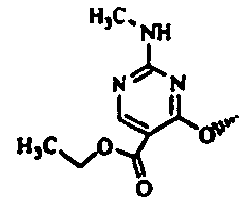
H Free form 9-52 
H Free form 9-53 
H Free form 9-54 
H Free form 9-55 
H Free form 9-56 
H Free form 9-57 
H Free form 9-58 
H HCl Pale brownish powder MS ·APCI (m/z) : 238 [M+H]+ 9-59 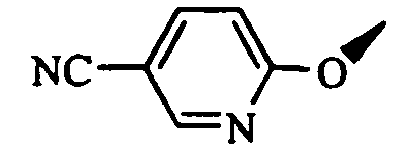
H HCl Colorless powder MS ·APCI (m/z) : 218 [M+H]+ 9-60 
H HCl Colorless crystal melting point: 234-235°C (decomposed) 9-61 
H HCl Colorless crystal melting point: 126°C 9-62 
H HCl Pale yellowish crystal melting point: 206-207°C (decomposed) 9-63 
H HCl Pale yellowish crystal melting point: 148-150°C (decomposed) 9-64 
H HCl Colorless crystal melting point: 189-191°C (decomposed) 10-2 
Me Free form Colorless liquid MS ·APCI (m/z) : 252 [M+H]+ 10-3 
Me Free form Colorless crystal Melting point: 73-76°C 10-4 
Me Free form Colorless liquid MS ·APCI (m/z) : 252[M+H]+ 10-5 
Me Free form Colorless crystal Melting point: 88-89°C 10-6 
Me Free form Colorless crystal Melting point: 90-94°C 10-7 
Me Free form Colorless crystal Melting point: 97-100°C 10-8 
Me Free form Colorless crystal Melting point: 150-154°C Table 7 
Reference Example No. R2-X- R1 Salt Physical properties, etc. 11-1 
H HCl Colorless solid Melting point: 150-153°C MS ·APCI (m/z) : 247 [M+H]+ 11-2 
H 2HCl Colorless crystal Melting point: 294-295°C 11-3 
H Free form Colorless crystal Melting point: 185.5-186°C 11-4 
H HCl Colorless solid Melting point: >300°C MS ·APCI (m/z) : 219 [M+H]+ 11-5 
H Free form Colorless solid Melting point: 163-166°C 11-6 
H Free form Colorless liquid MS APCI (m/z) : 239 [M+H] 11-7 
H Free form Colorless liquid MS -APCI (m/z) : 262 [M+H] 11-8 
H Free form Colorless liquid 11-9 
H Free form Colorless liquid 11-10 
H Free form Liquid MS ·APCI (m/z) : 171 [M+H] 11-11 
H Free form Pale yellowish oil MS ·APCI (m/z) : 213 11-12 
H Free form Colorless oil MS ·APCI (m/z) : 241 [M+H]+ 11-13 
H Free form Pale yellowish oil MS ·APCI (m/z) : 213 11-14 
H HCl Colorless liquid MS ·APCI (m/z) : 227[M+H]+ 11-15 
H Free form Pale yellowish oil MS ·APCI (m/z) : 229 11-16 
H Free form Colorless oil MS ·APCI (m/z) : 253 [M+H]+ 11-17 
H HI Colorless powder MS ·APCI (m/z) : 143 [M+H]+ 11-18 
H Free form Colorless crystal MS ·APCI (m/z) : 157 11-19 
H Free form Colorless crystal MS ·APCI (m/z) : 171 11-20 
H Free form Colorless crystal MS ·APCI (m/z) : 199 11-21 
H Free form Colorless crystal MS ·APCI (m/z) : 185 11-22 
H Free form Colorless crystal Meltingpoint: 142°C (Decomposed) MS ·APCI (m/z) : 199[M+H]+ 11-23 
H Free form Colorless oil MS ·APCI (m/z) : 185 11-24 
H Free form Colorless oil MS ·APCI (m/z) : 199 11-25 
H Free form Colorless resin MS ·APCI (m/z) : 229[M+H]+ 11-26 
H Free form Colorless resin MS ·APCI (m/z) : 229[M+H]+ 11-27 
H Free form Colorless resin MS ·APCI (m/z) : 243[M+H]+ 11-28 
H Free form Colorless oil MS ·APCI (m/z) : 215 11-29 
H Free form Colorless oil MS ·APCI (m/z) : 215 11-30 
H Free form Colorless resin MS ·APCI (m/z) : 229[M+H]+ 11-31 
H Free form Colorless resin MS ·APCI (m/z) : 271[M+H]+ 11-32 
H Free form Colorless resin MS ·APCI (m/z) : 243[M+H]+ 11-33 
H Free form Colorless resin MS ·APCI (m/z) : 197[M+H]+ 11-34 
H Free form Pale brownish resin 11-35 
H Free form Pale brownish resin 11-36 
H Free form Pale brownish resin 11-37 
H Free form Pale brownish resin 11-38 
H Free form Pale brownish resin Table 8 
Reference Example No. R2-X- R1 Salt Physical properties, etc. 12-1 
H Free form Colorless oil MS ·APCI (m/z) : 197 [M+H]+ 12-2 
H Free form Colorless liquid 12-3 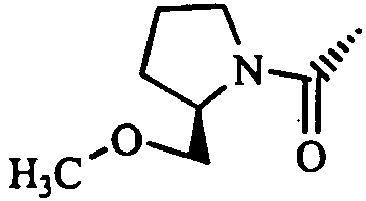
H Free form Pale yellowish oil MS ·APCI (m/z) : 241 12-4 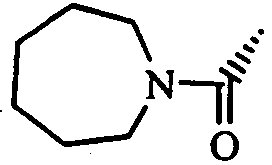
H Free form Colorless oil MS ·APCI (m/z) : 225 [M+H]+ 12-5 
H Free form Colorless oil MS ·APCI (m/z) : 211 [M+H]+ 12-6 
H Free form Colorless oil MS ·APCI (m/z) : 225 [M+H]+ 12-7 
H Free form Colorless oil MS ·APCI (m/z) 239 [M+H]+ 12-8 
H Free form Colorless liquid MS ·APCI (m/z) : 267[M+H]+ 12-9 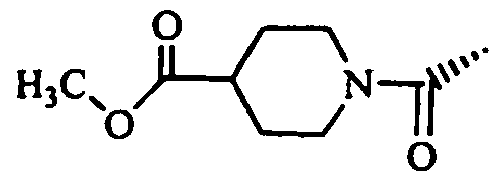
H Free form Colorless liquid MS ·APCI (m/z) : 269[M+H]+ 12-10 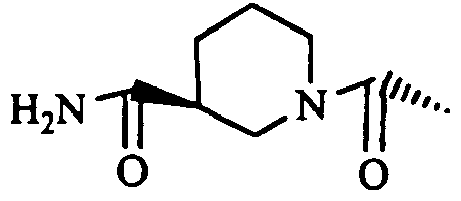
H Free form Colorless oil MS ·APCI (m/z) : 254 12-11 
H HCl Colorless oil MS ·APCI (m/z) : 254 [M+H]+ 12-12 
H 2HCl Colorless powder MS ·APCI (m/z) : 254[M+H]+ 12-13 
H HCl Colorless resin MS ·APCI (m/z) : 310 [M+H]+ 12-14 
H Free form Colorless solid MS ·APCI (m/z) : 240 12-15 
H 2HCl Colorless powder MS ·APCI (m/z) : 254[M+H]+ 12-16 
H 2HCl Colorless powder MS ·APCI (m/z) : 268[M+H]+ 12-17 
H 2HCl Colorless powder MS ·APCI (m/z) : 256[M+H]+ 12-18 
H Free form Colorless powder MS-APCI(m/z): 254 [M+H] 12-19 
H Free form Colorless solid Melting point: 93-96°C 12-20 
H Free form Colorless solid Melting point: 242-245°C 12-21 
H Free form Colorless liquid MS-APCI (m/z) : 282 [M+H] 12-22 
H Free form Colorless solid Melting point: 173-176°C 12-23 
H Free form Colorless solid Melting point: 135-137°C 12-24 
H Free form Colorless crystal Melting point: 90-92°C 12-25 
H Free form Colorless crystal Melting point: 152-153°C 12-26 
H Free form Colorless liquid MS ·APCI (m/z) : 241 [M+H] 12-27 
H Free form Colorless crystal Melting point: 75-80°C 12-28 
H Free form Colorless crystal Melting point: 170-173°C 12-29 
H Free form Colorless oil MS -APCI (m/z) : 290 [M+H]+ 12-30 
H HCl Pale brownish solid Melting point: 230-233°C 12-31 
H 2HCl Pale yellowish solid MS ·APCI (m/z) : 246[M+H]+ 12-32 
H Free form Colorless solid Melting point: 150-155°C 12-33 
H Free form Colorless solid Melting point: 65-69°C 12-34 
H Free form Colorless solid Melting point: 166-170°C 12-35 
H Free form Colorless oil MS ·APCI (m/z) : 293 [M+H]+ 12-36 
H Free form Colorless powder MS ·APCI (m/z) : 315 [M+H]+ 12-37 
H Free form Colorless solid Melting point: 185-189°C 12-38 
H Free form Colorless liquid MS ·APCI (m/z) : 302 [M+H] 12-39 
H Free form Colorless crystal Melting point: 131-132°C 12-40 
H Free form Colorless solid Melting point: 81-83°C 12-41 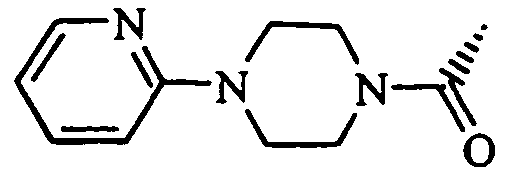
H Free form Colorless solid Melting point: 185-189°C 12-42 
H 2HCl Colorless powder MS ·APCI (m/z) 290[M+H]+ 12-43 
H HCl Colorless solid MS-APCI(m/z): 356[M+H]+ 12-44 
H Free form Colorless crystal Melting point: 59-60°C 12-45 
H Free form Colorless liquid MS ·APCI (m/z) : 302 12-46 
H Free form Colorless liquid MS ·APCI (m/z) : 330 [M+H] 12-47 
H Free form Colorless powder MS ·APCI (m/z) : 301 12-48 
H Free form Colorless liquid MS ·APCI (m/z) : 358 12-49 
H Free form Colorless crystal Melting point: 120-121°C 12-50 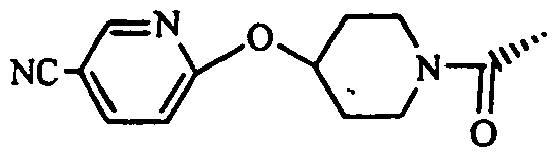
H Free form Pale yellowish crystal Melting point: 119-120°C 12-51 
H Free form Colorless crystal Melting point: 144-145°C 12-52 
H Free form Yellowish crystal Melting point: 140-141°C 12-53 
H Free form Colorless crystal Melting point: 110-111°C 12-54 
H HCl Colorless crystal Melting point : 97-°C MS ·APCI (m/z) : 324 [M+H]+ 12-55 
H Free form Colorless solid Melting point: 245-248°C 12-56 
H Free form Colorless solid Melting point: 202-205°C 12-57 
H Free form Colorless crystal Melting point: 150-153°C 12-58 
H Free form Colorless liquid MS -APCI (m/z) : 317 [M+H] 12-59 
H Free form Colorless crystal Melting point: 158-162°C 12-60 
H Free form Colorless liquid MS -APCI (m/z) : 319 [M+H] 12-61 
H HCl Colorless powder MS ·APCI (m/z) : 325 [M+H]+ 12-62 
H Free form Colorless crystal Melting point: 148-150°C 12-63 
H Free form Colorless powder MS ·APCI (m/z) : 331 [M+H]+ 12-64 
H Free form Colorless resin MS ·APCI (m/z) : 364 [M+H]+ 12-65 
H Free form Colorless oil MS -APCI (m/z) : 345 [M+H]+ 12-66 
H Free form Colorless oil MS ·APCI (m/z) : 358 [M+H]+ 12-67 
H Free form Colorless crystal Melting point:70°C 12-68 
H Free form Colorless crystal Melting point: 188-190°C 12-69 
H 2HCl Colorless crystal Melting point: 180°C (Decomposed) MS ·APCI (m/z) : 331 [M+H]+ 12-70 
H Free form SligHtly brownish crystal Melting point: 214-216°C 12-71 
H Free form Colorless liquid MS ·APCI (m/z) : 378[M+H]+ 12-72 
H HCl Colorless powder MS ·APCI (m/z) : 229 [M+H]+ 12-73 
H Free forum Colorless oil MS ·APCI (m/z) : 241 12-74 
H Free form Colorless crystal MS ·APCI (m/z) : 241 12-75 
H Free form 12-76 
H Free form Colorless oil MS ·APCI (m/z) : 240 12-77 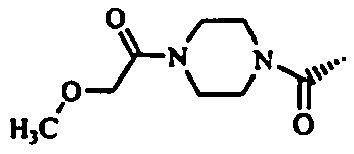
H Free form Colorless powder MS ·APCI (m/z) : 284[M+H]+ 12-78 
H Free form Pale yellowish crystal Melting point: 99-104°C MS ·APCI (m/z) : 283[M+H]+ 12-79 
H Free form Colorless resin MS ·APCI (m/z) : 389[M+H]+ 12-80 
H Free form Colorless resin MS ·APCI (m/z) : 317[M+H]+ 12-81 
H Free form Colorless powder MS ·APCI (m/z) : 275[M+H]+ 12-82 
H Free form Colorless foam 12-83 
H Free form Pale brownish resin 12-84 
H Free form Pale brownish resin 12-85 
H Free form Pale brownish resin 12-86 
H Free form Colorless powder MS ·APCI (m/z) : 275[M+H]+ 12-87 
H Free form Colorless powder MS -APCI (m/z) : 289[M+H]+ 12-88 
H HCl Colorless solid MS ·APCI (m/z) : 261 [M+H]+ 12-89 
H HCl Colorless solid Melting point: 277-279°C MS ·APCI (m/z) : 324 [M+H]+ 12-90 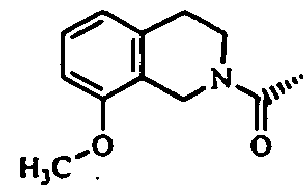
H HCl Colorless solid MS ·APCI (m/z) : 289 [M+H]+ 12-91 
H Free form Colorless crystal MS ·APCI (m/z) : 274 12-92 
H Free form Pale brownish resin 12-93 
H Free form Pale brownish resin 12-94 
H Free form Pale brownish resin 12-95 
H Free form Pale brownish resin 12-96 
H Free form Pale brownish resin 12-97 
H Free form Colorless crystal Melting point: 152-153°C 13-1 
H Free form Brownish oil MS ·APCI (m/z) : 221 [M+H]+ 13-2 
H Free form Pale yellowish powder MS ·APCI (m/z) : 221 [M+H]+ 13-3 
H Free form Pale yellowish oil MS ·APCI (m/z) : 237 [M+H]+ 13-4 
H Free form Brownish powder MS ·APCI (m/z) : 226 [M+H]+ 13-5 
H Free form Brownish oil MS ·APCI (m/z) : 240 [M+H]+ 13-6 
H Free form Brownish oil MS ·APCI (m/z) : 227 [M+H]+ 13-7 
H HBr Pale brownish powder MS ·APCI (m/z) : 261 [M+H]+ 13-8 
H HI Yellowish powder MS ·APCI (m/z) : 204 [M+H] 13-9 
H HI Yellowish powder MS ·APCI (m/z) : 229 [M+H] 13-10 
H HI Yellowish powder MS ·APCI (m/z) : 238 [M+H] 13-11 
H Free form Yellowish powder MS ·APCI (m/z) : 249 [M+H] 13-12 
H Free form Yellowish powder MS· APCI (m/z) : 246 [M+H] 13-13 
H HI Yellowish powder MS ·APCI (m/z) : 194 [M+H] 13-14 
H HI Yellowish powder MS ·APCI (m/z) : 210 [M+H] 13-15 
H HI Yellowish powder MS ·APCI (m/z) : 260 [M+H] 13-16 
H 2HI Yellowish powder MS ·APCI (m/z) : 205[M+H] 13-17 
Me HI Yellowish powder MS ·APCI (m/z) : 227 [M+H] 13-18 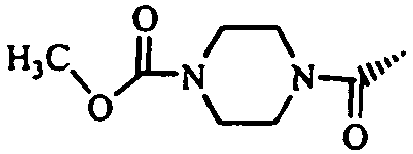
H Free form Colorless semi-solid MS ·APCI (m/z) : 270 [M+H] 13-19 
H Free form Colorless semi-solid MS -APCI (m/z) : 312 [M+H] 13-20 
H Free form Colorless resin MS ·APCI (m/z) : 298 [M+H] 13-21 
H Free form Colorless oil MS ·APCI (m/z) : 332 [M+H] 13-22 
H HCl Colorless powder Melting point: >300°C MS ·APCI (m/z) : 336 [M+H] 13-23 
H HI Brownish powder 13-24 
H Free form Pale brownish resin 13-25 
H Free form Pale brownish resin 13-26 
H Free form Pale brownish resin 13-27 
H Free form Pale brownish resin 13-28 
H Free form Pale brownish resin 13-29 
H Free form Pale brownish resin 13-30 
H Free form Pale brownish resin 13-31 
H Free form Colorless powder MS ·APCI (m/z) : 342 [M+H]+ 13-32 
H HI Colorless powder MS ·APCI (m/z) : 315 [M+H]+ 13-33 
H HI Colorless powder MS ·APCI (m/z) : 352 [M+H]+ 13-34 
H HI Pale brownish powder 13-35 
H Free form Brownish oil 13-36 
H Free form Brownish oil 13-37 
H Free form Brownish oil 13-38 
H Free form Brownish oil 13-39 
H Free form Brownish oil 13-40 
H Free form Brownish oil 13-41 
H Free form 13-42 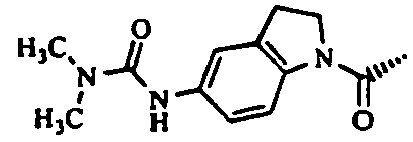
H HI Brownish powder 13-43 
H Free form 13-44 
H Free form 13-45 
H HI Brownish powder 13-46 
H Free form 13-47 
H Free form Colorless crystal Melting point: 199-202°C MS ·APCI (m/z) : 332 [M+H]+ 13-48 
H Free form Pale brownish powder MS ·APCI (m/z) : 275 [M+H] + 13-49 
H Free form Colorless powder MS ·APCI (m/z) : 332 [M+H]+ 13-50 
H Free form Colorless powder 13-51 
H Free form Colorless powder MS ·APCI (m/z) : 332 [M+H]+ 13-52 
H Free form Colorless powder MS ·APCI (m/z) : 333 [M+H]+ 14-1 
H HCl Colorless resin MS ·APCI (m/z) : 227 [M+H]+ 14-2 
H HCl Colorless powder MS ·APCI (m/z) : 213 [M+H]+ 14-3 
H Free form Pale reddish crystal Melting point: 144-145°C 14-4 
H Free form Colorless oil MS ·APCI (m/z) : 289 [M+H]+ 14-5 
H HCl Colorless powder MS ·APCI (m/z) : 199 [M+H]+ 14-6 
H Free form Pale yellowish oil MS ·APCI (m/z) : 171 [M+H]+ 14-7 
H Free form Colorless oil MS ·APCI (m/z) : 289 [M+H]+ 14-8 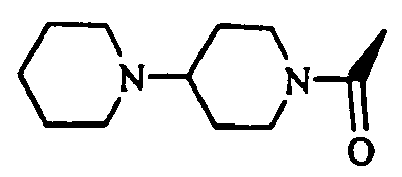
H 2HCl Brownish powder MS ·APCI (m/z) : 294 [M+H]+ 14-9 
H Free form Colorless powder MS ·APCI (m/z) : 303 [M+H]+ 14-10 
H Free form Colorless oil MS ·APCI (m/z) : 302 [M+H]+ 14-11 
H Free form Colorless oil MS ·APCI (m/z) 14-12 
H Free form Colorless crystal Melting point: 188-193°C 14-13 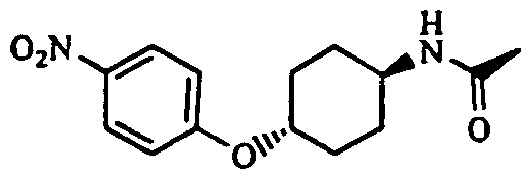
H Free form Pale yellowish crystal Melting point: 194-196°C 14-14 
H Free form Slightly yellowish resin MS ·APCI (m/z) : 356 [M+H]+ 14-15 
H Free form Slightly yellowish resin MS ·APCI (m/z) : 356 [M+H]+ 14-16 
H Free form Brownish oil MS ·APCI (m/z) : 316 [M+H]+
or a pharmaceutically acceptable salt thereof.
Claims (17)
- An aliphatic nitrogen-containing 5-membered ring compound represented by the formula [I]:

A represents -CH2- or -S-,
R1 represents hydrogen atom, a C1-6 alkyl group, a hydroxy
C1-6 alkyl group or a C1-6 alkoxy C1-6 alkyl group,
X represents CO,
R2 represents(1) a cyclic group selected from:which may have 1 to 3 substituents which are the same or different and selected from the following substituents of Group A:
a phenyl group, a cyclohexyl group, a pyrrolidinyl group, a tetrazolyl group, a furyl group, a thienyl group, a thiazolyl group, a piperidyl group, a piperazinyl group, a morpholinyl group, a thiomorpholinyl group, a pyridyl group, a pyrimidinyl group, a pyrazinyl group, a pyridazinyl group, a perhydroazepinyl group, an indolinyl group, an isoindolinyl group, a benzothienyl group, a thienopyridyl group, a pyrrolopyridyl group, a dihydropyrrolopyridyl group, a quinolyl group, an isoquinolyl group, a quinoxalinyl group and partially or completely saturated cyclic groups thereof;Substituents of Group A:
a halogen atom; cyano group; a nitro group; an oxo group; a hydroxy group; a carboxy group; an oxidyl group; amino group; a carbamoyl group; an aminosulfonyl group; a C1-6 alkyl group; a C1-6 alkoxy group; a C2-7 alkanoyl group; a C1-6 alkoxycarbonyl group; a C1-6 alkoxy-substituted C2-7 alkanoyl group; a C1-6 alkoxycarbonyl-substituted C1-6 alkoxy group; a C1-6 alkoxycarbonyl-substituted C1-6 alkoxycarbonyl group; a C1-6 alkylthio group; a C1-6 alkylsulfonyl group; a di-C1-6 alkylamino-substituted C1-6 alkoxy group; a di-C1-6 alkylaminocarbonyloxy group; a C1-6 alkyl group substituted by group(s) selected from an amino group, a carbamoyl group, a halogen atom, a hydroxy group, a carboxy group, a C1-6 alkoxy group and a mono- or di-substituted amino group; a mono- or di-substituted amino group; a mono- or di-substituted carbamoyl group; a substituted or unsubstituted C3-8 cycloalkyl group; a substituted or unsubstituted C3-8 cycloalkyl-CO- group; a substituted or unsubstituted C3-8 cycloalkyl-C1-6 alkyl group; a substituted or unsubstituted phenyl group; a substituted or unsubstituted phenyl-O- group; a substituted or unsubstituted phenyl-CO- group; a substituted or unsubstituted phenyl-C1-6 alkyl group; a substituted or unsubstituted phenyl-O-C1-6 alkyl group; a substituted or unsubstituted phenylsulfonyl group; a substituted or unsubstituted phenyl-C1-6 alkoxy group; a substituted or unsubstituted phenyl-C1-6 alkoxycarbonyl group; a substituted or unsubstituted C3-8 cycloalkenyl group; a substituted or unsubstituted monocyclic 5- or 6-membered heterocyclic group; a substituted or unsubstituted monocyclic 5- or 6-membered heterocyclic group-O-; a substituted or unsubstituted monocyclic 5- or 6-membered heterocyclic group-CO-; a substituted or unsubstituted monocyclic 5- or 6-membered heterocyclic group-CO-C1-6 alkyl group; and a substituted or unsubstituted monocyclic 5- or 6-membered heterocyclic group-C1-6 alkyl group;
or,(2) an amino group which may have 1 or 2 substituents which are the same or different and selected from the following substituents of group B:or a pharmaceutically acceptable salt thereof.
Substituents of Group B:
a C1-6 alkyl group; a C1-6 alkoxy-substituted C1-6 alkyl group; a C1-6 alkoxycarbonyl-substituted C1-6 alkyl group; a hydroxy C1-6 alkyl group; a carboxy C1-6 alkyl group; a C3-8 cycloalkyl group; a C3-8 cycloalkyl-C1-6 alkyl group; a phenyl group; a phenyl-C1-6 alkyl group; a monocyclic 5- or 6-membered heterocyclic group; and a monocyclic 5- or 6-membered heterocyclic group-C1-6 alkyl group;
wherein when the "substituent selected from the substituents of Group A" is a mono- or di-substituted amino C1-6 alkyl group, a mono- or di-substituted amino group or a mono- or di-substituted carbamoyl group, then the substituent has substituent(s) selected from the substituents of Group C:
Substituents of Group C:
a C1-6 alkyl group; a hydroxy-C1-6 alkyl group; a C2-7 alkanoyl group; a C3-8 cycloalkylcarbonyl group; a C1-6 alkoxy group; a C1-6 alkoxycarbonyl group; a C1-6 alkylsulfonyl group; a di-C1-6 alkyl-substituted carbamoyl group; a di-C1-6 alkylamino-substituted C2-7 alkanoyl group; a phenyl group; a phenyl-O- group; a phenyl-Co- group; a phenyl- C2-7 alkanoyl group; a phenyl-C1-6 alkyl group; a phenyl-C1-6 alkoxy group; a monocyclic 5- or 6-membered heterocyclic group; a monocyclic 5- or 6-membered heterocyclic group-O-; a monocyclic 5- or 6-membered heterocyclic group-CO-; and a monocyclic 5- or 6-membered heterocyclic group-substituted amino group;
when the "substituent selected from the substituents of Group A" is a substituted C3-8 cycloalkyl group, a substituted C3-8 cycloalkyl-CO- group, a substituted C3-8 cycloalkyl-C1-6 alkyl group, a substituted phenyl group, a substituted phenyl-O-, a substituted phenyl-CO- group, a substituted phenyl-C1-6 alkyl group, a substituted phenyl-O-C1-6 alkyl group, a substituted phenylsulfonyl group, a substituted phenyl-C1-6 alkoxy group, a substituted phenyl-C1-6 alkoxycarbonyl group, a substituted C3-8 cycloalkenyl group, a substituted monocyclic 5- or 6-membered heterocyclic group, a substituted monocyclic 5- or 6-membered heterocyclic group-O-, a substituted monocyclic 5- or 6-membered heterocyclic group-CO-, a substituted monocyclic 5- or 6-membered heterocyclic group-CO-C1-6 alkyl group or a substituted monocyclic 5- or 6-membered heterocyclic group- C1-6 alkyl group, then the substituent has substituent(s) selected from a halogen atom, a cyano group, a nitro group, and an oxo group; - The compound according to Claim 1, wherein R2 is(1) a cyclic group selected from the group consisting of a pyrrolidinyl group, a piperidyl group, a piperazinyl group, a morpholinyl group, a thiomorpholinyl group, a pyridyl group, a pyrimidinyl group, an indolinyl group, an isoindolinyl group, a pyrrolopyridyl group, a dihydropyrrolopyridyl group and partially or completely saturated cyclic groups thereof;
which may be substituted; or(2) a substituted amino group. - The compound according to Claim 1, wherein R2 is(1) a cyclic group selected from the group consisting of a pyrrolidinyl group, a piperidyl group, a piperazinyl group, a morpholinyl group, a thiomorpholinyl group, a pyridyl group, a pyrimidinyl group, an indolinyl group, an isoindolinyl group, a pyrrolopyridyl group, a dihydropyrrolopyridyl group and partially or completely saturated cyclic groups thereof;
which may have 1 to 3 substituents which are the same or different and selected from the substituents of Group A'
Substituents of Group A':
a halogen atom, a cyano group, a nitro group, an oxo group, a carbamoyl group, a C1-6 alkyl group, a C1-6 alkoxy group, a C2-7 alkanoyl group, a C1-6 alkoxycarbonyl group, a C1-6 alkoxy-substituted C1-6 alkyl group, a C3-8 cycloalkyl-CO- group, a substituted or unsubstituted phenyl group, a substituted or unsubstituted phenyl-C1-6 alkyl group, a substituted or unsubstituted monocyclic 5- or 6-membered heterocyclic group, a substituted or unsubstituted monocyclic 5- or 6-membered heterocyclic group-O-, and a substituted or unsubstituted monocyclic 5- or 6-membered heterocyclic group-CO-;
wherein when the "substituent selected from the substituents of Group A' "is a substituted phenyl group, a substituted phenyl-C1-6 alkyl group, a substituted monocyclic 5- or 6-membered heterocyclic group, a substituted monocyclic 5- or 6-membered heterocyclic group-O-, or a substituted monocyclic 5- or 6-membered heterocyclic group-CO-, then the substituent has substituent(s) selected from a halogen atom, cyano group, nitro group, and oxo group;
or,(2) an amino group substituted by 1 or 2 substituents which are the same or different and selected from Group B' :
Substituents of Group B':
a C1-6 alkyl group, a C3-8 cycloalkyl group, a C1-6 alkoxy-substituted C1-6 alkyl group, a pyrimidinyl group, a thiazolyl group and a thiadiazolyl group. - The compound according to any one of Claims 1 to 3,
wherein R2 is(1) a nitrogen-containing heterocyclic group which may be substituted or (2) an amino group which may be substituted, represented by the formula:
- The compound according to any one of Claims 1 to 4,
wherein A is -CH2-. - The compound according to any one of Claims 1 to 4,
wherein A is -CH2-, and R1 is hydrogen atom. - The compound according to any one of Claims 1 to 4,
wherein A is -CH2-, R1 is hydrogen atom, and R2 is a cyclic group which may be substituted. - The compound according to any one of Claims 1 to 4,
wherein A is -CH2-, R1 is hydrogen atom, and R2 is a substituted amino group. - The compound according to any one of Claims 1 to 8 which has a partial structure shown below.
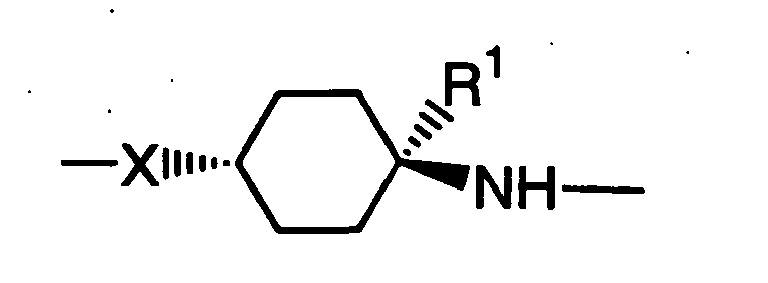
- A compound according to claim 1 selected from the group consisting of: .(S)-2-cyano-1-[trans-4-(dimethylaminocarbonyl)cyclohexylamino]acetylpyrrolidine;(S)-2-cyano-1-[trans-4-(morpholinocarbonyl)cyclohexylamino]acetylpyrrolidine;(S)-2-cyano-1-[trans-4-(5-pyrimidinylaminocarbonyl)-cyclohexylamino]acetylpyrrolidine;(S)-2-cyano-1-[trans-4-(N-ethyl-N-methoxyethylaminocarbonyl)cyclohexylamino]acetylpyrrolidine;(S)-2-cyano-1-[trans-4-(N-ethyl-N-isopropylaminocarbonyl)cyclohexylamino]acetylpyrrolidine;(S)-2-cyano-1-[trans-4-(N-methyl-N-butylaminocarbonyl)cyclohexylamino]acetylpyrrolidine;(S)-2-cyano-1-[trans-4-[(S)-2-methoxymethylpyrrolidin-1-ylcarbonyl]cyclohexylamino]acetylpyrrolidine;(S)-2-cyano-1-[trans-4-(3-carbamoylpiperidinocarbonyl)cyclohexylamino]acetylpyrrolidine;(S)-2-cyano-1-[trans-4-(4-acetylpiperazin-1-yl-carbonyl)cyclohexylamino]acetylpyrrolidine;(S)-2-cyano-1-[trans-4-(2-isoindolinylcarbonyl)-cyclohexylamino]acetylpyrrolidine;(S)-2-cyano-1-[trans-4-[4-(3-pyridylcarbonyl)piperazin-1-ylcarbonyl]cyclohexylamino]acetylpyrrolidine;(S)-2-cyano-1-{trans-4-[4-(3-thenoyl)piperazin-1-yl-carbonyl]cyclohexylamino}acetylpyrrolidine;(S)-2-cyano-1-{trans-4-[4-(4-chlorophenyl)piperazin-1-ylcarbonyl]cyclohexylamino}acetylpyrrolidine;(S)-2-cyano-1-[trans-4-(cis-2,6-dimethylmorpholino-carbonyl)cyclohexylamino]acetylpyrrolidine;(S)-2-cyano-1-[trans-4-(5-nitro-2-isoindolinylcarbonyl)cyclohexylamino]acetylpyrrolidine;(S)-2-cyano-1-[trans-4-(piperidinocarbonyl)cyclohexylamino]acetylpyrrolidine;(S)-2-cyano-1-[trans-4-(4-carbamoylpiperidinocarbonyl)cyclohexylamino]acetylpyrrolidine;(S)-2-cyano-1-[trans-4-(1-pyrrolidinylcarbonyl)-cyclohexylamino]acetylpyrrolidine;(S)-2-cyano-1-[trans-4-(4-cyclopropylcarbonylpiperazin-1-ylcarbonyl)cyclohexylamino]acetylpyrrolidine;(S)-2-cyano-1-[trans-4-(4-propionylpiperazin-1-yl-carbonyl)cyclohexylamino]acetylpyrrolidine;(S)-2-cyano-1-[trans-4-(1-indolinylcarbonyl)cyclohexylamino]acetylpyrrolidine;(S)-2-cyano-1-[trans-4-(2,3-dihydro-1H-pyrrolo[3,4-b]pyridin-2-ylcarbonyl)cyclohexylamino]acetylpyrrolidine;(S)-2-cyano-1-[trans-4-[4-(2-pyrimidinyloxy)-piperidinocarbonyl]cyclohexylamino]acetylpyrrolidine;(S)-2-cyano-1-{trans-4-[4-(5-bromo-2-pyrimidinyloxy)-piperidinocarbonyl]cyclohexylamino}acetylpyrrolidine;(S)-2-cyano-1-[trans-4-(cis-3,5-dimethyl-4-benzylpiperazin-1-ylcarbonyl)cyclohexylamino]acetylpyrrolidine;(S)-2-cyano-1-[trans-4-(4-cyclohexylcarbonylaminopiperidinocarbonyl)cyclohexylamino]acetylpyrrolidine;(S)-2-cyano-1-{trans-4-[4-(N-phenylcarbamoyl)piperazin-1-ylcarbonyl]cyclohexylamino}acetylpyrrolidine;(S)-2-cyano-1-[trans-4-(4-ethoxycarbonylpiperazin-1-ylcarbonyl)cyclohexylamino]acetylpyrrolidine;(S)-2-cyano-1-{trans-4-[4-(2-thienyl)piperidinocarbonyl]cyclohexylamino]acetylpyrrolidine;(S)-2-cyano-1-[trans-4-(1,1-dioxoperhydro-1,4-thiazin-4-ylcarbonyl)cyclohexylamino]acetylpyrrolidine;(R)-4-cyano-3-[trans-4-(dimethylaminocarbonyl)cyclohexylamino]acetylthiazolidine;(R)-4-cyano-3-[trans-4-(2-isoindolinylcarbonyl)cyclohexylamino]acetylthiazolidine;(R)-4-cyano-3-[trans-4-(morpholinocarbonyl)cyclohexylamino]acetylthiazolidine; and(R)-4-cyano-3-[trans-4-(pyrrolidinylcarbonyl)cyclohexylamino]acetylthiazolidine;or a pharmaceutically acceptable salt thereof.
- A method for preparing an aliphatic nitrogen-containing 5-membered ring compound represented by the formula [I]:


with a compound represented by the formula [III]:
- Use of a compound according to any one of Claims 1 to 10 as a medicament.
- Use of a compound according to Claim 1 to 10 for the preparation of a medicament for the treatment or prophylaxis of a disease that is expected to be improved by inhibiting dipeptidylpeptidase IV activity.
- Use of a compound according to Claim 13 for the preparation of a medicament for treatment or prophylaxis of diabetes.
- Use of a compound according to Claim 13 for the preparation of a medicament for the treatment or prophylaxis of type 2 diabetes.
- A pharmaceutical composition comprising the compound according to any one of Claims 1 to 10 as an effective ingredient.
- The pharmaceutical composition according to Claim 16
wherein the pharmaceutical composition is a dipeptidylpeptidase IV inhibitor.
Applications Claiming Priority (7)
| Application Number | Priority Date | Filing Date | Title |
|---|---|---|---|
| JP2000308528 | 2000-10-06 | ||
| JP2000308528 | 2000-10-06 | ||
| JP2000312562 | 2000-10-12 | ||
| JP2000312562 | 2000-10-12 | ||
| JP2001099251 | 2001-03-30 | ||
| JP2001099251 | 2001-03-30 | ||
| PCT/JP2001/008803 WO2002030891A1 (en) | 2000-10-06 | 2001-10-05 | Aliphatic nitrogenous five-membered ring compounds |
Publications (3)
| Publication Number | Publication Date |
|---|---|
| EP1325910A1 EP1325910A1 (en) | 2003-07-09 |
| EP1325910A4 EP1325910A4 (en) | 2005-05-18 |
| EP1325910B1 true EP1325910B1 (en) | 2008-09-17 |
Family
ID=27344889
Family Applications (2)
| Application Number | Title | Priority Date | Filing Date |
|---|---|---|---|
| EP01974717A Expired - Lifetime EP1325910B1 (en) | 2000-10-06 | 2001-10-05 | Aliphatic nitrogenous five-membered ring compounds |
| EP01974716A Expired - Lifetime EP1323710B1 (en) | 2000-10-06 | 2001-10-05 | Nitrogenous five-membered ring compounds |
Family Applications After (1)
| Application Number | Title | Priority Date | Filing Date |
|---|---|---|---|
| EP01974716A Expired - Lifetime EP1323710B1 (en) | 2000-10-06 | 2001-10-05 | Nitrogenous five-membered ring compounds |
Country Status (20)
| Country | Link |
|---|---|
| US (5) | US7138397B2 (en) |
| EP (2) | EP1325910B1 (en) |
| KR (2) | KR100555014B1 (en) |
| CN (2) | CN1257891C (en) |
| AT (2) | ATE407924T1 (en) |
| AU (4) | AU2001294196B2 (en) |
| BR (1) | BR0114436A (en) |
| CA (2) | CA2424964C (en) |
| DE (2) | DE60135862D1 (en) |
| DK (2) | DK1323710T3 (en) |
| ES (2) | ES2312471T3 (en) |
| HU (1) | HUP0303391A3 (en) |
| IL (2) | IL154893A0 (en) |
| MX (2) | MXPA03003006A (en) |
| NO (1) | NO324519B1 (en) |
| NZ (2) | NZ525630A (en) |
| PL (1) | PL362545A1 (en) |
| PT (2) | PT1325910E (en) |
| TW (1) | TWI290919B (en) |
| WO (2) | WO2002030890A1 (en) |
Families Citing this family (124)
| Publication number | Priority date | Publication date | Assignee | Title |
|---|---|---|---|---|
| DE10123163A1 (en) * | 2001-05-09 | 2003-01-16 | Gruenenthal Gmbh | Substituted cyclohexane-1,4-diamine derivatives |
| ATE370943T1 (en) | 2001-06-27 | 2007-09-15 | Smithkline Beecham Corp | FLUOROPYRROLIDINE AS DIPEPTIDYL-PEPTIDASE INHIBITORS |
| WO2003002530A2 (en) | 2001-06-27 | 2003-01-09 | Smithkline Beecham Corporation | Pyrrolidines as dipeptidyl peptidase inhibitors |
| CN1723196A (en) | 2001-06-27 | 2006-01-18 | 史密丝克莱恩比彻姆公司 | Fluoropyrrolidines as dipeptidyl peptidase inhibitors |
| US6861440B2 (en) | 2001-10-26 | 2005-03-01 | Hoffmann-La Roche Inc. | DPP IV inhibitors |
| EP1338595B1 (en) | 2002-02-25 | 2006-05-03 | Eisai Co., Ltd. | Xanthine derivatives as DPP-IV inhibitors |
| SK3622004A3 (en) * | 2002-02-28 | 2005-02-04 | Prosidion Limited | Glutaminyl based DPIV inhibitors |
| HUP0200849A2 (en) * | 2002-03-06 | 2004-08-30 | Sanofi-Synthelabo | N-aminoacetyl-pyrrolidine-2-carbonitrile derivatives, pharmaceutical compositions containing them and process for producing them |
| DE10213051B4 (en) | 2002-03-23 | 2013-03-07 | Grünenthal GmbH | Substituted 4-aminocyclohexanols |
| HUP0202001A2 (en) * | 2002-06-14 | 2005-08-29 | Sanofi-Aventis | Azabicyclo-octane and nonane derivatives with ddp-iv inhibiting activity |
| JPWO2004007446A1 (en) * | 2002-07-10 | 2005-11-10 | アステラス製薬株式会社 | Novel azetidine derivative or salt thereof |
| TW200401635A (en) | 2002-07-23 | 2004-02-01 | Yamanouchi Pharma Co Ltd | 2-Cyano-4-fluoropyrrolidine derivative or salt thereof |
| US7238724B2 (en) | 2002-09-19 | 2007-07-03 | Abbott Laboratories | Pharmaceutical compositions as inhibitors of dipeptidyl peptidase-IV (DPP-IV) |
| US7262207B2 (en) | 2002-09-19 | 2007-08-28 | Abbott Laboratories | Pharmaceutical compositions as inhibitors of dipeptidyl peptidase-IV (DPP-IV) |
| PL376301A1 (en) * | 2002-10-24 | 2005-12-27 | Sterix Limited | Inhibitors of 11-beta-hydroxy steroid dehydrogenase type 1 and type 2 |
| GB0224830D0 (en) | 2002-10-24 | 2002-12-04 | Sterix Ltd | Compound |
| DE10252666A1 (en) | 2002-11-11 | 2004-08-05 | Grünenthal GmbH | N-piperidyl-cyclohexane derivatives |
| CA2518465A1 (en) * | 2003-03-25 | 2004-10-14 | Takeda San Diego, Inc. | Dipeptidyl peptidase inhibitors |
| CN101475528A (en) * | 2003-03-31 | 2009-07-08 | 大正制药株式会社 | Novel quinoline, tetrahydroquinazoline, and pyrimidine derivatives and methods of treatment related to the use thereof |
| US20050197350A1 (en) * | 2003-03-31 | 2005-09-08 | Taisho Pharmaceutical Co., Ltd. | Novel quinoline, tetrahydroquinazoline, and pyrimidine derivatives and methods of treatment related to the use thereof |
| US20090137658A1 (en) * | 2003-05-06 | 2009-05-28 | Tanabe Seiyaku Co.,Ltd. | Benzenesulfonic acid salt compounds |
| GB0310593D0 (en) * | 2003-05-08 | 2003-06-11 | Leuven K U Res & Dev | Peptidic prodrugs |
| US7638638B2 (en) | 2003-05-14 | 2009-12-29 | Takeda San Diego, Inc. | Dipeptidyl peptidase inhibitors |
| BRPI0411713B8 (en) | 2003-06-20 | 2021-05-25 | Hoffmann La Roche | compounds, process for their manufacture, pharmaceutical compositions comprising them, method for treatment and/or prophylaxis of diseases that are associated with dpp-iv and their use |
| BRPI0411509A (en) | 2003-06-20 | 2006-07-25 | Hoffmann La Roche | compounds, process for their manufacture, pharmaceutical compositions comprising them, method for treating and / or prophylaxis of diseases that are associated with dpp-iv and their use |
| US7678909B1 (en) | 2003-08-13 | 2010-03-16 | Takeda Pharmaceutical Company Limited | Dipeptidyl peptidase inhibitors |
| US7169926B1 (en) | 2003-08-13 | 2007-01-30 | Takeda Pharmaceutical Company Limited | Dipeptidyl peptidase inhibitors |
| KR20060041309A (en) | 2003-08-13 | 2006-05-11 | 다케다 야쿠힌 고교 가부시키가이샤 | 4-pyrimidone derivatives and their use as peptidyl peptidase inhibitors |
| HU227684B1 (en) * | 2003-08-29 | 2011-11-28 | Sanofi Aventis | Adamantane and azabicyclo-octane and nonane derivatives and their use as dpp-iv inhibitors |
| US7205409B2 (en) | 2003-09-04 | 2007-04-17 | Abbott Laboratories | Pharmaceutical compositions as inhibitors of dipeptidyl peptidase-IV (DPP-IV) |
| WO2005030751A2 (en) * | 2003-09-08 | 2005-04-07 | Takeda Pharmaceutical Company Limited | Dipeptidyl peptidase inhibitors |
| JP2007505121A (en) * | 2003-09-08 | 2007-03-08 | 武田薬品工業株式会社 | Dipeptidyl peptidase inhibitor |
| US7291744B2 (en) | 2003-11-13 | 2007-11-06 | Bristol-Myers Squibb Company | N-ureidoalkyl-amino compounds as modulators of chemokine receptor activity |
| KR20150132601A (en) | 2003-11-17 | 2015-11-25 | 노파르티스 아게 | Use of dipeptidyl peptidase iv inhibitors |
| CN1890228B (en) | 2003-12-11 | 2011-07-20 | 田边三菱制药株式会社 | α-amino acid derivatives and their use as medicines |
| US7326784B2 (en) * | 2003-12-19 | 2008-02-05 | Altana Pharma Ag | Intermediates for the preparation of tricyclic dihydropyrano-imidazo-pyridines derivatives |
| EP3366283B1 (en) | 2004-01-20 | 2021-09-01 | Novartis AG | Direct compression formulation and process |
| ATE537141T1 (en) * | 2004-02-05 | 2011-12-15 | Kyorin Seiyaku Kk | BICYCLOESTER DERIVATIVE |
| CA2554696C (en) | 2004-02-13 | 2009-06-30 | Warner-Lambert Company Llc | Androgen receptor modulators |
| WO2005077900A1 (en) * | 2004-02-18 | 2005-08-25 | Kyorin Pharmaceutical Co., Ltd. | Bicyclic amide derivatives |
| EP1719757B1 (en) * | 2004-02-27 | 2013-10-09 | Kyorin Pharmaceutical Co., Ltd. | Bicyclo derivative |
| US7348346B2 (en) | 2004-03-08 | 2008-03-25 | Abbott Laboratories | Pharmaceutical compositions as inhibitors of dipeptidyl peptidase-IV (DPP-IV) |
| US7732446B1 (en) | 2004-03-11 | 2010-06-08 | Takeda Pharmaceutical Company Limited | Dipeptidyl peptidase inhibitors |
| EA013427B1 (en) * | 2004-03-15 | 2010-04-30 | Такеда Фармасьютикал Компани Лимитед | DIPEPTIDYLPEPTIDASE INHIBITORS |
| US20090036448A1 (en) * | 2004-03-30 | 2009-02-05 | Taisho Pharmecutical Co., Ltd. | Pyrimidine derivatives and methods of treatment related to the use thereof |
| EP1737813A1 (en) | 2004-04-13 | 2007-01-03 | Warner-Lambert Company LLC | Androgen modulators |
| WO2005102990A1 (en) | 2004-04-22 | 2005-11-03 | Warner-Lambert Company Llc | Androgen modulators |
| TW200604167A (en) * | 2004-04-27 | 2006-02-01 | Astellas Pharma Inc | Pyrrolidine derivatives |
| DE102004023635A1 (en) | 2004-05-10 | 2006-04-13 | Grünenthal GmbH | Heteroaryl-substituted cyclohexyl-1,4-diamine derivatives |
| DE102004023632A1 (en) * | 2004-05-10 | 2005-12-08 | Grünenthal GmbH | Substituted cyclohexylcarboxylic acid derivatives |
| DE102004023507A1 (en) * | 2004-05-10 | 2005-12-01 | Grünenthal GmbH | Substituted cyclohexylacetic acid derivatives |
| JP2008501714A (en) * | 2004-06-04 | 2008-01-24 | 武田薬品工業株式会社 | Dipeptidyl peptidase inhibitor |
| CA2570047C (en) | 2004-07-08 | 2010-09-28 | Warner-Lambert Company Llc | 4-cycloalkoxy benzonitriles as androgen modulators |
| WO2006019965A2 (en) | 2004-07-16 | 2006-02-23 | Takeda San Diego, Inc. | Dipeptidyl peptidase inhibitors |
| WO2006011035A1 (en) * | 2004-07-23 | 2006-02-02 | Glenmark Pharmaceuticals Ltd. | Novel dipeptidyl peptidase iv inhibitors; process for their preparation and compositions containing them |
| WO2006012395A2 (en) | 2004-07-23 | 2006-02-02 | Susan Marie Royalty | Peptidase inhibitors |
| WO2006012441A1 (en) * | 2004-07-23 | 2006-02-02 | Susan Marie Royalty | Peptidase inhibitors |
| WO2006035967A1 (en) * | 2004-09-30 | 2006-04-06 | Taisho Pharmaceutical Co., Ltd. | Pyridine derivatives and their use as medicaments for treating diseases related to mch receptor |
| UA90690C2 (en) * | 2004-10-12 | 2010-05-25 | Гленмарк Фармасьютикалс С.А. | Novel dipeptidyl peptidase iv inhibitors, pharmaceutical compositions containing them, and process for their preparation (variants) |
| EP1799639B1 (en) | 2004-10-12 | 2013-09-04 | Glenmark Pharmaceuticals S.A. | Novel dipeptidyl peptidase iv inhibitors, pharmaceutical compositions containing them, and process for their preparation |
| EP1828192B1 (en) * | 2004-12-21 | 2014-12-03 | Takeda Pharmaceutical Company Limited | Dipeptidyl peptidase inhibitors |
| DOP2006000008A (en) | 2005-01-10 | 2006-08-31 | Arena Pharm Inc | COMBINED THERAPY FOR THE TREATMENT OF DIABETES AND RELATED AFFECTIONS AND FOR THE TREATMENT OF AFFECTIONS THAT IMPROVE THROUGH AN INCREASE IN THE BLOOD CONCENTRATION OF GLP-1 |
| EP2527337A1 (en) * | 2005-04-14 | 2012-11-28 | Bristol-Myers Squibb Company | Inhibitors of 11-beta hydroxysteroid dehydrogenase type I |
| CN101277949A (en) * | 2005-04-22 | 2008-10-01 | 阿兰托斯制药控股公司 | Dipeptidyl peptidase-iv inhibitors |
| TW200724139A (en) | 2005-05-05 | 2007-07-01 | Warner Lambert Co | Androgen modulators |
| US7521557B2 (en) * | 2005-05-20 | 2009-04-21 | Bristol-Myers Squibb Company | Pyrrolopyridine-based inhibitors of dipeptidyl peptidase IV and methods |
| JP2008542901A (en) * | 2005-05-31 | 2008-11-27 | コーニンクレッカ フィリップス エレクトロニクス エヌ ヴィ | Portable storage medium, host device, and method of accessing contents of portable storage medium by host device |
| EP1888101B1 (en) | 2005-06-06 | 2012-03-21 | Georgetown University | Compositions and methods for lipo modeling |
| MY152185A (en) | 2005-06-10 | 2014-08-29 | Novartis Ag | Modified release 1-[(3-hydroxy-adamant-1-ylamino)-acetyl]-pyrrolidine-2(s)-carbonitrile formulation |
| EP1760076A1 (en) | 2005-09-02 | 2007-03-07 | Ferring B.V. | FAP Inhibitors |
| AU2006290205B2 (en) * | 2005-09-14 | 2012-12-13 | Takeda Pharmaceutical Company Limited | Dipeptidyl peptidase inhibitors for treating diabetes |
| PL1931350T5 (en) * | 2005-09-14 | 2021-11-15 | Takeda Pharmaceutical Company Limited | Administration of dipeptidyl peptidase inhibitors |
| TW200745079A (en) * | 2005-09-16 | 2007-12-16 | Takeda Pharmaceuticals Co | Polymorphs of benzoate salt of 2-[[6-[(3R)-3-amino-1-piperidinyl]-3,4-dihydro-3-methyl-2,4-dioxo-1(2H)-pyrimidinyl]methyl]-benzonitrile and methods of use therefor |
| CA2622642C (en) | 2005-09-16 | 2013-12-31 | Takeda Pharmaceutical Company Limited | Dipeptidyl peptidase inhibitors |
| TW200745080A (en) * | 2005-09-16 | 2007-12-16 | Takeda Pharmaceuticals Co | Polymorphs of tartrate salt of 2-[2-(3-(R)-amino-piperidin-1-yl)-5-fluoro-6-oxo-6H-pyrimidin-1-ylmethyl]-benzonitrile and methods of use therefor |
| GB0526291D0 (en) | 2005-12-23 | 2006-02-01 | Prosidion Ltd | Therapeutic method |
| AU2007224066B2 (en) * | 2006-03-08 | 2011-10-27 | Kyorin Pharmaceutical Co., Ltd. | Method for producing aminoacetylpyrrolidinecarbonitrile derivative and production intermediate thereof |
| WO2007112347A1 (en) | 2006-03-28 | 2007-10-04 | Takeda Pharmaceutical Company Limited | Dipeptidyl peptidase inhibitors |
| US20100029941A1 (en) * | 2006-03-28 | 2010-02-04 | Takeda Pharmaceutical Company Limited | Preparation of (r)-3-aminopiperidine dihydrochloride |
| ES2354390T3 (en) * | 2006-04-11 | 2011-03-14 | Arena Pharmaceuticals, Inc. | PROCEDURES FOR USE OF THE GPR119 RECEIVER TO IDENTIFY USEFUL COMPOUNDS TO INCREASE BONE MASS IN AN INDIVIDUAL. |
| PE20071221A1 (en) | 2006-04-11 | 2007-12-14 | Arena Pharm Inc | GPR119 RECEPTOR AGONISTS IN METHODS TO INCREASE BONE MASS AND TO TREAT OSTEOPOROSIS AND OTHER CONDITIONS CHARACTERIZED BY LOW BONE MASS, AND COMBINED THERAPY RELATED TO THESE AGONISTS |
| WO2007148185A2 (en) * | 2006-06-21 | 2007-12-27 | Pfizer Products Inc. | Substituted 3 -amino- pyrrolidino-4 -lactams as dpp inhibitors |
| US8324383B2 (en) | 2006-09-13 | 2012-12-04 | Takeda Pharmaceutical Company Limited | Methods of making polymorphs of benzoate salt of 2-[[6-[(3R)-3-amino-1-piperidinyl]-3,4-dihydro-3-methyl-2,4-dioxo-1(2H)-pyrimidinyl]methyl]-benzonitrile |
| TW200838536A (en) | 2006-11-29 | 2008-10-01 | Takeda Pharmaceutical | Polymorphs of succinate salt of 2-[6-(3-amino-piperidin-1-yl)-3-methyl-2,4-dioxo-3,4-dihydro-2H-pyrimidin-1-ylmethy]-4-fluor-benzonitrile and methods of use therefor |
| JP2010120851A (en) * | 2007-02-09 | 2010-06-03 | Kyorin Pharmaceut Co Ltd | Dimerized cyclo derivative |
| US8093236B2 (en) | 2007-03-13 | 2012-01-10 | Takeda Pharmaceuticals Company Limited | Weekly administration of dipeptidyl peptidase inhibitors |
| ATE550319T1 (en) * | 2007-03-22 | 2012-04-15 | Kyorin Seiyaku Kk | METHOD FOR PRODUCING AN AMINOACETYLPYRROLIDINE CARBONITRILE DERIVATIVE |
| KR101361427B1 (en) | 2007-04-03 | 2014-02-10 | 미쓰비시 타나베 파마 코퍼레이션 | Combined use of dipeptidyl peptidase iv inhibitor compound and sweetener |
| US8338450B2 (en) * | 2007-09-21 | 2012-12-25 | Lupin Limited | Compounds as dipeptidyl peptidase IV (DPP IV) inhibitors |
| US20120040897A1 (en) * | 2008-01-10 | 2012-02-16 | Sun Pharma Advanced Research Company Ltd. | Novel derivatives of acyl cyanopyrrolidines |
| CL2008003653A1 (en) | 2008-01-17 | 2010-03-05 | Mitsubishi Tanabe Pharma Corp | Use of a glucopyranosyl-derived sglt inhibitor and a selected dppiv inhibitor to treat diabetes; and pharmaceutical composition. |
| US8278313B2 (en) | 2008-03-11 | 2012-10-02 | Abbott Laboratories | Macrocyclic spiro pyrimidine derivatives |
| US8436005B2 (en) | 2008-04-03 | 2013-05-07 | Abbott Laboratories | Macrocyclic pyrimidine derivatives |
| EP2146210A1 (en) | 2008-04-07 | 2010-01-20 | Arena Pharmaceuticals, Inc. | Methods of using A G protein-coupled receptor to identify peptide YY (PYY) secretagogues and compounds useful in the treatment of conditions modulated by PYY |
| CN102119139A (en) * | 2008-08-07 | 2011-07-06 | 杏林制药株式会社 | Process for production of bicyclo[2.2.2]octylamine derivative |
| EP2327406A4 (en) * | 2008-08-14 | 2014-04-09 | Kyorin Seiyaku Kk | STABILIZED PHARMACEUTICAL COMPOSITION |
| WO2010039124A1 (en) * | 2008-09-30 | 2010-04-08 | Mitsubishi Tanabe Pharma Corporation | Benzenesulfonic acid salt compounds |
| US7965235B2 (en) * | 2009-02-24 | 2011-06-21 | Raytheon Company | Multi-channel thinned TR module architecture |
| US7876263B2 (en) * | 2009-02-24 | 2011-01-25 | Raytheon Company | Asymmetrically thinned active array TR module and antenna architecture |
| US8748457B2 (en) | 2009-06-18 | 2014-06-10 | Lupin Limited | 2-amino-2- [8-(dimethyl carbamoyl)- 8-aza- bicyclo [3.2.1] oct-3-yl]-exo- ethanoyl derivatives as potent DPP-IV inhibitors |
| AR077642A1 (en) | 2009-07-09 | 2011-09-14 | Arena Pharm Inc | METABOLISM MODULATORS AND THE TREATMENT OF DISORDERS RELATED TO THE SAME |
| MX2012011631A (en) | 2010-04-06 | 2013-01-18 | Arena Pharm Inc | Modulators of the gpr119 receptor and the treatment of disorders related thereto. |
| MX2013003184A (en) | 2010-09-22 | 2013-06-07 | Arena Pharm Inc | Modulators of the gpr119 receptor and the treatment of disorders related thereto. |
| WO2012135570A1 (en) | 2011-04-01 | 2012-10-04 | Arena Pharmaceuticals, Inc. | Modulators of the gpr119 receptor and the treatment of disorders related thereto |
| WO2012145361A1 (en) | 2011-04-19 | 2012-10-26 | Arena Pharmaceuticals, Inc. | Modulators of the gpr119 receptor and the treatment of disorders related thereto |
| US20140038889A1 (en) | 2011-04-22 | 2014-02-06 | Arena Pharmaceuticals, Inc. | Modulators Of The GPR119 Receptor And The Treatment Of Disorders Related Thereto |
| US20140051714A1 (en) | 2011-04-22 | 2014-02-20 | Arena Pharmaceuticals, Inc. | Modulators Of The GPR119 Receptor And The Treatment Of Disorders Related Thereto |
| WO2012170702A1 (en) | 2011-06-08 | 2012-12-13 | Arena Pharmaceuticals, Inc. | Modulators of the gpr119 receptor and the treatment of disorders related thereto |
| EP2729468A4 (en) * | 2011-07-05 | 2015-03-18 | Merck Sharp & Dohme | TRICYCLIC HETEROCYCLES USEFUL AS INHIBITORS OF DIPEPTIDYL PEPTIDASE-IV |
| WO2013055910A1 (en) | 2011-10-12 | 2013-04-18 | Arena Pharmaceuticals, Inc. | Modulators of the gpr119 receptor and the treatment of disorders related thereto |
| CN102875558A (en) * | 2012-11-05 | 2013-01-16 | 贵州大学 | 2-chloro-4-substituted-8-nitrobenzofuran [3,2-d] miazines compound, preparation method of compound and application of compound |
| WO2014074668A1 (en) | 2012-11-08 | 2014-05-15 | Arena Pharmaceuticals, Inc. | Modulators of gpr119 and the treatment of disorders related thereto |
| NO2699580T3 (en) * | 2014-01-24 | 2018-02-24 | ||
| MY176401A (en) | 2014-04-24 | 2020-08-05 | Mitsubishi Tanabe Pharma Corp | Novel disubstituted 1,2,4-triazine compound |
| HK1249847A1 (en) | 2015-03-09 | 2018-11-16 | Intekrin Therapeutics, Inc. | Methods for the treatment of nonalcoholic fatty liver disease and/or lipodystrophy |
| KR20200036808A (en) | 2017-04-03 | 2020-04-07 | 코히러스 바이오사이언시스, 인크. | PPARγ agonist for the treatment of advanced nuclear paralysis |
| WO2019154859A1 (en) * | 2018-02-06 | 2019-08-15 | Universität Heidelberg | Fap inhibitor |
| CN108218865B (en) * | 2018-03-31 | 2020-06-26 | 济南市儿童医院 | Amide derivative and application thereof in cardiovascular and cerebrovascular aspects |
| CN108456207B (en) * | 2018-03-31 | 2020-11-20 | 浙江药苑生物科技有限公司 | An amide derivative and its application in cardiovascular and cerebrovascular |
| US12286401B2 (en) | 2018-07-31 | 2025-04-29 | The Trustees Of The University Of Pennsylvania | Small molecules that sensitize HIV-1 infected cells to antibody dependent cellular cytotoxicity |
| WO2022224866A1 (en) * | 2021-04-22 | 2022-10-27 | 住友電気工業株式会社 | Flexible printed circuit board and method for manufacturing flexible printed circuit board |
| CN116650495B (en) * | 2021-12-10 | 2024-04-19 | 中南大学湘雅医院 | Aromatic compounds as activators of plexin protein-B2 and their use in preparing drugs for treating osteoporosis |
| EP4532466A1 (en) | 2022-06-03 | 2025-04-09 | Universiteit Antwerpen | Dpp9 binding compounds |
| EP4646265A1 (en) | 2023-01-06 | 2025-11-12 | Insmed Incorporated | Novel, reversible dpp1 inhibitors and uses thereof |
Citations (1)
| Publication number | Priority date | Publication date | Assignee | Title |
|---|---|---|---|---|
| WO2001096295A2 (en) * | 2000-06-13 | 2001-12-20 | Novartis Ag | 2-cyanopyrrolidine derivatives and their use as medicaments |
Family Cites Families (11)
| Publication number | Priority date | Publication date | Assignee | Title |
|---|---|---|---|---|
| US6512481B1 (en) * | 1996-10-10 | 2003-01-28 | Teratech Corporation | Communication system using geographic position data |
| TW492957B (en) | 1996-11-07 | 2002-07-01 | Novartis Ag | N-substituted 2-cyanopyrrolidnes |
| US6011155A (en) | 1996-11-07 | 2000-01-04 | Novartis Ag | N-(substituted glycyl)-2-cyanopyrrolidines, pharmaceutical compositions containing them and their use in inhibiting dipeptidyl peptidase-IV |
| US6316612B1 (en) * | 1997-08-22 | 2001-11-13 | Ribozyme Pharmaceuticals, Inc. | Xylofuranosly-containing nucleoside phosphoramidites and polynucleotides |
| US6484015B1 (en) * | 1997-10-27 | 2002-11-19 | Lucent Technologies Inc. | Portable telephone antenna |
| CO5150173A1 (en) * | 1998-12-10 | 2002-04-29 | Novartis Ag | COMPOUNDS N- (REPLACED GLYCLE) -2-DIPEPTIDYL-IV PEPTIDASE INHIBITING CYANOPIRROLIDINS (DPP-IV) WHICH ARE EFFECTIVE IN THE TREATMENT OF CONDITIONS MEDIATED BY DPP-IV INHIBITION |
| US6110949A (en) | 1999-06-24 | 2000-08-29 | Novartis Ag | N-(substituted glycyl)-4-cyanothiazolidines, pharmaceutical compositions containing them and their use in inhibiting dipeptidyl peptidase-IV |
| US6107317A (en) | 1999-06-24 | 2000-08-22 | Novartis Ag | N-(substituted glycyl)-thiazolidines, pharmaceutical compositions containing them and their use in inhibiting dipeptidyl peptidase-IV |
| JP3551122B2 (en) * | 2000-04-07 | 2004-08-04 | 日本電気株式会社 | Mobile phone equipment |
| US6432969B1 (en) | 2000-06-13 | 2002-08-13 | Novartis Ag | N-(substituted glycyl)-2 cyanopyrrolidines, pharmaceutical compositions containing them and their use in inhibiting dipeptidyl peptidase-IV |
| JPWO2002051836A1 (en) | 2000-12-27 | 2004-04-22 | 協和醗酵工業株式会社 | Dipeptidyl peptidase-IV inhibitor |
-
2001
- 2001-10-05 AT AT01974716T patent/ATE407924T1/en not_active IP Right Cessation
- 2001-10-05 PL PL01362545A patent/PL362545A1/en not_active Application Discontinuation
- 2001-10-05 HU HU0303391A patent/HUP0303391A3/en unknown
- 2001-10-05 IL IL15489301A patent/IL154893A0/en active IP Right Grant
- 2001-10-05 MX MXPA03003006A patent/MXPA03003006A/en active IP Right Grant
- 2001-10-05 US US10/398,485 patent/US7138397B2/en not_active Expired - Fee Related
- 2001-10-05 NZ NZ525630A patent/NZ525630A/en unknown
- 2001-10-05 DE DE60135862T patent/DE60135862D1/en not_active Expired - Lifetime
- 2001-10-05 BR BR0114436-7A patent/BR0114436A/en not_active IP Right Cessation
- 2001-10-05 MX MXPA03003007A patent/MXPA03003007A/en active IP Right Grant
- 2001-10-05 US US10/398,486 patent/US6849622B2/en not_active Expired - Fee Related
- 2001-10-05 CA CA002424964A patent/CA2424964C/en not_active Expired - Fee Related
- 2001-10-05 ES ES01974716T patent/ES2312471T3/en not_active Expired - Lifetime
- 2001-10-05 KR KR1020037004824A patent/KR100555014B1/en not_active Expired - Fee Related
- 2001-10-05 AT AT01974717T patent/ATE408597T1/en not_active IP Right Cessation
- 2001-10-05 KR KR10-2003-7004829A patent/KR100526091B1/en not_active Expired - Fee Related
- 2001-10-05 WO PCT/JP2001/008802 patent/WO2002030890A1/en not_active Ceased
- 2001-10-05 WO PCT/JP2001/008803 patent/WO2002030891A1/en not_active Ceased
- 2001-10-05 AU AU2001294196A patent/AU2001294196B2/en not_active Ceased
- 2001-10-05 ES ES01974717T patent/ES2312472T3/en not_active Expired - Lifetime
- 2001-10-05 AU AU9419601A patent/AU9419601A/en active Pending
- 2001-10-05 DK DK01974716T patent/DK1323710T3/en active
- 2001-10-05 CN CNB018166741A patent/CN1257891C/en not_active Expired - Fee Related
- 2001-10-05 DE DE60135764T patent/DE60135764D1/en not_active Expired - Lifetime
- 2001-10-05 AU AU9419701A patent/AU9419701A/en active Pending
- 2001-10-05 AU AU2001294197A patent/AU2001294197C1/en not_active Ceased
- 2001-10-05 DK DK01974717T patent/DK1325910T3/en active
- 2001-10-05 CN CNB018169570A patent/CN1280269C/en not_active Expired - Fee Related
- 2001-10-05 PT PT01974717T patent/PT1325910E/en unknown
- 2001-10-05 EP EP01974717A patent/EP1325910B1/en not_active Expired - Lifetime
- 2001-10-05 EP EP01974716A patent/EP1323710B1/en not_active Expired - Lifetime
- 2001-10-05 CA CA002424600A patent/CA2424600C/en not_active Expired - Fee Related
- 2001-10-05 TW TWNITROGEN-A patent/TWI290919B/en not_active IP Right Cessation
- 2001-10-05 NZ NZ524974A patent/NZ524974A/en unknown
- 2001-10-05 PT PT01974716T patent/PT1323710E/en unknown
-
2003
- 2003-03-12 IL IL154893A patent/IL154893A/en not_active IP Right Cessation
- 2003-04-02 NO NO20031490A patent/NO324519B1/en not_active IP Right Cessation
-
2004
- 2004-06-22 US US10/872,442 patent/US7160877B2/en not_active Expired - Fee Related
-
2006
- 2006-06-15 US US11/452,923 patent/US7332487B2/en not_active Expired - Fee Related
-
2007
- 2007-12-07 US US12/000,024 patent/US7666869B2/en not_active Expired - Fee Related
Patent Citations (1)
| Publication number | Priority date | Publication date | Assignee | Title |
|---|---|---|---|---|
| WO2001096295A2 (en) * | 2000-06-13 | 2001-12-20 | Novartis Ag | 2-cyanopyrrolidine derivatives and their use as medicaments |
Also Published As
Similar Documents
| Publication | Publication Date | Title |
|---|---|---|
| US6849622B2 (en) | Aliphatic nitrogenous five-membered ring compounds | |
| KR100869616B1 (en) | Proline derivatives and their use as dipeptidyl peptidase iv inhibitors | |
| JP4329381B2 (en) | Pharmaceutical composition | |
| JP4329290B2 (en) | Aliphatic nitrogen-containing five-membered ring compounds | |
| JP4329291B2 (en) | Nitrogen-containing five-membered ring compounds | |
| JP4329382B2 (en) | Pharmaceutical composition | |
| CN110506039A (en) | Compounds and methods for targeted degradation of androgen receptor | |
| JP2004035574A (en) | Aliphatic nitrogen-containing five-membered ring compound | |
| US12103929B2 (en) | Tricyclic compounds | |
| HK1055302B (en) | Aliphatic nitrogenous five-membered ring compounds | |
| AU2004237882A1 (en) | Aliphatic nitrogen-containing 5-membered ring compound | |
| JP2005200427A (en) | Nitrogen-containing five-membered ring compounds | |
| HK1055301B (en) | Nitrogenous five-membered ring compounds |
Legal Events
| Date | Code | Title | Description |
|---|---|---|---|
| PUAI | Public reference made under article 153(3) epc to a published international application that has entered the european phase |
Free format text: ORIGINAL CODE: 0009012 |
|
| 17P | Request for examination filed |
Effective date: 20030321 |
|
| AK | Designated contracting states |
Designated state(s): AT BE CH CY DE DK ES FI FR GB GR IE IT LI LU MC NL PT SE TR |
|
| AX | Request for extension of the european patent |
Extension state: AL LT LV MK RO SI |
|
| A4 | Supplementary search report drawn up and despatched |
Effective date: 20050406 |
|
| 17Q | First examination report despatched |
Effective date: 20051220 |
|
| RAP1 | Party data changed (applicant data changed or rights of an application transferred) |
Owner name: MITSUBISHI TANABE PHARMA CORPORATION |
|
| GRAP | Despatch of communication of intention to grant a patent |
Free format text: ORIGINAL CODE: EPIDOSNIGR1 |
|
| GRAS | Grant fee paid |
Free format text: ORIGINAL CODE: EPIDOSNIGR3 |
|
| GRAA | (expected) grant |
Free format text: ORIGINAL CODE: 0009210 |
|
| AK | Designated contracting states |
Kind code of ref document: B1 Designated state(s): AT BE CH CY DE DK ES FI FR GB GR IE IT LI LU MC NL PT SE TR |
|
| REG | Reference to a national code |
Ref country code: GB Ref legal event code: FG4D |
|
| REG | Reference to a national code |
Ref country code: CH Ref legal event code: NV Representative=s name: E. BLUM & CO. AG PATENT- UND MARKENANWAELTE VSP Ref country code: CH Ref legal event code: EP |
|
| REG | Reference to a national code |
Ref country code: IE Ref legal event code: FG4D |
|
| REG | Reference to a national code |
Ref country code: PT Ref legal event code: SC4A Free format text: AVAILABILITY OF NATIONAL TRANSLATION Effective date: 20081015 |
|
| REF | Corresponds to: |
Ref document number: 60135862 Country of ref document: DE Date of ref document: 20081030 Kind code of ref document: P |
|
| REG | Reference to a national code |
Ref country code: SE Ref legal event code: TRGR |
|
| REG | Reference to a national code |
Ref country code: DK Ref legal event code: T3 |
|
| REG | Reference to a national code |
Ref country code: GR Ref legal event code: EP Ref document number: 20080403548 Country of ref document: GR |
|
| PG25 | Lapsed in a contracting state [announced via postgrant information from national office to epo] |
Ref country code: FI Free format text: LAPSE BECAUSE OF FAILURE TO SUBMIT A TRANSLATION OF THE DESCRIPTION OR TO PAY THE FEE WITHIN THE PRESCRIBED TIME-LIMIT Effective date: 20080917 |
|
| REG | Reference to a national code |
Ref country code: ES Ref legal event code: FG2A Ref document number: 2312472 Country of ref document: ES Kind code of ref document: T3 |
|
| PG25 | Lapsed in a contracting state [announced via postgrant information from national office to epo] |
Ref country code: MC Free format text: LAPSE BECAUSE OF NON-PAYMENT OF DUE FEES Effective date: 20081031 |
|
| REG | Reference to a national code |
Ref country code: HK Ref legal event code: GR Ref document number: 1055302 Country of ref document: HK |
|
| PLBE | No opposition filed within time limit |
Free format text: ORIGINAL CODE: 0009261 |
|
| STAA | Information on the status of an ep patent application or granted ep patent |
Free format text: STATUS: NO OPPOSITION FILED WITHIN TIME LIMIT |
|
| 26N | No opposition filed |
Effective date: 20090618 |
|
| PGFP | Annual fee paid to national office [announced via postgrant information from national office to epo] |
Ref country code: CH Payment date: 20090930 Year of fee payment: 9 Ref country code: PT Payment date: 20090922 Year of fee payment: 9 Ref country code: TR Payment date: 20090928 Year of fee payment: 9 |
|
| PGFP | Annual fee paid to national office [announced via postgrant information from national office to epo] |
Ref country code: AT Payment date: 20091014 Year of fee payment: 9 Ref country code: DK Payment date: 20091020 Year of fee payment: 9 Ref country code: ES Payment date: 20091001 Year of fee payment: 9 Ref country code: IE Payment date: 20091029 Year of fee payment: 9 Ref country code: SE Payment date: 20091019 Year of fee payment: 9 |
|
| PGFP | Annual fee paid to national office [announced via postgrant information from national office to epo] |
Ref country code: NL Payment date: 20091020 Year of fee payment: 9 |
|
| PGFP | Annual fee paid to national office [announced via postgrant information from national office to epo] |
Ref country code: BE Payment date: 20091015 Year of fee payment: 9 |
|
| PGFP | Annual fee paid to national office [announced via postgrant information from national office to epo] |
Ref country code: GR Payment date: 20091029 Year of fee payment: 9 |
|
| PG25 | Lapsed in a contracting state [announced via postgrant information from national office to epo] |
Ref country code: CY Free format text: LAPSE BECAUSE OF FAILURE TO SUBMIT A TRANSLATION OF THE DESCRIPTION OR TO PAY THE FEE WITHIN THE PRESCRIBED TIME-LIMIT Effective date: 20080917 Ref country code: LU Free format text: LAPSE BECAUSE OF NON-PAYMENT OF DUE FEES Effective date: 20081005 |
|
| BERE | Be: lapsed |
Owner name: MITSUBISHI TANABE PHARMA CORP. Effective date: 20101031 |
|
| REG | Reference to a national code |
Ref country code: NL Ref legal event code: V1 Effective date: 20110501 |
|
| REG | Reference to a national code |
Ref country code: DK Ref legal event code: EBP |
|
| REG | Reference to a national code |
Ref country code: CH Ref legal event code: PL |
|
| PG25 | Lapsed in a contracting state [announced via postgrant information from national office to epo] |
Ref country code: CH Free format text: LAPSE BECAUSE OF NON-PAYMENT OF DUE FEES Effective date: 20101031 Ref country code: PT Free format text: LAPSE BECAUSE OF NON-PAYMENT OF DUE FEES Effective date: 20110405 Ref country code: GR Free format text: LAPSE BECAUSE OF NON-PAYMENT OF DUE FEES Effective date: 20110503 Ref country code: LI Free format text: LAPSE BECAUSE OF NON-PAYMENT OF DUE FEES Effective date: 20101031 |
|
| REG | Reference to a national code |
Ref country code: IE Ref legal event code: MM4A |
|
| PG25 | Lapsed in a contracting state [announced via postgrant information from national office to epo] |
Ref country code: AT Free format text: LAPSE BECAUSE OF NON-PAYMENT OF DUE FEES Effective date: 20101005 Ref country code: NL Free format text: LAPSE BECAUSE OF NON-PAYMENT OF DUE FEES Effective date: 20110501 Ref country code: BE Free format text: LAPSE BECAUSE OF NON-PAYMENT OF DUE FEES Effective date: 20101031 |
|
| PG25 | Lapsed in a contracting state [announced via postgrant information from national office to epo] |
Ref country code: SE Free format text: LAPSE BECAUSE OF NON-PAYMENT OF DUE FEES Effective date: 20101006 |
|
| PG25 | Lapsed in a contracting state [announced via postgrant information from national office to epo] |
Ref country code: IE Free format text: LAPSE BECAUSE OF NON-PAYMENT OF DUE FEES Effective date: 20101005 Ref country code: DK Free format text: LAPSE BECAUSE OF NON-PAYMENT OF DUE FEES Effective date: 20101031 |
|
| REG | Reference to a national code |
Ref country code: ES Ref legal event code: FD2A Effective date: 20111118 |
|
| PG25 | Lapsed in a contracting state [announced via postgrant information from national office to epo] |
Ref country code: ES Free format text: LAPSE BECAUSE OF NON-PAYMENT OF DUE FEES Effective date: 20101006 |
|
| PG25 | Lapsed in a contracting state [announced via postgrant information from national office to epo] |
Ref country code: TR Free format text: LAPSE BECAUSE OF NON-PAYMENT OF DUE FEES Effective date: 20101005 |
|
| PGFP | Annual fee paid to national office [announced via postgrant information from national office to epo] |
Ref country code: GB Payment date: 20130927 Year of fee payment: 13 |
|
| PGFP | Annual fee paid to national office [announced via postgrant information from national office to epo] |
Ref country code: FR Payment date: 20131009 Year of fee payment: 13 Ref country code: DE Payment date: 20131024 Year of fee payment: 13 |
|
| PGFP | Annual fee paid to national office [announced via postgrant information from national office to epo] |
Ref country code: IT Payment date: 20131009 Year of fee payment: 13 |
|
| REG | Reference to a national code |
Ref country code: DE Ref legal event code: R119 Ref document number: 60135862 Country of ref document: DE |
|
| GBPC | Gb: european patent ceased through non-payment of renewal fee |
Effective date: 20141005 |
|
| PG25 | Lapsed in a contracting state [announced via postgrant information from national office to epo] |
Ref country code: DE Free format text: LAPSE BECAUSE OF NON-PAYMENT OF DUE FEES Effective date: 20150501 Ref country code: GB Free format text: LAPSE BECAUSE OF NON-PAYMENT OF DUE FEES Effective date: 20141005 |
|
| REG | Reference to a national code |
Ref country code: FR Ref legal event code: ST Effective date: 20150630 |
|
| PG25 | Lapsed in a contracting state [announced via postgrant information from national office to epo] |
Ref country code: IT Free format text: LAPSE BECAUSE OF NON-PAYMENT OF DUE FEES Effective date: 20141005 Ref country code: FR Free format text: LAPSE BECAUSE OF NON-PAYMENT OF DUE FEES Effective date: 20141031 |