EP1324313A2 - Text to speech conversion - Google Patents
Text to speech conversion Download PDFInfo
- Publication number
- EP1324313A2 EP1324313A2 EP02258213A EP02258213A EP1324313A2 EP 1324313 A2 EP1324313 A2 EP 1324313A2 EP 02258213 A EP02258213 A EP 02258213A EP 02258213 A EP02258213 A EP 02258213A EP 1324313 A2 EP1324313 A2 EP 1324313A2
- Authority
- EP
- European Patent Office
- Prior art keywords
- clause
- speech
- text
- patterns
- information
- Prior art date
- Legal status (The legal status is an assumption and is not a legal conclusion. Google has not performed a legal analysis and makes no representation as to the accuracy of the status listed.)
- Granted
Links
Images






Classifications
-
- G—PHYSICS
- G10—MUSICAL INSTRUMENTS; ACOUSTICS
- G10L—SPEECH ANALYSIS TECHNIQUES OR SPEECH SYNTHESIS; SPEECH RECOGNITION; SPEECH OR VOICE PROCESSING TECHNIQUES; SPEECH OR AUDIO CODING OR DECODING
- G10L13/00—Speech synthesis; Text to speech systems
- G10L13/08—Text analysis or generation of parameters for speech synthesis out of text, e.g. grapheme to phoneme translation, prosody generation or stress or intonation determination
-
- G—PHYSICS
- G10—MUSICAL INSTRUMENTS; ACOUSTICS
- G10L—SPEECH ANALYSIS TECHNIQUES OR SPEECH SYNTHESIS; SPEECH RECOGNITION; SPEECH OR VOICE PROCESSING TECHNIQUES; SPEECH OR AUDIO CODING OR DECODING
- G10L13/00—Speech synthesis; Text to speech systems
- G10L13/08—Text analysis or generation of parameters for speech synthesis out of text, e.g. grapheme to phoneme translation, prosody generation or stress or intonation determination
- G10L13/10—Prosody rules derived from text; Stress or intonation
-
- G—PHYSICS
- G10—MUSICAL INSTRUMENTS; ACOUSTICS
- G10L—SPEECH ANALYSIS TECHNIQUES OR SPEECH SYNTHESIS; SPEECH RECOGNITION; SPEECH OR VOICE PROCESSING TECHNIQUES; SPEECH OR AUDIO CODING OR DECODING
- G10L13/00—Speech synthesis; Text to speech systems
- G10L13/02—Methods for producing synthetic speech; Speech synthesisers
- G10L13/04—Details of speech synthesis systems, e.g. synthesiser structure or memory management
Definitions
- the present invention relates to a text to speech (abbreviated as TTS) apparatus and method which convert a text sentence into a speech sound to read out the converted text contents and an information providing system using the text to speech apparatus and method.
- TTS text to speech
- the in-vehicle information terminal provides the information for a user.
- a document is transmitted as text data from the information center and, in the in-vehicle information terminal, a previously proposed text to speech apparatus has been used which converts the text data into speech data to read out the text data.
- TTS text to speech
- TMS information providing system using the improved text to speech (TTS) apparatus and method which can achieve the text read out in a substantially natural intonation speech sound with least possible cost.
- a text to speech apparatus comprising; a first memory section in which a plurality of defined clause patterns are stored; a second memory section in which a plurality of speech prosody patterns are stored, each speech prosody pattern being preset to correspond to one of the defined clause patterns and to reproduce the corresponding one of the defined clause patterns in a natural intonation speech sound; and a text speech section that carries out a read out of at least one text sentence in accordance with one of the speech prosody patterns which corresponds to one of the defined clause patterns when at least the one of the defined clause patterns is present in the text sentence to be read out.
- an information providing system comprising: an information center that transmits various information including at least one text sentence to be read out, the information center including a first memory section in which a plurality of defined clause patterns are stored and specifying one of the defined clause patterns stored in the first memory section in a case where at least the one of the defined clause patterns is included in the text sentence to be read out; and at least one information terminal that receives the various information including the text sentence from the information terminal, the information terminal including: a second memory section in which a plurality of speech prosody patterns are stored, each speech prosody pattern being preset to correspond to one of the defined clause patterns and to reproduce the corresponding one of the defined clause patterns in a natural intonation speech sound; and a text speech section that carries out a read out of at least one text sentence in accordance with one of the speech prosody patterns when at least the one of the defined clause patterns is present in the text sentence received therein to be read out.
- a text to speech method comprising; storing a plurality of defined clause patterns; storing a plurality of speech prosody patterns , each speech prosody pattern being preset to correspond to one of the defined clause patterns and to reproduce the corresponding one of the defined clause patterns in a natural intonation speech sound; and carrying out a read out of at least one text sentence in accordance with one of the speech prosody patterns which corresponds to one of the defined clause patterns when at least the one of the defined clause patterns is present in the text sentence to be read out.
- Fig. 1 is a circuit block diagram representing an information providing system in a preferred embodiment to which a text to speech (TTS) apparatus and method in a preferred embodiment according to the present invention is applicable.
- TTS text to speech
- Fig. 2 is a table representing examples of clause patterns expressing route line names and their directions of a traffic information used in the information providing system shown in Fig. 1.
- Fig. 3 is a table representing examples of clause patterns expressing congestions and regulations of the traffic information used in the information providing system shown in Fig. 1.
- Fig. 4 is a table representing an example of a common fixed clause pattern of the traffic information.
- Figs. 5A, 5B, and 5C are tables representing examples of speech contents on the traffic information.
- Fig. 6 is a table representing an example of a clause pattern of a weather forecast.
- Fig. 7 is a table representing an example of the clause pattern expressing a probability of precipitation in the weather forecast.
- Fig. 8 is a table representing an example of a fixed clause pattern of the weather forecast.
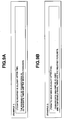
- Figs. 9A and 9B is a table representing an example of speech contents on the weather forecast.
- Fig. 10 is an explanatory view representing a format of a read out text file to be transmitted from an information center shown in Fig. 1.
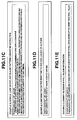
- Figs. 11A, 11B, 11C, 11D, 11E, 11F, and 11G are tables representing speech contents to be transmitted from the information center to an in-vehicle information terminal shown in Fig. 1.
- Fig. 12 is an operational flowchart representing an information providing operation between the information center and the in-vehicle information terminal shown in Fig. 1.
- Fig. 13 is a subroutine executed at a step S5 of Fig. 12 on an information reproduction of an NPM corresponding text.
- a text to speech (TTS) apparatus which is applicable to a vehicular information providing system in which various information from an information center is transmitted to an in-vehicle information terminal and the information is provided from the in-vehicle information terminal to a user.
- TTS text to speech
- the present invention is not limited to a vehicular information providing system but is applicable to every information providing system.
- the text to speech (TTS) apparatus according to the present invention can be applied to a PDA(Personal Digital Assistant) or a mobile personal computer.
- a text voice read out (text speech) in a natural intonation can be achieved.
- the present invention is also applicable to an information terminal which serves as both in-vehicle information terminal and portable information terminal (or PDA).
- This in-vehicle and portable compatible information terminal can be used as the in-vehicle information terminal with the terminal set on a predetermined location and as the Personal Digital Assistant (PDA) if the in-vehicle information terminal is taken out from the predetermined location of the vehicle and is carried.
- PDA Personal Digital Assistant
- Fig. 1 shows a rough configuration of the preferred embodiment of the TTS apparatus described above.
- the vehicular information providing system in which the text to speech apparatus in the embodiment is mounted is constituted by information center 10 and in-vehicle information terminal 20. It is noted that although only one set of in-vehicle information terminal 20 is shown in Fig. 1, a plurality of the same in-vehicle information terminals are installed in many automotive vehicles. It is also noted that the information center 10 and the in-vehicle information terminal 20 are communicated via a wireless telephone circuit.
- Information center10 includes: a processing unit 11 for implementing information processing; information data base (DB) 12 storing various information contents; a user database 13 (DB) storing user information; a clause pattern memory 14 storing clause patterns for a text document; and a communications device 15 to perform communications to in-vehicle information terminal 20 via a wireless telephone circuit.
- Information center 10 further includes a server 16 to input the information from an external information source 30 via an internet; and a server 17 which directly inputs road traffic information and weather information from an external information source 40 such as a public road traffic information center and the Meteorological agency.
- in-vehicle information terminal 20 includes: a processing unit 21 inputting the information from the information center 10 and reproducing the inputted information from information center 10; a voice synthesizer 22 which converts a text document into speech (voice) to drive a speaker 23; a speech prosody pattern memory 23 storing speech prosody patterns, each corresponding to one of the defined clause patterns; an image reproducing unit 25 which generates image data, reproduces the generated image data, and displays the image data on a display 26; an input device 27 having an operation member such as a switch; a communications device 28 to perform communications with the information center 10 via a GPS (Global Positioning System) receiver 29 which detects a present position of an automotive vehicle in which the in-vehicle information terminal 20 is mounted.
- GPS Global Positioning System
- voice synthesizer 22 converts the text (document) into speech (TTS: Text to Speech) according to a speech synthesizing method called generally an NPM (Natural Prosody Mapping) as will be described later.
- NPM Natural Prosody Mapping
- NPM Natural Prosody Mapping
- Text file, text sentence, and a clause block, which perform a text vocal read out corresponding to NPM are called NPM corresponding text file, NPM corresponding text sentence, and NPM corresponding clause block, respectively.
- NPM corresponding text read out a previously proposed text read out in which the speech prosody pattern is not used.
- the text file, the text document, and clause block which performs the text read out not corresponding to NPM are called NPM non-corresponding text file, NPM non-corresponding text sentence, and NPM non-corresponding clause block.
- writing expressing a speech content such as traffic information or weather forecast is analyzed.
- One or more of clauses for example, whose frequencies in use are comparatively high, are extracted from the sentence to define a clause pattern(s).
- the speech contents are constituted by combining a plurality of clause patterns including undefined clause patterns.
- speech prosody patterns are preset and stored in order to reproduce and speak the defined respective clause patterns in substantially a natural intonation. Then, when the speech contents including the text sentence to be read out in the vocal form are transmitted from information center 10, the number of the defined clause patterns used in the read out text sentence is specified.
- the text sentence is read out in the vocal form in accordance with the speech prosody pattern corresponding to the specified number indicating the required clause pattern.
- the text read out in the natural intonation with a least possible cost can be achieved.
- the clause pattern to be stored in the clause pattern memory section 14 is not limited to the clause having the high frequency in use. For example, such a cause as to become unnatural intonation when the text read out in the vocal form is carried out or such a voice as to be inaudible may be patternized in the defined clause pattern.
- the clause pattern to be stored in clause pattern memory 14 is constituted by a variable phrase which can be replaced with an arbitrary phrase of " 10 " and " 100 " and a common fixed phrase other than the variable phrases.
- the clauses expressing routes and directions on the traffic information may be considered to have such patterns as “ Tomei Expressway up”,” Tomei Expressway down”, “Keiyo Doro (or Keiyo Expressway) down “ , “Wangan (Tokyo Bay) line bound eastward” , “Wangan (Tokyo Bay) line bound westward “, " Inner lines of a Center Loop line ", and " Outer lines of a Center Loop line”.
- traffic information clause patterns 1 through 8 are defined as shown by Fig. 2.
- brackets are variable phrases replaceable with arbitrary phrases and those not enclosed by the brackets are fixed phrases. (Hereinafter, these rules are applied equally well to other clause patterns.)
- the clauses expressing traffic congestions and regulations may have such problems as: "The traffic is congested by 3.0 Km between Yoga and Tanimachi”; “The traffic is congested at Yoga”; “Closed to the traffic is between Yogi and Tanimachi”; “Closed to the traffic is at Yoga “; “ Neither congestion nor regulation is present”; and “ No congestion is present ". From these clause patterns, the traffic information clause patterns No. 9 through No. 14 shown in Fig. 3 are defined.
- Fig. 4 an example of the fixed phrase shown in Fig. 4 when the traffic information is expressed is defined as traffic information clause pattern No. 15.
- this fixed clause is, for example, translated as "THESE ARE THE PRESENT EXPRESSWAY TRAFFIC INFORMATION.”
- traffic information clause patterns No.1 through No. 15 such speech contents of the traffic information as shown in Figs. 5A, 5B, and 5C can be architected.
- Example 1 of Fig. 5A the translation shown in Fig.
- Example 5B is carried out from the clause patterns starting from (Tomei Kosoku Doro) Nobori, (Yoga Ryokinsho) Kara (Tanimachi Junction) No Aidade (Tsukodome) and ended at the phrase of "to natte imasu.”
- Example 3 in Fig. 5C the translation shown in Fig. 5C is carried out from the clause pattern starting from "(Tomei Kosoku Doro) Nobori, (Kawasaki Interchange Fikin) De Jyutai (6.0) Kilometers to natte imasu. (Kokudo 246 Go Sen) Nobori", and ended at "Jyutai Ha Arimasen.”
- the clauses expressing (regional or national) weather on the weather forecast may be considered as follows: “ Today's weather is fine”;” Today's weather is cloudy "; “Today's weather is cloudy”;” Today' s weather is fine after cloudy”;” Today' s weather is fine after cloudy”; “ Today's weather is fine after cloudy”;” Today's night weather is rain “; “ Today's night weather is fine "; “Tomorrow's weather is fine after cloudy ", and " Tomorrow's weather is snow after cloudy”. From these patterns, weather forecast clause pattern 1 as shown in Fig. 6 is defined.
- the clauses expressing the probability of precipitation (rain) may be considered as follows: " The probability of precipitation is 0 percents.
- the weather forecast clause pattern 2 shown in Fig. 7 is defined.
- the above-described weather forecast clause patterns 1 through 3 are used so that the speech content of the weather forecast as shown in Figs. 9A and 9B can be structured.
- the translation of Fig. 9A is carried out from an original Japanese sentence as follows: "(Kyo) No Tenki Ha (Hare Ricki Kumori), Kousui Kakuritsu Ha (0) Percent No Yoso Desu.”.
- the translation of Fig. 9B is carried out from an original Japanese sentence as follows: "(Kyono) Denki Ha (Hare Ricki Kumori), Asu No Tenki Ha (Kumori Ichizi Ame) No Yoso Desu.”.
- the clause patterns thus defined as described above are stored into clause pattern memory 14 of information center 10 and the speech prosody pattern corresponding to each clause pattern stored therein is stored into speech prosody pattern memory 24 of the in-vehicle information terminal 20.
- the speech prosody pattern is a pattern to read out in the vocal form (speech sound) the text of the corresponding clause pattern in the natural intonation.
- Processing unit 11 of information center 10 generates such speech contents as the traffic information, the weather forecast, and the seasonal information (cherry blossom in full bloom information, information on the best time to see red leaves of autumn, and ski ground condition information).
- Fig. 10 shows a construction of the vocal read out text file is constituted by a header (portion) and a data (portion).
- the header describes a header tag (#!npm) representing that the text file is the NPM corresponding vocal read out text and its property information (which can be omitted).
- the property information includes a version information and the information representing that it is NPM correspondence or NPM non-correspondence.
- CR + LF > new line is set between the header and the data.
- In-vehicle information terminal 20 handles the text file of the speech contents transmitted from information center 10 as NPM non-corresponding read out text sentence if there is no description of the header tag (#! npm) on the text file described above.
- the text file of the speech contents described above is handled as the NPM corresponding read out (speech) text sentence.
- the text file described above is treated as the NPM non-corresponding read out (speech) text sentence.
- the data portion is constituted by a plurality of clause blocks, ⁇ CR + LF >new line being interposed between each clause block.
- the clause tag, the property information, and clause data are described on each clause block.
- the clause tag is described at a head of each clause block.
- NPM corresponding clause block tag (#npm) is set as the clause tag.
- In-vehicle information terminal 20 reproduces sequentially the plurality of clause blocks of the data portion from an upward portion.
- NPM corresponding clause tag (#npm) is described on the head of the corresponding clause block
- the corresponding clause block is handled as the NPM corresponding clause block.
- the vocal read out corresponding to NPM for the corresponding clause data is carried out. It is noted that, in a case where NPM corresponding clause tag (#npm) is not described on the head of the clause block, the corresponding clause block is handled as the NPM non-corresponding clause block and the vocal read out which does not corresponds to NPM is carried out.
- Voice synthesizer 22 of in-vehicle information terminal 20 reads the speech prosody pattern corresponding to the clause pattern number N from a speech prosody pattern memory 24 and carries out the vocal read out of the clause data in accordance with the speech prosody pattern.
- Figs. 11A through 11G show examples of the speech contents transmitted from information center 10 to in-vehicle information terminal 20.
- Figs. 11A shows an example 1 of the traffic information related speech content. That is to say, the translation of Japanese clauses is shown in Fig. 11A as follows:
- Fig. 11B shows an example 2 of the weather forecast information in some area. That is to say, the translation of Japanese clauses is shown in Fig. 11B as follows:
- Fig. 11C shows an example 3 of the news from which no clause pattern can be extracted. That is to say, the translation of Japanese clauses described herein in Fig. 11C as follows:
- Fig. 11D shows an example 4 of the information of the best time to see red leaves of autumn.
- Fig. 11E shows an example 5 of the information of cherry blossom in full bloom information.
- Fig. 11F shows an example 6 of the information of a Ski Ground condition information.
- the translation is A ski Ground Information. That is to say, the translation of the Japanese clause are as follows:
- FIG. 11E shows an example (Example 3) of the speech content of the information on a bloom state of cherry blossoms.
- Fig. 11F shows an example (Example 6) of the speech content of a ski ground condition.
- Fig. 11G shows an example of the speech content in which NPM non-corresponding clauses (lines 2 through 6 in Fig. 11G) are present.
- Fig. 12 shows an operational flowchart representing an information providing operation between information center 10 and in-vehicle information terminal 20.
- an information providing request operation is carried out in response to an indication of input device 27 of the in-vehicle information terminal 20, this information providing operation is started. It is noted that the information providing operation is activated in response not limited to the request operation through input device 27 but also include a case where a previously distribution contacted information is automatically provided from information center 10.
- In-vehicle information terminal 20, at a step S1 the information providing request is transmitted to information center 10.
- the information providing request includes a kind of information, the content thereof, a code to identify the user, a mobile phone number, and the present location.
- Information center 10 receives the information providing request from in-vehicle information terminal 20 at a step S11 and collates with a user data stored in user data base 13 to confirm the information providing contract. If an information providing requesting person is a contractor, information center 20 reads the information contents from information data base 12 in accordance with request contents, inputs the information from the information data base 30 in accordance with the request contents, inputs the road traffic information and the weather information to generate the provided information contents. At a step S12, information center 10 transmits the information contents to in-vehicle information terminal 20.
- In-vehicle information terminal 20 receives the information contents from information center 10 at a step S2 of Fig. 12. At a step S3, in-vehicle information terminal 20 confirms whether the NPM corresponding vocal read out text file is included in the received information. It is noted that the determination of whether the received information is the NPM corresponding read out text file is carried out in accordance with the above-described determination condition based on the presence or absence of the description on the header tag (#!npm) of the text file of the speech contents and the property information thereof.
- step S6 on-vehicle information terminal 20 determines whether the information is reproduced. That is to say, together with the image information displayed on display 26 via image reproducing device 25, vocal information is produced from speaker 23 via voice synthesizer 22. At this time, the text to be read out not corresponding to NPM is carried out by means of voice synthesizer 22 for NPM non-correspondent text sentence.
- the routine goes to a step S4.
- the information other than NPM corresponding text file is reproduced. That is to say, together with the image information displayed on display 26 via image producing apparatus 25 and the information such as music is broadcast from speaker 23 via voice synthesizer 22.
- a subroutine shown in Fig. 13 is executed to carry out information reproduction of the NPM corresponding text file. It is noted that, for explanation conveniences, the information reproduction other than the NPM corresponding text file is carried out and, next, the read out (speech) of the NPM corresponding text file is carried out. However, these operations can be parallel and may be executed simultaneously.
- in-vehicle information terminal 20 determines whether the first clause block of the data portion in the NPM corresponding text file is the NPM clause block. If the NPM corresponding clause tag (#npm) is described at the head of the block, the routine goes to a step S22. If the NPM corresponding clause tag (#npm) is not described, the routine goes to a step S26 determining that this clause is the NPM non-corresponding clause block.
- the routine goes to a step S23 to confirm whether the clause pattern No. described in the property information can be recognized, namely, to determine whether the speech prosody pattern corresponding to the described clause pattern No. is stored into the memory 24. If the speech prosody pattern corresponding to the clause pattern No. is not stored into memory 24, the clause block is determined to be NPM non-correspondence clause block and the routine goes to step S26.
- in-vehicle information terminal 20 performs a vocal synthesis of an NPM non-corresponding clause block through voice synthesizer 22, carries out the text vocal read out of NPM non-corresponding without use of the speech prosody pattern, and broadcasts it through speaker 23.
- in-vehicle information terminal 20 determines that the text file received in the NPM corresponding clause block, the routine goes to a step S24.
- the speed prosody pattern corresponding to clause block No. described in the property information is read from memory 24.
- voice synthesizer 22 uses the speech prosody pattern to vocally synthesize NPM corresponding clause block, carries out the text vocal read-out (speech) corresponding to NPM, and broadcasts it through speaker 23.
- voice synthesizer 22 uses the speech prosody pattern to vocally synthesize NPM corresponding clause block and carries out the text vocal read out corresponding to NPM to broadcast it through speaker 23.
- in-vehicle information terminal 20 confirms whether the reproduction of all clause blocks included in the NPM corresponding text file has been completed. If a non-reproduced clause block is left (No), the routine goes to a step S27. Then, the above-described procedure is repeated. If the reproduction of all clause blocks is completed, the program shown in Fig. 13 is returned to a main program shown in Fig. 12.
- information center 10 patternizes these clauses and stores them into memory 14.
- the clause pattern is included into the vocal read out (speech) text sentence
- information center 10 specifies the clause pattern.
- in-vehicle information terminal 20 stores the vocal prosody pattern for the clause pattern, reads the speed prosody pattern corresponding to the clause pattern specified by information center 10, and carries out the read out of the text sentence in the speech sound in accordance with the speech prosody pattern.
- each clause constituted by the variable phase replaceable for the arbitrary phrase and the common fixed phrase other than the variable phase is patternized, the patterns applicable to many clauses can be prepared so that the number of clause patterns can be reduced.
- a burden of a microcomputer installed in information center 10 which implements the text speech process can be relieved and its processing speed can be increased.
- information center 10 specifies whether the read out (speech) using the speech prosody pattern should be carried out for each clause block of the speech text sentence and, on the other hand, in-vehicle information terminal 20 carries out the speech (the vocal read out) using the speech prosody pattern for each clause block not specified from information center 10.
- the vocal read out (speech) of the text sentence can usually be carried out even if, in the text document to be spoken (to be read out), one or more clause blocks which includes the clause pattern or clause patterns is mixed with one or more clause blocks which does not include any clause pattern.
- the speech prosody pattern corresponding to one of the clause patterns which is specified by information center 10 is not stored in-vehicle information terminal 20
- the vocal read out (speech) without use of the speech prosody pattern is carried out.
- the speech of the corresponding text document can be carried out. Irrespective of a version of speech prosody pattern memory 24 in each in-vehicle information terminal 20, a version up of the clause pattern memory of information center 10 can be carried out.
Landscapes
- Engineering & Computer Science (AREA)
- Computational Linguistics (AREA)
- Health & Medical Sciences (AREA)
- Audiology, Speech & Language Pathology (AREA)
- Human Computer Interaction (AREA)
- Physics & Mathematics (AREA)
- Acoustics & Sound (AREA)
- Multimedia (AREA)
- Navigation (AREA)
- Telephonic Communication Services (AREA)
Abstract
Description
(Kokudo 246 Go Sen) Nobori", and ended at "Jyutai Ha Arimasen."
" Today's weather is fine after cloudy";" Today's night weather is rain "; " Today's night weather is fine "; "Tomorrow's weather is fine after cloudy ", and " Tomorrow's weather is snow after cloudy". From these patterns, weather
Claims (19)
- A text to speech apparatus comprising;a first memory section (14) in which a plurality of defined clause patterns are stored;a second memory section (24) in which a plurality of speech prosody patterns are stored, each speech prosody pattern being preset to correspond to one of the defined clause patterns and to reproduce the corresponding one of the defined clause patterns in a natural intonation speech sound; anda text speech section (22) that carries out a read out of at least one text sentence in accordance with one of the speech prosody patterns which corresponds to one of the defined clause patterns when at least the one of the defined clause patterns is present in the text sentence to be read out.
- A text to speech apparatus as claimed in claim 1, wherein each defined clause pattern stored in the first memory section comprises a clause constituted by a variable phrase replaceable with an arbitrary phrase and a common fixed phrase other than the variable phrase.
- A text to speech apparatus as claimed in either claim 1 or 2, wherein the text sentence to be read out is a sentence expressing a predetermined speech sound content.
- A text to speech apparatus as claimed in any one of the preceding claims 1 through 3, wherein each clause pattern stored in the first memory section is a clause having a predetermined high frequency in use extracted from the sentence expressing the predetermined speech sound content.
- A text to speech apparatus as claimed in either claim 3 or 4, wherein the predetermined speech sound content is a weather forecast information.
- A text to speech apparatus as claimed in either claim 3 or 4, wherein the predetermined speech sound content is a road traffic information.
- A text to speech apparatus as claimed in claim either 3 or 4, wherein the predetermined speech sound content is an information on a best time to see red leaves of autumn.
- A text to speech apparatus as claimed in either claim 3 or 4, wherein the predetermined speech sound content is an information on a ski ground condition.
- A text to speech apparatus as claimed in any one of the preceding claims 1 through 8, wherein the first memory section is provided within an information center (10), the information center specifying the one of the defined clause patterns stored in the first memory section in a case where at least the one of the defined clause patterns is included in the text sentence to be read out and transmitting the text sentence to at least one information terminal, and wherein the second memory section and the text speech section are provided within the information terminal (20), the information center (10) and the information terminal (20) constituting an information providing system.
- A text to speech apparatus as claimed in claim 9, wherein the text sentence is constituted by a plurality of clause blocks and the information center (10), for each clause block of the text sentence to be read out, specifies whether the read out of the corresponding one of the clause block should be carried out using the speech prosody pattern, and the information terminal (20) carries out the read out of the corresponding clause block specified by the information center using the speech prosody pattern and carries out the read out of the corresponding one of the clause blocks of the text sentence unspecified by the information center without use of the speech prosody pattern.
- A text to speech apparatus as claimed in either claim 9 or 10, wherein the information terminal (10) carries out the read out of the corresponding one of the clause blocks constituting the text sentence in accordance with the corresponding one of the speech prosody patterns stored in the second memory section (24) in a case where one of the clause blocks of the text sentence specified by the information center (10) corresponds to one of the defined clause patterns, and carries out the read out of the corresponding one of the clause blocks constituting the text sentence without use of any speech prosody pattern in a case where one of the clause blocks of the text sentence specified by the information center (10) corresponds to one of the defined clause patterns and the corresponding one of the speech prosody pattern is not stored in the second memory section (24).
- A text to speech apparatus as claimed in any one of the preceding claims 9 through 11, wherein the information terminal (20) comprises at least one of a PDA portable by a user and in-vehicle information terminal (20) which is mounted in an automotive vehicle.
- An information providing system comprising:an information center (10) that transmits various information including at least one text sentence to be read out, the information center (10) including a first memory section (14) in which a plurality of defined clause patterns are stored and specifying one of the defined clause patterns stored in the first memory section in a case where at least the one of the defined clause patterns is included in the text sentence to be read out; andat least one information terminal (20) that receives the various information including the text sentence from the information center (10), the information terminal including: a second memory section (24) in which a plurality of speech prosody patterns are stored, each speech prosody pattern being preset to correspond to one of the defined clause patterns and to reproduce the corresponding one of the defined clause patterns in a natural intonation speech sound; and a text speech section (22) that carries out a read out of at least one text sentence in accordance with one of the speech prosody patterns when at least the one of the defined clause patterns is present in the text sentence received therein to be read out.
- An information providing system as claimed in claim 13, wherein each defined clause pattern stored in the first memory section comprises a clause constituted by a variable phrase replaceable with an arbitrary phrase and a common fixed phrase other than the variable phrase.
- An information providing system as claimed in either claim 13 or 14, wherein the text sentence is constituted by a plurality of clause blocks of the defined clause patterns and undefined clause patterns and the information center (10), for each clause block of the text sentence to be read out, specifies whether the read out of the corresponding one of the defined clause patterns should be carried out using the speech prosody pattern, and the information terminal (20) carries out the read out of the clause block specified from the information center using the speech prosody pattern and carries out the read out of any of the clause blocks unspecified by the information center without use of the speech prosody pattern.
- An information system as claimed in claim 15, wherein the information terminal (20) carries out the read out of the corresponding one of the clause blocks constituting the text sentence in accordance with the corresponding one of the speech prosody patterns stored in the second memory section (24) in a case where one of the clause blocks of the text sentence specified by the information center (10) corresponds to one of the defined clause patterns, and carries out the read out of the corresponding one of the clause blocks constituting the text sentence without use of any speech prosody pattern in a case where one of the clause blocks of the text sentence specified by the information center (10) corresponds to one of the defined clause patterns and the corresponding one of the speech prosody pattern is not stored in the second memory section.
- An information providing system as claimed in any one of the preceding claims 9 through 16, wherein the information terminal (20) comprises at least one of a PDA portable by a user and in-vehicle information terminal which is mounted in an automotive vehicle.
- An information providing system as claimed in any one of the preceding claims 9 through 17, wherein the information center (10) generates and transmits text files of predetermined speech contents to be read out to the information terminal, each text file including a header and data, the header describing a header tag representing whether the corresponding text file is an NPM corresponding read out text having at least the speech prosody pattern and a property information and the data being constituted by a plurality of clause blocks, each clause block describing a clause tag representing whether the corresponding clause block corresponds to the defined clause patterns, another property information, and the clause data.
- A text to speech method comprising;
storing a plurality of defined clause patterns;
storing a plurality of speech prosody patterns, each speech prosody pattern being preset to correspond to one of the defined clause patterns and to reproduce the corresponding one of the defined clause patterns in a natural intonation speech sound; and
carrying out a read out of at least one text sentence in accordance with one of the speech prosody patterns which corresponds to one of the defined clause patterns when at least the one of the defined clause patterns is present in the text sentence to be read out.
Applications Claiming Priority (2)
| Application Number | Priority Date | Filing Date | Title |
|---|---|---|---|
| JP2001389894 | 2001-12-21 | ||
| JP2001389894A JP2003186490A (en) | 2001-12-21 | 2001-12-21 | Text-to-speech apparatus and information providing system |
Publications (3)
| Publication Number | Publication Date |
|---|---|
| EP1324313A2 true EP1324313A2 (en) | 2003-07-02 |
| EP1324313A3 EP1324313A3 (en) | 2003-11-12 |
| EP1324313B1 EP1324313B1 (en) | 2006-04-26 |
Family
ID=19188309
Family Applications (1)
| Application Number | Title | Priority Date | Filing Date |
|---|---|---|---|
| EP02258213A Expired - Lifetime EP1324313B1 (en) | 2001-12-21 | 2002-11-28 | Text to speech conversion |
Country Status (6)
| Country | Link |
|---|---|
| US (1) | US20030120491A1 (en) |
| EP (1) | EP1324313B1 (en) |
| JP (1) | JP2003186490A (en) |
| KR (1) | KR100549757B1 (en) |
| CN (1) | CN1196102C (en) |
| DE (1) | DE60210915D1 (en) |
Families Citing this family (7)
| Publication number | Priority date | Publication date | Assignee | Title |
|---|---|---|---|---|
| US20070190944A1 (en) * | 2006-02-13 | 2007-08-16 | Doan Christopher H | Method and system for automatic presence and ambient noise detection for a wireless communication device |
| JP4543342B2 (en) | 2008-05-12 | 2010-09-15 | ソニー株式会社 | Navigation device and information providing method |
| US20100057465A1 (en) * | 2008-09-03 | 2010-03-04 | David Michael Kirsch | Variable text-to-speech for automotive application |
| US20120124467A1 (en) * | 2010-11-15 | 2012-05-17 | Xerox Corporation | Method for automatically generating descriptive headings for a text element |
| KR101406983B1 (en) * | 2013-09-10 | 2014-06-13 | 김길원 | System, server and user terminal for text to speech using text recognition |
| CN104197946B (en) * | 2014-09-04 | 2018-05-25 | 百度在线网络技术(北京)有限公司 | A kind of phonetic navigation method, apparatus and system |
| CN106445461B (en) * | 2016-10-25 | 2022-02-15 | 北京小米移动软件有限公司 | Method and device for processing character information |
Family Cites Families (9)
| Publication number | Priority date | Publication date | Assignee | Title |
|---|---|---|---|---|
| DE4138016A1 (en) * | 1991-11-19 | 1993-05-27 | Philips Patentverwaltung | DEVICE FOR GENERATING AN ANNOUNCEMENT INFORMATION |
| CA2119397C (en) * | 1993-03-19 | 2007-10-02 | Kim E.A. Silverman | Improved automated voice synthesis employing enhanced prosodic treatment of text, spelling of text and rate of annunciation |
| US5592585A (en) * | 1995-01-26 | 1997-01-07 | Lernout & Hauspie Speech Products N.C. | Method for electronically generating a spoken message |
| WO1996038835A2 (en) * | 1995-06-02 | 1996-12-05 | Philips Electronics N.V. | Device for generating coded speech items in a vehicle |
| US5905972A (en) * | 1996-09-30 | 1999-05-18 | Microsoft Corporation | Prosodic databases holding fundamental frequency templates for use in speech synthesis |
| JP3667950B2 (en) * | 1997-09-16 | 2005-07-06 | 株式会社東芝 | Pitch pattern generation method |
| DE19933318C1 (en) * | 1999-07-16 | 2001-02-01 | Bayerische Motoren Werke Ag | Method for the wireless transmission of messages between a vehicle-internal communication system and a vehicle-external central computer |
| JP2002023777A (en) * | 2000-06-26 | 2002-01-25 | Internatl Business Mach Corp <Ibm> | Voice synthesizing system, voice synthesizing method, server, storage medium, program transmitting device, voice synthetic data storage medium and voice outputting equipment |
| JP3969050B2 (en) * | 2001-02-21 | 2007-08-29 | ソニー株式会社 | Information terminal |
-
2001
- 2001-12-21 JP JP2001389894A patent/JP2003186490A/en active Pending
-
2002
- 2002-11-28 EP EP02258213A patent/EP1324313B1/en not_active Expired - Lifetime
- 2002-11-28 DE DE60210915T patent/DE60210915D1/en not_active Expired - Lifetime
- 2002-12-20 US US10/323,998 patent/US20030120491A1/en not_active Abandoned
- 2002-12-20 KR KR1020020081690A patent/KR100549757B1/en not_active Expired - Fee Related
- 2002-12-20 CN CNB02157569XA patent/CN1196102C/en not_active Expired - Fee Related
Also Published As
| Publication number | Publication date |
|---|---|
| KR100549757B1 (en) | 2006-02-08 |
| CN1430203A (en) | 2003-07-16 |
| CN1196102C (en) | 2005-04-06 |
| EP1324313B1 (en) | 2006-04-26 |
| US20030120491A1 (en) | 2003-06-26 |
| EP1324313A3 (en) | 2003-11-12 |
| JP2003186490A (en) | 2003-07-04 |
| KR20030053052A (en) | 2003-06-27 |
| DE60210915D1 (en) | 2006-06-01 |
Similar Documents
| Publication | Publication Date | Title |
|---|---|---|
| US9076435B2 (en) | Apparatus for text-to-speech delivery and method therefor | |
| US8311804B2 (en) | On demand TTS vocabulary for a telematics system | |
| JP3704925B2 (en) | Mobile terminal device and medium recording voice output program thereof | |
| EP2053595B1 (en) | Text pre-processing for text-to-speech generation | |
| US6012028A (en) | Text to speech conversion system and method that distinguishes geographical names based upon the present position | |
| JPH10504116A (en) | Apparatus for reproducing encoded audio information in a vehicle | |
| JP2001296882A (en) | Navigation system | |
| US20080040096A1 (en) | Machine Translation System, A Machine Translation Method And A Program | |
| EP1324313B1 (en) | Text to speech conversion | |
| KR19980024599A (en) | A wireless receiver that handles specific area and sub-regional road or area notation | |
| JPH0944189A (en) | Device for reading text information by synthesized voice and teletext receiver | |
| KR100436609B1 (en) | Traffic Information Devices, Modules and Portable Cards | |
| KR100386382B1 (en) | Traffic information device with improved speech synthesizer | |
| KR19980081821A (en) | Wireless receiver with speech segment memory | |
| RU2425330C2 (en) | Text to speech device and method | |
| JPH08339490A (en) | Traffic information output device | |
| JP3565927B2 (en) | Multiplex receiver | |
| JP3115232B2 (en) | Speech synthesizer that synthesizes received character data into speech | |
| JPH05120596A (en) | Traffic information providing device | |
| JPH10254470A (en) | Text voice synthesizer | |
| Van Coile et al. | Speech synthesis for the new Pan-European traffic message control system RDS-TMC | |
| JP3805065B2 (en) | In-car speech synthesizer | |
| JP2004171196A (en) | Information distribution system, information distribution device, and information terminal device | |
| JP3432336B2 (en) | Speech synthesizer | |
| JPH10228294A (en) | Voice synthesizer |
Legal Events
| Date | Code | Title | Description |
|---|---|---|---|
| PUAI | Public reference made under article 153(3) epc to a published international application that has entered the european phase |
Free format text: ORIGINAL CODE: 0009012 |
|
| 17P | Request for examination filed |
Effective date: 20021227 |
|
| AK | Designated contracting states |
Designated state(s): AT BE BG CH CY CZ DE DK EE ES FI FR GB GR IE IT LI LU MC NL PT SE SK TR |
|
| AX | Request for extension of the european patent |
Extension state: AL LT LV MK RO SI |
|
| PUAL | Search report despatched |
Free format text: ORIGINAL CODE: 0009013 |
|
| AK | Designated contracting states |
Kind code of ref document: A3 Designated state(s): AT BE BG CH CY CZ DE DK EE ES FI FR GB GR IE IT LI LU MC NL PT SE SK TR |
|
| AX | Request for extension of the european patent |
Extension state: AL LT LV MK RO SI |
|
| RIC1 | Information provided on ipc code assigned before grant |
Ipc: 7G 01C 21/36 B Ipc: 7G 10L 13/04 B Ipc: 7G 10L 13/08 A |
|
| AKX | Designation fees paid |
Designated state(s): DE FR GB |
|
| 17Q | First examination report despatched |
Effective date: 20040908 |
|
| GRAP | Despatch of communication of intention to grant a patent |
Free format text: ORIGINAL CODE: EPIDOSNIGR1 |
|
| GRAS | Grant fee paid |
Free format text: ORIGINAL CODE: EPIDOSNIGR3 |
|
| GRAA | (expected) grant |
Free format text: ORIGINAL CODE: 0009210 |
|
| AK | Designated contracting states |
Kind code of ref document: B1 Designated state(s): DE FR GB |
|
| REG | Reference to a national code |
Ref country code: GB Ref legal event code: FG4D |
|
| REF | Corresponds to: |
Ref document number: 60210915 Country of ref document: DE Date of ref document: 20060601 Kind code of ref document: P |
|
| PG25 | Lapsed in a contracting state [announced via postgrant information from national office to epo] |
Ref country code: DE Free format text: LAPSE BECAUSE OF FAILURE TO SUBMIT A TRANSLATION OF THE DESCRIPTION OR TO PAY THE FEE WITHIN THE PRESCRIBED TIME-LIMIT Effective date: 20060727 |
|
| PLBE | No opposition filed within time limit |
Free format text: ORIGINAL CODE: 0009261 |
|
| STAA | Information on the status of an ep patent application or granted ep patent |
Free format text: STATUS: NO OPPOSITION FILED WITHIN TIME LIMIT |
|
| 26N | No opposition filed |
Effective date: 20070129 |
|
| EN | Fr: translation not filed | ||
| GBPC | Gb: european patent ceased through non-payment of renewal fee |
Effective date: 20061128 |
|
| PG25 | Lapsed in a contracting state [announced via postgrant information from national office to epo] |
Ref country code: GB Free format text: LAPSE BECAUSE OF NON-PAYMENT OF DUE FEES Effective date: 20061128 |
|
| PG25 | Lapsed in a contracting state [announced via postgrant information from national office to epo] |
Ref country code: FR Free format text: LAPSE BECAUSE OF FAILURE TO SUBMIT A TRANSLATION OF THE DESCRIPTION OR TO PAY THE FEE WITHIN THE PRESCRIBED TIME-LIMIT Effective date: 20070309 |
|
| PG25 | Lapsed in a contracting state [announced via postgrant information from national office to epo] |
Ref country code: FR Free format text: LAPSE BECAUSE OF FAILURE TO SUBMIT A TRANSLATION OF THE DESCRIPTION OR TO PAY THE FEE WITHIN THE PRESCRIBED TIME-LIMIT Effective date: 20060426 |