EP1324186A1 - Printing system for product marking - Google Patents
Printing system for product marking Download PDFInfo
- Publication number
- EP1324186A1 EP1324186A1 EP01961180A EP01961180A EP1324186A1 EP 1324186 A1 EP1324186 A1 EP 1324186A1 EP 01961180 A EP01961180 A EP 01961180A EP 01961180 A EP01961180 A EP 01961180A EP 1324186 A1 EP1324186 A1 EP 1324186A1
- Authority
- EP
- European Patent Office
- Prior art keywords
- product
- indication
- product indication
- customer
- print system
- Prior art date
- Legal status (The legal status is an assumption and is not a legal conclusion. Google has not performed a legal analysis and makes no representation as to the accuracy of the status listed.)
- Withdrawn
Links
Images


Classifications
-
- G—PHYSICS
- G06—COMPUTING OR CALCULATING; COUNTING
- G06Q—INFORMATION AND COMMUNICATION TECHNOLOGY [ICT] SPECIALLY ADAPTED FOR ADMINISTRATIVE, COMMERCIAL, FINANCIAL, MANAGERIAL OR SUPERVISORY PURPOSES; SYSTEMS OR METHODS SPECIALLY ADAPTED FOR ADMINISTRATIVE, COMMERCIAL, FINANCIAL, MANAGERIAL OR SUPERVISORY PURPOSES, NOT OTHERWISE PROVIDED FOR
- G06Q50/00—Information and communication technology [ICT] specially adapted for implementation of business processes of specific business sectors, e.g. utilities or tourism
- G06Q50/10—Services
-
- G—PHYSICS
- G06—COMPUTING OR CALCULATING; COUNTING
- G06F—ELECTRIC DIGITAL DATA PROCESSING
- G06F3/00—Input arrangements for transferring data to be processed into a form capable of being handled by the computer; Output arrangements for transferring data from processing unit to output unit, e.g. interface arrangements
- G06F3/12—Digital output to print unit, e.g. line printer, chain printer
- G06F3/1201—Dedicated interfaces to print systems
- G06F3/1202—Dedicated interfaces to print systems specifically adapted to achieve a particular effect
- G06F3/1203—Improving or facilitating administration, e.g. print management
- G06F3/1208—Improving or facilitating administration, e.g. print management resulting in improved quality of the output result, e.g. print layout, colours, workflows, print preview
-
- G—PHYSICS
- G06—COMPUTING OR CALCULATING; COUNTING
- G06F—ELECTRIC DIGITAL DATA PROCESSING
- G06F3/00—Input arrangements for transferring data to be processed into a form capable of being handled by the computer; Output arrangements for transferring data from processing unit to output unit, e.g. interface arrangements
- G06F3/12—Digital output to print unit, e.g. line printer, chain printer
- G06F3/1201—Dedicated interfaces to print systems
- G06F3/1223—Dedicated interfaces to print systems specifically adapted to use a particular technique
- G06F3/1237—Print job management
- G06F3/1253—Configuration of print job parameters, e.g. using UI at the client
- G06F3/1256—User feedback, e.g. print preview, test print, proofing, pre-flight checks
-
- G—PHYSICS
- G06—COMPUTING OR CALCULATING; COUNTING
- G06F—ELECTRIC DIGITAL DATA PROCESSING
- G06F3/00—Input arrangements for transferring data to be processed into a form capable of being handled by the computer; Output arrangements for transferring data from processing unit to output unit, e.g. interface arrangements
- G06F3/12—Digital output to print unit, e.g. line printer, chain printer
- G06F3/1201—Dedicated interfaces to print systems
- G06F3/1278—Dedicated interfaces to print systems specifically adapted to adopt a particular infrastructure
- G06F3/1285—Remote printer device, e.g. being remote from client or server
- G06F3/1288—Remote printer device, e.g. being remote from client or server in client-server-printer device configuration
-
- H—ELECTRICITY
- H01—ELECTRIC ELEMENTS
- H01M—PROCESSES OR MEANS, e.g. BATTERIES, FOR THE DIRECT CONVERSION OF CHEMICAL ENERGY INTO ELECTRICAL ENERGY
- H01M10/00—Secondary cells; Manufacture thereof
- H01M10/05—Accumulators with non-aqueous electrolyte
- H01M10/052—Li-accumulators
-
- H—ELECTRICITY
- H01—ELECTRIC ELEMENTS
- H01M—PROCESSES OR MEANS, e.g. BATTERIES, FOR THE DIRECT CONVERSION OF CHEMICAL ENERGY INTO ELECTRICAL ENERGY
- H01M50/00—Constructional details or processes of manufacture of the non-active parts of electrochemical cells other than fuel cells, e.g. hybrid cells
- H01M50/10—Primary casings; Jackets or wrappings
- H01M50/102—Primary casings; Jackets or wrappings characterised by their shape or physical structure
- H01M50/103—Primary casings; Jackets or wrappings characterised by their shape or physical structure prismatic or rectangular
-
- H—ELECTRICITY
- H01—ELECTRIC ELEMENTS
- H01M—PROCESSES OR MEANS, e.g. BATTERIES, FOR THE DIRECT CONVERSION OF CHEMICAL ENERGY INTO ELECTRICAL ENERGY
- H01M50/00—Constructional details or processes of manufacture of the non-active parts of electrochemical cells other than fuel cells, e.g. hybrid cells
- H01M50/10—Primary casings; Jackets or wrappings
-
- Y—GENERAL TAGGING OF NEW TECHNOLOGICAL DEVELOPMENTS; GENERAL TAGGING OF CROSS-SECTIONAL TECHNOLOGIES SPANNING OVER SEVERAL SECTIONS OF THE IPC; TECHNICAL SUBJECTS COVERED BY FORMER USPC CROSS-REFERENCE ART COLLECTIONS [XRACs] AND DIGESTS
- Y02—TECHNOLOGIES OR APPLICATIONS FOR MITIGATION OR ADAPTATION AGAINST CLIMATE CHANGE
- Y02E—REDUCTION OF GREENHOUSE GAS [GHG] EMISSIONS, RELATED TO ENERGY GENERATION, TRANSMISSION OR DISTRIBUTION
- Y02E60/00—Enabling technologies; Technologies with a potential or indirect contribution to GHG emissions mitigation
- Y02E60/10—Energy storage using batteries
Definitions
- the present invention relates to a product indication print system for printing a product indication such as a mark, a part number, a notice, and the like displayed on a product such as a battery and a battery pack according to a specification specific to an individual customer supplied with the product.
- a conventional product indication such as a product name, a part number, a rating, a manufacturer, a notice, and the like appearing on a surface of a product such as a battery and a battery pack is displayed by attaching a label or a nameplate with a print specific to a customer supplied with the product.
- Fig. 7 shows conventional steps for attaching a product indication specific to a customer on a battery pack (a product). The following section describes the conventional manufacturing process referring to the drawing.
- a manufacturer of the battery pack checks a draft of the product indication issued from the customer (S31). In the check here, it is considered whether the draft conforms to a predetermined format, there exits a typographical error or lipography, described contents, and the like cause a problem. If there exists a problem, the manufacturer requests a correction. When the draft no longer includes a problem, the manufacturer sends the draft to a parts supplier, which is a manufacturing company of a label, to manufacture a label. The parts supplier creates an artwork for the product indication (S32), and sends a copy of the artwork to the manufacturer. The manufacturer checks for a shape dimension, a character size, a character pitch, a character font, a typographical error, lipography, and the like (S33).
- the manufacturer instructs the parts supplier to make a plate.
- the parts supplier makes a plate by using the artwork after receiving the instruction (S34), and sends a label printed tentatively to the manufacturer.
- the manufacturer checks the label printed tentatively for bleeding, slight touching, a change of color tone, and the like caused by the print (S35).
- the manufacturer sends the customer the label printed tentatively, or a battery pack sample to which the label printed tentatively is adhered.
- the customer gives an approval when the sample does not include a problem, and orders the manufacturer to mass-produce the product indication (S36).
- the manufacturer accepts the order, and orders the parts supplier to mass-produce the label (S37).
- the parts supplier mass-produces the labels, and delivers the labels to the manufacturer (S38).
- the manufacturer checks for a variation of print state and the like of a large number of the mass-produced labels (S39), presents the parts supplier a limit sample showing a permissible limit of the variations, and simultaneously sends a label which corresponds to the limit sample to the customer for obtaining an approval.
- the manufacturer attaches the label on the manufactured battery pack so as to complete the battery pack including the product indication specific to the customer (S41), and delivers the customer with the battery packs.
- An object of the present invention is to provide a product indication print system which allows the manufacturer to print the product indication, and reduces the number of the processes required for the product indication.
- a first aspect of the present invention provides a product indication print system for printing a product indication which is presented on a surface of a product, and is specific to an individual customer supplied with the product.
- the customer designs a product indication draft on a computer by using software which is prepared for designing a product indication, and is supplied from a product manufacturer.
- the manufacturer prints the product indication on the product by using a final product indication draft determined by exchanging information over a communication network.
- the individual processes are conducted efficiently by the information exchange over the communication network.
- a second aspect of the invention provides a product indication print system for printing a product indication which is presented on a surface of a product, and is specific to an individual customer supplied with the product.
- a manufacturer of the product supplies the customer with software prepared for designing the product indication on a computer.
- the customer designs a product indication draft on a computer by using the software, and then transmits the draft to the manufacturer over a communication network.
- the manufacturer determines a final product indication draft by exchanging information over the communication network, produces a product sample on which the product indication is printed by using the final draft, and sends the customer this product sample.
- the manufacturer obtains an approval from the customer, the manufacturer manufactures the products on which the product indication is printed, and delivers the product to the customer.
- the software for the design of the product indication draft, and the exchange of the information over the communication network are exploited, and the product sample is presented to the customer before the start of the production, it is possible to efficiently print the product indication specific to the individual supplied customer.
- a third aspect of the invention provides a product indication print system for printing a product indication presented on a surface of a product, and specific to an individual customer supplied with the product.
- a manufacturer of the product supplies the customer with software prepared for designing the product indication on a computer.
- the customer designs a product indication draft on a computer by using the software, and then transmits the draft to the manufacturer over a communication network.
- the manufacturer determines a final product indication draft by exchanging information over the communication network, produces a limit sample of a state printed by using the final draft, and sends the customer this limit sample.
- the manufacturer receives an approval from the customer, the manufacturer manufactures the products on which the product indication is printed, and delivers the product to the customer.
- the limit sample can be sent by transmitting data over the communication network between the manufacturer and the customer, the procedure from the design of the product indication to the determination of the product indication is conducted efficiently.
- the software is constituted such that the customer can easily design the product indication by setting positions, spaces, font metrics, and design rules for a fixed part not allowing information entry, and for a design part allowing specific design of the customer.
- the product indication can be printed directly on the product with non-contact print such as inkjet print.
- a battery and a battery pack are preferable. Since the battery or the battery pack on which the product indication is printed by using this print system can be delivered to the customer on the same day, it is possible to remarkably reduce the procedure which used to take a considerably long period until the label is determined.
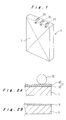
- the present embodiment shows examples where a product indication 2 produced by a product indication print system according to the present invention is applied to a battery pack 1 as an example of a product.
- the battery pack 1 described here is formed as a small flat shape shown in Fig. 1 by storing a rechargeable battery constituted as a flat prismatic lithium ion battery, and a circuit board constituting a battery protection circuit for protecting the rechargeable battery from overcharge, overdischarge, and the like in a pack case made of a resin.
- a positive input/output terminal 24, a negative input/output terminal 25, and a temperature detection terminal 26 are provided on one end of this battery pack 1, and a label is adhered to a wide surface of the battery pack 1.
- On the label product indication 2 showing a brand name, a product name, a rating, a notice, and the like of this battery pack 1 in addition to an identification display for the individual terminals are printed.
- this battery pack 1 is formed as the small flat shape, this battery pack 1 is appropriate for a battery power supply for a portable electronic apparatus and the like.
- the battery pack 1 is supplied for a maker of an electronic apparatus based on an OEM contract and the like. It is possible to adhere the product indication 2 specifically designed for individual customers on the battery pack 1.
- an intermediate transfer printer is used to print the product indication 2. As shown in Fig. 2A, the printer prints a reversal image of the product indication 2 on a cover film 9 of an intermediate transfer film 7. Then, the intermediate transfer film 7 is placed such that the surface for printing the reversal image is on the side of the battery pack 1.
- a heat roller 10 heats and presses the intermediate transfer film 7 so as to retransfer the reversal image on the battery pack 1. Then, as shown in Fig. 2B, by removing a base film 8 of the intermediate transfer film 7, the product indication 2 as a normal image is printed on the battery pack 1, and the printed surface is finished such that the surface is covered with the thin cover film 9.
- the manufacturer who is a maker of the battery pack 1 issues software for designing the product indication 2 of the battery pack 1, and provides the customer with the software.
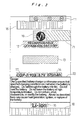
- This software is constituted by a fixed part which does not allow information entry, and a design part which allows information entry as shown in Fig. 3.
- this software sets the shape, the dimension, and the layout of individual displays.
- the fixed part as a basic display indicated by a hatch sloping upward to the right includes a terminal indication 11, a battery indication 12 showing the type of the battery, a trademark indication 13 showing the trademark of the battery pack 1, a rating indication 14 showing the rating of the battery pack 1, and a battery identification indication 15 showing the class of the battery.
- the design part indicated by vertical lines for allowing a display specific to the customer includes a brand indication 16, a part number indication 17, and a manufacturer indication 18.
- a customer-selectable design part indicated by horizontal lines, which the customer can leave as the basic display or can design as a specific display includes a mark indication 19 and a notice indication 20.
- An obtained-standard indication part indicated by a hatch sloping upward to the left which is used for showing an obtained standard such as UL (Underwriters Laboratories Inc.) safety standard, includes an obtained-standard indication 21.
- the design of the product indication 2 specific to the individual customer is conducted by computer processing on a computer 3 of the manufacturer and on a computer 4 of the customer connected with each other through the Internet (a communication network) 5 as shown in Fig. 4.
- the customer uses the software supplied from the manufacturer to design the product indication.
- S1 to S7 in the drawing are step numbers indicating process steps, and they match numbers used in the following description.
- the manufacturer supplies the customer with the software serving as a base for designing the product indication 2 for the battery pack 1 (S1).
- the software can be supplied from the manufacturer to the customer by hand-delivering or mailing a floppy disk, a CD-R, a DVD-RAM, or the like on which the software is recorded, the manufacturer can transmit the software to the customer as an attachment of an e-mail.
- the customer uses the supplied software to design a product indication specific to the customer (S2).
- the design is conducted by entering information specific to the customer to the individual parts other than the fixed part in the format example shown in Fig. 3.
- a brand logo of the manufacturer can be replaced by the brand logo of the customer on the brand indication 16.
- the entry operation for the individual parts is conducted easily on the computer.
- a designed product indication draft is transmitted to the manufacturer over the Internet 5.
- the software program As transmission methods over the Internet, it is possible to set the software program so as to encrypt and transmit only the parts which allows the entry by the customer along with their position information and the like in addition to to send the entire format of the product indication after compressing and encrypting the format for the product indication. With this method, it is possible to safely reduce the quantity to be transmitted. Also, it is possible to set the software such that the software includes reference data such as a manufacturer number, a control number, and entry operation history which only the manufacturer can use in addition to the data to be printed on the product indication such as the brand indication and the trademark indication.
- reference data such as a manufacturer number, a control number, and entry operation history which only the manufacturer can use in addition to the data to be printed on the product indication such as the brand indication and the trademark indication.
- the manufacturer reviews described content of the notice indication 20 and the like, and checks for a typographical error and lipography on the received product indication draft (S3). If the manufacturer finds a flaw, the manufacturer asks the customer for correction, or transmits the customer a draft corrected by the manufacturer over the Internet 5. When the manufacturer obtains a final product indication draft which no longer includes a flaw, the manufacturer creates a completed sample by using a label printer 6 to print the product indication as a label on the battery pack 1 (S4), and then sends the completed sample to the customer.
- the customer examines the received completed sample. If there is a part to be corrected on the printed product indication, the customer sends a request for correction to the manufacturer over the Internet 5. If there is no flaw, the customer approves the product indication, and then sends a mass production order to the manufacturer over the Internet 5 and the like (S5).
- the manufacturer When the manufacturer receives the correction request, the manufacturer corrects the product indication. At this time, since the computer of the manufacturer 3 records the latest product indication data, when the manufacturer receives the mass production order, the manufacturer uses the latest product indication data (the final product indication draft) to print the product indication 2 on the battery packs 1 (S6), and then delivers the completed battery packs 1 to the customer (S7).
- the latest product indication data the final product indication draft
- the product indication print system since printing the label of the product indication specific to the customer on the battery pack 1 is processed by the information communication entirely over the communication network (the Internet 5) throughout the processes after the customer determines the product indication until the manufacturer delivers the battery pack 1 with the printed label except for sending the completed sample, the delivery period, the personnel cost, and the like are reduced based on quickly setting the product indication.
- the manufacturer supplies the customer with software which serves as a base for designing the product indication 2 for the battery pack 1 (S11).
- the software can be supplied from the manufacturer to the customer by hand-delivering or mailing a floppy disk, a CD-R, a DVD-RAM or the like on which a base format is recorded, the manufacturer can transmit the software to the customer as an attachment of an e-mail.
- the customer uses the supplied software to design a product indication specific to the customer (S12).
- the design is conducted by entering information specific to the customer to the individual parts other than the fixed part in the format example shown in Fig. 3.
- a designed product indication draft is transmitted to the manufacturer over the Internet 5.
- the manufacturer reviews the described content of the notice indication 20 and the like, and checks for a typographical error, lipography, and the like on the received product indication draft (S13). If the manufacturer finds a flaw, the manufacturer asks the customer for correction, or transmits the customer a draft corrected by the manufacturer over the Internet 5. When the manufacturer obtains a final product indication draft which no longer includes a flaw, the manufacturer creates a limit sample which sets a permissible limit of bleeding, slight touching, paint-out, a scratch, color tone irregularity, and the like of an image and a character generated when the product indication is printed as a label on the battery pack 1 with the label printer 6 (S14), and then sends the limit sample to the customer.
- the limit sample indicates the level of the permissible limit when a printed state of the label is examined, the label is printed at a high precision when the permissible limit is set to high.
- the permissible limit is set to a level which does not cause a problem for the product indication, and then, this level is provided for the customer as the limit sample.
- the limit example is created with 400 dpi and 16 colors according to the level of an expected defective print, for example. Also, the chroma, the lightness, the hue, and the like are decreased if necessary.
- this sample created with the decreased precision is substituted as the limit sample which represents potential bleeding, slight touching, paint-out, a scratch, and color tone irregularity, the time required for reaching agreement between the customer and the manufacturer is reduced, and simultaneously the production presents higher yield and less print defects when actual printing is performed with the resolution higher than that of the limit sample.
- the customer examines the received limit example.
- the customer transmits a correction request to the manufacturer when the customer wants to change the permissible limit or to correct the printed product indication over the Internet 5.
- the customer approves the product indication, and transmits the mass production order to the manufacturer over the Internet 5 and the like when there is no flaw in the limit sample and the product indication (S15).
- the manufacturer When the manufacturer receives the correction request, the manufacturer corrects the permissible limit and the product indication 2. At this time, since the computer 3 of the manufacturer records the latest product indication data, when the manufacturer receives the mass production order, the manufacturer uses the latest product indication data (the final product indication draft) to print the product indication 2 on the battery pack 1 (S16), and then delivers the completed battery packs 1 to the customer after the products with defective print are removed (S17).
- the latest product indication data the final product indication draft
- the printed product indication and the limit sample data created in advance are pattern-matched in specific areas. Based on the pattern matching, it is possible to automatically discriminate products as a product with normal print when the image matching rate is 95% or more, for example. As a result, man-hour required for the inspection is reduced.
- the specific areas the entire product indication may be selected, it is possible to select only the parts which the customer can arbitrarily change to reduce the inspection time. At this time, only important parts appealing brand image such as the brand indication may be selected as the representative specific areas for further reducing the time required for the inspection.
- the product indication print system since printing the label of the product indication 2 specific to the individual customer on the battery pack 1 is processed by the information communication entirely over the communication network (the Internet 5) throughout the processes after the customer determines the product indication until the manufacturer delivers the battery pack 1 with the printed label, the delivery period, the personnel cost, and the like are reduced based on quickly setting the product indication.
- the intermediate transfer film is used for printing the product indication on the battery pack 1, it is possible to adhere tack paper on the battery pack 1 after printing the product indication on the tack paper by arbitrary printing means, and then removing a release liner. It is also possible to adopt a method which uses non-contact print such as inkjet print to directly print on the battery pack 1.
- this product indication print system since a series of processes from design to delivery relating to printing a product indication specific to a customer is conducted by the information exchange over a communication network, this product indication print system is effective for efficiently producing products on which the product indication specific to the individual customer is printed.
Landscapes
- Engineering & Computer Science (AREA)
- Theoretical Computer Science (AREA)
- Physics & Mathematics (AREA)
- General Physics & Mathematics (AREA)
- Human Computer Interaction (AREA)
- General Engineering & Computer Science (AREA)
- Business, Economics & Management (AREA)
- Chemical Kinetics & Catalysis (AREA)
- Electrochemistry (AREA)
- General Chemical & Material Sciences (AREA)
- Chemical & Material Sciences (AREA)
- Quality & Reliability (AREA)
- Tourism & Hospitality (AREA)
- Human Resources & Organizations (AREA)
- Strategic Management (AREA)
- Economics (AREA)
- General Health & Medical Sciences (AREA)
- Manufacturing & Machinery (AREA)
- Marketing (AREA)
- Primary Health Care (AREA)
- Health & Medical Sciences (AREA)
- General Business, Economics & Management (AREA)
- Management, Administration, Business Operations System, And Electronic Commerce (AREA)
- Labeling Devices (AREA)
- Accessory Devices And Overall Control Thereof (AREA)
- Battery Mounting, Suspending (AREA)
- Fax Reproducing Arrangements (AREA)
Abstract
A manufacturer supplies a customer with software for
designing a product indication (S1, S11), and then, the
customer creates a product indication draft by using the
software (S2, S12). The manufacturer conducts a correction to
the product indication draft and the like by exchanging
information over a communication network (5) (S3, S13),
produces a product on which the determined product indication
(2) is printed (S6, S16) when the customer approves a sample
on which the product indication (2) is printed (S5, S15), and
supplies the customer with the products (S7, S17).
Description
The present invention relates to a product indication
print system for printing a product indication such as a mark,
a part number, a notice, and the like displayed on a product
such as a battery and a battery pack according to a
specification specific to an individual customer supplied with
the product.
A conventional product indication such as a product name,
a part number, a rating, a manufacturer, a notice, and the
like appearing on a surface of a product such as a battery and
a battery pack is displayed by attaching a label or a
nameplate with a print specific to a customer supplied with
the product. Fig. 7 shows conventional steps for attaching a
product indication specific to a customer on a battery pack (a
product). The following section describes the conventional
manufacturing process referring to the drawing.
A manufacturer of the battery pack checks a draft of the
product indication issued from the customer (S31). In the
check here, it is considered whether the draft conforms to a
predetermined format, there exits a typographical error or
lipography, described contents, and the like cause a problem.
If there exists a problem, the manufacturer requests a
correction. When the draft no longer includes a problem, the
manufacturer sends the draft to a parts supplier, which is a
manufacturing company of a label, to manufacture a label. The
parts supplier creates an artwork for the product indication
(S32), and sends a copy of the artwork to the manufacturer.
The manufacturer checks for a shape dimension, a character
size, a character pitch, a character font, a typographical
error, lipography, and the like (S33). When the artwork no
longer includes a problem, the manufacturer instructs the
parts supplier to make a plate. The parts supplier makes a
plate by using the artwork after receiving the instruction
(S34), and sends a label printed tentatively to the
manufacturer. The manufacturer checks the label printed
tentatively for bleeding, slight touching, a change of color
tone, and the like caused by the print (S35). When there is no
problem, the manufacturer sends the customer the label printed
tentatively, or a battery pack sample to which the label
printed tentatively is adhered. The customer gives an approval
when the sample does not include a problem, and orders the
manufacturer to mass-produce the product indication (S36). The
manufacturer accepts the order, and orders the parts supplier
to mass-produce the label (S37).
The parts supplier mass-produces the labels, and delivers
the labels to the manufacturer (S38). The manufacturer checks
for a variation of print state and the like of a large number
of the mass-produced labels (S39), presents the parts supplier
a limit sample showing a permissible limit of the variations,
and simultaneously sends a label which corresponds to the
limit sample to the customer for obtaining an approval. When
the customer gives an approval (S40), the manufacturer
attaches the label on the manufactured battery pack so as to
complete the battery pack including the product indication
specific to the customer (S41), and delivers the customer with
the battery packs.
However, in the conventional print process of the product
indication described above, manufacturing the label or the
nameplates is subcontracted, and the processes for the artwork
and the plate making are also subcontracted. Thus, it is
necessary to send a copy of the artwork, and the tentative
print for checking in the individual processes, and
consequently the manufacturer has to prepare personnel and
time for checking, managing the subcontract, and the like.
Also, since it necessitates a large number of processes and
days to go through the procedure from receiving the product
indication draft to adhering the label to the product, there
are such problems as increasing the cost and delaying delivery.
An object of the present invention is to provide a
product indication print system which allows the manufacturer
to print the product indication, and reduces the number of the
processes required for the product indication.
To achieve the object above, a first aspect of the
present invention provides a product indication print system
for printing a product indication which is presented on a
surface of a product, and is specific to an individual
customer supplied with the product. In the product indication
print system, the customer designs a product indication draft
on a computer by using software which is prepared for
designing a product indication, and is supplied from a product
manufacturer. Then, the manufacturer prints the product
indication on the product by using a final product indication
draft determined by exchanging information over a
communication network. Thus, the individual processes are
conducted efficiently by the information exchange over the
communication network.
A second aspect of the invention provides a product
indication print system for printing a product indication
which is presented on a surface of a product, and is specific
to an individual customer supplied with the product. In this
product indication print system, a manufacturer of the product
supplies the customer with software prepared for designing the
product indication on a computer. The customer designs a
product indication draft on a computer by using the software,
and then transmits the draft to the manufacturer over a
communication network. Then, the manufacturer determines a
final product indication draft by exchanging information over
the communication network, produces a product sample on which
the product indication is printed by using the final draft,
and sends the customer this product sample. When the
manufacturer obtains an approval from the customer, the
manufacturer manufactures the products on which the product
indication is printed, and delivers the product to the
customer. As described above, since the software for the
design of the product indication draft, and the exchange of
the information over the communication network are exploited,
and the product sample is presented to the customer before the
start of the production, it is possible to efficiently print
the product indication specific to the individual supplied
customer.
A third aspect of the invention provides a product
indication print system for printing a product indication
presented on a surface of a product, and specific to an
individual customer supplied with the product. In this product
indication print system, a manufacturer of the product
supplies the customer with software prepared for designing the
product indication on a computer. The customer designs a
product indication draft on a computer by using the software,
and then transmits the draft to the manufacturer over a
communication network. The manufacturer determines a final
product indication draft by exchanging information over the
communication network, produces a limit sample of a state
printed by using the final draft, and sends the customer this
limit sample. When the manufacturer receives an approval from
the customer, the manufacturer manufactures the products on
which the product indication is printed, and delivers the
product to the customer. As described above, since the
software for the design of the product indication draft, and
the exchange of the information over the communication network
are exploited, and simultaneously the limit sample indicating
the limit of the state printed on the product is presented to
the customer, it is possible to efficiently print the product
indication specific to the individual supplied customer.
In the third aspect, since the limit sample can be sent
by transmitting data over the communication network between
the manufacturer and the customer, the procedure from the
design of the product indication to the determination of the
product indication is conducted efficiently.
Additionally, it is possible to prevent damages such as
leakage of the information and tampering of the data by
security measures such as password authentication, and
encryption when the product indication draft is transmitted
and received.
Also, since it is possible to transmit information only
on a required part along with position information without
transmitting entire information on the product indication
draft when the draft is transmitted and received,
communication time and processing time are reduced by reducing
the quantity of information to be transmitted and received.
In addition, it is possible to supply the software by
transmitting the software over the communication network, or
sending or hand-delivering a recording medium on which the
software is recorded.
Further, the software is constituted such that the
customer can easily design the product indication by setting
positions, spaces, font metrics, and design rules for a fixed
part not allowing information entry, and for a design part
allowing specific design of the customer.
Additionally, it is possible to print the product
indication on the product in-house by melt retransfer such
that a reversal image of the product indication is printed on
an intermediate transfer film, and then this image is
retransferred from the film to the product by a heat roller,
and consequently a printed part is finished so as to be
covered with a film.
Alternatively, the product indication can be printed
directly on the product with non-contact print such as inkjet
print.
As products to which the print system is applied, a
battery and a battery pack are preferable. Since the battery
or the battery pack on which the product indication is printed
by using this print system can be delivered to the customer on
the same day, it is possible to remarkably reduce the
procedure which used to take a considerably long period until
the label is determined.
Hereinafter, embodiments of the present invention will be
described with reference to the accompanying drawings for the
sake of understanding of the invention. Incidentally, the
embodiment shown below is merely an example of embodiment of
the present invention, and by no means intended to limit the
technical scope of the invention.
The present embodiment shows examples where a product
indication 2 produced by a product indication print system
according to the present invention is applied to a battery
pack 1 as an example of a product. The battery pack 1
described here is formed as a small flat shape shown in Fig. 1
by storing a rechargeable battery constituted as a flat
prismatic lithium ion battery, and a circuit board
constituting a battery protection circuit for protecting the
rechargeable battery from overcharge, overdischarge, and the
like in a pack case made of a resin. A positive input/output
terminal 24, a negative input/output terminal 25, and a
temperature detection terminal 26 are provided on one end of
this battery pack 1, and a label is adhered to a wide surface
of the battery pack 1. On the label product indication 2
showing a brand name, a product name, a rating, a notice, and
the like of this battery pack 1 in addition to an
identification display for the individual terminals are
printed.
Since this battery pack 1 is formed as the small flat
shape, this battery pack 1 is appropriate for a battery power
supply for a portable electronic apparatus and the like. The
battery pack 1 is supplied for a maker of an electronic
apparatus based on an OEM contract and the like. It is
possible to adhere the product indication 2 specifically
designed for individual customers on the battery pack 1. For
printing the product indication 2 in the present embodiment,
an intermediate transfer printer is used to print the product
indication 2. As shown in Fig. 2A, the printer prints a
reversal image of the product indication 2 on a cover film 9
of an intermediate transfer film 7. Then, the intermediate
transfer film 7 is placed such that the surface for printing
the reversal image is on the side of the battery pack 1. Then,
a heat roller 10 heats and presses the intermediate transfer
film 7 so as to retransfer the reversal image on the battery
pack 1. Then, as shown in Fig. 2B, by removing a base film 8
of the intermediate transfer film 7, the product indication 2
as a normal image is printed on the battery pack 1, and the
printed surface is finished such that the surface is covered
with the thin cover film 9.
The manufacturer who is a maker of the battery pack 1
issues software for designing the product indication 2 of the
battery pack 1, and provides the customer with the software.
This software is constituted by a fixed part which does not
allow information entry, and a design part which allows
information entry as shown in Fig. 3.
As shown in Fig. 3, this software sets the shape, the
dimension, and the layout of individual displays. The fixed
part as a basic display indicated by a hatch sloping upward to
the right includes a terminal indication 11, a battery
indication 12 showing the type of the battery, a trademark
indication 13 showing the trademark of the battery pack 1, a
rating indication 14 showing the rating of the battery pack 1,
and a battery identification indication 15 showing the class
of the battery. The design part indicated by vertical lines
for allowing a display specific to the customer includes a
brand indication 16, a part number indication 17, and a
manufacturer indication 18. Further, a customer-selectable
design part indicated by horizontal lines, which the customer
can leave as the basic display or can design as a specific
display, includes a mark indication 19 and a notice indication
20. An obtained-standard indication part indicated by a hatch
sloping upward to the left, which is used for showing an
obtained standard such as UL (Underwriters Laboratories Inc.)
safety standard, includes an obtained-standard indication 21.
The design of the product indication 2 specific to the
individual customer is conducted by computer processing on a
computer 3 of the manufacturer and on a computer 4 of the
customer connected with each other through the Internet (a
communication network) 5 as shown in Fig. 4. The customer uses
the software supplied from the manufacturer to design the
product indication.
The following section describes steps from designing the
product indication 2 to the delivery of the product according
to a first embodiment with reference to Fig. 5. S1 to S7 in
the drawing are step numbers indicating process steps, and
they match numbers used in the following description.
First, the manufacturer supplies the customer with the
software serving as a base for designing the product
indication 2 for the battery pack 1 (S1). Though the software
can be supplied from the manufacturer to the customer by hand-delivering
or mailing a floppy disk, a CD-R, a DVD-RAM, or the
like on which the software is recorded, the manufacturer can
transmit the software to the customer as an attachment of an
e-mail.
The customer uses the supplied software to design a
product indication specific to the customer (S2). The design
is conducted by entering information specific to the customer
to the individual parts other than the fixed part in the
format example shown in Fig. 3. For example, a brand logo of
the manufacturer can be replaced by the brand logo of the
customer on the brand indication 16. The entry operation for
the individual parts is conducted easily on the computer. A
designed product indication draft is transmitted to the
manufacturer over the Internet 5.
As transmission methods over the Internet, it is possible
to set the software program so as to encrypt and transmit only
the parts which allows the entry by the customer along with
their position information and the like in addition to to send
the entire format of the product indication after compressing
and encrypting the format for the product indication. With
this method, it is possible to safely reduce the quantity to
be transmitted. Also, it is possible to set the software such
that the software includes reference data such as a
manufacturer number, a control number, and entry operation
history which only the manufacturer can use in addition to the
data to be printed on the product indication such as the brand
indication and the trademark indication. As specific
application examples, when the part number is printed on a
product indication surface, since the part number is the part
number of the customer, and the part number of the
manufacturer does not explicitly appear, various types of
control become difficult. However the reference data are
included, referring to them solves the problem.
The manufacturer reviews described content of the notice
indication 20 and the like, and checks for a typographical
error and lipography on the received product indication draft
(S3). If the manufacturer finds a flaw, the manufacturer asks
the customer for correction, or transmits the customer a draft
corrected by the manufacturer over the Internet 5. When the
manufacturer obtains a final product indication draft which no
longer includes a flaw, the manufacturer creates a completed
sample by using a label printer 6 to print the product
indication as a label on the battery pack 1 (S4), and then
sends the completed sample to the customer.
The customer examines the received completed sample. If
there is a part to be corrected on the printed product
indication, the customer sends a request for correction to the
manufacturer over the Internet 5. If there is no flaw, the
customer approves the product indication, and then sends a
mass production order to the manufacturer over the Internet 5
and the like (S5).
When the manufacturer receives the correction request,
the manufacturer corrects the product indication. At this time,
since the computer of the manufacturer 3 records the latest
product indication data, when the manufacturer receives the
mass production order, the manufacturer uses the latest
product indication data (the final product indication draft)
to print the product indication 2 on the battery packs 1 (S6),
and then delivers the completed battery packs 1 to the
customer (S7).
With the product indication print system according to the
first embodiment, since printing the label of the product
indication specific to the customer on the battery pack 1 is
processed by the information communication entirely over the
communication network (the Internet 5) throughout the
processes after the customer determines the product indication
until the manufacturer delivers the battery pack 1 with the
printed label except for sending the completed sample, the
delivery period, the personnel cost, and the like are reduced
based on quickly setting the product indication.
The following will describe processes from designing the
product indication 2 to delivering the product according to a
second embodiment with reference to Fig. 6. The same numerals
are assigned to elements common to those in the first
embodiment, and description for them is skipped.
The manufacturer supplies the customer with software
which serves as a base for designing the product indication 2
for the battery pack 1 (S11). As in the first embodiment,
though the software can be supplied from the manufacturer to
the customer by hand-delivering or mailing a floppy disk, a
CD-R, a DVD-RAM or the like on which a base format is recorded,
the manufacturer can transmit the software to the customer as
an attachment of an e-mail.
The customer uses the supplied software to design a
product indication specific to the customer (S12). The design
is conducted by entering information specific to the customer
to the individual parts other than the fixed part in the
format example shown in Fig. 3. A designed product indication
draft is transmitted to the manufacturer over the Internet 5.
The manufacturer reviews the described content of the
notice indication 20 and the like, and checks for a
typographical error, lipography, and the like on the received
product indication draft (S13). If the manufacturer finds a
flaw, the manufacturer asks the customer for correction, or
transmits the customer a draft corrected by the manufacturer
over the Internet 5. When the manufacturer obtains a final
product indication draft which no longer includes a flaw, the
manufacturer creates a limit sample which sets a permissible
limit of bleeding, slight touching, paint-out, a scratch,
color tone irregularity, and the like of an image and a
character generated when the product indication is printed as
a label on the battery pack 1 with the label printer 6 (S14),
and then sends the limit sample to the customer. Since the
limit sample indicates the level of the permissible limit when
a printed state of the label is examined, the label is printed
at a high precision when the permissible limit is set to high.
However, since the precision is unnecessarily high, a number
of labels determined as a defective print increases uselessly,
thereby decreasing the yield, resulting in an increased cost.
Thus, the permissible limit is set to a level which does not
cause a problem for the product indication, and then, this
level is provided for the customer as the limit sample.
The following section describes an example of setting the
permissible level. When the product indication is printed with
the resolution of 600 dpi and 256 colors in the actual
production, the limit example is created with 400 dpi and 16
colors according to the level of an expected defective print,
for example. Also, the chroma, the lightness, the hue, and the
like are decreased if necessary. When this sample created with
the decreased precision is substituted as the limit sample
which represents potential bleeding, slight touching, paint-out,
a scratch, and color tone irregularity, the time required
for reaching agreement between the customer and the
manufacturer is reduced, and simultaneously the production
presents higher yield and less print defects when actual
printing is performed with the resolution higher than that of
the limit sample.
Then, the customer examines the received limit example.
The customer transmits a correction request to the
manufacturer when the customer wants to change the permissible
limit or to correct the printed product indication over the
Internet 5. On the other hand, the customer approves the
product indication, and transmits the mass production order to
the manufacturer over the Internet 5 and the like when there
is no flaw in the limit sample and the product indication
(S15).
When the manufacturer receives the correction request,
the manufacturer corrects the permissible limit and the
product indication 2. At this time, since the computer 3 of
the manufacturer records the latest product indication data,
when the manufacturer receives the mass production order, the
manufacturer uses the latest product indication data (the
final product indication draft) to print the product
indication 2 on the battery pack 1 (S16), and then delivers
the completed battery packs 1 to the customer after the
products with defective print are removed (S17).
The following will describe a process for removing the
products with the defective print. After the label is printed,
the printed product indication and the limit sample data
created in advance are pattern-matched in specific areas.
Based on the pattern matching, it is possible to automatically
discriminate products as a product with normal print when the
image matching rate is 95% or more, for example. As a result,
man-hour required for the inspection is reduced. Although, as
the specific areas the entire product indication may be
selected, it is possible to select only the parts which the
customer can arbitrarily change to reduce the inspection time.
At this time, only important parts appealing brand image such
as the brand indication may be selected as the representative
specific areas for further reducing the time required for the
inspection.
With the product indication print system according to the
second embodiment, since printing the label of the product
indication 2 specific to the individual customer on the
battery pack 1 is processed by the information communication
entirely over the communication network (the Internet 5)
throughout the processes after the customer determines the
product indication until the manufacturer delivers the battery
pack 1 with the printed label, the delivery period, the
personnel cost, and the like are reduced based on quickly
setting the product indication.
In the embodiments described above, while the
intermediate transfer film is used for printing the product
indication on the battery pack 1, it is possible to adhere
tack paper on the battery pack 1 after printing the product
indication on the tack paper by arbitrary printing means, and
then removing a release liner. It is also possible to adopt a
method which uses non-contact print such as inkjet print to
directly print on the battery pack 1.
With the product indication print system of the present
invention, since a series of processes from design to delivery
relating to printing a product indication specific to a
customer is conducted by the information exchange over a
communication network, this product indication print system is
effective for efficiently producing products on which the
product indication specific to the individual customer is
printed.
Claims (28)
- A product indication print system for printing a product indication (2) presented on a surface of a product, and specific to an individual customer supplied with the product, whereinsaid customer designs a product indication draft on a computer by using software prepared for designing a product indication, and supplied from a product manufacturer (S2, S12), andsaid manufacture prints the product indication on the product by using a final product indication draft determined by exchanging information over a communication network (5) (S6, S16).
- The product indication print system according to claim 1, wherein required security measure is taken for transmitting and receiving the product indication draft.
- The product indication print system according to claim 1, wherein data corresponding to a required part of the product indication draft is received and transmitted when the draft is received and transmitted.
- The product indication print system according to claim 1, wherein the software is supplied by transmitting the software over the communication network (5).
- The product indication print system according to claim 1, wherein the software is supplied by recording the software on a storage medium.
- The product indication print system according to claim 1, wherein positions, spaces, font metrics, and design rules are set in the software for a fixed part not allowing information entry, and for a design part allowing design specific to the customer.
- The product indication print system according to claim 1, wherein the product indication (2) is printed by melt retransfer such that a reversal image of the product indication is printed on an intermediate transfer film (7), and then this image is retransferred from the intermediate transfer film to the product by a heat roller (10).
- The product indication print system according to claim 1, wherein the product indication (2) is printed by non-contact print.
- The product indication print system according to claim 1, wherein the product is a battery or a battery pack (1).
- A product indication print system for printing a product indication (2) presented on a surface of a product, and specific to an individual customer supplied with the product, whereina manufacturer of the product supplies said customer with software prepared for designing the product indication on a computer (S1),said customer designs a product indication draft on a computer by using said software (S2), and then transmits the product indication draft to said manufacturer over a communication network (5),said manufacturer determines a final product indication draft by exchanging information with said customer over the communication network (S3), produces a product sample including the product indication printed by using the final product indication draft (S4), sends this product sample to said customer, obtains an approval from said customer (S5), manufactures the product on which the product indication is printed (S6), and delivers the product to said customer (S7).
- The product indication print system according to claim 10, wherein required security measure is taken for transmitting and receiving the product indication draft.
- The product indication print system according to claim 10, wherein data corresponding to a required part of the product indication draft is received and transmitted when the draft is received and transmitted.
- The product indication print system according to claim 10, wherein the software is supplied by transmitting the software over the communication network (5).
- The product indication print system according to claim 10, wherein the software is supplied by recording the software on a storage medium.
- The product indication print system according to claim 10, wherein positions, spaces, font metrics, and design rules are set in the software for a fixed part not allowing information entry, and for a design part allowing design specific to the customer.
- The product indication print system according to claim 10, wherein the product indication (2) is printed by melt retransfer such that a reversal image of the product indication is printed on an intermediate transfer film (7), and then this image is retransferred from the intermediate transfer film to the product by a heat roller (10).
- The product indication print system according to claim 10, wherein the product indication (2) is printed by non-contact print.
- The product indication print system according to claim 10, wherein the product is a battery or a battery pack (1).
- A product indication print system for printing a product indication (2) presented on a surface of a product, and specific to an individual customer supplied with the product, whereina manufacturer of the product supplies said customer with software prepared for designing the product indication on a computer (S11),said customer designs a product indication draft on a computer by using said software (S12), and then transmits the product indication draft to said manufacturer over a communication network (5),said manufacturer determines a final product indication draft by exchanging information with said customer over the communication network (S13), produces a limit sample of a state printed by using the final product indication draft (S14), sends this limit sample to said customer, receives an approval from said customer (S15), manufactures the product on which the product indication is printed (S16), and delivers the product to said customer (S17).
- The product indication print system according to claim 19, wherein the limit sample is transmitted by transmitting limit sample data over the communication network (5).
- The product indication print system according to claim 19, wherein required security measure is taken for transmitting and receiving the product indication draft.
- The product indication print system according to claim 19, wherein data corresponding to a required part of the product indication draft is received and transmitted when the draft is received and transmitted.
- The product indication print system according to claim 19, wherein the software is supplied by transmitting the software over the communication network (5).
- The product indication print system according to claim 19, wherein the software is supplied by recording the software on a storage medium.
- The product indication print system according to claim 19, wherein positions, spaces, font metrics, and design rules are set in the software for a fixed part not allowing information entry, and for a design part allowing design specific to the customer.
- The product indication print system according to claim 19, wherein the product indication (2) is printed by melt retransfer such that a reversal image of the product indication is printed on an intermediate transfer film (7), and then this image is retransferred from the intermediate transfer film to the product by a heat roller (10).
- The product indication print system according to claim 19, wherein the product indication (2) is printed by non-contact print.
- The product indication print system according to claim 19, wherein the product is a battery or a battery pack (1).
Applications Claiming Priority (3)
| Application Number | Priority Date | Filing Date | Title |
|---|---|---|---|
| JP2000266460 | 2000-09-04 | ||
| JP2000266460A JP2002073317A (en) | 2000-09-04 | 2000-09-04 | Product display printing system |
| PCT/JP2001/007445 WO2002021256A1 (en) | 2000-09-04 | 2001-08-29 | Printing system for product marking |
Publications (2)
| Publication Number | Publication Date |
|---|---|
| EP1324186A1 true EP1324186A1 (en) | 2003-07-02 |
| EP1324186A4 EP1324186A4 (en) | 2005-05-18 |
Family
ID=18753544
Family Applications (1)
| Application Number | Title | Priority Date | Filing Date |
|---|---|---|---|
| EP01961180A Withdrawn EP1324186A4 (en) | 2000-09-04 | 2001-08-29 | PRINTING SYSTEM FOR MARKING PRODUCTS |
Country Status (7)
| Country | Link |
|---|---|
| US (1) | US20030174363A1 (en) |
| EP (1) | EP1324186A4 (en) |
| JP (1) | JP2002073317A (en) |
| KR (1) | KR100716399B1 (en) |
| CN (1) | CN1218238C (en) |
| TW (1) | TWI250111B (en) |
| WO (1) | WO2002021256A1 (en) |
Families Citing this family (5)
| Publication number | Priority date | Publication date | Assignee | Title |
|---|---|---|---|---|
| US20040158498A1 (en) * | 2003-02-12 | 2004-08-12 | Sherman Marc Alan | Method for creating mass sales orders |
| US7216266B2 (en) * | 2003-03-12 | 2007-05-08 | Thomson Licensing | Change request form annotation |
| US20090287568A1 (en) * | 2008-05-16 | 2009-11-19 | Eftim Cesmedziev | Method for providing daily dynamic visual information on beverage sleeves and/or cups |
| JP6506263B2 (en) * | 2013-09-30 | 2019-04-24 | エルジー・ケム・リミテッド | Battery cell surface printing method |
| CN108351753A (en) * | 2015-10-29 | 2018-07-31 | 惠普深蓝有限责任公司 | Printed label |
Family Cites Families (15)
| Publication number | Priority date | Publication date | Assignee | Title |
|---|---|---|---|---|
| US5244524A (en) * | 1990-04-09 | 1993-09-14 | Brother Kogyo Kabushiki Kaisha | Printing method for thermally transferring image section of print sheet to image receiving member |
| EP0451485A3 (en) * | 1990-04-11 | 1992-12-30 | International Business Machines Corporation | A form authoring toolkit |
| FR2675281B1 (en) * | 1991-04-15 | 1994-02-04 | Mennillo Jean Jacques | DEVICE FOR AUTOMATIC INPUT, RECORDING, DISPLAY AND PRINTING OF QUALITATIVE AND QUANTITATIVE DATA OF A LOT OF FOODS OR PRODUCTS. |
| EP0782068A1 (en) * | 1995-12-29 | 1997-07-02 | Deluxe Corporation | Remote printing system |
| KR970071619A (en) * | 1996-04-30 | 1997-11-07 | 배순훈 | Capstan motor assembly structure of tape recorder |
| JP2002501635A (en) * | 1996-08-20 | 2002-01-15 | ムーア ビジネス フォームス インコーポレイテッド | Proofreading system using dynamic PDF technology for interface for template printing |
| US6535294B1 (en) * | 1998-06-23 | 2003-03-18 | Discount Labels, Inc. | System and method for preparing customized printed products over a communications network |
| JP4405612B2 (en) * | 1999-02-17 | 2010-01-27 | 株式会社ダイゾー | Private package manufacturing method |
| JP3777862B2 (en) * | 1999-03-30 | 2006-05-24 | セイコーエプソン株式会社 | Image printing method and apparatus |
| JP2000339367A (en) * | 1999-05-25 | 2000-12-08 | Dainippon Printing Co Ltd | Product information support system |
| US6236186B1 (en) * | 1999-12-23 | 2001-05-22 | Intermec Ip | Method and system for discriminating between different types of batteries and charging the same |
| US6420309B1 (en) * | 1999-12-30 | 2002-07-16 | Mitsubishi Chemical America, Inc. | Method of transfer melt printing of metal substrates, and the decorative surface coated items prepared thereby |
| US7143056B1 (en) * | 2000-01-18 | 2006-11-28 | Lopez Jr Leonard H | Method for automated print ordering utilizing the internet |
| US6493677B1 (en) * | 2000-01-19 | 2002-12-10 | Jones Soda Co. | Method and apparatus for creating and ordering customized branded merchandise over a computer network |
| GB2378551B (en) * | 2000-03-17 | 2004-07-21 | Formstar Print Technologies Pt | Form production system |
-
2000
- 2000-09-04 JP JP2000266460A patent/JP2002073317A/en active Pending
-
2001
- 2001-08-29 CN CN018150993A patent/CN1218238C/en not_active Expired - Fee Related
- 2001-08-29 KR KR1020037003195A patent/KR100716399B1/en not_active Expired - Fee Related
- 2001-08-29 WO PCT/JP2001/007445 patent/WO2002021256A1/en not_active Ceased
- 2001-08-29 EP EP01961180A patent/EP1324186A4/en not_active Withdrawn
- 2001-08-29 US US10/362,521 patent/US20030174363A1/en not_active Abandoned
- 2001-09-04 TW TW090121883A patent/TWI250111B/en not_active IP Right Cessation
Also Published As
| Publication number | Publication date |
|---|---|
| CN1451113A (en) | 2003-10-22 |
| TWI250111B (en) | 2006-03-01 |
| WO2002021256A1 (en) | 2002-03-14 |
| KR100716399B1 (en) | 2007-05-11 |
| US20030174363A1 (en) | 2003-09-18 |
| CN1218238C (en) | 2005-09-07 |
| EP1324186A4 (en) | 2005-05-18 |
| KR20030032007A (en) | 2003-04-23 |
| JP2002073317A (en) | 2002-03-12 |
Similar Documents
| Publication | Publication Date | Title |
|---|---|---|
| CN103941670B (en) | Remotely monitor monitoring system and its implementation of print product quality | |
| CN102201083B (en) | Management system, electronic instrument and management method of management system | |
| US8488163B2 (en) | Printing variable data on a variety of different pre-printed stocks | |
| JP5940382B2 (en) | Moving luggage management system and moving luggage management method | |
| US20110292431A1 (en) | Printer with in-line scanner | |
| JP2001251464A (en) | Image forming apparatus, management system and management method thereof | |
| JP2003233725A5 (en) | ||
| EP1324186A1 (en) | Printing system for product marking | |
| JP6714253B1 (en) | A vehicle member damage repair determination system, a device for determining whether or not a vehicle member damage warranty application is possible, an operating method of a device for determining whether a vehicle member damage warranty application is possible, and a program. | |
| US20240256192A1 (en) | Non-transitory computer-readable storage medium and control device | |
| US20020120493A1 (en) | Flexographic platemaker project management and customer interface system | |
| US8662622B2 (en) | Print cartridge output sample | |
| CN107765656B (en) | Management system and management method | |
| JP2001331069A (en) | Image forming apparatus management method | |
| US6732916B1 (en) | Automated ticket cancellation device and process for canceling uniquely numbered tickets | |
| CN109849496B (en) | Self-service record self-service seal making device | |
| JP2003330375A (en) | Rating plate manufacturing method and rating plate manufacturing program | |
| JP2002137501A (en) | Printer and print system | |
| CN111192109A (en) | Method, system and storage medium for managing vehicles in automobile store | |
| US20040267637A1 (en) | Order-receiving system and order-receiving method | |
| JP4154854B2 (en) | Print server | |
| JP2006172188A (en) | Product management system, product management label issuing method, product management label, product management program, and storage medium | |
| JP3179909U (en) | Moving luggage management system | |
| JP4241155B2 (en) | Printing business support system | |
| US20060294031A1 (en) | Systems and methods for automated meter system |
Legal Events
| Date | Code | Title | Description |
|---|---|---|---|
| PUAI | Public reference made under article 153(3) epc to a published international application that has entered the european phase |
Free format text: ORIGINAL CODE: 0009012 |
|
| 17P | Request for examination filed |
Effective date: 20030325 |
|
| AK | Designated contracting states |
Designated state(s): AT BE CH CY DE DK ES FI FR GB GR IE IT LI LU MC NL PT SE TR |
|
| RBV | Designated contracting states (corrected) |
Designated state(s): DE FR GB SE |
|
| A4 | Supplementary search report drawn up and despatched |
Effective date: 20050406 |
|
| RAP1 | Party data changed (applicant data changed or rights of an application transferred) |
Owner name: PANASONIC CORPORATION |
|
| 17Q | First examination report despatched |
Effective date: 20090211 |
|
| STAA | Information on the status of an ep patent application or granted ep patent |
Free format text: STATUS: THE APPLICATION IS DEEMED TO BE WITHDRAWN |
|
| 18D | Application deemed to be withdrawn |
Effective date: 20110927 |